The only multi-styler to dry, curl, air-straighten and gloss, with ceramic plates
For people looking. For people listing.
A fashion magazine for people like you.
Pierced nipples. Thick side fringes. In and Out lists. Peplum dresses in blurry party photos. Fashion Journal has been around since before many of you were born.
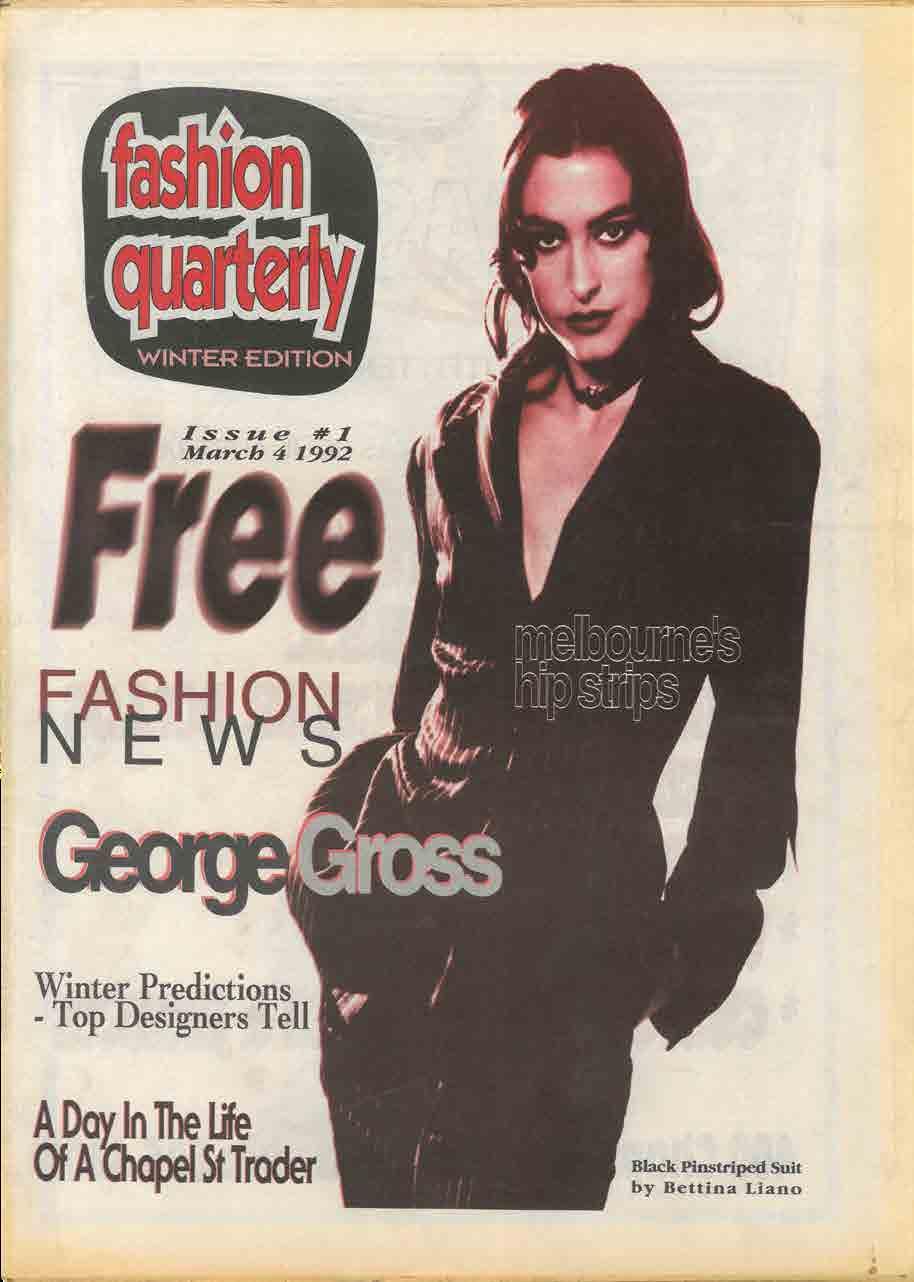
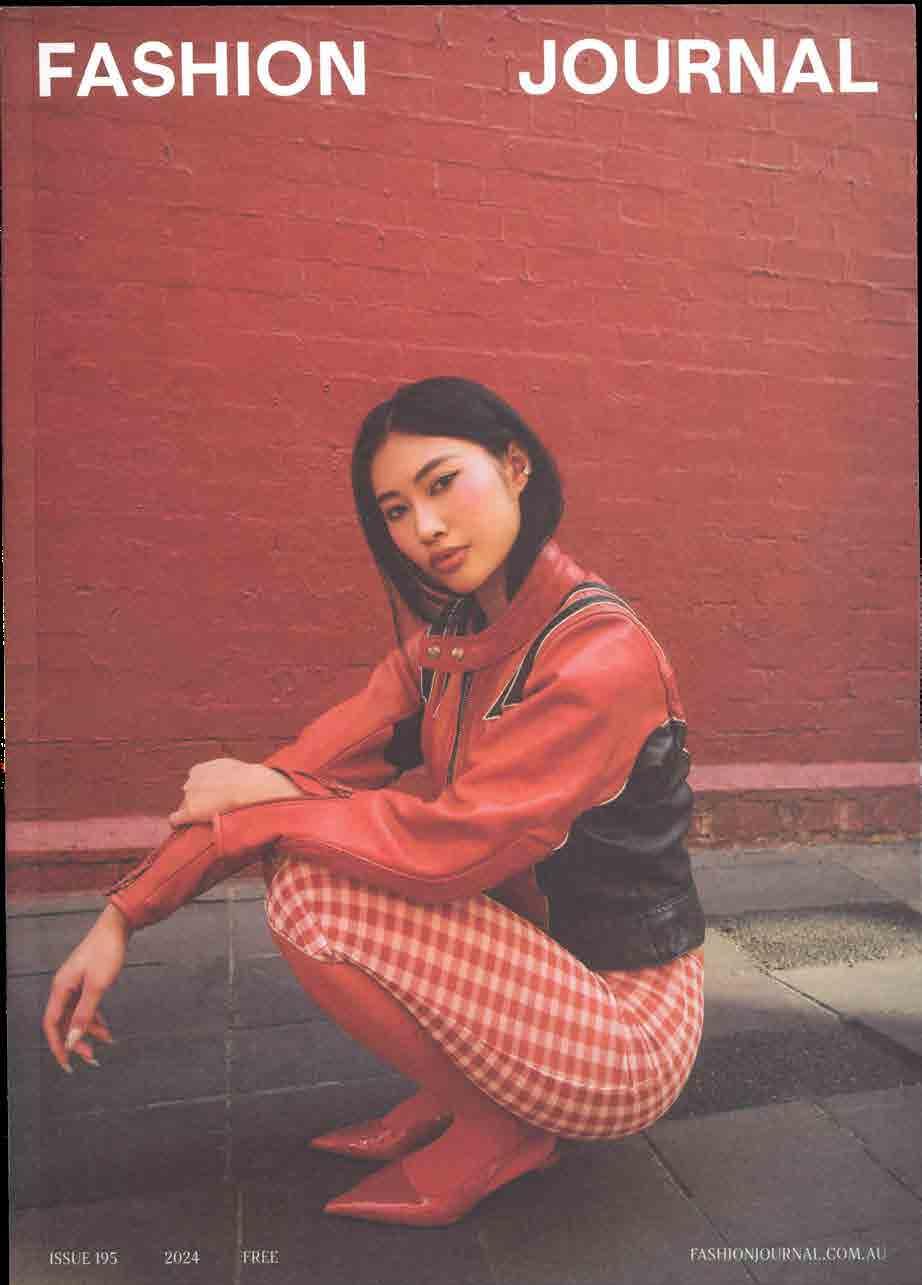
To celebrate our 200th edition, we’ve spent the past month rummaging through the archives, tracing FJ’s lore all the way back to its first issue from 1992. Then known as Fashion Quarterly, it appeared as a 32-page insert in Beat Magazine, sporting a black pinstriped Bettina Liano suit on its tri-tone newsprint cover.
From its inception, publisher Rob Furst had a clear vision:
“To bring together people who think about, look at, buy and wear fashion with those who design, manufacture and retail it. To give people who care what they look like a feel for who and what’s around and to have a bit of fun while we’re at it!
In this respect, Fashion Quarterly leaves the highquality, low-circulation, national glossies for dead. Localised, on the street, free and relevant to a broad cross-section of inner urbanities. Because FQ is where you go – bars, clubs, pubs, cafes, record shops, theatres, cinemas, retailers and so on.”
Senior Editor
Lara Daly
Assistant Editor
Daisy Henry
Design
Kelly Lim
–
Content and Production
Coordinator
Jillian Arcenas
Distribution and Accounts
Frances Thompson
Managing Director
Kris Furst
Founder
Rob Furst
Contributors
Constance McDonald, Jaida the Creator, Amy Cottrell, Tate Boswarva, Arielle Richards, Bananas Clarke, Otis Burian Hodge, Kirsty Barros, Chelsea Holm, Darren Summors, Pinky, Corinne Murray, Jordan Drysdale, Bo Kok, Joëlle Parisotto, Stuart Walford, Milly Wright, Tyler Lindsay, Lyndal Salmon, Marilyn Guarino, Achan Meshwang, Albin McDonald, Mirabai Clark, Alex Koulatsos, Amelia McQuoid, Lily McVeigh, Maryel Sousa, Kita Alexander, Olivia Repaci, Annabel Dickson, Soraya Boularas, Macami, Imogen Wilson, Tahlia Levy-Smith, Lachlan Connor, Joely Malcolm, Kimberley Jonjin, Kyye Reed, Kimberly Forbes, Veronika Moreira, Carly Lim, Anna Wearden, Sophie Gianatti, Akayrii Rose, Tiara Vella, Atoug Deng, Bruna Lapinskas, Casey Van Elk, Lola Niko, Mia Dennis, Sara Bratic
Over 34 years in print, FJ has remained true to that spirit, championing emerging designers and voices with a distinctly local perspective. Free distribution also allowed its editors to take risks. You’ll see plenty of evidence of that in our timeline on page 22.
Looking back through past editorials, it was a pleasure to come across familiar names who have returned to contribute to this milestone edition: Jordan Drysdale, Kirsty Barros and Lyndal Salmon, among others.
In Issue 200, we honour the legacy of Australia’s underground fashion collectives, speak to an artist in the midst of transformation and explore nostalgia, both as a source of comfort and as a force that can keep us tethered to the past.
Looking forward often requires looking back. Yet too much navel-gazing risks losing sight of the present. If anything, assembling this issue has left us feeling energised and more committed than ever to evolving the legacy of Fashion Journal
Thanks for sticking with us, discovering us and, most importantly, helping shape who we are.
Fashion Journal is free and distributed to hundreds of locations around Melbourne and Sydney that we hope you frequent and stumble upon. To enquire about having Fashion Journal distributed at your business, please email distribution@furstmedia.com.au
Enquiries, thoughts and ideas submissions@fashionjournal.com.au
For advertising, content or commercial partnerships please email advertise@fashionjournal.com.au
–
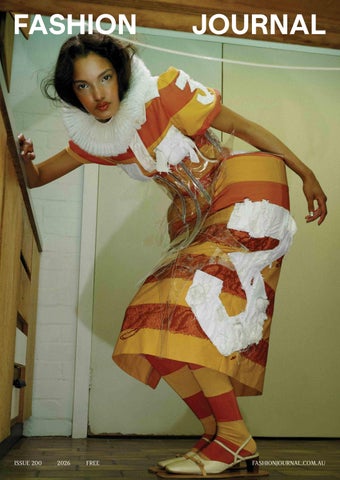
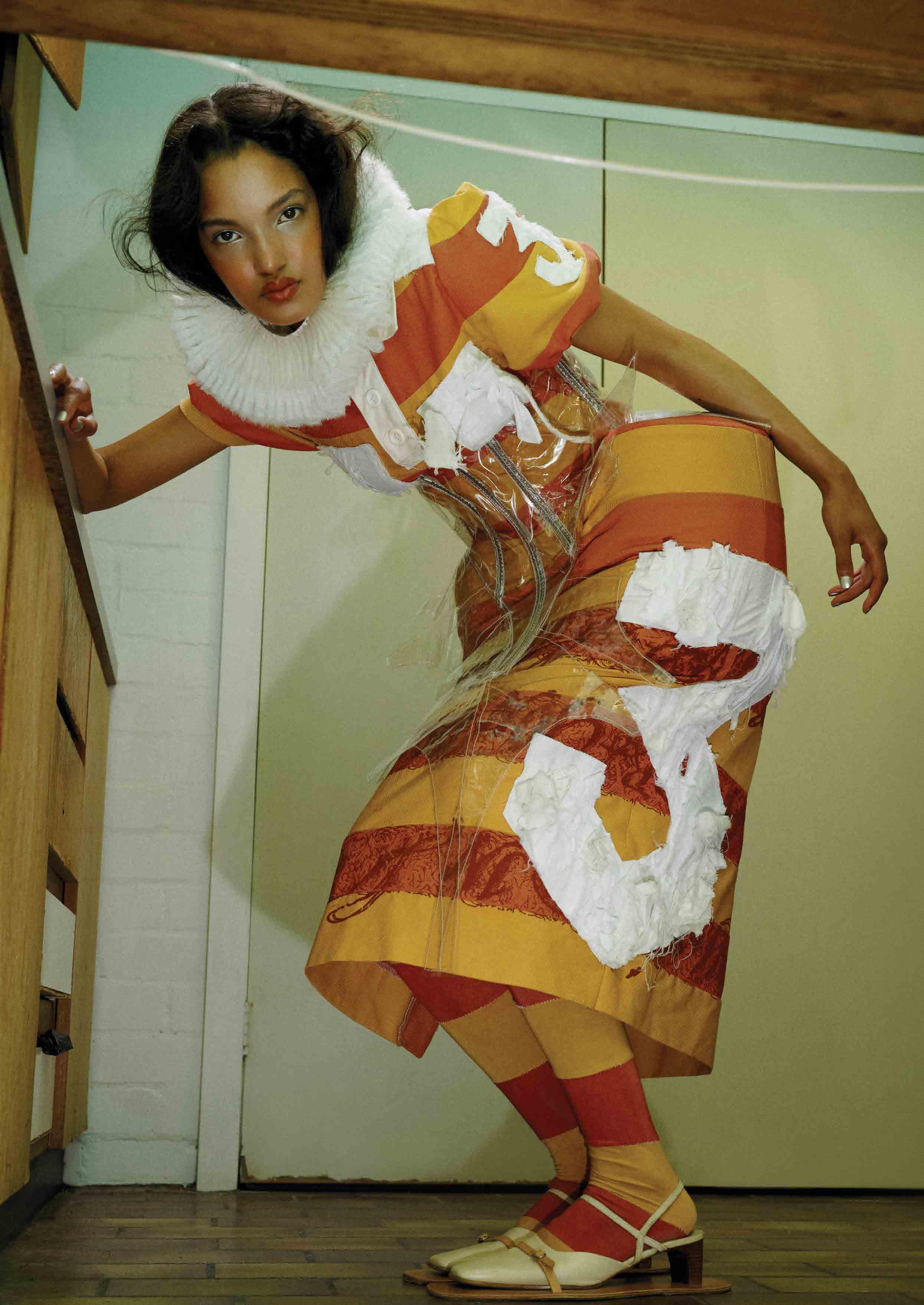
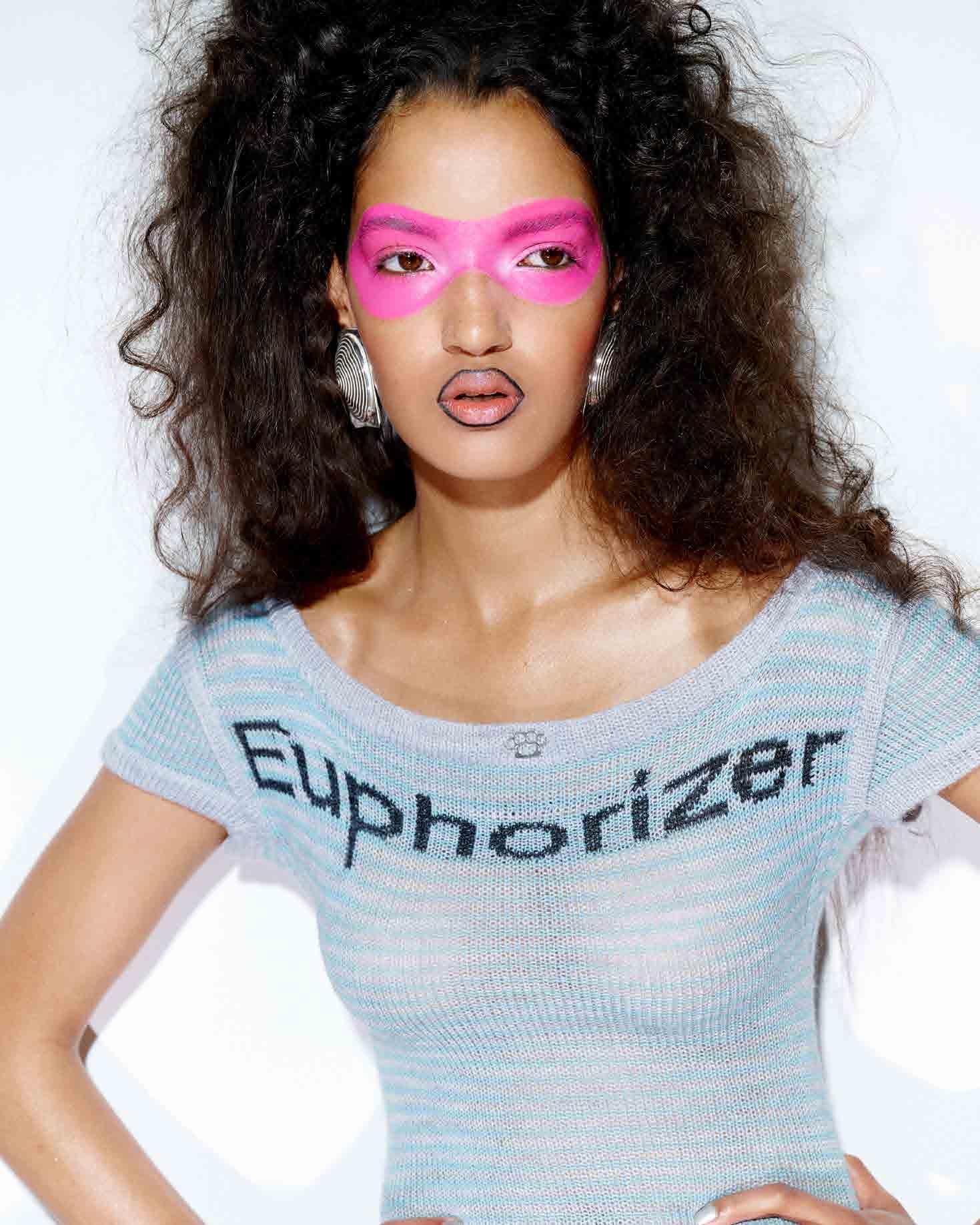
Cover photographer Bananas Clarke
Cover retouching Shetouch
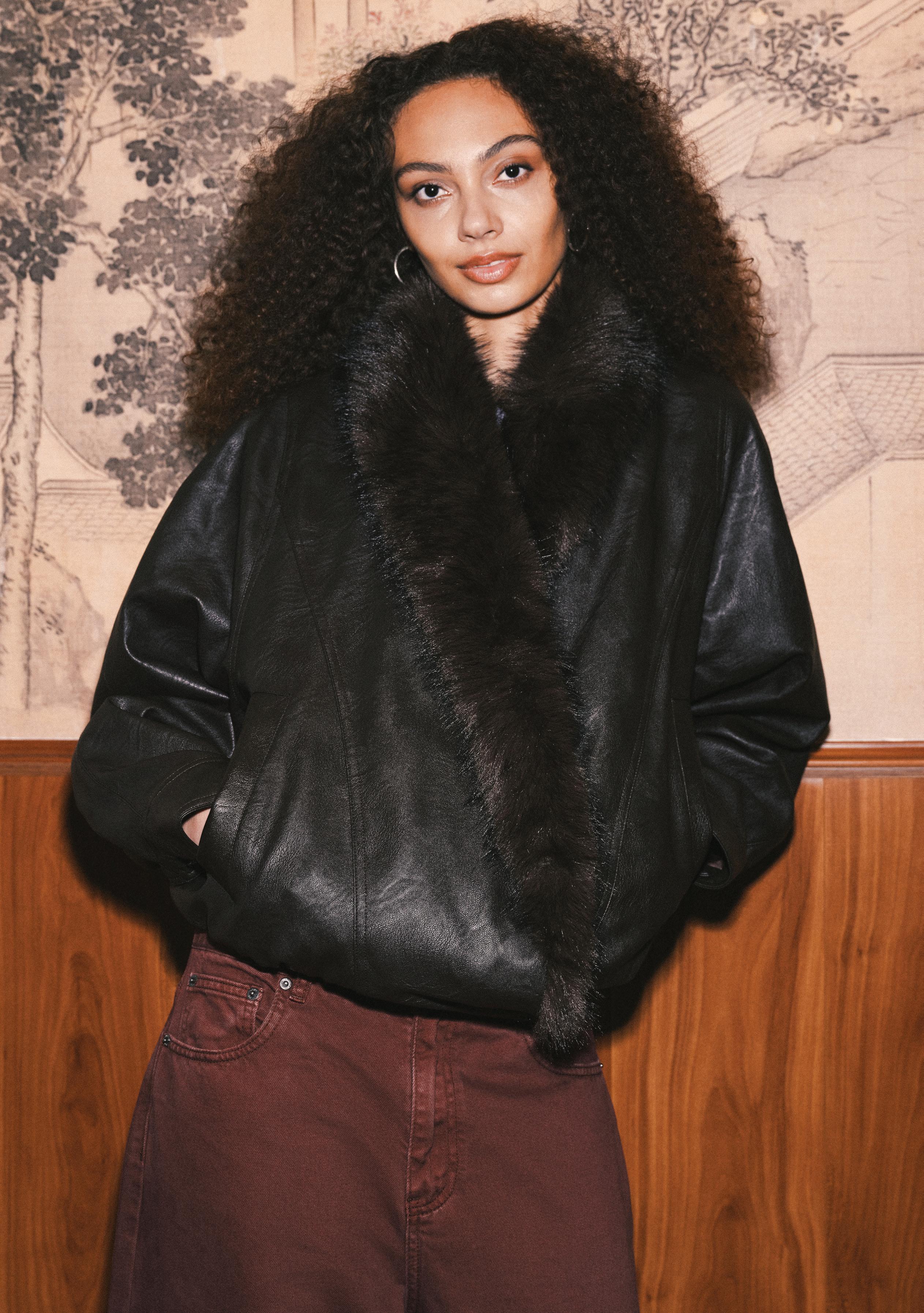
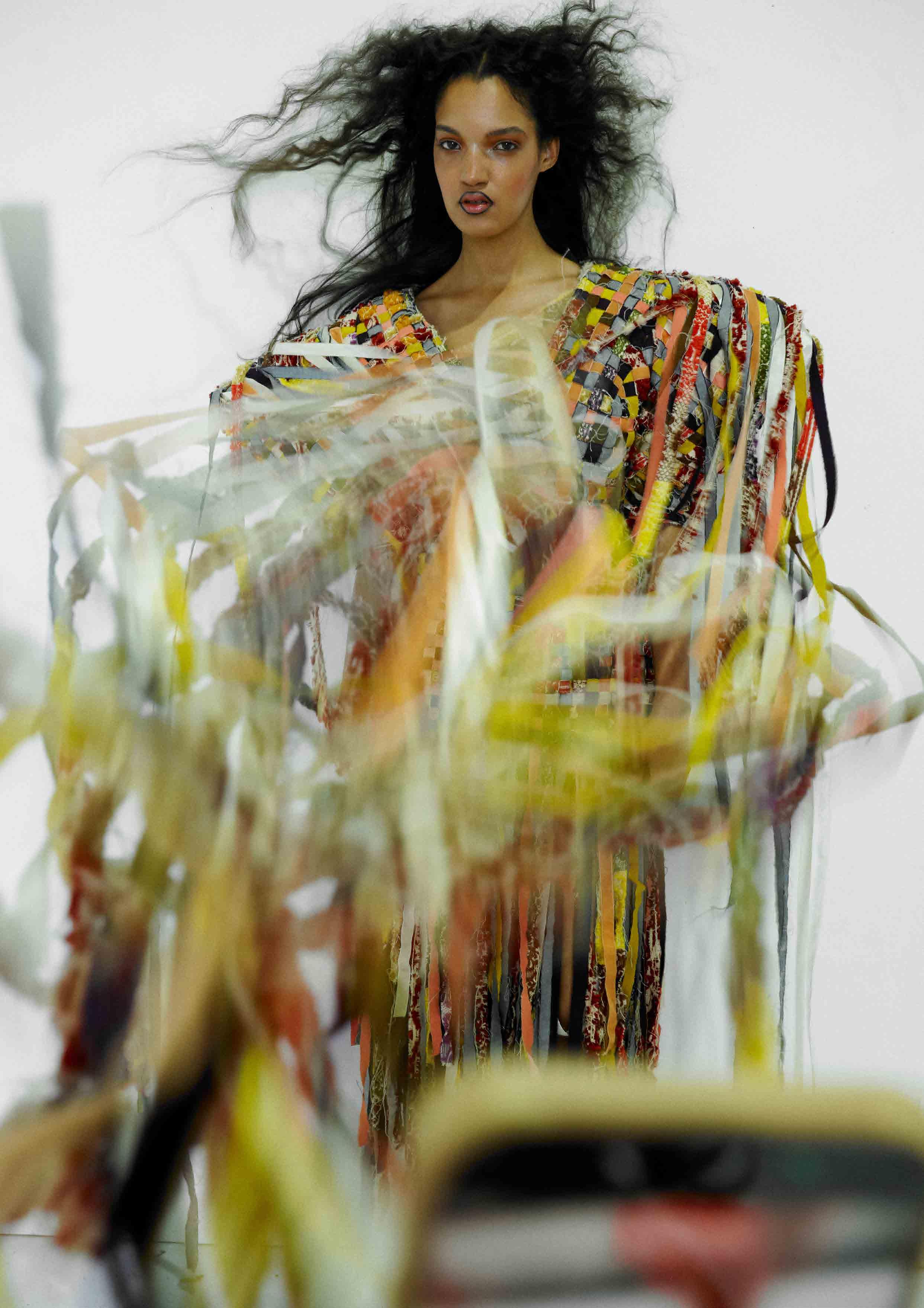
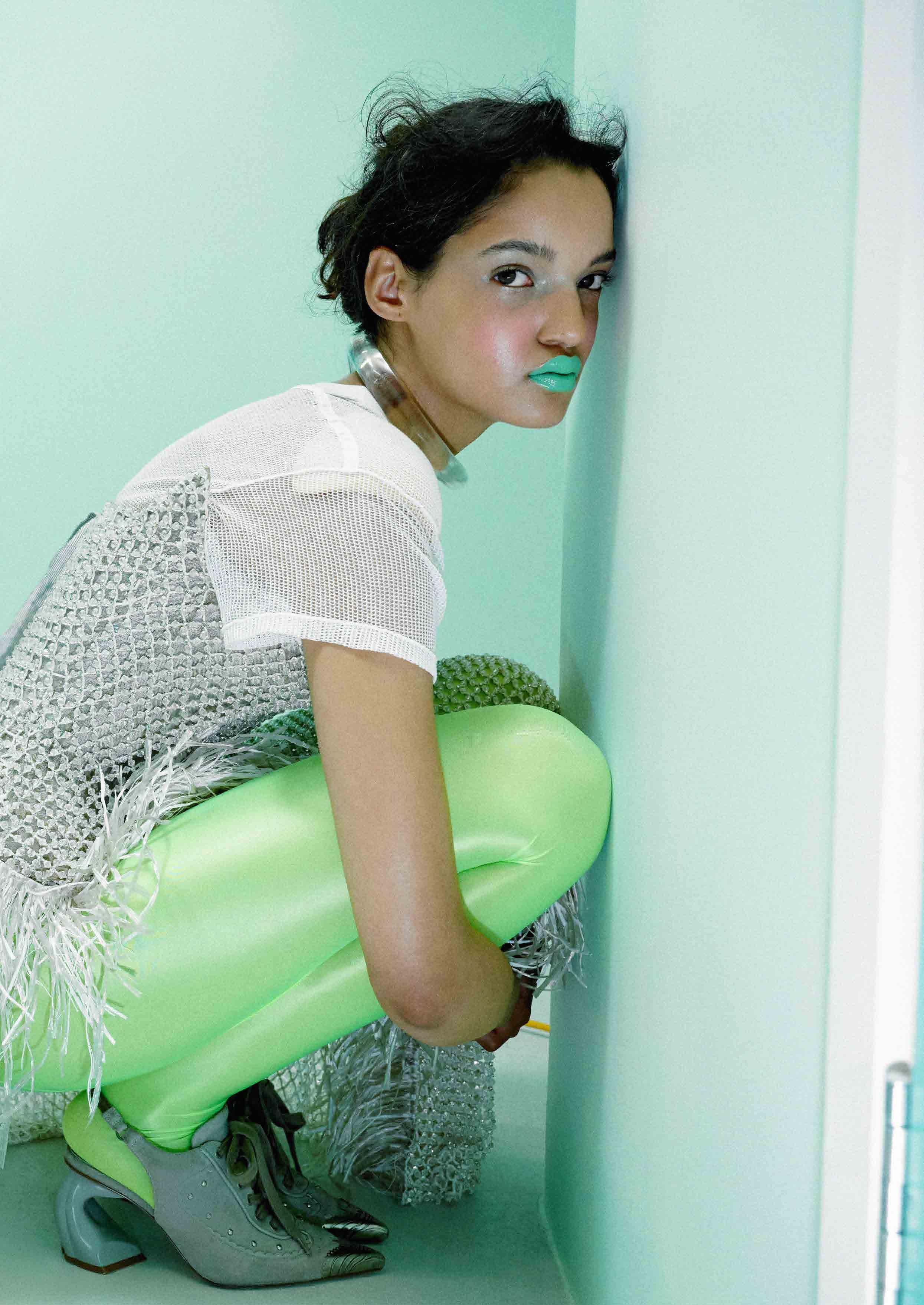
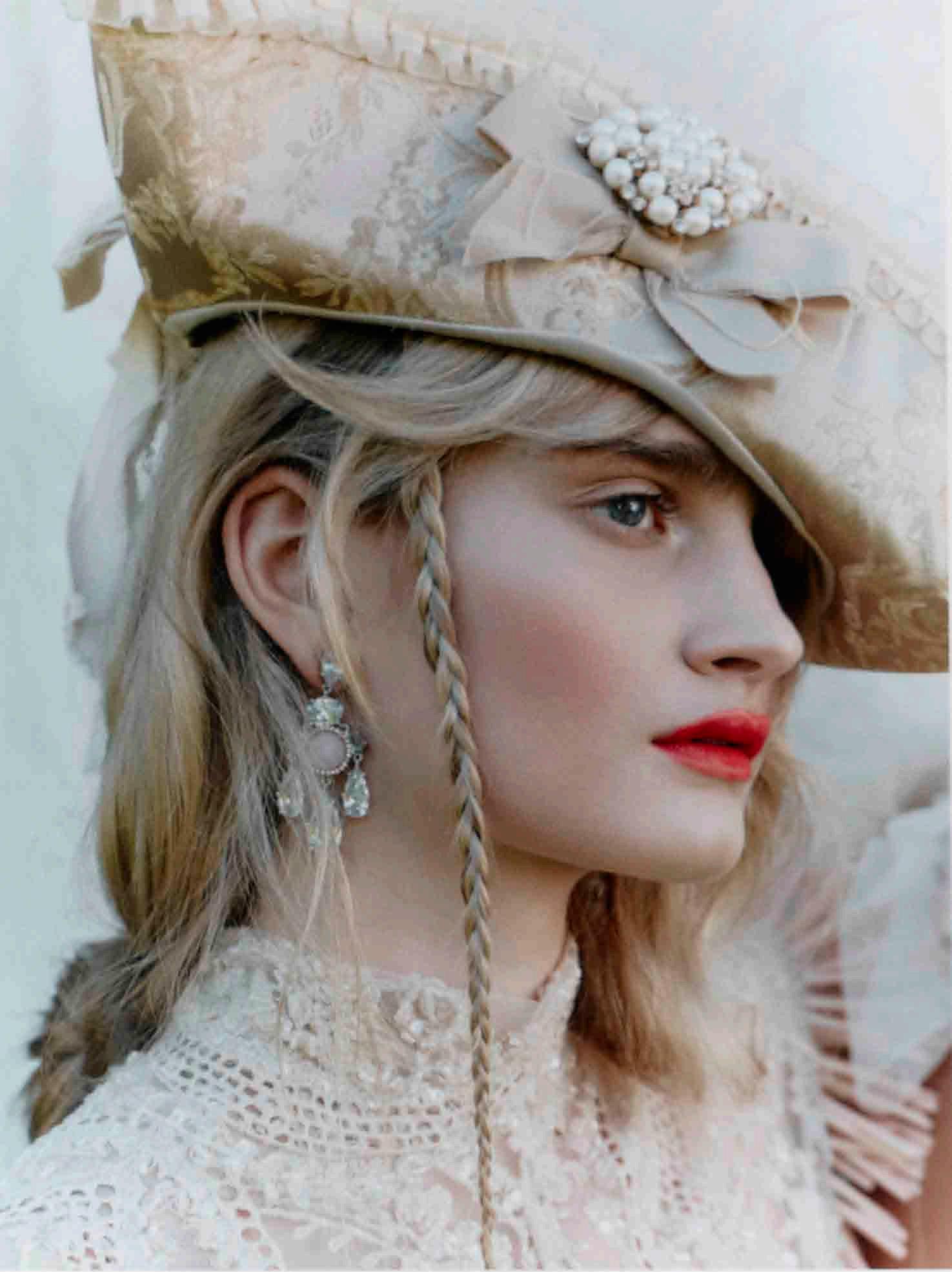
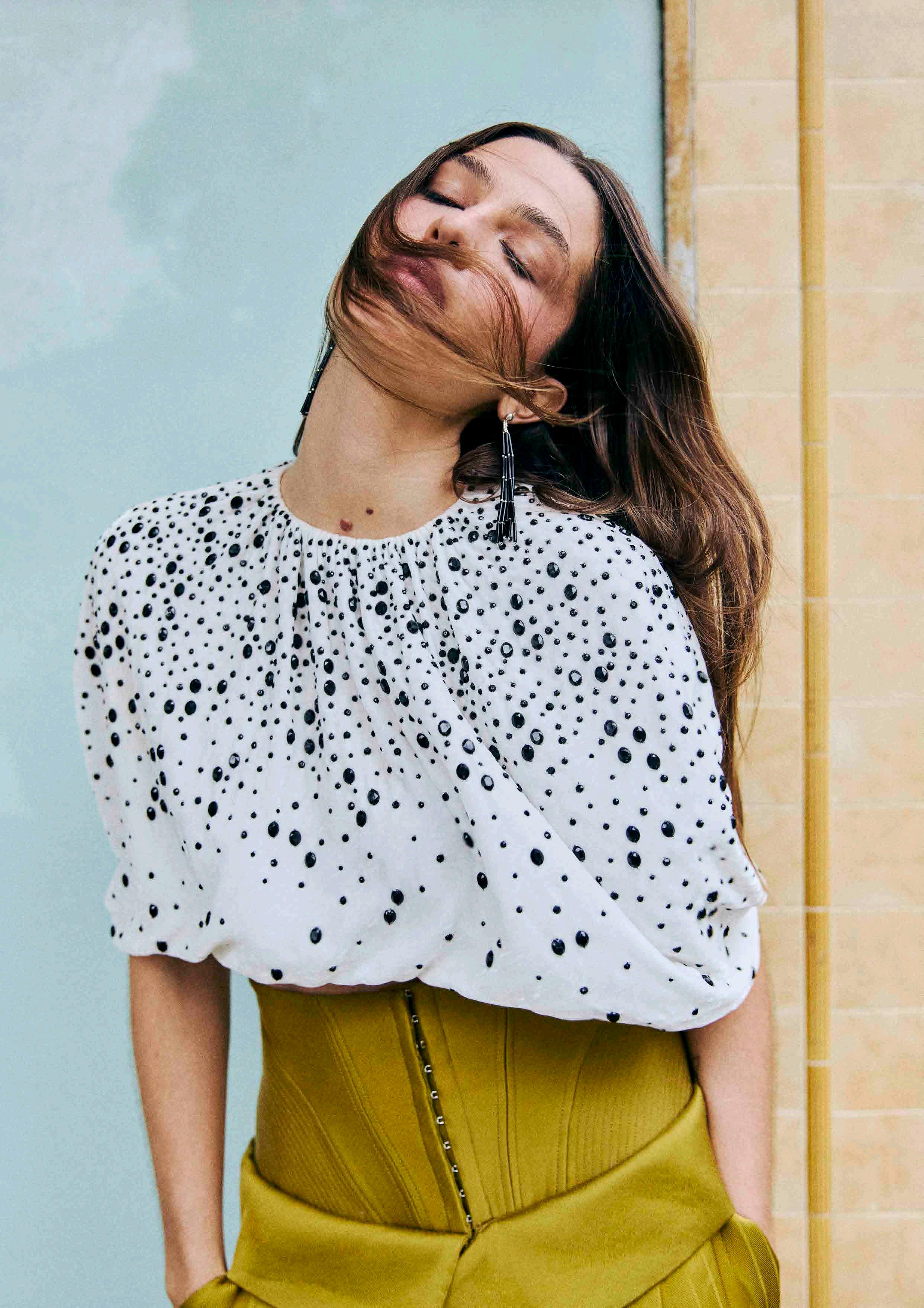
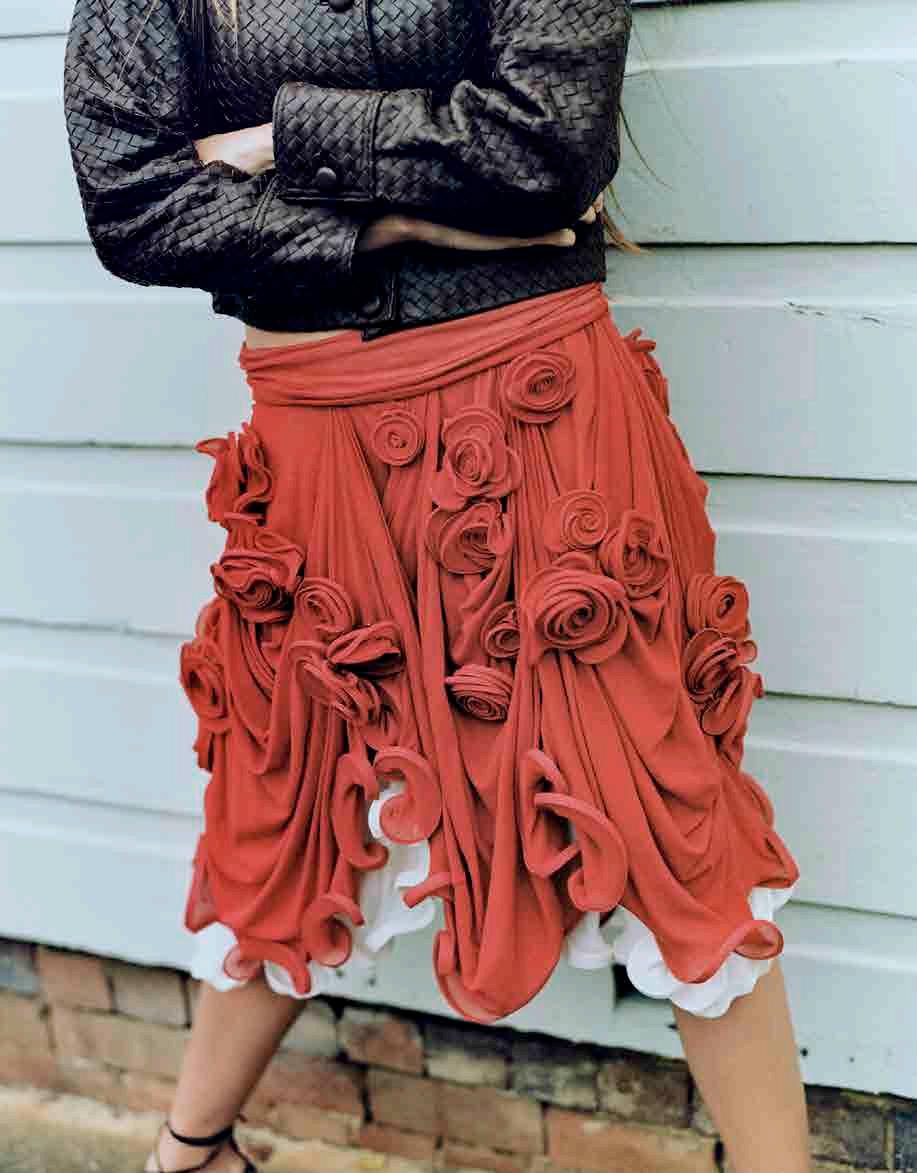
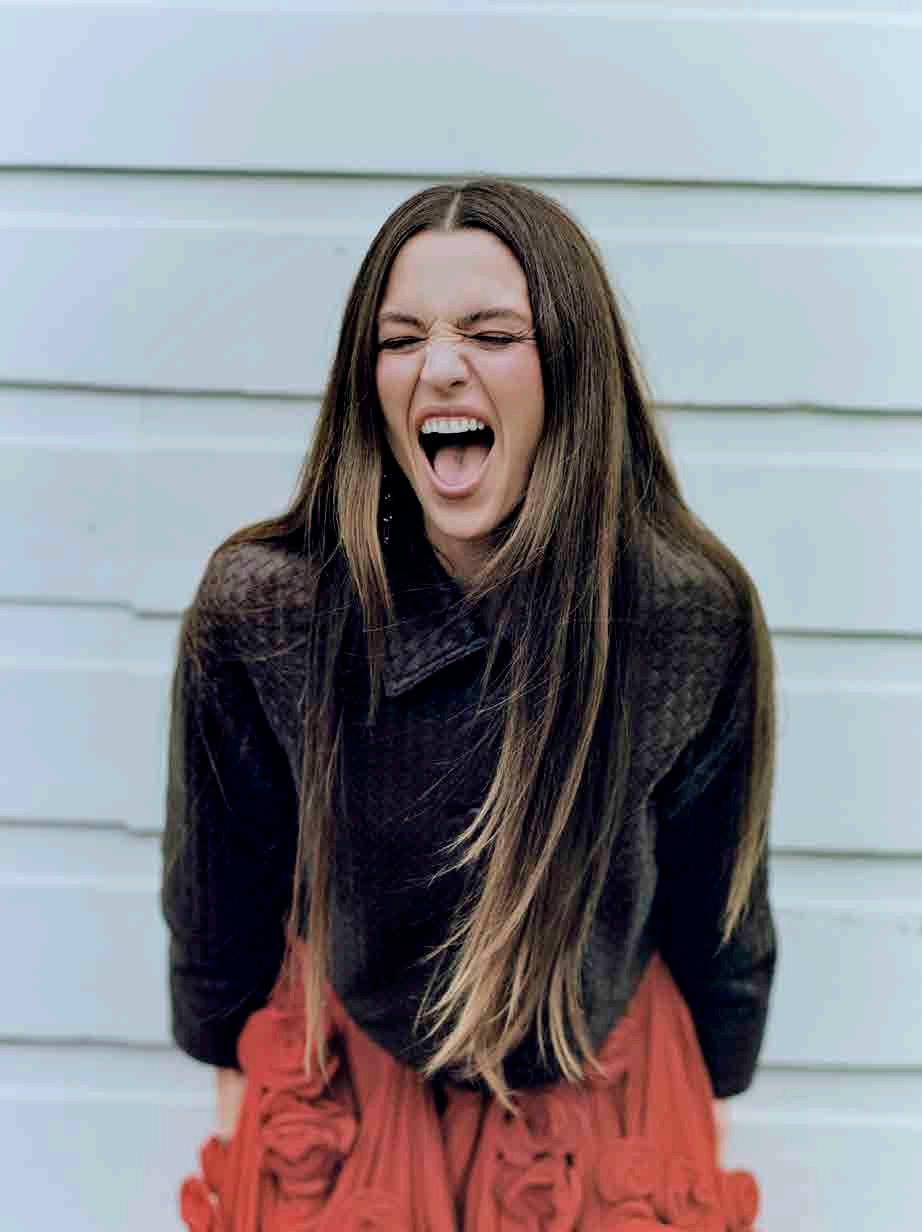
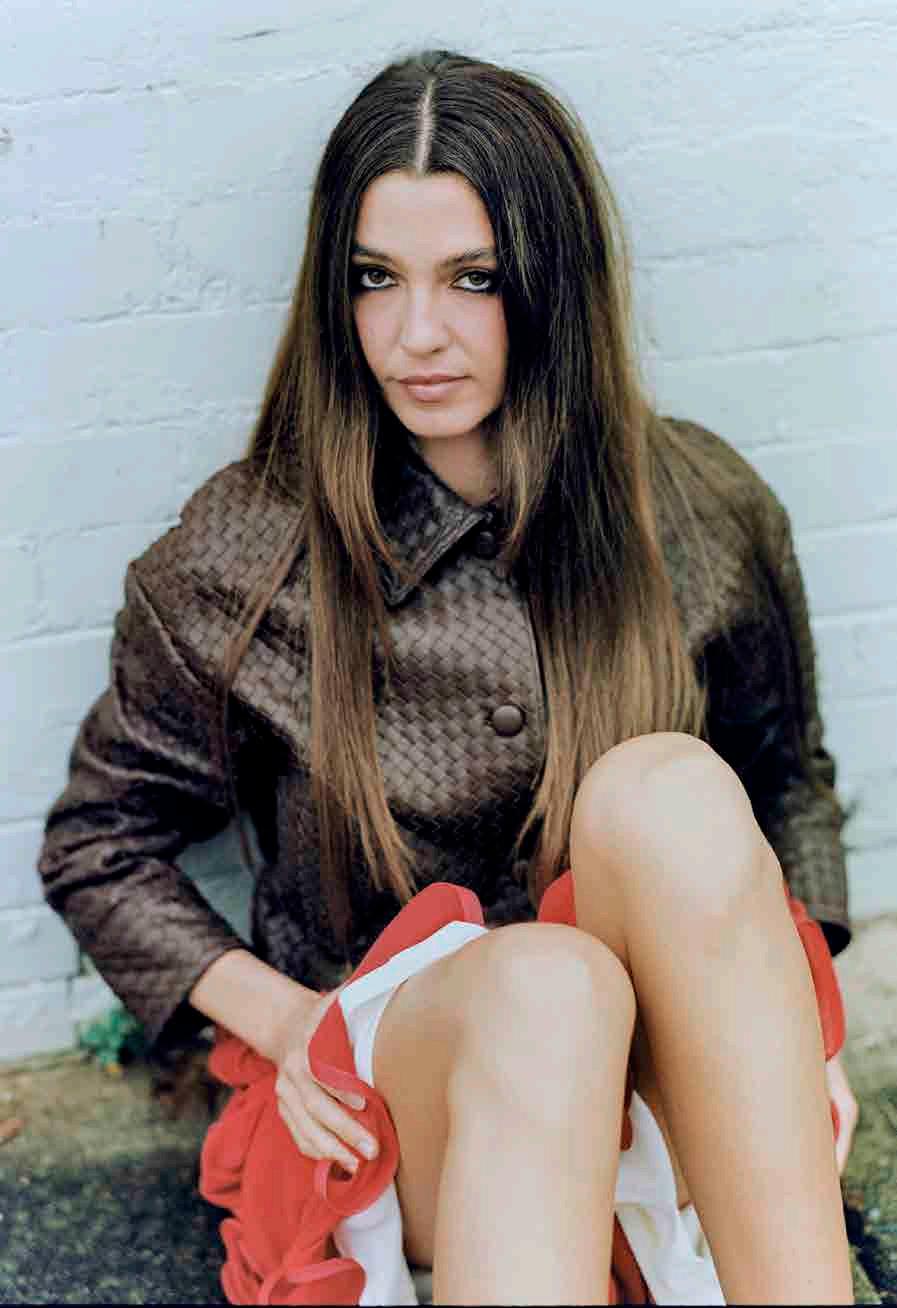
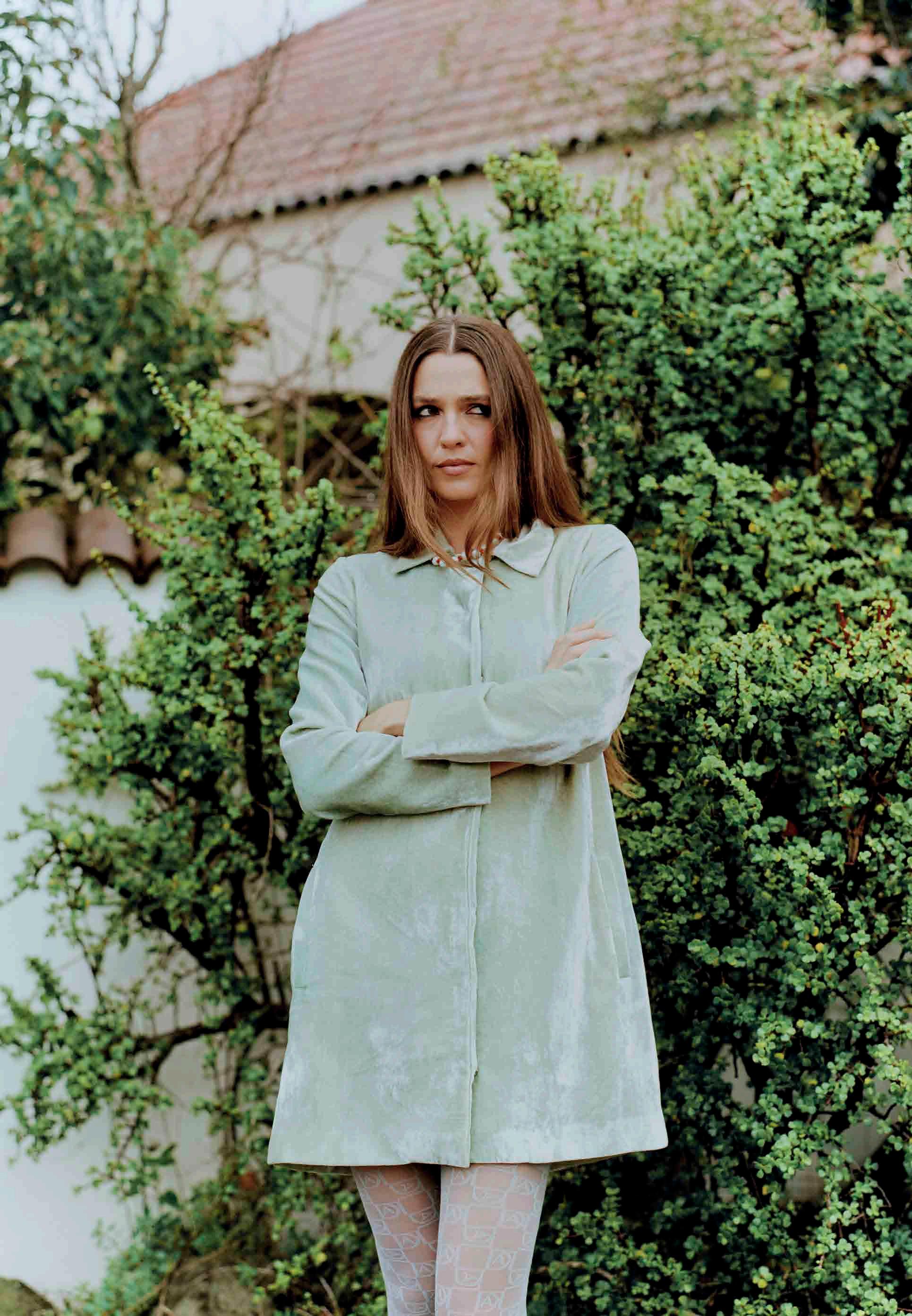
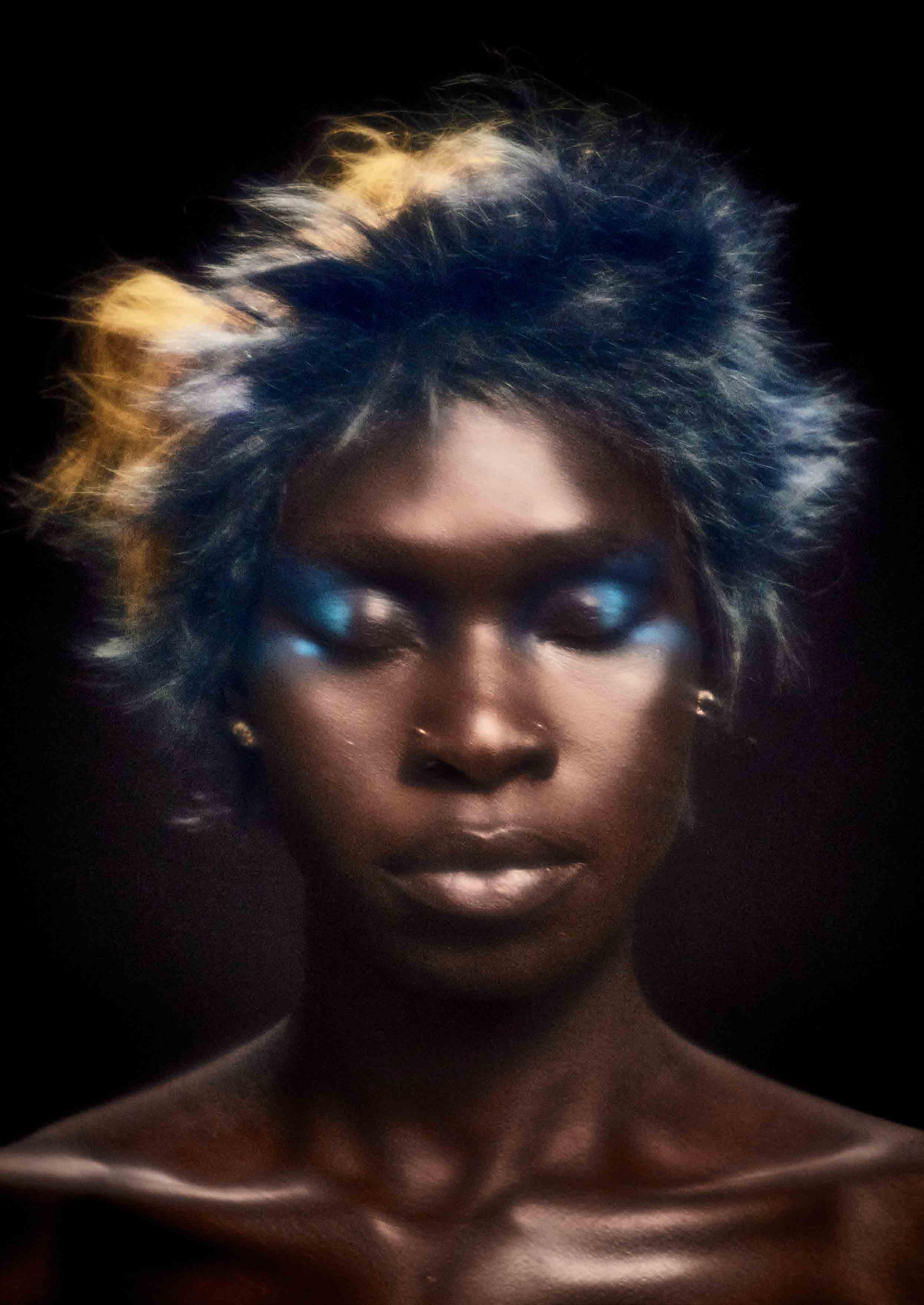
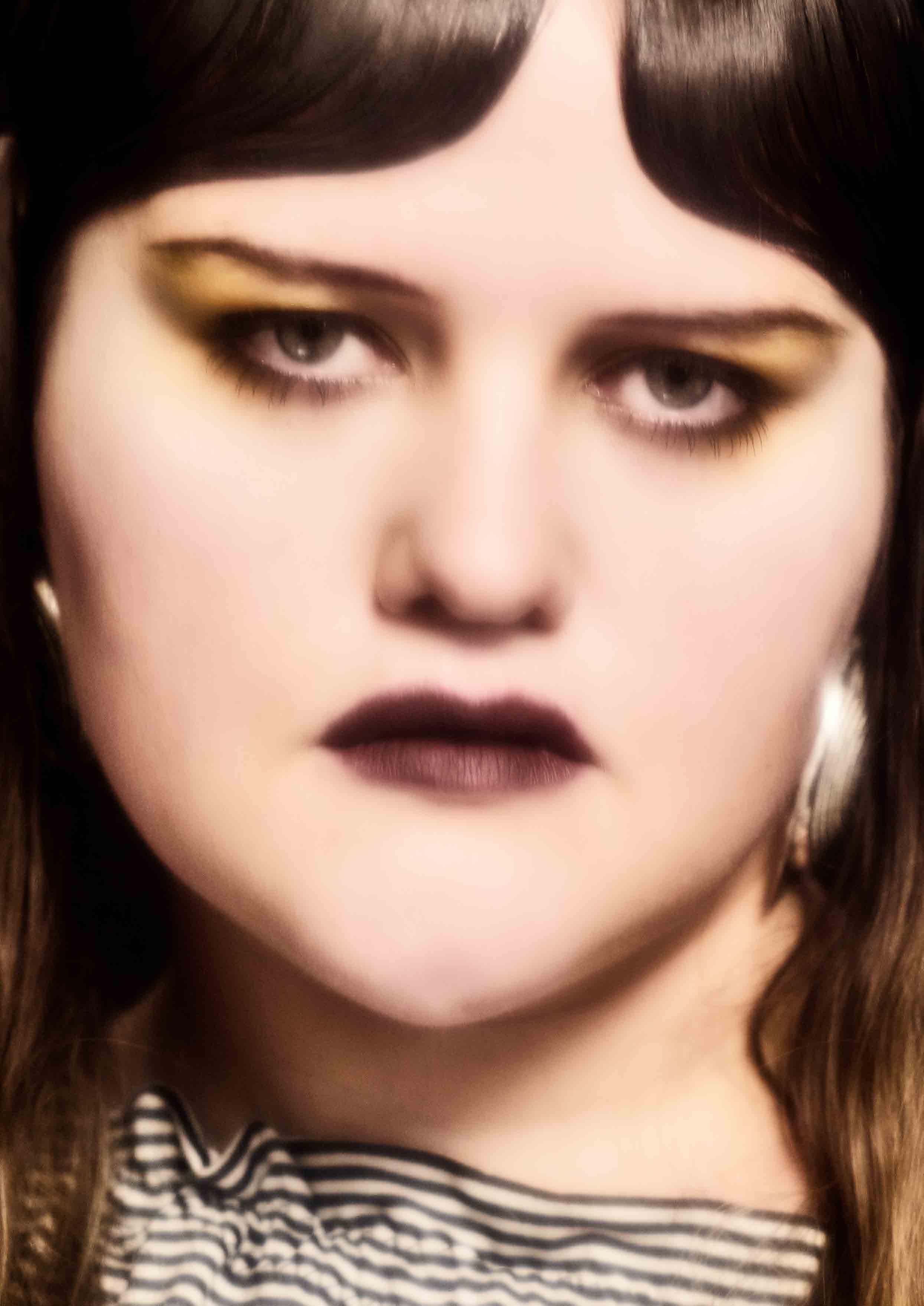
Corinne wears LUKE RUBÉN dress collar and tights, ALISON PYRKE shoes
Fashion Journal is printed in Australia using vegetable-based inks on FSC® Mix certified paper manufactured by an ISO14001 certified mill. Our paper is certified and audited as coming from recycled sources and forests using sustainable tree farming practices.
We acknowledge the Wurundjeri Woiworung and Bunurong people of the Kulin Nation as the traditional custodians of the lands on which we largely live and work. We recognise that sovereignty was never ceded and pay respect to Elders past and present.
Visit us at fashionjournal.com.au
Join us at @fashionjournalmagazine
Fashion Journal is published by Furst Media Pty Ltd
As creatives, we’re all products of the many people who inspire us. Our personal styles will develop, we’ll evolve, but we’ll always remember the ones who changed the way we see the world. Here, some of the team behind this issue share who they credit with opening their minds to new possibilities.
Achan Meshwang Model
As a South Sudanese girl, seeing models like Adut Akech and Anok Yai dominate the fashion space has been so inspiring to me, and many other girls who look like me. Growing up, it wasn’t common to see dark-skinned women represented in mainstream campaigns, so watching them succeed on a global level has broadened my perspective on what’s possible. They’ve helped me feel more confident and proud of my identity, while also showing the importance of representation in this industry.
Arielle Richards Writer
It’s difficult to nail down one source of inspiration because, as a brat spoilt by the internet, I’ve never lacked references. It all slews into an uncategorised, titillating mush, but I’d have to say the one thing that has completely reshaped my perspective is women online. I love Transtrender, Discoursted, Liana Satenstein and Julia Fox. And books – books taught me how to write. There’s no way to say this without sounding hack but Joan Didion, Helen Garner, Susan Sontag and M.F.K. Fisher.
Corinne Murray Cover model
My agents changed the way I see myself, beauty and the industry. Other models have inspired me with their style, what to wear to castings and how to be stylish but comfortable. Models and agents have also helped me stay motivated and have patience while working in the industry.
Pinky Makeup artist
Working with Val Garland for 10 years at fashion weeks and on shoots around the world changed my entire viewpoint on what beauty is, and how to get there. She taught me to find the beauty in the face in front of me, rather than just slapping on a look and hoping it will work. She taught me to trust my artistic instincts and just go for it!
Stuart Walford Stylist
Rei Kawakubo of Comme des Garçons has had the greatest impact on the way I view and approach fashion. Her rebellious, unwavering approach to design and her ability to consistently move the needle on innovation are totally inspiring. Aside from her incredible archive of designs, which blows my mind and inspires me endlessly, I’m also very engrossed in her approach to business, retail design and philosophy. Rei is a total powerhouse. I constantly watch to see what she does next.
Cosmorotics,
David Sanderson & Lee Brady, Wikimedia Commons (CC BY-SA 3.0).
A Brief History
Words by Constance McDonald
I’m staying at a farm in the Central Highlands in Vietnam. It’s eight dollars a night and includes one meal. Today I chose the prawn dumplings and they drift like small folded envelopes in the clear broth. There’s a dried-up well here. I shout my name into it and it comes right back to me.
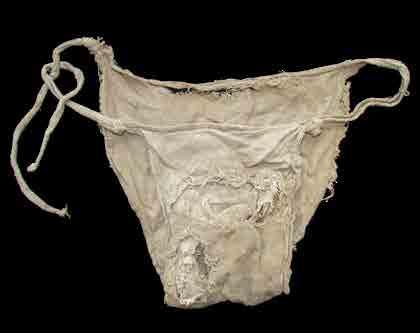
Two thousand years ago, a woman removes her underwear. She holds it over a well’s dark mouth of water for a moment before she lets it go. In 1953, an archaeologist reaches into that same well, in the City of London, wipes off the grime and realises what he is holding. It’s a pair of carefully constructed leather underwear. That night, he goes home, lies in bed and wonders: Who was she?
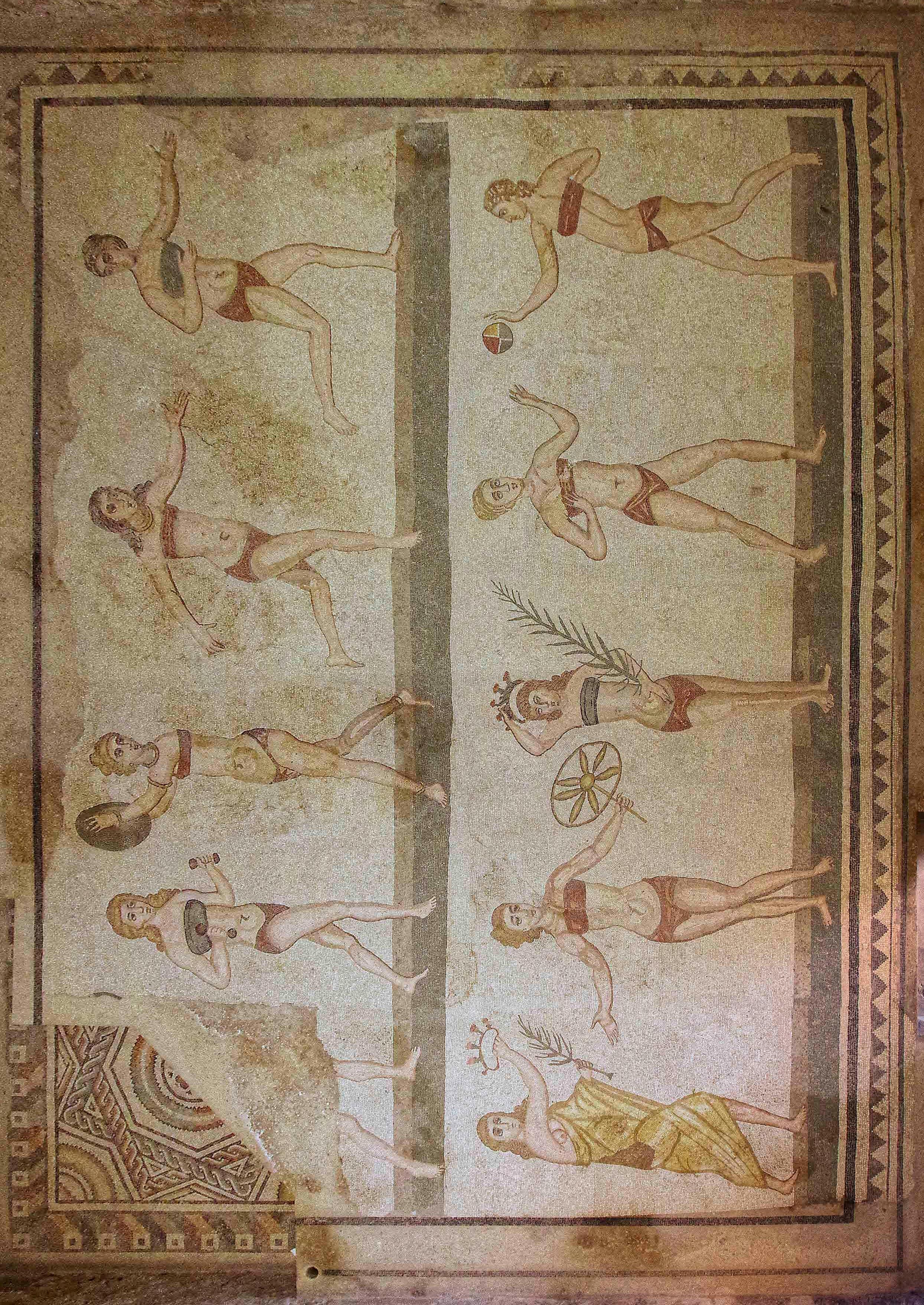
In Sicily, near Piazza Armerina, are the remains of the Villa Romana del Casale. Inside, on the floor of a small room, is a mosaic depicting 10 women; some are running, and one holds a discus. Nine of the women wear leather underwear known as subligaculum: athletic, fitted and Ancient Rome’s answer to Lululemon spandex shorts. That is what was found at the bottom of the well.
Across the Mediterranean, Egyptian King Tutankhamun was buried with 145 pairs of underwear. On TikTok, people debate how many pairs of underwear you should pack for a week-long trip. Tutankhamun’s schenti are made from a rectangle of linen wrapped around the hips and knotted at the front. They’re similar in function and aesthetic to Rome’s subligaculum. The loincloth, in all its variations, remains humanity’s oldest undergarment.
Underwear is our most practical garment, right up until it isn’t. It disappears so easily, which makes it surprising how often it reappears: in tombs, in wells, in mosaics, behind museum glass, in archives, on screens.
Sift through your own underwear drawer. There’s the expensive lace pair purchased during a period of optimism. The comfortable cotton pair that has forgotten its original shape but knows yours. The black pair you’ve been meaning to return to your friend since you borrowed them for a morning-after brunch. The period pairs. The emergency pair that’s always picked last and signals laundry day must be today. Seven-pair ‘days of the week’ sets (missing, somehow, Wednesday and Friday).
For something so ordinary, underwear has an unusual tendency to survive. Not always physically, though sometimes that, too.
Floor mosaic, Villa Romana del Casale, Sicily, c. 4th century AD.
In 1954, Marilyn Monroe stood over a subway grate on Lexington Avenue while the city’s hot mechanical breath lifted her white dress into the air, revealing her underwear. If you go there now (specifically, the eighth grate south of East 52nd Street), you can stand in the exact spot. There is an online project called Traffic Cam Photobooth that lets you access the city’s surveillance camera network so you can immortalise your own Marilyn moment. Just make sure you are wearing underwear.
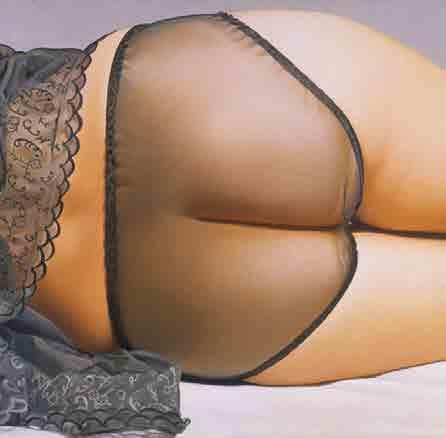
Marilyn was wearing Hanro’s maxi briefs. They are still purchasable today. Decades later, Nicole Kidman would wear Hanro too, in Eyes Wide Shut. That perfect, thin spaghetti-strap top and the midi briefs. Sofia Coppola based the opening shot of Lost in Translation on John Kacere’s 1973 photorealist painting, Jutta. In it, Scarlett Johansson lies on a bed wearing a pair of sheer pink Sonja briefs by Araks, which are, too, still purchasable.
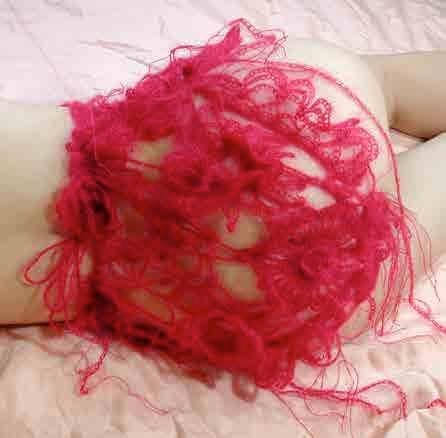
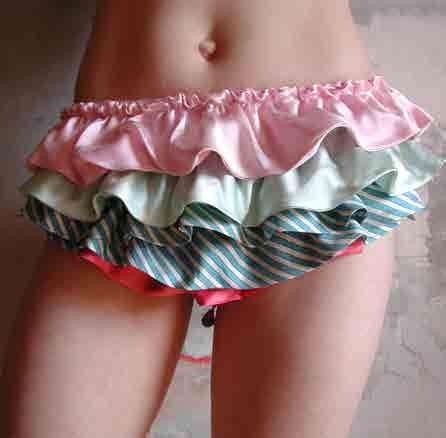
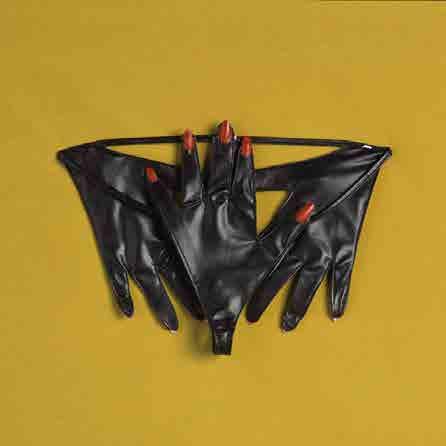
Some underwear, though, was never meant for commercial production. My favourite (but to-date, unattained) underwear is by Strumpet and Pink. The brand was created in the early noughties by British artists Melanie Probert and Lisa Z Morgan. The Victoria and Albert Museum in London holds one of its pieces in its permanent collection: a pair of knickers featuring two frothing rosettes of silk chiffon directly over the buttocks. Another piece of theirs was hand-crocheted with a thread made from fermented yeast, sugar, water and spider DNA. If you find a pair of secondhand Strumpet and Pinks, do not tell me, unless it is to ask when my birthday is and for my postal address.
Some underwear is edible. In 1975, David Sanderson and Lee Brady discovered an edible film originally designed to wrap frozen turkeys and used it to manufacture banana splits, hot chocolate and wild cherry-flavoured briefs they called Candypants. By 1976, they were selling 25,000 pairs a month. Candypants looked exactly like they were made of Uncle Toby’s Roll-Ups: something I was never allowed in my school lunchbox, but once successfully swapped a scented gel pen for.
At Hamidiyah Souq in Damascus, Syria, you can buy sugar fondant spun into lingerie in flavours like pineapple, mango and honey. The Syrian bride arrives at her marriage with a suitcase of underwear – at least 30 sets – some edible, some embedded with microchips that play Arabic love songs. Excess here feels like part of the ritual. If you ever come across the book, The Secret Life of Syrian Lingerie, clear your day.
The washing machine at my Vietnamese farmstay is broken, so I fill the white plastic bathroom sink with water. I submerge three pairs of underwear with my palm and they bloom beneath the waterline. They’re all made of silk.
During the Second World War, Allied airmen carried their maps printed on silk because the material was quiet, durable, water-resistant and easily compacted into a damp pocket. Some women were gifted custom knickers made from these very military silk maps by their Royal Air Force boyfriends. My pairs are not maps. Mine cost 50 cents a pop from op shops. I am not afraid of secondhand undies.
I open a sachet of baby powder-scented washing liquid with my teeth and stir the water until it foams. It is time to attend to my gussets with secular devotion. Suds cling to my wrists like lace cuffs.
After the fall of Rome, the bifurcated garment mostly disappeared from the woman’s wardrobe, replaced for centuries by the long, modest linen shift. By the late 18th century, knee-length drawers had returned, blousy and made of butter-soft silk – if you could afford it. The crotch was left open so you could squat over a chamber pot without getting undressed.
Open-crotch drawers had been the norm for a 100 years when (and this tale is best served with a heavy grain of salt and a glass of absinthe in hand), at the Moulin Rouge and the Folies Bergère in Paris, women performed the intimate ritual of going to bed. Slowly undressing and brushing their hair. Then, the music changed and the can-can began. When the high kick came, the leg went vertical and the skirt lifted, revealing a new adaptation: a sewn-up crotch. The dancers had cut the legs short, edged them with lace and added baby-pink ribbon. Oh là là, the ‘French Knickers’ were born.
Hidden things have always attracted ornament, whether with pearls, beads, or seal-skin fringe. My own most embellished pair of knickers are mesh, covered in pearls and impossible to sit down in. Samantha Jones wears a version of this in season five, episode three of Sex and the City: a pearl thong by Bracli.
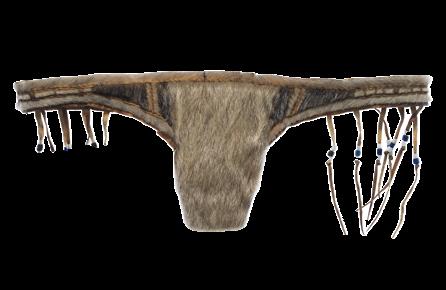
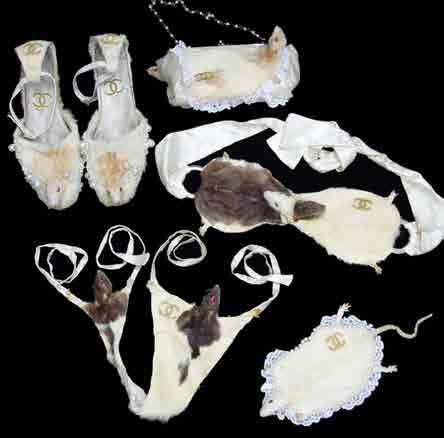
If you ever find yourself in Copenhagen, the National Museum holds a pair of 19th-century beaded seal-fur underwear, called a naatsit, from East Greenland. A small, triangular apron of fur is secured by a low-slung waistband, connecting to a strip of hide that passes between the legs. It’s decorated with glass beads on a seal-skin fringe, and is the direct ancestor to a taxidermied rat g-string made by Kristofer Paetau and Ondrej Brody 20 years ago.
The water in the basin goes grey. I rinse and press the knickers between my palms to relieve them of their water weight. If a pair of Strumpet and Pink ever materialises for me, though, I promise to wash them in Holy Water.
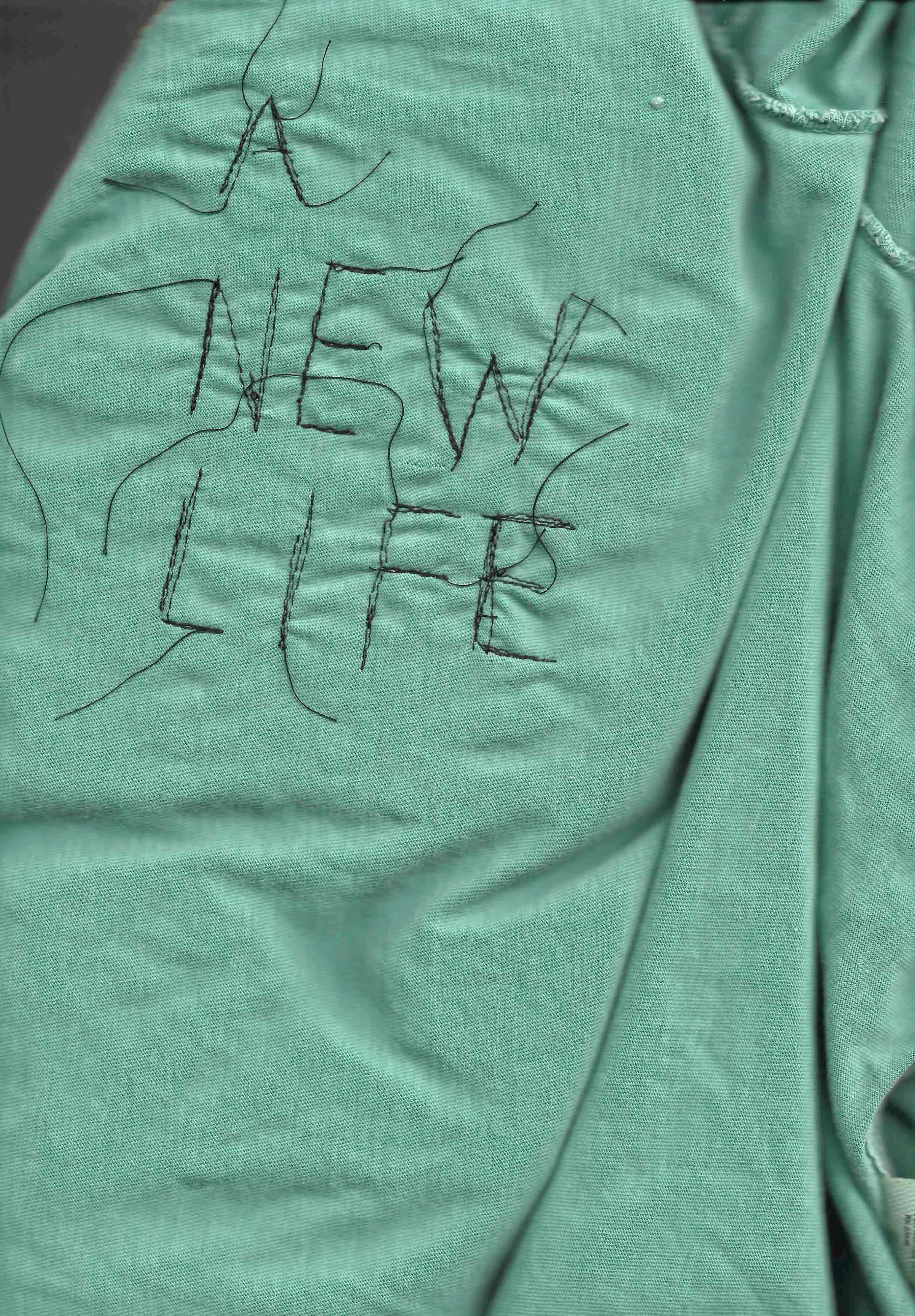
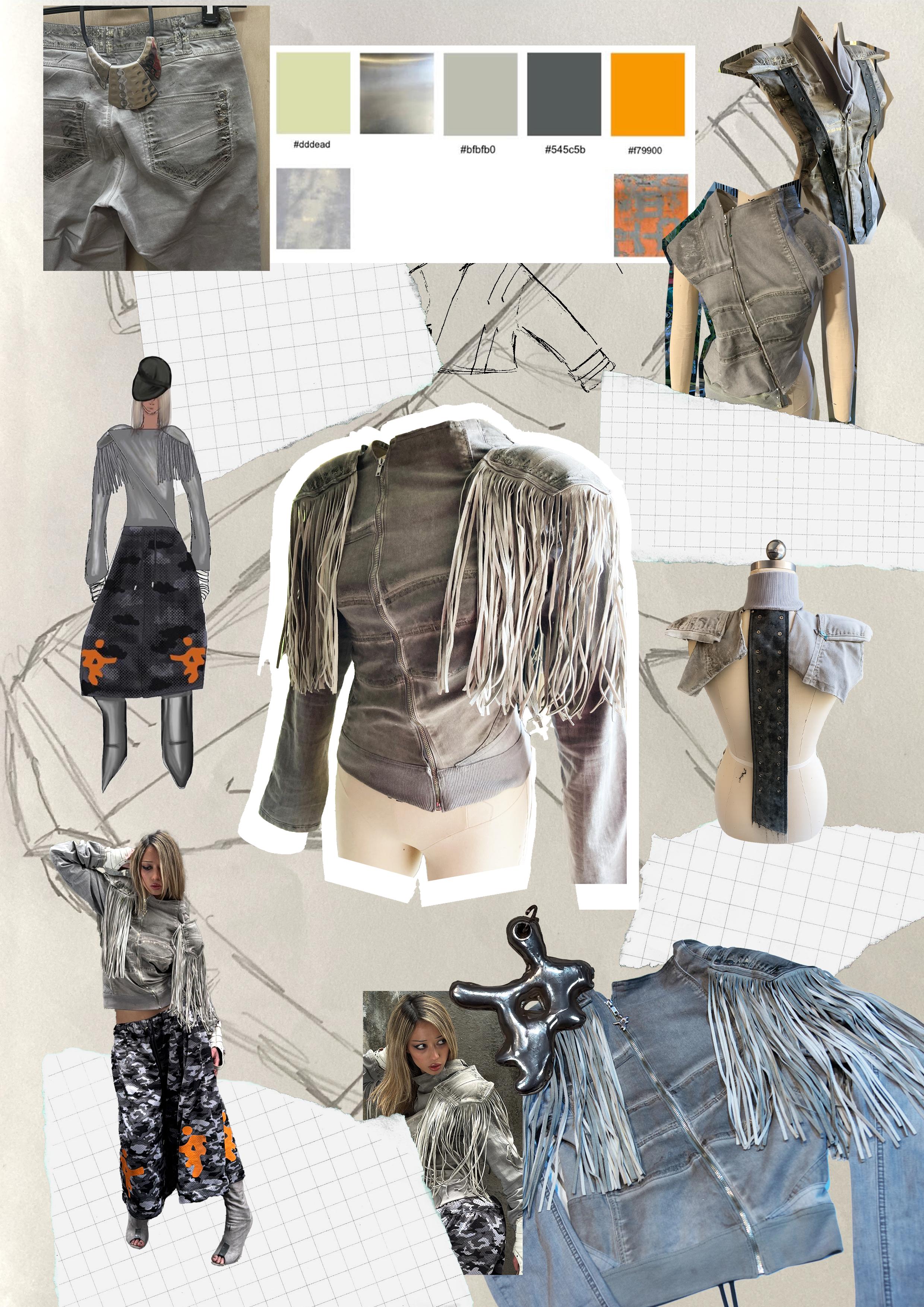
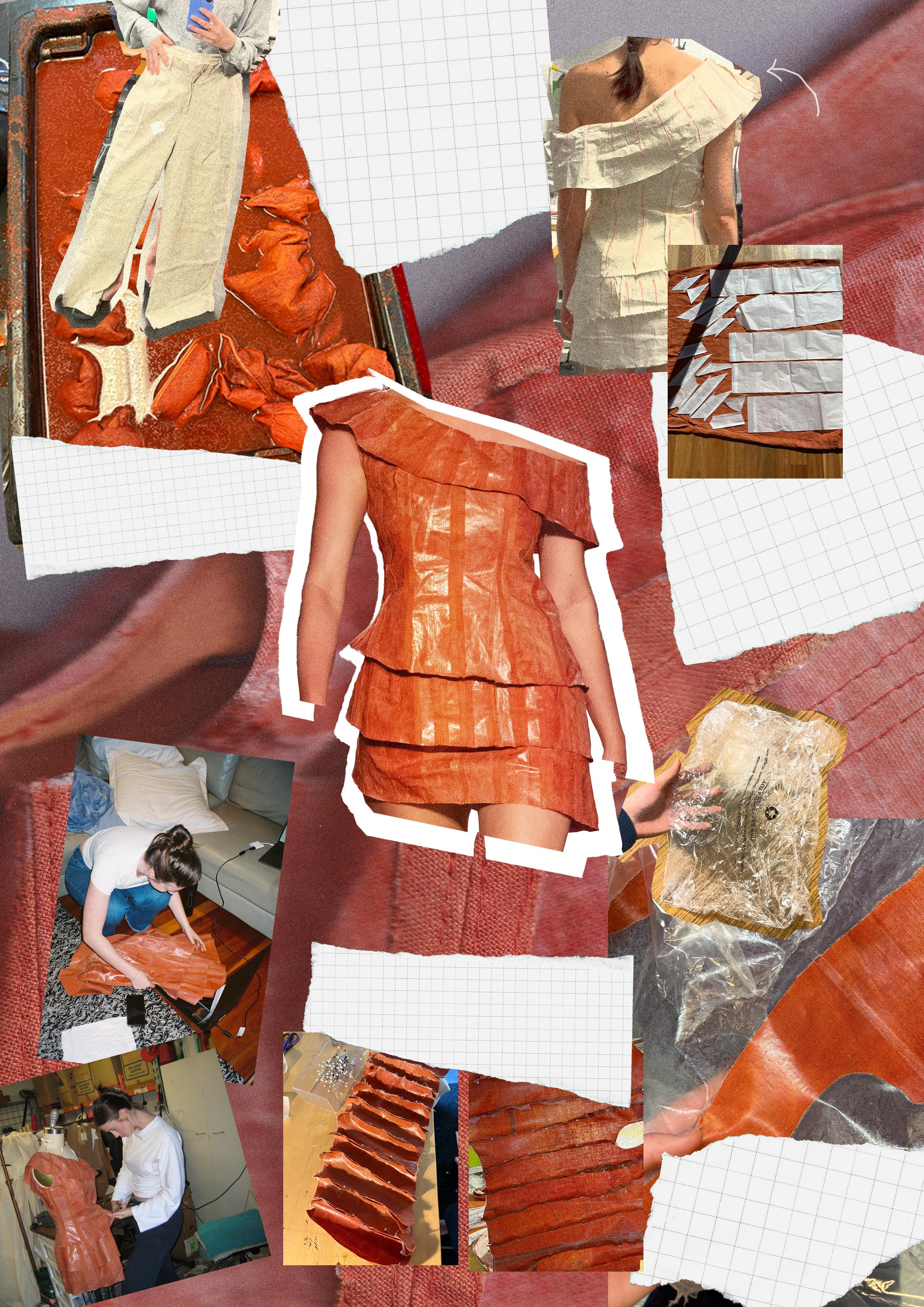
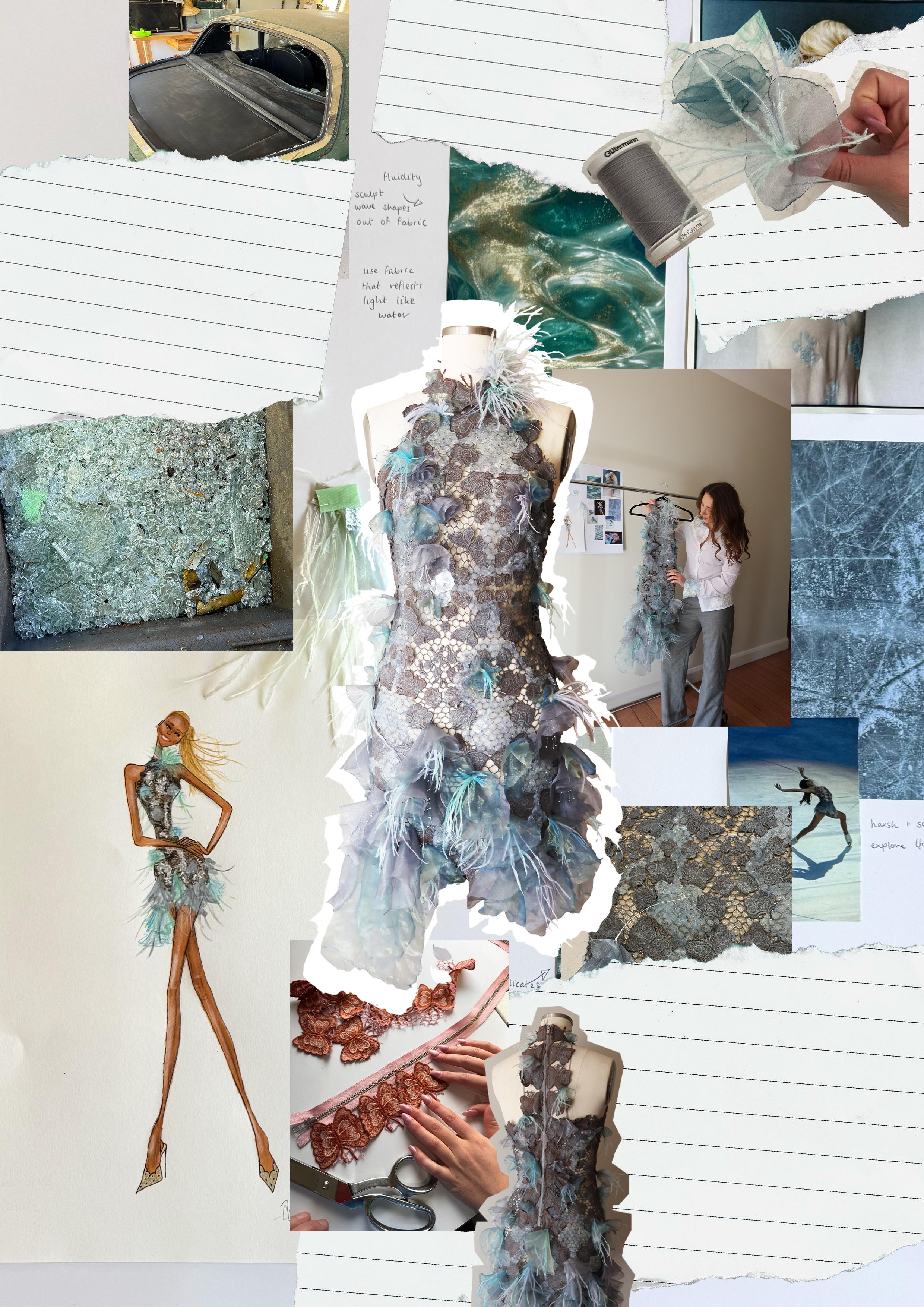
Whether it’s giving new life to worn-out jeans or using the glass windshield from an old car, working with unconventional materials comes with its own set of challenges. However, that’s precisely what makes the process so rewarding. Factor in the amount of waste circulating throughout the fashion industry, and upcycling becomes not only a creative pursuit but a sustainable one. In these collages, three local designers give us a peek into their process, showing exactly how they upcycle discarded materials into a finished piece of clothing.
Tate Boswarva is the designer behind
Scroll through the website of Jaida the Creator’s clothing label Sanctuaire, and you’ll see that almost every piece, whether it’s a skirt, bag or top, once started as something else. A true multidisciplinary artist, Jaida fuses ethical production with boundary-pushing design.
off her Australian Fashion Week debut, Tate’s graduate collection featured 12 looks made entirely from secondhand jeans, recycled glass, discarded plastic garment bags, deadstock fabrics and six kilometres of old threads in one look (to name a few).
What designer Amy Cottrell touches often turns to gold –or a version of. Her passion for sustainability continues to guide her eponymous label, where each piece is made using an assortment of carefully sourced vintage, recycled, deadstock and sustainably produced materials – think edible bioplastic, old zip tags, or chandelier crystals from a Barcelona flea market.
Attè. Fresh
1. Jaida the Creator, Sanctuaire
3.Amy Cottrell
2. Tate Boswarva, Attè
Jaida the Creator
Tate Boswarva
Amy Cottrell
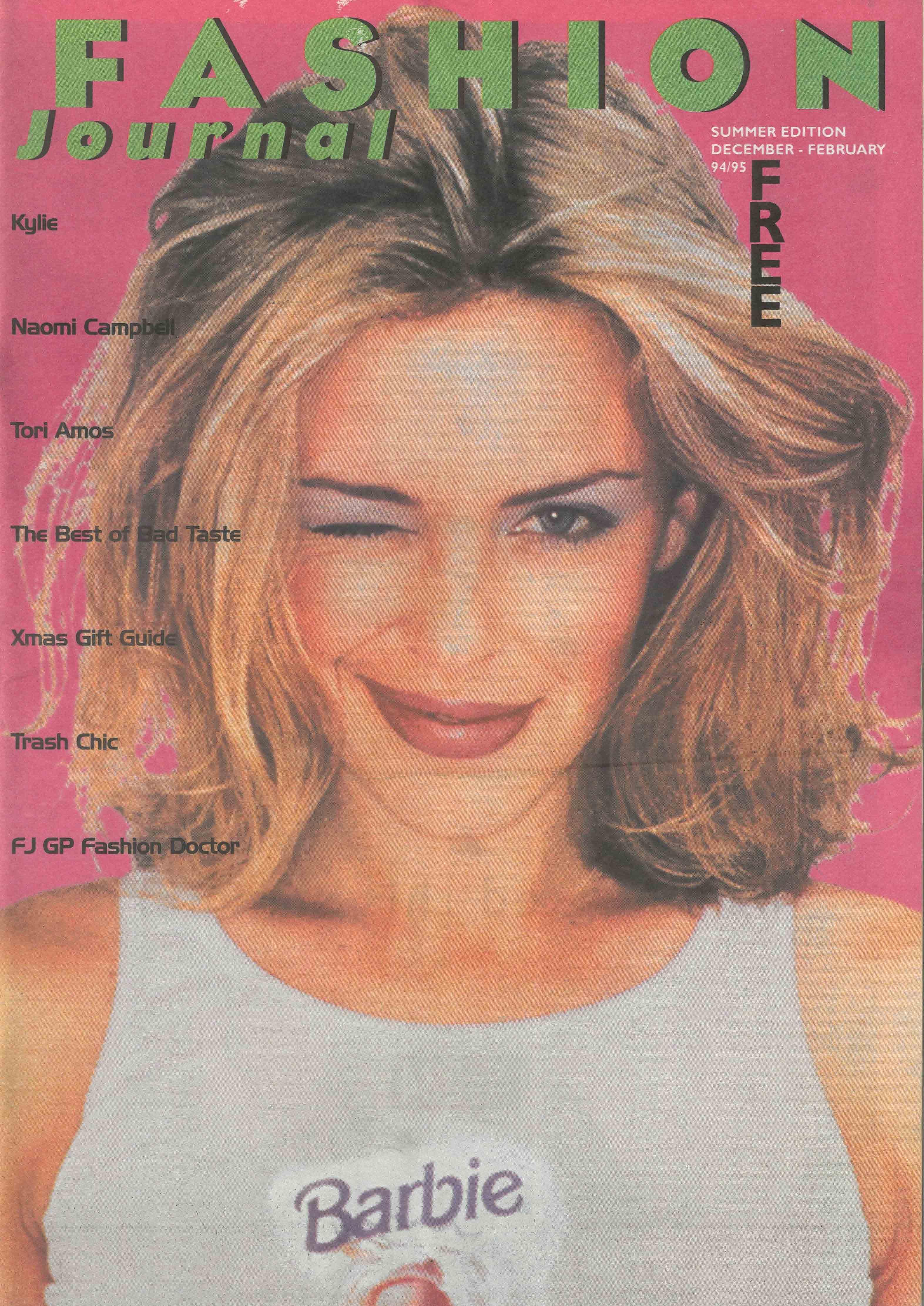
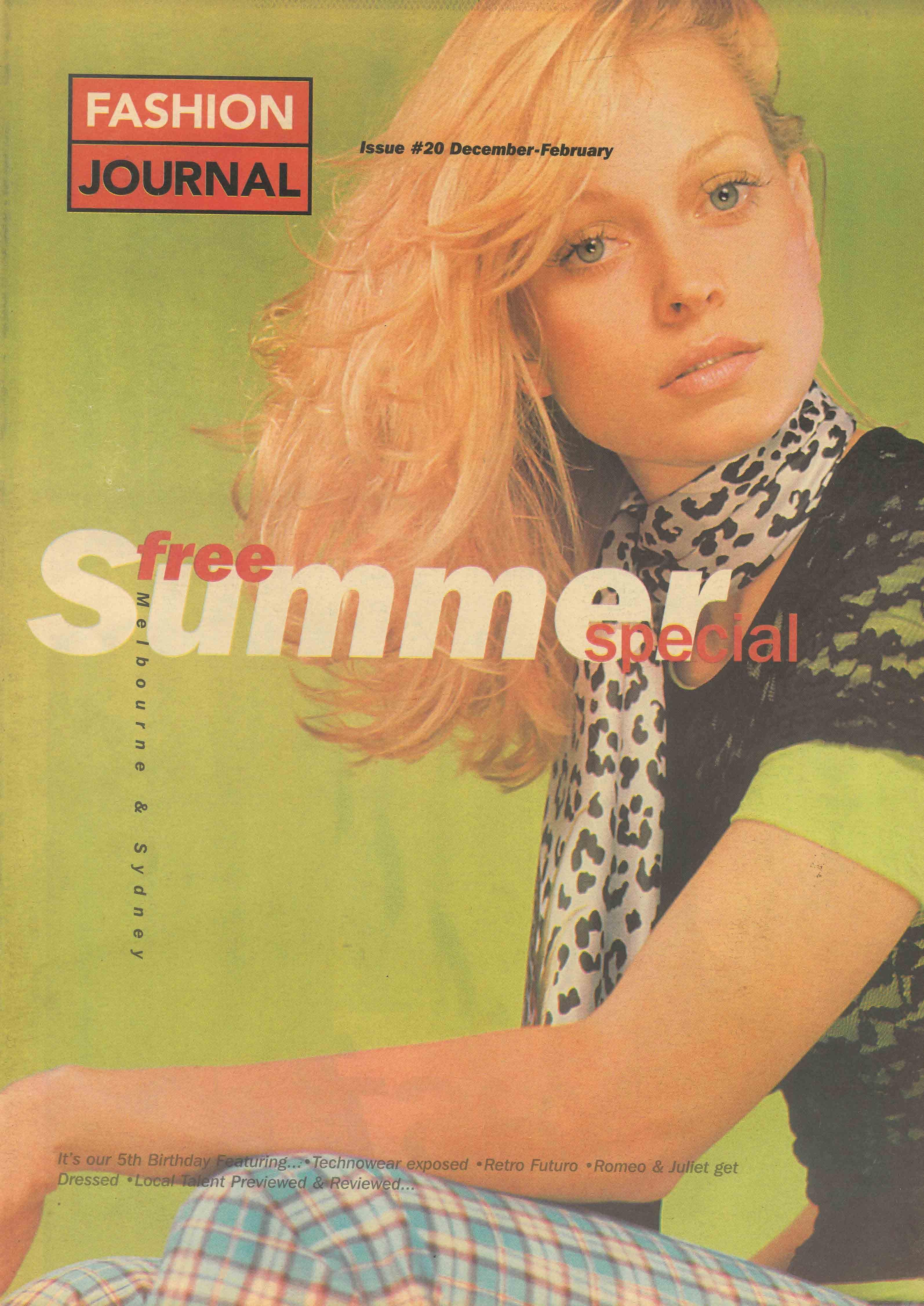
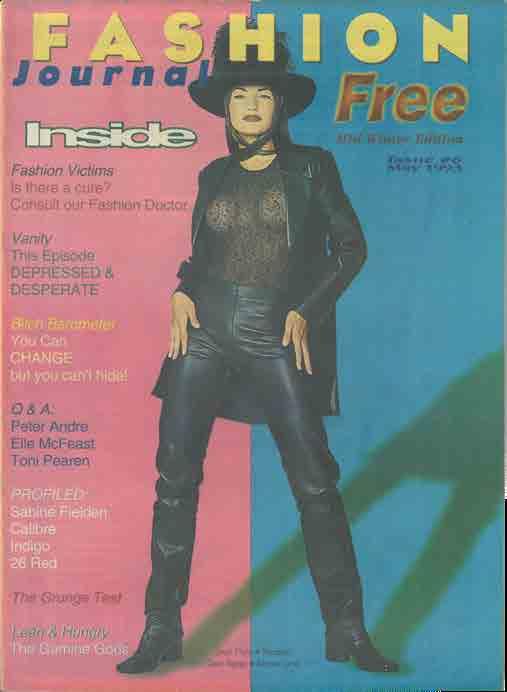
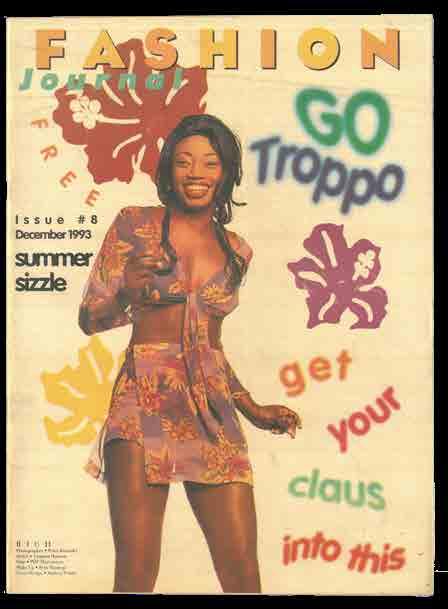
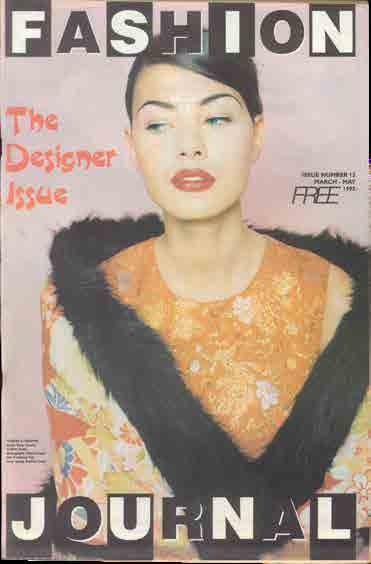
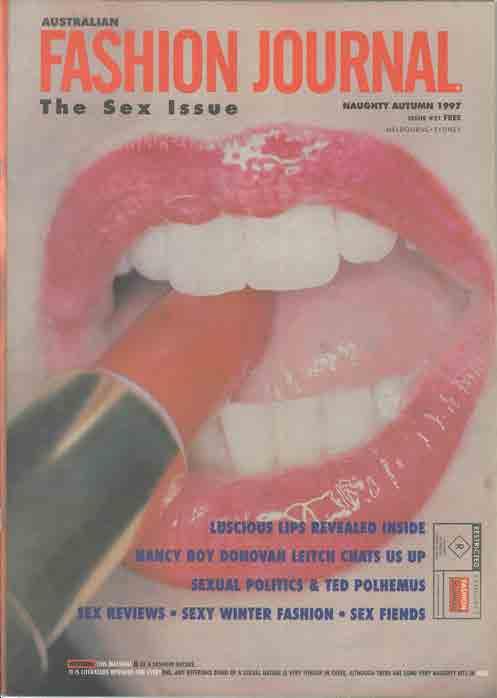
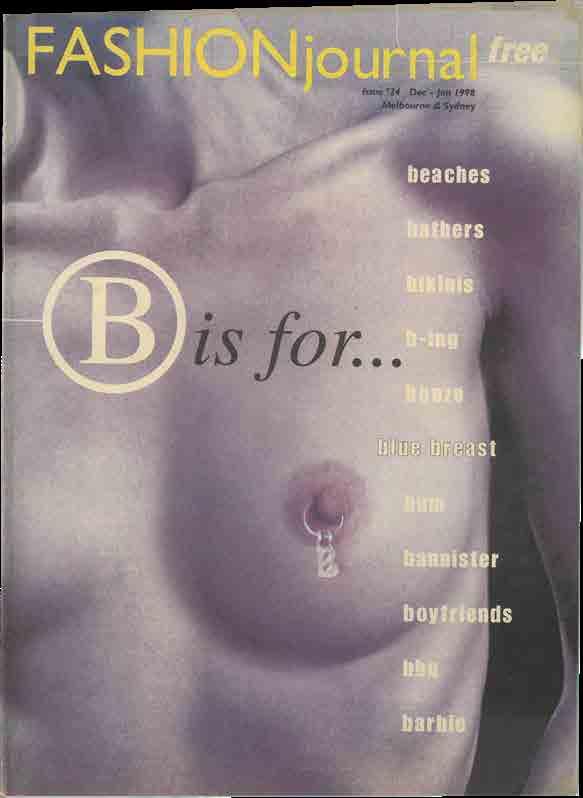
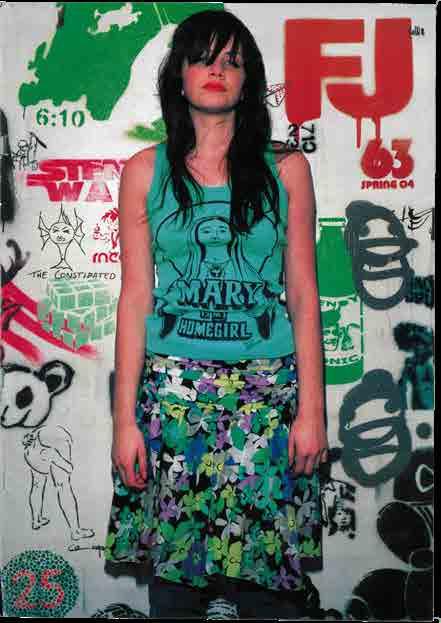
Released in March 1992 as Fashion Quarterly, Issue 1 featured a pinstriped Bettina Liano suit on its tri-tone black and red cover. What began as a quarterly insert in Beat Magazine evolved to Fashion Journal in 1993, and by 1997, it was a fatter, brighter, bi-monthly magazine distributed independently across both Melbourne and Sydney. The ’90s were a risque time for FJ, with a ‘Sex Issue’ and a naked breast on the cover of Issue 24.
[1993] Issue 6
[1992] Issue 1
[1993] Issue 8
[1995] Issue 13
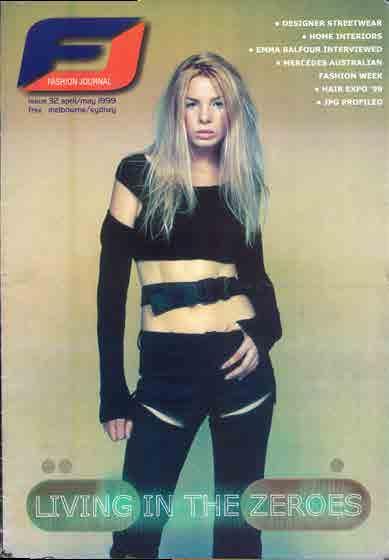
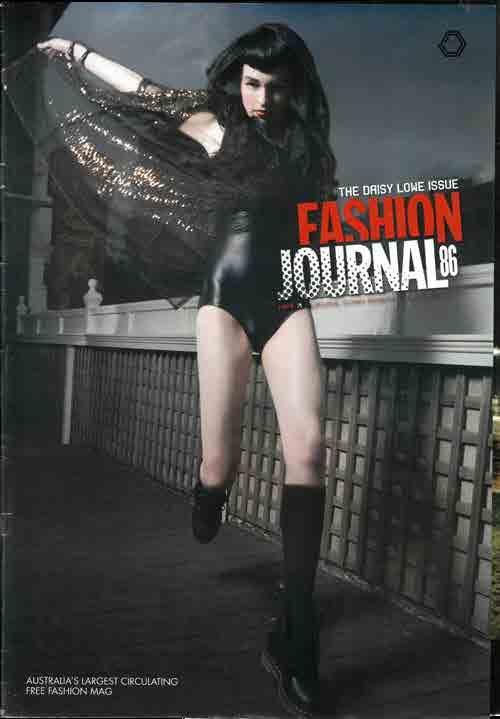
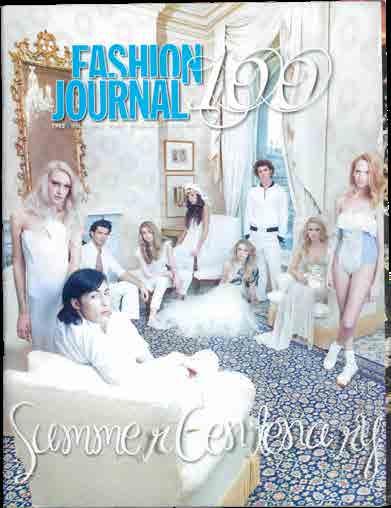
Entering the 2000s, FJ experimented with modern new logos and was now printed on gloss and newsprint. Distribution expanded beyond Melbourne and Sydney to Adelaide, Canberra, Brisbane and Perth. The editors moved on from press shots and brand imagery for covers, and began producing original shoots. Streetwear brands like Mooks, Wish and Teenage Millionaire dominated the fashion pages, and emerging models Jess Hart and Lili Sumner appeared on covers.
2026
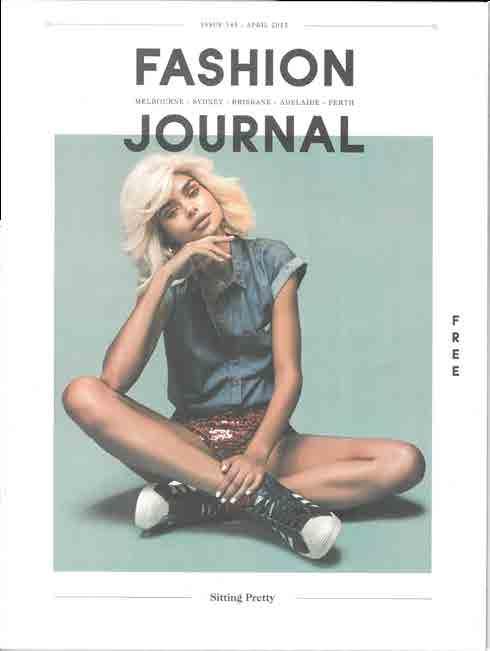
[2015] Issue 145
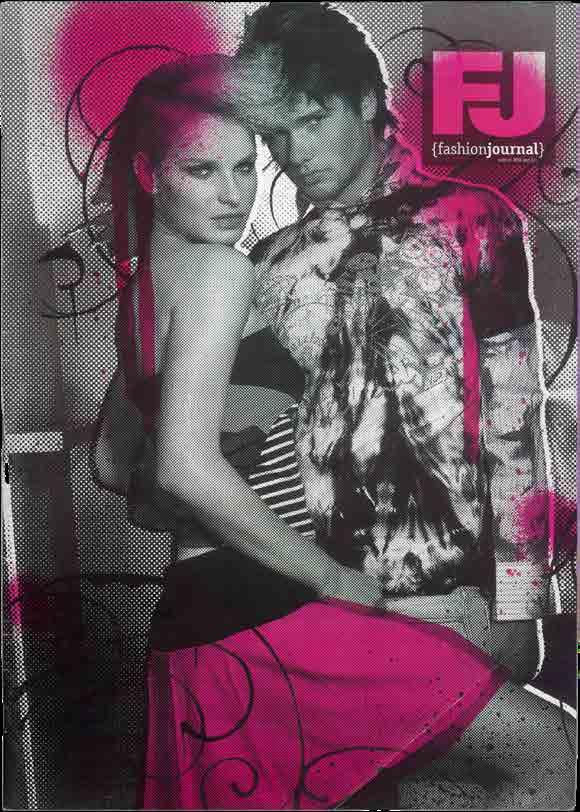
The 2010s saw FJ refine its design with a new white border and stacked logo on its paper cover. In 2014, FJ launched its website and social media handles started to appear everywhere in the mag. A young Samantha Harris graced the cover of Issue 145. After a fouryear print hiatus due to the pandemic, FJ relaunched with a new look in the spring of 2024. Still free, still printed locally, and distributed across Melbourne and Sydney.
[2003] Issue 59
[2008] The Daisy Lowe Issue 86
[2004] Issue 63
[2010] Issue 100
[2024] Issue 195
2014/126/1-1/5/3/1/30
An Underground Legacy
Words by Arielle Richards
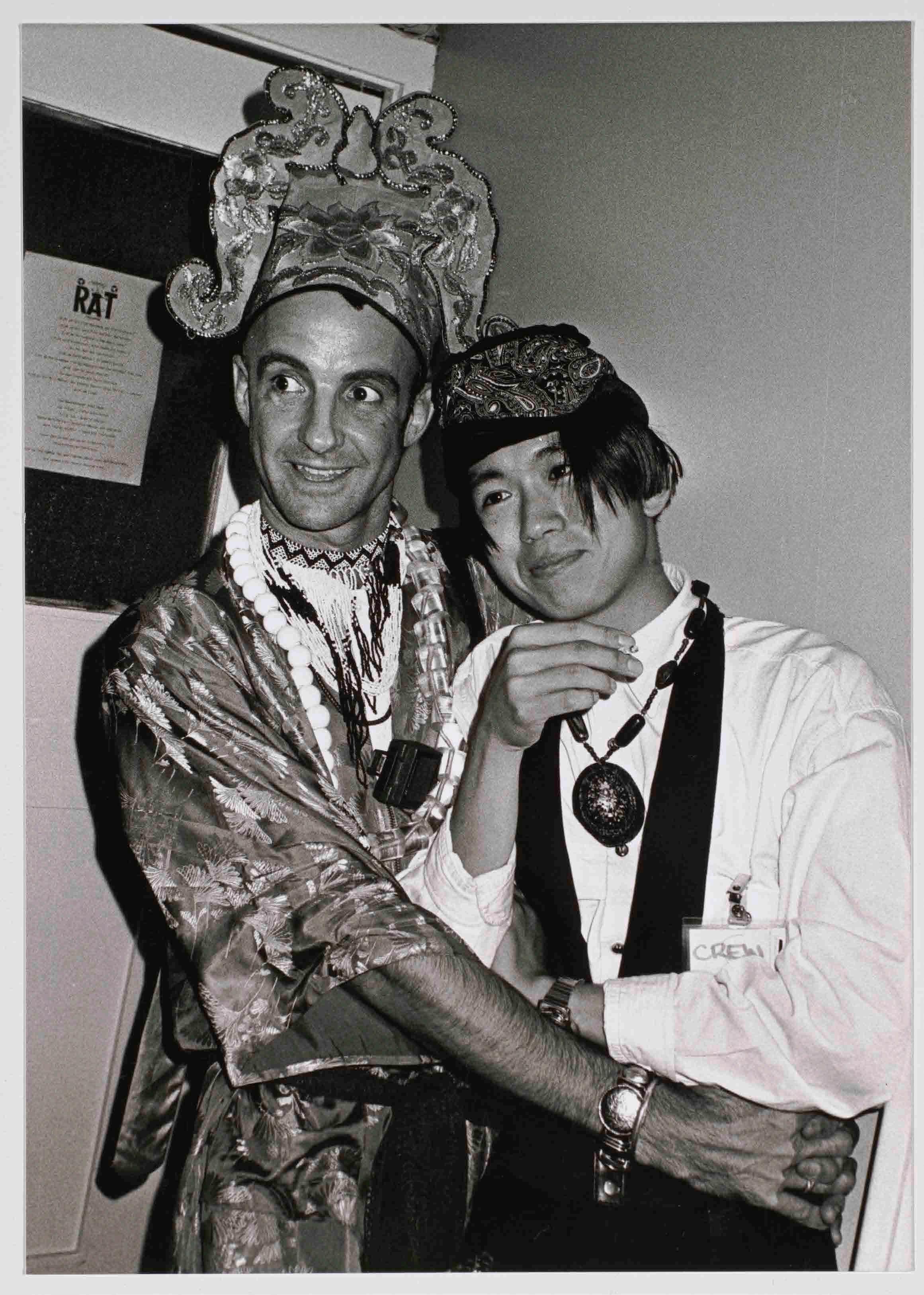
Photographic print, black and white, silver gelatin / paper, Jac Vidgen and Akira Isogawa at Rat Party, photographed by Robert Rosen, Sydney, New South Wales, Australia, 1989. Powerhouse Collection. Gift of Robert Rosen, 2011.
Tracing the veins of innovative Australian fashion, you’re led underground. In a culture of import, the greatest minds of design were nurtured in the subterranean basements and dim sharehouse backrooms of Sydney and Melbourne. It’s a legacy that continues today. Through global economic recession, lockdowns and waning arts funding in the so-called lucky country, Australian fashion happens underground.
In a fuzzy VHS clip from 1989, Robert Pearce gesticulates vehemently as he lambasts the ‘Aussie’ aesthetic. “I just personally like anybody who makes an effort. I’m just so sick of tracksuits and so sick of the Aussie dressing down, scared to be noticed.”
The interview opens an ABC Countdown report on the Fashion Design Council of Australia (FDC) – a collective formed in Melbourne in 1983 to promote local, independent fashion. Pearce was one of the FDC’s founding members, who, alongside arts-law graduate Robert Buckingham and jewellery designer Kate Durham, identified the need for a platform to support alternative designers.
In the early ’80s, mainstream Australian fashion was largely conservative, addicted to the example set by American and European houses; its industry locus in department stores and imports. But punk had made its way to Australia by way of magazines like i-D, The Face and Interview, and those with the financial capital to travel to where it was all going on.
Informed by the do-it-yourself momentum charging in small pockets of Melbourne, the FDC’s manifesto resisted the conventions of commercial and mainstream fashion, “the European tradition” and “the stranglehold of fashion houses”, instead promoting independent designers whose work probed the line between fashion and art.
Jenny Bannister was one of those artists. The designer had travelled down to Melbourne from Mildura to study fashion at Emily Mac (now RMIT), a “really straight school where you learnt pattern-cutting and tailoring, and everything important.”
“I did the three-year course and my teacher said, ‘We don’t know what to do with you because you’ll never get a job at Sportscraft’,” she recalls. Jenny didn’t want a job at Sportscraft. She was scavenging found materials; plastic, rubber and leather offcuts, for her barely-wearable “art-clothes” – anarchic, scandalous, punk.
“I had to scrounge, I had to pay my rent,” she laughs.
Jenny was one of the first designers to join the FDC. Its genesis was firmly in the underground: two dance parties that fused fashion with nightlife, held at St Kilda’s Crystal Ballroom. Organised by the independent collective, Party Architecture, the Fashion ’82 and Fashion ’83 events incorporated live music with art-happenings, from stand-up comedy to film, hairdo demonstrations, and showcases from local designers like Martin Grant, who now designs in Paris; Sarah Thorn, one of Australia’s most successful textile and clothing designers; Peter Morrissey; Bettina Liano; and my aunt and mother, Bernie and Veronica Goegan.
As fashion academic Robyn Healy writes in Design collective: an approach to practice, the FDC “cultivated local creative industries and established an alternative fashion scene in Australia.” From 1983 to ’93, the council secured hundreds of thousands of dollars in arts and commercial funding to hold events in nightclubs, industrial construction sites and condemned warehouses across Sydney and Melbourne – huge fashion parades that drew thousands to witness “the development of the art of fashion design… the new and provocative, both in its wearable and unwearable form…”
The FDC revitalised dilapidated sites and instigated the development of new ones, while a nightclub boom supported the growing underground scene, “where fashion, music, dance, performance and film were integrated together for extended hours.”
The nightclub was an important space for fashion, writes Robyn, “designed for mass spectacles with people dressing up and parading.” For experimental designers, the club was at once a source of inspiration and a stage.
“You made things to go out in those days,” Jenny says. “You’d go up to the Crystal Ballroom and everyone would be there: filmmakers, designers, artists. It was a real scene.”
She recalled constructing a ballerina dress from scrap plastic for a party. “Everyone loved it, people were throwing their drinks on it all night. The guest performer was following me around with a bottle of Windex, wiping it down.”
like Grace Jones and Frankie Knuckles.
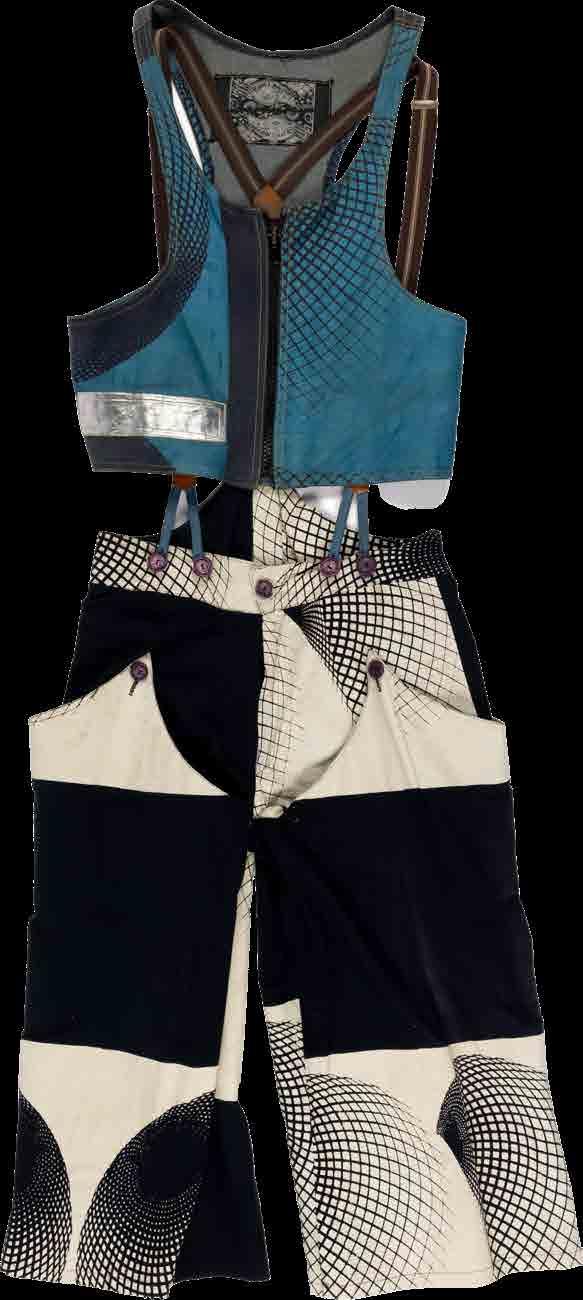
“Dressing up was essential,” says Roger Leong, a curator at Sydney’s Powerhouse Museum, which holds a vast collection of RAT party memorabilia, including posters, photographs and importantly, eight costumes worn to the parties made by local designers.
The underground scene provided a home for artists across disciplines who were enlisted to photograph, DJ and design costumes for the parties. Arriving in Sydney at 21 years old, acclaimed designer Akira Isogawa credits the RAT scene as a “turning point” in his career.
From the late ’80s, Sydney’s busy metropolis became a party capital with a new movement fuelled by the electronic music trickling down from sweaty, pumping basements in the US Midwest. The Recreational Arts Team, better known as RAT, are credited with founding Sydney’s rave scene. Pub rock was the dominant culture and electronic music was considered weird, avant-garde at best. But for the city’s queer youth, it was an opportunity. RAT was the first to hold huge, hedonistic dance parties at large venues across Sydney, hosting international acts
“When I came here I couldn’t find shops I liked,”
The Australian in 2018. “Then, about six months after I arrived, someone took me to a RAT party… I felt, ‘This is it’. Everyone made their own clothes and looked fabulous. It was a turning point for me creatively. I started studying fashion after that.”
Like the FDC in Melbourne, the RAT momentum was underscored by the DIY energy of punk and its related misfit subcultures – some niche, others with legs that stretched out past the ’80s: alternative rock, the New Romantics and the queer Club Kid movement, emblematised by icons like Leigh Bowery that, as Roger describes, inspired “radical forms of drag and performative dress.”
“RAT parties offered designers and their clients a chance to experiment and express themselves to the hilt,” he says. “I think the party scene turbocharged everyone’s creativity.”
Where the establishment could not offer designers an opportunity, the club became their catwalk.
The art that seeks to challenge the status quo is rarely found in institutions – a legacy that has prevailed past the FDC’s reign. Since the ’80s, Australia’s artistic communities have propped one another up when industry has been slow to catch on.
In 2021, photography student Kat Stevens formed the Emerging Artists Collective (EAC), a non-profit that holds exhibitions and runways to platform unestablished designers.
2003/147/5 Outfit, mens, comprising waistcoat, trousers and suspenders, cotton / plastic / elastic / leather, designed and made by Kathy McKinnon, used by Jac Vidgen and Akira Isogawa at RAT parties, Sydney, New South Wales, Australia, 1984-1988. Powerhouse Collection. Gift of Jac Vidgen, Billy Yip and the Recreational Arts Team, 2003. Photographer Marinco Kojdanovski.
Australia might have a Fashion Week, but cuts to arts funding throughout the pandemic, a tightening economy and ever-increasing costs have seen the gap between emerging and established designers yawn wider than ever.
“There just isn’t enough support for emerging creatives, and so artists now rely on collaboration instead of having to go through institutions.”
The EAC has never received a grant – ticket sales fund each show. It’s a bold model that embraces fashion as an art form, rather than a commercial venture. When you consider that designers can expect to outlay significant sums to host and produce their own runways, the EAC’s mission is clear.
“I think it’s really important to know that you can be something outside of [fashion] institutions,” says Kat. “There’s just such a big gap between the people that are established and the people who aren’t, and what are they meant to do if they don’t come from money? How are they meant to be in these spaces?”
But projects like Kat’s are becoming increasingly difficult. In the FDC era, fashion parades helped to revitalise abandoned venues. But today, increased development and privatisation of public spaces have seen prices rise. In the four years since the EAC began hosting runway events, the cost of hiring a venue has nearly tripled.
and off-schedule, founders Alvi Chung and Dan Neeson formed the guerrilla event to showcase the independent design that’s consistently blowing new ground in the city.
It’s an ethos remarkably similar to the FDC manifesto, something Alvi might concede as she describes the event’s predisposition toward a “spirit of disruption.”
In the ’80s, the mainstream resisted the financial and cultural risks proposed by the FDC’s “fashion mavericks” and “art-clothes”, leaving innovation to thrive in the underground. Today, fashion institutions appear willing to have these designers at the table – so long as they can fund their way, and so long as it doesn’t involve too much risk.
But there remains an urgent need for physical spaces to foster local independent fashion, and Kat says she is committed to wearing whatever it takes.
In recent years, Sydney has also seen new collectives embodying the experimental legacy of Australia’s ’80s and ’90s parades. Wings Independent Fashion Festival has run concurrently with Australian Fashion Week since 2025. Off-site
Kat launched the EAC after her university grad runway show didn’t go ahead as planned due to lockdown concerns. “We decided to make something of our own, for our community.”
It’s not surprising that the EAC erupted in Melbourne, where the city’s nightlife is its calling card.
A legacy from the ’80s, the club serves as both inspiration and exhibition for local designers. SlamRoss1000 cites its inspiration on the dancefloor; Wackie Ju clothes ballroom stars; the designs of Emily Watson, Maroske Peech, and Karlaidlaw are all club night favourites.
More than three decades since the FDC shuttered, Australia’s best talent emerges from the underground – that exhilarating space which nurtures high-risk design, that questions the very idea of fashion, and with it, the wider culture itself.
Regardless of whether the industry is quick enough, or smart enough, or brave enough to find out what’s happening, it’s happening underground. And hopefully, it always will.
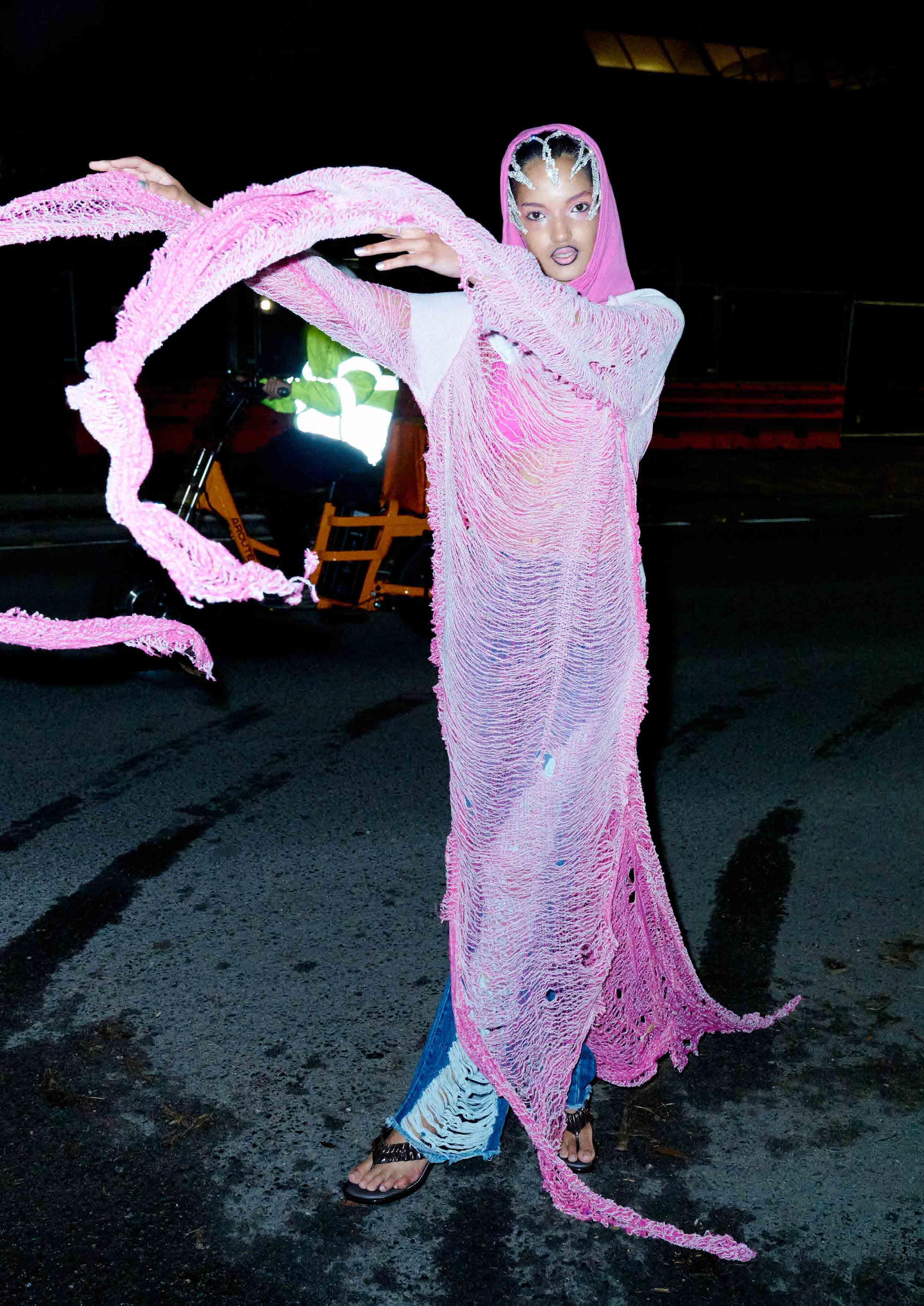
KVMS dress, CAROLINE REZNIK jeans and headpiece, MELISSA shoes
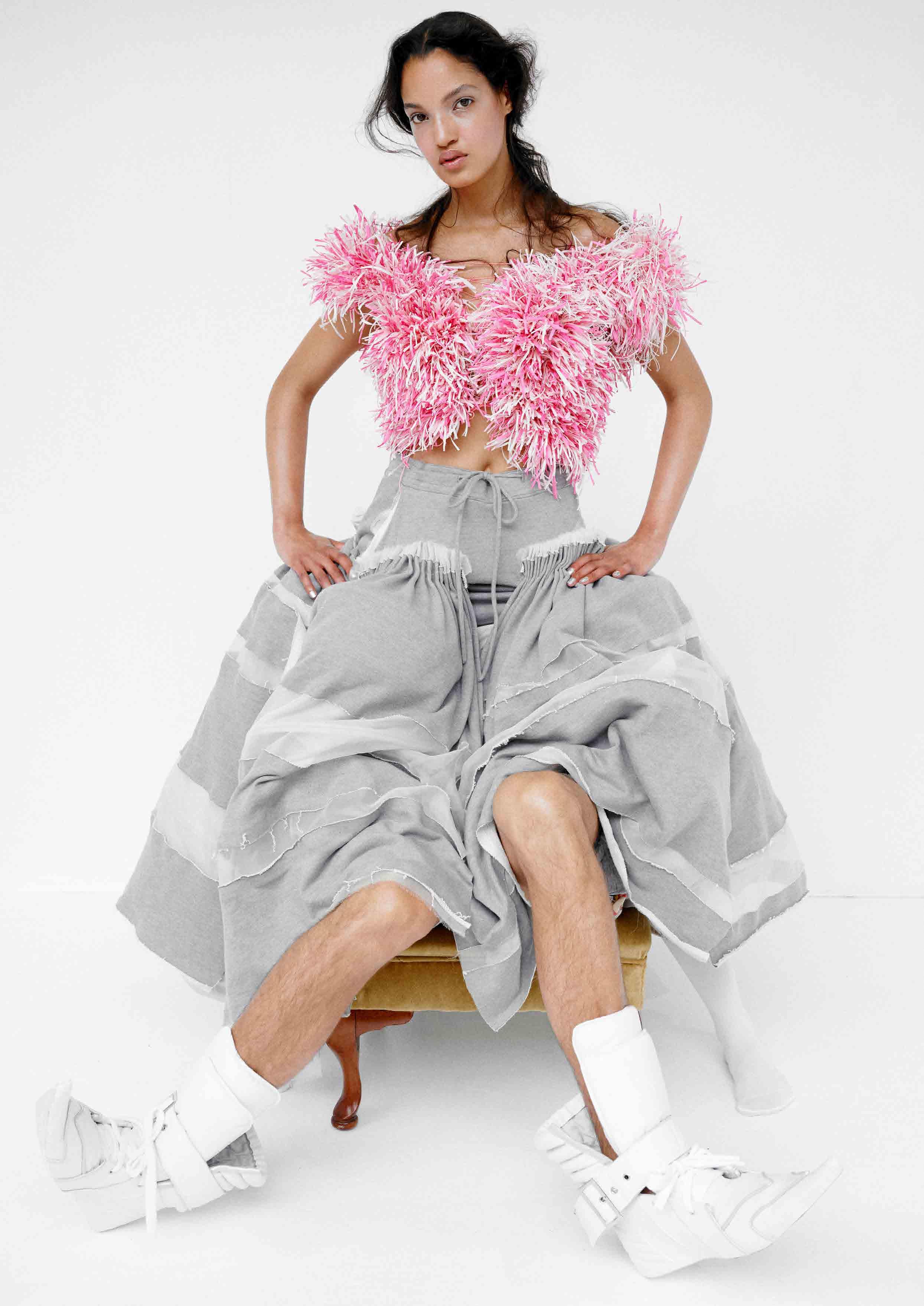
ERIK YVON top, LUKE FRIEND skirt, LUKE RUBÉN shoes
KOURH top, ELOISE CHANG-HUNTER shorts, CAROLINE REZNIK jeans and headpiece
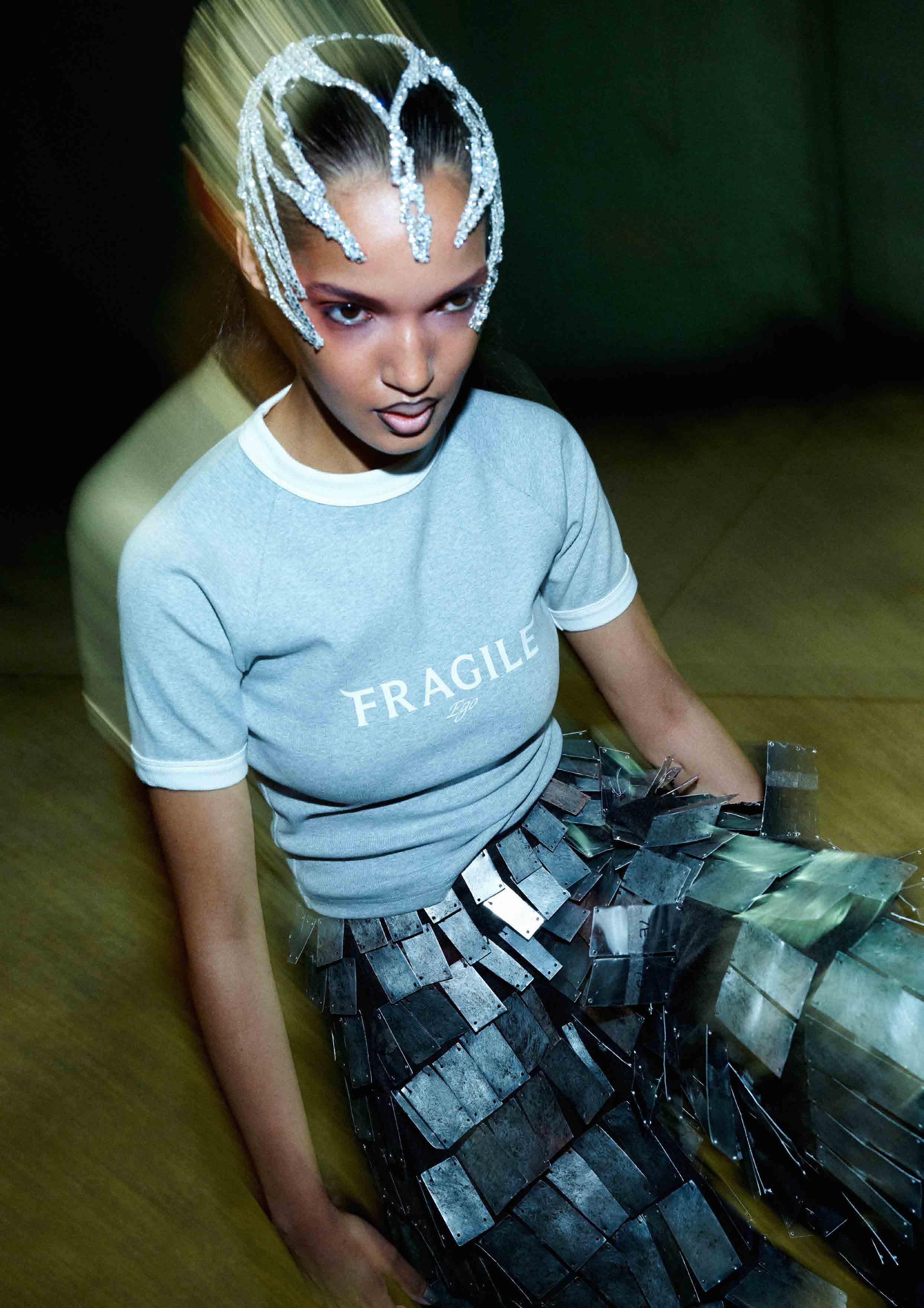
NIAMH GALEA dress, AMISS shoes, stylist’s own tights
NIAMH GALEA dress, AMISS shoes, stylist’s own tights
ERIK YVON dress, AMISS shoes, stylist’s own tights and choker
PHOTOGRAPHER Jordan Drysdale PHOTOGRAPHER’S ASSISTANTS Bo Kok and Joëlle Parisotto STYLIST Stuart Walford
STYLIST’S ASSISTANTS Milly Wright and Tyler Lindsay HAIR Lyndal Salmon HAIR ASSISTANT Marilyn Guarino
Achan
PRODUCTION ASSISTANTS Amelia McQuoid and Lily McVeigh RETOUCHING Shetouch
MAKEUP Lara Daly MODELS
Meshwang, Albin McDonald, Mirabai Clark and Alex Koulatsos at Chadwick Models
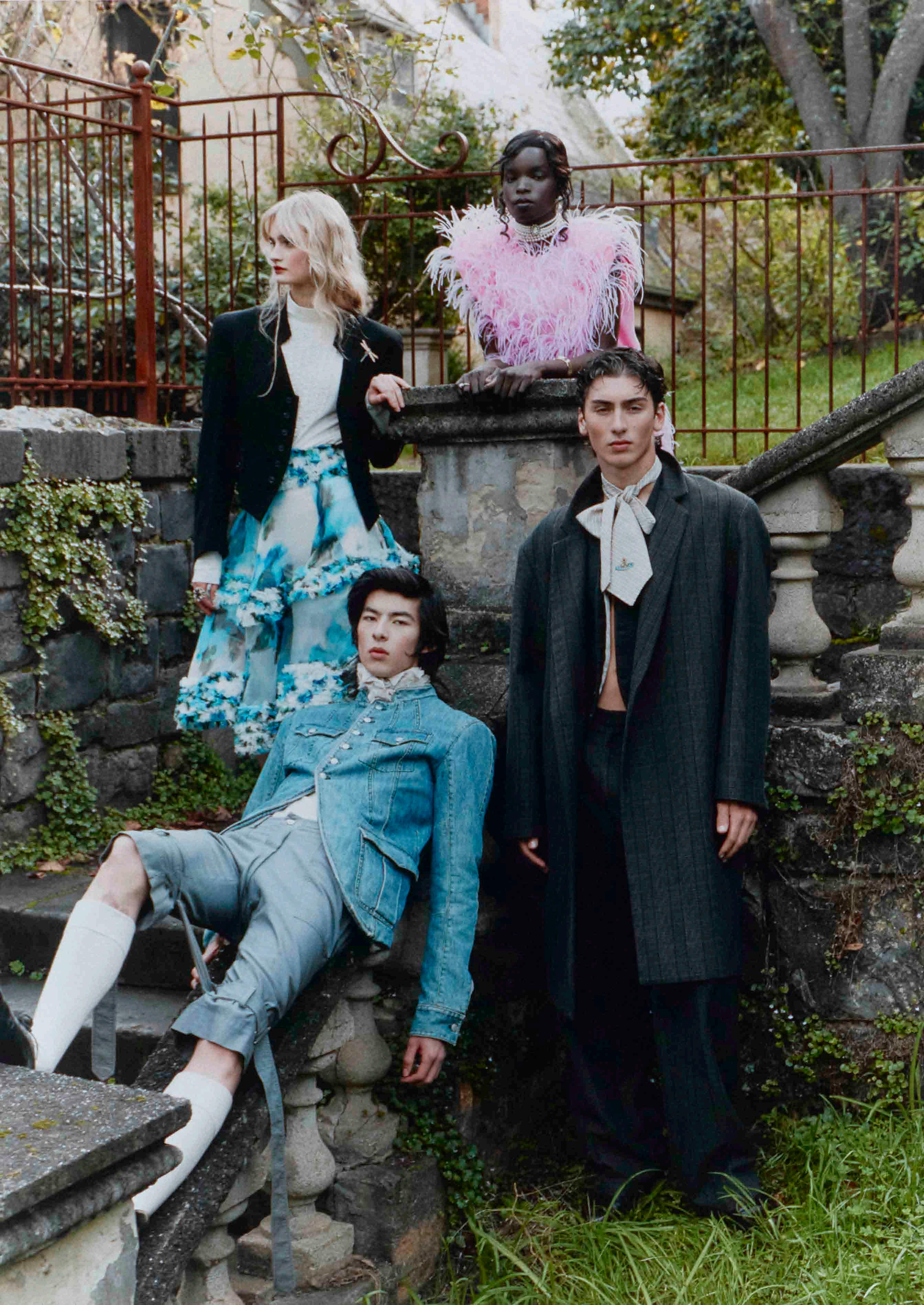
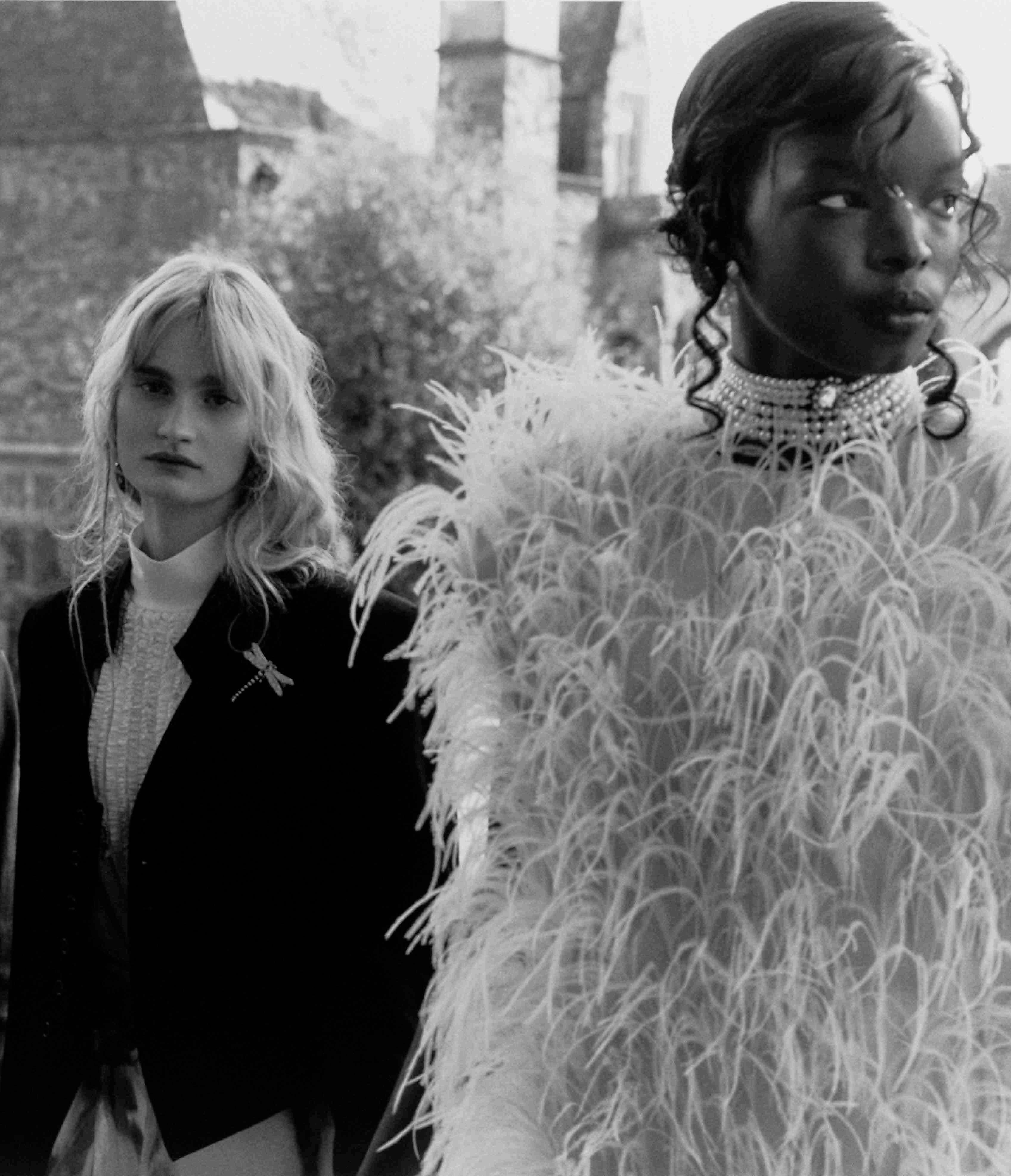
CLOCKWISE FROM TOP LEFT MIRABAI wears NATIONAL TRUST AUSTRALIA (VICTORIA) vintage blazer, JEAN PAUL GAULTIER top from SALON ARCHIVE, ZIMMERMANN dress (worn as skirt), STEPHANIE BROWNE brooch, ACHAN wears SCANLAN THEODORE dress, ROSE CHONG necklace and choker, STEPHANIE BROWNE earrings
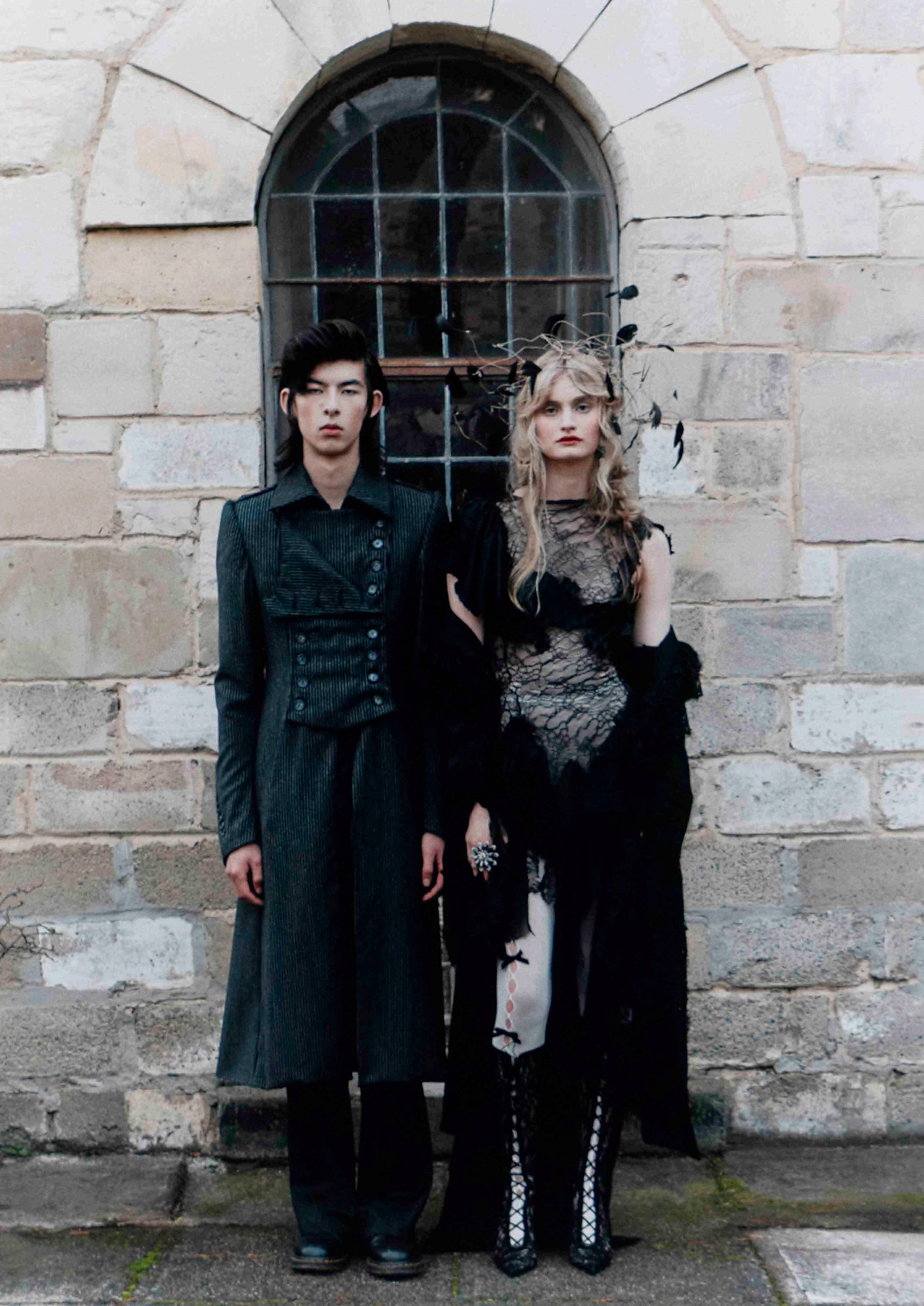
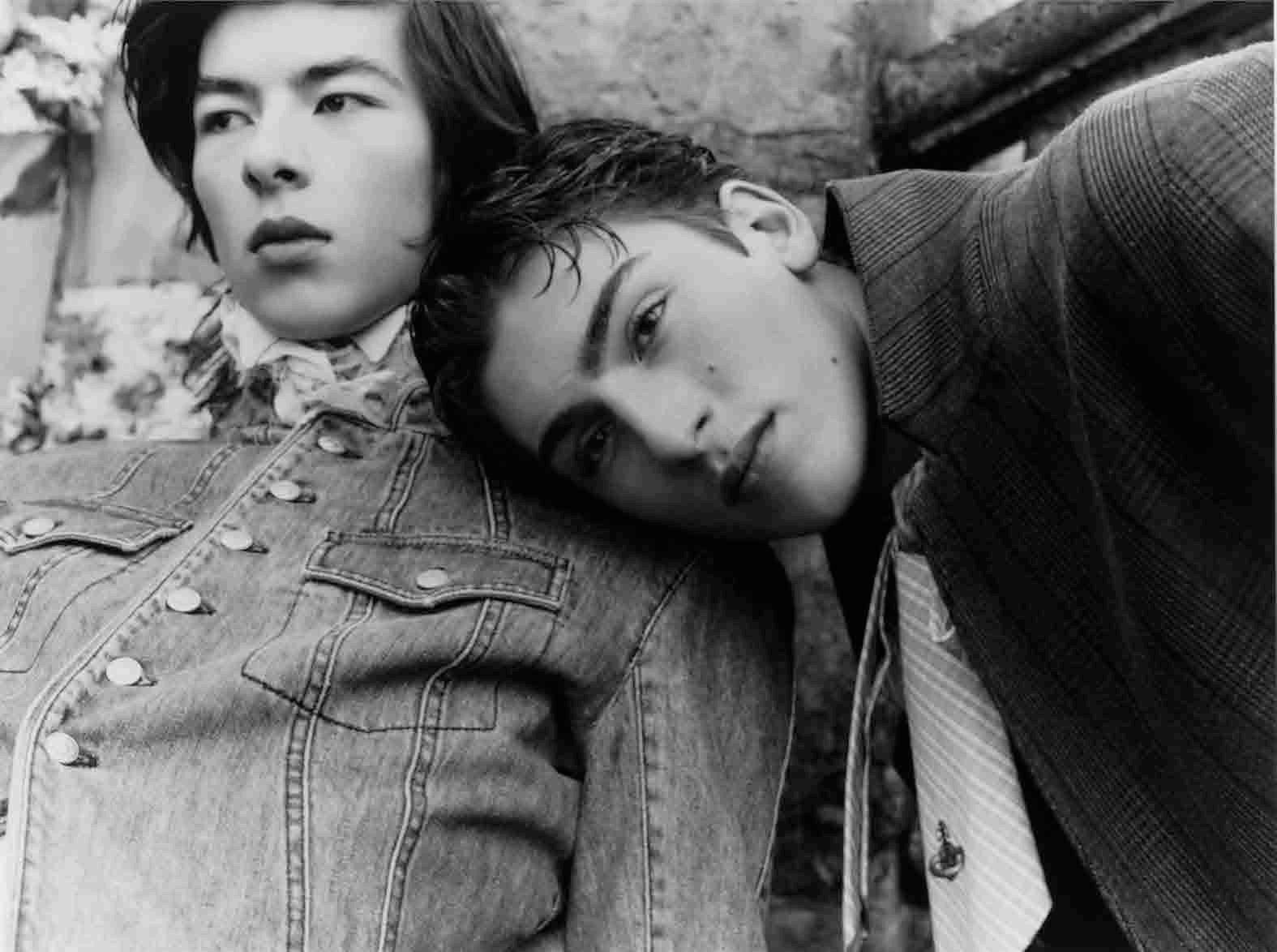
ALEX wears BASSIKE coat and trousers, NATIONAL TRUST AUSTRALIA (VICTORIA) vintage waistcoat, VIVIENNE WESTWOOD tie from SALON ARCHIVE, ALBIN wears JOHN GALLIANO blazer and VIVIENNE WESTWOOD pants and top, all from SALON ARCHIVE, PARIS JADE BURROWS collar, stylist’s own socks
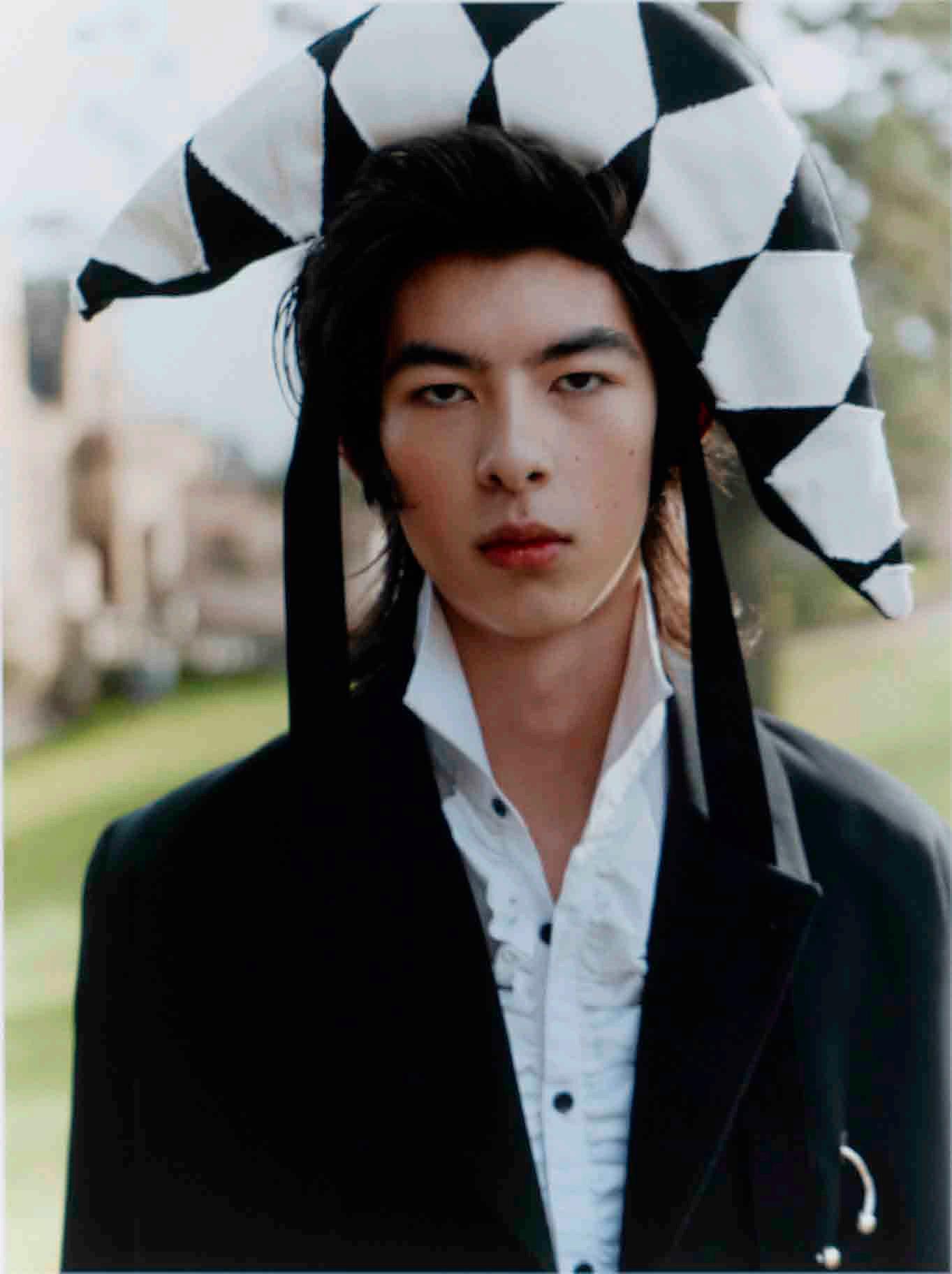
THIS PAGE MIRABAI wears ROSE GUIFFRE top, ROSE CHONG hat
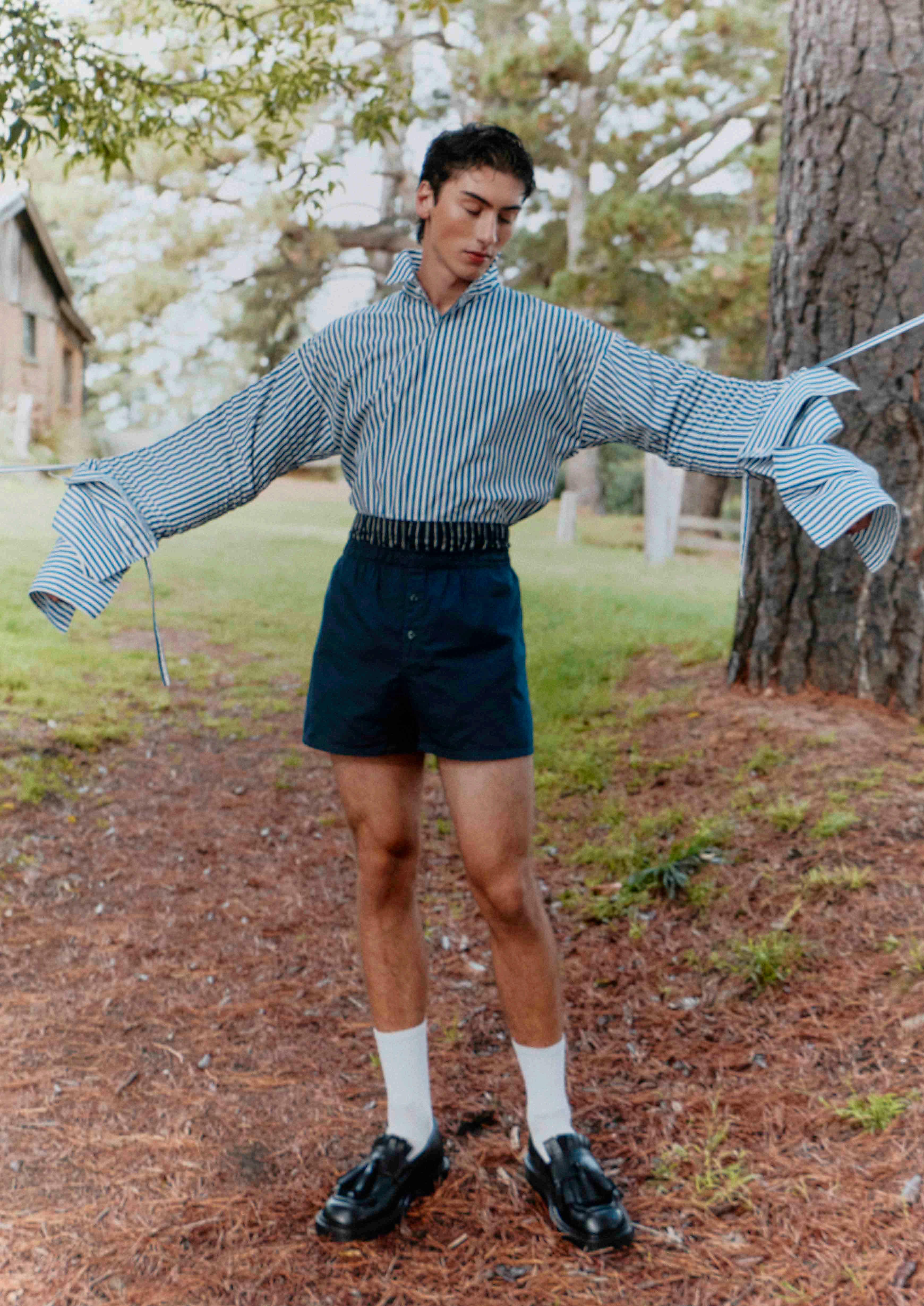
STEPHANIE BROWNE earrings OPPOSITE PAGE ALEX wears STRATEAS CARLUCCI shirt, JIMMY CHOO shoes, stylist’s own shorts and socks
THIS PAGE ALBIN wears STRATEAS CARLUCCI coat, NATIONAL TRUST AUSTRALIA (VICTORIA) vintage shirt, CHELSEA FARQUHAR hat OPPOSITE PAGE ACHAN wears SCANLAN THEODORE dress, ROSE CHONG necklace and choker, STEPHANIE BROWNE earrings, STEVE MADDEN heels
LEFT TO RIGHT ALEX wears BASSIKE coat, VIVIENNE WESTWOOD tie from SALON ARCHIVE ALBIN wears JOHN GALLIANO blazer and VIVIENNE WESTWOOD pants and top, all from SALON ARCHIVE, PARIS JADE BURROWS collar, MIRABAI wears NATIONAL TRUST AUSTRALIA (VICTORIA) vintage blazer, JEAN PAUL GAULTIER top from SALON ARCHIVE, ZIMMERMANN dress, STEPHANIE BROWNE brooch, ACHAN wears SCANLAN THEODORE dress, ROSE CHONG necklace and choker
STEPHANIE BROWNE earrings
ALBIN wears MANFRED WONG coat and trousers, DR. MARTENS shoes
MIRABAI wears PARIS JADE BURROWS dress and coat, BAAQIY headpiece
STEVE MADDEN shoes, stylist’s own tights and ring
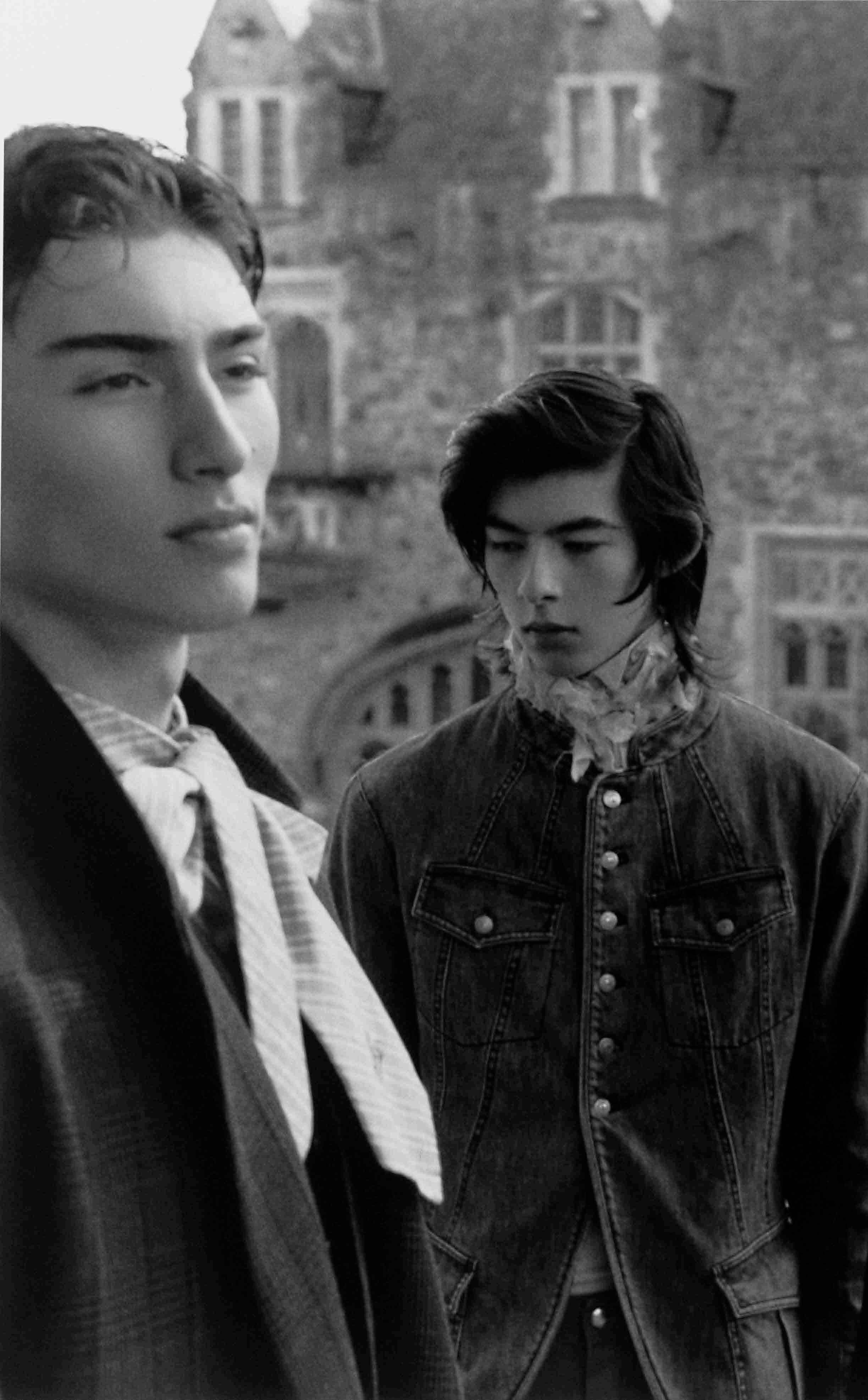
ALBIN wears JOHN GALLIANO blazer and VIVIENNE WESTWOOD top from SALON ARCHIVE, PARIS JADE BURROWS collar ALEX wears BASSIKE coat, VIVIENNE WESTWOOD tie from SALON ARCHIVE
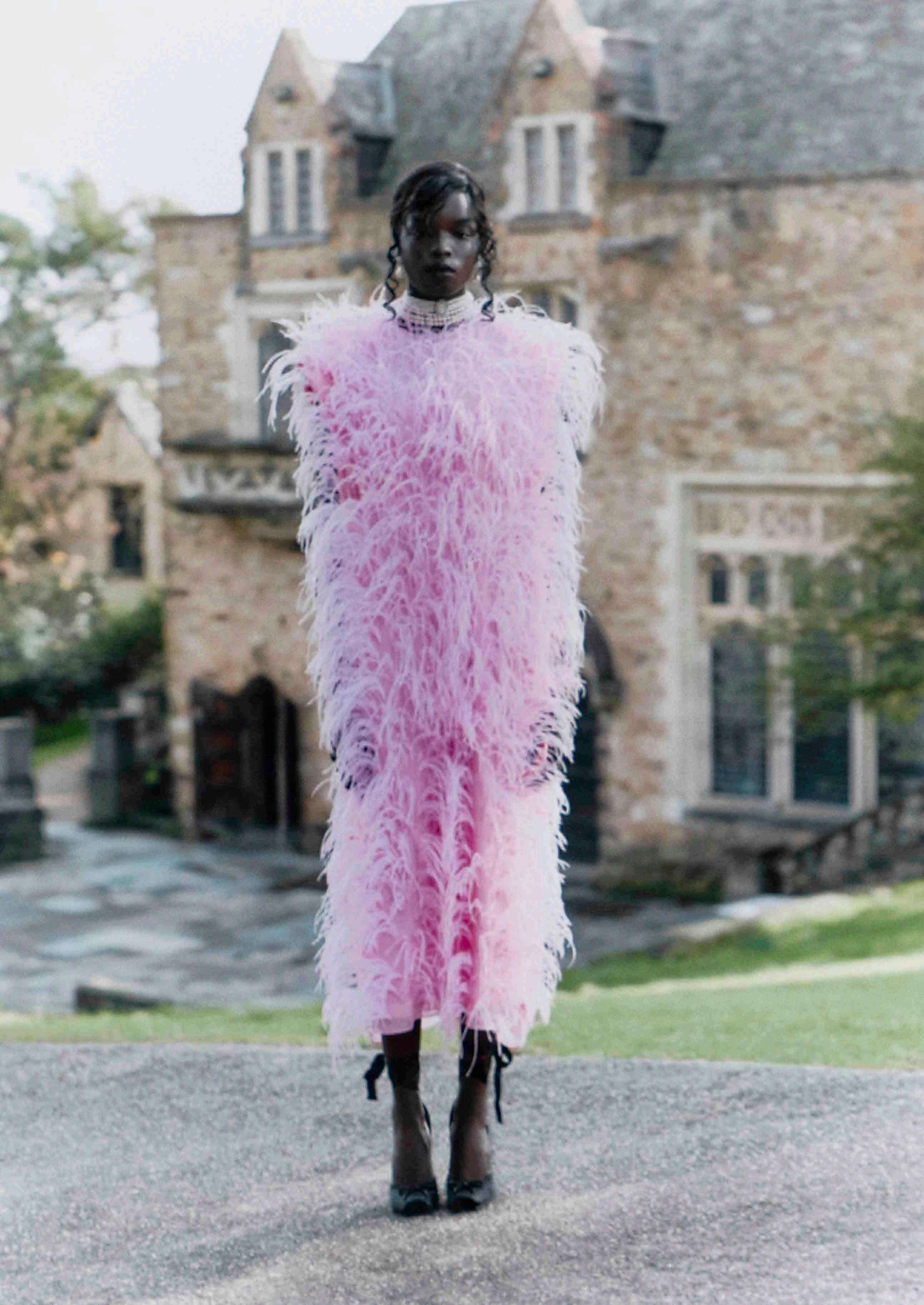
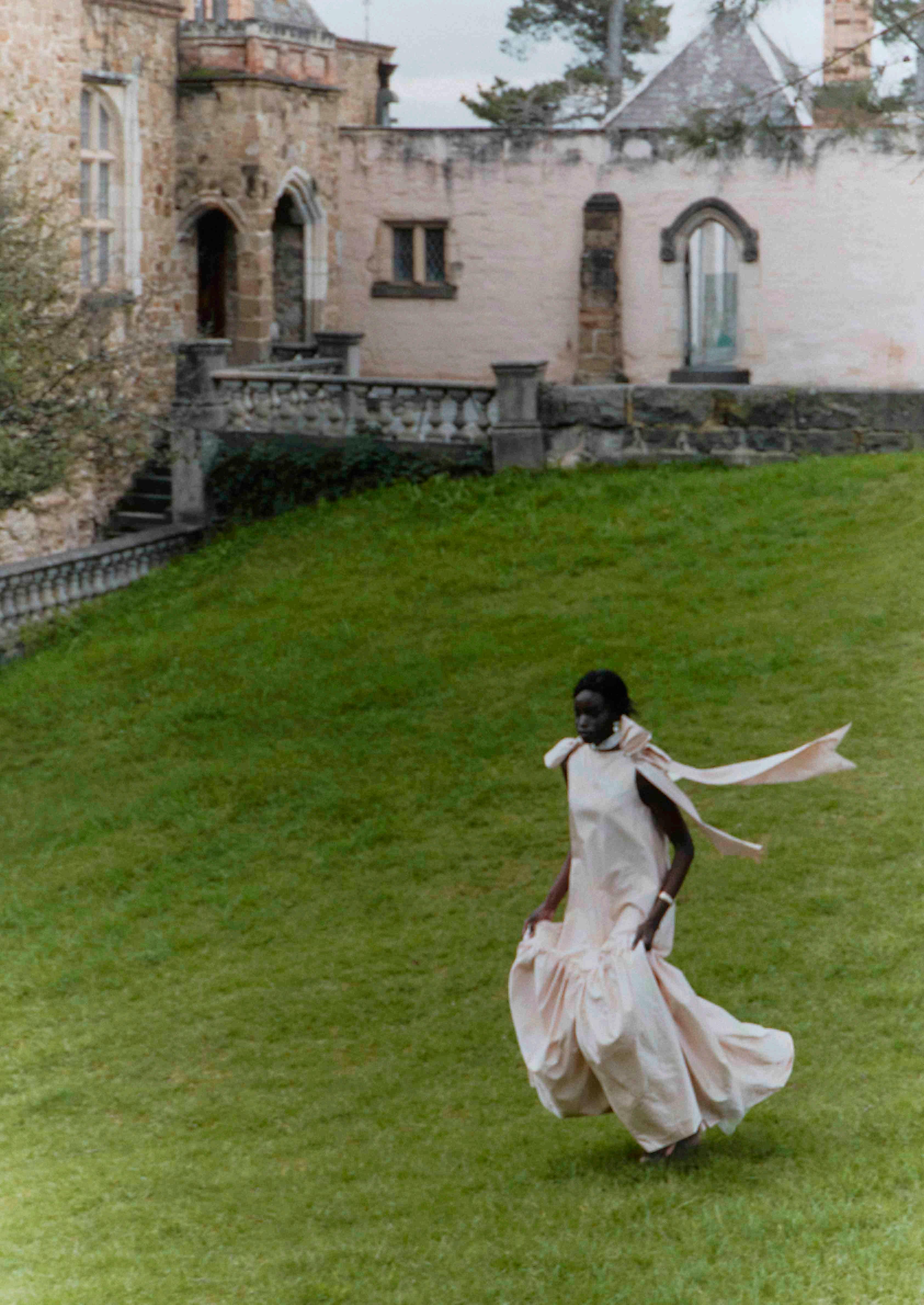
ACHAN wears LUCINDA BABI dress, ROSE CHONG necklace STEPHANIE BROWNE earrings, stylist’s own ring and cuff
GROWING PAINS
Words by Maryel Sousa
Collage by Simone Esterhuizen
I’m sitting on the dirty floor of my Brunswick sharehouse kitchen, unperturbed by the collection of crumbs beneath the cabinets or the mousetrap in the corner. No one’s here to hear me – no one’s ever here – so I cry.
I’ve been in Melbourne for five months, and I want to go home.
In my head, I’m eight years old again. My mum and I weave through throngs of early morning Black Friday shoppers who plod through the mall like cattle. Mum asks if I’d like to go to the diner downtown for breakfast. I would. My stomach is still heavy from last night’s Thanksgiving dinner, but I think I’ll have room for chocolate chip pancakes when we get there. She turns on holiday music and begins to drive.
My breath fogs up the backseat window and I draw Christmas trees with my finger in the thick condensation. Through the lines, I watch the landscape rush by, imagining myself a white-tailed deer running through the endless fields.
According to the Australian Bureau of Statistics, 568,000 migrants arrived in Australia last financial year – down 14 per cent from the year before. This past Invasion Day, large rallies descended on Melbourne’s CBD to oppose immigration. Online, users engage in daily debates over the same question: What came first, the immigrants or the housing crisis?
The public discourse is, understandably, centred on what incoming migrants mean for Australia. To both defenders and opponents, each immigrant is another data point to reference, evidence for what we, as a hegemony, bring and what we take away. But by focusing on the broader implications of our arrival, the conversation often overlooks what’s been left behind.
The decision to leave home – whether due to war, love, opportunity, or adventure – is personal, and no matter the reason, comes at great personal cost. Something must always be sacrificed.
Yet because immigrants’ presence is so hotly contested, to feel anything but gratitude invites the reminder that the door swings both ways. If we’re unhappy, we’re told we can leave, and if we leave, our sacrifice would have been for nothing. So, with no room for outward grief and no path home, we turn to our memories – a past no one else can touch.
My homesickness has steadily compounded over the past several months. Every moment seems to beat on, drawing me further into the past, to a world that no longer exists.
Back home, fields still roll past the horizon but they’re more accent than feature, framed by brand-new, identical apartment complexes. The mall has become a relic of the past, an easy drop-off point for online shopping returns, and our sleepy downtown has since gained a beer-gardenslash-taco-joint favoured by millennial commuters. Political division has seeped into every aspect of daily life, including the family dinner table.
Home, as it turns out, doesn’t stay frozen in time. People marry, are born, die. Shops close down, buildings spring up. Home moves forward, even if I’m not there to see it.
Xinyu*, who recently migrated to Melbourne, says memories of home are bittersweet. “Whenever I stand in the backyard at night and look up at the stars, I can’t help thinking of my home and loved ones in China.”
According to psychologist Breanna Jayne Sada, nostalgia can restore a sense of meaning when people feel untethered. “In many ways, remembering home or the past is the mind’s attempt to reassure us that we belong somewhere and are connected to something,” she explains.
“You have to be in it to fully understand it,” Xinyu shares. “We have to give up so many things, the ones we love, the type of life we’ve lived, then we come to a totally new world like newborns, and we have to restart everything.”
For many immigrants, empathy from home can be equally hard to come by. Photographer Richmond Kobla Dido feels a sense of survivor’s guilt for having left his home country, Ghana, in 2007.
One in three Ghanaian youth are at risk of experiencing depression, economic instability hampers the country’s progress, and Richmond believes the weight of these struggles makes it difficult for those at home to understand his migratory grief. “People back home may view you as having made it out, when in reality, you also face new challenges in a foreign land,” he says.
“The refuge we find in memory must eventually give way to the pain of grief, or we’ll never reach acceptance.”
Breanna finds that many immigrants struggle to make peace with what they’ve left behind. Places continue evolving while we’re away and whether we’re aware of it or not, we change, too. We can’t fossilise our home nor our place in it, and in clinging to a time that will always escape our grasp, we risk losing the home we’re trying to build.
Despite having arrived in Australia less than a year ago, Xinyu’s home has already begun to move on without him. His parents are growing older, his beloved dog NiuNiu recently passed away, and late-night phone calls from China ignite fears of unexpected change. The inevitability fills him with regret.
“When someone is deeply attached to the past, new relationships can unconsciously feel like replacements rather than additions to their life,” Breanna says. “They might withdraw socially, idealise the past, or unintentionally reject aspects of the new culture because it feels disloyal to where they came from. Over time, this can prolong feelings of isolation and make the transition feel incomplete.”
She tells me that part of adaptation is allowing the new place to become emotionally meaningful in its own right, even when it’s uncomfortable. But how do we reconcile the life stored in memory with our ever-changing present?
I’ve begun thinking of my life in two parts: before I left home, and after. I spend so much time looking at my memories that they’re starting to fade, like photographs left out too long in the sunlight.
The possum who runs along my fence at dusk now carries three babies on her back. Weeds are strangling the garden, and they tickle my legs when I pass through the front gate. The world is defrosting without me.
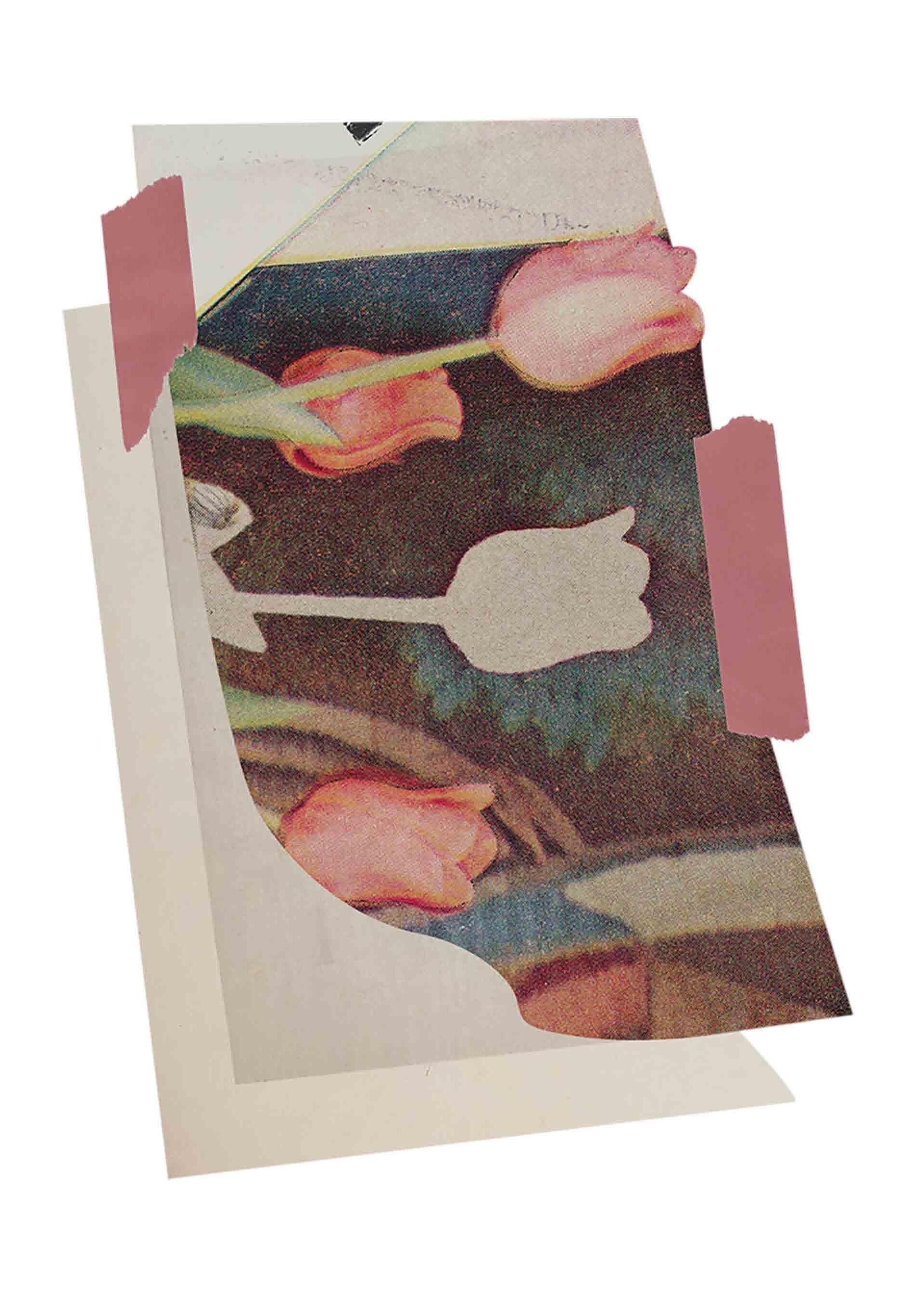
I lie in bed and think about last spring, when I visited Keukenhof and strolled through the tulip fields, treading each of the garden’s serpentine paths. I was at a crossroads, but unlike at Keukenhof, I could walk only one pathway: the familiar or the unknown.
I chose the unknown. Now I’m angry at Melbourne, angry at myself for having moved here, angry at time for marching onward instead of letting me be eight years old forever.
But there is no road back, only forward.
Even after nine years in Australia, Richmond still longs for Ghana and his family. For him, the concept of home has become complicated.
Home represents far more than geography: safety, culture, family, routines, our very identity. When it changes or is left behind, we may feel as though we’ve lost access to an important part of ourselves. “Grief is not only about death,” Breanna says. “Psychologically, grief can emerge whenever there is loss.”
The cycle of grief is messy; we rarely move across its milestones in straight lines, and it can often feel as though we haven’t moved at all. Nostalgia can ease our passage through, but the temptation to soak in it can also bring our journey to a standstill. The refuge we find in memory must eventually give way to the pain of grief, or we’ll never reach acceptance.
Two truths coexist: the home we remember meant something, and the current version can, too. One doesn’t cancel out the other.
I asked Richmond and Xinyu if Australia feels like home. Not yet.
But despite the discomfort, both are carving out their place here. The people around them have been both anchors to home and safety rings in a foreign sea. Family phone calls, dinners with friends, even strangers passing by with a smile help the unfamiliar feel a little more bearable. “I guess, in short, we find our sense of home in each other,” Richmond says.
Melbourne is warm today, and my growing pains are starting to subside. I’m sitting across from my boyfriend at Ballard’s in Thornbury, watching him laugh by the glow of a lamp shaped like the moon. I think I love him.
Time will go on, as it always has. My boyfriend and I will return here for anniversaries and double dates and birthdays, and we’ll be happy. But for tonight, to feel at peace for just a little while is enough.
I think, maybe, I’m home.
*Name has been changed.
PHOTOGRAPHY Olivia Repaci
STYLIST Annabel Dickson MAKEUP Soraya Boularas WORDS BY Lara Daly
KITA wears ALBUS LUMEN top, ALÉMAIS trousers, VERMEER STUDIO earrings
Kita Alexander is angry and, for her, the experience has been transformative. Fresh off the release of her sophomore album, aptly titled Rage, the rising pop star speaks to Lara Daly about defying tall poppy syndrome, her life-changing tour with Dua Lipa, and not taking no for an answer.
Kita Alexander arrives at our Sydney shoot on a rainy Thursday afternoon wearing a ruffled mini dress beneath a Spell jacket – a nod to Byron Bay, where she lives. As glam wraps up, she weighs in on the shape of her eyeliner, questions styling choices and slips effortlessly into poses before anyone asks. Between takes, she chats to her husband, former pro surfer Owen Wright, on the phone.
The past two years have been a whirlwind for Kita. Since releasing her first album, Young in Love, in 2024, she has joined Dua Lipa on tour, travelled to the UK to perform at festivals and a sold-out headline show, released a string of infectious pop singles and returned home for her Press Pause tour.
For those unfamiliar, Kita is a singer-songwriter, a Pisces, a mother of two and, as she tells us, a reformed people pleaser.
The shift is palpable. More than a decade ago, a 19-year-old Kita made her official industry debut with her single, ‘My Own Way’. Back then, she was determined to be popular. “I wanted to be liked. I wanted my music to be liked.”
This version of Kita seems more certain of herself than ever, even if it risks being unlikeable. “I’m okay to rock the boat. I’m okay not being everyone’s cup of tea,” she says.
That tension sits at the centre of Rage, her newly released second album. The record moves through anger, vulnerability and self-doubt with the kind of honesty that’s become synonymous with her songwriting. Written in the Northern Rivers hinterland and released via Warner, Rage pairs warm, melodic pop with messy emotional terrain. During the recording of its title track, Kita lost her voice after finally allowing herself to yell.
It feels fitting for a woman who’s learning that anger isn’t always something to suppress; sometimes it’s what pushes you forward.
Now preparing for an international tour across Australia, the UK and Europe, Kita sounds energised. If Rage captures an artist learning to take up space, its creator has a huge opportunity to put it into practice.
PPEACHED jacket, HALUMINOUS skirt, AMISS shoes
Hi, Kita! You’ve had a huge year, what have the past 12 months felt like for you?
Professionally, I feel like it was me saying yes to a lot of things and then finding the joy in work. I pushed myself a lot last year; it could’ve really burnt me out… but instead it’s lit this fire inside me where every day I want to be accomplishing something.
I’m loving work so much, to the point where, you know, my kids might be a bit sad to see me leave… Me travelling is part of the deal. That is my job. I think it’s really great for me to be able to show them how much I love what I do, because work doesn’t have to be the thing that drains you or causes you anxiety… I’m really proud of myself for finding that joy and that fire.
You turned 30 earlier this year as well. Has that shifted your perspective?
Yeah, definitely. I have this mixed relationship with my twenties because I have this beautiful family, and I feel ahead in some aspects of my life, but then I feel like I’m playing catch-up a little bit in my career.
But then everyone says, in your thirties, you know yourself more than ever, you’re more confident in yourself, and I do feel that… I have more belief in myself, more confidence in going, ‘I can make anything happen if I put my mind to it.’
I have the what-ifs, and then I have the ‘Wow, how lucky am I to have two beautiful kids?’ And then also to still have the door to my career open. A lot of people said if I were to have kids, that door would shut, that window would close, and I wouldn’t get another opportunity. So I’m grateful I get to do it on my own terms now… I don’t feel like I can be pushed around at all.
You opened for Dua Lipa’s Radical Optimism tour last year. What did seeing someone like Dua operate at that scale teach you about performance – or even ambition? I remember seeing Mumford and Sons very early on in my career, around the time I was trying to get signed by a record company, and I would say in interviews and in meetings, ‘I want to be playing arenas, I want to be playing stadiums.’
I got signed, I started my career, and then I had kids and I had a bit of a sabbatical [before] coming back. I think I lost that big, faraway dream. I was just doing art because I loved it. But playing with Dua every night, I got off stage the first time
and [everyone] was like, ‘That was great! How’d you feel?’ and I was like… ‘I want that crowd to myself.’
And that feeling finally came back. I would love to be playing to big crowds. I love big crowds. There aren’t many experiences in life where you have that many people loving you… It’s not even an ego thing, it’s an energy thing.
Let’s talk about Rage. You’ve described embracing anger as feeling quite radical for you. Why?
Because it’s something that I thought I didn’t have. You know, that’s not me. I’m not an angry woman. The fact that I have come to the realisation that I’ve always had it, I just named it something different, or I tried to shut it down, or I tried to forget about it, it’s definitely like a confrontation to myself… It’s created so much positive change in my life.
Were you someone who suppressed your anger growing up?
That’s the thing, I look back at my childhood and I see myself as quite an angry child. I would blow up. I can’t take criticism that well, or direction… I like to be in charge. But I think towards my mid-to-late teens, that’s when I probably figured out, ‘Oh, I want to be really likeable.’
Maybe it was just along the journey of life that I realised it’s not okay to show your anger and be loud, and have a voice. I think most women have the same story… please everyone, don’t cause a fuss, keep the peace. There aren’t many people in my life who I can see have embraced their fiery side from the get-go.
The album doesn’t sound angry in the way people might expect. How did you interpret that in the title track? I really wanted to travel through the journey of my relationship with anger… At the beginning, you’re questioning yourself. You’re going, ‘I don’t know what I’m feeling, what is this?’ and then the verse is, ‘Oh wait, I think this is it, and I don’t like it.’
Then the bridge is where it’s like the big outlet and I’m yelling – it’s not that loud for a lot of people, but that’s me yelling – and that’s the release... And then the tail end of the song is coming back down, and it feels like the integration or the calm that happens after the storm.
There’s a thread throughout the album about taking up space. Did you feel pressure earlier in your career to be agreeable?
Yeah, yeah. Like still, with this record, I nearly called it ‘Miss Australia’. I thought people would either love it or hate it, but [that it would be] easier to digest than ‘Rage’. When I realised I was even having that thought in my head, I was like, ‘I can’t do that. Art’s not supposed to be palatable.’
What’s changed in the way that you advocate for yourself now as an artist?
Oh, I’m very straight to the point with my team... I’ve always had ideas and wanted people to help me execute them, but now I just go, ‘No, I want this to happen.’
And look, if we’ve exhausted every option with what I want, then I’ll consider [something else]. I can still be manageable. I’m not a complete hothead going, ‘I want this!’ I can still work with my team. But I push back… I don’t put up with the first answer.
The only true thing about being an artist is having your original ideas and being yourself… if you’re constantly trying to please others and thinking about what they think, and wanting to get on that radio station or make everyone happy, then I don’t know, it just feels a little bland. I feel like I did that for a second in my career, and now I’m okay with rocking the boat a little bit.
Listening to ‘Miss Australia’, it feels like an internal monologue shaped by criticism and self-doubt: That pretty face of yours is only going to get you so far / Girls like you are only good at the start… How much of that voice is yours and how much has been projected onto you?
There are definitely little lines that have been projected on me from that song, like people saying stuff to me, but the majority is myself. There’s a bit of imposter syndrome, like, ‘I’m not allowed to do this, I shouldn’t be doing this, how dare you do this?’
I think tall poppy syndrome in Australia is brutal. I think it’s unfair that we do it to others and we do it to ourselves as well…
We stop ourselves from succeeding before we’ve even succeeded. At the end of this song, it’s me reclaiming it and going, ‘No, I don’t care if people think I’m crowning myself Miss Australia, that’s what I want to be.’ I would love to be a figure that Australia is proud of.
I want to ask you about the song ‘Sentimental Letter’, which is clearly about the emotional labour women often carry in relationships. What inspired this?
‘Sentimental Letter’ became a song that I wanted my daughter to embody. I wanted women to know from the very beginning that it’s okay to say, ‘No, I’m not going to do all this stuff.’ For me, it’s like an anthem for women, and I actually have my daughter singing on it. [I say], “I’m not your mum”, and she sings the “doo doo doo doo…”
Vulnerability is another thread throughout the album. Songs like ‘Avoidance’ and ‘Tell My Friends’ almost feel like opposites – suppressing emotion, then spilling everything out. Do you swing between those extremes in your own life?
Oh, I’m just an extreme person. I don’t think I can even keep up with my own brain. One minute I’m happy, one minute I’m sad, one minute I’m talking a million miles an hour, and then I’m mute.
Art is the most vulnerable thing you can do. You’re sharing your soul, you’re spilling what’s inside of you out... it can be scary at times. I know I’ve written songs and then people in my team will be like, ‘Are you okay?’ And I’m like, ’It’s just my art, let it live there.’
There’s always truth in all the songs, in some form or another, whether it’s me looking at my relationship with my colleagues, my friends, their relationships... That’s just art, though.
What do you hope people feel after listening to Rage? I want them to get more in touch with their own rage and ask it what it’s trying to tell them.
ALBUS
PHOTOGRAPHER AND ART DIRECTOR Macami CASTING AND PRODUCTION Mimi Casting PHOTOGRAPHER’S ASSISTANT Lachlan Connor PRODUCTION ASSISTANT Tahlia Levy-Smith STYLISTS Joely Malcolm and Kimberley Jonjin HAIR Kyye Reed HAIR ASSISTANTS Kimberly Forbes and Veronika Moreira MAKEUP Carly Lim MAKEUP ASSISTANTS Anna Wearden and Sophie Gianatti NAILS Akayrii Rose MOVEMENT DIRECTOR Tiara Vella MODELS Mia Dennis at Everi Body, Atoug Deng and Sara Bratic at Stone Street Bruna Lapinskas at Primary, Casey Van Elk, Lola Niko and Tahlia Levy-Smith at Shadow
THIS PAGE ATOUG wears stylist’s own earrings
OPPOSITE PAGE MIA wears NICOL AND FORD dress, PLEIOSIEN earrings, UNDERGROUND SUNDAE necklace, stylist’s own bracelets
OPPOSITE
THIS PAGE ATOUG wears stylist’s own dress and earrings
wears MARY ARGYROPOULOS bolero
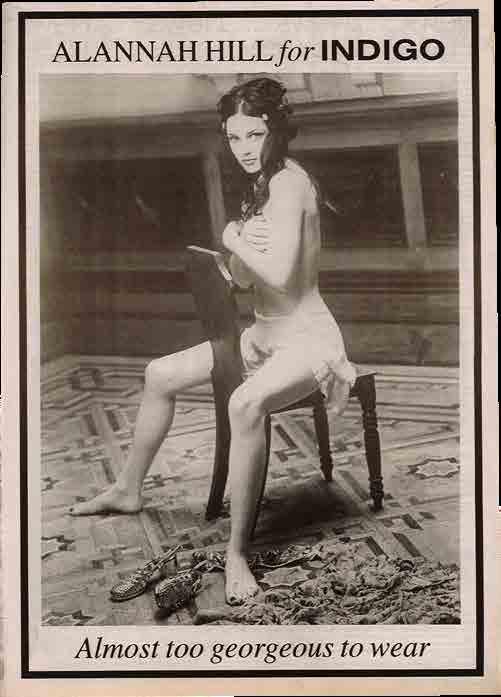
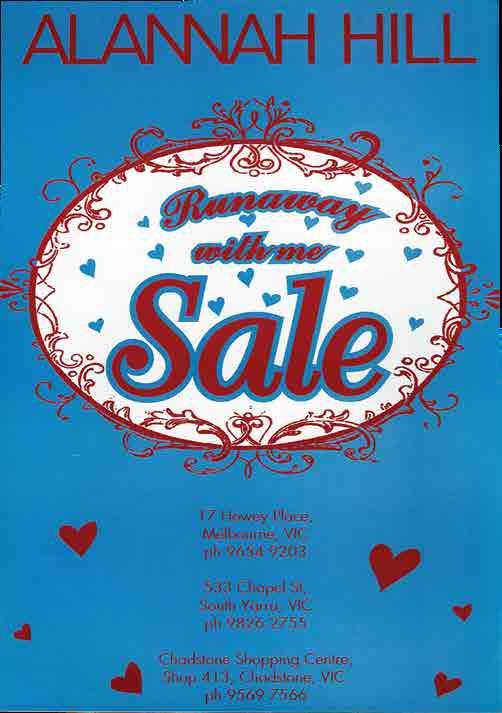
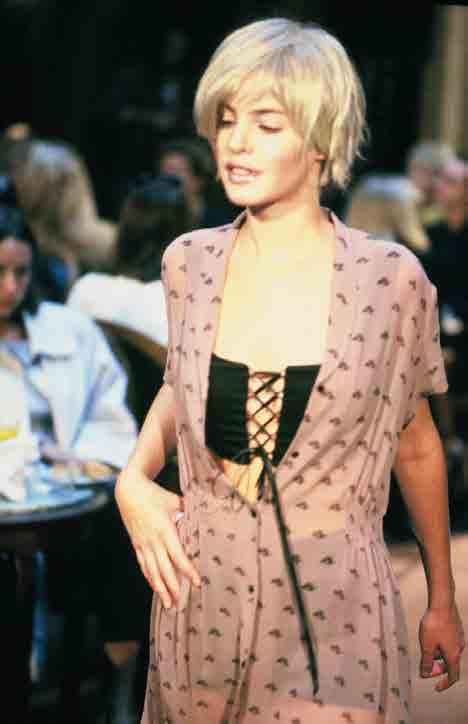
Alannah Hill
1997
– 2013
Beloved by whimsigoths since its inception, Alannah was the original purveyor of polkadots, florals and twee, vintage-inspired looks. The vibe was best embodied by the designer herself, who was allegedly never seen without a full face of doll-like makeup. Thanks for the memories, we’ve never been the same since.
Charlie Brown
1995 – 2014
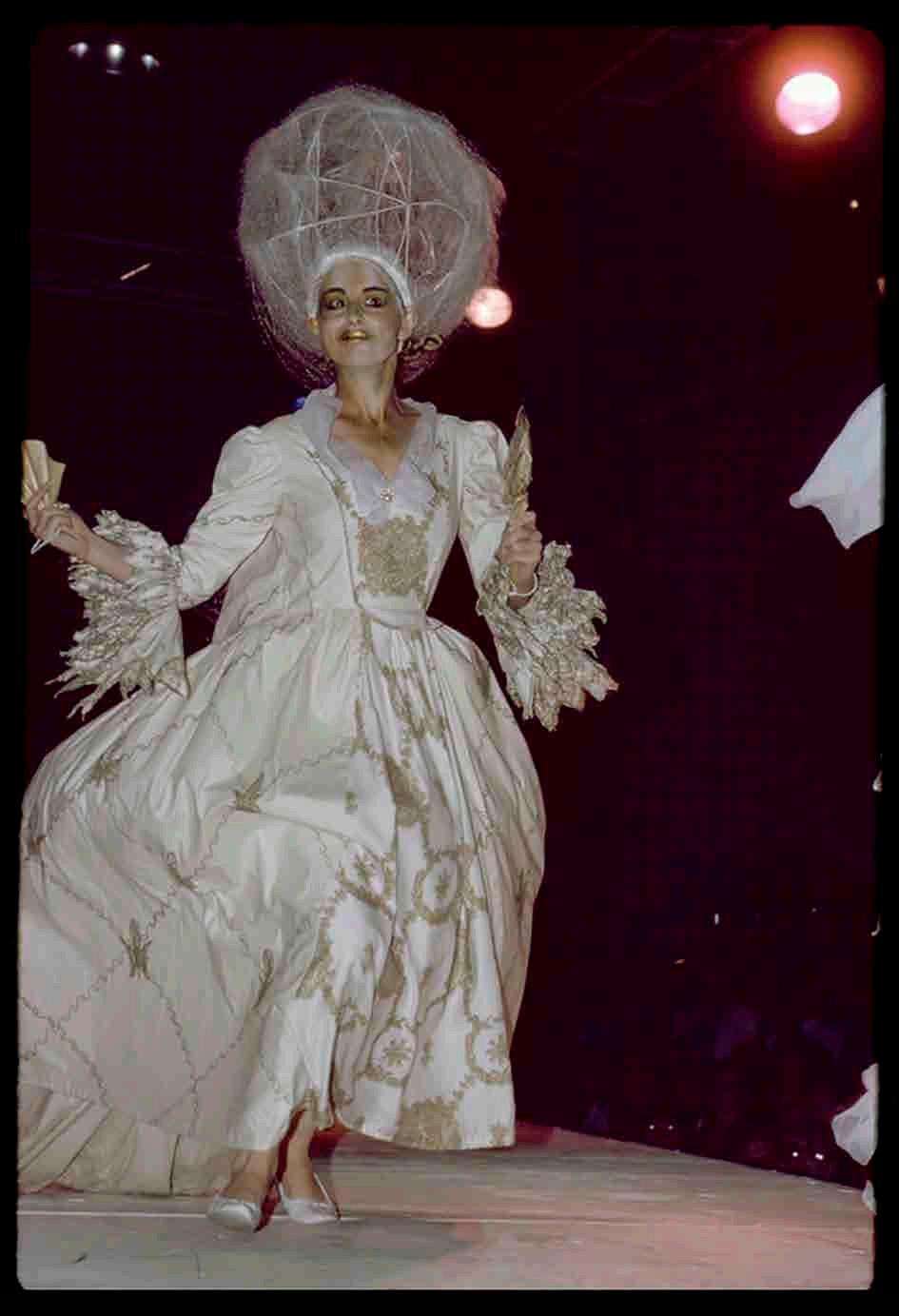
Hailing from California, designer Charlie Brown’s self-titled label was launched in Australia in 1995. At its peak, it had flagship stores across Australia and New Zealand, and its designs were repped on catwalks by supermodels Linda Evangelista, Helena Christensen, Sophie Dahl and Jerry Hall [pictured above]. Myer bought the brand outright in 2014, and it was eventually phased out.
OBITUARIES
As we flipped through the pages of Fashion Journal circa 2006, there they were – the defining labels of yesteryear. All at once, memories of cooler older sisters’ closets and trips to the shopping centre came flooding back. Did we know how good we had it then?
Many of those designers have since taken their final bow. In their honour, let’s walk through the graveyard of some of Australia’s most iconic brands. We’re not being morbid – if anything, consider this your cheat sheet to vintage Australian fashion.
Sass and Bide 1999 – 2026
Among the true pioneers of indie sleaze, Sass and Bide began as a humble jeans stall on London’s Portobello Road. After returning to Australia, friends Sarah-Jane Clarke and Heidi Middleton officially launched the label in 1999, and soon catapulted to international acclaim, making appearances across fashion weeks and in the wardrobe of one Carrie Bradshaw.
Myer bought the brand in 2011 and announced this year its official closure and relaunch plans. For now, the Sass and Bide as we know it is dead. Let’s see if it can be reinstated to its former glory.
Claude Maus
2000 – 2014
Designer Rob Maniscalco founded avant-garde brand Claude Maus at the turn of the century. Remembered for its gothic streetwear and grunge-black drapery, the label was Australia’s closest answer to Ann Demeulemeester. From its perforated leather to skinny denim and drop-crotch pants (how very 2000s), it represented an iconic time in Melbourne fashion.
Shakuhachi
2002 – 2015
Founded in 2002, designer Jessica White’s Shakuhachi was the brand worn by It girls at all the hottest house parties in the 2000s. Think busy prints, biker pants, halter-neck dresses. Whatever would’ve been featured in a Facebook photo album, the label had on offer. Rest in peace, darling Shakuhachi.
Diva
2003 – 2014
Stumble through any Australian shopping centre in the early naughties and you would’ve found yourself at Diva, where a fully qualified ‘diva’ could pierce your tween ears. Launched in 2003, the brand became ubiquitous almost overnight, with more than 80 stores popping up over the next two years. In 2010, Diva’s sister brand, Lovisa, was born, and by 2014, most Diva shopfronts had either closed or rebranded. Regardless of whether Diva died to sororicide or natural causes, we miss her dearly.
Collette Dinnigan
1990
– 2013
Beloved by the likes of Nicole Kidman, Julia Roberts and Cate Blanchett, Colette Dinnigan was known for her signature French lace, beaded dresses and slinky slips. Five years after launching her label in 1990, Collette was the first Australian designer to show on the Paris Fashion Week schedule. Despite being one of the country’s biggest successes, she announced the closure of her eponymous label in 2013, breaking hearts everywhere.
Satch Clothing
1996 – 2011
Founded in Melbourne in 1996, unisex fashion label Satch was a regular fixture in the pages of Fashion Journal and on the bodies of its readers. Featuring a range of blazers, jackets and dresses, it was an early adopter of corporate club wear. It was placed into liquidation in 2011… and the rest is history.
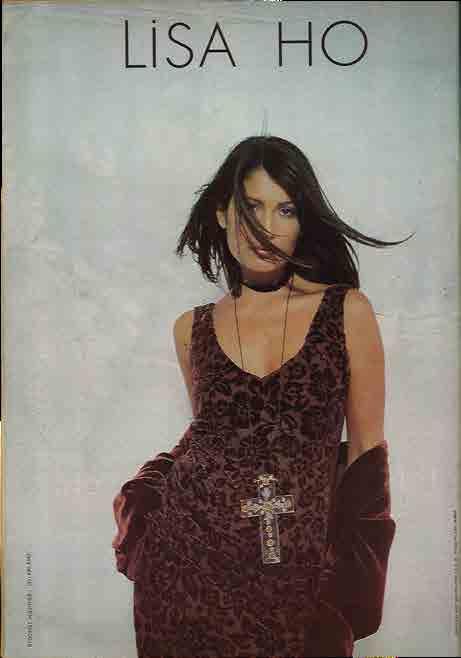
Lisa Ho
1982 – 2013
Glamorous eveningwear, vibrant prints and sophisticated tailoring – there was a time these words were synonymous with Australian designer Lisa Ho. After launching her career selling designs at Sydney’s Paddington Markets in 1982, Lisa built an empire spanning 12 boutiques across Australia and was stocked globally. Delta Goodrem, J.Lo and Olivia NewtonJohn were among her fans, and were likely first in line at the funeral when the brand shuttered its doors in 2013.
Josh Goot
2005 – 2016
Dubbed Australia’s king of the bodycon dress after an awardwinning debut in 2005, Josh Goot became known for his bold colour choices and crisp, clean lines. His Sydney-based brand would go on to show at international fashion weeks, but its manufacturing remained exclusively in Australia – until 2015, when, after a decade in business, Josh would present his final collection in Paris. And, oui, we were devastated.
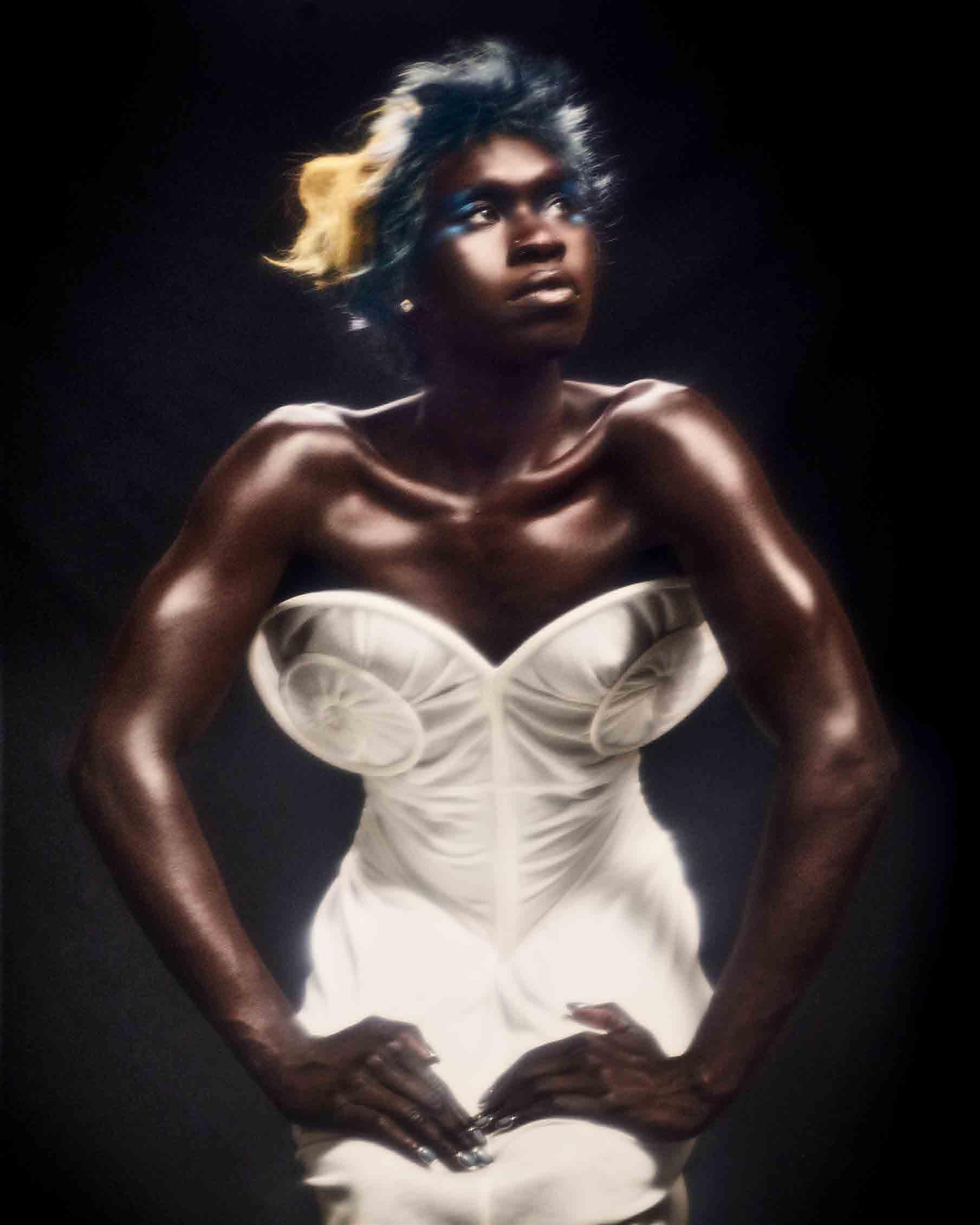
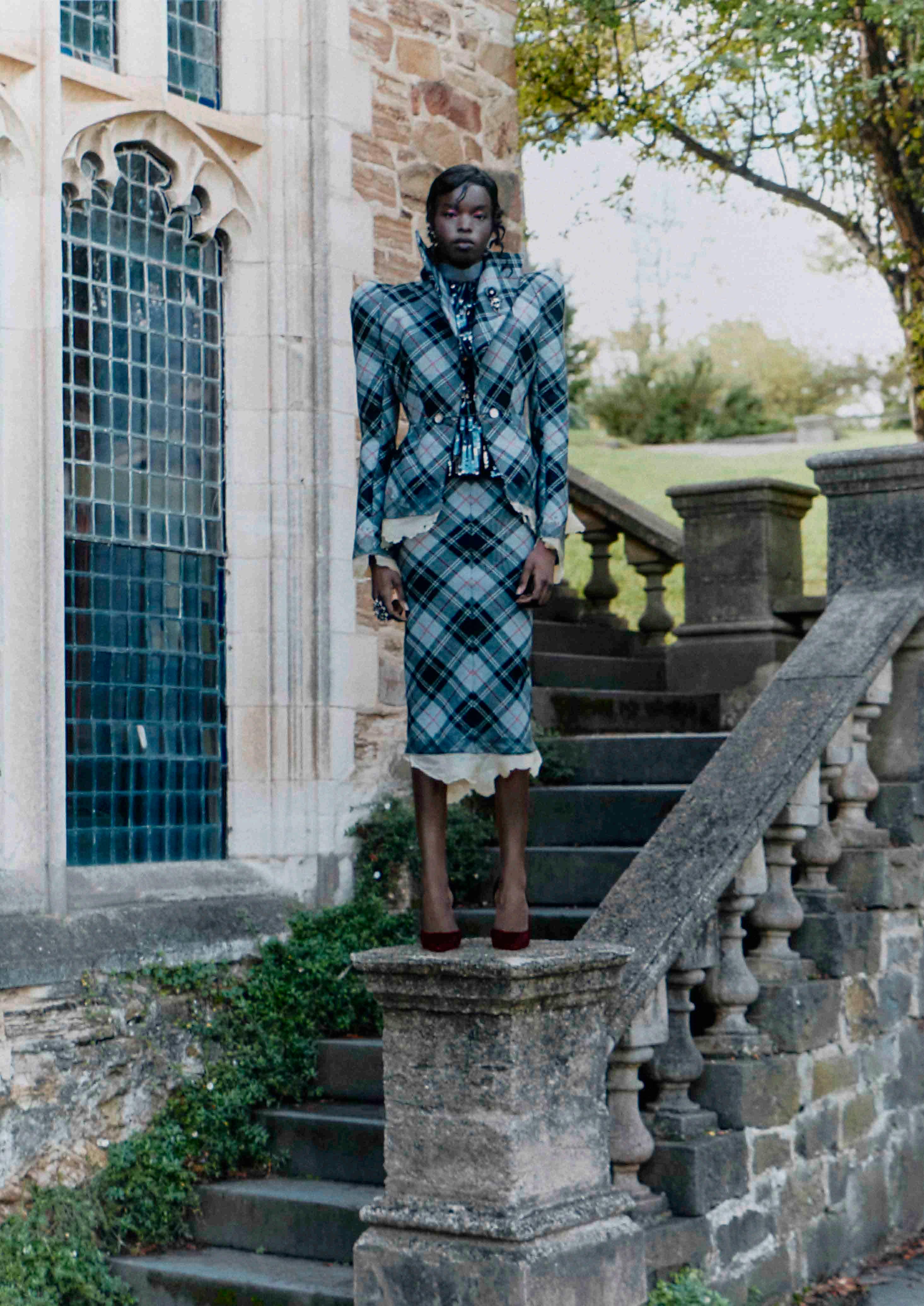
ACHAN wears DIZZIE FRANCIS blazer and skirt, SCANLAN