PROGRAM
Fascinating Ribbons (2001)
Collin Clark, graduate associate conductor
Masquerade for Band (1965)
…and the mountains rising nowhere (1977)
End of Summer (1990)
Nicholas Nadal, graduate associate conductor
Sinfonia No. 3 “La Salsa” (2005)
Joan Tower (b. 1938)
Vincent Persichetti (1915–1987)
Joseph Schwantner (b. 1943)
Donald Freund (b. 1947)
Roberto Sierra 1. Tumbao (b. 1953) tr. Mark Scatterday (b. 1959)
Barnum and Bailey’s Favorite (1913)
Karl King (1891–1971)
Please refrain from talking, entering, or exiting while performers are playing. Food and drink are prohibited in all concert halls. Please turn off cell phones and all other electronic devices. Please refrain from putting feet on seats and seat backs. Children who become disruptive should be taken out of the performance hall so they do not disturb the musicians and other audience members.
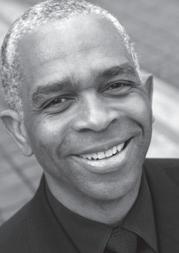
Rodney Dorsey is Professor of Music at the Florida State University College of Music where he conducts the FSU Wind Orchestra and guides the graduate wind conducting program.
Dorsey comes to FSU from the Indiana University Jacobs School of Music where he conducted the IU Wind Ensemble and taught graduate conducting courses. Prior to his tenure at the Jacobs School, Dorsey served on the faculties of the University of Oregon, University of Michigan, DePaul University and Northwestern University. He also gained extensive experience teaching in the public schools of Florida and Georgia.
Dorsey studied conducting with Mallory Thompson, John P. Paynter, and James Croft. He was a clarinet student of Fred Ormand and Frank Kowalsky.
During his conducting career, Dorsey has led performances at several prominent events including the American Bandmasters Association Convention, College Band Directors National Conference North/Northwest Regional Conference, and the Bands of America National Festival. He is active as a guest conductor, clinician, and adjudicator in the United States. International engagements include Hungary, Canada, and Bulgaria.
Dorsey’s commitment to community has been demonstrated by his participation on the board of directors for Music for All and the Midwest Clinic. He currently serves as the president of the Midwest Clinic. Other professional memberships include the College Band Directors National Association, National Association for Music Education, Florida Bandmasters Association, Kappa Kappa Psi, Tau Beta Sigma (honorary), Phi Mu Alpha Sinfonia, and Alpha Phi Alpha Fraternity Incorporated. Dorsey is also an elected member of the American Bandmasters Association. Most recently Dorsey was named a Yamaha Master Educator.
Dunnigan received the prestigious FSU Teaching Award in both 2003 and 2012. In 2006, he was elected to membership in the prestigious American Bandmasters Association. He served as National President of the College Band Directors National Association from 2015 to 2017.
Tower: Fascinating Ribbons
American composer Joan Tower stands as one of the premiere composers in contemporary classical music. Although born in New Rochelle, New York, Tower spent a majority of her childhood and teenage years living in Bolivia which she credits for influencing rhythm in her compositions. A gifted pianist, Tower developed her musicianship through rigorous training encouraged by her father, a mineralogist whose influence is reflected in her evocative “mineral works” such as Black Topaz and Silver Ladders. Tower returned to the United States to study at Bennington College and Columbia University, where she earned a doctorate in composition. She has enjoyed a distinguished career as both composer and educator, serving for decades at Bard College and holding residencies with major ensembles. She was the first woman to be awarded the prestigious Grawemeyer Award. Additionally, she was elected to the American Academy of Arts and Letters. Known for her bold textures, driving energy, and imaginative structures, Tower’s music has reached wide audiences and secured her place as a leading figure in modern American composition.
Fascinating Ribbons was Tower’s first work for wind band. In her notes, she attributes her first wind ensemble composition to the persistence of notable composer Jack Stamp who encouraged her to write for the wind ensemble for over five years. Choosing to begin with a concise composition, she crafted a piece that highlights her signature sense of motion and rhythmic drive. The title reflects the flowing, curved contours of the musical motives, which twist and interweave like ribbons throughout the ensemble. These gestures create a sense of constant propulsion, punctuated by a playful nod to George Gershwin in the work’s closing dotted rhythms, reminiscent of Fascinating Rhythm. Using these techniques, Tower masterfully creates a tonal environment which dances between rhythmic certainty and ambiguity.
Persichetti: Masquerade for Band
Vincent Persichetti was one of the most prolific and influential composers in 20th-century American music. Persichetti began his formal studies at a young age and was already working professionally by eleven as an accompanist, organist, and performer. At the age of sixteen, he became choir director of Philadelphia’s Arch Street Presbyterian Church, a position he held for two decades. Persichetti’s formal training included studies at the Combs College of Music, the Curtis Institute of Music, and the Philadelphia Conservatory, where he worked with notable figures such as Fritz Reiner. By the age of 20 Persichetti had been appointed the department head of both the theory and composition departments at Combs College. He would later conclude his career as the chair of Julliard’s composition department. With over 120 published works spanning nearly every genre, Persichetti is revered in the wind band world.
Composed in 1965 and commissioned by the Baldwin-Wallace College Conservatory of Music, Masquerade for Band represents Persichetti’s only work with a theme and variation form. Notably, the piece is not variations on one primary theme but constructed by ten variations on several related themes. The piece draws upon themes from his theory textbook Twentieth Century Harmony to highlight Persichetti’s characteristic use of colorful harmonies and rhythmic play. Persichetti described his inspiration for this piece in his text book:
I composed phrases of music to illustrate specific points, and years later these fragments began haunting me. I realized that certain examples had a thematic kernel in common. Like the hymns and responses, which demanded expansion and elaboration and became the Liturgical Symphony (Symphony No. 7), these examples from the harmony book evolved into a set of variations for fifty wind and percussion instruments. The work is a masquerade of my book: I called it Masquerade for Band.
Schwantner: …and the mountains rising nowhere
Joseph Schwantner is widely recognized for his richly imaginative sounds and innovative approach to timbre and texture. Born in Chicago, Illinois, Schwantner began his musical journey as a guitarist which he describes as playing a pivotal role in his perspective of the construction of music and harmony. His first professional composition Offbeat—a twelve tone free jazz composition—won the 1959 National Band Camp Award. After early success he continued his education at Northwestern University before embarking on his academic career which would conclude at the Eastman School of Music. Schwantner went on to earn numerous awards for his compositions, most notable was the Pulitzer Prize in 1979 for his work Aftertones of Infinity.
Composed in 1977 for Donald Hunsberger and the Eastman Wind Ensemble, …and the mountains rising nowhere stands as one of the most distinctive and influential works in the wind band repertoire. The piece is inspired by a line from the poem Arioso by Carol Adler:
arioso bells
sepia moon-beams an afternoon sun blanked by rain and the mountains rising nowhere the sound returns the sound and the silence chimes
In this piece Schwantner creates a diverse soundscape which culminates in unique sounds not often heard in composition layered together in a masterful construction of tonal colors. Notable unique sounds include emerging a gong in water as it is being played, crystal glasses, as well as singing and whistling from the members of the ensemble. Schwantner also uses a unique instrumentation which contributes to the texture and color of the piece. For
example, the piece is not written for saxophones or euphoniums which are a characteristic cornerstone of the traditional wind ensemble. Moreover, the diversity of parts written for each instrument exceeds normal expectations such as the 6 unique flute parts or the extensive demand for percussion. The piece culminates in what Schwantner describes as a “celestial choir” which presents a tonal experience unique to Schwantner’s musical signature.
Freund: End of Summer
Don Freund is an American composer, pianist, conductor, and educator whose work spans a wide range of styles and mediums, from solo and chamber music to large-scale orchestral and theatrical works. Born in Pittsburgh, Pennsylvania, Freund studied at Duquesne University before earning master’s and doctoral degrees from the Eastman School of Music, where he worked with notable composers such as Samuel Adler and Warren Benson. A longtime professor of composition at Indiana University, Freund has also played a significant role in championing contemporary music through performance and festival programming. His catalog includes more than one hundred works, many of which reflect his interest in blending structural rigor with expressive, often literary, inspiration.
End of Summer is part of Freund’s larger collection Poem Symphonies (1990), a multimovement work inspired by contemporary American poetry. Rather than setting the text directly, Freund uses a poem’s imagery and emotional atmosphere as a creative springboard. This movement draws on Stanley Kunitz’s poem of the same name, capturing its sense of transition, reflection, and quiet inevitability. The music unfolds as a shifting landscape of color and texture, mirroring the poem’s imagery: changing light, unsettled air, and the turning of a season. Moments of stillness give way to surges of intensity, suggesting both the beauty and unease that accompany the passage of time. In this way, End of Summer becomes less a depiction and more an abstract meditation on endings, memory, and transformation.
Sierra: Sinfonia No. 3 “La Salsa”
Puerto Rican composer Roberto Sierra is known for bridging Latin American musical traditions with European modernism. Born in Vega Baja, Puerto Rico, Sierra pursued studies both in Puerto Rico and in Europe where he studied under György Ligeti. Following the success of his orchestral work Júbilo at Carnegie Hall, by the Milwaukee Symphony Orchestra, Sierra received numerous commissions and performances by major ensembles such as the New York Philharmonic and the Los Angeles Philharmonic. Sierra’s compositional voice is characterized by what he calls “tropicalization”—a fusion of Afro-Caribbean rhythms, folk traditions, and contemporary classical techniques. His works often draw on the sounds and memories of his Puerto Rican heritage, reimagined through sophisticated textures. In addition to his career as a composer, Sierra serves as a professor of composition at Cornell University and has been recognized with numerous international awards and honors.
Sierras composition Sinfonía No. 3 “La Salsa” is a vibrant, four-movement work that celebrates the rich musical traditions of the Caribbean. Commissioned by the Milwaukee Symphony Orchestra, the piece draws inspiration from the rhythmic vitality of salsa—a genre whose very name suggests a flavorful blend of diverse influences. Sierra weaves together elements from Puerto Rican, Cuban, and Dominican musical styles, incorporating characteristic rhythms such as the habanera, danza, merengue, tumbao and plena. The first movement, featured on this concert, is structured in sonata form and built around an allegro “tumbao.” This rhythmic pulse anchors the first movement, giving it a lively and dancing character.
King: Barnum and Bailey’s Favorite
Karl L. King was among the most prominent American band composers and conductors of the early twentieth century, especially known for his contributions to the march repertoire. Born in Paintersville, Ohio, and raised in Canton, he began his musical career as a baritone player before spending a decade as a circus musician. King performed with and later conducted bands for several major traveling shows, including the Barnum and Bailey Circus. In 1920, he settled in Fort Dodge, Iowa, where he led the municipal band for many years and became a central figure in the town’s cultural life. Throughout his career, King composed hundreds of works, most notably marches, earning a place alongside John Philip Sousa and Henry Fillmore as one of the most influential composers in American band history.
Composed in 1913 at age twenty-two, Barnum and Bailey’s Favorite was written for the famed circus band of the same name and its conductor, Ned Brill. At the time, King had just joined the ensemble as a euphonium player, and the march reflects both his admiration for the group and his deep affinity for the instrument. The piece captures the energy and spectacle of circus life, with bright fanfares, driving rhythms, and a particularly prominent euphonium countermelody, one of King’s signature touches. Designed to accompany the excitement of the big top, the march remains one of his most enduring works, celebrated for its vitality, craftsmanship, and unmistakable showmanship.
University Wind Orchestra Personnel
Rodney Dorsey, Director
Collin Clark and Nicholas Nadal, Graduate Associate Conductors
Piccolo
Moriah Emrich
Flute
Sam Malave
Kathryn Lang
Kendall Smith
Claire “Parky” Park
Paige Douglas
Ian Guerrero
Oboe
Rebecca Keith
Sarah Ward (+ EH)
Jordan Miller
Gracee Myers (+ EH)
Bassoon
Hunter Fisher
Dakota Jeter
Elizabeth Novak (+Contra)
Clarinet
Harper Golden
Jenna Eschner
Charlotte MacDonald
Daniel Kim
Taylin Hamilton
Xavier Williams
Zhu Zhiyao
Jariel Santiago
Reymon Contrera
Bass Clarinet
Hali Alex
Alto Saxophone
Jack Blumer
Kaiden Klingler
Tenor Saxophone
Ash Stewart
Baritone
Saxophone
Micah Mazzella
Trumpet
Noah Solomon
Sharavan Duvvuri
Jeremiah Gonzalez
Avery Hoerman
Jordyn Myers
Will Rich
Johniel Najera
Horn
Gio Pereira
Eric On
Allison Hoffman
Jeason Lopez
Clare Ottesen
Trombone
Connor Altagen
Elijah van Camp-Goh
Landon Ellenberg
Bass Trombone
Maxwell Brower
Euphonium
Anthony Gonzalez
Adam Zierden
Tuba
Yoni Zegye
Colin Teague
String Bass
Jarobi Watts
Piano
Jiaqiu Song
Harp
Margaret Anne Altagen
Percussion
John “JJ” Baker
Caitlin Magennis
Waylon Hansel
Owen Montgomery
Jordan Brown
Sami Smith
Gabby Overholt
Alex Aquino
Yaniv Dinur, Conductor
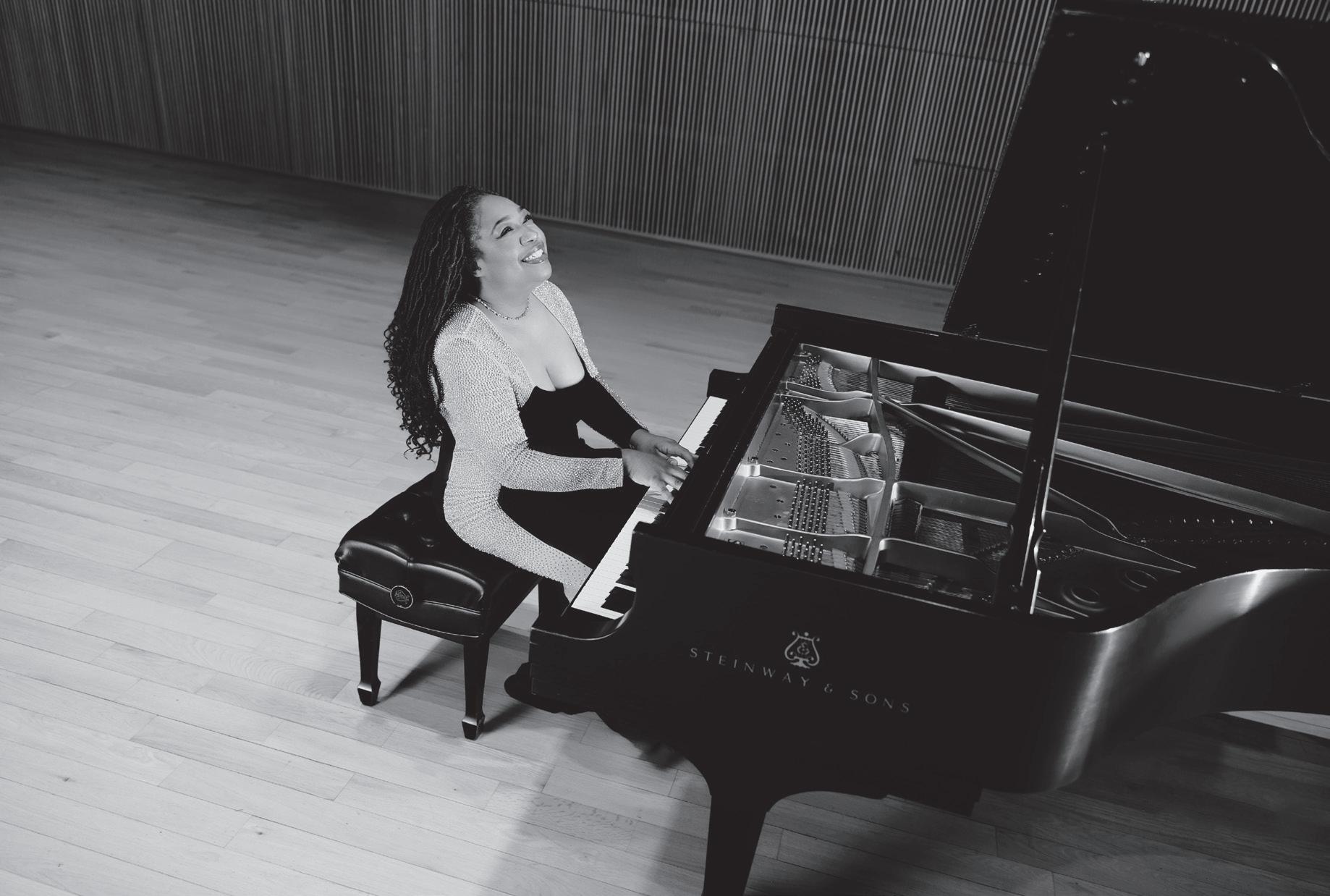
Michelle Cann, Piano WAGNER
Prelude and Leibestod from Tristan und Isolde LISZT
Piano Concerto no. 1 STRAUSS
Death and Transfiguration SCRIABIN
Le Poeme de l’extase
SATURDAY MAY 2
UNIVERSITY MUSICAL ASSOCIATES
2025-2026
Dean’s Circle
Les and Ruth Ruggles Akers
Dr. Pamela T. Brannon
Richard Dusenbury and Kathi Jaschke
CarolAline Flaumenhaft
Joyce Andrews
Louie and Avon Doll
Patrick and Kathy Dunnigan
Kevin and Suzanne Fenton
Andrew and Karen Hoyt
Alexander and Dawn Jiménez
Jim Lee
Paula and Bill Smith
Margaret Van Every
Gold Circle
Albert and Darlene Oosterhof
Bob Parker
Todd and Kelin Queen
Karen and Francis C. Skilling
David and Jane Watson
Bret Whissel
Sustainer
Stan and Tenley Barnes
Kathryn M. Beggs
Karen Bradley
Steve and Pat Brock
Suzi and Scott Brock
Brian Causseaux and David Young
James Clendinen
Mary and Glenn Cole
Carol J. Cooper
Sandy and Jim Dafoe
F. Marshall Deterding and Dr. Kelley Lang
Diane and Jack Dowling
Aaron and Caroline Ellis
John S. and Linda H. Fleming
Joy and James Frank
William Fredrickson and Suzanne Rita Byrnes
Ruth Godfrey-Sigler
Michael and Marsha Hartline
Ken Hays
Melanie Hines and Dudley Witney
Dottie and Jon Hinkle
Todd S. Hinkle
The Jelks Family Foundation, Inc.
Emory and Dorothy Johnson
Gregory and Margo Jones
Anne van Meter and Howard Kessler
Dennis G. King, Esq.
William and Susan Leseman
Annelise Leysieffer
Linda and Bob Lovins
William and Gayle Manley
Robert and Patty McDonald
Marian and Walter Moore
Ann W. Parramore
Almena and Brooks Pettit
David and Joanne Rasmussen
Edward Reid
Mark and Carrie Renwick
Stephen and Elizabeth Richardson
Lawrence and Lisa Rubin
Patrick J. Sheehan
Dr. James and Ruth Anne Stevens
Richard Stevens and Ron Smith
Sustainer
cont’d
Marshall and Nell Stranburg
William and Ma’Su Sweeney
Martin Kavka and Tip Tomberlin
Steve Moore Watkins and Karen Sue Brown
Stan Whaley and Brenda McCarthy
Kathy D. Wright
Mary S. Bert
Joe and Susan Berube
Marcia and Carl Bjerregaard
Greg and Karen Boebinger
Larry and Sara Bourdeau
David and Carol Brittain
Dean and Lyndsey Caulkins
Bonnie and Pete Chamlis
Malcolm A. Craig
Linda Davey
Rochelle Davis
Judith Flanigan
Bonnie Fowler, Armor Realty
L. Kathryn Funchess
Harvey and Judy Goldman
Jerry and Bobbi Hill
Sally and Dr. Link Jarrett
Judith H. Jolly
Arline Kern
Jonathan Klepper and Jimmy Cole
Elna Kuhlmann
Keith Ledford
Patron
Donna Legare
Joan Macmillan
Patrick Malone
Victoria Martinez
Stephen Mattingly
Ann and Don Morrow
Joel and Diana Padgett
Karalee Poschman
Mary Anne J. Price
Magda Sanchez
Jill Sandler
Paula S. Saunders
Jeanette Sickel
Susan Sokoll
George Sweat
Ed Valla
Scott and LaDonna Wagers
Sylvia B. Walford
Diana Wang
Geoffrey and Simone Watts
Natalie Zierden
Patricia C. Applegate
Sarah and John Bender
The Boyett Family
Judy and Brian Buckner
Kasia Bugaj and J. Renato Pinto
Robby Bukovic
Darren and Peyton Cassels
Marian Christ
Katie and Daniel Elliott
Sarah Eyerly
Cynthia Foster
Gene and Deborah Glotzbach
Sue Graham
Laura Gayle Green
Miriam Gurniak
Donna H. Heald
Carla Connors and Timothy Hoekman
Jane A. Hudson
Jayme and Tom Ice
Stephanie Iliff
William and DeLaura Jones
Jane Kazmer
Associate
Paige McKay Kubik
Joe Lama
Jane LeGette
Eric Lewis
Dr. Lynne Y. Lummel
Cindy Malaway
Lealand and Kathleen McCharen
Dr. Linda Miles
Drs. Linda O’Neil and Sebastian Alston
Becky Parsons
Michelle Peaceman
William and Rebecca Peterson
Adrian and Rachel Puente
Sanford A. Safron
Lori and Charles Smith
Sudarat Songsiridej and Mary Schaad
Susan Stephens
Allison Taylor
C. Richard and Phrieda L. Tuten
Steve Urse
Janie W. Weis
Karen Wensing
Lifetime Members
Willa Almlof
Florence Helen Ashby
Mrs. Reubin Askew
Tom and Cathy Bishop
Nancy Bivins
Ramona D. Bowman
André and Eleanor Connan
Russell and Janis Courson
J.W. Richard Davis
Ginny Densmore
Carole Fiore
Patricia J. Flowers
Hilda Hunter
Julio Jiménez
Kirby W. and Margaret-Ray Kemper
Patsy Kickliter
Anthony M. Komlyn
Fred Kreimer
Beverly Locke-Ewald
Cliff and Mary Madsen
Ralph and Sue Mancuso
Meredith and Elsa L. McKinney
Ermine M. Owenby
Mike and Judy Pate
Laura and Sam Rogers
Dr. Louis St. Petery
Sharon Stone
Donna C. Tharpe
Brig. Gen. and Mrs. William B. Webb
Rick and Joan West
John L. and Linda M. Williams
Sallie and Duby Ausley
Beethoven & Company
Corporate Sponsors
Ron Erichson/Beth Frederick
Business Sponsors
WFSU Public Broadcast Center
The University Musical Associates is the community support organization for the FSU College of Music. The primary purposes of the group are to develop audiences for College of Music performances, to assist outstanding students in enriching their musical education and careers, and to support quality education and cultural activities for the Tallahassee community. If you would like information about joining the University Musical Associates, please contact Kim Shively, Director of Special Programs, at kshively@fsu.edu or 850-645-5453.
The Florida State University provides accommodations for persons with disabilities. Please notify the College of Music at 850-644-3424 at least five business days prior to a musical event if accommodation for disability or publication in alternative format is needed.