
Have you captured a memorable moment?
Submit your favorite photo taken in or around Lincolnton for a chance to be featured in the next issue of the magazine. As a bonus, you’ll also be entered to win a $25 gift card to a local restaurant!
Email your photos to publisher@hometownlincolnton.com by September 1, 2026 to enter the fall contest.
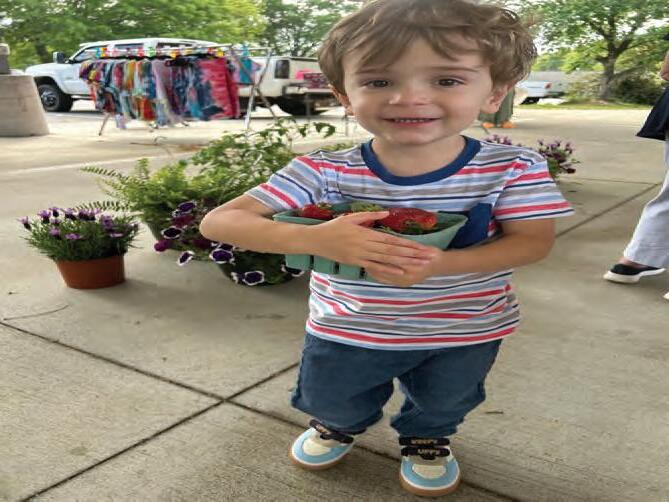
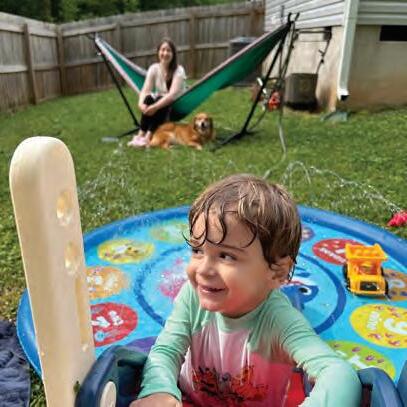
Photo submitted by Stephanie Meyer. “My son was all smiles at the Lincoln County Farmer’s Market.”
Megan Patrice Sheerey
Meyer
By Stephanie Meyer
Green
By Betty Jo Allen
By Roy C. Lightfoot
By Sandi Grigg

Summer 2026 | Volume 1, Issue 2
OWNER/PUBLISHER
Stephanie Meyer
CREATIVE DIRECTOR
Fran Sherman
GRAPHIC DESIGN
Jenna Y. Webb
CONTRIBUTING WRITERS
Betty Jo Allen, Rich Green
Sandi Grigg, Roy C. Lightfoot, Stephanie Meyer, Megan Patrice Sheerey
CONTRIBUTING PHOTOGRAPHERS
Rich Green, Michael Helms
Stephanie Meyer, Brian Thompson, James Stefiuk, Robert Webb
PUBLISHED BY: HOMETOWN MEDIA, LLC (704) 266-1984 info@hometownlincolnton.com


Reproduction or use of the contents in this magazine without prior, written permission from the publisher is prohibited.
© 2025-26 Hometown Media, LLC
Hometown Media, LLC strives to publish accurate information in our publications. However, Hometown Media, LLC cannot be held responsible for any consequences resulting from errors or omissions. Hometown Media, LLC also cannot be held responsible for goods or services provided by advertisers in our publications. All material in this magazine is property of Hometown Media, LLC, and may not be reproduced without authorization from the publisher. Hometown Magazine - Lincolnton, a Hometown Media, LLC publication, is published four times per year and is distributed to residents and businesses in Lincolnton, North Carolina, to subscribers, and to select Lincolnton business locations in bulk. Articles published in Hometown Magazine - Lincolnton that express author opinions do not necessarily represent the opinions of Hometown Magazine - Lincolnton and its publisher, Hometown Media, LLC. The publication does not guarantee the accuracy, completeness, of the information presented. Readers are encouraged to conduct their own research.

CORRECTION:
About the cover:
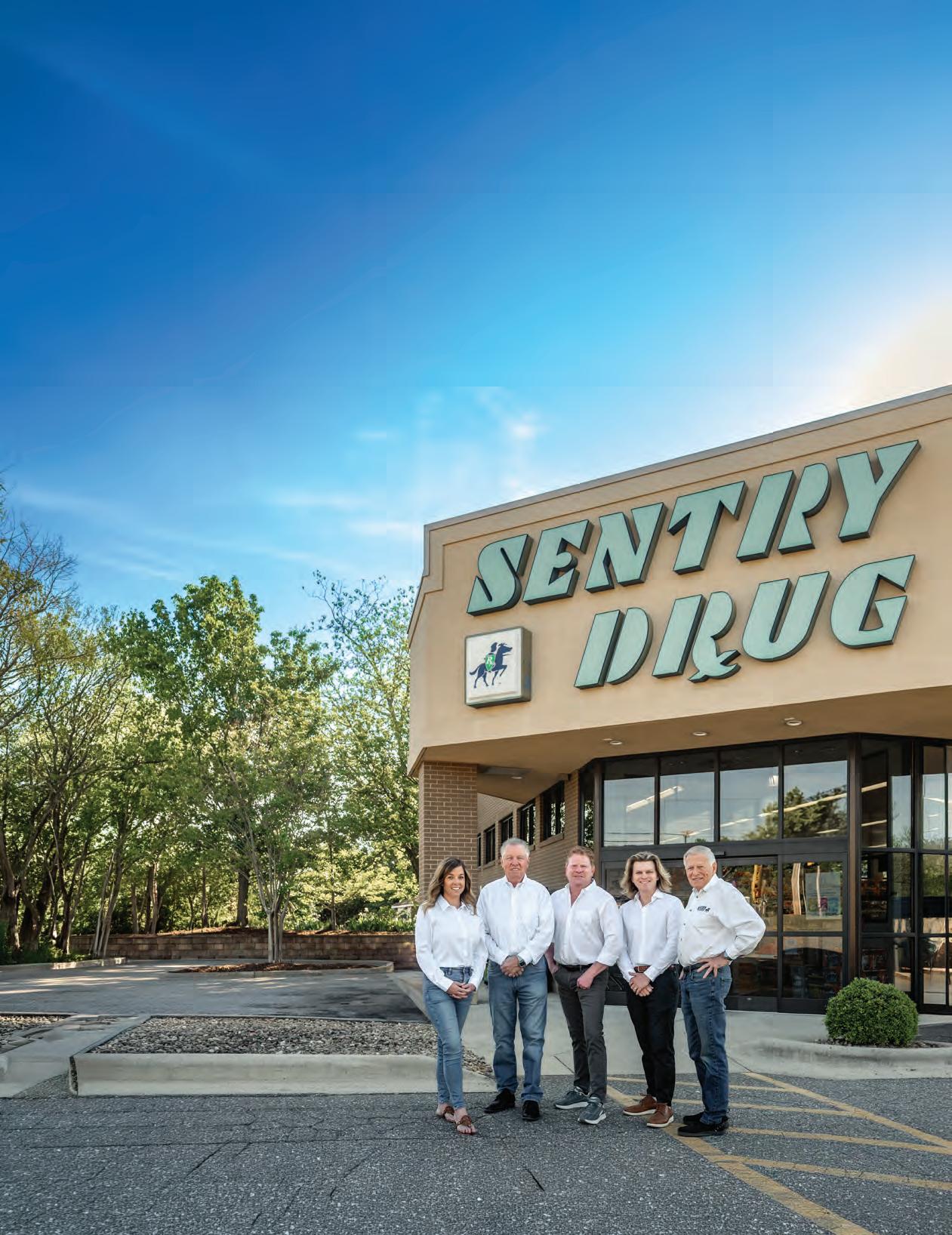
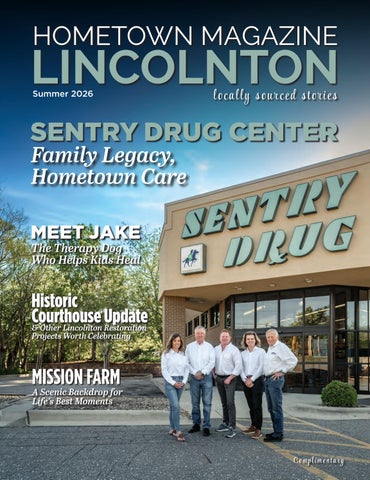
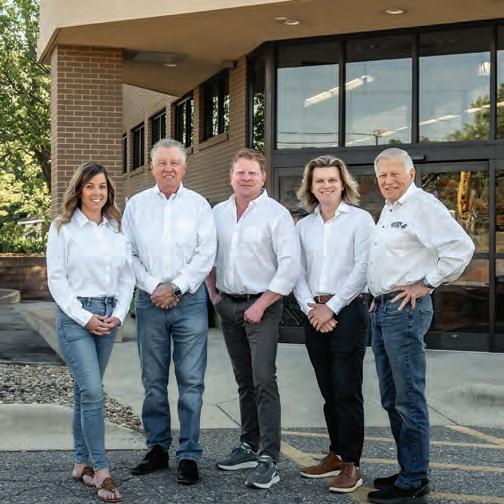
Sentry Drug Center is a family-owned and operated pharmacy in Lincolnton. Their story begins on page 40. Photo by Rich Green.
An article in the Spring 2026 issue incorrectly identified Kevin Evans as an Air Force veteran. Mr. Evans is a veteran of the United States Navy. We sincerely apologize for this error and thank Mr. Evans for his service.





Dear Neighbor,
A few months ago, we sent the first issue of Hometown Magazine out into the world with equal parts excitement and nervousness. Would people read it? Would they enjoy it? Would they connect with the stories the way we hoped they would?
Thankfully, the answer has been a resounding yes.
I’ve heard from readers who told me they read every page cover to cover. I’ve met people who shared story ideas, offered words of encouragement, or simply stopped to say, “I loved the magazine.” Each conversation has reminded me why I started this journey in the first place.
As we publish this summer issue, I’m excited about the quiet, steady growth happening behind the scenes. We’ve welcomed new writers who help us tell even more of Lincoln County’s stories. We’ve added a copy editor to help ensure that every issue is polished and professional. We’ve also partnered with new advertisers whose support makes this publication possible.
In this issue, you’ll read about businesses that started small and grew slowly. You’ll discover efforts to faithfully preserve pieces of our local history so future generations can enjoy them. Even one of our recipes embraces the same spirit. A good country-style steak isn’t rushed. It takes time. The best things often do.
The longer days of summer seem to invite us to slow down a little. To linger on the porch after supper, to spend quality time with our families, and to appreciate the simple things we tend to overlook when life gets busy. For me and my family, that’s going to look like a lot of backyard time, as our little boy learns the joy of sliding into an inflatable splash pad, eating popsicles in the sunshine, and drinking from the hose. Making those core summer memories is so special, and so much fun.
I hope this issue encourages you to make some great memories this summer. Take it with you to the beach, the lake, the backyard hammock or your front porch swing. Read a story or two with your morning coffee. Share it with a friend.
Thank you for welcoming Hometown Magazine into your homes. We’re still new, still growing, and still learning. But we’re grateful to be on this journey together.
Stephanie Meyer Publisher, Hometown Magazine – Lincolnton

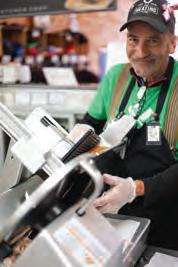
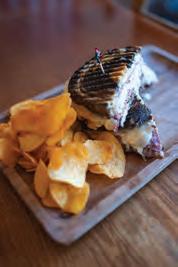
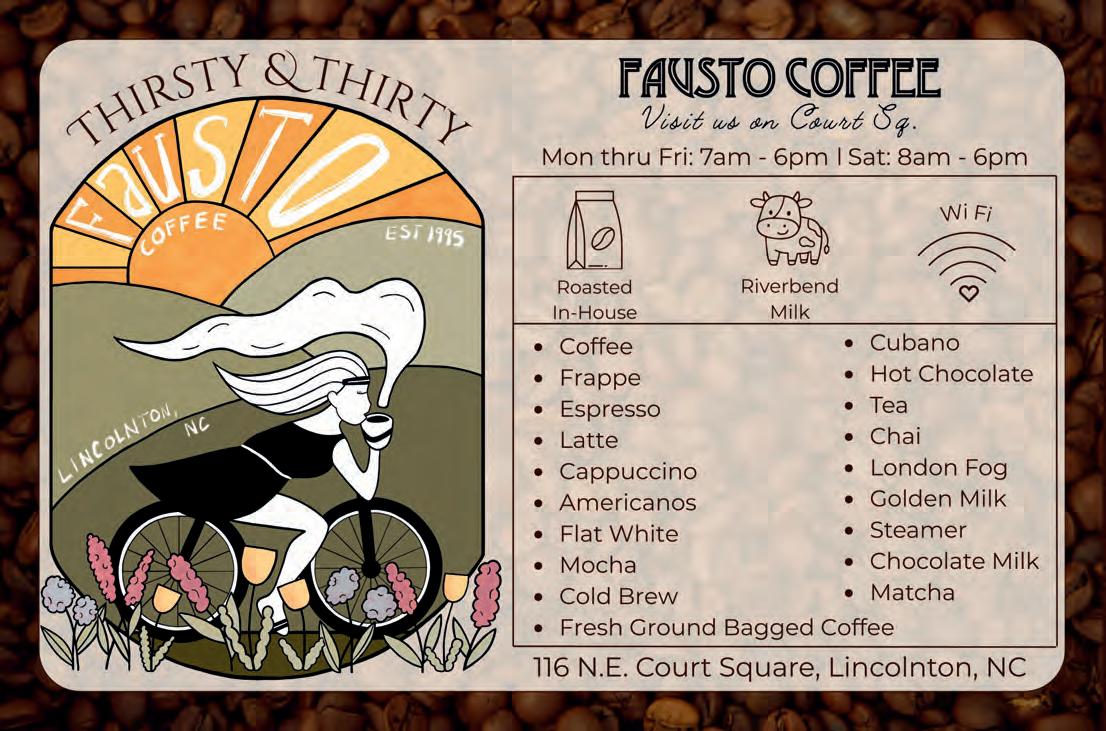
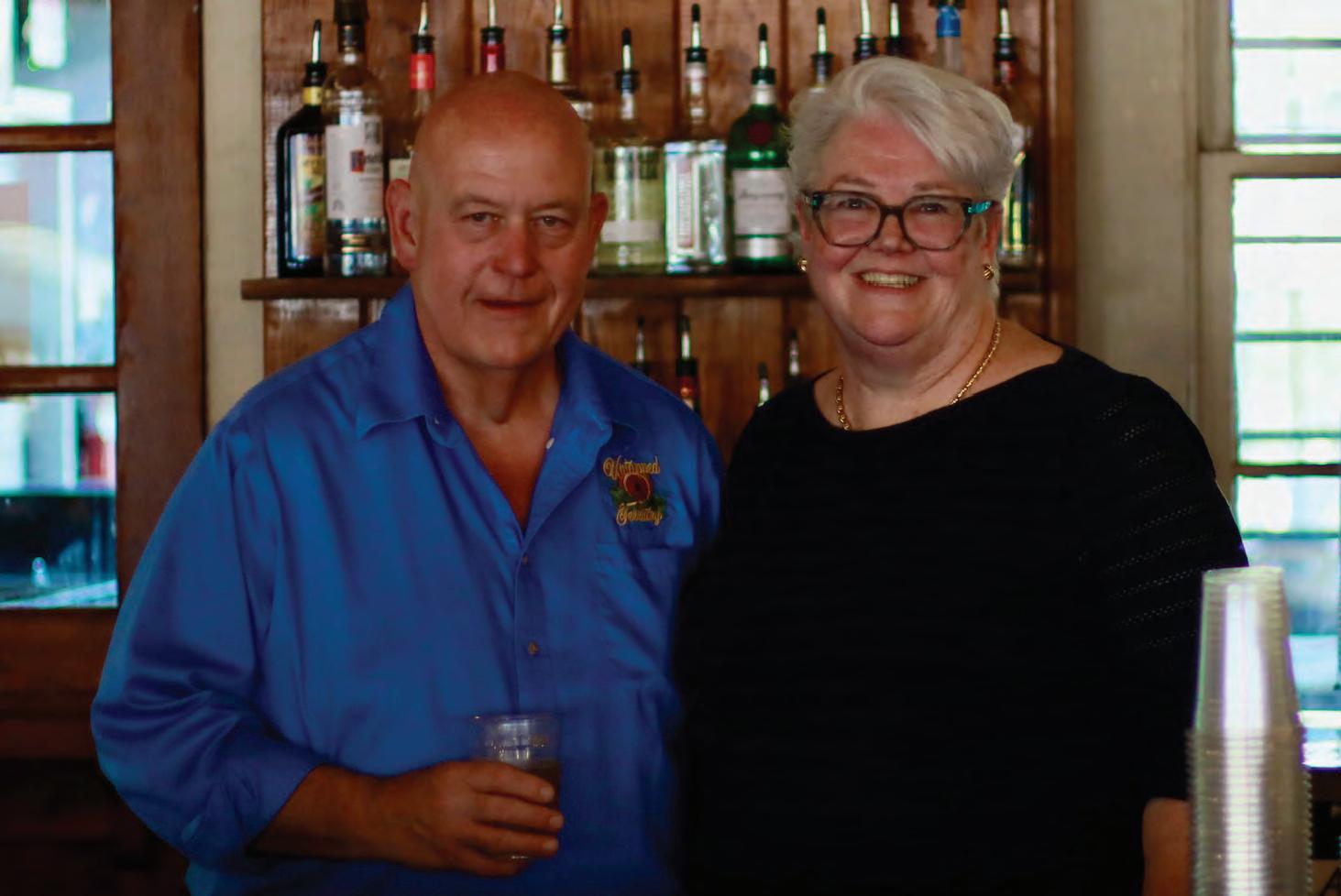
STORY BY STEPHANIE MEYER | PHOTOS BY BRIAN THOMPSON
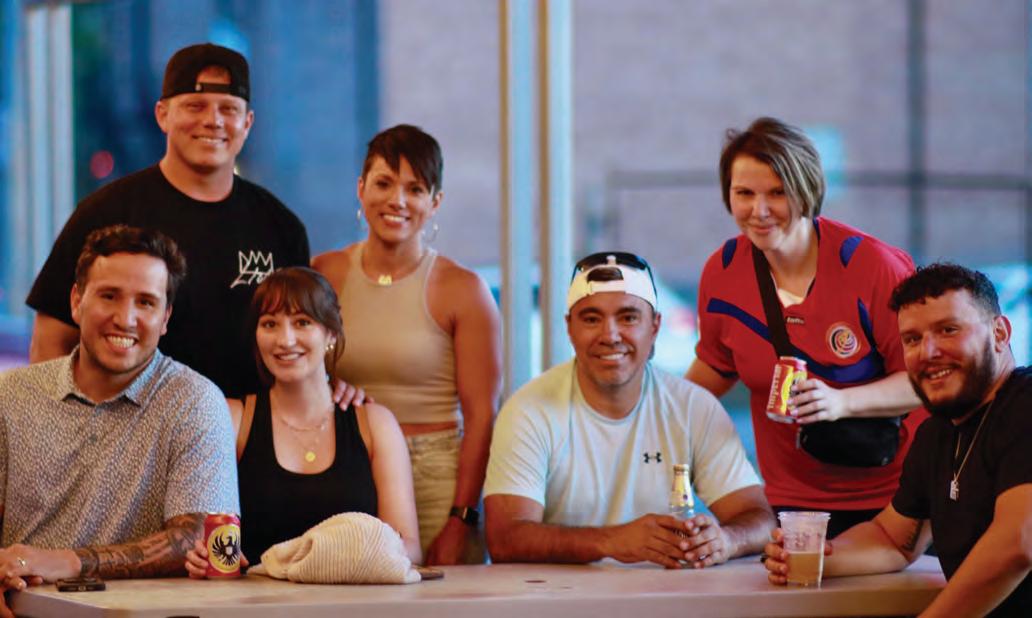
On Halloween night in 2025, people gathered in a place that felt both brand-new and comfortably familiar. Friends caught up over drinks. Neighbors greeted one another across the room. Regulars settled in. The atmosphere was unmistakably Untapped Territory. The only difference was that everyone was next door — and there was a lot more room to enjoy it.
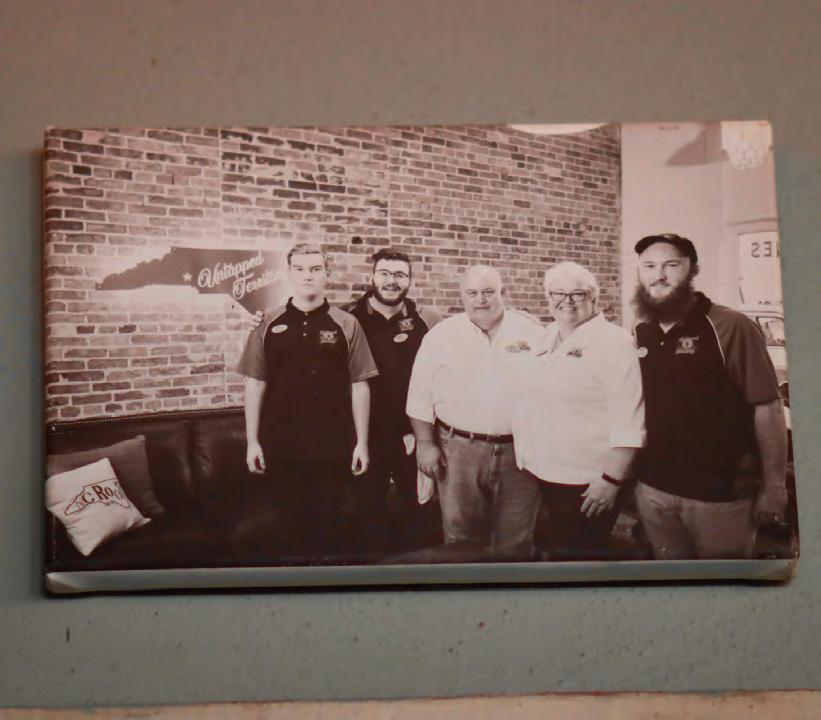
What began as a small, family-run taproom — the first of its kind in Lincolnton — is now a full bar with an indoor stage, expanded seating and multiple gathering spaces. On
any given evening, visitors might find a couple on a first date, colleagues unwinding after work, families grabbing dinner from a food truck, or old friends catching up over drinks.
The original taproom opened at 118 E. Water Street in August 2018. After more than seven years in business, the time came to expand. Fortunately, owners Brian and Marie Kenyon didn’t have to look far.
As owners of the entire building along that stretch of Water Street, the Kenyons had spent years renovating neighboring spaces that had fallen into disrepair or sat largely unused.
One section at a time, they transformed the property, eventually creating a new home for Untapped Territory at 124 E. Water Street.
When the expanded location officially opened on Oct. 31, 2025, it marked the culmination of years of vision, investment and hard work.
When the Kenyons first considered opening a craft beer taproom, Lincolnton wasn’t the obvious choice. The family originally came from New Jersey before eventually settling in the Charlotte area, and Brian had long dreamed of creating a gathering place centered on good drinks and good company.
“I had always wanted to do something like this, back in college when my roommates and I ran most of the campus parties,” says Brian. “But then you get married, you have kids, you have life.”
The idea that would become Untapped Territory came from a chance conversation at Ass Clown Brewing Company in Cornelius, where Brian’s oldest son, Matthew, worked as bar manager. While visiting one evening, Brian met a customer from Lincolnton who was involved with the city’s Downtown Development Association. The conversation turned to the possibility of opening a craft beer taproom.
For Brian and Marie, the opportunity was intriguing.
“We’re from up north and there’s hardly an opportunity to be the first to do something because everything there is so established,” says Marie. “When I heard there was no other spot to get a drink without a kitchen, I thought this is just something that’s so unique, so we’ll figure it out as we go.”
Lincolnton also offered something increasingly difficult to find elsewhere.
“In Cornelius, prices for storefronts and space were already astronomical,” says Brian. “Rent here was very affordable. And I used to flip houses, so we were able to do our own remodeling.”
That remodeling became a true do-ityourself project.
“It took eight months of us doing it while working other jobs and living
outside town,” says Marie. “We commuted for one year, then we moved to Lincolnton.”
Not everyone was convinced the concept would work.
“We had been told, ‘You’re never going to sell craft beer in Lincolnton; people here want Bud Light and Michelob Ultra,’ and there’s nothing wrong with that,” says Brian. “But there were actually a lot of people who wanted an atmosphere, not just a beer.”
The business started as a family affair. Brian and Marie’s three sons — Matt, Adrian and John “Bones” Kenyon — all spent time helping behind the bar during the early years. Each has since gone on to blaze their own trails, pursuing new careers, starting a family, and even traveling Western North Carolina in a vintage camper van. In many ways, that willingness to explore, embrace change and take calculated risks seems to run in the Kenyon family. It’s a trait that fits perfectly with the name Untapped Territory; the courage to venture into unfamiliar places, whether in business or in life.
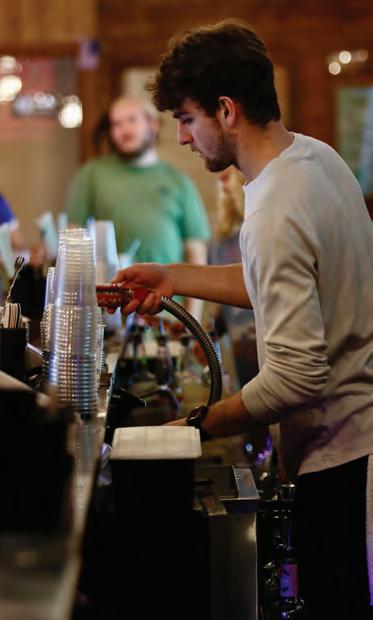
Today, customers are likely to see several newer faces behind the bar, reflecting the evolution from a small family-run taproom into a larger operation. Growth, however, hasn’t changed the philosophy.
“Even with the growth, it’s important for us to maintain that type of environment. Where people feel very comfortable,” says Marie.
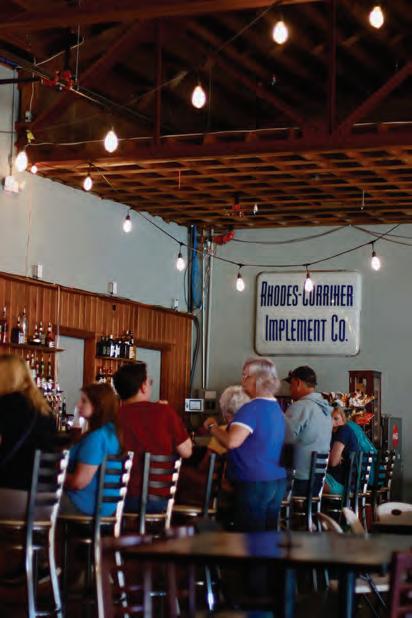
That welcoming atmosphere is reflected throughout the space. Brian incorporated salvaged materials, repurposed fixtures and bargain finds into the design, while local artwork and reclaimed wood add warmth and character. The building’s history remains visible as well, including an original Rhodes-Corriher sign hanging toward the back of the taproom.
The expanded location includes several distinct gathering spaces. The main taproom accommodates busy nights, while the Garage offers a quieter setting and can also serve as a private event
space. Outside, the Backyard features covered picnic tables, a fire pit and an outdoor stage for live music and special events.
Some longtime customers worried that expansion might change the atmosphere they had come to love.
“People expressed that concern when we made the transition,” says Marie. “It’s a change, but it’s not a bad change.”
In many ways, the larger footprint has created more opportunities for the community-focused events that helped establish the business in the first place.
“Having a bigger space has allowed us to have more theme nights and stuff like that,” says Brian. “We’re regularly having things like Latin night and ’80s night. We’re not a club, but we are able to have dancing now.”
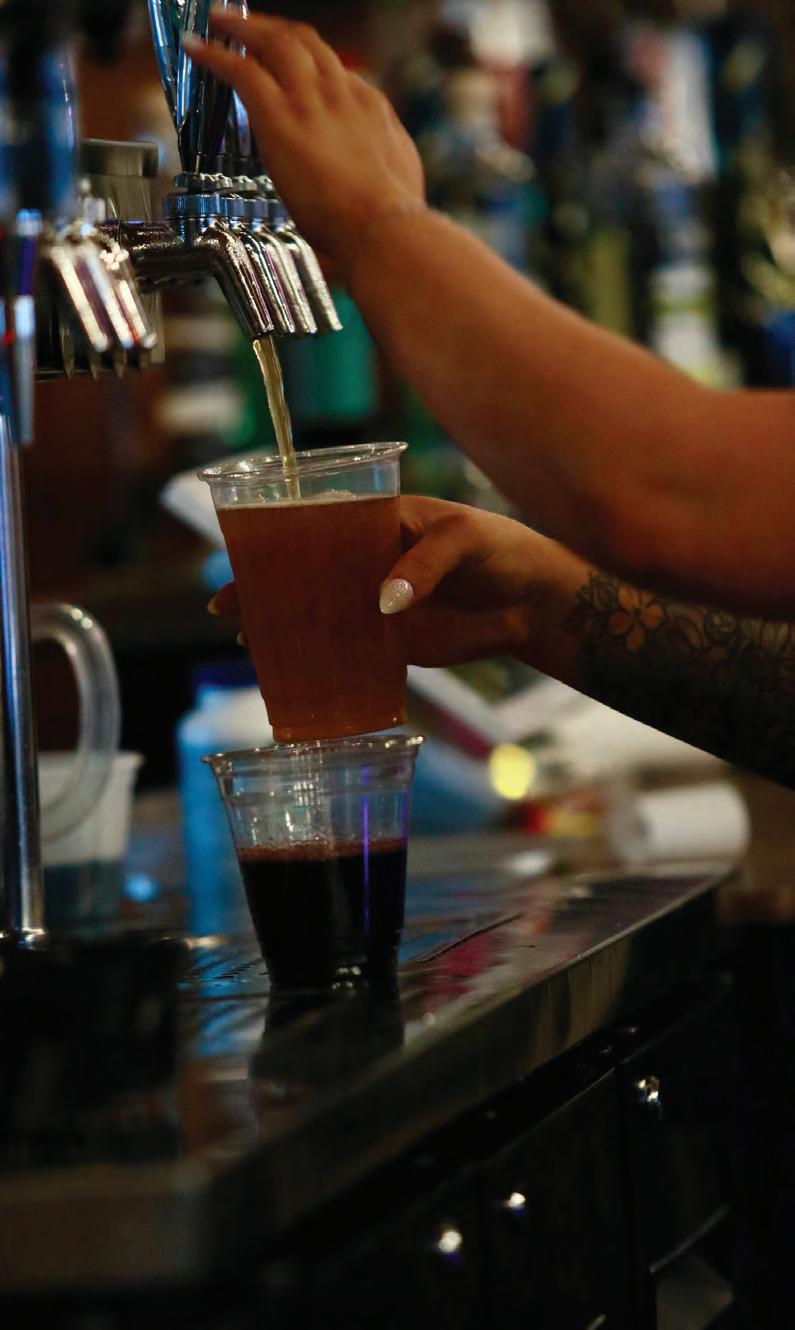
The Kenyons have also adapted to changing customer preferences, expanding the selection of alcohol-free, CBD and THC-infused beverages.
For Marie, however, success has never been measured by what’s on tap.
“When Brian and I are looking in the rearview mirror of Untapped Territory someday, it won’t be about what beers we had on tap,” she says. “It will be that somebody wanted
to have an important occasion, a wedding here, a bridal shower, a baby shower. When somebody wants to have their meaningful event with you, that’s so touching.”
That sense of community extends beyond the taproom’s walls. Brian points to fellow downtown businesses such as The Meating Place and Good Wood Pizza that opened around the same time and helped fuel Lincolnton’s ongoing revitalization.
For the Kenyons, being part of downtown means investing in its future as well as its present.
“We want to not just be a part of the town, but also where the town is going,” says Marie, who also serves on the board of the Downtown Development Association. “We want to have a part in it, not just look out for ourselves.”
Nearly eight years after taking a chance on an idea many thought wouldn’t work, Untapped Territory continues to evolve. The building has grown, the offerings have expanded, and new faces now work behind the bar. Yet the heart of the place remains remarkably unchanged: a neighborhood bar where good drinks, good atmosphere, and good company go hand-in-hand.
STORY BY BETTY JO ALLEN | PHOTOGRAPHY BY STEPHANIE MEYER
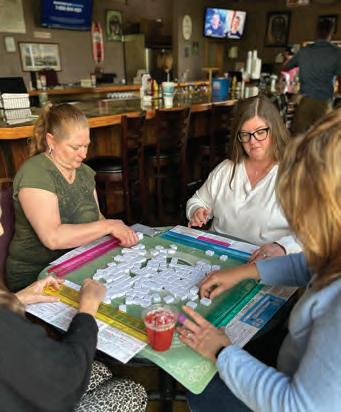
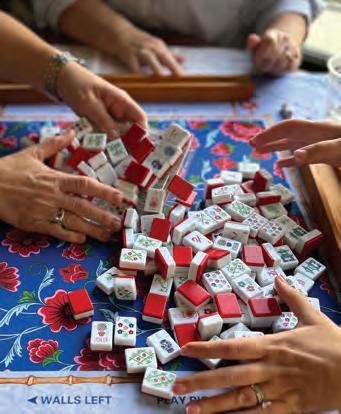
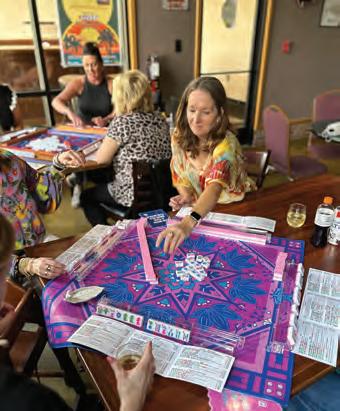
There is a new “old” game in town and if you have not played it yet, don’t be surprised to find yourself among the next Lincolnton group to do so. In April 2025 the Lincoln Country Club offered mahjong lessons to anyone who was interested in learning the game. Since then, it has become a favorite pastime for many who attended those lessons.
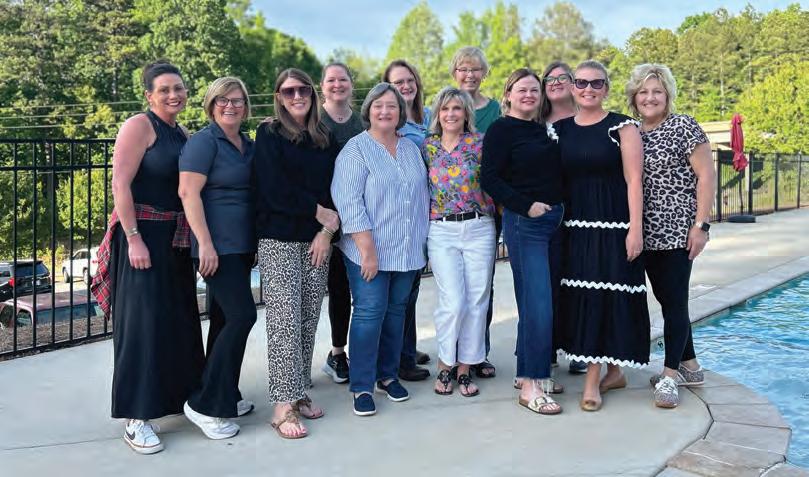
That first group taught the game to their friends, who taught it to their friends, and now there is a weekly mahjong game night at the country club where you might find eight to 16 people playing. Kristy Setzer Smith was one of those who in 2025 learned the game and now is a regular player.
“It is such a fun game and actually addicting for most of us,” says Kristy. “We enjoy the fellowship and experience lots of laughs. It is a good way to meet new people, and some we never knew, we now call close friends.”
The initial group has added to their number and consider Lincoln Country Club their “home,” but sometimes play at other locations. Untapped Territory and Fausto Coffee have been welcoming and accommodating for them. The group usually plays on Tuesday evenings but has been known to play Sunday afternoons or Saturday mornings.
Lincoln Country Club held a second class in March of this year with attendees from Lincolnton and surrounding towns.
At Lithia Creek Tavern inside Lincoln Country Club, there’s even a signature cocktail on the menu inspired by mahjong. Bar manager Amanda Helms – who also happens to enjoy the game – created the tropical-flavored drink on a whim one day. The ladies loved it so much that she named it the “Bam Bird,” after one of the mahjong tiles. In casual games, a fun table ritual involves hoisting your drink and saying ‘cheers!’ whenever someone discards the 1 bamboo or “1 bam” tile, which traditionally has a picture of a bird on it.
Mahjong’s popularity has soared in recent years, even becoming popular among Gen Z and Millennials. An April report from NPR says internet searches for mahjong groups have increased almost 4,500% since last year. A related story says younger adults are drawn to the community aspect and the offline connection they feel from attending in-person meetups.
Despite mahjong’s trending status, it’s anything but new. Mahjong has been around since 1846 when a servant of the Chinese emperor combined rules of popular card games and replaced the cards with tiles. It made its way to the United States when American businessman Joseph Babcock traveled to China in
1912. He changed the numbers on the tiles to numbers Americans would know, and by 1920, Abercrombie & Fitch was selling Mah-Jongg games in America. (The hyphenated spelling was the trademarked name.)
Mahjong continued to be a popular game throughout the ’20s. During that time, some groups began to form their own rules in the hopes of making the game more exciting as well as more difficult. When the various “rules” became confusing, players lost interest in the game. By the end of the decade, the fad had died.
There was one group who held on to the game of mahjong, however. Jewish women continued to play, and in 1937 formed the National Mah Jongg League, which tries to keep consistency in the rules. This consistency helped keep the game alive in the U.S. After World War II, the game regained popularity beyond the Jewish community.
The gameplay is similar to rummy, using tiles instead of cards. It is a game of skill, strategy and luck. The game has 144 tiles with Chinese characters and symbols. The original name was a Chinese word for “sparrow” because the clacking of the tiles during shuffling sounds similar to the chattering of sparrows.
There are several versions of the rules and tiles used. A beginner-friendly version is American Mahjong, which is popular in the U.S. No matter what the version, all games involve draw and discard. The goal is to form specific tile combinations before your opponents do. The game involves concentration, and long-term success depends on skill, memory and decision-making. The basics are simple, but as in many things, it takes time to master.
Mahjong also may be a good way to keep your mind sharp. According to a 2024 medical study, playing mahjong was associated with better cognitive, psychological and functional abilities. The ladies from Lincolnton who enjoy this game have learned
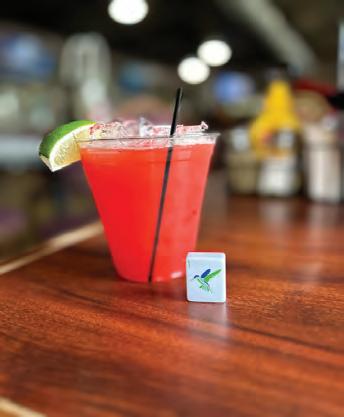
The “Bam Bird” is Lithia Creek Tavern’s signaturemahjong-inspired sip — a tropical mix of vodka, pineapple, orange, grenadine, and Sprite.
firsthand what experts are saying about the game: it is mentally challenging and it encourages socialization.
For those who would like to try mahjong for the first time, Kristy recommends connecting with an experienced player for an introductory lesson. You won’t have to look far, as several of the ladies in the group offer lessons.
“People are more than welcome to come watch and learn, but it’s best to find a Mahjong 101 class that several of these ladies teach,” says Kristy. “There are local classes held at different locations or you can schedule a private lesson with them.”
Their regular spot, the Lithia Creek Tavern at the Lincoln Country Club, is open to the public and Kristy says anyone can join in the fun.
For these women, mahjong has become more than just a game. It’s a reason to slow down, spend time together, and build friendships across generations. In a world that often feels rushed and disconnected, their weekly gatherings offer something refreshingly simple: good company, lively conversation, and a seat at the table for anyone willing to learn.
Find a local instructor online, or contact the Lincoln Country Club for more information.
Lincoln Country Club: (704) 735-1382
American Mah Jongg Association: meetups.americanmahjonggassociation.com
STORY BY ROY C. LIGHTFOOT
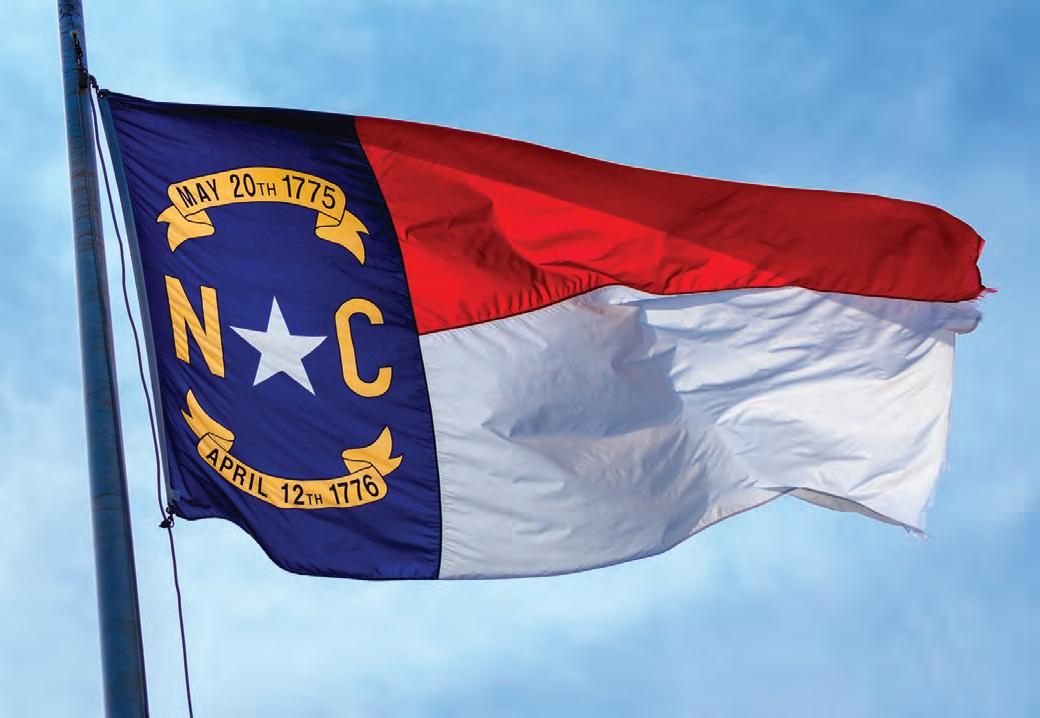
Have you ever looked at the North Carolina state flag and wondered about the two dates on it? Or … am I the only one? May 20, 1775 and April 12, 1776 both mark important dates in history, not only of our state but our nation as well.
One of the first things to notice is that both are prior to the date of our nation’s Declaration of Independence, July 4, 1776. (Actually, most delegates did not sign the Declaration until Aug. 2 — alas, a story for another time.) The academic in me says that as we continue to celebrate the 250th anniversary
of these United States, an examination of the documents that formed our country must be done.
Now, some of you will be thinking, “Boring!” But no, dear reader, to understand the significance and to see how far and from whence we have come, we must comprehend the thinking of the people of the time.
By the time the Declaration was written and signed, several documents had already been sent to the king and Parliament of Great Britain from several colonies (states) — and I will leave it to interested readers to research those. At least six
were from the colony of North Carolina before the Declaration. These include the Rowan Resolves, Aug. 8, 1774; the Edenton Tea Party, Oct. 25, 1774; the Mecklenburg Declaration of Independence, May 20, 1775; the Liberty Point Resolves, June 20, 1775; the Tryon Resolves, Aug. 14, 1775 (Lincoln County formed from part of Tryon County in 1779); and the Halifax Resolves, April 12, 1776.
In recent years, many Revolutionary-era events and documents have been commemorated through 250th anniversary programs, including the Mecklenburg Declaration and the Tryon Resolves here in North Carolina. These documents reflected growing frustration among colonists over laws, acts, and edicts imposed by the king and Parliament without colonial representation or consideration of their impact on the people..
The Mecklenburg Declaration has been the subject of much scrutiny over the course of history. Was it truly written prior to the nation’s Declaration, or was it written many years later from the memory of someone who was there? This author chooses to believe that it is a factual piece of our state’s history and does not wish to debate the subject. The important thing to remember about the Mecklenburg Declaration is its essence, the meaning behind the words, and the fact that they represent what the people of the colony were feeling at the time they were communicated.
The Mecklenburg Declaration stated that the residents of the county declared themselves to be “free and independent people.” The actual document did not surface until 1819, after it was published in the Raleigh Register by U.S. Senator Nathaniel Macon. The original document had been destroyed in a fire in 1800 and was reconstructed from memory by John McKnitt Alexander, then given to Macon by his son William Alexander. (William Polk also gathered testimony from several elderly men claiming to have been present.)
The document’s authenticity was not seriously questioned until 1829, when Thomas Jefferson’s works were published posthumously. In a letter dated July 9, 1819, sent to John Adams, Jefferson dismissed the Mecklenburg Declaration as a hoax. The 1830-31 North Carolina Legislature was so incensed by this that it established a committee to investigate. Its chairman, Thomas G. Polk, organized a 50th anniversary celebration of the document and gathered evidence to support its authenticity.
Unfortunately, it has been argued that the Mecklenburg Declaration is an inaccurate rendering of the authentic document known as the Mecklenburg Resolves. According to historians, the Resolves, a set of radical resolutions passed on May 31, 1775, fell short of declaring independence from Great
Britain. This text, although published in the newspapers in 1775, was lost after the American Revolution, and was not discovered until 1838.
The Halifax Resolves are clearer-cut than the Mecklenburg Resolves with proper documentation of existing. At a meeting on April 12, 1776, the 83 delegates of the Fourth Provincial Congress of North Carolina at Halifax voted unanimously for independence. With this act, they cemented their resolve and intent by inserting the resolutions into the minutes of the meeting. This authorized the North Carolina delegates to the upcoming Second Continental Congress in Philadelphia — William Hooper, Joseph Hewes and John Penn — to vote for independence.
These Resolves were not only important because of the call for independence, but also because they were not unilateral recommendations and were a call for all colonies to do the same. With their passage, North Carolina became the first colony that explicitly allowed its Continental Congress delegates to vote in favor of independence and the severing of ties with Great Britain. However, what it did not do was instruct the delegates to introduce a resolution of independence to Congress.
Virginia soon followed with the Lee Resolution, or “the Resolution for Independence,” introduced by Richard Henry Lee and passing in the Continental Congress on July 2, 1776, stating that the colonies were to be “free and independent States.”
What do we gather from these two documents? What can something written 250 years ago mean to us today? These two documents, as well as the others listed in the first part of this article, show us that the colonists were simply striving for a better life and to have their voices heard. It is extremely important to remember that — not only with the 250th anniversary of our nation, but every day.
Now you know why “First in Freedom” is one of the car license plate options for North Carolina.
I encourage you to do your own research and examine the documents and events that came from the North Carolina colony and shaped our nation’s independence.
Roy C. Lightfoot is the Chapter President of the Catawba Valley Chapter North Carolina Society of the Sons of the American Revolution and was installed as the NCSSAR State Historian in April 2024. He holds an Associate’s Degree in General Studies from Gaston College, a Bachelor’s Degree in History and a Master’s Degree in Student Development both from Appalachian State University. He also serves on a committee of the Lincoln County Historical Association.

A Crock-Pot and a few simple ingredients make an ultra-comforting weeknight meal.
BY SANDI GRIGG; PHOTOS BY JAMES STEFIUK
This country-style steak should be in everybody’s go-to recipe box. Like hamburger steak with creamy onion gravy, this recipe featuring cube steaks browned then simmered in gravy is another Southern favorite. Using cream of mushroom soup to enhance the gravy base, this recipe is super easy to throw together any weeknight and is a very basic and delicious comfort food. I make this using onions and beef stock, but you can also use a packet of onion soup for more ease.
Cube steak is usually made of top sirloin that has been pounded with a meat tenderizer to create thin, uniqueshaped pieces of meat. The indentions left by the tenderizer
are small cubes deep in the meat — hence the term cube steak. The cut of beef will determine the price, but in most cases cube steak is inexpensive.
Growing up in the South with two hardworking parents, my family often had Crock-Pot meals. My mother would prepare and set the Crock-Pot in the morning and when we all got home in the evening, dinner was ready. I think the CrockPot is one of the most underused cooking appliances around. Also known as a slow cooker, the countertop cooking appliance is designed to cook at a lower temperature for a longer duration. The first slow cooker came about in the 1950s when its inventor recalled his Jewish grandmother making stew

Cube steak is usually made of top sirloin that has been pounded with a meat tenderizer to create thin, unique-shaped pieces of meat.
for hours in the oven. It wasn’t until the mid-1970s that the removable porcelain interior came about for ease in cleaning and serving. Today Crock-Pots are used all over the world for all types of dishes.
I know it can be intimidating to dump expensive groceries in a pot, leave it all day and hope that it comes out tasty, but trust me: this recipe is foolproof and saves time. Sure, it cuts a few corners with the canned soup and store-bought beef stock, but this is the way my mother made it and this is the way it is comforting to me. I hope you enjoy it too.
Southern Sandi recipes appear courtesy of Carolina Marketing Company, Inc.

Serves 4
You will need a 6 to 7 quart Crock-Pot or other slow cooker.

4 pieces of cubed steak 1/2 cup flour
4 pats of butter
1 large onion (or 2 smaller onions), sliced 21 ounces cream of mushroom soup
16 ounces beef stock
1/2 cup sherry cooking wine 1/4 teaspoon garlic powder
Salt and Pepper Cooked white rice (optional)
Preheat a skillet to medium-high on the stove top. Disperse the flour, salt and pepper on a plate and press each piece of cubed steak down into it, coating each one well. Drop one pat of butter in the hot pan and then add one floured cubed steak. (Do not crowd the pan.) Brown the steak for about 1 minute per side, merely creating a crust but not cooking the meat. Repeat until all pieces are browned. Remove and set aside.
Put the onions in the bottom of the Crock-Pot then place the browned cubed steak on top of the onions. Mix the cream of mushroom soup and beef stock together and then pour over the steak and onions. You want the liquid to meet the top of the meat. Add the garlic powder and sprinkle with salt and pepper.
Set the Crock-Pot on high and cook for 3 to 3 1/2 hours. Stir occasionally. Serve over cooked white rice.

Cool off your summer days with the creamy citrus flavors of sherbet.
BY SANDI GRIGG
PHOTOS BY JAMES STEFIUK
Although it is spelled sherbet, many people in the South often say “sherbert.” The word means “iced fruit drink,” but if you eat it quickly enough, it remains more like ice cream and less like a drink.
Sherbet is the best mix of ice cream and sorbet and it is so easy to make. For me, there is something about the lighter, fruitier flavor of sherbet that just screams summer.
Although it is spelled sherbet, many people in the South often say “sherbert.” The word means “iced fruit drink,” but if you eat it quickly enough, it remains more like ice cream and less like a drink.
Many sherbet recipes use an ice cream maker, but I have found it much easier to make and clean up by simply freezing it in a container.
This recipe is extremely versatile and leaves room to add or remove juices, frozen fruits and different types of milk. If you do not like my version using lemon and orange juice, try using lime and Sprite. You can also use frozen strawberries or frozen peaches if you want, but you will have to puree them with a food processor first. I have used whole milk for this recipe, but you can use almond milk, heavy cream or even oat milk if you wish.
This recipe makes enough for two people to enjoy a large bowl, but if you want to double the recipe to serve four people it will work for that as well.
There are many ways to serve sherbet also; you can eat it alone or put it on top of pound cake or a donut. You can also add it to your cocktail for a summertime dessert drink.
No matter how you make it or serve it, I am sure you and your family are going to enjoy it as much as mine does.
2 servings

1 cup lemon juice
1 1/2 cups sugar
1 cup orange juice
Zest of the orange
METHOD
1 cup whole milk 1/2 cup pineapple juice Fresh Mint
In a large pitcher, mix the lemon juice and sugar. Stir in the orange juice, milk, pineapple juice and zest.
Pour into a plastic container with a lid and freeze until stiff.
When frozen, scoop it out and serve. Garnish with a sprig of fresh mint.
STORY
BY RICH GREEN
Entertainment often involves some form of illusion. We accept and even seek out this kind of fantasy because it allows us to escape into a story that ignores the mundane in favor of the ideal. Likewise, it can be disheartening if we discover that the reality of our imagined heroes differs from the persona they project.
Imagine if you learned that The Beatles were not really from England. Consider your disappointment if it was revealed that The Beach Boys had never actually been to the ocean, or perhaps Bruce Springsteen was from Utah. I can only speak for myself, but it would feel a bit like a betrayal.
For musicians, this is especially important because the genre of music they perform is considered to be a reflection of their persona – interwoven and inseparable. While Matthew McConaughey enjoys the luxury of playing a surfer searching for his identity in one movie and an astronaut saving the world in another, musicians tend to be judged in part by whether their identity matches with the narrative of their music.
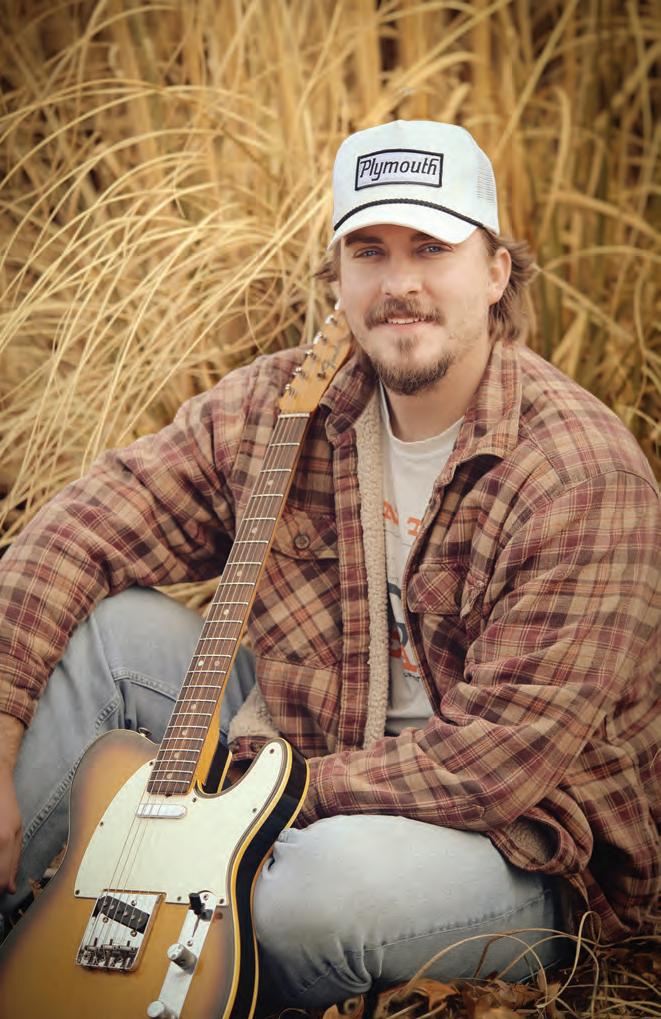
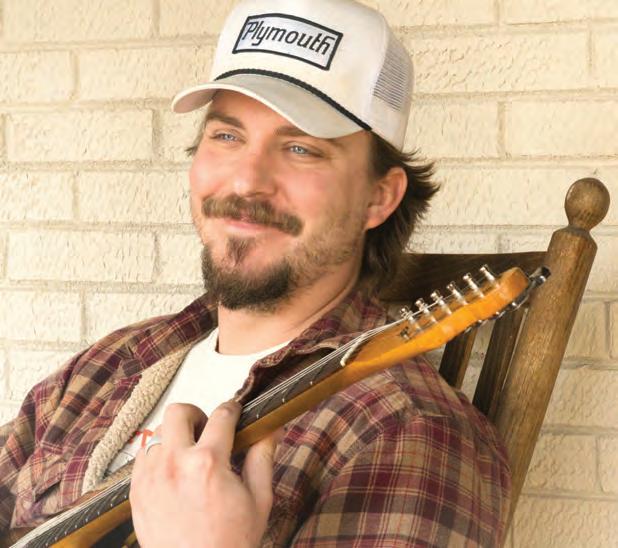
For local singer-songwriter Kyle Kelly, his story is not one of identity discovery or plot twists that reveal a surprise narrative. Nor is there any hint of musical ambiguity. He is the very embodiment of what we here at Hometown Magazine are happy to showcase: a local musician true to his all-American roots, upbringing and country heritage.
Kyle’s music offers an effortless callback to legendary names like Twitty, Haggard and Jones, while also serving as a fresh bridge so a new generation can appreciate the timeless storytelling of traditional country music — classic forms and new stories living together. His resonant voice goes down like sweet tea, both transporting the listener and offering the assurance that it’s OK, you can relax here.
In a world hyper-focused on hustle and addicted to the dopamine infusion of electronic screens, Kyle gives us a musical front porch swing in the summer to kick back, slow down, and appreciate the deep breaths and the fireflies at dusk.
Welcome Kyle! Can you tell us a little bit about your personal and musical background — how you got started and what influences you had?
KK: “Hey! I’ve got two older siblings, a brother and a sister, and I grew up in Startown near Newton, North Carolina. We were a very athletic family. We grew up going to public school doing everything … my sister cheered and ran track, and my brother played ball. He was a big idol of mine. I was an athlete as well, so we all grew up playing sports. Dad was a kicker in college, and my mom’s actually musically inclined. She played the piano and reads sheet music.
“I don’t know if it’s the country boy coming out of me or whatever, but I had buddies down the road that I grew up with. [One] ran a fish lake — a carp lake where they’d host fishing tournaments and stuff on the weekends. He lived right down the road from me, and I’d get off the school bus and go hang out with him. His dad was a mechanic and kind of got me into classic cars and ‘The Dukes of Hazzard.’ I was always saying to my parents I don’t want anything new [for a car], something I can fix and look cool — you know, a muscle car.
“I just always had a love for classic old-school stuff. That’s the roots of my influence and who I am. I just love anything vintage.
“As for the music, I remember my brother and I were on a road trip to a ball game and the movie ‘Drumline’ came on. I just immediately fell in love with the idea of drumming. I had two chopsticks and a little cigar tin, and I just immediately started trying to mimic everything they were doing. So that’s kind of what started the whole music thing for me, right that moment. I still remember it.”
Did you ever take lessons?
“It wasn’t too long after that I started taking drum lessons from a family friend. He gave me my first couple of lessons, and I kind of took it from there. I was in a few percussion groups — Lenoir Percussion Ensemble I think is what it used to be called. It’s just like an ensemble of drum stuff, and I did that growing up.”
So the drumming led to other instruments?
“Well, guitar came when I was around 12. I was in sixth grade. I was into all the hair band stuff and discovering all this music because that was when iPods and MP3 players were a big thing. But I was always an athlete first and sports were my primary focus. My dream was to be a professional athlete.
“I took guitar lessons for three months, but baseball was beginning to start up and I knew I wasn’t going to have the time to continue guitar lessons. I kept playing guitar on my own at home, and that kind of started the romance of sports and music for me. I’d already kind of got my chops about me, even though I can’t read music. I play strictly by ear. To
this day, my band gets on me about learning the Nashville Number System.
[The Nashville Number System is a popular shorthand method of musical notation that uses Arabic numbers (1-7) to represent chords, allowing musicians to easily transpose music to any key.]
“Even though I had already made my mind up that I was going to be a pro athlete, I got injured at college, and that’s kind of like the defining moment. I brought my guitars up to school, and just kept playing, kept learning.
“At the end of the season, I made the tough decision to stop playing ball, and immediately fell back on music. I just became engulfed in it. At some point I began to think, ‘Hey, I think I can write some songs… I think I can sing.’”
Sometimes what seems like a life-changing setback can reveal the hidden gifts of providence.
Fast-forward to today, where Kyle and his band have been playing together for more than five years, produced numerous recordings of original material, and perform regularly in Lincolnton and the surrounding area.
Kyle’s music is available on all major streaming platforms, including Spotify, YouTube and Apple Music. For information on show dates, links to social media, merch, and more, visit kylekellyofficial.com.
Rich Green is a writer, photographer and musician living in Lincolnton, N.C.
STORY BY RICH GREEN
Rhode Island transplant Rich Green shares his perspective on life in Lincolnton.
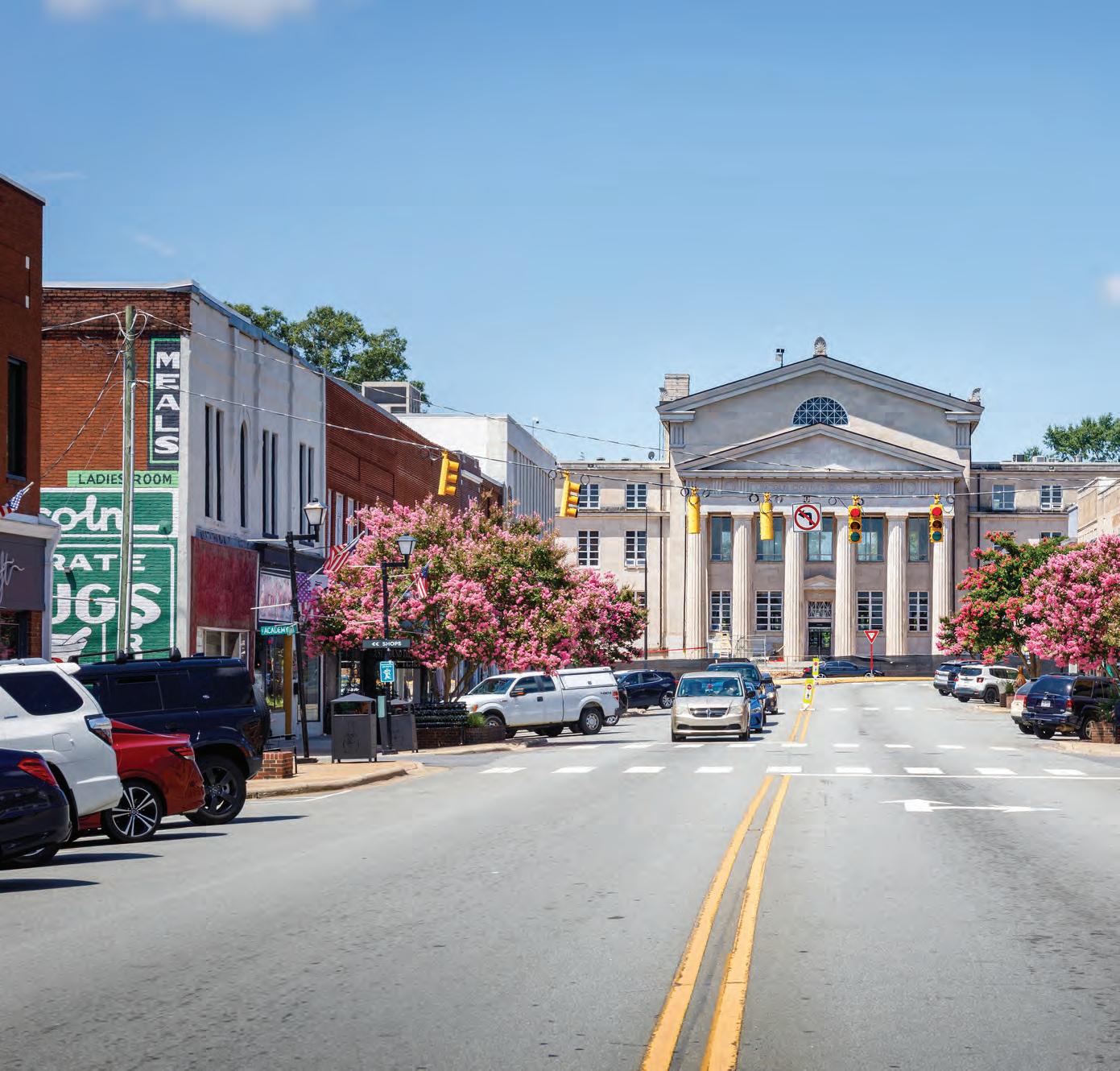
Ican vividly remember the first time I saw Main Street in Lincolnton. It was a brisk fall day and there was a slight chill in the air, with just that hint of winter giving promise through its golden colors that warm cocoa and family gatherings are on the horizon. My wife and I had arrived early in town to meet with our real estate agent and do a walkthrough of the house we purchased — sight unseen. After 20 years of military service in the Navy, it was time to retire, and Lincolnton was about to become our forever “home port.”
The memory is vivid because standing there on Main Street, the view of the city courthouse struck me as both familiar and comforting. The familiarity was oddly enough due to the 1980s film “Back to the Future,” which is set in a 1950s fictional small town known as Hill Valley. Anyone who has seen this film might agree that Hill Valley bears more than a passing resemblance to Lincolnton.
The comfort I felt was because I grew up in a place somewhat like this one: the Southern hometown of my youth had three stoplights and a local diner where everyone was known by name, manners were not optional, the coffee was fresh, and refills were free.
Our children were school age at the time and I wanted them to have an opportunity, as I had, to grow up in a place that was a little smaller, a little closer. Not just a town, but a hometown. Our family was afforded many opportunities to live all over the world, serving our nation — what we needed now was a place to belong and a community in which to build roots.
But a town is more than just the buildings that line its streets. One might argue it is the people you meet — those who live and work locally — that define the personality of an area. Let me state for the record: Lincolnton has tons of personality!
The first character I met (I don’t believe he will mind me la-
beling him as such) was Roger Calhoun, owner of Guitar Wishes and The Sound Factory Studios. I happened to be standing in front of his business whilst gawking at the courthouse on that cool morning, mentally imagining Michael J. Fox riding a skateboard. Roger quietly approached behind me and queried in a booming voice, “Hey, boy! What do you think you are doing?!”
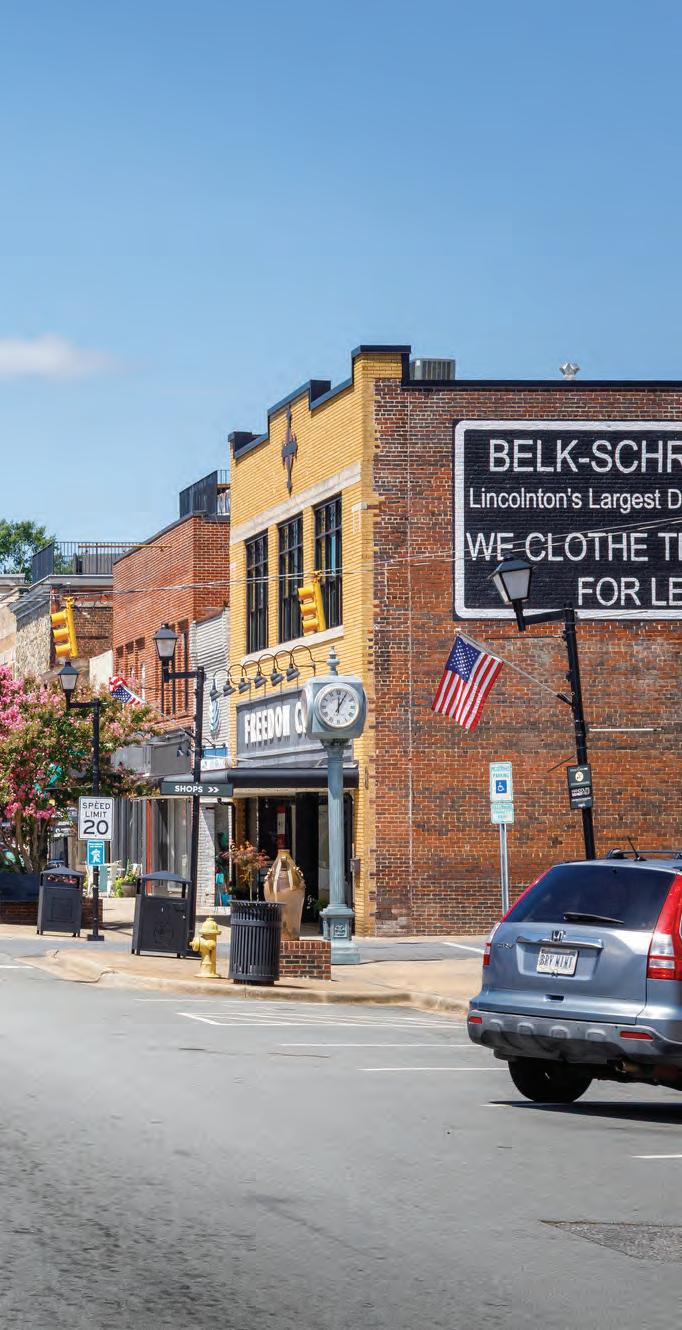
Needless to say, I was startled. “Oh, I’m so sorry, I was just ...” I stammered. Roger immediately burst into laughter and slapped me on the back. “I’m just joking with you!” he smiled. He then proceeded to welcome me into his store, give me a tour, and fill me in on some of the history of Main Street and the town. His charm and easy demeanor were disarming. We were coming from Rhode Island, where I had been stationed for my last tour of duty, and were accustomed to the bustle and “no-nonsense” approach most people in that area adopted as normal. Some might label their behavior as rude, but I would counter that according to the local etiquette, if no curses were directed at you personally, then in fact there was no effort toward offense.
I quickly found that Roger was not the exception, but rather the norm in Lincolnton. Later that day, my wife (a North Carolinian herself) was pining for some Southern sweet tea. Those raised in the South understand there is a difference between tea, sweet tea and Southern sweet tea. The latter is ideally less like a beverage and more akin to an ambrosia-flavored syrup that renews the soul and energizes the body (and rots the teeth!).
This nectar is difficult to get the farther upward you travel on the map, and she had been missing her beloved Southern tradition for some time. We found a local drive-thru, ordered the beverage, and when collecting our purchase at the window were greeted with a smile and a cheerful, “Here you go, Sugar!” Whoa. I looked at my wife who was grinning. We found our hometown.
But the more I reflect, the more I realize that what actually makes Lincolnton idyllic isn’t a single aspect of the layout, composition or even the population, but rather a potent cocktail encompassing all of the above.
One could approach Lincolnton as a destination, especially during one of the renowned annual festivals; however, couple these specialty events with a location that presents itself as a great jumping-off point for your next vacation or weekend getaway and the attraction is undeniable. Local shops, restaurants and watering holes offer terrific variety, and those with a notion to explore outward are rewarded by the countless choices in neighboring areas.
Over the years, as we have watched Lincolnton grow and further populate, we have come to appreciate the spirit that dominates this charming North Carolina city. Is Lincolnton perfect? No. No town is perfect for everyone, and even the signage at the tourist center bears a disclaimer. It boldly states: “Near the City, Near the Mountains, Near Perfect.” Like all towns, we have our challenges. And like all high-demand areas, we at times strain under the pressure of development, expansion, construction and infrastructure. But these challenges are transient. They do not define us, nor are they unique to this city.
There are often two great divides in the outlook of residents. Some long for the “good ol’ days” of yesteryear, while others see limitless potential and promote the change that will usher in a visionary future. Some folks delight with the influx of new ideas and cultural variety, while others bristle at these concepts, feeling they might threaten to diminish history and tradition.
Whatever your position, I offer this observation as a former Naval officer: A rising tide raises all ships. Lincolnton deserves to rise on a swelling tide, but it takes all of us accepting and loving each other to make that happen. Goodwill is not an accident, but rather a conscious and determined outlook and approach.
We arrived and were given that goodwill, and it endeared us to stay and work to make our city and community better. That’s what makes Lincolnton special. That’s what will make it a hometown destination.
Rich Green is a writer, photographer and musician living in Lincolnton, N.C.
STORY BY STEPHANIE MEYER
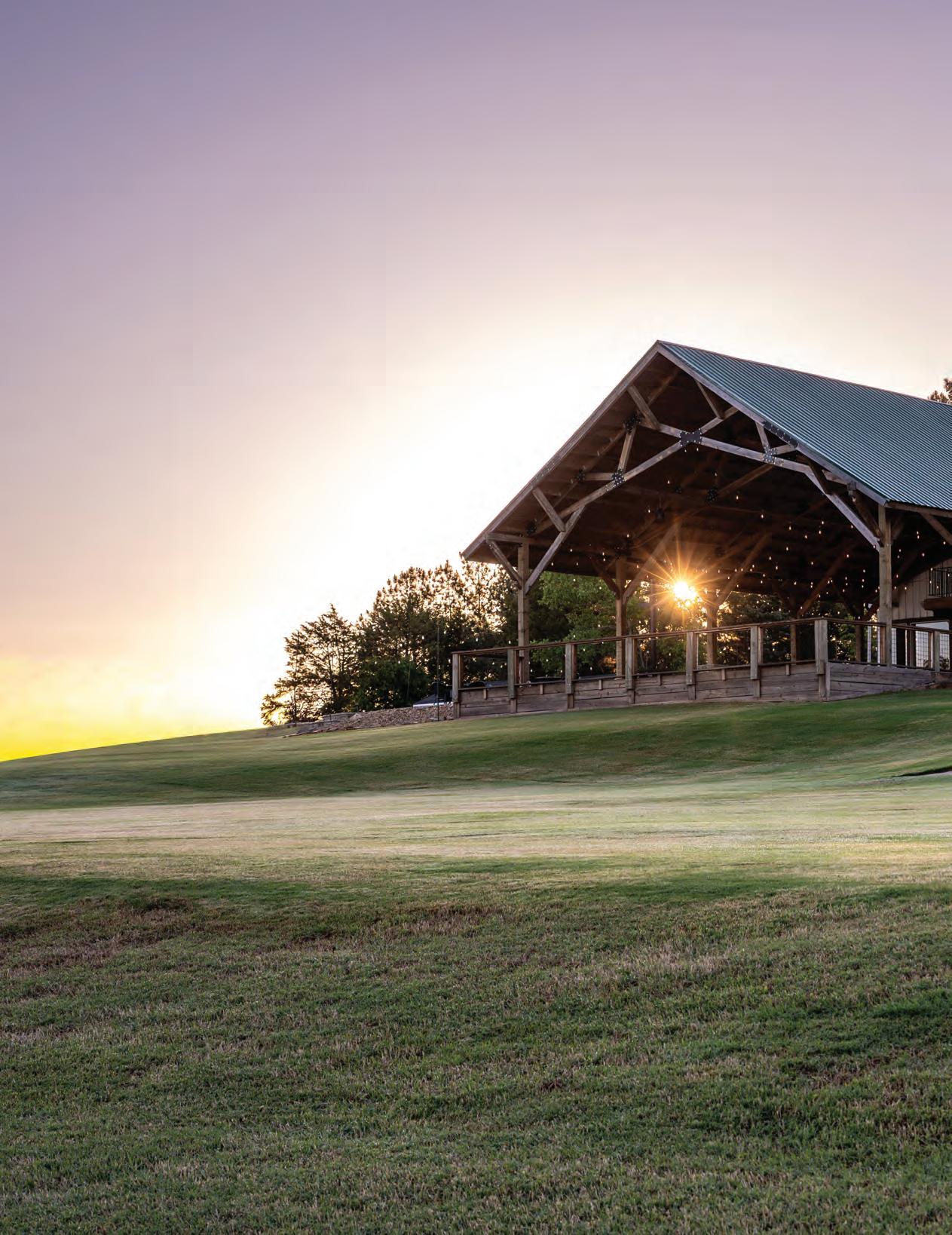
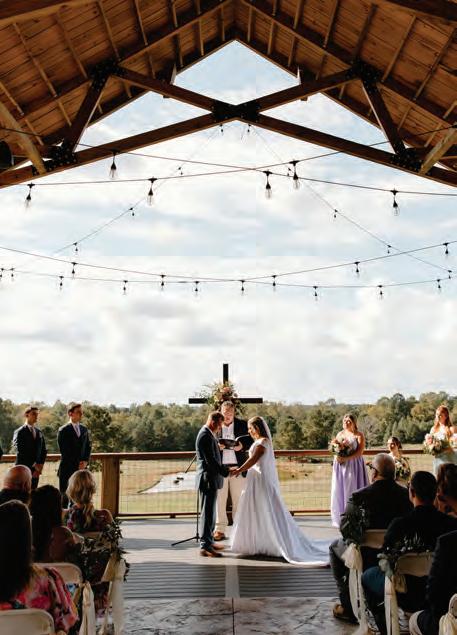
The minute you pull into the driveway at Mission Farm, an idyllic event venue nestled in the pastoral fields of Iron Station, you feel like you’ve been transported to a simpler time and a sacred space that feels like home.
ROBB WEBB PHOTOGRAPHY
Filledwithnaturallight, makeupstations andthoughtfulamenities, it’saspacedesignednotjust forpreparation, butforsavoringthemoment.
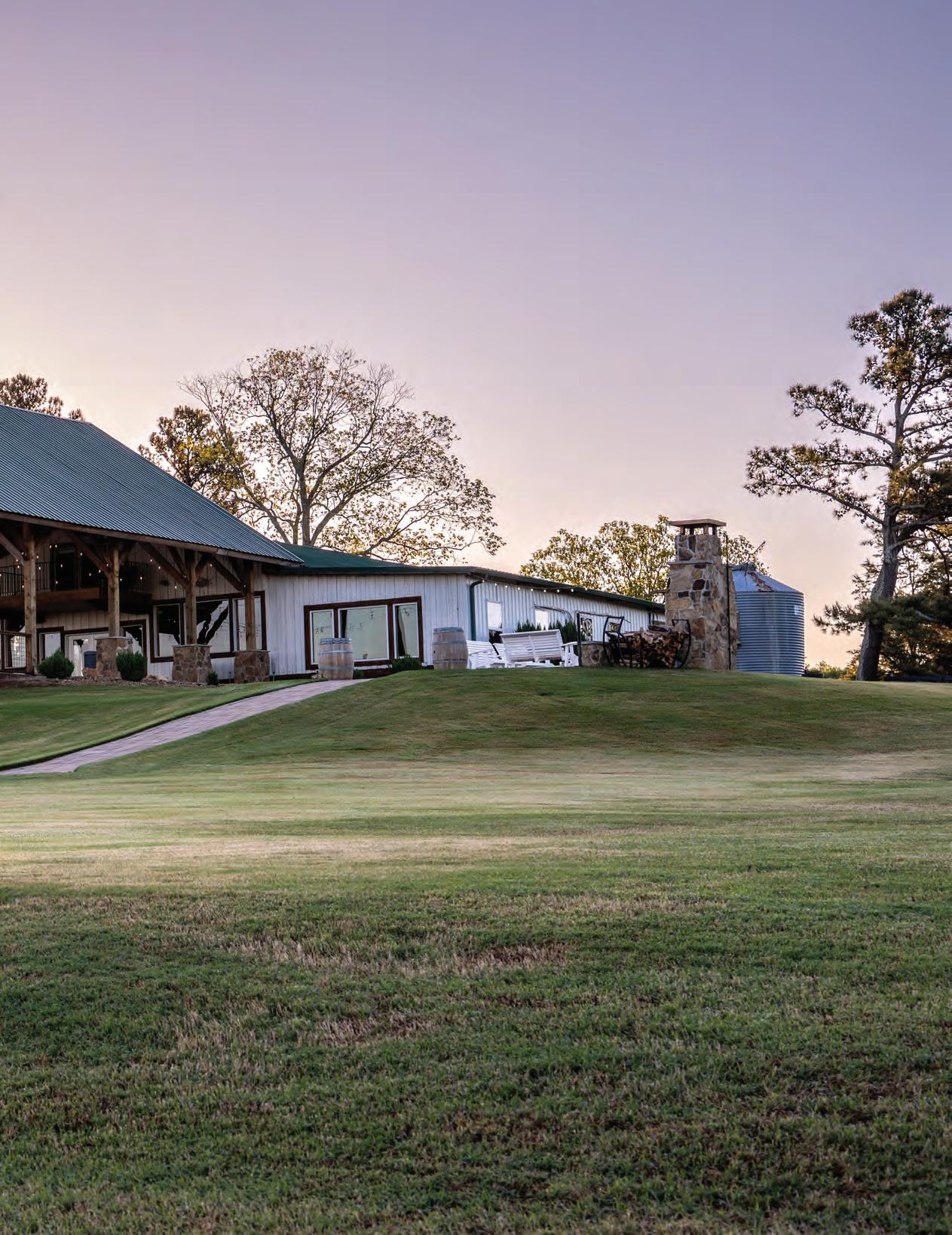
It feels like home because the owners of Mission Farm actually live there. The Shank family has their home — a restored 1923 farmhouse — situated at the front of the property, with a large barn and main event space in the back. Beyond that, the property opens into gently rolling pasture, a serene pond, and some of the most gorgeous sunsets you’ll ever see.
I met with Jenny Shank, owner and operator of Mission Farm, to learn more about the venue’s history and offerings. It was a chilly day in early spring at the time of our interview, but the cold didn’t take away from the beauty of the space. I spotted the great stone fireplace in the courtyard and imagined how cozy it would feel to sit in front of a glowing fire, wrapped in a blanket, overlooking the scattering of cows as they graze in the field below.
Jenny appeared wearing a puffy winter coat and a friendly smile. We chatted a bit about the weather, anticipating the
warmer days ahead, before stepping inside the main gathering space.
“Our outdoor space is what a lot of people love here,” says Jenny. But, as she points out, the indoor, climate-controlled gathering space — complete with chandeliers and warm wood accents — offers an equally inviting setting.
I imagined the space filled with elegantly decorated tables, linens and flowers, people bustling about, champagne glasses clinking, and laughter echoing throughout the room. It’s not hard to picture these moments, because the space itself is so intentionally designed for them. Whether it’s a wedding reception, graduation party, baby shower or family reunion, the common threads at Mission Farm are celebration and connection.
“It’s personal for their day — it makes it more meaningful for that couple,” Jenny says, describing her approach to help-
ing wedding clients shape the space into something uniquely their own.
Mission Farm wasn’t actually meant to be a venue.
“We didn’t intend on starting an event business,” Jenny explains. In fact, the property’s barn originally served a much simpler purpose. “It was just an agricultural barn for our animals, basically.”
That changed in 2021, when friends approached the Shanks about hosting their wedding on the property.
“From their wedding, we had one other wedding request and a few other event requests,” she says.
At the time, Jenny and her husband, Lee, were running an environmental cleanup company in Charlotte, but Jenny was feeling a pull toward something different.
“It was almost something I didn’t realize I needed,” she reflects.
What followed was a natural evolution rooted in hospitality, creativity and a genuine love for bringing people together.
“I love focusing on the couple for that weekend,” says Jenny. “I love it for our community, and I love that a lot of our clients end up becoming friends.”
For brides- and grooms-to-be who appreciate the farmhouse aesthetic but don’t want to sacrifice modern elegance, Mission Farm checks all the boxes. Over the years, the Shanks have added amenities and special touches to enhance both beauty and functionality.
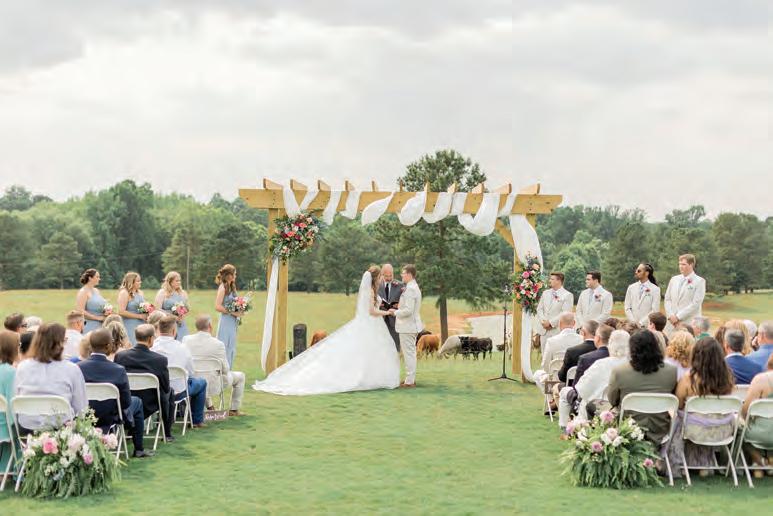
The venue offers multiple ceremony options, including a lawn overlooking the pond and a covered pavilion for more intimate gatherings. Couples are able to transition seamlessly through the event: from ceremony to cocktail hour by the fireplace, to dinner indoors, and back outside for dancing under the pavilion as the sun sets behind the pasture.
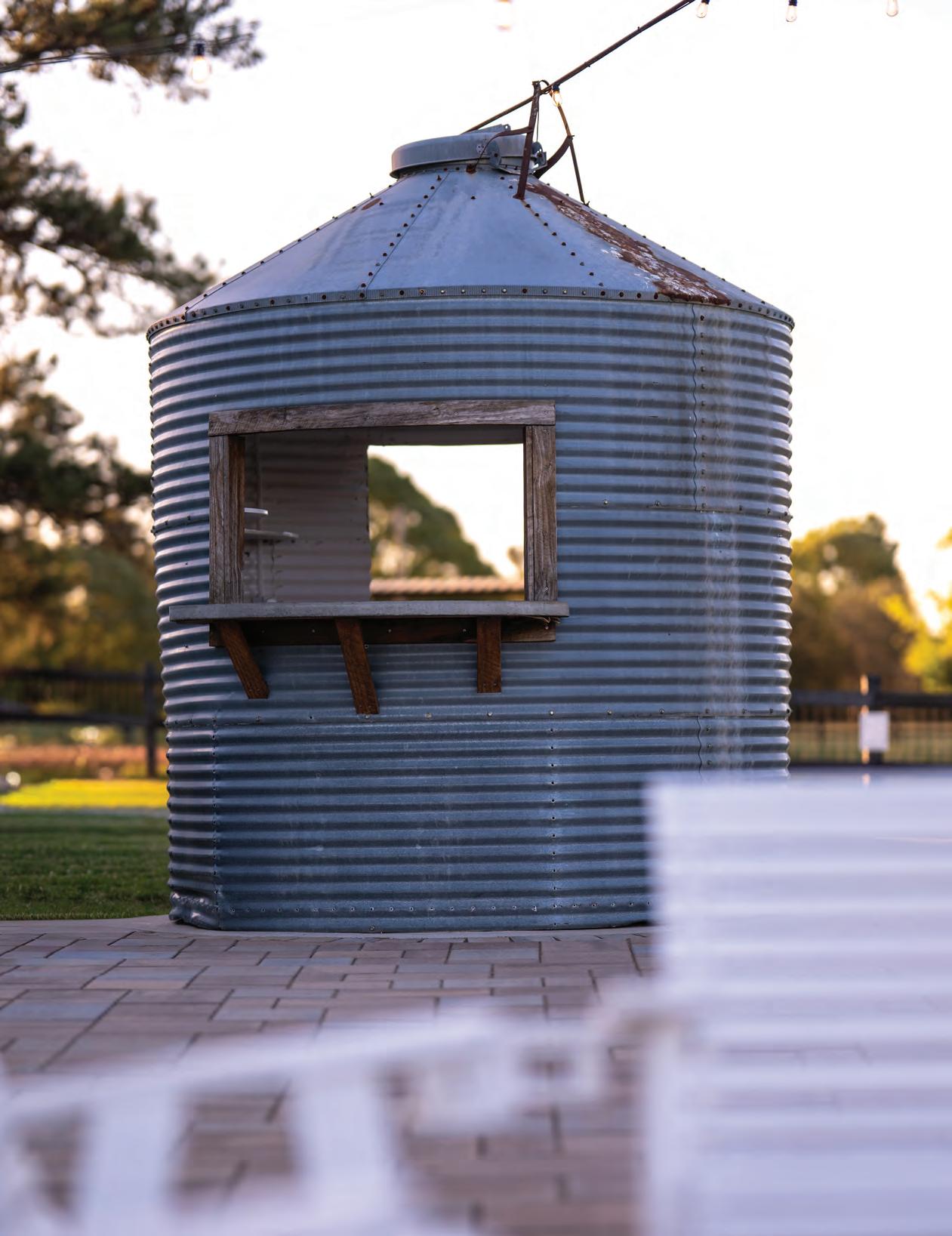
A restored silo serves as a unique outdoor bar, and an additional indoor bar can be used for larger events or specialty bars (a lemonade bar for children or a mimosa bar for bridal showers were among the ideas Jenny shared). A professional, insured bartender is included in every wedding package, while couples provide their own beer and wine selections. Lawn games like cornhole invite guests to relax during cocktail hour, and even umbrellas are on hand in case of rain.
Inside, the venue offers a bucolic charm without feeling dated. Barrel sinks, cedar accents and stone-inspired flooring offer warmth and texture, while clean lines and open spaces allow couples to bring their own vision to life.
And then there are the suites.
The groom’s loft features a private balcony with sweeping
views, along with a coffee maker, mini fridge and comfortable lounge space. The bridal suite, however, often steals the show.
“I’ve had multiple brides say, ‘This is the reason I booked,’” Jenny shares with a smile.
Filled with natural light, makeup stations and thoughtful amenities, it’s a space designed not just for preparation, but for savoring the moment.
The Shanks’ cows often graze peacefully in the distance, creating a picturesque backdrop for photos. While guests admire the cows from afar, there is one animal who happily takes center stage during cocktail hour.
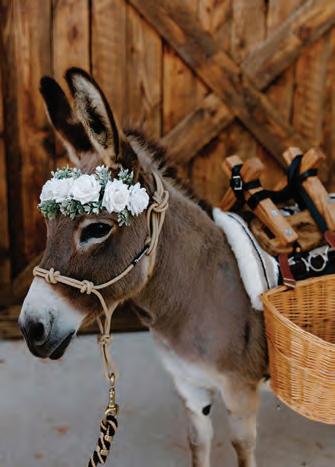
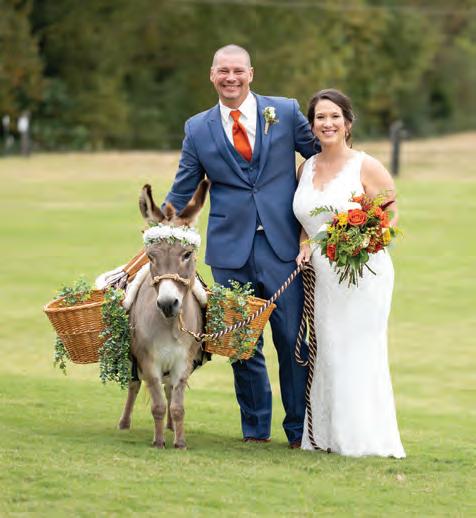
Her name is Hope, and she is Mission Farm’s drink-toting, flower-clad “beverage donkey,” available as a wedding add-on. With a handler guiding her through the crowd, Hope carries drinks — everything from bottled water to soft drinks and even beer — while guests stop to pet her and snap photos. How many people can say they had an honest-to-goodness donkey serve them a drink?
While weddings remain at the heart of Mission Farm, the space is designed for versatility. Social gatherings of up to 75 guests can make use of the smaller indoor and outdoor areas, with the option to expand into the larger barn.
Jenny says that while weddings are their specialty, she hopes to incorporate more weekday events into their calendar.
“I would love to host more corporate events and things like seminars or team-building retreats.”
The farm also opens its gates to the community at select times throughout the year. Seasonal traditions like a live nativity for Christmas as well as Easter sunrise and Good Friday services, hosted in partnership with Venture Church, invite the public to experience the property in a different way.
Mission Farm is not open for daily public access, but tours are available by appointment for those interested in booking an event. Advance planning is key, especially during peak spring and fall seasons.
“May and October are our busiest months,” says Jenny, adding that October will probably be fully booked by the end of summer.
Each booking includes generous access to the property, along with tables, chairs, coordination support, and an environment that blends natural beauty with modern convenience.
The slogan for Mission Farm is, “A Place to Gather.” But Mission Farm is more than just a gathering place. From the first look to the last dance, Mission Farm offers a setting where life’s most meaningful moments unfold naturally, and where celebrations feel less like events and more like coming home.


STORY BY MEGAN PATRICE SHEEREY PHOTOGRAPHY BY MICHAEL HELMS
Content Warning: The following article mentions child abuse, which may be distressing to some readers.
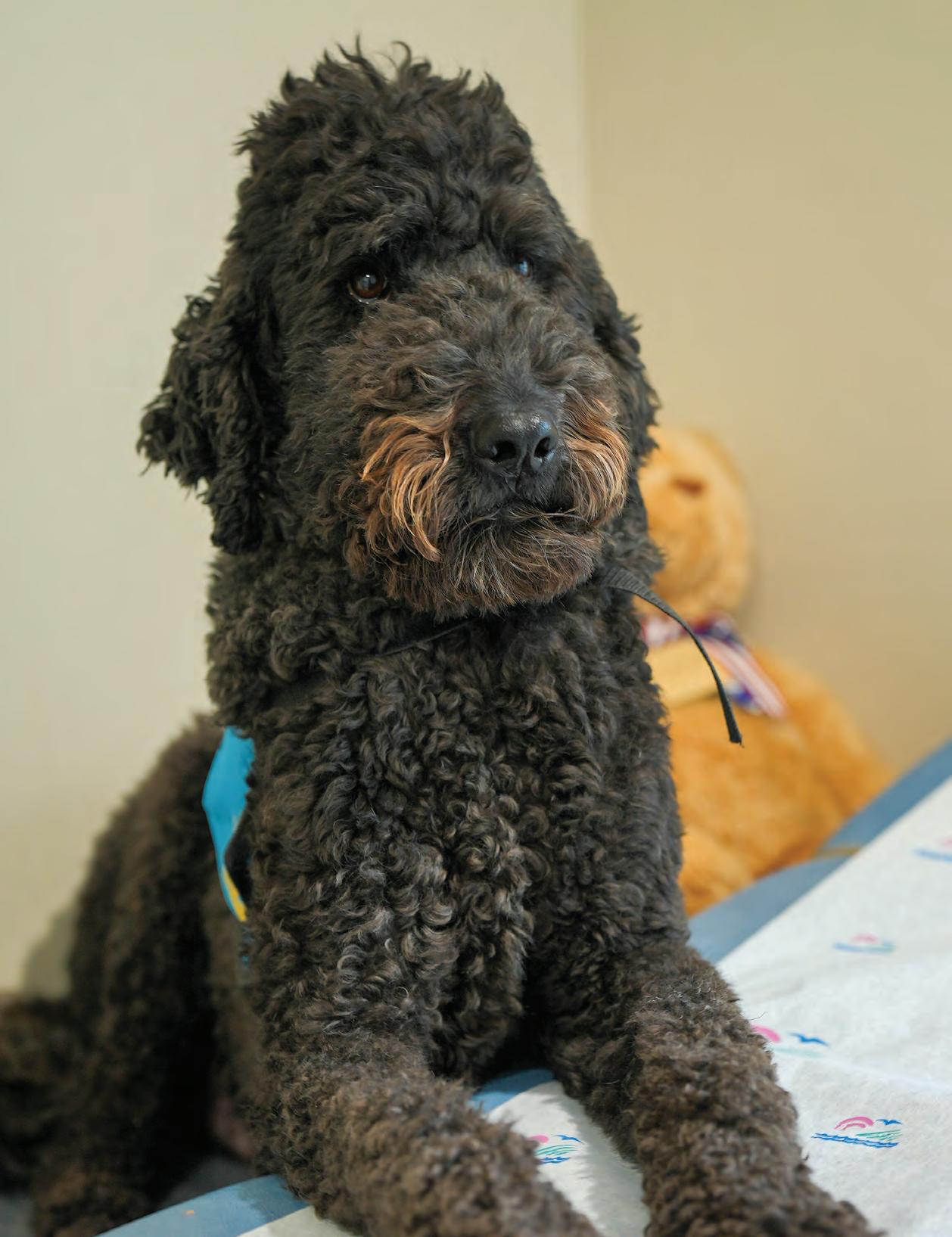
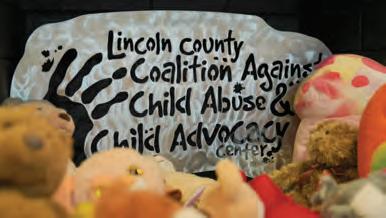
At the Lincoln County Coalition Against Child Abuse’s Child Advocacy Center, healing sometimes looks like crayons on a table, stuffed animals in the corner, and a big fluffy Labradoodle resting his head in a child’s lap.
That would be Jake.
Jake is part Labrador retriever, part poodle, and 100-percent good boy. He has curly black fur, gentle eyes, and a very important job: helping children feel safe.
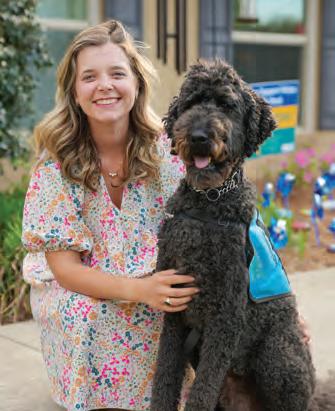
Most dogs spend their days chasing tennis balls or barking at squirrels. Jake does some of that too. But during the week, he goes to work at the Child Advocacy Center with his human, Samantha Sumpter, where he comforts children and families going through really difficult situations. And somehow, without saying a word, Jake makes even the hardest days feel softer.
Samantha is the center’s victim services coordinator and official handler for Jake. Although Samantha also has a really important job, she says Jake usually steals the show whenever she takes him out for events.
“If I go over to DSS [the Dept. of Social Services] or the sheriff’s office and I don’t have him, they’ll be like, ‘Where’s Jake?!’” says Samantha with a laugh. “When he is with me, he’s the star — I’m chopped liver.”
But Samantha says she’s happy to let Jake take the spotlight, especially when she sees the happiness he brings to kids who interact with him.
Jake is not the first therapy dog to serve at the Child Advocacy Center. Before him was Cali, a beloved goldendoodle who spent years helping children across Lincoln County before passing away from cancer in 2023. Cali was honored with a funeral procession, complete with law enforcement escort and joined by several other first responders and public officials — something usually reserved for human heroes.
Needless to say, Jake had some pretty big pawprints to fill. But he is faithfully doing his duty as Cali’s successor, while bringing his own special energy to the job.
About the Child Advocacy Center
The center officially opened in 2007, but its roots stretch back even further. In 1994, Ola Mae Foster and Melinda Houser founded the Lincoln County Coalition Against Child Abuse, a nonprofit organization dedicated to educating the community about recognizing and preventing child abuse.
“If I go over to DSS [the Dept. of Social Services] or the sheriff’s office and I don’t have him, they’ll be like, ‘Where’s Jake?!’” says Samantha with a laugh.
“When he is with me, he’s the star — I’m chopped liver.”
Over time, the organization expanded its mission and established the Child Advocacy Center, creating a single location where children who may have experienced abuse or neglect could receive coordinated services from multiple agencies and professionals.
Instead of visiting various offices and repeating painful stories, children can go to one place where a multidisciplinary team works together to provide support, care and investigative services in a home-like environment.
Today, the center is led by Executive Director Sherry Reinhardt, who was hired in 2009. Behind the scenes, many others work together to keep the center running and ensure that families receive the care and support they need.
While the Child Advocacy Center’s primary focus is caring for children who may have experienced abuse or neglect, Samantha emphasizes that every child is treated as a whole person.
“Our exams are sort of like a well-child visit,” she says. “We check head to toe, but we’re just looking.”
In addition to helping investigators gather information, these exams can reveal other health concerns that might otherwise go unnoticed.
“We’ve detected things like heart murmurs and ear infections,” Samantha notes. “We’re checking the whole child.”
Unlike when using a sexual assault forensic evidence kit, often called a SANE kit, the medical exams conducted at the Child Advocacy Center are noninvasive.
“We do not insert anything, and we’re not doing any swabs,” Samantha explains. “But if a child does need a sexual assault kit, we have a SANE-P available.”
A SANE-P, or sexual assault nurse examiner–pediatric, is specially trained to conduct forensic exams for children when needed.
“There may be a time where a case is really hard on one of our social workers, or one of our detectives.
Jake provides a little bit of love.”
For those who would like a little extra comfort during their exam, Jake is often right by their side, helping ease anxiety with his calm, reassuring presence.
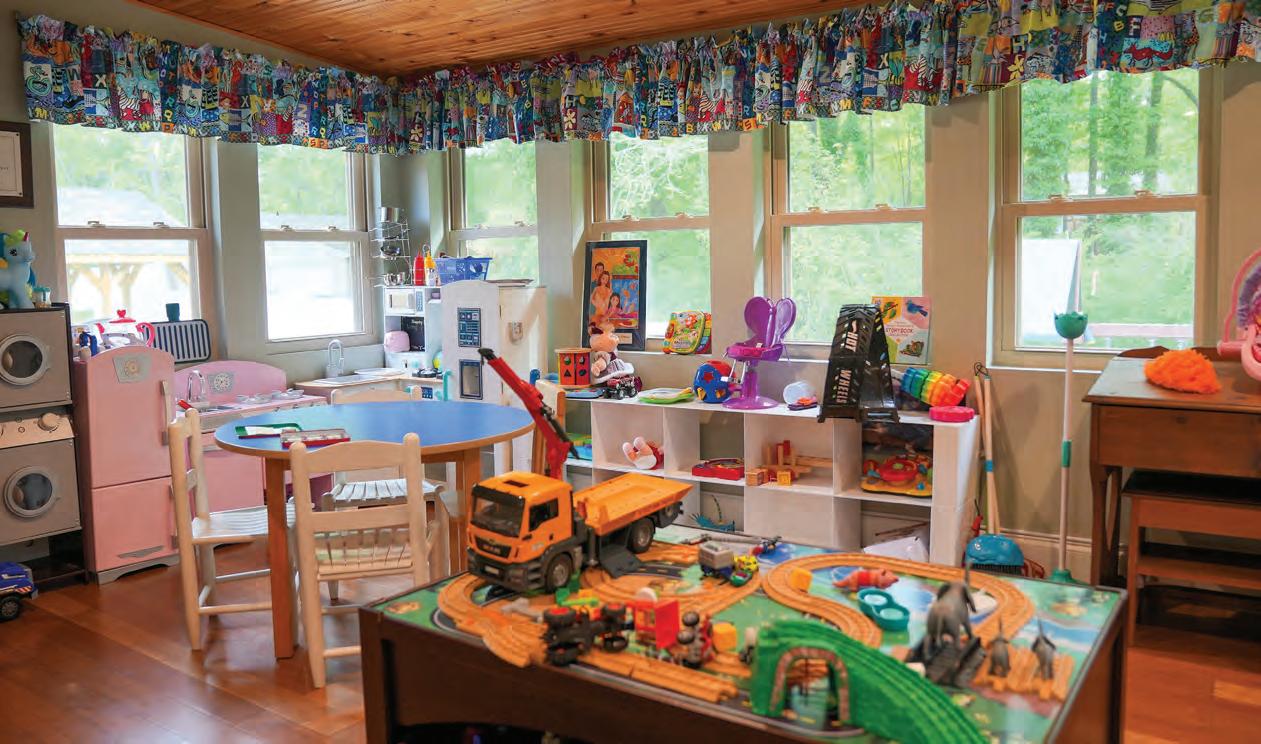
The Child Advocacy Center feels like a home because it technically used to be one. Inside this renovated single-family residence, there are medical exam rooms, offices and a forensic interview room, while still maintaining a warm, welcoming atmosphere.
There is a cozy living room with sofas and armchairs, a fully stocked kitchen with drinks and snacks for visitors, and a large playroom filled with toys where children can play while parents or caregivers meet with staff. And, of course, Jake adds even more comfort to the space.
While he is able to sit in on medical exams and therapy sessions, he’s not quite old enough to sit in on forensic interviews. “Dogs can get burnout just like humans,” Samantha says. “He just turned 3, so they want you to wait a little bit before you start fully working them.”
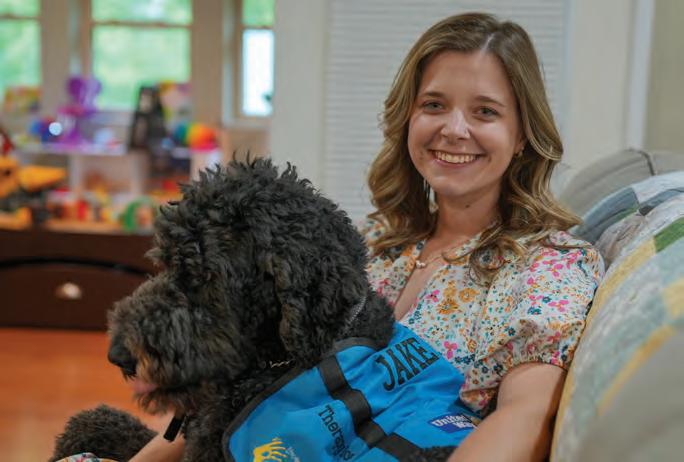
One of Jake’s current job duties is accompanying Samantha on educational outings and community outreach events. This gives him a lot of opportunities to socialize and help spread the word about the center and what it provides.
“I spoke to a women’s group at a church and he went with me,” Samantha notes. “He’s been to Raleigh, when we go talk to our representatives. We try to take him to a lot of things and get him out in the community.”
This past March marked the 20th year of the Child Advocacy Center’s popular fundraiser, the game show–style Price is Right for Fighting Child Abuse. The event consistently draws a large crowd, and this year Jake happily took the stage to help introduce the evening and recognize the many local sponsors who make the fundraiser possible and support the center’s services.
Even when he is simply resting in the room, Jake’s serene presence can help children and families feel more at ease. And while children are never required to interact with him, many quickly fall in love. Adults do too.
“He’s as much here for the children that we serve as he is for our team,” Samantha adds. “There may be a time where a case is really hard on one of our social workers, or one of our detectives.
provides a little bit of love.”
Samantha says it’s not unusual for a team member to show up a few minutes early to play fetch with Jake, or bring him a few special treats. Jake may not understand everything the humans around him are going through, but he seems to understand kindness, comfort and love.
In addition to receiving some Jake cuddles, every child who passes through the center gets to choose their own stuffed animal or handmade blanket to take home. These comfort items are joyfully donated by members of the community and serve as reminders that even during difficult times, there are people who care.
Jake’s care is also supported by the community through donations that help provide food, toys, veterinary care, training and all the other things a hardworking therapy dog needs.
Of course, Jake doesn’t spend all his time being professional. When he’s off the clock, he goes home with Samantha and her husband, where he enjoys cuddles, playing fetch, and maybe a few extra treats.
At first glance, Jake may look like an ordinary dog. But to the staff and families at the Child Advocacy Center, he’s proof that not all heroes wear capes — some wear collars.

For more information about the Lincoln County Child Advocacy Center, its services, or ways to support Jake, visit cac-lincolncounty.org or call (704) 736-1155.
To report a suspected case of child abuse in Lincoln County, call: Lincoln County Dept. of Social Services: (704) 736-8678
Lincoln County Sheriff’s Office: (704) 732-8050
Lincolnton Police Department: (704) 736-8900
After Hours Communication Center: (704) 735-8202
IF A CHILD IS IN IMMEDIATE DANGER, CALL 911.
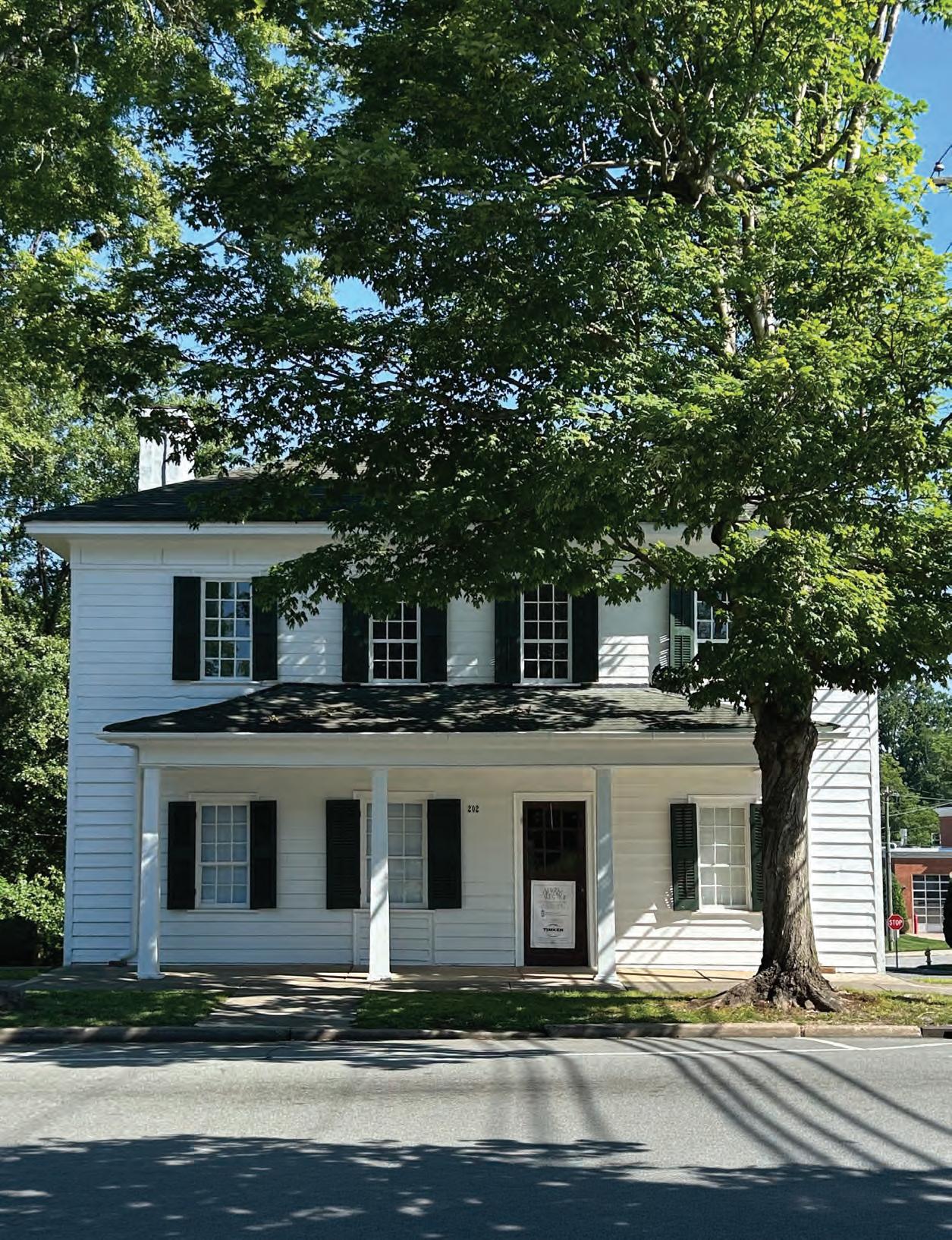
“There were many doctors who lived in the house, though not at the same time. One after the other.”
STORY BY MICHAEL JENKINS
It’s an unassuming building on West Main Street, one block off Courthouse Square. While most of us have seen it without thinking much about it, the Doctors’ House has a multifaceted story steeped in Lincolnton history. The main structure was originally constructed in the early 19th century, but recent years have not been kind to it.
Fortunately for the entire community, the Lincoln County Historical Association (LCHA) is working hard to change that — in keeping with its mission to collect, preserve and share the history of our community. We were fortunate enough to meet the folks restoring this reminder of times gone by and sharing the many stories it has to tell.
Steve and Jeannie Bailey both sit on the board of the historical association, and they were kind enough to talk to us about their ongoing work at the Doctors’ House.
“We got the house from the family; it was donated to us about three years ago. We had the option to keep the house or sell it with covenants, but we decided that keeping and restoring the house was the best way to keep it for years to come.”
Originally built by Conrad Michal in 1819 on a lot he purchased for $80 in 1806, the Doctors’ House acquired its name because, according to Steve, “there were many doctors who lived in the house, though not at the same time. One after the other.”
The first physician to call the Doctors’ House home was Dr. Zephaniah Butt, who acquired the property in 1845 and is likely responsible for the Greek Revival touches added around that time. Dr. Butt then sold the home to Dr. Martin L. Brown in 1857.
Dr. Brown passed away in 1875, and ownership of the home passed to his daughter Violet and her husband, Dr. John Pressley. The grandchildren of Pressley’s granddaughter, Eleanor Rodd Porter, donated the house to the LCHA in 2022.
While the home was in use the entire time, Steve noted that it hadn’t been a full-time residence in a number of years.
“The family would come up from Florida to stay in the summer but I don’t think they’d been up for the summer in about 20 years probably.”
While the home was never neglected per se, years of stasis had taken their toll and created a laundry list of needed repairs, upgrades and restorations.
For brevity’s sake, we’ll stick to some key points Steve shared:
“The wallpaper was coming off the walls. The plumbing had burst; we had to repair it. There was no heat and air system in the house — we were able to add that due to a generous grant from the Timken Foundation. We first started fixing some roof and chimney leak problems, and the problem where it had leaked through the ceiling. Some of the walls had bowed out a little bit from water damage around the chimney.
“We’ve been working on the outside for over a year and restoring the paint. I don’t think it had ever been scraped or anything. The next steps are interior paint and some additional displays of local history.”
There’s still more to do. Deciding which period of the house’s history to focus on is a big question. The LCHA has hired a blacksmith to make historically accurate hinges and bolts for the restored shutters, and hired other craftsmen to repair the original plaster walls inside.
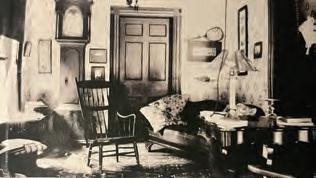
Per the Baileys, the goal is to restore the Doctors’ House as a furniture museum, showcasing pieces and home goods from throughout the house’s history.
“We have a grand piano from the 1800s, we have a rope bed, we have a spindle bed from 1840, we have a settee, rocking chairs — these are things that were left in the house — and then we also have furniture that we have brought in that was made from local cabinetmakers.”
This list goes on: books left from previous owners, antique high-end china sets, artifacts found by archaeologists working on-site. The plan is to create a space that captures Lincolnton “as it was” and lets both visitors and locals move through our community’s history.
At the end of the day, the Doctors’ House is more than an old building. It’s a time capsule preserving layer after layer of Lincolnton history and local culture. Work is ongoing, donations are needed, and the Lincoln County Historical Association welcomes community involvement and support.
For those interested in local history or seeing the restoration in process, the home is open for tours on request: “We’re trying to keep the house open, and we’ll do tours if folks ask. If they stop by, we’ll let people in as we’re working there just so they can see what we’re doing.”
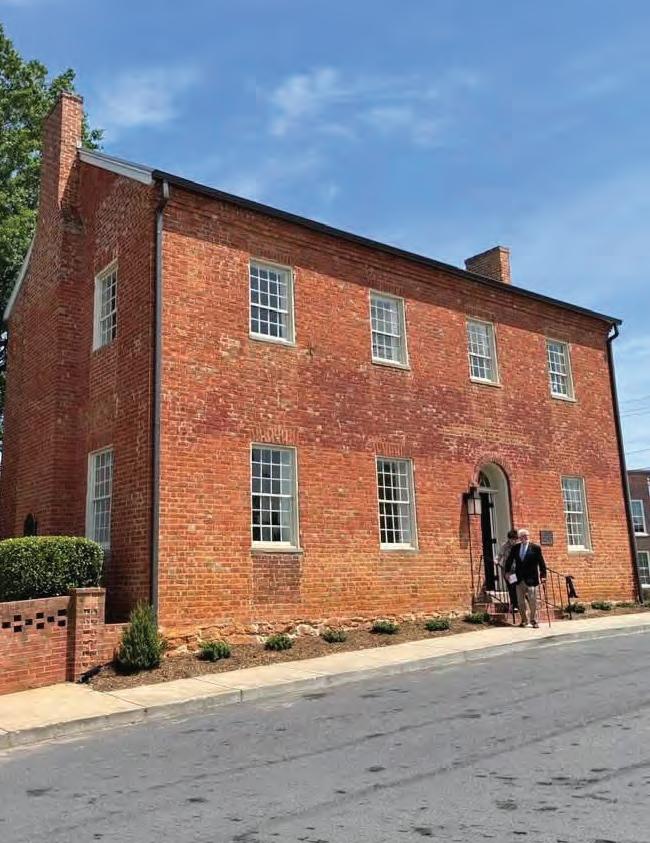
Located at 129 E. Pine Street, the academy is the oldest surviving brick building in Lincolnton.
STORY BY STEPHANIE MEYER
For more than 200 years, Pleasant Retreat Academy has quietly watched Lincolnton grow around it. Long before public schools existed, before the streets of downtown filled with modern businesses, and when Lincolnton itself was home to only a few hundred residents, the stately brick building welcomed young students eager to learn.
Now, after five years of careful restoration by Lincoln Landmarks, Pleasant Retreat Academy is ready to begin its next chapter.
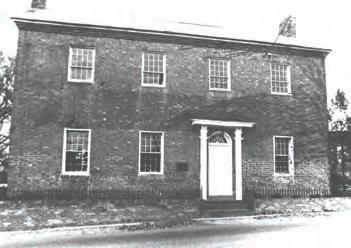
“Lincoln Landmarks was formed in 2021 as a preservation nonprofit dedicated to preservation advocacy in Lincoln County,” says founder and director Beth Yarborough. “Shortly after its formation, we acquired Pleasant Retreat Academy.”
Thus began an ambitious restoration project that was successfully completed in the spring.
Located at 129 E. Pine Street, the academy is the oldest surviving brick building in Lincolnton. Chartered in 1813 and constructed between 1817 and 1820, it originally operated as a private school for boys during a time when public education had yet to take root in North Carolina.
“There were no public schools in those days, and that’s one of the reasons the school was formed,” Beth explains. “A lot of young men and women were educated at home by private tutors.”
Several of the young men educated at the academy would go on to shape American history, including future governors of Texas, North Carolina and Georgia. The building’s history, however, stretches beyond the classroom.
“After the turn of the century, it served several different purposes, most notably as the public library,” says Beth. “A lot of people in Lincolnton who are my age, or even a little bit younger, remember that as our library.”
Today, the building is listed on the National Register of Historic Places and remains one of Lincoln County’s most significant architectural landmarks. Its newly restored spaces have
been thoughtfully updated to welcome modern gatherings while honoring the building’s historic character.
Beth envisions Pleasant Retreat Academy hosting small weddings, bridal and baby showers, corporate retreats, seminars, book talks and other community events. Outside, the property’s formal garden has also been revitalized for ceremonies and small festivals.
For Beth, preserving structures like Pleasant Retreat Academy is about far more than saving old buildings.
“A preserved historic structure — that’s a tangible piece of history that you can reach out and touch.”
She also points to the environmental benefits of restoration.
“Historic preservation is the ultimate form of recycling,” says Beth. “More than 30 percent of the contents of our landfills these days are taken up with construction materials. So for every structure that gets saved and repurposed, you’re saving a lot of materials from the landfill.”
While Lincoln Landmarks focuses specifically on preserving historic structures, Beth says the organization is happy to collaborate with others dedicated to preserving local history.
“We enjoy working with groups such as the Lincoln County Historical Association. They are the storytellers, whereas a preservation nonprofit focuses on the structures and advocates for their protection and proper treatment so that the stories can live on.”
Most important, she hopes the restored academy remains a place where the community continues making memories for generations to come.
“We are very eager to let the whole community know that [Pleasant Retreat Academy] is safe and will be available for all of us to enjoy, hopefully for another 200 years.”
Pleasant Retreat Academy is available for private event rentals. To learn more or inquire about hosting an event, visit Lincoln Landmarks at lincolnlandmarks.com.
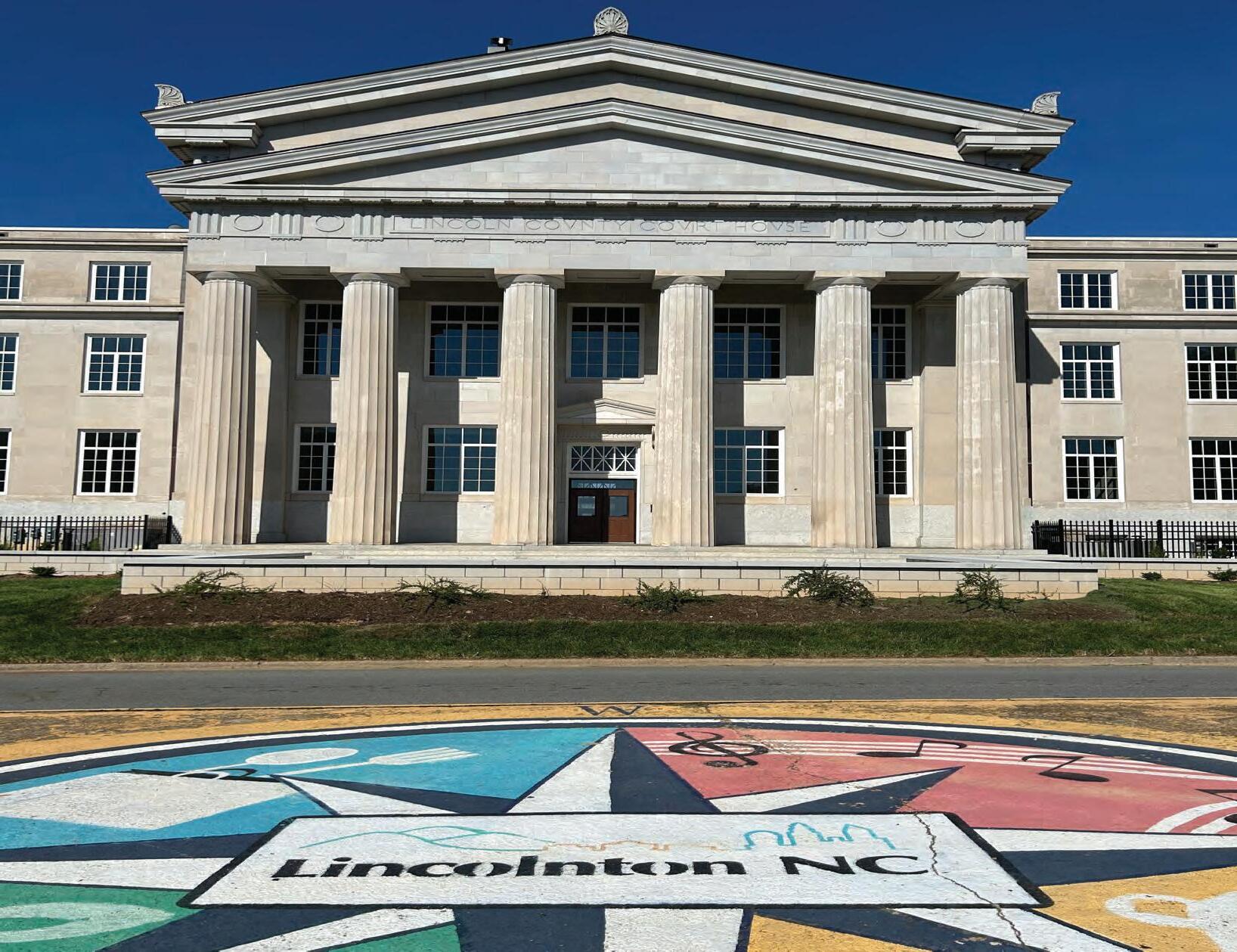
While work continues inside, the courthouse grounds are already welcoming people back.
Few buildings are as closely tied to Lincolnton’s identity as the Lincoln County Historic Courthouse. Having long served as the county’s seat of government, the landmark is now being reimagined through a major preservation and redevelopment effort.
STORY BY STEPHANIE MEYER
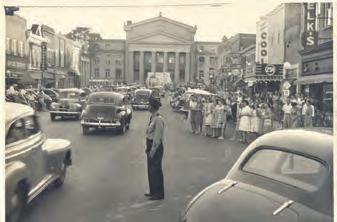
While work continues inside, the courthouse grounds are already welcoming people back. Shaded tables invite visitors to enjoy lunch, sip coffee and catch up with friends, while events like Community Wellness on the Square—a partnership with the Lincoln County Family YMCA, Small Town Run Club and United Way of Lincoln County—bring free yoga and stretching to the lawn.
It’s an early glimpse of the future county leaders envision for the property.
“Essentially, the purpose of the overall project is to preserve the building, keep it open and active in the community as a usable space both inside and out, and to achieve the highest and best use of the building and property — for it to contribute to the local economy as the center of downtown Lincolnton,” says Joshua Grant, Lincoln County’s planning and inspections manager.
This writer was given the privilege of touring the courthouse during its renovation alongside Joshua and Public Affairs Officer Vanessa Leon. Walking through the building revealed more than construction materials and architectural details. Every room held a story to be told, while Joshua and Vanessa’s enthusiasm reflected the dedication of those working behind the scenes.
The renovation has uncovered remarkable pieces of the courthouse’s history. Layers of past renovations have been peeled away to reveal original architectural features, while antique safe doors, exposed building materials and carefully re-created windows offer glimpses into the building’s original character. Outside, veterans memorials and the historic drinking fountain have also been carefully reset.
“All of the historical elements of the building are being preserved, and some are even being uncovered from years of being hidden by 1980s renovations to keep the court system
going,” says Joshua. “As part of the current phase of construction, the third floor in the central portion of the building was removed to return the building back to its original 1923 form of one grand space, which spans from wing to wing and consists of both the second and third story of the building.”
He adds, “Also unearthed during the early demo period of the project was the original balcony that once served as overhead seating for days when the courtroom was over capacity.”
The long-term vision is to partner with a developer who can transform the building into a vibrant mixed-use destination with possibilities including restaurants, retail shops, event spaces, museum elements and displays celebrating local history, although no specific plans have been finalized.
Joshua says that regardless of the building’s final use, downtown Lincolnton and the community will benefit both economically and culturally.
“Investors, operators and development partners will all be part of identifying the final uses of the building,” Joshua explains. “But whatever the use, it will contribute to the local downtown economy and the history of the building will be preserved as both a local landmark and as a National Register of Historic Places listing.”
In spring 2026, Lincoln County appointed A Major Project as development consultant for the Historic Courthouse. Drawing on historic redevelopment experience, the firm is helping shape the courthouse’s next chapter.
“As someone local to the area, this project feels especially meaningful because the Historic Courthouse belongs to the whole community,” says Andrew Major, director of A Major Project. “Our job is to help ensure that the work happening now leads to a future where the building is not only preserved, but actively used, loved and financially sustainable.”
For now, the courthouse remains a work in progress, but every restored brick, uncovered architectural detail and community event brings it one step closer to serving Lincoln County in a new way for generations to come.
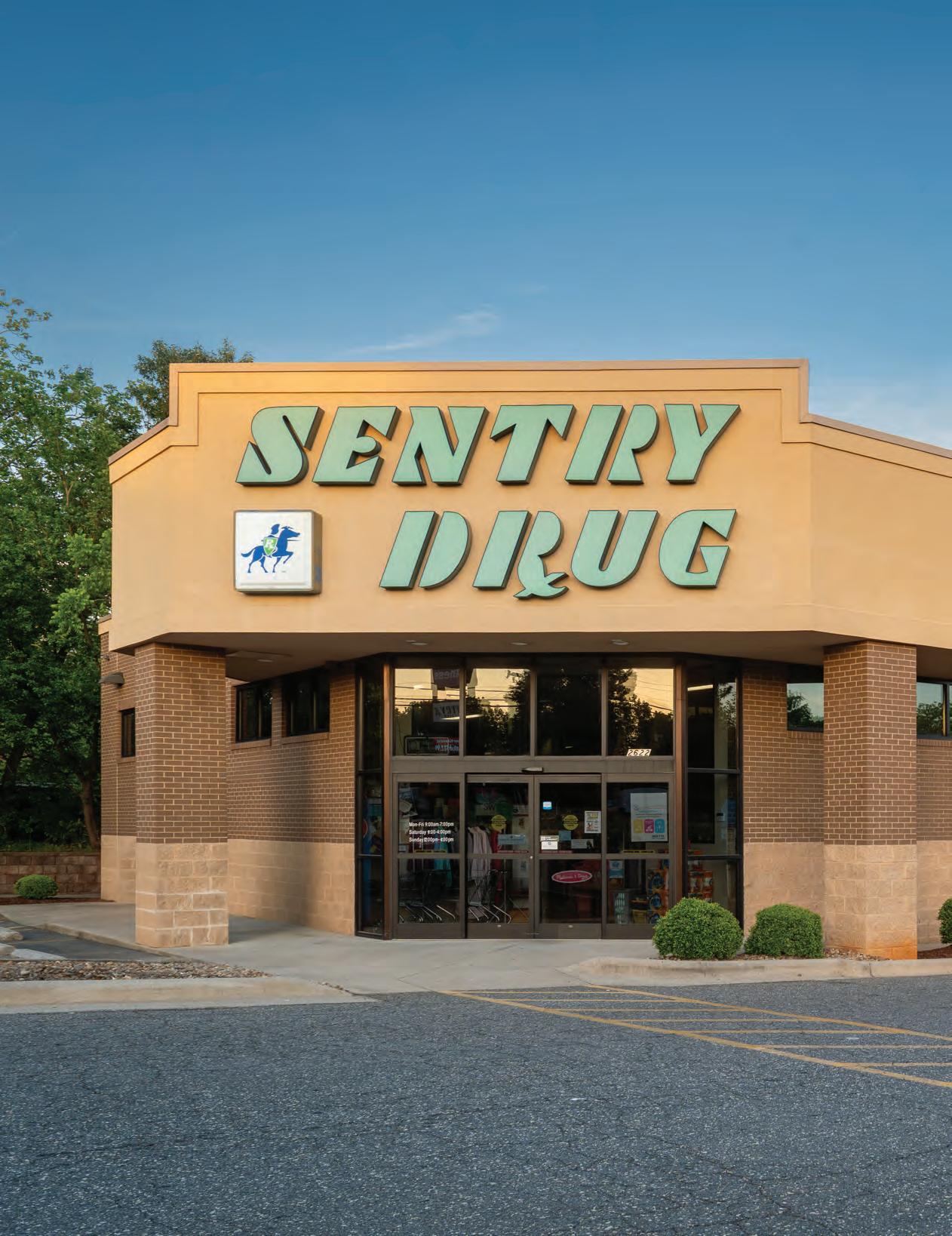
HOW BUDDY PIGG TURNED A HOMETOWN PHARMACY INTO A FAMILY LEGACY.
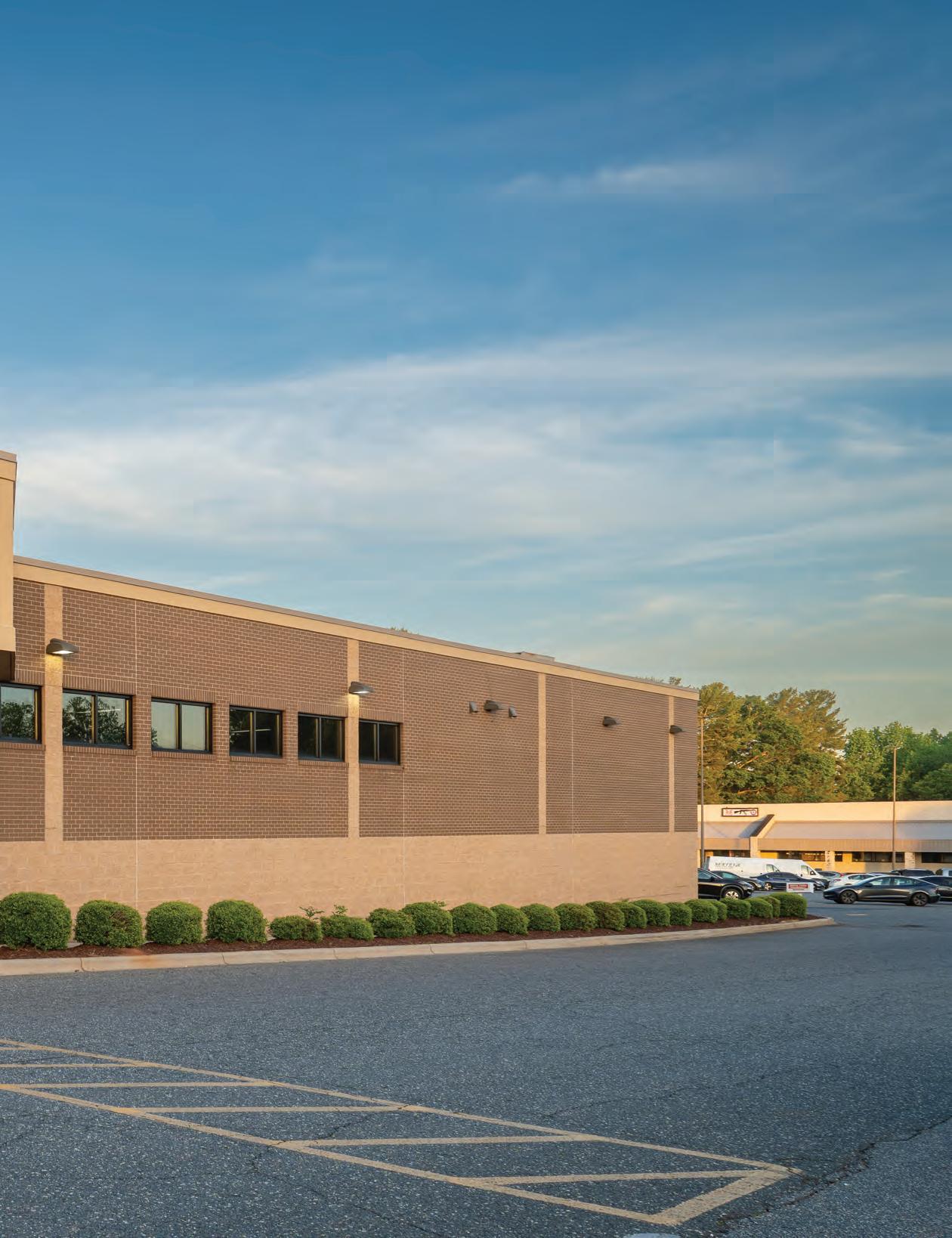
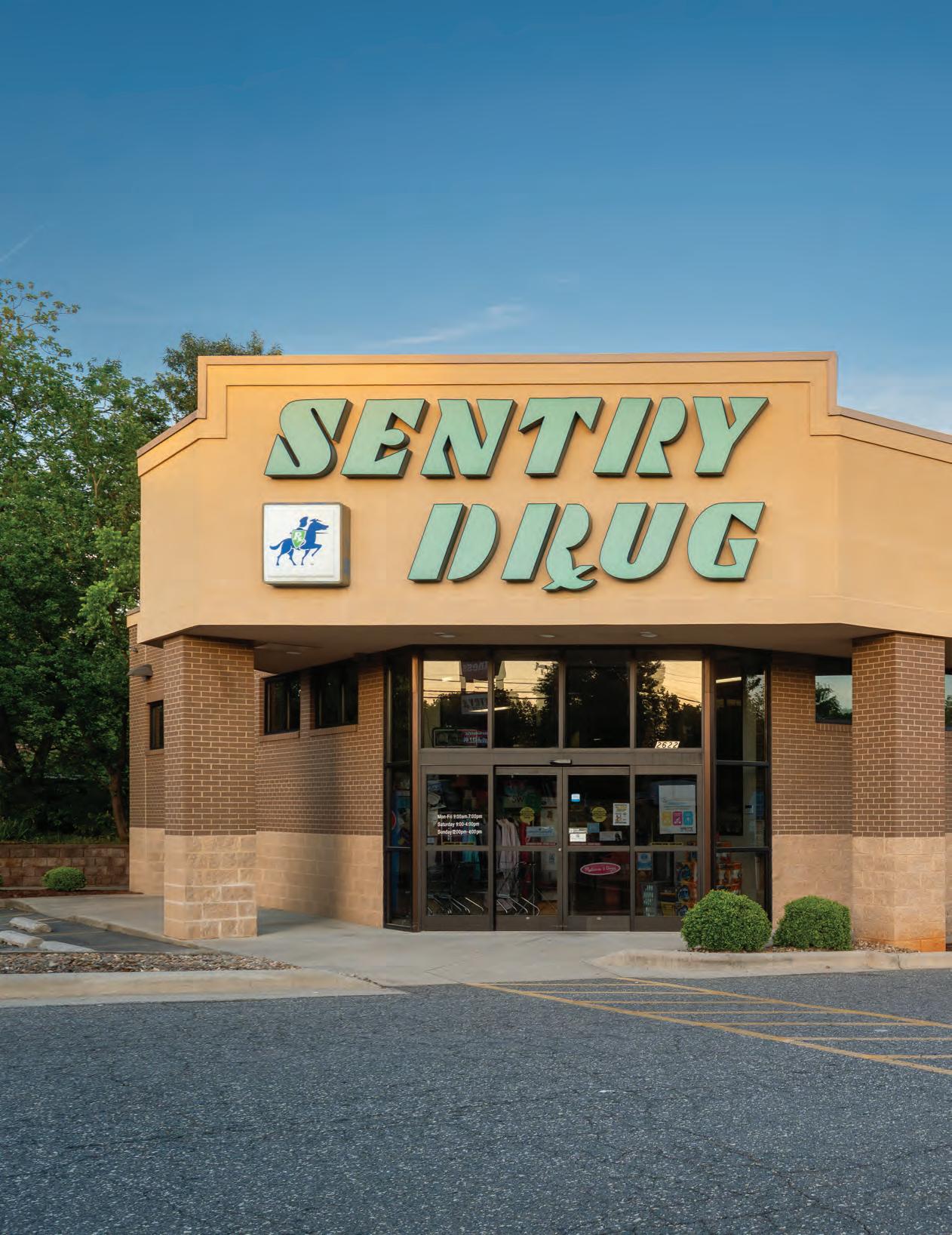
For more than five decades, families in Lincolnton have walked through the doors of Sentry Drug Center not only for prescriptions, but for conversation, reassurance, and the comfort of seeing familiar faces behind the counter.
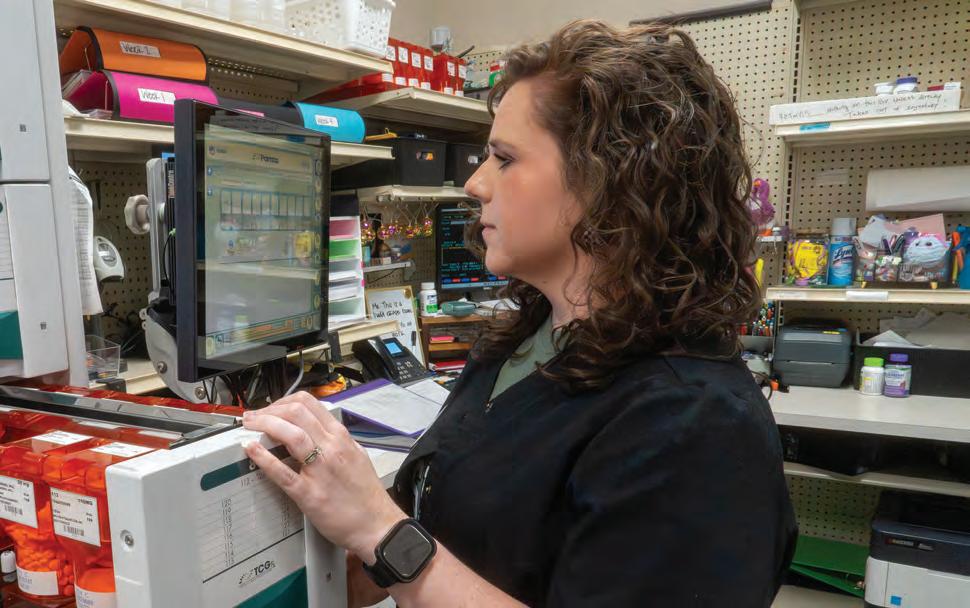
Inside the Boger City location on East Main Street, the store blends the convenience and technology of a modern pharmacy with the warmth of a hometown drug store. Shelves are filled with gifts, toys, décor, and everyday essentials. In the back, pharmacists and technicians move quickly between ringing phones, prescription bottles, and smiling conversations with patients. The pharmacy stays busy, but never impersonal — a reminder of the kind of community-centered care that has become increasingly uncommon in an era of mega-chain pharmacies and corporate healthcare.
That community atmosphere traces back to one man: Buddy Pigg.
Buddy founded the pharmacy in 1972 and has since cultivated its growth from a single hometown drugstore into a multi-location pharmacy and home healthcare business which serves patients across North Carolina — all while remaining family-owned and deeply rooted in Lincolnton.
On March 13, 2026, Buddy turned 80 years old. After more than 50 years behind the pharmacy counter, he still comes to work nearly every day.
“He is still coming to work and serving the people of Lincolnton,” says Emily Pigg Byrne, Buddy’s niece and second-generation pharmacist for Sentry Drug Center.
What Buddy built became more than a business. It became a family legacy. The Piggs still speak about the early years with the grit and humor of a family startup.
“We were open from 9 a.m. to 9 p.m., Monday through Saturday, and my ‘day off’ was Sunday, because I only worked 1 to 6,” Buddy recalls. “I did it for one year, never got sick, thank goodness. My mother was a hairdresser, so she would cut my hair after we closed on Sundays.”
After building trust in the community and surviving the grueling work schedule of that first year, Buddy was able to bring in help and focus on expansion. Buddy’s brother, Tim Pigg, came on board in 1983 when they started the second pharmacy and home health care store, growing the family business while preserving the small-town approach that earned their customers’ trust.
“When we started the home healthcare store, Tim made our first hospital bed delivery in the back of his pickup,” Buddy says.
At one point, Sentry operated four delivery trucks equipped with radios, allowing staff to quickly deliver products to patients across Lincolnton – sometimes even within the hour.
The family business continued to grow through Buddy’s son, Todd Pigg, Tim’s daughter Emily, and now Buddy’s grandsons, Trace and Blake Pigg. Few independent pharmacies can say that three generations of one family chose the same profession and in the same hometown.
“I started straightening the toy aisle for $0.25 an hour back in 1978,” Todd says with a laugh.
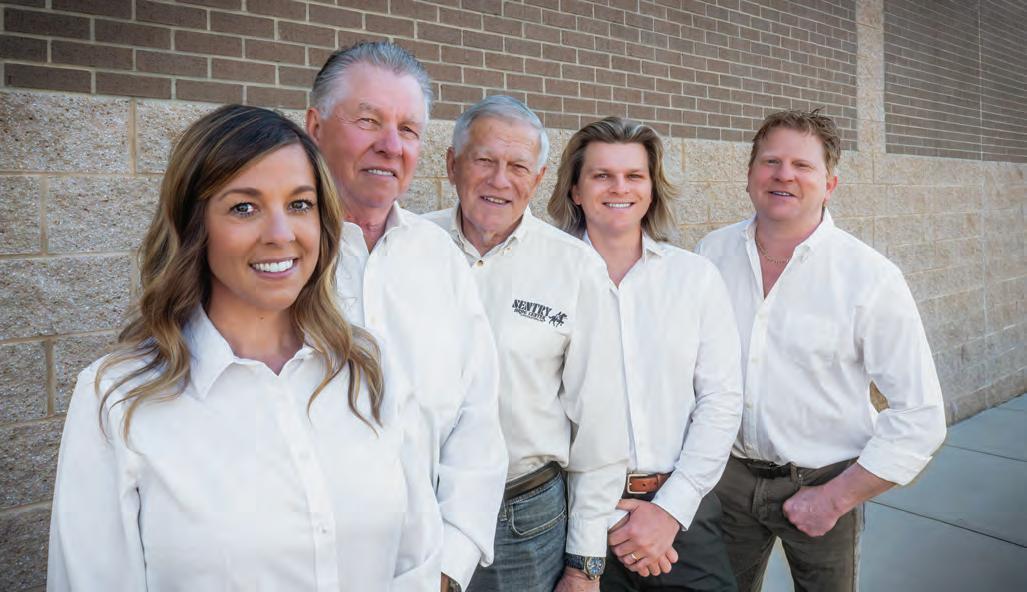
Todd joined the pharmacy full-time in 1995 after graduating from pharmacy school. Emily followed in 2009, and then Buddy’s grandsons: Trace, who joined the company in 2025, and Blake, who is currently in pharmacy school and may also continue the family tradition.
The business has remained a family effort behind the scenes as well. Buddy’s wife, Obie Pigg, handled bookkeeping for decades after the pharmacy opened. Todd’s wife, Angie Pigg, joined the office staff in 1995 and continues to help lead operations.
Today, the company operates three locations: the Boger City pharmacy on East Main Street, the home health and compounding center on East Gaston Street in Lincolnton, and a Stanley location serving Gaston County.
Embracing the New
Long before automation entered the pharmacy world, everything was done by hand. Buddy says Sentry was one of the first pharmacies in the area to adopt computers, and they have been open to embracing new technologies ever since.
Though rooted in tradition, Sentry has adopted automation technologies to better serve patients. The company installed its first robotic pill-filling system in 2001 — a date the family still remembers clearly.
Today, robotics supports one of Sentry’s most impactful services: personalized medication packaging, also known as multi-dose packaging. Known internally as POLLY — short for “Packaging Offered to Lighten the Load for
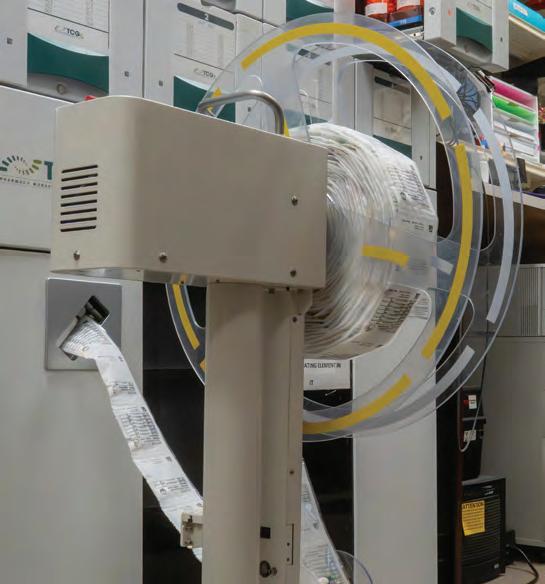
You” — the system organizes medications into labeled packets sorted by day and time.
“It is by far the best for organizing the patient’s medication,” Buddy says.
The service has become especially valuable for seniors, caregivers, and patients managing multiple prescriptions.
“Anyone who takes eight to 10 prescriptions a day, this technology will organize it for them,” Buddy says. “It really is a game changer for simplicity and accuracy.”
Emily says the system has helped families care for aging loved ones more safely and independently.
“Medication packaging has decreased a lot of medication errors and helped a lot of families be able to take care of their parents without having to be there every single day,” Emily says.
“It’ll keep your parents out of the nursing home for a little longer,” Buddy adds. “And that’s huge.”
While the family’s pharmacies also offer compounding, durable medical equipment, diabetic footwear, prescription shipping, and free local home delivery, the second aspect of the Sentry Drug business involves long-term care-at-home support, such as incontinence and nutrition supplies. Increasingly, those services extend far beyond Lincoln County.
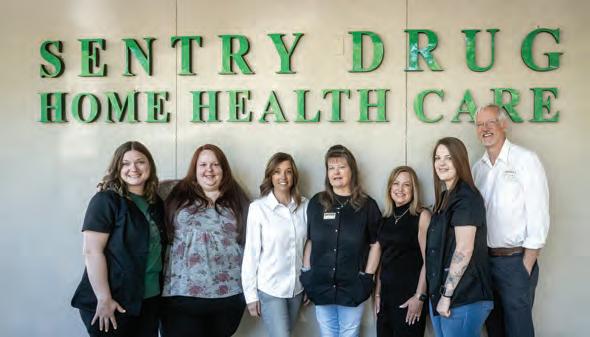
“We deliver incontinence and nutrition products from Asheville to Wilmington, all over North Carolina,” Buddy says.
The company has also expanded services for adults and children with disabilities.
“We are very focused on adults and children with disabilities. That’s one of our niches,” Emily says.
Many families, the Piggs explain, are unaware that the supplies they receive come from right here in Lincolnton. Likewise, many Lincolnton residents don’t realize they have a statewide home healthcare business in their city.
Driven by growing demand, the Piggs are currently building a new warehouse in Lincolnton to better serve Sentry’s expanding customer base.
“We are very focused on adults and children with disabilities. That’s one of our niches,”
For patients on Medicare, they also offer one-on-one guidance from Trace, who is a pharmacist and licensed Medicare insurance agent.
“One of our goals is to satisfy the needs of the community, so we want to help them with their Medicare insurance,” Trace says. “We have people come in and ask all the time about open enrollment and deciding on plans.”
With a licensed Medicare agent on duty, Sentry Drug Center can help take the middleman out of the process for patients who rely on this coverage but don’t want to change pharmacies.
As the business grows, the Piggs say independent pharmacies continue to face mounting pressure from large corporate chains and Pharmacy Benefit Managers, commonly known as PBMs. However, the Piggs explain that they work closely with independent pharmacy associations that help them compete with the bigger chains.
“We’ve had customers tear up when they’re forced to use a chain pharmacy or forced to go mail order. Patient choice is a huge concern for us,” Todd says.
That dedication to protecting patient choice and providing excellent, personalized care continues to shape daily life inside the pharmacy — from medication counseling and delivery services to the familiar greetings customers hear when they walk through the door.
The family insists Sentry’s success belongs not only to the Piggs, but also to the Lincolnton community of customers and employees who supported them through the decades.
“We would be remiss not to give credit for Sentry’s success to its fantastic employees and customers,” Todd says.
That loyalty and sense of community have carried Sentry Drug Center through enormous changes in healthcare, technology, and the pharmacy industry itself.
And through it all, Buddy Pigg still shows up. Still greeting customers, still answering questions, and still serving the hometown he helped care for more than half a century ago.
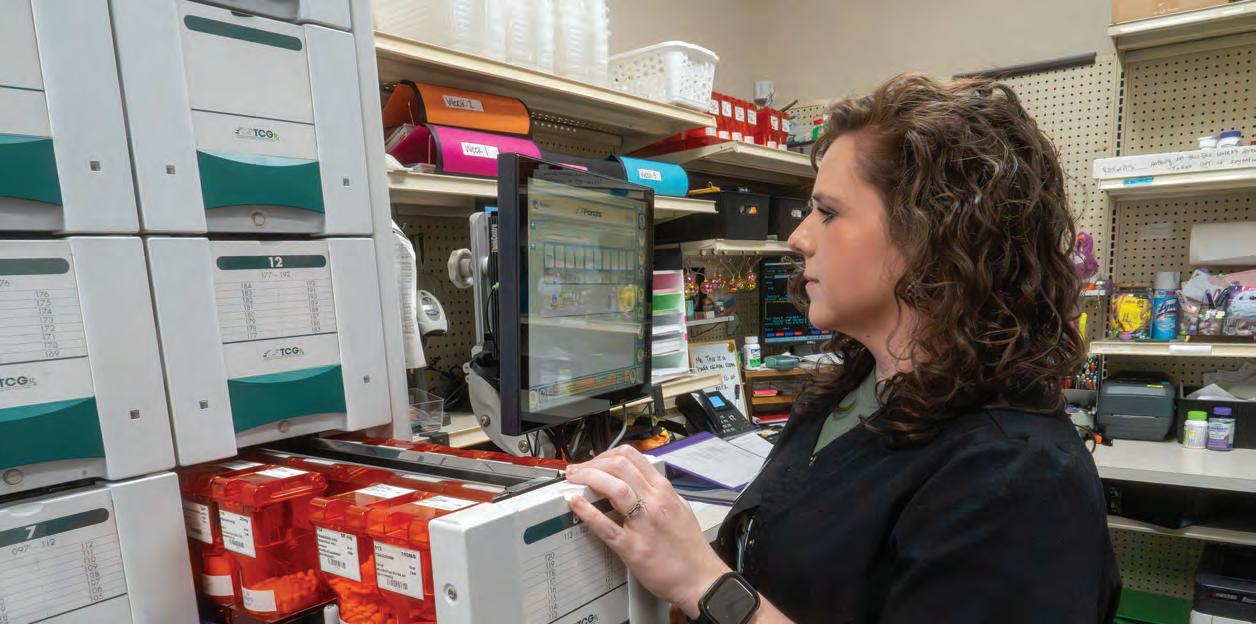
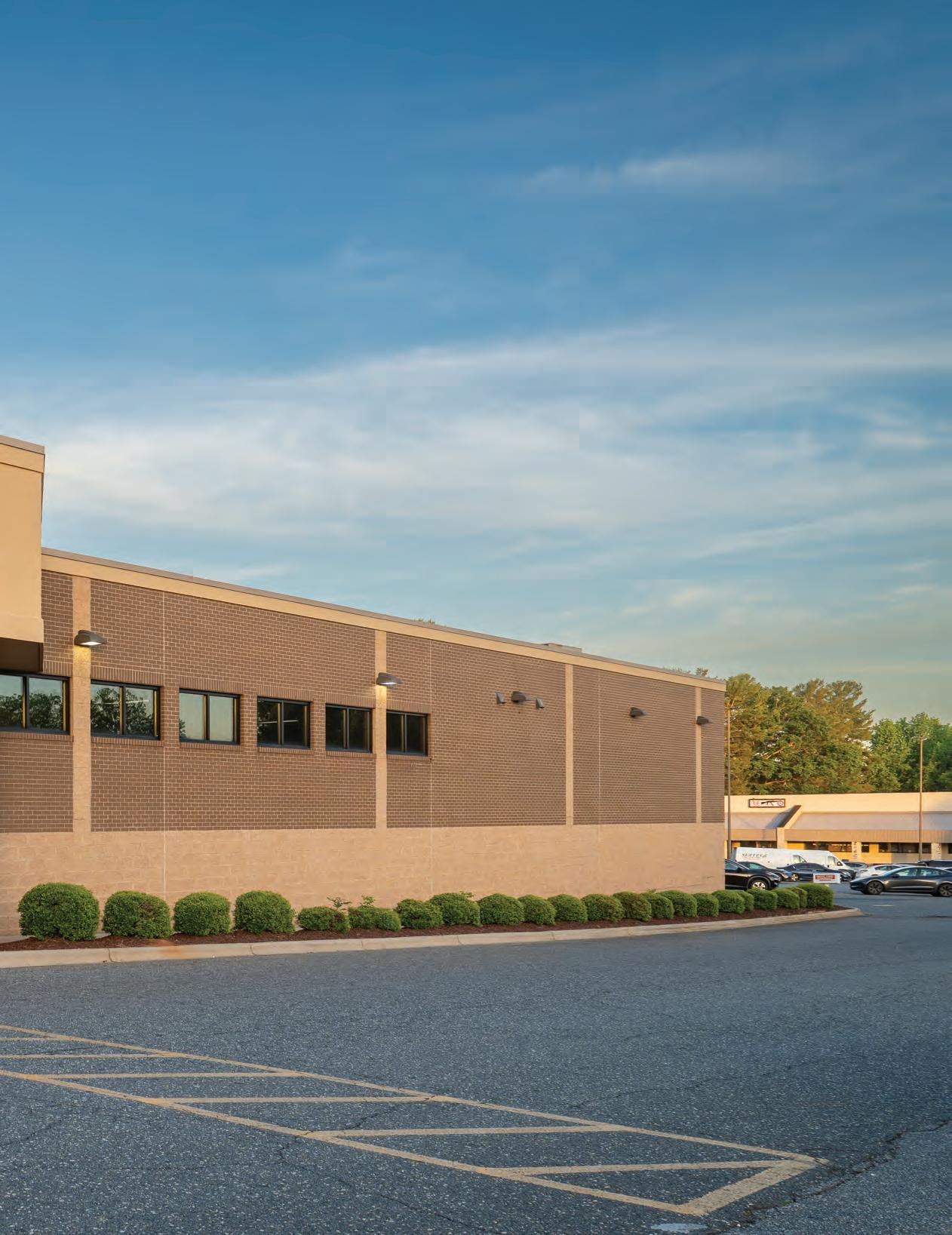
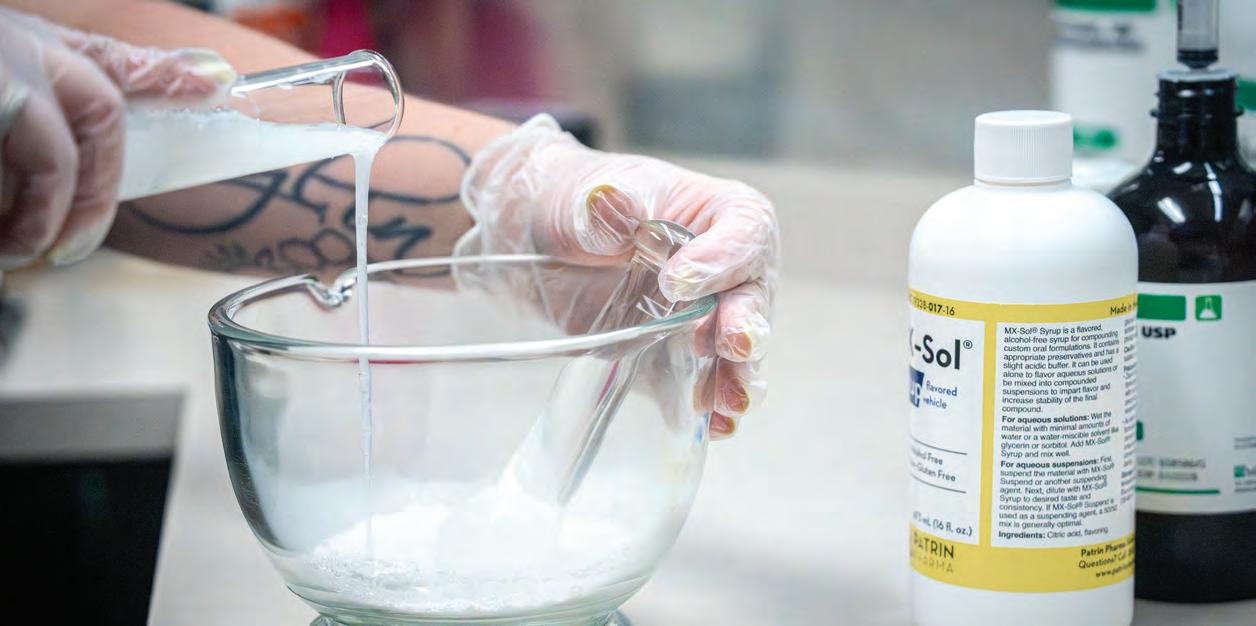
Whether you’re new to the area or a lifelong resident, this handy list can direct you to commonly needed services.
CITY OF LINCOLNTON
Lincolnton City Hall
114 W. Sycamore Street, Lincolnton, NC 28092 (704) 736-8980 www.lincolntonnc.org
Lincolnton Police Department (704) 736-8900 For emergencies, dial 911. www.ci.lincolnton.nc.us/149/Police
LINCOLN COUNTY
Public Works Office
115 W. Main Street, Lincolnton, NC 28092 (704) 735-8202 www.lincolncountync.gov
Lincoln County Sheriff’s Office
700 John Howell Memorial Drive, Lincolnton, NC 28092 (704) 732-9050 For emergencies, dial 911. www.lincolnsheriff.org
Lincoln County Libraries
Charles R. Jonas Library: (704) 735-8044
Florence S. Shanklin Branch Library: (704) 483-3589 West Lincoln Branch Library: (704) 276-9946 www.mylincolnlibrary.org
CLOSEST HOSPITAL
Atrium Health Lincoln 433 McAlister Road, Lincolnton, NC 28092 (980) 212-2000 atriumhealth.org/locations/detail/atrium-health-lincoln
Atrium Health Levine Children’s Hospital 1000 Blythe Blvd. Charlotte, NC, 28203 (704) 381-2000 atriumhealth.org/medical-services/childrens-services
Christian Ministry of Lincoln County 207 S. Poplar Street, Lincolnton, NC 28092 (704) 732-0383 christianministryoflincolncounty.org
Hesed House of Hope 100 Ann Gaither Court, Lincolnton, NC 28092 (704) 732-0175 www.hesedhouseofhope.com
Lincoln County Department of Social Services 1136 E. Main Street, Lincolnton, NC 28092 (704) 732-0738 www.lincolncountync.gov/135/Social-Services
Lincoln County Coalition Against Domestic Violence/Amy’s House Crisis line: (704) 736-1224 Main line: (704) 240-3688 lincolncounty-cadv.org/amys-house
Lincoln County Coalition Against Child Abuse & Child Advocacy Center 161 Policarp Street, Lincolnton, NC 28092 (704) 736-1155 cac-lincolncounty.org
Solution on page 45
1. Cornerstone abbr. 5. Grasp
9. Autocratic Russian rulers 14. Grub
15. Corrida cheers
16. Sponsorship
17. Travel on
18. Mrs. Dithers, in “Blondie”
19. Raise a glass to 20. Foundation
23. Scott of “Charles in Charge”
24. Popular ISP
25. Turf
28. Hell
31. The middle of summer?
34. Diarist Nin
36. Composer Delibes
37. Work with needles
38. Rossini opera, with “The”
42. Nettle
43. ___-Wan Kenobi was a character in “Star Wars”
44. Cockamamie
45. Altar in the sky
46. Starters
49. Suffix with cloth
50. Is for you?
51. Nevada senator Harry
53. Permeate
60. Historian Durant
61. Evangelist Roberts
62. Asian inland sea
63. Gather
64. Prefix with present
65. Hurler Hideo
66. Waste maker
67. Pour
68. Singer Stefani
1. Beige
2. Leg part
3. Sweeney ___
4. Nerd
5. Bell used to sound an alarm
6. Many
7. Actress Deborah
8. Biblical birthright seller
9. Body art
10. Capital of South Korea
11. Lab culture
12. Get up
13. Concorde, e.g.
21. Poker ploy
22. Paddled boat
25. Native Israeli
26. Broadcasting
27. “Our Gang” girl
29. Pixyish
30. Legal thing
31. Zhou ___
32. Pooh’s creator
33. Point in the desired direction
35. When Will ___ Loved?
37. Reunion attendees
39. Rodeo performer
40. UK honor
41. Be a guest
46. Threatening words
47. Verdi title bandit
48. Land, as a fish
50. Bikini blast
52. Sturm und ___
53. Cookbook writer Rombauer
54. Long and Peeples
55. Wanting
56. Ms. Bombeck
57. Lined up
58. Domesticate
59. North Carolina college
60. Exclamation of relief
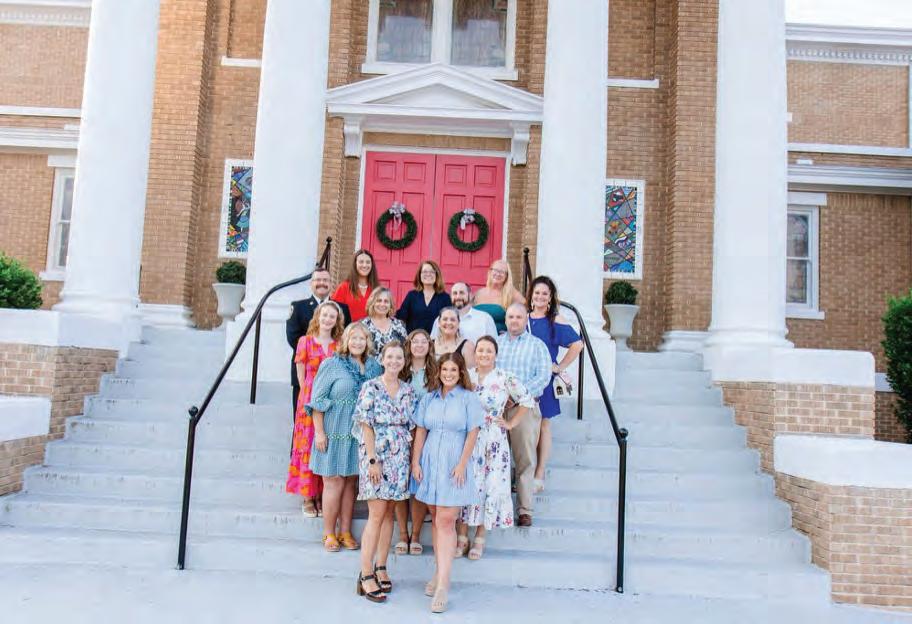
LINCOLNTON, N.C.—The Lincolnton-Lincoln County Chamber of Commerce wishes to congratulate the Leadership Lincoln Class of 2025-2026 and express gratitude to co-chairs Samantha Sumpter and Ceana Whisnant for leading this class. The Lincolnton community continues to thrive because of individuals like these graduates who invest their time, talents and passion supporting and strengthening Lincoln County. The Chamber of Commerce appreciates their commitment and
looks forward to the positive impact they will continue to make in our community.
Thank you to the local businesses, partners and others who supported, sponsored and hosted this class.
Registration for the next Leadership Lincoln class is open. Anyone interested can register online at lincolnchambernc. org/leadership-lincoln. Photo credit: Lincolnton-Lincoln County Chamber of Commerce
LINCOLNTON, N.C.—K-9 Mylo has received a protective vest thanks to a charitable donation from nonprofit organization Vested Interest in K9s, Inc. The vest, which helps protect against bullets and stabs, is embroidered with the sentiment, “Honoring those who served and sacrificed.”
Vested Interest in K9s, established in 2009, is a 501(c)(3) charity whose mission is to provide protective vests and other assistance to dogs of law enforcement and related agencies throughout the United States. This potentially lifesaving body armor is made in the U.S., custom fitted, and certified by the National Institute of Justice.
Since its inception, Vested Interest in K9s has provided more than 6,500 vests valued at $6.9 million to K-9s in all 50 states
— made possible by both private and corporate donations. The program is open to U.S. dogs at least 20 months old and actively employed and certified with law enforcement or related agencies. K-9s with expired vests are also eligible to participate. There are an estimated 30,000 law enforcement K-9s throughout the United States.
Vested Interest in K9s, Inc. accepts tax-deductible contributions in any amount, with a donation of $1,050 sponsoring one vest. Each vest has a value of $1,800, weighs an average of 4-5 lbs., and offers a five-year warranty. For more information or to learn about volunteer opportunities, call (508) 824-6978 or visit vik9s.org. You may also mail a contribution to P.O. Box 9, East Taunton, MA 02718. Photo credit: Lincolnton Police Department
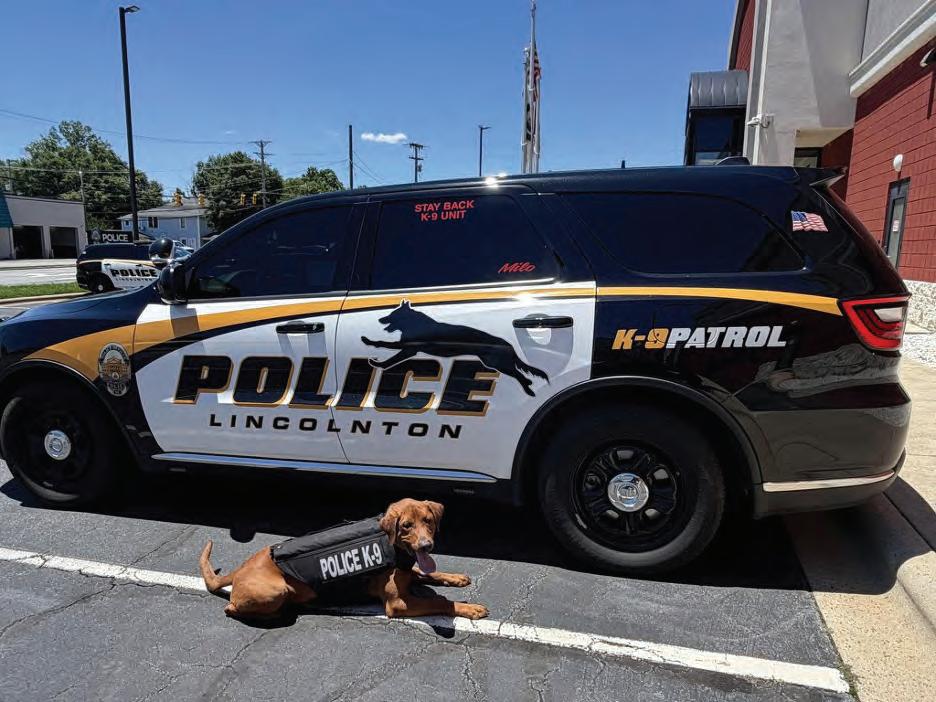
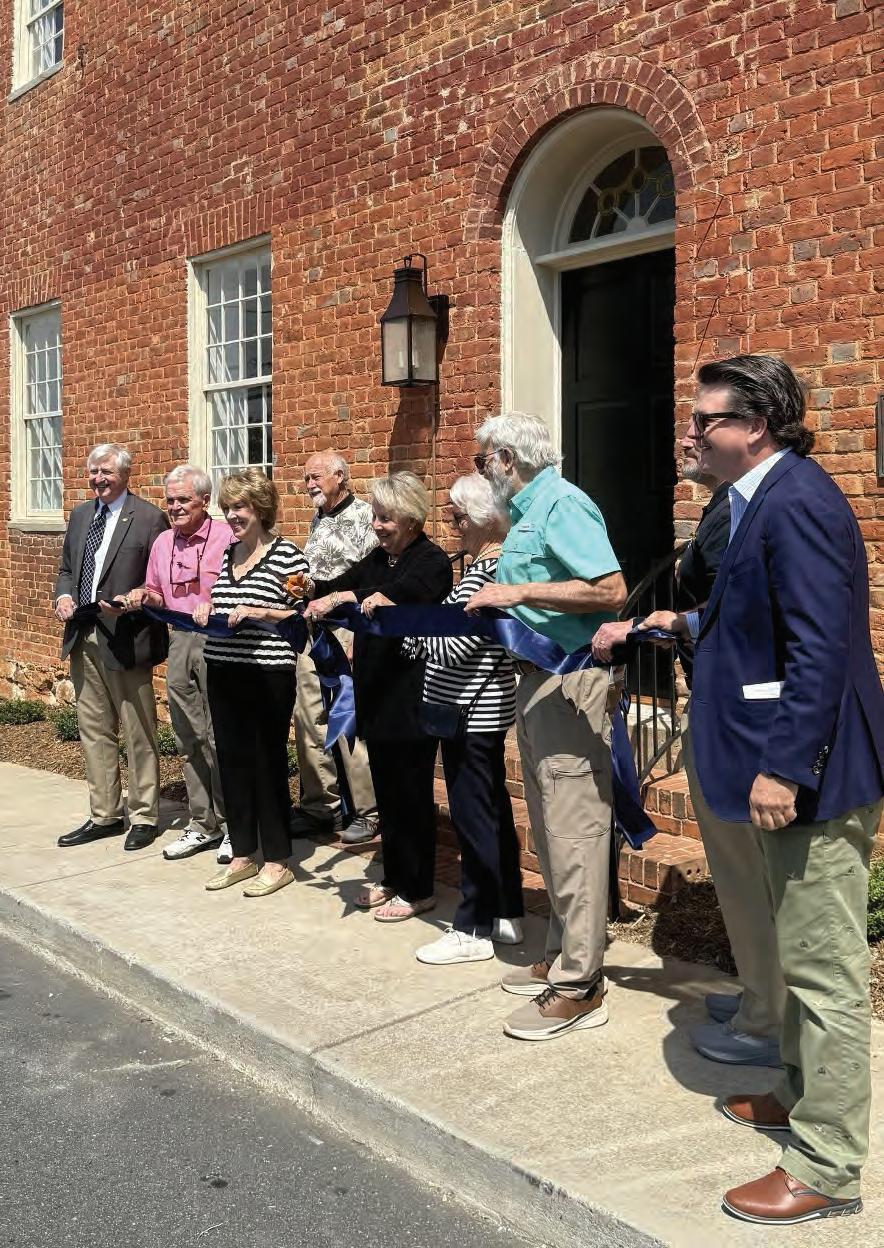
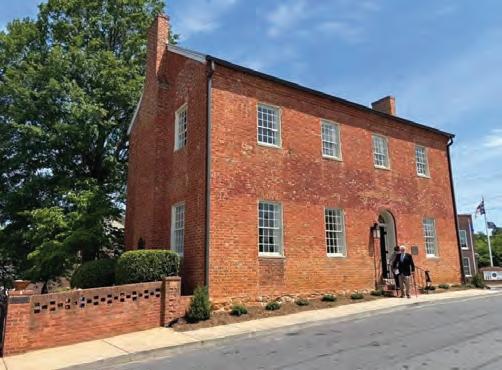
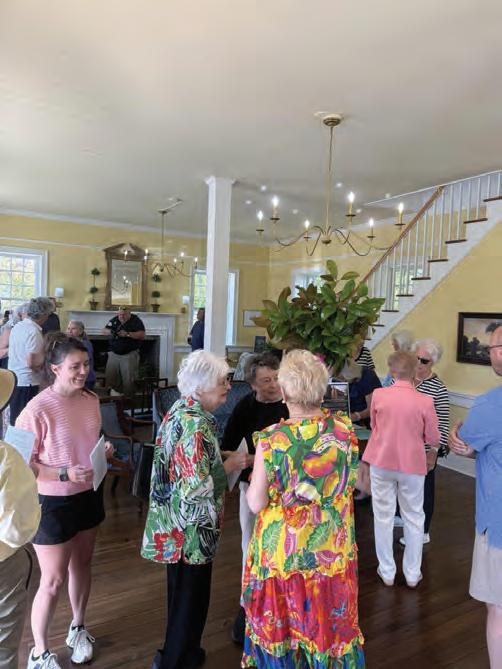
LINCOLNTON, N.C.—— Lincoln Landmarks, a nonprofit organization dedicated to preserving historic structures in Lincoln County, recently celebrated the grand reopening of the Pleasant Retreat Academy building located at 129 E. Pine Street in downtown Lincolnton. The event took place on May 16 and featured remarks from North Carolina State Senator Ted Alex-
ander, Preservation North Carolina Western Regional Director Jack Thomson and Lincolnton City Manager Ritchie Haynes, followed by the board of directors welcoming the community for a tour of the site and lunch in the garden. Lincolnton’s oldest brick building is available for event rentals. Photo credit: Lincoln Landmarks
CHARLOTTE, N.C.. —With 10 of its hospitals receiving an “A” grade for patient safety from The Leapfrog Group, Atrium Health leads the state with the most top grades of any health system.
The news comes from The Leapfrog Group’s Spring 2026 Hospital Safety Grade update, which assigned “A” grades to the following Atrium Health hospitals:
• Atrium Health Cleveland
• Atrium Health Cabarrus
• Atrium Health Carolinas Medical Center
• Atrium Health Lincoln
• Atrium Health Kings Mountain
• Atrium Health Mercy
• Atrium Health Wake Forest Baptist Health Wilkes Medical Center
• Atrium Health Wake Forest Baptist Davie Medical Center
• Atrium Health Wake Forest Baptist High Point Medical Center
• Atrium Health Wake Forest Baptist Lexington Medical Center
Evaluating nearly 3,000 general hospitals across the country twice each year, The Leapfrog Group utilizes 22 evidence-based measures of patient safety — taking into consideration errors, accidents, injuries and infections along with the systems hospitals have in place to prevent them.
“We are honored to be recognized for our commitment to patient safety, the very foundation of everything we do as an organization,” said Steve Smoot, president of Advocate Health’s North Carolina and Georgia Division, which includes the entire Atrium Health footprint. “Our teammates and clinicians walk through the doors of our sites each day passionate about delivering exceptional care and continuously strengthening the practices that help keep patients safe.”
Charlotte-based Advocate Health is the nation’s third-largest nonprofit integrated health system. In total, Advocate Health hospitals received 26 “A” ratings in the Leapfrog report — the highest number of top grades ever received by the health system.
“This recognition from The Leapfrog Group is a testament to our team’s relentless prioritization of patient safety,” said Dr. Scott Rissmiller, senior executive vice president and chief clinical officer for Advocate Health. “Together, we are advancing safety measures, providing outstanding service and reimagining care for the communities we serve.”
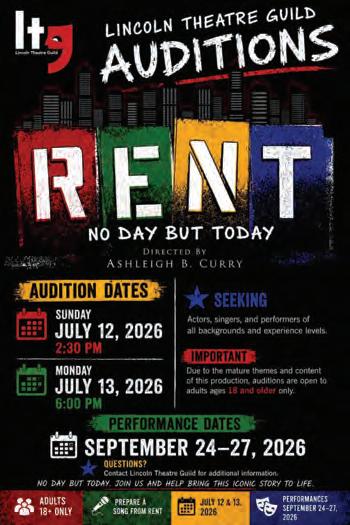
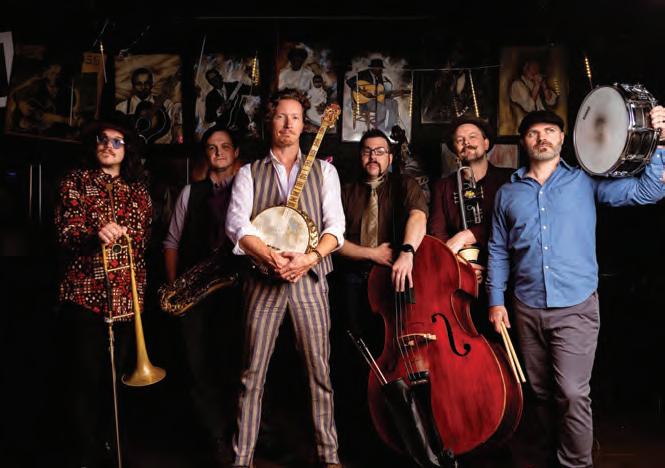
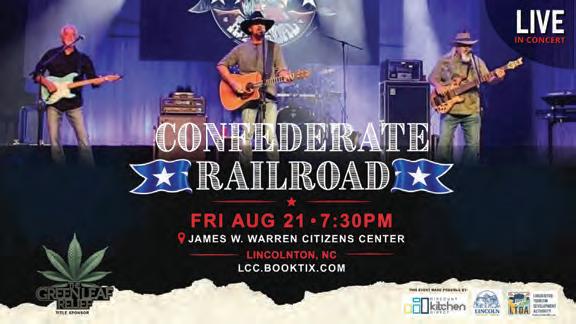
From summer concerts to city council meetings, here’s a look at what’s coming up in our community.
July 11 –
Veterans & Families
Appreciation Event
The American Legion Post 30 will hold a special event to show appreciation for our veterans and their families on Saturday, July 11, 2026. The event will have food, live music, bounce houses and more. Come join the fun and help show our local veterans how much they are appreciated!
• Saturday, July 11 at 3:00 p.m.
• American Legion Post 30, 1120 N. Aspen Street, Lincolnton
• post30adjutant@gmail.com
July 12-13 – Auditions for “RENT”
The Lincoln Theatre Guild will hold auditions for the musical “RENT,” directed by Ashleigh B. Curry. Performance dates are Sept. 24-27, 2026. The guild is seeking actors, singers and performers of all backgrounds and experience levels (adults 18 and up only, due to the mature themes and content of the production).
• July 12: 2:30 p.m.
• July 13: 6:00 p.m.
• lincolntheatreguild.net
July 16 – Lincolnton Alive After Five, Gary Lowder and Smokin’ Hot
Get ready for an evening full of incredible music and energy as Gary Lowder and Smokin’ Hot take the stage on
July 16! DJ John Barkley kicks off the evening at 7 p.m. with great tunes, followed by Gary Lowder and Smokin’ Hot at 8 p.m. Grab your lawn chairs, put on your dancing shoes, and bring your friends for a fun-filled night in downtown Lincolnton! Beer and wine will be available for purchase. Please note that you must be 21 or older with a valid ID to purchase and enjoy alcoholic beverages. Dogs are not allowed per City ordinance. Food trucks and local restaurants will be open with plenty of delicious options to enjoy throughout the evening.
• July 16: 6:00 p.m.
• Downtown Lincolnton, Court Square
• downtownlincolnton.com/events
August 7 – Concert by Blair Crimmins and The Hookers
Enjoy a night of “supercharged hot ragtime jazz with a touch of rock and roll” at the Lincoln Cultural Center! Blair Crimmins began his music career in Atlanta, Georgia, with a drive to bring ragtime and 1920s-style Dixieland jazz to new audiences. While playing small rock clubs around the Southeast, he developed a sound that is deeply rooted in the past with a modern twist. He has toured the U.S. and Italy playing festivals, opened for acts such as Preservation Hall Jazz Band and Old Crow Medicine Show,
and played with jazz legend Wynton Marsalis. The latest Blair Crimmins and The Hookers full-length record, which features swinging covers of his favorite artists ranging from Louis Armstrong to David Bowie, is titled “Okay Boom!”
• Show starts: 7:30 p.m.
• Location: 403 E. Main Street, Lincolnton
• lincolnculturalcenter.org
August 15 – Veterans Breakfast at the American Legion
The American Legion Post 30 in Lincolnton will host a Veterans Breakfast gathering on Saturday, August 15, 2026. After this event, the American Legion will continue to hold Veterans Breakfast on the second Saturday of each month. All veterans and their families are welcome to come enjoy a great breakfast while learning more about the American Legion.
• Saturday, August 15 starting at 8:00 a.m.; continuing on the 2nd Saturdays of each month
• 1120 N. Aspen S treet, Lincolnton
• post30adjutant@gmail.com
August 21 – Confederate Railroad
Get ready for a night of high-energy country music, Southern rock, and all the songs you know and love! For more than three decades, Confederate Railroad has been entertaining fans across the country with chart-topping
hits like Queen of Memphis, Trashy Women, Daddy Never Was the Cadillac Kind and Jesus and Mama. Thank you to our title sponsor Green Leaf Relief, now with 6 locations in our area. Our Hospitality Sponsor is Discount Kitchen Direct, a frequent sponsor of Lincoln Cultural Center events. This concert is part of an incredible August lineup presented by the Lincoln Cultural Center, featuring a full month of outstanding entertainment and four weekends of Bluegrass Bash performances.
• August 21, 7:30 p.m.
• James W. Warren Citizens Center
• Tickets available at LCC.booktix.com
August 31 – International Overdose Awareness Day
Please join the Lincoln County Drug Prevention & Recovery Coalition for the 2nd annual International Overdose Awareness Day! There will be vendors, light refreshments, rock painting, ways to honor your loved ones, and an opportunity to recognize those in recovery. Certified Peer Support Specialist, Kristen Beaver, and her husband, Andy Beaver, will be sharing their journey to recovery at 6:00pm.
• August 31, 5:00 p.m.
• Lincoln County Health Department, 200 Gamble Drive, Lincolnton
• lincolncountync.gov
September 19 – Cruisin’ for a Cause
Join in the 16th annual Cruisin’ for a Cause event in downtown Lincolnton, supporting the Lincoln County Child Advocacy Center and the Lincoln County Coalition Against Domestic Violence (Amy’s House). The cruise route will go along Main Street, from Laurel Street to Court Square.
• Sept. 19: 4:30 until 9:30 p.m.
• Downtown Lincolnton
• facebook.com/ cruisinforacauselincolnton or cruisinlincolnton@gmail.com
Tuesday Mornings – Lincoln County Farmers Market
The City of Lincolnton typically holds City Council meetings on the first Thursday of every month at 7:00 p.m. at City Hall. Public comments will be heard at the beginning of the meeting. Anyone wishing to address the council should sign up with the clerk before the meeting starts.
• Market is open: Tuesdays from 8:00 a.m. to 1:00 p.m.
• Location: 225 W. Water Street, Lincolnton
• facebook.com/ LincolnCountyFarmersMarket
First Thursdays –City Council Meeting
The Lincoln County Farmers Market is open! Browse a unique selection of locally grown produce, handmade crafts and other special items. The market is open Tuesdays from 8:00 a.m. to 1:00 p.m., through September, in downtown Lincolnton.
• Meetings held: First Thursday of the month, 7:00 p.m.
• Location: City Hall, 1 14 W. Sycamore Street, Lincolnton
• ci.lincolnton.nc.us
Second Saturdays –Shop Small Saturday (Downtown Lincolnton)
Support local businesses by shopping “small” in downtown Lincolnton on the second Saturday of every month. Visit charming boutiques, grab a bite to eat, and have a beverage with friends — all while keeping your dollars local. The event is sponsored by the Downtown Development Association of Lincolnton.
• Shop local: Second Saturday of the month
• Downtown Lincolnton
• facebook.com/downtownlincolnton

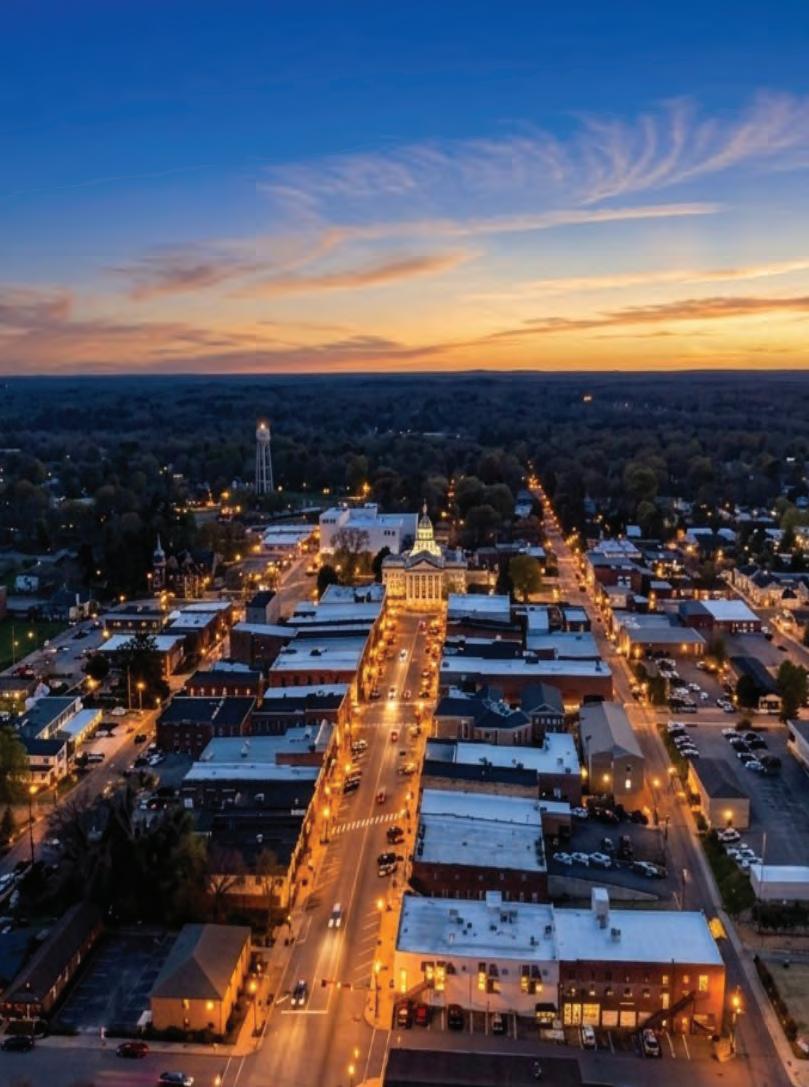


Listed alphabetically
AFRICAN METHODIST
EPISCOPAL ZION (AME ZION):
Herndon Chapel AME Zion Church 1121 Georgetown Road, Lincolnton Service times: Sundays at 11:00 a.m.
BAPTIST:
First Baptist Church
201 Robin Road, Lincolnton Service times: Sundays at 8:30 a.m. (contemporary) and 10:30 a.m. (traditional)
Hull’s Grove Baptist Church 6670 NC Hwy 27, Vale Service times: Sundays at 11:00 a.m.
CATHOLIC:
St. Dorothy’s Catholic Church
148 St. Dorothy’s Lane, Lincolnton Service times: Saturdays at 5:00 p.m.; Sundays at 9:00 a.m. and 12:00 p.m.
CHRISTIAN NONDENOMINATIONAL:
Community Grove Church 4321 Reepsville Road, Lincolnton Service times: Sundays at 11 a.m. and Wednesdays at 7 p.m.
Covenant Church
2168 Gastonia Hwy, Lincolnton Service times: Sundays at 8:30 and 11:00 a.m.
EPISCOPAL:
Church of Our Savior Woodside 1128 Hwy 182, Lincolnton Service times: Sundays at 11:30 a.m.
St. Luke’s Episcopal Church 315 N. Cedar Street Service times: Sundays at 10:00 a.m.
HOLINESS PENTECOSTAL:
8th Street Church of God
906 S. 8th Street, Bessemer City Service times: Sundays at 11 a.m. and 6 p.m.; Wednesdays at 7 p.m.
LUTHERAN:
Emmanuel Lutheran Church
216 S. Aspen Street, Lincolnton Service times: Sundays at 10:00 a.m.
METHODIST:
Boger City Methodist Church 2320 E. Main Street, Lincolnton Service times: Sundays at 10:30 a.m.
First United Methodist Church
201 E. Main Street, Lincolnton Service times: Sundays at 11:00 a.m.
PRESBYTERIAN:
Artisan Church (PCUSA) 235 E. Main Street, Lincolnton Service times: Sundays at 9:30 a.m.
Harvest Church (PCA) 710 Lithia Inn Road, Lincolnton Service times: Sundays at 10:30 a.m.
SYNAGOGUE:
Emanuel Temple Gastonia 320 S. South Street, Gastonia Service times: Fridays at 7:30 p.m.
To submit your church to be included in our directory, please send the church’s name, address, and service times to info@hometownlincolnton.com.