Hometown Media, LLC strives to publish accurate information in our publications. However, Hometown Media, LLC cannot be held responsible for any consequences resulting from errors or omissions. Hometown Media, LLC also cannot be held responsible for goods or services provided by advertisers in our publications. All material in this magazine is property of Hometown Media, LLC, and may not be reproduced without authorization from the publisher. Hometown Magazine - Lincolnton, a Hometown Media, LLC publication, is published four times per year and is distributed to residents and businesses in Lincolnton, North Carolina, to subscribers, and to select Lincolnton business locations in bulk. Articles published in Hometown Magazine - Lincolnton that express author opinions do not necessarily represent the opinions of Hometown Magazine - Lincolnton and its publisher, Hometown Media, LLC. The publication does not guarantee the accuracy, completeness, of the information presented. Readers are encouraged to conduct their own research.
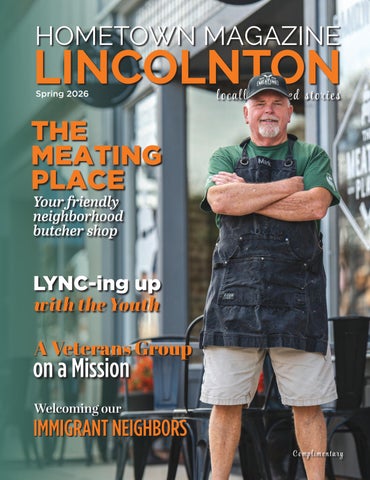
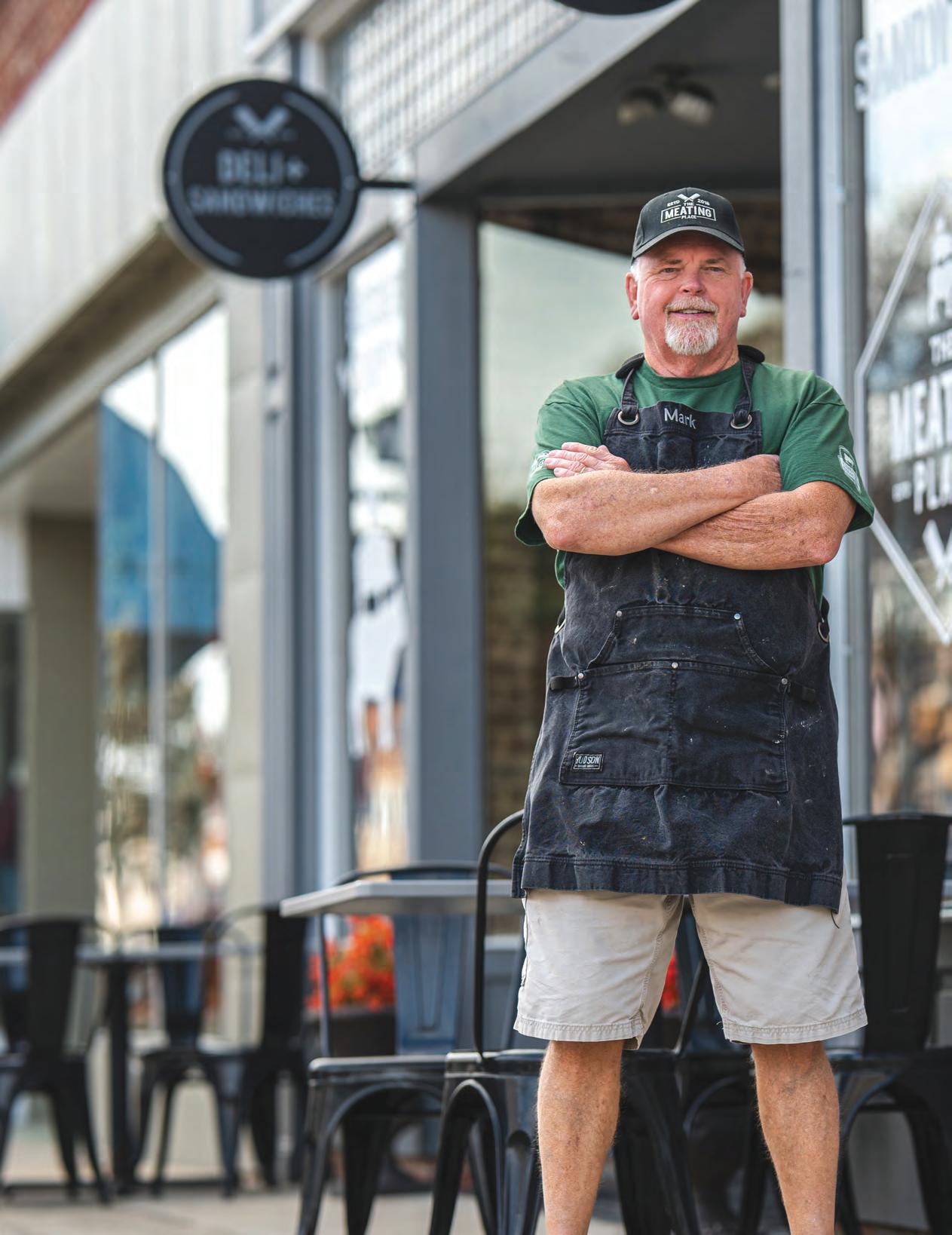
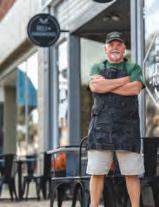
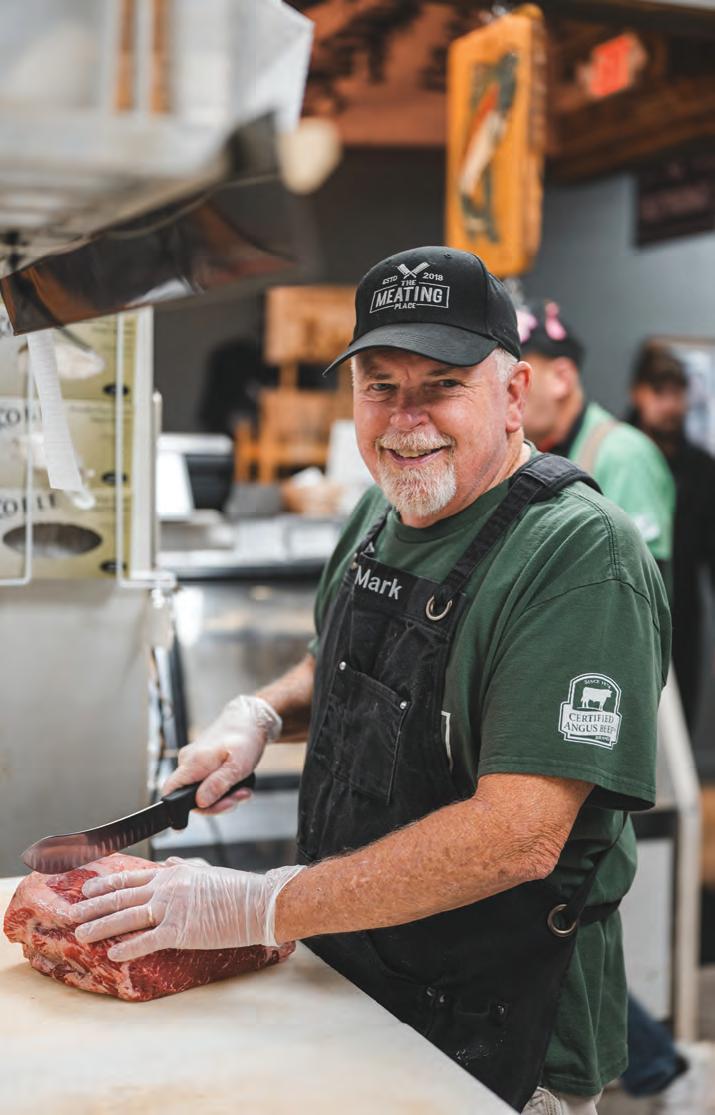
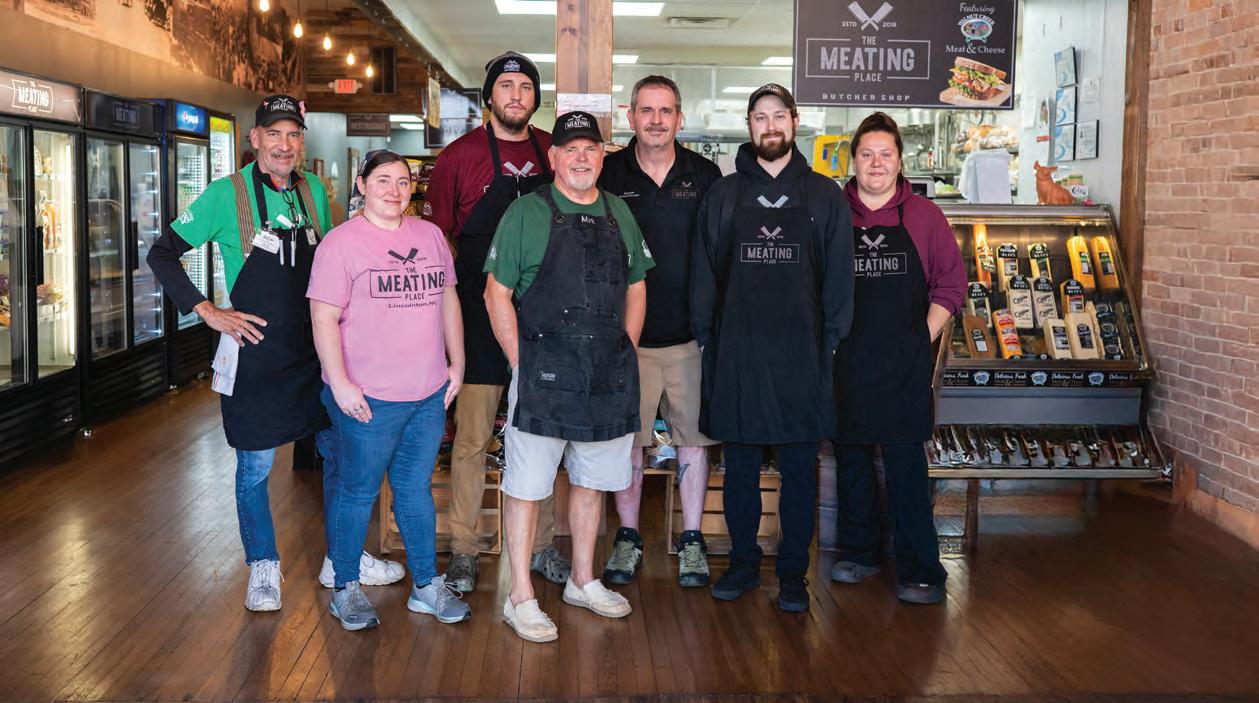
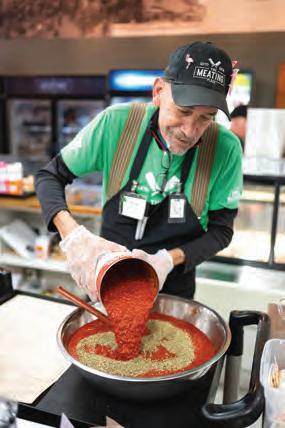
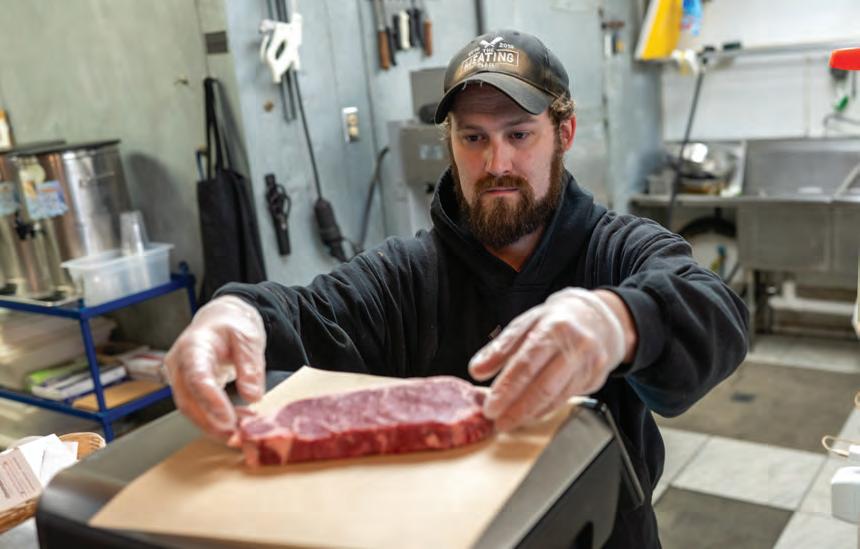
About the cover: Mark Ingle, owner of The Meating Place in downtown Lincolnton, had a vision to revive the concept of the neighborhood butcher shop. His story begins on page 40.
Photo by Robert Webb.
Loving and Leading Our Community: UNITED WE CAN
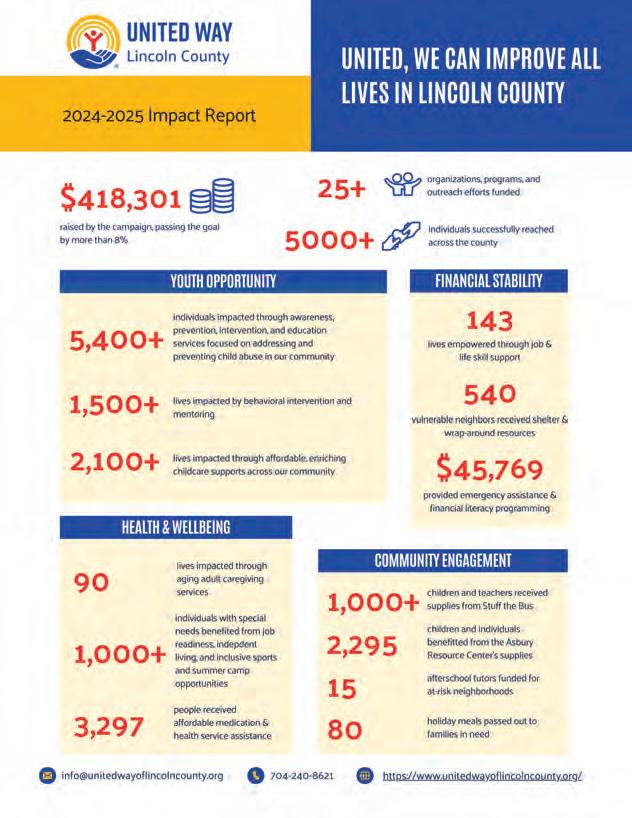
For more than 65 years, United Way of Lincoln County has supported local nonprofits and organizations, served those in need, and strengthened our community, and we’re not going anywhere!
From 2024-2025, UWLC raised over $400,000 to support our mission of improving all lives in Lincoln County. We accomplished this vision by funding more than 25 programs across the community, reaching more than 5,000 people in need, and engaging with areas such as youth opportunities, financial stability, health & wellbeing, and emerging crises.
Because of our unique structure, United Way of Lincoln County is able to impact the community in many different ways. Not only does UWLC allocate grants to agencies and organizations that provide essential work in the community, such as the Lincoln County Child Advocacy Center, Hesed House of Hope, the Lincoln County Coalition Against Domestic Violence, and more, we also step in during community-wide disasters and provide consistent community outreach, like starting programs such as the Asbury Resource Center and after-school tutoring for at-risk neighborhoods. UWLC also hosts a yearly Stuff the Bus campaign, ensuring that all students and teachers have the supplies they need to start the school year off right, as well as packages holiday
meals for families in need. Finally, UWLC acts as the main resource connector for Lincoln County. For businesses and organizations, that means we’re able to connect them to volunteer and team-building opportunities. For individuals in need, it means ensuring that a person knows where to find the nearest food pantry, a senior knows what services are available to them, and a family in crisis can keep their utilities on. Being the resource connector of Lincoln County means helping countless individuals find the resources they need to live successful, thriving lives.
This year’s campaign will be coming to an end on March 31, 2026, and we encourage the community to step in and help us complete our mission of improving ALL lives in Lincoln County. Just a small gift from every community member would allow us to make greater investments and serve more individuals for the next 65 years. From supporting local nonprofits to engaging in community outreach and much more, all funds raised go to making a clear, necessary change in Lincoln County lives. After all, when one of us succeeds, all of us succeed. To learn more about how you can get involved, whether through donating, volunteering, or learning, visit our website: www. unitedwayoflincolncounty.org.
Dear Reader,
Lately, I’ve been thinking a lot about connection. The word itself is interesting; it can be a noun or a verb. It can be a useful resource for getting business done, a link through which we communicate, and it can be a source of friendship, comfort and love. Connection strengthens and unites. It gives us purpose and gives meaning to many of life’s questions. It’s a pretty powerful thing.
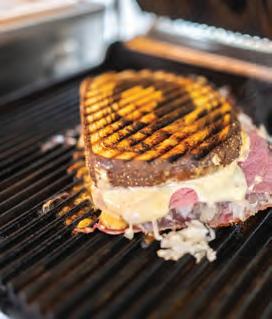
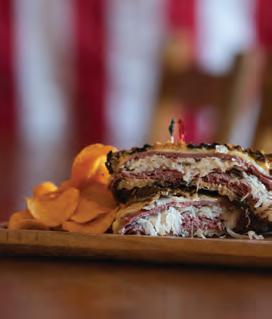
As I sit here sipping tea in a cozy corner of Fausto Coffee, I think back to all the connections I’ve formed right here in this “third place” – a concept Victoria Blake explores in Community Voices. I also think about the great connective power of food. The type of food doesn’t really matter, as long as it’s shared. Whether it’s a Rueben sandwich from The Meating Place or potato salad from Southern Sandi, it’s a universal truth that good food brings people together. I think about all the people who have contributed to this magazine and how it could not have happened without them.
Starting a community magazine requires connection. The idea may have come from me, but Hometown Magazine exists because several other people contributed their time, talent and skills, (all of which I have a limited supply). These people are mentors, artists, designers, printers, photographers, storytellers, and advertisers, all playing their part to create something bigger and better than any one person could do alone.
Stories help reveal these connections, and remind us that we are all neighbors in one way or another. Stories can help bridge the divide on sensitive issues like immigration, as we learn from the folks at the Immigrant Hospitality Center. Stories aren’t always told with words, as we learn from our local musicians and artists. Everyone is a storyteller. From butchers to baristas, every person, regardless of occupation, status, or experience, has the power to make a difference through stories.
I started this magazine because I have always loved using stories to generate support for people who are doing good things in their community. I hope you enjoy it, and I hope you find some unexpected connections as you read through these pages.
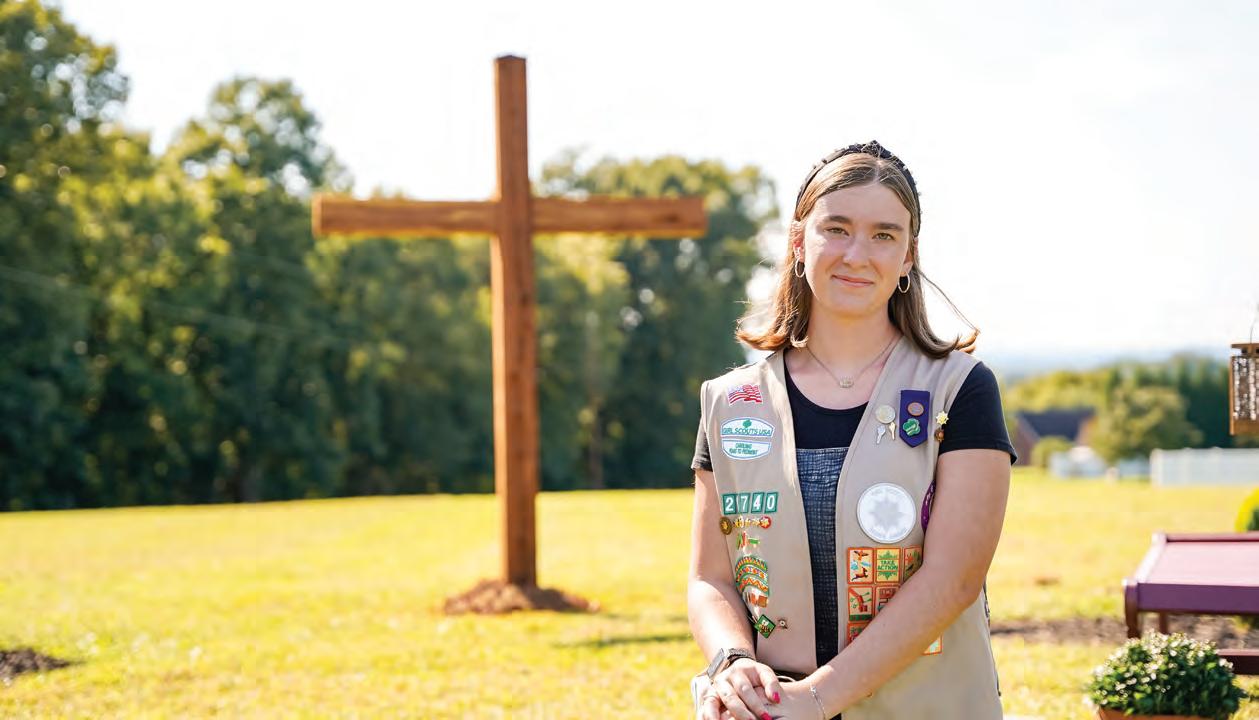
When 17-year-old Addison Ellis steps into the quiet space behind Marvin United Methodist Church in Lincolnton, she sees more than the prayer and meditation garden she built; she sees a sanctuary for anyone seeking calm, clarity, or support. Designed not only as a peaceful place for reflection and prayer, the garden also serves as a gentle entry point to mental health resources.
This thoughtful blend of serenity and support helped Addison, a member of Girl Scout Troop 20740, earn the prestigious Girl Scout Gold Award—the highest honor in Girl Scouts and equivalent to the Eagle Scout rank in Boy Scouts. Sponsored by First United Methodist Church in Lincolnton, Troop 20740 has long fostered young leaders, and Addison’s project stands out for both its beauty and its compassion.
The idea stemmed from Addison’s deep interest in design and her awareness of how widespread mental health challenges are. When she learned that her Gold Award project needed to address a global concern, she recognized that mental health—impacting an estimated 1.1 billion people worldwide—was an issue close to her heart. A prayer and meditation garden that also quietly connects people to help and hope felt like the perfect way to make a meaningful, lasting impact.
how it would all look. But the planning, budgeting, fundraising, marketing, I had to do all of that, and it was hard.”
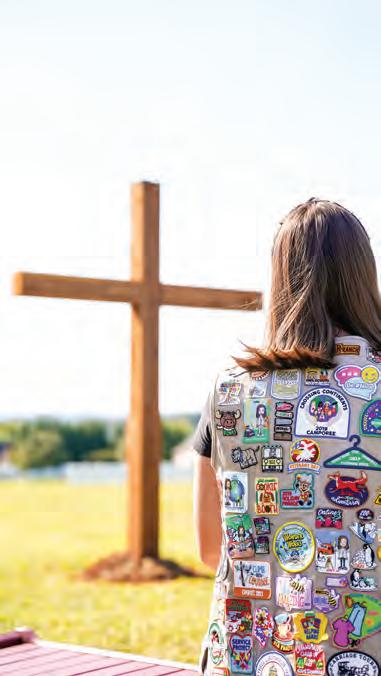
But Addison didn’t walk the journey alone. She had a project advisor through the church, and family members stepped in with support. Her uncle, a professional landscaper, offered guidance. Her father, who owns a logging business, crafted the solid-wood cross that now stands as the centerpiece of the garden. Members of Troop 20740 and additional volunteers were permitted to assist, though Addison completed the majority of the labor herself—another requirement of the Gold Award.
To fund the project, she set up a social media fundraising campaign, with donations coming from her church, community members, the Elks Lodge in Hickory, and even from her fellow Girl Scouts. Word of mouth helped the project gain local attention, and steadily, piece by piece, Addison watched her vision take shape.
Her mother, Audra Ellis, has no shortage of pride.
“My husband and I are very supportive of our kids,” she says. “They’re both very active in different activities, both are band kids. I tell them, “if you’re going to do something, go all the way.”
“I know a lot of people who have struggled with mental health,” Addison says. “I want to be able to give a little help to the people out there who need it.”
The prayer and meditation garden she envisioned would provide just that: a serene, welcoming place for reflection, prayer, and quiet moments of peace. In addition to designing the garden herself, down to the materials, layout, and focal points, Addison added a discreet box stocked with pamphlets offering mental health resources in Lincoln County.
Her favorite part of the project was the design phase, but the hardest part, she admits, was keeping her motivation during such a time-consuming undertaking. Like many teenagers, Addison has a full schedule; she is heavily involved in marching band, which keeps her calendar full. Working through every step of a major service project was a true challenge.
“I loved just being able to create my own thing,” she explains. “I liked being able to pick materials and figure out
And Addison certainly did. Not only did she earn her Gold Award, but she also qualified for the Trifecta Award—a rare distinction given only to Girl Scouts who achieve the Bronze, Silver, and Gold Awards.
Today, the prayer and meditation garden at Marvin United Methodist Church stands not only as Addison’s legacy, but as an open invitation for anyone in need of spiritual, emotional, or mental healing.
If someone you know is experiencing a mental health crisis, please reach out to one of the following:
National Suicide & Crisis Lifeline: Dial 988
Crisis Text Line: Text HOME to 741741
Partners 24/7 Crisis Line: 888-235-4673
SMeet Artist and Author,
STACEY PILKINGTON-SMITH
BY MEGAN PATRICE SHEEREY
PHOTOS COURTESY OF S TACEY PILKINGTON-SMITH AND NIC MILAM
tacey Pilkington-Smith talked with Hometown Magazine about her creative process, inspiration, and the challenges and rewards of being an independent creative.
Hi Stacey! First, can you give an introduction to our readers about yourself and your studio?
Hi, I’m Stacey Pilkington-Smith, owner of The Blue House Studio. I am a mixed-media artist and illustrator, who specializes in watercolor, oil, acrylic, and mixed media. Previously the owner of Gallery 27, I changed gears during the pandemic to create the studio.
During Covid, I had to close the gallery for several weeks and realized that my art and interests had taken a back seat to operate the gallery. Being someone who hates downtime, I decided to create The Blue House Studio keeping all the aspects I loved most about Gallery 27.
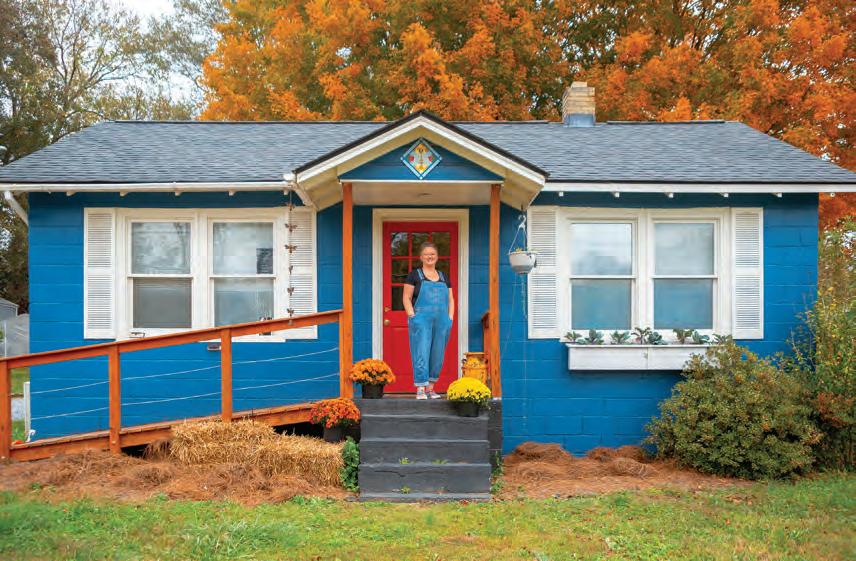
The Blue House is painted blue as a nod to Kahlo, and is filled with all the things she loves!
We offer art classes for children ages 8-11, youth ages 12-17, and adults 18 and older. At the Blue House, each student receives individualized instruction and a curriculum tailored to their skills and interests. Our college and portfolio preparation programs have supported many students in gaining admission to leading art schools, including Savannah College of Art and Design and other private art universities. Several of our students have also received awards. In addition, we now offer digital art and illustration classes.
In addition to operating the Blue House Studio and creating your own art, you have also written, illustrated, and published your own children’s book. What was that process like for you?
I’ve wanted to illustrate a book for years but it can be a
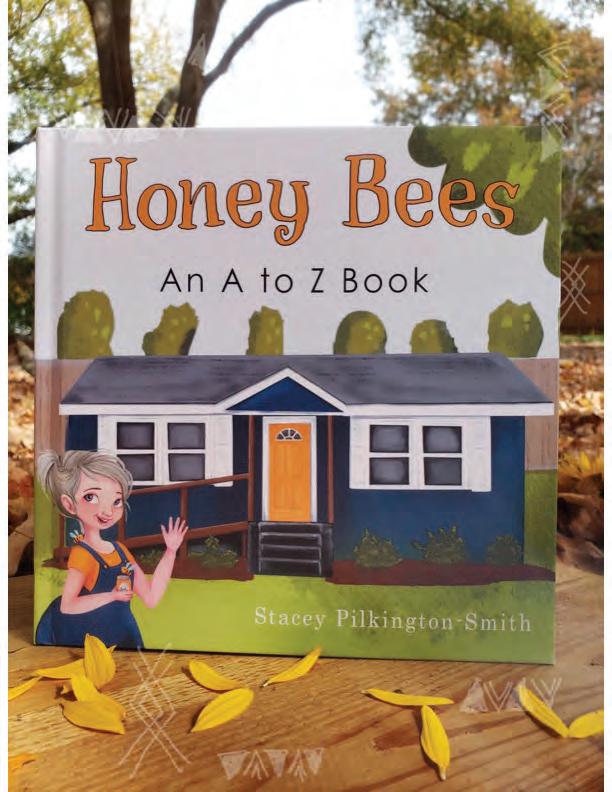
hard market to enter. So with an Arts & Science Grant, I was able to write and Illustrate my own book! At the time, I had bees on the property and thought it would be cool to create an ABC book based on beekeeping and the Blue House. The art was the easy part, actually. Being an indie author is not as simple as some might think. There’s a lot of behind the scenes work to do.
As an artist, what are your main sources of inspiration?
The Appalachian Mountains and the history, folklore, and ecology. I love going on hikes and seeing what inspiration I can find. I have a greenhouse at the Blue House where I grow native plants that have also shown up in my artwork. I also love researching the history of the areas and seeing what folklore inspires my own art.
You’re also very involved in the local artistic community in Lincolnton, and have created some of the most wellknown murals downtown. Which community art project has been your favorite so far?
The “Welcome to Downtown Lincolnton” mural. I had a great crew and support.
How would you like to see the art community continue to thrive here in Lincolnton? What are they getting right, and what could be improved?
Honestly, I am not qualified to say what a community should or shouldn’t be doing. The art world is always changing. I love the quote, “Be the change you want to see in the world.” So, I personally try to create events and shows in our community that reflect what I want as an artist within that community whether it’s here or in a different state, and/or now another country.
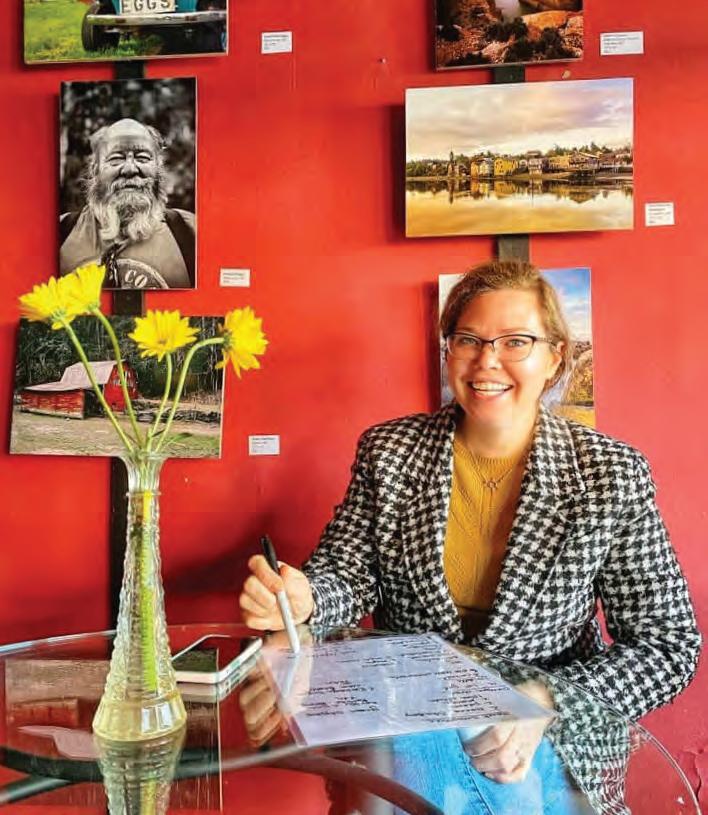
Stacey Pilkington-Smith, photo by Nic Milam
I purchased an RV last year allowing me to move and work in different markets. You can definitely tell which areas support the arts through the amount of galleries, music venues, privately owned restaurants, and public programs for the community. I usually sell and show well in those areas. If community leaders value art and providing artistic opportunities to its citizens, the community will also value art, which helps local artists residing in a valued art community.
In the past, I’ve often felt frustrated by the opportunities given by a certain community for artists. I met that frustration with creating my own place, and community in the gallery and the studio. While I can’t speak for a whole entire community, I can offer this advice to other local artists, don’t wait for someone to give you an opportunity, make the opportunity.
What would you say is the biggest challenge facing artists today, not necessarily in Lincolnton but overall?
There are three challenges I hear and see artists struggling with today. A lack of support in space for artist work as the galleries are almost a distant memory, public funding, and AI.
I’m fortunate that I’ve been able to find exhibit space since closing the gallery but it hasn’t been easy. This also affects public funding for the creation of new works if you don’t have gallery representation or space adequate to meet the many qualifications of public funding. So this kind of goes hand-in-
hand with challenges artists are facing as galleries and public funding dry up.
The bigger cities get most of the money due to the size of their population, so sometimes I don’t think public funding is adequately distributed. Artists who have sole proprietor, or business licenses should reflect in those numbers and how the funds are divided. I think we could do a better job of this by state commission studies, analyze artistic work through income taxes, and or, Bureau of Labor Statistics to produce a more fair allocation of funds.
And AI is a great tool when used responsibly, but it should never replace the product. AI work is a creation but not by the hands of another artist, which is no longer hand crafted. It has no soul. I’m also seeing a trend where artists, graphic designers, and content creators are charging big fees for the same amount of work being done by AI. Ethically it’s not right, and that’s my opinion. I have seen so many artists at trade shows so frustrated by a person downloading AI onto cups, shirts, canvases, and jewelry passing it as their own to unsuspecting customers at the same price as a hand made item or for mere dollars that no artist could compete with.
Stacey Pilkington-Smith is an artist, art instructor, business owner, and children’s book author. She owns and operates The Blue House Studio in Lincolnton. To learn more about Stacey and her work, visit thebluehousestudio.com.
The Blue House Studio is located on West Highway 150 in Lincolnton.
Kozmazuul
LINCOLNTON BAND SERVES UP FRESH SOUNDS ROOTED IN THE NORTH CAROLINA INDIE TRADITION
STORY AND PHOTOS BY RICH GREEN
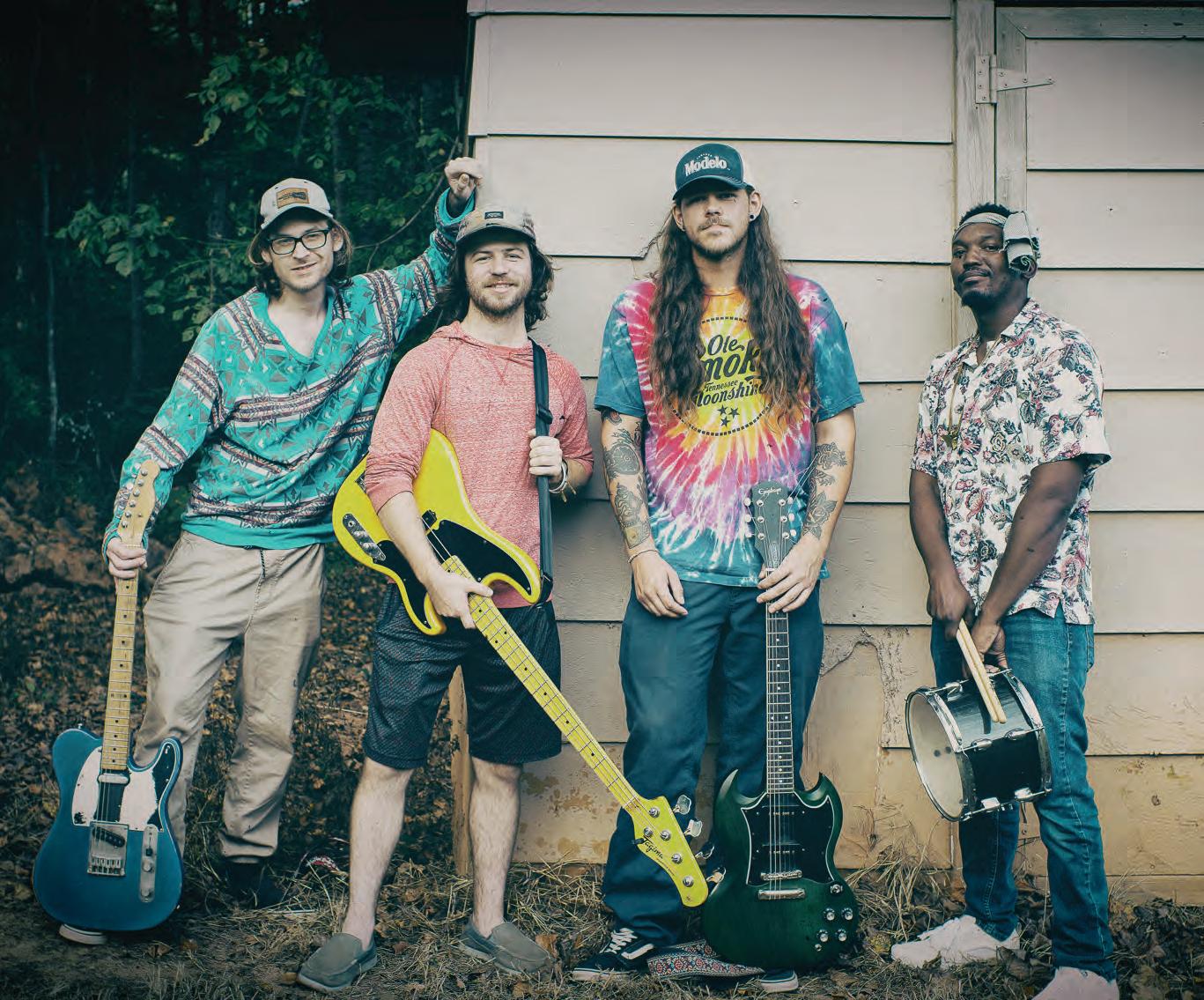
Kozmazuul is Dante Patterson, Corey Knighton, Jordan Deans, and Rayshawn Moss.
It’s always a fascinating experience to talk with musicians about their craft, as it highlights an enduring truism: perception is reality. So often, a band will describe themselves and their music with a set of adjectives or phrases that turn out to be equal parts aspiration, reflection, and a healthy dose of feedback given by those in the audience. One band that really surprised me in this respect is Kozmazuul.
I had the pleasure of sitting down for a chat with the native Lincolnton quartet for a talk about their journey, style and views on the evolving North Carolina music scene. What I encountered was a group whose self-depiction did little to prepare me for what I heard when cranking their Spotify playlist.
Self-styled as a mixture of punk and funk, with rock underpinnings, I found this narrative a bit anemic in the same way someone might describe an excellent restaurant by only highlighting the portion sizes. The original music of Kozmazuul is filled not only with the driving energy and refreshing sense of rawness that clashes with the ultra-slick, polished, over-produced tunes that vie for your listen on the radio and social media, but it also spotlights an emphasis on enduring melody and purposeful structure that belies a mature understanding and approach to songwriting.
So no, punk and funk is not the way I would describe the music of this band. That categorization is too simple, too dismissive. Instead, think of Kozmazuul as stewards of a clever and fresh sound that was crafted to be both serious and uplifting, yet firmly rooted in the tradition of the best North Carolina independent pop music. It will instantly remind you of great indie bands you loved to watch live in your youth, or, if you are of the younger generation, it will certainly expand your definition of what makes a good pop-rock song. Now, let’s talk with the band.
I’m here with Kozmazuul: Dante Patterson (guitar), Corey Knighton (bass / vocals), Jordan Deans (guitar) and Rayshawn Moss (drums).
When did you guys get together?
Corey: “So it originated back in 2020. It started with us two (Patterson / Knighton). I was doing some professional theater and COVID happened. I moved back home, and I didn’t have anything to do. I hit up a guy that’s no longer with us that knew Dante and we just kind of had a jam night back in March of 2020, and that’s just kind of how it originated.”
Dante: “Yeah we wrote a song that first night that we ever met and it just kind of came together like immediately, and we were just like, yeah we can keep doing this.”
Jordan: “I joined last August. I knew Dante and had played in different bands together…so then they were looking for a fill-in guitar player one night and I was like, yeah, I’m all on board. From then it’s been a perfect fit.”
Rayshawn: “I just came on board earlier this year. Dante reached out to me. I had known of Dante for years. We’ve kind of moved around the same music scenes all over the state and knew the same people. We just never got the chance to really create together. And it was at a time I was thinking about giving up on music, honestly. And then he reached out. I came and jammed with him… I was like, man, I got my zeal back.”
When you play out, is it a mixture of original and covers?
Corey: “I mean it depends on what kind of venue we’re walking into. Most of the shows we’ve been playing recently have been about an hour, and primarily originals.”
Jordan: “We might throw a cover or two in for fun, but yeah we’ve got like an hour original set that we push the most and then we’ve got like a three-hour set for a wedding that we worked up this weekend.”
Where do you normally play in Lincolnton?
Dante: “We’ve played at Untapped Territory a good bit. Pretty much all through last year, like every two months or so. And we do the jam night on Mondays at Lincoln Social.”
Rayshawn: “There’s a lot of talented people around. I’m seeing it every week. I mean when you come into [Lincoln Social] you’re going to see so many people and they’re all pretty local and they’re just coming out of the woodwork.”
Dante: ” We’re also play out around the general North Carolina [area] …pretty much from Asheville to Wilmington right now. We are putting together a small tour for next year around spring.”
How would you like to see the music scene in Lincolnton grow?
Rayshawn: “Dante’s talked about bands that are coming through Asheville and Charlotte. Lincolnton’s right in the middle, you know, they could drop in?”
Dante: “Alive after Five has branched out a bit [in the types of bands they book], but I would love to see more of that.”
Spread the love?
Band: “Yeah!”
Hey thanks so much! Is there anything you guys want to promote?
Band: “We have a new song on the way! Look for it on Spotify and Apple Music. We are also on Facebook, Instagram, TikTok, and YouTube as well. Look for us under Kozmazuul.”
Rich Green is a musician, writer and photographer in Lincolnton, N.C.
A Southern STAPLE
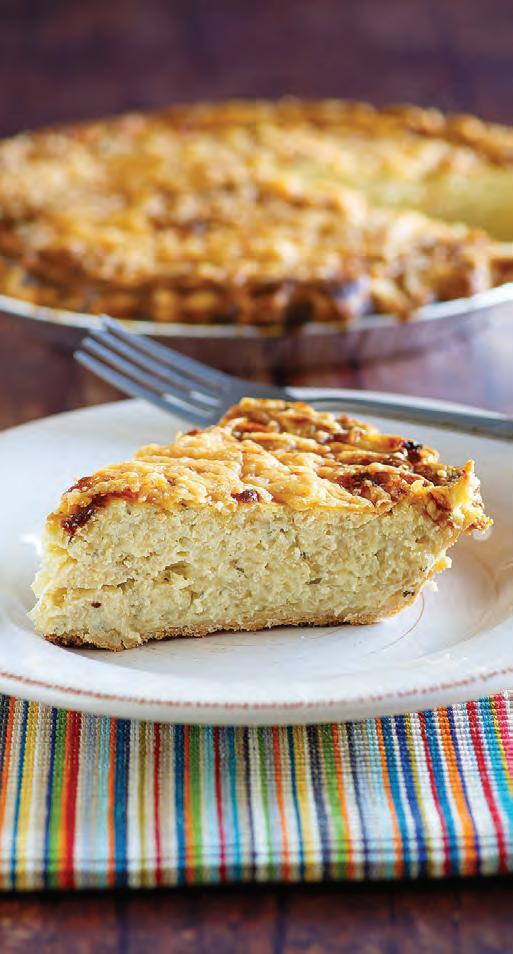
More like a quiche, the sweet and savory Vidalia Onion Pie is a regional favorite.
STORY BY SANDI GRIGG PHOTOGRAPHY BY JAMES STEFIUK
This pie provides a sweet and anyaccompanimentsavoryto meat for a hearty meal or is excellent paired with a salad for a lighter meal
If you have never had a Vidalia onion then you are missing out on a Southern favorite. Unlike most onions, which are astringent and spicy in flavor, Vidalia onions are sweet and cook up to taste like fruit. No joke, I can eat a Vidalia onion like an apple.
One of my favorite ways to enjoy Vidalia onions is in a pie. This pie provides a sweet and savory accompaniment to any meat for a hearty meal or is excellent paired with a salad for a lighter meal. Southerners claim onion pie as their own, but this is not just a Southern dish as the French and British have their own versions. Vidalia onions are what make it Southern.
Known as the “Southern truffle,” the Vidalia onion is only available during the spring and summer months. Though shipped throughout the United States, they are only grown in and around the town of Vidalia, Georgia (hence the name). These onions are so sweet because that region of Georgia has the perfect combination of weather, water and soil to produce some of the world’s sweetest onions. They have mild winters and steady rains, and the soil is very low in sulfur, creating a much sweeter onion. The Vidalia is also easily recognizable by the trademark sticker on each onion.
Onions are part of the allium family of vegetables and herbs, which also includes chives, garlic, scallions and leeks. Onions have many possible health benefits including reducing the risk of obesity, heart disease and cancer. They are high in vitamins, minerals and antioxidants.
Even if you don’t like onions, I urge you to give this recipe a try. The Vidalia onion provides a whole new flavor and this pie cooks up similar to that of a quiche. Feel free to make it your own and add bacon or use cheddar cheese instead of parmesan. Let the onion be the star of the dish but don’t be afraid to add your favorite ingredients if you wish. Enjoy!
1 9-inch pie crust
1/2 cup butter
2 pounds sliced Vidalia onions
3 eggs
1 cup sour cream
INGREDIENTS
1 tablespoon of parsley
3 tablespoons flour
8 ounces shredded parmesan cheese
Salt and pepper
METHOD
Preheat oven to 450 degrees F. Saute the sliced onions over medium heat in the butter until clear. Mix the eggs, sour cream, parsley, 4 ounces of parmesan and flour in a large bowl. Add the cooked onions and salt and pepper. Pour the mixture into the pie crust and bake for 20 minutes. Top with the remaining parmesan and bake for an additional 20 minutes. Let cool slightly before slicing and serving.
A Southern CLASSIC
In the South, potato salad is more than a side dish, it’s a meal-time tradition.
STORY BY SANDI GRIGG
BY JAMES STEFIUK
PHOTOGRAPHY
Recipes like this one are often passed down through families, with each cook adding their own unique twist.
Potato salad is a quintessential dish in Southern cuisine, often making its way to family gatherings, church picnics and holiday celebrations. This creamy and tangy side dish has been a staple for generations and its versatility ensures it pairs perfectly with everything from fried chicken to barbecue.
This past Easter, I made this potato salad to accompany our family feast. As soon as I set the bowl on the table, I knew it was going to be a hit. The creamy dressing, tender potatoes and fresh chives created the perfect combination of flavors. My family could not stop raving about it, and there was not a single spoonful left by the end of the meal. It’s moments like those that remind me why I love cooking — it’s about bringing people together and creating memories around the table.
Recipes like this one are often passed down through families, with each cook adding their own unique twist. Some prefer a mustard-heavy version of potato salad, while others lean toward a sweeter, creamier style. This recipe strikes the perfect balance with the tang of yellow mustard, the sweetness of pickle relish and the creaminess of Duke’s mayonnaise, a Southern favorite.
One of the reasons this potato salad is so special to me is the fresh, local ingredients I use.
Did you know that North Carolina is a significant producer of potatoes, particularly sweet potatoes? Potatoes thrive in the state’s sandy soils, and their versatility has made them a staple in North Carolina cooking for centuries. This recipe calls for russet potatoes.
I grow my own chives in a small garden at home, ensuring they are always fresh and flavorful. Additionally, a dear friend of mine keeps backyard chickens, all named after country music stars. Her hens — Dolly, Reba and Loretta — provide the freshest eggs, which add a rich, creamy texture to the salad. It’s a small detail, but it makes the dish feel even more personal and meaningful.
This Southern-style potato salad is a mix of tradition, fresh ingredients and family love. Whether you are making it for a holiday, a summer cookout or just because, it is sure to bring smiles and full bellies. So grab some fresh chives, local eggs and North Carolina potatoes and give this recipe a try. It might just become your family’s new favorite, too!
SOUTHERN-STYLE POTATO SALAD
INGREDIENTS
5 medium russet potatoes
8 hard-boiled eggs (save 1 to slice and use as garnish)
1/2 cup Duke’s mayonnaise
1/2 cup sour cream
2 1/2 tablespoons sugar
1 tablespoon yellow mustard
METHOD
1/2 cup sweet pickle relish
1 teaspoon dry dill weed
3 tablespoons freshly chopped chives (plus a bit more to sprinkle as garnish)
1 teaspoon salt
1 teaspoon pepper
Peel and chop the potatoes into bite size cubes. Boil in a pot for about 10 minutes until they are fork tender but still firm and hold their shape. Drain and set aside in a large serving bowl to cool.
Peel and rough chop all but 1 of the eggs and place in the bowl with the potatoes.
In a small bowl, stir the mayonnaise, sour cream, sugar, mustard, relish, dill weed, chives and salt & pepper until it is fully mixed together. Fold the mixture into the eggs and potatoes until it is well combined. (Clean the rim of the bowl with a paper towel or rag for a more appealing presentation.)
Slice the remaining egg and fan out the slices in the center of the potato salad then sprinkle with some chopped chives for garnish.
Refrigerate at least 6 hours to let the flavors marry and serve cold.
hometown history
A History Lesson Worth Remembering: THE BATTLE OF RAMSOUR’S MILL
STORY AND PHOTOS BY ROY C. LIGHTFOOT
Local historian, Roy Lightfoot, shares his knowledge of the pivotal, yet largely unknown, Revolutionary War battle.
Fellow Historians… and those who want to be:
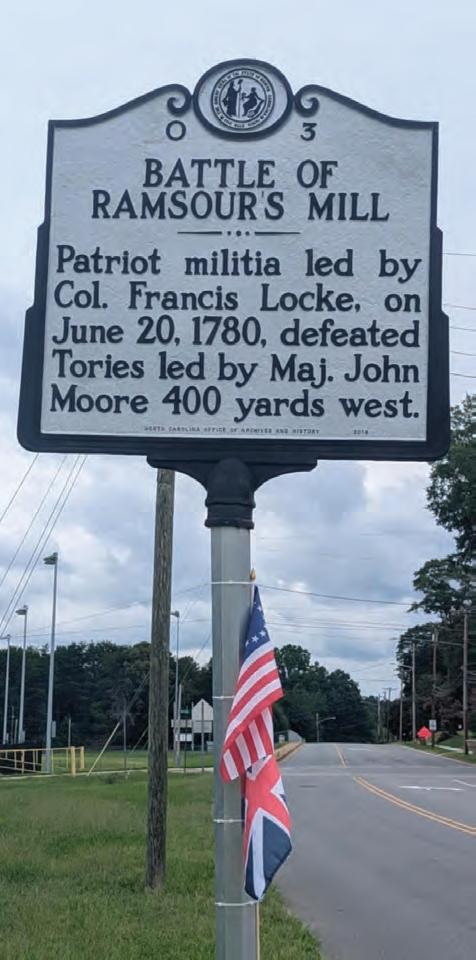
Today’s lesson is about an event that occurred in Lincoln County 245 years ago, which many know little or nothing about: the Battle of Ramsour’s Mill, fought on Tuesday morning, June 20, 1780, near present-day Lincolnton. If you think history is just a bunch of boring dates and about as thrilling as watching paint dry, then you are the person I hope gets something out of this. If you already have some knowledge of the subject, then I have the same hope. And if you have knowledge of the subject and want to contradict me, well, I hope you do so in a constructive manner by contacting me. Most of all, I hope you’ll find this story to be entertaining as well as educational. (“Oh, no, he’s trying to make us think!” Well, yeah!)
Although not born in Lincoln County, I have spent most of my life here, living just three miles from the battle site and working for years within a mile of it. Yet, I didn’t learn the personal importance of Ramsour’s Mill until about six years ago, when I joined the Sons of the American Revolution and traced my lineage to Jacob Parkerson, a Patriot who fought at the battle.
The Battle
Depending on whose account you read, 400–600 Patriots defeated 1,200–1,600 Loyalists in under two hours. The Loyalists, largely of German descent, were commanded by Lt. Col. John Moore and Maj. Nicholas Welch, both veterans of the British army. The Patriots, under Col. Francis Locke and Capt. John Dickey, hailed from several counties across North Carolina and South Carolina, including Rowan, Surry, Mecklenburg, Burke, Lincoln, Rutherford, Orange, and Edgecombe, to name a few.
Moore had begun amassing Loyalist forces at Ramsour’s Mill, calling local Crown supporters to muster there about a week before the battle. Despite strict orders from General Lord Corn-
The Battle of Ramsour’s Mill Historical Marker 0-3 stands along U.S. Highway 321 in Lincolnton.
wallis not to engage Patriots, Moore ignored this directive. Cornwallis had even provided funds to train and equip the Loyalists, but when General Griffith Rutherford learned of the gathering, he organized Patriot forces to strike.
On the foggy morning of June 20, Locke’s cavalry attacked from the east, with Dickey’s infantry following. The Patriots had marched all night from present-day Sherrills Ford. At one point, Locke ordered a withdrawal, but Dickey refused, holding the line and saving the day. According to the National Archives, Dickey rallied his men: “Shoot straight, my boys, and keep on fighting! I see some of them beginning to tumble!”
The Patriots made three attempts to break the Loyalist line. The first two failed, but the third succeeded, pushing the Loyalists down the western slope toward the mill and Clark’s Creek. A flag of truce was called to tend to the wounded, which Moore and Welch used as cover to retreat. Moore largely disappears from the historical record afterward, while Welch continued to serve until the end of the war.
Casualties and Aftermath
Because neither side wore uniforms, casualties were difficult to identify. Loyalists wore greenery in their hats, while Patriots used slips of paper, making them easy targets for headshots. Historical estimates record between 50–70 killed and about 100 wounded on each side. Many were buried where they fell, others were taken home, while some Loyalists were imprisoned or hanged. Some unidentifiable bodies, both Patriot and Loyalist, were buried in mass graves.
This Patriot victory weakened Loyalist support in the region and influenced later successes of the Southern Campaign. Though often overshadowed by larger engagements, Ramsour’s Mill was a significant part of the chain of events
Smaller but crucial battles of 1780–81 included Waxhaws, Hanging Rock, Camden, Musgrove’s Mill, Kings Mountain, Shallow Ford, Blackstock’s Plantation, Cowpens, and Guilford Courthouse.
The Battlefield Today
Most of the original battlefield is now covered by school buildings, parking lots, and a football stadium. Battleground Elementary, whose mascot is appropriately named the Patriot, opened in 1960, while Lincolnton High was built in 1974.
Some have proposed turning the site into a state or national park. I wholeheartedly disagree. While government funding would come, so would restrictions, and with so much of the battlefield already lost to time and “progress,” the idea is impractical. Still, it is vital we preserve what remains.
As a historian, I believe sites like this are vanishing far too quickly. We must protect them to ensure that history–good, bad, or ugly–is remembered, taught, and learned from.
If you only take one thing from this, let it be a call to learn more about the Southern Campaign, where the American Revolution was truly won.
About the Author: Roy Lightfoot is Chapter President of the Catawba Valley Chapter, NC Society of the Sons of the American Revolution, and became NCSSAR State Historian in April 2024. He holds an Associate’s Degree in General Studies from Gaston College, a Bachelor’s degree in History and Master’s degree in History and Student Development, both from Appalachian State University. He also serves on the Lincoln County Historical Association committee, which organizes events tied to the 250th Anniversary of the United States
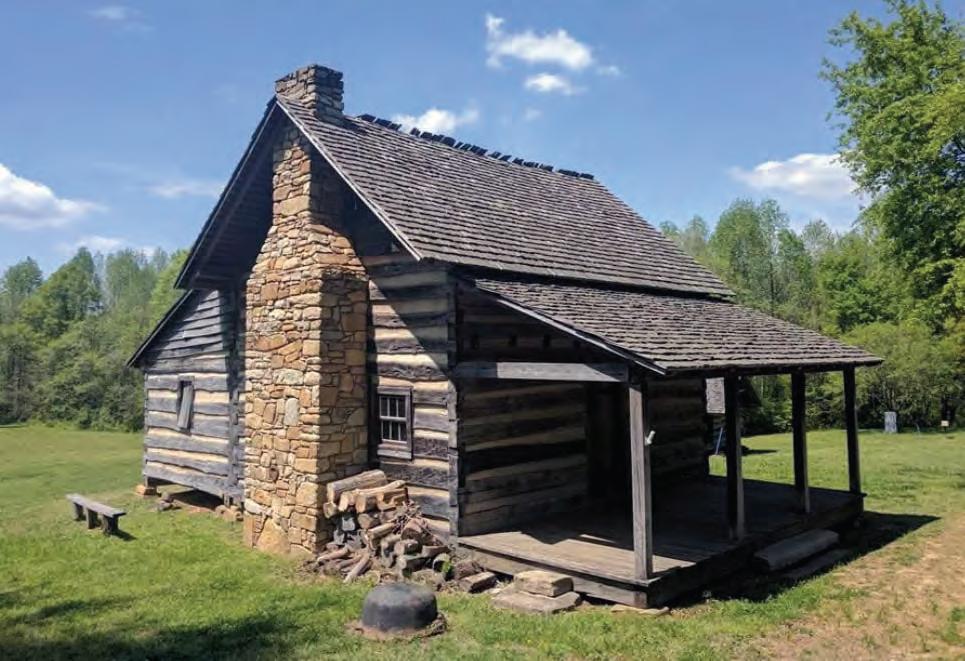
A cabin, placed in 1999 through the efforts of former Lincoln County Historian Darrell Harkey and others, now sits on part of the original battle site. It is maintained by Lincoln County Public Works, while surrounding lands belong to private citizens and the Lincoln County Schools.
A Third Place for Everyone FAUSTO COFFEE
ESSAY BY VICTORIA BLAKE | PHOTOS BY MELANY DAWN ADAMS
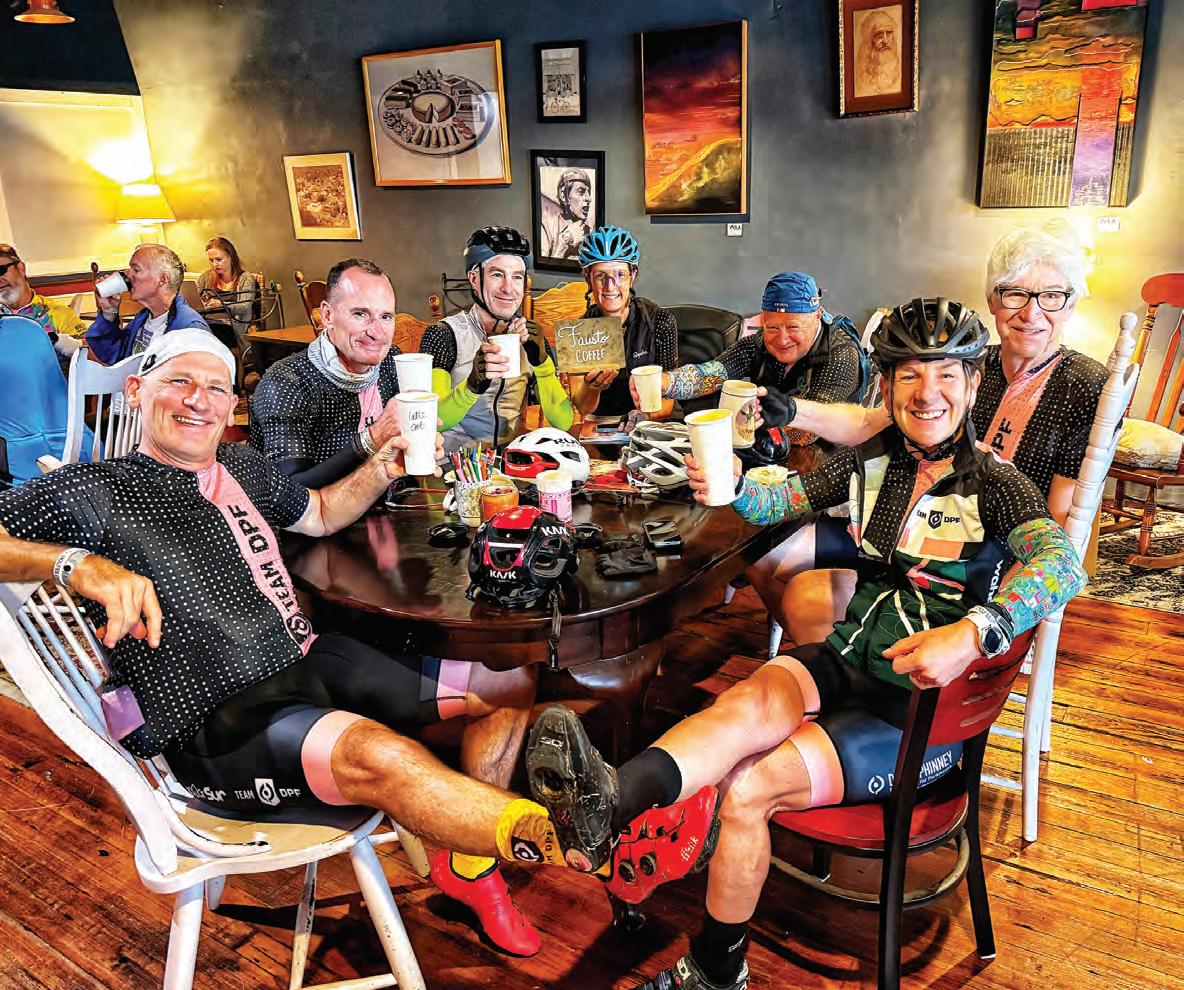
Members of Cycle NC made a stop at Fausto Coffee on their “Mountains to Coast” tour in October.
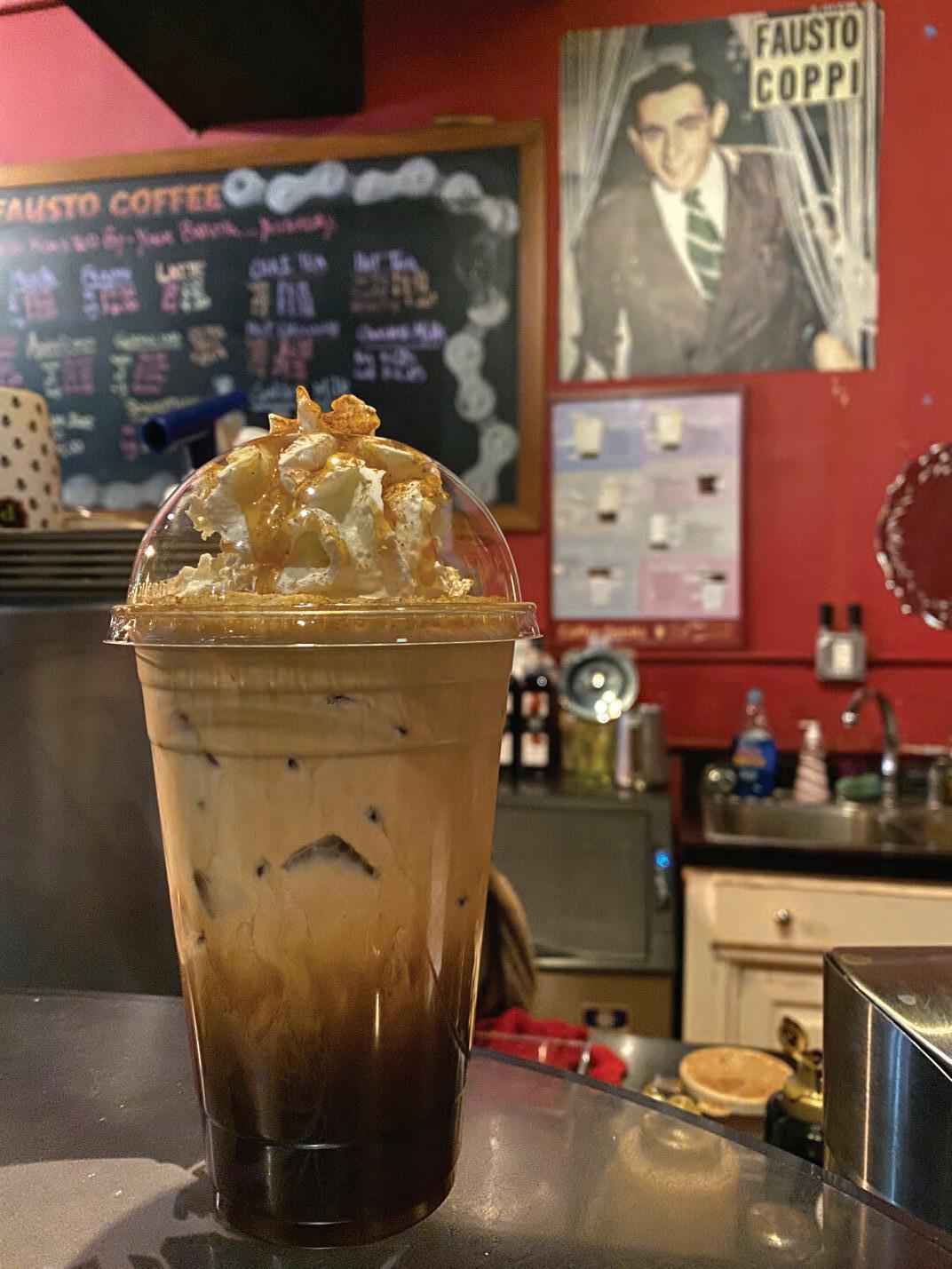
When I was 15, I became a regular at Fausto Coffee in the heart of downtown Lincolnton. I had started my first job at Hi-Lites, a ladies clothing store that has since closed its doors. I would make my way across town to pick up a coffee for myself, my manager, and a senior coffee for the late Richard Jones, former owner of North State Books. This routine would be the start of my love affair with Fausto. I would let the smell of the coffee gently wake me up, and I loved browsing the flavor board behind the register to choose my drink for the day. The many flavor combinations have been lovingly crafted over the years by baristas and customers alike. One of the earliest, the Foxy Brown, rich caramel and cinnamon with espresso and milk, became my go-to. I didn’t know I would become a barista when I first started this routine, and that along with drinking many Foxy Browns, it would become my third place, somewhere that I couldn’t imagine living without.
A third place is somewhere separate from home and work where people gather and interact with others in their community. Sociologist Ray Oldenburg coined the term in 1989, claiming that people live happier lives when they are connected to such a place. Third places tend to be informal and communal. When I first learned the term “third place,” Fausto immediately came to mind. When you walk in, you see people of all ages and backgrounds talking, working, or simply enjoying a moment of peace. That blend of connection and belonging is at the heart of what makes Fausto so special to many in Lincolnton, myself included.
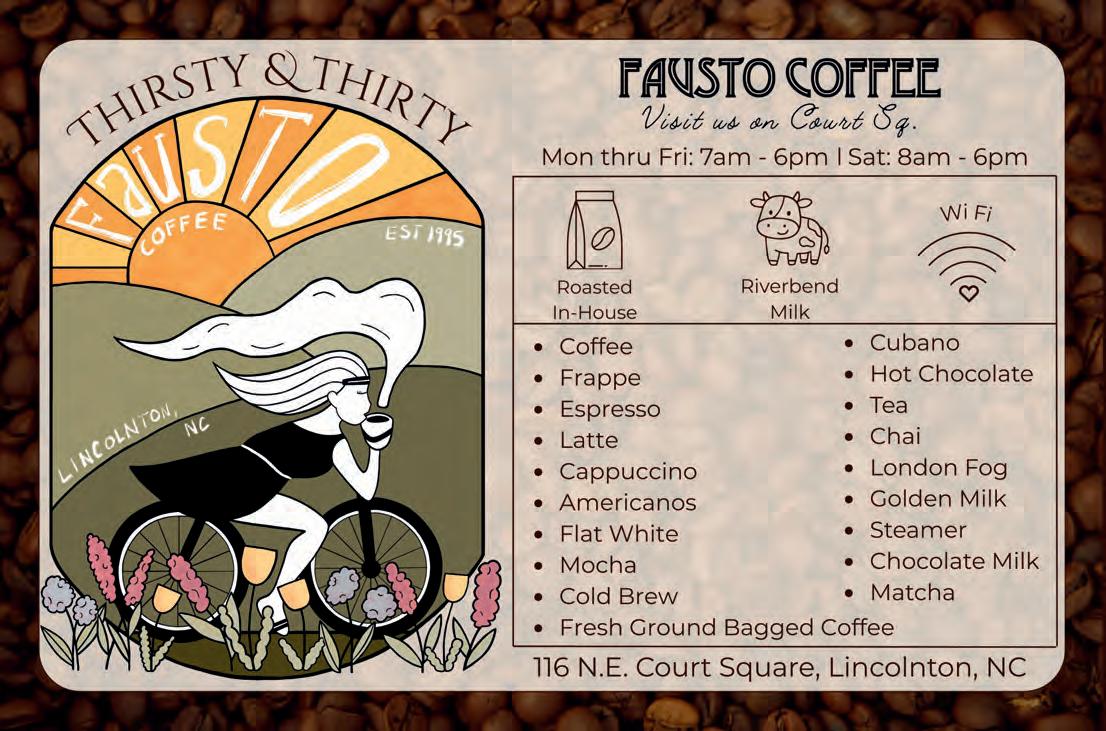
local businesses when possible, for example, using Lincolnton-based Riverbend Creamery for their milk products. For nearly a decade they have roasted their own beans to ensure their customers have the freshest, most flavorful coffee. Beyond coffee, they also support local artists by displaying original works for sale.
Before Fausto Coffee became my third place, it simply drew me in as a customer. The products were excellent, and the owners were warm, knowledgeable, and deeply committed to serving the community. Miriah Truluck-Rhodes and Jacob Rhodes bought the shop in 2010, though Fausto’s history goes back to 1995, when Chaffin Rhyne opened it as an extension of his bicycle shop. The name Fausto is a nod to the Italian cyclist, Fausto Coppi.
Over the past 15 years, Miriah and Jacob have worked diligently to create a place where customers can enjoy the highest quality coffee products. They partner with other
Along with the owners, manager Billie Merritt trains baristas not just in drink preparation but in understanding the entire journey of coffee, from planting to roasting to brewing. Their knowledge is nearly endless, and they share it with customers and staff alike, whether someone needs help selecting a roast to take home, advice on grinding beans, or a recommendation for a unique flavor combination.
But perhaps their most meaningful accomplishment is creating a true third place: somewhere separate from home and work where people from all walks of life can feel connected to their community and be part of something larger than themselves. Every day, you can find students, retirees, parents, workers, and artists sitting side by side, chatting across
Owner, Miriah Truluck Rhodes takes a moment to plan new menu items.
tables or greeting familiar faces. That natural blend of community is what makes Fausto so loved.
I started working at Fausto in 2019 while I was still in college, and these past seven years have been the best working experience of my life. When I think about Fausto now, I think of the various coffee drinks I’ve learned to make and becoming a coffee roaster. But I also think about the relationships I have made with my customers, my coworkers, and the owners. When I was stuck in New York City, Miriah and Jacob were there and came to my rescue. When I needed to decide which iPad to buy, I was able to ask a customer who had the information I needed. When I wasn’t sure what to do in my relationships or career, there was always a friend waiting at Fausto ready to help guide me. In today’s world, where more pieces of our lives are becom-
In today’s world, where more pieces of our lives are becoming digital, third places are more than just somewhere to go. They are a place to find meaningful human interaction.
ing digital, third places are more than just somewhere to go. They are a place to find meaningful human interaction. You can find what you most ardently need at the time, and you offer that to someone in return.
This August, as Fausto Coffee celebrated its 30th anniversary, I was reminded of how far reaching Fausto’s impact is as a third place in Lincolnton. In celebration, the owners threw a birthday party for the shop, with cake, singing, balloons, and raffle giveaways. Never leaving any type of customer out, there were toys for the littlest customers and tote bags for parents. One customer told me he couldn’t imagine his day without his regular stop at Fausto Coffee, that it had meant the world to him over the past 15 years.
Seeing how Fausto has grown into more than a coffee shop, that it has become a beloved third place for many, where customers cherish the community and conversation as much as the coffee itself, was a truly remarkable image that I hope to remember forever.
Victoria Blake is a local writer, barista, and teacher in Lincoln County.
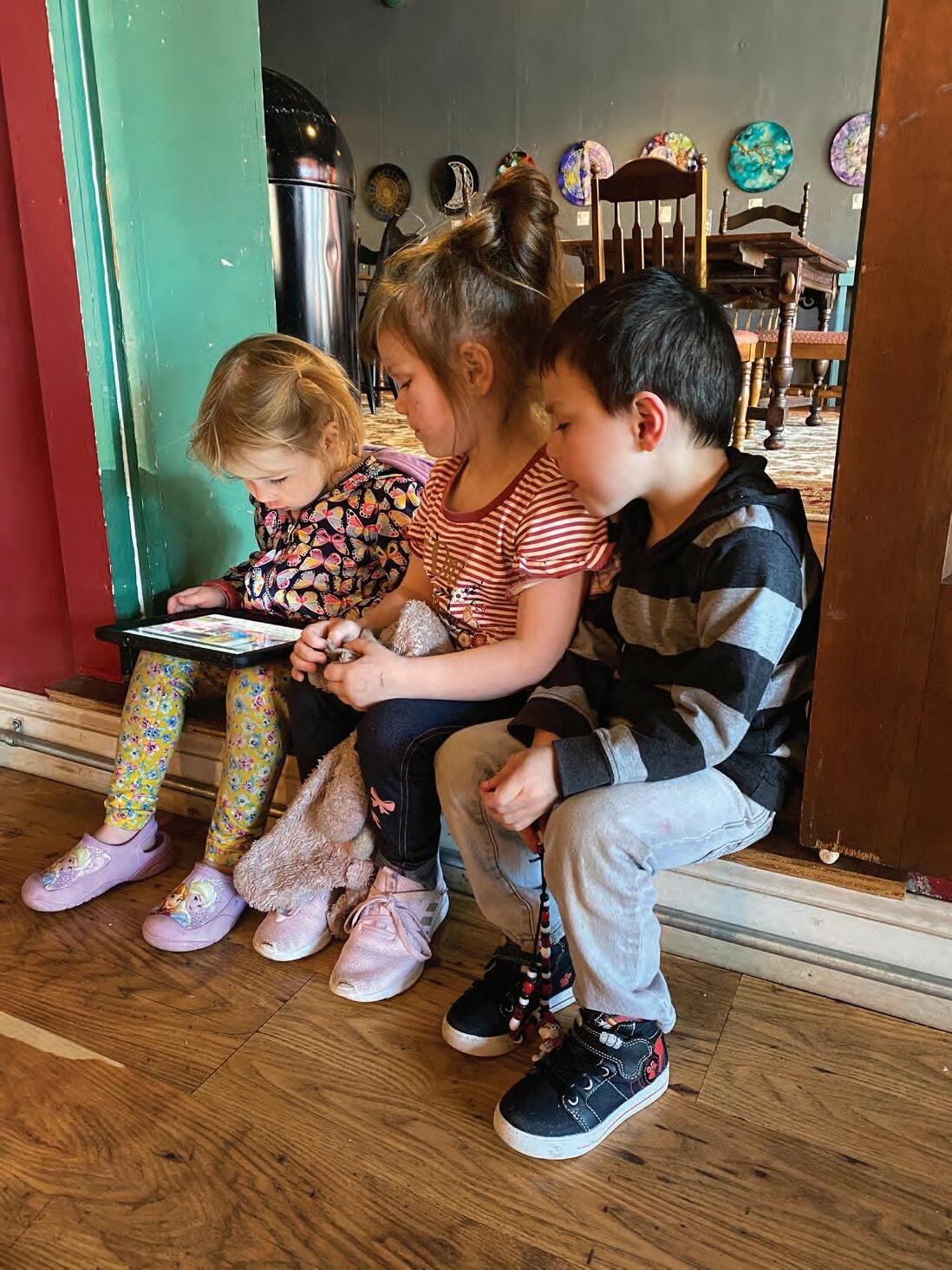
Even the littlest customers enjoy the atmosphere at Fausto’s.
30-Day Digital Declutter: A SPRING RESET FOR YOUR SCREEN HABITS
BY MEGAN PATRICE SHEEREY
For most people, smartphones have become constant companions—useful, entertaining, and endlessly distracting. They’re often the first thing we reach for in the morning and the last thing we see at night. And while technology can help keep us connected, it can also quietly increase stress, disrupt sleep, and fragment our attention. Spring, a season of renewal, offers the perfect opportunity to rethink our digital habits through a more intentional approach.
Consider this Digital Declutter Challenge a reset button for your screen time, with bite-size daily changes that make your phone feel less bossy and your life more balanced. Take the challenge at your own pace. Whether you choose to check off one box every day, or knock out several once a week, the tasks below can help you reclaim your time and attention without too much pressure.
Week One: Clear the Clutter
The first week focuses on quick, low-effort wins. These small actions reduce visual noise and constant interruptions.
Delete 5 Unused Apps
If you haven’t opened it in a month, you probably don’t need it.
Mute All Non-essential Notifications Keep texts, calls, and emergency alerts active; consider silencing the rest.
Unsubscribe from 10 Email Lists
Take a minute to unsubscribe from junk lists or subscriptions you no longer need.
Delete 25 Photos
Ditch duplicates, screen shots, or bad selfies. Free up space on your device by syncing your photos to automatically move to cloud storage.
Week Two: Set Digital Boundaries
With the clutter gone, the challenge shifts to boundaries. This week introduces app time limits, phone-free meals, and scheduled breaks from screens.
Set Screen Timers
There are lots of apps that limit screen time. Opal and Freedom are some popular choices, but some self-discipline and a good, old-fashioned alarm clock works, too.
Device-Free Bedroom
Speaking of alarms, try swapping your phone for an actual alarm clock. Make your bedroom a place for rest, not doom scrolling.
Week Three: Reclaim Your Time
Device-Free Meals
Practice being present for meals by keeping them phone-free. Set a designated space for devices outside the dining area.
Turn Off Read Receipts
Disable read receipts and typing indicators. You’re not obligated to respond immediately, and neither are your contacts.
By week three, the focus turns to attention. Remove or log out of apps that consistently drain time, and use “Do Not Disturb” features more intentionally. If you can, give yourself a full day free from social media.
Identify Time Drains
Most phones have an app that breaks down your screen habits. Once you know where your time goes, take the next step.
Mute, Log Out, Delete
Take the most appropriate action for the apps that consistently drain you. That might mean muting a group chat, logging out of games, or deactivating Facebook–do what’s best for you.
Week Four: Find Joy Offline
Use “Do Not Disturb” Intentionally
“Do Not Disturb” mode can help protect your peace, productivity, and safety. Turn it on while driving, when you need to focus, or if you simply need to be unreachable for a while.
No Social Media for 24 Hours
See if you can go a whole day without scrolling–but don’t beat yourself up if you fall short. Remember, social media is purposely designed to be addictive.
The final week emphasizes life outside your device. Make time to do things that bring a true sense of satisfaction. The thrill of engaging in real-world activities is more powerful than the passive habit of scrolling, and can make your phone a lot less interesting.
Try Something New
What’s an activity you’ve always wanted to try?
Make this week the time you finally dive in.
Rediscover an Old Hobby
What’s something you used to love, but can’t seem to find the time for anymore? Make time for it this week.
Connect in Real Life
Set a goal to catch up with a friend in person, plan a family outing, or a go on a distraction-free date night.
A Reset, Not a Rulebook
Get Moving
Physical activity creates endorphins, which are natural mood-boosters. Take a walk, try a yoga class, hike a nearby trail or start your day with a one-person dance party in the living room. Whatever you do, just try to move!
As the challenge concludes, review your screen time reports, reflect on what worked, and choose a few habits to carry forward. This challenge is about awareness, not perfection. Move at your own pace and remember that technology should support your life, not control it.
From Teacher to Writer:
THE JOURNEY OF CHILDREN’S
Dressed IMPRESS
AUTHOR RONDA EUREY
Dressed IMPRESS
STORY BY STEPHANIE MEYER
PHOTOS COURTESY OF RONDA EUREY AND BAILEE EUREY SHIRLEY
This grilled beef tenderloin recipe creates a memorable meal focal point that can be dressed up or down.
This grilled beef tenderloin recipe creates a memorable meal focal point that can be dressed up or down.
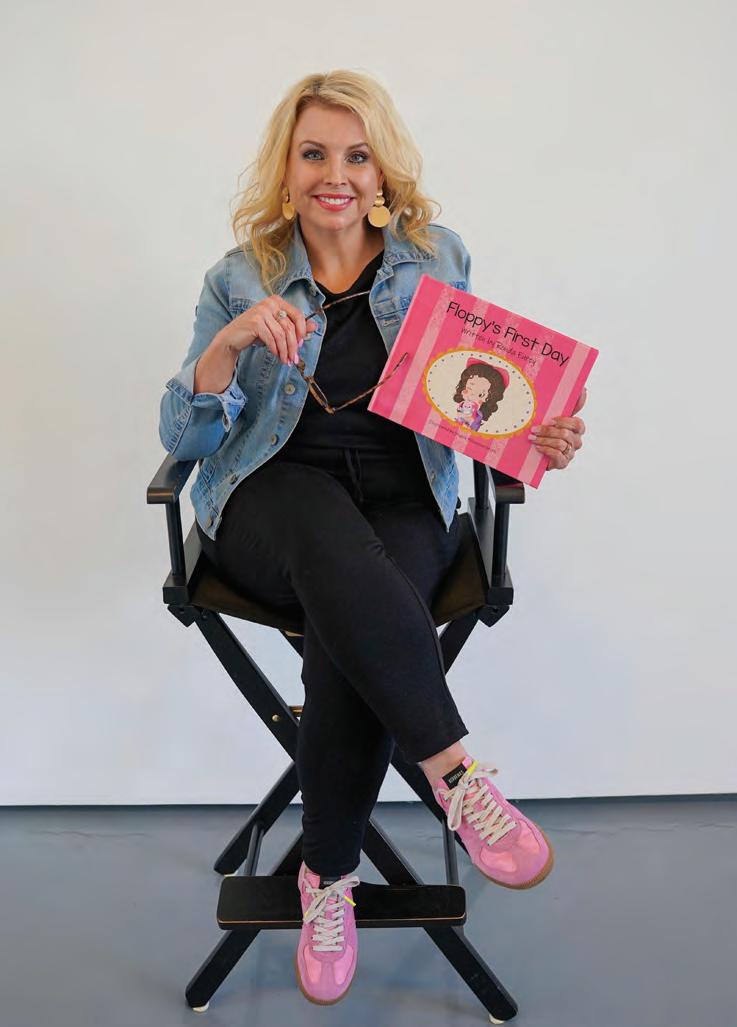
For more than 30 years, Ronda Eurey dedicated her career to shaping young minds as an elementary school educator. A wife, a mom, and now a self-published children’s book author, she has transformed her lifelong love of storytelling into a beautifully illustrated picture book inspired by the people who have filled her life with imagination: her mother, her children, and the students who sat in her classroom.
BY SANDI GRIGG
BY SANDI GRIGG
Eurey’s debut book, Floppy’s First Day, follows a young girl as she heads off to her first day of school, accompanied by her pink stuffed bunny, Floppy. While fictional on the page, the story is rooted deeply in Eurey’s real life. The characters are inspired by her own children, and the spark for the story reaches back even further, to the tales her mother used to share with her.
“She would always tell me funny stories as a child,” Eurey explains. “A lot of it she doesn’t remember now, but those stories stuck with me.”
When she became a mother herself, storytime became a cherished ritual, full of silly voices, animated gestures, and lots of smiles. Those moments planted the seeds for what would eventually become her book.
Certain scenes in Floppy’s First Day also carry special personal meaning. Readers may be surprised to learn that
the classroom number in the book is a nod to Eurey’s real classroom, where she taught for more than 15 years. And the memorable water fountain mishap in the book began as one of her mother’s childhood stories, lovingly adapted into the illustrated world of Floppy.
Preserving these family stories, she says, was one of her biggest motivations for writing.
“One day when my children have their own children, they can read it to them. It’s something that can be passed down.”
The book, in many ways, is a legacy, and one she hopes will be carried forward through generations.But transforming that legacy into a published book was no simple task. Self-publishing, Eurey discovered, is a labor of love that requires patience, research, and persistence.
“It’s not an easy process,” she admits. “It took a lot longer than I expected.”
Drawing on her decades of classroom experience, she researched picture books for ages 3–6, learning about word counts, pacing, and structure. Writing, editing, and rewriting took time, and once the story was finalized, there was still the challenge of illustration.
“You may have the words you want, but maybe they don’t go exactly the way you think with the illustrations,” she says. “It was a learning process. And I learned a lot.”
Illustrator Stacey Pilkington-Smith played a pivotal role in bringing Floppy’s First Day to life, though their partnership began purely by chance. After Eurey’s children both graduated and her once-busy schedule freed up, she decided to pursue something she’d always wanted to try: art classes. A Google search then led her to Stacey’s studio.
“I didn’t know Stacey at all,” she recalls. “But I attended one of her open houses and thought it would be great for me because she does individual instruction.”
One day in class, Stacey mentioned that she had written a book, prompting Eurey to share her long-held dream of writing one herself.
Eurey created a “dummy book” filled with handwritten notes and sticky-note illustration ideas, which she handed to Stacey to review. Stacey agreed to collaborate, offering suggestions and ultimately translating Eurey’s vision into charming, expressive illustrations. Stacey’s husband, Cecil, completed the team by handling pagination and layout.
“They helped bring it all to life,” Eurey says.
With Floppy’s First Day now in print, Eurey is already at work on her second book. While her debut centers on themes of friendship and the excitement of beginning school, her next story will focus on sharing. She plans to release it in time for Christmas next year.
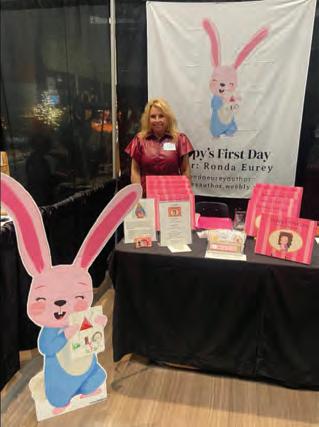
Readers can purchase Floppy’s First Day on Amazon, Walmart, Barnes & Noble, and directly from her website at rondaeureyauthor.weebly.com. Though the book is widely available, she says orders placed directly through her website are especially appreciated.
“If people order there, I can mail them a personal note, and I receive more of the profit than if they order elsewhere,” she says. “But I didn’t do this to make a lot of money. As long as people buy it and enjoy it, I’m very happy. I had a mom
send me a picture of her reading the book in bed with her kids and it just warmed my heart. That’s what I wanted, just for the children who come across it to read it and enjoy it.”
For Eurey, the journey from classroom to author’s desk has been filled with creativity, nostalgia, and the joy of preserving stories for a new generation—exactly the kind of magic she once brought to storytime with her own children.
Ronda Eurey’s experience in early childhood education helped prepare her for success as a children’s book author.
Welcome Home:
How The Immigrant Hospitality Center Serves the Lincolnton Community
STORY AND
PHOTOS
BY G.S. UNDERHILL
Alot can happen when you sit down at a table and listen to someone’s story. It was at such a table in a Lincolnton coffee shop in 2017 that early conversations about starting an immigration ministry first took shape.
The HospitalityImmigrantCenter’s mission is simple: to provideimmigrationcompassionatehigh-quality, legal services and foster community awareness.
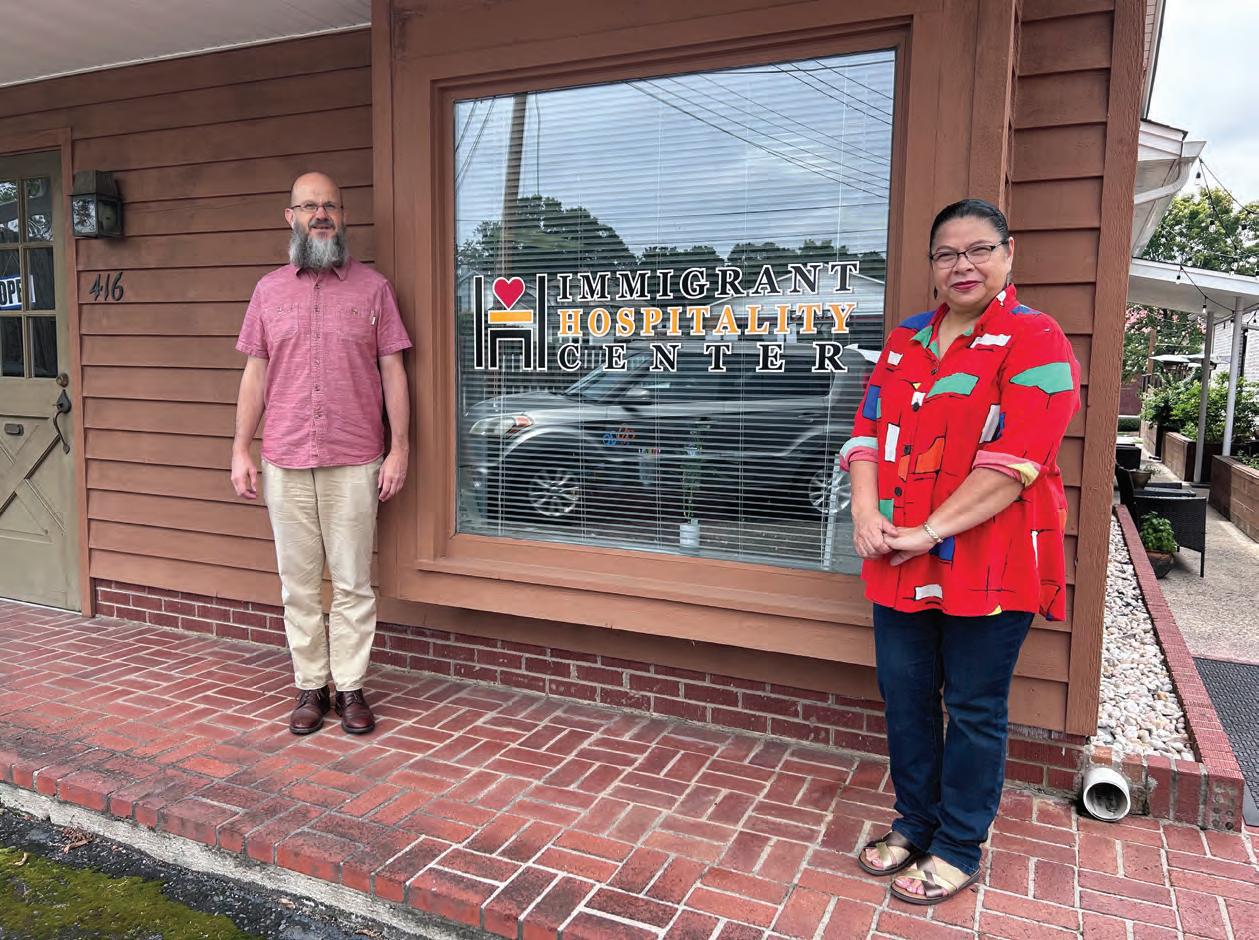
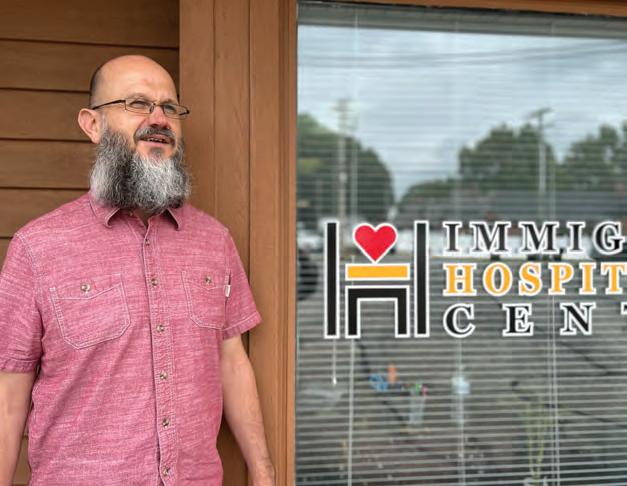
Bobby Farmer, Ministry Consultant for Hulls Grove Baptist Church in Vale and Director of the Immigrant Hospitality Center in Lincolnton, says his journey toward that moment was shaped by a long-standing commitment to cross-cultural ministry. He is quick to emphasize, however, that the Center’s founding was never a solo endeavor. Support came from state-level religious leaders, local churches, business owners, and volunteers—what Farmer describes as “a divine network of relationships.”
“Being the Ministry Consultant at Hulls Grove, I oversee all of our missions outreach, which of course is cross-cultural,” says Farmer. “It predominantly began with Mexico and Costa Rica, with a smattering of other countries here and there. But in doing that, I also became acquainted with the first Hispanic church planter here in Lincoln County who came in the late 1970s.”
Those relationships expanded over time through collaboration with pastors and leaders in the North Carolina Baptist State Convention, where Farmer became known for his willingness to engage across cultural lines.
“People knew that I had a heart for people from other cultures,” says Farmer. “Back in 2014, there was an interest in the State Convention to start some kind of immigrant outreach, but they didn’t really know how to go about it.”
Even then, immigration required careful navigation within a denomination focused on evangelism rather than political advocacy.
“Southern Baptists can be touchy about that, like are we promoting the gospel, or the social gospel?” says Farmer. “They wanted to navigate a way to minister to the Hispanic Latino community in a way that didn’t cross the appropriate boundary, but yet also interacted with them in an area of need. And the biggest area of need is now and was then, immigration law.”
Building the Foundation By 2017, plans for an immigration ministry in Lincoln County began to move forward. Farmer undertook extensive training, completing a weeklong certified course in immigration law, followed by 40 hours of supervised fieldwork under a U.S. Department of Justice–accredited immigration law professional.
With guidance from the Council on Immigrant Relations, a nonprofit based in Raleigh, the Immigrant Hospitality Center officially opened on January 27, 2019. Community support was immediate and tangible, with donations covering nearly every aspect of the Center’s physical space.
“John Gilleland and his partner did all of this,” says Farmer. “All the furniture was donated by other organizations. Everything in this building didn’t cost a cent. It all came together just like that.”
Not everyone, however, has been as supportive.
“I had a man cuss me out at the coffee shop,” says Farmer.
Some skepticism has also come from within his own faith community.
“There are some pastors in this association of Baptist churches that disagree with what I’m doing,” says Farmer. “But everything we do or advise is within the limit of immigration law.”
Farmer says opposition often stems from religious bias, cultural misunderstandings, or nationalist thinking. Still, he believes personal conversations can help shift perspectives.
Stories That Show Humanity
“There’s one story I use all the time because it shows the real humanity of the immigrant,” Farmer says. “You don’t get that on the news, you just get the spin.”
He recounts the case of a distraught mother who contacted the Center asking for help with her teenage daughter.
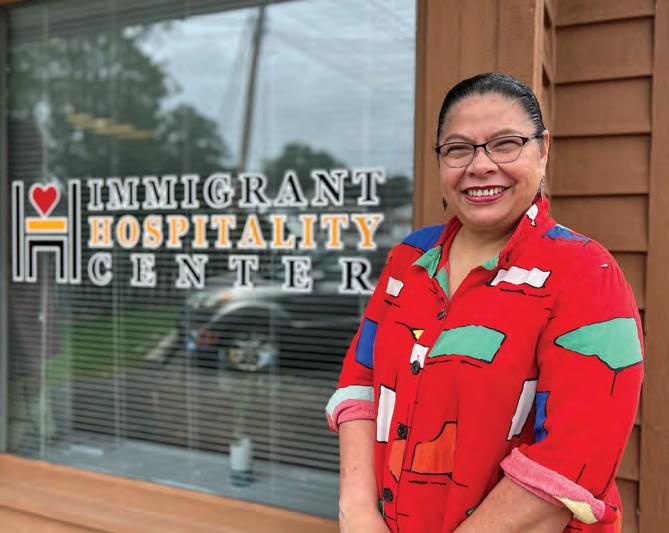
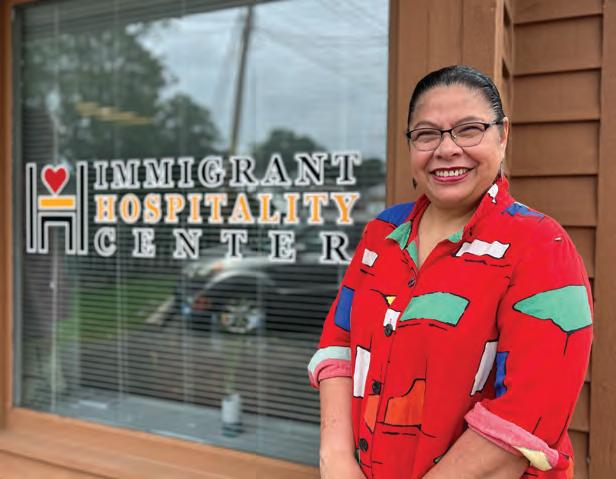
Opposite page: Bobby Farmer and Miriam Acevedo head the Immigrant Hospitality Center in Lincolnton. The organization’s logo, a heart over a table with two chairs, represents the Center’s dedication to serving immigrants through conversation and love for the stranger.
“Her dad was trying to sell her into prostitution at 14 years old,” Farmer explains. “She ran away, made it through Mexico, crossed into the United States, and was deported because she came unlawfully.”
After being deported, the girl fled again, was kidnapped by a drug cartel in Mexico, escaped, and eventually reached the U.S. border a second time.
“She finally got in front of an immigration judge,” Farmer continues. “They researched her story, issued her a court date and sent her on a bus to North Carolina to reunite with her mom.”
While the mother was granted sole custody, concerns about her daughter’s legal status led them to the Immigrant Hospitality Center.
“Bless her heart, she could hardly look at you,” Farmer recalls. “She had been through so much.”
The Center helped her apply for Special Immigrant Juvenile Status, a protection for children who have been abandoned or abused. Her application was approved, placing her on a path to lawful permanent residency.
What the Center Does
The Immigrant Hospitality Center’s mission is simple: to provide high-quality, compassionate immigration legal services and foster community awareness. The process begins with a one-on-one screening session, in person or online, where clients share their stories and receive an initial assessment to determine if a lawful pathway exists. That’s where the process often gets more complicated.
“Second to the tax code, immigration law is the most complicated law in the land,” says Farmer. “There’s not an easy or cheap way to become a resident or citizen of the United States. But our job is to help people understand what’s necessary to be here lawfully and to walk them through that process.”
When no legal pathway exists, the Center advises clients accordingly.
“If they are out of status, meaning their status expired, or they don’t have that lawful status, we tell them their best avenue is to return to their home country,” Farmer explains. “Of course once they walk out of the office, it’s up to them. But we advise them to the extent we can advise them, by the law by the Department of Justice.”
If clients require criminal or civil legal expertise, the Center refers those cases to professionals in those areas. Similarly, those needing mental health services or medical care are connected with licensed providers. The Center also leads community education efforts on immigration-related fraud, scams, and abuse.
An Immigrant Voice
Miriam Acevedo, who works alongside Farmer and is partially accredited in immigration law, knows the challenges of immigration firsthand. An immigrant herself, she came from Ecuador in 1987 through a program called consular processing, which allows a foreign national to apply for an immigrant visa at a U.S. Embassy abroad. Years later, she and her husband founded Calvary Hispanic Baptist Church in Cherryville, where they continue to serve as pastors.
Acevedo’s perspective blends compassion with critique.
“In the days when I was younger, the only way you could immigrate to the United States was the legal way,” Acevedo recalls.
Over the years, she has witnessed the system change dramatically, both in policy and perception.
“This administration is really hard on immigration,” says Acevedo. “But in the Biden administration there was mass migration, with all of these families in caravans who came and were welcomed. Then [the Trump administration] started turning them away.”
Acevedo is referring to the sweeping executive orders issued by President Trump in January 2025, many of which focused on immigration reform.
While executive orders can affect policy, they are not yet recognized as law, allowing the Supreme Court to block them through judicial review. However, that process takes time, and things can get confusing and chaotic in the interim. Still, Acevedo says changes were necessary to address the issues within our immigration system—a system she believes had become overloaded and misused.
“Of course we need to welcome the immigrants,” Acevedo says. “But Biden did it the wrong way. I have clients who did receive social security, medical insurance,” says Acevedo. “It’s not just fake news.”
In North Carolina, non-U.S. citizens can get full health coverage through NC Medicaid, if they live in North Carolina, meet age and income requirements, and have a qualified immigration status. However, some people must wait five years from when they get their qualified immigration status before they can apply for full NC Medicaid.
Non-U.S. citizens are legally entitled to Emergency Medicaid, which is not standard health coverage and is not something individuals apply for. Emergency Medicaid is a limited program used by hospitals to cover the cost of emergency care they are legally required to provide under federal law, regardless of the patient’s immigration status.
Because Medicaid is regulated at the state level, eligibility for non-U.S. citizens can vary from state to state.
“By law they can’t receive federal benefits,” Farmer explains. “But when states choose to grant certain benefits it’s hard to pinpoint how much of that may be from federal money given to the state. And of course state benefits are granted depending on whether the state has restrictive policies or welcoming policies, which of course are tied to politics.”
Acevedo stresses that immigration cannot be separated from politics.
“It’s a political issue,” says Acevedo. “You can’t be neutral.”
While broader debates about detention conditions and enforcement tactics continue, the Immigrant Hospitality Center remains focused on practical assistance for local immigrants rather than political advocacy.
“[Immigrants] want something better for themselves, and they want to contribute to the community,” says Acevedo. “But you have
to have something, some documentation, to show that you are who you say you are.”
She also calls for accountability for employers who exploit undocumented labor.
“As a foreigner, I see how hard immigrants work,” she says. “Farmers, construction, cabling, these are tough jobs. Not everyone wants to do that kind of work, but they do. The government should penalize companies that take advantage of undocumented workers, or at least help those companies find ways to employ them legally and pay them fairly.”
At the local level, she urges empathy alongside respect for boundaries.
“If you have a neighbor who is Hispanic, or African, or whatever, be a blessing to that person,” she says. “Diversity isn’t wrong. Don’t look down on a person because they come from a different country; but every country has borders, and we should respect them. Borders are protection, just like fences around your home.”
Full Circle
For Farmer, the Center’s work always returns to relationships and the simple act of listening.
“This was all through the favor of God and through relationships,” he says. “And it all started with a discussion around a table at Fausto Coffee.”
At that table, what began as a conversation and an idea has grown into a full ministry that continues to change lives, one story at a time.
Quick Facts:
Immigrant Population in Lincoln County
• Foreign-born population: 4,677 (4.8% of total population)
• Naturalized citizens: 3,012
• Not U.S. citizens: 1,665
• Entered before 2010: 3,882
• Entered 2010 or later: 795
• Place of birth:
• Economic impact: $18.76 million annually
• Naturalized Citizens Among the Immigrant Population:
Sources: U.S. Census Bureau 2024 American Community Survey 1-Year Estimates; North Carolina Office of State Budget and Management; North Carolina Department of Health and Human Services, NC Medicaid Division of Health Benefits; Pew Research Center.
LYNC-ing up with the Youth:
MEET DOWNTOWN LINCOLNTON’S NEW CROSS-DENOMINATIONAL YOUTH GROUP
STORY BY RICH GREEN
PHOTOS BY BRIAN THOMPSON
On any given day, Lincolnton residents have plenty of options to stay busy. Families can point toward Charlotte for big-city attractions or head west to the Blue Ridge Parkway and western North Carolina for a change of scenery. The city’s motto—“Near the City. Near the Mountains. Near Perfect.”—captures that sense of possibility.
But closer to home, a different kind of opportunity has been taking shape for local families with children.
Recognizing a need for safe, wholesome programs that blend fellowship and character-building, several downtown church leaders took matters into their own hands. The result: Lincolnton Youth Neighborhood Community, or LYNC—a collaborative, year-round program designed to nurture youth and strengthen community ties across Lincolnton.
As new restaurants, shops and cultural events continue to add to the energy of “L-Town,” many of those offerings natural-
ly cater to adults. LYNC was created to ensure young people are part of that growth, too.
Unlike traditional church youth programs that often operate seasonally or for short periods, such as Vacation Bible School or holiday events, LYNC was designed from the ground up as a year-round organization.
“LYNC rose out of the desire from several downtown churches to have a program for youth and children,” says the Rev. Sarah Underwood, pastor at First United Methodist Church. “And to do it in cooperation with one another so we could have a larger, stronger group and reach more young people.”
By sharing resources and talent, leaders quickly realized they could offer more activities, and sustain them longer, than any one church could alone. The idea grew out of a cooperative Vacation Bible School program involving Methodist and Presbyterian staff, which served as a test bed for the model. Its success became the catalyst for LYNC.
“People with different faith traditions coming together ought to be something we celebrate and show our kids is possible”
“We started having conversations about what it might look like to do more together and form some sort of coalition,” says Reed Conley, organizing pastor at Artisan Church. “That led us down the road of brainstorming what that might look like. We were all pretty excited about being able to share in the discipling of our children and youth together.”
LYNC officially launched in May 2025, driven by the energy and commitment of its leadership team. Becky Chambers was appointed as the program’s first director and helped guide its initial rollout before stepping away to pursue her own ministry. In August, Ashlyn Rhyne came on board as program director.
Today, participating churches include Artisan Church (Presbyterian), St. Luke’s Episcopal Church, The Church of Our Savior, Woodside (Episcopal), Emmanuel Lutheran Church, Holy Cross Lutheran Church, and First United Methodist Church, all located in Lincolnton. The leadership team reflects that diversity and in addition to Underwood and Conley, includes the Rev. Elizabeth “Liz” Tester, priest-in-charge at St. Luke’s Episcopal Church and The Church of Our Savior, Woodside; Judy Lewis Drysdale, pastor at Emmanuel Lutheran Church; Chad Walker, pastor at Holy Cross Lutheran Church; and Robbie Combs, director of ministries at First United Methodist Church.
One of LYNC’s most distinctive features is its multi-denominational makeup. Rather than viewing those differences
as obstacles, leaders see them as a strength.
“People with different faith traditions coming together ought to be something we celebrate and show our kids is possible,” Conley says. “What’s novel about LYNC is that we don’t hide the fact that we’re from different denominations. We saw a way we could work together and be a model of unity for our community.”
That cooperative spirit emerged in part from challenges faced by churches during the COVID-19 pandemic, which accelerated declining attendance, particularly among younger populations. Instead of operating independently or competing for limited resources, LYNC was intentionally built around shared Christian values rather than denominational distinctions.
“What seemed like a negative because of the COVID situation…something very positive has come out of it,” says Underwood.
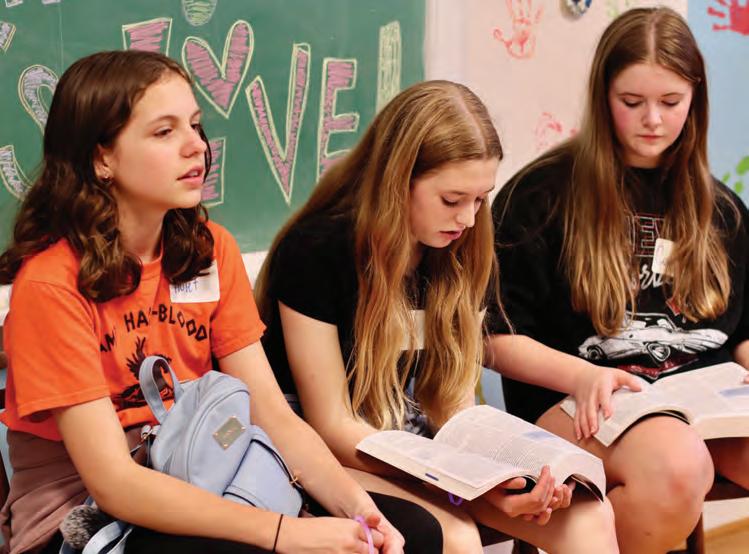
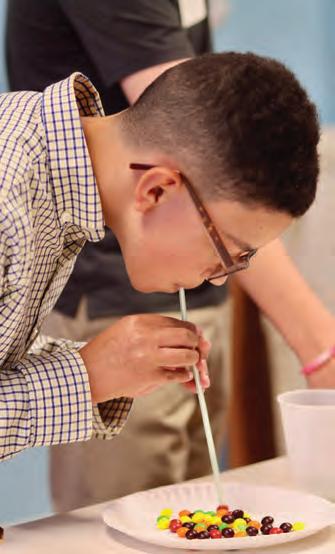
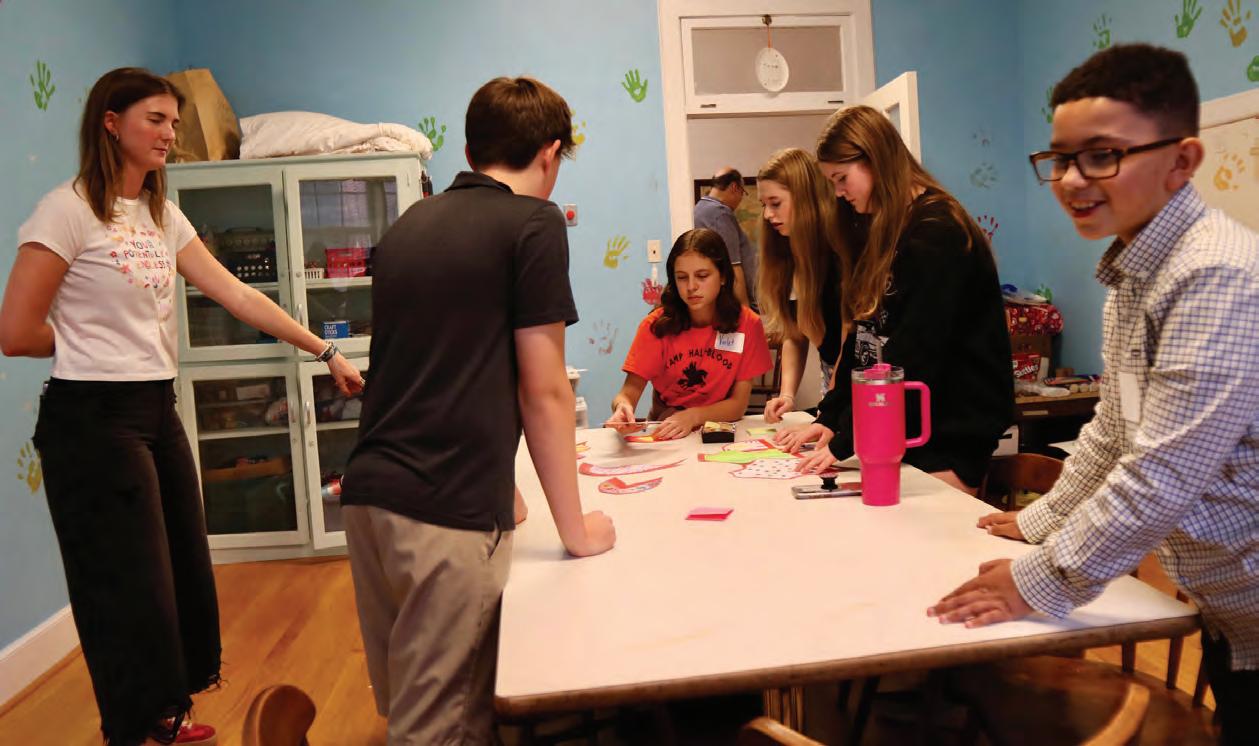
The program now offers regular gatherings where school-age youth come together for activities, fellowship and a shared meal provided by the host church of the week. Hosting responsibilities rotate among participating congregations, giving students the opportunity to experience each church in its own space while spreading both financial and staffing responsibilities. The result is a low-cost program for churches that is free to families.
LYNC leaders hope the model could serve as a blueprint for other communities.
Along with funding and staffing considerations, leaders were intentional about
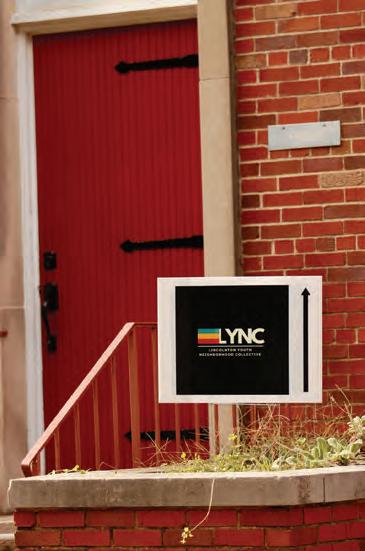
This page: Follow the signs to LYNC meetups, which are held on a rotating basis between participating churches.
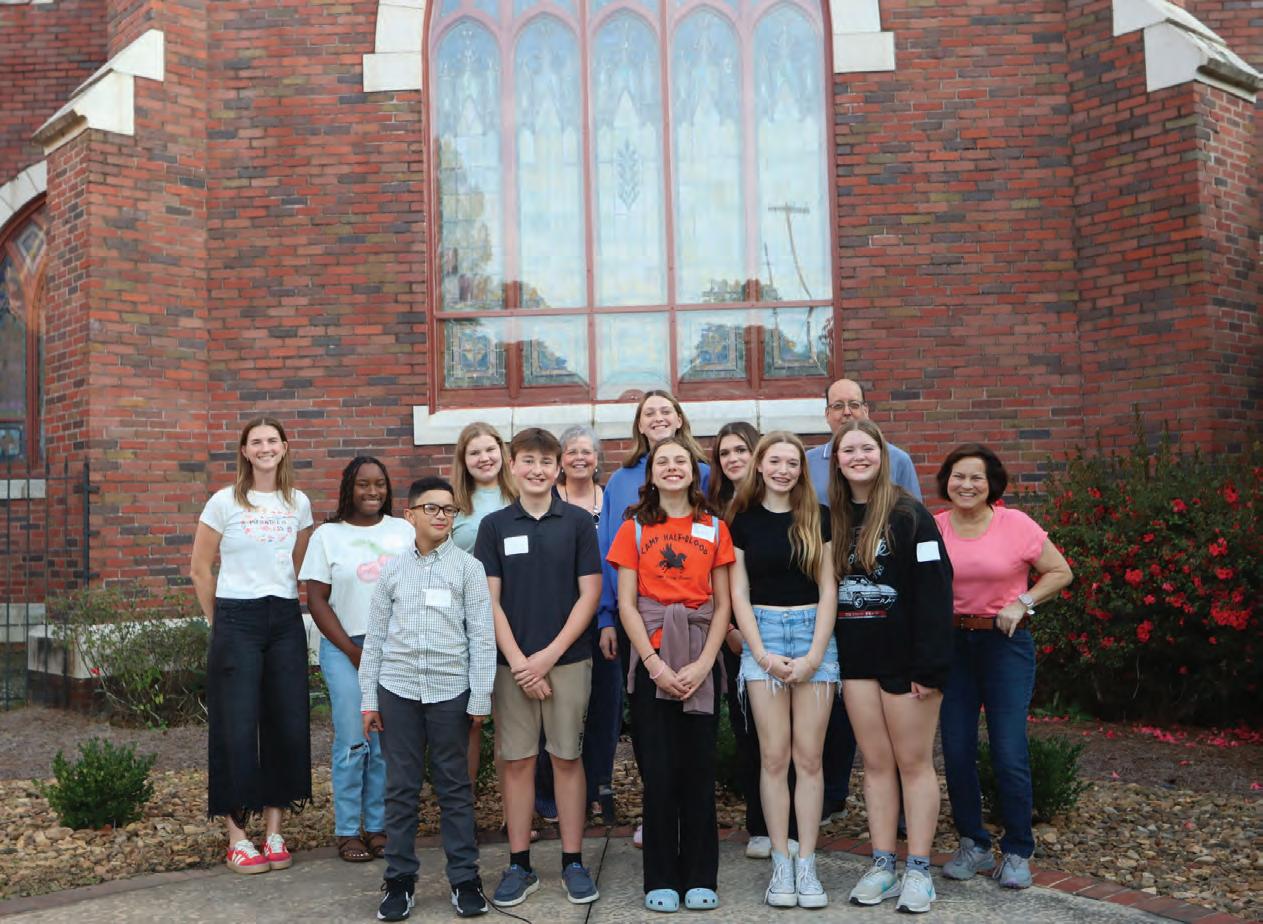
Opposite page: LYNC leaders and youth stand outside Emmanuel Lutheran Church, one of five Lincolnton churches in the multi-denominational youth group.
defining the program’s purpose and its impact on participants. That sense of purpose has already revealed itself in meaningful ways. Rhyne recalls a recent conversation with an adult volunteer that underscored the program’s impact across generations.
The volunteer shared that a child in the program, Kyrie, was the reason she decided to pursue teacher education. The volunteer first met Kyrie years earlier while serving as a teacher cadet in his classroom.
“That was a God moment for me,” says Rhyne. “She told me Kyrie was the reason she went into teacher education. For her to come and hang out, and for Kyrie to be there — for me to witness that — it was a full-circle moment.”
Moments like that are exactly what LYNC leaders hope the program will create; experiences that leave a lasting impression long after the evening ends.
“I really want the kids to take something away each time we meet” said Rhyne. “I like to ask them, ‘What did you learn today, and what can you carry with you?’”
“I really want the kids to take something away each time we meet,” says Rhyne. “I like to ask them, ‘What did you learn today, and what can you carry with you?’”
Rhyne emphasized that being “the church outside of the church” is central to LYNC’s mission, along with encouraging youth to carry those values into the broader community.
To support that goal, weekly meetings are divided by age and developmental stage. LYNC Kids, serving kindergarten through fifth grade, meet Wednesday evenings. Middle school and high school students gather on Sunday evenings, with older youth meeting separately before coming together for fellowship and a shared meal. The program was also intentionally designed to remove barriers to participation; church membership, affiliation or regular attendance are not required.
LYNC is open to any youth who wish to attend and to adults
interested in volunteering. Volunteers are vetted and trained by LYNC staff and must complete criminal background checks.
Getting involved is simple. Families can attend any advertised event or contact one of the participating churches. LYNC events are promoted on Facebook and Instagram, and Rhyne is available to speak directly with parents who have questions.
“At this age, it’s really important for youth to have a space where they feel comfortable, can hang out with
friends, feel the love of God and carry that back into the community,” says Rhyne.
We at Hometown Magazine agree — and wish the entire LYNC team continued success as they highlight yet another reason Lincolnton is a special place to call home.
Rich Green is a musician, writer, and photographer living in Lincolnton N.C.
STORY AND PHOTOS BY STEPHANIE MEYER
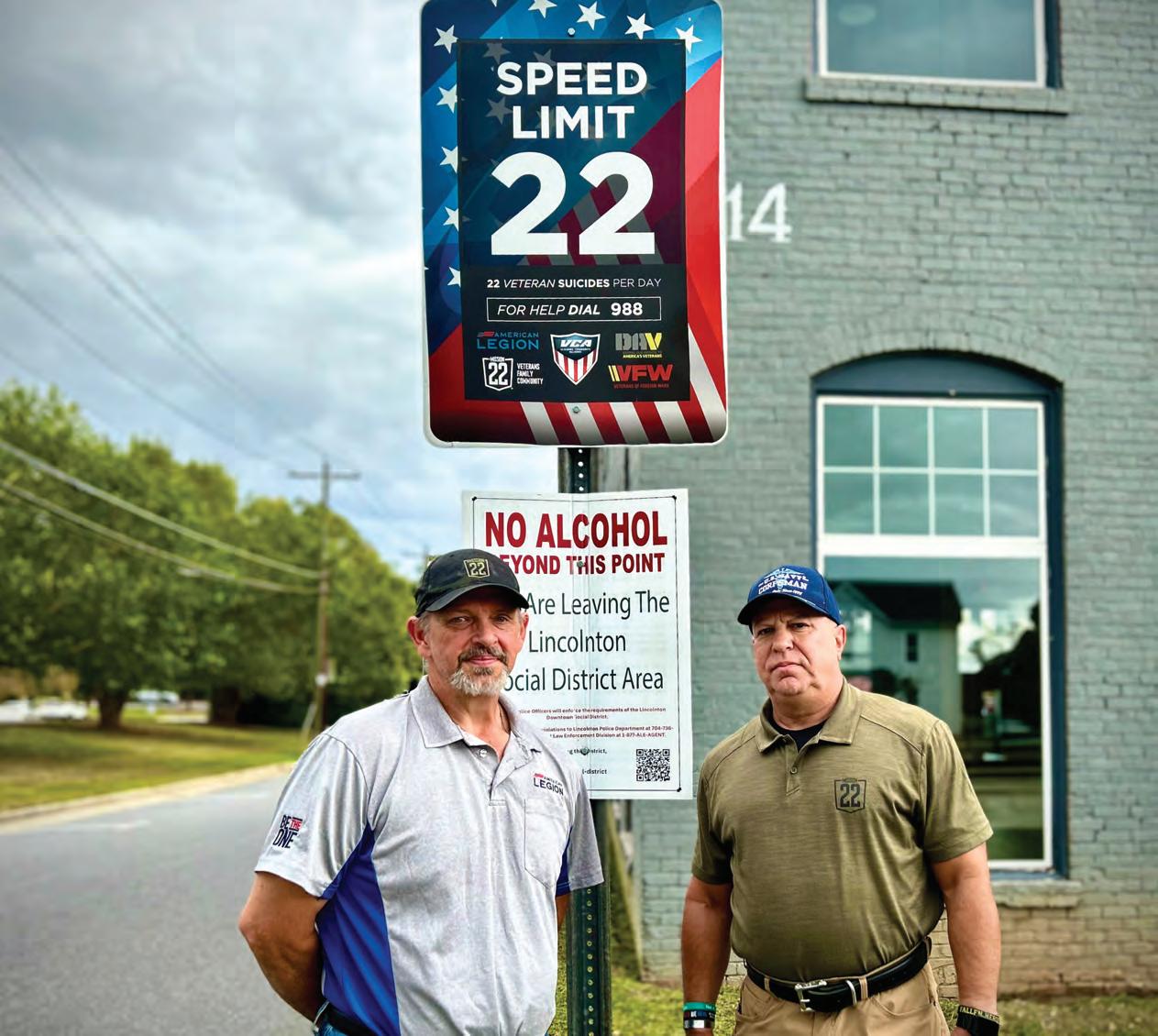
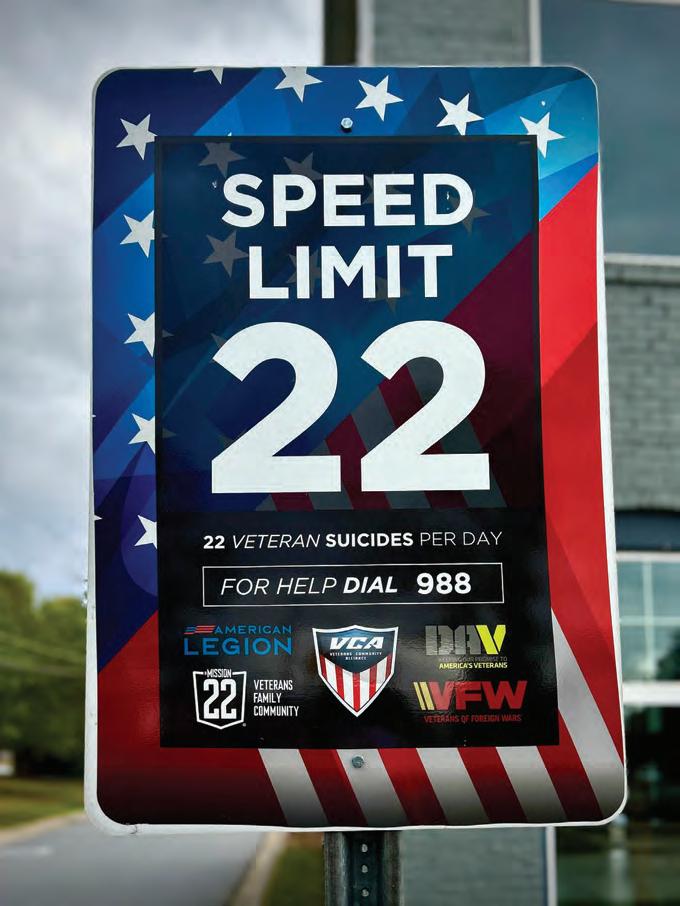
On the streets of downtown Lincolnton, where daily life moves at a familiar pace, some unique speed limit signs have dotted the landscape. These markers stand as more than simple speed limit indicators—they’re also stark reminders that for many veterans, the most dangerous battle begins after the uniform comes off.
Mission 22 was established to address the lack of support many veterans experience when transitioning to civilian life.
The signs are for Mission 22, a nonprofit organization dedicated to raising awareness of veteran suicide and connecting veterans and their families with life-saving resources. Behind the effort locally are two veterans who know all too well that the struggles are real, relentless and often invisible.
Chris Duschel, U.S. Marine veteran and District 22 commander for the American Legion, and Kevin Evans, a former Air Force veteran and North Carolina ambassador for Mission 22, share a common mission shaped by personal loss.
“Nobody even noticed anything. He seemed fine,” Duschel says, remembering a fellow veteran and close friend who tragically took his own life. “I talked to him every now and then; he seemed totally fine.”
Stories like this are not uncommon within the veteran community, and exactly why Duschel and Evans are committed to making sure help is visible, accessible and talked about openly.
Mission 22 takes its name from a sobering statistic: in 2013, the Veterans Administration released a report estimating that 22 veterans die by suicide every day. That number has since lowered, but not by much. The latest available data from the VA puts the figure at about 18. For Evans and Duschel, they say they won’t be satisfied until that figure is zero.
“Even if it’s only one, it’s still too many,” says Evans.
Where it All Began
Founded in 2013 by two former Green Berets—Magnus Johnson and Mike Kissel—Mission 22 was established to address the lack of
support many veterans experience when transitioning to civilian life.
As for the speed limit signs, they are part of a growing movement with multiple cities participating. Similar Mission 22-inspired speed limit signs can also be seen in Port Royal, S.C., for example.
While Duschel is not formally affiliated with Mission 22, the organization’s mission inspired him to develop the speed limit sign project now seen in downtown Lincolnton.
“It seemed like something that was really important, and a lot of people don’t know about it,” Duschel says. “The signs help bring awareness to this very dire issue.”
Working with the City of Lincolnton, Duschel developed a design and arranged for the signs to be placed throughout downtown. The City took his initial vision and turned it into a simple yet striking finished product.
“I came up with a basic design, but the people working for the City did the rest. The first time I saw it, I teared up. I thought it was amazing,” he says.
Each sign includes clear information about Mission 22 and a crisis phone number for those in immediate need.
“That’s the beauty of the signs,” Evans says. “When you pull up to one it tells you everything you need to know.”
Seeing the Signs
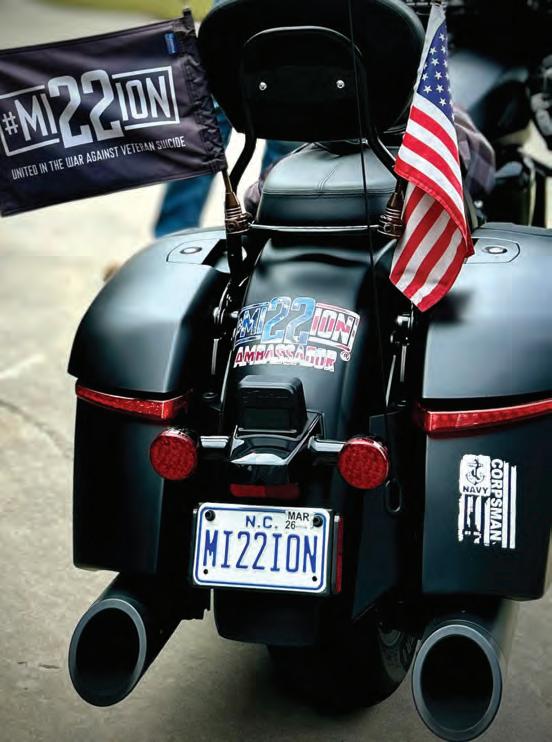
Evans has seen how the signs are doing exactly what they were intended to do—start conversations. Recently, at a Combat Veterans Motorcycle Association event in Waynesville, attendees approached him already familiar with the Lincolnton signs.
“We’re hoping it catches like wildfire,” Evans says.
As Mission 22’s North Carolina ambassador, Evans works to connect veterans and their families
Opposite Page: Chris Duschel (left) and Kevin Evans (right) stand by one of the Mission 22-inspired speed limit signs on Water Street in downtown Lincolnton.
with resources and partner organizations. Though he did not deploy, Evans served during Desert Storm and feels a strong responsibility to those who experienced combat.
“That’s why I work so hard for Mission 22,” he says. “I want to give back to the brothers and sisters who have been through that.”
Duschel, who oversees 12 American Legion posts as district commander, also uses his role to amplify the mission.
“Our post is a huge supporter of Mission 22,” he says.
More Than Awareness
“Crowds, loud noises, a scream, a crying baby…just normal everyday activities can trigger a crisis.”
While the signs are great for getting the message across, both men stress that Mission 22 is about far more than raising awareness—it’s about providing practical, life-changing support.
“Our slogan is, ‘We are united in the war against veteran suicide,’” Evans says. “We are veterans, family and community, and our goal is to get resources to veterans who are suffering from post-traumatic stress disorder, traumatic brain injury, substance abuse, military sexual trauma…whatever they may be suffering from, we want to improve their quality of life and ultimately end veteran suicide.”
A key part of that mission is recognizing that veteran trauma affects entire families.
“I love Mission 22 because we also have programs for the family,” Evans says. “We understand that the veteran’s struggling, and if they’re fortunate enough to have a family, guess who else is struggling? And I would argue maybe even more, because they’re watching their loved one feeling helpless, hopeless. Where can they turn? Well, Mission 22 has help for them.”
How It Works
For veterans and family members seeking help, Evans says the first point of contact is often Mission22.org. The website is designed to be easy to navigate and accessible even to non-veterans seeking community resources.
Mission 22 itself is not a crisis organization, but it offers a wide range of wellness and recovery programs designed to promote long-term healing and resilience.
Its Recovery and Resilience (R+R) program— recognized as a leader in holistic care and reintegration—blends coaching, nutrition, fitness, mindfulness and biometric tracking. The program lasts one year for combat veterans, six months for non-combat veterans and six months for family members.
“We’ve won an award for holistic healing for our Recovery and Resilience program,” Evans says. “And we’ve actually just spun off of that.”
That spinoff, called R+R Coaching, was four years in the making. This 30- to 90-day program offers intensive PTSD counseling for veterans who may not be ready to commit to a yearlong program.
“It takes the veteran out of their comfort zone more,” Evans says, “but they’re getting a lot of good feedback from it.”
The Invisible Triggers
When asked about the leading cause behind veteran suicide, Duschel offers a straightforward answer without hesitation: “Stress,” he says. “And not having anybody to talk to about it.”
If that stress is compounded with complex issues like PTSD or MST, everyday situations can quickly become overwhelming.
“You know, it’s OK for us to walk through the local Wal-Mart,” says Evans. “But for some, that’s all it would take. Crowds, loud noises, a scream, a crying baby…just normal everyday activities can trigger a crisis.”
Because Mission 22 is not a crisis intervention program, it relies on partner programs to help the most at-risk veterans in immediate need. Vets4Warriors is one such partner, and underscores the importance of peer connection.
“When they contact them, they’re talking to an actual veteran,” Evans says. “That helps eliminate what we call the ‘white coat syndrome.’ Most will talk to another veteran before they’ll talk to anybody else.”
Starting the Conversation
Reaching veterans who may not recognize or admit that they are struggling requires consistency and compassion.
“Just keep conversations going,” Evans says. “We do buddy checks. It only takes a second to just say, ‘How are you? Everything good?’ Those two seconds may save a life.”
“It’s important to just let them know that you’re there and that you care,” Duschel adds.
Mission 22 also emphasizes flexibility in finding solutions.
“With Mission 22, it’s not our programs or nothing,” Evans says. “When we say we want to stop veteran suicide, we mean it. If you don’t like our programs, keep talking to us and we’ll see what we can find for you. We know we don’t have all the answers or all the solutions. And every case is different; there is no textbook case.”
As the signs continue to stand along Lincolnton streets, their message remains powerful. They reflect one of Mission 22’s guiding beliefs: “When their tour is over, our mission begins.”
For Duschel and Evans, that mission is personal—and far from finished.
Learn More
To learn more about Mission 22, visit Mission22.org or Vets4Warriors.com.
If you or someone you know is in immediate crisis, dial: 855-838-8255 for Vets4Warriors Veteran Peer Hotline 988 for the Suicide and Crisis Lifeline
Untapped Territory will host a benefit concert on March 1st featuring an impressive lineup of local musicians including Bailey Marie, Shane Willis, Daniel Jeffers, and Zee Phoenix. The show starts at 7 p.m. and donations will be collected at the door.
The Veterans Administration estimated 22 veterans a day die by suicide. The speed limit signs are designed to help spread awareness and connect veterans to vital resources.
The Meating Place:
STORY BY STEPHANIE MEYER | PHOTOS BY ROBERT WEBB
BUTCHER SHOP
Late morning in downtown Lincolnton unfolds at an easy pace, when the lunch crowd has yet to arrive and the streets move calmly, hinting at the busier hours ahead. At The Meating Place, the soft chime of an old-fashioned doorbell rings every few minutes as customers step in from Main Street. Behind glass cases, butchers prep cuts of beef and pork and answer questions with the ease of people who know their regulars by name. Bright red steaks, fresh seafood, towering rolls of deli meat and neatly stacked blocks of cheese fill the coolers. Sunlight pours through the front windows, glinting off stainless steel and hardwood, while empty tables along the window fill almost as quickly as they’re cleared.
“We had a lot of vacant spaces. We were always trying to get businesses to come, and one thing I thought we needed was a butcher shop and a general store.”
Toward the back of the shop, owner Mark Ingle stands in conversation with another man. It feels less like business and more like a chat between neighbors, a reminder that here, the lines between work and community often dissolve. Ingle, a friendly Southern gentleman, offers me a handshake and suggests sitting at one of the tables overlooking Main Street. As the interview begins, the rhythm of the shop continues uninterrupted: the gentle ding of the doorbell, the ambient hum of conversation, the steady work of a neighborhood business in its element.
The atmosphere feels like a step back in time, to a bygone era when the local butcher shop was more than a place to buy meat. It was where people swapped stories, shared local news and built relationships alongside their grocery lists. That sense of connection is the heart of The Meating Place, which opened in 2018 and has since become a downtown fixture.
“This is what I had in mind,” Ingle says. “That hometown feel.”
Ingle and his wife, Cindy, both Lincolnton natives, own The Meating Place. Mark also owns Ingle Builders, with an office next door. Nearly a decade ago, he was serving on the Downtown Development Association, a time he remembers as challenging for the city’s core.
“We were really hurting in town for business-
es,” he says. “We had a lot of vacant spaces. We were always trying to get businesses to come, and one thing I thought we needed was a butcher shop and a general store.”
Despite the perceived need, Ingle couldn’t convince anyone else to take the leap. So he decided to do it himself.
“Never could get anybody to open either one, so I decided to try the butcher shop,” he says. “I didn’t know anything about it.”
What Ingle lacked in experience, he made up for with determination. He watched videos, read extensively, attended a North Carolina meat conference and visited butcher shops, asking questions and offering to help where he could. He even spent a day at a slaughterhouse to better understand the process.
That hands-on curiosity paid off when he met Jeremy Seagle.
“I went to a slaughterhouse and helped them one day, and one of the employees there…he told me that he would be glad to help me out and get this place started,” Ingle says. “We were open Wednesday through Saturday at that time. He came in in the evenings and on Fridays and Saturdays and helped us, and now he’s my manager.”
Seagle had worked for years at Caldwell’s Meat Processing in Maiden, bringing invaluable experience to the new shop.
“It was a lot more [work] than I thought it would be, but Jeremy was a godsend,” Ingle says.
Expanding the Offerings
Another influence came from an unexpected place—Ohio. Ingle’s brother once lived in Amish country and suggested carrying some of their products. That recommendation led Ingle to Walnut Creek Foods, an Amish company that now supplies The Meating Place with deli meats, cheeses, sweets, salads, eggs and more.
“When we first opened, we were buying about $1,000 worth of products from them every other week,” Ingle says. “Now we’re buying close to $3,000 a week.”
Opposite Page: Mark Ingle, owner of The Meating Place, learned the business through curiosity, tenacity, and a love for serving the community.
About a year after opening, customers offered another suggestion: sandwiches. Ingle listened.
“People kept after me to do sandwiches in town, so we started the sandwich business and that’s gone very well,” he says.
The sandwich operation brought another key team member into the fold. Rico, who had spent his career working in delis, offered his expertise.
“Another godsend was Rico,” Ingle says. “He worked in deli all his life. He knew all about the deli and the sandwiches so he’s been a big help.”
A Menu Built on Quality
The sandwiches quickly became a cornerstone of the business, made with the same meats sold in the cases. There’s no grill, which means no burgers or hot cooking—except for one notable exception: meatballs.
“I was going to buy meatballs and Rico said, ‘No, you can’t buy them—we’ll make them,’” Ingle says. “So he came up with a great recipe and people love our meatballs.”
Customers love them so much, in fact, that The Meating Place sells about 1,000 meatballs a week. They’re available in the popular meatball sub, or in eight-packs that customers can take home and prepare however they like.
Still, meatballs aren’t the most popular item on the menu.
“The Reuben actually is the most popular,” Ingle says. “The Reuben, turkey, and meatball sandwiches are the top three.”
With a smile he adds, “People tell us we have the best Reuben outside of New York.”
Holidays are particularly busy, and Ingle encourages customers to order early. Smoked Amish turkeys, rib roasts, steaks and quarter hams are especially popular. Christmas is their busiest week of the year, followed closely by Valentine’s Day.
The shop sources hogs locally and processes them in-house, turning much of the pork into sausage and bone-in chops.
“We make about seven different kinds of sausage here in-house,” he says.
The shop’s mountain vibe and general store atmosphere were inspired in part by specialty shops found in the Western part of the state. During his research phase, Ingle says he visited a store in Saluda, NC as well as some mountain grocery stores. Nearly everyone he consulted was encouraging, except one.
“I talked to someone at a grocery store and I said, ‘You got any advice for me?’ He said, ‘Yeah, don’t do it,’” Ingle recalls with a laugh. “I didn’t listen to him though.”
Lincolnton is better for it. Not only does The Meating Place provide high quality meat and food products to the residents of Lincolnton, it also partners with other local businesses, including Local Roots, which sources steaks and ground beef from the shop. Additionally, customer feedback continues to shape offerings, including sweet Lebanon bologna—an Amish deli meat suggested years ago by the mayor’s wife.
“It’s really good,” Ingle says. “It’s been a big hit.”
Much of The Meating Place’s success comes from the team working behind the counter.
Rico prepares the sauce for his famous meatballs.
Why a Neighborhood Butcher Still Matters
Shopping at a neighborhood butcher shop, Ingle explains, comes with advantages.
“It’s better quality, to start with,” he says. “And it’s healthier because we don’t put dyes or preservatives in it. So it’s not going to last as long as what you buy in Walmart, it’s going to turn brown quicker, but it’s healthier and better for you.”
That quality keeps customers coming back. Many shop weekly for their meat, while some downtown workers stop in daily for lunch.
Service behind the counter is personal and tailored. If a customer has questions about the best way to prepare a cut of meat, or has a special request, Ingle’s dedicated team members make every effort to oblige.
“We can tell you how to cook it, cut it how you want it,” Ingle says.
That commitment to customer service is a key ingredient in The Meating Place’s success. The other is their high standards for product quality, reflected in their Certified Angus Beef selection.
The United States Department of Agriculture rates beef products in three primary quality grades: select, choice and prime. Certified Angus Beef is a brand that only sells beef that falls into the upper tier of choice or prime grades.
As Ingle puts it, “If it says ‘Certified Angus Beef’, you know it’ll be good.”
Then, now, and looking ahead.
While it’s clear that Ingle is open to growth and change, he also has a sense of pride when looking at the store’s past. Though the structure itself wasn’t always pretty, the building carries a lot of Lincolnton history. Ingle purchased and fully renovated it, transforming what he says used to be “the ugliest building in town.”
A mural inside features old photographs of downtown, connecting the present-day shop to the town’s past. As Ingle looks to the future, he says he plans to spend more time at the shop after his retirement.
“My favorite part about it is the people—the customers,” he says. “I enjoy meeting people and serving people and providing a good product and service.”
With our interview wrapped up and the lunch rush growing busier by the minute, I planned to gather my notes and make my exit. But before leaving, Rico insisted I sample of his famous meatballs. Any attempt at journalistic detachment disappeared after the first bite. Warm and savory, with a subtle sweetness balanced against the bright acidity of the tomato sauce, they delivered a kind of simple, wholesome comfort, much like the shop itself.
On a late sunny morning in downtown Lincolnton, with the doorbell chiming and the hungry lunch crowd forming, it’s clear The Meating Place has become what Mark Ingle hoped it would be—a neighborhood shop where good food, familiar faces and small-town rhythms “meat” under one roof.
Phil Walsworth is one of The Meating Place’s dedicated butchers. “He’s fast, good, and good with people,” says Ingle.
LINCOLNTON RESOURCES
Whether you’re new to the area or a lifelong resident, this handy list can direct you to commonly needed services.
CITY OF LINCOLNTON
Lincolnton City Hall
114 W. Sycamore Street, Lincolnton, NC 28092 (704) 736-8980 www.lincolntonnc.org
Lincolnton Police Department (704) 736-8900
For emergencies, dial 911. www.ci.lincolnton.nc.us/149/Police
LINCOLN COUNTY
Public Works Office
115 W. Main Street, Lincolnton, NC 28092 (704) 735-8202 www.lincolncountync.gov
Lincoln County Sheriff’s Office
700 John Howell Memorial Drive, Lincolnton, NC 28092 (704) 732-9050 For emergencies, dial 911. www.lincolnsheriff.org
Lincoln County Libraries
Charles R. Jonas Library: (704) 735-8044
Florence S. Shanklin Branch Library: (704) 483-3589 West Lincoln Branch Library: (704) 276-9946 www.mylincolnlibrary.org
Closest Hospital
Atrium Health Lincoln 433 McAlister Road, Lincolnton, NC 28092 (980) 212-2000 atriumhealth.org/locations/detail/atrium-health-lincoln
Christian Ministry of Lincoln County 207 S. Poplar Street, Lincolnton, NC 28092 (704) 732-0383 christianministryoflincolncounty.org
Hesed House of Hope 100 Ann Gaither Court, Lincolnton, NC 28092 (704) 732-0175 www.hesedhouseofhope.com
Lincoln County Department of Social Services 1136 E. Main Street, Lincolnton, NC 28092 (704) 732-0738 www.lincolncountync.gov/135/Social-Services
Lincoln County Coalition Against Domestic Violence/Amy’s House Crisis line: (704) 736-1224 Main line: (704) 240-3688 lincolncounty-cadv.org/amys-house
Lincoln County Coalition Against Child Abuse & Child Advocacy Center 161 Policarp Street, Lincolnton, NC 28092 (704) 736-1155 cac-lincolncounty.org
Solution on page 4
1 Distant
6 Apex
9 Jobs
14 “ER” actress --- Tierney
15 “--- Believer”, Monkees hit
16 Start playing!
17 Tap
19 “Fear of Flying” author --- Jong
20 Snow runner
21 Less common
22 Buoyant
23 Old-fashioned cab
25 Lightweight tropical hats
27 Elite group
28 Gene Pitney was only 24hrs from here
29 Downloadable program
32 Small lake
34 Natter
35 Tenor --- Bocelli
37 Sidestepped
39 Splendors
40 Demeanor
41 Total
42 Capital of Norway
43 Source of formic acid
44 Jambalaya ingredient
46 Little one
47 “Band of Gold” singer Freda ---
48 Miscreants
51 Economizer
54 Succeed
56 One of New York’s finest, perhaps
57 Nautical fastener
58 To
60 Carroll’s rabbit-hole explorer
61 Wyo. neighbor
62 Extended area of land
63 Waterproofed as many showers are
64 Affirmative vote
65 Solemn promises DOWN
1 Pennsylvania Mennonites
2 Sri ---, formerly Ceylon
3 Ahead of the field
4 Mineral source
5 Litter of pigs
6 Bracket
7 Stimulus
8 Security detachment
9 Anna Paquin won an Oscar f or this film, aged 11
10 Spanish winds
11 The pen
12 Recoil 13 Remain
18 Rotating engine part
24 Welcome
26 Old Testament song
28 Sliver 29 Nobleman 30 Rind
31 --- doble (dance)
32 One of the Three Bears
33 “--- Almighty”, in which Morgan Freeman played God
34 Nixon’s successor, informally
36 Drivel
38 At peace
39 Rev up
41 --- Todd, barber
45 Chest pain
46 Am disposed
47 Serenity
48 Pro
49 Gun handle nick
50 Notices
51 Get outta here!
52 “--- want is a room somewhere...”
(“My Fair Lady”)
53 Bridal wear
55 Start of a Hamlet soliloquy
59 Geological time composed of periods
Noteworthy News
FROM LINCOLNTON AND BEYOND
LINCOLN COUNTY LAUNCHES POST-OVERDOSE RESPONSE TEAM
LINCOLNTON, N.C.—Lincoln County’s Post-Overdose Response Team (PORT) began operations on November 14, 2025, providing compassionate follow-up, resources, and recovery support to individuals within days of an overdose. The program was created in response to the growing opioid epidemic, with 136 overdoses recorded in 2024 and 145 reported so far this year. Funded through North Carolina Opioid Settlement funds, Lincoln County is slated to receive more than $11 million over the next 10–15 years to address opioid-related harm.
Approved by the Lincoln County Board of Commissioners in March 2023, PORT is supported by a $1.2 million investment and is a collaborative effort involving the Lincoln County Health Department, Lincoln County Emergency Services, Atrium Health, and other first responder agencies. The team focuses on meeting individuals where they are, helping them navigate treatment options, access peer support, and connect with community services during a critical moment for change. For more information, visit the Lincoln County Health Department’s PORT webpage, or email postODteam@lincolncountync.gov.
THE TIMKEN COMPANY RAISES MORE THAN $262,000 FOR UNITED WAY OF LINCOLN COUNTY
LINCOLNTON, N.C.—The Timken Company once again demonstrated its commitment to Lincoln County by raising more than $262,000 for United Way of Lincoln County. Employees contributed over $130,000 through payroll pledges, which Timken matched dollar-for-dollar, resulting in a total of $262,150. These funds will support United Way’s 14 partner agencies and more than 26 programs that address critical community needs, including youth services, caregiver support, therapy programs, and financial mentoring.
The success of the campaign reflects Timken’s strong culture of service, supported by engaged employees and dedicated leadership.
Erin Johnson, a Timken employee and campaign committee member, said, “I am passionate about giving to the community because I understand the impact it can have on the recipient. Growing up, I was supported by a community with compassion and understanding. Those acts of kindness left an impression on my heart that compel me to pay it forward...Giving back isn’t just something we do—it’s part of who we are as a family.”
Fellow committee member Sam Hersom added, “I pledge to United Way because I know that my funds will go to carefully vetted organizations able to deliver the greatest impact.”
Since 2022, Timken’s United Way campaign has increased by 333 percent, establishing the company as an anchor of support for the community. Much of this success is attributed to the leadership of Jonathan Waller and Michelle Barnhart, whose encouragement and hands-on support have inspired both employees and fellow community leaders to engage in workplace giving campaigns, further strengthening United Way of Lincoln County’s impact.
THE LINCOLNTON-LINCOLN COUNTY CHAMBER OF COMMERCE HOSTS MASQUERADE AT THE MANSION
The event also featured an awards ceremony honoring distinguished local business leaders and was made possible through the support of 24 local business sponsors, with RE/MAX Lifestyle serving as the presenting sponsor.
Photography by Ingrid Russell Photography.
NCDHHS LAUNCHES STUDENT LOAN REPAYMENT PROGRAM TO STRENGTHEN BEHAVIORAL HEALTH WORKFORCE
RALEIGH, N.C.— On December 1, the North Carolina Department of Health and Human Services announced the launch of the Licensed Workforce Loan Repayment Program, a $20 million initiative aimed at recruiting and retaining licensed professionals who provide mental health, substance use, intellectual and developmental disabilities (I/DD), and traumatic brain injury (TBI) services in rural and underserved communities. The program is part of the state’s broader strategy to address workforce shortages and expand access to community-based care.
“We have significant workforce shortages and access challenges in mental health,” said NC Health and Human Services Secretary Dev Sangvai. Kelly Crosbie, MSW, LCSW, Director of the NCDHHS Division of Mental Health, Developmental Disabilities and Substance Use Services, added, “We cannot
build a strong system of care without a strong workforce.”
Nearly two in five North Carolinians live in a mental health professional shortage area, highlighting the urgent need for licensed providers.
The program offers up to $50,000 in student loan repayment for licensed, master’s-level professionals—including LCSWs, LCMHCs, LCASs, LMFTs, and licensed psychologists— who commit to three years of service in a designated rural or underserved county. Applicants must hold a valid North Carolina license, work at least 32 hours per week at an approved agency serving high-need populations, and provide qualifying services.
Applications opened on Dec. 1, 2025. Learn more and apply at the NCDHHS Licensed Workforce Loan Repayment Program page.
LINCOLNTON, N.C.—The Lincolnton–Lincoln County Chamber of Commerce recently hosted its 2025 Annual Banquet at the historic Crowe Mansion. Embracing the theme Masquerade at the Mansion, guests arrived in elegant masquerade attire for an upscale evening of dining, entertainment, and celebration.
The Oddities & Curiosities Expo is the largest internationally traveling oddities/ subculture event in the world. A space showcasing hand selected vendors, artists and small businesses with all things weird. You’ll find items such as: taxidermy, preserved specimens, original artwork, horror/halloween inspired pieces, antiques, handcrafted oddities, creepy
clothing, odd jewelry, animal skulls/bones, funeral collectibles & much more. We truly have something weird for everyone at our shows. All items you see at our shows are legal to own and sustainably sourced.
• 10 a.m. - 5 p.m. both days
• $15 in advance; $20 at the door; kids 12 and under - free
• Charlotte Convention Center, 501 S. College Street, Charlotte, NC 28202
• odditiesandcuriositiesexpo.com
MARCH 2026
March 1, 2026 –Concert Benefitting Mission 22 at Untapped Territory
Untapped Territory will host a benefit concert on March 1st featuring an impressive lineup of local musicians including Bailey Marie, Shane Willis, Daniel Jeffers, and Zee Phoenix. Show starts at 7 p.m., $10 at the door. Proceeds benefit Mission 22.
March 1, 2026 –Concert Benefitting Mission 22 at Untapped Territory
March 6-8, 2026 –56th Annual Catawba Valley Gem, Mineral, Fossil and Jewelry Show
Shop Small Saturday (Downtown Lincolnton)
• Untapped Territory, 124 E. Water Street, Lincolnton, NC 28092
• untappedterritorync.com; mission22.org
March 4, 2026 – Beyond the Garden Gate (Call for Artists)
Exhibit at the Lincoln Cultural Center inspired by The Secret Garden. Seeking works featuring flora, fauna, Victorian themes, and cottage-garden imagery. Message CNL Events at (980) 241-1110 for more information.
• Submission deadline: Feb. 15
• Lincoln Cultural Center, 403 E. Main Street, Lincolnton, NC 28092
March 6-8, 2026 –56th Annual Catawba Valley Gem, Mineral, Fossil and Jewelry Show
CVGMC (Catawba Valley Gem and Mineral Club) holds an annual show featuring vendors selling mineral and fossil specimens, jewelry components, fine and custom jewelry, tools, lapidary equipment and various other items. CVGMC members are there throughout the weekend to help identify minerals, to provide lapidary demonstrations and activities for the kids
• Friday, March 6 & Saturday, March 7, from 10 a.m. to 6 p.m.
• Sunday, March 8 from 10 a.m. to 5 p.m.
• Hickory Metro Convention Center: 1960 13th Ave. Drive SE, Hickory, NC 28602
• visithickorync.com
March 28. 2026 –
520th Annual Price is Right for Fighting Child Abuse
“Come on Down!” for your chance to win and to support the Lincoln County Child Advocacy Center, which works year-round to prevent child abuse and provide critical intervention and healing services for children and families in our community.The “Price Is Right for Fighting Child Abuse” is an annual fundraiser benefiting the Lincoln County Child Advocacy Center. All proceeds directly support the CAC’s mission to protect children and strengthen families throughout Lincoln County. Come laugh, compete, and celebrate 20 years of caring for our children—all for a cause that truly matters.
• Saturday, March 28
• Doors open at 5 p.m., show starts at 6 p.m.
• James W. Warren Citizens Center: 115 W. Main Street, Lincolnton, NC 28092
• visithickorync.com
RECURRING
LOCAL EVENTS
Yoga Classes - Mondays, Thursdays and Saturdays
Breeze In Yoga offers weekly yoga classes in the Artisan Church space in downtown Lincolnton.
• Mats and props provided.
Your first class is always free!
• 235 E. Main Street, Lincolnton, NC 28092
• breezeinyoga.com
Veterans Coffee Connection –2nd Tuesday of Each Month
Free coffee, donuts, and fellowship for veterans of all branches/ages.
• Bar-B-Q King, 2613 E Main St., Lincolnton, NC 28092
• Cindy Stamey, Carolina Caring: (828) 466-0466
• cstamey@carolinacaring.org
First Thursdays – City Council Meetings
The City of Lincolnton typically holds City Council meetings on the first Thursday of every month at 7:00 p.m. at City Hall. Public comments will be heard at the beginning of the meeting. Anyone wishing to address the council should sign up with the Clerk before the meeting starts.
• First Thursdays of the Month
• City Hall, 114 W. Sycamore Street, Lincolnton, NC 28092
• ci.lincolnton.nc.us
Second Saturdays –
Shop Small Saturday (Downtown Lincolnton)
Support local business by shopping “small” in downtown Lincolnton on the second Saturday of every month. Visit charming boutiques, grab a bite to eat, and have a beverage with friends, all while keeping your dollars local. Sponsored by the Downtown Development Association of Lincolnton.
• Second Saturdays of the Month
• Downtown Lincolnton, NC
• facebook.com/downtownlincolnton
Listed alphabetically
AFRICAN METHODIST
EPISCOPAL ZION (AME ZION):
Herndon Chapel AME Zion Church 1121 Georgetown Road, Lincolnton Service times: Sundays at 11:00 a.m.
BAPTIST:
First Baptist Church
201 Robin Road, Lincolnton Service times: Sundays at 8:30 a.m. (contemporary) and 10:30 a.m. (traditional)
Hull’s Grove Baptist Church 6670 NC Hwy 27, Vale Service times: Sundays at 11:00 a.m.
CATHOLIC:
St. Dorothy’s Catholic Church 148 St. Dorothy’s Lane, Lincolnton Service times: Saturdays at 5:00 p.m.; Sundays at 9:00 a.m. and 12:00 p.m.
CHRISTIAN NONDENOMINATIONAL:
Covenant Church 1121 Georgetown Road, Lincolnton Service times: Sundays at 8:30 and 11:00 a.m.
EPISCOPAL:
Church of Our Savior Woodside 1128 Hwy 182, Lincolnton Service times: Sundays at 11:30 a.m.
St. Luke’s Episcopal Church
315 N. Cedar Street Service times: Sundays at 10:00 a.m.
LUTHERAN:
Emmanuel Lutheran Church
216 S. Aspen Street, Lincolnton Service times: Sundays at 10:00 a.m.
METHODIST:
Boger City Methodist Church
2320 E. Main Street, Lincolnton Service times: Sundays at 10:30 a.m.
First United Methodist Church
201 E. Main Street, Lincolnton Service times: Sundays at 11:00 a.m.
PRESBYTERIAN:
Artisan Church (PCUSA) 235 E. Main Street, Lincolnton Service times: Sundays at 9:30 a.m.
Harvest Church (PCA) 710 Lithia Inn Road, Lincolnton Service times: Sundays at 10:30 a.m.
SYNAGOGUE:
Emanuel Temple Gastonia
320 S. South Street, Gastonia Service times: Fridays at 7:30 p.m.
To submit your church to be included in our directory, please send the church’s name, address, and service times to info@hometownlincolnton.com.