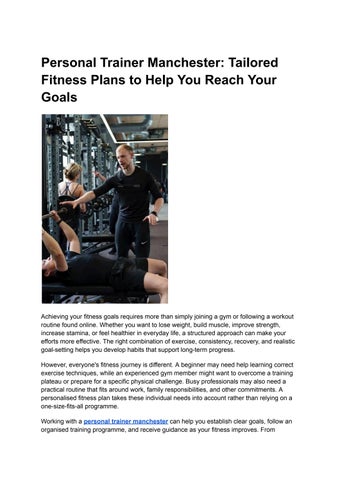
Personal Trainer Manchester: Tailored Fitness Plans to Help You Reach Your Goals
Achieving your fitness goals requires more than simply joining a gym or following a workout routine found online. Whether you want to lose weight, build muscle, improve strength, increase stamina, or feel healthier in everyday life, a structured approach can make your efforts more effective. The right combination of exercise, consistency, recovery, and realistic goal-setting helps you develop habits that support long-term progress. However, everyone's fitness journey is different. A beginner may need help learning correct exercise techniques, while an experienced gym member might want to overcome a training plateau or prepare for a specific physical challenge. Busy professionals may also need a practical routine that fits around work, family responsibilities, and other commitments. A personalised fitness plan takes these individual needs into account rather than relying on a one-size-fits-all programme. Working with a personal trainer manchester can help you establish clear goals, follow an organised training programme, and receive guidance as your fitness improves. From
strength training and cardiovascular exercise to mobility work and sustainable lifestyle habits, professional coaching can make your workouts more purposeful. With appropriate support and a realistic plan, you can build confidence, measure progress, and develop a routine that fits your lifestyle.
Why Choose a Personal Trainer for Your Fitness Journey? A personal trainer provides structured exercise guidance based on your goals, current ability, preferences, and available time. Rather than guessing which exercises to perform, you can follow a programme designed to address your priorities.
Receive a Fitness Plan Designed Around You A personalised training plan begins by identifying what you want to achieve. Some people prioritise fat loss, while others want to gain muscle, improve cardiovascular fitness, or develop greater functional strength. Your starting point also matters. Training experience, exercise preferences, mobility, available equipment, and weekly commitments can influence the programme. A beginner may start with basic movements and manageable workloads, whereas a more experienced individual may benefit from a carefully planned progression. As your fitness changes, your programme should adapt accordingly. This helps keep training challenging without increasing the workload unnecessarily or progressing faster than your ability allows.
Learn Correct Exercise Technique Good exercise technique helps you train effectively and manage avoidable risks. A trainer can demonstrate movements, explain positioning, and provide feedback on exercises such as squats, lunges, presses, rows, and deadlifts. Learning the fundamentals is particularly valuable for beginners who may feel uncertain about using gym equipment. It can also benefit experienced exercisers who want to refine their movement patterns or address weaknesses in their current routine. Technique should always suit your individual mobility and capabilities. If an exercise causes pain or discomfort, stop and discuss an appropriate modification rather than attempting to push through it.
Stay Motivated and Accountable Consistency is one of the most important parts of making progress. Nevertheless, maintaining a routine can be difficult when motivation changes, work becomes demanding, or results take longer than expected.
Scheduled training sessions create structure and provide an opportunity to review progress. A trainer can help you set manageable targets, recognise improvements, and adjust your approach when obstacles arise. Accountability should support your confidence rather than create pressure. Sustainable progress comes from a routine you can maintain, not from feeling that every workout must be perfect.
Fitness Goals a Personal Trainer Can Help You Achieve A well-designed programme can support different fitness objectives. The exercises, training frequency, and progression methods should reflect the result you want and your current level of fitness.
Weight Management and Fat Loss Weight management often involves a combination of physical activity, nutrition, sleep, and consistent daily habits. Strength training can help maintain or build muscle, while cardiovascular exercise contributes to energy expenditure and overall health. A trainer can develop a practical workout routine that combines resistance exercises, aerobic activity, and gradual progression. However, changes in body weight vary between individuals and are influenced by factors beyond exercise alone. For sustainable results, focus on habits you can maintain rather than extreme workout schedules or unrealistic targets. A qualified nutrition professional may also be helpful if you need detailed dietary guidance.
Muscle Building and Strength Development Building muscle requires progressive resistance training, adequate recovery, and appropriate nutrition. Exercises can target major muscle groups, including the legs, back, chest, shoulders, arms, and core. A structured programme may include compound movements, accessory exercises, and gradual increases in repetitions, resistance, or training difficulty. Progression should be based on your technique, recovery, and current ability rather than increasing weights as quickly as possible. Rest is equally important. Muscles need time to recover between challenging sessions, so a balanced programme should consider training frequency and overall workload.
Improving Cardiovascular Fitness and Stamina Cardiovascular exercise helps develop the heart and lungs' ability to support physical activity. Walking briskly, cycling, swimming, rowing, and running are examples of activities that can improve aerobic fitness when performed at an appropriate intensity.
A trainer can help you choose activities you enjoy and build up your duration or intensity gradually. Beginners might start with shorter sessions and progress as their endurance improves. Combining aerobic exercise with resistance training can provide a balanced approach to general fitness. The right mix depends on your goals, schedule, and response to training.
Increasing Mobility, Balance, and Functional Strength Fitness is not only about appearance or lifting heavier weights. Mobility, balance, coordination, and functional strength can make everyday activities easier, including climbing stairs, carrying shopping, standing for long periods, and getting up from a chair. A programme may include controlled mobility exercises, balance drills, core training, and resistance movements that reflect your daily needs. Exercise selection should account for your ability and any restrictions that require professional assessment. People with persistent pain, significant mobility limitations, or existing medical concerns should seek suitable healthcare advice before beginning or substantially changing an exercise programme.
What to Expect From a Personal Training Session Understanding how personal training works can help you feel more prepared before your first appointment. Although sessions differ between trainers and facilities, the process usually involves assessment, exercise instruction, and ongoing review.
Initial Consultation and Fitness Assessment An initial consultation allows the trainer to understand your goals, exercise history, preferences, and current routine. You may discuss previous training experience, available time, equipment preferences, and any relevant health considerations. Depending on your goals, an assessment may include basic movement observations, exercise technique, endurance, or strength-related measures. Assessments should be appropriate to your ability and should not involve unnecessary tests. Be honest about your current activity level and any limitations. If you have a medical condition, recent injury, or symptoms that could affect exercise safety, seek advice from an appropriate healthcare professional and share relevant guidance with your trainer.
Structured and Supervised Workouts Once your programme is established, sessions may include a warm-up, strength or cardiovascular exercises, movement practice, and a cool-down where appropriate. Your trainer should explain the purpose of each exercise and provide clear instructions. The session may also be adjusted according to your energy, technique, recovery, and progress.
A good training session is not necessarily the hardest session possible. It should provide an appropriate challenge while allowing you to maintain sound technique and recover adequately afterwards.
Progress Reviews and Programme Adjustments Fitness progress can be measured in several ways. Depending on your goals, useful indicators may include improvements in strength, exercise duration, movement control, stamina, consistency, or how comfortably you perform everyday activities. Body measurements and weight can provide additional information for some people, but they do not tell the whole story. Your trainer can help identify meaningful changes and decide whether the programme needs adjusting. Regular reviews also create an opportunity to discuss barriers, celebrate milestones, and set the next achievable target.
The Importance of Strength Training Strength training is useful for people with a wide range of fitness goals. It can help develop muscular strength, support physical function, and contribute to maintaining muscle as you age.
Build a Strong Foundation Beginners generally benefit from learning fundamental movement patterns before moving towards more demanding variations. These may include squatting, hinging at the hips, pushing, pulling, carrying, and stabilising the trunk. Training can begin with bodyweight movements, resistance bands, machines, or free weights, depending on the individual's ability and available equipment. Starting with manageable resistance allows you to practise technique and develop confidence. Over time, your trainer can introduce additional challenges when you are ready.
Use Progressive Overload Safely Progressive overload means gradually increasing the challenge placed on the body as fitness develops. This might involve performing additional repetitions, increasing resistance, improving movement control, or completing more work over time. Progress should not come at the expense of technique. If a movement becomes difficult to control, reducing the resistance or adjusting the exercise may be more beneficial than forcing an increase. A planned approach helps you work towards measurable improvements while managing fatigue and recovery.
Allow Enough Time for Recovery Recovery is an essential part of an effective fitness routine. Sleep, rest days, suitable nutrition, hydration, and appropriate training intensity all influence how well your body responds to exercise. Training the same muscles intensely every day may not provide sufficient recovery for many people. A trainer can help organise sessions to balance workload across the week. If you regularly experience unusual fatigue, persistent pain, or declining performance, review your workload and seek professional advice when necessary.
Combining Exercise With Healthy Lifestyle Habits Personal training can provide structure, but your everyday habits also influence how you feel and perform. A balanced approach makes it easier to maintain improvements beyond individual gym sessions.
Follow a Balanced Nutrition Routine Food provides the energy and nutrients required for exercise, recovery, and normal bodily functions. A varied diet that includes suitable sources of protein, carbohydrates, healthy fats, fruit, vegetables, and fibre can support general fitness. Your individual needs depend on factors such as activity level, goals, preferences, and health considerations. Avoid relying on restrictive diets or supplements as shortcuts to results. For personalised dietary advice, particularly when managing a medical condition or a specific nutritional requirement, consult an appropriately qualified nutrition professional or healthcare provider.
Prioritise Sleep and Hydration Sleep supports recovery, concentration, and physical performance. Establishing a regular sleep routine and allowing sufficient rest may help you feel more prepared for training. Hydration needs vary according to activity, temperature, and individual factors. Drinking fluids regularly and paying attention to thirst can help maintain hydration during everyday activities and exercise. These habits may seem simple, but they contribute to a more consistent and manageable fitness routine.
Build Consistency Through Realistic Goals
A demanding programme is not necessarily the best programme if it is difficult to follow. Consider how much time you can realistically dedicate to exercise each week and build your routine around that commitment. Some people prefer short sessions spread throughout the week, while others have more time for longer workouts. Both approaches can be useful when the programme is appropriate and performed consistently. Setting small milestones, planning sessions in advance, and tracking completed workouts can help turn exercise into a lasting habit.
Choosing a Personal Trainer in Manchester Finding a suitable trainer involves more than choosing the nearest gym or the most convenient appointment time. You should also consider professional qualifications, communication, training style, and the support available.
Check Qualifications and Relevant Experience Ask about the trainer's recognised qualifications, first-aid training where relevant, and experience working with people who have similar goals. If you have a particular objective, such as strength development or returning to exercise after a period of inactivity, relevant experience may be especially useful. Trainers should understand the limits of their professional role. They can provide exercise guidance, but they should not diagnose medical conditions or replace treatment from a qualified healthcare professional.
Consider the Training Environment The training environment should suit your preferences and provide access to the equipment needed for your programme. Some people prefer a busy gym, while others feel more comfortable in a smaller training facility. Consider location, appointment availability, cleanliness, equipment condition, and whether the environment helps you feel confident. You should also ask how sessions are structured and whether independent workouts are part of the plan.
Discuss Your Goals Before Committing A conversation before starting can help you understand the trainer's approach, the proposed programme, session prices, and any membership requirements. A good trainer should explain what is realistic, how progress will be reviewed, and what support is included outside scheduled sessions. Be cautious of guaranteed weight-loss claims, unrealistic transformation promises, or pressure to purchase services you do not need.
Frontline Fit Performance Centre is an option to consider when researching fitness facilities and training support. Contact the centre directly to confirm its current services, available trainers, qualifications, session options, and pricing before making a decision.
Personal Training for Beginners and Experienced Exercisers Personal training can be adapted to different stages of a fitness journey. The most suitable approach depends on what you already know, what you want to achieve, and the areas where you need support.
Getting Started as a Beginner Starting a fitness routine can feel intimidating if you are unfamiliar with gym equipment or unsure how to structure a workout. A trainer can introduce basic movements, explain equipment use, and help establish a manageable schedule. Early sessions should focus on learning, confidence, and consistency rather than attempting to achieve every goal immediately. As your technique improves, the programme can gradually become more challenging.
Overcoming a Training Plateau Experienced exercisers sometimes find that progress slows despite regular training. Possible reasons include repetitive programming, inadequate recovery, inconsistent progression, or goals that no longer match the current routine. A trainer can review your exercises, training volume, intensity, and recovery habits to identify areas for improvement. Sometimes a small adjustment to exercise selection or progression is more useful than completely replacing the programme.
Maintaining Fitness With a Busy Schedule Work, family responsibilities, and commuting can make regular exercise difficult. A personalised programme can prioritise the exercises and sessions most relevant to your goals. Planning workouts in advance and having alternative shorter sessions for particularly busy days can help you maintain consistency. The aim is to create a routine that fits your life instead of expecting your life to revolve around the gym.
Conclusion
Working towards better fitness becomes more manageable when your training has a clear purpose, appropriate structure, and realistic milestones. Whether you want to improve strength, manage your weight, build muscle, increase stamina, or feel more confident in the gym, personalised coaching can help you understand what to do and how to progress safely. Choosing a personal trainer manchester means looking for a professional who understands your goals, communicates clearly, and adapts the programme as your needs change. Combine suitable exercise with balanced nutrition, sufficient recovery, and consistent habits to support sustainable progress. Before beginning, check qualifications, discuss any relevant health concerns, and make sure the training plan fits your schedule and ability. For people exploring local fitness support, Frontline Fit Performance Centre can be contacted to learn more about its current training options and find out whether its services match their fitness goals.