FRONTIER NURSING UNIVERSITY | VOL. 101, NUMBER 2 | SUMMER 2026
QUARTERLY BULLETIN
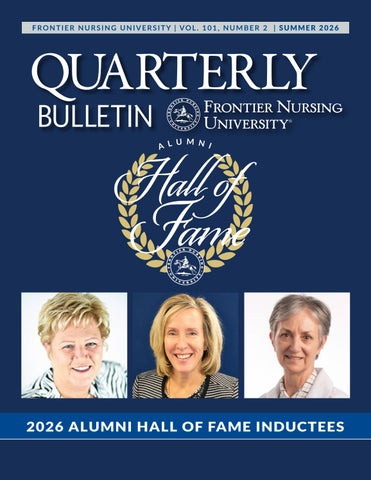
2026 ALUMNI HALL OF FAME INDUCTEES
Become a Monthly Donor
TODAY!
By making a recurring gift to FNU, you are investing in the lives of Frontier students year-round. Giving monthly represents an ongoing commitment to Frontier Nursing University and student achievement. When you commit to even $5 per month, your gift will help with student scholarships, hands-on training materials, and so much more.
AMOUNT
NO. OF MONTHS
TOTAL GIFT TO FNU (per year)
$5
12
$60
$10
12
$120
$15
12
$180
Visit frontier.edu/give-to-fnu/, use the enclosed remittance envelope, or scan the QR code above to make your first monthly gift today!
I
g
mi
a
nsi
ht Into Acade
President’s Cabinet Brooke A. Flinders, DNP, RN, APRN-CNM, FACNM President Shelley Aldridge, BA Chief Operations Officer Paula Alexander-Delpech, Ph.D., PMHNPBC, APRN Dean of Student Success Kristin Ashford PhD, WHNP-BC, FAAN Dean of Nursing Marc Blevins, MS, CISA Chief Information and Digital Officer Bobbi Silver Chief Advancement Officer Kylie Waters, CPA, MBA Chief Financial Officer Jeffery Dobbins, DNP, PMHNP Regional Clinic Faculty (faculty representative) David Fritz Facilities Manager (staff representative) Academic Administration
a lt
202 6 2026 o h Pr o cho f e s sio ns S
l
He
Glossary of Credential Abbreviations In the Quarterly Bulletin, we often list the abbreviated credentials of the healthcare professionals featured in these stories. While space does not permit a comprehensive list of all these credentials, here are a few of the more common ones used in the Quarterly Bulletin and their meanings: CNEP: Community Based Nurse-Midwifery Education Program CNM: Certified Nurse-Midwife DNP: Doctor of Nursing Practice FNP: Family Nurse Practitioner MSN: Master of Science in Nursing PMHNP: Psychiatric-Mental Health Nurse Practitioner WHNP: Women’s Health Nurse Practitioner
Frontier Nursing University Quarterly Bulletin, ISSN 0016-2116, Copyright © 2026 by Frontier Nursing University, is published quarterly by Frontier Nursing University, 2050 Lexington Road, Versailles, KY 40383. Business and Editorial Offices: 2050 Lexington Road, Versailles, KY 43083. Accounting and Circulation Offices: Frontier Nursing University, 2050 Lexington Road, Versailles, KY 43083. Periodicals postage is paid at Versailles, KY, and additional mailing offices (if applicable).
Audra Cave, DNP, FNP-BC Chair, Department of Family Nursing Dr. Anne Cockerham, Associate Dean for Teaching Excellence and Innovation Dr. Bonni Cohen, Associate Dean for Graduate Programs Khara’ Jefferson, DNP, APRN, FNP-C Chair, Doctor of Nursing Practice Program Laura Manns-James, Ph.D., CNM, WHNPBC, CNE, FACNM Chair, Department of Women's Health Kevin Scalf, DNP, APRN, PMHNP-BC, CNEcl, Chair, Department of Psychiatric-Mental Health Eileen Thrower, Ph.D., APRN, CNM, CNE, FACNM Chair, Department of Nurse-Midwifery
Letter from the President
Contents From the President
1
Endowed Chairs
2–4
Academic Leadership
5–7
2026 Hall of Fame Inductees
8–13
Annual Service Award Winners
13
News and Notes
14–24
History Corner
25–27
Alumni News and Notes
28–29
Faculty and Students News and Notes 29–31 Board of Directors
32
Memorial Donations
32
Dear Friends, You are reading this issue of the Quarterly Bulletin during one of the most exciting seasons at Frontier. In September, we celebrated our newest graduates at Commencement, honored outstanding alumni through our annual Alumni Service Awards, and welcomed three exceptional individuals into the Frontier Nursing University Alumni Hall of Fame. As you read their stories, you will gain a deeper appreciation for the impact they have made on Frontier and the enduring legacy they continue to build. Over the past several months, FNU has taken significant steps to strengthen its academic leadership through the creation of several endowed positions and new administrative appointments. Our expanded leadership team will allow us to further support innovation and excellence in the areas of teaching, service, and scholarship and continue to advance the priorities of our Frontier 2030 Strategic Plan. In this issue, you will meet the outstanding individuals who have been selected to guide this important work. We are grateful for their expertise and for their service to Frontier. Finally, you won’t want to miss the photos from six of our most recent visits with our valued alumni and friends. We could not be prouder of the work they do each day to make Frontier’s vision a reality. Thank you for taking the time to stay informed and connected to our mission and vision and for your ongoing support of Frontier Nursing University. With gratitude,
Dr. Brooke A. Flinders DNP, RN, APRN-CNM, FACNM
2050 Lexington Road Versailles, KY 40383 FNU@frontier.edu frontier.edu
Frontier Nursing University • Quarterly Bulletin 1
Endowed Chairs
Frontier Nursing University Expands Faculty Leadership Through Six New Endowed Chairs Frontier Nursing University’s ongoing mission to provide exceptional education for the preparation of nurse-midwives and nurse practitioners relies heavily on the expertise and dedication of its faculty. The FNU Board of Directors recently announced a financial commitment to support the development and retention of the university's academic leaders, through the establishment of six new endowed chairs. “I am proud to share the exciting news that Frontier Nursing University’s Board of Directors has approved the appointment of six prestigious endowed chairs to support and recognize several of our outstanding faculty leaders,” FNU President Dr. Brooke A. Flinders said. “This is a meaningful milestone for FNU and a powerful investment in our academic programs, and our institutional mission, which focuses on impacting rural and underserved populations.”
Endowed chairs represent one of the highest honors a university can bestow. In higher education, these appointments recognize excellence in teaching, scholarship, leadership, and service, while ensuring dedicated resources to advance innovation and deepen expertise in key areas. “Due to the collaborative work of President's Cabinet and Board of Directors, we are ready to steward these resources in a way that aligns with our current and evolving needs,” Dr. Flinders said. “These endowed chairs will directly support our newly expanded academic leadership structure, ensuring we have the capacity, expertise, and leadership in place to advance our mission and meet the growing demands for nurse-midwifery and advanced practice nursing education.” The new endowed chairs include: •M ichael Carter Endowed Chair in Nursing • Susan Stone Endowed Chair in Nursing
• Kitty Ernst Endowed Chair in Midwifery • Frontier Nursing University Endowed Chair in Innovation • Frontier Nursing University Presidential Endowed Chair • Frontier Nursing Service Legacy Endowed Chair “We are grateful to the Board for their thoughtful stewardship and endorsement of these named funds and are proud of the faculty who will carry these distinguished titles,” Dr. Flinders said. “Each of these new chairs, and the existing Distinguished Chair in Midwifery and Nursing, reflect the legacy, mission, and forward-looking vision of Frontier Nursing University. Together, they will help us recognize and elevate several faculty leaders, whose work transforms education, advances practice, and improves care for the communities our graduates serve.”
Introducing FNU’s New Endowed Chairs MICHAEL CARTER ENDOWED CHAIR IN NURSING Dr. Kristin B. Ashford, PhD, WHNP-BC, FAAN, became FNU’s Dean of Nursing on July 1, 2025. She came to FNU from the University of Kentucky (UK) College of Nursing, where she was a professor and Endowed Good Samaritan Chair for Community Nursing. She was the founder and director of the UK Kristin Ashford College of Nursing Perinatal and Research Dean of Nursing Center, leading an interprofessional team to translate research into practice while informing policy makers on maternal and child health issues.
2 Frontier Nursing University • Quarterly Bulletin
Among her many roles at the UK College of Nursing, Dr. Ashford served as the Associate Dean of Undergraduate Programs and Health Policy, Associate Dean of Undergraduate Programs and Interprofessional Education, and Assistant Dean of Research. Dr. Ashford received her Bachelor of Science in Nursing from Washburn University, her Master of Science in Nursing from the University of Louisville, and a PhD in nursing from the University of Kentucky. She is a Fellow in the American Academy of Nursing and was selected as a Robert Wood Johnson Health Policy Fellow at the National Academy of Medicine in 2021. She received the Florence Nightingale Outstanding Nurse of the Year Award from the University of Louisville in 2016.
FRONTIER NURSING UNIVERSITY ENDOWED CHAIR IN INNOVATION
Anne Cockerham
Associate Dean for Teaching Excellence
Dr. Anne Z. Cockerham, PhD, CNM, WHNP-BC, CNE, FACNM has been a faculty member at FNU since May 2009. She has served as the Director of the Center for Innovative Teaching and Learning (20162018), Associate Dean of Academic Affairs (2015-2018), and Associate Dean of Midwifery and Women’s Health (2014-2015).
and Innovation
Dr. Cockerham is the author of two awardwinning books that celebrate the history of the Frontier Nursing Service: Rooted in the Mountains, Reaching to the World: Stories of Nursing and Midwifery at Kentucky’s Frontier School, 1939-1989, and Unbridled Service: Growing Up and Giving Back as a Frontier Nursing Service Courier, 1928-2010.
Her clinical midwifery experience includes full-scope care in a private, midwifery-owned practice and a military setting; outpatient-only care in a number of collaborative practices; and care of underserved women in a community free clinic. She earned a BSN from the University of Virginia, MSN from Case Western Reserve University, and certificates in nurse-midwifery and women’s health nurse practitioner from the Frontier School of Midwifery and Family Nursing. She earned a PhD in Nursing from the University of Virginia. She is a Fellow of the American College of Nurse-Midwives (ACNM) and received ACNM’s Excellence in Teaching Award. She was a President’s Academic Fellow in 2025-2026 and is a three-time recipient of the FNU Student Choice Award for Teaching Excellence.
SUSAN STONE ENDOWED CHAIR IN NURSING In her role as FNU’s inaugural Associate Dean for Graduate Programs, Dr. Bonni Cohen, PhD, DNP, FNP-C, ANP-C, CHFN, CNE, FAANP, provides executive leadership for graduate program operations, academic policy and implementation, student progression processes, and faculty workload coordination. Bonni Cohen She ensures the delivery of quality graduate Associate Dean for Graduate Programs nursing programs and the alignment with institutional standards. Dr. Cohen has served as a faculty member in the Family Nurse Practitioner program at Frontier since 2018. Previously, Dr. Cohen served as Associate Dean and Graduate Program Director at Valdosta State University.
Dr. Cohen is a cardiovascular nurse practitioner and founded an advanced heart failure clinic in rural South Georgia that significantly reduced hospital readmission rates. Her scholarship focuses on nursing education innovation, neurodiversity and inclusion in graduate nursing education, and competency-based learning. Dr. Cohen earned a PhD in Nursing Education from the University of Nevada, Las Vegas, a Doctor of Nursing Practice from the University of Massachusetts, Boston, and is dual certified as an Adult and Family Nurse Practitioner. She is a Certified Nurse Educator, Certified Heart Failure Nurse, a Fellow of the American Association of Nurse Practitioners, and was a 2025 FNU President’s Academic Fellow.
FRONTIER NURSING UNIVERSITY PRESIDENTIAL ENDOWED CHAIR Dr. Brooke A. Flinders, DNP, RN, APRN-CNM, FACNM, began as President of Frontier Nursing University (FNU) on August 1, 2024. A Frontier graduate, she earned both her Master of Science in Nursing (MSN) and Doctor of Nursing Practice (DNP) degrees from the university. Dr. Flinders brings extensive experience as a registered nurse, Brooke A. Flinders certified nurse-midwife, nurse educator, and higher President education administrator. While her earlier career included clinical practice as a labor and delivery nurse and certified nurse-midwife, she has devoted the past two decades to nursing education, academic leadership, and institutional administration. Dr. Flinders’ academic career began in 2006 as an adjunct professor in the Department of Nursing at Miami University (Ohio). Throughout her tenure at Miami, she served in numerous leadership roles, including Department Chair, Associate Dean, and Associate Provost for Faculty Affairs.
As a nurse educator and scholar, Dr. Flinders led a five-year servicelearning project funded by the U.S. Department of Health and Human Services that provided evidence-based teen pregnancy prevention education across four southwestern Ohio counties. Her teaching, service, and scholarship reflect a consistent commitment to advancing health outcomes, supporting student success, and strengthening community partnerships through education. In recognition of her leadership and contributions to the profession, Dr. Flinders was inducted as a Fellow of the American College of Nurse-Midwives (FACNM) in 2021. In 2026, she received Insight Into Academia magazine’s prestigious Trailblazer in Higher Education Award, a national honor recognizing senior leaders whose bold and strategic innovations have advanced institutional excellence, strengthened community and belonging, and created measurable impact for students, employees, and the broader higher education landscape.
Frontier Nursing University • Quarterly Bulletin 3
Endowed Chairs FRONTIER NURSING SERVICE LEGACY ENDOWED CHAIR Dr. Joanne Keefe, DNP, MPH, FNP-c, CNE, is FNU’s inaugural Director for Rural Health and Underserved Communities. This role is dedicated to developing sustainable systems to enhance the number of student applicants from rural and underserved communities. Joanne Keefe
A faculty member at FNU since 2015, Dr. Keefe is currently Course Coordinator for the Population Health course, where she integrates her expertise as a Doctor of Nursing Practice, Family Nurse Practitioner, and epidemiologist to prepare advanced practice nurses to address complex population health challenges. Dr. Keefe earned her Master of Science in Nursing and
Director for Rural Health and Underserved Communities
Doctor of Nursing Practice degrees from Frontier. She holds a Master of Public Health from the University of New Mexico. Dr. Keefe is the founder of Catron County Cares, a nonprofit organization serving the frontier county in New Mexico where she resides. She successfully led the rapid development and implementation of a community telehealth hub in under one year, operating on a budget of less than $1,000. She was selected for the National League for Nursing LEAD program in 2023, served as a 2023 FNU Nurse Educator DEI Fellow, and was named a 2025 FNU President’s Academic Fellow. She is currently a 2026 National Rural Health Association Rural Health Fellow.
KITTY ERNST ENDOWED CHAIR IN MIDWIFERY
Eileen Thrower Chair of Nurse-Midwifery
Eileen Thrower, Ph.D., CNM, APRN, CNE, FACNM, has served as Frontier’s Department Chair for the Department of Midwifery and Women’s Health since 2022. Dr. Thrower joined the faculty at FNU as an assistant professor in 2016. Prior to her promotion to Department Chair, Dr. Thrower held the Clinical Director for the Department of Midwifery and Women’s Health.
Dr. Thrower has been a practicing nursemidwife in the Atlanta, Georgia area since 1990. She also volunteers at a community clinic where she provides gynecologic care.
Dr. Thrower is a graduate of the University of South Florida and received her Master of Nursing degree in nurse-midwifery from Emory University. She received a Ph.D. in Nursing with a nursing education focus from Georgia Baptist College of Nursing of Mercer University. Dr. Thrower is a Fellow of the American College of Nurse-Midwives and a certified nurse educator. She has served on the Georgia Infant Mortality Workgroup, a collaborative effort by the Department of Public Health, Georgia Bureau of Investigation and Healthy Mothers, Healthy Babies Coalition of Georgia. This statewide, multi-sector workgroup strives to address infant mortality throughout the State of Georgia.
DISTINGUISHED CHAIR IN MIDWIFERY AND NURSING
Susan Stone Emerita President
of Fame in 2025.
The Distinguished Chair of Midwifery and Nursing is a long-standing honorific established at Frontier Nursing University, first held by midwifery pioneer Kitty Ernst. Following her passing in 2021, the Chair remained vacant until Dr. Susan Stone received the honorific upon her retirement in 2024 after serving as FNU’s President for 23 years. Both Kitty Ernst and Dr. Stone were inducted into the first class of the Frontier Nursing University Alumni Hall
Dr. Susan Stone, CNM, DNSc, FACNM, FAAN, served as President of Frontier Nursing University from 2001-2024. During her tenure, Dr. Stone led the campus relocation from Hyden to Versailles, Kentucky. She championed prioritizing increasing enrollment and diversifying the student body to produce graduates prepared to address healthcare disparities nationwide. Under her leadership, FNU’s enrollment grew from 200 to more than 2,500. Throughout FNU’s growth and innovation, Dr. Stone kept the university on a path of commitment to the mission of educating
4 Frontier Nursing University • Quarterly Bulletin
advanced practice nurses and midwives to serve in rural and underserved areas. Today, more than 12,000 FNU graduates practice in every state in the U.S. and several foreign countries. Dr. Stone was inducted into the National Academy of Medicine Class of 2018 and was president of the American College of NurseMidwives (ACNM) from 2019-2020. She is a Fellow at both ACNM and the American Academy of Nursing. She received ACNM’s Kitty Ernst Award in 1999, recognizing “innovative, creative endeavors in midwifery practice and women’s health care.” Other honors include the 2011 American Public Health Association’s prestigious Felicia Stewart Advocacy Award, which recognizes individuals who have demonstrated a strong commitment to advocacy for reproductive health and rights. Help Support our Faculty Leaders Frontier Nursing University is committed to developing and supporting faculty leaders through additional endowed chairs and professorships. The minimum amount to establish an endowed chair is $1 million and $500,000 for an endowed professorship. If you are interested in supporting FNU faculty and their innovative work, please contact Daniel King, Senior Director of Philanthropy, at 859.251.4699 or daniel.king@frontier.edu.
Academic Leadership
Frontier Nursing University Establishes New Academic Leadership Positions In June, Frontier Nursing University Dean of Nursing Dr. Kristin Ashford announced a series of new academic leadership positions. These appointments are designed to strengthen academic leadership capacity, enhance faculty support, improve operational effectiveness, and position FNU for continued excellence in teaching, clinical education, scholarship, and student success.
In total, FNU has established and filled approximately 12 internal academic leadership roles in 2026. These positions were developed within the university's existing budget framework by strategically reallocating resources to strengthen academic leadership while maintaining fiscal responsibility and long-term sustainability.
Joining Dr. Ashford in the process of establishing these positions and identifying the internal personnel who would fill them was the Inaugural Academic Leadership Search Committee, led by Dr. Diane John. Additional guidance and support were provided by FNU President Dr. Brooke A. Flinders and the President’s Cabinet.
Associate Dean for Teaching Excellence and Innovation
The new academic leadership appointments are: • Dr. Anne Cockerham, Associate Dean for Teaching Excellence and Innovation • Dr. Bonni Cohen, Associate Dean for Graduate Programs • Stephanie Boyd, Executive Director for Clinical Systems • Dr. Megan Arbour and Nena Harris, Co-Directors for Research and Scholarship • Dr. Kimberly Couch, Clinical Director for the Doctor of Nursing Practice Program • Dr. Joanne Keefe, Director for Rural Health and Underserved Communities • Dr. Tonya Nicholson, Director for Campus Learning “We celebrate each of these colleagues and the expertise, leadership, and commitment they bring to their roles,” Dr. Ashford said. “Their willingness to step forward reflects the strength and engagement of our faculty community.”
Associate Dean of Academic Affairs, and Associate Dean of Midwifery and Women’s Health. She earned a BSN from the University of Virginia, MSN from Case Western Reserve University, and certificates in nurse-midwifery and women’s health nurse practitioner from Frontier. She earned a PhD in Nursing from the University of Virginia. She is a Fellow of the American College of NurseMidwives (ACNM) and received ACNM’s Excellence in Teaching Award. Associate Dean for Graduate Programs
Anne Cockerham
PhD, CNM, WHNP-BC, CNE, FACNM
As the Associate Dean for Teaching Excellence and Innovation, Dr. Cockerham, PhD, CNM, WHNP-BC, CNE, FACNM, will provide strategic leadership and operational oversight for faculty development, teaching excellence, instructional design, digital innovation, library services, and continuing education, while ensuring fiscal stewardship. She will promote innovative, evidence-based teaching practices that enhance faculty effectiveness and support student success. This inaugural position also advances the university’s mission and strengthens its position as a national leader in graduate nursing education. FNU faculty since 2009, Dr. Cockerham has served as the Director of the Center for Innovative Teaching and Learning,
Bonni Cohen
PhD, DNP, FNP-C, ANP-C, CHFN, CNE, FAANP
As FNU’s inaugural Associate Dean for Graduate Programs, Dr. Bonni Cohen, PhD, DNP, FNP-C, ANP-C, CHFN, CNE, FAANP, will provide executive leadership for graduate program operations, academic policy and implementation, student progression processes, and faculty workload coordination. Dr. Cohen will ensure the delivery of quality graduate nursing programs and the alignment with institutional standards. This inaugural position advances the university’s mission and strengthens its position as a national leader in graduate nursing education. Dr. Cohen has served as a faculty member
Frontier Nursing University • Quarterly Bulletin 5
in the Family Nurse Practitioner program at Frontier since 2018. She previously served as Associate Dean and Graduate Program Director at Valdosta State University. Dr. Cohen earned a PhD in Nursing Education from the University of Nevada, Las Vegas, a Doctor of Nursing Practice from the University of Massachusetts, Boston, and is dual certified as an Adult and Family Nurse Practitioner. She is a Certified Nurse Educator, Certified Heart Failure Nurse, a Fellow of the American Association of Nurse Practitioners, and was a 2025 President’s Academic Fellow.
ZZZZZZZ
Academic Leadership
readiness and enhanced a nationwide network of clinical partnerships. She has also served FNU's Chief Enrollment Management Officer and as Director of Recruitment and Retention. Boyd served as a member of the FNU President’s DEI Task Force and an inaugural participant in FNU’s DEI Staff Ambassador Program. Co-Directors for Research and Scholarship
Executive Director for Clinical Systems
Dr. Megan Arbour
PhD, CNM, CNE, FACN,
Stephanie A. Boyd MSHEA
As the Executive Director for Clinical Systems, Stephanie A. Boyd, MSHEA , will provide strategic leadership and operational oversight for FNU’s clinical systems. She will ensure sustainable and effective clinical affiliations and placement plans that support student clinical success, regulatory compliance, workforce development, and ensure fiscal stewardship. Boyd will ensure that students, faculty, and clinical partners are supported through efficient, compliant systems and strong partnership agreements aligned with the university’s mission and strategic priorities. Boyd’s higher education experience includes 15 years at Frontier. As FNU’s Director of Clinical Outreach and Placement, she operationalized a new clinical advising model to improve student
Dr. Nena Harris
PhD, FNP-BC, CNM, CNE, FACNM
Megan Arbour, PhD, CNM, CNE, FACNM, and Nena R. Harris, PhD, FNPBC, CNM, CNE, FACNM, are FNU’s inaugural Co-Directors for Research and Scholarship. Together they will provide operational leadership and programmatic support to advance the research and scholarly mission of Frontier. They will support faculty scholarly productivity and infrastructure, and facilitate dissemination aligned with the University’s mission and strategic priorities to improve the health and well-being of individuals, families,
6 Frontier Nursing University • Quarterly Bulletin
and communities with emphasis on rural and underserved communities. They will collaborate with academic leadership to foster a culture of inquiry, evidence-based practice, and academic excellence. Dr. Arbour has served as a faculty member at Frontier since 2018 in the midwifery and DNP programs. She began her academic career at the University of Cincinnati College of Nursing, where she served for a decade, including as Director of the Nurse-Midwifery and Women’s Health Nurse Practitioner program. Dr. Arbour is a Certified Nurse Educator, a Fellow of the American College of Nurse-Midwives and was a 2025 FNU President's Academic Fellow. Dr. Harris has taught at FNU since 2006 and has served the FNU community in various capacities. She is currently Course Coordinator of the Gynecologic Health and Childbearing course for Family Nurse Practitioner students and is also Chair of FNU’s Institutional Review Board. She has served on the editorial board for the Journal of Midwifery and Women’s Health since 2019, first as a consulting editor and, currently, as a contributing editor since 2023. Dr. Harris has served residents at a shelter for unhoused families for almost 20 years, providing trauma-informed primary and gynecologic care.
Clinical Director for the Doctor of Nursing Practice Program
Director for Rural Health and Underserved Communities
Director for Campus Learning
Dr. Kimberly Couch
Dr. Joanne Keefe
Tonya Nicholson
Dr. Kimberly Couch, DNP, CNM, FNPBC, has been named FNU’s inaugural Clinical Director for the Doctor of Nursing Practice (DNP) Program. In this role, Dr. Couch will provide operational leadership and oversight of DNP scholarly clinical projects under the direction of the DNP Program Chair. She will support consistency, quality, and compliance in project processes, site coordination, student progression, and faculty alignment. She will also advance quality and continuous improvement of clinical methodology. Dr. Couch will also support clinical placements, strengthen preceptor partnerships, and facilitate student clinical participation.
As the Director for Rural Health and Underserved Communities Dr. Joanne Keefe, DNP, MPH, FNP-c, CNE, will provide leadership to advance the institution’s mission to provide a high-quality education that prepares nurses to become competent, entrepreneurial, ethical, and compassionate nurse-midwives and nurse practitioners to work with all people, with an emphasis on rural and underserved communities. This role is dedicated to developing sustainable systems to enhance the number of student applicants from rural and underserved communities. She will ensure that the curriculum emphasizes content relevant to these populations, supporting graduates as they enter rural health and underserved settings, and fostering collaborative partnerships to achieve these goals.
As the Inaugural Director for Campus Learning, Tonya Nicholson, DNP, CNM, WHNP-BC, CNE, FACNM will provide strategic leadership and oversight for the development, implementation, and evaluation of Clinical Bound and Frontier Bound academic activities. She will ensure excellence in clinical knowledge and skills training and advance collaboration across the university to deliver a comprehensive, Frontier Bound and Clinical Bound learner experience. Dr. Nicholson will work collaboratively with academic leadership, faculty, and staff to maintain excellence in experiential learning, meet accreditation requirements, and advance continuous improvement of the on-campus academic experience.
DNP, CNM, FNP-BC
Dr. Couch began her journey with FNU in 1996 where she sang songs led by Kitty Ernst on a school bus bound for Hyden, Ky. After a week of culture shock and wondering what she had gotten herself into this time, she fell in love with Frontier and the nurse-midwifery education program. She worked as an active-duty CNM in the United States Public Health Service. She was deployed as part of the hurricane relief services for people impacted by Hurricane Katrina. It was here that she realized the need to fill in knowledge gaps and applied to FNU’s FNP program. She went on to complete the DNP program and become faculty at Frontier.
DNP, CNM, WHNP-BC, CNE, FACNM
DNP, MPH, FNP-C, CNE
Dr. Keefe has served as a faculty member at FNU since 2015. She earned both her Master of Science in Nursing and Doctor of Nursing Practice degrees from Frontier. She also holds a Master of Public Health from the University of New Mexico. She founded Catron County Cares, a nonprofit organization serving the frontier county in New Mexico. She was selected for the National League for Nursing LEAD program in 2023, served as a 2023 FNU Nurse Educator DEI Fellow, and was named a 2025 FNU President’s Academic Fellow. She is currently a 2026 National Rural Health Association Rural Health Fellow.
Dr. Nicholson is an Associate Professor at Frontier, where she has served on faculty since 2007. Her previous roles at FNU include Program Director of Midwifery and Women’s Health, and Department Chair of Midwifery and Women’s Health. Dr. Nicholson brings extensive teaching experience, with a primary focus on the prenatal period and clinical education. Her scholarly interests center on communication and civility at both individual and institutional levels, areas in which she is an active speaker and contributor.
Frontier Nursing University • Quarterly Bulletin 7
2026 FNU Alumni Hall of Fame Inductees
2026 Frontier Nursing University Alumni Hall of Fame Inductee Cathy Collins-Fulea nursing education in Oxford, England, then was accepted at the Plymouth School in Midwifery in Plymouth, England.
Collins-Fulea serving as her preceptor. That was only the beginning of her long history with Frontier.
“I obviously loved it,” she said. “Before I started my midwifery education, I had never seen a baby being born. I knew nothing about birth.”
In 1991, Dr. Collins-Fulea took a position with Henry Ford Health System. She was looking to create a larger midwifery practice than the one at Grace Hospital. Recognizing the opportunity to expand access to midwifery care, Dr. Collins-Fulea proposed a comprehensive practice model that launched with seven certified nursemidwives a bold investment that would become one of the nation's leading hospitalbased midwifery practices. One of her first hires was Wendy Wagers, who had been teaching at FNS. A couple of years later, fellow FNS graduate Sarah Ragalyi also joined the team at Henry Ford.
What Dr. Collins-Fulea did know was that she had found her calling. She accepted a position as a labor and delivery nurse at Grace Hospital in Detroit, which is just across the Detroit River from Windsor.
Being selected as a Frontier Nursing University Alumni Hall of Fame inductee means more than having a long and successful career. It means more than having a passion for the university’s mission. It means answering the call to serve, especially when no one else will. Dr. Cathy Collins-Fulea, DNP, CNM, FACNM, FAAN, has spent more than four decades doing exactly that. Whether building nationally recognized midwifery programs, mentoring future clinicians, leading the American College of NurseMidwives (ACNM) or educating the next generation of providers, she has consistently answered the call to lead when others saw obstacles. She was born with the instinct to say yes. When others might shy away from additional responsibilities or new endeavors, she welcomes the opportunity to make a difference. Yet she describes her career with characteristic humility. “I think that stepping up is kind of a theme across my life,” she said. “All I happened to do was volunteer a lot.” She was born and raised in Windsor, Ontario, Canada, where she lived with her parents and three sisters. She completed her
“I remember distinctly my first day of orientation there, someone was walking me through the labor and delivery suite, and some nurse comes running out and says, ‘oh, she's crowning,’ But nobody's really moving, and I'm thinking that the definition of crowning is when the biparietal diameter distends the perineum and the baby is imminent to come out at that moment. But here, the nurses were saying crowning if they saw a little smidge of hair somewhere off there in the distance.” She realized that the gap in terminology was due to the difference between her education as a midwife in England and nursing education in the U.S. She knew she needed to practice as a midwife and bring the midwifery model of care to her space in Detroit. Dr. Collins-Fulea convinced the hospital to send her to a mandatory refresher program in Philadelphia for any foreign educated midwife to be able to sit boards in the United States. In August 1981, Dr. Collins-Fulea passed the ACNM boards and returned to Grace Hospital, opening an in-hospital birth center. One of her fellow nurses there was Lynn Rife, whom Dr. Collins-Fulea encouraged to go to midwifery school. Rife took the advice and became part of the first class of Frontier’s CNEP program, with Dr.
8 Frontier Nursing University • Quarterly Bulletin
“There was a strong connection between Frontier and Henry Ford,” Dr. CollinsFulea said, estimating that she precepted 50 Frontier students. “We always held a place for Frontier students so that we always had somebody from Frontier as a student with us.” Under Dr. Collins-Fulea's leadership, the practice expanded from seven midwives serving a single hospital and clinic, to a team of 22 midwives providing care across two hospitals and eight outpatient clinics. Ever a visionary, Dr. Collins-Fulea also championed the integration of midwives into Henry Ford Health System’s obstetrical residency program, creating an innovative interdisciplinary training model that exposed every OB resident to the midwifery model or care early in their education. The OBGYN residents spent two weeks on labor and delivery partnered with a midwife who taught them the basics and supervised their deliveries. “Their first clinic experience was with a midwife for that rotation so that they
learned normal prenatal care,” Dr. CollinsFulea said. “What this did was give the physicians an appreciation of the knowledge base of the midwife and where the midwife could fit into the system. We had an excellent relationship with the physicians. There was none of the competitiveness that you hear frequently that midwives have to deal with.” “I did not grow up in the health care system feeling marginalized or like I had to prove anything. I just assumed that everybody would accept the midwifery practice like they did in England. I felt strongly that midwives should be mainstreamed rather than in a separate area. To me, what was important was to spread the midwifery model of care as much as possible and touch as many women as possible and families as possible, not just the ones who received exclusive care from the midwives.” At Henry Ford, the midwives ran the labor and delivery triage. If there were complications, they would call a doctor. In the labor and delivery suite, a midwife and attending physician were always there. “That set us up as equals. We had a different scope of practice, obviously, but we weren't beneath. I was a division head, and I sat at the table with all the physician division heads, and we decided what was going to happen in the department. It was a very positive relationship there. It was a good place for midwives to practice.” Dr. Collins-Fulea was also very active in the Michigan chapter of the American College of Nurse-Midwives (ACNM). In the 1980s, there were only five nurse-midwives in the state of Michigan, and they took turns being the president of the Michigan chapter. “Through that, I learned to volunteer a lot. If we didn’t do it, it didn’t get done and that affected our practice. I don't like silent gaps. When somebody says, ‘who can do this?’, if nobody volunteers, I'm like, ‘all right, I've got some time.’” Her leadership soon extended beyond Michigan. Fittingly, when a group of experienced practice directors decided to
write a book to help new practice directors, Dr. Collins-Fulea volunteered to be editor of the first An Administrative Manual for Nurse-Midwifery Services (1994). Dr. Collins-Fulea chaired multiple national ACNM committees, led the Organization Division of Standards and Practice, represented midwifery on many taskforces with other organizations, served two terms as ACNM’s vice president (2011-2017), and one term as president (2020-2022), helping to shape national policy and advance the profession during a period of significant change. At a time in her career when most were slowing down, Dr. Collins-Fulea chose to invest in the preparation of the next generation of advanced practice nurses. In 2016, She talked to Dr. Joan Slager, Dean of Nursing at FNU at the time, who was also from Michigan. Dr. Slager, who is also a Frontier Alumni Hall of Fame member, encouraged Dr. Collins-Fulea to get her doctorate and then teach at Frontier. “That's exactly what I did,” Dr. CollinsFulea said. “I completed my doctorate and I delivered my last baby on December 27th, 2018. And then on January 4th, I started as faculty at Frontier, teaching in the DNP program. I teach quality improvement science, which is what we did at Henry Ford as part of our culture.” Dr. Collins-Fulea has fully embraced her faculty role. In 2025, she participated in a Frontier program in which faculty mentor students attending the ACNM Conference for the first time. She was assigned to four students at the conference. “I really enjoyed spending time with them and helping them navigate their first time at a professional meeting. Those same students wanted to do something to help other students. So, we put together a presentation that was accepted for the next ACNM annual meeting.” Dr. Collins-Fulea is finding joy in her new work and has no imminent plans to stop. In 2025, she received the Student Choice Award for Excellence in Teaching.
“I'm enjoying teaching, making that award so much more meaningful. I'm not ready to retire yet. Obviously, there will be an end point sometime in the future, but I'm enjoying working with students and
helping them grow. I don't see that changing in the short term.” Despite all of her accomplishments, Dr. Collins-Fulea humbly credits those from whom she has learned and who have supported her. “I didn't do anything by myself. There were always other people around who were helping or were encouraging or inspiring. Being trained in a system where there was no animosity, you didn't have to fight for a position, and you weren’t marginalized made a difference back when those of us in midwifery were trying to gain a foothold.” Dr. Collins-Fulea’s well-earned foothold is now an indelible set of footsteps leading directly to the Frontier Alumni Hall of Fame. Throughout her career, Dr. CollinsFulea has expanded access to midwifery care, strengthened interdisciplinary collaboration, mentored countless clinicians, and helped shape the future of the profession. Those contributions have left a lasting mark not only at FNU but on nurse-midwifery across the country. Her induction into the FNU Alumni Hall of Fame recognizes a career defined by transformational leadership, innovation, service and an enduring commitment to improving care for women and families.
Frontier Nursing University • Quarterly Bulletin 9
2026 FNU Alumni Hall of Fame Inductees
2026 Frontier Nursing University Alumni Hall of Fame Inductee Karen Tepper Dr. Tepper said. “My parents instilled in me the belief that education is the great equalizer. They emphasized respect, hard work, and the duty to serve. Those values guided me through challenges and continue to influence my leadership and lifelong commitment to equity.” Her exposure to nursing as a profession came via her childhood friend Christine, whose mother was the nursing director at a pediatric–geriatric nursing home. She would often bring the girls along with her to volunteer at the nursing home.
Frontier Nursing University Alumni Hall of Fame inductee Karen Tepper, DNP (Class 35), ANP-BC, HHCNS-BC, LNHA, is a nationally recognized nursing leader whose career spans more than 35 years of advancing clinical excellence, operational innovation, and veteran-centered care. Currently, Dr. Tepper serves as the Director of the Veterans Integrated Service Network (VISN) 1 Clinical Contact Center for the Veterans Health Administration. She also serves as the APRN Practice Lead for Legacy VISN 1 and is detailed to a Veteran Health Administration Program Office supporting modernization of Clinical Contact Centers. Her remarkable life and service-led career was formed by humble beginnings. Dr. Tepper was born in New Bedford, Massachusetts, but her heritage is in Europe. Her mother was an immigrant who survived World War II in Germany and her father’s family fled oppression in Eastern Europe. “My family’s history shaped my understanding of resilience and service. Their experiences meant I grew up with an awareness of hardship and inequity,”
“Those early experiences were my first exposure to nursing. I watched how Christine’s mother led with compassion, improved care quality, and made a meaningful difference for patients and families,” Dr. Tepper said. “Seeing the impact of her work inspired me to pursue nursing and grounded my commitment to quality care, service, and supporting underserved communities.” “I am thankful for my faith, family, and friends, whose unwavering support remains my foundation. In particular, my husband, Jay, has been an incredible champion for both my career and volunteer work, constantly inspiring me to envision what is possible. Jay is a collaborative partner whose steady presence and thoughtful engagement support my work.” Dr. Tepper earned a Bachelor of Science from the University of Massachusetts, where a senior internship at the campus health center first inspired her path toward advanced practice nursing. Following several years of foundational clinical experience, she pursued a Master of Science in Community Health Nursing at Northeastern University, subsequently earning board certification as an Adult Nurse Practitioner.
10 Frontier Nursing University • Quarterly Bulletin
Driven by her commitment to comprehensive care delivery across the patient continuum, Dr. Tepper also holds board certification as a Clinical Nurse Specialist in Home Health Nursing and is a Licensed Nursing Home Administrator. In 2020, she graduated from Frontier Nursing University with a Doctor of Nursing Practice degree. “While writing the Request for Proposal for a Nurse Practitioner Residency Program, I realized I needed additional preparation to effectively co-direct the program and lead broader clinical and organizational initiatives. Pursuing my DNP strengthened my ability to serve at a higher level and support the development of advanced practice clinicians with the quality and leadership they deserve.” She was referred to Frontier by a colleague who informed Dr. Tepper about FNU’s commitment to underserved populations. “That mission resonated deeply with me. I was also drawn to Frontier’s focus on supporting students and preparing clinicians rooted in service, equity, and communityfocused care,” said Tepper, who received the Frontier Nursing University DNP Leadership Award in 2021. “I appreciated Frontier’s legacy campus in Hyden. Being there allowed me to experience the university’s rich history. Meeting my cohort in person and connecting with professors was deeply meaningful. I valued the traditions that unite the Frontier community—circling up, ringing the bell, and spending quiet moments of reflection in the chapel. Today, a photograph of our cohort, DNP 35, loops on the digital frame in my home, serving as a reminder of where our journey began. I am also grateful to (FNU Assistant Professor) Dr. Judy Butler for her mentorship. Her guidance and encouragement made a lasting impact on my professional path.”
Dr. Tepper’s comprehensive background and unique experiences have taken her career in a variety of directions. For instance, for over 14 years, she has served as an Expert Witness for the Massachusetts Board of Registration in Nursing, as well as a peer review expert for Clinician Reviews.
Similarly, Dr. Tepper has made a lasting impact in a number of ways over her 41-year career. Beginning in 2018, she contributed to enterprise-wide Clinical Contact Center development through roles in the Office of Nursing Service, Veteran Access to Care, and Integrated Veteran Care. Her VISN 1 team, which serves the New England region, became a national leader in performance and innovation after launching the VISN 1 Clinical Contact Center within one year. The Center delivers four core virtual services -- scheduling and administration, nurse clinical triage, medical providers for telehealth visits, and pharmacy. Additionally, Dr. Tepper assisted in the development of APRN reference materials, supported the Centralized Eligibility and Appeals Team privileges, and provided consultation across VISNs. She co-directed the VHA Office of Academic Affiliation funded Primary Care NP Residency Program and contributed to national OAA curriculum development. Since 2020, the program has graduated NP residents with an 83% VA retention rate.
Her governance and organizational advisory experience include 11 years of service in Board roles with the Nurse Practitioner Associates for Continuing Education (NPACE). She helped lead the strategic transition of NPACE to a hybrid educational conference model during the COVID-19 pandemic, ensuring uninterrupted, high-quality continuing education for advanced practice clinicians nationwide. She has also served on the Duxbury Board of Health for 19 years, currently serving as its chair. In this role, she has guided critical community safeguarding initiatives, notably shaping local COVID 19 response policies and strategic mitigation efforts against PFAS environmental contamination. Dr. Tepper looks back on her experiences with pride and a sense of satisfaction knowing that she has carried forward the respect, hard work, and duty to serve they instilled in her.
For 41 years, she has dedicated her career to caring for underserved populations, including 31 years as an advanced practice nurse. Her background spans outpatient and telehealth settings. She has served with the Veteran Health Administration for more than a decade and spent 19 years with UnitedHealth Group working with specialneeds Medicaid and Medicare populations. “I am grateful for the privilege of serving underserved populations and making a meaningful difference every day. I am deeply committed to continuing this work and look forward to contributing to my community in meaningful and impactful ways.” Away from work, Dr. Tepper enjoys the theater and has been a Broadway Series member for over two decades. She has also been a Boston College football season ticket holder for nearly 25 years. In recognition of Dr. Tepper’s more than 40 years of service as a nurse, leader, innovator, and so much more, Frontier Nursing University is proud to induct Dr. Karen Tepper into the Frontier Nursing University Alumni Hall of Fame.
“I remain active as a subject matter expert on the Medical Professional Standards Board and continue providing clinical care,” Dr. Tepper said. “In 2022, I helped lead the VISN 1 Virtual Test to Treat COVID-19 model, which was later expanded nationally with outstanding clinical outcomes and zero deaths to date.”
Frontier Nursing University • Quarterly Bulletin 11
2026 FNU Alumni Hall of Fame Inductees
2026 Frontier Nursing University Alumni Hall of Fame Inductee Joni Yarnell in Childbirth Graphics. I called and Kitty Ernst answered the phone. Having no opportunity for nurse-midwifery education in Arkansas, and needing to continue to work, she convinced me CNEP was the way – and it was. From that moment, that day, I was on course for midwifery bound.” Yarnell attended the Frontier School of Midwifery and Family Nursing from 198992, graduating as a member of Class 1 along with fellow Alumni Hall of Famers Dr. Kerri Schuiling, Dr. Joni Slager, and Dr. Susan Stone.
2026 Frontier Nursing University Alumni Hall of Fame inductee Joni Yarnell, CNM, APRN, MSN, didn’t know she was going to become a nurse until she was a student at the University of Arkansas at Little Rock (UALR). She grew up in a small town in northern Missouri and attended UALR along with her sister, Jana. When Jana was seriously injured, Joni witnessed first-hand the care that the nurses provided her sister. Once her sister healed, both sisters enrolled in UALR’s nurse practitioner program. Joni earned her Bachelor of Science in Nursing degree from the nurse practitioner program at the University of Arkansas for Medical Sciences’ (UAMS) College of Nursing in 1982. Upon graduation, Yarnell began working for the Central Arkansas Clinic of Obstetrics and Gynecology (now known as Physicians for Women) from 1982-94. During that time, she also began pursuing a career in nurse-midwifery. “I was practicing as an Ob-Gyn nurse practitioner when I came across the information about CNEP (communitybased nurse-midwifery education program)
“I am honored and fortunate to have been included at the beginning. A brave new world was opened to me which included traveling to learn and being alongside other nurses with the same passions, receiving education and challenges from our mentors. It was so rewarding to become a part of the rich history and tradition of midwives focused on what is best for childbearing families. Looking back, it is interesting that the didactics were all by mail and I survived without a computer or mobile phone.” Yarnell remembers well the chicken coop in Perkiomenville, Pennsylvania. In need of classroom space, FNU Alumni Hall of Fame member Kitty Ernst converted a chicken coop into a place for in-person nursemidwifery training. The didactic portion of the course was conducted via mail, allowing the students to work and learn in their home communities. Yarnell looks back fondly on the invaluable time spent with Kitty and her classmates. “We went from the chicken coop to the Maternity Center Association in New York City with Kitty as our driver and guide. As midwifery bound wrapped up, the bus forgot to pick up me and a classmate from camp in Perkiomenville. So, Kitty took us
12 Frontier Nursing University • Quarterly Bulletin
home with her and drove us to Philadelphia the next morning. The personal time she shared with us was very special. I also had the opportunity to precept at the birth center with Edie Wonnell in Wilmington when I started my training.” Wonnell, who developed freestanding birth centers and was a legend and pioneer in nurse-midwifery, was presented with the honorary Doctor of Humane Letters, honoris causa, from FNU in 2018, one year before her passing. “Kitty loaned me one of her cars so I could stay for a few weeks,” Yarnell recalled. “I learned so much about the history and significance of midwives and birth centers from Kitty and Edie. They were very gracious to me.” Upon graduating from Frontier, Yarnell was denied hospital privileges as a certified nurse-midwife (CNM) at her local hospital in Arkansas. An attorney for the American College of Nurse-Midwives facilitated a meeting with the Federal Trade Commission to report the barriers CNMs faced in obtaining privileges. The meeting was ultimately a success and, with the support of one of the hospital’s physicians, was hired as the first CNM at UAMS in June of 2000. At that time there were only two other CNMs practicing in the state. In her role at UAMS, Yarnell also served as faculty teaching medical students and residents and precepting Frontier students, including fellow Frontier Alumni Hall of Fame inductee Patricia Caudle. With the support of her department chairman, Yarnell applied for and was approved for a grant to open a free-standing birth center to be affiliated with UAMS. She
We have recently received federal funding for a new midwifery-led low intervention unit at our hospital. It is projected to open in two years, and we will be hiring more midwives! And, we now have our first nurse-midwifery master's degree program at UAMS College of Nursing and the first class has enrolled for the fall of 2026.”
served on the committee with the Arkansas Department of Health to establish the rules for Freestanding Birth Centers in Arkansas. “Sadly, before the site for the UAMS birth center was approved our department chairman resigned and took a position in New York. Our new chairman reduced the budget for CNMs to 1.0 FTE (full-time equivalent). I was able to keep my hospital privileges but gave up my paid position to two part-time CNMs and entered private practice to include hospital and home births. I received a portion of the grant funds to open the birth center in the community, but when it was near completion another change in the chairmanship brought about the loss of hospital privileges for all the CNMs. Sadly, I could not afford to open the birth center without the income from the hospital deliveries.”
Instead, she continued her solo practice for home births with backup provided by local CPMs (Certified Professional Midwives) until she accepted a position with Choctaw Nation Health in Oklahoma. “I practiced with the CNMs there for 11 years when I received an invite from UAMS to bring a nurse-midwifery practice back to UAMS. One of the maternal-fetal medicine physicians who had been on staff since I practiced there in the past was now the chairman of the department and valued what CNMs could bring once again to the department. “Since returning to UAMS, I have been able to precept other student midwives and hire some of them to expand our practice. All but two of our eight CNMs are Frontier graduates and all but one are from Arkansas.
Yarnell continues to work full-time as the coordinator for the CNMs in the nursemidwifery practice at UAMS but plans to retire in 2027. She looks forward to more time spent on some of her favorite activities, such as attending church, time with her husband Mike of 45 years, gardening, dogs, and traveling to visit family. Even in retirement, though, she hopes to support the new midwifery-led delivery unit and perhaps teach a class for the first class of nursemidwifery at UAMS. From a small town in Missouri to Kitty Ernst’s chicken coop in rural Pennsylvania to a successful and impactful career in Arkansas, Yarnell looks back at her amazing journey with gratitude and pride. “The most rewarding part of being a nurse-midwife has been serving families throughout pregnancy and childbirth. I have been privileged to have the opportunity to teach students, to influence others, and facilitate the growth of midwifery in Arkansas. Most rewarding is seeing the fruit of the labor and the growing population of families served by nurse-midwives in Arkansas.”
FNU ANNOUNCES ANNUAL SERVICE AWARD WINNERS In addition to the Hall of Fame inductees, Frontier Nursing University also announced its 2026 annual service award winners
Distinguished Service to Alma Mater
Lifetime Service Award
Distinguished Service to Society
Unbridled Spirit Award
Dr. Marli Parobek
Dr. Ashlee Barnes
Distinguished Preceptor Dr. Kathleen Isaac
Bill Corley
Betsy Trefts
Read much more about each of those incredible individuals in the upcoming Fall issue of the Quarterly Bulletin.
Frontier Nursing University • Quarterly Bulletin 13
News and Notes
Dr. Susan Stone Receives Honorary Doctorate from Emory University FNU President Emerita and Distinguished Chair of Midwifery and Nursing Dr. Susan E. Stone was awarded the Honorary Doctor of Humane Letters by Emory University at their commencement ceremony in May. The honorary doctorate was presented to Dr. Stone for her work “helping prepare generations after generations to deliver compassionate, highquality care.” An FNU graduate, Dr. Stone served as President of Frontier from 2001-
2024. Among her many accomplishments, Dr. Stone was inducted into the National Academy of Medicine in 2018 and served as the president of the American College of Nurse-Midwives (2019-2020). In September 2025, Dr. Stone was a member of Frontier’s first Alumni Hall of Fame class.
FNU Board Member Dr. Vernell P. DeWitty Receives Lifetime Achievement Award Dr. Vernell P. DeWitty, PhD, MBA, RN, FADLN, FAAN, received the National Black Nurses Association’s Lifetime Achievement Award at the NBNA’s Annual Institute and Conference. The NBNA Lifetime Achievement Award is the association’s highest honor. It is presented to individuals whose lifetime work has placed them in a position of high achievement in service to NBNA and its mission “to serve as the voice for black nurses and diverse populations ensuring equal access to professional development, promoting educational opportunities and improving health.” “Not only is Dr. DeWitty an invaluable member of the FNU Board of Directors, but she is also a well-known, highly regarded leader and advocate for education and healthcare across the country,” said FNU Board Chair Marcus Osborne.
14 Frontier Nursing University • Quarterly Bulletin
“Her contributions to Frontier as a Board member, leader, and advocate are immeasurable.” In addition to being a member of the FNU Board of Directors, Dr. DeWitty is a Fellow of the American Academy of Nursing, the American College of Healthcare Executives, a graduate of the Maryland Equity and Inclusion Leadership Program at the University of Maryland Shafer Policy Center, and of the Unconscious Bias Learning Lab by Cook Ross. She was awarded a Healthcare Executive in Diversity and Inclusion certificate from the Association of American Medical Colleges. She has been recognized with numerous awards, including the American Nurses Association 2014 Mary Mahoney Award and the MEMY award from DNPs of Color (DOC).
FNU Leaders Visit Alumni Across the Country
Tara Whitfield, CNM (Class 200) with Dr. Brooke A. Flinders at her newly opened birth center Well Body and Birth in Indian Land, SC.
Raichelle Anderson, MSN, PMHNP-BC (Class 207) at Changing Minds Psychiatry in Las Vegas, NV.
Dr. Dustin Spencer, DNP (Class 06), FNP, PMHNP at Novant Health Presbyterian Medical Center.
FNU alumni and faculty (L-R): Drs. Nena Harris, Torica Fuller, and Audra Cave at the Charlotte Alumni and Friends Networking Reception.
Bailey Desin, FNP-BC, PMHNPBC (Class 200), at Sweeten Creek Mental Health & Wellness Center in Asheville, TN.
(L-R): FNU graduate and Serenity Birth and Women’s Center Owner April Clyde, APRN, CPM, CNM; Lydia Owens, PGC (Class 206), and Cheryl Rude, practice manager. Serenity Birth Center is the only freestanding birth center in Nevada.
Frontier Nursing University • Quarterly Bulletin 15
News and Notes
FNU Named to the End-of-Life Nursing Education Consortium Hall of Fame Frontier Nursing University has been named to the End-of-Life Nursing Education Consortium (ELNEC) Hall of Fame. The ELNEC project is a national and international education initiative to improve palliative care. The ELNEC Hall of Fame recognition is awarded to schools that have demonstrated a commitment to this goal and have consistently delivered high-quality end-of-life care education.
Thanks to Generous Donors, FNU's Greenhouse and Gardens Take Root Longtime FNU supporters Dr. Susan Graham and her husband Dr. Jon Kucera have supported many FNU initiatives, including student scholarships and the Kitty Ernst Midwifery Endowed Chair Fund. They are past recipients of the Lifetime Service Award. In 2019, they made a pledge for the construction of a walking path around the Versailles campus. More recently, they donated funds for the building of FNU’s new greenhouse. Their enthusiasm for the project was on full display as they proudly wear FNU's official greenhouse t-shirts.
FNU Highlighted in 2026 EDUCAUSE Horizon Report FNU was recently featured in the 2026 EDUCAUSE Horizon Report: Teaching and Learning Edition. The publication “reflects a higher education landscape shaped by intensifying pressures around value, trust, and transformation. Institutions are navigating declining enrollments and constrained resources while responding to rapid advances in artificial intelligence that are reshaping teaching and learning and the relationships at the core of the higher education
experience” FNU was included in a portion of the report focused on the “novel ways colleges and universities are utilizing technology to further the mission of higher education.” The report noted that FNU “faculty and staff stakeholders are engaged in dialogue to evaluate how governance structures can more responsively support emerging technologies, curricular adjustments, and compliance requirements. This emerging
16 Frontier Nursing University • Quarterly Bulletin
work treats governance redesign not as a corrective action but as a forward-looking strategy to align institutional policy processes with the pace and complexity of contemporary teaching and learning environments.”
FNU Hosts Kentucky Nurses Association Conference
Kentucky Lt. Governor Jacqueline Coleman (left) and FNU Dean of Nursing Dr. Kristin Ashford
Nurse and North Carolina State Senator Gale Adcock
On May 29, the Kentucky Nurses Association held its Leadership and Advocacy Conference on the campus of Frontier Nursing University. Approximately 50 nurses from across the state attended the all-day conference, which included a visit from Kentucky Lt.
Governor Jacqueline Coleman. The keynote address was given by Gale Adcock, MSN, FNP, FAANP, FAAN, who is the first nurse elected to the North Carolina Senate.
FNU Holds Annual Preceptor Celebration Week
Frontier’s Preceptor Celebration Week is held annually during the second week of August. This week-long event is in recognition of the key role that preceptors play in advanced practice nursing education. FNU recognizes the important role of preceptors with a virtual celebration, showcasing their work and their influence on future advanced practice nurses.
Frontier Nursing University • Quarterly Bulletin 17
News and Notes
Woodford County High School Senior Receives Frontier Nursing Univesity Award On May 21, FNU presented a $1,000 scholarship to Kate Hays during the school’s awards night. Hays, who plans to attend the University of Tennessee in the fall, was inspired to pursue a career in nursing after participating in the University of Kentucky HealthCare Careers in Healthcare Internship Program. The year-long program is designed to inspire and prepare high school students for future careers in health professions. Hays
is a certified State Registered Nurse Aide and was selected for the UK HealthCare Student Allied Health Shadowing Internship. FNU awards a scholarship annually to a graduating Woodford County High School student who intends to study nursing in college.
(L-R) FNU Director of Annual Giving Lisa Colletti-Jones and Woodford County High School senior Kate Hays.
Celebrating a Decade of Chi Pi Chapter of Sigma Theta Tau at Frontier Nursing University Though it officially reached the milestone on December 30, 2025, the Chi Pi Chapter of Sigma Theta Tau International Honor Society of Nursing (Sigma) at Frontier is celebrating its 10th year of existence throughout 2026. Sigma is a nonprofit organization with the mission of developing nurse leaders anywhere to improve healthcare everywhere. Founded in 1922, Sigma has more than 100,000 members and 600 chapters at institutions of higher education and healthcare partners from Armenia, Australia, and Botswana to Thailand, the United States, and Wales. Sigma members include clinical nurses and administrators, academic nurse educators and researchers, policymakers, entrepreneurs, and others working to fulfill the organization’s vision of connected, empowered nurse leaders transforming global healthcare.
In 2024, FNU received the Academic Healthy Work Environment Award from the Sigma Theta Tau International Honor Society of Nursing. The application was researched and prepared by FNU associate professor Dr. Charlotte Swint, DNP, MPH, FNP-BC, CNE. Sigma’s Healthy Work Environment Awards recognize and honor clinical facilities and academic settings that have demonstrated commitment to promoting a healthy work environment and excellence in healthcare outcomes.
18 Frontier Nursing University • Quarterly Bulletin
FNU Establishes Student Government Association Frontier Nursing University’s Student Engagement, Access, and Success department announced that FNU’s current student council model will be transitioned to a new Student Government Association (SGA). All enrolled students will automatically become SGA members and can attend meetings and participate in initiatives, events, and feedback opportunities.
The Purpose of an SGA: 1. Represent interests and perspectives of students 2. Enhance student experience through engagement and programming 3. Foster communication between students and the institution 4. Develop student leadership opportunities
Students can get even more involved by running for one of several elected offices, or by representing their program cohort as part of the SGA Senate! Through the SGA, students can build their leadership skills, elevate their voice on university matters, and be involved in decisions impacting the student body.
FNU Student Chakaela Turner Selected for NPWH Ambassador Program FNU student Chakaela Turner, MPH, BSN, CHES, was selected to participate in the National Association of Nurse Practitioners in Women’s Health (NPWH) Student Ambassador Program. Turner is a Women’s Health Nurse Practitioner student at Frontier. Through her work in nursing and public health, Turner has served diverse populations while remaining actively involved in community service, health education, professional leadership, and maternal mental health advocacy. The NPWH Student Ambassador Program was created to build a national community of women's health nurse practitioner students and to provide those students the opportunity to connect with providers and learn from expert women's health nurse practitioners and advanced practice providers at the annual national conference.
Frontier First Scholarship Submit your completed FNU application and FAFSA to be considered for the Frontier First Scholarship in the amount of $1,200.
For more information, contact: scholarships@frontier.edu
Did you know? In 2025, FNU awarded nearly $1.7 million in scholarships and stipends.
To be considered, applicants must complete the following within the first six weeks of the Admissions Cycle: • Submit a completed FNU application packet. • Submit a completed 2026-2027 FAFSA. SCHOLARSHIP ELIGIBILITY DEADLINE
• Spring 2027 Term – November 5, 2026
Frontier Nursing University • Quarterly Bulletin 19
News and Notes
FNU Faculty and IT Work Together to Responsibly Integrate AI Into Curriculum
Angela Mitchell, DNP, FNP-BC, CNE
Marc Blevins, FNU Chief Information and Digital Officer
Frontier Nursing University has a long history as early adopters of new technology and innovations. FNU’s distance education model, for example, was implemented before the internet, relying instead on the U.S. mail to allow students to continue to work in their communities while pursuing their degrees.
She had the freedom to make such a decision because of the university’s pioneering history, with which she is very familiar. Mitchell’s first job was with the Frontier Nursing Service in 2002, where she served as faculty at the then School of Midwifery and Family Nursing.
Frontier strives to be at the forefront, embracing change and new technologies, always through the lens of the university’s mission and vision. That was the approach that course coordinator Angela Mitchell, DNP, FNP-BC, CNE, took when exploring the use of artificial intelligence (AI) in one of her courses. “Not everyone is on the AI bandwagon,” Dr. Mitchell said. “I recognize there are some significant ethical questions that are being asked about AI use related to the environment, resource usage, being equitable, communities that are being impacted, who is the owner of information. But I also am being charged with preparing students authentically for the world they will have upon graduation. AI is a part of the healthcare system. That is how I made the decision to use AI.”
“As a newbie, I was brought into this culture of, ‘if you come up with a way of doing something, we will probably be good with it,’” she said. “Be creative and use what you have.” Mitchell wasn’t interested in paying large sums of money for a one-size-fits-all market product. She wanted something tailored specifically for her students. Once reluctant to embrace AI, Mitchell understood that it was here to stay, whether she embraced it or not. “I realized the ground that I am standing on is shifting. Just like when I got my first iPhone. I can’t unsee what I have seen. So, I started on my own and I had some wow moments in using AI for myself. It helped me come up with questions, learning activities, and to teach better and more efficiently.”
20 Frontier Nursing University • Quarterly Bulletin
Efficiency is essential with a class such as Mitchell’s, with 300 students or more. But so is a personalized experience. Was there a way AI could help? Mitchell started experimenting with Copilot to find out. “Having individual experiences and letting students do something and getting immediate feedback from a faculty member is very challenging. We do two activities during the term in which faculty are working with a group of 12 to 15 students, but not one on one.” With the aid of her fellow faculty members, she developed a program for her students to use in an assignment. The assignment would take the place of a previous assignment that had become outdated, thanks largely to AI.
“We had a previous one where we asked students two reflection questions. We would ask them a question, and they would type out an answer. When we first started doing this, we wanted students to dig a little deeper into the answers they provided. But over time, those answers started to become very polished and very similar. My students were using AI whether or not I endorsed it, whether or not I told them not to use it. That really helped me shift my mindset.” Mitchell’s first attempt at the AI project was on the right track, but additional help was needed to fine-tune it. “There were a few snafus,” Mitchell said. “This is where my cup runneth over from the support of IT. Our IT department is just essential. They saw my need; they knew what I had been working on.” Chief Information and Digital Officer Marc Blevins and several other IT team members sat on a call with Mitchell the same day the glitches in the program were discovered.
Together, they identified the problem and resolved it the same day. “Sometimes you think you’re all alone in this and everybody has their own to do list,” Mitchell said. “But that moment when Marc and his team got on a call with me --- Marc said, ‘This is actually what we want to be doing -- technology that is interfacing with students and learning.’” Mitchell describes the AI tool she created as a reflection coach. It doesn’t give students the answer, but it guides them in posing questions. The agent was designed using the Socratic method of reflecting back and asking the student questions for clarification. “Other than maybe the first few students who took it out for a spin for me, the students didn’t experience a problem,” Mitchell said. “It was one of those full circle moments that is one of the reasons I like to work at Frontier. You’re not in this endeavor by yourself. This is a team sport.”
The program helps students in a variety of ways. Students can complete the assignment using voice to text and receive real time responses and prompts from the AI agent. Feedback from students demonstrated that the agent helped them clarify what they meant by the words they used and helped them organize their thoughts and ideas. “I wanted to pause and recognize the moment that, as a university, we are doing something we have never done before,” Mitchell said, noting that the project was of no additional cost to students nor the university. “We have to celebrate these small victories. I don’t want anybody to get the idea that this is some elaborate, very sophisticated thing. It’s very basic, but something two years ago I would have never dreamt possible. “I was fortunate enough to know some of the original pioneers of Frontier. We stand on the shoulders of those who have come before us. We might not be on horses, and it might be a little more sophisticated, but this is in our DNA at Frontier.”
STUDENT SUCCESS i s O u r C u l t u r e . Student Engagement, Access, and Success
Frontier Nursing University • Quarterly Bulletin 21
News and Notes
Simulations Help Develop Real-Life Psychiatric-Mental Healthcare Skills “We thoroughly prepare each standardized patient to ensure they understand the learning objectives, the clinical scenario, and their role within the simulation,” Scalf said. “They do an outstanding job bringing these cases to life in a way that closely mirrors real clinical encounters. While the interactions appear natural and authentic, they are the result of extensive preparation, education, and training behind the scenes.”
Kevin Scalf, DNP, PMHNP-BC, CNEcl
It has been nearly a decade since Frontier Nursing University launched the PsychiatricMental Health Nurse Practitioner (PMHNP) program in answer to the nation’s growing need for mental healthcare. We have a strong program,” said Kevin Scalf, DNP, PMHNP-BC, CNEcl, who is the Department Chair of the PMHNP Program. “Our national certification exam pass rates are among the highest in the nation. Our students consistently exceed the national average on the certification exam because we provide them opportunities to apply what they learn, not just in an exam or assignment, but in a real life, patient-to-provider interaction.” Students practice those patient-to-provider interactions via simulated cases that are scripted by the PMNHP faculty and played out in person by standardized patients. In all, there are approximately 13 scripted cases. Associate Professor and Innovation Coach and Simulation Coordinator, Dr. Tia Andrighetti, maintains the pool of standardized patients and works with the PMHNP faculty to match the standardized patients with their scripts.
Frontier Nursing University first introduced standardized patient simulations into the PMHNP program in 2021. Since then, the simulation scenarios have been continuously refined to reflect current clinical practice and evolving educational priorities. Faculty review each simulation cycle, incorporating feedback from students, standardized patients, and instructors to strengthen the learning experience and ensure the scenarios remain realistic, relevant, and educationally effective. “These simulation experiences provide an authentic and meaningful way to assess clinical competence,” Scalf said. “They give students the opportunity to integrate the knowledge and skills they have developed throughout the program in a safe, supportive learning environment before caring for patients in a real clinical setting. One of the greatest strengths of simulation is that students can learn from their mistakes, receive individualized feedback, and apply that feedback in a subsequent encounter. That opportunity to reflect, improve, and try again builds both competence and confidence.” “As we continue transitioning to a competency-based education model, our goal is to provide students with more than a strong academic foundation,” Scalf said.
22 Frontier Nursing University • Quarterly Bulletin
“We want to create intentional opportunities for them to practice, receive meaningful feedback, and progressively refine their clinical competencies throughout the program. By the time they graduate, we want them to not only demonstrate competence but also possess the confidence to apply these skills effectively in real-world clinical practice.” Simulation experiences are integrated throughout both the didactic and clinical phases of the PMHNP curriculum, providing students with repeated opportunities to apply their knowledge in realistic clinical scenarios. By placing students in the role of the Psychiatric-Mental Health Nurse Practitioner, these experiences bridge the gap between classroom learning and clinical practice. Following each simulation, faculty conduct structured debriefing and provide individualized feedback to reinforce strengths, identify areas for growth, and support the continued development of clinical competence. “Debriefing is one of the most valuable components of the simulation experience,” Scalf said. “We encourage students to reflect on their performance by discussing questions such as: What surprised you during the encounter? What aspects of the experience felt most and least comfortable? How did it feel to step into the role of the psychiatric-mental health nurse practitioner? The standardized patient also plays an important role in the debriefing by sharing their perspective as the patient. They provide direct feedback about what it felt like to be in the student's care—whether they felt heard, respected, understood, and involved in the conversation. That perspective helps students appreciate the patient experience while strengthening their communication skills, empathy, and therapeutic presence.”
Before entering clinical practicum, PMHNP students complete a rigorous sequence of didactic coursework that builds the foundational knowledge and clinical reasoning necessary for advanced psychiatric practice. Simulation experiences are introduced early in the curriculum and are intentionally scaffolded throughout both the didactic and clinical phases of the program. Each simulation builds upon previous learning, allowing students to progressively develop their assessment, diagnostic, communication, and treatment skills while receiving structured feedback from faculty and standardized patients. This progression culminates in an immersive on-campus clinical experience immediately before students begin working with their clinical preceptors. During this intensive experience, students participate in a series of standardized patient encounters designed to mirror the pace, complexity, and workflow of contemporary outpatient psychiatric practice. Each student follows a clinic-style schedule, moving from one patient encounter to the next in an environment intentionally designed to replicate the realities of caring for patients in a busy behavioral health clinic. “Each patient brings a different story, a different set of challenges, and a different level of complexity—just as you would encounter in everyday clinical practice,” Scalf said. “Our goal is to create an experience that feels as authentic as possible.” The simulation sequence is intentionally designed to reflect the continuum of psychiatric care. Students begin by conducting comprehensive psychiatric evaluations, obtaining patient histories, performing mental status examinations, establishing diagnoses, and developing individualized treatment plans. As the experience progresses, they participate in follow-up appointments with the same standardized patients, evaluating treatment response, reassessing symptoms, refining diagnoses when appropriate, and adjusting medication or psychotherapy plans. To reflect the realities of modern psychiatric
practice, some encounters take place faceto-face while others are conducted through telehealth.
each week throughout the course, they have repeated opportunities to practice, receive feedback, and refine their approach.”
“Each encounter becomes progressively more complex,” Scalf said. “By the final clinical course, students are managing multifaceted psychiatric cases that require them to integrate assessment, diagnostic reasoning, psychopharmacology, psychotherapy, and patient-centered communication. It provides another meaningful opportunity for us to evaluate clinical competence.”
The AI patient responds in real time to each student's communication and clinical decisions, creating a dynamic learning experience that closely mirrors the therapeutic process. As students strengthen their interviewing techniques and therapeutic interventions, the patient's condition may improve; ineffective communication or interventions can result in clinical deterioration. Students are encouraged to practice as often as needed, using the individualized feedback from each encounter to progressively build their competence and confidence before caring for patients in clinical settings.
In addition to live standardized patient simulations, the PMHNP curriculum incorporates innovative artificial intelligence (AI)-enhanced learning experiences within the psychotherapy course. Through this technology, students engage in dynamic conversations with virtual patients presenting with a variety of psychiatric conditions and therapeutic challenges. Unlike traditional case studies, the virtual patient's responses evolve throughout the encounter, with clinical progress improving or deteriorating based on the student's therapeutic communication, clinical decision-making, and interventions. At the conclusion of each session, students receive detailed, individualized feedback on their performance, including their use of therapeutic communication techniques, clinical reasoning, rapport-building, and adherence to evidence-based psychotherapy principles. These AI-supported experiences provide students with another safe environment in which to practice, refine their skills, and build confidence before working with patients in clinical practice. “The AI simulation gives students the opportunity to develop one of the most important skills in psychiatric-mental health care—using themselves as a therapeutic tool,” Scalf said. “It encourages them to focus on therapeutic communication, evidencebased psychotherapy techniques, and other non-pharmacological interventions. Because students interact with the virtual patient
“Psychiatric care is about much more than prescribing medication,” Scalf said. “Our students learn that one of their most valuable therapeutic tools is the relationship they build with the patient. Through simulation, they develop the communication skills, empathy, and therapeutic presence needed to establish trust and foster meaningful therapeutic relationships.” Students also receive coaching on the powerful role of nonverbal communication, including body language, facial expressions, tone of voice, eye contact, and active listening. “We remind students that effective communication is not just about what you say—it’s also about how you say it,” Scalf said. “Patients are often more influenced by our nonverbal behaviors than by our words.” Through repeated practice and feedback, students learn to integrate both verbal and nonverbal communication into patientcentered care, preparing them to establish the strong therapeutic relationships that are fundamental to effective psychiatric-mental health practice.
Frontier Nursing University • Quarterly Bulletin 23
News and Notes
Sherret Register: Sharing the Power of Scholarships A longstanding phrase associated with Frontier Nursing University is “answering the call”. That call is persistent. The call to serve becomes a passion, fueled by determination and fine-tuned by education and training. But it’s not without its hurdles and challenges. Sometimes, those hurdles are cleared only with the help of others. For Frontier student Sherret Register, CNEP (Class 212), CBD, MSN, RN, the journey began with the encouragement of a friend. “I wanted to be a nurse for years but didn't want to go back to school,” said Register, who was born in Water Valley, Mississippi. “When I moved to Dothan (Alabama), one of my co-workers was pursuing his nursing degree and persuaded me to jump on board.” As a nurse, she found herself on the right path, but not yet exactly where she wanted to be. She was drawn to nurse-midwifery after “working in Labor and Delivery and not agreeing with the processes and unnecessary interventions.” Seeking a restart, she was reminded of what drew her to a career in healthcare in the first place: “The passion of doing what I love. If I want to switch specialties or love something new, I can.” Finding nurse-midwifery as her calling, Register enrolled at Frontier based on its history and reputation as a leader in nursemidwifery education.
“My dream is to be an expert in women's health and to open a birth center and to have a mobile unit,” Register said. Though her dream is very much still intact, it is not a journey free of hurdles. “I've had to overcome missing time with my family,” Register acknowledged. “I went through a divorce during this journey. It's been a financial burden.” Register also travels over three hours for her clinicals, which adds further strain to her finances. In need of help, she applied “for all scholarships that I was eligible for.” One such scholarship offered by Frontier is the JEND Scholarship. The scholarship was established to honor Janet and Edward Pape, and Norbert & Dorothy Pilarowski ( JEND). Jenny and John Pilarowski established this scholarship to help encourage the next generation of midwives in their quest to learn and provide excellent family-centered care. "It helped a lot, especially with gas costs,” Register said. She lists her girls, her friends, her mom, and Frontier as her biggest supporters on her path to becoming a nurse-midwife.
Sherret Register, CNEP, CBD, MSN, RN
“My degree from Frontier will open doors to getting my WHNP certification and my DNP,” Register said. Generous support from donors helps make it possible for students like Sherret Register to pursue their calling as nursemidwives and nurse practitioners - careers that transform lives and strengthen communities. Every gift opens the door for dedicated students to advance their education and expand access to compassionate, high-quality care.
Feel inspired to support FNU students? If you feel inspired to support Frontier Nursing University students on their journey, please contact Daniel King, Senior Director of Philanthropy, at daniel.king@frontier.edu, or make a gift online at frontier.edu/give.
24 Frontier Nursing University • Quarterly Bulletin
History Corner
EDITOR’S NOTE: In 2025, we celebrated the 100th anniversary of the forming of the Frontier Nursing Service. We shared many of the stories of the people and events that framed Frontier’s history and led the university to where it is today. Among the many lessons we learned from these stories was that we have many more to tell. Three FNU faculty members suggested the idea of a standing history column in the Quarterly Bulletin and graciously agreed to share their knowledge and expertise in writing these informative and engaging stories that are forever part of the fabric of FNU.
Mary Marvin Breckinridge Patterson: Photojournalist, Philanthropist, Public Servcant, and Patron of the Frontier Nursing Service Janet L. Engstrom, PhD, APRN, CNM, WHNP-BC, CNE Anne Z. Cockerham, PhD, APRN, CNM, WHNP-BC, CNE Joanne M. Keefe, DNP, MPH, APRN, FNP-c, CNE
“ I w a s n e v e r a g a i n q u i t e t h e s a m e .” Mary Marvin Breckinridge Patterson (1905-2002) used these words to express the deep meaning that her time with the Frontier Nursing Service (FNS) carried for her. What started as a brief stint participating in Frontier Nursing Service’s Courier Program evolved into a remarkable life that would take her to Eastern Kentucky, Europe, Africa, and diplomatic residences around the world. Throughout, Patterson told the FNS story through photography, filmmaking, fundraising, and leadership.
opening doors at the time since many people assumed that Marvin was a man’s name. Patterson was born into an affluent and socially prominent family and could have easily chosen the genteel life of a society debutant and matron. Instead, she sought a life of service and pushed the boundaries of women’s roles in society. In college, she studied foreign languages and modern history and developed an interest in journalism. She also became involved in international affairs and was a founding member of the National Student Federation of America.
Born in 1905 and named Mary Marvin Breckinridge, she chose to be called Marvin The Frontier Nursing Service because she had an older cousin also named Mary After college, Patterson traveled to southeastern Breckinridge who was well known for her work Mary Marvin Breckinridge Patterson Kentucky to join her cousin, Mary Breckinridge, with the American Committee for Devasted to serve as the first female courier for the FNS. In her new role, France and the Frontier Nursing Service. Thus, Patterson made the she rode throughout the FNS service area transporting medicine, decision to use her mother’s family name, Marvin, as her first name. supplies, horses, or whatever else was needed by the nurses and The decision was genius, setting her apart from her cousin and
Frontier Nursing University • Quarterly Bulletin 25
History Corner
community members. She was deeply moved by the experience; she had never seen poverty of this magnitude or people living and farming in such harsh terrain. Later in life, Patterson described her time in the mountains as “the most significantly broadening experience” of her life. She was also deeply impressed by her cousin’s dedication and generosity, and wrote “except for my mother, no other woman, maybe no other person had such a profound and lasting impact on my life as she”.
The Forgotten Frontier Although Patterson found meaning in her work as a Courier, Mary Breckinridge asked her to return to New York to learn how to make a professional-quality film that would tell the story of the FNS for fundraising purposes. The request was well suited to Patterson, who was already an accomplished amateur photographer and filmmaker. Patterson studied filmmaking and returned to Kentucky to begin filming in December 1929 when she could capture the harsh winter weather. She returned several times through the winter and spring of 1930 to document other seasons and weather conditions. All the scenes in the film depicted true events that had happened to the families cared for by the FNS, and community members voluntarily re-enacted the events in the video. The events filmed depicted how community members and nurses worked together to find creative solutions to provide the highest quality health care services despite the challenges of topography and the lack of material resources. The resulting film was “The Forgotten Frontier’’, a movie portraying the midwifery and public health work of the FNS and its impact on the lives of women, children, and families in Appalachia. Decades later the film was included in the National Film Registry, and Patterson was recognized as a pioneer in documentary filmmaking. She was praised for her ability to visually communicate cultural and geographic differences. The film portrayed southeastern Kentucky at the time when there were few photographs of one of the most remote and poorest regions in the nation. Patterson’s movie and photographs contained scenes that might never have been seen outside of Appalachia had she not had the wherewithal to capture the images.
Photojournalist and War Correspondent After completing her film about the FNS, Patterson spent six months traveling the length of the African continent with a friend’s family who were studying the education, rights, and well-being of the people in the countries they visited. Patterson served as the trip’s photographer, capturing the people, culture, customs, and the beauty of the continent. The trip was later documented in a book using her tripmate’s diary entries supported by Patterson’s photographs.
26 Frontier Nursing University • Quarterly Bulletin
When Patterson returned to the United States, she undertook further study of photographic methods and began to work as a freelance photojournalist for several popular magazines including Life, Vanity Fair, and Harper’s Bazaar. She was working in Europe when World War II started and became the first female war correspondent. She was also one of the first correspondents to use a short-wave transmitter that enabled her to broadcast on location, and she transmitted 50 radio reports from seven European countries, including Germany.
Public Servant In June of 1940, Patterson married Jefferson Patterson, an officer in the United States Diplomatic Service stationed in Berlin. When she married, the State Department prohibited her from publishing as a journalist, so she turned her considerable skills and energy toward supporting her husband’s diplomatic work. Being the spouse of a diplomat carries important responsibility. Diplomats represent the President of the United Stated to their host nations, and their spouses are an important partner in their work. During and after the war,
Philanthropist During the later years of her life, Patterson entered what she called the ‘de-collecting stage’ of her life, a term she developed because she found the word philanthropy ‘stuffy and pretentious’. For years, she worked every day to identify good uses for her and her husband’s money, properties, art, and artifacts. She received about 6,000 letters a year requesting support, and she read them all. She especially liked funding education, libraries, museums, and was particularly fond of modern technology. She also created a foundation that continues funding projects related to the Pattersons’ interests to this day.
The Gifts that Keep Giving
international relations were often strained and keeping peace and working together for the future were essential. Diplomacy depends on meeting people, building relationships, demonstrating respect, and having peaceful and productive interactions. Patterson exceled at those skills and hosted thousands of people at hundreds of events during her diplomatic service in Germany, Peru, Belgium, Egypt, Greece, and Uruguay.
Mary Marvin Breckinridge Patterson’s contributions live on in libraries, schools, museums, scholarships and many more places. Although she did not desire personal recognition for her work, one cannot help but wonder if she would be particularly pleased by the little midwifery school in the mountains that has become an independent university, recognized as a leader in distance education using the latest technologies to reach students in rural and underserved areas to provide care in those areas. She might be equally pleased to know that Frontier Nursing University is still using her photographs to tell their story and to remember the Frontier mission to serve people in rural and underserved areas everywhere.
Return to Frontier As Patterson’s husband’s career neared its end, she was appointed to the Board of the Frontier Nursing Service in 1955 and served as its chairperson from 1960 to 1975. She guided the organization through a period of significant change as Medicare and Medicaid were introduced, and health care delivery evolved. She also played an important part in the fundraising and construction of the new, state-of-the-art Mary Breckinridge Hospital in Hyden, KY, which was completed in 1975. When her term on the FNS Board was completed in 1975, she continued to speak and raise funds on behalf of FNS.
Frontier Nursing University • Quarterly Bulletin 27
Alumni News and Notes Holly Borkert Holly Borkert, CNM, DNP (Class 40), helped open the new Carilion Women’s midwifery clinic in Roanoke, Virginia. Carilion Clinic opened the clinic, which is its first Roanoke-based clinic focused solely on midwifery services. Borkert provides midwifery services, obstetrics and gynecology, and primary care.
Chastacey Bowers Chastacey Bowers, DNP (Class 55) PMHNPBC, PMH-C, had a poster presentation at the Postpartum Support International Conference in Los Angeles. Bowers’ presentation, Implementing the 4-Ps Risk Assessment Tool for Comprehensive PMAD Screening and Management in a Community Clinic.
Sarah Couch Sarah Couch, FNP (Bridge 174), MSN, recently joined Mercy Clinic General Surgery in Dexter, Missouri, and Mercy Clinic General Surgery in Poplar Bluff, Missouri. Couch’s experience includes emergency medicine, general surgery, and outpatient care.
Juliet Dennis Juliet Dennis, PMHNPBC (Class 191), MSN, recently joined the Icarus Recovery Center in Albuquerque, New Mexico, as the Clinical Director. The Icarus Recover Center serves adults with substance use disorders and co-occurring mental health needs.
Lannette Fetzer A DNP presentation by Lanette Fetzer, DNP (Class 52), MS, MSN, CRNP, FNP-BC, CHC, was selected for inclusion at the quality improvement showcase at the Emergency Nurses Association Conference in September. Only 10 of the 59 presentations were selected for the conference, which will be held September 28-October 1 in Phoenix, Arizona. A PRN in an emergency department, Fetzer is a Quality Improvement Coordinator with the Pennsylvania Office of Rural Health.
Anna Maher Anna Maher, APRN, MSN, WHNP (Class 209), CNP, recently joined the Essentia Health-Duluth Clinic in Duluth, Minnesota, where she provides obstetric and gynecological care.
Morgan De Kleine A manuscript by Morgan De Kleine, DNP (Class 48), was published in the Global Journal on Quality and Safety in Healthcare. Her paper is entitled Improving Effective Prenatal Care for New Obstetric Patients Using a Standardized Intake Template and Pregnancy Risk Calculator.
Genevieve Morales Genevieve Morales, FNP (Class 143), MSN, has joined FryeCare Gastroenterology in Hickory, North Carolina. Morales, who has over six years of advanced practice experience, specializes in gastrointestinal and liver condition diagnoses and treatments.
28 Frontier Nursing University • Quarterly Bulletin
Tylynn Morrison-Vidar Aspirus Health in Rhinelander, Wisconsin, recently added Tylynn Morrison-Vidar, CNM (Class 206), MSN, to the team at Aspirus Rhinelander Clinic. Morisson-Vidar's experience includes working as a labor and delivery nurse from 2018-2025.
Cali Rogers Lake Regional Health System in Osage Beach, Missouri, recently welcomed Cali Rogers, FNP-C (Class 201), MSN, to Lake Regional Obstetrics and Gynecology. The practice provides comprehensive women's health services, including annual wellness exams and preventive screenings, family planning and contraception, prenatal, labor and postpartum care, menopause management, evaluation and treatment of menstrual disorders and pelvic pain, and gynecologic surgery, including minimally invasive procedures.
Jessica Rupard Jessica Rupard, MSN, CNM (Class 176), recently joined Ashe Memorial Hospital in Jefferson Memorial Hospital in Jefferson, North Carolina. Rupard provides women’s healthcare, ranging from gynecology, family planning and infertility to obstetrical and prenatal care, delivery and initial newborn care.
Heather Swanson
Jazmin Townes
On April 26, Heather Swanson, DNP (Class 207), CNM, FNP, PMHNP, IBCLC, CNE, FACNM, attended the first legally authorized CNM-assisted home birth to take place in Nebraska. Nebraska is the only state that prohibits certified nurse-midwives from attending home births. The historic birth was made possible after the mother filed a lawsuit to vindicate her constitutional rights to have a home birth attended by a CNM. Dr. Swanson is a provider at Oneida Health in Wilcox, Nebraska.
Is your Frontier.edu email not working? Please contact support@frontier.edu to reset your password.
Doc2Doc Lending recently announced the addition of Jazmin Townes, MSN, CNM (Class 189) APRN, as Operations Specialist. “Throughout my career, I’ve been committed to helping people through meaningful moments in their lives. Financial wellness is part of that journey,” Townes said.
Calie Wilson Calie Wilson, FNP (Class 204), MSN, recently rejoined the Memorial Hospital of Sweetwater County in Wyoming. Wilson previously worked for Sweetwater Memorial as a medical/surgical nurse, a labor and delivery nurse, and an OB/GYN nurse. Prior to returning to Sweetwater Memorial, Wilson was a family nurse practitioner at a local clinic.
The Frontier Nursing University Office of Alumni Relations is here to support YOU! Our purpose is to offer helpful programs and services that support our graduates. Alumni are an integral part of FNU’s development because you demonstrate the excellence of FNU in everyday practice. You are also our primary recruiters and most loyal donors. We deeply appreciate your commitment to FNU. The Alumni Association is open to all graduates of FNU. We currently have more than 13,000 alumni in all 50 states and many countries around the world. We encourage you to explore the services, programs, and activities offered and become involved. There are several ways to stay in touch with friends and connect to FNU, including conference receptions, case days, e-newsletters, and the FNU Alumni Facebook Group. Please ensure we have your most recent contact information to take advantage of all member services.
Faculty and Students News and Notes
Susan Piper Retires from Military Service On May 10, FNU PMHNP Clinical Director Susan Piper, DNP, APRN, PMHNP-BC, CNEcl, retired from the military/Army National Guard after a remarkable 33 years, 3 months, and 3 days of service. Dr. Piper received a Master of Science in Nursing from Western Kentucky University in 2010, emphasizing nursing education. In 2016, she received a post-master’s certificate focused on psychiatric-mental health. She was awarded a Doctor of Nursing Practice degree from Murray State University in 2018. Among her duties in the National Guard, Dr. Piper served as the Chief Nurse for the Kentucky National Guard’s Mobile Vaccination Team during the COVID pandemic. Dr. Piper has been a faculty member at FNU since 2018. As faculty in Frontier's Psychiatric-Mental Health Nurse Practitioner program, Dr. Piper has served in several roles, including the Clinical Director, Regional Clinical Faculty, and Clinical Bound Team Leader.
Frontier Nursing University • Quarterly Bulletin 29
Faculty and Students News and Notes
National League of Nursing Selects Megan Arbour for Class of Fellows
Megan Arbour PHD, CNM, CNE, FACNM
FNU Co-Director of Research and Scholarship Megan Arbour, PhD, CNM, CNE, FACNM, was selected for the National League of Nursing’s (NLN) 20th Class of Fellows. Nominees to the Academy of Nursing Education Review Panel undergo a rigorous review that evaluates their contributions to innovative teaching and/or learning strategies; nursing education research; faculty development activities; academic leadership; promotion of public policy initiatives that advance nursing education; and/or collaborative educational, practice, or community partnerships. The induction ceremony took place on September 26 at the 2026 NLN Education Summit in Washington, D.C. Dr. Arbour joined the faculty at Frontier in 2018 and is currently a Professor of Nursing and Course Coordinator in the Doctor of Nursing Practice program. She previously
held the position of Associate Professor of Clinical Nursing at the University of Cincinnati. After graduating from Susquehanna University with a Bachelor of Music in Music Education, Dr. Arbour earned her degrees in midwifery and nursing at Ohio State University. She went on to practice clinically in and around the Columbus, Ohio, area as a staff nurse (2004-2007) and as a certified nurse-midwife (2007-2009). Dr. Arbour is a Fellow of the American College of Nurse-Midwives (ACNM) and received the ACNM Excellence in Teaching Award while at the University of Cincinnati in 2017. In 2024, she was presented with a DAISY Award for Extraordinary Nurse Educators as a faculty member at Frontier.
Publications and Presentations and FNP student Joy Coles, DNP, APRN, AGACNP-BC, MBA, CCRN, presented a poster titled "Enhancing Heart Failure Care: A Nurse Practitioner's Guide to Identifying and Treating Iron Deficiency Anemia" at the American Association of Nurse Practitioners conference in Las Vegas in June.
(L-R): Dr. Joy Coles, Dr. Bonni Cohen, and Dr. Vicky Stone-Gale
FNU Faculty Present at American Association of Nurse Practitioners Conference Vicky Stone-Gale, DNP, APRN, FNP-BC, FAANP, FNAP, Bonni Cohen, PhD, DNP, FNP-C, ANP-C, CNE, CHFN, FAANP,
Megan Arbour’s Work Featured in Nurse Educator
An article by Megan Arbour, PhD, CNM, CNE, FACNM, was recently published by Nurse Educator. Dr. Arbour’s article, Competency-Based Education as a Catalyst for Inclusion: Practical Pathways for Supporting Nursing Students, was also featured on Nurse Educator’s website and podcast. Arbour, Megan PhD, RN; Milazzo,
30 Frontier Nursing University • Quarterly Bulletin
Maria PhD, RN; Marks, Beth PhD, RN; Sisirak, Jasmina PhD. Competency-Based Education as a Catalyst for Inclusion: Practical Pathways for Supporting Nursing Students. Nurse Educator, March/April 2026.
Janette Bowers Presents at NONPF Conference Janette Bowers, DNP, APRN, FNPBC shared a Podium Presentation at NONPF Conference (co-presenter Dr. Tia Andrighetti): Advancing Clinical Competency Assessment in FNP Education Through Virtual Simulation.
Bonni Cohen Selected to Participate in Fellowship Program
Diana Jolles’ Work on Midwifery-Led Birth Centers Published
Bonni Cohen, PhD, DNP, FNP-C, ANP-C, CNE, CHFN, FAANP was selected to participate in the 2026 AACNWharton Executive Leadership Fellowship program.
Diana Jolles, PhD, CMN, FACNM. S. Bradbury, D. Jolles, L. Hoehn-Velasco, et al., “Quality Care in Midwifery-Led Birth Centers: Assessing the Disconnect Between Reimbursement and Perinatal Outcomes,” Birth (2026): 1–8.
She also presented at four conferences and published in The Journal for Nurse Practitioners. Milazzo, M., Arbour, M., Cohen, B., Keefe, J., & Cawthon, S. (2026). The NP’s role in school-based support for students with disabilities. The Journal for Nurse Practitioners. Arbour, M., Cohen, B., & Damron, H. (2026, March 17). Neurodiversity in graduate nursing education: Supporting neurodivergent learners [Conference presentation]. Frontier Nursing University. Arbour, M., Milazzo, M., Cohen, B., Houston, J., & Walker, K. (2026, April 17). Shifting the default: Inclusive nursing education for neurodivergent students [Conference presentation]. CUNY Neurodiversity Conference 2026. Cohen, B., Arbour, M., & Milazzo, M. (2026, September 23). Ensuring accessibility in disaster preparedness education: Integrating CBE, UDL, TILT to support all nursing learners [Conference presentation]. NLN Education Summit. Milazzo, M., Arbour, M., & Cohen, B. (2026, September 23). Inclusive disaster preparedness: Safeguarding vulnerable populations [Conference presentation]. NLN Education Summit.
Torica Fuller Presents at North Carolina Nurses Association Torica Fuller, DNP, MSN, FNP-BC, FNP-C, WHNP-BC, CDP, CGRN, CPN, NRCME, FADLN presented with Dr. Angela Allen; Topic: Mental Health in Primary Care: Recognizing Unipolar Versus Bipolar Depression – Podium Presentation, 2026 NCNA Nurse Practitioner Spring Symposium, Asheville, NC.
Dee Polito Presents at Kentucky Conference
Kelsey Kent Presents at NONPF Conference Kelsey Kent, PhD, PMHNP, CNE, gave a podium presentation at the National Organization of Nurse Practitioner Faculties 52nd annual conference. Kent, K. G., & Willis, L. (2026, April 17). Evaluation of an AI simulation tool to develop psychotherapy competencies in the PMHNP student. Podium presentation.
Jalana Lazar’s Midwifery Student Research Published Jalana Lazar, RCF; PhD, MPH, CNM, WHNP-BC International Network Exploring Midwifery Students’ Confidence in Physiological Birth, Lazar, J., Wood, J., Fry, J., Baranowska, B., Tataj-Puzyna, U., Dole, D., Ritchie, E., Davison, C., Farley, C. L., Kalu, F. A., Healy, M., & Węgrzynowska, M. (2026). Midwifery Students’ Definitions of Normal Labor and Birth: A Study from Five Countries.
Ann McCarthy Shares Amish-Focused Research The work of Ann McCarthy, DNP, CNM, FACNM, RCF was recently shared both in print and presentation form. McCarthy, A. & Myers, S. (2026). Antenatal depression and management in a rural and Amish population. Clinical Journal for Nurse Practitioners in Women’s Health.
Dolores (Dee) Polito, DNP, CNM, CNE, FACNM, presented at the Kentucky Association of Nurse Practitioners & Nurse Midwives: 38th Annual Coalition Conference: Pregnancy Under Pressure: The Spectrum of Hypertensive Disorders in Pregnancy.
Kevin Scalf Conducts Workshop Kevin Scalf, DNP, PMHNP-BC, CNEcl, conducted a psychological first aid workshop at the Kentucky Department for Libraries.
Vicky Stone-Gale Receives Award Vicky Stone-Gale, DNP, APRN, FNP-BC, FAANP, FNAP, received the 2026 Florida Nurse Practitioner Network Distinguished Service Award.
Billinda Tebbenhoff Presents at Conference Billinda Tebbenhoff, DNP, PMHNP-BC, PMHCNS-BC presented "Alterations in Mental Health Related to Infectious or Environmental Exposure", Virginia Council of Nurse Practitioners Annual Conference, March 19, 2026.
Shaughanassee Vines Presents at ACNM Health Policy Summitt Shaughanassee Vines, DNP, CNE, CNM, FACNM, Presented at the ACNM Health Policy Summit: Vines, S. (2026, May 5-6). No preceptor, no progress: Expanding clinical training through policy change [Conference presentation]. American College of Nurse Midwives Policy Summit, Washington, D.C, United States.
Improving Effective Antenatal Depression Screening and Management in a Vulnerable Rural and Amish Population. PA- ACNM annual conference, March 2026. Review of screening and management for depression and facilitated discussion of care for the Amish population.
Frontier Nursing University • Quarterly Bulletin 31
Board of Directors CHAIR Marcus Osborne, MBA, Atascadero, CA
VICE CHAIR Kerri Schuiling, PhD, CNM, FACNM, FAAN Weston, WI
SECRETARY Peter Schwartz, MD, Port St. Lucie, FL
TREASURER Michael Steinmetz, CPA, CMA, CSCA, Bellevue, WA
Board Members Elaine Bolle, BA, MBA, Chapel Hill, NC William (Bill) Corley, MHA, Carmel, IN Vernell DeWitty, PhD, MBA, RN, FAAN, Silver Spring, MD
Memorial Donations The following people gave contributions to Frontier in memory of their friends or loved ones. The names in bold are the deceased. In Memory of Blake Kendrick Brittany Siferd Ernestine Uncles and Kitty Ernst Lisa Betina Uncles In Memory of Judith Kee WorldVenture In Memory of Lori Lipari Bonny Kulick In Memory of Sandra Gray Schreiber Chenault M. Conway
Jean Johnson, PhD, RN, FAAN, Cabin John, MD Emma Metcalf, RN, MSN, CPHQ, Louisville, KY Tim Raderstorf, DNP, RN, FAAN, Columbus, OH Maria Small, MD, MPH, Durham, NC
Foundation Board Members Peter Coffin, Chair, BA, Chestnut Hill, MA Derek Bonifer, MBA, BA, Louisville, KY Constance Brotherton, MA, BA, Lexington, KY Brooke A. Flinders, DNP, RN, APRN-CNM, FACNM, Lexington, KY Peter Schwartz, MD, Port St. Lucie, FL
S TAY I N T H E K N O W To make sure you don’t miss communications such as the Quarterly Bulletin or our monthly e-newsletters, please take a moment to make sure we have your updated contact information. Please send your updated contact information, including your preferred email address, phone number, and mailing address, to alumni.services@frontier.edu. Thank you!
32 Frontier Nursing University • Quarterly Bulletin
We are seeking preceptors from the following specialties: • Nurse-Midwife • Family Nurse Practitioner • Women’s Health Care Nurse Practitioner • Psychiatric-Mental Health Nurse Practitioner To learn more about precepting, contact The FNU Department of Clinical Outreach and Placement.
Frontier.edu/clinical-preceptors
ADVANCE YOUR IMPACT Earn Your DNP Where Your Journey Began Have you considered returning to Frontier for a Doctor of Nursing Practice? Now is the time to take the next step in your journey. As a trusted leader in your community, you're already making an impact – why not elevate that impact even further? The DNP will help prepare you to lead change, improve patient outcomes, and shape the future of healthcare. Connect with FNUadmissions@frontier.edu to speak with an admissions counselor, get your DNP questions answered, and find out if you are eligible for the companion DNP program.
MISS AN ISSUE OF THE QUARTERLY BULLETIN? This and past issues of the Quarterly Bulletin are available to view and download for free at ISSUU.com/frontiernursinguniversity.
Frontier Nursing University • Quarterly Bulletin 33
2050 Lexington Road Versailles, KY 40383 FNU@frontier.edu • 859.251.4700
Do you have a new mailing or email address? Please let us know. Simply email us at FNUnews@frontier.edu.
34 Frontier Nursing University • Quarterly Bulletin
frontier.edu Our mission is to provide a high-quality education that prepares nurses to become competent, entrepreneurial, ethical and compassionate nurse-midwives and nurse practitioners to work with all people, with an emphasis on rural and underserved communities.