Belonging, Boundaries and Wellbeing in a Digital Age
From the Head
Nurturing Potential, Raising the Ceiling
Nathan Bessant
A FRENSHAM SCHOOLS MAGAZINE
EDITION #16
TERM 1 – MARCH 2026
Frensham Camp Week
Lucy Dalleywater
Years 5 & 6 Camp Week
Lynn Venish & Amelia Grace
Open Day Weekend & Welcome Event
Community
Autumn Fête
Frensham Junior School
“Belonging, at Frensham, is not left to chance. It is built through relationships: classrooms, teams, Houses, ensembles, service opportunities and shared traditions. In a world where online spaces can magnify exclusion and scrutiny, our girls experience what it means to be part of something real, where they are seen, valued and encouraged to contribute.”
Belonging, Boundaries and Wellbeing in a Digital Age
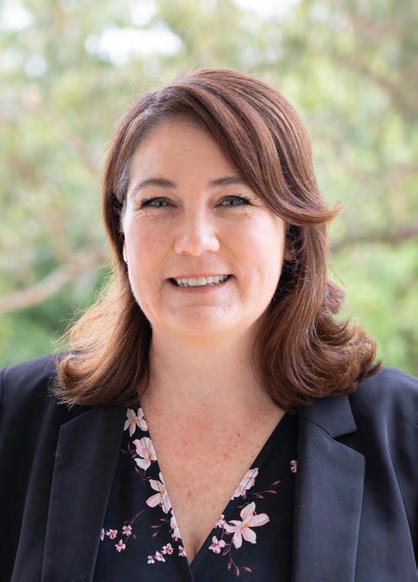
Irecently attended a presentation by Dr Danielle Einstein on the importance of uncertainty in combating anxiety in teenage girls. After the presentation, Dr Einstein approached me because she was aware of Frensham’s approach to managing smartphones and social media. She wanted to commend us for taking an early, considered position.
Dr Einstein is an Australian clinical psychologist, researcher and author, and an Adjunct Fellow at Macquarie University, widely recognised for her work on anxiety and the intersection between technology use and wellbeing. Her research and public advocacy have highlighted how social media, particularly through fear of missing out (FoMO), comparison and constant social evaluation, can intensify anxiety for adolescents at a time when identity and belonging feel especially fragile. Importantly, she has also contributed expert evidence to national policy discussions, including providing evidence to the Australian Parliament’s Senate Inquiry into the Social Media Minimum Age reforms.
In Raising Anxiety, co-authored by Dr Judith Locke and Dr Danielle Einstein, the central message is both practical and hopeful. Young people flourish when they experience belonging within clear, supportive boundaries. That combination, connection plus structure, does not limit growth, it enables it. When adolescents are supported to tolerate uncertainty (rather than escaping it through constant reassurance, scrolling, checking and comparing), they build emotional strength and self-trust.
Frensham is not simply a place of learning; it is a community with a shared purpose and a coherent set of values. Whether a student is a boarder or day boarder, she benefits from the stability of a structured environment, consistent expectations and strong pastoral care. Our routines and boundaries are intentionally designed to help girls feel safe, known and anchored.
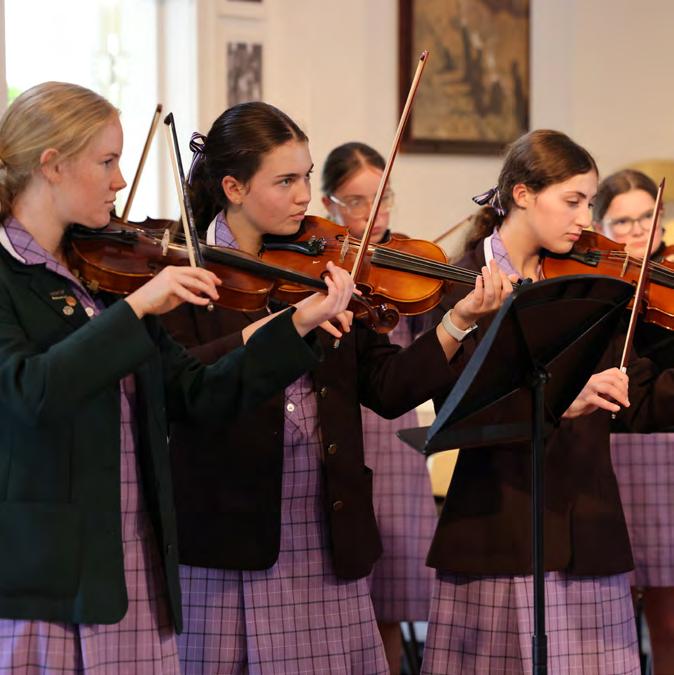
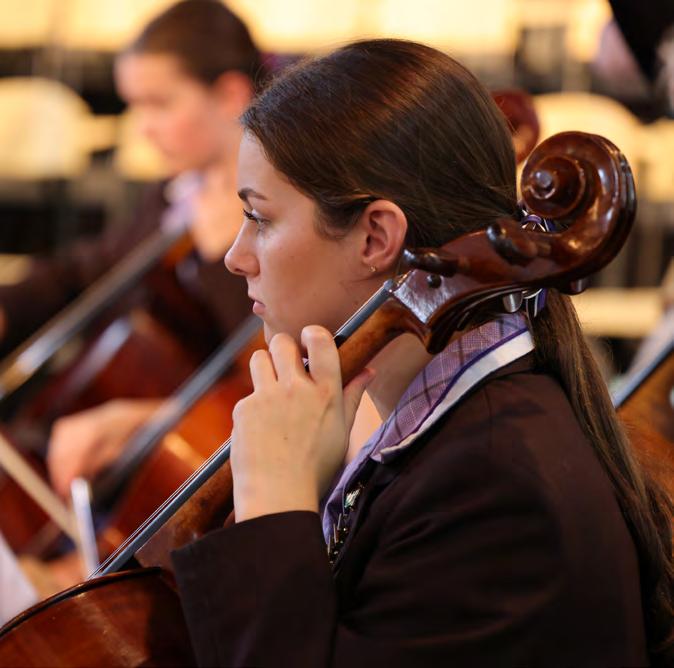
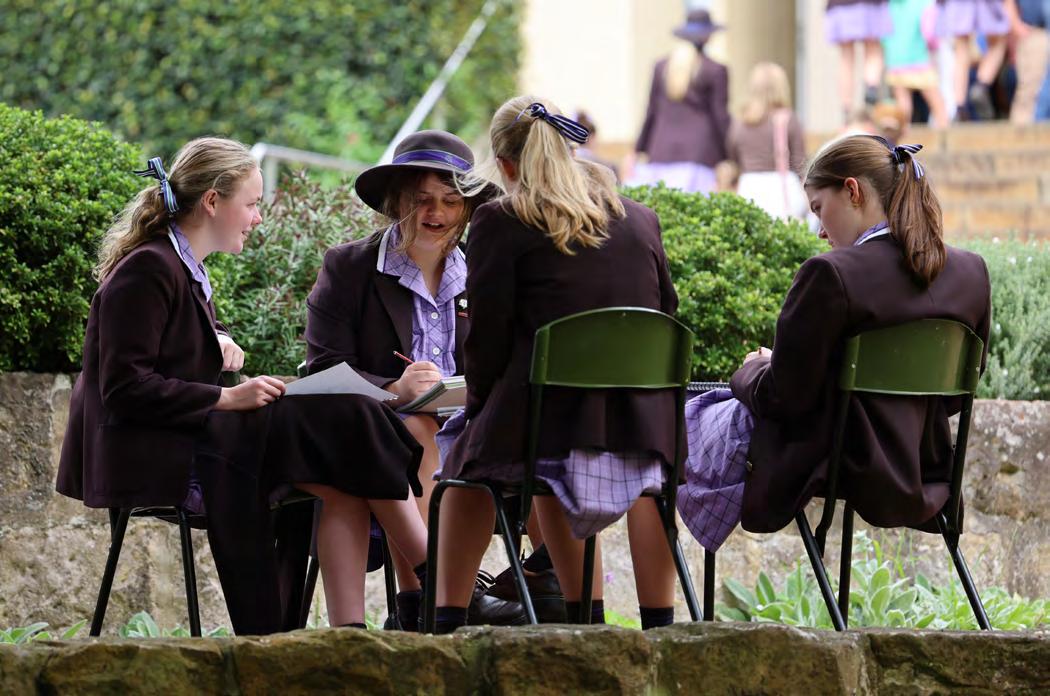
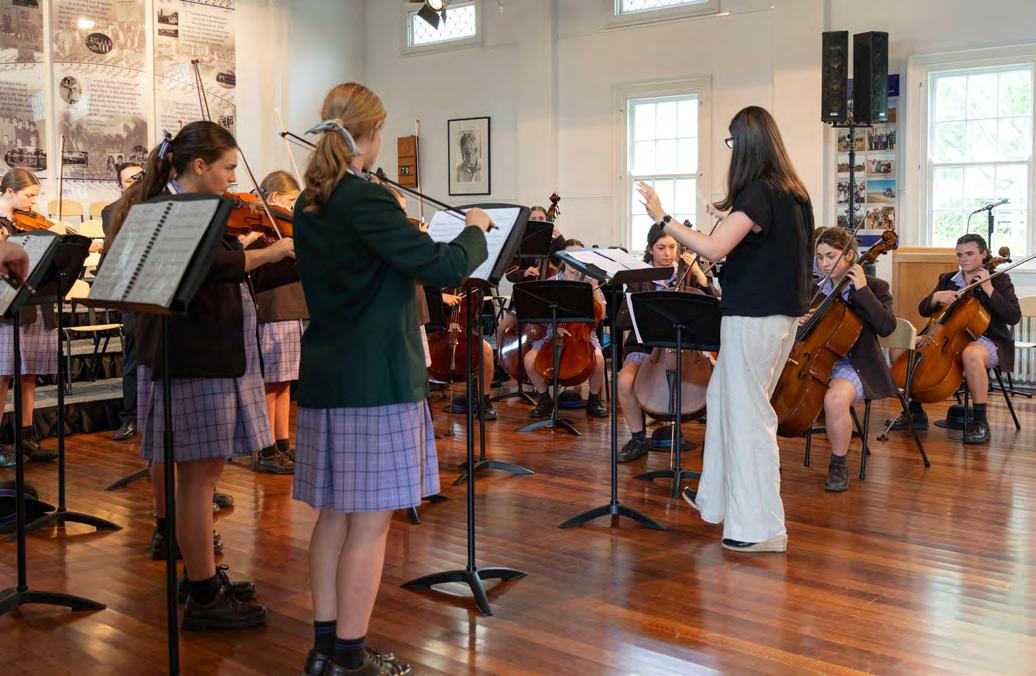
Belonging, at Frensham, is not left to chance. It is built through relationships: classrooms, teams, Houses, ensembles, service opportunities and shared traditions. In a world where online spaces can magnify exclusion and scrutiny, our girls experience what it means to be part of something real, where they are seen, valued and encouraged to contribute. Dr Einstein’s work underscores the importance of strengthening offline connection and reducing reliance on digital validation, particularly for young people still developing the skills to regulate emotion and manage social pressure.
Our approach to laptop access, smartphones and social media reflects this same philosophy. We aim to reduce noise and distraction, protect time for sleep, learning and friendship, and support girls to develop healthy habits and confidence beyond the screen. In doing so, we help students practise the essential life skill Dr Einstein spoke about so compellingly: facing uncertainty with courage, supported by a community that holds them steady.
At a time when digital platforms tend to amplify voices yet diminish genuine dialogue, our students continue to flourish, not as isolated individuals, but as members of a community committed to shared values and enduring purpose.
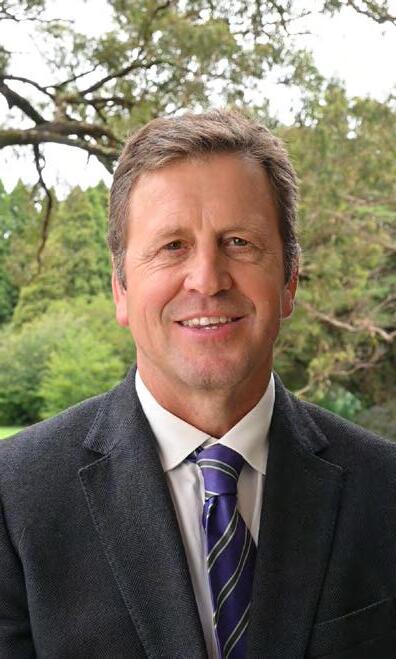
Geoff Marsh Head of Frensham Head of Frensham Schools
Nurturing Potential, Raising the Ceiling – How Frensham supports its High Potential Learners –
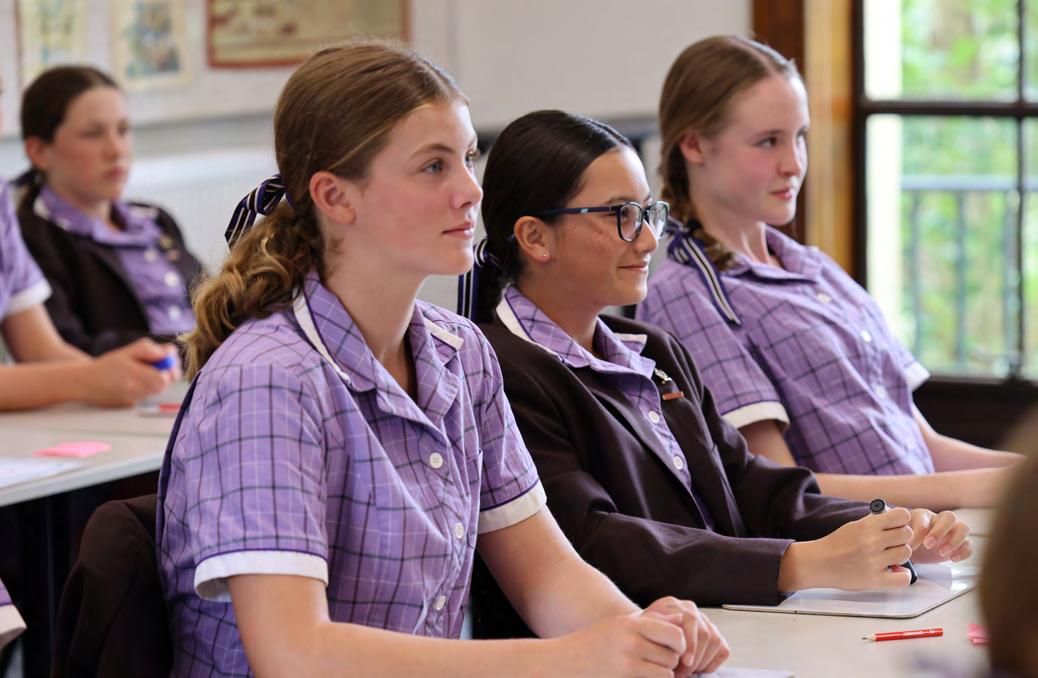
At Frensham, we hold a deep conviction that there should be no ceiling on what any student can achieve. Our personalised approach to learning, high expectations, and focused environment are designed so that every young woman can flourish. Nowhere is this more evident than in our work with High Potential Learners.
Frensham students consistently exceed expected levels of performance in a range of external assessments, including NAPLAN, Academic Assessment Services testing and, crucially, the HSC. This is the result of a deliberate, research-informed culture that challenges students to grow, and that celebrates intellectual curiosity as one of the great joys of school life.
What is a High Potential Learner?
Some schools use the phrase ‘gifted and talented’, but at Frensham we prefer the term High Potential Learner. The language matters: high potential speaks to what a student could become. It allows a student to be shaped by their own agency and effort, enabled by the right support around her. It is a hopeful, forward-looking description.
High Potential Learners can be difficult to identify, because their abilities do not always announce themselves in obvious ways. Broadly speaking, these students may show some of the following characteristics:
1. Rapid information processing: They grasp new concepts much faster than their peers, often requiring fewer repetitions to master material.
2. Advanced metacognition: They possess a sophisticated awareness of how they learn, and are often able to approach complex problems using creative or unconventional methods.
3. High curiosity and intensity: They tend to ask “why” rather than simply “what”. This is a detective-like drive to understand things at a deeper level.
4. Asynchronous development: This is perhaps the most important characteristic to understand. A student’s intellectual capacity may be well ahead of her emotional or social maturity. She may be capable of discussing complex philosophical questions while still finding adolescent friendships genuinely challenging.
Understanding this last point is central to how Frensham supports these students. High Potential Learners are not simply ‘easy’ students who look after themselves. Without the right challenge, mentorship, and care, their potential may never fully develop. They need bespoke support which is precisely what our program is designed to provide.
A Program Grounded in Research
The Frensham High Potential Learner Program is grounded in contemporary research and guided by Gagné’s Differentiated Model of Giftedness and Talent (DMGT 2.0), which is one of the most respected frameworks in gifted education. This model distinguishes between natural ability (giftedness) and the systematically developed competency that results from nurture, effort, and environment (talent). It places educators at the centre of the talent development process, which is entirely consistent with who we are as a school.
Nurturing Potential, Raising the Ceiling
At the centre of our program is a genuine mentoring relationship. High Potential Learners at Frensham are paired with academic staff who walk alongside them throughout their journey. Mentors help mentees set goals, navigate challenges, and develop the self-awareness that turns raw potential into lasting achievement. This is not a bureaucratic process. It is a meaningful, ongoing conversation between a student and someone who knows her well and is deeply invested in where she is headed.
Our program goes beyond academic outcomes by helping each student understand who she is as a learner, and supporting her to become the person she is capable of being.
Academic and Pastoral Care
Each identified student meets regularly with Diana Ganapathy, our Coordinator of High Potential Learners. These meetings provide an opportunity to reflect on progress, celebrate growth, and ensure that each student feels genuinely known.
From these discussions, we develop a plan for the student’s learning experience in collaboration with Lynne Slarke, our Head of Diverse Learning. This is often captured in a formal Individual Plan, which helps guide the student’s day-to-day experience in the classroom. It may outline appropriate extension opportunities, the type of materials provided, or ways the student can engage more deeply in class learning.
Many students also access additional opportunities beyond the classroom as part of this plan. In very rare cases, subject acceleration may be offered to broaden a student’s horizons and ensure they continue to be appropriately challenged.
It is important to recognise that students who are high potential learners can face particular social and emotional challenges. This could include perfectionism, anxiety, or the frustration of being under-challenged. For this reason, pastoral care is woven throughout our approach.
Identifying High Potential Learners
Identifying High Potential Learners is one of the more complex aspects of our work. Potential does not always express itself in the ways we might expect. It can be masked by shyness, by a learning difficulty, by cultural background, or simply by a lack of opportunity. Other proxies for learning can also make this more complex. We take an inclusive, multifaceted approach to identification precisely because we do not want to miss any student.
Our identification process draws upon a range of data sources: standardised cognitive and academic testing (including the Cognitive Abilities Test, NAPLAN and Academic Assessment Services assessments), teacher observations and nominations, parent input, psychometric reports, student portfolios, work samples, and student interest surveys. No single piece of data tells the whole story, rather it is the triangulation of evidence that gives us the clearest picture.
Crucially, identification is not a one-time event. It is an ongoing process, reviewed regularly to ensure we are responding to each student’s evolving needs.
Frensham has always been a school that believes in the dignity and potential of every young woman in its care. Our High Potential Learner Program is rigorous and researchinformed, but always warm and studentcentred.
If your daughter is a curious, driven, or academically advanced learner, we would love to speak with you about how Frensham can support her to go as far as her potential will take her.
For more information about our High Potential Learner Program, please contact the Director of Studies.
Nathan Bessant Director of Studies
Frensham Camp Week
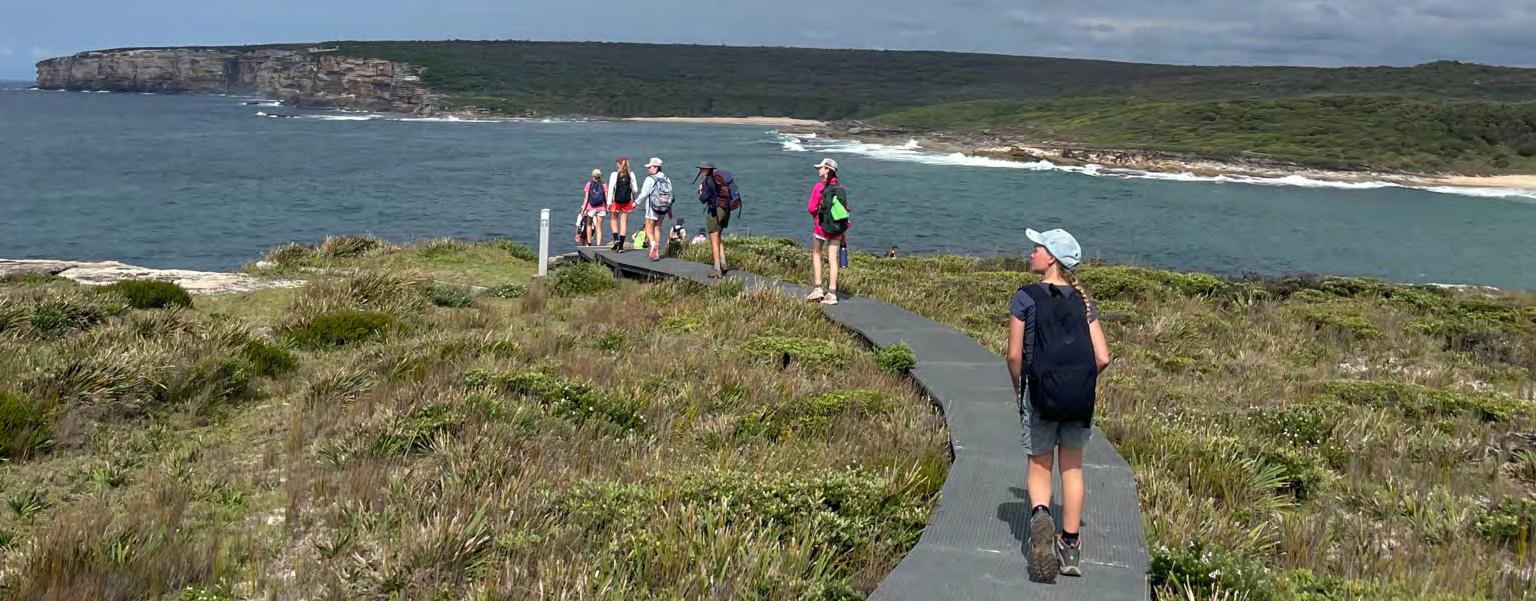
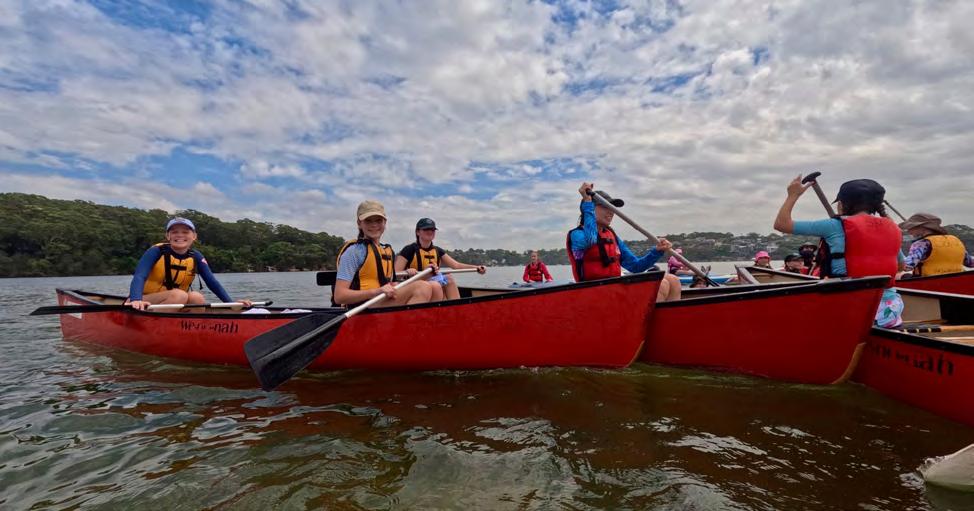
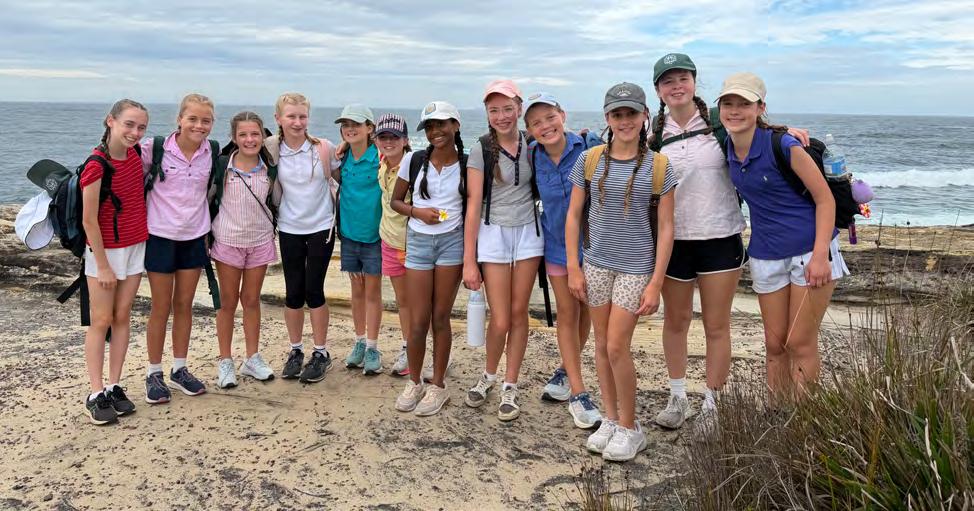
At Frensham, Camp Week is the physical embodiment of the Jamieson Program. Through immersion in nature, students discovered their strengths, challenged themselves, and built resilience, all while forming lasting connections with their peers. Each year level experienced a camp tailored to their growth and learning.
Year 7: Exploring and Connecting
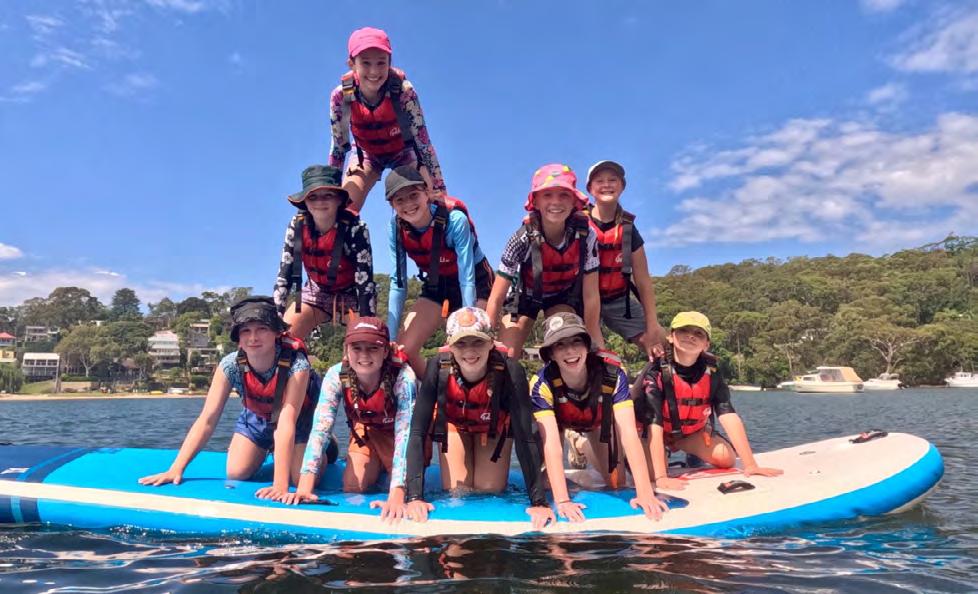
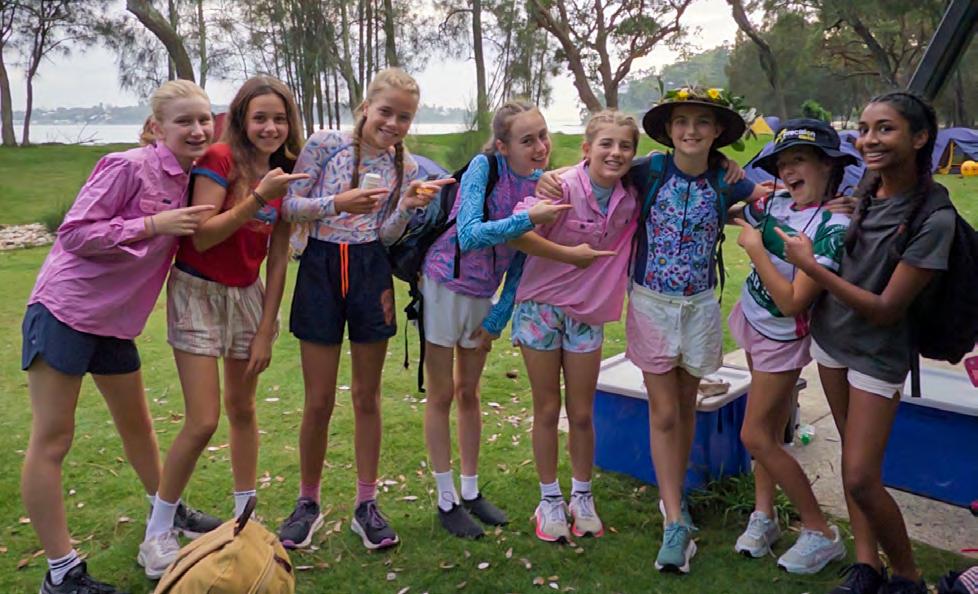
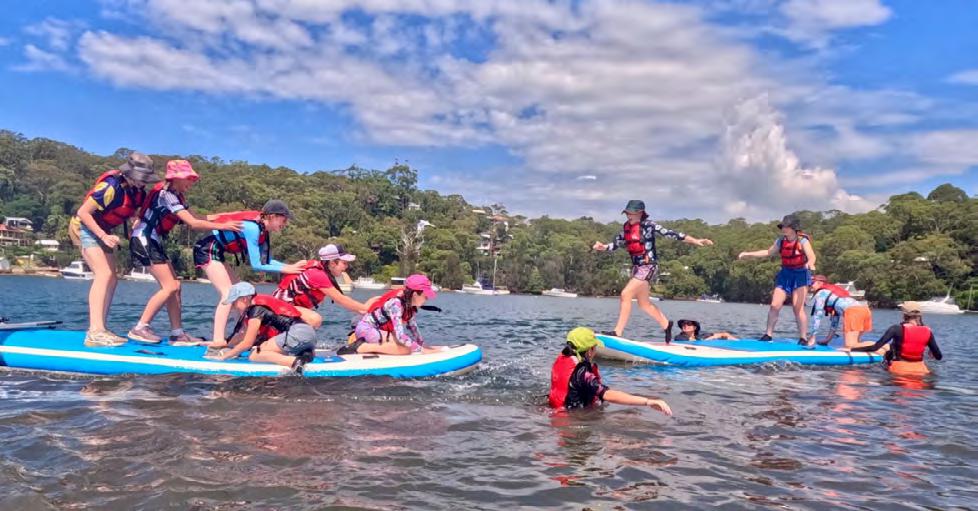
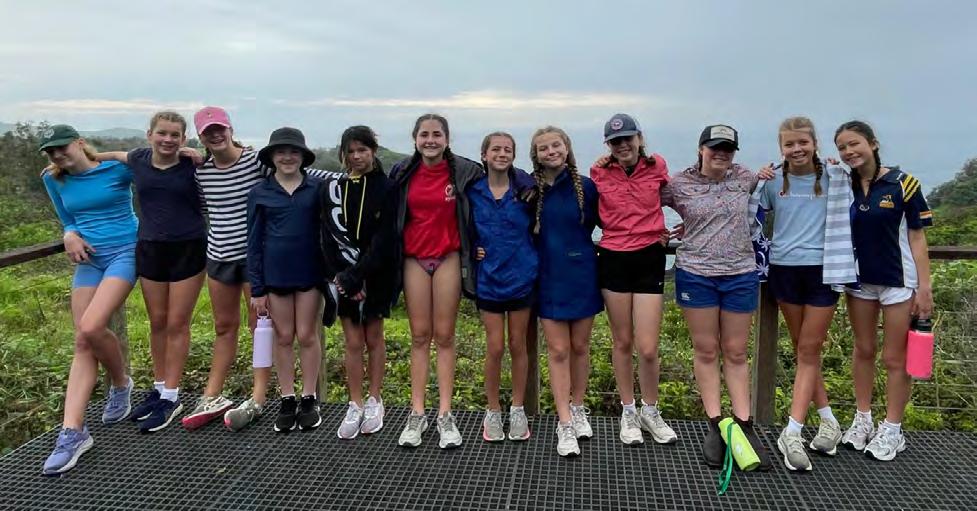
Year 7 Camp took place at Bonnie Vale in the Royal National Park, where students camped on site and spent their days bushwalking, canoeing and stand-up paddleboarding. Blessed with sunny weather, the girls particularly thrived during the water activities, embracing the challenge of learning new skills and supporting one another along the way.
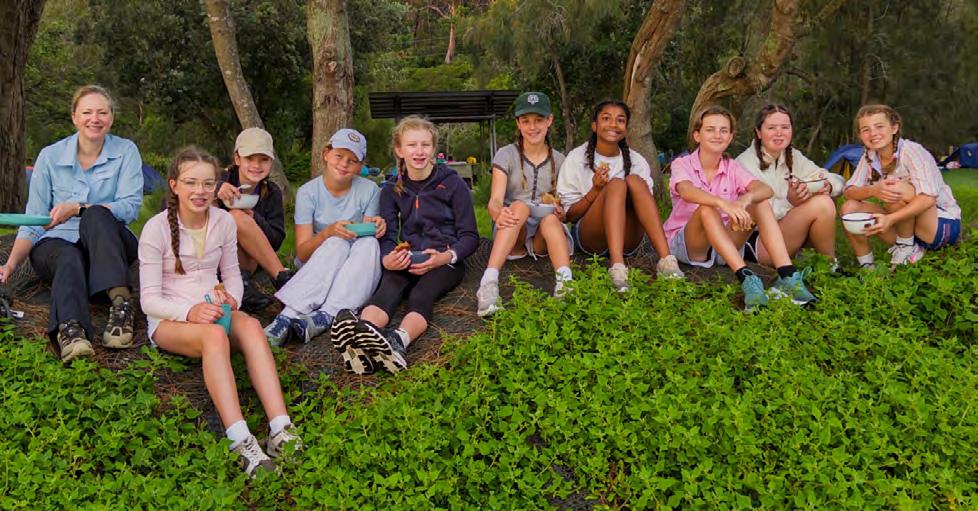
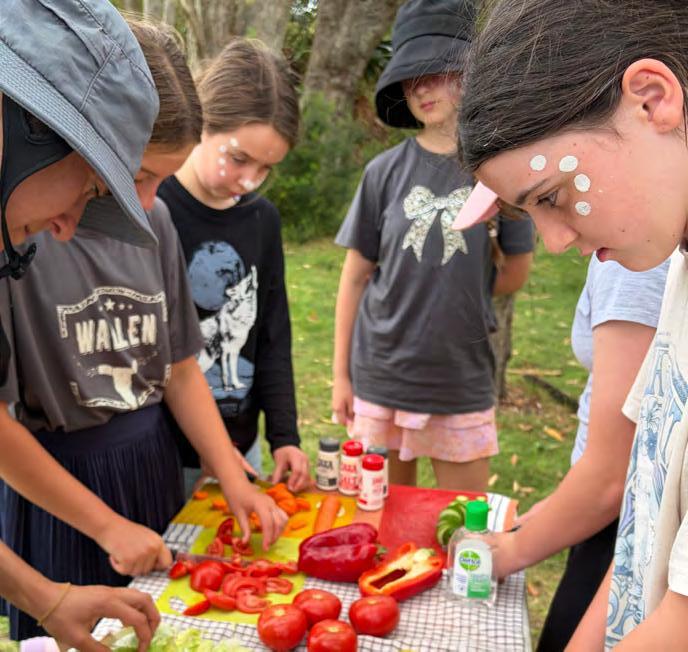
The camp encouraged reflection on personal strengths and goal setting, while also providing plenty of memorable moments. The girls tackled camp cooking (with a few vegetable
casualties!), forged new friendships and shared the experience of life outdoors together. It was also heartening to see traditions continue, with a ‘Birthday Hat’ created on Wednesday morning to celebrate Lola Gilkeson’s birthday. From paddling on the water to hiking through the bush, the camp was filled with moments that will no doubt become stories they tell for years to come.
What our Year 7 students learned at Camp
“Once you get into a task it’s not that hard and the 12km walk we all didn’t want to do was really fun once you did it.”
“I learned that if I push myself out of my comfort zone and try my best I would get the best outcome possible.”
“That I am more independent than I thought I was at the start of camp. Camp made me realise this since I had to keep my tent tidy and I had to use intuition when doing jobs like packing my bag.”
Frensham Camp Week
Year 8: Discovery and Adaptability
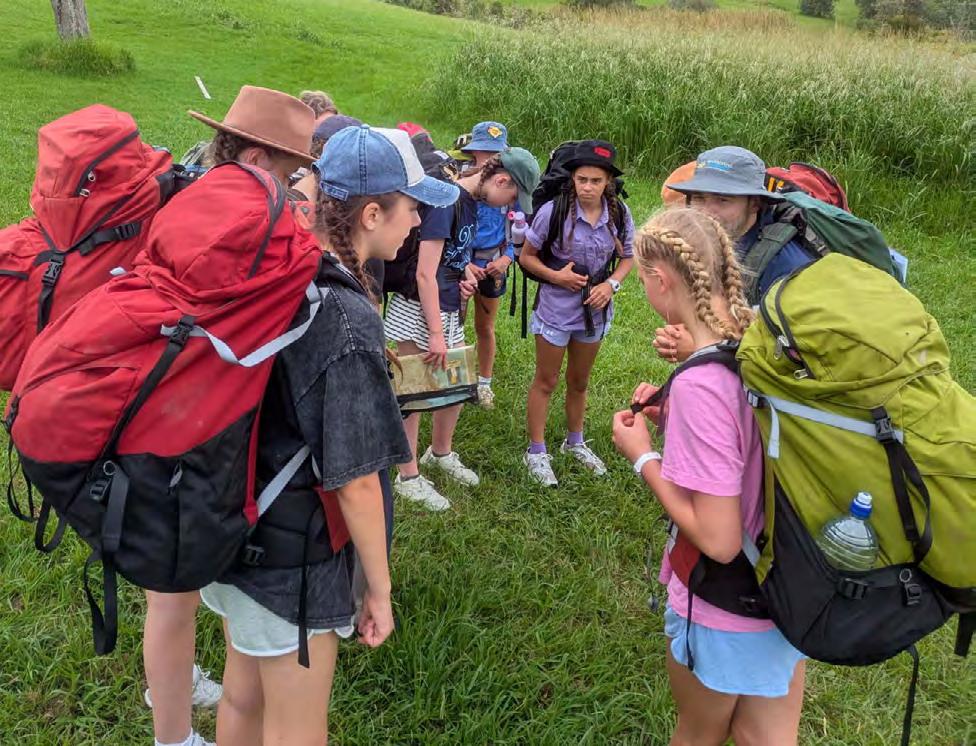
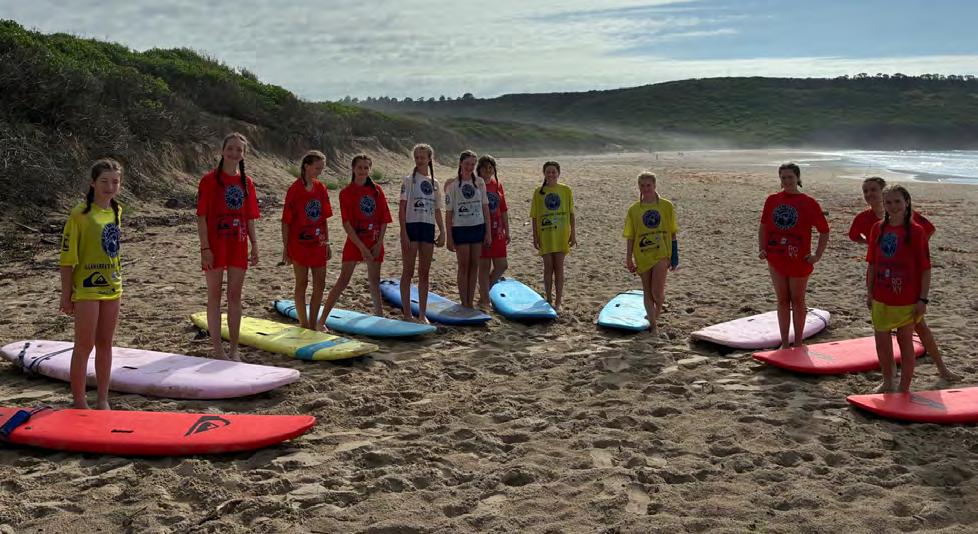
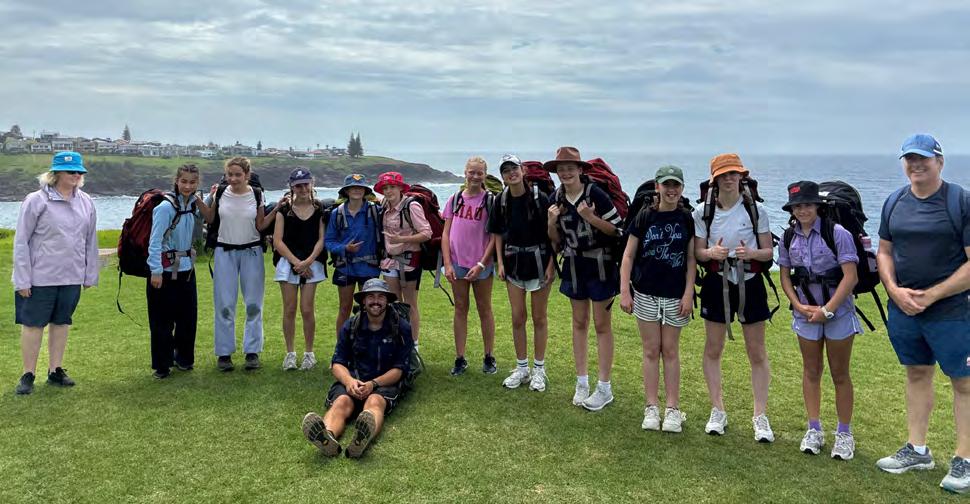
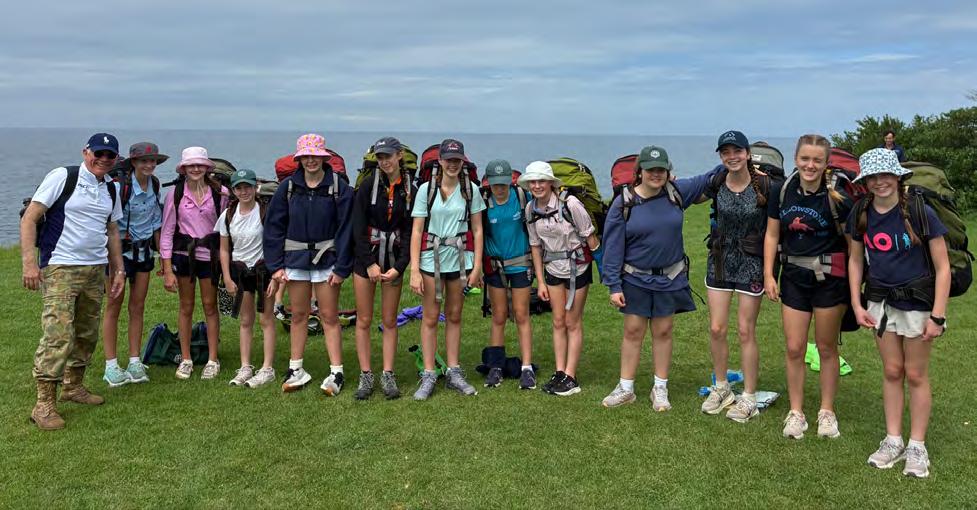
Year 8 Camp at Killalea and Easts Beach offered a dynamic mix of bushwalking, hiking, surfing and canoeing. Students strengthened peer connections while adapting to a range of challenges, including stormy weather and even a bus breakdown on the journey home. Carrying packs for the first time, they developed practical outdoor skills and resilience that will support them as they prepare for the Duke of Edinburgh Award in Year 9.
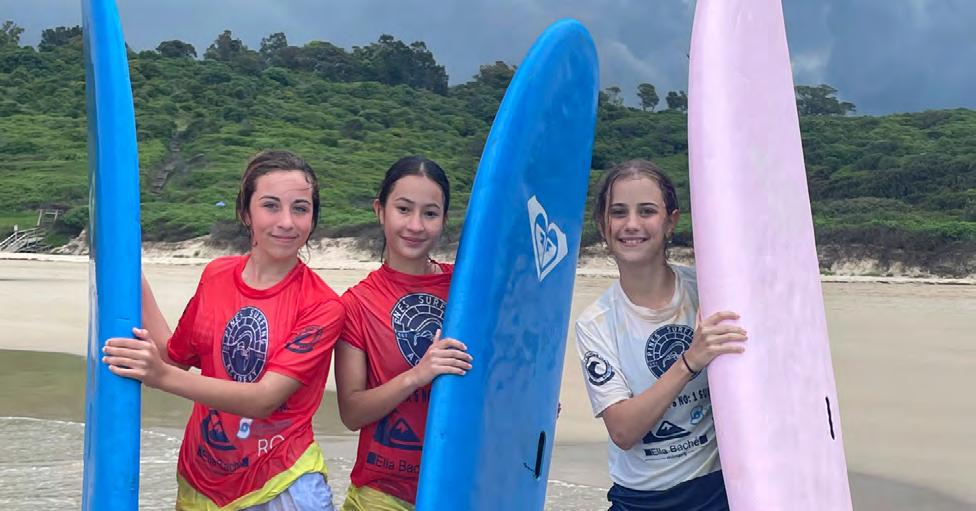
Surfing quickly became a favourite activity, with many students standing up on their boards for the first time or simply enjoying time in the water. Long hikes and water-based activities filled the days, while evenings brought lighter moments, including singing and performance battles and a reflective beach walk. Staff also noted how well students collaborated with peers they had not previously spent much time with, encouraging one another and learning how to uplift others even while facing their own challenges.
What our Year 8 students learned at Camp
“That I am actually stronger than I thought I was while carrying the big packs.”
“I can keep on going when I want to give up.”
“I learnt that I am good at socialising with other people in my camp group, being able to have a good conversation with anyone within my group.”
Frensham Camp Week
Year 9: Challenge and Growth
Year 9 Camp in Morton National Park combined canoeing and bushwalking for the Bronze Duke of Edinburgh Practice Journey. Students learned expedition skills, navigated challenging terrain, and supported one another. This Year group stood out as a true embodiment of grit, gratitude, and good humour. All Year 9 students are in the midst of completing their adventurous journey and are on track to complete their Bronze Award in Term 2 before starting their Silver Award.
What our Year 9 students learned at Camp “I learned that I could hike up the mountain while carrying a heavy pack, and learned to navigate the way around by only using a map.”
“I learnt that I am good at supporting people and if I help people then they will help me back.”
“I learned that if I push myself I can do so much more than I thought I could.”
Year 10: Adventure and Teamwork
Held in Bungonia National Park, Year 10 Camp continues the Duke of Edinburgh journey at the Silver level, with bushwalking and caving forming the core experiences. Students learn to navigate, support each other, and manage expedition backpacks, all while exploring the Shoalhaven River.
The camp emphasises camaraderie, communication, and resilience. Every student successfully completed caving challenges. It was a true demonstration of “mind over matter.”
What our Year 10 students learned at Camp “I learnt to persevere, especially when it was challenging.”
“I learnt that if you have a positive mindset going into tough tasks where you are pushed to go out of your comfort zone, you are more likely to get more out of it, and to enjoy it more.”
Frensham Camp Week
“When I first found out that we were going caving I was very nervous, but when I did it I really enjoyed it and would definitely do it again.”
Year 11: Leadership in Action
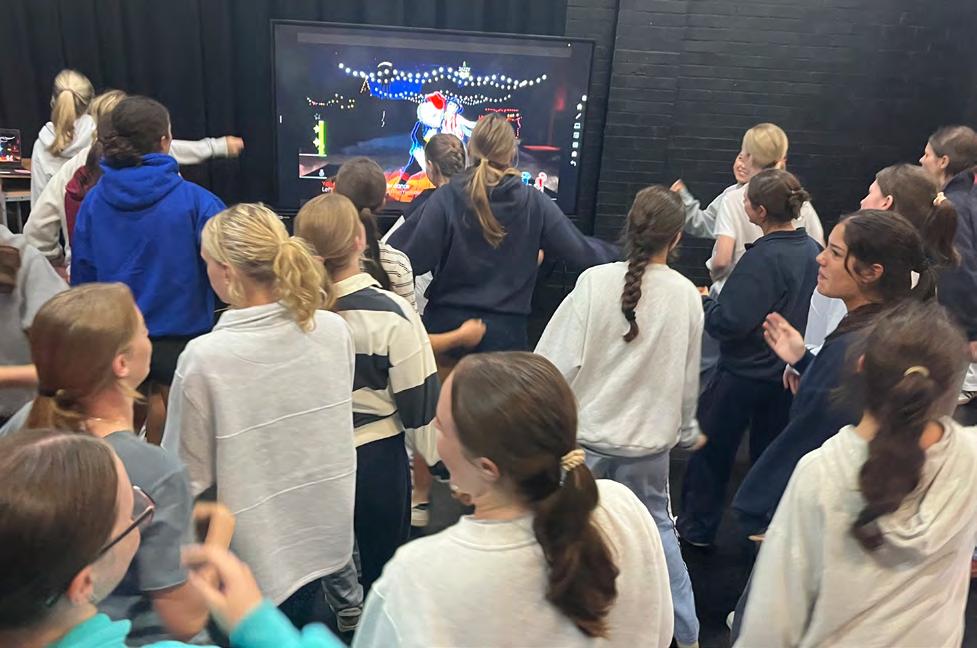
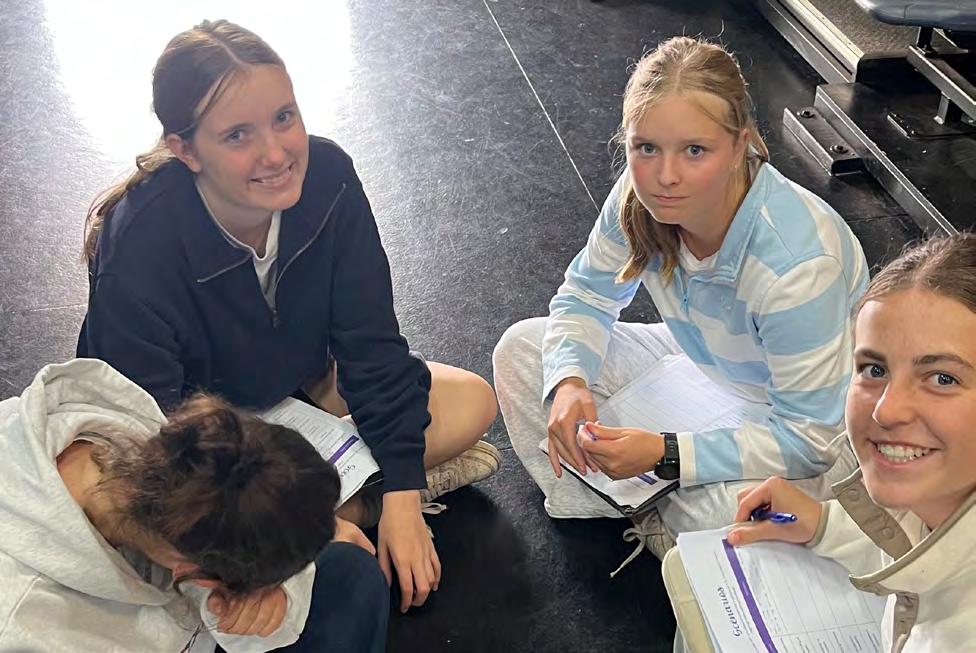
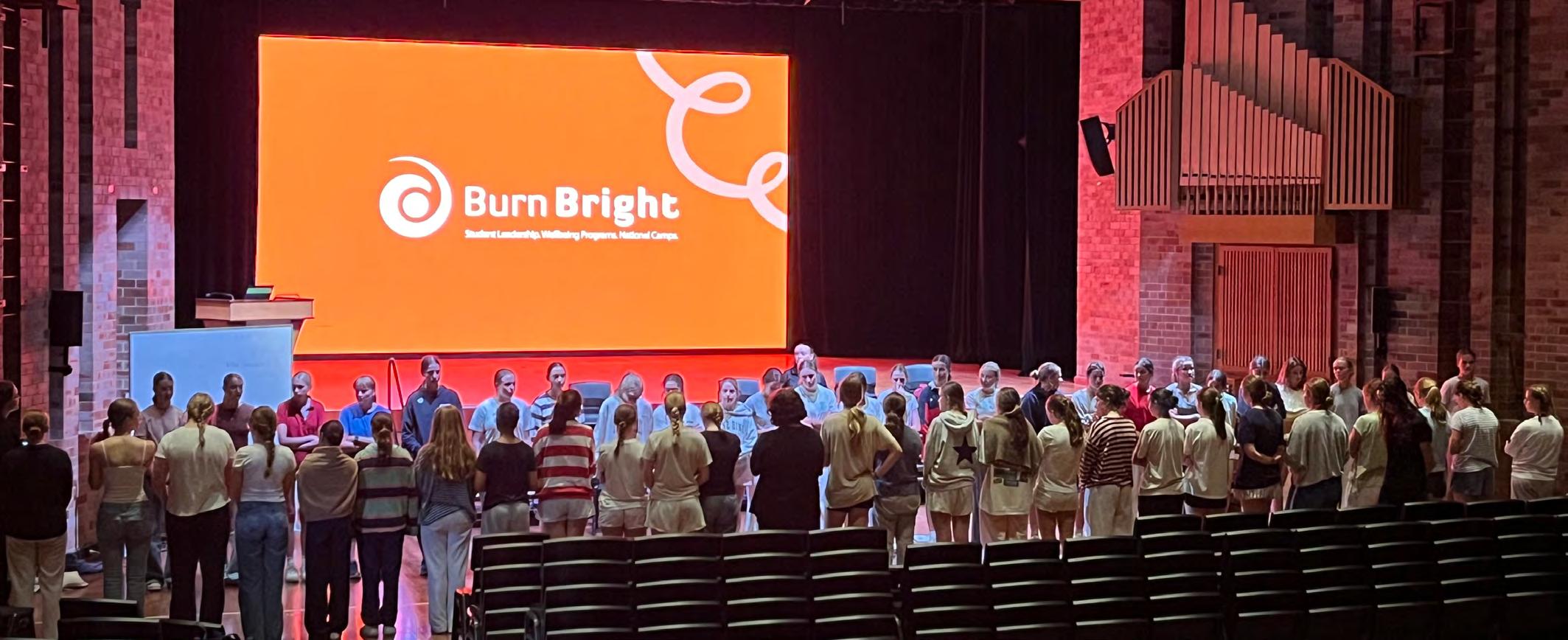
Year 11 Leadership Camp takes place onsite at Frensham, incorporating a blend of internal and external providers. Students sleep in Linden Turner House while engaging in leadership, careers, and character education sessions with Frensham Executive, Senior Staff, and alumni.
Leadership specialists from Burn Bright guide girls in building the foundations to lead themselves and others. Activities extend beyond the campus, with The Urban Challenge in Sydney, bowling, and shared meals in Mittagong fostering collaboration and reflection on personal leadership styles.
What our Year 11 students learned at Camp “That leadership is not loud.”
“I learnt how I can help lead Frensham for the future.”
“Although I like to lead and take control of some situations, I also like to step back and let other people manage the group, something I’m grateful for especially when I’m tired and hot.”
Frensham Camp Week
Year 12: Focus and Preparation
For Year 12, the Study Camp provided a focused and supportive start to the final year at Frensham. Based on site at BryantMcCarthy House, the program combined academic preparation with opportunities for reflection as students set their intentions for the year ahead. Sessions led by Frensham Executive, Senior Staff and external providers supported students to think about both their academic goals and their personal wellbeing as they approached this culminating stage of their schooling.
Connection and community remained central to the experience. Shared meals in Mittagong and a visit to Canberra, including tours of the Australian National University and the University of Canberra, allowed students to explore future pathways while strengthening bonds within the cohort.
Highlights included an inspiring session with Glen from the Hopeful Institute on overcoming adversity and pursuing your ambitions, a nutrition workshop with The Biting Truth focused on fuelling the brain for optimal performance, and a “Brand New You” session exploring personal identity and presence. Students also enjoyed a celebratory dinner at Il Trullo in Mittagong, and joined Year 11 for a careers panel featuring Old Girls who shared their varied and impressive pathways after school.
What our Year 12 students learned at Camp
“At the Year 12 Studies Camp, I learned that I am more motivated than I realised. Hearing the speakers talk about their experiences made me reflect on my own mindset and goals. It reminded me that believing in myself and staying focused can make a big difference in how I approach this year.”
“I learned that if I dedicate myself to what I want to achieve then I can. That my mental and physical health are incredibly important in allowing me to achieve my best outcome in school.”
“I learned that I have the capacity to remain motivated and resilient when studying.”
Thank you to our wonderful staff!
The wonderful experiences our students had at Camp week would not have been possible without the outstanding support of Frensham’s staff who accompanied them on their journeys. The Year Coordinators worked tirelessly to ensure that our students could take risks in safe and supportive environments and helped students greater understand their true potential and the impact that they can have in their individual environments.
Lucy Dalleywater Director of Activities
Celebrating Community at the Autumn Fête
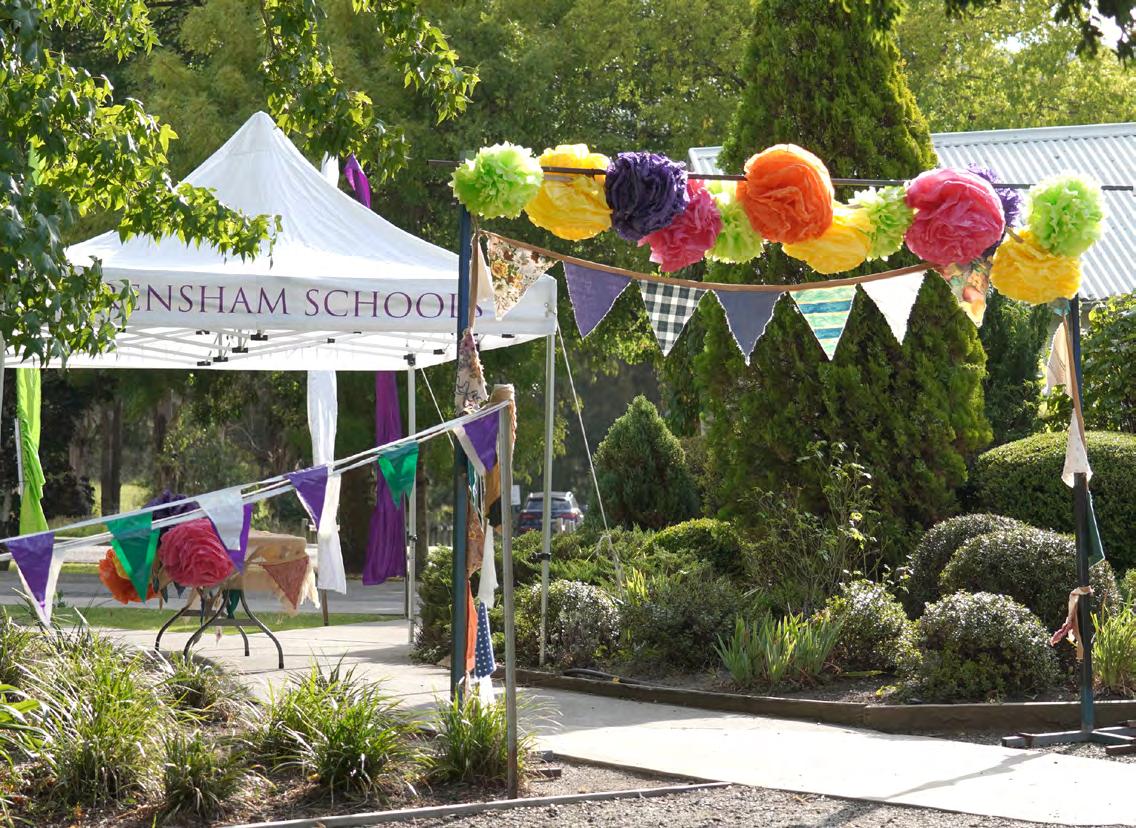
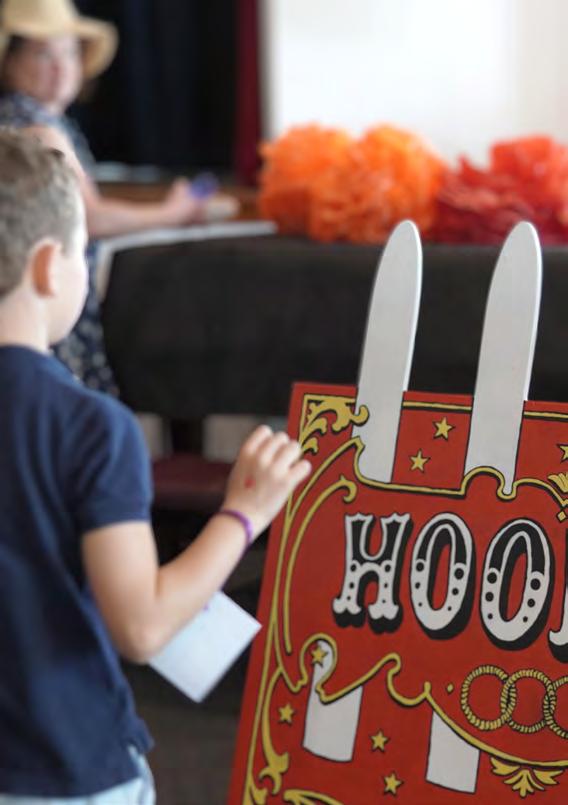
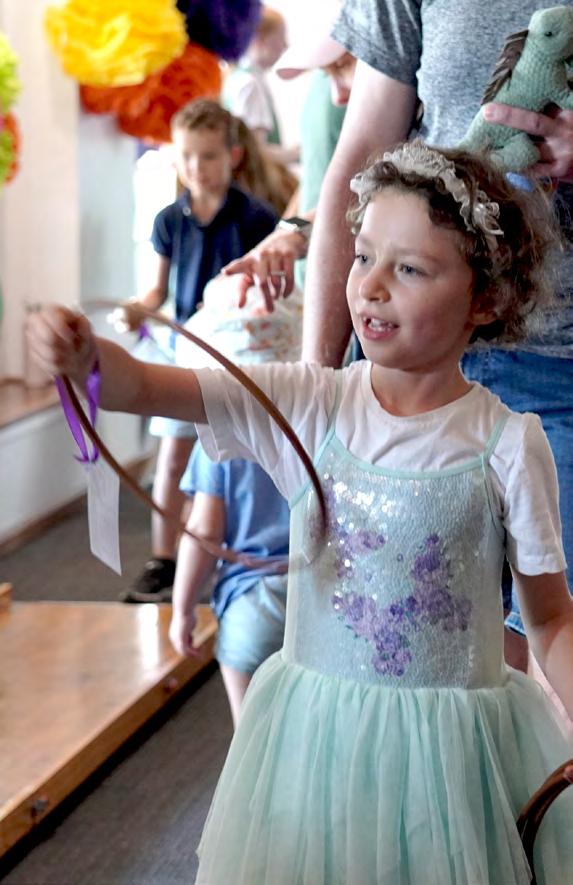
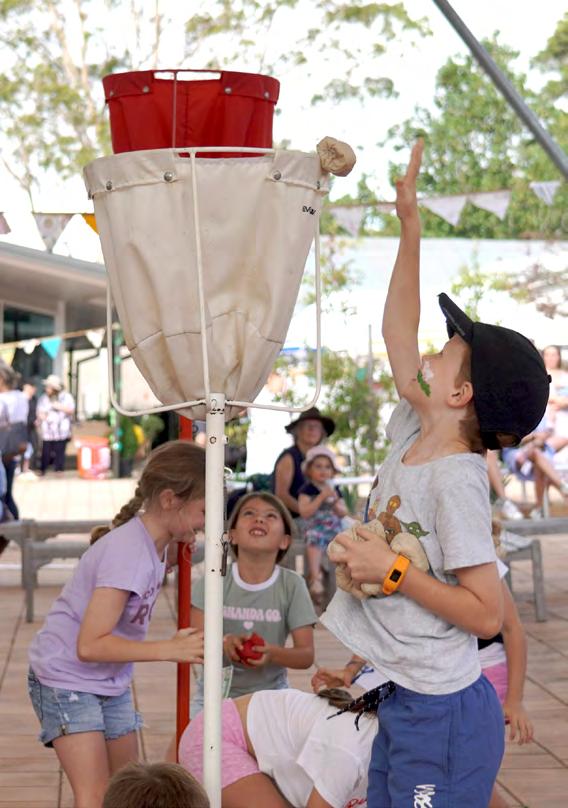
Recently, I have been reminded of the incredible strength of our school community. Each day, I see families chatting at pick-up, students supporting one another in the playground, and staff working together with genuine care. It is this spirit of connection that makes our School such a special place, and it is what we look forward to celebrating at the Frensham Junior School Autumn Fête, on Saturday 28 March.
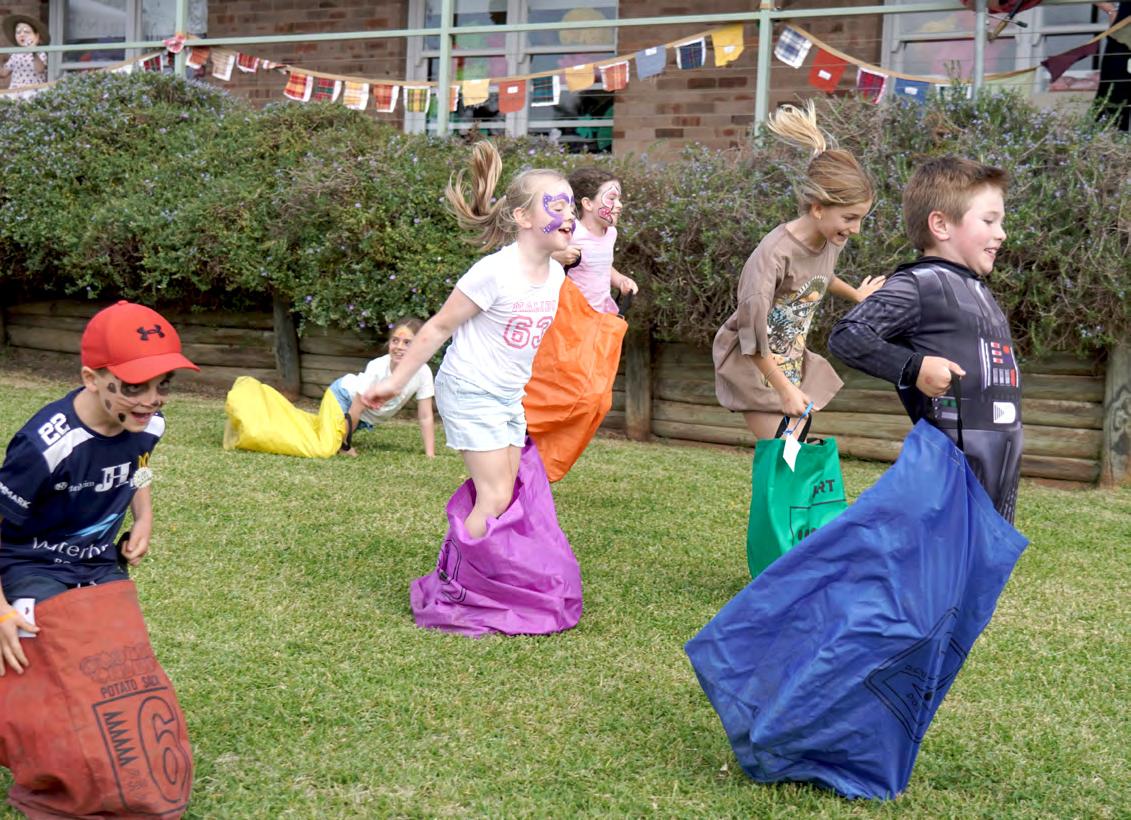
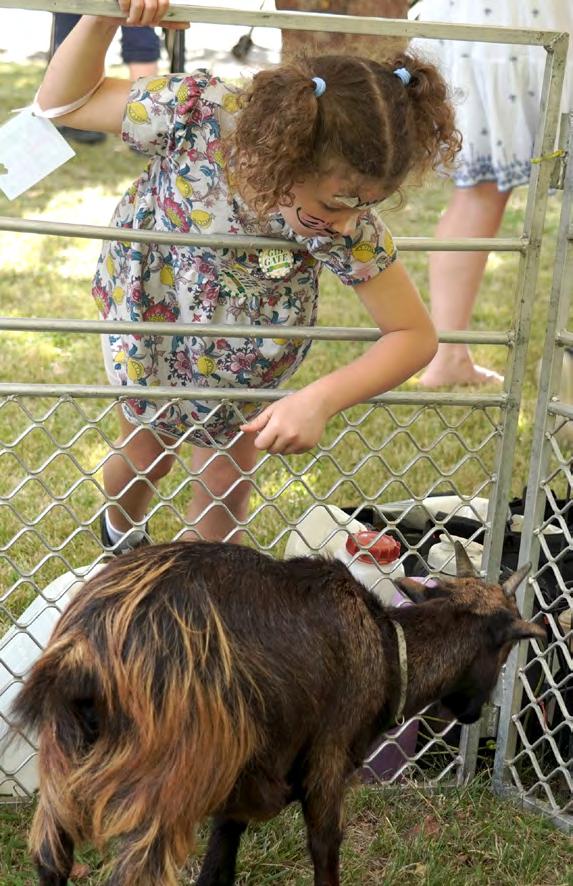
The Autumn Fête is an exciting event in our calendar, not just because of the rides, food stalls, and entertainment, but because it brings our community together. It is a day where students demonstrate their talents, where parents meet new faces and showcase the community they belong to, and where faculty and parent volunteers stand side-by-side to create something joyful for our children.
Our Autumn Fête centres on community and belonging, two values that sit at the heart of our philosophy. When children feel connected
to their peers, their teachers, and the broader school community they thrive. They develop confidence, resilience, and a sense of identity that carries with them well beyond the classroom.
The day will give us a chance to strengthen those connections. Whether you are baking for a stall, helping with setup, donating items, or simply coming along on the day, your involvement sends a powerful message to our students: you belong here, and this community is yours.
I want to extend my heartfelt thanks to the many volunteers who have already put in countless hours of planning. Events like this don’t happen without dedication, creativity, and teamwork, and we are deeply grateful.
I look forward to seeing you all at the Fête— sharing a laugh, enjoying the festivities, and celebrating the caring, supportive community that makes Frensham Junior School such a wonderful place to learn and grow.
Lucy Gregory Head of Frensham Junior School
Join our school community at the Frensham Junior School’s Autumn Fête for an afternoon of food, music and games
Saturday 28 March 2026 from 1.00pm to 5.00pm
Gib Gate Campus Old Bowral Road Mittagong frensham.nsw.edu.au
Adventure and Teamwork: Years 5 & 6 Camp
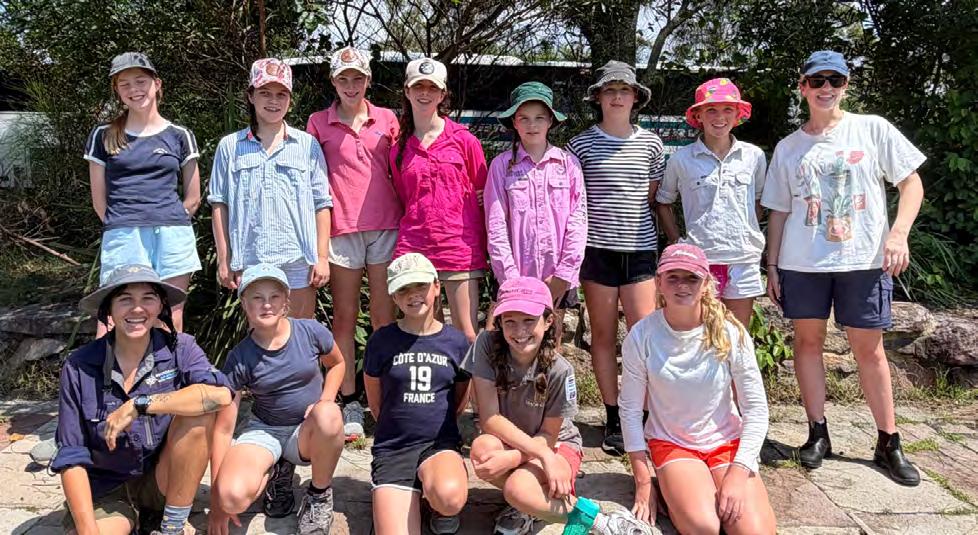
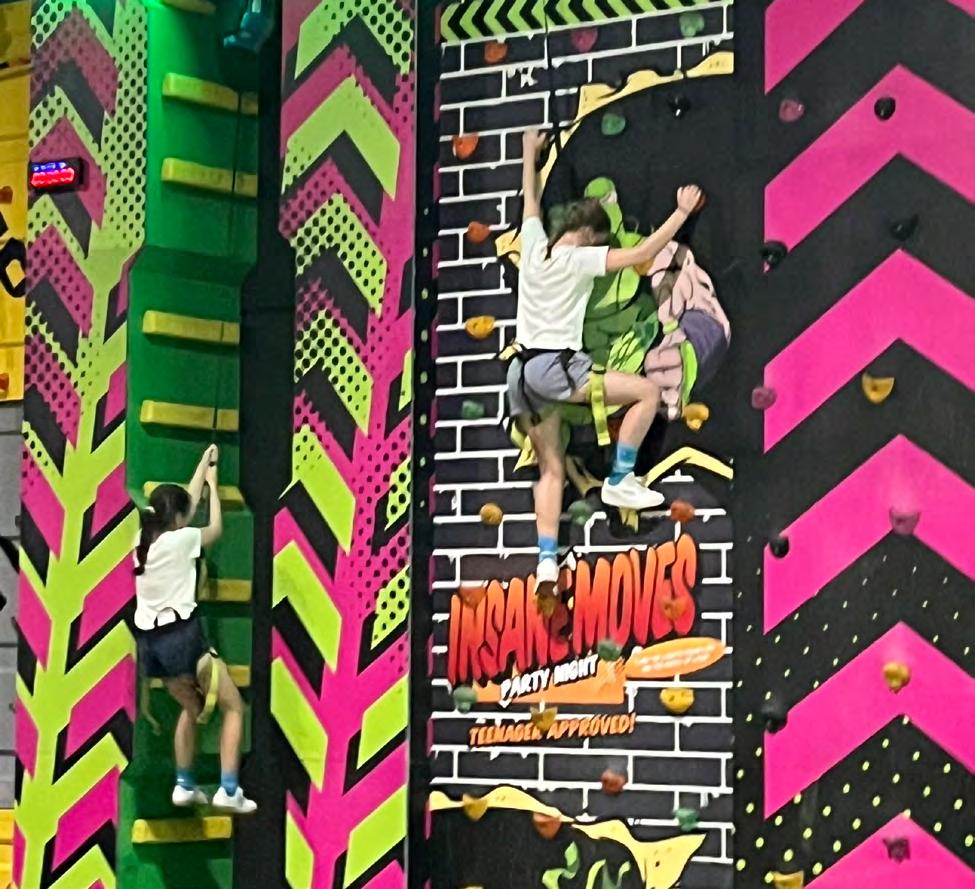
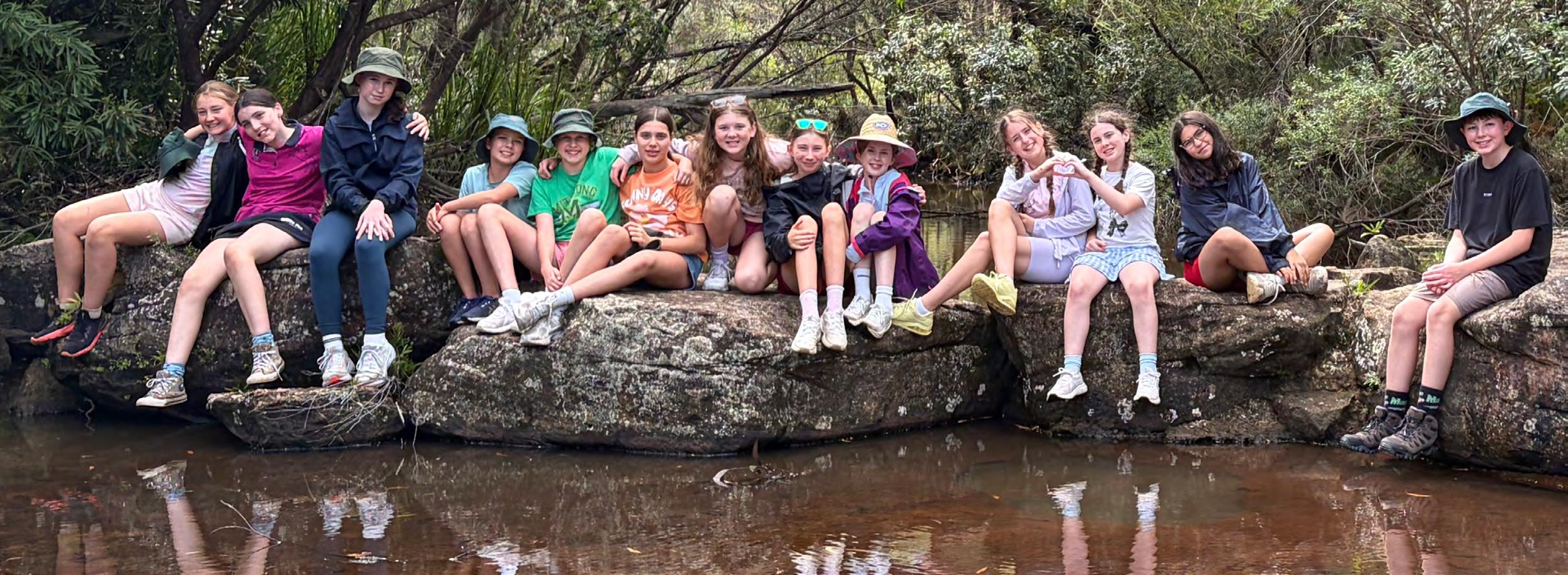
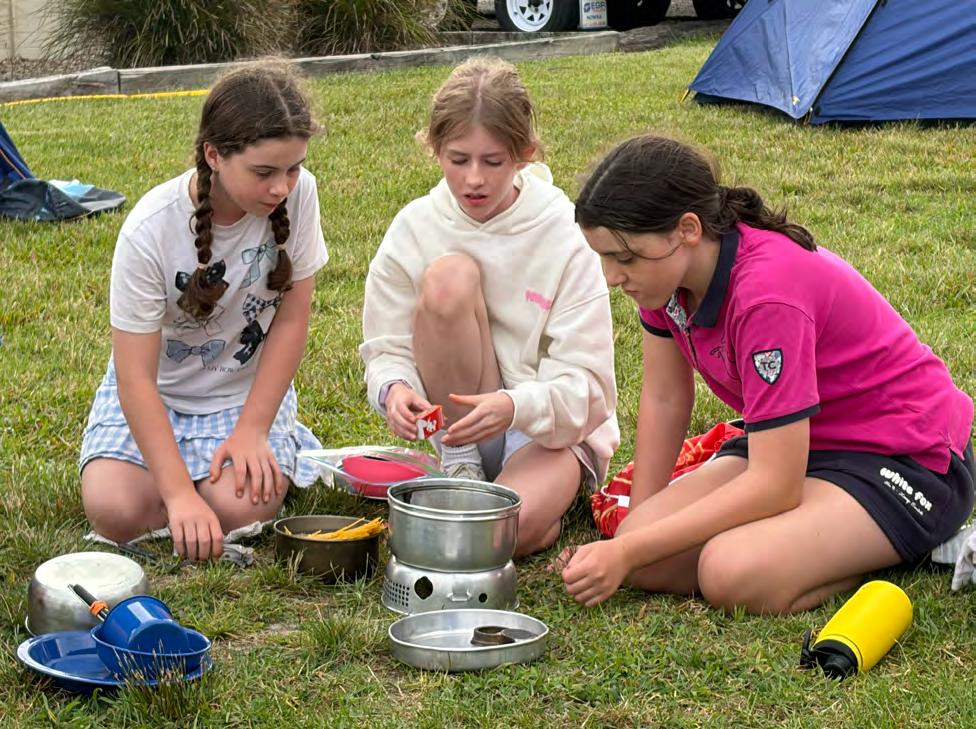
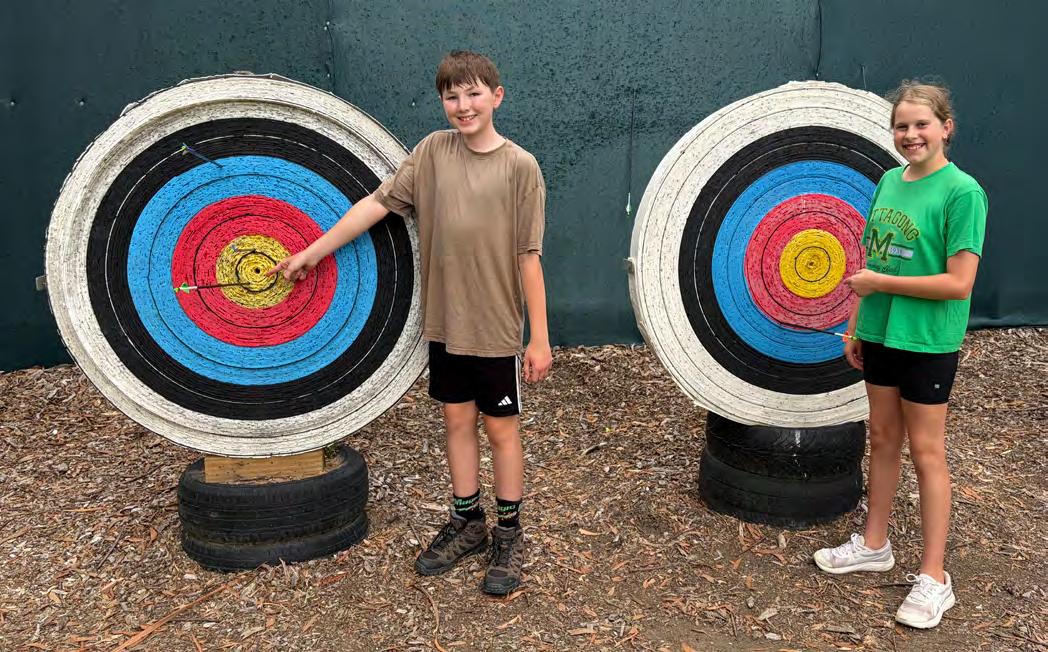
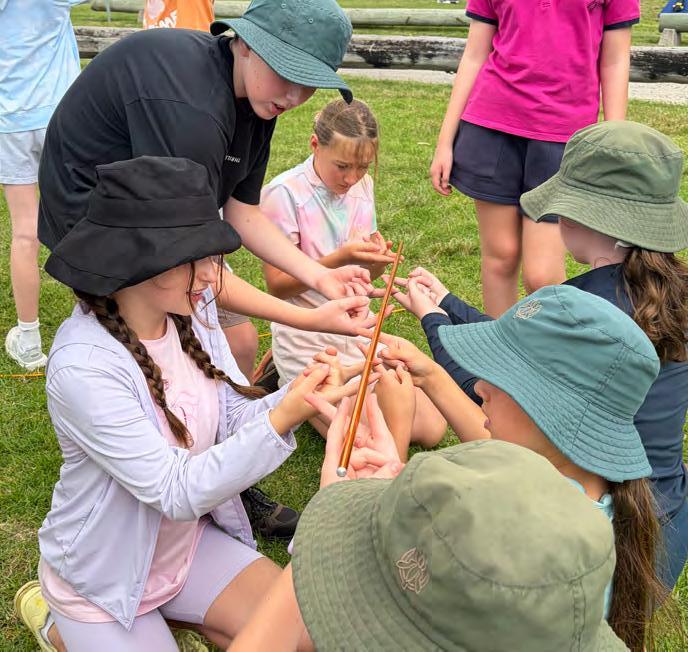
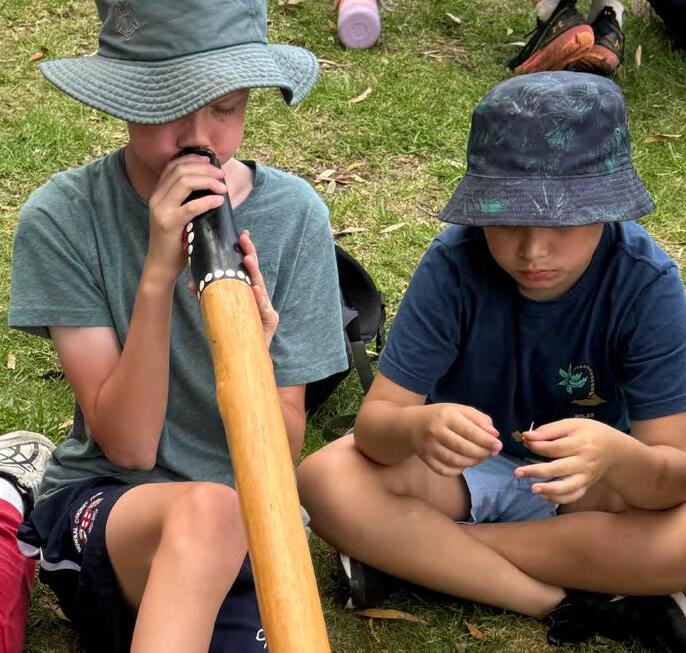
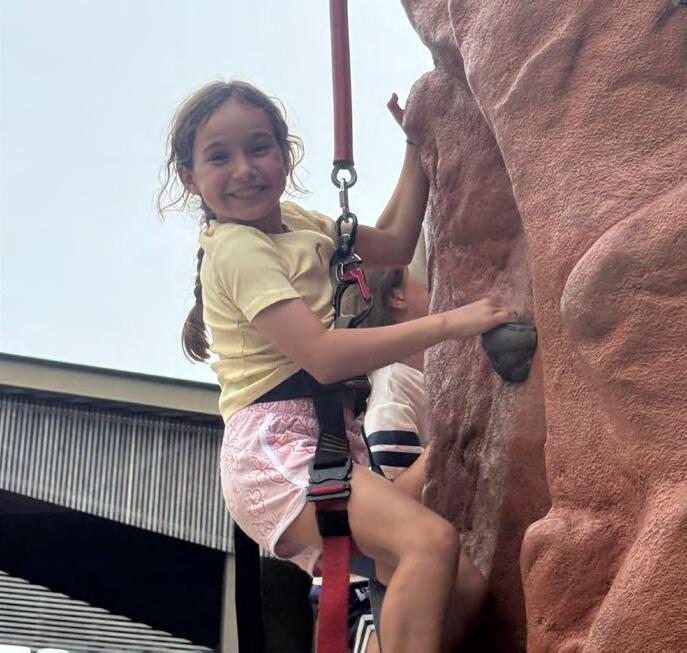
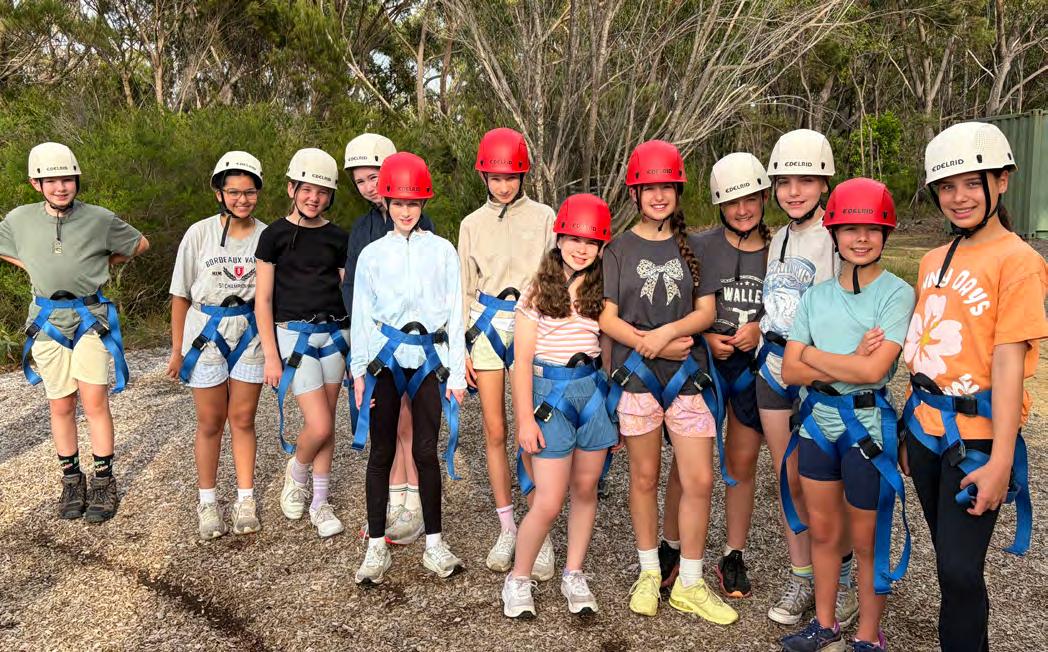
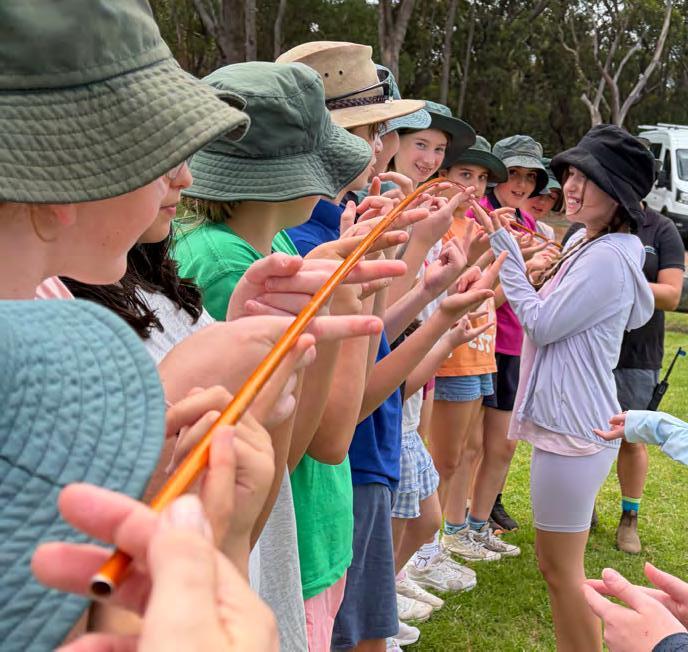
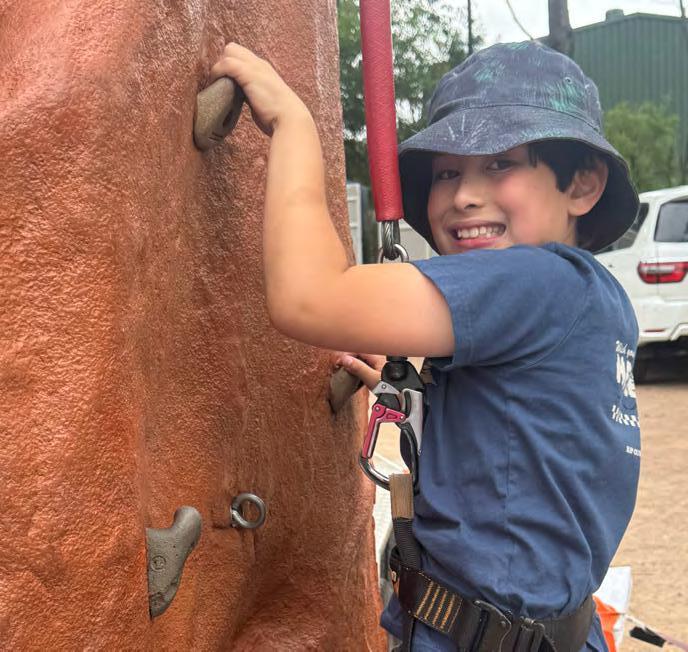
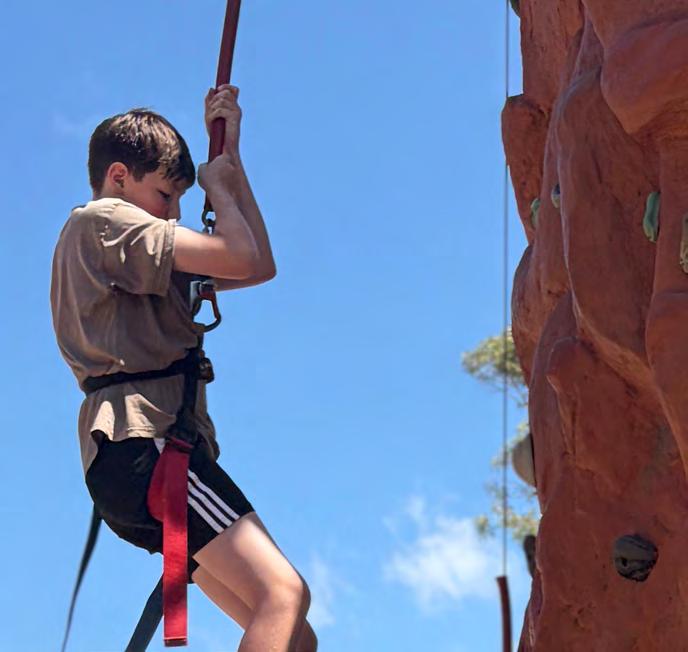
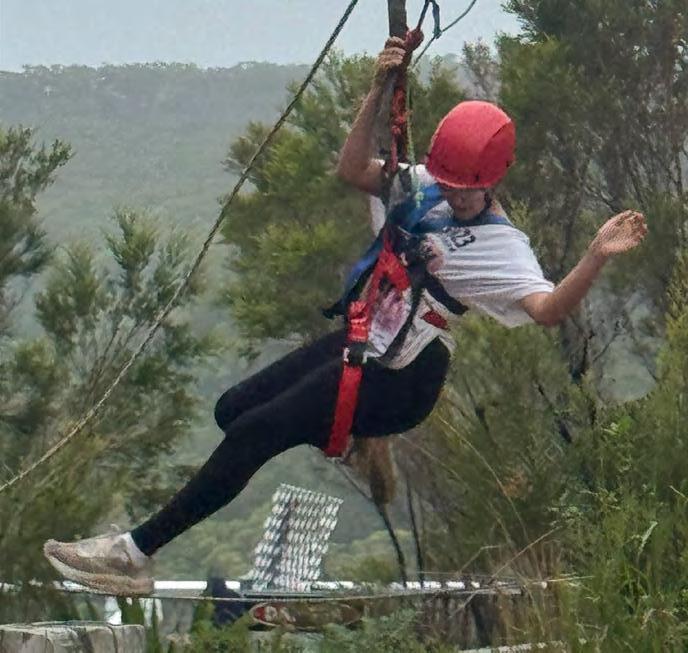
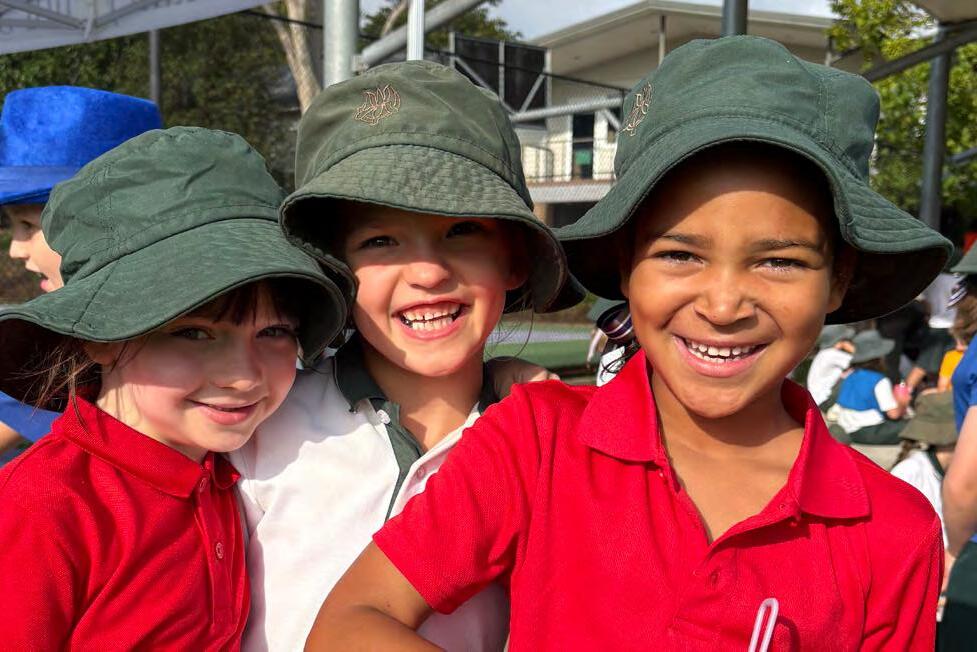
Our Years 5 and 6 students recently returned from an unforgettable camp at Stanwell Tops. From the moment they arrived, the students were tasked with taking responsibility for themselves, from constructing their own tents to preparing and cooking their meals on a trangia, and cleaning up afterwards. It was a chance to develop independence, teamwork, and practical life skills. These challenges were met with enthusiasm and resilience. Beyond campsite routines, the students embraced a series of high-energy activities that pushed them beyond their comfort zones. Highlights included rock climbing, navigating the vertical cluster of ropes and tyres, taking on the Giant Swing, archery, and swimming. Many students described the Giant Swing as their favourite activity, thrilling and a little scary, but a true test of courage and perseverance.
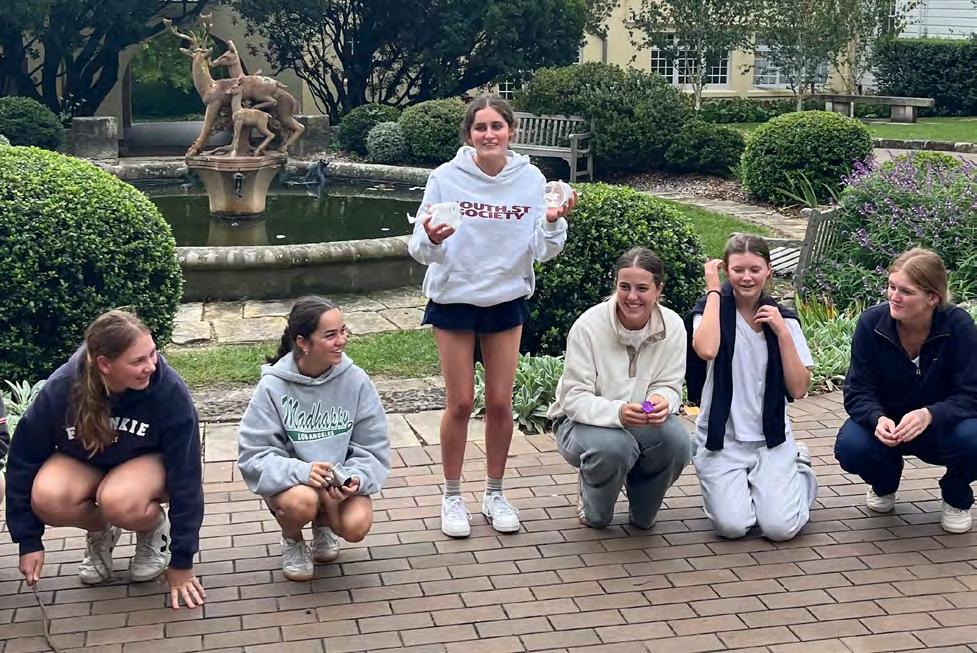
Camp also offered moments of calm and reflection. Students explored the bush, the creek, and their natural surroundings, creating leaf boats, racing, and enjoying the stillness of nature. They deepened their understanding of culture and connection to Country through Indigenous weaving and “Caring for Country” sessions.
Perhaps the most remarkable part of camp, however, was the sense of community that grew amongst the students. Tent buddies welcomed new classmates and helped each other through homesickness. Students cheered one another on during challenging activities, offered quiet words of encouragement, and showed kindness and leadership throughout the week.
The result was a week filled with adventure, laughter, and shared achievement. Students returned to school brimming with confidence, stronger connections with their peers, and a renewed sense of what can be accomplished when we support one another. Camp has set the tone for a year full of possibility, shared memories, and the knowledge that together, our students can face anything.
Amelia Grace
Year 5 Class Teacher
Lynn Venish
Jamieson Activities Coordinator
Year 6 Class Teacher
Adventure and Teamwork: Years 5 & 6 Camp
Sport at Frensham Junior School
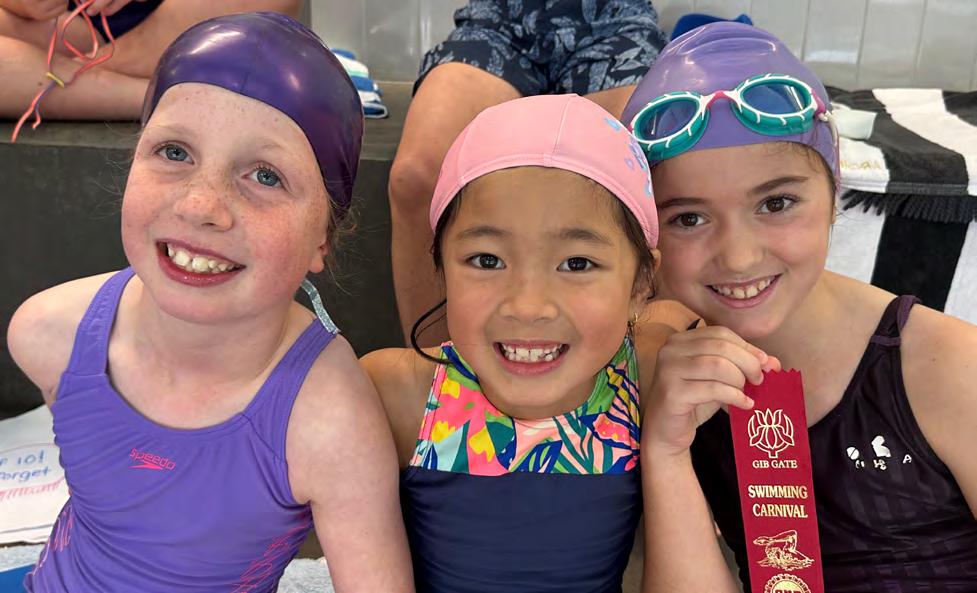
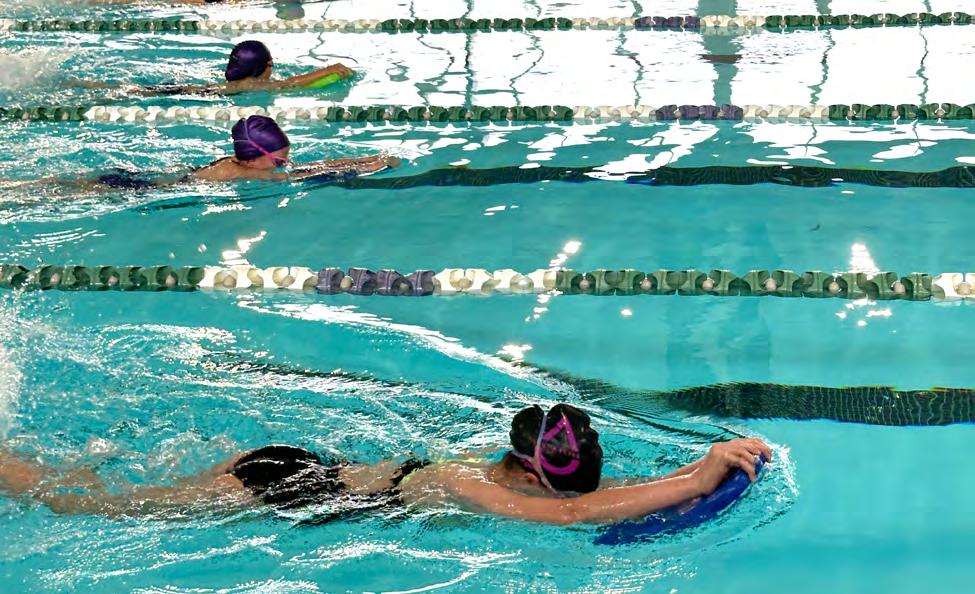
It has been a fantastic start to sport this term at Frensham Junior School, with a real buzz of carnival atmosphere across both Swimming and Cross Country events. All students in Years 3–6 enthusiastically participated in the School Swimming Carnival held on 13 February. The day was filled with wonderful House spirit, encouragement and impressive swimming performances. Students demonstrated great determination in the pool while supporting their teammates from the sidelines, creating a vibrant and positive carnival atmosphere.
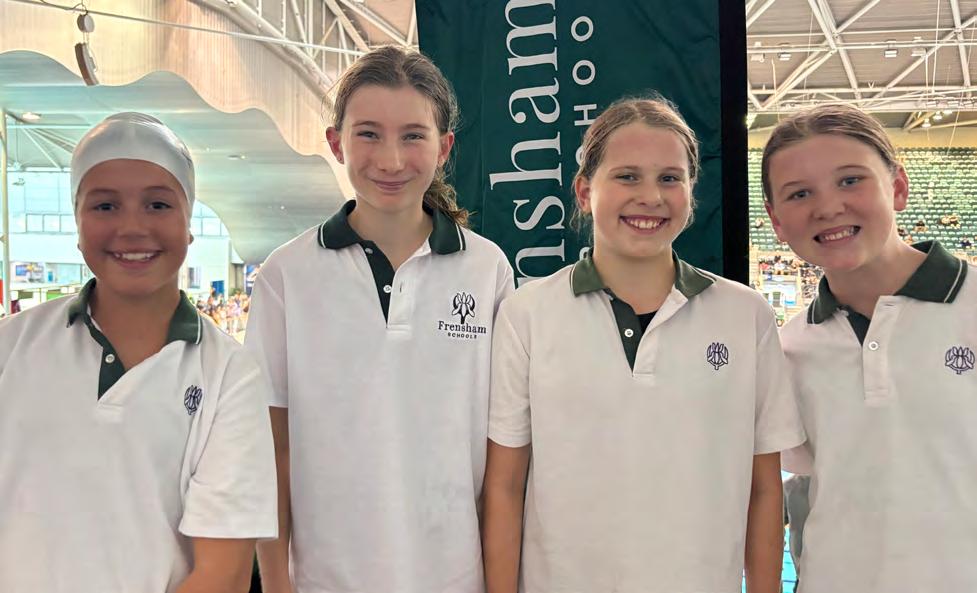
Following the school carnival, 17 swimmers were selected to represent Frensham Junior School at the IPSHA Swimming Carnival, which took place on 13 March at SOPAC, Sydney Olympic Park Aquatic Centre, Homebush. We congratulate these swimmers for representing the School with pride as they competed against other independent schools.
Frensham Junior School was also delighted to host an Invitational Swimming Carnival, welcoming Oxley College, Tudor House and Southern Highlands Christian School. This friendly carnival provided students with valuable race experience in a supportive and encouraging environment, allowing swimmers to build confidence, improve their racing skills and enjoy the camaraderie of competing with neighbouring schools.
Sport at Frensham Junior School
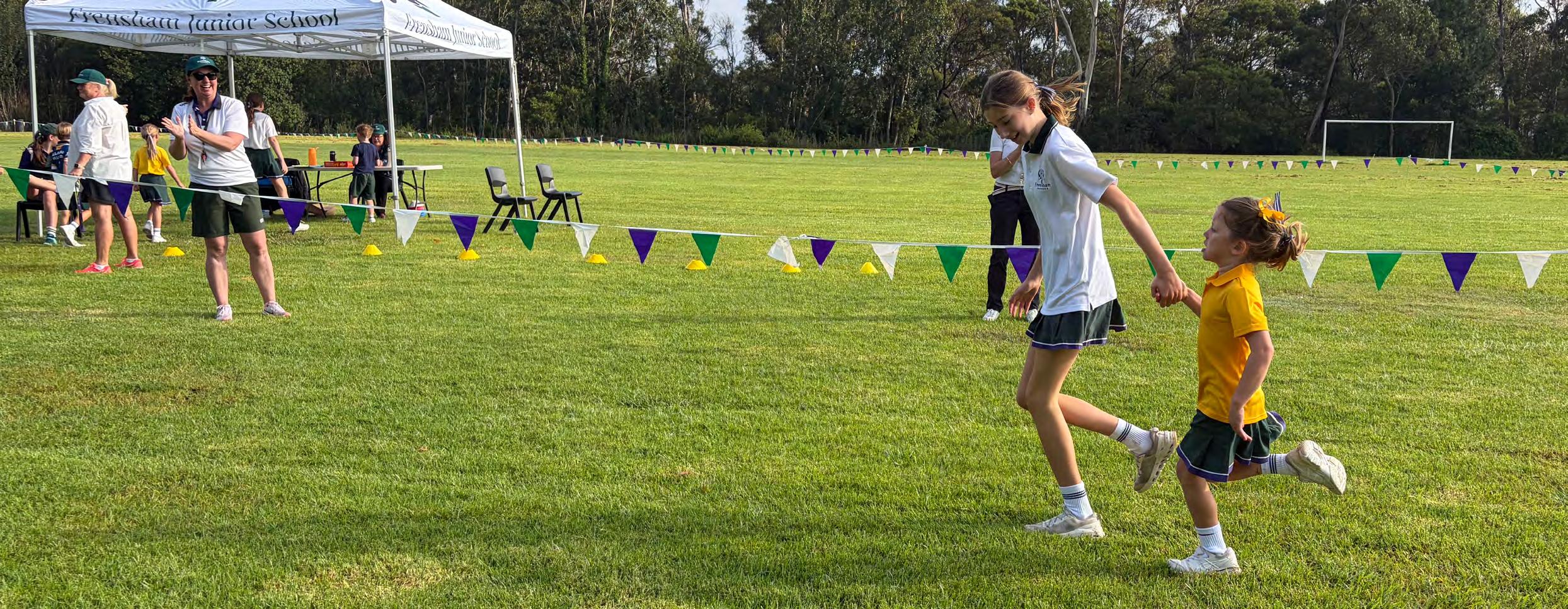
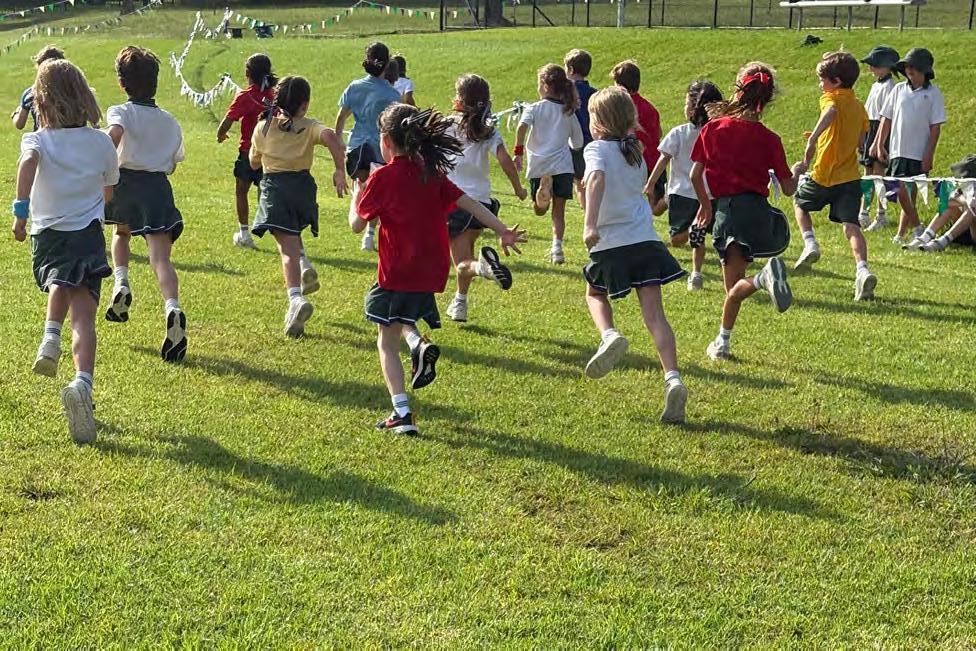
The Cross Country Carnival took place on 6 March, with students from across the Junior School enjoying a wonderful morning of running and House spirit. Kindergarten and Year 1 students participated in a fun run on a modified track, with kindergarten students running alongside their Year 6 buddies, a much-loved Frensham Junior School tradition that encourages support, confidence and connection across year groups.
Students in Years 2–6 completed the full cross-country course, which included the Frensham Junior School Games Field and the Wildlife Loop of the campus. Students aged 7–10 years ran 2 kilometers, while 11–13 year olds completed the 3 kilometre course, demonstrating determination and resilience throughout the event.
Eleven students will represent the Junior School at Tudor House on 27 March in a friendly invitational carnival, before travelling to The King’s School, Parramatta for the IPSHA Cross Country Carnival on Wednesday 1 April. We wish them the very best of luck as they compete and represent the School with pride.
On 26 March, Kindergarten to Year 2 students will participate in our much-loved Fun Swimming Carnival, allowing all students to swim and enjoy modified races in a relaxed and supportive carnival environment.
The energy and enthusiasm shown by students throughout these events has been outstanding, and it has been wonderful to see such strong participation, sportsmanship and House spirit across the Junior School.
Amanda Graham Coordinator of PDHPE and Sport (P-6)
The Enduring Role of the Library
At the heart of a quality education is the love of reading. Reading calms the mind after a long and sometimes challenging day. It expands our horizons, driving learning and growing us as humans. It takes us to different worlds and it helps us to see through others’ eyes. What we read shapes who we are.
The reading culture at Frensham Schools enriches the lives of our students daily. Whether it is preschoolers borrowing a story about the tooth fairy, Years 5 and 6 engaging with the senior fiction collection for the first time, Year 7 spending their evenings reading for pleasure in Prep or Year 12 students arguing about the ideas found in the literature they’ve engaged with, reading is the throughline that remains at the heart of a day of learning here at our schools.
The Frensham Library, named for Esther Tuckey, is the physical embodiment of our reading culture. Winifred West describes how “Miss Tuckey’s work with libraries and clubs – especially the Literary and Pen & Ink Clubs – has encouraged writers and would-be writers to creative efforts. Her scholarship and appreciation of good writing have helped to
open the eyes of many Frensham girls to the beauties of English literature”.
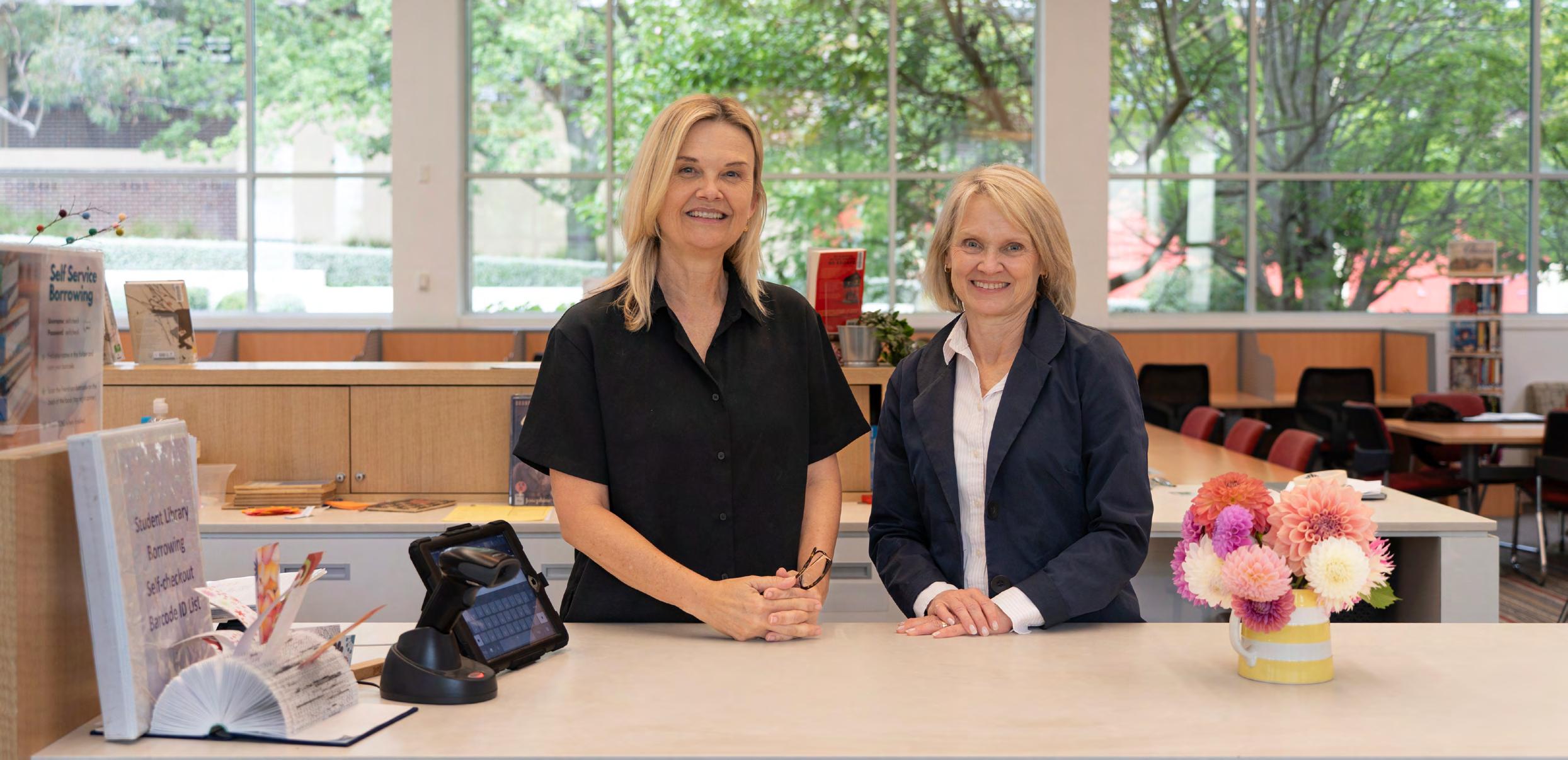
Today, Tuckey’s legacy endures, with Lee Ann Marsh and Susie McGlinn guiding the life of the Library. Energetic, experienced and passionate, they support students at every stage of their reading journey.
The Library sits at the very centre of the life of the School. “It really is the hub,” Susie explains. “It is a place students come for a whole range of different reasons, whether to study, to relax, to play chess, or simply to have a quiet moment in the day. It is a space where they can take a breath.”
Lee Ann reflects that the Library plays a dual role within the School. It is both a dedicated study space for senior students and a broader ‘third space’ for the entire community. “It is a safe, welcoming place where students can step away from the busyness of the day,” she says. “They might read, work, play chess, do a puzzle or simply spend time with friends.”
Just as important as the books themselves is the sense of welcome students encounter when they walk through the doors. Lee Ann
The Enduring Role of the Library
and Susie make a point of greeting students by name and getting to know them beyond their academic work. “We know the girls really well,” Susie says. “It is lovely to connect with them not just as students, but as people. Often the conversations we have are about what they are reading or what they are interested in outside the curriculum.”
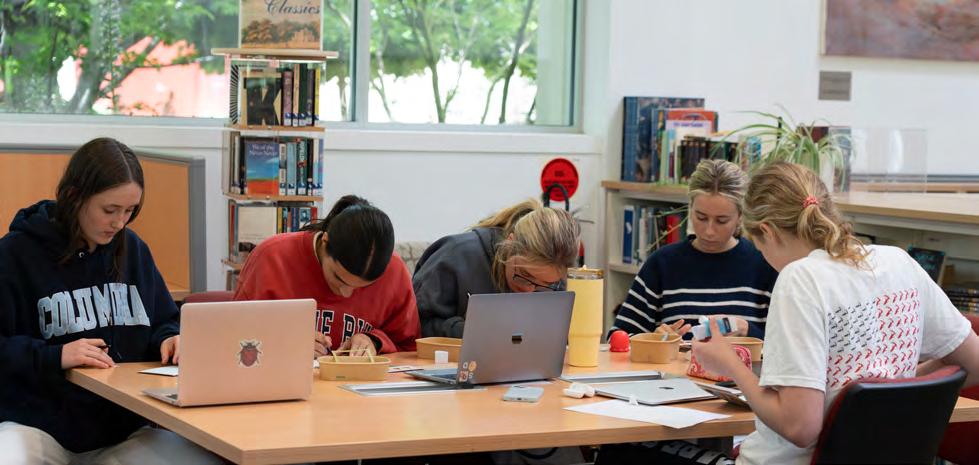
The rhythm of the Library shifts constantly throughout the day. Study periods bring a steady flow of students working independently, with Lee Ann and Susie nearby to offer guidance or help refocus attention when needed. Lunchtimes are particularly lively, with students gathering to play chess, knit, chat or simply enjoy the calm atmosphere.
Over recent years, the Library has evolved into a more welcoming and multi-purpose space. Once perceived as quiet and, at times, intimidating, it has been thoughtfully reshaped into an environment where students feel comfortable spending time. Lee Ann has been central to this shift. “Traditionally, libraries were seen purely as study spaces,” she explains. “But if we want reading to be part of a positive culture, students need to feel welcome and safe. The space has to invite them in.”
Reading, of course, remains at the heart of everything. Developing a genuine love of books comes not from rules or requirements, but from relationships. “It is really about knowing the students,” Susie explains, “understanding their interests and personalities, and then connecting them with the right book.”
This personalised approach is central to Lee Ann’s work. Book selections are shaped by student recommendations, insights from other school libraries, and close collaboration with booksellers and publishers. Just as importantly, time is spent working one-on-one with students to understand their interests. “We guide them based on what they already enjoy reading or
even what they like to watch,” she says. “We also encourage them to talk to each other about books. Those peer recommendations can be incredibly powerful.”
Beyond reading for pleasure, the Library plays an essential role in supporting classroom learning. Teacher Librarians work closely with students to develop strong research habits and critical thinking skills. “We talk a lot about information literacy,” they explain. “Part of our role is explicitly teaching students how to research well, how to question information, analyse sources and think critically.”
This support is often delivered at the point of need. Students are guided through skills such as constructing bibliographies, avoiding plagiarism and using academic databases. For senior students in particular, there is a strong focus on sourcing credible material beyond a simple internet search. “We encourage them to go beyond Google,” Lee Ann says, “and to use databases and resources like the NSW State Library for greater depth. At the same time, we remind them not to overlook traditional books, especially in subjects like History and English, where those references remain invaluable.”
Students engage with the Library differently as they move through the School. Senior students make extensive use of the space during study periods and for major projects, while younger students encounter the Library through programs such as ‘English in the Library’, a wide reading initiative that encourages exploration beyond the set curriculum.
The Enduring Role of the Library
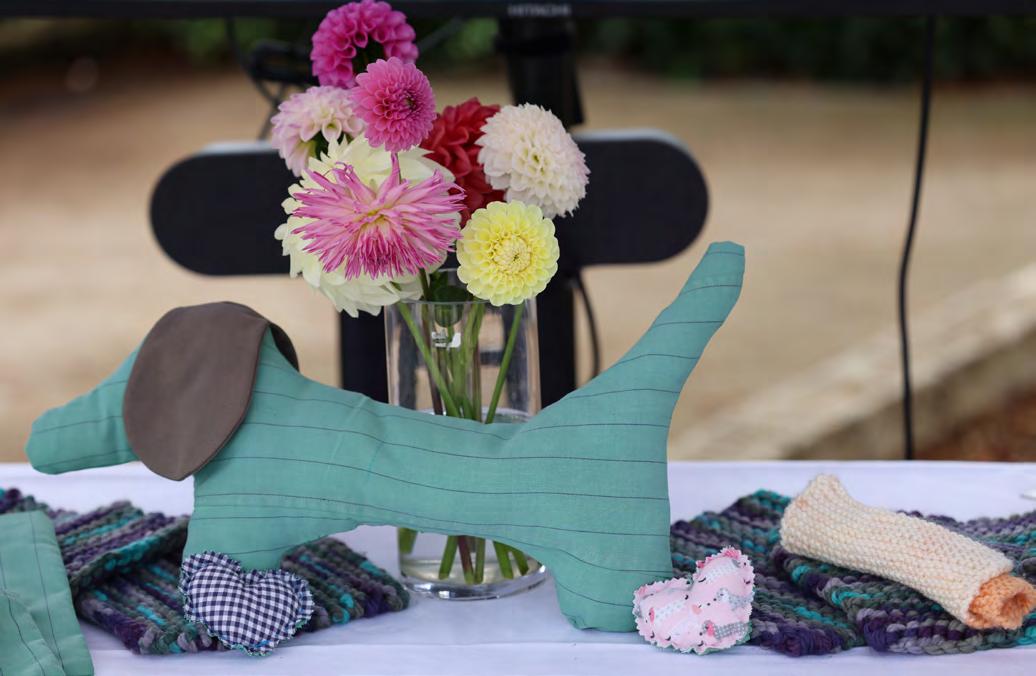
The Library also supports a wide range of cocurricular and academic pursuits. Students preparing for activities such as the Da Vinci Decathlon, Ethics Olympiad and Model United Nations gather there to collaborate and refine their thinking. At the same time, the space hosts more informal, creative activities, from knitting and sewing to quiet, hands-on pursuits that contribute to a sense of belonging and community.
In an age where information is constantly available online, the role of the Library continues to evolve. While digital tools are important, the fundamentals remain unchanged. “Students need to understand how to question sources and think critically before they rely on digital tools or AI,” Susie explains. “Technology will continue to change, but those core skills remain essential.”
The importance of physical books remains undeniable. Reading from a printed page strengthens comprehension and memory, and encourages the sustained attention that modern life often disrupts. “Students are so used to hyperlinks and constant distractions,” Susie says. “Sitting with a physical book allows them to focus in a completely different way.”
For both Lee Ann and Susie, this work is deeply personal. Susie’s own journey to the Library began in marketing at Qantas before retraining as an English teacher and eventually finding her place in a school library. More than twenty years later, her enthusiasm remains undiminished. “I walk into the Library every day and still feel incredibly lucky to work here,” she says.
Lee Ann’s path has been equally grounded in education. Beginning as a primary school teacher, she later worked as a Library Assistant at Frensham Junior School before completing a Master’s in Digital Librarianship. After a decade as Teacher Librarian at the
Junior School, she then led the Libraries across both schools before moving into her current role. “I have always loved working with students and sharing reading experiences,” she reflects. “There is something very special about connecting over a book.”
Her reading tastes are broad and contemporary, with a particular appreciation for authors such as Clare Keegan and Australian writer Robbie Arnott. Outside the Library, her creative interests, from gardening and sewing to furniture restoration and weaving, reflect the same curiosity and love of craft that she brings to her work.
Today, the Library continues to support a vibrant reading culture through initiatives such as Book Club and the emerging Literary Reading Group, where students come together simply to share the pleasure of reading. In this way, the enduring role of the Library remains unchanged, which is to cultivate curiosity, connection and a lifelong love of learning.
Fun Facts: Susie is a huge Formula 1 fan and Lee Ann used to be a wind surfer and has jumped out of a plane!
Nathan Bessant Director of Studies
Sophie Rankine Marketing and Engagement Manager
SThe Frensham Junior School Library
tewarded by Teacher Librarian, Janine McPherson, The Frensham Junior School Library is a place of wonder for our youngest learners. Bright, welcoming and filled with stories waiting to be discovered, it is often where a child’s lifelong relationship with books begins. Here, students browse shelves with curiosity, delight in stories read aloud, and experience the excitement of choosing books to take home and share.
The Library is also home to one of the Junior School’s most cherished traditions. For many years, students have marked their birthdays by donating a book to the collection, a small but meaningful gesture that both celebrates reading and leaves a lasting contribution for future students.
Each book carries a personalised bookplate recording the student’s name and the year of the gift, quietly building a living history of the Junior School through the books that line its shelves.
We asked Janine, what role does the Library play in nurturing a love of reading among younger students?
Nurturing a love of reading for young students is at the heart of the school librarian’s role. Reading for pleasure supports student’s
emotional and intellectual development, particularly in our youngest learners. While a classroom focuses on learning to read, the library focuses on loving to read. Students are given agency to choose books based upon their interests and to take risks on new genres to expand their world. This interest-led learning validates a child’s personal interests and makes reading feel like a hobby rather than a chore.
Reading for pleasure helps children solve real life problems as they immerse themselves in different characters and story plots that need solving. This is known as ‘Bibliotherapy’ and helps students to develop empathy for the world around them. Seeing different characters and families’ fosters a sense of belonging in the reader which makes the act of reading feel welcoming and personal. A wellmanaged library ensures every student sees themselves reflected in the pages (mirrors) and gains a view into lives different from their own (windows).
School libraries offer a welcoming ’third space’ that is different from the high energy playground and more structured classroom. School libraries help to nurture a love of reading by providing a sanctuary for student wellbeing and exploration. When students feel safe and happy and are surrounded by great stories and books, a love of reading is fostered.
Sophie Rankine Marketing and Engagement Manager
Frensham Student Voice in the Climate Conversation
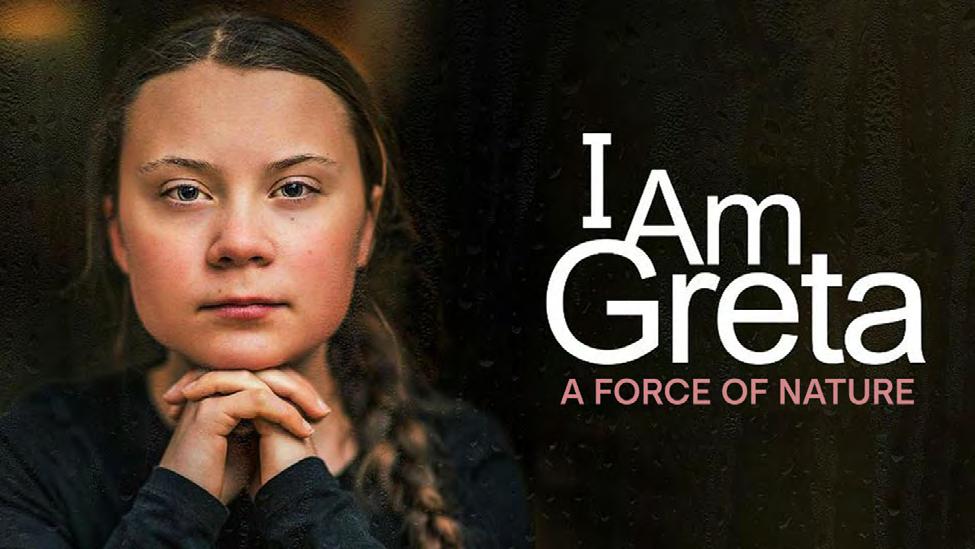
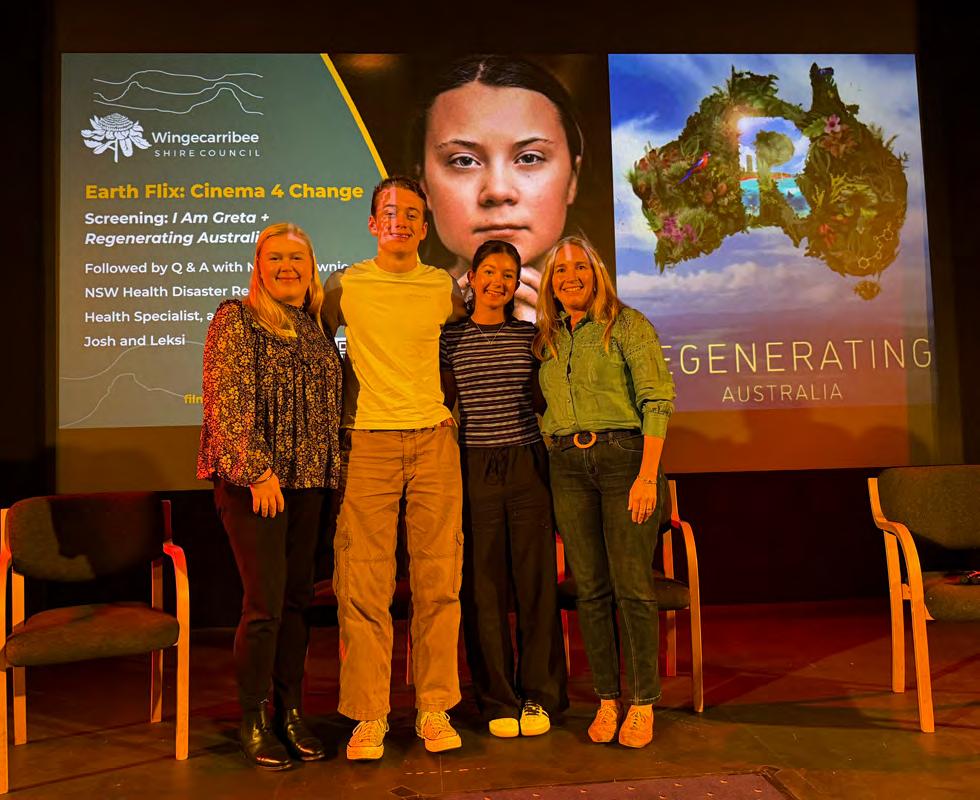
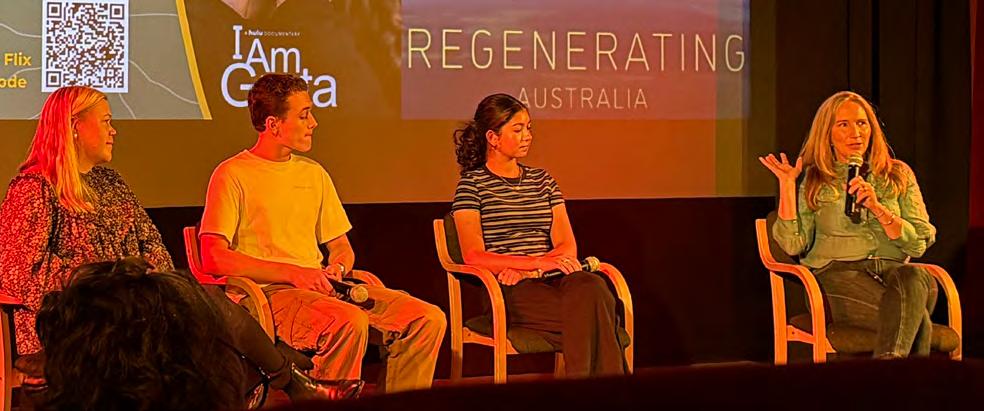
Year 10 student, Leksi Sharp, recently took part in a community panel discussion following a screening of the documentary I Am Greta at the Empire Cinema in Bowral. The event, facilitated by Wingecarribee Shire Council, brought together local environmental advocates to reflect on the themes of the film and to discuss how young people can contribute to meaningful climate action.
Leksi joined the panel, chaired by Frensham parent Suzannah Cowley, to share her perspective as a young environmental advocate, speaking about the importance of youth voices in shaping conversations around sustainability. The documentary, which follows climate activist Greta Thunberg, explores themes including the urgency of the climate crisis, youth activism, and the challenges of translating grassroots momentum into political change.
For Leksi, the most powerful moment came after the formal discussion had ended.
“The overall highlight for me was the community interaction following the panel discussion. After the Q&A, I was approached by other students from the Highlands and many older community members who said they would support any action we decided to take and would love to get involved.”
“Seeing that the panel actually inspired people to make a difference really highlighted how influential the event and the documentary were. Younger people in the audience asked how they could get involved and thanked us for trying to take action in the community. It really cemented for me how urgent the issue of sustainability is and showed that people want change and leaders who will help direct it.”
The evening demonstrated the power of bringing together film, conversation and community. By sharing their experiences and ideas, young advocates like Leksi are helping to build the momentum needed for collective action on environmental challenges.
Sophie Rankine Marketing and Engagement Manager
The Traditions of Sports Ties
Frensham has a deliberately noncompetitive culture in which traditional prizes, trophies and rankings are avoided in favour of recognising personal effort, character and service to the community. Instead, the occasional presentation of an Iris symbolises the school’s values of humility, contribution and the unselfish pursuit of excellence, rather than achievement measured against others.
While Irises and Girdles are well known within the community, another tradition that may be less familiar is the awarding of Sports Ties. These ties recognise students who have demonstrated exceptional ability in sport or who have given sustained commitment and service to their team over a number of years.
Sports Ties are awarded across a range of sports including Touch Football, Water Polo, Tennis, Basketball, Soccer, Netball, Hockey, Snowsports, Cross Country, Athletics, Equestrian, Gymnastics and Swimming. Each sport has its own coloured tie, worn with the winter uniform. When a student receives a tie, it is worn continuously for 24 hours which is a small but special tradition that marks the moment of recognition.
Sports Ties have been part of the culture of Frensham for as long as anyone can remember. They are typically presented at War Cries on Friday mornings during morning tea, when the community gathers to celebrate the contribution and commitment of its students.
Sophie Rankine Marketing and Engagement Manager
Another sports tradition at Frensham is the Sports Dinner that occurs at the end of each term. It is an occasion to thank coaches and teachers, and each Sport Captain to deliver her report. A wrap-up video from the term and the creation of a sports banner add to a good atmosphere of fun and camaraderie to the evening.
Frensham Open Day Weekend & Welcome Event
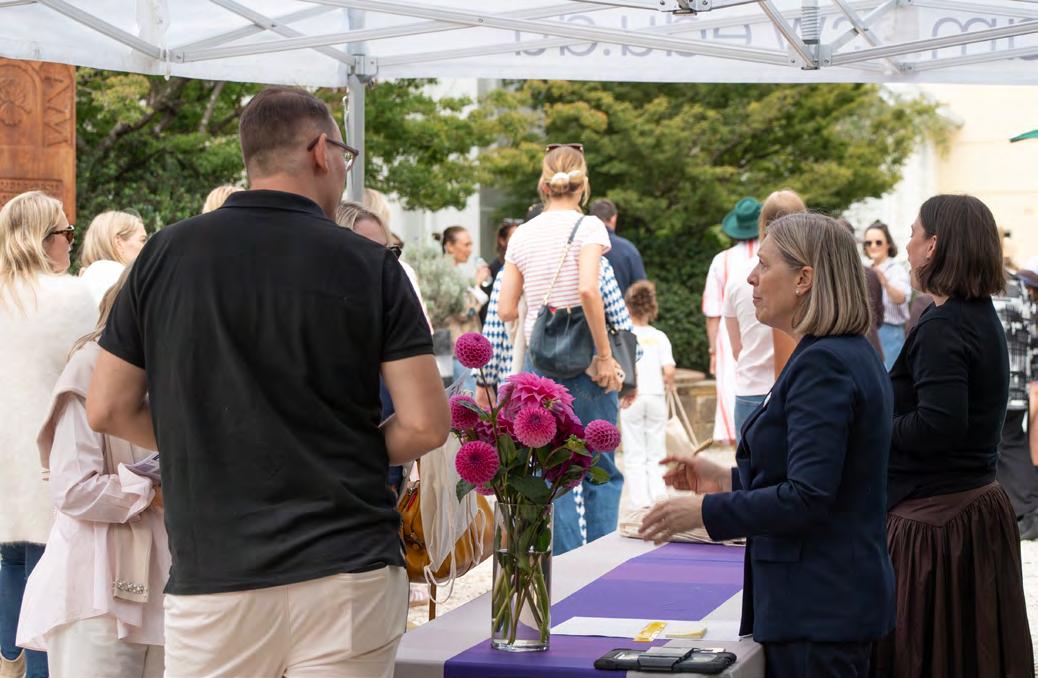
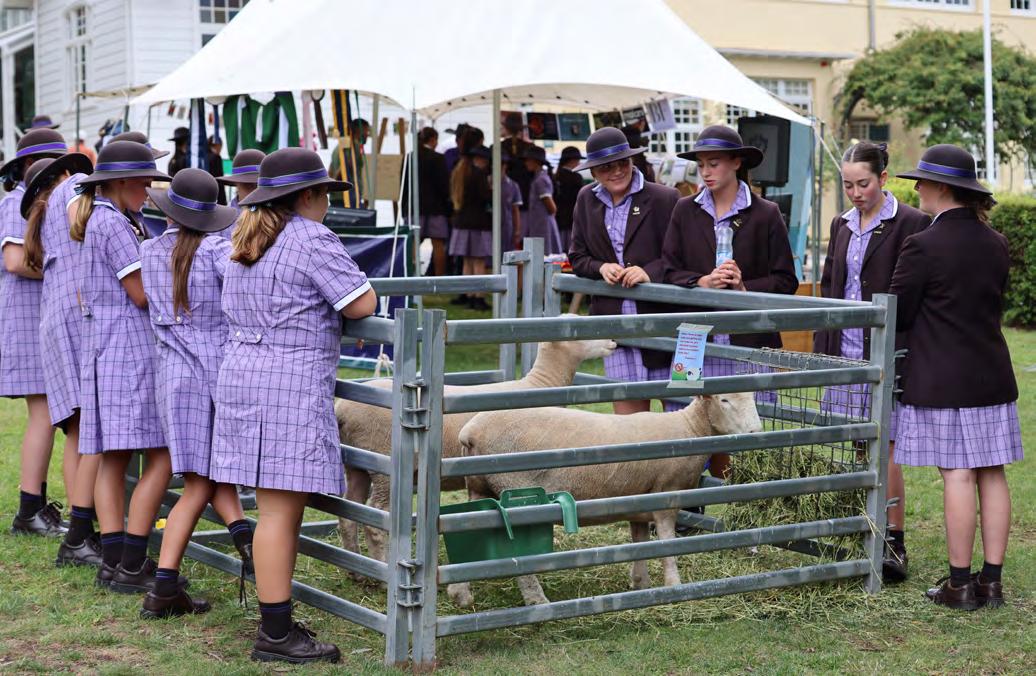
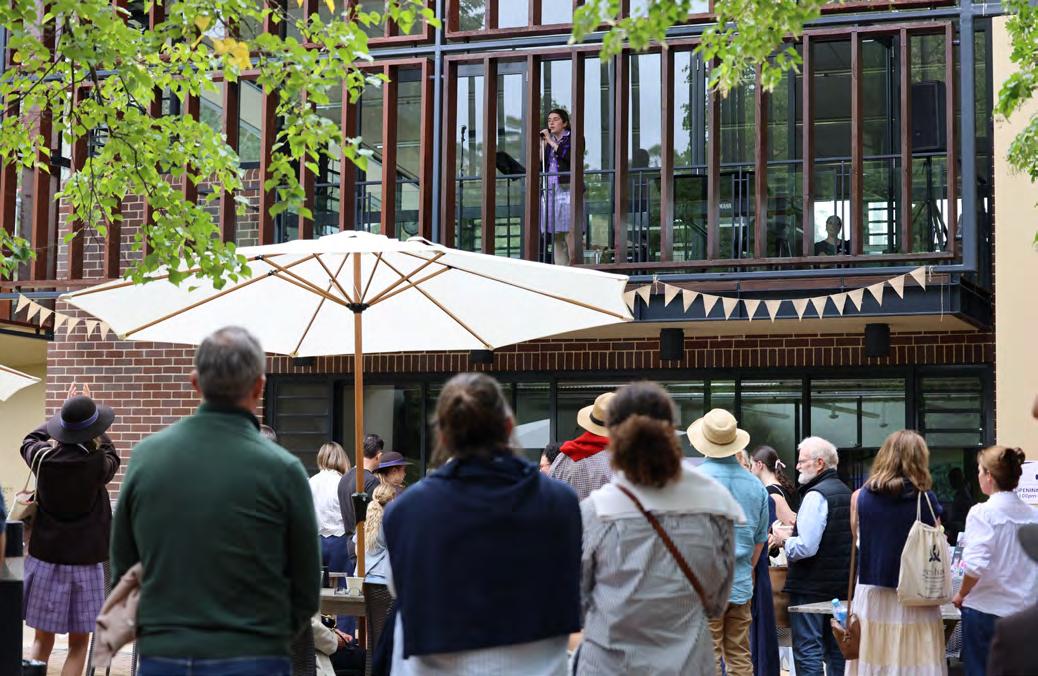
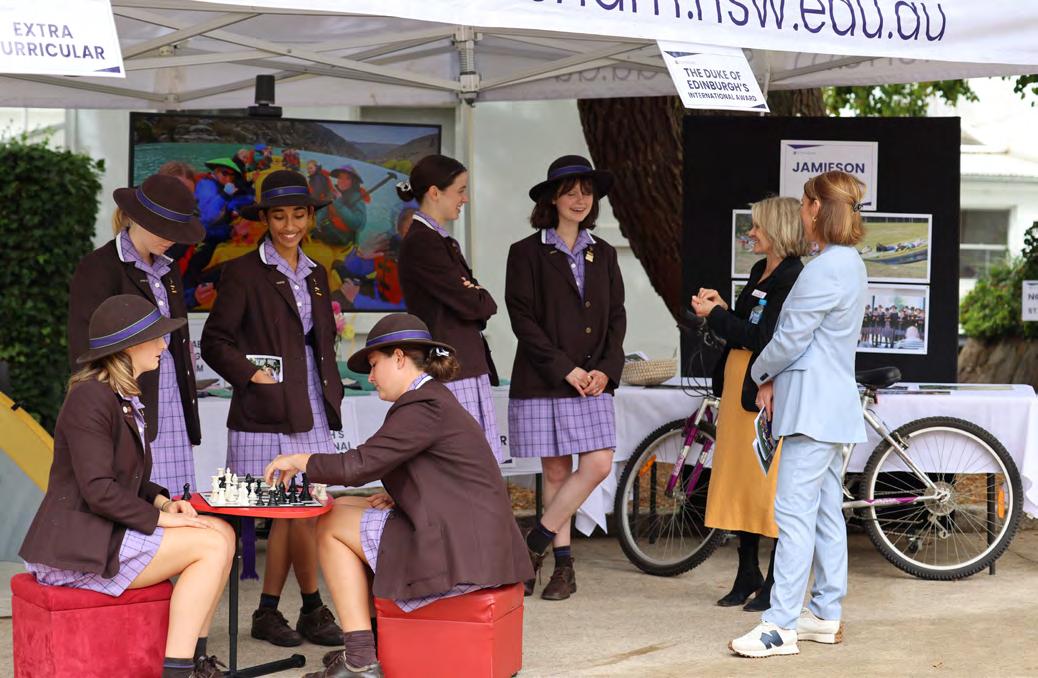
On Saturday 28 Feburary, Frensham welcomed families and visitors to our campus for three significant community events, each offering a meaningful introduction to life at the School.
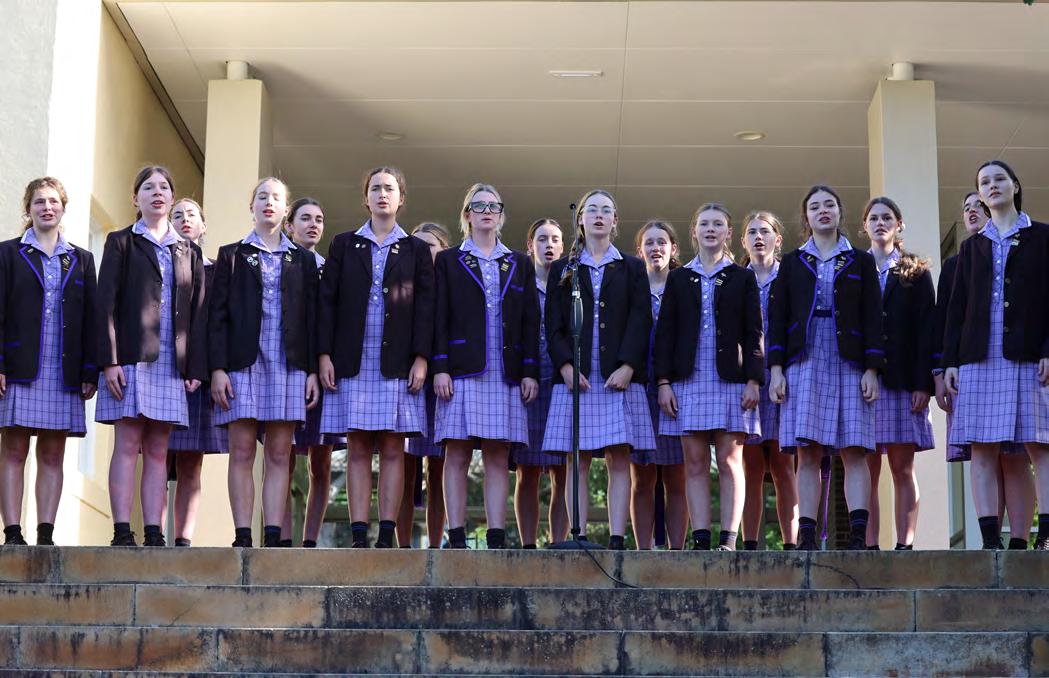
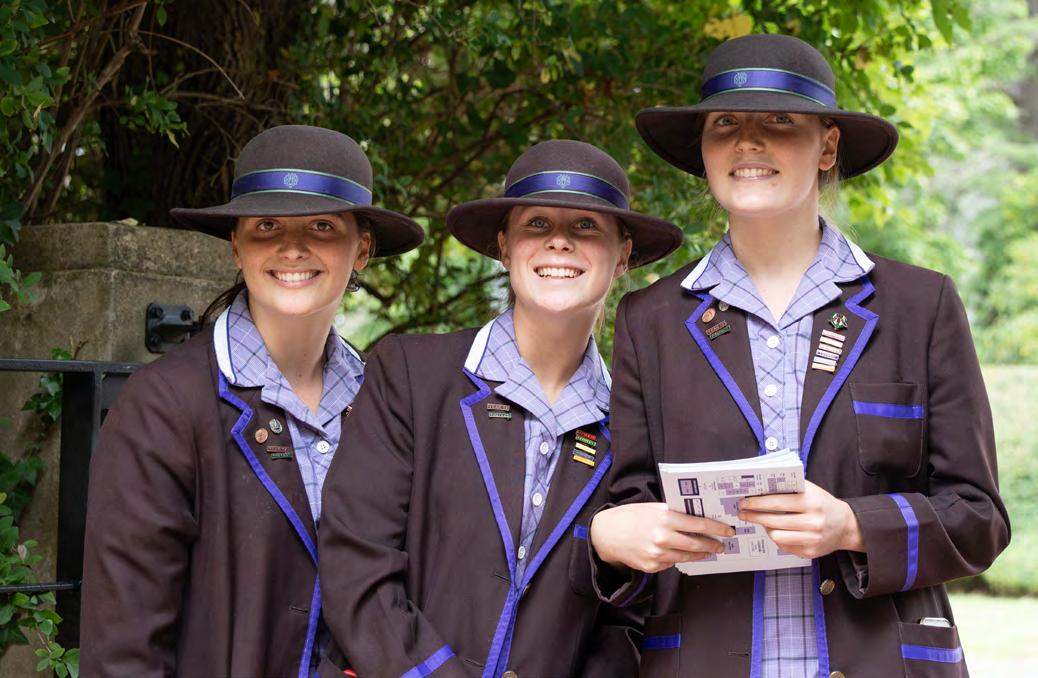
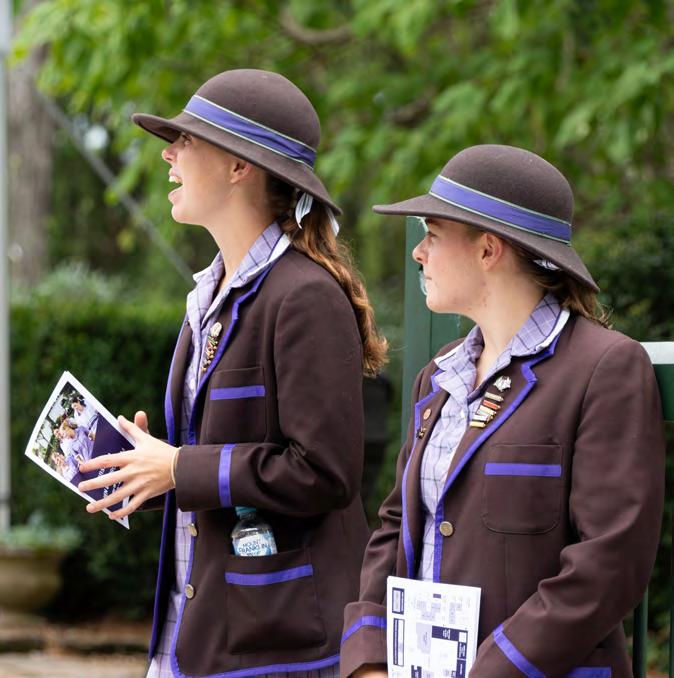
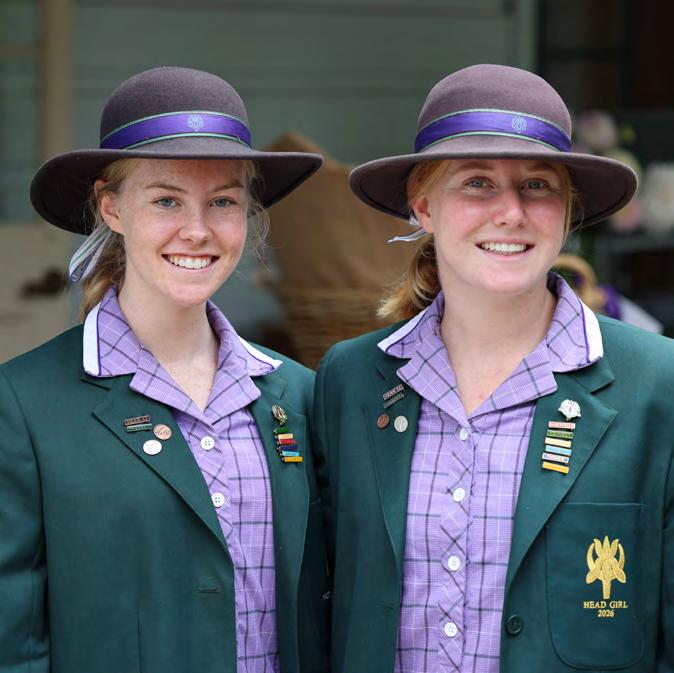
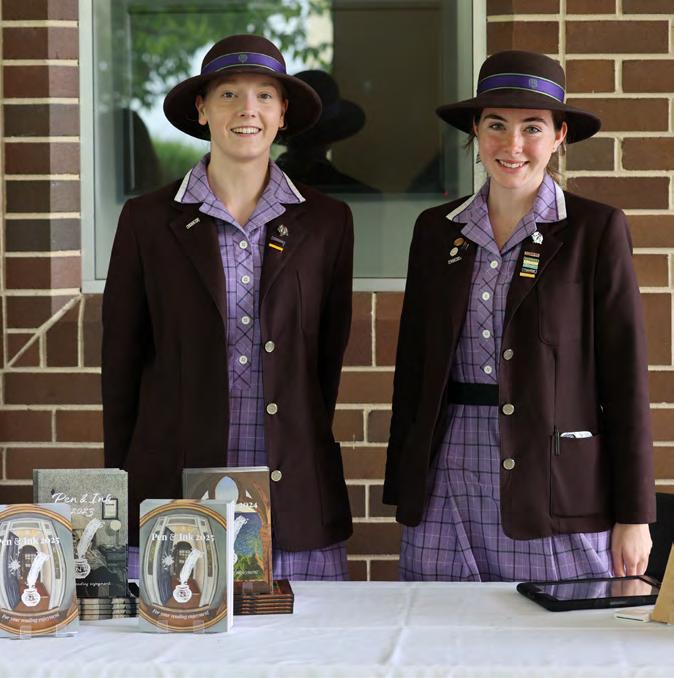
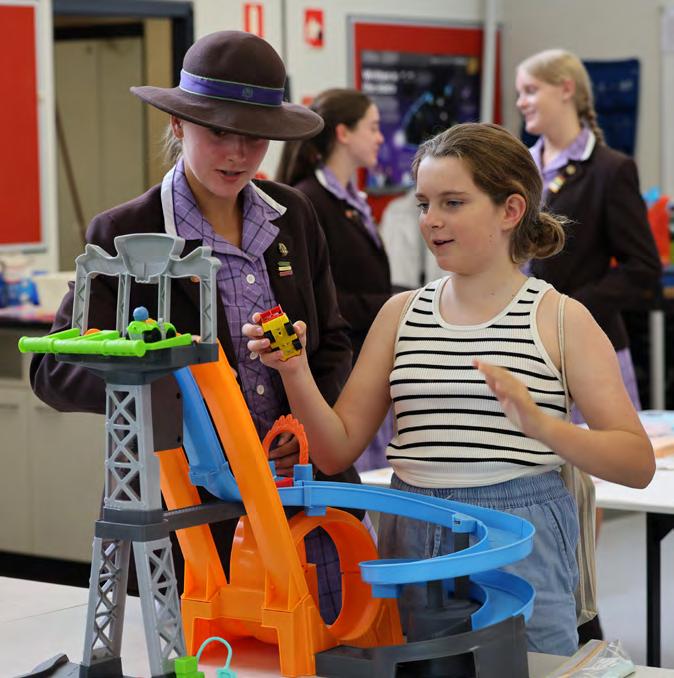
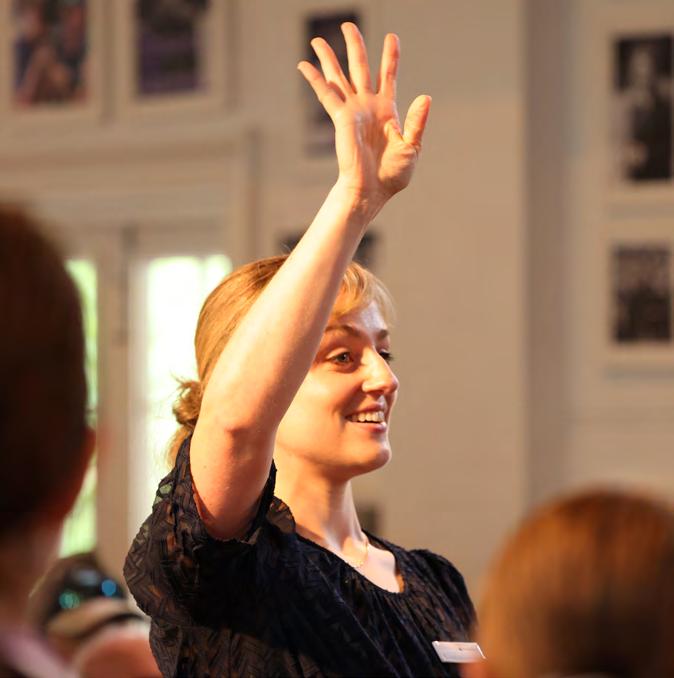
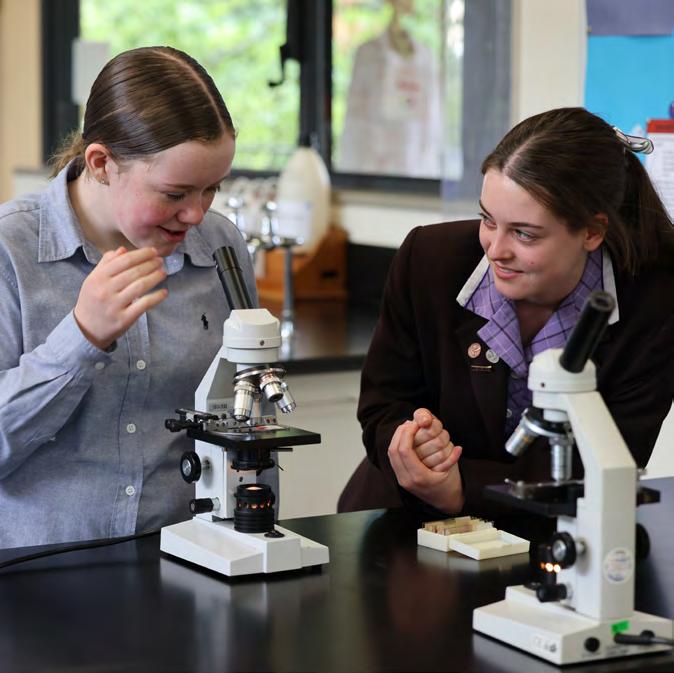
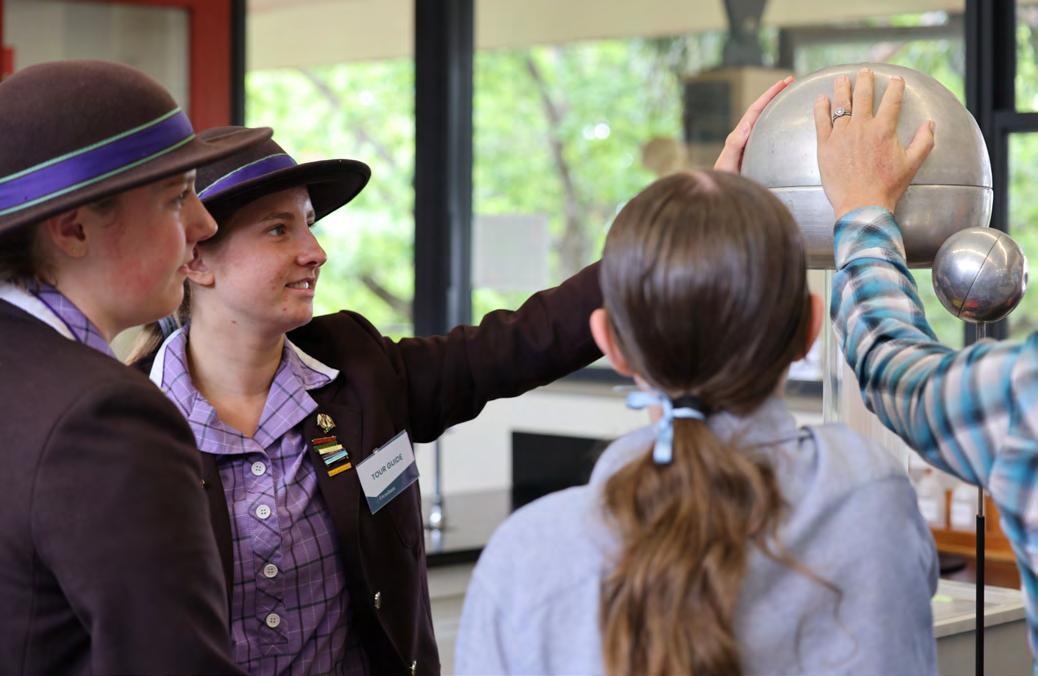
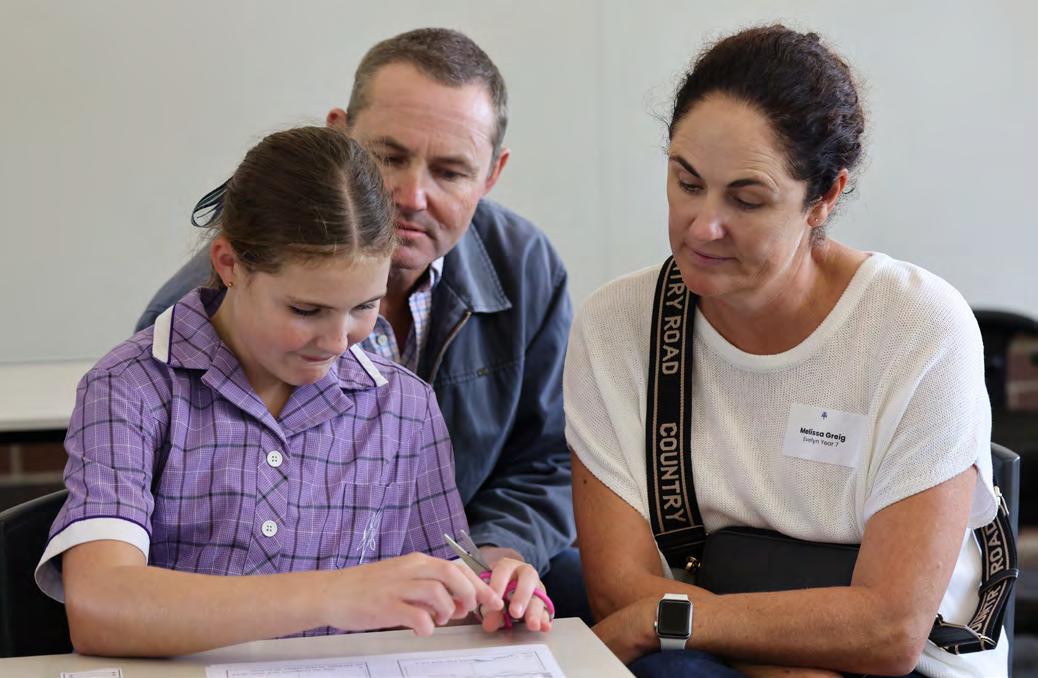
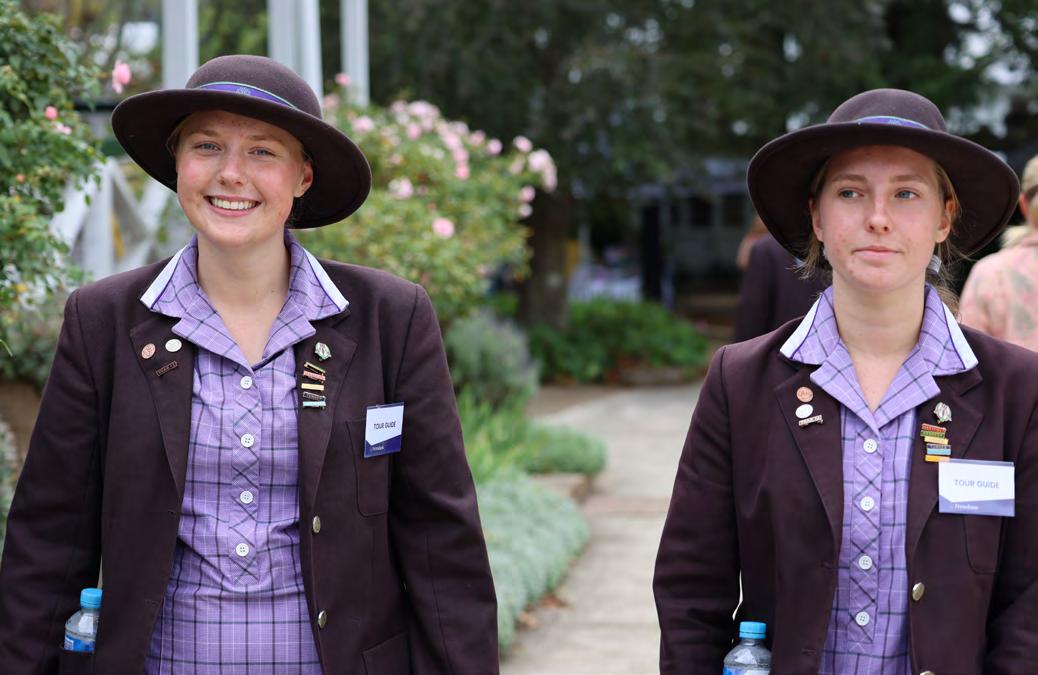
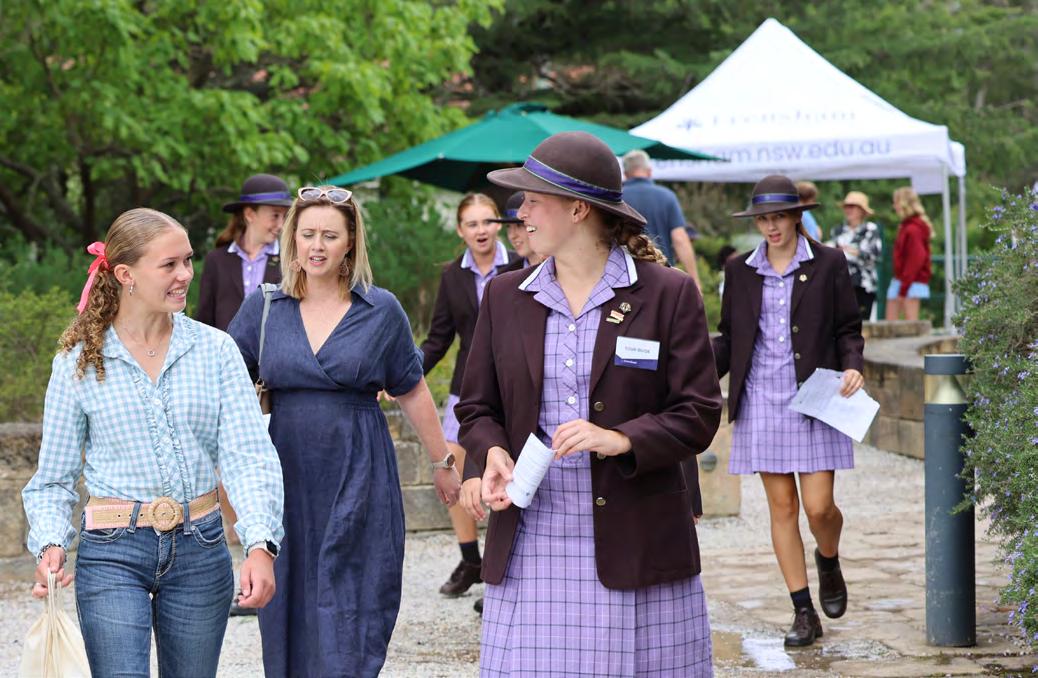
At our 2026 Open Day, prospective families experienced the spirit of Frensham firsthand. Through student-led tours and interactive classroom sessions, visitors explored a vibrant learning environment shaped by curiosity, connection and a shared sense of purpose. We thank our students and staff for creating such a welcoming atmosphere, and extend a special acknowledgement to our Year 10 students for leading the personalised tours.
Over the same weekend, our Year 7 Parent Weekend marked an important milestone for new families. Parents attended their first parent-teacher interviews and spent time exploring the campus, deepening their understanding of their daughters’ learning journey.
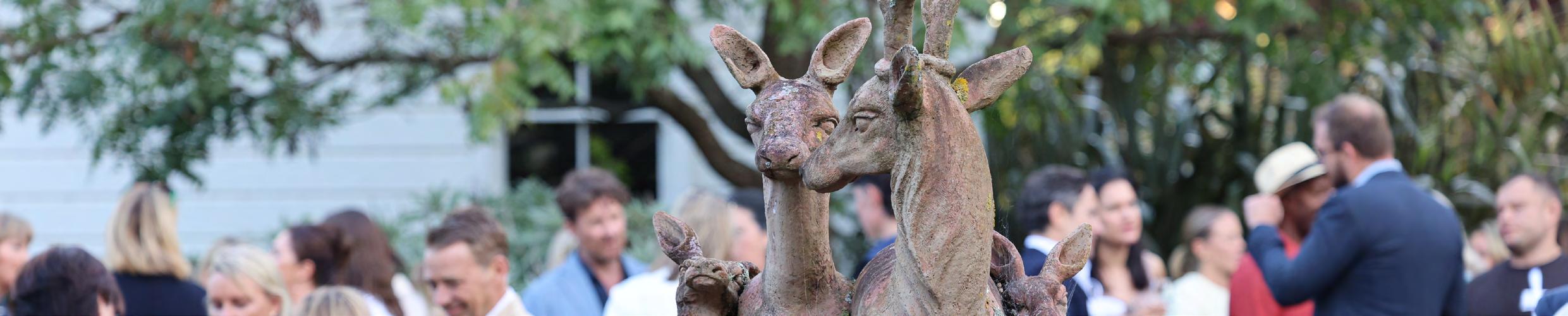
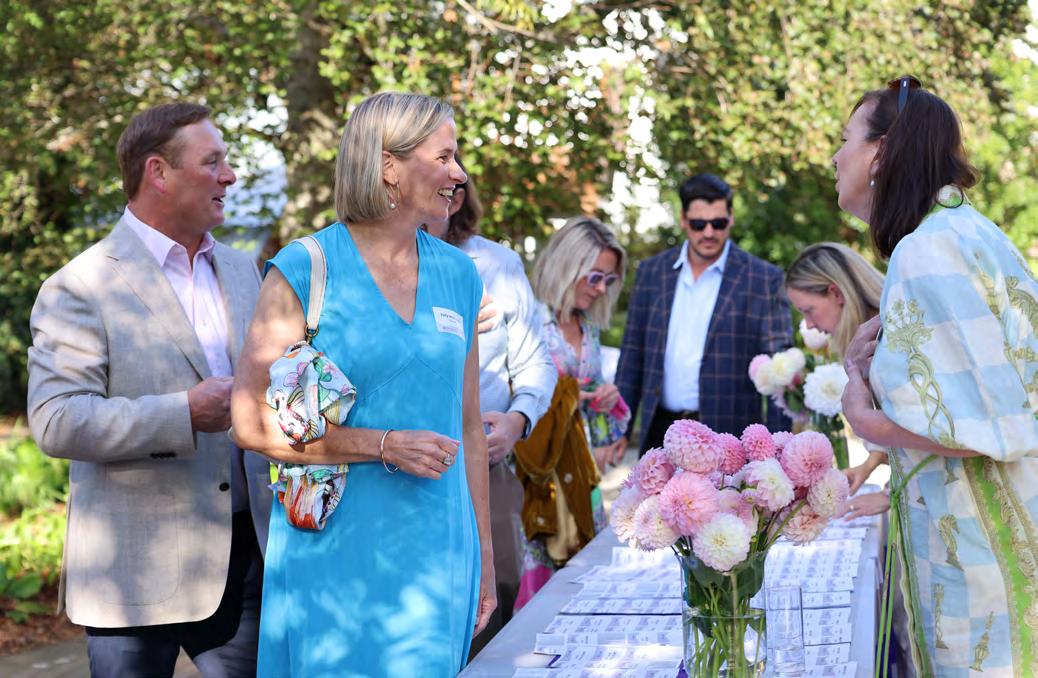
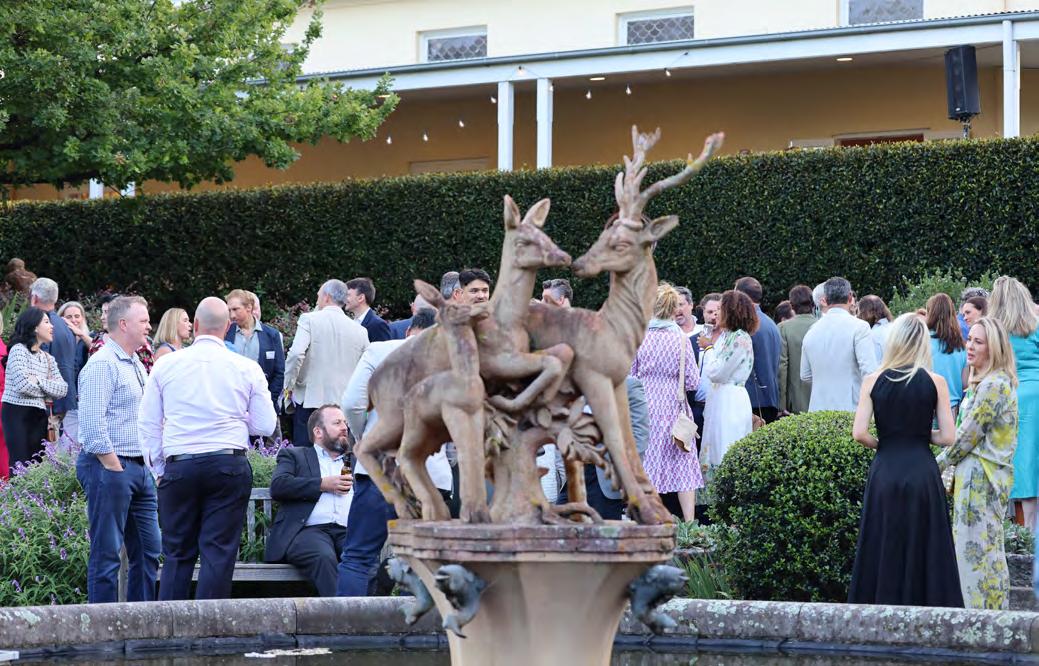
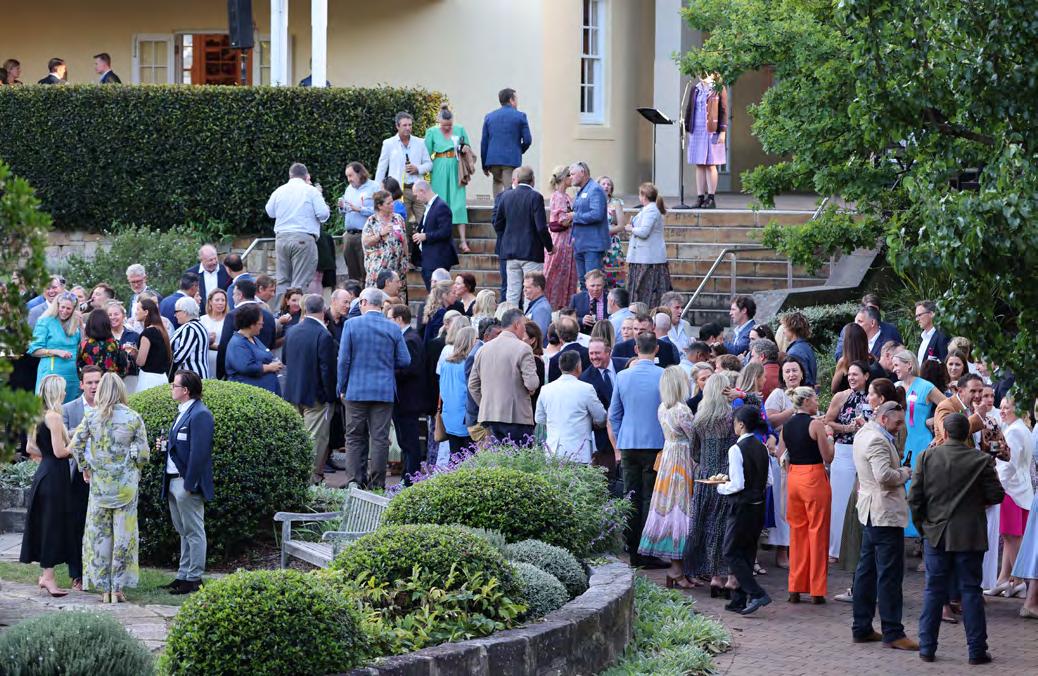
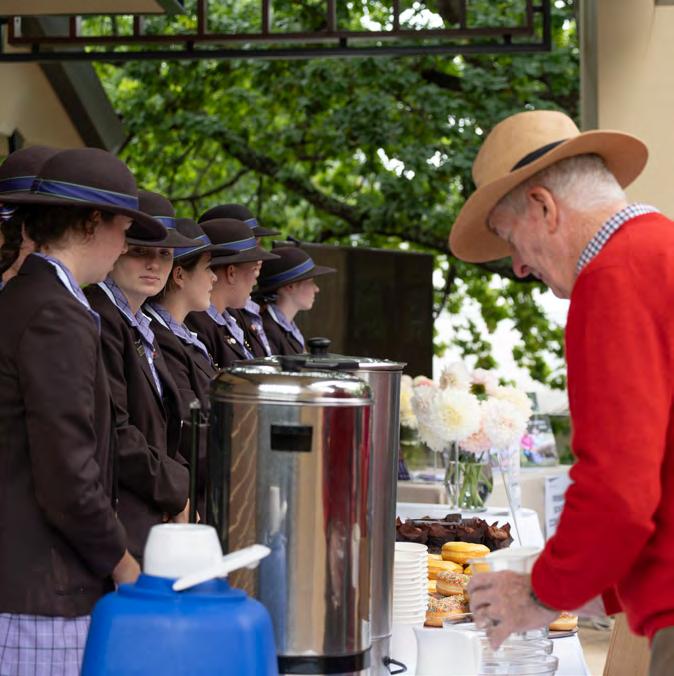
The weekend also included our annual Welcome Cocktail Event, where more than 300 members of the Frensham and Frensham Junior School community came together, setting the tone for the strong sense of belonging that underpins the School experience.
The Engagement Team
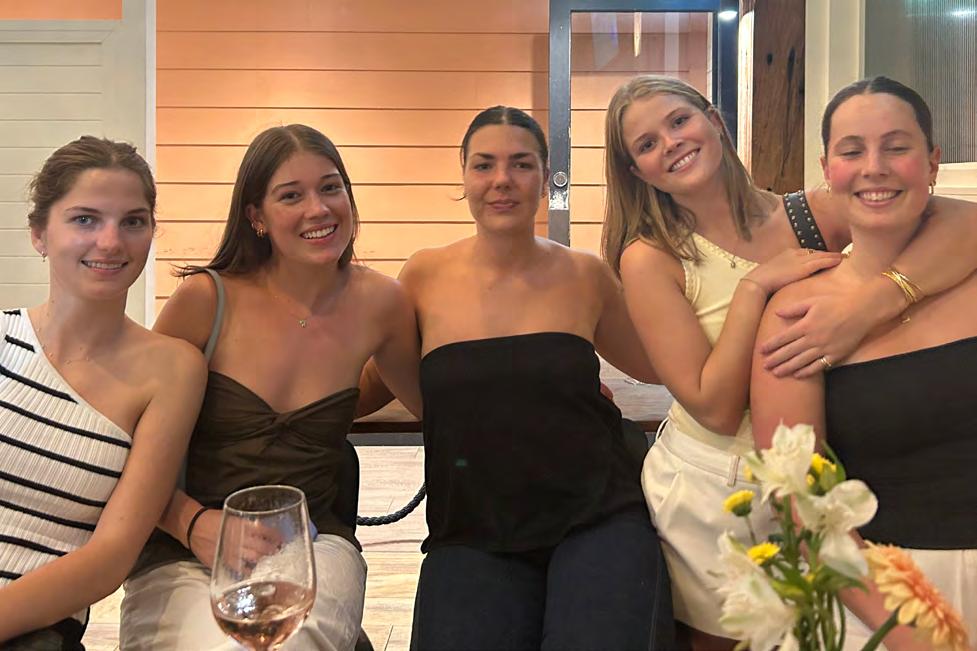
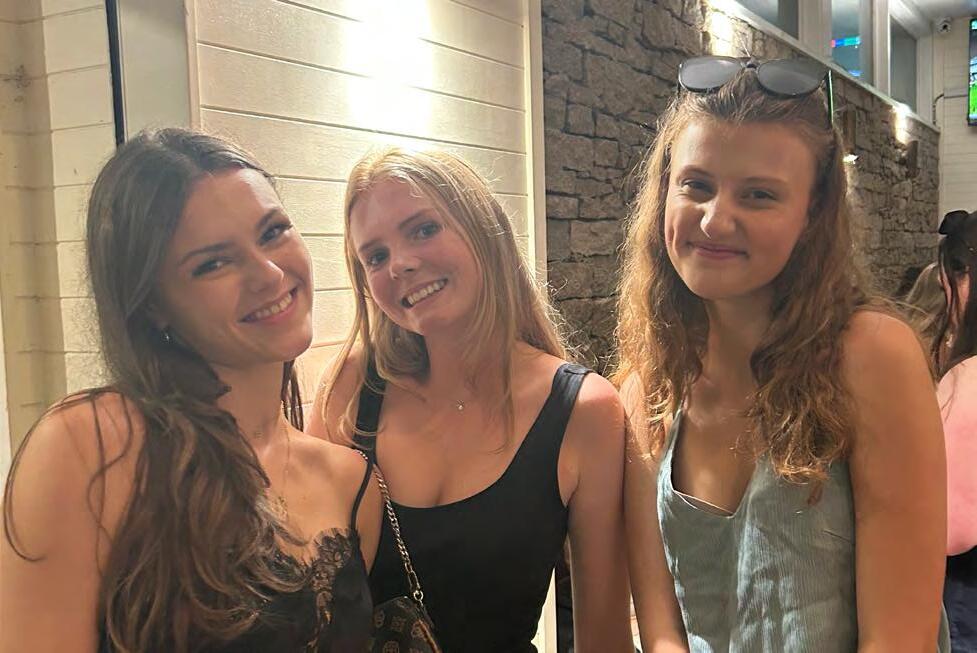
Young Old Girls Get Together
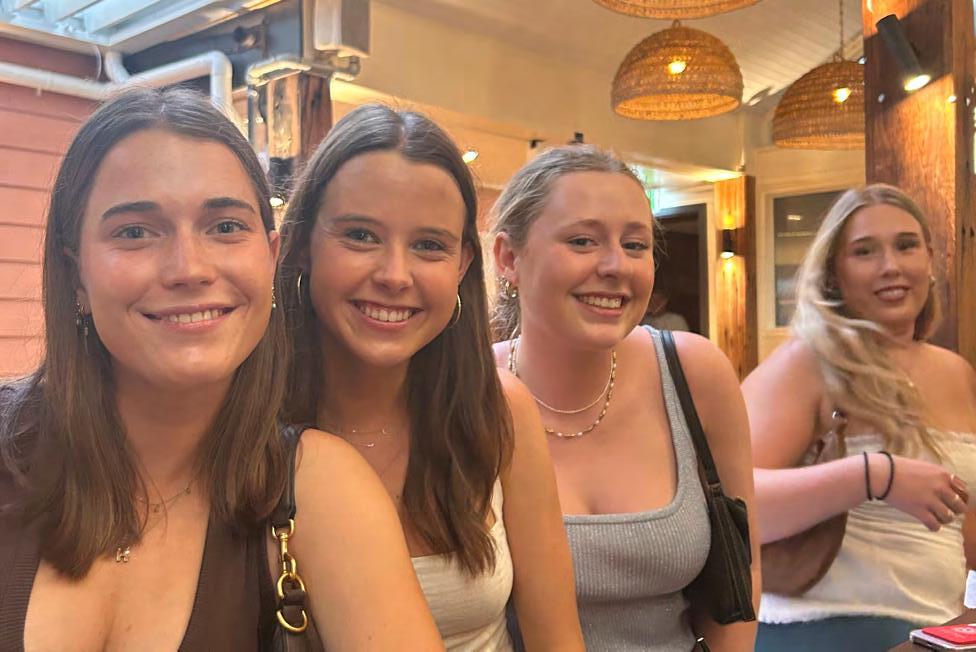
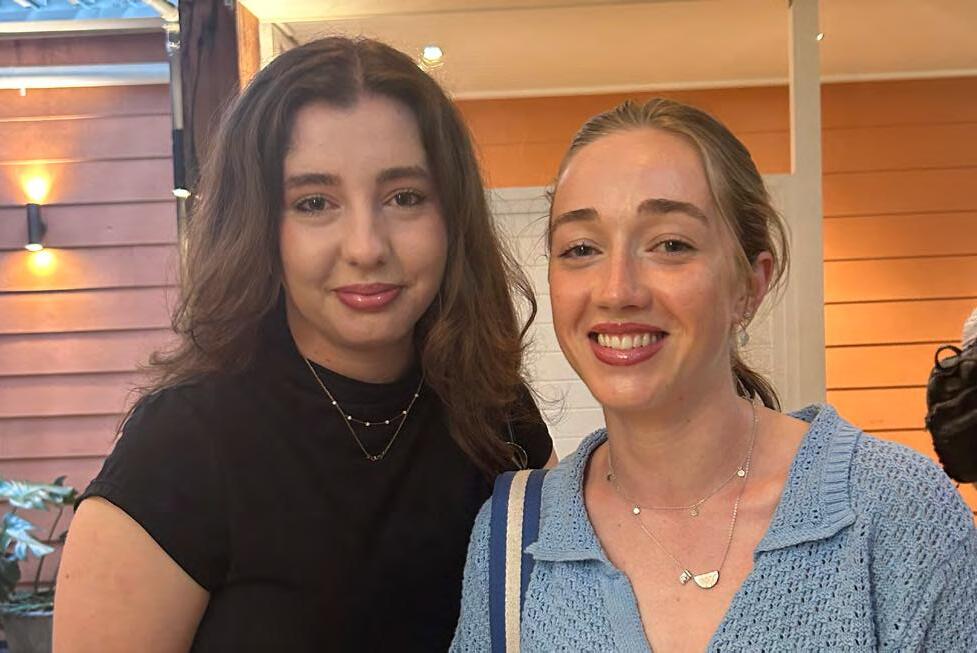
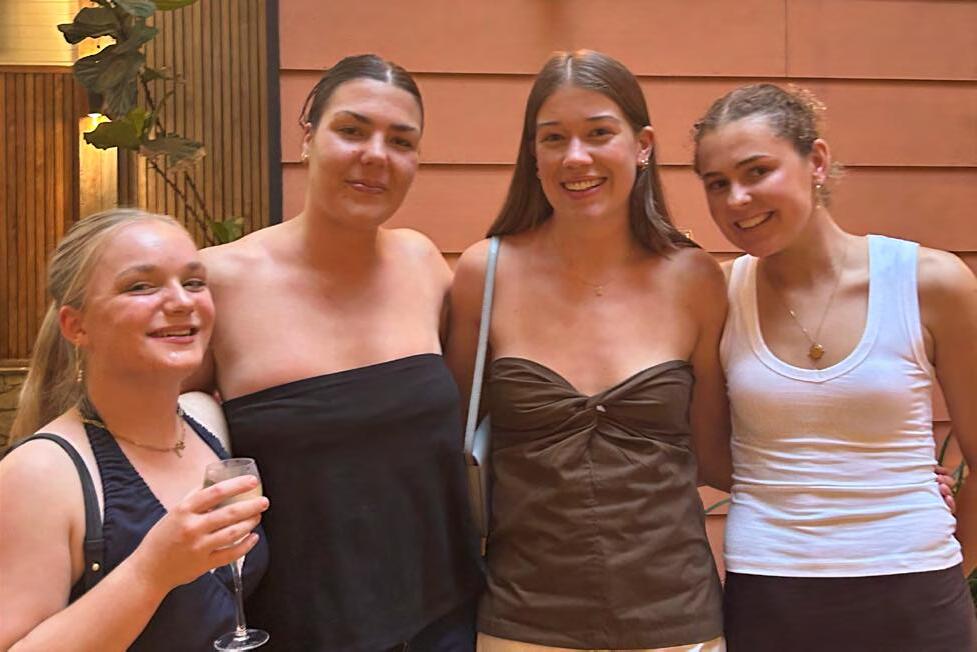
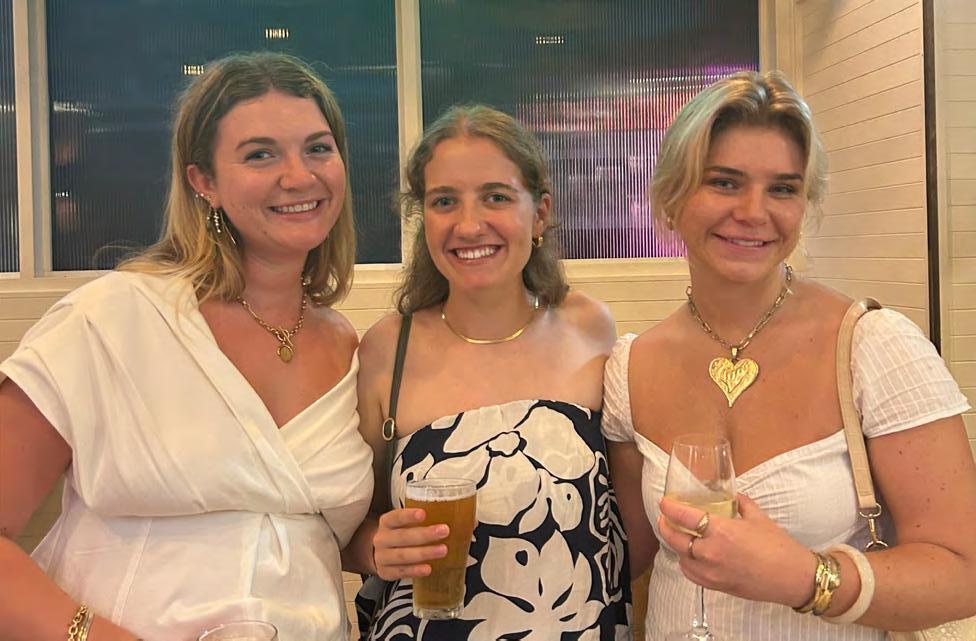
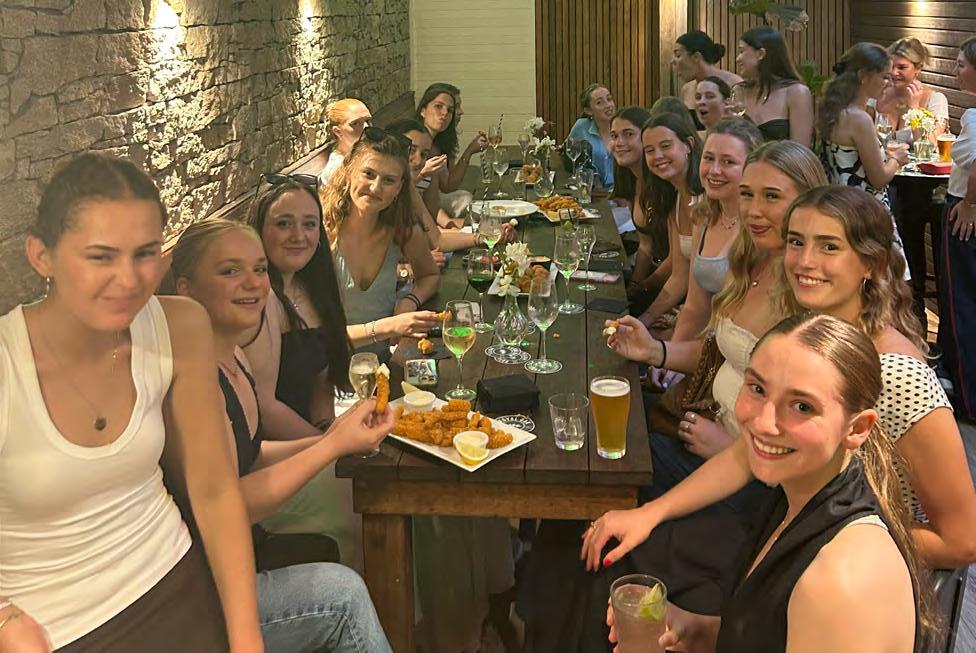
On Friday 6 March, more than 40 Young Old Girls from the Classes of 2020–2025 reunited at the Royal Oak Hotel in Double Bay. It was fantastic to see them come together to share stories of their studies and early careers.
Charlotte Ostor Fellowship and Development Coordinator
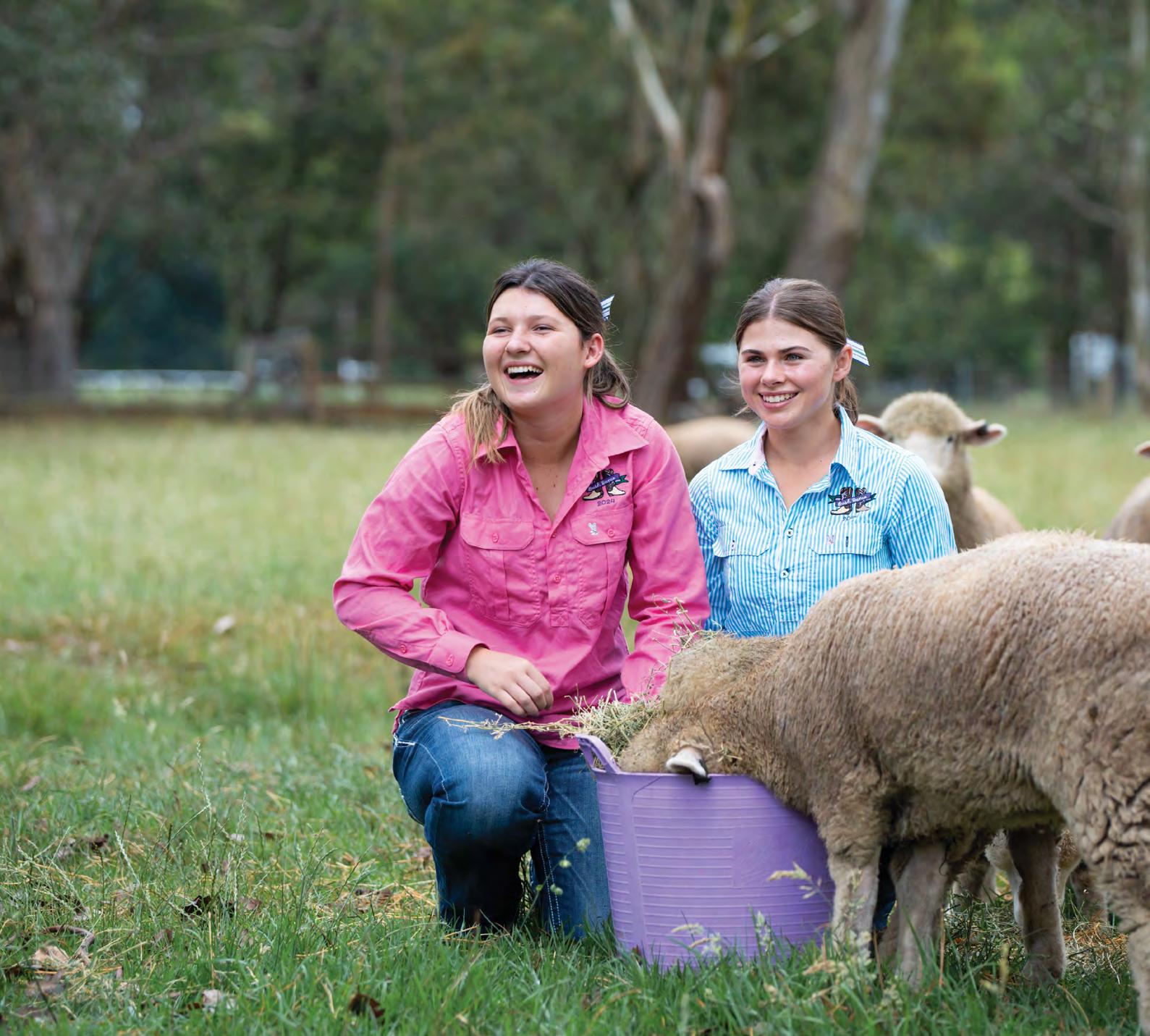
The Impact of Giving
Frensham Schools’ mission is to provide students with an education that inspires them to lead a life of integrity, compassion and a commitment to service.
Winifred West Schools Foundation provides crucial support for this mission. Through the work of Foundation, we aim to foster a culture of philanthropy that helps to transform lives and support the future of Frensham Schools. More than just fundraising, philanthropy is about generosity, care, and making a lasting impact.
For our students, service is part of their daily experience, helping them understand the power of giving, caring for others, and creating a better world. By combining education with this spirit of service, we aim to prepare our students — not just academically, but for life —empowering them to make a meaningful difference.
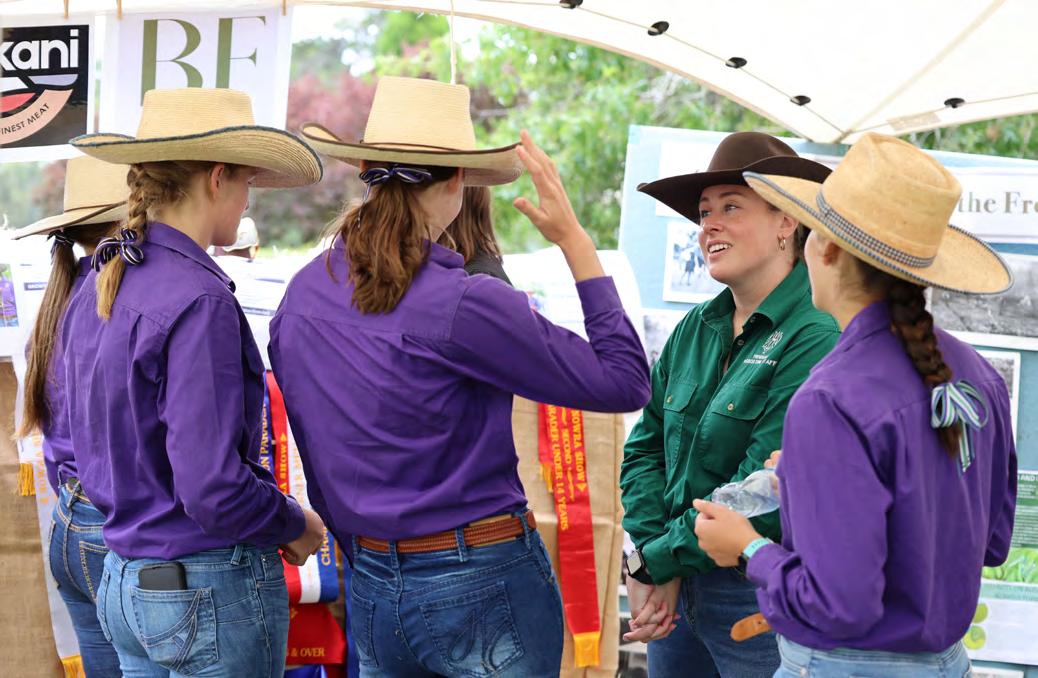
Through Foundation, our wider community has an opportunity to turn commitment into action. Whether through donations, bequests, or initiatives like the Livestock Enterprise, each contribution helps shape our future.
The Impact of Giving 2024 publication highlights the many ways Foundation enriches life at Frensham Schools. Within these pages, you will discover stories of generosity, dedication and transformation.
I hope you enjoy this edition and feel inspired by the profound impact of philanthropy within our community.
Geoff Marsh Head of Frensham Head of Frensham Schools
The Impact of Giving 2024 magazine is available from Frensham Schools website under News and Publications: frensham.nsw.edu.au/ community/news-and-events/
Or CLICK HERE to view this edition directly or by scanning the QR code below
Saturday 28 MARCH 2026
Join our school community at Frensham Junior School’s Autumn Fête from 1.00pm to 5.00pm Gib Gate Campus Old Bowral Road Mittagong
The Autumn Fête offers an opportunity to explore our beautiful Mittagong campus and get a genuine feel for our community. It is a joyful celebration of school life, featuring student performances, games, food stalls, and family activities.
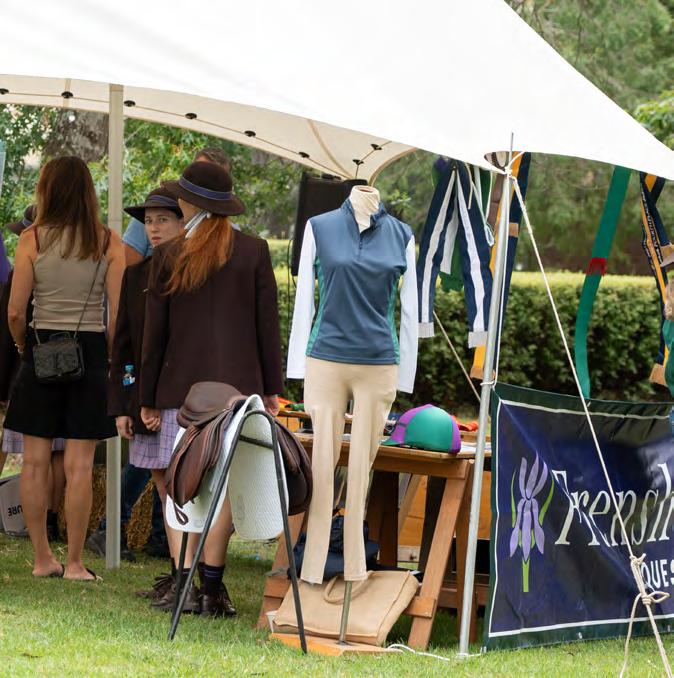
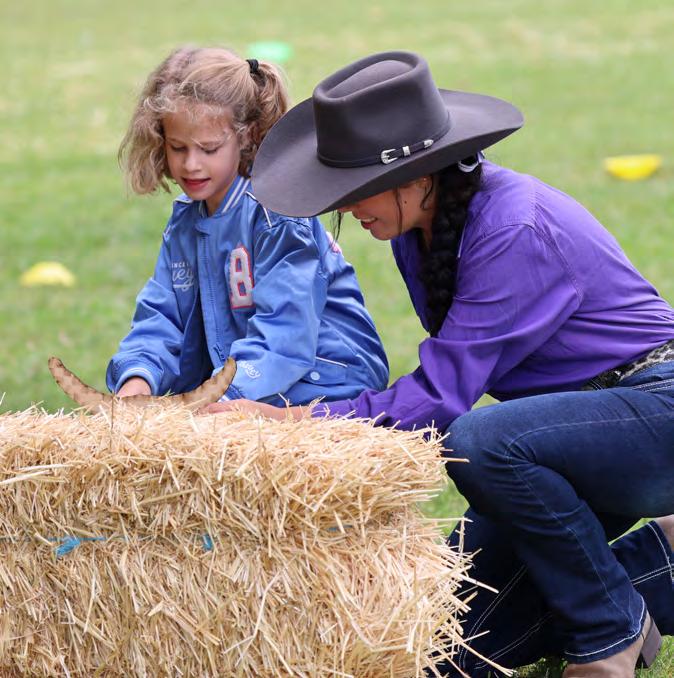
With pony rides, jumping castles, climbing walls, sack races and hobby horse races, along with BBQ favourites and French crêpes, the afternoon promises something for everyone. The Fête is a wonderful chance to meet our staff, see our values in action, and discover how we nurture confident, curious, and engaged learners.