BI-MONTHLY MAGAZINE OF THE FREE CHURCH OF SCOTLAND APRIL/MAY 2026 • £3.00
Interim Editor • Sarah Robinson
The Editor, Free Church Offices, 15 North Bank Street, The Mound, Edinburgh, EH1 2LS editor@freechurch.org
Copy Editor • Rebekah Macdonald
Mission News • David Meredith
Free Church Offices, 15 North Bank Street, Edinburgh, EH1 2LS mission@freechurch.org
WfM Editor • Catriona Logan Fitch
Seminary News • William Mackenzie
Edinburgh Theological Seminary, 15 North Bank Street, Edinburgh EH1 2LS offices@ets.ac.uk
Design & Layout • Fin Macrae @DUFI Art www.dufi-art.com
The Record • ISSN 2042-2970
Publisher • The Record is produced by The Free Church of Scotland
Free Church Offices, 15 North Bank Street
The Mound, Edinburgh EH1 2LS 0131 226 5286 offices@freechurch.org
Advertising • Anyone wishing to advertise in The Record should contact the editor.
New Subscriptions and Re-Subscribers • The subscription price for The Record for individuals is £30.60 per year. This covers the cost of six editions at £3 each, plus Postage and Packaging. Cheques should be payable to the Free Church of Scotland. Please contact the offices for overseas subscription costs.
Details of the church's activities, latest news and people to contact are all available on the church's website: www.freechurch.org
This QR Code will direct you to the digital version of the magazine on ISSUU.
iPhone: Open your camera app and hold the lens above the QR Code, it will automatically detect the link which you can click on to open.
Android: Download QR Code Reader from Google Play Store and follow app directions.
The Free Church of Scotland is a registered charity SC012925 • Women for Mission is a registered charity SC03898
WELCOME TO THE APRIL/MAY RECORD
Welcome to the latest edition of the record. As you turn these pages, you’ll notice a theme of darkness to light running throughout.
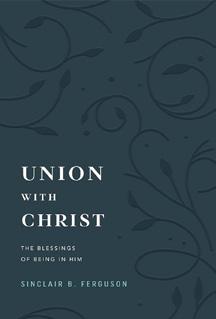
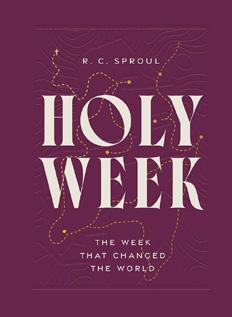
As Easter approaches, we’re reminded of the death and resurrection of Jesus. In his editorial piece (pages 5-6) Rev Ciaran Kelleher, of Grace Church, Montrose, explores how Old Testament passages form a backdrop which highlight our Saviour, Jesus. Rev David J Randall continues his series on the Apostles’ Creed (pages 24- 25) and we feature book reviews of Sinclair Ferguson’s Union with Christ and R.C. Sproul's Holy Week: The Week that Changed the World (page 29).
This edition also includes a piece about the rejection of the Assisted Dying for Terminally Ill Adults (Scotland) Bill (page 7). Free Church Moderator Rev Alasdair Macleod welcomed the Scottish Parliament’s decision. He affirmed the value of every human life and has urged a renewed focus on improving palliative care, supporting families, and strengthening communities so that no one feels that their life has lost its value.
‘Jesus Christ shows us how to be people who protect life, comfort the suffering, and walk alongside those who are struggling,’ he concluded.
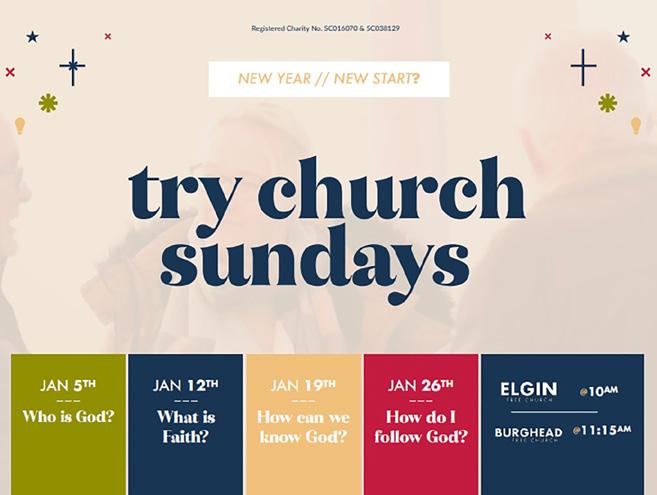
Do keep praying for those across our nation who don’t know Jesus. Engage 2026 invites every believer to commit to intentional prayer. Look out for the article Why Pray? by Rev Jeremy Ross (page 22) and Try Church Sundays by Rev Peter Turnbull (page 23).
Thank you all for your continued support of The Record. We’d love to hear from you. Please email us at editor@freechurch.org with news or letters. •
Yours in Christ
Sarah Robinson
That
he
FROM DARKNESS TO LIGHT
Ciarán Kelleher
FREE CHURCH NEWS
WOMEN FOR MISSION
Catriona Logan Fitch
WORLD NEWS
Cuba, Spain, Nigeria, Somalia, Iran and China
LETTERS
HOPEFUL EVANGELICALS YESTERDAY, TODAY AND TOMORROW
Susana McIntyre
WHY PRAY?
Jeremy Ross
ENGAGE - TRY CHURCH SUNDAYS
THE HOLY CATHOLIC CHURCH, THE COMMUNION OF SAINTS...REVISITING THE APOSTLES' CREED
David J Randall
PAGES FROM ADAM'S DIARY: PARIS RESCUE MISSION
BOOK REVIEWS
VINAY: A SNAPSHOT OF HIS LIFE
Alina Mckenzie
PAUL'S LETTERS
Donald Mackay
MISSION MATTERS
David Meredith
CHILDREN'S PAGE
POST TENEBRAS LUX
Catriona Murray
From Darkness to Light
BY REV CIARÁN KELLEHER
“ ”
The Psalms give words for us to express the soaring heights of knowing God, but they also help us voice the searing pains of living in the world as it is.
After his friends had deserted , diso W ned and double - crossed him , jesus Was surrounded by darkness for three long hours . He could well say with Heman, ‘darkness is my closest friend’.
In the backdrop to the Mount of Olives and Mount Calvary in Matthew’s passion narrative are a trio of texts linked together by two Hebrew words. Join me as we explore how these Old Testament passages form a backdrop which highlight our one Saviour.
James Hamilton writes that Psalm 88 is like Gethsemane before Golgotha. This Psalm draws us into the agony and grief of our Saviour. The night before the cross was the garden. There Jesus revealed to his disciples ‘My soul is overwhelmed with sorrow to the point of death’ ( Matthew 26:38). For he knew what was coming. The words of the Psalm echo in the anguish of Christ. Psalm 88 was penned by Heman the Ezrahite in the dark night of his soul.
• He is the one whose voice croaked from crying throughout the day and night for relief from his agonies (1-2).
• He is the one gasping for breath while submerged by sorrows (3).
• He is the one clawing for a helping hand while sinking to the grave (4-5).
• He is the one swamped with the guilt and shame of his sins (6-7).
• He is the one who has been isolated from his friends (8-9).
• He is the one who asks question after question of God pleading for a good answer (10-12).
• He is the one who feels deeply the rejection of God (13-14).
• He is the one who is drowning in his despair and sees no way out (15-18).
The Psalms give words for us to express the soaring heights of knowing God, but they also help us voice the searing pains of living in the world as it is. This Psalm is cherished by those who have known their own dark night of the soul. It tells us that unshakable sorrows are not an alien experience for the believer.
You are not the only one.
In the lament of Heman, we do not just hear what resonates with our own experiences, but we hear echoes that find their source and fulfilment in Jesus. Christ was also intimate with the sorrows of this world, both his own and ours, for darkness was his closest friend. And so, in this Psalm we hear the voice of our friend, who walked into our darkness and took it as his own.
Jesus is the friend of sorrows and so is the one who can be the friend to those in sorrow. Charles Spurgeon who knew darkness as his own friend wrote:
‘Personally, I also bear witness that it has been to me, in seasons of great pain, superlatively comfortable to know that in every pang which racks his people the Lord Jesus has a fellow-feeling. We are not alone, for one like unto the Son of man walks the furnace with us.’
The friend of sorrows is also the man of sorrows.
Heman writes, ‘like the slain who lie in the grave who are cut off from your care’ (Psalm 88:5).
Isaiah writes in the fourth servant song, ‘He was cut off from the land of the living… He was assigned a grave with the wicked’ (Isaiah 53:8-9).
Death was overcome through Christ, who himself was raised from the grave to reign forevermore.
“ ”
These are two of just three instances where “cut off” and “grave” are in such close proximity and relationship in the Old Testament. The experience of Heman echoes with the expectation of what the suffering servant would go through.
The servant is called the “man of sorrows” and would be the one who would be “acquainted with grief.” This is because as the servant, he would be the substitute who would suffer for his people, bearing our griefs and carrying our sorrows (Isaiah 53:3-4). The griefs and sorrows were the result and consequences of our sin and transgression. In our place, the servant was to be stricken, smitten and afflicted.
Matthew records that Jesus was crucified alongside the unrighteous (Matthew 27:38). As Isaiah foretold, his flesh was pierced, bearing the punishment we deserved to give us the peace he promised.
Where Heman the Psalmist prefigures Christ in Gethsemane, Isaiah the Prophet predicts Christ as the suffering servant at Golgotha.
What Heman experienced and walked through was a mere shadow of the darkness that Jesus would encounter on Good Friday. Jesus knew the cup he was to drink. In his flesh, he was to take on the full and just wrath of God. He knew he would be pierced for our transgressions and crushed for our iniquities.
Psalm 88 paints a portrait of the sorrows Jesus experienced on the cross.
Isaiah 53 paints a portrait of what the sorrows of Jesus achieved on the cross. He is the friend who has known the darkness. He is the friend who walks with us in the darkness. He is the friend of sorrows and the friend of sinners.
He is always and forever our friend. This is because he is also our risen friend.
The final place where “cut off” and “grave” are coupled is in Ezekiel 37:11-12. There the Prophet tells us of the dry bones which have been cut off from life. But the Lord promises that the graves will be opened and emptied as the dead are raised to life.
In a mysterious moment unique to his Gospel, Matthew records that after the darkness Jesus endured and his death in our place on the cross, ‘tombs broke open’ and ‘the bodies of many holy people who had died were raised to life’ (Matthew 27:52). There are many questions we have about this event. But knowing Ezekiel’s words, are we surprised that such an event would take place? Darkness’s most powerful weapon was defeated by the one closest to it. Death was overcome through Christ, who himself was raised from the grave to reign forevermore.
The empty tomb proves that God’s word is not empty. These three passages in the Old Testament all find their culmination at Easter. What God said is what God does. The promise-making God is the promise-keeping God. So, this Easter, we remember what God achieved for us through the cross and empty tomb. And remembering this, we can trust him as our friend with all our sorrows. For Jesus has demonstrated that:
The path through death is the path to life.
The way of the cross is the way to the crown.
And it is through the darkness that we are drawn into the everlasting and unconquerable light. •
Rev Ciarán Kelleher is the minister of Grace Church, Montrose.
FREE CHURCH NEWS
MODERATOR WELCOMES THE DEFEAT OF THE ASSISTED DYING BILL
free c hurch of s cotland m oderator , r ev a lasdair m acleod , has W elcomed the decision of the s cottish p arliament to reject the a ssisted d ying for t erminally i ll a dults ( s cotland ) b ill .
Members of the Scottish Parliament voted 69 to 57 against legalising assisted dying. One member abstained.
Following the vote, Alasdair said: “Along with many others, we are thankful and relieved that the Bill designed to assist people commit suicide has been defeated.
“This decision affirms that every human life is precious and worthy of protection. As Christians we believe that human life is a gift from God, and that our calling as a society is to care for one another, especially in times of weakness, illness, and suffering.
“Throughout this debate many people — including disabled people, healthcare professionals, and faith communities — have raised serious concerns about the risks such legislation would bring. The possibility that vulnerable people would feel pressure to end their lives is something that any compassionate society must take seriously. We are also grateful to the many individuals and organisations who worked tirelessly to highlight these concerns and to defend the dignity of human life.”
He said: “This was the third, and hopefully final time, that the Scottish Parliament has voted on this issue. It must now be left, for at least a generation, with our collective focus shifting to what we can safely and compassionately achieve: improving palliative care, supporting families, and strengthening communities so that no one feels that their life has lost its value.
“Jesus Christ shows us how to be people who protect life, comfort the suffering, and walk alongside those who are struggling. Following his example remains our commitment as a Church.” •
DONATION TO SUDAN THROUGH TEARFUND
Women for m ission have donated £2,000 to t earfund ’ s W ork W ith local communities
in s udan . Using this donation, their partners are able to supply life-saving aid to those in need and support the rebuilding of Sudan in the wake of long-lasting conflict.
According to the UN, Sudan is now the ‘world’s worst humanitarian crisis for women and girls’, with millions being displaced and many being deliberately targeted with sexual violence.
Nearly three years into conflict, many Sudanese people are returning to the area after displacement to destruction and poverty. Housing, critical infrastructure and essential services have suffered extensive damage, leading to the current
humanitarian crisis where both violence and malnutrition collide.
Tearfund have been working in the area since the 1970’s. Tearfund’s work in Sudan includes:
• providing food and livelihood support to those in need
• addressing malnourishment
• widening access to clean water and adequate sanitation.
WfM’s Disaster Relief Fund comes through the sale of the Ultimate Favourites Recipe Book. With the profits of these sales, we are able to respond to disasters and support the vital work of organisations working close to these areas of need. •
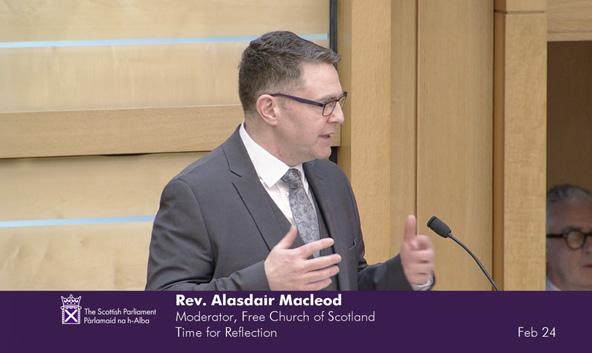
MODERATOR ADDRESSES SCOTTISH PARLIAMENT
free c hurch of s cotland m oderator r ev a lasdair m acleod recently addressed the s cottish parliament during the t ime for r eflection .
He said: ‘In a recently published book entitled What has Christianity ever done for Scotland?1, the author reminds modern, secular Scotland that our education and legal systems, healthcare, human rights and arts have been shaped by those who had a living relationship with Jesus Christ. For instance, James Young Simpson, the pioneer of anaesthesia, was asked by a reporter in his day, “what was your greatest discovery?” Likely expecting an answer about his life’s work, he replied, “That there is a Saviour”.
‘What is it about Jesus Christ that draws the deepest devotion? There is no questioning his unique impact.
Over two billion people today, from remote rural tribal groups to the most technically advanced nations on earth, claim a live connection to him. From today’s world of elite sport to historical figures like Napoleon,
who contrasted the empires of Alexander the Great, Caesar, and Charlemagne, “On what did we rest the creations of our genius? Upon sheer force. Jesus Christ alone founded his empire upon love, and at this hour millions of men will die for him”2’
Alasdair added: ‘Jesus’ unique impact is matched by his unique insight. Much to the frustration of both traditionalists and radicals of his day, Jesus made clear that humanity’s problem was not out there but in here, not external but internal, not simply nurture but nature. Jesus said “For from within, out of our hearts” (Mark 7:21) spews everything that spoils. Therefore, a sole focus on externals — all of which have their place: economics, education, environmental — that ignores the internal and the eternal won’t prosper. Like the prophet who reminded the people of his day, “you have planted much but harvested little. You eat, but never have enough. You drink, but never have your fill. You earn wages, they don’t last” (Haggai 1:5). No wonder these words were bookended by “Give careful thought to your ways” (Haggai 1:4,6).’
He concluded: ‘I love my country. With all our quirks! What made Scotland a beacon of democracy, human dignity, invention and artistic genius can once again make us thrive, with kindness and hope, when we hear the words of Jesus, and like the wise man who built his house on a rock, put them into practice.’ •
ISLANDS STUDY CONFERENCE
many people descended on tarbert , i sle of h arris , on the W eekend of 8 th f ebruary for the i slands s tudy c onference . We were delighted to, once again, have two guests Speakers join us for the weekend. Travelling to the Hebrides for the first time, from Ealing Presbyterian Church, London, was Rev Paul Levy. We were also pleased to welcome Professor John Angus Macleod back to the conference. Formerly of Edinburgh Theological Seminary, he is now based in Thurso in his retirement.
Guests travelled the length of the islands, and from further afield, to be present. It is always good to be reunited with regular conference attendees, and it was also encouraging to see others there for the first time this year.
1 James-Griffiths, P (2026) What has Christianity ever done for Scotland? Tain, Scotland. Christian Focus Publications.
2 Abbott, J.S (1855) The History of Napoleon Bonaparte
Professor John Angus Macleod and Rev. Paul Levy
Rev Levy’s chosen topic was ‘The Fear of the Lord is the Beginning of Wisdom’ and Prof Macleod’s title was ‘The Forgotten King’. It was most enriching to be under their teaching and preaching, which was so relevant to our own day and situations. We were challenged and encouraged in our journey with the ultimate King.
Many people commented on the evident sense of liberty that was so noticeable throughout the weekend, not only at the talks but during the times of fellowship and discussion also. It was gratifying to hear that our Speakers shared those views. Professor Macleod summarised the weekend:
‘It was such a privilege to be at a Conference where the people are clearly eager to go to fellowship with one another, and where friendships have been built up over the years; yet far from being a clique, there was a consistent display of kindness that was intended to make all newcomers feel so welcome. The span of ages and gender was also so heartening, especially when we gathered with the North Harris congregation on the Lord’s Day. For myself, I thoroughly enjoyed Paul Levy’s study of the Fear of the Lord — such an honour to be challenged and comforted, day by day, and in the glorious Welsh accent!’ Rev Levy also felt blessed to have shared in the weekend. Following it, he said: ‘I really enjoyed and benefited from the conference. It was a real encouragement to me. I found the times of fellowship so refreshing, people were warm and encouraging. My prayer is that there is lasting fruit from those few days together.’ •
Conference recordings may be obtained by emailing islandsstudyconference@mail.com. Plans are now underway for next year’s conference, scheduled to take place from 5th-7th February 2027.
FREE CHURCH OF SCOTLAND FINANCE UPDATE
the b oard of t rustees W ould like to thank congregations and individual members for their efforts to meet remittance levels and mission donations during 2025
Income for the year was above budget as a result of several legacies received and higher than expected remittance income. Expenditure was below budget which has resulted in a surplus for the year. The budget for 2026 anticipates a deficit.
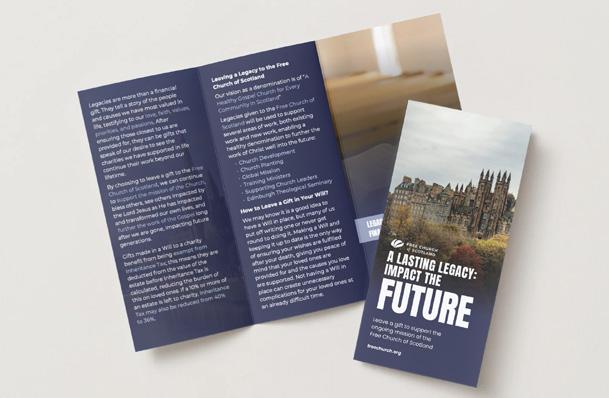
Over recent years the Free Church of Scotland and its congregations have benefitted hugely from legacy donations. A new legacy leaflet is available on the website: freechurch. org/donate . Please would you consider leaving a legacy in your Will to bless future generations of Christians in the Free Church.
The Board is currently consulting with Presbyteries on a possible new remittance system and is intending to bring a proposal to the General Assembly in May. Although the current levy system is complex, the pie chart helps with understanding how remittances are used and how they contribute to a Healthy Gospel Church for Every Community in Scotland. •
THANKSGIVING SERVICE AT HADDINGTON
BY REBEKAH MACDONALD
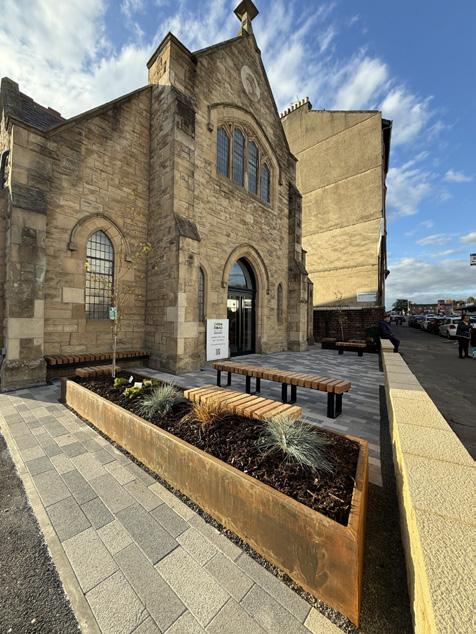
haddington community church (hcc) has much to be thankful for: a thriving congregation, the blessing of many children, faithful teaching and preaching, many Willing helpers, and recently the purchase of a church building. On Sunday 8th March a thanksgiving service was held to praise God for his gracious provision.
Rev Ali Sewell preached from Psalm 138, a song of David where he thanks God for his steadfast love and faithfulness, through times of joy and times of trouble. It was a beautiful reminder that God keeps his promises, that we can trust him even when the days are hard.
Ali also gave a brief history of HCC, from its very first days as a small group of people meeting together in homes in 2016, to official launch in 2018, and through the difficult time of Covid, when services had to be online. Through these days God provided meeting places and people, building up the congregation and keeping it strong.
HCC moved into its new building in the centre of Haddington in early 2026, with the first service being held on 18th January. Members of the congregation and many tradespeople worked hard to refresh and update the building, making a bright and welcoming space to worship together, with ample room for children’s classes. After years without kitchen facilities, it is a special joy to be able to share tea, coffee and conversation together after the service!
While the church was eager to recognise and thank God for the provision of a building, and his faithfulness over the life of the church – the key emphasis was that we give thanks for the gospel of Jesus Christ. And that as God’s people give thanks, they reach out with the certain hope of Jesus to the world around them, that others too might come to know and thank God for all he has done. The church's prayer is that their new home will provide a venue for the regular worship of God, and also to reach more of their community with the life-giving news of the gospel.
May we ever sing with the Psalmist:
I give thanks, O Lord, with my whole heart; before the gods I sing your praise; I bow down toward your holy temple and give thanks to your name for your steadfast love and your faithfulness, for you have exalted above all things your name and your word. (Psalm 138:1-2) •
Rebekah Macdonald is part of Haddington Community Church. She is also Copy Editor of The Record.
Photos provided by Rhiannon Mackintosh
REFLECTING ON GOD’S GRACE AND GOODNESS AT CROW ROAD FREE CHURCH
croW road free church in the thornWood area of glasgoW has been thanking god for a number of milestones met over the past feW months.
In November, after seven months of building work that saw the main entrance transformed through the use of glass and sustainable wooden materials, the new entrance was ready for use. And with the congregational hall also refurbished to make it safe and compliant for regular use, the time came to give thanks for the end of building work — for the moment — and the start of using these new spaces. December 2025 saw a busy period for the congregation as they held a Saturday evening of fun and fellowship and a well-attended congregational Sunday lunch during the first weekend of events in the refurbished hall, which also used the larger and more modem kitchen.
In December, some of the congregation spent a Saturday afternoon singing carols in the local retail park and distributing invitations to Crow Road’s Christmas carol service. Many local residents stopped by the church during this open day, interested to see inside the new entrance and vestibule, particularly since well-designed lighting and architectural decisions had made the inside of
the church much more visible from the exterior. The opportunities to encourage more people to join in worship have increased, and a number of local people have started attending.
While there is much to be thankful for, the leadership is now taking time to consider prayerfully the next priority for the buildings that are in regular use on a Sunday and throughout the week. While the main entrance and hall are in much better condition, there is still more to do to make all the available spaces fit for a future, in pursuit of sharing the Gospel with the local community. Please commit future plans to the Lord, that his will would be done.
Reflecting on that new open front elevation, one of Crow Road’s attendees produced a striking digital image of the church at night. Dayna Miller brought her considerable talents to creating the artwork that will not only be displayed in the church itself but has already been used in a number of resources for the congregation to share, including in use as greeting cards.
While there are plans for further changes to the exterior and interior of the church, this winter period was a time to reflect on God’s grace and goodness. On 7 December 2025 the denominational survey of church attendance took place. Between Crow Road and the Bearsden/Milngavie (Crossbridge) and Helensburgh (Hope Community) church plants the figure was 220, far in excess of what was recorded a few years ago for the St Vincent Street and Partick congregations before they were united into Crow Road Free Church. The leadership is particularly excited by the addition of seven new members in 2025 and a high number of visitors attending regularly. With a healthy student contingent too, part of the discussion for these future plans will focus on ensuring the church sanctuary is large enough to make sure everyone has a seat on Sundays.
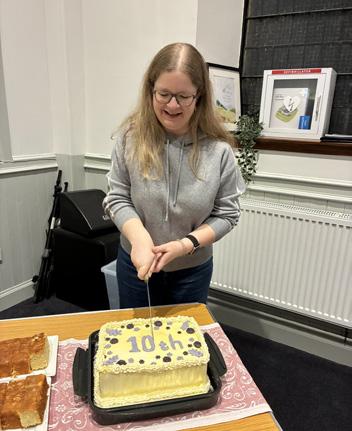
With much going on not just on Sundays but throughout the week, such as a Warm Space for local residents and the parents and toddler group, Joyful Noise, it was time to remember our faithful Church Administrator, Laura Stevenson. Laura was presented with a cake and a token of the leadership’s appreciation for her ten years’ service to the church, working through changes of church location, building project, and support to both church plants. That same evening in January 2026 saw Rev Rodger Crooks lead the service, marking the 45th anniversary of his ordination. Crow Road has been truly blessed, through God’s grace and mercy, and commits the future to his wisdom and guidance. •
The light shines in the darkness and the darkness has not overcome it. (John 1:5)
BLYTHSWOOD’S 2025 SHOE BOX APPEAL
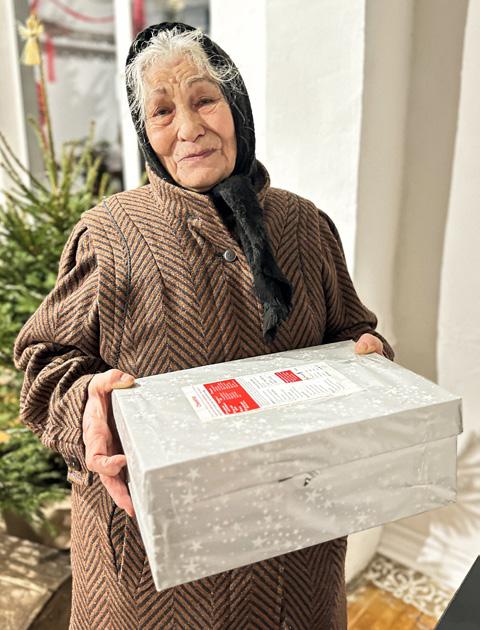
blyths W ood ’ s 2025 s hoe b ox a ppeal resulted in nearly 81,000 gift - filled boxes being distributed in eight countries across southeast e urope . More than a third went to Ukraine, where some people still celebrate Christmas on 7 January, according to the Julian calendar.
Since 2022, the Highland-based charity has been heavily involved in relief programmes to help people displaced by the war in Ukraine. Essential shoebox items such as woolly hats and scarves are immediately useful as airstrikes result in prolonged power cuts and as temperatures dropped to -15 degrees C in Kyiv recently.
Boxes were also distributed to low-income households in Albania, Bulgaria, Hungary, Kosovo, Moldova, Romania and Serbia. Blythswood’s chief executive Jeremy Ross said: ‘We want to thank everyone who filled a box, and all the volunteers who helped to process them. We couldn’t have done it without your contribution.’
Blythswood’s 2025 appeal included the option to sponsor a gift package to be made up in country, resulting in the equivalent of an additional 1,800 boxes. Jeremy says: ‘Our partner organisations in Pakistan will use this resource to help some of the poorest people in their communities, such as the families of brick kiln workers.’ •
BIG PLANS FOR LENDRICK MUIR
We are excited to announce that a largescale development project is planned to commence later this year at the largest of their W ell - loved residential activity centres , l endrick m uir .
Since opening its doors in 1999, Lendrick Muir has grown into a vibrant hub welcoming over 11,000 visitors every year. From school residentials to holidays and weekends, training events and the Magnitude festival, Lendrick Muir is alive with activity almost all year round.
However, after 25 years of intensive usage, creatively navigating quirks and challenges, parts of the Lendrick Muir building need replacement and upgrade to be fit for purpose. Expectations of groups, and the needs of young people, have changed. To keep welcoming the next generation we need to act.
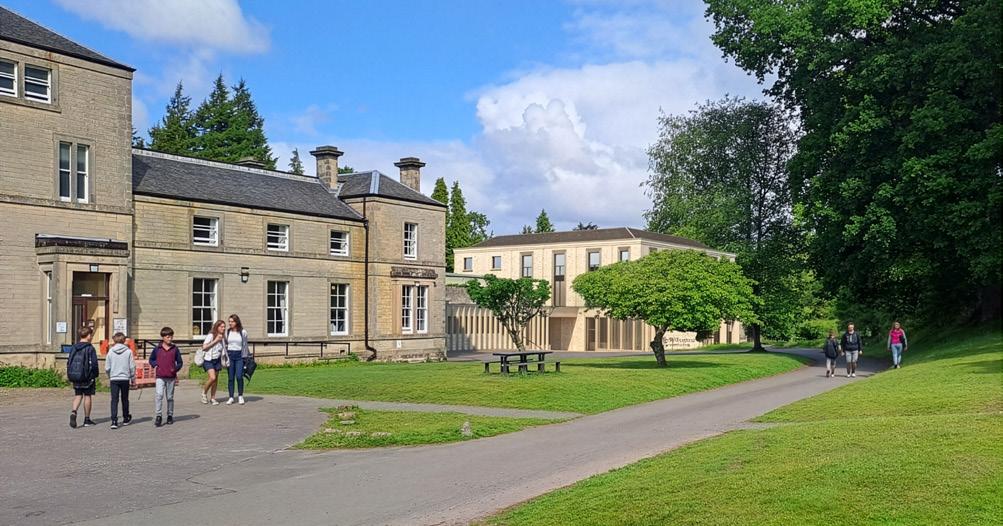
Plans involve removing the section of the building known as “Glendevon”, remodelling sections of the main house, and creating a modern, connected space. The overall capacity will increase to benefit an additional 2,000 children and young people each year. This re-development will deliver a stepchange in provision, creating a contemporary, sustainable, inclusive building that meets the needs of guests and staff alike, whilst enhancing the beauty of the centre campus. We are approaching trusts and foundations with applications for funding, and a more public appeal is being launched in a few months' time.
SU Scotland’s Chief Executive Officer, Robin MacLellan said:
‘This is a really exciting time for SU Scotland. There has been lots of discussion and press coverage about a growing spiritual hunger among children and young people, so the opportunity to substantially expand our capacity at Lendrick Muir, and make a step-change to what we can offer the children and young people of Scotland, could not be more timely. Last month, we saw the Schools (Residential Outdoor Education) (Scotland) Bill passed in the Scottish Parliament. This landmark legislation will mean that all school pupils will be given the opportunity of an outdoor education residential, another clear indicator of the need to expand our provision. We have carefully considered this project over many months and feel now is the time to make this ambitious, bold move to be able to welcome more of Scotland’s children and young people, encouraging them to explore the Bible and respond to the significance of Jesus.’
Work is planned to begin in Autumn 2026, with the Glendevon Unit closing in mid-October. The main building will continue welcoming guests throughout the estimated 15-month build, and we’re aiming to unveil the new space in early 2028.
This is more than bricks and mortar. We are creating a home for life-changing experiences for generations to come. We would love you to join us as we step into this exciting new chapter. •
McPhie is the Head of Marketing for SU Scotland
This is an artist’s impression of what Lendrick Muir might look like
Sarah
BOYS’ BRIGADE LAUNCHES ALUMNI NETWORK TO CONNECT GENERATIONS
the boys’ brigade Wants to get in touch With former members to celebrate more than 140 years of shaping young lives through their neW alumni scheme.
The organisation wants to connect with previous members to share their stories of how The Boys’ Brigade (BB) helped prepare them for their lives and careers.
For generations, BB has provided opportunities to learn, grow and discover. This positive influence that the organisation has brought into young lives is as important and as relevant today as ever.
One of BB’s alumni, Professor Jason Leitch CBE, joined the 6th Airdrie Company in Lanarkshire. He went on to become the National Clinical Director of Scotland and helped steer the country through the Covid pandemic. Jason says BB gave him the building blocks for a life of public service.
He said: ‘It was about camaraderie and friendship, but also independence, discipline and skills, but mainly it’s lots of fun! I grew and I discovered the importance of belonging. I hope BB continues to go from strength to strength. The skills it teaches are as timeless and as valuable today as they were to me in the 70s!’
Pete Markey was five times “Marketer of the Year” and until earlier last year was head of marketing for Boots UK and Ireland, before moving to a new Executive role at Cancer Research UK. He says his ‘proudest achievement’ is the box of BB badges he used to wear on his sleeve.
He said: ‘They’re a bit tired, and the gold sheen has faded, but they taught me that when you work hard, you get something back. BB provides you with essential skills for life: a foundation on which to build yourself. I arrived as a boy and left as a man.’
Pete said BB encourages young people to grow and to believe in themselves. And growing in faith is a key part of that. Each week, thousands of young people are brought into a church environment through the BB. Many have no other connection with the church.
He said: ‘Boys’ Brigade connects you spiritually and grounds you in why we’re here. Faith was central to that: growing as a person, having belief, and realising you’re not on your own in life’s journey. You’re given a sense of purpose. I know my life has worth and value, and I’m here to make a difference.’
He concluded: ‘BB taught me how to become a leader, a good man and a better person. It pushed me to see what I was capable of. It gave me drive. I wouldn’t be the person I am today if it hadn’t been for The Boys’ Brigade.’
BB trustee Andrew Baldwin adds: ‘One of the things that always makes me smile is hearing stories of people’s connections to the organisation. There is a huge BB community out there — across the UK and around the world.
‘Former members are in every walk of life. We want to hear your stories, and the part that The Boys’ Brigade played in your life. The alumni scheme gives us the chance to reconnect and build a stronger future, as we head towards our 150th anniversary.’ • For more, go to https://alumni.boys-brigade.org.uk/
Prof. Jason Leitch
OUR HEART FOR HOME FUND
BY CATRIONA LOGAN FITCH
Women for mission are able to help free church groups and individuals Who Want to shoW jesus’ compassion in their communities through the heart for home fund. Often the applications are for practical things; appliances, equipment, updating or adding new facilities. However, through this simple, practical help, church spaces are improved to be more welcoming and easier to use, enabling congregations to concentrate on the running of their clubs, get togethers and services. As well as applications for practical needs, we’ve been delighted to receive a number of applications recently which have helped to facilitate different kinds of youth work, from toddler groups to holiday clubs.
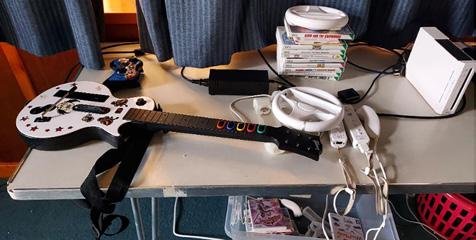
The fund was used by Dornoch Free Church for their weekly outreach group, Enlightening Youth, for P7-S6 aged children. The group is building upon the good attendance at their summer Holiday Club to cement links between the church and community and provide a fun place to be during the week. The fund was used to purchase a projector and screen for games and movies, soft furnishings and a Bluetooth speaker.
Heart for Home supported Tornagrain Community Church with the running of their holiday club. Funds went towards renting portaloos and buying snacks and crafts as well as supporting supplies for the parents’ coffee bar at the end of each day, which proved very useful as the families could hear the Gospel songs and hear a summary of the message that was shared with the children.
A new Playstation was purchased for a Teen Cafe Youth Club run by Charleston Community Church. The cafe is attended by young teenagers and the Playstation has proved to be a good way for leaders to come alongside the teenagers — especially boys — as playing a game can help develop connection and conversation. The vast majority of kids attending are from families where no one goes to church.
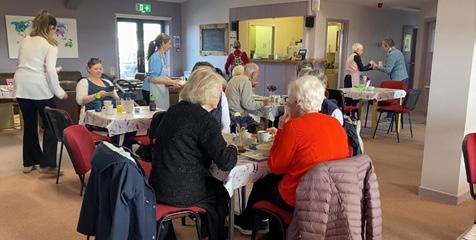
The Heart for Home fund was able to support South Uist and Benbecula Free Church’s An Caladh Cafe. They were able to continue and improve their service, which provides a warm welcome and between 25-35 lunches every Wednesday. They serve tea, coffee and a selection of home baking… and hot chocolate, courtesy of the new milk-frother! Payment at the Cafe is made by donation so it enables those who have financial challenges to go out for lunch and meet friends. It is well used by a diverse selection of the community
including young mums and their children, local workers visiting during their lunch break and people in their nineties, helping to reduce isolation. They have created a peaceful environment, with instrumental music playing and scenic photos with Bible verses displayed. The volunteers have had opportunities to invite customers to church and many in the community have been encouraged by their visits to the cafe.
Ullapool Free Church used the fund to purchase a new coffee system to enhance their church teas, fellowship, and meals. The flask can be filled ahead of time and keeps the coffee hot for up to 3 hours, making the whole process more efficient. The new system also uses real fair-trade coffee, which has proven to be very popular with the coffee drinkers!
We’ve been so encouraged to receive these applications and are grateful to God for the opportunity to support churches and individuals through the Heart for Home fund.
If you or your congregation have an idea to show Jesus’ compassion to those around you in your community, we’d love to hear from you.
Visit the Heart for Home page on our website to find out more womenformission.org. The application process is simple and we would be glad to receive your application. If you have any questions, please get in touch. •
The Women for Mission’s Annual Get Together will take place at Crow Road Free Church on Saturday 16th May. Look out for more details on their social media soon!
Dornoch Free Church’s games equipment
An Caladh Cafe
WORLD NEWS
AMERICAS AFRICA
EUROPE ASIA AUSTRALASIA
PRAY FOR THE PERSECUTED CHURCH
CUBA: Christians in Cuba must align with the country’s Communist agenda, and failure to do so can bring pressure and persecution. To curb the church’s influence, the authorities routinely deny registration of new churches. This forces many to operate “illegally”, putting them at greater risk of persecution. Evangelicals, Pentecostals and Baptists often face greater obstacles in getting their churches registered, and those involved in house churches are greatly at risk of surveillance. •
SOMALIA: Political instability in the country has worsened in recent years, with more areas coming under the control of extremist group Al-Shabaab. The group enforces a brutally strict version of Sharia, and Christian converts are publicly executed if discovered. Across the whole of the country it is illegal to convert to Christianity, forcing believers to worship in secret. Somalia is #2 on Open Doors’ 2026 World Watch List. •
CHINA: The ruling Chinese Communist Party sees Christianity as threat that must be tightly controlled. Registered churches are closely monitored by the state. Many congregations refuse to register and be controlled by the government, instead meeting in house churches in secret. Recent crackdowns on these house churches have made members and leaders at risk of fines, arrests and imprisonment. Under 18s are not allowed to attend churches, making it dangerous to reach out to the younger generation. •
SPAIN’S PARLIAMENT APPROVES INITIATIVE TO STRENGTHEN THE DEFENCE OF PERSECUTED CHRISTIANS
Evangelical Focus
The Foreign Affairs Committee of the Congress of Deputies (Spain’s national parliament in Madrid) has approved an initiative presented by the conservative Popular Party that seeks to strengthen Spain’s response to religious persecution. The proposal focuses on protecting Christian communities and promoting more forceful international action against massacres motivated by faith.
During the presentation of the initiative, Member of Parliament Maribel Sánchez stressed that religious freedom ‘is not a confessional privilege’, but a fundamental human right and an ‘indicator of democratic quality’. She underlined that this right is enshrined in Article 18 of the Universal Declaration of Human Rights, although the global reality is far from meeting this standard.
Sánchez drew on the most recent data from leading organisations in the field. She cited the World Watch List 2026 compiled by Open Doors, which indicates that 388 million Christians live in countries where they suffer high, very high or extreme levels of persecution and discrimination.
‘These are not isolated incidents’, said Sánchez, but rather a structural pattern where ‘the rise of authoritarian governments and wars are destroying the right to religious freedom’.
The approved initiative not only pointed to physical
violence against Christians, but also to the systematic discrimination that limits the daily lives of millions of believers in dozens of countries.
Ted Blake, director of Open Doors in Spain, explained in an interview with Spanish news website Protestant Digital recently that persecution is often silent and structural: ‘It's not that everyone is being persecuted all the time, but they live in a context where they are vulnerable and their rights are limited in their daily lives’.
This daily pressure translates into difficulties in accessing employment, education or justice, turning Christians into 2nd-class citizens in dozens of nations.
The approved text calls on Spain to strengthen its diplomatic action and lead condemnations within the European Union, the Council of Europe and the UN.
In addition, the proposal links respect for human rights to international agreements, pointing out that the defence of religious freedom is also a tool for preventing forced migration.
Although the vote showed the division within Parliament (the proposal was passed by a single vote and with 18 abstentions), the result puts institutional responsibility back on the Spanish political agenda in the face of a reality that, according to the 2025 Religious Freedom Report by Aid to the Church in Need, affects more than 5.4 billion people living in countries with serious violations of this right. •
In February, nine Fulani herdsmen went on trial for their role in organising the June 2025 Benue massacre, which killed more than 270 Christians. The judge of the Federal High Court in Abuja brought 57 counts against them.
The leader of the group, Ardo Lawal Mohammed Dono, and eight other Fulani tribal leaders — each reportedly linked to the Miyetti Allah Cattle Breeders Association of Nigeria — pleaded not guilty to the charges. Each member, predominantly Muslim, was accused of multiple accounts of terrorism, including financing, recruiting, and directly engaging in the assault.
Frank Utoo, a US-based Nigerian lawyer, told TruthNigeria that Ardo holds a leadership position within the Miyetti Allah Cattle Breeders Association of Nigeria, an advocacy and interest group representing Fulani herdsmen.
‘He lives in Lafia, the capital of Nasarawa state, and he was the leader of Miyetti Allah in Nasarawa state at the time,’ Utoo said. ‘On two occasions, as part of a peace delegation from the Benue state government,
I met with Ardo Mohammed Lawal Dono — in May 2020 and again in 2021. It was clear that he was the mastermind of the genocide against the Benue people.’
The Miyetti Allah Cattle Breeders Association of Nigeria is accused of financing attacks on predominantly Christian villages, but denied any involvement in the June attacks. However, a member of the Nigerian Police Force’s Intelligence Response Team testified that several of the accused, allegedly acting as part of Miyetti Allah’s network, organised and attended meetings in Nasarawa state to raise funds and recruit armed forces.
One of the charged, Haruna Abdullahi, backed up this claim by confessing that he attended the meetings allegedly held at Dono’s house.
Nigeria is ranked #7 on Open Doors’ 2026 World Watch list. Christians face violent attacks, abduction, and displacement, and in many states are not protected by the law. Extremist groups like Boko Haram and Islamic State operate across the country, especially in the north. •
IRANIAN CHRISTIANS CELEBRATE AND PRAY FOR THE HOPE OF A FREE IRAN
Christianity Today
The United States and Israel launched a major coordinated campaign against Iran on 28 February, killing Iranian supreme leader Ayatollah Ali Khamenei and striking more than a thousand targets across the country, according to the US military.
Since then, diaspora Iranian Christian ministries have struggled to connect with the church in Iran. Mansour Borji, director of the London-based Iranian religious freedom advocacy organisation Article 18, has received only a few messages from Christians in the country due to the near-total internet blackout.
Most of the messages that did get through celebrated the news of the attacks and the ‘anticipation of an end to the tyranny,’ Borji said. Other messages expressed concerned about the days ahead. ‘Some fear the United States may try to reach a deal and extend the life of a “wounded wolf,”’ he said.
Meanwhile, Hormoz Shariat, founder of Iran Alive Ministries, struggled to get Christian programming into the country. Since Thursday, two days before the war began, Iranian authorities have blocked satellite television channels and restricted internet access. Shariat noted that his ministry had recently seen a surge of Iranians coming to faith in Christ.
‘They do not want people to be influenced, informed, and led by outside influencers,’ Shariat said.
He is concerned the communication blackout might isolate Iranians in their homes and prevent
them from uniting because they have no way to connect or obtain news updates. It’s part of the government’s plan to ‘feed them lies and control them with fear, confusion, and isolation,’ he said.
Tymahz Toumadje, policy analyst for the National Union for Democracy in Iran, told CT that Iranian Christians have long suffered under the Islamic republic. A December report by his organisation said Iran’s Ministry of Intelligence labels Christian converts as “Zionist missionaries” and claims to have arrested 53 converts after the June war on trumped-up charges of accumulating weapons.
‘Even as Iran’s underground church is widely regarded as one of the fastest-growing Christian movements in the world, hundreds of thousands have been forced to live in secret, fearing persecution while praying for the day they can openly and freely live out their faith,’ Toumadje said.
As strikes weaken the regime in Tehran, he believes a free Iran will ‘pave the way for an even greater blossoming of Christianity in the country than we’ve seen in recent years.’
In the meantime, Shariat asked the global church to pray. ‘Please pray that fear and confusion will not control the hearts and the minds of the Iranian Christians in Iran,’ he said, ‘that they will be led by God’s love and empowered by the Holy Spirit to boldly share the gospel and lead tens of thousands of souls to Christ.’ •
LETTERS TO THE EDITOR
Dear Editor
RISK & OPPORTUNITY
I was so encouraged to read that The Record is now to continue beyond the summer and that a new editor could be in post soon. The is heartening news as it would be a sad to see this publication, which has lasted so long and been so important in the life of the denomination and beyond, fold.
I do hope and pray that the new Editor will have wisdom, creativity and success in directing the course of the publication over the coming years with the new opportunity that this affords.
Perhaps this would be the time to have a good look at the format and content and consider a possible new direction? There are many things that come to mind and are worthy of consideration:
1. Issues: Could we return to monthly issues? A bi-monthly publication inevitably loses something of its ability to speak timeously into current affairs.
2. Print: The magazine is beautifully designed and produced but perhaps a more modest print could be considered?
3. Length of articles: Much of the content consists of good and sound well-reasoned articles but I wonder if they are generally much too long? The opening article alone must be well over 2,500 words. I am not suggesting that we should be dumbing down but there is, I think, a case for a more succinct and pithy approach to content. Perhaps more articles in the column style of David Meredith’s “Mission Matters” or Catriona Murray’s “Post Tenebras Lux”
4. Risk: Taking the lead from Thomas Davis’ appeal, it would be enormously helpful if The Record could take the risk of exploring the highly controversial issues that Christians face every day and over which Christians may disagree. There are many: from assisted suicide to Gaza, from net zero to transgenderism and the science of evolution and creation as Alan Fraser has highlighted in the current edition. Many of these issues are debated in online platforms but it would be wonderful if they could be discussed in print, in a more nuanced and balanced way, within the columns and letters of The Record I, along with others, would want to wish the new Editor every success in this important role.
Yours sincerely,
Crawford Mackenzie, Dundee
Dear Editor,
Very many thanks to Alan J F Fraser for his stimulating letter in the Feb/March 2026 magazine, in which he asks if evangelicals unduly shy away from science. “The Age of the Universe”, “The Age of the Rocks” and “The Age of Humankind” can safely be approached. No theory in astronomy-geology-biology ever threatens or undermines Easter resurrection truth.
G K Chesterton famously said: ‘It is absurd for the Evolutionist to complain that it is unthinkable for an admittedly unthinkable God to make everything out of nothing, and then pretend that it is more thinkable that nothing should turn itself into everything.’ Modern society, en masse, thinks “The Milky Way” galaxy probably had no designer, but believes “The Milky Way” chocolate bar does have a creator: Mars UK.
Astronomy-geology-biology do infer the presence of a designer. I am reminded of Irish summer nights fishing for trout. The beauty of the gravelly stream, the glorious starry night sky and the magnificent trout are etched in my memory. It was always a pleasure to walk back to my late grandfather's farm, and see his pleasure at the sight of half a dozen kipper-sized trout in my bag.
The relationship of humans to the cosmos is poetically pitched to us in a Psalm 8 question. We rightly marvel at the cohesion, and unimaginable complexity, of the universe. But the universe can never even partially understand us, or at all penetrate the human mind-brain. The Body by Bill Bryson has an opening paragraph of Chapter 8 which looks at the brain.
Bryson describes the human brain as a 3lb organ of water (70%) plus protein and fat. In material terms it
resembles my bag of six kipper-sized trout. Yet the 86 billion neurons within the human brain have trillions of potential dendritic association or connection patterns. The human Mind-Brain is majestic beyond words, far beyond the cleverest human-created AI technology.
We marvel, quite rightly, at evidence of creation seen in front of our noses, and also in distant space vistas. But does the organ between our ears, and behind our eyes, the majestic human brain, arguably display the strongest imaginable evidence of our designer's fingerprint?
The estimated age of stars-rocks-animals-humankind is interesting. But in terms of design evidence: is the human Mind-Brain the Christian's ace card, in debates about a creator's existence?
James Hardy by email
Dear Editor
I first came across the name of Cajamarca when the then Foreign Mission’s Board was looking for someone to run the Evangelical Bookshop there “El Estandarte de la Verdad” (The Banner of Truth) – now known as Casa de la Biblia (Bible House) as it is now in partnership with the Bible Society.
It was about the same time, around 1977, an appeal went out, in an edition of From the Frontiers when within an article they published two pictures. One picture showed the number of missionaries there were in 1977 and another showed how many would remain, as later that year several were due to return home. That picture was the means God called Daphne and me to write to the Board offering our services. We will ever be thankful to the Board for accepting us to go to Peru in 1978.
Our first visit to Cajamarca took place in that same year. On arriving in Peru we stayed in Lima. But after just a few months there, money had arrived from Scotland for seed distribution in the Cajamarca area, which had experienced a severe drought. So we travelled up with Pastor Juan Silva to assess the situation. His widow La Señora Nora is still living in Lima and I understand she had a close connection with the Macraes when she was younger. We then moved to Cajamarca in 1979. It was the middle of Carnaval and the celebrations were going on just as our belongings arrived from Lima!
Many of the names mentioned in Iain Fraser Grigor’s article are familiar to us. I recall Don Napoleon Lezama talking about the Rev Macrae’s training classes. Juan Calvin Mackay was kindly remembered by many. Of course there were others but the name most frequently mentioned was that of Nurse Sarah Macdougall who had a street named after her. Then while we were there the bust which had been erected by her grave was moved to a nursery also named after her. This was in celebration of what would have been her hundredth birthday.
It is encouraging to know that the bookshop is still open after over nearly 50 years of serving God’s people, as their website puts it. Shortly after arriving I was looking for someone new to be at the shop front. A certain Juvenal Pando came forward. It was he whom I trained up to transfer the shop into Peruvian hands. By the time our second term of service came about Juvenal had been working on his own for nearly a year. (Our return was delayed due to the Falklands war breaking out.) So I was wondering what lay ahead for us when we returned.
However, it was all within God’s timing as Rev Donald Smith had written up a project called PROESA (Education Health and Agriculture). I was asked to administer that project. We hired a team of six Peruvians to live in a village just outside the city called Hualqui. This project helped the poor in the area through the local church.
It was through these experiences I came to understand that the mission of God is to be sent as Jesus was sent. (John 20:21) To preach the Gospel but also to have a ministry of compassion. It is interesting to note Jesus’ reply to John the Baptist’s question ‘Are you the one who was to come, or should we look for someone else?’ (Luke 7:20-23)
It is now 40 years this May since we left Cajamarca and 40 years on the bookshop is getting ready for the Compaña Escolar (School Campaign). The children in Peru are required to buy their own materials for classes. That was the first task I encountered in 1979.
Thank you again Iain for sending in your article about Cajamarca. It brought back many fond memories.
Charles Douglas
We would love to hear from you…please write to the editor at: The Record Free Church Offices 15 North Bank Street The Mound Edinburgh, EH1 2LS or email editor@freechurch.org
‘HOPEFUL EVANGELICALS YESTERDAY, TODAY AND TOMORROW.’
BY SUSANA MCINTYRE
These introductory words from Good News People by Gavin Calver and Phil Knox capture something at the heart of both the Evangelical Alliance and the Free Church of Scotland.
WHO WE ARE
The Evangelical Alliance serves, connects and equips 3,000 evangelical churches, 500 organisations and 28,000 individual believers from 80 denominations across the UK. Based in Glasgow, our Scottish team works to encourage the church in this nation to be confident in the gospel, united in Christ as one body and effective in public voice.
The Free Church has shared that commitment since the Evangelical Alliance’s founding in 1846. The denomination became a member in 1996, with several congregations also joining as member churches. This long-standing relationship reflects our shared convictions about the authority of God’s word, the centrality of Christ and the call to proclaim the gospel in word and deed.
It’s a joy to share some of the key areas of our work, and we are thankful for your prayers and support as we serve the church across Scotland.
SIGNS OF GOSPEL OPENNESS
When Lynne Paterson became Head of Evangelical Alliance Scotland in September 2024, we prioritised a season of listening. Over the past year, we have gathered church leaders in ten locations, from Dumfries to Aberdeen, creating space to pray, build relationships and ask the question: what is God doing in your local context?
Again and again, we have heard encouraging stories. Leaders speak of fresh openness to faith, people walking into church buildings with genuine questions, small but steady growth in ones and twos and renewed confidence that the gospel is good news for today. One leader memorably put it this way: ‘The fish are jumping into the nets.’
These small signs are a hopeful reminder that the Lord is at work in Scotland. We continue to pray that more people will come to know Christ across our churches in the months ahead.
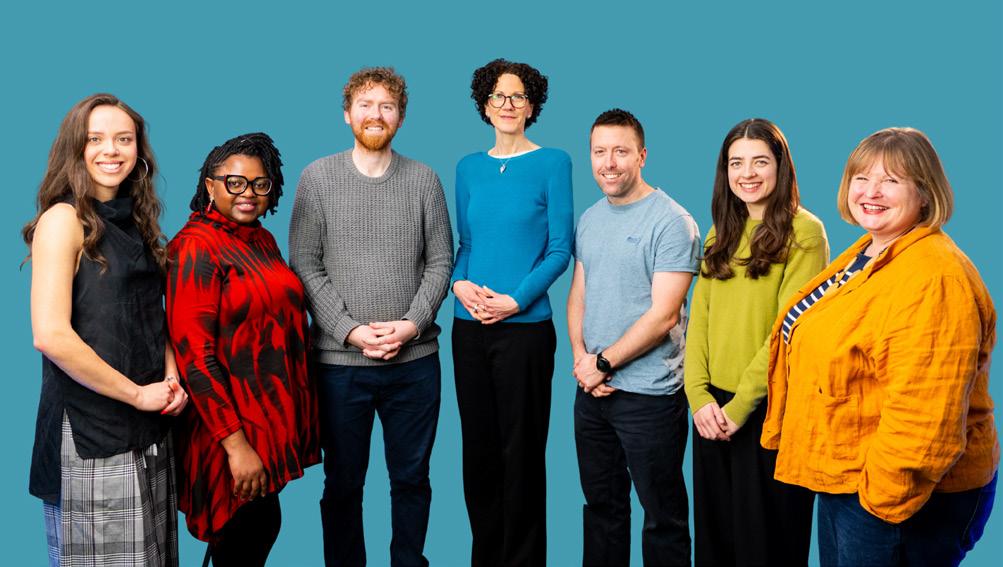
The Evangelical Alliance Scotland team. From left: Lilli Schlossbach (Scotland Associate, Graduate scheme); Sheila Akomiah (Intercultural Unity lead); Chris Ringland (Public Policy Officer, Scotland); Lynne Paterson (Head of Evangelical Alliance in Scotland); Kieran Turner (Head of Public Leadership); Susana McIntyre (Membership Engagement and Communications Assistant) and Fiona Stewart (Public Leadership UK programme lead).
A CHANGING CHURCH
Another clear opportunity we discerned from our listening tour relates to the changing composition of the Scottish church. Around 22,000 people now meet regularly for worship in ethnic minority and diaspora churches across the nation each week — a reflection of growing diversity in Scotland.
Scripture reminds us that we are one body with many parts. Beyond marking a demographic shift, this is a gift to the church in Scotland, in both number and passion.
We are delighted to have recently welcomed Dr Sheila Akomiah as intercultural unity lead, helping us foster deeper relationships and greater unity across cultural contexts. At its heart, this new role is about strengthening relational unity, mutual learning, collaborative mission and faithful public representation.
SPEAKING UP FOR THE CHURCH
Many know the Evangelical Alliance through our advocacy and public policy engagement. Representing the voices of evangelical Christians in national life is central to what we do. The size and breadth of our membership gives us a voice in the corridors of power that no single person, church or denomination could achieve alone. Our work is guided by the biblical principles of dignity, justice and freedom, rooted in the belief that all people are made in the image of God. We seek to be both brave and kind as we speak up for our members, challenging injustice while encouraging and praying for elected representatives. Recent areas of focus include assisted dying and access to religious education.
In the coming weeks, we will focus engagement around the 2026 Scottish Parliament elections, equipping churches to engage prayerfully and thoughtfully.
We also share stories of evangelical Christians serving their communities across Scotland, showing politicians that the gospel really is good news. Examples can be found in our What Kind of Nation? report on our website.
OPPORTUNITIES TO CONNECT
Throughout 2026, we look forward to hosting a range of events to inspire and equip our members. Highlights include Talking Toddlers, helping toddler groups become more missional, and Being Human, which equips Christians to speak biblically into big cultural issues, from artificial intelligence to gender and sexuality. We would love to see you at these events.
Please follow us on Facebook or Instagram for our latest news, encouraging stories and upcoming events. You can also receive our monthly Headlines: Scotland email by contacting us at scotland@eauk.org or visiting eauk.org
Thank you for your ongoing support and partnership. We pray you will continue as hopeful evangelicals, serving God faithfully wherever he has placed you. Let’s remain confident that the gospel is still good news and that God is powerfully at work in Scotland. •
Susana McIntyre is the Membership Engagement and Communications Assistant for Evangelical Alliance
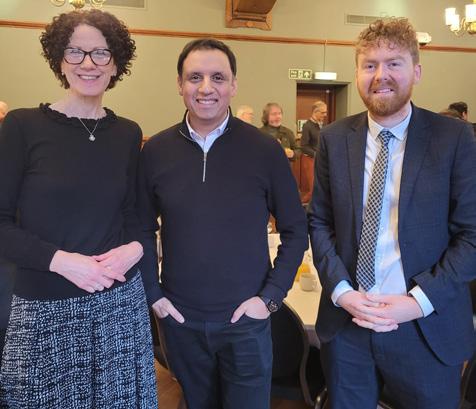
Lynne Paterson and Chris Ringland with MSP Anas Sarwar (Leader of Scottish Labour)
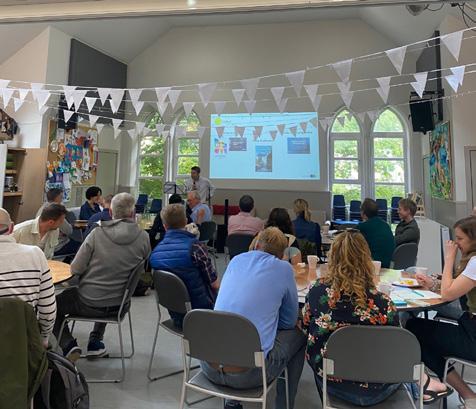
Kieran Turner talking at a church leaders gathering in Edinburgh
WHY PRAY?
sBY REV JEREMY ROSS
ometimes people ask ‘Why pray When god already knoWs What he’s going to do?’ Maybe you think if your friends are going to come to faith in Jesus, there’s no point in praying. Here are ten reasons to pray for ten friends:
Jesus prayed
The Gospels tell us Jesus prayed. Luke 5:16 shows Jesus withdrawing to lonely places to pray. In Gethsemane he prayed, ‘Not my will, but yours.’ If the Son prayed, so must we.
Jesus commands us to pray
‘This then is how you should pray.’ To neglect prayer is simple disobedience.
Prayer is powerful
In Mark 9:29 Jesus says, ‘This kind can come out only by prayer.’ It’s not just that who we pray to is able, but the thing we do, the praying, is powerful too. God has made it so. The prayers of a righteous person are powerful and effective.
Consider who we pray to
In Exodus 32:11-14, Moses prayed to the Lord his God. Prayer should be worship to our eternal, covenantmaking creator and, now we’ve been told by Jesus, as to ‘Our Father’. Remember who we are speaking to as we make our requests.
Pray because of what God has already done
Moses pleads for ‘your people whom you brought out of Egypt.’ We pray to a God who has already acted in salvation. We have the cross in view and know he is merciful.
Pray for God’s glory
Moses appeals to God’s reputation. We long for God’s name to be honoured. In this world, would that not be seen as people are saved?
Prayer acknowledges God’s power
As the God who powerfully acted in the past, only God could make Israel as numerous as the stars. Only God can save. It’s the same today; we can ask God to show his saving power.
Pray God’s promises back to him
Moses prayed ‘Remember what you swore.’ Jesus promised not to turn away those who come to him.
Prayer is God’s chosen means of fulfilling his plan
We pray ‘your will be done.’ God ordains not just what is going to happen, but how it is going to happen. He has ordained that people would pray and in answer to their prayers he would fulfil his unfolding plan.
God saves people who are prayed for It happened in Exodus 32, and Christ intercedes for us. When we pray for others, God may graciously act. •
The Free Church of Scotland is inviting you to be part of Engage 2026 — a national prayer initiative calling every believer to commit to praying for those who do not yet know Jesus as their Lord and Saviour.
The vision is simple. If 10,000 Christians across our congregations each commit to praying regularly for ten individuals: family, friends, colleagues, neighbours, even people we struggle with, that will see 100,000 people brought before God in prayer.
Who can you pray for?
For resources, go to: freechurch.org/engage2026 or check out the Engage 2026 Instagram page @engage_2026
ENGAGE — TRY CHURCH SUNDAYS
engage 2026 is a national prayer initiative calling every believer to commit to praying for those W ho do not yet kno W j esus as their l ord and s aviour .
Over time, our prayer is that this initiative will continue to deepen our understanding that prayer and mission are inseparable, and that every believer takes personal responsibility to pray for those around them.
During this year of prayer, we are inviting ministers to share experiences from their churches which may help and encourage other congregations. Rev Peter Turnbull, of Burghead and Elgin Free Church, has shared about Try Church Sundays.
There remain — for the time being at least — a number of “high traffic” times throughout the church calendar: those points in the year when coming to church might creep slightly higher up the average person’s agenda. Easter perhaps is one. Here in Moray, with the presence of military bases, Remembrance is very much another. The biggest high-traffic event is, of course, Christmas.
We, like many other congregations, have tried to make the most of this as an opportunity to share Christ through kids’ events, all-age services, other one-off evangelistic events and, of course, the ubiquitous outreach Carol Service.
All of this means we have more folk “through the door” in December than at any other time of the year. To try and capitalise on this interest we have often run follow-up courses in January — Christianity Explored, Hope Explored, and, this year for the first time, the excellent 321 course.
However, last year, partly just to mix things up, we took a different tack. Instead of a course we ran four “Try Church Sundays” throughout January at both our Elgin and Burghead congregations. In many respects these were normal Sundays — we praised, we prayed, we preached, but we did all these things with a conscious eye to the outsider.
The services and the messages were evangelistic in tone. We walked through some of the life of Abraham asking questions like ‘Who is God?’ and ‘What is Faith?’. Flyers for personal invitation and a paid video advert on social media helped us get the word out. The results weren’t dramatic, but guests came along, and those on the fringes of church were also helped. All in all, it was a worthwhile exercise which was used by God as part of the picture of church growth and revitalisation here. •
Rev Peter Turnbull
Re-visiting the Apostles’ Creed
BY REV DAVID J RANDALL
I believe in God the Father Almighty, Maker of heaven and earth; and in Jesus Christ, His only Son, our Lord, Who was conceived by the Holy Ghost, born of the Virgin Mary, suffered under Pontius Pilate, was crucified, dead and buried; He descended into hell; the third day He rose again from the dead, He ascended into heaven and sitteth on the right hand of God the Father Almighty; from thence He shall come to judge the quick and the dead. I believe in the Holy Ghost; the holy catholic church, the communion of saints, the forgiveness of sins, the resurrection of the body and the life everlasting.
After speaking about belief in god the father, god the son and god the holy spirit, the creed goes on to the church and then salvation.
I BELIEVE IN THE CHURCH
The word “church” is used in many ways. Sometimes it refers to a denomination (e.g. the Free Church); sometimes to a service of worship (‘Were you at church on Sunday?’); and of course often to a particular building. But “church” in the New Testament translates the Greek word ekklesia which refers to a fellowship of people called out by the Lord, who together are the body of Christ in the world (1 Corinthians 12:27).
‘I believe in the Church’ does not mean trusting in the institution of the church for our salvation, as if being part of the church could save us. Involvement in and loyalty to the church is a great thing, but it is not the church that saves us. It is the other way round: becoming a church member doesn’t make you a Christian, but being a Christian makes you part of the church.
The apostle Peter wrote to believers in Asia Minor who were likely to be facing persecution for the name of Christ, but he emphasised the privilege of being part of the church. It seems to almost take his breath away: ‘You are a chosen people, a royal priesthood, a holy nation, a people belonging to God, that you may declare the praises of him who called you out of darkness into his wonderful light.’ (1 Peter 2,9) There is no ‘I suppose I must’ attitude to church membership, attendance and fellowship; it is rather a matter of enjoying a huge privilege.
Many today suppose that the days of the church are numbered, that only handfuls of (mostly elderly) people “nowadays” still believe and the church would
be as well to admit defeat and call it a day! That reminds me of Mark Twain’s response to rumours of his death: ‘The reports of my death have been greatly exaggerated’! The truth is that the church, with all its faults, demonstrates a vibrancy that can hardly be found anywhere else. Week after week worshippers gather in numbers that cannot be matched anywhere else. Political parties, for example, would be thrilled to have the active support that the church has.
In the Creed, this statement of belief in the church comes immediately after faith in the Holy Spirit, and it is the presence and power of the Spirit that ensures the survival and growth of the church. If it were a matter of human strength, the church would probably have died off long ago, for it has been subject to attack after attack, and in the world today there are many constant and brutal attempts to eradicate it.
After the massacre of Huguenots (French Protestants) in March 1572, the reformer Theodore Beza spoke of how the church, following the way of Christ, would receive blows and not give them, but ‘the church is an anvil that has worn out many a hammer.’ Jesus himself, referring to Peter’s confession of Jesus as the Christ said, ‘On this rock I will build my church, and the gates of Hades will not overcome it.’ (Matthew 16:18) That is the reason why kingdoms rise and wane but the church of Jesus constant will remain.
I
BELIEVE IN THE CATHOLIC CHURCH
“Catholic” means worldwide or universal; if someone was said to be catholic in his taste for food, that would mean that he enjoys all kinds of food – Indian, Chinese, Thai, as well as British food. And when the Creed describes the church as “catholic”, it means that it is
universal – which is part of its glory. In Christ there is neither Jew nor Greek, slave nor free, male nor female, for you are all one in Christ Jesus (Galatians 3:28).
I BELIEVE IN THE HOLY CATHOLIC CHURCH.
“Holy” in the Bible means different, special, set apart, and holiness is to be our great goal — both personal holiness in our manner of living and corporate holiness in the life we share in God’s church.
The church is manifestly not yet perfectly holy; so long as it is made up of human beings in this world it will have its failings. An old rhyme says:
If you should find the perfect church, without one fault or smear,
For goodness sake, don't join that church: you’d spoil the atmosphere.
But since no perfect church exists, where people never sin,
Let's cease from searching for that church and love the one we’re in.
Sometimes sceptics say they have no time for Christianity because some professing Christians don’t live up to their profession. Such critics need to be reminded that the church is a work in progress, and that their complaint is as misplaced as someone going into a hospital and complaining that everybody there is ill. No-one criticises a hospital in that way — a hospital is for people who need help in getting back to health and strength. The church is like Christ’s hospital, in which people are at various stages along the road to health and wholeness.
The church should be a place of worship, welcome and warmth, and also witness. 1 Peter 2:9 points to one of the Churches functions when it talks about declaring the praises of him who called you out of darkness into his wonderful light. Through his church God wants to bring others to know the good news of the gospel.
This involves both verbal witness and being salt and light (Matthew 5:13-16). Salt was used as a preservative in a world that knew nothing of refrigerators or freezers, and God wants to use his people to offset the world’s corruption and to be light in the world’s darkness.
THE COMMUNION OF SAINTS.
If ‘the holy catholic church’ reminds us that we belong to a worldwide fellowship, ‘the communion of saints’ reminds us that we belong to a fellowship that stretches through all the ages. “Saints” is the normal New Testament word for Christians (“Christian” is only found three times: Acts 11:26, Acts 26:28 and 1 Peter 4:16); for example, Paul begins Ephesians with: ‘Paul, an apostle of Christ Jesus by the will of God, to the saints in Ephesus.’ People sometimes contrast saints and sinners, but in biblical terms, saints are sinners who are being saved by the power of Christ (Acts 2:47). They are, as Luther said, ‘simul justus et peccator’ — simultaneously justified and sinners. In his vision of the redeemed in heaven, John wrote,
‘I looked and there before me was a great multitude that no-one could count, from every nation, tribe, people and language (Revelation 7:9), and from that verse, we might pose certain simple questions about the communion of saints:
Where are the glorified saints? We cannot answer in terms of any physical place; we are talking about a different sphere of existence altogether, a sphere which at present we cannot comprehend. 1 Corinthians 2:9 tells us, ‘No mind has conceived what God has prepared for those who love him.’ But we do know the fundamental answer to, ‘Where are they?’ — they are with him Who are they? In Revelation 7:13-4 ‘One of the elders asked me, “These in white robes – who are they, and where did they come from?”’ Answer: ‘These are they who have come out of the great tribulation; they have washed their robes and made them white in the blood of the Lamb.’ And if some have thought there is something weird about the idea of being washed in the blood of the Lamb, that is because they simply haven’t grasped what it means. The saints are those whose sins have been washed away.
John refers to the ‘great tribulation’ — the same word as Paul used in Acts 14:22 — ‘We must go through many hardships to enter the kingdom of God.’ The believers of these early days lived at a time when it could be very costly to stand for Jesus. And, the world being what it is, it will not ever be easy to take a consistent stand for him. There will be people who think us mad, deluded, overthe-top. But the saints are ‘those who have come out of the great tribulation’ — those who, by the grace of God, have come through it and remained faithful (Jude 24).
How many are they? It speaks of ‘a great multitude that no-one could count.’ That is as much of an answer as we get to the question once posed by Jesus’ disciples: ‘Lord, are only a few people going to be saved?’ (Luke 13,23) Jesus refused to give a direct answer. He simply told them to be sure they were among that number.
What are they doing? Revelation 7 speaks of them worshipping. Revelation is full of outbursts of worship, and that chapter allows us to overhear something of the praise of heaven. We also hear about them rejoicing: ‘God will wipe away every tear from their eye.’ There is nothing wrong with tears, but this is referring to a realm where the causes of tears will have been removed altogether. And besides worshipping and rejoicing, verse 15 says ‘They are before the throne of God and serve him day and night in his temple.’ What that service may entail is beyond our present comprehension, but it does mean that heaven is not sitting on clouds playing harps all day long! It is much more exciting than that. It is wonderful to have a part by God’s grace in this great fellowship, in which we help and encourage one another as we ‘press on towards the goal to win the prize for which God has called (us) heavenwards in Christ Jesus.’ (Philippians 3:14) •
Rev David J Randall retired from pastoral ministry in 2010 and is a member of Broughty Ferry Free Church
Paris Rescue Mission PAGES FROM ADAM’S DIARY
A brother, known to some of us as Dr Adam, has served the Lord among his suffering church for many years. Dr Adam has also ministered in various parts of the world among refugees. We have asked his permission to print some of the stories of his life and service for the encouragement of readers of The Record. For well understood reasons, the names of people and places have usually been changed or omitted.
“ ”
I was greeted by a beautiful, but modest and very well-mannered, young lady whose face was quite familiar to me... When she saw me, she paused for a second and then with an emotional, incredulous voice asked, ‘Are you not Dr. Adam?’.
In the last several years , i have been visiting an area of the north W est coast of f rance W here refugees congregate to find a W ay to cross the e nglish c hannel and come to the uk . (There are several reasons why they want to go to Great Britian, but I won’t take time to address them.) While I was in Paris, I was invited by a brother to the home of someone where he and his wife held occasional Bible studies and prayer meetings. I was told this was the home of a very distinguished medical doctor.
As I entered the elegant and exquisitely decorated spacious apartment, not far from the Eiffel tower and Champs-Élysées, I was greeted by a beautiful, but modest and very well-mannered, young lady whose face was quite familiar to me. This was her home. When she saw me, she paused for a second and then with an emotional, incredulous voice asked, ‘Are you not Dr. Adam?’ I said, ‘Yes.’ While she was constraining herself from bursting into tears, she took my hand and repeatedly kissed it and then straightened up and told me her name and reminded me of where and when I had seen her.
About 17 years ago, while I was in Europe serving our Lord among the asylum seekers, someone phoned the friend in whose home I was staying. He was told by the caller that on her way to take the train from Paris Gare du Nord station, she had seen a young girl who appeared to be a distressed and frightened asylum seeker from Central Asia. This person, who knew my friend, told him that she did not have time to do anything, but someone needed to go and help this youngster. She gave my friend the girl’s description. I recall it was a cold, rainy day. My friend was not feeling well and did not want to make the long journey to Paris, especially since by the time we reached the station, she could be gone. Intuitively I did not think that. I felt a tremendous impulse that we needed to act without delay. Therefore, hastily I went out on my own and took a train to Paris.
Eventually I reached the busy station and began to look for a young girl matching the description. When I found her, her eyes were puffy from crying. Clearly frightened, she was holding onto the bench as though glued to it. She could not have been more than 16 or 17 years old. I went over and asked if she was from a particular country in Central Asia. She responded in her native tongue and began to cry hysterically. She was visibly in shock. I sat next to her, held her hand, trying to comfort her and repeatedly reassuring her that she was safe and all would be well now. She tightly clutched my hand while shaking and crying. After a while, finally she quieted down at which point, I told her why I was there and incessantly promised her that I was not about to leave her, and that no harm would come to her and she need not to be afraid. I offered to take her to a nearby fast-food restaurant to eat and drink something. She agreed. Once she began to feel at ease and trust me, she said that someone had tried to assault her earlier that day.
When I asked her what she was doing in France, she explained that she had lost her parents a few years earlier in a car accident and she had been in the care of her grandfather. The dear elderly man, who had been deeply concerned about what might happen to her if he died, had
“ ”
...she lived and breathed Christ who had pulled her by the hand out of the darkest of darknesses and saved her life from certain death, both physically and spiritually.
sold all his possessions to gather up enough money to send his only grandchild to Europe so she would have a future.
That simple-hearted man had been so anxious for the future of the child that he had not thought through the potential dangers she might face all alone in Europe. He had assumed since it was “Europe” that meant it was a safe environment. He had trusted the words of a friend who had taken the young girl to Turkey, and who then had handed her to a human smuggler who had brought her into Europe and then passed her over to someone else. This last person had been evil. He had taken the young girl to Paris, to his apartment, robbed her of all her possessions and then tried to sexually assault her. She had fled and found her way to the train station to be safe in that crowded place. She did not speak a word of French and did not know what to do. She had sat there in a state of shock. She was fortunate. I have heard stories about female refugees who had been abducted, abused, killed or disappeared. While she was eating, I suddenly remembered a lovely Christian couple who were from Central Asia and lived in Paris. I phoned them, explained the situation and asked for their help. They readily agreed to take her into their home and look after her until we found out how best to help her. I spoke to her about the Lord and told her about God’s miraculous provision for her. I emphasised the fact that it was the Lord Jesus who had sent me to help her and the family to whom I was taking her were Christians from her native country. It was as though her parents had been brought back and she had been offered the safety of her mother’s arms.
No sooner had we boarded the train to the couple’s home than she leaned over, put her head on my shoulder, and fell into a deep sleep, snoring so loudly that it brought other passengers to laughter. She slept all the way to the home of my friends. To make a very long story short, this precious child came to faith. Subsequently we learned she was exceptionally bright. In a short while, she became fluent in French and soon after she was admitted with full scholarship to Sorbonne (the most prestigious French university) where she would study medicine.
As with many refugees, I lost touch with her. This past October, after those many years, at the entrance of her apartment, I discovered she was that frightened young girl I had scurried to rescue in the Paris train station. She is now an eminent neurosurgeon in Paris.
During that entire evening, she spoke to me of her love for the Lord.
And as I spoke to the gathering in her home on John 10, again and again, I noticed she was in tears. She said she lived and breathed Christ who had pulled her by the hand out of the darkest of darknesses and saved her life from certain death, both physically and spiritually. She told me, although it was against protocol in her work environment, she prayed at every surgery and reminded her patients that she was only a glove upon the hands of the Greatest Physician in the world — the Lord Jesus. What I found remarkable was, in a city as large as Paris, how in God’s providence I would cross paths with her, and what the Lord has in store for her and others who are yet to be rescued out of the domain of death through her (Matthew 16:18; John 11:25-26). •
BOOK REVIEWS
Our books this time point to the wonderful truth of the Easter season — Christ is risen, and we as believers are raised with him!
BOOK OF THE MONTH UNION WITH CHRIST SINCLAIR B FERGUSON
(2025, LIGONIER)
The glorious union of Christians with Christ has received much attention from Christian authors recently. Writing at a popular level, this is Sinclair Ferguson’s latest exploration of this subject. It encourages us to clarify what we believe about ourselves as Christians. There are 12 chapters which focus on passages from Paul’s writings and on John 15. Their goal is to have Christians meaningfully
and constantly think of themselves as crucified with Christ. Then they can say with Paul, ‘It is no longer I who live, but Christ who lives in me.’
This self-understanding appears to have been taught at foundation level to Christians taking their first baby steps in the churches Paul writes to. Today it is often regarded as advanced theology, if it is mentioned at all. The result is that we mainly think of conversion or becoming a Christian as an experience. Afterwards, we keep talking about the experience as though that is what must keep us going. If our encounter with Christ was low-key and unspectacular, we may feel second-class and lack confidence in our salvation. Then when temptation and sin defeat us we say that the “old man” has reared his head, and we don’t know what to do with him!
Paul would say we are in a muddle. He teaches us to take our identity as Christians from being in Christ and not from our experience. Our old man can’t rear his head because he was crucified with Christ! We have been raised with Christ to a new life in the Spirit which voids and displaces our old life in the flesh, and frees us from the muddle!
If you think you may be in this muddle, Sinclair Ferguson’s book speaks the truth which you need to hear. Prayerfully read, its contents may come as a life-changing revelation: ‘Being someone who has died to sin and been raised to newness of life, someone over whom sin no longer reigns, is not the preserve of a few elite Christians. Nor is it a "second stage" in the Christian life. It is as basic as being baptised. It is the basic truth about every Christian.’ •
This book is available from amazon.co.uk
Roddie Rankin, Plockton & Kyle Free Church
HOLY WEEK: THE WEEK THAT CHANGED THE WORLD
R.C. SPROUL (2025, LIGONIER)
This book of Easter reflections by R. C. Sproul has been posthumously published by Ligonier Ministries. Any material made available to us after his death in addition to the hundred plus books he wrote is to be welcomed and this is no exception.
The narrative throughout is easy to read and unchurched people would benefit greatly from the content as it does not assume prior knowledge of the Easter story. The book is described as ‘a book for anyone seeking to understand the events at the heart of Christianity’. Each chapter addresses a different day in the week leading up to the Lord’s resurrection and ascension, beginning with Maundy Thursday and ending with an insightful, challenging chapter about Thomas.
The book made me consider several things I hadn’t thought about before and for that I am grateful. In Chapter 4, The Curse of the Cross, when discussing Isaiah 53.10 and the Father’s will in causing his Son to suffer, Sproul says helpfully: ‘The Father delighted in the value of what was taking place’.
I will finish with this sentence from p. 15: ‘The one thing we know for sure is that the One who was betrayed that night has never betrayed, and will never betray, his own.’ What a comfort! •
We are keen to grow our team of reviewers, so if you love to read books about Jesus and are willing to share your thoughts, please get in touch with Miriam at books@freechurch.org. Reviews of new publications and favourite titles welcome.
VINAY: A SNAPSHOT OF HIS LIFE
BY ALINA MCKENZIE
the follo W ing article has been W ritten by a lina m c k enzie , former missionary to c entral i ndia and W ife of the late r ev i an j . m c k enzie , superintendent of the f ree c hurch mission in c entral i ndia . Alina returned to India in October and November last year with her eldest son, Bruce McKenzie. Their journey took them back to the region where Ian and Alina laboured for many years to make Christ known among the Indians of Jabalpur and Seoni District in Madhya Pradesh.
Speaking to The Record, Bruce explained that this was his mother’s first return visit in 41 years, after the family left the Indian mission field in 1984. His late father had been the Superintendent of the Free Church mission from 1964 until 1984.
Bruce described the latest visit as ‘a joyful time’. The pair asked if they could meet as many of their former friends as possible and Vinay, one of the Chhapara orphans, very helpfully facilitated this. They also visited all four of the old, major congregations and shared in their worship as well as with the new congregation in Nagpur. They were able to stay with most of the orphans. During their stay in Vinay’s home, Alina recorded part of his story, hoping to share more widely in Scotland what the Lord has done, and continues to do, in the Chhapara area.
Vinay Das was born on 1st May 1963 but his grandmother was mentally ill. She pushed Vinay’s mother into the well near their house, and then she jumped in too. Sadly, both women drowned. The distraught father brought his newborn son to the missionaries in Chhapara, where he was safe and well cared for. Rev Prakash Kumar baptised our orphan children, and the missionaries present at that time took the baptismal vows: Sister Flora McLeod took Vinay; Sister Nan Dunlop took Vijay; Sister Heather Beaton took Sharan; Doctor Helen Ramsay took Arun; and Doctor Anne Urquhart took Santosh.
Not surprisingly Vinay had some difficulties growing up in the Mission environment. He ran away from the Mission but still had connection with his father. Later, he took a course as a turner and fitter which the Free Church Mission supported him in. He worked in this occupation for five years. Rev Francis Masih, who worked for a time with our mission, suggested to Vinay that he should train as an evangelist in the city of Nagpur for six months. By this time Vinay had a deeper understanding of the Christian faith and was seeking to serve the Lord. He returned to Chhapara and travelled around on a scooter (a gift to him from Sister Nan Dunlop). He recovered from major surgery in Lakhnadon Hospital. Following which he visited 165 villages in the Chhapara region, where he showed the Jesus film and distributed Hindi New Testaments. Over 2,300 people professed faith in Jesus. Miss Mumpta Kumar and her mother, Mrs Prakash Kumar (the widow of the Rev Prakash Kumar) helped with the Sunday School work for the new believers.
Rev Fakir Chand (who is the Pastor in the village of Kahani) and the Rev Brij Lal (who is the Pastor in the Chhapar suburb of Jabalpur) are the first fruits of this work. These two men are brothers.
An old photo showing Brij Lal as a young lad (second from the right, holding his Bible), the lady next to him is his stepmother, while the older gentleman at the back is his father.
This is a photo of Vinay (far left) and some of his missionaries
There are now six small church buildings and manses in the area around Chhapara. These days they get support from the Church of South India (CSI) and there are now fifteen “missionaries” working as evangelists in the Chhapara area. These are men who have professed faith in the Lord Jesus and have expressed a desire to be trained to serve him. We rejoice in the great work that the Lord has done in Vinay and through him.
I think that the good relationships through the mission schools and the hospitals in Chhapara and Lakhnadon must have paved the way for some of the good reception they are having. Praise the Lord! •
‘That man who bearing precious seed
In going forth doth mourn.
He doubtless, bringing back his sheaves, Rejoicing shall return.’
Psalm 126:4
The Kahani congregation outside their church, of which Pastor Fakir Chand is the Minister. Pastor Fakir Chand, is pictured in a brown suit, standing on the right, in the front row of the adults.
A recent photo of Vinay (with glasses) and the missionary Rajkumar, together with Pushpa, Rajkumar’s wife.
(above) The Gogari congregation is seated inside the Gogari church near Chhapara, of which Brother Rajkumar is the missionary
BY DONALD MACKAY
PAUL’S LETTERS
the Writings of the apostle paul are, by common consent, among the most foundational documents of the christian faith. Yet altogether they amount to 73 short chapters and about 70,00 words — roughly the length of an average paperback novel. They all take the form of letters, written to meet some particular need or situation. How have they come to occupy such a commanding place in the Christian tradition?
LETTERS IN THE ANCIENT WORLD
Writing in Roman times was a tedious business. There was no such thing as paper. Important documents such as wills would be written on parchment, which was made from the prepared hides of cattle or sheep, and was expensive. Paul’s writing medium would be papyrus, a plant-based material imported from Egypt and supplied in sheets usually about A4 size and accommodating 150 words or so — the usual length of a letter at that time. Of course, sheets could be stitched together to form a scroll.
Two other hurdles confronted the sender of a letter. The first was to find someone to write it. Letters were normally dictated to a person with stenographic abilities — usually a slave. The second problem was to get the letter delivered. There was no public postal service, and so it was necessary to get someone to act as courier — either the slave who had written it down or a traveller who was going to the required destination.
Paul confronted both these hurdles by calling on the help of Christian friends. We know of two of those — Tertius and Silvanus — who wrote at Paul’s dictation, leaving the apostle to authenticate the letters by scribbling a few words at the end of each. As couriers, Paul used Tychicus, Artemas and probably Aquila and Priscilla.
THE DESTINATIONS OF PAUL’S LETTERS
There are 13 letters in all: four written to individuals and nine to place-named churches. The latter were intended to be read aloud to the congregations, and in one case Paul instructs that the letter is to be passed on to other named churches.
What is most striking is how skilfully tailor-made is each letter to the circumstances of the receiving congregation. After the opening salutation, which is usually warm and encouraging, Paul homes in on what he sees as the weakness, or the particular need, of the recipients. Some of these were congregations he had never visited, but he took good care to be well informed about them through his assistants Timothy and Titus, or through other correspondents.
The letters to individuals are different, but they breathe the same spirit of concern and empathy with the situation of each. They are carefully crafted to express Paul’s gratitude for past services and encouragement for future service. And he does not hesitate to make requests, or even give commands.
THE SIGNIFICANCE OF PAUL’S LETTERS
While we can learn a lot from Paul’s interaction with churches and individuals, that is not their main importance for us. What we have in these letters is a vital addition to Scripture – a reasoned and yet passionate account of New Testament faith.
Paul was an apostle — he had seen the Lord. Paul’s life had been turned around by Jesus, and he wanted everyone to know it. But he wanted everyone to understand how this came about – through the life, death, resurrection and exaltation of the Lord. And so everything he wrote was shot through with theology. It was the manifold wisdom of God that the churches needed to know.
And, of course, it is truth that the church, and the world, still needs to know. Much theology has since been written by eminent churchmen and church councils, but it is Paul’s letters, as part of inspired Scripture, that have laid the foundation of what was to follow. •
Donald Mackay is a member of Knox Church, Perth
MISSION MATTERS
A monthly take on some of the mission work the Free Church is involved in by our Mission Director, DAVID MEREDITH
there are many things i like about contemporary preaching . These days the text is taken seriously. The preacher usually brings out the context and significance of both the words and grammar. The Bible is the inspired word of God and it’s a joy to note that the detail is significant.
There also seems to be more structure. It is rare that a sermon does not have an obvious beginning, middle and an end. One preacher of an earlier age was said to be so deep and profound that he did not even understand his own sermons. We are thankful for intelligibility.
However, here are two elements which I miss.
Where are the direct evangelistic appeals? I think of the most famous sermon where the Lord Jesus began his conclusion with the words, ‘Enter through the narrow gate.’ The stakes are high: “destruction” or “life”. The choice is both urgent and binary. There are only two roads, two gates. (Matthew 7:13-23)
This is especially true in these days of the “quiet revival”. It’s common for people to simply walk into a church to listen to a sermon. People, especially younger, are tired of a well-choreographed service led by a perfectionist. They are crying out for reality and authenticity. The quiet revival statistics are not all good news for reformed evangelicals. Catholicism and Eastern Orthodoxy are both booming at the moment in certain areas. The attraction is historical rootedness as well as a sense of the transcendent.
However, it was a similar audience who listened to the Sermon on the Mount. The Jewish people were religious and had been attracted to Jesus because ‘he taught as one who had authority, and not as their teachers of the law. ’ My point. People are not necessarily repelled by straight talking and a call to repentance. As thirsty people they are desperate for it. A well-known observation of the contemporary
evangelical church is that it’s ‘like a TED Talk followed by a Coldplay concert.’ An antidote to much of this would be some clear challenge and an appeal for a decision. The reluctance to do this puts the old-school functional hyper Calvinist in the same space as the skinny-jeaned hipster who is neurotic about hurting feelings. Preach it brother … pin ‘em to the wall.
Connected to this is an aversion to passion. I understand certain elements of this. There is a distrust of the fake. We have had many theatrical pulpiteers who have had sound and fury in bucket loads but have not ended their ministries well. People rightly put manipulative speech into the category of spiritual abuse.
My question is, have we gone too far in the other direction? It may well be a generational thing. My baby boomer sensibilities may be totally different to my Gen Z friends’. Cynical Gen Xers may be disillusioned with the battle-weary Millennials who are still recovering from the demise of New Labour. Is authentic passion not appealing to all?
Passion does not mean banging the pulpit or shouting as if it were 1893. It does mean looking at the congregation and not treating them as unwelcome interlopers to a brilliant sermon. Jeremiah said, ‘his word is in my heart like a fire, a fire shut up in my bones. I am weary of holding it in; indeed, I cannot.’ (Jeremiah 20:9) Paul said, ‘ We implore you on Christ’s behalf; be reconciled to God.’ (2 Corinthians 5:20)
Effective evangelistic preaching has many other characteristics but a direct appeal and authentic passion are two necessary components.
We do not need sermons preached with all the fervour of a downcast weather forecaster. This is a day of good news, Let’s ‘Go, tell it on the mountain, over the hills and everywhere. Go, tell it on the mountain that Jesus Christ is born.’ •
CHiLDREN'S PAGE CHiLDREN'S PAGE
ACTS 9:1-9
THE APOSTLES!
Acts 1 lists eleven apostles who had been with Jesus while he was teaching the people of Israel. After he returned to heaven, these eleven cast lots to choose another (to replace Judas Iscariot), and so Matthias was chosen. Jesus also chose another apostle – Saul (later called Paul), who met him on the road to Damascus. Paul had been working hard against the believers, so his change of heart was a surprising miracle. God used this flawed man to teach his young church – and us today – deep truths about the gospel..
But Saul, still breathing threats and murder against the disciples of the Lord, went to the high priest and asked him for letters to the synagogues at Damascus, so that if he found any belonging to the Way, men or women, he might bring them bound to Jerusalem. Now as he went on his way, he approached Damascus, and suddenly a light from heaven flashed around him. And falling to the ground he heard a voice saying to him, “Saul, Saul, why are you persecuting me?” And he said, “Who are you, Lord?” And he said, “I am Jesus, whom you are persecuting. But rise and enter the city, and you will be told what you are to do.” The men who were travelling with him stood speechless, hearing the voice but seeing no one. Saul rose from the ground, and although his eyes were opened, he saw nothing. So they led him by the hand and brought him into Damascus. And for three days he was without sight, and neither ate nor drank.
WORD SEARCH
Can you find these Apostles named in the book of Acts.
MEMORY VERSE
Finally, brothers, whatever is true, whatever is honourable, whatever is just, whatever is pure, whatever is lovely, whatever is commendable, if there is any excellence, if there is anything worthy of praise, think about these things.
Philippians 4:8
GET CREATIVE!!
Have fun colouring this picture!
BIG WORDS...
There are lots of big words about Christianity we might hear at church, home or school. What are they about? What does repentance mean?
Repentance means turning away from sin. It means we have a change of heart and want to live in the right way. When we repent, we are sorry for things we have done, and we try not to do them again. It doesn’t mean we always get it right, but we can pray for God to help us.
GOD'S WAY
OUR WAY
BY CATRIONA MURRAY
POST TENEBRAS LUX
soon i Will be visiting calanais of the famed stone circle to talk about the old beliefs, including one brìghde, saint and erstWhile celtic goddess. Although, obviously, we Calvinists dismiss her on both those fronts, it is still possible to find the lore that surrounds her interesting.
My first encounter with her was when, as a student, I visited Donegal. I brought home a St. Bridget’s cross to my sister, telling her it was intended to keep unwelcome visitors at bay. While I cannot comment on its efficacy, I note she no longer seems to have it, but does have a sign that reads “Wilkommen” by her door, so perhaps its work is done.
Brìghde was also fabled to have been present at the birth of Christ, acting as midwife and, later, as foster mother. I find myself beguiled by this latter role.
Fostering has come to signify a breakdown in families — a child requires temporary guardianship if parents have died, or are either unwilling or unable to care for them. But in old Gaelic society, fostering was used to strengthen bonds within the wider clan; to be asked to foster the chief’s son was a great honour, and one which created a lifelong relational fealty between lesser members and the first family.
Christ is still doing that very thing, foster mother or no foster mother. When we take him to our hearts, and really get to know him, the love and loyalty follow without question.
What does it mean to take him into our hearts? I have lived with those words for a long time, ever since they tormented me as a nine-yearold reader. Frances Havergill’s book Little Pillows exhorted me to heed his knocking at the door of my heart, and to ask him in, to make a home there. Being a dutiful, self-doubting, mini Presbyterian, I did not act rashly. It troubled me, knowing I was ignoring Jesus but doubting that I should ask him in, in case I wasn’t ready. It was an enormous thing for a child to contemplate all on her own.
Ultimately, I did ask him in because my tender child’s heart could not bear to think of him waiting to no avail. I wrote about this once before and said then I was under no illusion that this was the beginning of my conversion.
However, I think I was wrong. As time passes, and I get to know him better, I think that’s exactly what this was. A harder, older heart might not have been so affected by the book. It was a word in perfect season. Did I understand completely what I was asking? No. I thought it meant I had to try being good so that I wouldn’t disappoint Jesus.
But there is such a thing as ‘people who are being converted’. I remember, as a teenager, hearing our then minister using this phrase, and feeling a leap in my heart that maybe it’s a process, not always an event.
It was only when I was really tested, thirty years after my initial encounter with him, that I realised the beautiful truth. The childish me had asked him in, not fully comprehending what that meant; and the adult, about-to-be-widowed me turned instinctively to him, trusting completely in his love. And then it unfolded for me: he had been there all along.
This is the simple, glorious reality of Christ. I am very much afraid that we sometimes overcomplicate what he made easy. A genuine, childlike inclination towards him is not something to be scoffed at or made small. For years, I have been telling people that I don’t know when I was converted, only that I was. But I think my thoughts on this subject have been influenced by tradition and by the sometimes mystical language used around these matters.
Jesus counsels us on this very subject (in Matthew Chapter 18), when he says, ‘Truly I tell you, unless you change and become like little children, you will never enter the kingdom of heaven’
He is not telling us that we must remain as children, or have a faith that is childish, but that we must lean completely in our understanding and our trust, upon him. If we are to be like Brìghde, the foster parent, we must take Christ genuinely into our hearts and allow him to make a home there. Most importantly of all, we must let his love change us so that our peripheral station in the world does not prevent our being bonded to the Chief, and his Son. •