












By TOM MARKLAND tmarkland@journal-news.net
MARTINSBURG — Long before the Eastern Panhandle became one of West Virginia’s fastest-growing regions, it drew some of the earliest settlers into what is now Berkeley County and the surrounding region.
According to historical accounts, the area encompassing present-day Berkeley, Jefferson and Morgan counties was initially inhabited by nomadic groups who relied on hunting, fishing and gathering along the Potomac River and its tributaries. Over time, these early inhabitants developed agricultural practices and established seasonal camps, particularly along waterways such as Opequon Creek.
By the 1600s, the region had become a contested space among several tribes. The Huron are believed to have once occupied parts of the Eastern Panhandle before being pushed out by the Iroquois Confederacy, which asserted dominance over much of the region. Rather than forming permanent settlements, the Iroquois often used the land as a shared hunting ground.
In the early 18th century, the Tuscarora lived along the Potomac before migrating north to join the Iroquois Confederacy. The Shawnee also passed through the region, though many moved westward by the mid-1700s as European settlement expanded.
Historians trace European settlement in the area back to the early 18th century, when European immigrants followed natural corridors like the Shenandoah Valley and established communities along the Potomac River and its tributaries. These routes, including the historic Great Wagon Road, had long been used by Indigenous peoples and later became pathways for colonial migration.
Among the earliest documented settlers was Morgan Morgan, who built a home near present-day Bunker Hill in 1726 and is widely regarded as the first European settler in what is now West Virginia.
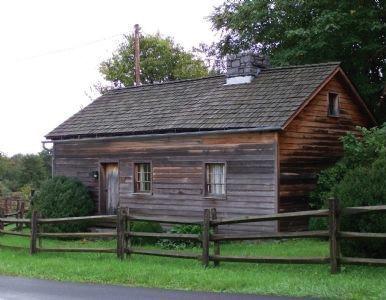
More settlements quickly followed. By the mid-1700s, towns such as Shepherdstown and later Martinsburg began to take shape, reflecting the region’s growing importance within colonial Virginia. The area that would become Berkeley County was officially established in 1772, carved from Frederick County, Virginia, as population growth accelerated.
Early settlers were a diverse mix of European groups, including English, German and Scotch-Irish immigrants. Many were drawn by the region’s rich limestone soil, which made it ideal for farming and helped establish agriculture as a cornerstone of the local economy. German settlers, in particular, left a lasting cultural imprint that is still reflected in the region’s heritage today.
The Eastern Panhandle’s location made it a gateway for westward expansion. Settlers moving through the valley helped funnel population deeper into the Appalachian frontier, positioning the region as an early hub of movement and commerce.
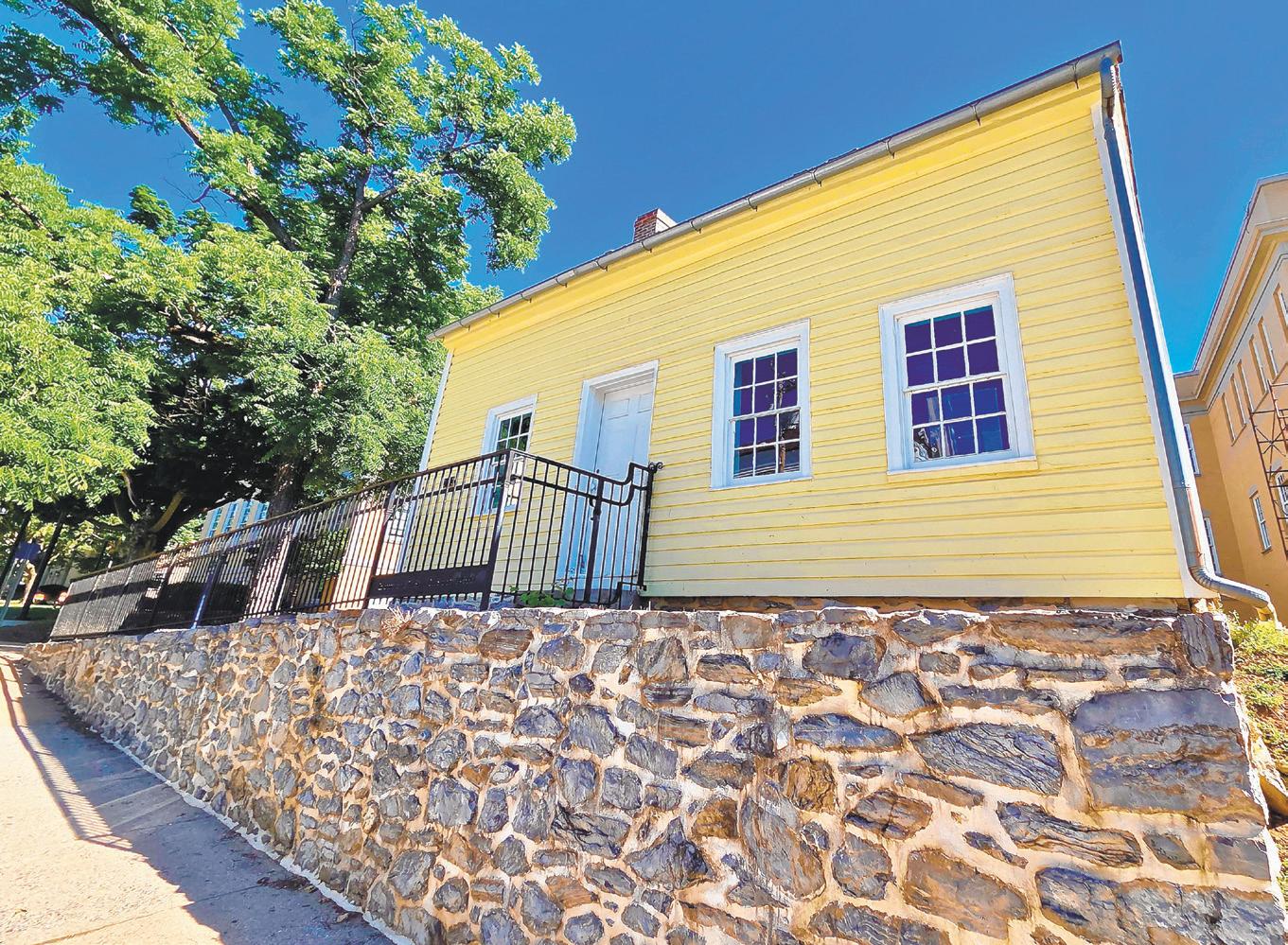
By TABITHA JOHNSTON tjohnston@journal-news.net
SHEPHERDSTOWN — If not for a local effort to support General George Washington at the beginning of the Revolutionary War, the conflict may have been won by the British army.
That win, if it had occurred, would have prevented the United States from its founding — and, consequently, the 250th anniversary of the nation from being celebrated this year.
In the early summer of 1775, 10 companies of men from the across the colonies responded to the Second Continental Congress’ call for support during the Siege of Boston, in Cambridge, Mass. Among them, was a rifle company from Shepherdstown, led by Captain Hugh Stephenson.
“In our neck of the woods, there were four of these rifle companies. There were two in Frederick County, Maryland, one here in what was then Berkley County, Virginia, and one in Frederick County, Virginia. Shepherdstown responded to the call first, on June 14. A week later, Frederick County in Maryland left and, the following month, on July 26, Frederick County in Virginia finally got its act together,” said historian Doug Perks, of Charles Town. “So, Shepherdstown once again is first in history — a fact that’s hard for me to say, as a Charles Town boy.”
Stephenson’s company of 95 men were noteworthy in their response to Washington’s call, both today and back in the day, as they made their march to Cambridge with astonishing speed. In the heat of the summer, they covered the 600-mile journey in 26 days — an effort that none of the other companies could surpass. Their feat soon after gained a unique name, the “Bee Line March,” inspired by the company’s “beeline” to relieve some of the burden on Washington’s forces.
According to General Adam Stephen Chapter, National Society Sons of the American Revolution member Marty Keesecker, the Bee Line March not only had a national impact, but it also had a regional one, as it made the conflict a personal one for local residents.
“The Bee Line March was unique, in that it was one of the opening events of the Revolutionary War,” Keesecker said. “That was true, especially for this community.”
The location where the march started off, Morgan’s Springs, is now inaccessible to the public, as it is located on private property. However, last summer, multiple community and historical groups gathered together on the nearby
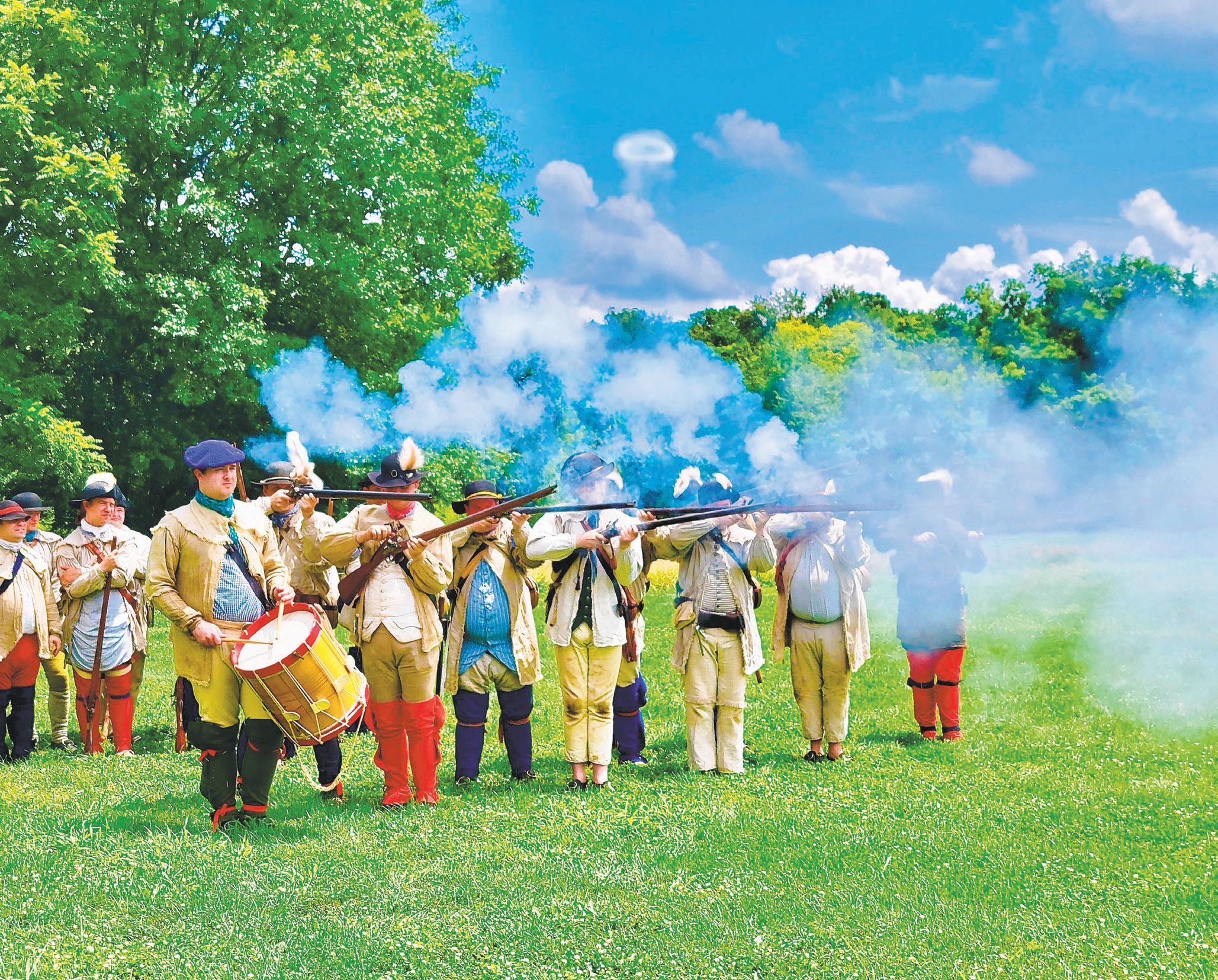
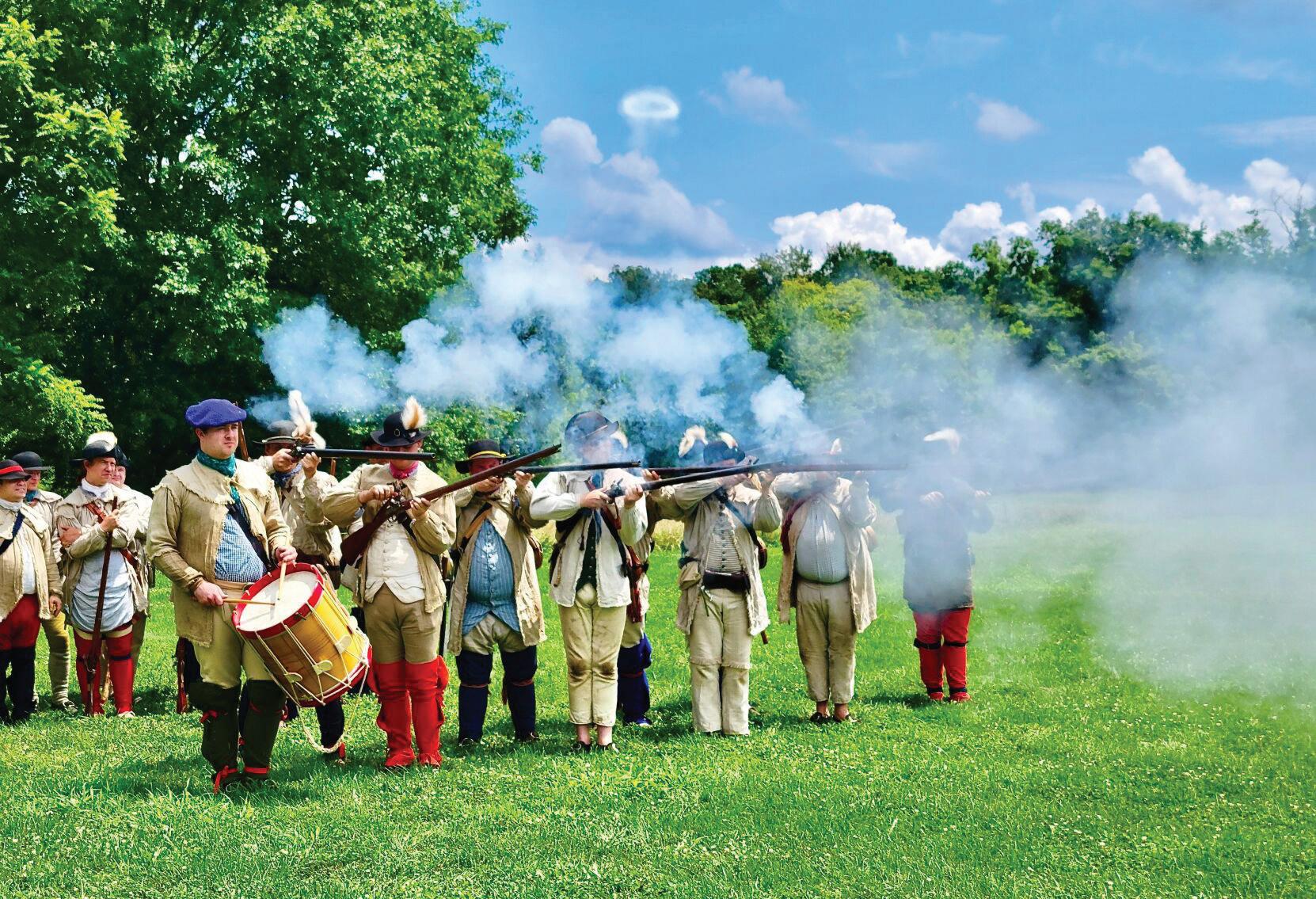
give a rifler demonstration last summer during the 250th anniversary celebration
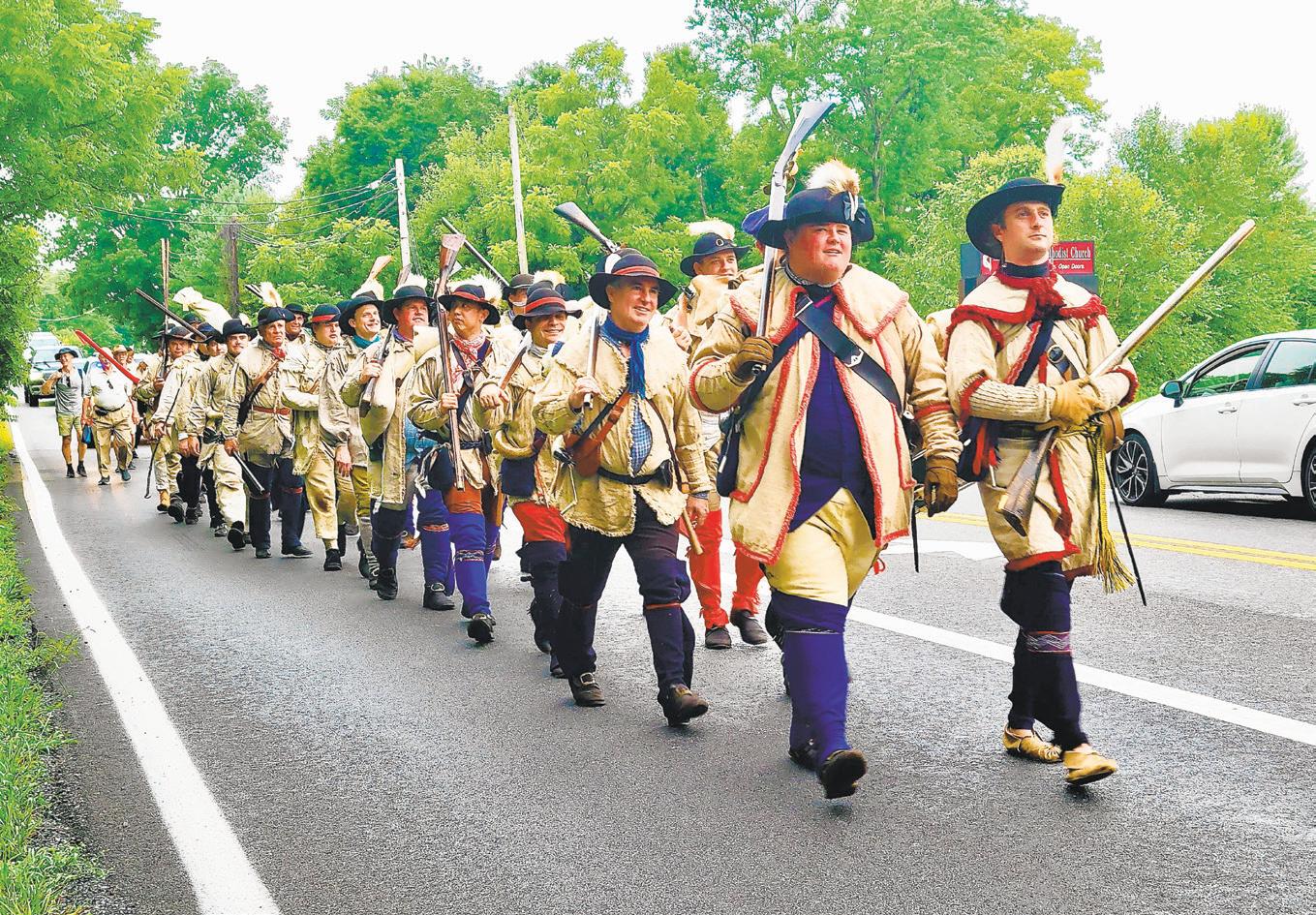
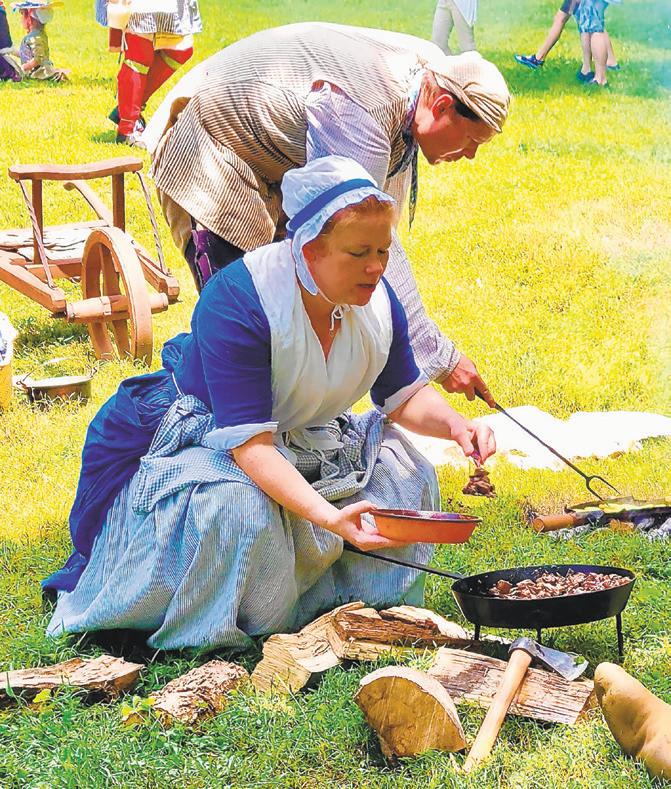
Reenactors follow in the steps of Captain Hugh Stephenson’s company of riflemen, during the 250th anniversary celebration of the Beeline March last summer.
property of Morgan’s Grove Park, to celebrate the 250th anniversary of the march. They were joined by the 201st Field Artillery Regiment of the West
Virginia National Guard, which was present to honor the fact that the Bee Line March was not only an event in national history, but was also a major
A group of reenactors relax on the grounds of Morgan’s Grove Park last summer, portraying what may have taken place 250 years ago near that location, at Morgan’s Spring, at the beginning of the Beeline March.
event in the U.S. Army’s history, as it is considered to have been the moment that marked the beginning of the military branch.
Lightning Rod (1752)
Lightning Rod (1752)
Benjamin Franklin devised the lightning rod, protecting buildings and advancing the study of electricity.
Bifocal Glasses (1784)
Benjamin Franklin devised the lightning rod, protecting buildings and advancing the study of electricity.
Bifocal Glasses (1784)
Franklin’s invention allowed wearers to see both near and far through a single pair of lenses.
Franklin’s invention allowed wearers to see both near and far through a single pair of lenses.
Cotton Gin (1793)
Cotton Gin (1793)
Eli Whitney transformed cotton production and agriculture.
Eli Whitney transformed cotton production and agriculture.
Interchangeable Parts Manufacturing (1798)
Interchangeable Parts Manufacturing (1798)
Whitney helped pioneer standardized manufacturing, laying the groundwork for mass production.
Steamboat (1807)
Whitney helped pioneer standardized manufacturing, laying the groundwork for mass production.
Steamboat (1807)
Robert Fulton demonstrated practical steampowered transportation on rivers.
Robert Fulton demonstrated practical steampowered transportation on rivers.
Mechanical Reaper (1831)
Mechanical Reaper (1831)
Cyrus McCormick revolutionized farming by mechanizing harvests.
Cyrus McCormick revolutionized farming by mechanizing harvests.
Vulcanized Rubber (1844)
Vulcanized Rubber (1844)
Charles Goodyear made rubber durable and useful for countless products.
Charles Goodyear made rubber durable and useful for countless products.
Jerry Crawford, manager of display products for the IBM Corp., displays two new versions of its personal computer in New York on June 25, 1984. The two new versions of IBM’s 3270 Personal Computer provide advanced graphics capabilities of larger scale computers.
Telegraph (1844)
Samuel Morse introduced long-distance instant communication.
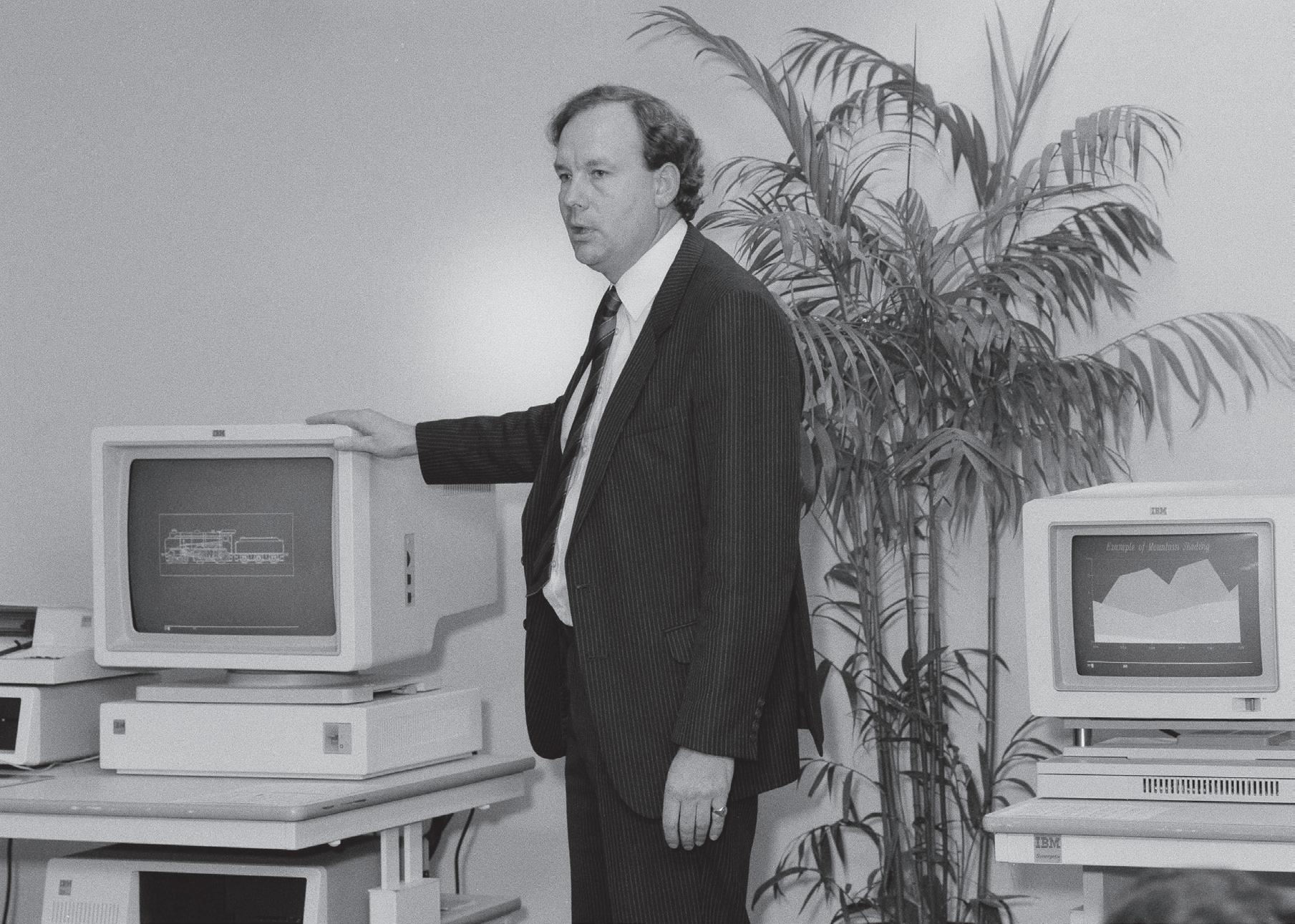
Jerry Crawford, manager of display products for the IBM Corp., displays two new versions of its personal computer in New York on June 25, 1984. The two new versions of IBM’s 3270 Personal Computer provide advanced graphics capabilities of larger scale computers.
Telegraph (1844)
Practical Sewing Machine (1846)
Samuel Morse introduced long-distance instant communication.
Elias Howe patented a practical lockstitch sewing machine.
Practical Sewing Machine (1846)
Elias Howe patented a practical lockstitch sewing machine.
Safety Elevator (1852)
Elisha Otis made modern skyscrapers possible.
Safety Elevator (1852)
Air Brake (1869)
Elisha Otis made modern skyscrapers possible.
Air Brake (1869)
George Westinghouse dramatically improved railroad safety.
George Westinghouse dramatically improved railroad safety.
Barbed Wire (1874)
Helped transform agriculture, ranching and settlement across the American West.
Barbed Wire (1874)
Telephone (1876)
Helped transform agriculture, ranching and settlement across the American West.
Alexander Graham Bell patented the first commercially successful telephone.
Telephone (1876)
Alexander Graham Bell patented the first commercially successful telephone.
Phonograph (1877)
Phonograph (1877)
Thomas Edison created the first practical sound-recording device.
Thomas Edison created the first practical sound-recording device.
Incandescent Light Bulb (1879)
Incandescent Light Bulb (1879)
Edison’s improvements made electric lighting practical for homes and businesses.
Edison’s improvements made electric lighting practical for homes and businesses.
Electric Power Distribution System (1882)
operations.
Dishwasher (1886)
operations.
Dishwasher (1886)
Josephine Cochrane automated a major household chore.
Josephine Cochrane automated a major household chore.
Escalator (1890s)
Escalator (1890s)
Changed transportation inside stores, offices and transit systems.
Changed transportation inside stores, offices and transit systems.
Motion Picture Viewing Technology (Kinetoscope) (1891)
Motion Picture Viewing Technology (Kinetoscope) (1891)
Helped launch the modern movie industry.
Air Conditioning (1902)
Helped launch the modern movie industry.
Willis Carrier transformed industry, architecture and everyday life.
Air Conditioning (1902)
Willis Carrier transformed industry, architecture and everyday life.
Airplane (1903)
Airplane (1903)
Orville Wright and Wilbur Wright achieved the first successful powered flight.
Orville Wright and Wilbur Wright achieved the first successful powered flight.
Assembly Line Manufacturing (1913)
Assembly Line Manufacturing (1913)
Henry Ford revolutionized production and lowered costs.
Traffic Signal (1914)
Henry Ford revolutionized production and lowered costs.
Brought electricity to cities and launched the modern electrical age.
Electric Power Distribution System (1882)
Cash Register (1879)
Brought electricity to cities and launched the modern electrical age.
Revolutionized retail accounting and business
Cash Register (1879)
Revolutionized retail accounting and business
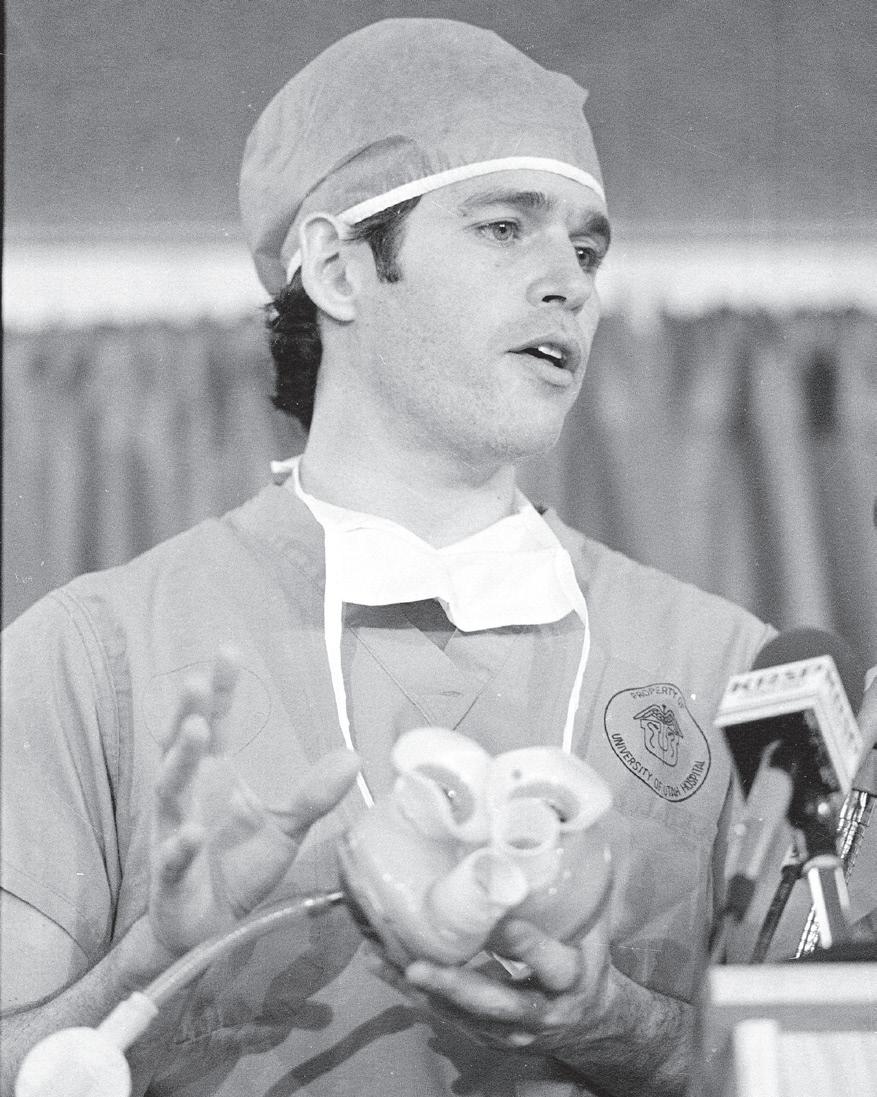
Dr. Robert Jarvik, inventor of the artificial heart Jarvik-7, holds up a model like the one implanted in patient Barney Clark earlier in the week, in Salt Lake City, Utah, on December 3, 1982.
Helped organize the rapidly growing number of automobiles.
Traffic Signal (1914)
Frozen Food Technology (1924)
Helped organize the rapidly growing number of automobiles.
Frozen Food Technology (1924)
Clarence Birdseye transformed food preservation and distribution.
Clarence Birdseye transformed food preservation and distribution.
Liquid-Fueled Rocket (1926)
Robert H. Goddard launched the Space Age.
Electronic Television (1927)
Philo Farnsworth demonstrated the first fully electronic television system.
Nylon (1935)
Developed by DuPont, the world’s first commercially successful synthetic fiber.
Practical Helicopter (1939)
Igor Sikorsky developed the first practical helicopter.
Nuclear Reactor (1942)
Led by Enrico Fermi during the Manhattan Project.
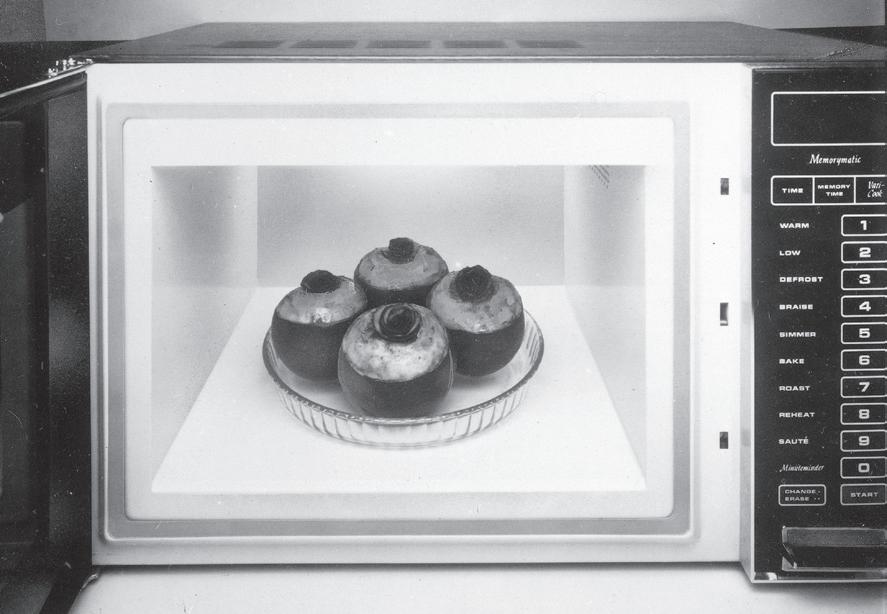
Microwave Oven (1945)
Percy Spencer discovered microwave cooking.
Transistor (1947)
Developed at Bell Labs, forming the basis of modern electronics.
Credit Card (1950)
Changed the way consumers and businesses conduct transactions.
Integrated Circuit (1958)
Jack Kilby helped create the microchip revolution.
Laser (1960)
Enabled breakthroughs in medicine, communications and manufacturing.
Communications Satellite (1962)
Connected the world through global telecommunications.
Computer Mouse (1964)
Douglas Engelbart transformed computer interaction.
Kevlar (1965)
Stephanie Kwolek created a material stronger than steel by weight.
Barcode (UPC) (1973)
Invented by Norman Joseph Woodland and Bernard Silver, revolutionizing retail and logistics.
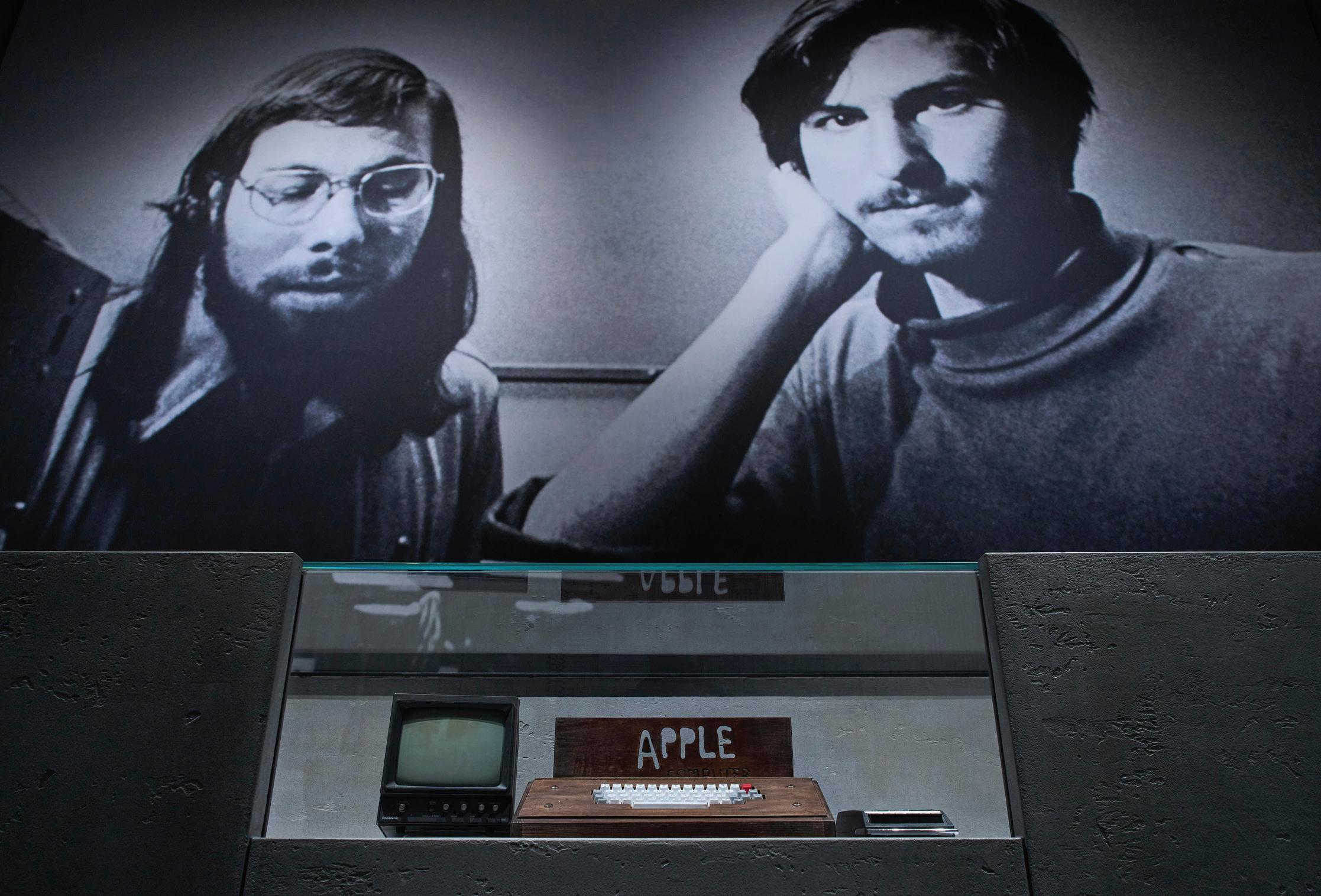
Personal Computer (1970s)
Brought computing power into homes, schools and businesses.
Email (1971)
Ray Tomlinson sent the first networked email and introduced the @ symbol.
MRI Commercial Development (1970s–1980s)
American researchers played a major role
LEFT: A picture of Apple founders Steve Wozniak, left, and Steve Jobs is displayed at the new Apple Museum which traces 50 years of the iconic brand’s innovations, in Utrecht, Netherlands, in April. Jobs and designer Jony Ive are credited with the advent of the modern smartphone.
BELOW CENTER: A picture of a microwave oven from 1977. Microwaves, like smartphones, have become so common in modern life that it’s easy to take them for granted.
in bringing MRI technology into widespread medical use.
GPS (Global Positioning System) (1978–1995)
Developed by the United States Department of Defense, now used worldwide.
Laser Printer (1970s)
Changed publishing, office work and personal printing.
Artificial Heart (1982)
Represented a major advance in biomedical engineering.
Internet (ARPANET Origins) (1969–1980s)
Created through American government, university and private-sector innovation.
Defibrillator Advances (1980s and 1990s)
American innovators helped make lifesaving cardiac treatment widely available.
Gore-Tex (1969)
Robert W. Gore developed a waterproof, breathable fabric used worldwide.
mRNA Vaccine Technology (1990s)
American scientists and companies helped pioneer a breakthrough that transformed vaccine development.
Smartphone Ecosystem (2007)
The modern smartphone era was accelerated by innovations from Apple and other American technology firms.
“We will not, under any threat, or in the face of any danger, surrender the guarantees of liberty our forefathers framed for us in our Bill of Rights.”
— Franklin D. Roosevelt, 1941
AMENDMENT I
Congress shall make no law respecting an establishment of religion, or prohibiting the free exercise thereof; or abridging the freedom of speech, or of the press; or the right of the people peaceably to assemble, and to petition the Government for a redress of grievances.
AMENDMENT II
A well regulated Militia, being necessary to the security of a free State, the right of the people to keep and bear Arms, shall not be infringed.
AMENDMENT III
No Soldier shall, in time of peace be quartered in any house, without the consent of the Owner, nor in time of war, but in a manner to be prescribed by law.
AMENDMENT IV
The right of the people to be secure in their persons, houses, papers, and effects, against unreasonable searches and seizures, shall not be violated, and no Warrants shall issue, but upon probable cause, supported by Oath or affirmation, and particularly describing the place to be searched, and the persons or things to be seized.
AMENDMENT V
No person shall be held to answer for a capital, or otherwise infamous crime, unless on a presentment or indictment of a Grand Jury,

except in cases arising in the land or naval forces, or in the Militia, when in actual service in time of War or public danger; nor shall any person be subject for the same offence to be twice put in jeopardy of life or limb; nor shall be compelled in any criminal case to be a witness against himself, nor be deprived of life, liberty, or property, without due process of law; nor shall private property be taken for public use, without just compensation.
AMENDMENT VI
In all criminal prosecutions, the accused shall enjoy the right to a speedy and public trial, by an impartial jury of the State and
district wherein the crime shall have been committed, which district shall have been previously ascertained by law, and to be informed of the nature and cause of the accusation; to be confronted with the witnesses against him; to have compulsory process for obtaining witnesses in his favor, and to have the Assistance of Counsel for his defence.
AMENDMENT VII
In Suits at common law, where the value in controversy shall exceed twenty dollars, the right of trial by jury shall be preserved, and no fact tried by a jury, shall be otherwise re-examined in any Court of the United States, than according to the rules of the common law.
AMENDMENT VIII
Excessive bail shall not be required, nor excessive fines imposed, nor cruel and unusual punishments inflicted.
AMENDMENT IX
The enumeration in the Constitution, of certain rights, shall not be construed to deny or disparage others retained by the people.
AMENDMENT X
The powers not delegated to the United States by the Constitution, nor prohibited by it to the States, are reserved to the States respectively, or to the people.
By AINSLEY HALL ahall@journal-news.net
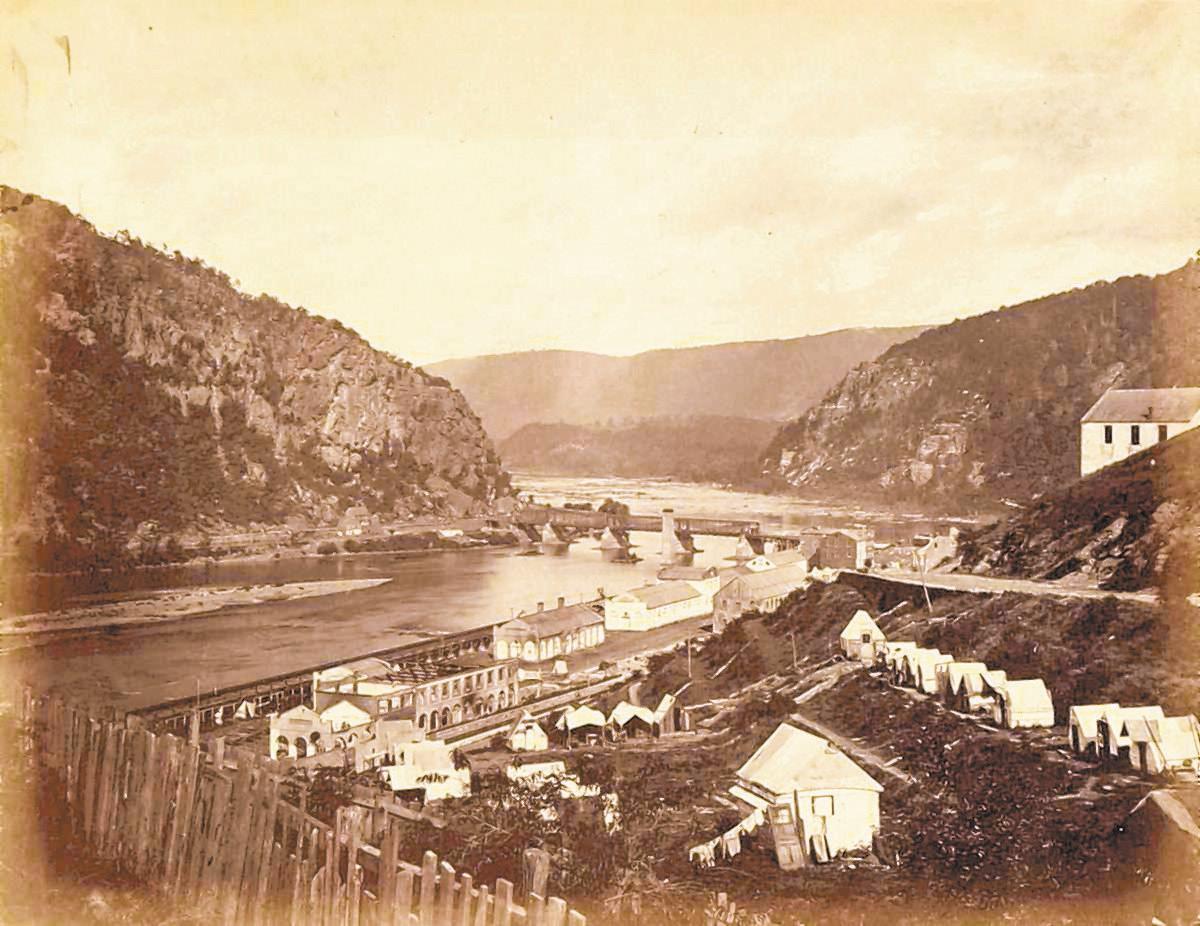
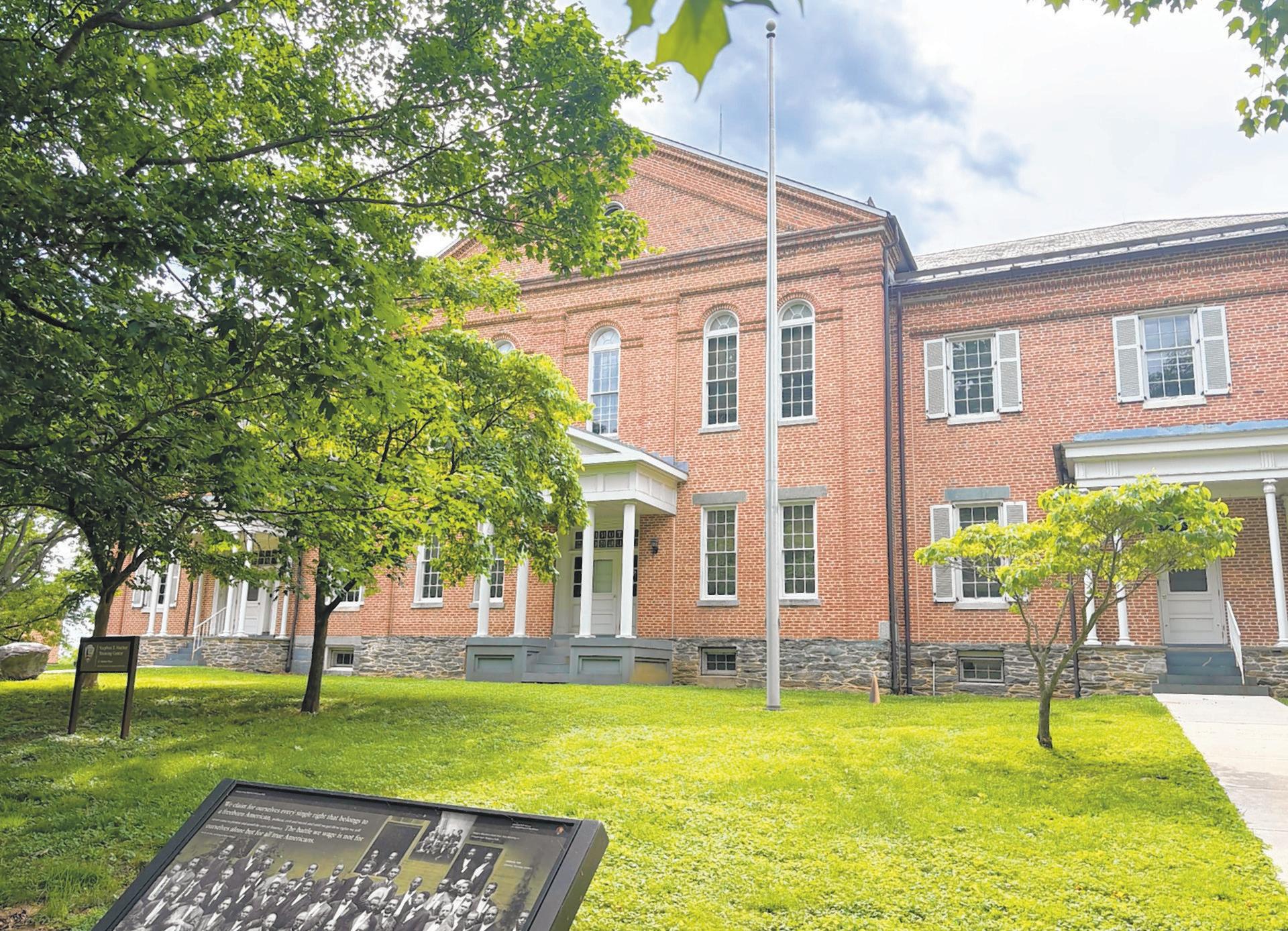
HARPERS FERRY — Storer College stands as an important reminder of the rich Black history in the community. After the emancipation in 1863, there were over 30,000 people in the Shenandoah Valley who were freed from slavery. Many people realized how important education was to become a full citizen of the country. With a huge demand for education, Nathan Brackett, a Free Will Baptist missionary, answered the call and began opening schools throughout the area. However, Brackett realized he wouldn’t be able to educate all the people alone. By partnering with the Freedmen’s Bureau, the Freewill Baptists of New England and John Storer, they established a teacher training school with plans to make it a college in the future.
Storer pledged $10,000 to the school as it was starting and hoped it would be a place for any race and gender. However, when West Virginia was chartering the school there was a lot of debate on it being open to any race and within a couple years the state passed a law that black and white students could not be educated together. So Storer College became a black school, though most of the administration remained white until 1944.
The school faced a lot of local hostility. Lynn Pechuekonis, a local author and historian, first started researching Storer College when she moved to Harpers Ferry about nine years ago. She and her husband Christian bought a house which used to belong to William Saunders, a professor from the college. Pechuekonis wanted to learn more about the man who owned the house and ended learning a lot about the history of the school. During her research, she learned that there were efforts at violence at the idea of teaching black people. There was even a man who wrote a letter his superior claiming that the African American population didn’t know how to act and were getting into fights. Both teachers and students faced harassment, but within 10 years residents realized educating black people was a good thing.
“They kept the students pretty self-contained on the campus and had very strict rules because they didn’t want to give any of the neighbors or other residents a reason to complain,”
Pechekonis said.
They also faced money issues. Since many of their students came from families who had almost nothing, Storer College got a lot of support from the Freewill Baptists in New England. They also received funds from the state as one of the only schools that educated black people on the high school level and was the only school to do so for 25 years.
Storer College had a huge impact on Harpers Ferry, especially in growing the tourist industry. In 1876, Brackett decided to make use of some of their empty dorm buildings during the summer and use them as boarding houses for people on vacation. People were just starting to take long vacations during the summer, and since Harpers Ferry was so close to Washington D.C., the town started seeing a lot of visitors.
“So they really started the summer resort industry in Harper’s Ferry,” Pechekonis said. “There were people coming for day trips and there was an island down on the river called Island Park and the railroad would bring people in for that, but people who wanted to stay for long periods of time in a nice rural area with fresh air and all that, this was an awesome place.”
Tom Lovett’s parents were hired to run the first summer board house,
which inspired him to build his own hotel. He built Hill Top House, which became an iconic location for the town. The new tourist industry helped Harper’s Ferry finally get back on its feet after the Civil War and closure of the armory.
Though Storer College had a white administration for many years who tried not to step out of their lane, the school still had an impact on civil rights by hosting the Niagara Movement in 1906, an organization founded by W. E. B. Du Bois and William Monroe Trotter to fight for equal rights for the black community. This organization would later evolve into the National Association for the Advancement of Colored People (NAACP).
In 1931, the Daughters of the Confederacy put up a monument for Hayward Shepherd, a free black man who was the first man killed during John Brown’s raid. The Storer College President at the time Henry McDonald supported the monument and had the Storer College choir sing at the dedication. Many of the Storer College students and alumni did not like this and a year later Du Bois at the NAACP presented a plaque to put on the John Brown fort supporting his actions. However, the school refused to put it up and
the NAACP spoke up.
Storer College’s first black president Richard McKinney started serving in 1945, even invited Du Bois to speak at the 1950 commencement. However, at the beginning of the civil rights movement, the school struggled. Pechekonis shared that later in life, McKinney told a story of how one of the students was playing tennis on campus and while he was running to hit the ball, he impaled himself on the fence. They took the student to a hospital in Charles Town, but they refused to treat him because he was black.
“They had to take him all the way to Martinsburg to get treated,” Pechekonis said. “That would have been the late 40s while McKinney was here.”
Storer College closed in 1955, a year after the Supreme Court ended segregation in public schools. Now the Harper’s Ferry National Park Service owns the property, preserving part of the town’s rich history.
“I think Storer College was a life changing institution for a lot of people at a time where there were a lot of barriers put in their way,” Pechekonis said. “I think it’s really incumbent on us to keep that memory alive and to keep looking at what it was they accomplished and never forget that.”
By AINSLEY HALL ahall@journal-news.net
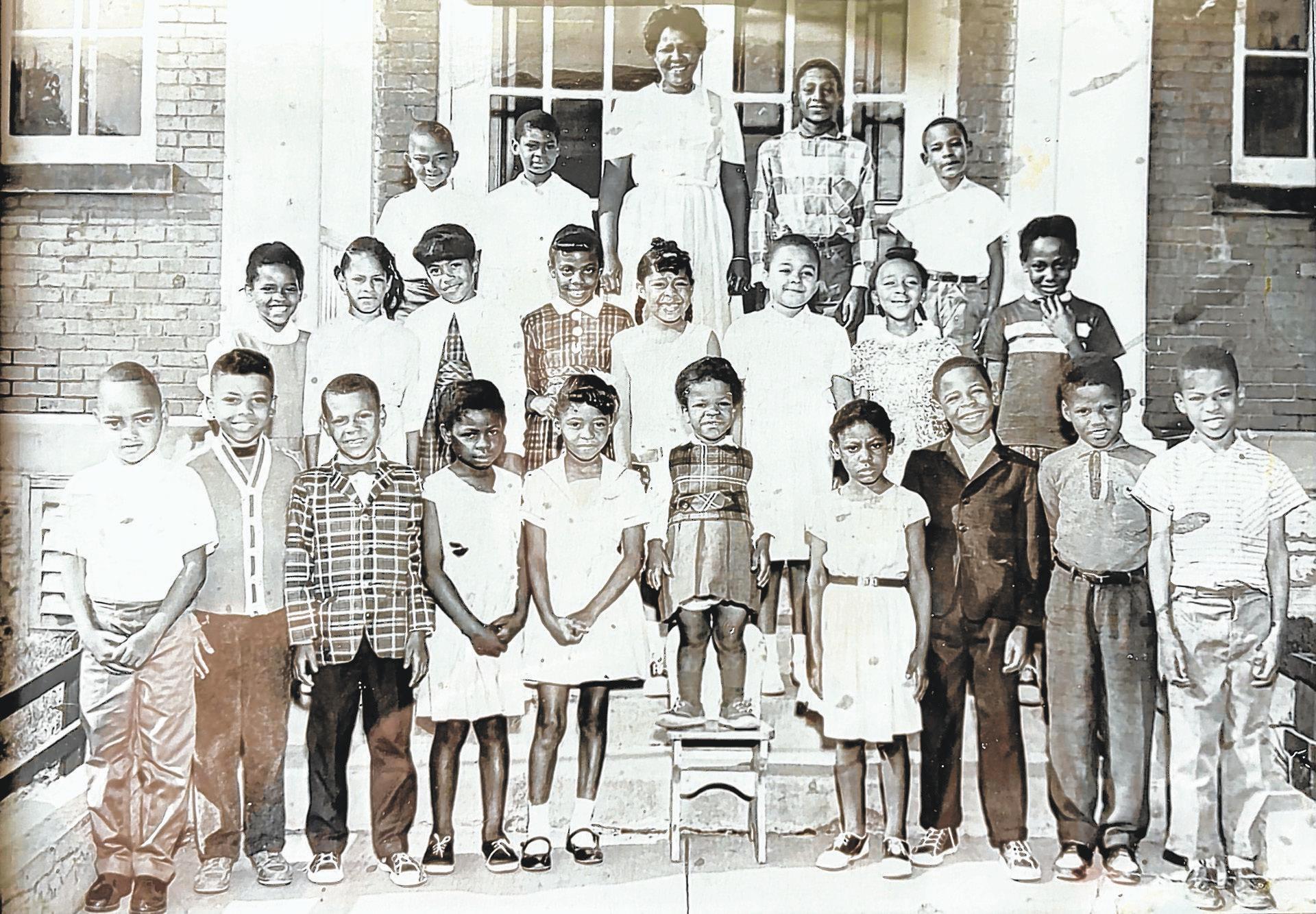
MARTINSBURG — The Sumner-Ramer Memorial School stands as an important part of black history in the Eastern Panhandle. Located at 515 West Martin Street, it served the community until 1964, giving black children the opportunity to learn and grow. Leonard and Helen Harris now look after the museum, preserving history and teaching others about the black community.
In 1865, two missionaries named Anne Dudley and Laura Smith came down from Maine. They wanted to educate the black community and started teaching children during the day and adults in the evening. Destiny Baptist Church, once named Dudley Baptist Church, was named after Anne to honor her efforts. A couple years later the Board of Education of Martinsburg purchased a lot on West Martin Street and built the first African American school in Berkeley County.
The school had many notable principals, including J. R. Clifford, the first black attorney in West Virginia. He ran his own newspaper called the Pioneer Press and was a founding member of the Niagara movement. Clifford represented Carrie Williams in the Williams v. Board of Education which said African American children should have the same school terms as white children.
Later in 1911, Fred Ramer was appointed principal and set out to reorganize the school and its curriculum. Ramer decided there needed to be a building with running water, toilets and bigger classrooms to house the black community in Berkeley County, so he went to the Board of Education. They built what is now known as the Sumner-Ramer Memorial School in 1917, the first brick schoolhouse in Martinsburg. By 1918 the school had 209 students who travel as far as Paw Paw to learn. They would ride city buses, passing many other schools to get to Martinsburg. The school never closed, even when there was ice and snow on the ground. Students that rode the bus and couldn’t get there had to make it up another day.
Before the school was named Ramer Memorial School after Fred Ramer, it was called Sumner School after Charles Sumner, a white senator from Massachusetts who fought for African-American’s rights to education. While he was advocating for black people to be educated, he was attacked another representative named Preston Brooks and almost died. As a result, many schools are named after Sumner, but the name was changed to honor Fred Ramer and is now called Sumner-Ramer Memorial School to honor that history.
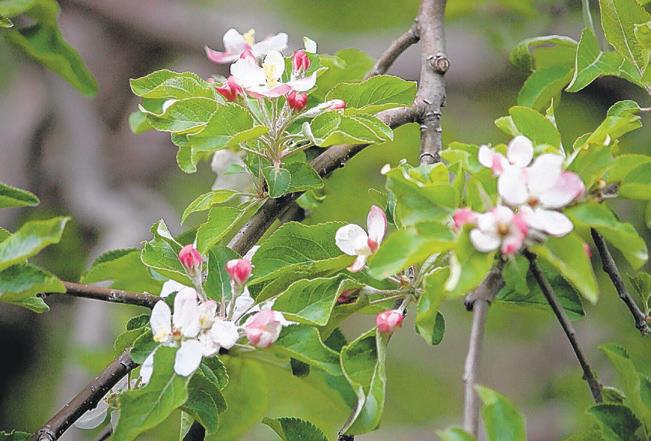
R. L. Franklin was the last principal at the school, and was instrumental in adding a gym, which was one of the best gyms in the area when it was first built. The school had several successful sports programs including football and basketball teams that won state championships. The gym is still used regularly today. They also had a successful band that marched in the Apple Blossom parade.
“One thing about this school is that we were black and didn’t have some things, but what we had we took advantage of, just like the parade we used to have,”
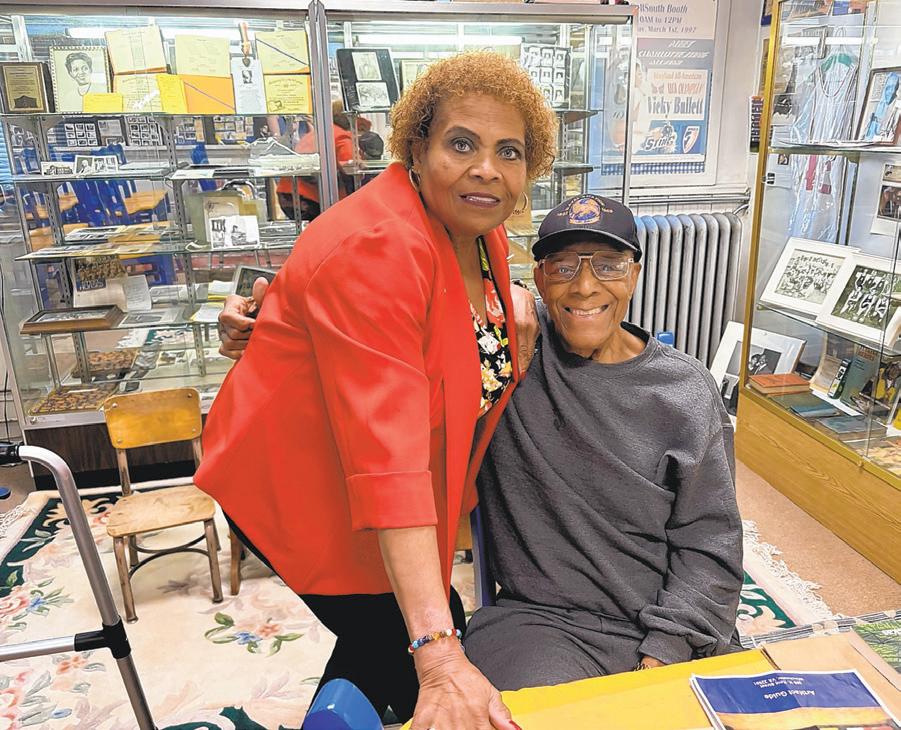
Helen said. “But I did, because this area hadn’t been integrated yet. So, I went here for three years, but finally when they started phasing out certain grades, starting with the higher grades...eventually the last school year was in 1964.”
However, it wasn’t an easy transition for some students. Helen said that when she left Sumner-Ramer Memorial School, she felt alone, like she lost her family. Other students called her racial slurs, and it was hard for her as a child. The school closed for about a year and then reopened as a vocational school. It was also used as a kindergarten and even housed pregnant teens who weren’t allowed to attend regular high school.
Leonard said. “The people loved our music. Our music was a little more lively and they were waiting for the Ramer band to come down the street.”
When integration started and schools were no longer segregated starting in 1954, it took several more years for that to start taking effect in Berkeley County. Helen shared that she attended Sumner-Ramer School for just a couple years, but in reality she shouldn’t have attended an all-black school at all.
“By the time I was born and I started school, I shouldn’t have started school in an all-black school when Brown vs. the Board of Education passed,”
Around 1992, Berkeley County Schools announced plans to sell Sumner-Ramer Memorial School alongside Burke Street School and Pikeside School. At the time they had a 2.1 million deficit and had to find ways to make up for it. However, the community came out to meetings to stop this, preserving the important history and saving the other schools. Now the Ramer Center is not only home to the Sumner-Ramer Museum, but also the Martinsburg Initiative and other Berkeley County School departments.
Leonard and Helen believe that the Sumner-Ramer Memorial School is an important part Berkeley County history and celebrating the 250th Anniversary of the United States. She believes it’s important to tell the whole story, not just part of it. By recognize the past and educating others, the county can continue building toward a future where every man and women is free and treated equally.













By TABITHA JOHNSTON tjohnston@journal-news.net
MARTINSBURG — Across the Eastern Panhandle, echoes of the Civil War can be heard, from North Mountain to the shores of the Potomac River.
These reminders of the area’s troubled past highlight the brief, but extreme division the country has experienced and overcome, to reach its 250th anniversary as truly United States of America.
Harpers Ferry’s connection with the Civil War is well established, due to the gravity of the historical events that happened there prior to and during the war: militant abolitionist John Brown’s raid of the United States Armory and Arsenal at Harpers Ferry from Oct. 1618, 1859; Union troops burning down much of the United States Armory and Arsenal at Harpers Ferry, preventing many of the guns stored there from getting into enemy hands after its thenstate, Virginia, joined the Confederate States of America in April 1861; the Battle of Harpers Ferry from Sept. 1215, 1862; and numerous scouting missions and skirmishes throughout the war. The town’s significance to the Civil War — fought from 1861-1865 over states’ rights and, in particular, their right to allow or abolish slavery — was most notably described by famed abolitionist, author and orator Frederick Douglass, who called Harpers Ferry the place where “the end of American slavery began.”
According to the National Park Service, “Bolivar Heights is one of the most important Civil War battlefields in West Virginia.” This is, in large part, due to it being the location in the area that saw the most military action — a total of five different battles. On Oct. 16, 1861, Col. Turner Ashby led his Confederate force to a temporary victory there, after attacking federal troops under Col. John Geary, in retaliation for the Union seizing a local flour mill. May 30, 1862 featured the second conflict on the Bolivar Heights battleground, when Brig. Gen. Stonewall Jackson’s Valley Campaign swept into the area, in what proved to be a failed attempt to remove Union troops from their sole remaining foothold in the Shenandoah Valley. The third battle was connected with the Battle of Harpers Ferry, during which Jackson forced a final stand atop
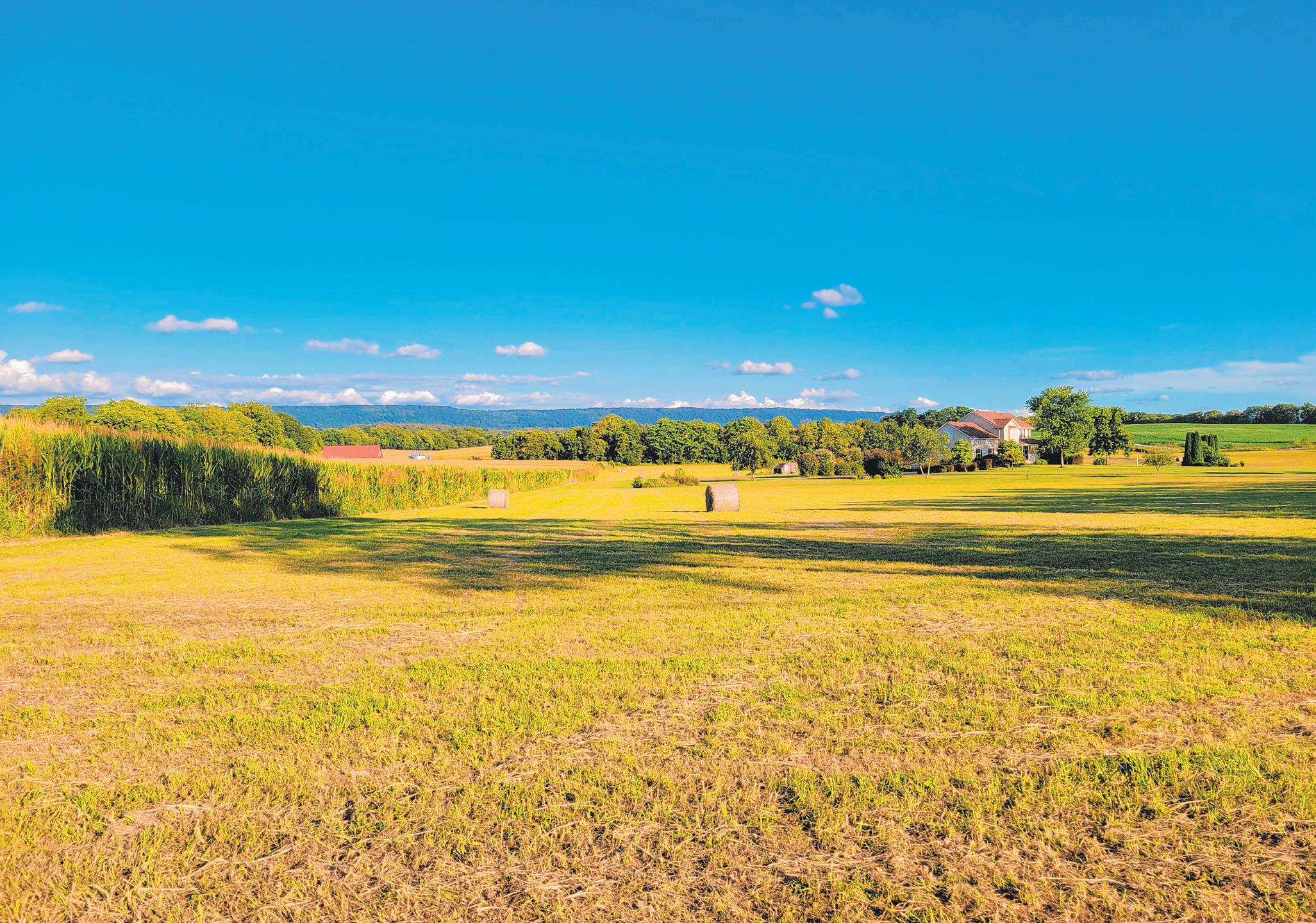
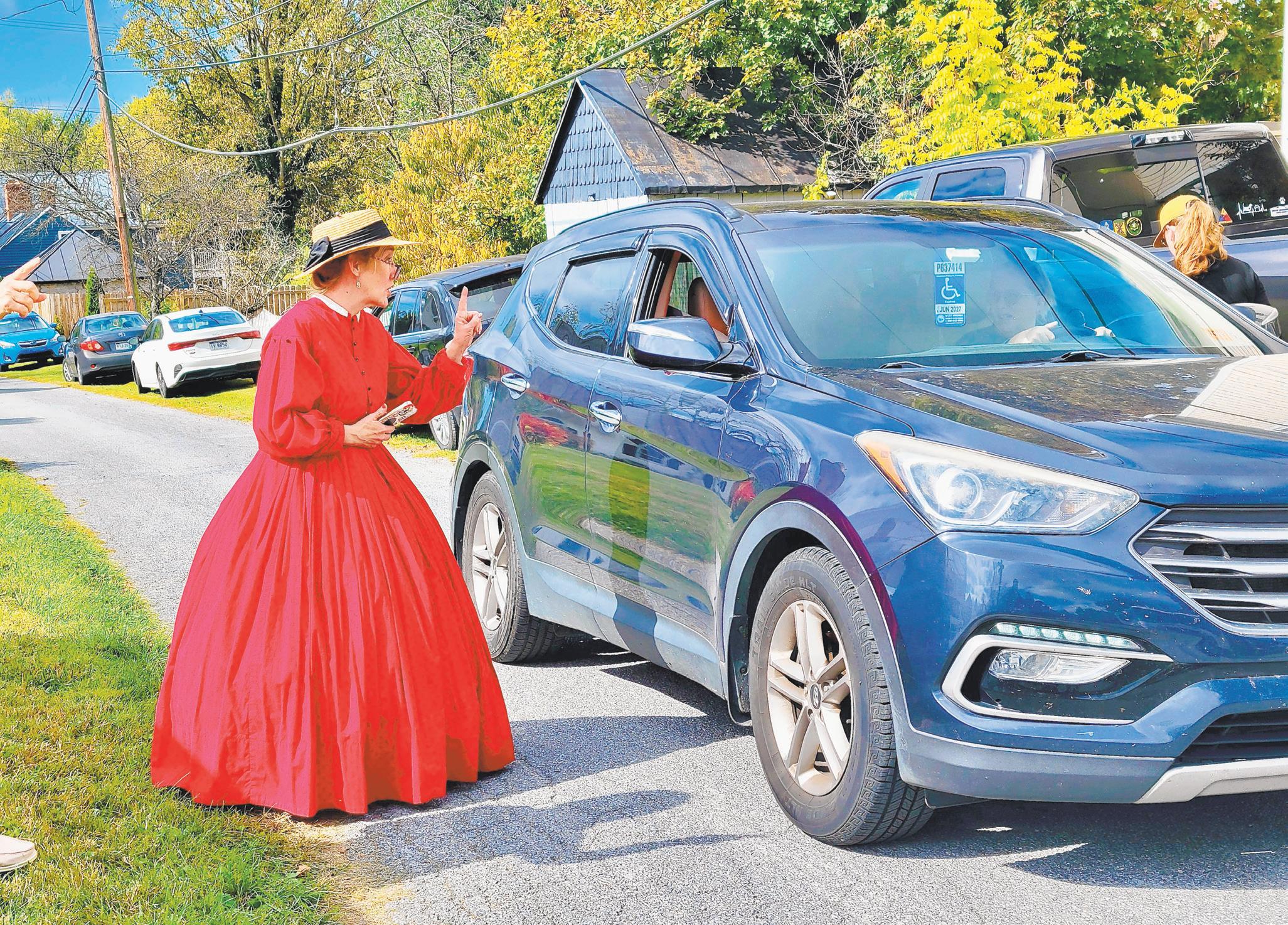
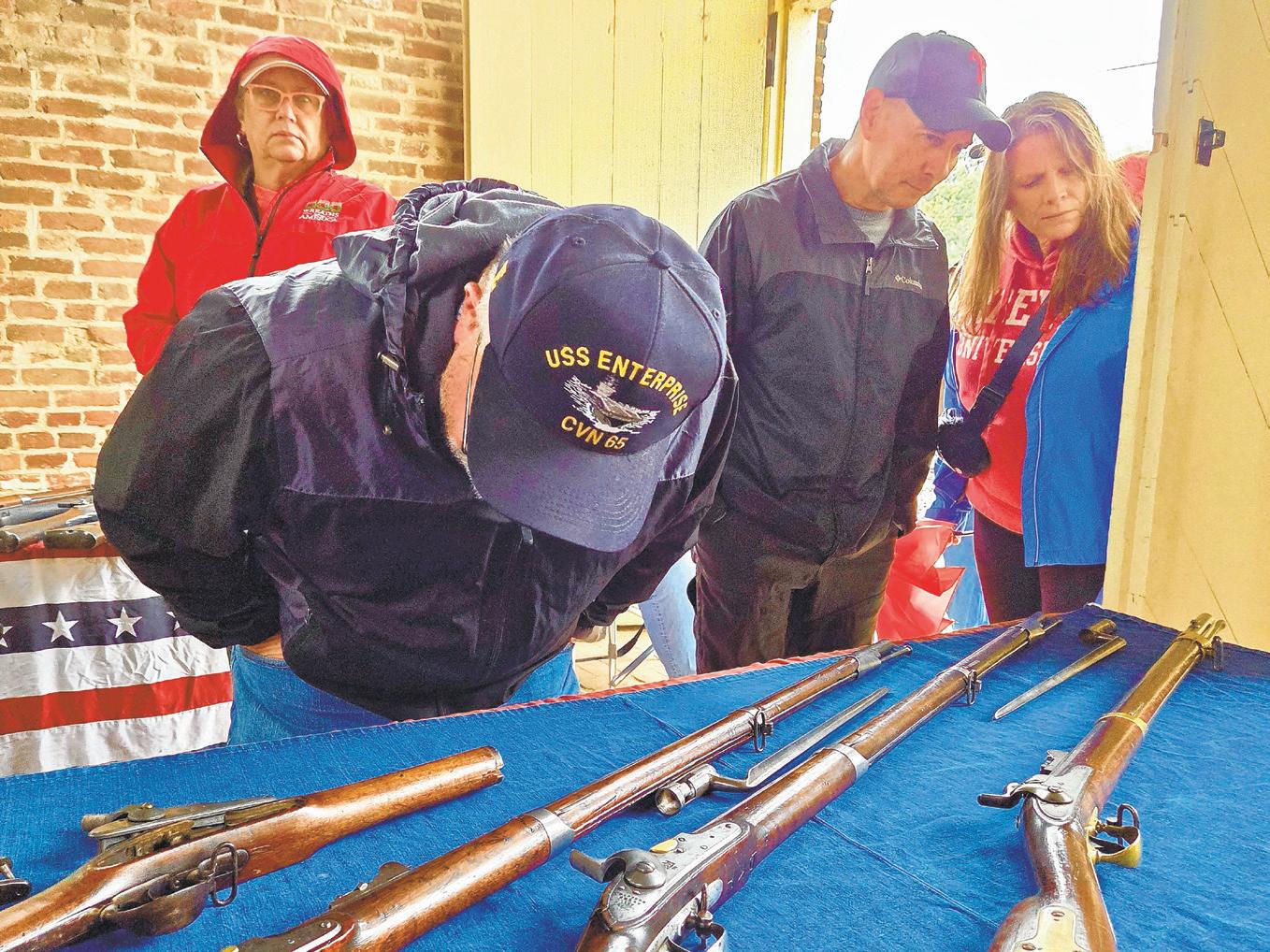
PHOTOS BY TABITHA JOHNSTON/Journal
Skirmishes and fighting during the Battle of Shepherdstown took place in some of the farmland on the outskirts of Shepherdstown, during the Civil War.
Bolivar Heights with the Union forces, who were eventually forced to surrender — the largest Union surrender to take place during the war, involving nearly 12,700 soldiers. The very next year, in June 1863, the fourth combat took place there, when a contingent from Gen. Robert E. Lee’s army maneuvered the federal troops out of Harpers Ferry, on their march toward the turning point in the Civil War — the Battle of Gettysburg. The final conflict occurred on July 4-7, 1864, during Lieut. Gen. Jubal Early’s invasion of the North, when Confederate forces attacked Bolivar Heights and Harpers Ferry, leading Union troops to rely on artillery from Maryland Heights to give them the victory, by bombarding their attackers.
Another location of note is Falling Waters which, on July 2, 1861, became the place where the first Civil War battle was fought in the Shenandoah Val-
ley. Also known as the Battle of Hoke’s Run and the Battle of Hainesville, this conflict erupted between federal troops marching south from the Potomac River and Jackson’s 5th Virginia Regiment, which moved from where they were stationed in Martinsburg to intercept the marchers a little north of the intersection between Route 11 and Hammond’s Mill Road. The battle ended in what was deemed by many to be a Union victory, tactically, but a Confederate victory, strategically, as the Confederate troops successfully fooled their opponents into significantly overestimating the Confederates’ strength — an assumption that would stick with Union Maj. Gen. Robert Patterson and moderate his future actions. The delay this battle caused the Union has been deemed partially responsible for the Confederate success at the First Battle of Manassas on July 21, 1861.
Falling Waters would be embroiled
in one other major battle, on July 14, 1863, when the Union cavalry attacked the Confederate rearguard under Brig. Gen. Henry Heth, while they were retreating from their defeat at the Battle of Gettysburg. This Union victory is considered historically noteworthy, as it proved to be the final battle of the Gettysburg Campaign.
Berkeley Springs also played a role in the war, at the beginning of Jan. 1862. Jackson was leading a winter campaign through the Shenandoah Valley at the time, which involved him capturing Bath — Berkeley Springs’ former name — on his advance toward Romney, to secure control over the South Branch Valley. His troops successfully drove out the small Union force from the area during the Battle of Bath, allowing them a clear pathway toward their strategic goal.
The significance of Shepherdstown, in the Civil War, cannot be ignored. After
the “bloodiest battle of the Civil War,” the Battle of Antietam, took place in Sharpsburg, Md. on Sept. 17, 1862, the retreating Confederate rearguard commanded by Brig. Gen. William Pendleton crossed over the Potomac River into Shepherdstown, via Boteler’s Ford. A contingent of Union troops under Maj. Gen. Fitz Porter pursued them, leading them to engage in a battle around the woodland and farmland bordering that side of the Potomac, from Sept. 19-20, 1862. Having the advantage from the battle taking place on their home turf, the Confederate troops successfully won the conflict, forcing the Union troops to flee for safety back across Boteler’s Ford — hence, the reason for the Battle of Shepherdstown often being referred to as the Battle of Boteler’s Ford. The conflict officially served as the end to Lee’s Maryland campaign.
The Battle of Antietam directly impacted Shepherdstown in a more intimate way, for several months. Two waves of troops — one Confederate and one Union — passed through the town after the end of the battle, forcing virtually every building there to be turned into a field hospital, for the thousands of wounded and dying, who were injured in the conflict and needing treatment.
A few miles away and across the Berkley County border, another notable battle took place, this time in Bunker Hill. On July 15, 1861, Union forces under Gen. Robert Patterson passed through the area, as part of the Manassas Campaign. They clashed with Confederate cavalrymen, who they drove from the area during the Battle of Bunker Hill, before continuing the campaign into Charles Town on July 21, 1861, where they engaged in further conflict. The 14th Pennsylvania Infantry arrested several local Confederate sympathizers in Charles Town that day, in what became known as the Picket Affair, leading to fighting between them and local residents.
Yet it was not until two years later, on Oct. 18, 1863, when Charles Town got its own namesake conflict, the Battle of Charles Town. It supported Lee’s strategy during the Bristoe and Mine Run Campaigns, by diverting Union attention and resources away from the main fighting in Virginia. Confederate cavalry under Brig. Gen. John Imboden successfully captured the Union garrison at Charles Town, exposing weaknesses in Union defenses in the Shenandoah Valley and forcing Union commanders to respond to the threat.
Martinsburg changed hands, between Union and Confederate troops, 37 times during the Civil War. Its strategic location, access to Baltimore & Ohio Railroad infrastructure — its machine shops and Martinsburg Roundhouse — and previous economic prosperity was
largely to blame for this. The Martinsburg Roundhouse ended up being repeatedly destroyed and rebuilt, by both sides of the conflict, throughout the war.
Two battles took place in the town, both of which — the First Battle of Martinsburg on June 14, 1863 and the Second Battle of Martinsburg on July 25, 1864 — ended in Confederate victory.
The next area in the Eastern Pan-
handle that was turned into a battlefield, was in Hedgesville. On July 3, 1864, the Army of Northern Virginia’s 14th, 16th and 17th regiments captured in record time a blockhouse built and used by Union troops on North Mountain. The Battle of North Mountain ended with the surrender of 2,500 federal troops and their supplies, and the burning of the Baltimore & Ohio Rail-
road Bridge over Back Creek.
Almost two months passed, then, before the next major conflict took place in the Eastern Panhandle, this time in Summit Point on Aug. 21, 1864. The Battle of Summit Point — also known as the Battle of Flowing Springs or the Battle of Cameron’s Depot — was a clash between Union cavalry under Maj. Gen. Phillip Sheridan and Brig. Gen. Richard Anderson’s troops, with no decisive victor.
The Battle of Smithfield Crossing, fought on Aug. 28-29, 1864, served as the final act in the Shenandoah Valley campaign, between Union Brig. Gen. Wesley Merritt’s cavalry division and two Confederate infantry divisions under Early’s command. The Confederate troops crossed Opequon Creek at Middleway — then known as Smithfield — and forced the federal troops back along the road to Charles Town.
The final, major conflict in the Eastern Panhandle — the Battle of Kabletown — was waged on Nov. 18, 1864. Confederate Lieut. Col. John Mosby and his 43rd Battalion Virginia Cavalry successfully ambushed a Union scouting force led by Capt. Richard Blazer. The battle, which highlighted Mosby’s effectiveness in guerrilla warfare, dealt a significant blow to Union efforts to suppress Confederate partisan operations in the Shenandoah Valley, during the final months of the war.
By TONI MILBOURNE tmilbourne@journal-news.net
As the nation prepares to celebrate its 250th anniversary, the story of manufacturing and industry in West Virginia’s Eastern Panhandle offers a unique perspective on both state and national history. While much of West Virginia is known for coal, steel and timber, the Eastern Panhandle developed along a different path, one built on agriculture, transportation, manufacturing and innovation.
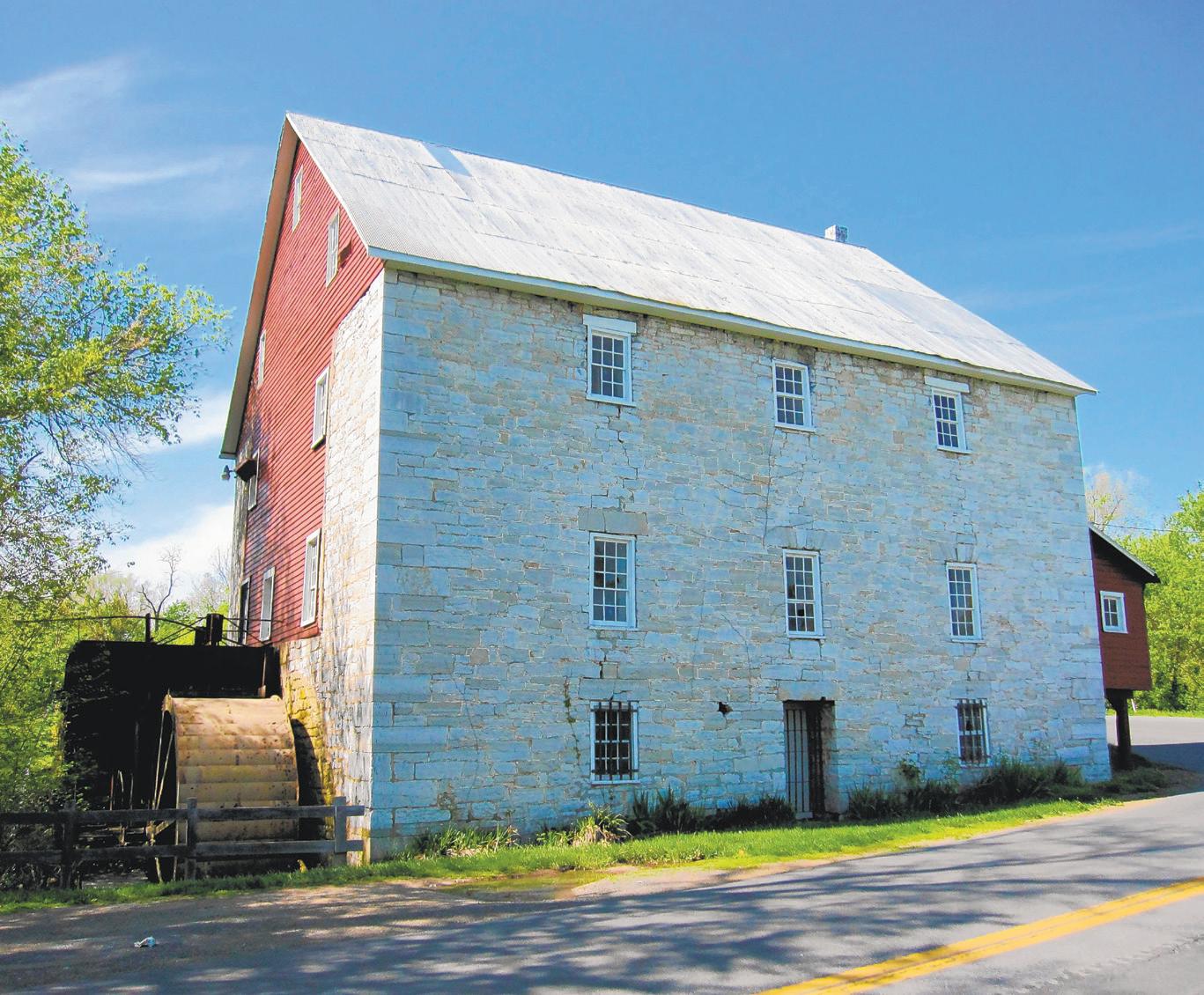
The roots of industry in Berkeley, Jefferson and Morgan counties stretch back to the 1700s, when fertile farmland supported thriving agricultural communities. Early settlers relied on water-powered grist mills, sawmills, fulling mills and carding mills that sprang up along streams and rivers throughout the region. Communities such as Bunker Hill and Shepherdstown grew around these operations, which processed local crops and materials for regional markets.
Unlike other parts of what would later become West Virginia, the Eastern Panhandle’s economy was not centered on mining. Instead, flour, grain and agri-
cultural products became important exports, helping establish the region as a productive economic center long before the Industrial Revolution transformed much of the nation.
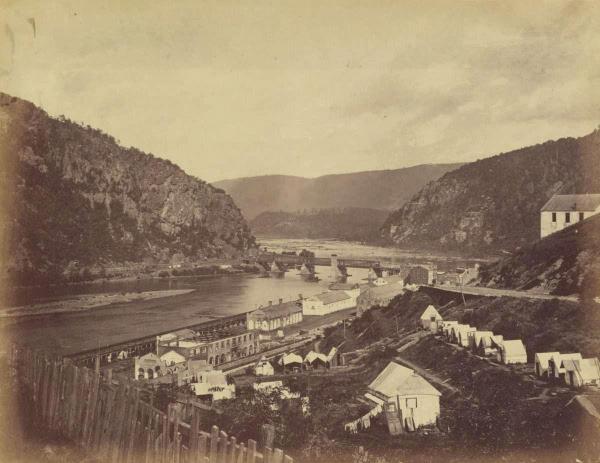
Perhaps the Eastern Panhandle’s most significant contribution to American industrial history came with the establishment of the U.S. Armory at Harpers Ferry. Selected by President George Washington in the 1790s as the site for one of only two federal weapons factories in the country, the armory operated from 1801 until the outbreak of the Civil War in 1861. During its six decades of operation, the facility produced more than 600,000 firearms and employed hundreds of workers. Its influence, however, extended far beyond the weapons it manufactured.
Under the leadership of inventor and armory superintendent John H. Hall, Harpers Ferry became a center for manufacturing innovation. Hall developed methods for producing interchangeable parts, a revolutionary concept that allowed components to be mass-produced and assembled more efficiently. Historians often credit the Harpers Ferry Armory as one of the birthplaces of the American manufacturing
system, making the small river town a key player in the nation’s industrial development.
The arrival of the Baltimore & Ohio Railroad in Martinsburg during the 1840s ushered in another era of economic growth. Rail transportation transformed the city into a major hub connecting eastern markets with the expanding interior of the country. Machine shops, freight facilities, warehouses and manufacturing operations followed the railroad, creating new jobs and opportunities throughout the region. Martinsburg’s importance as a transportation center became evident during both the Civil War and the Great Railroad Strike of 1877, one of the nation’s earliest major labor uprisings.
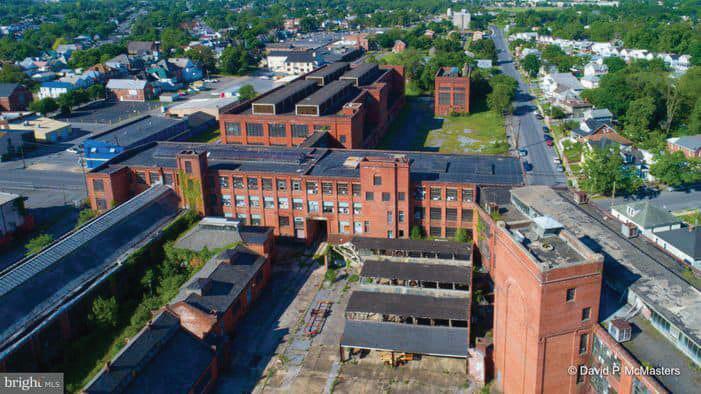
By the late 19th century, manufacturing had become firmly established in the region. Few industries had a greater impact on Martinsburg than Interwoven Mills. Founded in 1890 as the Middlesex Knitting Company, the operation was reportedly the nation’s first electric-powered textile mill. Later known as Interwoven Hosiery, or simply the “Kilbourn Mill” to local residents, the company grew into Martinsburg’s largest employer and helped make the city the cen-
ter of West Virginia’s textile industry.
As demand for its products increased, the company expanded along the railroad, allowing socks and hosiery produced in Martinsburg to reach markets across the nation and overseas. Interwoven was joined by other manufacturers including Crawford Woolen, Berkeley Woolen, Dunn Woolen and Perfection Garment Company. By the years following World War I, a large portion of Martinsburg’s industrial workforce was employed in textile and garment production. The company survived the Great Depression and supplied socks for military personnel during World War II before eventually closing in 1976 after more than eight decades of operation. The massive brick mill complex remains one of Martinsburg’s most recognizable industrial landmarks and is now being redeveloped for a new generation.
At the same time textiles were fueling Martinsburg’s economy, another industry was transforming the surrounding countryside. The Eastern Panhandle’s apple industry evolved from agriculture into a sophisticated manufacturing, processing and distribution enterprise that became one of the region’s defining economic forces.
Other industries, including glass production, cement manufacturing and agricultural equipment supply, further broadened the region’s economic base. Following World War II, the Eastern Panhandle benefited from its proximity to Washington, D.C., Baltimore and Northern Virginia. Manufacturers were drawn to the area by transportation infrastructure and access to growing East Coast markets. Industries involving plastics, packaging, chemicals, building materials and food processing expanded throughout the latter half of the 20th century.
The transition from an agricultural economy to a modern manufacturing center can be seen clearly in Jefferson County. Land once occupied by extensive apple orchards has increasingly become home to industrial development. One of the most visible examples is the Rockwool stone wool insulation manufacturing facility in Ranson, built on the former Jefferson Orchards property. The project represented an investment of more than $150 million and brought new manufacturing jobs to the county while highlighting the same advantages that had attracted industry for generations: transportation access, available land and proximity to major Mid-Atlantic markets.
Rockwool’s decision to locate in Jefferson County underscored the continuing importance of the Eastern Panhandle’s strategic location. Company officials cited access to major population centers including Washington,
to the region.
In recent decades, the Eastern Panhandle has become one of West Virginia’s fastest-growing economic regions. Advanced manufacturing firms, aerospace suppliers, food producers, distribution centers and logistics operations have established a significant presence, particularly in Berkeley County. Major employers such as Procter & Gamble, Clorox, Quad Graphics and numerous distribution and logistics companies have reinforced the region’s role as a manufacturing and transportation hub serving the Mid-Atlantic.
The same advantages that attracted industry centuries ago continue to drive growth today. Strategic location, transportation access, a skilled workforce and proximity to major population centers remain central to the region’s economic success.
Baltimore and New York as a primary factor in selecting the site. State and local leaders viewed the project as part
of a broader effort to create a new industrial corridor capable of attracting additional manufacturing investment
As the nation marks 250 years of independence, the Eastern Panhandle can legitimately claim a place in the story of American manufacturing. Some of the foundations of modern industry were built along the banks of the Potomac and Shenandoah rivers, and that legacy continues to shape the region’s economy today.
By TOM MARKLAND tmarkland@journal-news.net
MARTINSBURG – Long before Interstate 81 carried commuters through the Eastern Panhandle, the sound of steam locomotives echoed across the city from one of the most important railroad facilities in the country.
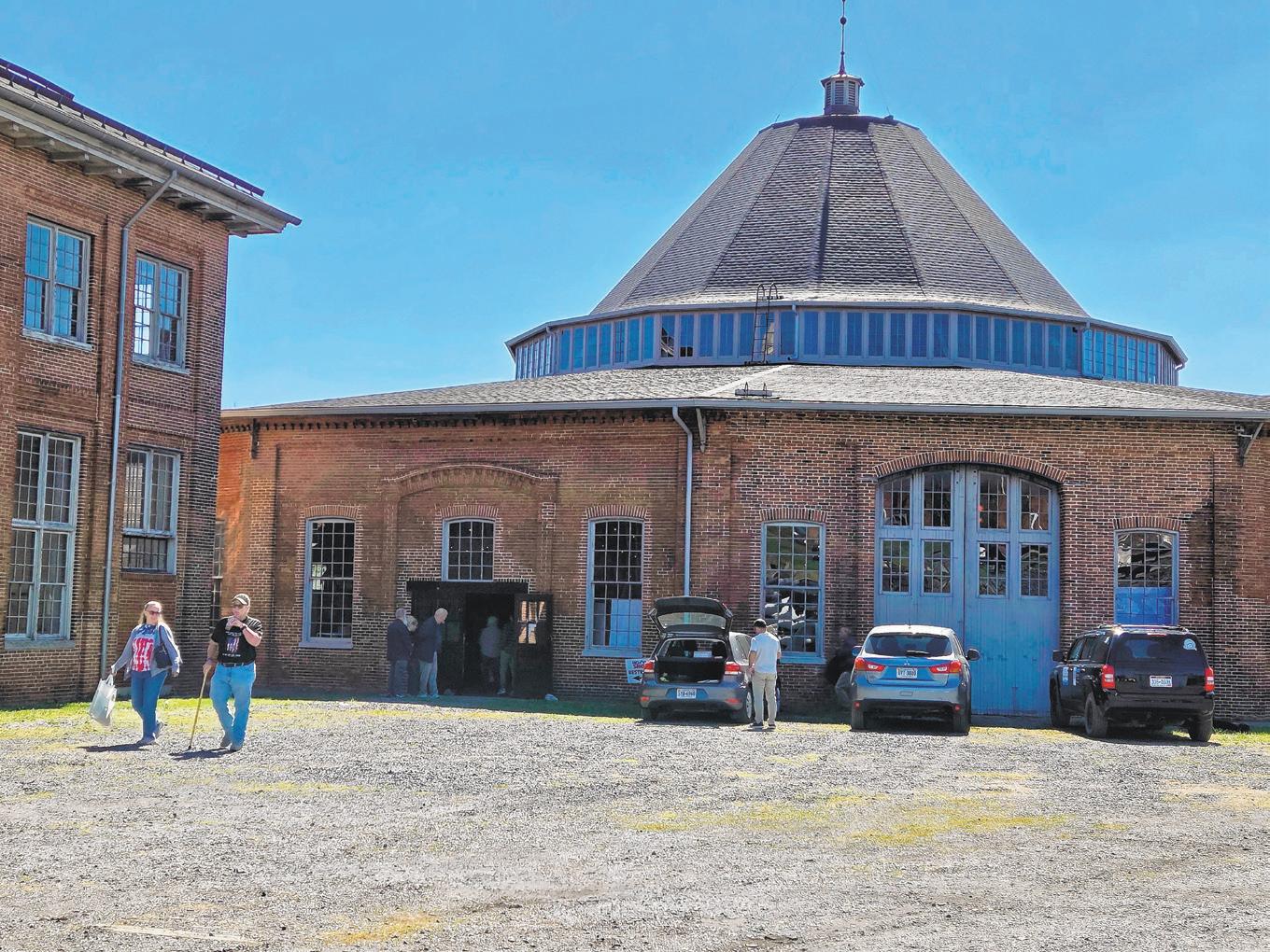
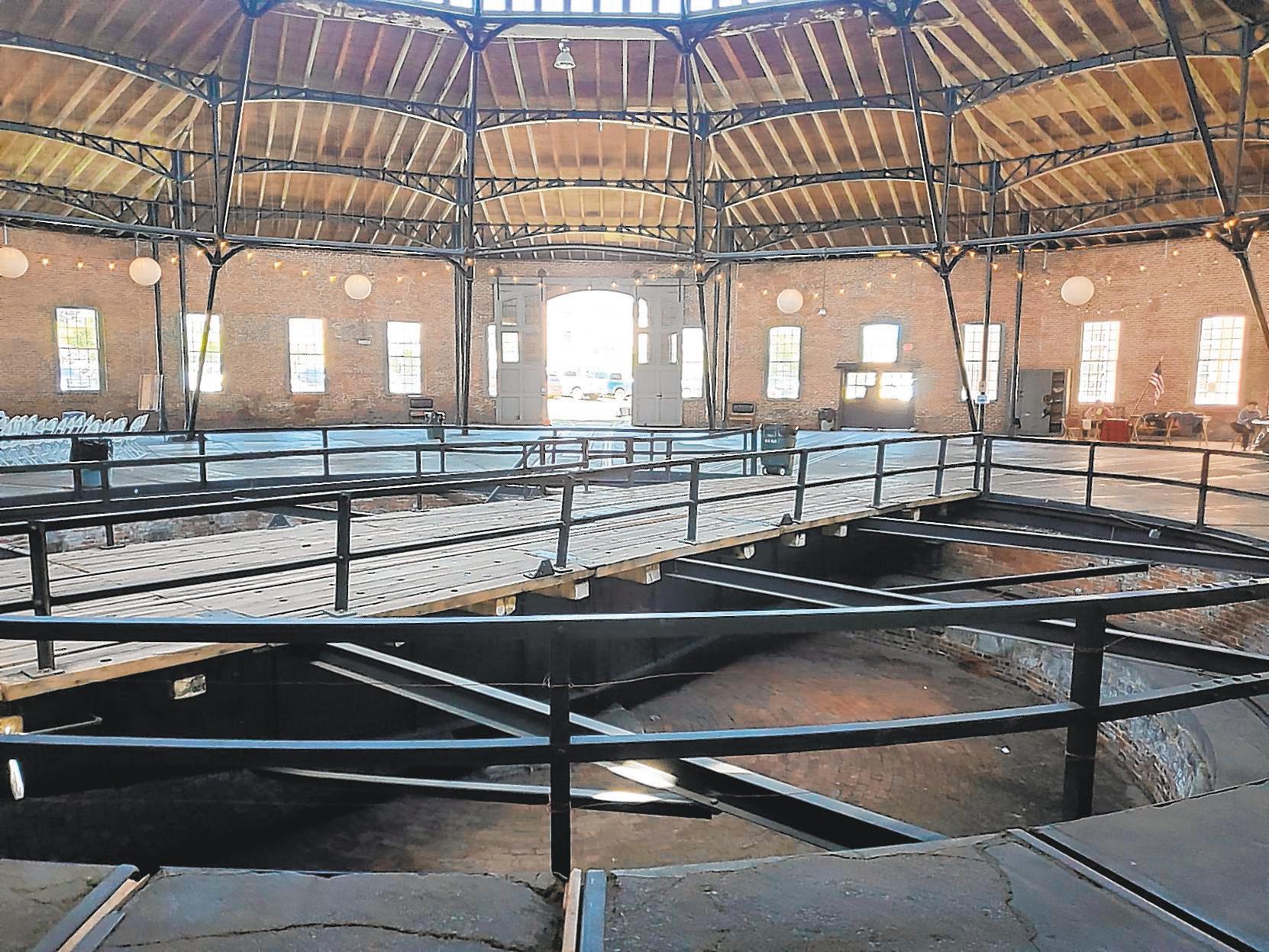
Originally constructed during the 1840s by the Baltimore & Ohio Railroad, the Roundhouse served as a critical maintenance facility along the railroad’s main line between Baltimore and the Ohio River. Martinsburg was located approximately 99 miles from Baltimore, making it an ideal location for servicing steam locomotives and crews traveling westward.
The complex quickly became one of the city’s largest employers and helped transform Martinsburg from a small Shenandoah Valley town into an important transportation hub.
The Roundhouse’s importance became evident during the Civil War. In 1861, Confederate forces under Gen. Thomas “Stonewall” Jackson targeted the railroad as part of an effort to disrupt Union transportation and supply lines.
Railroad facilities in Martinsburg, including portions of the Roundhouse complex, were damaged or destroyed during the conflict. Following the war, the Baltimore & Ohio Railroad rebuilt the facility, restoring its role as a key part of the nation’s transportation network.
The rebuilt complex would soon become the site of another major chapter in American history.
In July 1877, railroad workers in Martinsburg walked off the job after repeated wage cuts imposed during a national economic downturn. What began as a local protest quickly spread across the country.
The strike is widely considered the nation’s first major organized labor uprising.
Workers blocked trains and demanded better wages and working conditions. As unrest spread from Martinsburg to cities across the United States, President Rutherford B. Hayes ordered federal troops to restore order.
Although the strike was ultimately suppressed, historians view it as a major turning point in the American labor movement, laying groundwork for fu-
ture efforts to secure workplace protections and collective bargaining rights.
Today, visitors to the Roundhouse can stand on the same grounds where those events unfolded nearly 150 years ago.
The site’s railroad heritage remains visible throughout the complex, includ-
ing in artifacts that have undergone major renovations.
One of the most ambitious recent preservation projects involves Baltimore & Ohio caboose C-1913, a rare I-5-style caboose being restored by Eagle Scout candidate Nathan Johnson. Johnson, a member of Troop 29 in
Berkeley County, began work on the project after discovering that the caboose had sat largely untouched for nearly two decades after arriving at the Roundhouse. Before coming to Martinsburg, the caboose had served as an ice cream shop in Hagerstown and later as a display piece outside a McDonald’s restaurant in Winchester.
Years of exposure had left much of the structure deteriorated.
“Most of the exterior boards were completely rotted through, if not just fallen off,” Johnson said.
The project has evolved into a historically accurate restoration aimed at returning the caboose to its appearance during its years in service on the B&O Railroad. Johnson and volunteers have worked to correct inaccurate paint schemes and repair structural damage while researching original railroad specifications.
“My love for the Roundhouse and the fact that I’m working on a piece of railroad history, that’s what made me want to do this,” Johnson said. “This used to be one of the hot spots for Martinsburg.”
The caboose project reflects the broader mission of preserving the Roundhouse itself.
While portions of the complex have been restored, reminders of its challenges remain. The historic east roundhouse was heavily damaged by fire in the 1990s and remains in ruins. Community leaders have discussed plans for an amphitheater on the site, though funding has yet to materialize.
Despite those setbacks, the Roundhouse continues to serve as one of Martinsburg’s most active community gathering spaces.
The facility hosts weddings, community festivals, educational programs and public events throughout the year. Local high schools have held prom celebrations there, and the site regularly welcomes visitors interested in learning more about regional history.
In recent years, the Roundhouse has also been home to a growing farmers market that features local produce, crafts and educational demonstrations before the market moved downtown earlier this year.
Museum exhibits inside the complex continue to evolve as volunteers work to tell the story of the railroad and its impact on the region.












The American flag is perhaps the nation’s most recognizable symbol, representing unity, sacrifice and freedom. Its 13 stripes honor the original colonies that declared independence from Great Britain, while its 50 stars symbolize the states that now make up the Union. From battlefields to classrooms, from the moon landing to moments of national mourning, the flag has served as a powerful reminder of both the country’s ideals and the sacrifices made to defend them.
The American flag is perhaps the nation’s most recognizable symbol, representing unity, sacrifice and freedom. Its 13 stripes honor the original colonies that declared independence from Great Britain, while its 50 stars symbolize the states that now make up the Union. From battlefields to classrooms, from the moon landing to moments of national mourning, the flag has served as a powerful reminder of both the country’s ideals and the sacrifices made to defend them.
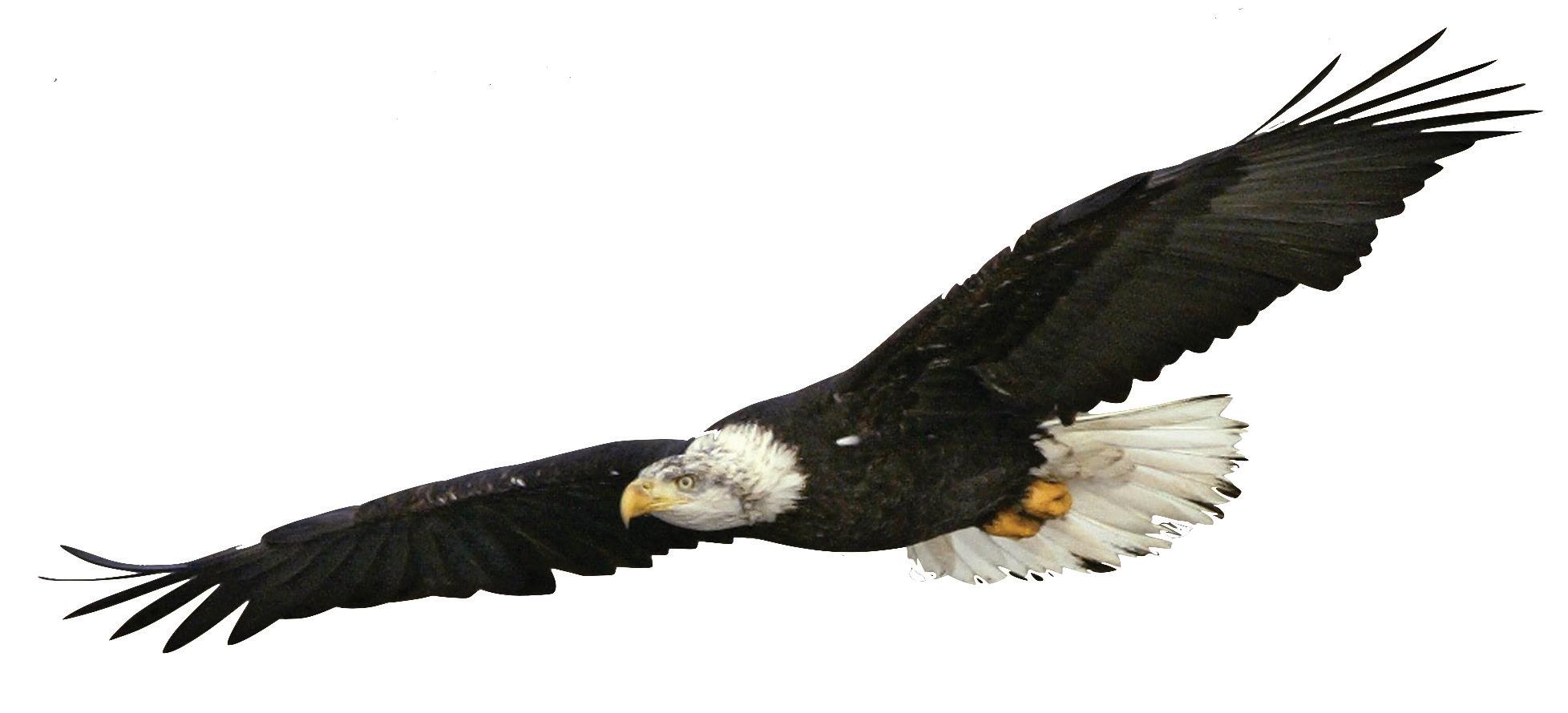
Chosen as the national emblem in 1782, the bald eagle symbolizes strength, courage and freedom. Found only in North America, the eagle’s soaring flight and commanding presence made it a fitting image for a young nation determined to chart its own course. Though once endangered, the bald eagle’s recovery through conservation efforts also reflects America’s growing commitment to protecting its natural heritage.
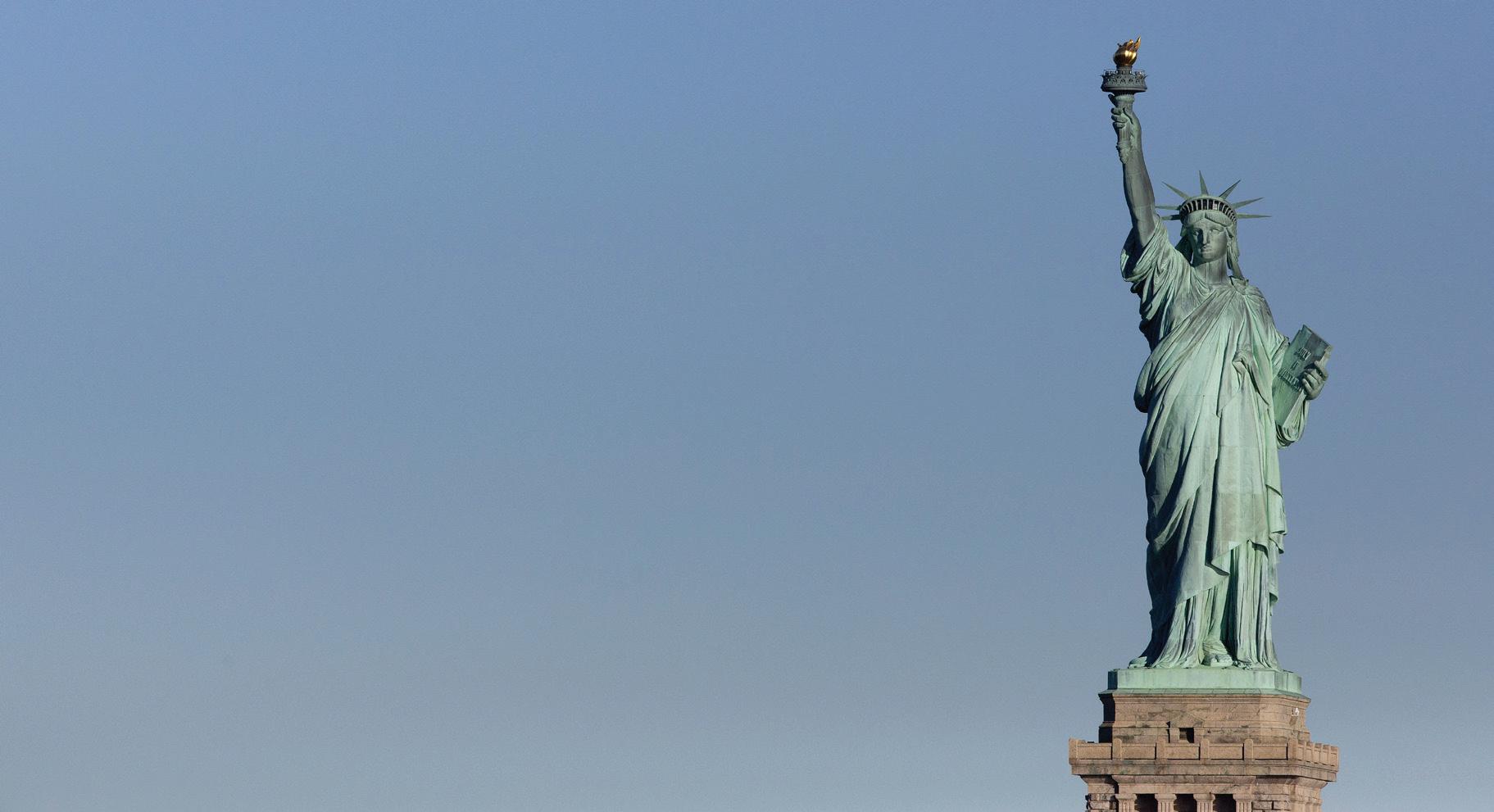
Gifted to the United States by France in 1886, the Statue of Liberty stands as a global symbol of freedom and democracy. For millions of immigrants arriving through New York Harbor, “Lady Liberty” represented hope and opportunity in a new land. Her torch, held high above the harbor, continues to symbolize the promise of liberty and the enduring belief that America is a place where people can pursue a better future.
Gifted to the United States by France in 1886, the Statue of Liberty stands as a global symbol of freedom and democracy. For millions of immigrants arriving through New York Harbor, “Lady Liberty” represented hope and opportunity in a new land. Her torch, held high above the harbor, continues to symbolize the promise of liberty and the enduring belief that America is a place where people can pursue a better future.
Chosen as the national emblem in 1782, the bald eagle symbolizes strength, courage and freedom. Found only in North America, the eagle’s soaring flight and commanding presence made it a fitting image for a young nation determined to chart its own course. Though once endangered, the bald eagle’s recovery through conservation efforts also reflects America’s growing commitment to protecting its natural heritage.
The American bison became the national mammal in 2016, recognizing its deep connection to the nation’s history, ecology and Native American cultures. Once numbering in the tens of millions across the Great Plains, the bison helped sustain Indigenous peoples and shaped the landscape of the American West. Its near extinction in the 19th century and later recovery symbolize both the consequences of unchecked expansion and the power of conservation.
amid diversity.
The Star-Spangled Banner
Written by Francis Scott Key during the War of 1812, “The Star-Spangled Banner” became the national anthem in 1931. Inspired by the sight of the American flag still flying after the bombardment of Fort McHenry, the song captures themes of resilience and patriotism. It is performed at sporting events, ceremonies and national observances, uniting Americans in moments of celebration and remembrance.
The American bison became the national mammal in 2016, recognizing its deep connection to the nation’s history, ecology and Native American cultures. Once numbering in the tens of millions across the Great Plains, the bison helped sustain Indigenous peoples and shaped the landscape of the American West. Its near extinction in the 19th century and later recovery symbolize both the consequences of unchecked expansion and the power of conservation.
The Great Seal appears on official government documents, passports and the one-dollar bill, representing the sovereignty and ideals of the nation. The bald eagle clutching arrows and an olive branch symbolizes America’s desire for peace while remaining prepared to defend itself. The shield represents the unity of the states, while the motto “E Pluribus Unum” reflects the idea that many states and peoples form one nation.
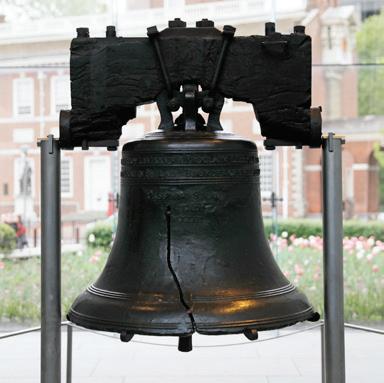
to commemorate the 50th anniversary of William Penn’s Charter of Privileges, it became associated with the ideals of the American Revolution. Its famous crack only added to its legend, and abolitionists later embraced the bell as a symbol of the fight against slavery and for civil rights.
Written by Francis Scott Key during the War of 1812, “The Star-Spangled Banner” became the national anthem in 1931. Inspired by the sight of the American flag still flying after the bombardment of Fort McHenry, the song captures themes of resilience and patriotism. It is performed at sporting events, ceremonies and national observances, uniting Americans in moments of celebration and remembrance.
The rose was designated the national flower in 1986 and symbolizes beauty, love and resilience. Roses have appeared in American gardens, ceremonies and traditions for generations. Their wide variety of colors and meanings reflects the diversity and spirit of the American people.
The Great Seal appears on official government documents, passports and the one-dollar bill, representing the sovereignty and ideals of the nation. The bald eagle clutching arrows and an olive branch symbolizes America’s desire for peace while remaining prepared to defend itself. The shield represents the unity of the states, while the motto “E Pluribus Unum” reflects the idea that many states and peoples form one nation.
“In God We Trust”
Adopted as the national motto in 1956, “In God We Trust” reflects the role faith has played in the nation’s history and culture. The phrase appears on U.S. currency and in many public institutions. Though interpretations vary among Americans of different beliefs, the motto represents the idea that moral principles and spiritual values have long influenced public life in the United States.
“E
Adopted as the national motto in 1956, “In God We Trust” reflects the role faith has played in the nation’s history and culture. The phrase appears on U.S. currency and in many public institutions. Though interpretations vary among Americans of different beliefs, the motto represents the idea that moral principles and spiritual values have long influenced public life in the United States.
“E Pluribus Unum”
Latin for “Out of many, one,” “E Pluribus Unum” has symbolized American unity since the nation’s founding. Originally referring to the joining of the 13 colonies into one nation, the phrase has come to represent the blending of diverse peoples, cultures and backgrounds into a shared national identity. It reflects the ongoing American experiment of unity
Latin for “Out of many, one,” “E Pluribus Unum” has symbolized American unity since the nation’s founding. Originally referring to the joining of the 13 colonies into one nation, the phrase has come to represent the blending of diverse peoples, cultures and backgrounds into a shared national identity. It reflects the ongoing American experiment of unity
The rose was designated the national flower in 1986 and symbolizes beauty, love and resilience. Roses have appeared in American gardens, ceremonies and traditions for generations. Their wide variety of colors and meanings reflects the diversity and spirit of the American people.
to commemorate the 50th anniversary of William Penn’s Charter of Privileges, it became associated with the ideals of the American Revolution. Its famous crack only added to its legend, and abolitionists later embraced the bell as a symbol of the fight against slavery and for civil rights.
Uncle Sam emerged during the War of 1812 and evolved into the personification of the United States government and the American people. Often depicted in a star-spangled top hat pointing directly at the viewer, Uncle Sam became especially famous through military recruitment posters during World Wars I and II. The image represents patriotism, national duty and the idea that citizens themselves are part of the nation’s strength.
Uncle Sam emerged during the War of 1812 and evolved into the personification of the United States government and the American people. Often depicted in a star-spangled top hat pointing directly at the viewer, Uncle Sam became especially famous through military recruitment posters during World Wars I and II. The image represents patriotism, national duty and the idea that citizens themselves are part of the nation’s strength.
The Liberty Bell
Named the national tree in 2004, the oak represents strength, endurance and stability. Oaks have long played an important role in American history, from providing timber for ships and homes to serving as landmarks in communities across the nation. Their deep roots and long lifespan make them fitting symbols for a country that values perseverance and growth.
Named the national tree in 2004, the oak represents strength, endurance and stability. Oaks have long played an important role in American history, from providing timber for ships and homes to serving as landmarks in communities across the nation. Their deep roots and long lifespan make them fitting symbols for a country that values perseverance and growth.
The Minutemen were colonial militia members prepared to fight at a moment’s notice during the American Revolution. Their actions at Lexington and Concord marked the beginning of the Revolutionary War. As symbols, the Minutemen represent ordinary citizens stepping forward to defend liberty and selfgovernment.
The Minutemen were colonial militia members prepared to fight at a moment’s notice during the American Revolution. Their actions at Lexington and Concord marked the beginning of the Revolutionary War. As symbols, the Minutemen represent ordinary citizens stepping forward to defend liberty and selfgovernment.
The Liberty Bell, housed in Philadelphia, has become one of the nation’s enduring symbols of independence and equality. Though originally cast
The Liberty Bell, housed in Philadelphia, has become one of the nation’s enduring symbols of independence and equality. Though originally cast
The White House has served as the residence and workplace of every U.S. president except George Washington. More than simply a home, it symbolizes the executive branch of government and the continuity of American democracy. Through wars, economic crises and celebrations, the White House has remained a visible reminder
The White House has served as the residence and workplace of every U.S. president except George Washington. More than simply a home, it symbolizes the executive branch of government and the continuity of American democracy. Through wars, economic crises and celebrations, the White House has remained a visible reminder
of stable leadership and the peaceful transfer of power.
The U.S. Capitol stands at the heart of the nation’s legislative branch and symbolizes representative democracy. It is where Congress debates laws, declares war, certifies elections and addresses issues facing the nation. Its iconic dome has become one of the most recognizable images in America, representing the idea that government derives its authority from the people.
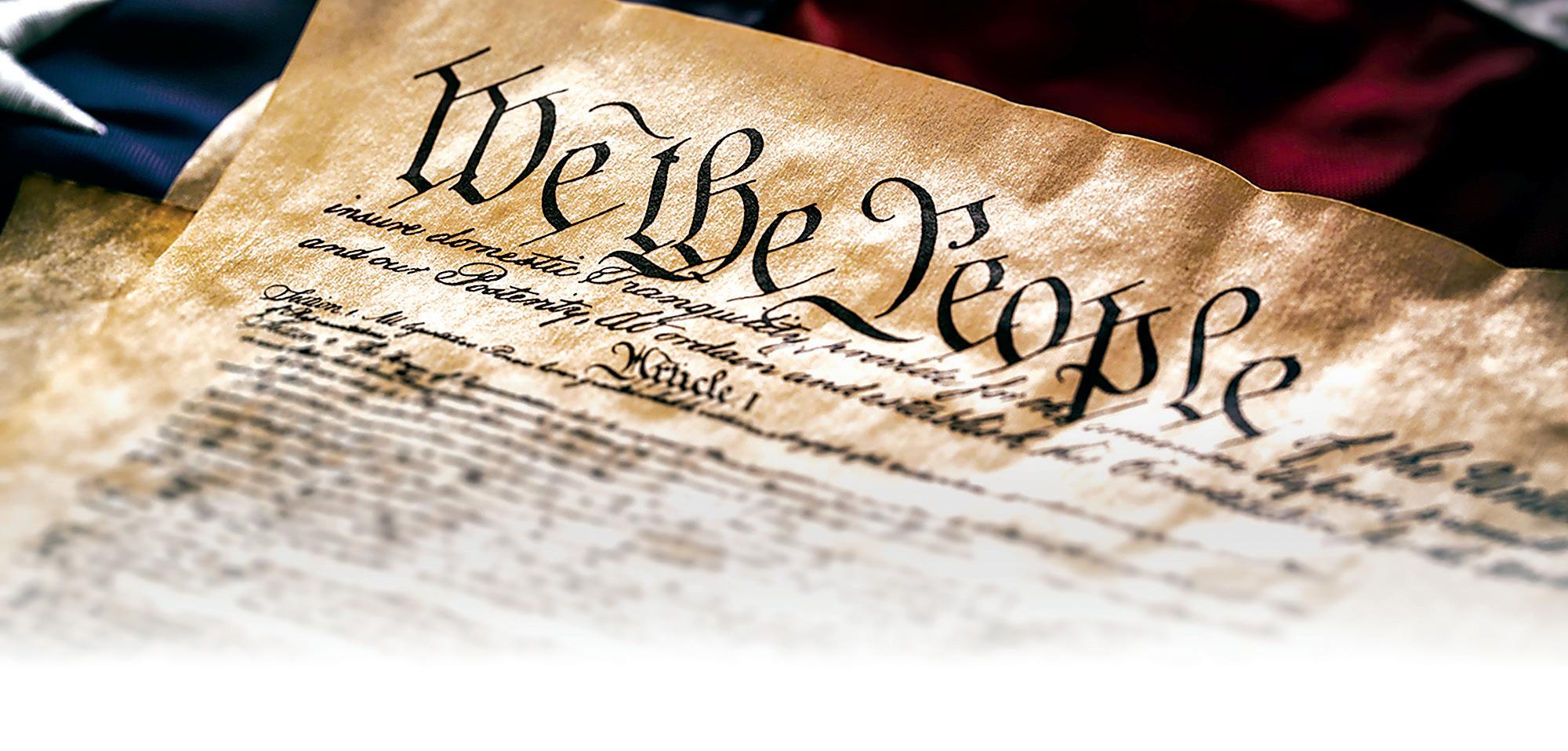
Ratified in 1788, the Constitution created the framework for the American system of government and remains the oldest written national constitution still in use. It established checks and balances among branches of government while protecting the rights of citizens. The Constitution’s ability to adapt through amendments has helped the nation navigate enormous changes while preserving democratic principles.
Adopted on July 4, 1776, the Declaration of Independence announced America’s separation from Great Britain and articulated the ideals upon which the nation was founded. Its assertion that “all men are created equal” and possess unalienable rights has inspired democratic movements around the world. Though the nation has struggled to fully live up to those ideals, the document remains a moral compass for generations of Americans.
The Bill of Rights, ratified in 1791, guarantees many of the freedoms Americans cherish most deeply, including freedom of speech, religion, press and assembly. These first 10 amendments limit government power and protect individual liberties. They remain central to debates about civil rights, privacy and justice, reflecting the nation’s enduring commitment to personal freedom.
Built to honor George Washington,
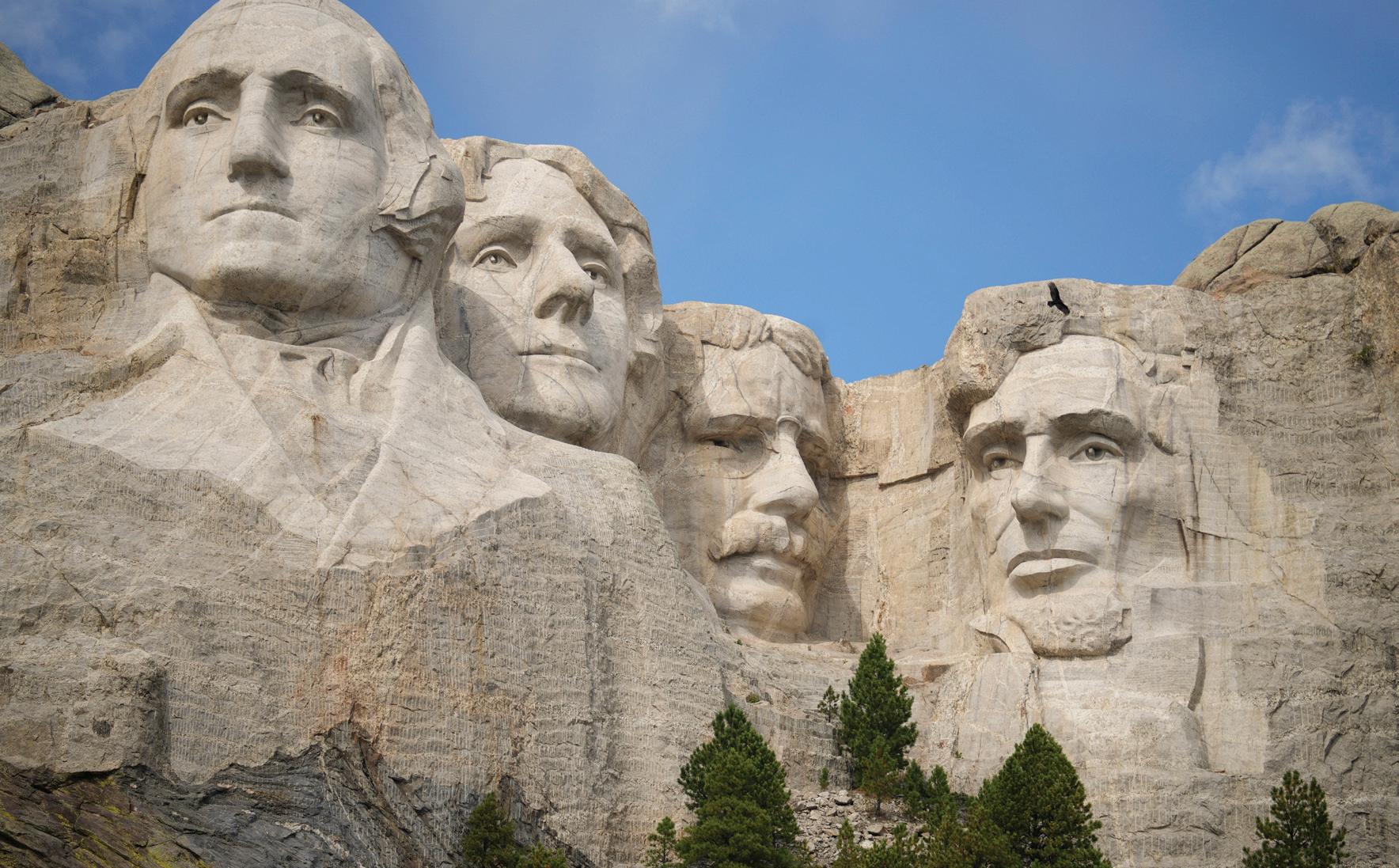
Mount Rushmore
Mount Rushmore features the carved faces of Presidents George Washington, Thomas Jefferson, Theodore Roosevelt and Abraham Lincoln, each chosen to represent different chapters of American history. The monument symbolizes the nation’s founding, expansion, conservation and preservation of the Union. Though admired by millions, it also prompts discussion about Native American history and the complexities of national memory.
commander of the Continental Army and the nation’s first president, the Washington Monument symbolizes leadership, sacrifice and the founding of the republic. Rising prominently above the National Mall, the obelisk serves as a reminder of Washington’s role in guiding the young nation through its earliest and most uncertain years.
The Lincoln Memorial honors President Abraham Lincoln and his leadership during the Civil War, one of the nation’s greatest crises. It also became a symbol of civil rights, most famously serving as the site of Martin Luther King Jr.’s “I Have a Dream” speech in 1963. The memorial represents unity, equality and the ongoing pursuit of freedom.
The Mayflower carried Pilgrims from England to the New World in 1620, becoming a symbol of early settlement and religious freedom. The Mayflower Compact, signed aboard the ship, established principles of self-government that influenced later democratic ideas in America. The voyage remains central to the story of colonial America and the nation’s origins.
The cowboy symbolizes the frontier spirit, independence and rugged individualism often associated with the American West. Though romanticized in books, films and television, cowboys played a real role in cattle drives and western expansion during the 19th century. The image of the cowboy remains tied to ideals of hard work, self-reliance and adventure.
Known as the “Mother Road,” Route 66 connected Chicago to Los Angeles and became a symbol of mobility, freedom and opportunity. During the Dust Bowl and Great Depression, families traveled the highway seeking better lives in the West. Later, it embodied the spirit of road trips, adventure and the open road that became deeply woven into American culture.
Completed in 1937, the Golden Gate Bridge symbolizes American engineering, innovation and ambition. Spanning the entrance to San Francisco Bay, it became an icon of the American West and the possibilities of modern construction. Its graceful design and towering presence continue to represent progress and imagination.
By TOM MARKLAND tmarkland@journal-news.net
MARTINSBURG — When the United States celebrates its 250th anniversary this year, communities across the Eastern Panhandle will be marking milestones of their own.
Many of the region’s towns and governmental bodies were established before or shortly after the American Revolution, making them nearly as old as the nation itself.
The area’s towns developed around natural resources, transportation routes, agriculture and commerce, creating communities that have endured for generations and continue to shape the region today.
Harpers Ferry: The story of Harpers Ferry begins in the early 1730s, when Robert Harper settled near the confluence of the Potomac and Shenandoah rivers. Due to the importance of that intersection, Harper established a ferry service that helped travelers and traders cross the rivers on their way through Virginia’s western frontier.
The settlement that grew around the crossing eventually took on Harper’s name and became one of the most important transportation hubs in the region. By the late 18th century, its location attracted the attention of the federal government, which selected the community as the site of a national armory and arsenal.
Throughout the nation’s early history, Harpers Ferry played an outsized role for a town of its size. It became known for manufacturing firearms for the United States military and later gained international attention as the site of abolitionist John Brown’s 1859 raid. Today, much of the historic town is preserved as part of Harpers Ferry National Historical Park, drawing visitors from around the world to a place where local, state and national history intersect.
Berkeley Springs: Long before European settlers arrived, the warm mineral springs in present-day Berkeley Springs attracted Native American tribes who regarded the waters as a place of healing and gathering.
European settlement around the springs dates to the mid-18th century, and the area quickly became one of colonial America’s most famous destinations. The springs earned national attention after George Washington visited
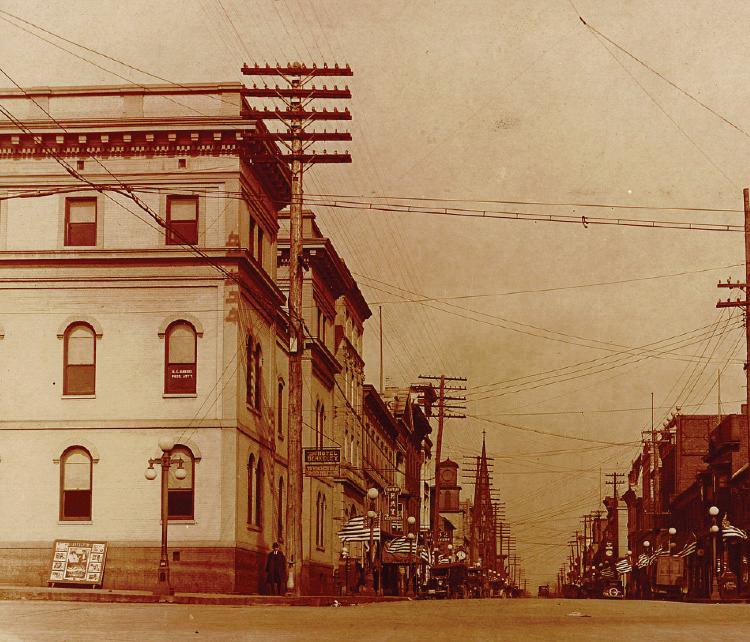
as a teenager and later returned multiple times throughout his life.
The town, also called the Town of Bath, was officially established by the Virginia General Assembly in 1776, making it one of the earliest planned spa communities in the United States. Visitors traveled long distances to experience the springs, helping establish a tourism economy that remains central to the community’s identity 250 years later.
Shepherdstown : Founded by Thomas Shepherd in 1762, Shepherdstown is widely recognized as the oldest incorporated town in present-day West Virginia.
Located along the Potomac River, the town developed as an important center for trade and agriculture during the colonial period.
During the Revolutionary War era, Shepherdstown served as a gathering place for soldiers, merchants and travelers. The town’s location near major transportation routes allowed it to prosper even as much of the surrounding frontier remained sparsely populated.
Many of Shepherdstown’s historic buildings still stand today, reflecting the community’s long history. The town later became home to what is now Shepherd University, further cementing its
role as a cultural and educational center in the region.
Martinsburg: The city traces its origins to 1778, when Revolutionary War Gen. Adam Stephen laid out the town on land he owned in the region.
Stephen, a veteran military leader who had served alongside George Washington, envisioned a community that would benefit from its location along important transportation corridors. The town was named for Colonel Thomas Bryan Martin, a nephew of Thomas Fairfax, 6th Lord Fairfax of Cameron
In the decades following its founding, Martinsburg experienced steady growth as settlers moved into the Shenandoah Valley. The arrival of the Baltimore & Ohio Railroad in the 19th century transformed the community into a major transportation and industrial center, connecting the region to markets throughout the eastern United States.
Today, Martinsburg serves as the largest city in the Eastern Panhandle and the seat of Berkeley County government.
Charles Town: Founded in 1786 by Charles Washington, the youngest brother of George Washington, Charles Town emerged during the optimistic years that followed the American Revolution.
Washington established the town on family land in what was then Berkeley County. The community quickly became a center of commerce and local government, particularly after the creation of Jefferson County in 1801.
The Washington family’s influence remains visible throughout the town, where numerous historic structures and landmarks preserve connections to the nation’s founding generation.
Charles Town’s location along important travel routes helped it develop into a commercial hub for surrounding agricultural communities.
Inwood: Compared to some of its neighboring communities, Inwood emerged later in the nation’s history, developing during the early 19th century as settlement expanded throughout southern Berkeley County.
Located along the historic Valley Pike, now U.S. Route 11, the community benefited from a transportation corridor that connected travelers and businesses throughout the Shenandoah Valley. Agriculture played a major role in Inwood’s growth, with surrounding farms supporting local commerce and helping establish the community as an important stop between larger population centers. The arrival of additional transportation infrastructure throughout the 19th century further strengthened its role within the region.
Hedgesville: The youngest of the communities highlighted in the region’s early history, Hedgesville was incorporated in 1832 and named for the prominent Hedges family.
Members of the Hedges family played significant roles in local government and public life during the late 18th and early 19th centuries. The town that bore their name became a center for residents living in northwestern Berkeley County.
Like many small communities of the era, Hedgesville developed around local commerce and agriculture. Its location allowed it to serve as a gathering place for surrounding rural residents, providing access to goods, services and civic institutions.
Although smaller than some of its neighboring municipalities, Hedgesville has maintained a distinct identity for nearly two centuries and remains an important part of Berkeley County’s history and culture.






FFew ideas are more distinctly American than the national park. The United States created the world’s first national park when Yellowstone National Park was established on March 1, 1872. Today, the National Park System includes 63 officially designated national parks spread across 30 states and two U.S. territories. The National Park Service itself was created in 1916 to protect these places “for the enjoyment of future generations.”
ew ideas are more distinctly American than the national park. The United States created the world’s first national park when Yellowstone National Park was established on March 1, 1872. Today, the National Park System includes 63 officially designated national parks spread across 30 states and two U.S. territories. The National Park Service itself was created in 1916 to protect these places “for the enjoyment of future generations.”
Yellowstone — 1872 — Wyoming, Montana, Idaho — Geysers, Old Faithful
Yellowstone — 1872 — Wyoming, Montana, Idaho — Geysers, Old Faithful
Sequoia — 1890 — California — Giant sequoias
Sequoia — 1890 — California — Giant sequoias
Yosemite — 1890 — California — Granite cliffs, waterfalls
Yosemite — 1890 — California — Granite cliffs, waterfalls
Mount Rainier — 1899 — Washington — Volcano, glaciers
Mount Rainier — 1899 — Washington — Volcano, glaciers
Crater Lake — 1902 — Oregon — Deepest U.S. lake
Crater Lake — 1902 — Oregon — Deepest U.S. lake
Wind Cave — 1903 — South Dakota — Cave formations
Wind Cave — 1903 — South Dakota — Cave formations
Mesa Verde — 1906 — Colorado — Cliff dwellings
Mesa Verde — 1906 — Colorado — Cliff dwellings
Glacier — 1910 — Montana — Alpine scenery
Glacier — 1910 — Montana — Alpine scenery
Rocky Mountain — 1915 — Colorado — High peaks
Rocky Mountain — 1915 — Colorado — High peaks
Hawaii Volcanoes — 1916 — Hawaii — Active volcanoes
Hawaii Volcanoes — 1916 — Hawaii — Active volcanoes
Lassen Volcanic — 1916 — California — Volcanic features
Lassen Volcanic — 1916 — California — Volcanic features
Denali — 1917 — Alaska — North America’s tallest peak
Denali — 1917 — Alaska — North America’s tallest peak
Acadia — 1919 — Maine — Atlantic coastline
Acadia — 1919 — Maine — Atlantic coastline
Grand Canyon — 1919 — Arizona — Colorado River canyon
Grand Canyon — 1919 — Arizona — Colorado River canyon
Zion — 1919 — Utah — Sandstone cliffs
Zion — 1919 — Utah — Sandstone cliffs
Hot Springs — 1921 — Arkansas — Thermal springs
Hot Springs — 1921 — Arkansas — Thermal springs
Bryce Canyon — 1928 — Utah — Hoodoos
Bryce Canyon — 1928 — Utah — Hoodoos
Grand Teton — 1929 — Wyoming — Teton Range
Grand Teton — 1929 — Wyoming — Teton Range
Carlsbad Caverns — 1930 — New Mexico — Limestone caves
Carlsbad Caverns — 1930 — New Mexico — Limestone caves
Great Smoky Mountains — 1934 — Tennessee/ North Carolina — Forested mountains
Great Smoky Mountains — 1934 — Tennessee/ North Carolina — Forested mountains
Shenandoah — 1935 — Virginia — Blue Ridge vistas
Shenandoah — 1935 — Virginia — Blue Ridge vistas
Olympic — 1938 — Washington — Rainforest, mountains, coast
Olympic — 1938 — Washington — Rainforest, mountains, coast
Kings Canyon — 1940 — California — Deep canyon, sequoias
Kings Canyon — 1940 — California — Deep canyon, sequoias
Isle Royale — 1940 — Michigan — Lake Superior wilderness
Isle Royale — 1940 — Michigan — Lake Superior wilderness
Mammoth Cave — 1941 — Kentucky — World’s longest cave system
Mammoth Cave — 1941 — Kentucky — World’s longest cave system
Big Bend — 1944 — Texas — Rio Grande desert landscape
Big Bend — 1944 — Texas — Rio Grande desert landscape
Everglades — 1947 — Florida — Subtropical wetlands
Everglades — 1947 — Florida — Subtropical wetlands
Virgin Islands — 1956 — U.S. Virgin Islands — Beaches, reefs
Virgin Islands — 1956 — U.S. Virgin Islands — Beaches, reefs
Haleakalā — 1961 — Hawaii — Volcanic crater
Haleakalā — 1961 — Hawaii — Volcanic crater
Petrified Forest — 1962 — Arizona — Fossilized wood
Petrified Forest — 1962 — Arizona — Fossilized wood
Canyonlands — 1964 — Utah — Desert canyons
Canyonlands — 1964 — Utah — Desert canyons
Redwood — 1968 — California — Tallest trees
Redwood — 1968 — California — Tallest trees
North Cascades — 1968 — Washington — Glaciers, rugged peaks
North Cascades — 1968 — Washington — Glaciers, rugged peaks
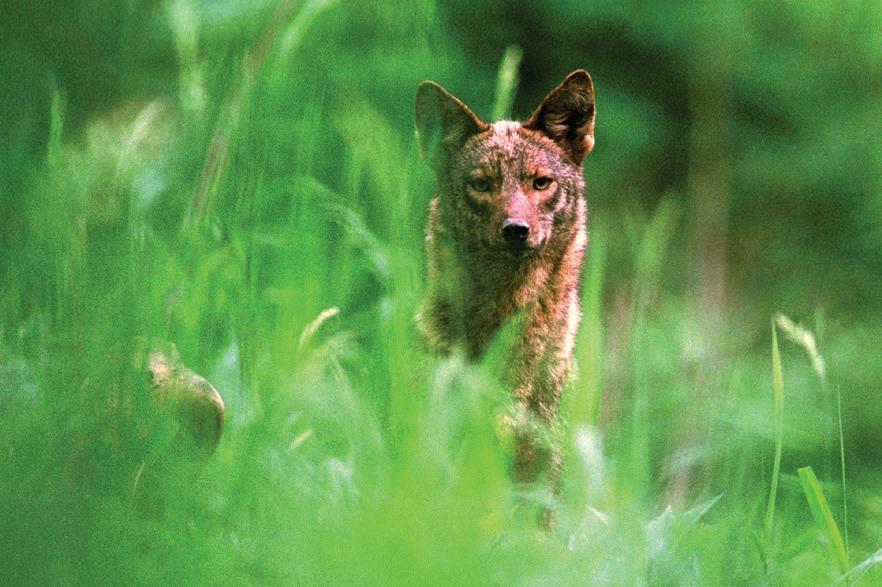
A coyote peers through the high grass in the Cuyahoga Valley National Park in Brecksville, Ohio, in 2004. Though numerous in rural areas in Ohio, coyotes flee from the presence of humans.
Arches — 1971 — Utah — Natural stone arches
Arches — 1971 — Utah — Natural stone arches
Capitol Reef — 1971 — Utah — Waterpocket Fold
Capitol Reef — 1971 — Utah — Waterpocket Fold
Guadalupe Mountains — 1972 — Texas — Texas’ highest peak
Guadalupe Mountains — 1972 — Texas — Texas’ highest peak
Voyageurs — 1975 — Minnesota — Lakes and waterways
Voyageurs — 1975 — Minnesota — Lakes and waterways
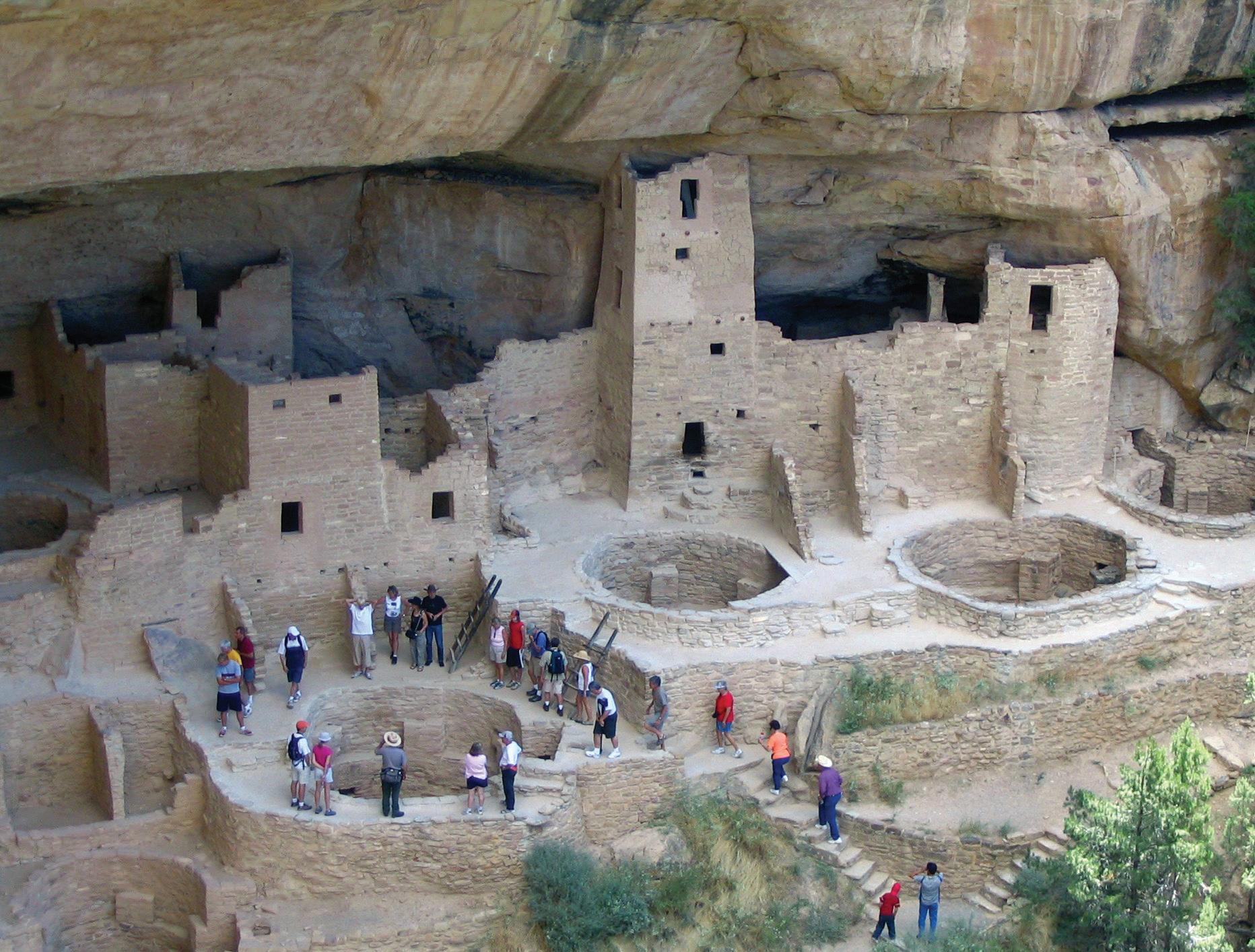
In August 2005, visitors tour Cliff Palace, an ancient
celebrated its centennial that year.
In August 2005, visitors tour Cliff Palace, an ancient cliff dwelling in Mesa Verde National Park, Colo. The park celebrated its centennial that year.
RIGHT: In June 2006, maple and pine branches frame Horseshoe Bend at the North Overlook of the New River Gorge National River, which is now part of the New River Gorge National Park.
Badlands — 1978 — South Dakota — Eroded buttes, fossils
Theodore Roosevelt — 1978 — North Dakota — Badlands, bison
Channel Islands — 1980 — California — Island ecosystems
Biscayne — 1980 — Florida — Coral reefs, bay waters
Gates of the Arctic — 1980 — Alaska — Remote Arctic wilderness
Glacier Bay — 1980 — Alaska — Tidewater glaciers
Katmai — 1980 — Alaska — Brown bears, volcanoes
Kenai Fjords — 1980 — Alaska — Glaciers, fjords
Kobuk Valley — 1980 — Alaska — Arctic sand dunes
Lake Clark — 1980 — Alaska — Volcanoes, lakes
Wrangell–St. Elias — 1980 — Alaska — Largest U.S. national park
Great Basin — 1986 — Nevada — Bristlecone pines, caves
National Park of American Samoa — 1988 — American Samoa — Rainforest, reefs
Dry Tortugas — 1992 — Florida — Fort Jefferson, islands
Saguaro — 1994 — Arizona — Giant cacti
Death Valley — 1994 — California/Nevada — Desert extremes
Joshua Tree — 1994 — California — Mojave and Colorado deserts
Black Canyon of the Gunnison — 1999 — Colorado — Steep canyon walls
Cuyahoga Valley — 2000 — Ohio — River valley, waterfalls
Congaree — 2003 — South Carolina — Old-growth floodplain forest
Great Sand Dunes — 2004 — Colorado — Tallest dunes in North America
Pinnacles — 2013 — California — Rock spires, condors
Gateway Arch — 2018 — Missouri — Westward expansion monument
Indiana Dunes — 2019 — Indiana — Lake Michigan dunes
White Sands — 2019 — New Mexico — Gypsum dunes
New River Gorge — 2020 — West Virginia — Gorge, bridge, whitewater
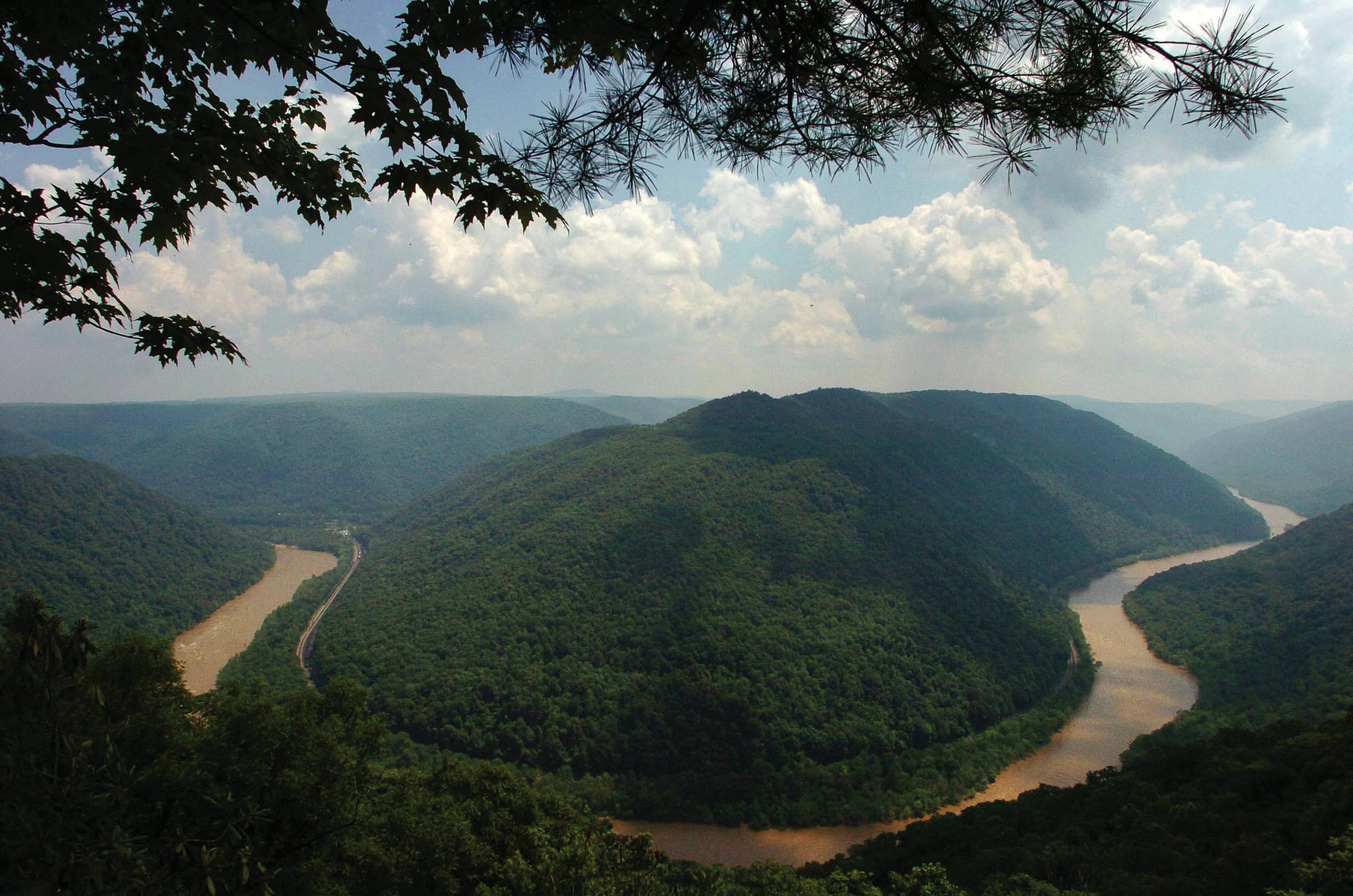
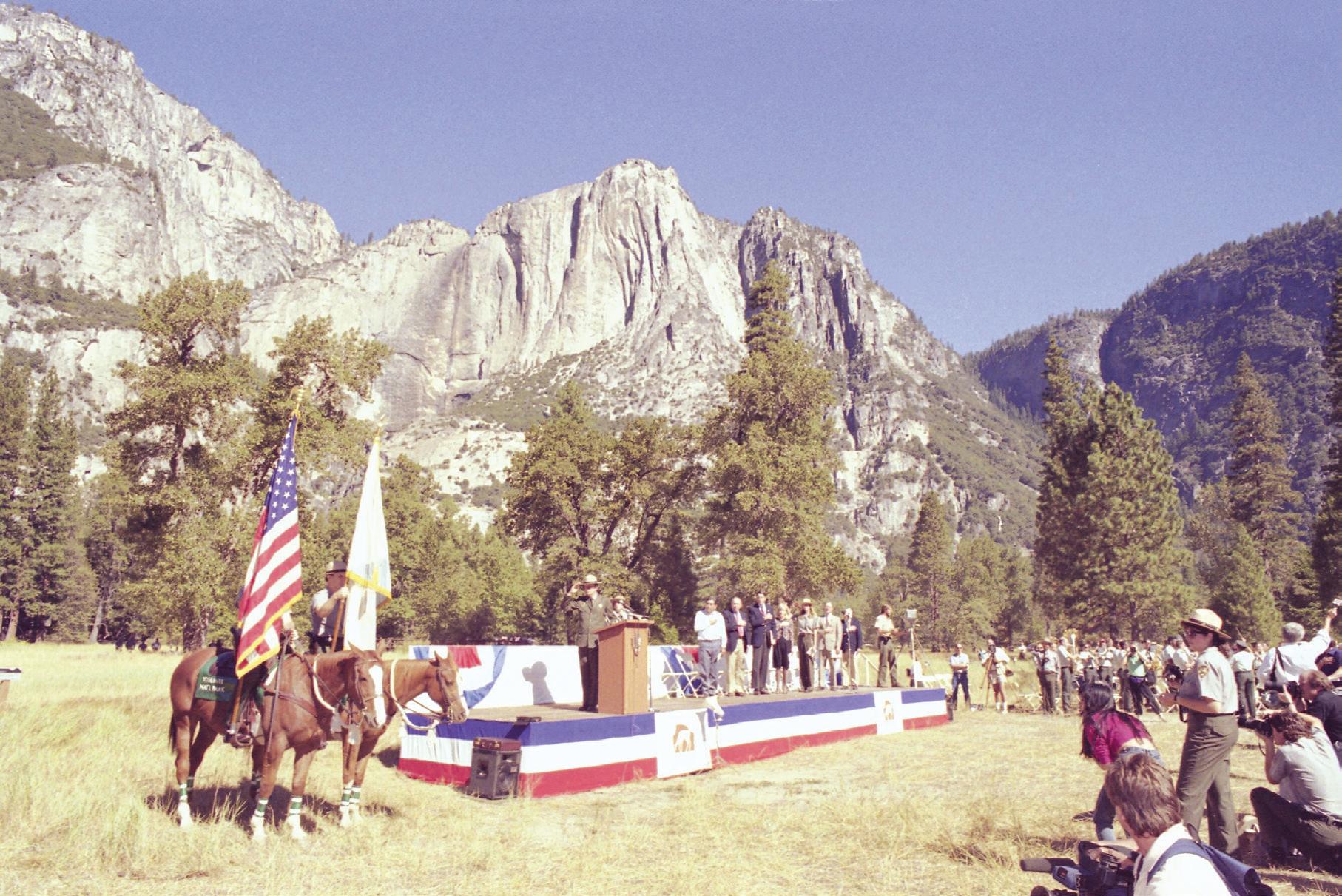

ABOVE: As mounted rangers present colors, Park Superintendent Michael Finley and other dignitaries kick off Yosemite National Park’s centennial observation in Sentinel Meadow in October 1990.
LEFT: The sun rises over the clouds in front of the summit of Haleakala volcano in Haleakala National Park on Hawaii’s island of Maui in January 2017. Park officials have said the sunrise on Haleakala attracts over a thousand people a day.
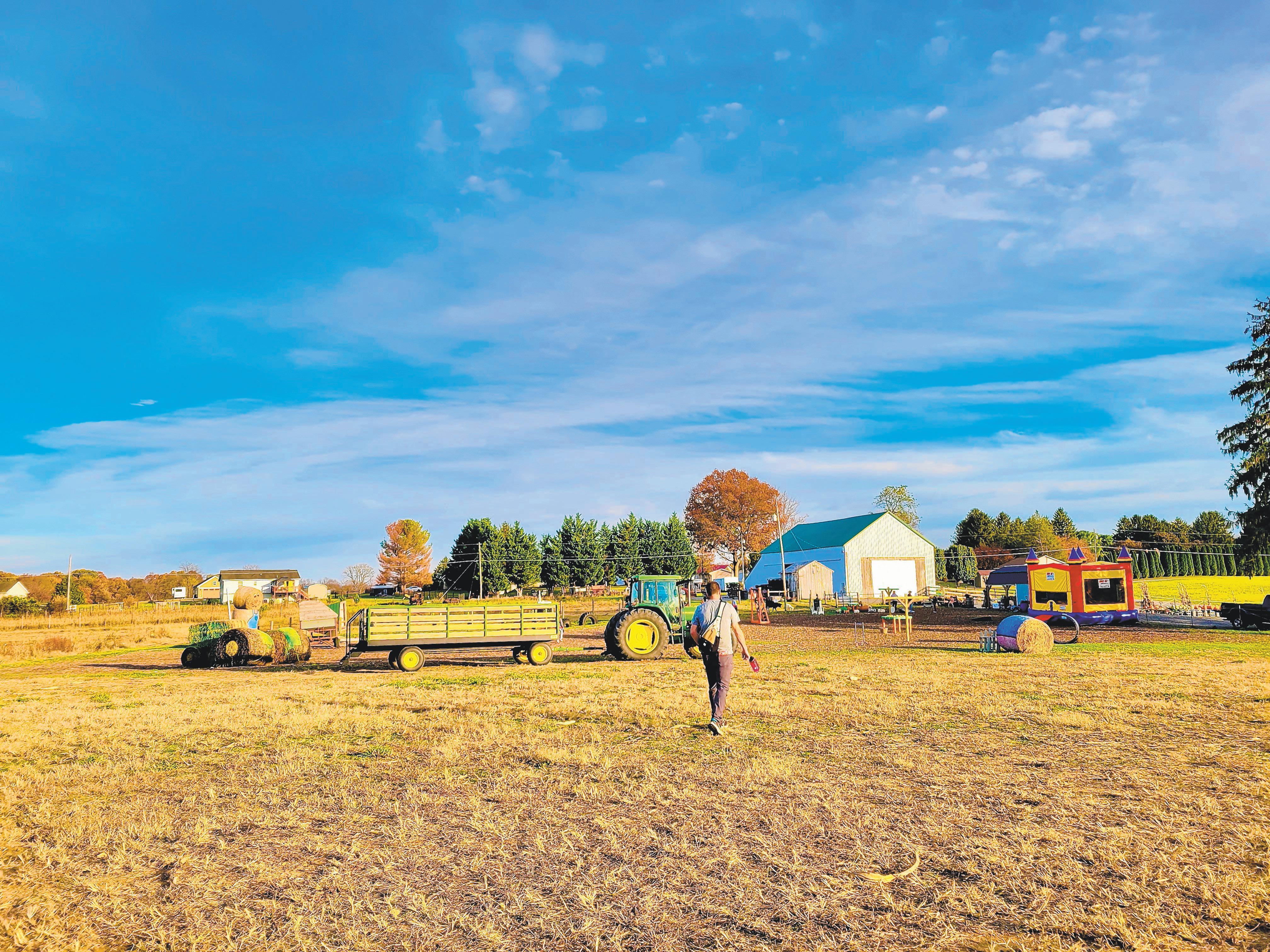
By TABITHA JOHNSTON tjohnston@journal-news.net
MARTINSBURG — At the time of the nation’s founding 250 years ago, the Eastern Panhandle looked far different than how it appears today.
Though Harpers Ferry, Berkeley Springs, Martinsburg, Charles Town, Gerrardstown, Darkesville and Middleway had all been established by that point in time, two of the counties in which they now fall had yet to be founded. At the time, all of the municipalities were located in Berkeley County,
which had been established in 1772 through an act dividing Frederick County, Virginia into three distinct counties.
A healthy population of immigrants primarily from Germany, England and Ireland had already migrated to the area, driven by the availability of land and opportunity to build a better future for themselves and their families, by making a living in agriculture. That industry proved to be not only essential to the founding of the Eastern Panhandle, but also central to its growth over the next two centuries.
“If you look at the roots of Berkeley County, you
will see they were all in agriculture,” said Charlie Moore, a local farmer who serves as the first vice president of the Berkeley County Youth Fair board. “Agriculture was the founding piece to this community.”
Only in recent years has the industry lost some of its prominence, due to a rising demand for undeveloped land, to build housing for the rapidly growing number of people seeking to commute to the city and avoid paying the high housing prices of living there. This issue has not only been a regional one, but a statewide one, with 300 West Virginia farms lost to
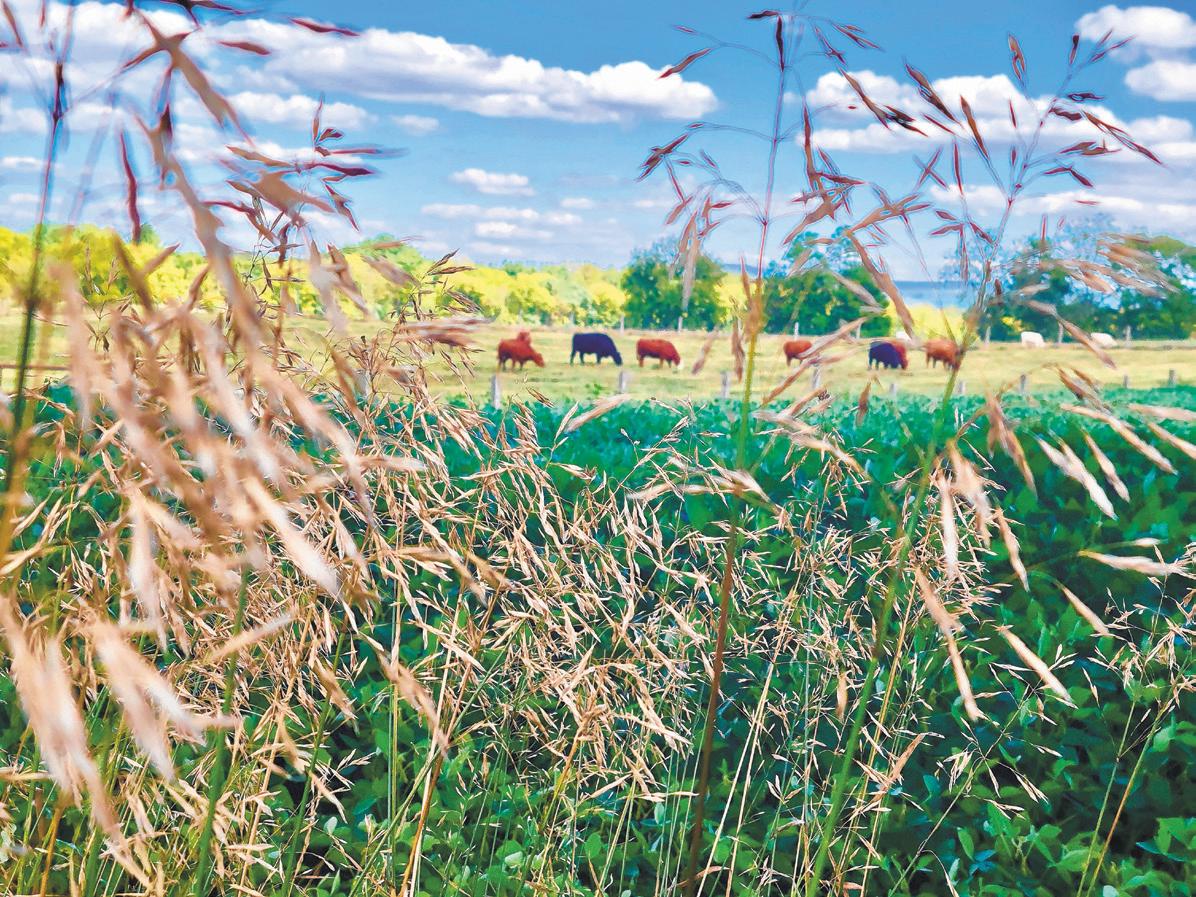
development in the past two years alone, according to the U.S. Department of Agriculture’s annual “Farm Numbers and Land in Farms” report.
“Foxcroft Avenue is a major shopping area today, but it used to be a dairy farm. That was just as recent as 1980 or 1990,” Moore said, noting he remembers when the first grocery store and Walmart opened up there. “The urban sprawl has taken a real hit on this area. It wasn’t that long ago that this place looked vastly different from the way it does today.”
Yet, according to Moore, agriculture is nonetheless still a major industry in both the state and the Eastern Panhandle. Back in 1900, approximately 8.9
RIGHT: Rows of corn can be seen in rural Jefferson County where the crop is still one grown by many farmers.
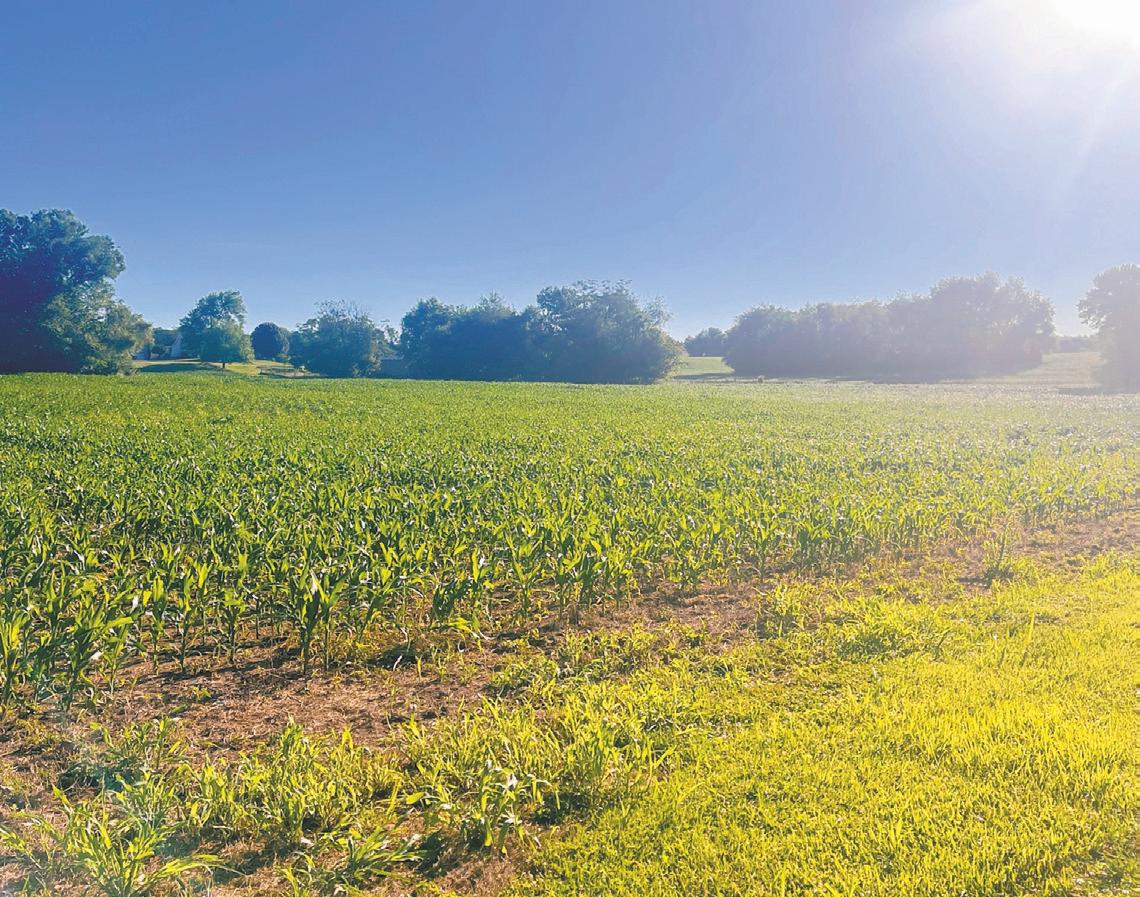
million acres in the state served as dedicated farmland. Currently, that number is much lower, but still significant — 3,549,104 acres. They are used today for many of the same agricultural purposes that they have been used for, for generations: raising cattle, sheep, chickens, turkeys, hogs, fish and bees and growing crops like corn, flowers, hay, soybeans, apples, peaches, berries, wheat and tobacco.
Ninety-five percent of farms within the state are family owned — the highest in the country, according to data collected by the West Virginia Farm Bureau. This personal connection to the land is likely what has helped to preserve a healthy portion of the ag-
ricultural industry here.
“Agriculture is still alive and well in the area,” Moore said.
He noted that, with a dose of entrepreneurial spirit, a good number of farms have not only found themselves surviving the economic challenges of the modern day, but also thriving.
“You have all of these farms that are embracing agritourism,” Moore said, noting agritourism — tourism with an agricultural focus — can be done in a variety of ways, whether that be by a farm having a petting zoo, an Airbnb, a wedding venue, special events or a farm market. “It’s a very promising field.”
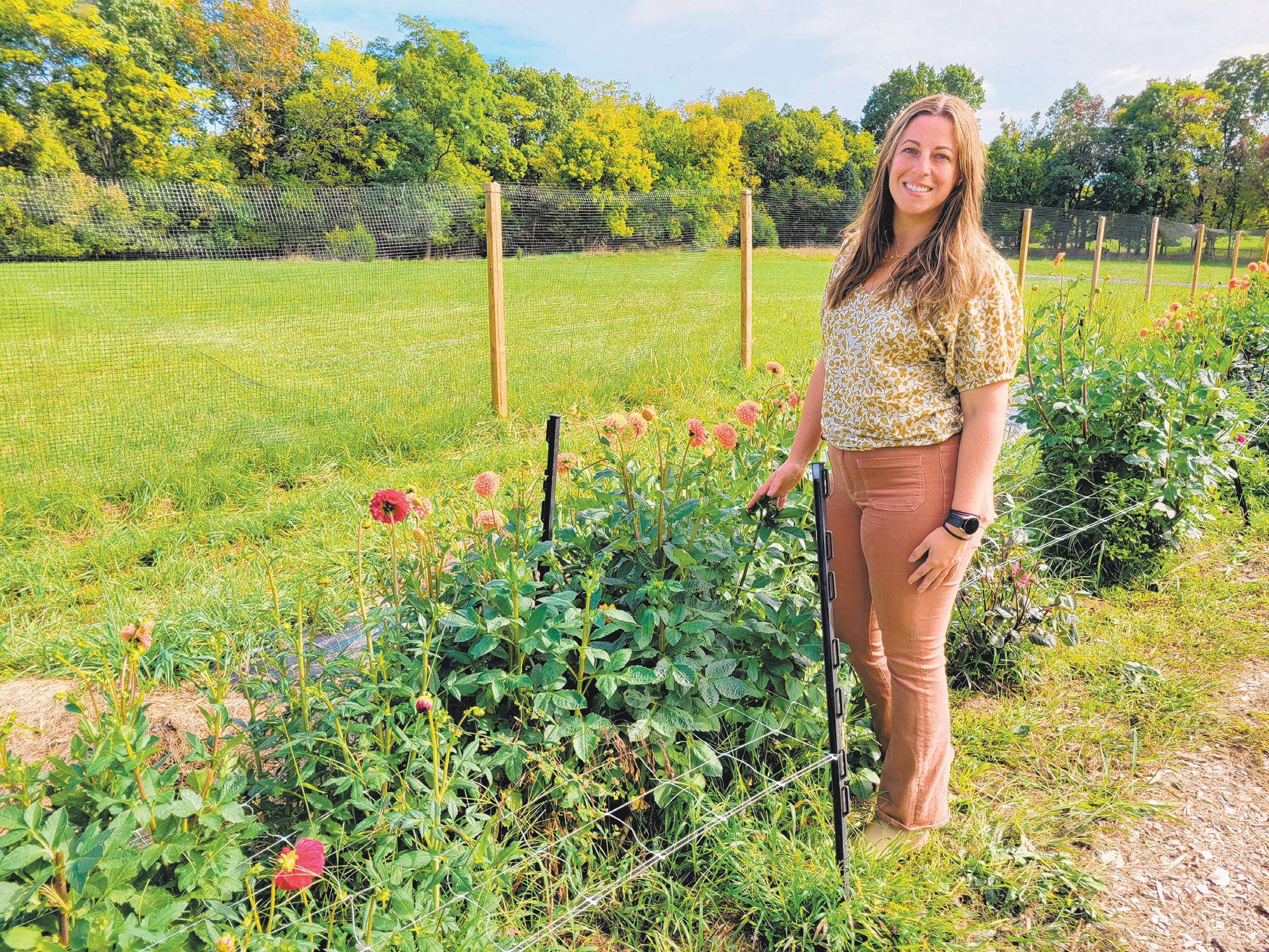
for her floraldesign business,
By TONI MILBOURNE tmilbourne@journal-news.net
MARTINSBURG — The orchard landscape that once stretched across the Eastern Panhandle of West Virginia has deep roots in the region’s earliest agricultural history, evolving from colonial-era plantings into one of the most significant fruit-producing hubs in the eastern United States before steadily shrinking under modern development pressures.
Apples and peaches were first introduced to the region in the 18th century, when early landholders required tenants to plant fruit trees as part of lease agreements. By 1774, some of the earliest documented commercial plantings in what is now Berkeley County were underway, setting the stage for a regional industry that would expand over the next century.
Commercial orchard development accelerated in the mid-1800s. Early growers such as William S. Miller in Gerrardstown established large-scale plantings that helped shift fruit production from subsistence use to commercial enterprise. By the late 19th century, orchards had become a defining feature of the lower Shenandoah Valley, supported by fertile soils and expanding transportation networks.
The arrival of the Baltimore & Ohio Railroad marked a turning point. With access to major urban markets in Baltimore, Washington, Philadelphia and New York, Eastern Panhandle fruit growers rapidly scaled production. Packing houses, canneries, cold storage facilities and cider operations followed, creating a regional agricultural economy centered on apples. By the early 20th century, Berkeley County was widely recognized as one of the nation’s leading apple-producing areas, and Martinsburg was promoted as a regional hub for the industry.
For much of the 20th century, orchards remained a dominant part of the rural economy. Large harvests were routinely shipped to processing plants, and fruit production supported both farm families and a wider network of agricultural businesses.
But the landscape has changed dramatically in recent decades. Today, remaining orchard operators say the industry has been reshaped by rising land values, development pressure tied to proximity to the Washington, D.C., metro area, and increasing costs of production. Much of the region’s most productive farmland has been converted into residential subdivisions and commercial development.
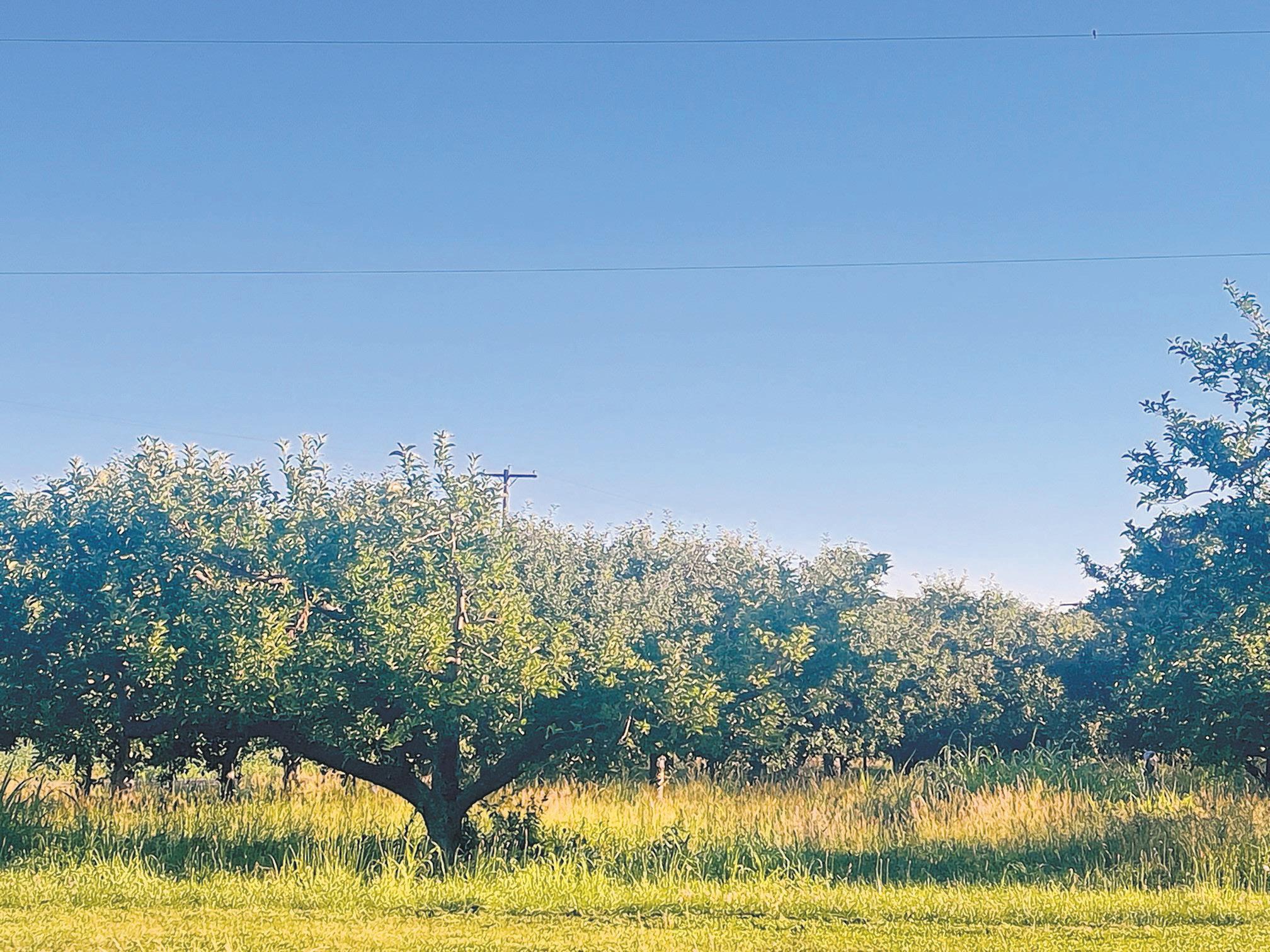
19th century and remains among the oldest continuous orchard sites in the state. Even so, Miller and others in the industry acknowledge that the traditional orchard model has become increasingly difficult to sustain in the modern economy.
Agricultural educators and extension agents note that the challenges extend beyond land costs. They point to changing market demands, shifting consumer preferences toward niche and locally marketed products, and the decline of large-scale processing systems that once supported orchard expansion.
Despite these pressures, some in the agricultural community believe orchards can still play a role in the region’s future, particularly through smaller-scale operations, agritourism and direct-to-consumer sales. Educators also emphasize the importance of introducing younger generations to agriculture, even if they do not ultimately pursue farming careers.
The number of orchard operations has also declined sharply. Once-common gatherings of dozens of growers have dwindled, reflecting both consolidation in the industry and a loss of generational continuity. Many longtime orchard families report difficulty finding successors willing to continue farming operations.
At Rellim Orchard in Jefferson County, owner Stephen Miller represents one of the region’s remaining multi-generational orchard operations. The farm traces its origins to the late
While the Eastern Panhandle continues to grow and urbanize, its orchard heritage remains visible in surviving farms, roadside markets and preserved agricultural sites, a reminder of a once-dominant industry that helped shape the identity and economy of the region.












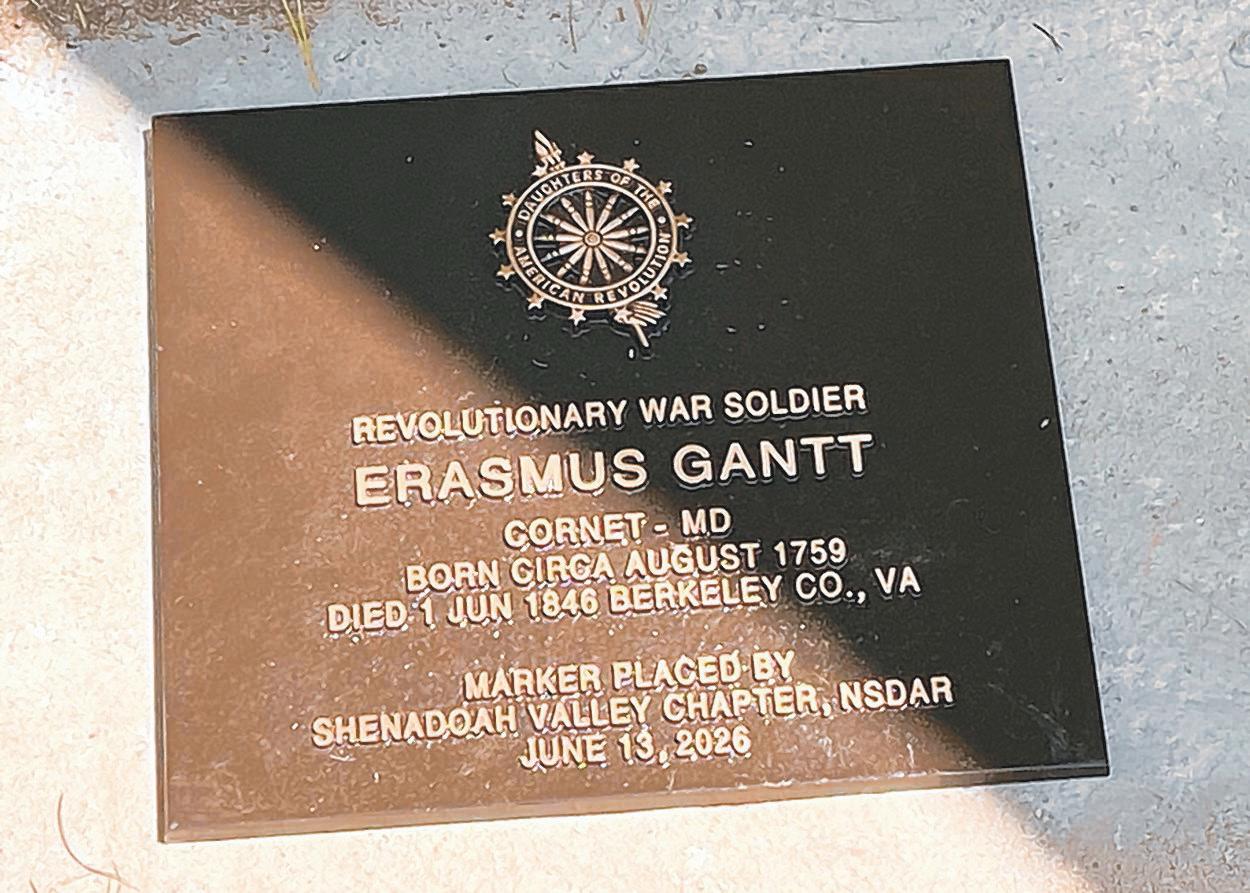
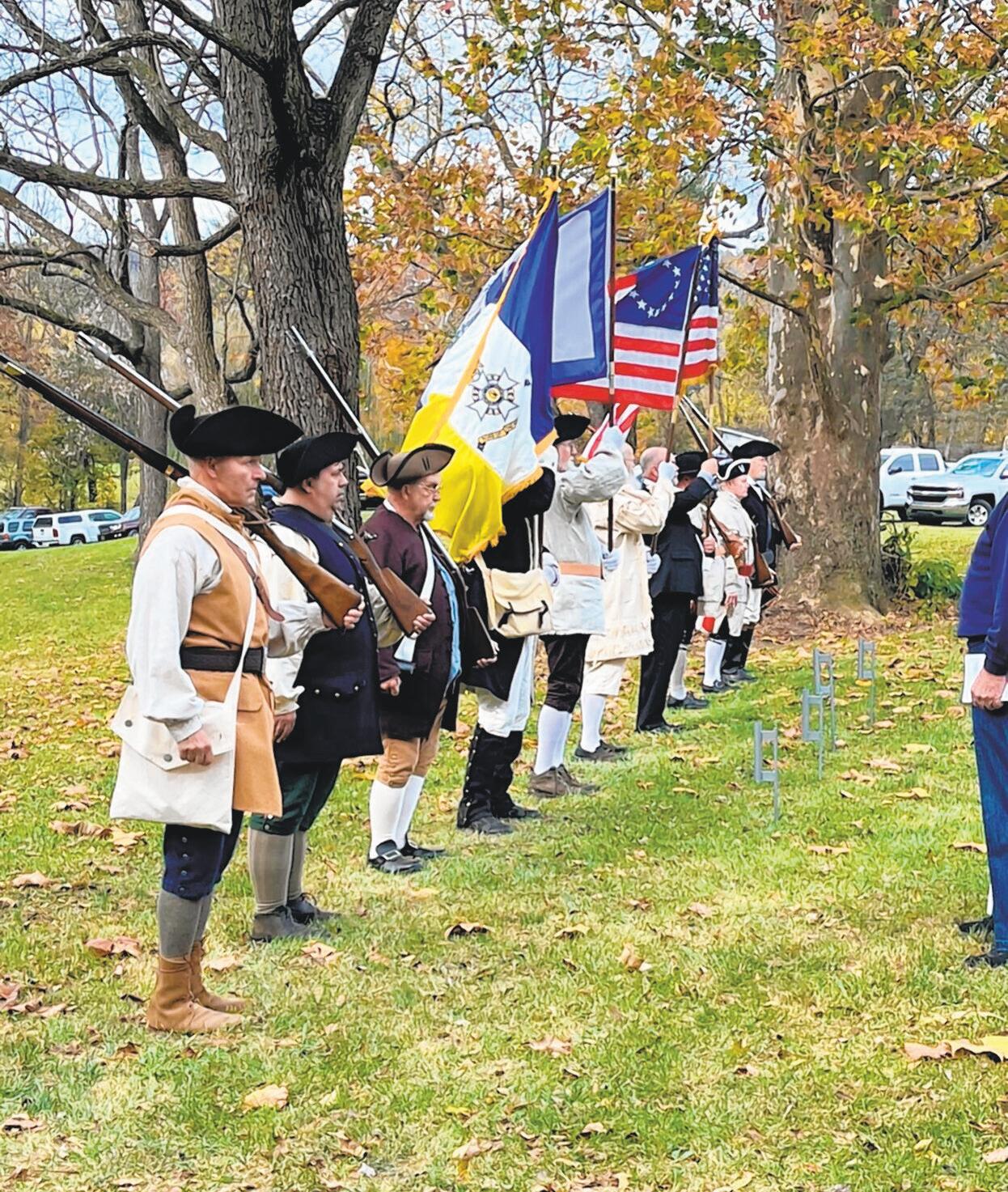
By TONI MILBOURNE tmilbourne@journal-news.net
Across the Eastern Panhandle of West Virginia, local chapters of the Daughters of the American Revolution (DAR) and Sons of the American Revolution (SAR) have spent more than a decade ensuring that the service and sacrifice of Revolutionary War soldiers and patriots are not forgotten. Through grave marking ceremonies, historical research and community commemorations, these organizations have identified and honored men and women whose contributions helped secure American independence.
One of the earliest large-scale efforts occurred in 2012 as part of Shepherdstown’s 250th anniversary celebration. Members of the Pack Horse Ford Chapter DAR and General Adam Stephen Chapter SAR dedicated markers in the Lutheran and Reformed graveyards recognizing 19 Revolutionary War soldiers and patriots. Among those honored were members of prominent early Shepherdstown families, including Michael and Philip Entler, Daniel Foulks, Andrew and Lewis Ronemus, Philip Sheetz, Henry and Michael Cookus, John Haines, Lawrence Hensel, Nicholas Schell, Peter Staley and others whose service helped shape the young nation.
The following year, attention turned to Ann Stephen Dandridge Hunter, daughter of Revolutionary War General Adam Stephen. Although not a soldier herself, Hunter’s life reflected the sacrifices and patriotism of a family
deeply connected to the struggle for independence. A grave marking ceremony in Martinsburg highlighted her role as the daughter of a Revolutionary War leader, the widow of Captain Alexander Spotswood Dandridge and later the wife of patriot Moses Hunter.
In 2016, two significant discoveries and commemorations further expanded the region’s Revolutionary War history. In Harpers Ferry, Mayor Greg Vaughn and Councilman Hardy Johnson uncovered the long-buried tombstone of Lt. William Broaddus while cleaning and restoring graves in Harper Cemetery. Research confirmed that Broaddus served in the Virginia Continental Line under Col. George Gibson and fought at the Battle of Monmouth before settling in Jefferson County.
That same year, descendants and SAR members gathered at the DarkeEngle-Ronemus Cemetery near Shenandoah Junction to dedicate a marker to Philip Engle. Born in 1742, Engle served the Revolutionary cause both as a supplier of materials to the army and as a soldier under General Horatio Gates during the Battle of Camden. His service, combined with his family’s role among the area’s earliest settlers, made him an important figure in Jefferson County’s Revolutionary heritage.
The effort to preserve and honor Revolutionary War graves continued in 2020 when members of the General Adam Stephen Chapter SAR assisted with graveside honors for patriots Johannes Kuller and Thomas Buck in nearby Frederick County, Virginia. New granite markers were dedicated, accom-
panied by a color guard and musket salute recognizing their service in the fight for independence.
In 2021, the Pack Horse Ford Chapter DAR held a grave marking for longtime member Jean Donley of Shepherdstown. While not a Revolutionary War patriot herself, Donley spent decades preserving Revolutionary history through her DAR service and traced her lineage to patriot Francis Worley of Pennsylvania, illustrating the continuing connection between descendants and the nation’s founding generation.
A year later, DAR members gathered in Shepherdstown to honor one of the region’s most significant Revolutionary-era craftsmen. A bronze marker was placed at the grave of Philip Sheetz, a renowned gunsmith whose firearms supplied Virginia militia units and Continental forces. Historical records show that Sheetz worked under contracts supporting General George Washington’s forces, making him a recognized Revolutionary War patriot. His grave marking ceremony drew descendants from across the country and highlighted the critical role civilian craftsmen played in securing American independence.
Recognition efforts expanded beyond Jefferson County in 2024 when the Shenandoah Valley Chapter DAR dedicated a marker at Mill Creek Cemetery in Gerrardstown for John Gray. The designation came after more than three years of research to distinguish Gray from numerous men with the same name living in colonial Virginia. Investigators ultimately documented Gray’s service in the Virginia Rifle Regiment and his participation in the famed Bee Line March. Though once mistakenly listed as killed during the war, Gray survived captivity, returned home and later became one of Gerrardstown’s earliest leaders, surveyors and trustees.
Most recently, in June 2026, the Shenandoah Valley Chapter DAR marked the grave of Erasmus Horatio Gantt at Mill Creek Baptist Cemetery. Born around 1755 in Maryland, Gantt served as a cavalry officer defending the Chesapeake Bay during the Revolution and participated in numerous engagements against British forces. After the war, he settled in Berkeley County, where he served as a respected legal authority and justice of the peace. His grave marker now permanently recognizes both his military service and his contributions to the community he called home.
Taken together, these ceremonies represent years of dedication by local historians, genealogists, descendants and patriotic organizations. Through painstaking research, cemetery restoration projects and public commem -
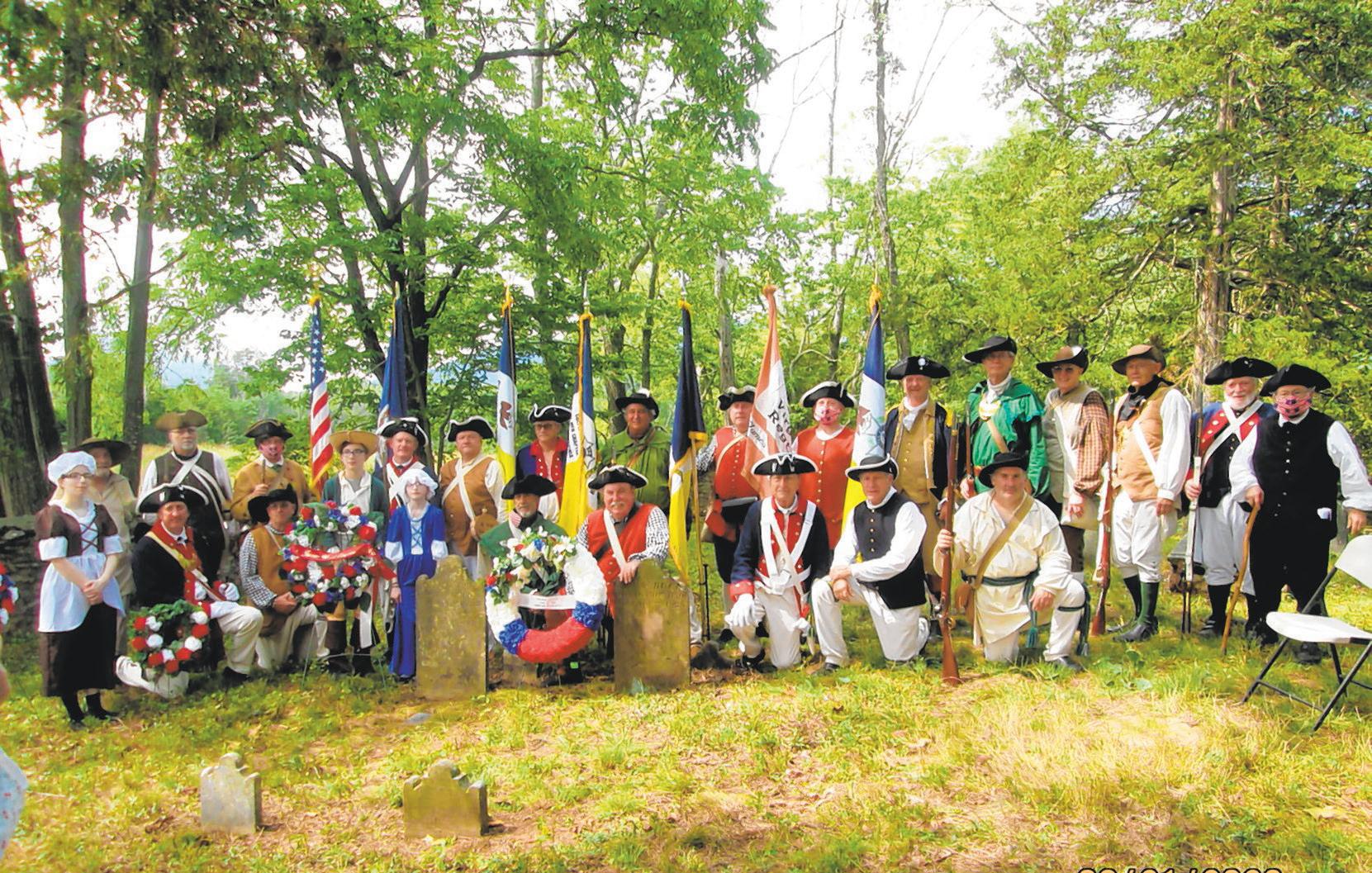
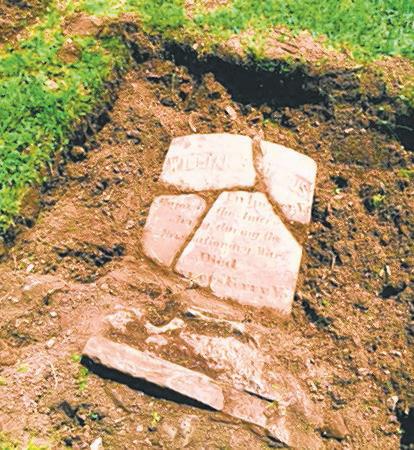
ABOVE: The grave of William Broaddus was discovered in Harper Cemetery Harpers Ferry in 2016.
RIGHT: A marker was placed at Harper Cemetery to honor William Broaddus following the discovery of his grave.
orations, the Eastern Panhandle has ensured that Revolutionary War soldiers and patriots, from officers such as William Broaddus and Erasmus Gantt to craftsmen like Philip Sheetz and settlers like Philip Engle and John Gray, continue to be remembered. Their stories, once hidden beneath weathered stones and fading records, now stand as lasting reminders of the region’s deep connection to the founding of the United States.
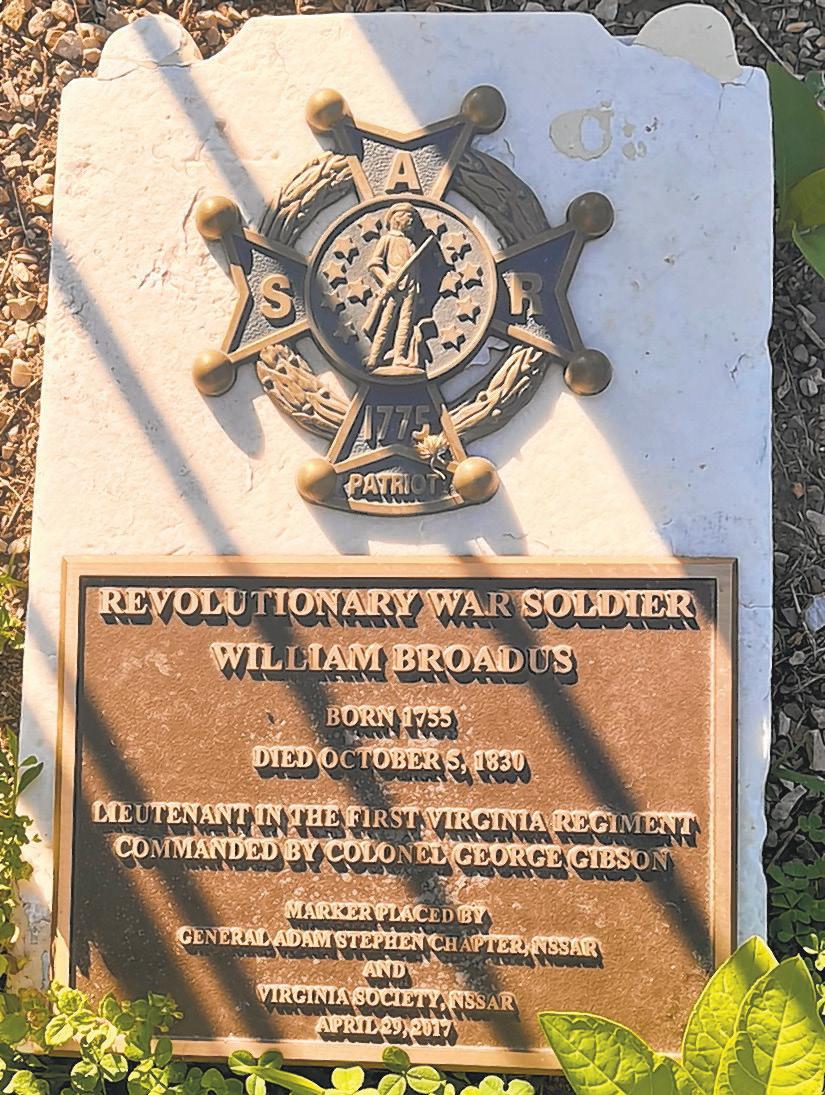
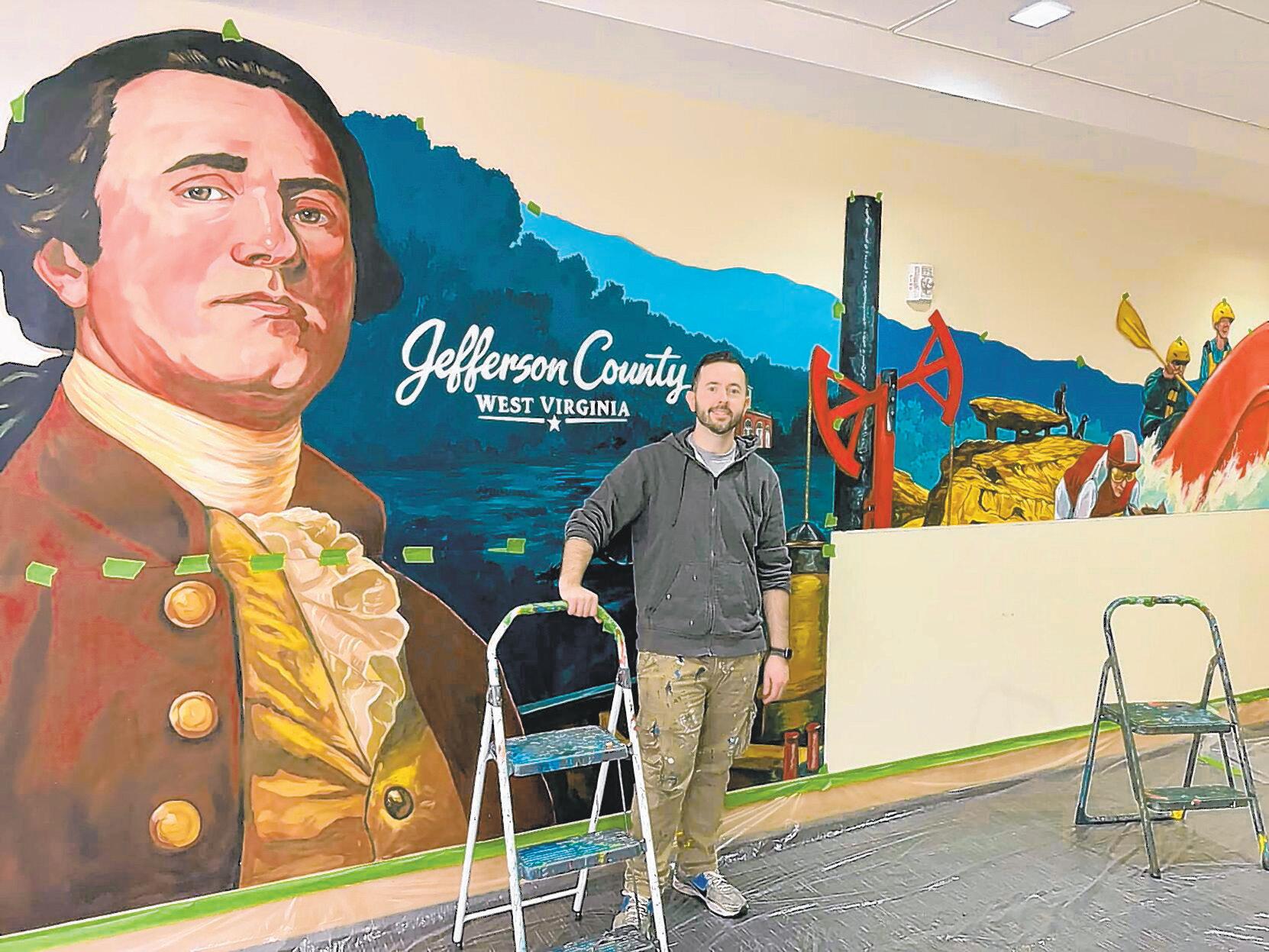
By AINSLEY HALL ahall@journal-news.net
CHARLES TOWN — Jefferson County joined the America250 Mural Project on March 28 when artist Blake Wheeler hung up his piece at the Jefferson County government building. Funded by the West Virginia Department of Tourism, the project celebrates the 250th anniversary of the United States by creating a trail of murals across the state showcasing each county’s history and culture.
When Jefferson County staff heard about the mural project, they were excited to join. The state offered $5,000 grants to county commissions to complete the project. After Jefferson County received the grant, a special committee looked at several artists and unanimously voted for Wheeler to take on the project.
Wheeler has been creating art since the moment he could hold a pencil. He majored in fine arts at West Virginia University and has worked on several
murals across the state including projects in Morgantown, Charleston, Malden and many more. Though it’s become more of a secondary job, creating public art has become a life-long passion.
The project starts with a sketch. He made sure to include several important throughout the mural, with Charles Washington acting as the major vocal point on the left, leading to John Brown’s Fort in Harpers Ferry and a steamboat to honor James Rumsey. The right side of the mural represents modern life in Jefferson County, including horse racing at Hollywood Casino at Charles Town Races and white-water rafting.
“Putting it all together is the challenge,” Wheeler said. “I wanted a composition that’s cohesive and kind of flows together. That was the basic idea. It’s kind of flowing left to right toward this conference center.”
Wheeler worked with the county until he had a design everyone liked then started painting in his studio. He paints on poly tab, a canvas-like material,
which he can later transport and install on site. The final mural is approximately 8 feet high and 20 feet long. With help from his wife and brother, they mark where the mural will go and hang it up for people to enjoy for years to come.
Wheeler considered it a big honor to work on this project, along with other American250 Mural Projects in Boone County, Mingo County and Roane County. He hopes it inspires people as they come to visit the building and see part of their history.
“When I’m doing these outside, especially bigger ones, you always get stopped by folks asking what I’m doing and want to know about it,” Wheeler said. “They want to know what the process is like, how painting have you done, how long it takes and all that good stuff. I’ve talked about it a lot because you’re out in public. It’s part of public art.”
For more information about the America250 Mural Project, visit https://wvtourism.com/america250/ murals/.
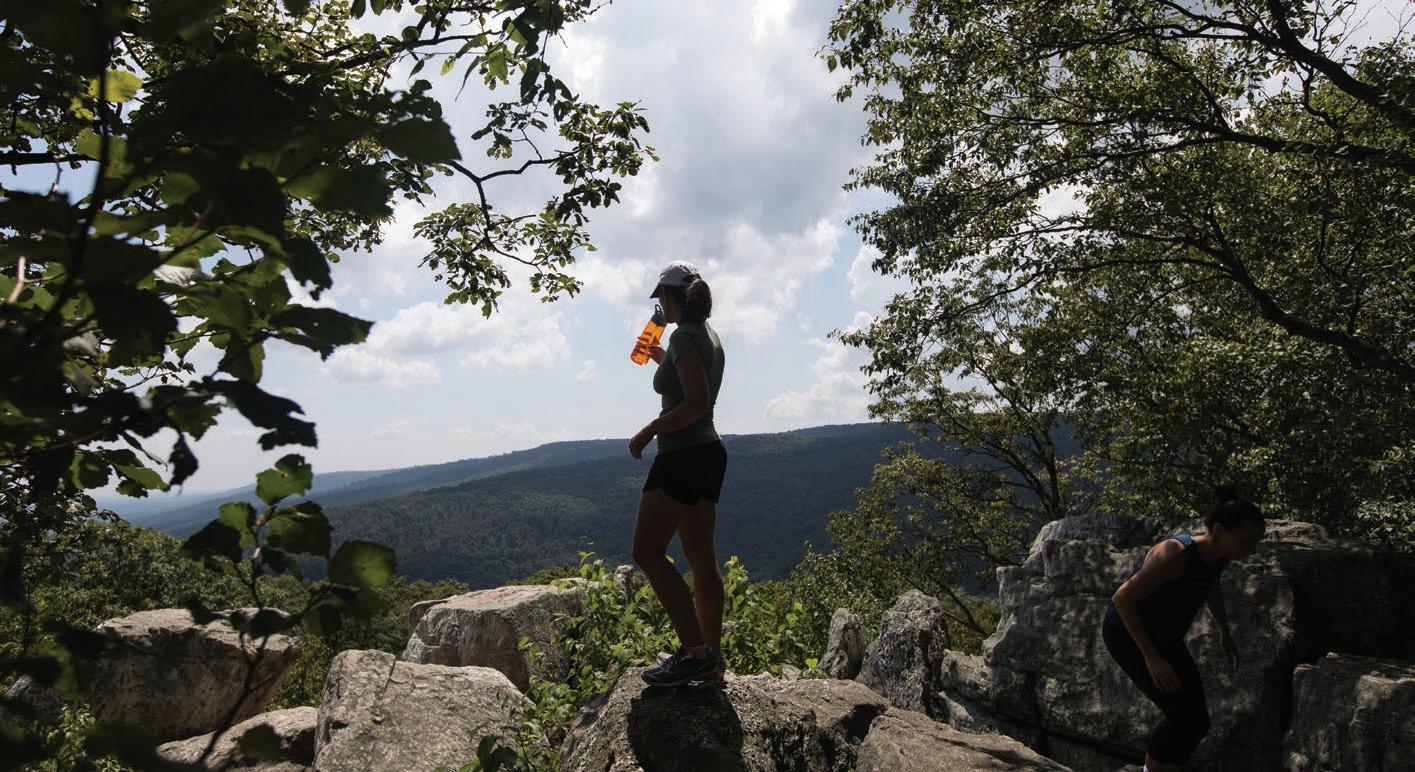

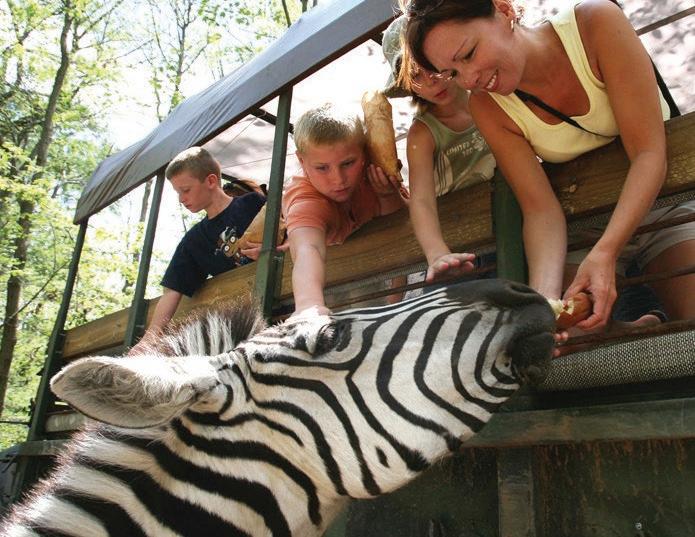

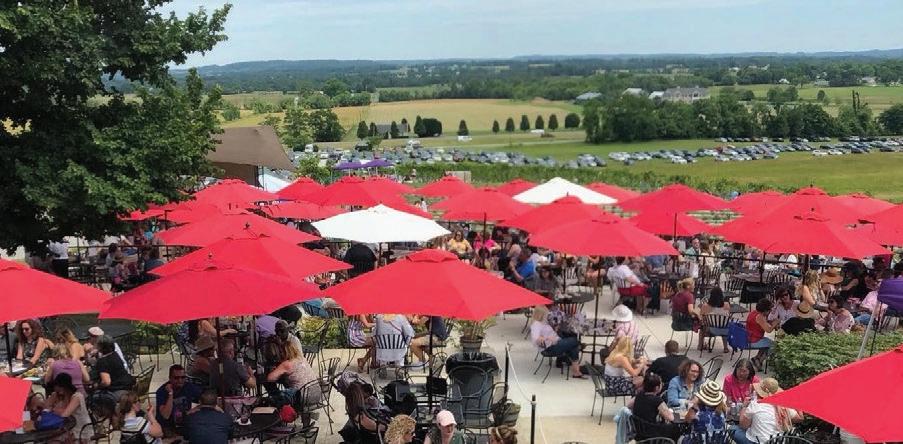


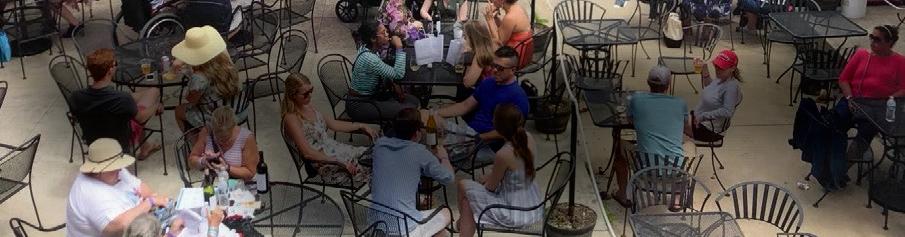


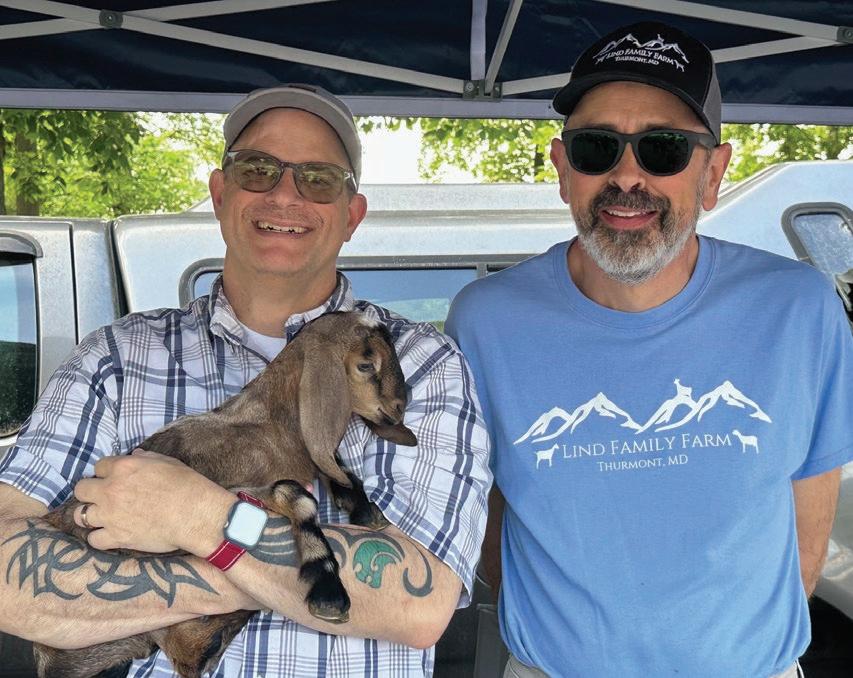



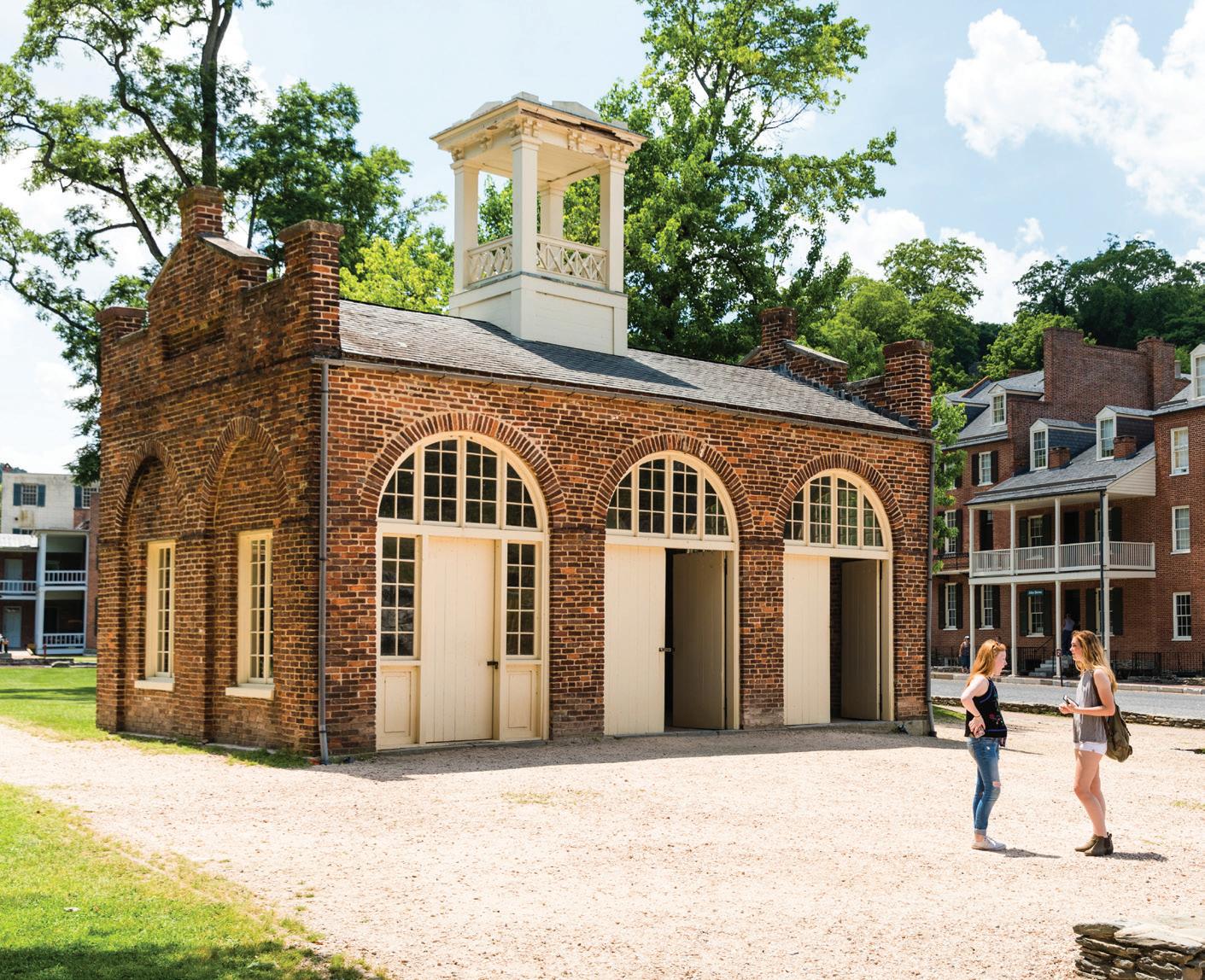
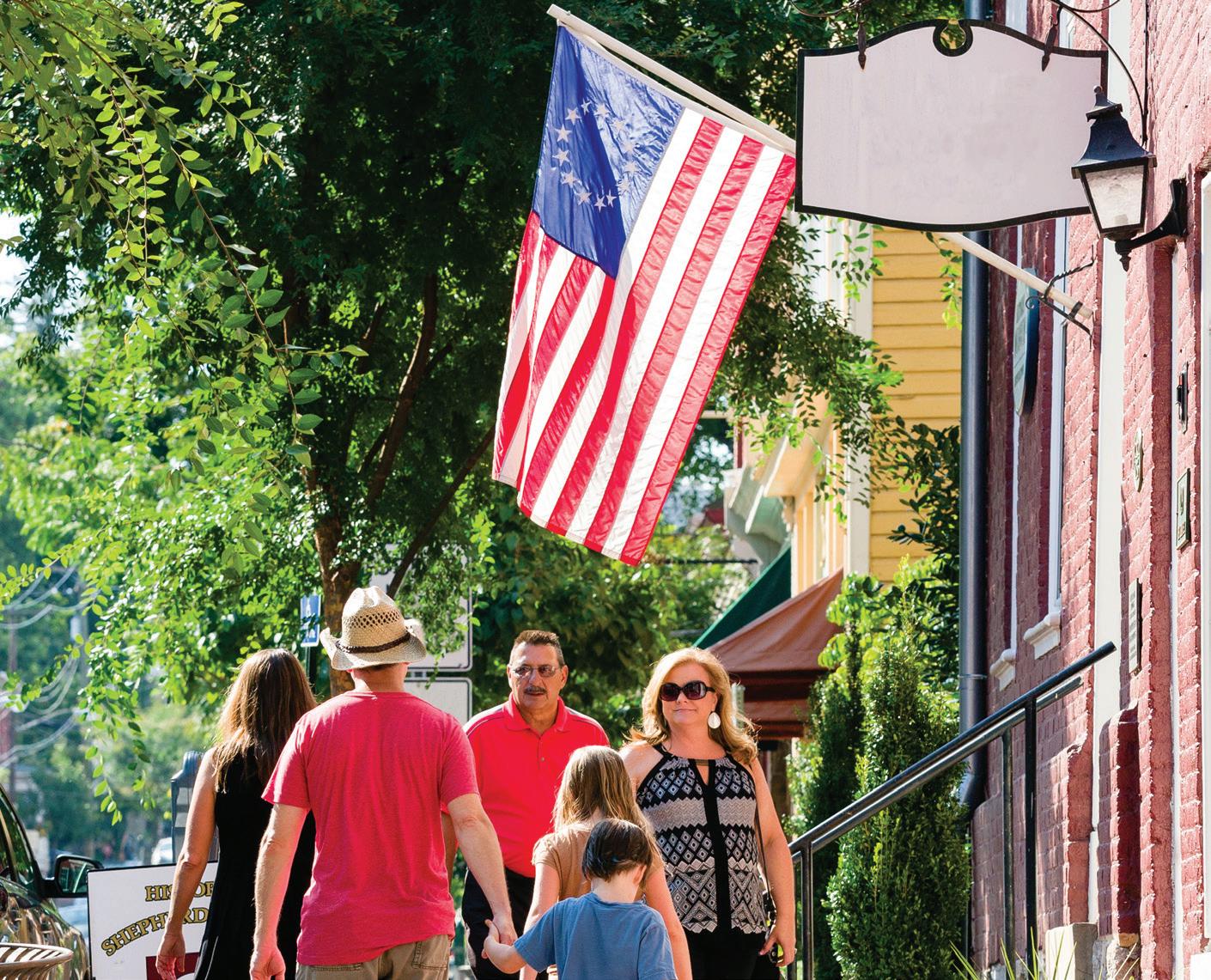


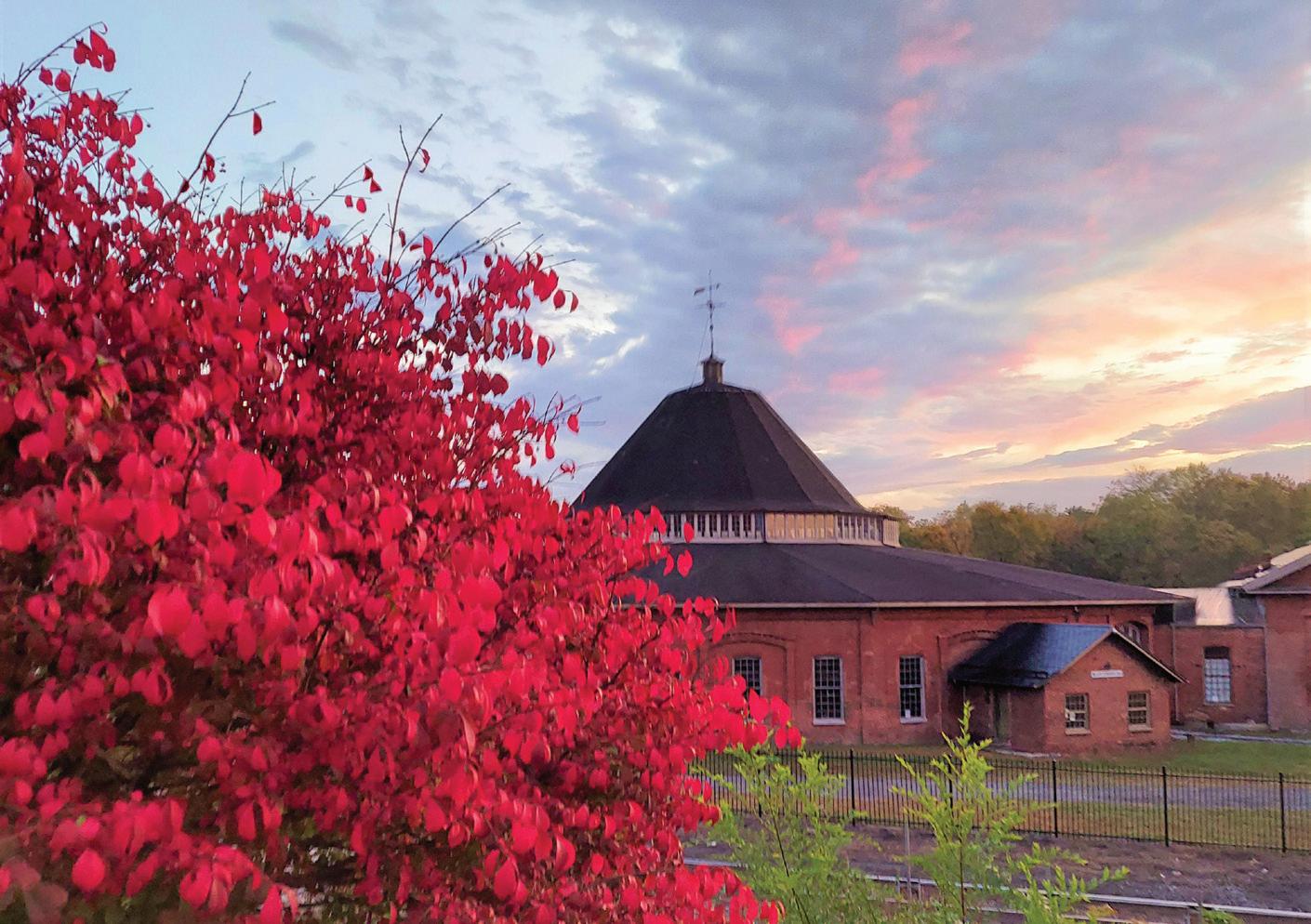





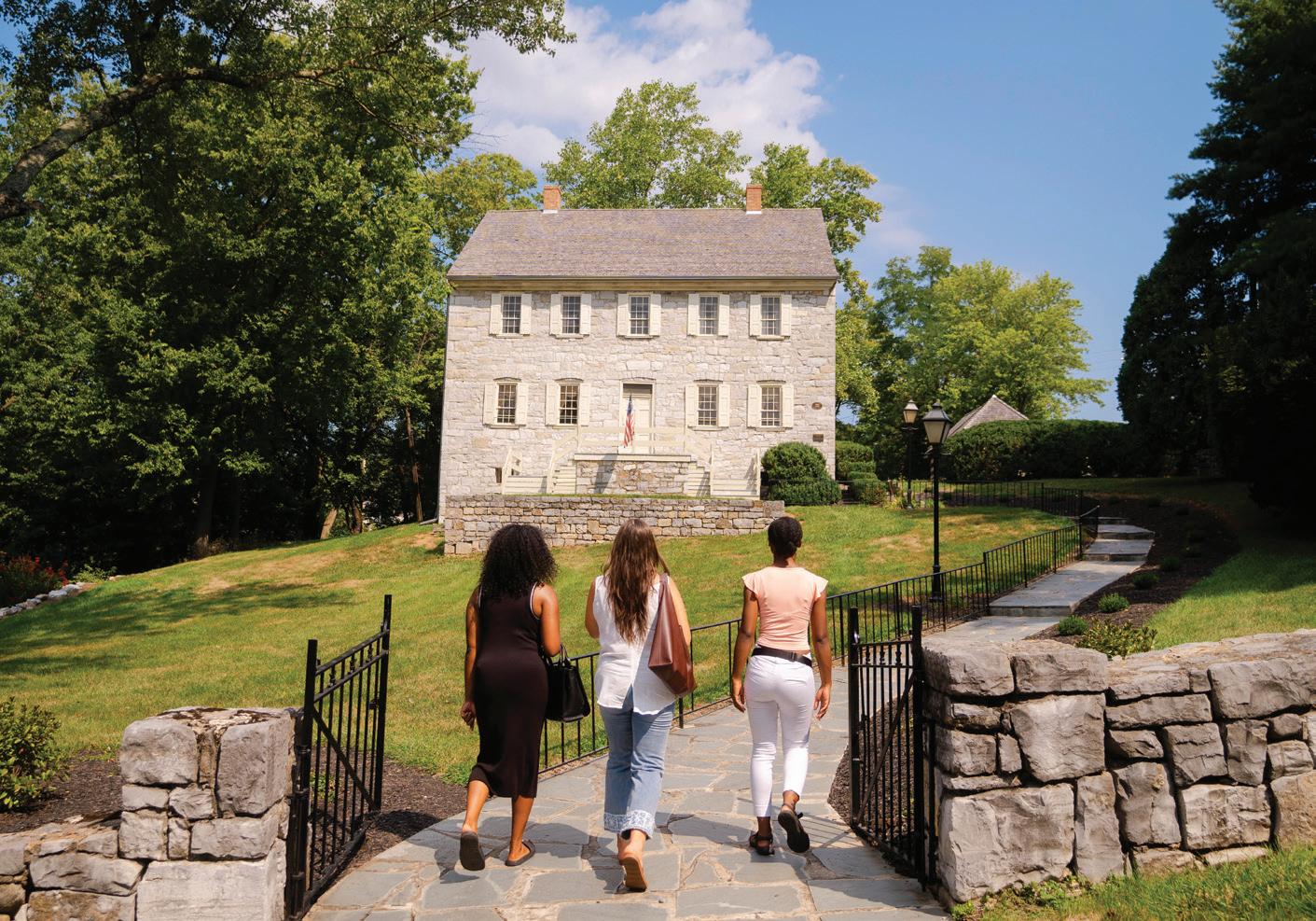


Belle Boyd, and other legends of history.