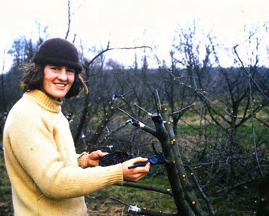
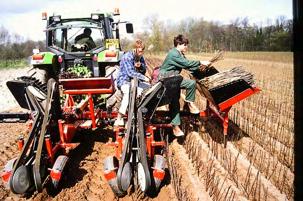
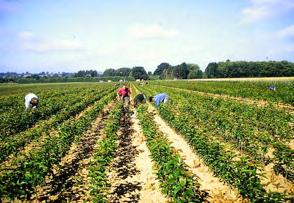
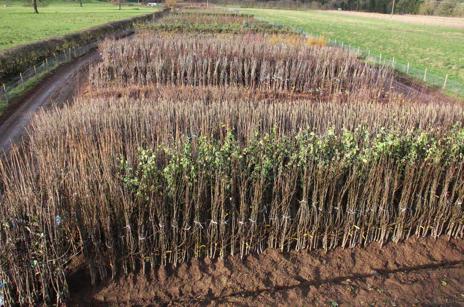
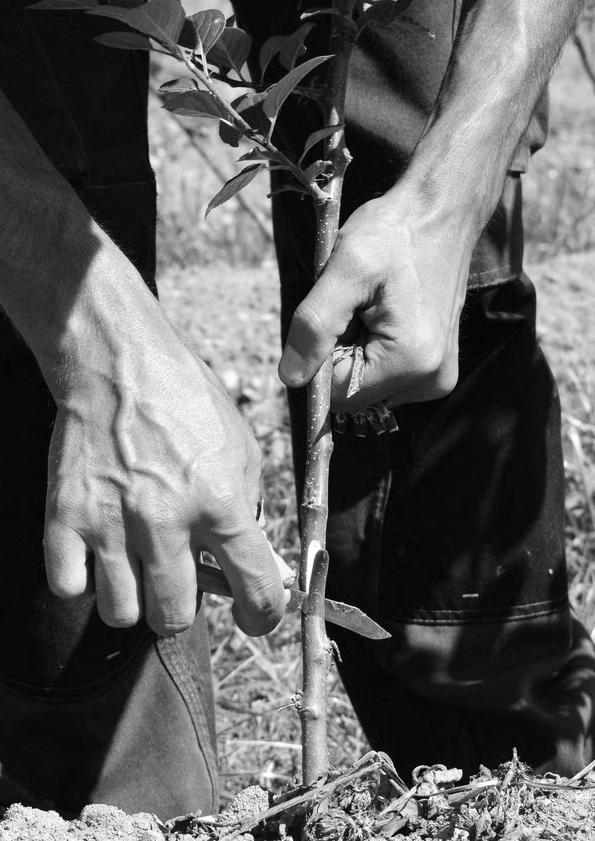
125 years shaped by the seasons, family and a passion for growing.
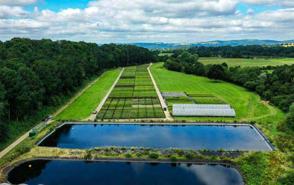
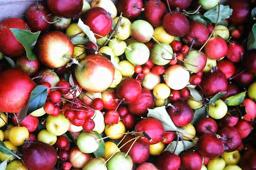
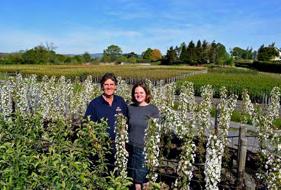
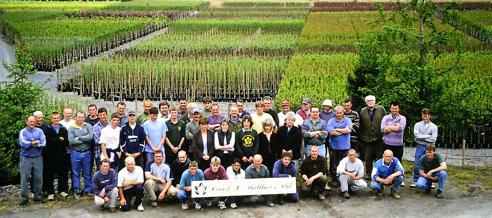
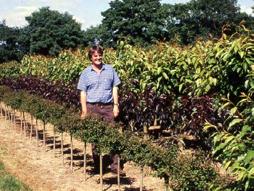
We established our family business in 1901 and are now in our fourth generation. We have grown to be an assured and reliable supplier to commercial and private customers, offering a diverse range of ornamental and fruit trees.
We are one of the UK’s leading nurseries renowned for our high quality trees, specialist knowledge and valued customer support.
Working with some of the most formidable breeders of woody plants we regularly introduce spectacular and innovative trees to our range. During our continual growth over many decades we have always enthusiastically embraced our environmental and sustainability responsibilities.
As we look ahead, we remain committed to nurturing the gardens and landscapes of tomorrow with the same care that has guided us for generations.
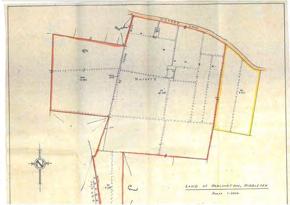
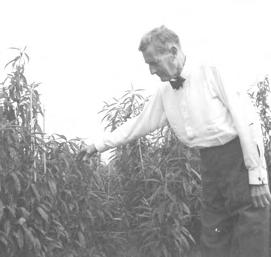
The nursery was established by Frank P Matthews, founded using £800 borrowed from his uncle and six acres of rented land, in the aptly named Cherry Lane in Harlington, Middlesex.
1950
Frank had gained a reputation for producing high-quality fruit trees as well as roses. In 1950 Frank P Matthews retired and son-in-law Andrew Dunn took over supported by Frank’s daughter.
2017
Nick Dunn received the Victoria Medal of Honour for his service to the horticultural industry. A new container holding area, ‘Guvnors’ was completed. This area can hold 45,000 trees. During this year we introduced Apple Surprize which won a Gold at the HTA National Plant Show.
1956
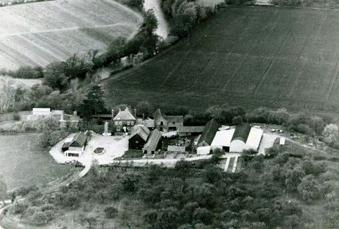
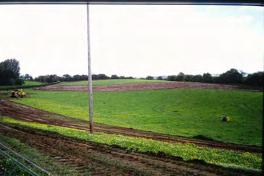
The business was required to vacate its land (now the location of the M4 junction 4). A new site was found on the banks of the Teme in Worcestershire and it took 4 years to move using old army trucks.
1960s
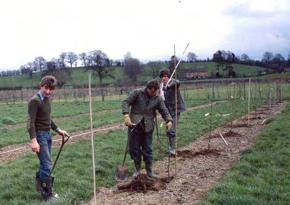
We extended our range to start growing ornamental trees as well as fruit. A limited range was sold as two or three year old bare root trees. In 1968 a Bailey bridge was erected across the river to link new land.
2015-16
In 2015 we centralised despatch to increase efficiency. And in 2016 we won Best New Tree and Best In Show with Betula Fastigiata Joes at the HTA National Plant Show.
2010-15
The second edition of our Tree Guide is published. We increased our container tree production by 21,000 spaces and expanded our site with the purchase of ‘Westfields’, expanding our extensive breeding & trials program. We adopted the breeding of Nigel Deacon.
2018
We won our first RHS Gold Medal awarded for display for Apples and Autumn Fruit at Malvern Show. We also released Laburnum Yellow Rocket which won BestinCategory & Best in Show at the HTA National Plant Show.
2007
Nick Dunn’s daughter, Stephanie James joined the business taking it into it’s fourth generation alongside her husband,
2019
We take on soft fruit production in-house resulting in tighter control of supply and quality. We win another RHS Gold Medal and as a result we are awarded the RHS StanleyLordBowl
2022
We launched our web shop selling trees direct to consumers. We win another RHS Gold Medal and as a result we are awarded the RHSStanleyLordBowl frankpmatthews.com
1969
Our first mother orchard was planted (now called Old Emla). This coincided with the first ‘virus free’ fruit tree stock created at East Malling and Long Ashton research stations.
1974
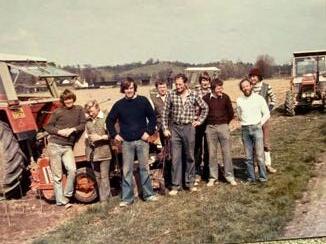
Nick Dunn joined the team alongside his father Andrew who never fully retired and continued making a valuable contribution until his death in November 2007.
2005
The number of trees produced at any one time on the nursery went over 500,000. Our Tree Shop opened alongside our wholesale nursery operation allowing us to despatch to the public.
1977
We moved from ‘T’ budding to ‘Chip’ budding. This was a significant development to improve the uniformity and success of tree field production.
2001
1980
We became a major rootstock producer and exporter of virus free rootstocks around the world where UK research was highly valued.
1986
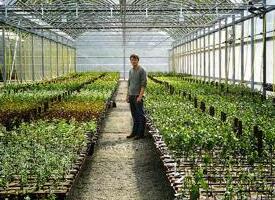
Nick takes the reins and as the business moves from the 80s into the 90s Nick trialled growing trees in pots. This was successful and was to be the main income for the business going forward.
1990s
Our 100th birthday! We published the first Tree Guide for Gardens and registered the Trees for Life trademark. We launched our successful Apple Scrumptious, one of many from our breeding programme.
A new container unit was created and Nick became head of the IPPS. An additional 90 acres was secured and we produced up to 80,000 cider trees each year. We won a 1990 Silver Medal Award for Oak Woodland.
2023
We become Plant Healthy Certified to safeguard biosecurity. We win another RHS Gold Medal
2024
Prunus Starlight won RHS Chelsea Plant of the Year 2024. We also acquired a neighbouring farmBurford Mill, adding 46 acres of land and buildings. We won another RHS Gold Medal and as a result we are awarded the RHS StanleyLordBowl
2025
We exhibited at the RHS Chelsea flower show for the first time securing an RHS Silver Gilt award. We also won an RHS Gold Medal awarded for display at Malvern Autumn Show and Best in Show! We invested in new propagation facilities and installed a new fog house and humidification system.
2026
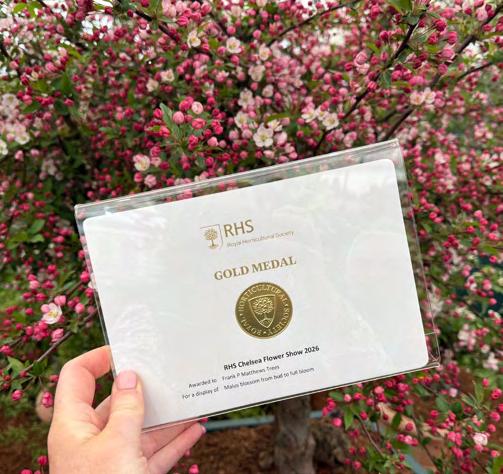
We celebrate 125 years! This is an enduring legacy built on passion for trees, innovation and a deep respect for the craft of tree production and heritage varieties. This milestone marks not only our heritage but our continued commitment to the future. We are granted the Royal Warrant and win a Gold Medal at the RHS Chelsea Flower Show.
New Varieties
A few of the many new varieties added this year. Look for the new symbol throughout the catalogue!
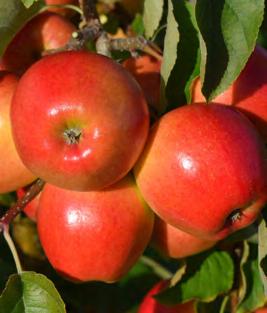
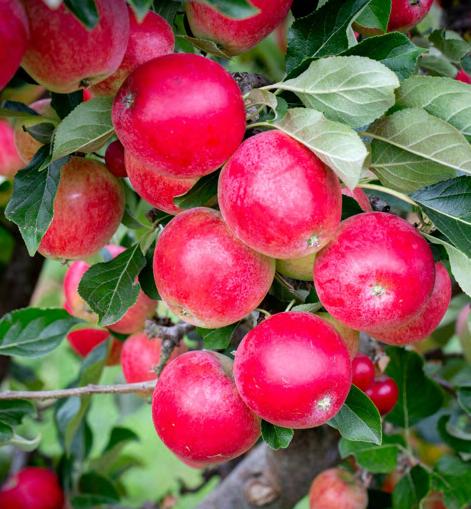
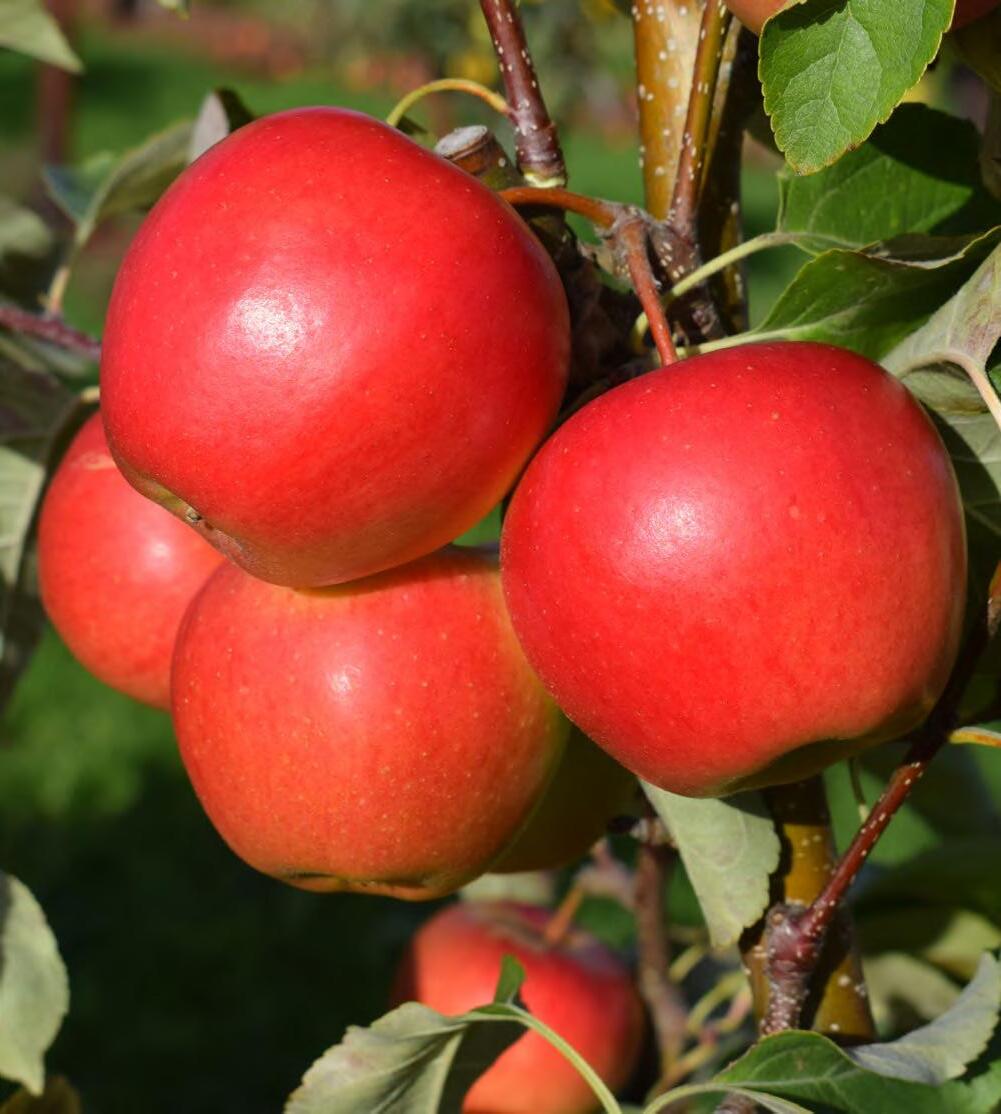
Apple LegacyTM P17
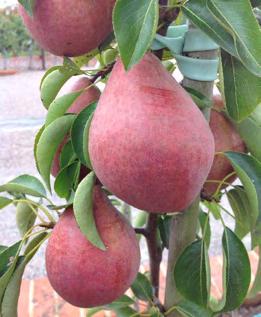
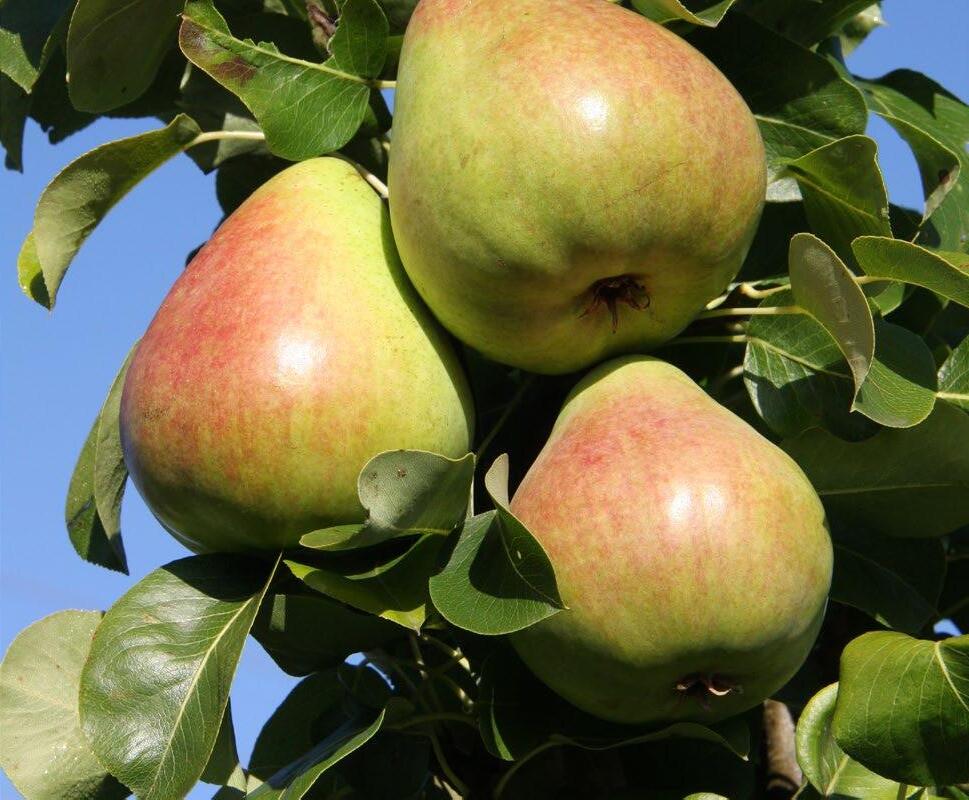
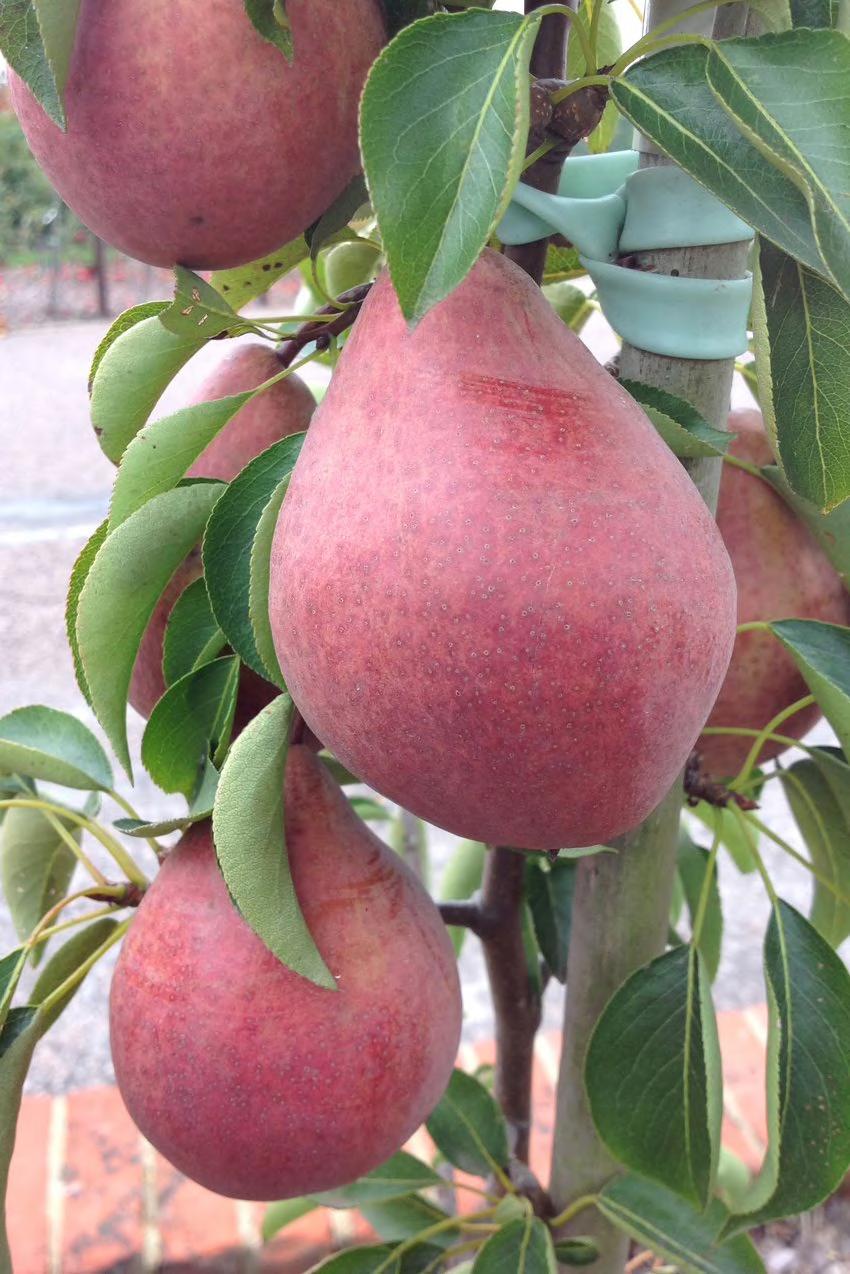
Pear NuvarTM Misty RoseTM P37
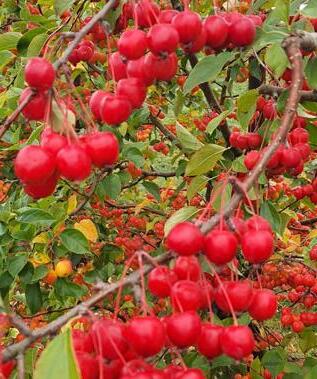
Malus ‘Julia’
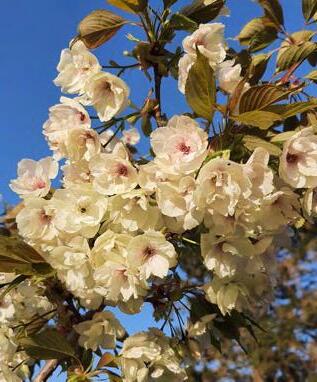
unus ‘Asagi’
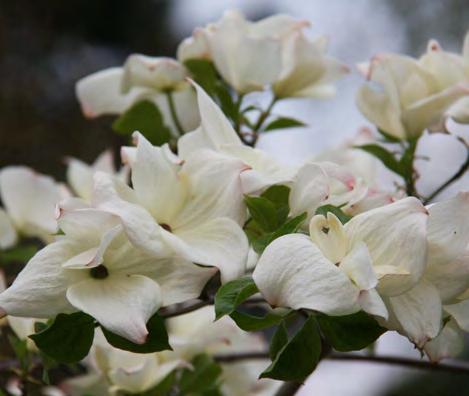
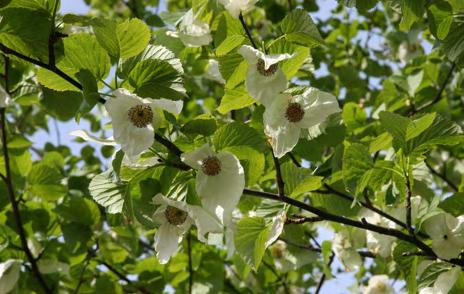
Cornus kousa ‘Summer Fun'
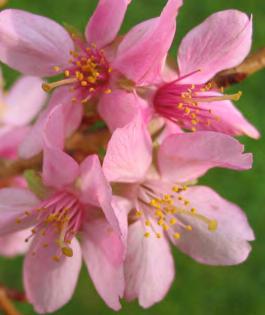
Prunus ‘First Lady’
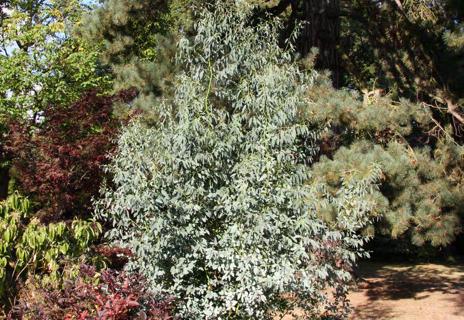
Fraxinus ang. ‘Raywood’
Prunus ‘Pink Snow Showers’
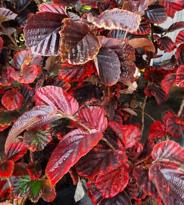
Hamamelis x int. ‘Yamina’
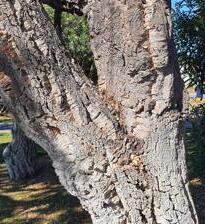
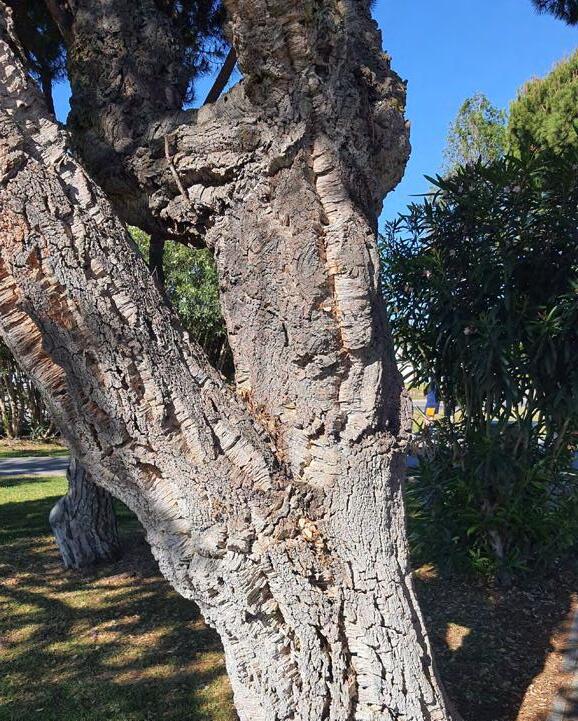
Quercus suber
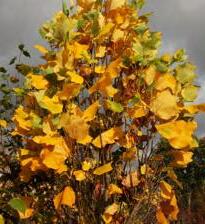
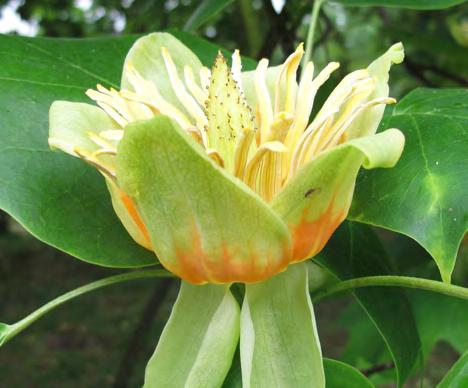
Liriodendron tul. ‘Fastigiatum’
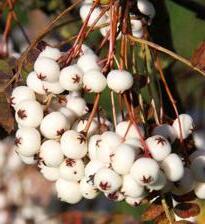
Sorbus ‘White Wax’
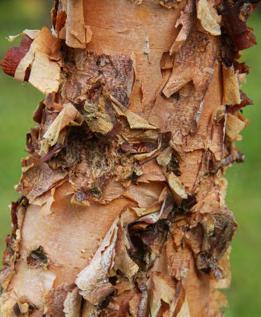
Betula nigra P54
Prunus Winter’s KissTM P89
Our team wins Gold
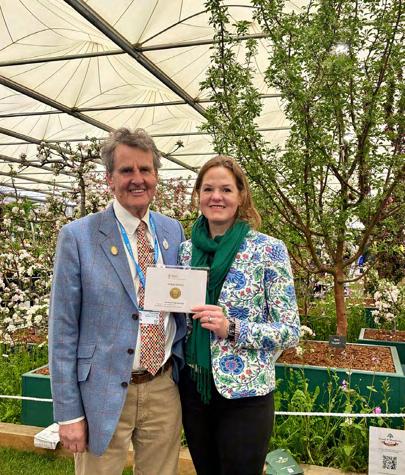
We are incredibly proud to have been awarded a Gold Medal at the 2026 RHS Chelsea Flower Show.
It's a significant achievement for the team – showcasing not only the beauty of the trees, but also the expertise and care required to bring them into perfect bloom at just the right moment.
Best Sellers
Look for the best seller symbol to find more in our listings!
Fruit
Almond (Prunus) Ingrid 11
Apple (Malus) Bramley 20 12
Apple (Malus) Bramley's Seedling 12
Apple (Malus) Christmas Pippin® 13
Apple (Malus) Cox Self Fertile 13
Apple (Malus) Herefordshire Russet® 15
Apple (Malus) James Gr ieve 15
Apple (Malus) Red Falstaff® 19
Apple (Malus) Red Windsor® 19
Apple (Malus) Rosette™ 19
Apple (Malus) Scrumptious® 19
Cherr y (Prunus) Morello 26
Cherr y (Prunus) Stella 26
Cherr y (Prunus) Sunburst 26
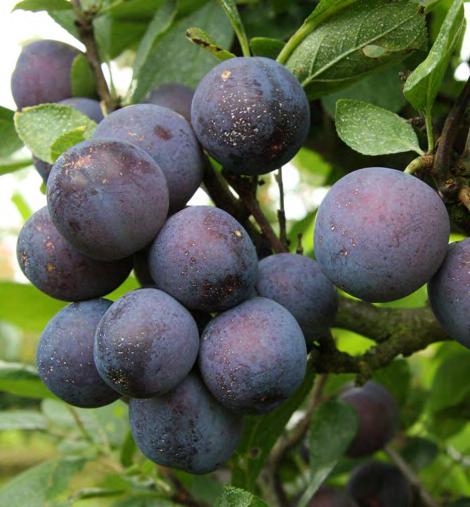
Damson (Pr unus) Merryweather 28
Fig (Ficus) Brown Turkey 29
Gag e (Prunus) Old Greengage 30
Mulberry (Morus) Chelsea (King James I) 33
Peach (P runus) Peregrine 34
Pear (Pyrus) Concorde 35
Pear (Pyrus) Conference 35
Plum (Prunus) Marjorie's Seedling 40
Plum (Prunus) Opal 40
Plum (Prunus) Victoria 42
Walnut (Juglans) Broadview 46
Ornamentals
Acer rubrum ‘Brandywine' 51
Amelanchier lamarckii 53
Betula pendula ‘Fastigiata Joes'® (JOLEP 1) 55
Betula utilis ‘Snow Queen' 56
Betula utilis jacquemontii 56
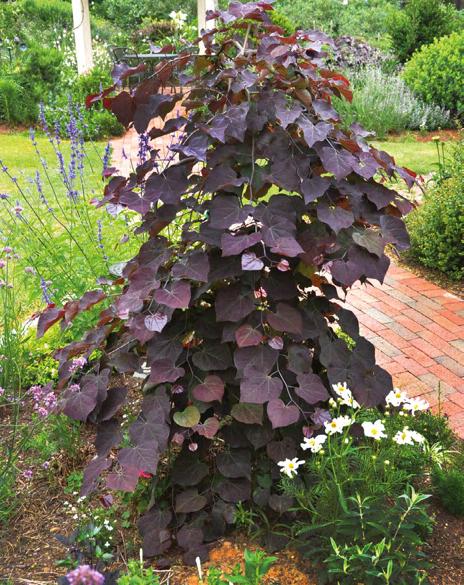
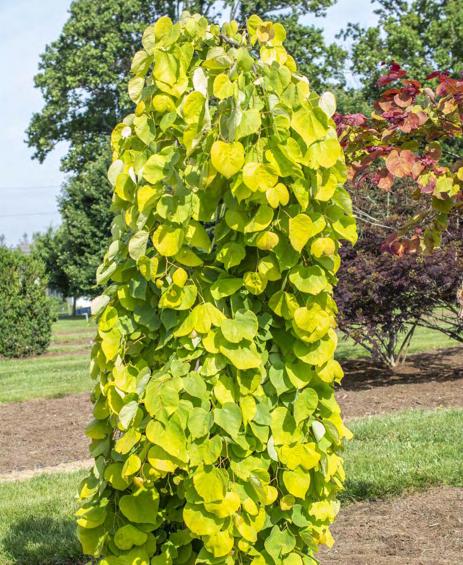
Cercis canadensis ‘Eternal Flame’® 60
Cercis canadensis ‘Forest Pansy' 60
Cotoneaster fr igidus ‘Cornubia' 64
Crataegus x media ‘Pauls Scarlet' 65
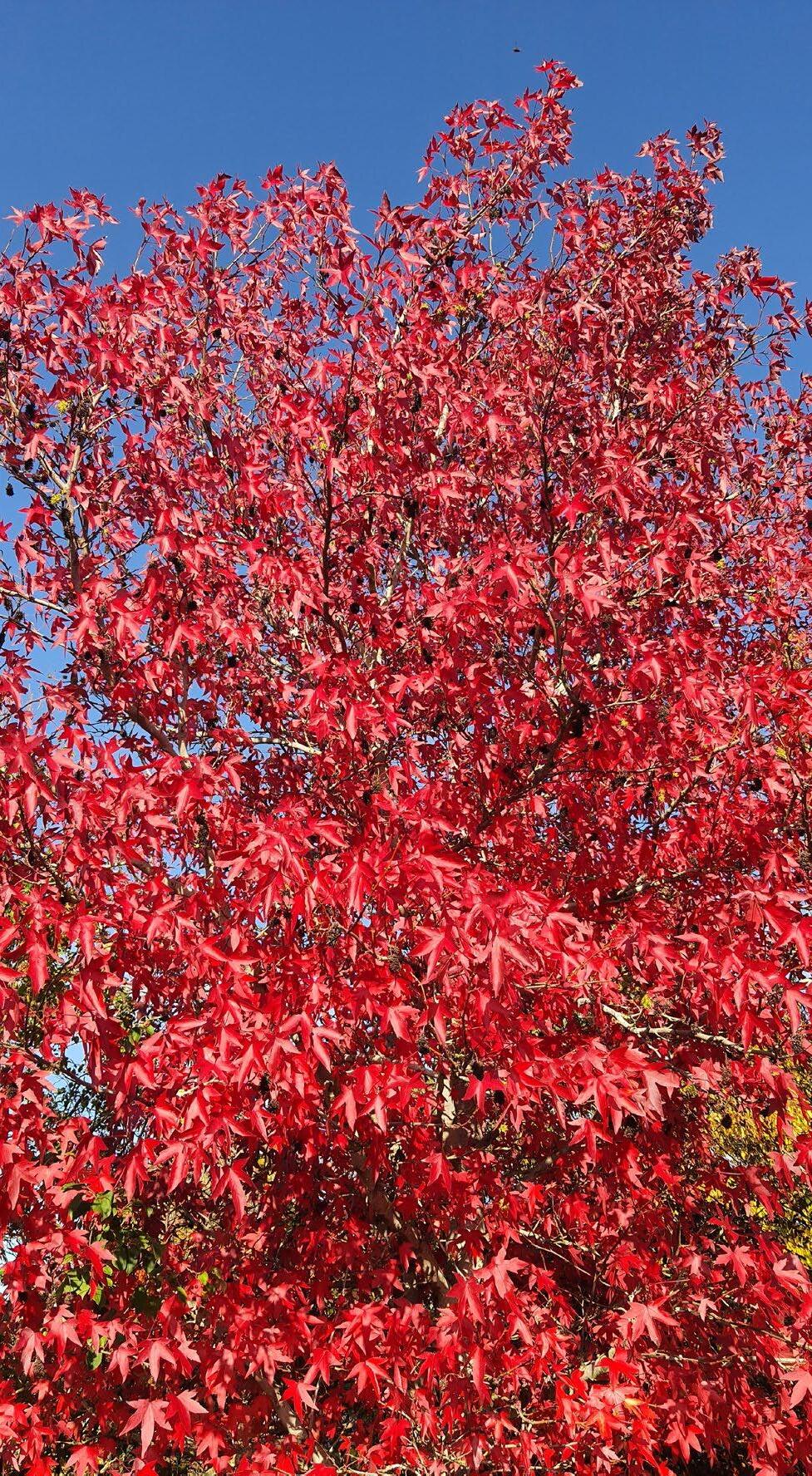
Liquidambar styraciflua ‘Worplesdon' 74
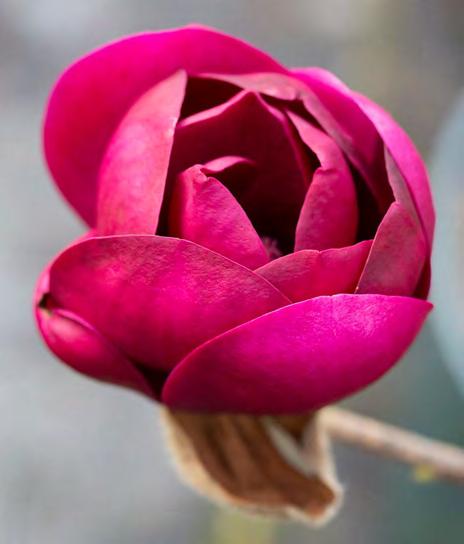
Magnolia ‘Black Tulip'® 75 Malus ‘Aros'® 78
Malus x robusta ‘Red Sentinel' 81
Pr unus ‘Beni-yutaka' 86
Pr unus ‘Crystal Falls'® 86
Pr unus cerasifera ‘Nigra' 86
Pr unus ‘Kanzan' 87
P runus ‘Kiku-shidare-zakura’ 88
Pr unus ‘Little Pink Perfection' 88
Pr unus ‘Royal Burgundy' 90
Pr unus x sub ‘Autumnalis Rosea' 91
Robina ‘Frisia' 93
Sorbus ar ia ‘Lutescens' 95
Sorbus ‘Autumn Spire'® (Flanrock) 95
Sorbus ulleungensis ‘Olympic Flame'™ 97
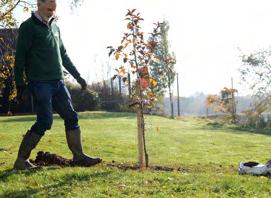
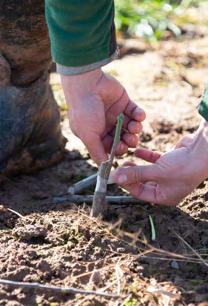
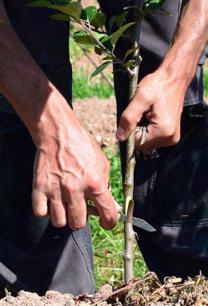
Planting Your Tree
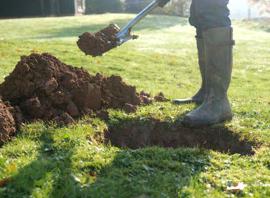
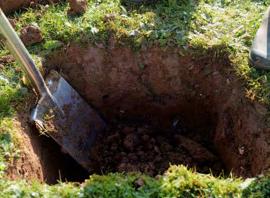
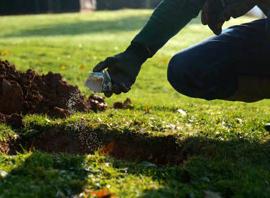
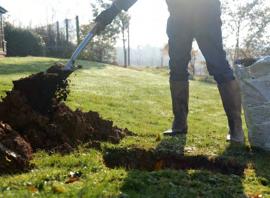
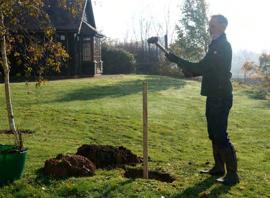
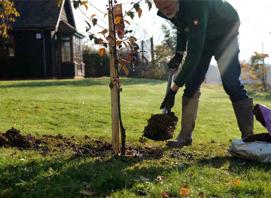
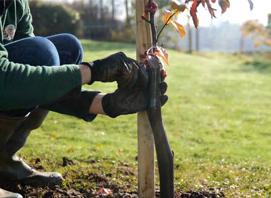
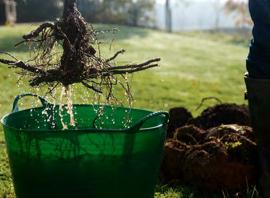
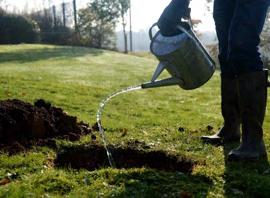
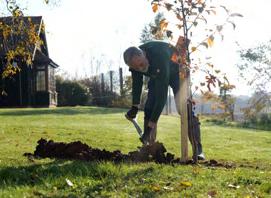
The best time to plant a container grown tree is from mid August to the end of May. Summer planting (June and July) is possible but weekly watering would be necessary (a bucket a week!). The best time to plant a bare root tree is from November to March. Below is our step-by-step guide for you to follow...
Remove the turf and dig a hole twice the size of the rootball.
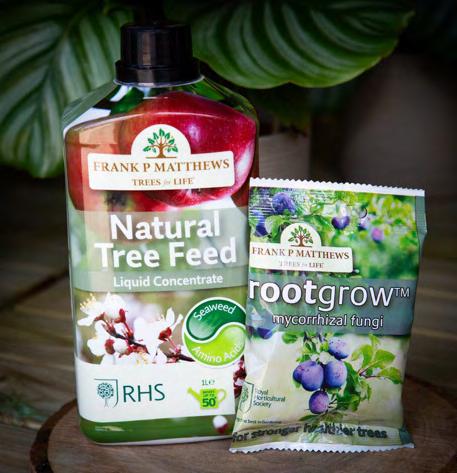
Add a sachet of Rootgrow® into the soil.
Knock In a tree stake. Add mulch of bark chippings.
Soak the roots in water. Water thoroughly. Fill the hole around the tree and firm in well.
Break up the soil at the bottom of the hole. Add compost if the soil needs improving.
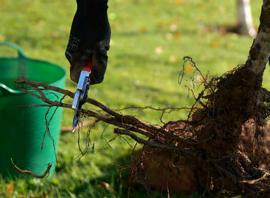
pot and tease out roots
prune the roots for bare root.
Trees for Small Gardens
The below trees are just a handful of varieties and groups that work brilliantly for smaller spaces and patio growing. Trees do not have to be big and can offer structure, autumn colour, winter bark, summer foliage, fruit and interest for all year round.
• Acer palmatum
• Albizia
• Amelanchier
• Calycanthus
• Ceanothus
• Cercis
• Cornus
• Corylus
• Hamamelis (Witch Hazel)
• Bush Magnolia
• Euonymus
• Malus (Crab Apples) particular ly on M27 rootstock
• Top worked Prunus (Ornamental flowering cherries), weeping and incisa forms.
• Sorbus (Rowan)
• Syringa (Lilac)
• Viburnum
• Fruit on dwarf rootstocks such as M27 for Apples, Quince Eline for Pears, Gisela 5 for Cherries and na turally dwarf and columnar var ieties such as Mirabelle Ruby and Pea ch Bonanza and Nectarine Nectarella.
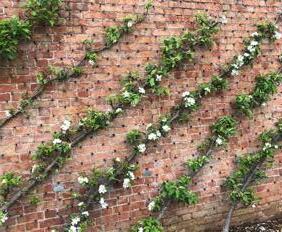
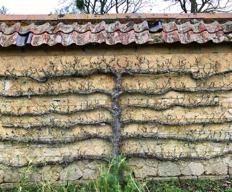
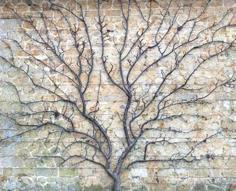
• Trained fruit trees including Fan, Espalier, Cordon and Stepover forms (see page 106) perfect for small spaces, against fences or walls.
Look out for the small and very small symbols throughout the catalogue, as well as the upright tree form - perfect for small gardens.
Fruit Trees
Almond Ingrid
Picking: September
The most reliable cropper of the selected Almond varieties. Excellent fruiting quality, nuts are pale green with a velvety texture and delicious flavours. Striking light pink blossom in the spring and reasonable leaf curl resistance. Best planted in a sheltered position.
Apple
Adam’s Pearmain
Picking: Mid October
A distinctive, late high quality dessert apple. The fruits have extremely attractive lenticel spots on reddish-brown smooth skin. Rich, aromatic and nutty in flavour with juicy and crisp flesh. An excellent keeper. (Norfolk, 19th Century)
Alfriston
Picking: Mid October
Sharp cooking apple with an oblong shape and a flat base. Its skin is greenish yellow, often flushed with pink, while the flesh is a creamy yellow. Ideal for baking, it also cooks down into a delicately pear-like flavoured purée.
Angela
Picking: Late September
5
Well flavoured bittersharp, compact growth habit. Yellow-green background with a strong dark red flush. Sometimes producing pink juice.
Ballerina Samba®
Picking: October
A much improved Ballerina Apple, more compact and vertical in habit. Fruits are yellow flushed bright ruby-red. Flesh is crisp, juicy and fresh with a sweet and sharp taste. Beautiful clusters of deep pink blossom in spring. (Kent, 1996)
Annie Elizabeth
Picking: Early October
A traditional English apple. Large, round-oblong fruit with cream flesh. Sweet, light flavour and an excellent cropper. Perfect for stewing, needing very little sugar. Resistant to scab, canker and mildew. (Leicestershire, 19th Century) 4
Apistar®
Picking: October
3
A spectacular, star shaped apple with 5 angular sides, rather than the typical rounded shape. Yellow with orange flush. It tastes delicious eaten or cooked and the apples can be used for decoration purposes. Store until Christmas.
Arthur Turner
Picking: Mid September
3
Large yellowish-green, tough skinned fruits. Cooks to a delicious golden purée, needing hardly any sugar. Good for pies as it can be picked green for early use. Known for it’s exceptional display of attractive light pink blossom in the spring. (Buckinghamshire, 1912)
Ashmead’s Kernel
Picking: Early October
4
A traditional English russet and one of the best late dessert apples. Pale green fruit with a strong, sweet-sharp, acid drop flavour and a juicy white flesh. The sweets known as pear drops is the essence of the flavour. Good for juicing. (Gloucestershire, 17th Century)
Bardsey
Picking: Mid September
2
The ‘sainted’ apple found on Bardsey Island. This pink over cream skinned apple has an extraordinary lemon scent and a fine refreshing flavour. Pleasant for eating fresh, can be juiced and cooks well. Also very hardy. (Ynys Enlli, Wales, 1998)
Beauty of Bath
Picking: Early August
2
Remarkably early, hardy dessert apple. Produces a heavy crop of bright red flushed on pale yellow fruits. The flesh is often pink under the skin, sweet and very juicy. The fruit is best picked early before it drops. Delicious eaten straight from the tree. (Somerset, 19th Century)
Almond Ingrid
Ballerina Samba®
Bell Apple
Picking: October
An old Somerset cider apple, also known as Sweet Sheep's Nose. Harvests in late October and is a pure sweet cider apple. Was once a common apple in Somerset and Devon.
Ben’s Red
Picking: September
An early popular eater. Dark maroon flush and red stripes over green background, crisp with a sweet strawberry/raspberry flavour. Picks in early September and will store for a couple of weeks. (Cornwall, 1830)
Black Dabinett
Picking: November
Late, bittersweet cider apple that is slightly larger than others. A more vigorous sport of Dabinett, picking later. Dark purple flushed apples that make delicious full-bodied cider, without needing to mix with other varieties. A healthy, disease resistant tree. (Somerset, 19th Century)
Bladon Pippin™
Picking: Mid September
A very special apple. Sweeter than Cox and with an improved aromatic flavour, crunchy, crisp and juicy. Can be picked and eaten over a few weeks from mid-September onwards and stores well. Named after Bladon Church. (Oxfordshire)
Blenheim Orange
Picking: Early October
A well known English heritage apple. Yellow-gold with orange flush and broken red stripes. Creamy white flesh, nutty taste and crumbly texture. Keeps its shape, flavour and colour when cooked. An old favourite! (Oxfordshire, 1740)
Bloody Ploughman
Picking: Mid September
Bloody red fruit in appearance with knobbly skin and stained pink flesh. Juicy and sweet in flavour with a crisp texture. Good for cooking, eating and making cider. An old variety which reputedly grew from a pip on the grave of a ploughman shot by a gamekeeper for stealing.
Bountiful
Picking: Late September
A classic English cooking apple. Soft, juicy fruit with sweet flavour and a crisp texture. The apple slices retain their shape when cooked. Disease resistant. A good garden tree that is easy to grow and very productive. (Kent, 1964)
Braeburn
Picking: Early November
4
Crisp, firm, aromatic fruit produces an all round excellent quality apple. Performs best planted in a warm climate and a sheltered position. An important variety for commercial growing. (New Zealand, 1950s)
Braeburn Mariri Red®
Picking: Mid November
4
A sport of Braeburn. Attractive, dark red in colour with very firm flesh, and sweet, sharp flavour. A typical Braeburn, but more intense. The most popular commercial orchard choice. (New Zealand, 1990s)
Bramley 20
Picking: Early October
3
A compact version of Bramley’s Seedling, 20% less vigorous with heavier crops. Pale green flushed reddish-orange fruits that have an exceptional sharp flavour. Delicious purée when cooked. Highly recommended for the garden. (Bristol, 1970s)
Bramley ‘Original’
Picking: Early October
3
Propagated from the original tree in Nottingham. Bright green fruits that are delicious cooked into pies, crumbles and sauces. Creamy flesh with sharp, acidic flavour. The original tree survived for over 200 years! (Nottinghamshire, 1809)
Bramley’s Seedling
Picking: Early October
3
The finest cooker in the world! The apples are greenish-yellow flushed light orange with russet spots. A strong acid flavour, crisp and sweet-sharp bite after storing. Makes a creamy, brisk-flavoured purée and tasty baked into tarts and pies. (Nottinghamshire, 19th Century)
Browns
Picking: Mid October
5
Very vigorous, upright growing habit. The waxy apples are dark red and even sometimes red fleshed. Produces a fruity, bittersharp cider. Also a nice cooker with sharp taste and chewy texture. A healthy tree. (Devon, 20th Century)
Apple Bountiful
Apple Blenheim Orange
Brownlees Russet
Picking: Early October
A late-season dessert russet apple. A juicy flavour, sweet-sharp and nutty, just like acid drops. Skin is reddish-brown and very russeted. Known for its very attractive deep pink blossom in the spring and it's late storage into February. An excellent garden variety.
Bulmers Norman
Picking: October
A very vigorous, spreading tree which is commonly used as a stem builder to develop strong trunks. The large, yellow-green apples produce a medium, bittersweet cider with hard, bitter tannins.
Charles Ross
Picking: Mid September
A well known, easy to grow apple. Sweet and juicy in flavour and also bakes well. Delicious when picked and eaten straight from the tree or pressed into home-made apple juice. A hardy variety for Northern areas. (Newbury, 19th Century)
Chivers Delight
Picking: Early October
Golden crisp and juicy fruit, slightly waxy. Sweet flesh and honey flavoured. A good looking garden apple suitable for all areas. Stores well into January. (Cambridge, 20th Century)
Christmas Pippin®
Picking: Early October
An exceptional, high quality eating experience with a beautiful honey flavour. One of the very best recently introduced apples that stores well until Christmas. Orange flushed, juicy and crisp fruits to make the perfect Christmas crumble. (Somerset, 2011)
Claygate Pearmain
Picking: October
A high quality dessert apple with a juicy rich, aromatic, nutty taste. Orange-red flushed apples over greenish-yellow. Showy pinkish-white flowers in the spring. Suitable for northern and colder areas as it's very hardy. (Surrey, 1921)
Core Blimey™
Picking: October
Attractive red fruits are wonderfully aromatic, juicy and crisp. A highly flavoured Cox type that is more disease resistant. Very easy to grow and suitable for any area in the UK. Stores well. (Kent, 2008)
Cornish Aromatic
Picking: Mid October
A high quality, late dessert apple. Handsome, bright red flushed fruits with russet patches. Flesh is white, tinged green. Firm and fine-textured with a sweet, sharp pear drop and spice flavour. (Cornwall, 1813)
Cornish Gilliflower
Picking: Mid October
High quality dessert apple. Dark red flush with red stripes over gold. Knobbly exterior conceals yellow perfumed flesh. Intensely flavoured, rich and aromatic. (Cornwall, 1800)
Court of Wick
Picking: September
A red flushed eater with russet freckled over gold. Flesh is juicy and crisp with intense fruity flavour. The medium-sized apples will hold onto the tree for quite a long time. Makes a lovely cider and apple juice. (Somerset, 1790)
Coul Blush
Picking: Early September
Fruit is delicately flushed over a golden colour. Sweet, soft creamy flesh that’s lightly flavoured. Can be used as a cooker if used early. Cooks to a brisk, lemon froth. (Scotland, 1827)
Cox’s Orange Pippin
Picking: Early October
The original Cox and the finest flavoured apple in the world. Orange fruits over greenish-yellow. Deep cream flesh that has sweet aromatic flavour and is firm, fine-textured and juicy. (Buckinghamshire, 19th Century)
Cox Self Fertile
Picking: Early October
A self fertile form of Cox’s Orange Pippin and the best selling eating apple in the world. Orange over green fruits. Creamy flesh that has a sweet, aromatic flavour and is juicy and crisp. Highly recommended! (Bristol, 1975) 3
Picking: September
The perfect dual purpose apple with a fine dessert flavour. Refreshing acidic, tangy quality for a multitude of culinary uses from firm baked apples to pie fillings needing little added sugar. (Kent, 2007)
Apple Core Blimey™
Apple Christmas Pippin®
Crimson Victoria
Picking: September
A fairly modern dual purpose cooking and cider variety, found in the 1990s near Taunton, Somerset and grown on in Devon. Picks in early September. A useful early sharp cider that can also be used for cooking. (Somerset, UK)
D’arcy Spice
Picking: October
A late keeping dessert apple with an interesting hot, spicy nutmeg flavour. A healthy, disease resistant variety. Medium sized, bright green fruits. Enjoys the sea air. (Essex, 1780’s)
Dabinett
Picking: Early November
The most reliable cider variety. Has a bittersweet, high quality, medium-dry cider on its own. Greenish-white, sweet and astringent. Beautiful pink blossom that occasionally produces a secondary flower. (Martock, Somerset, 19th Century)
Devonshire Buckland
Picking: October
A mid to late season cider apple that is also used for cooking. Large pale yellow fruit with bright pink flush and russet at the base. Soft creamy white flesh with a subacid, slightly sweet flavour. (Devon)
Discovery
Picking: Mid August
An attractive, well rounded dessert apple. Bright red flush and stripes. Crisp and juicy with a hint of strawberry flavour. An excellent early variety with good disease resistance. Best eaten straight from the tree. (Essex, 1949)
Don’s Delight
Picking: October
A late season cooking apple with a sharp, rich flavour, that is good for challenging sites in the West Country. A reliable cropper producing green to gold fruit with a strong red flush. (Devon)
Dunkertons Late
Picking: November
The fruit is green flushed orange, turning slightly yellow when ripe and sometimes with a touch of red if sunny. A firm and cheesy texture, sweet in taste. Makes a light, sweet and fruit cider. (Glastonbury 1940s)
Eden™
Picking: October
A dual-purpose, non-browning apple for fresh eating and cooking. Delicious, crisp, sweet and aromatic. When cooked, the apples produce a snow white purée requiring no added sugar. Also an excellent variety for juicing. (Canada, 1970s)
Egremont Russet
Picking: Early October
A good quality, mid-season apple. Creamy-yellow flesh, sweet and firm with a distinctive rich, nutty flavour. One of the few russets available in quantity and an important commercial russet in the UK. (Sussex, 19th Century) 2
Ellison’s Orange
Picking: Late September
A traditional English dessert apple. Striped, red fruits. Aniseed flavour develops after picking, retaining it’s melting juicy flesh. A healthy, disease resistant tree. (Lincoln, 1904)
Fiesta
Picking: Early October
An excellent garden tree. Rich in flavour, aromatic and sweet and crisp in texture. Slightly ribbed, reddish-orange fruits. Ideal for northern areas and a very heavy cropper. (Kent, 1972)
Fiona
Picking: Mid September
Heavy cropping, compact cider apple. Fruit is yellow with orangebrown flush. Mild bittersharp, acid slightly sweet taste. A healthy, disease resistant tree. (Long Ashton, 1990s)
Gala
Picking: Early October
Reliable cropper of good, small, crisp and well-flavoured fruit. Golden-yellow, thin skinned. One of the most popular eating apples in the world. (New Zealand, 1934)
Gala (Brookfield)
Picking: September
Dark red sport commercial clone of Gala. A reliable cropper of good, small, crisp and well-flavoured fruit. Only available on M9 rootstock.
Galloway Pippin
Picking: Late September
Large and yellow apples with a russet freckle finish. Deliciously sharp eater, and keeps its shape well when cooked. Firm, juicy and crisp. Sharp, slightly perfumed flavour. (Wigtown, Galloway, 1871)
Gilly
Picking: Mid September
The red apples produce a mild bitter-sharp juice. Heavy yielding early in life creating a weeping shape. Can be planted close together.
Apple
Golden Bittersweet
Picking: September
An old cider variety, sent to Hogg from Devon around 1884. Has a freckled and russeted appearance, sharp in taste and has very soft juicy flesh so easy to juice. Picks in early September and will keep until October. (Devon)
Golden Delicious
Picking: Late October
Well known, handsomely shaped eating apple. The slightly ribbed fruit is sweet with a honey flavour making it a distinctive variety. Superior to imported when grown in the UK. (USA, 19th Century)
Granny Smith
Picking: Early November
A well known supermarket variety which is very successful within the commercial orchards. Bright greenish-yellow, smooth, greasy skin and greenish-white, juicy, refreshing flesh. (Australia, 19th Century)
Greensleeves
Picking: Mid September
A reliable mid-season variety. Pale, greenish-yellow. Crunchy, tangy, easy to grow eater. A good pollinator for other varieties and easy to grow. (Kent, 1966)
Grenadier
Picking: August
A compact tree ideal for any garden. Easy to grow and a good pollinator for Bramley. Has excellent cooking qualities, making the perfect baker. Very disease resistant. (Buckinghamshire, 19th Century)
Harry Masters Jersey
Picking: Late October
A traditional English cider apple. Greenish-yellow in colour, freckled and slightly striped dark red. Often known as ‘Port Wine’ for it's dark red fruits. Produces a full bitter-sweet tasting juice with a soft astringency. A regular, reliable cropper. (Somerset, 19th Century) 5
Herefordshire Russet®
Picking: Late October
A modern variety that is the russet with a Cox-like flavour. Deep golden, russeted fruits with exceptional eating quality, rich aromatic flavour. Heavy cropping and keeps well. Makes one of the best single variety juices. (Kent, 2002)
Hidden Rose
Picking: October
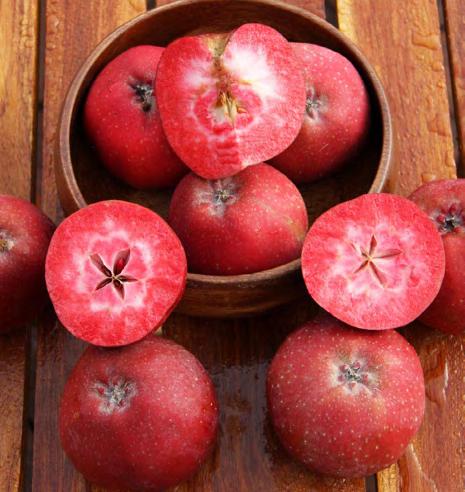
(Syn: Airlie Red Flesh) Tart with a subtly sweet taste and a flavour that has been likened to strawberry lemonade. Vibrant pink-red, juicy flesh. Greenish-yellow skin with a pink blush. Keeps well until January. (Oregon, USA, 2021)
Honeycrisp
Picking: Early October
A very attractive, high quality dessert apple. Impressive large apples, very crisp with a fizzy texture, sweet with pleasant mild flavours. Non browning, so good for fruit salad. Stores well in natural conditions. (America, 1960s)
Howgate
Wonder
Picking: Early October
One of the largest cooking apples in cultivation today! Yellow striped red apples which keeps its shape when cooked. Sweet and juicy. A good exhibition and garden variety. (Isle of Wight, 1915)
Irish Peach
Picking: Mid August
Small yellow fruit, flushed dark crimson with faint stripes. Flesh is white tinged green, slightly perfumed and juicy. Best eaten straight from the tree. (Sligo, Ireland, 1819)
James
Grieve
Picking: Early September
Deservedly popular. Red flush stripes over pale green fruit. Creamy white, crisp and juicy flesh with a refreshing flavour. Reliable cropper. One of the best apples to accompany a cheese board. (Edinburgh, 1893) 3
Julia’s Late Golden™
Picking: Mid October
A strikingly attractive large conical golden apple with a good sweet and acid balance. Keeps well into the new year. The tree is strong growing, healthy and predominantly tip bearing. (Sussex 2022)
Jumbo
Picking: Late September
Dual purpose, mid-season apple. Large, flushed and striped red on green and attractive red flecks. Golden cream flesh, acidic and aromatic. Good for baking, retains colour and needs no sugar. (Kent, 2000) 3
Jupiter
Picking: Early October
A popular garden variety. Large Cox-flavoured apple, but a more robust variety. Marbled red-yellow fruits with a sweet and juicy flesh. A strong growing tree. (Kent, 1966)
Katy
Picking: Early September
An attractive, early dessert apple. Heavy crops of bright red, sweet, juicy, acid and firm fruit. Makes excellent juice, palatable cider and good for baking. Also a good pollinator. (Sweden, 1947)
Keswick Codlin
Picking: Mid August
A heavy cropping, pale greenish-yellow apple. Cooks to a cream purée, hardly needing sugar. Soft flesh and acid-like flavour. Excellent cooker for tarts and pies, and even jelly and butter. Heavy crops. (Lancashire, 18th Century)
Apple Honeycrisp
Kidd’s Orange Red
Picking: Mid October
High quality, good Cox-alternative. Bright, deep orange-scarlet apples with a sweet, crisp and aromatic flavour, with a good balance of sugar and acidity. (New Zealand, 1924)
King of the Pippins
Picking: Early October
Also known as Princess Pippin or Reine des Reinettes. An attractive, orange-red flushed green apple. Firm, juicy and an aromatic flavour. Keeps shape and colour when cooked. (France, 19th Century)
King’s Acre Pippin
Picking: Mid October
Large fruit, green with brownish red flush and russet patches. Very rich flavour with a crisp, juicy texture. An excellent, late keeping garden apple. Lovely eaten fresh. (Hereford, 1899)
Kingston Black
Picking: November
A distinctive cider of excellent, single variety quality. Small yellow-green fruit flushed dark red, almost black. Dry, rich and fruity flesh. Named after the village of Kingston. (Somerset)
Laxton's Fortune
Picking: Early September
(Syn: Fortune) High quality, mid-season dessert apple, similar to Cox. Pale green-yellow with bright red stripes and russet patches. Creamy white flesh and sweet, aromatic flavour. (Bedford, 1904)
Laxton’s Superb
Picking: Early October
Sweet and aromatic. Can be biennial bearing and also hardy. Purple flush and red stripes gives this apple an old fashioned appearance. (Bedford, 1897)
Limelight
Picking: Mid September
An improved Greensleeves type. Clean, smooth, glowing greenishyellow, occasional pink blushed apples. Crisp, refreshing and rich in flavour. Heavy cropping and disease resistant. (Kent, 2000)
Little Pax®
Picking: October
A late season English apple. Very attractive ‘pearmain’ shaped, bright red fruit with attractive yellow lenticels. A superb sweet aromatic flavour. Stores throughout winter. (Isle of Wight, 2000)
Lord Derby
Picking: Late September
Quality cooker for pies. Large, firm, attractive green fruit with a distinctive, ribbed angular shape. Flesh is rather coarse-textured, sharp tasting. Disease resistant. (Cheshire, 19th Century)
Lord Lambourne
Picking: Mid September
An old favourite! Reliable crops of medium sized and high quality, deep red striped fruits. Sweet and aromatic with a hint of strawberry flavour. (Bedford, 1907)
Lucombes Pine
Picking: October
A good eating apple that is also great for juice, ripening to a golden yellow with russet dots. The tender flesh is yellowish white with a rich, aromatic, pineapple like flavour. (Exeter, 1800’s) 4
Major
Picking: September
A typical Somerset apple. Fruit is yellowish-green flushed with red stripes. Flesh is white, rather soft. Full bittersweet, fruity, vintage cider that's best blended. (Somerset, 1880s)
Meridian
Picking: Late September
All of the great qualities we expect from a modern apple. Attractive striped orange-red on pale green fruits. Juicy, delicious and consistent. A heavy cropper and disease resistant. (HRI East Malling, Kent, 2000)
Michelin
Picking: Late October
A traditional French cider variety. One of the most reliable and heavy cropping varieties. Yellowish-green flushed pink fruits with a white, sweet flesh. Produces bittersweet cider. Upright tree habit. (France, 1884)
Apple Katy
Apple Limelight
Apple LegacyTM
Picking: October
This special Apple is a highly attractive colour sport of the highly regarded Pinova apple which is renowned for disease resistance, annual productivity and long natural home storage with a firm snappy crunch and excellent sweet and aromatic profile. This full complex flavour has an abundance of citrus tones very pleasing to a broad spectrum of apple lovers. The compact growth habit is ideal for gardens and its attractive mid to late season flowers ensure a full on crop every year. It is naturally resistant to scab making it a healthy tree.
One of the most unique characteristics is that the apples hang on the tree nearly all winter (up to mid-January) so it naturally stores on the tree rather owners having to find space to store all the apples. This means it can be enjoyed fresh from the tree nearly all winter, after this, the apple can be enjoyed by birds such as fieldfares and the like.
A great garden apple. Celebrating 100 years of the National Garden Scheme, opening gardens and raising funds for vital nursing and health charities; a donation will be made from every tree sold.
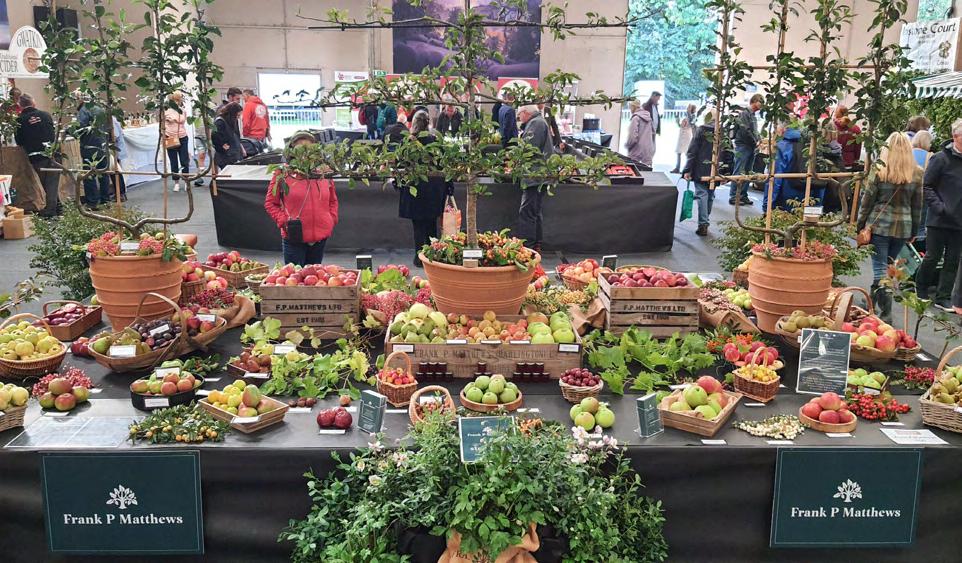
Over the years, Frank P Matthews has created award-winning apple displays at Malvern Autumn Show and Tenbury Applefest, featuring hundreds of heritage and modern varieties. We have won at least six RHS Gold Medals, celebrating diversity, craftsmanship, and innovation in British fruit growing.
Apple LegacyTM
Apple LegacyTM
Morgans Sweet
Picking: September
Large greenish-yellow fruits with freckled russet. Flesh is white, rather soft and juicy. Produces a light, fruity good quality cider. Although bred as a cider variety, it can be eaten fresh with a sweet tangy taste. (Somerset, 1700’s)
Newton Wonder
Picking: Mid October
Large, bright scarlet apples striped and light russet dotted. Nutty and sweet. Cooks to a juicy, mild purée. Excellent ingredient for salads and stuffing. (Derbyshire, 19th Century)
Nine Square
Picking: October
An old dessert and cooking variety, particularly disease resistant. Light green apples are sweet to taste. Very suited to a wetter climate and has good resistance to scab. Stores well through the winter. (Devon)
Norfolk Royal Russet
Picking: October
A lovely looking, high quality dessert apple. The russet finish also has a bright red cheek giving it an old fashioned look. A russet sport of Norfolk Royal but with a richer and superb intense aromatic flavour. (Norfolk, 1983)
Oaken Pin
Picking: September
An unusual ‘egg shaped’ apple, or like a ‘pin’ used to fasten doors. Pretty red/orange flushed over yellow, it is sweet, crisp and juicy. Good acidic balance to the sweetness. Will store through November. (Devon, 1920s)
Orleans Reinette
Picking: Mid October
Primarily a garden variety. Large, golden-yellow fruit flushed red. Nutty, sweet and aromatic in taste. Early fruit can be cooked and their slices keep their shape. (Europe, 17th Century) 4
Paradice
Gold™
Picking: October
Chosen by the London Paralympic Legacy for the Olympic Park. Superb flavour, sweet and crisp texture. Attractive, red skins. A great all round apple of some distinction. (Hugh Ermen, Kent)
Peasgood’s Nonsuch
Picking: Mid September
The largest culinary apple. Fruit is pale green, broken red striped. Moderately juicy when eaten fresh, and a little sweet. Makes a delicious sweet purée when cooked. Excellent exhibition variety. (Lincolnshire, 1850s)
Peter’s Gold™
Picking: October
Round, golden apples with occasional pink flush. It picks late and stores excellently through the winter. Flesh is firm, sweet and dense with a good crunch. Delicious and aromatic. A new release in honour of the late Peter Seabrook. (Essex) 3
Pinova
Picking: October
4
A high quality eater with good scab resistance. Yellow skin with a late pinkish blush. The crisp, firm flesh has a sweet taste with slight acidity. Will store until March/April. (Dresden, Germany 1986)
Pitmaston Pine Apple
Picking: Early October
4
Distinctly, small conical apple. Golden with a pale brown russet, which can be seen in mature trees. Distinctive flavours of pineapple, honey and musk - a taste to live for! (Hereford, 1785)
Pixie
Picking: Mid October
Excellent crops of small apples, an ideal snack for children. Yellow skin with attractive red stripes. Crisp, finely textured and fairly juicy. Rich flavour with plenty of sugar. (RHS Wisley, 1947) 4
Plympton Pippin
Picking: October
4
A vigorous tree producing large, green apples with a flattish base and a sharp flavour. Originating from the Tamar Valley, Cor nwall/Devon.
Porters Perfection
Picking: November
5
A vintage, bittersharp cider apple. Dark red skin and creamy flesh. Vigorous grower with a spreading, drooping habit. Disease resistant. (Somerset, 19th Century)
Queen of the Realm™
Picking: Mid September
3
A new introduction for the Queen's Platinum Jubilee 2022. Pretty purple and white skinned slightly spotted apple is crunchy, juicy and sweet with a lovely balance of sugar and acidity. (Worcestershire 2022)
Rainbow (Eric's Rainbow™)
Picking: October
A unique stripy apple which also has an attractive gold spot to the centre of each leaf and multi-coloured striated bark. This late picking apple has a red skin with green and pink stripes and snow white non-browning flesh. With a long shelf life this apple starts off tart when picked in November and mellows to become sweeter and lightly flavoured from January to April making it a perfect addition to salads. (Milan and Marijan Prepelic, Croatia) 3
Apple Peter's Gold™
Red Devil
Picking: Late September
Deep scarlet, striking skin. Strong, strawberry flavour. The red stained flesh makes a wonderful pink juice. Highly decorative garden variety. Name inspired by the ‘Red Devil’ parachute team. (Kent, 1979)
Red Falstaff®
Picking: Early October
Red sport of Falstaff. Fruity, well balanced flavour, crisp and very juicy. The red flushed skin over green apples are great for home juicing. One of the heaviest yielding and best garden varieties. (Norfolk, 1983)
Red Jonaprince®
Picking: Early October
A red sport of Jonagold. Dark block red apple, colouring in the shade. Good flavour and crunchy texture. Vigorous, heavy yielder and cropper. Benefits from storage before eating. (Netherlands, 1994)
Red Foxwhelp
Picking: Early November
Quite a special apple. Firstly for it’s high alcohol content as a cider and for its pretty pink coloured juice. Medium sized, striped red fruits. A fine cider!
Red Topaz®
Picking: Early October
A red sport version of Topaz. A disease resistant variety, good crops. Juicy sweet and firm. A deep orange-red striped colour. Store until December.
Red Windsor®
Picking: Mid September
One of the easiest and most reliable varieties. Delicious red fruits, with a good balance of sweet and sharp flavour. An ideal garden variety that has compact growth. Disease resistant and frost hardy. (Worcestershire, 1985)
Reverend W. Wilks
Picking: Late August
Compact growing tree, very handsome. The large, pale orange fruit cooks to a light sweet, pale lemon purée, hardly needing any sugar. The best early cooker. (Buckinghamshire, 1904)
Ribston Pippin
Picking: Early October
A popular, high quality triploid dessert apple. Firm and sweet, aromatic in flavour, crisp fruit with yellow-red flush. Described as ‘like a good dessert wine’. (North Yorkshire, 18th Century)
Rosemary Russet
Picking: Mid October
Reddish-orange flushed apples over greenish-yellow. Flesh is cream, fine-textured, rather acid and juicy with an excellent sharp but sweet flavour. A great garden variety!
Rymer
Picking: Late October
Introduced at the end of the 18th century in Yorkshire by a Mr Rymer at Thirsk. A free growing tree and a good bearer. A good culinary apple, ripe from October to December. Late season. Considered rare.
Rosette™
Picking: Early August
A lovely, unusual pink speckled ‘rosette’ pattern sinks deep into the flesh. Sweet flavour with a hint of summer berries. Makes a tasty, attractive juice. Compact in habit which makes an ideal tree for small gardens. (Worcestershire, 2005)
Saturn
Picking: Late September
Heavy crops of attractive, red-blushed, conical fruit. Cream, crunchy flesh; sweet, honeyed and rich. Very easy to grow, suitable for organic production. (HRI, East Malling, Kent, 1980)
Scotch Bridget
Picking: Early October
A popular Scottish cooking apple. Medium-sized, ribbed fruits have a cream, crisp flesh. A favourite in the Hereford and Worcester area. Suitable for difficult growing situations. (Scotland, 1851) 3
Scotch Dumpling
Picking: Late August
An early ripening culinary variety. It’s large apples cook to a brisk, well flavoured frothy purée. Very attractive pink flowers. Makes an excellent apple sauce. (Scotland, 1949)
Scrumptious®
Picking: Early September
A very special apple. Wonderful complexity of fragrant, honeyed, liquorice berry flavours. Soft, delicate and crisp. The fruit holds well on the tree without falling. A children’s favourite and truly scrumptious. (Kent, 2000)
Somerset Redstreak
Picking: October
A traditional English variety. Produces a bittersweet juice, making one of the best quality ciders. Attractive shiny red apples, flushed greenish yellow and slightly ribbed. (Somerset, 20th Century) 5
Apple Rosette™
Spartan
Picking: Early October
Heavy cropping, very popular dessert variety. Fruit is maroon, sweet and juicy. At best, perfumed with flavour like a cross between strawberry and melon. A very good pollinator. (Canada, 1926)
St Edmund’s Russet
Picking: Mid September
One of the earliest varieties to ripen. Attractive golden-red russet and silvery sheen. Sweet, juicy, densely textured pale cream flesh. A good variety for cider and juice. (Suffolk, 1875)
Stirling Castle
Picking: September
Distinctly regular somewhat flattened cooker. Bright green becoming very pale yellow. Flesh white, very soft, rather coarsetextured and juicy. Good for Apple Foam and Apple Cream. (Stirling, 1820)
Sunset
Picking: Late September
Red striped apples, orange flushed over gold. Sharp intense flavour. Flesh is creamy white, firm, crisp and a little juicy. A reliable cropper and excellent garden apple. (Kent, 1918)
Surprize™
Picking: September
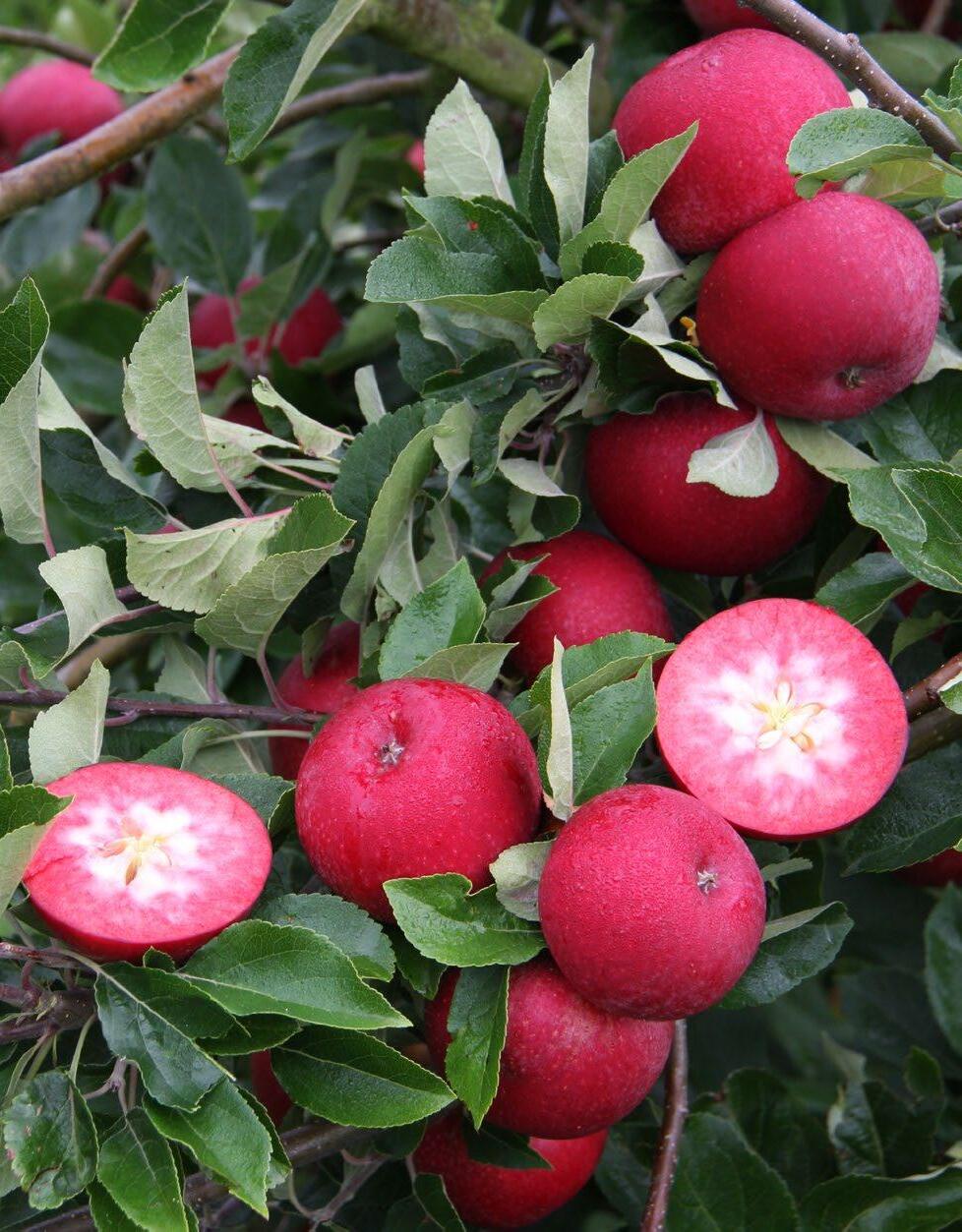
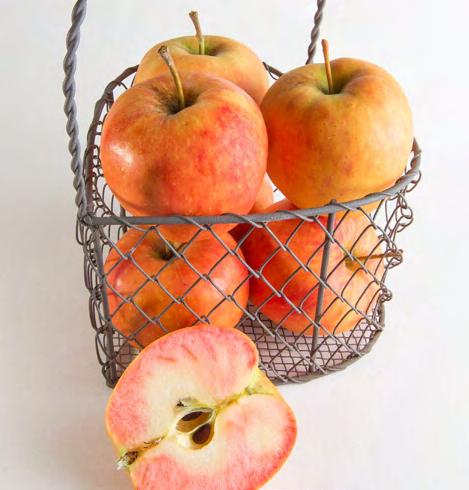
An exceptional recently introduced apple that is quite unlike any before. Brilliantly glossy, orange skin with a beautiful pink flesh. Crisp juicy and delicious. A quirky, tasty variety. (Kent, 2017)
Three Counties
Picking: Late September
Golden flushed fruit with crimson flecks and pale lenticels. Robust astringency, sweet and low acid. Good tree shape, vigorous with a good leader. Regular crops. (Long Ashton, 1990s)
TICKLED PINK Baya® Marisa
Picking: Late September
A dynamic, full red fleshed apple with an amazing display of pink spring flowers. Delicious apples for eating straight from the tree, cooking or for a bright pink juice. Pleasantly flavoured. (Germany, 2011)
Tidicombe Seedling
Picking: September
Sweet, richly flavoured apples that are yellow in colour covered with an orange blush and distinctive lenticels. Disease resistant and a heavy cropper. (Arlington, North Devon)
Tom Putt
Picking: Early September
Very handsome, large cooking apple. Bright red-crimson streaks and shiny skin. Firm, crisp and sharp. Light flavour and melting sweet texture when cooked. Disease resistant. (Devon, 18th Century)
Totnes
Picking: September
A traditional, early-season, dessert apple historically sold at Totnes market. Yellow-green flesh with a pink flush and sweet taste. Originating from Dartington, South Devon.
Tremlett’s Bitter
Picking: Mid October
A popular Devon cider variety. White fleshed, sweet astringent producing a tasty juice, high in tannin. Full, bitter sweet cider ideal for mixing with other varieties. Crops well. (Devon, 19th Century)
Trinity™
Picking: Late August
This red fleshed apple is an extremely healthy variety. Makes a dark pink purée needing little sugar, great for pies. The red skins dissolve when cooked. Pretty pink blossom and attractive leaves. Bred by a Polish war veteran. (Twickenham, 1980)
Tydemans Late Orange
Picking: October
A late keeping dessert apple. Purplish-red fruit with darker broken stripes and some grey russet. Flesh is cream, almost yellow. Very firm, crisp, sweet and fairly juicy. As rich and aromatic as Cox when it’s eaten before Christmas. (Kent, 1930)
Upton Pyne
Picking: October
Upright growing and moderate vigour. Oblong, yellow with pink striped fruits. Has a slight pineapple-like flavour and cooks to a smooth purée. (Devon, 20th Century)
Apple Trinity
Vicky
Picking: Mid September
5
Flattened fruits, pale yellow with bright red flush and stripes. Strong growing, upright habit. The juice is low acid and sweet, slightly astringent. Heavy cropping. (Long Ashton, 1990s)
Warner’s King
Picking: Late September
A very large, old cooking variety. Pale green fruit turning pale yellow with slight brown-pink flush. Juicy and acidic flesh cooks to a sharp purée, strongly flavoured and mellows with keeping. (Kent, 18th Century) 2
Apricot
Bergeron
Picking: Early September
Famous for the French ‘Bergeron’ jam preserve. Large, attractive yellowish-orange fruit with red blush. Aromatic and sweet, slightly juicy. Delicious eaten fresh. (France 1920s)
Bergeval®
Picking: Late June
A modern, French apricot. Produces a heavy crop of attractive, large orange-red fruits. An excellent aromatic, sweet taste without bitter skin. Firm and juicy. High regular productivity. (France, 1950s)
Compacta®
Picking: Late July
A naturally dwarf Apricot perfect for growing in small spaces. Heavy, large crops of freestone, tasty, orange fruit. Makes a delicious jam. A very popular variety. Frost hardy.
Goldcot®
Picking: Early August
Golden yellow fruit with thick skin. Vigorous and healthy with regular crops of good sized fruit. Suitable for cold and wet climates. Good for freezing and bottling. Freestone. (USA)
William Crump
Picking: Mid October
A well coloured, high quality dessert apple. Greenish-yellow fruit striped reddish-orange. Almost yellow flesh, rich and sweet to taste, very similar to Cox. (Worcester, 1910) 3
Winter Gem
Picking: Early October
One of the very best flavoured apples. Attractive pink and red striped fruit. Rich and aromatic flavour with the perfect mix of sweetness and juiciness. Strong grower, can be shy cropping in some years. (Kent, circa 1984) 3
Worcester Pearmain
Picking: Mid September
Produces a reliable crop of delicious orange red fruit. Firm, cream flesh is very sweet with strong strawberry flavour. At its best w h en ripened on the tree and just before it falls. (Worcester, 19th Century)
Yarlington Mill
Picking: Mid October
An all-round cider of good aroma and flavour. Greenish-yellow fruits have a smooth, slightly waxy skin. White flesh, sometimes reddened is slightly crisp and sweet. (Somerset, 1970s) 5
Yellow Ingestrie
Picking: September
Pale orange-yellow fruit, highly decorative in table displays. Sharp, fruity and firm flesh. A charming lawn tree due to its drooping growing habit. Best eaten straight from the tree. (Shropshire, 1800s) 1
Golden Glow
Picking: Early August
Crops and performs well as a free standing tree or trained against walls. Medium sized golden coloured fruits that have an intense, pleasant flavour. (Worcestershire, 1985)
Apple Winter Gem
Apricot Compacta®
Harogem
Picking: Early July
Regular high productivity of medium-sized red fruits. Flesh is sweet and freestone, juicy and aromatic with attractive red colouring. Beautiful spring blossom. (Canada, 1979)
Helena du Roussillon® Aviera
Picking: Early August
Firm white fruits with pretty speckled light red colouring. Orange flesh that holds well with delicious taste. The late spring blossom avoids frost damage. An excellent late variety. (France)
Kioto®
Picking: Late July
Bright orange, round fruit with an attractive blush. Succulent and a charming taste. An easy garden variety, crops heavily every year. Slightly more compact than a standard apricot and frost resistant. (France)
Aronia (Chokeberry)
Viking
Picking: September
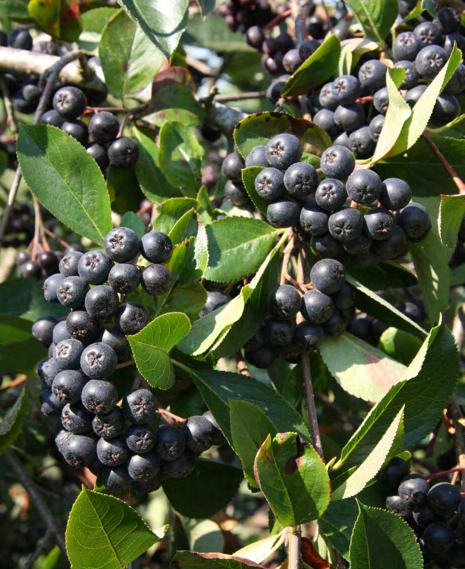
Hardy shrub suitable for a wide range of soils. Small, black fruits. Makes tasty jams, compotes and juice. Very high in Vitamin C and anthocyanins. Attractive autumn colours and white flowers.
Pink Marry®
Picking: Mid June
Very attractive red blushed apricot. High productivity of medium sized fruit with good firmness and less cracking sensitivity. Luscious, orange flesh giving a refreshing taste.
Robada®
Picking: Mid July
Large, high quality variety with attractive red blush and orange flesh. Pleasant flavour, aromatic and freestone. A reliable robust variety for the UK climate. Amazing spring blossom. (USA)
Tomcot®
Picking: Late July
By far the most reliable of all Apricots. Crops heavily with large, orange fruits blushed red. An intense flavour. Masses of stunning pinkish-white flowers. Best for cooking into jams or eating fresh from the tree. (USA)
Asian Pear
Kumoi
Picking: September
How to plant a tree video
Beautiful, golden russet finish makes this ‘Nashi/Chinese’ pear also an attractive ornamental tree. Bright white flesh, firm and crisp with a very sweet flavour. Excellent for desserts or a salad fruit. (Asia)
Olympic
Picking: Mid October
An Asian Pear which produces huge, round, russet-covered pears which are exceptionally crunchy, succulent and sweet. Can be enjoyed fresh or in salads. Keeps well. (Asia)
Aronia Viking
Asian Pear Kumoi
Asian Pear Kumoi
Blackcurrant
Ben Connan®
Picking: Early July
Large black, glossy berries on short trusses. Superb rich flavour! A heavy cropper, compact in habit and easy to grow. Good frost, pest and disease resistance. (Scotland, 1993)
Ben Sarek®
Picking: Mid July
Early season variety. Large, acid flavour berries on short strigs. Small, compact and heavy cropper. Suitable for a small space. Perfect for eating fresh or in jams and jellies. (Scotland, 1980)
Black ‘n’ Red®
Picking: July
A super sweet, aromatic flavour with medium-sized fruit. Green foliage in the spring which turns an attractive burgundy in late autumn. Resistant to mildew and leaf spot.
Blackbells
Picking: July
A major breakthrough in blackcurrant breeding! Blackbells has sweeter berries and larger fruit that can be picked in bunches of 10-15 per strig. Upright growing.
Lowberry® Little Black Sugar
Picking: July
A compact variety with excellent, resistance to downy mildew. Medium-large fruits are produced in small clusters with the typical cassis flavour superimposed with sugar.
Titania
Picking: Early July
Mid-season variety. Produces very large fruits of superb quality with high juice content and delicious flavours. Vigorous, upright in habit and resistant to mildew and rust. (Sweden, 1980)
Blackberry
Arapaho
Picking: July
This new selection quickly establishes a full fruiting plant of firm, thornless and high quality blackberries. Delicious eaten fresh, for jams and syrups.
Navaho Summerlong®
Picking: Late July
An upright growing floricane blackberry of very high quality. Large, juicy and sweet thornless fruit. Delicious if eaten fresh or cooked into jams and pies. Very easy to grow.
Oregon Thornless
Picking: Early August
A reliable thornless form, perfect for the smaller garden. Well flavoured, dark black fruits. Excellent autumn colours. Great for growing over an arch or trellis.
Blackberry Oregon Thornless
Blackcurrant Blackbells
Blueberry
Bluecrop
Picking: Early August
One of the main high yielding commercial varieties. A vigorous upright grower. The large, light blue fruits have excellent flavours and a long shelf life.
Chandler
Picking: Early August
Enormous, firm juicy berries are produced on this stout blueberry bush. Attractive autumn colour. A superb choice for large blueberries and good for patio growing.
Liberty®
Picking: September
Late fruiting blueberry producing sky-blue berries with an outstanding flavour. An upright habit and consistent high yields. Great for fresh eating and freezing.
Northland
Picking: Mid July
A heavy cropping variety of medium sized, highly flavoured berries. Sweet and juicy. Very hardy and suitable for all parts of the UK.
Patriot
Picking: Early July
A vigorous variety, highly productive bearing medium, slightly flat berries of excellent flavour. Easy for picking and suits any UK climate. Lovely red and golden autumn colours.
Cornelian Cherry (Cornus) mas Jolico
Picking: September
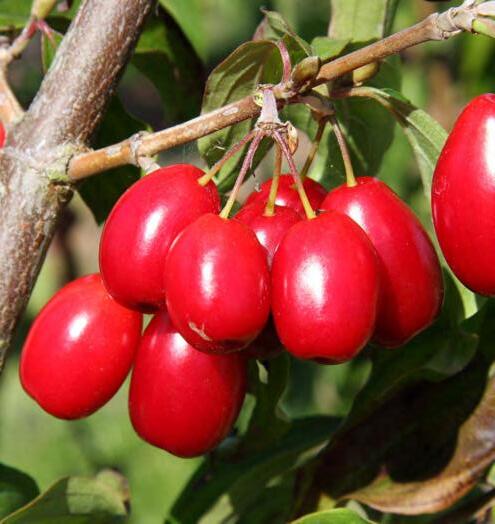
(Cornelian Cherry) A small tree which produces yellow delicate flowers early in spring and large, shiny, red fruits in autumn. The fruits are very astringent and can be used for jams, jellies, compotes and preserves.
Pink Lemonade
Picking: Late August
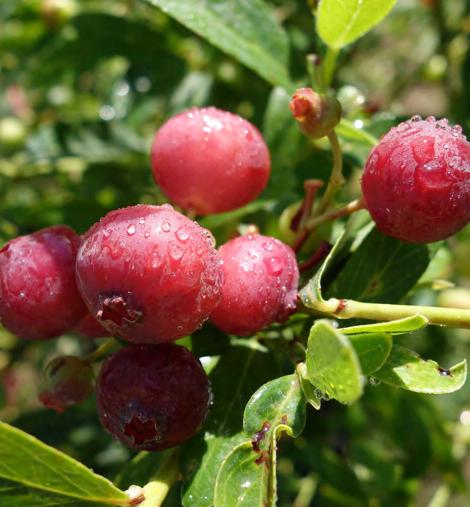
Lovely green fruits that gradually turn to a rich pink as they mature for picking. Sweet in taste, delicious when eaten fresh or for cooking into puddings and pies.
Sunshine Blue
Picking: Mid July
A compact growing, almost evergreen variety with large, succulent excellent flavoured fruits. Beautiful, bright pink bellshaped flowers in the spring. Heavy cropping.
Cherry
Amber Heart
Picking: Early July
4
The ‘Kent Bigarreau’. Pinkish-red skinned eating cherries. Pale yellow flesh that has a sweet and distinctive flavour. Upright and compact growing. Pollinated by any self-fertile variety. (Kent)
Black Oliver
Picking: Early August
A traditional English cherry. Medium-large rounded black fruits. Dark red flesh, soft and juicy. Vigorous, upright spreading tree. A healthy tree with good disease resistance. (West Midlands)
Burcombe
Picking: Late July
2
The soft and juicy black cherries are suited to either eating or cooking. The fruits are full of luscious flavours. Suitable for growing in the South-West. (Tamar Valley, Cornwall)
Celeste®
Picking: Early July
2
Excellent eating quality, one of the very best. Dark red, large fruits; sweet, quite mild with a pleasant cherry aftertaste. Perfect for patio growing due to its naturally dwarf compact habit. (Canada, 1990)
Blueberry Pink Lemonade
Cornelian Cherry (Cornus) mas Jolico
Cherry Burcombe
Cherry Stardust®
Cherry Sweetheart®
Felicita®
Picking: Early July
A new self-fertile cherry. Ripening midseason in early July, this cherry is very large and produces high yields from an early age. Dark red, firm, and juicy with a sweet, aromatic, true cherry taste. Very disease resistant and no pollinating partner is necessary. (Czech Republic)
Knights Early Black
Picking: Early July
Masses of old, traditional black heart-shaped fruits with dark red juice, hanging on long strigs. Richly fruit, sweet and aromatic. A healthy tree. (Kent, 1946)
Kordia
Picking: Mid August
Heart-shaped, glossy, dark carmine-red cherries. Red flesh, excellent balance of acidic and sweet taste. Good quality. Pollinated by any self-fertile variety. (Czech Republic, 1963)
Lapins ‘Cherokee’™
Picking: Late July
Large black fruits, sweet and full of juice. Will shed its fruit readily when green but there is always plenty left to ripen later. Upright, strong growing habit. (Canada, 1984)
Merchant
Picking: Late June
One of the best early to ripen varieties. A sweet cherry and black in colour. Best eaten fresh. Stunning white flowers in the spring and good disease resistance. (Norwich, 1970)
Merton Glory
Picking: Early July
Very sweet, heart-shaped fruits. Outstanding fruit early in the season. Shapely, compact tree. Handle carefully to avoid bruising. (Surrey, 1931)
Picking: Late July
The most popular cooking cherry. Very hardy and reliable. Fruits can be picked at the very sour, dark red stage for stewing or left until almost black and bitter-sweet. Ideal for north facing walls.
Napoleon Bigarreau
Picking: Mid July
An old fashioned firm, heart shaped dessert variety. Excellent cherry with a shiny, marble red finish. Golden flesh and sweetsharp, tangy taste. (Germany)
Picking: Late August
An outstanding quality black cherry. Firm, large and very late in the season. Sweet with lovely juicy flesh. Pollinated by any selffertile variety. (Kent, 1998)
Picking: Mid July
Black fruit, highly productive, sweet and aromatic flavours. Very popular with commercial growers and gardeners. A hardy variety, can cope in most UK climates. (Germany)
Roundel Heart
Picking: Late July
Roundel Heart is one of the oldest varieties of excellent quality. Produces heavy crops of large, heart-shaped fruits that are shiny dark red. Soft, sweet flesh and very good flavour. (Kent)
Skeena®
Picking: Early August
A high quality, dark red skinned fruit with a ruby red coloured flesh, well-balanced, sweet-sharp flavour. Heavy cropping. (Canada)
Stardust® Coveu
Picking: Late July
A white fleshed cherry that has a regular crop. Good firmness. The sweetest flesh of any cherries and this one is no exception. Strong vigour and good branching. (Canada, 2002)
Stella
Picking: Late July
The first of many self-fertile varieties tried at Summerland R.S.
A large, dark red, reliable, sweet and juicy cherry with good flavour. Heavy cropper and an excellent pollinator for other varieties. (Canada, 1968)
Summer Sun
Picking: Late July
Very hardy variety and crops in most areas. Fruits are dark red, firm and crunchy and have an exquisite flavour. Easy to manage. (John Innes Institute, Norwich, 1970)
Sunburst
Picking: Late July
Heavy crops of decent sized fruit. Dark red in colour, sweet to taste with great flavour and texture. High quality fruit. Easy to grow and has good storage. (Canada, 1975)
Sweetheart®
Picking: Late August
One of the later picking varieties but well worth the wait. Very precocious, firm with a delicious flavour. A good pollinator for other cherry varieties. (Canada, 1990)
Waterloo
Picking: Late July
A traditional eating cherry. Heavy crops of good quality, glossy black fruits. Fairly soft with a small stone. Named after the Battle of Waterloo.
COMMERCIAL VARIETIES
We offer a range of commercial cherry varieties which are specifically developed for growing under tunnels on dwarf Gisela 5 rootstock. Many of these have minimum order numbers. Varieties offered in order of picking are Nimba®, Bellise®, Early Red®, Fertile®, Samba®, Vanda®, Pacific Red®, Walter®, Tamara®, Papillon®, Starblush®, Kordia, Areko®, Henriette®, Regina, Kir Vulcano®, Sweetheart®, Kir Lamour®, Kir Rosso® and the Cerasina varieties. Please contact us for further details.
Chestnut
Maraval
Picking: Early October
Mid-season hybrid variety, upright with moderate vigorous growth. Shiny, dark mahogany-red nuts in the early autumn.
Marhlac
Picking: Mid September
An early mid-season hybrid. Vigorous with large mahogany-red nuts that store well. As with all varieties harvest the nuts daily.
Maridonne
Picking: Late October
Maridonne is a late season variety. Produces shiny, dark mahogany large nuts in early autumn which are very good in quality. The tree itself is very handsome with glossy serrated foliage that are golden in the autumn.
Marigoule
Picking: Late September
This is an early variety with large dark brown nuts. Pick in Late September. The best variety to plant on its own, as partially self-fertile.
Marron de Lyon
Picking: September
A good mid-season fruiting clone bearing at a very early age. Dark brown, high quality nuts arrive in September. Upright and compact growth habit.
Marsol
Picking: September
Marsol is an early mid-season variety. Produces a good crop of large, high quality brown nuts that have good storage life. Delicious either roasted and in sauces.
Belle Epine
Picking: September
Mid to late season cropping and fast to medium growth rate. One of the last varieties to drop. A good pollinator especially for Marron de Lyon and Marigoule. Partially self-fertile. Shiny, mahogany brown coloured nuts. (France)
Regal
Picking: October
Chestnut Regal is an attractive tree, more compact than other Sweet Chestnuts, growing to 5m in 10 years. Shiny green leaves and fragrant blossom in summer, followed by delicious brown nuts in October.
Chestnut Belle Epine
Chestnut Marron de Lyon
Damson
Aylesbury Prune
Picking: Mid September
Round, sweet fruits can be eaten fresh or used for cooking. Dark blue in colour with a small stone. Very productive and beautiful spring flowers. (Buckinghamshire, 1997)
Farleigh
Picking: Mid September
One of the heaviest cropping varieties. Very small with a blueblack bloom and of excellent quality. Sweet, juicy and very hardy. (Kent, 1820)
King of the Damsons
Picking: Mid September
Large, dark blue fruits that have a delicious sweet flesh, refreshing and sugary. Great for preserves or puddings. Reliable cropper. (Nottinghamshire, 1880)
Merryweather
Picking: Late September
An extraordinary large damson for both dessert and culinary use. Reliable heavy crops of blue-black fruits. Yellow, firm flesh and relatively sweet. (Nottingham, 1907)
Shepherds Bullace
Picking: Late September
(Syn: Shepherd’s White) A traditional English variety that produces large yellow bullace, round to oblong fruits. Golden yellow, sharp and sweet flesh. 3
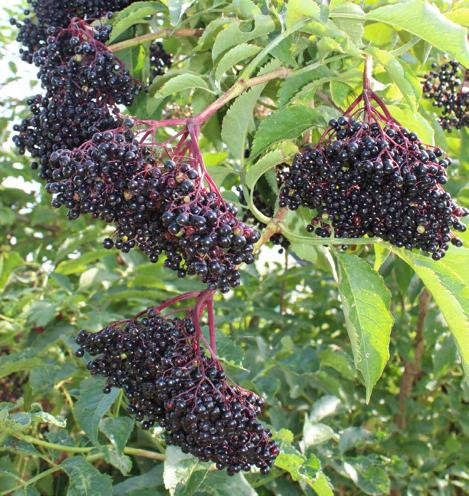
Elderflower
Haschberg
Picking: Late August
Exceptionally large flowers and berries. The flowers can be used for Elderflower juices and cordial, or the dark red/black berries for juicing, pies and dye. The fruit is very high in anthocyanin content.
Shropshire Prune
Picking: Mid September
The ‘Greengage of Damsons’. Very reliable cropper with intense flavours and dark blue in colour. Firm sugary flesh. Suitable for hedgerows. (Shropshire, 17th Century) 3
Sweet Prune
Picking: Mid September
The classic German ‘Hauszwetsche’ sweet prune for traditional ‘plum cake’ and fresh eating. Dark purple fruits with a spicy flavoured flesh. (Germany) 3
Haidegg 17
Picking: August
A vigorous, very heavy cropping variety from Austria. Large umbels of white flowers in spring are ideal for Elderflower cordial. Deep red, richly flavoured berries ripen in late August-September.
Damson Farleigh
Elderflower Haschberg
Elderflower Haidegg 17
Fig
Brown Turkey
Picking: Mid August
A classic British fig. Large brown, pear-shaped fruit with a sugary, rich and red flesh. Reliable, compact habit and easy to grow. Large glossy palmate leaves.
Little Miss Figgy®
Picking: Mid August
Naturally dwarf mini Fig. Perfect for smaller spaces and patio growing. Produces small purple sweet fruits in the autumn. Good compact habit and easy to grow.
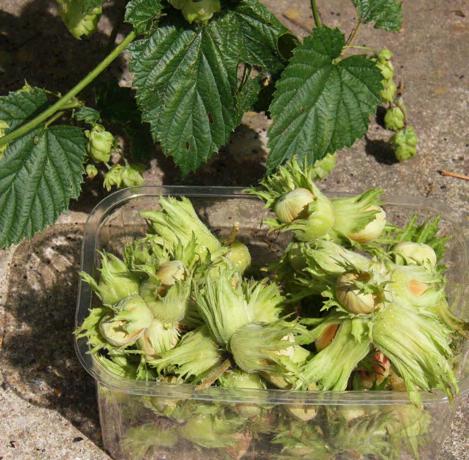
Filbert
Cosford
Picking: September
A very popular variety. Slightly larger than the Cobnut with a long husk and excellent flavour. Attractive, thin shelled nuts. A very good pollinator for other varieties.
Red Filbert
Picking: September
This worthy selection has striking long claret-red catkins and rich purple, heart shaped foliage. Very edible, dark purple skinned fruits of excellent flavour.
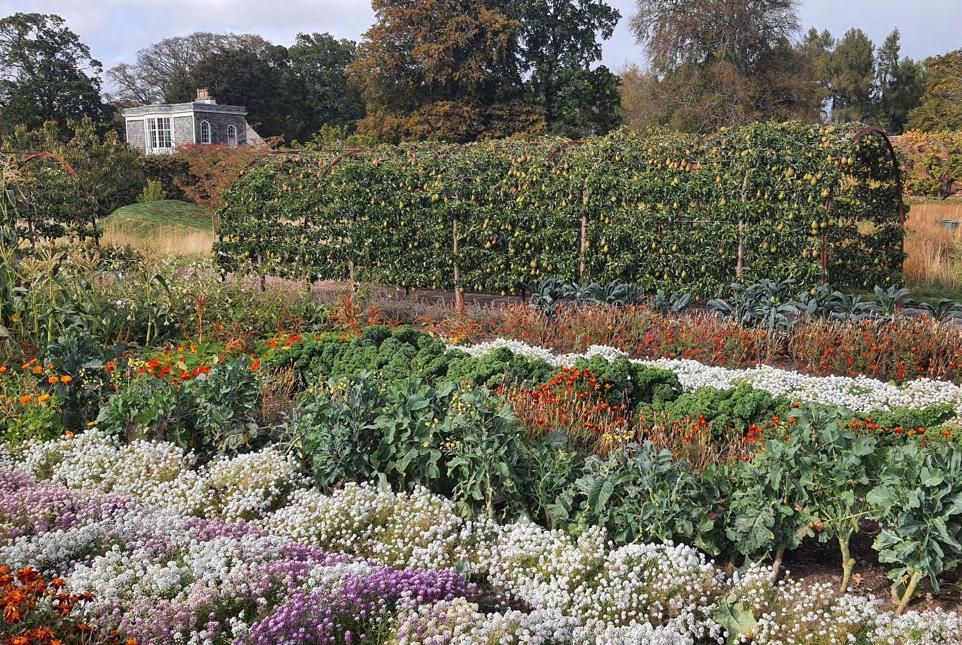
Highly productive pear arch in the ‘Walled Garden' at Gordon Castle.
Fan-trained Fig
Gage
Cambridge
Picking: Late August
A classic English variety. An excellent, heavy crop of small, yellowish-green fruits. Juicy and fresh, honey flavoured. Prefers a warm, sheltered position. (Cambridgeshire)
Coes Golden Drop
Picking: Late September
Large, yellow fruits of oval shape and with a long neck. Golden yellow flesh, juicy rich and sweet in flavour. Great quality for fresh eating or preserving. (Suffolk, 18th Century)
Dennistons Superb
Picking: Late August
The most reliable cropping, pale green flushed red gage. Large, rounded fruits that have a transparent sweet flesh. Reliable and high yields. (USA, 19th Century)
Early Transparent
Picking: Early August
An unusual gage with attractive, melting and juicy, red cheek fruits. A regular and heavy cropper. Good for desserts and jams. (Hertfordshire, 19th Century)
Jefferson
Picking: Early August
One of the very best varieties for dessert use. Yellow fruits with a bright golden yellow flesh, juicy and sweet. Hardy, suitable for northern districts. (USA, 19th Century)
Lindsey Gage
Picking: Late August
The sweetest and tastiest of gages. Less prone to cracking. Round, small to medium sized fruit. Wonderful clusters of white flowers in the spring.
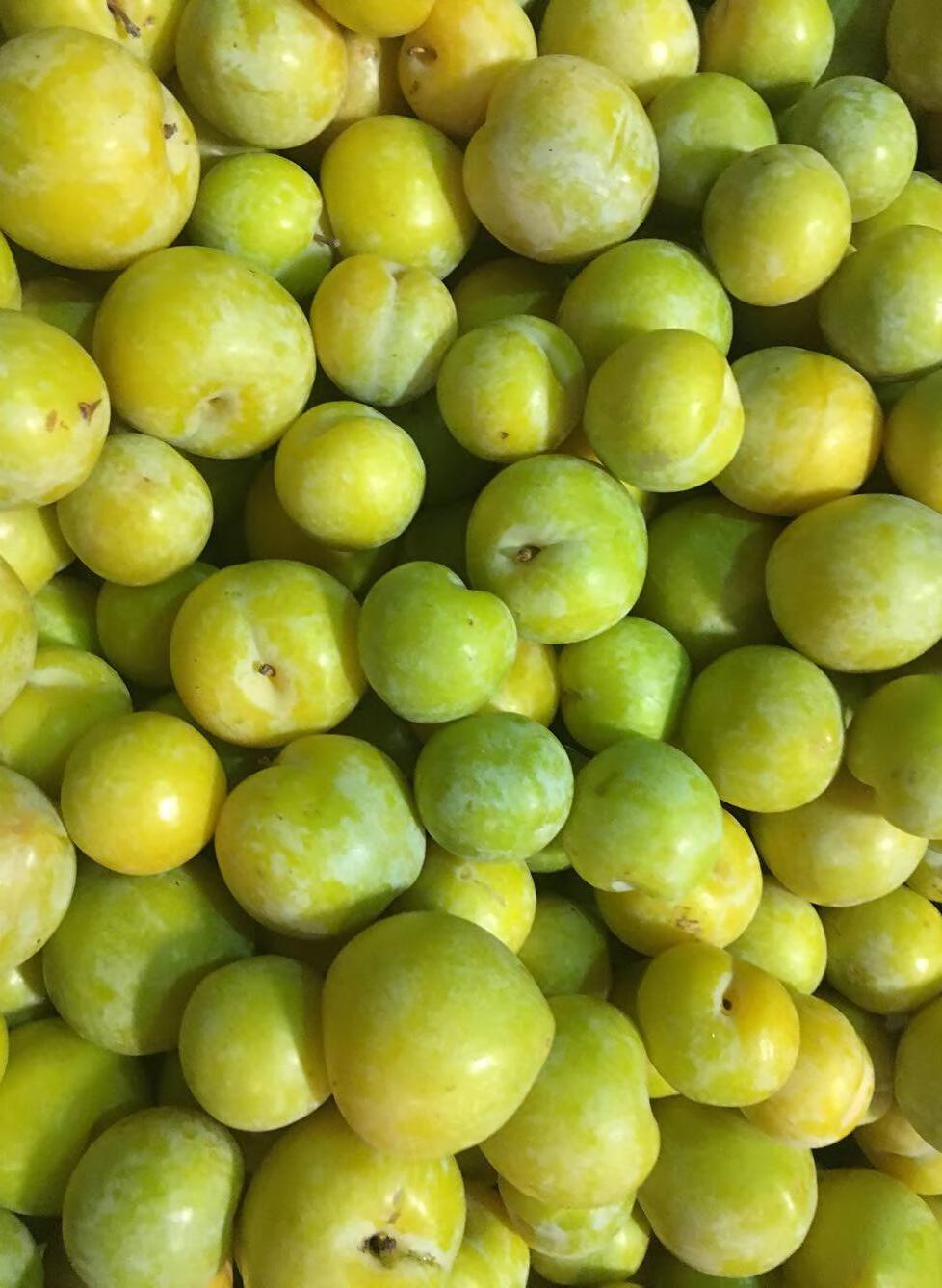
Old Greengage
Picking: Mid August
Selected for its excellent old fashioned, sweet and delicious flavours. Heavy crops of green flushed red fruit. A melting flesh and pleasant scent, a joy to eat. (UK, 17th Century)
Oullins Golden
Picking: Mid August
Golden yellow fruit, dual-purpose. Heavy crops of gages that are great for cooking and bottling. Pleasant flavour, fairly juicy. (France, 1860)
Reine Claude de Bavay
Picking: September
A very reliable cropper. Green coloured fruits turn yellow with a light bloom, some have red dots. Yellow, juicy flesh. Great for eating and cooking. (Belgium, 1843)
Stella’s Star®
Picking: Mid August
Very productive and reliable crops from an early age. Turns slightly yellow when ripening. Mildly flavoured fruits can be eaten fresh or cooked. Great for pies.
Violet
Picking: Late August
(Syn: Reine Claude Violette) This is an unusual ‘purple’ gage of excellent dessert flavour. Round, medium fruits, clingstone. Very juicy and tasty. Grows well against a warm wall.
Willingham
Picking: Mid August
As with Old Green Gage, selected for good cropping and excellent quality dessert fruit. Succulent flesh reminiscent of melons. (Cambridge, 19th Century)
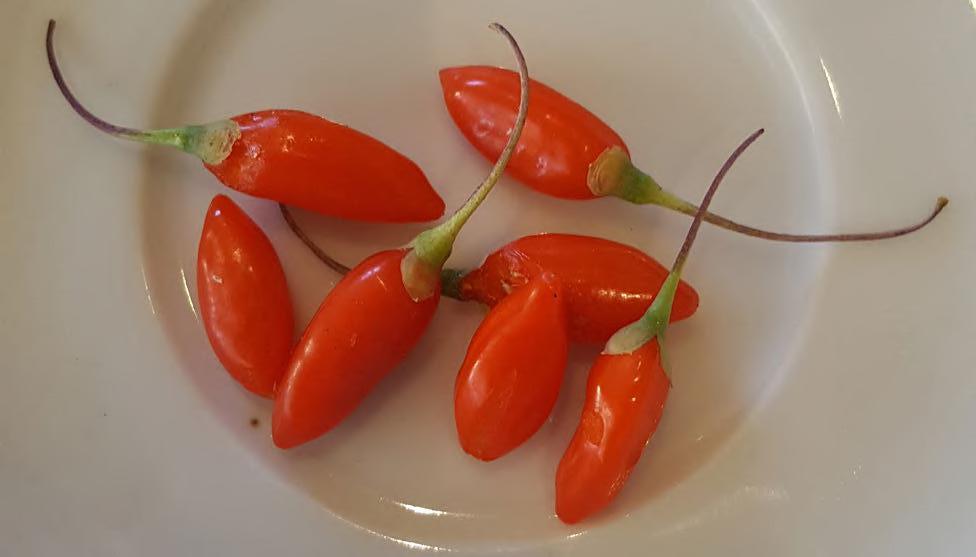
Goji
Lubera® Super Success
Picking: August
A selection that is particularly productive. Harvest the bright orange fruits from the end of August. Pleasantly sweet tasting with only a slight bitterness.
Gage Reine Claude de Bavay
Goji Lubera® Super Success
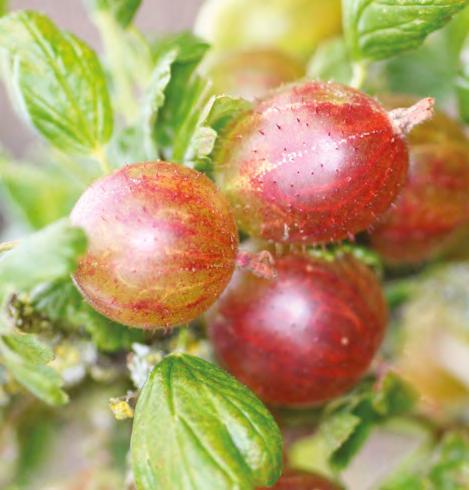
Gooseberry
Captivator
Picking: Late July
A reliable bush variety. Large, burgundy berries of excellent quality. Sweet in taste. Healthy and disease resistant. Delicious eaten fresh.
Hinnonmaki Red
Picking: Late July
Very hardy, good for both eating and cooking. Ruby red berries, slightly tangy and sweet. The red sister to Hinnonmaki Yellow.
Hinnonmaki Yellow
Picking: Late July
Heavy cropper with greenish-yellow berries. The yellow sister to Hinnonmaki Red. A unique flavour, delicious and aromatic with a hint of apricot.
Invicta®
Picking: Late July
The most popular gooseberry. Large, pale green and smooth skinned berries. Delicious, sweet flavours. Makes a tasty jam! Vigorous growth and high yields. (Kent, 1967)
Picking: September
A medium nut with good texture and a strong nutty flavour. Moderate vigour, very heavy and reliable cropper. Can produce clusters of six or more nuts. Exceptional catkin displays.
Rokula®
Picking: June
An early dark red dessert fruit with excellent flavour, mildew resistant. Moderate vigour also grown in a standard form. Delicious berries, juicy in flavour that can be eaten fresh or used for cooking. (Germany)
Hazel
Hall's Giant
Picking: September
A traditional variety. Attractive nuts, glossy rust brown shell. Resistant to nut gall mite. Excellent quality and tasty flavour. Very easy to grow, great for beginners.
Kent Cob
Picking: September
A traditional cob, planted extensively in Kent. Clusters of two to five flavoured nuts and pale yellow catkins.
Nottingham
Picking: September
A reliable, upright, deciduous shrub or small tree very similar to Webbs Prize Cob. Fruit are elongated like other cobs, with good eating quality.
Webbs Prize Cob
Picking: September
The Lambert Filbert. Very large, rich flavoured nut. Tree is an abundant bearer. Kernel remains edible for several years.
RHS Chelsea Flower Show
Frank P Matthews Trees were delighted to return to the RHS Chelsea Flower Show for the second time in 2026 and be awarded a Gold Medal. Marking a significant milestone in the company’s 125-year history.
Gunslebert
Gooseberry Captivator
Hazel Gunslebert
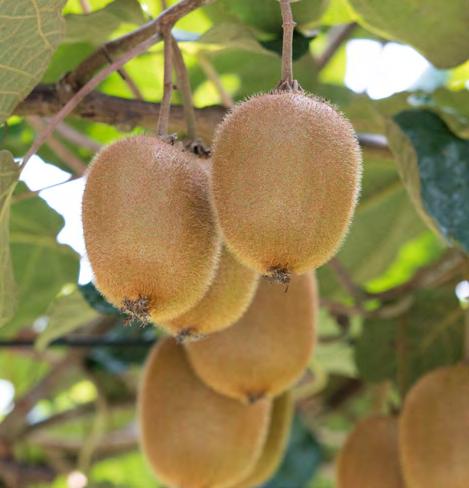
Kiwi
Jenny
Picking: August
An attractive, hardy, climbing plant with red tipped, heart shaped foliage and small white flowers. The tasty, egg shaped fruits are ready to pick August/September.
Super Issai
Picking: September
A self fertile and precocious cropping climber. Crops from mid September producing small, lime green, smooth fruits which are very sweet and juicy. These mini Kiwi are sweeter than normal kiwis and can be eaten like grapes.
Loganberry
Thornfree
Picking: August
Raspberry x Blackberry. Long red fruits with an excellent aromatic, juicy and sharp flavour. Bushy, vigorous growth and high yields.
Medlar
Nottingham
Picking: October
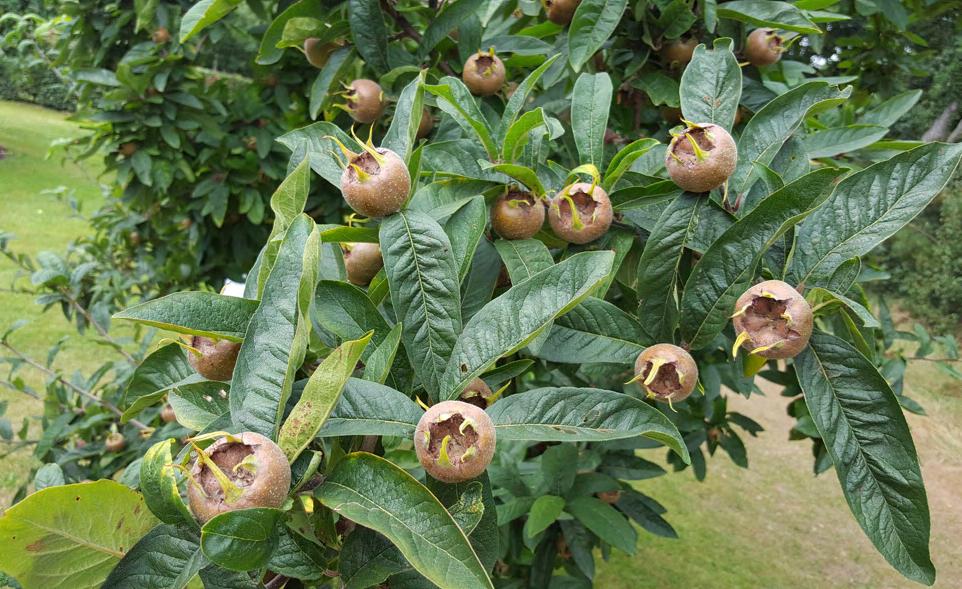
Small, semi-weeping, flat topped tree. The small russet fruits can be eaten fresh or made into jelly. Pure white spring flowers and interesting autumn foliage.
Medlar Nottingham Kiwi
Loganberry ‘Thornfree’
Mirabelle
Countess
Picking: August
Superb round, dark reddish purple plummy fruit. Yellow flesh with a wonderful melting texture, juicy and sweet. Excellent eating quality but can also be used in cooking. Semi freestone. (Ukraine, 1950)
de Nancy
Picking: Early September
A yellow-orange variety with green tinges. Very small, ovate fruits. Golden flesh, rich in flavour. Frost resistant and freestone. Good for bottling and preserves. (France, 16th Century)
Golden Sphere
Picking: Late August
Yellow almost translucent fruits with golden flesh and a sweet plummy flavour. Beautiful blossom in the spring. Very hardy variety. (Ukraine, 1995)
Gypsy
Picking: Late August
Produces a heavy crop of large, bright red Mirabelle’s. Sweet, orange flesh. The flavour is sugary and rich. One of the best for fresh eating. (Ukraine, 1995)
Carman
Picking: August
An unusual fruiting mulberry, very unique. Produces a heavy crop of large, creamy-white fruits; delicious sweet flavours. Hardy and very productive from an early age. Makes a tasty summer pudding. (Canada)
Ruby COLUMNAR™
Picking: Early September
The largest fruit of Mirabelle’s recorded. Exceptionally sweet in taste, peach-like flavours and dark red flesh. Upright in habit. (Ukraine, 1995)
Mulberry
Chelsea (King James I)
Picking: August
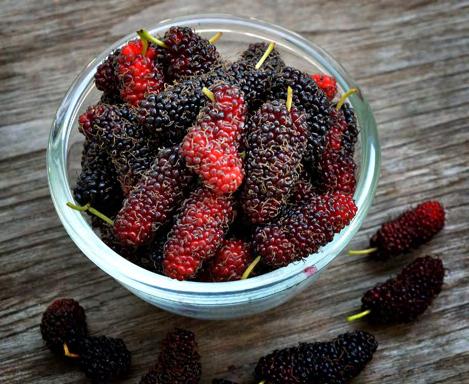
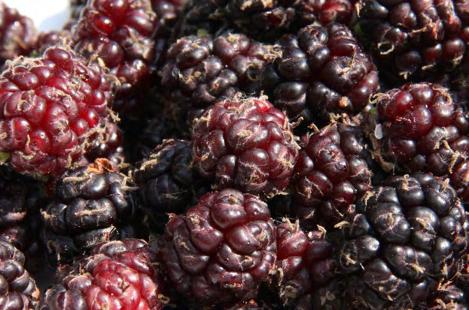
From a 17th Century tree, during the time of King James I. Large, black and succulent fruits with an intensely rich flavour. Harvest the ripest fruit each day.
Giant Fruit
Picking: August
(Mulberry Pakistan) Fruit is 2-3 times the size of regular mulberries and just as juicy and delicious. Sweet, tart flavour. A hardy tree with a neat dome shaped head.
Illinois Everbearing
Picking: August
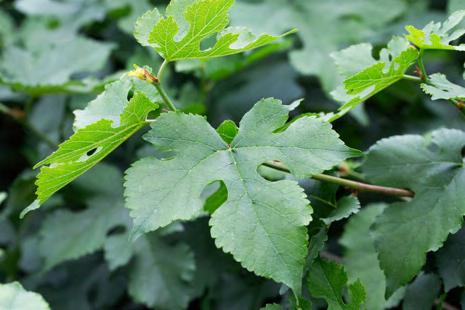
(Morus alba x rubra) Tasty, small black fruits are produced from an early age. A similar taste to blackcurrants. Large, heart shaped foliage. Hardy and vigorous. (USA)
Mojo Berry®
Picking: July
(Syn: Charlotte Russe)A unique mulberry that fruits on young plants. Dark black berries, sweet and juicy. Perfect for baking. Suitable for growing in containers.
Pendula
Picking: August
Small weeping tree. The small, white fruits turn reddish-pink as they mature. Large, heart shaped leaves are glossy dark green, turning yellow in autumn.
Mulberry Chelsea (King James I)
Mulberry Chelsea (King James I)
Mirabelle Golden Sphere
Nectarine
Lord Napier
Picking: Early August
One of the earliest, largest and most popular varieties for home growing. Regular crops of yellow fruits and melting juicy flesh. Freestone. (Sawbridgeworth, 1860)
Mesembrine
Picking: August
The sweetest flat nectarine. Smooth, yellowish red blushed fruit with juicy, melting, yellow flesh in late summer. Pretty, pink flowers in the spring.
Nectarella
Picking: Mid August
A genetic dwarf nectarine of very excellent quality. Sweet reddish-orange flesh and a freestone. Perfect for patio growing or planting in a small garden space.
Avalon Pride®
Picking: Late June
Large, reddish-orange fruits that are red fleshed, juicy and have mouth watering flavours. The most resistant variety to ‘leaf curl’.
Bonanza
Picking: August
A naturally dwarf peach was one of the first genetically dwarf selections. Pretty pink flowers in early spring are followed in late summer by large, juicy, yellow-fleshed, red- and yellow-skinned fruit.
Duke of York
Picking: July
One of the finest early white fleshed peaches. The flavour is intense and aromatic, also the flesh is very soft and juicy. (Rivers of Sawbridgeworth, 1902)
Gorgeous
Picking: Early September
Attractive purple-red striped skin. Delicious, juicy fresh flavours which make this the perfect eating variety. This peach really lives up to its name. (Kent)
Pineapple
Picking: Early September
A clean, pale skinned variety with yellow flesh and rich aromatic flavour; slightly reminiscent of a sprightly pineapple. Delicious eaten straight from the tree. (Rivers of Sawbridgeworth)
Peach
Peregrine
Picking: Early August
The most revered of white fleshed peaches. The finest flavour, intense and rich. The flesh peels away from the stone easily, freestone. (Sawbridgeworth, 1906)
Red Haven
Picking: Mid August
A popular, mid-season variety. Flavoursome, rosy pink fruits that have firm flesh, freestone. Best eaten fresh from the tree. Very easy to grow. (USA, 1940s)
Rochester
Picking: Mid August
The largest and most suitable of yellow flesh types for outdoor cultivation. Soft orange flushed red fruits. Clusters of dark pink flowers late in the spring. (USA, 1900s)
Saturn
Picking: Early August
An unusual variety that crops small, flat shaped peaches that are very sweet and succulent. Ideal for children especially with its nickname Sat-on!
Nectarine Lord Napier
Peach Avalon Pride®
Peach Saturn
Pear
Barnet
Picking: October
(Syn: Hedgehog Pear) A heavy cropping perry pear variety. Crops from an early age. Brown russeted, small fruits have a juicy flesh. Fruits are easily shaken off the tree when ripe. A pleasant light perry.
Beth
Picking: Early September
An excellent garden variety. Pale green to pale yellow fruit with smooth skin. Small clean pears with sweet and succulent flesh. Neat and compact growing habit. (Kent, 1938)
Beurre Hardy
Picking: Late September
Rough skinned fruit is light green covered with bronze russet. Tender and juicy with a rose water flavour. Vigorous and good for poor soils. Highly recommended for the garden. (France, 1820)
Beurre Superfin
Picking: Late September
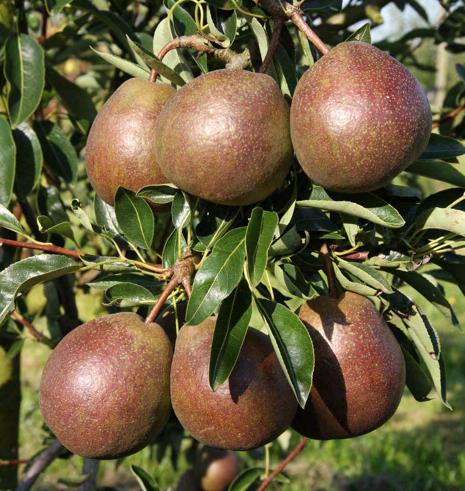
Medium size pears, mid-green turning yellow with light brown russet patches. Yellow, melting flesh has a delicious scented taste. A high quality variety suitable for warm, sheltered sites. (Angers, France, 1837)
Black Worcester
Picking: Late October
Large, heavy crop of dull green pears with brown russet and sometimes a purplish flush. Crisp, coarse, fairly juicy, green flesh. An excellent stewing pear, best cooked for 1-2 hours to soften. (16th Century)
Blakeney Red
Picking: October
Very reliable, heavy cropping variety. Fruit yellow with heavy flush, sometimes streaked with light russet. Makes a medium acid/tannin tasting perry. (Gloucestershire)
Brandy
Picking: October
An old perry variety. Small and pale greenish-yellow with bright red flush. A small tree, perfect for the smaller garden. Disease resistant. Makes a delicious drink on its own. (Gloucestershire)
Picking: October
Large, full green fruit, slight russet. Suitable for slow poaching or cooking and turns pink in the process. Also a superb exhibition fruit. Store until February and beyond. (France, 1665)
Celebration
Picking: September
3
Known as Nuvar Celebration, a large ‘pyriform’ fruit of excellent dessert quality. Produces light green fruits on a yellow background. The tree is strong growing and healthy. (Kent, 1972)
Christie
Picking: September
Well known amongst Scottish fruit enthusiasts. The green skinned fruits blush red as they ripen. Sweet and mellow in flavour. Wonderful displays of white blossom in the spring. (Pre-1900s) 3
Concorde
Picking: Late September
Recognised as one of the best varieties for gardens. Pale green, large fruits with patches of gold russet. Sweet and juicy, melting and buttery flesh with a pleasant mild flavour. A compact growing tree. (Kent, 1977) 4
Conference
Picking: Late September
3
One of the most popular and reliable varieties. Yellowish-green pears with brown russet, occasionally a pink flush. Sweet and juicy with a pleasant pear flavour. (Hertfordshire, 1885)
Conference Moors Giant®
Picking: September
A super sport of Conference pear. Up to 40% bigger and slightly rounder. Yellowish-green fruit with brown russet areas. Succulent and tasty. (Conference Moors® EU pending 4057222)
Cornishgold
™
Picking: September
3 3
An incredible juicing variety, the firm fruits are perfect for cooking, canning and other culinary delights and store well. Self fertile and will crop reliably in even the most exposed sites. (Launceston, Cornwall)
Doyenne du Comice
Picking: Early October
4
Superb quality eating pear. The green fruits have a red flush, and a pale yellow flesh with rich juicy flavouring. Needs to have good pollination. (France, 19th Century)
Fondante d’Automne
Picking: September
3 Look out for our Frank P Matthews posters, labels & bedcards in the garden centres.
High quality and reliable, a good garden variety. Green fruit with pinkish flush and mottled brown russet. Melting juicy texture. Pick just before they’re ready and leave to ripen in a bowl. (France, 1825)
Catillac
Pear Black Worcester
Picking: Mid October
A rare but excellent perry variety. Medium sized fruits, green in colour with a slight orange flush. Acid and tannin to taste and good keeping quality. (Gloucestershire, 19th Century)
Glou Morceau
Picking: Early October
Pea green coloured fruit with a little russet. Fine, melting and juicy texture, classic flavour. A very good pollinator for other varieties. (Belgium, 1750)
Gorham
Picking: Mid September
Pale green turning yellow, some are heavily russeted. Creamy, fine and juicy flesh with a sweet musky flavour. Upright growing and a good pollinator for other varieties. (USA, 1910)
Green Horse
Picking: October
Attractive, olive green perry pear with an orange flush. Makes a high acid/low tannin perry of excellent quality. Can be stewed or pickled. (Gloucestershire, 1886)
Hellens Early
Picking: Mid September
One of the best early perry pear varieties. Strong growing tree with heavy crops of small, rounded green fruits. Low to medium tannin. (Gloucestershire, 18th Century)
Hendre Huffcap
Picking: Early October
A very rare, large tree with upright branches. Fruit is elliptical and irregular. Medium acid, low tannin for a pleasant, vintage quality perry. (Gloucestershire, 1960s)
Humbug
Picking: October
(Syn: Swiss Trousers) An unusual pear which offers something very special for the garden. Green, yellow and pink striped fruits. Sweet and juicy texture with a thick skin. Known as the ‘Easter Pear'. (Ukraine)
Improved Fertility
Picking: Mid September
An improved, self fertile form of the variety ‘Fertility'. Reliable crops of medium sized fruits that are pale green flushed yellow with variable amounts of russet. Flesh is very sweet and juicy and can also be used for cooking. Good disease resistance.
Invincible delwinor fertilia®
Picking: Mid September
Named for being tough and hardy, setting heavy crops each year. Green in colour with yellow flush and sweet, soft and juicy flesh. Will often produce a second flowering. (France, 19th Century)
Jargonelle
Picking: Late August
One of the hardiest and longest lived pears, making a majestic tree. Pale yellow with brownish-red flush on some fruits. Tender and juicy flesh with a musky flavour. (1629)
Josephine de Malines
Picking: October
Greenish-yellow fruits with a dark red flush. Sweet and moderately juicy, rich buttery and perfumed white flesh. Keeps well into the New Year. (Belgium, 1830) 4
Judge Amphlet
Picking: September
1
A medium sized tree with a narrow crown in the early years. Fruit is greenish-yellow with a russet cheek. Pleasant, low tannin light perry. (Worcestershire, 20th Century)
Louise Bonne of Jersey
Picking: Mid September
2
An attractive, reliable and good quality variety. Small-medium, pale green fruit with a white, succulent, melting flesh. The tree itself is moderately vigorous. (France, 1780)
Merton Pride
Picking: Early September
3
A wonderful garden variety producing heavy crops of large, green fruit. White flesh is soft. One of the juiciest pears of its season. (Surrey, 1941)
Moonglow
Picking: Late August
3
A high quality, mid-season variety that produces bright lemon skinned fruits when ripe. Flesh is soft, juicy and sweet in flavour; slightly perfumed. (USA, 1960)
Obelisk®
Picking: Early October
3
Dwarf pear with upright, columnar growing habit making it ideal for small spaces and patio growing. Green with a slight flush, crunchy with a delicate taste. Stores well into winter. (Slovakia)
Pear Humbug
Pear Obelisk®
Picking: September
A cross between Concorde and Red Williams. Its name reflects the fruit’s colour change from purple to rose-pink at harvest time, typically in early October, as well as a personal link to the breeder’s wife, Rosemary. It stores effectively until Christmas. The fruit ripens slowly at room temperature, developing a juicy, melting texture and a flavour similar to Red Williams. A naturally small and compact tree, great for smaller spaces and patio growing. This red pear crops from an early age and much more heavily than other red pears. Misty
is
in
Pear NuvarTM Misty RoseTM
Rose™ (NC4)
a pear variety bred by John Breach in Kent, UK,
2007. 3
Pear Nuvar™ Misty Rose™
Pear Nuvar™ Misty Rose™
Onward
Picking: Early September
Excellent quality, medium sized fruit. Light green in colour with a pinkish flush and some heavy russeting. Creamy white flesh has a sweet and rich flavour. (Surrey, 1947)
Packham’s Triumph
Picking: Early October
A reliable pear grown on a large commercial scale in South Africa. Small, bright green fruit with unusual bumpy appearance. Fine, juicy and musky flavour. (Australia, 19th Century)
Pitmaston Dutchess
Picking: Mid September
One of the finest eating pears. Very large, long, golden-yellow russeted fruit. Yellowish white flesh juicy and melting, slightly gritty around the core. (Worcestershire, 1841)
Red Pear
Picking: Early October
An old, popular variety. Heavy crops of low acid and low tanning perry pears of good quality. Keeps well after harvest. Grown on a wide commercial scale for over 400 years. (Malvern, 16th Century)
Santa Claus
Picking: December
Rich, highly perfumed with finely textured melting pale cream flesh; juicy and sweet. Named for its late ripening in December. Beautiful white spring blossom. (Belgium/France, 1875)
Sensation
Picking: Mid August
A sport of Williams' Bon Chrétien, with red skin, striking red foliage and white blossom in spring. Fine texture, melting juicy. Upright and narrow growth habit. (Australia, 1940s)
Thorn
Picking: Late September
Small tree with upright habit and multi spur systems. Abundant crops of small yellow fruits with some russet. Medium acid and low tannin. (Gloucestershire, 1670)
Persimmon
Nikitas Gift
Picking: October
A delightful small-to-medium tree known for its ornamental beauty and delicious, sweet, orange fruit. Glossy green foliage turns vibrant shades of red and orange in autumn. Ideal for fresh eating, baking, or drying. Best planted in a sheltered position.
Rosseyanka
Picking: October
This hardy variety is prized for its cold tolerance, and deliciously sweet fruit, making it more suitable for planting in the UK. Glossy green leaves turn to stunning shades of gold and orange in autumn. Best planted in a sheltered position.
Williams’ Bon Chrétien
Picking: Late August
The most popular, old English pear. A great garden tree that has regular crops of oval-shaped, smooth skinned fruits. Refreshing flesh, perfect for eating fresh, poaching and preserving. (Berkshire, 1770)
Winnals Longdon
Picking: October
Heavy crops of small greenish-yellow fruits that have a slight red flush and light russet. Makes a medium to high acid low tannin perry. (Hereford, 1790)
Winter Nelis
Picking: Early November
A fine, late pear variety that produces small fruits of pale green almost covered in russet. The richest flavoured pears last well into the New Year. (Belgium, 1818)
Yellow Huffcap
Picking: October
An excellent variety noted for its strength. Produces heavy crops of greenish-yellow fruits with some russet. Makes a medium to high acid, low tannin fruity perry. Fruits should be shaken off before it's ripe. (Gloucestershire)
Pear Williams’ Bon Chrétien
Persimmon
Avalon
Picking: Mid August
One of the finest quality dessert plums. Golden flushed, freestone red fruits, moderately juicy and fairly sweet. A strong growing tree. (Bristol, 1980)
Belle de Louvain
Picking: Mid August
Purplish-red fruit, flesh is firm in texture and sweet. A delicious variety for cooking into pastries or cakes, and also tasty eaten fresh from the tree. (Belgium, 1845)
Blaisdon Red
Picking: Early August
Vibrant purple-red skinned fruit which turns the flesh bright red when cooked. Upright in habit, perfect for the smaller space. Lovely white blossoms in spring. (Blaisdon, Gloucester)
Blue Tit
Picking: August
An old Laxtons variety of excellent quality. Regular crops of dark blue plums with blue-black bloom. Yellow flesh with pleasant sweet-sharp flavour. (Bedford, 1938)
Dittisham Ploughman
Picking: August
Large, red, oval/oblong fruits crop in early to mid August. Mainly used for cooking but can sometimes be eaten. Particularly suited to growing in the West of the country as it was originally found in Devon. (Devon, UK)
Excalibur
Picking: Early August
Pale yellow fruits, mostly covered with reddish-orange flush. Transparent flesh, moderately juicy and sweet. A vigorous tree. Shy cropping but the excellent quality fruit compensates well. (Bristol, 1970)
Giant Prune
Picking: September
A heavy cropping plum producing very large, dark red ovalshaped fruits that have medium blue bloom and some golden brown dots and patches. The flesh is yellow, juicy, slightly sweet. Tough and reliable for exposed areas.
Groves Late Victoria
Picking: September
Picking: Early August
3
A culinary plum variety that crops heavily and reliably. Medium sized dark purple fruits have a light blue bloom and fine dots on the skin. Green flesh is of excellent flavours. (Hertfordshire, 19th Century)
Edda
Picking: Late August
An excellent dessert plum. Reliable crop of blue skinned fruits and yellow flesh with a fine, rich flavour. Very hardy, grows well in difficult conditions. (Norway, 1950s)
Ferbleue®
Picking: August
Reine Claude Verte x California Blue. Selected from a French breeding programme. A blue plum of the most delicious flavours, very high sugar content. (France)
Gordon Castle
Picking: Early September
A native hardy variety suitable for northern districts. Greenishyellow plum and sweet with an excellent flavour. Best when eaten straight from the tree. (Scotland, 1864)
Produces large reddish-purple plums that are juicy, sweet and have excellent flavour. Delicious straight from the tree or cooked into puddings, cakes or jams. The flesh falls clean from the stone. Guinevere
Haganta®
Picking: September
Strong scented, blue plums that are great for cooking into cakes, puddings and jams. Sweet, yellow flesh, freestone. Keeps well into October. (Germany, 2005)
Picking: Late September
Healthy, well shaped and manageable tree. Black, sweet plums. Excellent eating quality and an extended shelf life when stored in the fridge. (Kent, 2000)
Herman
Picking: Mid July
Reliable, dual-purpose variety that has dark blue, very early fruits. Golden flesh, juicy and freestone. Best eaten straight from the tree. (Sweden, 1970)
Czar
Pear Humbug
Plum Gordon Castle
Jubilee
Picking: Mid August
Superb eating quality. Large fruit with dark red skin and yellow flesh that has a good balance of sweetness and sharpness. Freestone, strong growing tree. (Sweden, 1985)
Kea
Picking: Mid August
A very special culinary plum, easy to grow and suitable for damp climates. The dark red fruit makes incredible jam, preserves and liqueur. (Fal Valley, Cornwall)
Malling Elizabeth®
Picking: Early July
Bred at NIAB EMR and released to celebrate the Queen’s Platinum Jubilee. This plum is Victoria-like in appearance but appearing much earlier in July. Red-purple skin colour, sweet, juicy and delicious plums. (Kent, 2022)
Picking: Late August
An old, traditional Cornish variety. Yellow skinned plums with an orange blush. Traditionally used for jam making but is often sweet enough for fresh eating. (Cornwall)
Marjorie’s Seedling
Picking: Early September
One of the later picking plums for early September. Large and good quality purple fruit with thick blue bloom. Yellow flesh, suitable for cooking and fresh eating. (Berkshire, 1912)
Opal
Picking: Late July
One of the most reliable garden plums. A medium, reddish-purple fruit with superb flavour. Known as the early Victoria. Freestone. (Sweden, 1925)
Purple Pershore
Picking: Late August
Known as the Purple Egg Plum. A very robust plum with good, regular crops. Reddish-purple with thick, blue bloom. Firm flesh, juicy and sweet. (Worcester, 1877)
Queen’s Crown
Picking: Late August
(Syn: Denbigh or Cox's Emperor) Quite possibly the finest variety the plum family has to offer. Pink-red oval fruits. Delicious flavours, heavy cropping. Clingstone.
Reeves
Picking: Late August
Flavoursome plum, round attractive red skinned fruits that are freestone. A high quality dessert variety. Tastiest when eaten from the tree. (Canada, 1940)
River’s Early Prolific
Picking: Late July
A popular dessert variety, heavy cropping and early season. Attractive, small bluish-purple fruits that have a lavender bloom. Rather firm, golden flesh. (Hertfordshire, 1820) 2
Sanctus Hubertus
Picking: Late July
Oval-shaped, dark red with thick, blue bloom and small brown russet. One of the best croppers of early varieties. Rich flavours, ensure the fruit is fully ripe. (Belgium, 1966)
Seneca
Picking: Early September
A perfect late season plum for any garden. Reddish-purple fruits best eaten fresh from the tree when fully ripe. Wonderful, white blossom in the spring. (USA, 1937)
Swan
Picking: Late August
Produces round red-purplish fruits with a heavy purple bloom. Flesh is juicy and sweet with the most pleasant flavour. A good dessert plum but better for cooking into cakes, crumbles and jams.
Picking: Late July
A dessert plum, similar quality to Victoria with larger fruit and earlier to crop. Red in colour with yellow, succulent flesh. Suitable for colder areas in the UK. (Sweden, 1985)
Plum Malling Elizabeth®
Topend Plus
Picking: Mid September
The latest ripening fruit in the season. Can be picked over a long period. Oblong fruit usually over 60g each, firm and juicy aromatic fruit. Freestone and good resistance to plum pox virus.
Topfive®
Picking: Mid August
A good dessert plum. The fruit are ovate to oblong 35-40mm and dark blue in colour with greenish-yellow firm and juice flesh. Can be kept in the fridge for up to 2 weeks. Freestone and good resistance to plum pox virus.
Tophit Plus®
Picking: Early September
The steel blue fruits can weigh up to 100g! Green, aromatic flesh. A late cropper but can be harvested over a long period of time and stores well in the fridge. (Germany, 1987)
Toptaste® Kulinaria
Picking: Early September
One of several ‘Top’ bred varieties, highly regarded for quality and cropping. Medium sized, firm, juicy and very aromatic sweet yellow flesh. Good disease resistance. (Germany)
Plum Crosses
Miracot Aprimira®
Picking: Early August
Mirabelle x Apricot. A wonderfully mandarin flavoured sweet and juicy, egg shaped fruit. Freestone and firm. Yellow with a pretty red blush. Superb eating quality. (Germany)
Plumcot Flavor King
Picking: August
Plum x Apricot (Pluot). Red-purple round fruits with red flesh. Spicy, juicy and delicious tasting. Will cross pollinate with Plums and Gages.
Victoria
Picking: Late August
The most popular plum variety. Bright red fruits have dark yellow, freestone flesh, moderately juicy and fair flavour. Perfect for eating and cooking into desserts and jams. (Sussex, 1840)
Violetta
Picking: August
Produces very attractive dark blue fruits that are similar in shape to Plum Victoria. The flesh is yellow, sweetly flavoured; delicious baked into desserts. A compact grower, very productive and excellent quality. (Sweden, 1990)
Warwickshire Drooper
Picking: Mid August
Large yellow dessert fruit, juicy and good for eating and cooking. Crops well and regular. The tree itself has a drooping habit, hence the name. (West Midlands, pre 1920s)
Yellow Pershore
Picking: Mid August
A reliable cropper for dessert as well as the ideal bottling plum. Large, yellow fruits with juicy flesh; sharp and delicious. An easy grower, good for beginners. (Worcestershire, 19th Century)
Plum Victoria
Miracot Aprimira®
Quince
Aromatnaya
Picking: September
(Syn: Krymsk) A smooth rounded fruit, not knobbly like most others. One of the few that have claims of fresh eating qualities. Tropical flavours. Perfect for making into jellies. Heavy cropping. (Russia)
Bereczki
Picking: September
An old traditional variety. Pear shaped fruit that are big, juicy and nicely acidic. The yellow flesh turns reddish when cooked. Makes a tasty jam and quince cheese. (Hungary, 19th Century)
Isfahan
Picking: October
Isfahan produces an excellent crop of large, high quality fruits. Can be eaten fresh when properly ripe or used in cooking, to make jams, jellies, membrillo or to flavour gins and vodkas. Ornamental blossom adds to its appeal.
Raspberry
Autumn
First
Picking: September
An improved alternative to Autumn Bliss and the earliest of the classic autumn raspberries. Large bright red fruits can be harvested from late September. The berries have a fruityaromatic taste, backed by a fine acidity.
Glen Ample®
Picking: July
High yielding, spine free variety with large, quality fruit. Bright red, tasty berries that can weigh up to 30 grams. Fruit picking over a long period. (Scotland, 1978)
Golden Everest
Picking: August
The original mid-season yellow raspberry. The deliciously sweet golden berries are packed full of vitamins and antioxidants. Perfect for cooking and eating fresh.
Lowberry® Goodasgold
Picking: August
Excellent quality yellow raspberry. Perfect for growing in small spaces or in a pot. Has a combined sweet and sour flavour.
Meech’s Prolific
Picking: October
Popular, reliable cropper with pear-shaped fruits that are yellow when fully ripe. The fruits also have a distinctive scent. Interesting twisted branches and dark green curled leaves. (USA, 1880)
Serbian Gold
Picking: Early October
Highly productive variety for culinary use. The apple shaped fruits have an aromatic flavour. Good resistance to leaf blight. Unique, silver coloured foliage. (Serbia, 1900s)
Vranja
Picking: October
Large pale greenish-yellow fruit. Bitter to taste so mostly used for cooking. Strong fragrance to the fruit. Beautiful clusters of light pink flowers in the spring. (Serbia, 1800)
Lowberry® Little Sweet Sister
Picking: August
A compact dwarf autumn fruiting raspberry. Medium sized dark red with a sweet mild flavour. Excellent for balconies and patio growing like all the Lowberry® series.
Summer Chef
Picking: July
A high yielding summer raspberry, ripening in July. The large fruits are highly aromatic with extraordinary fruitiness due to an optimal sweet-acid ratio.
Raspberry Golden Everest
Quince Aromatnaya
Quince Serbian Gold
RASPBERRY 3L 4 PACK
Introducing our new 3L (pack of 4) potted raspberries – with a convenient four-way divider to keep roots separated for healthier, easier planting. These upgraded plants replace our previous root-wrapped 5-pack, offering improved establishment and reduced transplant stress. The following varieties will be available in this new form: Glen Ample®, Golden Everest, Autumn First and Summer Chef.
Redcurrant
Junifer
Picking: July
Early season variety. Easy to pick and one of the highest yielding redcurrants. Very reliable with good disease resistance. The red fruits are preceded by a show of attractive flowers.
Rovada
Picking: July
Now the most popular variety for its high yields of superb quality fruit. Long strigs of luscious redcurrants with vibrant, delicious flavours. Makes a tasty summer pudding.
Rhubarb
Strawberry Surprise
Picking: April
Strong, vigorous variety producing vivid red stems with a wellbalanced acidity. Voted the best flavoured rhubarb in the RHS Wisley trials. Good for growing in borders or patio containers.
Victoria
Picking: Mid March
A long established, popular rhubarb variety producing an abundant yield of large thick red stalks. The best cooking variety, recommended for its sweet, juicy and mild flavours.
Redcurrant
Rhubarb
Vines
Bacchus
Picking: September
This is recommended as the best, outdoor white wine variety for the UK. The branches are filled with flavoursome fruits that juice into a lovely wine.
Dornfelder
Picking: Mid September
A good hardy red, outdoor grape combining heavy crops of very edible fruits with stunning autumn leaf colour. Rich to taste, best flavours for desserts and wine.
Suffolk Red
Picking: September
Bright purple red, outdoor eating grape that crops early in autumn. Good winter hardiness across the UK. The sweet fruits can be eaten fresh or made into a juicy wine. Seedless depending on growing conditions.
Tayberry
Buckingham
Picking: Mid July
Raspberry x Blackberry. The thornfree Tayberry that produces large and succulent fruits with delicious sweet, aromatic taste.
Lakemont
Picking: September
Big bunches of seedless, white, outdoor grapes with Muscat taste. Sweet, almost honey flavours. Good resistance to downy mildew.
Muscat Bleu
Picking: September
This is the modern mildew resistant, outdoor blue-black eating grape. The red fleshed fruits have a Muscat flavour, with a hint of nutmeg. Crops well.
Phoenix
Picking: September
Large, outdoor fruit produces a fine Muscat aroma. Heavy yielding, white grapes turn yellow when they need picking. Perfect for dessert and wine-making.
Regent
Picking: September
Blue/Black, outdoor variety. Large grapes mature to a true black in good summers with a sweet refreshing flavour. The red leaves add value as a climbing shrub.
Strawberry
Picking: September
A very productive, outdoor variety. Also known as ‘Fragola’, this red grape has intense and rich flavours with a strong hint of strawberry. Fiery autumn foliage.
Tayberry Buckingham
Vine ‘Muscat Bleu’
Vine ‘Suffolk Red’
Walnut
Broadview
Picking: September
The most popular walnut. Precocious from an early age. Small compact tree and fruits earlier than others. Can be harvested green and pickled, or left until fully ripe to be dried. (Canada)
Buccaneer
Picking: September
A healthy, robust tree that’s very heavy cropping. A round nut carried in abundance, particularly suited for pickling. The tree will start to carry nuts 3-4 years after planting.
Chandler
Picking: September
A high quality large rounded nut, thin shelled. Experimental in the UK. Accounts for much of California and Turkish commercial production.
Fernette
Picking: September
Large, excellent quality globular nut, thin shelled for kernel extraction. Best when eaten fresh when fully ripe. A good pollinator for other varieties. Suited to the UK climate.
Fernor
Picking: September
Thin shelled nut, easy for kernel extraction. Late leafing, precocious flowering and late ripening. Best eaten ripe and fresh. A good pollinator.
Franquette
Picking: September
Superb late season quality, large oval shaped with a thin shell. Strong growing but late into leaf so avoiding frosts. Reliable. (France)
Lara
Picking: September
Heavy cropping large nut, rough-textured. Excellent quality and a magnificent feature for the larger garden. A unique creamy flavour. Franquette would be the best pollinator.
Whitecurrant
Blanka
Picking: September
A heavy cropping, late season cultivar. Transparent, ivory coloured fruits. The currants can be frozen, cooked into pies and jams. Can be planted in bushes, or trained against a wall.
Walnut
Walnut Broadview
Whitecurrant Blanka
Ornamental Trees
Acacia
Acacia dealbata
Tree Shape: Spreading
An upright, evergreen tree of open habit. Bluish-green leaves. Clusters of small, scented yellow flowers in April. Enjoys a well drained soil and sunny sheltered site. (Australia)
Acer (Maple)
Acer buergerianum
Tree Shape: Upright
A bushy, small tree that can be slow growing. Mature trees have attractive reddish brown flaking bark. Produces a round crown of lush green summer foliage which turns into striking reddish orange autumn colour. (Japan, 1880)
Acer campestre
Tree Shape: Standard
(Field Maple) A round-headed, very hardy tree with corky light brown stems. Five lobed dark green leaves sometimes pinkish-red at first turn a yellowish-golden russet, or even dark purple in autumn.
Acer campestre ‘Elegant’
Tree Shape: Upright
A compact vigorous clone of field maple. The small, bright green leaves in spring turn a range of colours in autumn, orange, yellow and brown. The name comes from the ‘Elegant' ascending structure of branches. (Netherlands, 1990)
Acer campestre ‘Street Pillar’
Tree Shape: Upright
A narrow, upright ascending Acer that is suitable for planting in streets. Resistant to salt, drought and extreme conditions.
Acer cappadocicum ‘Aureum’
Tree Shape: Standard
(Golden Maple) A medium sized tree with a tidy, dome shaped canopy of narrow branches and stunning autumn tints. Young emerging leaves are red, turning to golden yellow for many weeks until they fall. (1914)
Acer cappadocicum ‘Rubrum’
Tree Shape: Standard
Fiery blood-red young leaves turn green in the summer and later assume stunning golden yellow autumn tints. Its attractive rounded canopy makes this variety perfect for smaller gardens or small spaces. (1838)
Acer conspicuum ‘Esk Flamingo’
Tree Shape: Standard
(Snakebark Maple) Attractive small tree with lobed leaves variegated in pink, green and white. Young stems are a vivid red, and the eye-catching bark is red with white markings along its length. (Napier, New Zealand)
Acer davidii ‘Viper’® (mindavi)
Tree Shape: Standard
(Snakebark Maple) A deciduous, upright form with white and green striated bark. Dark green foliage turns orange in autumn. Clusters of flowers in spring, followed by winged fruits that ripen to red-brown.
Acer x freemanii ‘Autumn Blaze’®
Tree Shape: Standard
A vigorous hybrid with deeply cut leaves and a dense oval head. Yellow-green summer foliage turns red, orange and yellow in autumn. In winter, the bare branches boast silvery-grey bark adding all year round interest. (USA)
Acer x freemanii ‘Morgan’
Tree Shape: Standard
Also known as Morgan Freeman Maple. A fast growing tree with an open pyramid shape. An outstanding new hybrid of the red and silver maple combining the best of both with excellent, vivid autumn colour.
Acer griseum
Tree Shape: Standard
(Paper Bark Maple) Curly brown, flaking old bark shows cinnamon-coloured new bark beneath. Yellowish-green leaves turn red and scarlet in autumn. Small pale greenish-yellow flowers in late spring. (China, 1901)
Acacia dealbata
Acer buergerianum
Acer negundo ‘Flamingo’
Tree Shape: Standard
A fast growing Acer with attractive grey-white stems in winter. Young leaves emerge with a broad, soft pink salmon margin later changing to white. Prune hard in spring to enhance the exotic foliage. (Netherlands, 1970s)
Acer negundo ‘Kelly’s Gold’
Tree Shape: Standard
6
A medium, bushy-headed tree, with bright yellow new leaves, golden-green as they mature, then yellow again in autumn. Drooping racemes of golden tassel-like flowers in June, followed by winged fruits. (New Zealand, 1989)
Acer negundo ‘Winter Lightning’
Tree Shape: Standard
4
(Boxelder Maple) A medium sized, bushy-headed tree with green summer leaves turning to gold in the autumn. Bright gold and yellow stems for winter interest. Small, golden, tassel-like flowers in spring.
Acer palmatum ‘Ariadne’
Tree Shape: Bushy
(Japanese Maple) Semi-dwarf deciduous tree with deeply lobed leaves which are marbled with cream & pink. Springtime colour is predominantly orange with bright green veins, turning purple-red with red veins in the summer and orange with red veins in the autumn.
Acer palmatum ‘Crimson Queen’
Tree Shape: Bushy
(Japanese Maple) Beautiful palmatum with finely cut reddish purple leaves. Under sunny conditions, the feathery leaves turn into a fiery red colour. Perfect for planting in small spaces or even a large container. (1965)
Acer palmatum ‘Dissectum’
Tree Shape: Bushy
(Japanese Maple) A low growing, small tree with fine, deeply cut lobed leaves, emerging green in the spring before turning gorgeous shades of yellow, orange and red in the autumn. (1784)
Acer palmatum ‘Enkan’
Tree Shape: Bushy
(Japanese Maple) A small, upright, strap-leaved cultivar. Winered, deeply lobed foliage in spring turns bright shades of red in autumn. Perfect for small gardens or planting in a large container. (Netherlands, 1991)
Acer palmatum ‘Garnet’
Tree Shape: Bushy
(Japanese Maple) Dissectum Garnet. A strong growing maple developing finely dissected, purple leaves that resemble the colour of a garnet. Holds its colour well, before turning shades of rich red in autumn. (Netherlands, 1950)
Acer palmatum ‘Karasu gawa’
Tree Shape: Upright
(Japanese Maple) A lovely variegated form with varying amounts of cream, white and pink variegations, often with an attractive curling of the leaves as well.
Acer palmatum ‘Katsura’
Tree Shape: Bushy
(Japanese Maple) A delightful form with striking, spring growth. Five lobed leaves unfold a pale yellow with margins of brighter orange, turn yellowish-green in summer, then bright yellow and orange in autumn.
Acer palmatum ‘Kinshi’
Tree Shape: Bushy
(Japanese Maple) A slow growing, small, strap-leaved tree with finely narrowed, filigree leaves, starting dark green, turning bronze in autumn. A gentle weeping growing habit, forms a tidy, compact shape. (Japan, 1984)
Acer palmatum ‘Linearilobum’
Tree Shape: Bushy
(Japanese Maple) A unique variety with long, narrow divided leaves. The light green, bamboo-like foliage turns stunning, bright yellow colours in the autumn. Perfect for small gardens or planting in a large container. (1867)
Acer palmatum ‘Orange Dream’
Tree Shape: Bushy
(Japanese Maple) Seven lobed leaves emerge orange, becoming yellowish-green in summer, often with red tints edging the leaves. Autumn colours are bright yellow-gold turning crimson. (Italy, 1990)
Acer palmatum ‘Garnet’
Acer palmatum ‘Orange Dream’
Acer palmatum ‘Osakazuki’
Tree Shape: Bushy
(Japanese Maple) A classic green leaved variety, which produces stunning, long lasting, fiery scarlet foliage in autumn. It has a slow growing, open habit which can look dramatic against a tall hedge or building. (1882)
Acer palmatum ‘Pixie’
Tree Shape: Bushy
(Japanese Maple) Leaves emerge bright pink in spring, darkening to deep reddish-bronze in summer, lasting well into the autumn before they turn fiery, bright scarlet. Perfect for small gardens or planting in a large container.
Acer palmatum ‘Red Emperor’
Tree Shape: Bushy
(Japanese Maple) An improved version of Acer Bloodgood, retaining good leaf colour through the summer. The deeply lobed foliage emerges reddish-purple in spring, turning dark crimson in the autumn.
Acer palmatum ‘Sango kaku’
Tree Shape: Bushy
(Japanese Maple) Small palmate, pale green leaves in spring with a strong, red tinge. Foliage becomes light green in summer followed by yellow-gold in autumn. Bright coral-red stems emerge in winter. (1882)
Acer palmatum ‘Seiryu’
Tree Shape: Bushy
(Japanese Maple) An unusual form of upright, bushy habit. Bright green leaves tipped slightly red in spring. A spectacular display of orange and yellow splashed crimson autumn colours. (1882)
Acer palmatum ‘Suminagashi’
Tree Shape: Bushy
(Japanese Maple) One of the best of the red Matsumurae group with a strong growth habit. Seven-lobed, rich, dark purple, leaves darken to deep maroon, almost black in summer, turning crimson red in autumn. (1930)
Acer palmatum ‘Tamukeyama’
Tree Shape: Bushy
(Japanese Maple) (Syn: ‘Dissectum Tamuke yama') Crimson red dissected leaves unfold to dark purple, turning scarlet in autumn. One of the best and most robust purple dissected forms. (1710)
Acer palmatum ‘Trompenburg’
Tree Shape: Bushy
(Japanese Maple) Deep purple-red narrow lobed leaves in spring, turning green in the summer and crimson red in autumn. A graceful form and a favourite for small gardens or planting in a large container. (Netherlands)
Acer palmatum ‘Villa Taranto’
Tree Shape: Bushy
(Japanese Maple) A dome-shaped bush and foliage with five slender leaflets. Leaves emerge orange crimson, then green with reddish overtone, turning yellowish-gold in autumn. Perfect for small gardens. (1967)
Acer platanoides
Tree Shape: Standard
4
(Norway Maple) A robust, large, round-headed, fast growing tree. The five lobed leaves are pale, then bright green and mellow yellow in autumn. Clusters of lime green flowers in spring. Tolerant of pollution and very hardy.
Acer platanoides ‘Crimson King’
Tree Shape: Standard
4
A very popular, handsome, round-headed, fast growing Acer. Lime green flowers tinged red appear in April followed by large intense purple foliage which turns bright orange-brown during the autumn. (Belgium, 1937)
Acer platanoides ‘Crimson Sentry’
Tree Shape: Standard
An upright but less vigorous form of Crimson King. Very compact in growth ideal for smaller gardens. The purple foliage emerges a fresh red in spring, darkening to red-purple in summer, then bright red again in autumn.
Acer platanoides ‘Drummondii’
Tree Shape: Standard
A popular, medium, globe-headed tree with green variegated leaves and a white marginal band. Foliage turns yellowish-orange in autumn. Produces attractive yellow flowers in spring before the leaves emerge. (1903)
Acer platanoides ‘Princeton Gold’®
Tree Shape: Standard
(PRIGO) A beautiful golden leafed Norway Maple retaining its colour throughout the season. Resistant to scorch in the hottest of summers. A fast growing and worthy tree for any situation.
Acer platanoides ‘Royal Red’
Tree Shape: Standard
A good alternative to Crimson King but with a slightly more upright habit. An upright, medium-sized fast growing tree. Lime green flowers tinged red appear in April followed by large intense purple foliage which turn bright orange-brown during the autumn.
Look out for our best sellers
Acer palmatum ‘Seiryu’
Acer pseudoplatanus ‘Brilliantissimum’
Tree Shape: Standard
5
A small mop-headed, slow growing tree. Spring foliage opens salmon pink, turning greenish-yellow in summer. Greenishyellow flowers in spring and winged red fruits in autumn. Suitable for small gardens.
Acer pseudoplatanus ‘Prinz Handjery’
Tree Shape: Standard
5
A small variety, similar to ‘Brilliantissimum’ but more vigorous and open in habit. Foliage emerges shrimp pink, turning yellowishgreen tinted purple beneath in summer. Long yellow flowers in late spring and red fruits in autumn.
Acer pseudoplatanus Simon-louis Frères
Tree Shape: Standard
A slow growing, broadly spreading tree. Leaves brilliant deep pink in the spring, becoming cream, green, pink and purple. Can be hard pruned to control size and enhance the spectacular leaves.
Acer pseudoplatanus var ‘Esk Sunset’
Tree Shape: Standard
(Sycamore Maple) A compact small tree with exotic foliage. Bronzegreen emerging leaves opening to show pink and green splashes with stripes and starting pink undersides. (Napier, New Zealand)
Acer rubrum
Tree Shape: Standard
5
(Red Canadian Maple) A fast growing, ultimately large, roundheaded tree. The dark green leaves turn rich red-scarlet in the autumn. Dense clusters of small red flowers appear in the spring adding stunning all year round interest.
Acer rubrum ‘Autumn Flame’
Tree Shape: Standard
A more tightly branched and compact headed tree than most rubrums. The green leaves with a blue green underside turn orange and scarlet in autumn. Delicate greenish yellow flowers are produced in spring.
Acer rubrum ‘Brandywine’
Tree Shape: Standard
Acer rubrum ‘October Glory’
Tree Shape: Standard
4
Upright and oval in shape, ideal for restricted spaces. Leaves emerge pale yellow, darkening to green in summer, then reddishpurple in autumn. Small flowers in spring add all year round interest. (Washington DC, 1994)
4
A dense, round-headed form with glossy dark green leaves, whitish beneath, turning scarlet red, orange and yellow in autumn. Small crimson flowers appear during the spring followed by winged green fruits. (USA, 1964)
Acer rubrum ‘Red Sunset’
Tree Shape: Standard
4
(Syn: Franksred) Similar to other rubrums but with more of an upright habit. The three lobed leaves turn brilliant orange-red in autumn. Small, red flowers appear in spring adding an extra feature. (USA, 1968)
Acer rubrum ‘Scanlon’
Tree Shape: Standard
A medium-sized tree with a neat, compact, upright growth habit. The lobed dark green foliage turns deep reddish-orange in autumn. Clusters of small, red flowers on the bare branches in spring. (USA, 1948)
Acer rubrum ‘Sun Valley’
Tree Shape: Standard
4
A medium sized tree favoured for its bright, colourful foliage that bursts into fiery shades of red and orange in autumn. A vigorous grower when young with a symmetrical ovate crown in later life.
Acer rufinerve
Tree Shape: Standard
4
(Snakebark Maple) A medium, broadly columnar tree. Older stems and trunk are green with white striated bark. The 3-lobed, dark green leaves produce bright red and yellow autumn colours. Small upright clusters of yellow-green flowers in spring. (Japan, 1879)
Acer saccharum
Tree Shape: Standard
(Sugar Maple) A majestic tree, famous for its Maple Syrup production. Autumn colours of orange, gold, scarlet and crimson with delicate leaves down beneath. Green-yellow flowers in spring in short, upright sprays. (USA, 1735) 5
pseudoplatanus ‘Prinz Handjery’
Aesculus
Aesculus flava vestita
Tree Shape: Standard
(Sweet Buckeye) A form with downy young branches. Palmate leaves with a hairy underside. Large upright panicles of pale yellow flowers. Good autumn colour. (USA)
Aesculus hippocastanum
Tree Shape: Standard
(Common Horse Chestnut) Large bright green palmate leaves, turn yellow and orange-brown in autumn. Large white 'candle' flowers with a unique scent in May. Rounded, spiny green husks enclose shiny brown 'conkers' in autumn.
Aesculus indica ‘Sydney Pearce’
Tree Shape: Standard
Leaves emerge purple, turning dark olive green in summer. Large panicles of flowers in June with individual blossoms of white, marked yellow and suffused pink colours. Spineless fruits arrive in autumn. (Kew Gardens, UK, 1928)
Aesculus pavia discolor ‘Koehnei’
Tree Shape: Standard
(Dwarf Red Buckeye) An unusual, slow-growing dwarf chestnut. Leaves emerge bronze-red in spring with stunning pink and yellow flowers in early summer. Smooth, light brown fruits in autumn. Suitable as a specimen in large gardens and parks.
Aesculus x mutabilis ‘Induta’
Tree Shape: Standard
A slender, broadly columnar slow growing tree. Pointed finely toothed leaves emerge bright pink, later yellow then dark green, turning orange-red in the autumn. Apricot and yellow flowers in May-June. Perfect for the smaller garden. (1905)
Aesculus x neglecta ‘Autumn Fire’
Tree Shape: Standard
(Yellow Horse Chestnut) Emerging coppery foliage in spring, turning dark green in summer then shades of orange and yellow in autumn. Produces upright panicles of creamy yellow flowers in May. A special dwarf form perfect for smaller gardens. (USA)
Please note: All Aesculus described above are resistant to Leaf miner & Canker apart from the species Aesculus hippocastanum.
Albizia
(Silk Tree)
Albizia julibrissin ‘Chocolate Fountain’™
Tree Shape: Bushy
A stunning purple weeping form of the Silk Tree. Delicate purple foliage and fluffy pink flowers, followed by flat bean-like seed pods. Quite a small variety, making it the perfect tree for smaller spaces or patio growing.
Albizia julibrissin ‘Ombrella’®
Tree Shape: Bushy
(BOUBRI) An exotic, hardy, small, shrubby tree with delicate feathered foliage, that looks especially attractive during spring. Stunning, dense-headed, deep pink flowers appear from July to September. (France)
Albizia julibrissin ‘Summer Chocolate’®
Tree Shape: Standard
An unusual purple variety that’s very intense in spring and early summer. Burgundy-brown feathered foliage is complimented by pink powder puff blooms of flowers. Pleasant sweet melon scent. A spectacular small tree.
Albizia julibrissin ‘Tropical Dream’
Tree Shape: Bushy
Delicate, fine, feathery foliage. Large fluffy pink flowers from July to September. The fern like foliage closes each night and opens during the day. Flowers from an early age and frost hardy.
Aesculus x mutabilis ‘Induta’
Albizia julibrissin ‘Summer Chocolate’®
Alnus (Alder)
Alnus cordata
Tree Shape: Standard
(Italian Alder) A fast growing tree of neat conical shape. Glossy, deep green, heart-shaped leaves. Showy, long greenish-yellow catkins. Suitable for all soil types. (Italy)
Alnus glutinosa
Tree Shape: Standard
A deciduous conical tree with dark fissured bark. The dark green leaves are, racquet-shaped and leathery with serrated edges. Catkins appear between February and April adding some winter interest.
Alnus glutinosa ‘Imperialis’
Tree Shape: Standard
(Cut Leaved Alder) Deep, fine cut leaves gives a slightly oriental appearance. Purple male catkins appear in spring followed by false cones, which are very popular with the birds! Stunning yellow autumn colours. (1859)
Amelanchier (Juneberry)
Amelanchier alnifolia ‘Obelisk’®
Tree Shape: Bushy
4
A fastigiate form with a dense branch structure. Single, white, star-shaped flowers with green centres in April. Young leaves emerge bronze, maturing to green, turning orange-yellow in autumn. Perfect for smaller gardens.
A neat compact tree with upright habit. Upright sprays of white, scented flowers in spring followed by green foliage. Yellow, red and orange foliage in autumn and an abundance of purplish-red fruits, perfect for birds. (Ohio, USA)
Amelanchier x grandiflora ‘Ballerina’
Tree Shape: Bushy
4
Small tree with an upright habit. Finely toothed leaves are bronze when young, green in summer and reddish-purple in autumn. Large, pure white flowers in April, followed by small red fruits that turn deep purple. (Netherlands)
Amelanchier x grandiflora ‘Robin Hill’
Tree Shape: Bushy
Amelanchier laevis ‘Snowflakes’
Tree Shape: Bushy
(Smooth Serviceberry) Small tree or large bush of ascending habit. Large, hanging, single white flowers in April, contrast with the emerging copper foliage. Edible blackish fruits arrive before the rich bronze-red autumn colour. 4
Amelanchier ‘La Paloma’
Tree Shape: Bushy
(Previously distributed as A. laevis) Pure white, pendulous racemes look sensational against the copper-red young leaves in April. Forms a round headed small tree with rich reddish orange autumnal tints. (Netherlands, 1990s)
Amelanchier lamarckii
4
Pink emerging flowers turn to clusters of white star-shaped blossoms followed by bronze, finely serrated leaves. Summery green foliage turns red-purple in autumn. Small red berries in autumn are often eaten by birds.
Amelanchier laevis ‘R J Hilton’
Tree Shape: Bushy
4
Distinctively pink when in bud opening to large, white flowers, contrasting with the deep copper-coloured emerging leaves. Excellent tints of red and yellow autumn leaf colours, followed by blue-black berries. (Canada)
Tree Shape: Bushy
A small tree or large shrub with a bushy, spreading habit. Oval shaped leaves are coppery red and silky when young, turning orange and red in autumn. Small white flowers in spring followed by edible black fruits.
Amelanchier ovalis ‘Edelweiss’
Tree Shape: Bushy
An upright, small tree with large, short erect panicles of white flowers in spring. Young leaves emerge silver, dark green in summer, then yellow, red, and orange in autumn. Clusters of round, edible fruits remain after leaf fall.
Amelanchier ovalis ‘Edelweiss’
Amelanchier ‘La Paloma’
Betula (Birch)
Betula alba pendula
Tree Shape: Standard
(Common Silver Birch) Variable, silver peeling bark develops with age, slightly pendulous branches. Diamond-shaped green leaves turn buttery yellow in the autumn. Yellowish-brown catkins develop over winter. (Europe and N Asia)
Betula costata ‘Daleside’
Tree Shape: Standard
The white, creamy, smooth bark is comparable to the best of white utilis forms. Peels in large sheets, revealing the under-layer. Dark green leaves in spring alongside the long green catkins that turn yellowish-brown. (Harrogate, UK)
Betula ermanii ‘Grayswood Hill’
Tree Shape: Standard
A graceful birch of open, slender habit. Creamy white and pink exfoliating bark with horizontal lenticels. Oval, pale green leaves turn rich yellow in autumn. Drooping brown catkins appear in spring.
Betula ermanii ‘Mount Zao Purple’
Tree Shape: Standard
An unusual tree with dark purple and orange, peeling bark and prominent horizontal lenticels creating an almost striped appearance. The mid-green leaves turn yellow-orange in autumn. Named after Mount Zao volcano in Japan.
Betula ermanii ‘Polar Bear’
Tree Shape: Standard
Strong growing tree quickly developing a pure white trunk. Dark green leaves emerge alongside long, yellowish-brown catkins. Golden autumn colour compliments the white exfoliating bark.
Betula ermanii ‘White Chocolate’® (WVO2F2)
Tree Shape: Upright
A narrow and upright fast growing birch which has a wonderful white bark from an early age. Works well when paired with Betula ‘Cacao’. Good autumn colour of yellow and orange. (Netherlands)
Betula ‘Fascination’
Tree Shape: Standard
(Chinese Red Barked Birch) Deep orange, satin peeling bark revealing layers of variable colour beneath, turning pale salmonwhite. Long brown catkins in spring alongside glossy, green leaves, turning yellow in autumn. (Netherlands)
Arbutus (Killarney Strawberry)
Arbutus unedo
Tree Shape: Bushy
(Killarney Strawberry Tree) Small, evergreen, spreading tree with deep brown, shedding bark contrasting against the large, dark green, leathery leaves. Small, white flowers and red strawberrylike fruits simultaneously in late autumn. (SW Ireland)
Betula nigra
Tree Shape: Standard
(River Birch) A fast growing tree with remarkable pinkishorange bark which becomes dark brown and rigid as they age. A lovely sight when it develops its shaggy bark. Soft green, diamond-shaped leaves turn golden in the autumn. Tree recommended for climate change.
Betula ‘Fetisowii’
Tree Shape: Standard
Peeling, creamy chalk-white bark extends up the trunk to the branches. Oval-shaped glossy green leaves in spring, turning, rich yellow in autumn. Suitable for smaller gardens, forming a narrowheaded tree. (C Asia)
Betula nigra ‘Shiloh Splash’
Tree Shape: Standard
(Variegated River Birch) An attractive, bushy, deciduous tree with peeling tan and peach bark. The glossy dark green variegated foliage is edged in cream with a pink tinge when young, later turning yellow in autumn. Can revert.
Arbutus unedo
Betula nigra
Betula papyrifera ‘Saint George’
Tree Shape: Standard
White and pale tan bark, contrasting with the dark brown of the branches. Leaves are smooth and relatively small, on warty shoots and dark green in colour. Turns stunning shades of yellow during the autumn. (Canada)
Betula pendula ‘Dalecarlica’
Tree Shape: Standard
(Swedish Birch) A tall, slender tree with delicately arched branches. Unique, feather-like, bright green leaves turn strong yellow in autumn. The glistening white bark provides winter interest and fissures with age. (Sweden, 1967)
Betula pendula ‘Fastigiata Joes’® (JOLEP 1)
Tree Shape: Upright
Very narrow and neat pyramidal growing habit. Small, green leaves in spring alongside the yellow catkins. Bark turns white after 4-5 years with twisting branches. Autumn colours of yellow and orange. (Netherlands)
Betula pendula ‘Golden Cloud’
Tree Shape: Conical
(Golden Birch) Sunny, yellow-lime green, serrated leaves with peeling creamy-cinnamon bark. Golden Cloud has a neat narrow conical habit when mature.
Betula pendula ‘Royal Frost’®
Tree Shape: Standard
The white stemmed bark is complimented with cinnamon hues. Yellow, orange and red autumn colour provide a stunning, additional feature to this tree. One of the best birch for variety of colour. (Wisconsin, USA, 2006)
Betula pendula ‘Spider Alley’
Tree Shape: Standard
Twisted branches and a symmetrical narrow head. Peeling bark is predominantly silver with patches of pink and brown on younger wood. Heart shaped, serrated leaves in spring turn golden in autumn.
Betula pendula ‘Tristis’
Tree Shape: Standard
A tall tree with long pendulous twisting shoots at the end of the branches. White bark develops black fissures with age. Catkins in spring amongst the slightly serrated foliage, which turns creamy yellow in autumn. (1867)
Betula pendula ‘Youngii’
Tree Shape: Weeping
(Young’s Weeping Birch) Mushroom-headed, weeping tree with branches that reach the ground. Rough white bark has black fissures with age. Serrated, glossy green leaves in spring followed by golden yellow autumn colours.
Betula utilis ‘Buddha’
Tree Shape: Standard
A fast growing medium sized tree, with attractive pinkish brown copper bark, thinly washed with white and heavily-veined. Dark green, large, glossy leaves appear in spring, turning buttery yellow in autumn. (Nepal, 1976)
Betula utilis ‘Cinnamon’
Tree Shape: Standard
Stunning rich cinnamon brown bark, smooth to the touch with attractive horizontal golden lenticel markings. The bark starts to peel at an early age. Catkins are produced in spring. Resistant to birch rust. Selected by Frank P Matthews. (2022)
Betula utilis subsp. albosinensis ‘Red Panda’
Betula utilis subsp. albosinensis ‘Red Lady’
Betula utilis ‘Dark-Ness’
Tree Shape: Standard
An attractive, medium sized birch with dark shiny bark and conspicuous white lenticels. A good, upright growth habit. Dark green foliage appears in spring, turning to a buttery yellow in the autumn. (Bhutan, 1984)
Betula utilis ‘Edinburgh’
Tree Shape: Standard
Noted for its vigour and upright habit, eventually developing a striking white bark. Glossy green leaves in spring alongside the dark brown catkins. The yellow autumn colour contrasts well with the white bark. (Edinburgh, Scotland)
Betula utilis ‘Moonbeam’
Tree Shape: Standard
A fine birch, considerably smaller than other forms, perfect for the small garden. The bright white, peeling bark takes centre stage throughout the year. The green leaves turn a buttery-yellow in the autumn. (Wakehurst Place, Sussex, UK)
Betula utilis ‘Snow Queen’
Tree Shape: Standard
(Syn: B. jacquemontii ‘Doorenbos’) Produces showy, exfoliating, white bark within three years. Ovate, mid-green foliage and yellowish-brown catkins in spring. Strong, attractive yellowishgolden tints in autumn. (1933)
Betula utilis ‘Wakehurst Place Chocolate’
Tree Shape: Standard
One of the darkest birch available with true, chocolate bark in the early years changing to shades of brown as it ages. An upright growth habit. The dark green foliage covers the tree in spring turning golden during the autumn.
Betula utilis subsp. albosinensis ‘Bowling Green’
Tree Shape: Standard
Richly honey coloured bark which peels heavily in long creamy strips when once mature. Green leaves turn shades of yellow in the autumn. Named after the location of the original tree in Werrington Park, North Cornwall.
Betula utilis subsp. albosinensis
‘Cacao’® (C1)
Tree Shape: Upright
A narrow and upright, fast growing birch which has a wonderful dark, chocolate coloured stem from an early age. Good autumn colour of yellow and orange. (Netherlands)
Betula utilis subsp. albosinensis ‘Hergest’
Tree Shape: Standard
A rare selection that produces matt green, sharply toothed leaves on warty and downy shoots. The light copper-brown shiny bark has white lenticels on the branches shading to pinkish-white at the base. (Herefordshire, UK)
Betula utilis subsp. albosinensis ‘Kansu’
Tree Shape: Standard
(Chinese Red Barked Birch) Two-layered bark with multi-coloured copper and pink colours, flaking off to reveal the underlayers. Shiny, dark green leaves turn buttery yellow in autumn. Yellowishbrown catkins in spring.
Betula utilis var. jacquemontii ‘Silver Shadow’
Tree Shape: Standard
Peeling white bark is highlighted with silvery-grey hue. The long, yellow catkins in spring appear alongside the fresh, drooping, dark green foliage. A hardy variety bringing year round interest. (UK)
Betula utilis subsp. albosinensis ‘Bowling Green’
Betula utilis var. jacquemontii ‘Trinity College’
Betula utilis var. jacquemontii
‘Trinity College’
Tree Shape: Upright
White, exfoliating bark develops from an early age. Retains its green foliage well into the autumn before turning golden yellow. An upright form, graceful and light in stature, an excellent choice for small spaces. (1881)
(Chinese Red Barked Birch) A deciduous tree with a spreading crown and pale pink bark, which peels in sheets in the winter months. The delicate, pale green foliage turns lovely shades of yellow in the autumn. (China)
Betula utilis subsp. albosinensis ‘Red Lady’
Tree Shape: Conical
3
One of the best example of the attractive red/brown peeling bark of the species. The tree is neat, upright with a fine display of catkins followed by glossy green leaves that turn golden yellow in the autumn.
Betula utilis subsp. albosinensis ‘Red Panda’
Tree Shape: Standard
A strong growing, upright form. Copper-pink early peeling bark exposes grey and purple shades beneath. Oval, tapering dark green leaves turn buttery yellow in autumn followed by yellowish brown catkins in spring. (1980)
Wonderful, light pink bark peels attractively with age. A narrow, neat, upright habit, great for small spaces. Small, green leaves appear in spring, alongside the yellow catkins. Great autumn colours of yellow and orange. (Harrogate)
Betula utilis var. jacquemontii
Tree Shape: Standard
(Himalayan White Birch) A popular form with ascending branches forming a spreading head. Coppery-brown bark on young wood peels to leave white bark. Dark green serrated leaves turn goldenyellow in autumn. (India/Nepal, 1880)
Betula utilis var. jacquemontii ‘Jermyns’
Tree Shape: Standard
A vigorous, healthy white barked form with a broadly conical habit. Large catkins and glossy green leaves in spring. The whiteness in the trunk takes a little more time to develop but is well worth the wait (1960)
Carpinus (Hornbeam)
Carpinus betulus
Tree Shape: Standard
(Common Hornbeam) Grey fluted trunk with ovate and serrated, ribbed leaves turning yellow in autumn and later brown. Green catkins in late spring followed by clusters of winged nuts in autumn. (Europe/Asia)
Carpinus betulus ‘Chartreuse’® (Carpsim EU27 PBR)
Tree Shape: Standard
A unique slightly less vigorous hornbeam. In spring and early summer the foliage is golden-lime green, slowly turning chartreuse yellow-green from mid-summer onwards. Suitable for specimen and hedging use. (2022)
Carpinus betulus ‘Frans Fontaine’
Tree Shape: Upright
Medium tree of pyramidal habit, narrow when young, broadening as it matures. Bright green spring foliage, oval in shape, extremely ribbed and serrated around the edges, turning mellow yellow in autumn. (Netherlands, 1980s)
Carpinus betulus ‘Lucas’
Tree Shape: Standard
A good upright form with an erect pyramidal habit, narrow as a young tree, broadening with age. Perfect for screening or planted along a drive or avenue. The dark green leaves turn golden-yellow during autumn.
Carpinus betulus ‘Rockhampton Red’®
Tree Shape: Standard
Deeply ribbed green foliage turns bright red and orange, normally persisting until mid-late November when the leaves turn brown. A high proportion of the brown leaves remain on the tree until the following spring. (UK, 2016)
Calycanthus (Sweetshrub)
Calycanthus
‘Aphrodite’
Tree Shape: Bushy
Large shrub or small tree, covered in fragrant red-purple Magnolia-like flowers, for up to two months! Glossy green leaves turn buttery-yellow in autumn. All parts are fragrant including the leaves, flower and bark.
Carpinus betulus ‘Rockhampton Red’®
Calycanthus ‘Aphrodite’
Carya (Hickory)
Carya ovata
Tree Shape: Standard
(Shagbark Hickory) Broadly conical with large leaves, turning golden yellow in autumn. Bark of young trees is grey to brown and smooth, but exfoliates in long strips with age. Flowers in spring with the male catkins, followed by thick-shelled nuts. Fruits in Britain after hot summers. (1629) Tree for climate change.
Catalpa (Indian Bean)
Catalpa bignonioides ‘Aurea’
Tree Shape: Spreading
7
Low spreading habit with a domed crown. Large, heart-shaped, golden velvety leaves fade to green in summer, yellow in autumn. Occasional panicles of white flowers in June/July. (1870s)
Catalpa erubescens ‘Purpurea’
Tree Shape: Spreading
Slightly spreading form producing large, heart-shaped leaves, deep glossy purple, turning dark-green, then chocolatey-purple. Creamy white flowers with purple and orange markings, followed by long seed pods. 7
Ceanothus (Californian Lilac)
Ceanothus arboreus ‘Trewithen Blue’
Tree Shape: Bushy
An evergreen tree with profuse, slightly scented, dark-blue flowers, in clusters from April to June. Very popular with bees and other pollinating insects, due to the masses of flowers that cover them. 5
Celtis (Mediterranean Hackberry)
Celtis australis
Tree Shape: Standard
Commonly known as the European Nettle Tree or Mediterranean Hackberry is prized for its graceful form and drought tolerance. Yellow-green flowers in spring are followed by small, dark purpleblack fruits, hanging in clusters. Tree for climate change.
Ceanothus arboreus ‘Trewithen Blue’
Catalpa erubescens ‘Purpurea’
Catalpa bignonioides ‘Aurea’
Carya ovata
Cedrus (Cedar)
Cedrus atlantica ‘Glauca’
Tree Shape: Standard
(Blue Atlantic Cedar) Conical young plant, broadening with age. Dark grey fissured bark and silvery blue needle like, evergreen foliage on arching branches. Greenish brown cones in late summer to early autumn.
Cedrus atlantica ‘Glauca Pendula’
Tree Shape: Weeping
(Weeping Blue Cedar) A hardy, small to medium weeping, evergreen tree with twisted branches. Covered with small cones in spring, and silvery bluish green needles which provide all year round interest. (France)
Cedrus deodara
Tree Shape: Conical
(Himalayan Cedar) A beautiful evergreen tree with a graceful, pendant habit. Glaucous blue/green needle like foliage. Will do well in most soils. (Himalayas, 1830s)
Cedrus deodara ‘Karl Fuchs’
Tree Shape: Weeping
(Himalayan Cedar) A striking evergreen with bright blue-grey spring growth that gradually matures to green, resulting in a unique shimmering effect throughout most of the year. (Germany, 1970s)
Cercidiphyllum (Katsura)
Cercidiphyllum japonicum
Tree Shape: Standard
Broadly heart-shaped leaves, bronze-tinted when young, yellow, orange and pink in autumn, smelling of burnt sugar as they fall. Tiny red flowers on naked branches in spring. (Japan/China, 1881)
Cercidiphyllum japonicum ‘Pendulum’
Tree Shape: Weeping
(Weeping Katsura Tree) Very pendulous branches, creating a broad, weeping shape. Bark is grey, peeling in strips when mature. Light bronze-green emerging leaves, blue-green in summer, orange, red and purple in autumn.
Tree Shape: Spreading
(Cedar of Lebanon) Large, wide spreading tree, conical when young, flat topped and tiered when mature. The leaves are green or greyish green. Barrel shaped cones are purple-green then brown. (1645)
Cercis (Red Bud)
Cercis canadensis ‘Ace of Spades’®
Tree Shape: Bushy
5
Extremely deep purple colouration almost to the point the leaves appear black. Glossy leaves keep their intense colour well through summer. Bright lavender flowers appear in spring before the foliage.
Cercis canadensis ‘Alley Cat’
Tree Shape: Bushy
5
Deciduous tree with a shapely oval form and variegated foliage. Dark pink, pea-shaped flowers in April. Leaves emerge copper pink and soft green, maturing to white, making a lovely contrast to the green. (USA, 2016)
Cercis canadensis ‘Carolina Sweetheart’®
Tree Shape: Bushy
5
Umbrella-like habit, often multi-trunked with a rounded crown. Rich maroon, heart shaped leaves in early spring, becoming green with a white margin. Pretty pink-purple flowers in spring. (North America)
Cercis canadensis ‘Cascading Hearts’
Tree Shape: Weeping
A beautiful weeping form of Cercis canadensis. Smaller green leaves during the summer turning golden in autumn. Small lavender sweet-pea like flowers erupting from bare stems in the spring.
Cedrus libani
5
Cedrus atlantica ‘Glauca’
Cercis canadensis ‘Carolina Sweetheart’
Cercis canadensis ‘Eternal Flame’®
Tree Shape: Bushy
5
(Syn: Flame Thrower®) Glossy foliage emerges fiery red, turning burnt orange-yellow as they age. The colour display persists through the season, showing different shades on one branch.
Small pink flowers in spring.
Cercis canadensis ‘Forest Pansy’
Tree Shape: Bushy
In spring, crimson, purple or pink flowers appear on the bare stems. Heart-shaped leaves emerge a glossy, vibrant ruby red, darkening to rich purple-plum in summer, turning orange, red, yellow and purple in autumn.
Cercis canadensis ‘Golden Falls’®
Tree Shape: Weeping
Very steep pendulous shape and multi-branching nature, with heart-shaped golden yellow/green leaves. Covered in pretty pink pea-like flowers in May. Eventual shape is a natural very tight columnar form. (USA)
Cercis canadensis ‘Hearts of Gold’®
Tree Shape: Bushy
A rounded, slightly spreading shape boasting purple-red, pealike flowers in spring. Heart shaped foliage emerges orange-red, turning translucent yellow to yellow-green in summer, then golden yellow in autumn. (USA)
Cercis canadensis ‘Merlot’®
Tree Shape: Bushy
The glossy, deep purple-red, cordate or heart-shaped leaves turn to a rich green colour by mid-summer, then turning orange and gold in autumn. Strong bright pink flowers are produced on mature plants in spring. (USA)
Cercis canadensis ‘Pink Pom Poms’®
Tree Shape: Bushy
(Weeping Redbud) A deciduous tree producing fully double, reddish-pink flowers in spring. Coppery-bronze heart shaped, new leaves mature to a glossy green, turning yellow in autumn. (USA)
Cercis canadensis ‘Ruby Falls’®
Tree Shape: Weeping
5
(Weeping Redbud) A graceful tree of weeping habit with heartshaped leaves emerging a rich purple. Clusters of bright pink pealike flowers in spring followed by flattened, deep purple pods. Perfect for small gardens.
Cercis canadensis ‘White Pom Poms’®
Tree Shape: Bushy
5
Stunning fully double white flowers in spring, followed by copperbronze heart shaped, new leaves that mature to a glossy green, and turn yellow in autumn. A deciduous, rounded small tree.
Cercis chinensis ‘Avondale’
Tree Shape: Bushy
Produces rich purple-pink flowers on bare stems in late AprilMay. Rich green, glossy heart shaped foliage emerges tinted red-purple when they unfurl. The foliage turns shades of buttery yellow in the autumn. 4
Cercis chinensis ‘Diane’
Tree Shape: Bushy
4
Rich purple-pink flowers in spring. Green, glossy heart shaped foliage emerges tinted red-purple, turning shades of buttery yellow in the autumn for added interest. A more tidy habit than Avondale. (Kent)
Cercis reniformis ‘Oklahoma’
Tree Shape: Bushy
5
(Oklahoma Redbud) Wine-red flowers smother the branches in early spring. Heart-shaped foliage emerges with a soft pink tinge, maturing to rich green. Yellow autumn colour but can turn orange and purple as well. (Oklahoma, 1964)
Cercis reniformis ‘Texan White’
Tree Shape: Bushy
5
Particularly large, milky-white flowers borne in clusters in spring, followed by long dangling reddish seed pods. Waxy, heart shaped, glossy, green leaves emerge after flowering, turning yellow in autumn. (Texas, USA, 1960s)
Cercis canadensis ‘Golden Falls’®
Cercis canadensis ‘Ruby Falls’®
Cornus (Flowering Dogwoods)
Cornus alternifolia ‘Argentea’
Tree Shape: Bushy
5
(Silver Pagoda Dogwood) Variegated dark green leaves, with white margins and a tiered habit after several years. In autumn, the leaves turn reddish-purple before dropping. Clusters of white flowers in summer.
Cornus controversa ‘Variegata’
Tree Shape: Spreading
5
(Wedding Cake Tree) Distinctive, horizontal, tiered habit. Bright green leaves with bold, creamy-white margins, turn red-purple in autumn. Cream clusters of flowers in May-June followed by blue/ black fruit. (Exeter, UK, 1880)
Cornus ‘Eddies White Wonder’
Tree Shape: Bushy
Chitalpa
Chitalpa tashkentensis ‘Summer Bells’
Tree Shape: Standard
(Desert Willow Tree) Small tree covered in dark green, narrow, lance-shaped leaves. Prized for the mass of pink, orchid-like blooms which appear on the tree throughout the summer. Starts flowering in late spring and flowers until late autumn. (Uzbekistan, 1960s) 6
Cladrastis (Yellowwood)
Cladrastis kentuckea
Tree Shape: Bushy
5
A broad, deciduous tree or multi-stemmed shrub. Large glossy, dark green leaves turn deep red to purplish red in autumn. Each white flower head is surrounded by four to six bracts, and project nearly horizontally from the flower stalk in late spring.
Cornus florida
Tree Shape: Spreading
5
(North American Flowering Dogwood) Small, bushy tree with dark green, oval foliage, turning rich red and purple in autumn. Clusters of small, green flowers surrounded by white or pink bracts, followed by rounded, orange-red fruit.
6
(The Yellowwood) A low branching tree with a wide, round crown. Large, light green leaves in spring, turn clear yellow in autumn. Pendant panicles of fragrant, wisteria like white flowers in late spring and early summer. Tree for climate change. (SE USA)
Clerodendrum (Glory Tree)
Clerodendrum trichotomum variegata fargesii
Tree Shape: Bushy
8
(Glory Tree) A vigorous deciduous shrub developing into a small tree. Produces masses of fragrant, white starry flowers in summer, followed by bright blue berries in autumn, each surrounded by rich maroon star-shaped calyces. (W China 1898)
Cornus kousa ‘Beni Fuji’
Tree Shape: Bushy
6
(Szechuan Strawberry) A large shrub or small tree with green, ribbed leaves, turning red and purple in autumn. Profusion of light pink bracts going a deeper pink as they age, followed by red fruits in autumn.
Cornus kousa ‘Cappuccino’
Tree Shape: Bushy
An elegant, small tree which produces a profusion of pure white bracts alongside its bronze, tinted green foliage. Beautiful, rich, mahogany-bronze, autumn colours. Can produce small ornamental red fruits after the flowers.
6
Cladrastis kentuckea
Clerodendron trichotomum variegata fargesii
Cornus ‘Eddies White Wonder’
Cornus kousa ‘Mandarin Jewel’®
Tree Shape: Bushy
Gorgeous dark-green leaves that cover this small dogwood, beautifully adorned in spring with masses of white flowers which then develop into interesting mandarin-orange coloured fruits in May-June. A real gem for the small garden.
Tree Shape: Bushy
Small, bushy tree with attractive, variegated, grey-green leaves with creamy margins. Gorgeous white bracts in early summer followed by red fruits. Foliage turns shades of pink and orange in autumn.
Cornus kousa ‘Milky Way’
Tree Shape: Bushy
Small, upright tree, with star shaped, creamy white flowers in early June, followed by raspberry like fruits. Leaves are dark green on top and blue-green on the underside, with purple-red autumn colour. (Ohio, USA, 1960s)
Cornus kousa ‘Satomi’
Tree Shape: Bushy
A spreading medium-sized deciduous shrub with ovate leaves turning purple and deep red in autumn. Produces a blanket of large, rich pink flower bracts in June, followed by rosy-pink ornamental fruits. (1986)
Cornus kousa ‘Schmetterling’
Tree Shape: Bushy
A deciduous tree with brightly coloured young stems and clusters of tiny green flowers. Large, white bracts surround the flowers followed by edible, pink strawberry-like fruits. It's dark green leaves turn red, orange and yellow in the autumn.
Cornus kousa ‘Teutonia’
Tree Shape: Bushy
A stunning variety that produces masses of large white bracts in June, which become speckled in light pink with age. Vibrant midgreen foliage turns to purple-red during autumn and flowers will be followed by red fruits.
Cornus kousa ‘White Fountain’
Tree Shape: Bushy
(Weisse Fontaine) Masses of pure white flower bracts in June followed by small red/pink edible fruitlets, like small raspberries. Pointy, oval shaped, green foliage turns a rich, brick red with tones of pink and gold in autumn.
Cornus kousa ‘Wolf Eyes’
Tree Shape: Bushy
An elegant tree, variegated cream and green leaves have wavy edges giving them a frilly appearance. Spectacular white bracts fading pink over a considerable period from June into early July, followed by strawberry like fruits in the autumn. The leaves turn pretty tints of pink in the autumn.
Cornus kousa var. chinensis
Tree Shape: Bushy
Spectacular white bracts, fade pink from June into early July, followed by strawberry like fruits. Leaves are dark green and slightly curved, with blue-green underside, turning yellow and scarlet red hues in autumn.
Cornus kousa var. chinensis ‘China Girl’
Tree Shape: Bushy
A large deciduous shrub with a broad, vase-shaped crown. Oval, dark green foliage turns orange and red in autumn. Flowers consist of four petal-like bracts with a central round boss followed by strawberry-like fruits in autumn. (1978)
Cornus mas
Tree Shape: Bushy
(Cornelian Cherry) Deciduous tree with a spreading, open habit, producing oval, dark green leaves, turning reddish purple in autumn. Tiny yellow flowers appear in February, followed by glossy red, cherry like fruits. (Europe, 1890s)
Cornus mas ‘Golden Glory’
Tree Shape: Bushy
A spreading deciduous shrub or small tree bearing masses of golden yellow flowers in Feb/March, followed by glossy green leaves that turn purple. Produces small, glistening red, edible cherry like fruits in autumn. (1970)
Cornus x ‘Norman Haddon’
Tree Shape: Bushy
Large, spreading, semi-evergreen tree. Dark green leaves turn warm red in autumn remaining on the branches in mild climates. Four petalled flower bracts are creamy white in June, turning pink as they mature. (Somerset, UK)
Cornus sanguinea ‘Midwinter Fire’
Tree Shape: Bushy
Ovate, mid-green leaves and small, cream/white flowers in May and June. Leaves turn orange-yellow in autumn. Shoots begin yellow-orange, with the tips turning a brilliant red as the season goes on.
How to plant a tree video
Cornus kousa ‘Summer Fun’
Cornus kousa ‘Summer Fun’
Corylus (Hazel)
Corylus avellana
Tree Shape: Standard
Smooth grey-brown bark peels with age. Fresh green, heart shaped foliage has a downy underside, turning brownish yellow in autumn. Long yellow male catkins and the small red female flowers on the same plant. The edible nuts which follow the flowers ripen in autumn.
Corylus avellana ‘Contorta’
Tree Shape: Contorted
(Harry Lauder’s Walking Stick/Corkscrew Hazel) Heart shaped, yellow foliage in spring, green in summer, then buttery-yellow in autumn. The contorted branches twist and corkscrew in spirals. Long yellow catkins from winter to spring. (UK, 1863)
Corylus avellana ‘Medusa’®
Tree Shape: Contorted
A compact hazel tree with very twisty, contorted branches which don't break easily. Catkins in spring. Great for flower arranging.
Corylus avellana ‘Red Majestic’®
Tree Shape: Contorted
Deep plum-purple foliage in early summer, green tinted as the leaves mature, then bright purple in autumn, before falling to reveal a jumble of curiously twisted stems. Pink/purple catkins in late winter and early spring.
Corylus colurna
Tree Shape: Conical
(Turkish Hazel) Rough, corky bark, along with heart shaped, bright green leaves. In early spring long, yellow catkins are produced, followed by clusters of nuts, contained in frilly looking husks in autumn. (South East Europe and West Asia)
Corylus avellana ‘Red Ghost’®
Tree Shape: Contorted
A fine selection of the Purple-leaved Filbert where the leaves retain their dark purple/red colour all the way through the summer and into the autumn. With the added benefit of producing edible nuts and pink catkins in spring. A productive cropper. (Holland)
Corylus maximus ‘Purpurea'
Tree Shape: Bushy
(Purple Leaf Filbert) Heart shaped foliage is rich chocolate purple in spring, fading to a dark green/purple in late summer. Yellow tinged, reddish purple, male catkins in late winter, followed by edible nuts.
Corylus avellana ‘Contorta’
Corylus avellana ‘Red Majestic’®
Cotoneaster
Cotoneaster frigidus ‘Cornubia’
Tree Shape: Bushy
Vigorous, arching, semi-evergreen tree with long, pointed, mid/ dark green leaves. Fluffy, fragrant, white corymbs of flowers in June-July, followed by brilliant red berries, born in clusters in autumn. (Hampshire, UK, 1930)
Cotoneaster ‘Hybridus Pendulus’
Tree Shape: Bushy
Small evergreen garden tree, with long weeping branches that arch down to create a dome effect. Foliage is rich mid-green and makes a fantastic foil for the white summer flowers and red autumn berries.
Cotoneaster salicifolius ‘Exburiensis’
Tree Shape: Bushy
Dense, bushy evergreen with arching branches bearing long, lance shaped leaves, flushed blue/green. Large clusters of white flowers in May-June, followed in autumn by yellow, apricot berries that develop a pink tinge. (UK, 1930)
Cotoneaster salicifolius ‘Repens’
Tree Shape: Bushy
Dense, prostrate, semi-evergreen shrub. Small, glossy green leaves in early summer, turn a plum purple in autumn. Masses of small, white flowers are produced in summer, followed by red berries. (Netherlands, 1948)
Crataegus (Thorn)
Crataegus azurolus
Tree Shape: Standard
Small tree or large shrub of spreading habit with slightly spiny branches. Clusters of white flowers with purple anthers are produced in late spring to early summer, followed by edible sweet yellow-orange berries. Sweet edible fruits.
Crataegus monogyna
Tree Shape: Standard
Fragrant white flowers are produced in spring along with deeply lobed, dark green, glossy foliage. Leaves turn bronze and yellow in autumn. Glossy dark red haws follow the flowers in autumn. The thorny stems make this an ideal barrier.
Crataegus monogyna ‘Stricta’
Tree Shape: Upright
A tough and upright, columnar shaped hawthorn. White flowers are borne in clusters in May followed by red berries. Deeply lobed green leaves turn yellow in autumn. Great where space is limited.
Crataegus mor ‘Toba’
Tree Shape: Bushy
(Hawthorn) A small tree with deeply lobed leaves. Pretty pale pink double flowers darken with age. Flowers in May. Pink red berries in the autumn. Fairly resilient and will grow on exposed and cold sites.
Cotoneaster x suecicus ‘Coral Beauty’
Tree Shape: Bushy
Dwarf, evergreen, low growing shrub, great for covering over an awkward area. Dense, dark green foliage is speckled with creamy white flowers in spring which form berries of an orange/red hue by the autumn.
Cotoneaster x suecicus ‘Juliette’
Tree Shape: Bushy
A semi-evergreen, low-growing shrub. The variegated leaves are small and dark green with pretty, cream margins. White flowers, tinged with pink, in summer, followed by a mass of orange/red berries in autumn.
Crataegus persimilis ‘Prunifolia Splendens’
Tree Shape: Bushy (Frosted Thorn) Dark-green, broadly oval foliage turns yellow, orange and copper in autumn. Single white flowers appear amongst the spiny branches in May, followed by red fruits in autumn, which hang well into the winter.
Cotoneaster x suecicus ‘Coral Beauty’
Crataegus x media ‘Crimson Cloud’
Crataegus pinnatifida var. major ‘Big Golden Star’
Tree Shape: Standard
5
Almost thorn-free, with large, dark green leaves which turn shades of crimson red in autumn. Clusters of white flowers in late spring followed by ornamental, edible, red fruit which are nearly as large as some crab apples.
Crataegus schraderiana
Tree Shape: Standard
5
A striking small tree with silvery blue cut foliage. Creamy flowers appear in May which are then followed by an abundance of large purple fruits. Extremely hardy and ideal for the smaller garden.
Crataegus succulenta ‘Jubilee’
Tree Shape: Standard
5
Medium-sized, fast-growing, thorny deciduous tree. Mid-green leaves are ovoid with a toothed edge, turning orange-red in autumn. White flowers in late spring and early summer followed by spherical, fleshy, edible, red fruit.
Crataegus x dippeliana
Tree Shape: Standard
5
Small, round-headed tree, great for attracting wildlife to the garden. Dark green, shallow lobed leaves in spring, followed by white flowers with colourful stamens. Bears plentiful sweet, juicy red fruits in early autumn. Formally Crataegus arnoldiana. (NE USA)
Crataegus x lavalleei ‘Carrierei’
Tree Shape: Spreading
5
Sparingly thorny, with glossy, dark-green, foliage, turning crimson and bronze in autumn. White flowers from pink buds in spring, followed by orange-red haws in autumn. Smooth silvery grey bark cracks as it matures.
Cryptomeria (Japanese Cedar)
Cryptomeria japonica ‘Elegans’
Tree Shape: Bushy
A bushy habit with soft, tactile foliage blue/green in spring, turning fresh green through summer, before burgundy-purple and rustyred in autumn and winter. The colour changes throughout the year, making for unique year-round interest. (Japan, mid-1800s)
Cryptomeria japonica ‘Gracilis’
Tree Shape: Conical
(Japanese Cedar) Strong-growing, conical tree with open, outspread branches and relatively few thin side branches. Needles are shorter than those typical of the species. Colour is a nice bright green year round. (Japan)
Cryptomeria japonica ‘Sekkan-sugi’
Tree Shape: Conical
Small, conical evergreen conifer. Herringbone shaped, soft foliage is creamy yellow in spring, green in summer, then bronze and purple in winter. Brown cones on the ends of the pendulous branches in autumn.
Crataegus x media ‘Crimson Cloud’
Tree Shape: Bushy
Dense, spreading tree with glossy, dark green foliage. Profuse, lightly scented, small single, crimson flowers with creamy centres appear in May, later developing into tiny red berries in autumn. Flowers from an early age. (USA)
Crataegus x media ‘Pauls Scarlet’
Tree Shape: Standard
Look out for our best sellers
5
(Syn: C. laevigata ‘Coccinea Plena’) Small, rounded, thorny tree with lobed, glossy green leaves, turning yellow-bronze in autumn. Deep scarlet-pink, double flowers in May and small red haws in autumn. (Hertfordshire, 1858)
Crataegus x media ‘Punicea Flore Pleno’
Tree Shape: Standard
5
Small thorny, deciduous tree with shallow, lobed, mid-green leaves, turning yellow and bronze in autumn. A mass of double pink flowers in May, often likened to tiny pink roses, followed by red haws. (1830s)
Crataegus x media ‘Punicea' Fuchsia Pink
Tree Shape: Standard
Spreading tree with glossy green foliage. Lightly scented, small single, fuchsia pink flowers appear in May, later developing into tiny red berries in autumn. Flowers from an early age.
Crataegus x media ‘Plena’
Tree Shape: Standard
5
Small, shrubby, deciduous tree forms a spreading canopy of shallowly lobed rich green leaves. White, double flowers in spring, develop a faint pink flush. Sterile, so produces no fruit. Branches are protected by short thorns.
Cryptomeria japonicum ‘Elegans’
Davidia (Handkerchief Tree)
Davidia involucrata
Tree Shape: Spreading
5
(Pocket Handkerchief/Dove Tree) Conical at first becoming tall with an upright branching habit, and orange-brown peeling bark, producing large, white flower bracts in May. Heart shaped green foliage turns orange and yellow in winter.
Elaeagnus (Silverberry)
Elaeagnus ebbingei
Tree Shape: Bushy
5
A fast growing, evergreen shrub with large, leathery, dark greygreen leaves with silver speckles and silver undersides. Produces highly scented flowers in the autumn and orange berries in the spring. A good all-rounder for hedging.
Cupressus (Cypress)
Cupressus arizonica var. glabra ‘Blue Ice’
Tree Shape: Upright
Moderate growing evergreen conifer forming a dense, pyramidal shaped column. Feathery, silvery bluish grey foliage holds its colour throughout the year. Reddish purple branches and peeling red bark. (New Zealand)
Cupressus macrocarpa ‘Wilma’
Tree Shape: Conical
(Monterey Cypress) An attractive small evergreen conifer with a neat, columnar habit. Foliage is bright yellow-green and has a lemon scent which is particularly fragrant when the leaves are cut or crushed. (Netherlands, 1987)
Cupressus sempervirens ‘Totem’
Tree Shape: Upright
The mid-dark green foliage is densely packed on the tree to form a neat and columnar shape and the foliage has a wonderfully fresh fragrance to it. A typical Mediterranean tree which grows well in the UK.
Eucalyptus (Gum Tree)
Eucalyptus gunnii
Tree Shape: Upright
6
(Cider Gum) Large, hardy, evergreen with peeling cream and brown bark. Young plants bear silvery blue foliage, then more linear green leaves as it ages. White flowers appear amongst the silvery leaves in summer. (Tasmania)
Elaeagnus ebbingei
Eucalyptus gunnii
Davidia involucrata
Cupressus arizonia var. glabra ‘Blue Ice’
Euonymus (Spindle)
Euonymus europaeus
Tree Shape: Bushy
(Spindle Tree) Upright, spreading, deciduous shrub, with narrowly ovate, dark green leaves, turning reddish-purple in autumn. Nectar rich, yellow-green flowers in May/June, followed by scarlet fruits which split to reveal orange seeds in autumn. (Native to Asia and Europe)
Euonymus europaeus ‘Brilliant’
Tree Shape: Spreading
(Common Spindle Tree) A large shrub or small tree with a narrow upright habit. Mid-green oval leaves turn pink-red in autumn. Cream flowers in spring, followed by red pods opening to orange seeds.
Euonymus europaeus ‘Red Cascade’
Tree Shape: Bushy
Large, vigorous, deciduous shrub, with oval leaves turning scarlet in autumn. Small yellow-green flowers in summer, followed by pinky-orange winged fruits, remaining long after the last leaf has fallen. (Native to Asia and Europe)
Euonymus hamiltonianus ‘Indian Summer’
Tree Shape: Bushy
A large deciduous shrub with light green, oval leaves, turning ruby red in autumn. Small, pale green flowers are followed in autumn by four-lobed, dusky pink fruit that split to reveal orange seeds. (Native to Asia)
Euonymus hamiltonianus ‘Koi Boy’
Tree Shape: Bushy
A small tree or large shrub with an arching habit. The white fruits produced in September to November split to reveal striking bright red seeds. Mid-green leaves turn a pure lemon yellow in the autumn. (Native to Asia)
Euonymus alatus ‘Compactus’
Tree Shape: Spreading
(Compact Winged Spindle) A small spreading shrub developing corky ridges on the branches. Leaves give a stunning autumn show of colour and small green flowers are followed by red fruits with orange seeds. (Native to Asia)
Euonymus ‘Scarlet Wonder’
Tree Shape: Bushy
Deep green leaves cover the corky stems in summer, turning blazing scarlet in autumn. Small summer flowers are followed by orange-pink, winged fruit which remain long after the leaves have fallen. (Native to Asia)
Euonymus europaeus ‘Red Cascade’
Euonymus alatus ‘Compactus’
Fagus (Beech)
Fagus sylvatica
Tree Shape: Standard
(Common or European Beech) A versatile tree, good for hedging, with smooth silver-grey bark. Toothed, dark green leaves turn copper in autumn. Small yellow-green flowers are followed by bristly fruits. (Europe)
Fagus sylvatica ‘Black Swan’
Tree Shape: Weeping
A good weeping purple beech more compact and with dark purple, almost black, foliage, when in full sun. The deciduous, broadly ovate, very glossy leaves turn coppery orange in autumn.
Fagus sylvatica ‘Dawyck Gold’
Tree Shape: Upright
A dense, fastigiate, small tree with smooth grey bark. Throughout the summer the startling, bright leaves turn slowly to mid-green and then bronze and yellow in autumn. (Netherlands. 1969)
Fagus sylvatica ‘Dawyck Purple’
Tree Shape: Upright
Leaves emerge burgundy-red in spring, eventually becoming a deep, dark purple, then amber tones before dropping to reveal the smooth, grey, muscly bark. Upright form. (Netherlands. 1969)
Fagus sylvatica ‘Midnight Feather’®
Tree Shape: Standard
(Syn: Black Rianne) A strong grower, with an upright trunk that thickens quickly. Young leaves appear red in spring, turning purple/black, then brown in autumn, hanging onto the tree until the following years growth.
Fagus sylvatica ‘Pendula’
Tree Shape: Weeping
(The Weeping Beech) A large parkland tree taking on informal weeping shapes with the primary limbs draped with hanging branchlets. Foliage is a deep green in summer, turning golden bronze in autumn. (UK, 1836)
Exochorda (Pearlbush)
Exochorda x macrantha ‘The Bride’
Tree Shape: Spreading
A fast growing medium-sized, shrub with a trailing habit. From late spring, racemes of pristine white flowers cover the light green foliage. After flowering, the leaves take on shades of yellow and orange.
Exochorda x Snow Day® ‘Blizzard’
Tree Shape: Bushy
Large shrub or small tree. Produces large white flowers twice the size of ‘The Bride’ in spring. Abundant flowering and low maintenance hardy and compact variety.
Fagus sylvatica ‘Purple Fountain’
Tree Shape: Weeping
Weeping purple beech with a narrow growth habit developing a good dominant central leader. Serrated, glossy burgundy leaves, turn an outstanding coppery-bronze in autumn. (Netherlands, 1960s)
Exochorda x macrantha ‘The Bride’
Fagus sylvatica ‘Black Swan’
Fagus sylvatica ‘Purpurea’
Tree Shape: Standard
A large deciduous tree with a densely pyramidal to rounded spreading crown. Red foliage appears in spring, deep purple/ green in summer, then bronze for autumn. Small fruits in autumn are popular with deer and squirrels.
Fagus sylvatica ‘Purpurea Pendula’
Tree Shape: Weeping
Classic, weeping, purple-leaved form with a mushroom shape. Its flexible branches adapt well to training. If left to grow naturally, the weeping branches arch and sprawl to create an impressive, purple-black mound. (Germany, 1865)
Fagus sylvatica ‘Purpurea Tricolor’
Tree Shape: Standard
(Syn: ‘Roseomarginata’) Very attractive form with irregular pink margins to the purple leaves. Develops a lighter canopy than most beech. Small yellow-green flowers in spring are followed by spiny, capsule-like fruit in autumn.
Fagus sylvatica ‘Riversii’
Tree Shape: Standard
A deciduous tree with a dense broad crown and smooth silver bark. The serrated, purple leaves turn coppery-bronze in autumn. Small yellow-green flowers in spring, followed by bristly fruits ripening in autumn. (1880)
Fagus sylvatica var. heterophylla ‘Asplenifolia’
Tree Shape: Standard
(Fern Leaf Beech) Attractive, narrow, lance-shaped dark green leaves turn copper-gold in autumn. Small yellow green flowers in spring, followed by bristly fruits which ripen in autumn. (Loddiges’ Nursery, UK, 1804)
Fraxinus (Ash)
Fraxinus angustifolia ‘Raywood’
Tree Shape: Standard
Medium sized, fast growing tree with a narrow, upright crown when young, broadening into a full, rounded canopy as it matures. Narrow, serrated leaves are dark green and glossy, turning a red wine colour in autumn. Resistant to Ash Dieback.
Fraxinus angustifolia ‘Raywood’
Ginkgo (Maidenhair Tree)
Ginkgo biloba
Tree Shape: Standard
A large, deciduous tree with a narrow habit and grey bark, ridged and fissured. Fan shaped foliage is light-green, turning bright, clear yellow in autumn. Small yellow flowers mature to drupelike, light yellow fruits.
Ginkgo biloba ‘Blagon’®
Tree Shape: Upright
A deciduous, columnar tree maintaining a narrow crown when mature. A male form, so it will not produce any fruits. Leaves are apple green in summer, turning butter yellow in autumn. (France, 1999)
Ginkgo biloba ‘Menhir’
Tree Shape: Upright
A more compact and slender version of Ginkgo biloba with a columnar shape when mature. The fan-shaped foliage is bluegreen in summer, deeply cut through the middle, turning buttery yellow in autumn. (Netherlands, 1996)
Gleditsia (Locust Tree)
Gleditsia triacanthos ‘Sunburst'
Tree Shape: Standard
An attractive honey locust with delicate fern like golden yellow leaves in spring. Older leaves eventually turn green giving a two tone colour to the tree by mid-summer, returning to golden yellow in autumn. (USA, 1954)
Forsythia
Forsythia x intermedia ‘Lynwood’
Tree Shape: Bushy
A vigorous, deciduous shrub, with narrowly ovate, sometimes trifoliate dark green leaves, that turn yellow with purple tinges in autumn. Bright yellow flowers cover the tree in spring. (N Ireland, 1935)
Halesia (Snowdrop Tree)
Halesia carolina
Tree Shape: Bushy
(Snowdrop Tree) A small tree with a broad, rounded crown. Pendent clusters of white, bell-shaped flowers in spring followed by brownish, nut like fruits in autumn. The fresh green leaves turn buttery shades in autumn.
Forsythia x intermedia ‘Lynwood’
Ginkgo biloba
Gleditsia triacanthos ‘Sunburst’ Halesia carolina
Hamamelis (Witch Hazel)
Hamamelis x intermedia ‘Arnold Promise’
Tree Shape: Bushy
An upright, strong growing, compact form. Spidery, fragrant, yellow flowers in mid to late winter have good frost resistance. The large green leaves turn vibrant shades of yellow and orange in autumn. (USA, 1928) 2
Hamamelis x intermedia ‘Diane’
Tree Shape: Spreading
1
A broad-crowned, large deciduous shrub of open habit. Large, spidery, brick-red flowers are produced between December and March. Green foliage turns fiery shades of red, orange and yellow in autumn. (Belgium, 1969)
Hamamelis x intermedia ‘Jelena’
Tree Shape: Spreading
(Syn: H. x intermedia ‘Copper Beauty’) Green foliage in summer, turns spectacular shades of yellow, orange and red in autumn. Clusters of flowers in shades of yellow, orange and red from November to January. (Belgium, 1930s) 2
Hamamelis x intermedia ‘Pallida’
Tree Shape: Spreading
A large deciduous shrub with a spreading crown and broad oval, green leaves turning yellow in autumn. Pale yellow, spidery flowers with a delicate fragrance appear on the bare branches throughout the winter. 1
Hamamelis x intermedia ‘Yamina’
Tree Shape: Spreading
(Bronze Leaf Witch Hazel) Large shrub or small vase shaped tree. Green/Bronze leaves. Fragrant pale yellow flowers in later winter, early spring. Lovely autumn colour.
(Seven Sons Plant) Clusters of jasmine scented, creamy-white flowers from late summer, and bright red calyces in autumn. In winter, the tan-coloured outer bark peels back to reveal darker brown underneath. (China)
Hoheria sexstylosa ‘Snow White’
Tree Shape: Upright
An evergreen tree with a pyramidal shape, and deeply serrated leaves. Masses of stunning white flowers during summer, similar to cherry blossoms. An ideal choice to create an evergreen hedge.
Heptacodium miconioides
Hoheria sexstylosa ‘Snow White’
2
Hamamelis x intermedia ‘Yamina’
Ilex x altaclerensis ‘Golden King’
Tree Shape: Bushy
A female holly making a compact, conical, evergreen shrub, bearing broad, ovate, slightly spiny leaves, dark green, margined yellow. Produces small white flowers followed by red berries in autumn/winter. (Scotland, 1870s)
Ilex aquifolium
Tree Shape: Bushy
(Common Holly) A slow growing shrub or small tree. White flowers appear in May and berries emerge on female plants around November, ripening red and providing a good source of food for birds.
Ilex aquifolium ‘Alaska’
Tree Shape: Conical
A female, self-pollinating tree producing red berries in autumn/ winter, but will produce even more if sited near a male. A more traditional looking holly with spiny green leaves, and an upright habit. (Wuppertal, Germany, 1960)
Ilex aquifolium ‘Argentea Marginata’
Tree Shape: Conical
A stunning variety producing glossy green, prickly foliage with creamy edges, tinged pink. Bright red berries, on pollinated female plants, provide food for birds through winter. Can be trimmed into a formal decorative hedge.
Ilex aquifolium ‘Handsworth New Silver’
Tree Shape: Bushy
A free-fruiting female form with small white flowers, followed by bright red berries. Dark purple stems and young growth bear spiny, long, narrow, glossy green leaves, broadly margined with cream. (1850)
Ilex aquifolium ‘J.C. van Tol’
Tree Shape: Bushy
Hardy, native holly with glossy, dark green, almost spineless leaves. Bright red berries appear on dark purple stems in autumn, persisting through the winter. One of the most reliable self-fertile fruiting female forms. (Netherlands)
Juglans (Walnut)
Juglans cinerea
Tree Shape: Standard
(Butternut/White Walnut) Oblong foliage which is green in summer and yellow in autumn. Catkins in spring turn to Butternuts in the autumn. Nuts are produced on young trees. Tree recommended for climate change.
Juglans nigra
Tree Shape: Standard
(Black Walnut) Deep furrowed bark and large, oblong purplegreen foliage when young, turning green in summer, yellowbronze in autumn, fragrant when crushed. Yellow-green catkins, and edible nuts. (USA)
Juglans regia
Tree Shape: Standard
(Common/Persian Walnut) Aromatic leaves, bronze when young, later fresh green. Yellow-green male and female catkins in late spring. Smooth husks enclose edible creamy-white nuts. (Europe/China)
Ilex x altaclerensis ‘Golden King’
Juglans regia
Juniperus (Juniper)
Juniperus scopulorum ‘Blue Arrow’
Tree Shape: Upright
(Rocky Mountain Juniper) An upright narrow form with vivid blue, evergreen foliage. An ideal choice for a small garden. The blue foliage gives lovely contrast against more common green garden colours. (USA, 1949)
Lagerstroemia (Crepe Myrtle)
Lagerstroemia indica ‘Rhapsody in Blue'
Tree Shape: Bushy
(Crepe Myrtle) A compact tree with showing violet pink crepey blooms July to September. Purplish spring foliages turns green then orange in autumn. Can be grown in containers.
Lagerstroemia indica ‘Rhapsody in Pink'
Tree Shape: Bushy
(Crepe Myrtle) Showy pink blooms are borne in profusion from June right through to September. With a delicate, crimped appearance, the flowers create a fabulous pink cloud effect from a distance. Peeling bark and golden-orange autumn foliage.
How
to plant a tree video
Laburnum (Golden Chain)
Laburnum anagyroides ‘Yellow Rocket’®
Tree Shape: Upright
5
A columnar tree with a very narrow upright habit. Bright yellow pendant flowers in May. The deciduous foliage is green and pinnate, creating a pleasing backdrop for the yellow flowers. Seeds can be harmful if eaten.
Laburnum x waterii ‘Vossii’
Tree Shape: Standard
Long racemes of fragrant, bright yellow flowers hang from the branches in May and June. Light green circular leaves. Seeds can be harmful if eaten. (Netherlands, 19th Century)
Laburnum anagyroides ‘Yellow Rocket’®
Conifers at the nursery
Lagerstroemia indica ‘Rhapsody in Pink’
Liquidambar (Sweet Gum)
Liquidambar styraciflua
Tree Shape: Standard
The glossy, maple-like leaves of the species can have superb autumn colour, ranging from fiery red, orange and yellow through to sumptuous purple, often staying on the tree into December. The older stems have attractive corky bark. (USA)
Liquidambar styraciflua ‘Lane Roberts’
Tree Shape: Standard
Medium sized tree with a broad, pyramidal, fairly open crown. Shining maple-like green leaves turning rich, blackish crimson red in autumn. One of the best forms with more reliable, intense autumn colours. (1971)
Liquidambar styraciflua ‘Oakville Highlight®’
Tree Shape: Upright
A fine, compact, columnar tree with strong autumn tints. Deeply lobed, star-shaped, dark green leaves then turn brilliant shades of yellow, orange and red in autumn. (Australia)
Liquidambar styraciflua ‘Palo Alto’
Tree Shape: Standard
Maple like foliage is bright green in summer, turning orange-red to deep purple in autumn. Small yellow flowers in summer, followed by round, spiky fruits that make an intriguing feature.
Liquidambar styraciflua ‘Slender Silhouette’
Tree Shape: Upright
One of the first Liquidambars with a very fastigiate, columnar habit making it ideal for small spaces. The handsome glossy, dark green, maple-like leaves turn in autumn to yellow and red tones.
Liquidambar styraciflua ‘Stared’
Tree Shape: Standard
Large tree with a narrow pyramidal crown. Deeply cut, starshaped leaves are glossy green in summer, transforming to vivid red and scarlet in autumn. Small purple-red flowers are followed by spiky fruit capsules.
Liquidambar styraciflua ‘Worplesdon’
Tree Shape: Standard
A beautiful tree with long narrow lobed leaves, turning orange and yellow in autumn. One of the best forms, with reliable and intense autumn colours. Corky, fissured bark creates yet more interest in winter. (Surrey, 1968)
Liriodendron (Tulip Tree)
Liriodendron tulipifera
Tree Shape: Standard
6
A stately tree, conical at first becoming tall and domed. Unusual, angular, bright green leaves turn butter-yellow in autumn. Tulip shaped, yellow-green flowers, banded with orange in June and July on mature plants. (USA)
Liriodendron tulipifera ‘Fastigiatum’
Tree Shape: Upright
6
(Upright Tulip Tree) An upright, columnar medium sized tree. Exotic green leaves turning yellow in autumn. Tulip shaped flowers green, white and orange flowers.
Liquidambar styraciflua ‘Stared’
Liriodendron tulipifera
Magnolia
Magnolia ‘Aphrodite’
Tree Shape: Standard
4
(Red) An upright spreading, small tree, producing goblet shaped magenta red flowers on the bare branches in spring. Flowering freely from a young age.
Magnolia ‘Apricot Brandy’
Tree Shape: Standard
(Orange Pink) Good sized, yellow tinted, pink flowers giving an overall peachy colour. The outer petals are green tinted, altogether an unusual and enticing colour combination. Upright habit eventually reaching 15-20ft.
Magnolia ‘Black Tulip’®
Tree Shape: Conical
4
4
(Dark Purple) Deep burgundy-purple, tulip-like flowers crowd the slender stems before the green, ovate leaves emerge each spring. With cool temperatures and ample moisture it can re-bloom in mid-summer. (New Zealand, 1998)
Magnolia ‘Banana Split’
Tree Shape: Conical
(Yellow/White) Very large (up to 25cm long) white/yellow individual flowers, named well for resembling bananas as they open.
Magnolia ‘Blue Opal’
Tree Shape: Standard
5
‘Daphne’
Tree Shape: Standard
5
(Yellow) A medium to large deciduous shrub with large and rich green leaves. Striking, large, blue-green buds appear in spring. These unusual blue buds mature to dark yellow flowers with blue-green outer petals.
Magnolia x brooklynensis ‘Yellow Bird’
Tree Shape: Conical
5
(Yellow) A compact, small to medium, upright tree with very erect daffodil yellow flowers appearing in mid-May for three weeks. The dark green foliage contrast well with the flowers, turning yellowy brown in autumn. (1967)
Magnolia campbellii ‘Charles Raffill’
Tree Shape: Standard
3
(Pink/Purple) Vigorous, upright, later spreading tree with oblong pointed mid-green leaves. The early large flowers are deep rosepink in bud, opening rose-purple with a cup and saucer shape.
Magnolia ‘Cleopatra’
Tree Shape: Conical
4
(Reddish Purple) An upright small tree with a columnar to pyramidal habit, ideal for gardens with limited space. Attractive red-purple flowers displaying a metallic sheen are produced in abundance in spring. (New Zealand, 1998)
Magnolia ‘Coral Lake’
Tree Shape: Bushy
(Orange Pink) A medium sized tree with a spreading habit, produces upright, tulip shaped, peachy pink flowers with vertical yellow stripes, with a pleasant fragrance.
4
4
(Deep Yellow) Large compact shrub or small tree with an upright habit, and elliptic, green foliage. Long lasting, deep yellow, cup shaped flowers born upright at the tips of each branch, from April to May. (Belgium)
Magnolia ‘Daybreak’
Tree Shape: Standard
4
(Rose Pink) A superb, small to medium tree of a broad pyramidal outline, with distinctive fissured bark. Emerging buds with a slight green cast open to large, scented, coral pink blooms in April-May, even on young plants.
Magnolia ‘Elisa Odenwald’
Tree Shape: Bushy
4
(White) A small shrub like tree with an upright habit. Large, fragrant, cup-shaped flowers are creamy white with a hint of purple-pink at the base, and pure white within. One of the latest flowering and best of the white magnolias.
Magnolia ‘Elizabeth’
Tree Shape: Conical
4
(Yellow) A small conical tree. Fragrant, pale primrose yellow blooms are upward facing with long tapering buds, opening to reveal red stamens. Large glossy oval leaves mature to dark green, turning golden yellow in autumn.
Magnolia ‘Eskimo’
Tree Shape: Standard
4
(White) A large, upright, rounded shrub with a spreading habit. Large, cup shaped, white flowers with a hint of lilac appear on the bare stems in early spring. Valued for its frost hardiness down to -6C. (USA)
Magnolia ‘Felix JuryTM’
Tree Shape: Standard
(Rich Pink) Huge, fragrant, 12" wide flowers of deep rose pink opening from port coloured buds borne before the similarly impressive leaves appear in spring. Slowly makes a compact, upright tree. (New Zealand) 4
Magnolia ‘Black Tulip’
Magnolia
Magnolia ‘Galaxy’
Tree Shape: Conical
(Rich Pink) Flowering when quite young this vigorous yet small conical tree has striking, purple-pink to red tulip shaped flowers, opening from deep red-purple buds in mid to late spring. (USA, 1963)
Magnolia ‘Genie’®
Tree Shape: Bushy
(Deep Red) The fragrant, tulip shaped flowers start blackish red and open to rich maroon. Flowering lasts for several weeks in spring, often followed by a second flowering period in midsummer. A compact growth habit. (New Zealand)
Magnolia ‘Golden Pond’
Tree Shape: Bushy
(Deep Yellow) A hardy, deciduous, large shrub or small, bushy tree, flowering fairly late but still before leaf-burst so not obscured by them. Narrow, upright, tulip-shaped, mid-yellow flowers. (1997)
Magnolia grandiflora ‘Exmouth'
Tree Shape: Conical
(White) An upright, vigorous tree with evergreen, elliptical leaves that are waxy green above with a reddish brown indumentum beneath that disappears with age. Large fragrant flowers appear from an early age.
Magnolia grandiflora ‘Ferruginea'
Tree Shape: Conical
(White) An erect form of compact habit, with ovate, deep glossy green leaves all year round with a coppery red colouring on the leathery under leaf. Large, creamy white, lotus-like flowers are citrus scented.
Magnolia grandiflora ‘Kay Parris’
Tree Shape: Bushy
(White) Compact, evergreen, upright shrub like tree when mature. Highly fragrant, large cup shaped creamy white flowers from summer to autumn. Glossy deep green leaves, are rich rusty brown beneath.
Magnolia ‘Heaven Scent’
Tree Shape: Standard
(Pink) A small to medium tree with dark green foliage. Tulip shaped, heavily flushed dark pink or rose-purple flowers with a magenta stripe at the base. Richly scented, one of the finest of the ‘Gresham Hybrids’.
Magnolia ‘Honey Tulip’®
Tree Shape: Conical
(Yellow) A small, upright deciduous tree perfect for the smaller garden, flowering from a young age. The goblet-shaped, goldenyellow flowers bloom on bare branches before the dark green foliage emerges. (New Zealand) 3
Magnolia ‘Joli Pompom’
Tree Shape: Standard
4
(White) A handsome, compact, deciduous shrub, blooming in early spring. One of the purest white Magnolias, cup-shaped with soft rose pink stamens and pale green anthers. (Belgium)
Magnolia ‘Judy Zuk’
Tree Shape: Bushy
5
(Peach/Yellow) Spectacular peach, tulip shaped flowers. The flowers are scented and are fairly late flowering so avoids most frosts. A small tree of upright vase shape and of compact habit.
Magnolia ‘Heaven Scent’
Magnolia ‘Livingstone’
Tree Shape: Standard
(Dark Purple) A small upright tree becoming more rounded as it matures. Large numbers of vibrant, dark purple-red flowers are produced in spring. Frost resistant flowers. (New Zealand) 4
Magnolia ‘Lois’
Tree Shape: Bushy
(Cream Yellow) A large, deciduous shrub or tree of conical habit which flowers profusely as it matures. Sulphur yellow, upright, goblet shaped flowers appear mid-April and have a slight fragrance. (USA)
Magnolia ‘Ossies Yellow’
Tree Shape: Bushy
(Yellow) A small tree with bright yellow spring flowers which can flower in the summer or autumn. One of the brightest yellows.
Magnolia ‘Peachy’
Tree Shape: Standard
(Orange Pink) A fast growing medium-sized tree, initially upright in habit but spreading with age. The fragrant flowers, creamy white on the inside, are quite large, unfurling in late April/early May. 3
Magnolia ‘Rebeccas Perfume’
Tree Shape: Standard
(Light Pink) Named for its attractive, scented blooms appearing in April. Goblet shaped creamy white flowers with pink-purple bases to the petals flowering over a long period. (New Zealand)
Magnolia salicifolia ‘Mount Hakkoda'
Tree Shape: Bushy
(White) A special selection of the willow leaved magnolia. Floppy white star shaped petalled flowers similar to 'Wada's Memory'. Attractive glaucous green foliage that when crushed offers the scent of aniseed and verbena. A deciduous tree, conical when young, later broad-crowned.
Magnolia salicifolia ‘Wadas Memory'
Tree Shape: Bushy
(White) A deciduous tree, conical when young, later broad-crowned with lovely reddish-bronze, young leaves, fading to green through summer before ageing to gold in autumn. Produces masses of fragrant semi-double pure white flowers in spring on bare branches.
Magnolia ‘Shirazz’
Tree Shape: Bushy
(Burgundy) An attractive small, deciduous tree at maturity, with deep green foliage throughout summer. Spectacular, large, rich burgundy/red, tulip shaped blooms, open out flat revealing a pale interior. (New Zealand) 4
Magnolia ‘Spectrum’
Tree Shape: Conical
(Purple Pink) A small to medium sized tree, developing a broad, pyramidal outline as it matures. Flowers are deep reddish-pink on the outside, creamy white inner with an erect poise. (USA, 1963)
Magnolia ‘Galaxy’
Malus (Crab Apple)
Malus ‘Admiration’
Tree Shape: Upright
(Adirondack) A dwarf, upright growing, shrubby, small tree ideal for restricted spaces. Dense clusters of waxy white flowers follow dark carmine buds in April, followed by persistent red-bronze fruits. (Washington, USA, 1985)
Malus ‘Aros’®
Tree Shape: Upright
A dwarf, upright tree. Shiny leaves emerge dark burgundy-black turning green with age. Bright purple/pink flowers with white centre, turn to small dark red/maroon crab apples in autumn. Ideal for patios. (Denmark)
Malus baccata
Tree Shape: Standard
(Siberian Crab Apple) Making a rounded crown with oval, finely toothed dark green leaves. A profusion of white fragrant cup shaped flowers in spring are followed by small egg shaped red fruits. (NE Asia)
Magnolia stellata ‘Royal Star’
Tree Shape: Spreading
(White) A superior form of Magnolia stellata with pale silverypink buds opening to a clear white, touched with pink each with up to twenty five tepals. Flowers larger and later than other stellata types.
Magnolia ‘Sunsation’
Tree Shape: Standard
(Yellow) Deep yellow, goblet shaped flowers, with a rosy-purple blush at the base appear before the large, glossy green foliage emerges. Hardy in most places throughout the UK even in severe winters. (Carolina, USA)
Magnolia ‘Swathmore Sentinel'
Tree Shape: Upright
(White) A narrow tree with an upright habit. Bears cream to ivory white flowers, upright and goblet shaped when borne but open as it ages. Fragrant with a tinge of pink or purple at the base.
Magnolia ‘Susan’
Tree Shape: Bushy
(Purple) A dense growing small tree or large shrub. The blooms are deep purple in bud, opening white stained purple, with a delicate musky scent and flower over a long period through April and May. (USA)
Magnolia ‘Venus'
Tree Shape: Upright
(Purple Pink) A strongly upright shrub or small tree with velvety matt green leaves, flushed bronze when young. Large, fragrant, cup shaped purple pink flowers, white within. Can re-bloom in summer with a lighter shade.
Magnolia ‘Galaxy’
Malus ‘Aros’®
Malus brevipes ‘Wedding Bouquet’
Tree Shape: Upright
An upright small tree when young, widening with age. Long tapered dark green healthy leaves, and single shell-shaped, ivory white flowers. The tiny berry-like fruits are dark red, and persist well into December.
Malus ‘Bunbury White’
Tree Shape: Bushy
A compact crab apple that produces a profusion of white blossoms in spring, followed by small, red fruits that persist into winter. Ideal for small gardens or as part of a mixed border.
Malus ‘Butterball’
Tree Shape: Standard
A medium spreading tree with slightly drooping branches and pink budded flowers that open to pure white. The marble sized fruits are yellow with an orange flush, ideal for crab apple jelly. (USA, 1961) 4
Malus ‘Candied Apple’
Tree Shape: Bushy
Striking pink blossoms in spring and bright red, candy-like apples in the autumn. The crab apples look like mini eating apples hanging gracefully over the tree.
Malus ‘Candymint’
Tree Shape: Spreading
(Syn: ‘Candymint Sargent’) A dainty tree with horizontally-tiered branches covered with pink and lighter shell pink flowers edged with purple tones. Persistent small, dark purple fruit and yellow autumnal leaves. (Indiana, USA, 1987)
Malus ‘Cardinal’
Tree Shape: Standard
(Syn: Princeton Cardinal) A beautiful foliage and flowering tree with large, intense pink, flowers and dark almost black spring leaves, changing to glossy red in summer. Deep red, small fruit in autumn. (USA) 4
Malus ‘Celebration’
Tree Shape: Upright
Neat and upright when young, producing winter persistent and attractive scarlet red fruit. Both the white blossom and fruit are similar but superior to the well-known and deservedly popular M. ‘Red Sentinel’. Healthy with consistently heavy crops year on year. 4
Malus ‘Comtesse de Paris’
Tree Shape: Standard
Malus ‘Donald Wyman’
Tree Shape: Standard
A strong growing round-headed tree with dark green leaves. The pink buds open to white, single flowers in spring, followed by abundant, small, glossy, bright red fruits persisting well into February in most years.
Malus ‘Evereste’
Tree Shape: Conical
5
A conical tree with dark green lobed leaves and large soft pink to white flowers. Small red and yellow fruits, like mini apples appear in late summer, holding well into winter. An excellent pollinator for apples. (1980)
Malus floribunda
Tree Shape: Bushy
(Japanese Crab Apple) A very pretty tree in flower, displaying crimson buds opening to white and pale blush petals which come earlier than most varieties. Small, red-yellow fruit in autumn. (Japan, 1862)
Malus ‘Gardeners Gold’
Tree Shape: Standard
A rare, small tree with a rounded crown. White flowers open from pink buds in spring, followed by abundant, large, golden yellow fruit in the autumn.
Malus ‘Golden Gem’
Tree Shape: Standard
4
A small, rounded tree with delicate, white blossom in spring amongst mid-green foliage. The smallish, elliptic, yellow fruits usually persist well after Christmas. One of the best persistent yellow crabs. (France)
Malus coronaria ‘Elk River’
Tree Shape: Bushy
5
An unusual form related to Malus ‘Charlottae’. Single, large, soft pink flowers are followed by bright, rich green, mini Granny Smith type crab apples. Excellent autumn tints to the large and handsome leaves.
Look out for our best sellers
Clouds of large bunches of fragrantly scented, blush white flowers in spring, followed by abundant dainty yellow fruit in autumn. An excellent pollinator for apples due to the timeliness and compatibility of its pollen. 4
Malus ‘Golden Hornet’
Tree Shape: Conical
Small compact tree with an upright habit in its early years. Dark green, broadly oval leaves turn yellow in autumn. Large white flowers flushed pink followed by bright yellow fruits maturing early in the autumn.
Malus ‘Gorgeous’
Tree Shape: Standard
A small, compact tree with scented apple blossom flowers. The crimson or orange-red fruits resemble the perfect miniature apples persisting well into November. Ideal for tangy pink crab apple jelly. (New Zealand, 1925)
Malus ‘Butterball’
Malus ‘Halloween’™
Tree Shape: Standard
Yellow-orange crab apples are ribbed in appearance looking like mini pumpkins. Perfect for the Halloween season. Spring flowers are white and semi double. Crops heavily and is perfect for birds and pollinating insects. (Kent, UK)
Malus ‘Harry Baker’
Tree Shape: Standard
A special variety with exceptionally large, rich, flamboyant pink flowers and dark green-maroon leaves. Large, ruby red fruit with a deep pink flesh last into mid-October. Makes a superb, deep red jelly. (Suffolk, 1995)
Malus hupehensis
Tree Shape: Standard
A small, spreading, vase shaped tree with stiff ascending branches. The fragrant flowers are soft pink in bud opening to white, produced in abundance May to June. Small, deep red fruits in autumn. (China/Japan, 1900s)
Malus ‘Indian Magic’
Tree Shape: Spreading
Small, rounded, spreading tree, bearing magenta pink flowers which emerge from dark red buds. Purple flushed foliage with small, glossy red fruit change to orange and persist into January. (USA, 2010)
Malus ioenis ‘Fimbriata’
Tree Shape: Bushy
(Fringed Prairie Crab Apple) An upright, broad headed tree with expanding buds, opening to very fragrant, shell pink, double flowers in late spring. Small, dark red fruits are produced before the yellow autumn leaves fall.
Malus ioenis purpurea ‘Evelyn’
Tree Shape: Standard
(Syn: M. ‘Rubra’) A spectacular purple leaved form with large lobed leaves, turning a stunning orange-red in autumn. Buds open to single rose-red flowers. The fruitlets are of variable colours - green, yellow, red. (USA)
Malus ‘Jelly King’
Tree Shape: Standard
(‘Mattfru’) Strong white blossom covers this vigorous but compact tree in spring. Spectacular large orange-pink fruit that persist for a long time. Makes excellent pink jelly. (New Zealand, 2007)
Malus ‘John Downie’
Tree Shape: Standard
A vigorous, upright tree when young with bright green leaves. White ‘apple blossom’ flowers, open from pink buds in spring. Large bright orange-red, pear-shaped fruits in autumn. Popular for crab apple jelly. (1875)
‘Julia’
Tree Shape: Standard
This new introduction combines the very best garden features of a classic crab apple with several additional and special characteristics. Scented pink opening white apple blossom flowers are followed by persistent bright red, cherry-like fruit with very attractive extended pink/red stalks. The heavy fruit load is something to behold in autumn. The tree is of medium vigour, suitable for all locations and has good resistance to scab. The fruit will attract a multitude of birds in the cold weather and are also useful for culinary use and for making excellent jelly. M. ‘Julia’ has been named after Julia Trevelyan Oman CBE (Lady Strong) who with her husband Sir Roy Strong created The Laskett Garden in Herefordshire, one of the largest post war formal gardens. Julia was a great friend of Frank P Matthews not least for her mutual love of crab apples of which she had an extensive collection. She died in October 2003 after a short illness with ovarian cancer. Each tree sold will contribute to Cancer Research. 4
Malus
Malus ‘Julia’
Malus ‘Laura’®
Tree Shape: Upright
A naturally dwarf tree with an upright habit. Dark purple-green leaves and stunning pink and white flowers in April. Persistent large, round, maroon fruit in autumn, perfect for crab apple jelly. (Kent, UK, 1990s)
Malus ‘Louisa’
Tree Shape: Weeping
A graceful tree, forming an umbrella shape, one of the best weeping Malus. Dark green, glossy leaves, and rose coloured buds open to true pink flowers in spring. Small lemon-gold, ripening to golden-orange fruit in autumn. 4
Malus ‘Madonna’ (Mazam)
Tree Shape: Upright
Stunning large double white flowers resembling pure white roses. Flowering over several weeks with fragrance of jasmine and gardenia. Small brown fruit. Tree of compact neat habit, particularly upright when young. (USA, 1979) 4
Malus ‘Marble®' NUVAR
Tree Shape: Standard
Single white flowers in spring, amid green foliage that turns pretty autumn shades. Crab apples begin green-yellow transforming to a vibrant pink hue, then fading to pink and yellow marbling over the surface. (Kent, UK, 1970s)
Malus ‘Mary Potter’
Tree Shape: Bushy
A cross between M. sargentii Rosea and atrosanguinea. Pink in bud with white, spring fragrant flowers which are followed in autumn by glossy red small crab apples which hang on the tree throughout the winter becoming a natural bird feeder. (USA)
Malus x moerlandsii ‘Profusion Improved’
Tree Shape: Standard
(Syn: M. ‘Directeur Moorlands’) Coppery red foliage when young, turning dark forest green, then yellow/bronze in autumn. Reddish-pur ple flowers in April followed by persistent, deep purple fruits in autumn.
Malus ‘Pink Glow’
Tree Shape: Standard
(Syn: Malus baccata ‘Dolgo’, Malus x robusta ‘Dolgo') A roundheaded tree with strong single white flowers followed by bright pink fruit that look like plums. One of the best early season fruiting crab apples for making jelly.
Malus ‘Pink Perfection’
Tree Shape: Standard
A small upright to spreading tree, perfect for the smaller garden. Deep rose coloured buds open to pale pink and white flowers just as the new leaves appear. The blooms are followed in autumn by small red fruits.
Malus ‘Prairie Fire’®
Tree Shape: Standard
A superb small tree, upright in habit, with dark purple to green narrow leaves. Vibrant deep pink, single flowers in spring are followed by attractive, small, spheroid, purple fruit in the autumn. (Illinois, USA, 1982)
Sprenger’
A superb small tree, upright in habit, with dark purple to green narrow leaves. Vibrant deep pink, single flowers in spring are followed by attractive, small, spheroid, purple fruit in the autumn. (Illinois, USA, 1982)
Malus x purpurea ‘Crimson Cascade’
Tree Shape: Weeping
4
A beautiful compact weeping crab apple. Bright pink flowers in spring are followed by red/purple crab apples in autumn. The foliage is purple turning bronze and green throughout the year. (Yorkshire, UK, 1980s)
Malus ‘R J Fulcher’
Tree Shape: Spreading
A small tree with arching branches. Deeply lobed purple leaves turn yellow and orange in the autumn. Bright pink flowers in spring followed by tiny red crab apples.
Malus ‘Red Obelisk’®
Tree Shape: Conical
A compact upright tree when young, with light pink flowers followed by attractive, conical, red fruits. Foliage is purplishbrown at first, later becoming dark green. Good for crab apple jelly. (Belgium) 4
Malus ‘Roberts Red'
Tree Shape: Standard
(Syn: ‘Dr Campbells') Abundant pink flowers in spring contrast against the slightly bronzed new leaves. Dark red fruits ripen in late summer, exceptionally large, about the size of a small apple. Great for juicing, jams and jellies. 4 4
Malus x robusta ‘Red Sentinel’
Tree Shape: Standard
4
A small rounded tree, with dark green leaves turning bronzed yellow in autumn. White blushed, fragrant flowers emerge from pink buds in April, followed by large, bright red fruits, which often last all through winter.
Malus ‘Professor
Tree Shape: Standard
Malus ‘Laura’®
Malus ‘Rosehip’
Tree Shape: Standard
An interesting medium vigour tree, with white flowers in the spring. The fruit have attractive pronounced calyces, like giant rosehips, with bright red skin and pale cream flesh. Makes amber crab apple jelly. (UK)
Malus ‘Royalty’
Tree Shape: Bushy
A small, round tree with attractive, taper-pointed, glossy, dark purple leaves, turning red in autumn. Large purplish-crimson flowers, amongst the foliage are followed by dark red fruits. (Canada, 1953)
Malus ‘Rudolph’
Tree Shape: Conical
A medium tree of upright habit with glossy, bronze-red, later dark bronze-green leaves on red young shoots. Rose red flowers, deeper in bud, are followed by long persistent, orange-yellow oblong fruits. (Canada, 1954)
Malus ‘Scarlett’®
Tree Shape: Standard
Rich pink blossom contrasts with the emerging purple, deeply lobed leaves, turning glossy dark green in summer, then rich scarlet with purple tints in autumn. The persistent small purple fruits remain long after leaf fall. (Denmark, 2000)
Malus ‘Scarlet Brandywine’®
Tree Shape: Standard
Round shaped tree with oval green leaves, tinged with maroon. Pink buds open in spring to fragrant, deep, densely double, rose-pink flowers. Small, pumpkin orange crab apples mature in autumn, providing showy winter interest.
Malus ‘Sun Rival’
Tree Shape: Weeping
A charming semi weeping, umbrella-shaped tree with arching branches. The profuse blossom opens from pink buds to fragrant white flowers, followed by stunning bright red fruits in autumn. (Bristol, UK, 1975)
Malus ‘Super’
Tree Shape: Bushy
Large, golden, oval to pear shaped fruit with pronounced sepals and long red stalks. The tree is heavily laden in autumn, with the fruit persisting well into December. The attractive white flowers and long finely pointed rich green leaves add to the year round appeal.
Malus transitoria ‘Golden Raindrops'
Tree Shape: Bushy
A wide spreading tree with small, delicate, narrowly lobed leaves that turn yellow-gold in autumn. The white star-shaped flowers appear as a white cloud, followed by small, abundant yellow fruits. (China, 1911)
Malus ‘Van Eseltine’
Tree Shape: Upright
An upright tree with a narrow crown becoming broad and vase shaped with age. Dark green leaves and pretty double, pink flowers opening from red buds, followed by small yellow fruits.
Metasequoia (Dawn Redwood)
Metasequoia glyptostroboides
Tree Shape: Conical
A large tree of conical habit with soft flaky cinnamon bark. Bright larch green leaves during summer becoming tawny pink and golden in autumn. Small green cones turn brown when ripe. (China)
Metasequoia glyptostroboides ‘Goldrush’
Tree Shape: Upright
Delicate filigree leaves remain gold throughout the summer ending in an autumn display of orange and golden tints. Slower growing than the normal ‘Dawn Redwood’ with soft, shaggy, cinnamon bark. (Japan)
Look out for our Frank P Matthews posters, labels & bedcards in the garden centres.
Malus ‘Super’
Metasequoia glyptostroboides ‘Goldrush’
Nyssa (Tupelo)
Nyssa sylvatica
Tree Shape: Standard
A handsome tree with columnar habit and oval, glossy green leaves, dark green above and blue green underneath, turning rich scarlet, orange and yellow colours in autumn. (Netherlands, 1740s)
Nyssa sylvatica ‘Red Rage'® (Haymanred)
Tree Shape: Standard
A broadly pyramidal tree with dark green exceptionally glossy, shiny leaves that turn a fiery bright red colour in autumn. Resistant to leaf spot and very tolerant of dry, wet and poor soils.
Nyssa sylvatica ‘Wisley Bonfire'
Tree Shape: Conical
A shapely tree of broadly conical outline, with simple, ovate or elliptic leaves turning brilliant scarlet, orange and yellow in autumn.
Parrotia (Persian Ironwood)
Parrotia persica
Tree Shape: Bushy
Wide spreading tree with attractive, grey, flaking bark. Large, deep green, oval leaves turn crimson/gold in autumn. Small delicate crimson flowers in late winter/early spring, followed by spiky brown fruits.
Parrotia persica ‘Bella’
Tree Shape: Bushy
Oval, serrated, leaves are deep purple when young, maturing to rich green, then dark red and violet-red in autumn. Mature bark begins to peel and flake adding winter interest after leaf fall.
(Netherlands, 2004)
Parrotia persica ‘Cherry Tips'
Tree Shape: Bushy
A beautiful upright Persian Ironwood which has beautiful cherry red autumn foliage. Small red flowers in spring and flaking bark as it matures. Low maintenance and will thrive in well drained soil in full sun to partial shade.
Nyssa sylvatica ‘Wildfire’
Tree Shape: Conical
Medium sized, conical tree with narrow oval leaves, dark green in summer, red in spring and turning brilliant shades of orange, red and purple in the autumn. Dark purple-black fruits are sometimes produced.
Ostrya
Ostrya carpinifolia
Tree Shape: Bushy
(Hop Hornbeam) A bush-shaped tree, with ovate, double toothed leaves turning clear yellow in autumn. Yellow-green catkins coupled with creamy white flowers resembling hops, give rise to nutlets contained in bladder-like husks. Tree recommended for climate change.
Parrotia persica ‘Persian Spire’
Tree Shape: Upright
A narrow upright shape, perfect for smaller spaces. Stunning leaves are purple in spring, green with purple edges in summer, and shades of yellow, orange and red in autumn. Small red flowers in winter.
Nyssa sylvatica
Parrotia persica
Ostrya carpinifolia
Paulownia (Foxglove Tree)
Paulownia tomentosa
Tree Shape: Bushy
A rounded tree producing fragrant, light lilac-purple flowers in large panicles in spring. The large leaves emerge coated in fine hairs, starting light green, turning mid green and then golden brown in autumn. Flowers more profusely in the south. (China/Japan)
Physocarpus (Ninebark)
Physocarpus opulifolius ‘Diablo'
Tree Shape: Bushy
A stylish shrub or small tree with wonderful exfoliating bark once mature. Rich purple foliage, and pretty pink flushed white flowers on arching branches in early summer, followed by glossy red seed heads in autumn.
Physocarpus opulifolius ‘Lady in Red' (‘Tuilad') PBR
Tree Shape: Bushy
A medium sized deciduous shrub with large, attractive, lobed, ruby red leaves toning to a brown-bronze as the season progresses. Produces clusters of pink-white flowers in summer, followed by red autumn berries. (2000)
Photinia
Photinia x fraseri ‘Red Robin’
Tree Shape: Bushy
A dense medium-sized evergreen shrub of erect habit, with glossy, elliptic leaves. The new red, foliage and crimson stems contrast with the mature green foliage. Ideal for standards, topiary, hedges and trees. (New Zealand)
Photinia x fraseri ‘Carré Rouge’
Tree Shape: Bushy
A compact variety that has blood red growth and smaller leaves, stronger red colouring than other varieties. White flowers in April/May and can be used for hedging.
Picea (Spruce)
Picea pungens ‘Erich Frahm’
Tree Shape: Conical
One of the best blue spruce. Forms a regular pyramidal shape with deep blue leaves throughout the year. Cylindrical, female cones are borne during the year, green at first, later fading to a pale brown. (Germany)
Paulownia tomentosa
Physocarpus opulifolius ‘Lady in Red’
Picea pungens ‘Erich Frahm’
Pinus (Pine)
Pinus nigra ‘Obelisk’
Tree Shape: Upright
(Black Pine) Small, narrow, upright, fast growing evergreen tree with long dark green needles and elongate, egg shaped fruit cones are light grey-brown to grey-yellow.
Pinus sylvestris
Tree Shape: Conical
(Scots Pine) A large evergreen tree and one of only three native conifers. The orange scaly bark develops fissures and plates with age. Twisted grey green needle like foliage and mature grey brown cones.
Pinus sylvestris ‘Chantry Blue’
Tree Shape: Conical
(Scots Pine) A slow growing, upright, conical to irregular, evergreen tree with twisted, blue-green, needle-like leaves. Oval, green female cones ripen to grey or red-brown. (Surrey, UK, 1972)
Prunus
(Flowering Cherries & Plums)
Prunus ‘Accolade’
Tree Shape: Spreading
4
A graceful tree of spreading habit bearing masses of pendulous, semi-double, light pink flowers in April. The mid green leaves turn orange-red in autumn, an outstanding tree for all gardens. (UK, 1952)
Prunus ‘Amanogawa’
Tree Shape: Upright
(The Flagpole Cherry) A distinctive columnar tree with erect branches. The oval leaves are green-bronze when young, later dark green, then red-gold in autumn. Fragrant, semi-double, light pink flowers in late April. 4
Prunus ‘Asano’
Tree Shape: Conical
Graceful, upright, columnar tree with small abundant deep pink blossoms, packed with up to 100 petals in mid to late spring. Leaves are bronze when they emerge, maturing to dark green in summer. (1929) 4
Picrasma
Picrasma quassioides
Tree Shape: Conical
A small slender tree with pinnate leaves which turn brilliant shades of yellow, orange and scarlet in the autumn. Small green flowers in May followed by red pea-like berries in autumn. Best in neutral to acid soils. Tree recommended for climate change.
Pinus wallichiana
Tree Shape: Conical
(Bhutan Pine) An elegant large tree with graceful blue-green foliage forming a broad head with age. The trunk is smooth and dark grey at first, later flaking off in plates. Small cones are produced in November. (1823)
‘Asagi’
Prunus ‘Asagi’
Tree Shape: Standard
(Japanese flowering cherry) Similar to ‘Ukon' but with lighter, single to semi double flowers. The petals are greenish yellow slightly tinged with pink. ‘Asagi' is a less vigorous tree, very profuse and flowers earlier than ‘Ukon'.
Picrasma quassioides
Prunus
Pinus wallichiana
Prunus avium
Tree Shape: Standard
(Wild Cherry, ‘Gean’ or ‘Mazzard’) A medium-large tree with smooth, grey bark, turning mahogany-red, peeling and deeply fissured with age. Single white, cup shaped flowers in late April and good autumn colour. (Europe/Asia)
Prunus avium ‘Plena’
Tree Shape: Standard
(Syn: ‘Multiplex/double ‘Gean’) An upright, spreading tree with big, double white flowers drooping in clusters in April-May. Leaves are bronze when young, turning dark green then yellow and crimson in autumn. (18th Century)
Prunus ‘Beni-yutaka’
Tree Shape: Standard
An umbrella-shaped, tree producing semi-double, disc-shaped flowers in a sugar pink colour with a distinctive dark central eye in mid-late April. The green foliage turns rich red-crimson in autumn.
Prunus ‘Blushing Bride’
Tree Shape: Bushy
(Syn: P. ‘Shogetsu/Longipes’) A graceful tree with a spreading habit producing large semi double flowers, pink tinted in bud opening to pure white. The mid-green summer foliage turns orange to red in the autumn.
Prunus x blireana
Tree Shape: Upright
(Yoshino Cherry/Somei-yoshino) Graceful tree with upright, spreading branches bearing single, almond scented, blush white flowers in late March, followed by small fruits. Green foliage turns yellow in autumn. (Japan)
Prunus ‘Candy Floss’
Tree Shape: Bushy
(Syn: P. ‘Matsumae-beni murasaki’) The very large, double, deep pink flowers in May have fringed petals which age to the texture of crushed velvet. Coppery bronze young leaves make a lovely contrast to the flowers. 5
Prunus ‘Catherine’
Tree Shape: Standard
An unusual early flowering, small tree producing large single white blossoms as early as December. Foliage turns an intense orange-red in the autumn. (Belgium)
Prunus cerasifera ‘Crimson Pointe’®
Tree Shape: Upright
A neat slim line version of Prunus cerasifera ‘Nigra’. A narrow columnar tree, making it ideal for smaller gardens. The vibrant purple leaves contrast beautifully with the white flowers in early spring. (USA, 1980s)
Prunus ‘Chocolate Ice’
Tree Shape: Bushy
(Syn: ‘Matsumae-fuki') Stunning tree with an upright habit when young, spreading as it ages. Large, flowers open blush white against the fresh, red tinted, chocolate brown foliage. Leaves turn dark green as summer progresses.
Prunus ‘Crystal Falls'®
Tree Shape: Weeping
An outstanding, hardy, winter flowering cherry with unique densely double, dainty, pure white flowers and a very neat weeping habit. Flowering can be up to 2 months from midDecember through to February. (UK, 2024)
Prunus ‘Daikoku’
Tree Shape: Standard
A small tree with strong ascending branches. Large, double, lilac-pink flowers with small green carpels. Pale yellowish-green leaves with a bronze flush, mature to dark green then orange and red tints in autumn. (1899)
Prunus ‘Dream Catcher’
Tree Shape: Upright
A small upright vase shaped tree with dark green serrated leaves which have lovely autumn colour. Single pale pink flowers cover the tree in spring.
Prunus cerasifera ‘Nigra’
Tree Shape: Standard
A neat round-headed tree producing myriads of small pale pink flowers in late Feb and early March. Smal, very dark purple leaves, turning a brighter red in the autumn before falling. (1916)
Look out for our best sellers
Prunus ‘Collingwood Ingram’
Tree Shape: Standard
A dainty, upright, erect tree with an elegant habit and bronze-tinted young leaves, green in summer, red orange and yellow in autumn before falling. Produces pretty, deep pink single flowers in mid-spring. (1979)
Prunus ‘Collingwood Ingram’
Prunus ‘First Lady’
Tree Shape: Upright
Okame x campanulata. A small very upright columnar tree. Deep, single pink flowers in early spring. Lovely autumn coloured leaves.
Prunus ‘Fragrant Cloud’
Tree Shape: Spreading
4
(Syn: ‘Shizuka’) A vigorous grower with a spreading, slightly ascending habit. White, semi-double, fragrant flowers in May turning pinkish as they age. Foliage develops from bronze, turning mid-green, then orange in autumn. (1960s)
Prunus ‘Frilly Frock’™
Tree Shape: Weeping
3
A magical little weeping tree with outstanding features. Profuse early spring flowering, attractive sharp variegation to the summer leaves and striking multi-toned autumn tints. Ideal for small gardens. (Worcestershire, 2011)
Prunus ‘Fugenzo’
Tree Shape: Spreading
5
(Syn: Shirofugen) A majestic wide spreading tree producing large, double, white, fragrant flowers and contrasting copper coloured leaves. The flowers fade to a subtle shade of pink. The latest of all the cherries to flower.
Prunus ‘Gyoiko’
Tree Shape: Bushy
A strong growing tree with ascending branches. Creamy white semi double flowers with green and pink shades emerging in late April. Young leaves are reddish brown, turning deep green then orange and scarlet in autumn. (1914)
Prunus ‘Hally Jolivette’
Tree Shape: Standard
A small graceful tree. Its light branch structure is covered with unique semi-double blush white flowers in early spring. Dark green pointed foliage emerges coppery-bronze in spring, then orange and red in the autumn. (USA)
Prunus ‘Hokusai’
Tree Shape: Bushy
A vigorous, wide spreading tree with young bronze foliage, maturing to bright green, flame orange-red in autumn. The branches are hidden in spring by the large clusters of semidouble, pale pink, very fragrant flowers.
4
Prunus ‘Horinji’
Tree Shape: Bushy
A small tree with stiffly ascending branches bearing long, narrow, green leaves turning yellow in autumn. Flowers are semi-double, mauve-pink in bud opening soft pink, contrasting with the purplish-brown calyces. (1935) 4
Prunus ‘Ichiyo’ Pink Champagne
Tree Shape: Spreading
4
(Syn: ‘Pink Champagne') A vigorous, upright spreading tree with ascending branches and double shell pink flowers with a frilled appearance on long flower stalks. Light bronze green young foliage turns orange-red in autumn.
Prunus incisa ‘Kojo-no-mai’
Tree Shape: Contorted
4
A small, slow growing shrub with attractive ‘zig-zag’ shoots and pendulous, blush white flowers in April. The serrated foliage has bronze tints when young, turning vivid orange in the autumn. An ideal patio plant.
Prunus incisa ‘Mikinori’
Tree Shape: Bushy
3
A small tree or large shrub which displays a beautiful show of delicate pink buds opening to pure white flowers in March. Finely toothed leaves develop from mid-green to orange and red in the autumn.
Prunus incisa ‘Oshidori’ Princesse
Tree Shape: Bushy
3
One of the best dwarf Fuji cherries displaying profuse double blushwhite flowers with a delicate pink centre in March. The leaves are narrow with serrated edges that display rich autumn colours.
Prunus incisa ‘Pendula’
Tree Shape: Weeping
4
(Weeping Fuji Cherry) A very graceful, small weeping tree. The delicate, single, white flowers densely festoon the branches. Midgreen foliage in summer and a vivid display of autumn foliage colour.
Prunus incisa ‘Praecox’
Tree Shape: Bushy
A small tree or large shrub. A fine winter flowering form with white flowers which are pale pink in bud. The green, strongly toothed, ovate leaves turn red and orange in autumn. (Winchester, UK) 2
Prunus incisa ‘Yamadei’
Tree Shape: Spreading
Small, umbrella shaped tree with single white, bell-shaped flowers opening from green buds. Green leaves are deeply serrated turning orange-yellow in autumn. Small, deep red fruits sometimes appear. (Japan, 1916) 4
Prunus ‘Jacqueline’
Tree Shape: Standard
An elegant small tree that produces abundant, large, vibrant, soft pink, single flowers. The leaves are dark green in summer with vivid red or orange autumn colours before falling. (Belgium)
Prunus ‘Kanzan’
Tree Shape: Bushy
A showy variety, with densely double, glowing purple/pink flowers in late April. The spring foliage is coppery red turning green and then orange in autumn. A strong growing tree, with an upright, spreading habit. (1913) 4
Prunus ‘First Lady’
Prunus ‘Kiku-shidare-zakura’
Tree Shape: Weeping
A very popular small weeping tree with arching branches bearing densely clustered, double pink flowers in spring. Lance-shaped leaves are pale green and slightly bronzed at first. (19th Century)
Prunus ‘Kofugen’
Tree Shape: Standard
(Fugenzo) Similar to Prunus Kanzan but smaller with a broader, flatter head. Large drooping double pink flowers. Leaves are coppery when young. (1880)
Prunus ‘Kursar’
Tree Shape: Standard
A beautiful small tree of spreading habit. Masses of deep pink single flowers in early March, very popular with bees. The ovate leaves are coppery when young, followed by rich autumn colours of red and gold. (UK)
Prunus litigiosa ‘Ballerina’
Tree Shape: Upright
(The Tassel Cherry) An unusual upright tree producing clusters of small white or pink tinged flowers in April. Conspicuous protruding anthers on the flowers, hence the reference to tassels. (China)
Prunus ‘Little Pink Perfection’
Tree Shape: Bushy
A bushy, very small tree producing deep pink-red buds in late spring, opening to double pink blooms hanging in large clusters. Leaves turn a polished mid-green, before developing shades of red and orange in the autumn. (Bristol, 1990s)
Prunus ‘Mikurama-gaeshi’
Tree Shape: Standard
A small tree with long ascending, short spurred branches densely packed with single blush pink flowers. Young leaves are bronze green, deep green in the summer, then reddish copper with yellow markings in the autumn. (UK) 4
Prunus mume ‘Beni-chidori’
Tree Shape: Bushy
(Japanese Apricot) A small tree producing deep pink, highlyscented flowers in February fading to paler pink with age, occasionally followed by edible but bitter, yellow fruits. Midgreen, glossy foliage boasts apricot-orange tints in autumn.
Prunus ‘Okame’
Tree Shape: Bushy
A round-headed small tree with ovate leaves turning orange and red in autumn. Small, deep shell pink flowers, often followed by small dark cherries - not edible, but useful for birds. (UK, 1947)
Prunus padus ‘Watereri’
Tree Shape: Standard
(Bird Cherry) Broadly conical at first becoming rounded, with oval light green leaves turning yellow in autumn. Produces almond scented, white flowers in pendulous bunches in AprilMay, followed by small, inedible, black fruit. (UK, 1941)
Prunus ‘Pandora’
Tree Shape: Standard
A good, small, all season tree for any garden. Compact in habit with ascending branches clothed in pale, shell pink flowers in late March. Bronze-red leaves in the spring with tints of purple-red in the autumn. (UK, 1939)
Prunus pendula ‘Ascendens Rosea’
Tree Shape: Upright
A lovely slender, semi erect, vase shaped tree. Small, shell pink, single flowers open in mid-spring from red buds, before the leaves emerge. A long lived ornamental Cherry.
Prunus pendula ‘Pendula Rubra’
Tree Shape: Weeping
A small, deciduous tree with a weeping habit. Mid-green ovate foliage turns fiery shades of orange and red in the autumn before falling. The single flowers are a deep, rose pink emerging from darker pink buds.
Prunus pendula ‘Stellata'
Tree Shape: Bushy
A beautiful, little tree with clear pink, star shaped flowers produced in crowded clusters on graceful branches. The leaves are midgreen in colour with yellow and orange autumn tints. (1955)
Prunus x persicoides ‘Spring Glow'
Tree Shape: Spreading
An upright, deciduous tree with lance-shaped, tapered, persistent bronze leaves. Long lasting saucer-shaped, pink flowers appear on bare, dark purple branches in spring. (Australia, 20th Century)
Prunus ‘Pink Parasol’
Tree Shape: Spreading
(Syn: P. ‘Matsumae-hanagasa’) Heavy clusters of large pale pink flowers with densely packed petals. Leaves are initially dark copper bronze, becoming green over the summer, then yellow in autumn. 4
Prunus ‘Pink Perfection’
Tree Shape: Standard
A small vase shaped tree with oval leaves, bronze when young, turning orange-red in autumn. Exotic, long lasting, double, rose pink flowers persist for several weeks from early May. (UK, 1935) 5
Tree Shape: Weeping
Prunus x Pisnshzam ‘Pink Snow Showers’
A pink version of the very popular Snow Showers. This compact neat weeping cherry tree has slight pink flowers in early spring. Lovely autumn colour.
Prunus x Pisnshzam ‘Pink Snow Showers’
12 12 3
This new winter flowering cherry is unique for its intense flowering habit, large, bright magenta/fuchsia pink flowers and attractive long stamens that extend beyond the petals. Tree habit is gracefully spreading and features a long flowering season from December to March. The advanced breeding of this fine cherry has brought together the prolific flowering and hardiness of Prunus x subhirtella Autumnalis with the added rich pink colours of Prunus campanulata.
Prunus Winter’s KissTM
Tree Shape: Bushy
Prunus ‘Royal Burgundy’
Tree Shape: Standard
A vase shaped garden tree, impressive for its contrasting rich burgundy leaves and deep rose pink double flowers. The leaves also turn a spectacular scarlet red in autumn. (USA)
Prunus ‘Royal Flame’® (Mieke)
Tree Shape: Conical
An upright tree with a pyramidal, uniformly branched crown, completely covered in small, fragrant, pure white flowers in spring. Foliage emerges bronze, green in summer, then fiery orange, reds and yellows in autumn.
Prunus ‘Rosy Veil’
Tree Shape: Spreading
A beautiful, graceful, small tree with a light spreading canopy. Light pink, shell shaped flowers with attractive ruby calyxes appear in late to mid March. (Belgium)
Prunus sargentii
Tree Shape: Spreading
(Sargent Cherry) A round-headed, broad spreading habit, with bronze oval leaves when young, brilliant red and maroon in the autumn. Contrasting with the young foliage, large, single pink flowers appear in late March.
Prunus serrula
Tree Shape: Standard
(Tibetan Cherry) Small, vigorous and upright in its early years, spreading with age, with glistening mahogany peeling bark.
Narrow, willow like green leaves, turn yellow in autumn. Small, dainty white flowers in April. (W China)
Prunus ‘Shirotae’
Tree Shape: Spreading
(Syn: Mount Fuji) A classic Japanese cherry, with horizontal to slightly pendulous branches. Very large single or semi-double, fragrant, white flowers contrast with the dark almost black bark. (Japan)
Prunus ‘Shosar’
Tree Shape: Upright
A strong growing, upright, fastigiate tree with bright green leaves turning red and orange in autumn. Clear pink, single flowers with a dark eye, bloom in mid-spring. Bred by Collingwood ‘Cherry’ Ingram. 3
Prunus ‘Snow Goose’
Tree Shape: Upright
A narrow, upright small tree of considerable merit. Lovely, large, soft, single, white flowers with long tassel stamens in early April. In autumn, the green leaves turn rich shades of marmalade and crimson amber. 4
Prunus ‘Snow Showers’
Tree Shape: Weeping
(Syn: Prunus ‘Hillings Weeping’) A small, neat, steeply weeping tree with mid-green foliage, turning shades of orange, yellow and red in autumn. Dense single white flowers cover the branches in late March. 4
Prunus ‘Starlight’®
Tree Shape: Bushy
RHS Plant of the Year 2024.
Recognised for its exceptional beauty, unusual pure white, star shaped flowers and profuse flowering habit in late March and often to the end of April. Occasionally winter flowering following mild weather. The tree has a graceful upright spreading habit. (UK 2023)
Prunus ‘Spring Snow’
Prunus ‘Starlight’®
Prunus ‘Spire’
Tree Shape: Upright
A small deciduous tree with a compact, upright habit. Young bronze leaves, later green, then autumn colours of red and gold. Single, light pink flowers open from dark pink buds from early April. (UK, 1920s)
Prunus ‘Spring Snow’
Tree Shape: Spreading
(Syn: P. Beni-tamanishiki) A compact, deciduous tree, with ovate to elliptic leaves opening bronze tinted green, turning orange and red in autumn. Clusters of blush white, double flowers in early spring. (Japan, 1963)
Prunus x subhirtella ‘Autumnalis Rosea’
Tree Shape: Bushy
(Pink Autumn Cherry) Semi-double blush flowers appear late autumn, flowering for most of winter. Ovate leaves turn yellow and orange in autumn. One of the best winter flowering trees.
Prunus Sumaura Fugenzo Japanese Lantern™
Tree Shape: Spreading
A very impressive Japanese flowering cherry. Stunning, densely double frilled flowers with white, pink and green petals that darken as they age. A medium size, spreading tree. Bronze young leaves turn green with age, good autumn colour. Absolutely stunning in flower!
Prunus ‘Sunset Boulevard’
Tree Shape: Standard
A narrow, conical tree with coppery young foliage becoming green, then yellow-orange in autumn. The single flowers are blush white, containing a distinctive pink centre, opening in midspring. (Belgium, 1980s) 5
Prunus ‘Tai-haku’
Tree Shape: Spreading
4
(Great White Cherry) A medium tree with a broad spreading crown, mid-green leaves in summer, then yellow and orange in autumn. Large, single, ice white flowers contrast well with the young copper foliage. (1932)
Prunus ‘Taoyame’
Tree Shape: Spreading
A beautiful, floriferous, small tree with an elegant spreading habit ideal for small gardens. Semi-double, honey scented, shell pink flowers have contrasting purple calyces, opening from pink buds in mid-spring. 4
Prunus ‘The Bride’
Tree Shape: Bushy
A large shrub or small tree displaying very large single white flowers with distinctive, red anthers. New foliage emerges bronzegreen, turns fresh green in summer, then orange, red and purple in autumn. (Belgium)
Prunus ‘Tiltstone Rocketfire’
Tree Shape: Upright
A stunning ornamental cherry tree, distinguished by its upright, columnar growth habit and vibrant pink blossoms in early spring. Ideal for narrow spaces, it remains slender, making it perfect for urban gardens or as a striking vertical element in any landscape.
Prunus ‘Tiltstone Wildfire’
Tree Shape: Upright
An upright, columnar growth habit. This ornamental cherry is absolutely covered in light pink blossoms in early spring. Ideal for narrow spaces, it remains slender, making it perfect for urban gardens. One of the first to flower in spring.
Prunus ‘Trailblazer’
Tree Shape: Standard
A compact, rounded to spreading, tree with purple-bronze leaves. Pink buds open to white flowers in spring usually followed by large, purple skinned cherry plums. Leave fruit to ripen well on the tree before eating. (USA)
Prunus ‘Ukon’
Tree Shape: Standard
A vigorous, rounded medium size tree with a rather spreading crown, bronze young foliage, green in summer, then red-brown autumn colour. Very unusual semi-double, pale yellow or sulphur flowers in spring. (1905) 4
Prunus ‘Weeping Yoshino’
Tree Shape: Weeping
4
(Syn: P. x yedoensis ‘Shidare Yoshino’) A small tree with steeply pendent branches weeping to the ground. Covered with dense clouds of single white flowers in early spring before the dark green leaves emerge. (1916)
Prunus x yedoensis
Tree Shape: Spreading
3
(Yoshino Cherry/Somei-yoshino) Graceful tree with upright, spreading branches bearing single, almond scented, blush white flowers in late March, followed by small fruits. Green foliage turns yellow in autumn. (Japan)
Pterocarya
Pterocarya fraxinifolia
Tree Shape: Spreading
(Wingnut) A wide and tall tree with deeply fissured bark, green leaves and summer catkins which turn into two winged nuts in autumn. Fast growing. Recommended for climate change. Up to 1m long catkins.
Prunus ‘Tiltstone Wildfire
Quercus (Oak)
Quercus ‘Boscobel Royal'
Tree Shape: Standard
Grown from material taken from the famous 'Royal Oak' at Boscobel House Shropshire. The original tree was famous for being the hiding place of King Charles II after defeat at the last battle of the English Civil War in 1651. Limited edition.
Quercus ilex
Tree Shape: Standard
(Evergreen/Holm Oak) A versatile evergreen eventually becoming dome-shaped. Dark grey bark and narrow oval leaves, dark green above, silver grey and hairy underneath. Yellow catkins in June followed by acorns.
Quercus palustris
Tree Shape: Standard
(Pin Oak) A fast growing, large, dense-headed tree with slender drooping branches. The smooth bark is grey-brown, and the green deeply lobed leaves turn reddish-brown or rich scarlet in autumn.
Quercus palustris ‘Green Pillar' (‘Pringreen')
Tree Shape: Upright
A deciduous, narrowly columnar tree, with dense, upright branches. Deeply lobed, glossy green leaves in summer, turn deep red to bronze in autumn. The slim shapes makes this ideal for smaller gardens. (USA, 1990s)
Quercus robur
Tree Shape: Standard
(English/Pedunculate Oak) Long lived, broad, dome-headed tree. The lobed leaves are dark green above, paler underneath, turning orange or rusty brown in autumn. Acorns are produced in abundance.
Quercus robur ‘Koster'
Tree Shape: Upright
A narrow columnar habit with upright branches. Dark green lobed leaves.
Quercus rubra
Tree Shape: Standard
(Red Oak) A fast-growing large deciduous tree with an open, spreading crown and smooth silver-grey bark. The large, deep green leaves turn orange and stunning crimson-brown before dropping in the winter. (USA)
Quercus rubra ‘Boltes Gold’
Tree Shape: Standard
A rare red oak, with a branching rounded crown. Golden-yellow leaves in spring, darkening to lime green and turning shades of red and orange in autumn.
Quercus suber
Tree Shape: Standard
(Cork Oak) A short stemmed, wide spreading tree with thick, craggy, fissured and corky bark. Slow growing and evergreen. Long acorns are held in a shaggy cup.
Quercus x warei ‘Regal Prince’
Tree Shape: Upright
(Syn: ‘Long’) A strong and fast growing narrow headed hybrid with glossy green foliage, turning amber-yellow in autumn. The mature grey-green bark forms small rectangular grooves. Very hardy and impressive.
Quercus palustris
Quercus suber
Quercus ‘Boscobel Oak’
Salix (Willow)
Salix alba ‘Golden Ness’
Tree Shape: Bushy
A deciduous tree, often grown as a shrub, with rich bronze-red stem colour making this form particularly rewarding during winter months. Narrow mid-green leaves are joined by fairly small catkins in late spring.
Salix alba ‘Hutchinsons Yellow’
Tree Shape: Bushy
A selected clone with bright ‘egg yolk’ yellow stems, making this perfect for winter interest in any garden. Prune back hard each April to encourage the best stem colour.
Salix alba ‘Tristis’
Tree Shape: Weeping
(Salix x sepulcratis var. chrysocoma/Golden Weeping Willow) Fast growing with weeping, golden yellow shoots. Small yellow catkins appear in the spring with the narrow, lance shaped leaves.
Salix alba vitellina ‘Britzensis’
Tree Shape: Bushy
(Syn: Salix alba ‘Chermesina’/Scarlet Willow) A vigorous, medium-sized, deciduous tree of compact habit with scarletorange winter stems. Small, yellow catkins in spring alongside new mid-green, narrow foliage.
Salix alba vitellina ‘Yelverton’
Tree Shape: Bushy
A deciduous tree, often grown as a shrub, with rich bronze-red stem colour making this form particularly rewarding during winter months. Narrow mid-green leaves are joined by fairly small catkins in late spring.
Robinia (False Acacia)
Robinia x margaretta ‘Pink Cascade’
Tree Shape: Bushy
6
(Syn: R. x margaretta ‘Casque Rouge’) A very profuse, rich pink flowering form of the false acacia tree. The fragrant flowers hang in racemes in June. Dark green pinnate leaves turn yellow in autumn. (USA)
Robinia pseudoacacia ‘Frisia’
Tree Shape: Bushy
6
Renowned for its bright golden pinnate leaves throughout summer. Young twigs are bright brown with wine-red thorns, later turning brown. Pendent clusters of small fragrant pea-like white flowers in mid-summer. (Netherlands, 1935)
Robinia pseudoacacia ‘Lace Lady’® Twisty Babe
Tree Shape: Contorted
6
A dwarf Robinia ideal for patio pots. Attractive twisted branches hold the delicately curled leaves. Young foliage emerges limegreen becoming darker with age, then yellow in autumn.
Salix caprea ‘Pendula’
Tree Shape: Weeping
(Kilmarnock Weeping Willow) A small, steeply weeping, umbrella-like tree with heavily pendulous branches. Large grey catkins with yellow anthers open before the mid-green ovate leaves in spring. (Scotland, 1850s)
Salix erythroflexuosa ‘Golden Curls’
Tree Shape: Contorted
A charming pendulous, small tree or large shrub with bright green, lance shaped leaves. The curling and twisted stems are golden yellow in winter and spring, maturing to bronze-gold in summer. (Argentina)
Salix integra ‘Hakuro-nishiki’
Tree Shape: Bushy
Dwarf, weeping Japanese Willow with narrow, lance shaped, creamy-pink and green, variegated foliage. Yellow catkins are borne in spring and the stems turn orange-red in autumn. (Japan, 1979)
Robinia pseudoacacia ‘Lace Lady’® Twisty Babe
Salix caprea ‘Pendula’
Sambucus (Elder)
Sambucus nigra porphyrophylla
‘Black Beauty’® (Gerda)
Tree Shape: Bushy
An upright, deciduous shrub or small tree with dark burgundy, pinnate leaves. Sweet, lemon scented blooms carried in dense panicles in early summer, followed by glossy black elderberries. (Kent, UK)
Sambucus nigra porphyrophylla
‘Black Lace’® (Eva)
Tree Shape: Bushy
A hardy, deciduous shrub with finely cut, dark burgundy, almost black leaves turning red in autumn. Pretty clusters of tiny pink, scented flowers form at the start of summer, followed by very deep red elderberries. (Kent, UK)
Sambucus nigra porphyrophylla
‘Black Tower’® (Eiffel)
Tree Shape: Upright
An upright, columnar shrub or small tree. Toothed foliage opens green, turning dark purple in a sunny position. Scented, pale pink flowers with large red anthers in late spring, followed by purple-black berries.
A large, evergreen conifer with a narrow pyramidal form, becoming rounder with age. Blue green to silver blue leaves and small male and female flowers on the same tree, later followed by reddish-brown ovoid cones.
Sophora japonica ‘Gold Standard’
Tree Shape: Bushy
Golden yellow stems contrast against the dark green main stem giving winter interest. Foliage emerges rich butter yellow before tuning yellow-green. Creamy-white pea like flowers on mature trees.
Sorbaronia
Sorbaronia fallax ‘Likjormaja’ Liquorice
Tree Shape: Standard
A hybrid between Sorbus aucuparia and Aronia. Forms a small slender tree with lobed leaves turning wonderful autumn colours. Pinkish white flowers emerge in spring followed by red berries in autumn. 4
Sambucus nigra porphyrophylla ‘Black Beauty’®
Sequoiadendron giganteum ‘Glaucum’
Sorbaronia fallax ‘Likjormaja’ Liquorice
Sorbaronia fallax ‘Likjormaja’ Liquorice
Sorbus (Rowan & Whitebeam)
Sorbus alnifolia ‘Red Bird’
Tree Shape: Standard
5
An upright, columnar, deciduous tree with a full crown of attractive, green oval leaves which turn a rich scarlet in autumn. Dense clusters of white flowers in May are followed by small, red berries.
Sorbus ‘Amber Light’
Tree Shape: Standard
5
An upright to spreading, deciduous tree with bluish green leaves turning orange and red in autumn. Clusters of white flowers in mid-late spring followed by orange/golden fruit, keeping their colour deep into winter.
Sorbus aria ‘Lutescens’
Tree Shape: Spreading
5
(Whitebeam) Young silvery leaves appear as candles turning grey-green in summer, then russet and gold in autumn. Clusters of creamy white flowers in spring, followed by bright orange-red fruit in autumn.
Sorbus aucuparia
Tree Shape: Standard
5
(Mountain Ash) Lance-shaped leaves, dark green above, bluegreen beneath turning yellow through to orange in autumn. Flat clusters of white flowers in late spring, followed by large bunches of bright red fruit.
Sorbus aucuparia ‘Aspleniifolia’
Tree Shape: Standard
5
A medium sized tree forming a broadly pyramidal shaped crown. Attractive feathered foliage is mid-green, turning orange and red in autumn. Creamy white flowers in spring, followed by clusters of red berries.
Sorbus aucuparia ‘Beissneri’
Tree Shape: Upright
5
Compact, upright, deciduous tree with reddish brown bark. Orange-copper stems bear green, fern like leaves turning yellow in autumn. Frothy, creamy white flowers are followed by heavy clusters of red berries.
Sorbus aucuparia ‘Cardinal Royal'
Tree Shape: Standard
5
(‘Michred') A robust, healthy, upright tree. Summer foliage is midgreen, with a slight silver underside turning yellow and orange in autumn. Clusters of white flowers in spring give rise to bunches of small red berries. (USA)
Sorbus aucuparia ‘Croft Coral’
Tree Shape: Bushy
Sorbus Autumn Spire® (‘Flanrock’)
Tree Shape: Upright
5
A small, deciduous tree, upright when young, columnar in maturity. Pinnate, bright green leaves turn purple, red and yellow in autumn. Yellow berries with reddish centres contrast well with the autumn leaves.
Sorbus carmesina ‘Emberglow’
Tree Shape: Bushy
5
The fruits of this distinctive tree remain red, deep into the winter instead of turning whitish as in most forms of this species. Handsome bluish-green leaves turn shades of red, orange and bronze in autumn. (Liverpool, UK)
Sorbus cashmiriana
Tree Shape: Bushy
4
An excellent small tree of open and spreading habit. Leaves are dark green above, grey green beneath, turning orange and yellow in autumn. Pink tinted, creamy white flowers in spring, followed by large white berries. (Kashmir)
Sorbus hupehensis ‘Pink Pagoda’
Tree Shape: Spreading
4
An outstanding form with blue-green, large, pinnate compound leaves, red twigs and petioles, and white flower clusters in spring. The persistent fruit is vivid pink slowly turning white by mid-winter.
Sorbus ‘Chinese Lace’
Tree Shape: Standard
5
Rounded, neat tree with delicate, dark green leaves, turning yellow in autumn. Clusters of flowers in late spring followed by coral-orange fruits arriving at the end of summer. A good choice where space is limited.
Sorbus aucuparia ‘Fingerprint’®
Tree Shape: Upright
5
A highly compact, narrow tree with finely toothed leaves that turn shades of orange and yellow in autumn. Clusters of white flowers in spring followed by spherical, orange-red fruit. Disease resistant. (Belgium, 1990s)
5
A very healthy, round-headed small tree with unusual deeply cut foliage. The lace like dark green leaves turn stunning shade of red and purple in autumn. Dark red fruits are abundant in large bunches.
Sorbus ‘Joseph Rock’
Tree Shape: Standard
4
An outstanding tree with an upright compact shape renowned for its clusters of persistent, round, creamy yellow fruit, becoming orange-yellow as they ripen. Leaves turn red, orange and purple in the autumn. (China, 1932)
Sorbus commixta ‘Ravensbill’
Tree Shape: Bushy
Fern-like leaves turn yellow-orange in autumn. Clusters of white flowers in spring followed by vivid orange berries in autumn. The most distinguishing feature are the long curved, blue-black winter buds. (Korea) 4
Sorbus ‘Amber Light’
Sorbus ‘Eastern Promise’
Tree Shape: Standard
A small, upright, oval-headed, spreading tree with pinnate leaves that turn purple and orange-red in autumn. White flowers in spring, followed by dense clusters of deep rose-pink berries in autumn. (Hampshire, UK, 1967)
Sorbus ‘Glendoick Spire’™
Tree Shape: Upright
A lovely upright tree with fern-like, dark green leaves, turning orange and red in autumn. Produces creamy white flowers in spring followed by bright pink berries that are great for the birds.
Sorbus ‘Glendoick White Baby’™
Tree Shape: Bushy
Forms a bushy, small, deciduous tree with fine narrow pinnate leaves, turning rich burgundy in autumn. Heads of creamy white flowers in spring, followed by persistent large white almost translucent berries. (Scotland)
Sorbus ‘Leonard Messel’
Tree Shape: Bushy
A small, oval-shaped tree with upright branches. Red winter buds and large leaves turn orange, gold and purple in autumn. Clusters of pink hanging fruit follow the white flowers in late spring and early summer. (1949)
Sorbus ‘Matthew Ridley’
Tree Shape: Conical
A strong, upright growing Mountain Ash with delicate lobed dark green leaves that turn lovely autumnal shades. Large bunches of oblong, orange-red berries in autumn, reminiscent of sargentiana. (UK)
Sorbus ‘Pink Pearl’
Tree Shape: Standard
A small upright growing tree with pinnate, sharply toothed leaves that turn purple/bronze in the autumn. Clusters of heavily flushed and pink flecked white fruits in late summer-autumn. (UK, 1958)
Sorbus ‘Pink-Ness’
Tree Shape: Standard
A broadly conical, deciduous tree with pinnate matt green leaves, turning orange and red in autumn. Clusters of white flowers in late spring are followed by unusual mauve pink fruits. (UK)
Sorbus pseudohupehensis
Tree Shape: Spreading
(Hupeh Rowan) A medium deciduous tree forming a compact crown, with blue-green, pinnate leaves turning vivid red and orange in autumn. Large clusters of white berries start out pink before turning white. (China)
Sorbus pseudovilmorinii
Tree Shape: Bushy
A small tree similar to Sorbus vilmorinii. Pinnate almost fern like leaves and, green at first, turning to orange and red in the autumn. White blooms in late spring are followed by deep rose-red berries.
Sorbus ‘Rose Queen’
Tree Shape: Standard (S. com Embley x S. monbeigii) Small, upright tree with dark green, pinnate serrated leaves, turning orange and purple in autumn. Large clusters of bright rose-red berries follow the white spring flowers. (Hilliers, UK, 1963)
Sorbus rosea ‘Rosiness’
Tree Shape: Bushy
A small tree of open habit with reddish bark and silvery markings. Dark green, pinnate leaves turn red in autumn. Amongst the largest berries of any of the pink berry rowans, changing colour from pale to deeper pink. 4
Sorbus sargentiana
Tree Shape: Standard
5
Large pinnate leaves and sticky winter buds. The large red stalked leaves are downy underneath. Creamy white flowers in May-June, followed by bunches of orangey red berries, popular with the birds. (China)
Sorbus splendens
Tree Shape: Standard
5
The striking, young, red leaves emerge from large sticky leaf buds in the spring, fading to bronze-green, then flame colours in autumn. Clusters of white flowers are followed by red berries in the autumn. (China, 1995)
Sorbus ‘Sunshine’
Tree Shape: Standard
5
A small, erect tree with dark, glossy green leaves turning red and orange in autumn. Clusters of white flowers in late May, followed by dense fruitlets, turning from white to golden yellow through autumn. (Hillier, UK, 1968)
Look out for our new items
Sorbus splendens
Sorbus torminalis
Tree Shape: Bushy
5
Broad, pinnately lobed green leaves turn reddish brown in autumn. Cream flowers are followed by small brown fruits. Rough young bark crackles and flakes off in rectangular scales as the tree matures. Recommended for climate change.
Sorbus ulleungensis ‘Olympic Flame’™
Tree Shape: Standard
5
Young copper green, highly feathered leaves become green in summer, then a fiery mix of bronze, orange and scarlet. Creamywhite flowers in late spring develop into clusters of shiny orangered berries.
Sorbus vilmorinii
Tree Shape: Bushy
5
A small, spreading tree with dark green fern-like leaves turning orange and purple in autumn. Small creamy-white flowers in spring are followed by rose pink berries, which slowly turn to white. (W China, 1889)
Sorbus vilmorinii ‘Pink Charm’
Tree Shape: Bushy
5
A superior selection of S. vilmorinii making a small, tree with arching branches, and feathery, compound, green leaves, gold in autumn. Creamy-white flowers in late spring-summer followed by vibrant pink berries.
Sorbus ‘Wisley Gold’
Tree Shape: Standard
5
A strong growing tree with pinnate, toothed, dark green leaves, turning reddish-purple to orange-red in autumn. Clusters of white flowers in late spring followed by heavy bunches of golden fr uit. (UK)
Styrax (Snowball)
Styrax japonicus ‘June Snow’
Tree Shape: Bushy
A narrowly columnar variety with strictly upright branches. Produces a profusion of small, snow white, sweetly scented flowers in June, over a long period. Glossy, green leaves turn yellow in autumn.
Styrax japonicus ‘Fragrant Fountain’
Tree Shape: Weeping
A weeping form producing clusters of scented white flowers with gold stamens from June. Glossy dark green leaves turn yellow and red in autumn. On older branches the bark splits revealing orange inner bark. (Oregon, USA)
Styrax japonicus
Tree Shape: Weeping
A small tree or large shrub with spreading fan-like branches. Narrow, ovate leaves with bell-shaped white flowers with prominent yellow stamen in June. The flowers hang like bells and are best viewed from underneath. Dainty but surprisingly hardy.
Tree Shape: Standard
Produces large bunches of clear white fruits held on red stems. The mid-green, pinnate leaves turn reddish-purple to orange-red in autumn. A superb specimen tree for small gardens, the white fruits lasting well into autumn.
Tree Shape: Standard
A uniform, symmetrical small tree producing clusters of nodding, bell-shaped, white flowers in summer. Fine textured, dark green foliage turns yellow in autumn. The new smooth, grey-brown bark matures to orange-brown with fissures.
Sorbus ‘White Wax’
Styrax japonicus ‘Snow Cone’
Styrax japonicas ‘Fragrant Fountain’
Sorbus ‘White Wax’
Syringa (Lilac)
Syringa meyeri ‘Palibin'
Tree Shape: Bushy
A bushy, slow-growing deciduous shrub with small, broadlyovate, dark green leaves. Produces a profusion of pretty lilacpink, sweetly fragrant flowers in May and June that emerge from darker pink buds.
Syringa ‘Pink Perfume’
Tree Shape: Bushy
A compact, upright shrub with bright green, broadly ovate leaves. Panicles of sweetly scented pink flowers are borne from spring to summer and again from summer into autumn. Suited to pot growing.
Syringa vulgaris ‘Carpe Diem'®
Tree Shape: Bushy
Conical clusters of beautiful, very fragrant, trumpet-shaped, light purple-blue, single flowers bloom in late spring and early summer.
Syringa vulgaris ‘Katherine Havemeyer’
Tree Shape: Bushy
An upright medium-sized deciduous shrub, spreading with age, with mid-green, heart-shaped leaves. Large, dense bunches of highly fragrant, double, purple-lavender flowers in May, fade to lilac-pink in mid-summer.
Syringa vulgaris ‘Madame Lemoine’
Tree Shape: Bushy
A bushy medium-sized deciduous shrub with light green, heartshaped leaves. Yellow spring buds open to reveal compact trusses of fragrant, double, white flowers in May-June.
Syringa vulgaris ‘Mrs Edward Harding’
Tree Shape: Bushy
A large, deciduous shrub with dark green, heart shaped leaves, perfect for the back of sunny borders. Showy, dense panicles of highly fragrant, deep purple red, double flowers which fade to pink in May and June. 5
Taxus (Yew)
Taxus baccata
Tree Shape: Bushy
(Common Yew) A slow growing, medium sized bushy evergreen tree with very small, needle like, dark green leaves. Bright red, berry like fruits ripen in the autumn and are attractive to birds during the winter.
Taxus baccata ‘Fastigiata Robusta’
Tree Shape: Upright
A coniferous tree that forms a slow growing, dense, broad column with multi-pointed crown. Deep green, soft, needle like foliage and red cones in autumn, which are loved by birds.
(Switzerland, 1940s)
Syringa vulgaris ‘Primrose’
Tree Shape: Bushy
A bushy deciduous tree with heart-shaped leaves and small panicles of fragrant, single pale primrose yellow blooms. The blooms intensify as the plant matures, with richer flowers each year. (Netherlands, 1949) 5
Syringa vulgaris ‘Sensation’
Tree Shape: Bushy
A deciduous shrub with a relatively loose habit, producing large, single, purplish-red florets edged with distinctive white margins to each petal. Fragrant flowers attracting all sorts of wildlife.
Syringa vulgaris ‘Prince Wolkonsky’
Tree Shape: Bushy
An upright, bushy, deciduous shrub or small tree with heartshaped, mid-green leaves. Dark magenta flower buds open to very fragrant, light pink/purple flowers. (France, 1976)
Syringa vulgaris ‘Souvenir de Louis Spaeth’
Tree Shape: Bushy
A spreading medium-sized deciduous shrub with dark green, heart-shaped leaves. Narrow panicles of fragrant, single, pure wine red flowers are borne on compact stems. A reliable, troublefree variety. (Germany, 1883)
Syringa vulgaris ‘Katherine Havemeyer’
Taxus baccata ‘Fastigiata Robusta’
Taxodium Tetradium
Taxodium distichum ‘Nutans’
Tree Shape: Upright
A broadly columnar, deciduous conifer making a medium sized tree with spreading or ascending main branches and drooping branchlets. Linear, needle-like, soft green leaves turn orangebrown in autumn. (1789)
Tetradium danielli
Tree Shape: Conical
Fast growing tree, with a rounded, spreading, umbrella shaped habit. Large, deep green leaves and clusters of small white flowers in late summer, followed by glossy black fruits on female trees in autumn.
Thuja (White Cedar)
Thuja occidentalis ‘Smaragd’ (Emerald)
Tree Shape: Conical
A superb, columnar evergreen which can be planted as an elegant specimen or to create a hedge. The foliage is emerald green with bronze tips and holds its colour all year round. The foliage also has a sweet aromatic scent.
Tsuga (Hemlock)
Tsuga heterophylla
Tree Shape: Conical
(The Western Hemlock) A handsome evergreen tree with drooping branches of soft needles. Has a conical habit with elegant branches.
Look out for our Frank P Matthews posters, labels & bedcards in the garden centres.
Taxodium distichium ‘Nutans’
Tilia (Lime)
Tilia cordata
Tree Shape: Standard
(Small Leaved Lime) A medium-sized deciduous tree with heart shaped leathery leaves, glossy green above and paler underneath. Small, fragrant creamy-white flowers are borne in spreading clusters in summer.
Tilia cordata ‘Greenspire’
Tree Shape: Upright
A vigorous and narrowly conical medium sized deciduous tree with glossy, dark green, heart shaped leaves, turning golden yellow in autumn. Creamy coloured, fragrant flowers appear in July. (USA, 1960s)
Tilia henryana
Tree Shape: Standard
A slow-growing, medium-sized tree eventually large tree. Margined green leaves are almost ‘venus fly trap’ like in appearance, can appear silvery-pink in colour, standing out against the dark green of the mature leaves. Clusters of fragrant, creamy-white flowers are borne in summer.
Tilia platyphyllos
Tree Shape: Standard
(Silver Lime) A vigorous tree of rounded habit, with large pale to mid-green heart-shaped leaves with a course texture. Creamyyellow flowers in June/July. The dark grey bark becomes deeply fissured and marked with age.
Tree Shape: Standard
(Orange Lime) Pronounced orange twigs and shoots in winter and red buds. Heart-shaped matt green leaves in summer, turn butter yellow in autumn. Ivory white scented flowers in July. (Netherlands, 1977)
Viburnum (Guelder Rose)
Viburnum ‘Eskimo'
Tree Shape: Bushy
Broad topped rounded shrub. Small semi evergreen with dark glossy green leaves. Very large and outstanding compact snowball flowers in May from creamy buds tinged with pink.
Viburnum opulus
Tree Shape: Bushy
A vigorous native shrub, producing flat clusters of white flowers in late spring, followed by bright red fruits that are popular with birds. The maple-like leaves are dark green in summer then tinted red in autumn before falling.
Viburnum opulus ‘Roseum'
Tree Shape: Bushy
A deciduous shrub, great as a hedge or a specimen. Clusters of sterile flowers emerge lime green, later turning pure white. The soft green foliage is similar in shape to Acers, turning shades of red and purple in the autumn.
Viburnum plicatum ‘Tennessee'
Tree Shape: Spreading
A spreading shrub with open to horizontal branches. The serrated veined foliage is dark green turning red-purple in autumn. Tiny, creamy white flowers in late spring, followed by ovoid, red fruit ripening to black in autumn.
Tilia cordata ‘Winter Orange’
Tilia cordata ‘Winter Orange’
Viburnum plicatum ‘Tennessee’
Ulmus (Elm)
Ulmus ‘Lutèce' (Naguen)
Tree Shape: Standard
Medium to large tree with an ascending vase-shaped crown. Broad ovate to broad obovate, serrated, green leaves are late to emerge in May and turn yellow in autumn. A well proven Dutch Elm resistant hybrid. (Netherlands)
Ulmus x hollandica ‘Wredei’
Tree Shape: Upright
(Upright Golden Elm) Broad crinkled edged leaves are bright yellow where exposed to the sun and greener in the shaded parts giving a suffused appearance, adopting rich shades of gold in the autumn.
Ulmus ‘Vada'®
Tree Shape: Upright
A slender, upright tree, very resistant to Dutch elm disease. The glossy, dark green foliage is coarsely toothed and heavily veined, turning brown-yellow in autumn.
Ulmus x ‘Wingham' (FL493)
Tree Shape: Standard
A large stately tree, vigorous, fast growing with a fairly upright habit and green oval leaves. High Dutch Elm Disease resistance and ideal as a host tree for the native rare White-letter Hairstreak butterfly. (IPP Florence)
Ulmus laevis
Tree Shape: Spreading
(European White Elm) A graceful, fast-growing deciduous tree valued for its airy crown and tolerance of wet soils. It produces small spring flowers followed by winged seeds. Relatively resistant to Dutch elm disease, it is well suited to parks and large landscapes.
Ulmus x ‘Wingham’ (FL493)
Ulmus laevis
Wisteria
Wisteria brachybotrys
‘Golden Dragon’
A deciduous, twining climber with yellow new foliage later turning green which sets off beautifully with the purple-blue, pea-like flowers in early summer.
Wisteria brachybotrys
‘Kapiteyn Fugi’
Long pendants of large, white, pea-like, highly scented flowers in late spring-early summer, flowering from an early age. A relatively compact growing Wisteria with bright green, slightly downy, pinnate foliage.
Wisteria brachybotrys
‘Okayama’
5
A vigorous, deciduous twining shrub with long, pendulous racemes of beautiful, fragrant, pea-like, dark violet purple flowers. The new bronze foliage turns a beautiful rich green in summer.
Wisteria brachybotrys
‘Shiro Beni’
(Silky Wisteria) A vigorous climber producing long, pale pink racemes of scented, pea like flowers in early summer as the new grey green leaves are emerging. The blooms are followed by bean like velvety pods in autumn.
5 Wisteria x valderi ‘Burford'
A deciduous climber producing drooping racemes of heavily scented, violet and soft purple-blue, pea-like flowers in MayJune. Spring foliage emerges bronze, green in summer, then buttery gold in autumn. (Worcestershire, UK)
Wisteria floribunda ‘Caroline’
5
A vigorous, deciduous climber with deep violet-blue, pea-sized flowers contrasting well against the emerging copper leaves. The feathery, pinnate leaves are soft green in summer turning bright yellow in autumn.
Wisteria floribunda ‘Hon-beni’
5
(Rosea) A strong growing deciduous, twining climber with dark green, pinnate leaves, which turn golden yellow in autumn. Long racemes of scented, pea-like, pale rose pink flowers tipped with purple are borne in May. (Japan)
Wisteria floribunda ‘Lavender Falls’
A deciduous climber. Flower racemes are blue-violet and can be 20-50cm long. Can re-flower throughout the summer if situations are suitable. Flowers are scented like grape jelly. (Oklahoma, USA)
Wisteria x formosa
‘Black Dragon’
5
(‘Kokuryu’) A vigorous, climber with palmate, leaves, pale green when young, turning yellow in autumn. Pea-like, fragrant, double lilac flowers, borne in usually pendent racemes in spring and summer.
5
Wisteria brachybotrys ‘Kapiteyn Fuji’
Xanthocyparis Zelkova
Xanthocyparis nootkatensis ‘Pendula’
Tree Shape: Weeping
Attractive, narrow, weeping conifer with a shaggy habit and elegant blue to grey-green foliage. A lovely specimen tree which can reach 10 metres in the right conditions.
Zelkova serrata ‘Kiwi Sunset’
Tree Shape: Spreading
A vigorous, elegant, umbrella shaped tree with pinkish new leaves. The soft lime green foliage matures to pale green before turning vibrant red in autumn. After leaf fall attractive flaking grey bark is revealed.
Watering Bag
Keep your newly planted trees hydrated and thriving with our Tree Watering Bag.
Key Benefits:
• Holds up to 60L of water and releases it gradually over 2 to 6 hours, ensuring deep, even soil saturation.
• No Wa ter Waste: Every drop goes where it's needed.
• Quick & Easy Setu p: Simply wrap the bag around the tree, zip it closed, and fill it using a garden hose.
Refillable & Reusable: Use throughout the growing season.
Zelkova serrata ‘Kiwi Sunset’
Xanthocyparis nootkatensis ‘Pendula’
Container Specifications
Fruit – Container Specifications
12L Bush
A two year tree. Grown in the field to maiden stage followed by a final year as container grown. A minimum of 3 branches and summer pruned (according to variety). Forming an evenly balanced shape with a clear stem of 0.45m.
Minimum height: 1.10m.
11.5L/8.5L Terracotta Patio
Shaped to produce a compact bush proportional to the pot, variety, vigour and habit, minimum 3 branches. Where possible, very dwarf rootstocks are used such as M27 (apple), Quince C (pear) and Gisela 5 (cherry).
Minimum height 1m.
12L Half Standard
A two year tree. Grown in the field to maiden stage followed by a final year as container grown. A minimum of 3 branches and summer pruned (according to variety). Forming an evenly balanced shape with a clear stem of 0.8m.
Minimum height: 1.5m.
7L
This section contains many forms of the more specialist fruit trees such as Hazels, Filberts and smaller sized options of Medlars, Mulberries, Peaches, Nectarines and Apricots. In each case the balance and shape of the tree is proportionate to pot size and variety vigour and habit.
Ornamental – Container Specifications
12L Pot
Our 12L containers are our most commonly grown form. They have been grown at least one year in the field and one year in the pot. Trees in this range are pruned several times during production. This will produce a well formed balanced head of branches.
12L Top Worked
Top Worked (TW) trees are grafted at various heights from 0.45m-1.2m. This is to suit the growth habit (weeping, shrubby or compact) of individual varieties and tree form created.
12L Multistem
A multi-stem tree is a tree that grows with two or more main stems (trunks) emerging at, or near to ground level. This creates a shrub-like architectural tree, rather than a single-stem tree. Great for wildlife and ideal for the smaller garden. Heights start from 120cm.
Trained Fruit Tress
For specification and more information on our trained fruit trees see page 106.
11.5L Patio
The ornamental terracotta patio range includes top worked (TW) forms, shrubby trees and naturally low vigour varieties. Including Malus on very dwarf M27 rootstocks.
7L Pot
Our 7L range includes the more unusual and slow growing varieties. Sizes and shapes can vary. We take every care to produce trees that are proportionate to the natural vigour and habit of the individual tree.
12L Espalier12L Fan Trained
12L Cordons
12L Step Over
Bare Root Specifications
Bush
Topped at 75cm as maiden trees and grown on in the second year with a minimum of 3 branches and an evenly balanced shape on a clean stem of 0.5m.
Approximate height 1.1m.
Trained Cordon
Two year trees with a trained central leader. Spur pruned 3-4 times over 2 growing seasons to produce well developed fruit bearing spurs at 0.40m and above with a dominant central leader.
Approximate height 1.2m.
Straight Lead/Run Thru
A feathered two year tree ‘run on’ from a maiden in the second year. This produces a straight stem and branched (according to the variety) above 0.90m. Ideal for growing into a standard tree.
Approximate height 1.8m.
(Note: a few low vigour heritage varieties may be shorter)
Ornamentals - Bare Root
One year budded trees
Trees are graded uniformly in all cases with special care taken to straightness and proportionate root/tree balance. They are offered in one minimum size only for each variety.
Supplied as one year maidens. Size will vary according to variety.
Maiden
One year fruit trees from 1m – 2.5m depending on the type, variety and rootstock and feathered (branched) or un-feathered (whip) according to variety.
Approximate height 1m.
Half Standard
Topped at 1.35-1.45m as a maiden tree and grown on in the second year. This produces an evenly balanced shape on a clean stem of 0.80m and a minimum of 3 branches.
Approximate height 1.6m.
Spindle/Knip Bushes
Well branched ‘commercial grade’ trees for orchard planting. This includes apple and cherry trees on dwarf rootstocks M9 and Gisela 5/6. These trees are grown on the nursery in such a way so they produce wide angled branches at the optimum height for establishing cropping laterals in the first year of planting, including a strong central leader for training into the ‘A’ or ‘spindle’ shaped tree.
General note
These specifications are for guidance only, as nature offers variation between varieties and within each tree form. Heights may differ depending on growing season and weather. References to ‘straightness, evenness, shape and balance’ are subjective and are used to convey a strong intention and commitment to only supply trees of a high standard.
Trained Fruit
All of our trained fruit trees are available in 12L containers. Forms that require more disciplined pruning, such as espaliers, cordons and step-overs, are produced with apples and pears that are more spur-bearing and respond well to hard pruning. Stone fruit, such as plums, gages, apricots and peaches, prefer a lighter touch so these are only trained as fans.
Cordons
We grow our cordons on semi-dwarf rootstocks: M9 (Apples), Quince Eline® (Pears).
Specification
Grown in the field as a 2 year tree followed by a final year as container grown. This growing cycle involves 4–6 pruning operations to develop short spur bearing branches from 0.4m upwards, with a dominant central leader. Minimum height 1.4m.
Espaliers
We grow our espaliers on semi-vigorous rootstocks: MM106 (Apples), Quince A (Pears).
Specification
Pre trained in the field or container for two year’s followed by a third year as a container grown complete with an ‘A’ frame cane support. Reasonably symmetrical in shape, espalier a minimum of 2 tiers with a central leader. Minimum height and width 1m x 1m.
Fan-trained
We grow our fans on semi-vigorous rootstocks: MM106 (Apples), Quince A (Pears), Colt (Cherries), St. Julien A and Wavit (Apricots, Damsons, Gages, Nectarines, Peaches, Plums).
Specification
Pre trained in the field or container for two years followed by a third year as a container grown complete with an ‘A’ frame cane support. Reasonably symmetrical in shape, fans will have a minimum of 5 shoots. Minimum height and width 1m x 1m.
Step-overs
We grow our step-overs on dwarf rootstocks: M27 (Apples), Quince Eline® (Pears).
Specification
(Apples and Pears only). Horizontal supported cane framework and a single tier at 0.45m x 0.50m high x 0.9m wide.
Family Trees
Our family trees are on semi-vigorous rootstocks: MM106 (Apples), Quince A (Pears). Three varieties are selected that cross pollinate well and offer a delicious choice of fruit.
We are now growing 5-6 year old specimens including 4 tier espalier and candelabra forms for instant impact. Please enquire.
Cordon Apple
Espalier Pear
Fan-trained Plum
Step-over Apple
Family Apple
Apples & Pears
Most suburban situations provide good pollen due to the close proximity of other gardens. It's not always necessary to have pollinators if the bees and other pollinating insects are generous with their visits.
Cherries
Due to pollen incompatibilities pollination of non self fertile varieties is not obvious so for clarity we have specified a choice of partners.
Plums
Many varieties these days are self fertile – details are given in the fruit section
Pollination Rootstocks Explained
Triploid
Triploids are poor pollinators for any other variety. They should be accompanied by two other non-triploid varieties that will also pollinate each other or one variety that is self fertile.
Peaches, Nectarines & Apricots
All varieties are self fertile.
Malus Crab Apples
These are a very useful range of self fertile trees and many varieties will pollinate apples. Of particular use are Golden Hornet, Evereste, Golden Gem, Red Sentinel, Jelly King and Professor Sprenger.
Fruit trees are grown on a range of rootstocks in order to control the rate of growth and the size of the mature tree. The charts below show approximate sizes of mature trees.
Native Trees & Hedging
Native Trees
We are often asked for native trees for gardens and woodland creation. Native trees are usually defined as those which naturally arrived in Britain after the last ice age, which ended about 11,000 years ago. We grow many of these varieties as either bare root whips or as larger container grown trees, please check our stock list for availability. Some native trees, such as Coryllus avellana (Common Hazel) are grown as bushes for hedging rather than as a tree. For more information please get in touch.
Minimum height 80cm
Hedging
All stock offered is top quality transplanted heavy grade material. They’re all bare root except Ilex and Taxus which are container grown. Please note all hedging orders must be multiples of 25.
Hedging: 60-80cm
Native Trees & Hedging
Acer campestre (Field Maple)
Alnus cordata (Italian Alder)
Alnus glutinosa (Common Alder)
Alnus incana (Grey Alder)
Alnus rubra (Red Alder)
Betula alba pendula (Common Silver Birch)
Betula alba pubescens (Downy Birch)
Carpinus betulus (Hornbeam)
Cornus sanguinea (Common Dogwood)
Corylus avellana (Hazel)
Crataegus monogyna (Quick Thorn)
Euonymus europaeus (Spindle)
Fagus sylvatica (Common Beech)
Fagus sylvatica ‘Purpurea’ (Purple Beech)
Ilex aquifolium (Holly)
Ligustrum ovalifolium (Oval leaved Privet)
Ligustrum vulgare (Common Privet)
Pinus sylvestris (Scots Pine)
Native Trees & Hedging
Prunus avium (Wild Cherry)
Prunus cerasifera (Myrobalan/Cherry Plum)
Prunus laurocerasus (Cherry Laurel)
Prunus spinosa (Blackthorn/Sloe)
Quercus petraea (Sessile Oak)
Quercus robur (Pedunculate or Common Oak)
Quercus rubra (American Red Oak)
Rosa canina (Dog Rose)
Rosa rugosa (Ramanas Rose)
Salix cinera (Grey Willow)
Salix caprea (Goat Willow)
Sambucus nigra (Elder)
Sorbus aucuparia (Rowan or Mountain Ash)
Taxus baccata (Yew)
Tilia cordata (Small-leaved Lime)
Tilia platyphyllos (Large-leaved Lime)
Viburnum lantana (Wayfaring Tree)
Viburnum opulus (Guelder Rose)
Pinus sylvestris
Native Trees & Hedging
Native Trees & Hedging
Fruit Trees for Orchards
We can supply fruit trees for any type of orchard on any scale. Our advice covers the most suitable rootstocks for the type of fruit you’d like to grow, help in selecting the very best varieties, guidance on planting distances, pollination and aftercare. Alongside our own production, we work closely with several specialist nurseries to accommodate larger quantities of specific restricted varieties.
An orchard will provide plenty of fruit for many years and will enhance any garden. The trees also make great habitat for wildlife, so well worth planting.
Domestic orchards vary according to the size of the garden and an individual’s personal requirements.
Agroforestry is where trees are combined with agriculture to benefit nature and produce additional sources of income.
Commercial orchards can be thousands of trees, selected and managed to produce maximum yield.
If you would like assistance with planting an orchard or improving an existing orchard, please email: enquiries@fpmatthews.co.uk
Rootstocks
We offer high health status rootstocks either as one year layers or two year transplanted. We specialise in clonal rootstocks for fruit but many can be used as rootstocks for ornamental trees such as Malus, Prunus and Pyrus.
Generally 9-11mm are suitable for bench grafting and 7-9mm for budding. Rootstocks orders are subject to grading. Price lists are available on application.
Budwood and graftwood is available subject to availability. There are many more varieties available than are listed in this catalogue. Varieties with PVR protection are only available to nurseries with propagation licenses.
When supplying shoots, bud and yield will vary for each variety but there are approximately 6-12 buds and 2-5 grafts per shoot. We will however select the most vigorous and healthy shoots at the time of collection.
Please note that we charge according to the number of buds or grafts that can be obtained from the scion wood collected, not by the number of shoots.
Grafting Supplies
Tree Care Essentials
Natural Tree Feed
Our Natural Tree Feed is a liquid concentrate containing seaweed extract and plant-derived amino acids. The organic bio-stimulants encourage strong root growth and stimulate soil microbes that are essential for the efficient uptake of nutrients and trace elements. One or two regular capfuls in a full watering can will promote strong, healthy trees kept in containers. Best applied in spring and summer.
Rootgrow
Endorsed by the Royal Horticultural Society, rootgrow™ mycorrhizal fungi is a completely natural planting partner which accelerates the development of highly efficient secondary root system and naturally increases the uptake of nutrients and water.
A healthy abundant root system improves flowering and fruiting, reduces the need for chemical fertilisers and improves resistance to drought. Simply sprinkle the sachet into the planting hole and place the tree on top of the granules ensuring the roots have direct contact. As your tree begins to grow, its roots will push through the mycorrhizal fungi layer and join for life.
If doing you're own grafting, we can supply propagation knives and grafting wax/tape. Please contact enquiries@fpmatthews.co.uk for more information and prices.
Terms and Conditions
For our full terms and conditions please visit our website: www.frankpmatthews.com
Endorsed by the Royal Horticultural Society Registered Charity number 222879/SC038262
The webpage will explain the following areas: Standard Conditions, Delivery, General Limitations Of Sellers Liability, Payment, Force Majeure, Cancellation By Customer, Special Treatment, Contracts, Customer Commitments, Variety Clones & Product Performance, Health Status, Plant Breeders Rights, Pricing, VAT, Minimum Quantities and Special Propagation