Report 20 25


Report 20 25
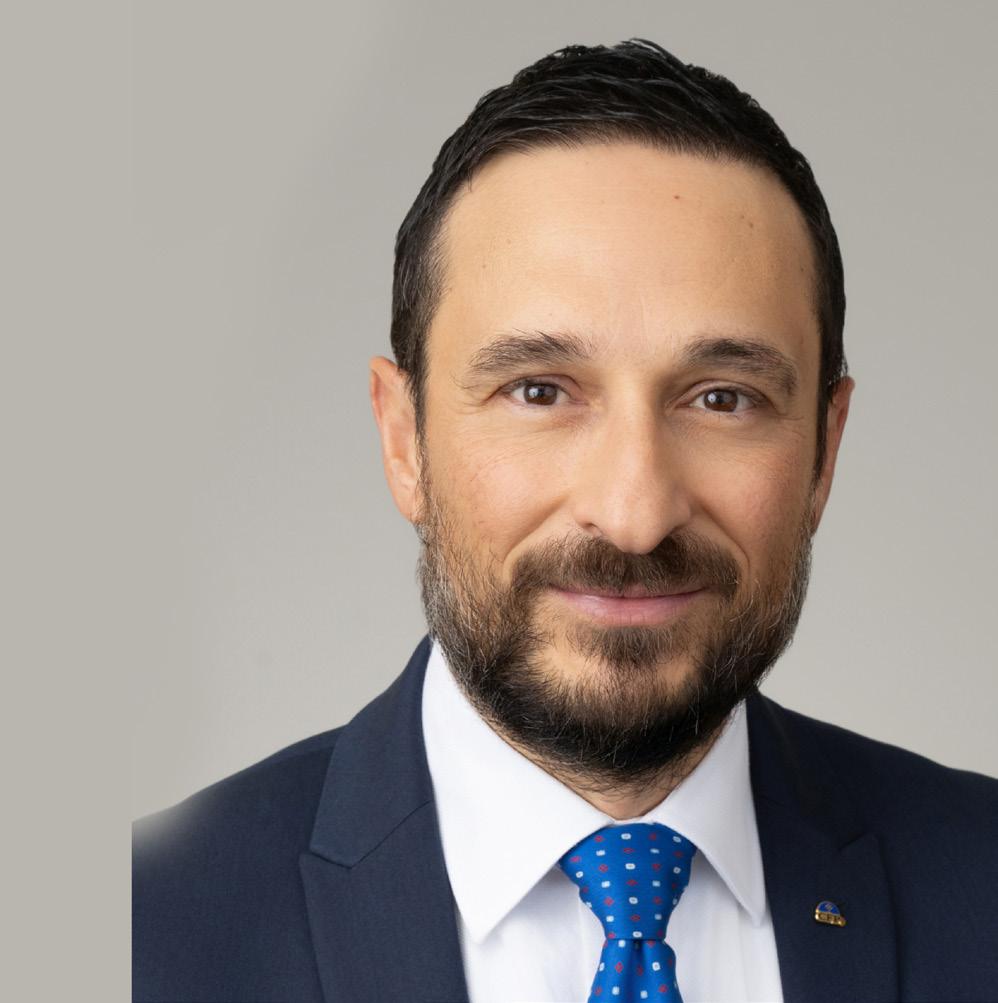

Dante De Gori, CFP Chief Executive Officer
Financial Planning Standards Board
2025 was a year of momentum – shaped by collaboration across the profession and innovation that is transforming the practice of financial planning.
Against this backdrop, Financial Planning Standards Board Ltd. (FPSB) continued to deliver on its mission to advance and promote professional standards in financial planning worldwide, driven by the continued growth of the CFP professional community and deeper engagement with our network.
In 2025, the global CFP professional community reached 236,300 CFP professionals in 29 territories. Across FPSB’s network representing more than 500,000 financial planning professionals, nearly half hold the CFP certification, underscoring the certification’s standing as the global benchmark for competence, ethics and professionalism.
To build a younger, more diverse profession, FPSB supported emerging talent through global programming, including webinars on How to Build Your Career as a Young Financial Planner. Interest in CFP certification also remained strong, with more than 32,500 candidates sitting for CFP certification exams worldwide in 2025.
Our progress in 2025 was also powered by partnership. We convened leaders from the global financial planning profession through forums,
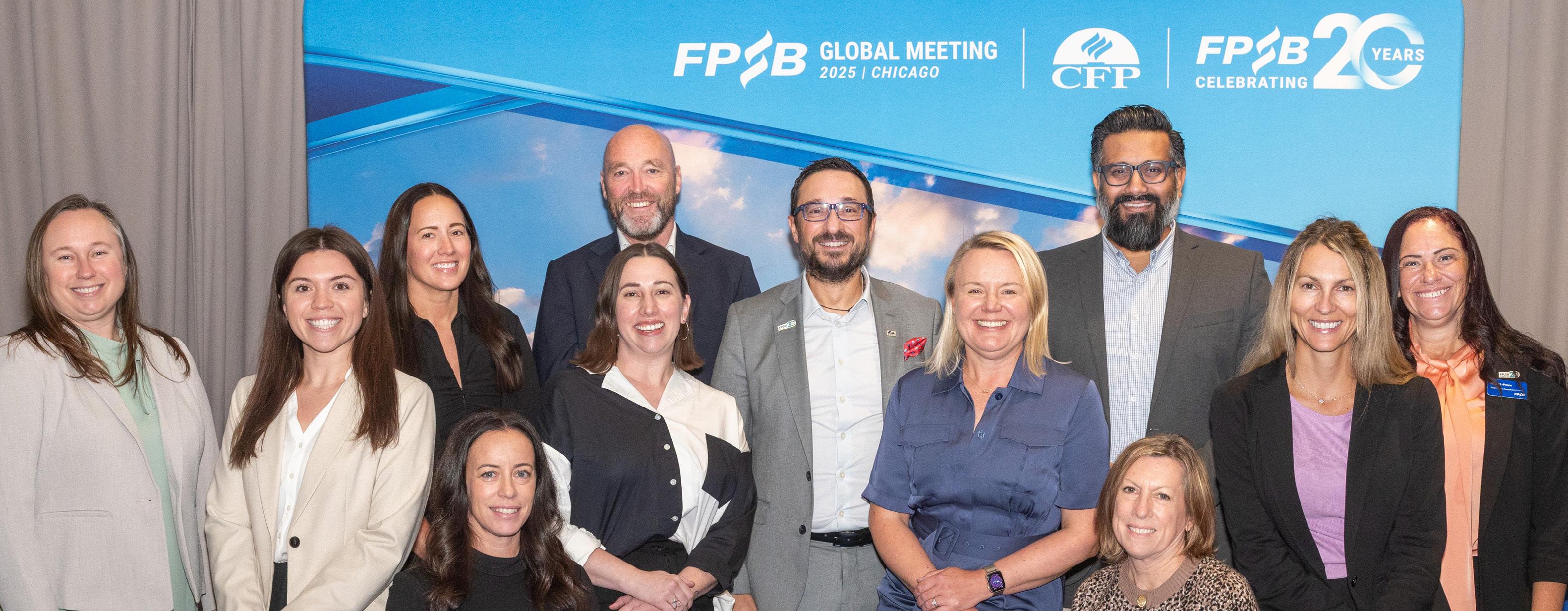
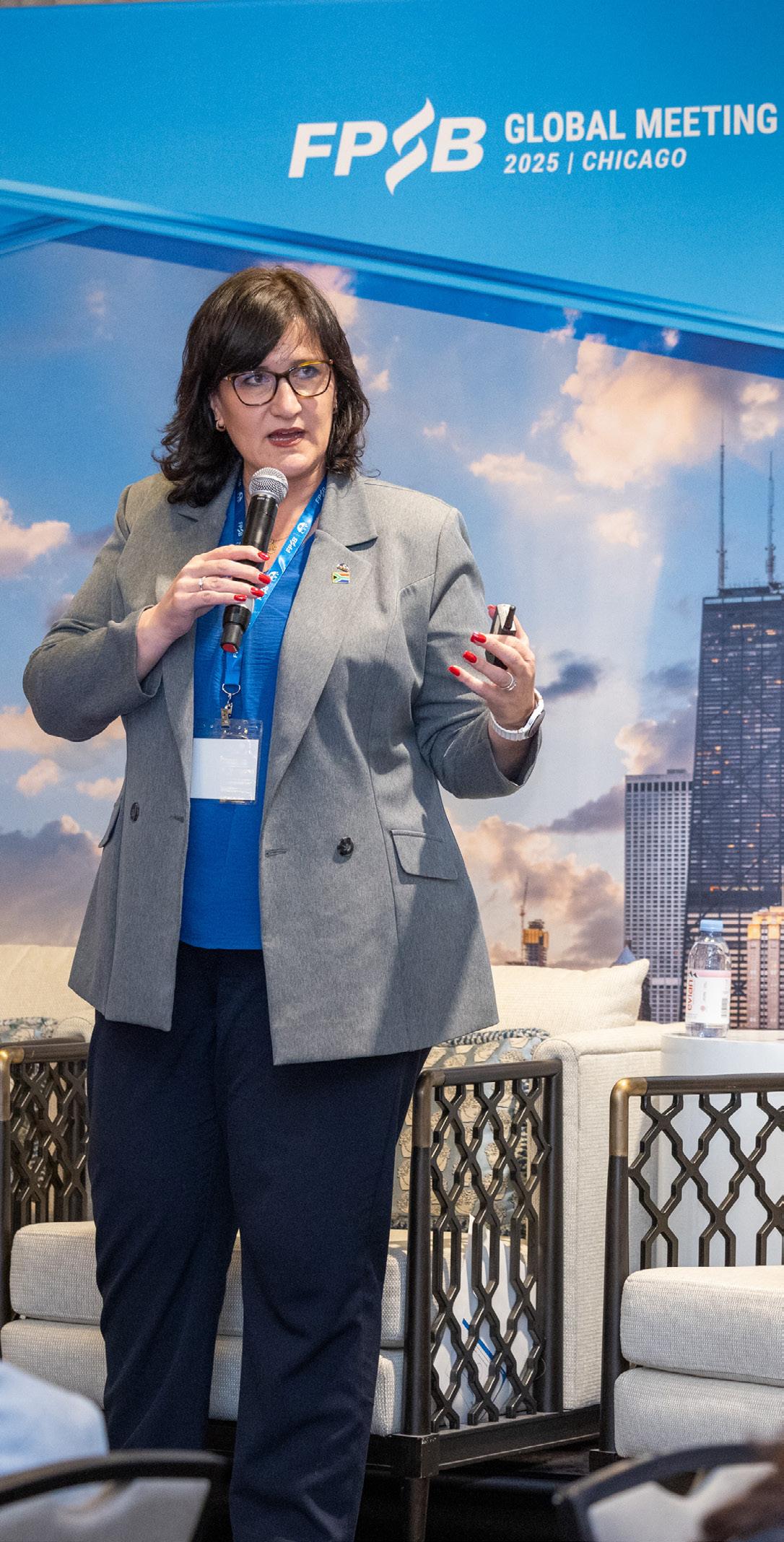
committee meetings, and annual gatherings to support shared learning and practical collaboration to strengthen the global CFP professional community. A highlight was the FPSB 2025 Global Meeting in Chicago, where more than 80 leaders gathered for strategic dialogue on growth and retention of CFP professionals, credentialing best practices, trademark protection, and the forces reshaping the practice of financial planning, including AI. We also recognized outstanding leadership through the FPSB 2025 Noel Maye Award, honoring recipients whose dedication has helped shape the global financial planning profession.
Throughout the year, members of the FPSB team engaged with leaders from our network of organizations and CFP professionals. These conversations reinforced the strength of our global community and helped ensure our initiatives –across certification, standards, education, public awareness, and advocacy – remain aligned to the evolving needs of the public and the profession.
We also celebrated meaningful milestones across the world – from Chinese Taipei surpassing 4,000 CFP professionals to Italy exceeding 100 just two years after launching CFP certification in that territory. In 2025, San Marino became FPSB’s 29th territory, and a pilot program to further grow CFP certification in Colombia was launched,
strengthening our global footprint. In Korea, the CFP certification program transitioned to FPSB International Korea, positioning the program for continued growth and impact.
In a year defined by rapid technological change, FPSB delivered timely insights and practical support. We released findings from our Impact of Artificial Intelligence (AI) on Financial Planning global research that drew on input from more than 6,200 financial planners in 24 territories and revealed AI uptake was strong, with financial planners using AI to streamline client data collection, risk profiling, and communications.
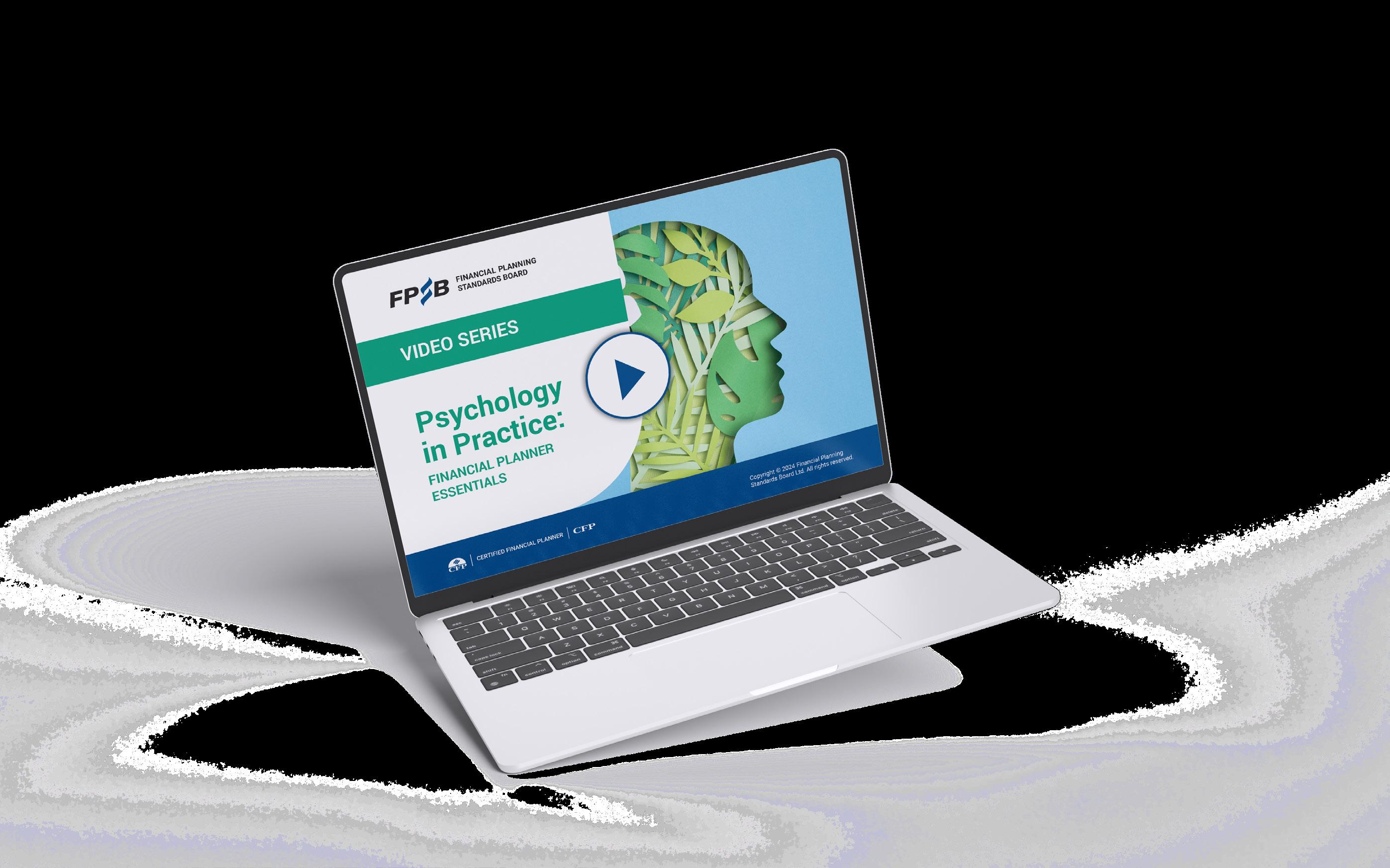
To keep pace with evolving client needs, FPSB’s updated global financial planning standards took effect on 1 January 2025, reinforcing the level of practice expected of financial planning professionals worldwide. We continued to expand access to education and professional development through the rollout of Psychology in Practice resources to help financial planners strengthen client relationships and improve outcomes based on the principles from psychology, therapy, and coaching.
Our shared commitment to building public awareness of the value of financial planning was also visible in our global outreach. The ninth annual World Financial Planning Day, held in conjunction
with IOSCO’s World Investor Week, was celebrated in 22 territories. Through our support of Global Money Week, our network of organizations helped equip young people with foundational financial knowledge and skills to build long-term financial resilience.
Looking ahead, our global network will continue to strengthen, promote and propel excellence in financial planning for the benefit of the public and our global community. By deepening collaboration, setting and upholding global standards, and advancing advocacy for the profession and CFP certification, we will continue to keep the CFP marks the trusted benchmark in financial planning as the landscape evolves.
To the FPSB Board of Directors, committee members, chief executives, volunteers, and our dedicated team – thank you for your leadership, expertise, and commitment throughout 2025.
I also extend my sincere thanks to CFP professionals worldwide, whose professionalism and commitment to global standards bring the value of financial planning to life for millions of people every day.
Together, we are helping build a more confident, financially resilient future for individuals and families around the world.


The global CFP professional community reached 236,300 across 29 territories representing 2.5% year-over-year growth.
The profession continued to attract emerging talent in 2025:
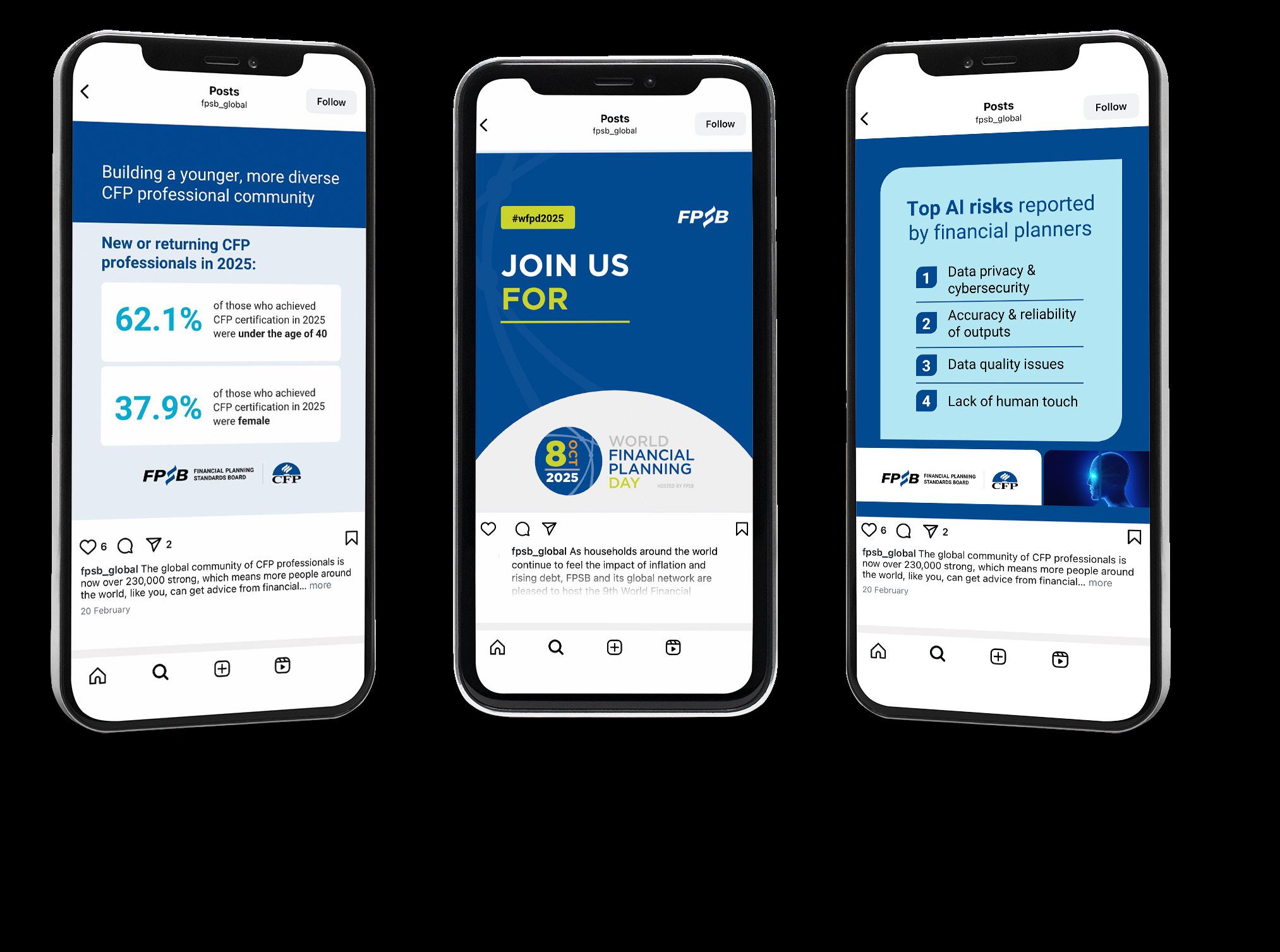
62�1% 37�9% of new or returning CFP professionals were under 40 of those new or returning CFP professionals were female Interest in CFP certification remained strong, with more than 32,500 candidates sitting for CFP certification exams worldwide.
FPSB hosted a global webinar series, How to Build Your Career as a Young Financial Planner attracting more than 1,750 registrants from 43 territories and supporting the next generation of CFP professionals.




Leading global insights on the impact of AI on financial planning
FPSB published findings from its Impact of AI on Financial Planning global research, based on a survey of
6,200 financial planners across
24 territories
The AI research generated strong visibility across news coverage reaching an estimated global audience of
11�2 million people
Driving excellence through standards and education
Strengthening the profession through collaboration, leadership and advocacy
Raising public awareness and financial education
FPSB’s updated global standards took effect on 1 January 2025, driving excellence in the practice of financial planning worldwide

FPSB expanded resources to support professional development, including the rollout of Psychology in Practice content.
Advanced efforts to support consistent, future-ready credentialing through ongoing discussion of FPSB’s Credentialing Framework�

FPSB convened more than 80 leaders championing the financial planning profession at the FPSB 2025 Global Meeting in Chicago
FPSB leadership completed
34 engagements with leaders and CFP professionals across
19 territories to strengthen connections in our profession
FPSB and its network advanced financial planning advocacy and engagement with global regulators, including IOSCO, to represent the global voice of the profession.
World Financial Planning Day was celebrated in 22 territories, with an estimated global reach of 231 million people, supported by 400+ media articles and 1�1 million social media impressions

FPSB’s network supported Global Money Week to strengthen young people’s financial capability and understanding of financial planning�
FPSB provided locally adaptable campaign toolkits and resources to help its network of organizations deliver consistent and impactful public outreach�
FPSB is the nonprofit, international standards-setting body for the global financial planning profession.
CFP certification is the global symbol of excellence in financial planning and represents financial planners with a shared commitment to rigorous international standards, ethical practices, and lifelong learning to better serve their clients.
FPSB is the proud owner of the international CERTIFIED FINANCIAL PLANNER certification program outside the United States.
Global reach
Together with its global network of organizations, FPSB certifies 236,300 CFP professionals in 29 territories
FPSB and its global network of organizations strengthen, promote, and propel excellence in financial planning for the benefit of the public and our global community by facilitating collaboration, advocacy, and setting standards.
AUSTRALIA
CFP certification offered through: Financial Advice Association Australia (FAAA)
AUSTRIA
CFP certification offered through: Österreichischer Verband Financial Planners (OVFP)
BRAZIL
CFP certification offered through: Planejar – Associação Brasileira de Planejamento Financeiro (Planejar)
CANADA
CFP certification offered through: FP Canada
PEOPLE’S REPUBLIC OF CHINA
CFP certification offered through: Financial Planning Standards Board China, Ltd. (FPSB China)
CHINESE TAIPEI
CFP certification offered through: Financial Planning Association of Taiwan (FPAT)
COLOMBIA
CFP certification offered by: Financial Planning Standards Board Ltd.
FRANCE
CFP certification offered through: Association Française des Conseils en Gestion de Patrimoine Certifiés (CGPC)
CFP certification offered through: Financial Planning Standards Board Deutschland e.V. (FPSB Deutschland)
HONG KONG and MACAU
CFP certification offered through: Institute of Financial Planners of Hong Kong Ltd. (IFPHK)
INDIA
CFP certification offered by: FPSB Institute India Private Limited (FPSB India)
INDONESIA
CFP certification offered through: Financial Planning Standards Board Indonesia (FPSB Indonesia)
IRELAND
CFP certification offered through: Financial Planning Standards Board Ireland (FPSB Ireland)
ISRAEL
CFP certification offered through: Financial Planners Association in Israel (FPAI)
ITALY and SAN MARINO
CFP certification offered through: Financial Planning Standards Board Italia (FPSB Italia)
JAPAN
CFP certification offered through: Japan Association for Financial Planners (JAFP)
MALAYSIA and BRUNEI
CFP certification offered through: Financial Planning Association of Malaysia (FPAM)
CFP certification offered through: Federatie Financieel Planners (FFP)
NEW ZEALAND
CFP certification offered through: Financial Advice New Zealand (FANZ)
REPUBLIC OF KOREA
CFP certification offered by: FPSB International Korea
SINGAPORE
CFP certification offered through: Financial Planning Association of Singapore (FPAS)
SOUTH AFRICA
CFP certification offered through: Financial Planning Institute of Southern Africa (FPI)
SWITZERLAND
CFP certification offered through: Swiss Financial Planners Organization (SFPO)
THAILAND
CFP certification offered through: Thai Financial Planners Association (TFPA)
UNITED KINGDOM
CFP certification offered through: Chartered Institute for Securities & Investment (CISI)
UNITED STATES
CFP certification offered by:
Certified Financial Planner Board of Standards, Inc. (CFP Board)

FPSB’s vision is to establish financial planning as a global profession and the CFP marks as the global symbol of excellence in financial planning�
FPSB’s mission is to benefit the global community by establishing, upholding, and promoting worldwide professional standards in financial planning. FPSB’s commitment to excellence is represented by the marks of professional distinction – CFP, CERTIFIED FINANCIAL PLANNER
The Principles of Partnership articulate the collaboration between FPSB and its network of organizations to strengthen, promote, and propel the global financial planning profession.
Long term objectives
Grow the number of CFP professionals to position CFP certification as the designation of choice for the financial planning profession worldwide.
• Grow and retain CFP professionals by focusing on local, regional and global growth
• Expand the number of territories where CFP certification is delivered
• Increase the proportion of CFP professionals under 40 years of age
• Improve the diversity of CFP professionals to reflect the public they serve
S Standards & Certification
Partner with key stakeholders to strengthen the global financial planning profession and benefit the public.
• Harness the collective strength of the FPSB Network to lead the global CFP professional community
• Work with financial services firms to increase their commitment to financial planning and CFP certification
• Partner with key stakeholders in new territories to promote the financial planning profession and deliver CFP certification
• Engage with international and local government agencies, consumer advocacy groups and professional bodies to increase recognition of the value of financial planning and improve access
Set, maintain and enforce global financial planning standards and CFP certification requirements to protect and serve the public, and advance the profession.
B Brand & Awareness
Increase awareness of financial planning with CFP certification as its symbol of excellence, and position FPSB as the global leader of the profession.
• Ensure the standards and certification requirements reflect evolving professional, academic and consumer needs
• Achieve global consistency in the application of CFP certification
• Develop and maintain global content for education, examination and professional development
• Advance the CFP certification framework to reflect the evolving certification landscape
• Increase public awareness and understanding of financial planning
• Build public recognition of CFP certification to become synonymous with financial planning
• Promote the value of CFP certification among professionals
• Position FPSB as the global authority and voice of the profession

Grow the number of CFP professionals to position CFP certification as the designation of choice for the financial planning profession worldwide.
The global community of CERTIFIED FINANCIAL PLANNER professionals continued its upward trajectory in 2025, closing the year with 236,300 CFP professionals across 29 territories. This represents a net increase of 5,652 CFP professionals over the previous year and a global year-over-year growth rate of 2�5%
Since FPSB was founded in 2004, the number of CFP professionals has nearly tripled worldwide from 89,690 to 236,300 – a 163% increase
As demand for professional, trusted financial planning advice continues to rise, FPSB’s priority is to widen access to CFP certification so more people can pursue a career in financial planning – and more individuals and families can access the advice they are seeking.
236,300
+5,652
2�5%
29 CFP professionals worldwide
Strongest growing markets of CFP professionals by net growth number:
net increase in number of CFP professionals over previous year global growth in 2025 CFP professionals certified in territories
U�S�
+4,436
Japan
+805
Brazil
+791
Chinese Taipei
+757
The five territories with the highest number of CFP professionals were:
107,529
United States
The United States and Japan recorded the largest absolute gains in the number of CFP certification holders in 2025, with net increases of 4,436 and 805, respectively� A number of territories achieved double digit growth rates in their CFP professional populations, including:
Other notable milestones:
Chinese Taipei exceeded 4,000 CFP professionals
Italy surpassed 100 CFP professionals (79.2% growth rate), significant progress after launching CFP certification in that territory in 2023
San Marino, which forms part of the Italy program, became the 29th territory in which CFP certification is awarded, strengthening the global footprint of the CFP professional community
Territories with CFP professional retention rates over 90% in 2025:
To provide an indicative measure of access to CFP professionals across territories, these calculations show the number of adults1 per CFP professional in each market. This ratio compares the adult population with the number of CFP professionals, offering a high level view of professional density and potential reach.
1United Nations, Department of Economic and Social Affairs, Population Division (2024). World Population Prospects 2024, Online Edition. Based on 2025 population, medium variant, ages 25-79.
As the financial planning profession grows, its demographic profile is also evolving. In 2025, CFP certification continued to attract a new generation of financial planners around the world. These trends highlight the increasing appeal of CFP certification among younger and more diverse talent entering the profession.
New or returning CFP professionals in 2025
62�1% of those who achieved CFP certification in 2025 were under the age of 40
37�9% of those who achieved CFP certification in 2025 were female
Worldwide CFP professionals
Global webinars: How to Build Your Career as a Young Financial Planner
To support the next generation of CFP professionals, FPSB hosted a global webinar series in September, How to Build Your Career as a Young Financial Planner. Delivered across two live sessions to accommodate global time zones, the program brought together young CFP professionals from different territories to share practical guidance on early-career development. The webinars attracted more than 1,750 registrants from 43 territories�
The sessions focused on building skills, confidence and long-term opportunities in financial planning. By connecting peers across regions, the webinars highlighted the value of the community and shared learning in supporting CFP professionals committed to professionalism, purpose, and impact.
The complimentary webinars were moderated by FPSB CEO Dante De Gori, CFP, who guided candid conversations with CFP professional panelists. Acknowledgements to the panelists: Tyler Gliebe, CFP (Canada), Ellen Harkin, CFP (Ireland), Rudolph Geldenhuys, CFP (South Africa), Nick Grogan, CFP (United Kingdom), Angela Lau, CFP (Singapore) and Calvin Scott, CFP (New Zealand).








More than 32,500 candidates sat for CFP certification exams around the world in 2025, reflecting strong interest in pursuing the credential that upholds professionalism in the practice of financial planning.
Across FPSB’s global network representing more than 500,000 financial planning professionals, nearly half hold the CFP certification, underscoring the certification’s standing as the global symbol of excellence in financial planning.

In 2025, FPSB acknowledged and congratulated organizations celebrating milestone years in their territory:

35th anniversary of CFP certification in Australia
Congratulations to Financial Advice Association Australia

30th anniversary of CFP certification in United Kingdom
Congratulations to Chartered Institute for Securities & Investment

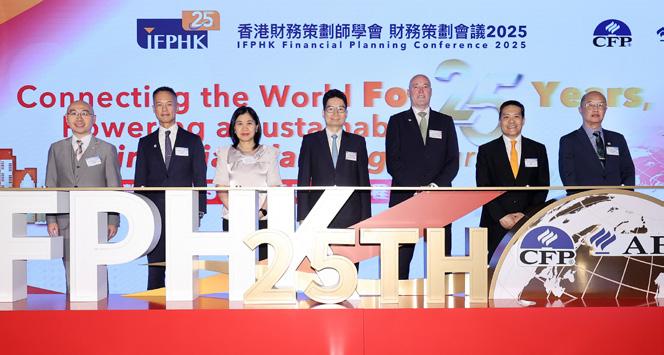
25th anniversary of CFP certification in Hong Kong
Congratulations to the Institute of Financial Planners of Hong Kong Ltd

25th anniversary of CFP certification in Malaysia
Congratulations to Financial Planning Association of Malaysia


In 2025, FPSB launched a pilot program in Colombia to expand access to CFP certification and grow opportunities for financial planning professionals across the Pacific Alliance territories of Chile, Colombia, Mexico and Peru.
The pilot program focused on verifying local implementation of FPSB’s online delivery of the CFP certification education program. Outcomes from the pilot will inform next steps, including updates to program design and delivery, and will help support longerterm expansion of CFP certification into the Pacific Alliance region.
In addition, FPSB was pleased to have guests from Vietnam Financial Consulting Association present to FPSB’s Board and network at the FPSB 2025 Global Meeting in Chicago, to explore and support continued efforts to bring CFP certification into more territories around the world.
At the end of 2025, the CFP certification program in South Korea transitioned from FPSB Korea (now IFPK) to a new entity, FPSB International Korea, a subsidiary organization of FPSB Ltd.
In 2026, FPSB International Korea will complete the operational handover and begin certifying and renewing CFP professionals in South Korea, supporting the profession’s continued growth and local impact.
As part of FPSB’s global network, FPSB International Korea will continue in the tradition of advancing the profession in South Korea and serving the public by setting, upholding and promoting professional standards in financial planning.

A key area of focus this year was exploring and understanding the impact, opportunities, and risks presented by fast-emerging technology and artificial intelligence (AI)�
As AI rapidly reshapes financial services, FPSB and its global network in 2025 published findings from a major research initiative examining how the technology is transforming financial planning practice, work processes, and the skills of financial planners. The initiative also complemented work by the International Organization of Securities Commissions (IOSCO) to assess the role of AI across the broader financial services industry.
The FPSB 2025 Impact of AI on Financial Planning Research, conducted via an online survey of more than 6,200 financial planners in 24 territories, found strong and growing adoption of AI across the profession, with two in three financial planners reporting that their firms are using AI or planning to in the next 12 months.
Financial planners surveyed reported using AI to streamline client data collection, risk profiling, and communications, and expressed optimism about AI’s potential to enhance the quality and accessibility of financial planning advice, reduce costs, and broaden access to financial planning for underserved populations.
Despite the positive outlook, financial planners recognize the risks associated with the use of AI, citing data privacy and cybersecurity as top risks.
Key findings from FPSB’s Impact of AI on Financial Planning global research included:
• Improved client services: Over three quarters of financial planners surveyed (78%) believe AI will help them better serve clients; while 60% say it will enhance the quality of financial advice.
• Widespread AI adoption: Of the two-thirds of firms that either have adopted or plan to leverage AI in the next 12 months, adoption rates are highest among small or very large firms. 50% of financial planners have a positive outlook on AI while only 8% view it negatively.
• Lower cost and increased access: 59% of financial planners see AI as a tool to help reduce the cost of financial planning services, and 60% believe it will increase access to financial planning for underserved populations.
• Usage of AI in financial planning: Almost half of financial planners using AI have deployed it to support delivery of client services such as client communications (41%), client data collection (33%), and client risk profiling (30%), as well as operational tasks such as marketing (35%) and client onboarding (34%)
�
• Concerns with AI: Despite the benefits, financial planners expressed reservations regarding
the use of AI, with 47% citing data privacy and cybersecurity concerns and 42% concerned about the accuracy and reliability of AI outputs.
• Need for professional development: To better adapt to AI, 49% of financial planners expressed a need for professional development to improve their data analysis and interpretation skills. Over a third (36%) believe both the public and the financial planning profession will greatly benefit from general education and training on AI.
The research suggests AI could help make financial planning more affordable by lowering costs and expanding access to financial planning for underserved communities. In doing so, it has the potential to reshape the practice of financial planning while improving access to critical financial services.
The release of the research findings generated significant media interest, reaching an estimated global reach of more than 11�2 million people.

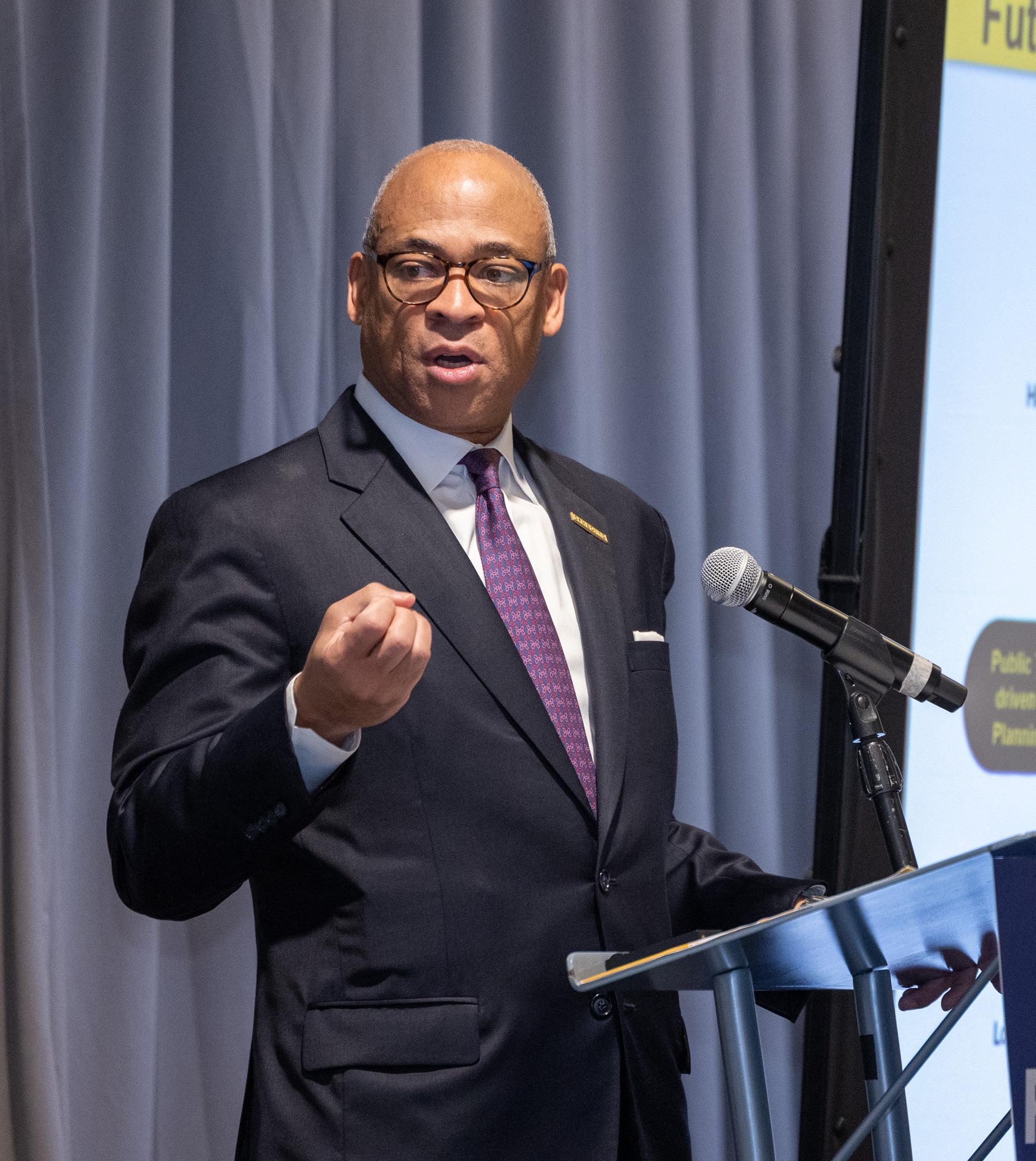
Partner with key stakeholders to strengthen the global financial planning profession and benefit the public.
During 2025, FPSB brought leaders together from across the global financial planning profession, working closely with its network of organizations to advance CFP certification and support the profession’s long-term sustainability�
Together, our work continued to strengthen, promote, and propel excellence in financial planning for the benefit of the public, professionals, and the global community.
Collaboration came to life with in-person and virtual committee and working group meetings, panels and forums that engaged leaders from across the global community to exchange practical insights and advance key initiatives to strengthen the profession.

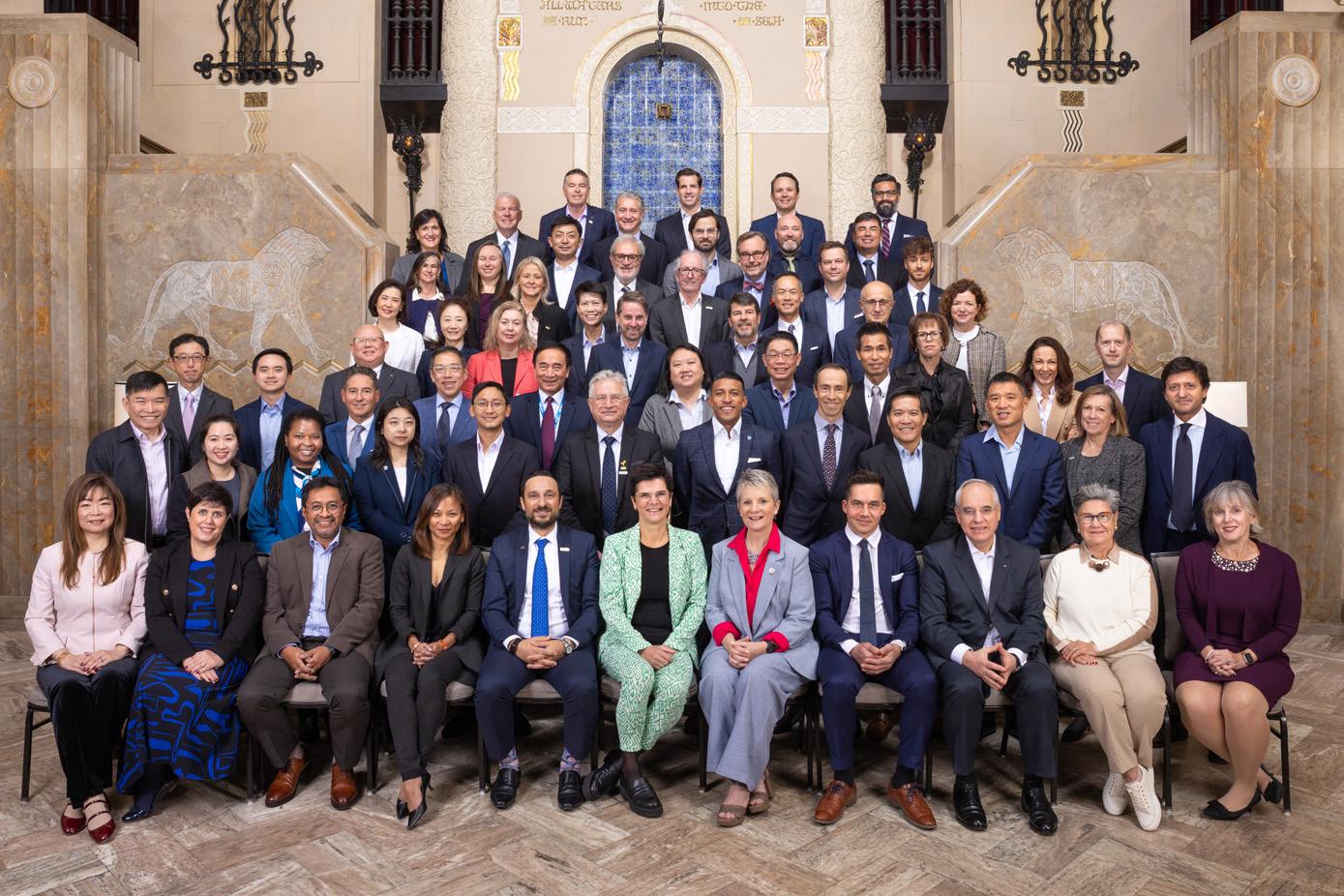
A highlight was our global gathering�
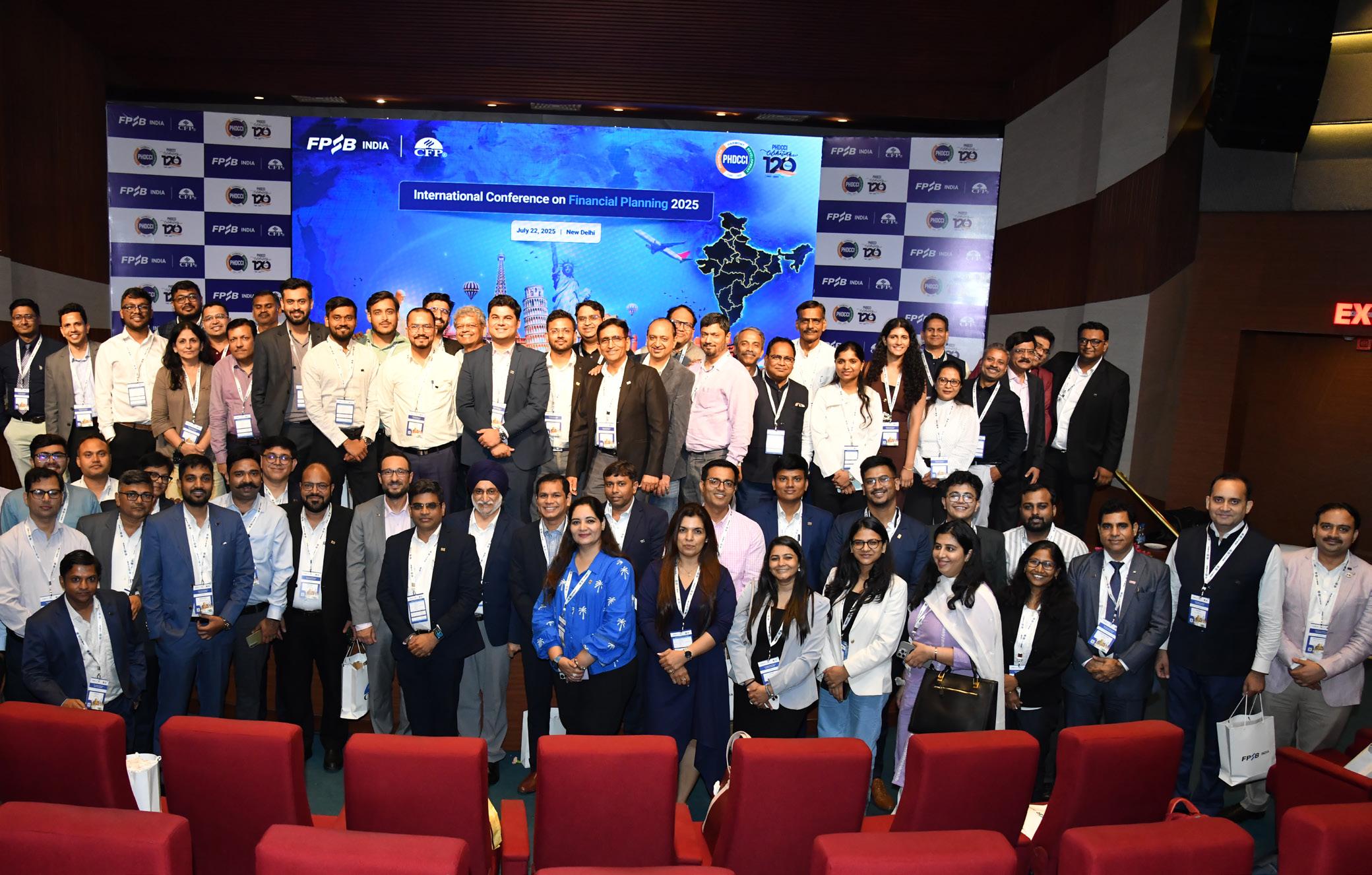
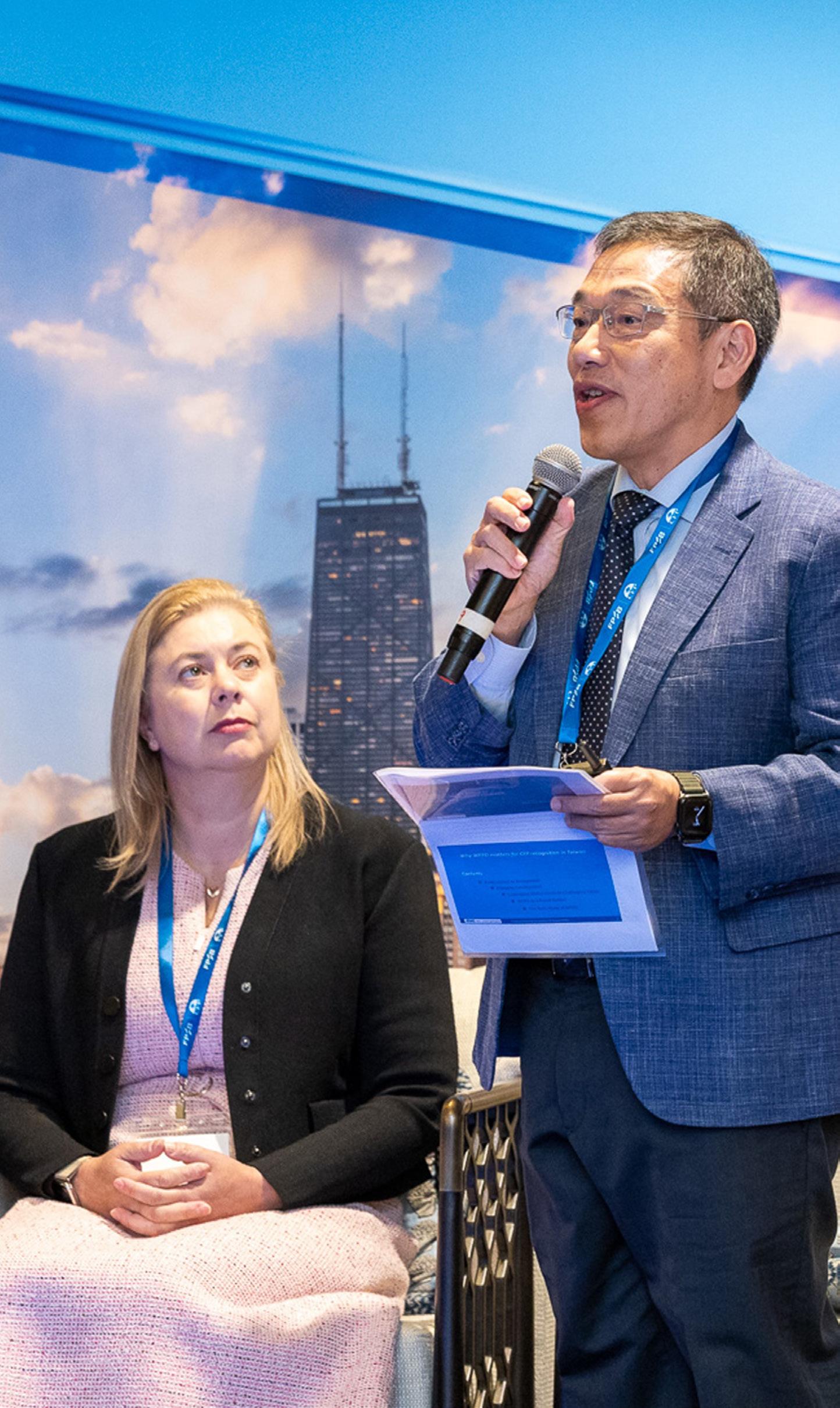
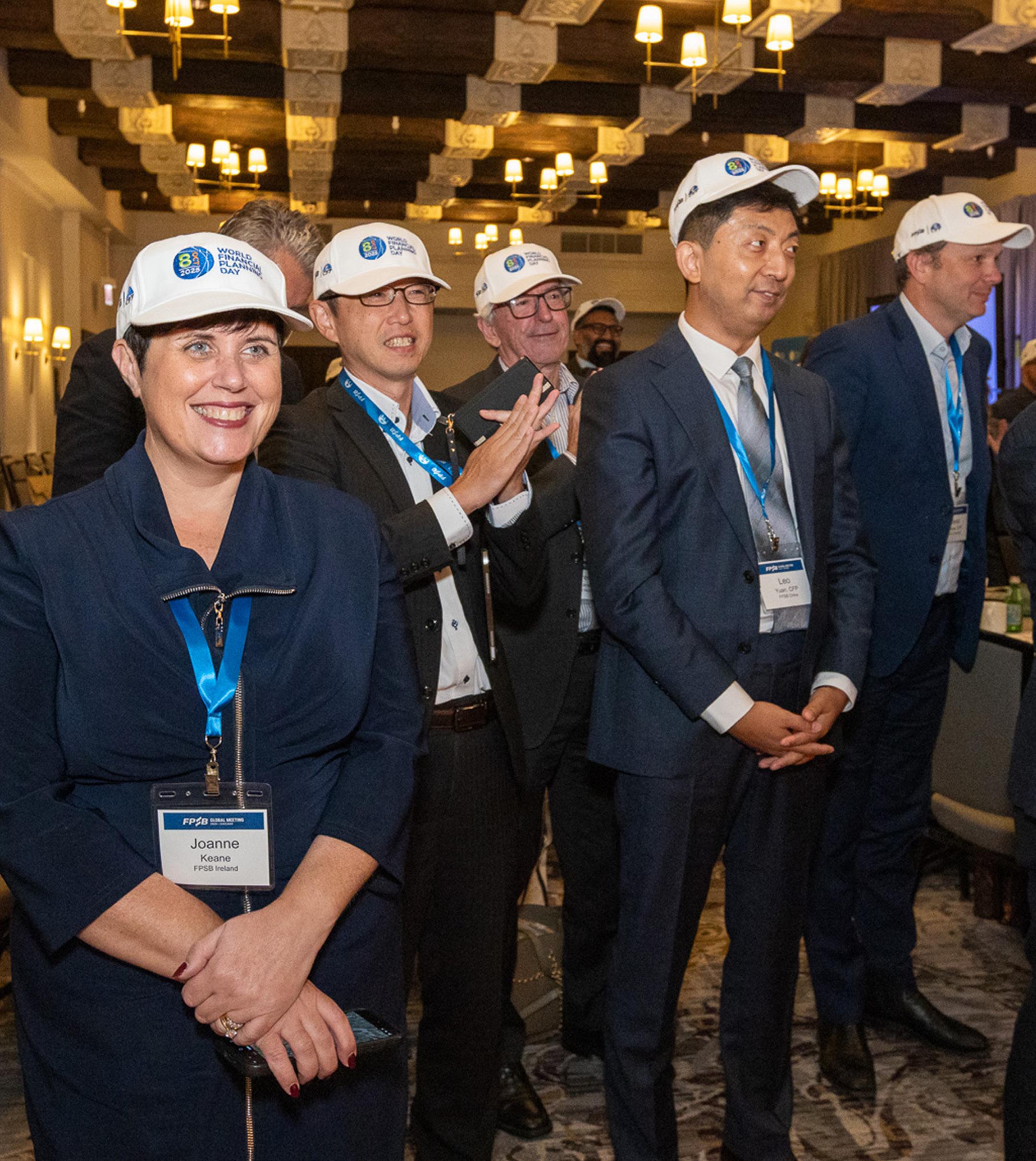
From 8–10 October 2025, FPSB welcomed more than 80 leaders from around the world to Chicago (U�S�) for the FPSB 2025 Global Meeting�
This annual meeting brought together executives in FPSB’s network to advance the global financial planning profession and to promote CFP certification as the global symbol of excellence. With continued efforts to bring CFP certification into more territories around the world, FPSB was pleased to have guests from Colombia and Vietnam in attendance.
Discussions focused on modernizing cross-border certification to reflect the evolving environment in which financial planning services are delivered and an update on trademark protection principles to strengthen the CFP marks. Leaders also discussed plans to update FPSB’s Impact of AI on Financial Planning study in 2026 and gathered feedback to align future global research priorities.
Leaders from within FPSB’s network also shared key learnings and best practices across:
Use of data for CFP professional growth and retention: Presented by Brett Millard, CFP of FP Canada and Jason Gudenius of CFP Board (U.S.)
Implementing a risk management program: Presented by Lelané Bezuidenhout, CFP of FPI (South Africa), Dr. Paris Yeung of IFPHK (Hong Kong & Macau) and Nick Hakes of FANZ (New Zealand)
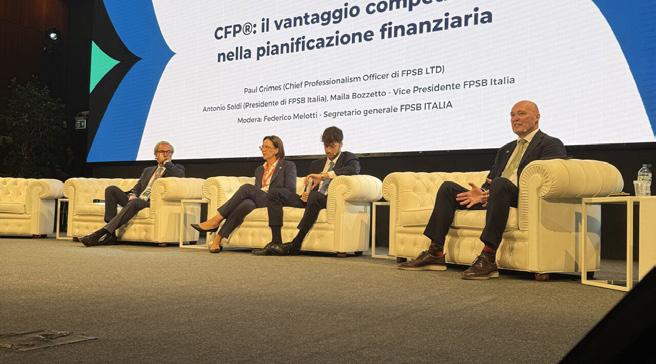
Increasing awareness of financial planning and CFP certification: Presented by FPSB Council Chair Kirsty Scully, CFP (South Africa) with Ana Leoni of Planejar (Brazil), Federico Melotti, CFP of FPSB Italia, and Mark Dukers, CFP of FFP (the Netherlands)
Insights from CFP Board’s Financial Planning Longitudinal Study: Presented by Kevin Roth, Ph.D. of CFP Board (U.S.)
Value proposition for young CFP professionals: Presented by Lelané Bezuidenhout, CFP of FPI (South Africa)
World Financial Planning Day initiatives: Presented by Sarah Abood of FAAA (Australia), Dr. Hank Huang of FPAT (Chinese Taipei), and Patima Intravisit, CFP of TFPA (Thailand)
Insights from the diverse U.S. financial advice landscape: Hosted by CFP Board (U.S.), featured industry leaders and practitioners from the U.S.
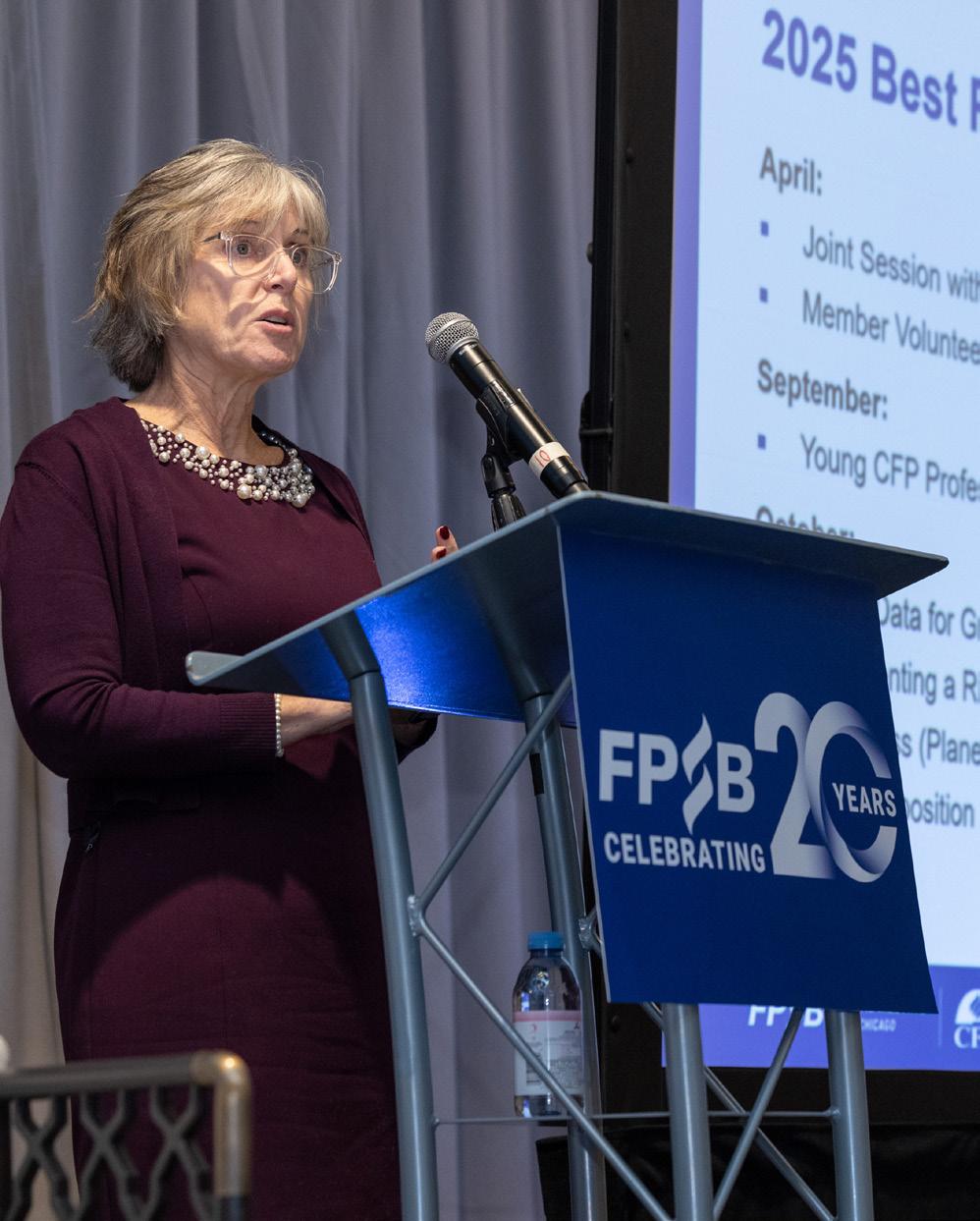
The FPSB 2025 Global Meeting marked the 58th gathering of the network representing the global CFP professional community.
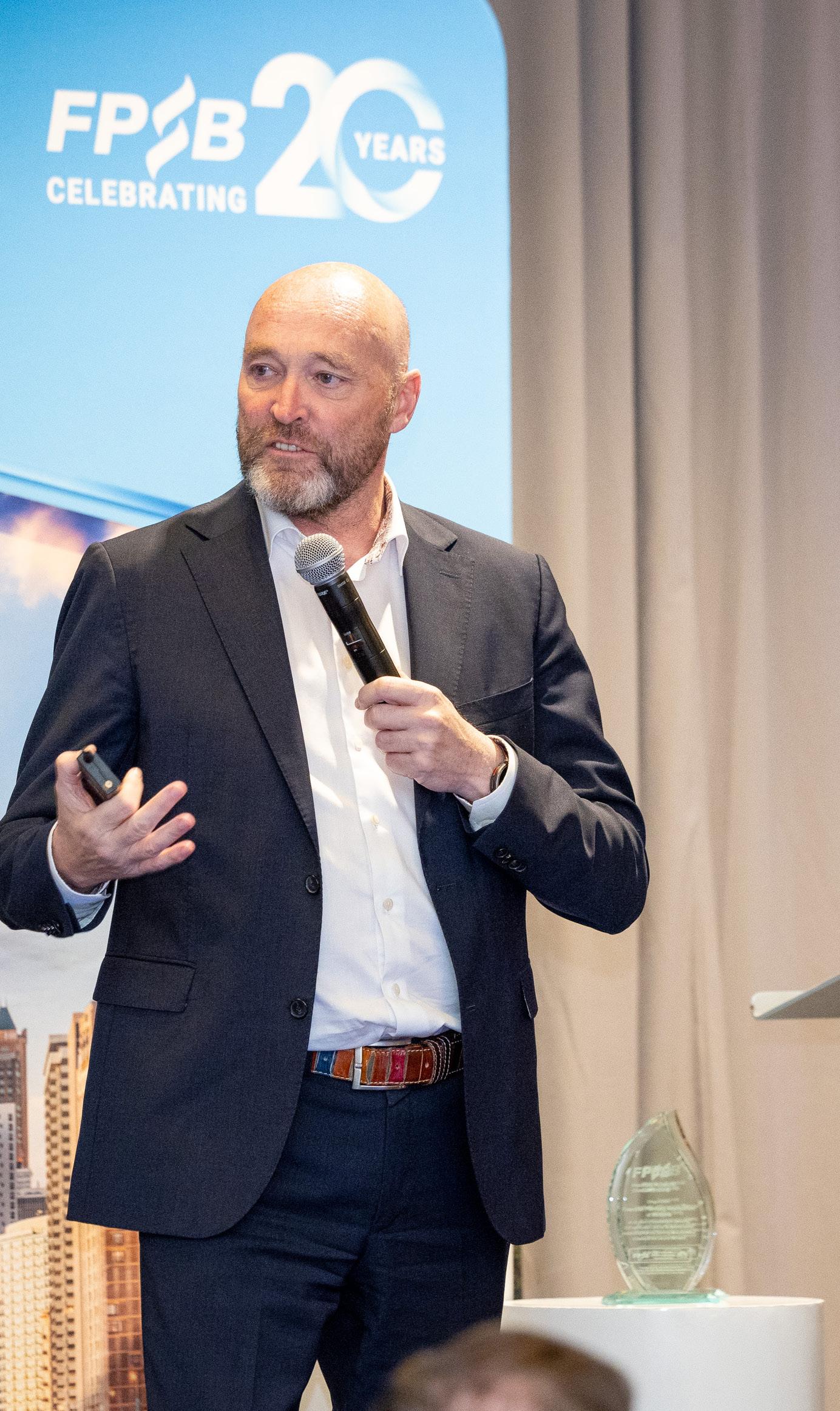
As AI continues to transform the practice of financial planning, FPSB’s network also explored current and potential impacts on the profession, financial planners, and certifying bodies — including adaptations to standards, operations, and assessment methods to ensure continued relevancy, credibility, and improved efficiency. Guest speaker John Weiner, Principal at JW Advisers and former Chief Science Officer at PSI, a global leader in test delivery and proctoring services, spoke about the role of AI in certification programs. He explored current applications and the potential impacts it may have on assessments in the future.
Dane Snowden from the CFP Board (U.S.) shared experience establishing an AI Working Group to examine how AI is shaping financial planning and to develop guidance for CFP professionals, firms, education providers and other stakeholders. Tashia Batstone of FP Canada provided a first-hand perspective on how their organization is approaching AI, and Alice Wong, CFP of FPAM (Malaysia & Brunei) shared how FPAM is using AI in exam proctoring�
Feedback from attendees was sought on a draft outline of a Practice Guidance Note designed to provide practical direction for incorporating AI into professional practice.
Furthermore, attendees participated in a session on FPSB’s Credentialing Framework, an initiative to support consistency across the global FPSB network when considering alternate paths to CFP certification and additional credentials that further
support the professional development of existing CFP professionals. The discussion focused on specializations — credentials that are distinct from, but not superior to, CFP certification — that recognize advanced expertise in specific areas of practice.

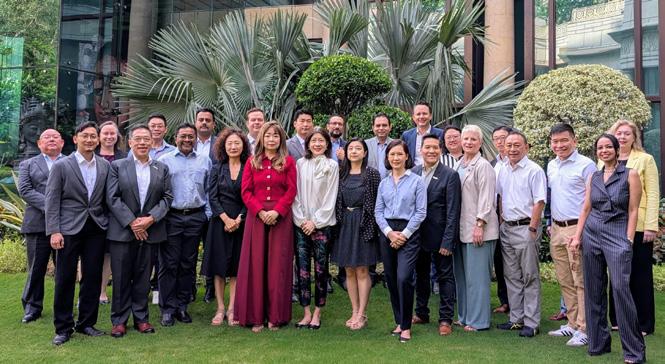
Regional collaboration also remained a top priority in 2025.
The FPSB Asia-Pacific Forum convened in Delhi, India in July, building on a virtual session held in February, while the FPSB European Forum brought leaders together in Paris in March and again in Frankfurt in September.
These forums focused on strategic priorities such as collectively strengthening the financial planning profession across the region, growing the number of CFP professionals, harnessing emerging technologies, discussing regional regulatory and economic trends, and best practices to advance the profession.
Throughout the year, members of the FPSB leadership team engaged with executives and CFP professionals from its network of organizations through 34 engagements, including visits with leaders from 19 territories
This allowed deeper, in-person conversations to support the financial planning profession in each territory and provided opportunities for FPSB leadership to meet with CFP professionals from around the world.
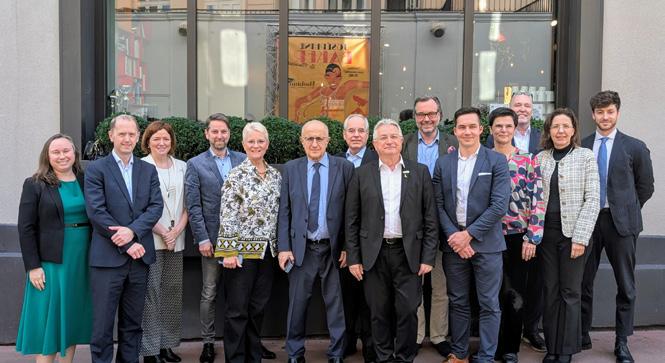
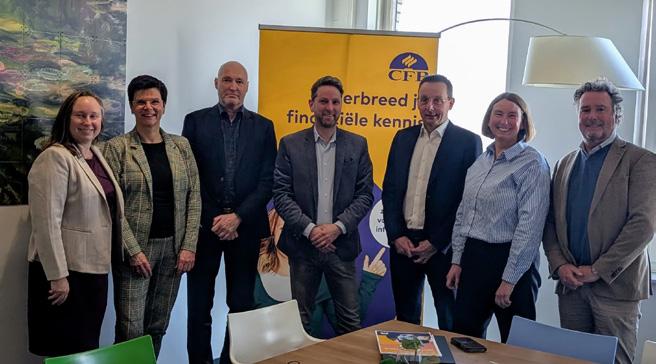
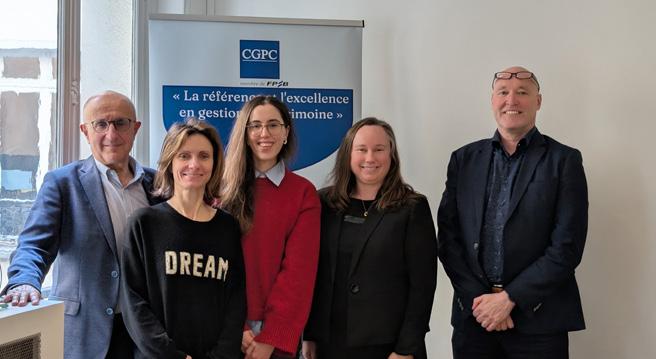

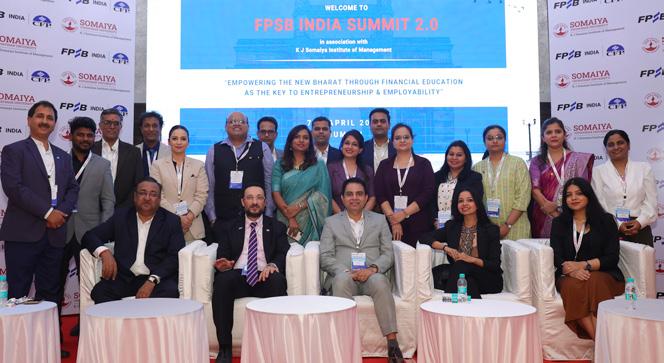

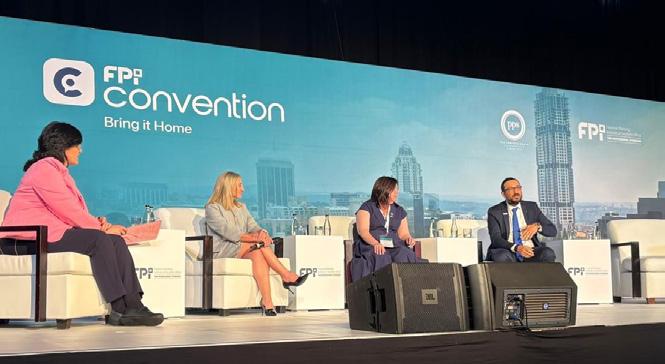
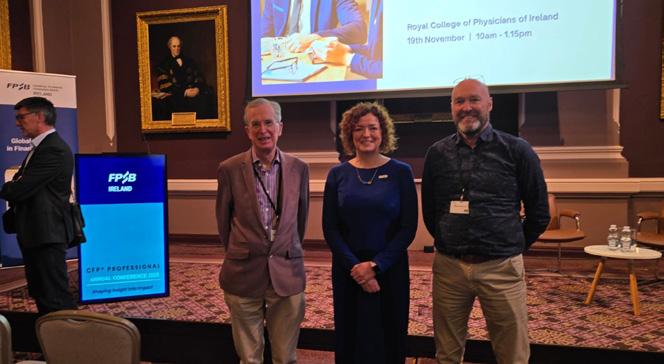

Throughout 2025, FPSB continued to unite expertise from across its global network and make it accessible at scale through a series of best practice sharing sessions designed to strengthen collaboration and advance the financial planning profession. These sessions brought together FPSB’s network of organizations and external experts to exchange insights on:
Growing and engaging the CFP professional community
• Growth, recognition, and retention strategies to support CFP professional communities in their respective territories
• Raising awareness of financial planning and CFP certification
• Recruiting, engaging, and managing CFP professional volunteers as ambassadors
Technology and innovation
• AI usage in businesses and certification
Future of the financial planning profession
• Emerging regulatory considerations shaping financial services
• Navigating change – lessons from other professions
Advancing organizational leadership and sustainability
• Effective leadership development and coaching strategies
• Identifying, securing, and managing sponsorships to expand organizational impact

To unify and amplify the impact of our efforts, FPSB developed and shared a suite of locally adaptable resources and campaign toolkits with its global network. These assets enabled network organizations to deliver strategically aligned initiatives to raise public awareness and reinforce the value of CFP certification.
Campaign toolkits were developed for key initiatives, including the release of global CFP professional data, the Impact of AI research findings, and World Financial Planning Day. Toolkits included logos, key messages, press release templates, and social media assets.
In April 2025 FPSB’s Chief Executives Committee and Board of Directors met in Denver for meetings.
A panel of experts from the accounting, legal, and veterinary professions convened to share how they are navigating the challenges and disruptors transforming their professions and offer insights to apply to the financial planning profession. Moderated by FPSB CEO Dante De Gori, CFP, guest speakers included FP Canada President & CEO and Board Member of the International Federation of Accountants Tashia Batstone; College of Veterinary Internal Medicine CEO Shannon S� Carter, EdD, CAE; and Institute for the Advancement of the American Legal System CEO Brittany K�T� Kauffman, JD�
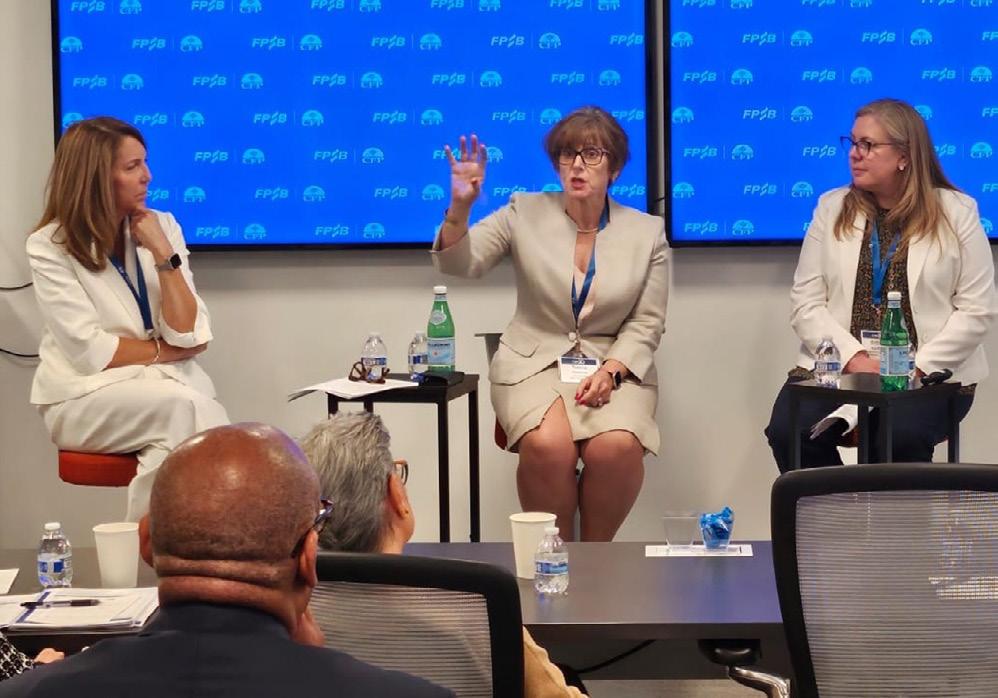
Key insights shared included:
1. Professions are undergoing structural, not temporary, change
Across a broad range of professions, long-term shifts — driven by structural change in technology, workforce pressures, affordability concerns, and changing consumer expectations — are fundamentally reshaping how professions operate and deliver value.
2. AI is transforming work, skills, and career pathways
AI is accelerating efficiency and automating technical tasks, but is also disrupting traditional career progression, entry-level roles, and business models — making human judgment, ethics, and interpersonal skills more critical than ever.
3. Certification is shifting toward competency and flexibility
There is a clear move away from purely exam-based models toward competency-based, experiential, and more flexible certification pathways to improve accessibility, relevance, and workforce sustainability, while retaining rigorous standards.
4. Future sustainability depends on talent, diversity, and leadership
Attracting the next generation, improving diversity and inclusion, addressing burnout, and strengthening mentorship are essential to future-proofing professions, requiring active leadership from professional bodies and networks.
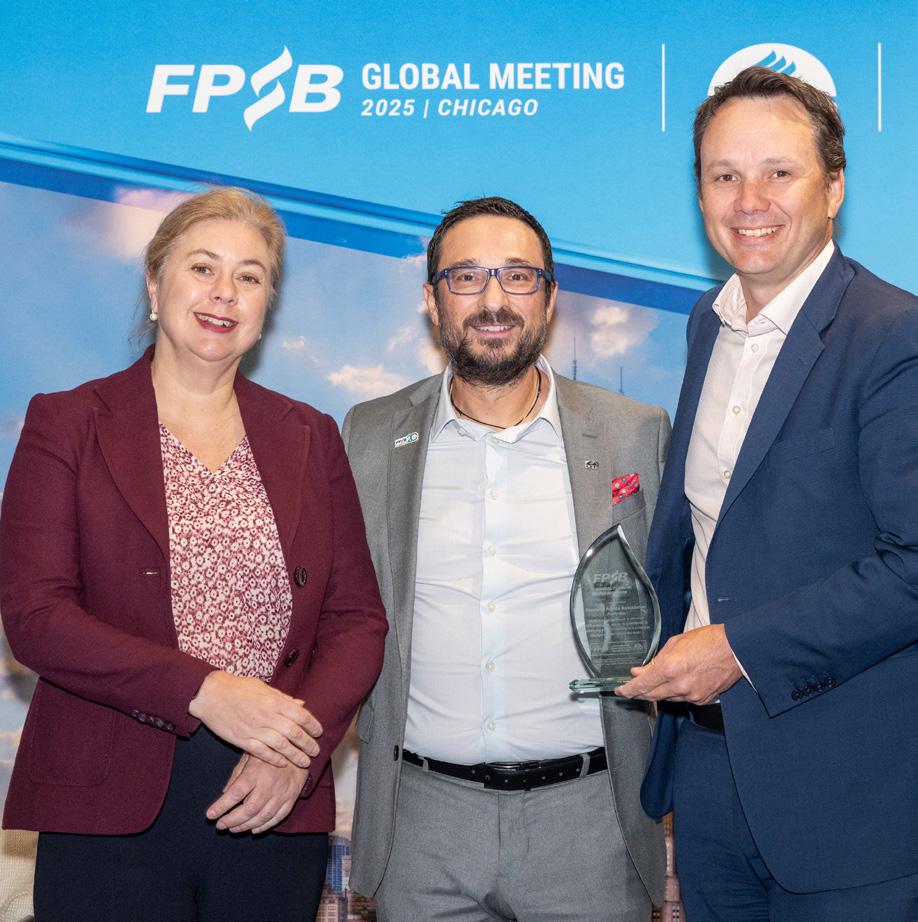
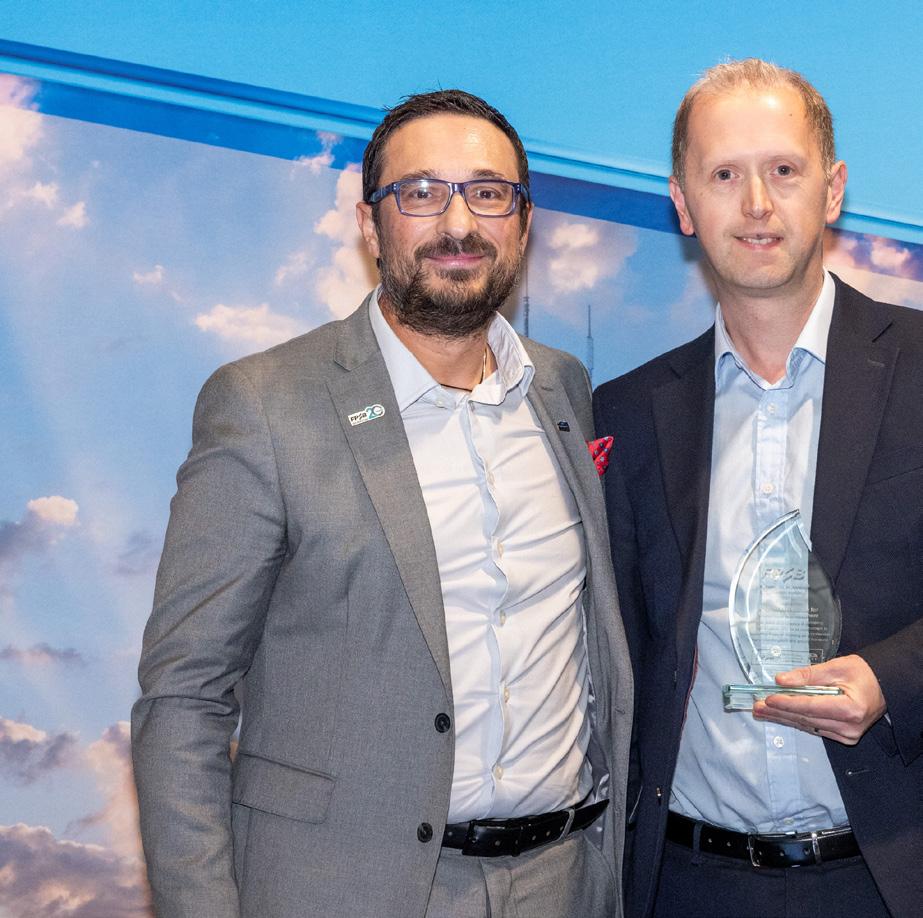
The FPSB 2025 Noel Maye Award was presented on 10 October at the FPSB Global Meeting in Chicago, where recipients were honored for their commitment to advancing the global financial planning profession and CFP certification through leadership, advocacy, and volunteer efforts.

A driving force in the financial services industry for nearly three decades, Lelané Bezuidenhout has served as CEO of the Financial Planning Institute of Southern Africa (FPI) since 2019. Under her leadership, the number of CFP professionals in South Africa grew to more than 5,000 – a substantial milestone. A respected leader and relationship builder, she has elevated the profile of financial planning locally while serving as a dedicated global ambassador for the profession. Her significant and tireless commitment to FPSB’s network of organizations includes leadership roles as Chair of both the FPSB Chief Executives Committee and Council, and service on the FPSB Nominating Committee. Through her positive and collaborative leadership style, she has encouraged and motivated her peers around the world, helping to strengthen and propel the global financial planning profession.

Since attaining his CFP designation in 1996, Stephen O’Connor has dedicated his career to advancing the financial planning profession in New Zealand and globally. Over more than two decades, he has served in leadership roles with New Zealand’s professional associations and held significant positions within FPSB, including Chair of both the FPSB Board of Directors and Council. Recognized as a natural and unifying leader, Stephen implemented enduring governance systems within FPSB and strengthened the global network around a shared mission. As a mentor and advocate, he continues to champion CFP certification and support the profession through his guidance, mentorship, and sustained volunteer service.
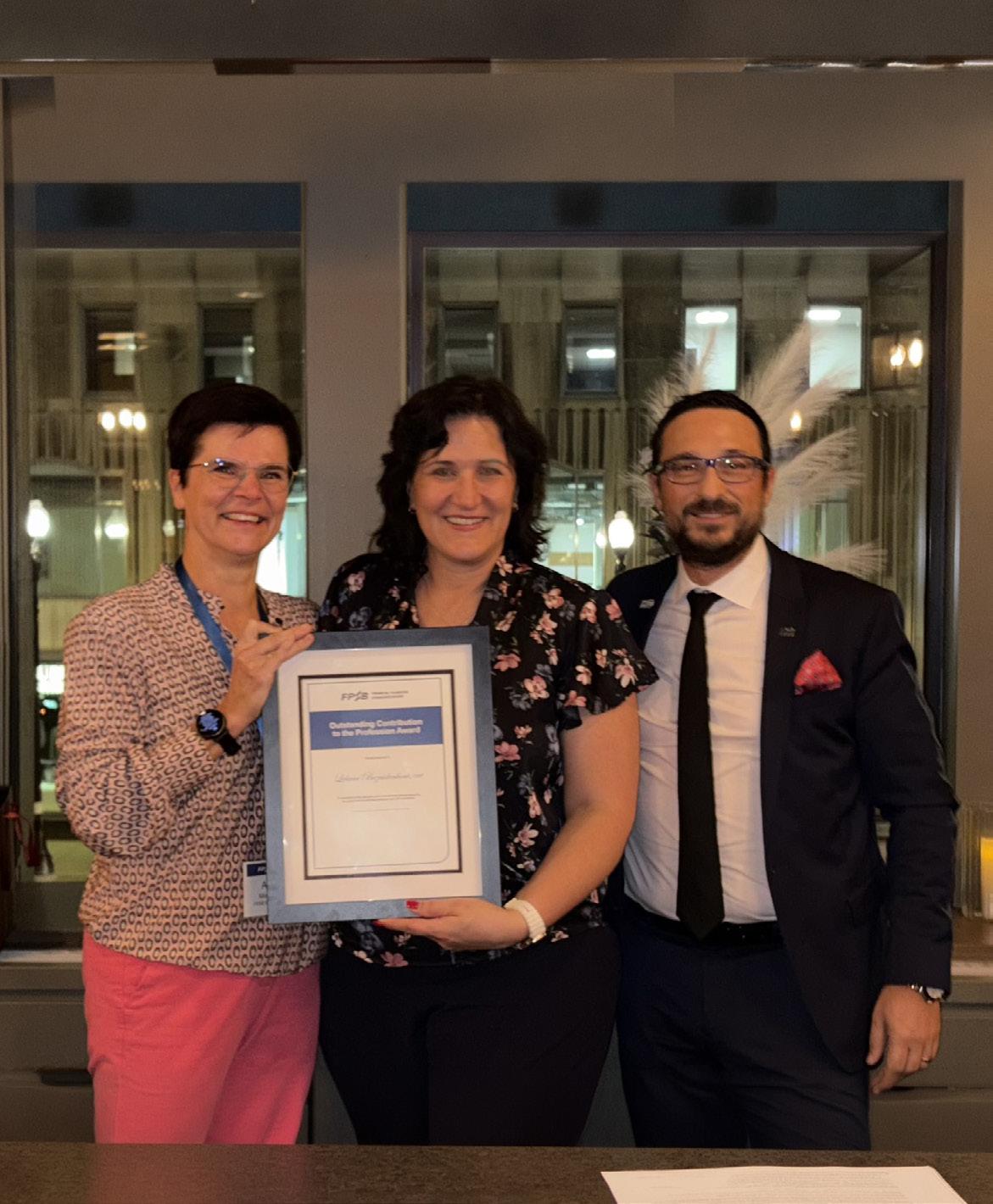

Lelané
FPSB
Stephen O’Connor, CFP (left) after receiving the FPSB Noel Maye Award at the FANZ conference in Auckland, presented by
In 2025, FPSB continued to deepen its engagement with international regulatory stakeholders to elevate understanding of the public value of financial planning and to support policy environments that expand access to competent, ethical financial planning advice.
As an affiliate member of the International Organization of Securities Commissions (IOSCO), FPSB contributed the perspective of the global financial planning profession to regulatory dialogue focused on investor protection, market integrity, and financial stability.
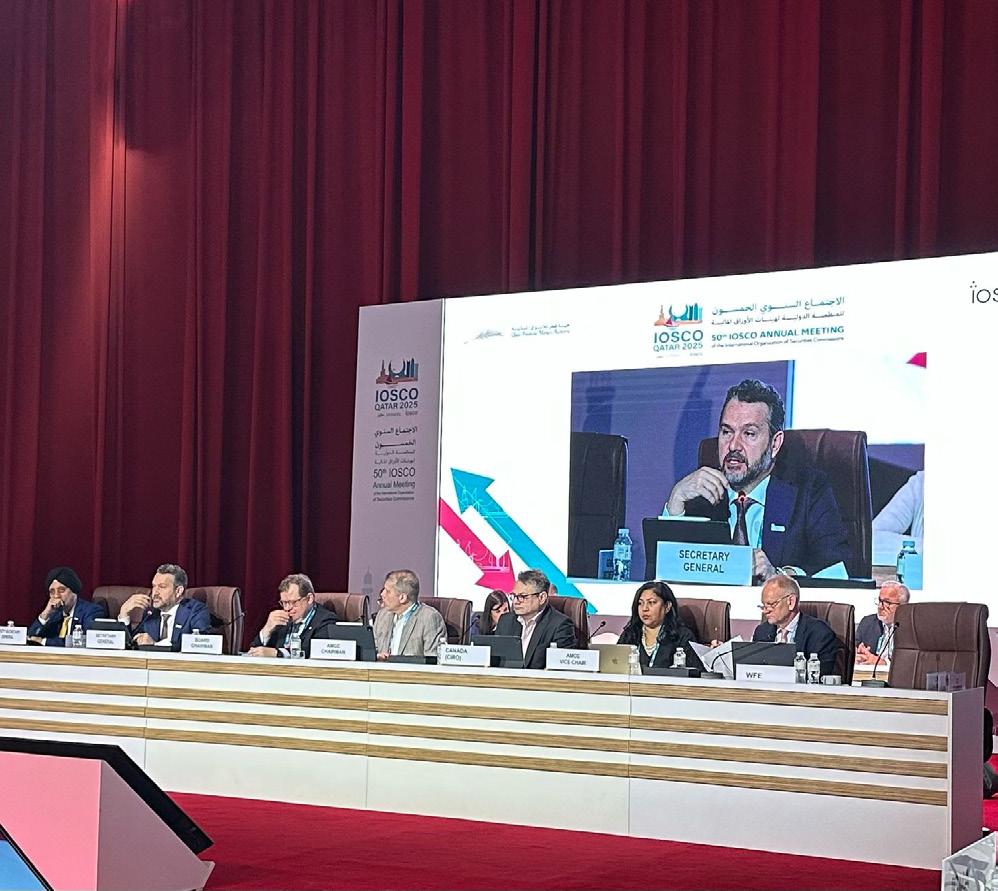
FPSB participated in IOSCO’s 50th Annual Meeting in Doha, Qatar, engaging with regulators and stakeholders on investor protection and issues shaping retail investor outcomes, including emerging technologies and crypto-asset developments. FPSB also shared insights from its global research on the impact of AI on financial planning, helping to inform broader discussions on how innovation is affecting financial services, professional practice, and consumer protection.
FPSB also contributed to global consultations led by IOSCO and other international bodies on AI, crypto assets, and finfluencers and advanced work to develop a Practice Guidance Note on AI to help financial planning professionals understand their professional and ethical obligations when using AI technologies in practice.
Through FPSB’s Regulations Evaluation Group (REG), organizations within FPSB’s network exchanged insights on regulatory trends and coordinated outreach approaches across territories. REG discussions included developments such as proposed reforms in South Africa to transition from a rules-based to a risk-based regulatory framework and proposed U.S. legislation related to stablecoins and market consolidation initiatives.
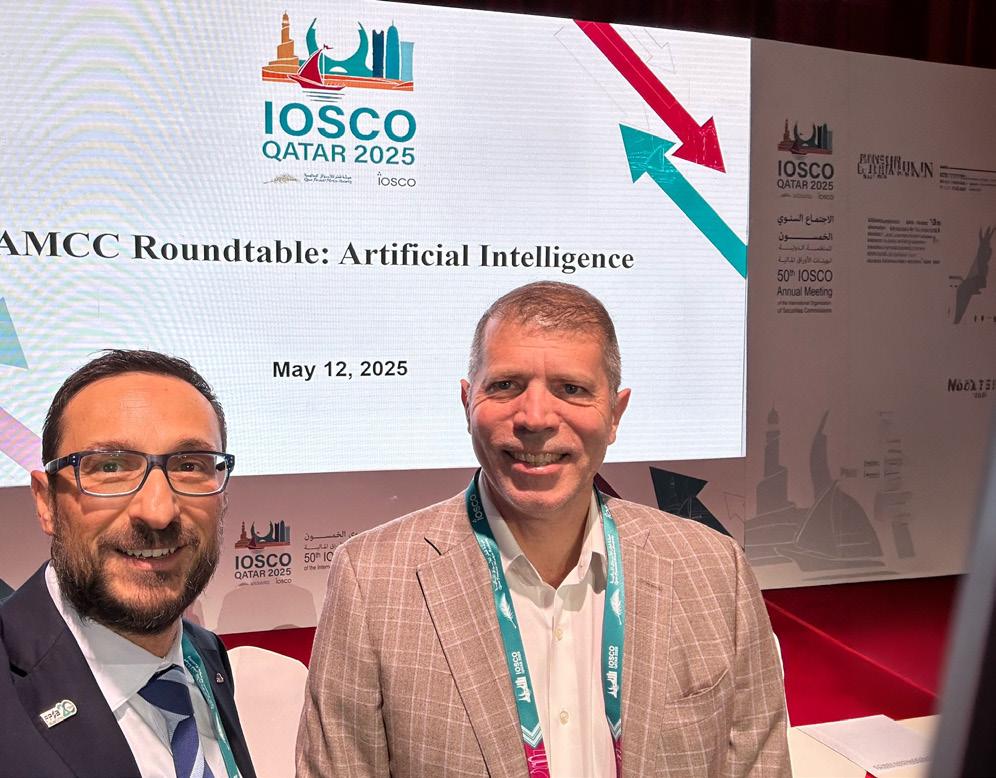
Key global regulatory initiatives in 2025:
Advocacy: Maintained active participation in IOSCO forums and meetings to strengthen the profession’s voice in global policy discussions.
Evidence-based contribution: Presented global findings from FPSB’s Impact of AI research to support informed discussions on technology adoption, risks, and client outcomes.
Cross-territory insights and coordination:
Facilitated knowledge-sharing on evolving regulatory frameworks and priority public policy issues across markets.
Practical guidance for the profession:
Progressed development of guidance on the use of AI to help CFP professionals navigate emerging challenges while upholding global standards.

Set, maintain and enforce global financial planning standards and CFP certification requirements to protect and serve the public, and advance the profession.
As the standards-setting body for the global financial planning profession, FPSB establishes, upholds, and promotes worldwide professional standards in financial planning to advance the profession�
FPSB’s Global Financial Planning Standards enhance the practice of financial planning, benefit and protect the public, and serve as a foundation for trust and confidence in the profession.
The framework for the global standards integrates competency, ethics, and professional practice standards for financial planning, alongside the CFP certification requirements which detail the education, assessment, and ongoing competency required of those who hold the CFP certification.
Ensuring global consistency across credentials
This year, work progressed on a CFP Certification Credentialing Framework initiative to provide greater clarity and consistency across the world when considering alternative paths to CFP certification and alternative credentials that support the professional development of existing CFP professionals. The framework will guide organizations and support consistency in

the development of new credentials to support consumer clarity and strengthen and protect the value of CFP certification. At the same time, it will guide organizations seeking to maintain global standards, while retaining flexibility to meet local regulatory and market-specific needs.
At the FPSB 2025 Global Meeting in Chicago, leaders held discussions on emerging trends that may affect the future of credentialing and should be considered within the framework to strengthen the long-term value and recognition of CFP certification worldwide. Further work on the credentialing framework will continue in 2026. GLOBAL

To promote consistency and excellence in the global delivery of CFP certification, FPSB regularly assesses its affiliated network organizations for compliance with its global standards, certification requirements and program administration requirements.
Following the conclusion of the three-year cycle of program assessments in 2024, FPSB focused in 2025 on reviewing, updating and streamlining the FPSB Assessment Program for the future. Insights from the 2022–2024 assessment cycles, together with feedback from network organizations, will inform a more efficient, scalable and sustainable assessment approach designed to build on existing strengths and support continuous improvement in the delivery of CFP certification around the world.
To help financial planning professionals understand the psychological aspects of financial planning and enhance their client relationships, FPSB partnered with its global

Increase awareness of financial planning with CFP certification as its symbol of excellence, and position FPSB as the global leader of the profession.
FPSB strives to help people understand the value of financial planning and CFP professionals, who commit to delivering competent, ethical, client-centered financial planning advice. FPSB envisions a future in which the public can recognize the benefits of financial planning and identify financial professionals who have committed to rigorous standards of professionalism and to putting clients’ interests first.
In 2025, FPSB and its global network of organizations, in collaboration with global regulators, advanced this goal through global consumer-focused initiatives designed to deepen public understanding of how financial planning can support important financial decisions and help people take control of their financial lives. From saving and investing, to buying a home, funding education, or retiring comfortably, financial planning is tailored to an individual’s personal goals and circumstances helping them feel more confident about achieving long-term financial well-being.
Empowering people to live well, today and tomorrow
On 8 October 2025, FPSB marked the ninth annual World Financial Planning Day (WFPD), a global initiative designed to increase public understanding of financial planning and the value of working with a CFP professional. Held in conjunction with IOSCO’s World Investor Week, this campaign emphasizes the role financial planning can play in helping people navigate today’s financial complexities with greater financial confidence and security for the future.
With the support of FPSB’s global network, WFPD activities were held in 22 territories around the world. These included pro bono financial planning consultations, financial education workshops, media and social media outreach, forums, panel discussions, video ‘street’ interviews, and more.
22 territories Celebrated in PARTICIPATION
231million Estimated global reach of more than NEWS COVERAGE people
400+ media articles
SOCIAL MEDIA
1�1 million impressions
Coinciding with the opening day of the FPSB 2025 Global Meeting in Chicago (U.S.), FPSB marked World Financial Planning Day with special guest Camille Beaudoin, Chair of IOSCO’s Committee on Retail Investors — the group behind World Investor Week. Mr. Beaudoin plays a central role in IOSCO’s global efforts to promote investor education and protection. FPSB’s World Financial Planning Day runs in collaboration with IOSCO’s World Investor Week each year, and Mr. Beaudoin shared remarks in support of the occasion, offering insights into IOSCO’s priorities around innovation, AI, combating investment scams and building investor resilience. Presentations highlighting territory-specific, innovative campaign activities conducted by FAAA (Australia), FPAT (Chinese Taipei), and TFPA (Thailand) followed.
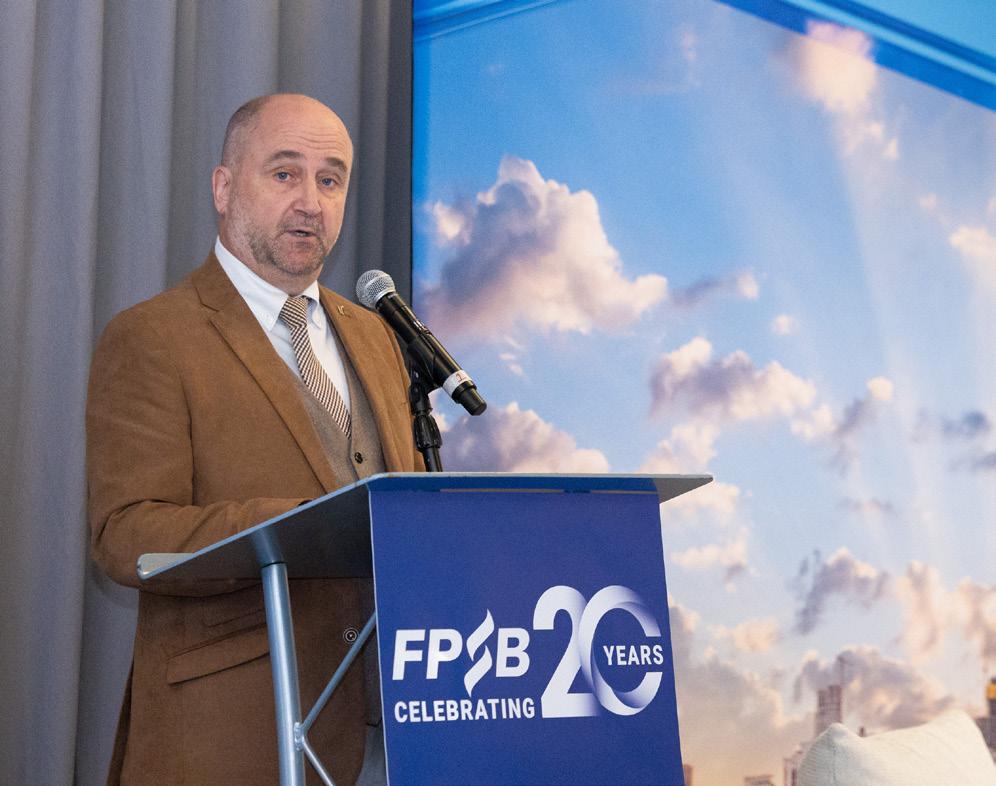
WFPD panel
Abood, FPAT
Honorary



Extending beyond our in-person celebration at the FPSB Global Meeting, the WFPD campaign included the release of a video featuring CFP professionals from around the world, IOSCO Acting Secretary General, and FPSB CEO.
FPSB’s network of organizations also hosted territory specific events, complemented by coordinated media and social media campaigns and a range of other initiatives.
Highlights from WFPD 2025 celebrations included:
Australia Financial Advice Association Australia hosted Financial Planning Week 2025 to highlight how its members help Australians to live well and released findings from its 2025 Value of Advice Index.

Brazil Planejar – Associação Brasileira de Planejamento Financeiro partnered with institutions to educate students on the value of financial planning, hosted free financial planning clinics, conducted sessions on debt recovery and fraud prevention.
Canada FP Canada released consumer research findings, published educational materials and launched a social media campaign with the support of media ambassadors to increase awareness of the value of financial planning and of working with a financial planning professional.
China FPSB China ran a social media campaign to raise awareness of the value of financial planning and of working with a CFP professional.
Chinese Taipei Financial Planning Association of Taiwan hosted a World Investor Week (WIW) Forum in partnership with financial institutions to educate investors on the current and future state of the global financial economy. The forum focused on IOSCO’s WIW key themes –technology and digital finance, AI, frauds and scams, crypto assets, and investor basics.
Germany FPSB Deutschland delivered a five-part webinar series on financial planning, a joint webinar with the Deutschen Institutes für Altersvorsorge (DIA) on practical strategies for retirement planning, and launched an extensive media campaign to raise awareness of the value of financial planning and of working with a CFP professional.
Hong Kong The Institute of Financial Planners of Hong Kong conducted a consumer study on the “legacy transfer attitude of the child-free” to explore attitudes towards financial planning, financial freedom, retirement planning and inheritance arrangements for those who have dual income and no children.
India FPSB India hosted in-person and online financial education events, joined Bombay Stock Exchange bell-ringing ceremony, engaged students through a competition at NMIMS University, and ran a multi-channel campaign featuring interactive social media series, videos, a money quiz, and secured media coverage to raise awareness of financial planning and CFP professionals.
Ireland FPSB Ireland released consumer research findings and ran an online campaign via social media, email and a dedicated webpage to raise awareness of financial planning.
Israel Financial Planners Association in Israel partnered with BDO College and Peres Academic Center to share videos, blogs and expert insights targeting adults 25 and over, with a focus on those building families and launched social media and email campaigns to raise awareness of the value of financial planning.
Italy FPSB Italia hosted a webinar on the importance of financial planning for family wellbeing and future generations, featuring CFP professionals as speakers, and launched media and social media campaigns to raise awareness of the value of financial planning.
Japan Japan Association for Financial Planners ran an online campaign that included social media, email and a dedicated webpage to raise awareness of financial planning.
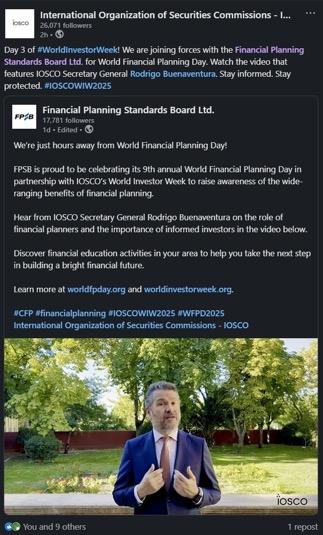
Reflecting on the WFPD campaign, FPSB CEO Dante De Gori, CFP, said:
“World Financial Planning Day shines a spotlight on how financial planning can transform lives. This year’s initiative offered a unique opportunity to celebrate our global impact with leaders from across our network to mark our shared commitment to raise awareness of the value of financial planning and the positive difference CFP professionals make in people’s lives around the world.”
Republic of Korea FPSB Korea ran a media and social media campaign to raise awareness on the value of financial planning.
Singapore Financial Planning Association of Singapore hosted the World Financial Planning Day FPAS Convocation featuring an in-person financial education event on the relevance of current affairs in Singapore and its impact on the importance of financial planning, and ran social media and email campaigns to raise awareness on financial planning.
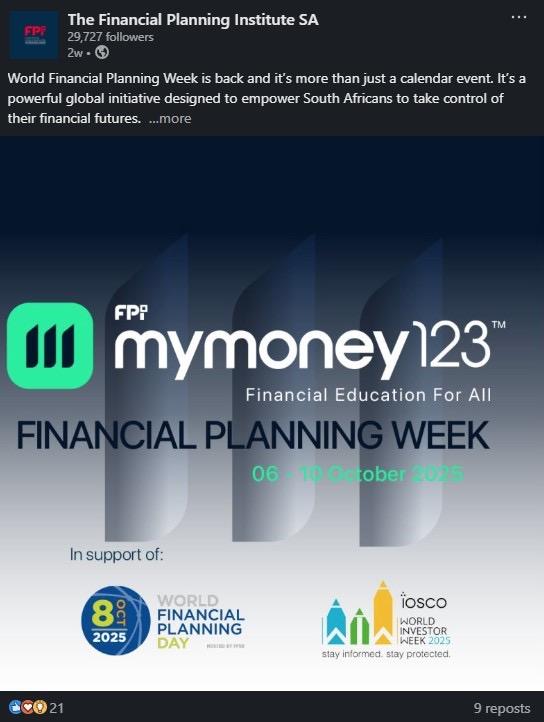
South Africa Financial Planning Institute of Southern Africa celebrated World Financial Planning Day as part of its Financial Planning Week, hosting in-person and virtual financial education events, including four complimentary consumer webinars on topics such as the hidden costs of breast cancer and planning ahead, emergency funds, wills, and financial protection. FPI also ran media, social media and email campaigns, published consumer content, and hosted a staff celebration to raise awareness of the value of financial planning.
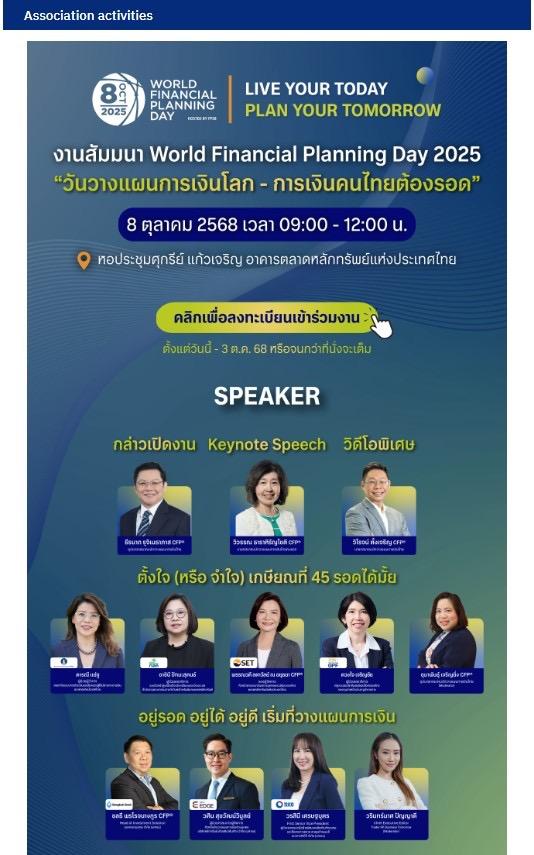
Thailand Thai Financial Planners Association hosted a half-day hybrid event at the Stock Exchange of Thailand featuring keynote speeches, video messages, and panel discussions on financial resilience and client-centric planning. TFPA also offered a financial planning clinic with one-on-one consultations and ran a social media campaign to raise awareness of the value of financial planning.
United Kingdom The Chartered Institute for Securities & Investment hosted its annual in-person Financial Planning Conference to learn and discuss financial planning best practices and raised awareness of the value of financial planning via social media and news articles.
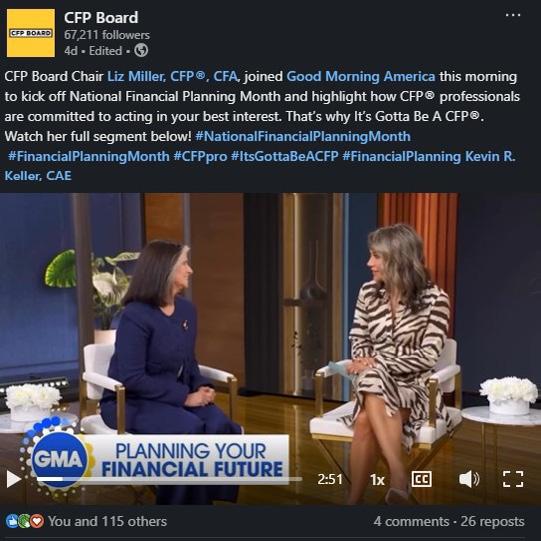
United States CFP Board celebrated World Financial Planning Day as part of National Financial Planning Month, providing CFP professionals with resources to share the value of financial planning and inspire future professionals. Activities included a Good Morning America segment featuring CFP Board’s Chair and a free virtual event, “The Power of a Plan: Navigating Market Uncertainty with Confidence,” offering practical tips to help consumers manage financial uncertainty.
With the growing use of AI and the financial landscape becoming more digital and complex, improving financial literacy among young people is becoming more important to help them develop the knowledge, skills, and judgment they need to make informed financial decisions that lay the foundation for financial success.
From 17- 23 March 2025, FPSB and its global network of organizations actively supported Global Money Week. This annual campaign hosted by the Organisation for Economic Co-operation and Development (OECD) helps young people acquire essential knowledge, skills, attitudes, and behaviors to make wise financial decisions and ultimately achieve financial well-being and resilience.


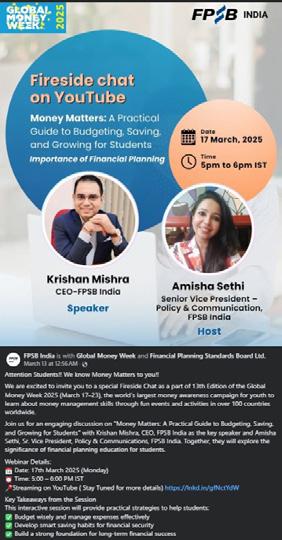

To assist FPSB’s network of organizations participating in Global Money Week, FPSB shared content for social media outreach. In addition, network organizations from nine territories — Australia, Chinese Taipei, Germany, India, Ireland, Italy, Japan, the Netherlands and South Africa — hosted local initiatives including online and inperson financial education workshops, competitions, financial planning forums at universities, media and social media campaigns, and videos.
As part of strengthening global brand awareness, FPSB continued its efforts to protect the strength and integrity of the CFP marks around the world. Ensuring consistent and proper use of the CFP marks reinforces public awareness of the marks, supports global recognition of the certification, and helps ensure the public’s continued ability to confidently identify CFP professionals who have committed to competency, ethical standards, and to putting clients’ interests first.
A key focus during the year was reinforcing and protecting the CFP marks globally. Through ongoing education, dialogue, and governance, FPSB and its global network of organizations worked together to ensure the integrity, strength, and long-term value of the CFP certification as the global benchmark for financial planning.

FPSB Directors (2025-26 term)
Andrea Middel, CFP
Chairperson
The Netherlands
Caroline Dabu
Chairperson-elect
Canada
Eunice Chun Hei Chan, CFP
Malaysia
Marcia Dessen, CFP
Brazil
Yu Gao
China
Jan Karsten, CFP
Brazil
Darren McShane
Australia
Colin Slabach, CFP
United States
Dante De Gori, CFP (non-voting)

1 April 2025 - 31 March 26 term
FPSB Audit Committee
Eunice Chun Hei Chan, CFP (Chairperson), Marcia Dessen, CFP; Yu Gao; Jan Karsten, CFP
FPSB Compensation and Succession Planning Committee
Andrea Middel, CFP (Chairperson),
Eunice Chun Hei Chan, CFP; Caroline Dabu; Yu Gao
FPSB Professional Standards Committee
Darren McShane (Chairperson),
Blaine Aikin, CFP; Marisa Broome, CFP; Amy Richardson, CFP; Esther Venter, CFP
FPSB Nominating Committee
Caroline Dabu (Chairperson), Barak Atzili, CFP; Lelané Bezuidenhout, CFP; Mark Dukers, CFP; Andrea Middel, CFP; Colin Slabach, CFP; Dante De Gori, CFP (non-voting)
2025 term
FPSB Council
Kirsty Scully, CFP South Africa
FPSB Chief Executives Committee
Tashia Batstone Canada
FPSB Asia-Pacific Forum
Cathy Zhang, CFP China
FPSB European Forum
Emer Kirk, CFP Ireland


FPSB Board Chairpersons
2025: Andrea Middel, CFP
2023–24: Ana Cláudia Utumi, CFP
2021–22: Garry Muriwai
2019–20: Gerhardt Meyer, CFP
2018: Barry Horner, CFP
2017: Pamela Packard
2016: Sanjay Sachdev, CFP
2014–15: Steve Helmich
2012–13: Karen Schaeffer, CFP
2010–12: Corinna Dieters
2009: Stephen O’Connor, CFP
2008: Selwyn Feldman, CFP
2007: Margaret Koniuck
2006: Elaine Bedel, CFP
2005: Timothy Kochis, CFP
2004: Maureen Tsu, CFP
2003: John Carpenter
FPSB Council Chairpersons
2025: Kirsty Scully, CFP
2023–24: Ulf Mannhardt, CFP
2022: Lelané Bezuidenhout, CFP
2021: Paul Grimes, CFP / Dante De Gori, CFP
2020: Paul Grimes, CFP
2018–19: Cary List, CFP
2016–17: Neil Kendall, CFP
2015: Becky Taylor, CFP
2014: Sanjay Sachdev, CFP
2013: Barry Horner, CFP
2012: Steve Helmich
2010–11: Karen Schaeffer, CFP
2009: Corinna Dieters
2008: Stephen O’Connor, CFP
2006–07: Selwyn Feldman, CFP
2005: Ian Heraud, CFP
2004: Don Johnston
2003: Raymond Griffin, CFP
FPSB Noel Maye Award recipients
2025: Lelané Bezuidenthout, CFP; Stephen O’Connor, CFP
2024: Elaine Bedel, CFP; Kevin R. Keller, CAE; Tim Kochis, CFP; Ulf Mannhardt, CFP
2023: Noel Maye
FPSB Chief Executive Officers
2023–Current: Dante De Gori, CFP
2003–22: Noel Maye

Consolidated Financial Report December 31, 2025


Board of Directors
Financial Planning Standards Board Ltd.
Opinion
We have audited the consolidated financial statements of Financial Planning Standards Board Ltd. (FPSB), which comprise the consolidated statements of financial position as of December 31, 2025 and 2024, the related consolidated statements of activities, functional expenses and cash flows for the years then ended, and the related notes to the consolidated financial statements (collectively, the financial statements).
In our opinion, the accompanying financial statements present fairly, in all material respects, the financial position of FPSB as of December 31, 2025 and 2024, and the changes in their net assets and their cash flows for the years then ended in accordance with accounting principles generally accepted in the United States of America.
Basis for Opinion
We conducted our audits in accordance with auditing standards generally accepted in the United States of America (GAAS). Our responsibilities under those standards are further described in the Auditor’s Responsibilities for the Audit of the Financial Statements section of our report. We are required to be independent of FPSB and to meet our other ethical responsibilities, in accordance with the relevant ethical requirements relating to our audits. We believe that the audit evidence we have obtained is sufficient and appropriate to provide a basis for our audit opinion.
Responsibilities of Management for the Financial Statements
Management is responsible for the preparation and fair presentation of the financial statements in accordance with accounting principles generally accepted in the United States of America, and for the design, implementation and maintenance of internal control relevant to the preparation and fair presentation of financial statements that are free from material misstatement, whether due to fraud or error.
In preparing the financial statements, management is required to evaluate whether there are conditions or events, considered in the aggregate, that raise substantial doubt about FPSB’s ability to continue as a going concern within one year after the date that the financial statements are issued or available to be issued.
Our objectives are to obtain reasonable assurance about whether the financial statements as a whole are free from material misstatement, whether due to fraud or error, and to issue an auditor’s report that includes our opinion. Reasonable assurance is a high level of assurance but is not absolute assurance and, therefore, is not a guarantee that an audit conducted in accordance with GAAS will always detect a material misstatement when it exists. The risk of not detecting a material misstatement resulting from fraud is higher than for one resulting from error, as fraud may involve collusion, forgery, intentional omissions, misrepresentations, or the override of internal control. Misstatements are considered material if there is a substantial likelihood that, individually or in the aggregate, they would influence the judgment made by a reasonable user based on the financial statements.


In performing an audit in accordance with GAAS, we:
• Exercise professional judgment and maintain professional skepticism throughout the audit.
• Identify and assess the risks of material misstatement of the financial statements, whether due to fraud or error, and design and perform audit procedures responsive to those risks. Such procedures include examining, on a test basis, evidence regarding the amounts and disclosures in the financial statements.
• Obtain an understanding of internal control relevant to the audit in order to design audit procedures that are appropriate in the circumstances, but not for the purpose of expressing an opinion on the effectiveness of FPSB's internal control. Accordingly, no such opinion is expressed.
• Evaluate the appropriateness of accounting policies used and the reasonableness of significant accounting estimates made by management, as well as evaluate the overall presentation of the financial statements.
• Conclude whether, in our judgment, there are conditions or events, considered in the aggregate, that raise substantial doubt about FPSB's ability to continue as a going concern for a reasonable period of time.
We are required to communicate with those charged with governance regarding, among other matters, the planned scope and timing of the audit, significant audit findings and certain internal control-related matters that we identified during the audit.

Kansas City, Missouri April 8, 2026
Consolidated Statements of Financial Position
December 31, 2025 and 2024
Liabilities and Net Assets
See notes to consolidated financial statements.
Consolidated Statements of Activities
Years Ended December 31, 2025 and 2024
See notes to consolidated financial statements.
Financial Planning Standards Board Ltd.
Consolidated Statements of Functional Expenses
Years Ended December 31, 2025 and 2024
See notes to consolidated financial statements.
Consolidated Statements of Cash Flows
Years Ended December 31, 2025 and 2024
Notes to Consolidated Financial Statements
Note 1. Principal Activity and Significant Accounting Policies
Organization: Financial Planning Standards Board Ltd. (FPSB) was established as a 501(c)(6) not-forprofit organization for the purpose of managing, developing and operating financial planning certification, education and related programs to benefit the global community of consumers and potential consumers of financial planning services, and any other matters permitted by law. FPSB’s goal is to benefit the global community by establishing, upholding and promoting worldwide professional standards in financial planning. Key strategic objectives are:
Financial planning professionals: Grow the number of CFP professionals to position CFP certification as the designation of choice for the financial planning profession worldwide.
Partnerships: Partner with key stakeholders to strengthen the global financial planning profession and benefit the public.
Standards and certification: Set, maintain and enforce global financial planning standards and CFP certification requirements to protect and serve the public, and advance the profession.
Brand and awareness: Increase awareness of financial planning with CFP certification as its symbol of excellence, and position FPSB as the global leader of the profession.
The Reserve Bank of India issued an approval letter dated December 12, 2019, granting FPSB permission to establish a liaison office in India. The liaison office was registered in India under the Companies Act, 2013 on March 9, 2020, and started hiring personnel in February 2021. The liaison office acted as a communication channel between certified professionals and affiliated institutions in India until FPSB’s wholly-owned subsidiary was legally formed. The liaison office was then closed in the first quarter of 2023 with legal proceedings finalized in early 2024.
In August 2022, FPSB created a wholly-owned subsidiary called FPSB Institute India Private Limited (FIIPL). FIIPL revenues consist of student enrollment fees, education course and educator provider fees. There were $1,424,702 and $904,856 revenue generating activities consolidated through this subsidiary for the years ended December 31, 2025 and 2024, respectively.
In November 2025, FPSB created a wholly-owned subsidiary called FPSB International Korea Co., Ltd. (FPSB International Korea). FPSB International Korea revenues consist of certification fees, examination fees and other education related fees. There were no revenue generating activities consolidated through this subsidiary for the years ended December 31, 2025 and 2024.
A summary of FPSB’s significant accounting policies is as follows:
Principles of consolidation: The consolidated financial statements (collectively, the financial statements) include the accounts of FPSB and its consolidated wholly-owned subsidiaries, FIIPL and FPSB International Korea. All significant intercompany transactions and balances have been eliminated in consolidation.
Basis of presentation: The financial statements have been prepared on the accrual basis of accounting applicable to nonprofit organizations in accordance with accounting principles generally accepted in the United States of America (U.S. GAAP). As required by the Not-for-Profit Entities Topics of Financial Accounting Standards Board Accounting Standards Codification (ASC), FPSB is required to report information regarding its financial position and activities according to two classes of net assets: net assets without donor restrictions and net assets with donor restrictions.
Notes to Consolidated Financial Statements
Net assets without donor restrictions: Net assets without donor restrictions include undesignated resources and, therefore, are available for the general activities of FPSB or designation by the board of directors. All of FPSB’s net assets are available for use in general operations. FPSB’s board of directors (the Board) has designated an operating reserve from FPSB’s net assets without donor restrictions to provide resources to protect FPSB’s trademarks and to address unforeseen economic circumstances (see Note 2).
Net assets with donor restrictions: Net assets with donor restrictions are those whose use by FPSB has been limited by donors to a specific time period or purpose or must be maintained in perpetuity by FPSB. FPSB has no net assets with donor restrictions for the years ended December 31, 2025 and 2024.
Use of estimates: In preparing financial statements in conformity with U.S. GAAP, FPSB is required to make estimates and assumptions that affect the reported amounts of assets and liabilities and the reported amounts of revenues and expenses during the reporting period. Actual results could differ from those estimates.
Cash and cash equivalents: FPSB considers all cash and highly liquid financial instruments with original maturities of three months or less to be cash and cash equivalents.
Funds held on behalf of FPSB: Funds held on behalf of FPSB represent funds collected from students and professionals on FPSB’s behalf but not yet remitted to FPSB as of year-end.
Investments and investment return: Investments in equity securities having a readily determinable fair value and all debt securities are carried at fair value. Investment return includes dividend, interest and other investment income and unrealized and realized gains and losses on investments carried at fair value. Investment return is reflected in the consolidated statements of activities as with or without donor restrictions, based upon the existence and nature of any donor or legally imposed restrictions. Purchases and sales of securities are recorded on trade dates, and realized gains and losses are determined on the basis of the average cost of securities sold.
Financial risk: FPSB manages deposit concentration risk by placing cash with financial institutions FPSB believes to be creditworthy. At times, amounts on deposit may exceed insured limits. To date, FPSB has not experienced losses in any of these accounts.
FPSB places investments in a professionally managed portfolio that contains various equity and debt securities. Therefore, investments may be subject to significant fluctuations in fair value and investment balances reported in the accompanying financial statements may not be reflective of the portfolio’s value during subsequent periods.
Credit risk associated with accounts receivable is considered to be limited due to high historical collection rates and because outstanding amounts are generally due from affiliates.
Notes to Consolidated Financial Statements
Accounts receivable and allowance for credit losses: Accounts receivable consist of noninterestbearing amounts due from affiliate organizations for certification program services performed, and are presented net of any allowance for credit losses. Where applicable, FPSB determines its allowance by considering a number of factors, including the affiliate organization’s economic environment and previous payment history. FPSB writes off accounts receivable when they are determined to be uncollectible. As of December 31, 2025 and 2024, FPSB determined no allowance to be necessary. Recoveries of accounts receivable previously written off are recorded when received. There were $44,903 of credit loss expenses for the year ended December 31, 2025. There were no credit loss recoveries or expenses for the year ended December 31, 2024. FPSB will continue to monitor and evaluate the adequacy of the allowance for credit losses on accounts receivable on a regular basis and make adjustments as necessary in response to changes in economic conditions and credit quality indicators.
Receivables from contracts with customers are reported as accounts receivable and contract liabilities are reported as deferred revenue in the accompanying consolidated statements of financial position.
Prepaid expenses: Prepaid expenses consist of expenses paid in advance, but not yet incurred.
Certification materials: Certification materials are reported at cost of capitalized expenditures, less accumulated amortization, with a value greater than $500 and a useful life of more than one year, to create and edit original content including textbooks, case studies, practice examinations and instructor guides. Amortization is computed using the straight-line method, based on an estimated three years of useful life of the materials.
Property and equipment: Property and equipment is stated at cost less accumulated depreciation. In general, FPSB capitalizes equipment with a value greater than $500 and a useful life of more than one year. Major renewals and improvements are also capitalized (general maintenance and repairs which do not improve or extend the lives of the assets are expensed). Depreciation and amortization are charged to expense and computed using the straight-line method, based on estimated useful lives of the assets, which range from three to seven years, or in the case of capitalized leasehold improvements, the shorter of the useful life of the asset or the lease term.
FPSB reviews the carrying values of property and equipment for impairment whenever events or circumstances indicate that the carrying value of an asset may not be recoverable from the estimated future cash flows expected to result from its use and eventual disposition. When considered impaired, an impairment loss is recognized to the extent carrying value exceeds the fair value of the asset. There were no indicators of asset impairment during the years ended December 31, 2025 and 2024.
Leases: FPSB determines if an arrangement is or contains a lease at inception, which is the date on which the terms of the contract are agreed to, and the agreement creates enforceable rights and obligations. A contract is or contains a lease when: (i) explicitly or implicitly identified assets have been deployed in the contract and (ii) the customer obtains substantially all of the economic benefits from the use of that underlying asset and directs how and for what purpose the asset is used during the term of the contract. FPSB also considers whether its service arrangements include the right to control the use of an asset.
FPSB recognizes most leases on its consolidated statements of financial position as a right-of-use (ROU) asset representing the right to use an underlying asset and a lease liability representing the obligation to make lease payments over the lease term, measured on a discounted basis. Leases are classified as either finance leases or operating leases based on certain criteria. Classification of the lease affects the pattern of expense recognition in the consolidated statements of activities.
Notes to Consolidated Financial Statements
FPSB made an accounting policy election available not to recognize ROU assets and lease liabilities for leases with a term of 12 months or less. For all other leases, ROU assets and lease liabilities are measured based on the present value of future lease payments over the lease term at the commencement date of the lease. The ROU assets also include any initial direct costs incurred and lease payments made at or before the commencement date, and are reduced by any lease incentives received. To determine the present value of lease payments, FPSB made an accounting policy election available to non-public companies to utilize a risk-free borrowing rate, which is aligned with the lease term at the lease commencement date.
Future lease payments may include fixed-rent escalation clauses or payments that depend on an index (such as the consumer price index), which is initially measured using the index or rate at lease commencement. Subsequent changes of an index and other periodic market-rate adjustments to base rent are recorded in variable lease expense in the period incurred. Residual value guarantees or payments for terminating the lease are included in the lease payments only when it is probable they will be incurred.
FPSB has made an accounting policy election to account for lease and nonlease components in its contracts as a single lease component for its real estate, vehicle and equipment asset classes. The nonlease components typically represent additional services transferred to FPSB, such as common area maintenance for real estate, which are variable in nature and recorded in variable lease expense in the period incurred.
Trademarks: Trademarks are considered to have an indefinite life and therefore are not amortized. FPSB records impairment losses on trademarks when events and circumstances indicate that these assets might be impaired and the estimated fair value of the assets is less than its recorded amount. Fair value is estimated using the expected present value of future cash flows. Conditions that would necessitate an impairment assessment include material adverse changes in operations, a decision to abandon acquired products or other significant adverse changes that would indicate the carrying amount of the recorded assets might not be recoverable. As of December 31, 2025 and 2024, the trademarks were not impaired.
Revenue and revenue recognition: Revenue is recognized from the sales of services when the performance obligations of providing the services are met. Payments are required at the time of sale or start of the membership period. Amounts received in advance are deferred to the applicable period. With the exception of services provided in connection with membership dues, which are transferred over the period of membership, all services are transferred at a point in time.
FPSB’s affiliates comprise the leading financial planning organizations on six continents. These organizations are committed to developing, promoting and enforcing world‐class standards for financial planning professionalism, and offer the globally recognized CFP certification program in their territories.
Affiliate revenue represents charges to affiliates for the right to administer FPSB’s certification programs in their local territory (which includes license rights to FPSB’s trademarks and other program intellectual property) and to affiliate with FPSB and participate in the broader FPSB network. The revenue is a contractually specified fixed annual fee or annual per-certified-professional fee and is due in one or more installments as specified in FPSB’s agreements. FPSB recognizes these fees over the license and/or affiliation period, typically a calendar year, as the performance of FPSB’s license and affiliation obligations are fulfilled. FPSB recognizes research participation fees as services are performed, and Global Meeting revenue at a point in time when FPSB delivers the event.
Notes to Consolidated Financial Statements
Direct certification revenue includes student enrollment, examination, certification fees, as well as other education program fees from students and education providers. FPSB recognizes revenue from examination fees at the point in time FPSB’s performance obligation to provide access to the exam is met and a student sits for their examination. Student enrollment, certification and other education program fees are recognized ratably over the applicable period as FPSB meets its performance obligations to provide students with access to education tracks leading to certifications, professionals with access to annual certification rights, or deliver educational programs, respectively. Payments for student enrollment, examinations, certification fees and other educational programs due and received in advance are recorded as deferred revenue in the accompanying consolidated statements of financial position. The beginning balance for accounts receivable was $74,904 at January 1, 2024.
The following table provides information about significant changes in deferred revenue for the years ended December 31, 2025 and 2024:
Deferred revenue, beginning of year 526,928 $ 638,171 $
Revenue recognized that was included in deferred revenue at the beginning of year (526,928) (638,171)
Increases in deferred revenue due to cash received during the year 592,695 526,928
revenue, end of year
Expenses: Expenses are recognized when incurred. Expenses paid in advance but not yet incurred are deferred to the applicable period.
Functional allocation of expenses: The costs of program and supporting services activities have been summarized on a functional basis in the consolidated statements of functional expenses. Accordingly, certain costs have been allocated among the programs and supporting services benefited. Costs incurred related to the natural expense categories of salaries and benefits, depreciation and amortization, information technology, office rent, insurance, telecommunications and office equipment and supplies are allocated on the basis of time and effort employees spent on program services and management and general activities.
Accounting for uncertain tax positions and goods and services tax (GST): FPSB is exempt from federal income tax under Section 501(c)(6) of the Internal Revenue Code. However, income from activities not directly related to FPSB’s tax-exempt purpose is subject to taxation as unrelated business income. FPSB did not have taxable income or income tax expense during the years ended December 31, 2025 and 2024. In addition, FPSB is required to collect and remit GST in India relating to certain streams of revenue. GST is considered a pass-through transaction; as such, no revenues or expenses are recognized when GST is collected from the customer. Furthermore, FPSB pays an equalization levy on revenue streams coming to the United States and also pays a royalty tax on the education provider fees revenue stream which is included in the other education program fees line items on the consolidated statements of activities.
FPSB applied the provisions of the Accounting for Uncertainty in Income Taxes topic of the ASC. Management has evaluated FPSB’s tax positions and concluded that FPSB had taken no uncertain tax positions that require adjustment to the financial statements to comply with provisions of this guidance.
Notes to Consolidated Financial Statements
Subsequent events: FPSB has evaluated subsequent events through April 8, 2026, the date on which the financial statements were available to be issued.
Financial assets at December 31, 2025 and 2024, available for general expenditure, that is, without donor or other restrictions limiting their use, within one year of the consolidated statements of financial position date, include the following:
The Board has designated a reserve fund that is maintained in a segregated account. As of December 31, 2025 and 2024, the account had a balance of $2,795,632 and $2,523,342, respectively.
As part of FPSB’s liquidity management plan, FPSB holds appropriate balances of cash and cash equivalents in checking and savings accounts. FPSB also maintains a line of credit available in the event FPSB encounters short-term cash flow needs (see Note 8).
FPSB reports certain assets at fair value in the financial statements. Fair value is the price FPSB would receive to sell an asset in the market at the measurement date under current market conditions regardless of whether that price is directly observable or estimated using another valuation technique. Inputs used to determine fair value refer broadly to the assumptions that market participants would use in pricing the asset, including assumptions about risk. Inputs may be observable or unobservable. Observable inputs are inputs that reflect the assumptions market participants would use in pricing the asset based on market data obtained from sources independent of FPSB. Unobservable inputs are inputs that reflect FPSB’s assumptions about the assumptions market participants would use in pricing the asset based on the best information available. A three-tier hierarchy categorizes the inputs as follows:
Level 1: Quoted prices (unadjusted) in active markets for identical assets that FPSB can access at the measurement date.
Level 2: Inputs other than quoted prices included within Level 1 that are observable for the asset, either directly or indirectly. These include quoted prices for similar assets in active markets, quoted prices for identical or similar assets in markets that are not active, inputs other than quoted prices that are observable for the asset, and market-corroborated inputs.
Level 3: Unobservable inputs for the asset. In these situations, FPSB develops inputs using the best information available in the circumstances.
Notes to Consolidated Financial Statements
In some cases, the inputs used to measure the fair value of an asset might be categorized within different levels of the fair value hierarchy. In those cases, the fair value measurement is categorized in its entirety in the same level of the fair value hierarchy as the lowest level input that is significant to the entire measurement. Assessing the significance of a particular input to entire measurement requires judgment, taking into account factors specific to the asset. The categorization of an asset within the hierarchy is based on the pricing transparency of the asset and does not necessarily correspond to FPSB’s assessment of the quality, risk or liquidity profile of the asset.
The investment assets for FPSB’s deferred compensation plans are classified within Level 1 because they are composed of open-end mutual funds and exchange-traded funds with readily determinable fair values based on daily redemption values.
Where quoted market prices are available in an active market, securities are classified within Level 1 of the valuation hierarchy. If quoted market prices are not available, then fair values are estimated by using quoted prices of securities with similar characteristics or independent asset pricing services and pricing models, the inputs of which are market-based on independently sourced market parameters, including but not limited to, yield curves, interest rates, volatilities, prepayments, defaults, cumulative loss projects and cash flows. Such securities are classified in Level 2 of the valuation hierarchy. There have been no significant changes in the valuation techniques during the year ended December 31, 2025 and 2024.
The following tables present assets measured at fair value on a recurring basis, except those measured at cost as identified below, at December 31, 2025 and 2024:
inSignificant
Notes to Consolidated Financial Statements
Note 3. Fair Value Measurements and Disclosures (Continued)

Cash is included within the fair value table as these are held within the custodian account pertaining to deferred compensation investments.
Total investment return is composed of the following at December 31:
Note
Certification materials consist of the following at December 31, 2025 and 2024:
Amortization expense related to certification materials for the years ended December 31, 2025 and 2024, was $9,875 and $7,547, respectively.
Notes to Consolidated Financial Statements
Estimated future amortization expense related to these intangible assets is as follows:
December 31:
Property and equipment consists of the following December 31, 2025 and 2024:
Depreciation and amortization expense related to property and equipment for the years ended December 31, 2025 and 2024, was $48,979 and $60,582, respectively.
FPSB rents office space and office equipment under various operating lease agreements expiring through February 2030. Some leases include an option to renew, generally at FPSB’s sole discretion, with renewal terms that can extend the lease term up to five years. In addition, certain leases contain termination options, where the rights to terminate are held by FPSB, the lessor, or both parties. These options to extend or terminate a lease are included in the lease terms when it is reasonably certain that FPSB will exercise that option. FPSB’s operating leases generally do not contain any material restrictive covenants or residual value guarantees.
Operating lease cost is recognized on a straight-line basis over the lease term. The components of lease expense are as follows for the years ended December 31, 2025 and 2024:
Notes to Consolidated Financial Statements
Supplemental consolidated statements of financial position information for the years ended December 31, 2025 and 2024, related to operating leases is as follows:
Weighted-average remaining lease term—operating leases
Future undiscounted cash flows for each of the next five years, and a reconciliation to the lease liabilities recognized on the consolidated statement of financial position are as follows as of December 31, 2025:
ending December 31:
457(f) plan: During 2021, FPSB established a second deferred compensation plan for certain key employees. The assets and related liabilities have been reflected in the accompanying consolidated statements of financial position. Contribution expenses to this plan under each participant’s agreements for the years ended December 31, 2025 and 2024, were $30,250 and $85,000, respectively. Assets for the plan totaled $175,656 and $267,391 for December 31, 2025 and 2024, respectively and offsetting liabilities totaled $205,906 and $267,391 for December 31, 2025 and 2024, respectively. A contribution of $30,250 was remitted to the asset account in February 2026.
401(k) plan: FPSB sponsors a 401(k) savings plan in which all employees 18 years of age or older, except leased or nonresident alien employees, are eligible to participate on the first day of their employment. FPSB matches up to 6% of the participant’s salary up to the maximum contribution allowed by the Internal Revenue Service. Participants are fully vested in their deferrals and company match from the first day of participation in the plan. For the years ended December 31, 2025 and 2024, FSPB contributed $133,044 and $123,971, respectively, to the plan.
FPSB has a revolving credit facility with its bank allowing for advances up to $100,000. Outstanding borrowings bear interest at the prime rate plus 1.00% (7.75% and 8.5% at December 31, 2025 and 2024, respectively). The credit facility has no maturity date and is collateralized by substantially all of FPSB’s assets (excluding trademarks and certification materials). At December 31, 2025 and 2024, there were no outstanding borrowings on the credit facility.
Notes to Consolidated Financial Statements
Note 9. Concentration of Credit Risk
Affiliate revenues for the years ended December 31, 2025 and 2024, include sales to the following affiliate organizations:
Note 10. Contingencies
FPSB may be subject to various claims and lawsuits may arise primarily in the ordinary course of its activities. It is the opinion of management that the disposition or ultimate resolution of such claims and lawsuits will not have a material adverse effect on the consolidated financial position, change in net assets or cash flows of FPSB. Events could occur that would change this estimate materially in the near term. As of April 8, 2026, management has evaluated and is not aware of any material pending litigation.