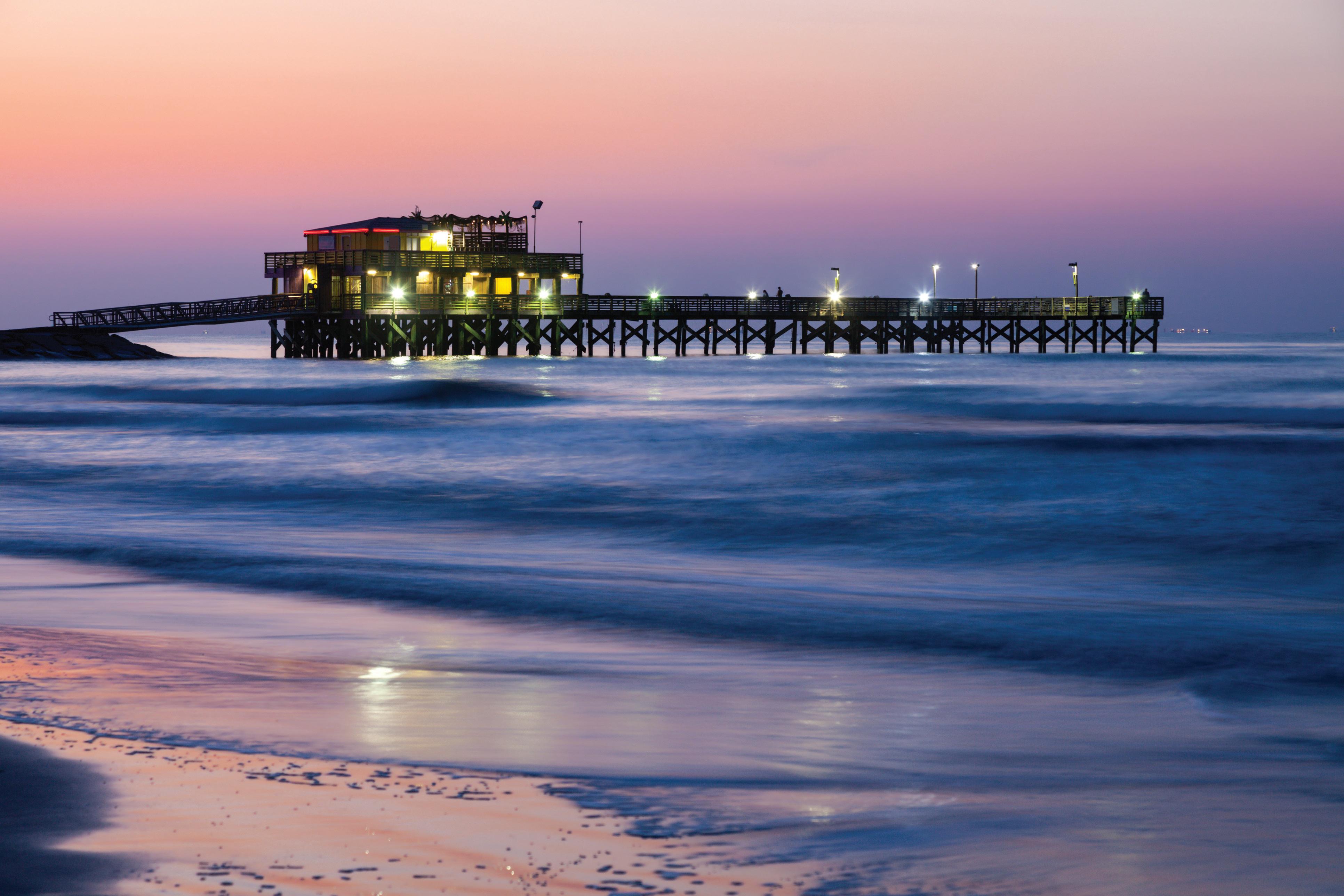
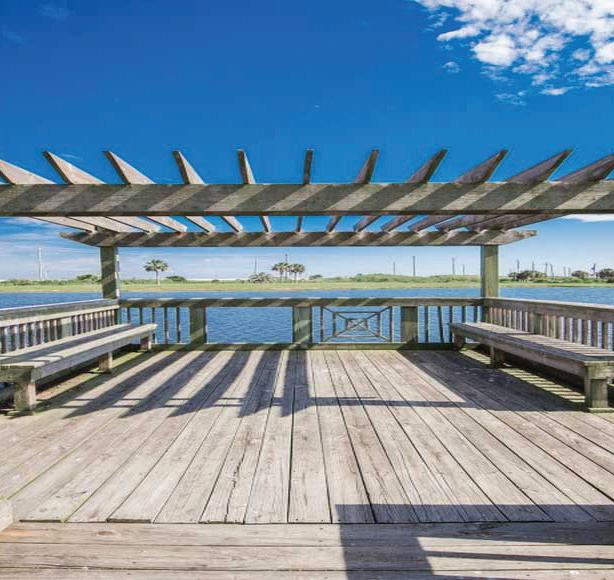
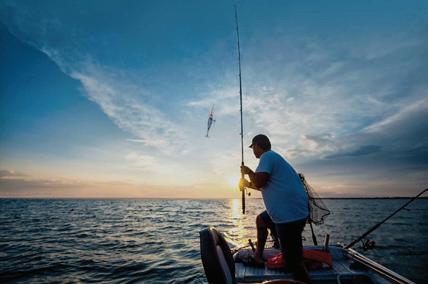
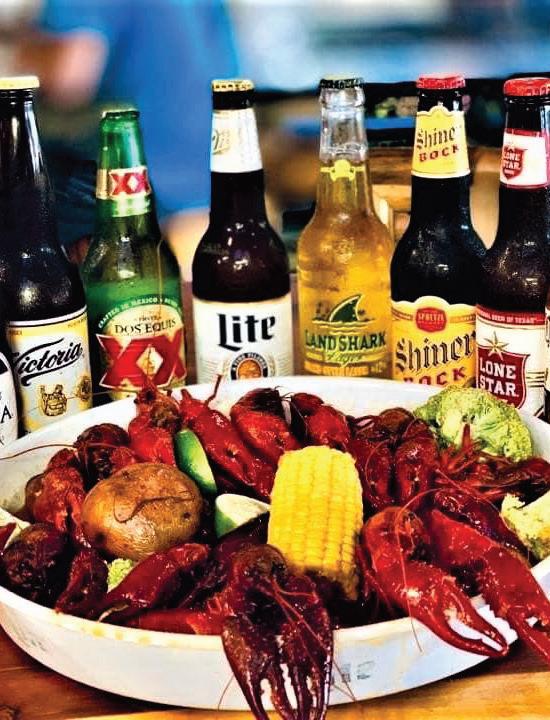
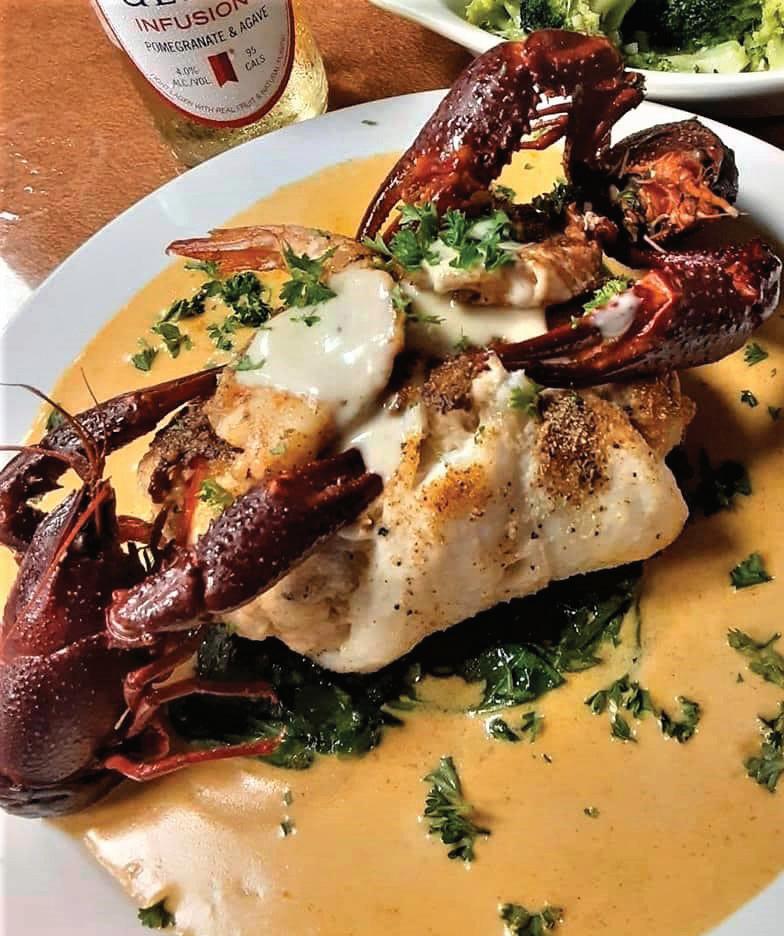
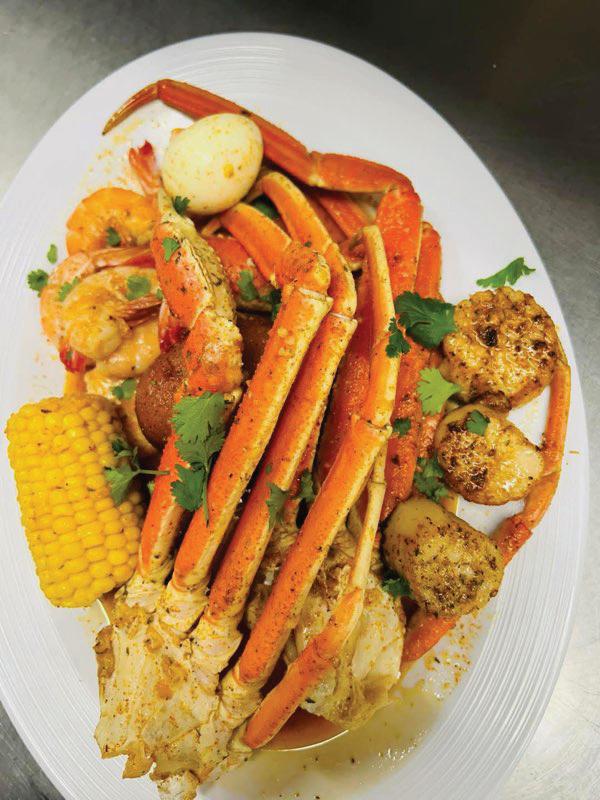
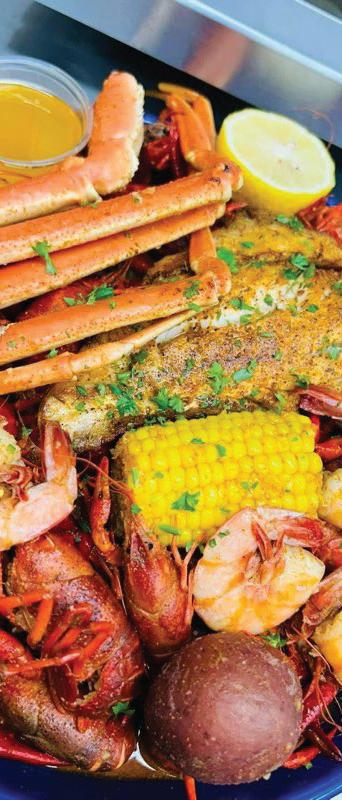
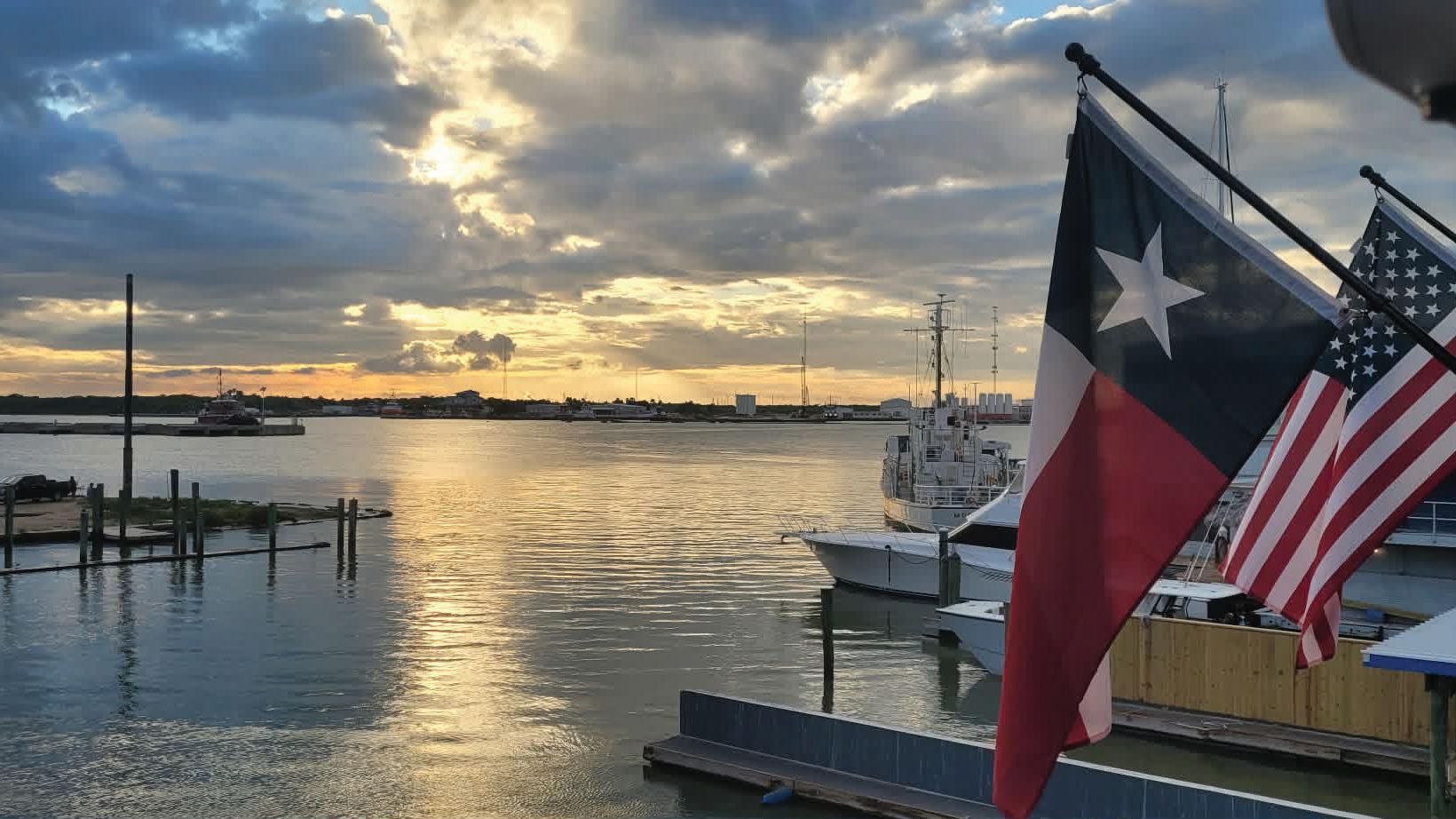
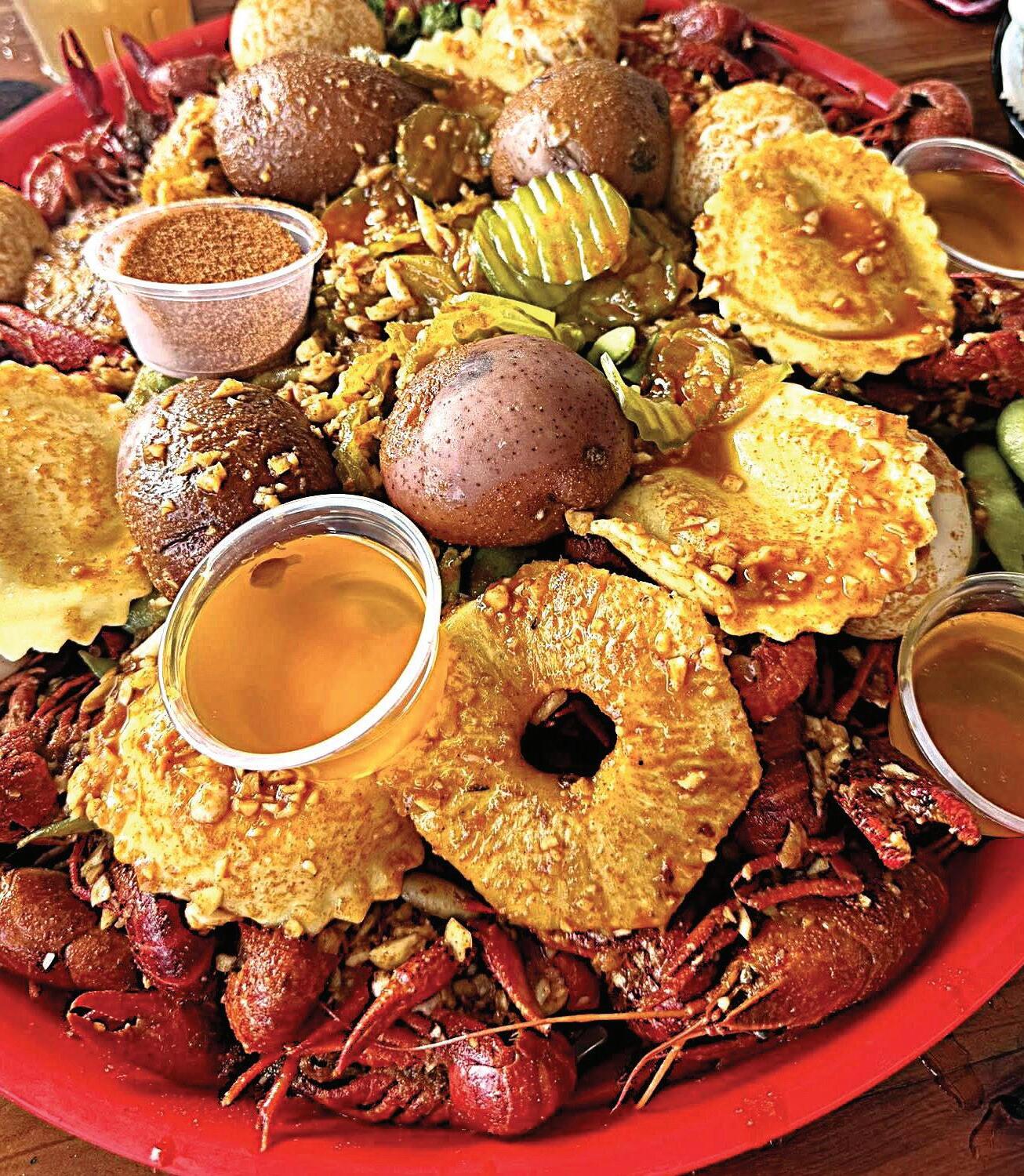
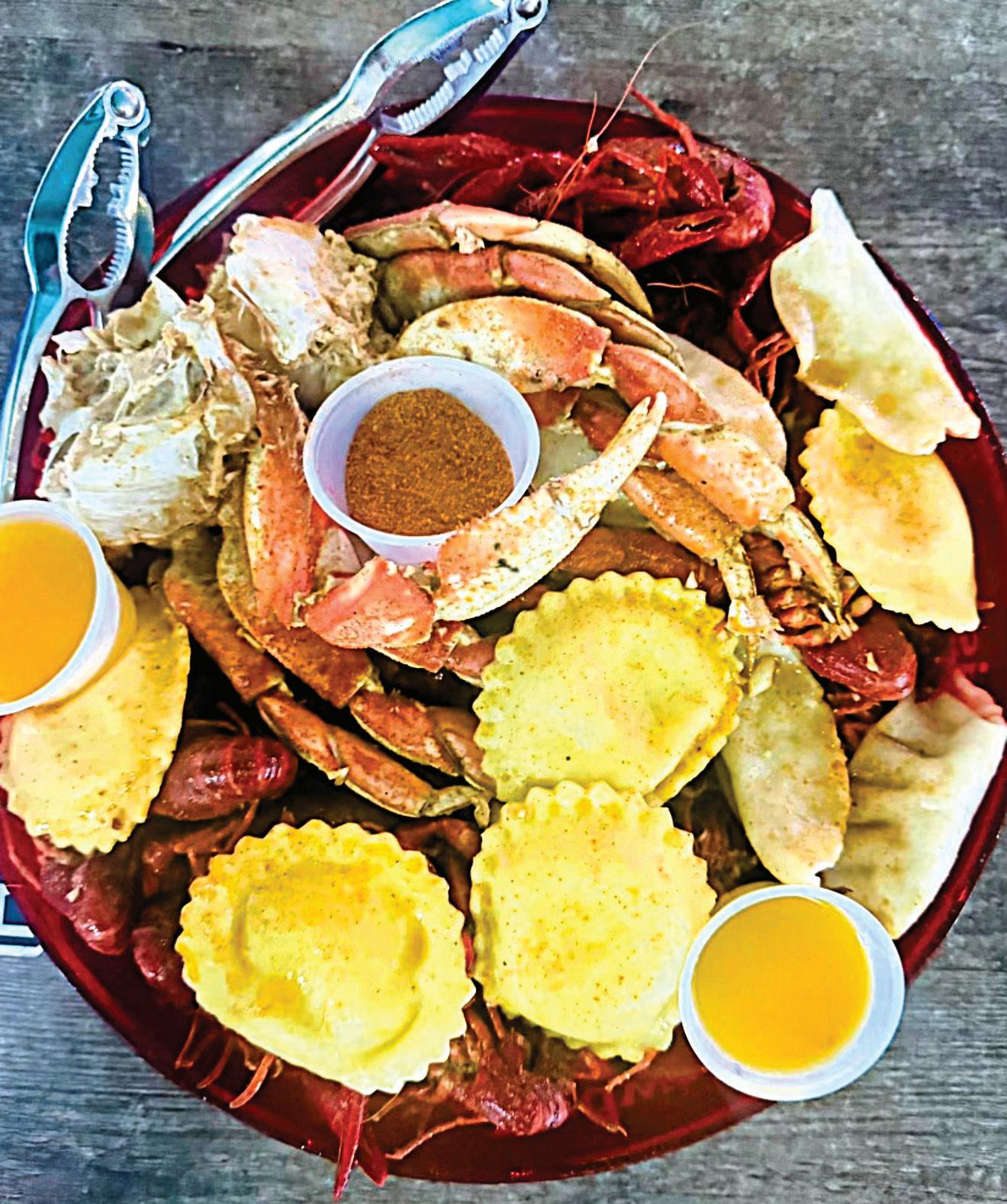
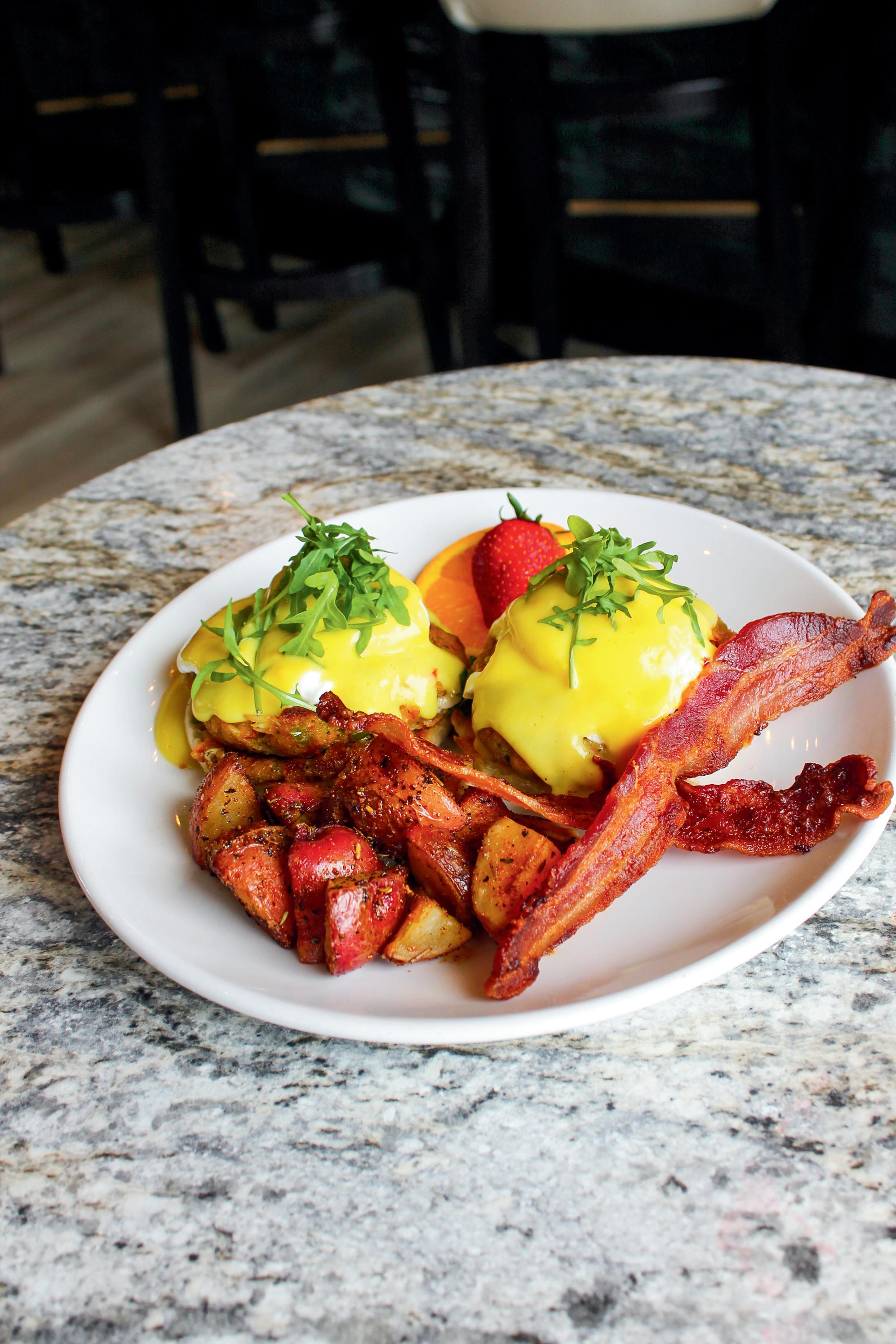
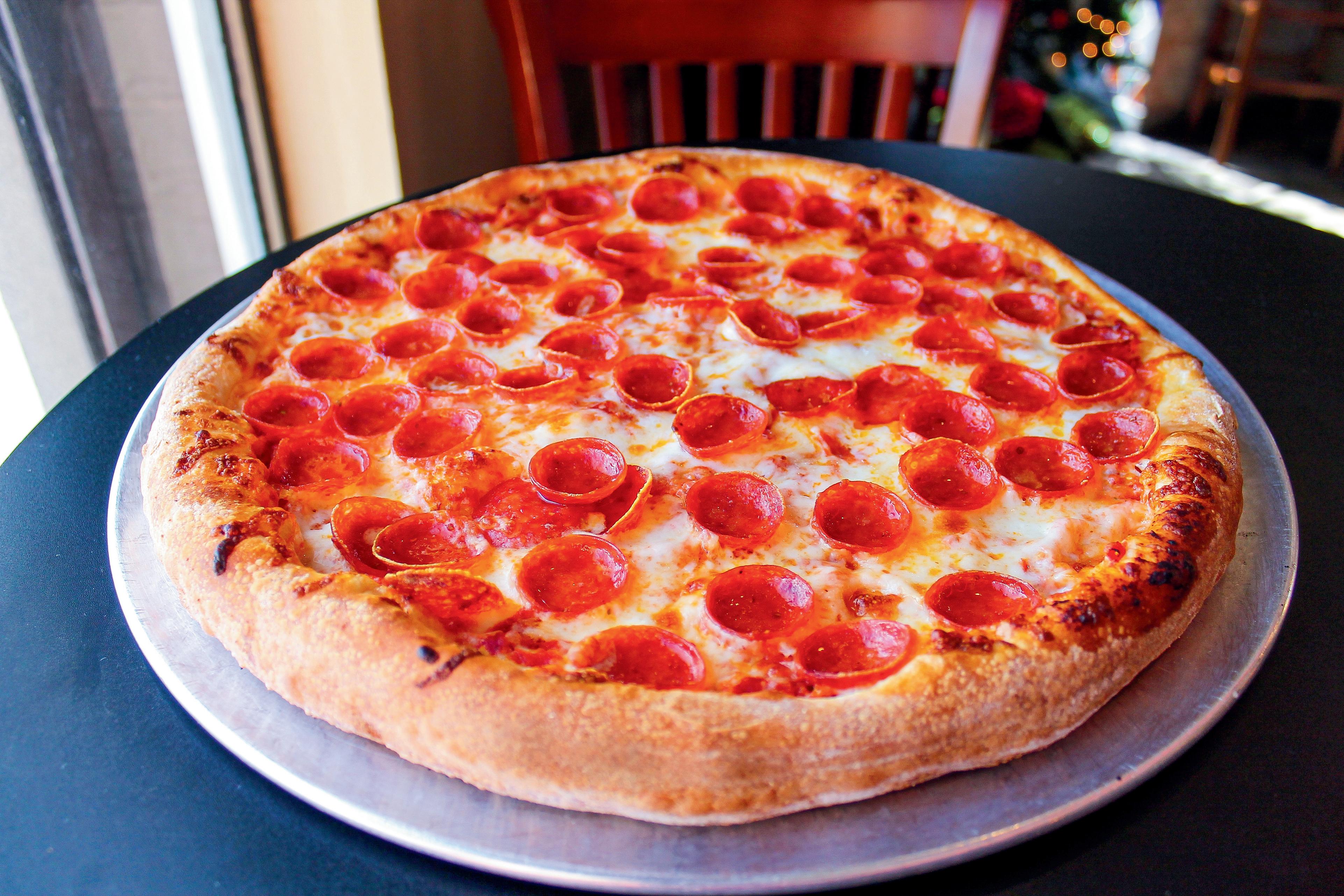
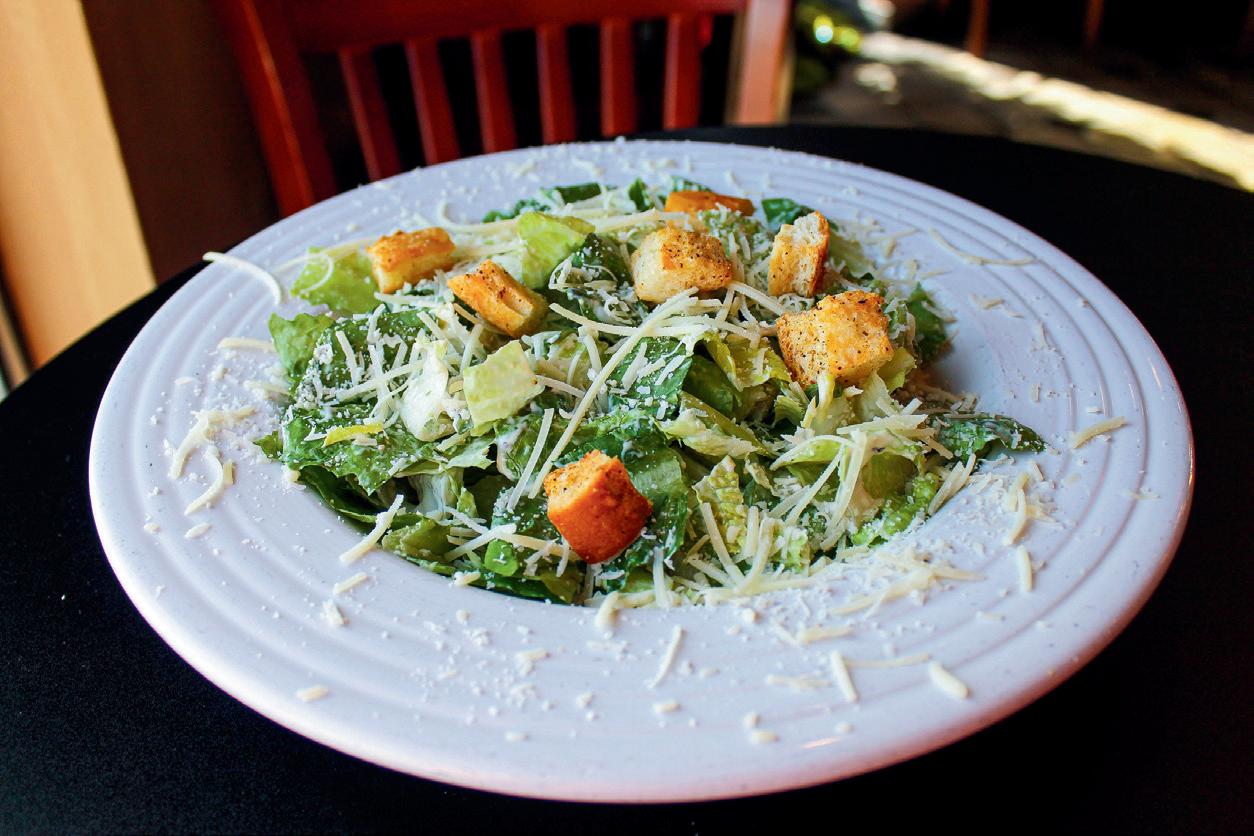
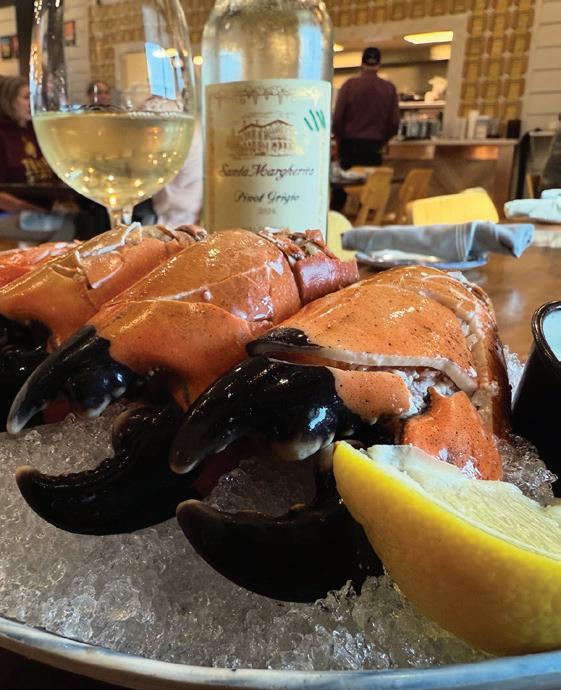
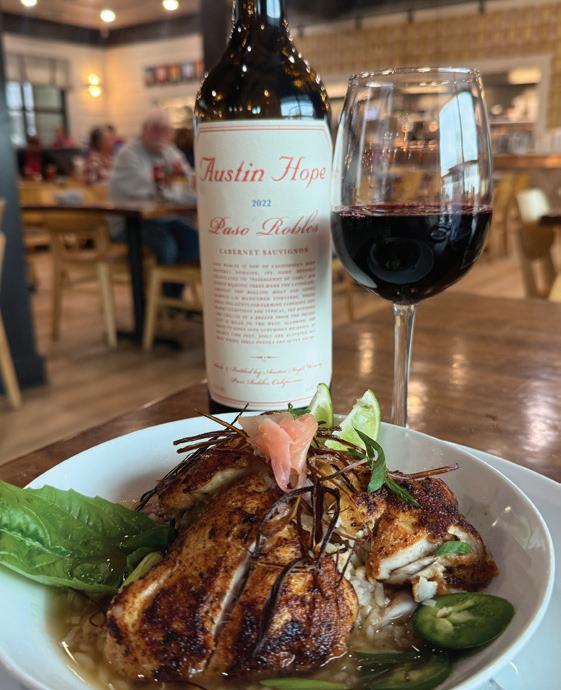
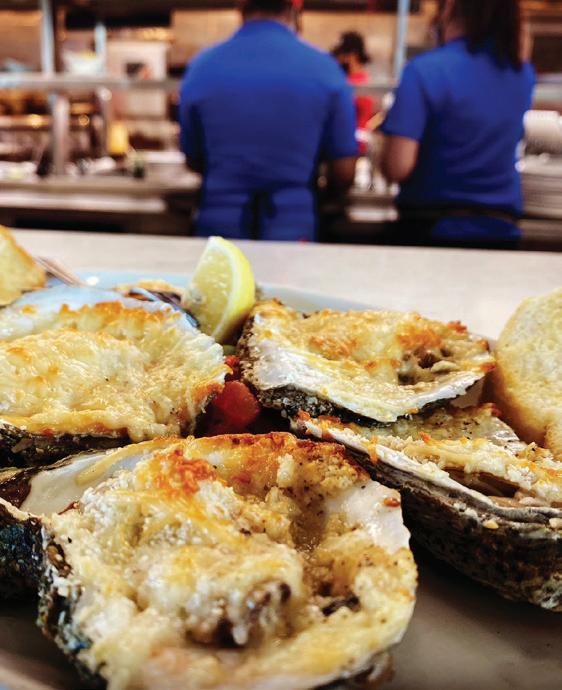
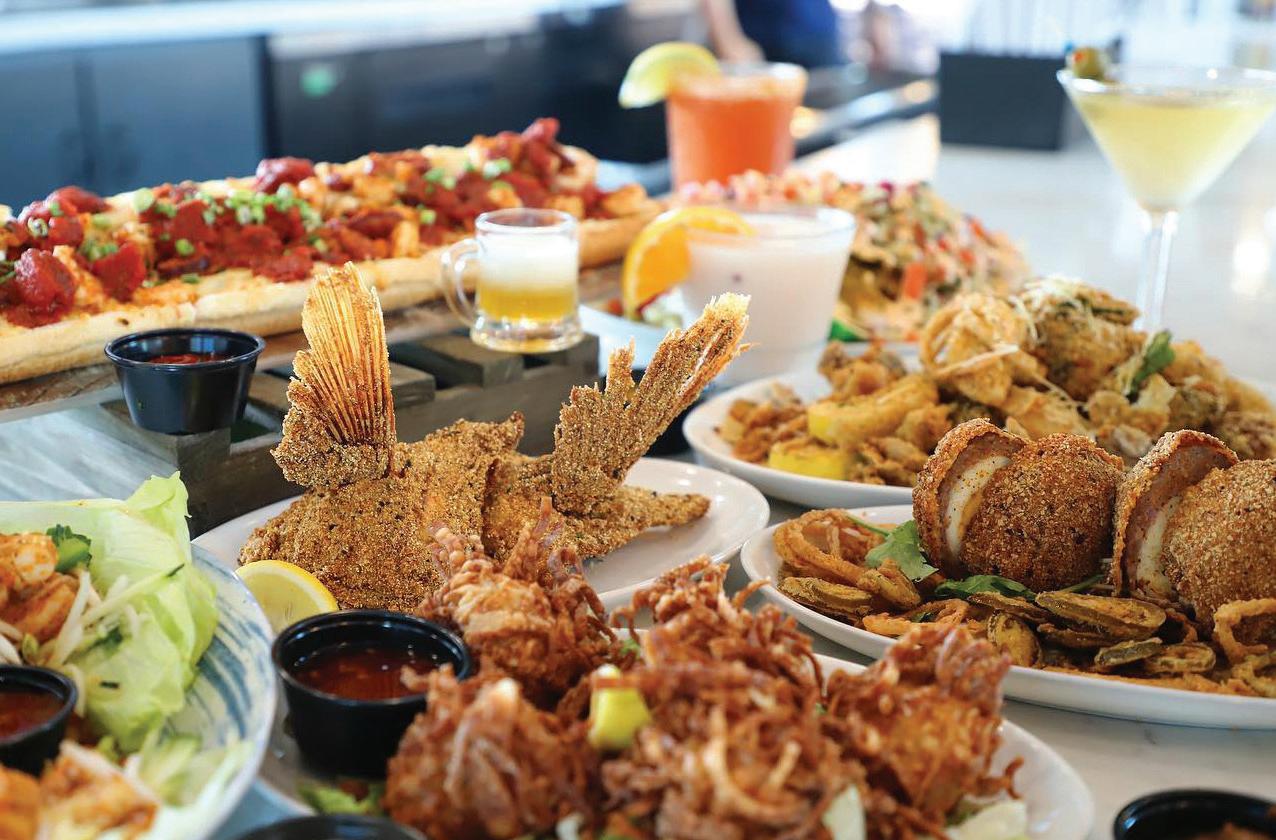
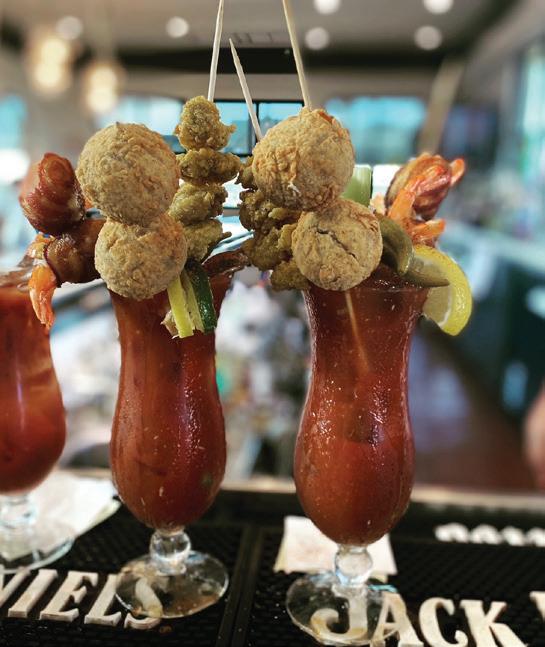
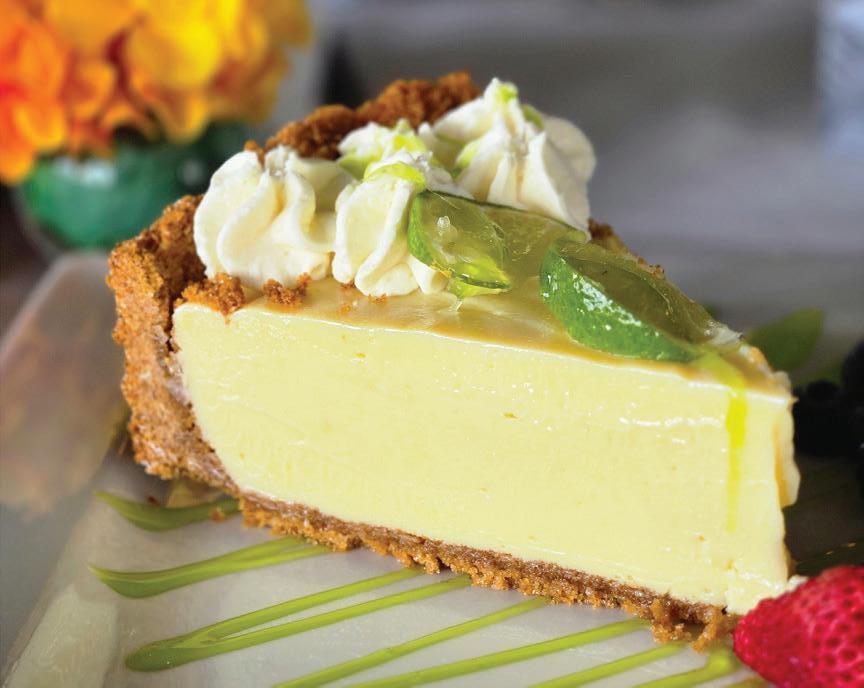
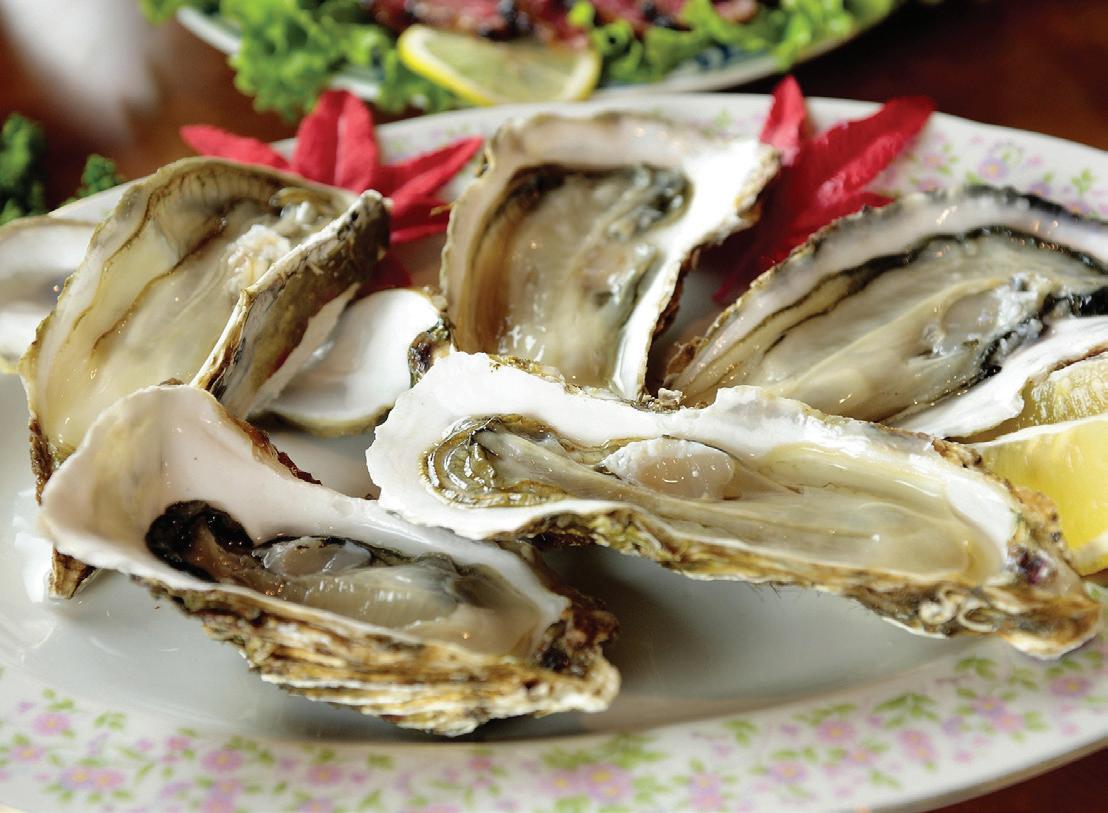
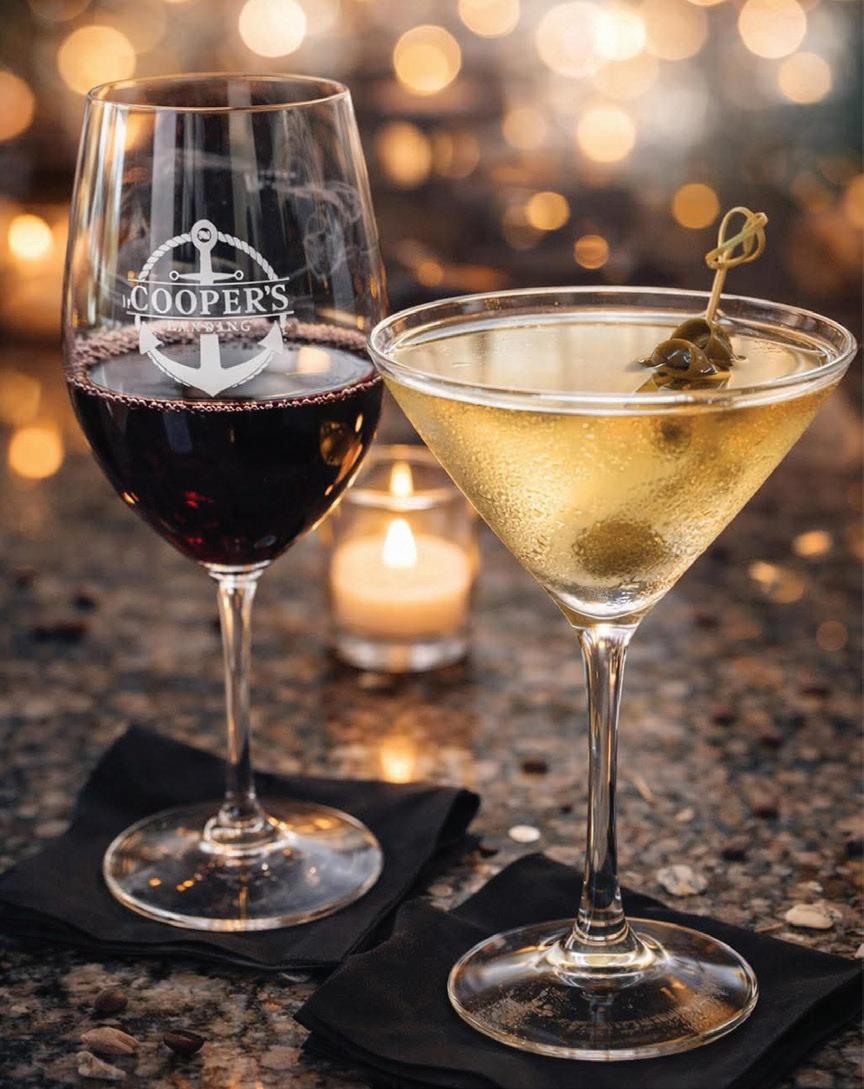
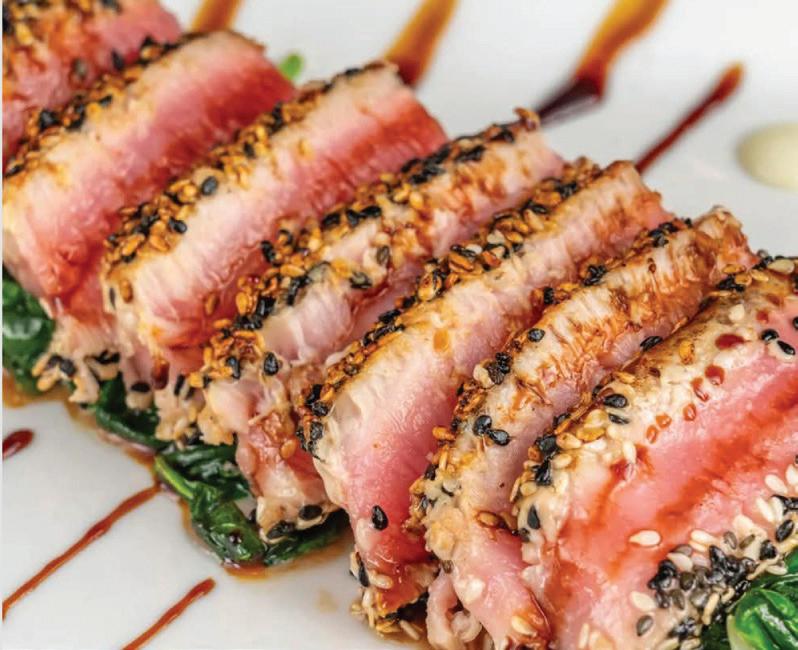
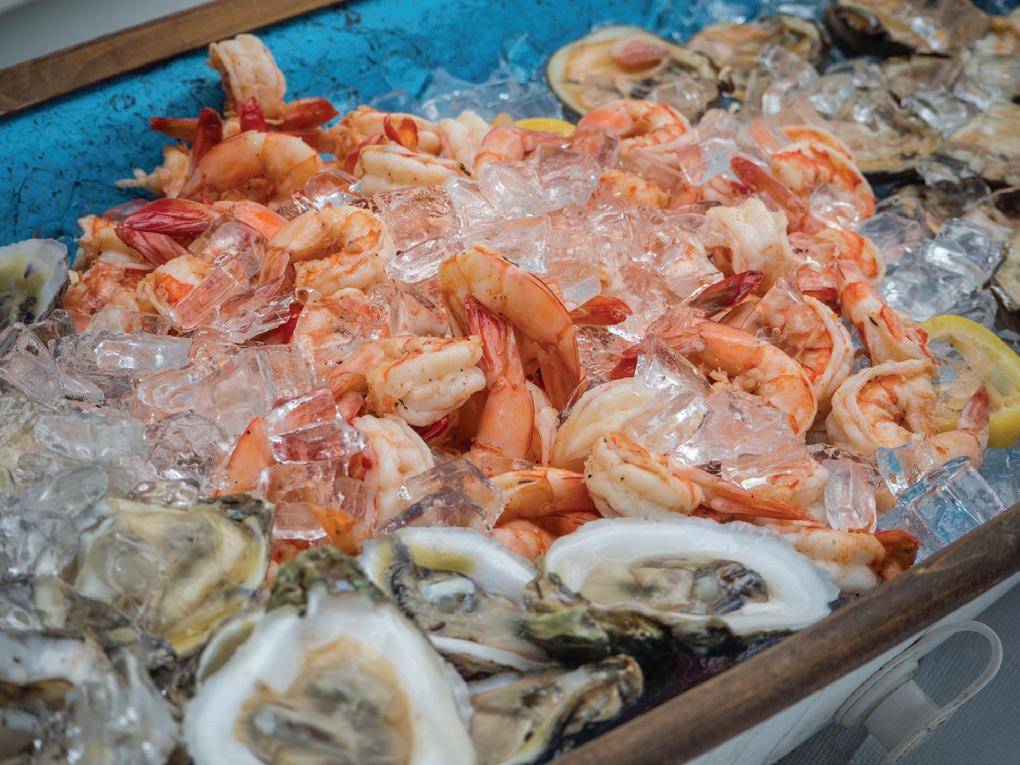
• Fresh seafood restaurants with live music for casual waterfront dining
• Charming boutiques, lively festivals, and plenty of family-friendly events
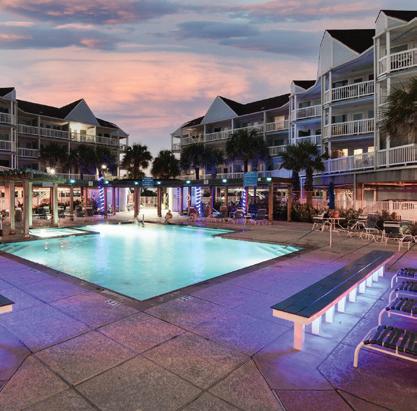
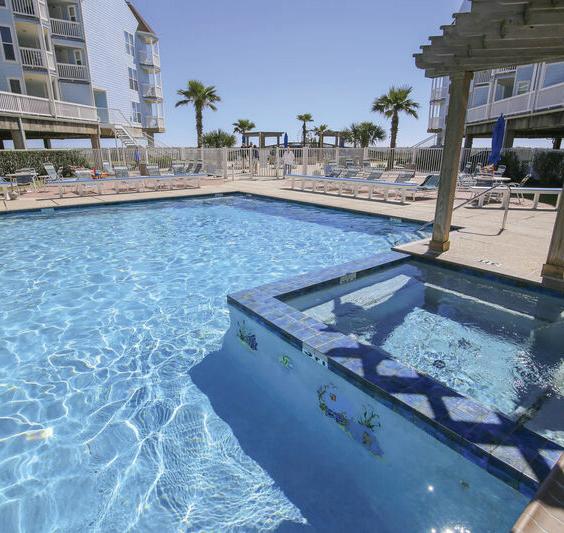
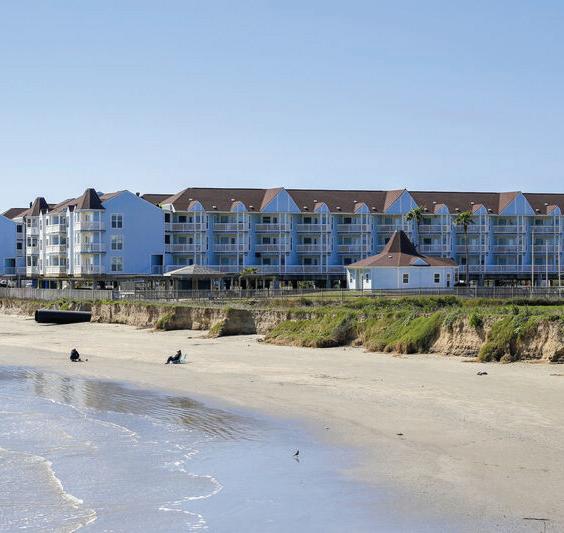
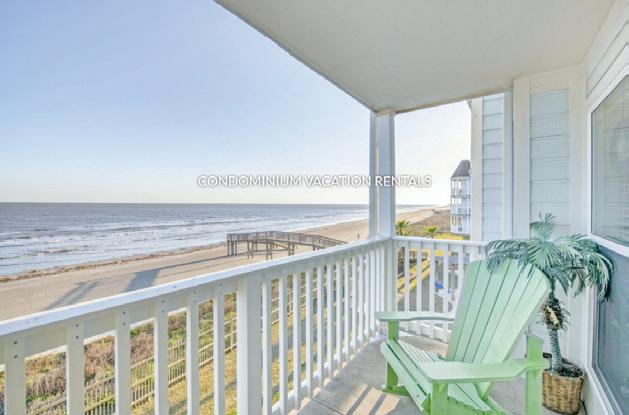
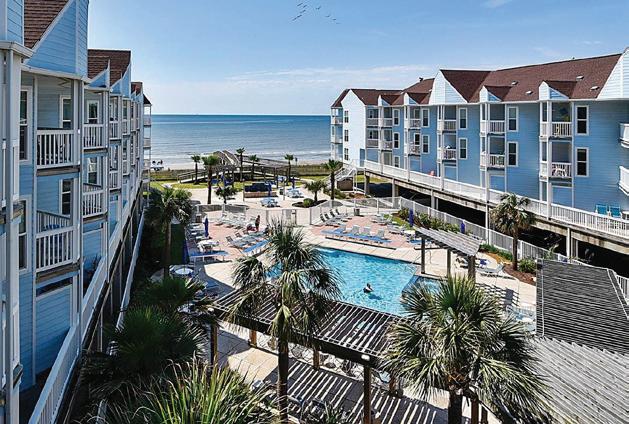
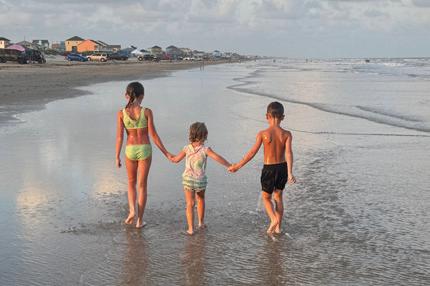
• Wide selection of beach rental homes offering easy access to both beach and bay
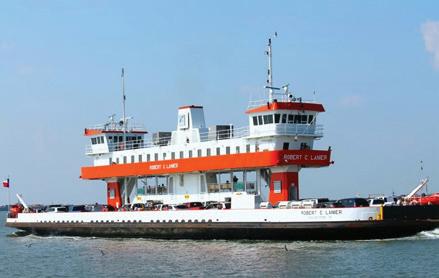
• Complimentary ferry ride from Galveston and just a short drive away E: bpcoc@discoverbolivar.com
Waves Magazine Is Published Monthly By: Waves Magazine | Mike Burke
Box 3343 | Galveston , TX 77552
P: 409 789 1160
www.wavesgalveston.com
Publisher | Editor
Sales Director
Mike Burke mburke@wavesgalveston.com 409 789 1160
Executive Creative Director
Christopher Bergeron cbergeron@wavesgalveston.com
Director Of Operations
Tiffany Bergeron tbergeron@wavesgalveston.com
Sales / Business Development
Heather Whitmire hwhitmire@wavesgalveston.com
Contributors
Richard Henderson, D.V.M.
J.A. Bunny
Jan & Dean
Chris Gonzales
Tom Valliere
Charlie Bresenhan
Paul Hager
Bob Rohan
John & Kathy Valastro
Holly Ross
Thomas Waggoner
Zach Tate
Lynda Burke
Shaye Henderson
Amy Murdock
Subscriptions
P.O. Box 3343 | Galveston , TX 77552
P: 409 789 1160
Mike Burke|Publisher
BURKE’S BRIEFS
Happy August, Wavers.
Summer is in full swing. With it comes one of the busiest seasons for Galveston. Every sandcastle, every stroll down The Strand, every cruise passenger, and every seafood lover helps keep our island thriving. It is no secret that tourism affects livelihoods.
Galveston welcomes more than seven million visitors each year, supporting thousands of local jobs and generating millions in economic activity. As residents, we help shape every visitor’s experience. A smile, a friendly greeting, or a little patience in summer traffic can make all the difference.
Crowds and tight parking can test us, but they’re also signs of a strong season for our businesses and workers. Galveston’s reputation for hospitality was built by generations who understood that treating guests well benefits the entire community.
As this summer unfolds, let’s give every visitor a warm welcome and make sure they leave with great memories and every reason to return. Remember to take time to enjoy home as well.
Also remember to visit our award‑winning Restaurant and Food Section for some of Galveston’s best dining spots. As always, we encourage you to shop locally. Supporting our neighbors keeps the island strong.
We invite you to check out our Waves On Air podcast featuring conversations about Galveston life, local events, island history, island entertainment, local musicians, all things restaurants, small business highlights, and behind‑the‑scenes stories from the Waves team. Episodes are available on YouTube, Spotify, Apple Podcasts, Amazon Music, and on our website.
Listen or watch at: www.wavesgalveston.com/podcast
See you around the island...
Mike Burke | Publisher
PET Corner
The Domestication of Cats
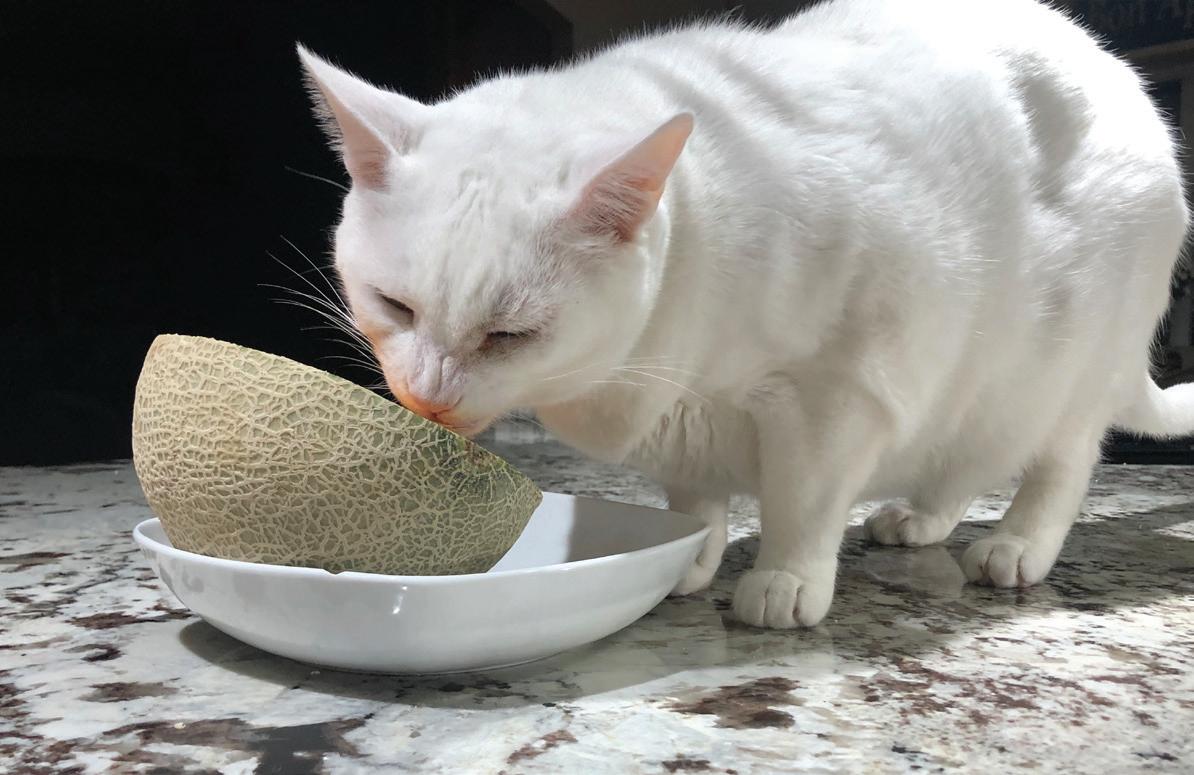
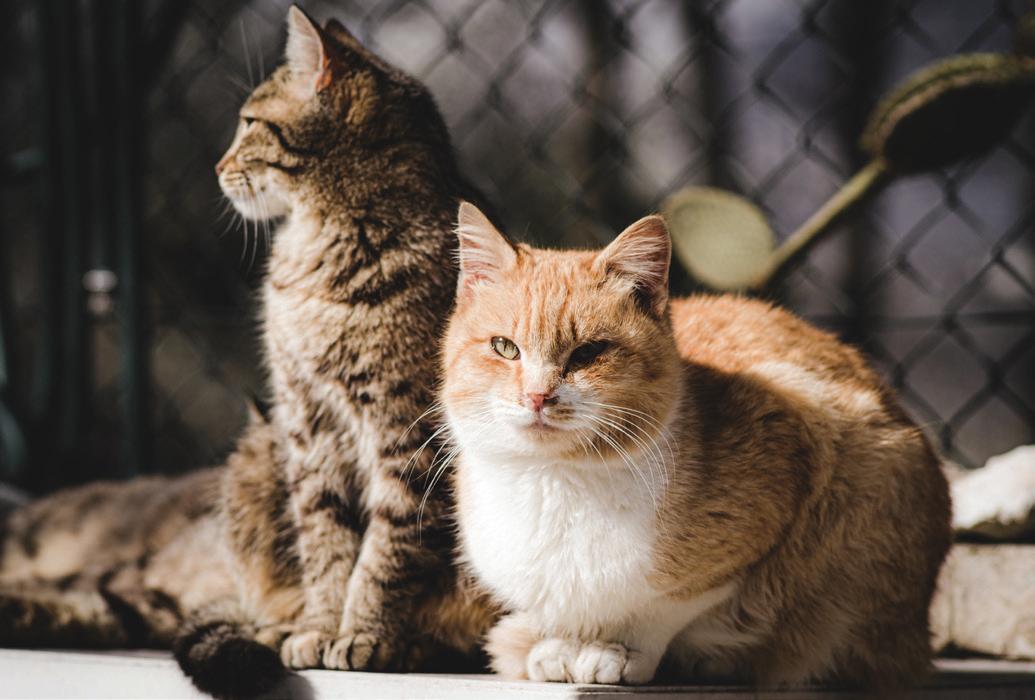
Cats have come a long way from being elusive wild carnivores to lazy lugs on our couches. It is thought that about twelve million years ago tigers, lions, and leopards evolved from smaller Asian and African wild cats. The two species of wild cats that exist today are still small animals compared to present day large felines. Based on DNA research it is likely that our modern day domestic cats evolved from these same felines.
Fast forward to the Neolithic Period about ten thousand years ago when humans were trading their hunter gatherer lifestyles for an agrarian way of living. Grain was a precious commodity and had to be stored in covered pits to last until the next growing season. As it is today, rats and mice found their way into crevices to ravage any food the people needed to survive the winters. Some of the local wild cats probably gravitated to the edges of the settlements to pick off easy meals from some well fed rodents. The villagers no doubt noticed the cats feasting on the vermin and realized they were helpful and could cause no harm. The cats didn’t compete with the people for food, and they were small enough that they could not harm the children or livestock. The cats had an easy food source at hand and the primitive people had some protection for their food stores. Both parties benefited. This relationship is called mutualism.
Pet Care Advice From Richard D. Henderson, DVM
of the villagers. At a very young age kittens learned no fear of people and being very cute themselves would be handled and played with. As generations passed the cats would grow up not only without fear of humans but to enjoy their company. Cats would eventually be allowed to live inside the homes and then could be called domesticated. We know from today’s cats that live outdoors in groups, that they can be territorial driving away newcomers to their colonies. We might then speculate that the domesticated cats in the villages would scare off the wilder members of the species that tried to establish themselves near the villages. This transformation from wild animal to tame pet likely evolved over several thousand years.
How then do wild animals become tame enough to be handled and live in our homes? We can assume that as the cats became more comfortable around their human neighbors the female cats might start raising their kittens in sight
Cats were an important part of the great Egyptian societies. They were worshiped and their remains were found in the pyramids beside the mummies of the kings and queens. By this point, felines were completely domesticated and living among all levels of Egyptian society. They were living the life until some were sacrificed to be entombed with deceased royalty.
Poor cats hit a rough patch in the Middle Ages though between the twelfth and fifteenth centuries. Cats were associated with witchcraft and Satan worship, especially black cats. Cats were killed in mass in all kinds of cruel ways. Cat owners were often accused of being witches and were along with their cats burned alive. The wholesale persecution and killing of cats went on for several hundred years. In this case, no bad death goes unpunished. Along comes the Bubonic plague, aka The Black Death, that killed fifty percent of the population of Europe. They were sure it was the cats that spread the curse, so they kept killing cats. The disease was spread by fleas that had fed on infected rats. The fleas made their way to people and the rest is history, literally. So, without cats in the cities to hunt rodents, rats flourished and so did the Plague. Paybacks for a cat hating society.
www.galvestonislandwinefestival.com
Today’s cats generally have a favorable place in society. We pamper them, feed them gourmet food, and let them laze around on our nice furniture that they will then destroy with their claws. The things we let our pets get away with!
Richard D. Henderson, DVM
409.356.9000
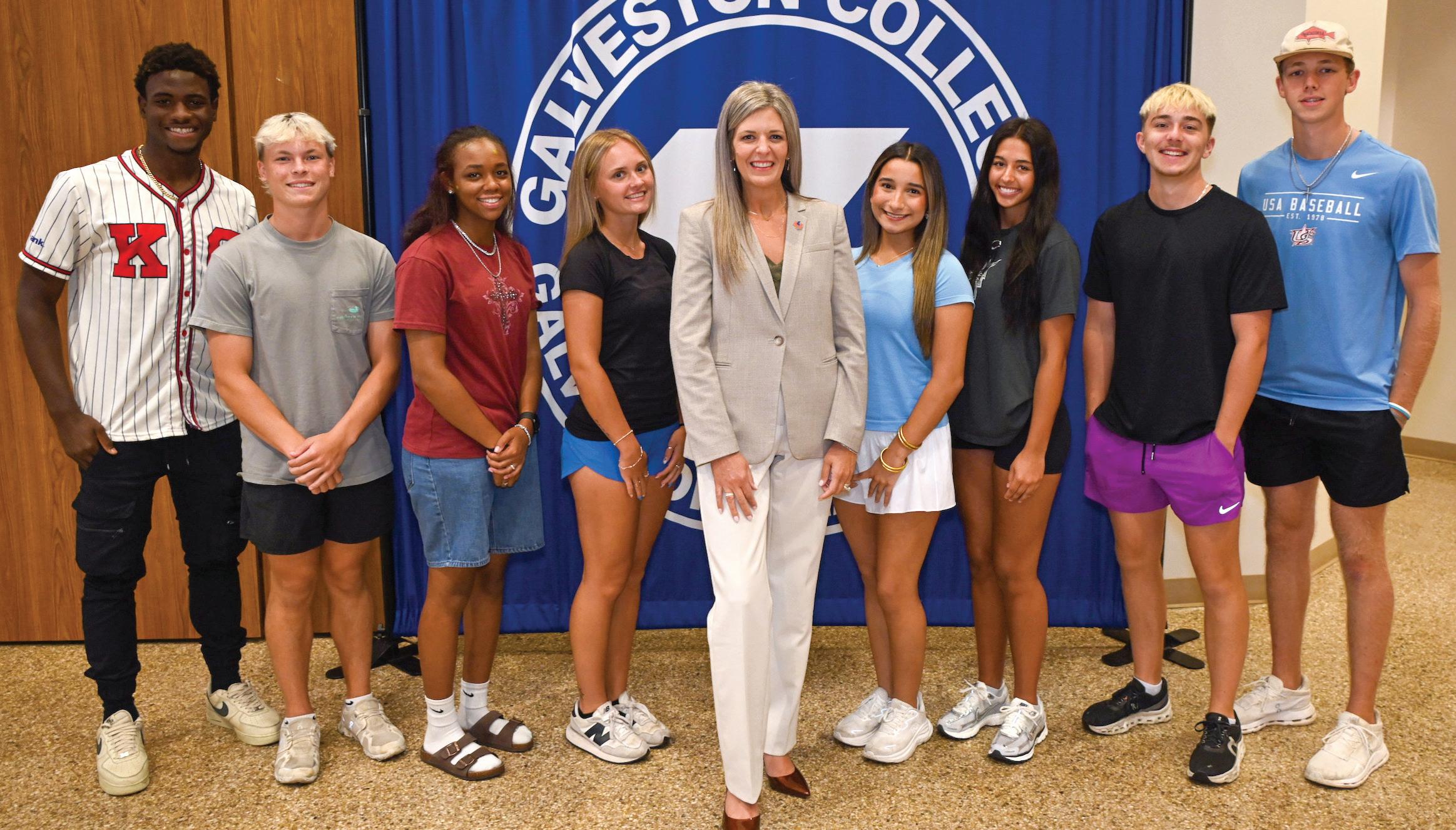
Dr. Tracee Watts begins tenure as new Galveston College president
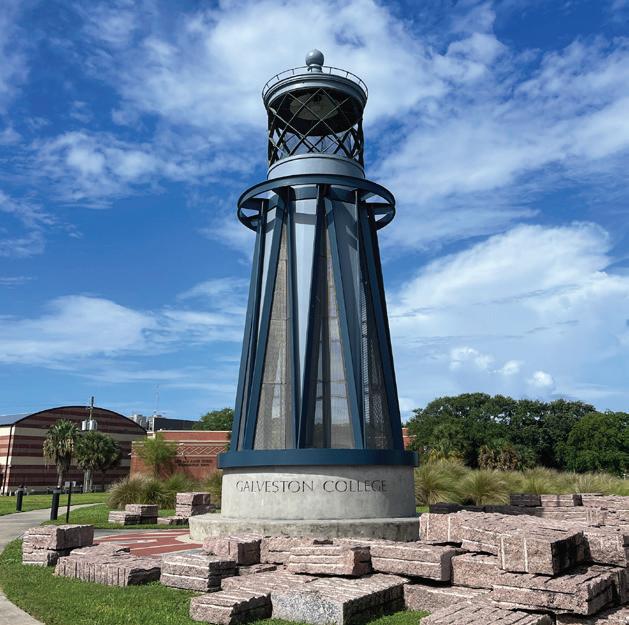
Tracee Watts, Ed.D., officially began her tenure as president of Galveston College on July 1, becoming the institution’s ninth president.
Watts joins Galveston College after serving as senior vice president of student success and advancement at Brazosport College. The Galveston College Board of Regents announced her selection as president earlier this year following a national search.
As president, Watts will oversee the college’s academic, workforce, student services and community engagement efforts while working with faculty, staff, students and community partners to advance the institution’s mission.
“I am honored to join Galveston
College and begin serving the students, faculty, staff and community,” said Watts.
“Galveston College has a strong history of providing educational opportunities and workforce training that change lives. I look forward to working with our campus and community as we continue to support student success and meet the needs of the region.”
Watts spent her first month meeting with administrative staff, employees, community leaders and partners, attending student orientation and learning more about ongoing initiatives across the college.
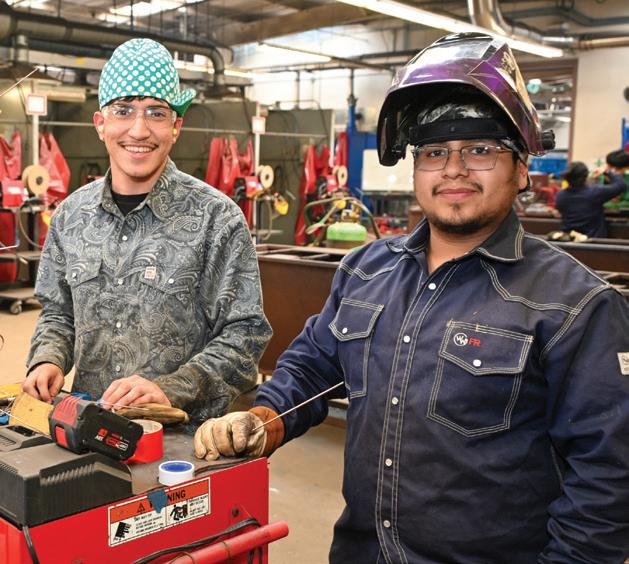
GC serves students on Galveston Island and the surrounding region through academic transfer programs,
and technical education, continuing education and community partnerships.
New Galveston College President, Tracee L. Watts, Ed.D., center, meets with incoming students during the college’s New Student Orientation on July 8, 2026, at the GC main campus in Galveston.
Re l ati o nshipAd v ic e with Jan & Dean
Dear Jan and Dean,
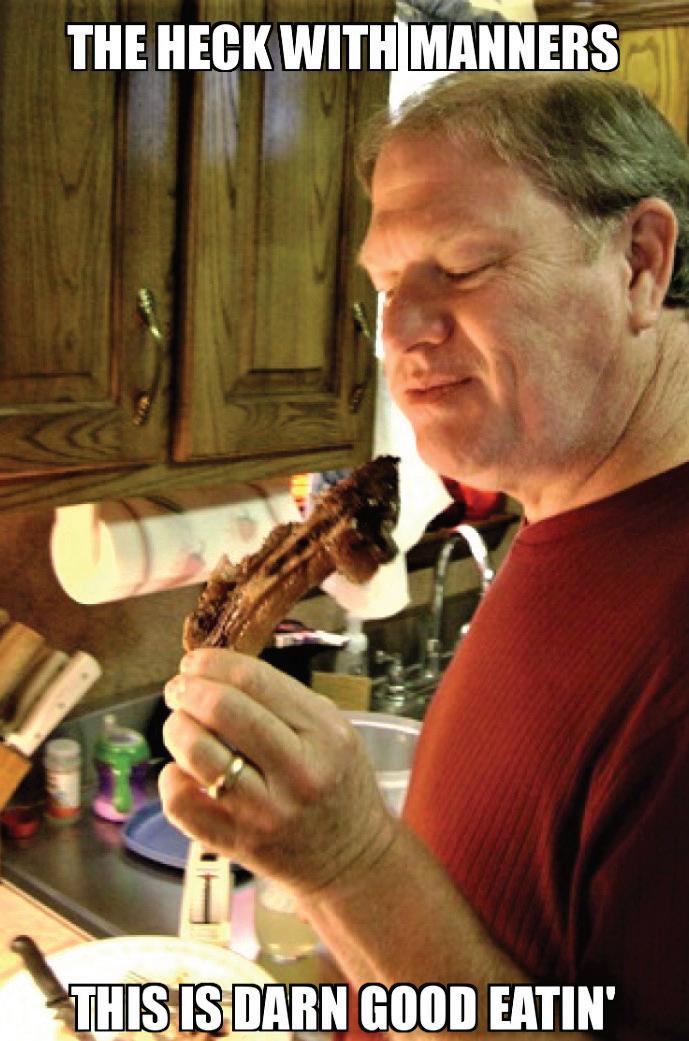
I have a problem I hope you can help me with. Well, it’s my husband’s problem actually. His problem is the way he eats sometimes. It is atrocious! If we have a T-Bone steak, bone-in pork chops, chicken breasts, anything that has a bone/bones in it, he will pick it up with his hands and start chewing on the bones.
He eats like a dog. He sucks the bone clean. I swear there isn’t any bone marrow left! It’s disgusting to watch. I have asked him repeatedly to stop it, but he won’t. He says that he can do whatever he wants in his own home. Now, I know he can refrain from this awful way of eating because when we are out in public, he doesn’t do it. How do I get him to stop?
- Belinda is about to Barf
Hi there, Belinda. Well, I don’t think you can get him to stop at this point. I take it you went out to eat all the time while dating and did not know about this behavior at home? My suggestions are: (1) Eat out (2) Don’t cook anything that has bones in it (3) Just don’t eat with him. Eat at differ ent times or in another room (4) Stop cooking altogether. PS: It’s not just his home, it’s your home too.
Hello, Belinda. It has been bothering me these past several months because I have been agreeing with Jan quite often. This is not going to be one of those times.
I truly do not see what the big deal is. I’m sure you have some habits that drive him up the wall too. Some of us males can be messy
creatures. A lot of us like to tear into our food and totally devour and enjoy it. After all, we are derived from cavemen. Why not let your man enjoy himself within the confines of your home? You stated that he doesn’t embarrass you in public, that he uses proper table etiquette when you are dining out. That should be good enough for you. I think you should cut your husband some slack.
Challenge T rivia
Answers on page 73
Galveston in the 1960s Trivia Challenge
1. In what year did Hurricane Carla strike the Texas coast and impact Galveston with hurricane force winds and storm tide? A. 1957 B. 1960 C. 1961 D. 1965
2. During Hurricane Carla, the tide at the Pleasure Pier gauge in Galveston reached approximately what height above mean sea level?
A. 6.0 feet B. 8.0 feet C. 9.3 feet D. 12.0 feet
3. Which famous wooden roller coaster on the Galveston Seawall was destroyed by Hurricane Carla in the early 1960s?
A. Gulf Flyer B. Island Coaster C. Mountain Speedway D. Seawall Racer
4. Hurricane Carla placed Galveston in which part of the storm, known for being the most turbulent area of a tropical hurricane?
A. Left rear quadrant B. Right rear quadrant C. Left front quadrant D. Right front quadrant
5. What was the approximate maximum recorded wind gust in Galveston during Hurricane Carla before the gust recorder failed?
A. 80 mph B. 95 mph C. 112 mph D. 130 mph
6. Compared with the 1900 storm, Hurricane Carla’s tide level in Galveston was:
A. Higher than 1900 B. Equal to 1900 C. Lower than 1900 D. Not recorded in 1961
7. What year marks the merger of Ball High School and Central High School, making Ball High the single public high school for Galveston students?
A. 1965 B. 1967 C. 1969 D. 1971
8. In Galveston, public school integration that led to Central High students entering Ball High began in which year?
A. 1964 B. 1966 C. 1968 D. 1972
9. At its present location on Avenue O, Ball High School opened in which year, setting the stage for its late 1960s merger with Central High?
A. 1950 B. 1955 C. 1960 D. 1965
10. During the 1960s, Galveston’s reputation for nightlife and gambling was still strongly associated with which historic pier nightclub, even though gambling there had been shut down in 1957?
A. Turf Club B. Balinese Room C. Murdock’s Pavilion D. Island Casino
11. The long covered walkway leading to the Balinese Room was famously nicknamed what, due to repeated Texas Ranger raids?
A. Ranger Run B. Lawman Lane C. Patrol Path D. Justice Walk
12. Which description best fits Galveston’s Balinese Room in mid twentieth century memory, including the 1960s?
A. A quiet family cafe
B. A small bait shop
C. A nationally known nightclub with gambling history
D. A city library annex
13. During Hurricane Carla, what factor is credited with keeping loss of life in Galveston relatively low compared with earlier major storms?
A. Stronger seawall construction
B. Early and effective evacuation and warnings
C. Closure of the port
D. Suspension of ferry service only
14. In the 1960s, which two earlier Galveston hurricanes were commonly used as comparison points for Carla’s wind and tide levels?
A. 1915 and 1932 storms
B. 1900 and 1915 storms
C. 1900 and 1932 storms
D. 1915 and 1943 storms
15. By the end of the 1960s, Ball High School was recognized for continuing what tradition in Galveston?
A. Maritime training
B. Educating the city’s young people as its main public high school
C. Operating as a private academy
D. Serving only elementary grades
Galveston Heritage Edition
FOCUS Summer Means Healthy Fruit-Eating Season
ON FITNESS
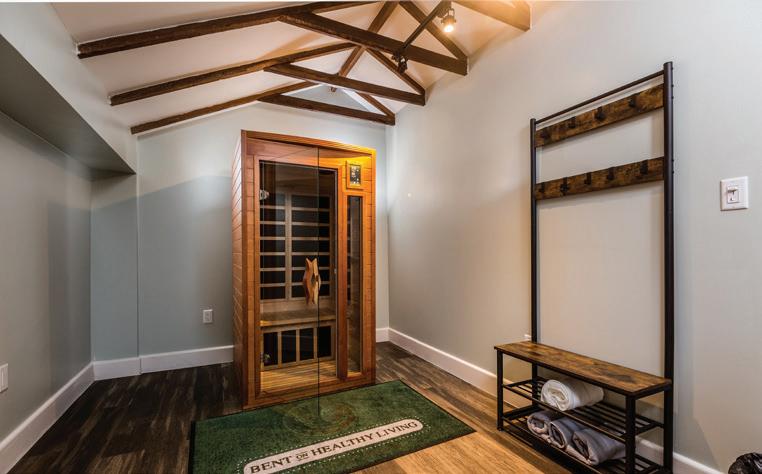
Shaye Henderson, BSN, M.Ed., M.S., Instructor at Bent On Healthy Living Wellness Center, 2910 53rd Street, Galveston
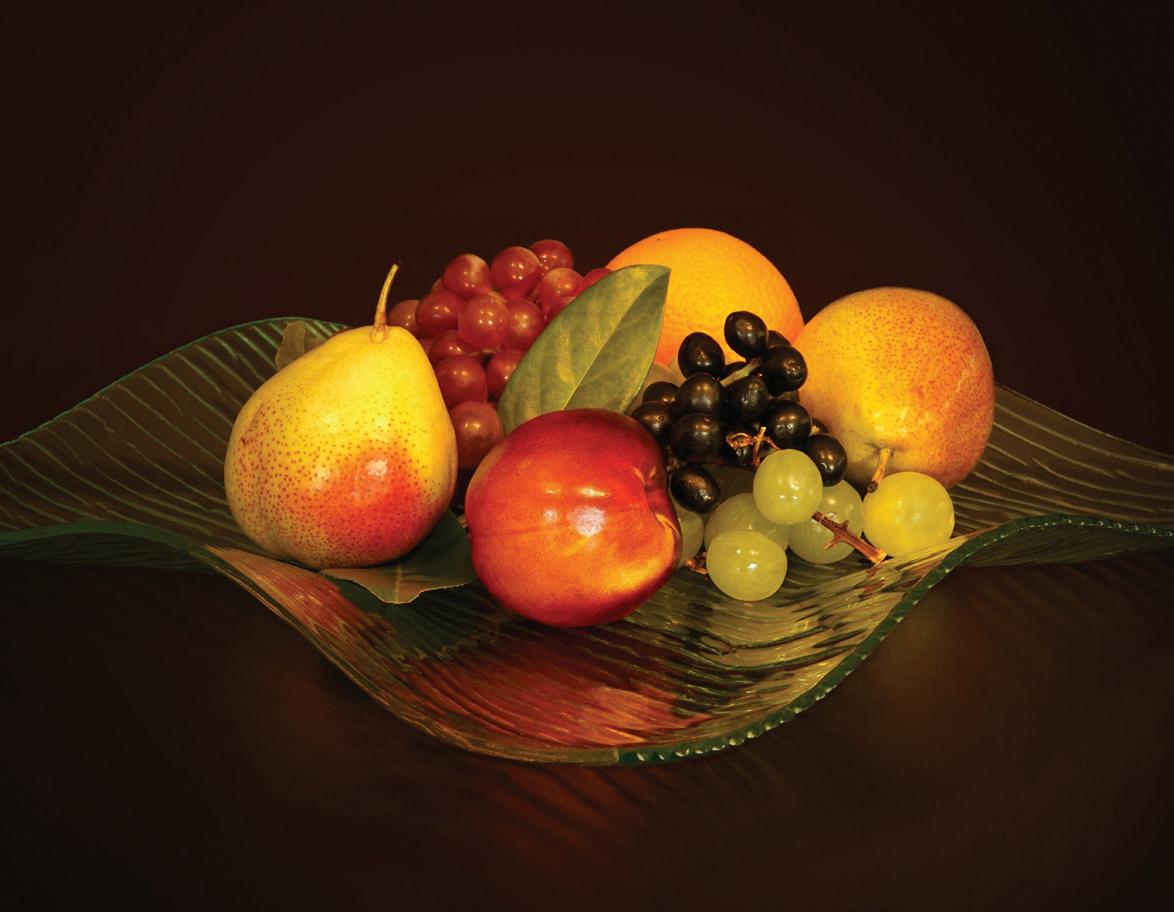
I always equate summer with the abundance of fruit in the grocery store. But with our global farming and ability to ship seasonal fruit worldwide, there is really no out of season time. However, even with fruit readily available all year, the Centers for Disease Control and Prevention found that only about 12% of Americans meet their daily fruit intake. That number is even lower among low income adults. And that’s a shame since fruits are one of the healthiest and most nutritious foods you can add to your diet. From apples to oranges, there are many different types of fruits, each with unique health benefits.
The current Dietary Guidelines for Americans recommend two cups of fruit daily for adults. But which fruits should you be eating for optimal nutrition? Here are six of the healthiest fruits you can eat.
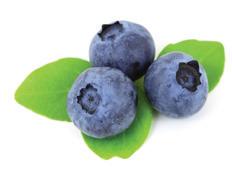
Blueberries
Blueberries are a nutritional powerhouse packed with antioxidants, vitamins, and minerals. They’re one of the healthiest fruits you can eat and delicious too! Blueberries are low in calories and high in dietary fiber, making them an ideal snack or addition to your breakfast. Studies show that blueberries are packed with powerful antioxidants, which can help protect your cells from damage and reduce inflammation. Blueberries are also an excellent source of vitamin C, which boosts your immune system and keeps your skin looking healthy. Addi tionally, blueberries contain a type of flavonoid called anthocyanin, which is known to help improve memory and fight off cancer cells. To get the most out of this nutritional powerhouse, try adding blueberries to yogurt or smoothies, or enjoy them as a healthy snack on their own.
Apples
Apples are one of the healthiest fruits you can eat! They are a great source of dietary fiber, vitamins A and C, potas sium, and antioxidants. Eating an apple a day can help lower cholesterol levels, reduce the risk of heart disease, and help prevent certain types of cancer. Apples also contain beneficial phytonutrients such as quercetin and catechin, which have anti inflammatory properties. Apples are a great snack that can help satisfy hunger between meals. Enjoy them as is or cooked into your favorite recipes. Apples make a delicious addition to salads, pies, smoothies, and baked goods. Be sure to buy organic apples whenever possible to ensure you’re getting the most nutrients from your fruit.
Pears
Pears are a great addition to any healthy diet. They have great taste and offer a wide range of health benefits. Pears are especially fiber rich, providing up to 6 grams per medium fruit. Eating enough fiber is essential for proper digestion and maintaining a healthy weight. Pears contain potassium, which helps to regulate blood pressure. In addition, pears are a good source of vitamin C, providing 14% of the daily recommended value.
One of the most impressive benefits of pears is their antioxidant content. The antioxidants found in pears are mainly concentrated in the skin, so eating them with the skin on is important.
Eating pears can also be a great way to boost energy and stay hydrated. A medium sized pear provides approximately 17% of the daily recom mended amount of carbohydrates, making it an excellent snack for those looking for an energy boost. Additionally, pears are about 84% water, helping to keep you hydrated throughout the day. Be sure to buy fresh pears with the skin still on for maximum nutritional benefits.
Oranges
Oranges are among the most popular fruits globally and a great addition to any diet. They have an incredibly high nu trient content, containing vitamin C, thiamine, folate, potassium, and fiber. Not only are they tasty, but they also provide many essential vitamins and minerals.
Studies have shown that oranges, due to their high levels of antioxidants and polyphenols, may help reduce the risk of cancer and heart disease. They are also excellent for boosting immunity and helping to prevent infections due to their high vitamin C content. Oranges have been linked to reduced inflammation and improved digestive health.
The best way to get the most benefit from eating oranges is to consume them whole with the skin around each section still on. This way, you can maximize the nutrients and fiber. Oranges can be enjoyed as a snack,
or
Grapefruit
Grapefruit is an incredibly healthy and delicious citrus fruit packed with vitamins and nutrients. Rich in vitamin C, this vibrant fruit also provides a good source of dietary fiber, potassium, vitamin A, B vitamins, and lycopene. In addition, grapefruit contains antioxidant rich phytochemicals that can help protect the body from damage caused by free radicals.
Grapefruit has a variety of health benefits, including improved immunity and digestive health. Studies have shown that the antioxidants found in grapefruit can help reduce inflammation and improve heart health. Additionally, eating grapefruit has been linked to weight loss due to its low calorie content and ability to fill you up.
When selecting a grapefruit, look for one that is firm and heavy for its size and has a fragrant aroma. The color should be yellow or pink; the latter indicates that it is sweeter than the former. To maximize its nutritional content, eat it raw or add it to smoothies and salads. When stored properly in the refrigerator, grapefruit can last for several weeks.
Watermelons
Sweet and hydrating, watermelons are nature’s electrolyte drink. The vitamin lineup is impressive for watermelon, with carotenoids and lycopene, and is excellent for ocular, heart, and cancer prevention. And there are so many ways to enjoy the fruit. You can freeze sliced watermelon and blend it for a refreshing smoothie or slice water
melons to bring to a hot afternoon outdoor event. Everyone enjoys a nice slice of watermelon. My horse, Flash, rest his sweet soul, loved his weekly watermelon during the summer months.
What about buying organic?
We have many choices when it comes to organic and conventionally grown fruits, be they fresh, frozen, or dried. Nutritionally, there is not enough difference to choose one over the other, though consumers might select organic for farming practices and environmental impact. The US has regulations on pesticide use, but some fruits tend to have more residual pesticides than others, and it is always recommended that you wash fruits thoroughly before eating.
The list of healthy fruits could really go on and on. Don’t feel like you should limit yourself to just these six. Adding more fresh fruit to your diet can improve your overall diet quality and may lower your risk of developing several health conditions, including heart disease and certain cancers.
Try keeping a variety of fruits stocked in your kitchen. This is an easy and delicious way to protect your health and boost your nutrient intake.
Shaye Henderson
Tablecloth Linens
Shaye Henderson, BSN, M.Ed., M.S., Instructor at Bent On Healthy Living Wellness Center, 2910 53rd Street, Galveston
FOSTER
FOSTER
Fostering Saves Lives. For a weekend or until adoption, give a shelter animal time out of a cage in a home. You could be instrumental in finding that animals new home. From old dogs to bottle baby kittens our foster program is vital to our success.
Fostering Saves Lives. For a weekend or until adoption, give a shelter animal time out of a cage in a home. You could be instrumental in finding that animals new home. From old dogs to bottle baby kittens our foster program is vital to our success.
VOLUNTEER
VOLUNTEER
Volunteers are the backbone of GIHS. Assisting with many tasks at the shelter and off site events! Sign up today to help advocate for adoptable animals, take a dog for a walk, socialize kittens, or one of any other volunteer tasks that make our mission possible.
DONATE
Volunteers are the backbone of GIHS. Assisting with many tasks at the shelter and at off-site events! Sign up today to help advocate for adoptable animals, take a dog for a walk, socialize kittens or one of the many other volunteer tasks that make our mission possible.
DONATE
Whether in support of one of our designated programs or as a general contribution every dollar supports our mission and it is tax deductible. We do have an Amazon wish list as well, you can literally give a dog a bone.
Whether in support of one of our designated programs or as a general contribution every dollar supports our mission and it is tax deductible. We do have an Amazon wish list as well, you can literally give a dog a bone.
SHELTER SERVICES:
S a f e h o u s i n g a n d c a r e f o r r e s i d e n t p e t s i n c l u d i n g a n i m a l h e a l t h a n d b e h a v i o r a s s e s s m e n t s R o u t i n e h e a l t h c a r e i n c l u d i n g i m m u n i z a t i o n s , w o r m i n g , a n d t r e a t m e n t f o r m i n o r i n j u r i e s R a b i e s o b s e r v a t i o n s f o r b i t e c a s e s
P a r t n e r i n g w i t h o t h e r o r g a n i z a t i o n s t o t a k e i n a n i m a l s a s n e e d e d
Safe housing and care for resident pets including animal health and behavior assessments. Routine health care including immunizations, worming, and treatment for minor injuries. Rabies observations for bite cases. Partnering with other organizations to take in animals as needed. Coordinating trans port for out of state placements.
C o o r d i n a t i n g t r a n s p o r t f o r o u t o f s t a t e
p l a c e m e n t s
ADDITIONAL PROGRAMS:
Spay/neuter assistance
Lost pet assistance and recovery
Humane education for all ages
OUR MISSION
Dedicated to promoting animal welfare and the protection and prevention of unwanted or homeless animals of Galveston Island.
ADOPT FOSTER SPONSOR VOLUNTEER
EDUCATE DONATE
CONNECT WITH US
The “Big Fix”
GIHS is dedicated to ensuring ALL pets are spayed or neutered to decrease the number of homeless and unwanted pets as well as the number of pets entering the shelter. Through generous grant fund ing, we offer spay/neuter assistance programs at low to no cost for those in need. Contact the shelter for information about the “Big Fix!”
T h e G a l v e s t o n I s l a n d H u m a n e S o c i e t y I N C , f o r m e d i n 1 9 8 1 a s a 5 0 1 C 3 , n o n - p r o f i t o r g a n i z a t i o n . O r i g i n a l l y c r e a t e d b y c o n c e r n e d c i t i z e n s t o r e s c u e a n i m a l s f r o m “ t h e p o u n d ” a n d m u c h h a s c h a n g e d o v e r t h e l a s t f e w d e c a d e s T o d a y w e h a v e a h u m a n e s h e l t e r w i t h a n o - k i l l l i v e r e l e a s e
MEET GIHS
The Galveston Island Humane Society, Inc., formed in 1981, is a 501c3, non profit organization. Origi nally created by concerned citizens to rescue ani mals from “the pound,” much has changed. Today we have a humane shelter, providing care for lost or homeless pets, reuniting pets with families, and promoting the adoptions of pets needing homes.
r a t e . D a i l y w e p r o v i d e c a r e f o r l o s t o r h o m e l e s s p e t s , r e u n i t i n g p e t s w i t h t h e i r f a m i l i e s a n d p r o m o t i n g t h e a d o p t i o n o f p e t s n e e d i n g h o m e s A s a n “ o p e n a d m i s s i o n ” s h e l t e r f o r G a l v e s t o n I s l a n d w e a c c e p t a l l h o m e l e s s p e t s e v e n w h e n t h e s h e l t e r i s f u l l I n a c i t y w i t h a h i g h n u m b e r o f h o m e l e s s p e t s , t h i s c o u l d e a s i l y l e a d t o n e e d l e s s e u t h a n a s i a
GALVESTON ISLAND COMMUNITY CATS
E m e r g e n c y M e d i c a l A s s i s t a n c e
Pet food pantry for individuals in need
Emergency Medical Assistance
WHAT DO ADOPTIONS INCLUDE AT GIHS?
A l l a d o p t e d p e t s a r e s p a y e d / n e u t e r e d a s r e q u i r e d b y T e x a s l a w .
All adopted pets are spayed/neutered as required by Texas law.
V a c c i n a t i o n s i n c l u d i n g r a b i e s , a s w e l l a s
F l e a a n d H e a r t w o r m p r e v e n t i o n a r e a l l
c u r r e n t w h e n p e t i s a d o p t e d
M i c
Vaccinations including rabies, as well as Flea and Heartworm prevention, are all current when the pet is adopted. Microchip.
GICC was established in 2015 and is a progressive Trap/Neuter/Return (TNR) program to fix, vaccinate and release feral cats on the island. To date, we have altered over 4000 felines with this program. The success of this program has reduced yearly intake at GIHS and has improved our live release rate in cats from 52% in 2014 to 94% in 2024.
HOW YOU CAN HELP
Microchip your pets.
Spay or neuter your pets.
O u r p r o g r a m s w o r k d i l i g e n t l y t o r e d u c e t h e n u m b e r o f p e t s i n o u r c o m m u n i t y . W e a r e c o m m i t t e d t o a s s u r i n g t h a t a d o p t a b l e p e t s a r e k e p t a v a i l a b l e u n t i l t h e y a r e p l a c e d i n a f a m i l y o r t r a n s f e r r e d t o a p a r t n e r o r g a n i z a t i o n .
O u r s h e l t e r i s m a n a g e d b y a b o a r d o f d i r e c t o r s c a r i n g s t a f f a n d a c t i v e v o l u n t e e r s w h o w o r k t o p r o v i d e f o r t h e
As an “open admission” shelter for Galveston Island, we accept all homeless pets, even when the shelter is full. In a city with a high number of home less pets, which could lead to needless euthanasia, our programs work diligently to reduce the number of pets in our community.
Like and share from our social networks. Become a member of GIHS.
-ADOPT your next best friend.
0 1 4 t o 9 4 % i n 2 0 2 4
-VOLUNTEER at the shelter.
-FOSTER if you cannot adopt.
-DONATE to support our mission.
M i c r o c h i p y o u r p e t s S p a y o r n e u t e r y o u r p e t s a n d e n c o u r a g e o t h e r s t o d o t h e s a m e
L i k e a n d s h a r e f r o m o u r s o c i a l B e c o m e a m e m b e r o f G I H S A D O P T y o u r n e x t b e s t f r i e n d V O L U N T E E R a t t h e s h e l t e r F O S T E R i f y o u c a n n o t a d o p t
We are committed to assuring that adoptable pets are kept available until they are placed in a family or transferred to a partner organization. Our shelter is managed by a board of directors, caring staff, and active volunteers who work to provide for the pets in our care along with creating and managing community programs that will positively impact our shelter. We hope you will join us in our mission to make sure that every pet on Galveston Island can live out his or her life in a loving home.
D O N A T E t o s u p p o r t o u r m i s s i o n
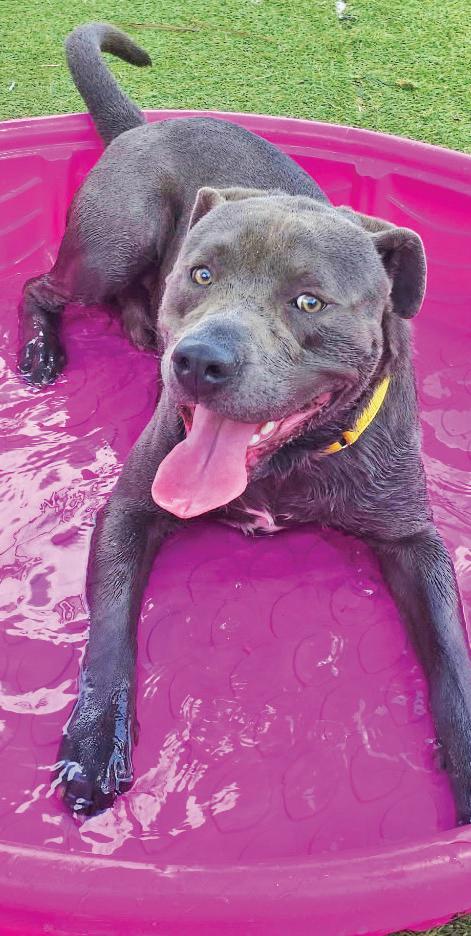
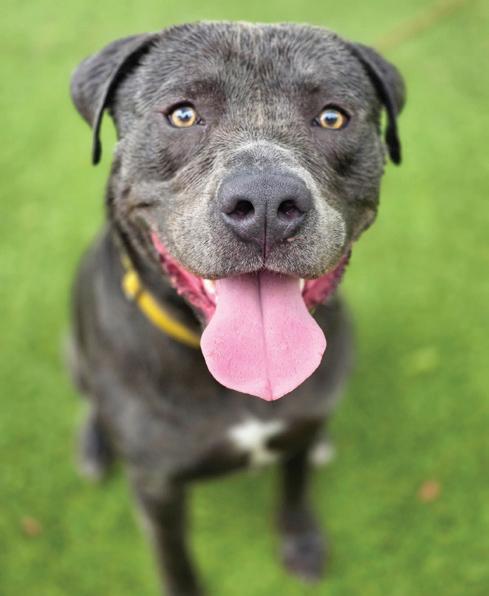
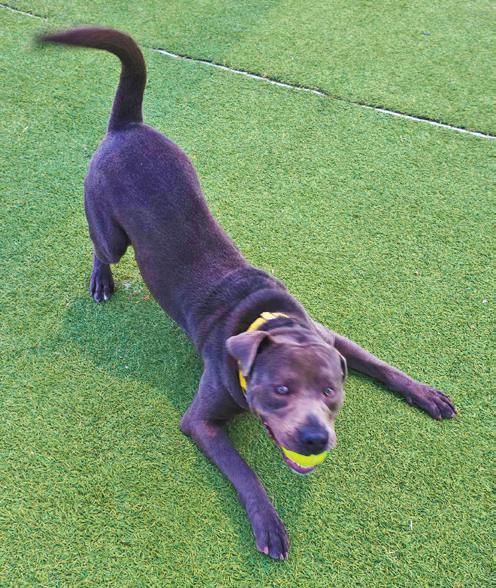
DOZER MEET
Dozer will bulldoze your heart!
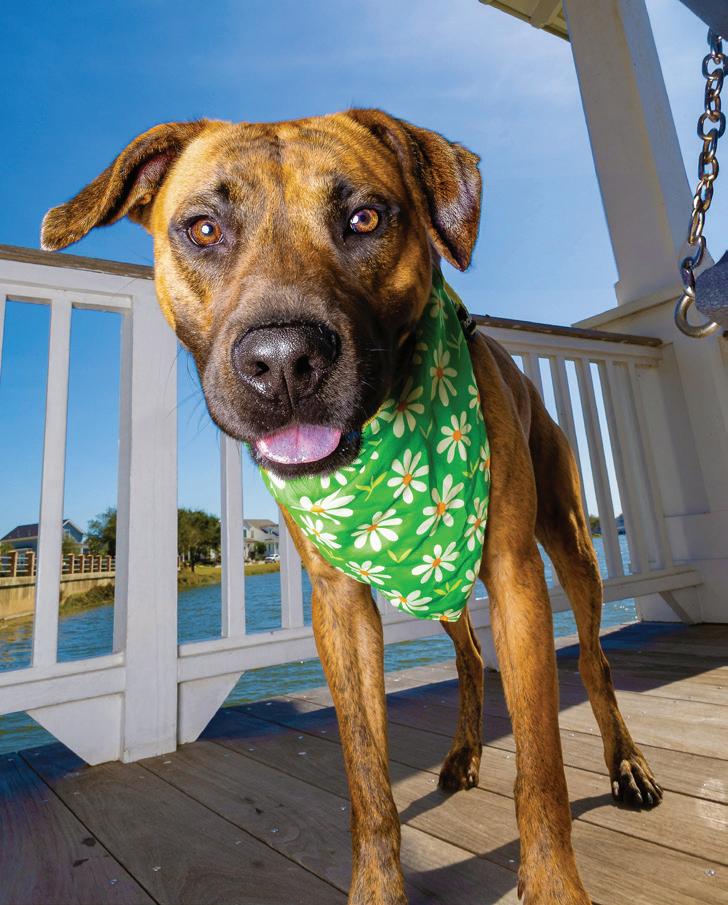
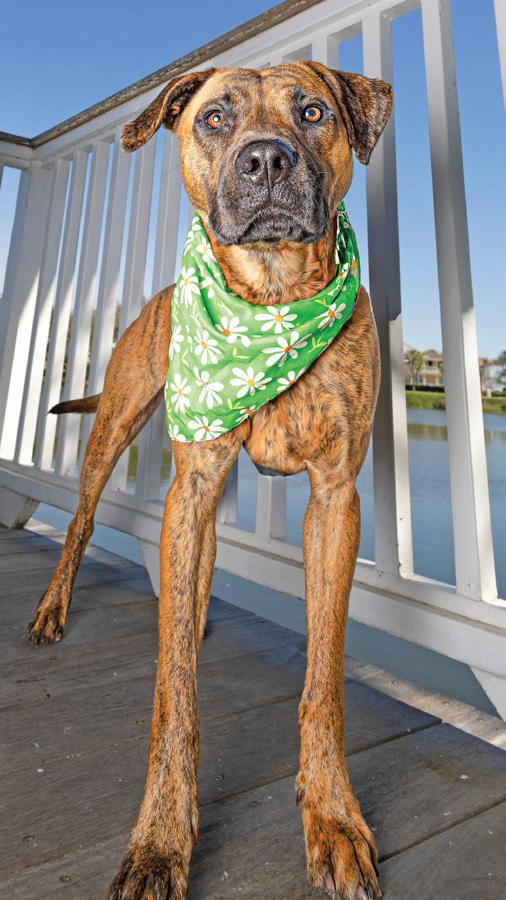
Dozer is a 1‑year‑old male pitbull/terrier mix. Don’t let Doz‑ er’s fancy gray velvet coat fool you; his favorite pastime is playing, especially with his best friends in the water and with toys. Dozer is dog‑ and human‑friendly to the max. Come meet Dozer!
The Galveston Island Humane Society is always in need of volunteers, fosters, and adopters. By spending time with the shelter animals, you can help them socialize and also promote their adoption. Becoming a foster parent or adopting an animal can give them the mental and emotional break they need from shelter life. If you’re interested in fostering, please visit: www.galvestonhumane.org/foster
If you’re interested in adopting, please apply at www.galvestonhumane.org/adopt
Photo Credit: Amy Murdock @Gulfpawsphotography
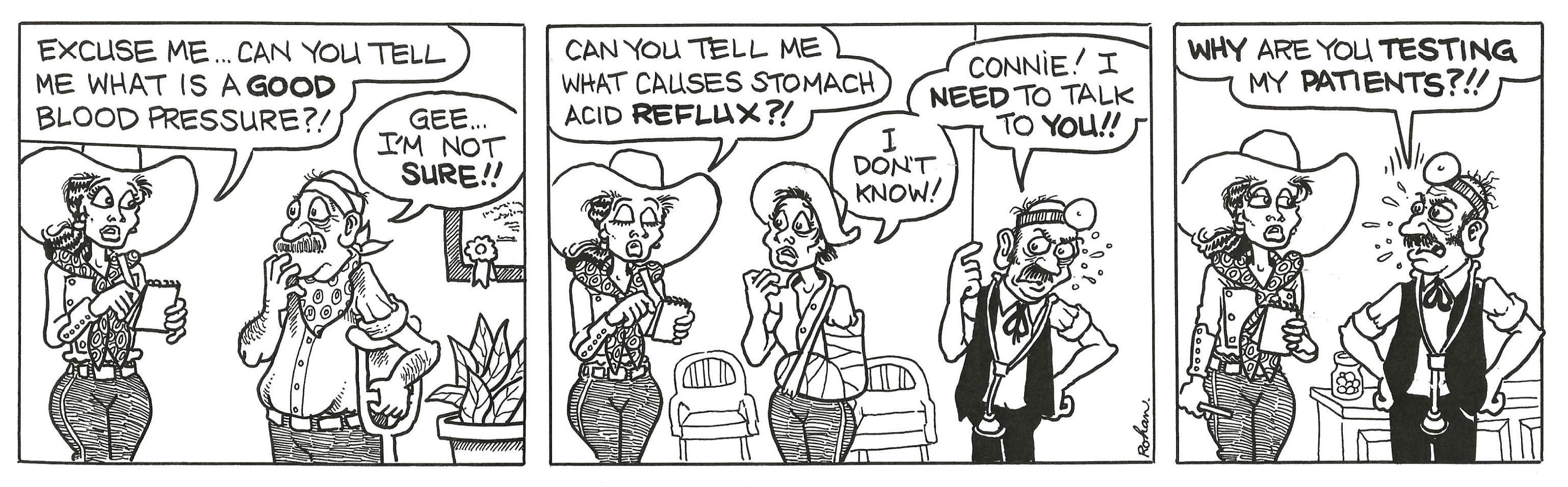
Bob Rohan, or as he is known in Texas “Bad Bob”, has been playing the fiddle and singing in various groups for over 30 years in Texas, and has opened for Merle Haggard, Willie Nelson, Charlie Daniels, Carlene Carter and John Conley to name a few. Bob has played in bands that have backed up country legends like Hank Thompson, Ray Price, Jack Greene, Pam Tillis, and Dale Watson.
Along with songwriting, Bob is also a talented cartoonist and has a self syndicated comic strip titled “Buffalo Gals”. The comic feature is about two cowgirls “Bess Winchester” and “Connie Chey enne”. The comic strip was inspired after playing with “The Hays County Gals and Pals” a cowgirl western group that toured through Texas, Oklahoma and as far west as Elko, Nevada. Bob has won The Wisconsin State Fiddle Champi onship and has been nominated several times from The Academy of Western Artists for Best Cowboy Cartoonist.
www.badbobrohan.com
As a child, I loved when the circus came to town. My family set aside a special time every year to see the death‑defying acts. I was amazed. But how did they do it? Did all the per formers live on the train that came to town? How long have they been performing? Most of us think of Barnum and Bailey when we think of the circus. But our wonderful island has a hidden gem.
Let’s take a look at the history of the circus and how it made its way to Galveston.
History
The modern circus began in 1768 when English cavalry officer Philip As tley brought horseback tricks, acrobats, and clowns together in a 42‑foot ring. Over the centuries, it grew.
Fun Fact: It all started with the huge chariot - racing arenas of Ancient Rome.
While Galveston is best known for its beaches and Victorian architecture, it also shares a fascinating connection to the rich history of the American circus. Long before television, theme parks, or streaming entertainment, excitement rolled to the Island by rail. The whistle of a locomotive, fol lowed by brightly painted circus wagons, elephants, horses, and perform ers, could turn an ordinary day into an unforgettable celebration.
This was during the time when Galveston was one of the busiest ports on the Gulf of Mexico. Steamships brought cargo from around the world, while railroads connected the island to the rest of Texas. This made Gal veston a natural stop for traveling circuses. Residents and visitors eagerly welcomed each arrival, enjoying performances that offered a chance to step away from everyday life through remarkable feats of skill, comedy, and imagination.
Waterfront Performances
Cruise lines such as Royal Car ibbean departing from the Port of Galveston often feature aerial art istry, acrobatics, and high‑diving circus elements as part of their major onboard entertainment.
Like many American cities, Galveston has hosted a variety of traveling shows over the years.
The Zoppé Family Italian Circus comes to the Island and hosts seasonal performances at Stewart Beach, bringing an Old‑World family circus experience to Galveston. People come early for a unique pre‑show experience beginning approximately 1/2 hour before showtime.
You can step into an intimate one‑ring circus where they celebrate the timeless magic of the circus with breathtaking artistry, unforgettable spec tacle, and heartfelt connection.
Fun Fact: The Zoppé Family Italian Circus has been performing for more than 180 years.
They boast the warmth of Italian hospitality—Parte Della Famiglia—where every guest is welcomed as one of the family. Performers from across the globe bring a joyful celebration of life, family, and wonder.
Circus Trains
For years the circus arrived by train, bringing with them massive tents, performers, trained animals, musicians, and colorful parade wagons. By the end of the 19th century, trains had become a reg ular part of the American circus. Circus trains were self‑contained, rolling cities designed to maximize every
Island Circus & Cruise Entertainment
FUN FACTS by
thomas waggoner
inch of space while transporting hundreds of performers, crew members, animals, and equipment from town to town.
Fun Fact: The Pie Car, a 24 - hour kitchen and dining car, served three meals a day to as many as 300 people.
Setting up the circus was almost a performance in itself. Children hurried to catch a glimpse of elephants marching through town, while adults eagerly purchased tickets for an evening under the big top. Teams of work ers unloaded equipment, raised towering canvas tents, and prepared the grounds in only a matter of hours.
During Mardi Gras, Galveston often features circus‑style street perform ers along 22nd Street and The Strand, adding to the festival’s vibrant atmosphere.
Performers and workers slept in tightly arranged bunk cars with stacked berths. Dedicated animal and equipment cars carried everything needed to build the circus, including wardrobes, lighting, props, and wagons. Even the space beneath the high‑clearance wagons was carefully packed with tent poles and additional circus gear, ensuring every available inch of the train was put to use.
Trains and More Trains
Besides carrying the performers, animals, and equipment, the biggest circuses also sent smaller advance trains ahead of the main one.
These trains, now abandoned, carried circus agents who adver tised upcoming shows, arranged local services, and made sure the route was suitable for the main circus train.
Fun Fact: Circuses also organized special excursion trains so people from rural areas could travel to nearby cities to see the show.
History tells us about one of the most memora ble chapters in Galveston’s circus history during World War II. Because wartime travel restrictions had reduced the number of touring shows, many communities went years without seeing a major circus. Then, in February 1944, the Ray Bros.
This ticket and program were from the Ray Bros. Circus, sponsored by the Galveston Rotary Club.
The performances were held inside rather than beneath a traditional tent.
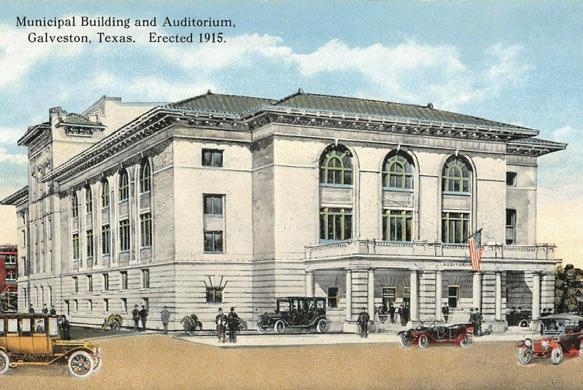
Billed as the “Colossus of Indoor Shows,” the performances delight ed locals and military personnel with aerial acrobatics, bareback riding, and three herds of elephants at the Galveston City Auditorium.
Fun Fact: Newspapers proudly announced it as “The Only Big Circus to Show in Galveston in Years,” highlighting just how special the event had become for local families.
The success of the 1944 perfor mances encouraged organizers to invite the Ray Bros. Circus back the following year.
In February 1945, circus trains once again rolled into Galveston carrying performers, equipment, horses, clowns, and even three herds of elephants.
Crowds came to watch aerial acrobats soar high above the are na, daring bareback riders race around the ring, talented jugglers amaze audiences, and clowns fill the building with laughter.
The circus represented much more than entertainment. During the difficult years of World War II, fami lies sought moments of hope and normalcy.
For children growing up amid rationing, military service, and uncertainty, the circus offered an afternoon where imagination triumphed over worry.
Ray Bros. Circus
Circus arrived in Galveston.
“Colossus of Indoor Shows”
The Island Circus Returned
For adults, it was a welcome reminder that joy and community could still flourish during challenging times.
Galveston’s appreciation for live entertainment has always extended be yond the circus itself. Throughout the late nineteenth and early twentieth centuries, the city supported thriving theaters and vaudeville houses where audiences enjoyed comedians, singers, magicians, acrobats, and novelty performers.
Many entertainers who appeared in vaudeville also worked with circuses, creating a close relationship between these popular forms of entertain ment. Variety shows helped prepare audiences for the excitement of circus performances whenever they came to town.
Although the golden age of the traveling railroad circus eventually faded after World War II, Galveston’s connection to circus arts never disappeared completely. In recent years, modern productions have returned to the island with a renewed appreciation for traditional circus performance.
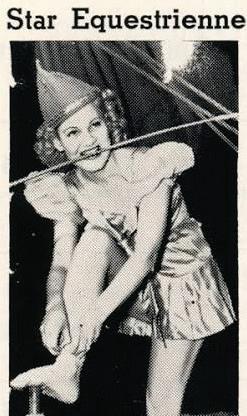
Fun Fact: An equestrienne is a girl or woman who rides on horseback, typically in a skilled or professional capacity.
The Zoppé Family Italian Circus presents intimate one‑ring performances at Stewart Beach, emphasizing storytelling, horse manship, acrobatics, and classic clowning rather than the enor mous three‑ring spectacles of the past.
These performances celebrate a style of circus that dates back more than 180 years while introducing new generations to timeless traditions. Audiences experience the circus differently than those who gathered at City Auditorium in 1944.
Today, when this island’s primary live circus event comes to town, local zoning and ordinances restrict the use of exotic animals. This means the contemporary shows focus on human performers and domestic animals. A new style of circus that still brings the magic to the Island.
The Zoppé Official Tour Schedule typically covers regions across the United States including California, Arizona, and Texas.
FUN FACTS
Modern productions often empha size human athleticism, artistry, music, and theatrical storytell ing, reflecting changing public attitudes toward entertainment and animal performances. Yet the heart of the circus remains remarkably familiar.
Children still stare wide‑eyed as acrobats fly through the air and stilt walk ers display their talent. Families still laugh together at clever clowns.
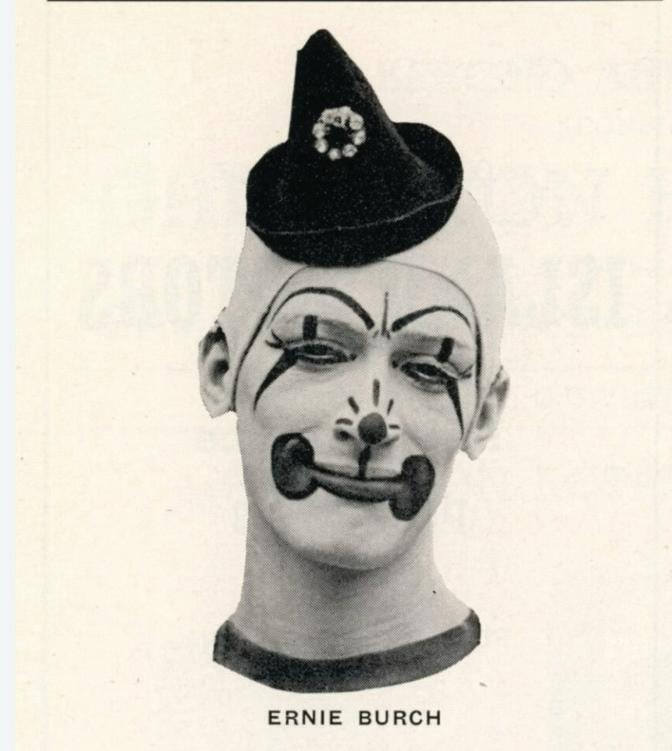
Fun Fact: Ernie Burch, widely known by his clown persona “Blinko,” was a legendary American circus performer often referred to as the “King of the White - Face Clowns.”
Musicians still create an atmosphere of anticipation as the lights dim and the ringmaster welcomes everyone to the show.
I love the circus. The history of the circus in Galveston is not simply the story of visiting performers. It is the story of a community that embraced wonder whenever it arrived. Whether through traveling railroad circuses of the early twentieth century, the memorable Ray Bros. Circus performances during World War II, or the return of traditional family circuses in modern times, Galveston has continued to celebrate the universal appeal of cour age, laughter, and imagination.
The next time a circus tent rises near Galveston’s shoreline or performers gather beneath bright lights, they become part of a tradition stretching back more than a century. Hidden beneath every performance is the mem ory of generations who eagerly await the sound of circus trains, the sight of elephants walking through town, and the promise that, for just a few magical hours, anything seems possible.
Thomas Waggoner
Fan Favorites
By Rodger Rees, Galveston Wharves Port Director and CEO
Port of Galveston Planning for Cruise Growth with Traffic, Mobility Studies
As the Port of Galveston implements its updat ed 20 Year Strategic Master Plan, we’re analyzing the mobility and economic impacts of a fifth cruise terminal at Pier 14. A recently completed com prehensive traffic study for the proposed terminal shows minimal traffic impacts on Harborside Drive and other roadways used to access the port’s east cruise area.
We’re also preparing to hire a consultant to com plete the first phase of a broader mobility study for an area bound by Galveston Harbor and 14th, 33rd and Church streets, which encompasses portions of port property, adjacent neighborhoods and downtown Galveston. The consultant will analyze existing conditions, evaluate increased demand from future port growth and present mitigation solutions for increased traffic.
Per the port’s master plan, the new terminal would be located between terminals 10 and 16. An economic impact study shows that a fifth cruise terminal will significantly boost the regional economy with the following:
• 1,500 jobs
• $91.5 million in personal income
• $278 million in direct business revenue
• $7.9 million in state and local taxes
The city of Galveston and its taxpayers also will benefit directly through cruise passenger and parking fee agreements with the port. In 2025 the port paid the city more than $3 million, including more than $2.2 million in passenger and parking fees. As the port’s cruise business grows so does this revenue. In 2026, the port projects to pay the city a total of $4 million.
Those who attended our master plan public meet ings know that the plan also envisions an exciting new commercial area, including the Battleship Texas at Pier 15, hotels, retail, restaurants, green space and multifamily housing to benefit residents and visitors alike. This will further boost the local economy with jobs, business revenue, and hotel and sales tax revenues.
Our 20 Year Strategic Master Plan, first adopted by the Galveston Wharves Board of Trustees in 2019, incorporates mobility into all phases of port growth. We’ve already built a 2 mile long internal
roadway, onsite parking, and new roads to facili tate traffic circulation and help ease congestion in and around cruise terminals.
Traffic Analysis Results
As we plan for a fifth terminal, we’ll incorporate recommendations from the completed traffic study as well as lessons learned from our first four terminals. The comprehensive, 107 page traffic study by an independent engineering firm assessed roadway operations, identified issues and provided recommendations to improve traffic operations.
Engineers concluded that traffic during peak terminal operations would result in minimal delays at the 14th Street Harborside Drive intersection that could be mitigated with a longer eastbound left turn lane and flashing yellow arrow signals for eastbound and westbound turns. Simulations also showed no traffic congestion on surrounding roadways resulting from terminal operations.
Mobility Study to Come
As you can see, we’ll begin Phase 1 of this new mobility study on a strong foundation of research from this traffic study and our master plan, as well as city and port Comprehensive Safety Action Plans.
Mobility plans look beyond traffic flow to understand and improve upon how vehicles and pedestrians move. As Galveston’s popularity as a cruise and tourism destination grows, managing pedestrian and vehicular traffic is key to sustaina ble economic growth.
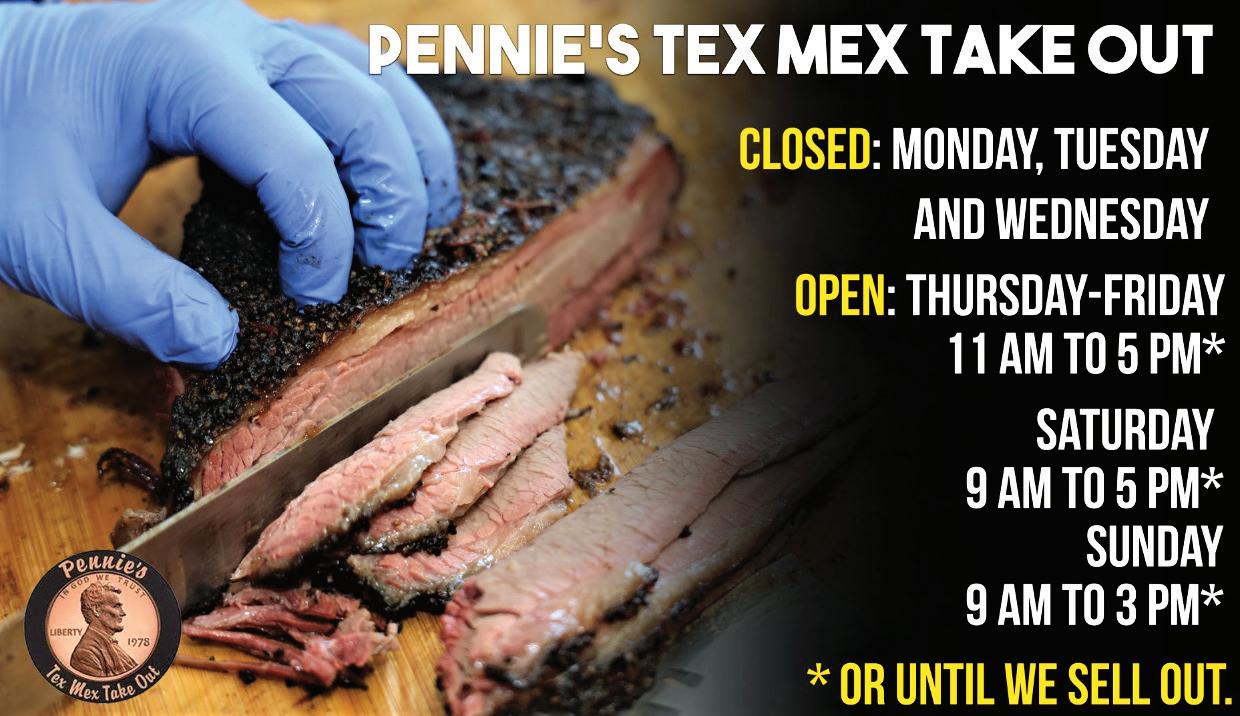
Pennie’s Take Out Menu
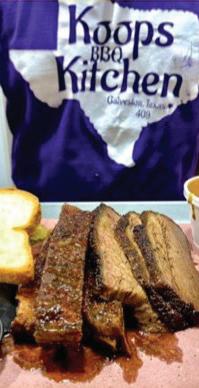
Smoked Brisket
Quality brisket covered with our original rub, slow smoked and ready to be sliced when you order.
Pork Ribs
Pork ribs cooked with our original rub till almost done then basted with our honey sweet ened sauce.
Grilled Chicken
Chicken spiced with our rub cooked over wood. Unlike any chicken you have ever eaten.
Link Sausage
Pork and Beef link sausage smoked over oak ready and waiting for you to order.
Sandwiches
Chopped Beef | Sliced Beef | Sausage | Comes with a com plimentary 4 oz side
Stuffed Baked Potato
Huge baked potato filled with butter, cheese, sour cream, chives and best of all chopped brisket!
Savour our mouth water ing pork ribs, smoked to
Barbacoa
(Sat. and Sun. Only)
Pennie Ochoa’s delicious recipe. Tender, moist shredded beef is the result.
Sides and Dessert
All sides are made fresh at Pennie’s
Potato Salad
Dill based cool refreshing chopped potatoes mixed with dressings.
Pinto Beans
My own recipe made fresh daily. Lots of love goes into the beans.
Spanish Rice
Green Beans
Cole Slaw
Banana Pudding Trifle
by: Tom Valliere & Charlie Bresenhan
Mario’s Ristorante
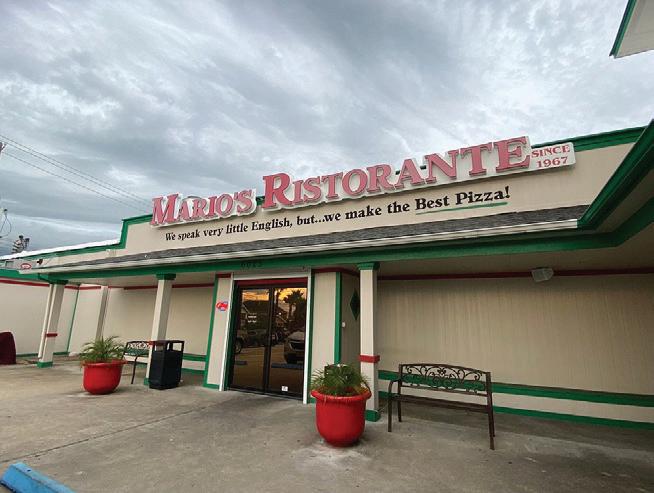
It was five years ago in our June 2021 edition when I first reviewed this landmark Galveston restaurant. Five years is a long time in the restaurant business. In 2021, we were slowly recovering from the COVID‑19 pandemic that wreaked havoc on our local restaurants. Looking back, I can vividly see how it affected our hospitality industry, especially our restaurants. Many adapted and survived, while others did not. Those that endured emerged changed in many ways, some obvious and others more subtle.
The growth of carry‑out dining and the emergence of a full‑scale food delivery industry are perhaps the most pronounced lasting effects, along with the decline of buffet‑style dining. We will revisit buffets shortly, but first let us look back at the history of this restaurant.
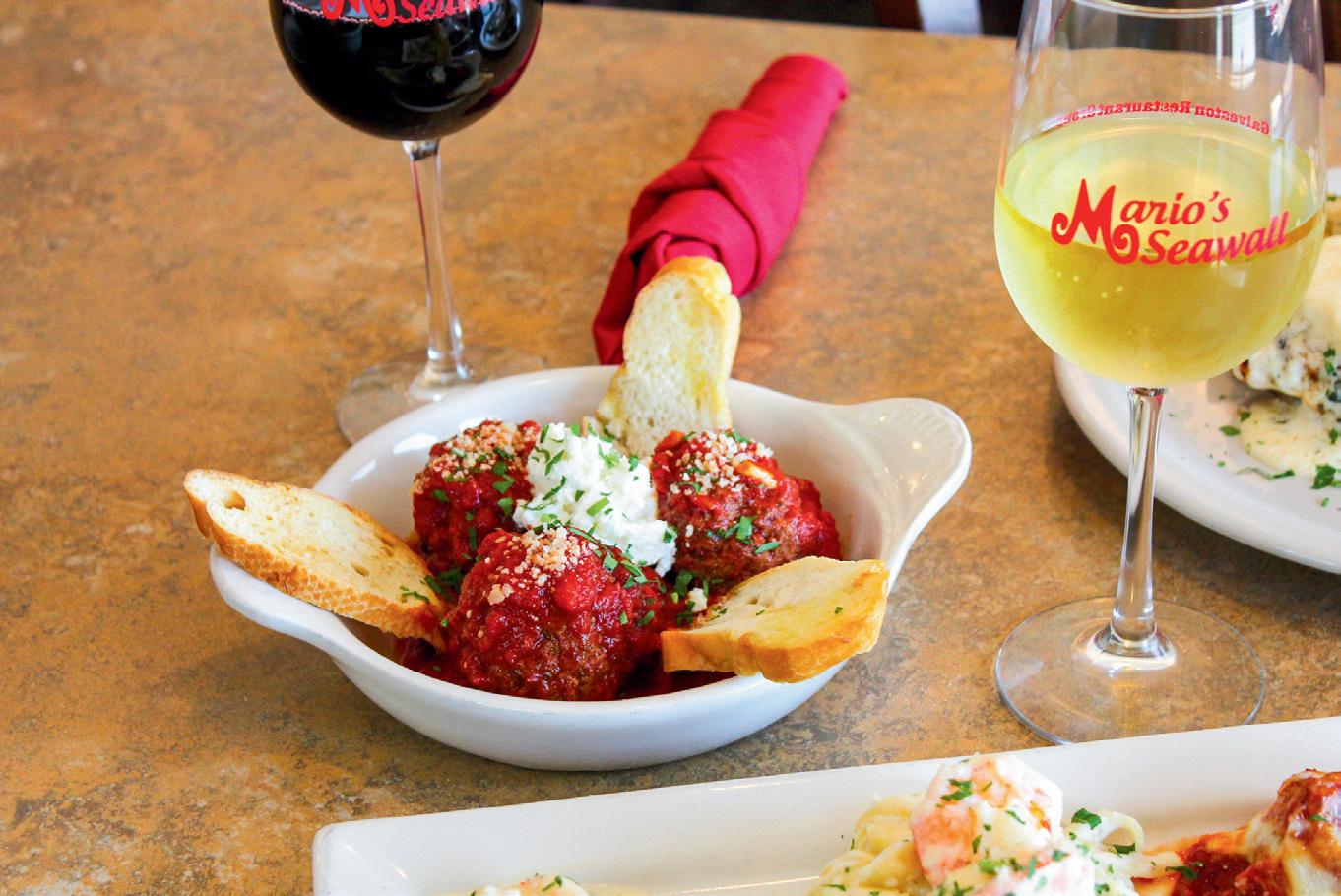
Mario’s Ristorante on 61st Street is often confused with Mario’s on the Seawall, and for good reasons beyond the similarity in their names. Both are family owned and operated, both serve excellent food, both share common roots, and the owners are closely related.
It all began in 1967 when Sicilian‑born Giovanni Smecca decided to move to Galveston after hearing Glen Campbell’s hit song “Galveston” during a card game. Giovanni had long dreamed of becoming a fisherman, so he drove to Galveston to pursue that career. After several bouts of seasickness, he realized the fishing life was not for him. He was preparing to return to New Jersey when he met Mario Bonaccorso,
Big BITES
who was trying to open a pizzeria. The two became great friends and together they started Mario’s Flying Pizza, bringing authentic pizza to Galveston.
There are two important takeaways from this story. First, Giovanni Smecca’s descendants have had a tremendous impact on Galveston’s dining scene. Two excellent restaurants today are owned and operated by his family: the popular Mario’s on the Seawall, owned by Johnny Smecca of the Galveston Restaurant Group, and ,of course, the subject of this review, Mario’s Ristorante on 61st Street.
Second, the Northeastern United States has had a significant influence on our local Italian dining. Many years ago, I was a young private in
the U.S. Army stationed at Fort Devens in Massachusetts. As a naive seventeen‑year‑old from a small Midwestern town not known for culinary diversity, my first exposure to truly delicious Italian food came from small pizza restaurants in towns like Ayer and Fitchburg. Later trips to Boston introduced me to fine Italian dining in the city’s North End.
Throughout my working career, I often traveled to New York City and New England, always marveling at the abundance of excellent Italian food in the Northeast. It is no surprise that several of our best local Italian restaurants have roots in that part of the country. Mama Teresa and Gino’s are two that come to mind. But I digress, so let me return to the subject at hand.
I have long been a fan of self‑service buffets. One of my greatest cruise pleasures is the magnificent buffets, with their variety of foods and the freedom to sample unfamiliar dishes without the commitment required by a single‑plate menu. I have enjoyed countless foods I might never have discovered otherwise. Some introduced me to flavors and textures previously unknown to me, expanding my palate immensely. I know the drawbacks and health concerns, yet I have never experienced any problems from a well‑managed buffet. The thousands of healthy cruise passengers attest to the safety and popularity of a properly operated buffet.
You can imagine my excitement when Mario’s announced the return
of their weekday lunch buffet. And what a buffet it is. Divided into three main sections, Mario’s offers a rotating daily menu of surprising abundance.
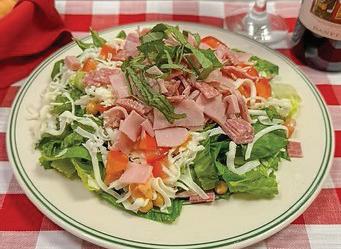
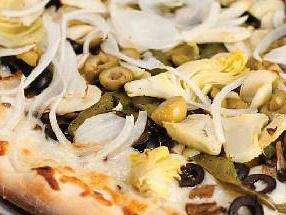
The cold side features an impressively fresh variety of salads and toppings, including premium ingredients not generally found on standard salad bars. Marinated artichoke hearts, pepperoni, ham, cheeses, olives, and more are always fresh and high quality. Several house‑made dressings and crispy croutons complete the masterpiece you create. Further along, you will find the desserts, again abundant, fresh, and delicious.
Across from the cold side is a generous selection of hot entrées. The buffet begins with a minimum of two hot, chef‑created soups. My favorites are the homemade chicken and rice and the seafood bisque, each worth the price of the buffet on its own. These rotate with minestrone and other offerings, all excellent.
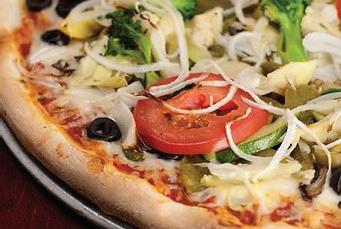
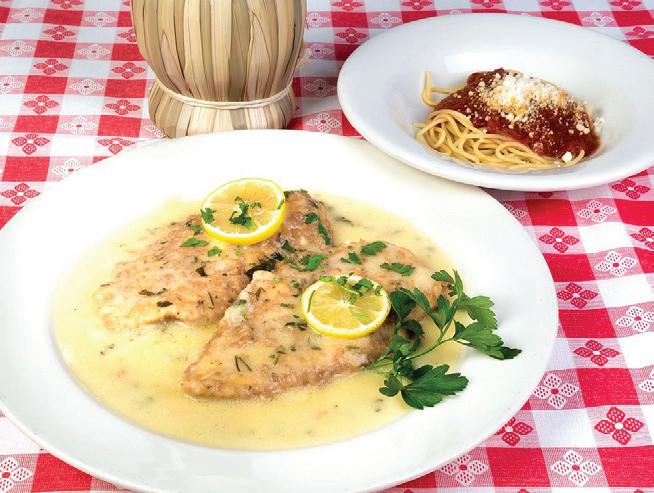
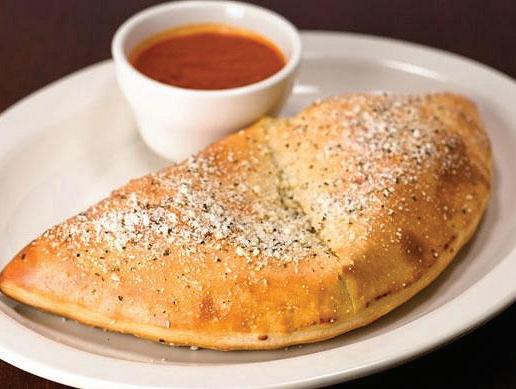
Hot entrées vary daily but always include their signature fried fish and spaghetti. Rotating dishes feature staples such as chicken parmigiana, baked fish, assorted pasta dishes, delicious barbecued ribs, unbelievably good green beans, and much more. The final station offers a variety of pizza, calzone, garlic toast, and breadsticks, all constantly refreshed so they are always hot and fresh from the oven.
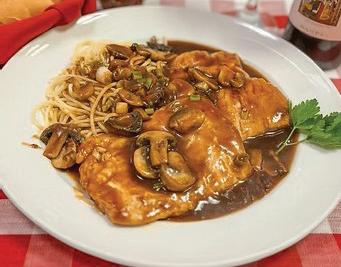
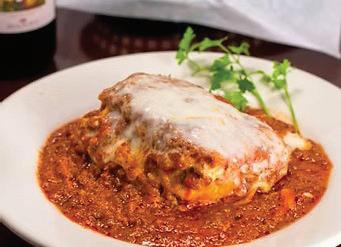
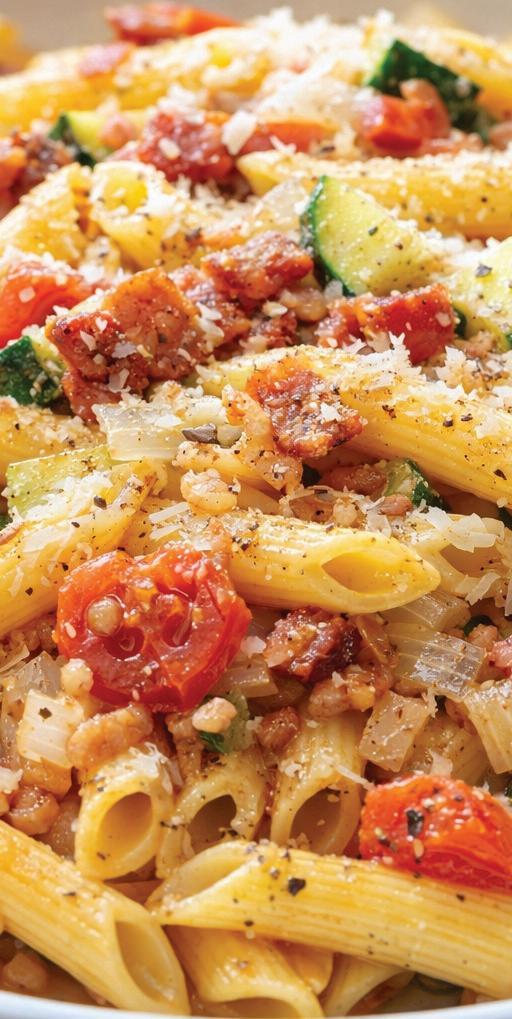
Mario’s is far more than a lunchtime buffet. Their regular menu is always available and features staple dishes such as Chicken Marsala, Chicken Cacciatore, Eggplant Parmigiana, assorted pasta and spaghetti dishes, and an excellent lobster ravioli. The menu includes an abundance of seafood, including Seafood Fettuccine Alfredo and an Angel Hair New England dish with crawfish, shrimp, and lobster sauce. Many of these dishes were created by their longtime chef, Sicilian‑born Joe Trama. You will find his recipe for Penne alla Romana and a brief biography in the accompanying article.
The menu also offers a wide selection of appetizers, salads, hot and cold sandwiches, and pizzas for dining in/taking out. A children’s menu keeps it affordable for families. A notable martini bar, signature drinks, and a curated wine list provide many beverage choices.
The restaurant has been recently remodeled. An adjacent building was removed, allowing new windows to open the space. Dining room partitions have been taken out, creating a more open atmosphere.
There is abundant free off‑street parking, and handicapped accessibility is excellent. The service is consistently friendly, and the owners are always present to ensure your dining experience is exceptional. They also operate a large carry‑out and delivery business and maintain a satellite facility in Pirates Beach with an abbreviated menu for the western suburbs.
In closing, this remains one of my favorite restaurants. Their lunch buffet includes your beverage and is an incredible bargain. Every menu item I have tried has been excellent. They can easily accommodate large groups and offer off‑site catering services.
Chef’s Spotlight brings you a monthly signature recipe from one of our region’s standout kitchens, complete with behind the scenes notes, fresh Gulf ingredients, and plating that tells a story.
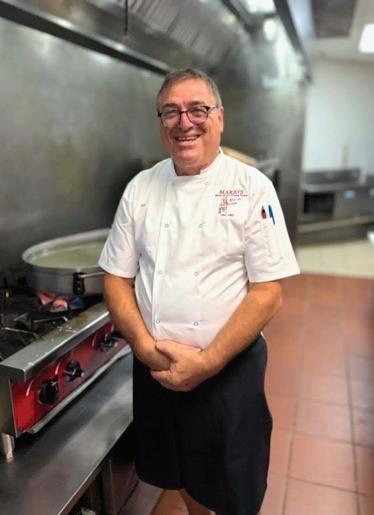
This month, we feature Chef Joe Trama of Mario’s Ristorante, whose passion for Italian seafood and timeless recipes has made him a cornerstone of Galveston’s culinary scene. But first, a little history.
Born in Gela, Sicily, Joe shares his hometown roots with the late Giovanni Smecca Sr. His career began 40 years ago in Texas, where he worked at Mario’s Flying Pizza on 61st Street for five years before moving on to Dante’s for eight.
He then spent 14 years in Atlantic City, honing his craft before returning to Texas to open his first restaurant, Amici in Friendswood.
After closing Amici, Joe returned to his roots, Mario’s Ristorante, where he’s been cooking up dishes for the past eight years. His specialty is Italian seafood, but his love for food extends far beyond the kitchen. When he’s not creating culinary magic, you can find him on the golf course once a week enjoying a round with friends.
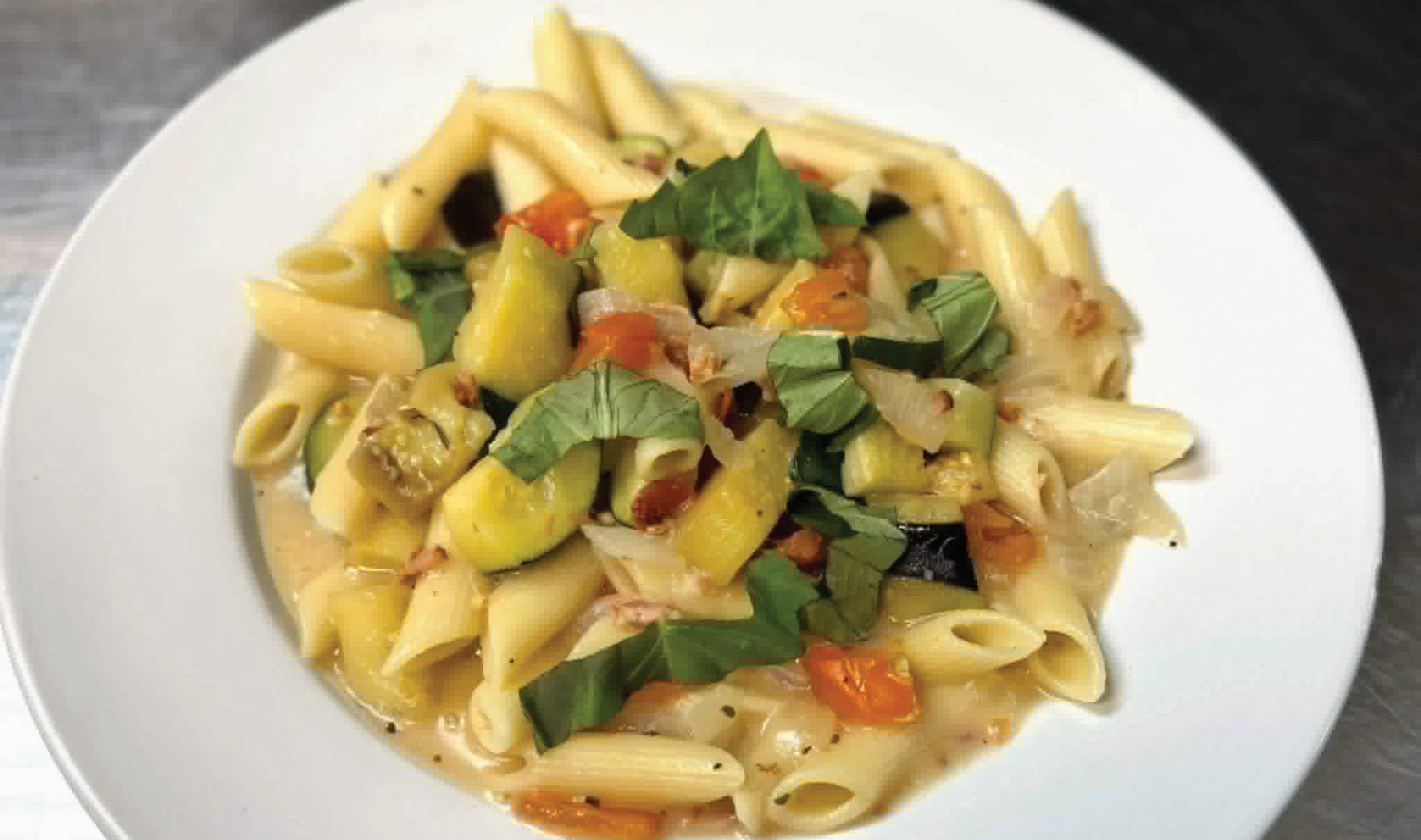
Joe’s dedication to authentic flavors and his deep connection to the Gulf Coast make him a true local legend. His featured dish this month, Penne alla Romana, captures the warmth and simplicity of Italian home cooking with a coastal twist.
Ingredients
• 3 cups Penne pasta
• 1/4 cup Bacon, chopped
• 1/2 Diced onion
• 1 Diced zucchini
• 1/2 Eggplant
• 1 Roma tomato, sliced
• 1 1/2 cups Chicken broth
• 1 1/2 cups white wine
• Salt and black pepper, to taste
• (Optional: Parmesan cheese for serving)
Instructions
• Cook the penne pasta in salted boiling water until al dente. Drain and set aside.
• In a large skillet over medium heat, cook the chopped bacon until crispy. Leave a small amount of the bacon drippings in the pan.
• Add the diced onion and sauté until translucent.
• Add the diced zucchini and eggplant and cook until just tender.
• Stir in the sliced tomatoes and cook for 2–3 minutes, allowing them to soften without breaking down completely.
• Pour in the chicken broth and white wine and bring the mixture to a gentle simmer.
• Add the cooked penne pasta and toss until the pasta is evenly coated and most of the broth has been absorbed.
• Return the cooked bacon to the pan and mix well.
• Season with salt and black pepper to taste.
• Serve hot. Garnish with grated Parmesan cheese if desired.
Penne alla Romana
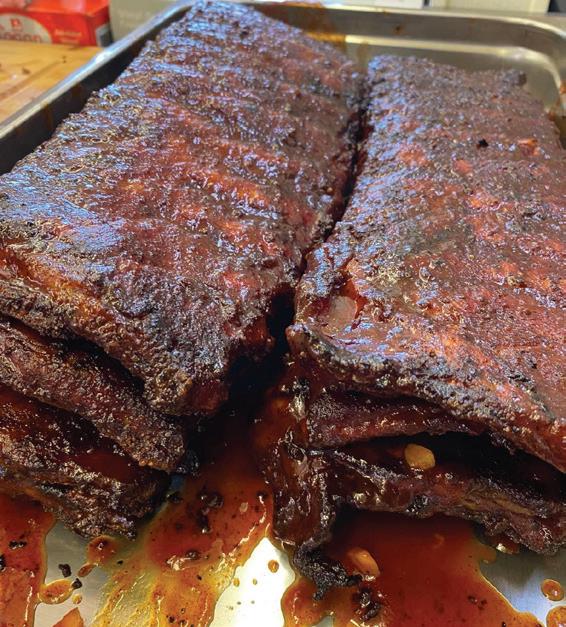
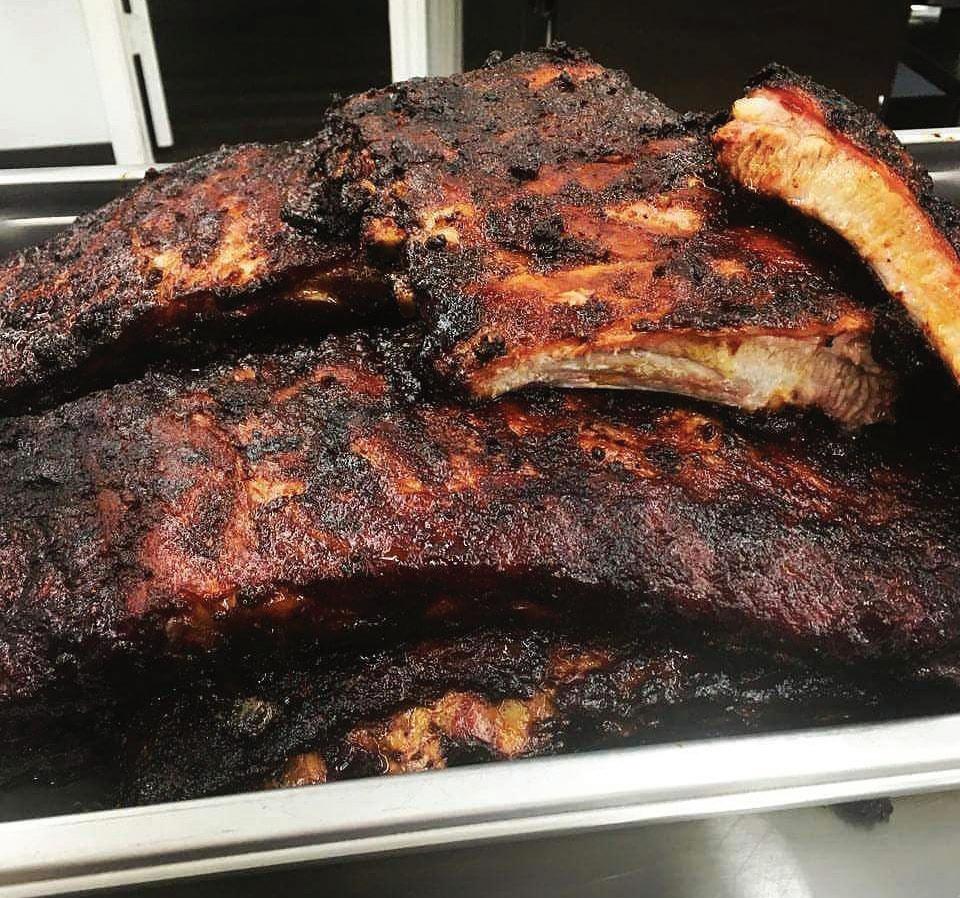
Pennie’s Pork Ribs
Savour our mouth-watering pork ribs, smoked to perfection using our own original rub and finished with our sweet, sticky glaze made with honey and other secret ingredients.
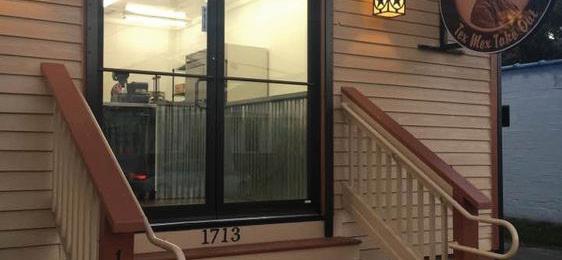
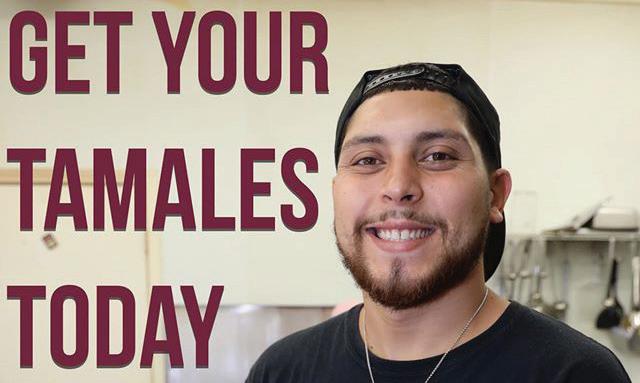
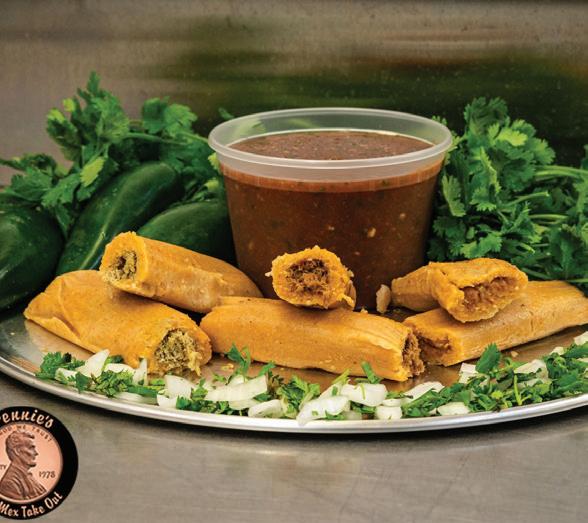
Pennie’s Tex-Mex 1713 37th Street ( 409)-765-5719
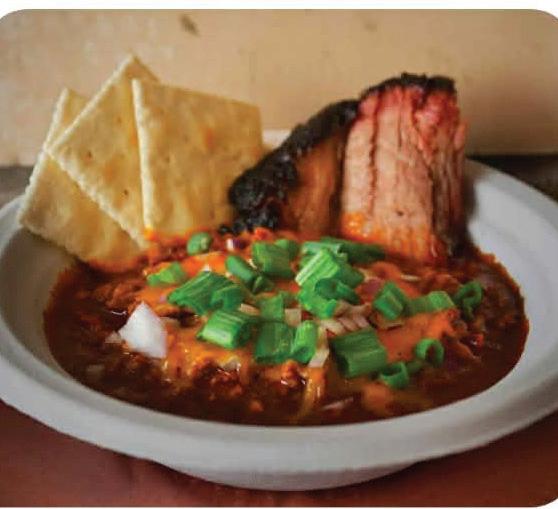
Texas Chili Board
Texas chili for 2. Including jalapeños, green onions, shredded cheddar cheese, sour cream, house smoked brisket, red onion, tortilla chips or saltine crackers. Create your own perfect bowl of chili.
Coastal Star Brewing Co. 2021 The Strand #3 (409) 539-5125
August Featured Dishes
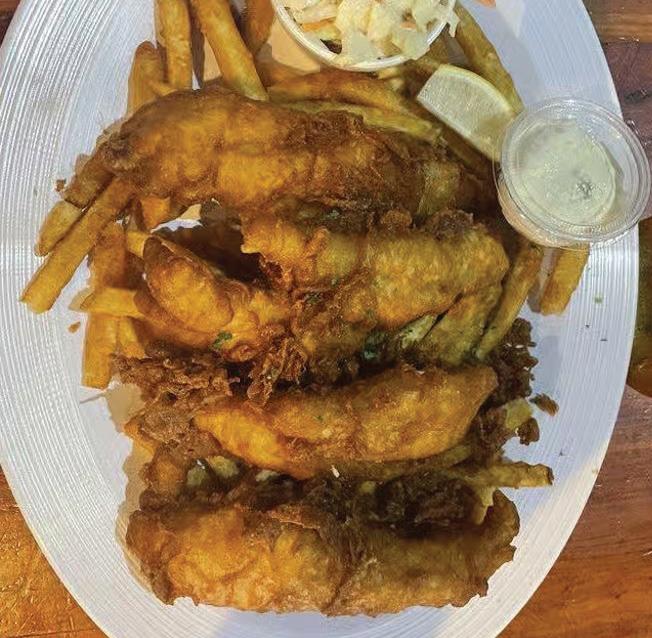
Fish and Chips
Crispy beer-battered Alaskan Pollock served with seasoned fries, house-made tartar sauce, and a lemon wedge. A classic seaside favorite with a Galveston twist— flaky, golden, and hard to share.
Huli Huli Hut 504 25th Street (409)-443-5525
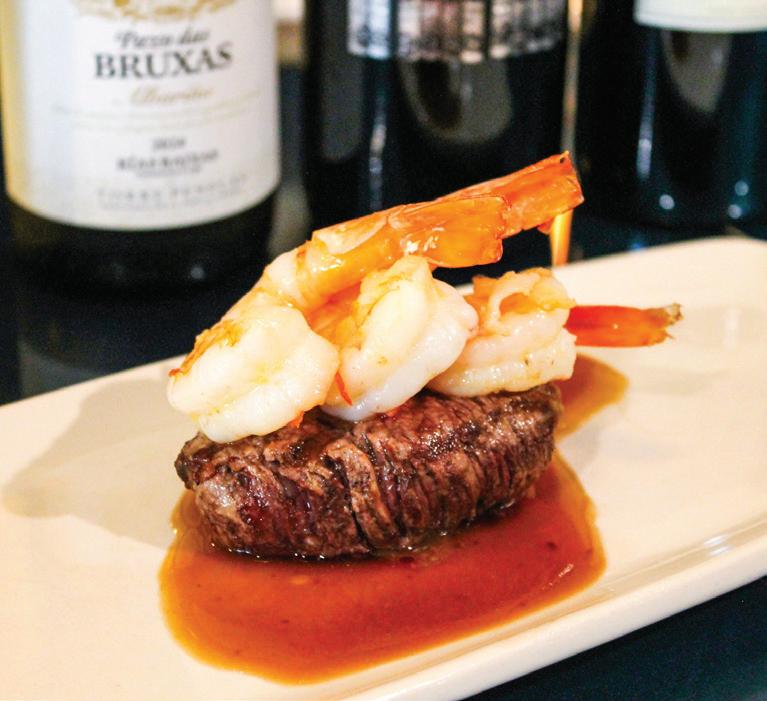
Happy Hour Surf & Turf at Saltwater Grill
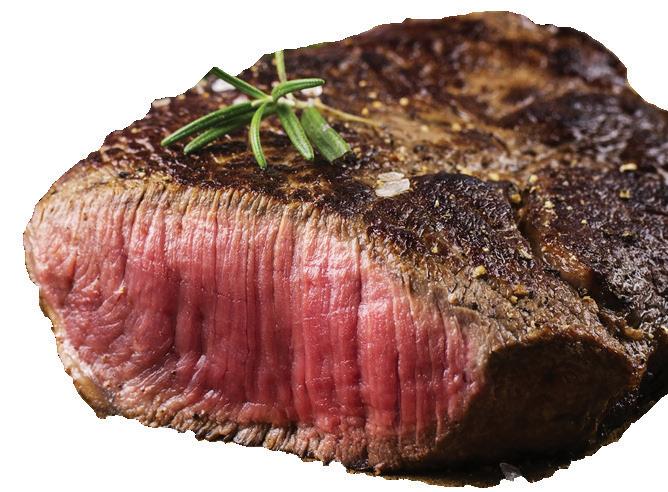
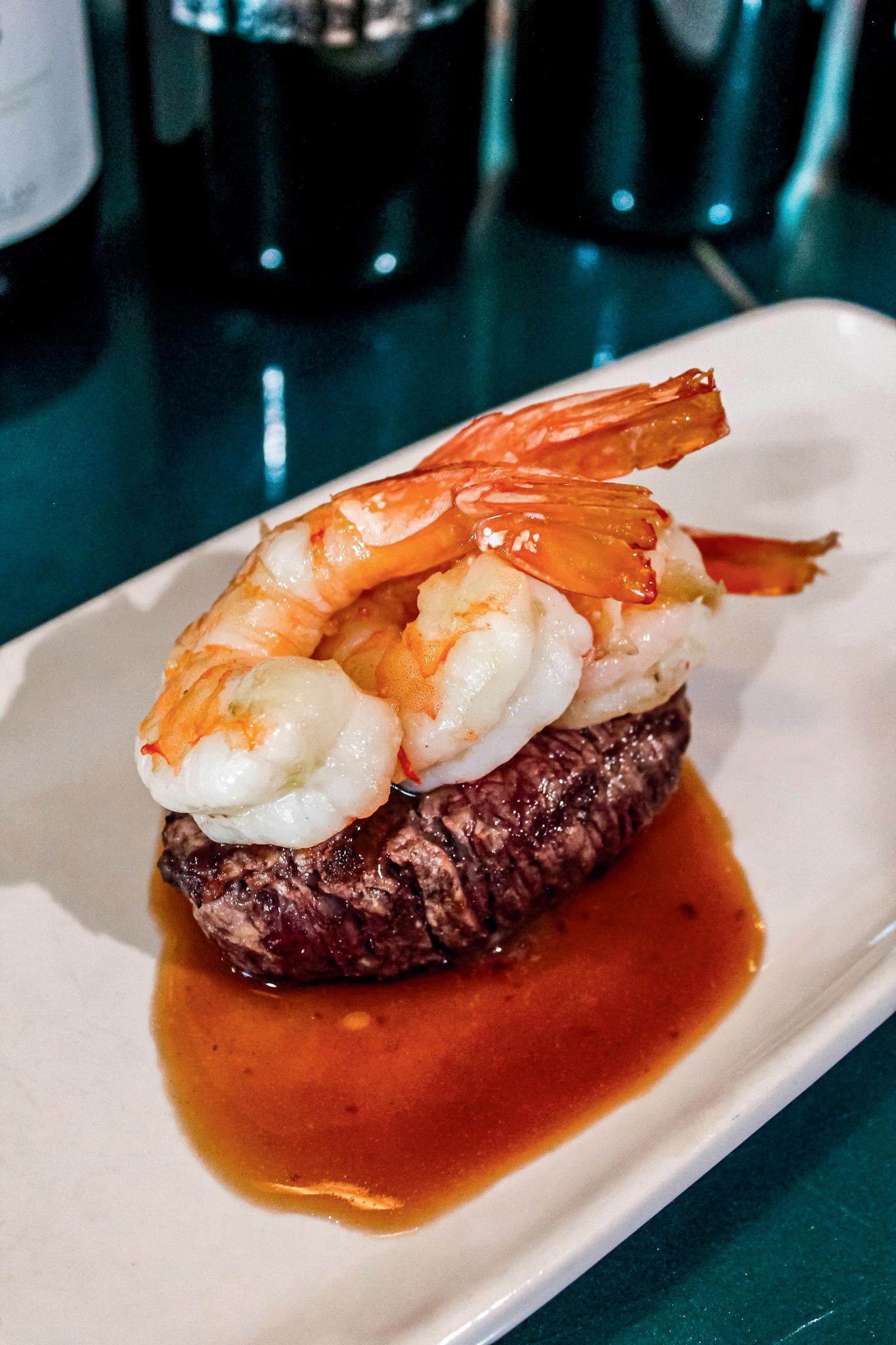
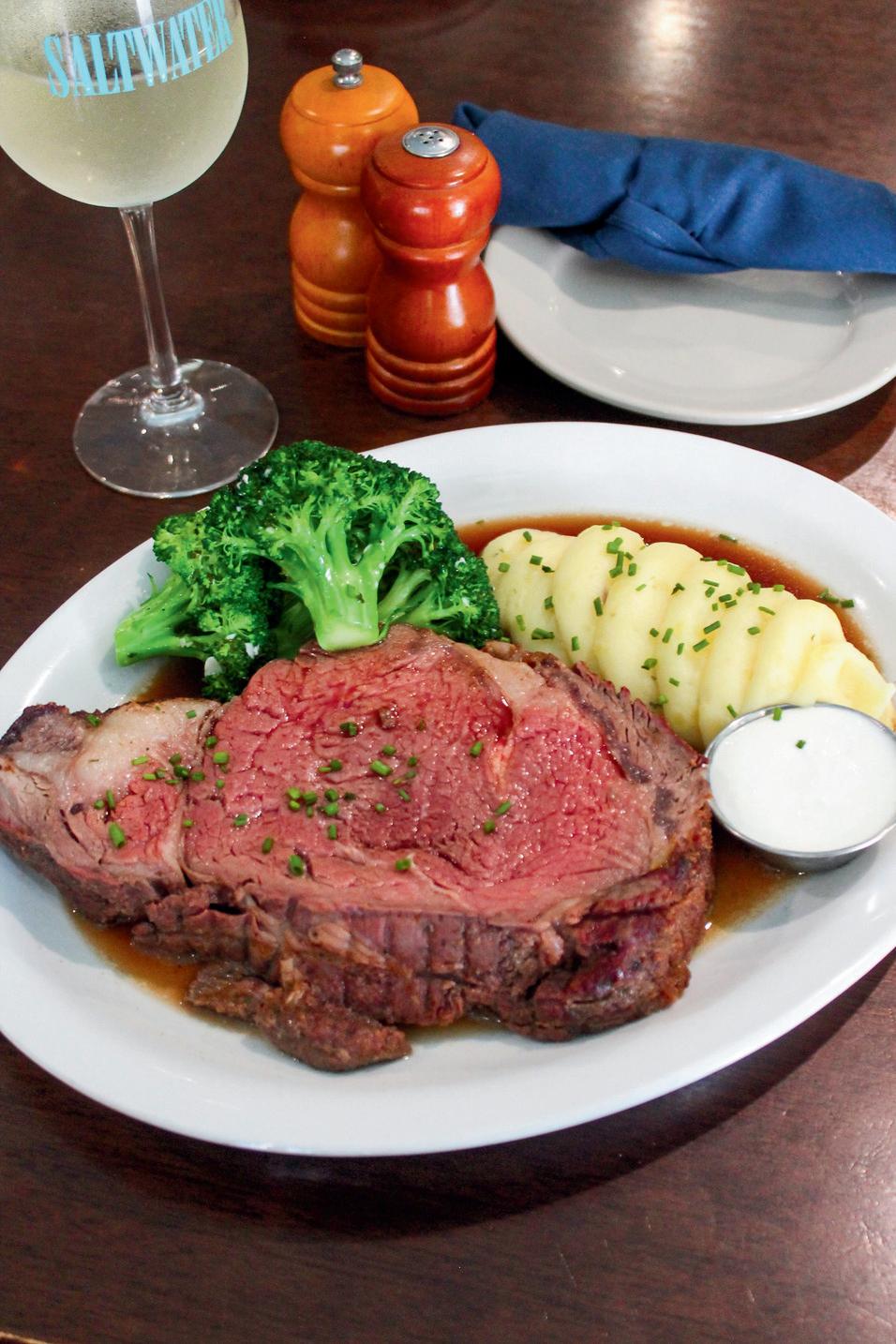
A tender filet paired with three succulent Gulf shrimp and finished with our rich house-made demi-glace. A perfectly balanced bite of land and sea. Available during happy hour only.
Saltwater Grill - 2017 Postoffice Street (409) 762-3474
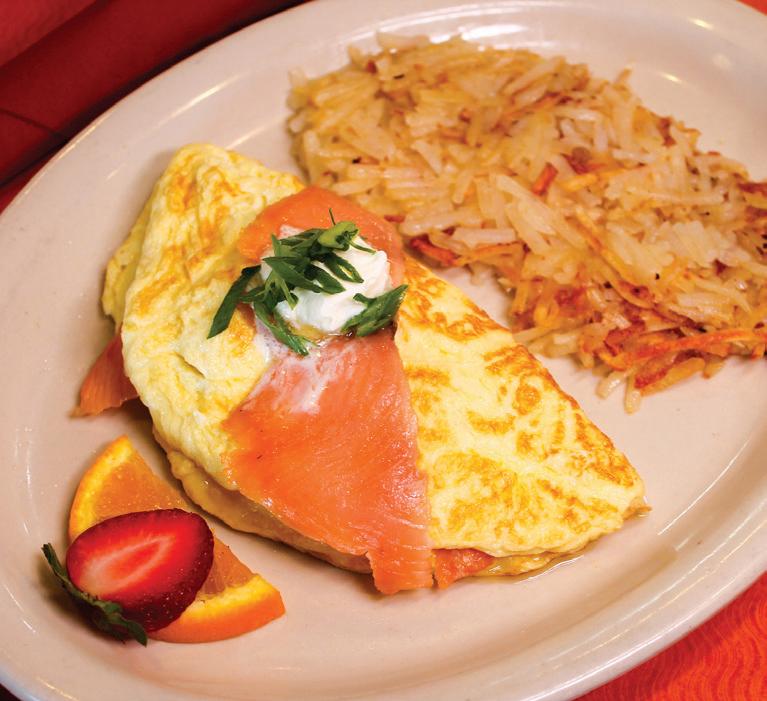
Smoked Salmon Omelet
A fluffy omelet made with smoked salmon, creamy ricotta, and fresh chives, served with golden hashbrowns. Light, savory, and full of flavor, this new breakfast plate brings a fresh twist to your diner morning.
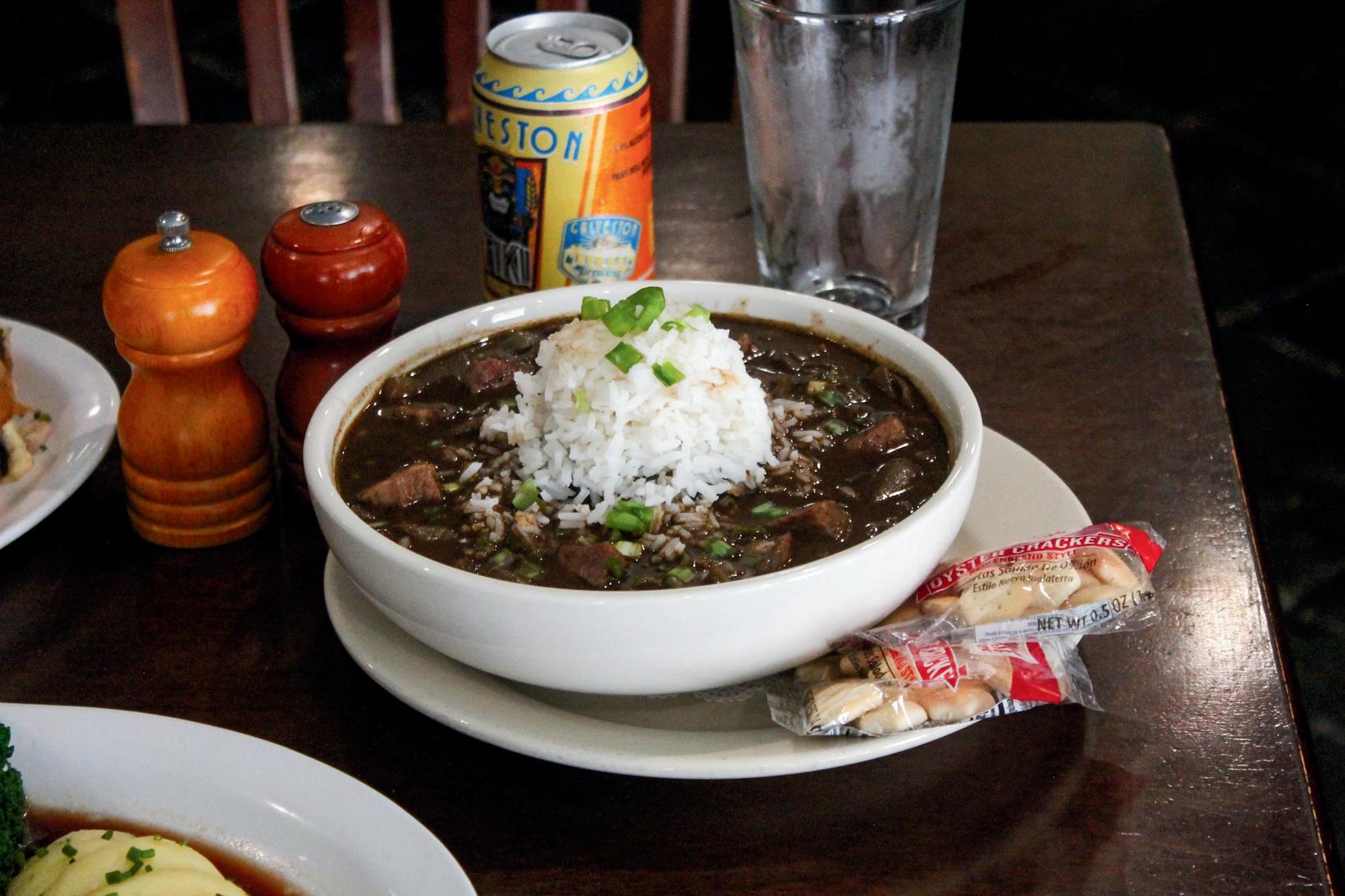
The Gumbo Diner 3602 Seawall Blvd. (409) 762-3232
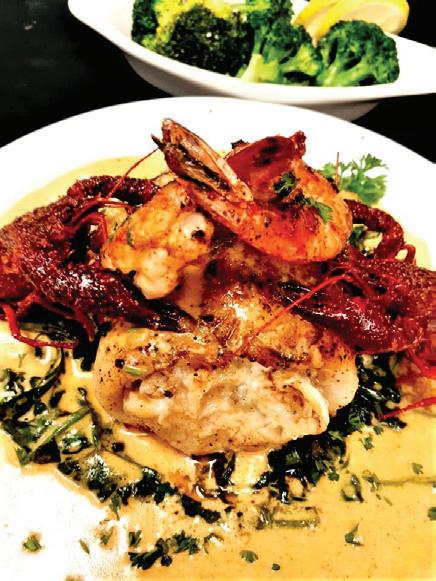
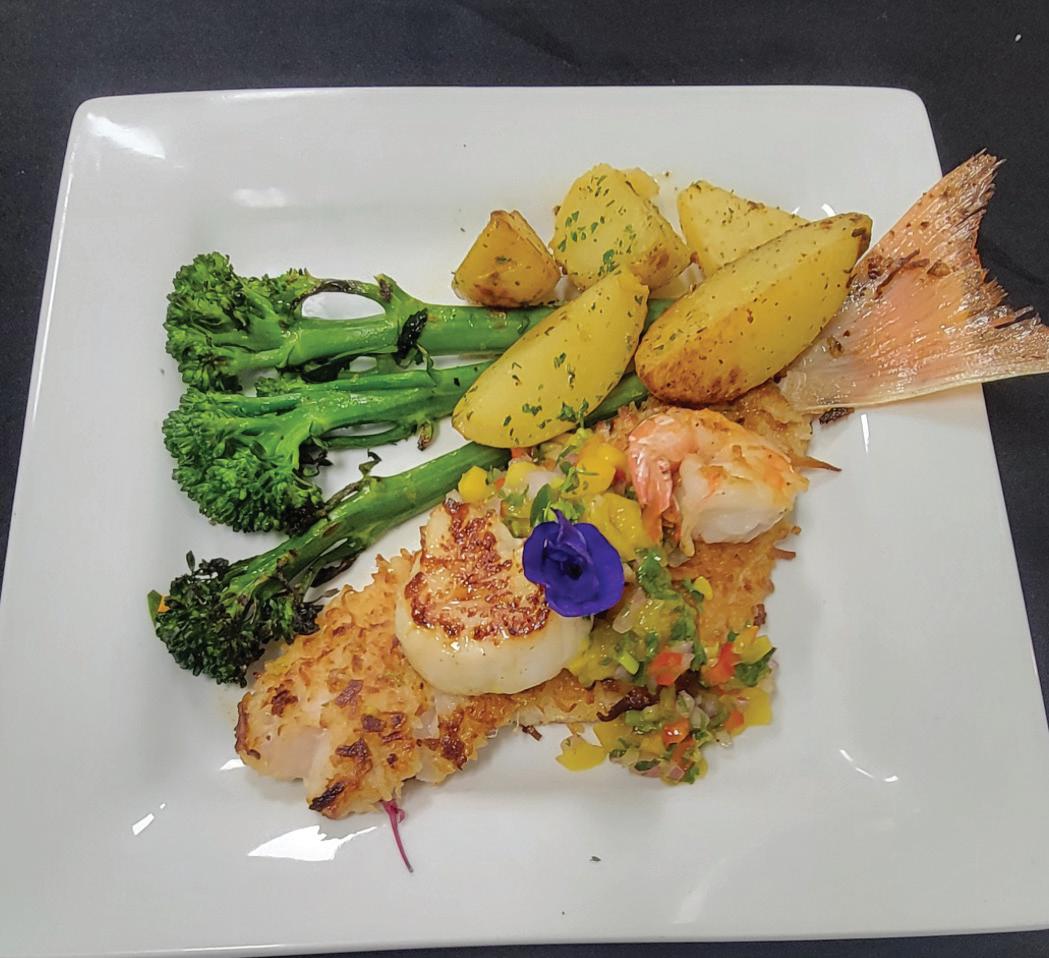
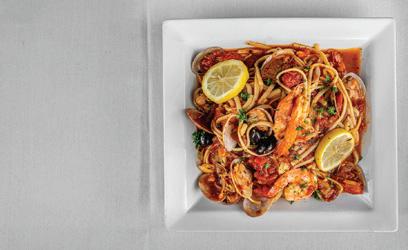
Coconut Crusted Red Snapper
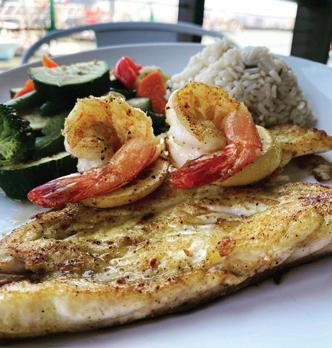
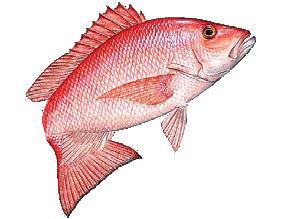
Coconut crusted red snapper topped with mango pico de gallo, one jumbo scallop and one jumbo shrimp, accompanied with char-grilled broccolini and herb roasted potatoes.
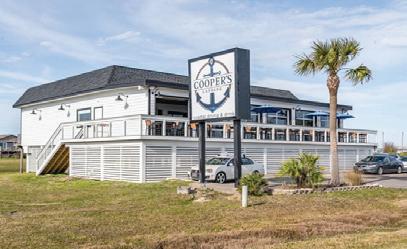
Cooper’s Landing 11150 Termini-San Luis Pass (409) 539-5534
August Featured Dishes
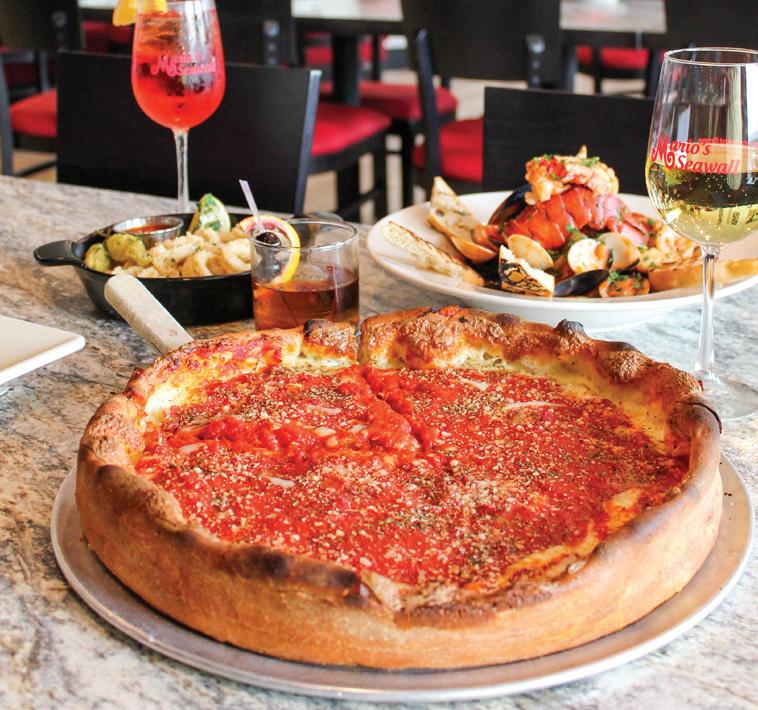
The Joey
Loaded with house-made Italian sausage, chunky vine-ripened tomatoes, mozzarella, and Romano cheese, this Chicago-style favorite delivers bold flavor and a perfectly baked crust in every bite.
Marios Seawall Italian and Pizzeria 628 Seawall Blvd (409) 763-1693
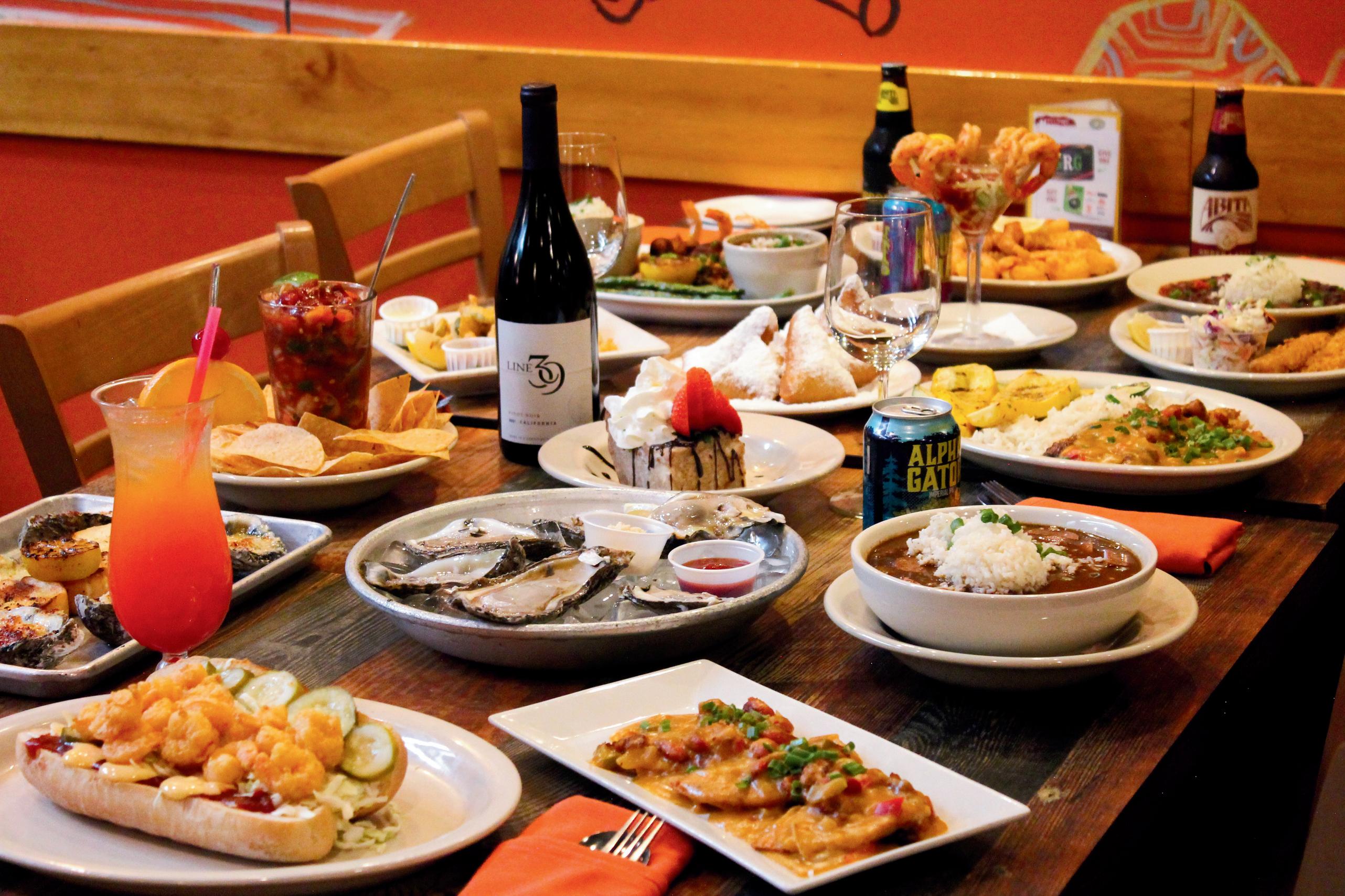
Soon To Be Famous Po’ Boys
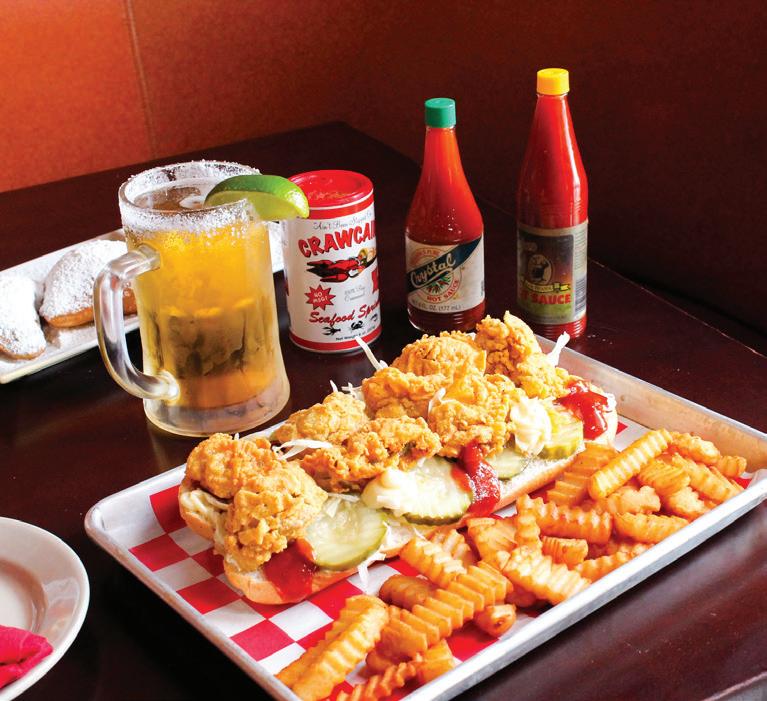
10” Po’ Boys with your choice of Gulf shrimp, oysters, crawfish tail, or half & half. Dressed with tabasco-infused mayo, zesty cocktail sauce, shredded cabbage, and pickles.
Little Daddy’s Gumbo Bar 2107 Postoffice Street (409) 744-8626
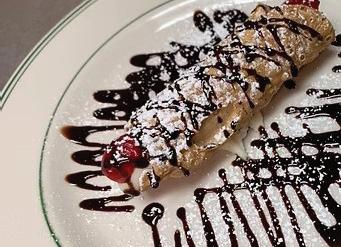
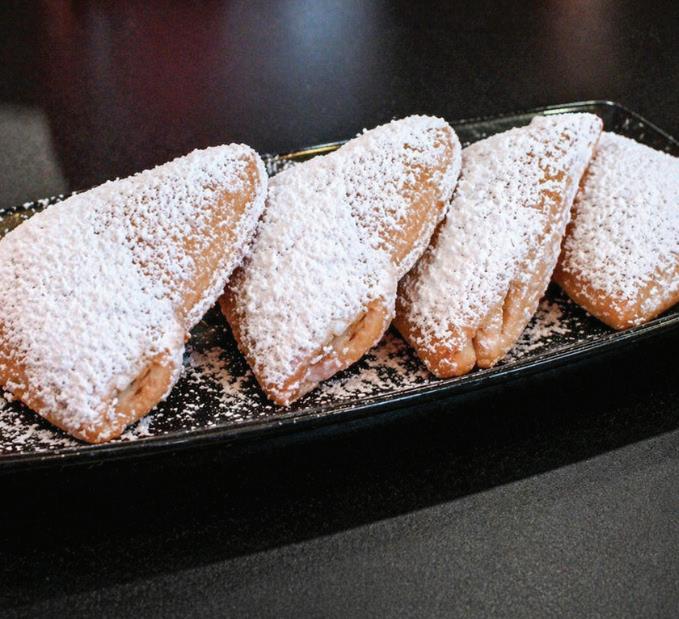
Zepolli Cannoli
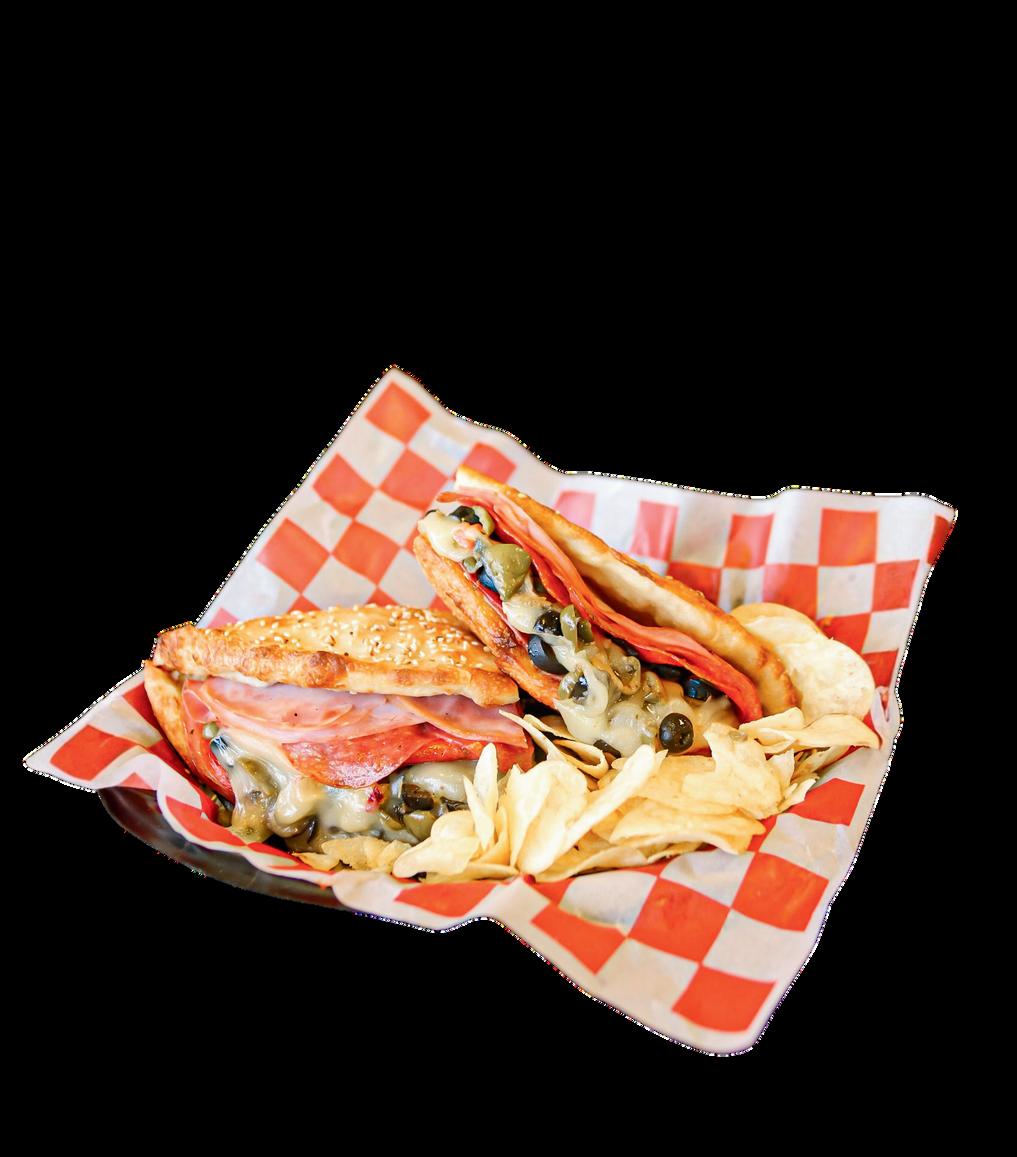
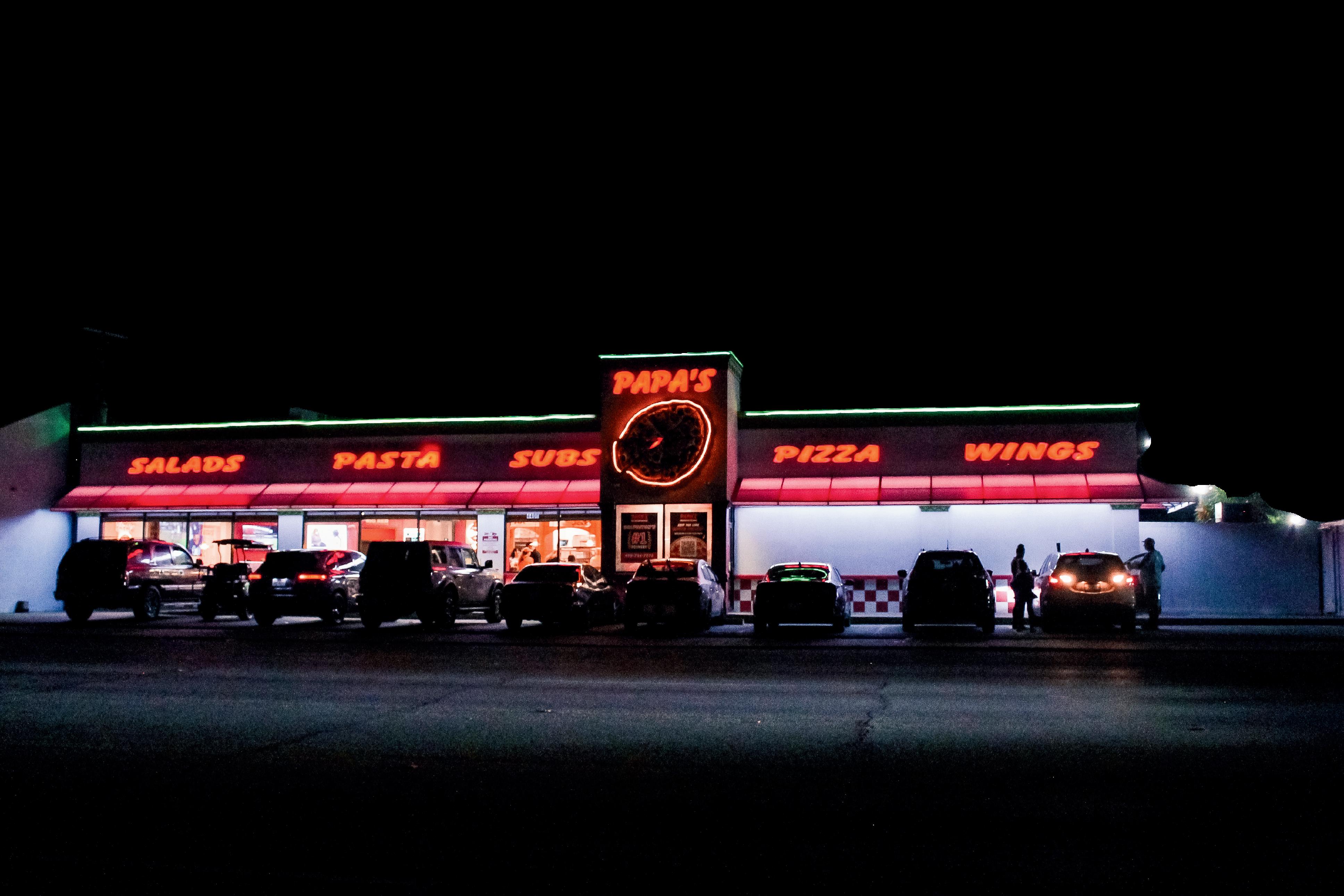
Golden-fried zeppoli dough, filled with our sweet, creamy cannoli filling and topped with a mountain of powdered sugar. Try them today at Papa’s or order online at freehotpizza.com
Papa’s Pizza 4400 Seawall Blvd (409) 766-7272
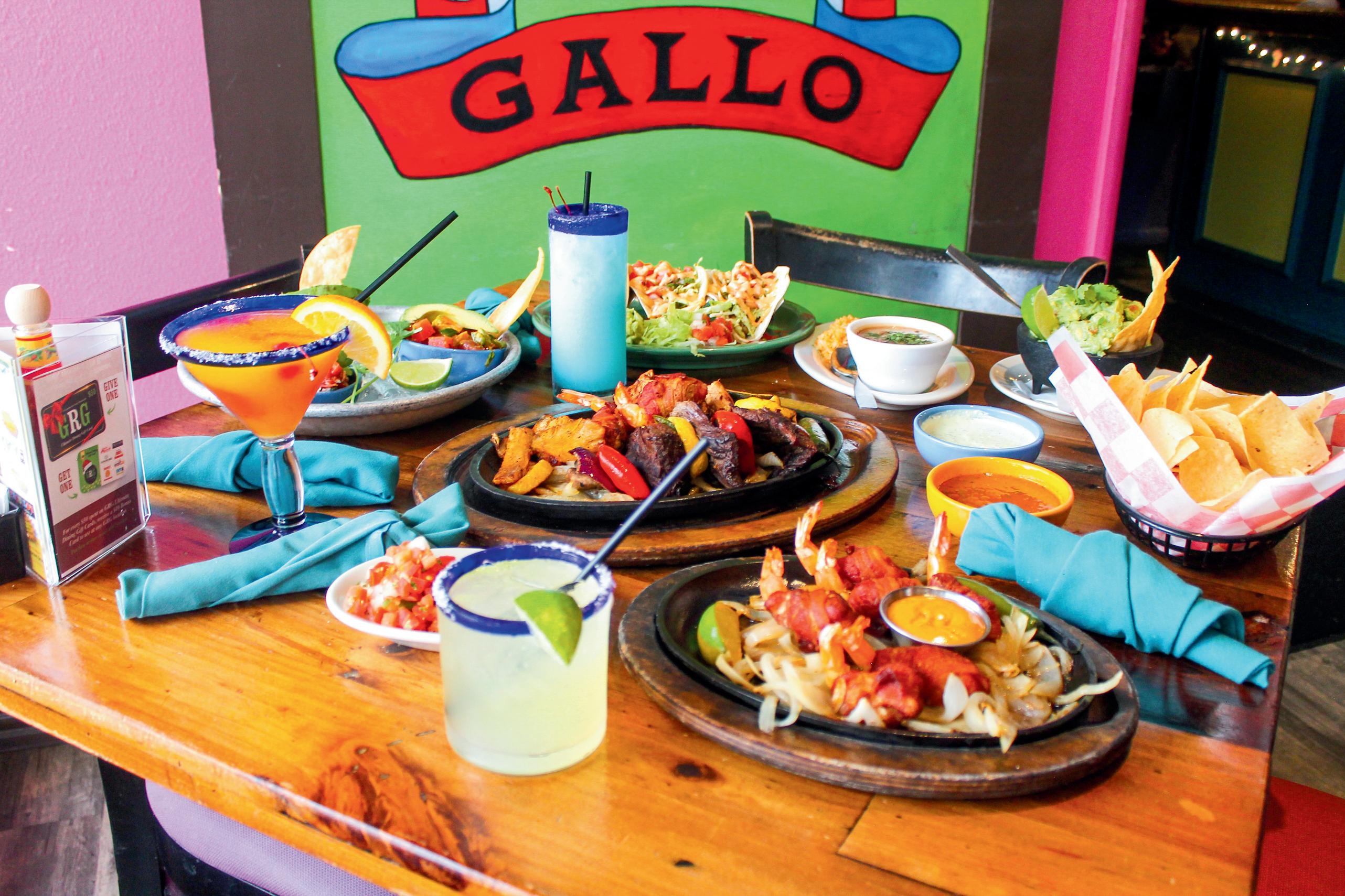
Taquilo’s Monday Fajita Fiesta
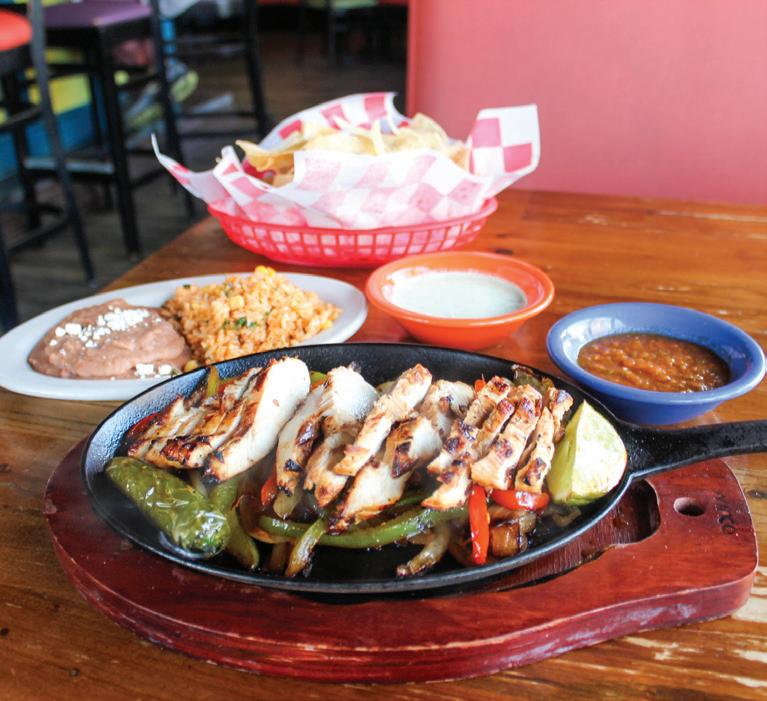
Kick off your week the Tex-Mex way, with ½ lb sizzling chicken fajitas with rice & beans for just $17.99 (feeds 1–2). Upgrade your fiesta with Gulf Shrimp, Fajita Beef, or a Combo plate. And because no fiesta is complete without it, award-winning Happy Hour Margaritas are just $5! Enjoy happy hour weekdays from 11am to 7pm.
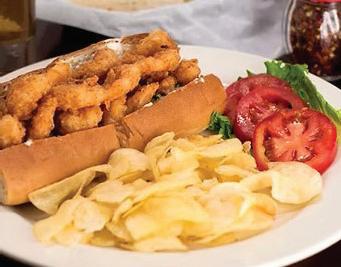
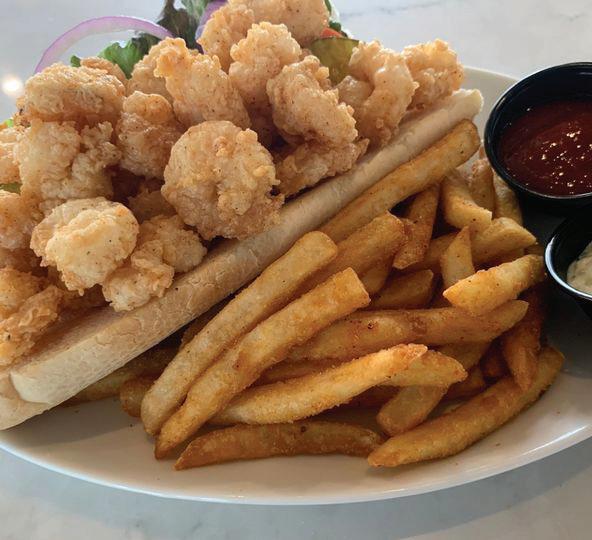
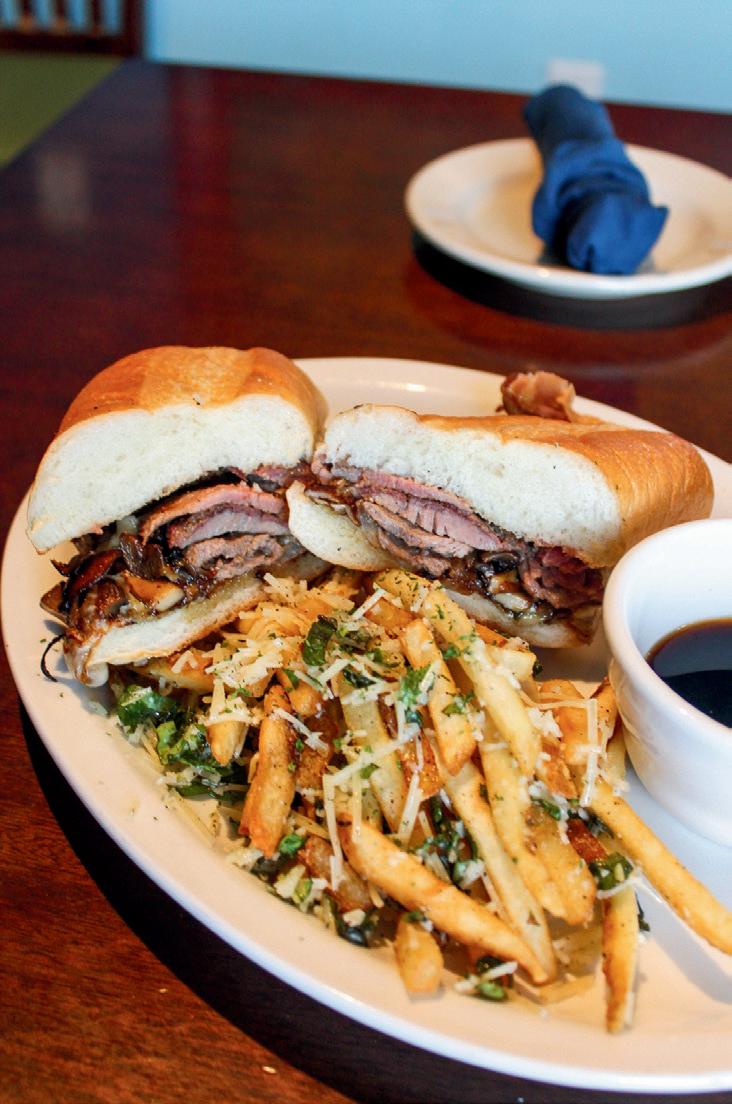
A Galveston classic: crispy fried fish, shrimp, or oysters tucked into a warm, fresh-baked baguette, dressed with tangy Cajun remoulade. Served with fries and slaw — no shortcuts, just coastal comfort.
Katie’s Seafood 2000 Wharf Rd (409) 765-5688
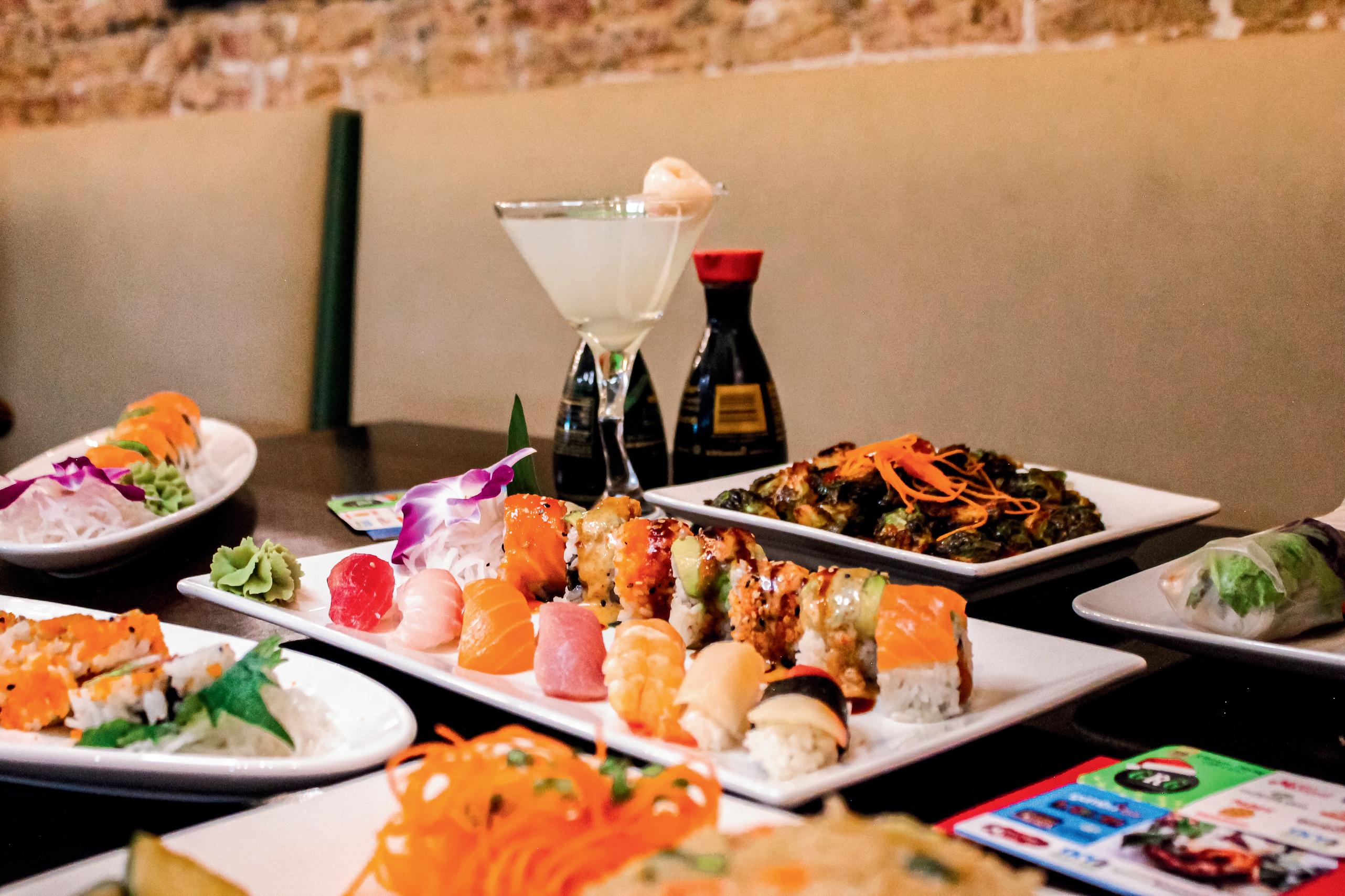
Sky Bar $5 Martini Thursdays
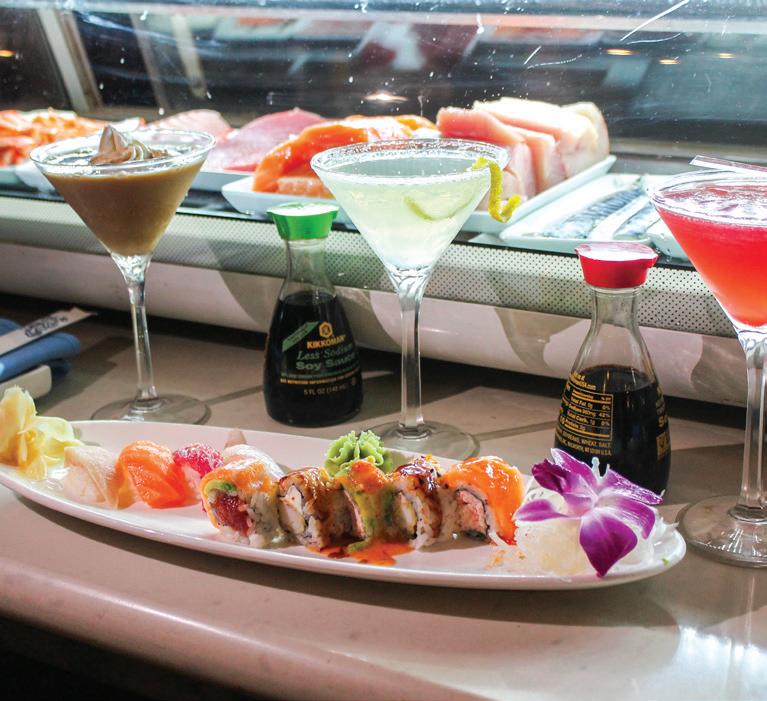
Good times and great rolls are waiting for you on Thursdays at Sky Bar. Enjoy our $5 Award-Winning happy hour Martinis and sushi by the piece every Thursday from 5-10 PM.
SkyBar 2105 Postoffice (409) 621-4759
Episode one now available.
The Story Behind Galveston’s Fresh Seafood Revival
Hosted by Mike Burke | Featuring Waves Food Editor Tom Valliere
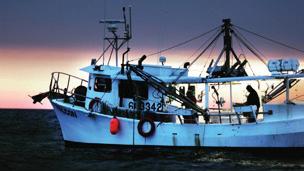
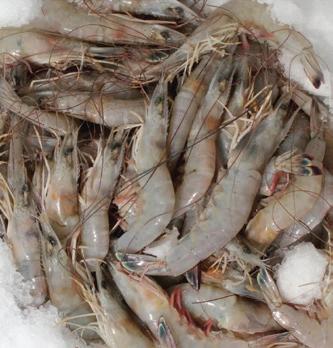
Join Waves Magazine Publisher and Podcast Host, Mike Burke and Waves Magazine Food Editor, Tom Valliere for an in - depth conversation on Galveston’s seafood heritage — from shrimp boats to sustainable dining. Discover how Gulf fishermen, restaurants, and local chefs are keeping coastal traditions alive while adapting to modern challenges.
Episode Highlights:
• Rise and fall of domestic shrimping
• Imported seafood and sustainability
• Galveston’s locally owned restaurants
• The future of Gulf‑fresh flavor
• How community efforts are shaping the future of fresh seafood Watch now at www.wavesgalveston.com/podcast
CURTAIN GOING UP
By: Paul Hager
PURPLE BOX THEATER AND CLEAR CREEK COMMUNITY
THEATER ANNOUNCE NEXT SCHEDULED PERFORMANCES
Two of our neighbors to the north have posted playbills for their upcoming performances. They are:
PURPLE BOX THEATER
HARVEY
By Mary Chase
September 11 ‑ 20, 2026 ‑ Various times
This classic Pulitzer Prize winning comedy follows Elwood P. Dowd, a cheerful and kind man whose best friend is an invisible, 6 foot tall rabbit named Harvey. Elwood’s eccentric behavior—like saving seats and ordering drinks for an unseen giant rabbit—mortifies his sister, Veta, and her daughter. Veta tries to have him committed, but a mix up results in her being committed instead. As the frantic staff searches for Elwood, the mild mannered man’s gentle demeanor ends up charming and deeply influencing the doctors.
WAIT UNTIL DARK
By Frederick Knott
November 6 ‑ 15, 2026 ‑ Various times
This thriller is the story of Susy Hendrix, a recently blinded housewife who unwittingly possesses a doll filled with illicit drugs. Harry Roat, a brutal and sophisticated criminal, coerces two small time thugs into helping him con Susy into giving up the doll. A battle of wits ensues as Susy and the young girl upstairs launch a counterplot against the thieves. The drama plays on the themes of darkness and light as Susy navigates through her sightless world, and the crooks signal each other with light through the Venetian blinds.
Note: Watch for an announcement of their 2027 Season in a future issue!
CLEAR CREEK COMMUNITY THEATER
A CHORUS LINE
Conceived by Michael Bennett with music by Marvin Hamlisch, lyrics by Edward Kle ban, and a book by James Kirkwood Jr. and Nicholas Dante September 18–27, 2026 Various times
This groundbreaking Broadway musical about seventeen dancers auditioning for spots in a new production’s chorus line is a perennial favorite. To narrow down the final selection, demanding director Zach asks the hopefuls to step out of line and share their deeply personal stories, turning an anonymous audition into a profound emotional journey. Throughout the audition, the performers reveal their childhood struggles, insecurities, and unyielding passion for dance. The interviews expose a wide array of backgrounds, ranging from comedic stories of small town dreams and bad acting classes to heavier, heartbreaking narratives of poverty, family dysfunction, and coming to terms with sexuality.
MUCH ADO ABOUT NOTHING
By William Shakespeare
PAUL HAGER
PAUL HAGER
August 14 23, 2026 Various times
The play is set in Messina and revolves around two romantic pairings that emerge when a group of soldiers arrive in the town. The first, between Claudio and Hero, is nearly scuppered by the accusations of the villain, Don John. The second, between Claudio’s friend Benedick and Hero’s cousin Beatrice, takes centre stage as the play continues, with both characters’ wit and banter providing much of the humour.
Through “noting” (sounding like “nothing” and meaning gossip, ru mour, overhearing), Benedick and Beatrice are tricked into confess ing their love for each other, and Claudio is tricked into believing that Hero is not a maiden (virgin). The title’s play on words refer ences the secrets and trickery that form the backbone of the play’s comedy, intrigue, and action.
Listings
ON THE BOARDS [Currently playing]
ISLAND ETC [East-End Theatre Company]
COME FROM AWAY
Book, Music, and Lyrics by Irene Sankoff and David Hein
Through August 15, 2026
Thursdays, Fridays, and Saturdays 8:00 PM
Sunday matinees 2:30 PM
https://www.islandetc.org/
A3G [Act Three Galveston]
REBEL HEARTS
By Cailín Heffernan
August 29, 2026 8:00 PM (7:00 PM mixer pre show)
August 30, 2026 2:00 PM (15 min. talkback post performance)
At Galveston College
https://www.act3galveston.org/
COM THEATRE [College of the Mainland Theatre]
Thursdays, Fridays, and Saturdays 7:00 PM
Sunday matinees 2:30 PM
https://www.com.edu/community theatre/
THE GRAND 1894 OPERA HOUSE
Bill Engvall – Here’s Your Sign: It Wasn’t My Time
August 8, 2026 8:00 PM http://www.thegrand.com/
CLEAR CREEK COMMUNITY THEATRE
MUCH ADO ABOUT NOTHING
By William Shakespeare
August 14 23, 2026 Times TBA https://clearcreekcommunitytheatre.com/
BAYTOWN LITTLE THEATRE [BLT]
12 ANGRY JURORS
Adapted from Reginald Rose’s 1954 teleplay 12 ANGRY MEN
August 14 23, 2026
Fridays & Saturdays 8:00 PM
Sundays 2:30 PM
https://baytownlittletheater.org/
IN THE WINGS [Opening Soon]
PURPLE BOX THEATRE
HARVEY
By Mary Chase
September 11 20, 2026 Various times
http://www.thepurpleboxtheater.com/
TICK, TICK...BOOM!
Book, Music, and Lyrics by Jonathan Larson
Through August 15, 2026
PAUL HAGER
PaulHager
Texas
Music Profile
Additional Photos courtesy of The Band Hennessy
The Band Hennessy
Ashley and Heather Hennessy
As the rock band Pink Floyd endured the question from naive record executives in the 1960s and ‘70s, “Which one’s Pink?” - a line made famous later in the band’s career in the song “Have a Cigar” - The Band Hennessy’s name might need some explaining as well. And like most bands, the name has a good story.
Today, The Band Hennessy is fronted by co-lead vocalists Ashley and Heather Hennessy, with Chris Grant on lead guitar and vocals, Maurice Farris on bass, and Brandon “Blockdadrummer” Lockridge on drums. Co-founder and original guitarist Christian Weigand also joins the band on occasion. The lineup has evolved several times since Ashley and Weigand formed The Band Hennessy in late 2013.
Ashley’s path to the band began in 2012, when she performed a solo in Art Park Theater’s production of Smokey Joe’s Café. Her friend Chris Piper saw the performance and was so impressed that he arranged for Ashley to audition as lead vocalist for his cover band, Rockit Bayou, where Weigand sang and played guitar and Piper played drums. As the urge to write and perform original music became too difficult to ignore, Ashley, Weigand and Piper shed the Rockit Bayou name and formed The Band Hennessy in late 2013.
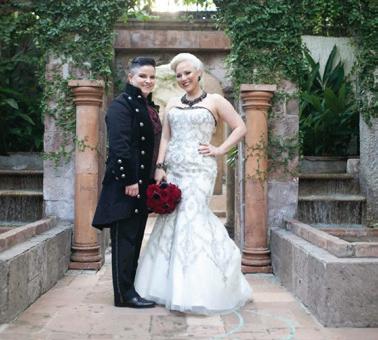
Heather joined The Band Hennessy in May 2014 after singing with several cover bands, including Houston’s Pirate Radio. Ashley and Heather united their once-individual voices and began creating dynamic harmonies through a series of unplanned on-stage guest appearances with their bands that quickly gained the attention of Christian Weigand, who inspired the girls to join forces as co-lead frontwomen of The Band Hennessy. What began as friendship and a mutual respect for each other’s talent, quickly grew into something much deeper –– and Ashley and Heather married in 2017, making The Band Hennessy their shared name in more than one sense.
“Christian wrote a lot of our first big hits, along with Avery. And then when we got into the studio, that’s when the collaboration on our part would begin. Luckily, we got married. Now it’s really The Band Hennessy, for more than one reason,” Ashley Hennessy said. “We can say music truly brought us together,” Heather Hennessy added.
In 2017, the band released its debut album, So Much For Love, across all major music outlets. The well-received project earned The Band Hennessy a spot alongside Ty Herndon, Scooter Brown Band on Curtis Braly’s All About the Ride Tour at Live Nation’s Revention Music Center. The event raised more than $8,000 for the Lone Survivor Foundation.
In June 2019, The Band Hennessy was voted Houston’s “Next Big Thing” contest winner on 94.5 The Buzz’s The Rod Ryan Show, beating more than 70 submissions from bands across the country by fan vote. The Band Hennessy’s contest entry was “To The Moon and Back.” The win brought a recording contract with Up/Down Records and an opening slot for Blue October at Houston’s First Annual Music & Arts Festival at White Oak Music Hall on July 27, 2019.
Like many artists, The Band Hennessy saw its momentum interrupted by COVID-19, but the group rebuilt and endured.
The Up/Down Records single “There’s No Stopping Us” premiered on KTBZFM/94.5 The Buzz in Houston on September 26, 2021, and became available worldwide on digital platforms on October 1, 2021. The song was written by Ashley and Heather Hennessy, Aaron Whitman, Alan Cunningham, and Justin Furstenfeld, who also produced the track. It has since become the No. 1 song in The Band Hennessy’s catalog.
The band has continued performing throughout the Houston and Galveston region, including appearances at Yaga’s, B. Jiggers, Island Time, and 1877 on The Strand.
Ashley and Heather Hennessy traveled different roads before coming together to front The Band Hennessy and create songs with a purpose - music for the misfits, survivors, dreamers, and anyone who has ever felt like they did not belong. By coincidence, Ashley and Heather were born five years apart at the same hospital in Pasadena, Texas. Along the way, they fell in love with the island of Galveston and chose to hold a joint pre-wedding celebration on the beach.
“Galveston has always been a constant for Heather and me, from childhood family trips to the milestones of our adult lives. One of our most iconic memories was a joint pre-wedding celebration on the beach - just us, our closest friends, a bonfire, and acoustic guitars under an incredible moon. Beyond the nostalgia, we’re drawn to the island’s deep history and that slightly haunted, mysterious edge it has. We love escaping the tourist traps to find the real heartbeat of the city, where ‘island time’ actually exists and the pace of life slows down. There’s a vibrant, soulful music culture that just feels welcoming, and that’s the side of Galveston we truly love,” Ashley Hennessy said.
Ashley and Heather now perform acoustically in addition to The Band Hennessy’s full-band shows throughout the region, from Houston’s House of Blues to Kemah’s Palapa Bar and Voodoo Hut. Currently writing new material, they hope to record and release new music in late 2026 or early 2027 for the band’s Spotify, Apple Music, and YouTube catalog.
See The Band Hennessy live: Full-band show at B. Jiggers in Galveston on August 8 at 9 p.m.
Story and Photos by Zach Tate
Hennessy Wedding
Texas Music Profile
Q&A with Ashley and Heather Hennessy
Zach Tate: How do you describe yourself as a musician?
Ashley Hennessy: I’m a storyteller first and a rock artist second—but at heart, I’m a multi-genre vocalist. My voice and performance style are highly adaptable, and I love the challenge of stepping into different genres and making each one feel authentic, whether it’s rock, pop, country, soul, blues, or something completely unexpected. I’m drawn to music that makes you feel something—whether it breaks your heart, helps you heal, or makes you want to scream the words at the top of your lungs. My own music lives somewhere between melodic & alternative rock, art rock, alt-pop, and southern soul, powered by big vocals, raw emotions left on the stage, and honest lyrics. I love bending genres until they become something that feels uniquely ours. As a musician, I’m most at home creating songs with a purpose—music for the misfits, survivors, dreamers, and anyone who has ever felt like they didn’t belong.
Heather Hennessy: I’m a vocalist who leads with emotion, connection, and honesty. I’ve always been drawn to music that tells a story and gives you permission to feel everything—the heartbreak, the hope, the fight, and the healing. My roots are in rock, but I love music across genres, especially songs with powerful melodies, meaningful lyrics, and real emotional depth. Whether I’m singing something intimate and vulnerable or stepping into a big, powerful rock moment, my goal is always the same: to make the listener believe every word.
ZT: Why do you play music?
AH: I play music because, quite honestly, I don’t know how not to. Music is oxygen to me—it’s not simply something I do; it’s a fundamental part of who I am. It’s how I process life, pain, love, grief, anger, hope, and everything I can’t always explain in ordinary conversation.
HH: I play music because it’s a huge part of who I am and how I connect with other people. There’s something incredibly powerful about taking an emotion, a story, or a moment in someone’s life and turning it into melodies, harmonies, rhythms, and words that suddenly come alive. A song can meet someone exactly where they are without asking them to explain themselves first. It can make people feel understood, bring complete strangers together, and remind us that whatever we’re going through, we’re rarely as alone as we think.
ZT: Do you have any formal music training?
AH: We both took vocal lessons in high school and we do our best to take courses that strengthen our voices. Cheryl Porter’s programs are INSANE but rewarding.
ZT: What is your earliest memory of being inspired by music?
AH: I come from an extremely musical family, so music was woven into my life from the very beginning. My dad and uncle were both competitive drummers, my mom sang in choir—and sang and danced around our home every chance she got—and my grandfather, Gonzalo, was one of 12 brothers from Mexico who had a well-known mariachi group. Music wasn’t something I discovered later in life; it was part of the environment I grew up in. But outside of my family, Michael Jackson was hands down my greatest early musical influence. Watching him perform showed me that music could be more than a song—it could be an entire experience. The voice, the movement, the storytelling, the emotion, the spectacle—he made performance feel larger than life. Looking back, I don’t think there was one moment when I decided to become a musician. Music was passed down to me—but watching Michael Jackson helped ignite the performer in me. Eventually, I found my own voice within both.
ZT: What artists did you love growing up?
AH: Michael Jackson, Journey, Queen, Garth Brooks, Pat Benetar, Leann Rimes, Prince, Alanis Morissette, Elvis
HH: Whitney Houston, Jewel, Leann Rimes, Michael Jackson, Prince, Alanis Morissette, Heart, Freddie Mercury, The Beatles, Boyz 2 Men, and Garth Brooks. I was an old soul at a young age and loved several genres of music.
ZT: Where was the first place you ever performed in front of people? How did it make you feel?
AH: For the longest time growing up, I HATED being the center of attention. I was very shy... to the point that I would actively hide whenever people sang Happy Birthday to me. So I was absolutely a late bloomer for solo performances due to how nervous it made me. So I chose choir to help me build confidence & technique, and I’ve been on stage since the age of 6 in group settings.
HH: My first memory of performing in front of an audience was at a talent show on a cruise ship, where I sang “I Swear.” I still remember the nervous excitement before stepping onstage—and then the exhilaration afterward, knowing I had left everything I had out there. There was nothing else like it. I would later realize that I needed to keep chasing that feeling. Performing became more than something I loved to do; it became part of who I am at my core. That rush of nerves, connection, vulnerability, and adrenaline when you step onto a stage is unlike anything else on the planet. I was hooked—and honestly, I still am.
ZT: Who influences you these days and why?
AH: These days, we’re influenced by artists who refuse to be confined to one genre and who understand that a great song should make you feel something. We’re drawn to fearless vocalists, honest songwriters, and artists who continue evolving without losing the heart of who they are. Our influences come from everywhere—rock, pop, soul, country, alternative music, and even the people and stories around us. At this point in our lives, we’re probably influenced just as much by real human experiences as we are by other musicians. Grief, recovery, love, injustice, resilience, and the beautifully complicated mess of being human all find their way into what we create.
ZT: Describe your songwriting process.
AH: Our songwriting process rarely happens the same way twice. Sometimes it begins with a lyric or phrase that won’t leave us alone. Other times, it starts with a melody, a chord progression, a rhythm, or even an emotion we’re trying to understand. We tend to follow the song rather than force it into a formula. Because we’re both vocalists and storytellers, melody, harmony, and lyrics are a huge part of how we build a song. We’ll bring ideas to each other, challenge them, reshape them, and let the song evolve until it feels honest. Some songs arrive almost fully formed; others fight us every step of the way. Usually, the best ones reveal something we didn’t even realize we were trying to say.
ZT: What defines ‘good music’ in your opinion?
AH: Good music makes you feel something. Period. It doesn’t have to be technically perfect, fit neatly into a genre, or follow whatever formula happens to be popular at the moment. It just has to connect. A great song can change
Presley, Spice Girls.
Heather and Ashley performing live.
Houston and the greater Galveston Bay Area have an incredible amount of talent, but what makes this music community special to us is its diversity.
the temperature of a room, bring back a memory you thought you had forgotten, make you feel understood, or put words to something you couldn’t explain yourself. We appreciate incredible musicianship, production, and songwriting, but technical perfection without emotion can still feel empty. To us, the best music has a pulse. It feels human.
ZT: What is your opinion of AI-developed songs?
AH: AI is a fascinating creative tool, but we believe there’s an important difference between using technology to support human creativity and using it to replace the human being behind the art. We’re open to tools that help artists brainstorm, experiment, learn, or bring ideas to life—but music means something because someone lived the story behind it. A machine can recognize patterns and generate something that sounds like a song, but it hasn’t fallen in love, lost someone, stood on a stage terrified, survived heartbreak, or needed music to get through the night. We believe the future of AI in music should empower artists—not exploit them, imitate them without consent, or erase the human experience that gives art its soul.
ZT: How do you define success as it would relate to being a musician?
HH: Success as a musician is knowing that your music has made an impact on someone else. It’s having the ability to change a moment with a song or a melody—to make someone feel seen, understood, or a little less alone.
When someone tells us that one of our songs helped them through something, gave them hope, or expressed something they couldn’t find the words to say themselves, that means more to us than any number on a screen ever could. There’s an incredible exchange that happens between an artist and the people who connect with their music. Knowing that something we created became part of someone else’s story is one of the greatest gifts we could ever receive as musicians.
ZT: What is your opinion of the Galveston (and/or Houston) music scenes?
AH: Houston and the greater Galveston Bay Area have an incredible amount of talent, but what makes this music community special to us is its diversity. You can hear rock, country, blues, Tejano, hip-hop, soul, metal, and everything in between—sometimes within a few miles of each other. We’ve grown as artists in this community, built friendships here, competed here, performed here, and found people who believed in us before anyone outside of Houston knew our name. Like any local music scene, there are challenges, but there is also an enormous opportunity for artists, venues, promoters, and fans to continue building a stronger culture of collaboration and support. Houston doesn’t lack talent. It deserves to be recognized nationally as the major music city it already is.
ZT: What are your musical goals for the rest of 2026?
HH: For the rest of 2026, our focus is on creating and releasing new music, reconnecting with our audience, and stepping into the next chapter of The Band Hennessy with intention. We want to continue evolving our sound without losing the emotional honesty and connection that have always been at the heart of what we do. We’re also focused on expanding our reach beyond Houston, creating more opportunities to perform, collaborate, and introduce our music to people who may be hearing us for the first time. Most importantly, we want to keep making music that matters—to us and to the people who find a piece of themselves in it. This chapter feels less like starting over and more like everything we’ve learned finally coming together.
ZT: Where is the best place for people to find out where you’re playing next (website, social media)?
AH: You can keep up with our schedule by following us across all socials @ thebandhennessy –– as well as our official site: thebandhennessy.com
The Band Hennessy circa 2014: Kevin Cowart, Merlin Marchand, Heather Hennessy, Ashley Hennessy, Chris Piper, Christian Wiegand
So Much For Love (2017 debut album).
Serious Tackle Box The
Experienced Fishing Advice To Make Fishing Great Again
With Chris Gonzales
Vermilion Candy
Vermilion Candy well, sort of vermilion snapper eats it like candy. What is it? Soft artificial bait strips, specifically “FishbitesTM”. With the long closure period of the red snapper fishery in Federal waters, vermilion snapper, which has no closure, gains in importance as a targeted offshore species. They have become the “other snap per”. Vermilion are usually found in large numbers, unlike lane and mangrove snapper, which also have no closed season. Standard ver milion snapper baits are small natural squid strips – these artificials are another way to go. The captain and a fisherman earlier urged me to try Fishbites as bait. The final push came from another fellow fish erman, telling me of his success catching a vermilion snapper double limit while on an overnight offshore trip, which finally convinced me. With input from those three guys, I finally put some I’d been carrying on several trips to good use. They did indeed work not only “‘as ad vertised”, but more importantly as my fishing friends and customers said they would. They are relatively small baits; their scent, look, feel and natural toughness on the hook lets you make multiple catches on each piece, coming in an assortment of shapes, sizes, and colors. The one I’m referring to comes in a resealable plastic pouch that’s called Fishbites. The pouch contains 15 triangular shaped pieces. The size of each piece is about 1 1/2” long x 1/2” wide x 1/8” thick. Mine were labeled “squid”, at a cost of about $10 which translates as a bargain for their fish catching potential.
Vermilion Candy
Rigging up for Vermilion snapper is best accomplished with a double or triple drop leader. At the top is a 130# Spro™ Power Swivel, followed by three dropper knot loops, and a surgeon’s loop at the bottom. Each dropper loop gets a circle hook that has its mono loop passing through its eye from the bend side of the hook and then looped around the hook shank twice. A bank sinker is attached to the bottom loop. Usually, a 4 16 oz. sinker is enough to keep the rig vertical in the water when fished, depending on the current. See the
illustration for the dimensions. I use several manufacturers’ circle hooks; all have a bend portion that’s about the size of a nickel. They are: Ga makatsu™ 42412, 3/0; EagleClawTM L2004EL, 6/0; Daiichi™ D84Z, 3/0 and Mustad™ 39951 BLN, 3/0. These are all inline, non stainless steel. See the illustration for a couple of ways to securely attach the baits to the hook that will leave the hook point exposed and gap open, combined with the mono loop section shown, they aid in a surer hookset as the hook rolls into penetration as the line comes tight.
An educated guess as to the depth to be fishing can be obtained from the depth finder on your boat, or the deck crew if on a charter or party boat. Bait time in the strike zone is increased by virtue of not having to rebait nearly as often as if using natural squid. No big hookset motion with these circle hooks; the rod bows and stays down, and the hookup is generally complete. When using a double or triple drop rig as outlined, ignore that first obvious hookup wait for a second or third; few are lost when waiting for additional hookups.
Hesitation in using Fishbites no doubt resulted in my taking less Vermilion snapper plus who knows what else. The “what else” to be caught includes just about anything that eats fish or squid in our inshore and offshore waters. Baits such as Fishbites 6 1/2” Pro Offshore Sheet Bait and down, through other various sizes, shapes, colors, and scents are available from both of these manufacturers.
This particular double or triple drop rig, while fished mostly at the mid depths when targeting vermilion snapper, is really a bottom fishing rig. Built and baited as described, it’s also bound to be very effective on pier, beach, and bay fishing.
These Fishbite baits are indeed “Vermilion Candy” – give ‘em a try; don’t hesitate as I did. They will be another part of your fishing arsenal, along with this sure fire rig that gets it done.
Chris Gonzales Owner ‑ Serious Tackle
These baits encourage the bite and those circle hooks provide the solid hookups.
Pro Fishing Gear & Tackle
The Volunteer’s View |
The most difficult aspects about volunteering at an animal shelter are probably obvious to most people. Without even ever stepping foot inside the shelter doors most of us can imagine what must happen in order to be effective as a volunteer in such a dynamic environment.
What may be less apparent are the authentic, meaningful connections made inside the shelter doors. Relationships between humans. Relationships between humans and animals. I cherish these relationships; I enjoy each and every happy moment, no matter how seemingly small.
This month the shelter had a big win: the longest term canine resident, Jake, finally went home.
Animal Shelter Insights & Advocacy
by Amy Murdock, Gulf Paws Photography
Celebrating Wins and Saying Goodbye: The Bittersweetness of Shelter Work
There is also comfort in knowing that all you have to do is look around to find the next sweet furry face to fall in love with. There is always the next playful, slobbering dog. The next beautiful, purring cat. The next shy personality waiting to blossom.
dogs we took out for the shelter’s amazing
Borrow a Bestie program. We photographed him, tossed him toys, watched him roll around on whatever ground happened to be beneath him. We celebrated him as the one and only dog at our (Gulf Paws Photography) first pop up puppershoot event at Pearl Gallery.
I knew Jake well. He was playful, curious, human centric. I took him to the bridge yard for zoomies every week. He was one of the
And then, one day, I got a call from the shelter.
Jake was getting adopted.
The feeling that comes after hearing that one of the dogs or cats you have fallen in love with is getting adopted is perhaps like nothing else I have ever experienced. It is a depth of joy, a kind of giddy elation, as if you have just received the best news in the world.
Joy. Elation. Best news ever. This is why we are all here.
But there is another feeling, too, one that is harder to explain and perhaps even a bit paradoxical. The moment of adoption is incredibly happy for all involved. And it is also bittersweet.
Bittersweet. Such an interesting word. The
second part sweet is easy to understand. An animal you care deeply about has found exactly what you wanted for them all along: a family, a comfortable couch, a nice yard, a place where they belong.
The first part is harder. You are elated and then you realize what adoption also means: your small role in their story has ended. You will probably, hopefully, never see that animal again.
And that is exactly as it should be.
Still, there is a hollowness which can quietly expand if not filled with more joy. A familiar face is gone. The walks, the games, the greetings are now just memories. Maybe
this is one of the hidden truths of shelter work: we allow ourselves to become attached, knowing full well that goodbye is always the goal. Why do we continue to do this to ourselves? Well, that question is easy to answer: Love.
There is also comfort in knowing that all you have to do is look around to find the next sweet furry face to fall in love with. There is always the next playful, slobbering dog. The next beautiful, purring cat. The next shy personality waiting to blossom. The next story to tell, the next water bowl to fill.
Shelter work is a constant cycle of hellos and goodbyes, of opening your heart and then opening it again. And I think as long as we magnify the wins, that opening will never close. Celebrating animal
adoption moments becomes more than enjoying an immensely gratifying relief; it becomes a kind of strategy to remain in the game.
And so, I have learned rather than avoiding the bittersweetness, to embrace it. By understanding that every goodbye means an animal’s new life has begun. By letting ourselves feel both the joy and the ache. And by returning, once more, to meet whomever is waiting next.
Congratulations, Jake. I will miss you. I would be overjoyed to see you happily on a walk with your humans around town.
But don’t you dare come back.
Amy Murdock
The Beach Bum
The Art Of The “Comeback”
Happy August, Wavers!
Your Bum spends a lot of time out on the beach hearing people talk, whether it’s with me directly, the folks I hang with, or someone within earshot. It’s amazing how many folks think they’re the reigning champions of smart remarks.
I had a random thought when I was out riding around in my ol’ scarab the other day. It’s not like me to have many thoughts in a day, but here is what had me thinking:
Some people toss out an insult, stand there grinning, waiting for you to get flustered. But what is really the “art” of the comeback?
A good comeback isn’t about being mean. It’s about leaving everyone laughing, including the bystanders, and making the other person wonder if maybe they should’ve just kept qui et. And since your Bum is obviously an expert in all things important, I figured I’d share a few of my favorites.
WHEN
YOU’RE THE SMARTEST PERSON IN YOUR 6TH GRADE MATH CLASS
BUT REALIZE IT’S ONLY BECAUSE YOU’VE DONE THIS BEFORE.
Here are a few Beach Bum ‑ approved responses:
• “You’re not the dumbest person I’ve ever met… but you better hope they don’t die.”
• “I’d agree with you, but then we’d both be wrong.”
• “Somewhere, a village is missing its idiot.”
• “You have something on your chin… no, the third one down.”
• “I was going to insult you, but nature already beat me to it.”
• “You’re like a cloud. When you disappear, it’s a beautiful day.”
• “I’m jealous of people who haven’t met you.”
• “You bring everyone so much happiness… when you leave.”
• “If I wanted to hear from someone with no idea what they’re talking about, I’d turn on reality TV.”
• “I’d explain it to you, but I left my crayons at home.”
When someone tells you, “You’re too bossy,”
Just smile and say, “Yet here I am, exceeding expectations.”
My personal favorite?
When someone says, “You think you’re funny?”
Reply: “No… I know I’m funny. You’re just my material.”
Life’s too short to stay offended over every wisecrack. Sometimes the best response is simply a grin, a clever line, and walking away while everyone else is still laughing.
After all, if you can laugh at yourself, you’ve already taken away half the ammunition.
PET PEEVES Of The Month
People Who Mess With Other People’s Dogs Through the Fence
Our pets are members of our families. The same way we consider our homes our private space and comfort zone, the dogs inside that fenced‑in area deserve the same respect. But it never fails. Someone walks down the sidewalk, sees a dog in a yard, and immediately starts tapping the fence, talking loudly, or trying to get the dog worked up like it’s entertainment.
We’re not talking about a quick hello. We’re talking about the people who go out of their way to stir up a dog that is clearly protecting its space. They act surprised when the dog starts barking, even though they caused it. Then they keep doing it like it’s funny. These are the same instigators who would file a lawsuit if they stuck their hand through the fence and got bitten. Thankfully, property cameras exist. You sir will get your face ripped off because you decided to stop, whistle, and got to close.
It literally takes thirty seconds to keep walking past a fenced‑in property without all that nonsense.
It’s annoying. It’s unnecessary. And it leaves the owner dealing with a dog that’s now pacing, barking, or stressed for absolutely no reason.
Do we like it when someone messes with a dog that isn’t theirs to see how far they can push said dog?
NO! WE DON’T LIKE THAT!
The next time someone decides to rile up a dog behind a fence, we’re going to hope they keep walking and mind their own business. Not every dog wants attention from strangers, and not every owner appreciates someone agitating their pet.
Get a grip, folks. Be courteous. We are all in this together.
Summer Stress
“ Some plants simply will not thrive in intense heat and humidity without steps to reduce summer stress.”
Summer is in full swing which means the temperatures are high. As the temperatures climb so does the stress on your plants. We all want lots of blooms and vegetables, but some plants simply won’t thrive in intense heat and humidity. However, there are several things we can do to reduce the stress on the plants.
Water
This is kind of obvious, but lots of people water wrong. Instead of a little bit every day, you need to soak the plants thoroughly and then let that water be used up. If plants are in the ground, that would be like 1 inch 2 3 times per week in July and August.
Once the heat breaks, only water 1 inch once per week September through May. If you have container gardens, you are going to be wa tering daily unless you have really large containers. For really large containers, water every other day.
Use a liquid fertilizer once per week, preferably an organic fertilizer like compost tea. With all the watering, the nutrients can sometimes be flushed out.
Mulch
Mulch is SO IMPORTANT to a healthy garden or landscape. Mulch helps retain water by acting like a sponge. It also conserves water because it protects the top layer of the soil from drying out. Keeping the roots cooler is also a positive effect of thick mulch. When apply ing mulch, spread it 3 4 inches deep, 6 inches is even better.
Most any organic matter makes for good mulch. Compost is my num ber one favorite, you can feed your plants a slow release fertilizer and mulch at the same time. Pine needles, moldy leaves, shredded hardwood, and cedar are all excellent choices. Shredded Cypress hardens to a layer not unlike concrete making it a poor choice. Pine bark is fine except that in heavy rains it floats away.
Shade
If you have the ability to string up shade cloth, your plants would be grateful. I don’t know of a living thing that doesn’t appreciate shade in a Texan summer.
For more great information, go to: www.hollykross.com
1. C. 1961 - Hurricane Carla made landfall on September 11, 1961, impacting Galveston with hurricane‑force winds.
2. C. 9.3 feet - The Pleasure Pier tide gauge recorded a storm tide of 9.3 ft above mean sea level before failure.
3. A. Gulf Flyer - The historic Gulf Flyer roller coaster on the Seawall was de stroyed by Hurricane Carla.
4. D. Right front quadrant - Galveston was in the right‑front quadrant, the most destructive part of Carla.
5. C. 112 mph - A gust of 112 mph was recorded in Galveston before the anemom eter failed.
6. C. Lower than 1900 - Carla’s tide was lower than the 1900 storm, which exceed ed 15 ft in places.
7. C. 1969 - Ball High and Central High merged in 1969, making Ball High the city’s single public high school.
8. B. 1966 - GISD began integration in phases, with Central High students entering Ball High starting in 1966.
9. B. 1955 - Ball High opened at its current Avenue O location in 1955, setting the stage for the 1960s merger.
10. B. Balinese Room - Even after gambling ended in 1957, the Balinese Room remained a famous nightlife landmark in the 1960s.
11. A. Ranger Run - The long walkway was nicknamed the “Ranger Run” because Texas Rangers had to sprint down it during raids.
12. C. A nationally known nightclub with gambling history - The Balinese Room was widely remembered for its high‑profile entertainment and illegal gambling.
13. B. Early and effective evacuation and warnings - Carla’s low death toll was credited to early warnings and mass evacuation, one of the largest in U.S. history.
14. B. 1900 and 1915 storms - Carla was compared most often to the 1900 and 1915 hurricanes in terms of wind and tide.
15. B. Educating the city’s young people as its main public high school - By the late 1960s, Ball High was firmly established as Galveston’s primary public high school.
Upcycled
From one month to twenty-six years, our love has only grown stronger. Happy 26th Anniversary—here's to every memory we've shared and every tomorrow still to come.
Love You John Morales
Model CJ Reese & The Egyptian Pirate Avalon IG modelcjreese83
Cookin’ Column
Happy August, my friends. I hope you are managing to stay as cool as a cucumber!
Bunny hopped out the door this morning, took one whiff of that triple‑digit Texas air, turned around and went straight back inside before her mascara could melt. She decided right then and there that she was not going to turn on a stove, an oven, or anything hotter than a porch light. When August turns Galveston into a convection oven, the last thing anyone wants to do is preheat another one. Bunny takes it personally and it is time to outsmart it and ditch anything that requires fire!
So this month, we’re going on a vacay from cooking. These easy, cool recipes are perfect for busy families, potlucks, pool parties, or those evenings when it’s simply too hot to even think. No preheating. No simmering. No sweating. Just easy, delicious, heat‑free recipes.
Grab a chilled drink, pull up a shady spot, and let’s dive into some cool creations that make surviving Texas summer feel downright delicious.
ISLAND TIME CORN FRITO CRUNCH SALAD
I mean...what could possibly be more delicious than combining corn, Fritos, and bacon and then smothering it all in ranch dress ing?! Serve this up with some margaritas, burgers, or barbecue and you’ve got yourself a perfect summer dinner. Bunny already knows this one is going to be on repeat for the rest of the season.
Ingredients
• 9 1/4 oz bag original Fritos (Chili Cheese Fritos may also be used for a more Tex Mex flair)
• 15 oz can fire roasted corn, drained
• 15 oz can yellow corn, drained
• 1 bell pepper, chopped
• 1/2 pound cooked and crumbled bacon
• 1/4 cup chopped green onions
• 1 cup shredded cheddar cheese
• Chopped cilantro, optional
Dressing
• 1/2 cup sour cream
• 1/2 cup mayonnaise
• 1 tablespoon fresh lemon or lime juice
• 1 tablespoon buttermilk
• 2 tablespoons chopped fresh chives
• 2 tablespoons dried dill
• 2 tablespoons dried parsley
• 1/4 tablespoon garlic powder
• 1/4 tablespoon onion powder
• Salt and pepper
Directions
• Combine the veggies by adding all to a large bowl, using a paper towel to soak up any extra moisture. Add the cheese and bacon. Hint : you can use a bag of the ‘real’ bacon pieces if you don’t want to prepare bacon. Stir all to combine.
ISLAND-TIME CORN-FRITO CRUNCH SALAD
• Whisk together the dressing ingredients in a small bowl until combined. Add to the veggie mixture and toss together.
• Cover and refrigerate until ready to serve.
• Just before serving, add the Fritos. Stir to combine. Enjoy!
Tips:
• Freshly grated sharp cheddar cheese makes this dish even creamier and richer.
• Thawed, frozen corn works just as well as the canned, drained corn.
• Chopped red onion works nicely instead of the green onions in the veggie mix.
• In addition to the green bell pepper, you could add some red or orange bell pepper for more color.
• Parsley could be used for garnish if you are not a fan of cilantro.
• Jalapeños, sliced and de seeded, would also make a nice garnish.
SEAWALL ITALIAN GRINDER CHOPPED SALAD
This cool, chopped‑to‑perfection salad takes all the best parts of an Italian grinder and serves them up Seawall‑style, breezy, bold, and gloriously stove‑free. Made with crunchy lettuce, tangy banana peppers, crisp red onions, juicy grape tomatoes, savory deli meats, provolone and parmesan cheese, and a creamy, tangy dressing … this fresh and colorful salad is full of different textures and flavors that make it absolutely irresistible. It’s hearty, refreshing, and perfect for those steamy late summer days when you are swearing off the oven.
Ingredients
Grinder Salad
• 1 head iceberg lettuce, finely chopped
• 1/2 red onion, thinly sliced
• 1/3 cup chopped banana peppers
• 1 cup chopped grape tomatoes
• 1/4 lb salami, chopped
• 1/4 lb pepperoni, chopped
• 1/4 lb turkey, chopped
• 1/4 lb provolone cheese, chopped
• 1/4 cup grated parmesan cheese
Grinder Salad Dressing
• 1/2 cup mayonnaise
• 2 tbsp red wine vinegar
• 1 tsp banana pepper juice
• 1 tsp garlic powder
• 1 tsp dried oregano
• 1/2 tsp salt
• Pepper, to taste
Instructions
• First add the iceberg lettuce, red onion, banana peppers, grape tomatoes, salami, pepperoni, turkey, provolone cheese, and par mesan cheese to a large mixing bowl.
• Next in a small bowl or jar combine the mayo, red wine vine gar, banana pepper juice, garlic powder, oregano, and salt until smooth. Season with black pepper to taste.
• Pour the dressing over the lettuce mixture. Toss the salad thor oughly until all salad ingredients are combined.
• Serve and enjoy!
Tips:
• This grinder chopped salad could easily be turned into a grinder pasta salad. How delicious would that be? Just toss in your favor ite pasta shape and enjoy.
• This salad is carb less, a lighter way to enjoy the flavors and tex tures of an Italian sub. However, feel free to add some carbs in. I suggest croutons or some toasted Panko breadcrumbs.
• Add some extra spice and flavor to your salad with red pepper flakes, Italian seasoning, onion powder, and more.
• Any cheese would work fabulously in this salad in place of the provolone. Use whatever is your favorite! Swiss cheese, Colby jack cheese, cheddar cheese, or American cheese. Parmesan is a little trickier to substitute. Pecorino Romano could be used in its place, but not much else.
• A great chef’s knife and cutting board is recommended for the chopping detail. However, if you are fortunate enough to have a veggie chopper, chop away!
Happy Trails, Bunny
SEAWALL ITALIAN GRINDER CHOPPED SALAD
R eflections
by: John & Kathy Valastro
Galveston’s Enduring Spirit
There is something special about Galveston. For nearly two centu ries, this island has weathered storms, celebrated triumphs, embraced change, and preserved its remarkable history. As I reflected on what makes Galveston so enduring, I found myself thinking about the oldest structures still standing on the island. They are more than historic build ings—they are symbols of resilience, craftsmanship, and the unwavering spirit that continues to define this community.
If you want to understand Galveston, look at what has survived.
The oldest surviving structure on the island is the 1838 Menard House, built by the city’s founder, Michel B. Menard. Close behind is the 1839 Samuel May Williams House, followed by landmarks such as Ashton Villa (1859) and the 1861 U.S. Customs House. Each has stood through generations of change, reminding us that strong foundations can withstand extraordinary challenges.
The Menard House, a Greek Revival raised cottage built from prefab ricated Maine timber, remains the oldest home on Galveston Island. Today, it is carefully preserved by the Galveston Historical Foundation, serving as a living reminder of the city’s earliest days.
The Samuel May Williams House, built in 1839, is one of the oldest surviving frame structures in Texas and is listed on the National Register of Historic Places. Constructed with sturdy long leaf southern yellow pine, it exemplifies the quality and foresight of its builders.
Ashton Villa, completed in 1859, was Galveston’s first brick mansion. Its impressive 13 inch thick brick walls proved their worth during the devastating 1900 Storm, allowing the home to survive one of the great est natural disasters in American history.
The 1861 U.S. Customs House is equally remarkable. As the oldest federal building in Texas, it has witnessed pivotal moments in both state and national history—including surviving a cannonball strike during the Civil War.
to its exceptionally strong timber frame. When Galveston undertook its massive grade raising project after the disaster, the land surrounding the home was elevated, leaving its once grand staircase noticeably shorter than it had been when it was first constructed.
Ashton Villa’s thick brick walls again demonstrated their strength, help ing the home endure when so much of the island was devastated.
Perhaps the greatest testament to these landmarks came during the Great Storm of 1900.
The Menard House, situated farther inland from the initial wall of debris, became a place of refuge for Police Chief Ed Ketchum’s family. Though the home remained standing, tragedy surrounded it, with at least ten storm victims later recovered on the property.
The Samuel May Williams House also survived the storm, thanks in part
These buildings tell stories of more than architecture. They tell stories of determination, vision, sacrifice, and perseverance. They stand today because they were built with care and because generations of Galves tonians chose to preserve them.
In many ways, Galveston itself reflects those same qualities.
The people who call this island home are resilient. They adapt, rebuild, support one another, and never lose sight of what makes this com munity unique. Like the historic buildings that have stood the test of time, Islanders possess strength, durability, and an enduring sense of purpose.
To my island friends whose families have helped shape this island for generations, thank you for preserving the traditions, values, and character that continue to make Galveston special. Your legacy lives on through every generation that follows.
And to those who are newer to the island, welcome. We hope you em brace this community with the same passion, pride, and dedication that have sustained Galveston for nearly two centuries. Every generation has an opportunity to add another chapter to this remarkable story.
The oldest buildings on the island are not simply relics of the past. They are reminders that what is built with strength, purpose, and heart can endure almost anything.
In many ways, that is the story of Galveston itself.