

i n H i s to r i c S t. B e r n a r d Pa r i s h
Celebrate our rich history while you explore Spanish St. Bernard at Los Isleños Museum Complex and historic village during our Isleños Festival. Connect with our coastal communities in Eastern St. Bernard, and experience world class fishing. For a natural encounter, the St. Bernard State Park is an ideal spot for camping and hiking located along the Mississippi River. Take a road trip down the San Bernardo Scenic By-way, and enjoy local restaurants, shopping and culture. Live like a local and Stay in St. Bernard Parish.


5 miles from the Historic French Quarter


RATES FROM $99*
This summer, get a taste of bay life at our award-winning beachfront resort —enjoy the infinity pool, beach bar sunsets, and fresh seafood at Jubilee Buffet. Join us for the Rumble on the Gulf beachside rally every Thursday from 5–9 P.M. with live music, prizes, food trucks, and cold drinks.



*Subject to availability.




Publisher and Editor-in-Chief
Charles D. Jackson
JPR (Jackson Public Relations)
Enterprises, LLC
Office - 1601 Ohio St., Chalmette, LA 70043
Email - stbernardmagazine@yahoo.com
Website - stbernardmagazine.com
Phone - (504) 609-7509
Copy Editor
Faith Dawson
Art Director
Brionna Palmer
Contributing Writers
Ron Chapman
Roger J. Estopinal, III
David Gonzalez, Jr.
Bill Hyland
Charles Jackson
Anna Timmerman
Circulation
Metro DistributionDanny Sunseri
AD Designers
Sharon Hueschen
Amanda Binder
Page Designers
Tony Lawton (cover)
Brionna Palmer
Photographers
Myra Herty
Charles Jackson
Farrah Appleman Ross
Anna Timmerman
Joseph Wall
Accounting
D.W. Huff Consulting
St. Bernard Magazine is wholly-owned by Charles D. Jackson, president of JPR Enterprises, LLC, Chalmette, LA; Printed by Fox Press, Hammond, LA.
5K-10K Free Copies Distributed Quarterly to grocery stores, restaurants and businesses in St. Bernard, New Orleans, Metairie, Slidell, Mandeville, Covington, Ponchatoula and Hammond.
See locations: stbernardmagazine.com/distribution
Ad Deadlines: Spring Issue (Jan. 15), Summer (March 15), Fall (June 15), Winter (Sept. 15).
Award-Winner: Louisiana Association of Museums “Media Support” 2024
JPR Enterprises, LLC, Chalmette, registered with the Louisiana Secretary of State on February 23, 2018, Charter No. 42965547K. Recent filing on the state website.
Contact Publisher Charles D. Jackson for reprint permission : Jacksonprnola@yahoo.com
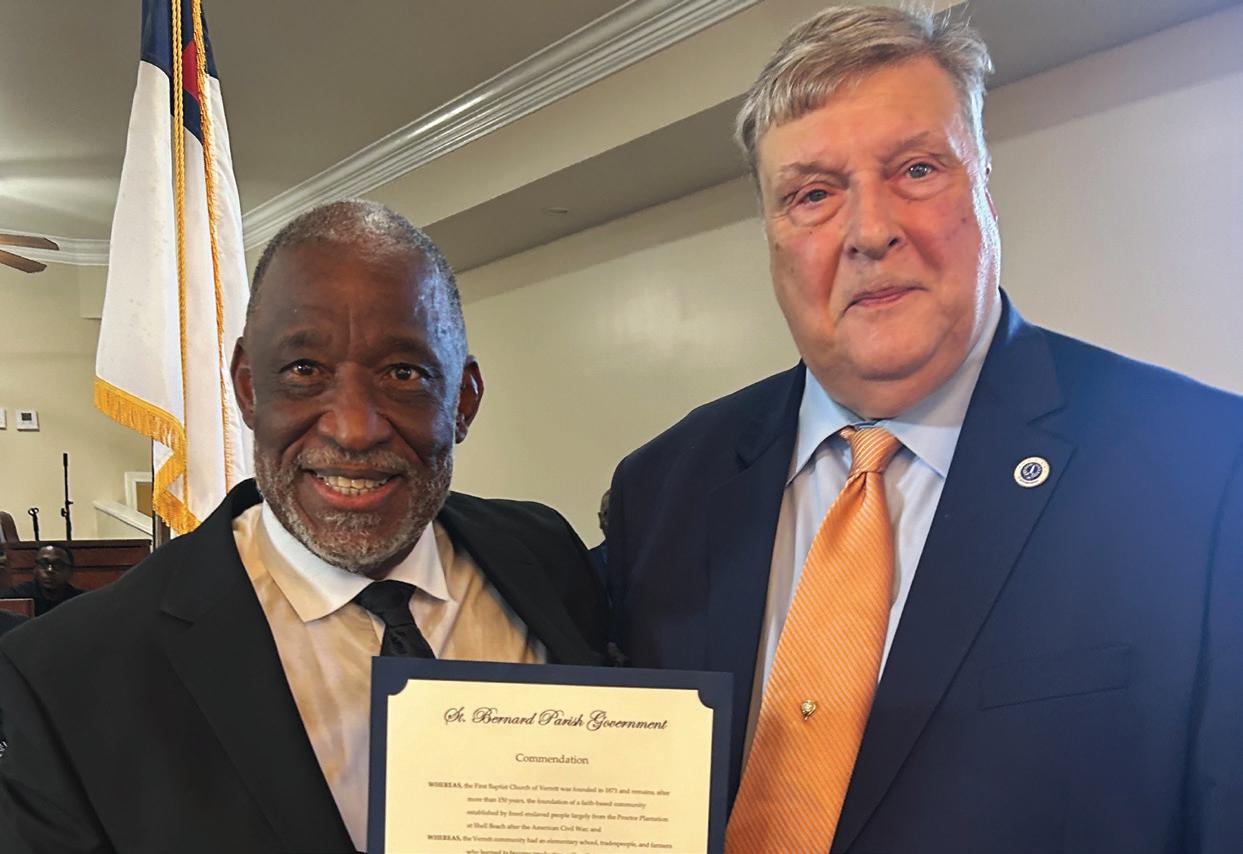
On April 12, St. Bernard Parish Historian Bill Hyland presented a commendation from Parish President Louis Pomes to the Rev. Jasper Sam Shaw after the clergyman was installed as the seventh pastor of Historic First Baptist Church of Verrett, 3737 Bayou Road, St. Bernard.
“The First Baptist Church of Verrett was founded in 1871, and remains after more than 150 years, the foundation of a faith-based community established by freed enslaved people largely from the Proctor Plantation at Shell Beach after the American Civil War,” the commendation stated.
“The Verrett community had an elementary school, tradespeople and farmers who became productive, self-sufficient, responsible citizens enhancing the quality of life in St. Bernard Parish,” it continued. Pomes “pledged his support, whenever possible, to enhance the Verrett community.”
Publisher's Pen by
D. Jackson
Charles D. Jackson
Publisher's Pen by Charles
Pomes, who had a scheduled event with Gov. Jeff Landry later that day, met with Shaw for several minutes prior to the installation service.
Shaw is a direct descendant of the church’s founder, Elder Samuel “Pa Sam” Smith, Sr., an escaped slave who conducted his first service in a horse stable on the Proctor Plantation after serving two years in the Union Army. During Reconstruction, Smith became a prominent leader in St. Bernard Parish, elected justice of the peace, police juror (councilman) and school board member. He gave the invocation at the Jan. 8, 1915, dedication of the Battle of New Orleans Monument at Chalmette Battlefield on the 100th anniversary of the victory over British forces.
Shaw, baptized as a youth at First Baptist, served as a deacon, and pastored two churches in Texas before returning home five years ago to assist his cousin, the Rev. Raymond Allen Smith, who led the church for 35 years before his death on Sunday, Oct. 26, 2025.
The installation service was conducted by the Southern General Missionary Baptist Church Association of New Orleans, in which both Elder Sam Smith and Rev. Raymond Smith once served as president.
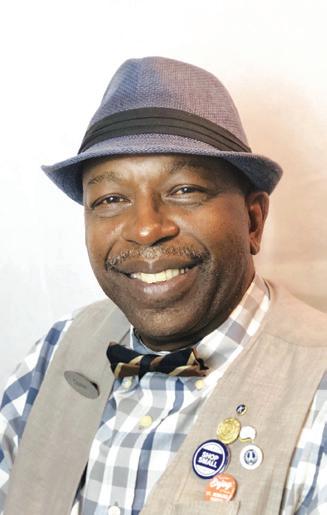
The magazine highlights the rich history, people, progress, traditions, culture, resilience, diversity, civics, small business, schools, organizers, and the extraordinarily welcoming community atmosphere of St. Bernard Parish. This mixture makes ‘Da Parish “The Most Unique County (Parish) in the Country.”



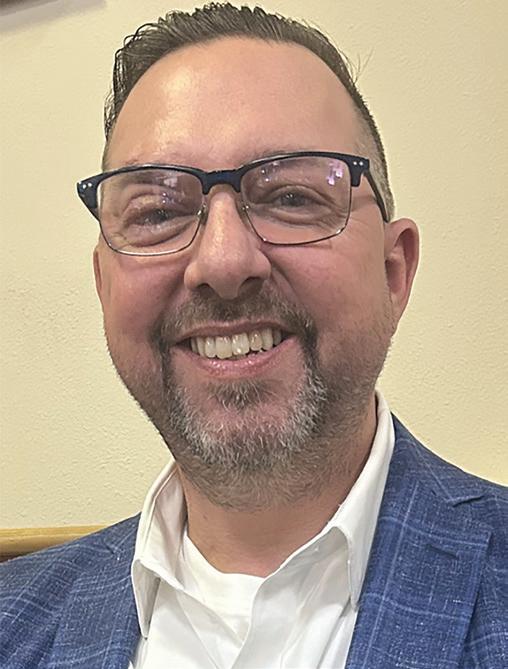
by David Gonzales, Jr.
In August 2020, my life took a turn I never saw coming: I was diagnosed with multiple myeloma, a cancer that, even now, has no cure. From that moment, it was a fight. I went through chemo, dialysis, and a stem cell transplant in March 2021. For three years, dialysis was my daily reality — up to 10 hours a day. It was exhausting and humbling, and some days I wasn’t sure how I’d keep going.

But God was there — and so was my wife. She walked with me through every appointment, every setback. When I was weak, she was strong for us both.
In late 2021, after a bone marrow biopsy, my doctors told me I was in stringent remission. Because of that, they advocated for a kidney transplant — rare for someone like me. It was a door only God could open.
The waiting stretched me. Day after day on dialysis, trusting God for strength. Then on December 1, 2023, I received a new kidney from my donor, Christopher Stall. I carry deep gratitude for that gift every day.
Three months ago, I got news you pray for: no residual M-spike. No trace of myeloma.
On January 1, 2025, after nearly five years away, God opened the door for me to pastor again at Celebration Church – the church I’ve always called home. This journey changed me and I’m living proof that miracles still happen.




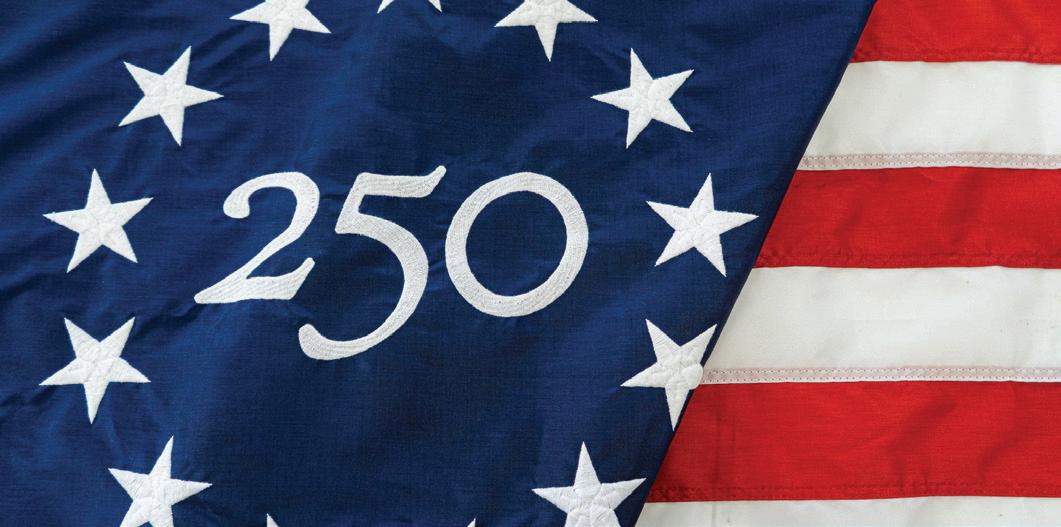
On July 4, 1776, the Second Continental Congress celebrated the signing of the Declaration of Independence, ending Great Britain’s rule.
On Saturday, July 4th, the public can celebrate the 250th Birthday of the United States of America – dubbed nationally, “America 250” – at the Frederick J. Sigur Civic Center, 8245 W. Judge Perez Drive, Chalmette. Highlighted will be the 49th Annual Liberty Bell Ringing Ceremony, and the dedication of the Daughters of the American Revolution (DAR) “America 250 Patriot Marker.” Following the bell ringing is the annual St. Bernard Salutes America
festivities with live music and a spectacular fireworks show at adjacent Sidney D. Torres Memorial Park.
Kick off is 4:45 p.m. with people ringing the Liberty Bell, presented by the St. Bernard Business and Professional Women’s Club (BPW). All can participate. Veterans first, then others will be allowed to ring the bell, a gift to the community from the BPW dedicated in 1977 in honor of the nation’s 1976 Bicentennial.
The DAR “America 250 Patriot Marker,” honoring those who supported the Revolutionary War, will be unveiled and dedicated east of the Liberty Bell. The local Francois deLery Chapter of DAR initiated the acquisition, which is part of the group’s national initiative to place its Patriot markers across the country.
The marker is sponsored by the St. Bernard Tourist Commission and the St. Bernard America 250 Commission, consisting of residents, business leaders, veterans, educators, historians, healthcare providers, non-profit agencies, government and tourism officials. For information on the July 4th entertainers, go to visitstbernard.com.
– Charles D. Jackson



1776-2026
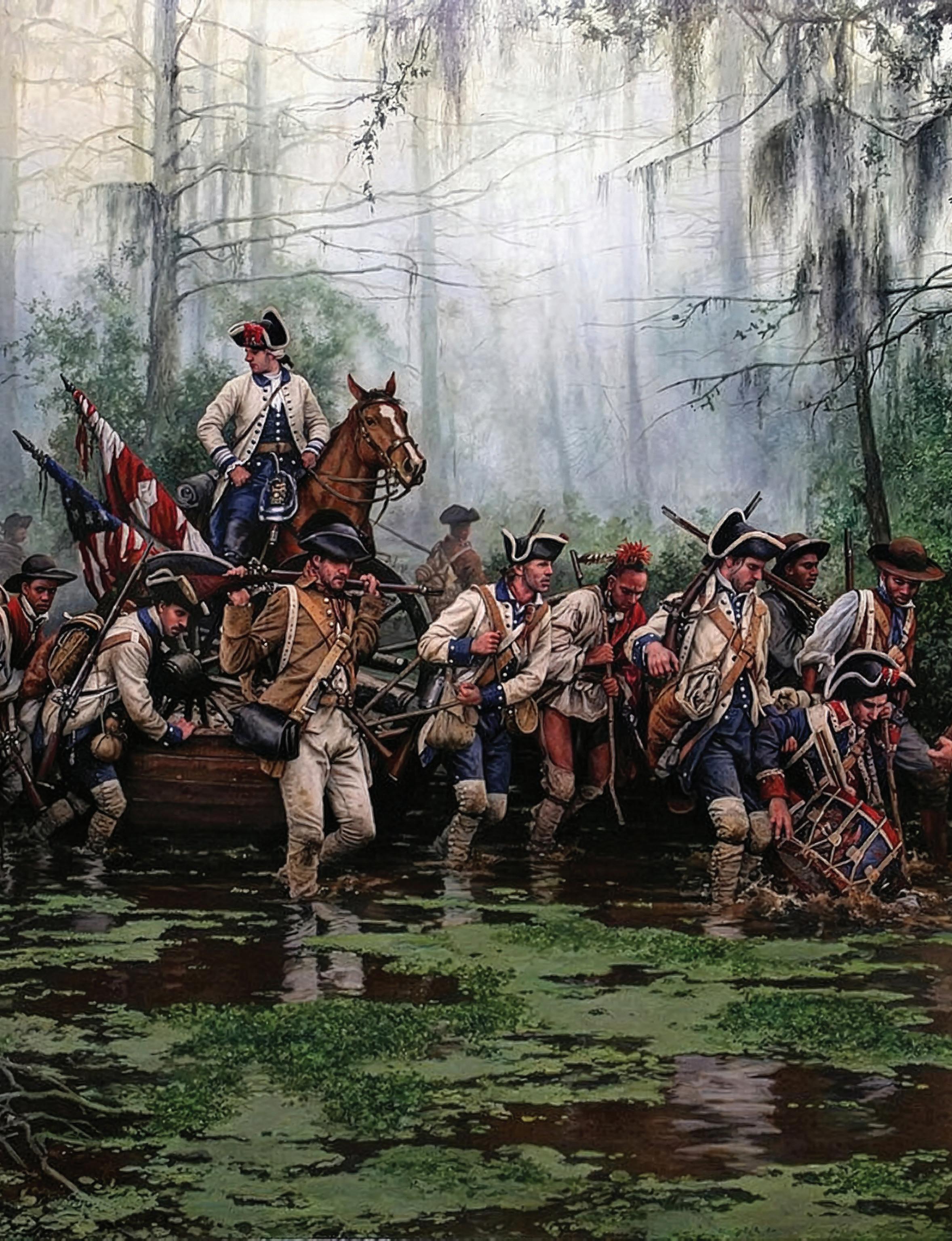
On July 4, 2026, the United States will celebrate the most important milestone in its history – 250 years of American Independence. It’s an opportunity to pause and reflect on our nation’s past, and honor the contributions of all Americans.
Merchant Funds War, p. 30
By William deMarigny Hyland, St. Bernard Parish Historian
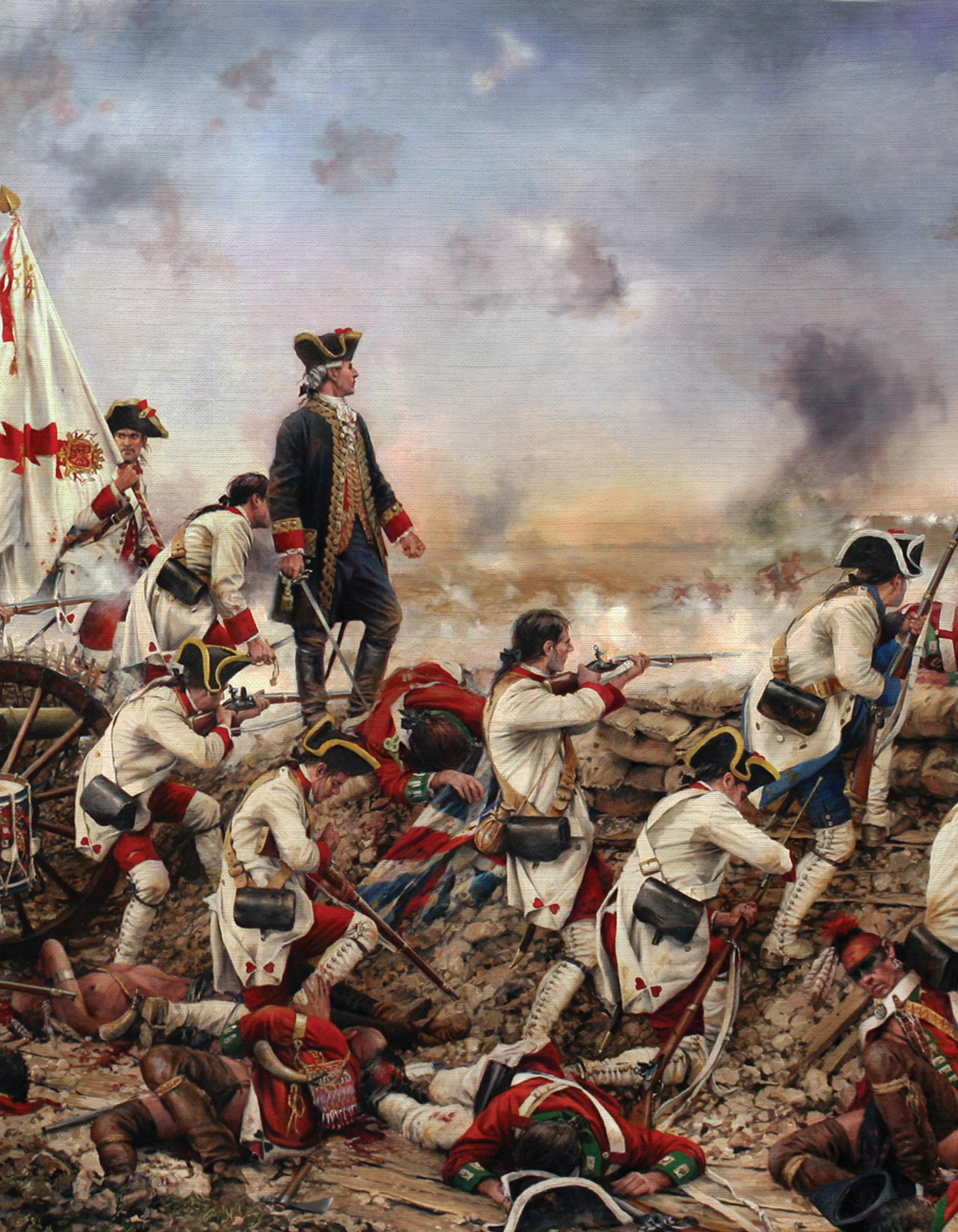
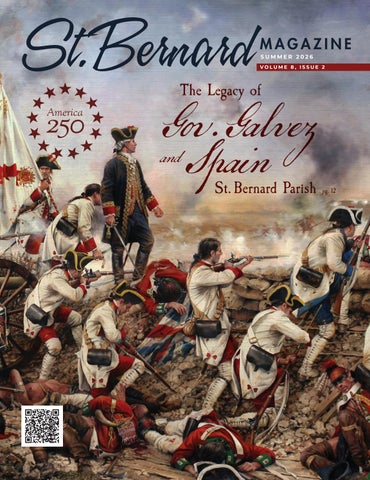
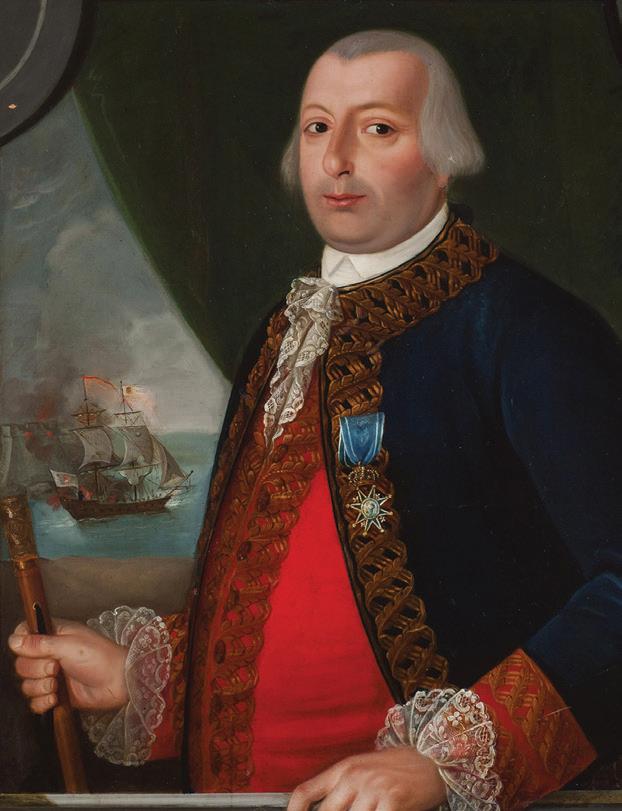
As America celebrates its 250th anniversary and victory over the British in the American Revolutionary War, the legacies of Gov. Bernardo de Galvez and Spain in the Americas are legion but still little recognized in Louisiana.
One of those legacies is St. Bernard Parish, born of the fact that Spanish Louisiana (1763-1803) in the Americas was under siege by Great Britain, which challenged the preeminence of Spain in the 1770s and 1780s. Today, those who fought in the Galvez Expedition to secure America’s independence are celebrated by their descendants who live in the Greater New Orleans area and have conducted extensive research on their ancestors. The large theater of the American Revolution and the powers involved essentially made it the first modern world war.
In the late 1700s, Spanish officials perceived the Province of Louisiana as the place to halt British colonial expansion west of the Mississippi River. Settlement efforts organized by the Spanish crown resulted in the recruitment of several thousand colonists from Spain’s Canary Islands, Malaga on the Spanish mainland, and the vast majority of Acadian refugees who had fled Acadie or the Canadian province of Nova Scotia to escape British rule and returned to France.
Between 1778-1783, colonists from the Spanish mainland and the Canary Islands settled in Louisiana by Gov. Gálvez in five locations –Galveztown, Barataria, San Bernardo, New Iberia and Valenzuela – strategically placed across southeastern Louisiana along waterways that circuitously connected the Mississippi River to the Gulf of Mexico. The settlement (today’s St. Bernard Parish) downriver from New Orleans along Bayou Terre-aux-Boeufs came to be known as Tierra de Bueyes, La Concepción, Nueva Gálvez, San Bernardo de Nueva Gálvez, San Bernardo del Torno, and, finally, the Población de San Bernardo.
Canary Islanders and their descendants have lived and thrived along the banks of the bayou since 1779, enduring incredible hardships. Periodic floods of the Mississippi River from 1793 to 1927, the British invasion during the Battle of New Orleans (1814-1815) and frequent, often devastating, hurricanes since 1782 have been among the challenges threatening the existence of the Isleño community of St. Bernard. Nevertheless, 21st century Isleño descendants still cling to their cultural identity and celebrate their heritage. The descendants of Isleño colonists throughout the state constitute the last living vestige of Spanish Colonial Louisiana.
Louisiana Spanish Colonial Gov. Bernardo de Galvez, for whom St. Bernard Parish is named, mounted the Galvez Expedition between 1779 and 1781. Isleno colonists from all four settlements, including St. Bernard, fought in the expedition. This resulted in the capture of Fort Bute at Manchac, and the fall of Fort New Richmond in Baton Rouge (1779). Consequently, the British evacuated Natchez in 1779, thus removing the British presence along the Mississippi River from Manchac and Baton Rouge north to present-day Natchez, Mississippi. Galvez captured Mobile in 1780, followed by the siege of Pensacola in 1781.
With the fall of Pensacola came the obliteration of the British colonial presence along what is today the Gulf Coast of the United States. After all, the Floridas east and west (present-day Baton Rouge and the Northshore) were colonies of Great Britain, and chose not to rebel against British authority in the American Revolutionary War, which lasted from April 19, 1775, to Sept. 3, 1783. Spain also aided the Continental Army of George Washington with money, clothing and other significant resources.
From the 18th-century geopolitical dynamics in play that were critically important on a multitude of fronts (global, national and regional), what are the tangible legacies remaining in the 21st century? A distinct cultural identity, rooted in our colonial past, is plainly evident. That identity manifests itself in unique foodways, vernacular architecture, and the descendants of those patriots who fought to support the cause of American independence – the Anglo-American colonists along
the Atlantic Coast who relocated to Louisiana and fought in the Galvez Expedition as Spanish soldiers, colonial officials, French and Spanish colonists, enslaved Africans, free people of color and Native Americans.
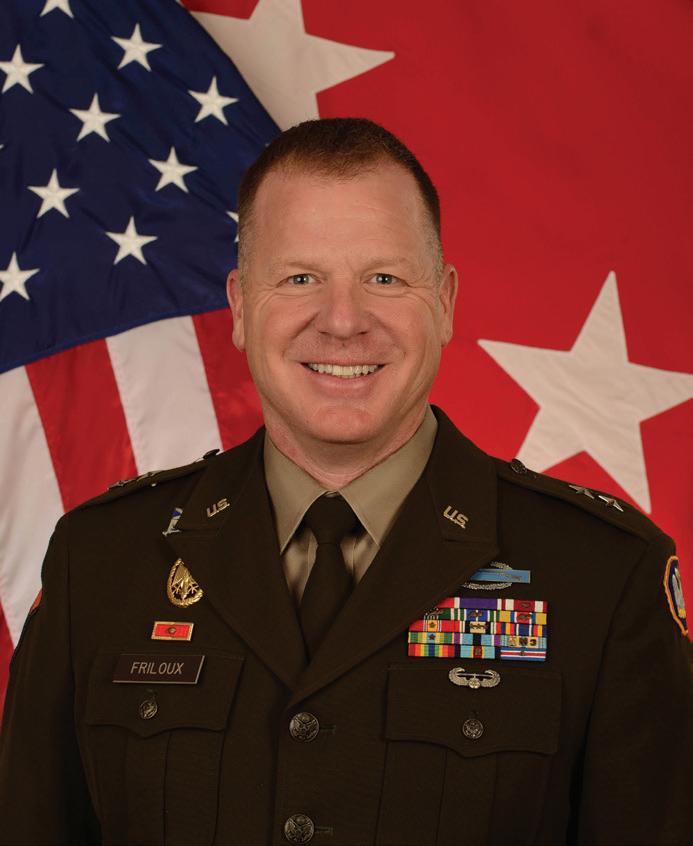
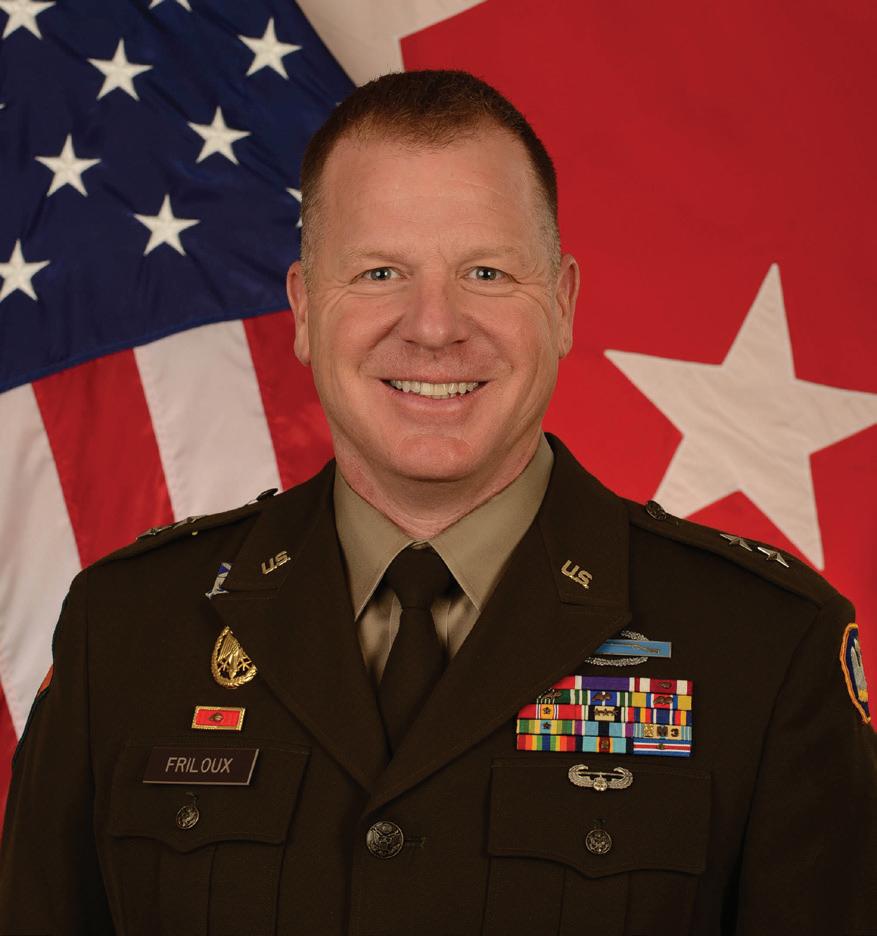
Perhaps the best recognized military standard bearer for the Galvez Expedition legacy in Louisiana, Maj. Gen. Thomas C. Friloux was appointed the 51st Adjutant General of Louisiana by Gov. Jeff Landry on Jan. 8, 2024. He serves as commanding general of both the Louisiana National Guard and the Louisiana Air National Guard. He is responsible for providing Louisiana and the United States with a ready force of more than 11,000 service members. The state National Guard headquarters is located on the campus of historic, beautiful Jackson Barracks at the St. Bernard-Orleans parish line.
His direct lineal ancestor, Michel Friloux, assisted in America’s independence by serving in the Galvez campaign against Baton Rouge. “Tracing the military service of my ancestors back to the American Revolution and the Galvez Expedition was a deeply personal and profound journey for my
family,” Maj. Gen. Friloux said. “It is incredibly important that we remember the forces that fought for our freedom and the deep roots of military service in our state. For many of us, it is a proud heritage woven into our very DNA.”
Friloux attended Officer Candidate Training School and was commissioned into the infantry in 1992. He has held numerous command and staff positions over more than three decades, developing a record of distinguished service. Before his appointment as adjutant general of Louisiana, Friloux was J3 – joint director of operations, Louisiana National Guard; director of the joint staff, Louisiana National Guard; and dual-status commander, Joint Task Force Louisiana.
He has been mobilized into active federal service four times during his lengthy career. In 1990, he served in Operation Desert Storm and Desert Shield. In 2004 and 2010, he was mobilized and deployed to Iraq in support of Operation Iraqi Freedom II/III/X and Operation New Dawn. He mobilized in 2021 as dual-status commander in response to Hurricane Ida in Louisiana.
Friloux’s education includes a Bachelor of Science from the University of Louisiana at Lafayette, Master of Arts in military studies from the American Military University and a master of strategic studies from the United States Army War College. He has received numerous military awards and decorations including the Legion of Merit, Bronze Star Medal with Oak Leaf Cluster, and the Purple Heart.
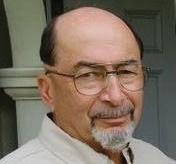
Aproud descendant of the Houma Nation of Native Americans, Michael Dardar served as a Houma Tribal Historian for many years and conducted groundbreaking research using primary source documentation coupled with oral tradition to emerge as a respected authority on the Native American tribes of this region.
His direct ancestor, Bartolome Herisse, also known as Iris, was a young Shawasha (Chaouacha) warrior who fought in the Galvez Expedition beginning with Fort Bute at Manchac and Baton Rouge in 1779. He and his brothers, Pierre and Etienne, also fought in the Battle of Mobile (1780) and the Siege of Pensacola (1781). Herisse was attached to the free-colored militia, and fought in the racially/culturally diverse forces commanded by Gov. Bernardo de Galvez. The Shawasha Tribe was the predominant Native American presence along the Mississippi River’s Lower Coast, modern St. Bernard and Plaquemines parishes, from 1718 when New Orleans was founded through much of the 18th century.
“Through the conflict, Bartolome and the Shawasha proved themselves as warriors and allies, upholding tribal agreements made in 1769,” said Dardar, who also descends from free people of color and enslaved Africans. “In exchange, Shawasha
people would have a period of limited security and prosperity during the years of Spanish colonial rule.”
Reared in Plaquemines Parish, Dardar is very conversant with St. Bernard Parish, visiting regulary. He also serves as a member of the Board of Directors of the Louisiana Trust for Historic Preservation.
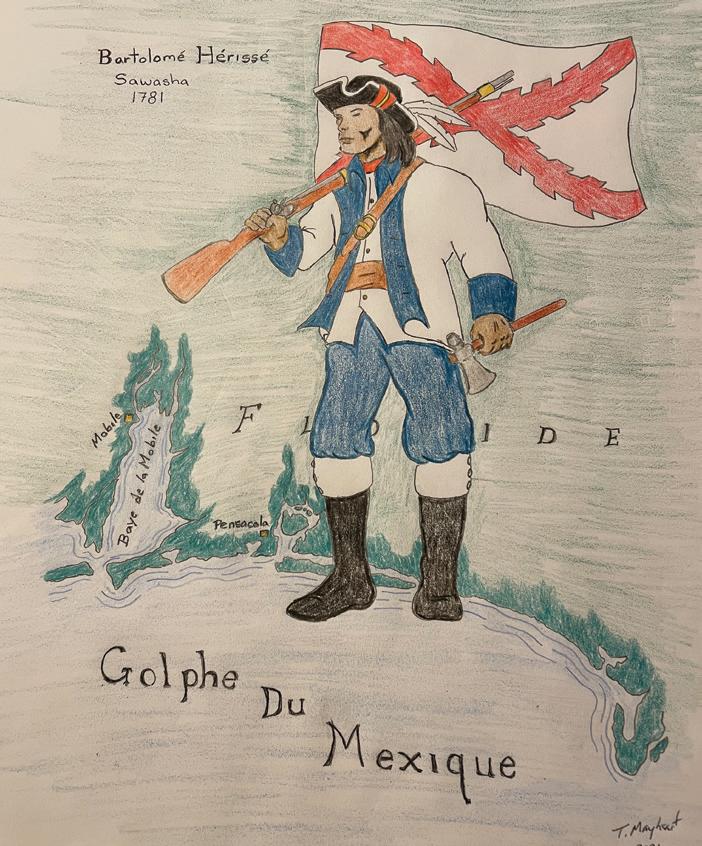
Bartolome’ Herisse, a Sawasha warrior, is sketched by his descendant, Michael Dardar.
Anative of New Orleans, Dennis Delaney is known as an outstanding football player at both Holy Cross High School, and Tulane University, where he provided key leadership in the Green Wave’s highly celebrated win over the Louisiana State University Tigers in 1971. Delaney, always fascinated by history, began documenting the genealogy of his family decades ago. A meticulous and indefatigable researcher, he plowed through a multitude of primary and secondary historical resources to emerge as one of the leading authorities on the history of the Canary Islanders, who settled in Louisiana between 1778 and 1783.
Through his maternal line, he is a direct descendant of Francisco Gonzales-Corbo, a native of the Canary Islands and military officer.
Gonzales-Corbo was born in 1731 in San Juan de La Rambla on Tenerife Island. He married Andrea Agustina Ruiz and brought her and the family of nine children (six daughters and three sons) to Louisiana aboard the Santisimo Sacramento, which departed from Santa Cruz de Tenerife on July 10, 1778. This was the first ship carrying colonists destined to settle in Louisiana. The journey usually took about three months.
A sub-lieutenant in the Spanish Army, Gonzales-Corbo was sent to Valenzuela, an Islenos settlement situated along the banks of Bayou Lafourche near present-day Donaldsonville. Because of his experience as a military officer, researchers believe that he served in at least one or all of the campaigns in the Galvez Expedition. He and other Canarian settlers were awarded several land grants along Bayou Lafourche and property in Ascension Parish. Later, Gonzales-Corbo was promoted to lieutenant and was assigned to the German Coast Militia and Cuba. He left Louisiana in 1796 and died at Tenerife in 1799.
Through the marriages of his children who remained in Louisiana, Gonzales-Corbo has quite literally thousands of descendants throughout southeast and southwest Louisiana. His daughter, Rita Antonia, married Sebastian Gonzales, a native of the Spanish mainland who ultimately settled in St. Bernard Parish. Their descendants were legends in St. Bernard, including former St. Bernard Parish President Henry “Junior” Rodriguez, former State Senate President Samuel B.
“Sammy” Nunez, and renowned decima (singer of famous ballads called decimas) and folklife expert Irvan J. Perez.
In 1996, Delaney founded the Canary Islanders Heritage Society in Baton Rouge. It is the only organization outside St. Bernard that promotes the cultural heritage legacies of the Canary Islanders in Louisiana. He has amassed the most complete collection of multigenerational Louisiana Canarian group family photographs known in the state. Delaney is a member of the Los Islenos Heritage and Cultural Society in St. Bernard, and regularly supports the annual Los Islenos Fiesta and other society programs.
In December 1995, he traveled with the society to Gran Canaria and Tenerife. “My trip to the (Canary) Islands encouraged me to found Los Islenos de Galvez, later changed to the Canary Islanders Heritage Society of Louisiana,” Delaney said. A very humble man, this accomplished researcher continues to give generously of his knowledge and time to all who seek his assistance.
Jeanne Marie Hoa LeBlanc Williams
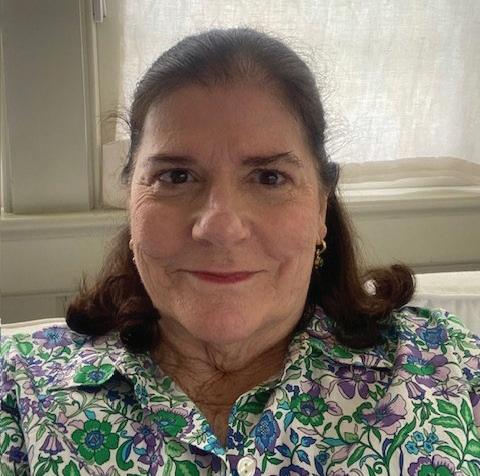
No stranger to St. Bernard Parish, Jeanne WIlliams’ French and Spanish ancestors helped found San Bernardo (Spanish language name for St. Bernard), and her interest in her family heritage has brought her close to this community. Williams, who belongs to the Chalmette Chapter of the United States Daughters of 1812, served two terms as its chapter president, planning and implementing the observance of the bicentennial anniversary of the Battle of New Orleans in 2015. She is also a member of the Spirit of ’76 Chapter of the Daughters of the American Revolution and the Sons and Daughters of the Founders of New Orleans.
Fluent in French, Williams has traveled extensively throughout France. She is a great-greatgreat-great granddaughter of Pierre Denis de La Ronde, Jr., born in New Orleans in 1762. His mother, Magdelaine Broutin, was widowed from a first marriage to Denis de La Ronde’s first cousin, Louis Xavier Delino de Chalmette. Consequently, Denis de La Ronde’s half brother was Ignace Francois Delino de Chalmette, owner of the plantation, which became the site of the Jan. 8, 1815 Battle of New Orleans.
built the Pontalba Buildings flanking Jackson Square in New Orleans.
Denis de La Ronde, ultimately a successful sugar planter, assisted one of his first cousins, Pierre Philippe de Marigny, in settling colonists from Spain’s Canary Islands in St. Bernard Parish, and served as the second commandant of St. Bernard Parish. He served under the command of Gov. Bernardo de Galvez in all three campaigns of the Galvez Expedition: Manchac and Baton Rouge, 1779; Mobile, 1780; and Pensacola, 1781. Later in his life, he served as a member of the convention that framed the first constitution of the State of Louisiana in 1812. He was colonel of the Third Regiment of Louisiana Militia during the Battle of New Orleans, and upon his death in 1824, served as major general of the Louisiana State Militia.
Williams has always been fascinated by her family’s history and the portal that it provides to understand the larger history of the region, state and nation.
“The irony of a well-born Spaniard (Bernardo de Galvez) commanding such a diverse group of soldiers, including my 17-year-old ancestor Pierre Denis de La Ronde, is a perfect microcosm of what made this wonderful country – deep, sometimes unfathomable sacrifices, courage and very hard work, followed by the bounty subsequent generations can enjoy. Let us not forget to keep this legacy going! Viva los Estados Unidos de América! (Long live the United States of America!), ” she said.
Denis de La Ronde’s plantation was about half a mile downriver from Chalmette Plantation. The ruins of the Delaronde House along St. Bernard Highway near Paris Road are the only structural remnants remaining original to the Battle of New Orleans standing on the extended battlefield. His sister, Louise Denis de La Ronde, married Andres Almonester, the revered 18th-century businessman who built much of Spanish colonial New Orleans following the fires of 1788 and 1794. Their surviving daughter, Micaela, married Celestin de Pontalba, became the Baroness of Pontalba and Story Continues on Page 18
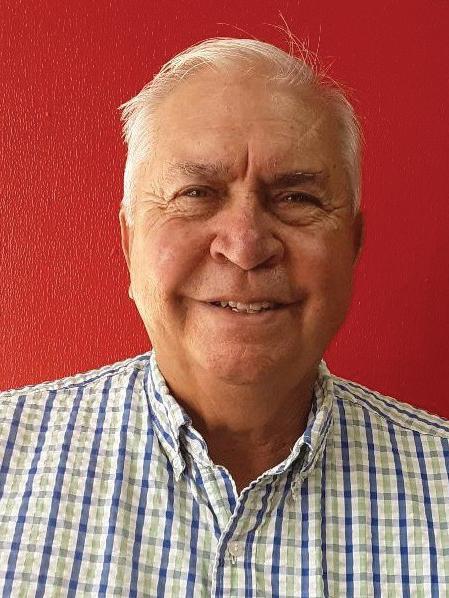
Fernandez, a retired attorney and lifelong resident of St. Bernard Parish, is a direct lineal descendant of Sebastian Gonzales (a native of Iguera de Aracena in the mainland of Spain) who fought in the initial campaigns of the Galvez Expedition: the 1779 battles of Manchac and Baton Rouge, where he witnessed the fall of Fort New Richmond.
Fernandez, who has a long tenure of public service, is an accomplished researcher and historian, eagerly documenting the history of his native St. Bernard, primarily using archival documentation, where his legal expertise plays a vital role. Fernandez has long felt that the roles of St. Bernard Islenos and Spain in the American Revolutionary War have been sadly overshadowed by the events along the Atlantic Seaboard and France, a sentiment shared by his father and uncle, the parish’s first historian. His efforts have contributed to a larger regional awakening and recognition of the important role of Spain and Canary Islanders in the American Revolution.
who signed a petition to Governor Carondelet requesting funds and resources providing relief from the catastrophe.
His son, Felix Gonzales, fought in the Battle of New Orleans, and his grandson, Jose Hilario Gonzales, served during the American Civil War. Hilario worked on a farm he owned in Bencheque, today known as Reggio. Hilario’s great grandson, Frank Fernandez, a career public educator, served as the first parish historian in St. Bernard Parish. Frank’s eldest brother, Anthony A. Fernandez, Sr. (Tony’s father) also served as a career public educator as a teacher, principal and systemwide administrator. Together, they helped to instill in young Tony an utter fascination with history and public service.
Fernandez’s ancestor, Gonzales, arrived in Louisiana in 1777 as a sergeant in the Louisiana Regiment, and was posted in 1779 to the Canarian settlement of Valenzuela along Bayou Lafourche near Donaldsonville. After Gonzales’ first wife, Manuela Garcia died, he married Rita Corbo, a native of Tenerife, Canary Islands, in the Parish Church of St. Louis in New Orleans. By 1793, the couple was living in San Bernardo (St. Bernard), where the Mississippi River levee near Poydras failed at the plantation of the Widow Despres, destroying the crops and livestock throughout the settlement Gonzales was one of the residents
In the 1970s, Fernandez served as assistant secretary-treasurer and secretary-treasurer of the St. Bernard Parish Police Jury, and later as chief deputy of the St. Bernard Parish Sheriff’s Office from 1984 to 2008. His tenure in public life witnessed unparalleled growth in St. Bernard Parish, as well as the catastrophic disaster posed by Hurricane Katrina in 2005. An ardent Roman Catholic, he supported the spread and renewal of the Catholic faith before and after Katrina. Fernandez is married to the former Roselyn Caluda. They are the parents of four and grandparents of seven.
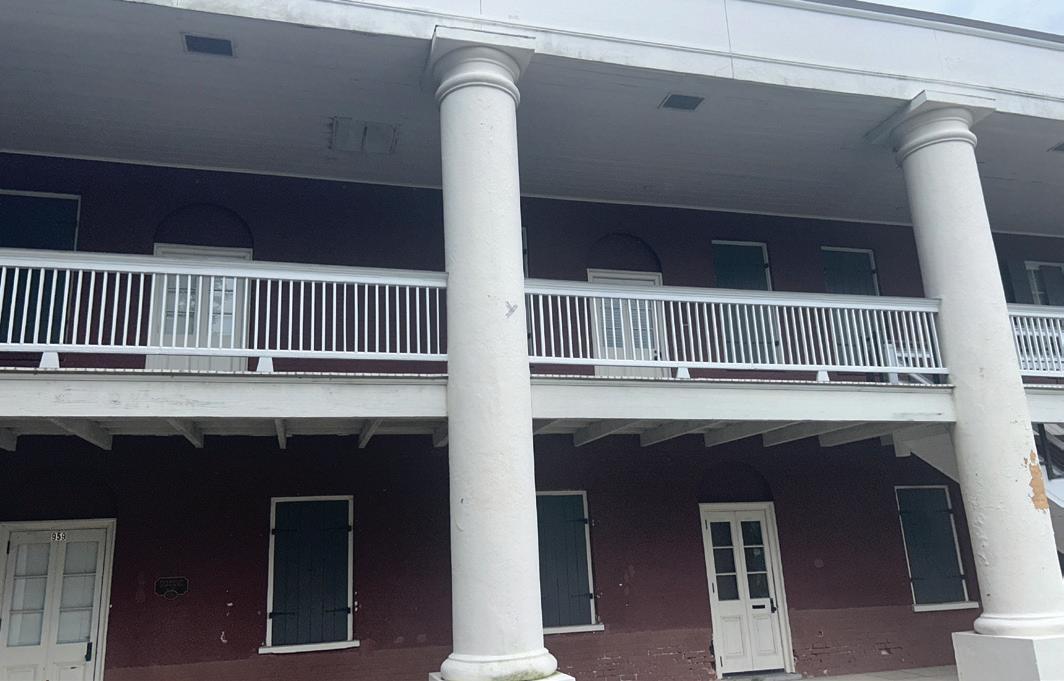
Photos by Charles Jackson
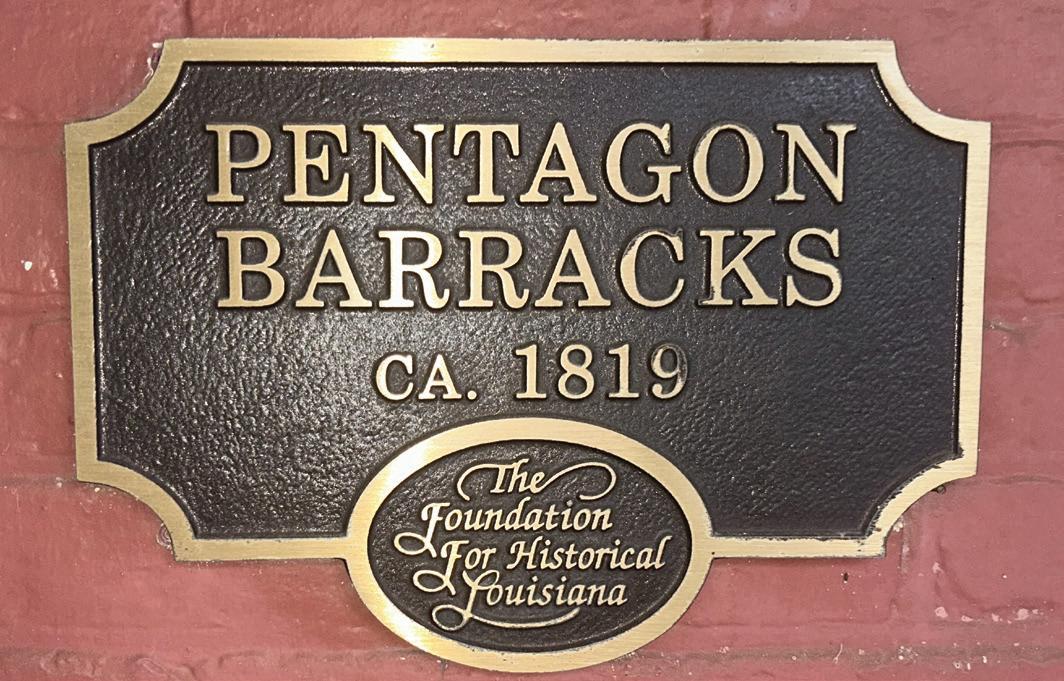
The Pentagon Barracks at the Louisiana State Capitol in Baton Rouge sits on the former site of Great Britain's Fort Richmond. Fernandez’s Isleno ancestor, Sebastian Gonzales, witnessed the fort’s fall in the initial campaign of the Galvez Expedition in 1779.
There are legions of descendants of Western European colonists, Native Americans, enslaved Africans and free people of color who fought in the racially diverse Galvez Expedition against the British during the American Revolution. Campaigns in the lower Mississippi Valley, Ohio Valley and the Gulf Coast either directly commanded by Gov. Galvez or fought by AngloAmerican revolutionaries with funding and support from Spain were critical to the ultimate success of the American Revolution. It has been a horrendous injustice to ignore these pivotal efforts, principally perhaps because many believe that battles and other events in the original 13 Atlantic Coast colonies solely determined the outcome of the American Revolution.
Recent scholarship predicated on research in Spanish archives and other primary sources establishes that Great Britain’s reaction to the revolt in the 13 Atlantic Seaboard colonies was part of a larger hemispheric attempt to capture wealthy Spanish colonies in the Americas. Spain decisively defeated Great Britain in every theater throughout the Americas.
Without the military victories attained under the aegis of Spain, the ultimate westward expansion of the United States may never have occurred.
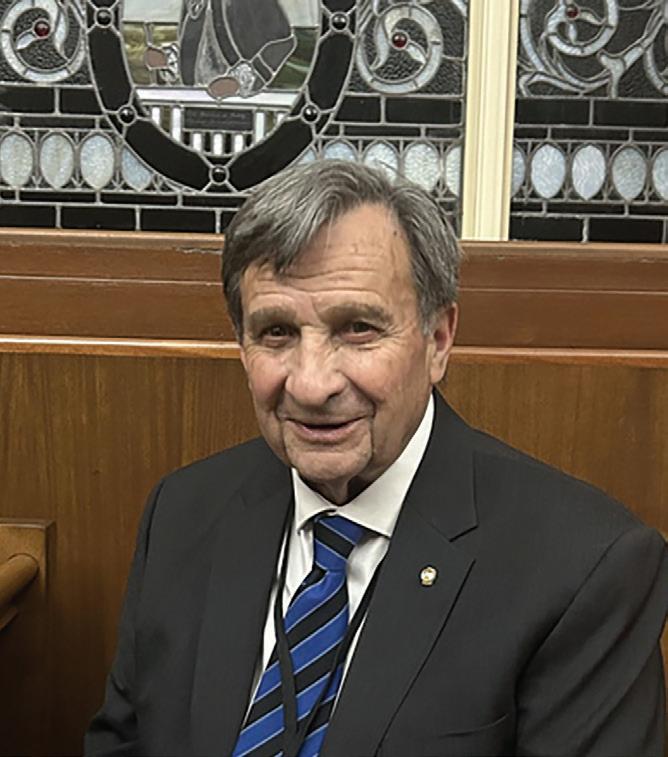
Photo by Charles Jackson
The eminent American historian Thomas Chavez, Ph. D, maintains that the American Revolution was a distinct theater in a larger war that was essentially the first modern world war, involving Europe, North and South America and the Caribbean.
Dr. Chavez sits near the stained-glass image of Gov. Bernardo Galvez in the main courtroom of St. Bernard Parish Courthouse during a reception for scholars and historians who participated in the March 6 symposium at Nunez Community College discussing the impact of Galvez in the American Revolution.
Eminent American historian Thomas Chavez, Ph. D, maintains that the American Revolution was a distinct theater in a larger war that was essentially the first modern world war, involving Europe, North and South America and the Caribbean.
The descendants represented in this article are an interesting microcosm of the totality of those who represent the living legacy of Spain, Louisiana and St. Bernard and their shared role in supporting the birth of the United States of America 250 years ago.


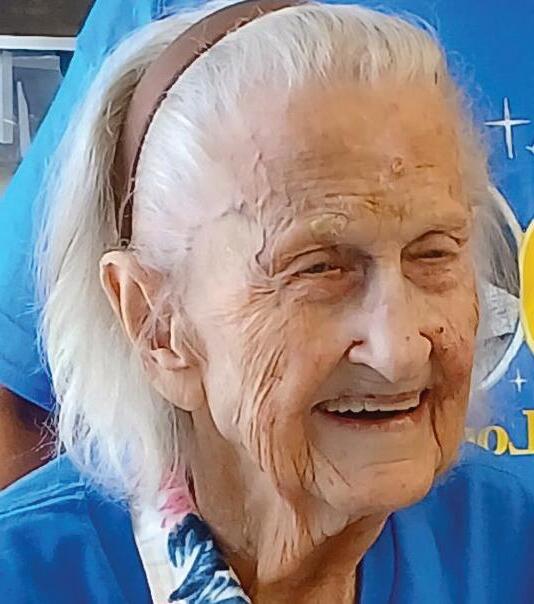
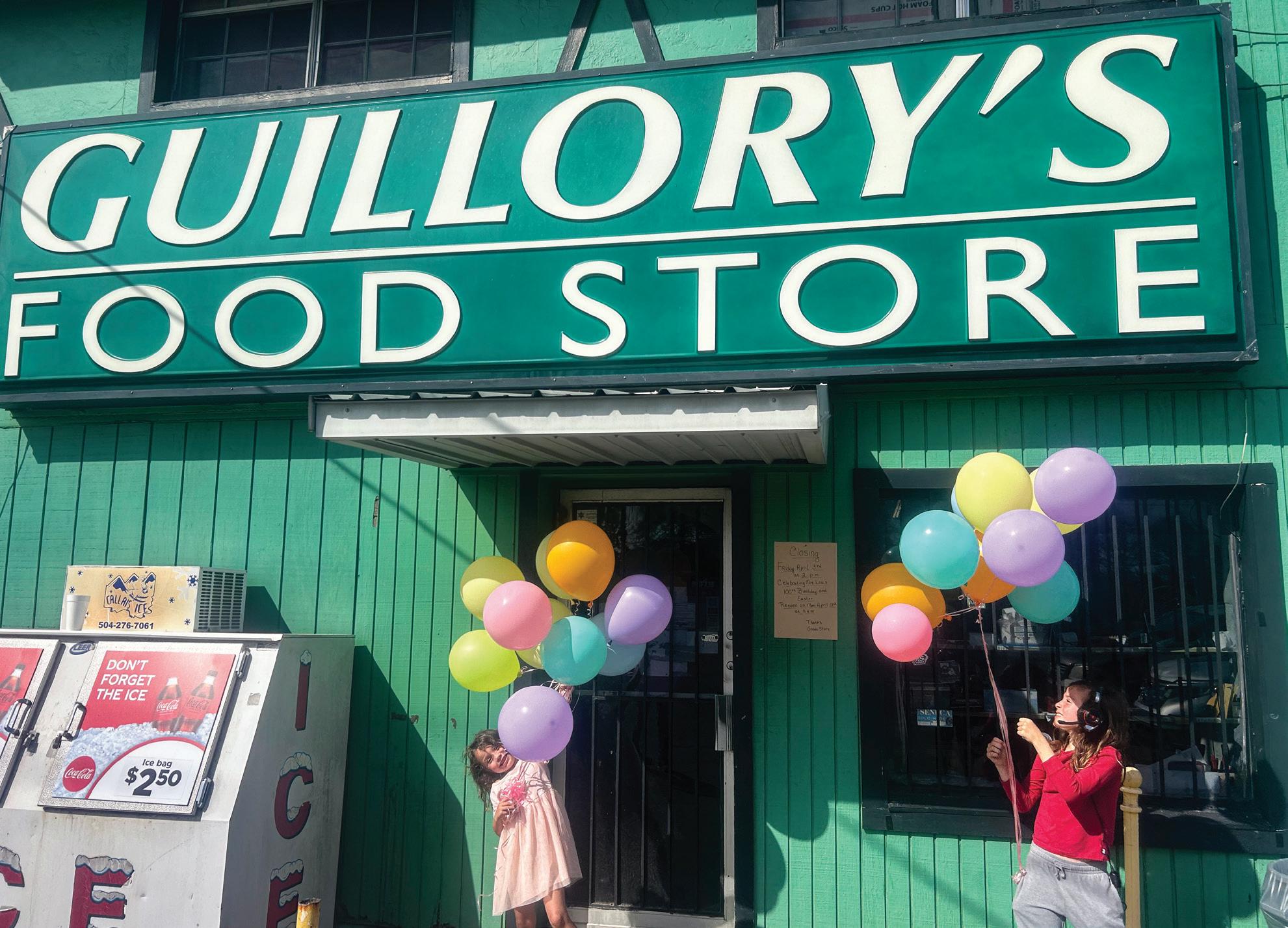
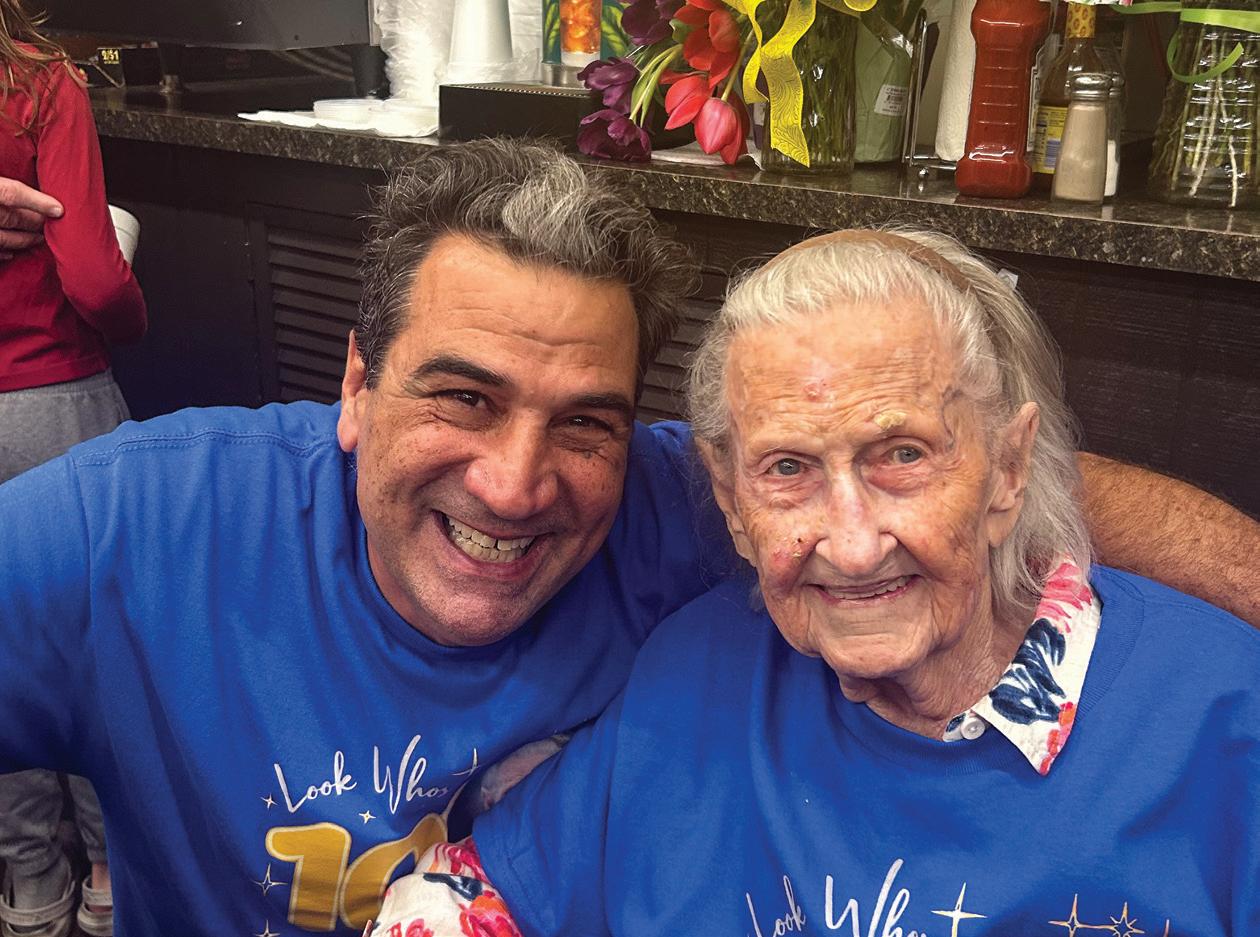
Jade and Hunter Patterson celebrate their great-great aunt’s 100th birthday.
The Green Store has always been a great community partner and Miss Lura Mae (Guillory) was consistently the gracious, pleasant face of the Green Store for decades.
— Bill Hyland, St. Bernard Parish Historian
By Charles D. Jackson
Acrowd of well-wishers – family, friends and longtime customers – packed Guillory’s Food Store, aka “The Green Store,” at Poydras Junction on April 6 to celebrate the 100th birthday of founder Lura Mae Guillory, affectionately known as “Ms. Lou.”.
The family-owned grocery has been a cultural cornerstone in St. Bernard Parish for 53 years, serving up special-cut meats, delicious muffulettas, po-boys, hot plates and lunch specials, while earning kudos from locals, food critics and state publications.
“The Hog’s Head Cheese, which Mrs. Guillory Gunter called when we spoke, ‘fromage tete du cochon,’ is excellent and prepared using her recipe,” said Bill Hyland, St. Bernard Parish Historian. “Her spoken French was excellent and we would greet each other in French. Local cooks prepare luncheon specials during the week which reflect our traditional food.
“Tony Fernandez enjoys take out from the Green Store,” Hyland said. “Tony and others frequently feed the St. Bernard Parish Prison Trusty crews and community volunteers with food, particularly poor
boys, from the Green Store. The Green Store also promotes community events such as Santa on the Bayou and Los Islenos Fiesta.”
“I have always wanted a store since I was 1 years old,” Guillory said. “My uncle was running a store in New Orleans, and he lived until 101.”
She grew up in the unincorporated community of Dupont (Point Coupee Parish), where her parents were sharecroppers. Tired of picking cotton and suffering from a medical issue, she moved to New Orleans at age 14 to live with her uncle, Woodruff John Guillory, and learn the grocery business.
Guillory and her husband Otto Gunter, as 18 year olds, opened their first store on Erato Street in New Orleans around 1944. To pay homage to her uncle and to reflect her maiden name, they named it “Guillory’s Food Store.” A second store was also opened on Erato Street.
In 1972, the couple and Guillory’s brother, Elton, hired renowned St. Bernard contractor Terry Tedesco to build a two-story store on the corner of East St. Bernard Highway (turning into Bayou Road) and East Christie Street (connecting to the only road in and out of east Plaquesmines Parish). The store opened in 1973.
“The space was up for sale and my brother kept telling me to buy it,” Guillory said. “So, I sold my house (in Metairie on the lake) and moved upstairs. After a good while after that, I got the house behind the store.”
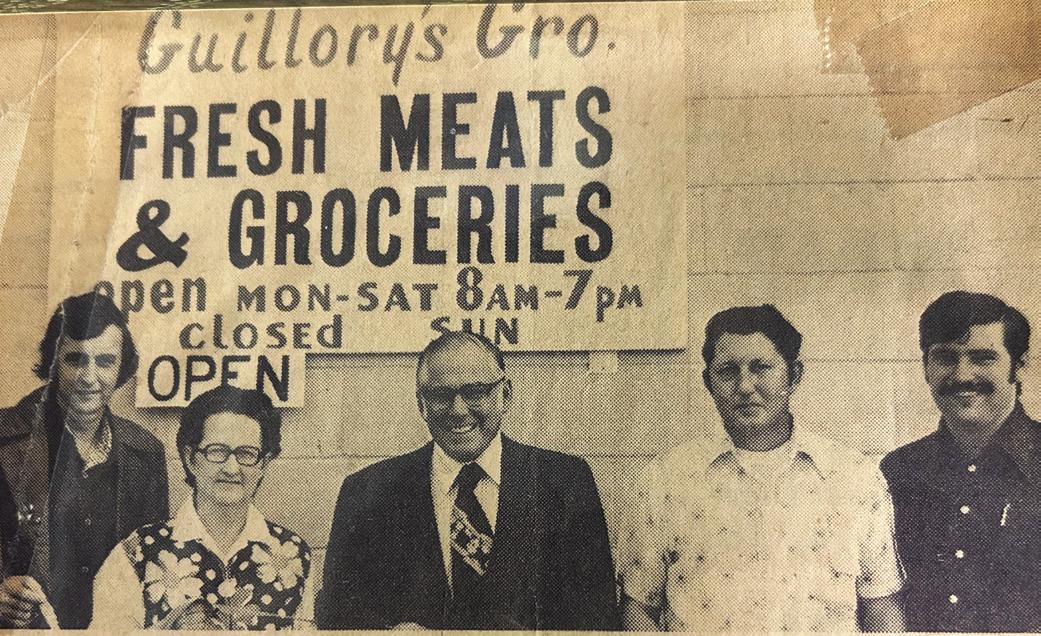
Officiating at the grand opening of Guillory’s Grocery are (from left) Terry Tedesco, contractor; Lura Guillory, owner; R.J. Bergeron Jr., Ward 5 juror; Elton Guillory, owner; and Dominick Russo of Tedesco Homes.
“We kept painting (the store) shades of green,’’ she said. “It was just as good a color as any, and I like green. One time we painted it another color and somebody said, ‘Where’s the green store?’ So we painted it back green.”
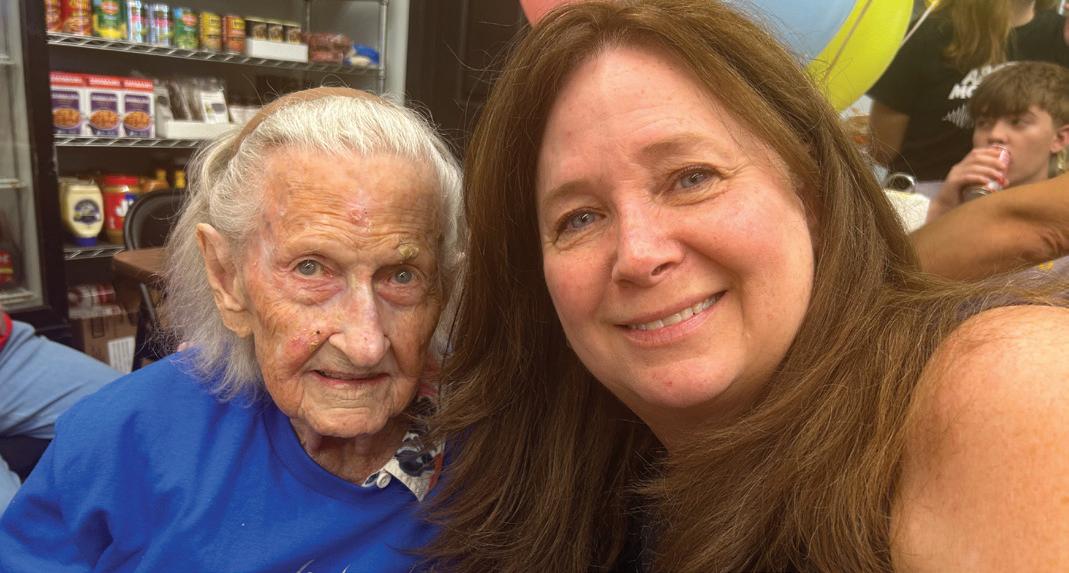
Tricia LaBrosse is her mother’s caregiver.
The couple has one child, daughter Tricia, who married Bradley LaBrosse. “When my father died in 1990, she thought about selling it, but my husband said, ‘no,’ So he started working here with mom when he was 21, learning the business, and he’s been running it ever since.”
Guillory continued to work at the store until her 80s. Her favorite spot was sitting behind the cash register, often peering out the window, welcoming customers as soon as they opened the door. “I have always loved people – all the people, but I like the little children the best.”
“The Green Store has always been a great community partner and Miss Lura Mae was consistently the gracious, pleasant face of the Green Store for decades,” Hyland said.
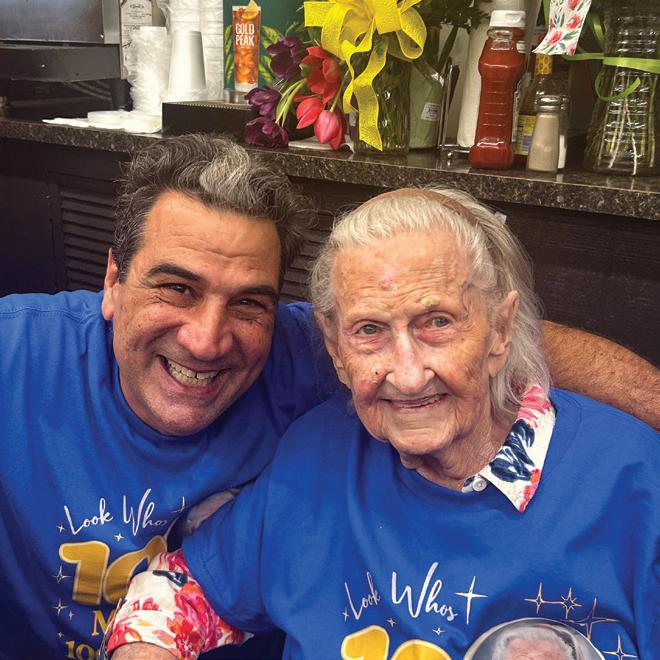
Son-in-law Bradley LaBrosse took over for Ms. Lou.
For her birthday bash, Chris Roberts, owner of Poydras Hardware, purchased 100 balloons. “I wanted to be a part of the celebration,” he said. “She’s a very good lady and has been my neighbor for 38 years.”





n K i d s '
a r e

Anthony Nguyen, MD Pediatrics

Ochsner Health Center - St. Bernard 8050 W Judge Perez Dr Chalmette, LA 504-826-9500
At St. Bernard Parish Hospital, our top priority is providing exceptional care for your exceptional kid. We offer a level of pediatric care unmatched across the region to help your family face anything, minor or major. Through our expert care, we are shaping a healthier future for our youngest patients close to home.
Visit ochsner.org/schedule to schedule an appointment.
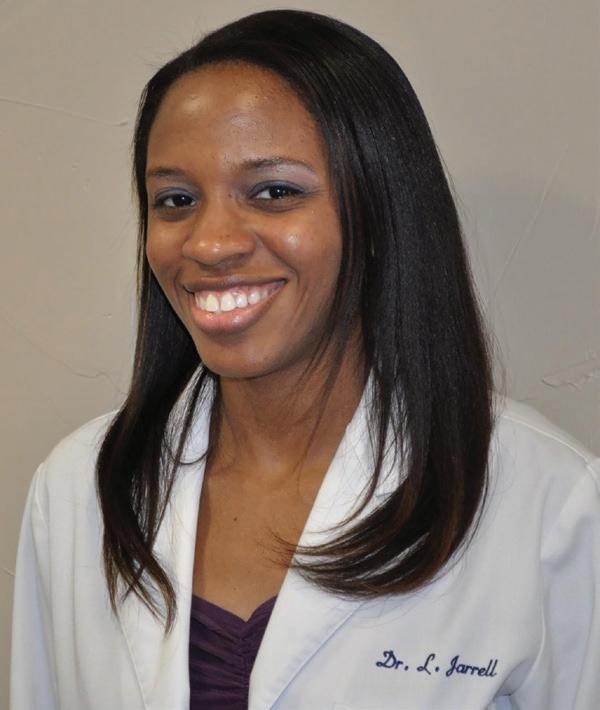
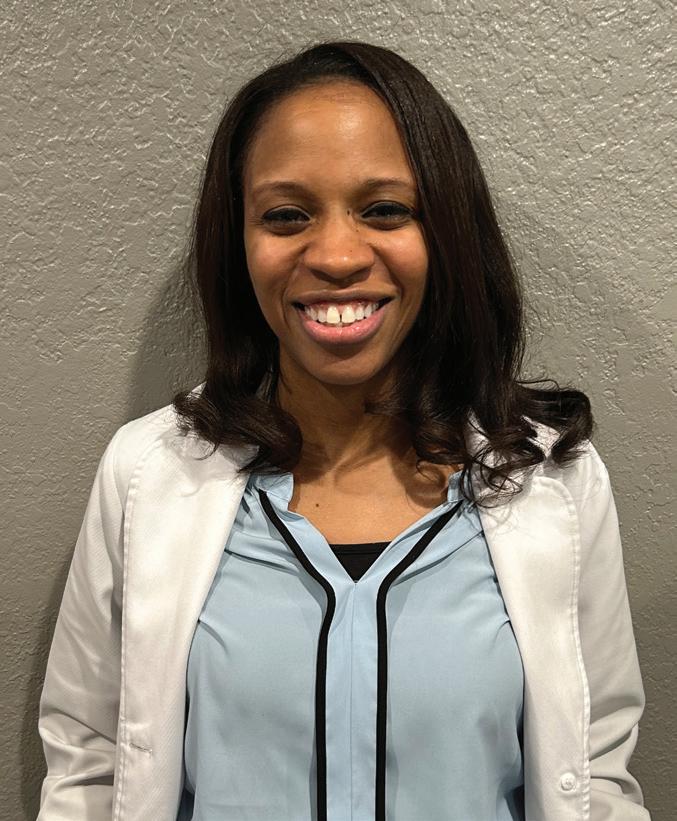
Patient Betty M. says her relief from sciatic nerve pain is due to the “magic hands” of Dr. Lesichia Jarrell, owner of Shoemaker Chiropractic, 221 W. Judge Perez Drive in Chalmette.
“Dr. J.” – as she’s known –treats such conditions as sciatica, spine nerve, headaches, arm/leg and neck/back pain, and provides massage therapy, dry needling and prenatal care. The practice is non-invasive, drug-free pain relief by reducing nerve compression through spinal adjustments, which improves mobility and lowers inflammation. Her patients report results.
Betty visits every three weeks for therapy. “She’ll do her thing on my back and hip, and I feel like a different person when I walk out.”
Bridgette D., 77, a hairdresser for 60 years, said repetitive motions cause her shoulder pains. “I go once a month to keep up with care. I feel great when I leave there. My body is rejuvenated.”
Fred W., 72, who had long visited chiropractors in New Orleans and on the Westbank, decided to switch to Shoemaker three years ago. “I like the way I’m treated with kindness and care. They always ask me, ‘How are you doing?’ I had a problem not related to chiropractic and they helped me identify it. Emotionally and humanely, I think they’re the right kind of people.”
Dr. J. — with 17 years of professional experience – is certified by the American Chiropractic Pediatric Association and International Chiropractic Pediatric Association. A biology graduate of Dillard University (2000), she earned her doctorate at Parker Chiropractic College in Dallas (2009), and subsequently completed studies in whiplash, brain injury, crash dynamics, insurance compliance, nutrition and worker’s compensation.
She was hired by Dr. James Shoemaker in April 2009, and became owner of the practice on July 1, 2022 when Dr. Shoemaker opted to slow down and sell her the clinic. Shoemaker now does occasional fill-in work for chiropractors in the four states in which he is licensed: Louisiana, Missouri, Kansas and Utah.
Dr. J. was awarded “Model Working Woman” (2013) by the St. Bernard Business and Professional Women’s Club “because of her work ethic; the love, compassion she has toward her patients and her job,” said Cindy Ryckaert, a member of the women’s club, and 15year office manager at Shoemaker.
Since her pregnancy in 2023, Dr. J. said she had to slow down. “I now play just a supportive role for different events and mainly send staff members and my massage therapist. I give back to the community because God moves me to give, and I want others to thrive, too.”
For more information or to schedule an appointment, call 504-271-6500 or visit their website www.shoemakerchiro.com.

When Taysha Gibbs was diagnosed with stage 4 metastatic breast cancer in 2020, she didn’t fall into self-pity. Three years later, she jumped into action, launching FLAW (Fight Like A Warrior) Foundation to support and provide mentorship to men, women, children and their families facing cancer challenges.
It’s natural for her to name the non-profit “Fight Like A Warrior” because she was a lieutenant colonel in the Louisiana National Guard, with hopes of rising to colonel, when she received the lifechanging news. “I realized God had another plan for me,” Gibbs said. “There was not a foundation locally for men, women and children of all cancers. We try to partner folks with those with cancers they have.”
On May 17, FLAW organized a “Rise & Thrive MiniFest” at Docville Farm to raise funds for its newest endeavor – a Warrior Mentor Academy. “We want to ensure that mentors are trained to help provide emotional support,” she said. “They aren’t medical professionals or service providers but people who can share their cancer journey and most of all listen – be an ear for like-minded persons.”
Since starting the non-profit in 2023, Gibbs, who lives in Arabi with her husband and two sons, has received an outpouring of support. St. Bernard Hospital/Ochsner was the primary sponsor of the mini-fest, which featured music by Riverbend Band NOLA, health screenings, cancer survivor resources, food, local vendors, face painting and kids’ activities.
“I’m trying to show people cancer isn’t always a death sentence,” Gibbs said. “For five years, I’ve been kicking cancer’s butt. God willing, I plan to do so many more years to come. I’m hoping that one day FLAW will be expanded beyond St. Bernard and New Orleans to help survivors everywhere become thrivers.” To get involved, go to flawfoundation.org.













Editor’s Note: This article is not definitive, but merely an overview of some of the natural disasters that have plagued St. Bernard since the 18th century.
St. Bernard Parish has been no stranger to natural disasters since its founding in 1779–1780 by Spanish colonists from the Canary Islands. More than three river floods, seven recorded hurricanes and two tornadoes occurred over the span of two centuries.
Perhaps the first recorded flood of the Mississippi River in St. Bernard occurred in April 1793 at the sugar plantation later known as Réunion adjoining present-day Poydras. The entirety of the St. Bernard – Terre-auxBoeufs settlement and the future Poydras plantation, owned by the Widow de Mandeville was ruined by surging, muddy flood waters of the river. Houses were uninhabitable and important vegetable crops, which fed the fledgling city of New Orleans, were all ruined by floodwaters.
Residents of the original St. Bernard settlement sought and received relief in the form of funds, clothing, medicine, food and other sustenance from Spanish Colonial Gov. Francisco Carondelet. The Widow Desprez, owner of the plantation where the breach occurred, was
heavily fined. Local inhabitants, including the Islenos and enslaved labor, rebuilt the levee correctly. By the end of 1794, St. Bernard had returned to a large semblance of its former identity.
The Mississippi River continued to periodically flood at Poydras throughout the 19th and early 20th centuries, including the Story Crevasse of 1882 at present-day Meraux, which was calamitous to St. Bernard. The Poydras Crevasse of 1922 was the last natural breach on the east bank downriver from New Orleans. Following the flood, the levee was set back about a mile from the mouth of Bayou Terreaux-Boeufs at the river.
The man-made Caernarvon Crevasse, for which the area is best known for flooding, occurred during the Great Flood of 1927. The U.S. Army Corps of Engineers blasted the levee with dynamite, flooding Poydras,
Violet and all of eastern St. Bernard Parish in an effort to prevent flooding in the French Quarter as the Mississippi River crested. So many promises were made and broken to residents who sacrificed their homes and livelihoods to “save” New Orleans. To date, 1927 was the last failure of the Mississippi River levee system in St. Bernard Parish, whether natural or manmade.
Two tornadoes struck Arabi in the same year. On March 22, 2022, the strongest tornado in New Orleans’ history swept through Arabi with peak winds at 160 mph, damaging 200 houses in a 2-mile radius and causing the death of two residents. Nine months later on Dec. 14, a second tornado hit, taking an almost identical path. Minor damage was reported.
In 1965, Hurricane Betsy caused severe flooding from Arabi to Delacroix Island. Its impact on the region spurred the creation of the U.S. Army Corps of Engineers’ Hurricane Protection Program, a massive project to bolster New Orleans’ protective levee system.
Seven hurricanes devastated or destroyed large swaths of St. Bernard during the 18th, 19th, 20th and 21st centuries.
The first recorded tropical storm, The Isle Dernière (Last Island) Hurricane, struck Louisiana on Aug. 10, 1856. It destroyed Proctorville, now known as Shell Beach, and washed away a railroad trestle that had been built in Lake Borgne to begin the development of a deepwater port for New Orleans using the Mexican Gulf Railroad.
Later, the Cheniere Caminada Hurricane hit westbank Jefferson Parish on Oct. 1-2, 1893, traveled across the Mississippi River and caused catastrophic damage to Delacroix Island, Shell Beach, and communities throughout St. Bernard all the way to Stock Landing (now Arabi) and into New Orleans.
The New Orleans Hurricane of Sept. 29, 1915, a Category 3 with 126 mph winds, was one of the worst hurricanes to strike St. Bernard Parish in modern history. It flooded Delacroix, Wood Lake, Bencheque (Reggio), Shell Beach, Yscloskey and Violet.
Stories have been told of Casimere “Mimido” Pérez, who lost his first wife, Annie Molero, and their children when a storm surge of at least 10 feet struck Delacroix Island, sweeping his
wife and children into the Gulf of Mexico. Their home had been destroyed, and the family all clung to a gigantic live oak tree in wooded ridge land at Delacroix called Monte de Tio Ramon when an overwhelming surge swept all but Pérez away. Perhaps several hundred victims were lost during the storm. The present-day Historic St. Bernard Parish Courthouse in St. Bernard Village had opened in August 1915 and was slightly older than one month when the hurricane struck. It became a shelter for a multitude of survivors.
The 1947 Fort Lauderdale Hurricane, a Category 4, wiped out Shell Beach when it struck the Chandeleur Islands and eastern St. Bernard along a path to New Orleans on Sept. 19, 1947. All of St. Bernard felt severe adverse impacts from the hurricane, including Violet and parts of Meraux.
On Sept. 24, 1956, Hurricane Flossy, a Category 1, struck the same area of eastern St. Bernard, causing devastation to Shell Beach and severely damaging Violet and sections of Meraux. At that point, many Shell Beach residents began to consider populating nearby Florissant. Finally, the federal government condemned Shell Beach to open the Mississippi River Gulf Outlet (MRGO) in the 1960s with subsequent regional catastrophic results.
Hurricane Betsy, which made landfall Sept. 9, 1965, was considered the benchmark hurricane until Hurricane Katrina in 2005. Significant flooding from Arabi to Shell Beach, Hopedale and Delacroix Island was ruinous to St. Bernard. In Delacroix, houses were washed away, St. James Catholic Mission Chapel ended up in Bayou Terreaux-Boeufs. The other mission chapels at Bencheque (Reggio), St. Francis, and Yscloskey, St. Joseph, were washed away as well, necessitating the establishment of San Pedro Pescador Catholic Church at Reggio/Florissant in 1966. The storm's impact spurred the creation of the U.S. Army Corps of Engineers' Hurricane Protection Program, a massive project to bolster New Orleans’ protective levee system.
The next “benchmark catastrophic hurricane,” Category 3 Katrina, destroyed St. Bernard Parish in its entirety on Monday, Aug. 29, 2005.
Our parish elected officials all felt duty bound to remain in St. Bernard on Aug. 28 and Aug, 29, 2005. Almost every square inch of St. Bernard was covered by saltwater, marsh grass, debris from the wetlands, snakes and aquatic animals. News came on Aug. 29 that floodwaters
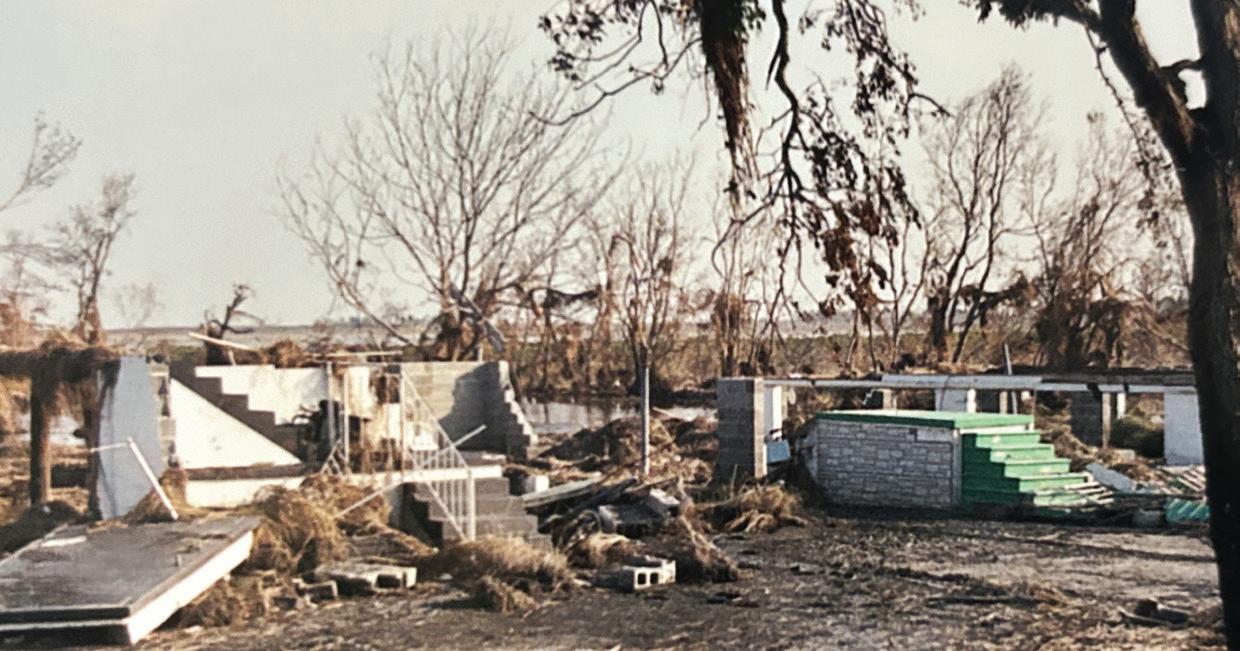
After Katrina, only stairs remain where homes were washed away in lower St. Bernard fishing village.
were advancing from the New Orleans 9th Ward to St. Bernard. Within minutes water appeared in public buildings, churches, schools, businesses and homes throughout St. Bernard.
By sunrise Aug. 30, innumerable homes had washed away in the fishing villages of St. Bernard. Too often, only stairs to nowhere remained where family homes had once stood. Parish President “Junior” Rodriguez’s home in Verrettville was flooded and severely damaged. Only months before Katrina, he and his family had completed repairs and remodeling of their 1920s cypress home. Rodriguez once quipped to this author, “Katrina was one hell of an awful house decorator

– she only decorated with marsh grass and muddy slop in every home and building.”
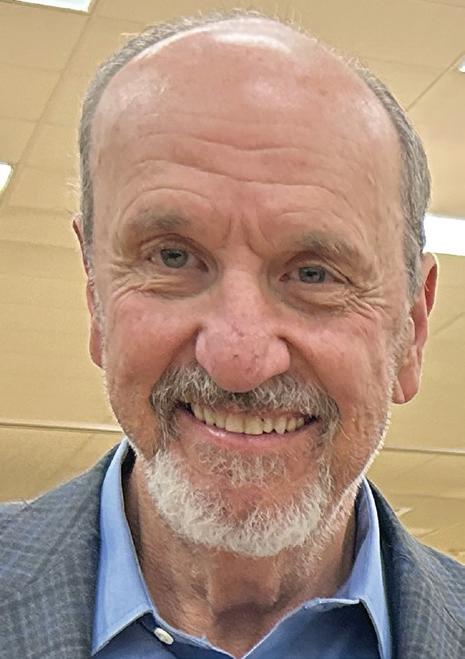
Sheriff Jack Stephens’ residence in Shell Beach was damaged but was one of the few structures in the area that survived largely intact. Stephens constantly advised: “No matter what has happened, Katrina can act as the catalyst to plan for and realize a better future for St. Bernard Parish.”
Happily, that has happened in many instances.
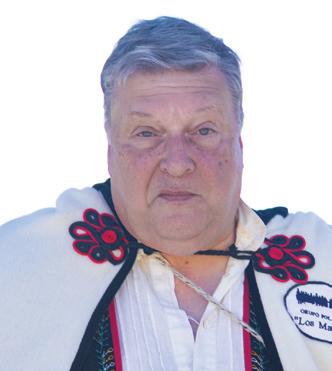
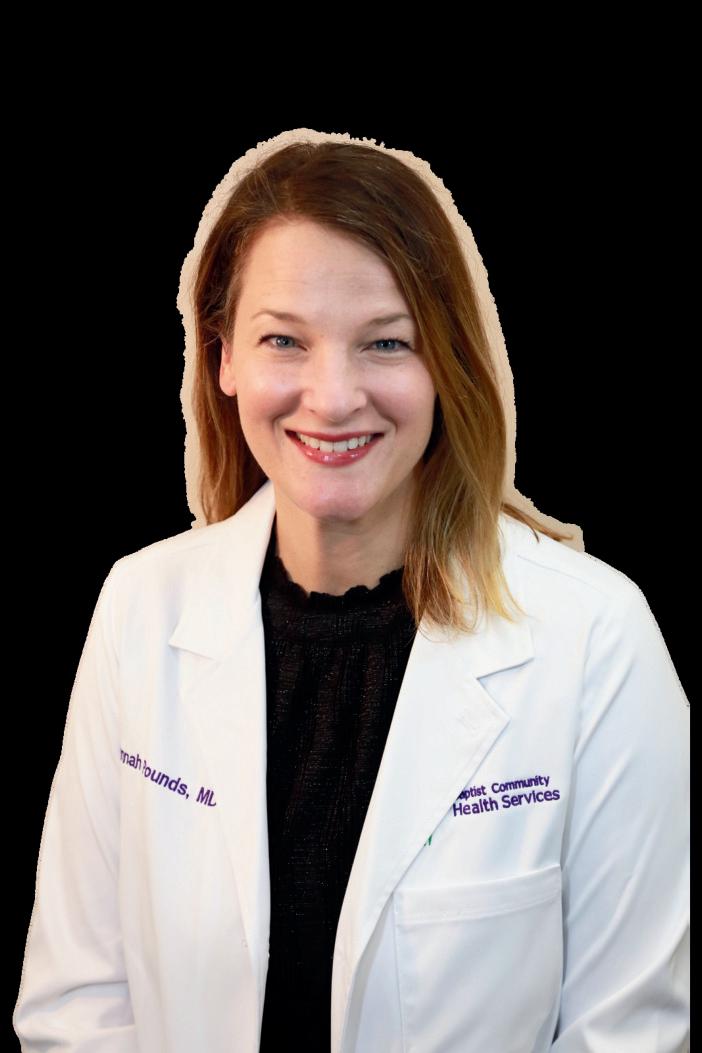

William de Marigny Hyland is the Parish Historian/Site Manager of Los Isleños Museum Complex, owned by St. Bernard Parish Government.
Rocky&Carlos_qtrpg_6_26.pdf 1 4/13/26 5:22 PM
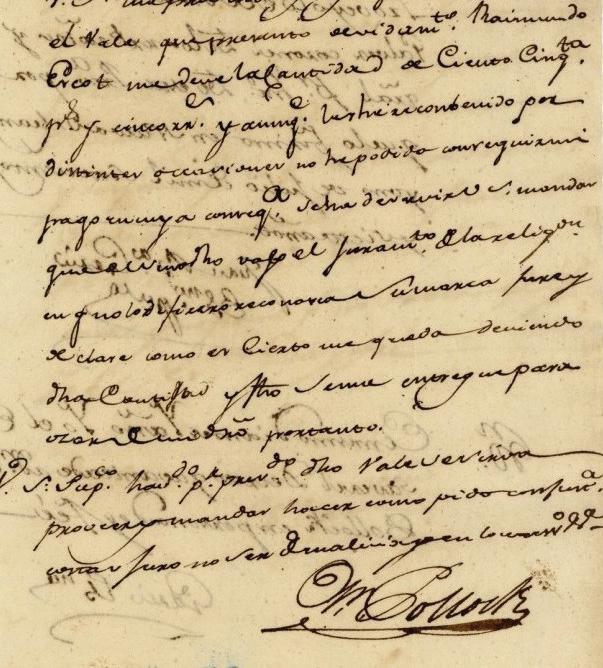
A 1776 petition to the Cabildo seeking payment for a private debt was written and signed by Oliver Pollock.
By Ron Chapman, History Professor Nunez Community College
Americans embarked upon their revolution against British rule with little financial resources, especially in the West. It took a businessman from Louisiana to provide much of the money needed to fund Washington’s military action. Oliver Pollock, a successful merchant who ran many boats along the inland rivers, embraced the independence movement and dedicated his resources to the revolution.
Pollock became more profitable after Gen. Alejandro O’Reilly suppressed the rebellion against Spanish Gov. Antonio Ulloa that began in 1767. Once O’Reilly regained control, he faced an economic crisis, especially regarding food. Pollock came to the rescue.He offered the general shipment of food at cost. In response, O’Reilly gave Pollock special access to the Port of New Orleans even when it was closed to others. At one time, Pollock had more than 300 boats carrying on trade. Luis de Unzage became Louisiana’s second Spanish governor in 1769 and served until 1777, a period that spanned the origins of the American Revolution. In 1776, Capt. George Gibson arrived in New Orleans asking Unzaga for financial assistance and gunpowder for the forces under George Rogers Clark fighting in the West. Unzaga
wanted to help but was concerned about bringing Spain into the war. He turned to Pollock, who underwrote $10,000 and supplied 9,000 pounds of black powder for Clark.
That was just the beginning. He maintained this relationship with Washington’s army throughout the revolution. Employing his maritime armada, he continually provided supplies and money. He may have also supplied funds to Washington directly at Valley Forge during the terrible winter when the rebel forces almost dissolved.
By war's end, Pollock is reported to have given more than $350,000 to the revolutionary cause, nearly $1 billion in today’s currency. This act placed him in dire financial circumstances. He turned to Congress seeking repayment but was refused. He was forced into bankruptcy.
Pollock went back to Cuba, where he once resided, to start over. After arriving, he was arrested for his outstanding debts. Only through the efforts of Louisiana Gov. Bernardo de Galvez was he released. He returned to Louisiana and rebuilt his fortune – this time as a plantation owner. Some reports indicate that this plantation provided some of the grounds belonging to Louisiana State University. He would die at his daughter’s home in Pinckneyville, Mississippi, in 1823.
He was never properly thanked for his sacrifice. It even took him 10 years to be given citizenship. As a sidenote, Pollock is credited with America’s use of the dollar sign, which he used as a signature during the secret relations with the rebels. Under President Alexander Hamilton, Secretary of Finance Robert Morris employed it for use on American currency in 1797.
Louisiana has deep connections to the American Revolution in many ways. The sacrifices of a businessman named Oliver Pollock is one that is unheralded but of great significance to America’s independence.
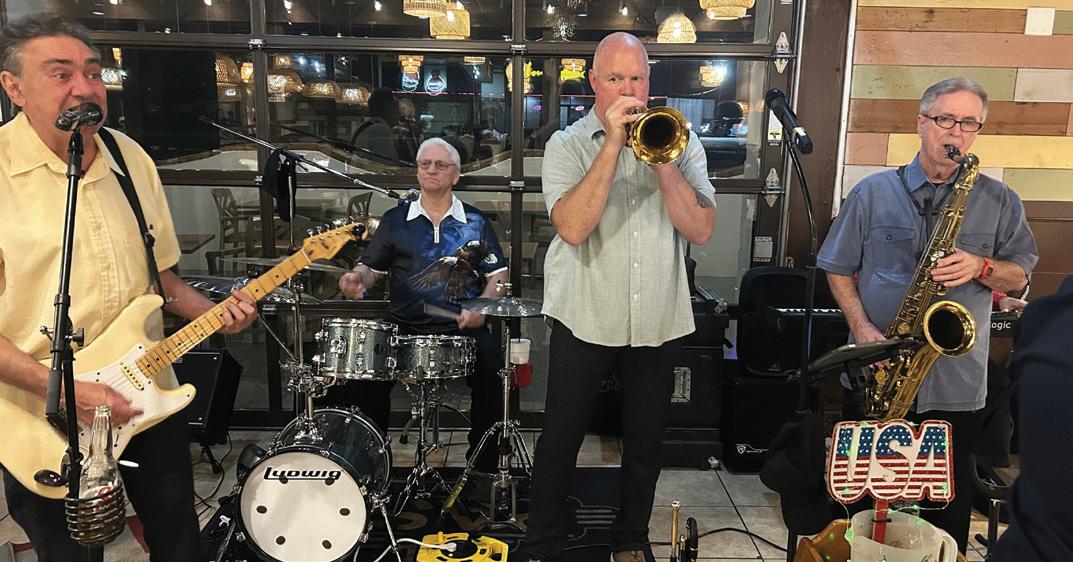
A lifelong resident of St. Bernard Parish, Angelo Calabresi got his first acoustic guitar when he was in the fourth grade. “When I went to take lessons, the guitar teacher told me my hands were too small to play the big acoustic guitar; so my father (Anthony) went to Sears and bought me a Silvertone electric guitar, which would be a collector’s item now.” At 74, Calabresi is still playing.
His ensemble is called the New Orleans Quarter Notes Band, which has regular gigs at El Paso in Chalmette, the Silver Slipper Casino and venues on the Northshore and Westbank.
“We play a range of music from oldies to rhythm and blues, swamp-pop and dance hits,” said Calabresi, the guitarist and lead vocalist. “We are all local Louisiana musicians who enjoy sharing our passion for music and having fun with our audience.”
The Quarter Notes have been together since 2012. All members are retirees. The oldest is 82-year-old sax player/lead vocalist Larry Simpson. The group’s other musicians are Frank Corona on drums/vocals, Chris Kruger on trumpet/vocals, Steve Giovengo on bass/vocals and Mike Zingale on keyboard.
“Hometown Band” is a new feature. To spotlight your band, email stbernardmagazine@yahoo.com or call 504-609-7509.



by Anna Timmerman
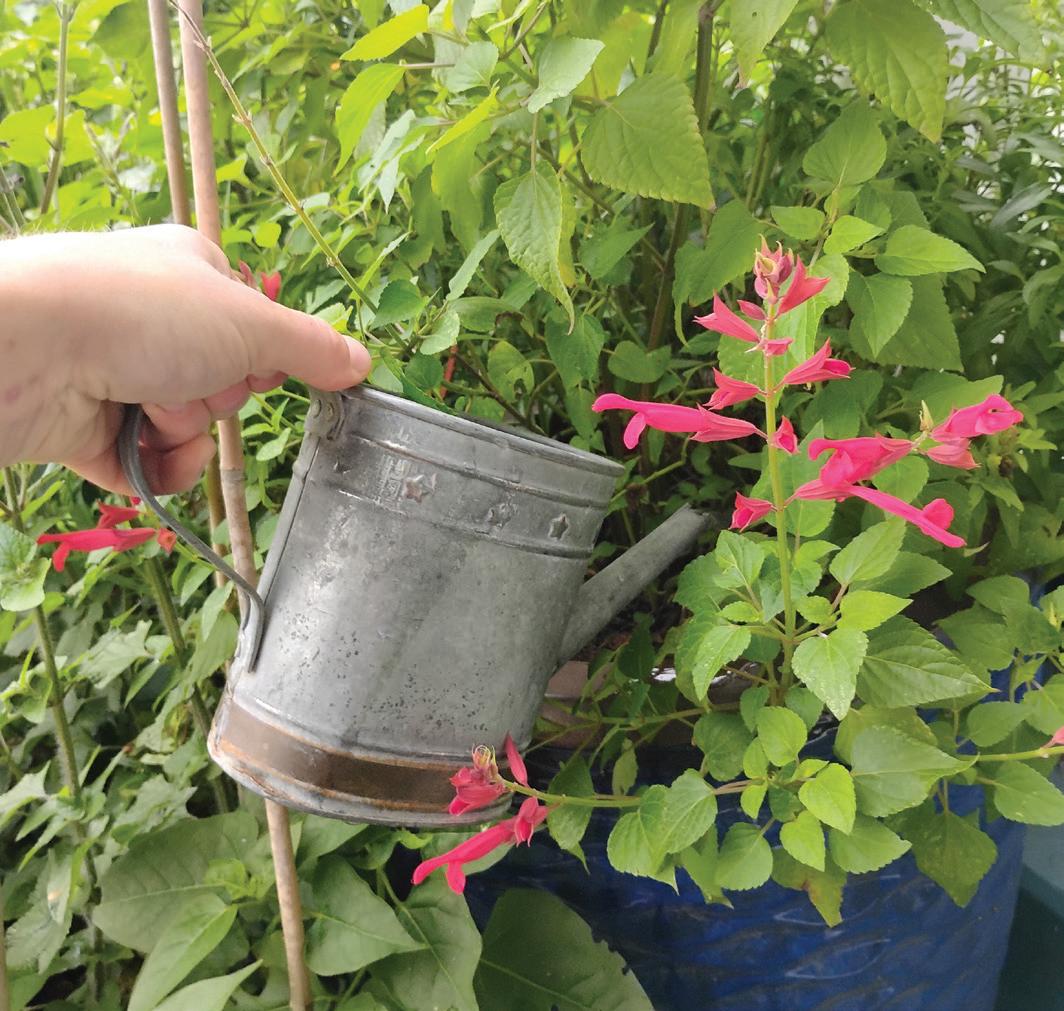
Most of Louisiana is in yet another year of drought, with no end in sight. In a normal year, we receive between 65 and 72 inches of rainfall in the area. Many gardeners find that their landscaping needs a little extra help, especially as things heat up for the summer. Getting hit with an expensive water bill is never a good experience, but luckily there are some strategies that gardeners can use to really squeeze the most out of every last drop.
Container gardening is extremely popular, especially around patios and for those with small spaces. Small containers need more frequent watering. One way to do this efficiently is to use a tub of water to submerge the pots into, watering the soil from below and letting it soak into the entire volume of the pot. Watering containers from
the top, especially when they’ve really dried out, tends to funnel water towards the sides of the pot, wetting just the outer edges of the root system.
Very dry soil also becomes hydrophobic, repelling water unless it is wet down again gradually. Use a bin with a few inches of water in it to bottom water containers until they are heavy and fully saturated. Then, lift them out and let the excess water drain back into the tub, so that it can be used again. Make sure to not forget about containers in the tub to avoid over watering them or drowning the roots – they need oxygen too and staying too wet for too long can kill plants.
For larger containers that can’t be easily lifted, add a 1-2” deep saucer to the bottom of the pot to catch any runoff and serve as a reservoir for water throughout the day. Be sure to monitor these saucers for mosquito larvae; they can be controlled by sprinkling in a little BT Thuricide in the form of “mosquito bits,” which are sold at local garden centers.
Adding an inch or two of mulch to the tops of container plantings also helps to regulate soil moisture by preventing immediate evaporation, as well as keeping the soil cooler via shading. Pine bark, wood mulch, and chopped pine straw all work very well and help to reduce unnecessary water loss in the summer.
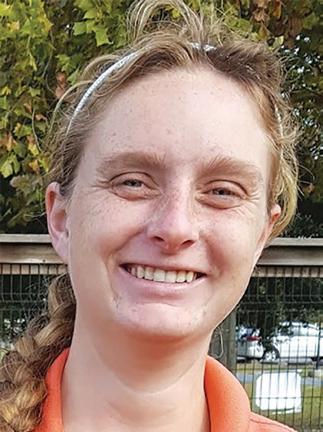
Anna Timmerman is an LSU AgCenter horticulture agent working in the Greater New Orleans area. Email her: atimmerman@agcenter.lsu.edu
By Roger J. Estopinal, III
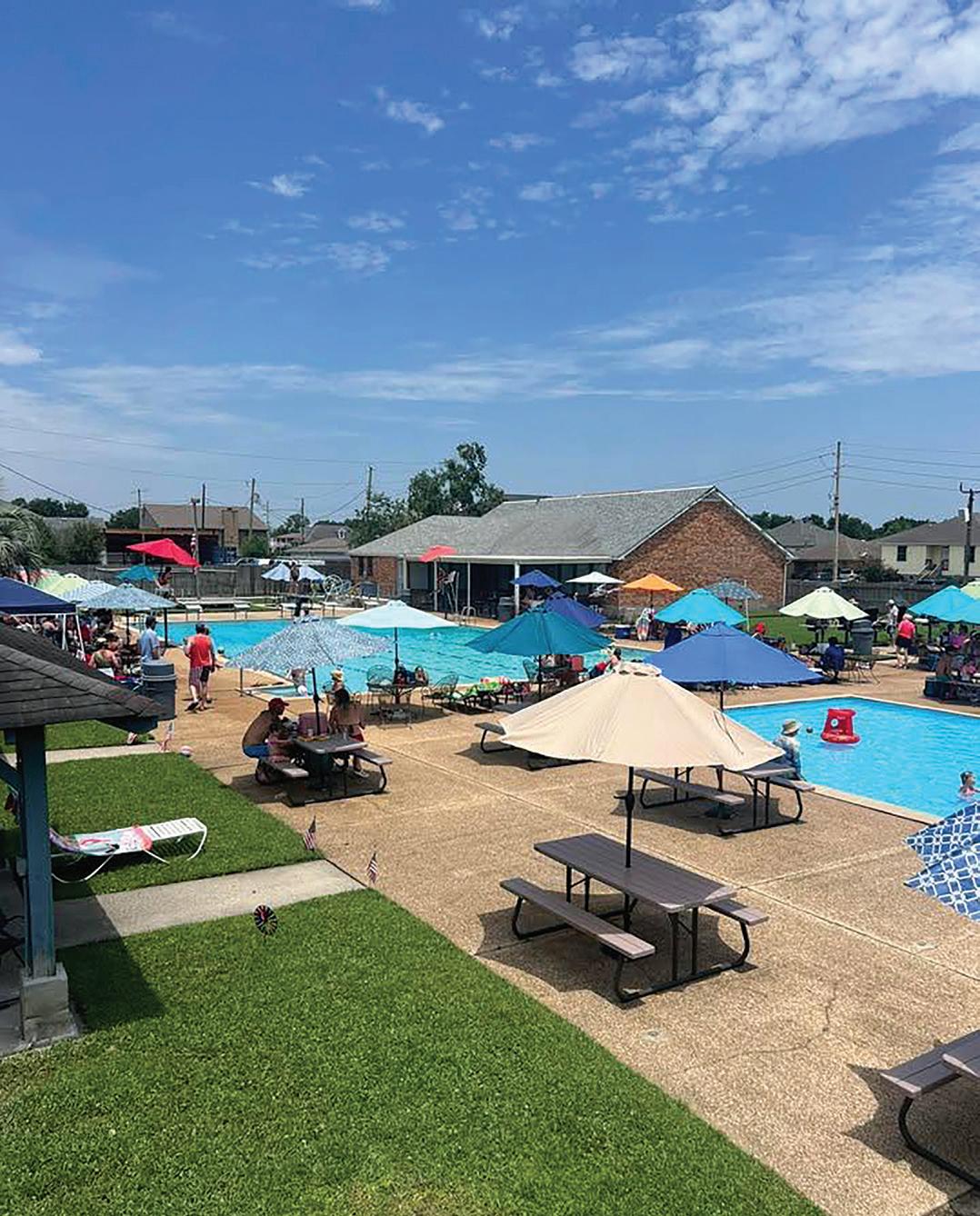
Buccaneer Villa North Swim and Tennis Club is a private, non‑profit haven built for one purpose: pure family fun in the heart of St. Bernard Parish. Picture this: a sparkling Olympic‑style swimming pool big enough for cannonballs, races, and lazy float sessions. A kiddie pool where the little ones rule. Basketball, tennis and volleyball courts ready for friendly competition. Horseshoes for the laid‑back champs.
The swim team is a great growth for the club with competition and teamwork. We can’t forget about the beginners’ swimming lessons available by a well experienced swim coach. And there’s a clubhouse that’s perfect for receptions, baby showers, birthday parties, anniversaries, and special occasions.
From May to September, the pool transforms into the ultimate summer hangout. Members enjoy an action‑packed lineup, including poolside music & karaoke, movie nights under the stars, and all the best holiday bashes — Fourth of July, Labor Day, Memorial Day, and Back‑to‑School blowouts that send summer out with style.
If fun had an address, it would be Buccaneer Villa North Swim and Tennis Club, 8330 Patricia St. in Chalmette. Visit the club’s website, Bvnstc.com, to join.

“Second Independence:’’
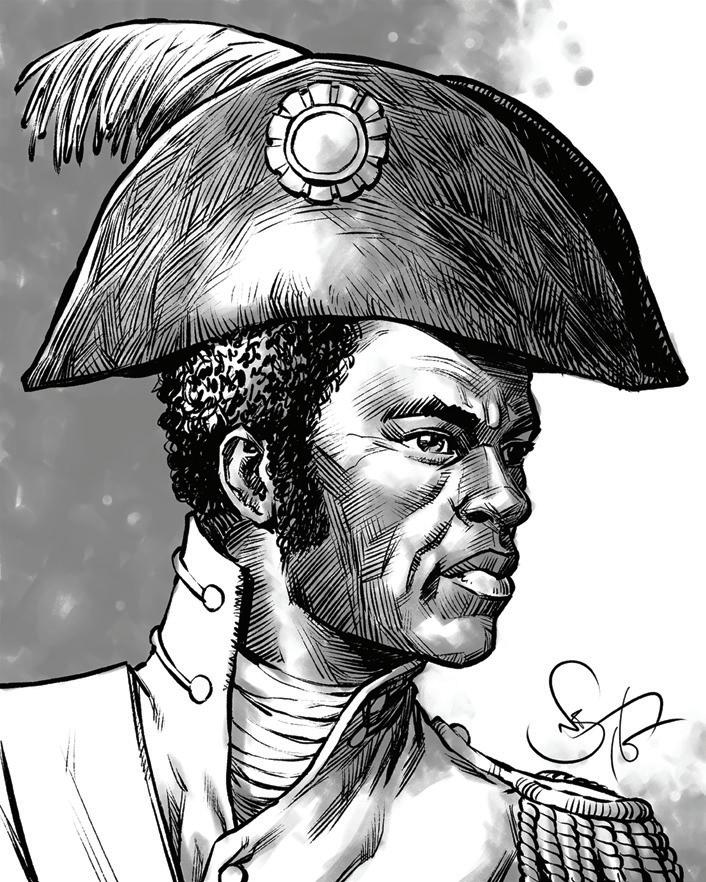
Maj. Joseph Savary - Illustration by Nate Taylor of The Joy Trip Project
For nearly 50 years, January 8th (“The Eighth”) was celebrated nationwide as a major patriotic holiday, “second independence,” often rivaling the Fourth of July with parades and fireworks. The 1815 victory over the British in the Battle of New Orleans, Chalmette, solidified American sovereignty and national identity.
Joseph Savary was a Haitian military leader who played a significant role in the War of 1812. He commanded the 2nd Battalion of Free Men of Color under Gen. Andrew Jackson at The Battle of New Orleans that took place in presentday St. Bernard Parish. Born of African descent in Saint Dominique (Haiti), Savary was a skilled officer who had experience from the Haitian Revolution. Savary and his troops, composed of free black and mixed-race soldiers, fought valiantly alongside U.S. forces against the British in the surprise night
attack on Dec. 23, 1814 at the Villere Plantation, stalling their advance after they had landed 1,800 troops; and assuring a decisive American victory on Jan. 8, 1815 in the Battle of New Orleans at the Chalmette Plantation. Kentucky and Tennessee riflemen, pirates, businessmen, volunteers, free people of color, native Americans and enslaved men were all part of the “rag-tag” army assembled by Jackson.
Despite the fact that The Battle of New Orleans was fought two weeks after a peace treaty was signed, it stands as the foremost example of AfricanAmerican service during this war. Black sailors and soldiers — both enslaved and free — accounted for roughly 900, nearly half of the American troops that took part in the battle. Though they were outnumbered 2 to 1, American forces decisively beat the British army. It was the last major battle of the war and propelled Andrew Jackson’s status as an American hero.
Jackson praised Savary’s unit for its performance during the engagements. For his leadership and bravery, Savary was promoted to major. He marched his men out of the city in a victory parade so residents would know who had fought and died for their freedom. Pressured by white residents, Jackson ordered Savary and his men to leave New Orleans so as to not destabilize the institution of slavery and incite an insurrection. Savary and his unit left to fight in the Mexican Revolution against Spain, joining his longtime friend, Pirate Jean Lafitte. He returned to the city in 1822.
For nearly 50 years (1828-1861), the battle’s Jan. 8 anniversary was celebrated nationwide as a major patriotic holiday, often rivaling the Fourth of July with parades and fireworks. It was celebrated as a "second independence" victory, solidifying American sovereignty and national identity after the War of 1812.
– Joy Trip Project & Staff Report

http://www.handymanstevela.com


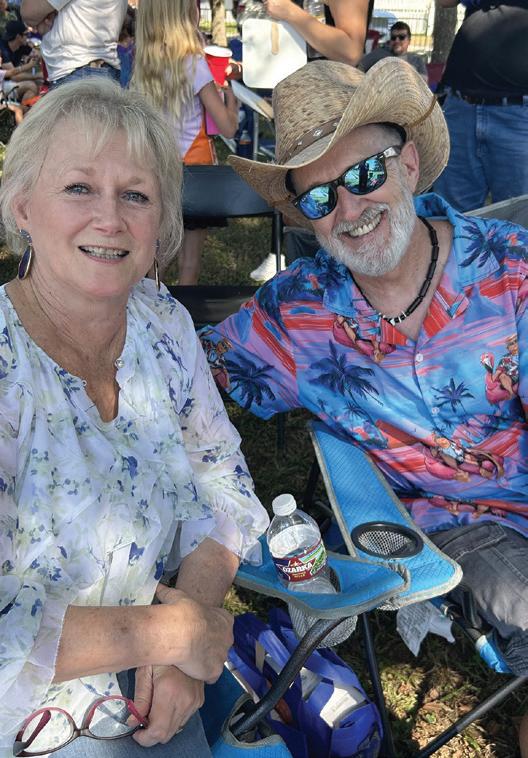
1. Marcia Nedoma of Covington attends the Sugar Fest with her husband’s friend, Kenny Desselle, a 1978 graduate of St. Bernard High School who retired from Domino Sugar. “I grew up in Wisconsin, and I like the friendliness of the people in St. Bernard,” Nedoma said.
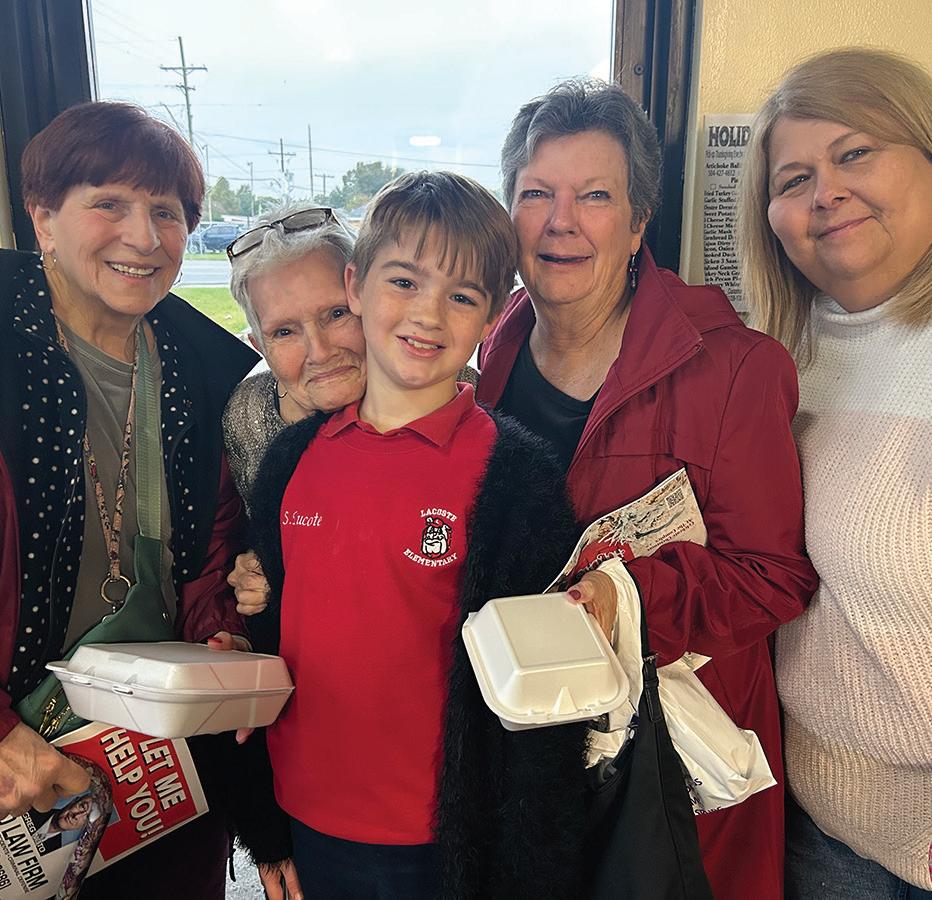
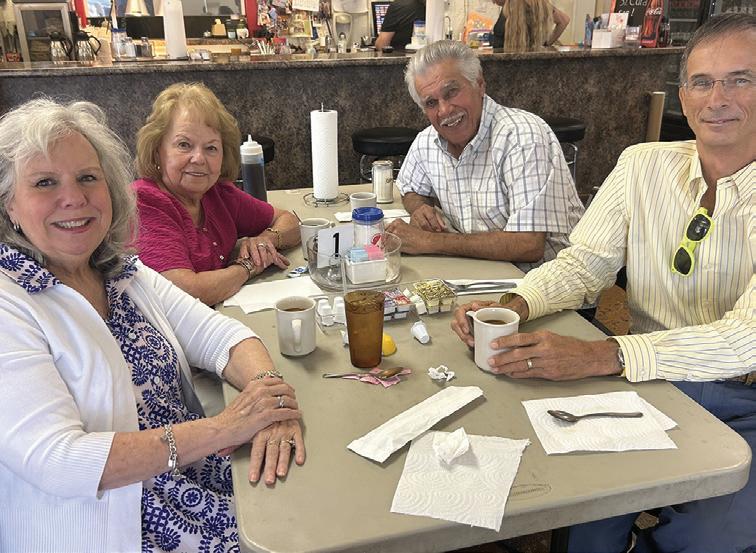
2. Sharon Pepperman (left to right), June Kelly, Spencer Ducote, Glenda Fedele and Janet Mire of the AARP Chapter 3926 Breakfast Club patronize a local restaurant.
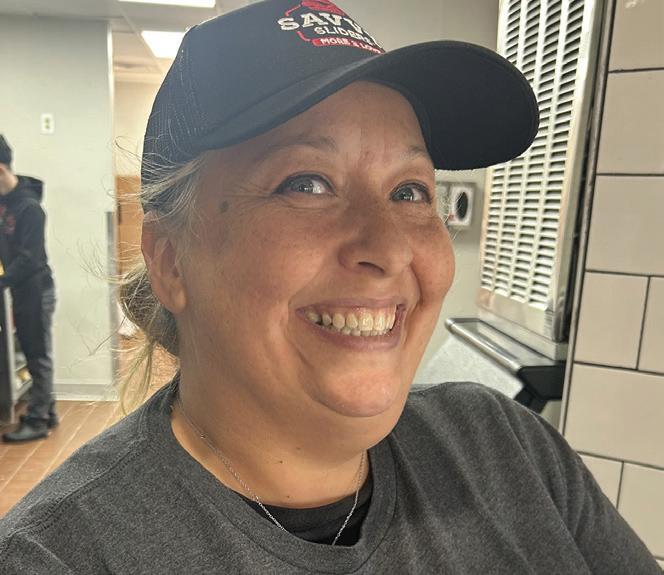
8. Samantha Henderson has been a resident of St. Bernard for 39 years. She enjoys working for one of the parish’s newest restaurants, Savvy Sliders. 1 2 4 5 6 8 3 7
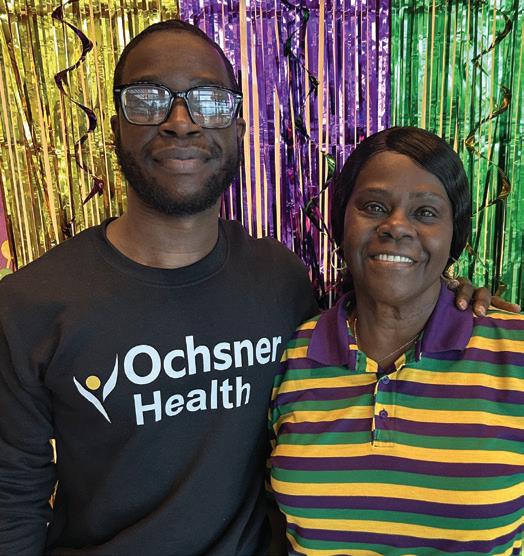
3. Frank Brown moved from York, PA, in 2021 to be near his grandmother, Evelyn Brooks, who has lived in Violet all of her life. “I like the weather, food and the culture here,” Brown said. Brooks works in dietary at Ochsner/St. Bernard Parish Hospital, and Brown is a phlebotomist at the hospital.
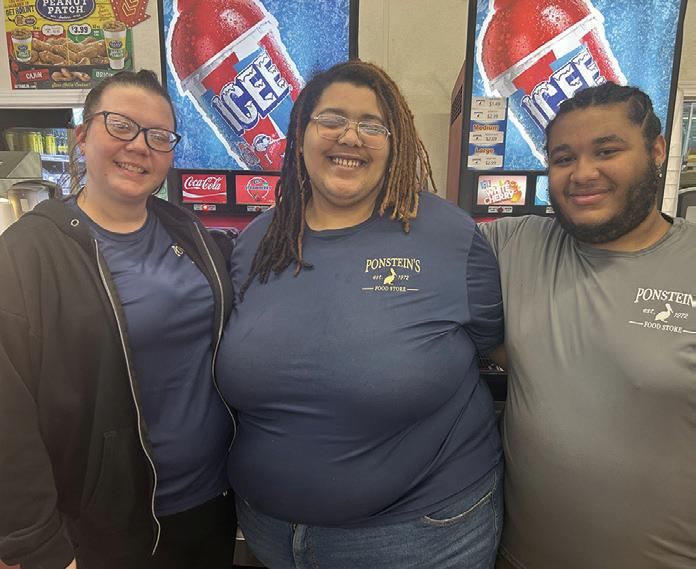
4. Lacy Ryan, Hya Khader and Zee Martin work at Ponsteins Food Store in Chalmette. Ryan has lived in the parish for 15 years; Khader moved to St Bernard from Metairie in 2021; and Martin has lived here the majority of his life.
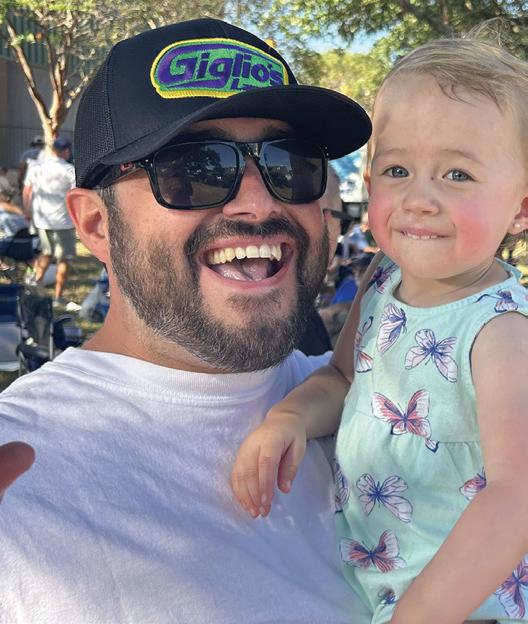
5. Gasper Giglio, a lifelong resident of the parish, enoys Sugar Fest with his daughter Lorraine. “ I love the family atmosphere,” he said.
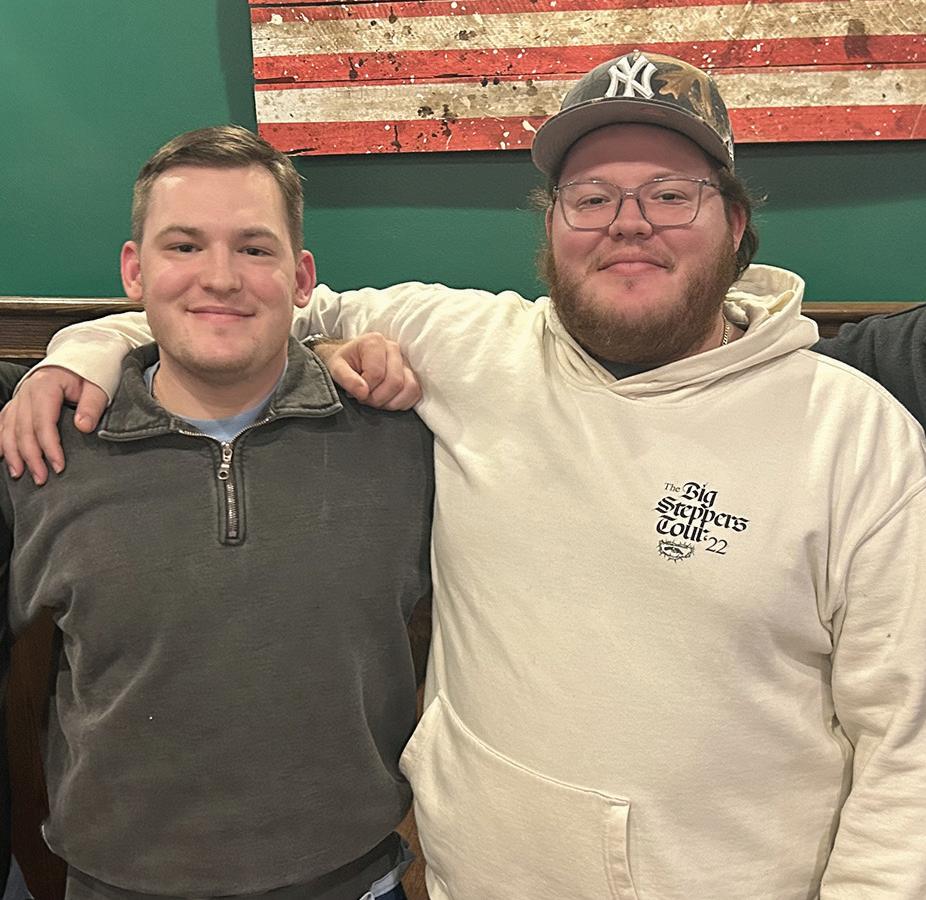
6. Connor Kenney, left, a lifelong resident of St. Bernard, hangs out at Rotolo's with Zach Hrabar, and his brothers Nick and Alexander, who moved to Arabi from Algiers in the summer of 2025.
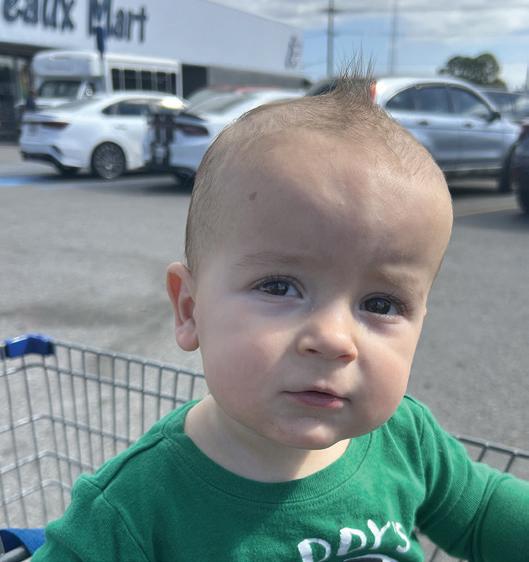
7. Grayson Gutierrez, sporting a shirt that reads “Daddy’s Football Champion –Tough, Fast,” settles in a cart for grocery shopping in Chalmette. He turned 1 on Oct. 28, 2025.
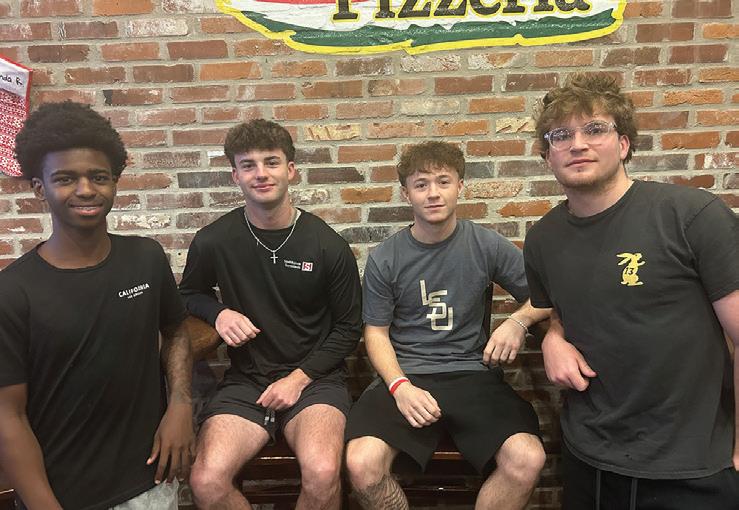
9. Friends since middle school, Isaiah Janeau (left to right), Bryce Wilson, Jake Devenport and Doug Armstrong chill at Rotolo’s Pizzeria. Wilson enters his second season as a pitcher at the University of Louisiana Lafayette; Devenport and Janeau attend Southeastern University; and Armstrong works at Chalmette Refinery.
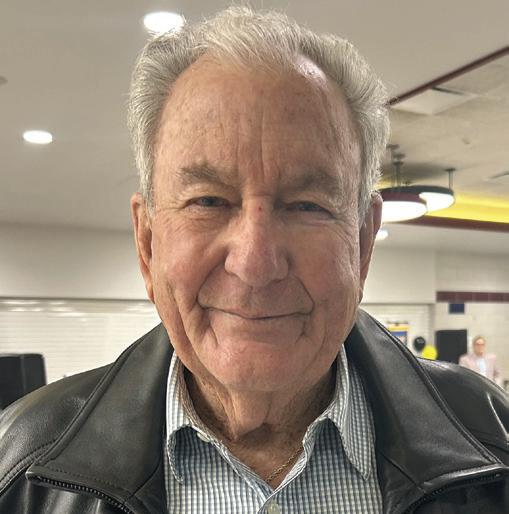
10. Horace Evans, 91, has lived in St. Bernard for 67 years. He’s been a member of Rotary Club for 50 years, and sold insurance in the parish for 34 years.
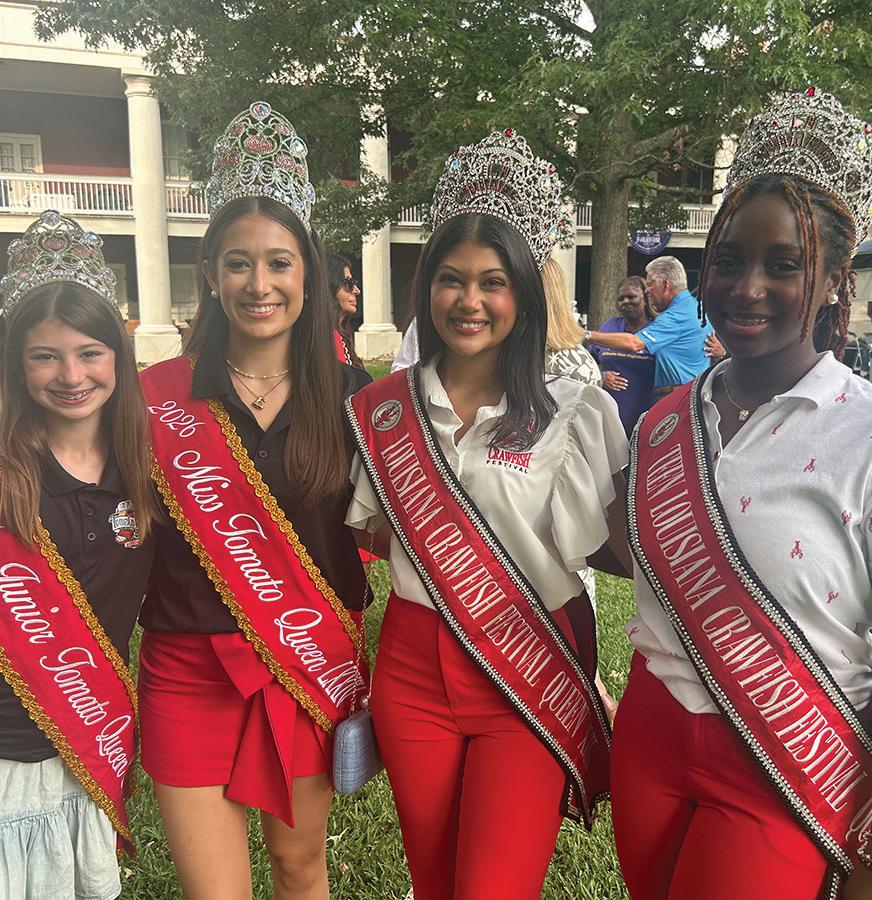
11. Mariela Alfonso, Junior Tomato Queen (left to right); Emily Chaplain, Miss Tomato Queen; Louisiana Crawfish Festival Queen XXII Atianna Sinegal, and Teen Louisiana Crawfish Festival Queen Cormille Jones attend the St. Bernard Day at the Capitol.
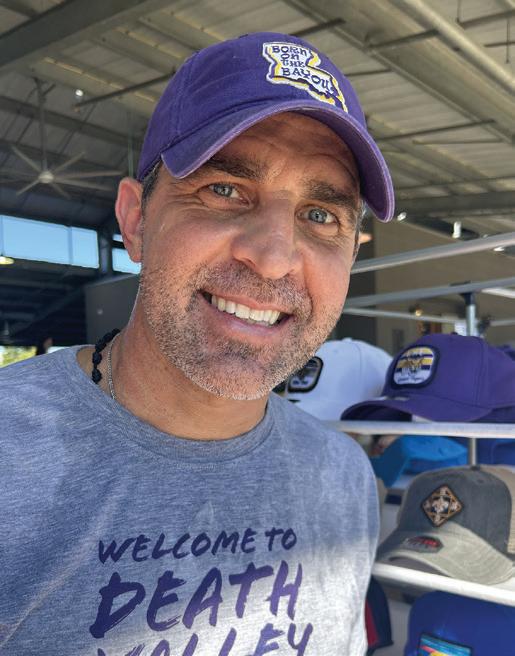
12. Matthew Johnson, a hats vendor, grew up on Aycock Street in Arabi. He now lives in Abita Springs. “I always come back home to the parish. I wish I would have never left.”
13. Debbi DeMatteo (left to right), Jacinta Alfonso, Stanley Alfonso and Remi DeMatteo drop by Penny’s Cafe in Violet after attending mass at Historic St. Bernard Catholic Church.
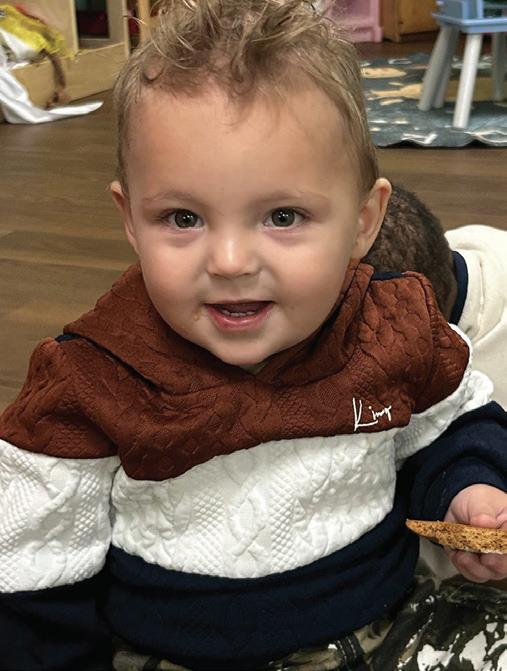
14. Myles Gillum, 2, engages in speech therapy at Jolly’s Kids, Too in Arabi. “He’s funny, playful, sweet, personable and energetic,” teacher Courtney Marks said. Myles has attended Jolly Kids since he was 6 weeks old.
15. Six years ago, Paul Leleaux III moved to Arabi from the Marigny. “I like it here because the people are nice and friendly, and everything is close by. My favorite restaurant is Rocky and Carlo’s.’’
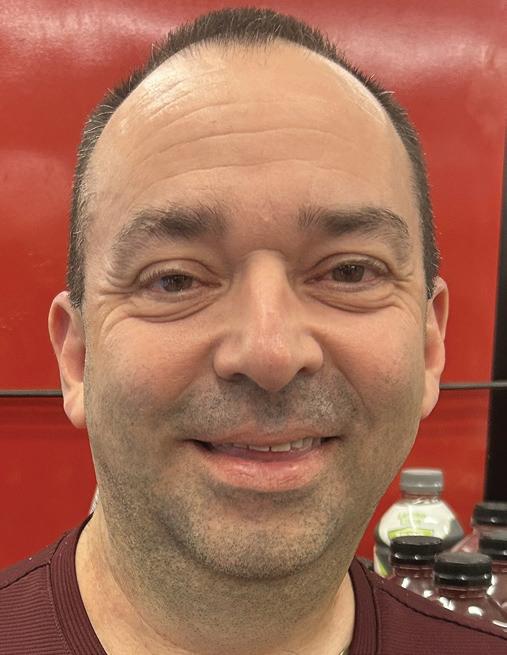
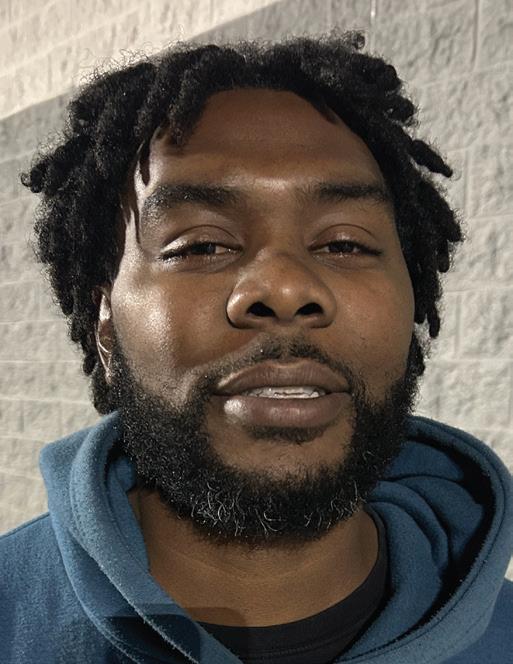
16. Russell Banks, a heavy equipment operator, is a lifelong resident of Violet. “I like the fact that the parish is so family oriented. I have relatives all around. There’s no place better to call home than St. Bernard.” 9 10 11 12 13 14 15 16