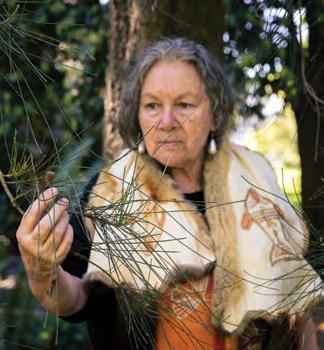
We honour and respect all Elders and Traditional Custodians of the lands on which the Botanic Gardens of Sydney and Foundation & Friends stand. We acknowledge the profound significance of the enduring connection between the First Custodians and this land, recognising their vital care and stewardship for their country and its meaning to all who cherish and share in it.
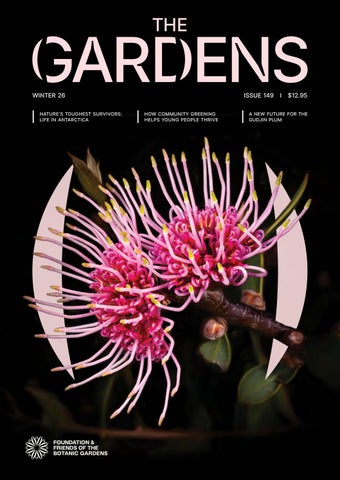
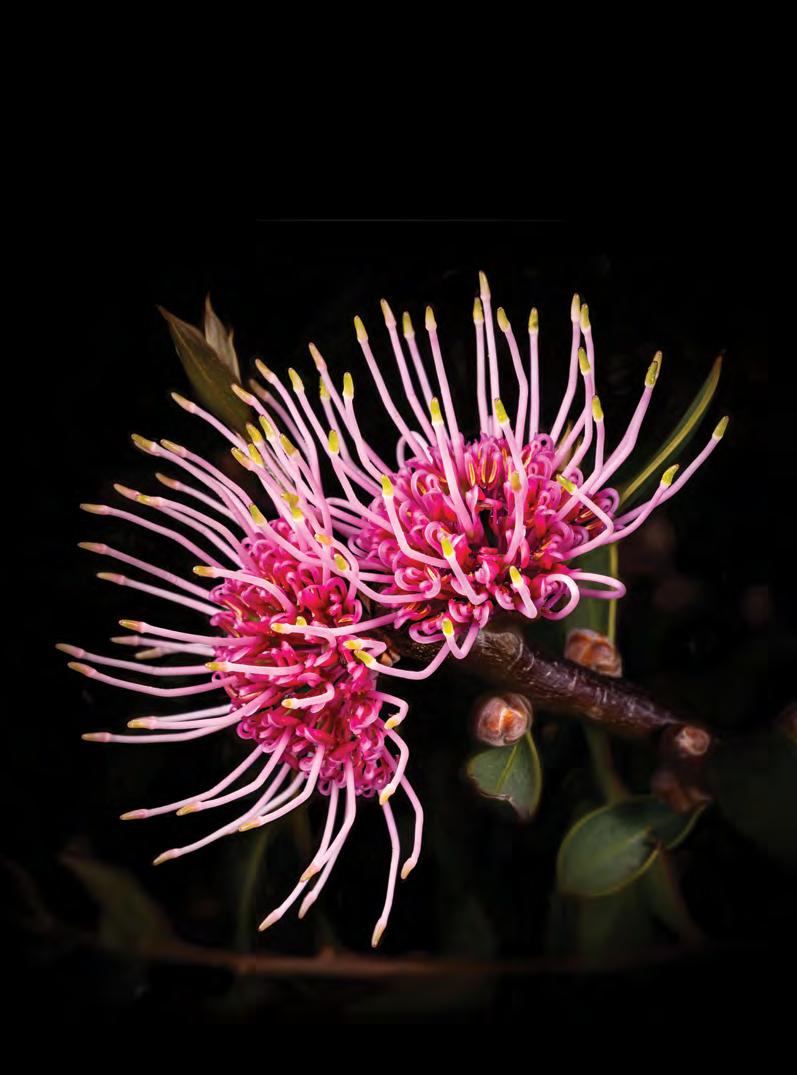
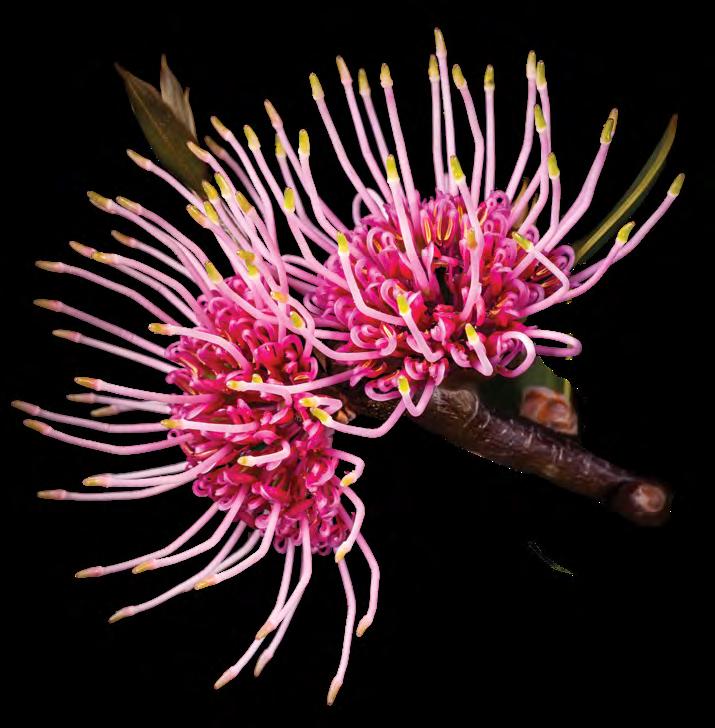
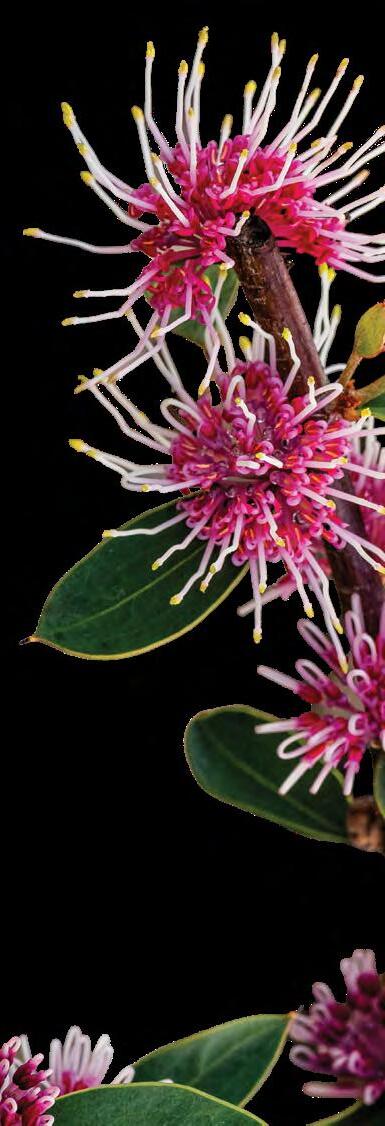
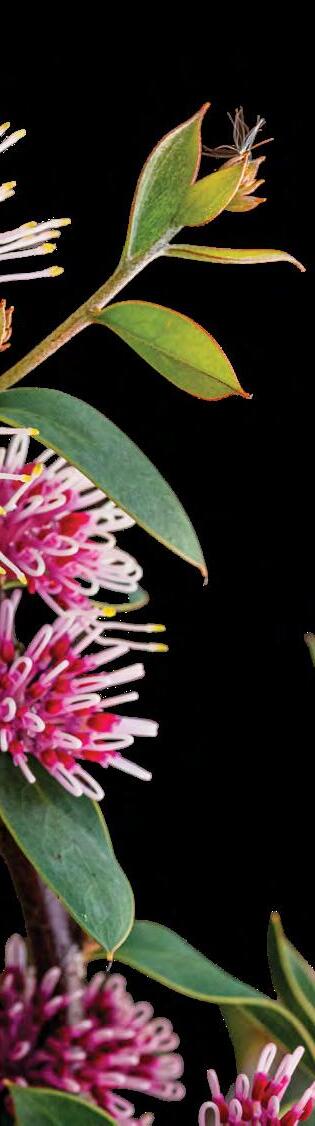
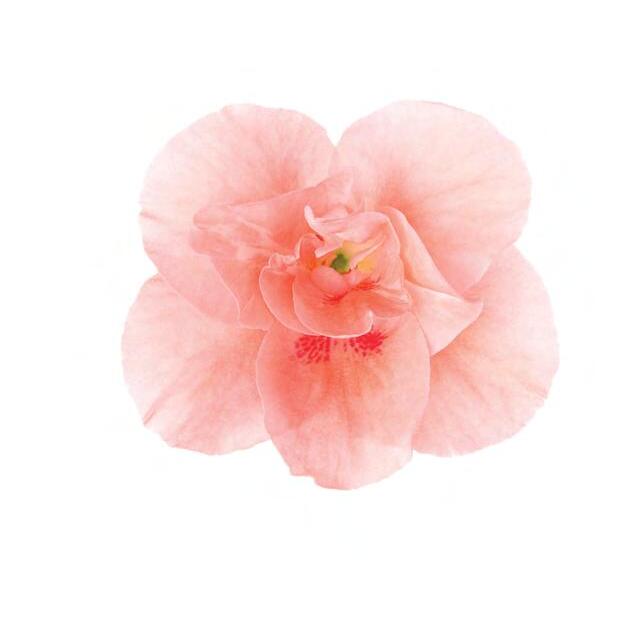
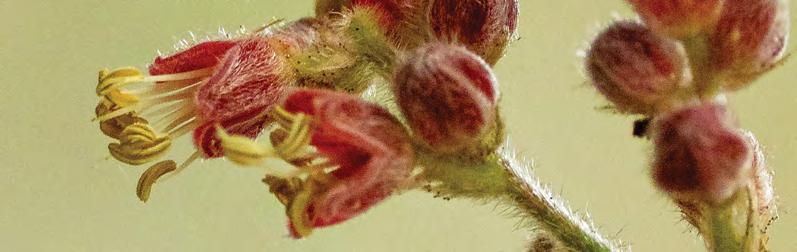
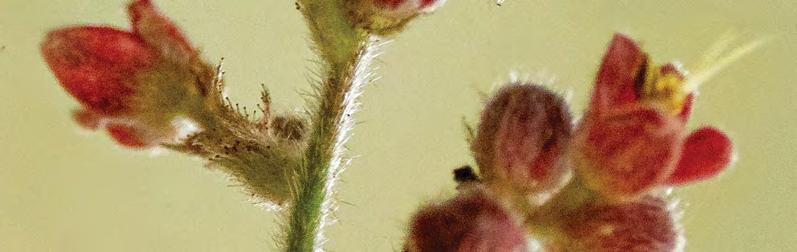
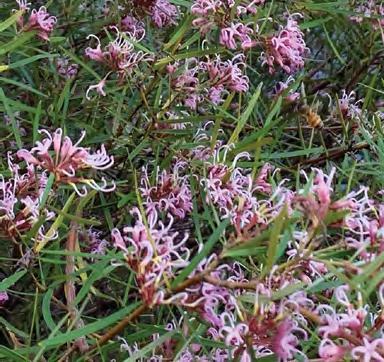
This page and cover: Hakea myrtoides x petiolaris
- Burrendong Beauty
Photos: Glenn Smith Photography
Winter News
Thank you to our Waratah supporters
A call back to Country
On Tuesday 31 March, Foundation & Friends welcomed our Gold and Platinum Waratah supporters to a special lunch at the Australian Botanic Garden Mount Annan.
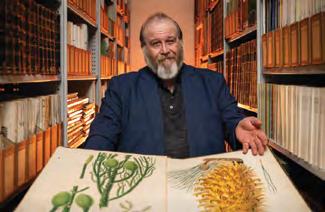
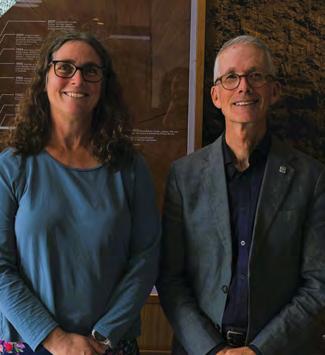
Held in the heart of PlantBank, the event offered a rare opportunity to step inside one of Australia’s leading plant science and conservation facilities. Guests heard directly from Chief Scientist Professor Brett Summerell AM and Acting Chief Executive Gabrielle Collins, who shared insights into the Gardens’ work in conservation, restoration and research.
The lunch was an opportunity to thank these dedicated supporters and to demonstrate the real impact of their generosity. Contributions from our Gold and Platinum Waratahs help fund critical projects across the Gardens, supporting everything from scientific research to the protection of threatened plant species.
Events like this provide a meaningful connection between our supporters and the work they make possible, offering a behind-the-scenes look at the science, expertise and care that underpin the Gardens’ mission.
After 26 years of Cadi Jam Ora – First Encounters, an inspiring new chapter is on the horizon. Rooted in 65,000 years of Gadigal knowledge, this transformative interpretive experience bridges ancient wisdom and contemporary culture. Now, the new signage at the Royal Botanic Gardens celebrates First Nations stories and their enduring connection to Country, where the land meets the sea.
This project has been a deeply collaborative effort with Elders and Traditional Gadigal descendants, the Botanic Gardens First Nations team and First Nations ecological knowledge holders. There are many renewed stories coming from a place of responsibility for caring for Country and the intimate relationships with the land, sky, and sea, understanding that we are all connected. Thanks to funding from Transport for NSW, the revitalised story journey through the Cadi Jam Ora Garden precinct will be ready to enjoy in June at Wuganmagulya, Farm Cove, Royal Botanic Garden Sydney.
From the Executive Director
There is something special about being outdoors in the crisp air, with fewer crowds and a quieter pace that allows you to slow down and take it all in.
As we move into winter, I am reminded again of the strength of our community and the important role it plays in supporting the work of the Gardens.
Over recent months, we have been heartened by the overwhelming support for Growing Friends, particularly across the Autumn Plant Sale and our Martin Place pop-up. It has been wonderful to see so many members, volunteers and supporters getting behind this initiative. Growing Friends continues to be a powerful example of community in action, led by volunteers and driven by a shared passion for plants and people.
This season also brings new opportunities to deepen your connection with the Gardens. We are continuing to grow our Waratah annual giving program, which plays an important role in supporting long-term impact. For those interested in becoming more closely involved, we would welcome the opportunity to share more. Learn more about becoming a Waratah member on the Botanic Gardens website: botanicgardens.org.au/waratah-program
As the end of the financial year approaches, I find it a moment to reflect on the impact of philanthropy on our work here in support of the Gardens. This year, our campaign focuses on Youth Community Greening, a program that helps disadvantaged young people connect with nature, wellbeing and their communities. It is a powerful example of how access to green space and hands-on experiences can support confidence, learning and connection.
Winter is also a great time to experience the Gardens in a different way and there’s plenty to enjoy this season.
The Blue Mountains Botanic Garden will come to life as the Camellia Garden begins to bloom, and I encourage members to visit our refreshed Garden Shop at Royal Botanic Garden Sydney, and of course the Garden Shop at Mount Annan and Mount Tomah, to make the most of your member benefits.
Thank you for being part of this community and for continuing to support the Gardens in so many ways.
CIARA TIMLIN, EXECUTIVE DIRECTOR, FOUNDATION & FRIENDS
Preserving Stinkarella
In November 2025, a rare corpse flower (Amorphophallus titanum) bloomed behind the scenes at the Royal Botanic Garden Sydney, offering a unique opportunity for science.
Affectionately named Stinkarella, this remarkable plant became the first specimen of its kind to be preserved in the National Herbarium of New South Wales. While not on public display, her flowering enabled important scientific work, including pollen collection to support global conservation efforts.
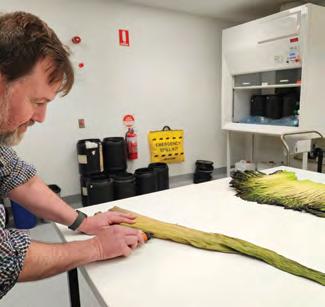
Following the bloom, specialist staff carefully harvested the flower’s spathe and spadix and transported them
to the herbarium for preservation. At nearly one metre in length, the deep red spathe presented a significant challenge. Rather than cutting it into sections, the team constructed a custom plant press to dry it whole, ensuring the specimen remained intact.
Samples were also collected for future DNA studies, while the spadix, famous for its pungent scent, was preserved using a combination of pressing and ethanol storage.
Now successfully preserved, Stinkarella will become part of the State’s scientific collection, supporting ongoing research and contributing to our understanding of one of the world’s most extraordinary plants.
Nearly $200,000 raised to bring Botanic Learning Centre to life
Last year, our End of Financial Year Appeal set out to raise funds towards a new state-of-theart Botanic Learning Centre uniquely focused on botanic learning for all ages. Thanks to the generosity of our community, we raised an incredible $198,539 to help bring this vision to life.
In partnership with the Botanic Gardens of Sydney, Foundation & Friends will be able to transform our education facilities into a world-class hub that will welcome thousands of students and visitors of all ages, fostering curiosity, connection, and lifelong learning through nature.
The Centre will include a refurbished and publicly accessible Daniel Solander Library, a state-of-the-art Science Education Lab, and a flexible indoor/outdoor learning space. More than a renovation, this multi-million dollar project represents an investment in education, access, and a deeper connection to the natural world for generations to come.
Gardens’ science supporting landscape restoration
Botanic Gardens of Sydney is playing an important role in Taronga’s Habitat Positive landscape restoration initiative, bringing world-class plant science directly into the field.
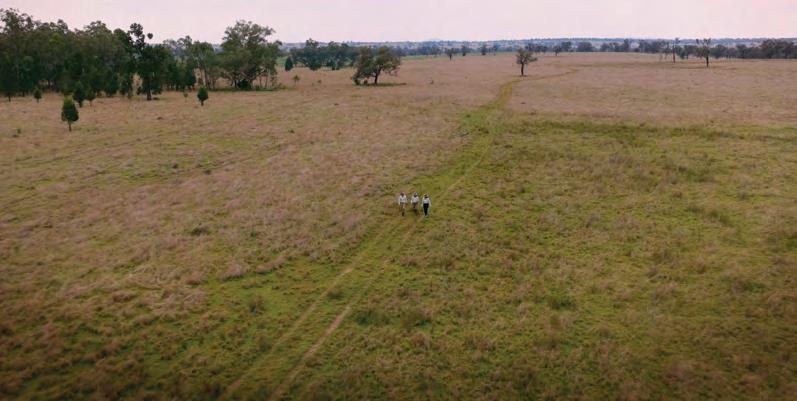
At the centre of the project is Habitat Positive Sanctuary One, a 3,050-hectare property on the North West Slopes of New South Wales. Here, up to one million seedlings from the critically endangered Box-Gum Grassy Woodland ecological community will be planted to help rebuild wildlife corridors and create a safe haven for up to 36 threatened Australian species, including koalas.
Talking Plants: A Science Talk Series At The Gardens
Join Tim Entwisle at the Australian Botanic Garden Mount Annan for this ongoing series of lively conversations with leading scientists. This time, Angela Moles, UNSW Professor and plant ecologist, will discuss how plants grow, survive, and adapt, revealing what their strategies teach us about biodiversity, climate change, and ecosystem resilience.
Date: Wednesday 19 August
Time: 10am to 11.30am
Location: Acacia Theatre, Australian Botanic Garden Mount Annan
Tickets: $30 (members), $45 (non-members)
Bookings are open now.
Specialist teams from the Botanic Gardens of Sydney, including the Research Centre for Ecosystem Resilience (ReCER) and the Seed Bank, are contributing cutting-edge research to guide seed sourcing and planting. Through advanced genomic studies, this work ensures plantings are true to type, genetically diverse and adapted to future climate conditions, giving them the best chance of longterm survival.
This collaboration highlights the vital role of the Gardens’ science in delivering real-world conservation outcomes and supporting the restoration of Australia’s unique landscapes.
Visit botanicgardens.org.au/whats-on/talking-plants-tim-entwisle-live Or scan the QR Code
Professor Angela Moles & Tim Entwisle
Meet the Executive Director
It was wonderful to see such a strong turnout for our recent Meet the Executive Director morning tea at the Royal Botanic Garden Sydney.
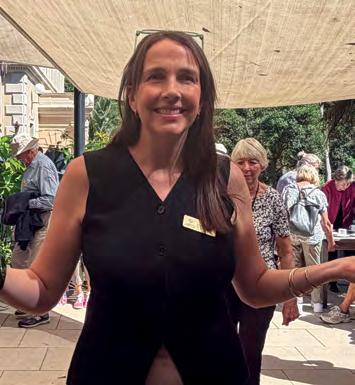
Members, volunteers and donors gathered on the Foundation & Friends Terrace to welcome our new Executive Director, Ciara Timlin, and hear about her early experiences across the Gardens, along with her vision for the future of the organisation.
Despite the warm and humid Sydney weather, the atmosphere was relaxed and welcoming, with plenty of cups of tea shared and conversations flowing. Guests spoke about their connection to the Gardens, their passion for plant conservation, and the important role the community plays in supporting this work.
A big thank you to everyone who joined us. It was lovely to see so many familiar faces and to meet new members of our growing community. Moments like this highlight the strength of the Foundation & Friends network and the shared commitment to protecting and celebrating our living collections.
A BLOOMING
B TANICAL GEM...
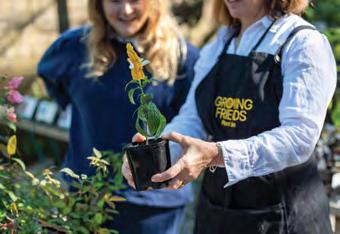
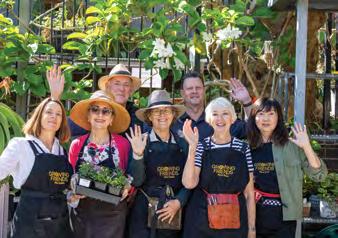
Growing Friends Plant Sales nursery is a hidden gem within the Botanic Gardens, run by a passionate team of knowledgeable volunteers who propagate and sell plants from the Gardens’ living collection.
A new future for the Gudjin plum
In a first for the endangered Gudjin plum, scientists, Aboriginal Rangers and local partners have come together on Bundjalung Country to give this unique rainforest species its best chance of long-term survival.
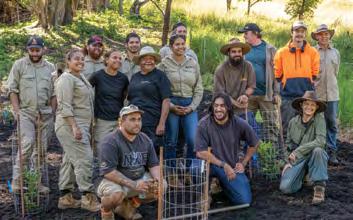
On 25 March 2026, a small but significant planting took place near Billinudgel in northern New South Wales. At a restoration site on Bundjalung Country, staff from the Botanic Gardens of Sydney’s Research Centre for Ecosystem Resilience (ReCER), Saving our Species and local Aboriginal Ranger groups came together to plant Gudjin plum (Davidsonia johnsonii), formerly referred to as smooth Davidson's plum – marking the first genetically informed conservation translocation of the threatened species. While the day itself was a celebration, it also represented years of scientific research, collaboration and careful planning.
Why this species matters
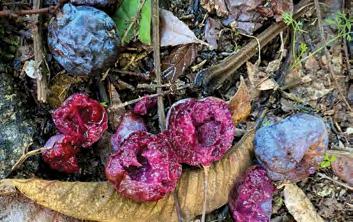
The Gudjin plum is a small subtropical rainforest tree known for its striking pink flowers and tart, plum-like fruit, prized in jams and preserves. But despite its appeal, it is one of New South Wales’ most vulnerable native species, now restricted to around 30 small patches across the state’s Northern Rivers.
Habitat fragmentation has isolated many of these remnant populations, leaving the species vulnerable to inbreeding and environmental change. Over time, this has had a serious impact on the tree’s ability to reproduce sexually.
According to ReCER scientist Monica Fahey’s genetic analysis, Gudjin plum reproduces sexually only rarely,
with many populations relying heavily on vegetative clonal reproduction because it mostly produces empty/ non-fertile seed. After sampling 264 trees across the species’ range, only 69 genetically unique individuals were found – meaning around 74 per cent of sampled trees were clones.
Put simply, many Gudjin plum populations are struggling not because the trees cannot survive, but because they have become too isolated to thrive.
Science meets restoration
To address that challenge, the team designed a translocation plan aimed at maximising genetic diversity at new restoration sites.
By analysing samples from across the species’ range, Monica identified individuals from different family lines that would offer the best chance of successful crosspollination if planted together. Cuttings from those carefully selected trees were then propagated and prepared for planting.
The March planting near Billinudgel brought together around 22 genetically distinct individuals from previously isolated populations, helping recreate the diversity that once existed naturally across the landscape. The goal is to increase the likelihood of flowering, seed set and natural regeneration in the years ahead.
This kind of science-informed restoration is increasingly important as threatened species face growing pressure from habitat loss, climate change and disease. Rather than simply replacing plants, the project is actively rebuilding the genetic resilience needed for long-term survival.
Importantly, Monica’s research also found no evidence that hybridisation with related Davidsonia species was affecting reproduction, reinforcing the focus on boosting genetic diversity within Gudjin plum populations themselves.
Growing partnerships on Country
Just as important as the science was the way the project was shaped through partnership. From the beginning, Bundjalung Traditional Owners and Aboriginal Ranger groups played a key role in guiding the project, sharing knowledge about the cultural significance of the species and helping ensure the work was carried out respectfully on Country.
In early 2025, the project officially began with a cultural yarning session on Country, where participants discussed the importance of following culturally respectful protocols around the moving of threatened species across Country.
The March planting brought that collaboration to life. Project coordinator Di Brown from Saving our Species was joined by Monica and ReCER’s Maurizio Rossetto, alongside Jagun Alliance, Madhima Gulgan Indigenous Rangers, the Jali Ranger Team, Indigenous Conservation and Land Management TAFE students, Bushland Restoration Services and Firewheel Rainforest Nursery at Wybalena Organic Farm.
The project has already opened important conversations about how Botanic Gardens of Sydney and its partners can work more closely with Aboriginal communities on science-informed restoration and threatened species recovery.
The hope now is to secure funding to support future projects that restore other threatened species from the Big Scrub ecological community on communitymanaged sites. That could increase access to bush food species, strengthen cultural connections and create new opportunities for shared research and land care.
Photo: Glenn Smith Photography
Clockwise from top: Aboriginal participants from Jagun Alliance, Madhima Gulgan Indigenous Rangers, the Jali Ranger Team, Indigenous Conservation and Land Management TAFE students, along with Bushland Restoration Services; Gudjin (Davidsonia johnsonii) fruit from the remnant trees at Wybalena Organic Farm.
Safeguarding the
High on the peaks of far north Queensland, a quiet conservation effort is helping safeguard rare tropical mountain plants in a changing climate, writes Mitch Carle, Senior Horticulturist Nursery, Blue Mountains Botanic Garden.
Since I took over management of the Blue Mountains Botanic Garden nursery, I've been interested in a collection held there, known as the Tropical Mountain Plant Science (TROMPS) plants. TROMPS is a series of plants collected from peaks in far North Queensland, distributed to 16 different gardens to test their resilience in different climates. One of the coldest gardens, and at altitude, and with the climate changing yearly, the Blue Mountains Botanic Garden could play a role in saving these plants from extinction.
In September last year I was invited on a tour with the International Dendrology Society, a private group of tree lovers of which I am a member, up to the peaks around the Atherton Tablelands to see these plants growing in their natural habitat. When I travel like this, I like to put together a "hit list" of plants that I want to tick off my bucket list, and this trip didn’t disappoint.
In the field
I wanted to view the habitats of the TROMPS plants; the surrounding plants, soil type, but most importantly the aspect of the plants to know how to give them the best chance at the Garden. The difference between a southfacing aspect at Mount Tomah is vastly different to that on Mount Bartle Frere, Queensland's highest mountain. In the depths of winter when the temperature may be one degree at Mount Tomah, the windchill takes it down into the negative, but this would rarely be the case in Queensland. This will dictate the planting locations at Blue Mountains Botanic Garden.
The decision was made to grow on the TROMPS plants in the nursery, making them as robust as possible before they're planted out. This, coupled with location selection, will give them the best chance in a colder climate. We hope to plant them within existing, dense basalt cap forest, creating a microclimate limiting frost settling and blocking the worst of the icy winds.
Mount Tomah is on basalt-derived soils, but a lot of the TROMPS stock comes from granite soils, and while we don't get as much rainfall here as in the Atherton Tablelands, their drainage is sharper, so experiencing these plants in their natural habitat is key to giving them the best chance in the Blue Mountains.
Ancient forests and rare conifers
Our first notable visit was to one of a handful of populations in the world of the ancient Pectinopitys ladei, the Mount Spurgeon black pine. To access this ancient tree required us to wait at an abandoned roadhouse before being delivered the key to a locked gate, followed by an arduous 20km four wheel drive up a treacherous road. The peak of Mount Spurgeon is not accessible in the wet season, and you need to be invited by the "gatekeeper" who lives between the road and the national park.
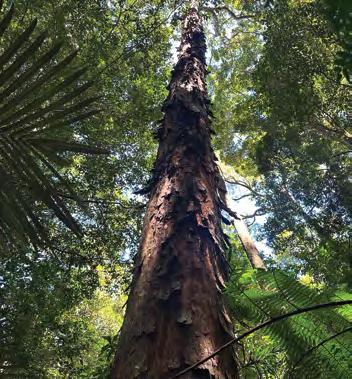
Only found between 900–1400 metres on Mount Lewis and Mount Spurgeon, these trees are ancient Gondwanan relics. Only described in 1905, and with few plants in cultivation, all reports point to this tree being relatively small in garden settings, up to 10m. We were taken aback to find ourselves standing in a forest of ancient Agathis atropurpurea, conifers aged by dendrochronologists to be in the thousands of years old. Resin from the trees was mounded ankle-deep on the ground and we did a double take when staring up into the trees. The Mount Spurgeon black pine towered 40m into the canopy, four times the size we anticipated, with plating bark sweeping out from the pin-straight trunk.
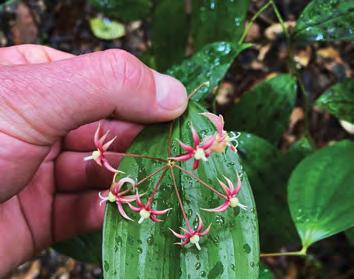
Our trip took us to various locations, most of which featured ancient Gondwana era, or slightly younger trees. The second visit we made was to a population of Stockwellia quadrifida. These are closely related to eucalypts, but enjoy much wetter, rainforest type conditions and were thought to have evolved 30–40 million years ago. The walk into the Stockwellias wasn't far, but we were lucky to see some fantastic plants along the way including the potato fern, Ptisana oreades, Dipteris conjugata, the Proteaceous Austromuellera tinervia, Kuntheria campanulata (Colchicaceae with a restricted distribution) and Garcinia brassii to name just a few.
We had a very rare viewing of a musky rat kangaroo as we stepped into the grove of Stockwellias which really topped the moment off. I was very interested to find immediately on the ground below the massive Stockwellias, the waxy, pink tubular corollas of Paphia meiniana (formerly Agapetes meiniana). These are an epiphytic plant in the family Ericaceae, a key family represented at Blue Mountains Botanic Garden, growing high up in the canopy, these already grow comfortably on Mount Tomah.
We made an attempt at the summit of Mount Bartle Frere, in the hopes of seeing TROMPS plants Rhododendron lochiae and Eucryphia wilkii in situ. Unfortunately, the
Above: Kuntheria pedunculata, bizarre Colchicaceae from Far North Queensland
Opposite: Dipteris conjugata on the approach to Mount Bartle Frere
“Returning to the Blue Mountains Botanic Garden, I now have a lot more clarity around the TROMPS project moving forwards. One of the good things about working in a nursery is that one small collection of plants can lead you to a new and deep appreciation of a whole region“
MITCH CARLE, SENIOR HORTICULTURIST NURSERY
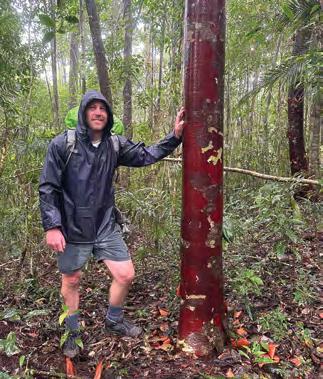
weather was less than perfect with around 400mm of rain over the 24 hours we were on the mountain. We were lucky enough however, to see beautiful specimens of Agathis atropurpurea with the purple/ maroon trunks for which they're named, Cyathea rebeccae and the bumpy satinash Syzygium cormiflorum.
On our descent, we made the bizarre and colourful discovery of the big blue earthworm, Terriswalkeris terraereginae, washed out of its home on the track's edge. This is a giant native earthworm that can reach two metres in length.
A landscape of microclimates
The most diverse walk as far as microclimates and habitats was the climb to Kahlpahlim Rock. Starting in dense rainforest and steeply rising through steam and clouds, we made our way through dry sclerophyll, rainforest and heathlands. At around 800m, numerous tooth-billed bowerbird display courts were encountered. These consisted of flat, cleared forest floor circles, roughly two metres in diameter.
The bowerbirds had used the upturned leaves of Neolitsea dealbata to show off the pewtery undersides to attract a mate. On the summit, we came across an impressive specimen of Rhodamnia blariana with foliage of copper, lime yellow and brassy stems, but showing signs of myrtle rust. Passing through an overgrown corridor, we emerged onto a sheer, windswept granite cliff face. This rockface was dominated by Borya septentrionalis with Dendrobium flower spikes flowering off the edge of the cliff into a thick mist. The decision was made not to climb onto Lamb's Head (the high point of the walk) as it was slippery and drizzling. Unfortunately, this is the only known location of the critically endangered Prostanthera athertoniana, another target for this trip.
Returning to the Blue Mountains Botanic Garden, I now have a lot more clarity around the TROMPS project moving forwards. One of the good things about working in a nursery is that one small collection of plants can lead you to a new and deep appreciation of a whole region; in this case the flora of the Wet Tropics, its huge biodiversity and the interesting fauna that call it home.
From left: Juvenile Agathis atropurpurea on approach to Kahlpahlim Rock; Pectinopitys ladei towering on Mount Spurgeon
Photo: Caitlin Bye
Growing a lifelong connection
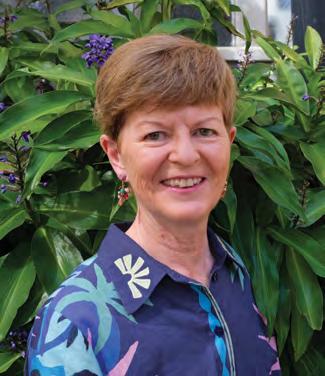
For Sydney-based donor Sue Meares, a love of gardens, shaped by family, friendship and creativity, has grown into a lasting commitment to supporting the Botanic Gardens.
For Sue Meares, the Royal Botanic Garden Sydney has always been part of her life as a Sydneysider. “We are so lucky to have such an incredible public space right on the harbour, accessible to everyone,” she says.
However, it wasn’t until her retirement in 2015 that her connection deepened in a more personal way. A visit to an art class at the Royal Botanic Garden Sydney with her mother and sister was a turning point. Held in the Maiden Theatre, the day combined painting, conversation and time spent immersed in the gardens. “I just thought, oh wow, it’s so beautiful here,” Sue says. “The whole event was lovely – sitting out, having lunch, and then doing art with people who loved both art and the gardens.”
Soon after, another visit – to Artisans in the Gardens at Lion Gate Lodge – led to an unexpected reconnection. “I realised there were several women I knew from my golf club who were volunteering there,” she says.
“That was really the moment I thought, I should get a bit more involved.”
Sue started donating to Foundation & Friends, choosing to support campaigns that resonated with her. Following a behind-the-scenes tour of the Library, one such project was the digitisation of the Daniel Solander Library’s extraordinary collection.
“To actually see those incredible books – the botanical illustrations in particular were just exquisite,” she says. “It really brought home how important it is to preserve
that knowledge.” She has also supported initiatives related to the Australian PlantBank, recognising their importance in safeguarding plant biodiversity. “The work they’re doing is vitally important,” she says.
Sue’s connection to the Gardens is also shaped by family. Her mother, Helen Meares, is a long-time Waratah donor and artist, who exhibited her watercolour paintings at Lion Gate Lodge in the early 1990s. “We’ve always been a creative family,” Sue says. “I paint as well, and I think that connection between art and nature is something the Gardens do so beautifully.”
One of her favourite spots at the Royal Botanic Garden Sydney is the Cactus Garden. “I love their shapes – they’re so sculptural – and how they survive in harsh conditions,” she adds. She also admits to taking any opportunity she can to visit Growing Friends Plant Sales. “They always have an interesting selection of quality plants which take off as soon as they get planted out,” she says.
For Sue, supporting the Gardens is essential. “We’re so fortunate to have this in Sydney,” she says. “We can’t afford to lose our green spaces. It’s so important that we protect them and that we help people understand just how valuable they are.”
Growing more than gardens
Across New South Wales, Youth Community Greening is helping young people plant far more than trees and vegetables. With support this end of financial year, its impact can continue to grow.
As suburbs expand and open green space becomes harder to find, school grounds and community centres are increasingly becoming some of the last places where children can connect with the natural world.
This is where Youth Community Greening (YCG) steps in. Established in 2008 by Botanic Gardens of Sydney, the hands-on environmental education program works with children and young people up to 25 years across New South Wales, from preschools and primary schools to migrant youth groups, young people with disability, youth justice centres and communities facing disadvantage.
Creating spaces to grow
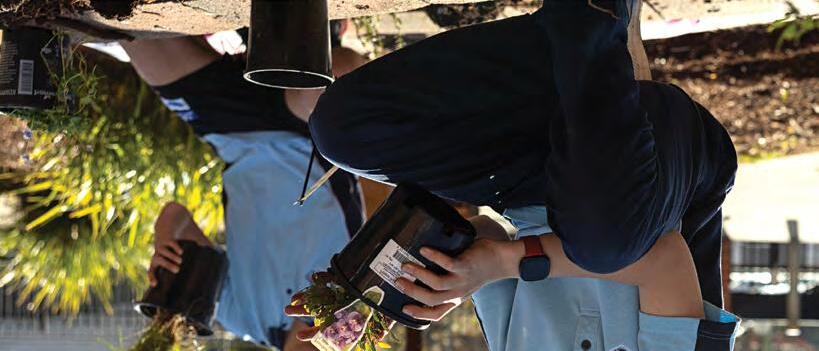
Working alongside educators from Botanic Gardens of Sydney, participants help design and build gardens, create food forests and biodiversity habitats, and transform unused spaces into places that are vibrant, useful and alive. But the impact reaches far beyond the garden bed.
“I see the reactions of students first hand every day –they can’t wait to show us what’s happened since we last visited, how specific plants have grown or how
“I
visited Cobargo Public School unannounced after we rebuilt the entrance garden of the school after the fires, a student saw me pull up and they all ran out to show me the garden.“
– PETER DAWE, YOUTH COMMUNITY GREENING LEAD.
they’re using spaces created,” says Peter Dawe, Youth Community Greening Lead.
“I visited Cobargo Public School unannounced 18 months after we rebuilt the entrance garden of the school after the fires, a student saw me pull up and they all ran out to show me the garden.”
That garden was created in the wake of extraordinary loss. During the project, students spoke openly about homes, pets and even neighbours they had lost in the Black Summer bushfires. The process of rebuilding something together became, in Peter’s words, “such a healing process”.
“When we had the garden opening, despite it being in COVID, there was a record attendance for any function the school had had previously,” he says.
Stories like this capture what makes YCG so powerful. The program is not simply about planting trees or teaching gardening skills, it’s about creating spaces where young people feel safe, capable and connected.
“Green spaces in schools, preschools and youth centres provide areas and opportunities for young people to regulate their emotions, protect their mental health, encourage physical activity, strengthen social skills, teamwork and learning and also help reduce inequality by creating spaces of connection,” Peter says.
Growing confidence and connection
That sense of connection can be life changing. Over the years, YCG has worked with more than 150,000 participants across more than 700 sites statewide, helping young people discover practical skills, confidence and a stronger sense of belonging.
A 2018 survey of participants by Western Sydney University’s Centre for Education Research underlined just how meaningful that impact can be. Of those surveyed, 85 per cent said the program had a positive effect on their health, while 91 per cent said it had benefited their community. Nearly three-quarters said they were exercising more, and 61 per cent reported eating better as a result of taking part.
“A number of students from additional needs schools and youth justice centres have gone on to careers in horticulture,” Peter says. For some, that first chance to get their hands in the soil can become the beginning of an entirely new pathway.
The benefits also ripple out far beyond the individual. YCG projects often become anchors for entire communities – places where families, staff and neighbours can gather, learn and care for a shared space.
“Our program helps connect young people to community and the environment. It gives them an opportunity to get their hands in the earth and feel the mental, physical and emotional benefits,” Peter says. “We receive nothing but positive feedback from youth and staff.”
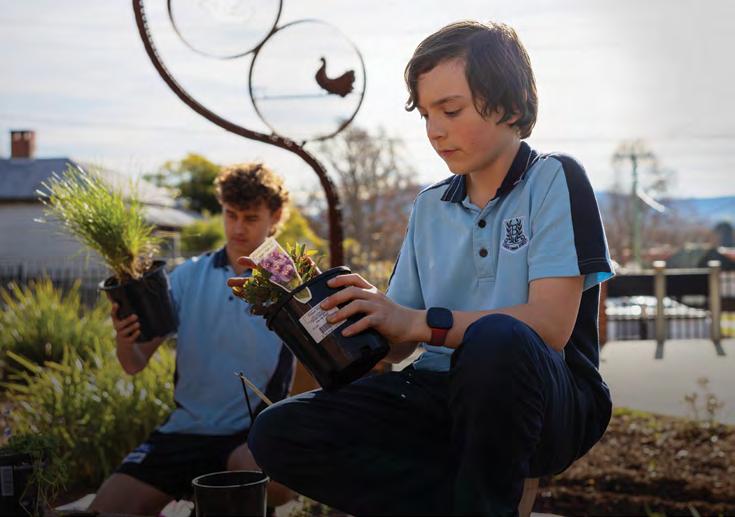
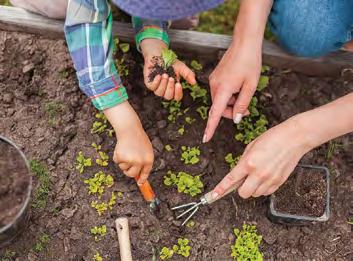
Above: Hands-on learning as young people connect with nature.
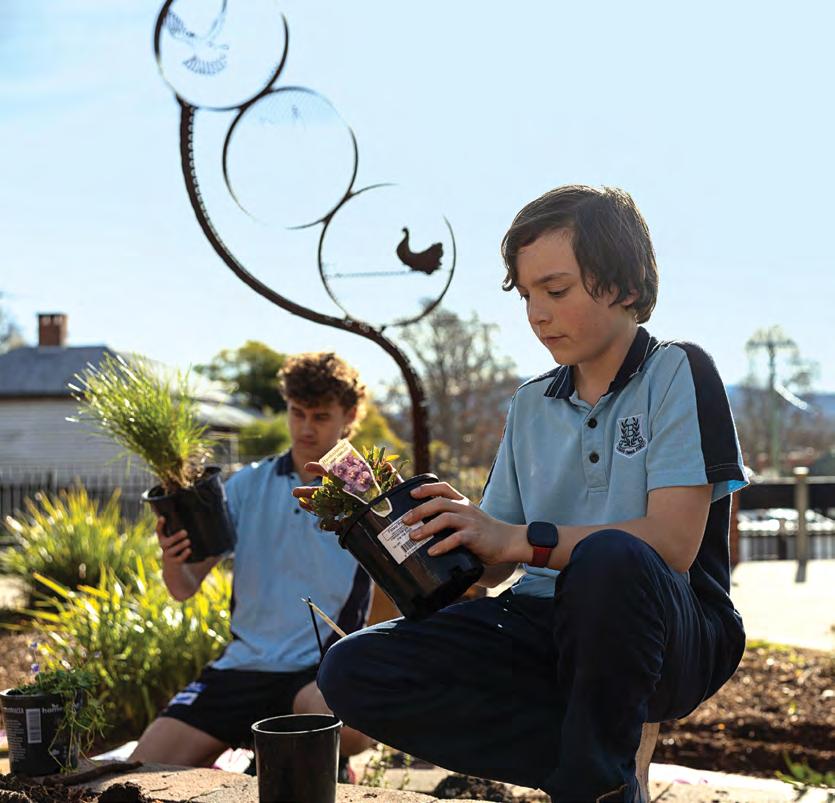
Opposite: Students planting and caring for a school garden.
Small forests, big impact
One growing focus is YCG’s tiny forests program: compact, fast-growing pockets of native bushland that transform school grounds into cooler, greener and more biodiverse spaces. These living classrooms offer shade, improve soil health, support local wildlife and give students hands-on opportunities to learn about ecology, sustainability and care for Country.
On a recent grant-funded project working with disengaged Aboriginal young people across 16 high schools, YCG also helped co-design cultural spaces within schools.
“Most students noted that as a result of the program they experienced a greater connection to community, school and to their families through discussing the program,” Peter says. “The YCG program acts as a catalyst to so much more than just the direct on-ground work that we do.
“As much as we try to provide ongoing support, it is difficult and that is why we build not just green spaces but we build capacity, confidence and an appreciation of the natural environment.”
This end of financial year, Foundation & Friends of the Botanic Gardens is raising funds to help ensure YCG, which is entirely dependent on philanthropic support, can continue reaching the young people who need it most.
TO DONATE visit botanicgardens.org.au/donate or scan the QR code.
A walk with impact
In February, Volunteer Guide Ann Webber led Foundation & Friends donors on a special tour through the Royal Botanic Garden Sydney, sharing some of the vital science and conservation work their support helps make possible. Here, Ann shares a few of the highlights to look out for on your next visit.
GRASS TREES (XANTHORRHOEA AUSTRALIS) AT CADI JAM ORA
Bed 21a and 21b
Phytophthora is an organism that causes devasting root rot and death in grass trees and many of the native species.
Foundation & Friends provided funds to upgrade the Garden’s PlantClinic laboratories.
Researchers at PlantClinic are at the forefront of detecting, researching and developing solutions to combat this disease.
BRYOPHYTES AT THE FERNERY
Australia has about 1,800 bryophyte species (mosses, liverworts and bloodworts), but only 40% are fully described. Known as nature’s ‘ecological engineers’, bryophytes manage water, soil and air quality.
Foundation & Friends donated funds to better understand this significant group of little plants. Growing their story assists in forest management, conservation and even urban design.
How your support has helped us grow
Eucalyptus grandis
Bryophytes (Fernery)
AI herbarium leaf research Moss and ecosystem research
$1M total (to Herbarium Digitisation project)
Xanthorrhoea (Grass Trees)
PlantClinic and phytophthora work
Wollemi Pine ReCER Lab
Meta-collection and long-term conservation
ReCER DNA robot/analysis tools, lab equipment, marine plant projects
$336,000 total $500,000 total (to PlantClinic) $150,000+ $665,000
3 4 5
BLACK BEAN (CASTANOSPERMUM AUSTRALE
)
Bed 102j
Supported by Foundation & Friends, The Gardens’ Research Centre for Ecosystem Resilience is playing an innovative role in restoring NSW’s critically endangered rainforest. Through the Science Saving Rainforests project, researchers are identifying climate-resilient, genetically optimal plants for largescale restoration. The black bean tree is a critical species within the rainforest canopy.
WOLLEMI PINE (WOLLEMIA NOBILIS)
Bed 18a
Foundation & Friends has championed Wollemi pine research since its discovery in 1994. Foundation & Friends supported Dr Cathy Offord and Damian Wrigley at the global launch of the Wollemi meta-collection in England, as well as funding research at the Australian National University. These meta-collections serve as an international insurance policy against fire, pests, and disease.
FLOODED OR ROSE GUM (EUCALYPTUS GRANDIS)
Bed 3
This Eucalyptus grandis was planted in 1956. In 2024, a researcher trained a computer using AI to recognise and measure individual eucalyptus leaves from digitised herbarium photographs, a project funded by Foundation & Friends. Over 135,000 leaves from 50,000 herbarium specimens were measured. What would have taken years took less than four days.
Life against the odds
In Antarctica’s frozen deserts, scientists are uncovering extraordinary fungi that survive where almost nothing else can, writes
Professor Brett Summerell AM, Chief Scientist and Director Science, Education
and Conservation.
Antarctica is the coldest and driest of the continents on Earth, with conditions that prevent the existence and survival of most forms of life except those that are highly adapted to these conditions.
One of those groups that can persist in these conditions are the various forms of micro-organisms, such as bacteria and fungi, which have a range of adaptations that allow them to persist in the dry freezing conditions of Antarctica. These organisms are known as psychrophiles – literally cold-loving forms of life.
Surviving extreme conditions
Over the last few years I have been involved in a project led by Professor Belinda Ferrari at the University of New South Wales to begin to better understand the species of micro-fungi – which you may know as moulds – that inhabit Antarctica, to describe and name them and to document their adaptive ability to survive these extreme conditions.
The results to date are fascinating, to say the least, and are asking as many questions as they are answering.
Fortunately we have an excellent team of two research fellows – Xabier Vázquez-Campos and Nathali Machado de Lima – and five PhD students – Jordan Vink, Priyanka Rani Majumdar, Sylvie Nolf, Angad Vinay Bakshi and Liam Hewitt – to share the load and contribute to the outcomes of the research.
Generally fungi exhibit greater resilience than bacteria, enabling enhanced survival in inhospitable environments. Their remarkable ecological adaptability is supported by physiological and morphological changes, including thickened and melanised (blackened) cell walls, as well as the production of diverse secondary metabolites, such as UV protectant carotenoids and related chemicals.
These adaptations enable them to withstand prolonged desiccation and intense solar radiation. In cold environments, such as the deserts of Antarctica, fungi tolerate high solar radiation, recurrent freeze-thaw cycles, osmotic stress and a scarcity of water and nutrients. In short, they have tremendous ability to withstand the extremes of the Antarctic conditions.
Main image: A group of Antartic penguins
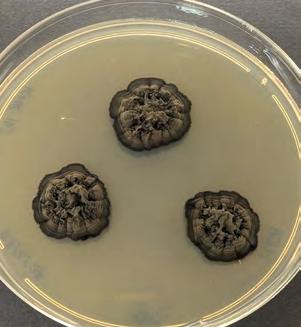
Inset: Close-up of black fungus
Image: Jordan Vink
A hidden world
Our work has focused on one site, Robinson Ridge, a rocky, seasonally ice-free area located on a small peninsula near the coast of the Windmill Islands region of East Antarctica. The site is situated less than 10 km south of the closest major Australian research facility, Casey Station, and contains unique mosses and lichens that are able to grow for the few months each year when conditions are ‘mild’ enough to allow growth. The rest of the year is a case of survival.
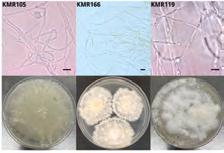
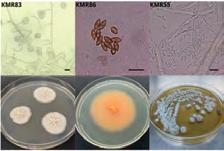
Initial work involving both culturing and environmental DNA analysis from the “soil” showed a huge diversity of fungi was present across a range of different fungal groups. Those species which were able to be cultured – grown on agar gel (a seaweed gel commonly used in cooking) in the lab – and which could then be analysed in more detail turned out to be – more often than not –undescribed species.
Identifying a new species
The process of describing a new species of fungi is complex, especially for micro-fungi. Firstly it is necessary to grow the fungus on a range of different agar media –each with a different combination of nutrients that might best favour growth and different morphological features –and to expose them to different temperature ranges.
Surprisingly for many of the species they often grew best at 15-20°C – temperatures they never experience. Detailed microscopy and photomicrography is necessary to describe cell shape, colour and other features to prepare the description.
Most taxonomic descriptions nowadays rely on the use of DNA analysis, and this is especially true of microfungi. The range of visual features available, even down a microscope, are often limited and so it is necessary to use differences in DNA sequences of various genes to tell one from another – or a new species from existing described species.
Documenting life underground
We have started this process and have nearly 30 new species descriptions currently underway, with one new species, a species of Penicillium (Penicillium psychroflourescens) already described and published. Many of the new species are what are known as black fungi – heavily pigmented and melanised species, often with thick walls, and are well adapted to surviving the extreme conditions of Antarctica. Many of the species are just not new species, but are new genera and even belong to new families, highlighting the uniqueness of these fungi.
We have focused on generating full genomes of many of these fungi and using various techniques to understand what parts of the genome are active and switched on when the fungus is stressed by various factors such as UV exposure or exposure to environmental pollutants. There is a lot of interest in the ability of these fungi to be metabolically active in extreme conditions and the potential application to industrial processes or remediation of polluted sites.
Together with other microorganisms, these fungi mediate the cycling of key elements such as nitrogen and carbon. Despite all this remarkable capacity, fungi remain one of the least explored components of the biota in terrestrial Antarctica, with the culturable fraction being lower than in temperate soils. This gap represents a fundamental impediment to understanding the microbial ecology and biotechnological potential of fungi in cold deserts.
This work highlights how little we know about life underground – there are literally millions of species still left to be documented and described, especially in some of the planet’s least explored regions.
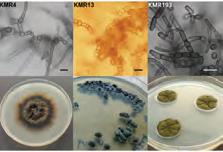
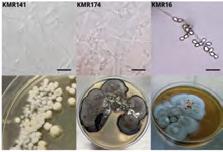
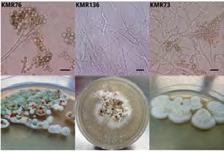
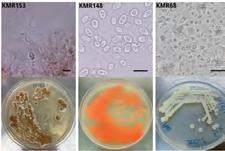
Above: A selection of fungi samples
Giants of the forest
From ancient forests to suburban reserves, big trees hold stories of resilience, survival and quiet ecological power, writes David Bidwell.
Big trees around the world are widely renowned. The Sequoiadendron giganteum and Sequoia sempervirens (redwoods) of California, the Mexican Taxodium mucronatum (bald cypress), particularly the ‘Thule Tree’ near Oaxaca, and the ill-fated sycamore gap tree, Acer pseudoplatanus at Hadrian‘s Wall, UK, are all honoured (or mourned!).
Australian veteran trees are equally celebrated. Several states and territories have their own champions. The
giant Eucalyptus diversicolor (karri), and E. jacksonii (tingle), of Western Australia, the Victorian E. regnans (mountain ash), and – despite ongoing threats to their survival – the Tasmanian giant mountain ash, E. obliqua (messmate), and E. globulus (blue gum) are all well-loved.
Some of the most well-known big trees in New South Wales are the huge E. pilularis (blackbutt), such as the bird tree, and the Benaroon tree on the Mid-North Coast. The tallest species in NSW is E. grandis (flooded gum), the best-known being ‘the Grands’ near Bulahdelah, on the Mid North Coast of NSW.
Some of the aforementioned examples are amongst the tallest and/or largest living organisms on the planet. The final examples in NSW are the massive Corymbia maculata (spotted gum) on the South Coast. Two great examples have been affectionally named ‘Big Spotty’ and ‘Old Blotchy’. Although not widely publicised, these trees are possible to visit and admire, particularly Old Blotchy, and are accessible via separate small forest tracks off the Princes Highway, near Ulladulla.
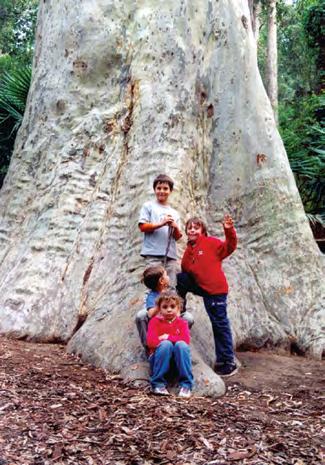
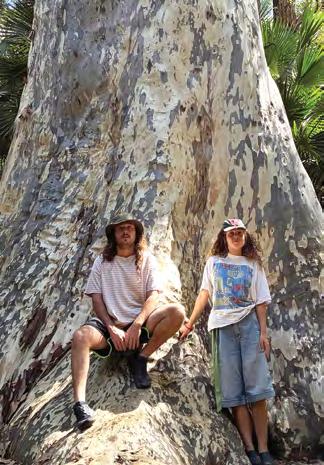
These are all trees which have survived for many hundreds of years and endured multiple threats such as logging, and bushfires. The photos featured here show Old Blotchy, with my children, taken 20 years apart, the first in 2005, and the most recent in 2025.
David's children with Old Blotchy in 2005 (left) and in 2025 (right).
Plants in the Gardens
Across the Botanic Gardens, winter reveals a season of quiet beauty, where structure, resilience and renewal take centre stage.
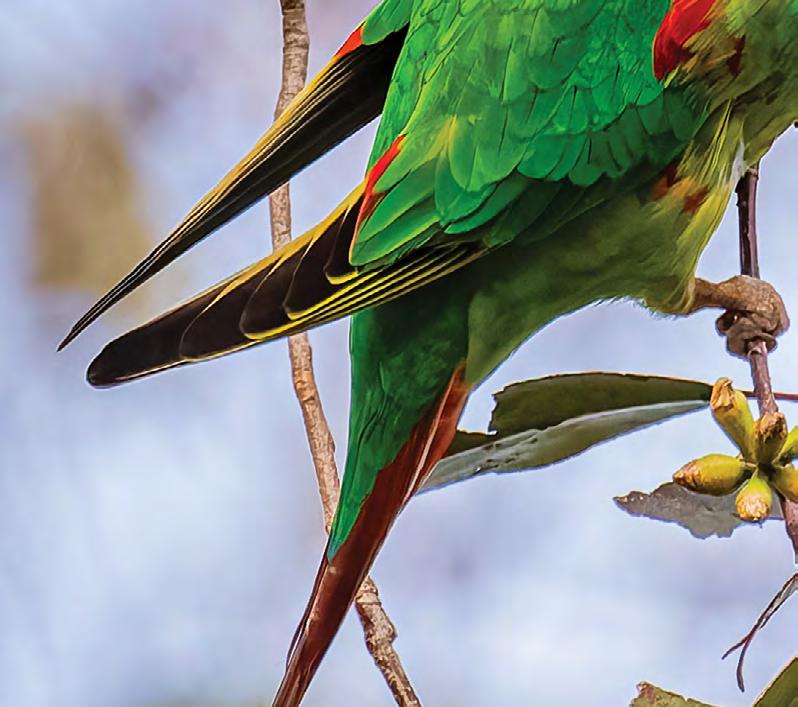
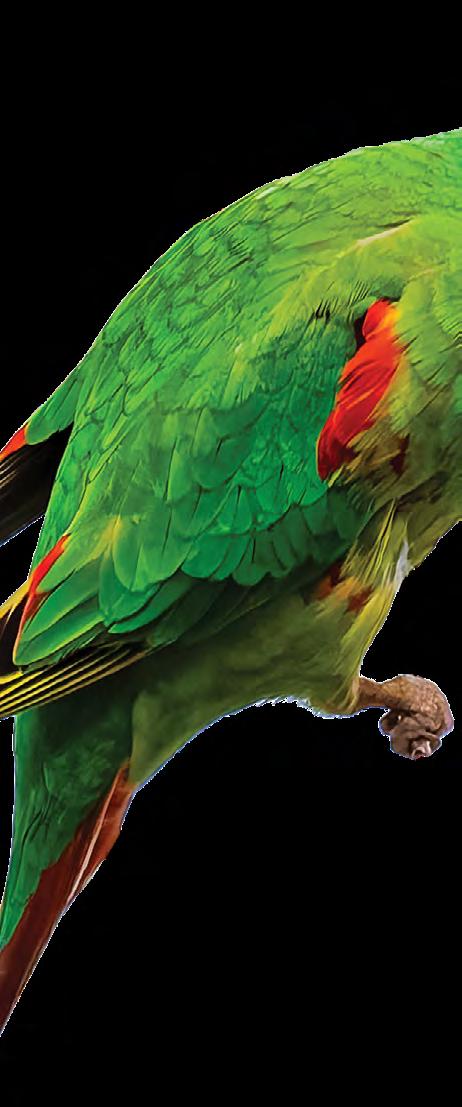
In winter the Australian Botanic Garden Mount Annan becomes a refuge for the endangered Swift parrot
Photo: Glenn Smith Photography
AUSTRALIAN BOTANIC GARDEN MOUNT ANNAN
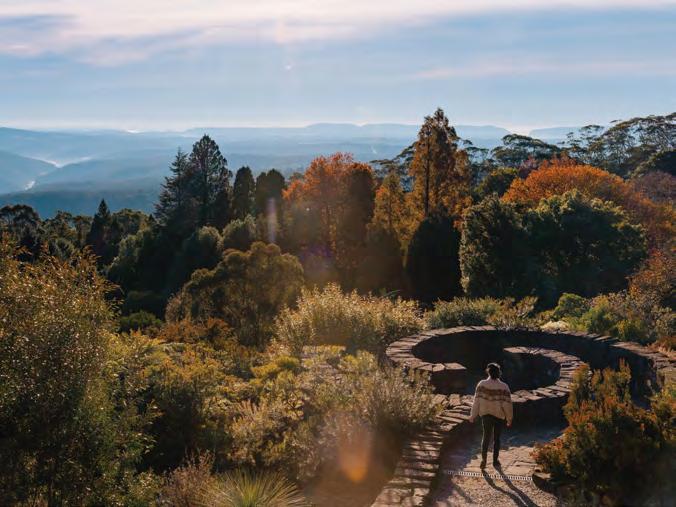
Winter at the Australian Botanic Garden Mount Annan offers a quieter, reflective beauty, revealing the resilience and seasonal rhythms of Australia’s native plants and animals. Cooler temperatures allow much of the Garden to pause, prepare and for some to subtly flourish while others are more flamboyant in their floral displays, rewarding visitors who take the time to explore during the winter months.
Across the Garden, several spring-flowering species are already signalling what’s to come. Indigofera australis is beginning to set buds, hinting at its delicate pink flowers that will emerge when temperatures rise. Many grevillea and hakea species are also in flower or approaching peak bloom, providing bursts of colour and structure throughout winter while supporting nectar-feeding birds and insects.
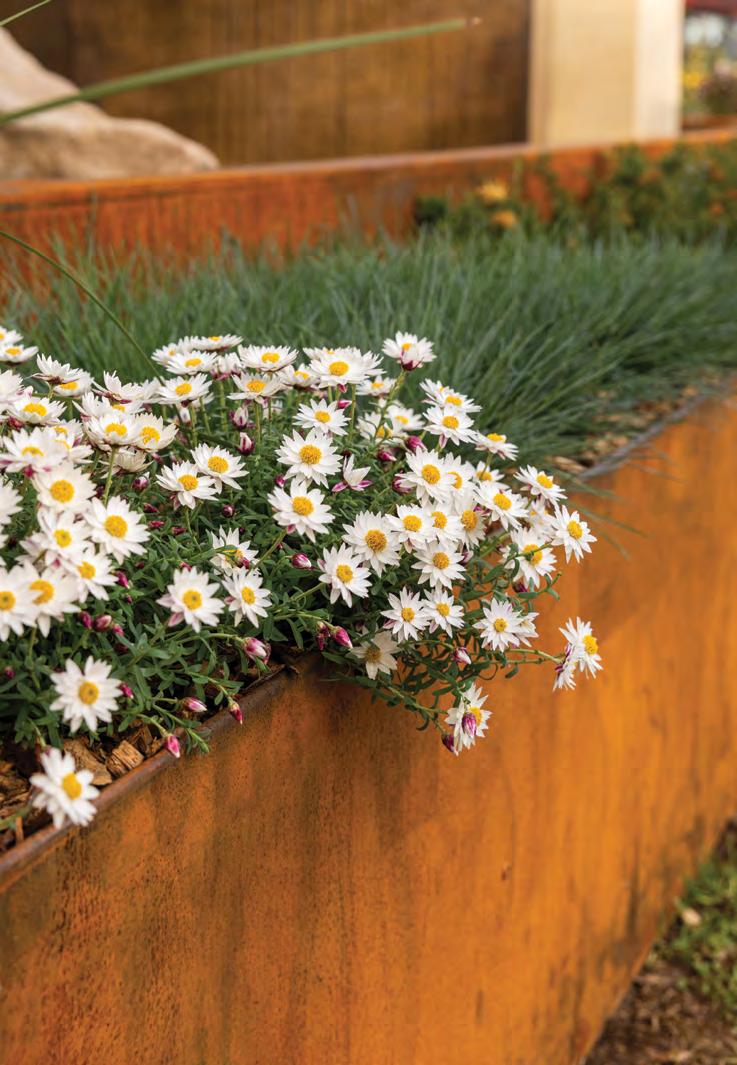
Paper daisy seedlings continue to establish strongly following autumn rains, building healthy inflorescence ready for a vibrant flush of colour in September. Restoration plantings on the slopes of Mount Annan summit have settled in well post construction of the Summit viewing platform.
Winter is a particularly lively season for birdlife at Mount Annan. The Garden becomes a refuge for a range of native species, including the endangered Swift parrot, whose distinctive calls can be heard at several locations across the site as it makes the Garden its winter home. These visitors add movement and sound to the winter landscape and highlight the important role the Garden plays as habitat as well as display garden.
Horticultural curation continues behind the scenes to ensure the Living Collection is ready for the current and future seasons. Key lawn areas are looking especially vibrant after being over sown with sterile rye grass in autumn, maintaining colour and resilience through winter. Mulching works are underway across the site in preparation to suppress emerging spring and summer weeds while insulating soils and assisting to conserving moisture.
Attention is also turning to the refinement of the cycad collection in anticipation of hosting a field trip for the 13th International Conference on Cycad Biology, with teams carefully assessing presentation, plant health and labels for this key collection.
Winter is an ideal time to slow down and enjoy Mount Annan’s seasonal charms. So grab a coffee or hot chocolate from the Garden’s Café and explore everything Australian Botanic Garden Mount Annan has to offer.
MICHAEL ELGEY, CURATOR MANAGER, AUSTRALIAN BOTANIC GARDEN MOUNT ANNAN
ROYAL BOTANIC GARDEN SYDNEY
Winter in the Garden offers a different kind of beauty, one defined by structure, texture and quiet resilience. Without the exuberance of spring or the density of summer, this is a season that invites closer observation. Forms become more pronounced, silhouettes more striking, and the underlying framework of the landscape is revealed with clarity. It is a time when the bones of the Garden come into focus.
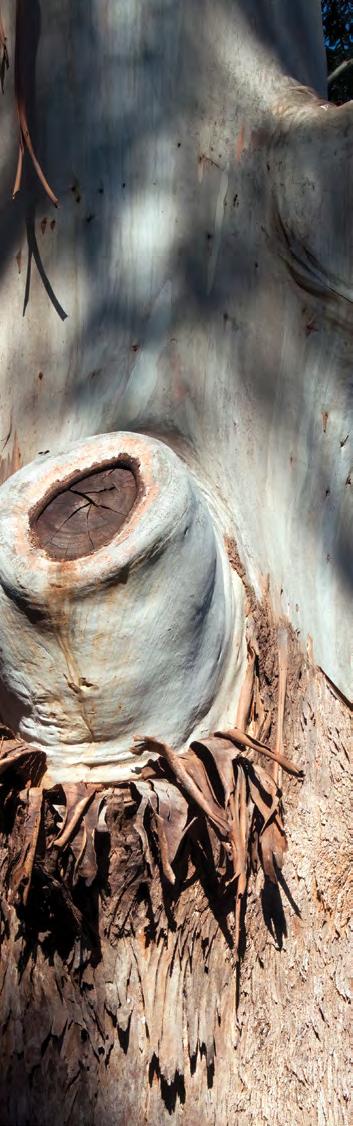
One tree that exemplifies this beautifully is the Eucalyptus grandis located in the Banks and Solander Bed. In winter, its tall, pale trunk and smooth, shedding bark stand out against the softer tones of the surrounding landscape. Often referred to as the flooded gum, this species is among the tallest trees in Australia, and this particular specimen commands attention not through colour, but through presence. The subtle tonal shifts in its bark, silvers, creams, and soft blues, are especially striking in the low winter light.
Bed 60 continues to take shape, featuring several interesting camellia varieties that are establishing. Among them are the beautiful Higo camellias, selections of Camellia japonica that trace their origins to Japan. Traditionally grown by samurai, Higo camellias are admired for their simplicity and form, typically featuring single blooms with prominent, often intricate stamens at their centre. There is a quiet restraint to these flowers that feels particularly suited to winter. Rather than overwhelming the landscape, they invite closer inspection, rewarding those who take the time to notice their detail and variation. As these plants continue to establish, they offer a glimpse into what will become an increasingly significant and characterful display within the Garden.
While trees and feature plantings shape much of the winter experience, this is also a season where fragrance and subtle detail reward those who slow down. Evergreen foliage, filtered light, and the occasional winter bloom create moments of interest that can easily be overlooked. The crisp air carries scent more readily, and a walk through the Garden can reveal delicate, fleeting sensory experiences that define the season in unexpected ways.
Beyond what is immediately visible, winter is also a time of preparation. Across the Garden, teams are undertaking essential work, including pruning, soil improvement, and planning to support the displays of the seasons to come. It is a quieter kind of progress, but no less important. What emerges in spring is shaped by the care and attention given now.
This winter, I invite you to take your time in the Garden. Look beyond the obvious and notice the structure, the texture and the stories held within each plant. In this season of stillness, there is a clarity that reveals not just how the Garden looks, but how it endures.
JARRYD KELLY, CURATOR MANAGER, ROYAL BOTANIC GARDEN SYDNEY
The Eucalyptus grandis has a commanding presence at the Royal Botanic Garden Sydney
BLUE MOUNTAINS BOTANIC GARDEN
Winter at the Blue Mountains Botanic Garden transforms the landscape into a scene of ethereal beauty. As frost settles on ancient eucalypts and swirling fog drifts through the valleys, visitors find the gardens imbued with a fresh, almost otherworldly atmosphere. The crisp air sharpens the silhouettes of bare branches and camellia blooms, inviting both quiet reflection and brisk exploration.
This winter, the Garden’s dedication to plant conservation is more vibrant than ever, thanks to a series of field collecting workshops that are drawing participants from Botanic Gardens from across NSW. Reaching out to regional botanic gardens such as Orange Botanic Gardens, the Garden is leading a new era of collaboration. These hands-on workshops offer an immersive introduction to ethical collection techniques, rare plant identification and the shared challenges of conservation. The knowledge and camaraderie exchanged among participants, along with Blue Mountains Botanic Garden’s expert Horticulturalists, is laying the groundwork for long-term partnerships across the NSW botanic gardens network.
Adding to the excitement is the completion of the de Ferranti Project – a major milestone for the garden’s landscape. Months of careful construction have yielded sweeping new retaining walls, elegant bluestone staircases, and lush planted terraces that beckon visitors to wander. The jewel in the crown is a freshly restored pavilion, its classic lines now connecting seamlessly to the Camellia Garden. This thoughtful project was made possible by the generous donations of the de Ferranti family and now offers guests a cosy spot to pause, protected from the elements, while taking in the winter beauty.
With the de Ferranti Project finished, Blue Mountains Botanic Garden is not only preserving botanical heritage but also creating new spaces for community, education and discovery. Winter’s touch – frost on the pathways, mist swirling around evergreen giants – brings a renewed sense of wonder. Whether you’re a seasoned botanist or a curious visitor, the Blue Mountains Botanic Garden in winter is a place to reconnect with nature, nurture new friendships, and find inspiration amid the chill.
ASH FILIPOVSKI, CURATOR MANAGER, BLUE MOUNTAINS BOTANIC GARDEN
Winter’s touch brings a renewed sense of wonder at Blue Mountains Botanic Garden
Five plants for the winter garden
Naturalistic gardens are living, evolving landscapes shaped by ecological principles. They rely on plant communities – layered groundcovers, perennials, grasses and structural shrubs – chosen for their seasonal interest, wildlife value and resilience. When we work with plants that suit the local climate and soil, we create gardens that are drought-tolerant, low-maintenance and rich in habitat. Many of these plants are available at Growing Friends Plant Sales.
Grevillea sericea (silky grevillea)
A graceful NSW native found from the Central Coast to the Central West, Grevillea sericea offers delicate, spider-like pink flowers from late autumn through to early spring. Flowers are attractive to birds and bees, adding movement and life to the winter garden. It thrives in freedraining soil in sun to part shade and reaches around 1.5m. Responding well to pruning it also grows naturally into an informal shape – ideal for naturalistic plantings.
nivea (emu bush)
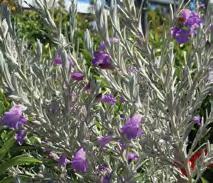
With its luminous silver foliage, Eremophila nivea brings a cool, textural contrast to winter compositions. Although its main flowering period is spring and summer, it often produces scattered purple tubular flowers in the cooler months – an unexpected delight for bees, butterflies and nectar-feeding birds. Growing to around 1m, it prefers full sun and excellent drainage. Its soft, silvery presence makes it a standout structural shrub in mixed perennial and grass plantings.
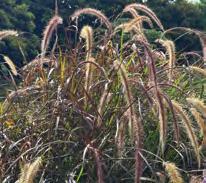
This ornamental grass is a true anchor in naturalistic design. Its arching, burgundy-tinted foliage and tall purple plumes grow up to 1.5m and provide movement, height and season-long drama. It grows best in full sun but tolerates part shade and a range of soil conditions, from well-drained to intermittently wet. Planted in generous drifts, it creates rhythm and cohesion. Maintenance is minimal with an occasional hard cut-back every few years to encourage new growth.
Ficinia nodosa (nobby club rush)
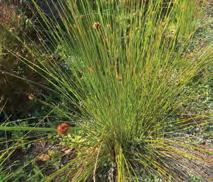
A hardy Australian sedge with upright, bright green stems topped by distinctive orange-brown flower clusters. Ficinia nodosa offers strong, vertical structure and contrasts beautifully with looser grasses and mounded shrubs. It thrives in full sun to part shade and is remarkably adaptable – tolerating dry soils, coastal exposure and even boggy or waterlogged conditions. Its architectural form makes it a reliable backbone plant in naturalistic schemes.
Ceratostigma willmottianum (Chinese
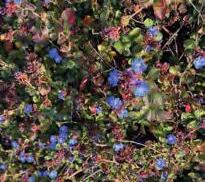
This small, deciduous shrub grows to around 1m and brings a burst of colour to the winter garden. Its green summer foliage turns vivid red in the cooler months when cobalt-blue flowers appear from autumn into winter. The combination of red foliage and blue blooms is striking, especially when woven through grasses or used as a low, spreading layer beneath taller perennials. It grows happily in full sun and tolerates a wide range of soils, from clay to loam to welldrained, making it a versatile and hardy choice.
Eremophila
plumbago)
BELINDA MOON, GROWING FRIENDS PLANT SALES, SYDNEY
What’s On
Winter has arrived, making it a beautiful time to explore the Gardens. From creative workshops to guided walks and special events, there’s something for everyone to enjoy.
For more information about our events and to book visit botanicgardens.org.au/Whats-On scan the QR code or phone 02 9231 8182
Walks and talks
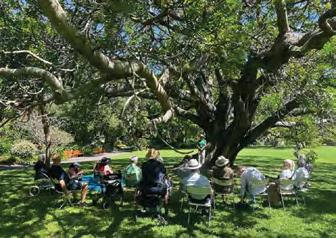
SENSORY GARDEN WALK
Royal Botanic Garden Sydney Sat 6 June, 10am – 11am
Step into the quiet beauty of winter and awaken your senses through a gentle, guided sensory immersion. Slow down, breathe deeply and tune into the subtle sights, sounds, smells and textures of the Garden. This one-hour experience invites you to reconnect with nature, restore calm and notice the seasonal details often overlooked.
ASTRONOMY AT THE CALYX
The Calyx, Royal Botanic Garden Sydney Tue 23 June, 6.30pm – 9pm
Discover the wonders of the night sky with astrophysicist Dr Ángel LópezSánchez. Hear about distant planets, cultural astronomy and space science before viewing the night sky through powerful telescopes. Includes a complimentary glass of wine.
SUNSET SPOTLIGHT TOURS
Woolloomooloo Gate, Mrs Macquaries Road, Royal Botanic Garden Sydney Wed 8 July and Wed 15 July, 6pm – 7.30pm
Experience the Garden and its fascinating nightlife on this adventure by torchlight. Wander along pathways and visit biodiversity ‘hotspots’ such as ponds, where nocturnal animals gather. Using your senses and some of the tools used by our scientists, you may spot Golden Orb spiders, Brush-tailed possums, microbats, flying foxes or tawny frogmouths.
Walks and talks
NATIONAL TREE DAY
Foundation & Friends Terrace, Royal Botanic Garden Sydney Sun 26 July, 9.30am – 11.30am
Celebrate National Tree Day with a guided walk exploring ancient Araucariaceae, including bunya pines, hoop pines and Norfolk Island pines. Hear stories of their history, cultural significance and the vital role they play in our landscapes today.
Member $45 I Non-member $55
URBAN FOREST WALK
Victoria Lodge Gate, Royal Botanic Garden Sat 1 August, 10am – 11am
Explore the urban forest and discover the biodiversity, resilience and benefits of trees. Learn to recognise some of Sydney’s most common species while visiting iconic trees across the Garden. Hear how urban trees support wildlife, reduce pollution and help cool city spaces.
Member $27 I Non-member $35
TALKING PLANTS: A SCIENCE TALK SERIES AT THE GARDENS
Acacia Theatre, Australian Botanic Garden Mount Annan Wed 19 August, 10am – 11.30am
This is the second edition of a new science talk series at the Gardens, led by renowned botanist and science communicator Tim Entwisle. Set in the scientific hub of the Australian Botanic Garden Mount Annan, this engaging series explores the fascinating science behind plants, landscapes and the natural world, connecting cutting-edge research with the everyday wonders of nature.
Through lively, accessible conversations, Tim is joined by leading scientists to unpack big ideas shaping our environment, from biodiversity and climate change to the hidden strategies plants use to survive and thrive. Designed for curious minds of all backgrounds, the series reveals how science extends far beyond laboratories, but is all around us, influencing the way we understand, protect and live alongside the natural world.
In this session, UNSW Professor Angela Moles shares insights into how plants grow, adapt and endure in changing environments, and what their strategies can teach us about resilience in a rapidly shifting climate. Expect a thought-provoking and inspiring discussion that brings science to life in a uniquely engaging way.
Member $30 I Non-member $45
Classes and workshops
MINIATURE MOSS GARDEN
Cryptogram House, Royal Botanic Garden Sat 20 June, 10.30am – 12pm
Create and take home a miniature landscape of moss and ferns. Begin with a guided walk through the Fernery, then craft your own moss garden using ferns, stones and driftwood. Discover how these ancient plants thrive in cool, shaded environments.
Member $42 I Non-member $55
WINTER REMEDIES FROM THE GARDEN
Royal Botanic Garden
Sat 4 July, 10am – 12pm
Explore the traditional uses of European medicinal plants and blend your own herbal tea to take home. Begin with a visit to the Herb Garden to learn about the long history of herbs as medicine, physic gardens and the healing properties of plants such as echinacea, elderberry and mint.
GARDENING IN SMALL SPACES
Maiden Theatre, Royal Botanic Garden Sydney Sat 27 June, 9.30am – 12.30pm
Join Greg Lamont and Liz Jeavons-Fellows as they share practical advice on creating a lush, sustainable garden in small spaces. A delicious morning tea is included.
Member $42 I Non-member $55
Member $75 I Non-member $90
NATURAL DYEING AND ECOPRINTING WORKSHOP
Rathborne Lodge, Royal Botanic Garden
Sat 18 July, 10am – 12pm
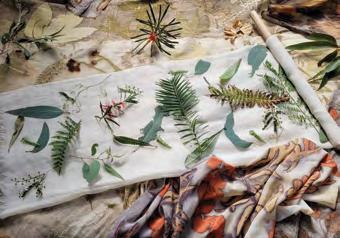
Learn the ancient practice of botanical dyeing using plant material gathered from the Garden. Create your own naturally dyed and ecoprinted silk scarf while discovering simple techniques you can continue at home. All materials are provided.
Member $56 I Non-member $75
Classes and workshops
PROPAGATION WORKSHOP
Maiden Theatre, Royal Botanic Garden Sydney Sat 22 August, 9.30am – 12.30pm
&
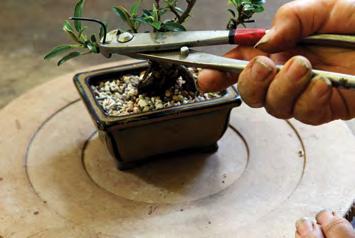
BONSAI WORKSHOP WITH MEGUMI BENNETT
Maiden Theatre, Royal Botanic Garden Sydney Sat 29 August, 9.30am – 12.30pm
Join our Growing Friends’ Liz Jeavons-Fellows and Greg Lamont for a morning of top gardening advice and hands-on propagating. Learn the fundamentals of plant propagation, potting mixes and care in this hands-on workshop. Includes a guided walk to discuss cutting selection and practical tips for home gardening. Morning tea provided.
Member $75 | Non-member $90
Kids activities
Join Tokyo-born bonsai expert Megumi Bennett for a practical workshop on bonsai care and styling. Learn techniques including pruning, potting and design, adapted for Australian conditions. Morning tea included.
Member $180 | Non-member $195
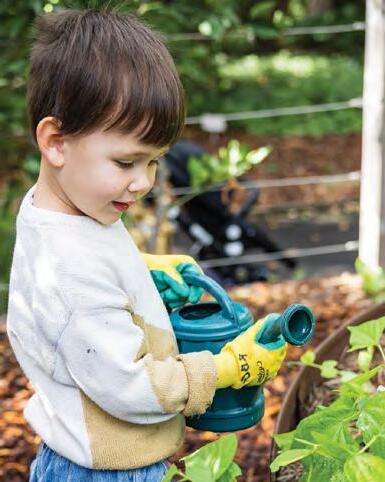
SEEDLINGS
Discover the hidden world of plants at the Botanic Gardens of Sydney. In this hands-on early learning program, kids will become plant detectives on a guided garden walk, uncovering the secrets of leaves, flowers, and plant adaptations. They’ll conduct a fun experiment to learn more about the plants around them, then create their own herbarium pressing, a beautiful botanical keepsake to take home. Spaces are limited, so book now for an unforgettable botanical adventure.
AUSTRALIAN BOTANIC GARDEN
Wednesdays, 9.30am – 11.30am
Term 2: Wed 3 June – Wed 17 June
Term 3: Wed 29 July – Wed 16 September
ROYAL BOTANIC GARDEN
Thursdays, 10am – 12pm
Term 2: Thu 4 June – Thu 18 June
Term 3: Thu 30 July – Thu 17 September
Term pass $147 | Casual $21 per child per session
For Botanic Gardens kids activities, parents or carers must attend and participate in the session and are responsible for their children's whereabouts and safety.
Exhibitions and special events
MINDFULNESS IN THE GARDEN
Visitor Centre, Royal Botanic Garden Sydney
First Friday of the month (5 June, 3 July, 7 August), 12pm – 1pm
Reconnect with the present moment through guided mindfulness in a natural garden setting. Tune into your senses and experience the calming benefits of nature through this gentle, restorative session.
Member $25 | Non-member $25
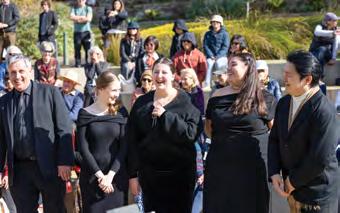
PLANTS IN OPERA
Maiden Theatre, Royal Botanic Garden Sydney
Wed 22 July, 10.30am – 12.30pm
Join us for an event that celebrates plants and opera. Explore the Garden with our volunteer guides, as we visit plants that have appeared in, or inspired some of the world’s most famous operas, from Carmen to Madame Butterfly. The experience concludes at the amphitheatre with refreshments and a special live opera performance by singers from the Conservatorium of Music.
Member $75 | Non-member $90
BEHIND THE SCENES: GROWING FRIENDS PLANT SALES TOUR
Foundation & Friends Terrace, Royal Botanic Garden Sydney Thurs 16 July, 10am – 12.30pm
Step behind the scenes of the Growing Friends Plant Sales. Visit the propagation depot and nursery, meet volunteers and learn how plants are grown and prepared for sale. Includes light morning tea.
Free for members
SPRING BULBS IN BLOOM AT MOUNT TOMAH
Blue Mountains Botanic Garden Mount Tomah Wed 2 September, 8am – 4.30pm
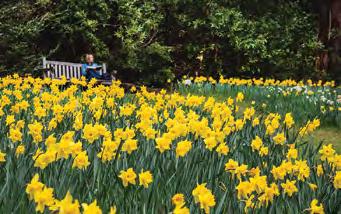
Step into a spectacular display of nearly 10,000 daffodils, alongside tulips, anemones and ranunculus. This guided experience includes travel between Mount Tomah and the Royal Botanic Garden Sydney, plus light refreshments.
Member $90 | Non-member $105
BY JEN SILVERMAN
Give them a place to grow
Donate by 30 June
Support disadvantaged youth to connect with nature, wellbeing and their communities.
All donations $2 and above are tax-deductible. Support Youth Community Greening Donate by 30 June
49% of young Australians are experiencing high levels of emotional distress.
Right now, disadvantaged young Australians are struggling, disconnected from nature, their communities, and themselves. The Youth Community Greening Program at Botanic Gardens of Sydney is on a mission to transform that. Through hands-on education projects, program participants work alongside horticulturists to design gardens, grow food forests, and transform neglected spaces into thriving green places, building confidence, connection, and a lasting sense of belonging.