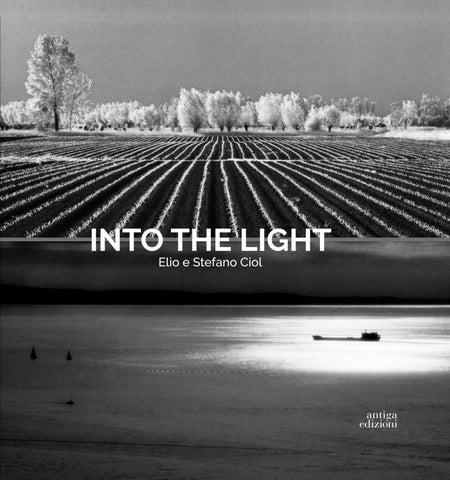
INTO THE LIGHT Elio e Stefano Ciol
INTO THE LIGHT Elio e Stefano Ciol Spazio espositivo | Exhibition space Museo Italo Americano Fort Mason Center SAN FRANCISCO - USA settembre 2024 - febbraio 2025 Promosso da | Organised by Fogolâr Furlan Nord California Istituto Italiano di Cultura di San Francisco Regione Friuli Venezia Giulia Ente Friuli nel Mondo
Con il sostegno di | With the support of
Testi a cura di | Texts edited by Fulvio Dell’Agnese Giovanni Gazzaneo Gian Mario Villalta Progettazione visiva mostra e catalogo | Visual exhibition and catalogue design Stefano Ciol Stampa fotografica Fine Art in mostra | Fine Art photographic printing on display Stefano Ciol Foto | Photos Elio Ciol Stefano Ciol Testo inglese | English text Pamela Ferlin Lynn Fonfa Anita Malnig Direttore editoriale | Editorial Director Andrea Simionato Coordinamento editoriale e Ufficio stampa | Editorial Coordination and Press Office Michela Antiga Impaginazione | Layout Andrea Filippin
© 2025 Elio e Stefano Ciol © 2025 Antiga Edizioni Crocetta del Montello, Treviso www.antigaedizioni.it ISBN 978-88-8435-528-7
INTO THE LIGHT Elio e Stefano Ciol
È con grande orgoglio che il Friuli Venezia Giulia sostiene la mostra “Into the Light” di Elio e Stefano Ciol al Museo Italo Americano di San Francisco. Questa esposizione celebra il talento e l'innovazione di due maestri della fotografia originari di Casarsa della Delizia, che hanno dedicato la loro vita a catturare l'anima del nostro territorio, rivelando al mondo la bellezza nascosta nei nostri paesaggi, nelle nostre tradizioni e nella nostra gente. Attraverso una straordinaria capacità di catturare la luce, i Ciol ci invitano a un viaggio visivo che ci porta alla scoperta di angoli nascosti e paesaggi iconici del Friuli Venezia Giulia e d’Italia, dove la natura e l'uomo convivono in armonia. La mostra, che include scatti indimenticabili di luoghi come Aquileia ma anche i paesaggi cari a Pier Paolo Pasolini e molti altri, è un vero e proprio inno alla bellezza, alla cultura e al nostro patrimonio. Desidero ringraziare il Museo Italo Americano e l'Istituto Italiano di Cultura di San Francisco per aver ospitato questa straordinaria mostra, e tutti i sostenitori che hanno reso possibile questo evento, tra cui PromoTurismoFVG ed Ente Friuli nel Mondo. Un ringraziamento speciale va al Fogolâr Furlan Nord California, che da sempre si impegna a mantenere viva la nostra cultura e a promuovere il Friuli Venezia Giulia nel mondo. Grazie a voi, corregionali all'estero, la nostra terra è sempre più conosciuta e apprezzata. Questa esposizione, in particolare, è un omaggio alla creatività friulana e un potente strumento di promozione turistica, che ci permette di condividere con il mondo intero il nostro patrimonio artistico e culturale. Infine, vorrei ringraziare e complimentarmi con Elio e Stefano Ciol: figure di riferimento nel panorama fotografico italiano, hanno saputo interpretare e rappresentare al meglio l'anima del Friuli Venezia Giulia. La loro opera, esposta nel cuore di San Francisco, è un motivo di grande orgoglio per tutta la nostra regione.
Sergio Emidio Bini Assessore regionale alle attività produttive e turismo
It is with great pride that Friuli Venezia Giulia supports the exhibition ‘Into the Light’ by Elio and Stefano Ciol at the Museo Italo Americano in San Francisco. This exhibition celebrates the talent and innovation of two masters of photography originally from Casarsa della Delizia, who have dedicated their lives to capturing the soul of our territory, revealing to the world the beauty hidden in our landscapes, our traditions and our people. Through an extraordinary ability to capture light, the Ciols invite us on a visual journey of discovery of the hidden corners and iconic landscapes of Friuli Venezia Giulia and Italy, where nature and man coexist in harmony. The exhibition—which includes unforgettable shots of places such as Aquileia but also the muchloved landscapes of Pier Paolo Pasolini and many others—is a veritable homage to beauty, culture and our heritage. I would like to thank the Museo Italo Americano and the Italian Cultural Institute of San Francisco for hosting this extraordinary exhibition, and all the supporters who made this event possible, including PromoTurismoFVG and Ente Friuli nel Mondo. Special thanks go to Fogolâr Furlan Nord California, which has always been committed to keeping our culture alive and promoting Friuli Venezia Giulia in the world. Thanks to you fellow countrymen abroad, our region is increasingly well-known and appreciated. This exhibition, in particular, is a tribute to Friulian creativity and a powerful tool for promoting tourism, allowing us to share our artistic and cultural heritage with the entire world. Finally, I would like to thank and congratulate Elio and Stefano Ciol: leading figures in Italian photography, they have so successfully interpreted and represented the soul of Friuli Venezia Giulia. Their work, exhibited in the heart of San Francisco, is a source of great pride for our entire region. Sergio Emidio Bini Assessore regionale alle attività produttive e turismo
SOMMARIO SUMMARY
INTO THE LIGHT. . . . . . . . . . . . . . . . . . . . . . . . . . . . . . . . . . . . . . . . . . . . . . . . . . . . . . . . . . . . . . . . . . . . . . . . . . . . . . . . 9 INTO THE LIGHT. . . . . . . . . . . . . . . . . . . . . . . . . . . . . . . . . . . . . . . . . . . . . . . . . . . . . . . . . . . . . . . . . . . . . . . . . . . . . . . . 11 Fulvio Dell’Agnese DI INDISPENSABILE C’È SOLO LA LUCE. . . . . . . . . . . . . . . . . . . . . . . . . . . . . . . . . . . . . . . . . . . . . . . . . . . . . . 13 THE ONLY THING THAT IS INDISPENSABLE IS LIGHT . . . . . . . . . . . . . . . . . . . . . . . . . . . . . . . . . . . . . . . . 17 Gian Mario Villalta SOGLIE / THRESHOLDS. . . . . . . . . . . . . . . . . . . . . . . . . . . . . . . . . . . . . . . . . . . . . . . . . . . . . . . . . . . . . . . . . . . . . . . . 21 FRIULI. . . . . . . . . . . . . . . . . . . . . . . . . . . . . . . . . . . . . . . . . . . . . . . . . . . . . . . . . . . . . . . . . . . . . . . . . . . . . . . . . . . . . . . . . . 25 GEOGRAFIA POETICA / POETIC GEOGRAPHY. . . . . . . . . . . . . . . . . . . . . . . . . . . . . . . . . . . . . . . . . . . . . . . 38 ASSISI . . . . . . . . . . . . . . . . . . . . . . . . . . . . . . . . . . . . . . . . . . . . . . . . . . . . . . . . . . . . . . . . . . . . . . . . . . . . . . . . . . . . . . . . . . 60 PASOLINI . . . . . . . . . . . . . . . . . . . . . . . . . . . . . . . . . . . . . . . . . . . . . . . . . . . . . . . . . . . . . . . . . . . . . . . . . . . . . . . . . . . . . . 68 GLI ULTIMI / THE LAST ONES . . . . . . . . . . . . . . . . . . . . . . . . . . . . . . . . . . . . . . . . . . . . . . . . . . . . . . . . . . . . . . . . 80 IL TEMPO DELLA CRESCITA / GROWING UP . . . . . . . . . . . . . . . . . . . . . . . . . . . . . . . . . . . . . . . . . . . . . . . 90 AMERICA. . . . . . . . . . . . . . . . . . . . . . . . . . . . . . . . . . . . . . . . . . . . . . . . . . . . . . . . . . . . . . . . . . . . . . . . . . . . . . . . . . . . . . 101 Fulvio Dell’Agnese
IL DONO DI STEFANO: LA VISIONE COME CHIAMATA . . . . . . . . . . . . . . . . . . . . . . . . . . . . . . . . . . . . 105 STEFANO’S GIFT: VISION AS A CALLING. . . . . . . . . . . . . . . . . . . . . . . . . . . . . . . . . . . . . . . . . . . . . . . . . . . . . 109 Giovanni Gazzaneo SOGLIE / THRESHOLDS. . . . . . . . . . . . . . . . . . . . . . . . . . . . . . . . . . . . . . . . . . . . . . . . . . . . . . . . . . . . . . . . . . . . . . .113 INVERNO / WINTER . . . . . . . . . . . . . . . . . . . . . . . . . . . . . . . . . . . . . . . . . . . . . . . . . . . . . . . . . . . . . . . . . . . . . . . . . . 116 OMBRE DI LUCE / SHADOWS OF LIGHT. . . . . . . . . . . . . . . . . . . . . . . . . . . . . . . . . . . . . . . . . . . . . . . . . . . . 126 TERRA E ACQUE / EARTH AND WATER . . . . . . . . . . . . . . . . . . . . . . . . . . . . . . . . . . . . . . . . . . . . . . . . . . . . 134 APPARIZIONI / APPEARANCES. . . . . . . . . . . . . . . . . . . . . . . . . . . . . . . . . . . . . . . . . . . . . . . . . . . . . . . . . . . . . . 146 Fulvio Dell’Agnese STEFANO CIOL . . . . . . . . . . . . . . . . . . . . . . . . . . . . . . . . . . . . . . . . . . . . . . . . . . . . . . . . . . . . . . . . . . . . . . . . . . . . . . . 154 ELIO CIOL . . . . . . . . . . . . . . . . . . . . . . . . . . . . . . . . . . . . . . . . . . . . . . . . . . . . . . . . . . . . . . . . . . . . . . . . . . . . . . . . . . . . . 155
ELIO E STEFANO CIOL
INTO THE LIGHT Fulvio Dell ’Agnese
Noi tutti viviamo in un mondo percorso da luci ed ombre. I fotografi se ne rendono conto più di altri. Elio e Stefano Ciol prendono atto con estrema competenza tecnica di come la luce crei la forma visibile delle cose, ma hanno anche la sensibilità di mostrarci gli spazi del chiaroscuro in termini di emozione. Per loro, fotografare è anzitutto contemplazione della natura: nuvole e raggi di sole, scorrere d’acque e soffi di vento prima di un temporale. Il paesaggio, tuttavia, porta anche i segni di chi ci vive e lo ha plasmato, attraverso i solchi di un’aratura o il serpeggiare di una strada, con filari di gelsi o di viti che punteggiano pianura e colline come fibre di un tessuto pazientemente elaborato. Nelle immagini di Stefano Ciol grande è l’importanza di quanto resta indefinito, come un chiarore oltre la cresta di una montagna, o di quanto appare all’improvviso per creare una metafisica discontinuità. Quelli cercati da Elio Ciol sono spesso i segni di una coesistenza magicamente in sintonia fra umano e naturale, inconcepibili fuori da un orizzonte di intensa spiritualità: chiesette rinascimentali dentro la campagna friulana, i resti del Foro romano di Aquileia avvolti da un cielo turbinoso, la Basilica di San Francesco ad Assisi immersa nel silenzio bianco di una nebbia che copre le colline umbre fino all’orizzonte. Pur disponibile a lasciarsi incantare, l’occhio di entrambi gli autori è sempre attento a geometrie lineari e equilibri di masse, e in quel contesto anche le persone sono talora ammesse sulla scena: sempre espressive di un vivere sociale, esse non vengono selezionate per appeal; da loro si pretende, piuttosto, la stessa purezza di sguardo dimostrata da chi ha scattato le fotografie. Sì, fotografie, e in quanto tali legate – in maniera apparentemente indissolubile – all’istante di cui perpetuano la visione. Ma quando si propongono a noi esse sono già entrate in una seconda fase della propria vita, sono compiutamente divenute per i loro autori qualcosa che non si esaurisce nel singolo sguardo che le ha prodotte; perché, una volta operato lo scatto ed esplorati i ristretti ma preziosi margini di intervento che i due fotografi si concedono in fase di stampa, le immagini – la cui materialità ne sancisce ormai, una per una, l’autonomia rispetto alla realtà da cui sono scaturite – si fanno nel loro complesso elementi di una nuova intenzione espressiva, di una nuova logica di distribuzione nello spazio. Che si tratti di allestire una mostra o di comporre le pagine di un catalogo, le opere devono vivere infatti un rapporto d’insieme. L’efficacia di ognuna è garantita soltanto quando il suo equilibrio formale trova adeguata risposta nei parametri visivi dei lavori che le stanno accanto. Le fotografie appaiono allora quali elementi di una vera e propria installazione; seppure realizzate in momenti e contesti diversi, in nome della loro unità di stile e di concezione esse vengono accostate come parti di un progetto artistico unitario. Il rapporto di Elio e Stefano Ciol con le proprie opere, quando si giunge al momento della loro condivisione con il pubblico, si propone così in termini di costruzione di un coeso tessuto poetico, in cui il singolo verso – immagine – dà ragione di se stesso facendosi parte d’una complessiva ricerca di musicalità, fatta di equilibri e controllate dissonanze.
9
ELIO E STEFANO CIOL
INTO THE LIGHT Fulvio Dell ’Agnese
We all inhabit a world woven with light and shadow. Photographers perceive this interplay with a heightened awareness. Elio and Stefano Ciol approach the nature of light with consummate technical skill, recognising its role in shaping the visible form of things. However, they also possess the rare sensitivity to render chiaroscuro as an emotional experience. For them, photography is first and foremost an act of contemplation of nature’s ephemeral moments: clouds drifting across the sky, sunlight breaking through, the ceaseless motion of water, or the whisper of the wind before a storm. Yet the landscape is not merely a natural spectacle; it also bears the imprint of those who have shaped it over time. The furrows of a ploughed field, the sinuous path of a road, the orderly rows of mulberry trees or vines that punctuate the plains and hills like the fibres of an intricately woven fabric, patiently crafted through the centuries. In Stefano Ciol’s images, what is of profound significance is what is left undefined—imagine a glow beyond a mountain ridge, or the unexpected apparition that disrupts continuity, introducing a metaphysical dimension. Elio Ciol, in turn, seeks out signs of a magical harmony between the human and the natural, a coalescence only conceivable within a horizon of profound spirituality: Renaissance chapels set within the Friulian countryside, the ruins of Aquileia’s Roman Forum beneath a turbulent sky, the Basilica of Saint Francis in Assisi, veiled in the white silence of mist that envelops the Umbrian hills to the horizon. For all their willingness to be captivated, both photographers maintain a disciplined eye for linear geometries and the balance of forms. Within this structured vision, human figures occasionally enter the frame—not chosen for their aesthetic appeal but for their expressive authenticity. They are expected to exhibit the same purity of gaze as the photographers themselves. Yes, these are photographs—seemingly bound, inseparably, to the instant they capture. Yet, by the time they reach us, they have already entered a second phase of their existence. They have become something beyond the single glance that produced them. For once the shutter has been released and the photographers have exercised their careful yet limited interventions in the printing process, the resulting images take on a material autonomy from the reality that inspired them. They now exist as elements of a broader artistic intention, shaped by a newly conceived spatial logic. Whether one is setting up an exhibition or composing the pages of a catalogue, the works must exist in dialogue with one another. Each photograph achieves its fullest resonance only when its formal balance finds an echo in the visual parameters of the surrounding images. In this way, the photographs transcend their individual origins, becoming components of an installation, assembled as parts of a unified artistic vision. For Elio and Stefano Ciol, the moment of sharing their work with the public is thus an act of poetic construction—an intricate fabric of images, where each individual photograph, like a single line of verse, finds its meaning within a larger pursuit of visual harmony, composed of both balance and controlled dissonance.
11
ELIO CIOL
DI INDISPENSABILE C’È SOLO LA LUCE Gian Mario Villalta
“Mi chiamo Elio, ho 16 anni. C’è ancora la guerra ma tutti dicono che i tedeschi l’hanno già persa e che scapperebbero volentieri, però restano ancora per difendere la Germania. Lo so perché sulle montagne l’altro giorno sono caduti due bombardieri americani, abbattuti dalla contraerea, mentre andavano a colpire in Baviera. L’ha raccontato uno che si è fermato per dire che gli sarebbe piaciuto vederli. Questa mattina mi cercava Domenico. Chi mi vuole trovare viene al negozio di mio padre. A volte sono dentro da solo che faccio lo sviluppo. Si può dire che sono nato in camera oscura, e per scherzo si direbbe una verità: la fotografia l’ho respirata da sempre, insieme con la vita del paese (battesimi, cresime, matrimoni, funerali: il fotografo è sempre invitato). Domenico, che ha la mia stessa età, lo conosco bene; lui ha un cugino più grande che viene qui d’estate da qualche anno e adesso è rimasto perché c’è la guerra. Nico (è così che chiamiamo Domenico) è venuto a cercarmi con suo cugino perché vogliono che li fotografi tutti insieme: lui, il cugino e gli altri ragazzi del paese che vogliono scrivere poesie. Io allora sono andato a Versutta e li ho fotografati. Come faccio a sapere adesso che questo scatto ai zuvinìns davanti alla chiesa fissa uno dei momenti più singolari della poesia italiana di questo secolo? Sono seri, ridono. Dipende. Si sono chiamati Academiuta di lenga furlana (è stato lui, quello studiato). È metà febbraio e non tutti hanno il cappotto. Come faccio a sapere che fotograferò ancora Pier Paolo Pasolini, che diventerà famosissimo, e una volta anche con una cantante lirica più famosa di lui, la Maria Callas? Come faccio adesso a sapere che fotograferò per tutta la vita e diventerò un vero artista?” Così potrebbe iniziare un biopic, come dicono oggi (poco tempo fa si diceva una biografia romanzata), di Elio Ciol. Per continuare a scrivere sarebbe necessario mantenere questo tono confidente e allo stesso tempo quasi estraneo ai fatti, che fa sì che gli eventi acquisiscano l’aura della fatalità. Come se dentro quel ragazzino di 16 anni ci fosse già la consapevolezza non tanto del suo destino, quanto del fatto che comunque al destino non ha senso cercare di sottrarsi. Lo testimoniano le numerose dichiarazioni rilasciate nelle interviste sparse un po’ ovunque negli anni (e va notato che la progressiva affermazione internazionale della sua arte non ha mutato né i contenuti né il tono). Torniamo al romanzo. Troviamo in un’intervista: “Mi insegnò a fotografare un ufficiale medico nazista. Aveva una Leica e ci dava da sviluppare i negativi. Immagini di contadini. Per la prima volta mi resi conto delle rughe sui loro volti affaticati. Scoprivo la mia gente attraverso gli occhi di uno straniero”. Lo scrittore gongola, possono venire pagine pazzesche: l’ufficiale (medico) nazista che fotografa i contadini del paese! Un personaggio con un’umanità ferita dalla brutalità di cui egli stesso è complice, che cerca il riscatto nei volti degli umili. Se vogliamo aggiungerci i violini, scriviamo che gli ricordano il suo paese, l’infanzia presso i nonni, eccetera. Oppure potremmo attribuire all’ufficiale (medico!) nazista, invece di un coinvolgimento antropologico e sentimentale, un interesse antropometrico: vuole la prova, misurata sulla fisionomia e sulla frenologia nei ritratti di quei contadini, che sono una razza inferiore, che è giusto sottometterli e l’errore più grave è stato allearsi con loro (e qui ci sta la convinzione di “fare bene il suo lavoro”, la banalità del male, niente violini ma le note drammatiche di un pianoforte che suona convulso mentre il capitolo si chiude
13
con il nazista che appicca il fuoco ai tendaggi della villa). Oppure, ignorando temi così frequentati, partire dalla frase “Scoprivo la mia gente attraverso gli occhi di uno straniero” e giocarsi la carta più rischiosa: cosa guardano gli occhi assuefatti ai volti quotidiani e che cosa li dismaga e fa sì che vedano per la prima volta? L’esempio è sufficiente, mi pare: volevo confrontare le parole di Elio Ciol con un’ipotesi di romanzo novecentesco, per rilevare che in esse c’è qualcosa di sospeso, essenziale, che contrasta con quelle narrazioni dove il protagonista si misura con la propria volontà e da essa dipende il senso del suo agire e della sua stessa vita. Le parole di Elio non escludono la volontà, sarebbe un rovesciamento (a volte proposto dalla fiction letteraria) del modello principe. Dicono invece che si può mantenere una grande serietà e allo stesso tempo sorridere, di fronte alle difficoltà della vita, perché non si possono evitare, e che una parte importante (forse la più importante) della vita è data, arriva, occorre accoglierla. A leggere le sue dichiarazioni, pare che assomigli a un personaggio di Robert Walser, il narratore più anti-romanzesco del Novecento. Ancora Elio Ciol: “Il mio sogno era diventare meccanico per risolvere i problemi. Mi piaceva sperimentare. Nel 1945, con la casa bombardata, acquistai una bobina di pellicola all’infrarosso, un residuato bellico. La usavano gli Alleati per le foto aeree: toglieva la foschia. Mi accorsi che i cieli diventavano più azzurri, le nuvole più bianche, le foglie di un verde clorofilla. Ne feci una forma espressiva”. Ecco, è accaduto: tutto qui! Semplicemente: “Ne feci una forma espressiva”. Dove il critico parla di sospensione del tempo e di distanza dello sguardo, in quel nitore allucinato che generano i primi paesaggi “alla Ciol”, lo stesso Elio dice che aveva comperato in “svendita” dagli americani un rotolo di pellicola. Scopre che fa le foto strane. Certo: è una pellicola all’infrarosso, che veniva impiegata per la fotogrammetria aerea. E qui però c’è un punto interessante: forse non avrebbe buttato via la pellicola – una volta scoperto che è inservibile – perché subito dopo la guerra non si butta via niente, ma un altro ci avrebbe giocato, forse, o l’avrebbe tenuta da parte perché, chissà mai, si sarebbe potuta rivendere. Elio Ciol invece prova, guarda, ci pensa, riprova, vede. Le “poetiche” del momento, e non solo nella fotografia, tendevano al neorealismo; è vero che Ciol a quell’età non si arrovella con le teorie artistiche ma ha l’occhio dell’artigiano e nella testa la sua vita (dov’è che inizia? perché proprio qui?) su quella terra dove è nato. Quella terra che gli parla forse di più delle persone, perché sembra sia rimasta la stessa (le persone no) anche dopo la guerra. La primavera è di nuovo la primavera. L’erba, i germogli, il cielo. Non interessa al giovanissimo Ciol, appena un ragazzo, la denuncia, la critica, il compianto della realtà. Si sente interrogato dal permanere, invece, intatta, di quella parte della realtà, mentre persone e cose (la casa bombardata) non sono più le stesse. La pellicola a infrarossi, con la quale inizia a sperimentare, mostra allo sguardo l’opportunità di cogliere la verità “spettrale” di quei campi, germogli, cielo. Luoghi, aspetti della natura che sono dei bellissimi revenant. È proprio un mezzo bellico (quella pellicola è un’arma) a permettere di vedere ciò che “torna” dopo la guerra uguale davvero in tutto, ma non uguale nel cuore, nella psiche di chi la guerra l’ha attraversata. A voler aggiungere ancora qualcosa, soltanto come altra direzione sulla quale riflettere, si potrebbe ricordare il processo di latensificazione, impiegato dall’astro-fotografia, con il quale ha sperimentato il regista Michelangelo Antonioni, che permette di rilevare/rivelare delle immagini o parti di immagini nascoste nell’ombra più oscura del buio. Anche in questo caso, una tecnica nuova, e uno sguardo che vede ciò che altrimenti, guardando, non avrebbe visto. Sarebbe necessario spendere qualche parola in più sull’artigianato, l’arte e l’artificio (poiché in questo caso il mezzo che fissa l’immagine ha una continua evoluzione tecnica). Forse si può semplificare spostando l’attenzione su Stefano Ciol, che a questo punto può dirsi continuatore di una tradizione famigliare che supera
14
l’arco di un secolo. Due sono i punti salienti: uno è la tecnologia, l’altro è la poetica. L’artigianato si tramanda, e la condizione che vedeva i padri a lungo più abili ed efficaci dei figli è durata millenni: la modernità ha poi mostrato che la tecnologia crea un distacco generazionale, nuove e diverse potenzialità che i figli rapidamente acquisiscono e i padri rifiutano o faticano a ottenere. Stefano ha restituito al padre Elio quello che il salto in avanti della tecnologia gli voleva sottrarre. Quello che il padre gli aveva insegnato, invece, per quanto riguarda l’atteggiamento profondo del fare, non era possibile restituirlo. Si poteva rinnegare o assumere, elevando la collaborazione a co-creazione, la singola esperienza a ricapitolazione di una più vasta dimensione umana. Il rapido evolversi delle possibilità di artificio, per Stefano, che ha iniziato e continuato a lavorare con Elio, non sono diventate rifiuto dell’antico artigianato né strappo in avanti di un “io” ansioso di autoaffermazione. Facendo spazio a un pensiero artistico che predilige i tempi lunghi della formazione di valori all’impatto rumoroso del momento, Stefano ha pensato che non è tardi per ragionare sull’arte in termini di testimonianza e di fedeltà. Quanto più il vortice delle immagine divora l’istante, tanto più è importante contribuire a “fare il tempo”, con discrezione ma con inflessibile perseveranza. La leggerezza “walseriana” delle dichiarazioni di Elio Ciol, infatti, non autorizza a prendere l’opera alla leggera. La constatazione che quelle foto, di grande effetto visivo, conservano un soggetto e un’inquadratura paesaggistica tradizionali, inducono a segnalarne i caratteri estetizzanti come l’aspetto saliente. A parte il fatto che Ciol, sempre, anche nei ritratti, nelle foto di opere d’arte e di monumenti, ha un senso della forma originale, dove dominano la precisione e l’equilibrio (un equilibrio sospeso, però, quasi minacciato da forze invisibili). Le inquadrature sono tradizionali, certo, in ragione del mezzo e del risultato; si potrebbero dire particolarmente tradizionali: perché devono esaltare quel particolare sguardo, quella luce che ha attraversato la parete invisibile che separa i vivi dai morti, la benedizione della bellezza dalla cognizione del male. Riesce difficile “collocare” Elio Ciol: o lo si liquida – distogliendo lo sguardo – in due parole; oppure si è costretti a inseguire quel rovello che non ci lascia, e chiede come mai c’è qualcosa di perturbante, che cosa inquieta questi scorci di mondo naturale antropizzato così esaltati nelle loro forme. La luce, una luce che scava una forma propria nelle forme della natura e del lavoro dell’uomo che parla attraverso il paesaggio, questo è il segreto di Elio Ciol. Un segreto che gli è sfuggito di bocca, una volta, mentre parlava di altro. Stava raccontando, enumerava le sue macchine fotografiche nel corso del tempo, “… una 6 per 9 a soffietto e una Rolleicord, sottomarca della Rolleiflex. Ma il mio sogno era la Hasselblad, realizzato solo nel 1966. Costava una fortuna. Anni di privazioni per poter mettere insieme i dieci obiettivi, dal 40 millimetri al 500. Ora di Hasselblad ne ho quattro”. A questo punto l’intervistatore chiosa dicendo che sono quelle, dunque, gli strumenti indispensabili per il suo lavoro di fotografo… “Di indispensabile c’è solo la luce”, ribatte Ciol. Mi pare un punto fermo. Continuando a cercare tra i molti articoli e le molte interviste reperibili in rete (suggerisco quelle di Andrea Scandolara e di Paola Fiorido), trovo anche una simpatica risposta alla questione degli ascendenti. Gli si chiede di individuare quale sia stato a suo giudizio il più grande fotografo, immaginando così che egli identifichi il suo maestro di poetica. La risposta è meravigliosa, estremamente candida o assai maliziosa (ognuno decida da sé): “Ansel Adams, il migliore tra i fotopaesaggisti. Io non sapevo chi fosse. Voleva conoscermi dopo aver visto alcune mie opere al Metropolitan. Purtroppo è morto prima che potessimo incontrarci. Dicevano che il suo stile ricordasse il mio”.
15
Non voglio affermare che la questione si possa chiudere così: Ciol ha visto moltissima fotografia, non solo ha visto, ma ha girato e conosciuto realtà e persone molti di più di quanto la sua narrazione “walseriana” lasci intendere. Però, come spesso accade agli artisti, l’intuizione di fondo è lontana, radicata nel maturare dell’adolescenza durante la guerra, mentre è la perizia artigianale che ha agito in continuità, con rara costanza e passione. Proseguendo potrei certo dire qualcosa, perché mi interessa, sull’atemporalità e sulla spiritualità della fotografia di Elio Ciol. Soprattutto riflettendo sul “tempo” dello scatto, tra il fatto meccanico (la cattura dell’immagine), che viene compiuto dalla macchina, e il flusso del tempo nello sguardo, quando decide che nel presente fluente vivente (direbbe il filosofo) è quello il punto che “vale lo scatto”, il momento nel quale si mostra il vero di ciò che si offre ai sensi (si sa che con lo sguardo arrivano anche sensazioni tattili, olfattive, propriocettive). Oggi che, come vuole Italo Zannier, all’arte della fotografia si è sostituita la “fotofania”, l’inesausto mortalare (altro che immortalare!) tutto da parte di tutti con gli smartphone, a Ciol è rimasta la profonda artigianalità, la conoscenza “fisiologica” del mestiere, che ha gradualmente approfondito e riconosciuto nei mezzi offerti dal digitale. Non c’è pericolo che il venir meno del “costo” dello scatto (costo economico che imponeva il calcolo dell’azzardo) intacchi la coscienza del tema in questione. Perché si tratta di una differenza incolmabile (la macchina fa quello che lo sguardo non può, perché lo sguardo può fissare, contemplare, ma non fermare in un taglio assoluto d’istante ciò che vede), proprio perché il tempo vissuto si può solo tradurre simbolicamente, mai afferrare, allora vale la pena di prendere più tempo possibile in una sola immagine. Si tratta di offrire il senso della contemplazione, tenendo conto che la parola ha a fare con il tempo e con il tempio (il che ci porta verso la sfera della religione, se non altro sul terreno del numinoso). La contemplazione si evoca per arte escludendo ciò che fissa l’anno, il giorno, anche l’ora a volte, per far sì che il tempo si “sciolga” nella fluidità interiore dello sguardo. La macchina “incamera” un tempo senza i segnali del suo fluire, e invece che catturare una durata (non lo può; può solo fissare una sezione dell’istante) offre per via illusoria un’espansione, un’enfasi, una sospensione “estatica”, cioè fuori dall’incalzare della caducità che abita al cuore della cronologia. E da qui, forse, si potrebbe ampliare il ragionamento alla spiritualità, intesa come la possibilità di entrare in risonanza con l’infinità che si dà nell’istante, con la potenza del cosmo che arriva a noi, ci pervade, quando siamo capaci di accogliere e riconoscere i limiti del nostro sapere e del nostro potere.
16
THE ONLY THING THAT IS INDISPENSABLE IS LIGHT Gian Mario Villalta
“My name is Elio, and I am 16 years old. The war is still going on, but everyone says the Germans have already lost and would gladly flee if they could – they only stay behind to defend Germany. I know this because, the other day, two American bombers on their way to strike in Bavaria were shot down over the mountains by anti-aircraft fire. Someone told us the story – he said he would have loved to see it. This morning, Domenico was looking for me. If someone wants to find me, they come to my father’s shop. Sometimes I am there alone, developing photos. You could say jokingly that I was born in the darkroom, and you would be telling the truth: I have breathed photography all my life, alongside the life of the village – baptisms, confirmations, weddings, funerals: the photographer is always invited. I know Domenico well; he is my age. He has an older cousin who has been coming here every summer for some years now, and this time has stayed because of the war. Nico – that’s what we call Domenico – came looking for me with his cousin because they want me to take a picture of them all together: him, his cousin, and the other village boys who want to write poetry. So, I went to Versutta and took their picture. How could I know that this shot of the zuvinìns, the young‘uns, in front of the church would capture one of the most singular moments in twentieth-century Italian poetry? They are serious; they laugh. It depends. They have called themselves the Academiuta di lenga furlana – the Little Academy of the Friulian Language (it was his idea, the educated one’s). It is mid-February, and not all of them have coats. How could I know then that I would take more photographs of Pier Paolo Pasolini, who would become extremely famous – once even together with an opera singer who was more famous than him, Maria Callas? How could I know then that I would spend my whole life taking photographs and become a true artist?” This could be the opening of a biopic, as they call it today (until recently, it would have been called a fictionalised biography) of Elio Ciol. To continue writing it, it would be necessary to sustain this tone – confident yet almost detached from the events – giving them an air of inevitability. As if, inside that 16-year-old boy, there was already an awareness – not so much of his destiny, as of the fact that attempting to evade destiny would be futile. This is borne out by the many interviews he has given over the years (and it is worth pointing out that the growing international recognition of his art has not altered either his words or his tone). Back to the novel. In one interview, we find this: “A Nazi medical officer taught me to take photographs. He had a Leica and would bring us negatives to develop. Images of peasants. For the first time, I became aware of the wrinkles on their weary faces. I was discovering my own people through the eyes of a stranger.” The author revels in it – this could lead to some extraordinary pages: a Nazi officer (a doctor, no less) photographing the village peasants! A character whose humanity has been wounded by the very brutality he is complicit in, seeking redemption in the faces of the humble. If we wanted to lay it on thick, we could write that they remind him of his childhood, his grandparents’ home, and so on, with violins swelling in the background. Or, instead of an engagement on the anthropological and sentimental level, we might attribute to this Nazi (a doctor!) an anthropometric interest: he wants proof, measured in physiognomy and phrenology, that these peasants belong to an inferior race – that they deserve to be subjugated, and that the greatest mistake was
17
ever forming an alliance with them. And here we could evoke the conviction of “doing one’s job well,” the banality of evil – no violins this time, just the frenzied notes of a piano as the chapter ends with the Nazi setting fire to the villa’s curtains. Or, bypassing such well-trodden themes altogether, we could start from the phrase: “I was discovering my own people through the eyes of a stranger” and take the boldest approach. What do eyes accustomed to everyday faces actually see? And what is it that suddenly unsettles them – what makes them see something for the first time? I believe this example suffices: I wanted to compare Elio Ciol’s words with the premise of a twentieth-century novel to highlight how there is something suspended, essential in them – something that contrasts with those narratives in which the protagonist measures himself against his own will, and where the meaning of his actions, and indeed of his life, depends on that struggle. Elio’s words do not exclude willpower – suggesting so would be a reversal (sometimes attempted in literary fiction) of the dominant model. Rather, they suggest that one can maintain great seriousness while also smiling in the face of life’s difficulties, because they cannot be avoided. And that an important part of life (perhaps the most important) is pre-determined, it arrives and must simply be welcomed. Reading his statements, one might think of him as a character from Robert Walser – the most anti-novelistic narrator of the twentieth century. Again, Elio Ciol: “My dream was to become a mechanic, to solve problems. I liked to experiment. In 1945, with our house bombed, I bought a roll of infrared film, a war surplus. The Allies used it for aerial photography – it cut through the haze. I noticed that the skies became bluer, the clouds whiter, the leaves a chlorophyll green. I made it an expressive form.” There – it happened. That’s all. Simply: “I made it an expressive form.” Where critics speak of the suspension of time and the detachment of the gaze – that hallucinatory clarity that characterises the first landscapes “in the Ciol style – Elio himself simply says he bought a roll of film in a ‘clearance sale’ from the Americans. He discovers that it produces strange photographs. Of course it does – it’s infrared film, used for aerial photogrammetry. But here is what is intriguing: perhaps he wouldn’t have thrown the film away, even once he realised it was useless – because just after the war had ended nothing was ever thrown away. Someone else might have played with it, perhaps, or kept it aside – who knows, it might have been resold someday. But Elio Ciol? He experiments. He observes. He thinks. He tries again. He sees. The prevailing artistic “poetics” of the time – not just in photography – tended towards neorealism. It is true that at that age, Ciol was not racking his brain over artistic theories. But he had the eye of a craftsman, and in his mind he had his own life (where does it begin?) in the land where he was born (why here, of all places?). A land that speaks to him perhaps even more than people do, because, unlike people, it seems not to have been changed by the war. Spring is once again spring. The grass, the buds, the sky. The young Ciol – barely a boy – is not interested in protesting, in critiquing, in lamenting reality. Instead, he is intrigued by what remains the same – what endures – while people and things (the house damaged by bombs) no longer are what they used to be. The infrared film, with which he begins to experiment, offers the chance to capture the spectral truth of those fields, those buds, that sky. Places, elements of nature that are wonderful revenants. A war instrument – that film is a weapon – allows to see what, although seemingly the same as it was before the war, to the hearts and minds of those who have lived the war appears completely different.
18
If one wished to add something further – only as an additional point for reflection – one might recall the process of latensification, used in astrophotography and experimented with by director Michelangelo Antonioni. This technique allows for the detection/revelation of images or parts of images hidden in the deepest shadows of darkness. Another new technique, and another way of seeing what would otherwise remain unseen. It would be necessary to say a few more words about craftsmanship, art, and artifice – especially since, in this case, the medium that fixes the image is subject to continuous technical evolution. Perhaps the point can be simplified by shifting the focus to Stefano Ciol, who at this stage can be seen as the continuer of a family tradition that now spans over a century. Two elements are crucial: one is technology, the other is poetics. Craftsmanship is passed down, and for millennia fathers remained more skilled and effective than their sons. Then modernity revealed that technology creates a generational divide – offering new and different possibilities that the younger generation rapidly acquires while the older one either rejects or struggles to master. Stefano returned to his father, Elio, what the technological leap forward might have taken from him. But what his father had taught him, in terms of a deeper approach to making, was not something that could be simply given back. It could be either renounced or fully embraced – elevating collaboration to co-creation, individual experience to a recapitulation of a broader human dimension. For Stefano, who began and continued his work alongside Elio, the rapid evolution of artificial techniques did not lead to a rejection of traditional craftsmanship, nor to a leap forward driven by an ego anxious for self-assertion. By making room for an artistic vision that values the slow formation of meaning over the noisy impact of the present moment, Stefano has affirmed that it is never too late to reflect on art in terms of testimony and fidelity. The more the vortex of images devours the instant, the more crucial it becomes to contribute to making time – discreetly, yet with unwavering perseverance. The Walserian lightness of Elio Ciol’s statements does not justify taking his work lightly. The observation that these visually striking photographs nevertheless maintain a traditional landscape subject and framing might lead one to emphasize their aestheticizing characteristics as their most salient feature. However, Ciol’s work is well beyond this: whether in landscapes, portraits, or photographs of artworks and monuments, he always maintains a sense of the original form, dominated by precision and balance. A balance that is, however, suspended, almost threatened by invisible forces. The compositions are indeed traditional – by necessity, given the medium and the result. One might even say they are particularly traditional, precisely because they must exalt that specific gaze, that light which has passed through the invisible wall separating the living from the dead, the blessing of beauty from the awareness of evil. It is difficult to “place” Elio Ciol. One either turns away and dismisses him with a summary judgement, or one is compelled to chase after that lingering unease, to ask why there is something unsettling in these vistas of the humanised natural world, so exalted in their forms. Light – a light that carves out its own shape within the shapes of nature and human labour, speaking through the landscape – this is Elio Ciol’s secret. A secret that once slipped from his lips when he was speaking of something else entirely. He was recounting the cameras he had used over time:
19
“A 6x9 folding camera, a Rolleicord – Rolleiflex’s lower-end brand. But my dream was the Hasselblad, which I was only able to afford in 1966. It was terribly expensive. Years of sacrifice to assemble the full set of ten lenses, from 40mm to 500mm. Now I have four Hasselblads.” At this point, the interviewer interjects, concluding that those must be the indispensable tools of his craft. “The only thing that is indispensable is light,” Ciol corrects him. That seems to me a definitive statement. Continuing to search through the many articles and interviews available online (I suggest those by Andrea Scandolara and Paola Fiorido), I come across a delightful response regarding artistic influences. He is asked to name the greatest photographer in his opinion, as if to identify his own poetic master. His answer is marvellous – either disarmingly candid or mischievously clever (each can decide for themselves): “Ansel Adams, the greatest among landscape photographers. I didn’t know who he was. He wanted to meet me after seeing some of my works at the Metropolitan. Unfortunately, he passed away before we could. They used to say his style resembled mine.” I do not mean to suggest that the matter can be closed so easily: Ciol has seen an extraordinary amount of photography. Not only has he seen it, but he has travelled, encountered, and known far more realities and people than his Walserian narrative lets on. Yet, as often happens with artists, the core intuition lies far away, rooted in his adolescence lived during wartime. What has however remained in continuous motion, with rare consistency and passion, is his artisanal expertise. I could certainly go further and speak of the timelessness and spirituality of Elio Ciol’s photography, something that interests me greatly. I would reflect in particular on the time of the shot – between the mechanical act (the capturing of the image), performed by the camera, and time as it flows through the eye of the photographer, leading to the moment when it decides that in the fluid, living present (as the philosopher would put it), this is the point that “warrants the shot,” the moment in which the truth of what is offered to the senses reveals itself (after all, we know that sight also brings with it tactile, olfactory, and proprioceptive sensations). Today, when, as Italo Zannier argues, the art of photography has been replaced by photophany – the ceaseless mortalising (rather than immortalising!) of everything, by everyone, through smartphones – Ciol has remained deeply committed to craftsmanship, to a physiological knowledge of the trade, which he has gradually deepened and recognised in the tools offered by digital technology. There is no risk that the fact that the cost of the shot (the economic cost that once demanded a careful calculation of risk) is no longer an issue will undermine the awareness of the object in question. Because the difference is unbridgeable: the camera does what the gaze cannot – since the gaze may stare and contemplate, but it cannot arrest in an absolute cut of an instant what it sees. And since lived time can only ever be translated symbolically, never seized, then it is worth taking as much time as possible within a single image. It is a matter of offering the sense of contemplation, bearing in mind that contemplation is etymologically tied to both time and temple (leading us, if nothing else, onto the terrain of the numinous). Contemplation is evoked artfully by excluding the markers of a specific year, day, or even hour, allowing time to dissolve into the interior fluidity of the gaze. The camera encapsulates a time devoid of the signals of its passing, and rather than capturing duration (which it cannot do – it can only fix a section of the instant), it offers instead, through illusion, an expansion, an emphasis, a suspension – an ecstatic suspension, outside the relentless urgency of transience that inhabits the core of chronology. And from here, perhaps, we could extend the discourse to spirituality – understood as the possibility of resonating with the infinity that manifests within the instant, with the power of the cosmos that reaches us, pervades us, when we are able to welcome and recognise the limits of our knowledge and our power.
20
SOGLIE / THRESHOLDS Fulvio Dell ’Agnese
In Prima del temporale le piante paiono vibrare, strette le une alle altre come persone intimorite, della superiore energia di quanto al buio orizzonte si va preparando. Elio e Stefano Ciol ci accompagnano dentro il paesaggio, ma non si accontentano di esporcelo; ci conducono in situazioni di soglia, tra le differenti densità dell’aria e della luce, dove il confine tra natura e spiritualità si fa estremamente sottile. In Before the storm, the plants appear to tremble, huddling together like frightened figures, charged with the looming energy of what is unfolding beyond the darkened horizon. Elio and Stefano Ciol do not merely present the landscape; they lead us into it. They take us to threshold moments—where air and light shift in density, and the boundary between nature and spirituality becomes almost imperceptible.
21
Prima del temporale - Lestans 1963
22
23
24
FRIULI
Sui colli orientali del Friuli le vigne si estendono secondo linee che sembrano obbedire a un’intenzione grafica. In realtà, qui come altrove il paesaggio porta i segni di chi ci vive e lo ha plasmato, e al fotografo interessa esplorare i segni di questo vivo palinsesto: si può trattare di filari di gelsi, del serpeggiare di una strada, o di pianticelle che appaiono sulle creste delle arature e – aiutate dalla pellicola all’infrarosso – diventano le impunture di uno scenario naturale intimamente cucito alla storia di un’intera società, che era contadina e oggi si riscopre ambientalista. Osservate dall’obiettivo di Elio Ciol, certe vallate carniche non possono che farsi culla di un paesino; e la prospettiva tracciata dall’erpice a Remanzacco dove può condurre se non a una chiesetta votiva col suo campaniletto a vela? In queste immagini vi è, costante, un inesplicabile grado di necessità; tanto è vero che anche ad Aquileia il cielo turbinoso sembra suscitato apposta per fare da quinta ai resti del Foro romano; o forse li accompagna, scolpito una volta per tutte, da duemila anni.
On the eastern hills of Friuli, the vineyards stretch in lines that seem to follow a deliberate graphic design. In reality, as elsewhere, the landscape bears the imprint of those who have lived in and shaped it. The photographer is drawn to these traces—this living palimpsest. It may be the orderly rows of mulberry trees, the winding curve of a road, or the delicate seedlings emerging along the ridges of ploughed fields. Enhanced by infrared film, they appear as the stitching of a natural tapestry, intimately woven into the history of a society that was once agrarian and now rediscovers itself as environmentalist. Seen through Elio Ciol’s lens, certain Carnic valleys seem destined to cradle a small village; and where else could the furrowed lines drawn by the harrow in Remanzacco lead, if not to a votive chapel with its humble bell gable? Throughout these images, there is an inexplicable sense of inevitability. Even in Aquileia, the turbulent sky seems conjured expressly to serve as a backdrop to the ruins of the Roman Forum—or perhaps it has accompanied them, sculpted once and for all, for two thousand years.
25
Viti come disegni I - Ramandolo 1996
26
27
Viti come disegni K - Collio 1996
Gelsi come sculture A - Arcano Superiore 1996
28
29
Gelsi come sculture E - Arcano Superiore 1996
Chiesetta votiva - Remanzacco 1961
30
31
Sogni di prosperità - Morsano al Tagliamento 1985
Attimi di luce B - Forni di Sopra 1989
32
33
La pieve sopra il monte - San Pietro in Carnia 1989
34
35
Paesaggio carnico - Maiaso 1987
36
37
Foro romano - Aquileia 2006
GEOGRAFIA POETICA / POETIC GEOGRAPHY
In tempo di fienagione, sembra che i contadini si diano da fare per disporre i covoni sui loro terreni, ponendoli in sintonia con i magici batuffoli sospesi in cielo. Ma la colonna vertebrale di quella campagna friulana è il grande fiume, spezzato in infiniti rigagnoli e capace di farsi quasi mare quando arriva vicino al mare... Quel che ci racconta la fotografia è una geografia poetica.
During the haymaking season, it seems as if the farmers are deliberately arranging there is in harmony with the drifting clouds above. Yet the backbone of this Friulian countryside is the great river, splintering into countless rivulets—becoming, at times, almost a sea as it nears the coastline… What photography reveals to us here is a poetic geography.
Fienagione a Zoppola 1963
38
39
Fienagione nei Magredi - Domanins 1963
40
41
Ritmi in campagna - Basagliapenta 1954
Il Tagliamento verso la pianura 1983
42
43
Ritmi fluenti - Tagliamento 1990
Il Tagliamento a San Giorgio 1956
44
45
Lignano 1956
Ritmi sulla spiaggia - Lignano 1961 Luci sulla sabbia - Lignano 1961
46
47
GEOGRAFIA POETICA / POETIC GEOGRAPHY
La fotografia di Elio Ciol sa attendere che la realtà si sveli alfabeto di una scrittura metaforica, fosse anche in forma di ombra proiettata sulla neve: un’inconsistenza effimera su una superficie altrettanto precaria. Cogliere attimi in cui la luce lascia intuire qualcosa più di quanto è visibile richiede paziente disponibilità, oltre che sensibilità e maestria compositiva; e non stupisce che teatro di simili momenti siano anzitutto i luoghi che l’autore ha frequentato per tutta la vita.
Elio Ciol’s photography knows how to wait—allowing reality to reveal itself as the alphabet of a metaphorical script, even if only in the form of a shadow cast upon the snow: an ephemeral presence upon an equally fleeting surface. To capture those moments when light hints at something beyond the visible requires patient receptivity, as well as sensitivity and compositional mastery. It is no surprise that such moments unfold primarily in the places the artist has known intimately throughout his life.
Laguna di Marano 1960
48
51
Laguna di Grado 1970
49
50
52
53
Neve e nebbia a Cimolais 1958 Disgelo a Cimolais 1958
Granoturco sul colle - Pinzano 1957
54
55
56
57
Ombre sulla neve - Casarsa 1953
Gelata - Casarsa 1983 Albero orante - Pinzano 1957
58
59
ASSISI
Ad Assisi, la Basilica e le altre architetture francescane hanno ridisegnato, sottovoce nei secoli, il rapporto del borgo con il paesaggio (così come gli affreschi all’interno della chiesa hanno fatto della pittura europea, alla fine del Duecento, un’arte che prima non era). Elio Ciol nell’arco di cinquant’anni ha saputo cogliere le condizioni di luce che aprivano uno spiraglio su questa mirabile situazione di continuità fra umano e naturale, aderente alla parola stessa di San Francesco; ha mantenuto il pieno controllo formale di quanto gli si offriva davanti agli occhi e con gli strumenti del suo mestiere ha provato a spiegarci come si fa a guardare l’orizzonte – di una facciata, o di una valle – facendo del buio di un temporale o d’un chiarore di nebbia il proprio chiaroscuro spirituale.
In Assisi, the Basilica and the surrounding Franciscan architecture have, over centuries, quietly reshaped the town’s relationship with the landscape—just as the frescoes within its walls transformed European painting at the close of the thirteenth century, elevating it to an art form it had never been before. For over fifty years, Elio Ciol has captured the fleeting moments of light that reveal this extraordinary harmony between the human and the natural—a harmony that resonates with the very words of Saint Francis. With unwavering formal control, he has sought to translate into photographic language the essence of what lay before him. Through the tools of his craft, he teaches us how to look at the horizon—whether of a façade or a valley—where the darkness of an approaching storm or the pale glow of mist becomes a spiritual chiaroscuro.
Basilica nella nebbia - Assisi 1957
60
61
La Rocca - Assisi 1964
62
63
La densità del silenzio - Assisi 2009
64
Nel buio di un temporale - Assisi 1967 65
In una giornata di pioggia - Assisi 1958 Eremo delle carceri - Assisi 1963
66
67
PASOLINI
Nel 1945 Pier Paolo Pasolini fondò a Versutta la “Academiuta di lenga furlana” e la notissima foto dei giovani componenti del cenacolo letterario venne scattata da un quindicenne Elio Ciol, accanto alla chiesetta di Sant’Antonio abate che tante altre volte egli avrebbe documentato. Diciotto anni dopo i due amici si reincontrano ad Assisi. Pasolini è lì a presentare il progetto del suo Vangelo secondo Matteo (che diverrà uno dei più significativi film europei del ‘900) e Ciol lo ritrae in un’espressione insolitamente distesa: il poeta e regista non percepisce l’obiettivo di Elio come un’insidia e dunque allenta la tensione, mostrando come non mai la dolce profondità di cui il suo sguardo – sempre lucido, ma di consueto percorso da fremiti di battaglia – era capace. Nel 1969, poi, l’ultimo ritorno di Pasolini in Friuli, insieme a una Maria Callas da lui genialmente voluta quale interprete cinematografica del ruolo di Medea. Le immagini testimoniano il bagno di folla di due star, ma non mancano di trasmettere la carezza di un abbraccio paesano, insieme alla malinconia di un presagio degli anni a venire.
In Versutta (Friuli Venezia Giulia), in 1945, Pier Paolo Pasolini (born in 1922) founded the Furlana Lenga Academy (dedicated to the study of the Friuli language and literature). It was there that a 15-year-old Elio Ciol captured his now-famous photograph of the young members of this language and literary circle beside the small church of Sant’Antonio Abate, a place to which Ciol would return repeatedly, drawn to its quiet significance. Eighteen years later, their paths crossed again, in Assisi. Pasolini had come to present his plans for The Gospel According to Matthew, a film destined to become one of the defining works of 20th century European cinema). Ciol, there as set photographer, seized the opportunity to portray Pasolini in an uncharacteristically serene moment. The poet and director appeared relaxed rather than bothered by Ciol’s lens, and let him photograph his penetrating yet unexpectedly untroubled expression – his gaze, habitually intense and searching, momentarily softened. In 1969, Pasolini returned to Friuli one last time, accompanied by Maria Callas, whom he had chosen for the leading role in his film Medea. The photographs from that visit show the crowd’s admiration of the two stars as well as the warmth of these local people. Yet, on closer scrutiny, they reveal an undercurrent of melancholy, an omen of the tragedies that would follow. Pasolini was murdered in 1975, perhaps a politically motivated crime. The case was never solved.
Pier Paolo Pasolini in occasione dell'annuncio ufficiale del film Il Vangelo secondo Matteo - Assisi 1963
68
69
Pier Paolo Pasolini in occasione dell'annuncio ufficiale del film Il Vangelo secondo Matteo - Assisi 1963
70
71
Pier Paolo Pasolini in occasione dell'annuncio ufficiale del film Il Vangelo secondo Matteo - Assisi 1963
Pier Paolo Pasolini in occasione dell'annuncio ufficiale del film Il Vangelo secondo Matteo - Assisi 1963
72
73
Pier Paolo Pasolini in occasione dell'annuncio ufficiale del film Il Vangelo secondo Matteo - Assisi 1963
Dimora e canto di Pier Paolo Pasolini A Chiesetta di Sant’Antonio a Versutta 2001
74
75
Pier Paolo Pasolini in visita alle zie con Maria Callas - Casarsa 1969
76
77
Pier Paolo Pasolini in visita alle zie con Maria Callas - Casarsa 1969
Pier Paolo Pasolini in visita alle zie con Maria Callas - Casarsa 1969
78
79
Pier Paolo Pasolini in visita alle zie con Maria Callas - Casarsa 1969
GLI ULTIMI / THE LAST ONES
Elio Ciol fu fotografo di scena sul set del film di Vito Pandolfi Gli ultimi (1963), sceneggiato da David Maria Turoldo e tratto dalle sue narrazioni della vita contadina in Friuli negli anni trenta del ’900. Da quell’esperienza nel mondo del cinema Elio rimase affascinato, ma non al punto di sacrificare a questo possibile ambito di attività i suoi progetti di ricerca fotografica, che gli avrebbero sempre garantito un più diretto controllo su tutte le fasi di costruzione dell’immagine. Ed è attraverso queste immagini in bianco e nero che Ciol condivide lo sguardo di Padre Turoldo – frate poeta e teologo – sul Friuli; uno sguardo commosso rivolto a una società rurale le cui giornate erano ritmate da gesti antichi e povere cose, in un’atmosfera densa di spiritualità. Sullo stesso ruvido tavolo della cucina si cenava e ci si consumava la vista, accanto al lume, a fare i compiti; e il fremito con cui si attendeva il treno non era dissimile da quello con cui si sarebbe assistito alle magiche carrellate della macchina da presa sul suo più breve binario. Semplici momenti di «questi miei giorni infiniti e le notti / all’inseguimento di Lui / nella foresta delle immagini»[1].
[1] D.M. Turoldo, Sono là…, in Ultime poesie (1991-1992), Milano, Garzanti, 2012, p. 172.
Elio Ciol served as the set photographer for the film Gli ultimi (The last ones,1963, dir. Vito Pandolfi), the script for which was written by poet and theologian Father David Maria Turoldo, inspired by his evocative narratives of rural life in 1930s Friuli. This cinematic experience deeply fascinated Ciol, yet not to the extent of diverting him from his personal photographic pursuits—endeavours that would always afford him greater artistic autonomy and complete control over every stage of image-making. Through these black-and-white photographs, Ciol shares the vision of Father Turoldo on Friuli: a gaze imbued with emotion, turned towards a rural society where daily life unfolded in the rhythm of age-old gestures and simple possessions, all suffused with an atmosphere of profound spirituality. At the same worn kitchen table, families would dine, children would strain their eyes over schoolwork by the dim glow of a lamp, and the tremor of anticipation for the approaching train was akin to the wonder evoked by the sweeping motion of a camera along its brief track. These were fleeting moments in «these endless days and nights of mine / in pursuit of Him / through the forest of images».
[1] D.M. Turoldo, Sono là…, in Ultime poesie (1991-1992), Milano, Garzanti, 2012, p. 172.
Gli Ultimi 1962
80
81
82
83
Gli Ultimi - foto di scena 6 1962
84
85
Gli Ultimi - foto di scena 7 1962
Sul set del film Gli ultimi C - Coderno 1962
86
87
Gli Ultimi - foto di scena 10 1962
Gli Ultimi - Andando al mercato 1962
88
89
Sul set de Gli Ultimi P 1962
IL TEMPO DELLA CRESCITA / GROWING UP
I ragazzini che Elio Ciol ritrasse nei primi anni Cinquanta del secolo scorso sono l’immagine di un’Italia che non esiste più. Giacchette, grembiuli e giochi per strada sono scomparsi, come la società contadina del dopoguerra di cui quelle giovanissime persone erano espressione. Resiste però alle trasformazioni storiche il concerto dei loro sguardi: intrisi di complicità nei due fratellini; carichi di tensione o scetticismo in chi assiste alla partita di calcio; venati di un primo disincanto nelle bambine ai margini della piazza, di fronte alla chiesa dopo la Messa. Qualcuno osserva corrucciato, con le mani ben piantate in tasca; qualcun’altra sorride aperta dal suo giaciglio sul prato. Ma tutti guardano verso un futuro che ormai è stato, e che le fotografie riescono a mantener sospeso. Dall’altro estremo della vita, pare volgersi verso di loro l’anziana donna seduta su un banco di chiesa, che ciondola il piede come se ricordasse ancora cosa significhi esser bambini.
The children captured by Elio Ciol in the early 1950s embody an Italy that no longer exists. Their little jackets, school smocks, and street games have faded into history, along with the post-war rural society they so vividly represented. Yet, despite the passage of time, the silent concert of their gazes endures. A shared complicity flickers between two brothers; tension and scepticism mark the faces of those watching a football match; the first stirrings of disillusionment shadow the young girls standing at the edges of the square, just outside the church after Mass. One boy, hands buried deep in his pockets, observes with a furrowed brow. Another child smiles openly, reclining on the grass. And yet all of them look toward a future that has already come to pass—a future suspended, held in place by these photographs. At the opposite end of life, an elderly woman, seated in a church pew, seems to turn toward them. Her foot swings gently, as if she still remembers what it was like to be a child.
Fratelli - Castions di Zoppola 1959
90
91
Ragazzi a Cimolais 1958
92
93
Ragazzi a Blessano 1962
Aria di sagra San Salvador di Maiano 1960
94
95
Aspettando la sposa - San Giovanni di Casarsa 1958
96
99
96
97
98
Tiro alla fune - Marano Lagunare 1958 Il gioco delle biglie - Castelnovo del Friuli 1960
98
Tiro alla fune - Marano Lagunare 1958 Il gioco delle biglie - Castelnovo del Friuli 1960
100
AMERICA
Le pendici di una montagna nella Yosemite Valley sono inchiodate dalla fotografia alla loro realtà più nitidamente geologica, eppure l’immagine assume i caratteri di una meditazione chiaroscurale quasi astratta, nel suo calcolato dividersi in due lungo la diagonale. Siamo chiamati anche noi all’ascesi della salita, a inerpicarci su per un nudo declivio di pietra percorso da fenditure che paiono scolpite, linee che finiscono per determinare - come sul Golgota immaginato da Mantegna per la sua Crocifissione, o in un sorridente disegno di Klee - le direttrici del nostro sguardo. Sembra di stare su una balza del Purgatorio dantesco, di fronte a macigni che le anime distratte di alcuni superbi hanno abbandonato per un attimo in precario equilibrio. Questo è il dorso della Terra. Ma Elio Ciol ci regala anche una vista dall’interno della creatura, dal ventre di una balena che in questo caso è l’Antelope Canyon in Arizona: un raggio di sole filtra dal mondo di sopra, che abbiamo lasciato a contatto col cielo; e ci mostra come le forme di natura continuino, anche nel sottosuolo, a disporsi in cadenze sonore che attendono solo d’essere suscitate da un velo di luce.
The slopes of a mountain in Yosemite Valley are fixed in time by the photograph, captured in their stark geological essence. Yet the image transcends mere representation, unfolding instead as a meditation in light and shadow—almost abstract in its effect, its composition carefully divided along the diagonal. We, too, are drawn into the ascent, called to climb this bare expanse of stone, where fissures seem sculpted by an unseen hand - lines that, like those in Mantegna’s imagined Golgotha in The Crucifixion, or in the playful strokes of a drawing by Klee, dictate the movement of our gaze. It is as if we stand upon a ledge of Dante’s Purgatory, before immense boulders left momentarily in precarious balance by the distracted souls of the proud. This is the spine of the Earth. But Elio Ciol also offers us a glimpse from within the creature itself—from the belly of a whale, though here it is Arizona’s Antelope Canyon. A single shaft of sunlight pierces through from the world above, the world we have left behind in its communion with the sky. And here, in the depths, nature’s forms continue to unfold—arranged in silent, rhythmic harmonies, waiting only for a veil of light to awaken their song.
101
In attesa - San Giovanni di Casarsa 1959 Meridiana di luce - Antelope Canyon Arizona 2005
Composizioni sulla diagonale Yosemite National Park - Califonia 1988
102
103
Il tempo inciso C - Yosemite Park 1988
104
STEFANO CIOL
IL DONO DI STEFANO: LA VISIONE COME CHIAMATA Giovanni Gazzaneo
di padre in figlio fino a che sia limpido Mario Luzi Dare la vita a un figlio non è solo questione di geni. Dare la vita è donare amore, conoscenza, passione, tenerezza, orizzonti, bellezza, gioia, verità, ideali... A volte è donare lo sguardo. Sguardo sul mondo, sugli uomini, sulle arti: essere capaci di guardare, di cogliere una bellezza che c’è, ma che, nella sua splendida fragilità, ha bisogno di qualcuno che trasmetta il desiderio di cercarla e una volta trovata insegni come mostrarla, come raccontarla, come custodirla. Saper guardare, in fondo, non è diverso dal più antico comando che Dio ha dato all’uomo: dare un nome ai viventi e alle cose del mondo, che equivale a dare un significato all’intero universo. E perché questo accada, nella vita di ogni uomo, c’è bisogno non tanto di un maestro quanto di un padre. Elio e Stefano Ciol condividono il mestiere, meglio l’arte della fotografia. E la fotografia è la loro vita. Lo era anche per Antonio, padre di Elio. La fotografia è una storia di famiglia. Che bello vederli all’opera insieme. Osservo due ritratti recenti pubblicati nel volume Elio Ciol. Sguardi nel tempo. Nella prima foto il padre indica al figlio, armato di teleobiettivo, qualcosa che vede in lontananza. Nella seconda, nella chiesa di Nova Cerkev, in Slovenia, sono entrambi con gli occhi rivolti al soffitto, ma è il figlio a indicare qualcosa al padre. È un continuo rimando dell’uno all’altro, in un crocevia di sguardi dove il padre invita il figlio e il figlio invita il padre a vedere... Quello che ho visto in Elio lo vedo anche in Stefano: la vita come continua ricerca della luce nella sua purezza, luce a volte assoluta, a volte soffusa. I bianchi e neri che si declinano in due modalità: l’opposizione netta dei due colori, con il bianco che abbaglia e il nero profondo come l’abisso; lo sfumato dove le gradazioni dei grigi disegnano un’armonia dalle mille tonalità e il giusto rapporto di luce e di ombra. Elio e Stefano Ciol sanno scrivere con la luce come pochi. Perché quella luce l’hanno amata come si può amare una sposa, una figlia, una madre. I loro paesaggi sono un fermo immagine dove lo sguardo diventa orizzonte senza tempo. Alla base c’è un’intuizione profonda e radicale, che è anche l’intuizione dell’amico e pittore americano William Congdon, di cui entrambi hanno fotografato le opere: cielo e terra sono nella loro essenza una cosa sola e l’orizzonte è l’uomo, il suo sguardo, nell’indissolubile relazione tra interiore ed esteriore, nella sua apertura al mondo, nella sua irriducibile tensione all’infinito. La natura, in Elio e Stefano, non è mai spettacolo, ma avventura dell’essere e forza irriducibile della vita. Le loro immagini mostrano la natura nella sua dimensione creaturale: le armonie e la bellezza colte dall’occhio attraverso l’obiettivo non sono frutto di casualità, nascono dalla ricerca della “mano sapiente” che è all’origine di ogni cosa, e quella “mano sapiente” vogliono mostrare. Le loro immagini non sono solo pura bellezza ma testimonianza di verità. Non disvelano il mistero, ma ne sono gravide: non il Caos ma il Logos è all’inizio e alla fine di tutto e di tutti. Stefano è un uomo deciso e da buon friulano lo era anche da ragazzo: «A quindici anni ho voluto fare il fotografo. Quando vedevo le immagini del papà, soprattutto d’estate, in cui passavo molto tempo a lavorare
105
con lui, quelle foto chiamavano a essere guardate. E questo, non lo nego, lo vivevo con un po’ di fastidio. Mi domandavo perché: come mai quelle immagini chiamano a essere guardate? Come mai più le guardi più ti catturano? Perché più ti immergi nell’immagine e più te la senti dentro, quasi che nasca in te? Quell’esperienza fu per me così decisiva e totalizzante che mi sono recato in una cabina telefonica e ho chiamato la scuola per dire che mi ritiravo. E poi l’ho detto ai miei genitori che non sono rimasti molto contenti, ma mi hanno lasciato libero. Dopo un anno e mezzo ho ripreso gli studi e li ho terminati durante il servizio militare. E così la fotografia è stata ed è tutta la mia vita». Quindi la fotografia d’autore è una chiamata? «La fotografia d’autore è quella che va oltre il fotografo: lui la propone, lui ti accompagna nei primi passi, ma poi il fotografo si ritrae e se ne va. Ha finito il suo compito, ha dato lo spunto perché chi guarda è chiamato a vedere la sua immagine nella tua». Qual è lo spunto che Stefano ha ricevuto da Elio? «Il silenzio. I suoi paesaggi che vanno oltre, che partono da un punto e si proiettano verso l’infinito. E anch’io sono un cercatore di orizzonti dove ci sia la libertà di proseguire la tua visione, di scegliere il punto di vista. Mi piacciono i paesaggi, in particolare i campi in cui c’è sempre un continuo, c’è sempre una via di fuga, una via di libertà». Rispetto al ragazzo Stefano che viveva la fotografia come chiamata, oggi la fotografia cos’è per te? «Dire qualcosa che non sono capace di dire a parole. È proporre un punto di vista sul Creato. Sono due le domande che pongo a me stesso e agli altri: questa bellezza la vuoi vedere? E dopo, una volta che la bellezza ti si mostra, cosa te ne fai? In una delle grandi mostre che ho realizzato, Natura tra splendori e ferite, partivo dalla bellezza della natura e, attraverso le foto dell’acqua, mostravo anche le sue ferite. L’acqua può essere vita ma anche morte. La penultima foto dell’esposizione aveva per soggetto la foresta abbattuta dalla tempesta Vaia: la distesa degli alberi disposti come stuzzicadenti nella valle. E la gente era stupita, perché per la prima volta vedeva quella brutalità che ha colpito la nostra terra ritratta attraverso la bellezza. Non solo, ma una bellezza nel segno della speranza: c’è un cielo con le nuvole, c’è l’invito a guardare oltre. E tutto questo è possibile grazie all’aiuto della luce». Quindi gli abeti ritratti in una “Deposizione” della natura: un fare tua, nel paesaggio devastato, la capacità che ha avuto l’arte cristiana, e che non avevano i greci e il mondo classico, di raccontare il dolore nel segno della bellezza. «Tutto questo è possibile con l’aiuto della luce. La cosa bella della fotografia è scrivere con la luce, ma scrivere anche con le immagini. Preparando le mostre mi sono trovato immerso in questo narrare visivamente le cose. Rispetto al passato c’è in me una maggiore consapevolezza, una presa di coscienza del paesaggio che fotografo e di come voglio fotografarlo: quello scorcio con quella determinata luce. Mi sento chiamato a dare immagine a quel che sono riuscito a vedere e a trasmettere l’emozione che provo. È come girare l’interruttore e ritrovarsi in un altro mondo. Perché questo avvenga è necessario il silenzio. Silenzio che non è assenza di rumore ma è una dimensione interiore, un vuoto in cui tutto si spalanca, un vuoto che invoca l’essenziale».
106
Cosa ti ha trasmesso il tuo babbo, qual è l’eredità di cui sei custode? «La forza della luce, quella che scrive la fotografia». Licio Damiani così descrive l’arte di Stefano Ciol: «La candida effusione nella quale le cose si proiettano accentua l’enigmatico straniamento poetico, l’incantamento sospeso della visione. In questa sequenza di un immaginario Film bianco – per parafrasare il titolo di uno dei capolavori del regista polacco Krysztof Kieslowsky – la fotografia diventa esile orma simile a un disegno leggerissimo a china o a matita. Le labirintiche trame di alberi e cespugli trasformate in rarefatti calligrammi, o in preziosissimi ricami di filigrane d’argento, le fughe curvilinee di solchi, i filari di viti e di pali che emergono da un nulla di biancore, sono rapidi lampi, impalpabili forme-fantasma. Nell’eco d’indefiniti paesaggi alitano preziosi arabeschi. Tracce velate e fuggevoli attraversano l’inconscio. Il reale sfuoca nell’illusione con la levità impalpabile di un respiro; perduta ogni consistenza materica si trasforma in miraggio di favola lunare». Nei bianchi e neri di Stefano Ciol la luce può essere un abbraccio, oppure una linea che sembra un sentiero là dove tutto è avvolto dall’ombra o ancora un bagliore che ti cattura e ti si mostra come una meta, un invito non solo a vedere ma anche a camminare: la visione è un dono e insieme una conquista per occhi, cuori e menti assetati di bellezza. Nei paesaggi, che siano in bianco e nero o a colori, l’inquadratura raccoglie l’universale in uno scorcio: nulla di più, nulla di meno. La realtà ci viene offerta come in un ritratto: il vero ci si mostra nella sua dimensione più profonda, nel mistero che sostiene il Creato, nel suo essere immagine di un Altro che tutto ha voluto e continua a volere. Non ci sono orizzonti senza lo sguardo di un uomo. Non c’è bellezza senza lo sguardo di uno uomo. Lo sguardo di Stefano ha saputo donarci orizzonti antichi e nuovi. Una bellezza prima che per gli occhi per il cuore. Una bellezza che prima non c’era.
107
108
STEFANO CIOL
STEFANO’S GIFT: VISION AS A CALLING Giovanni Gazzaneo
di padre in figlio fino a che sia limpido (from father to son, until it shines clear) Mario Luzi To bring a child into the world is not merely a matter of genetics. To give life is to give the gift of love, knowledge, passion, tenderness, horizons, beauty, joy, truth, and ideals. At times, it is to donate the ability to see. To see the world, to see humanity, to see art: the ability to observe, to recognise beauty where it exists. But beauty is delicate and fragile and does not always reveal itself easily. It needs someone who can inspire the desire to search for it, and to learn how to share it and treasure it once it has been discovered. Being able to truly ‘see’ is, at its core, no different from the oldest command God gave to humanity: to name all living beings and the things of the world, which is equivalent to giving meaning to the entire universe. And for this to happen, in a person’s life, what is needed is not so much a teacher as a guiding presence, like that of a parent. Elio and Stefano Ciol share a profession – or rather, an art: photography. Photography is their life. It was the same for Antonio, Elio’s father. Photography is a family story. How wonderful it is to watch them at work together. I look at two recent portraits published in the volume Elio Ciol. Sguardi nel tempo (Elio Ciol, Gazes through Time). In the first photograph, the father points something out in the distance to his son, who, equipped with a telephoto lens, follows his gaze. In the second, within the church of Nova Cerkev in Slovenia, both have their eyes turned to the ceiling, but this time, it is the son who gestures towards something for his father to see. It is a continual exchange, a crossroads of glances where father and son invite each other to look, to truly see. What I have witnessed in Elio, I now see in Stefano: a life devoted to the unceasing pursuit of light in its purest form – at times absolute, at times diffused. Their black-and-white photography unfolds in two distinct modes: the stark contrast between the two tones, where white dazzles and black is as profound as the abyss; and the softer gradations, where the shades of grey compose a harmony of infinite nuances, a perfect balance between light and shadow. Few possess Elio and Stefano Ciol’s ability to write with light. For they have loved that light as one loves a bride, a daughter, a mother. Their landscapes are frozen moments in time, where the gaze stretches into an eternal horizon. At the heart of their work lies a profound and radical intuition – one shared by their friend, the American painter William Congdon, whose works they have photographed: heaven and earth are, in essence, one and the same, and the horizon is humanity itself – its gaze – the indivisible bond between interior and exterior, its openness to the world, its irrepressible yearning for the infinite. In Elio and Stefano’s vision, nature is never mere spectacle, but rather an adventure of being, an indomitable force of life. Their images present nature in its living essence: the harmonies and beauty captured through their lenses are no accident but the result of a quest for the “wise hand” that is at the origin of all things. And it is this “wise hand” that they seek to reveal. Their images are not merely of beauty but of truth. They do not unveil the mystery, but they are imbued with it. At the beginning and the end of all things stands not Chaos, but the Logos.
109
Stefano is a man of firm resolve, and like any true Friulian, he was so even as a boy. “At fifteen, I decided I wanted to be a photographer. When I looked at my father’s images – especially in the summer, when I spent a great deal of time working with him – those photographs demanded to be seen. And, I won’t deny it, I found that somewhat irritating. I asked myself why: why do these images call out to be looked at? Why is it that the more you observe them, the more they draw you in? Why, the deeper you immerse yourself in an image, the more you feel it within you, as though it were being born inside you? That experience was so decisive, so all-encompassing, that one day I went to a telephone booth, called my school, and informed them that I was withdrawing. Then I told my parents, who were not particularly pleased, but they gave me my freedom. A year and a half later, I resumed my studies and completed them while doing my military service. And this is how photography became – and remains – my whole life.” So, is authorial photography a calling? “Authorial photography is the kind that goes beyond the photographer. The photographer captures the image, presents it, and guides the viewer through the first steps, but then they step back and disappear. Their task is complete – they have offered the spark, but it is the viewer who is called to see their own image in the photograph.” What is the most significant lesson Stefano has received from Elio? “Silence. His landscapes – which go beyond, which begin from a single point and project themselves towards infinity. And I, too, am a seeker of horizons – places where one has the freedom to extend one’s vision, to choose one’s own perspective. I am drawn to landscapes, particularly open fields, where there is always a continuation, always an escape route, always a path to freedom.” Compared to the young Stefano, who experienced photography as a calling, what does photography mean to you today? “It is a way of saying something that I am incapable of expressing in words. It is offering a perspective on Creation. There are two questions I ask myself and others: do you want to see this beauty? And then, once beauty reveals itself to you, what do you do with it? In one of the major exhibitions I curated, Natura tra splendori e ferite (Nature: between splendour and wounds), I started with the beauty of nature, and, through images of water, I also depicted its wounds. Water can be life, but it can also be death. The penultimate photograph in the exhibition depicted the forest felled by the Vaia storm: a vast expanse of trees scattered like matchsticks across the valley. People were astonished, for it was the first time they saw the brutality that had struck our land portrayed through beauty. And not just beauty, but a beauty infused with hope: there was a sky with clouds, an invitation to look beyond. And all of this was made possible by the presence of light.” So, the fir trees were portrayed in a sort of “Deposition” of nature. It was an act of making your own, in a devastated landscape, the artistic capacity that Christian art possessed, but that the Greeks and the classical world lacked: the ability to depict suffering through beauty. “All of this is possible through the aid of light. The marvellous thing about photography is that it allows you to write with light – but also with images.
110
As I prepared my exhibitions, I found myself immersed in this visual storytelling. Compared to the past, I now have a greater awareness, a deeper consciousness of the landscapes I photograph and the way I want to capture them: that precise view, with that specific light. I feel called to give form to what I have been able to see, and to convey the emotion it evokes in me. It is like flicking a switch and finding oneself in another world. For this to happen, silence is essential. Silence that is not merely an absence of noise, but an inner dimension, a void in which everything opens up – a void that calls forth the essential.” What did your father pass on to you? Of what legacy are you the guardian? “The power of light, the very thing that writes photography.” Licio Damiani describes Stefano Ciol’s art as follows: “The luminous effusion in which objects are cast heightens the enigmatic poetic estrangement, the suspended enchantment of vision. In this sequence of an imaginary White Film – to paraphrase the title of one of Polish director Krzysztof Kieślowski’s masterpieces – photography becomes a delicate trace, akin to the lightest ink or pencil drawing. The labyrinthine patterns of trees and shrubs are transformed into ethereal calligrams or exquisite silver filigree embroidery. The curving furrows, the rows of vines and stakes emerging from a void of whiteness – these are fleeting flashes, intangible ghostly forms. In the echo of indefinite landscapes, precious arabesques breathe. Veiled, transient traces drift through the unconscious. The real world blurs into illusion with the impalpable lightness of a breath; stripped of all material substance, it is transfigured into the mirage of a lunar fairytale.” In Stefano Ciol’s black-and-white photography, light can be an embrace, or a line that appears as a path where all is shrouded in shadow, or even a gleam that captures you, revealing itself as a destination – an invitation not merely to see, but to journey forward. Vision is both a gift and a conquest for eyes, hearts, and minds thirsting for beauty. In his landscapes – whether in monochrome or colour – the composition encapsulates the universal within a single frame: nothing more, nothing less. Reality is presented to us as in a portrait: the truth reveals itself in its deepest dimension, in the mystery that sustains Creation, in its being an image of an Other who willed it all and continues to will it. There are no horizons without the human gaze. There is no beauty without the human gaze. Stefano’s gaze has given us horizons both ancient and new – a beauty that touches the heart before the eyes. A beauty that was not there before.
111
112
SOGLIE / THRESHOLDS Fulvio Dell ’Agnese
Un’opera come Sguardi di luce fa rivivere oggi, sulle Dolomiti Friulane, le meccaniche visive di inizio ‘800 dell’Altare di Tetschen di C.D. Friedrich: i raggi di un sole nascosto sembrano letteralmente suscitare il bosco alla vita; il fotografo ci invita a immaginare, più che a osservare. Elio e Stefano Ciol ci accompagnano dentro il paesaggio, ma non si accontentano di esporcelo; ci conducono in situazioni di soglia, tra le differenti densità dell’aria e della luce, dove il confine tra natura e spiritualità si fa estremamente sottile. A work such as Glimpses of Light revives, in the Friulian Dolomites, the visual mechanics of the early 19th century seen in C.D. Friedrich’s Tetschen Altar: the rays of a hidden sun seem to awaken the forest to life. The photographer invites us not merely to observe but to imagine. Elio and Stefano Ciol do not merely present the landscape; they lead us into it. They take us to threshold moments—where air and light shift in density, and the boundary between nature and spirituality becomes almost imperceptible.
113
Sguardi di luce - Cimolais 2011
114
115
INVERNO / WINTER
In tempo di neve, tutto ciò che si sottrae all’abbraccio della soffice coltre assume un’evidenza inusuale. È come se una schiera di elementi, solitamente parte di un vivo brusio di fondo, trovasse sul nuovo e diffuso biancore della scena la dignità di un tratto grafico che trascende il loro concreto ruolo nel paesaggio. Veri e propri segni, “tracciati” dal fotografo per costruire ritmi più o meno marcati nell’aria lattiginosa. In forma liquida, di cristallo o di vapore, è l’acqua ad assumere il controllo completo del gelido ambiente naturale. Le immagini mettono a fuoco la metamorfosi, o rinunciano a farlo assecondando il dissolversi delle forme in impalpabili sfumature di bianco; il loro mescolio ci conduce in spazi di transito fra visibile e pensiero come potrebbe fare un sovrapporsi di velature pittoriche, senza per questo darci modo di dubitare che quanto osserviamo sia esito – per tecnica e metodo – di pura fotografia.
In the time of snow, everything that escapes the embrace of the soft, white mantle acquires an unusual clarity. It is as if a host of elements—ordinarily lost in the quiet murmur of the landscape—were suddenly granted the dignity of a graphic gesture, their presence transcending mere function to become marks upon the scene. True signs, traced by the photographer, composing rhythms of greater or lesser intensity in the opalescent air. Whether in liquid, crystalline, or vaporous form, it is water that takes full command of the frozen world. These images sharpen their focus upon metamorphosis, or else surrender to it—allowing forms to dissolve into impalpable gradations of white. Their interplay leads us into spaces of transition, between the visible and the intangible, much like the layered glazes of a painting. And yet, for all its painterly echoes, there is no question: this is photography, pure in technique and method.
Disegni nella natura #E - Casarsa 2010
116
119
Disegni nella natura #C - Casarsa 2010 Disegni nella natura #B - Casarsa 2010
117
118
120
121
I morars su la beorcia di Sant Antoni dal pursit - Casarsa 2013
122
123
Il Casel nella vigna a Versutta 2017
Inverno a Barcis #A - Barcis 2016
124
125
Dissolvenze #A - Valcellina 2020
OMBRE DI LUCE / SHADOWS OF LIGHT
A Respiccio, in Respiri di luce, la nuvoletta sulla sinistra galleggia in una situazione improbabile. Non altri che un artista può averla collocata lì, deliberatamente sospesa a metà strada fra il paesaggio emiliano e il suo invisibile oltre, illusoria come quella inventata a metà ‘700 da Tiepolo a Villa Valmarana nel suo Sacrificio di Ifigenia. Sugli Appennini modenesi è analogo lo stupore con cui assistiamo allo schiudersi delle ombre, che dalle loro profondità lasciano emergere l’ovattata visione di una cresta boscosa. Un orizzonte interiore, più che di natura. Nelle campagne del Friuli occidentale, con altra nitidezza si propone il relitto di un cascinale, su cui grava tuttavia il poderoso addensarsi delle nubi, minaccia di una nuova tempesta dopo le tante trascorse. Ci sarà ancora modo, poi, come ci mostra Quiete nel golfo, di tornare a navigare nella luce?
In this image, taken in the village of Respiccio, near Parma, and featured in Respiri di luce, the small cloud to the left floats in an improbable suspension. Only an artist could have placed it there—deliberately poised between the Emilian landscape and an invisible beyond. As illusory as the one Tiepolo conjured in the mid-18th century for The Sacrifice of Iphigenia at Villa Valmarana, it hovers, defying expectation. A similar sense of wonder unfolds in the Modenese Apennines, where shadows slowly part, revealing the hushed vision of a forested ridge—an inner horizon, more of the spirit than of nature. In the western Friulian countryside, by contrast, the remnants of an abandoned farmhouse stand in stark relief, though the weight of gathering storm clouds looms above—a harbinger of tempests yet to come, after so many already passed. And yet, as Quiete nel golfo suggests, will there still be a time to return, to sail once more in the light?
Ombre di luce - Festà 2007
126
129
127
128
Quiete nel golfo - Trieste 1992 Respiri di luce - Respiccio 2002
130
131
Geometrie campestri #A - Sesto al Reghena 2007
132
133
Memento mori - Zoppola 2010
TERRA E ACQUE / EARTH AND WATER
Il fiume scivola sul terreno argilloso, lo consuma, lo scrive con la sua grafia arrotondata e con un segno azzurro che profuma di vita, che serba ancora il gelo dei nevai all’orizzonte, da cui questa ramaglia di torrenti discende. E quando l’acqua si ritira in secondo piano, quel che era flusso si rapprende in cicatrice. La fotografia esplora il suolo a cercarvi i segnali di una vita da poco scivolata via: non più colore, silenzio che subentra alla sonorità lieve dello scorrere, memoria e non altro del liquido tempo svanito. Allora, osservato dall’interno di una stanza, sul pavimento riemerso appare un reticolo di lacerazioni: segni inquietanti di un destino naturale a cui ci pensiamo superiori, linee della vita - e dei suoi termini - che non si fanno problemi a varcare la soglia di casa.
The river glides over the clay soil, eroding it, inscribing it with its rounded script and a sinuous blue trace, fragrant with life – still holding the chill of the distant snowfields on the horizon, from which this tangle of streams descends. And when the water recedes into the background, what was once a flowing current hardens into a scar. The photograph explores the ground, seeking the traces of a life that has only just slipped away: colour drained, silence settling in where once there was the gentle murmur of running water – only memory remains, a faint echo of liquid time now vanished. Then, observed from within a room, the re-emerged floor reveals a web of fissures—disquieting signs of a natural fate we believe ourselves to be above, lines of life—and of its limits—that cross the threshold of home without hesitation.
Il Tagliamento da Ragogna #A 2016
134
137
Il Tagliamento da Ragogna #B 2016
135
136
Il Tagliamento a Pinzano 2015 - dittico
138
139
Il Tagliamento a Pinzano 2015
Dimore riemerse #A e #B - diga di Ravedis Valcellina 2019
140
141
Terre emerse incise #B - diga di Ravedis Valcellina 2019
Terre nascoste riemerse #B - diga di Ravedis Valcellina 2019
142
143
Terre nascoste riemerse # - diga di Ravedis Valcellina 2019
Terre nascoste riemerse #A - diga di Ravedis Valcellina 2019
144
145
Terre arse #A - Asciano 2019
APPARIZIONI / APPEARANCES
A volte ad apparire è il colore, ospite imprevisto in un paesaggio invernale: arancio evocativo di una screziatura musicale nel fitto del bosco, o celeste sciolto nell’orizzontale svelarsi di un mondo bivalve, schiuso sulle sponde del lago. A volte a manifestarsi è una conca azzurra, incongruo accento d’acqua nel bel mezzo delle secche colline senesi, piazzato lì come un capriccioso recinto fra le crete nel Guidoriccio da Fogliano di Simone Martini. A volte ad irrompere è una luce che per incanto elude la barriera compatta delle nubi e, sulle stesse terre toscane, innesca l’ondulata, verde sonorità di una speranza.
At times, it is colour that appears – an unexpected guest in the winter landscape: a vibrant orange, like a fleeting musical accent deep within the forest, or a delicate blue, dissolving into the horizontal unfolding of a world split in two, opening along the shores of a lake. At times, it is a blue basin that emerges – an incongruous pool of water amid Siena’s parched hills, placed there like a whimsical enclosure among the clay ridges, reminiscent of the landscape in Guidoriccio da Fogliano by Simone Martini. At times, it is light that breaks through – as if by enchantment, it evades the solid barrier of clouds and, over those same Tuscan lands, ignites the undulating green resonance of hope.
Rispecchiarsi #A - Barcis 2020
146
Lieve sinfonia #A - Barcis 2016
149
147
148
In punta di piedi - Valcellina 2020
150
151
Colori sospesi - Valcellina 2020
Hope - Val D'Orcia 2016
152
153
STEFANO CIOL
In termini storico-artistici, l’opera di Stefano Ciol (1967) si potrebbe definire come l’esito di una illustre tradizione di bottega famigliare, radicata a Casarsa della Delizia (Pordenone), dove l’autore vive e lavora; e come in certi atelier pittorici del passato, l’affermazione del nuovo esponente passa attraverso l’assorbimento delle professionalità consolidate, di tecniche che si sono fatte stile, e attraverso l’impegno nel rinnovarle alla luce anche degli inediti strumenti che la fotografia ha oggi a disposizione, e che continuamente si evolvono. Nella sua ricerca visiva assume particolare rilievo il paesaggio, fotografato in primis tramite il bianco e nero: a evocarne le forme sono ombre di volta in volta nette come una colata d’inchiostro o dalla profondità lanuginosa, che sembrano adeguarsi alla memoria di sonorità secche o allo sfrangiato riverbero dei silenzi di natura. Ma sempre più significativo è divenuto, nel corso degli anni, il ricorso di Ciol al colore: un elemento che potrebbe sottolineare l’adesione dell’immagine alla realtà e che invece Stefano sa piegare a compiti opposti, facendogli talora assumere una valenza straniante e comunque evocatrice di un non detto, come se fosse una coltre di pigmenti a stendersi luminosa sulle cose e a richiamarle a una superiore intonazione. A colori o in bianco e nero, lo sguardo del fotografo sa insomma innescare i processi mentali che fanno intuire nel visibile orditure insospettate; leggendone la dialettica di ombre e luci, accompagna il soggetto inquadrato a far sentire la propria voce. Né più né meno quanto accade anche nella documentazione delle opere d’arte. In tale contesto, infatti, Stefano si segnala oggi – in linea diretta con la riconosciuta maestria paterna – tra gli autori più sensibili, per la sua capacità di accostare i capolavori artistici attivando con essi una dimensione di vivo e creativo dialogo.
ELIO CIOL
Elio Ciol nasce nel 1929 a Casarsa della Delizia (Pordenone), dove tuttora vive e lavora. Inizia il suo percorso, fin da ragazzo, nel laboratorio fotografico del padre acquisendo quell’esperienza tecnica che lo accompagnerà nel corso della sua professione. Uno dei soggetti più ripresi dal suo obiettivo è Il mondo contadino, plasmato dai ritmi della natura e insieme dal lavoro dell’uomo. Così, a partire dagli anni Cinquanta sviluppa un originale linguaggio nel settore della fotografia di paesaggio: dalla campagna friulana a quella umbra, dai canyon americani alla Libia, dall’Armenia alla Terra Santa, il bianco e nero di Ciol sa cogliere di ogni luogo la vita silenziosa e il mistero. Elio Ciol ha vissuto l’evoluzione della fotografia degli ultimi ottant’anni: dalle lastre fotosensibili per arrivare attraverso le pellicole ortocromatiche e quelle pancromatiche fino al digitale. Grande sperimentatore, spesso ha fatto uso di pellicole all’infrarosso. Attraverso queste pellicole, alberi e campi si accendono di una luce interiore che ha fatto definire “trascendentali” e “metafisici” i suoi paesaggi. Nella sua attività professionale è stata, inoltre, particolarmente significativa la produzione di campagne di documentazione di opere d’arte in Italia e in Europa, che lo hanno portato ad essere prima voce o essenziale collaboratore di molte prestigiose pubblicazioni nel settore della storia dell’arte. Le sue fotografie sono state pubblicate in 235 libri ed esposte in oltre 180 mostre personali in Italia e nel mondo. Le sue opere sono conservate in collezioni private e musei, fra i quali: Metropolitan Museum of Art, New York; International Museum of Photography, Rochester, New York; The Art Institute of Chicago, Chicago; Victoria & Albert Museum, Londra; Musée de la Photographie, Charleroi; Museo Pushkin, Mosca; Mamm-Multimedia Art Museum Moscow, Mosca; Musei Vaticani, Roma.
Tra i riconoscimenti ottenuti: - 1992, Premio Kraszna-Krausz (Londra) per il fotolibro Assisi, a pari merito con Sebastião Salgado, Paul Strand e Irving Penn. - 1995, Premio Speciale Friuli-Venezia Giulia Fotografia (Spilimbergo). - 1996, Premio Kraszna-Krausz (Londra) per il fotolibro Venezia, a pari merito con Robert Doisneau, Erich Hartmann e Naomi Rosenblum. - 1997, World Press Photo (Amsterdam), terzo premio nella categoria “Natura e ambiente”.
155
Finito di stampare da Grafiche Antiga spa Crocetta del Montello (TV) aprile 2025
Into the Light
Elio e Stefano Ciol
«Noi tutti viviamo in un mondo percorso da luci ed ombre. I fotografi se ne rendono conto più di altri. Elio e Stefano Ciol prendono atto con estrema competenza tecnica di come la luce crei la forma visibile delle cose, ma hanno anche la sensibilità di mostrarci gli spazi del chiaroscuro in termini di emozione». «We live in a world traversed by light and shadows; a reality of which photographers are particularly aware. Elio and Stefano Ciol, with their extreme technical expertise, capture how light shapes the visible form of things, and they have the sensitivity to show us the spaces of chiaroscuro in terms of emotion».
€ 35,00
Fulvio Dell’Agnese