
Lavender Chang
John Clang
Joanne Lim
Shane Ng
Grace Tan
Jodi Tan
FOST Gallery, Singapore
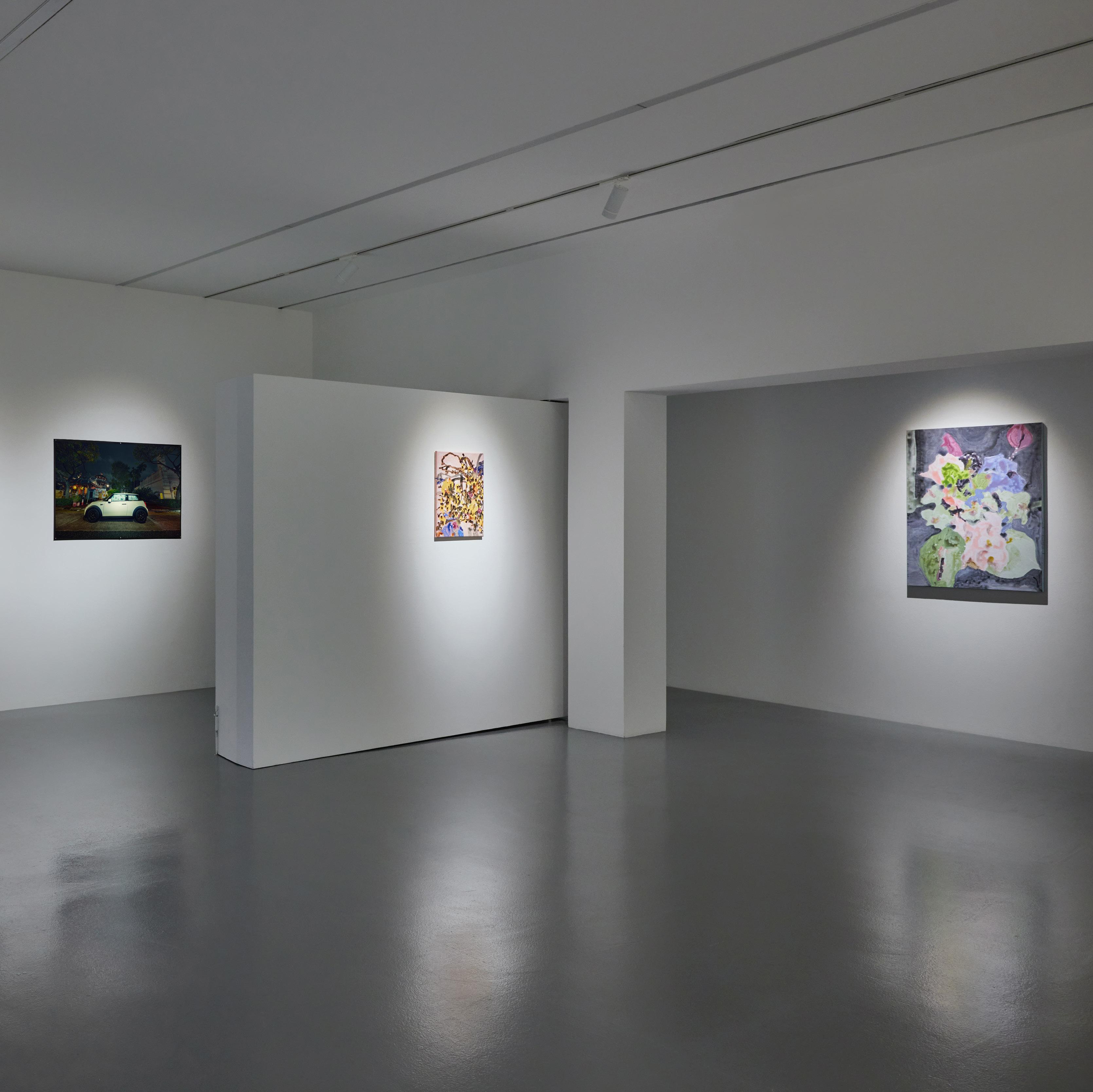
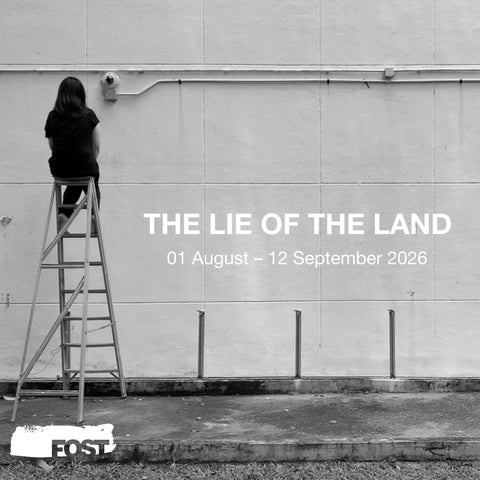
The Lie of the Land is our annual group exhibition held in conjunction with Singapore’s National Day. As with previous editions, the exhibition is a review of what makes up this country: its history, its peoples, its natural and constructed landscapes, its values, its nuances. In the same way a geographer surveys a landmass, artists conduct both literal and metaphorical investigations to shed light on their surroundings and the current state of affairs.
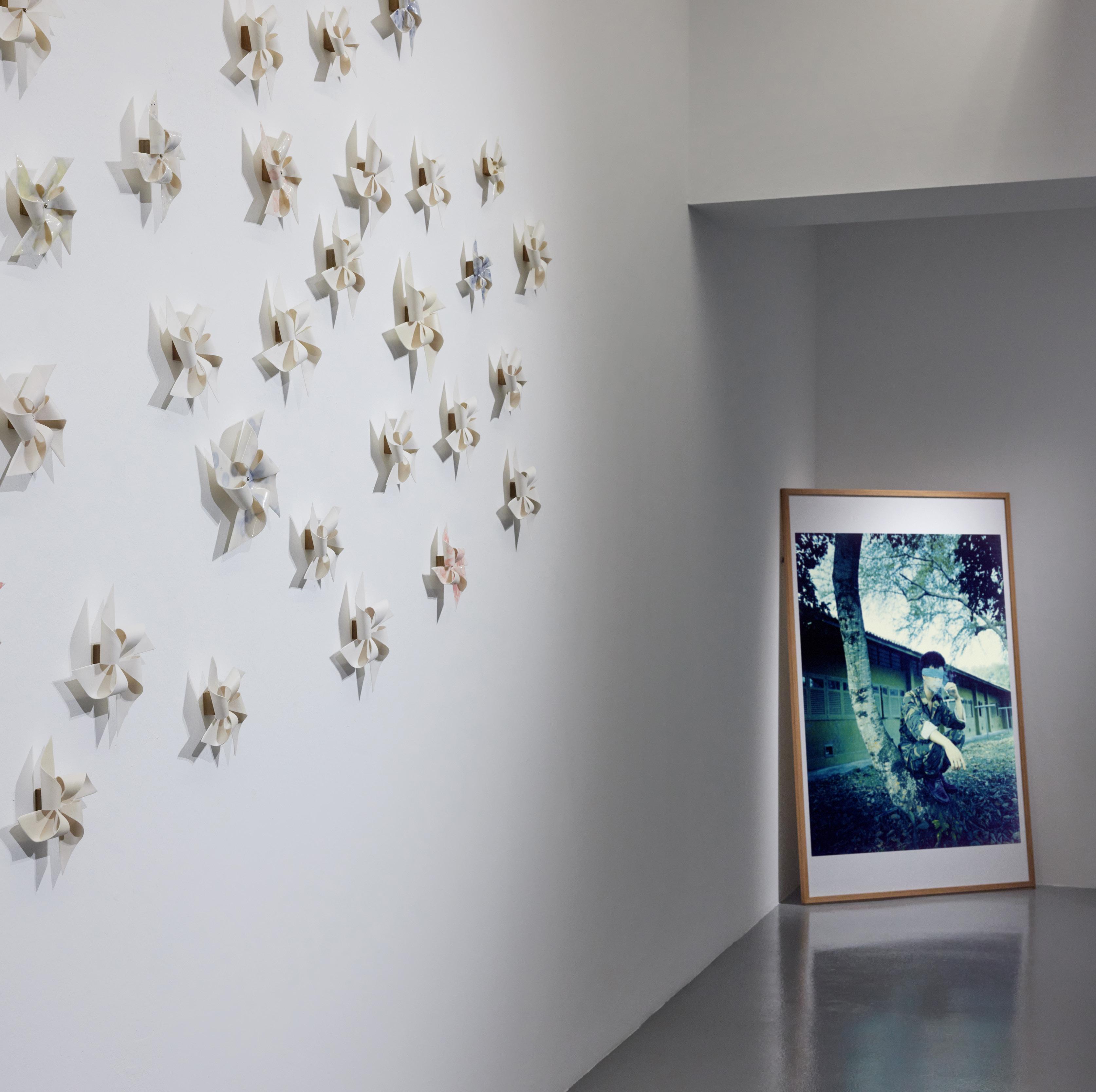
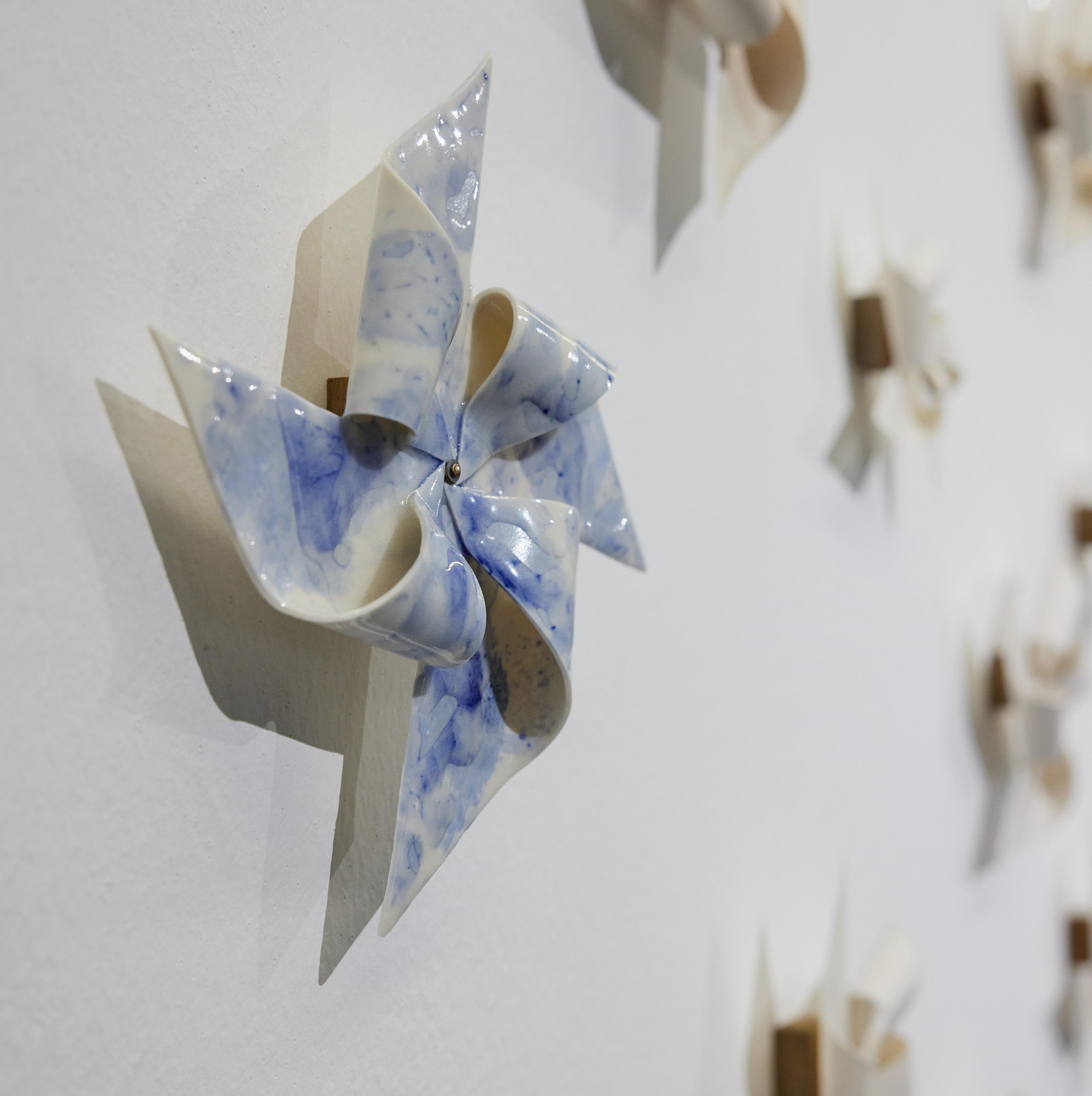
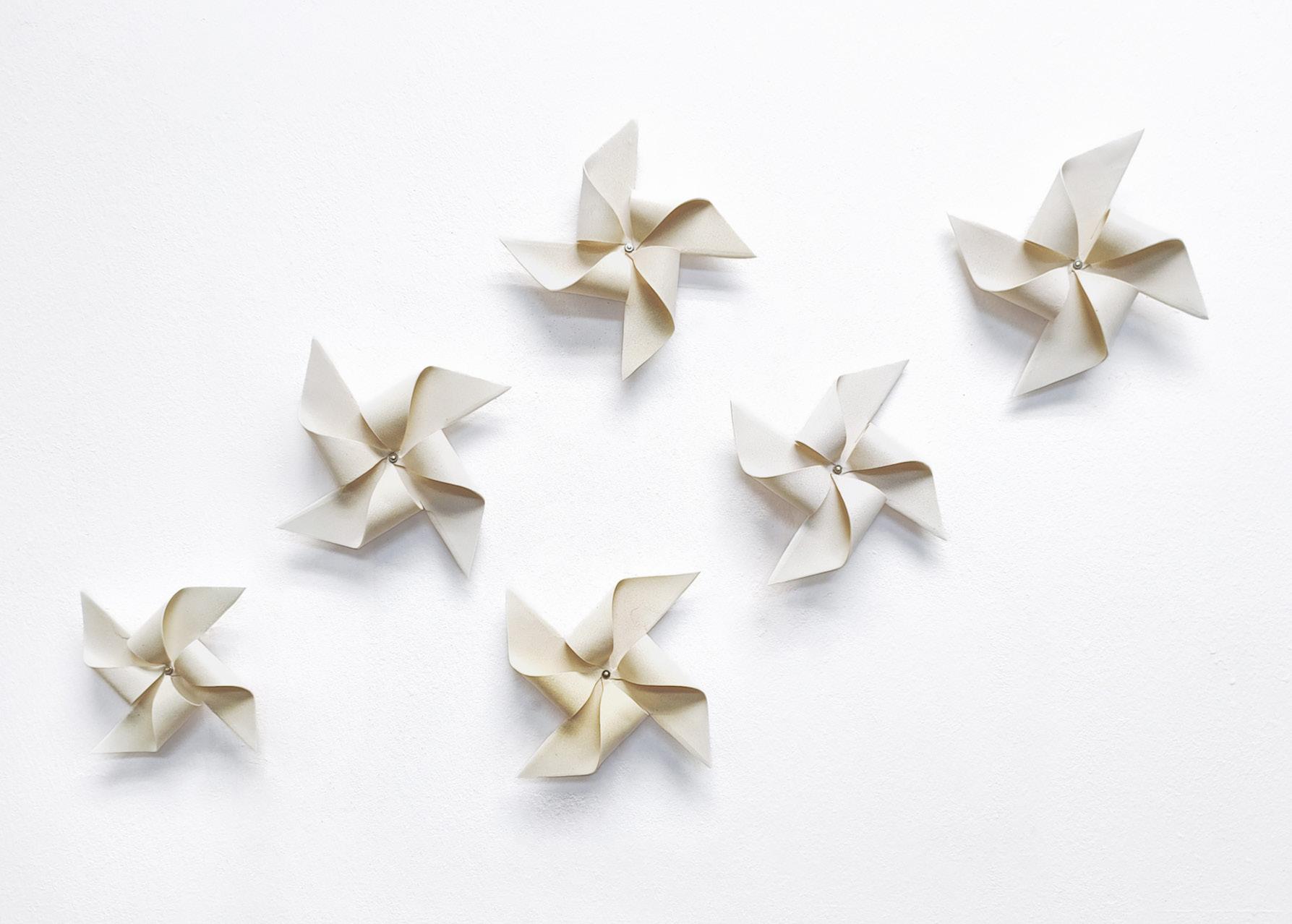
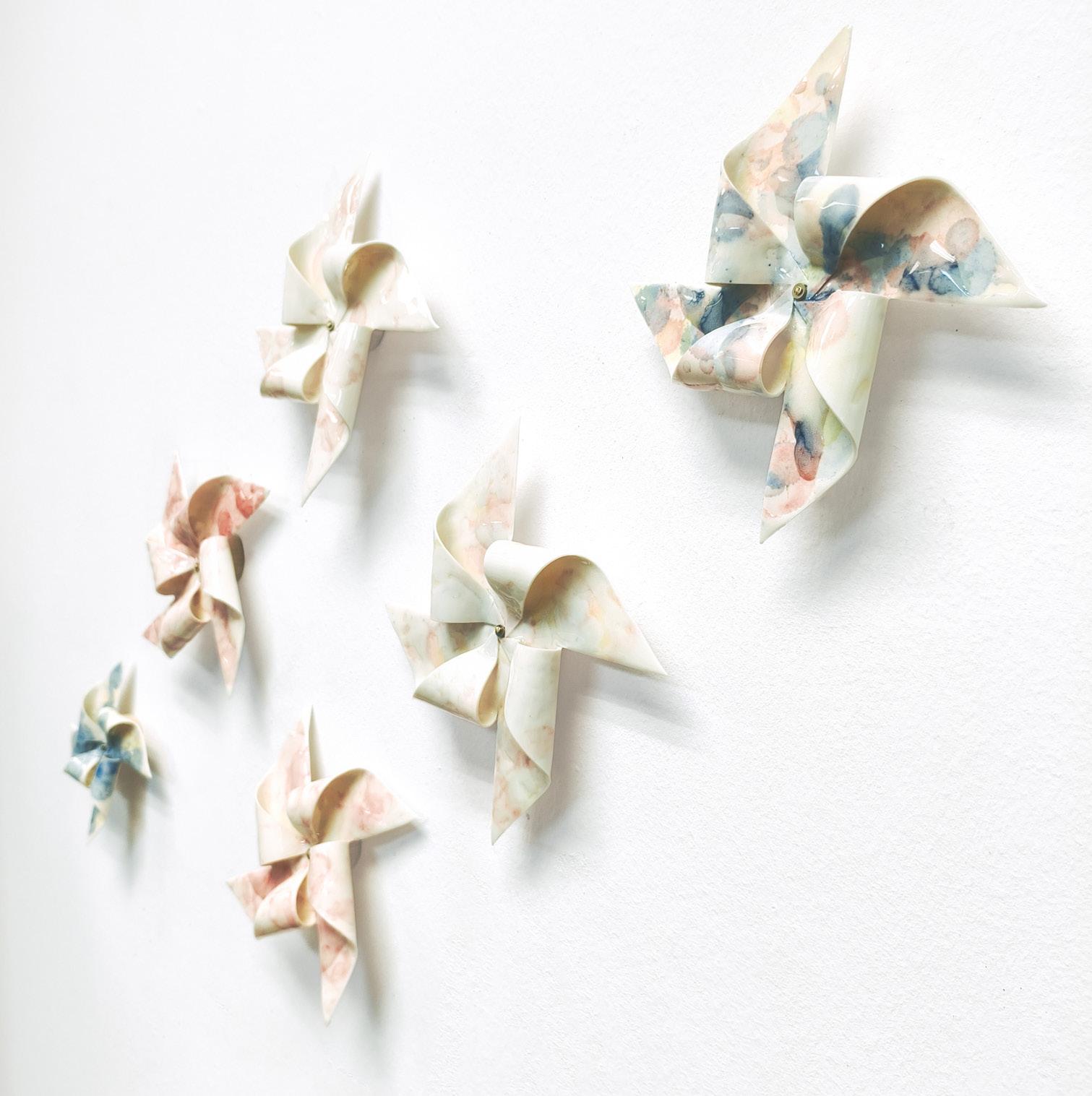
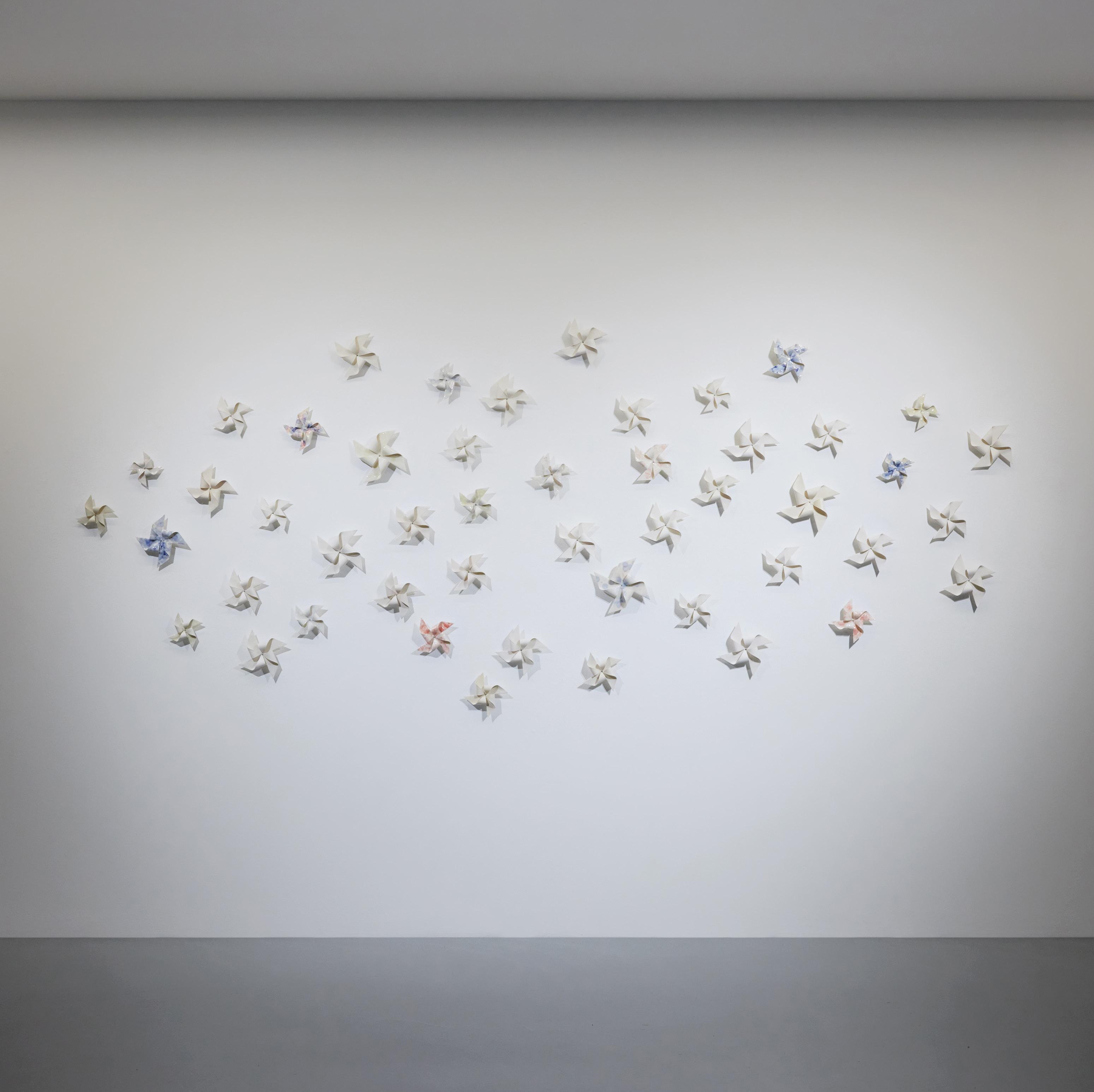
This year, the artists spotlight objects and experiences that seem ubiquitous to Singaporean life, and express them in ways that question underlying currents pervading the everyday. Upon entering the gallery, one is greeted by Shane Ng’s A Breeze in Passing (2026), porcelain sculptures that are shaped as and spin like paper or plastic windmill toys. The series was inspired by common Singaporean mannerisms, like putting tissue packets on tables to “reserve” it, or carrying a portable fan around to combat hot and humid weather. Riffing off the latter, Ng stages sculptures that can be activated by a draft, a cheeky anticipation that visitors are likely to also carry a portable fan and will be able to interact with the work accordingly.
Of course, many older locals also have fond recollections buying these simple toys from neighbourhood provision stores and playing with them as children. These memories, fragile like porcelain, are quickly disappearing from our contemporary imaginations with the slow disappearance of such shops in Singapore and the shift to smart devices among the younger generations.
Another familiar object is the closed-circuit television (CCTV) surveillance system. However, unlike the windmill toys which seem to be slowly fading from our collective consciousness, the CCTV has become so much a part of our everyday that it experiences an opposite kind of invisibility: one that results from the device fading into the background as part of an ambient visual environment.
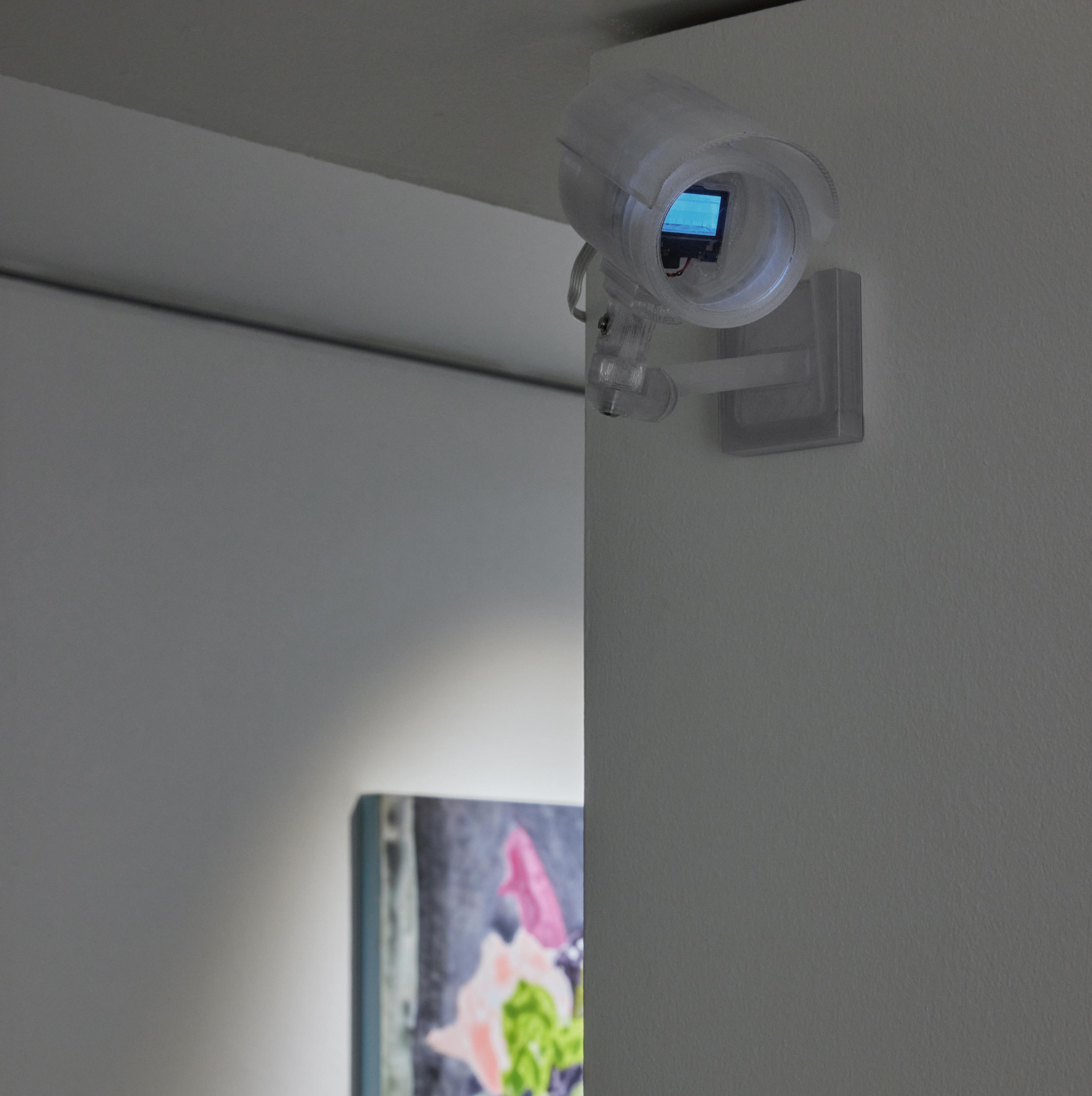
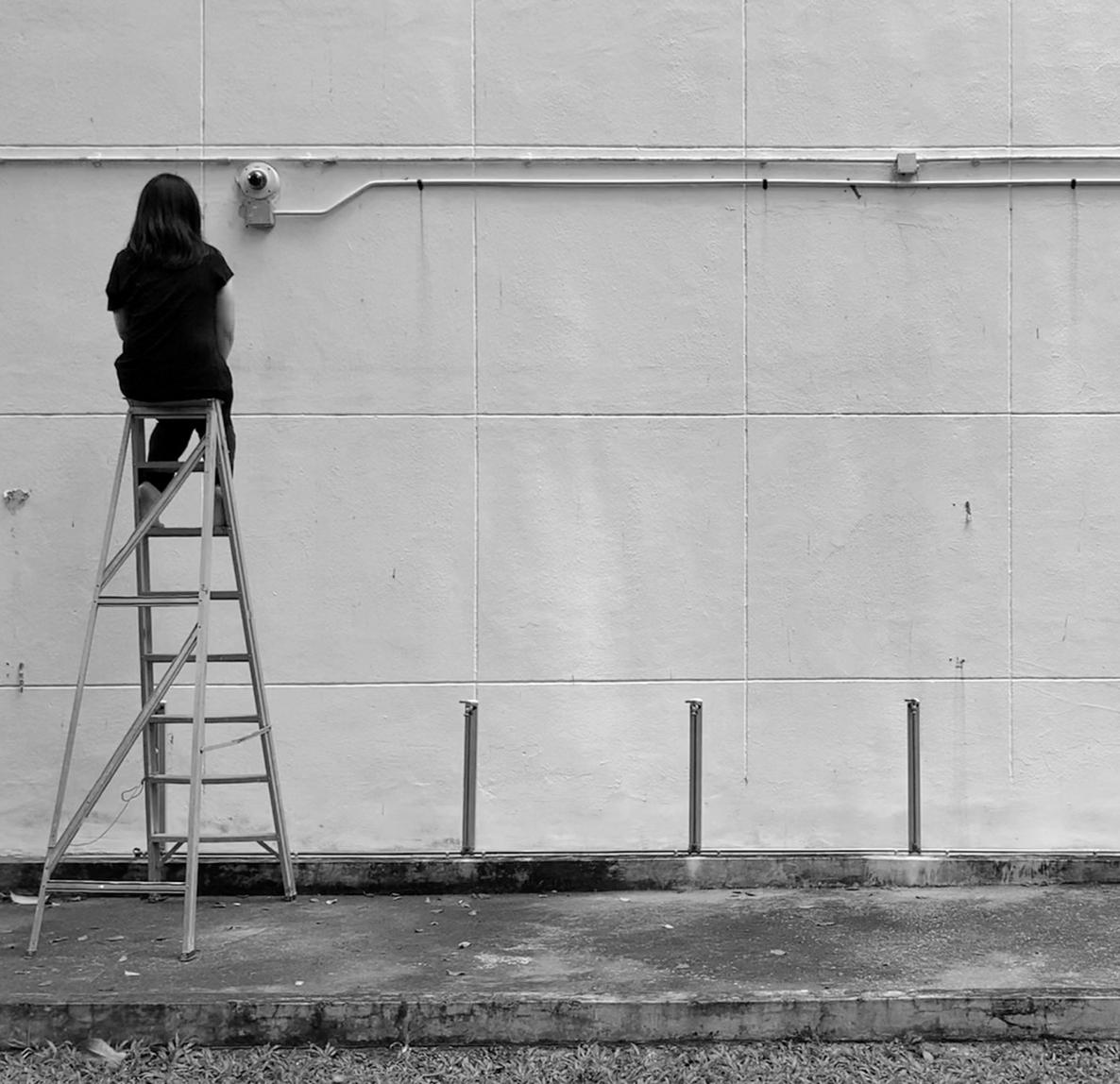
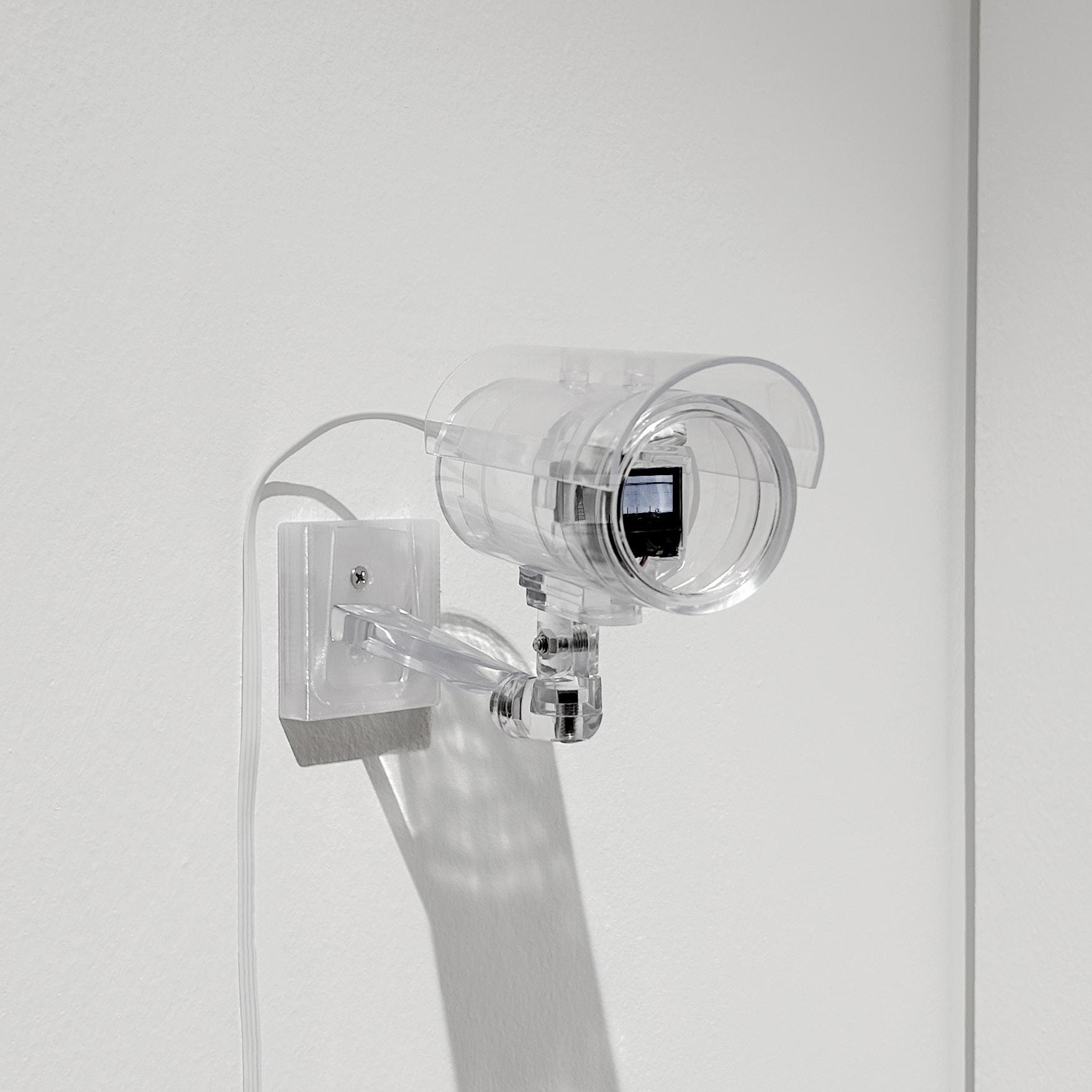
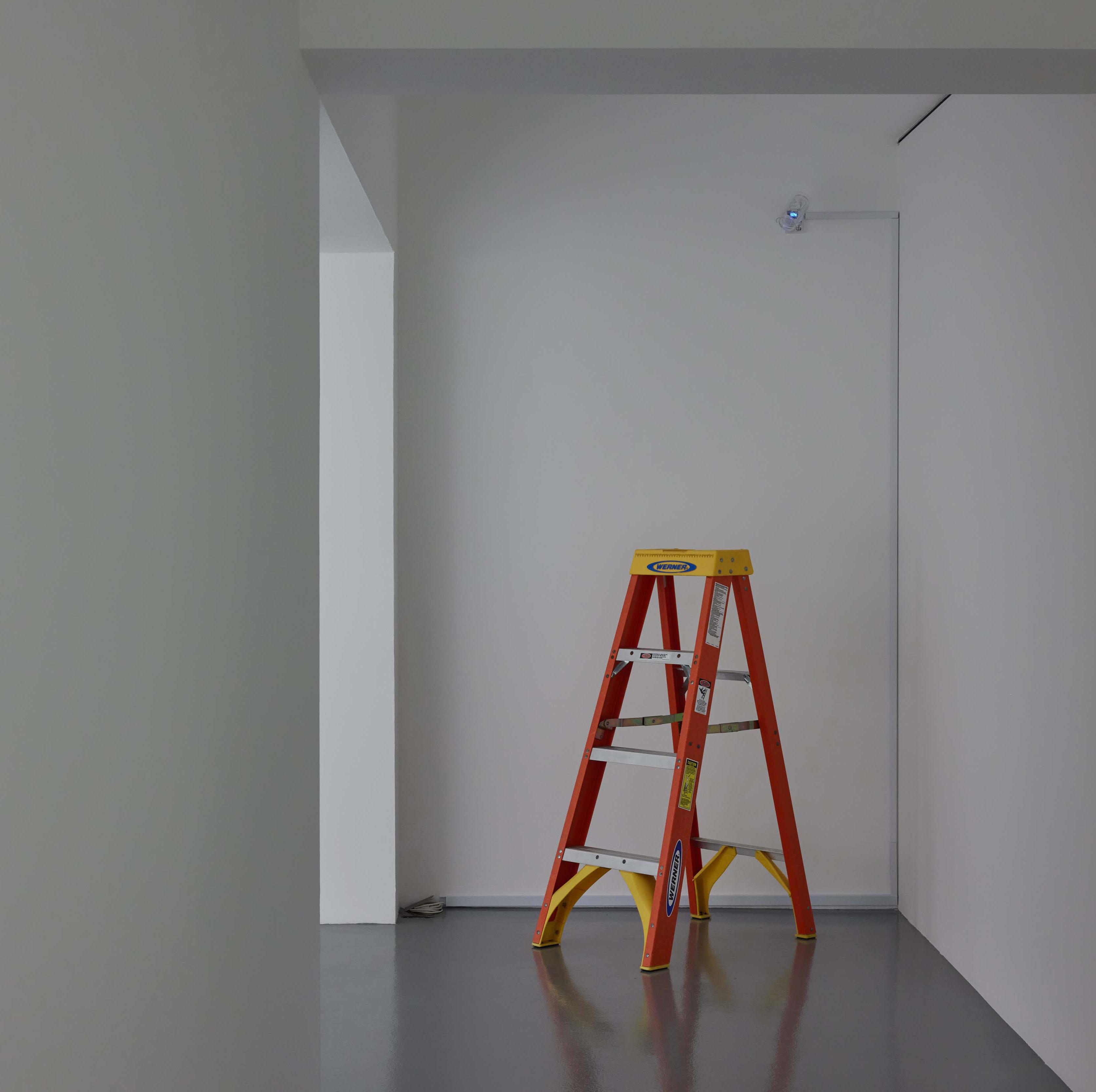
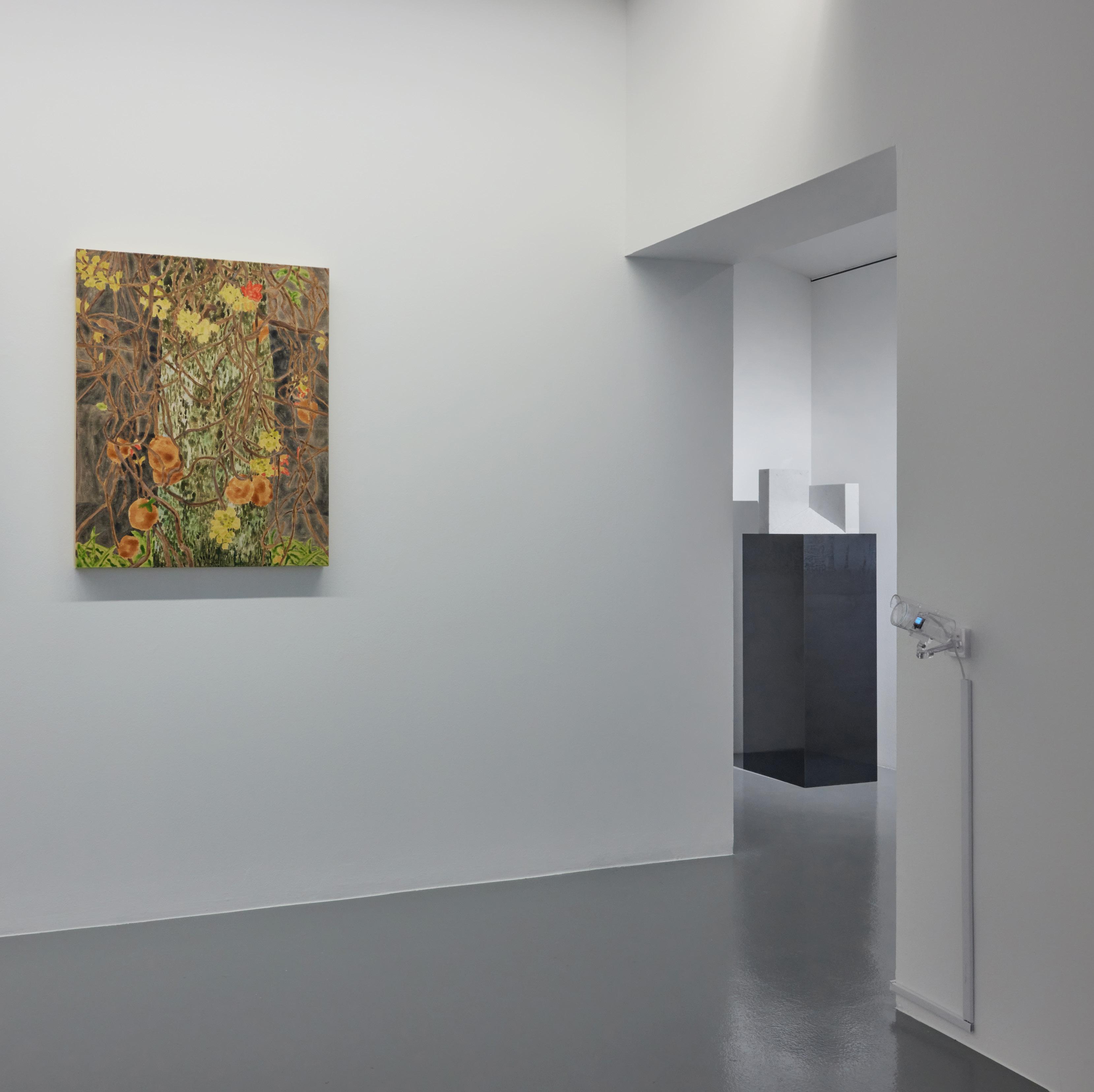
Joanne Lim’s Double Gazing (2022) attempts to draw attention to the CCTV’s supposed “normalisation”, examining how surveillance technologies quietly occupy and shape our spaces. Taking the form of a transparent CCTV sculpture customproduced by Lim, the internal structures of the camera are exposed rather than concealed behind the opaque casings of real-life surveillance devices, resting the object at the tensions between visibility and legibility. Embedded within the CCTV installation is a small screen displaying footage of the artist climbing a ladder in a public space to meet the gaze of a working surveillance camera. Rather than remaining beneath its field of vision, she deliberately elevates herself to confront the camera at eye level. This subtle, slightly awkward gesture temporarily disrupts the familiar top-down hierarchy of surveillance.
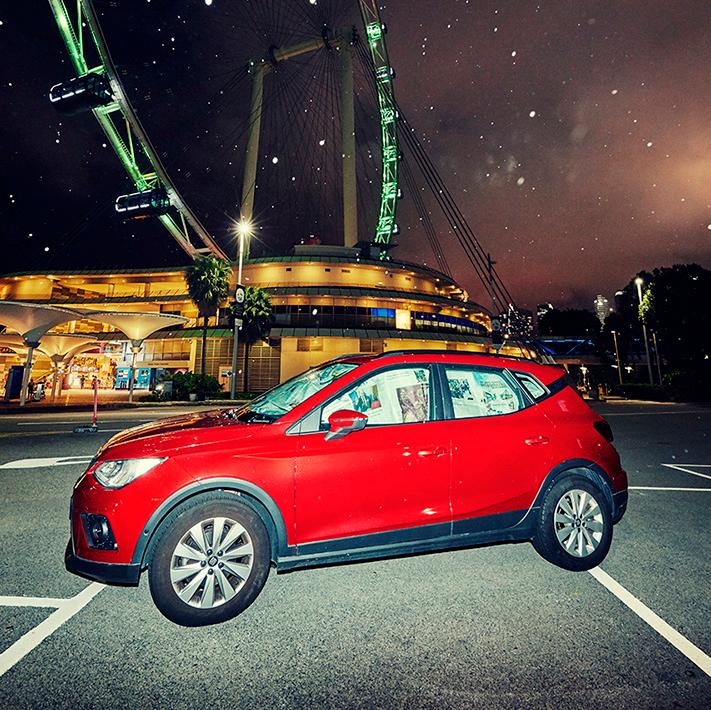
Installed throughout the gallery, multiple editions of these CCTV sculptures could be mistaken for real, functional surveillance cameras prior to closer inspection. One such edition points directly at three works from John Clang’s The Mobile Park series (2023). These photographs stage physically intimate encounters unfolding inside stationary cars parked in secluded locations at night. Their windows are plastered with newspapers to shield the occupants from view, a common sight in some parts of Singapore, prior to the advent of hourly rated budget hotels and the proliferation of surveillance systems. Echoing the placement of Lim’s CCTV sculpture, Clang illuminates the vehicles with glaring strobe lights, recalling the beam of a police torch catching someone in the act. As a result, the depicted scenes appear exposed and incriminatory despite the occupants’ attempts at concealment. Clang evokes an atmosphere of stress and quiet desperation: reflecting the scarcity of privacy even in private spaces here where passion and desire often “takes a back
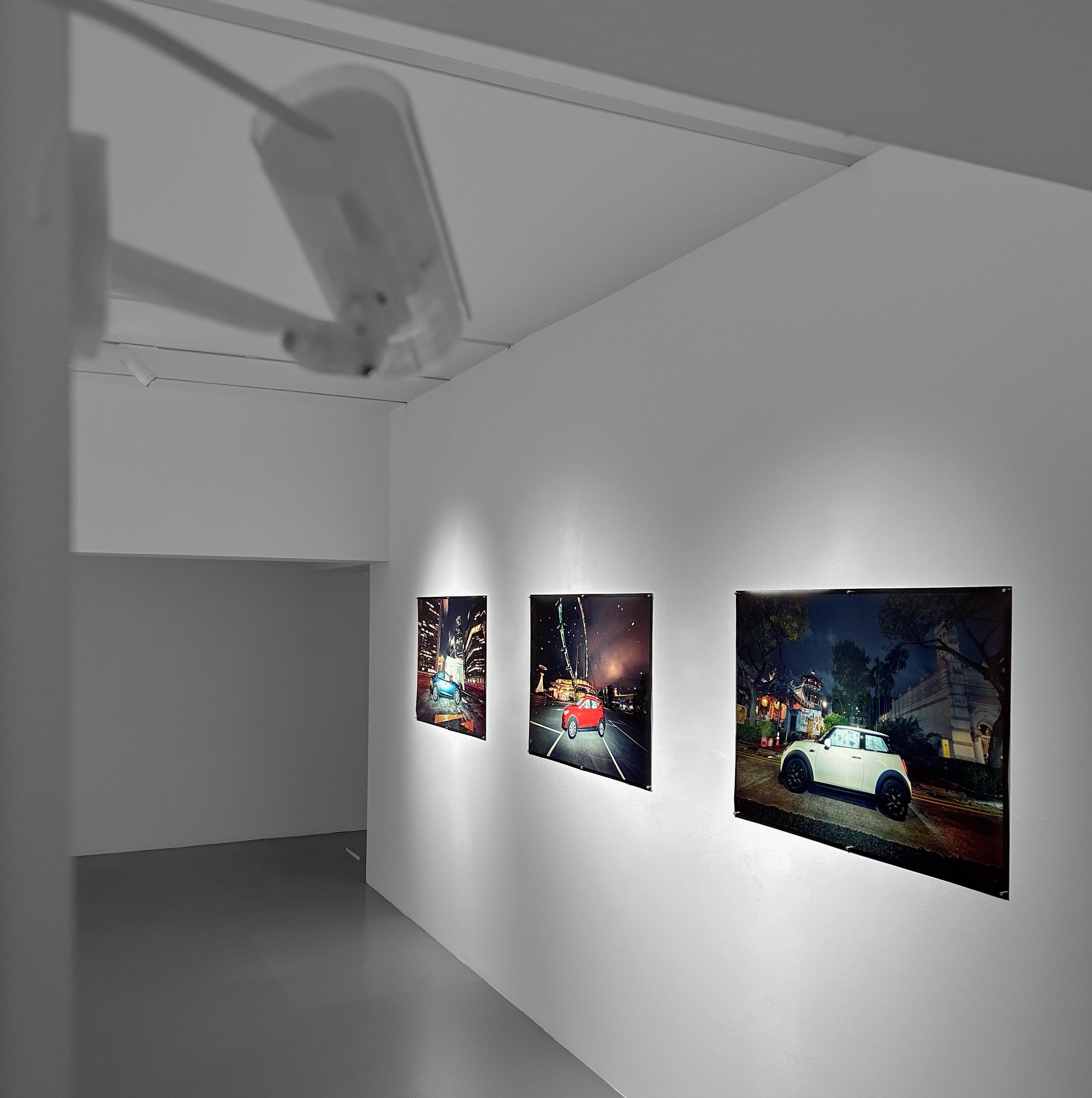
seat” to conservative utilitarian priorities. Intimacy itself becomes something that has to be carved out through constant negotiation.
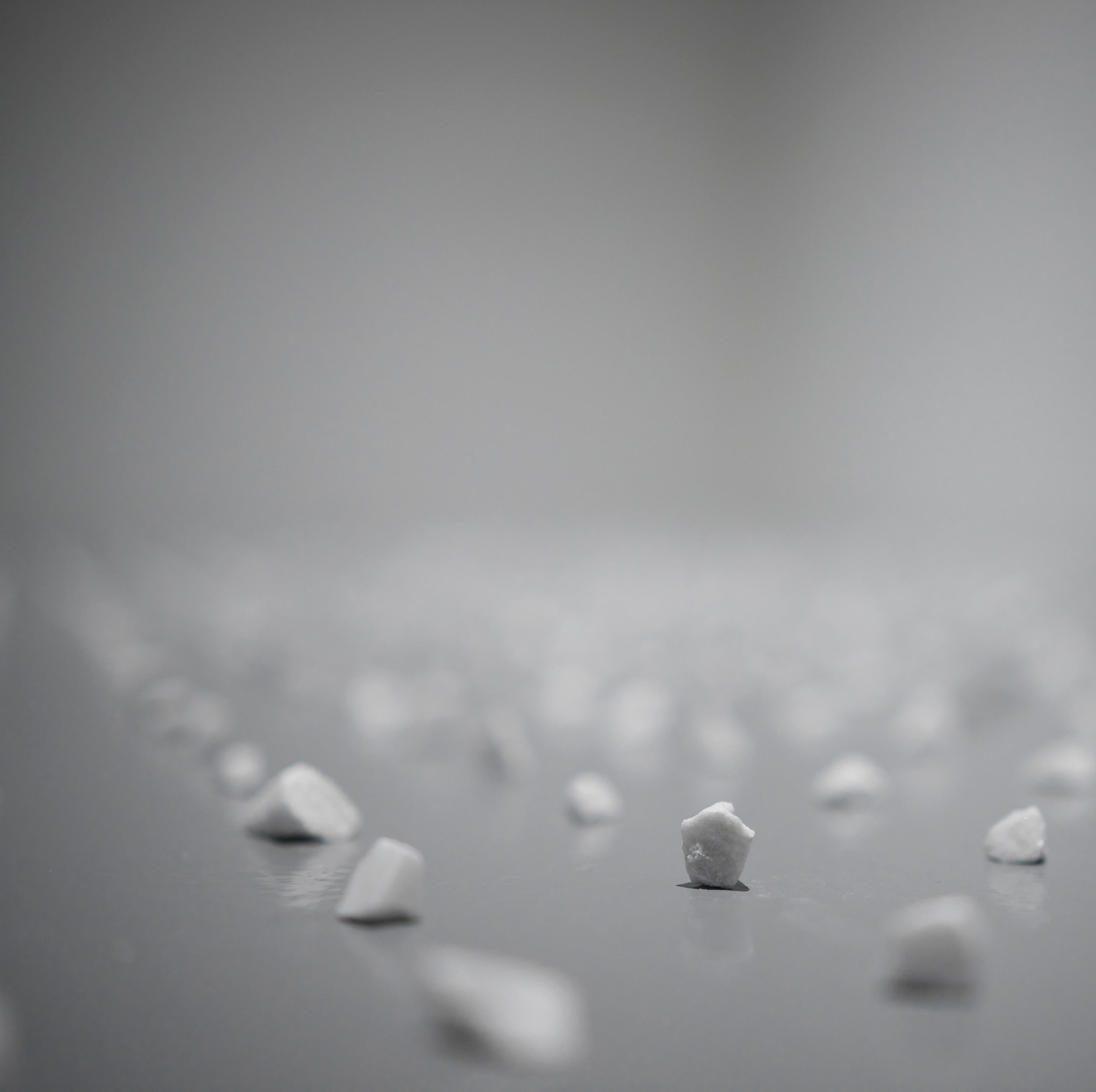
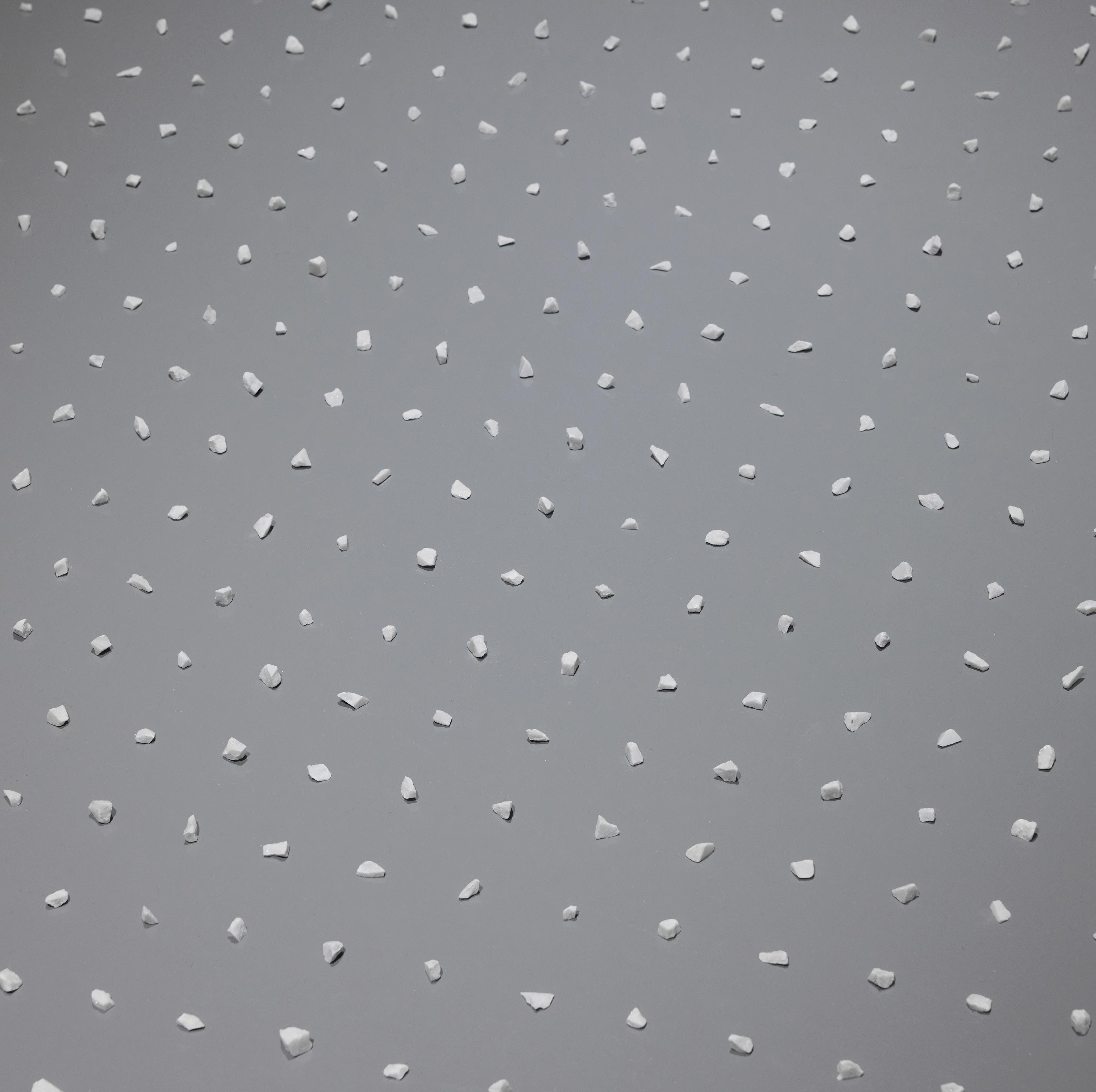
Responding to similar themes, other artists in the show also present works that contemplate on the relationships between space, utility and organisation. Grace Tan’s 5cm square, more or less (2026) is a site-specific work that occupies an entire corridor in the gallery, intervening in the way one is able to traverse the exhibition. Tan individually and systematically arranges marble chips in a grid-like pattern, with what seems to be a 5cm “square” formed in the empty spaces between each fragment.
However, as Tan aptly points out, the physical realisation of the square subjects its precise geometry to imprecision; exposing it to approximation, lived contingency and the limitations of material condition. Tan relates this to the way in which Singapore’s land is planned: surveyed, bounded, zoned, named, administered, and inserted into a regulated system. To the artist, attempts to make the land measurable and governable can only be successful from a distance, as embodied material will continually exceed regulation: “it is never only parcel, plot, or zone [...] it is also coastline, drainage, vegetation, heat, movement, memory, informal use, ecological passage, and social habit”.
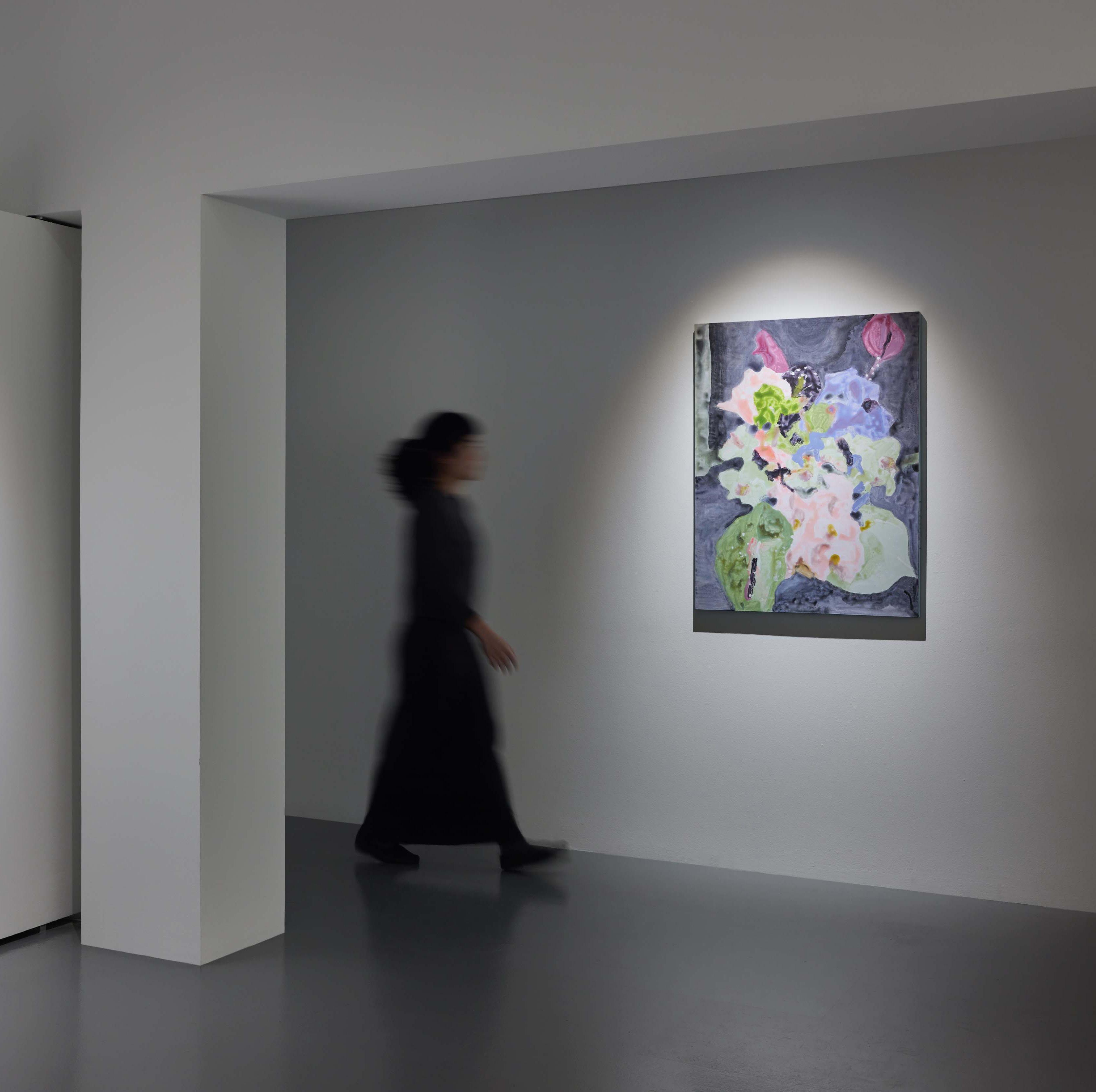
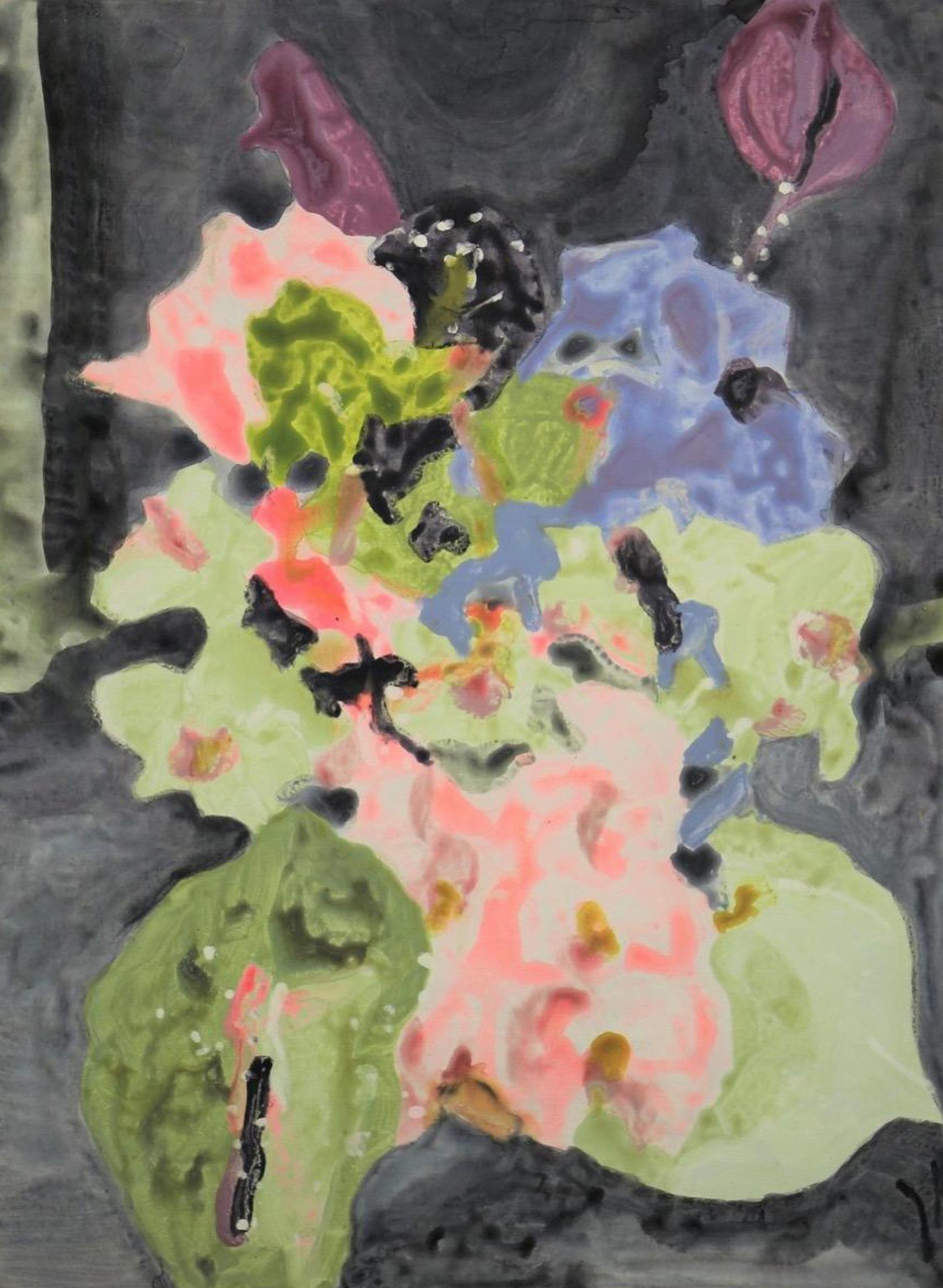
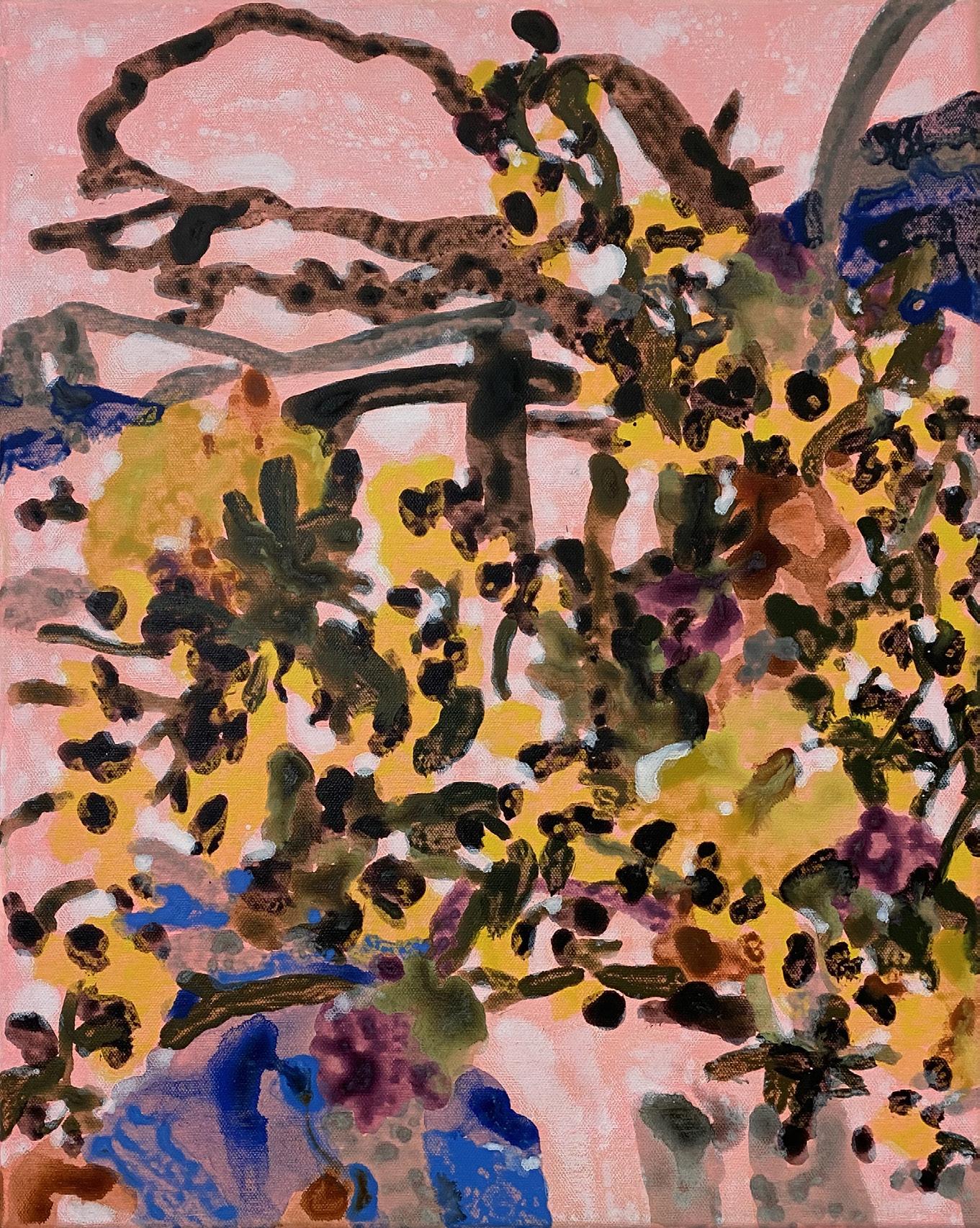
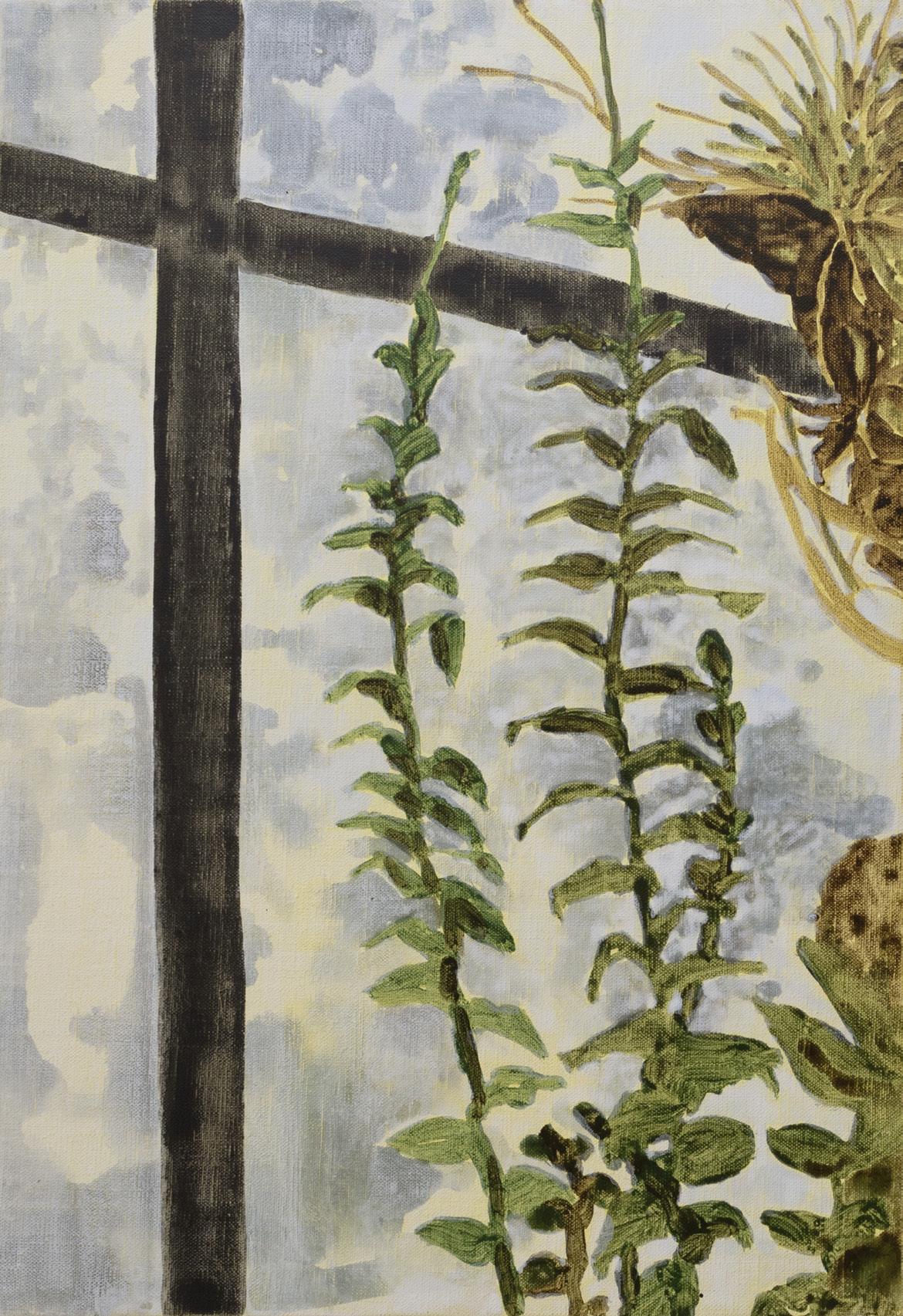
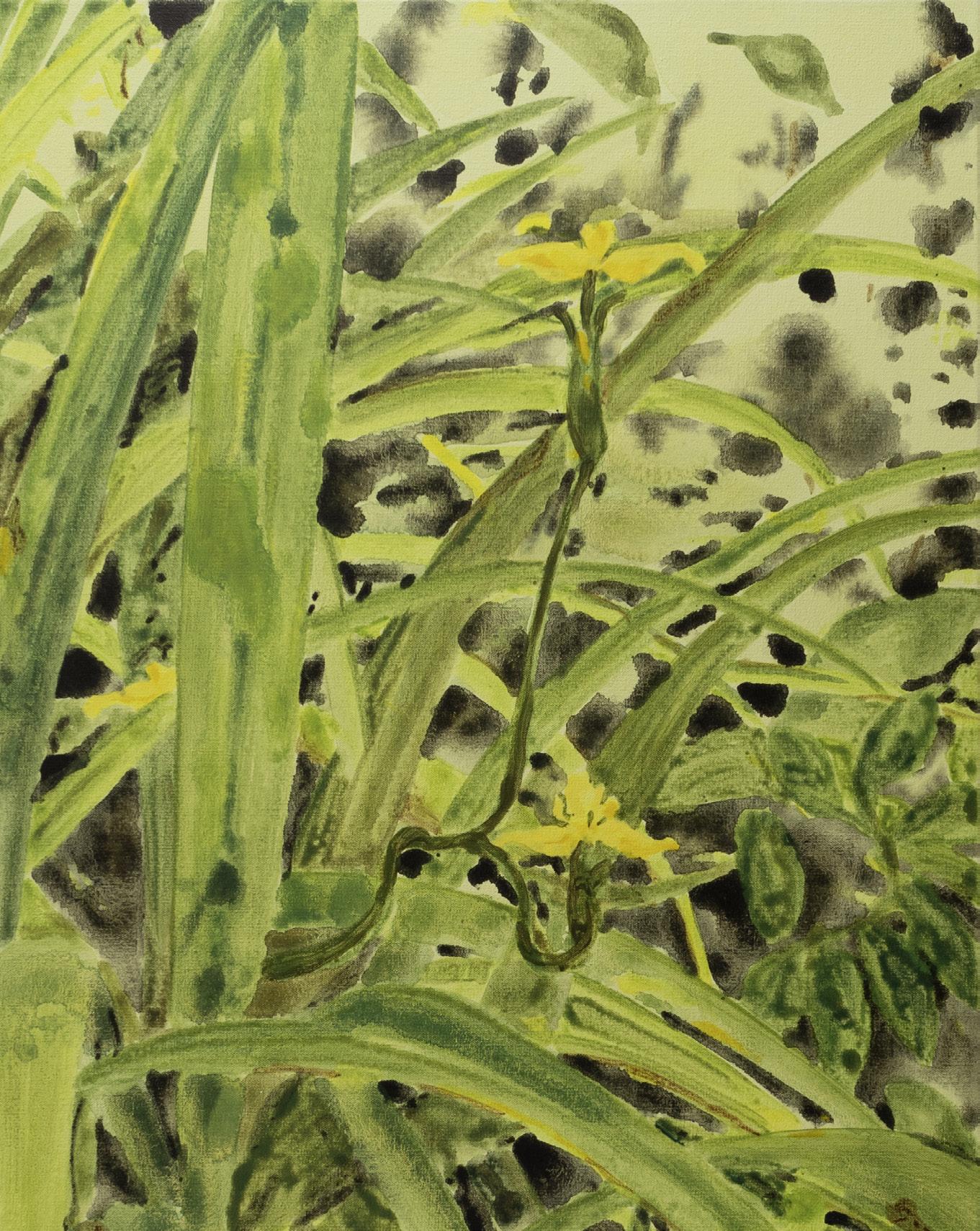
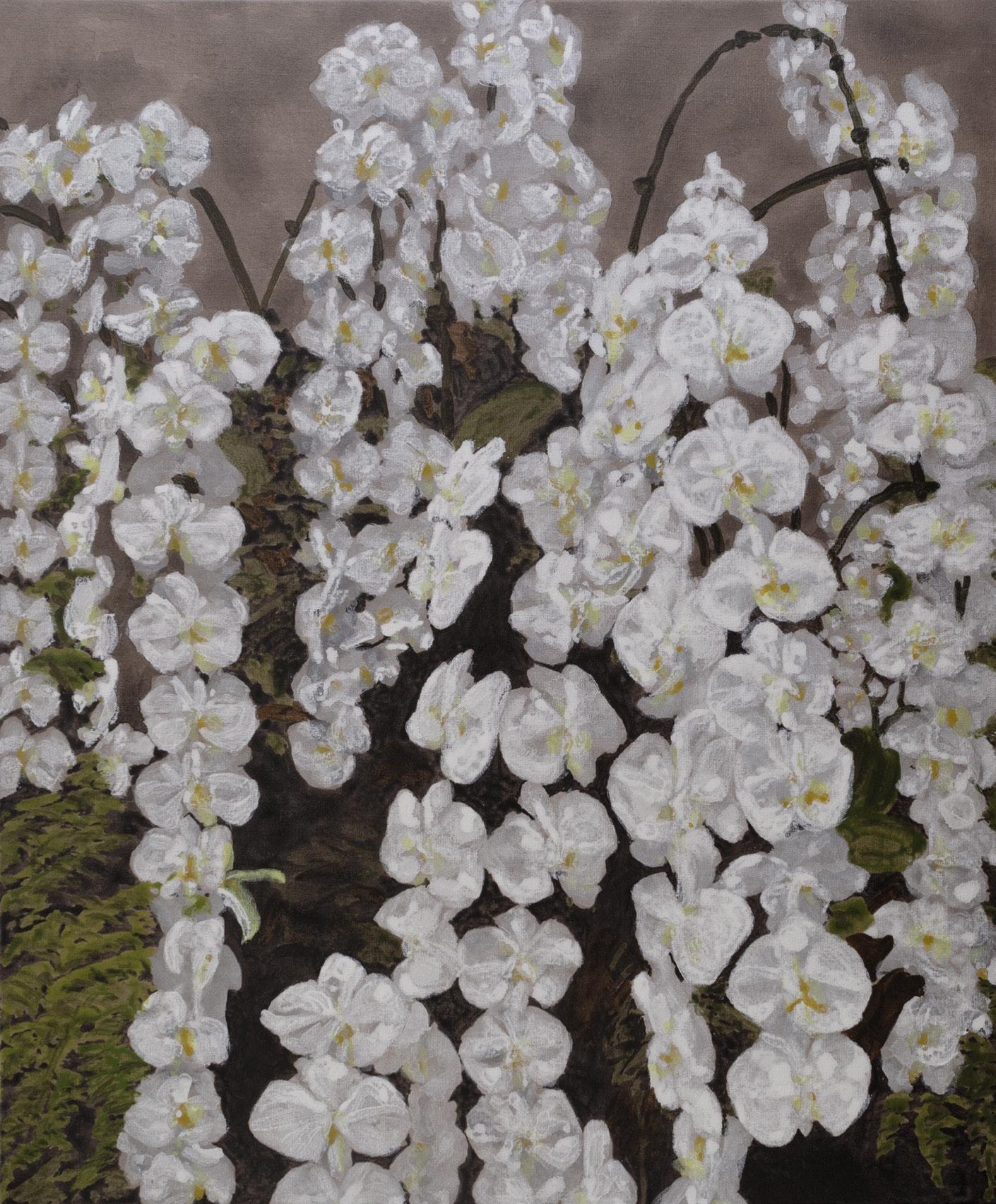
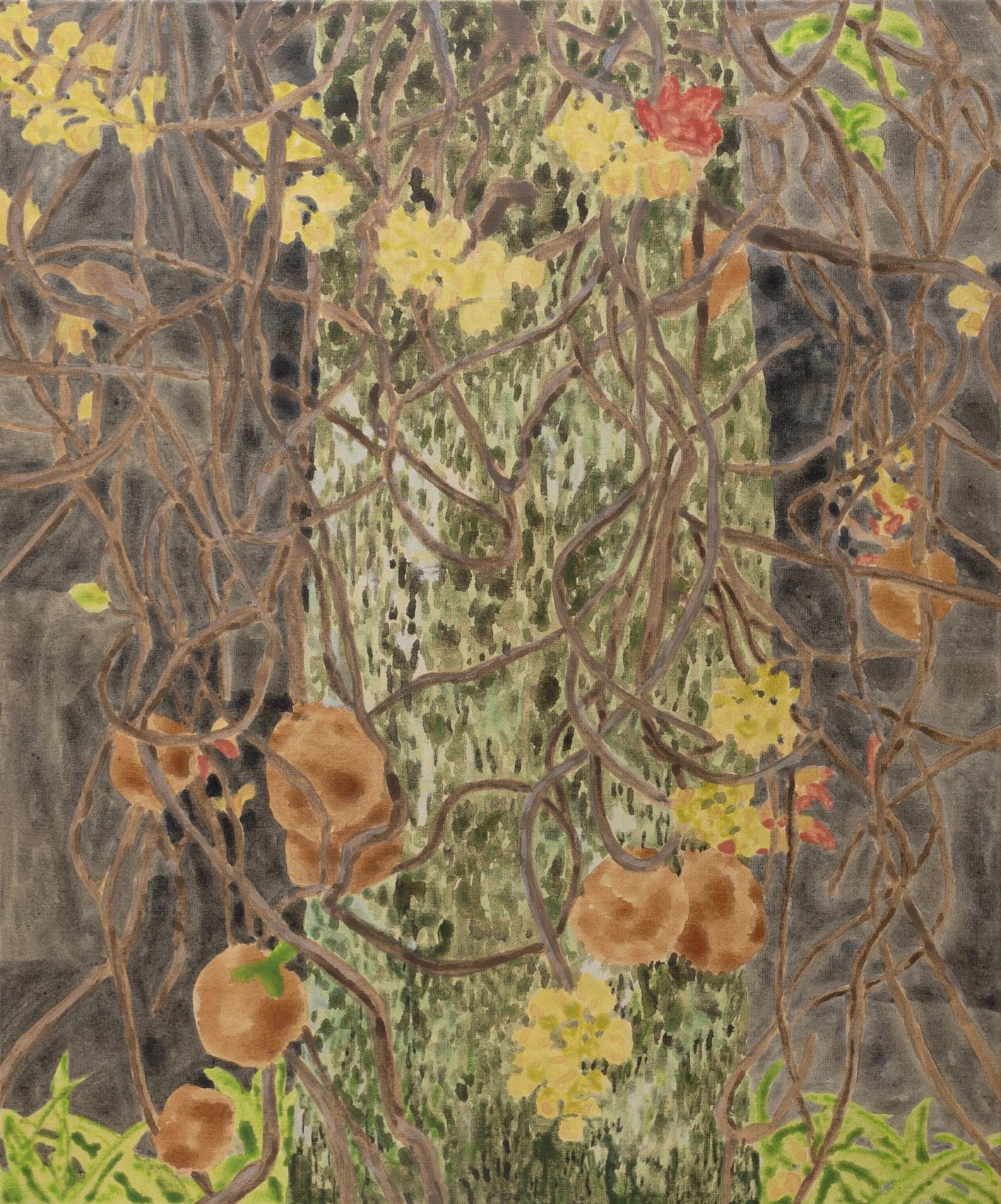
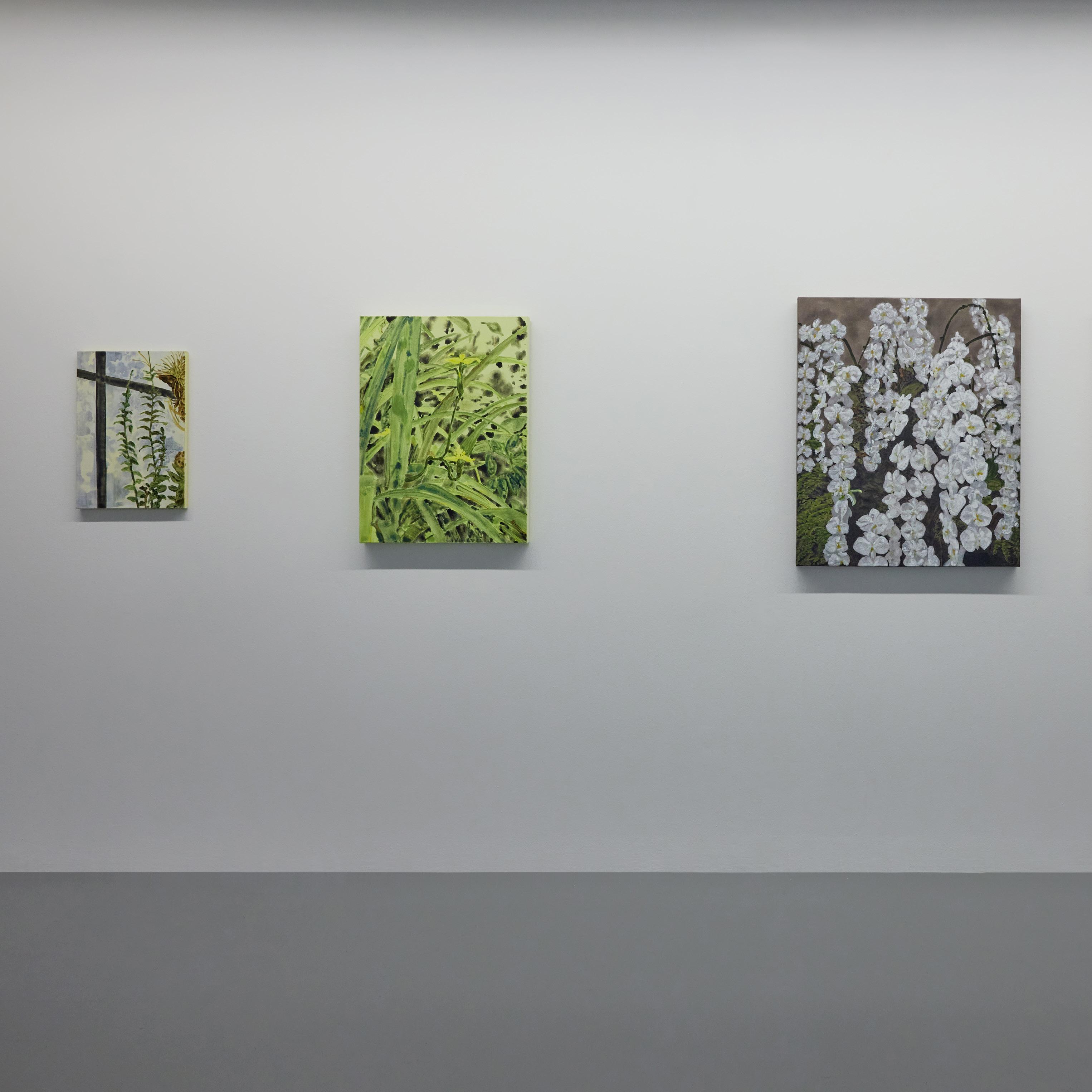
Jodi Tan’s new additions to her ongoing Still Life series (2015 – ongoing) are, along the same vein, reflections on how bodies are arranged in space in Singapore. Her newest paintings are based on photographs of plants she had taken at the Singapore Botanic Gardens. According to Tan, these pictures were from a personal collection of casual snapshots accumulated over the past few years. When they were taken, little attention was paid to the way the plants had been arranged, or how they occupied the photographic frame. Yet, when returning to them, something in these images began to stand out to the artist. Translating them to paintings, Tan depicts a tension within the manicured clusters of flowers and plants, where they somehow appear both intentionally arranged and naturally occurring with their
haphazard growth. Both conditions are unsettling in their reflexivity toward each other, held in suspension amidst Tan’s enigmatic brush strokes.
This attunement bears resonance to the Singapore Botanic Garden’s establishment during the colonial period, as it was a place where landscapes and botanical specimens were carefully studied, curated and categorised. The paintings, drawing from the Gardens as a site of excavation, quietly remind of this legacy and its broader implications for Singapore as a “Garden City”.
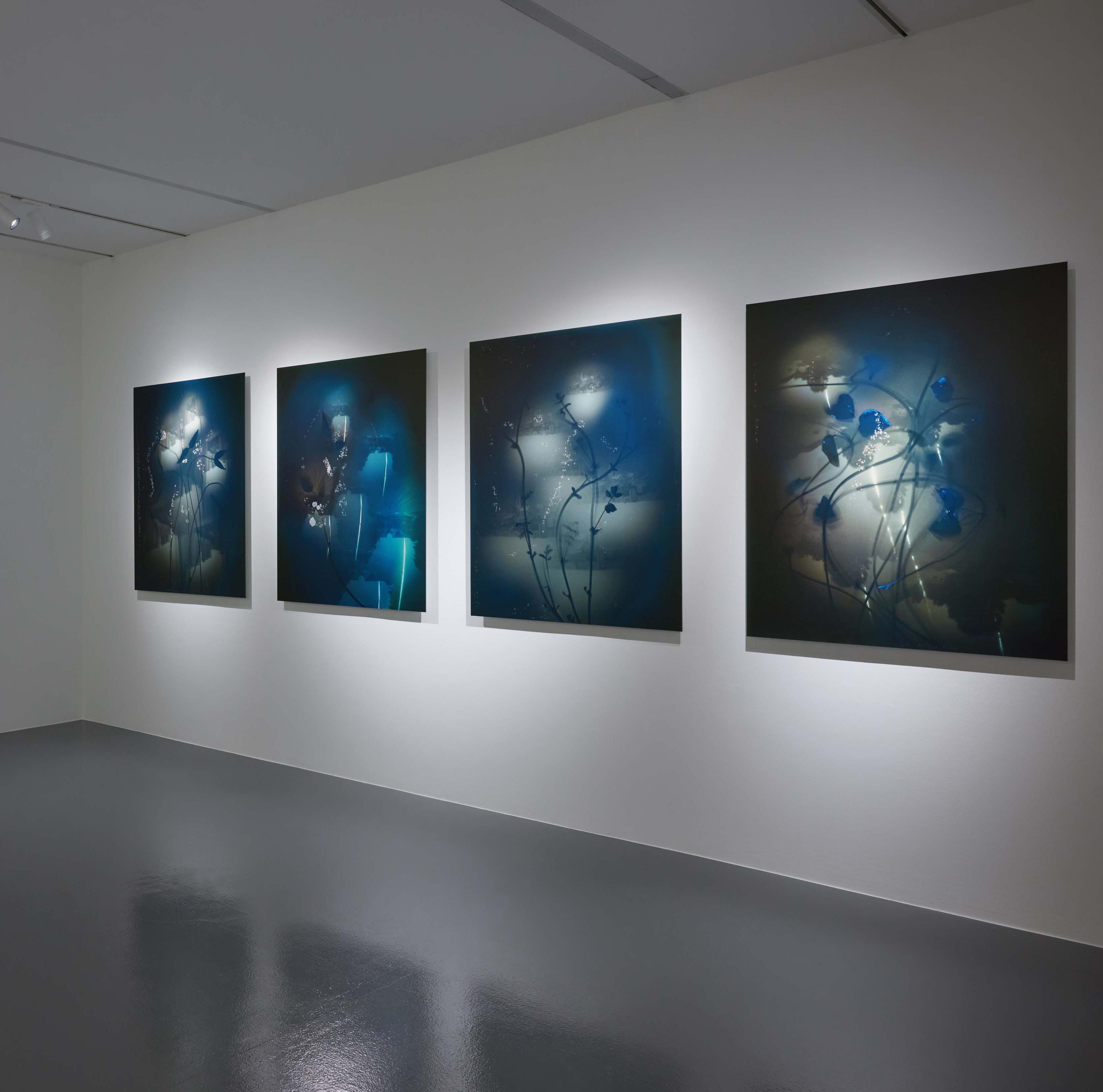
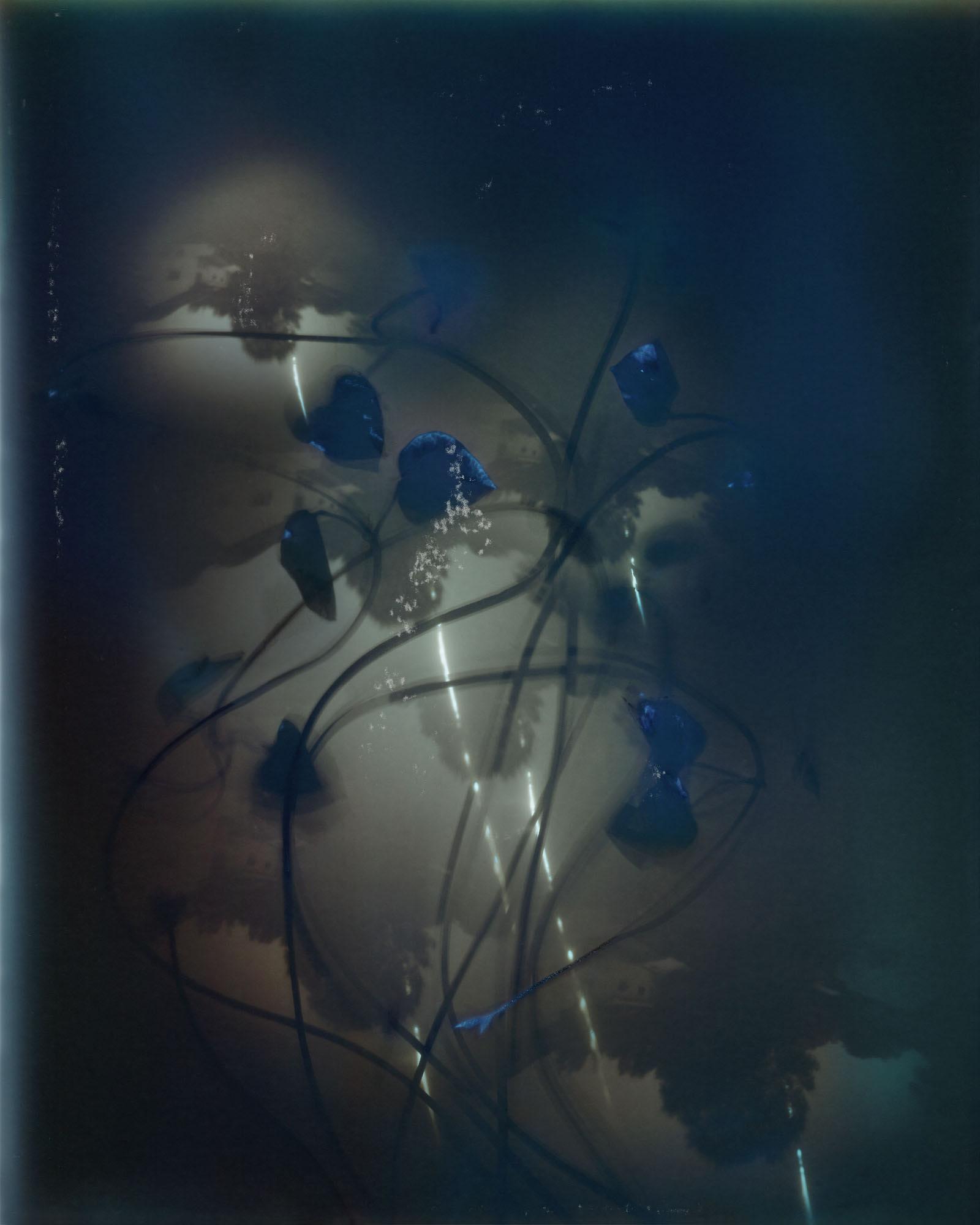
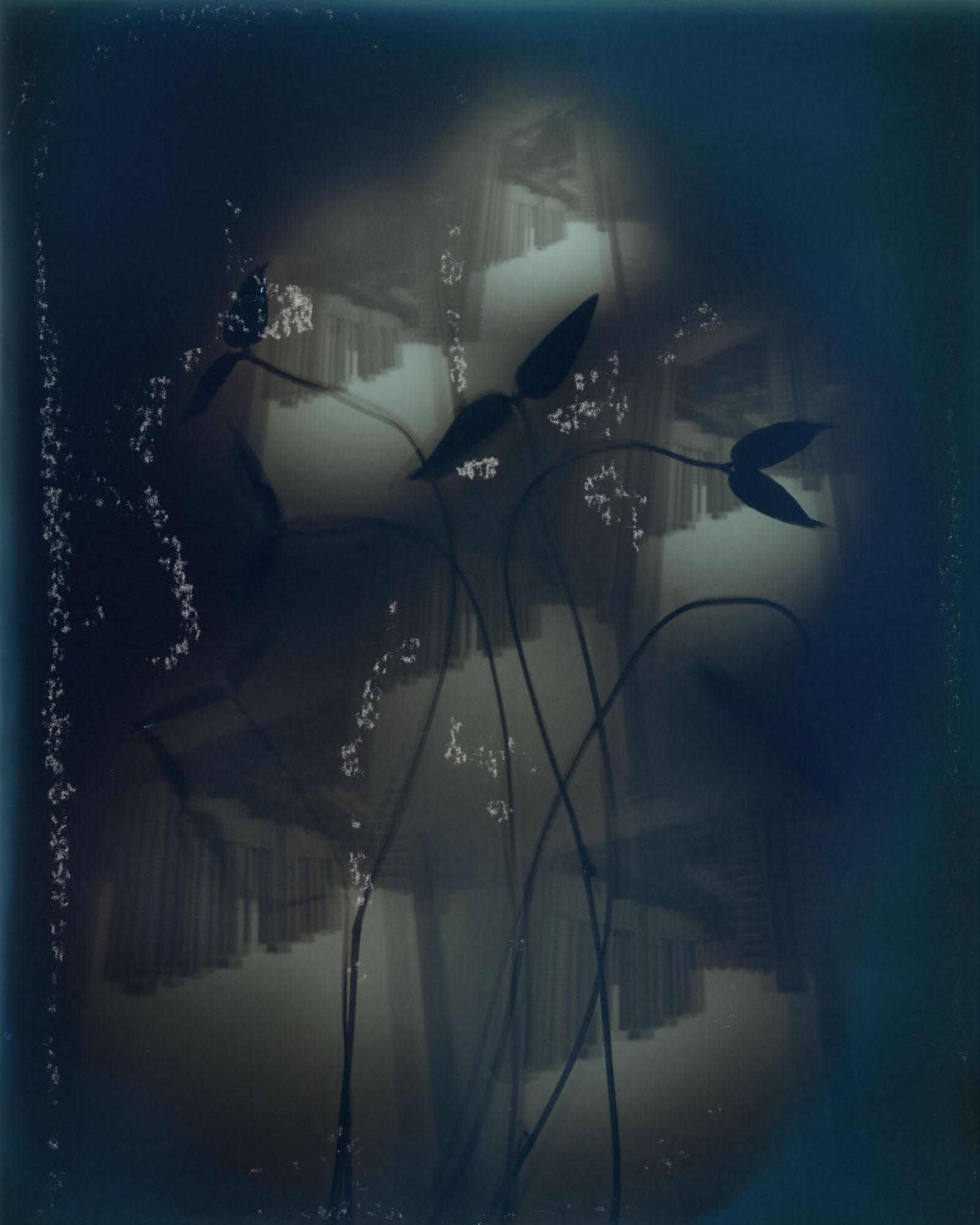
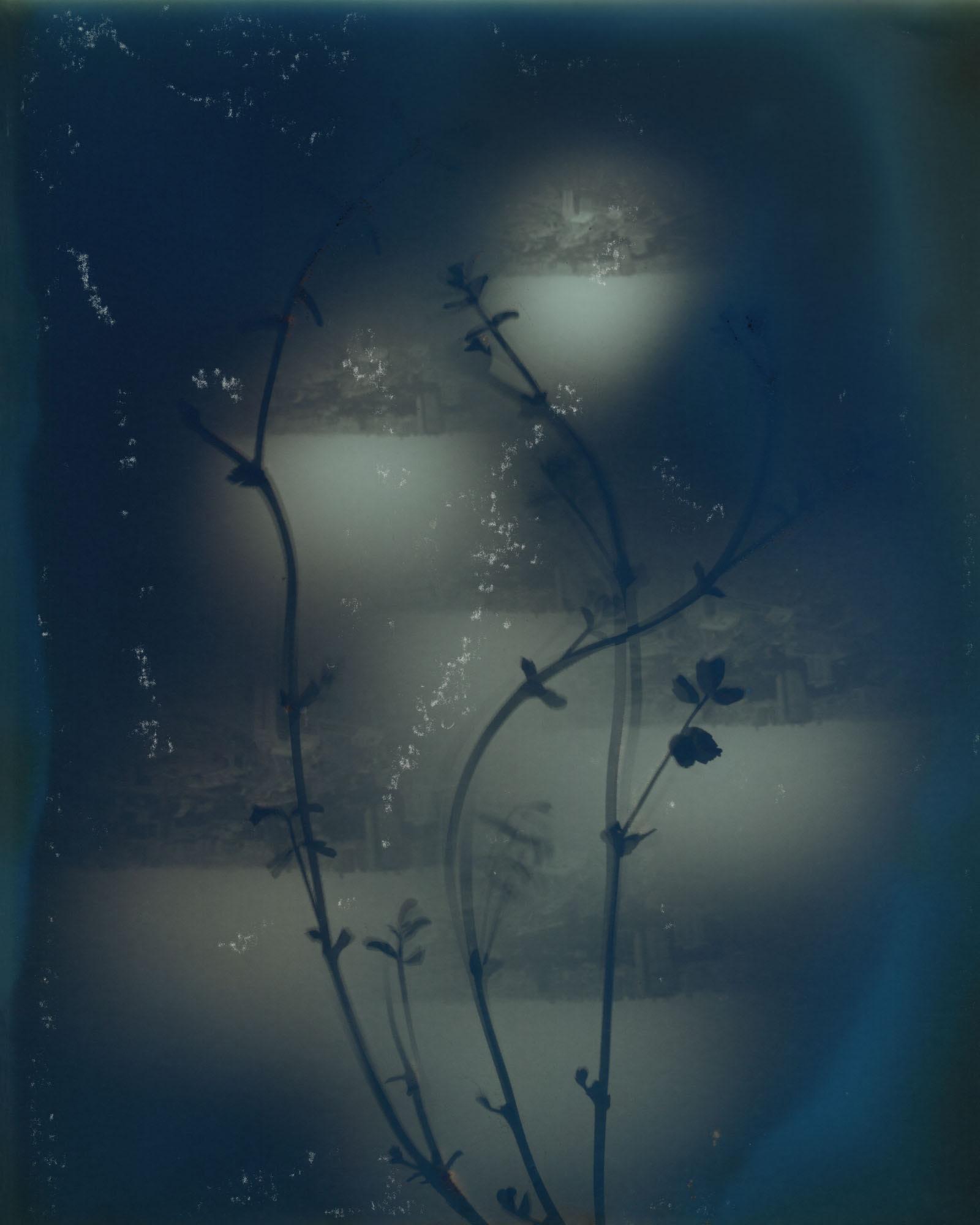
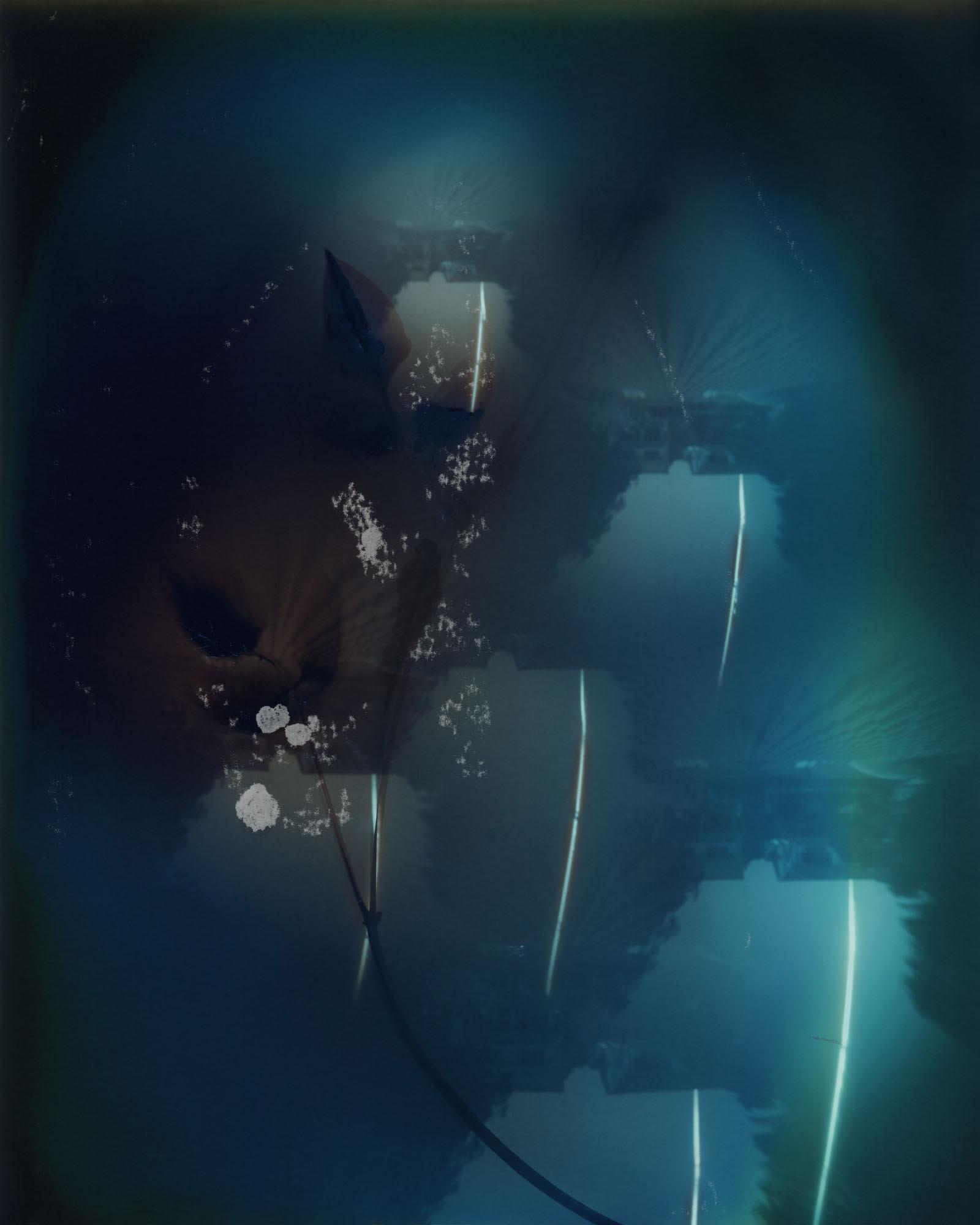
Installed across to Tan’s paintings are Lavender Chang’s The Moving Minute Scale of a Restricted Life (2015 – 2016). These images were derived from solargraphs of growing beansprouts, produced by a pinhole camera and accompanied by fragmented scenes of local housing estates. Though they also depict plants, Chang approaches the subject matter through a more auto-theoretical lens, reencountering personal experiences against the backdrop of dominant narratives that surround family dynamics.
Evoking the imagery of the beansprout — commonly introduced to children in schools to learn about growth and nurturement — Chang frames the bean as a symbol of familial relationships. It germinates and sprouts in the same way its solargraph is incubated by the camera obscura, while the “black box” housed in the camera comes to represent the secrecy often surrounding family matters, even though many families experience similar struggles. Likening the solargraphs to family photos, the darkness and loose splotches of residue surrounding the wriggling beansprouts contemplate an oscillation between cohesive togetherness and painful secrecy, suggesting how enduring hurt may often reside beneath the same roof as unconditional love.
Together, the works in The Lie of the Land reveal that the contours of Singapore are not defined solely by its physical landscape, but also by the habits, infrastructures, memories and relationships that quietly shape everyday life. Whether through familiar objects, carefully regulated spaces, or intimate personal histories, the artists draw attention to the systems that organise how we move, see, desire and remember.
2015 – 2016
Fine art archival print
Edition of 5 + 2 Artist’s Proofs
H25.4 x W20.3 cm (image) / H125 x W100 cm (image)
2015 – 2016
Fine art archival print
Edition of 5 + 2 Artist’s Proofs
H25.4 x W20.3 cm (image) / H125 x W100 cm (image)
2015 – 2016
Fine art archival print
Edition of 5 + 2 Artist’s Proofs
H25.4 x W20.3 cm (image) / H125 x W100 cm (image)
Chang No. 24
2015 – 2016
Fine art archival print Edition of 5 + 2 Artist’s Proofs
H25.4 x W20.3 cm (image) / H125 x W100 cm (image)
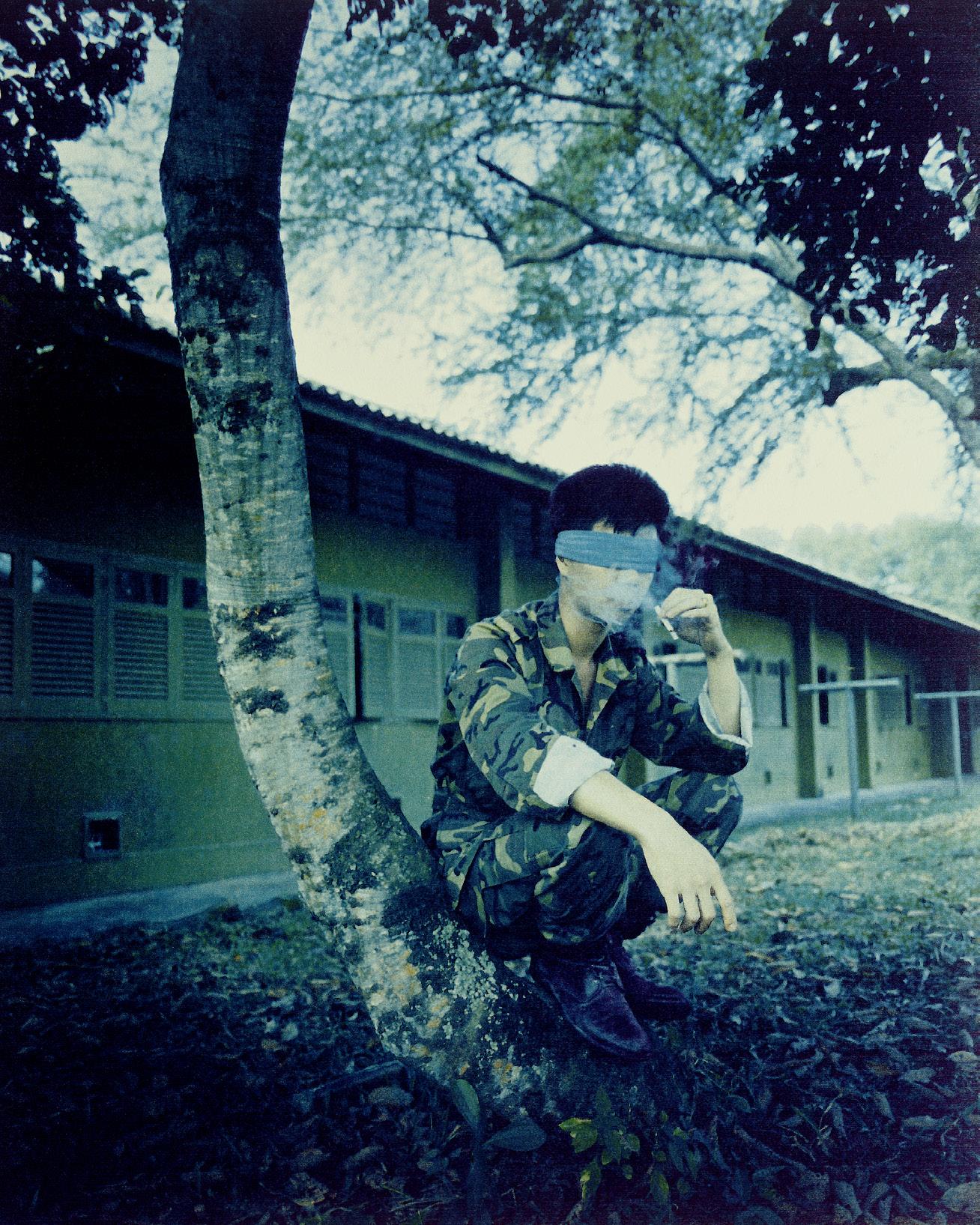
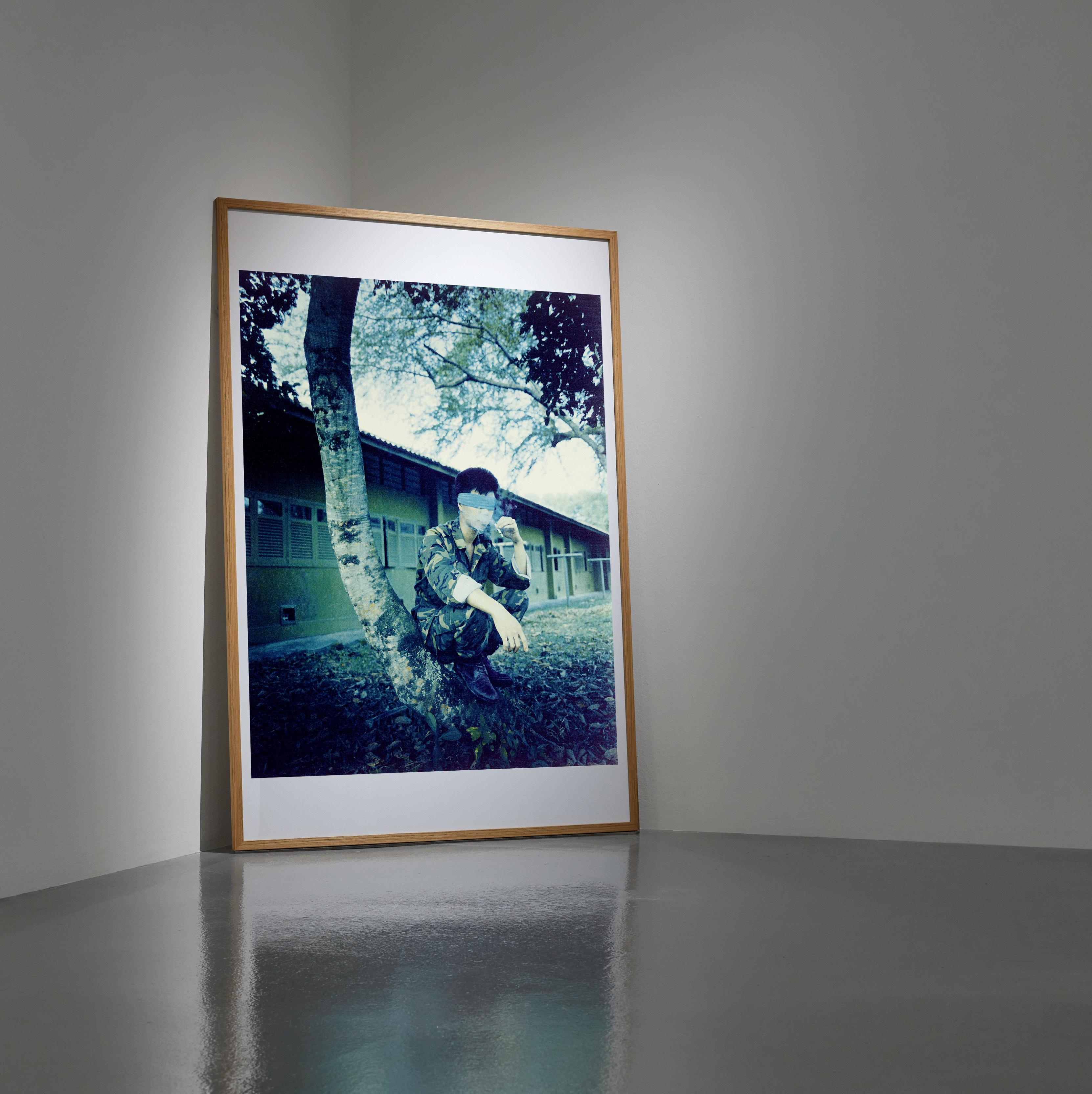
Fine art archival print Edition of 1 + 1 Artist’s Proof H105.9 x W84.7 cm (image)
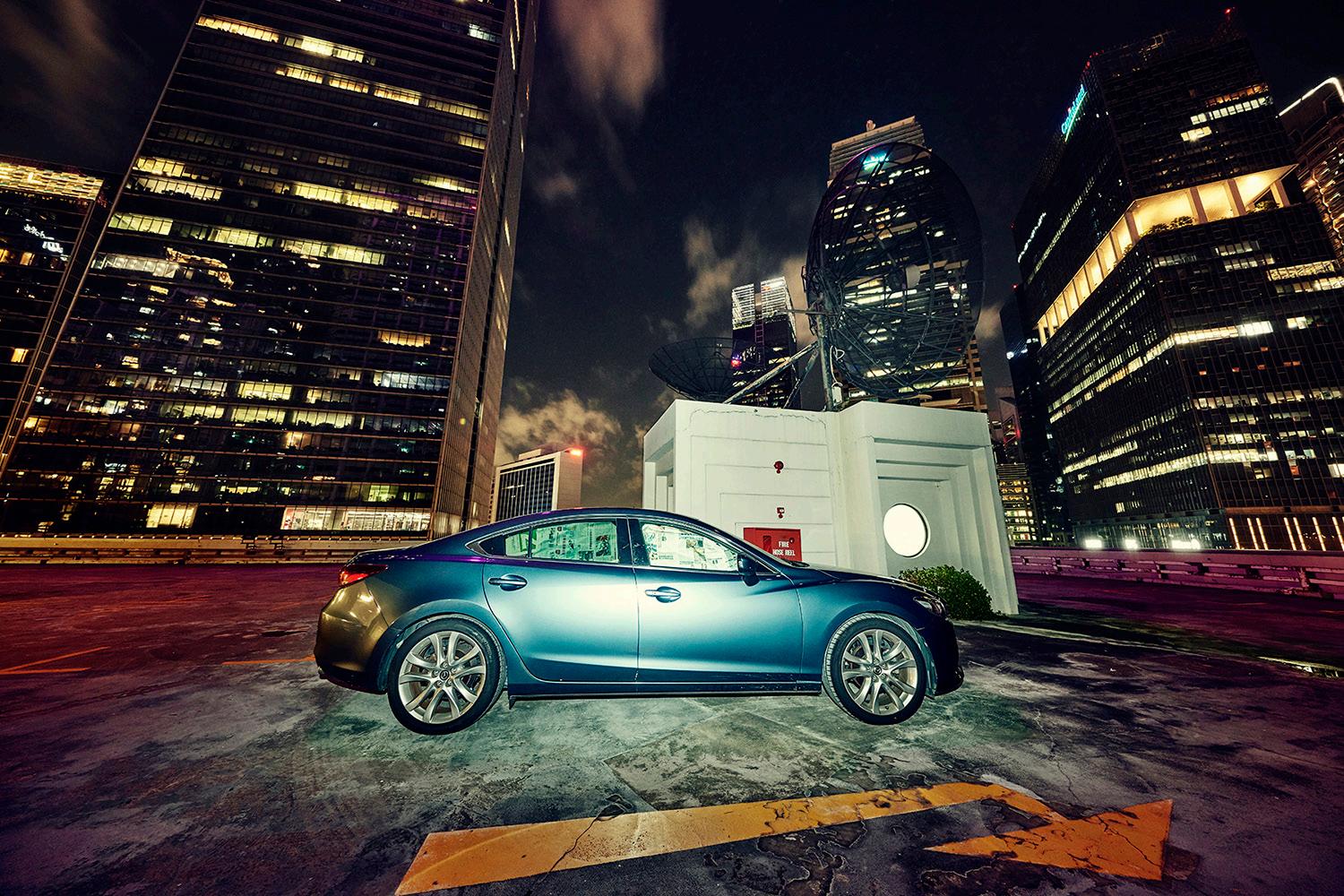
The Mobile Park 1 2023
Fine art archival print Edition of 3 + 2 Artist’s Proofs H67.7 x W101.6 cm (image)
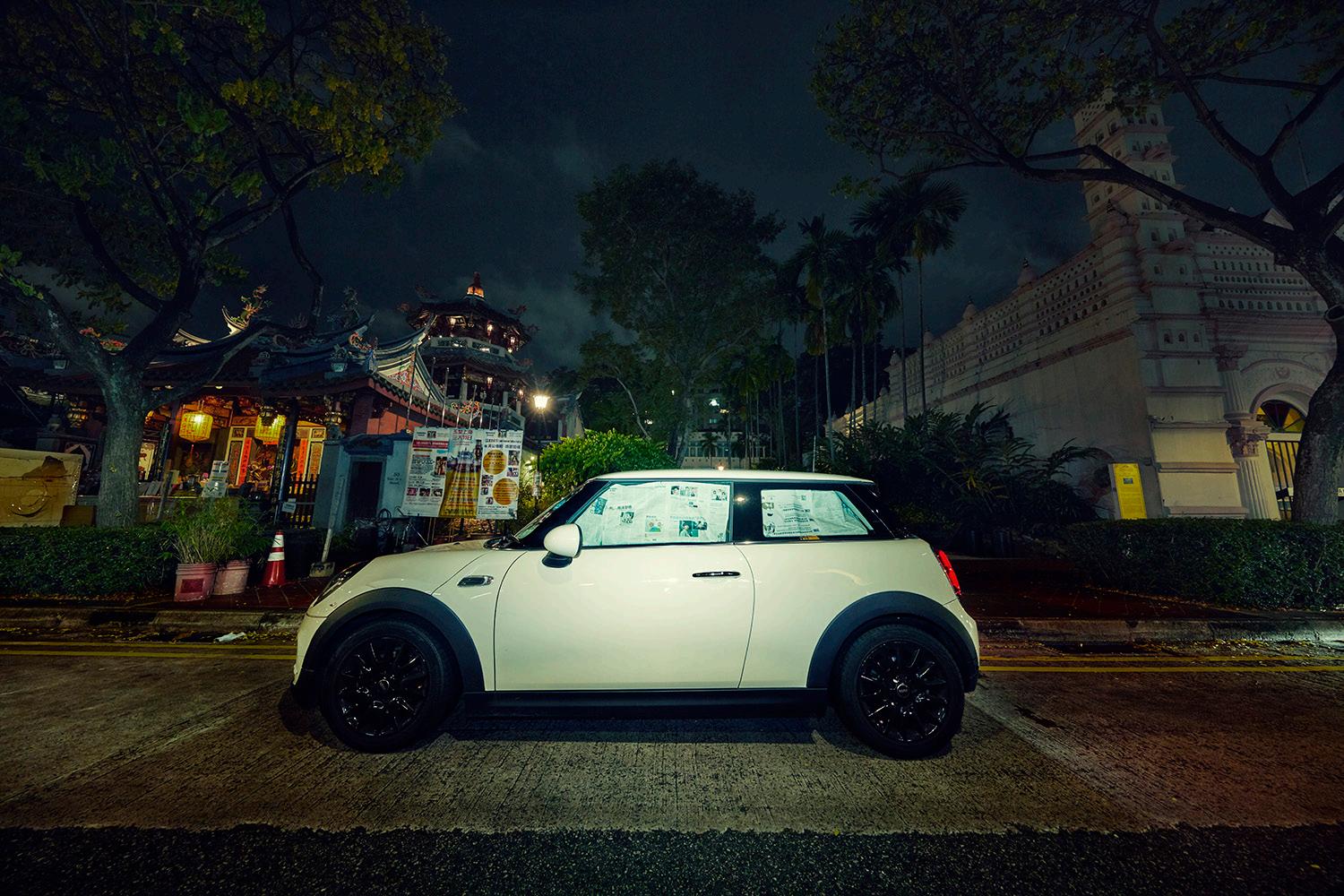
The Mobile Park 5 2023
Fine art archival print Edition of 3 + 2 Artist’s Proofs H67.7 x W101.6 cm (image)
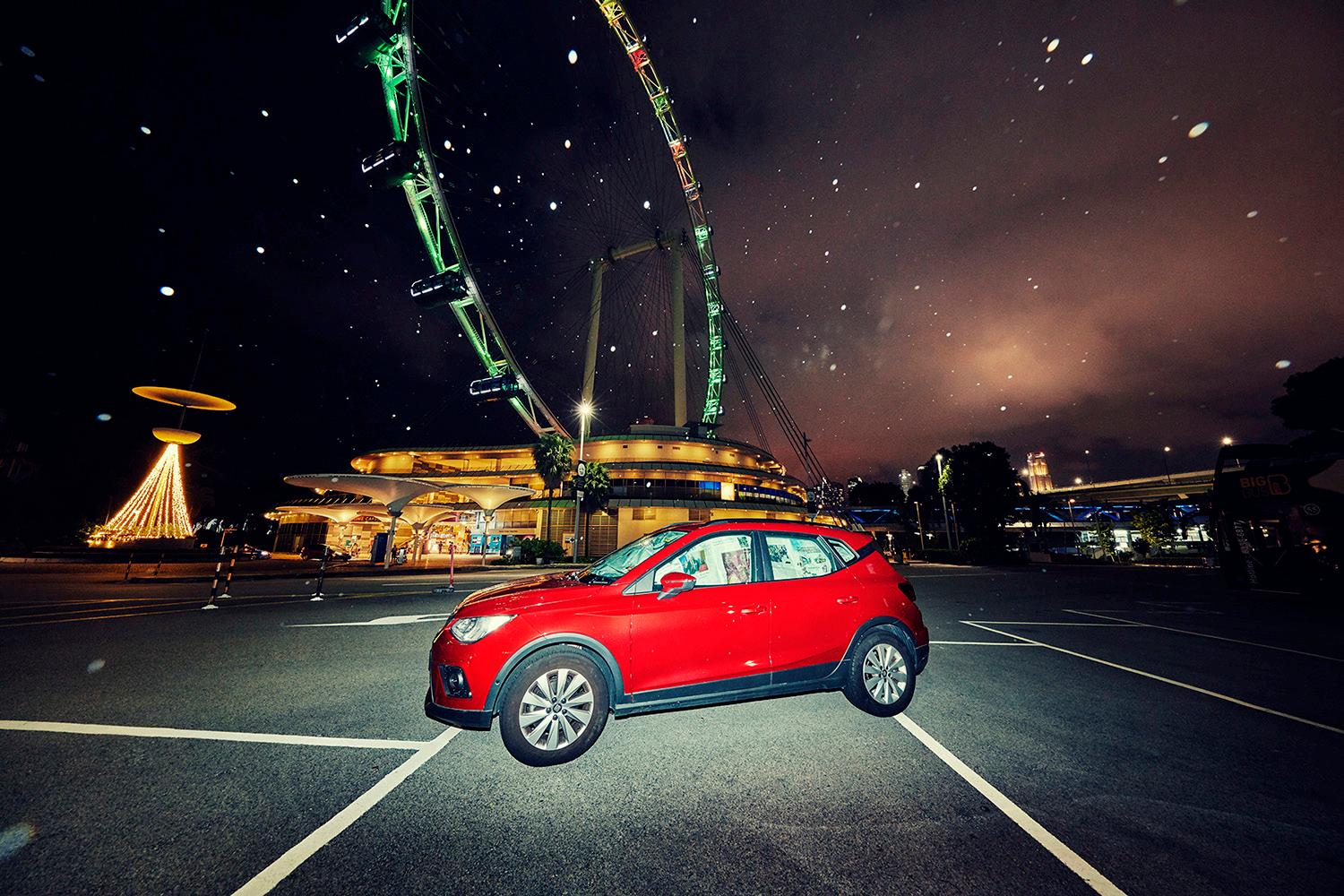
The Mobile Park 10 2023
Fine art archival print Edition of 3 + 2 Artist’s Proofs H67.7 x W101.6 cm (image)
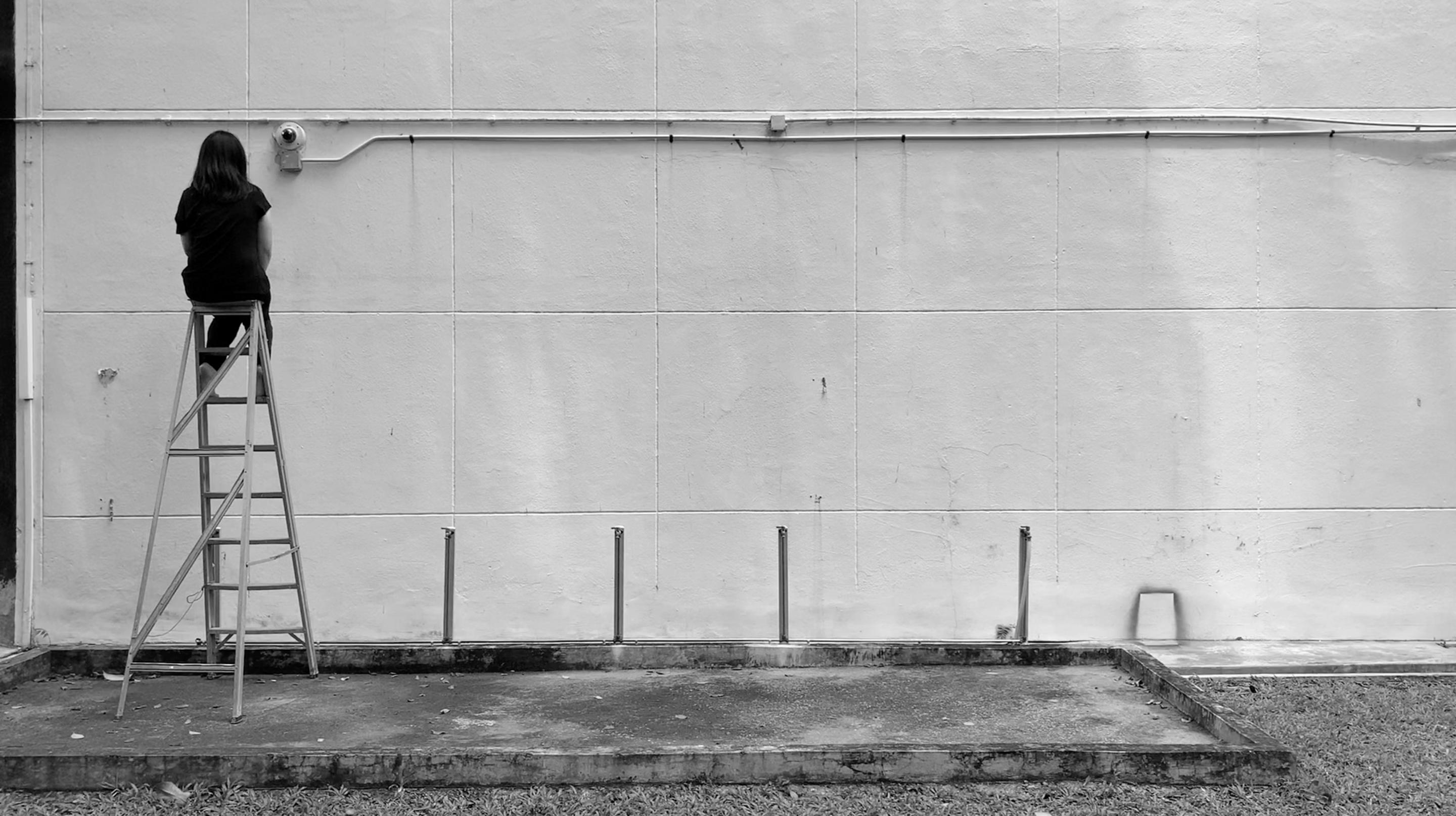
Replica surveillance camera, USB port, screen, custom 3D-printed insert, micro USB, 3 pin plug and single-channel video (00:03:08)
Edition of 10 + 2 Artist’s Proofs
H21.5 x W11.5 x D6.3 cm
Ng
A Breeze in Passing series 2026
Porcelain, various metals and wood mount
Dimensions variable
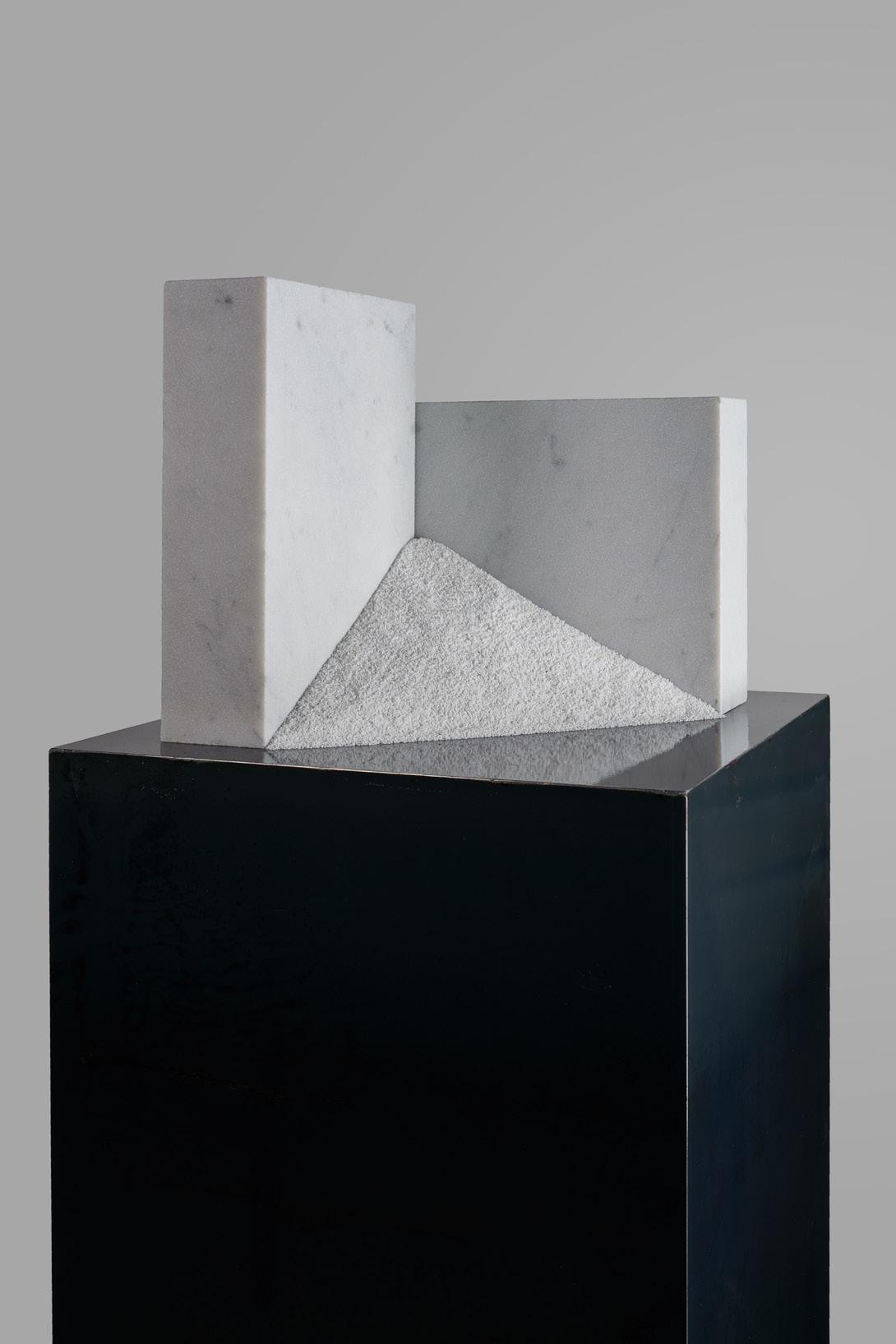
Grace Tan
n. 365 – two slabs and a mound on a plinth
2021
Carrara marble slabs and dust on lacquered mild steel plinth
Edition of 3 + 2 Artist’s Proofs
H141 x W40 x D40 cm
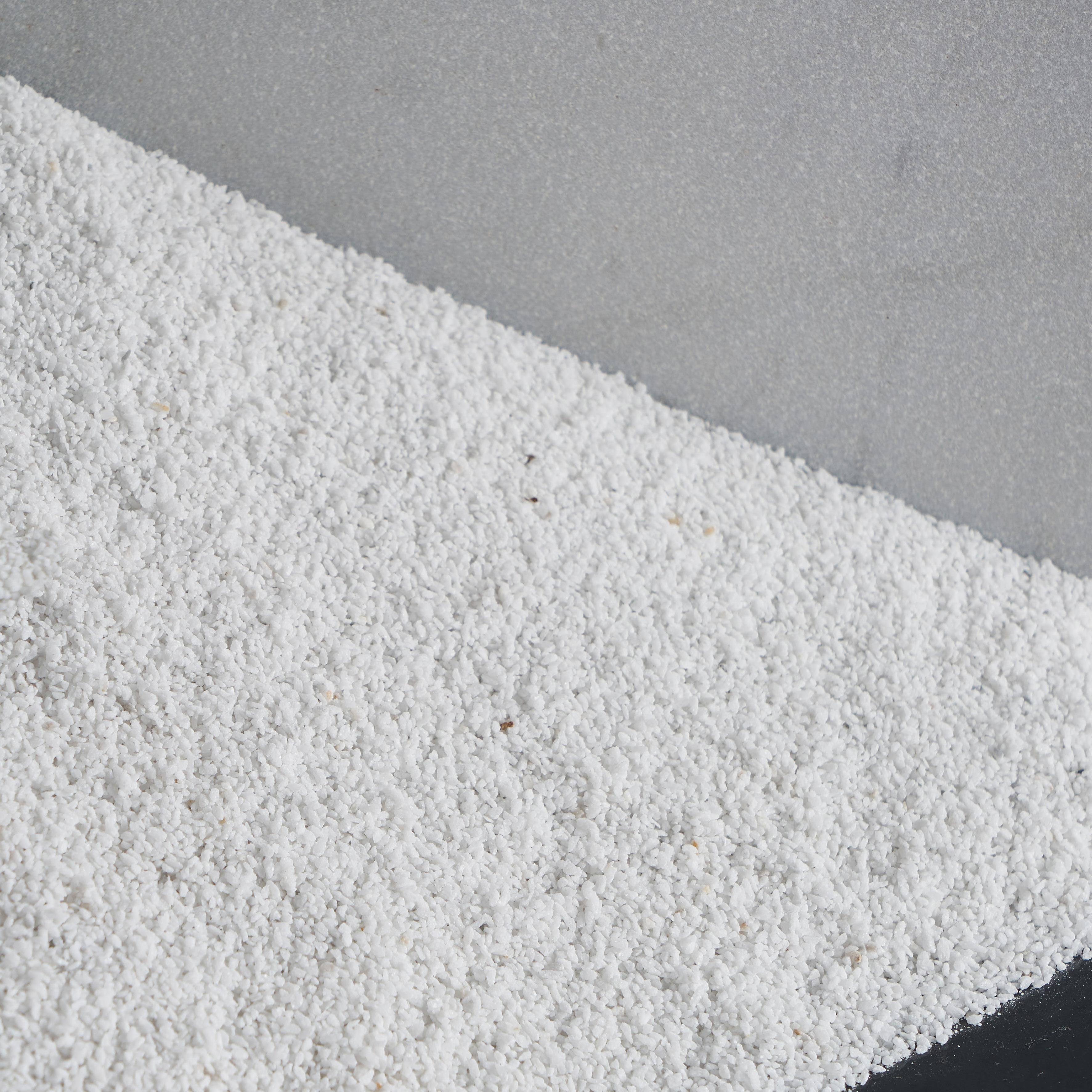
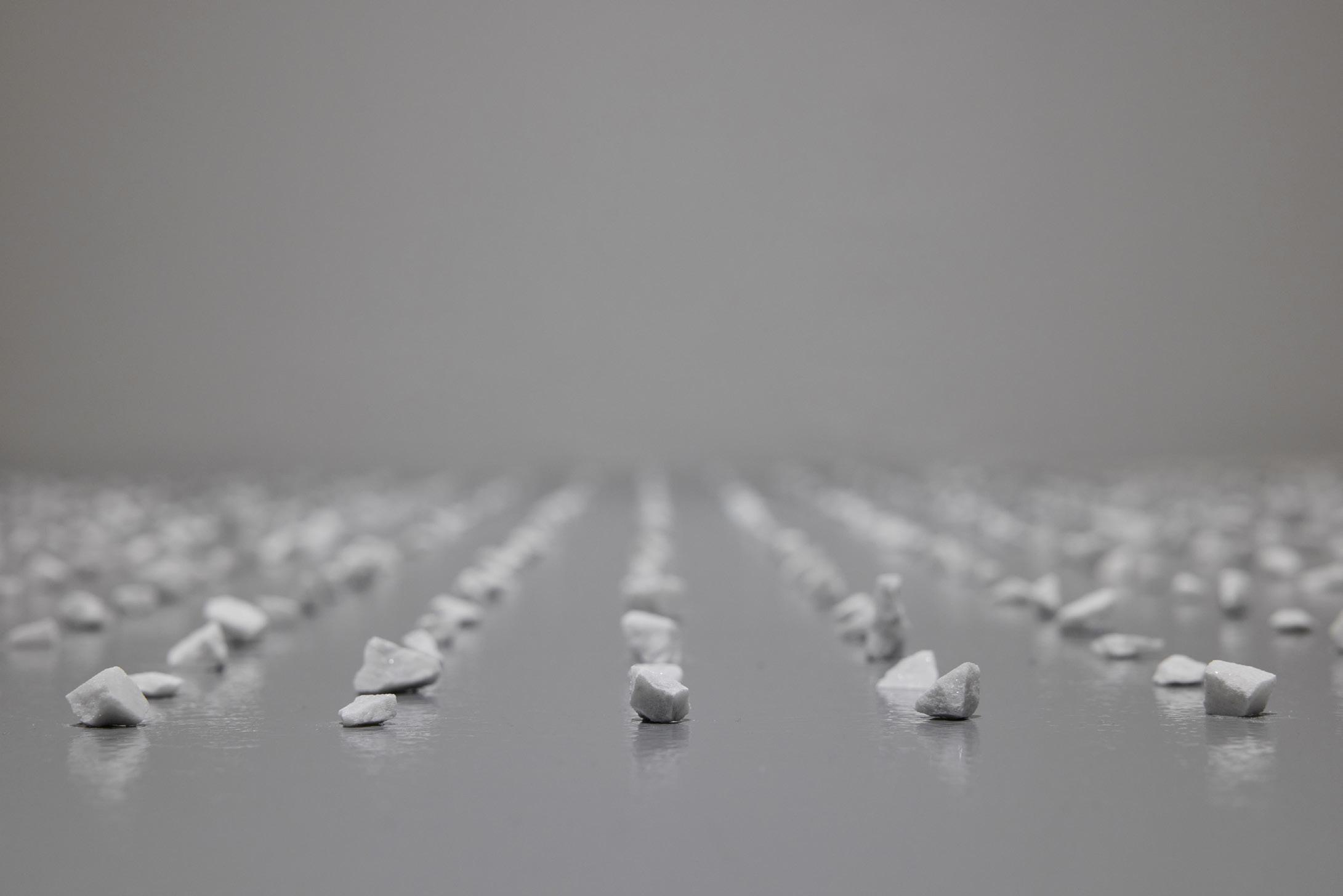
Grace Tan
5cm square, more or less
2026
Carrara marble chips
Edition of 5 + 2 Artist’s Proofs
Dimensions variable (installation)
Established in 2006, the eponymous FOST Gallery takes its name from its founder, Stephanie Fong, who from the outset made it her mission to show progressive contemporary artists from around the world with a special focus on artists based in Singapore. The gallery showcases artists at different stages in their careers but all with a predilection for being at the fore of contemporary art.
FOST Gallery was first located in a refurbished shophouse designed by respected architectural firm ipli Architects in the historic warehouse district near the Singapore River. In 2012, the gallery expanded and moved to Gillman Barracks, Singapore’s premier contemporary art precinct. The new gallery space was designed by another award-winning firm, Ministry of Design.
There has been a strong emphasis on education and facilitating dialogue since its inception, and the gallery has organised talks led by artists and curators in conjunction with every exhibition and regular hosts student groups. It has published scholarly publications written by respected art historians and writers.
FOST Gallery has been acknowledged internationally for its rigorous curatorial outlook and critically acclaimed exhibitions and is recognised as one of the pre-eminent galleries in Southeast Asia.