
Sound

A Champion for All Gaited Horses
Volume 8, Issue 1, 2025
Sound Advocate
Friends of Sound Horses, Inc. 6614 Clayton Rd. #105 St. Louis, MO 63117 info@fosh.info * www.fosh.info
Board of Directors
President - Teresa Bippen Missouri Tbippen1957@yahoo.com
Secretary/Treasurer-Gina Vehige Director at Large-Bill Coon VP IJA Program-Dianne Little Missouri Utah Alberta, Canada gvehige115@gmail.com wbotis@gmail.com ddlittle@telus.net
VP Programs/Gaited Sport Horse Director at Large-Anita Dunham VP HIO/DQP-Lisa Harris Dianne Little Missouri Tennessee Alberta, Canada dunhamanita@gmail.com ddlittle@telus.net
Executive Advisory Committee
Keith Dane Patti Potts Pauline Stotsenberg Hawaii Missouri California pottspa@gmail.com ps@yesteryearfarms.net
Editor Stephanie J. Ruff Florida editor@fosh.info
FOSH Mission Statement
To promote all “sound,” naturally gaited horses, with a specific emphasis on Tennessee Walking Horses. (In this context, sound means not “sored”.)
Importance is placed on education in regards to the humane care for the emotional, mental and physical wellbeing, training, and treatment of all gaited horses.
FOSH will only support flat shod or barefoot horses and will never endorse any event that uses stacks and/or chains as action devices, or any mechanical, chemical, or artificial means to modify the natural gaits of the horse.
To these ends, FOSH focuses on three areas for gaited horses:
1) educating people about sound horse training principles; 2) supporting sound shows, events and activities; 3) working to end soring.
FOSH is a 501(c) (3) non-profit organization. All donations are tax deductible to the extent permitted by law. Your donation to support the FOSH mission is needed to advance the goals set forth by FOSH in conjunction with its formal mission statement.

Publication Guidelines
The Sound Advocate is a digital magazine published quarterly by Friends of Sound Horses, Inc. Reproduction of any article is prohibited without the express written permission of FOSH.
FOSH accepts unsolicited submissions, but reserves the right to edit any and all submissions for content, style and space constraints. FOSH further reserves the right to refuse advertising for any reason.
At no time shall the publisher’s liability exceed the total cost of the revenue from advertising in the issue involved in any dispute.
All show suspensions and show results are printed as they are received from the reporting agencies. FOSH does not guarantee their accuracy.
FOSH does not endorse the content of any advertisement in this publication, nor does it warrant the accuracy of any advertisement.
Readers are urged and cautioned to use due diligence and to thoroughly research, including asking for references, before following through with any transaction.
FOSH does not endorse any trainer, educator, clinician, style of natural training, tack, or horse equipment to the exclusion or preference of any other. Each horse is an individual and may respond differently to particular methods.
Articles published by FOSH reflect the views and opinions of the writers and do not reflect, necessarily, those of FOSH.
Publication Information
Subscribers: The Sound Advocate is a benefit of membership. To ensure that you receive your issues, be sure that your e-mail address is current. To change an e-mail address, contact gvehige115@ gmail.com.
Submission of Articles, Calendar Dates, News and Photos: Send to tbippen1957@yahoo.com. Photos may not be embedded in text and must be submitted as jpeg format, minimum of 300 dpi. The deadline for each issue is the 15th of the preceding month when the issue is to be released. Submissions will not be accepted after the deadline, but may be carried over to another issue. Submissions will not be returned to the submitter.
Member’s Advertising Rates
Back Cover $300
Inside Front Cover $275
Inside Back Cover $275
Full page $125
Half page $75
Quarter page $60
Business Card $25
Directory $25
Discounts for Multiple Issues
2 issues - 10% off total fee
4 issues - 20% off total fee
6 issues - 30% off total fee
Ads will be accepted in pdf, tif or jpeg formats. Text and photos must be e-mailed separately by the 10th of the month when the issue is released. Photos must be 300 dpi. Camera-ready ads are emailed at 300 dpi. Materials should be emailed to editor@ fosh.info.
All advertisements must be paid in advance by check, money order, or credit card. Payments should be made out to FOSH and mailed to:
6614 Clayton Rd. #105 St. Louis, MO 63117
More FOSH information can be found online. Find us at www.fosh.info.
Like us on Facebook. On the cover: LL’s Ginger Spice and LL’s Canadian Red Rascal mare.

TABLE OF CONTENTS
From the President...
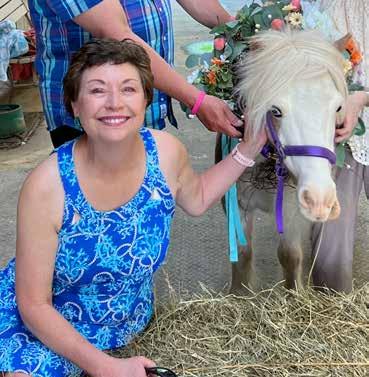
Dear FOSH Friends and Supporters,
As I started my letter, I kept an eye on the weather—yowsers, 6-12 inches of rain predicated in the next three days. I saw that the storm was going to cover a wide area, and I hope you and your horses are safe. This much wet weather is so tough on everyone—you, caretakers, your horses and whomever is tackling the muddy paws coming into the house. As an end note, we had about 4 inches in my St. Louis area.
It’s that time of year to tackle some of those routine maintenance items that just seem to clutter up. If that is your situation, this is the issue for you. Our editor, Stephanie, has done a great job of rounding up information that provides helpful reminders and organizing information. For me, I groan as I think of the hours I will spend brushing out those long winter coats. If you’re wondering about our theme this issue,
think of this as the stay safe, healthy and organized issue as we Spring into a new riding season.
We were very disappointed to learn the USDA placed a hold on the regulations that banned stacks and chains that were supposed to begin in February. We’re looking into our options as are other animal welfare groups. Tennessee Walking Horses have needed these new rules for decades and now the USDA is dragging its feet—again. On the plus side the Prevent All Soring Tactics (PAST) Act was reintroduced in the House in February by 178 co-sponsors which is a great start.
I was happy to see that this issue has more information on Working Equitation—this is a discipline that has happy, gung-ho followers and many competitions. We love the individual scoring with Working Equitation competition and the continual learning experience for you and your trusty speed.
Spring brings new babies so if you have photos of those cute gaited horses that were born this year and previous years, we would love for you to show them off in our next issue. Please send them to either Stephanie or me.
Don’t’ forget to dust off the cobwebs on your riding helmet if you’ve been sidelined during the Winter.
From the Editor...

Hello FOSH Friends.
The times we are in are not the most settled. There’s a lot of stress and uncertainty out there.
But whenever everything seems to be in flux one thing stays the same - horses need to be cared for. It doesn’t matter what’s going on in the world. In their world if you are late feeding dinner that’s a big problem!
I think the consistent routine of caring for horses (or any pets/
livestock for that matter) helps keep a sense of balance. When I was going through a very difficult time in my personal life, quite literally the thing that got me out of bed every morning was that I had to take care of the animals. If it weren’t for them, I’m not sure how I would have managed.
Of course, likewise horses need to be fed when you are sick, or the weather is bad, or it’s Christmas morning. It’s a double-edged sword, but I suspect most of us would continue to choose having our animals.
So take some time to spend with your animals. Read this issue of The Sound Advocate and learn more about competitive trail, vaccinating your horses, spring cleaning your barn, and getting your horse fit.
Spend time with family and friends. Do whatever makes you happy because life is too short, and all the chaos will still be out there when we come back.
Enjoy spring. Happy riding!
Stephanie Stephanie J. Ruff Editor, editor@fosh.info


An Introduction to Competitive Trail
Excerpts from the in-depth NATRC Rider’s Manual (currently out of print). Reprinted with permission.
What Is a Competitive Trail Ride?
A competitive trail ride (CTR) is a competitive distance event over a measured distance and completed within a window of time. In NATRCTM competitions, the horses are evaluated by an approved veterinary judge, and riders are evaluated by an approved horsemanship judge. The judging begins at the preliminary examination, usually the day before the ride, continues during the ride, and concludes at the final examination one or two days later. The equines (horses, ponies, and mules) are evaluated on condition, soundness, their trail manners, and way of going. Riders are judged on horsemanship as it applies to competitive trail riding. Trail safety and courtesy are key elements as is the ability to care for a horse during and after a long day in the backcountry.
Competitors haul their horses to the ride site, perhaps in a grove of trees or in a meadow, where they set up camp. After checking in with the ride secretary, riders present their horses
for a preliminary veterinary inspection. Later in the evening a briefing is held to tell riders about the trails. Competitors are timed out from a starting point usually the next morning. With the aid of a map, they follow a marked course.
The horse’s pulse and respiration (P&R’s) are checked at least 2 times on the trail.
If the day’s ride includes a lunch stop, it will be at least 45 minutes. Some rides do not hold a lunch stop on the second day to allow for earlier awards. Most rides will transport your lunch to the lunch stop and some will take your bucket too. Ride management may provide feed for all horses at lunch or other places on the trail. This varies from ride to ride and is at the discretion of ride management.
The judges will examine the horses at the end of a day’s ride and again before timing out on the second day. The final vet check, after the ride, is similar to the pre-ride examination. Competition is over when this final vet check is done. As soon as the scores and placing are completed, awards are presented and riders pre-
sented a hard copy of their scorecard. How far and how fast competitors travel depends on the division of competition. The Novice Division is for riders and horses new to competitive trail riding. Competitive/ Pleasure (CP) Division is for riders who are more experienced in CTR but who prefer the distance and pace of the Novice Division. The Open Division is for experienced CTR riders with experienced, well-conditioned horses. Novice and CP competitors cover about 40 miles in a 2-day ride at 3.5-5 miles per hour. The Open competitors cover 50-60 miles in a 2-day competition at a faster average pace of 4-6 mph.
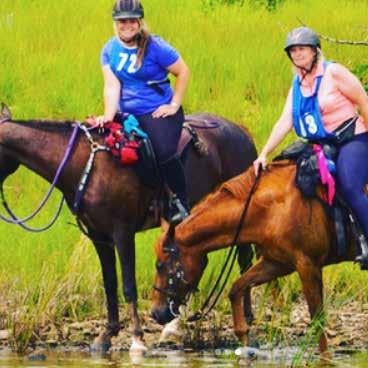
those pertaining to leg protection. Participants may choose not to do judged obstacles, but they must participate in veterinary checks for soundness and condition, P&R checks, or other checks for the welfare of the horse. DO participants receive mileage (distance only) no placings or awards, and they do not count as competitors for establishing points. They do, however, receive scorecards with informative comments at the end of the ride. DO participants may do one day of a 2-day ride.
NATRC also offers a Distance Only (DO) option in all three divisions. DO participants must follow all NATRC and ride rules with the exception of
Competitive trail riding is a great family activity. Children aged 10 or over at the beginning of the ride year can compete. Parents who are competing may ride with their competing children. Non-riding family members can relax in camp or perhaps assist management personnel while the riders are out on the trail.
North American Trail Ride Conference
NATRC has six regions covering the country from Alaska to Florida. Each region puts on rides in their geographic area. It is not a requirement to be a member to enter a ride. All are welcome - all riders, all breeds, and all types of tack and disciplines of riding. Entries for any ride are welcome from anywhere. Some rides are held on private property or public lands that are not otherwise available to the individual rider.
Individual rides are local events with NATRC sanction given for using our rules and approved judges. Each ride is unique yet follows the same basic structure.
NATRC rides are NOT races. Our


rides emphasize the skill of pacing your horse to maximize his longevity as a distance horse. NATRC boasts horses with over 20,000 miles of competition.
From the scorecards and from the experience of conditioning and competing, riders learn more about techniques of good trail equitation, pacing techniques, and methods of care that help their horses perform well. NATRC competitors share the challenges of terrain and weather conditions, or timing and being judged, and sometimes the treasure hunt quality of staying on course, making for a spirit of great camaraderie. Our riders compete year after year, not just for the competition, but for the friendships, old and new, the ongoing education, and the enjoyment of the partnership that develops between horse and rider. Winning ribbons or ride awards and year end awards is a bonus!
Working Equitation Clinic
Marthasville, Missouri
On March 8, FOSH sponsored a lunch and snacks for the Working Equitation Clinic hosted by Mari Jebens in Marthasville, Missouri. Working Equitation Missouri is a new group forming in the area to promote the sport of Working Equitation per the USAWE guidelines (https://usawe.org). There were 12 riding participants and 10 auditors at the event. The instructors provided tips and requirements for navigating obstacles as well as performing dressage tests. The weather was very cooperative, so the obstacle courses were outside.
The riders split into groups of three so that individual support could be provided. Riders were able to rotate through the obstacle sessions as well as the dressage sessions. Feedback was overwhelmingly positive about the event. The clinic was open to gaited and non-gaited horses, and several Fox Trotters were in attendance. There was a good mix of both Western and English riders. Several of the riders attended the event FOSH supported last year in Foristell, Missouri.
Instructors at the event were Mari Jebens (dressage) and Brenda Wasser (obstacles). Due to the popularity and reception these events have received in the area, there is a plan to hold another clinic in 2025 with either Seth Marshall or Doreen Atkinson (both well known in USAWE circles as top riders/judge/officials).

Story and photo by Gina Vehige.
Instructor – Brenda Wasser. Julie Gustafson (bay), Terry Bender (gray), Kathy Mueller (paint)
5 Tips to Declutter Your Horse Barn for Spring
Spring is the perfect time to refresh and reorganize your horse barn after a long winter. A well-organized barn not only improves efficiency but also promotes safety and cleanliness. Here are five essential tips to declutter your barn and create a tidy, functional space for you and your horses.
1. Start with a Thorough CleanOut
Begin by removing everything from your barn aisles, tack room, and storage areas. Sweep out dust, cobwebs, and leftover hay. This will give you a clear view of what needs to be organized, repaired, or discarded. Pay special attention to areas where clutter tends to accumulate, such as feed rooms and corners of stalls. A deep clean will set the foundation for a well-organized barn.
2. Sort and Purge Unused Items
As you go through your barn, evaluate each item. If you haven’t used it in the past year, consider donating, selling, or discarding it. Broken tack, expired medications, and worn-out blankets should be removed to free up space. Be honest about what is truly necessary to keep, and don’t be afraid to let go of items that no longer serve a purpose.
3. Optimize Storage Solutions
Invest in storage bins, shelving units, and hooks to keep everything in its place. Use clear plastic bins for smaller items like grooming supplies and first aid kits. Hanging racks or wall-mounted organizers can help keep saddles, bridles, and halters off the ground and easily accessible. Labeling shelves and containers will make it easier to find what you need quickly.
4. Create a Feed and Equipment Inventory
Take stock of your feed, supplements, and equipment. Make a list of what you have and check expiration dates on feed and medications. This will help prevent overbuying and ensure that everything remains fresh and safe for your horses. A well-organized feed room with airtight containers and labeled bins can prevent waste and make daily chores more efficient.
5. Maintain a Decluttering Routine
Once your barn is clean and organized, establish a routine to keep it that way. Set aside time each week for a quick declutter and clean-up session. Regularly sweep aisles, return tools to their designated places, and reassess your storage system. Encouraging everyone
who uses the barn to clean up after themselves will help maintain a tidy and functional environment yearround.
Take-Home Message
By following these five tips, you can create a clutter-free barn that is safer, more efficient, and more enjoyable for both you and your horses. A little effort now will save time and stress throughout the season, allowing you to focus on what truly matters—spending quality time with your equine companions.


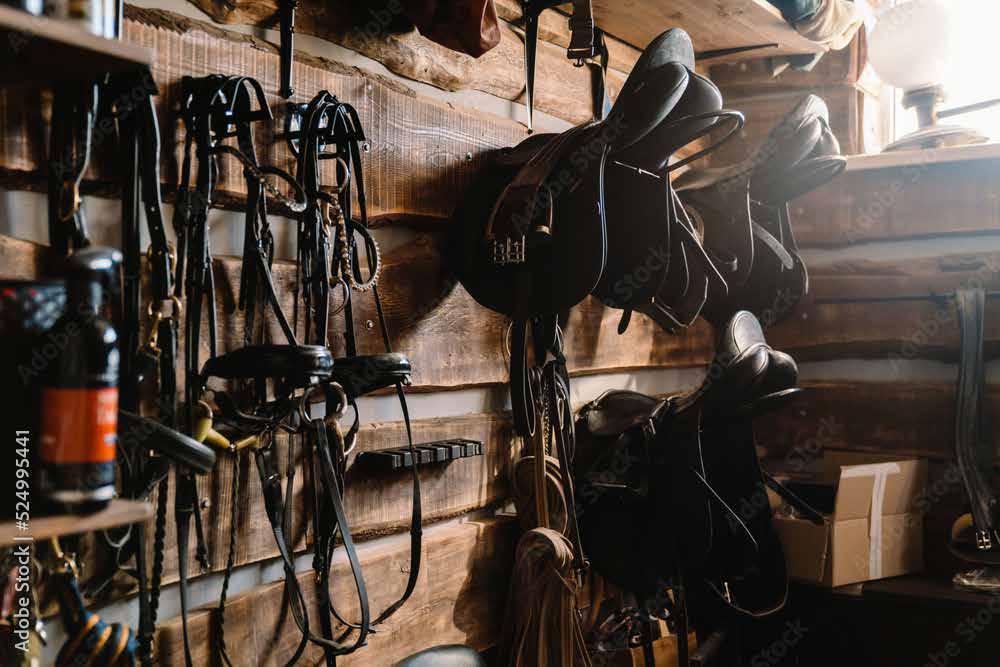
A place for everything and everything in its place helps keep your barn safer, more efficient and more enjoyable.
2025 Sound Horse Clinics & Events
Supported by FOSH
Schedule will be updated as more events are added.
Date Location
Sponsor/Contact
Type
3/8/25 Brooksville, Florida Spotted Dance Ranch - Kym Rouse Holzwert Carl Bledsoe Clinic
3/8/25 Marthasville, Missouri Working Equitation Clinic, Mari Jebens Working Equitation Clinic
4/26/25 Troy, Missouri Good Old Days LLC - Show Series (through Sept/Oct) Gaited Classes & Versatility
9/19 - 9/21/2025 Lake St. Louis, Missouri Carl Bledsoe/FOSH Gaited Horse Clinic
12/14/25 Brooksville, Florida Spotted Dance Ranch - Kym Rouse Holzwert Carl Bledsoe Clinic

Carl Bledsoe Clinic National Equestrian Center
September 19-21, 2025
Courtesy of Equine Guelph
Equine Guelph’s Vaccination
Equi-Planner is a cutting-edge healthcare tool designed to help horse owners protect their valuable equine partners. This innovative tool provides a starting point to discuss a comprehensive vaccination schedule with your veterinarian that will be tailored to each horse’s unique needs, aiming for optimal health and performance.
Provide Protection for Your Partner
Investing in a horse is a significant commitment, both emotionally and financially. With the Vaccination Equi-Planner (TheHorsePortal.ca/ VaccinationTool), horse owners can help protect their partners by planning timely and appropriate vaccinations. The nominal cost of vaccines, far out weight the financial loss that could be incurred from devastating diseases. Not to mention the downtime required to recover from an illness, the horse’s suffering and the rider sidelined from saddle time.
Each year, Equine Guelph declares March as Vaccination Education Month. Before the vector-borne diseases get their wings, it is a good time to visit the Vaccination Equi-Planner (TheHorsePortal.ca/ VaccinationTool) and Sickness
March Kicks Off Vaccination Season! Safeguard Your Equine Partner
Prevention in Horses course – both kindly sponsored by Zoetis.
“Vaccination is an incredible tool for enhancing a horse’s level of protection against infectious disease. Zoetis’ portfolio of equine vaccines can be tailored to meet the needs of YOUR horse, with products providing coverage against core and risk-based diseases in a range of convenient formats designed to elicit optimal levels of protection,” says Tamara Quaschnick, DVM, Veterinary Services Manager, Zoetis. “Your veterinary care team can help you best utilize this tool, ensuring that your horse is getting the right coverage at the right time.”
What to Expect from Vaccination
Vaccination is a crucial aspect of equine healthcare, and the Vaccination Equi-Planner makes it easier than ever to stay on top of your horse’s vaccination schedule. Here’s what horse owners can expect:
Customized Vaccination Sched-
ule: The tool generates a personalized vaccination plan based on your horse’s age, location, and lifestyle, which helps guide decisions for the right vaccines at the right time. Vaccines do not provide immediate protection; it can take days or weeks for a horse to develop optimal immunity after vaccination, so timing

is very important. Planning ahead will allow vaccines to be given well in advance of the next stressor such as travelling. There are also windows of time before competitions for the administrations of vaccines to be aware of.
The frequency of your vaccinations or boosters will depend on the aforementioned factors. There are also special circumstances to consider, such as an extended vector season or even a significant wound if it is incurred over 6 months after
Vaccination Equi-Planner makes it easy to start conversations with your vet about immunization plans. Photo credit: Jackie Zions
a Tetanus shot. The length of your show season may also necessitate a booster of certain shots to maintain optimal immunity.
Disease Prevention: Vaccinations help protect horses from a range of infectious diseases, including West Nile Virus, Equine Influenza, Rabies, Eastern/Western equine encephalitis and Tetanus, reducing the risk of illness.
Peace of Mind: While no vaccine boasts 100% immunity, horse owners can rest assured that they are taking proactive steps to maintain their horse’s health, minimizing the risk of unexpected veterinary expenses. Vaccines significantly reduce the risk of disease which means if a vaccinated horses does get sick, they will generally experience milder symptoms and recover more quickly.
Working closely with a veterinarian to develop and maintain a vaccination program is an important step for optimal equine health. In addition to core vaccinations, your vet will know what diseases are endemic and emerging in your region. It’s important to monitor your horse after vaccination and consult your veterinarian if you notice any reactions. Severe reactions to vaccines are rare but can occur. These may include allergic reactions, abscesses, hives or difficulty breathing. Most horses tolerate vaccines well. Mild reactions such as muscle soreness, swelling at the injection site,
or a mild fever are usually shortlived and resolve on their own. Be sure to mention to your vet if your horse has had reactions to vaccinations in the past.
Equine Guelph’s Vaccination Equi-Planner (TheHorsePortal.ca/ VaccinationTool) is a handy tool for any horse owner, providing a simple and effective way to manage your horse’s healthcare. By investing in regular vaccinations, you are helping protect your horse as well as their longevity and performance.
Effective disease control also relies on good biosecurity practices, such as proper hygiene, quarantine protocols for new or sick horses, and minimizing exposure to disease vectors
“Vaccination is important,” says infection control expert Dr. Scott Weese, “but it can’t be the whole disease control program. Vaccination plans must be implemented alongside other infection control and biosecurity practices for best effect.”
For more information about the Vaccination Equi-Planner healthcare tool, visit TheHorsePortal.ca/VaccinationTool.
To make sure you are doing everything to optimize your infection control strategies, sign up for the Mar 31 – Apr 7, Sickness Prevention in Horses online short course on TheHorsePortal.ca
CARL BLEDSOE CLINIC
National Equestrian
Center

6880 Lake St. Louis Blvd. Lake St. Louis, MO 63367
September 19 -21, 2025
SCHOLARSHIPS NOW AVAILABLE!
Friends of Sound Horses, Inc. (FOSH) is now offering 1 adult (19 and up), and 1 youth (age 14 -18) riding scholarship to the Carl Bledsoe Clinic being held in Lake St. Louis, MO in September of 2025. In addition, 3 auditor scholarships will also be availab le. Riding positions are normally $800 for all 3 days, and auditors are normally $50 per day. The scholarships would cover these fees only. Applicants will be responsible for their own (and horses, if appliable) transportation, lodging, meals, and stall shavings (which must be purchased from the venue). Stall fees are included. Applicants must agree to FOSH Sound Horse Principles as stated in this edition of the Sound Advocate and complete a clinic application if selected.
Please complete the attached information and scan and email to: treasurer@fosh.info before June 1, 2025. Thos selected will be notified before July 1, 2025. Scholarships are NON -TRANSFERRABLE.
I am applying for: ________ Rider * ____________ Auditor (check one)
*Riders must be able to and have been riding the horse for at least 6 months.
Name:_____________________________________________________ (PLEASE PRINT LEGIBLY)
Address:___________________________________________________
Email: ____________________________________
Phone: ____________________________________________________
Breed of Horse:
How Long Have You Owned the Horse? _______________________
I agree with the FOSH Sound Horse Principles (in this edition of the Sound Advocate): Y or N (circle)
Why do you want this scholarship and what do you hope to learn from the clinic?
(may include additional pages as necessary)
The self-service horse barn is coming of age for several reasons. There is an increasing need for horse housing for horse owners in suburban and urban areas that seek the emotional and physical health rewards of equine ownership. Commonly affordability of the land and stabling required for such an enterprise is limited for many ‘wannabee’ horse owners, and livery is a good option.
There is a bonus factor of a self-service barn beyond its affordability and the horse owner themselves taking individual care of their equine partner on a daily basis. In a self-service barn social circumstances exist for interaction with other like-minded individuals. A community where each person can enjoy their own horse, within the framework of other horse-oriented personages that can aid in their enjoyment and education. A bit like the community garden experience – mental and physical health can all be optimized by spending time being active and around nature and of course, around horses.
For property owners that are considering retirement from horse ownership or reducing their equinebased operations, or simply cutting
Horizon Structures Presents Series: Self-Service Barns
back for financial, time-management or pivoting lifestyle reasons, there is often a reluctance to leave the horse property they call home and abandon their passion for horses. The notion of changing the barn from full-service offering or a private yard to a ‘self-service’ model with a mix of rough and partial boarding options can be a valuable source of both money and emotional reward.
The new property buyer that enjoys the privacy large acreage can provide for their residence are often baffled by what to do to best manage the open land they have acquired. Very often tracts of land may be purchased with a view to building a nice home but not with a view to how the land itself can be utilized either for income production or simply as an idyllic quiet vista they can enjoy from a distance.
Shelve The Responsibilities
The incumbent responsibility that comes with owning a horse facility or small horse-oriented property is often a complex one that includes managing the well-being of horses alongside their owners. But that is not all, it also includes resourcing supplies that are often expensive and hard to obtain; providing la-
bor for high maintenance needs for fencing, horse-housing structures, pastures, paddocks and arenas; meeting safety, security and insurance needs and much more.
Management of horse care can easily reach critical mass, the equine being a sensitive creature, both mentally as a flight animal and physically too, prone to colic, injury and disease.
When the opportunity exists to shelve those onerous responsibilities and leave what hay to order, daily mucking out chores and pasture manure pick up and the general day-to-day work that comes along with horse ownership to others, why not take it?
Notes For Successful Set-Up of a Self-Service Horse Barn
Here are a few tips to help successfully setup or transition your horse barn for the self-service option:
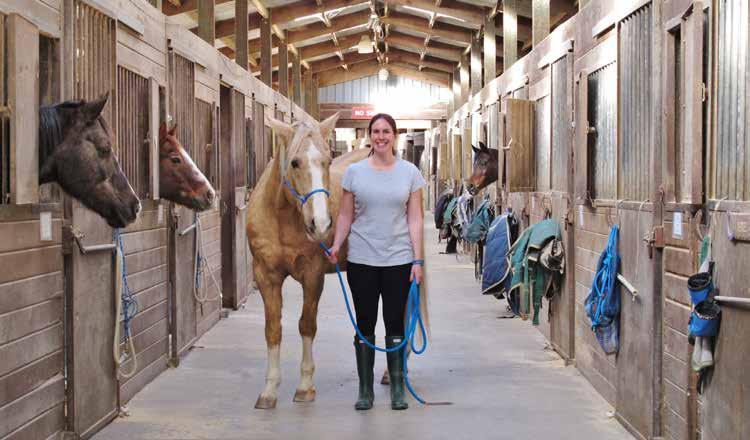
Start with a decently maintained property that offers good ingress/ egress and security with gates and safe fencing in place.
Build or renovate the barn to offer a well-ventilated and sturdy horse living environment. Designs that
By Nikki Alvin-Smith
encapsulate horse-friendly lifestyles also mean less labor.
Provide secure, water-proof storage for horse supplies that the horse owners will obtain for their use such as hay, bedding, tools, tack and equipment. Mitigate fire risks by ensuring hay is properly cured to avoid likelihood of spontaneous combustion and make each person responsible for securing their own preferred supplies.
Ensure a clean and fresh water supply is available all year around, including during cold winter months. Do not use roof run-off to barrels, as it can easily be contaminated. Maintain the correct type of insurance to protect you from liability claims and property damage.
Ensure a clearly written contract be executed for each user and detail whether insurance coverage for their horse against death/injury or disease is required; terms of property use including hours and visitor rules; pricing and payment terms; determine care requirements for use of specific areas such as stalls/paddocks and mucking out etc.; include cancellation or eviction terms. Post any user rules (riding helmet requirement when mounted/dress
codes like no open-toed footwear etc.) or liability notices in high visability areas.
Learn To Say No
You will always encounter Difficult Horses and Difficult Boarders so be smart about how you handle them and who you let in to use your facility. Don’t be afraid to say No to rogue behavior on the part of either horse or human.
If you include a contract requirement for the horse owner to visit and care for their horse a certain number of times per week/day etc., you can protect not just the horse’s well-being but save your property from becoming a parking lot for horses that for one reason or another are no longer wanted as riding partners or companion animals.
Take-Home Message
Whether you are transitioning due to a lifestyle change either medically necessary or by choice or realizing your dream of land conservation and home ownership, or something in between, the self-service barn can alleviate a lot of headaches and responsibilities while allowing you to either stay on property or live elsewhere and rent it out.
Either option requires regular supervision of the property to ensure that rules are being followed and that everyone is discharging their duties to care for the horses present in a responsible manner.
For additional information about the company or their product line, please visit their website at www. horizonstructures.com.
Grand Meadows Care Series: Keeping Your Backyard Horse Fighting Fit
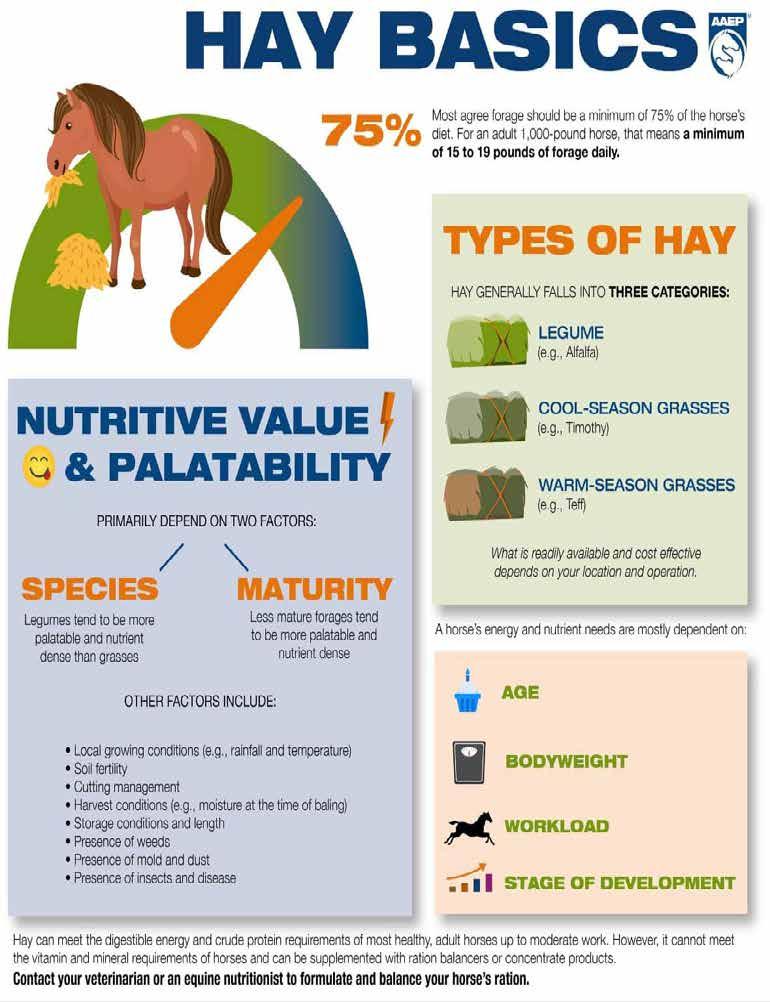
Just because you keep your horse in the backyard doesn’t mean he, or you, are second rate equestrian citizens or equine caregivers. In fact, the horse you see every day because let’s face it, you have to care for him, is actually likely to be better monitored and understood than certain others. That being said, professionals rely on their equines to provide an income. Either through progression of training for sale or competition, or for horse breeding activities or a lesson program. Which is perhaps why they know that keeping horses in their charge fighting fit, is important. Let’s look at how everyone can achieve that goal.
Size Doesn’t Matter
It’s not about being an amateur rider or being a professional trainer or competitor. Obviously for the latter their idea of a backyard venue maybe a 20-stall barn with an indoor arena versus the true backyard horsekeeper managing everything on a few acres, small paddocks and a couple of ‘neds’ hanging out together in view of the kitchen window. A true professional horse person knows It’s all about heart, and about knowing your horse and being aware of minute changes in his well-being, no matter how many horses are in their care.

Catering to horses on an individual need basis is hard to do in a large group setting such as a high traffic competition barn or lesson facility. If you are managing your horses yourself rather than relying at least in some part on others, then as long as you know what to look for and how to fix it, your smaller facility offers distinct advantages. But what do you know?
Weighty Issues
A common concern for the ‘at home’ horse, is that of weight. Regardless of whether caused by metabolic disorder, age, or wrong diet, the horse that doesn’t get worked is going to get chubby. Some more than others of course. Similarly a horse may drop weight or have trouble keeping
its weight at optimum levels, which can baffle the horse owner who is feeding the equine what they believe is necessary.
Just like humans, obesity is a concern for all sorts of reasons especially those assigned to health. And similar things apply. Exercising the horse, especially one with either/ or limited turnout time or room to exercise in a small paddock, means setting a regular work schedule. But then of course, it can be tough to be disciplined enough to stick to it.
A key issue for ‘home life’ horses is the owner’s time to focus on more than just the care side of horse management. Busy lives means that priorities sometimes become just getting the mainstay needs managed during the week and catching up on a free weekend. Free that is, unless family obligations or errands take precedence.
There are many ways to manage your time and find time to ride and exercise your horse. Here are some ideas to help you along.
For the horse that has difficulty maintaining a good weight, the resolution to its problem is not going to be adding more exercise to the pro-
By Nikki Alvin-Smith
gram. So let’s head into the issues of diet.
Nutrition and Diet
To assuage guilt for not spending enough time working horses, folks often compromise and instead go to becoming a horse treat vending machine. Not the best idea. The nutritional aspects of what you provide for the horse that has less options due to restricted grazing, becomes extremely important in keeping him fighting fit. For the horse fighting to keep weight on the treats offer a distraction but are not going to solve basic issues that are obviously occurring that shortchange his well-being.
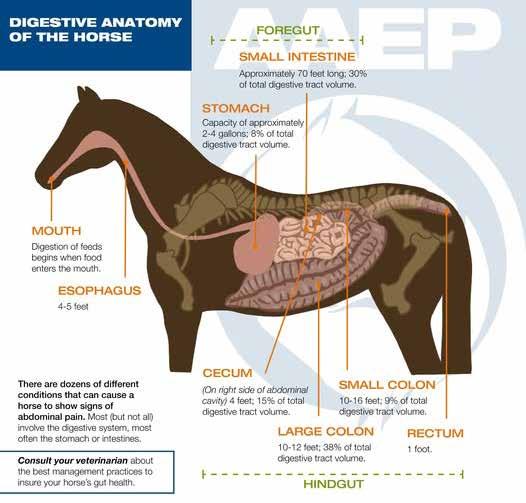
While a horse kept at home and enjoying a quiet life may be subject to less stress than one that is forever on a horse trailer and competing somewhere, or always being prepped and ‘peaked’ to be at top performance level, it is still important to ensure the well-being of the horse’s digestive system is addressed with pre/postbiotics and necessary supplementation.
Grain, extenders or dry forage alone, may cut it for a while, but eventually an imbalance is likely to occur. This can cause acute
or chronic issues with the animal’s overall well-being, and offering the right support is a necessity.
Test your pastures. Test your grain. Test your forage. The reality is that much of the diet we think our horse is enjoying simply isn’t being taken up in its system due to imbalances, or we aren’t buying the quality products we think we are. Reach out for products that are at a minimum NASC labelled, because at least then you know the company’s manufacturing and business practices such as accurate labelling are being audited.
Remedial Learning
Just like us, every horse is different and every individual’s needs varies. Nothing is static and we need to keep abreast of the research that is always ongoing on the topic of
horse care, the same way we likely do about horse training methods.
The better we understand illnesses and disease and how it might affect the horse’s microbiome for example, the better we can take remedial action once treatment is finished or during the course of treatment to help the horse recover. We are not vets, but we do need to take an advocate’s stance to some degree because we know the day-to-day horse and how he acts, behaves, and when something is wrong.
Be proactive and include some quality social media for a change – in the form of watching reels or videos from professionals in the realm of horse nutrition. Explanations should be simple and easy to follow. You are not in grad school. You’ll still
have time to enjoy the rest of mass media. The right resource can definitely improve your knowledge and help you keep your horse fighting fit. And know when he truly isn’t.
Don’t rely on Facebook or other media ‘friend groups’ for answers unless they are a qualified source. There’s a lot of poor advice out there. A bit like the nonsense advice that when a hurricane is coming stick your valuables in the dishwasher to secure them from water damage, it can be hard to figure out what advice is good or bad when everyone seems to be jumping on a consensus and they are actually wrong. Keep your feet grounded in reality. Not speculation.
Grand Meadows Nick Hartog has been involved in the supplement industry for decades, and I was thrilled to see his recent ‘short
burst’ video series called Supplement Savvy. He has crafted it in small segments that makes the information easy to assimilate and he covers so much stuff, that even the most advanced trainers among us learn something new.
Nick Hartog tackles topics like EGUS {gastric ulcers} with a look at causative factors as well as remedial actions you can take to help support the ongoing well-being of your horses. If you haven’t already done so I urge you to check it out. You can find it under Grand Meadows media pages on Facebook and Instagram.
Know the basics if nothing else. Nutrition can seem complicated but explained in the right way it’s actually very interesting and of course makes all the difference to every horse’s well-being.
Murdoch Minute
No. 71: Ease Your Back-up Woes
Do you have trouble backing your horse up (rein back)? Does he raise his head and hollow his back? Does he refuse to move? Do you try to pull your horse back with the reins? Here’s a quick tip to ease your back up woes.
Next time you ride, stop and back your horse up a few steps. If you have never done this with your horse from the saddle, start on the ground. What happens when he backs up? Is he resistant? Does he brace against your hands? Do you try to pull him backwards? Do you tense your buttocks and hips? Do you lean backwards or tip forwards? How you ask your horse to back is often the source of the problem.
Many horses stiffen or hollow their back, which makes it difficult to rein back correctly. Other horses are confused and don’t understand what is being asked because the rider conflicts the aids by squeezing with the buttocks while pulling on the reins. When backing up it is important that you are clear and do not impede the horse from doing what you ask. To clarify the rein back for the horse,
ask your horse to back while you passively feel what the horse does from the saddle. Always go forward after taking a few steps back and never let the horse decide to go backwards on his own – this is a serious fault and can be dangerous if the horse uses backing as an evasion! Repeat this a
few times and then give him a break by trotting forward.
By Wendy Murdoch
start on the ground. While standing at his head, ask the horse to take a few steps backwards. Watch what he does. Do you try to push him back or ask him to step back? Does he understand and comply or brace against you?
Touch his chest (you can use a whip gently on the chest or front legs) while signaling with the reins so that he understands what you want him to do. Is it difficult for him to back up? Does he brace in his hind legs or back? If so then I suggest you spend some time on the ground showing him what you want before asking from the saddle.
Do some bodywork such at the TTEAM leg circles with him especially if he has difficulty moving the hind legs. The TTEAM ground exercises are also helpful in getting a sticky horse to back up smoothly. Once your horse can back from the ground you can proceed to the saddle.
Have a ground person help you when asking the first few times to combine what you did on the ground with mounted work. Have ground person


Next, as the ground person begins ask the horse to back think of a bungee cord attached to the back of your pants in the belt area pulling you backwards. Shorten the reins until you have contact with the horse’s mouth and simply close your fingers. Your rein aids should not pull back but only create a wall or barrier to your horse’s forward movement. Use your legs by tapping with your ankles to generate the steps. Make sure your leg aids are pulsing. If you grip you will block his movement because gripping restricts your hips. If he tries to move forward simply close your fingers and begin again with your lower back setting the direction.
Here’s where your ground person can be really helpful to assist your horse so that your horse understands what you want. Ask for only one or two steps at first until both you and the horse back smoothly with a minimum of effort. Gradually begin to take over for your ground person with your aids until your horse back smoothly without assistance.
Use this Murdoch Minute to back up smoothly and easily. Remember it is important to teach your horse to back from the ground first and use the ground person as you transfer the request to the saddle. Never let the horse back up by himself. If he does this promptly send him forward and always remember to enjoy the ride!
Photo 1. My heels are jammed down and I have leaned forward to ask my horse to go back. This put my weight on the horse’s forehand causing him to raise his neck and hollow his back.
Photo 2. I have leaned back and pulled my horse to back up. The horse has braced his back, stiffened his hips and become worried.


OUR FOREVER FRIENDS
FOSH Lifetime Members
Jo Anne Behling, Wauwatosa, WI
Esther L. Bell, TN
Pamela Brand, Carlisle, PA
Sarah Bushong-Weeks, Denver. CO
Julie Church, Pagosa Springs, CO
Mary & William Church, Pagosa Springs, CO
Luella DeBono, Eden Prairie, MN
Beverly Foster, St. Augustine, FL
Nancy Gillespie, Pullman, WA
Cristine Holt, Dubuque, IA
Jane Howlett, Pocatello, ID
Marjorie Lacy & Walking Horse News, Edson, Alberta
Sue De Laurentis, Dripping Springs, TX
Bobbie Jo Lieberman
Dianne Little, Calgary, Alberta
Debbie Locke, Mack, CO
Ann Loveless, Ashtabula, OH
Patricia Mayer, East Aurora, NY
Janelle T. McCoy, Prague, OK
Frank Neal, Nashville, TN
Lori Northrup, Ellicottville, NY
Anne Northrup, Ellicottville, NY
Shellie Pacovsky, Bainville, MT
Denise Parsons
Anita Rau, Catlett, VA
Debbie Rash, Chino, CA
Southern Comfort Gaited Horse Club, ID
Bucky & Nancy Sparks, Cortez, CO
Marcy Wadington, Canon City, CO
Leslie Weiler, Pagosa Springs, CO
Laura Wyant, Chesire, OR
An Anonymous Donor
Yankee Walkers of New England
Photo 3. While staying in the middle with my back full and legs underneath me I think of a bungee cord pulling my waist backward. My horse is able to raise his back, drop his head and step back easily because I am not restricting him.
Soring
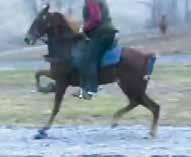
New law coming soon!
“Without the chains, there would be no need for a scar rule.”
– humane acTivisT, may, 2011.
ho W t o d ete ct
• Palpation
“That
• Gas chromotography or “sniffer”
just looks wrong.” 10-year-olD boy while waTching viDeo of a “big lick” horse shown in sTacks anD chains June 10, 2011.
• Thermography
• Blood or saliva tests
Chemical Soring
W h at i s s oring ?
Soring is deliberately inducing pain to exaggerate a gaited horse’s movement for the show ring. A variety of devious and cruel methods have been devised over the years. Soring violations also include many methods used to avoid detection. Soring is against Federal law and is subject to fines and penalties if detected at a public show or sale.
• Drug-detection trained dog
ho W t o d etect
Observations:
• Horse lies down in stall and groans in pain.
• Horse is crampy and unwilling to move.
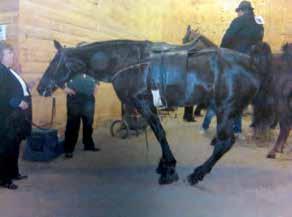
• Horse warms up into motion with a “praying mantis stance,” with abnormal weight thrown on his hind quarters to avoid front end pain.
• Horse stands in classic “standing in a bucket” pose to alleviate pain in front legs (photo above).
Wh Y is t h is a b use d o ne?
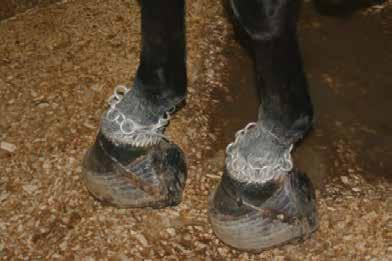
Chemical soring is the application of painful, caustic liquids to tenderize the horse’s pastern area (ankle), so the repeated strike of a chain is painful and causes the horse to snatch his foot higher with each step. The chain, a crucial part of this show horse style, is termed an “action device,” and the exaggerated gaits cannot be created without this chain.
ho W i t ’ s d one
• Visual inspections for:
Soring is practiced to get gaited horses to artificially enhance their step to win in shows. A winning image is rewarded with ribbons, cash, recognition, future breedings and training fees.
– scarring and inflammation, signs of soring insults.
– wavy, rippled, curly hair on the front legs, an indicator of repeated chemical soring with leg wraps.
en F o rcement
t o e nd s oring
– cording, a type of scarring caused by the plastic wrap sliding down and tightly bunching around the pasterns.
Pressure Soring
Pressure soring causes pain in a horse’s front feet, so when each front hoof hits the ground, the horse will “snatch” the foot off the ground, resulting in an unnatural, high, dramatic step.
• Response to hoof testers (ideal if shoes are pulled first).
• Digital radiography (x-ray will show extreme thinness of sole, any foreign objects, or excessive coffin bone rotation).
• Thermography to detect hot spots from pain.
Chemicals are applied to the horse’s lower legs, then the leg is wrapped in plastic for days. This causes the chemicals to “cook” into the flesh. This creates highly sensitized front pasterns that are painful when the chain strikes with every step. Examples of soring chemicals used:
• kerosene
• diesel
• croton oil
• GoJo hand cleaner
• WD40 oil
• mustard oil
Soring includes the abuse of chains, foreign substances and chemicals, illegal shoeing to change the natural hoof angles, length of toe, weighted shoes, pressure shoeing, as well as the insertion of blocks and other devices between the hoof and the shoe stack to place pressure on the frog and sole of the foot to create pain in the front end of the horse. These methods all cause the horse to attempt to avoid the pain by picking up his front feet faster and higher, and shifting his weight back onto his hocks. Slang for an obviously sore-going horse is “going too deep.”
With the increased scrutiny of soring-related scars, another cruel practice is used to remove the telltale scarring. The horse’s legs are covered in a chemical stripping agent, which burns off old scar tissue through a very painful process.
There is a federal law called the Horse Protection Act, which prohibits soring at shows and sales, enforced by the USDA. However, most inspections are selfregulated by HIOs (horse industry organizations licensed by the USDA.)
– checking for application of foreign substances, by walking the barns and trailers at a show.
“The topical samples from Tennessee Walking Horses had the highest incidences of positives (of illegal substances from gas chromatography samplings) that I’ve ever seen in my life.”
— Dr. Tomas Tobin, leaDing veTerinarian in Drug conTrol anD Toxicology in compeTiTion horses november 5, 2010 www.thomastobin.com
Fixing … Touching … “putting them in a bucket” … Soap ‘em … Fly spray (a term owners use so they can avoid admitting knowing that an illegal substance has been used on their horse) … getting them right … brushing them … square ‘em up … head shake in a bottle … dropping them … Mojo (commonly used by people referring to GoJo hand cleaner) …
ho W i t ’ s d one
• Grinding the hoof sole down so thin “beads of blood show” and the sole gets spongy and super-sensitive.
• Taking the hoof wall down slightly shorter than the sole, so it provides no supporting protection, called “rolling the sole.”
• Inser ting hard objects between the shoe or pad and the tender sole, such as bolts (removable for inspections), half a golf ball, hardened epoxy, or a dried piece of hoof.
• “Blocking,” which is standing the horse for hours on wedges duct-taped to the hoof.
• Purposely foundering a young horse (called “the natural fix” and “nature’s way of soring”).
• “Road foundering” the horse by riding fast on a hard surface such as a paved road.
• Extreme tightening of metal hoof bands to cause pain from excessive pressure on the hoof.
Methods Used to Avoid Detection at Inspection
• numbing agents that wear off between inspection and show time (such as injected anesthetic, “the shot,” or surface application of Lidocaine).
• “stewarding”: teaching the horse at practice inspections that flinching or reacting will cause worse pain, such as a beating or using a “hot stick” or electric prod.
• distraction devices: a nerve gum cord, bit burr under the saddle, hand twitch, alligator clips on sensitive genital tissue, or surgical staples under the mane, applied just before an inspection to cause distracting pain elsewhere during the inspection.
• horse switching: providing a substitute horse for inspection under false paperwork, and then switching and putting the sored horse into the show ring.
fixing … pressure soring … “putting the fever in the foot” … pressure shoeing … “pinching the toes” … bolting … blocking … “under pressure” … “in a bind” … quicked … hot nailed … “tightened up” (for bands) … cranking … “fixing below the pastern” … going too deep … concussion foundering … “peak point” describes the maximum pain point in the weekly soring process …

Chemical Soring
Chemical soring is the application of painful, caustic liquids to tenderize the horse’s pastern area (ankle), so the repeated strike of a chain is painful and causes the horse to snatch his foot higher with each step. The chain, a crucial part of this show horse style, is termed an “action device,” and the exaggerated gaits cannot be created without this chain.
ho
W i t ’ s d one
Chemicals are applied to the horse’s lower legs, then the leg is wrapped in plastic for days. This causes the chemicals to “cook” into the flesh. This creates highly sensitized front pasterns that are painful when the chain strikes with every step. Examples of soring chemicals used:
• kerosene
• diesel
• croton oil
• GoJo hand cleaner
• WD40 oil
• mustard oil
With the increased scrutiny of soring-related scars, another cruel practice is used to remove the telltale scarring. The horse’s legs are covered in a chemical stripping agent, which burns off old scar tissue through a very painful process.
“Without the chains, there would be no need for a scar rule.”
– humane acTivisT, may, 2011.
ho W t o d ete ct
• Palpation
• Gas chromotography or “sniffer”
• Thermography
• Blood or saliva tests
• Drug-detection trained dog
• Visual inspections for:

– scarring and inflammation, signs of soring insults.
– wavy, rippled, curly hair on the front legs, an indicator of repeated chemical soring with leg wraps.
– cording, a type of scarring caused by the plastic wrap sliding down and tightly bunching around the pasterns.
– checking for application of foreign substances, by walking the barns and trailers at a show.


Fixing … Touching … “putting them in a bucket” … Soap ‘em … Fly spray (a term owners use so they can avoid admitting knowing that an illegal substance has been used on their horse) … getting them right … brushing them … square ‘em up … head shake in a bottle … dropping them … Mojo (commonly used by people referring to GoJo hand cleaner) …


• Horse lies down in stall and groans in pain.
What Can Be Done to End Soring?
What W o uld have the biggest impact on eliminating soring?
Pressure Soring
Pressure soring causes pain in a horse’s front feet, so when each front hoof hits the ground, the horse will “snatch” the foot off the ground, resulting in an unnatural, high, dramatic step.


• Horse is crampy and unwilling to move.
positions who has had soring violations within recent years.
• Join FOSH or the HSUS.
• Horse warms up into motion with a “praying mantis stance,” with abnormal weight thrown on his hind quarters to avoid front end pain.
• Volunteer for FOSH projects to end soring.
Voice Your Concerns
• Horse stands in classic “standing in a bucket” pose to alleviate pain in front legs (photo above).
3q More money allocated to the USDA’s enforcement. At present, USDA’s inspectors attend only 7% of the shows, due to budget constraints. Relying on “self-policing” with industry inspectors has not been effective over the past decades.
• Response to hoof testers (ideal if shoes are pulled first).
• Tell your Congressmen that you demand full enforcement of the law and adequate HPA funding.
• Inform traditional show venues and their sponsors that you will not suppor t them because these shows encourage soring.
• Digital radiography (x-ray will show extreme thinness of sole, any foreign objects, or excessive coffin bone rotation).
• Demand t hat the USDA and the industry inspectors enforce the law effectively.
• Thermography to detect hot spots from pain.
ho W i t ’ s d one
• Grinding the hoof sole down so thin “beads of blood show” and the sole gets spongy and super-sensitive.
3q Severe penalties for those guilty of soring. Substantial fines and mandatory, serious suspension periods for trainers and owners, including lifetime bans and prison time, would deter soring.
Report Soring to the USDA, HSUS, and FOSH:
Methods Used to Avoid Detection at Inspection
3q Federal ban on “pads and action devices,” commonly termed “stacks and chains.”
• Document soring incidences observed at barns or shows with photos or video and submit personally or anonymously.
• Report barns and trainers engaging in soring practices.
• Report scheduled “outlaw shows” organized without licensed HIO inspections.
• Taking the hoof wall down slightly shorter than the sole, so it provides no supporting protection, called “rolling the sole.”
W h at c an Y o u d o
t o h elp e nd s oring ?
Learn More
• Inser ting hard objects between the shoe or pad and the tender sole, such as bolts (removable for inspections), half a golf ball, hardened epoxy, or a dried piece of hoof.
• numbing agents that wear off between inspection and show time (such as injected anesthetic, “the shot,” or surface application of Lidocaine).
Friends of Sound Horses, Inc. (FOSH)
• www.StopSoring.com for latest news and facts on soring
• www.SoundHorseConference.com for presentation lectures on soring
• “Blocking,” which is standing the horse for hours on wedges duct-taped to the hoof.
• “stewarding”: teaching the horse at practice inspections that flinching or reacting will cause worse pain, such as a beating or using a “hot stick” or electric prod.
• United States Department of Agriculture (USDA) on Horse Protection www.aphis.usda.gov/animal_welfare/hp
• Purposely foundering a young horse (called “the natural fix” and “nature’s way of soring”).
• Humane Society of the United States (HSUS) http://www.humanesociety.org/issues/tenn_ walking_horses
• “Road foundering” the horse by riding fast on a hard surface such as a paved road.
Get Involved
• Extreme tightening of metal hoof bands to cause pain from excessive pressure on the hoof.
Lori Northrup, President 6614 Clayton Road #105, St. Louis, MO 63117 716-474-7580 • Lori@Northrup.com
The Humane Society of the United States (HSUS)
• distraction devices: a nerve gum cord, bit burr under the saddle, hand twitch, alligator clips on sensitive genital tissue, or surgical staples under the mane, applied just before an inspection to cause distracting pain elsewhere during the inspection.
Keith Dane, Director of Equine Protection 700 Professional Drive, Gaithersburg, MD 20879 301-258-3076 • kdane@hsus.org
United States Department of Agriculture, APHIS (USDA)
• horse switching: providing a substitute horse for inspection under false paperwork, and then switching and putting the sored horse into the show ring.
• Run for a Board of Directors’ position with the Tennessee Walking Horse Breeders & Exhibitors Association (TWHBEA) and effect change from within.
• Propose changes to the TWHBEA bylaws that preclude anyone from holding leadership
“Call it what it is. This is torture.”
fixing … pressure soring … “putting the fever in the foot” … pressure shoeing … “pinching the toes” … bolting … blocking … “under pressure” …
— inTernaTionally-renown clinician, february, 2011
“in a bind” … quicked … hot nailed … “tightened up” (for bands) … cranking … “fixing below the pastern” … going too deep … concussion foundering … “peak point” describes the maximum pain point in the weekly soring process …
Dr. Rachel Cezar, Horse Protection Coordinator Dr. Chester Gipson, Deputy Administrator 4700 River Road, Suite 6D03, Riverdale, MD 20737 301-734-5784 • Rachel.Cezar@aphis.usda.gov … stinging … rolling the toe … bubble gum (use of commercial sole support product to cause sole pressure) … putting a button in … screwing it down … jack bolts … pressure plates … screws … bolts … cranking … heel spring helper (heel spring with a foreign object used to cause pressure at the apex of the frog)
FOSH Sound Principles

Principle #1
All FOSH events adhere to the requirements of the Horse Protection Act.
Principle #2
Horses are to be treated with dignity, respect, and compassion.
Principle #3
Horses must be presented as sound in both body and mind.
Principle #4
The preferred way of going is natural, correct, and without exaggeration.
Principle #5
Shoeing is intended only for the protection of the foot and its structure. Where practical, barefoot horses are both welcomed and encouraged.
Principle #6
Handlers and riders are expected to use training techniques and equipment that conform to the highest humane standards as recognized by the general equestrian community.
Principle #7
Exhibitors have a duty to conduct themselves in an orderly, responsible, and sportsmanlike manner.
FOSH is a national leader in the promotion of natural, sound gaited horses and in the fight against abuse and soring of Tennessee Walking Horses. For more information about FOSH or to become a member, please visit www. fosh.info.
Gaited Clubs
FOSH Directory
Southern Comfort Gaited Horse Club
Southern Comfort promotes activities highlighting the smooth ride and versatility of all gaited breeds. Pursuits include trail riding, competitions, shows, exhibitions, clinics and many other equine activities. The club promotes horse safety and friendship for all that are interested in horses. Owning a horse is not a requirement. SCGHC is based in southwestern Idaho and is a flat shod exclusive club with members contributing and supporting various interests using sound, natural horses. www.gaitedhorseclub.com
Chesapeake Plantation Walking Horse Club
The Chesapeake Club is celebrating over 25 years of promoting the versatile, naturally gaited, horse. As a member of the Maryland Horse Council, we have been the voice of the gaited community and through demonstrations, clinics and guest speakers, a resource for other disciplines to learn about the gaited breeds in our region. Members enjoy monthly trail rides, newsletters, parades, clinics, social gatherings, and friendly help. We welcome all breeds, riding styles, and experience levels from beginners to professionals. Cpwhclub. wordpress.com or jacquiecowan@comcast.net
Breeders
Summerwind Marchadors and Future Foal Breeders
Plan for your next lifetime partner! Come breed with us! Offering frozen semen (12 stallions in 2020) or reservations for Future Foals “do Summerwind” The Marchador is Brazil’s national horse, harking from Iberia, but bred there for 200 years. Expect to be impressed! http:// futurefoal.net or call Lynn @ 602-999-3915
Missouri Morgans
Easy gaited in color. Rare gaited Morgans located in the Heart of America near beautiful Lake of the Ozarks; for photos, videos and available horses. Talk to Jim or Vali Suddarth at 417-286-4720 or gaitedmorgans@missourimorgans.com


Friends of Sound Horses, Inc. Sound Show / Event Support Form
Please print or type information below
Name of Event:
Event Description: ______________ ____________ (show, clinic, expo, etc.)
Breeds Included: ____________________________________________________
Date(s) of Event:
Location of Event: ____________________________________________ (street)
__________________ (city) __________ (postal code) _____(state or province)
___________ (country)
Principal Contact Person: ______________________________(name)
Principal Contact Person Email: __________________________________
Principal Contact Person Phone: ______________________________
Name of Organization to RECEIVE Support Check: (check will be made out to…)
ADDRESS to where support check should be sent: ___ (street)
__________________ (city) ____________ (postal code) (state or province)
___________ (country)
If your event is approved, you should receive your support check within 30 days.
Please EMAIL this completed form to: president@fosh.info (faster) or mail to:
FOSH 6614 Clayton Rd., #105 St. Louis, MO 63117
For FOSH use only… Amount provided: _______________

Friends of Sound Horses, Inc. Scholarship Request Form
Please print or type information below
Student Applying: _________________________________(name) Age: ____ (yrs)
Student Email:
Student Phone: _____________________________________________________
Student Address: ______________________________________________ (street)
____________________ (city) __________ (postal code) _____(state or province)
___________ (country)
School Name:
Major: _ ____________
Date of Last FOSH show participation *:
Attach copy of acceptance letter and note date on letter here:
School Address: ____________________________________ (street) _____ (city) __________ (postal code) _____(state or province)
___________ (country)
Note: Checks will be made out to [Institution Name] for the benefit of [Student Name] and will be sent to the attention of the Financial Aid department. If you are chosen to receive a scholarship, you will be notified within 90 days of applying
Please EMAIL this completed form to: president@fosh.info (faster) or mail to: FOSH 6614 Clayton Rd., #105 St. Louis, MO 63117
For FOSH use only… Amount provided: _____________ Date sent: ____________
Scholarship Guidelines are on the following page (and do not need to be submitted with this form).
Please consider adding FOSH to your list of worthy causes in making a taxfree charitable deduction or help us to promote legislation, education, and training that protects and helps gaited horses, simply by renewing your own membership or giving a gift membership to a kindred spirit.
We know you have many choices when it comes to giving. Thank you for considering FOSH.

FOSH Membership Application and Order Form
All annual memberships include a digital, bi-monthly issue of the Sound Advocate & educational packets. Mail to: FOSH 6614 Clayton Rd. #105, St. Louis, MO 63117
Type of Membership (check one)
Annual: Single ___$30 Annual Family ___$50 Annual Youth <18 ___$20 Lifetime__$600 Organization Membership (for your gaited horse club or association) ___ $50
Please print neatly.
Name: _______________________________________________________________________
Enclosed: $____________________
How did you hear about FOSH? ___________________________________________________