Innovate Reconciliation Action Plan November 2026 – November 2028
FORM acknowledges the Traditional Owners and Custodians throughout Western Australia both past and present, whose enduring connection to this Country and ongoing contributions to our collective culture and communities we respect and honour. We appreciate and are deeply grateful for the privilege of working on these lands. Level 4, 99 St Georges Terrace Perth, Western Australia, 6000 E: mail@form.net.au T: +61 8 9385 2200 Designed and published by FORM Building a State of Creativity Limited. CULTURAL SENSITIVITY WARNING FORM would like to warn people viewing this document that some sections may contain images, names or stories of Aboriginal Australians who have passed away. FORM will respect any request to remove images or names of the deceased persons from this document if necessary. A NOTE ON TERMINOLOGY Using respectful and inclusive language and terminology is an essential component of reconciliation and strengthening relationships between the broader community and Aboriginal and Torres Strait Islander peoples, for the benefit of all Australians, as defined by Reconciliation Australia. FORM is guided by its Aboriginal and Islander Advisory Committee COVER IMAGE
(AIAC) and Aboriginal and Islander communities within our placebased context.
Limited and this document are protected by copyright and trade mark law.
While broad, the term is intended to recognise the diversity of intersecting heritages and shared priorities among First Nations stakeholders and advisors across Australia. Where FORM refers to a specific Aboriginal or Islander people, we adopt terminology relevant to that
COPYRIGHT Copyright for imagery and written content in this publication is held by FORM Building a State of Creativity Limited or the individual contributing writers, where applicable. Every effort has been made to adhere to best practice ICIP protocols.
culture, region or language group (e.g. Torres Strait Islander). This recognises the distinct identities, cultures and self-determined preferences of individual peoples, ensuring language is as specific and culturally appropriate as possible.
For further information, FORM’s Culturally Safe Communication Guide is available upon request. IMAGES All images used within this document are copyrighted to FORM. All permissions to use these images have been received. ©FORM Building a State of Creativity Limited 2026. All rights reserved. FORM Building a State of Creativity
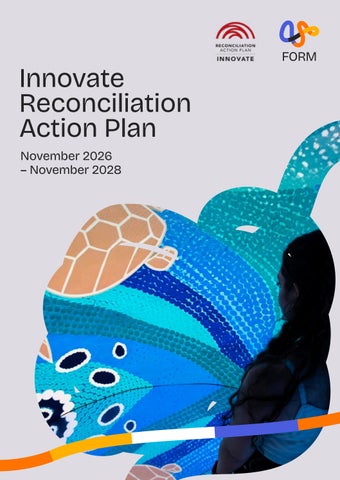
Exhibition preview of Momentum at FORM Gallery, 2026. Photo by FORM. Artwork credit: Turtles (Goorlil), Kiahni Lewis, 2026.
2
FORM | Innovate Reconciliation Action Plan
This RAP has also been developed and published in accordance with Reconciliation Australia’s RAP Licensing Agreement. Reconciliation Australia and Reconciliation Action Plan logos are trademarked through IP Australia. Reconciliation Australia has granted FORM a non-exclusive, non-transferrable, non-sublicensable licence to use the templates and resources supplied by Reconciliation Australia. FORM is grateful for the support and guidance of Reconciliation Australia.
Table of Contents 4
Message From The FORM Chair
6
Statement From The CEO of Reconciliation Australia
5 8
10 12
Message From The FORM AIAC Chair Message From The FORM CEO Our Vision For Reconciliation Our Business
15
FORM’s Sphere of Influence
17
Our Focus For This Innovate RAP
20
Case Study: Spinifex Hill Studio
The Canning Stock Route Project
16
Our RAP
18
Highlights From Our Journey So Far
22
Case Study: NGURRA KUJU WALYJA: One Country, One People:
28
Aboriginal Stakeholders Whom FORM Has Worked With
29
Advisory Committee Members
28 32 34 37 40 44 48
Other Key Stakeholders RAP Governance Relationships Respect
Opportunities Governance Contact
3
Message From The FORM Chair – Tim Shanahan On behalf of the FORM Board, I am proud to present our first Innovate Reconciliation Action Plan. FORM has worked alongside Aboriginal and Islander peoples for more than two decades, in studios, galleries, schools and communities from the Pilbara and the Kimberley to the desert Country of the interior, down to the Great Southern, and beyond Western Australia’s borders. Across all that work, one lesson holds: the strongest and most enduring outcomes happen when Aboriginal and Islander voices lead. That lesson now shapes how we govern. Our Aboriginal and Islander Advisory Committee guides our decision-making, and its Chair, Ron Bradfield Jnr, serves as a Director on the FORM Board. This is not symbolic. It means Aboriginal and Islander perspectives sit inside every strategic conversation we have; with the standing to shape, question and redirect our course. This RAP turns long-held commitments into public and measurable ones. Over the next two years, we will strengthen the protection of Indigenous Cultural and Intellectual Property across everything we deliver, grow economic opportunities and leadership pathways for Aboriginal and Islander peoples, deepen the cultural capability of our whole organisation, and report openly on our progress, including where we fall short. Reconciliation asks organisations to do what they say they will do. On behalf of the Board, I make that commitment without reservation, and we welcome the guidance and encouragement of our partners, supporters and the communities we work alongside as we carry it out. Tim Shanahan, Chair, FORM 4
FORM | Innovate Reconciliation Action Plan
Tim Shanahan Chair
Message From The FORM AIAC Chair – Ron Bradfield Jnr As a Bard, Jawi man, I was raised to understand that stories carry responsibility. Whoever holds a story must care for it and hand it on in good order. That understanding sits at the heart of this, FORM’s first Reconciliation Action Plan. This plan puts Aboriginal and Islander voices where decisions are made: at the Board level, in the Advisory Committee I chair, and in project rooms and studios from Boorloo (Perth) to Marapikurrinya (Port Hedland), and beyond. It commits FORM to keep listening, to protect cultural knowledge, and to do what it says it will do.
Ron Bradfield Jnr Chair, AIAC
Reconciliation is not a document; it is a relationship. Relationships grow by turning up, sharing food and stories, and coming back. The commitments in these pages give us a way to measure whether we are doing that well, and the accountability to fix it when we are not. I acknowledge the Elders and communities who have trusted FORM with their stories over many years. This plan honours that trust by sharing the responsibility for what comes next. We invite you to walk with us. Ron Bradfield Jnr, Chair, Aboriginal and Islander Advisory Committee and FORM Director
5
Statement From CEO of Reconciliation Australia FIRST INNOVATE RAP Reconciliation Australia commends FORM on the formal endorsement of its inaugural Innovate Reconciliation Action Plan (RAP). Commencing an Innovate RAP is a crucial and rewarding period in an organisation’s reconciliation journey. It is a time to build strong foundations and relationships, ensuring sustainable, thoughtful, and impactful RAP outcomes into the future. Since 2006, RAPs have provided a framework for organisations to leverage their structures and diverse spheres of influence to support the national reconciliation movement. This Innovate RAP is both an opportunity and an invitation for FORM to expand its understanding of its core strengths and deepen its relationship with its community, staff, and stakeholders. By investigating and understanding the integral role it plays across its sphere of influence, FORM will create dynamic reconciliation outcomes, supported by and aligned with its business objectives. An Innovate RAP is the time to strengthen and develop the connections that form the lifeblood of all RAP commitments. The RAP program’s framework of relationships, respect, and opportunities emphasises not only the importance of fostering consultation and collaboration with Aboriginal and Torres Strait Islander peoples and communities, but also empowering and enabling staff to contribute to this process, as well.
6
FORM | Innovate Reconciliation Action Plan
With over 5.5 million people now either working or studying in an organisation with a RAP, the program’s potential for impact is greater than ever. FORM is part of a strong network of more than 3,000 corporate, government, and not-for-profit organisations that have taken goodwill and intention, and transformed it into action. Implementing an Innovate RAP signals FORM’s readiness to develop and strengthen relationships, engage staff and stakeholders in reconciliation, and pilot innovative strategies to ensure effective outcomes. Getting these steps right will ensure the sustainability of future RAPs and reconciliation initiatives, and provide meaningful impact toward Australia’s reconciliation journey.
Karen Mundine
CEO, Reconciliation Australia
Congratulations FORM on your Innovate RAP and I look forward to following your ongoing reconciliation journey. Karen Mundine Chief Executive Officer Reconciliation Australia
7
Message From The FORM CEO – Tabitha McMullan It is a privilege to share FORM’s first Innovate Reconciliation Action Plan. For us, this plan is both a celebration of the partnerships that have shaped our organisation so far and a promise to keep growing and deepening reconciliation in our sphere of influence. It gathers our ambitions, the guidance of our Aboriginal and Islander Advisory Committee, and the hopes we hold for what creativity can make possible in Western Australia, and gives them shape, direction and momentum. More than twenty years of partnership with Aboriginal and Islander peoples has taught us a great deal. We have learned that trust grows through time and care, that culture moves at its own pace and is richer for it, and that listening well is one of the most valuable things we can do. Those lessons are written into this plan. For us, this is more than a document. It is a way of working that we want to carry into everything we do, from our biggest projects to the everyday moments in between, so that respect for culture is simply part of how FORM operates. As CEO, my commitment is to give this plan what it needs to succeed: the time, the people and the care to bring it to life, and a place at the centre of our thinking for years to come. My thanks go to our Aboriginal and Islander Advisory Committee, our RAP Working Group, Reconciliation WA, and Reconciliation Australia, whose candour has made this a better plan. We do this work because we believe Australia’s creative future will be strongest when it is shaped by the oldest continuing cultures in the world. That is not a gesture. It is our clearest thinking about who we are, and what this country can become. 8
FORM | Innovate Reconciliation Action Plan
Tabitha McMullan CEO
IMAGE CREDIT
Doreen Chapman painting at Spinifex Hill Studio, 2023. Photo by AB Videography, courtesy of FORM.
9
Our Vision For Reconciliation FORM’s vision for reconciliation is an Australian society where Aboriginal and Islander peoples have full self-determination in their cultural and economic lives; where their voices shape the creative experiences that define Western Australia; and where creativity builds genuine connection and understanding between First Nations and non-Aboriginal Western Australians. Through genuine partnerships, we want to see Aboriginal and Islander cultures and knowledge systems valued equally, economic opportunities flowing directly to Aboriginal and Islander artists and communities, and stories told on Country by Traditional Owners, received by all with respect and an understanding of cultural protocol.
We are deeply devoted to this vision for reconciliation and to using our sphere of influence to encourage others to join us in our commitment to understanding the impacts of cultural policy in Australia and to take on the responsibility of realising a better future through reconciliation.
IMAGE CREDIT Melissa Sandy of Yinjaa-Barni Art gives a curator talk at Where We Come From, FORM Gallery, 2025. Photo by FORM.
10
FORM | Innovate Reconciliation Action Plan
11
Our Business
FORM is Western Australia’s leading independent creative not-for-profit. We cultivate cultural vibrancy through bold creative projects that inspire people, enrich community life, and shape the future of economies. We work across four interconnected areas:
Cultural Tourism Aboriginal and Islander Partnerships Collaborating to support self-determination 12
FORM | Innovate Reconciliation Action Plan
Creating experiences that draw visitors and generate economic value
Creative Places and Spaces
Design, art, and creativity that transform communities
Future Creators
Building creative thinking in young people
IMAGE CREDITS (Left to Right) Printmaking workshop, AACHWA Business Forum, Spinifex Hill Studio, WA, 2025. Photo by FORM. Mooditch Nop performing during opening celebration of Lighting the Sound - 13 March 2026, Albany WA, 2026. Photo by Astrid Volzke.
Port Hedland Primary School. Scribblers on the Road - Pilbara. September 2026. Photo by Amelia Blanco, courtesy of FORM. Guardians of the Murray, DULK, River Country Art Trail, Mathoura NSW, 2025. Photo by Mitchell Barkman, courtesy of FORM.
13
As one of Western Australia’s largest independent creative organisations, with a long and deep history of partnering with Aboriginal and Islander communities, we are uniquely placed to support and give agency to Aboriginal and Islander communities, organisations and artists, increasing understanding and appreciation of Aboriginal and Islander heritage and cultures. Aboriginal and Islander wisdom is embedded at our highest governance level – our Aboriginal and Islander Advisory Committee (AIAC) leads our decision-making and approach in partnering with Aboriginal and
14
Islander people. Our AIAC Chair serves as an appointed Director on the FORM Board, ensuring Aboriginal and Islander voices directly influence organisational decision-making and strategic direction. We employ approximately 40 people across Western Australia, including 5 Aboriginal and Islander staff in permanent roles. In South Hedland, we manage Spinifex Hill Studio, an Aboriginal art centre working with over 100 artists from diverse language groups across the Pilbara. Our sphere of influence spans metropolitan Perth, regional centres
FORM | Innovate Reconciliation Action Plan
and remote communities across Western Australia and beyond. Built through more than two decades of sustained engagement, we work with staff, Board, advisory committees, Traditional Custodians, Aboriginal communities, artists, art centres, government agencies, schools, tourism operators, corporate partners, volunteers, and audiences to deliver projects of public significance.
FORM’s Sphere of Influence Traditional Owner groups and Aboriginal organisations
Built through long-term, trust-based collaboration that prioritises cultural authority, appropriate consultation pathways and co-design.
Local governments and regional development bodies
In our role as public art consultants and project coordinators, we regularly advocate for communities with statutory authorities, always with community authorisation, and supporting alignment between local priorities and broader strategic objectives.
State Government agencies
With strong experience navigating governance, approvals and cross-portfolio collaboration for complex public initiatives.
Corporate Sector
FORM has a long history of partnering with resource sector and other corporate sponsors for community benefit.
Artists, creative practitioners, and creative industries
Our creative network extends worldwide, and we ensure diverse creative voices are represented and supported.
Community organisations, schools, volunteer groups and local businesses Enabling inclusive engagement that reaches families, young people, older residents and underrepresented cohorts.
Audiences and communities
The projects we choose to undertake are designed to be accessible, inclusive, and to resonate with diverse audiences and demographics. IMAGE CREDIT
Spinifex Hill Studio, 2025. Photo by FORM.
Our geographic reach spans over 2.5 million square kilometres; the whole of Western Australia and beyond, working on the traditional lands of many distinct Aboriginal and Islander nations. 15
Our RAP FORM’s Innovate RAP builds on the foundations of trust and partnership we have built with Aboriginal and Islander people over many years. We are not starting from scratch – we have established our Aboriginal and Islander Advisory Committee (AIAC), developed our ICIP Policy, embedded cultural awareness training, and most significantly, appointed our AIAC Chair as a Director on the FORM Board. This means Aboriginal and Islander voices don’t just advise our work – they directly shape organisational decisions at the highest level. Guided by Aboriginal and Islander friends and partners, we’ve developed comprehensive projectspecific cultural and engagement protocols. This is not consultation; it is co-leadership. Through our many projects delivered with Aboriginal and Islander partners, we’ve proven our capacity to ensure First Nations voices don’t just inform the conversation; they lead it. The impact of this approach endures. The Canning Stock Route project, created with people from twelve language groups and seventeen remote communities, returned history told in Aboriginal voices to the nation; it became the most visited exhibition in the National Museum of Australia’s history, was acquired in full by the
Museum on behalf of all Australians, and earned international recognition for its ICIP standards. Spinifex Hill Studio, which began in 2008 when Aboriginal artists in South Hedland approached FORM for support, is now a creative home for more than 100 Aboriginal and Islander artists whose work is held in major state and national collections, and whose Aboriginal Council holds delegated decisionmaking authority as the Studio works towards full independence. In Roebourne, artists from Cheeditha Art Group, Yinjaa-Barni Art and independent Aboriginal artists are building careers and income through art on their own terms.
IMAGE CREDIT Artists at Yinjaa-Barni Art working with facilitator Kate Leslie, 2020. Image by Claire Martin, courtesy of FORM.
16
FORM | Innovate Reconciliation Action Plan
When First Nations voices lead, the outcomes are cultural, economic and generational: artists earning livelihoods, young people inheriting knowledge, and communities owning both the story and its return. Now, with our first RAP, we move into the next stage of our journey; formalising our commitments with clear accountability, guided by Aboriginal and Islander wisdom as we continue to learn, listen, and demonstrate through transparent action how genuine partnerships advance reconciliation.
Our Focus For This Innovate RAP • Trust, follow-through, and continuity – doing what we say • Strengthening grassroots relationships and keeping people updated • Protecting cultural knowledge through stronger ICIP practices ensuring it’s passed to young ones • Starting with cultural frameworks first – in engagement, recruitment, induction, and project roles
• Creating economic opportunities beyond employment, including leadership roles, technology and IP protection • Building year-round cultural engagement opportunities on community-led projects of significance and impact This RAP was developed through consultation with our AIAC, RAP Working Group, staff, Board, and Reconciliation WA.
17
Highlights From Our Journey So Far
18
FORM | Innovate Reconciliation Action Plan
IMAGE CREDIT
Spinifex Hill Studio, 2025. Photo by FORM.
19
CASE STUDY
Spinifex Hill Studio
IMAGE CREDIT
Spinifex Hill Studio, WA, 2025. Photo by FORM.
20
FORM | Innovate Reconciliation Action Plan
Spinifex Hill Studio stands on Kariyarra Country in the Pilbara region of Western Australia. We are home to one of the youngest Aboriginal art collectives in the north-west of Australia, the Spinifex Hill Artists. Our story began in 2008 when South Hedland-based artists Irene Coffin, Max George, and members of the Mothers Against Drugs group approached non-profit cultural organisation FORM to request help in facilitating community workshops and professional development for the town’s Aboriginal artists. Naming themselves the Spinifex Hill Artists (after an old name for Port Hedland), the group held their first solo exhibition, Before the Town Got Big, at Port Hedland’s Courthouse Gallery in 2009. Over the next five years, the Spinifex Hill Artists continued to develop artistically and professionally. In March 2014, the group took up residence in a purpose-built home in South Hedland, the Spinifex Hill Studio. This was made possible through FORM’s long-term partnership with BHP and the Federal Government’s Regional Development Australia Fund, with the land being donated by the Department of Lands.
In 2021, the Spinifex Hill Project Space was built as a place for the local community and visitors to connect with the Pilbara’s dynamic creative practice, and to further the preservation and promotion of the local culture, heritage, and traditions. Designed by Officer Woods Architects and built by Cooper&Oxley, the Spinifex Hill Project space is a welcome addition to Spinifex Hill Studio. Spinifex Hill Studio artists produce critically acclaimed and highly collectable contemporary art. Among them are finalists and winners of major art awards, including the National Aboriginal and Torres Strait Islander Art Awards (NATSIAA), the Paddington Art Prize, Cossack Art Awards, and Hedland Art Awards. Many have also featured in solo and group exhibitions locally, nationally, and internationally. Their work is held in permanent collections at major galleries and institutions, including Art Gallery of South Australia, Art Gallery
of Western Australia, Museum and Art Gallery of the Northern Territory, and Western Australian Museum. We regularly participate in national art fairs and events, including Darwin Aboriginal Art Fair, Tarnanthi and Revealed Art Market. We believe in fair, ethical, and respectful dealings with First Nations artists and knowledge holders. FORM is a signatory to the Indigenous Art Code, a system that preserves and promotes ethical trading in Indigenous art. Relationships between the Studio and the artists, including all sales, are conducted in accordance with the Code. Artists receive professional support including material supply, inventory management, sales and external exhibition opportunities, and general career support. This ensures the artists and those around them are paid fairly, securing a sustainable future for Australia’s Indigenous art industry.
21
CASE STUDY
NGURRA KUJU WALYJA - One Country, One People: The Canning Stock Route Project
22
FORM | Innovate Reconciliation Action Plan
Ngurra Kuju Walyja was a ground-breaking and globally significant collaboration between people from 12 language groups and 17 remote communities along Western Australia’s Yiwarra Kuju - Canning Stock Route and FORM. The Canning Stock Route Project began in 2006 as a collaboration between FORM and ten remote Aboriginal art and cultural organisations. It re-told, in Aboriginal voices, how desert communities experienced events long documented in ‘whitefella’ history, perspectives rarely acknowledged. With support from Principal Partner BHP, the project broadened to reflect both historical and contemporary desert life. Through return-toCountry trips and community visits, FORM worked with Traditional Owners, artists, emerging curators, photographers, and filmmakers to gather artworks, cultural objects, and audiovisual stories. his work led to Yiwarra Kuju: The T Canning Stock Route, a national touring exhibition co-produced with the National Museum of Australia (NMA). It became the most visited exhibition in the museum’s history and was later acquired in full by the NMA on behalf of the nation.
SERVICES DELIVERED THROUGHOUT THIS PROJECT INCLUDED • Extensive collaboration with Traditional Owners, Custodians, artists, cultural advisors, and emerging Aboriginal curators to ensure cultural integrity and adherence to Indigenous Cultural and Intellectual Property (ICIP) protocols. • Creation of a collection and documentation of over 40,000 cultural items including oral stories, photographs and a landmark touring exhibition.
This project saw FORM deliver a culturally sensitive project requiring deep Aboriginal community engagement, the creation of multiformat outputs aligned with cultural protocols and the implementation of robust government and permissions processes for cultural material. As a result, this project received international recognition for setting new standards in First Nations engagement and ICIP compliance as well as significant cultural, educational and tourism impact through exhibitions, publications and groundbreaking digital tools.
• Development of Mira, a digital storytelling platform and One Road, an app for repurposing exhibition content.
IMAGE CREDIT
Ngalangka Nola Taylor tells stories in the sand, 2009. Photo by Monique La Fontaine, courtesy of FORM.
23
“We wanna tell you fellas bout things been happening in the past that hasn’t been recorded, what old people had in their head. No pencil and paper. The white man history has been told and it’s today in the book. But our history is not there properly. We’ve got to tell ‘em through our paintings.” CLIFFORD BROOKS, WILUNA, 2007
IMAGE CREDIT
Country near Well 23. Photo by Tim Acker.
24
FORM | Innovate Reconciliation Action Plan
25
FORM has long-standing, trust-based partnerships with Aboriginal communities across metropolitan, regional and remote Western Australia. These relationships are embedded in our practice through sustained collaboration with Traditional Owners, Aboriginal corporations, Elders, artists and cultural advisors, ensuring Aboriginal voices meaningfully inform project direction, design and delivery outcomes.
26
FORM | Innovate Reconciliation Action Plan
27
Aboriginal Stakeholders Whom FORM Has Worked With PERTH PROJECTS
Whadjuk; Bibbulmun MANDURAH
Binjareb/Pinjarup
NPY LANDS (CENTRAL DESERT)
KALGOORLIE
Wangkatha (Wongutha, Wongai, Wongi) PORT HEDLAND
Kariyarra
Ngatatjara; Pitjantjatjara; Yankuntjatjara
Ngarluma; Yindjibarndi
MARGARET RIVER
BROOME
ROEBOURNE
Wardandi
Yawuru
ESPERANCE
NEWMAN/CENTRAL CSR/WILUNA
Wudjari; Ngadju ALBANY
Menang
COLLIE
Kaniyang
Martu
ONSLOW
Yinhawangka
WITTENOOM
Banyjima
Other Key Stakeholders AACHWA WAITOC
First Nations X
Waalitj Foundation
Indigenous Art Code 28
FORM | Innovate Reconciliation Action Plan
NEWMAN/MARBLE BAR AREA
Nyiyaparli
GREAT SANDY DESERT
Ngurrara
BALGO – SOUTH OF HALLS CREEK NEAR NT BORDER
Tjurabalan
SOUTH OF BROOME
Bidyadanga (Karajarri land) SHARK BAY
Malkana
LITTLE SANDY AND GIBSON DESERT
Birriliburu
Advisory Committee Members Bardi Djawi (Broome)
Karimarra (Great Sandy Desert)
Yindjibarndi (Millstream/Roebourne) Noongar (Perth)
Dampier Peninsula Bardi Djawi
Ballardong (Quairading/Katanning) Wilman (Pingelly/Wagin) Nyamal (Port Hedland)
Broome Yawuru
Ngarla (Goldsworthy)
South of Broome Bidyadanga (Karajarri land)
Kariyarra (Port Hedland) Banyjima (Tom Price)
Great Sandy Desert Ngurrara
Port Hedland Kariyarra
Jaru (Halls Creek)
Onslow Yinhawangka
Roebourne Ngarluma, Yindjibarndi
Marble Bar Nyiyaparli
Balgo Tjurabalan
Wittenoom Banyjima Newman/Central CSR/Wiluna Martu
Shark Bay Malkana
NPY Lands (Central Desert) Ngatatjara, Pitjantjatjara, Yankuntjatjara
Kalgoorlie Wangkatha (Wongutha, Wongai, Wongi)
Perth Whadjuk Bibbulmun Mandurah Binjareb/Pinjarup Margaret River Wardandi
Esperance Wudjari, Ngadju
Collie Kaniyang Albany Menang
29
FORM has many policies and procedures for engaging communities, all underpinned by a principle of empowerment; never speaking for others but providing a platform for co-design and co-leadership. Supporting FORM’s Aboriginal & Islander Partnerships Strategy is a governance system that embeds Aboriginal decisionmaking and leadership at the organisation’s highest level and in every project. Our state-wide Aboriginal & Islander Advisory Committee is represented on the FORM Board by Chair Ron Bradfield Jnr, and the Spinifex Hill Studio Aboriginal Council has delegated authority in decisionmaking relevant to SHS operations. POLICIES •
Aboriginal Engagement and ICIP Policy
•
Equal Opportunity and Cultural Safety (EOCS) Policy
•
ESG Framework
PROCEDURES •
Terri Janke True Tracks Principles, Planning,
•
Image and Video Use and Attribution protocols
•
ICIP Contract Clauses
and Project Checklist
GUIDELINES & CODES OF PRACTICE •
ICIP Protocols
•
Indigenous Art Code Signatory
•
International Association for Public Participation (IAP2) Certification
•
Art, Place, Story: A Cultural Tourism Manifesto
•
Values-based Code of Conduct
IMAGE CREDIT
AACHWA Make it Real merchandise by Spinifex Hill Studio artists, 2026. Photo by Jason Lerace, photo courtesy of AACHWA. ARTWORK CREDIT Rarrki (Raarki), Daisy Tinker.
30
FORM | Innovate Reconciliation Action Plan
31
RAP Governance Our RAP is championed internally and externally by Tabitha McMullan, CEO and Ron Bradfield Jnr, FORM Non-Executive Director and Chair of our RAP Working Group and AIAC. Our RAP is guided by two key groups.
RAP Working Group Comprises FORM’s AIAC and senior FORM staff and directors. This Working Group advises on the strategic direction of the RAP and monitors its implementation. It includes external Aboriginal and Islander advisors to ensure cultural integrity and meaningful engagement.
RAP WORKING GROUP MEMBERS Ron Bradfield Jnr Chairperson AIAC, FORM Director
Grant Riley AIAC Member
Sarah Ferguson Human Resources Manager
Gladys Kuru Bidu AIAC Member
Tabitha McMullan Chief Executive Officer (CEO)
Brett Nannup AIAC Member
Katie McIntyre Chief Operating Officer (COO)
Lili Renfrey Aboriginal & Islander Partnerships Coordinator
Anne Riley AIAC Member
Faraday Boydell Acting Aboriginal & Islander Partnerships Manager
Allery Sandy AIAC Member Lenard Thorne AIAC Member Scott Wilson AIAC Member 32
Melisa Hillman Executive Assistant Eva Quilty Media and Communications Specialist
FORM | Innovate Reconciliation Action Plan
Peter Lee FORM Non-Executive Director
RAP Network The Working Group drives the implementation of RAP initiatives, supported by a broader RAP Network made up of staff members across FORM. The RAP network is made up of staff who feel they can make a contribution to implementing FORM’s RAP, and to Reconciliation more generally, in their day-to-day work, in the projects and programs they deliver, and/or in their role as an ally and advocate for Reconciliation more broadly. The RAP Network will participate in activities driven by the Working Group, and can provide suggestions to the Working Group for ways to continuously improve our RAP and its implementation. There is no limit to the number of people who can join the RAP Network, and everyone at FORM is welcome to participate. Joining the RAP Network is a great opportunity to contribute to FORM’s reconciliation journey, collaborate on meaningful projects, and help strengthen relationships with Aboriginal and Islander communities.
33
Relationships Relationships are about trust, follow-through, and treating people as equal partners. We build relationships by talking to people at the grassroots level, finding out who the decision
makers are, connecting with local reference groups, and most importantly – keeping the strong relationships we’ve already built. Trust is two-way. It requires integrity, doing what we say we’re going to do, allowing time for reflection, and sharing food and stories together.
Focus Area This aligns with FORM’s Aboriginal and Islander Partnerships pillar and our commitment to organisation-to-organisation collaboration built on sharing, not just giving or taking.
1. Maintain mutually beneficial relationships with Aboriginal and Islander stakeholders. DELIVERABLE
TIMELINE
RESPONSIBILITY
Meet at least four times per year with Aboriginal and Islander stakeholders to maintain relationships, seek advice, and keep people updated on project progress.
Feb, April, July, Sept 2027, 2028
CEO
Develop an Aboriginal and Islander engagement plan outlining how FORM connects with local reference groups and decision makers for each project.
Dec 2026
Aboriginal & Islander Partnerships Manager
Introduce new staff to AIAC at meetings and through meet and greets to build relationships.
Feb, April, July and Sept 2027, 2028
CEO
34
FORM | Innovate Reconciliation Action Plan
2. Build relationships through National Reconciliation Week. Circulate Reconciliation Australia’s NRW resources to staff.
May 2027, May 2028
Communications & Media Specialist
RAP Working Group members participate in at least one external NRW event.
27 May – 3 June 2027, 27 May – 3 June 2028
Aboriginal & Islander Partnerships Manager
Encourage staff and leaders to participate in at least one external NRW event.
27 May – 3 June 2027,
CEO
Organise at least one NRW event each year with Aboriginal and Islander leadership in design and delivery.
27 May – 3 June 2027,
Aboriginal & Islander Partnerships Manager
Register all NRW events on Reconciliation Australia’s website.
May 2027,
Communications & Media Specialist
27 May – 3 June 2028
27 May – 3 June 2028
May 2028
3. Promote reconciliation through our sphere of influence. Communicate our commitment to reconciliation publicly through our website, annual report, and social media.
Nov, Feb, May, Aug annually
Communications & Media Specialist
Explore opportunities to positively influence our external stakeholders to drive reconciliation outcomes.
Review Sept 2027
CEO
Collaborate with at least 2 RAP or like-minded organisations annually to advance reconciliation in the creative sector.
Review Sept 2027, 2028
Aboriginal & Islander Partnerships Manager
Gather written reflections from managers on why reconciliation matters to FORM, to be shared with staff.
Dec 2026
CEO
Develop and implement a staff engagement strategy to raise awareness of reconciliation across our workforce.
Dec 2026
HR/COO
35
4. Promote positive race relations through anti-discrimination strategies. Review HR policies to identify anti-discrimination provisions and future needs.
Dec 2026
HR/COO
Consult Aboriginal and Islander staff and advisors on FORM’s anti-discrimination policy.
Feb 2027
HR/COO
Refine and communicate FORM’s antidiscrimination policy.
March 2027
HR/COO
Educate senior leaders internally and where possible (within our sphere of influence), externally, on the effects of racism.
May 2027
CEO
IMAGE CREDIT
Printmaking workshop, AACHWA Business Forum, Spinifex Hill Studio, WA, 2025. Photo by FORM.
36
FORM | Innovate Reconciliation Action Plan
Respect
Respect means taking care of ICIP, cultural knowledge, Country, and each other. It’s about sharing and asking about personal life, knowing about family, showing care and curiosity. Respect
is FORM’s strong ICIP practices that help others understand why this matters. It’s about handling stories carefully – checking who the real story owner is, keeping stories safe, giving proper acknowledgment, and making sure communities have access to knowledge so it can be passed to young ones. Respect means listening at a strategic level about how and why we do things, taking constructive criticism, and respecting the complexity of Aboriginal knowledge systems.
Focus Area This aligns with FORM’s values of integrity and community empowerment, and our commitment to protecting ICIP and cultural protocols across all our work.
5. Build cultural understanding through learning. DELIVERABLE
TIMELINE
RESPONSIBILITY
Review cultural learning needs within our organisation.
Dec 2026
HR/COO
Consult Traditional Owners and Aboriginal and Islander advisors to inform our cultural learning strategy.
Feb 2027
Aboriginal & Islander Partnerships Manager
Develop and communicate a cultural learning strategy for staff.
July annually
HR/COO
Provide cultural learning for all FORM staff.
Review June 2027, annually
HR/COO
Explore year-round cultural engagement through six seasons approach, bringing Elders and young people together for intergenerational learning.
Review Sept 2027, annually
Aboriginal & Islander Partnerships Manager
IMAGE CREDIT
Where We Come From, Exhibition Preview & Tour, FORM Gallery, 2025. Photo by FORM.
ARTWORK CREDIT
Allery Sandy, Melissa Sandy, Dawn Sandy, Justina Willis, Yinjaa-Barni Art. Our Pilbara Wildflower Country, 2025.
37
6. Demonstrate respect through cultural protocols. Increase staff understanding of cultural protocols including Acknowledgement of Country and Welcome to Country.
Review Sept 2027, annually
CEO
Develop, refine and communicate FORM’s cultural protocol document.
Nov 2026
Aboriginal & Islander Partnerships Manager
Invite Traditional Owners to provide Welcome to Country at significant events.
Review Sept 2027, annually
All program managers
Include Acknowledgement of Country at important meetings.
Review Sept 2027, annually
All staff
7. Celebrate NAIDOC Week and six seasons. RAP Working Group participate in external NAIDOC Week events.
First week July 2027, First week July 2028
Aboriginal & Islander Partnerships Manager
Review HR policies to remove barriers to staff NAIDOC Week participation.
May 2027
HR/COO
Promote external NAIDOC events to staff.
June 2027, June 2028
Communications & Media Specialist
8. Strengthen ICIP protection in all projects. Update ICIP Policy to reflect current best practice.
July 2027, annually
CEO
Update all facilitator and contractor contracts to include clear clauses preventing use of cultural knowledge as their own, requiring proper acknowledgment of source every time information is shared.
March 2027
COO
IMAGE CREDIT
Martumili Artists presenting Politics of Canvas at Tracks We Share Weekend Celebration, 2022. Image by Jason Haji-Ali, courtesy of AGWA.
38
FORM | Innovate Reconciliation Action Plan
Exert external influence to increase awareness and application of ICIP protocols in key stakeholders (eg inserting ICIP clauses in sponsor contracts).
Review Sept 2027, annually
COO
Induct all new staff on ICIP importance and FORM’s protocols.
Review Sept 2027, annually
HR/COO
Ensure communities have access to cultural knowledge shared in projects so it can be passed to young ones.
Review Sept 2027, annually
All program managers
Hold a conversation with Aboriginal Art Centres (in the Pilbara and beyond) to share cultural protocols to deepen respect across painting practices in workshops facilitated by FORM.
March 2027
CEO
39
Opportunities Opportunities means creating roles in projects that best suit
Aboriginal people’s skills, strengths, and cultural requirements. It’s about starting with cultural frameworks first, not just HR frameworks. FORM is dedicated to supporting a broad range of economic opportunities for Aboriginal and Islander peoples. These can be two-way knowledge exchange, education opportunities, technology development, employment, cocuration or building sustainable Aboriginal businesses. We want to create opportunities for real leadership in the organisation. This includes cultural liaison roles with boots on the ground, Aboriginal people on recruitment panels, and clear communication about payment and cultural leave. IMAGE CREDIT
On Country Workshop with Andy Quilty, Harding Dam, WA, 2026. Photo by FORM.
40
FORM | Innovate Reconciliation Action Plan
Focus Area This aligns with FORM’s mission to contribute to economic wellbeing and our commitment to enabling self-determination through meaningful participation in the creative sector.
9. Increase Aboriginal and Islander employment. DELIVERABLE
TIMELINE
RESPONSIBILITY
Review current Aboriginal and Islander staffing to inform future opportunities.
Dec 2026
HR/COO
Consult Aboriginal and Islander staff on recruitment, retention, and professional development strategy
Feb 2027
HR/COO
Develop Aboriginal and Islander recruitment, retention, and professional development strategy.
April 2027
HR/COO
Advertise vacancies to effectively reach Aboriginal and Islander stakeholders.
Review Sept 2027, annually
HR/COO
Review HR procedures to remove barriers to Aboriginal and Islander participation.
Dec 2026
HR/COO
Regularly review FORM’s HR policies to retain and support Aboriginal and Islander employees (for example, Cultural Leave provisions).
Review Sept 2027, annually
HR/COO
Include an Aboriginal or Islander person on recruitment panels, with AIAC or Spinifex Hill Studio Aboriginal Council nominating panel members in line with FORM’s Conflicts of Interest Policy.
Review Sept 2027, annually
HR/COO
Include personal relationship building and provide culturally appropriate opportunities to discuss cultural background in induction process for Aboriginal and Islander staff.
Review Sept 2027, annually
HR/COO
Develop buddy system for new Aboriginal and Islander staff.
March 2027
HR/COO
41
10. Build Aboriginal and Islander supplier relationships. Develop Aboriginal and Islander procurement strategy.
Dec 2026
COO
Investigate Supply Nation membership.
Feb 2027
COO
Communicate procurement opportunities from Aboriginal and Islander businesses to staff.
March 2027
COO
Review procurement practices to remove barriers to Aboriginal and Islander businesses.
March 2027
COO
Develop commercial relationships with Aboriginal and Islander businesses.
Review Sept 2027, annually
All Program Managers
11. Create cultural liaison roles in major projects. Include cultural liaison positions with boots on the ground in project budgets for major communitybased projects.
Review Sept 2027, annually
All program managers
Ensure cultural liaison roles are designed starting with cultural framework first, not HR framework, to suit individuals’ skills, strengths, and cultural requirements and ensure they are culturally safe and supported by the AIAC.
Review Sept 2027, annually
COO/Aboriginal & Islander Partnerships Manager
IMAGE CREDIT Ruby Djikarra Alderton at opening Night of Woven Together, Spinifex Hill Studio, 2023.
Photo by AB Videography, courtesy of FORM.
42
FORM | Innovate Reconciliation Action Plan
All program Managers
12. Support Aboriginal and Islander artists and creative businesses. Provide clear communication about payment processes and timing to ease worry.
Review Sept 2027, annually
COO
Create co-curation opportunities with Aboriginal and Islander artists and communities.
Review Sept 2027, annually
All program managers
Explore technology solutions that enable Aboriginal artists and businesses to protect IP and develop technological assets.
Dec 2027
COO
43
Governance
Strong governance ensures we follow through on commitments. Our governance structures provide cultural guidance and accountability, with Aboriginal and Islander voices shaping our direction at the highest level. The AIAC Chair serves as an
appointed Board Director, bringing First Nations wisdom and perspectives directly into organisational decision-making and strategic leadership.
13. Support the RAP with Strategic Focus DELIVERABLE
TIMELINE
RESPONSIBILITY
Maintain an Aboriginal and Islander Partnerships strategy as part of the new Strategic Plan
Review September biennially
CEO
Clearly define Aboriginal and Islander Partnership projects that will support reconciliation in annual business planning
December annually
All program managers
IMAGE CREDIT Juluwarlu Art Group’s Nundamurri installation at AGWA, 2022. Image by Rebecca Mansell, courtesy of AGWA.
44
FORM | Innovate Reconciliation Action Plan
14. Maintain effective RAP Working Group. Maintain Aboriginal and Islander representation on the RAP Working Group.
Feb, April, July, Sept 2027, 2028
CEO
Establish Terms of Reference for the RAP Working Group.
Nov 2026
Aboriginal & Islander Partnerships Manager
Meet at least four times per year to drive and monitor RAP implementation.
Feb, April, July, Sept 2027, 2028
EA
15. Provide support for RAP implementation. Define resource needs for RAP implementation.
Nov 2026
CEO
Engage senior leaders and staff in delivering RAP commitments.
Review Sept 2027, annually
CEO
Maintain systems to track, measure, and report on RAP commitments.
Nov 2026
COO
Maintain an internal RAP Champion from senior management.
Review Sept 2027, annually
CEO
45
16. Build accountability through reporting. Contact Reconciliation Australia to verify contact details.
June annually
Aboriginal & Islander Partnerships Manager
Complete and submit annual RAP Impact Survey.
30 September annually
Aboriginal & Islander Partnerships Manager
Report RAP progress to staff and leaders quarterly.
Feb, April, July, Sept 2027, 2028
Aboriginal & Islander Partnerships Manager
Publicly report RAP achievements, challenges, and learnings annually.
July annually
CEO
Investigate Reconciliation Australia’s Workplace RAP Barometer.
April 2028
Aboriginal & Islander Partnerships Manager
Submit traffic light report to Reconciliation Australia at RAP conclusion.
November 2028
Aboriginal & Islander Partnerships Manager
December 2027
Aboriginal & Islander Partnerships Manager
17. Continue reconciliation journey. Register to begin developing next RAP.
IMAGE CREDIT Opening night of Spinifex Hill Studio’s Unwavering at FORM Gallery, 2026. Photo by FORM
46
FORM | Innovate Reconciliation Action Plan
47
FORM Gallery & Café
Contact
RAP CO-CHAMPION AND WORKING GROUP CHAIR
RAP CO-CHAMPION
FORM Director and AIAC Chair
FORM CEO
Ron Bradfield Jnr P 08 9385 2200 E mail@form.net.au
Tabitha McMullan P 08 9385 2200 E tabitha.mcmullan@form.net.au
For more information P +61 8 9385 2200 E mail@form.net.au form.net.au @formwa spinifexhillstudio.com.au @spinifexhillstudio
48 FORM | Innovate Reconciliation ActionLimited Plan ©FORM Building a State of Creativity 2026. All rights reserved.
FORM Level 4, 99 St Georges Terrace Perth, Western Australia, 6000