The Stewardship
VOLUNTEER VIEW
Training & Events
1st Aid/CPR/AED & B-Con
Morning Sessions:
Dates: July16th,November10th
Time: 9 a.m. to 11 a.m.
Place: District HQ
Evening Session:
Dates: September 8th
Time: 5:30 p.m. to 8 p.m.
Place: District HQ
Please register for First Aid sessions through Volgistics. Trainings are only offered to fully registered volunteers.
KaneForest.com/Volunteer
In this Issue...
Respect Your Elders
Garlic Mustard Go-Getters
A Welcome Addition
Learn from the Experts
Invasive Species Awareness
Little School on the Prairie
Photo Features
RespectYourElders
Written by: Rachel Carlson
Encroachment is a real issue, and not just for human landowners. When invasive brush grows in, oaks and other trees are put to the test in a competition for sunlight, nutrients, and water. One of the workday tasks our stewards have made sure to prioritize throughout the year is clearing both invasives and aggressive natives around mature oaks to ensure the success of their lineage.
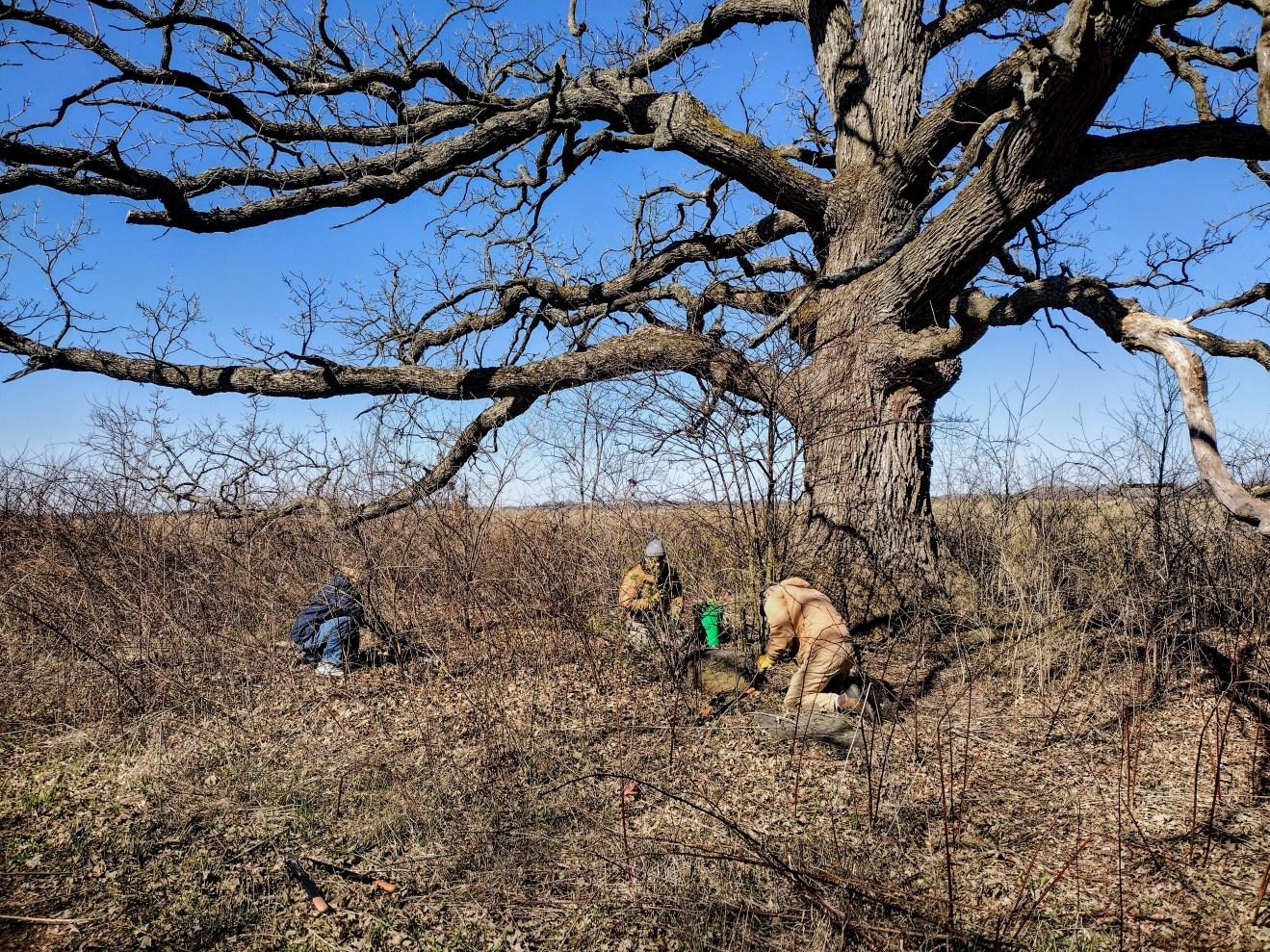
Pictured is our Dick Young (North) crew working to clear honeysuckle from around a bur oak.
To fill in large swathes of cleared area, volunteers will spread native seed provided from the District or collected from their assigned forest preserves. While the results are not immediate, over time we will see areas with mismatched species compositions bounce back to a much healthier state, one that makes sense for each ecosystem type that we are managing for. While we can’t atone for all the mistakes humans have made with land management throughout the years, giving our elder oaks some much-needed room to grow is a way for us to move forward and “grow” in our own way too.
Rachel Carlson, Editor Robb Cleave, Copy Editor
Photo by Terri Hoehne
GarlicMustardGo-Getters
Written by: Rachel Carlson
In a welcome change of pace, each spring our natural areas volunteers work to mechanically remove garlic mustard invading woodlands throughout the District. It’s tedious work, but these plants are no match for our seasoned volunteers who just spent a bulk of the winter season cutting and hauling honeysuckle and buckthorn. The damp spring soil makes for easy plucking, ensuring we remove as much of the root system as possible.
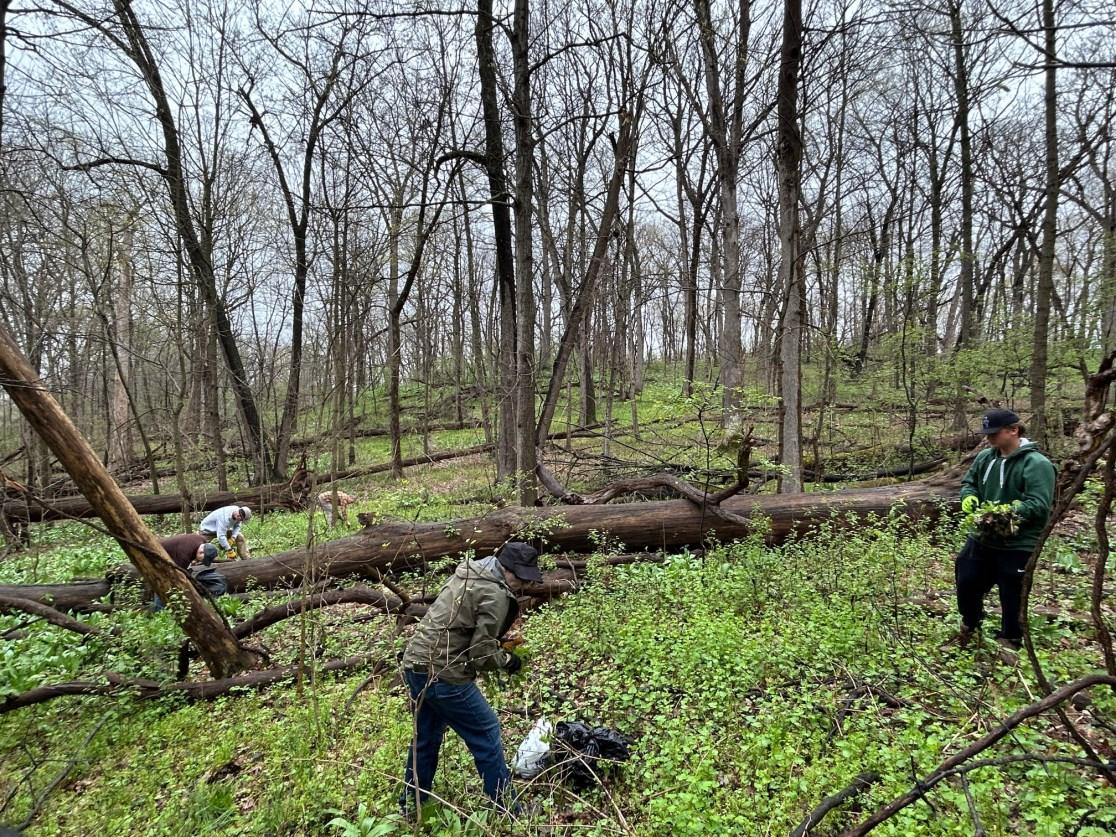
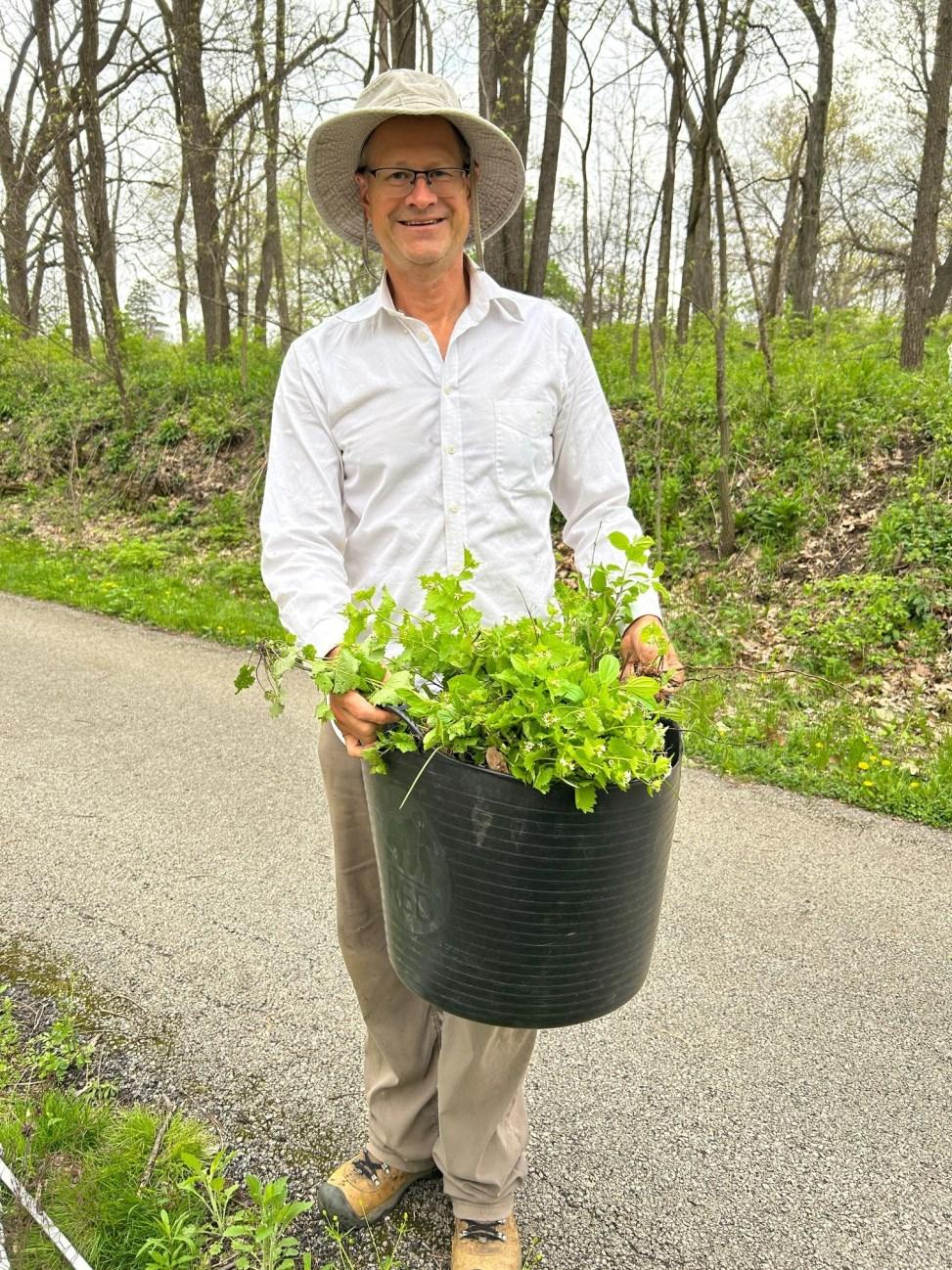
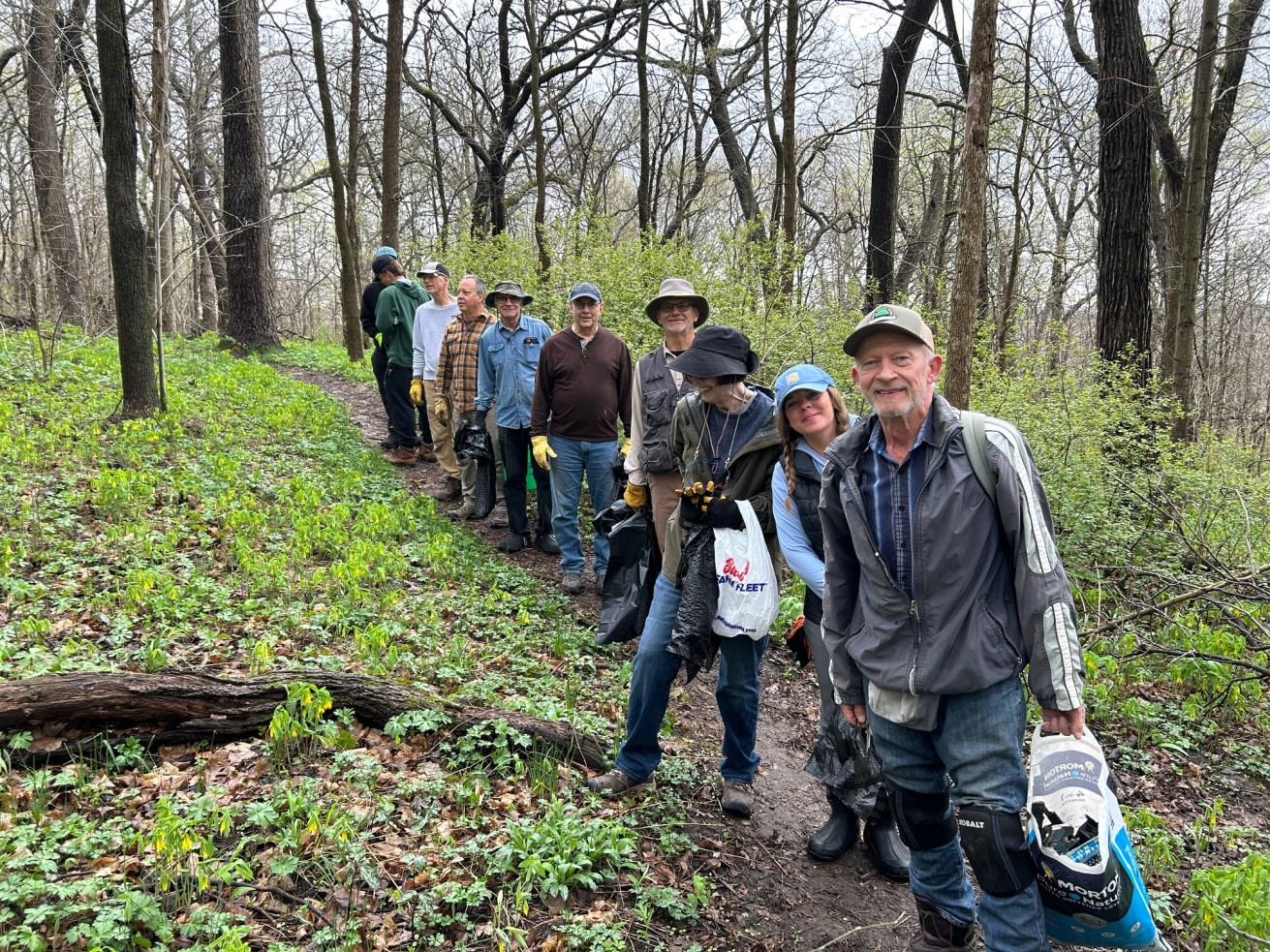
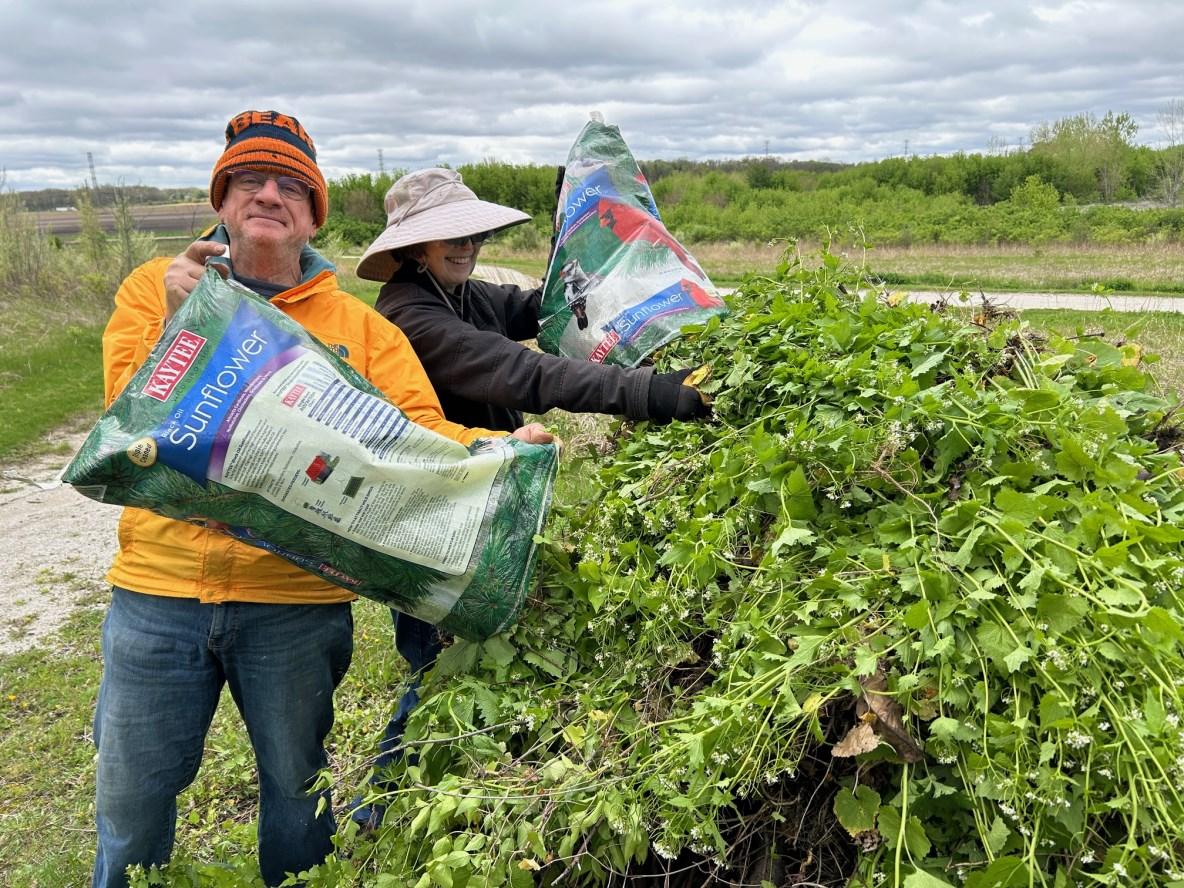
While foraging is not allowed in the forest preserves, because this material is unwanted we allow volunteers to take some plants home if they so choose to eat them. After all, one of the reasons this plant was thought to have been brought to the Americas was because of its use as a garlic substitute in cooking yum!
An ephemeral hike at Johnson’s Mound was wrapped up with a garlic mustard pulling event. Photos by Rachel Carlson
Rich Cochran and Terri Hoehne load up an old brush pile turned compost pile at Lake Run.
Volunteer Scott Eddy shows off a Les Arends GM haul.
AWelcomeAddition
With Jeff Ricketts and Rachel Carlson
Our self-titled “Nomads”, a dedicated team of restoration volunteers spearheaded by Steward Dale Swanson, underwent a little bit of restructuring this year. Longtime volunteer, Jeff Ricketts, has officially teamed up with Dale and joined in as CoSteward of Dick Young Forest Preserve! To welcome him and celebrate his induction to the Stewardship program, we have
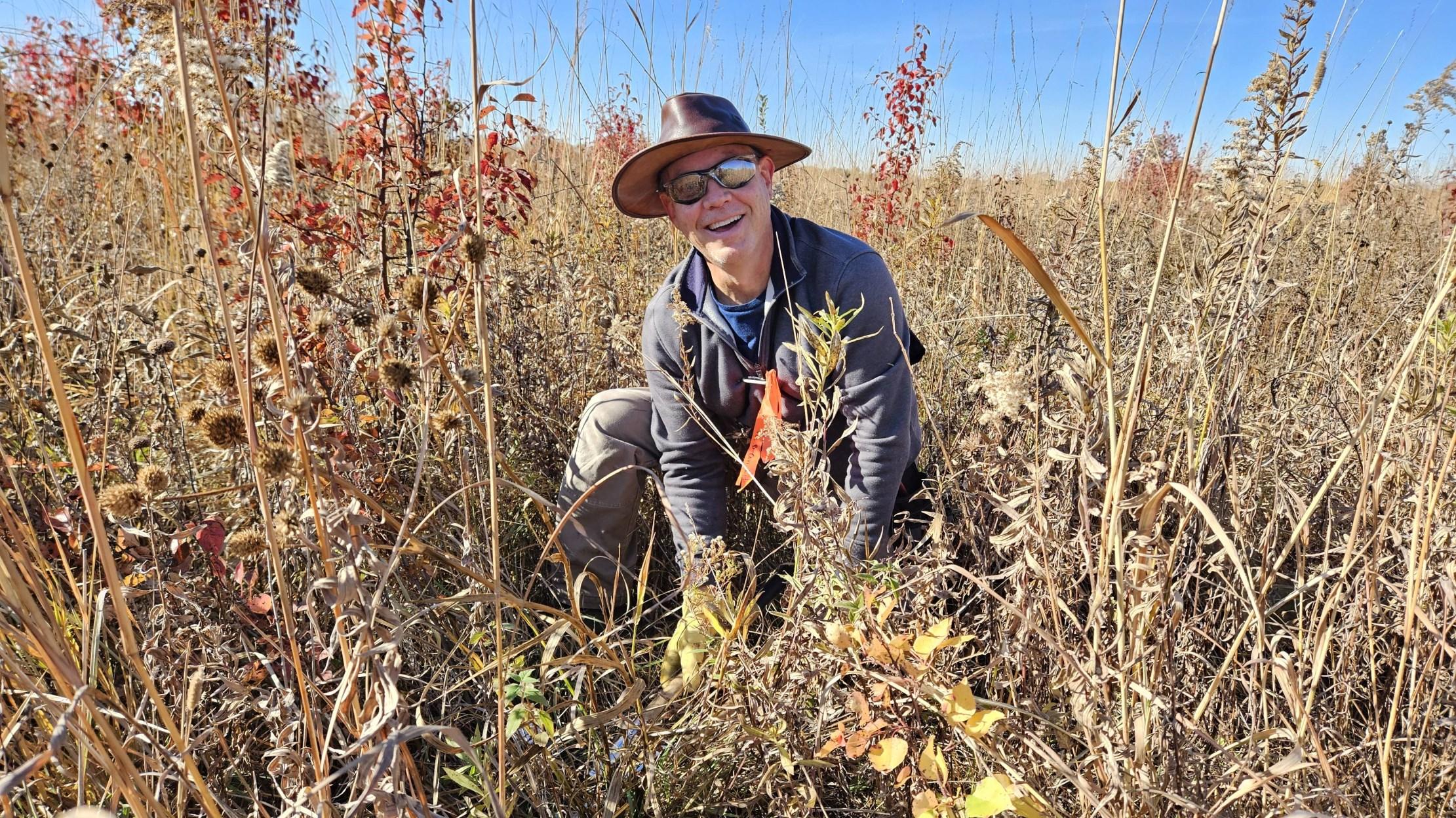
door destinations), I ve lived 3/4+ of my life in northern Illinois. RV and tent camping, hiking, motorcycling, and learning new things are some favorite hobbies.
Q: How/when did you get involved in restoration work with the forest preserve district?
A: In 2024 I went through the KCCN (Kane County Certified Naturalist) program. I learned so much! They mentioned the ecological restoration workdays for volunteers. I gave it a try, had fun, and met a great group of people who are now friends so I stuck with it! It’s an awesome way to get exercise outside, get off-trail in the forest preserves, take out invasive plants, and learn about ecology and conservation methods more deeply.
Q: How has volunteering in natural areas impacted your life?
A: I’ve loved the outdoors all my life, and have volunteered with various organizations most of my adult life. I believe we can live more fulfilling and healthier lives if we seek purpose in our lives, and never stop learning. Now that I’m in the retirement chapter with more time available, being a volunteer with the District allows me to combine all of those things together - what a gift!
Q: In what ways have other stewards inspired you to get more involved?
A: I see their passion in what they do. They need to know how to identify target plant species and their growth cy-
was a good approach that still allows me to enjoy my travels.
Q: What are you most excited for in your new stewardship position?
A
: It is great to work directly with the NRM staff - understanding NRM’s management priorities for Dick Young FP and how our volunteer team can best align our capabilities and time. Feeding those priorities into our team’s objectives helps foster that greater sense of purpose in our work!
Q: What is the best feature (in your opinion) of the preserve you work at?
A: At Dick Young FP we have several ecosystems: woodlands, wetlands and vast grasslands; I really enjoy the HUGE old oak trees in a section we’re restoring. Liberating the oaks by removing invasive honeysuckle and buckthorn underneath them, bringing daylight to the forest floor, seeing the native plants reemerge it teaches patience, but is very gratifying.
Q: Do you and Dale have any workdays coming up that you’d like to advertise?
A: We work at Dick Young north (Main Street entrance) the 1st and 3rd Tuesday every month, all year, 9 am - 12 pm. Good people, great forest preserve, and the snacks at break time are epic!
Congratulations, and welcome to the Stewardship team, Jeff!
LEARNFROMTHEEXPERTS
Tips for Spring Weed Management from the Natural Resources Department
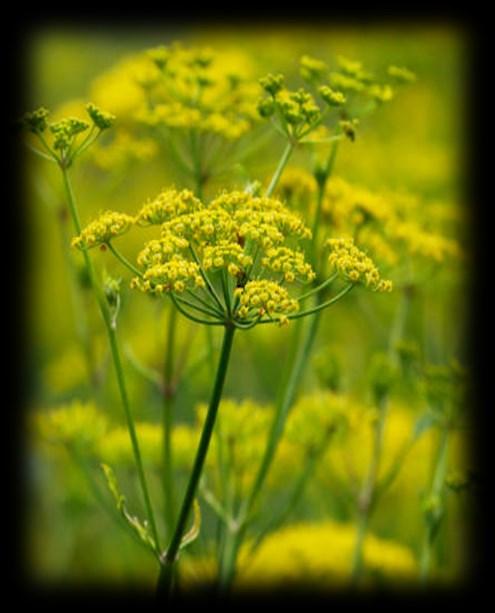
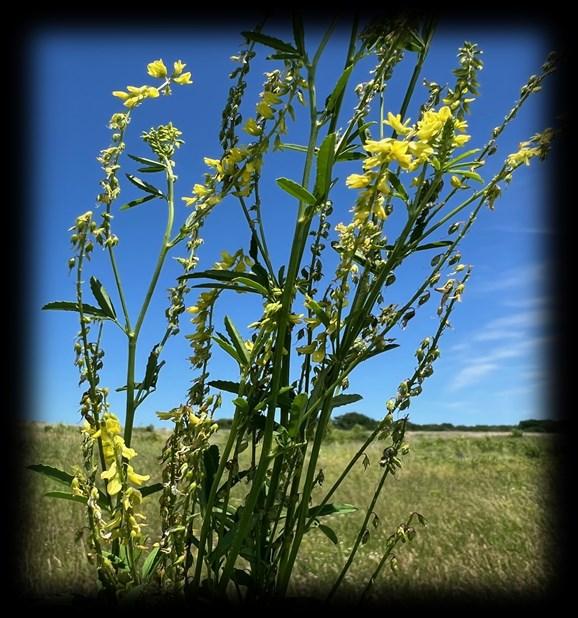
The following biennial plant species can be cut at the base in their second year right as they begin to flower, but before they begin to seed a nice route to go if you want to reduce herbicide usage.
• Cutting is often better than pulling, as pulling can cause unintended soil disturbance.
• Be extra cautious while working around parsnip, as it is phototoxic touching it will cause light-induced burns.
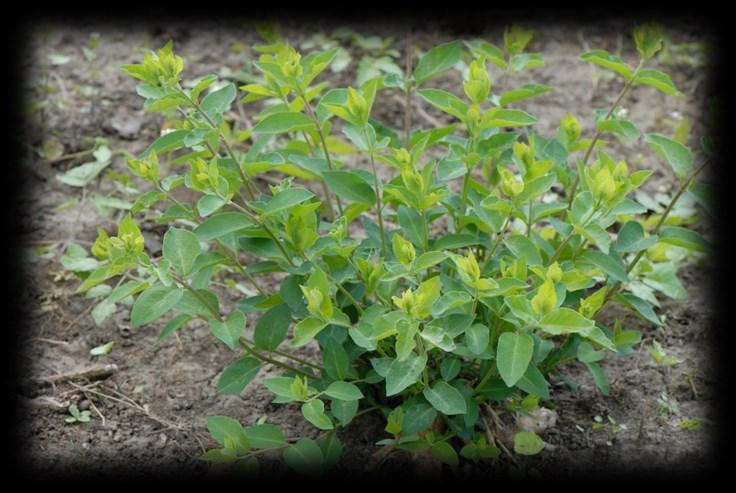
After plants have fully leafed out, small resprouts of woody invasives can either be foliar sprayed or cut-stump herbicided again. When foliar spraying, make sure not to go after anything taller than 3 feet, and use a downward angle directly above the plants to avoid overspray and the dreaded “ring of death”.
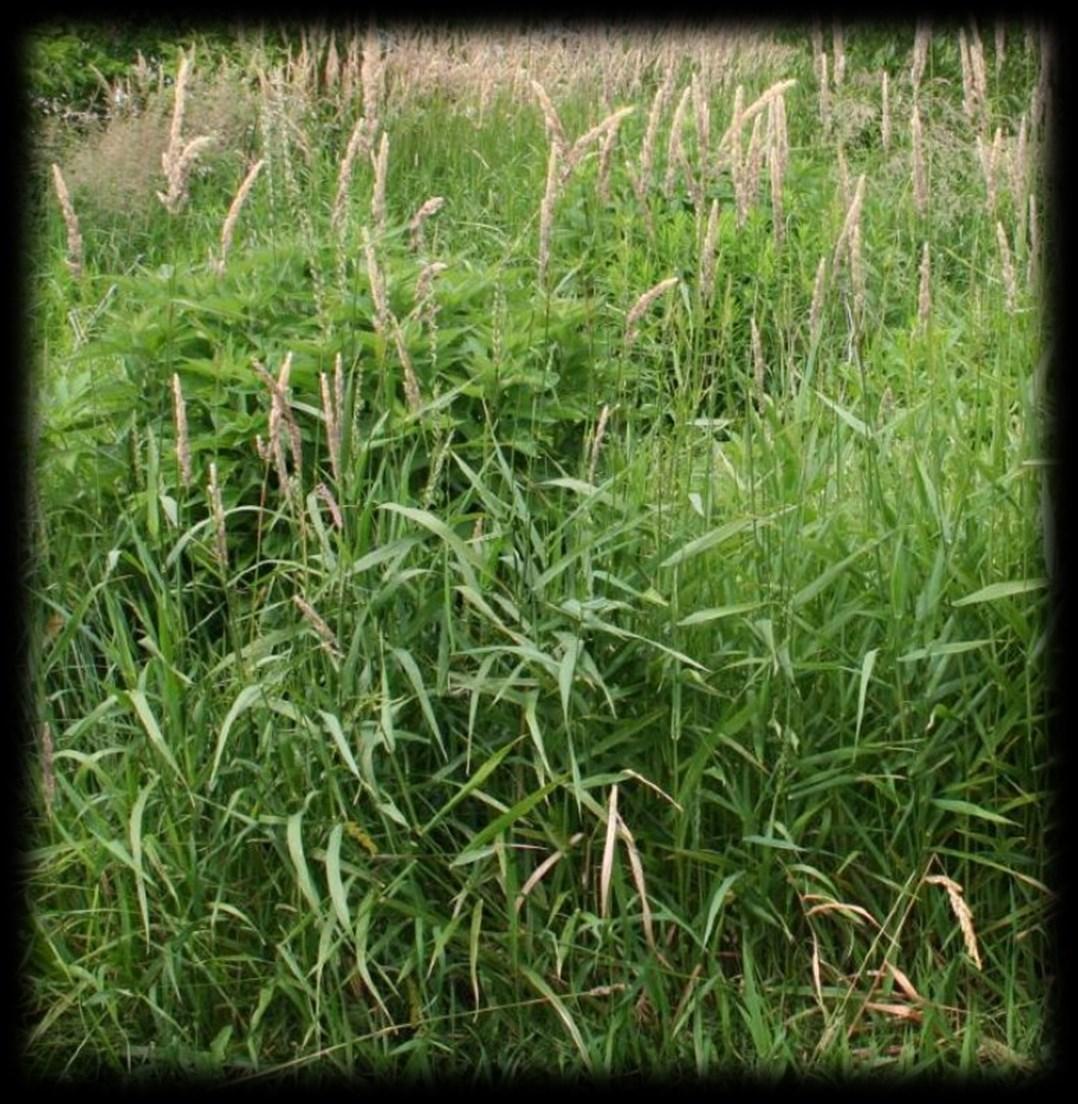
In early spring, reed canary grass (RCG) is often one of the first grasses to green up and will stand out as larger than native grasses. In late summer and fall, RCG will stay photosynthesizing for longer while other grasses and native plants have begun to go dormant. Both of these are appropriate times to foliar spray small patches of RCG with a mix of 2% glyphosate. In most cases, multiple treatments will be necessary in order to kill this species off, so targeting a single patch over the course of a few years may be necessary.
• Pro tip: Spraying when temperatures are less than 70°F will allow the herbicide to better translocate to the plant’s rhizomes.
Wild Parsnip (Pastinaca Sativa)
Sweet Clover (Yellow & White) (Melilotus officinalis, Melilotus alba)
Reed Canary Grass (Phalaris arundinacea)
Photo Cred: Morton Arboretum
May is Invasive Species Awareness Month in Illinois
By Rachel Carlson
While our natural areas volunteers are already looped in to the detriment of invasive species, the topic isn’t exactly what most would consider standard dinnertime conversation (well, unless you’re a nerd like us). Considering how prevalent these non-native plant and animal species have become, why is it that the general public isn’t doing more to address them? Chris Evans, writer for the Outdoor Illinois Journal and researcher for the UI Forestry Extension, states that “the first step to combatting invasive species is awareness.” Joining a workday, taking a class with our Naturalists, or simply familiarizing yourself with the landscape while you’re out taking a stroll are all ways you can increase your own awareness. The more you know, the more you can spread the word to others. Site Stewards working with FPDKC are not just event hosts, but mentors too, and part of their mission is educating the public.
In Illinois, May is “Invasive Species Awareness Month”, but we have restoration workdays hosted yearround. Instead of embracing service work one month at a time, let’s make a commitment to upholding the health of our
natural areas when they need us most every single day. On top of attending volunteer events, simple actions like checking your boat for zebra mussels or your shoes for seeds before you leave a preserve can make a big impact on the outdoor spaces nearest and dearest to you.
To learn more about the history of Invasive Species Awareness Month, read the Outdoor Illinois article here: https://outdoor.wildlifeillinois.org/articles/the-history-of-illinois-invasive-species-awareness-month

NATURAL RESOURCES!
Steward Jeff Ricketts recommends “Nature and The Mind” by Marc Berman: Many people “just know” that being out in nature is beneficial. It "feels good” to breathe and smell fresh air; to observe birds, insects and plants; and to hear the sounds. But the benefits are far deeper than that and more tangible than most of us ever imagined! This book takes a deep dive into the science of how we benefit - not only from being in a forest preserve, but even around our homes and community green spaces and even from trees visible from a hospital recovery room. For those who appreciate scientific research and evidence-backed observations, this is a great read. If you already volunteer with the Forest Preserve District and are looking for tools to help recruit friends and neighbors to get involved, check out this book!
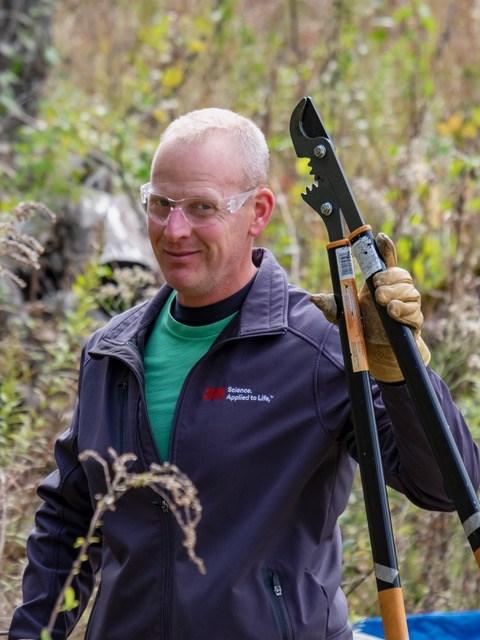
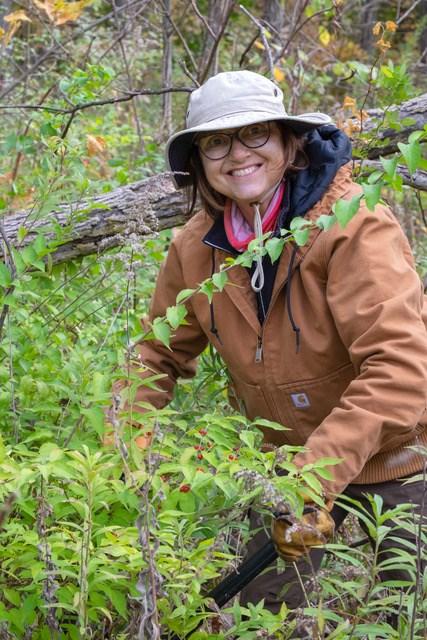
Adam and Mavis join a workday at Bliss Woods
Photos by John Stark
POLLUTION SOLUTION
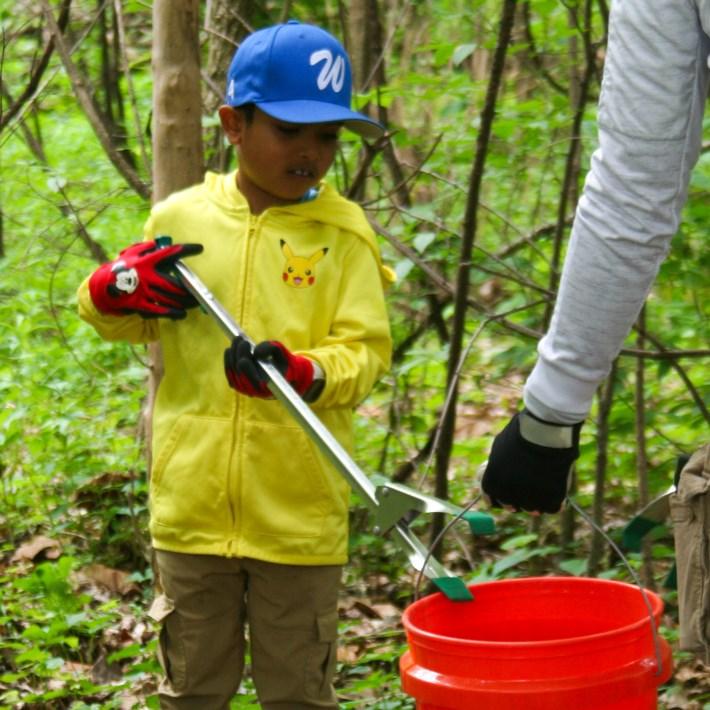
Join the District’s newest volunteer group and be part of the pollution solution! Lead Volunteer Coordinator, Robb Cleave, is hosting litter clean-ups Saturdays from 10am to 12pm on the following days:
June 13th Gunnar Anderson FP, Geneva
July 18th—Elgin Shores / Elgin Baseball, Elgin
August 22nd—Culver FP, Aurora
September 12th—Jon J. Duerr FP, South Elgin
October 17th Oakhurst FP, Aurora
Questions? Contact the Volunteer Coordinator at 630-762-2741
LITTLESCHOOLONTHE
PRAIRIE
WithLaraJohnson,BrianGriffin,andRachelCarlson
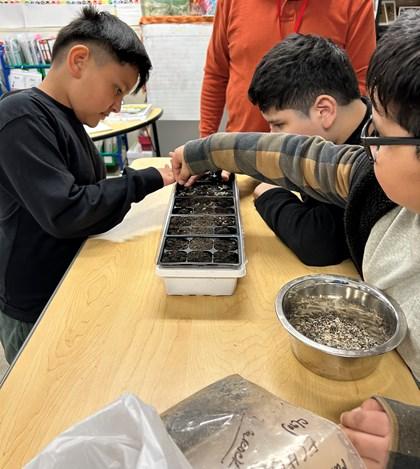
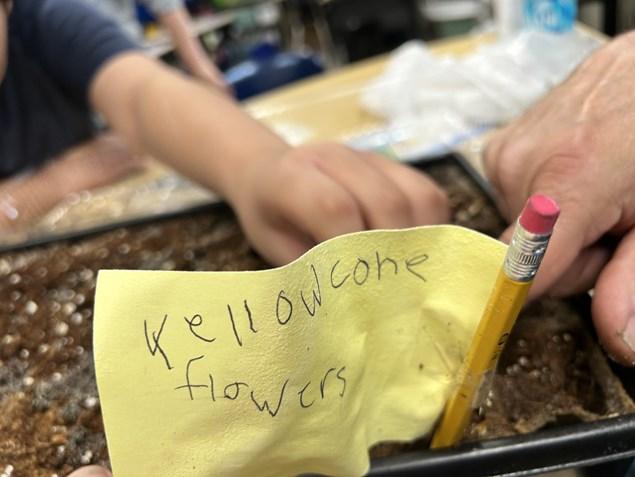
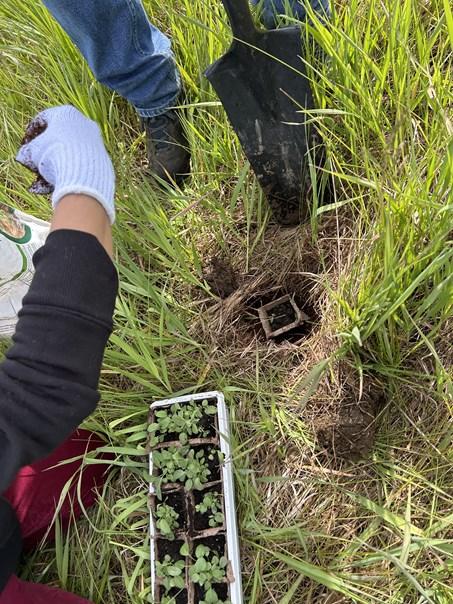
Since the beginning of the spring quarter, Lara Johnson’s instructional classroom at Beaupre Elementary school has been working on a special project facilitated by Big Rock F.P. steward Brian Griffin. With seed provided from the District and Brian’s guidance, the classroom has raised seedlings of yellow coneflower, pale purple coneflower, and black-eyed susan. At first the crew experimented with a hydroponics system, but ultimately they settled on good old-fashioned seed-starting trays and grow lights to get the job done. Throughout the growing process, Mrs. Johnson discussed exactly just how a seed turns into a plant, and what resources are necessary in order to sustain plant life. Students monitored growth each week, and sharing their observations became a regular part of classroom discussions. Every morning, students in Lara’s classroom started the day off with a simple prompt how do you feel? One student frequently replied, “I am happy because the plants are growing!”.
At Big Rock, Brian has affectionately referred to a section of the preserve as the “Beaupre Area” - a unit of restored prairie where both workday volunteers and students alike have assisted with tree plantings and invasive species removal. As a last hoorah of the school year, Lara, Brian, and handful of students headed out to the prairie to plant the newest additions.
While the school year is over, Brian will continue keeping tabs on the seedlings and work to free up the area of species that might threaten the success of their planting. As a former teacher himself, Brian has used his background in education and natural resource management to pave way for what we hope will be an ongoing project at Beaupre!
Thank you to Lara Johnson and her students together we can restore our prairies one seedling at a time!
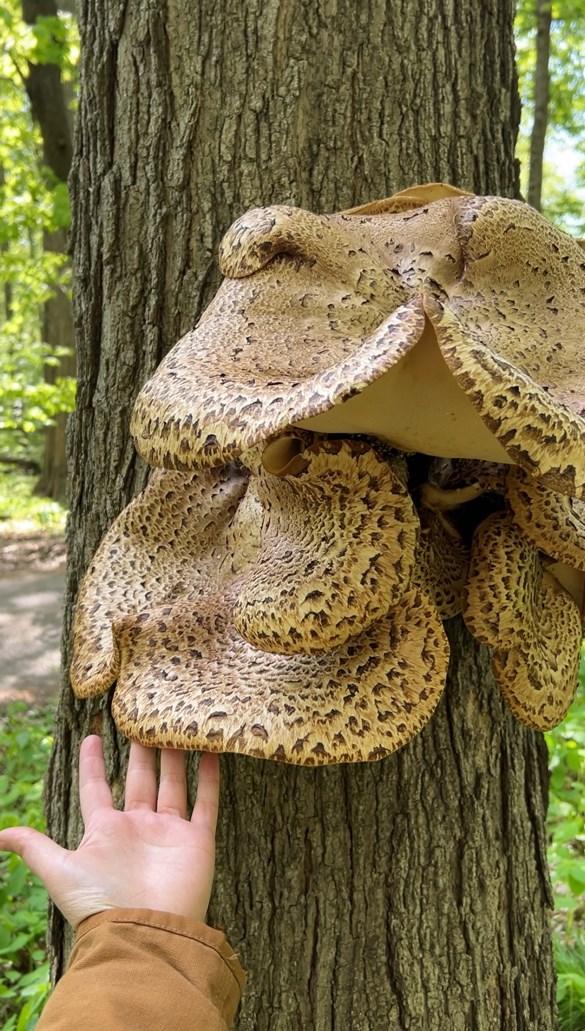
Photo Features: Mushrooms & Wildflower Blooms
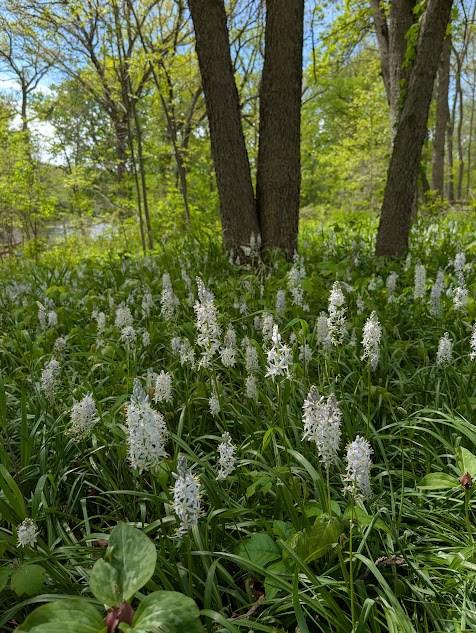
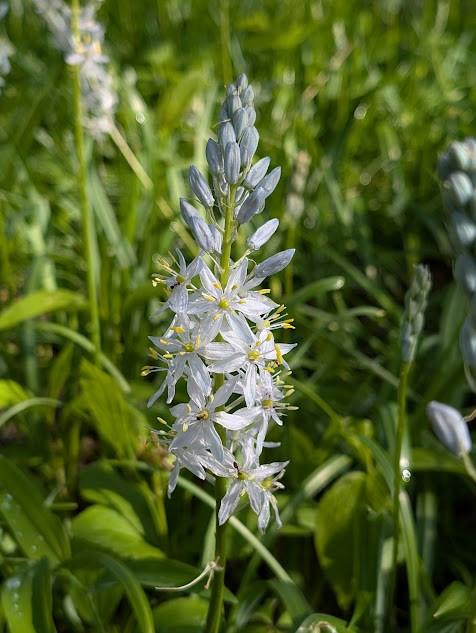
Wild Hyacinth in bloom at Les Arends
Dryad’s Saddle (Cerioporus squamosus) found
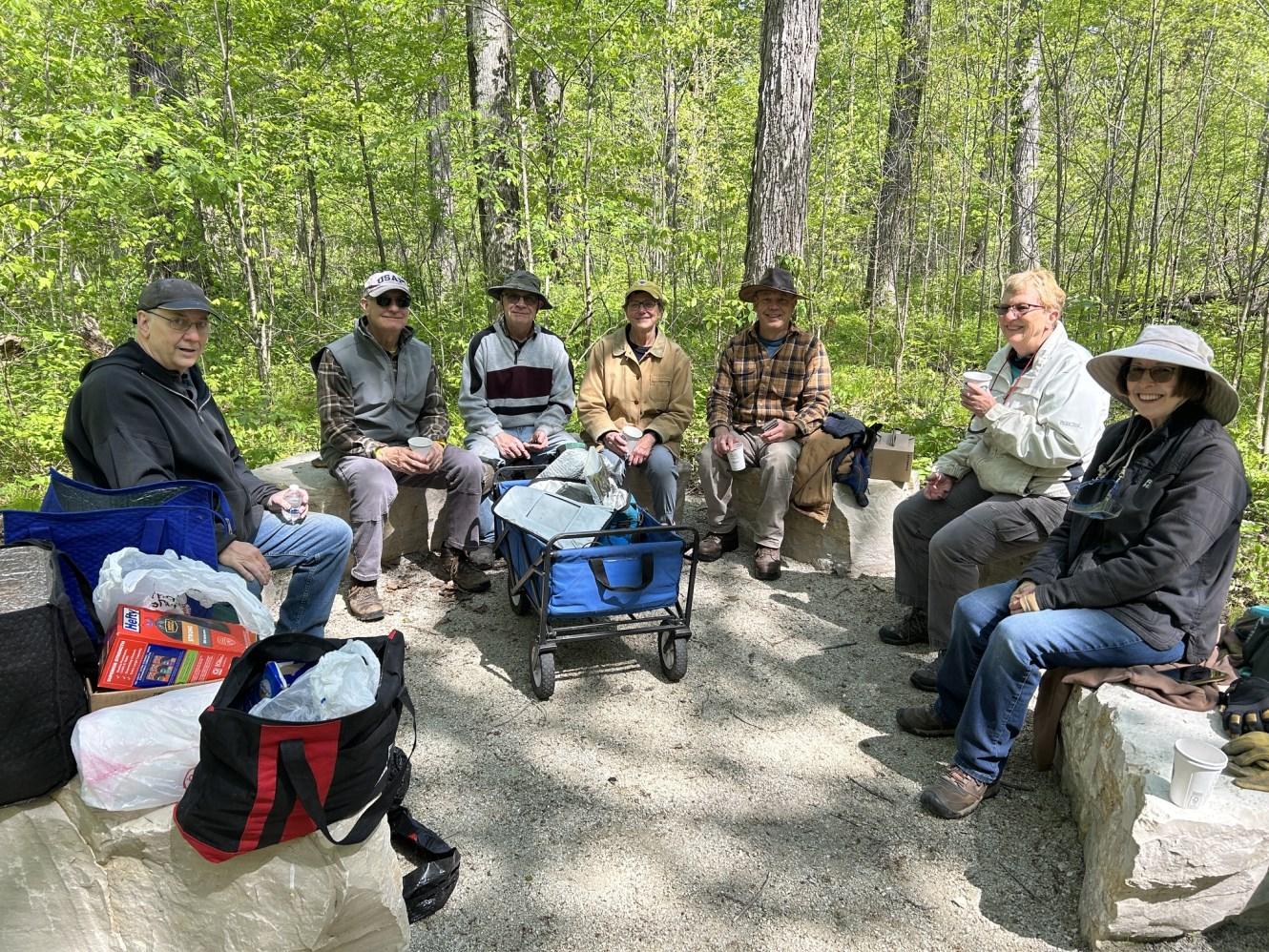
Break-time at the Johnson’s Mound council ring
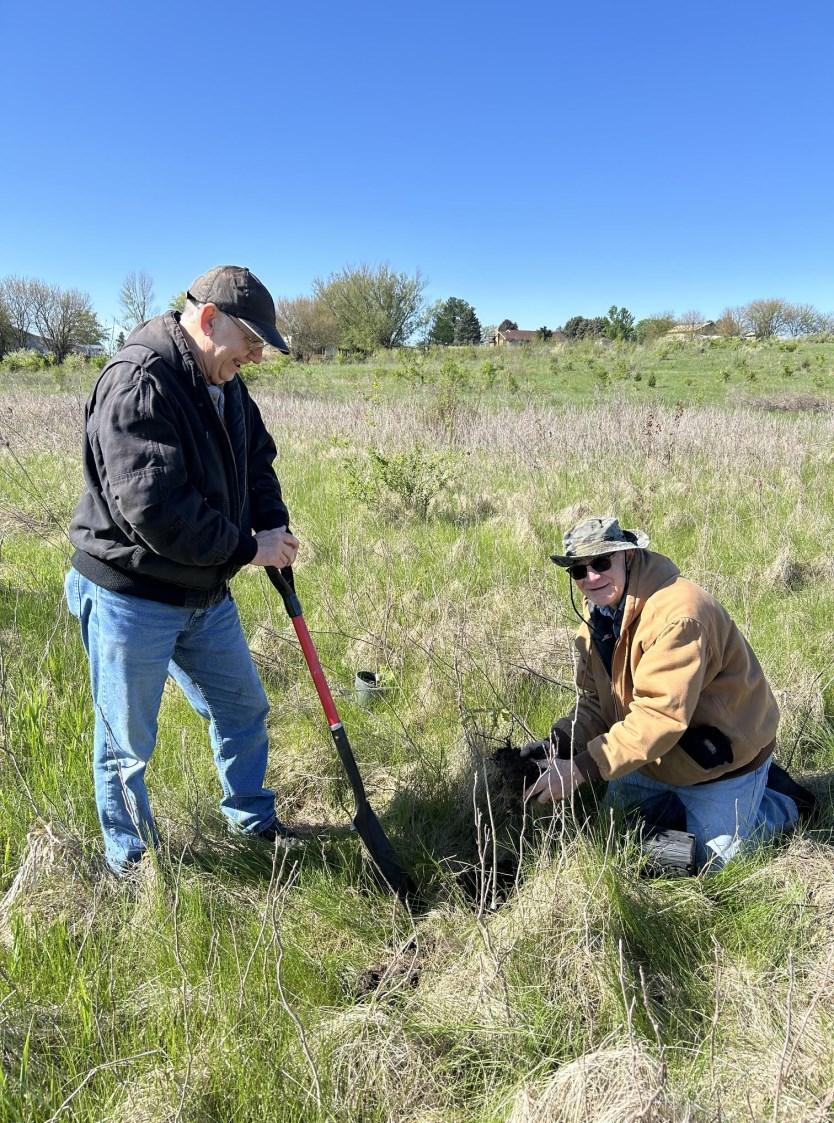
Photo by Rachel Carlson Brian and Rodney plant a bur oak at Big Rock
Forest Preserve District of Kane County Volunteer Services Division 1996 S. Kirk Road, Suite 320 Geneva, IL 60134