
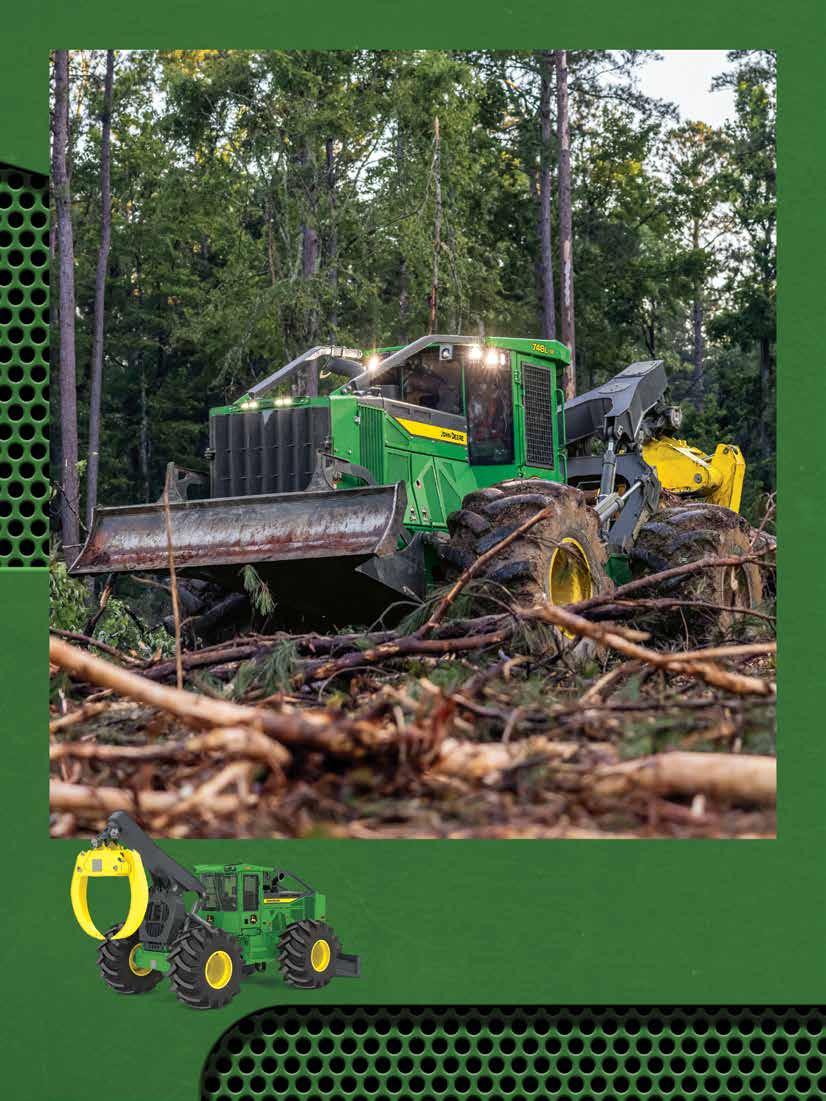



Superior cab comfort, visibility and efficiency. Greater forest confidence.*
*Compared to previous Deere L-Series.




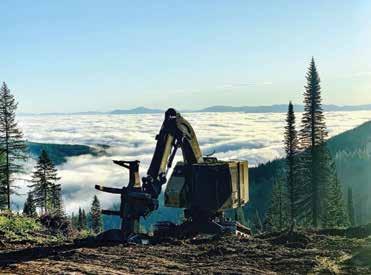

Dry conditions through Montana and much of the West could result in a historic wildfire season in 2026
Winter is almost over, and it has been one of the driest on record for Big Sky Country. Multiple small fires were reported across the state at the end of February.
Low snowpack, dry fuels, and unusually warm conditions across the state mean flames could spread faster and further than ever. When you add high winds to the equation, conditions can escalate fast.
Wildfire season this year could be one for the record books.
Federal officials are attempting to open up millions of acres of forests in western Oregon for “maximum” timber production to “advance Trump administration priorities,” including areas that are home to federally protected, vulnerable species, the Bureau of Land Management announced.
The agency shared in a notice of intent that officials will propose new updates to the Western Oregon Resource Management Plans that have governed logging and
conservation on 2.5 million acres of forests in 17 Oregon counties for decades, and that were last updated in 2016. The notice kicked off a public comment period that would end in late March. The agency did not expect to hold any public meetings in advance of releasing its proposal, the notice said.
About three-quarters of the 2.5 million federal acres, known as O&C lands for having once belonged to the Oregon and California Railroad, are protected from regular logging. But in its notice of intent, the land management bureau indicated it could return those acres to 1960s harvest levels, more than 10 times current harvest levels.
“Bringing timber production back to historic levels is essential for reviving local economies and reducing the threat of catastrophic wildfires,” said acting director of the land management bureau, Bill Groffy, in a statement.
Travis Joseph, president of the American Forest Resource Council, a trade association for the forest products industry, celebrated the bureau’s announcement.
“Bureau of Land Management lands in western Oregon continue to grow significantly more timber each year than is harvested,” said Joseph, “contributing to
(continued on page 6)
Editor: Tim Cox, timcox@forestnet.com
Contributing Editors: Mary Bullwinkle, Paul MacDonald
Send both OLD and NEW Circulation information to: TimberWest Magazine Attn: Subscriptions P.O. Box 9058, Fargo, ND 58106 subscribetw@forestnet.com
CEO: Anthony Robinson – arobinson@forestnet.com Phone: (778) 991-3500
Associate Publisher: Hannah Robinson – hannah@forestnet.com Phone: (778) 688-9127
Advertising Sales: Edna Tainsh – edna@forestnet.com Phone: 1 (866) 447-9334
Publisher & Production Manager: Sheila Ringdahl – sringdahl@forestnet.com
Digital Marketing: Anthony Robinson arobinson@forestnet.com
Social Media: Kaitlin Parker
Accounting Manager: Shelina Jessa – accounting@forestnet.com
Corporate Office Information: TImberWest Publications, LLC Phone: (425) 778-3388 timberwest@forestnet.com • www.forestnet.com
PUBLISHER’S EDITORIAL STATEMENT: TimberWest reports on the logging and lumber segment of the forest industry in the Western United States with emphasis on the states of AK, WA, OR, ID, MT and CA, providing current information on timber harvesting techniques, sawmill operations, news, legislation, events, people and products pertinent to this market.
TIMBERWEST (USPS #024858) is published bi-monthly (Jan/Feb, Mar/Apr, May/Jun, Jul/Aug, Sept/Oct, Nov/Dec) by TimberWest Publications, LLC, 1934 E Rose Creek Pkwy S, Fargo, ND 58104. Periodicals postage paid at Fargo, ND and at additional mailing offices. Copyright 2026. All rights reserved. Subscription rates to qualified subscribers are Free and all non-qualified subscriptions in U.S. are $22 per year payable in advance. Canada $35 (U.S.). Other $60 (U.S.). Single copies paid in advance $4. Company affiliation, title, date and signature must appear on subscription forms. Publisher reserves the right to refuse non-industry subscriptions and advertising. All other advertising is accepted at the discretion of the publisher. Publisher does not assume any responsibility for the contents of any advertisement and all representations or warranties made in such advertising are those of the advertiser and not of the publisher. Back issues, if available, $4 each. Directory and Calendar issue $10 each.
Advertising created by TimberWest Publications, LLC is the sole property of TimberWest Publications, LLC and may not be copied or reproduced without the express written permission of the publisher.
Canadian Publication Mail Product Sales Agreement #40740074. Return Undeliverable Canadian Addresses to P.O. Box 86670 Stn. Main, North Vancouver, BC V7L 4L2
Printed in Canada at Mitchell Press
Printed on FSC®certified paper.
POSTMASTER: Please send address changes to TimberWest Magazine, P.O. Box 9058, Fargo, ND 58106
(continued from page 4)
overstocked forest conditions and increasing the risk of catastrophic wildfire across much of the region.”
However, Bev Law, a forest scientist and professor emerita at Oregon State University, called the plan to return to harvest levels of 1 billion board feet of timber per year “insanity.”
in line with the law, restores active management, reduces wildfire threats, and supports the rural economies that depend on responsible timber production and land stewardship.”
The U.S Department of Agriculture is weighing rescinding the 2001 Roadless Area Conservation Rule, commonly called the Roadless Rule.
The Roadless Rule prohibits road construction and reconstruction and timber harvests on nearly 60 million acres of national
interagency team to identify priority goals and opportunities and will enable Alaska to carry out forest restoration projects on 300,000 acres of the Tongass National Forest.
Researchers have shown that forest thinning to reduce the risk and severity of wildfire also benefits water resources derived from snowpack.
In a study by the University of Washington the Nature Conservancy, forest thinning efincreased snowpack by 30 percent on north-facing slopes and by 16 percent on south-facing slopes. Thinning aided snowpack the most where it created a patchwork of gaps in the forest rather than a more even density; gaps of 4-16 meters in diameter seemed to be the “sweet spot” for snow.
“At its core, this research shows that reducing wildfire risk and protecting water redon’t have to be competing goals,” said lead author Cassie Lumbrazo, a postdoctoral researcher at the University of Alaska who completed this work as a UW doctoral student of civil and environmental engineering.
April 26-30
American Wood Protection Assoc. Annual Meeting, Asheville, NC 205-733-4077, www.awpa.com
April 29/May 1
MSR Annual Workshop, Orange Beach, AL 608-310-6768, www.msrlumber.org
May 1-2
Loggers’ Expo at Champlain Valley Exposition, Essex Junction, VT 315-369-3078, www.northernlogger.com
May 4-8
ForestSAT 2026, Gainesville, Florida 518-286-1010, www.forestsat.com
May 6-8
Oregon SAF Annual Meeting, Coos Bay, OR 503-224-8046, www.forestry.org
May 8-9
Sequim Logging Show, Sequim, WA www.sequimloggingshow.com

May 11-15
United Nations Forum on Forests, New York, New York www.un.org/esa/forests/index.html
May 12-14
Mapping the Course & OFRI Workforce Summit, Bend, OR 503-226-4562 www.westernforestry.org
May 18-20
Forest Resources Assoc. Annual Meeting, Charleston, SC 202-296-3937 www.forestresources.org
June 8-11
National Indian Timber Annual Symposium, Keshena, WI 503-282-4296, www.itcnet.org
June 14-15
Deming Logging Show, Deming, WA 360-592-3051 http://demingloggingshow.com/
June 15-17
Pellet Fuels Institute Annual Conference, Point Clear, AL 703-522-6778, www.pelletheat.org
June 25-26
National Conference of Private Forest Landowners, New Orleans, LA 404-325-2954 www.forestlandowners.com
June 27-30
Assoc. of Consulting Foresters of America National Conference, Baton Rouge, LA 703-548-0990
www.acf-foresters.org
June 27-28
Buckley Log Show, Buckley, WA 360-829-0474 www.cityofbuckley.com/logshow
Pacificorp agreed to pay $575 million to settle claims that arose from damage caused by wildfires in Oregon and California
The settlement resolves claims by the federal government that PacifiCorp’s electrical lines negligently started all six fires
The settlement monies will help repay the government for the substantial costs it incurred fighting the fires, which is critical because the U.S. Forest Service now spends more than half of its budget on wildfire suppression annually.
Settlement funds will also be distributed to the Forest Service and Bureau of Land Management to restore some of the 290,000 acres of public land that were burned.
As another wildfire season is about to begin, electric cooperative leaders urged Congress to speed up federal approvals to allow co-ops to remove hazard trees
that can fall from federal land onto power lines and spark blazes that devastate rural communities.
“Wildfire conditions have intensified across the West due to drought, higher temperatures, fuel accumulation, and expanding development near wildlands,” Jason Bowling, CEO of Sulphur Springs Valley Electric Cooperative in Arizona, told a House Natural Resources subcommittee.
Jim Anderson, CEO of Midstate Electric Cooperative in central Oregon, warned that “there will be significantly more wildfires unless the U.S. Forest Service and Bureau of Land Management develop a more constructive partnership with us to manage vegetation on our federal lands.”
A bill to change how California’s demonstration state forests are managed — placing greater emphasis on research, public access and forest restoration rather than logging — was introduced in the State Assembly.
California has 14 demonstration state forests totaling 85,000 acres. Unlike state
parks, they are working forests. Cal Fire manages the lands that are used to test and show forestry practices, conduct research, and harvest timber while remaining open to the public for recreation.
The Washington Department of Natural Resources’ (DNR) growing budget shortfall is being made significantly worse by continued reductions in timber harvests on state trust lands, driven by unilateral policy decisions from Commissioner of Public Lands Dave Upthegrove
Washington’s constitution and state law require that state trust lands be managed to generate revenue for defined beneficiaries, including public schools, counties, fire districts, libraries, and other essential public services.
For decades, sustainable timber harvests on these public working forests have provided critical non-tax revenue, while also supporting family wage jobs, rural economies, recreation, and clean air and water through responsible, science-based forestry.

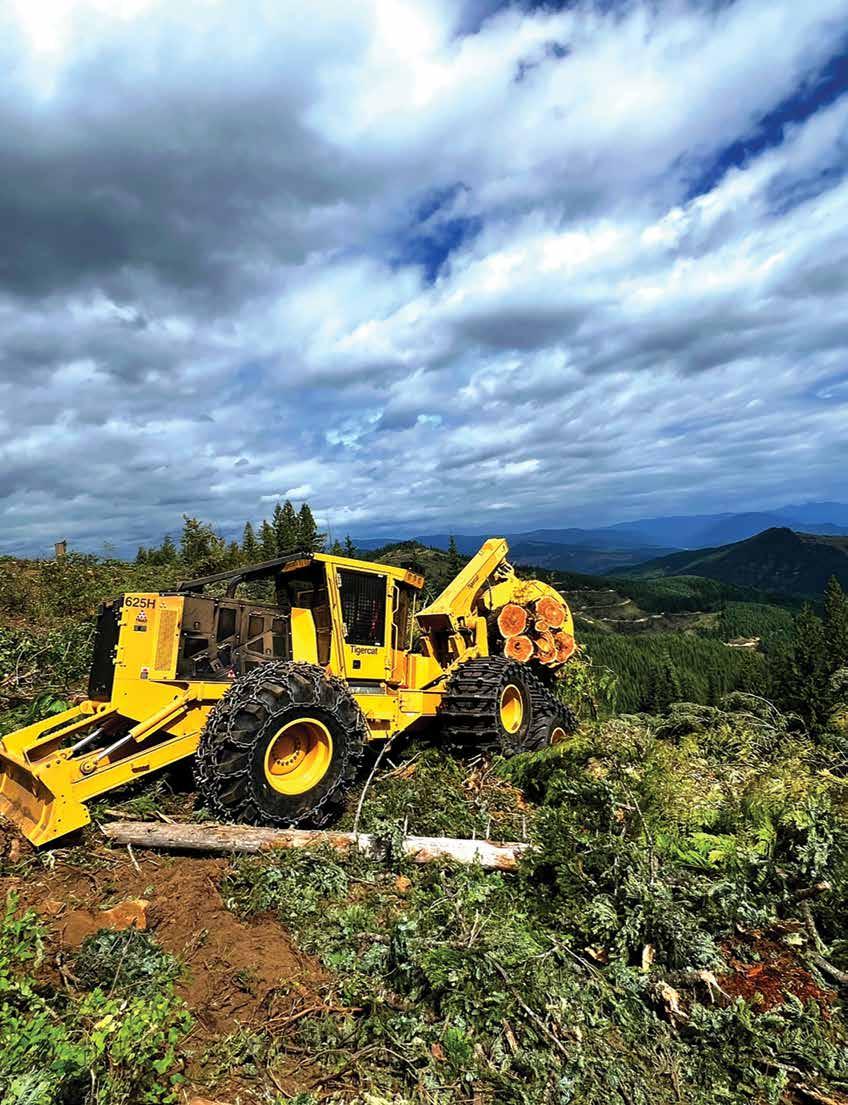
Tigercat Six-Wheel Skidder Adds to JEM Forestry’s Logging Season
By Dawn Killough
Justin
Everhart and his company, JEM Forestry, have earned a reputation for taking on the “worst of the worst” in terms of site conditions. “We’ve gotten good at working on the steepest, wettest, slipperiest sites,” said Everhart.
JEM Forestry is based in Deary in northwest Idaho, a little more than 20 miles east of Moscow, which sits right next to Washington. Everhart and his company work almost exclusively with PotlachDeltic, which merged with Rayonier at the end of January.
Rayonier operates mills in Idaho, the Great Lakes, and the South. It has about 1.2 billion board feet of lumber capacity and produces a wide array of lumber products and plywood. The company owns 931,000 acres of timberland in Idaho, Oregon and Washington and another 3.2 million acres in the South, primarily Texas and the Southeast.
JEM Forestry supplies wood to mills in Saint Maries that manufactures lumber and
plywood. Working land owned by Rayonier, JEM primarily harvests grand and Douglas fir and some cedar.
Everhart, 33, enjoys working for them because “they treat me like a person, not a number,” and the work is steady. Rayonier provides road maintenance and slash cleanup; it replants every site with a harvest life cycle of 55-60 years.
The company is paid by the ton. Prices could be better, but mills have been “plugged full” with wood, he noted. “With the market the way it is, I’d say it’s fair.” Trucking rates, however, “definitely need help.”
JEM Forestry does considerable work on steep terrain and shovel logging. However, the clay soil in Idaho makes these sites particularly challenging as mud often builds up on equipment tracks and tires. The company relies on a fleet of versatile equipment to work in the wet, slippery conditions.
A forester once told Everhart, “When you get good at cleaning toilets, you clean toilets.” Everhart took that to mean, “Do what you’re good at.” For JEM, that’s often the more challenging logging jobs.
With five employees, including himself,
Everhart runs a single crew six to seven days a week. They work in an area spanning from Clarkia, about 160 miles north, to Elk River, less than 30 miles east. Average travel time from Deary is about one and a half hours.
Everhart has been performing mechanized logging since 2020 and has found success using several Tigercat machines. He calls himself a “diehard Tigercat fan.” He currently owns three Tigercat machines: an 830E feller buncher, an LS855E shovel logger with a felling head, and a 625H skidder.
JEM Forestry also is equipped with two LinkBelt 4040s shovels, one with a Waratah 623 processor head; a LinkBelt 300 with a Tractionline winch assist system; a LinkBelt 200; a CAT 568 forestry machine and a CAT 160H grader; and a Komatsu 65 bulldozer. Everhart prefers to run newer equipment as it reduces shop time and maintenance costs.
He invested in the Tractionline winch system a few years ago because most of the relatively flat or gently sloping ground
(continued on page 10)
“The best advice I can give is save every penny you can when the going is good because it will turn bad, and you can get through it.”
Justin Everhart, JEM Forestry
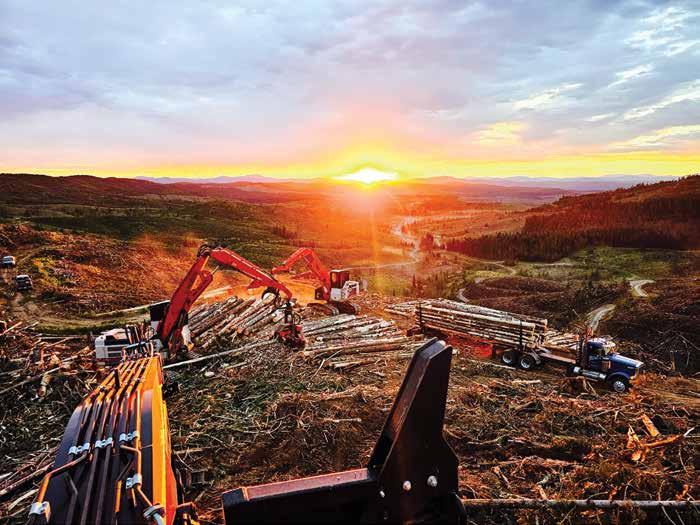
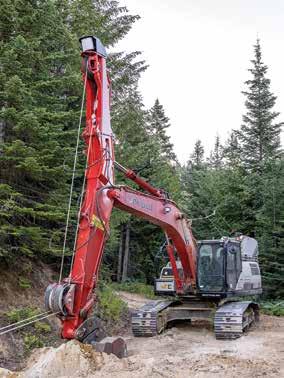
Processing timber and loading a truck at a landing. JEM Forestry works almost exclusively for PotlachDeltic, which merged with Rayonier.
(continued from page 9)
has been cut. He likes the fact that the Tractionline uses two cables to tether a machine. It is used to tether the Tigercat 830 or Tigercat LS855E as well as the Cat 568 shovel.
His most recent investment in equipment was the Tigerercat 625H skidder, which he purchased from Triad Machinery in the fall of 2024. It has an extreme duty rear bogie axle and six-wheel drive to provide improved
traction in the worst conditions. He especially likes the six-wheel design, which is good on both steep slopes and soft ground conditions. The Tigercat 625H has effectively added a month and a half to JEM’s logging season compared with traditional four-wheel skidders.
Additionally, it has enabled JEM to take on jobs it would otherwise have had to pass up due to a lack of the right equipment. They can now take on steep slope jobs even during the wet months. With the extended season
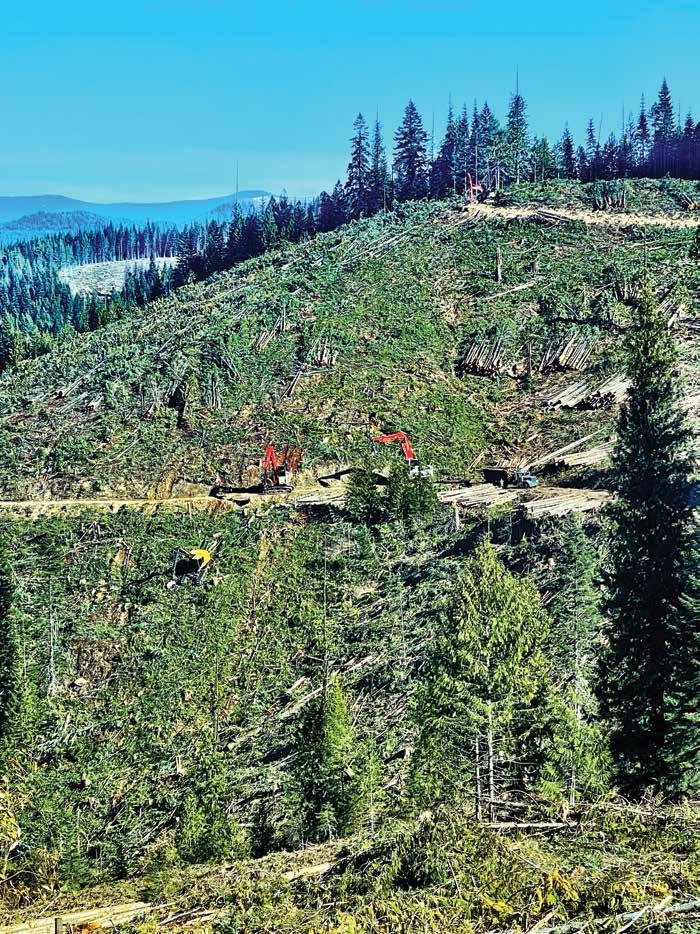
Tractionline winch assist system, shown in inset and shown above stationed at top of summit, is mounted on a Link-Belt 300. The Tractionline system uses two cables to tether a machine.
and additional work, the skidder has been a worthwhile investment that will pay for itself multiple times over, according to Everhart.
He based his decision to purchase the Tigercat 625H skidder on the experience of other loggers. Tigercat equipment is “built heavier and of higher quality,” said Everhart, “and it outlasts the competition.”
When he talked with TimberWest the Tigercat 625H skidder was working on a site with a slope ranging from 30-60 percent, skidding grand and Douglas fir and cedar logs. On the steeper terrain, JEM is using a shovel logger. Trucking is subcontracted with six to eight trucks departing the site each day.
Everhart’s first mechanized logging machine was a Tigercat LX830D fellerbuncher, which he bought in 2020. He has since upgraded to a Tigercat LX830E. The LX830E has long track frames, a wide carbody, durable leveling components, and unique geometry that improves its stability on sleep ground. A winch assist system is used to further enhance their capabilities when working on steep, slippery terrain.
The Tigercat LS855E shovel logger is designed to fell, bunch and shovel timber in challenging conditions. The LS version is equipped with Tigercat’s extreme duty leveling system, which features long frames and wide stance for excellent stability. It can be equipped with either a live heel (and grapple) or feller director (and Tigercat 5195 directional felling head) boom options; the feller director configuration allows the machine to fell and extract independently or fell and bunch for a skidder or yarder. It is available with several engine choices, including the Tigercat FPT N67 Tier 4f, which generates 284 hp.
Everhart is the fourth generation in his family to work in logging. He grew up in Bonner’s Ferry, where his great-grandfather started Everhart Logging, which was passed down to his grandfather and father. Everhart began working in the company as a teenager.
He started JEM Forestry with two employees in 2019. The company grew to eight workers by 2022, but Everhart believes the current number is more manageable. He works in the trenches with his employees, operating machinery or helping out wherever he’s needed.
Everhart offers similar employee benefits as other loggers in the region. The crew participates in state mandated annual safety classes.
“The big difference is I’m there on the hill with them day in and day out, so I believe that really helps in a lot of ways. We also


24 HOURS MONTHS
4,000
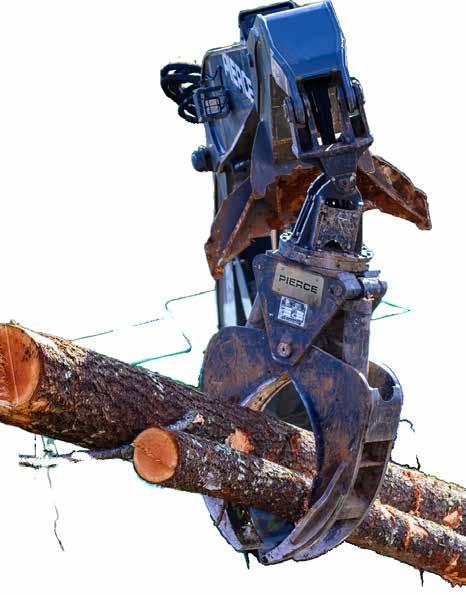
Pierce grapples have been a stalwart in the forests of the Pacific Northwest for decades. From the very beginning, loggers and machinery have continued to get stronger, and Pierce grapples have continued to keep pace. We know strength and durability are paramount to any successful logging operation.
That’s why Pierce has responded with an unprecedented warranty – 24 months, 4,000 hours!
Come give Pierce a try...again, or for the first time. We’ve got you covered.
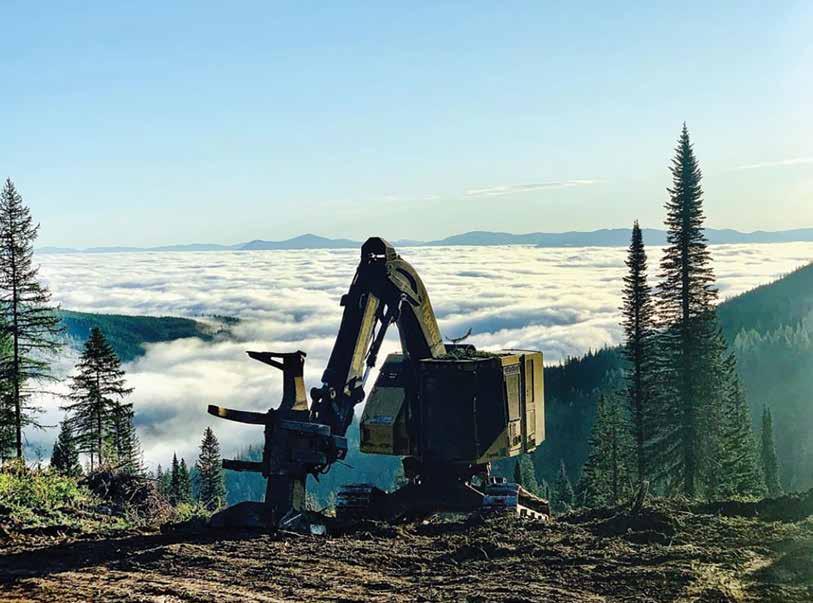
Justin Everhart calls himself a ‘diehard Tigercat fan.’ Above is the company’s Tigercat 830E feller buncher. JEM Forestry also has a Tigercat LS855E shovel logger with a felling head.
(continued from page 11)
have one of the best – if not the best – work environment as far as morale. My guys are all upbeat, positive, fun, helpful guys with a can-do attitude.”
Steve Blankenship is “one of my top notch guys who can hop on any piece of equipment I own and run it as good as the next guy,” said Everhart. “He’s also a huge help with looking at jobs and taking the lead if I can’t be there.”
He also praised Manney Nard, who contracts to provide mechanical felling services to JEM occasionally. Everhart said Nard
often works alone, single-handedly increasing their production.
Darren Hall, an experienced logger in the area, has been a mentor to him, always telling him the truth, even when it was difficult to hear.
Everhart said he’s learned two things over the years. One is that it’s expensive to learn through trial and error but worth it in the long run. Also, you need a patient, understanding spouse to work in the timber industry.
His wife, Maria, provides administrative support for the business and does the bookkeeping. Together they have three
children: Chloe, 10, Jackson, 7, and Sophia, 18 months.
Everhart enjoys motocross racing and trail riding with his son and also one of his employees and his son. His son rides “pretty much every day when the sun is shining.”
Chloe raises steers. “She does quite a few shows a year, showing off her prized cows, and she works extremely hard daily at taking care of them with my wife.”
His hope is that one day his children will work in the company and carry it forward.

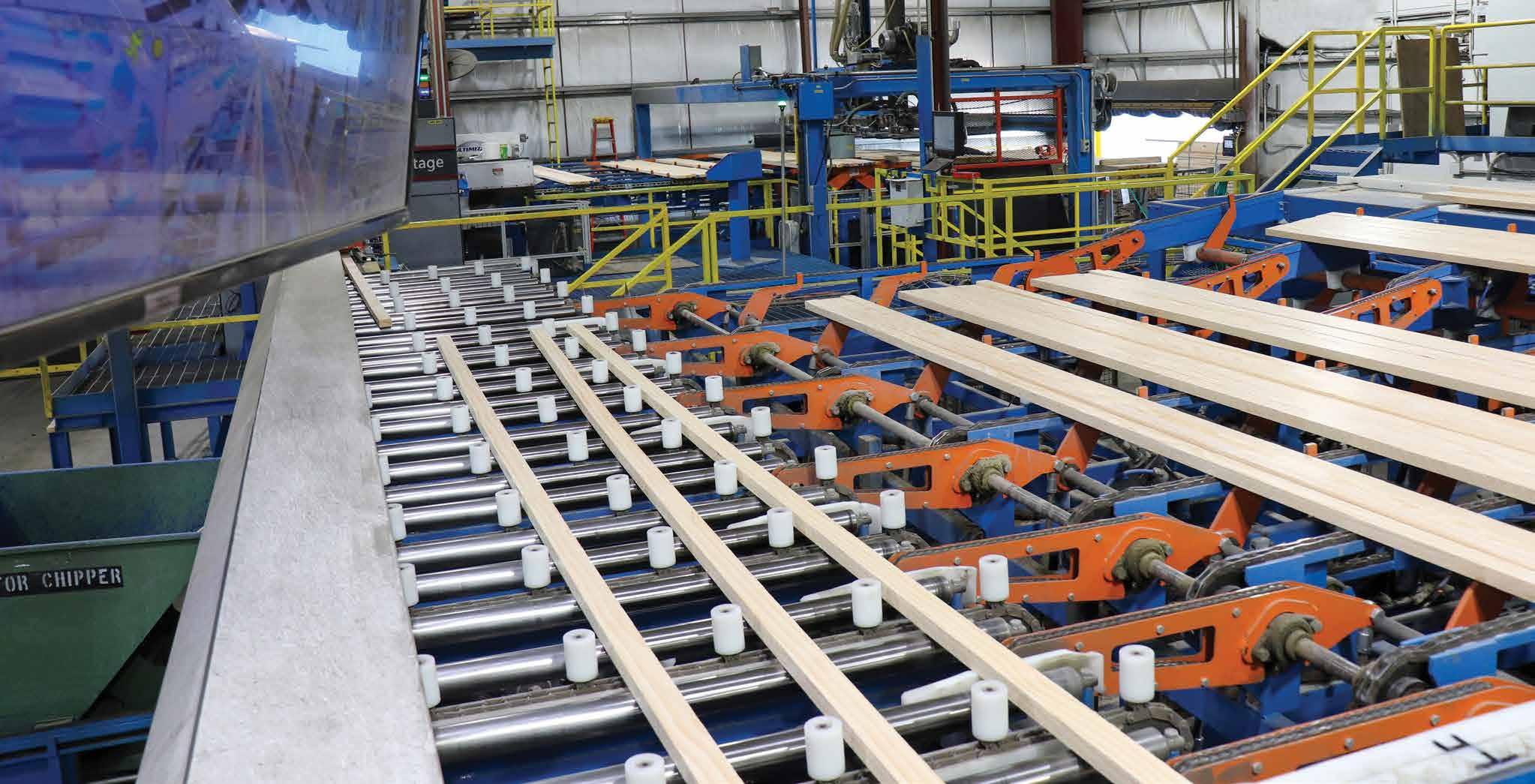
Bright Wood has benefitted in recent years from upgrading its scanners at four plants for cut operations with USNR technology and its latest AI (artificial intelligence) assisted scanners. The company has seven of the USNR scanners in operation and also has an eighth that will be installed in the future.
Bright Wood is the largest independent manufacturer of window and patio door components and engineered dimensional lumber in the U.S. Based in Madras, Oregon, it employs more than 1,000 people in 28 processing plants at five locations. Bright Wood has facilities in Madras, Redmond, Prineville, and Culver, Oregon, and Menomonie, Wisconsin. In addition to window and door components and engineered dimension lumber, the company’s operations produce mouldings, millwork, and cut stock.
Replacing old scanners and upgrading to USNR AddVantage scanners in recent years has paid dividends for Bright Wood. In late 2024, for example, the company set a record of over 5.4 million lineal feet scanned by the USNR systems.
Outdated scanning systems can slow processing time and also result in misallocated manpower and excess waste, costing a mill thousands of dollars annually. Those reasons are why Bright Wood searched for alternative scanner options and ultimately led them to the USNR AddVantage scanner system. The AddVantage uses AI technology that provides industry-leading detection and classification of defects.
The key to the AddVantage scanners’ success is deep learning artificial intelligence. The Bright Wood optimization team investigates how the scanners can be better at identifying both high-grade wood and defects. Then they work offline to manually ‘train’ the USNR scanners to identify the issues causing downstream waste and rework. Thanks to this systematic approach, the capabilities of the scanners are continually improving,
(continued on page 16)
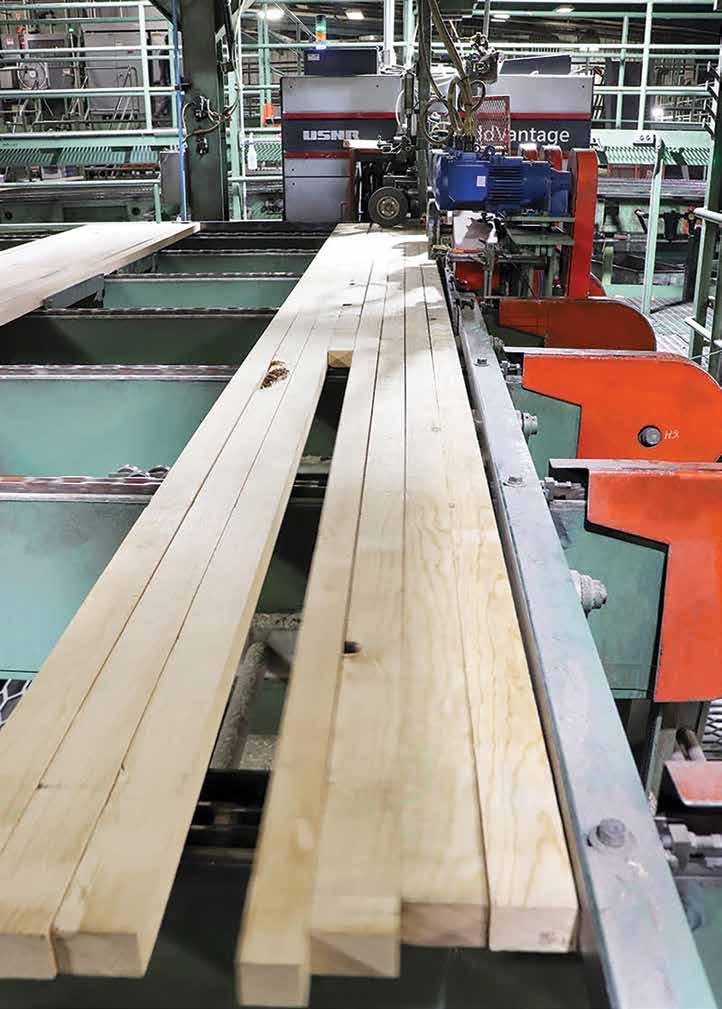
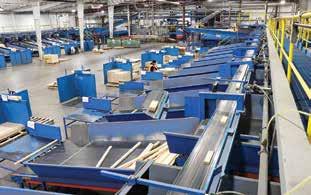
Bright Wood has seven USNR AddVantage scanners in operation and will install an eighth in the future. The USNR systems use artificial intelligence.
(continued from page 14)
even identifying defects within defects.
Bright Wood was ready to expand, but their equipment was limited. Outdated machines made it impossible to scan their product at the rates they needed to reach the goals they wanted to achieve. At the forefront of this issue was the scanning systems.
The USNR AddVantage fit the bill. Keenan Stovall, Bright Wood’s director of optimization, said the care and dedication of USNR personnel clinched the decision for the company. From providing roundthe-clock support, following up on software adjustments, and offering hands-on training for operators, it was the USNR commitment to strong customer service that led Stovall and his team to select the AddVantage technology.
USNR staff “want to work with us,” he said. “We talk every week…We didn’t want to feel like we were on an island. We didn’t want to feel like we couldn’t have engagement and improvement.”
Bright Wood installed its first USNR AddVantage scanner at its Prineville cut plant in 2020. The new scanner was able to detect more types of wood characteristics and with greater accuracy. The old scanner could detect 12 types of defects; the USNR AddVantage scanner could identify and differentiate between 21 types.
Building on the success at the Pineville plant, Bright Wood replaced the scanner on a production line at Madras Plant 1 in 2021 with another USNR AddVantage scanner. It added a new line to Madras Plant 1 with another USNR AddVantage scanner in 2022, and the same year it also replaced three scanners in its original optimization plant, built in 1991, with the new USNR AddVantage scanners.
At Madras Plant 1, “We were at a point where we knew we needed to do more scanning and optimizing,” said Stovall. “That’s what we do, we break down wood and we wanted to be really good at…We did feel like we had maxed out our current scanners and we couldn’t really get any more out of them…”
By USNR’s second and third visits to the plant to make adjustments, Bright Wood already was experiencing significant gains. Even during test runs, the new AddVantage scanners were breaking processing records. And, according to Stovall, the system was substantially better at spotting fixable issues rather than outright rejecting a flawed board.
“One of the things that was happening in our old system is we would have a board that would have a solution error or no solution, it would go all the way to the saw, it would stop, and then the saw operator would have
to stop production, pull that piece out, drop it off somewhere, and it would have to be cut manually. This new system just doesn’t have that problem.”
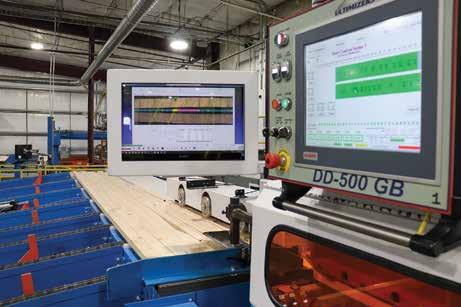
The former manual rip and cut operation is now a first-of-its-kind optimizing cut plant. Each of the plant’s two production lines consists of a USNR AddVantage scanner feeding two high-speed Ultimizer cut-off saws.
Workers can use their time more productively. No need to spend hours sifting through “rejected” boards or waste thousands on product that could have been saved.
With new technology comes new opportunity. Bright Wood expanded its product offering into dimensional products.
The USNR AddVantage chop saw optimizer is designed to integrate an optimized chop saw line for the rough mill in the secondary, or reman industry. Equally capable of processing hardwoods and softwoods, AddVantage replaces marking by crayons, offering full optimization of fixed and random lengths to increase value with higher precision measuring and grading.
AddVantage can optimize single or multiple saw lines, scanning wood at speeds well over 600 feet per minute using multiple technologies for precise measurement and
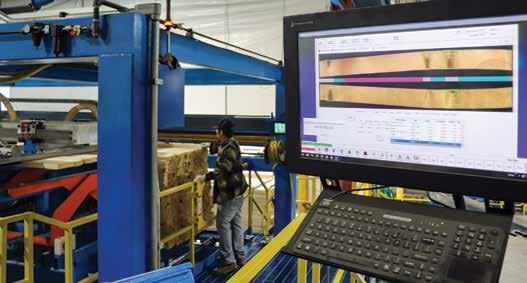
detection of natural and manufacturing defects. AddVantage determines the cuts that will result in the highest value recovery.
AddVantage uses four-sided, multispectral vision, infrared, laser, and geometric profiles to identify and classify a wide range
of characteristics. Deep learning artificial intelligence is even capable of recognizing defects within defects, significantly boosting solution accuracy. AddVantage currently
(continued on page 18)


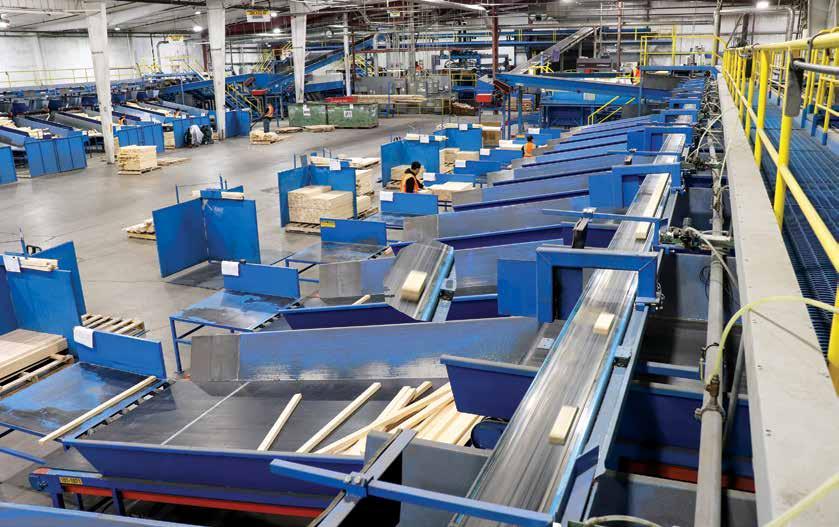
Each piece of cut stock is automatically delivered to the grading station assigned to that specific length. Graders verify the cut stock is on grade. Much of the material is used in premium-grade window and door components.
(continued from page 17)
detects over 15-plus types of visual and geometric defects, and growing.
Benefits include:
– dramatically faster startups – easy to fine-tune by adjusting the sensitivity settings
– new species or defects can easily be added – reduces labor and raw materials
– increases recovery
Andersen Windows placed Bright Wood’s very first order in 1960, shortly after the business started in Madras. Two of the three Bright Wood founders loaded a Volkswagen van with ponderosa pine cut stock and drove to the Midwest to see if they could sell to the large window and door manufacturers. Times were so tight that Carl Peterson and Ken Stovall slept in the van and ate mostly cheese and crackers.
Sixty-six years later, Andersen — and many other premium window and door manufacturers in the U.S. — still buy their wood components from Bright Wood.
Andersen Corporation purchased Bright Wood from the Stovall family in February of this year. Bright Wood continues to operate as an independent business serving the needs of its broad customer base.
“Andersen is grateful to the founding Stovall family for their generations of
leadership and transformative contributions to the industry,” said Chris Galvin, chairman and CEO of Andersen Corporation. “Our investment in Bright Wood aims to ensure the company remains a valued supply partner to the fenestration industry for years to come.”
“It has been our honor and privilege to own and operate Bright Wood Corporation for the past 65 years,” said Kevin and Dallas
Stovall in a joint statement. “We are grateful to the dedicated members of our team and business partners who enabled our success and the trust of our valued customers who inspired our innovation and made us the industry leader.”
“Andersen shares our values of integrity, quality and shared success, and we look forward to watching Bright Wood continue to thrive under its new leadership.”

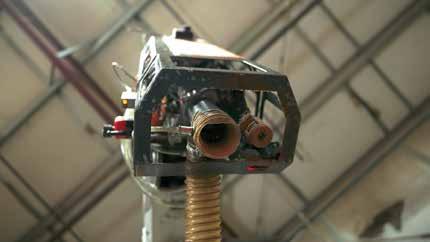
EUGENE, Oregon – States Industries, a leading manufacturer of decorative hardwood panels and components, is reaping the benefits of investing in robotic equipment in recent years.
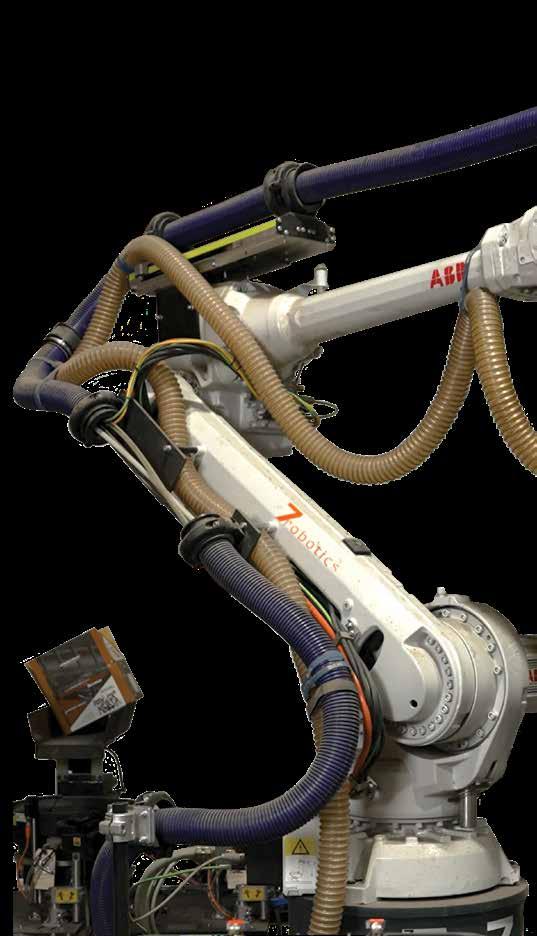
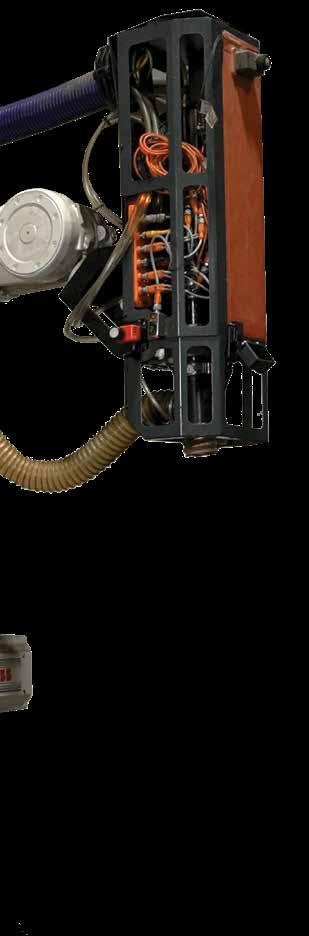
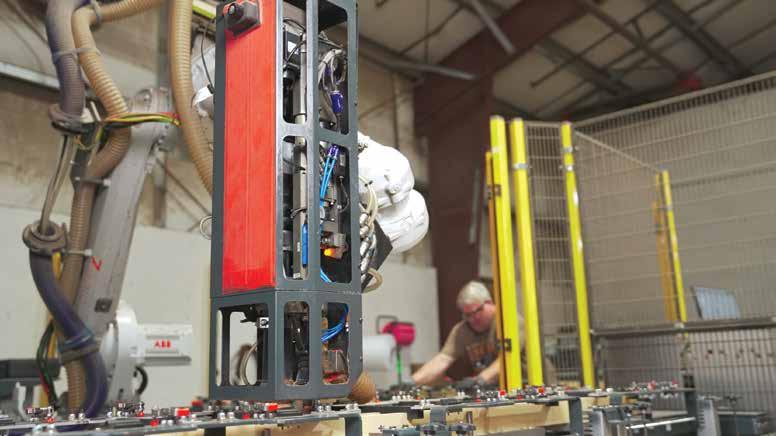
The company partnered with 7robotics for a custom robotic drilling and screwing system. The system has helped States Industries nearly double production, eliminate product claims, and reduce labor strain. States Industries ordered a second system within the first year of operation States Industries, which observes its 60th anniversary this year, manufactures premium hardwood plywood and custom panel products at its plant in Eugene, Oregon.
It also operates DrawerBox Specialties (DBS) in Orange, California, a business it acquired in 2012; DBS manufactures custom drawers, drawer systems and specialty storage products for cabinetmakers, furniture manufacturers and commercial casework producers. Together the two plants employ more than 300 people.
In the past States Industries relied on manual processes, including CNC setups and handheld screw guns, to assemble components. Inconsistencies across setups led to variable alignment, slower production, and increased physical strain for operators. As part of their long-term growth strategy, States turned to 7robotics for a system that could address those pain points while fitting into their existing floor space.
Employees used to float between tasks, drilling and screwing by hand, according to Dani Fowler, components plant
the benefits of the system and the success of the application that it ordered a second one.
The company also credited the hands-on support provided by 7robotics. Proximity and partnership were critical throughout the design, integration, and fine-tuning phases.
manager at States Industries. “There were variations, especially across different setups.”
The application of the 7robotics system significantly improved consistency, boosted throughput, and helped meet growing market demand — all without compromising quality or workforce values.
“The robot now does both operations precisely, and we’ve seen zero product claims since implementation,” said Fowler.
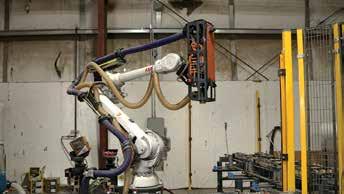
The custom robotic system combines drilling and screwing in one streamlined, high-precision process. Designed for continuous operation and engineered with interchangeable tooling, the system can be adapted for future product lines and scaled across departments.
After a year with the robotic system, States Industries already was hitting its fiveyear production forecast, according to Ted Downs, vice president of manufacturing. The technology enabled the company to reduce variable costs and meet customer demand sooner.
The automation project also provided significant ergonomic benefits for workers. By centralizing operations into a single robotic cell, one person oversees the full process, reducing repetitive strain and increasing job specialization and retention.
States Industries was so impressed with
“It’s invaluable to speak directly with the people at 7robotics who built this instead of a generic support line,” said Downs. “Having a partner that knows our system has saved time and stress.”
7robotics, established by Con-Vey in 2019 and based in Roseburg, supplies advanced robotic automation solutions. As a longtime integrator for robotic and automated systems in the wood products industry, Con-Vey’s extensive background and expertise acted as a springboard for 7robotics to tap into new markets and processes.
7robotics has a team of engineers, programmers, and technicians to design and manufacture automated equipment and controls that improve safety, efficiency, and productivity. It can help with integration into an existing line or develop layouts and processes for a completely new line, including product positioning, product assembly, material handling, polishing and cleaning, fastening, gluing, and other tasks.
States Industries is known for its environmentally conscious approach and long history of industry firsts — including being the first to offer prefinished panels, use soybased adhesives, and earn FSC certification. With a focus on innovation and customization, States Industries offers made-to-order panels and components built to exacting specifications.
States Industries can manufacture hardwood veneer panels to very specific criteria of species, thickness, tolerances, adhesive type, substrate, environmental certification, fire rating, volume and cost. Each product is made-to-order from customer-supplied specifications.
It operates the largest, most flexible finishing line in the industry. The first manufacturer to offer pre-finished panels, it has a range of finish options, from simple clear finishes and stock colors to specialty coatings and custom color matching. With the company’s NOVA® line of UV-cured coatings, pre-finished panels are ready to use without any additional surface treatment – saving time, reducing costs, and ensuring a consistent, durable finish that brings out the natural warmth and beauty of real wood grain surfaces.
The component plant is equipped with point-to-point machining centers, beam saws, edgebanders and other equipment. Customers can specify exactly what they want. States Industries can process finished or unfinished panels into cut parts, edgebanded and dowel-inserted case good components or complete contract-manufactured panel goods.
“Reaching our 60th anniversary is a tremendous milestone,” said Mike Taylor, president and CEO. “We’re grateful for the trust our customers have placed in us and are proud of the innovations our team has brought to the industry. While we honor our heritage, we’re equally excited about the opportunities ahead.”


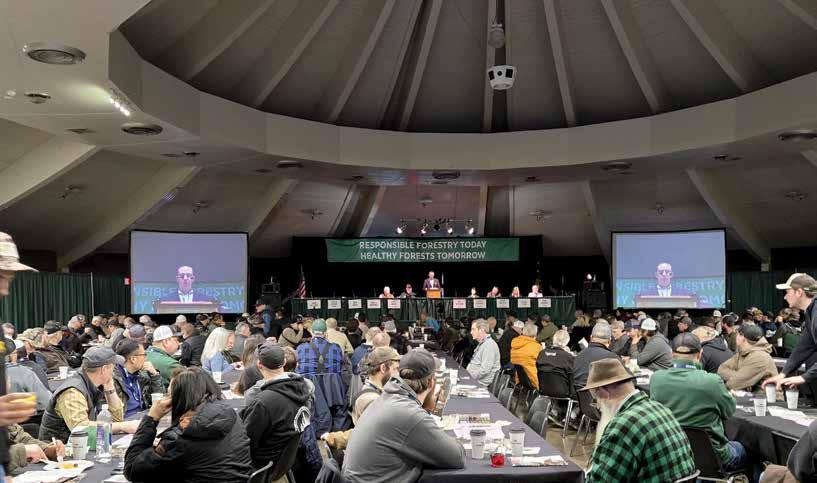
Professionals in the forestry industry gathered for three days of networking, education, and social activities at the 88th annual Oregon Logging Conference in February.
This year’s event at the Lane Events Center and Fairground drew more exhibitors, both inside and outside, and greater attendance. The conference is the largest logging, trucking, equipment and construction show west of the Mississippi River.
The theme of this year’s conference was ‘Responsible Forestry Today, Healthy Forests Tomorrow.’
“This year’s show was a testament to an industry that continues to show up for one another to meet old friends, share new ideas, and really just have fun,” said Mike McKibbin, president of the 2026 conference
and director of Western resources for Stimson Lumber Co.
“Our goal each year is to showcase the latest technologies in logging, discuss current topics, promote our industry through educational outreach, and become a place that families can enjoy,” he added. “I think we checked all of those boxes in 2026.”
McKibbin expressed his appreciation to exhibitors, the conference board of directors and staff, and volunteers. “Their dedication and collaborative spirit are what makes OLC what it is,” he said.
The keynote speaker was Jacque Buchanan, U.S. Forest Service Regional Forester for Region 6 (Oregon and Washington). She spoke about partnerships with the timber industry and, for the first time in a long time, having tools to implement a streamlined timber harvesting program.

More than $32,000 in ticket sales and cash and in-kind donations was raised at the 22nd annual Desserts for Dreams luncheon. Conference First Lady Angela McKibbin selected Compassion Tillamook as this year’s charity to benefit from the annual fundraiser. Compassion Tillamook is a non-profit organization that provides medical, dental and other services for those in need at an annual clinic at the Tillamook Fairgrounds. A special shampoo, soap, and other toiletries drive was part of the luncheon this year, and all donations were distributed at the clinic. “It has been a wonderful experience to be part of OLC and I wouldn’t trade it for anything,” McKibbin said.
More than $26,000 was raised in an auction to benefit the Oregon Logging Conference Foundation scholarship program. Auction items included a safari, paintings and other art, truck tires and seats, chainsaws, and more. Since the foundation’s scholarship program was established in 1968, more than $1.5 million has been awarded to deserving students pursuing careers in the timber industry.
More than 700 students, educators, and industry professionals participated in the 8th annual Future Forestry Workers Career Day, held in conjunction with the conference. High school students from more than two dozen Oregon schools attended this interactive and hands-on career day, learning about logging, forestry, reforestation, sawmills, wildland firefighting, diesel mechanics, and operating heavy equipment.
One of the activities at Future Forestry Workers Career Day was the high school forestry skills relay. Seventeen teams from 10 Oregon schools competed in the four-skills
A number of suppliers to the forest products industry introduced new equipment or other products at this year’s Oregon Logging Conference, exhibiting and displaying indoors and outdoors at the annual event.
Cascade Trader introduced the new DEVELON DX340LL-7 log loader. Powered by a DEVELON 285-HP Tier IV diesel engine, it features a longer 41-foot boom as well as an OR OSHA-approved forestry cab. The machine, which weighs 96,000 pounds, generates 109,000 pounds of swing torque.
Tigercat exhibited new machines. The company now offers the Tigercat 120 winch assist to tether logging equipment. The 76,000pound machine, which is not built on a swing machine upper body, can hold 2,200 feet of 1-⅛-inch cable. It is fully remote controlled with no cab.
Tigercat also displayed the new LX825 feller buncher, which is lighter at 78,000 pounds. In fact, it is the smallest machine manufactured by Tigercat. It can be paired with a feller buncher head or a mulching attachment.
Sennebogen introduced a unique machine: an insulated boom material handler with tree care capability. It can be used for tree trimming and removal. The 50,000-pound machine has crab steering and four wheel steering.
relay, which included hose lay, choker setting, crosscut sawing, and chainsaw use.
The event is coordinated by Future Natural Resource Leaders, a high school student leadership organization focused on developing students’ potential for premier leadership, personal growth, and career success, through natural resources education.
In the annual Log Loader Competition, with contestants demonstrating their skills on a Link-Belt 4040-B machine, the top three winners were within 15 seconds of each other. First and second place were captured by two people who work for Bryant Logging in Beavercreek, Oregon. Jeremy Staats won first place with a time of 3:22:72, and second place went to Zane Bryant with a time of 3:26:28. Third place was Justin Jakola, 3:33:76, who works with Rice Logging in Sweet Home, Oregon.Visitors to the conference had the opportunity to guess the net scale of two loads of logs with the winner of each receiving a $250 Cabela’s gift card donated by Swanson Bros and Melcher Logging.
One winner was Richard Beers II (with assistance from his father, Richard Beers). He and two others guessed the exact net scale of 7,420. (In the case of a tie, the names are put into a hat and one name is drawn.) The logs were provided by Swanson Bros. on a Leonard Maser Trucking log truck.
The winner who guessed the net scale of a load of chip and saw logs was Corey Copeland. His name was drawn after he and one other person were tied; their guesses were 5,670, and the net scale was 5,640. The logs were provided by Sierra Pacific Industries on a Gene Whitaker Inc. log truck.
Families and members of the public turned out in large numbers on the final day of the conference, known as Family Day. One of the new activities this year, which was very popular, was an opportunity to take a virtual tour of a working forest. Other popular Family Day activities included building wooden birdhouses, live wildlife, free seedling giveaways, face painting, balloons, art projects, and other hands-on forestry-related opportunities.
“Saturday we are joined by our industry’s families as well as being open to the public, which provides an opportunity for everyone to learn more about who we are and what we do and meet many of the professionals who make their living in this industry,” said Rikki Wellman, OLC manager. “Our conference is also a place where forestry and natural resource professionals can socialize and network
Eltec announced it is about to introduce a smaller machine, 65,000 pounds, with zero tail swing.
Bailey’s introduced the Force chipper, a remote controlled chipper on tracks. One of the advantages of the machine is that material does not need to be skidded to a landing for chipping. Manufactured in England, several of the machines are operating in Western states.
Black Knight, a California company, introduced a track skidder for steep terrain – for jobs that rubber tire skidders cannot perform. The machine is based on Cat components.
Husqvarna introduced its new 564 XP fuel-injected chainsaw. The ignition module has been relocated to run cleaner and cooler for improved performance. It features a 62cc platform and a 28-inch bar and chain for loggers and tree care work. The 564 XP is lighter, generates 14,000 RPM and no load, and is faster and more efficient.
Oregon Tool, a global leader in saw chain and a manufacturer of saw bars and related cutting systems, offers a new ¾ pitch drive sprockets.
Heesung Woo, assistant professor of advanced forestry at Oregon State University demonstrated advances in LIDAR mapping technology and drone-based tree planting.
Ryer Becker, assistant research professor for forest operations and products manufacturing of the University of Idaho, exhibited a trailer with two Tigercat full motion simulators that each can simulate five machines.
with others in the industry.”
Conference organizers thanked this year’s sponsors, many of whom support the conference every year; without their support, the conference would not be possible.
The 2027 Oregon Logging Conference will be held Feb. 25-27.



There were more mill closings in late 2025 and early 2026 than openings in North America in general. There are several mill openings planned for 2026, including sawmill and OSB investments in the U.S. South.
U.S. hunger for imported lumber is in freefall. Customs data confirms that total softwood imports fell to just 30.03 million cubic meters in 2025 — a 9 percent year-on-year drop and the fourth consecutive annual decline. President Donald Trump reaffirmed his commitment to place tariffs on all U.S.-bound lumber.
Prices for commodity plywood slowly edged higher out West recently, but weekly sales volumes remain uneven. Inconsistency has defined the winter market; winter trading patterns tend to be cautious. A seasonal lift normally comes as weather improves and construction picks up.
Tightening supply — notably in the East — has allowed Southern Yellow Pine plywood producers to raise prices and extend order files.
Reduced commodity imports from Brazil due to tariffs are easing some competitive pressure on domestic producers.
Eastern hardwood sawmill production sank to the lowest level in at least 65 years in 2025. It’s the continuation of a downward spiral in hardwood consumption across most major grade lumber and industrial product markets over a quarter-century.
Substitute wood and non-wood products captured larger shares of key markets. For example, raw material usage by the wood
pallet industry has flipped from 80 percent hardwood and 20 percent softwood to the reverse. Meanwhile, MDF usage took off in the cabinet industry, and luxury vinyl tile gained significant traction in the residential flooring sector.
The last trickle of Chinese hardwood plywood traded into the U.S. just got a whole lot more expensive. The Department of Commerce slapped a preliminary antidumping duty of 187.27 percent on imports, and it will be applied retroactively on a trade that has already collapsed from 2 million cubic meters in 2016 to just 52,800 cubic meters last year.
Roseburg Forest Products permanently closed its only mill in California, laying off 140 at the veneer plant. The associated biomass power plant will continue operating. Roseburg is consolidating veneer and plywood production at its Oregon mills, where it installed new, efficient equipment the past few years.
Weyerhaeuser is developing two new engineered wood products designed to give home builders more versatile and higher-quality flooring solutions. Trus Joist® ProPanel™ is Weyerhaeuser’s newest innovation in engineered floor panels, featuring enhanced moisture resistance, a bright fully sanded face and self-draining DownPore™ technology. Trus Joist® AeroStrand™ Laminated Strand Lumber is Weyerhaeuser’s next-generation floor joist with a new castellated design featuring pre-cut openings to easily accommodate the mechanical, electrical and plumbing needs of any residential construction project.
Packaging Corporation of America
announced a restructured reduction at its pulp and paper mill in Wallula, Washington. By the end of March, permanent closure of the kraft pulp plant and one of two paper machines eliminates the mill’s wood chip consumption and 200 jobs. The remaining mill will be reconfigured to produce only recycled containerboard. Loss of this large wood chip consumer from the Northwest region’s wood basket negatively impacts Oregon forest sector markets. PCA cites Washington state’s rising costs of power, fiber, and manufacturing regulation that hurt mill competitiveness in global paper markets as the reason for reconfiguration.
Canadian-owned Western Forest Products plans to expand its Fruit Valley manufacturing operation, according to preplanning documents submitted to the city of Vancouver, Washington. The company intends to invest in new machinery to make ready-to-install fabricated glulam beams. “We are supporting a modest expansion of our product and service portfolio,” said Babita Khunkhun, the company’s senior director of communications.
The U.S. Forest Service announced up to $95 million in competitive grant funding through its Wood Innovations program for projects that advance innovative wood uses, expand wood-based construction, and grow U.S. wood energy markets and forest product processing capacity.
The California Department of Forestry and Fire Protection (CAL FIRE)
announced the availability of up to $120 million for Forest Health projects that address extreme disturbance events including catastrophic wildfires, drought, and pest mortality. CAL FIRE is accepting applications for landscape-scale forest management and restoration efforts designed to improve ecosystem resilience, reduce wildfire risk, and deliver climate benefits.
Timberlab Inc. completed enclosing its new 192,000-square-foot facility, called “Independence Hall”— building one of the largest cross-laminated timber (CLT) manufacturing plants in the U.S. Located in Millersburg, Oregon, the plant is scheduled for completion in 2027
The Trump administration is taking the final steps to undo one of former President Joe Biden’s signature conservation policies The White House is now reviewing a final rule that would revoke the Bureau of Land Management’s conservation and landscape health rule — commonly referred to as the public lands rule — which elevated conservation as a formal use on BLM rangelands.
Interior Secretary Doug Burgum said earlier that the rule “had the potential to block access to hundreds of thousands of acres of multiple-use land — preventing energy and mineral production, timber management, grazing and recreation across the West.”
The Department of the Interior announced final sweeping reforms to its National Environmental Policy Act procedures, cutting red tape, accelerating project approvals, and restoring NEPA to its intended role as a focused, efficient decisionmaking tool. The reforms reaffirm the rescission of more than 80 percent of Interior’s prior NEPA regulations, with the majority of those regulations moved into a streamlined handbook.
The government of British Columbia has announced plans to institute a “stumpage deferral program that keeps the lights on” for Canada’s softwood lumber producers, who continue to maintain massive excess capacity that has been devastating for U.S. softwood lumber companies and workers. British Columbia’s latest subsidy program will effectively inject between $124 million to $242 million (U.S.) of liquidity into the coffers of British Columbian sawmills over the next 11 months. This latest government support follows nearly a decade of repeated findings by the U.S. Department of Commerce that these producers engage in harmful dumping practices backed by Canada’s unrelenting subsidy schemes.
The Washington Department of Agriculture has banned untreated firewood from entering the state to keep out invasive wood-eating pests. To enter Washington from another state, firewood must be treated by heating the wood to at least 160 degrees for at least 60 minutes or by another department-approved method.
A coalition of local governments, timber industry representatives and environmental groups told congressional leaders and U.S. Forest Service officials that northern Arizona’s forests — and the timber industry that depends on them — face collapse without construction of a second, 30-megawatt biomass-burning power plant. They say that a “biomass bottleneck” threatens forest restoration efforts, watersheds and rural communities.
Uncertainty about the broader U.S. economy remains on many minds. Several economic metrics have been favorable or trending in the right direction, but housing activity continues to feel stuck. Even with interest rates at 6 percent or below, residential construction has not accelerated Some were predicting a steadily improving
economy this year, but the new war with Iran likely will slow growth. And surging oil prices mean higher gasoline prices and inflation.
The engines on some of timber company Weyerhaeuser’s log trucks driving around western Oregon may sound the same, but what is in their fuel tanks is definitely not the typical diesel that such trucks have long run on. The company has begun using 10 trucks that run on compressed natural gas and plans to grow that number, phasing out most of the diesel fleet running out of its Goshen facility, just south of Eugene. Company representatives said it is an early adopter of the technology, putting it at the vanguard of running trucks on alternative fuels.
Weyerhaeuser has opened a new distribution center in Billings, Montana, as part of an inland Northwest expansion that started last year with the acquisition of a distribution center in Spokane, Wa. These new locations enable the company to provide improved service to lumber and building materials customers across the West. The Billings location represents a long-term investment in strengthening the company’s supply chain presence throughout the Northern Rockies.
Proudly investing in American Manufacturing
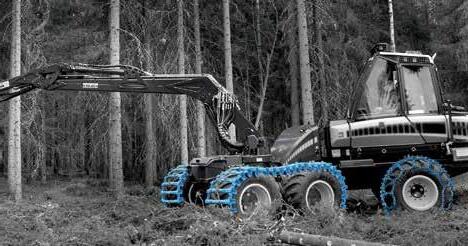
pewag tracks deliver superior grip with innovative Starwave® studs and self-cleaning performance. pewag forestry chains power through snow and mud with case-hardened alloy construction. Available in multiple sizes and configurations.
• 33mm link system
• Larger Starwave® stubs
• Bigger, stronger plates

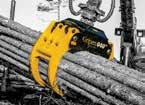
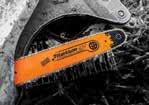
High-strength grapples featuring twin cylinders and professional cutting solutions delivering precision-engineered guide bars, chains, teeth and accessories. All trusted for unmatched durability, performance, and reliability.

The KMC forestry equipment brand, long known to loggers across the Pacific Northwest and other parts of North America for its rugged and dependable log loaders and skidders, is entering a new era with the launch of KMC MAX.
KMC MAX follows the acquisition of KMC-Kootrac by a Uruguayan industrial group led by CIR (www.ciruy.com), which has extensive experience in heavy equipment manufacturing, in partnership with North American company USAmericas (www.usamericas.com).
The group is relaunching the brand with a new international manufacturing platform, modernized engineering, and a long-term commitment to global growth — and a solid continued commitment to service. The company will broaden the market for KMC equipment — which will feature the KMC platform/chassis, recognized as one of the best in the world — to include firefighting, construction, agriculture and energy services.
KMC MAX has established a new, modern manufacturing facility in Montevideo,
Associated Oregon Loggers will hold its spring board and committee event May 1-2.
The gathering will be held at the Salishan Coastal Lodge in Gleneden Beach, Oregon.
All members are welcome to participate. For more information, visit the AOL website at www.oregonloggers.com.
Rex Storm will retire in July, stepping down from his role as executive vice president of the Associated Oregon Loggers.
Storm, a Certified Forester, joined the association in 1995 and was named executive vice president in 2019. Has been leading a staff of 16 and a contract lobbyist, representing small businesses and working families in policymaking and forest programs.
When he was named to the post in 2019 Storm had more than four decades of experience in advocating and implementing sound forest and business management in the private and public sectors. He previously held managerial roles with the American Pulpwood Association and the U.S. Forest Service.
Storm earned a Bachelors of Science in forest management science from Colorado State University and a Master of Business Administration from the University of
Uruguay, where all production is now based. The facility has been built to support largescale manufacturing, export logistics, and next-generation machine design, positioning the KMC MAX brand for long-term growth across North and South America, and international markets.
“The KMC log loaders and skidders are impressive and high performing pieces of logging equipment, and we are looking to revitalize the company, and increase machine production to a broader audience, in terms of industries and geography,” said Alejo Maisonnave, CEO of KMC MAX.
KMC MAX machines will feature the full range of modern Volvo Penta engines along with modern operator cabins, updated hydraulics, and contemporary manufacturing standards to meet today’s safety, emissions, and performance expectations.
KMC MAX was officially ‘launched’ at the Oregon Logging Conference in February.
Deere & Company acquired the intellectual property and related assets for tree
planting equipment from Risutec Oy, a Finland-based equipment manufacturing company.
The acquisition strengthens John Deere’s silviculture strategy and its ongoing commitment to providing customers involved in reforestation with solutions for sustainable forestry.
The portfolio of tree planters can be configured to match the customer’s operational conditions and can be outfitted with optional precision forestry software for enhanced productivity and forestry management data analysis. The line of tree planters will be sold and serviced through select John Deere and Waratah forestry equipment dealers globally.
“We’re excited about the synergies and talent the Risutec team adds to our existing forestry expertise,” said Mary Pat Tubb, vice president of global forestry for John Deere. “Risutec’s products fill out our portfolio and significantly reduce reliance on manual tree planting, thereby reducing labor exposure to extreme weather, terrain and wildlife, while increasing productivity of our customers’ operations.”
Oregon. He also holds professional certificates in forest engineering, silviculture, and resource leadership.
The Montana Loggers Association will hold its annual membership meeting May 15-16.
This year will mark the 50th anniversary of the organization.
The meeting will be held at the Copper King Convention Center in Butte, Montana.
For more information, visit the association website at www.logging.org.
The Idaho Forest Owners Association will hold its annual Family Forest Landowners & Managers Conference March 29-31. The event will be held at the Best Western Plus University Inn at Moscow, Idaho.
The conference brings together forest landowners, consulting foresters, loggers, and forest industry and government representatives. Businesses serving the forestry sector exhibit their products and services, and forestry professionals, scientists, government officials, and forest landowners share practical insights and perspectives on current forestry issues and emerging developments.
For more information or to register, visit the association website at www.idahoforestowners.org.
Associated Logging Contractors, the trade organization of Idaho loggers, will hold its annual spring member meeting April 24-25. The meeting will be held at the Best Western Lodge at Rivers Edge in Orofino, Idaho.
Registration is open to members, associate members and guests.
For more information or to register, visit the ALC website at www.idahologgers.com or contact Jolene Compton at jolene@idahologgers.com or (208) 667-6473.
This year marks the 60th anniversary of the association.
The Washington Contract Loggers Association was scheduled to hold its annual meeting March 27-28 at the Tulalip Resort Casino in Tulalip, Washington.
The meeting theme was ‘Meeting the Challenge.’ Agenda topics included public timber update, legislative issues, timber market, business outlook and more.
The meeting also was to include the 27th annual Log-A-Load For Kids auction.

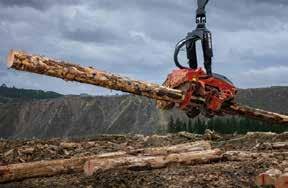
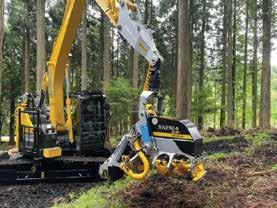
Waratah Forestry Equipment has intro duced the all-new 628HX harvester head, a high-capacity model designed for performance and strong daily productivity.
Built for demanding harvesting and processing environments, the 628HX bundles speed, agility, productivity and durability in a single, purpose-built harvesting head.
“The 628HX is designed for operators who need performance without giving up felling and delimbing quality or durability,” said Brent Fisher, product marketing manager for Waratah. “It’s responsive, productive and engineered with features that support uptime and long-term performance.”
The 628HX is built to perform efficiently with exceptional felling capabilities in harvesting and equally capable in roadside or deck processing applications. With a recommended carrier range of 43+ metric tons, it delivers controlled, consistent delimbing performance across challenging stem profiles.
Twin lower delimb arms provide strong clamp force and excellent delimbing
capability while a three-roller carry-style feed geometry supports smooth log transport and reliable feeding. Powerful 1395cc/800cc feed motors deliver productivity for highoutput applications.
The 628HX also incorporates all standard HX-line enhancements, including improved chassis durability, increased hose protection and design updates that simplify service access. Together, these features help reduce maintenance demands, extend component life and support more consistent daily production.
For more information, visit www.waratah.com.
Prinoth, maker of the popular Jarraff by Prinoth line of tree care equipment, introduced a comprehensive suite of new products and technologies at the CONEXPO show in March. The lineup addresses such industry challenges as hidden hazard detection, operator safety on steep terrain and digital fleet optimization.
PrinothView is a groundbreaking detection system that identifies hidden hazards beneath dense vegetation before they can damage equipment or delay operations. The technology sees through brush, grass and organic matter to detect rocks, metal debris, utility fixtures and other obstacles.
Unlike LIDAR systems, which often struggle with vegetative cover and highdust environments, PrinothView employs
advanced sensing technology proven in defense and agricultural applications but never before applied to mulching operations.
“This technology eliminates the need to send out an operator or an additional employee to walk the area first, looking for hazards,” explained Tom McMahon, marketing manager for vegetation management North America for Prinoth.
“Even with spotters, human error means you can only see so much of what’s covered in grass and brush. PrinothView delivers unprecedented accuracy in detecting what’s hidden under that vegetation.”
According to Prinoth’s internal research, the average mulching machine encounters approximately four damage events per year from hidden objects, with repair costs ranging from $1,000 to more than $10,000 per incident and averaging around $2,000.
Beyond equipment protection, the system prevents costly damage to utility infrastructure, including pedestals, groundlevel substations, and transformer boxes. Such incidents can leave customers without power and create significant liability exposure for contractors. PrinothView will be deployed in the field in 2027.
For more information, visit www.prinoth-vegetationmanagement.com.
Tigercat Industries now offers a compact, leveling track carrier along with a new TCi mulching head.

The Tigercat LX825 is a convertible feller bunchermulcher carrier and can be matched with the new TCi 4154-15 mulching head.
Tigercat developed the equipment In response to growing requirements for fire mitigation interventions and increased management of forests in the Western U.S. The company was scheduled to debut the prototype carrier at the Sierra-Cascade Logging Conference in February.
Built on the same upper platform as Tigercat’s flagship LX830E feller buncher, the LX825 is a lighter, quicker, and more agile near-zero tail swing carrier with an all-new leveling undercarriage. The machine can be
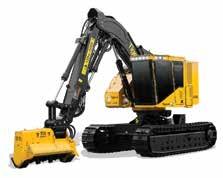
equipped with a choice of two hydraulic systems: the standard feller buncher system or an optional convertible hydraulic system that allows the machine to switch back and forth between a disc saw, intermittent saw, bar saw, shear, or mulching head. This increased utility enables forest management contractors to masticate brush, understory and undesirable timber while retaining the ability to fell merchantable timber. The compact design, speed and agility allow for precision thinning and masticating to reduce fuel load and improve forest resiliency.
The new TCi 4154-15 mulching head is matched to the LX825 and is designed for easy access to service points and wear items. The inlet and mulching chamber are designed to pull in debris and completely masticate the material before it exits the chamber, ensuring high quality forest treatments. The mulcher wrist pivots 130 degrees side-to-side for maximum dexterity in tight in-stand treatment applications. The pin-on rake aids in clearing brush and debris.
For more information, visit www.tigercat.com.
John Deere introduced its L-III wheeled feller buncher machines for forestry customers. It provides improved operator experience through new features and enhancements.
Building on the expansive improvements rolled out on the L-III skidder line-up earlier, the new L-III wheeled feller bunchers offer new cameras and lighting enhancements to support situational awareness. The L-III models also provide new solutions and
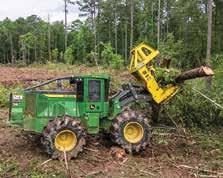
tools to help simplify operation with features such as Remote Display Access that enhance productivity and ease in the woods.
“The L-III Wheeled Feller Buncher models deliver an exceptional experience for our customers, giving them both reliable, quality machines they can perform with, and the tools needed to work more efficiently in the woods,” said Matt Flood, product marketing manager for John Deere.
The new L-III models are designed with updated, comfort-focused features, including the base and premium cab package options, premium lighting options, and enhanced connectivity capabilities. They also feature a variety of precision solutions – including TimberMatic™ maps, standard in base – that deliver optimal machine and operator efficiency.
Remote Display Access (RDA) enables dealers, owners, and support personnel to view and interact with a machine’s display from any location with an internet connection.
A new secondary display is now standard in all L-III models. When utilizing the standard camera, the secondary display in the cab will show the camera view for the operator, providing near real-time access to viewpoints outside of the machine.
The L-III machines come standard with LED lights. Premium lighting package options are also available.
For more information, visit www.johndeere.com.
Kesla Oyj has upgraded its widely used stroke harvester heads with a range of enhancements designed to improve durability, performance, and user experience.
The new harvester head models, known as KESLA 20SH-II Advance and 25SH-II Advance, introduce productivity-boosting features, strengthened structures, and expanded configuration options to better meet the demands of modern timber harvesting.
Improvements include optimized hydraulics, an optional tilt lock function and proportional pressure control, redesigned delimbing blades, and new sensor solutions for measuring length and stroke position.
Durability has been increased by strengthening material thickness in critical areas and through design changes to the tilt arm. The new delimbing blades are also stronger. Reliability in daily operation has been significantly improved through



FOR THE U.S. FOREST INDUSTRY MEMBERS
Get your NEW SUBSCRIPTION FREE —OR— if your existing subscription is more than one year old RENEW ONLINE!
(continued on page 30)
(continued from page 29)
several changes to hydraulic hoses and electrical wire harnesses.
Improvements that enhance user comfort and serviceability include better tilt damping and modifications to protective covers.
The selection of configurable accessories has been expanded, enabling KESLA SH-II Advance models to be equipped even more precisely according to customer needs.
For more information, visit www.kesla. com.
DEVELON unveiled its most advanced machine lineup to date at CONEXPO in March: the -9 Series heavy excavators. The excavator platform is built on full electronic hydraulic (EH) technology with integrated artificial intelligence.
The DEVELON -9 Series excavators represent a fundamental shift in how operators interact with heavy machines. For example, by moving from pilot-operated controls to a sophisticated electronic hydraulic (EH) system, DEVELON has unlocked a suite of smart features designed to increase job site safety and precision while lowering the barrier of entry for newer operators.
“With our new -9 Series, the machine is no longer just a tool — it’s an intelligent partner,” said Brian Kim, heavy excavator product manager at DEVELON. “By combining EH controls with AI-powered safety and a tablet-style interface, we are giving our customers a level of control and site awareness that was previously impossible.”
The DEVELON -9 Series excavators feature several industry-leading innovations:
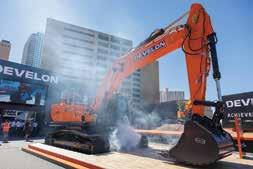
–AI-powered safety and intelligent E-Stop: The new smart around view monitor (AVM) camera system uses artificial intelligence to identify humans in the work zone and can halt excavator swing or travel if a person is in the danger zone.
–Electronic hydraulic (EH) precision: The shift to EH allows for stick steer travel
via joystick thumbwheels; controls allow for greater customization.
–Smart-ready grading: Every -9 Series excavator is factory-equipped for 2D and ready for 3D systems, featuring built-in IMU sensors for ‘plug and play’ compatibility with providers like Trimble and Leica.
For more information, visit www. na.develon-ce.com.
Tigercat has developed the new 6440 heavy-duty drum chipper, designed for high production and ease of operation. The chipper was scheduled to debut at CONEXPO in early March.
access to hydraulics, electrical components, and engine filters.
For more information, visit www.tigercat.com.
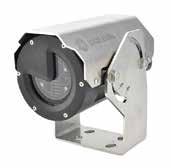
Opticom Tech announced the addition of a new product, the OPT ToughEye1700K self-cleaning camera. It is designed to deliver consistent visibility in sawmill environments where dust, debris and buildup regularly compromise standard camera systems.
The high horsepower engine of the Tigercat 6440 uses a through-drive and belt system where the rotor drive belt is driven off the motor using a flex drive coupling and drive adapter. The engine base extends and retracts to engage or disengage the drive belts, eliminating the need for a clutch.
The discharge chute is on a low, 25degree angle to allow for high volume output without the need for a chip accelerator. An optional chip accelerator is available for microchip applications. The discharge end chute pivots side to side and up and down.
The standard chip rotor consists of eight staggered knives; the optional microchip rotor has 16 knives. Chip pockets are lined with replaceable wear plates. An easily accessible platform and large pivoting rotor hood provide for a comfortable work area when changing knives. A large storage box located nearby holds tools and replacement knives.
Access doors located at the bottom feed roll, infeed head pulley, side doors, and top slide plate allow for effective debris clearing. Platforms and steps are located around the machine at maintenance and service point areas to access engine air filters, hydraulic oil filters, and the fuel fill. A centralized service area in the centre of the machine provides
The OPT ToughEye-1700K is designed to help sawmills maintain clear video without operator intervention for cleaning or maintenance. The camera’s patented selfcleaning technology is effective against tree sap, dust, mud, oil, grease, abrasive dust, water, and many other contaminants, and uniquely requires no water, detergents, compressed air, or manual intervention for its rated lifetime.
“The OPT ToughEye-1700K solves a very real problem we hear about all the time,” said Heidi Schmidt, global sales manager at Opticom Tech. “Cameras get dirty, and cleaning them requires shutting down the line. By keeping the lens clean automatically, this self-cleaning camera helps mills reduce maintenance interruptions and maintain clear visibility for operators.”
The self-cleaning adds reliability in areas where cameras quickly become obscured. For sawmills, that translates to: no manual cleanings, more consistent monitoring, and less downtime
The OPT ToughEye-1700K is available with multiple configuration options to support a range of sawmill applications, including 80-degree or 100-degree lens angles, RJ45 or M12 connector options, and an additional integrated self-cleaning light option.
All versions support Power over Ethernet (PoE+), to streamline installation and integration into existing video systems.
For more information visit www.opticomtech.com.