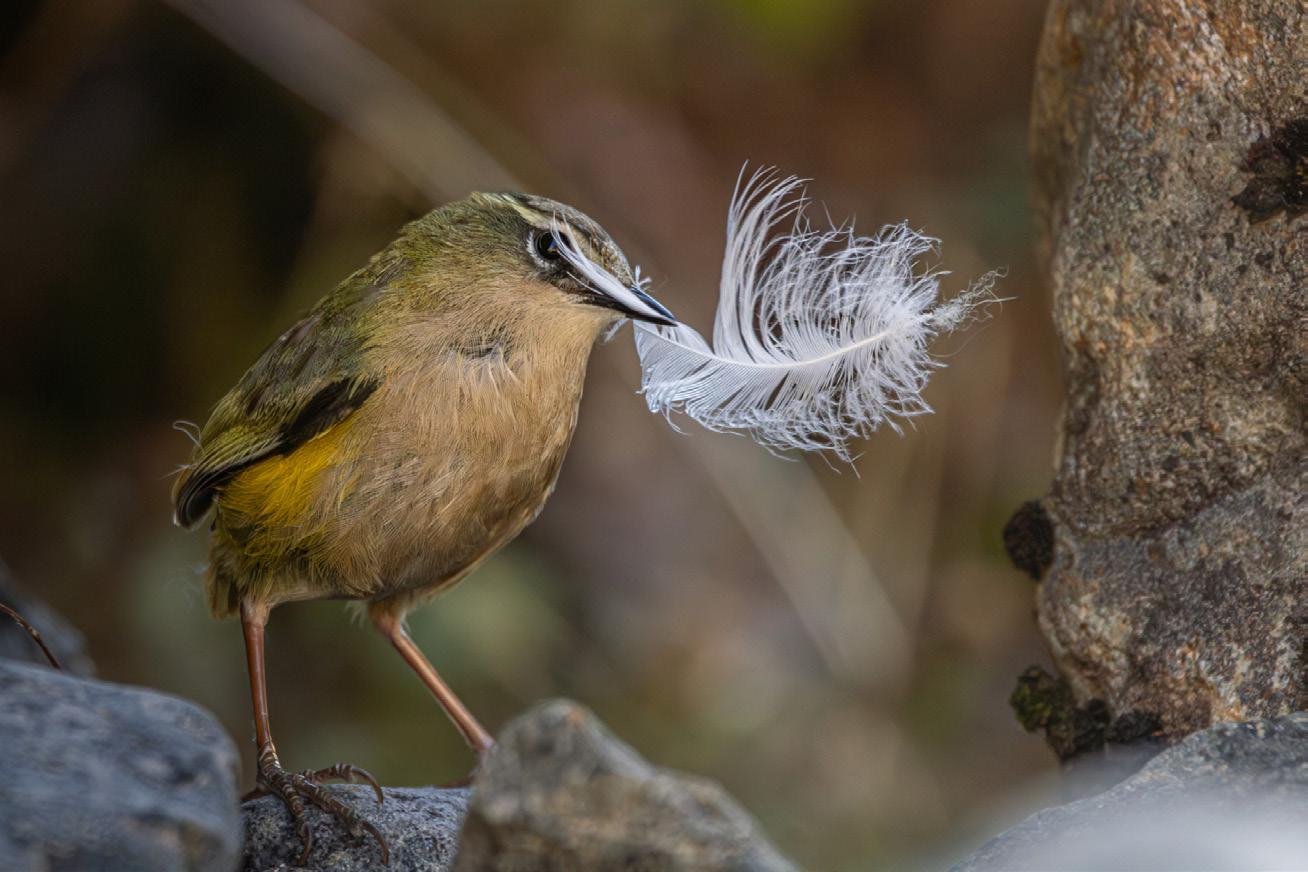
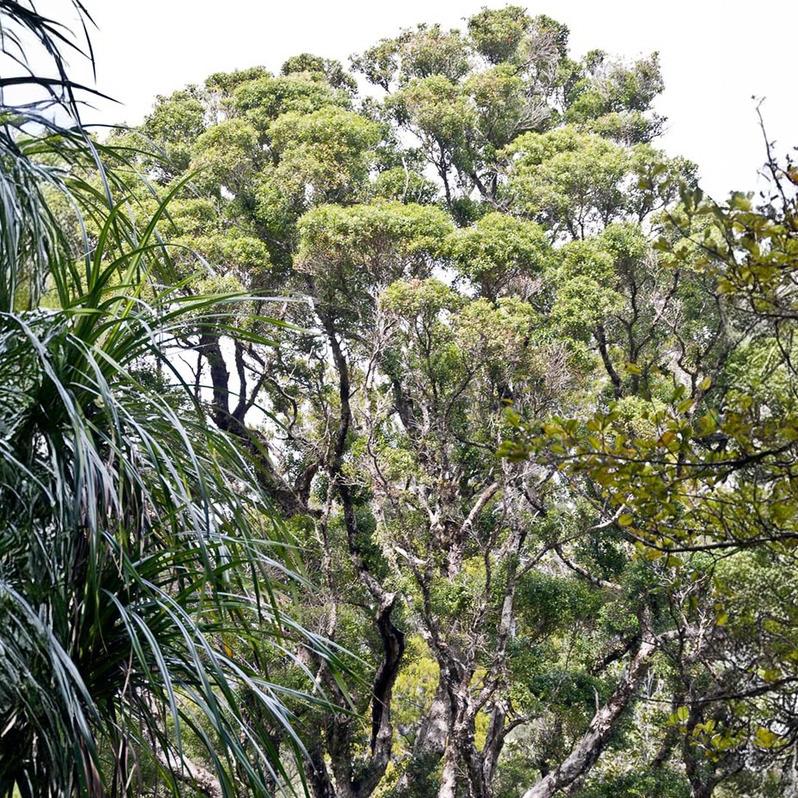
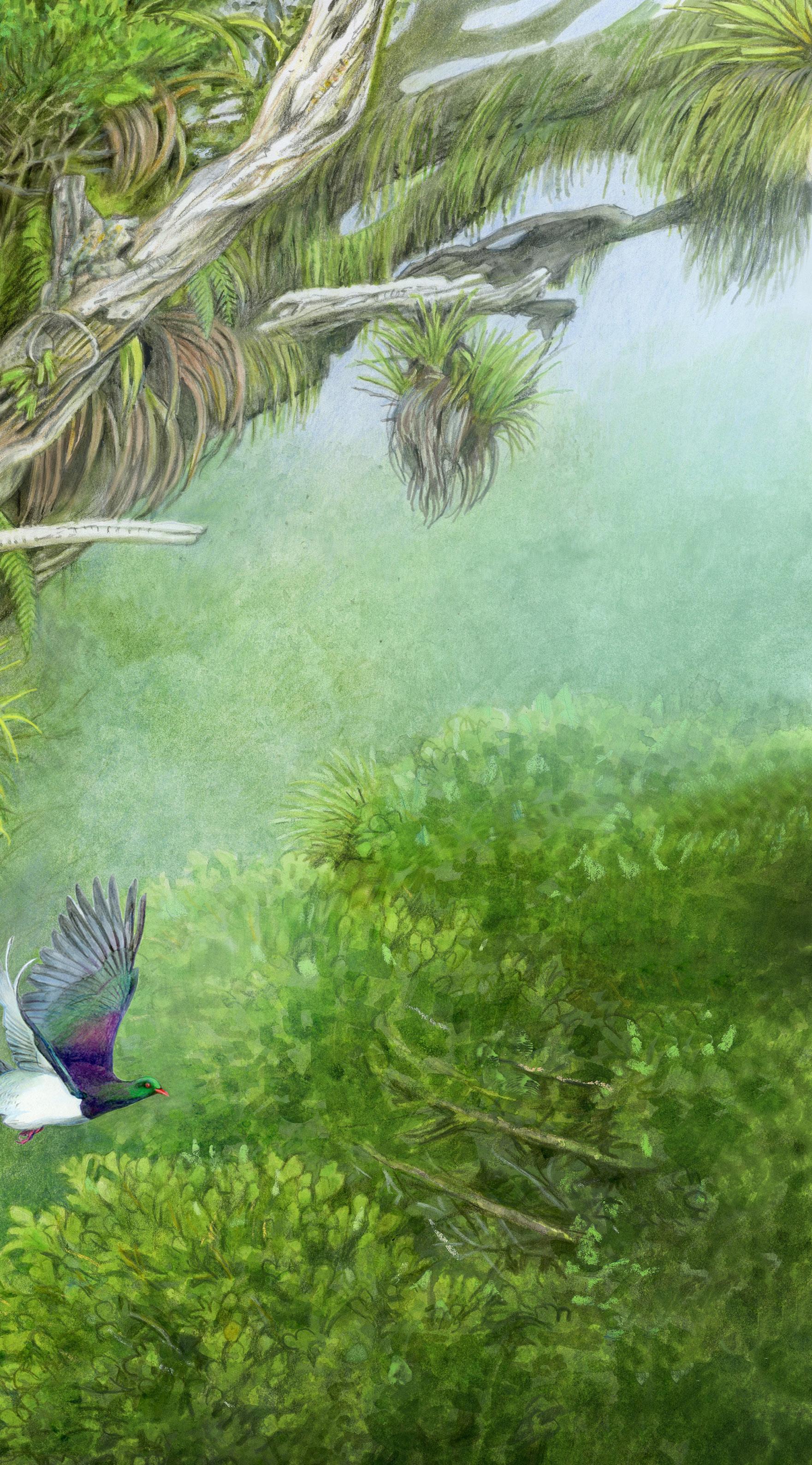
Up above the clouds in Aotearoa’s Southern Alps lives a very special and mysterious manu | bird. It has short wings, and although it can fly in the air, it prefers to hop and flick close to the ground. This manu is the pīwauwau | rock wren (also known as tuke or mātuitui).
Over millions of years, rock wrens have developed an amazing ability to survive in places many animals can't. The weather changes very quickly up in the Alps. It can be extremely cold, with heavy snowfall and high winds. It’s a harsh place to live.
Libby was once a KCCer. At university she studied zoology, marine science and geography.
Pīwauwau nest in well-camouflaged holes on the ground, between rocks or small bushes. This clever little bird uses moss, feathers and whatever else it can find to insulate its nest and to keep it toasty warm (just like humans insulate their houses).
While it’s freezing outside, the nest can be up to 30 degrees inside!
FACT: The lining of a pīwauwau’s nest can be as thick as 8 centimetres – the length of this box! And that’s much thicker than most puffer jackets!
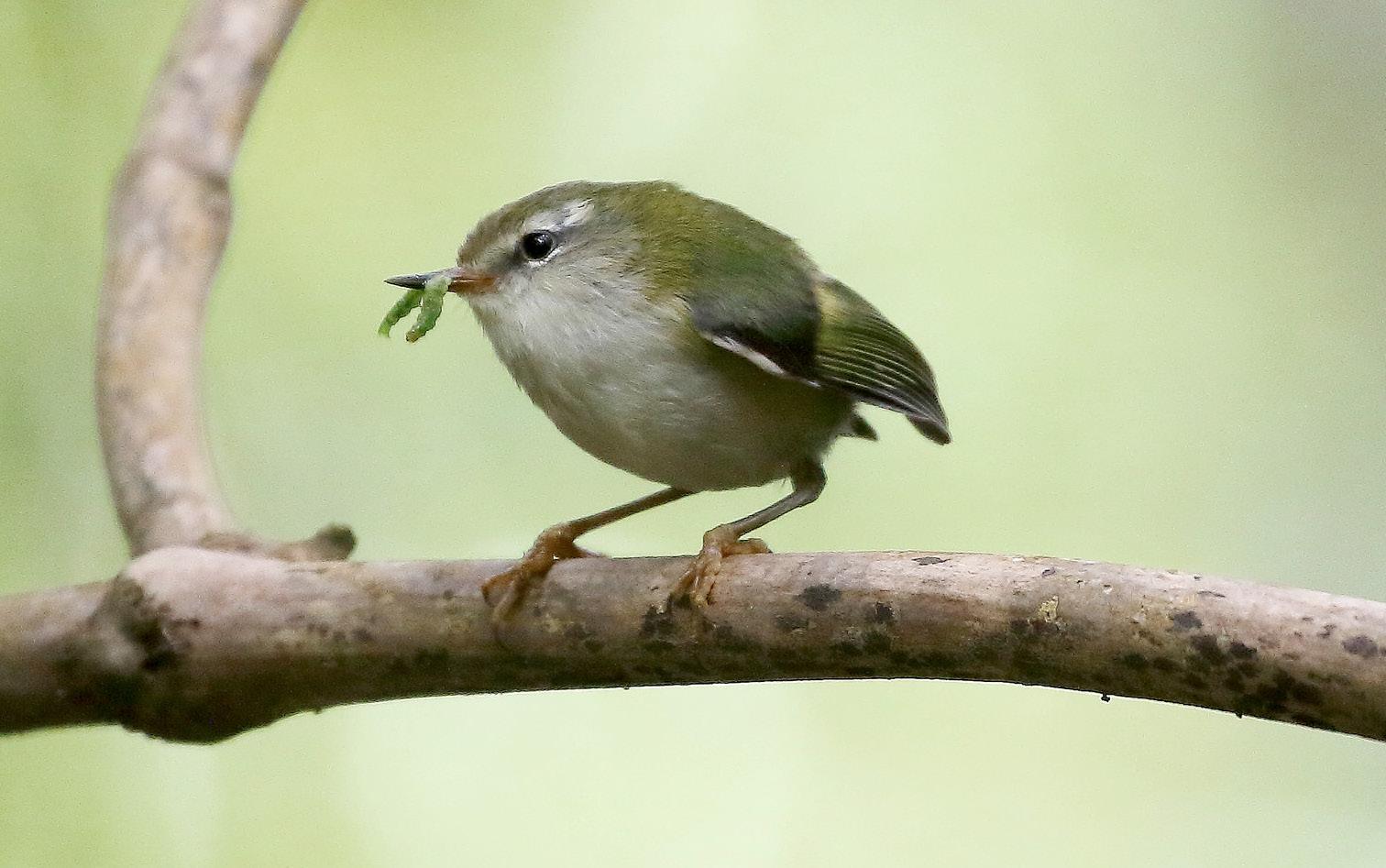
Rock wrens are so well-suited to the mountaintops that they never leave. They are Aotearoa’s only true alpine bird. They never venture down into the forest, unlike their cousin, the titipounamu | rifleman.
SOUTHERN ALPS
Titipounamu | rifleman. Melissa Boardman
Pīwauwau | Rock wren. Samuel Aramis
Do you know what “resilient” means?
New Zealand’s animals and plants can live in some tough places. They need to be “resilient”.
Resilience is like a metal spring. If you pull it out, or try to bend it, it will bounce back and keep its shape.
Being resilient means species not only survive but thrive (live well). It is hard to keep resilient when change is happening really fast –like it is now.
You can help our amazing wildlife keep resilient. No one is too small to help!
Even though it may not seem like it sometimes, every little action can help. Together, each action can make a big difference!
And if lots of people make small changes together, then we are more likely to reach our shared goals for a thriving and healthy environment.
As the pepeha | proverb says:
“Ehara taku toa i te toa takitahi, engari taku toa he toa takatini.”
“My success is not mine alone, but it is the strength of many.”
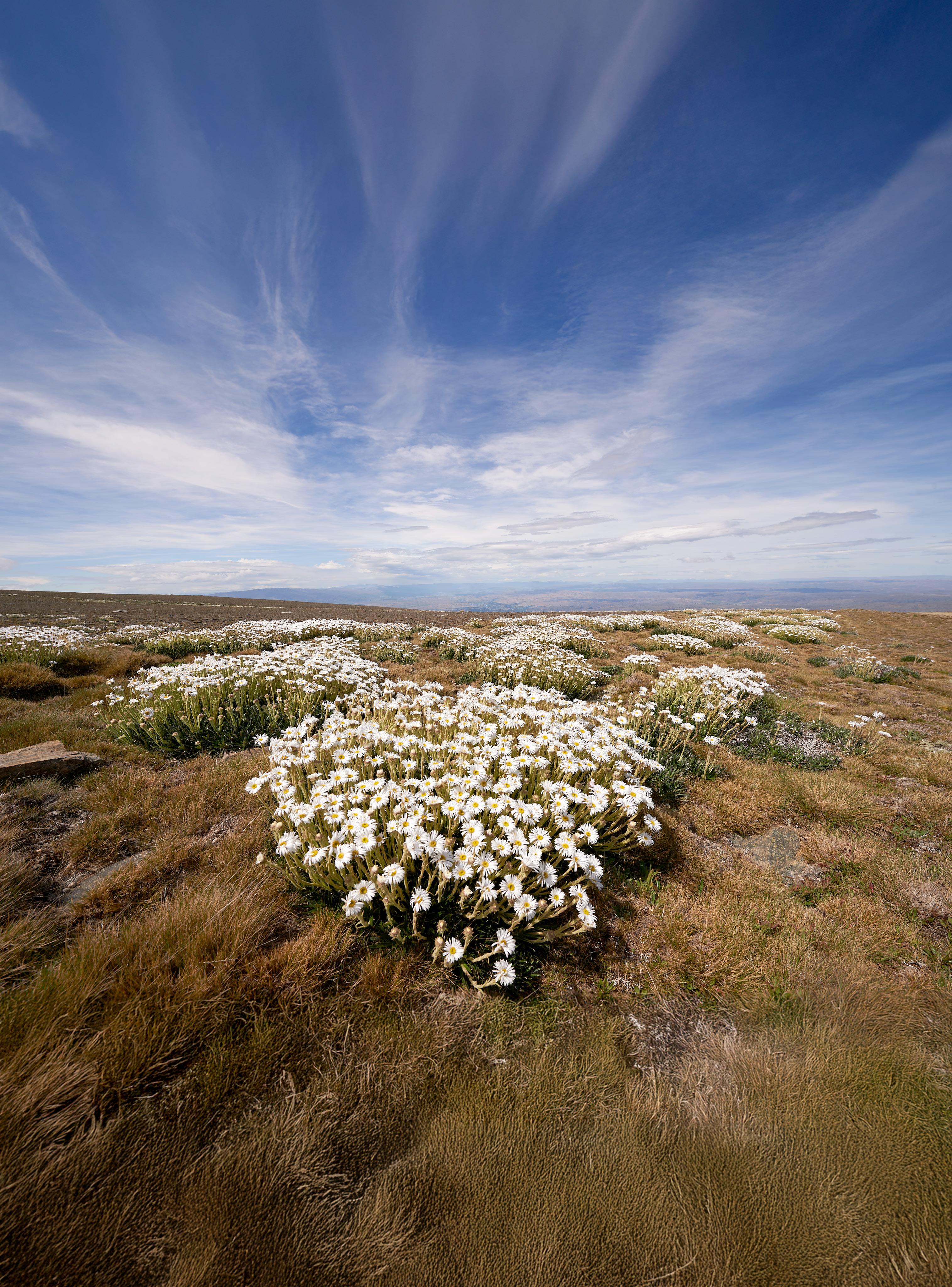
Macmahon’s rock daisy (also called Mt Stokes daisy), Marlborough Sounds, South Island. Craig McKenzie
What do you know will help our wildlife live well?
There are ideas in this magazine too – look for these symbols.
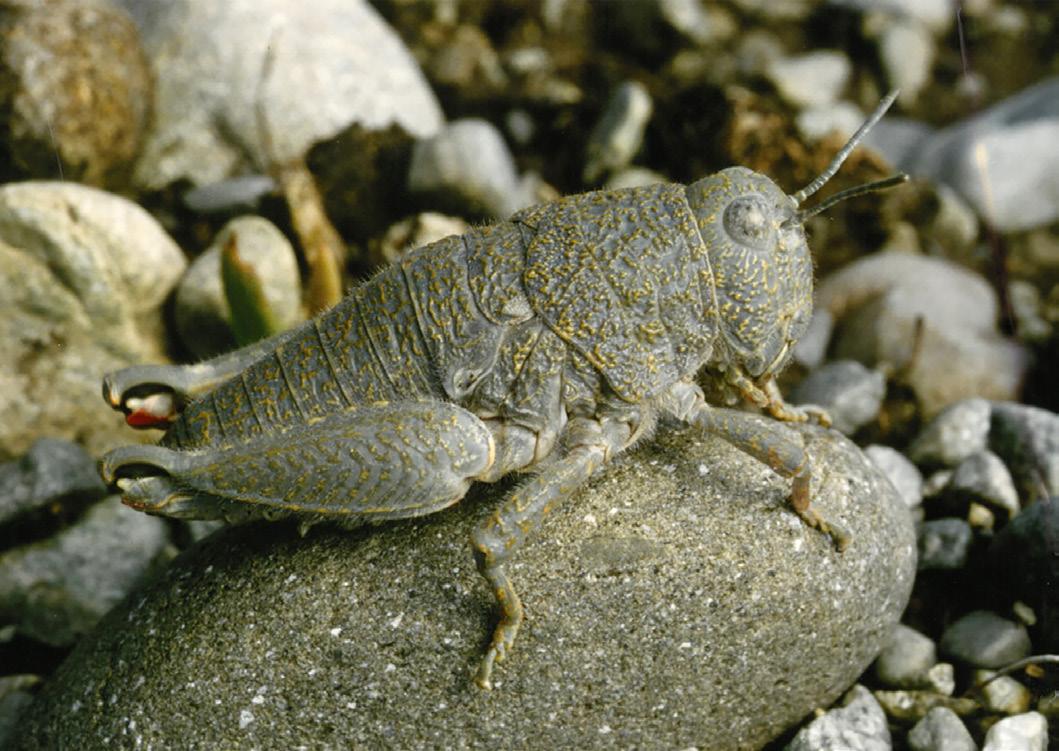
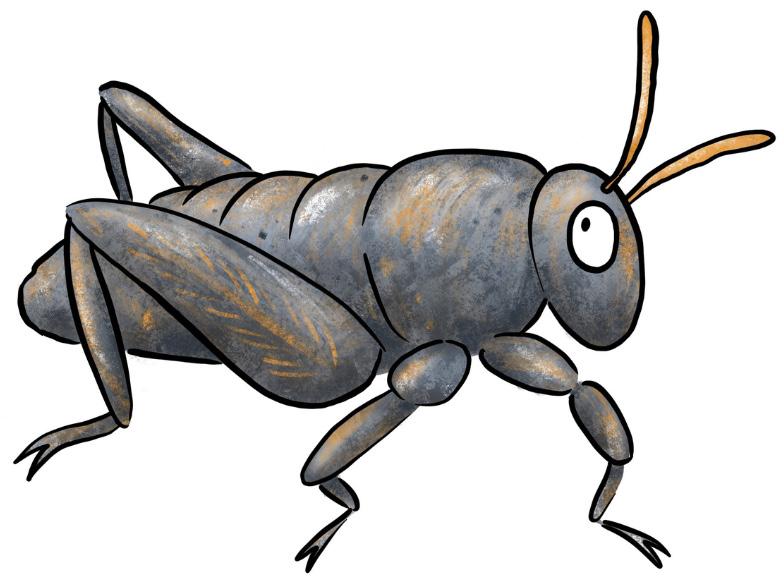
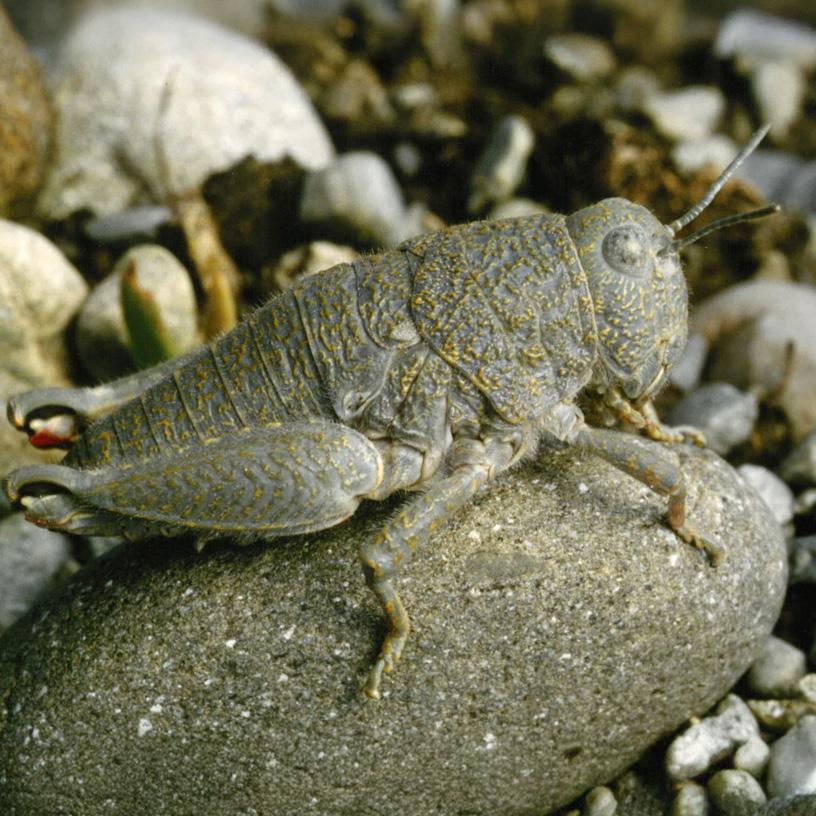
What looks like a rock, jumps like a frog and smells like an old shoe? The robust grasshopper!
Robust grasshoppers are one of our coolest native critters. They’re built like tanks with big shoulders and tough-looking grey or rusty brown exoskeletons (their body covering). And they’re pretty big for a grasshopper. Females can be up to 4 centimetres long – that’s about the size of a walnut!
When these grasshoppers aren’t making impressive leaps through the air, they’re masters of disguise. In the dry, rocky riverbeds of Te Manahuna | the Mackenzie Basin, their grey bodies and orange and yellow markings blend in perfectly with the lichen-covered stones.
Other grasshoppers use vibrations or sight to communicate but this is tricky for camouflaged critters that live on stoney ground.
Scientists think that the robust grasshopper’s strong smell probably helps them communicate with each other. Being stinky is also a great way to put other creatures off eating you!
Te Manahuna is a place of extremes. It’s super cold in the winter and super hot in the summer. But these grasshoppers have adapted to survive. They need warm days to feed and chilly winters to help their eggs develop.
Sadly, despite their tough armour, the robust grasshopper is one of our most endangered insects. Predators like hedgehogs and stoats sniff out the smelly grasshoppers. On top of that, climate change could make it too warm for their eggs to grow properly.
But there’s still hope! If we act now to fight climate change, we can help these amazing grasshoppers hop on for many more years to come!
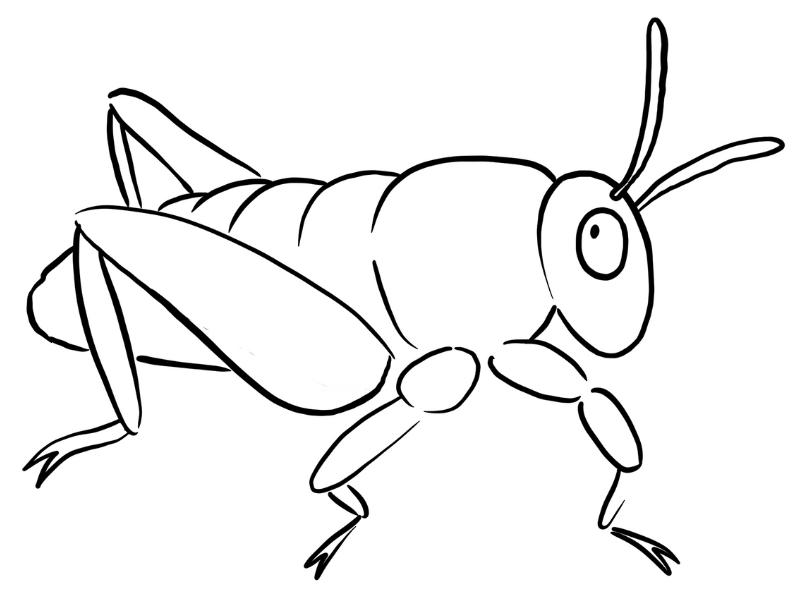
Learn how to draw the robust grasshopper – look over the page!
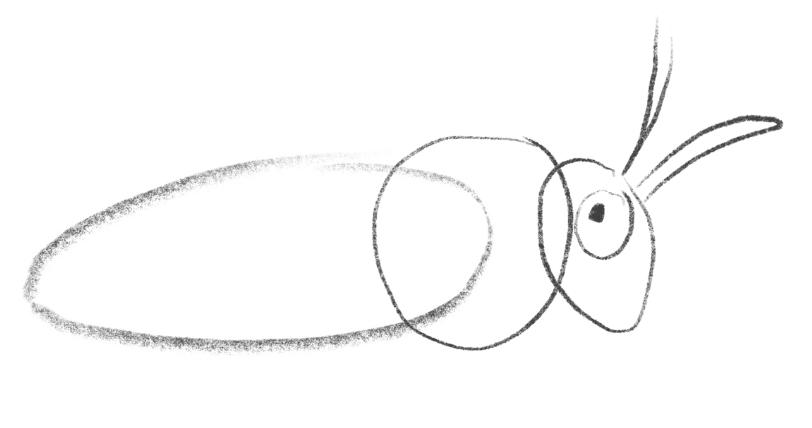
1 Using a pencil, lightly draw a rough sketch of the basic shapes in the grasshopper's body.
2
Add a rough outline of the grasshopper's eyes and antennae.
3
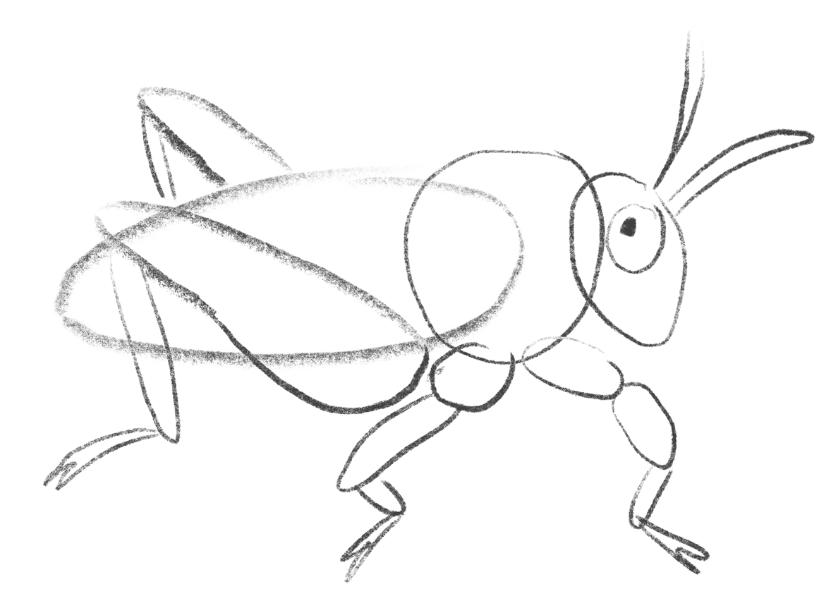
Add a rough outline of the legs (you don't need to draw all six because two legs are hiding behind the body).
7
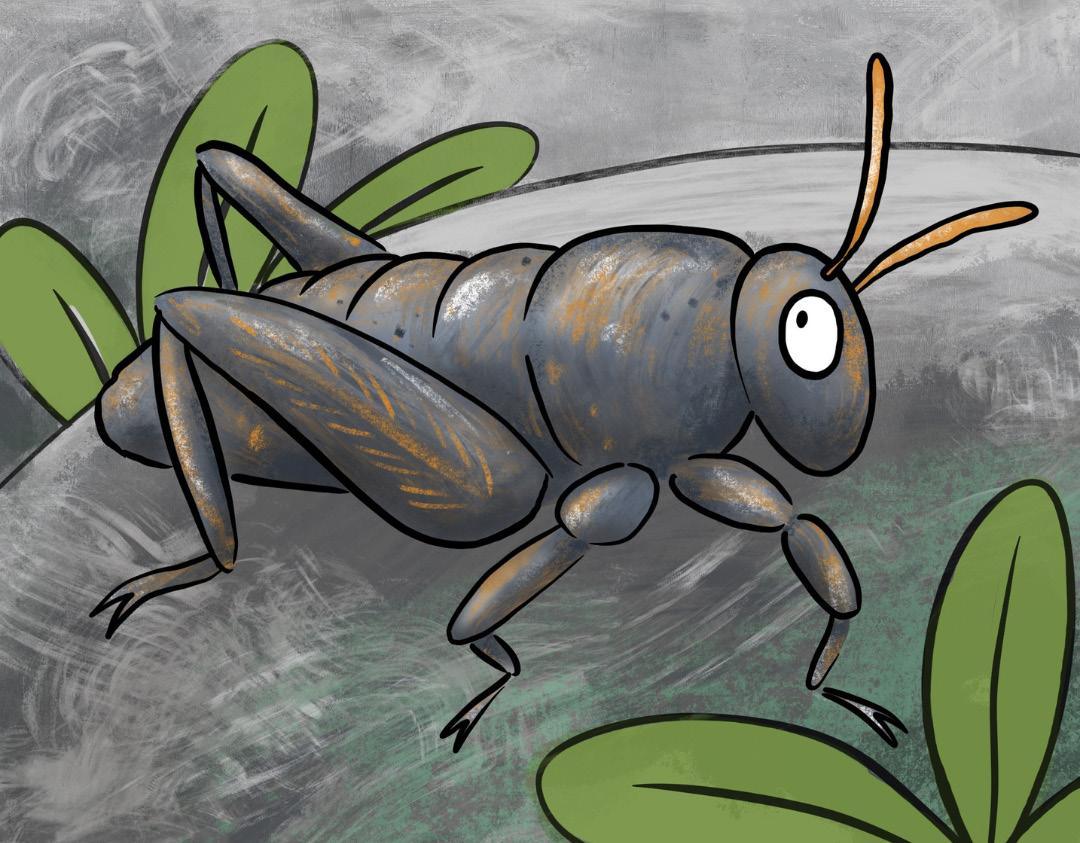
Draw some rocks and plants for your grasshopper – you could even draw another grasshopper!
Have a go at drawing the robust grasshopper!
Can you draw a picture of me sitting on a rock? And maybe a friend on another one?
YOU WILL NEED:
• An HB or light pencil
• An eraser
• A black ink pen
• Colour pencils
4
Go over your outline with a nice pen/pencil. You don't have to include all the lines. Erase the light pencil from the rough outline.
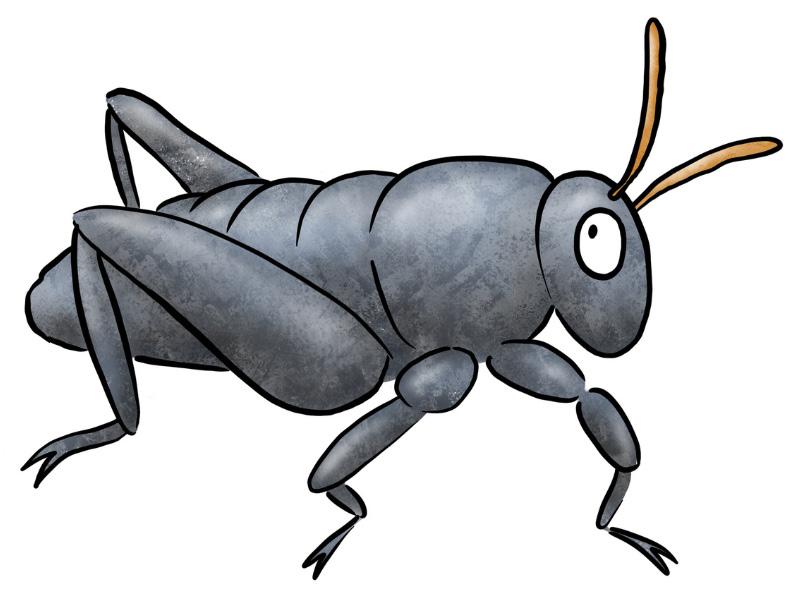
5 Colour your grasshopper in, making it darker at the edges and lighter in the middle near the top of its body.
6
Add some extra colour and detail over the top – patches of orange and white.
How will climate change New Zealand’s wildlife?
Climate change will result in long-term changes in temperatures and weather patterns around the world. Some of the causes of climate change are natural, and they have happened over thousands of years. But since the 1800s, humans have become a key reason for climate change happening.
Robust grasshopper
I live in riverbeds in a part of New Zealand that can dry out or be very snowy.
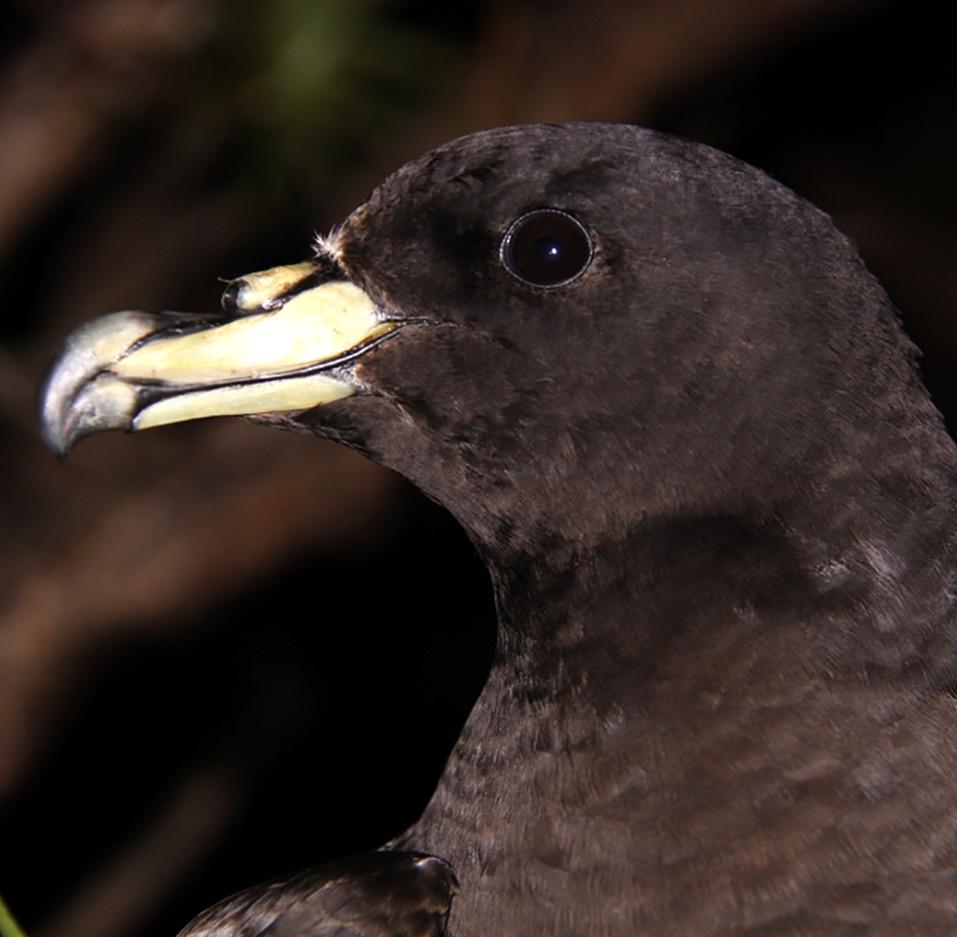
Tākoketai | black petrel
I nest up high on tall hills and cliffs on small islands that can be exposed to the rain and wind.
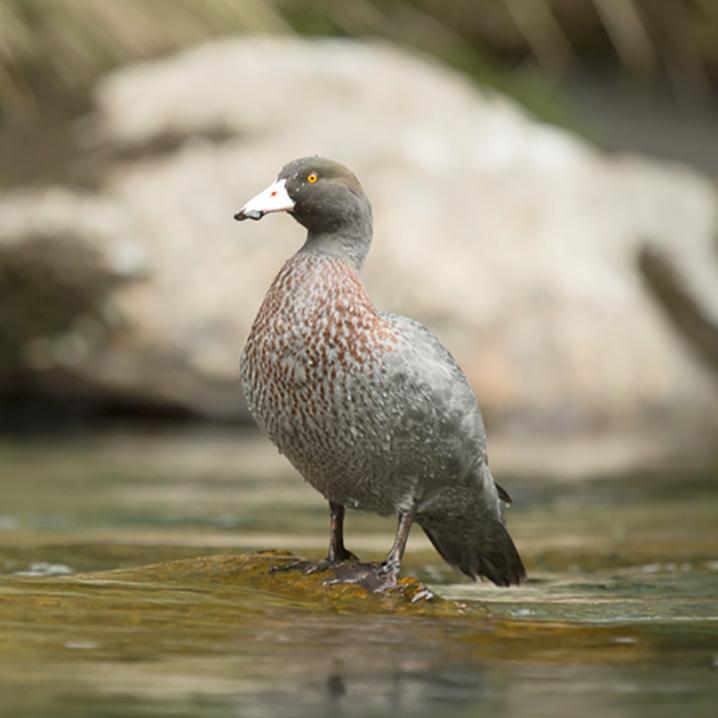
Whio | blue duck
I live on rivers. I need them to be clean, swift, and have just the right amount of water.
Climate change has lots of impacts for our wildlife and for us. Some of these changes are shown in the orange boxes below.
The weather gets too hot, too dry, too cold, too wet
Storms happen more often
Droughts happen more often
The seas, lakes and rivers warm up
The sea-level rises further and further up the coastline onto land
Mark Fraser
Craig McKenzie
Warren Chinn
change impact
Draw a line between the species and a climate issue that will impact them. One has been done for you.
Some of the impacts below are connected to each other; for instance, ground that goes hard in a drought then can’t soak up water when there’s a storm and so floods are more likely.
Can you think of other impacts that affect one another?
Can you think of other animals, plants, or fungi in Aotearoa that might be affected by climate change?
Predators survive better when its warm and move to warmer places.
Food might be available in the wrong seasons or it might disappear completely.
Animals and plants have to cope with stronger wind, heavier snow, more flooding on land and in rivers, and bigger waves at the coast.
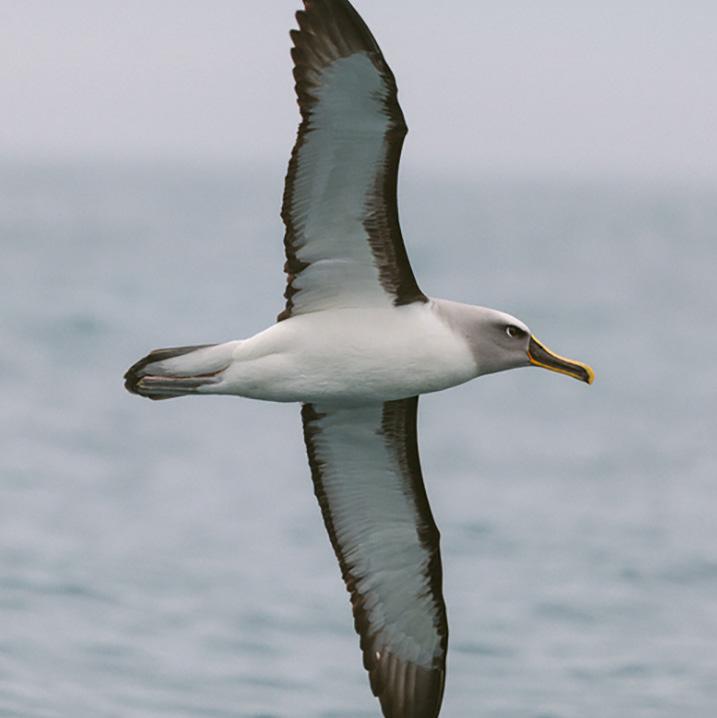
Toroa | Antipodean wandering albatross
I fly over the seas to find fish to eat. If the fish move away, I'll have to fly even longer distances.
It’s harder to find water to drink.
Some places where wildlife live become more at risk of wildfire, and rivers and lakes run dry.
Sea and wind currents change.
Lakes and rivers grow pest weeds and toxic (poisonous) algae.
Animals and plants struggle to find good places to live and food to eat.
Beaches are no longer good places to live or nest.
Saltwater gets into groundwater and soil near the coast.
Rātā moehau | Bartlett's rātā
I grow high up in trees in parts of Northland that get very dry and hot. Possums like to eat my young leaves.
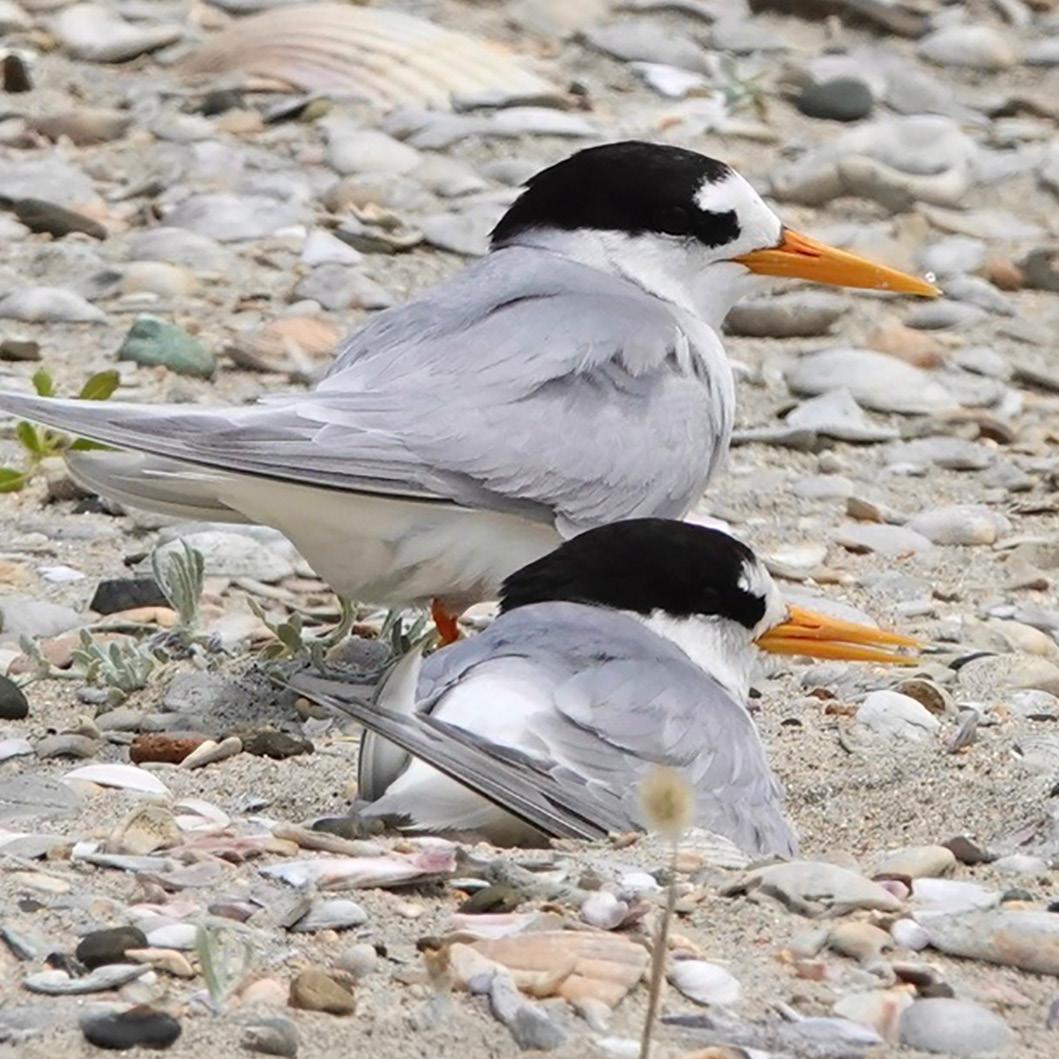
Tara iti | fairy tern
I nest in the sand, just above the high tide mark.
Peter de Lange
Victor Mikhailovich Alexeyev
Charlotte
“The Masked Petrel” You
will need:
• Cardboard
• Thin stretchy elastic
• PVA or magic glue
A A
INSTRUCTIONS:
• Cut out the outline of the face and the bill, and the eye holes.
• Glue onto soft cardboard
• Make a small hole where the two dots are. Attach elastic to fit round your head.
• Fold the two flaps marked A down behind the beak, then stick flaps A to where it is marked B, following the edge of the mask.
• Cut two short pieces of straw the same size, to make the tubenose. Glue the straws on to the bill where it is marked C.
• A paper straw (or recycle a plastic one)
If you would rather make an albatross mask, see WT issue 147 May 2020 here:
New Zealand is known as the seabird capital of the world. More than a third of the species that breed here are found nowhere else (they are endemic). Can you find the ones in the list below?
The red names belong to birds from other parts of the world that migrate long distances to come to New Zealand for warmer weather.
● TERN
● GANNET
● DOTTEREL
● PETREL
● ALBATROSS
● SHEARWATER
Tick them off as you go
Can you find...
● CURLEW
● SANDPIPER
● GODWIT
● SKUA
● PLOVER
● STINT
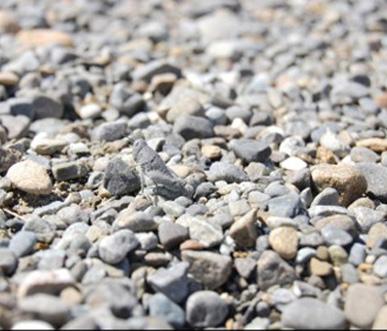
…the robust grasshopper?
It’s very well camouflaged!
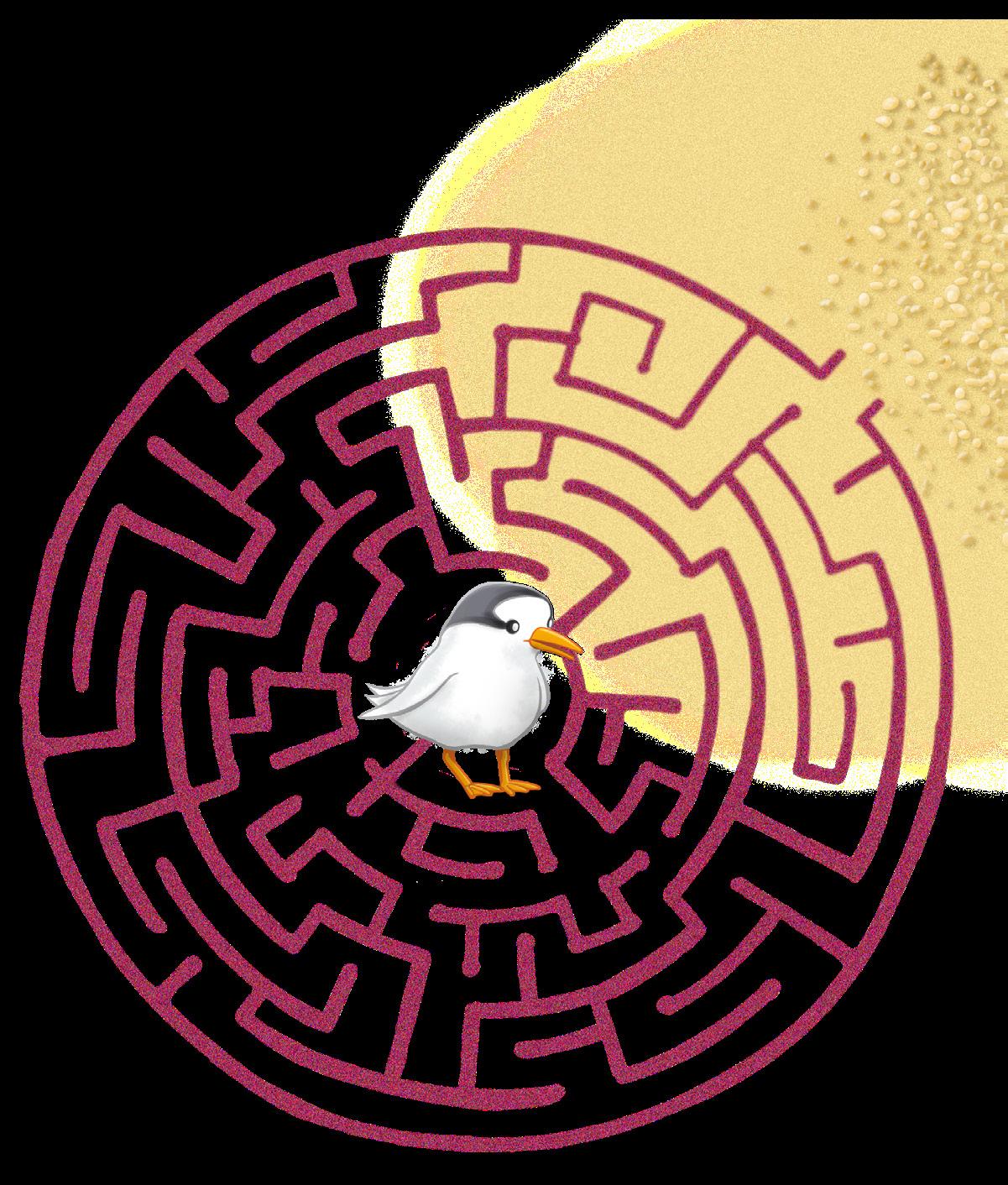
Maze
The fairy tern needs to make sure it nests above the high tide so that storm waves can’t reach it. Can you help it find a good spot?
Warren Chinn
Challenge Patai |
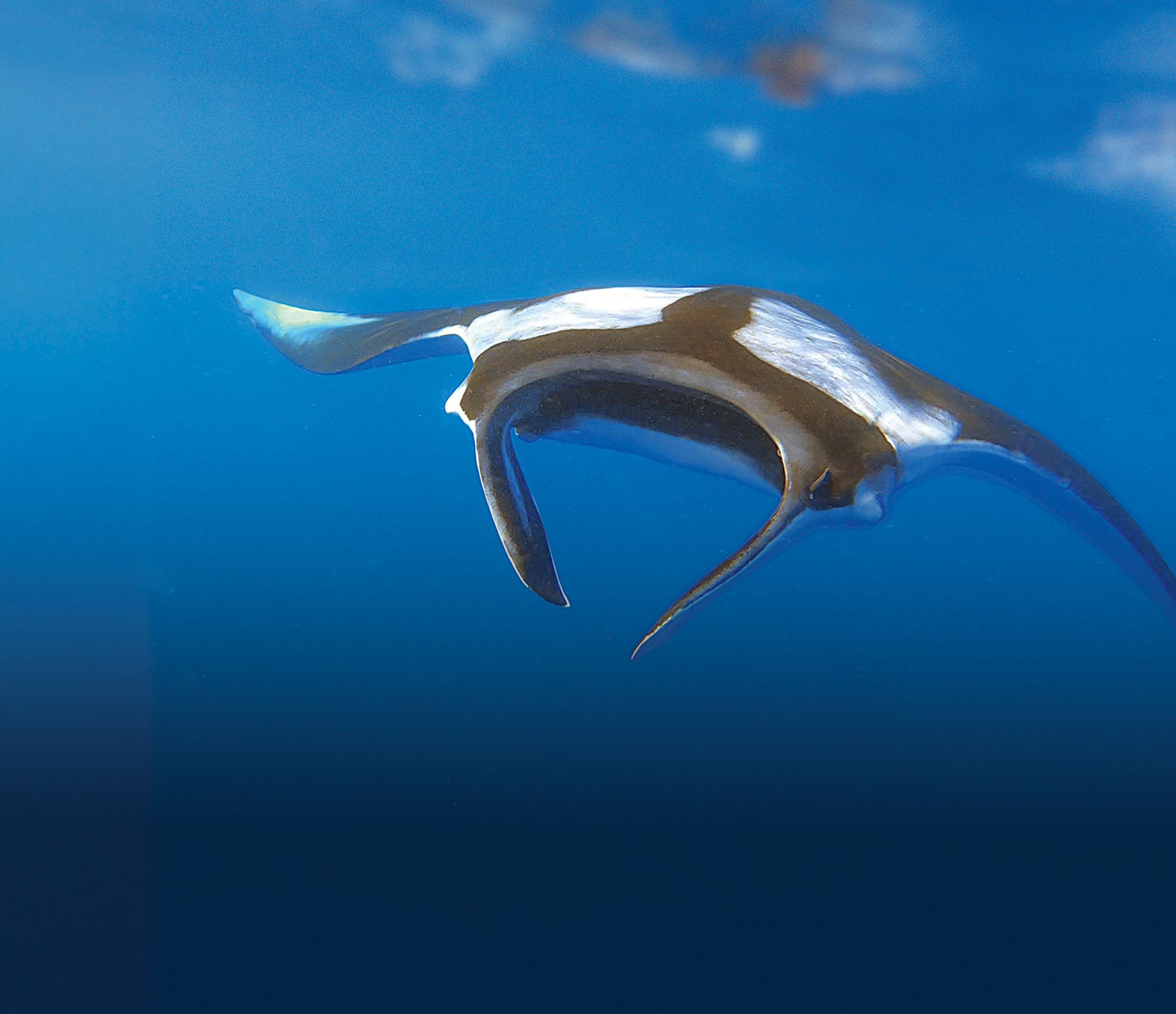
Manta rays are graceful swimmers who seem to fly through the water – and occasionally leap out of it!
For this pātai | challenge, you need to make a model of a manta ray that moves like its swimming or flying. Your model might be a kite, or some kind of dart or flier. Or you might have other ideas – there’s a whole ar-ray of things you could do!
If you can use recycled materials, even better! And it probably won't be as big as a real manta ray – that might not fit in your house!
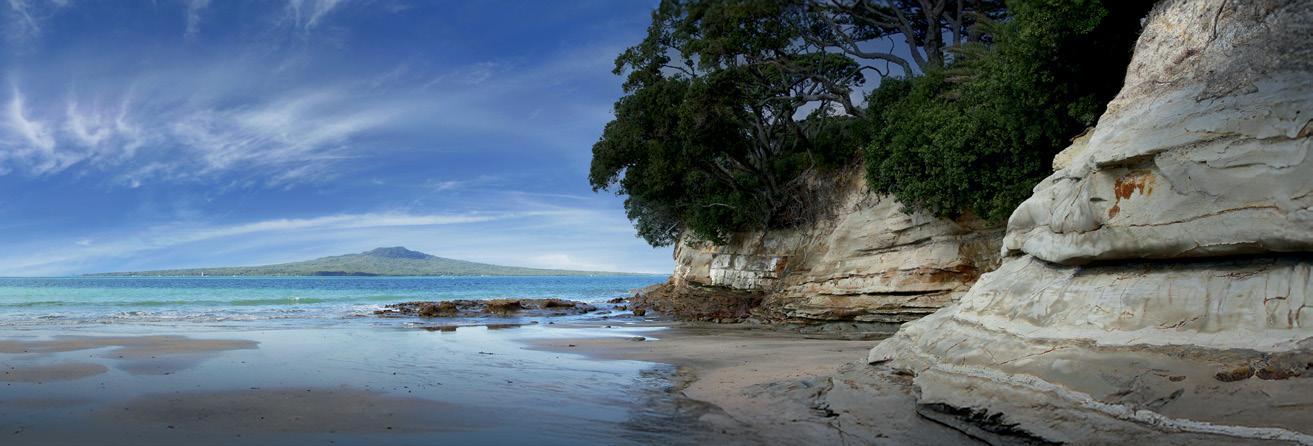
The Hauraki Gulf Marine Park was established in 2000. Making it a park has helped protect the Gulf’s wildlife and improve their habitat.
Unfortunately the Hauraki Gulf is being damaged by things such as climate change, and this will affect animals such as manta rays and black petrels. This special place needs to be protected so it can recover and stay a healthy environment.
See manta rays in the Hauraki Gulf in the Endangered Species Aotearoa series here
Send your photos or videos of your flying manta to kccinbox@ forestandbird.org.nz, or share them with us on Facebook by 20 July 2025. There will be prizes!
Auckland
In 2024, Forest & Bird had a special awareness day on the Gulf's beaches called “Love the Gulf”. Do you live nearby and were you able to go? Ka rawe, if you did!
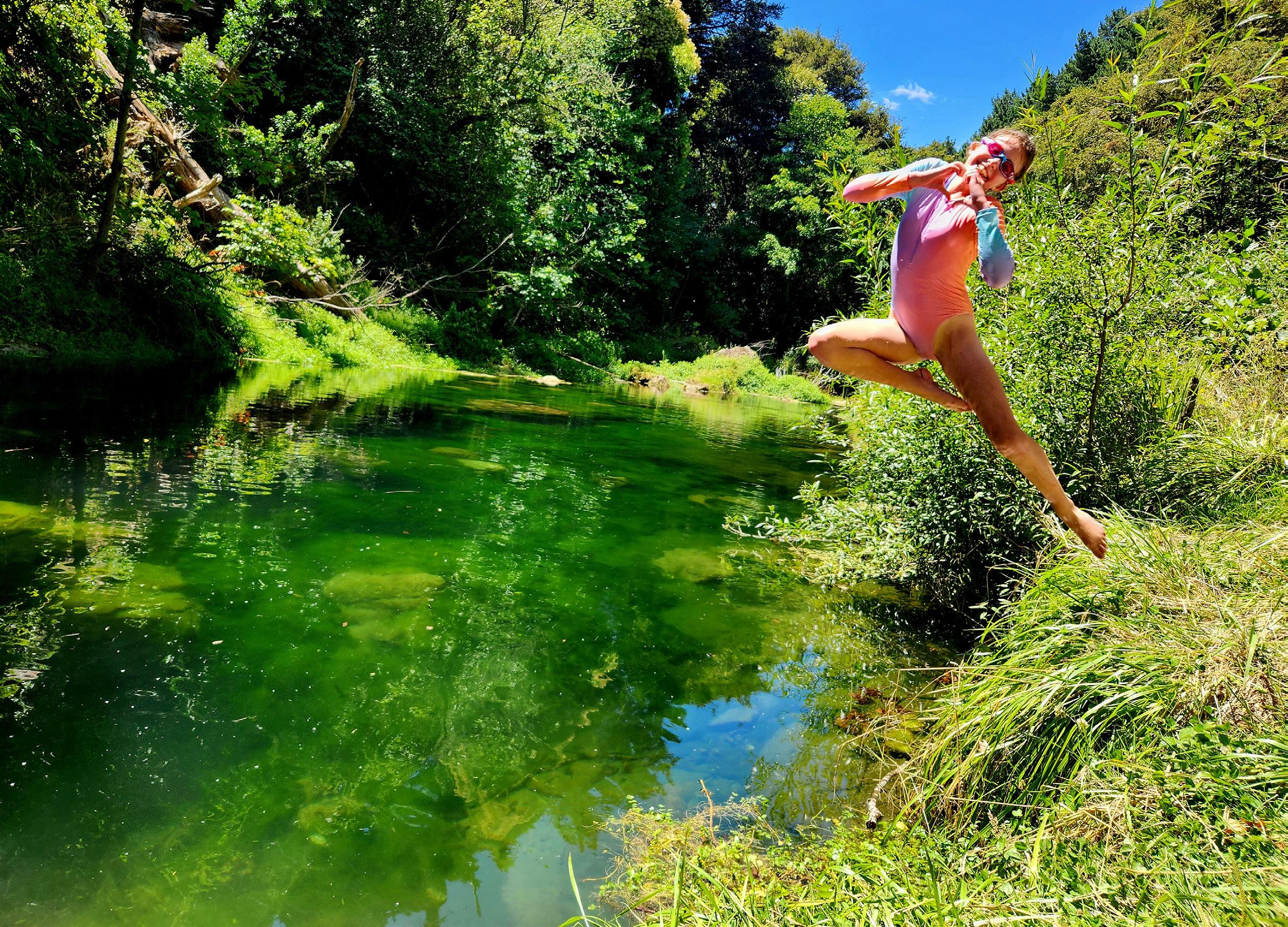
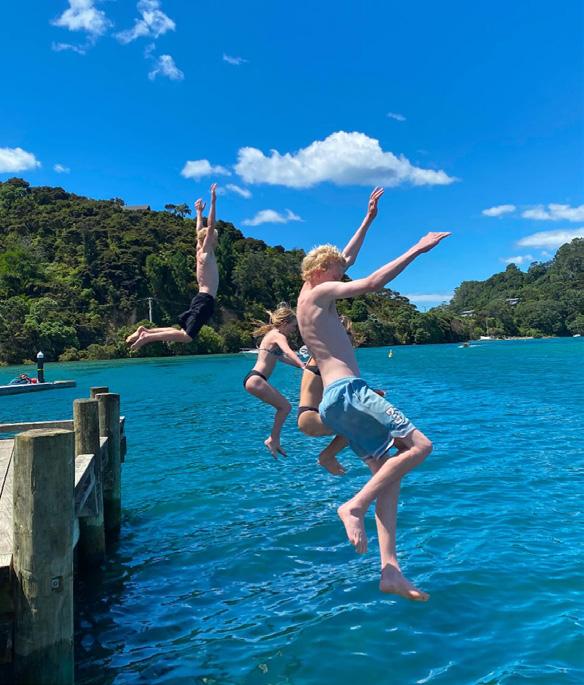
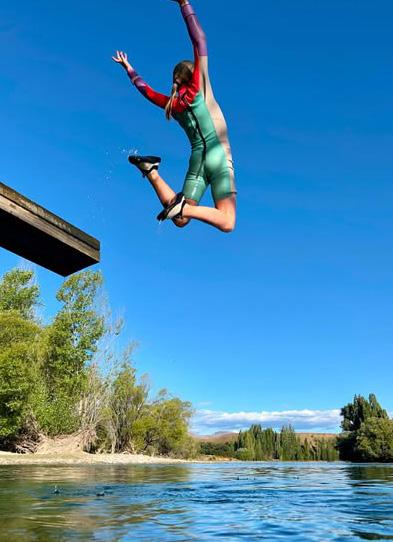
During summer 2024–25 KCC asked for kids and families to do manu to raise awareness of the need to protect our freshwater rivers and lakes. Here are a few of the photos we received of kids “up in the air”!
Your family will find lots more photos and some awesome videos on the KCC Facebook and Instagram pages!
In the
Mailbox
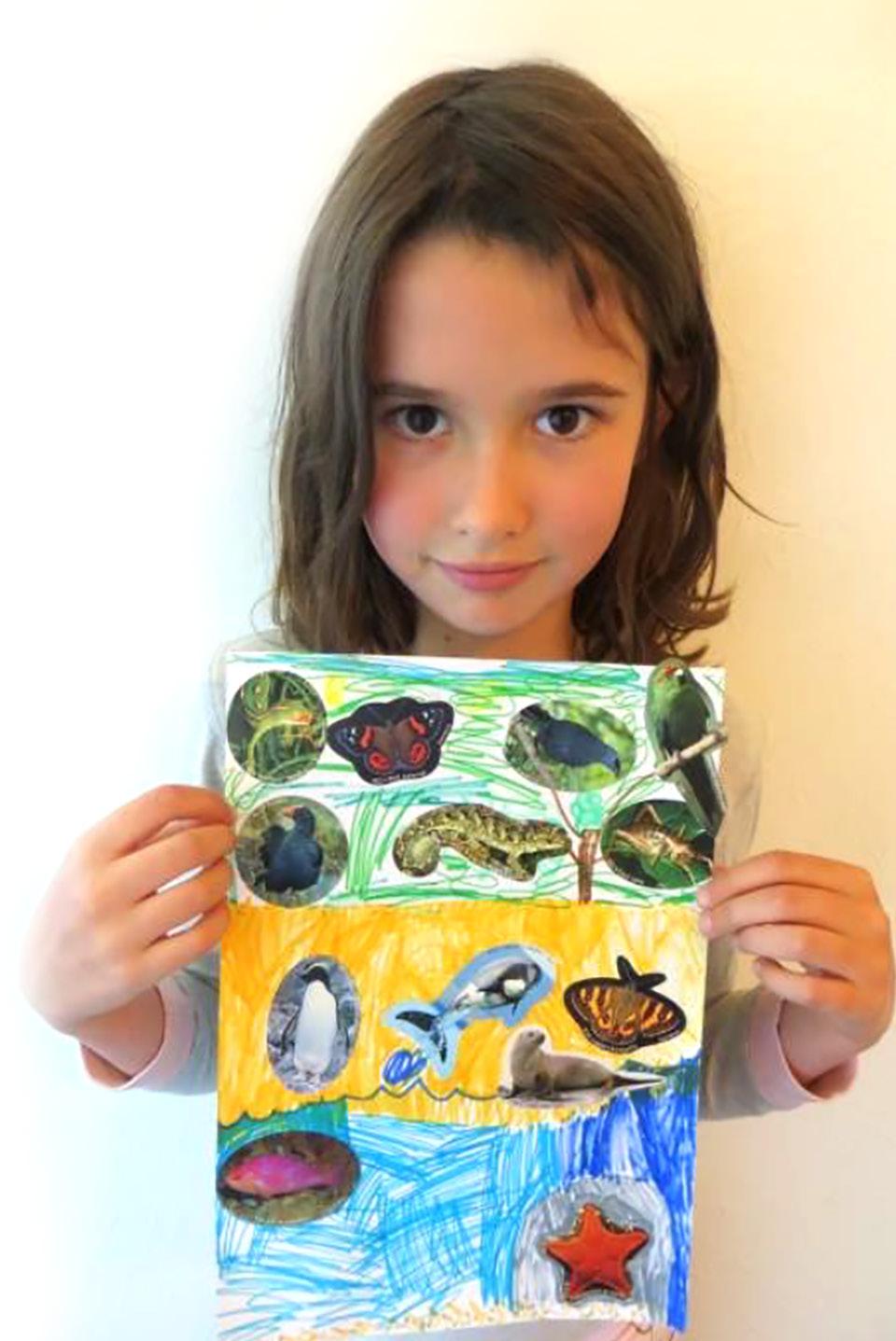
Evelyn made a cool picture with KCC stickers. She said the green bit is the forest and the yellow bit is the sand. The Hector’s dolphin is leaping out of the blue water.
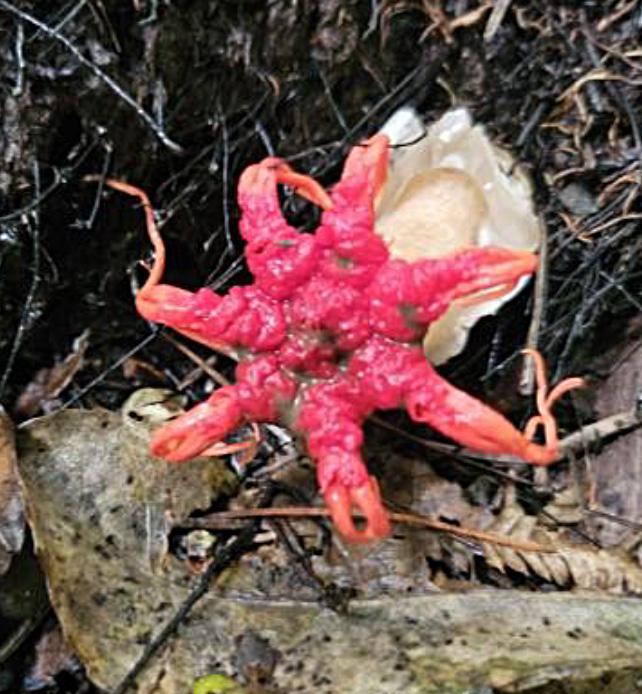
John spotted this weird fungus when walking around a redwood forest in Dunedin!
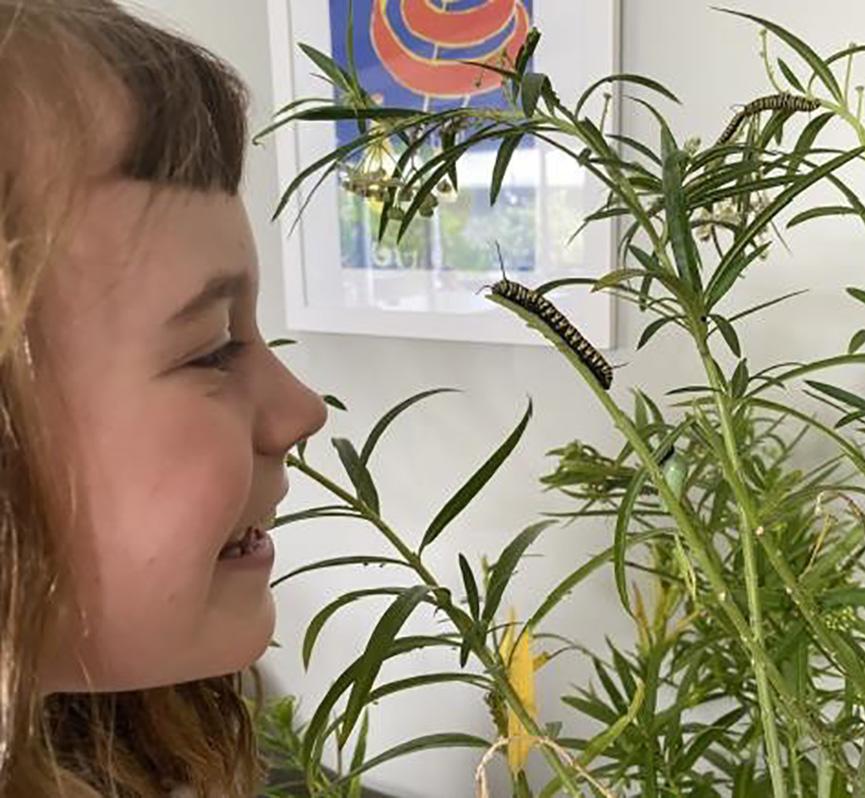
Cordelia’s family has been looking after monarch butterflies.
Tino pai, Evelyn!
T. Hains
J. Long
A. Garvey
K. Graeme
P. Robinson
F. Muckle
KCC ADVENTURES
River testing
by Caitlin Symes (11 years)
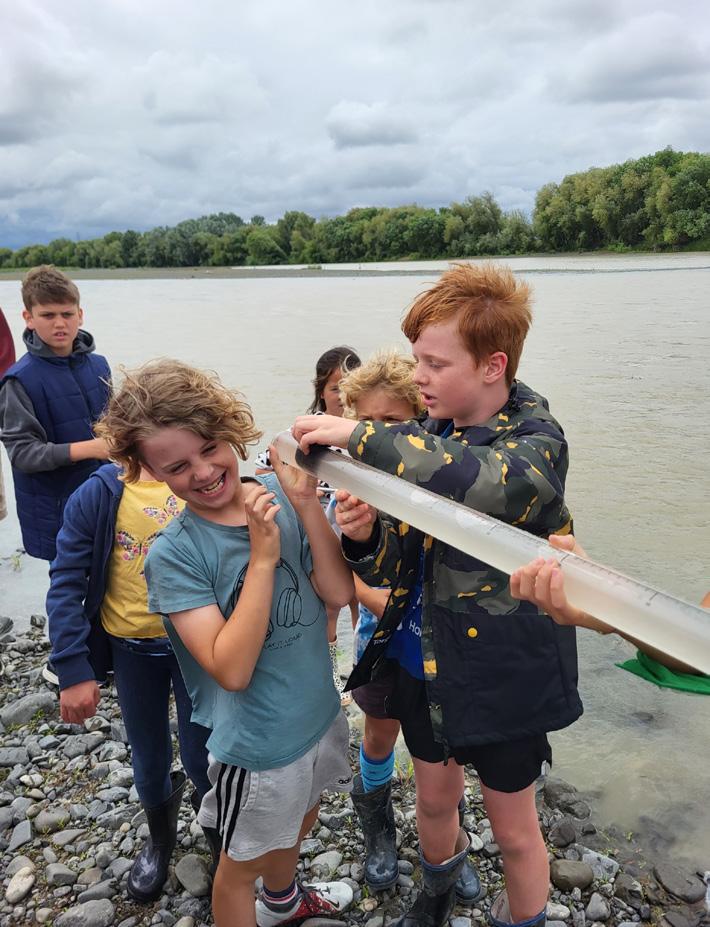
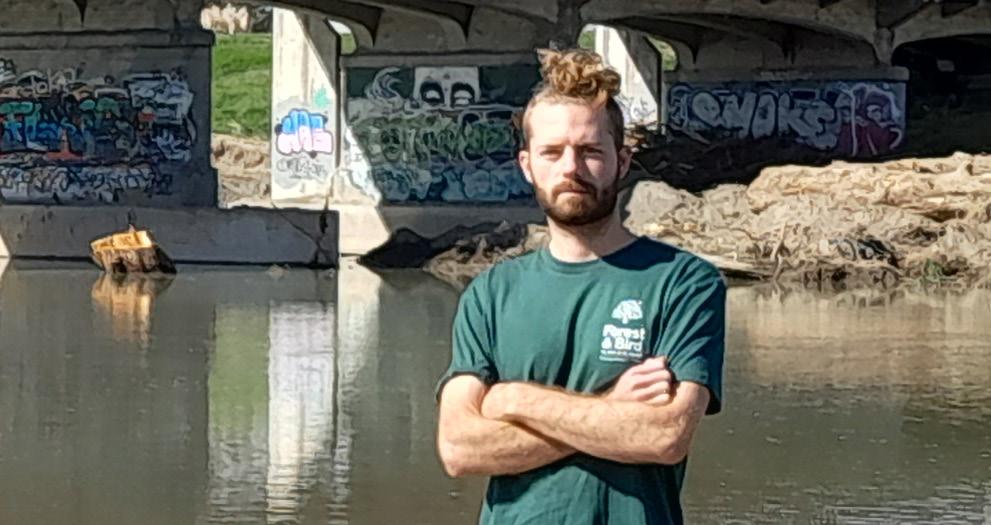
KCC Hastings – Havelock North went to the Ngāruroro River in October last year. Tom Kay, the freshwater advocate from Forest & Bird national office, came and told us about looking after rivers and fish. This was special because he came all the way up from Wellington! He talked about flood prevention measures and why we need to make room for rivers. We got to play and experiment with the river water so we could predict if the river was clean or not! We did some testing with a big tube, including the water temperature. The river wasn’t as clean as it looked; you could only see about 10 cm through the murky water and the river had lots of algae in the water and rocks.
Ka rawe
KCC HastingsHavelock North!
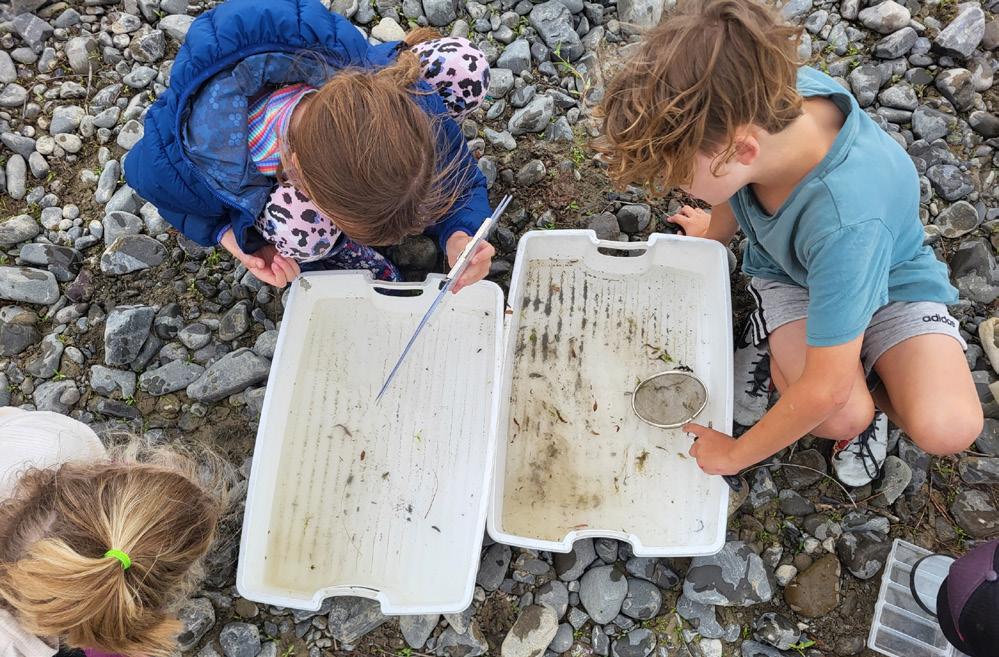
Later on we looked for fish and macro-invertebrates, which are tiny living creatures. We found a few plus some spiders. We caught some tiny fish and even some shrimp!
We were looking and searching for rubbish and found a few bags full – so remember not to drop your rubbish and to put it in the right bin!
We hung out by the river and we always had an adult watching us. The water was cold but we didn’t swim. We brought our gumboots and water shoes but never needed to get wet. The night before there was a storm in the hills so all the rain from the Ranges came down the river. While we were there the river level went up about 10 cm in about two hours.
We had a great time and would like to thank Tom Kay for joining us for this special trip.
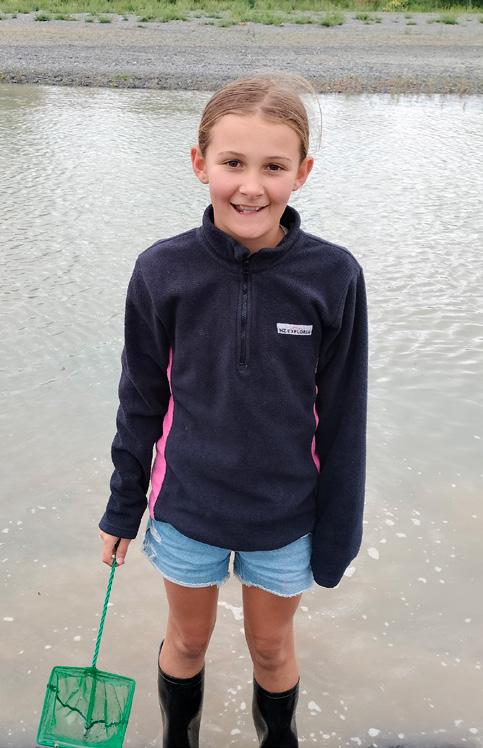
Caitlin by the water. Emma Buttle
Emma Buttle
Emma Buttle
Tom Kay. Chantal Pagel
mudfish
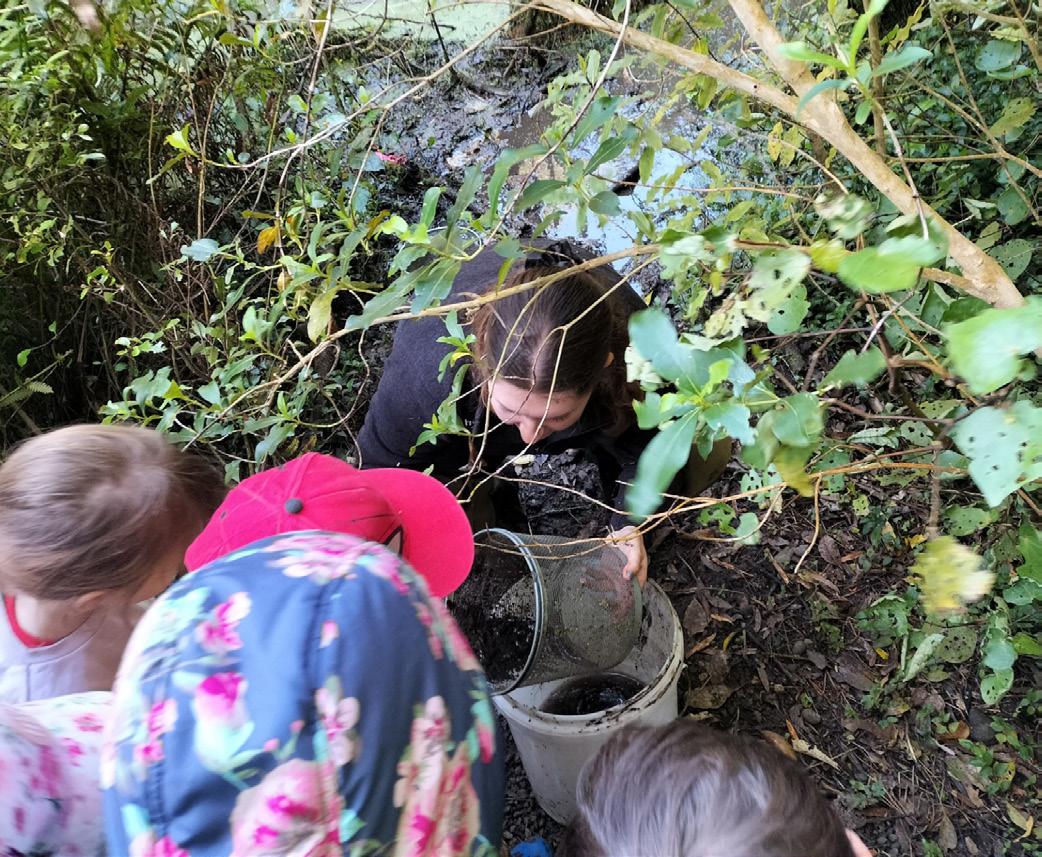
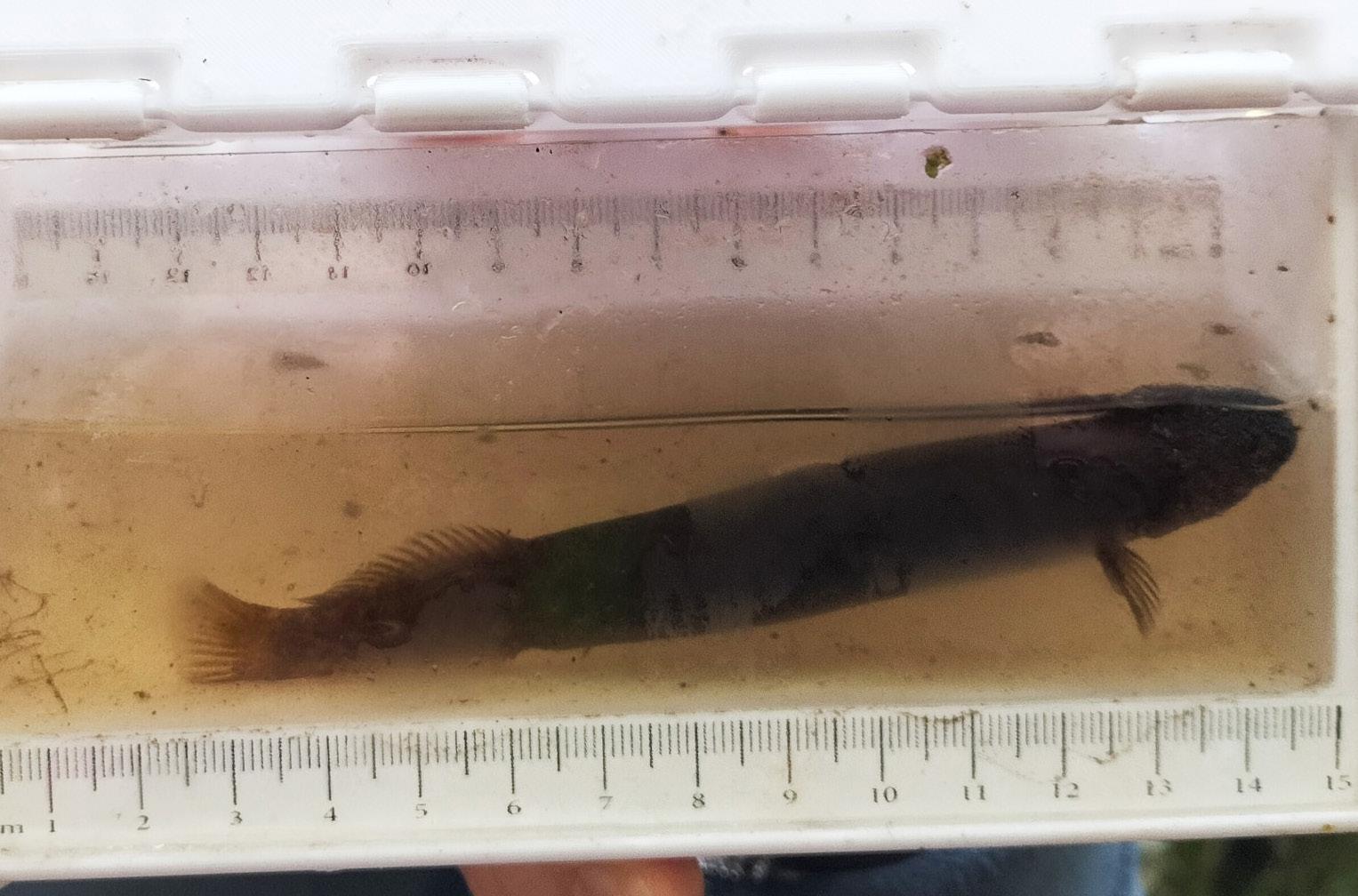
KCC Manawatū members headed out to a wetland near Palmerston North with Horizons Regional Council. The Council monitors a population of brown mudfish (hauhau/waikaka) to check it is still healthy.
Catching the mudfish. Anna Regtien
KCC Manawatū found three brown mudfish. We quickly realised how difficult it can be to accurately measure their length, as they squirm around so much.
This fish is too cool to lose!
Anna
Regtien
Brown mudfish can survive living in damp mud for months if their wetland starts to dry out, by “breathing” through their skin!
Had a KCC adventure? Let us know at kcc@ forestandbird.org.nz. Manawatū
Tino pai
KCC Manawatu!
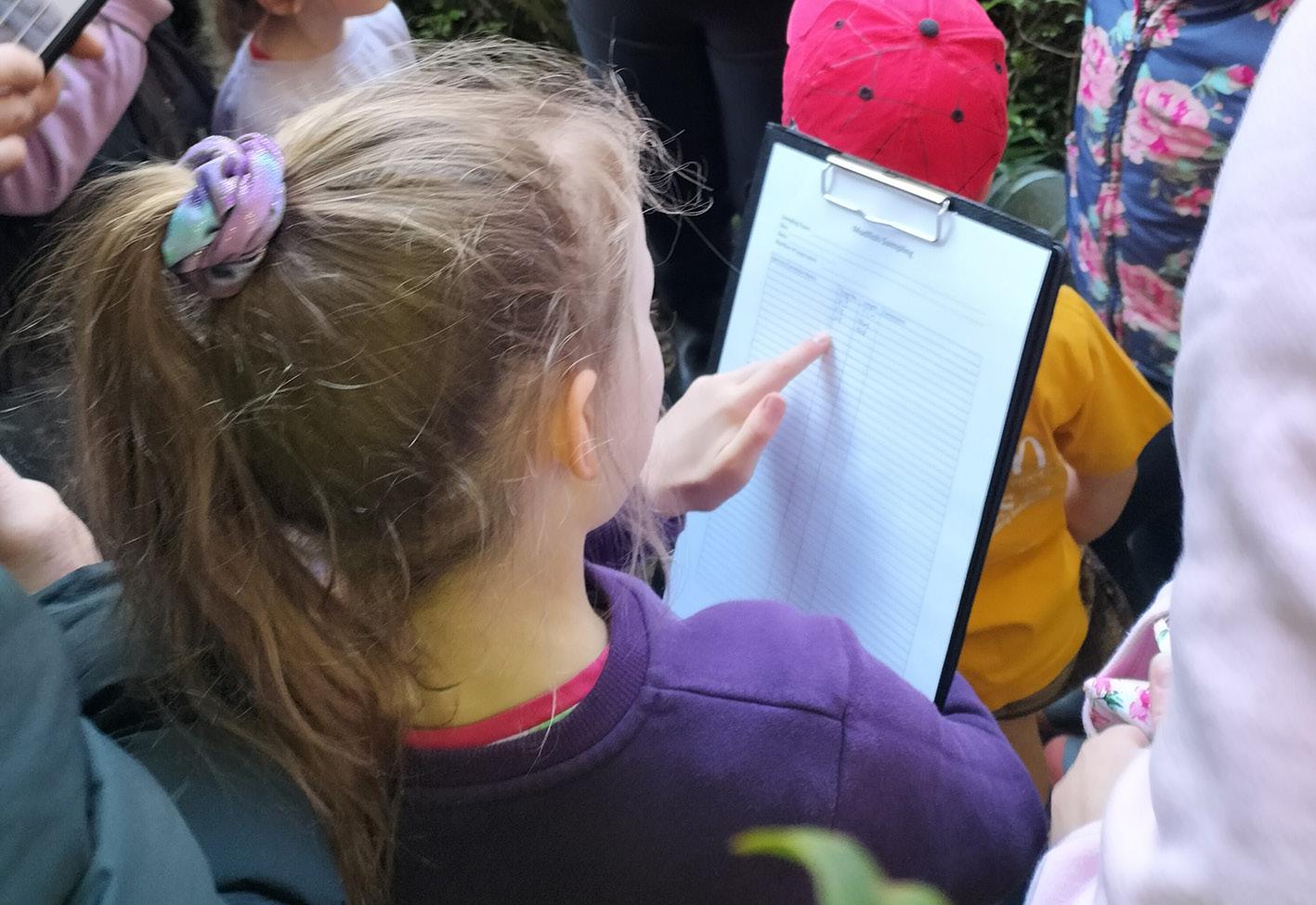
KCC member Izzy got to be the scribe and write down all the important information about each fish. Anna Regtien
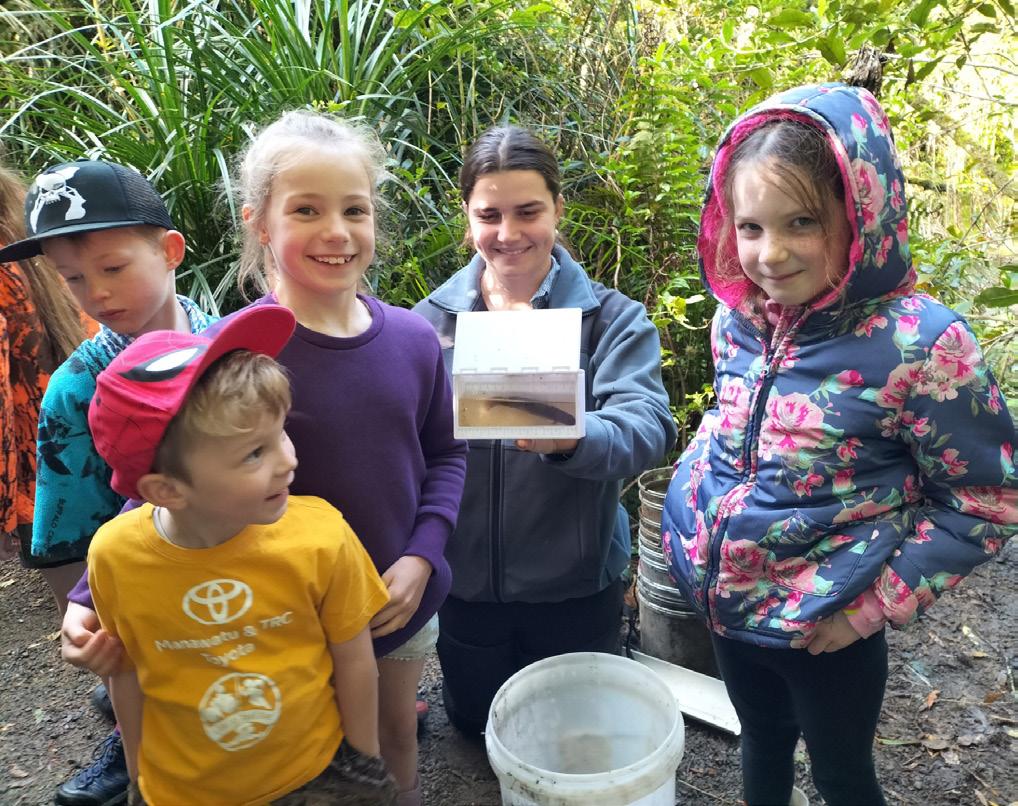
KCC members Kaia, James, Izzy and Eliza with Katie from Horizons Regional Council. Anna Regtien
Brown mudfish mostly eat terrestrial insects (that is, those living on land) that drop from nearby trees, rather than insects that live in the water. All the more reason to have trees around our wetlands. We learnt how important it is to look after our wetlands so this stunning native fish can flourish.
Where is that adventure?
Predicting whether the weather will change
The weather in New Zealand is very changeable – we can have four seasons in one day, not just in a year!
You might hear someone say then that climate change isn’t unusual or anything to worry about, because the weather is always changing – sometimes it’s hot, other times it’s cold, sometimes there’s a drought, or there might be flooding.
But weather and climate are different (though they are connected to each other).
Weather includes sunshine, rain, wind and temperature. It can change quickly – over minutes, hours, or in days.
A weather forecast helps you know to pack a raincoat for school.
Over time, people have learnt how to predict certain types of weather (though they could not be totally sure, just like we can’t even with today's technology!). They did this by observing natural changes over days, months and seasons (called signs). Often there was not just one sign but many that the weather was about to change.
These signs might only apply to their environment where they lived or travelled. But learning this was important; it helped people know if the weather might be good or bad for farming, fishing, harvesting, or sailing.
What
do you notice when the weather changes?
The climate is what the weather is like in a specific place over a long period of time, such as 10s or 100s of years.
A climate forecast can suggest if you will keep needing to buy gumboots all your life!
One type of sign people watch is what animals are doing. Some animals can sense how and when the weather might change, not just by sight, hearing or touch, but using senses humans don’t have.
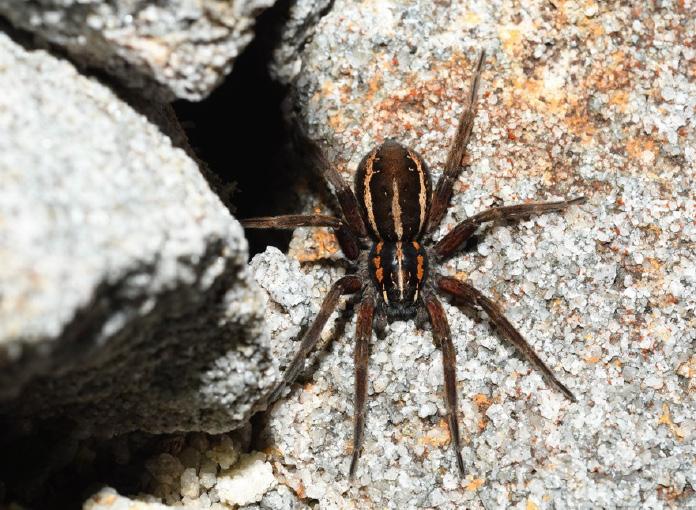
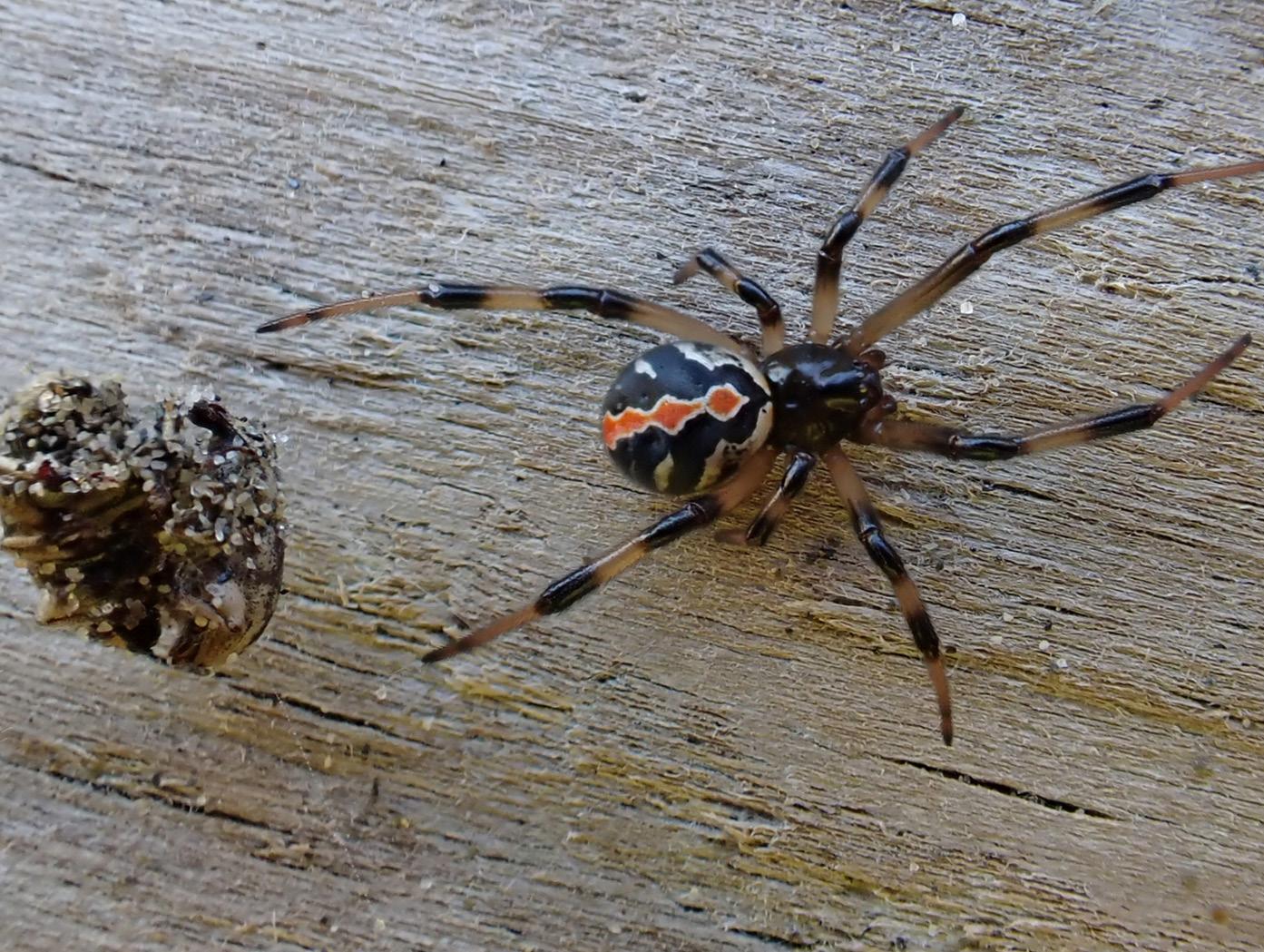
For example, when stormy weather is very close, bees will stay inside their hives, birds will find trees to shelter in, and spiders find places to hide.
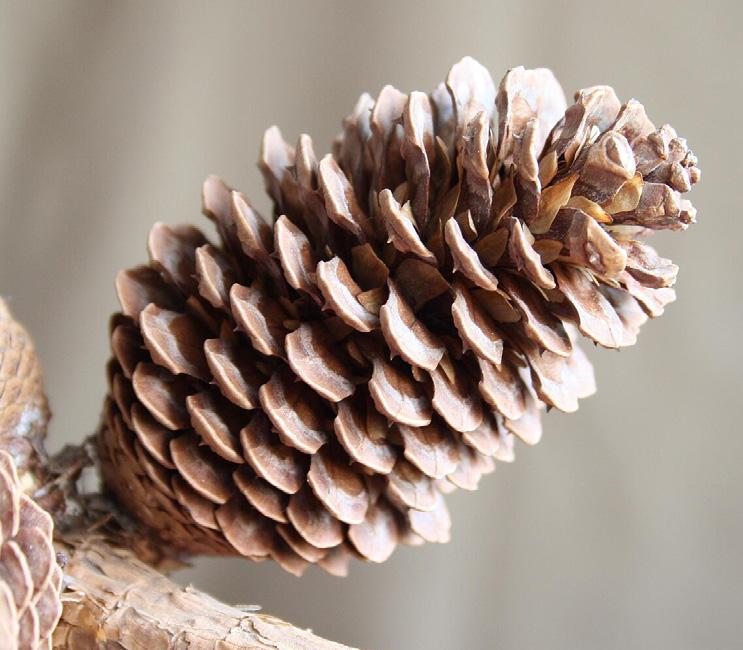
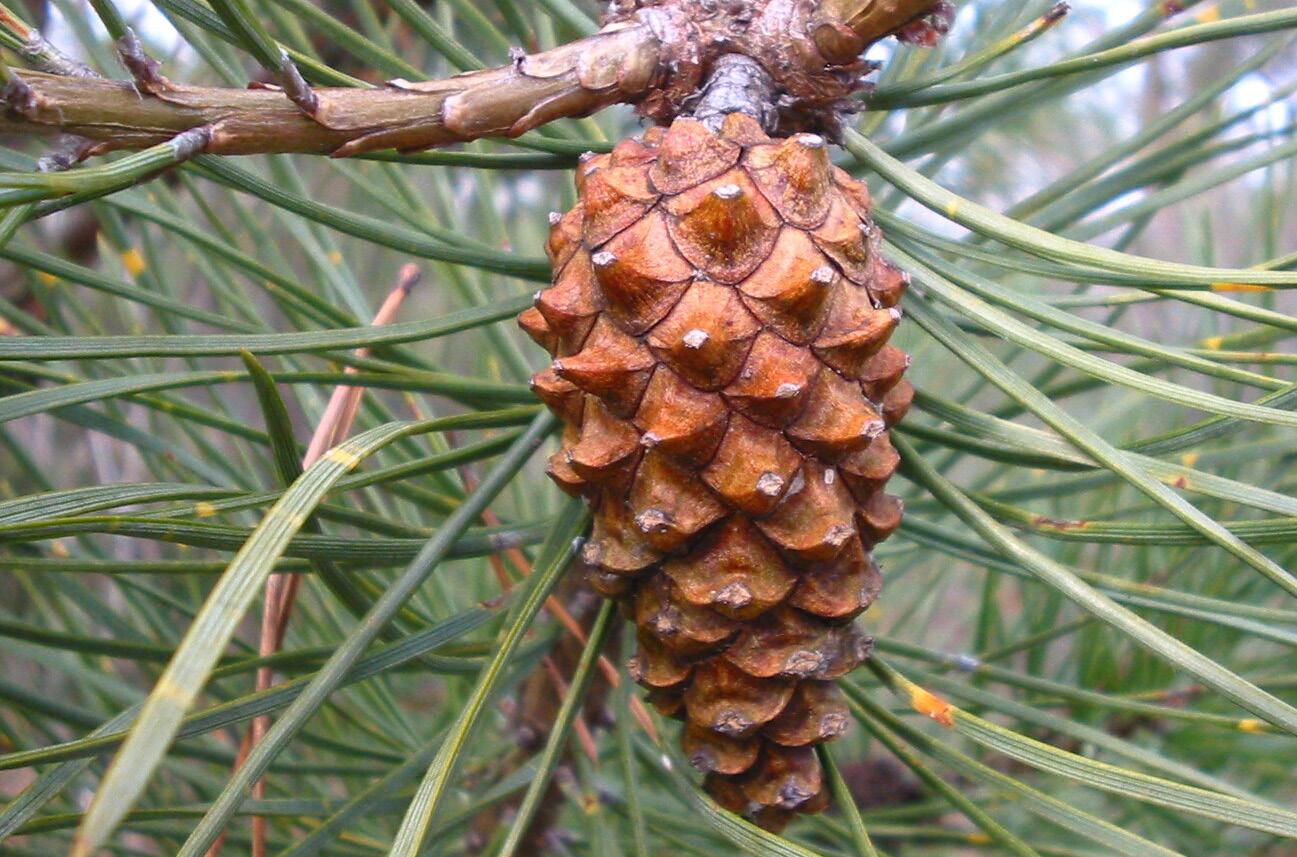
Plants also show changes – pine cones open up in dry weather but close again when the weather becomes rainy or humid (muggy).
Nursery Web Spider. Ben Weatherly
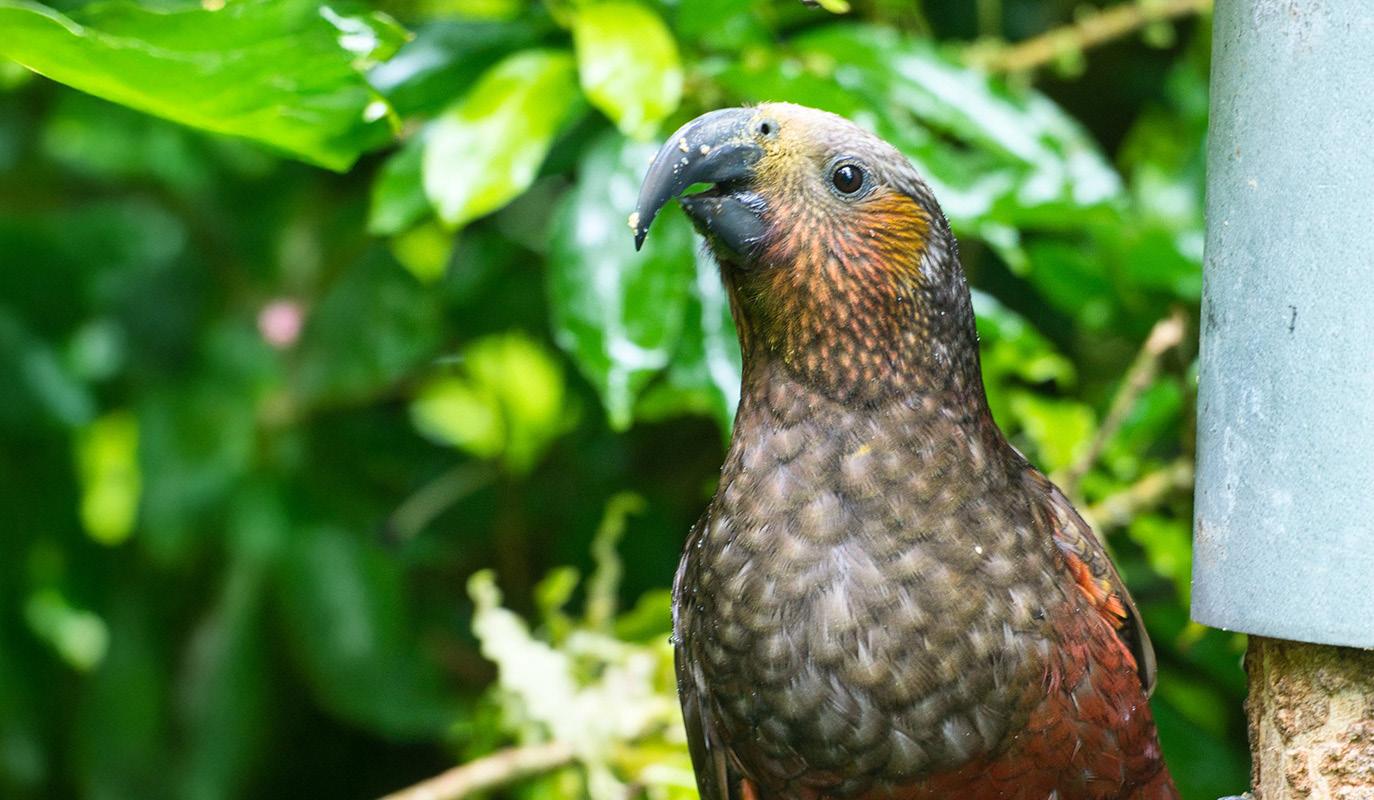
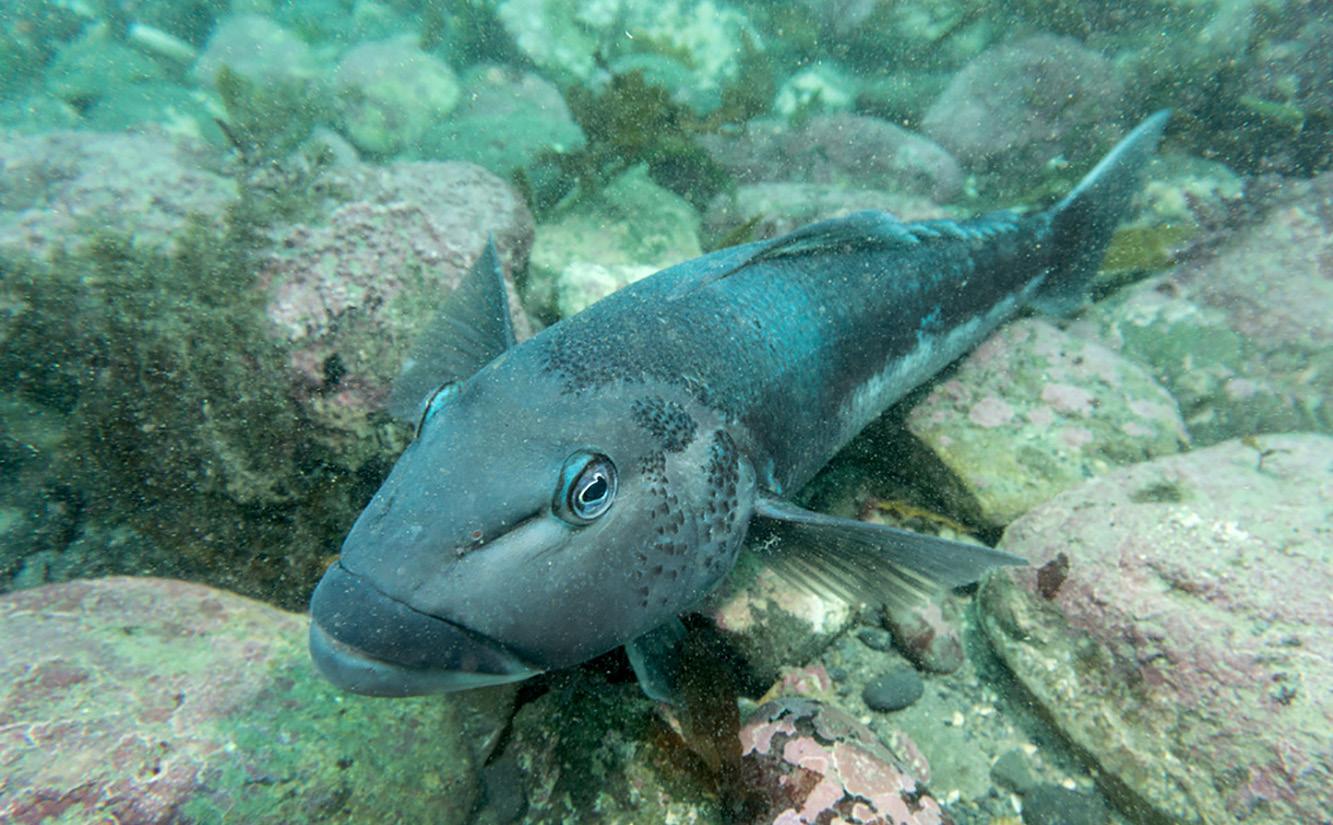
Here are some examples of tohu that come from observations of animals around Aotearoa. Tohu are (or refer to) the signs used by Māori, and these can vary between iwi and region.
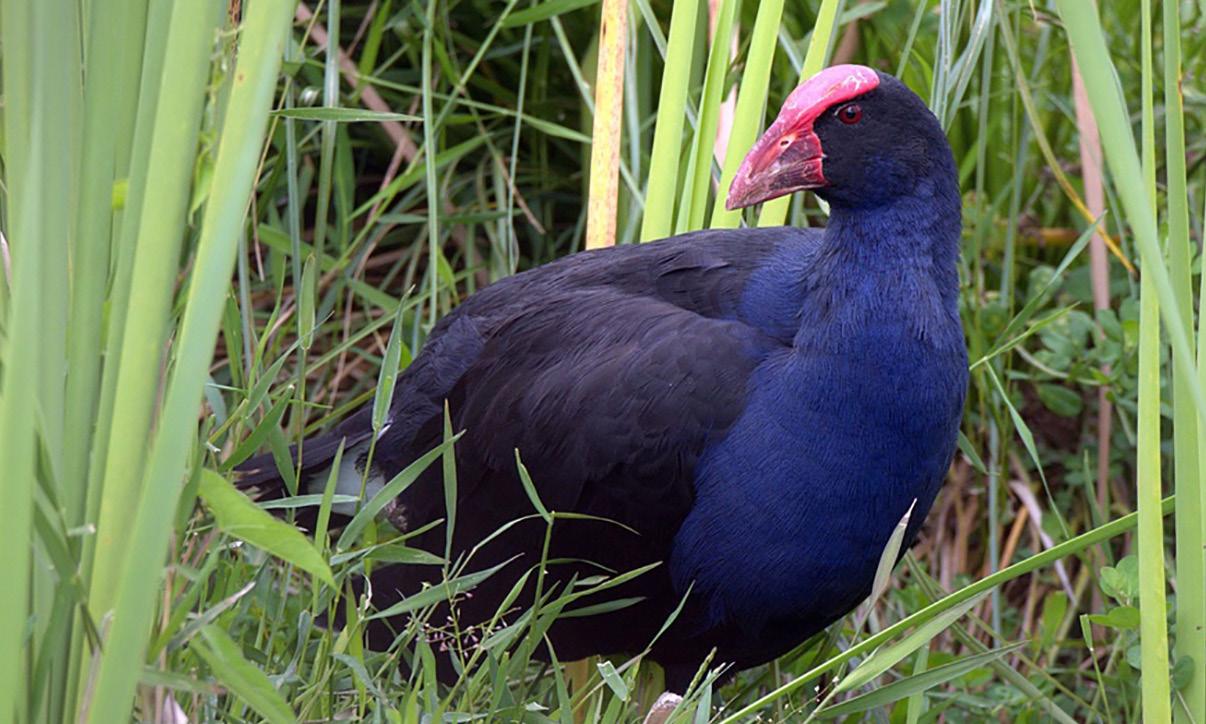
Pūkeko
A
Can you match the animal and its behaviour to the photo on the left?
Kākā
Rāwaru | blue cod
B
If you catch one, and you find their bellies are full of stones, then bad weather is coming (Ngāti Koata).
They head for higher ground when they sense a storm and flooding is coming (Ngāti Wai).
C
They act up, twisting and squawking above the forest when a storm is coming (Ngāti Pare).
Thank you very much to NIWA for their help with information on weather predictions and tohu Māori. Here you can find NIWA's poster with more traditional Māori weather and climate forecasting knowledge".
Also suggest your teacher checks out their website here.
Dan Iggers
Tom
Kirk Serpes
Matt Ruglys
Hanging out in the trees
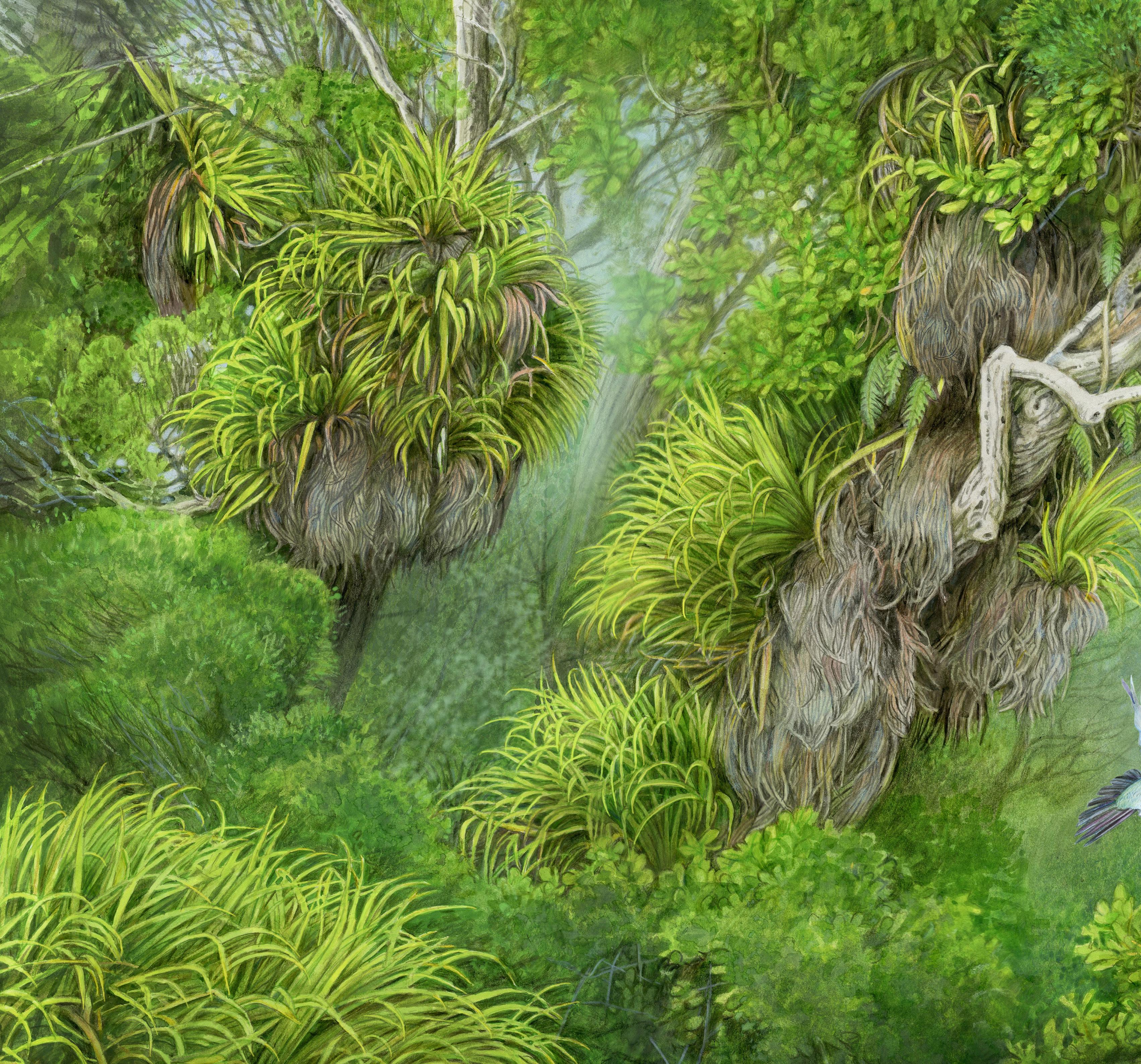
Epiphytes are plants that grow and perch up on the branches of trees.
Many different kinds of epiphytes can grow together, sometimes in big clumps.
Epiphytes are like gardens in the sky!
They create a habitat (place to live) for insects, birds, reptiles and bats, who find food, water and shelter there. Other plants also grow in them.
Each epiphyte community is unique. One epiphyte might have quite different animals to another epiphyte on the same tree!
Epiphytes can look like overgrown plant baskets or huge nests because they hang down and fan out, at different heights.
Most epiphytes don’t harm the tree but help it –they drop leaves, compost and rainwater onto the soil and tree roots below.
Epiphytes need to live in mature (adult) trees with strong branches, like tōtara, pūriri and pōhutukawa.
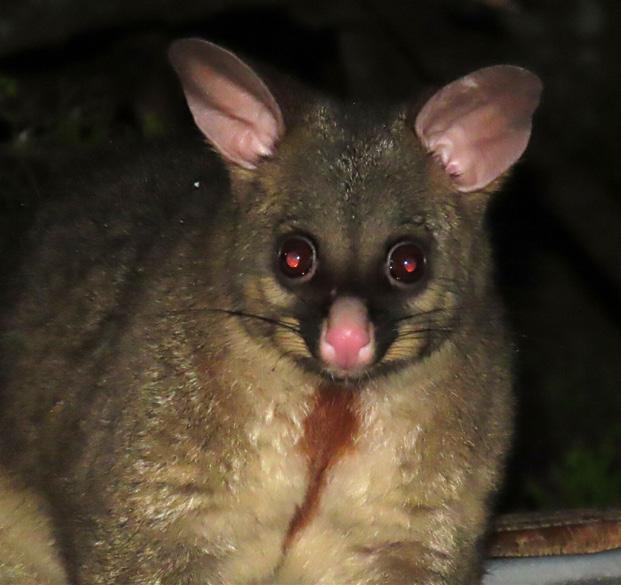
But possums like me can chomp through a huge amount of these trees’ leaves. We target the same trees night after night, eating the fresh yummy new leaves. We can’t help ourselves.
Without leaves, these trees can’t survive. The epiphytes might lose their home and protection from the weather.
Browsing pest animals such as deer, goats, pigs and wallabies eat and trample on seedlings (young trees) growing on the forest floor. If no new trees grow to replace the old trees, the forest will disappear. Epiphytes will too!
Many epiphytes need wind to scatter their seeds or spores, so living up high in the breeze helps them! It’s also warmer and wetter up high in the canopy. But if climate change makes the weather too hot or dry, the epiphytes will struggle and may no longer provide habitats for other plants and animals.
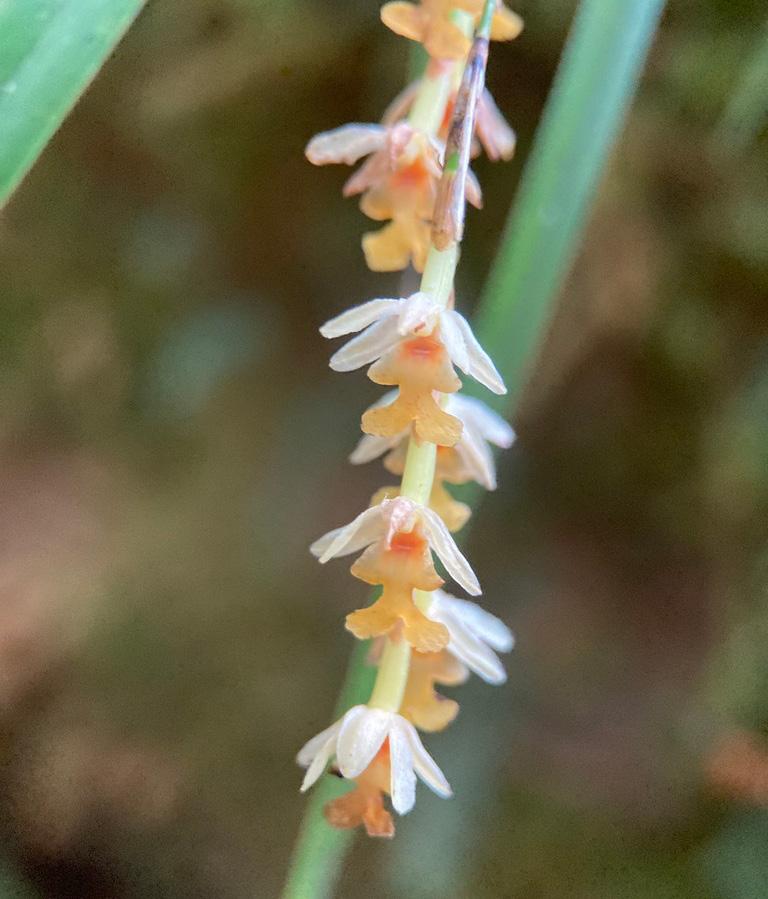
Peka-a-waka (a native epiphytic orchid). Michael Berardozzi
Trees capture an amazing amount of carbon (they are “carbon sinks”), and this helps fight climate change. Trees can help us if we help them to grow and thrive. They are a nature-based solution.
How can you help?
Use Your Hands – give a trap, or get trapping in your community, farm or backyard if possums lurk there. Find out if there are forest planting activities near where you live and take part.
Use Your Voice – tell people what epiphytes are and how they need to be protected from possums and browsing pests.
What I do in nature
Brothers Jude-Tui and Arthur sent in stories about their holidays. Here are some excerpts (parts) of what they wrote.
Jude-Tui wrote about the Okitu Bush Reserve track, near Gisborne. “When we got to the top, I saw an amazing view from the lookout. The breeze was really nice on my face. I could see how far we had actually run. We found an interesting tree with a hole in it. The Bush Reserve track made me tired but it was fun.
Winifred Frances Lysnar created the Reserve and donated the land. Before the land was farmed but now it is an astonishing bush track. Winifred and groups planted 3,500 trees and plants. There’s heaps of birds too.”
M. Smyle
M. Smyle
Arthur told us about visiting Bushy Park, near Whanganui, with family and friends.
“I saw the toutouwai (New Zealand robin). These little birds are very curious, and a sign said it was reintroduced to Bushy Park in 2005. I was sort of excited because it is my bird (my family gives us a bird name each). Mine is the toutouwai (my second name is Robin).
It is important to look after Bushy Park especially because of the possums, stoats and rats in New Zealand. We already have some traps out at our place, but we might try to stop more possums by putting out some more traps.