
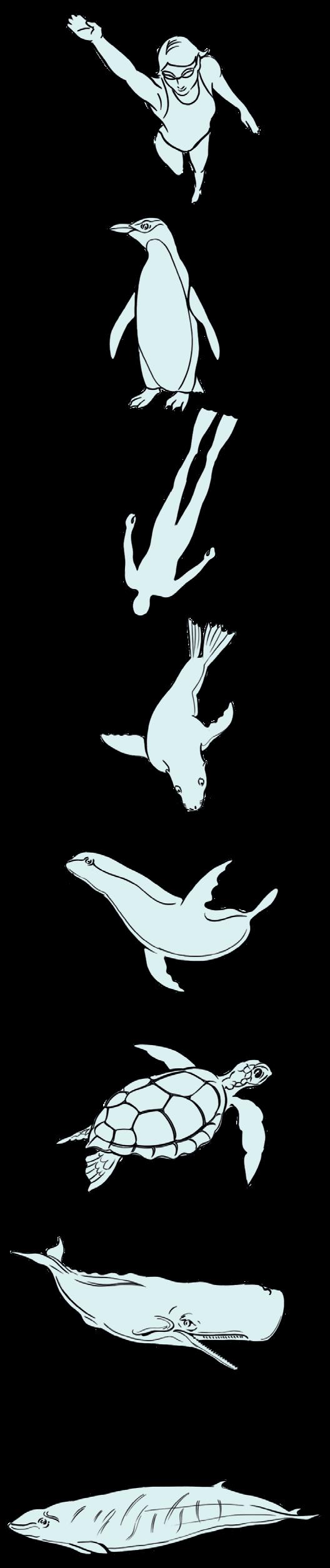
Everyday swimmers can get down to 10m max (holding their breath for about 1 min)
Hoiho | Yellow-eyed penguins can dive to 120m.
New Zealander William Truebridge got to 124m deep while freediving in 2016.
Kekeno | NZ fur seals can dive to 238m
Rāpoka/Whakahao | NZ sea lions can dive to 550m
Honu | Leatherback turtles can dive to 1200m.
Parāoa | Sperm whales can dive just over 2000m.
The deep sea starts from 200m down from the surface, where a little sunlight can still reach (but not enough for photosynthesis by plants to happen).
By 1000m the deep sea is pitch black. The deepest part of the deep sea is within the Mariana Trench and is 10,935m deep.
Take a deep dive with us as we explore this mysterious environment and why we need to protect it!
Cuvier’s beaked whales can dive to 2992m –and hold their breath for over 3 hours!
EDITOR: Rebecca Hatch
ART DIRECTOR/DESIGNER: Rob Di Leva, Dileva Design
PRINTING: Webstar, Auckland • ISSN 2230-2565
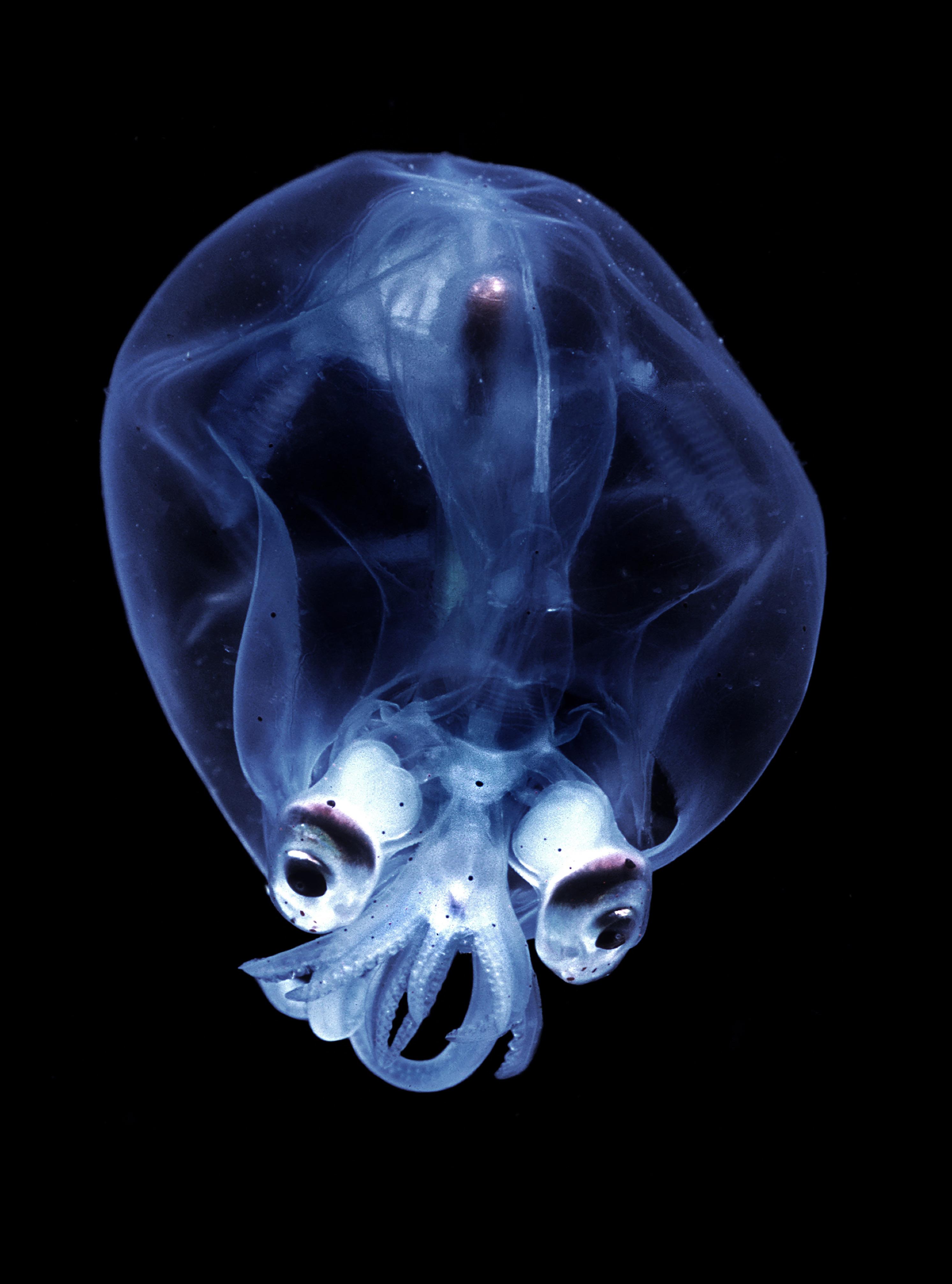
COVER: Deep sea glass squid, Teuthowenia pellucid Deepseaphotography.com
Plot these records out on the other page to get an idea.
WHAITUA AHO RĀ | SUNLIGHT ZONE (EPIPELAGIC)
WHAITUA KOKOMEA | TWILIGHT ZONE (MESOPELAGIC)
WHAITUA WAENGANUI PŌ | MIDNIGHT ZONE (BATHYPELAGIC)
Woah! This is about where Mount Everest would reach if it sat on the bottom of the ocean. It is 8848m high!
Maunga Raro Moana | Seamount

WHAITUA PŌURIURI | THE ABYSS (ABYSSOPELAGIC)
Papa pōuriuri | Abyssal plain
The deepest part of Aotearoa is the Kermadec Trench, which is 10,177m deep!
The Deepsea Challenge broke a record in 2012, getting to a depth of 10,908m!
WHAITUA WARO | THE TRENCHES (HADALPELAGIC)
“
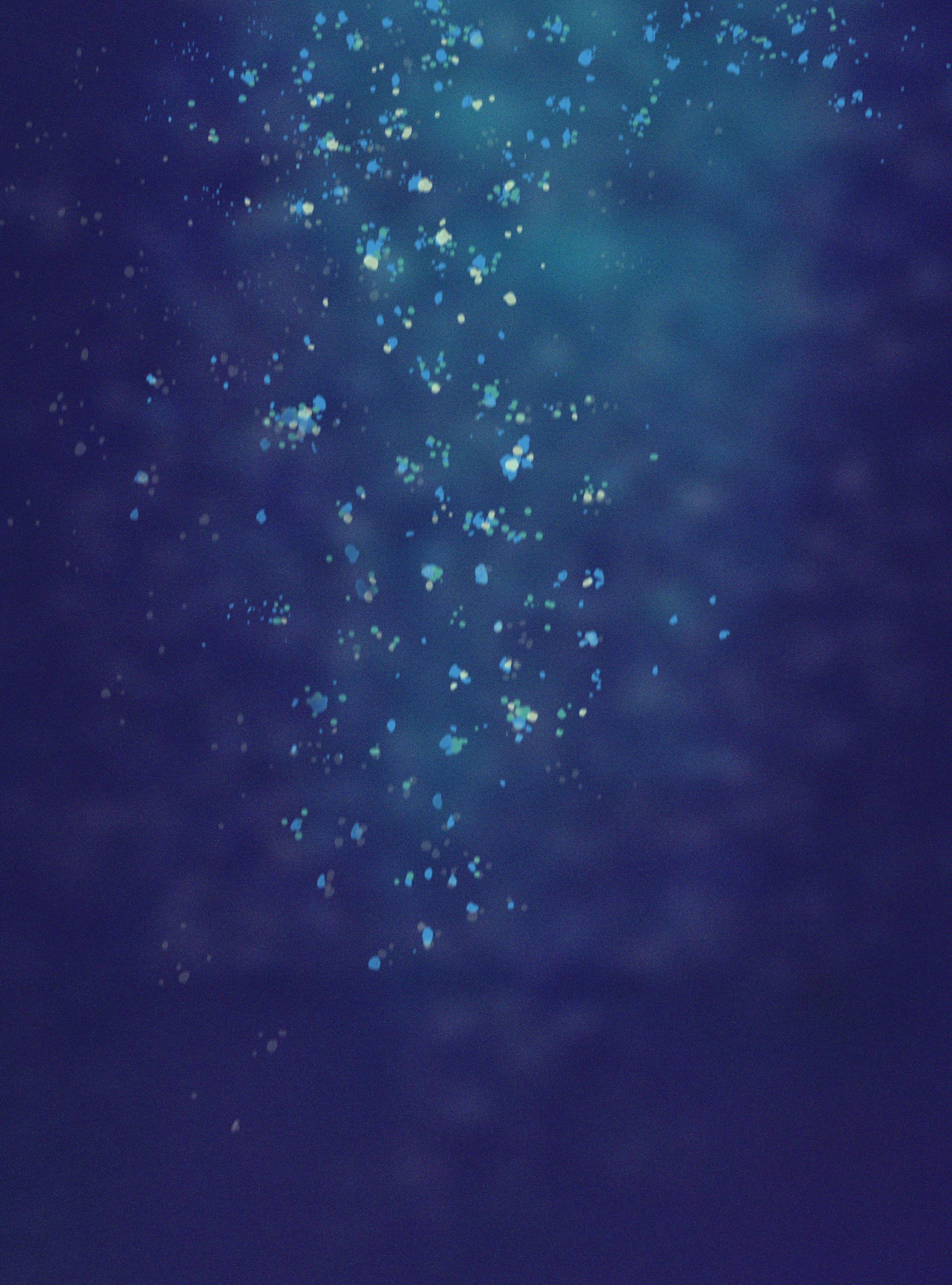
Did you know that the best “snowfall” the world has ever seen is in the ocean?
But the white fluffy flakes drifting down from the top layer of the ocean aren’t frozen water vapour…
Marine snow is decaying material. It’s made of tiny bits of dead animals and plant matter, snot, poo, and sediment (silt, soot, dust, sand) that has clumped together.
It’s a primary food source for many of the animals of the twilight zone, and below.
What doesn’t get eaten settles on the bottom of the ocean alongside lots of other sediment as a sort of “ooze” that builds up slowly over time.
FACT:
Marine snow transports carbon from the surface of the ocean to the bottom where it gets stored.
FACT: Without marine snow, there would be way more carbon dioxide in our atmosphere warming up our Earth.
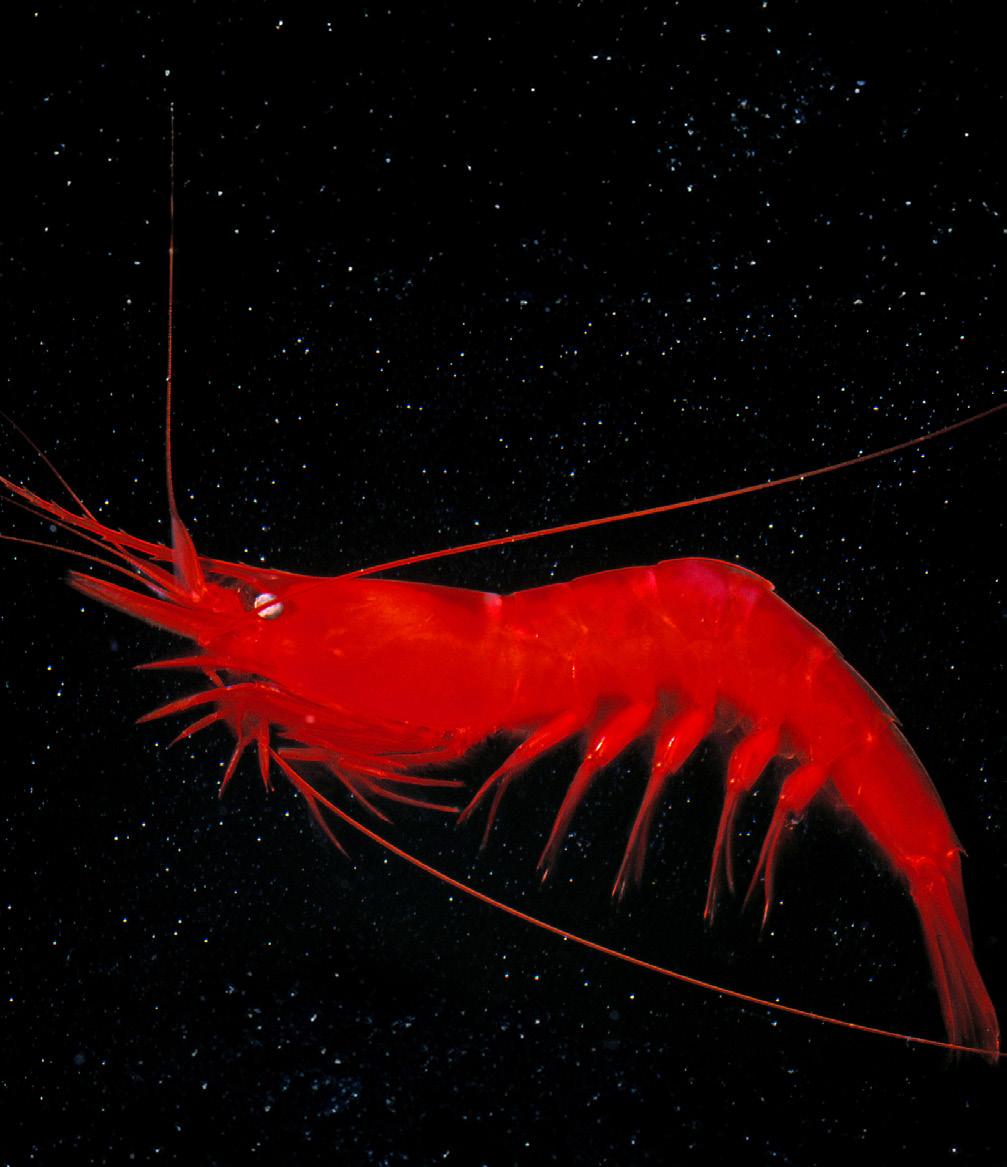
Red animals are common in the deep ocean because there are no red-light waves at this depth. By being red you look grey or black instead, making you nearly invisible to predators and prey!
Kōura rangi | Deep sea shrimp. DeepSeaPhotography.com
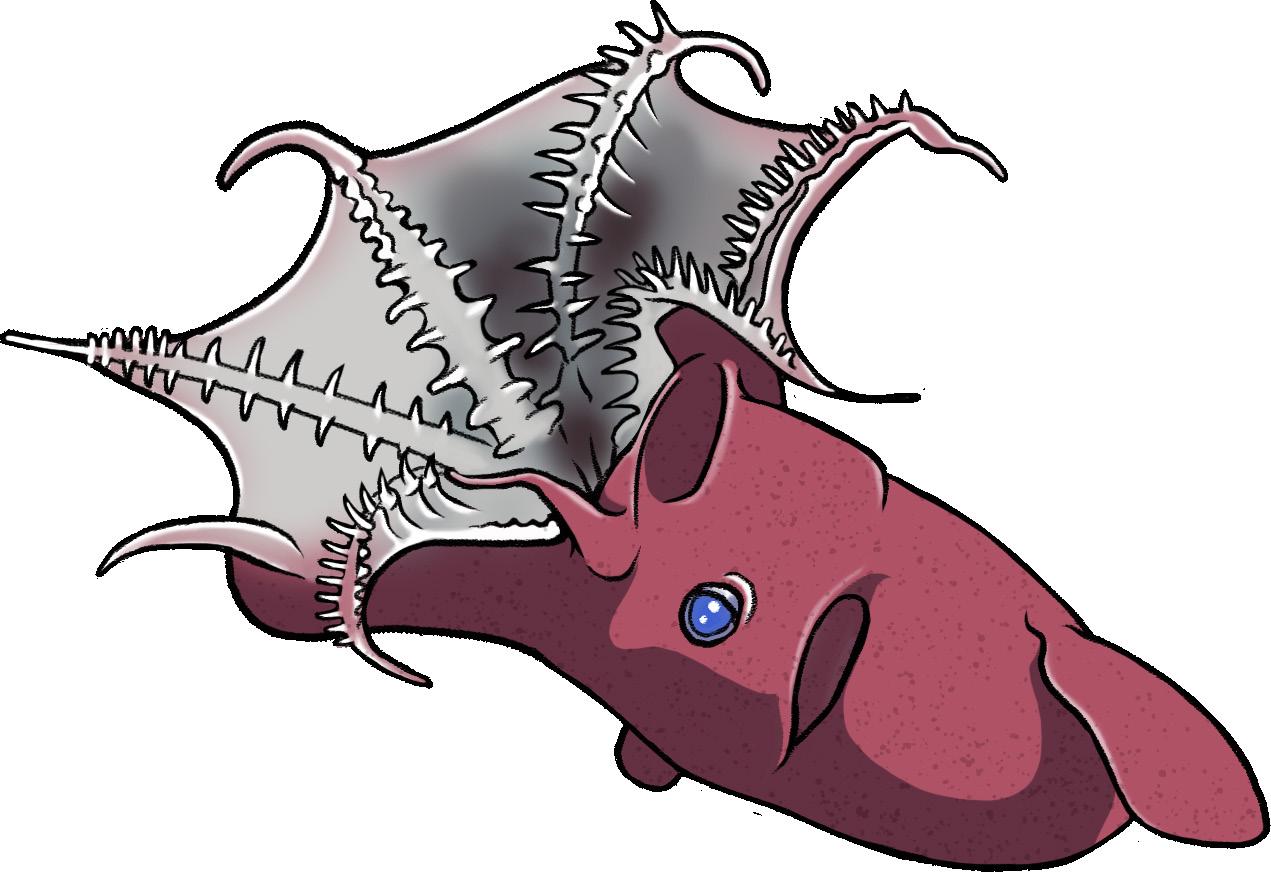
I’m a ngū | vampire squid and I live in the twilight zone. Despite my name, and look, I’m no bloodsucker! I’m a decomposer, like a dung beetle, worm, or most mushrooms. I LOVE marine snow. I’m the only cephalopod species that doesn’t rely mostly on live prey.
The bathypelagic, or midnight zone, is the largest part of the ocean. Stretching from 1000m to 4000m below the surface, it’s an extreme place to live. No wonder there are such weird and wonderful animals and adaptations there…
Ika-rama | Lanternfish. DeepSeaPhotography.com
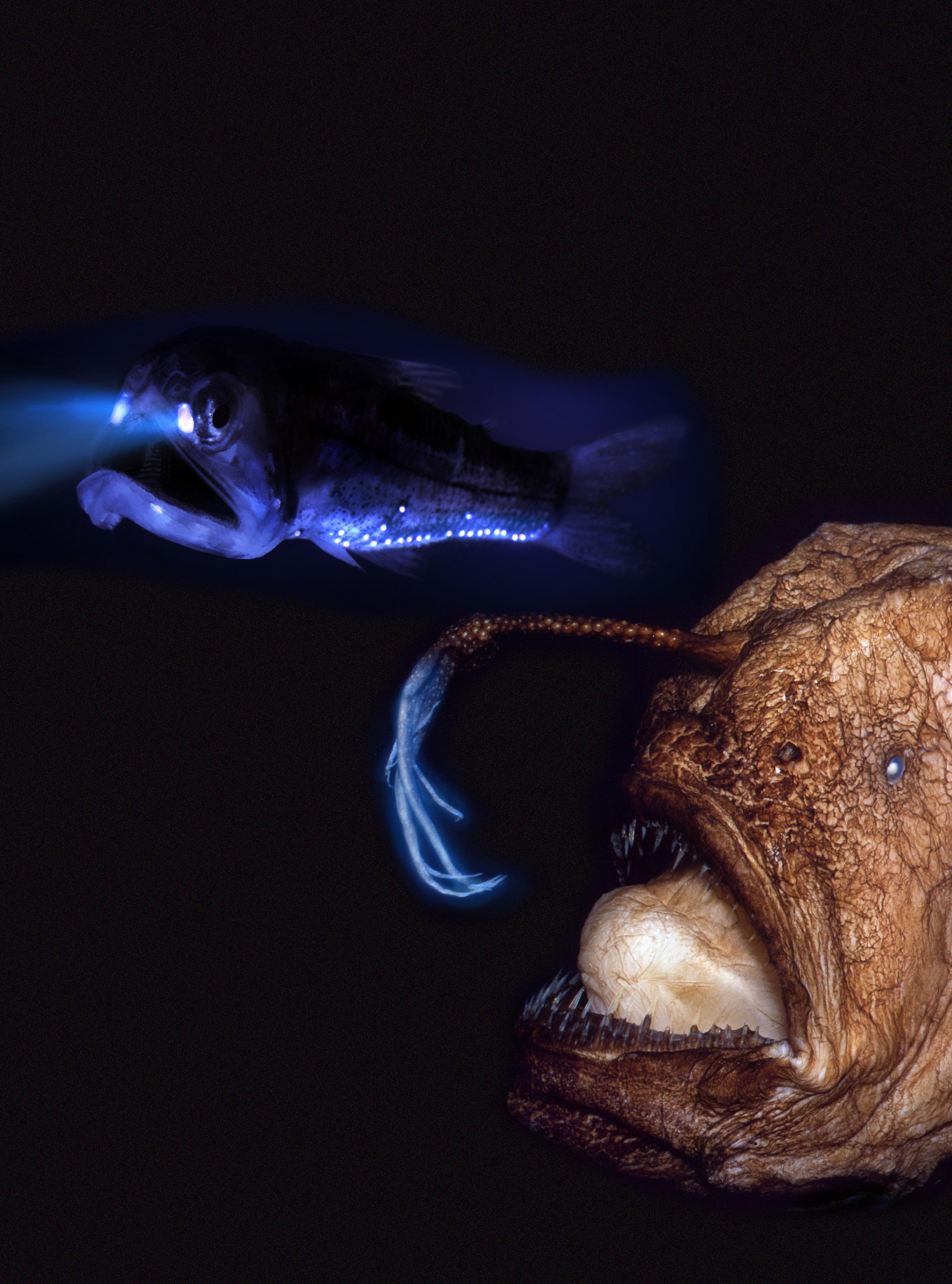
Some species only grow very small so that they don’t have high energy needs. Being small means a greater range of prey and, numbers-wise, more prey to eat too. Lanternfish are usually only 15cm long.
Bioluminescence helps with luring prey, attracting the right mate, and avoiding predators (they get distracted, confused, or deterred).
The light made by deep sea species is usually blue coloured because these light wavelengths travel the farthest through water. That’s good for communication.
Being transparent is another form of camouflage. Check out the glass squid on the front cover!
FACT: No sunlight at all reaches the midnight zone, but it's not totally dark down there. Animals generate their own light through chemical reactions.
Having a soft, gelatinous (jelly-like) body helps with buoyancy control. That’s how you maintain your depth in the water, floating without having to use lots of energy to do so.
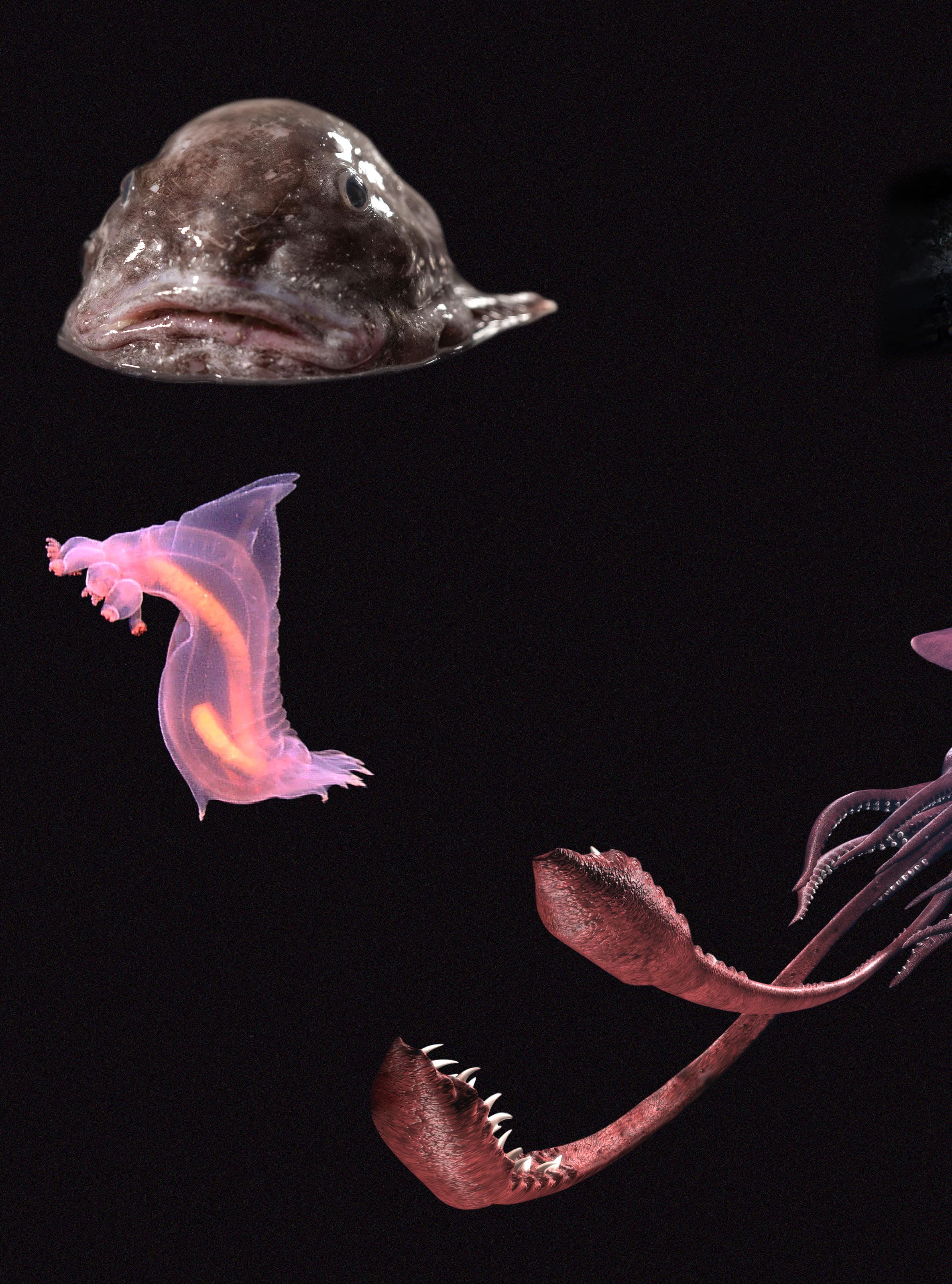
Ika kōwariwari | Blobfish. Ocean Census/NIWA/Rebekah Parsons-King
Being water filled has its benefits in the deep sea. You can just push water into different part of your body to move them. You also can’t get squished by the pressure. Your internal pressure is the same as the external pressure on you.
The deeper you go in the sea, the more intense the water pressure gets. In the midnight zone, you’d feel like you had 35 elephants on your shoulders!
My eyes are as big as soccer balls and my brain is shaped like a doughnut. My oesophagus passes through the middle of my brain. Luckily, I have a beak to cut up my food into small pieces!
Rori | Swimming sea cucumber. NOAA Ship Okeanos Explorers
Gigantism happens because of the lower temperatures at these depths of the ocean.
It is beneficial because being bigger means that you can eat larger prey (another way you can conserve more energy), and you have fewer predators. The downsides are that you are easier to see, and large prey becomes fewer in numbers the bigger you get.
Ngū tipua | Colossal squid. CG construction: DeepSeaPhotography.com
Ika-neke | Viperfish. DeepSeaPhotography.com
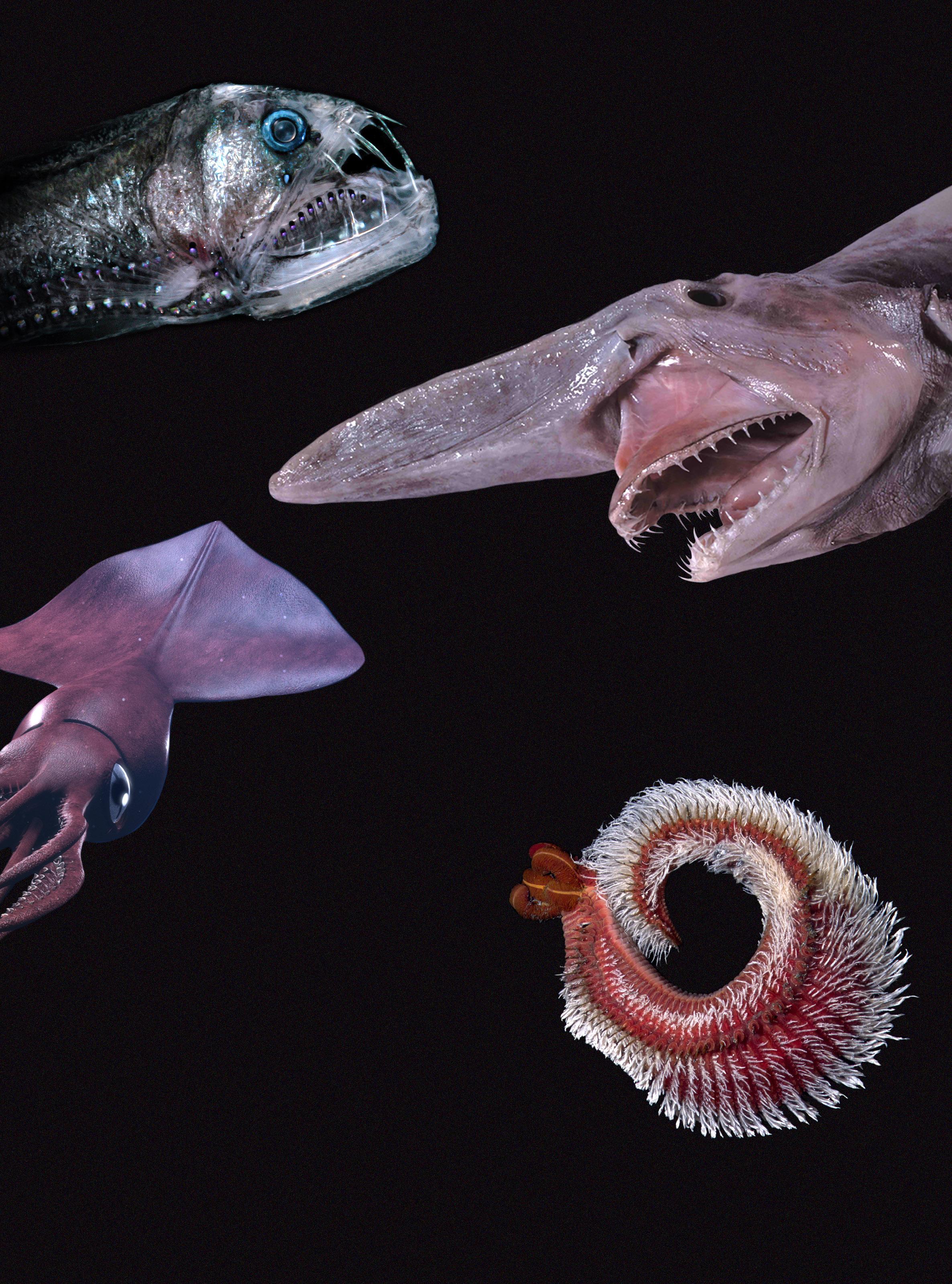
Having big eyes enables you to collect every last photon (particle) of natural light left in the darkness. This helps in hunting prey, and spotting predators. Haven’t got room on your body for big eyes? These species fine-tune their other senses.
While the water in the midnight zone is mostly as cold as a fridge at 4°C, there are some places with areas of special hydrothermal vents (geysers). The water that comes up out of these is extremely hot!
Many species in the midnight zone need to hunt to survive. The viperfish uses its teeth to prevent prey reversing. The goblin shark can turn its jaws inside out and has the fastest recorded strike of a shark.
Bristles can aid in swimming, crawling, burrowing, and defence in the deep sea.
I don’t personally live in NZ waters, but some of my Alvinellidae relatives do!
Mangō tipua | Goblin shark. Dianne Bray/Museum Victoria. Noke tipua | Deep-sea Pompeii vent worm. DeepSeaPhotography.com
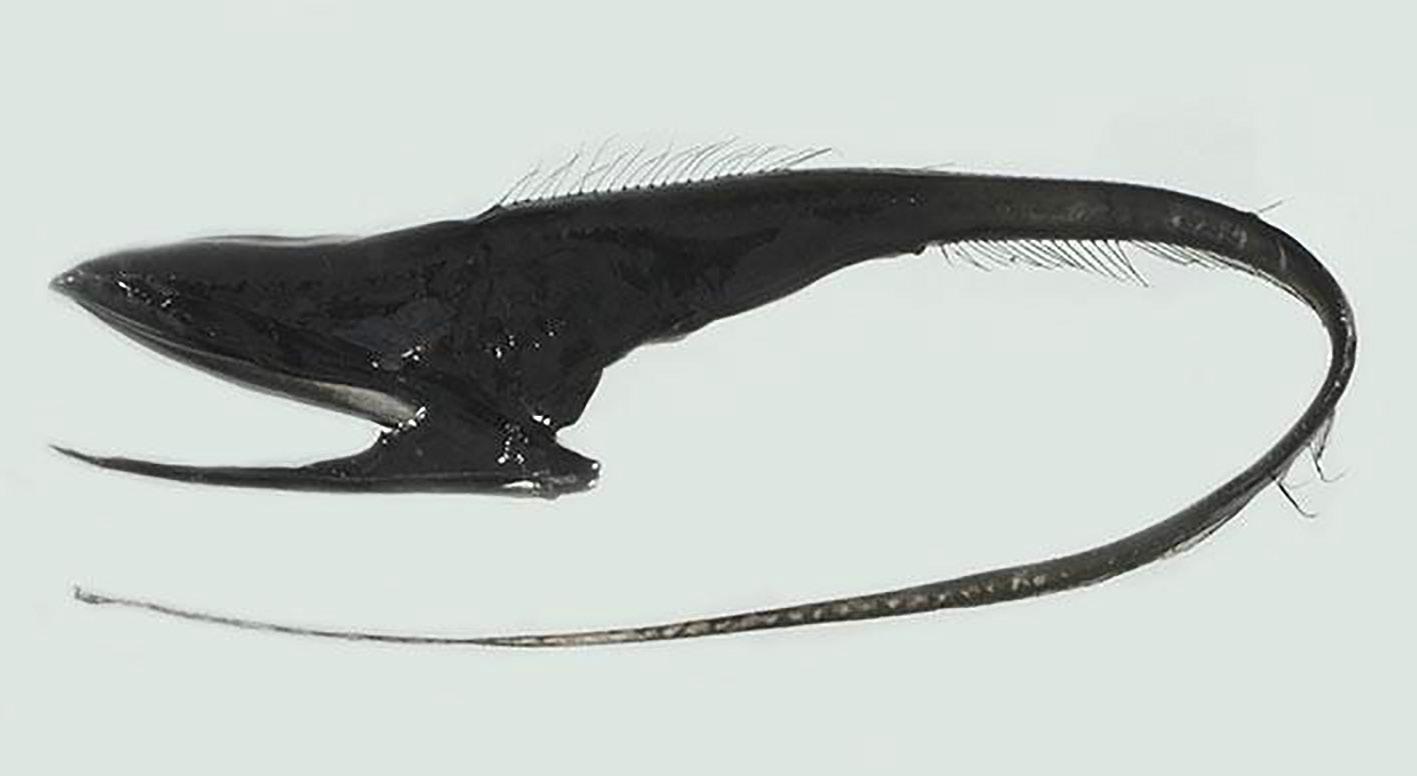
Gulper eels (Eurypharynx pelecanoides) are another unusual midnight zone species. They’re most often found at depths between 1000 and 2100m.
They have a small body and a very, very large mouth. When they open their mouth as wide as it will go, it is 11 times the volume of the whole eel!
Scientists think that they most often feed like baleen whales, scooping in prey and the surrounding water, swallowing that prey whole, then squeezing the water out between their teeth and through their gills. When they are all filled up, they look like a black balloon.
They eat fish, crustaceans, squid, and octopus.
Some scientists think their wide mouth allows them to go after quite large fish if food is hard to find.
Why do you think gulper eels have tiny eyes? Why have a light organ that glows a pink colour at the tip of their whip-like tails?
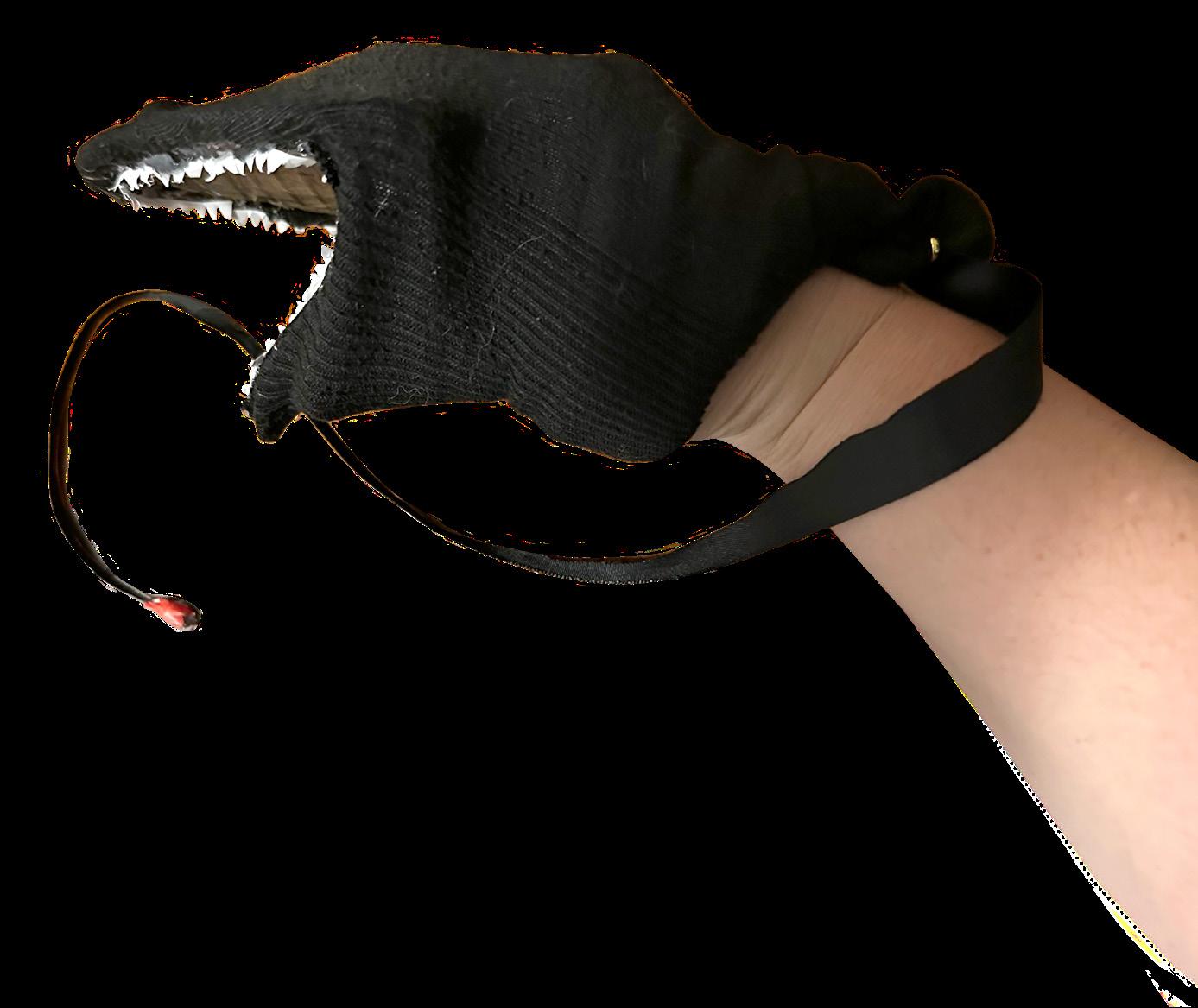
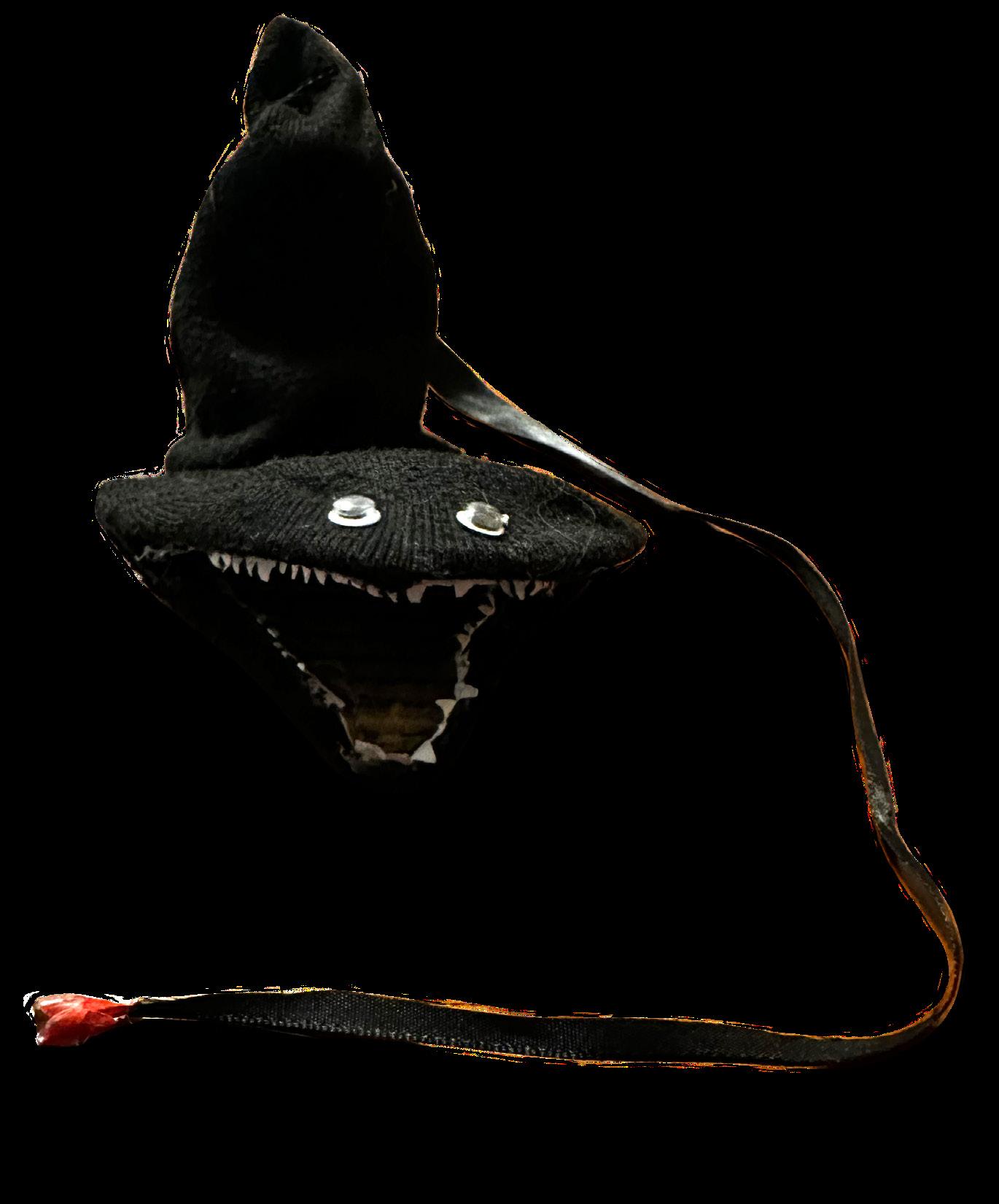
Follow our photo or video instructions on making an easy sock puppet gulper eel. See a video too of a gulper eel inflating!
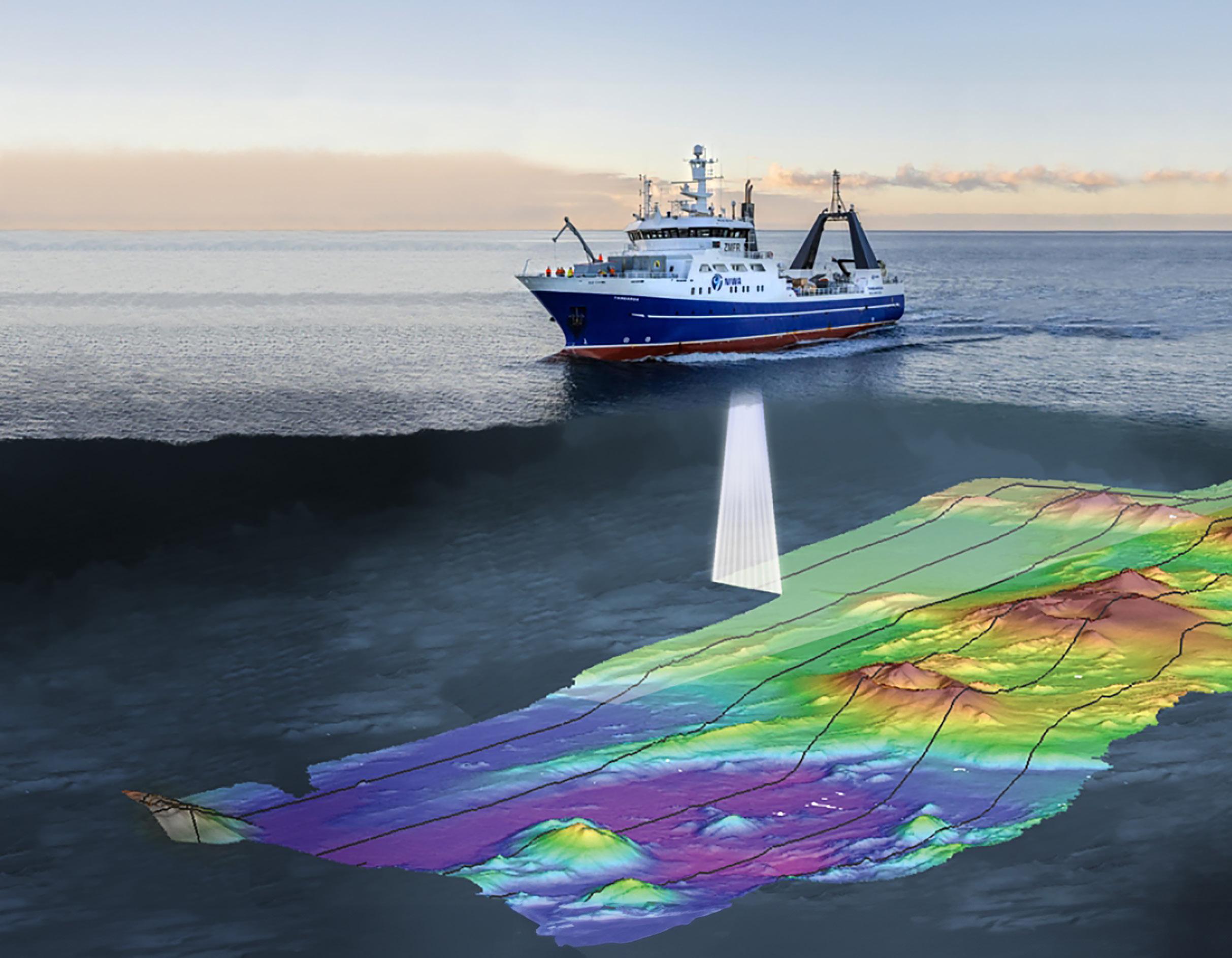
RV Tangaroa using multibeam to map the seabed. NIWA
Aotearoa has over 3000 known seamounts in our ocean region?
Seamounts are underwater mountains, knolls, and hills.
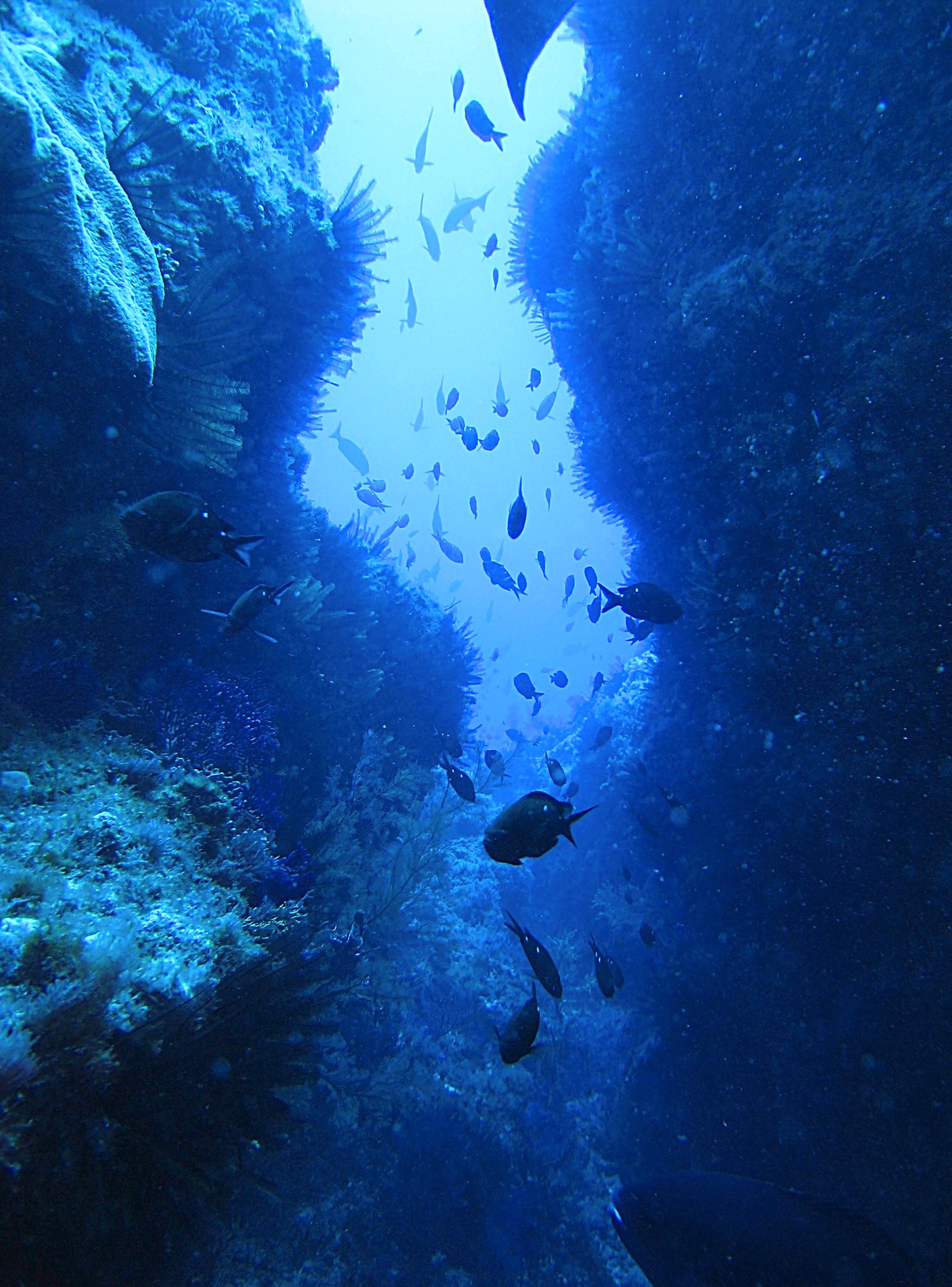
These amazing deep-sea habitats are usually formed by volcanic activity and found along tectonic plate boundaries. They’re homes to many species, including “forests” of corals.
These maunga raro moana | seamounts were mapped by NIWA using a tool called a multibeam echo-sounder. It uses soundwaves to measure the depth of the water based on the time it takes for the sound to reach the seafloor and then reflect (bounce back) to the ship.
Find more info and a fun seafloor mapping activity on the Science Learning Hub website
POKAPŪ AKORANGA PŪTAIAO sciencelearn.org.nz
They need to grip onto rocky seafloor and can’t survive on soft sediments of the deep muddy seafloor – that makes larger seamounts reaching the twilight and midnight zones a great habitat for them.
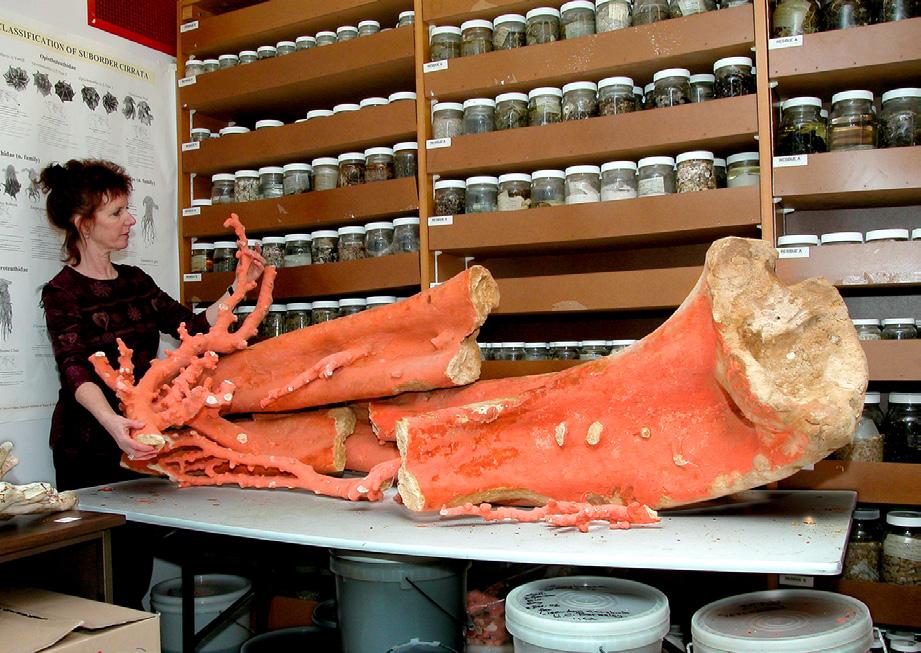
Bubblegum corals grow only very slowly and so big ones, like those in the photographs, are ancient – thought to be about 300–500 years old!
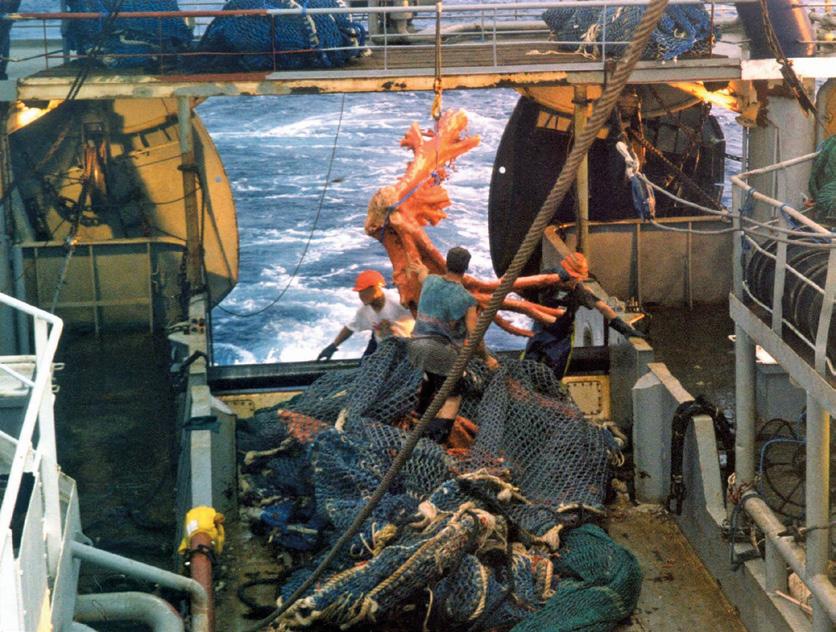
Bottom trawling harms seamounts and ancient corals. Here’s coral being thrown back because it’s by-catch (accidentally caught). It got caught in a net going after deep sea fishes who also like living near seamounts, like orange roughy.
The Kermadec area itself is so special! It connects tropical and temperate waters and is a highway for marine mammals.
By Libby Christophers
New Zealand
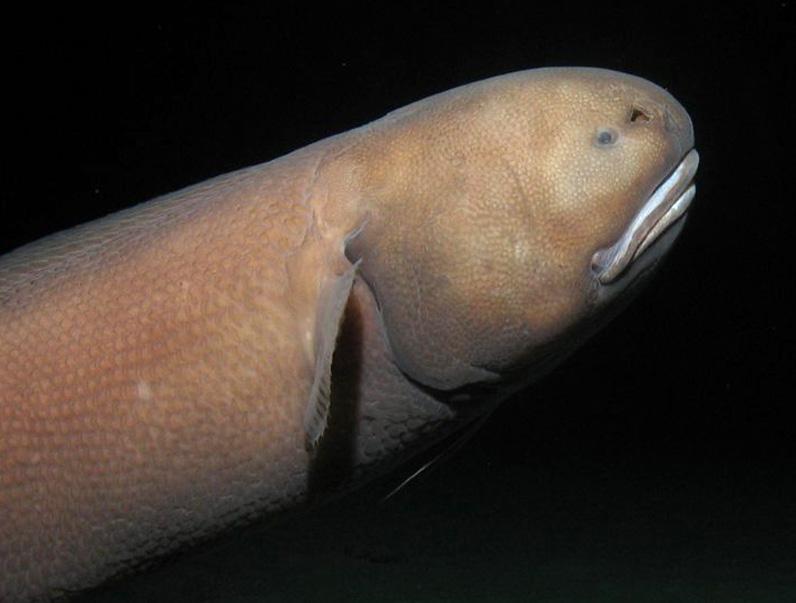
Cusk eel. Alan Jamieson/ Oceanlab, University of Aberdeen
See footage from a dive made by NZ and Chinese scientists in 2022.
Deep below the surface of the ocean, far from where our eyes can see, aliens hide right here on Earth. Well, sort of. The deepest parts of Earth’s oceans are home to creatures that look more like they’re from outer space. Slimy snailfish, giant crustaceans (known as amphipods) longer than a ruler, pearlfish (like eels made of glass), and cusk eels with their tiny eyes are among the crazy critters that call this place home. While there has been a massive increase in knowledge about our sea floor – its topography (the physical features) and biology (the things living there) – there is so much more to find out.
The Kermadec Trench is the fourth deepest place in the world, and it’s right in our backyard. It starts just north of the East Coast of the North Island and stretches right up the Pacific, almost to Fiji. It’s also where the Pacific Plate is being driven beneath the IndoAustralian Plate, making room for existing continents to grow and for new ones to be created. The Kermadec Trench goes down to 10,117m deep – far enough to stack 31 Sky Towers on top of each other!
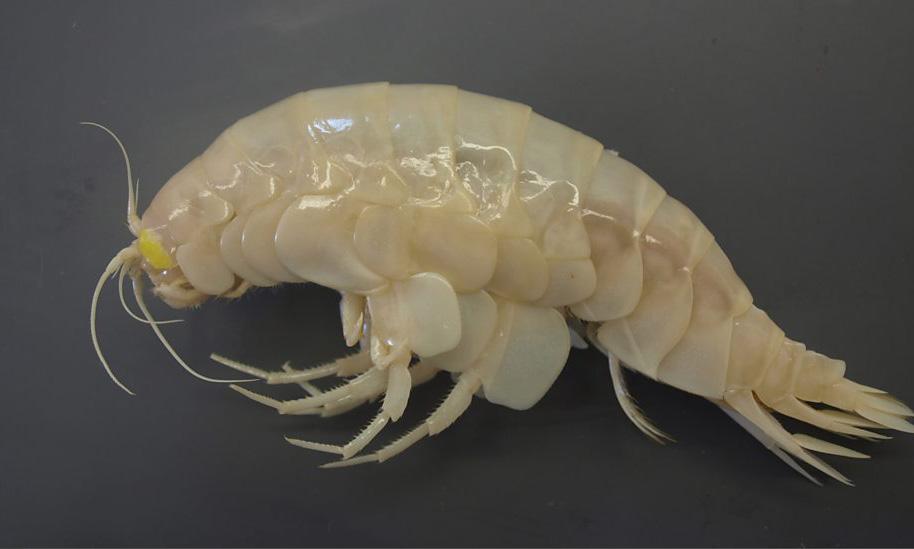
Kōuraura tipua | Supergiant amphipod. Alan Jamieson/Ocean Lab, University of Aberdeen
The deepest parts of the sea are cold, dark, and quiet. They’ve remained mostly untouched for millions of years. That means that many trench animal species are found only in their individual trenches, nowhere else on Earth.
The scientific word for being unique to a place is “endemic”.
Learning about trench species helps scientists to create medicines, to understand how life might have evolved on Earth, and to understand how the conditions on other planets may also be able to support life.
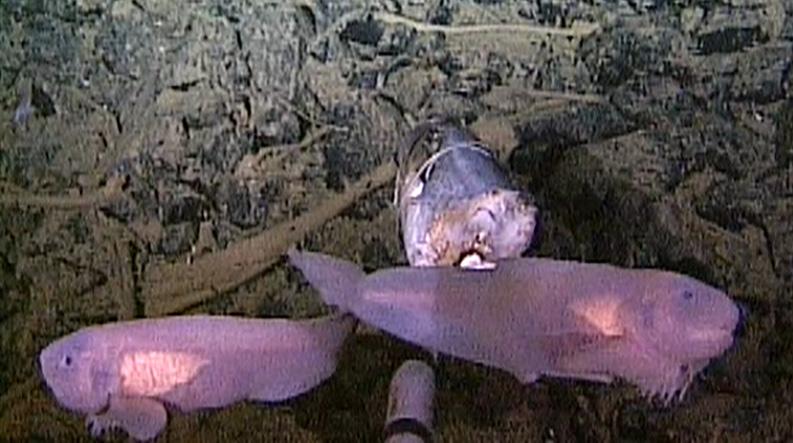
Snailfish. Alan Jamieson/ Oceanlab, University of Aberdeen
Seafloor ecosystems are very vulnerable to damage and destruction by humans.
The Kermadec Trench needs to be well cared for – who knows what will be discovered?!
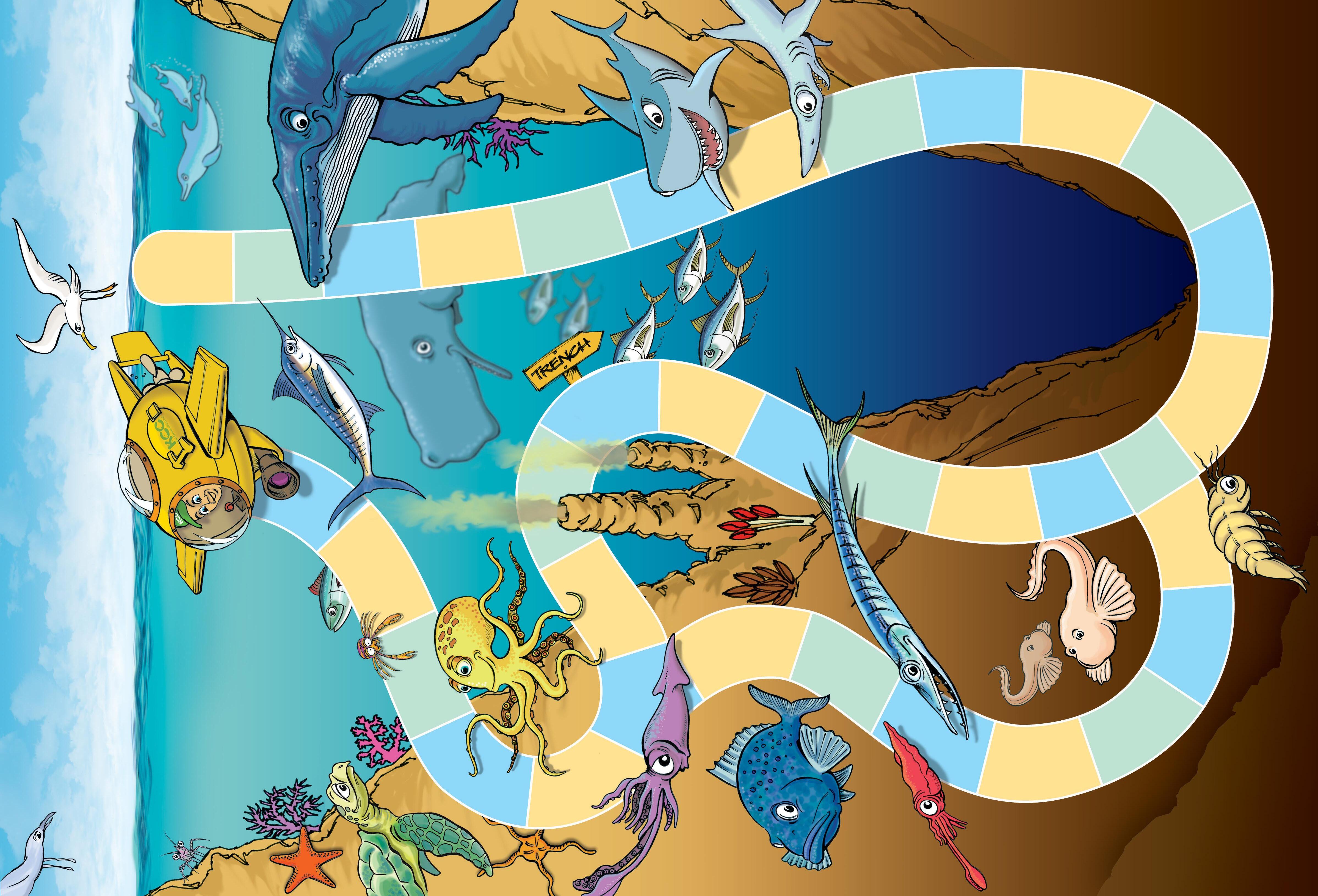
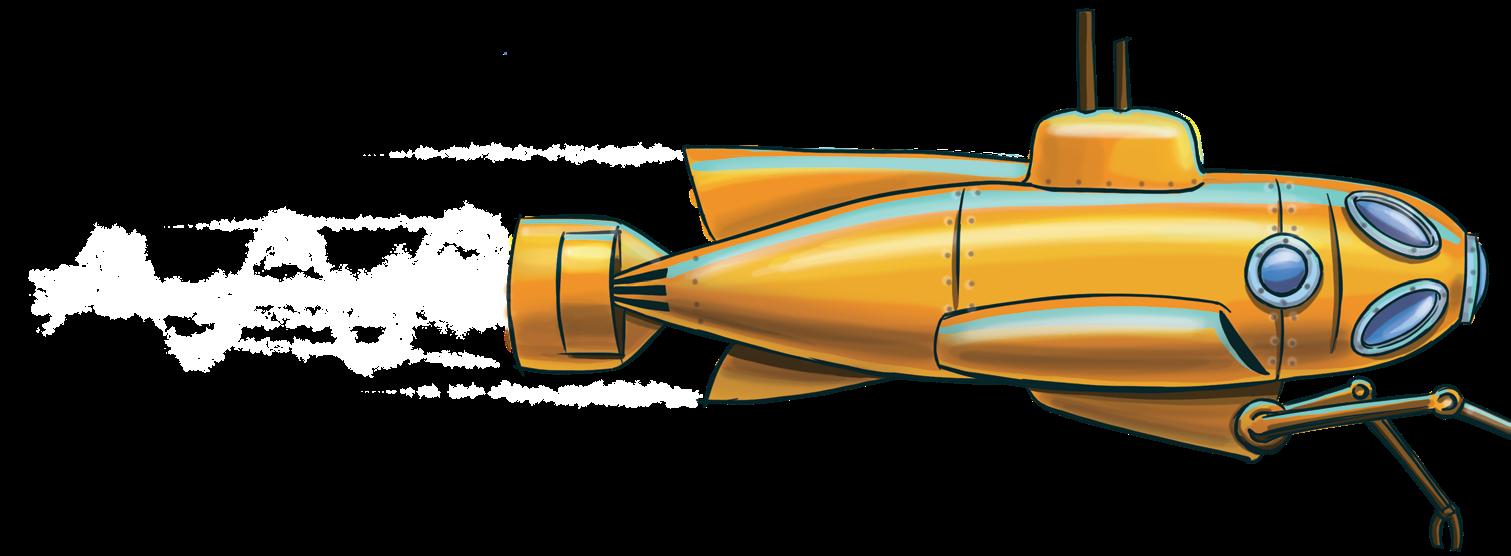
You’re a scientist, riding your submersible to the unexplored depths of the Kermadec Trench. What will you find? Earn as many points as you can for film footage and species discoveries, then return to the surface.
Great shots! ➊ POINT Squid says, “Which way?” Species: new to NZ ➋ POINTS Species: new to NZ
Great shots! ➊ POINT
Species: new to NZ ➋ POINTS
Species: new to NZ ➋ POINTS
Decide who goes first, then take turns by throwing a single dice, and moving the number of squares shown. Move in the direction of the arrows unless you LOOK AGAIN . (See below.)
Where the path splits, you may go either way. Every time you land on a POINTS square, score the points shown. If your dice roll takes you to another player’s square, go to the square just behind or just in front of them instead. You choose which. After all players return to the surface, add up points. Whoever has the most wins.
LOOK AGAIN
Species: new to science ➍ POINTS
During the game, each player has three chances to use a turn to look again . To do this, say on your turn –BEFORE you throw the dice –“I’m looking again”.
Species: new to science ➍ POINTS
Species: new to NZ ➋ POINTS
After throwing the dice, move that number of squares backwards instead of forwards. Draw an eye on your score sheet each time you look again, so you know when you’ve used your three chances.
Species: new to science ➍ POINTS
Species: new to NZ ➋ POINTS
YOU NEED One dice A counter for each player Paper and pen for keeping score
Send in a photo or video of your mahi to kcc@forestandbird.org.nz and be in to win 10 mystery prizes! Closes 30 October 2024
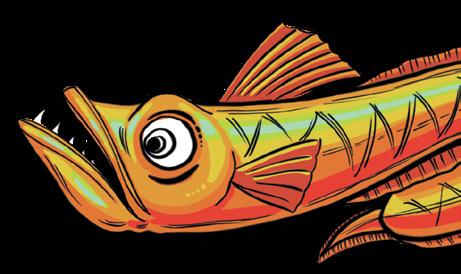
There are so many species yet to be discovered in te moana uriuri | the deep sea. What do you imagine could be living there?
Get ideas from the information shared in this issue of Wild Things and do your own research too. Any building technique will do, but to give you some ideas…
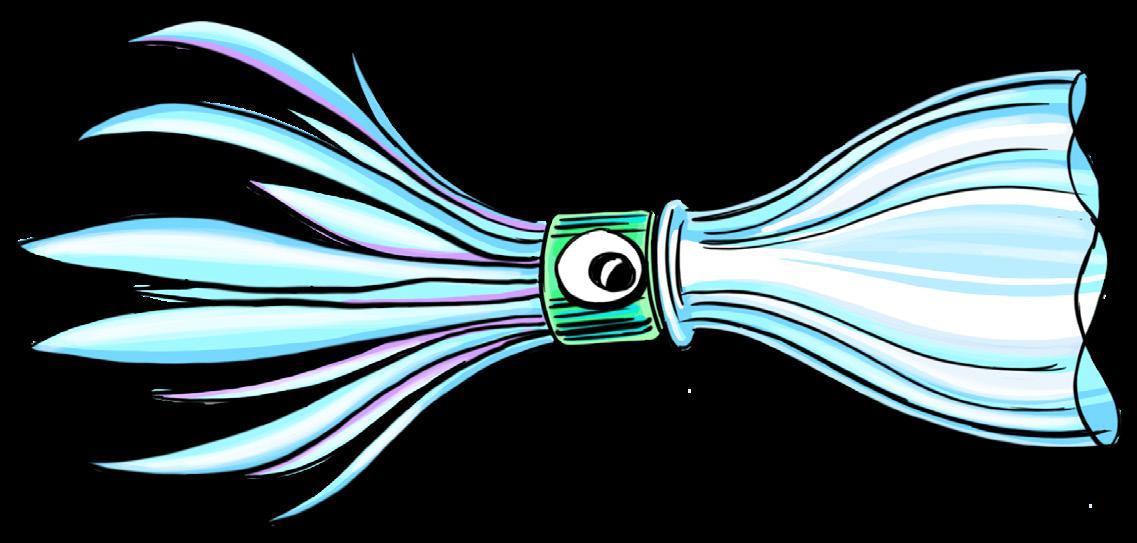
Reuse plastic bottles to give transparency to your construction.
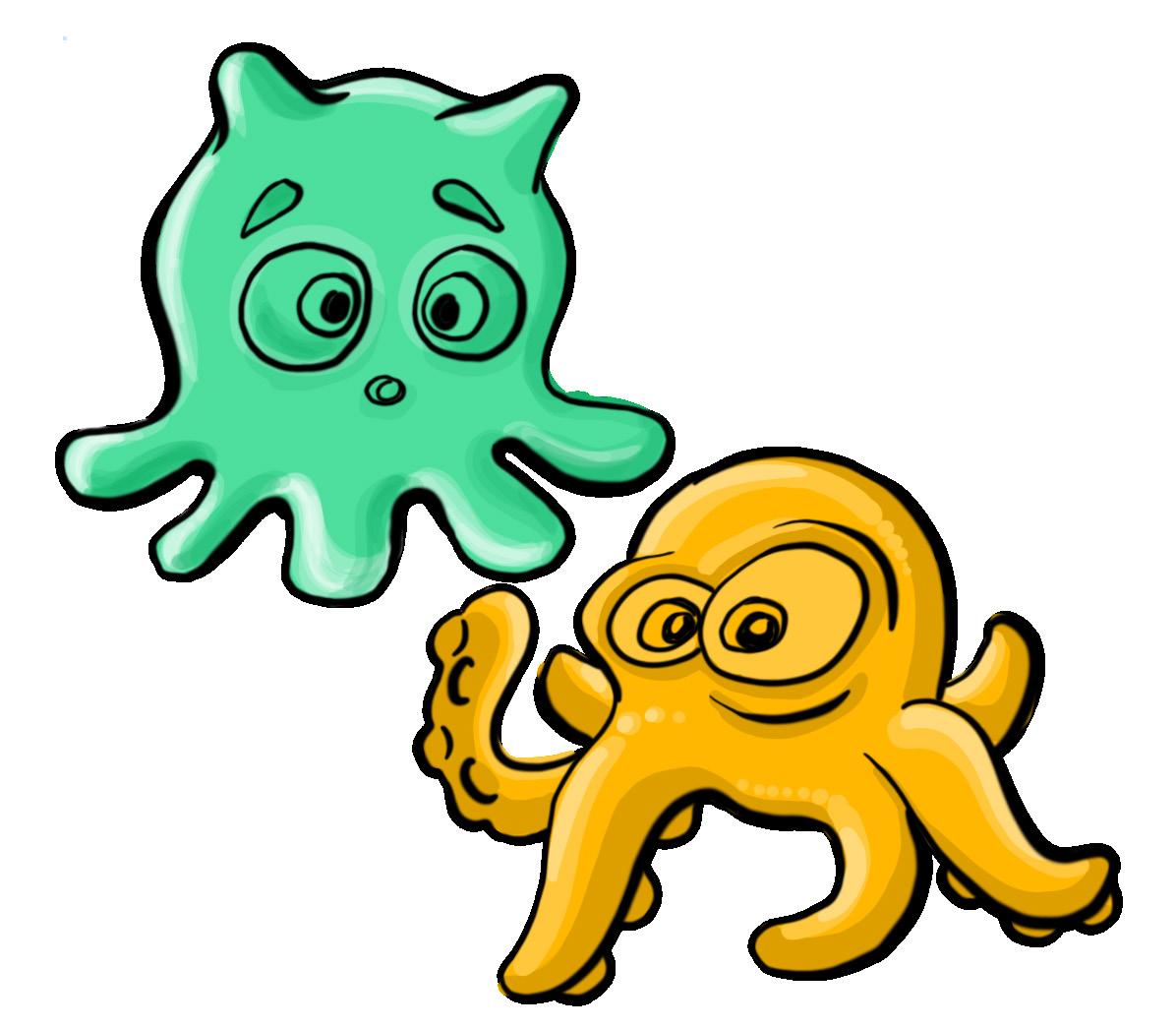
Use playdough to make a squishy body.
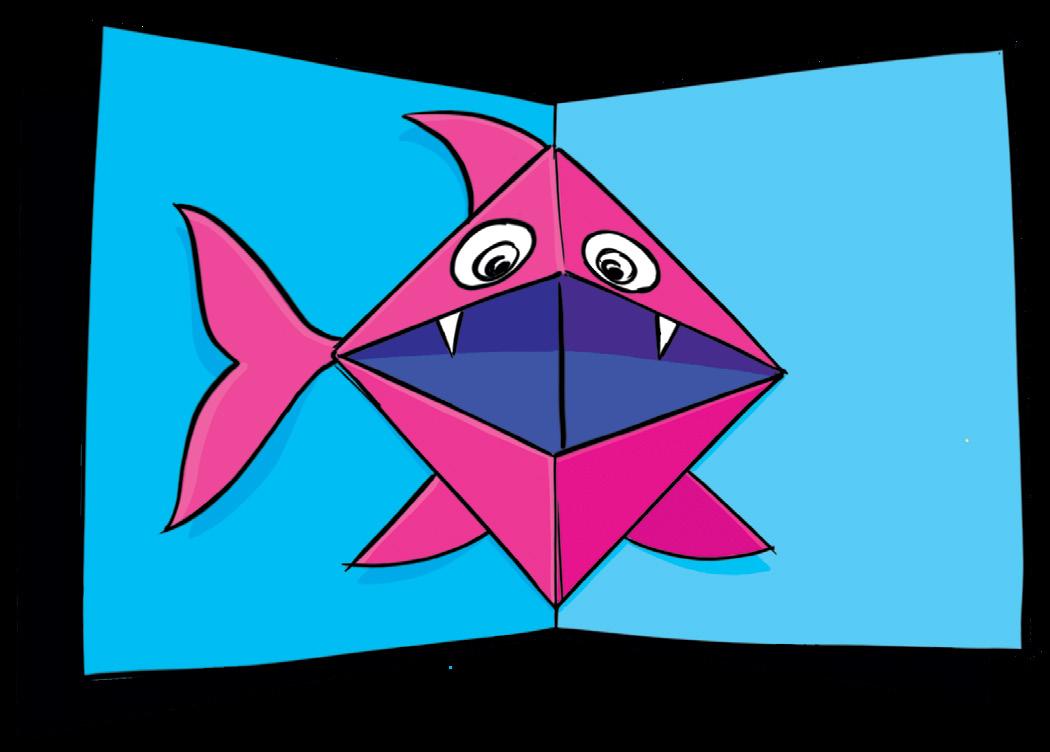
Use paper folding or pop-up techniques to appear unexpectedly!
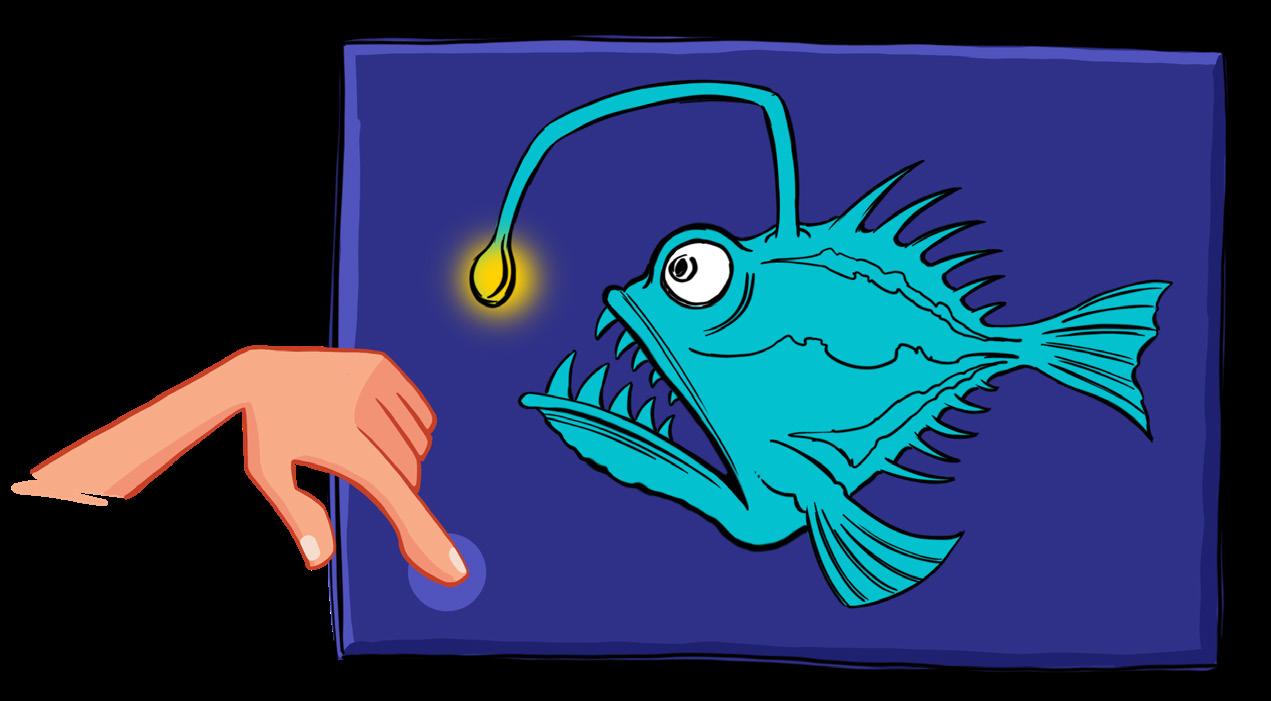
Make a paper circuit or sew circuits to create a light display.
By Sadie Mills, NIWA and Andrew Stewart, Te Papa Tongarewa
Ocean Census is a global group of scientists with a mission to speed up the discovery, scientific description, and the protection of new species. We know that there are things happening in the ocean, like climate change causing the sea to warm up, or become more acidic, and impacts like fishing or mining that might cause a decrease in numbers or destroy habitats. There is still much that we don’t
know about the deep sea. We need to know what all of the animals are and what important jobs they have in the ecosystem.
The Bounty Trough is a big undersea valley off the east coast of the South Island of Aotearoa that has a deep canyon running down it’s middle with undersea mountains and large areas of muddy seafloor. It has been in existence for nearly 100 million years!
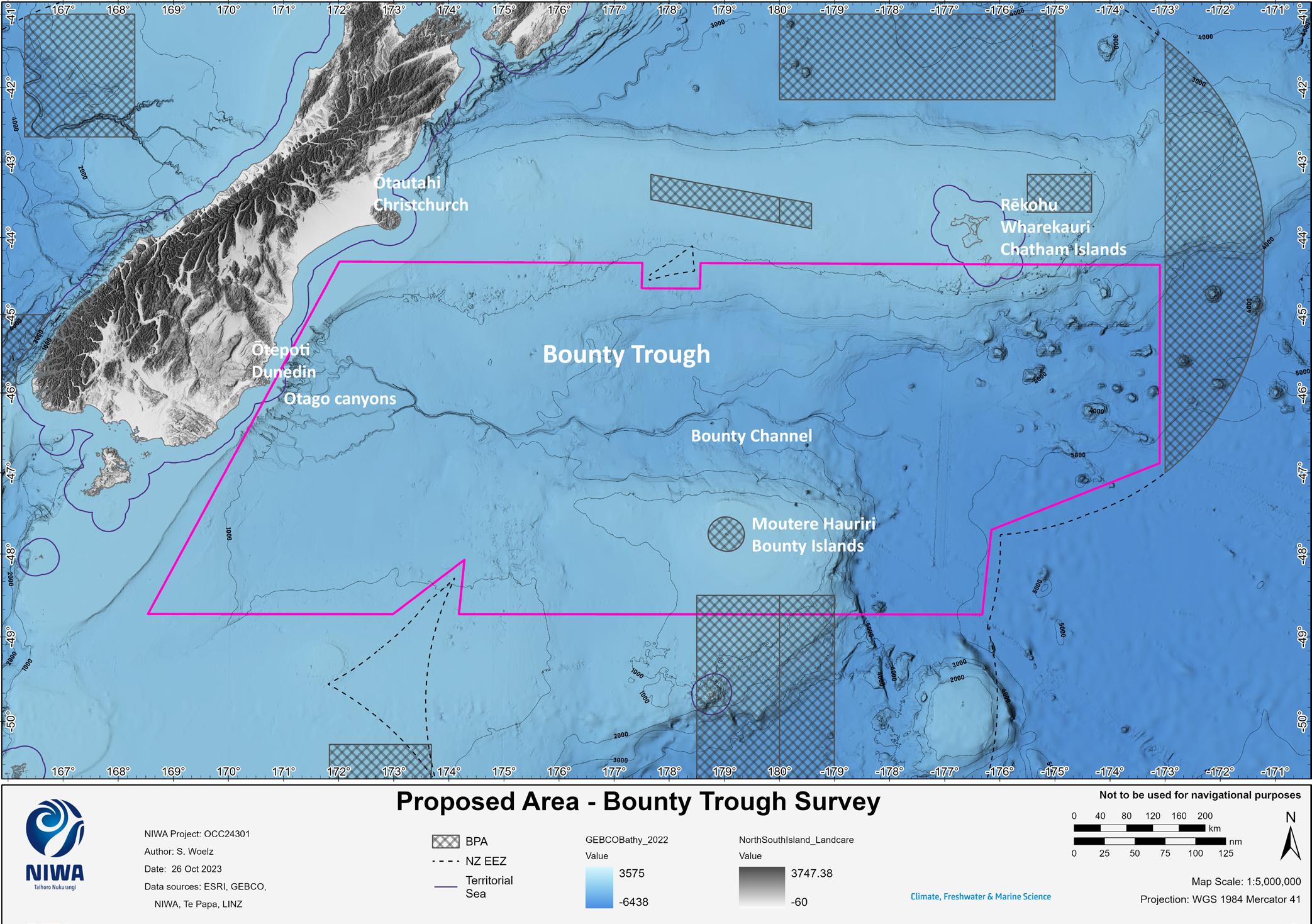
Before we went on our expedition we looked at a map of all the places that we already have good information about and found that the Bounty Trough was somewhere that was almost completely unexplored.
We didn’t know what kind of animals lived there. We were looking for all sizes of animals: megafauna (like fishes), macrofauna (like brittlestars, snails and bristle worms) and meiofauna (like tiny nematode worms).
Scientists from NIWA and Te Papa got together before the voyage to make a plan about where we wanted to go and explore and what type of equipment we wanted to take with us. Together with Ocean Census, we invited researchers from around New Zealand and overseas to join us. We chose people to join us who are experts in different animal groups and know how to use different sampling equipment so that we could find and identify animals out at sea.
We decided to collect samples along the Trough from off the Otago Peninsula east, to south of the Chatham Islands; a distance of around 800 km. That’s about the same distance from Wellington to Auckland.
If we don’t know what is living there, how can we protect it?
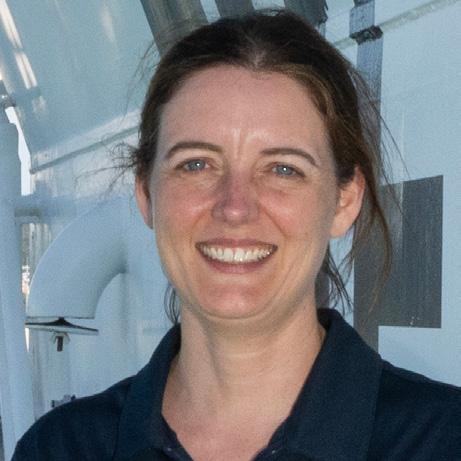
Sadie was the covoyage leader of the expedition, along with Alex Rogers from Ocean Census. The job of the voyage leaders was making sure that everyone knew what jobs they had to do each day, and talking to the research vessel captain about the new plans for the day depending on the weather and what types of samples needed to be collected at each new place visited.
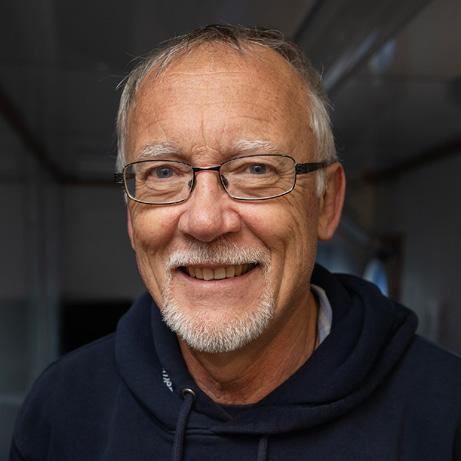
Andrew was brought on the voyage as an expert in the identification of fishes, especially deep-sea ones. He has over 40 years’ experience at Te Papa. He had to be available to examine fishy catches whenever the gear brought specimens in, even when he was off watch.
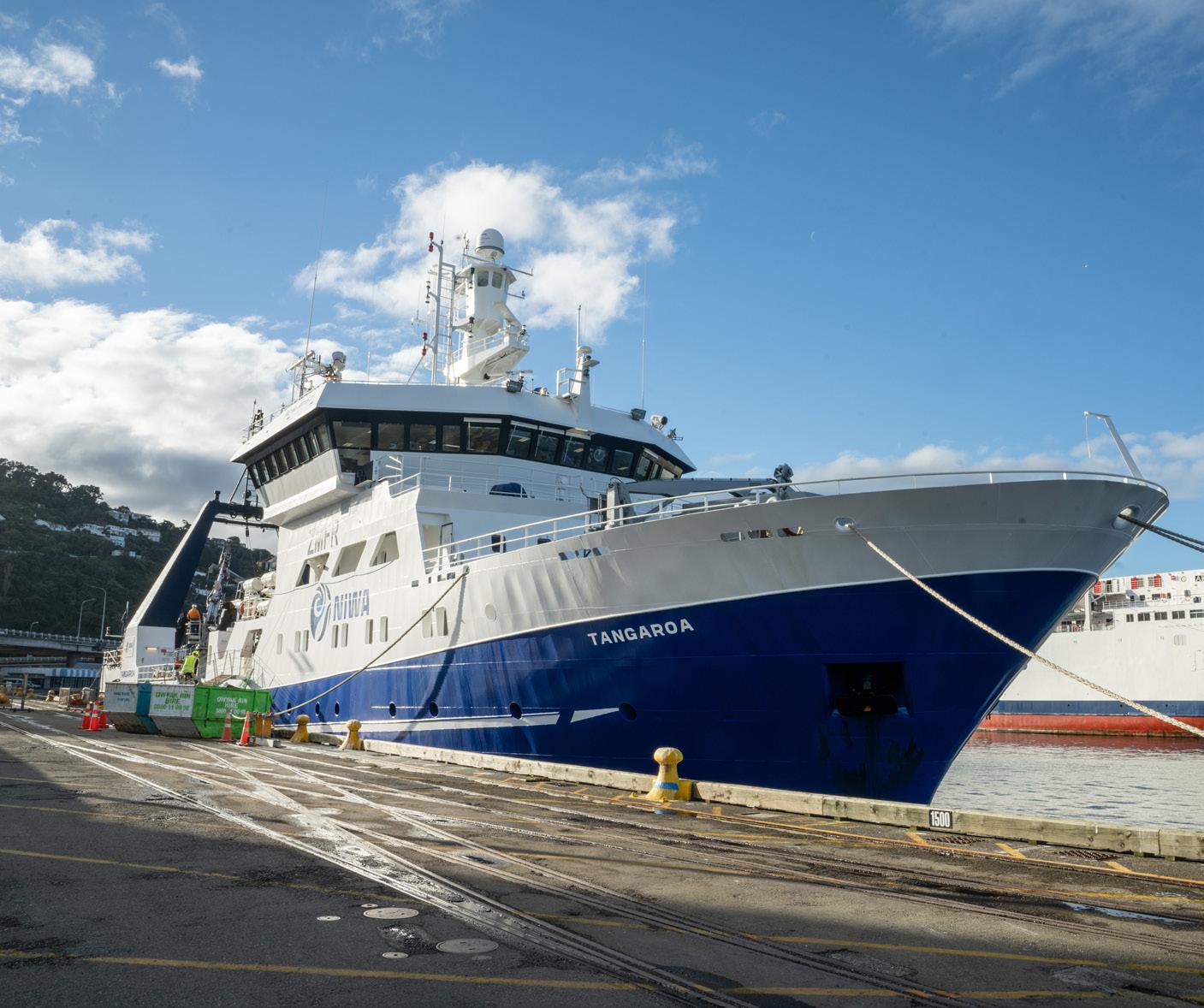
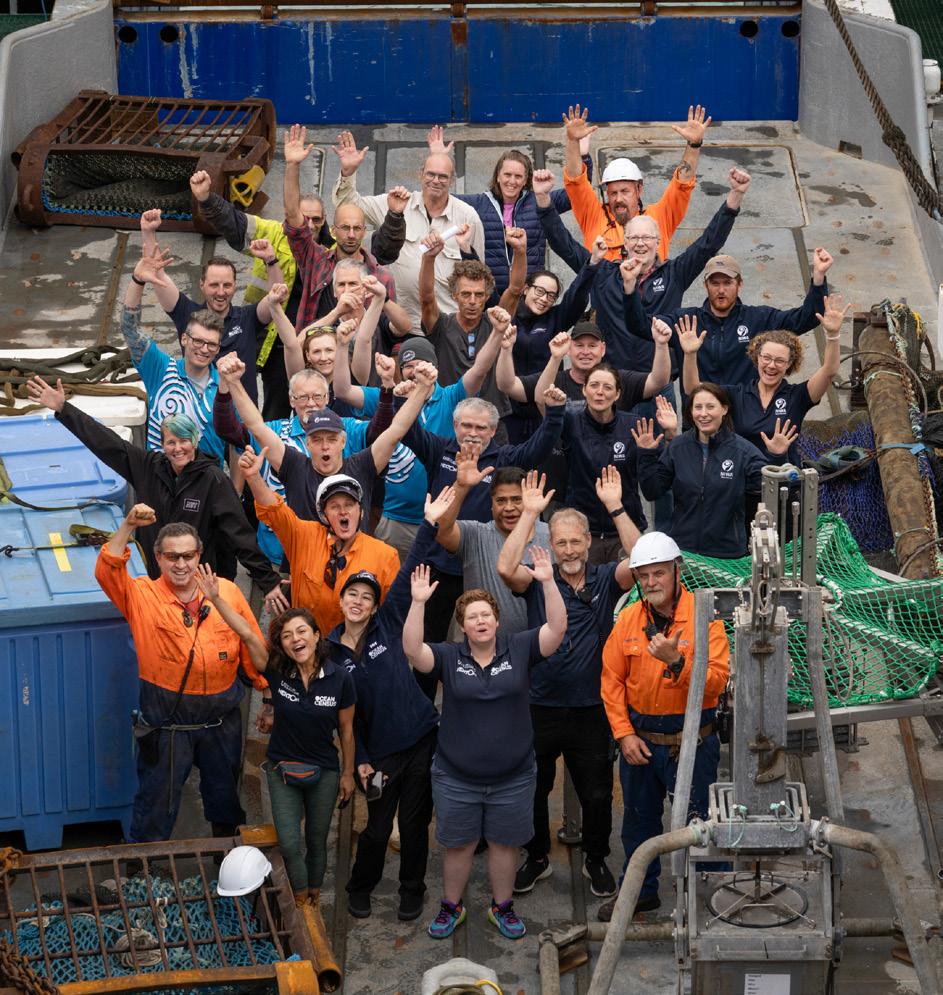
We went out to sea on 8 February 2024 and came back three weeks later on 29 February. We had 37 people onboard the ship (19 scientists, two videographers and 16 ship crew from NZ, UK, Australia and Mexico).
On the expedition we worked 24 hours a day, so we needed to have enough people with us to have two 12-hour shifts. When we were sleeping there was someone else doing our job and when we woke up the other person went to sleep!
We had to carry a lot of different pieces of equipment. These included corers and grabs (which take scoops of the mud), nets (small epibenthic sleds and a beam trawl), towed cameras, and two fish traps. Because we were so far away from land, we had replacements of all the different gear in case accidents damaged or destroyed anything.
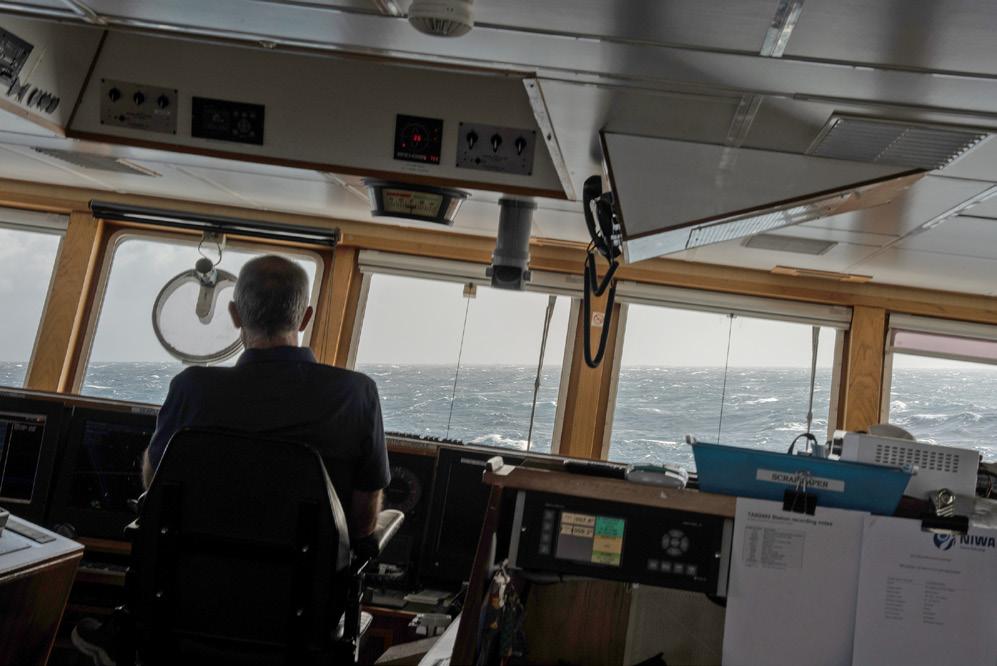
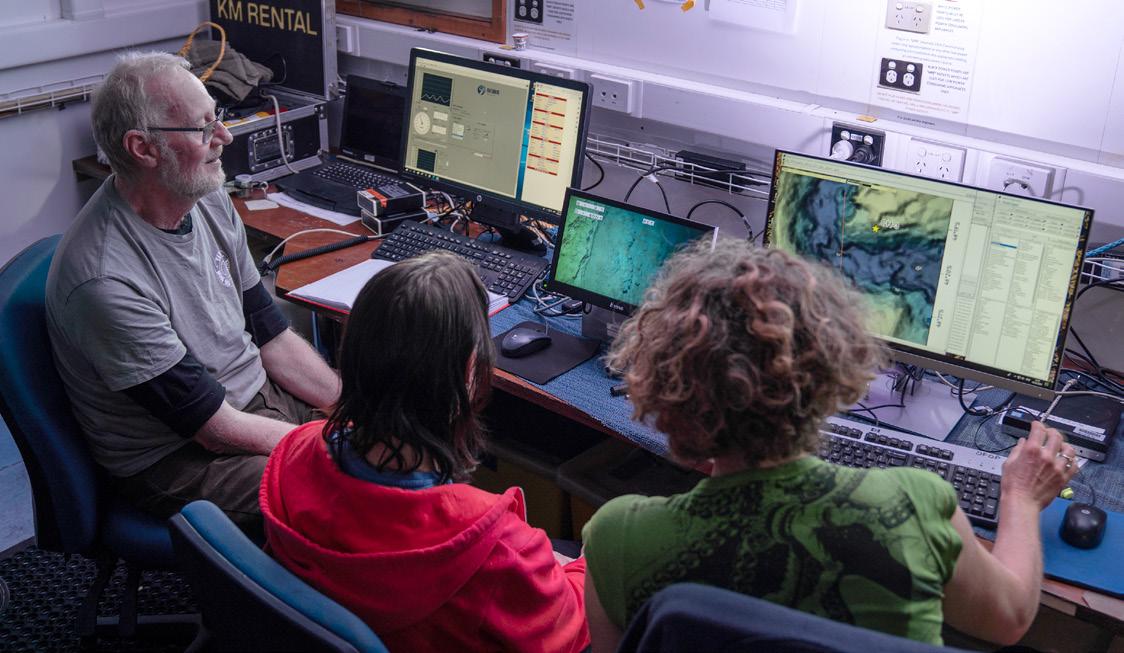
The science team watching the seafloor video footage from a very rugged part of the Bounty Channel, which was our deepest transect ending at 4124m. Rebekah Parsons-King/NIWA
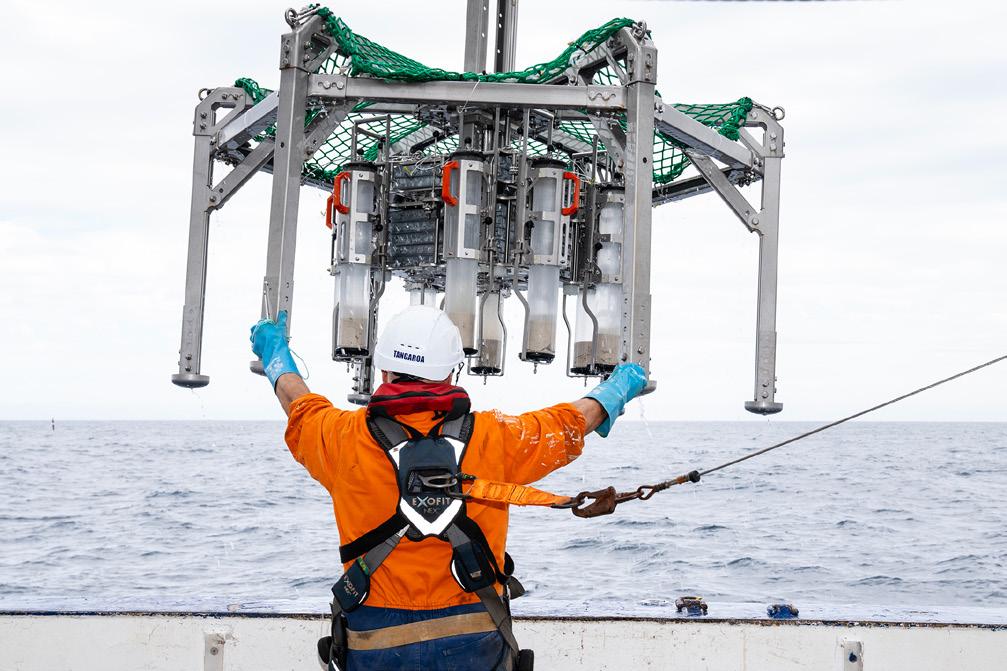
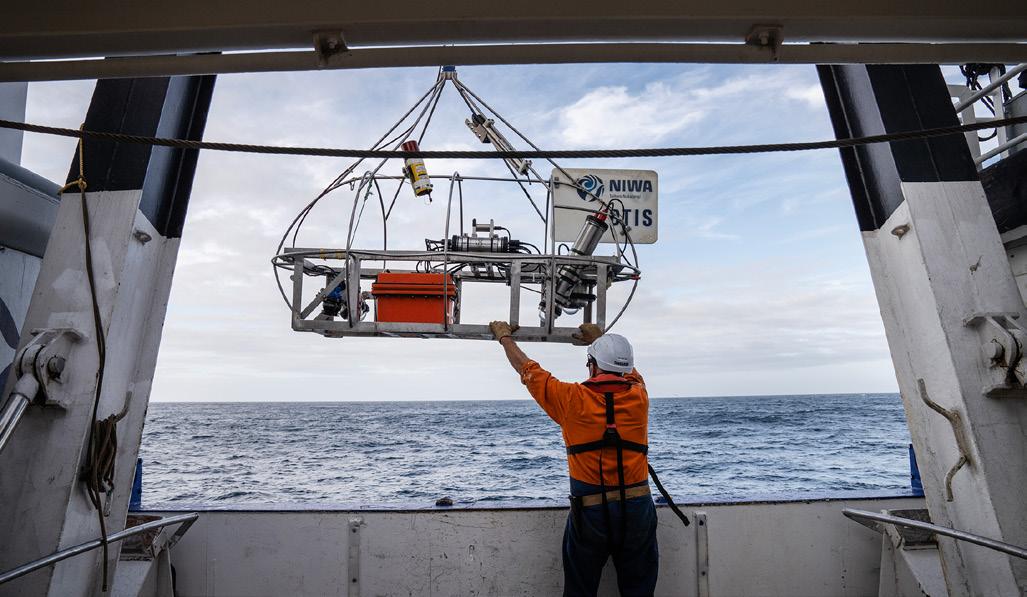
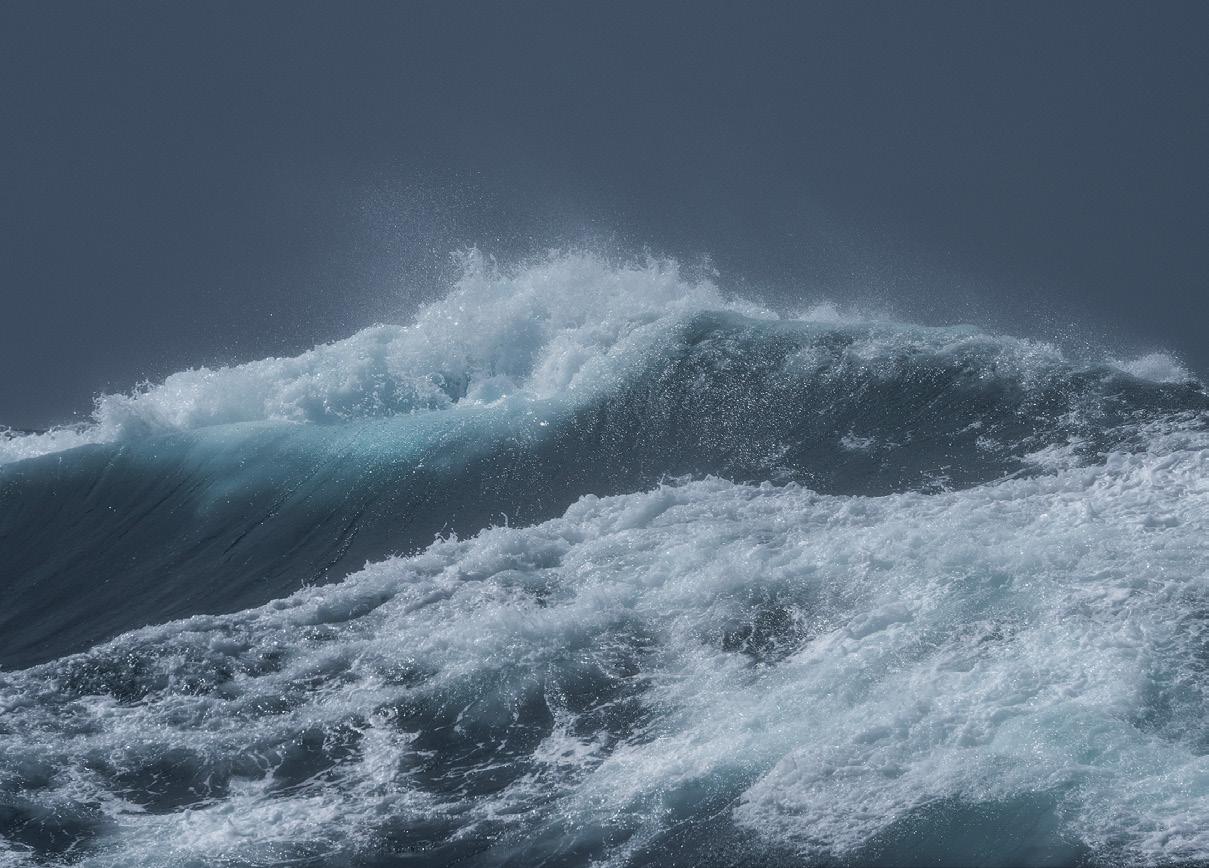
There was some quite stormy weather, which meant that we had to change our plan. Sometimes the camera system showed the bottom was just too rugged and rocky to safely deploy the gear, so we had to look elsewhere.
During the expedition, we explored the seabed from 600m (known as the continental slope) all the way down to the abyssal plain or abyssal zone at 4808m deep.
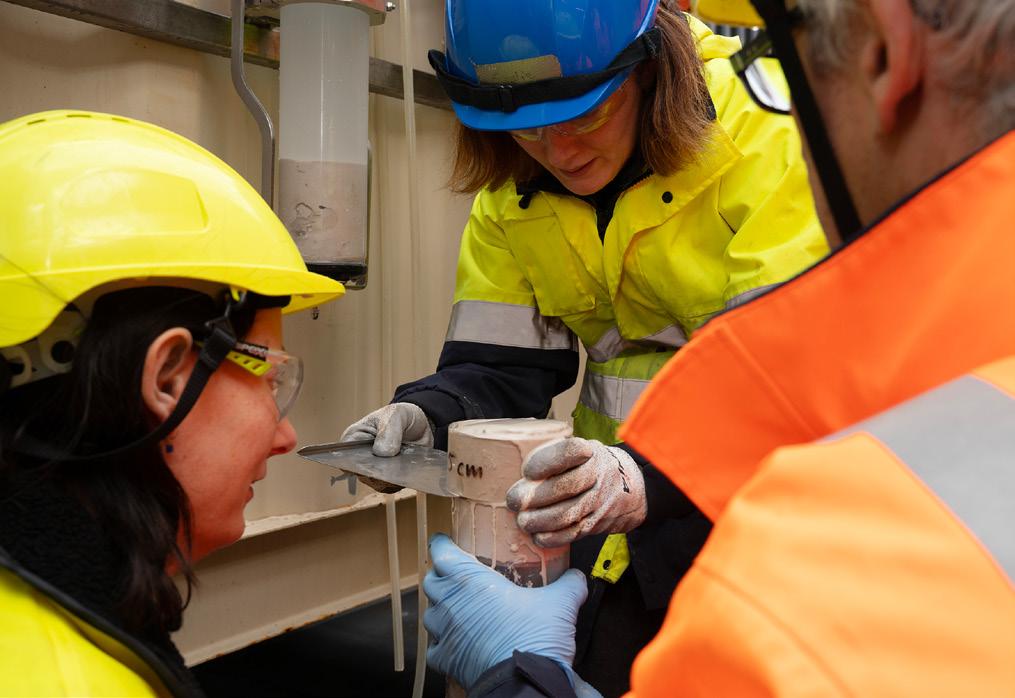
Slicing a tube of seafloor mud into 5cm sections. Rebecca Parsons-King/NIWA
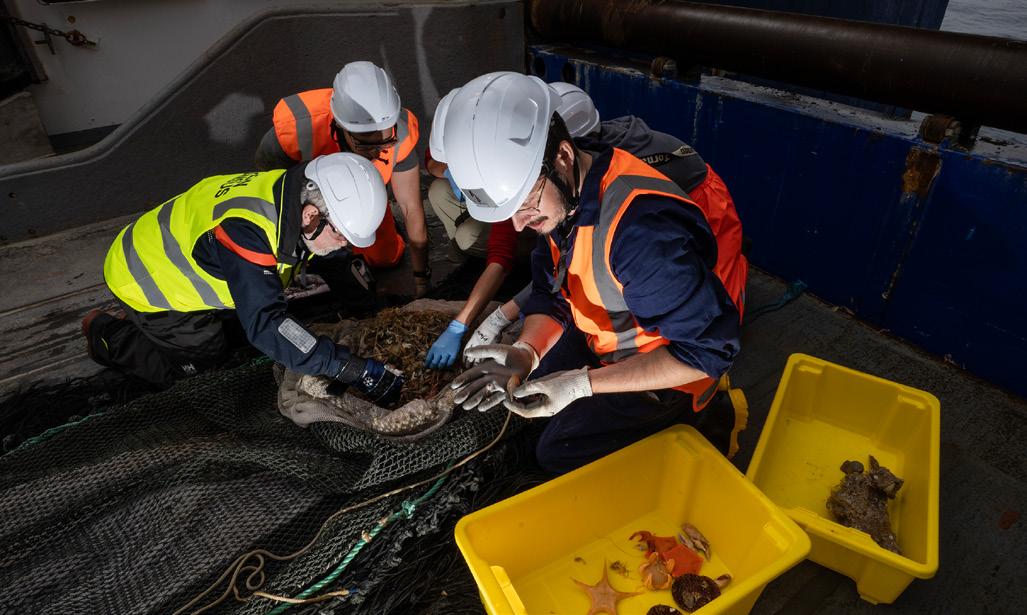
The science team sorting animals from the net used to take samples from the seafloor. Rebekah Parsons-King/NIWA
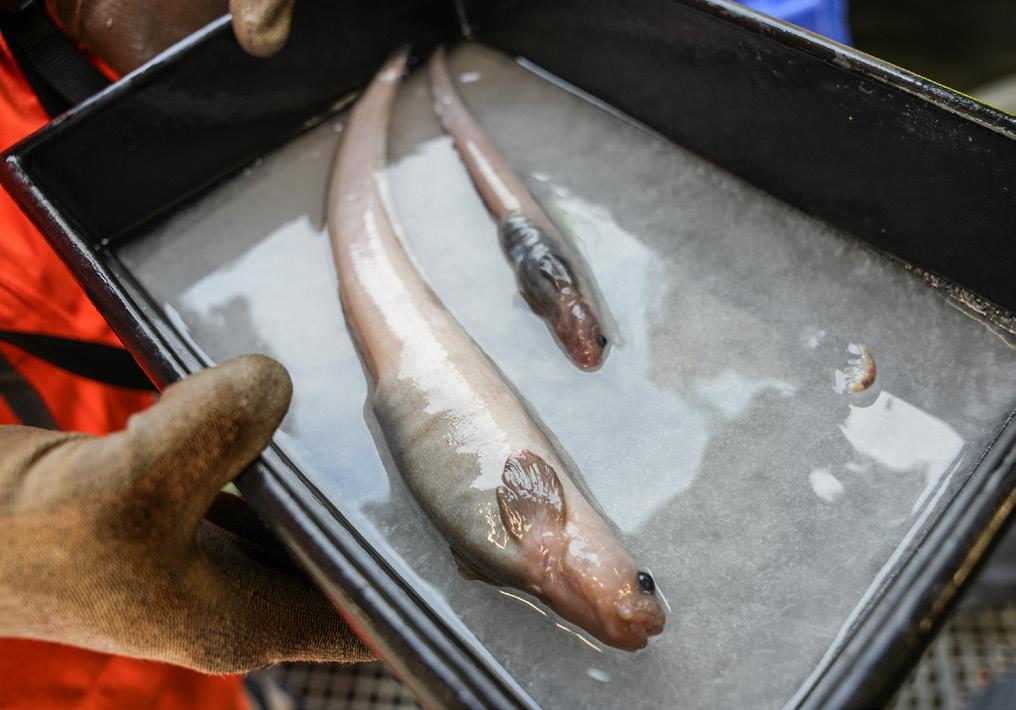
Trays of ice kept the specimens in the best condition while we examined them. Rebecca Parsons-King/NIWA
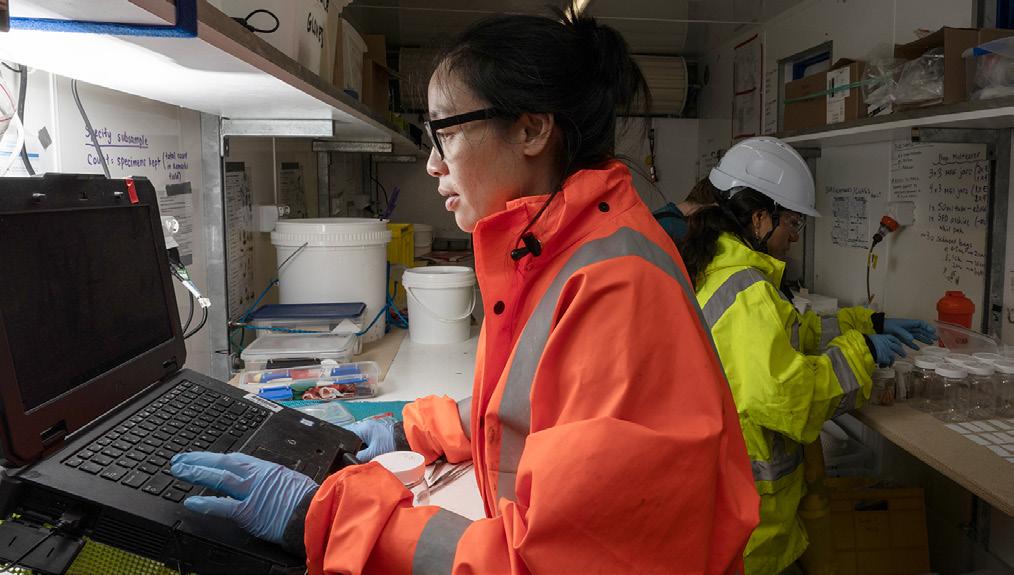
Caroline Chin, marine biology technician, cataloguing and labelling samples to bring back to land.
Rebekah Parsons-King/NIWA
Sampling sites and voyage track for the Ocean Census Bounty Trough expedition. Sam Davidson/NIWA
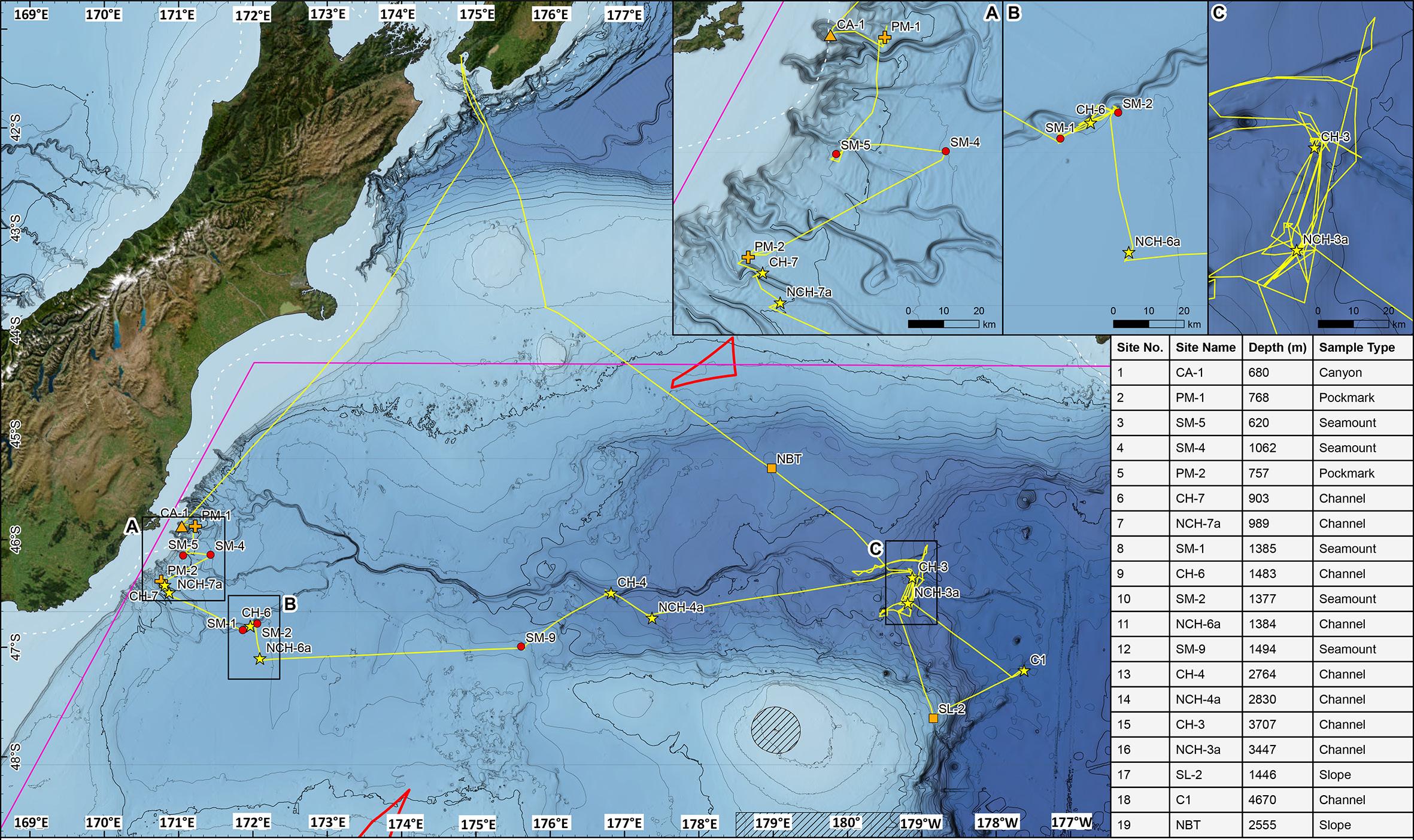
The yellow lines show where we went.
The camera system took over 6000 photographs and 72 hours of videos, which also revealed some incredible animals living on the seabed, as well as the structure of the seabed. We found the canyon that runs down the Trough was really narrow, and unbelievably rugged with enormous vertical rock walls. We even saw a deep sea squid, Taningia, flashing its light organ at us.
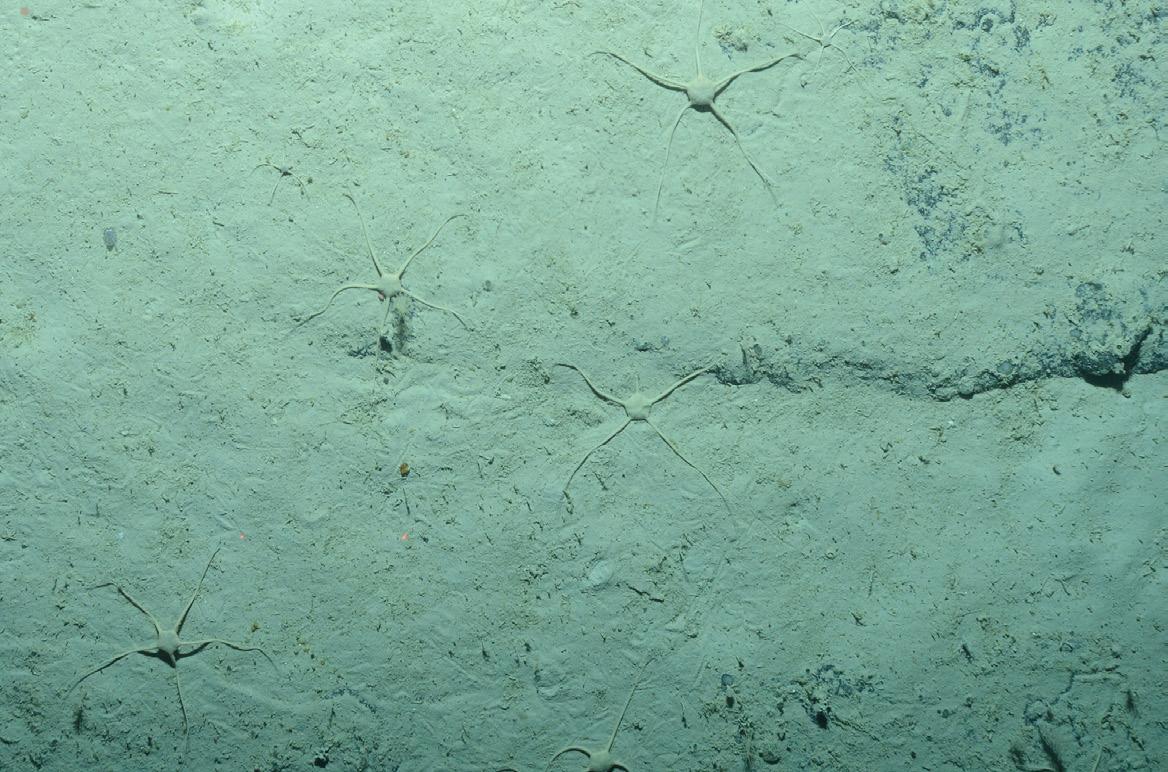
A seafloor image of brittlestars from seamount SM-2, 1029–1377m. DTIS Camera/NIWA
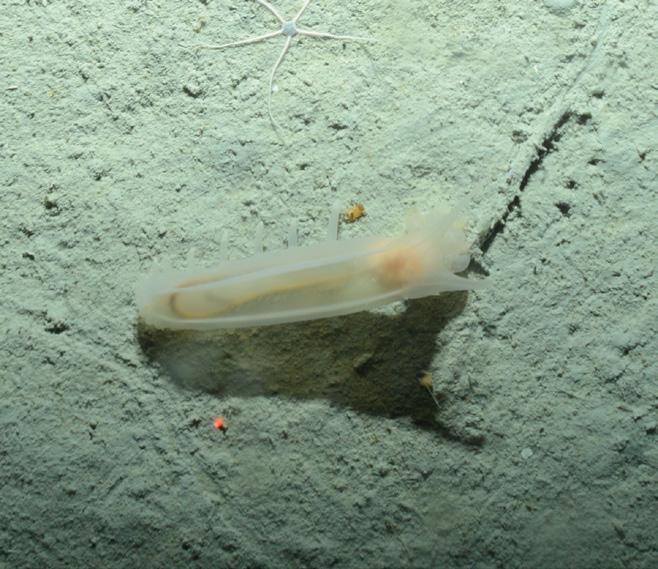
A seafloor image of a sea cucumber on the muddy seafloor from Bounty Channel site CH-4, 2764–2867m. DTIS Camera/NIWA
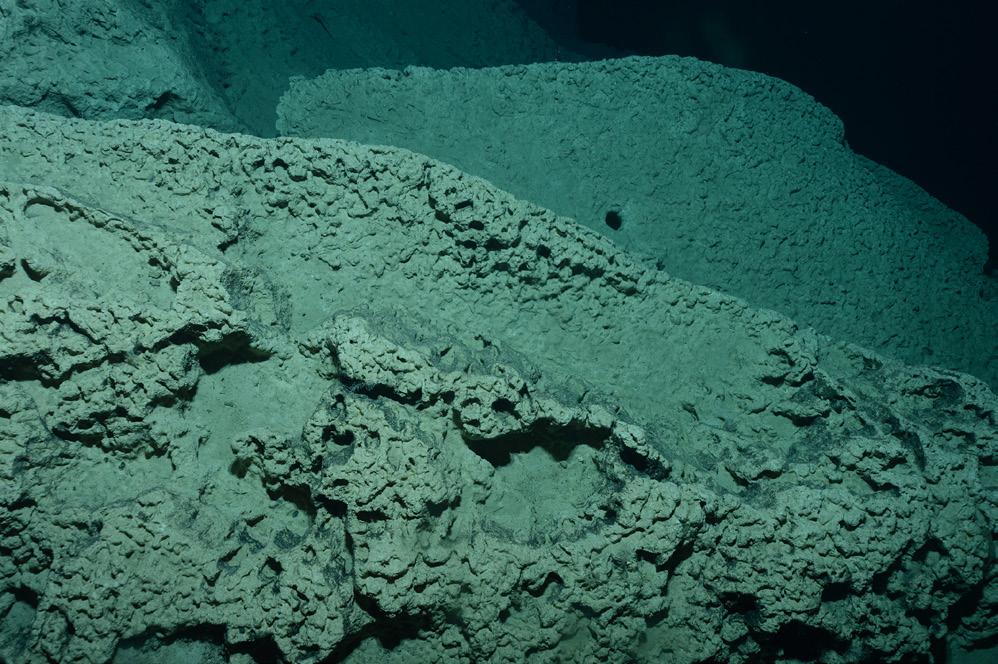
A seafloor image from our deepest camera transect at Bounty Channel site CH-3, 3707–4126m. DTIS Camera/NIWA
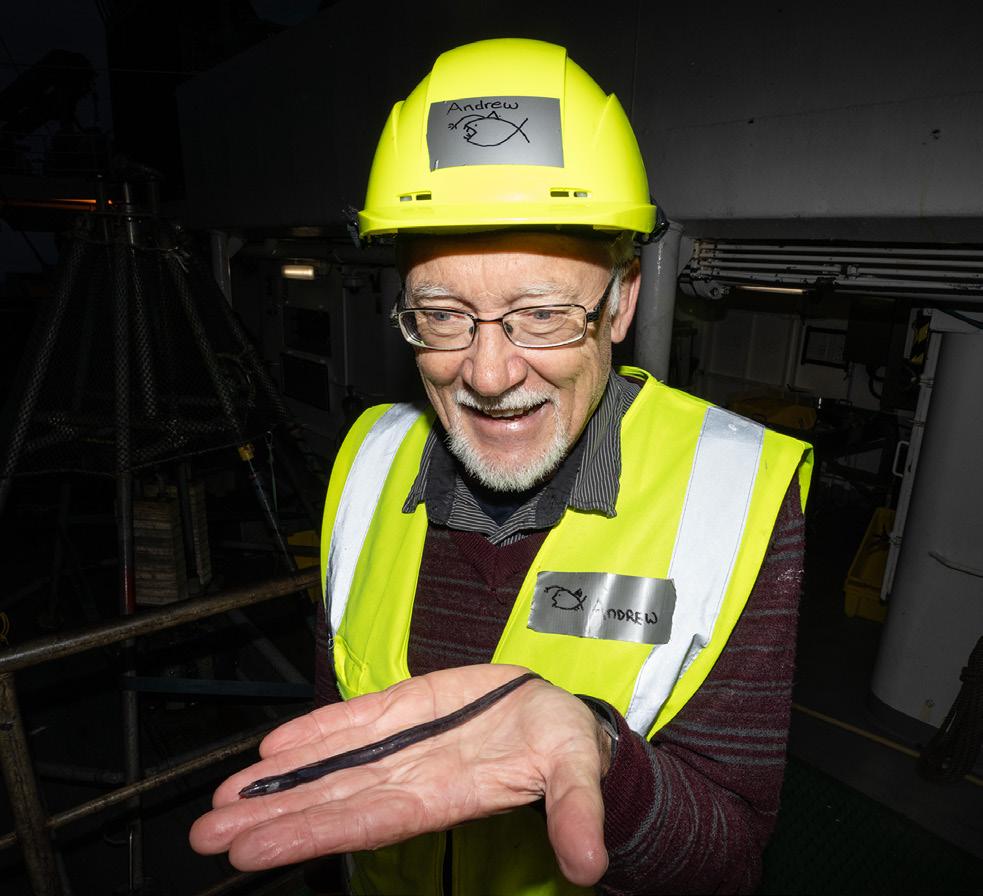
a
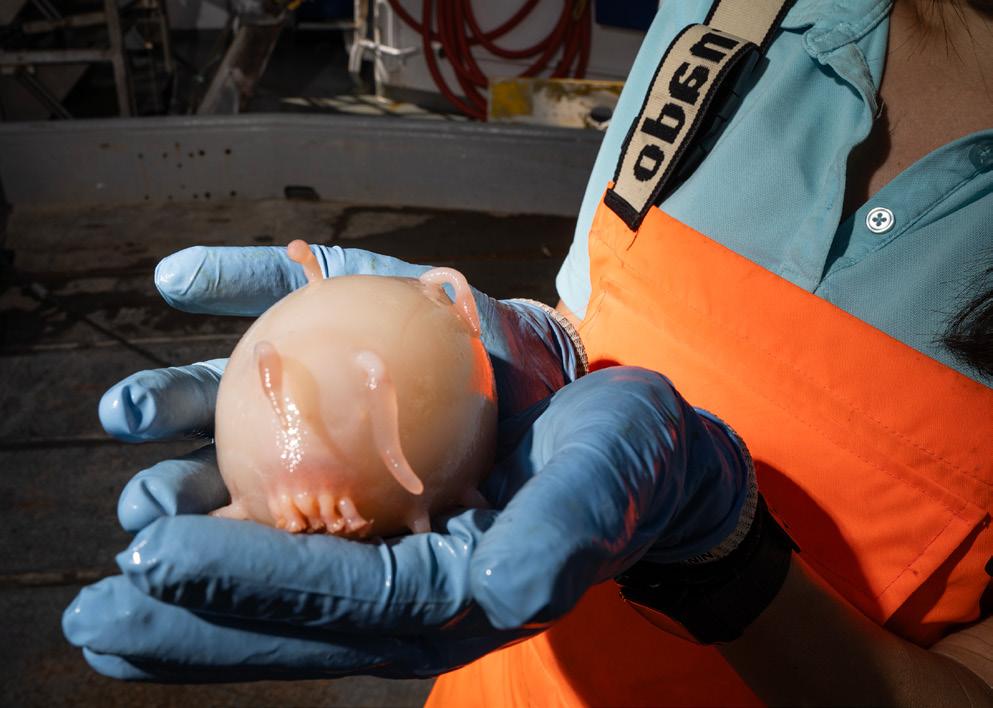
sea cucumber called a seapig. Rebekah Parsons-King/NIWA
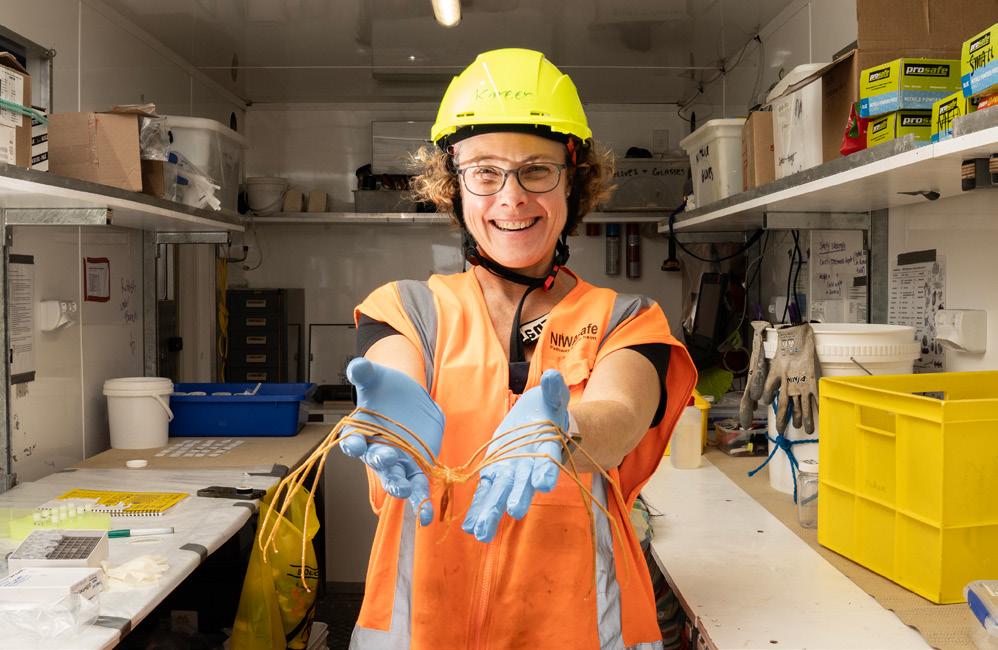
Marine biologist Kareen Schnabel holds a very large seaspider! Rebekah Parsons-King/NIWA
On the voyage, we collected lots of samples, some of them that might be never seen before. We think we have now found over a hundred new species from fish, to corals, to crustaceans, to worms!
Most of the New Zealand ocean region is deeper than 2000M, but is almost completely unexplored.
After the expedition, we held a workshop for three weeks to sort and identify as many of the animals as possible so we could quickly count how many new species we found. We are in danger of losing species faster than we can describe them so we have to find ways to speed up our work. Knowing the depths at which we were going to be working in was really exciting.
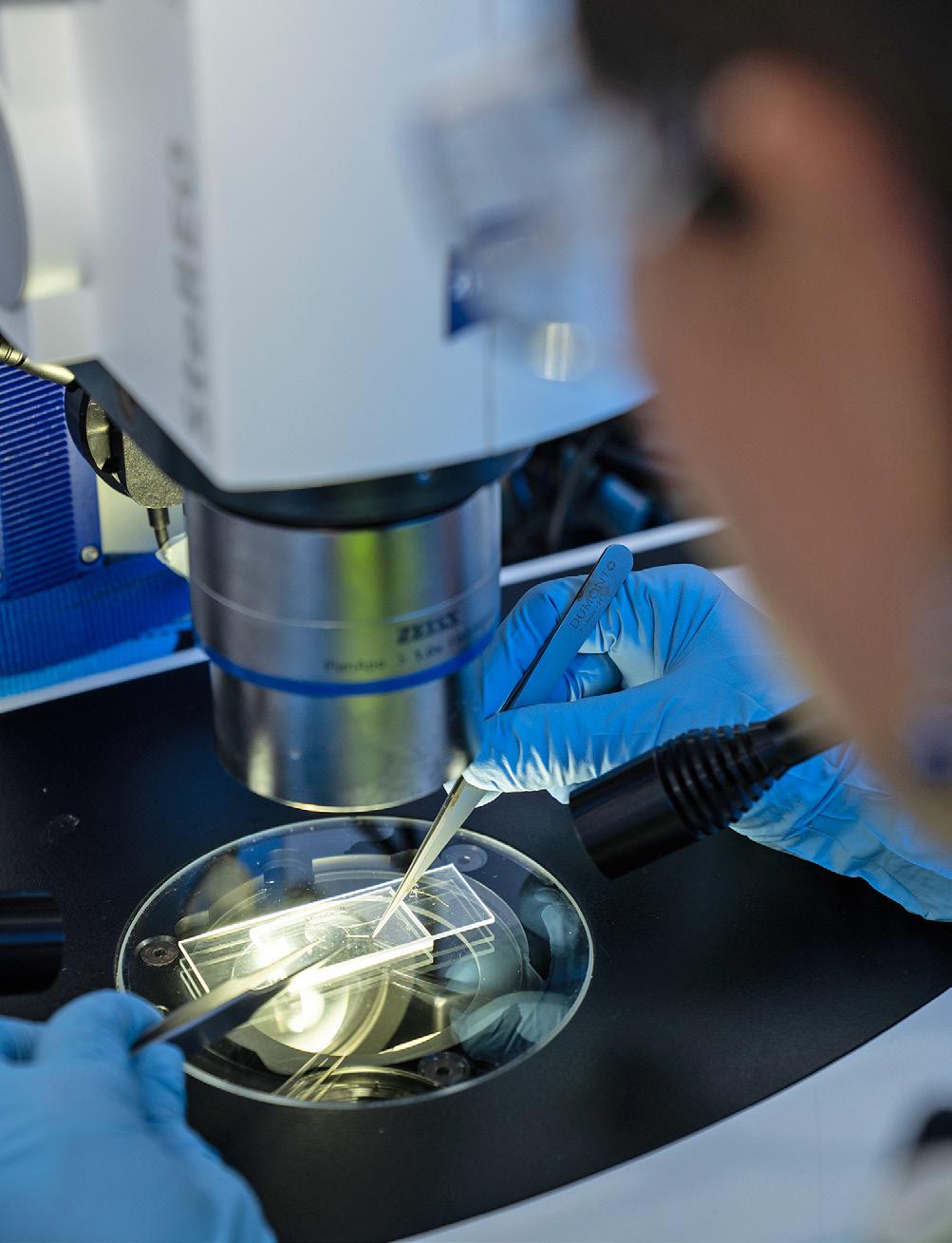
A scientist identifying a small piece of a coral on a microscope slide. Rebekah Parsons-King/NIWA
A microscopic view of a new species of sand hopper, Ampelisca sp. Rebekah Parsons-King/NIWA
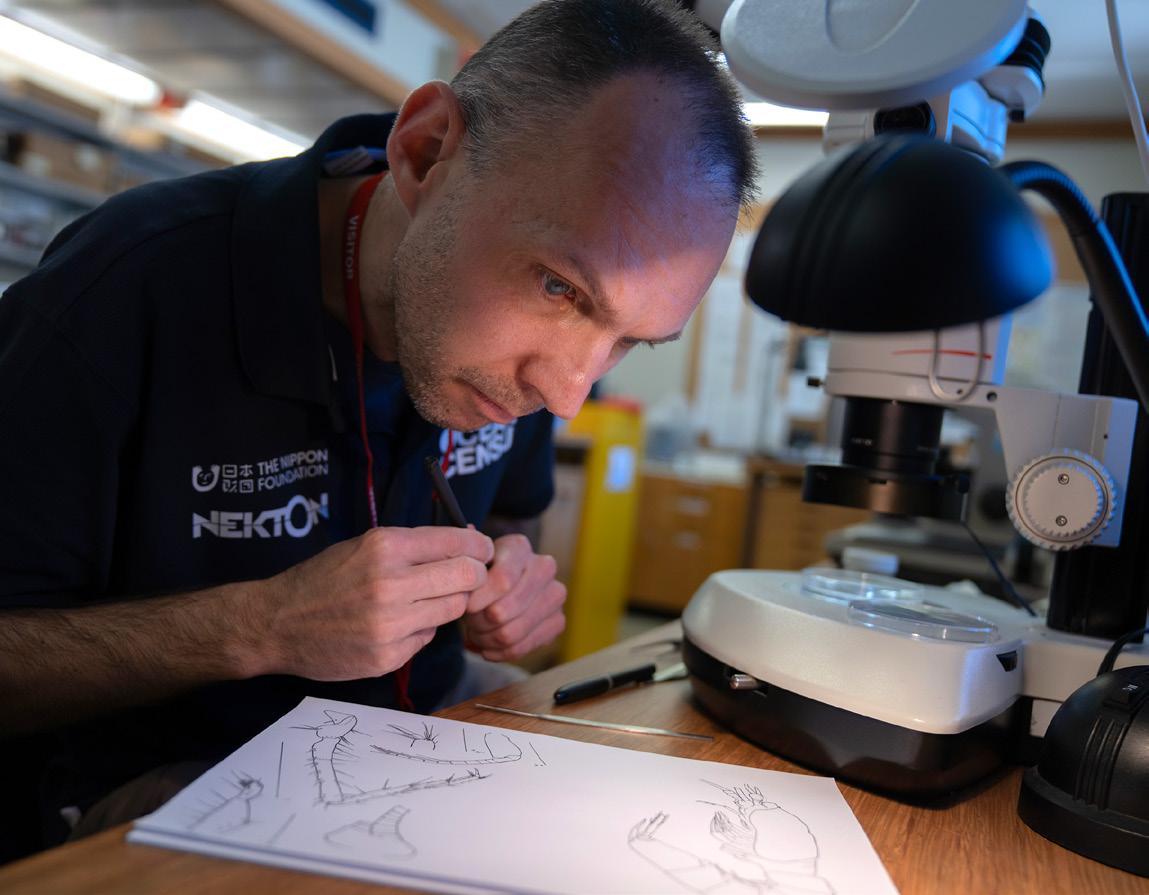
A group of researchers did a review study and found out that the average time to describe a single species is over 11 years! It is the goal of Ocean Census to find 100,000 new species in the next 10 years. We hope we will have some of our first new species described by next year but there is a lot of work for our scientists to do to draw, photograph, and describe them.
The new fishes have now been properly preserved so that they will last in collections for a really long time. Then, the fish specimens will be X-ray’d and the plates shared with the world expert on the group.
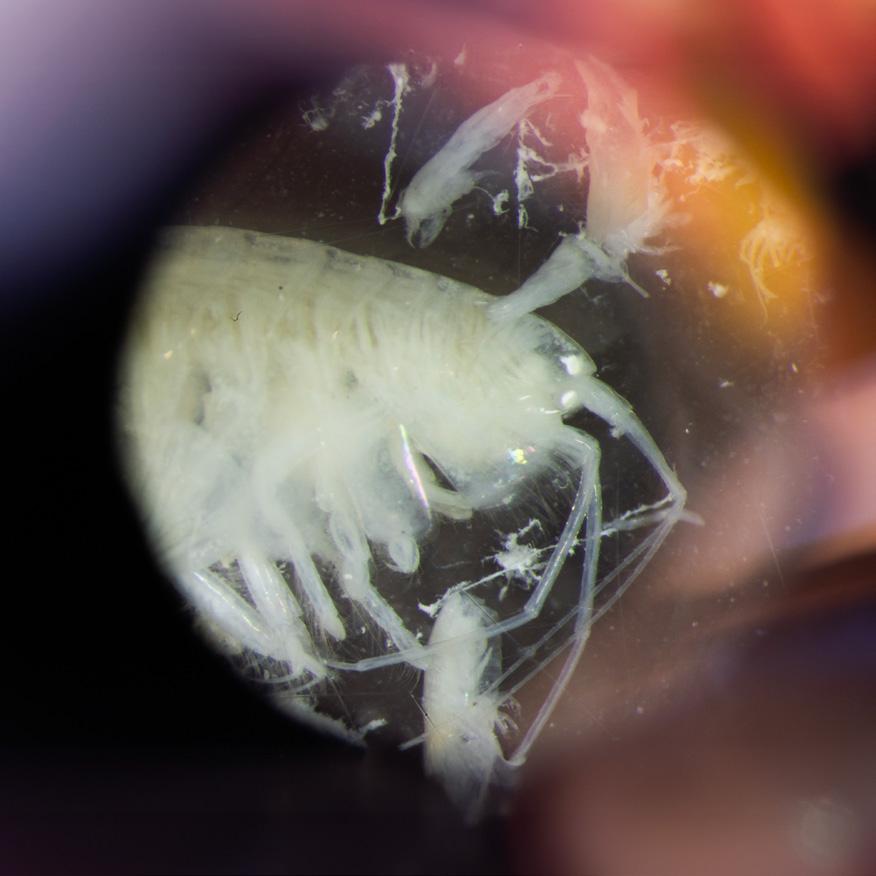
Some of the samples had hundreds of tiny animals in them, which had to be sorted under a microscope. A team of sorters started work splitting the samples into the different animal groups and handing them on to different experts to start their descriptions.
Check out videos about the expedition and discoveries here
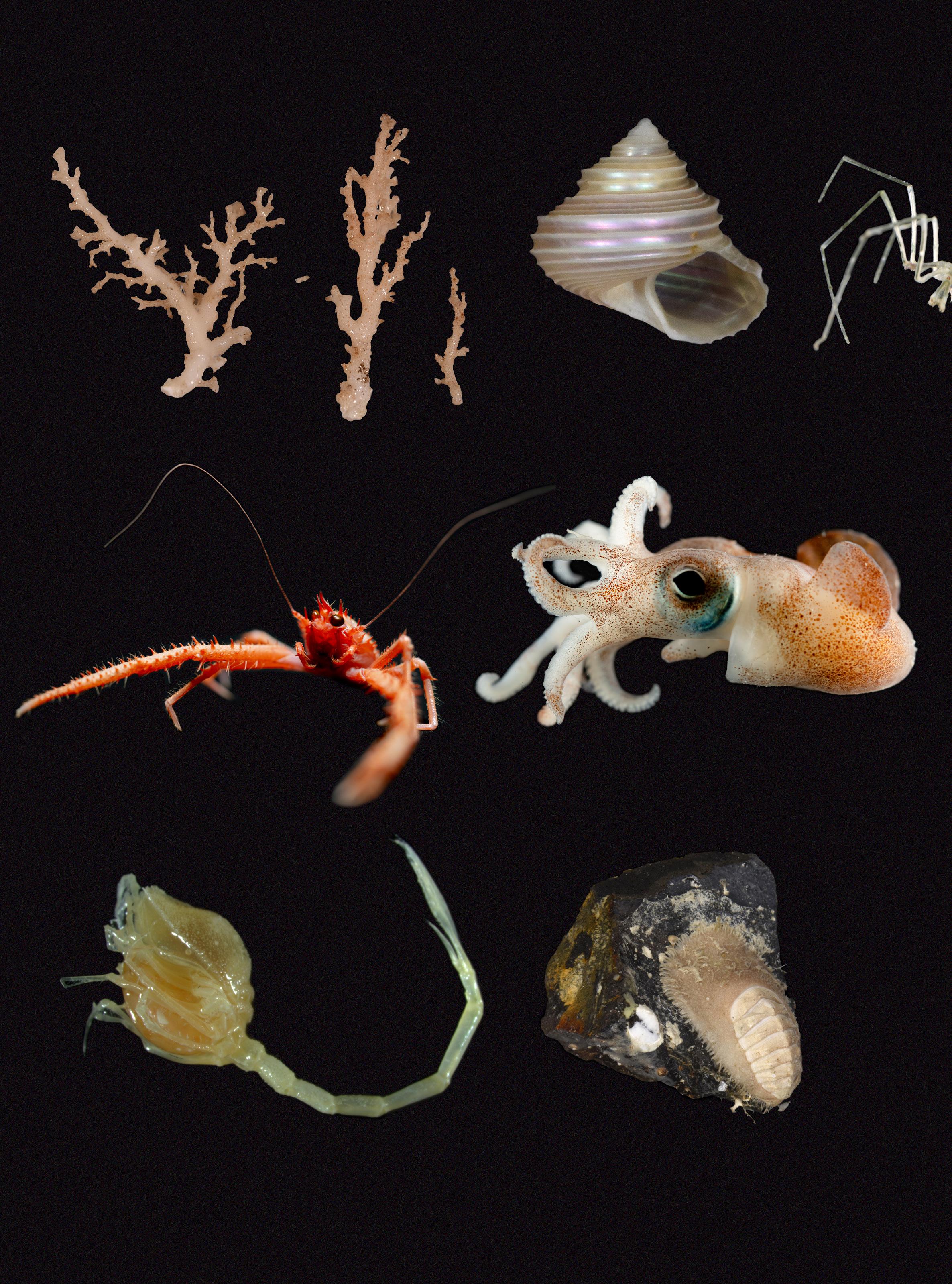
A stylasterid lace coral, Lepidotheca sp . Rebekah Parsons-King/NIWA Snail, Falsimargarita callista Alicia Maurice/NIWA
He pūngāwere tipua moana | A giant sea spider from family Colossendeidae
Thom Linley/ Te Papa
A squat lobster Rebekah Parsons-King/NIWA
A small shrimp-like creature called a cumacean or comma shrimp. Rebekah Parsons-King/NIWA
A bobtail squid or dumpling squid Thom Linley/Te Papa
A carnivorous chiton, Placiphorella sp . Alicia Maurice/ NIWA
A cidarid sea urchin Sadie Mills/NIWA
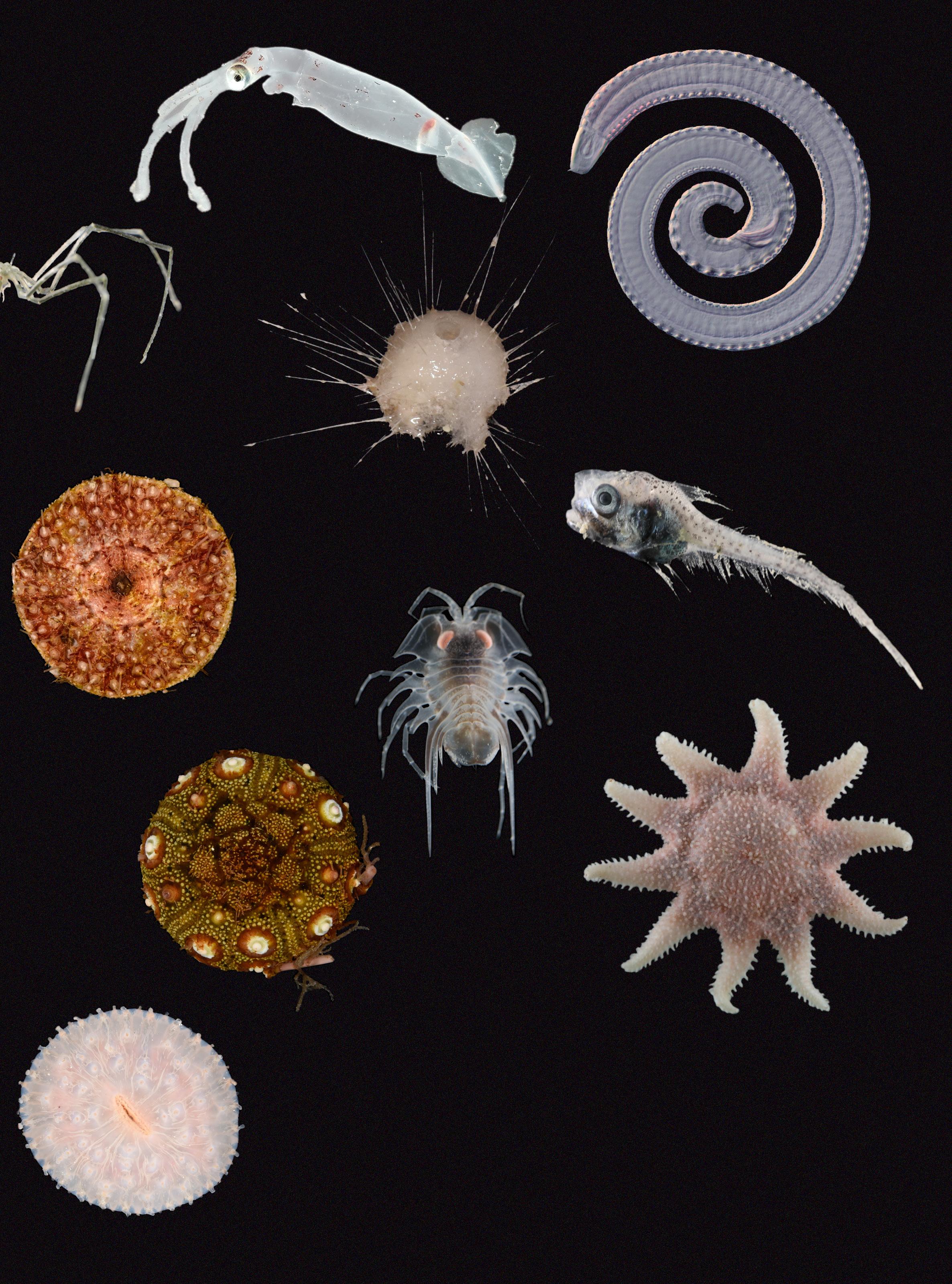
A new species of squid, Brachioteuthis sp
Thom Linley/Te Papa
A glass sponge, Hexactinellida
Rebekah
Parsons-King/NIWA
A Tam O’Shanter sea urchin
Sadie Mills/NIWA
A spiky sea slater, Brucerolis Sadie Mills/NIWA
An anemone-like creature, Corallimorphus niwa .
Sadie Mills/NIWA

A nematode worm, one of the microscopic meiofauna found living between the sand grains on the muddy seafloor in the Bounty Trough. Daniel Leduc/NIWA
A juvenile ika-hiore kiore | rat-tail
Thom Linley/Te Papa
A sunstar, Solasteridae
Thom Linley/Te Papa

Use the clues on the right to fill the grid. A name of a deep sea species will be revealed if your answers are correct!
Check your whakautu | answers at kcc.org.nz/puzzle-answers
➊ The biggest mammal ever is said to be this colour.
➋ This animal is called "tuna" in te reo Māori
➌ Mineral-rich stones at the bottom of the ocean.
➍ Lots of these crustaceans are found on the sea floor.
➎ I have a light above my head to lure fish close so I can eat them!
➏ A type of sea cucumber.
➐ This type of marine animal has the largest eyes of any living animal.
➑ This fish could be hard to find, it's so pale. Also called "chimaera".
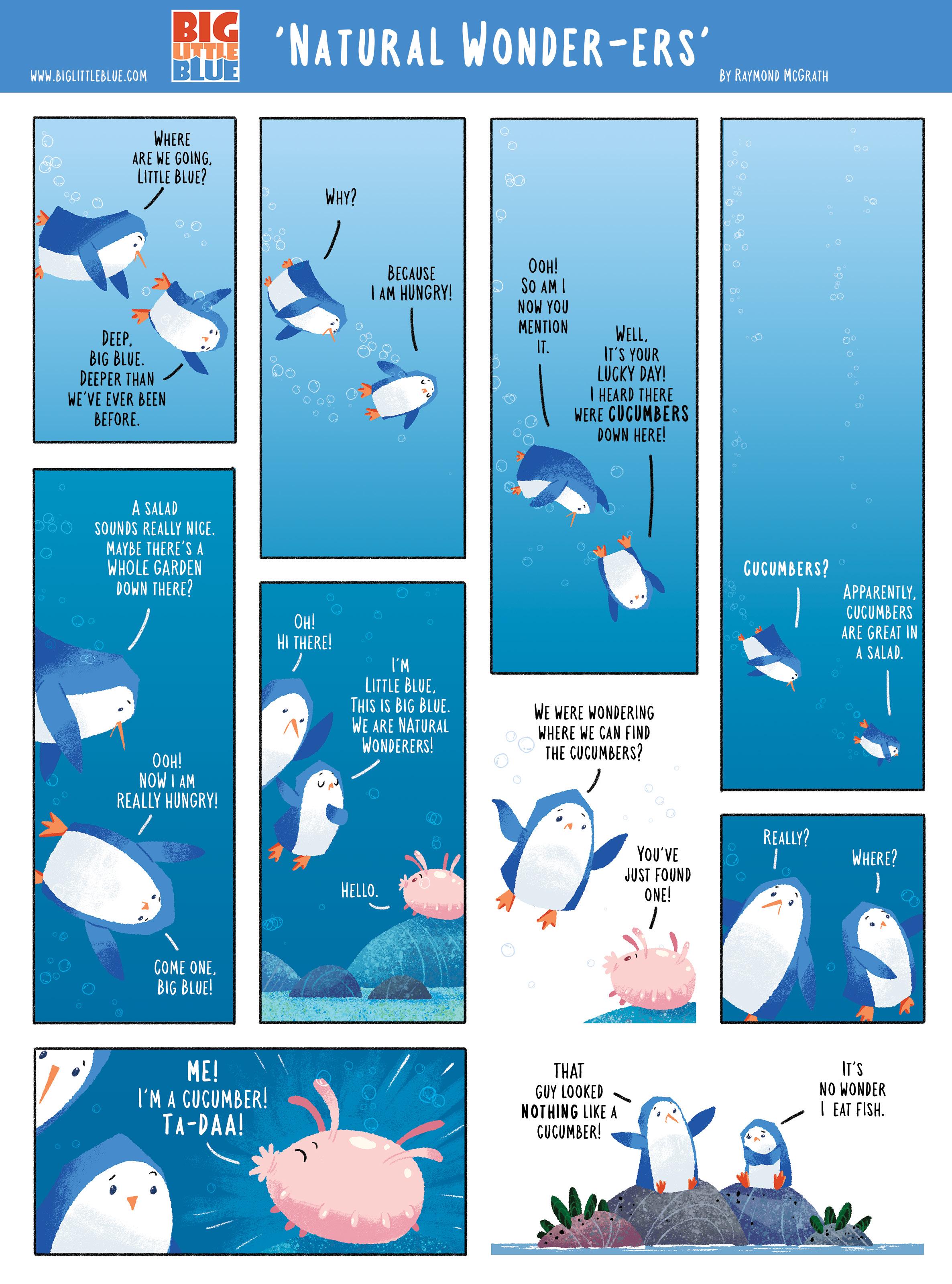
What do sea monsters eat?
Fish and ships!
How do you make an octopus laugh? With TENtickles!
What lies at the bottom of the ocean and twitches? A nervous wreck!
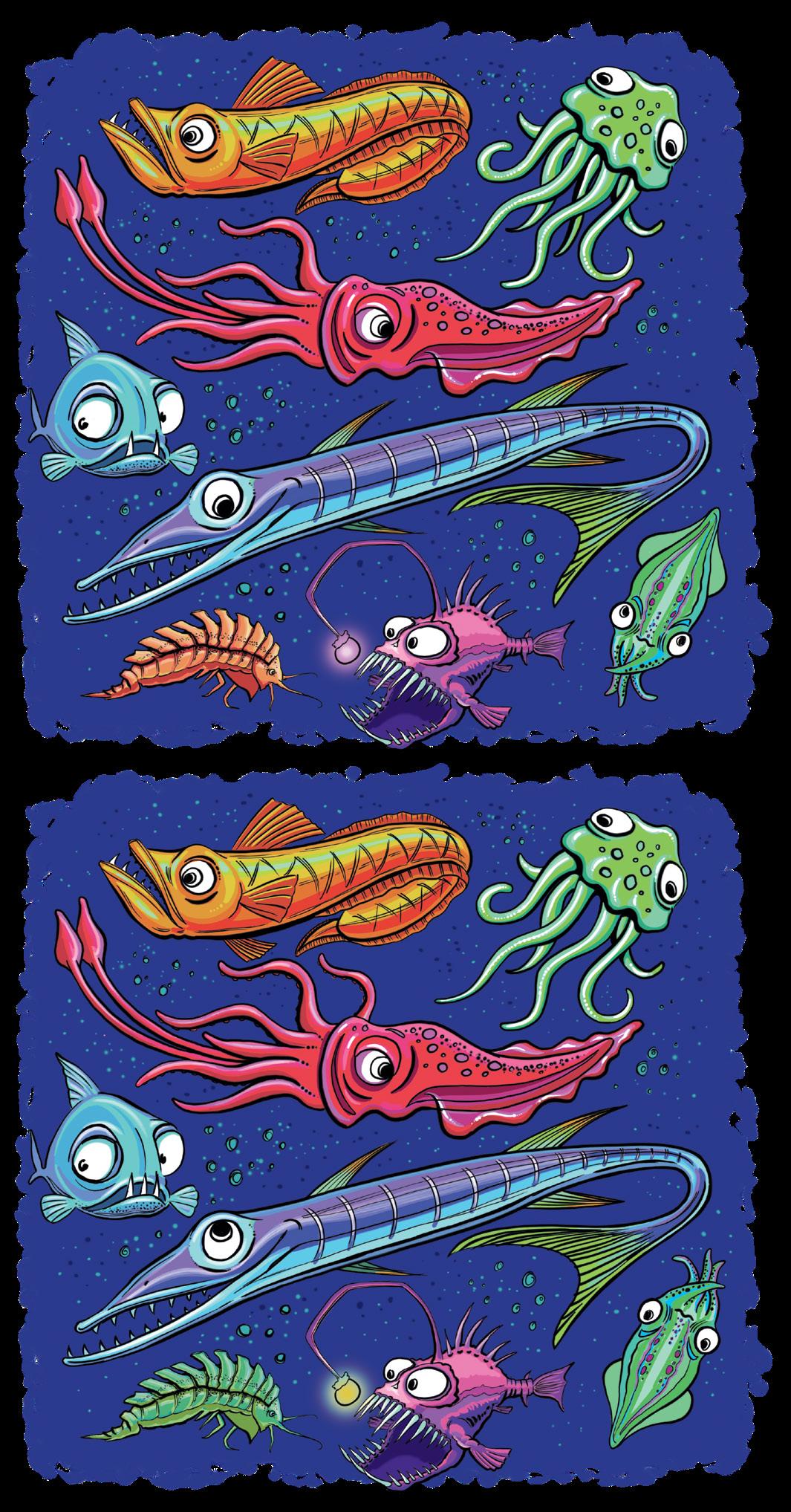
Spot the nine differences in this sea creatures scene.
Group words that have something in common to make three sets.
Navy Brittlestar Seapig
Gummy squirrel Ghost Denim Goblin Royal Cookiecutter

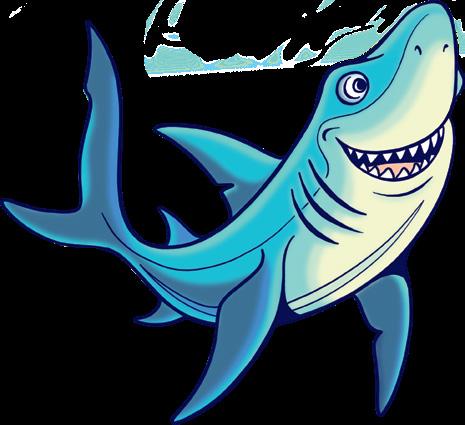
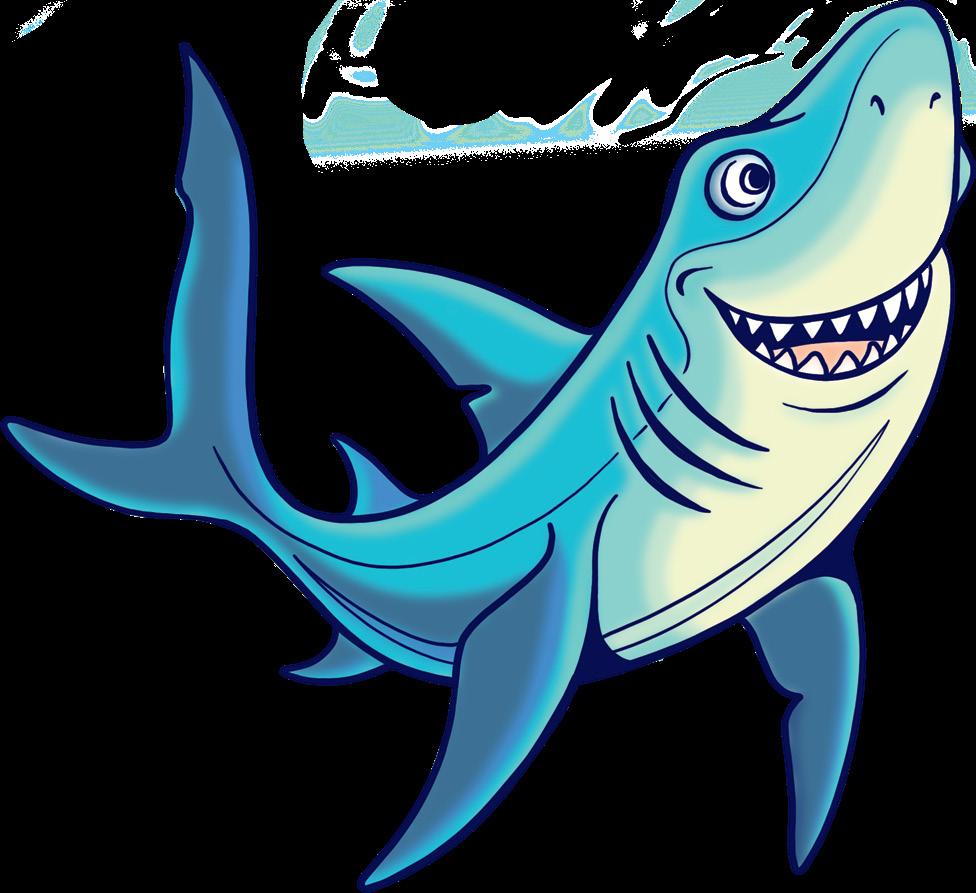
A New Zealand mangō ururoa | great white shark has set a world record with a dive of 1200m. Can you help it make its way back to the surface?


On the abyssal plains of the deep sea are lumps of rock the size of potatoes with minerals and metals inside them, like manganese, nickel, cobalt, and copper. These rocks are called “polymetallic nodules”.
There's interest in lifting them out of the sea. The metals can be used to build helpful things like electric vehicle (EV) batteries, wind turbines and solar panels. The metals are worth lots of money. But what are the environmental impacts of doing this?
The machines would suck lots of sediment up alongside the nodules, then dump it back down again afterwards. The dumped sediment would suspend (float) in the water, polluting it. When the sediment settles, it would bury what was there before not just in one place, but across kilometres of ocean floor.
For miners to be able to see what they are doing, they would need to use floodlighting in the deep sea. The animals here are adapted to live with very low levels of light, so they would be harmed.
Forest & Bird thinks deep sea mining is a really bad idea.
Do you agree?

There is huge biodiversity (variety) in the species who live on, and in, the abyssal plain. The nodules themselves are a home for animals too.
Nodules take millions of years to form. When machines run over the seafloor they will destroy natural landforms, like vents and seamounts, and compact (squish down and firm up) the sediment left behind.
The 24/7 noise would mess with how marine mammals like whales and dolphins communicate with each other and sense objects and food through sound.
The sediment of the seafloor stores massive amounts of carbon. By mining the abyssal plain, we will be releasing it again into the water (making it more acidic), and into the atmosphere (warming the planet).
Mining will disrupt the natural cycles of how the ocean stores carbon in the first place too.
“Every day we get to choose what sort of difference we make.”
Jane Goodall
Plastic pollution is where plastic is discarded and eventually ends up in the environment, either on land or in the ocean. This affects many animals, especially marine species.
Plastic waste can travel to the ocean in many ways; blown by the wind, travelling through drains or through waterways, even dumped there directly by people.
Once plastic enters the environment, it doesn’t disappear. It just breaks up into smaller and smaller pieces. Seals, seabirds, sea turtles, whales, dolphins, fish, and other marine life are either getting trapped in plastic or eating it by mistake. There is plastic being found even in the deepest part of our ocean–the Mariana Trench!
We can all make a difference by changing our habits with single-use plastics.
By Eden (age 9)
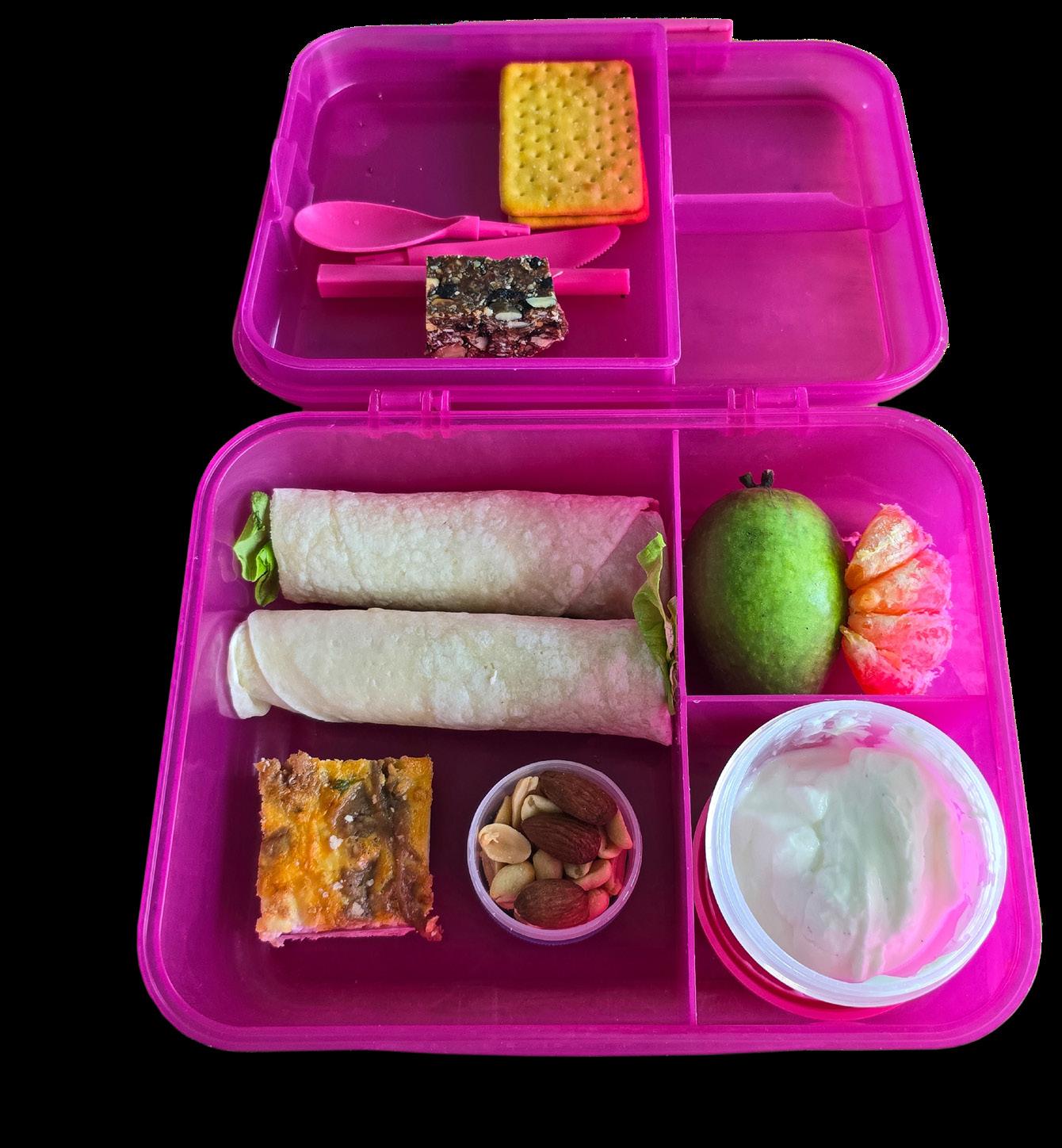
• Sandwiches – Replace cling wrap with reusable sandwich bags and wraps, or beeswax cloths.
• Chips – Instead of chip multi-packs, buy one large bulk packet.
• Fruit – Choose fruit and vegetables that don’t come in plastic packaging.
• Biscuits and Crackers – Avoid food items that come in individual plastic wrappers.
• Cheese – Instead of buying processed cheese slices, buy large cheese blocks and slice your own cheese.
Find more helpful tips to reduce plastic from Eden on our KCC blog.
• Muesli bars – Ditch the plastic and bake your own healthy granola bars (find my recipe on the blog).
• Yoghurt – Instead of 6 or 12 packs of yoghurt, buy large tubs and put the yoghurt into a lunchbox pot. Check the recycling number, as most small pots are number 6 and can’t be recycled.
• Single use plastic bottles – Avoid these please! Always have a reusable drink bottle. I prefer my stainless steel, BPA-free bottle, because it keeps my water refreshing and cold all day.
Young New Zealanders are creating impressive solutions for big issues facing our wildlife and wild places!
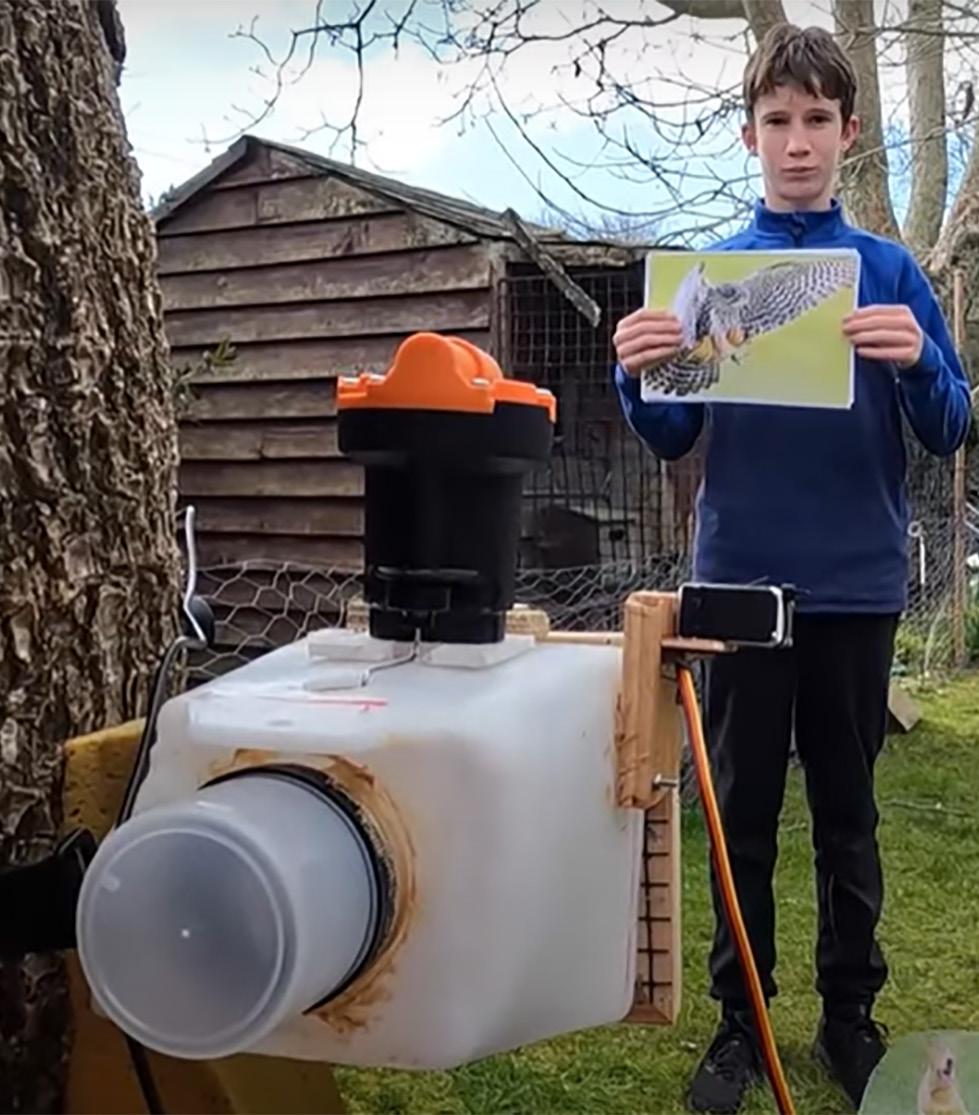
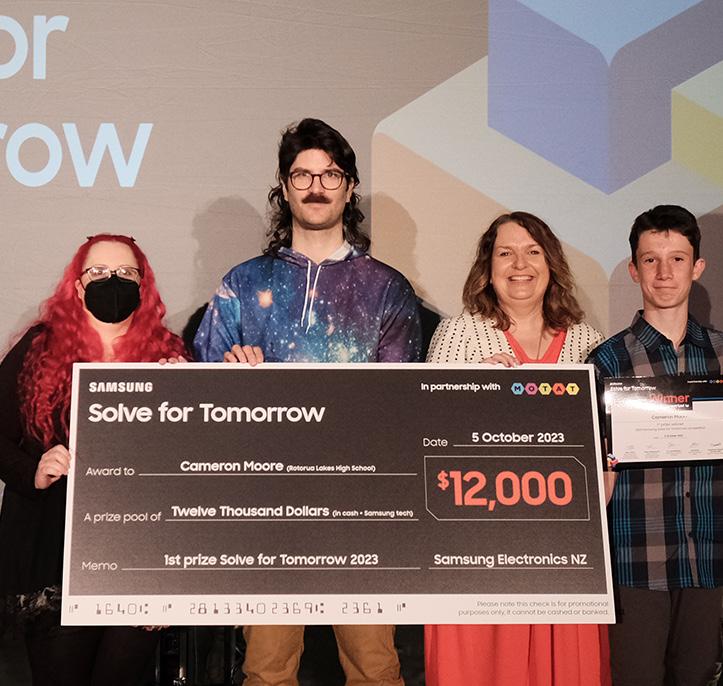
Cameron Moore from Rotorua won the Samsung Solve for Tomorrow competition in 2023 when he was in Year 9.
He noticed that wallabies are seriously damaging his local ngahere Whakarewarewa Forest. To stop the problem spreading, he designed a humane trap for wallabies with artificial intelligence (AI) so that it cannot harm any of the other local wildlife, dogs, or little children. He even built a working prototype of his invention himself!
His invention could easily be used across Aotearoa and be applied to other pests. Since winning the competition the invention has secured interest from conservation companies, including NZ Auto Trap.
Check out Cameron’s video explaining how his trap works on the Solve for Tomorrow webpage. The 2024 competition for Years 7–13 closes 2 September. Will you enter in 2025?
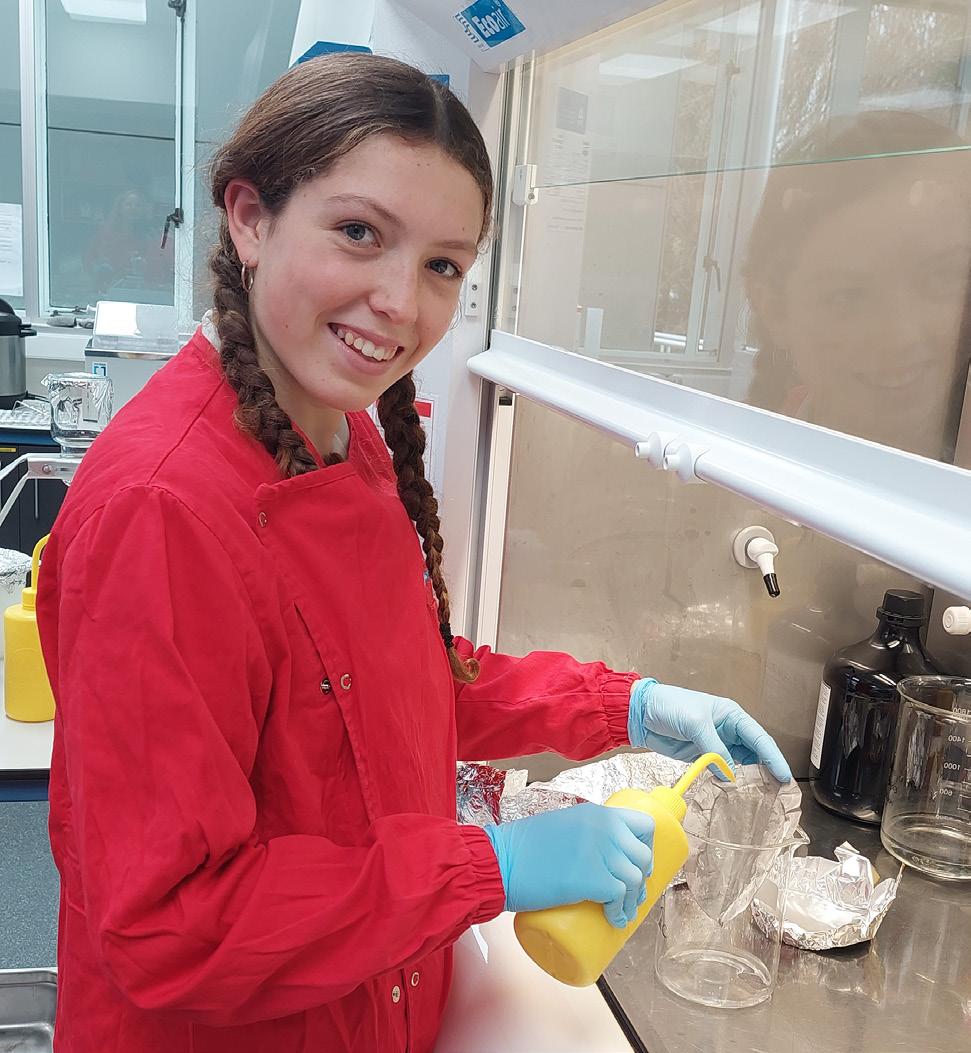
It’s essential we stop microplastics entering our water, but every time we wash our clothes in the washing machine, hundreds of thousands of tiny fibres are being released.
Millie Palmer from Christchurch has been investigating this problem since she was 14. In 2022 and 2023, she won Environment Canterbury’s Wrybill Award for her mahi.
During Millie’s experiments using wool as a filter material, she was able to stop 100% of microplastics from leaving the washing machine!
Millie feels it should be a legal requirement for all washing machines to have microplastic filters, and she is currently developing her own filter cartridge.
Be part of making Aotearoa predator-free by 2050.
Donate a trap to a specific group
Donate funds to the cause
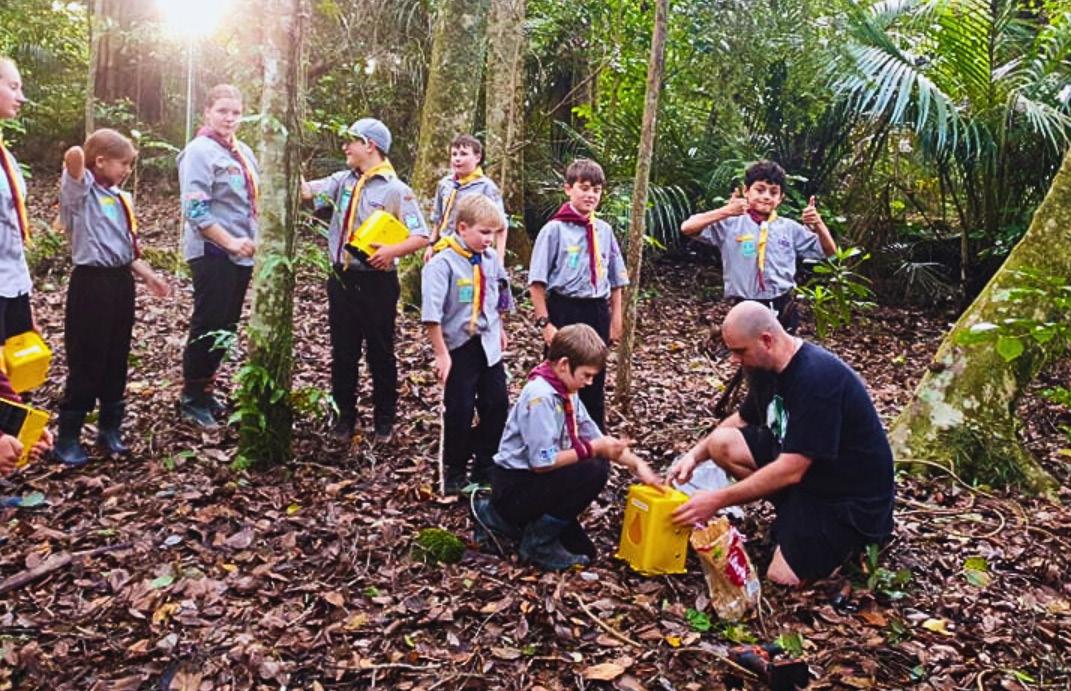
Kiwi North are part of the Give a Trap Programme. They are currently setting up a 50×50 grid of rat traps, and Give a Trap donations have filled a few of the placements, which has been a big help. Here they are supporting Horahora Scouts to earn their conservation badges through learning to trap.
Are you a trapping superstar too?
Send your story to kcc@forestandbird.org.nz
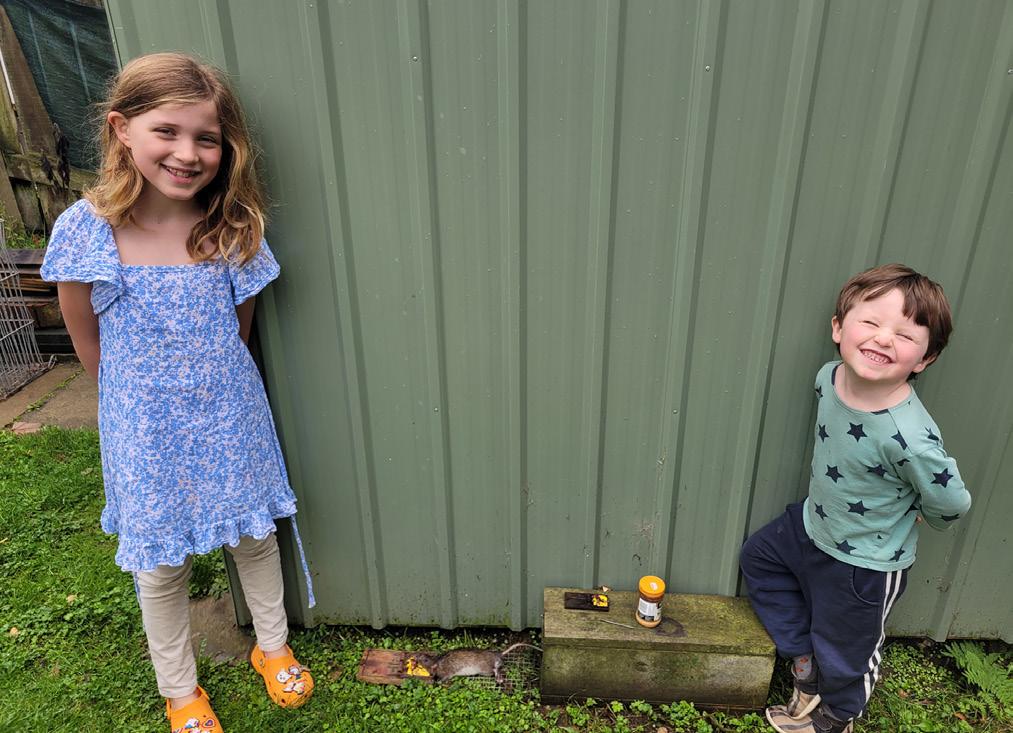
Shirley (7) and Harrison (4) from KCC Wellington recently learnt about what different introduced animals like to eat from reading an old issue of Wild Things. They’ve been very interested in their dad’s backyard trap and so have started helping him rebait it recently. They have pīwakawaka living in their garden, so are thrilled they caught a big fat rat recently!
Mahi tika ana!
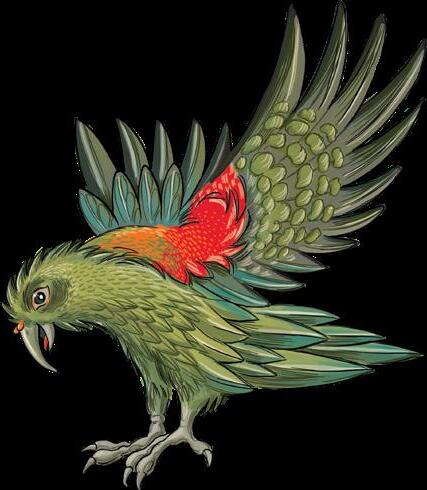
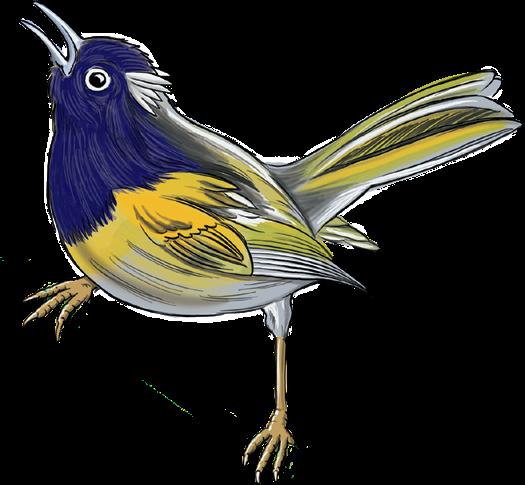
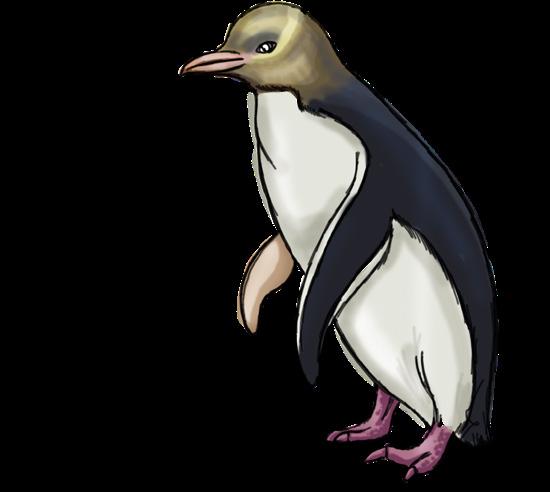
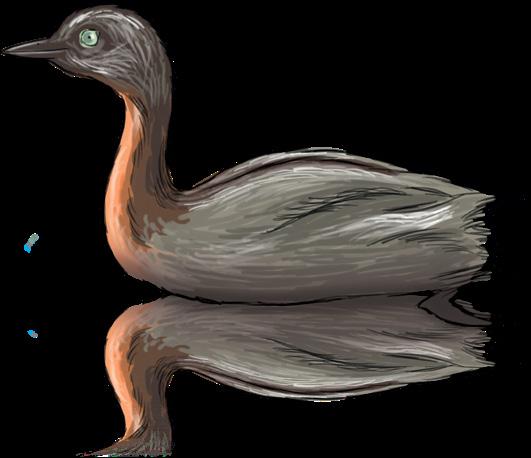
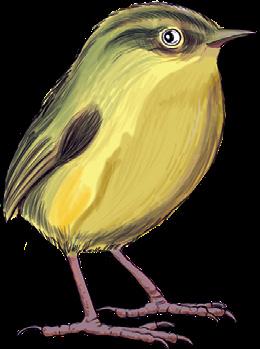

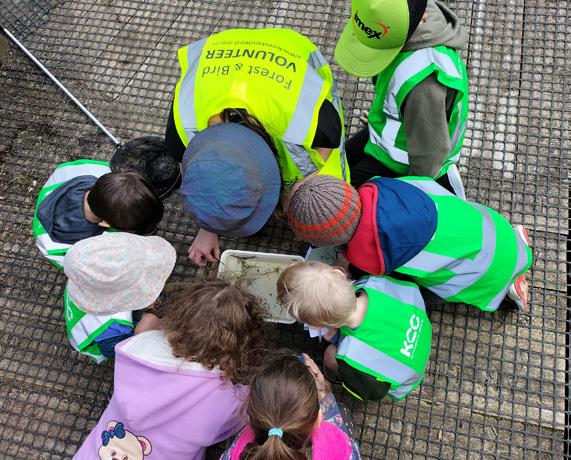
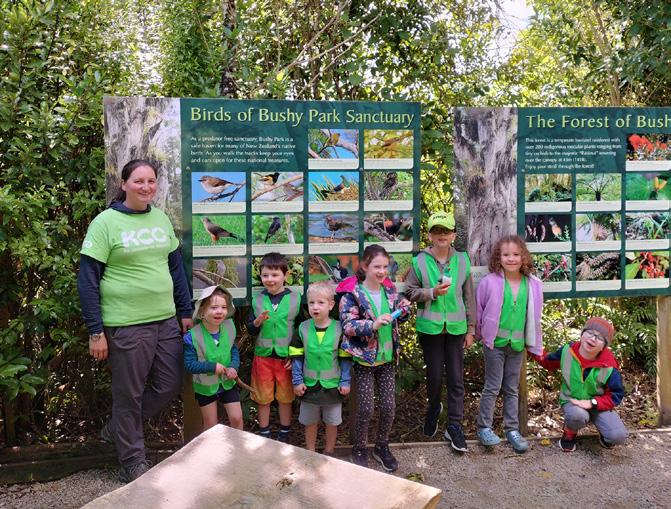
KCC Manawatū explored the pest-free forest sanctuary and wetland together. Using the pond nets to look for critters in the wetland was a massive hit! Everyone got super excited when a dragonfly larva was spotted. We also found damselfly larvae, caddisfly larvae, a leech, and a blood worm. A massive thank you to Michaella (Tarapuruhi’s Environmental Educator) for spending the day with us. We all learnt so much.
Anna Regtien (KCO)
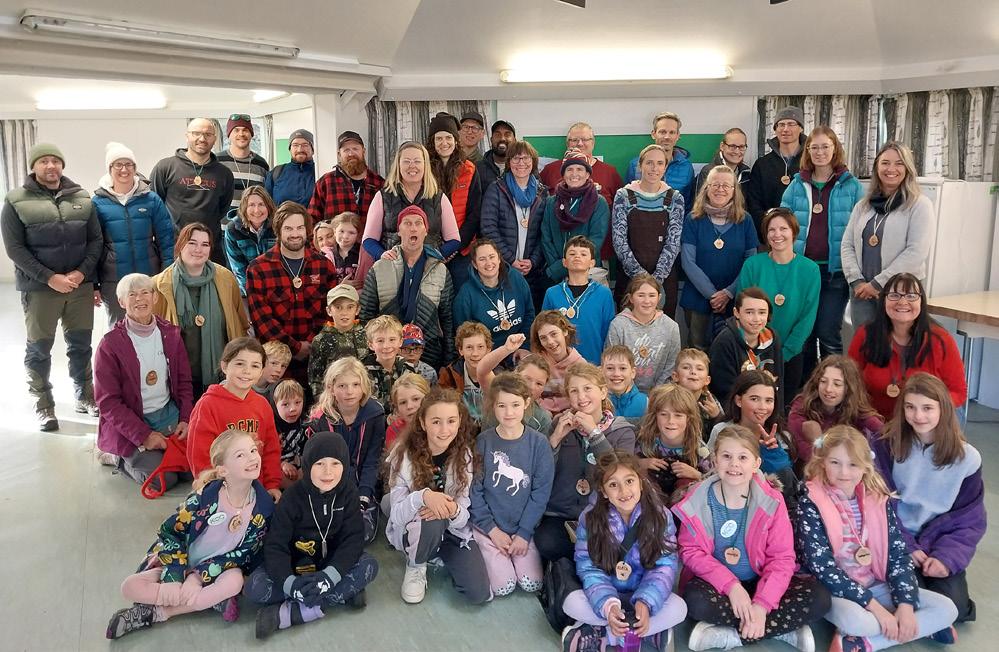
KCC North Canterbury had a great turnout for their recent overnight camp, where they explored the upper Rangitata River and Mt Sunday. The Rangitata is one of the largest braided rivers in Canterbury.
Susan Miles (KCO)
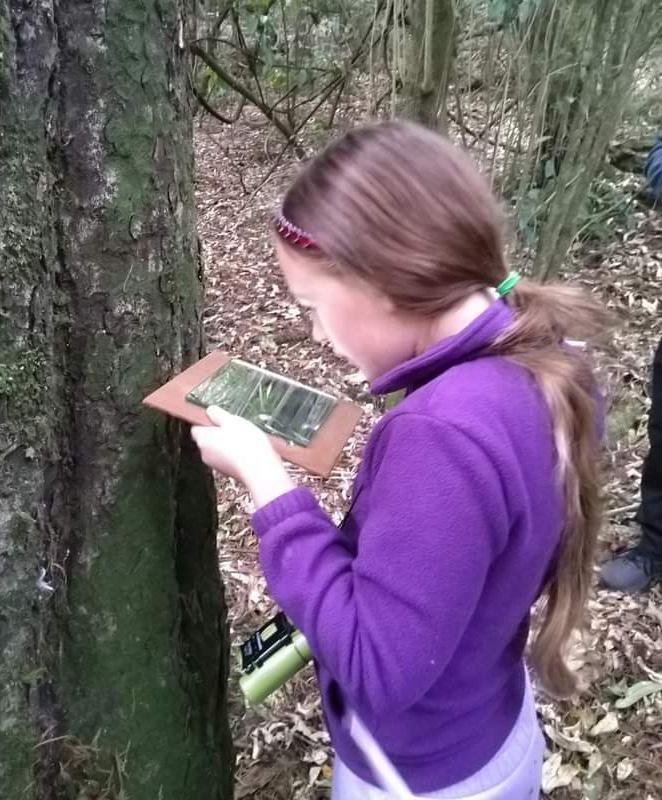
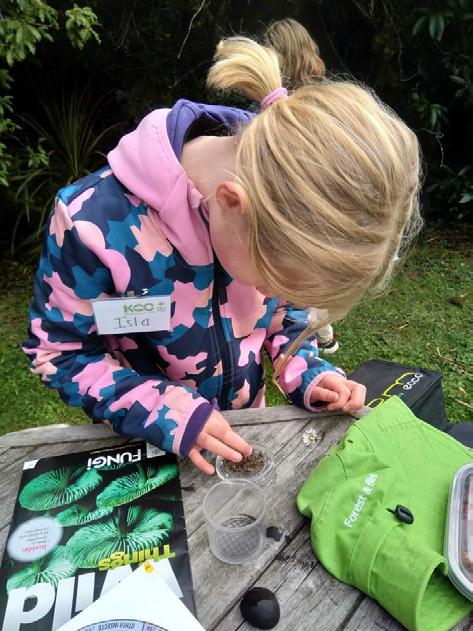
KCC South Canterbury got familiar with bats, bark, and big old trees in Geraldine. After learning about the bats living in the area, and playing bark bingo (where they had to find six different tree species), they investigated the following questions about how trees work:
• What happens under the bark?
• What lives in rotten wood?
• What do leaves look like from below?
Win Parkes (KCO)
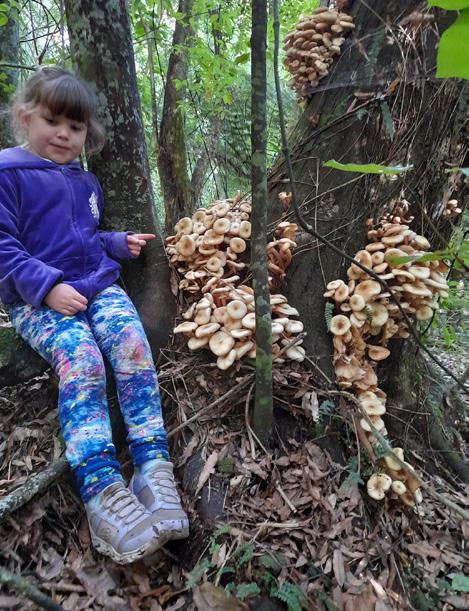
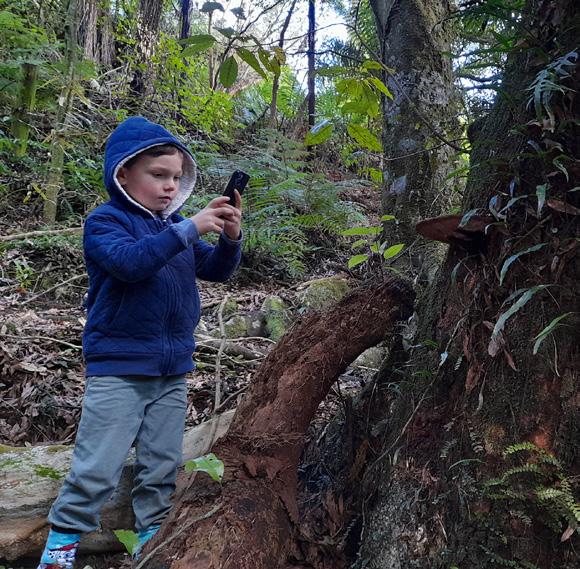
KCC Rotorua joined in with F&B Rotorua to see what fantastic fungi they could find!
Linda Johnson (KCO)
Where is that adventure?
Had a KCC adventure? Let us know at kcc@forestandbird.org.nz.

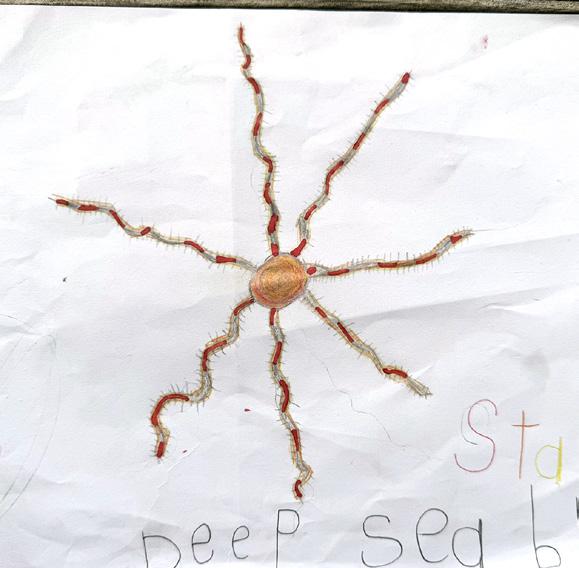
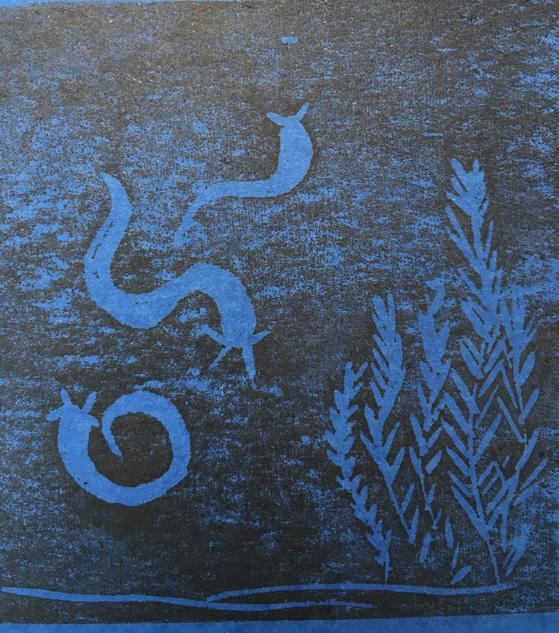
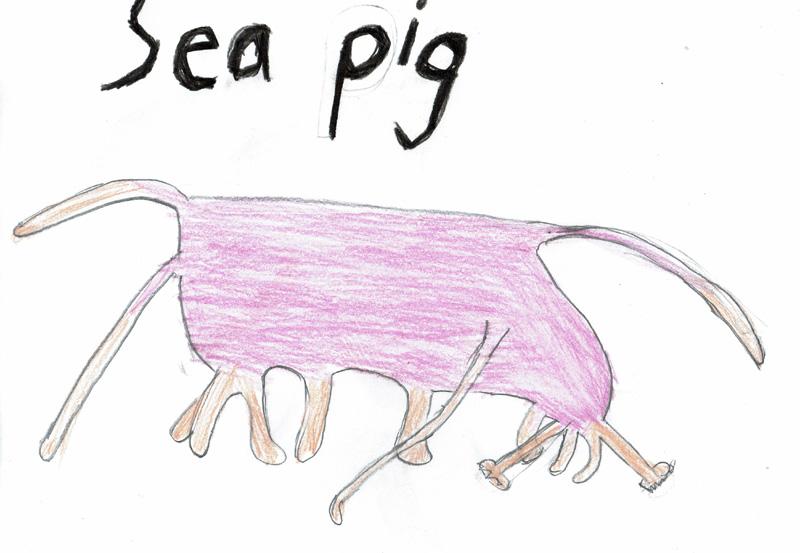
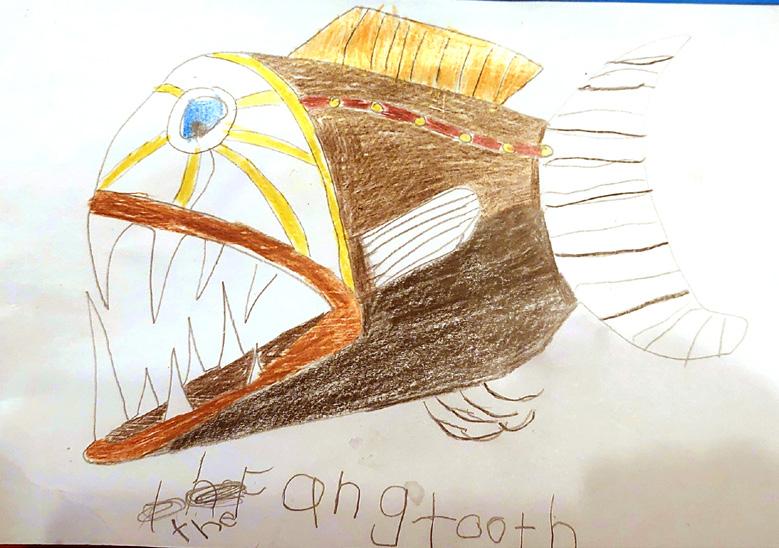
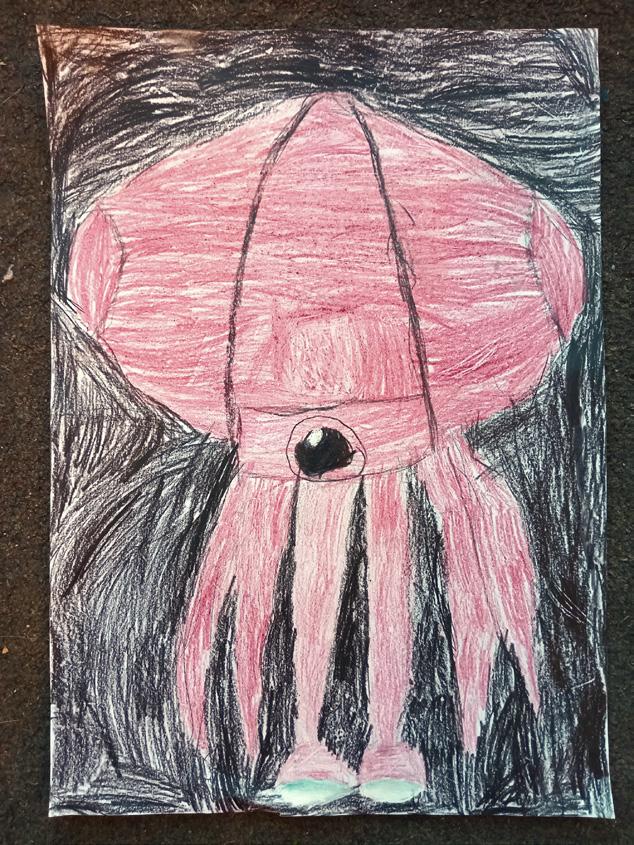
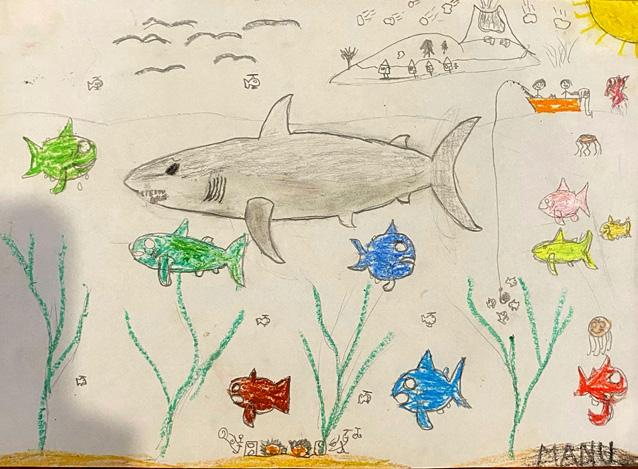
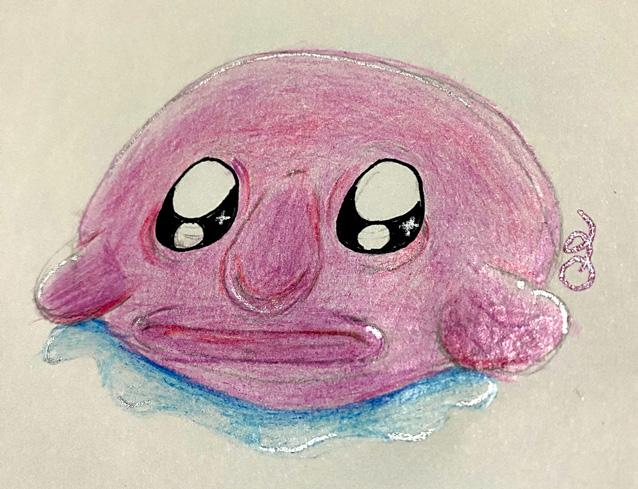
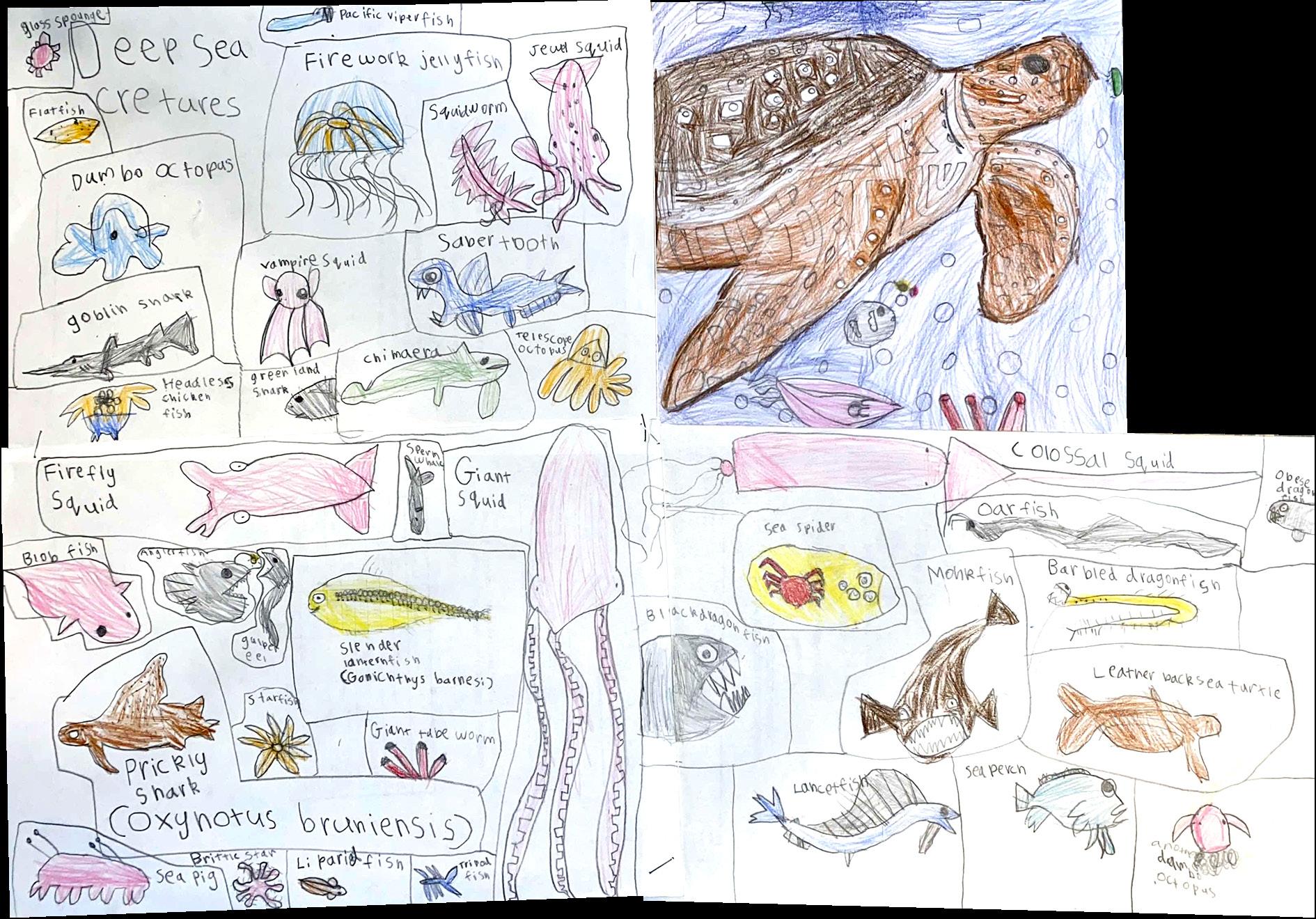
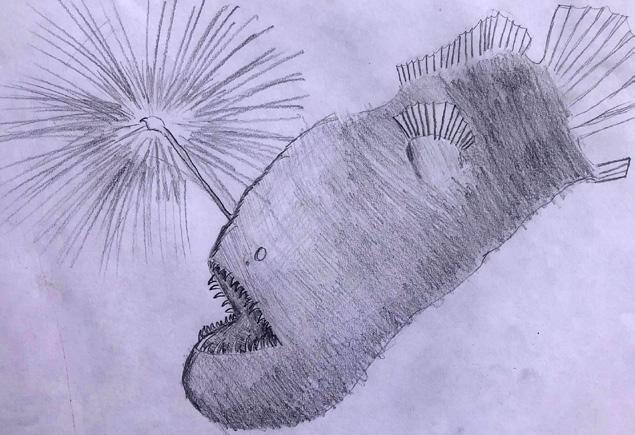
Did you know all the species Tristan (age 8) drew? We didn’t!
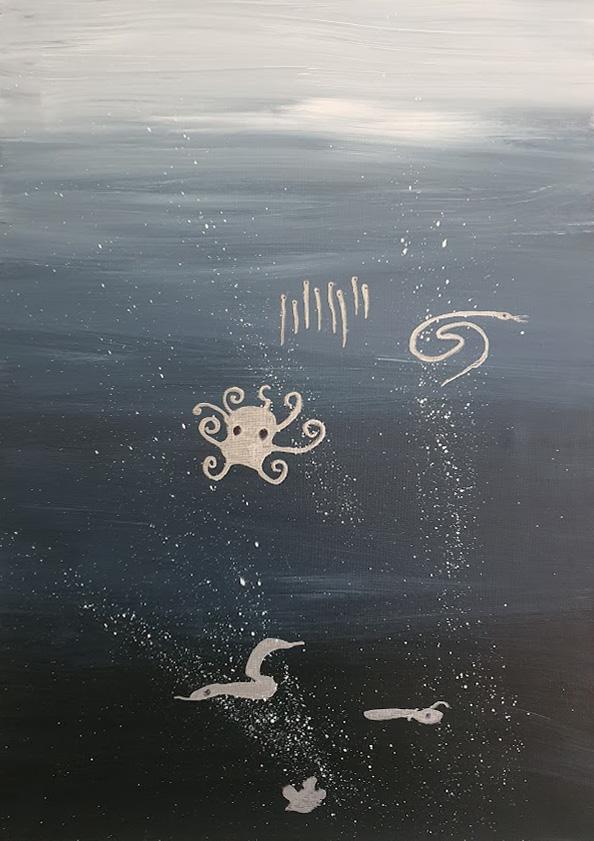
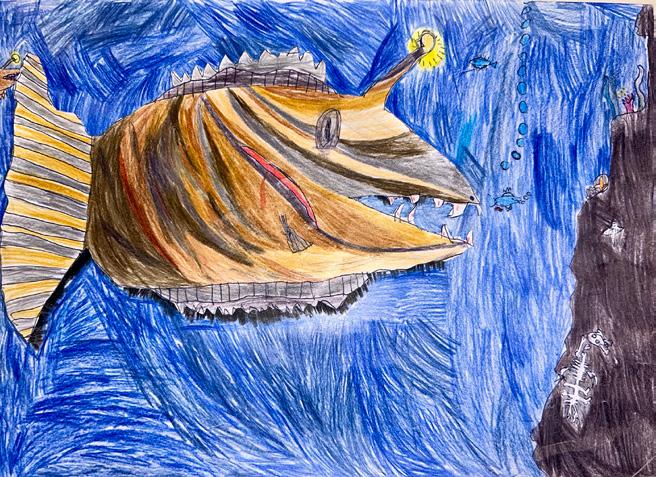
This artwork by Bill (age 12, from Kāpiti) features a cutlass fish, snipe eel, vent octopus, narrownosed chimaera, and viperfish. There is a group of vent clams, and white speckles of “marine snow”!