Things
Inside:
> Make a braided river artwork
> Recognise your conservation heroes

> Make a braided river artwork
> Recognise your conservation heroes
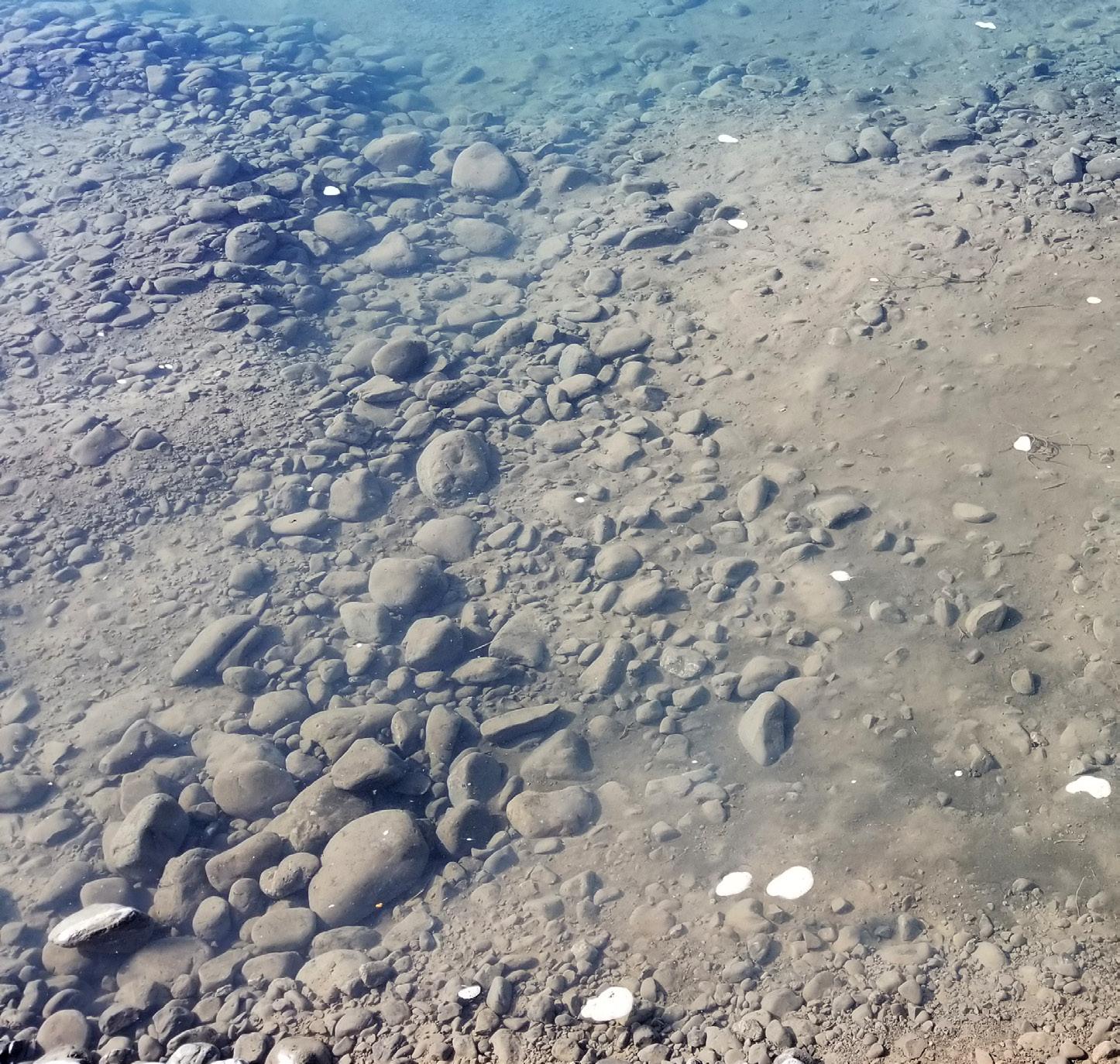
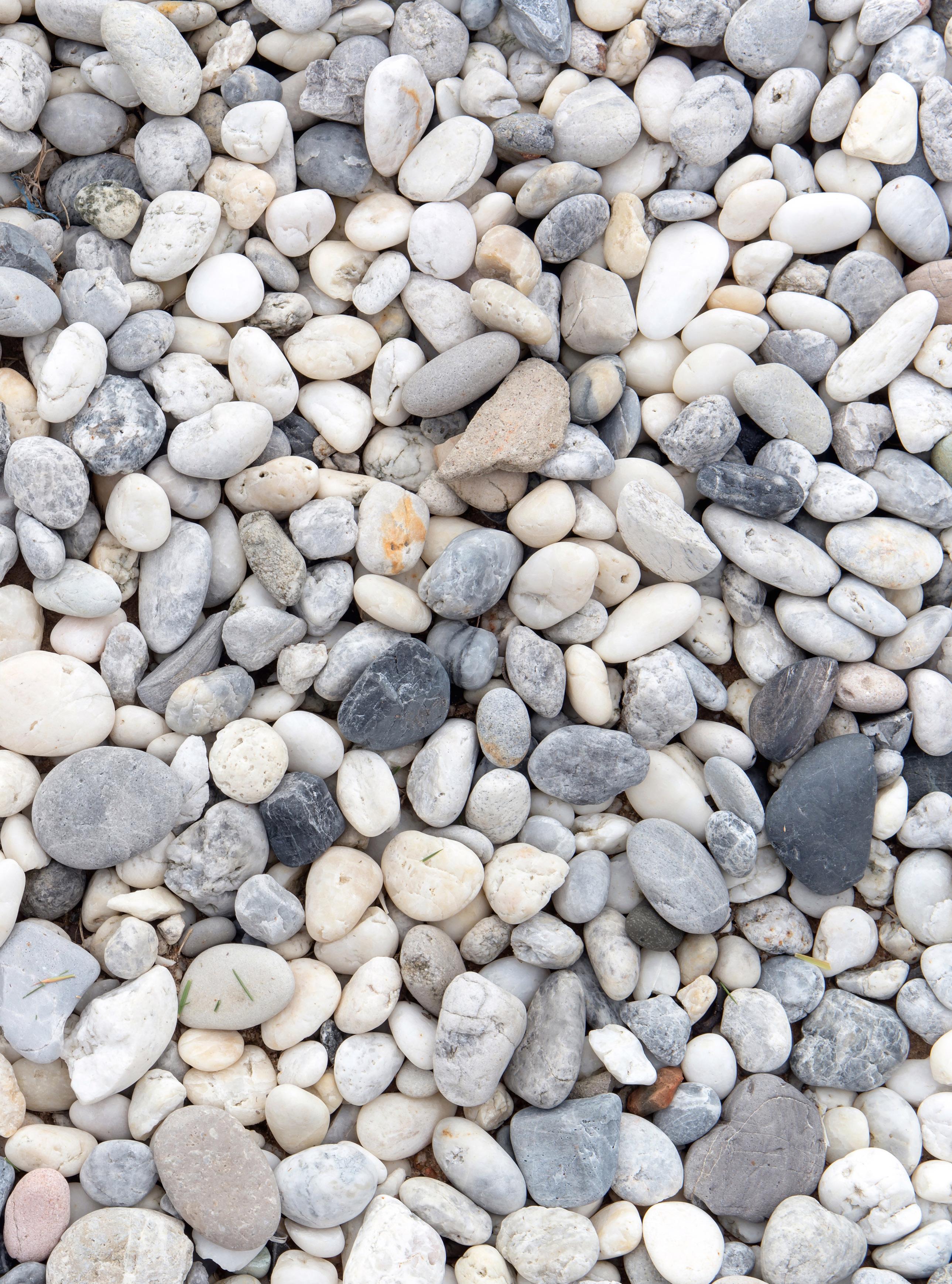
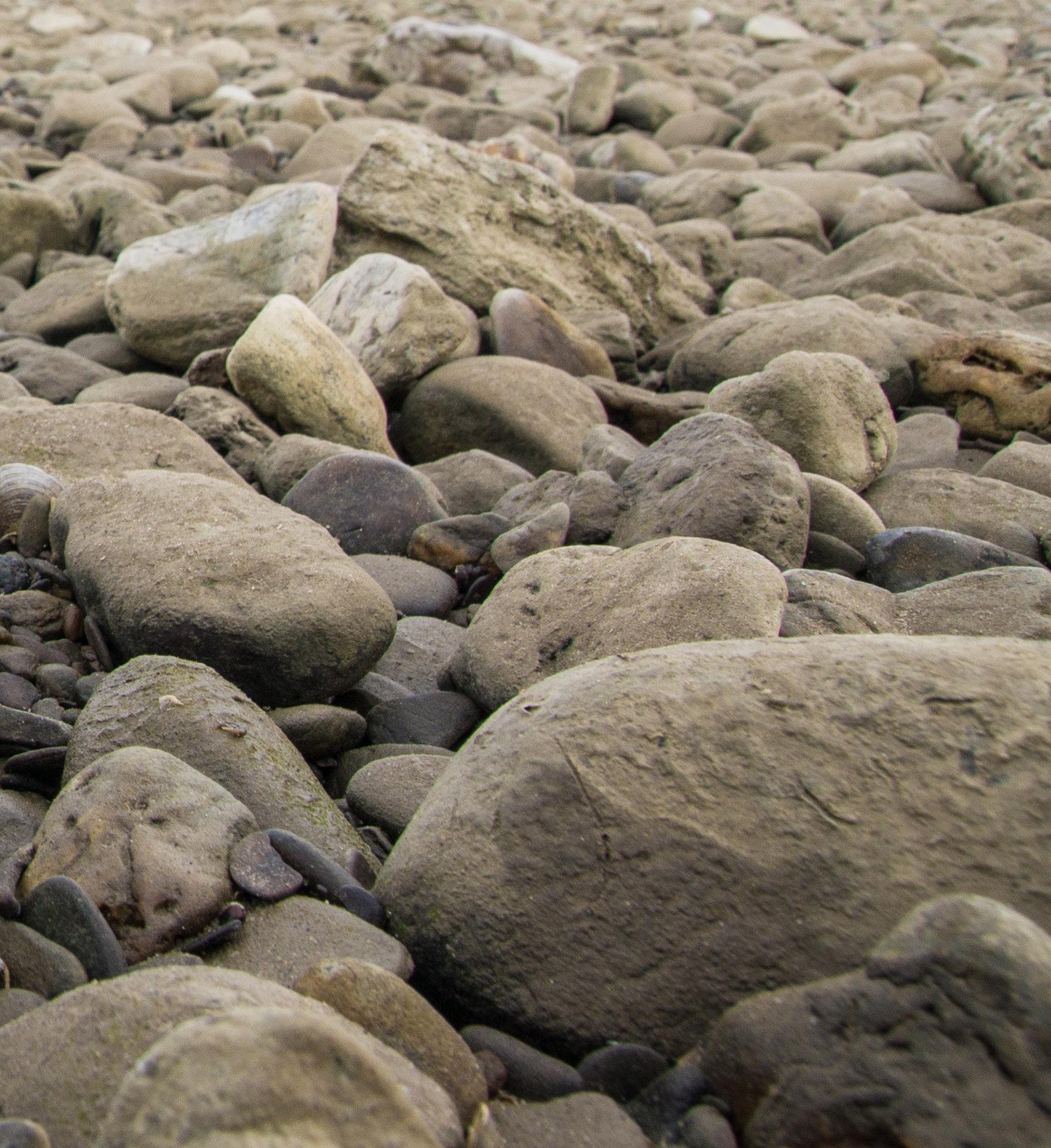
Tokariki | Pebbles are almost everywhere. You’re sure to have seen one before out in nature in a riverbed, on the shore of a lake, or on a beach!
Toka | Boulders
>256mm across
Tokaiti | Cobbles
64–256mm across
Tokariki | Pebbles
2–64mm across
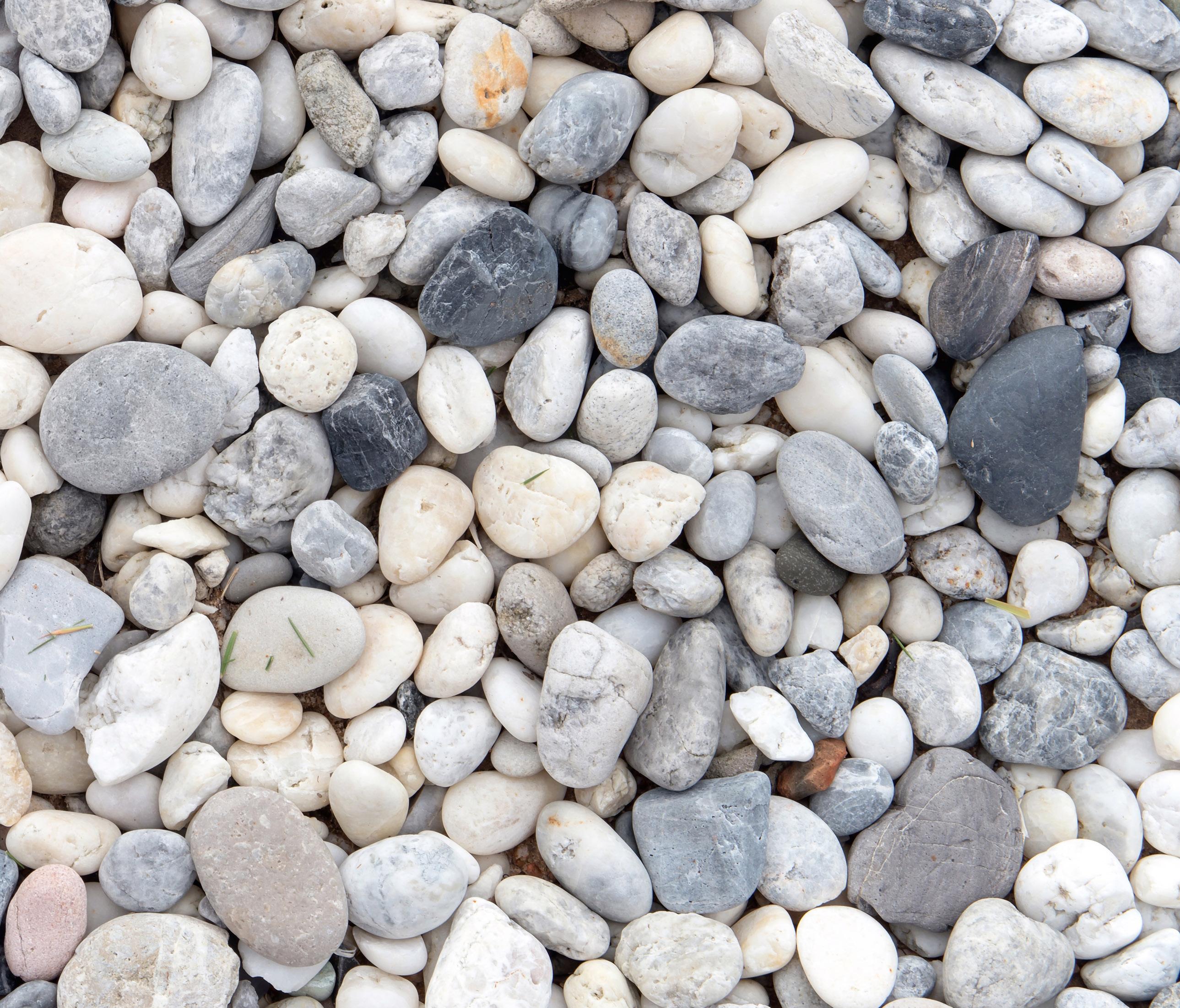
They’re fragments (bits) of rock of a certain size –between 2 and 64mm across. They’ll fit in the palm of your hand.
Hōanga utoka | Greywacke/Grey sandstone with quartz veins.
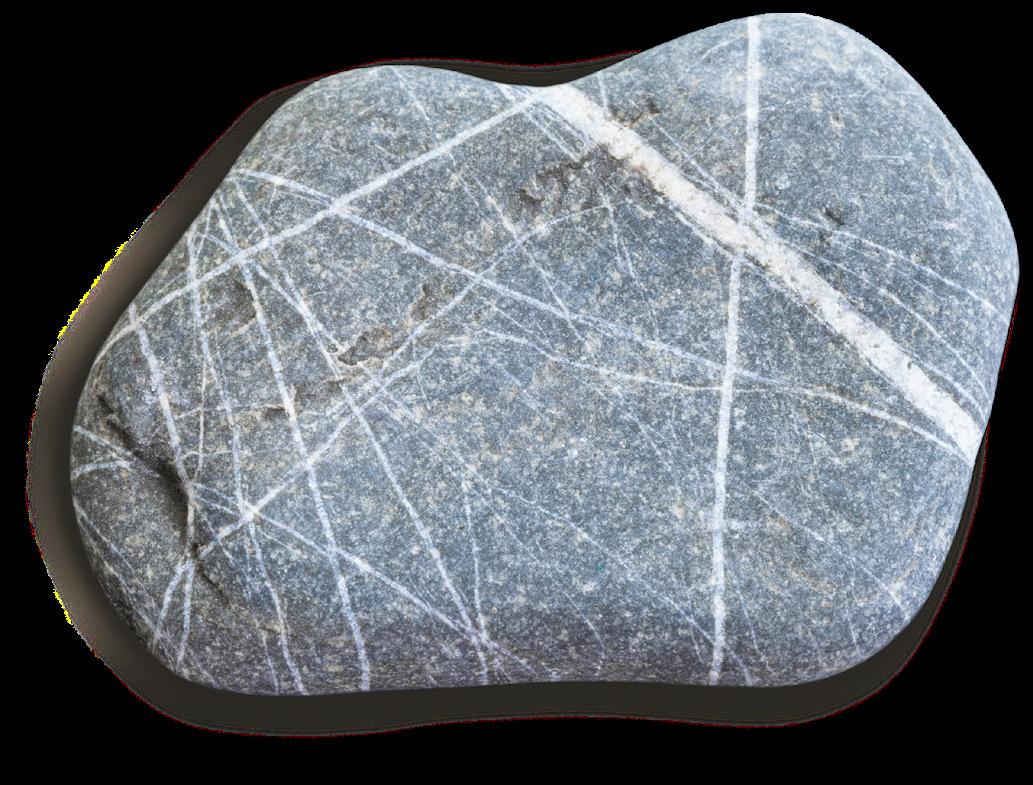
Geologists (earth scientists) group pebbles together with boulders and cobbles as “gravel”.
Onepū | Sand
0.0625–2mm across
Parahua | Silt
0.0039–0.0625mm across
Uku | Clay
<0.0039mm across
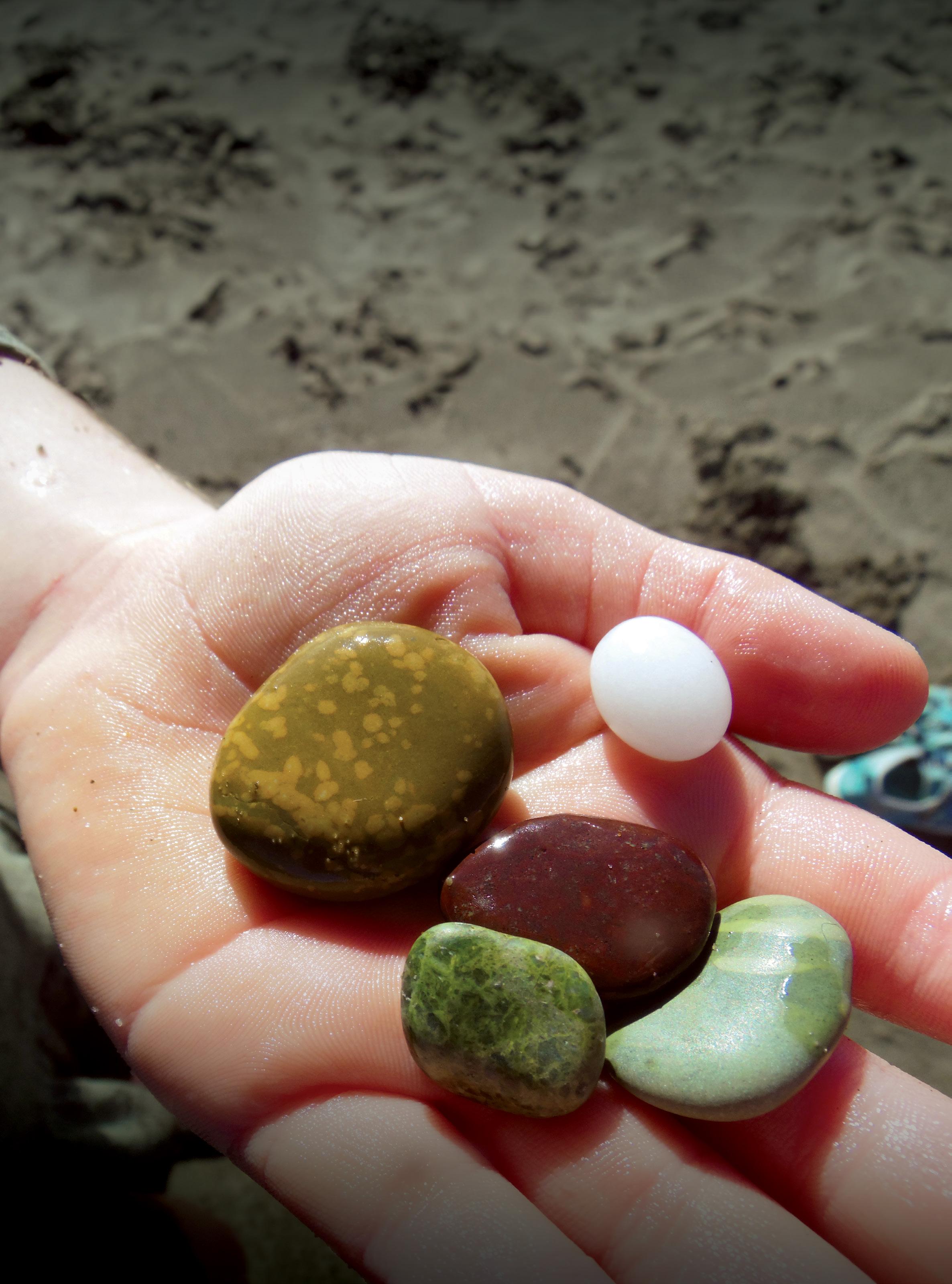
They can be made from any type of rock (sedimentary, metamorphic, or igneous), so they come in lots of different colours and textures. Sometimes they’ll have veins (streaks/ stripes) because there are minerals in them, like takawai | quartz. Different places in Aotearoa have different geology – the North Island has lots of toka puia | volcanic rock for instance – but you’ll find lots of greywacke pebbles all over.
Pebbles are usually rounded on the edges, but they aren’t always round, and they’re mostly smooth to touch.
EDITOR: Rebecca Hatch
BITS OF ROCK
Pebbles matter hugely to wildlife and wild places in Aotearoa. Find out why in this issue.
ART DIRECTOR/DESIGNER: Rob Di Leva, Dileva Design
PRINTING: Webstar, Auckland • ISSN 2230-2565
COVER: Pebbles found at Gemstone Beach. Kath Dillon
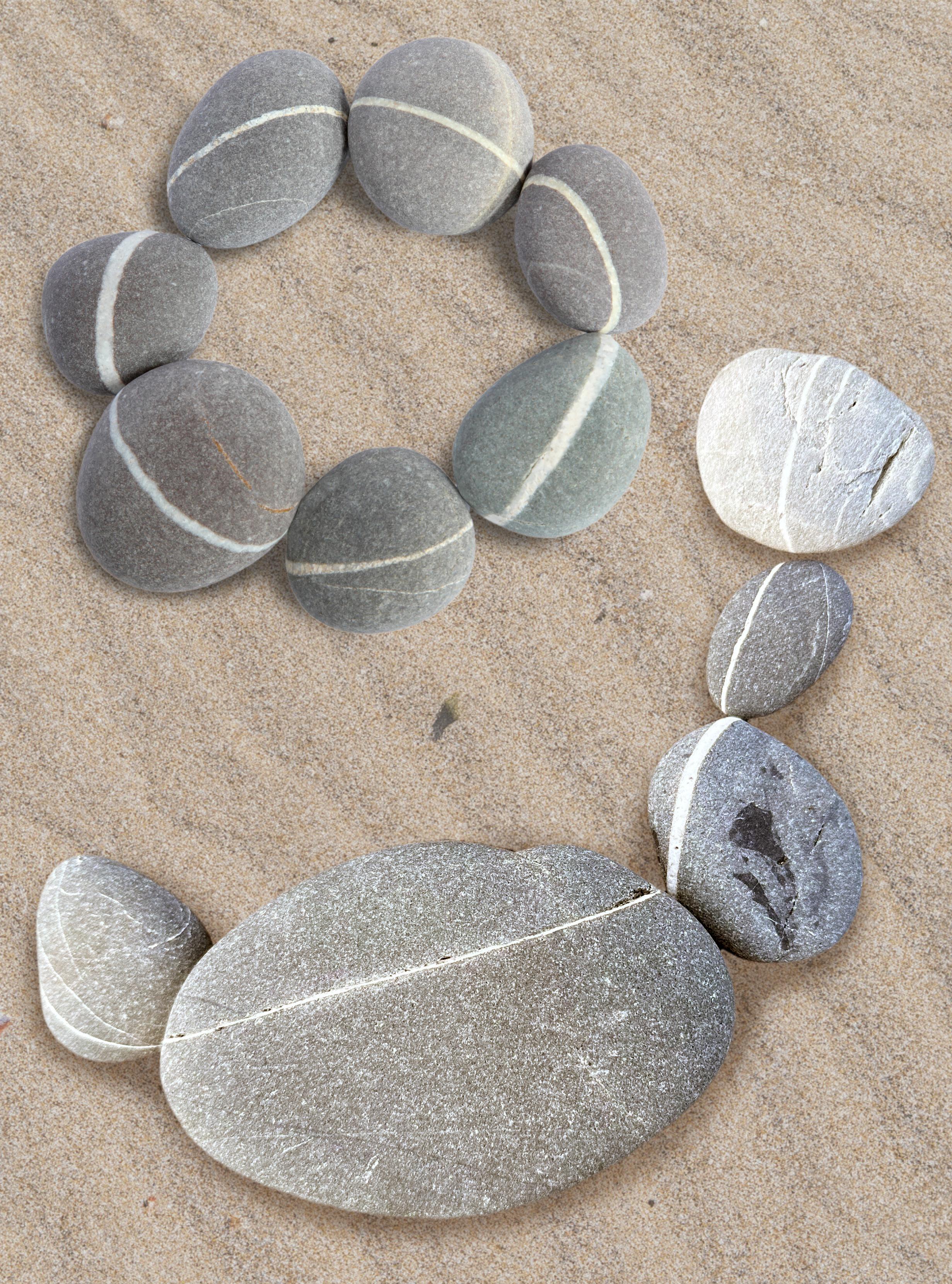
What shapes can you make?
Find other pebbles with veins to join onto this line we’ve started. How long a line can you make?
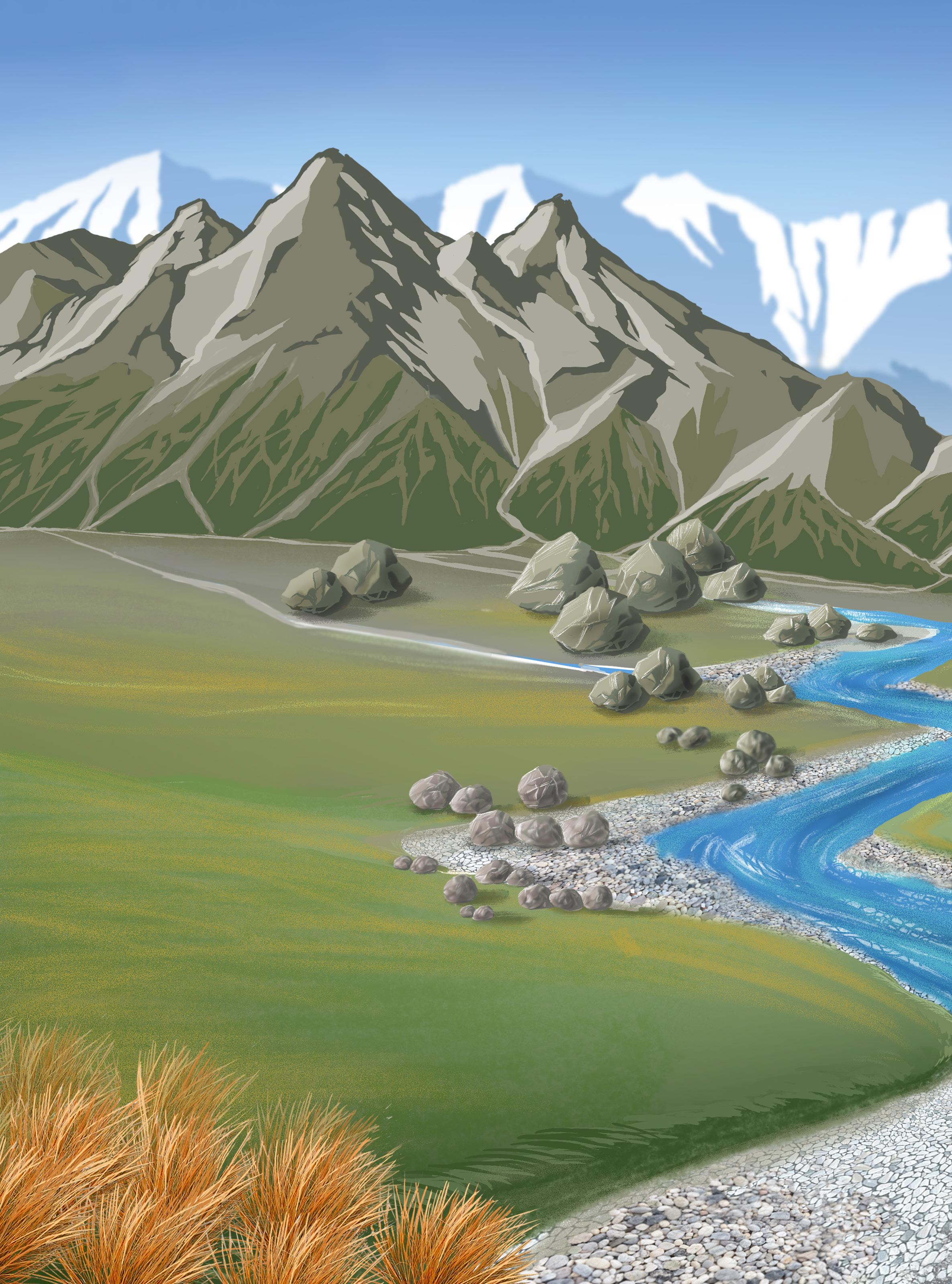
Pebbles don’t start off as pebbles. They are formed over a long, long time (sometimes thousands of years) through earth processes called ngawhere | weathering and ngāhorohoro | erosion.
Up in the maunga | mountains, rainwater, and melted ice seeped into the bedrock (the solid base rock). The water freezes and expands (gets bigger). The pressure cracks the bedrock. Big chunks get loose and break off, making toka | boulders.
Mountains are steep, and slope downwards toward river valleys. Many boulders in the mountains tumble down into rivers via a landslide, which can be caused by earthquakes, lots of rain, or just gravity!
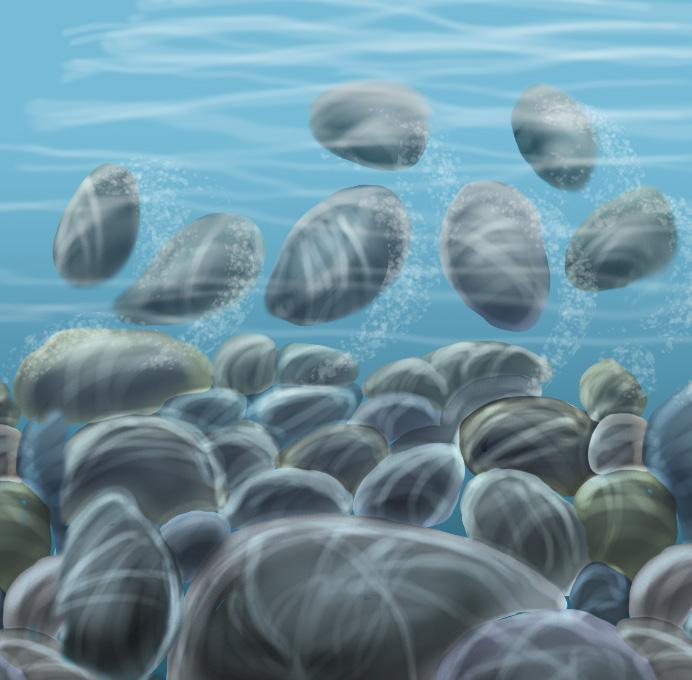
Being in an awa | river is not like being in a swimming pool. The water has energy due to its current (movement). The current is usually strongest where the river starts. Storms add lots more water and can make the current so powerful and fast moving that it can move boulders and break fragments off them! These different bits of rock (little by little) start to tumble downstream along the riverbed during floods.
The tokaiti | cobbles are made smaller and smaller over time as the water flows over them and moves them. The rocks scrape into each other, rub up against each other, and collide! Eventually, they are worked down to being the size of tokariki | pebbles
Pebbles have a hard life – the constant tumbling and rolling of rocks along the riverbed is like being in a washing machine! All this tumbling helps to round pebbles. The moving water and sand also help to slowly shape and polish them.
When you’re going on a long hīkoi | walk down a river, make stops along the way to notice the size and colour of the loose rocks.
Some pebbles will break down further (very, very slowly) until they become onepū | sand, then parahua | silt, then uku | clay.
Some pebbles get washed up onto the banks of the river. Some get washed down into a lake and get moved onto their shores, where they build up. Some get washed out to sea and are brought back to the beach by the waves.
Not all pebbles on a beach will have come from a river though. The energy of the waves breaks rock off from cliffs for instance. The salt water washing over the loose rock weathers and erodes it over time, just like the fresh water.
Beaches with pebbles are often called “shingle beaches”.
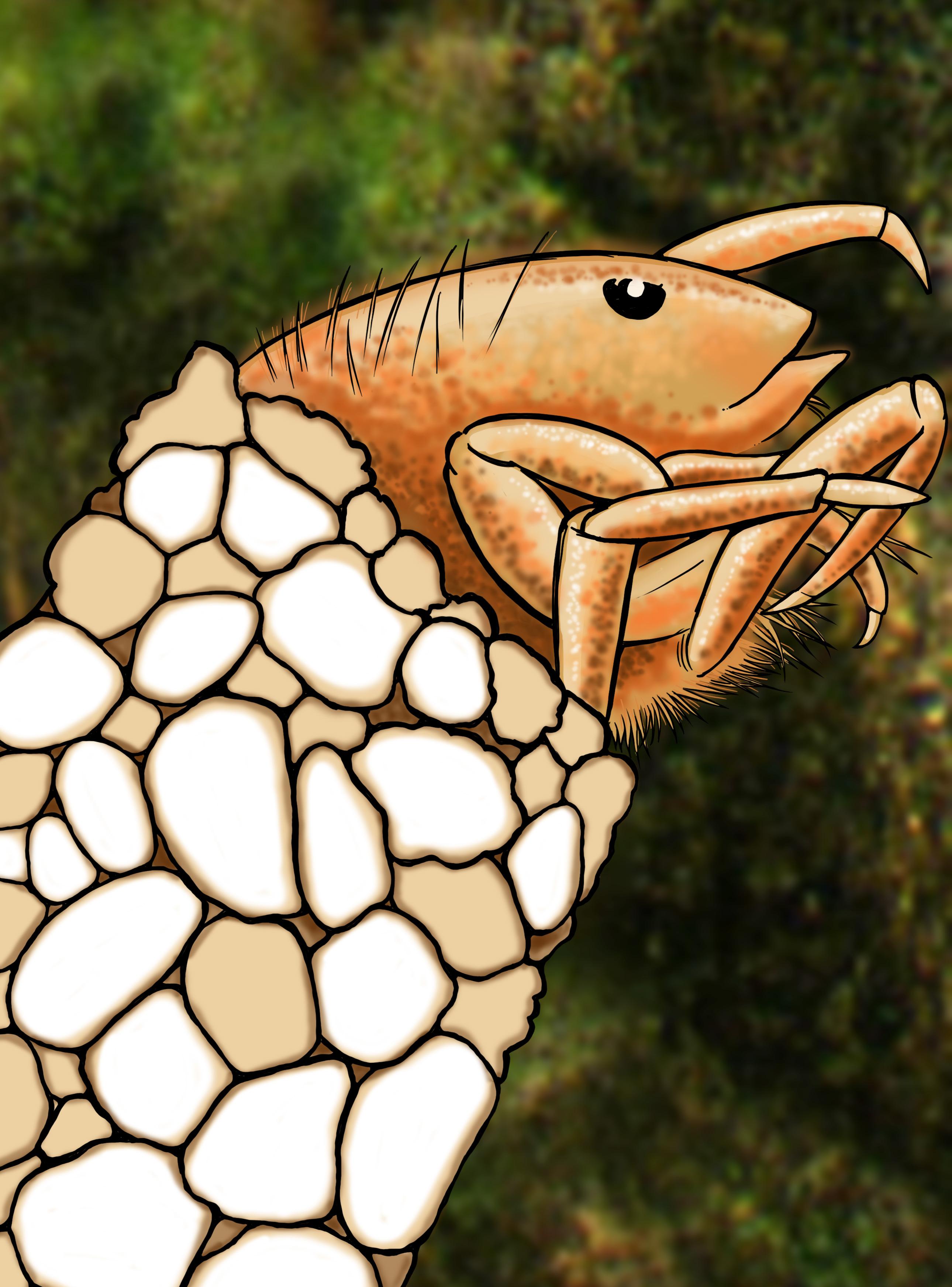
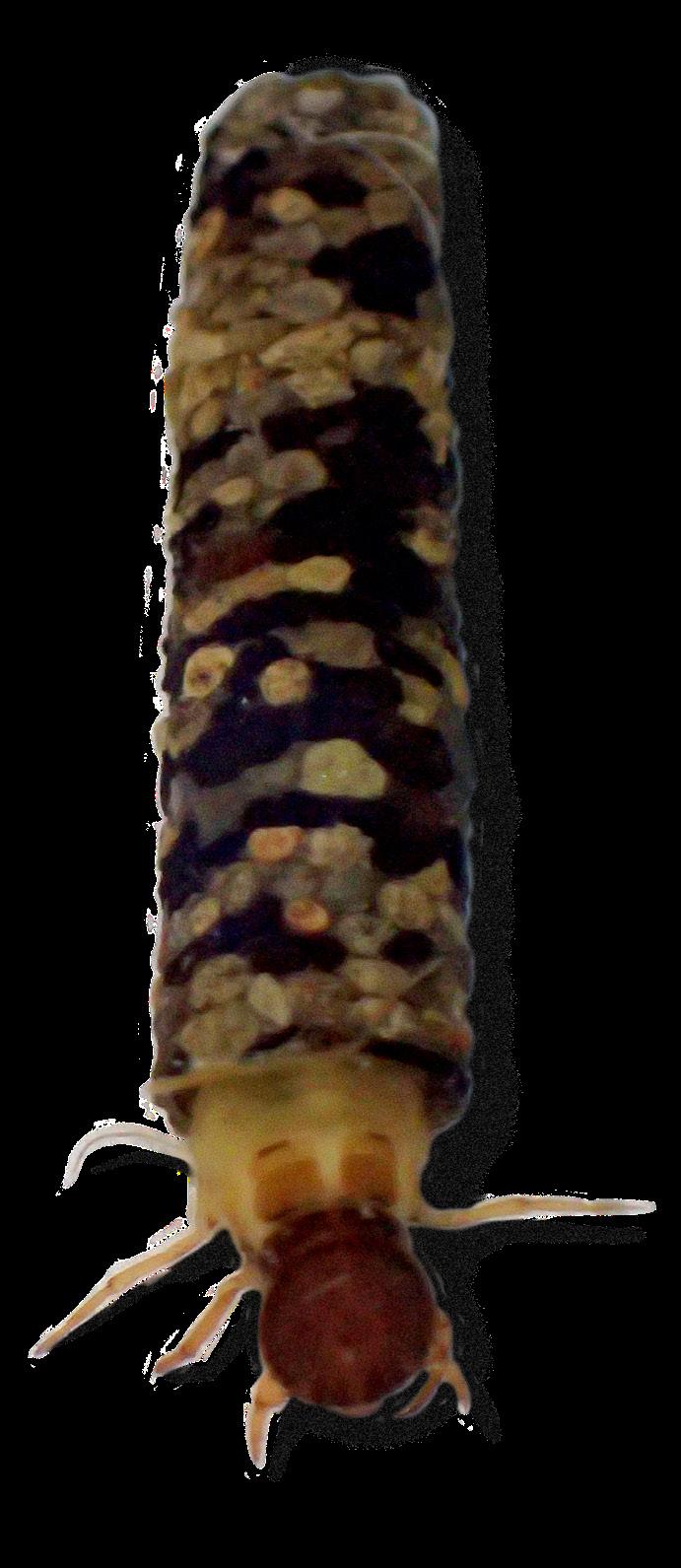
Find pebbles the right size and shape to fill the gaps in the stony case of this caddisfly larvae.
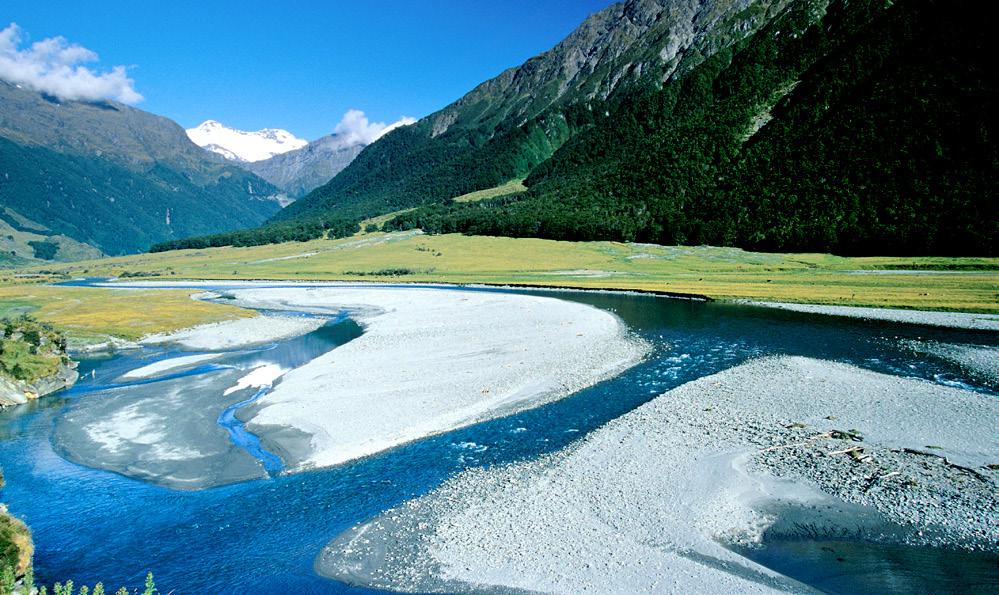
Pebbles don’t just go with the flow; they can also shape it. Just check out our braided rivers!
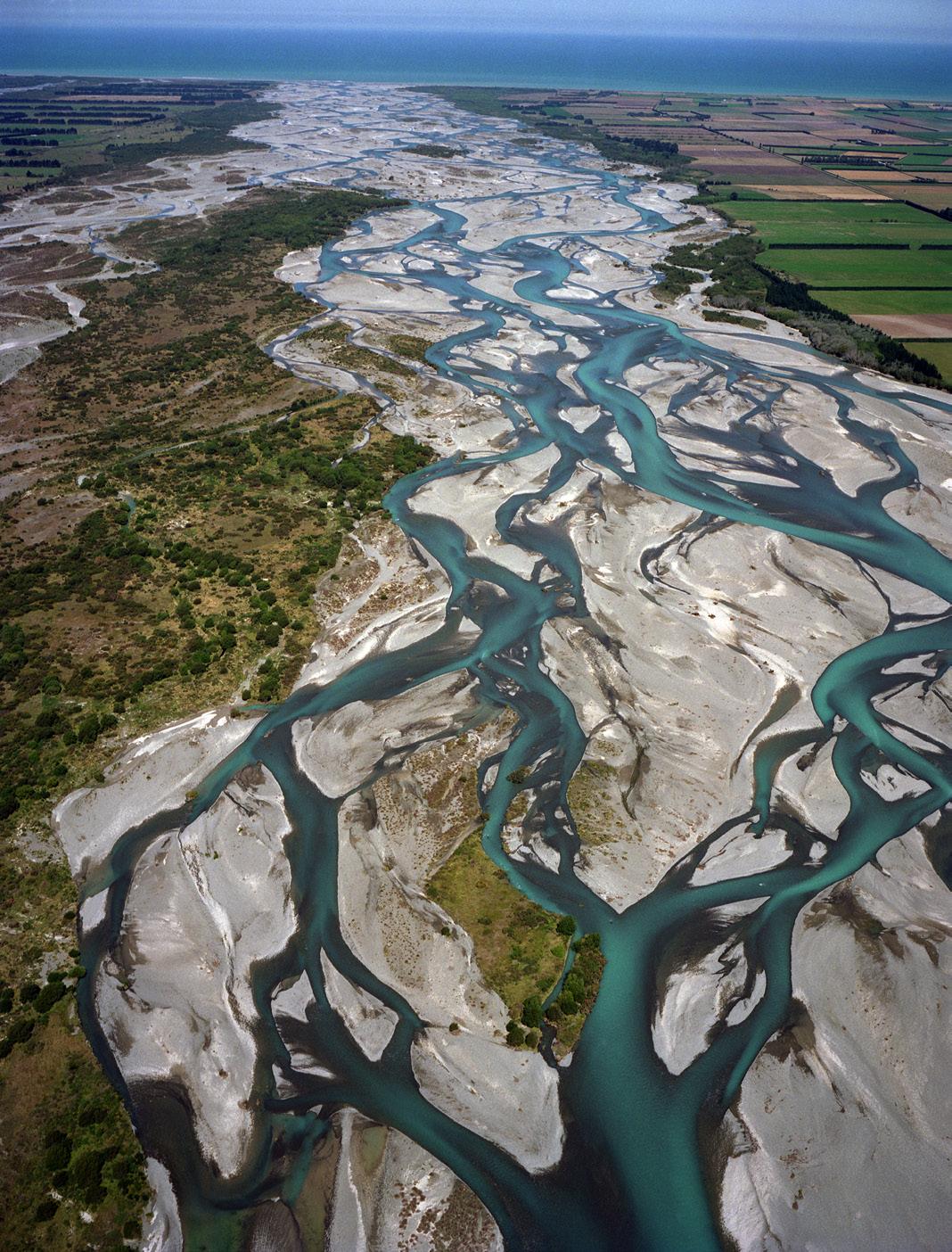
These aerial (from above) photos are both of the Rakaia River on the Canterbury Plains. Can you see that it looks different in each of them?
Unlike he awa kōpikopiko | meandering rivers (those that have one channel and wind like a snake), he awa rangaranga | braided rivers are everchanging. It’s because of the gravel in their wide whaiawa | riverbed.
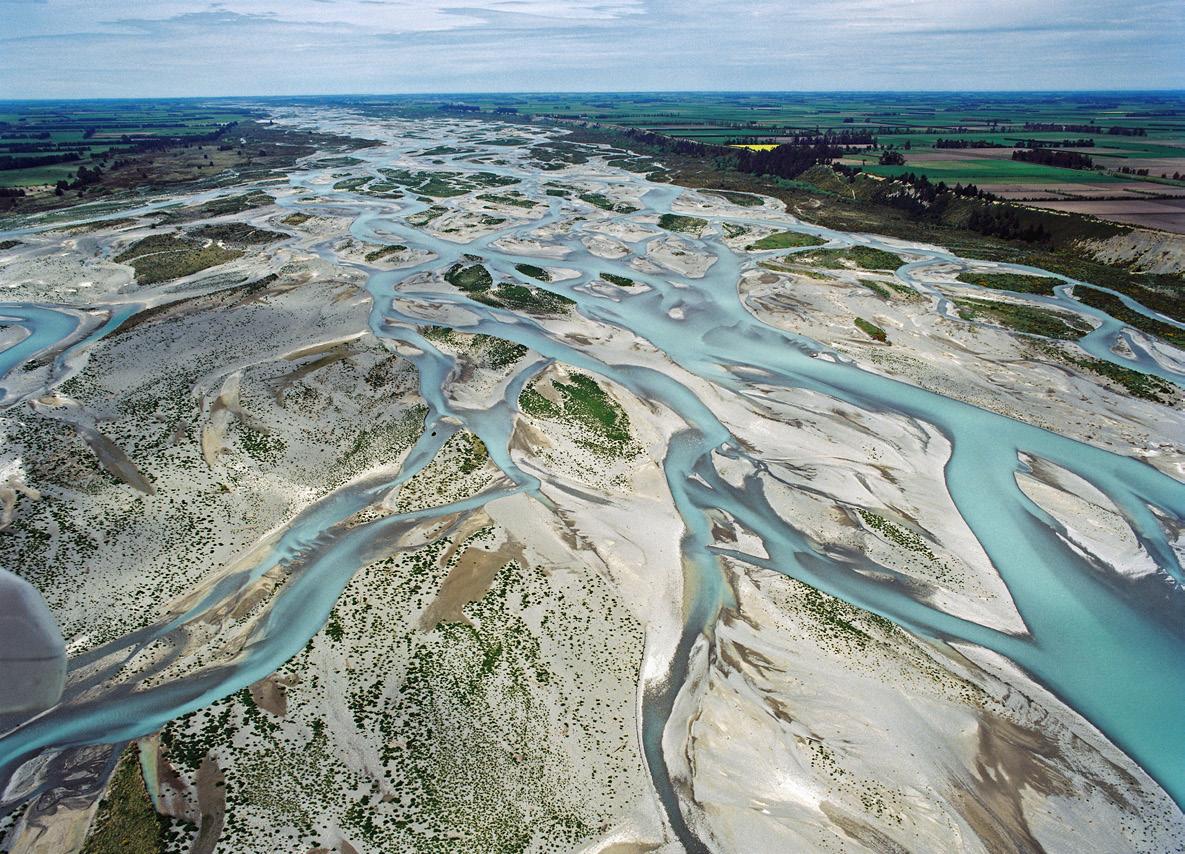
When the water is low, gravel gets deposited (put down) in the riverbed. It builds up so much in places that the water needs to migrate (redirect), making new “braids” or channels to get past. Small gravel “islands” get formed.
West branch of the Mātukituki River, Mount Aspiring National Park. Rob Suisted
A new nōhanga | habitat every time the gravels are rearranged!
The awa might flow like this for a while, but then there might be a storm, or, snow upstream could melt, increasing the volume and speed of the water. The gravel islands are washed away.
When the water level drops again, new channels and gravel islands will appear, but somewhere different, because the gravel isn’t where it used to be – it’s been rearranged.
Sometimes the water moves around so much it’s like the river is a dropped firehose!
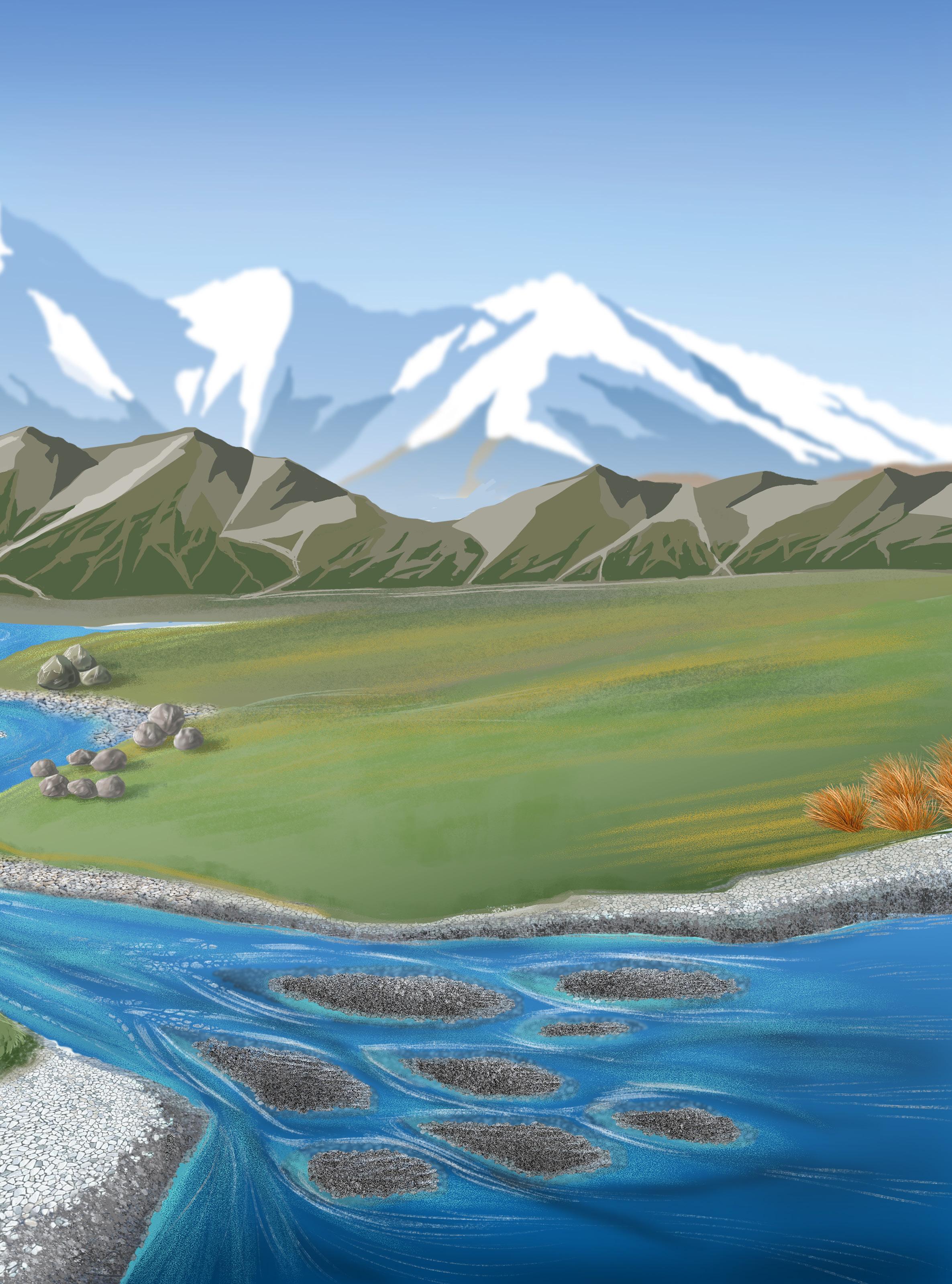
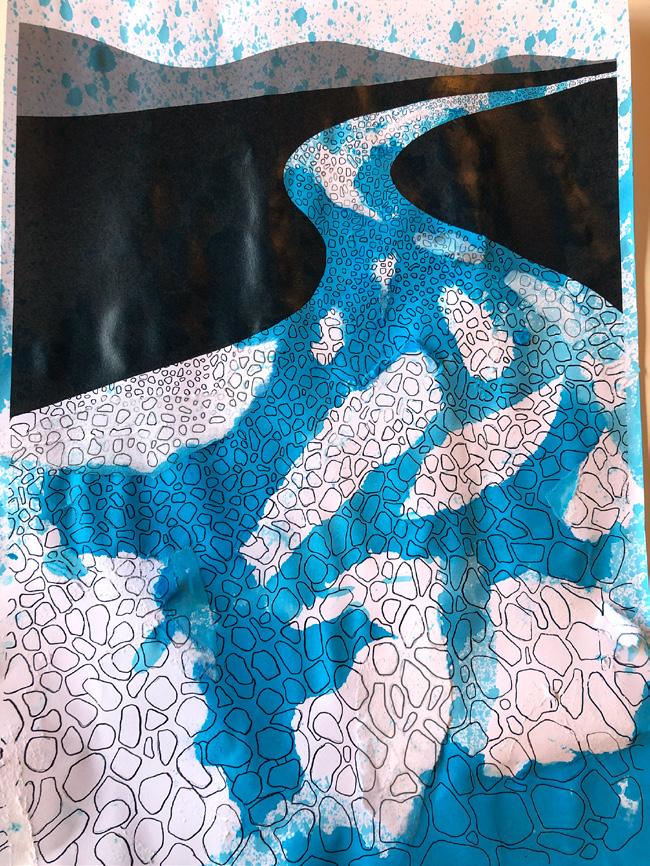
Make your own unique braided river –instructions are just over the page...
Aerial view of the Rakaia River in 1992. Lloyd Homer/GNS Science Aerial view of the Rakaia River in 1996. Lloyd Homer/GNS ScienceBraided rivers are rare, but Aotearoa is a hot spot!

You’ll need:
n Scrap paper
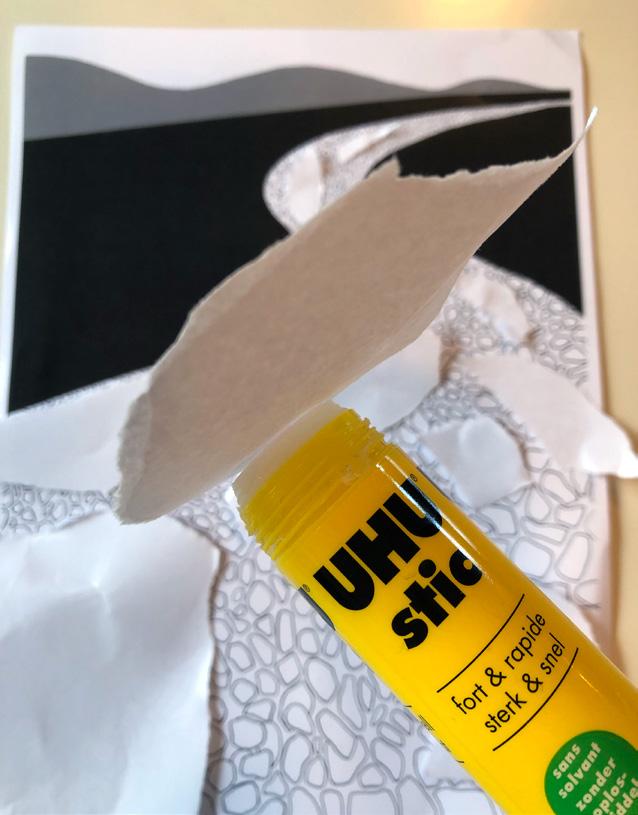
n Glue stick
n Recycled spray bottle
n Blue food colouring
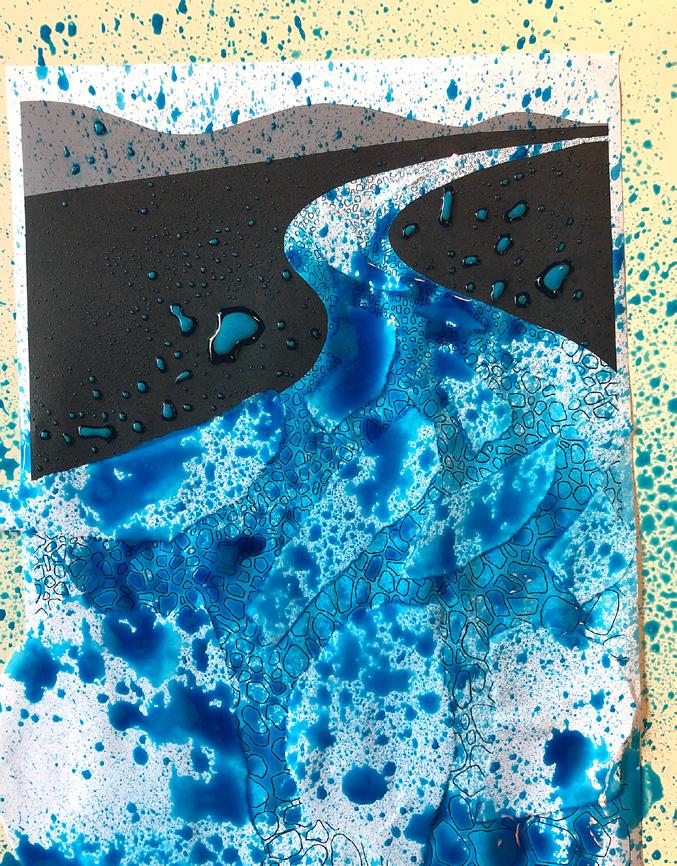
n Water
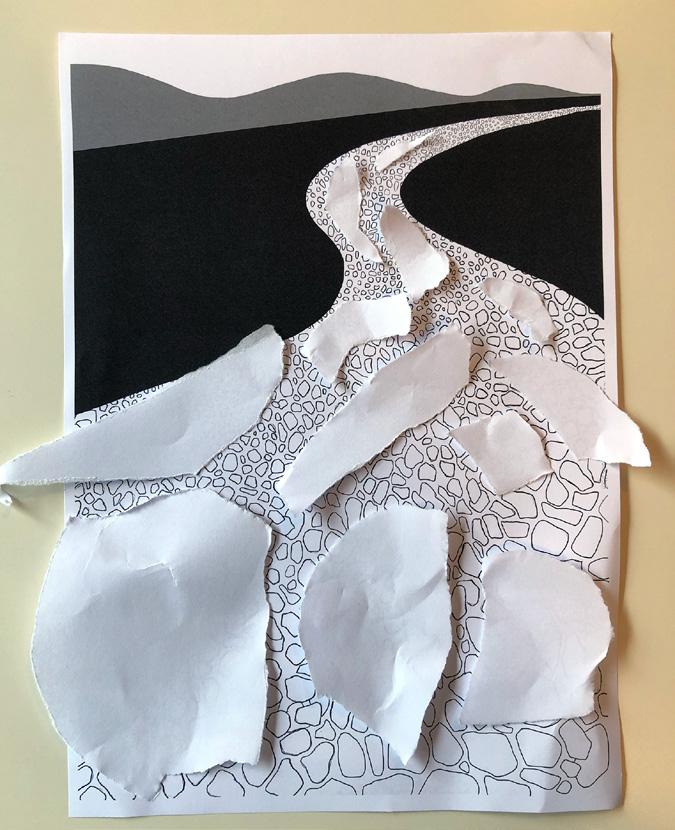
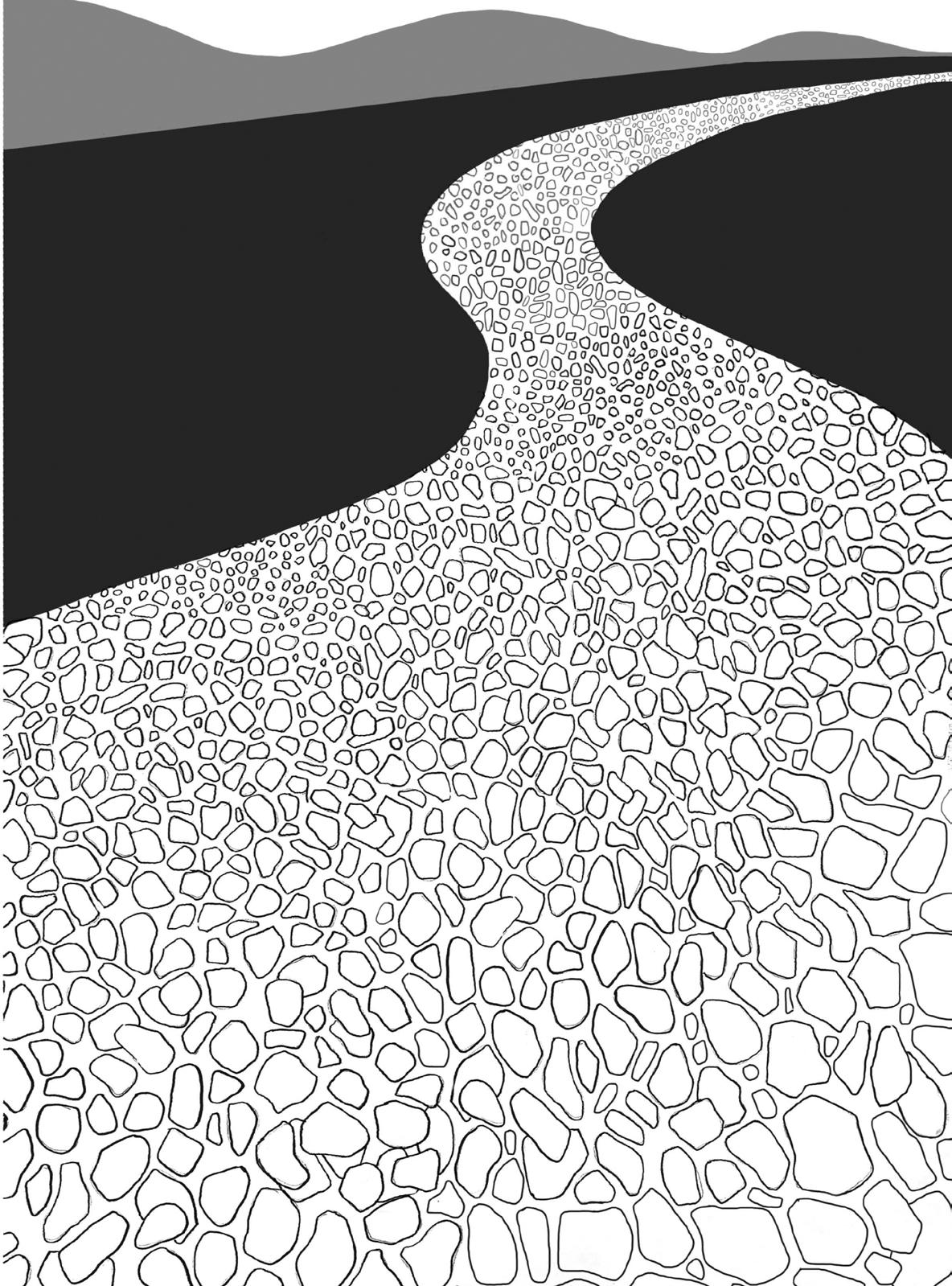
Roughly tear the scrap paper to make paper shapes for your gravel islands. Arrange the torn paper shapes onto the river like a jigsaw. The gaps between your paper shapes will become your braided river.
To add perspective, put your larger paper shapes near the bottom of the river and your smaller paper shapes near the top of the river. This is because things closer to you seem bigger, and things further away seem smaller.
Show us your mahi – email us at kcc@forestandbird.org.nz.
Use a tiny dab of glue to hold your paper shapes in place.
Fill an old spray bottle with 2 teaspoons of food colouring and ⅓ of a cup of water. Mix it well by shaking the bottle.
Spray all over your paper.
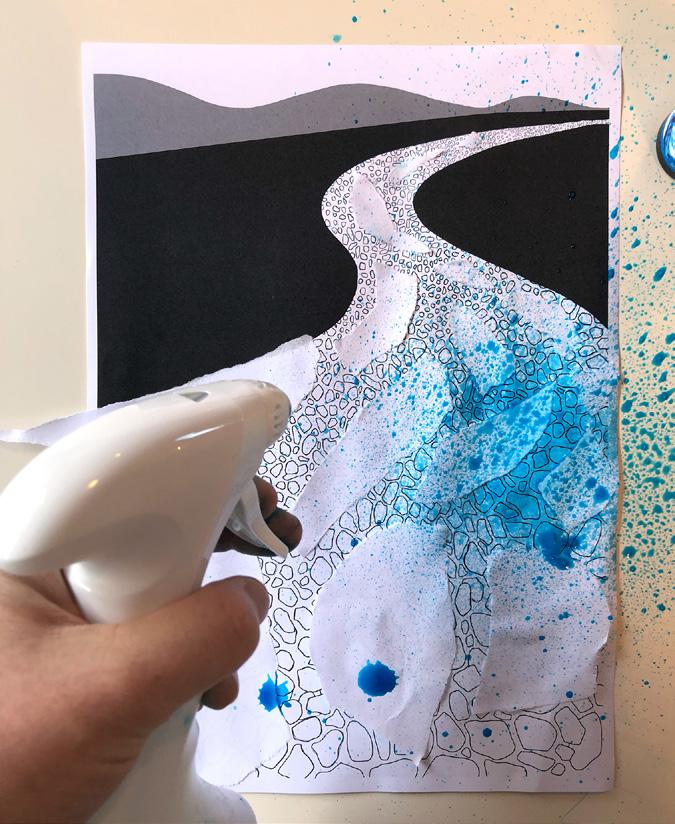
Carefully remove the torn paper shapes while the paint is still wet. Reveal your braided river!
 By Stella McQueen
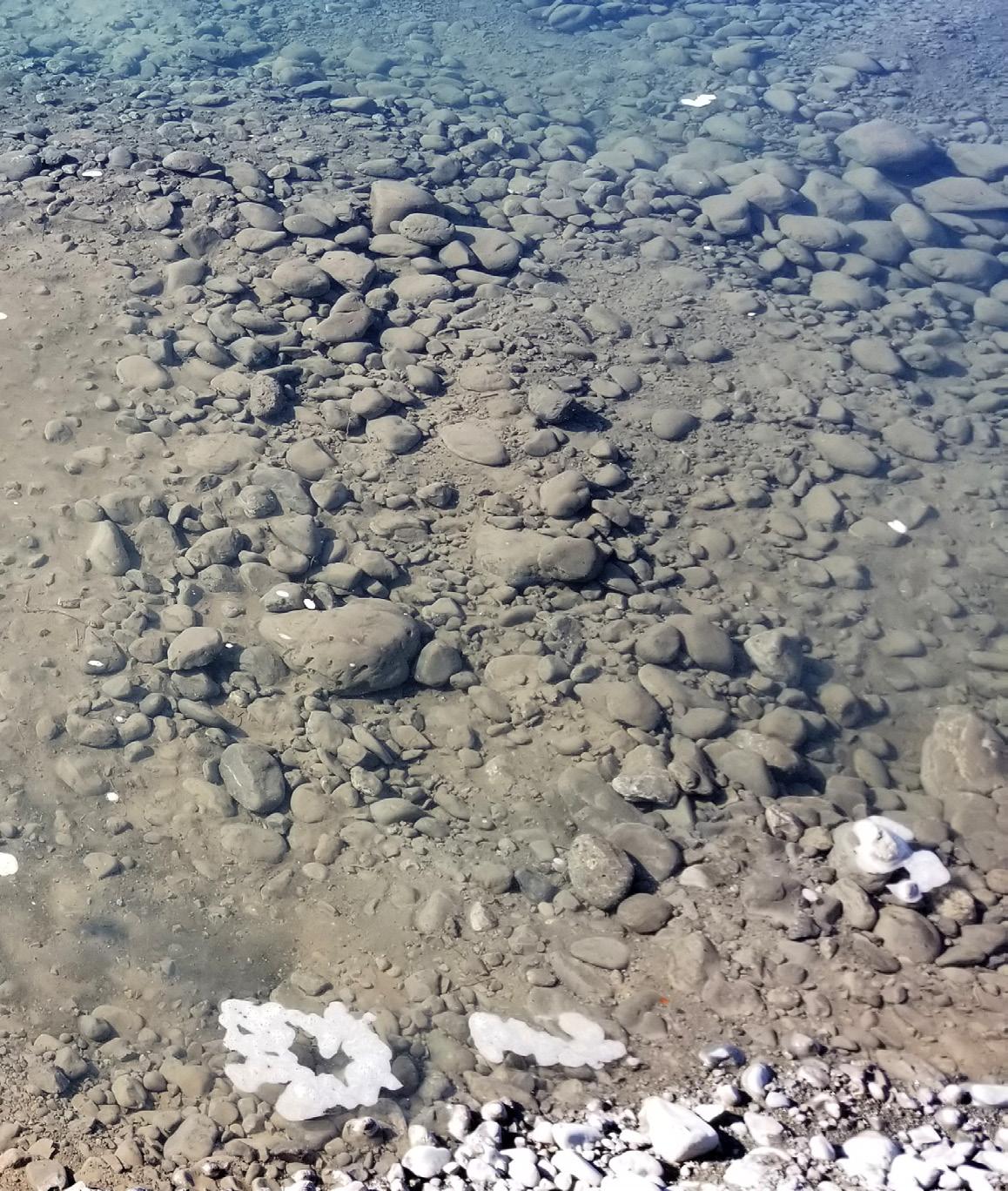
When we look at a stream, we see water running over pebbles and other stones. What we don’t see is the water flowing underneath the pebbles, in the gaps between stones. The stream can be flowing far underneath the surface pebbles.

Think of the stones in a stream like an enormous underground building. The gaps between the stones are rooms and hallways. Most ika | fish and hātaretare | invertebrates spend time on the first few floors below the surface. Some invertebrates live at the surface or many floors down. Other tiny invertebrate species only stay in the deepest basement level and
There is plenty for the invertebrates to eat down there. Many scrape thin slime off the pebbles. Some chew up tiny pieces of leaf that fall in from above. Others are predators and eat other invertebrates. Our native fish also eat other creatures, and there are lots of invertebrates to eat under the pebbles, or they go out into the stream looking for bigger ones that fall in from above.
Once you can see mud and sand on the bottom of a
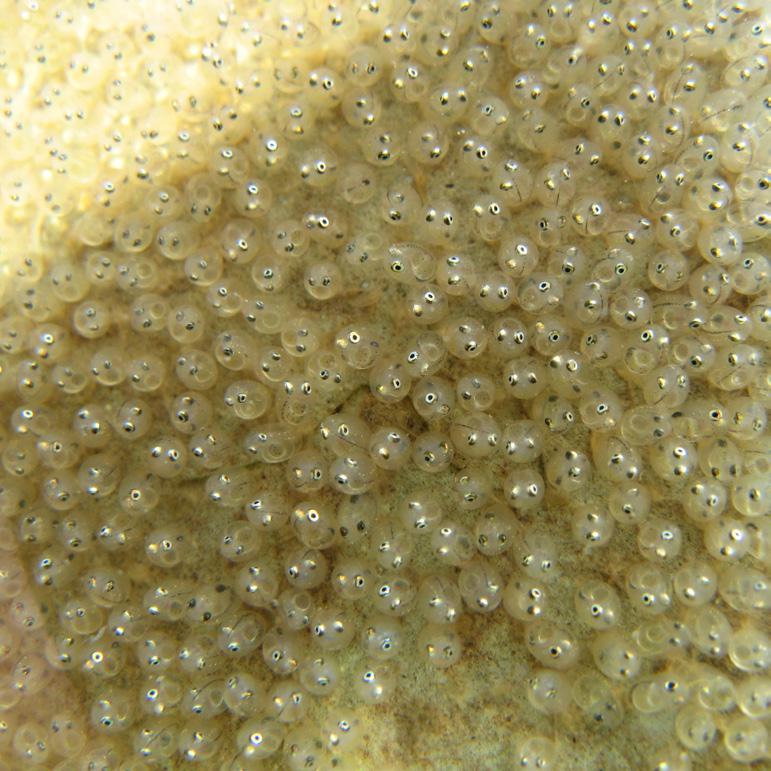
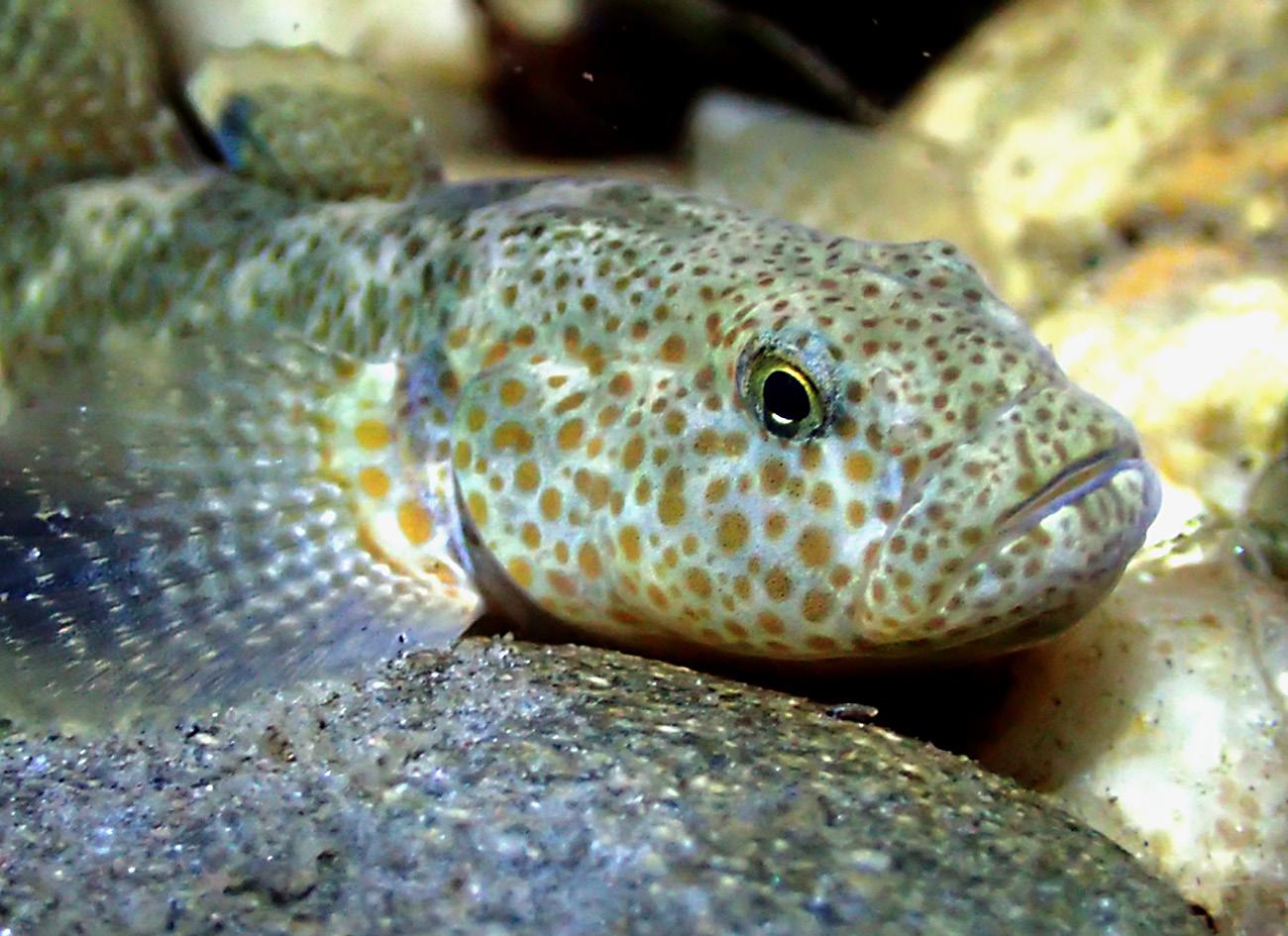
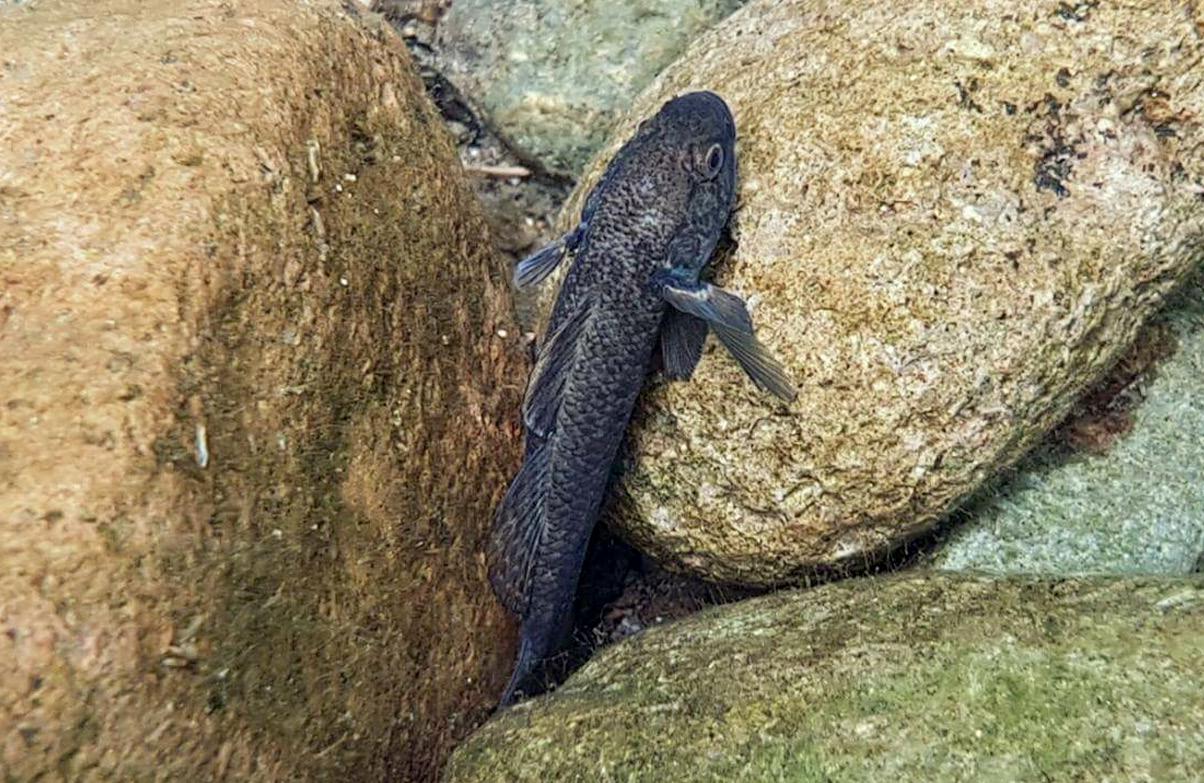
Many native fish also lay their eggs in the gaps under stones. Male bullies each choose a good “nest” under some stones. An ideal space has lots of room and a small “doorway”. He can defend this shape easily from other males and predators. He advertises his nest and convinces a female to lay her eggs inside. She leaves and he looks after the eggs carefully until they hatch.
Have you seen a stream or river in flood looking the colour of chocolate milk? That is oneone | soil (dirt), fine gravel, and sand that the rain has washed off the land and into the water. This settles into the gaps between the pebbles, slowly filling up the “underground building”. By the time you can see the dirt and sand on the bottom of a stream, the whole building is full and there are few spaces left for the fish and invertebrates.
Keeping the dirt out of streams is one really important reason to fence and plant waterways, and fence forests on steep hills. Keep these gaps between the pebbles and rocks open for the fish and invertebrates to hide, spawn, feed, and live.
 By Dr Della Bennet

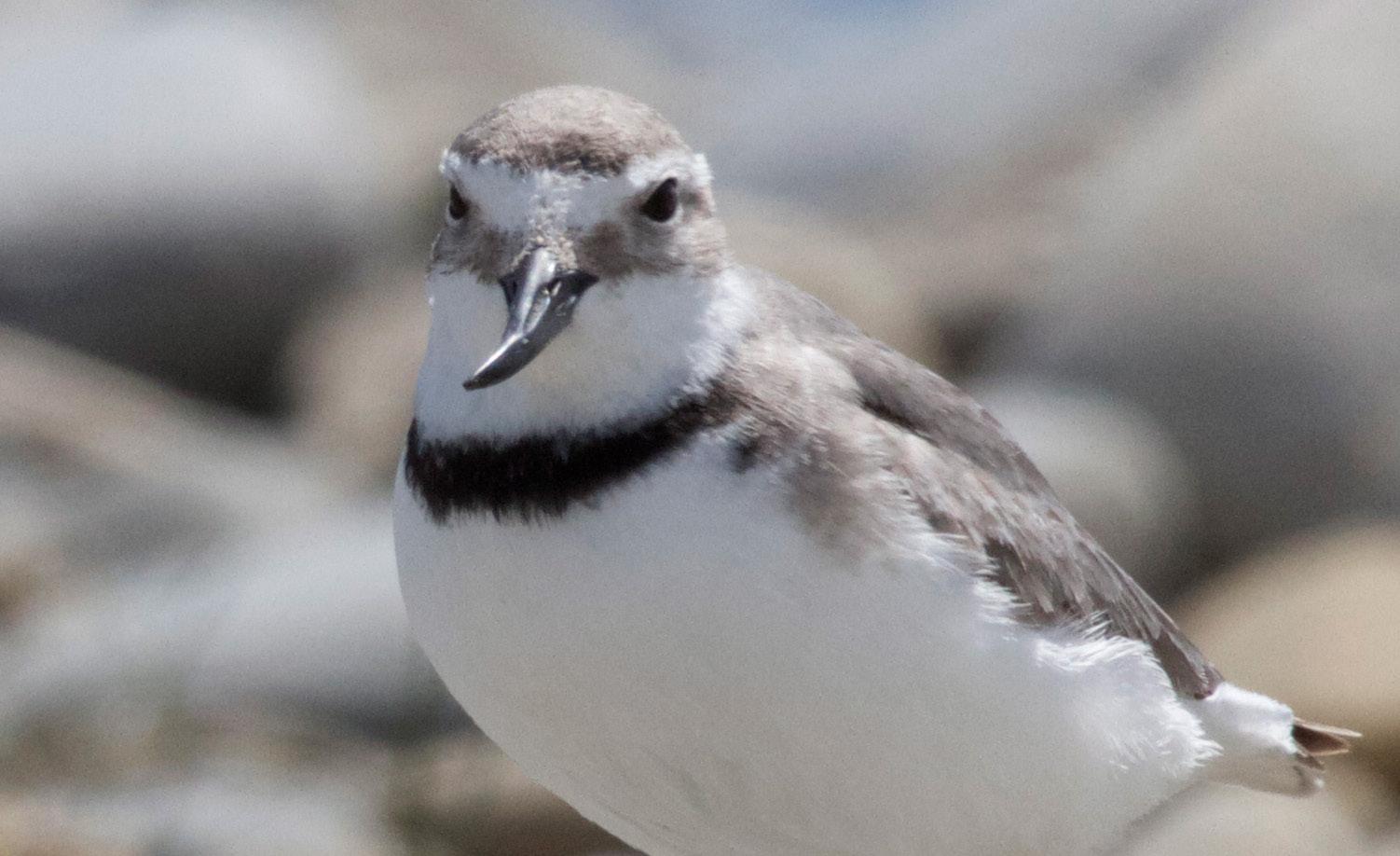
Do you know about the ngutu pare | wrybill? They're one of our special native braided river birds. They have a special relationship with the tokariki in their habitat.
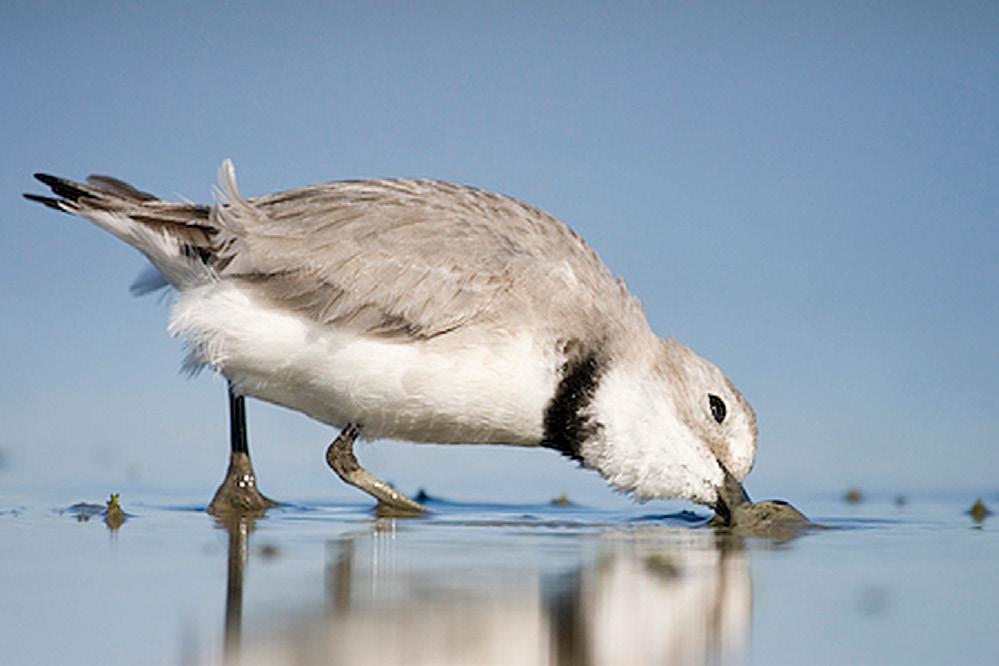
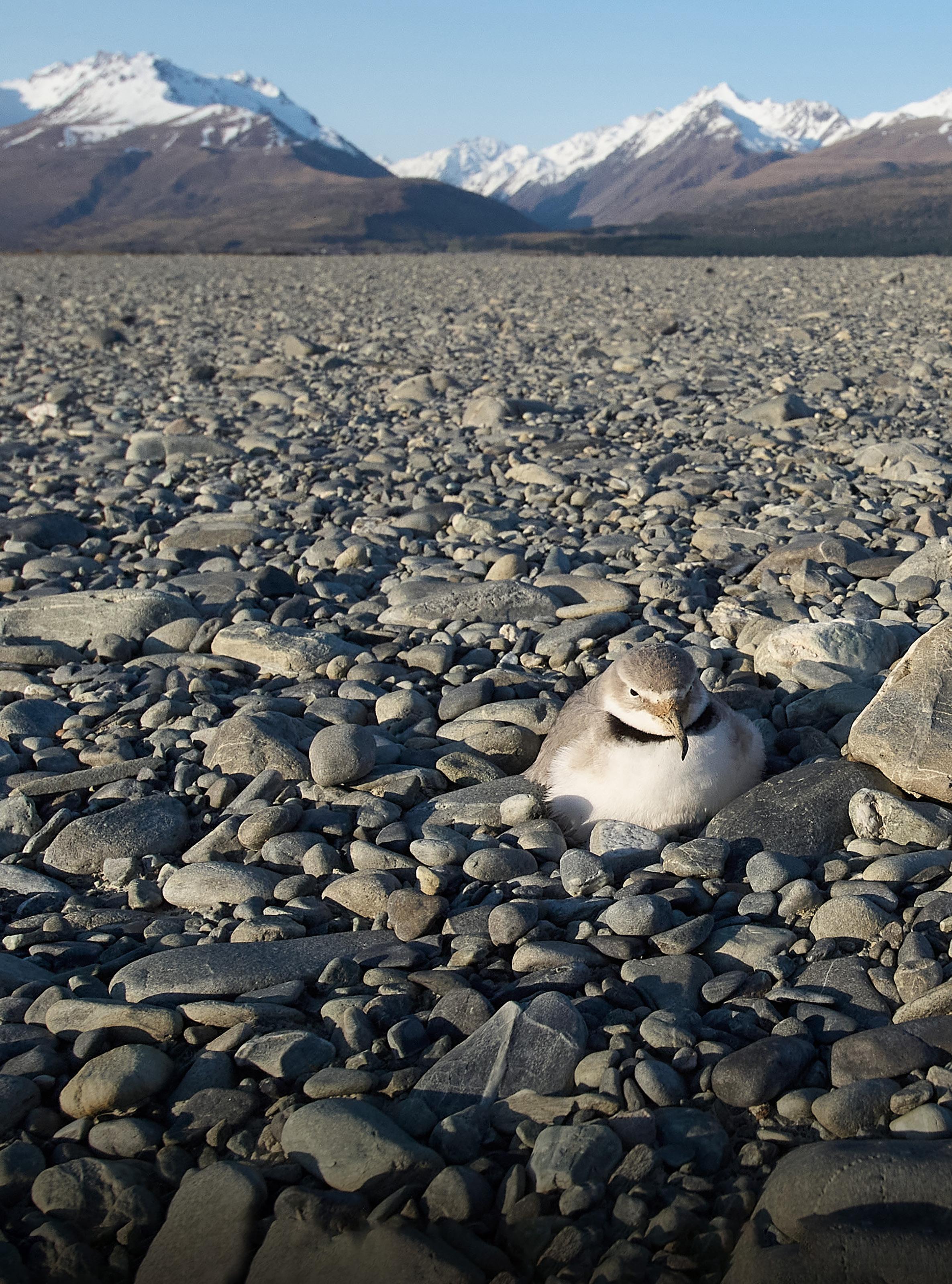
Wrybills are unusual. They are the only bird in the world with a right bend in its beak! The bend developed to help it find food hidden in the spaces between the pebbles of the riverbed, like invertebrates and small fish. The wrybill reaches under the stone to grab its meal.
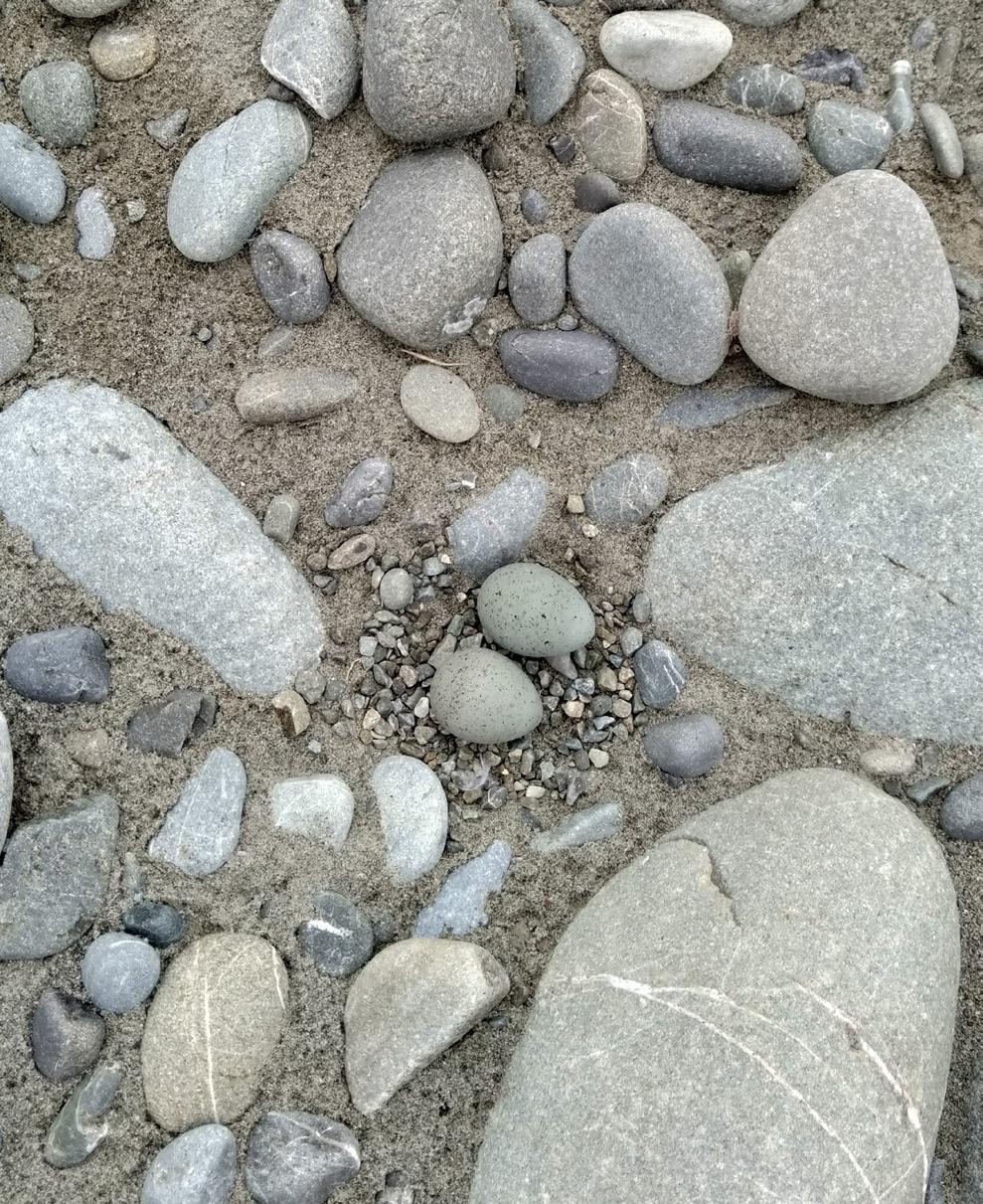
When it is time to lay its eggs, wrybills choose a spot in the pebbles near the water. Their eggs look just like the pebbles around them, making it difficult for native predatory birds, like kāhu | swamp harriers and karoro | black-backed gulls, to find them to eat. It also helps hide them from introduced predators like cats, rats, and dogs.
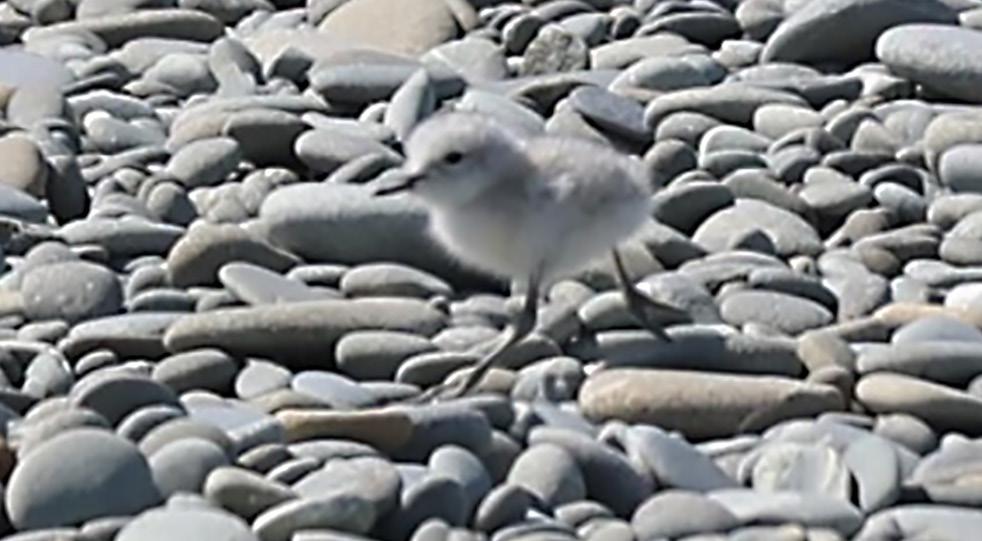
When the chicks hatch, their fluffy feathers are grey coloured, so they blend in with the pebbles around them too. Living among the pebbles keeps them safe.
Can you spot the eggs?
Fraser Gurney What a cutie! Della Bennet
Those important spaces between the gravel fill up with sand, mud, and silt when too much water is taken from rivers (like for irrigation for farms) or when droughts happen too.
It is important for people to be careful when walking among pebbles where wrybills live. Eggs and chicks are hard to see.
Keeping our cats at home and our dogs on leads will also help to keep wrybills safe and sound.
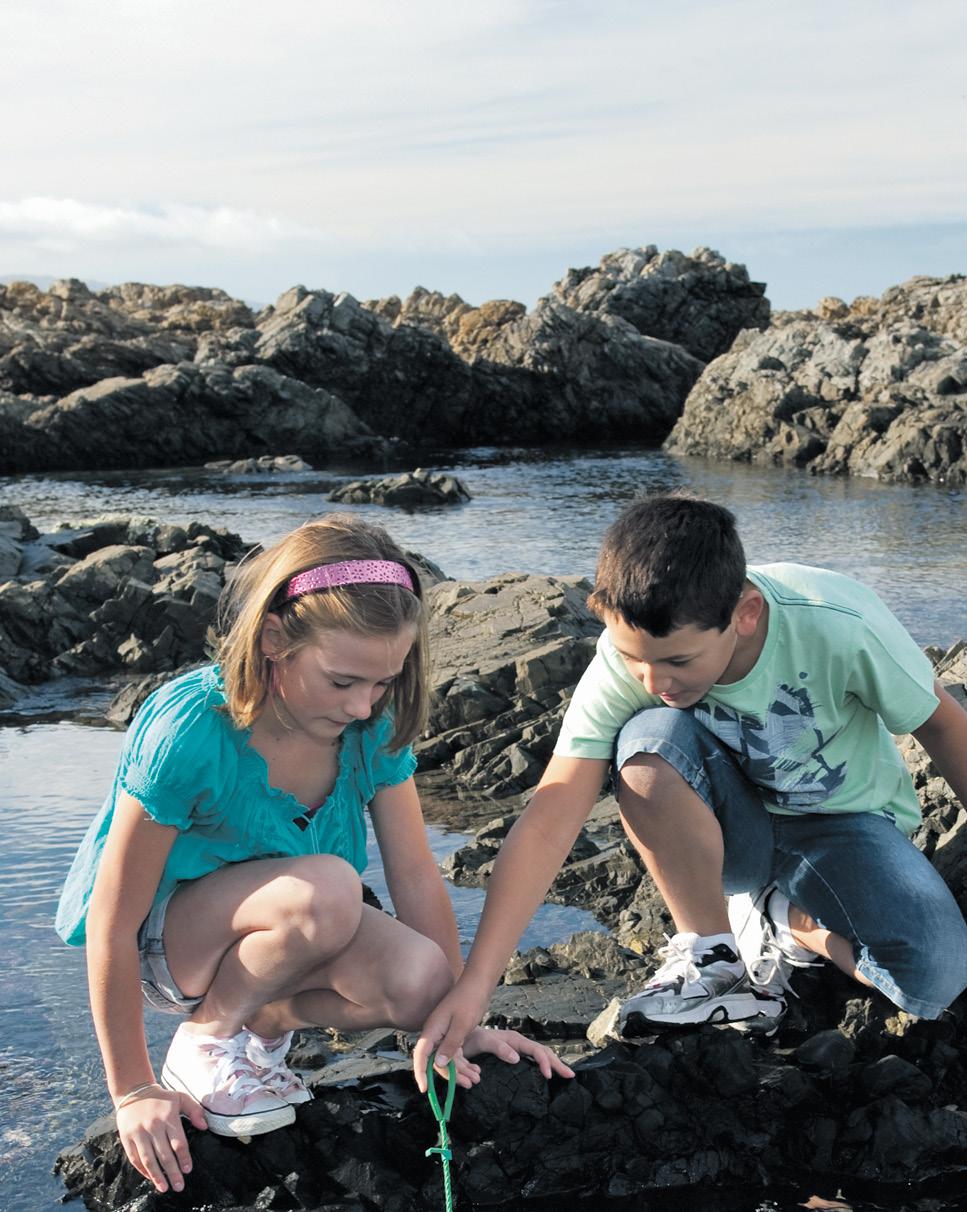
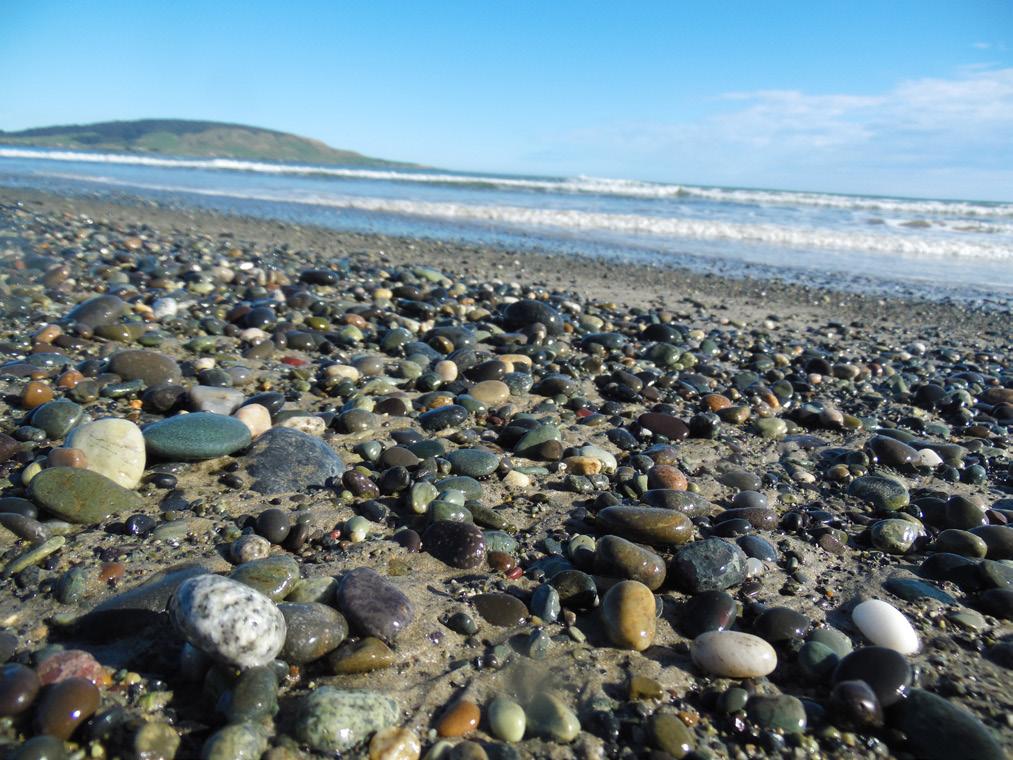
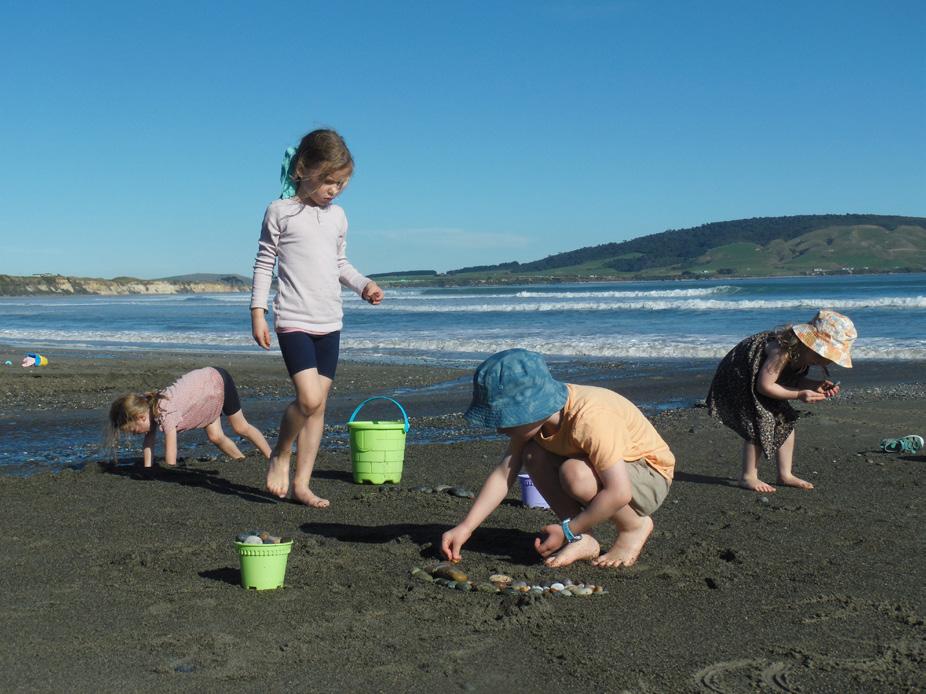
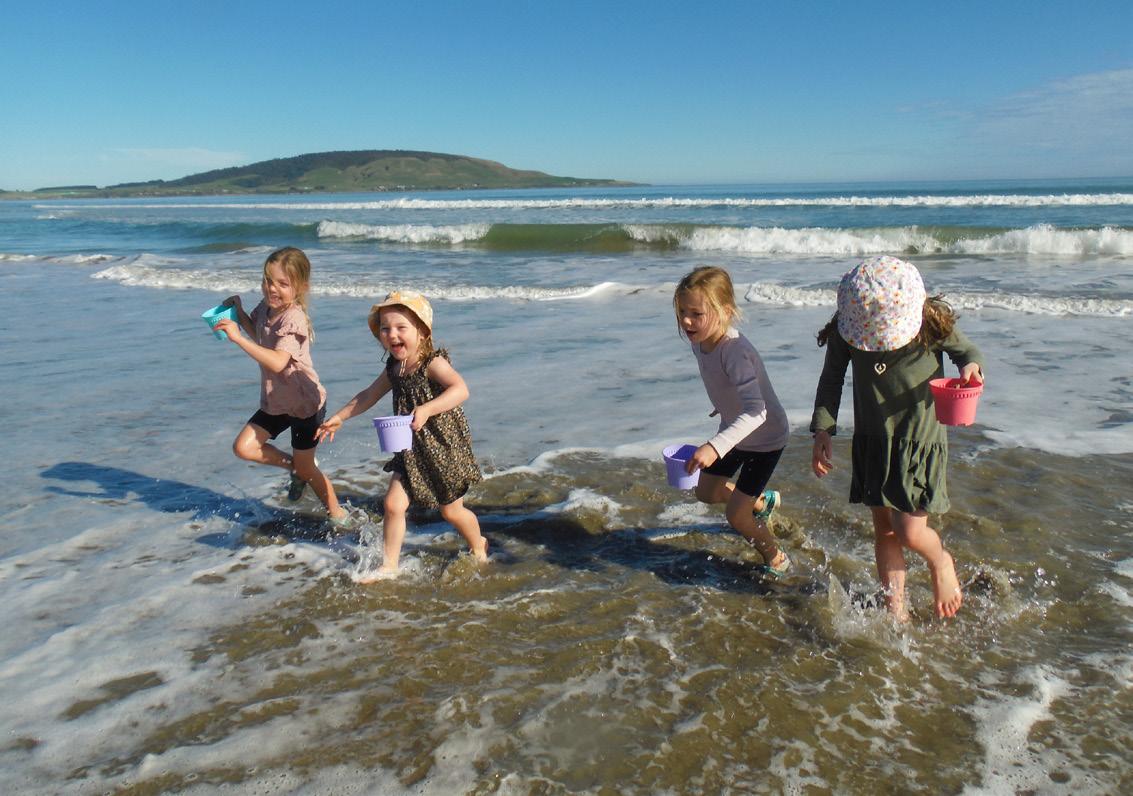
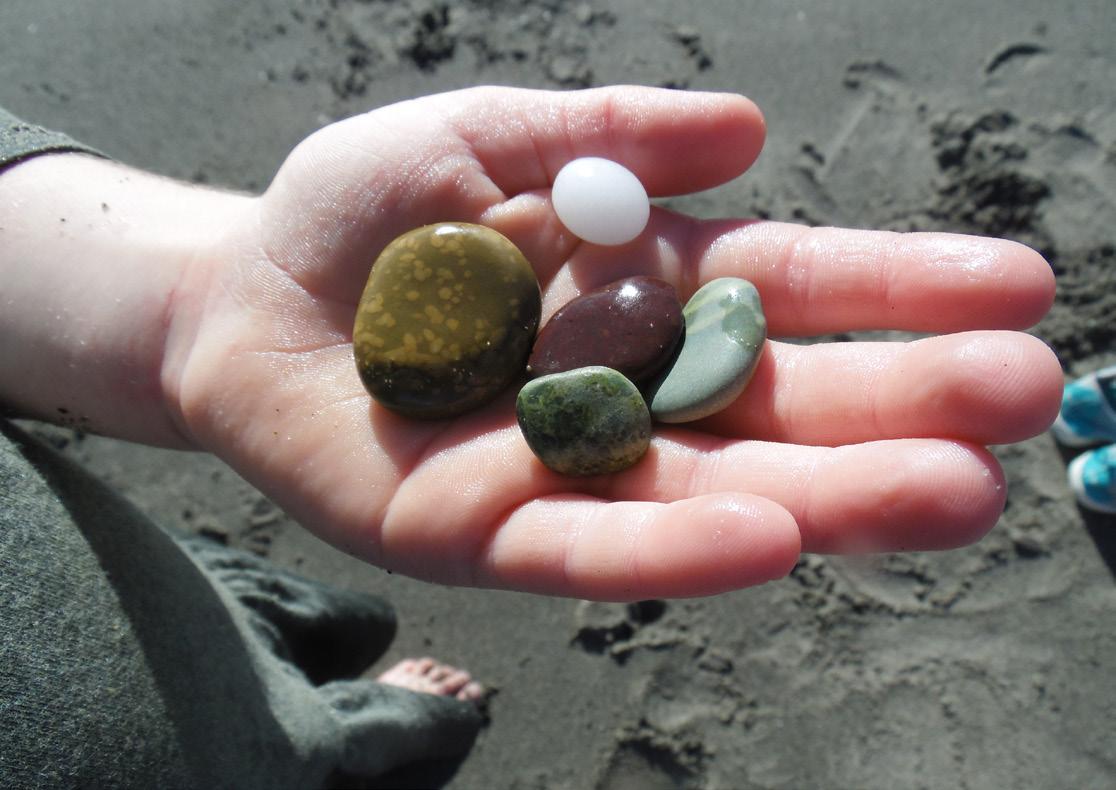
Along the Southern Scenic Route, just 20 minutes from Aparima | Riverton in western Southland is the famous Aropaki | Gemstone Beach. The beach surface constantly changes from sand to stones with the tides. Some semi-precious gems (like garnets and jasper) have been known to be found there, but mostly it’s a haven for interesting stones and pebbles. Five Southland KCC members recently went to Gemstone Beach at low tide to hunt for natural treasures.
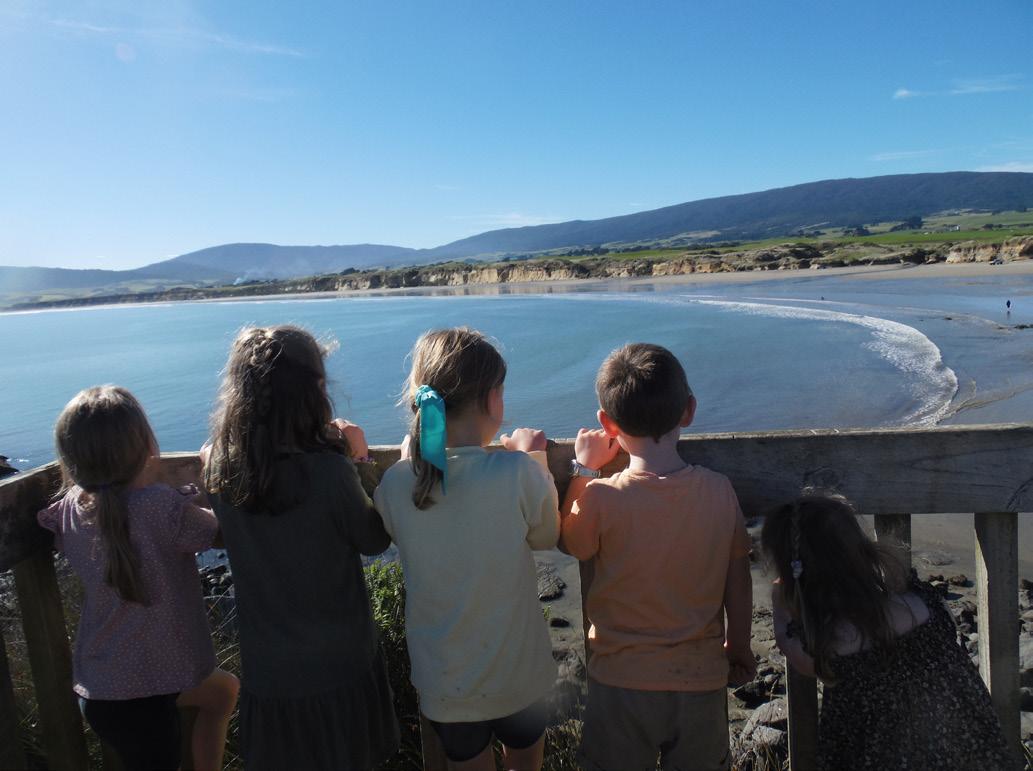
We first spotted Gemstone Beach from nearby Monkey Island. It was so exciting to be on the island and chat about what we might find at the beach.
When we got there, we grabbed our collection pottles and ran until we reached the water. We felt like real treasure hunters and started collecting pebbles in all different shapes and colours.

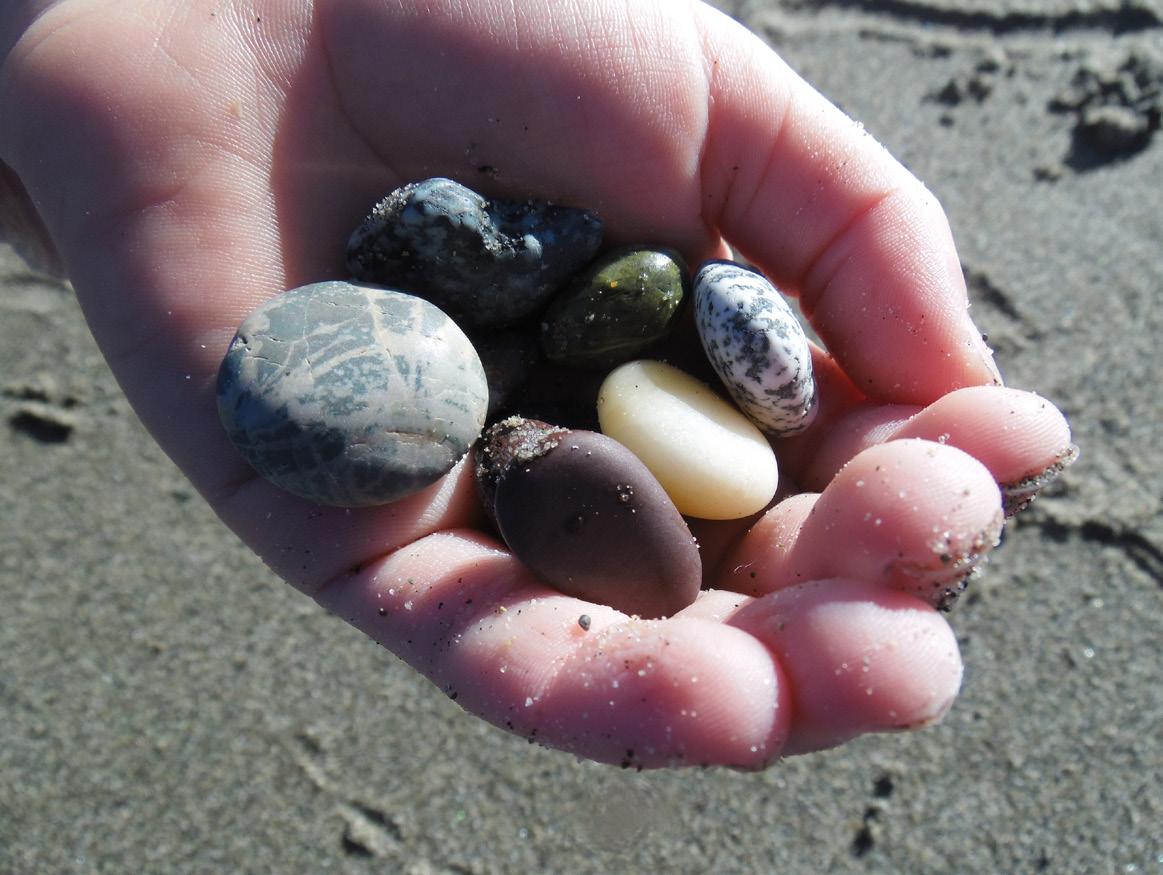
Geologist Rose Turnbull spotted in the collections…
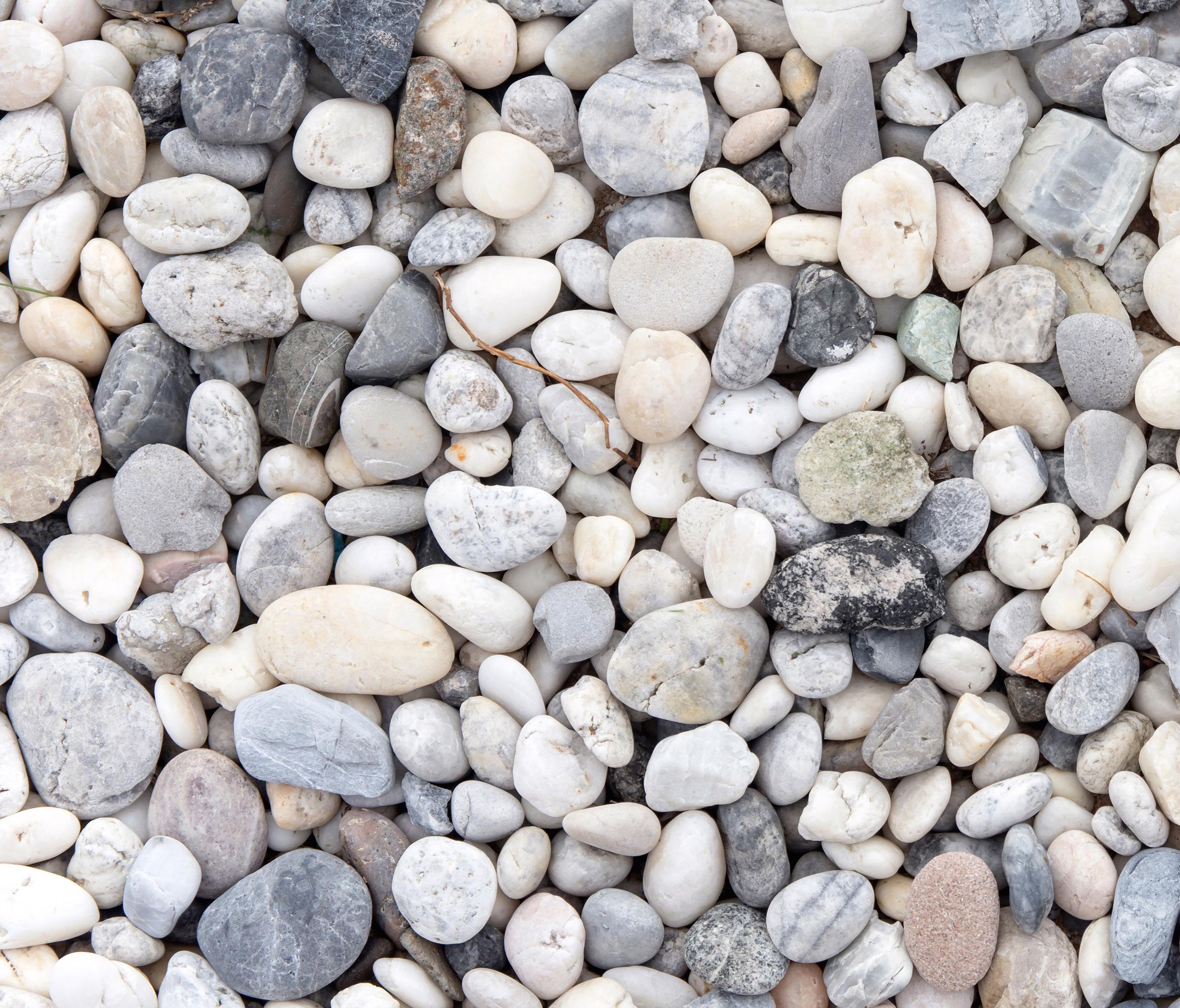
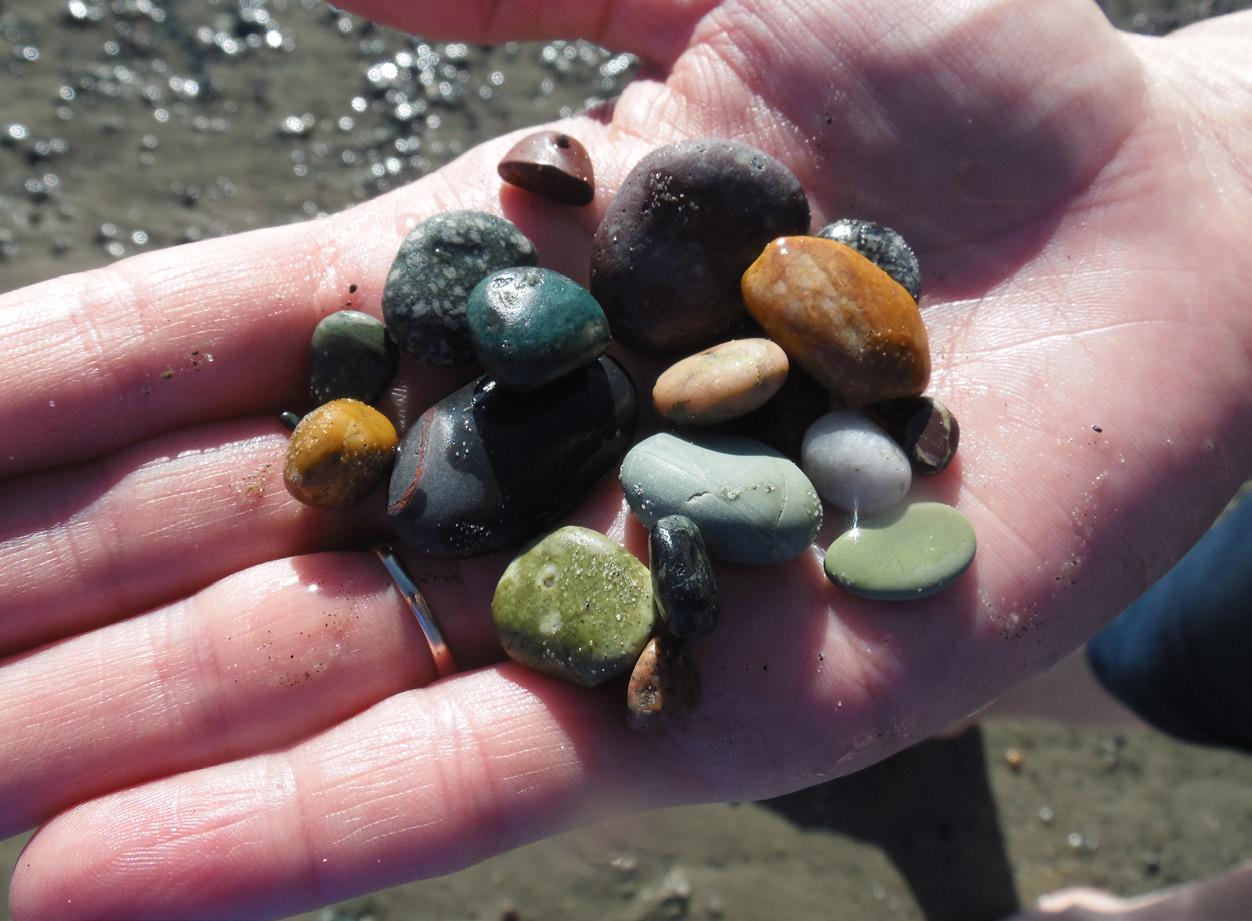
n Red whaiapu | chert pebbles
n Green epidote pebbles
n White kiripaka | quartz pebbles
n Black and white speckled tokapata | granite pebbles.
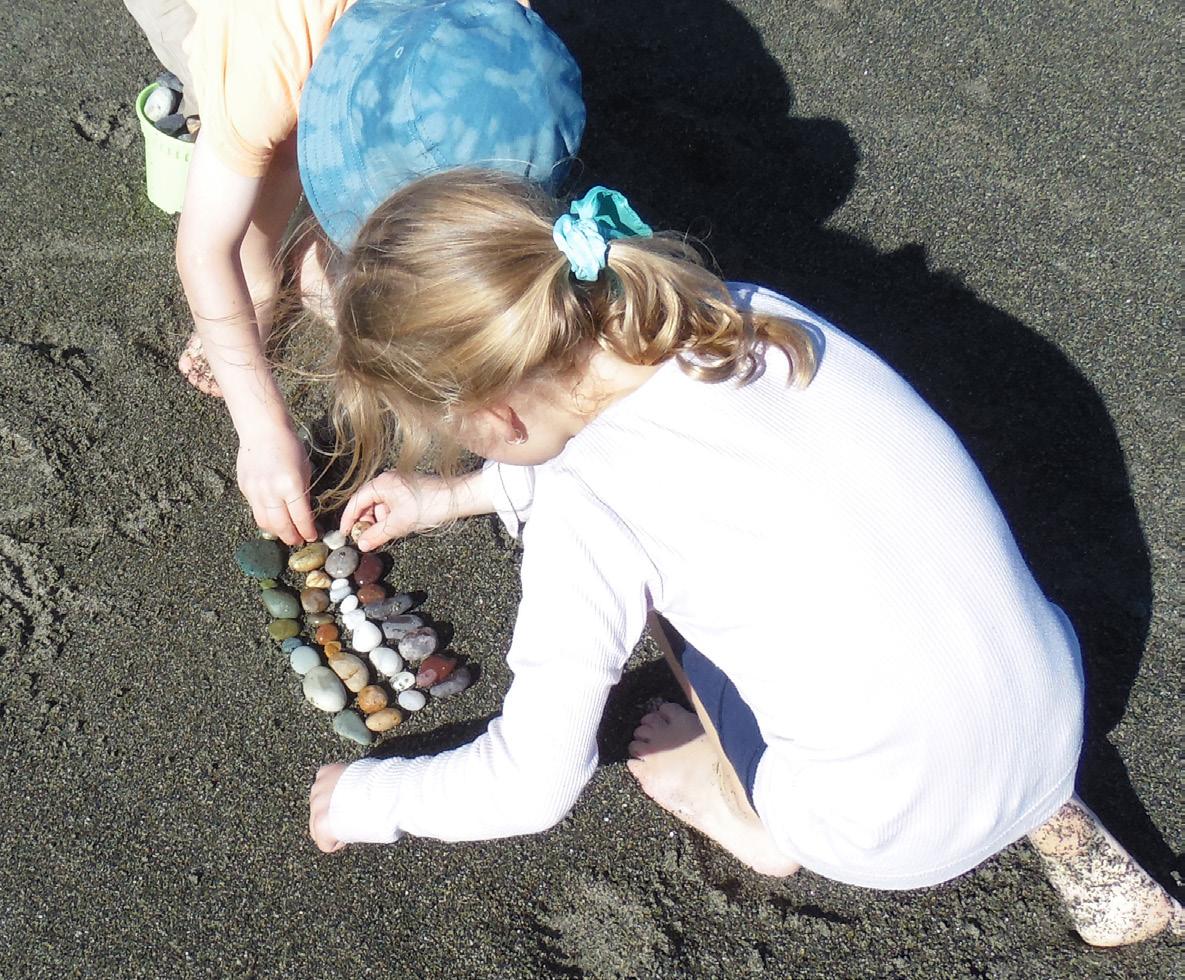
Some pebbles had spots, some had rings, some had stripes, and one black one even had a white love heart shape on it. The pebbles were so smooth from their journey through the water. They were also so colourful. We found green, pink, orange, black, and white pebbles. We had so much fun hunting through the stones and playing on the beach. We even made a pebble rainbow on the sand. When it was time to go home, we picked some of our favourite pebbles to keep and took away some special memories to treasure.
 By Everly (7), Dela (7), Ashby (6), Luca (5), and Lace (4).
Look closely at the hill sides next time you’re out and about – they’re giving us all sorts of information about New Zealand's past!
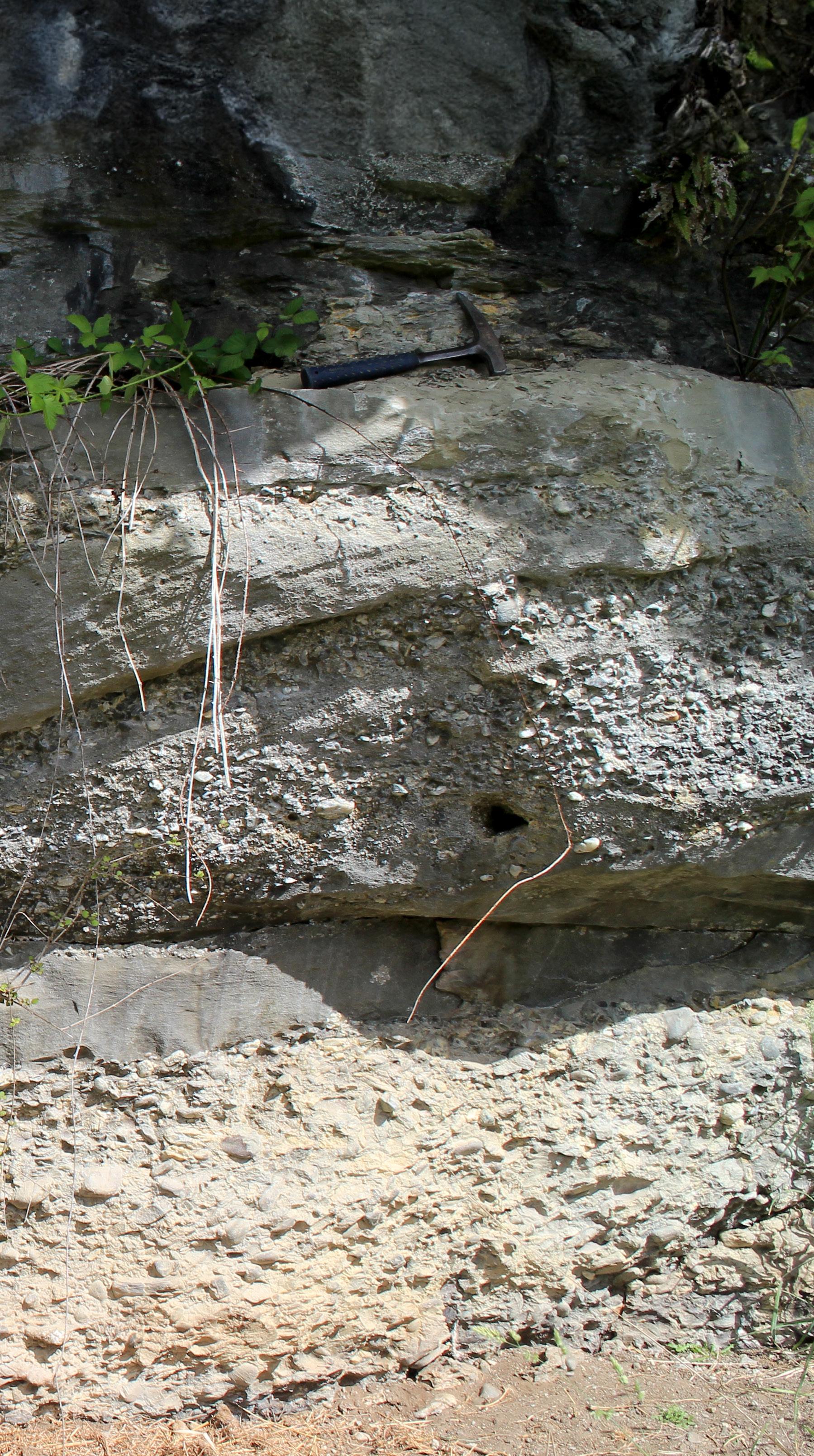
Can you see the pebbly rock or “conglomerate” and the smooth rock layers? They tell us that an ancient braided river used to flow here about 5–10 million years ago!
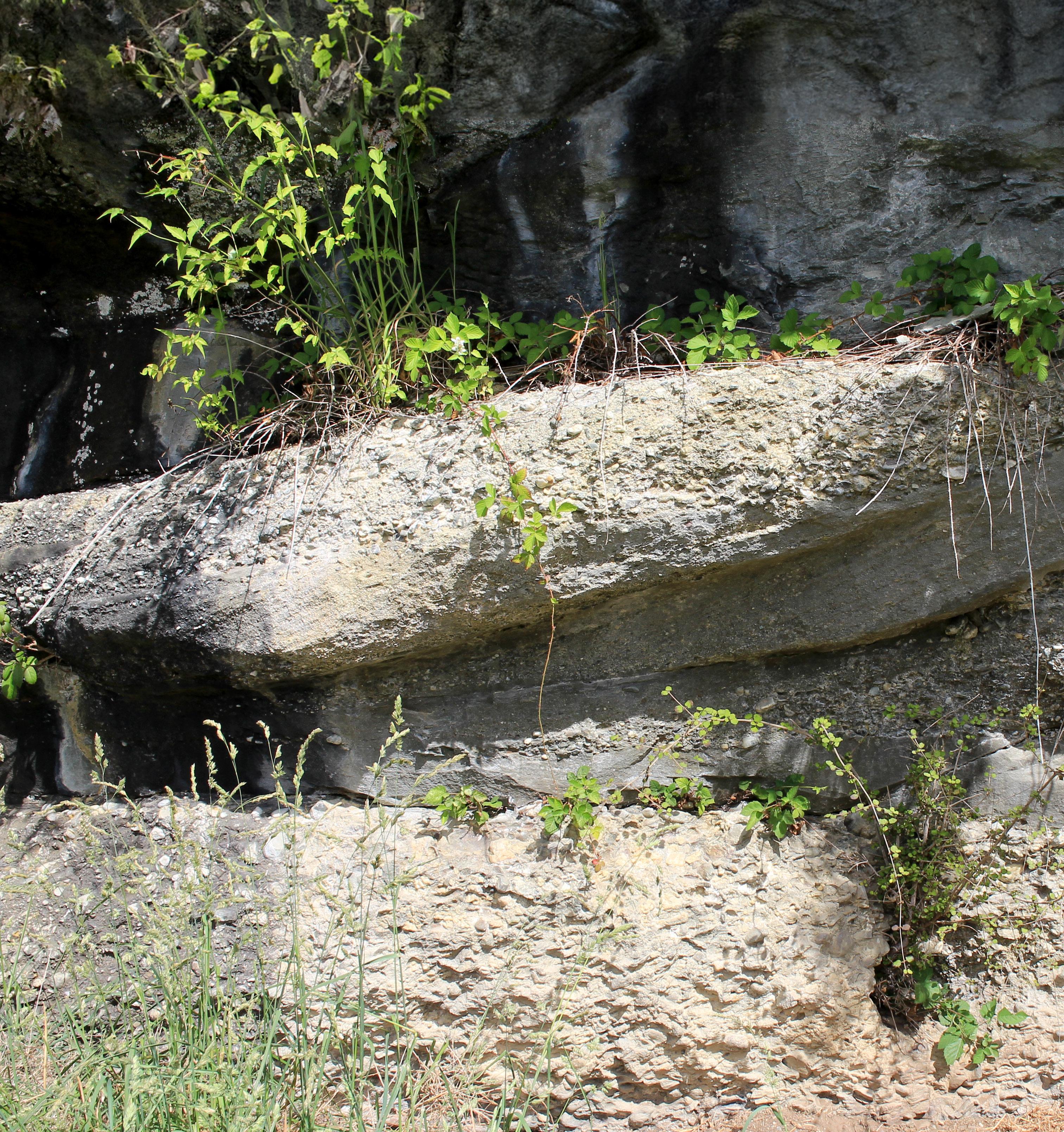
The layers slope down to the left hand side. This tell us that this is where a bend was in that braided river.
Cooler still, the pebbles in the rock are the same as those found today in Otago! This tells us that the way NZ looks has changed a lot. Otago and Tasman regions used to be much closer together in the past.
A hammer makes a good measuring tool in the field. A standard one is about 30cm long.
Check out this map by Dom. It shows how our continent Te Riu-a-Māui | Zealandia looked 10 million years ago.
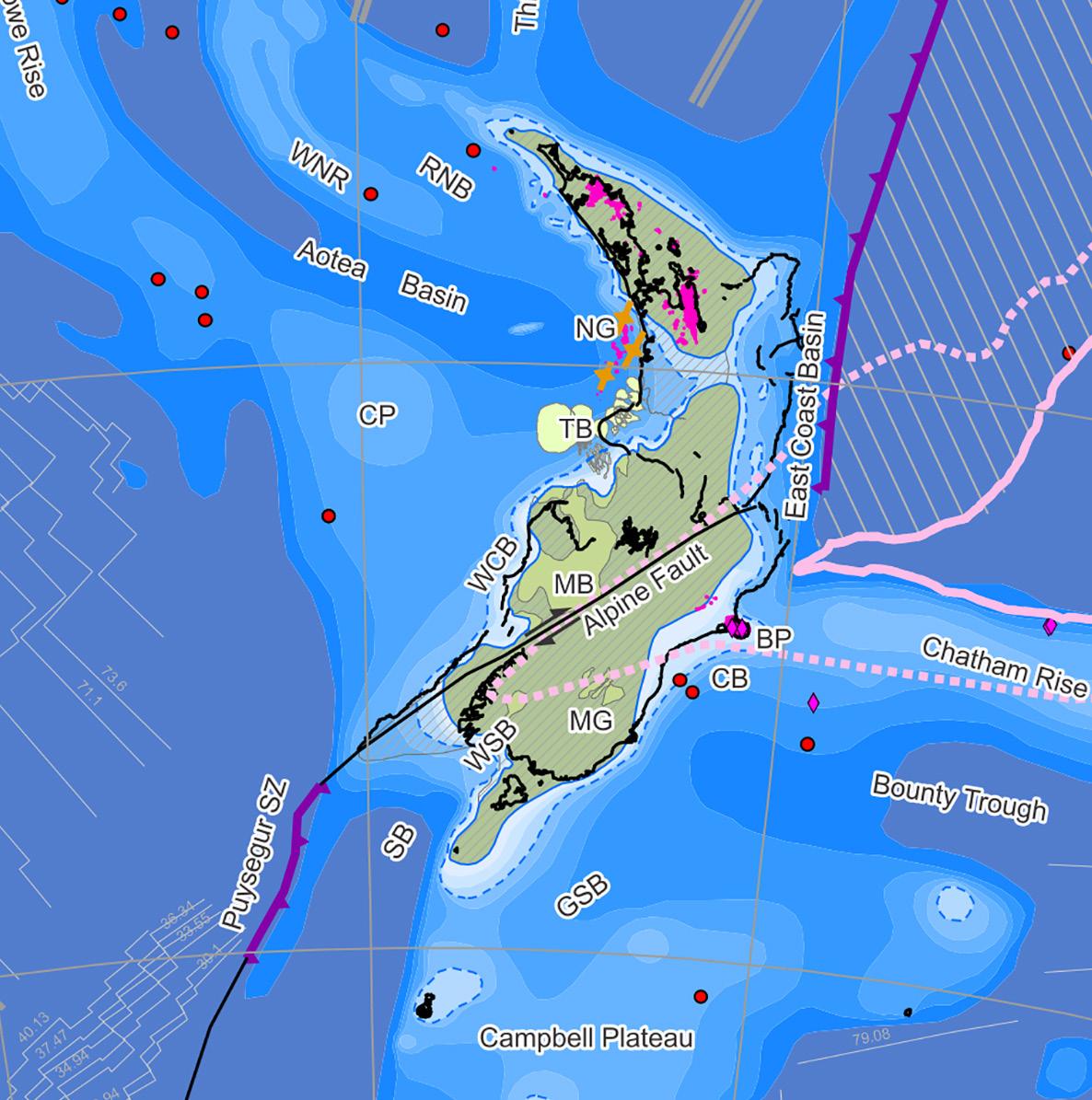
Look for the shapes of Te Ika-a-Māui | the North Island and Te Wai Pounamu | the South Island as we know them today to help you see the difference.
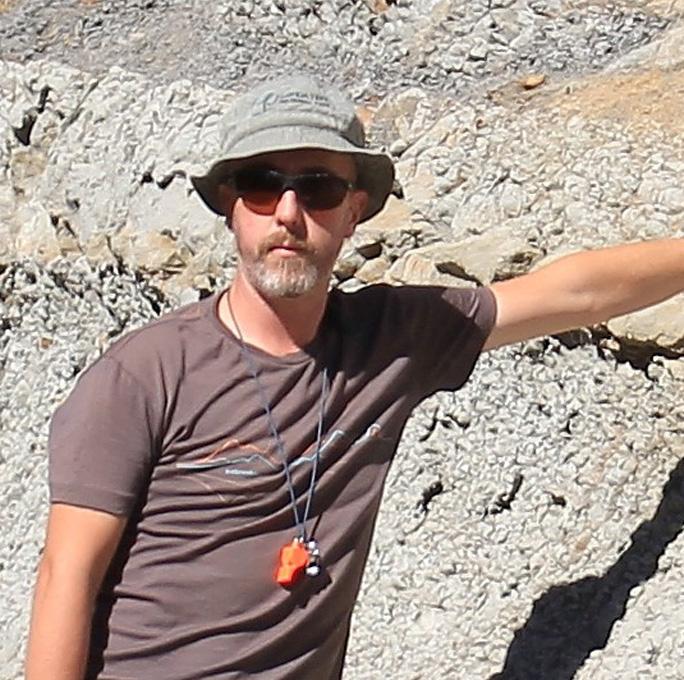
Thanks to Matt Sagar and Dominic Strogen from GNS Science for sharing this cool story with us. They’re geologists who study rocks to understand how Te Riu-a-Māui | Zealandia has changed over millions of years. This involves analysing the texture, structure, mineralogy, chemical composition, and age of different types of rock across the country and nearby areas beneath the sea.
Watch a video of the 100-million-year evolution of Zealandia here: bit.ly/3L0DmUL
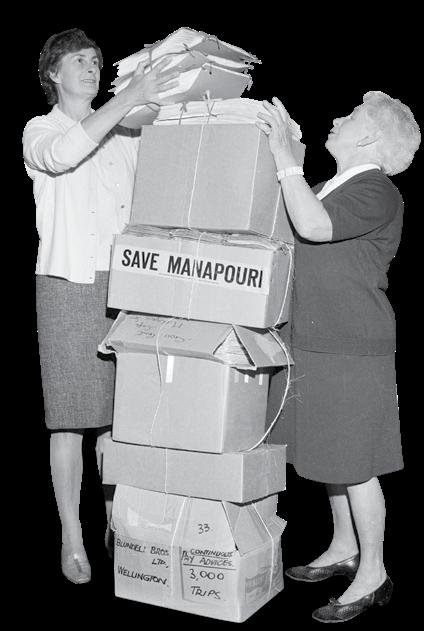
In 1960, the government gave permission to a company called Comalco to use the water in Lake Manapōuri and Lake Te Anau (both in Fiordland National Park) to generate hydro-electric power. They were allowed to raise the water level by 100ft (over 30m), which would have put the ancient beaches underwater and drowned the native forests on the shoreline.
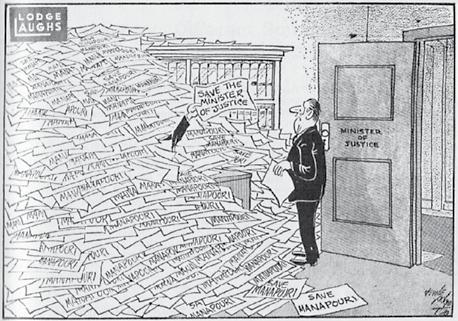
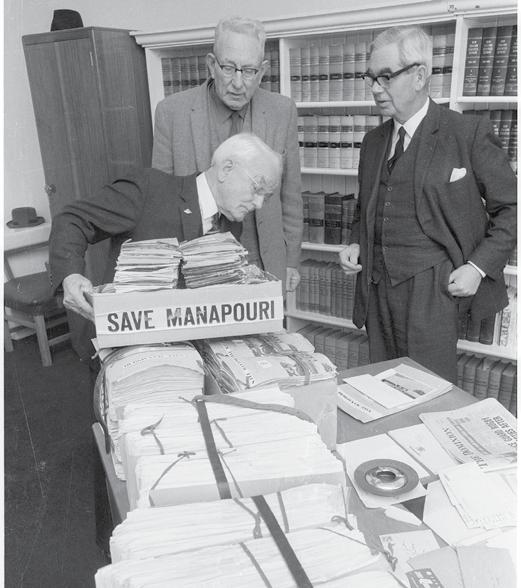
To stop this from happening, Forest & Bird needed to show that New Zealand’s public did not support it. It took time to get people acting alongside us and get them signing petitions, but we didn’t give up. In 1970, Forest & Bird ran a third SAVE MANAPŌURI petition, and it got a massive 264,907 signatures – that was nearly one in every 10 Kiwis signing it at that time! A lot of the signatures came from children, which we think is pretty cool.
The petition caused a great shift to happen. The new government, in 1972, promised not to have a high dam for Lake Manapōuri or to change the lake levels, and they stuck to this promise.
This is a newspaper cartoon that was drawn by Nevile Lodge for The Evening Post to show what an impact all the signatures were having on the government of the time. Forest & Bird magazine , August 1970
The boxes of signatures were taller than some of the Forest & Bird staff members at 1.5m high!
The Dominion Post Collection, Alexander Turnbull Library
Here’s Forest & Bird’s President, Roy Nelson (centre), delivering the signatures to the Minister of Justice, Dan Riddiford (right), in 1970. Dominion Post Collection, Alexander Turnbull Library
One of the biggest conservation “wins” for Forest & Bird over the last 100 years was protecting the shores of two lakes, including their shingle beaches.
What’s
Forest & Bird is still doing lots of mahi today to help freshwater wildlife and wild places. Polly Pekapeka, our KCC pekapekatou-roa | long-tailed bat, had a chat with our Freshwater Advocate, Tom Kay, about his cool conservation job.
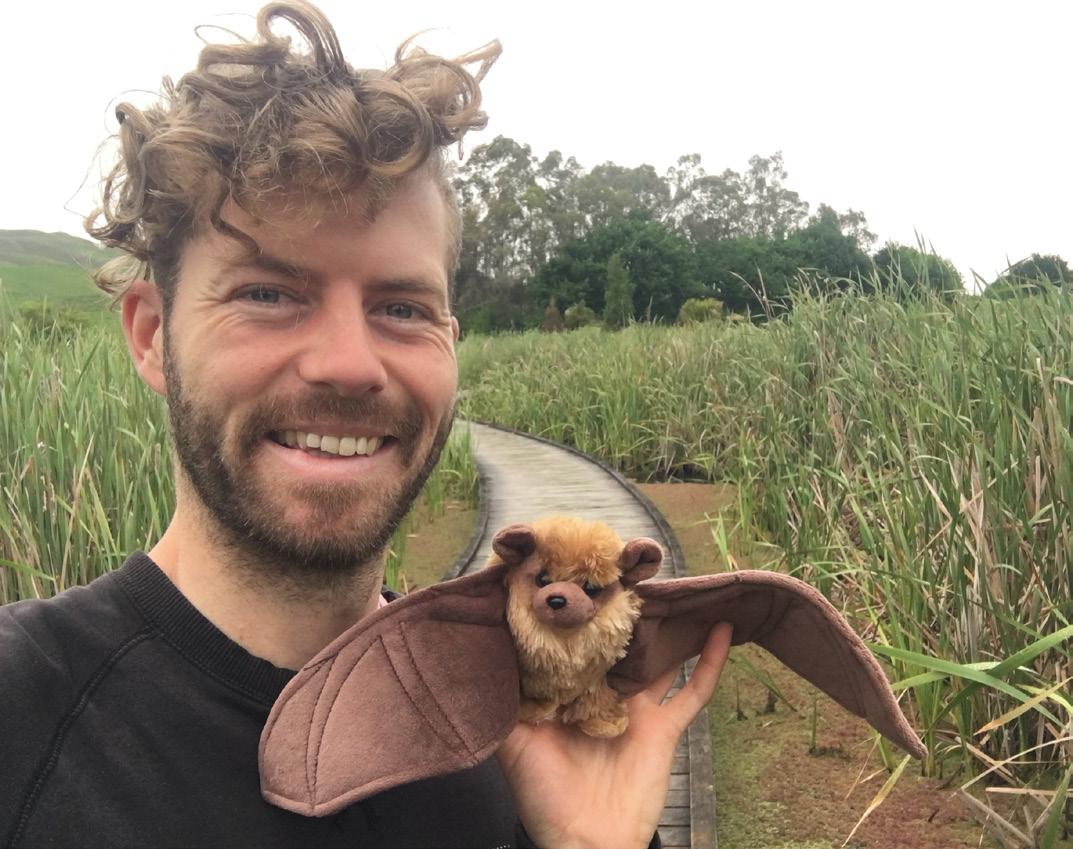
It’s my job to try and get people to understand how amazing and important all types of freshwater are – kūkūwai/repo | wetlands, awa | streams & rivers, roto | lakes, and wainuku | groundwater. If people understand that freshwater supports us and our communities, then they are more likely to protect it. I spend lots of time reading and writing about water, but I also talk to people in the community, appear on TV or the radio, do research projects, and go to hearings and the Environment Court with our legal team to argue for rivers and wetlands to be protected. Sometimes I even get to visit places!
Forest & Bird’s Freshwater Advocate looks out for the health of the riverbed as much as the water, and the animals and plants!
I grew up around people who were passionate about rivers and nature. Many of them were whitewater kayakers who valued rivers for the fun adventures they could have on them but also for the wild and amazing places they can be. These people –including my parents – taught me about rivers and kayaking, and through the adventures I had I came to love rivers. And as I learnt more about rivers and freshwater, I learnt how they are important for so much more than just kayaking!
Now I want to protect rivers so that other people can also have those adventures and so that we are all happy and healthy and supported by rivers.
Tom took me on some freshwater adventures…
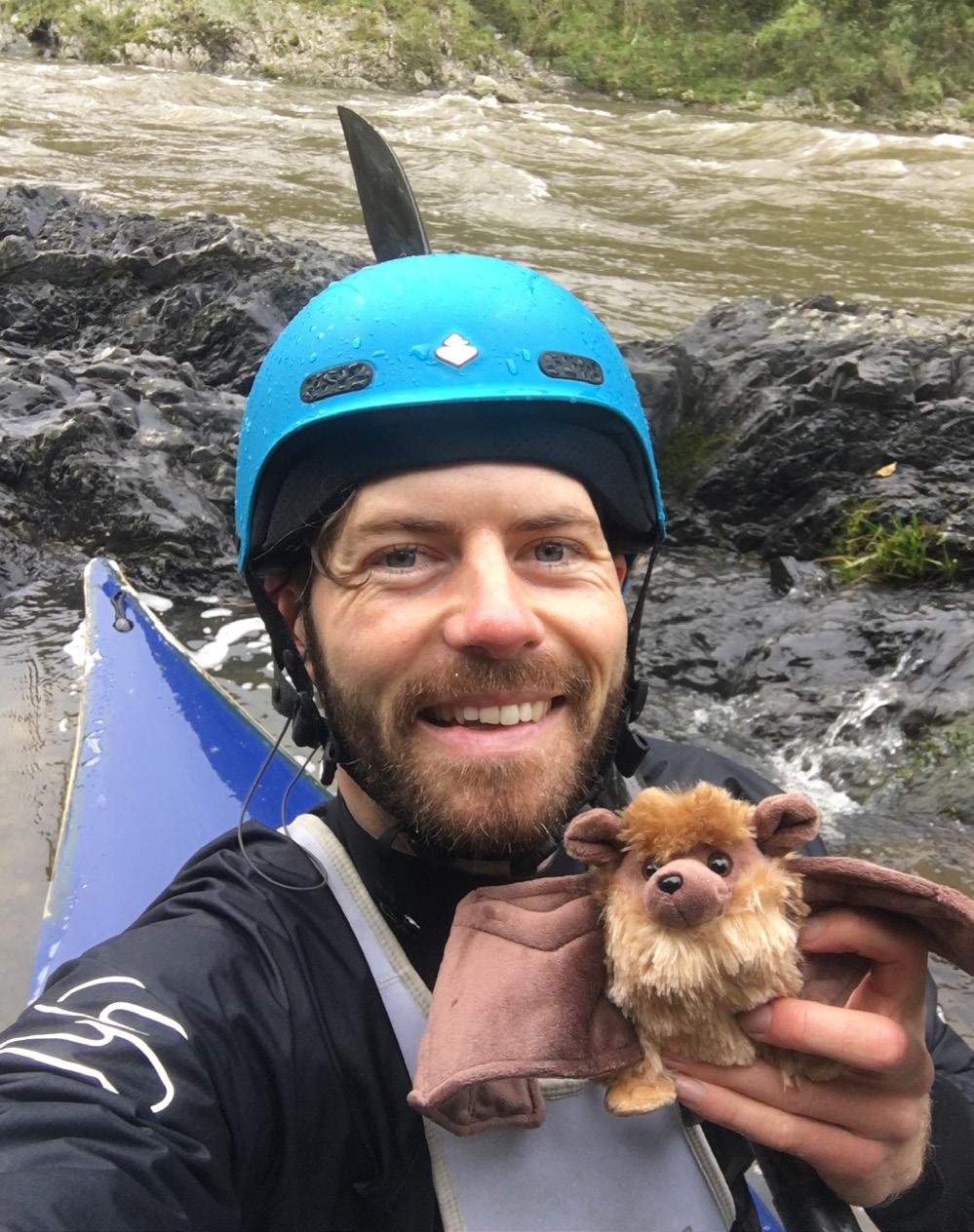
It was super fun to spend time connecting with Te Awa Kairangi | Hutt River together.
Pekapeka Wetland in Hawke’s Bay to be specific! It’s thought to be one of the oldest wetlands in Aotearoa and one of very few large swamps left in the region.
Why is it called Pekapeka? It’s named after bats that lived in the nearby caves!

Didknow?you
Lake Okāreka is one of 18 lakes around Rotorua. I visited the wetland on the edge of Lake Okāreka with Tom and his nephew, Riley (also a KCC member).
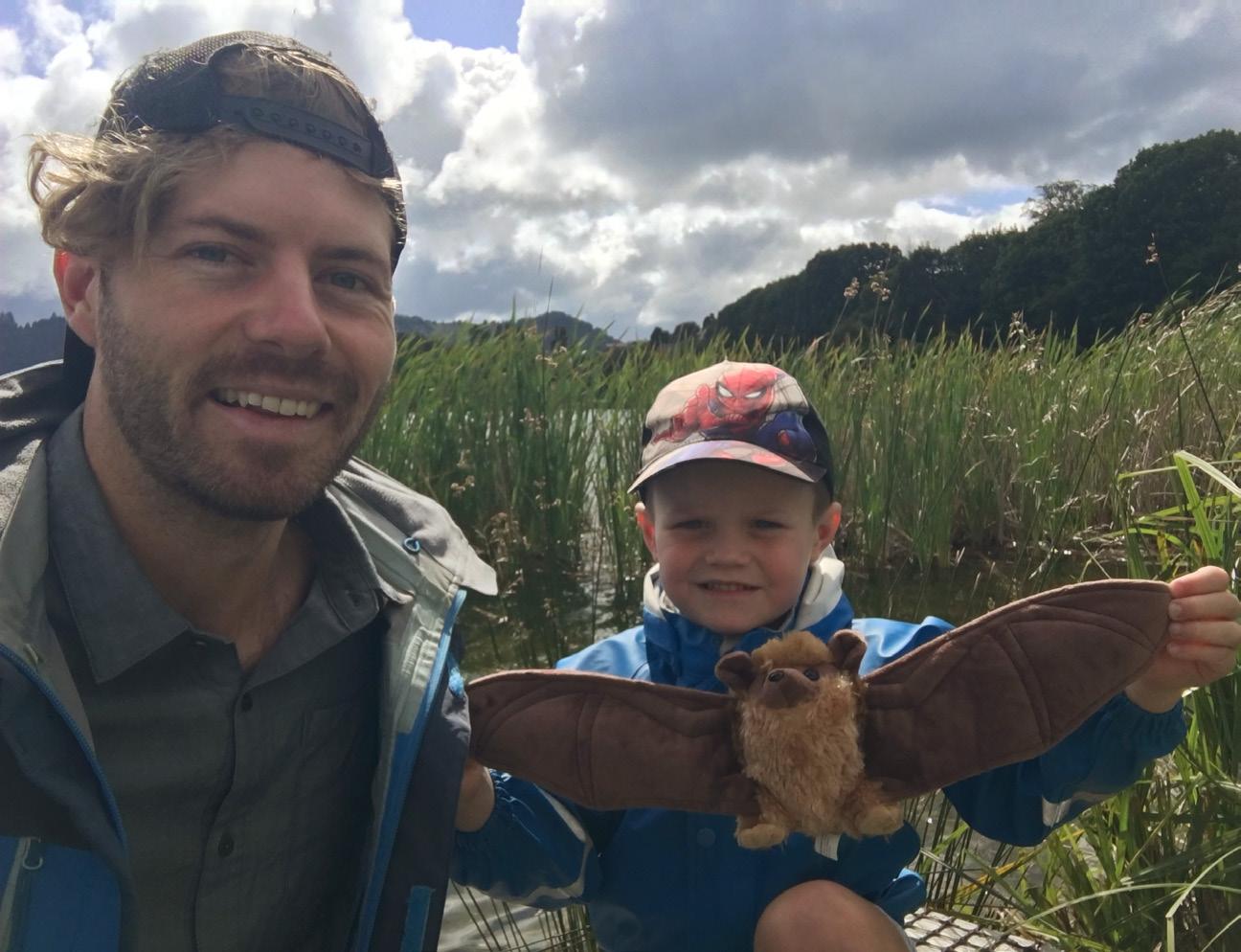
The wetland helps keep the water in the lake clean (which means we can swim in it!) and is also home for birds and other species like insects – some of which we saw during our visit.
NZ long-tailed bats probably evolved using rivers as an open road to travel and as a grocery shop? It’s easier to fly along the river’s course without the dense forest obstacles and to find food there, as their prey (mostly small bugs) use streams and rivers to lay their eggs and grow their larvae. – Eduardo Colley, Ark in the Park
We are seeing more flooding happening in Aotearoa. It’s happening especially in places where we have engineered or constrained (controlled) rivers and streams to make more space for our human activities. If we gave awa back more of the space, they would have “room to move” when the water rises. They’d also be healthier!
In a constrained river, floodwaters rise rapidly and hold lots of energy that is released in powerful torrents if the banks break or are overtopped.
NARROW, restricted by stopbanks the river channel deepens
Join the call for climate action: forestandbird. org.nz/ climateshift
With room to roam, the same floodwaters have lower energy and are less likely to cause damage to homes and businesses.
WIDER, with room for the river, natural flood plains restored
Restoring natural floodplains and wetlands gives nature and people more room too!
Pikonga | Meanders (Bends/Curves): The water doesn't just go in a straight line.
Hōpua | Pools: Areas of slow flowing, deep water – often on the outside of bends.
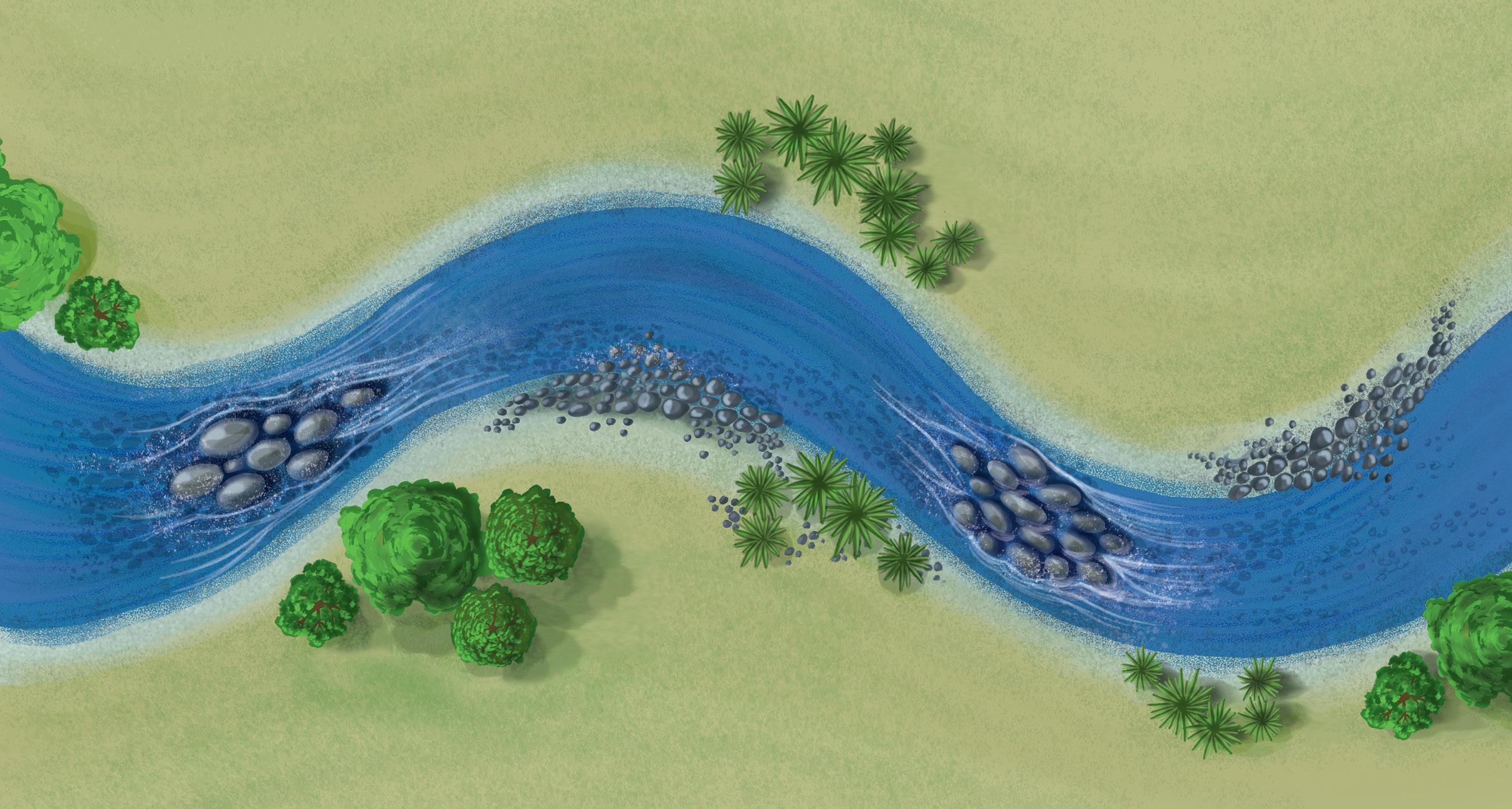
He wai rōnaki | Runs/Glides: Smooth, unbroken water flow. They connect riffles and pools.
Wai oruoru | Riffles: Fast, shallow water flow over boulders and cobbles, which break the water surface.
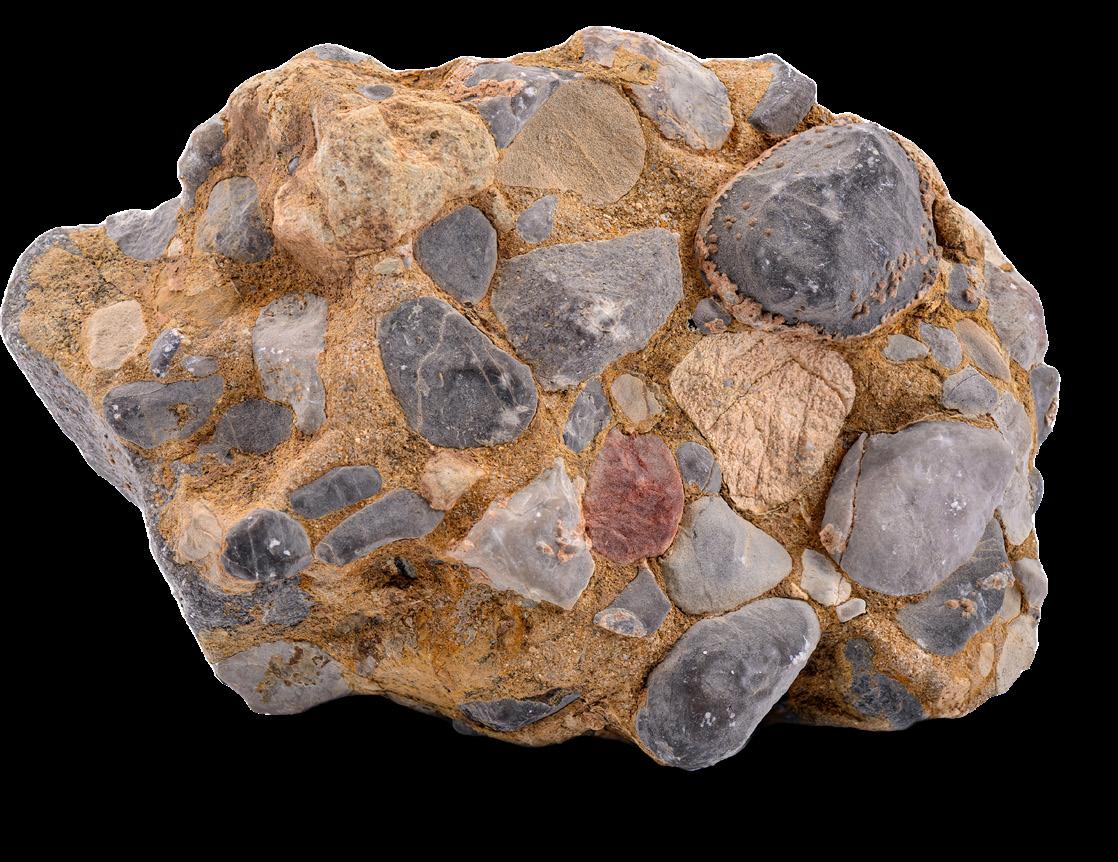
This is a piece of toka māhurehure | conglomerate rock. It’s a type of sedimentary rock made up of rounded pebbles and sand joined together!
How many words can you make from these letters. Link letters up, down, side-to-side and diagonally.
Collection item A100.642, Puke Ariki, New Plymouth
The scientific name for these pebbles is “gastroliths”.
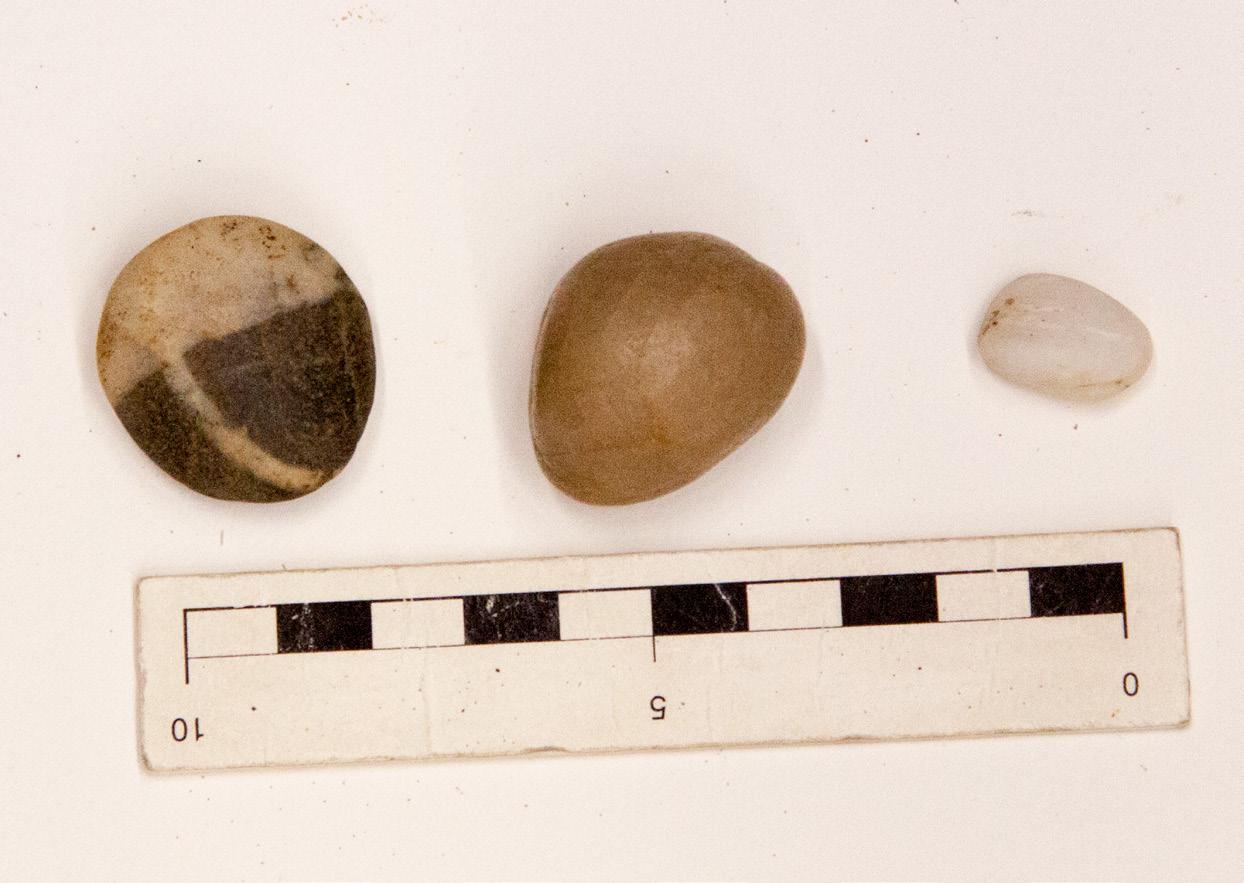
They were swallowed by our biggest ever manu to help them break down the fibrous plants and hard things they ate...
What are they? Who did they belong to?
Hihi, hihi!
I really hate rock puns. My sediment exactly!
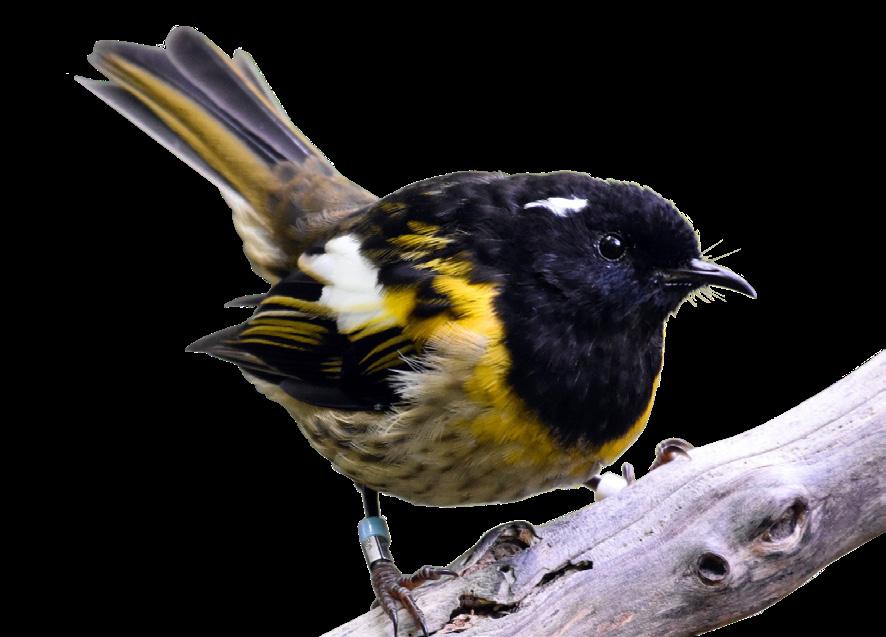
Gentoo penguins live in Antarctica and on subAntarctic islands but have visited NZ on occasion. They are famous for seeking out and gifting pebbles to their potential mates.
Look at the way the words have been arranged to work out this common phrase.
Can you help this penguin get through the maze to present its pebble to its sweetheart? Flippers crossed it gets accepted – then they can build a nest with even more pebbles!

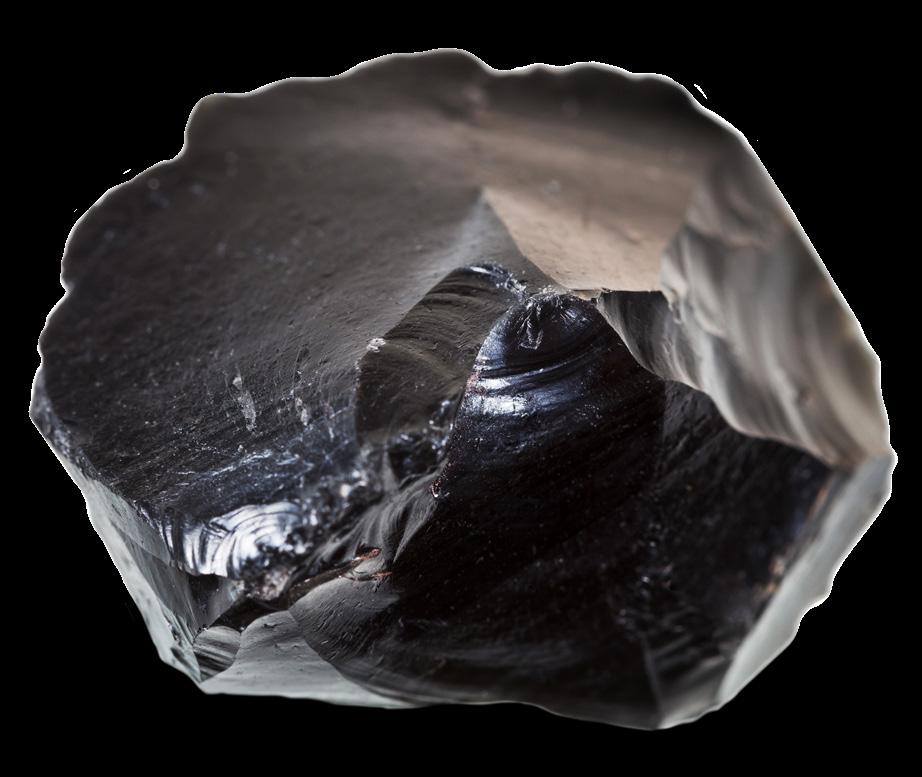
This is a pebble made from mātara/matā/tūhua | obsidian. What type of rock is?
Steve WilliamsWhat did the shy pebble wish?
That she’d be a bit more boulder.
Circle your answer
A) Toka parataiao | Sedimentary rock (formed from layers of sand, silt, dead plants, and animal skeletons)
B) Toka kāhuarau | Metamorphic rock (formed from other rocks that are changed by heat and pressure underground)
C) Toka ngiha | Igneous rock (formed from melted rock from deep inside the Earth)
I don’t know why they don’t make Pebbles anymore… Those lollies rocked!
Name of the stream:
Date and time of your assessment:
Always ensure it is safe to go into the waterway. Make sure an adult is with you.
Gravel of different sizes tightly packed together.
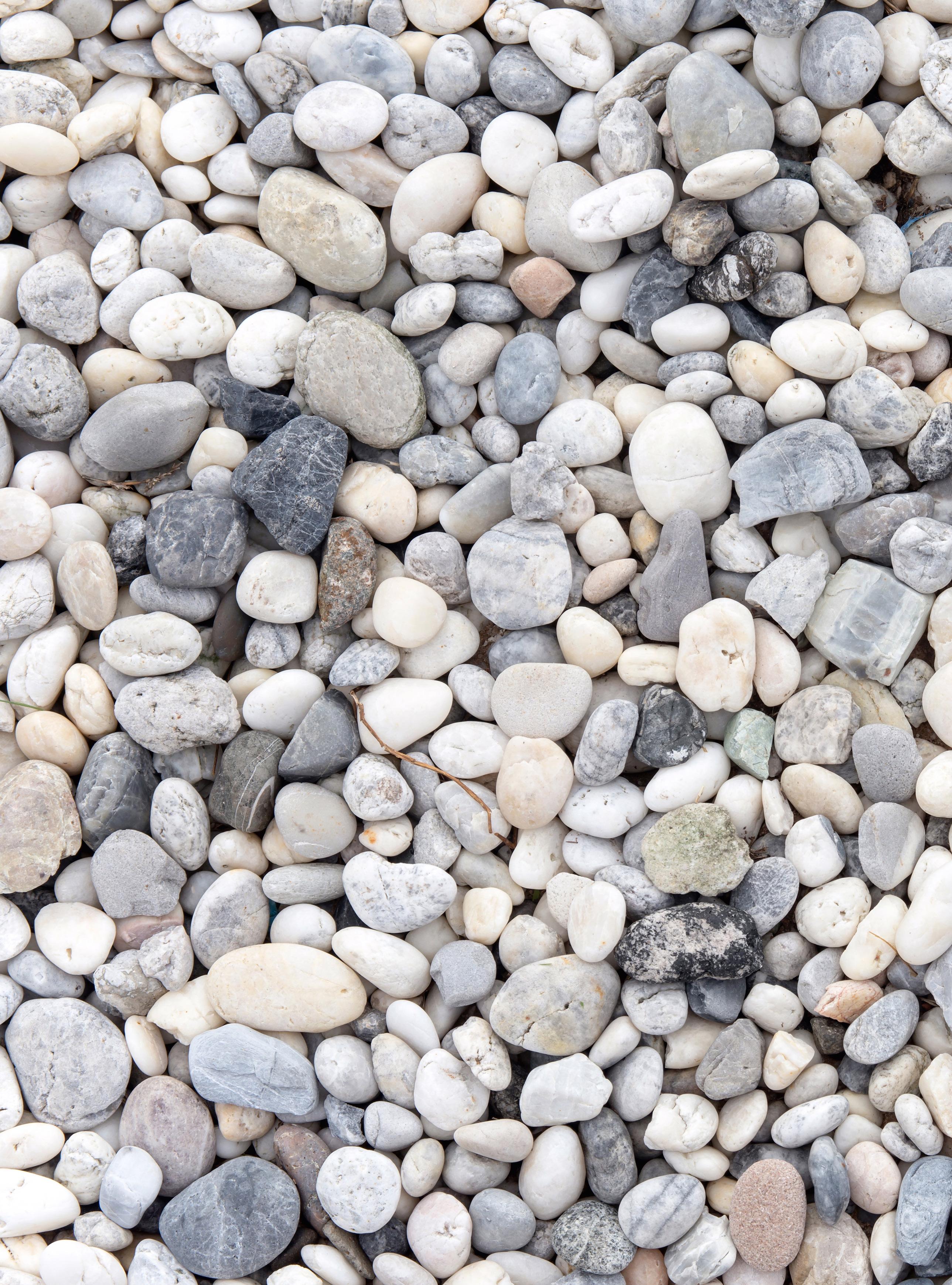
Pick the options closest to what you’re seeing.
What is on the streambed?
Gravel, sand, and silt. No gravel.
Stones are rough to touch and slime free!
If you stand and shuffle your feet into the streambed, does the water…
Stay clear? Get murky but clears? Stay murky?
How much algae (slimy stuff) is there?
Rocks are slimy.
Rocks are slippery but not slimy.
Lots of mayflies, stoneflies, and other crawling and swimming insects.
It would be very hard for rubbish to get in.
Can rubbish and other contaminants get into the stream?
It does, easily.
It could.
Nope, it’s all fenced off OR no stock around.
Do stock animals (cows, sheep, etc) have access to the stream?
Can’t see any pumps or pipes.
What sort of macroinvertebrates live there?
You’ll need to look under rocks for them or look on water weeds, grass, logs, etc. Go to kcc.org.nz on how to collect samples and ID help. Search “healthy habitat”.
More than one pump or pipe.
One pump or pipe.
Are there any pumps or pipes taking water from the stream, say for irrigation?
Yep, all of it.
Yep, some of it.
Some crawling and swimming insects, but also lots of snails, worms, and midges.
Mostly snails, worms, and midges.
No drainage into the stream.
One drain.
Do drains, like storm water or farm drains, go into the stream?
More than one drain.
What natural things are in the water to create habitat (places to live)?
Lots of big rocks and logs. Rocks and logs, but they move around. No rocks or logs.
Yes, tall trees with lots of ferns, flax, rushes, etc underneath.
Are there plants lining the stream bank?
Yes, but it's a bit patchy. Just short grass.
The stream is free to move. It has meanders (curves) and has riffles, runs, and pools.
(see page 21)
Is there room for the stream to move?
The stream is free to move some places, but there are barriers in other places.
How much of the stream is shaded by plants and stream banks?
Most is shaded. Some is shaded. All of the stream is in the sun.
No, the stream is straight and has barriers, like concrete walls, keeping it straight.
More than 10 kākāriki | green – Ka rawe | Great! Your stream is super healthy. A mix of kākāriki | green and karaka | orange – Your stream has potential! It could be healthier though.
More than one whero | red – Your stream is hē te manawa | in trouble! Speak up to your local or regional council so they can help make it better. You can show them this assessment!
Fish and macroinvertebrates love to live between the stones, not among rubbish!
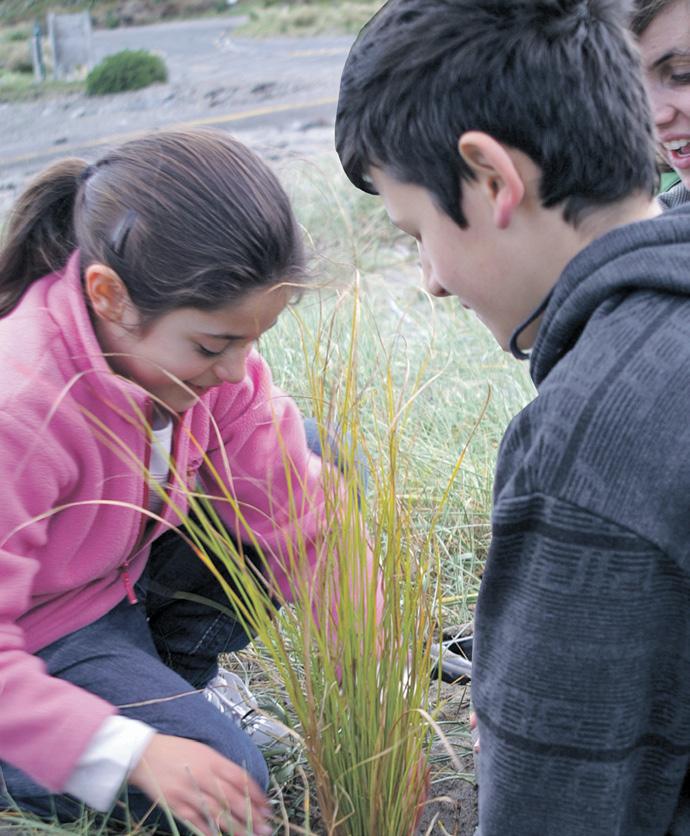
Join kids from all over Aotearoa in scouring (thoroughly searching) for rubbish and removing it from our clogged-up streambeds. Get your friends, family, school, and community groups involved too.
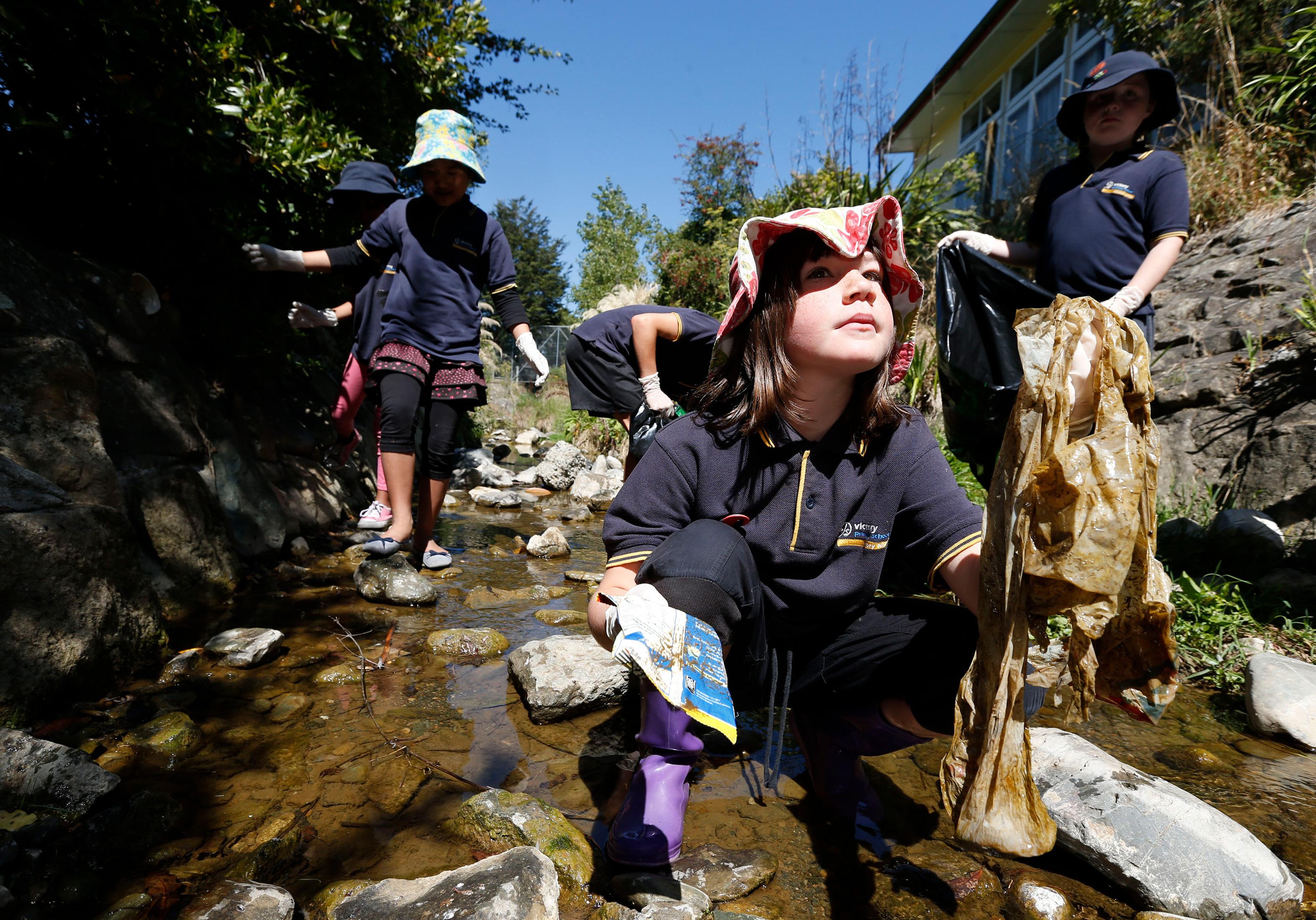
All you need to get started is...
n A local stream you care about
n Gloves to keep you safe
n Something to put the rubbish you collect in, like a bag, sack, or bucket
n An adult to supervise you by and in the water.
Set yourself a pātai | challenge.
How many bags/ buckets/sacks of rubbish will you remove?
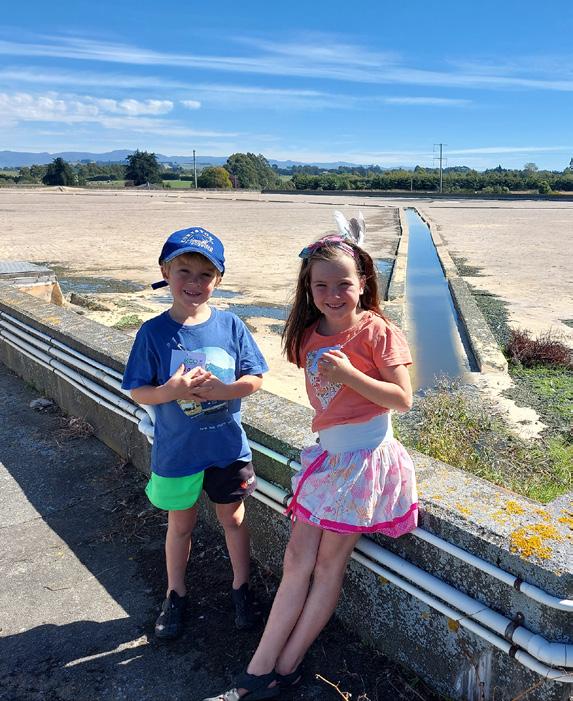
KCC South Canterbury met at the local water reservoir and had the Water Plant Manager from the Timaru District Council talk to us about where our water comes from and what happens to it along the way. We got to look at the big ponds that hold the water when it gets to Timaru. They are 9m deep, and, fortunately, they covered them about 25 years ago, as there were a lot of birds sitting on top!
We then drove about 25 minutes out of town, following the pipes to one of the water sources at the upper Pareora River. The children had the challenge of counting how many times they saw the water pipe – 12 was the most popular answer. The water we saw entering the reservoir had left the river seven hours prior, and its gravity fed it down to Timaru.
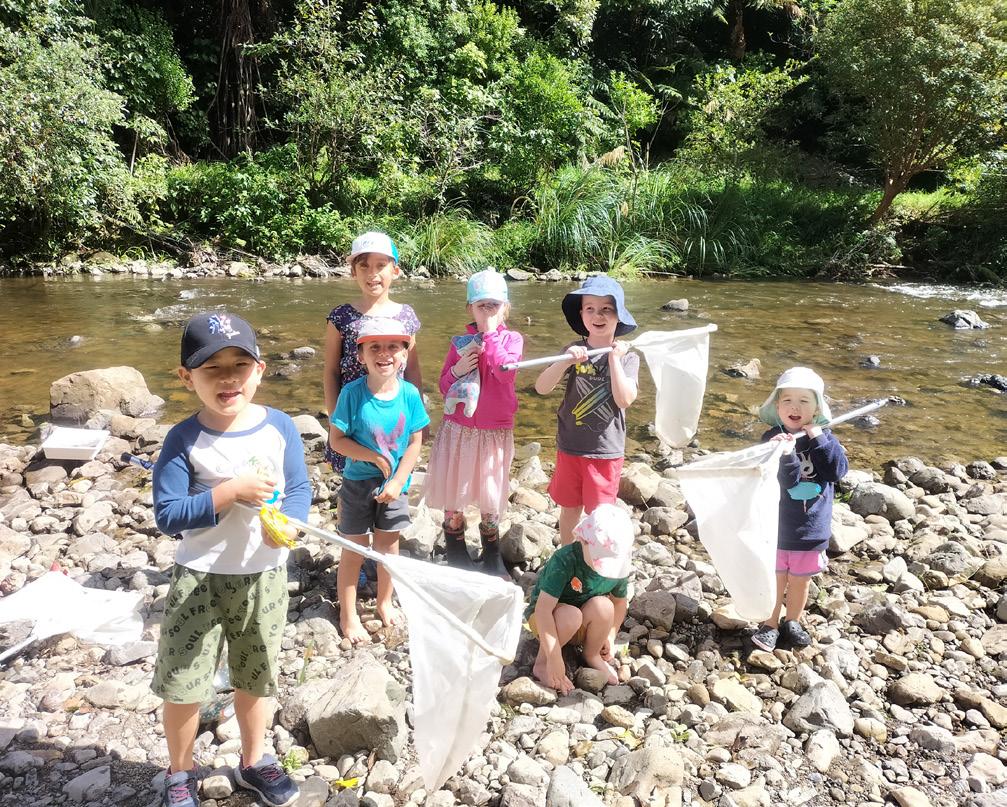
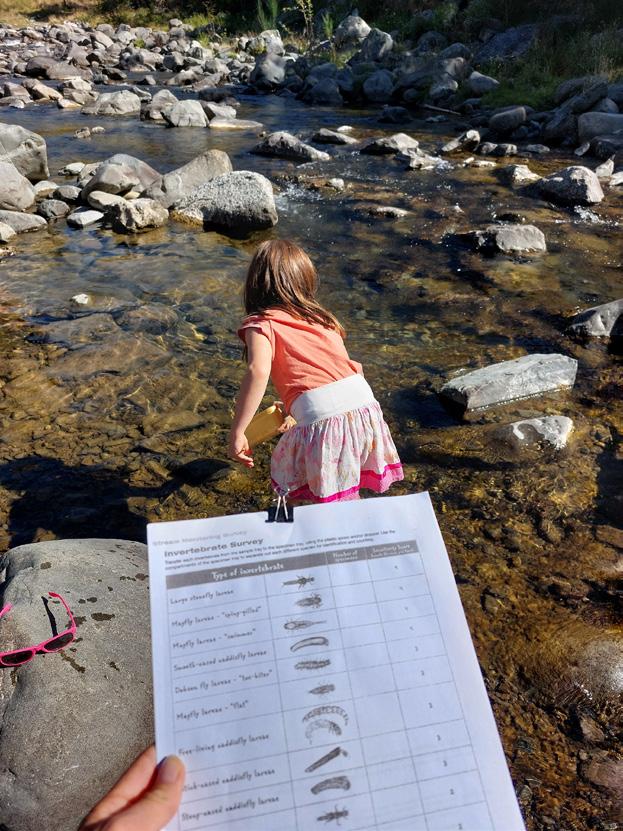
We walked up the river towards the dam on top of the water pipes! We stopped short of the dam and explored the river, looking for invertebrates. We excitedly found things like dobsonfly or “toe biters” and caddisflies that make cases out of fine gravel.
 Brice Family
KCC Manawatū found all sorts of awesome creatures while monitoring one of our local streams. Using our feet, we stirred up the stones in front of our nets and we got to see a common bully (a native fish), a koura | freshwater crayfish, and a dobsonfly. We learnt the difference between stoneflies and mayflies (hint: count their tails). We were even lucky enough to spot two huge Dolomedes spiders (fishing spiders) and watch how they can walk on water!
Anna Regtien, KCOHad a KCC adventure? Let us know at kcc@ forestandbird.org.nz.

KCC North Taranaki visited Waiongana Stream to investigate if it was a “healthy stream”. Before we headed off, we discussed why we monitor streams and why we picked the stream we did. We thought this stream should be healthy because it was in the National Park and shouldn’t have stuff flowing into it that would hurt it.
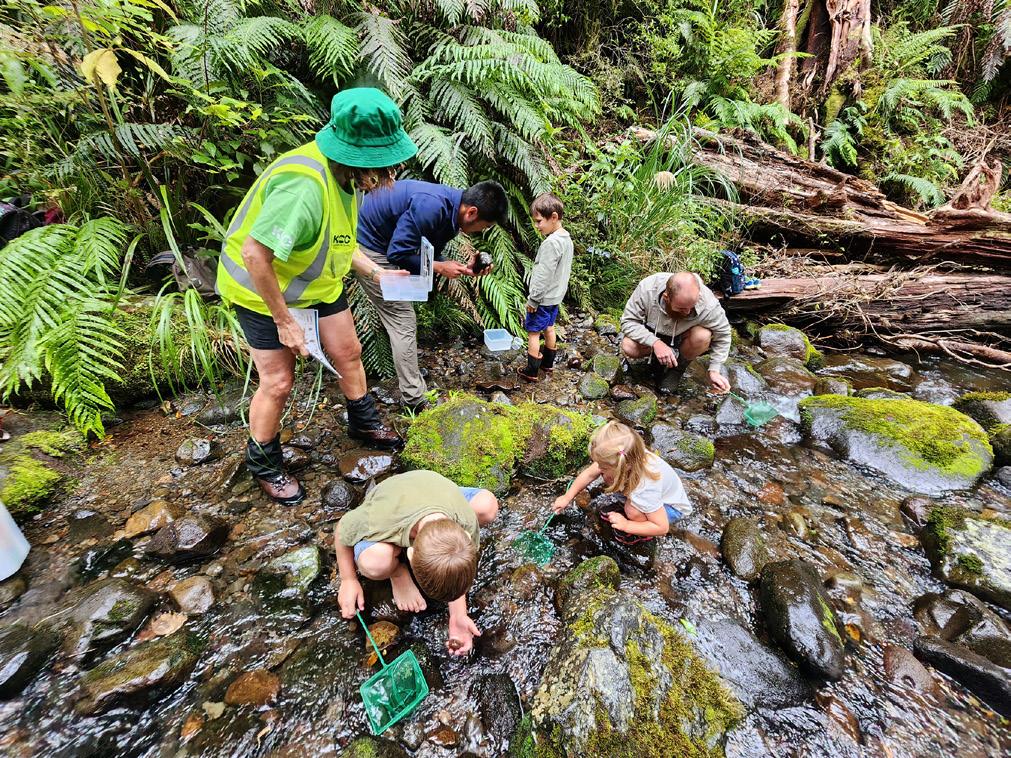
After our short walk there, we considered the stream habitat. We looked at the streambed the banks, and the use of the land first. Next, we tested the water clarity using a signi tube. This was really fun. The tube was filled with water, a magnet fixed to the end. We looked through, then moved down the tube until it could no longer be seen. We could see the magnet right to the end of the tube!
We checked the temperature of the water too. It must be below 22°C for healthy stream animals. We also checked the flow of the stream because that matters for getting nutrients to plants and oxygen to animals. Last, but not least, we went hunting for macroinvertebrates. What you find can help to indicate the health of the stream too. We were delighted to find lots of good heath bugs!
We were all delighted on our finding that the Waiongana Stream is healthy!
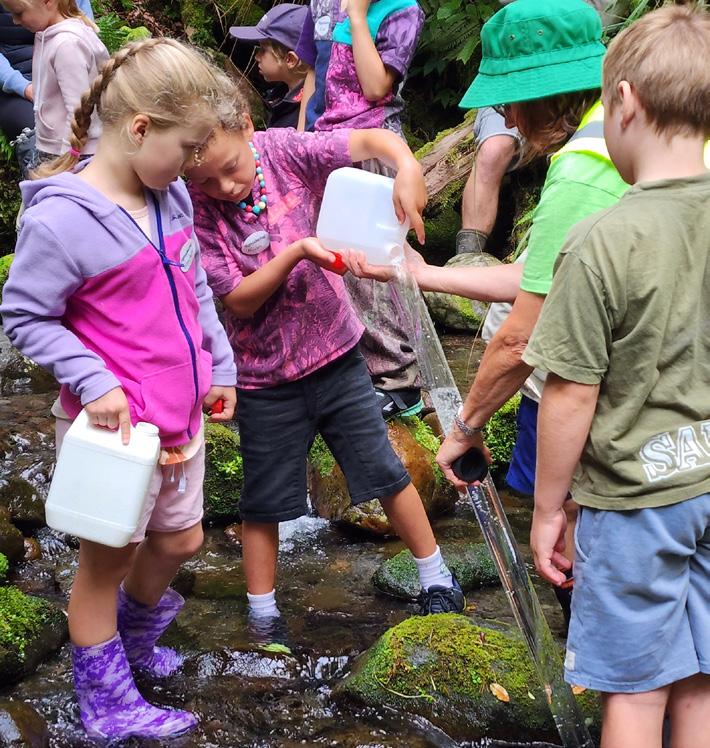 Lee McCracken, KCO
Maybe it’s someone in your family, a friend, or someone in your community? They might be doing special stuff (like caring for endangered NZ species) or more everyday conservation mahi (like doing their recycling, backyard trapping, donating for fundraising, or taking kids on adventures). Everything we do to help nature matters and adds up.
Present to them this special certificate to tell them why they are your conservation hero!
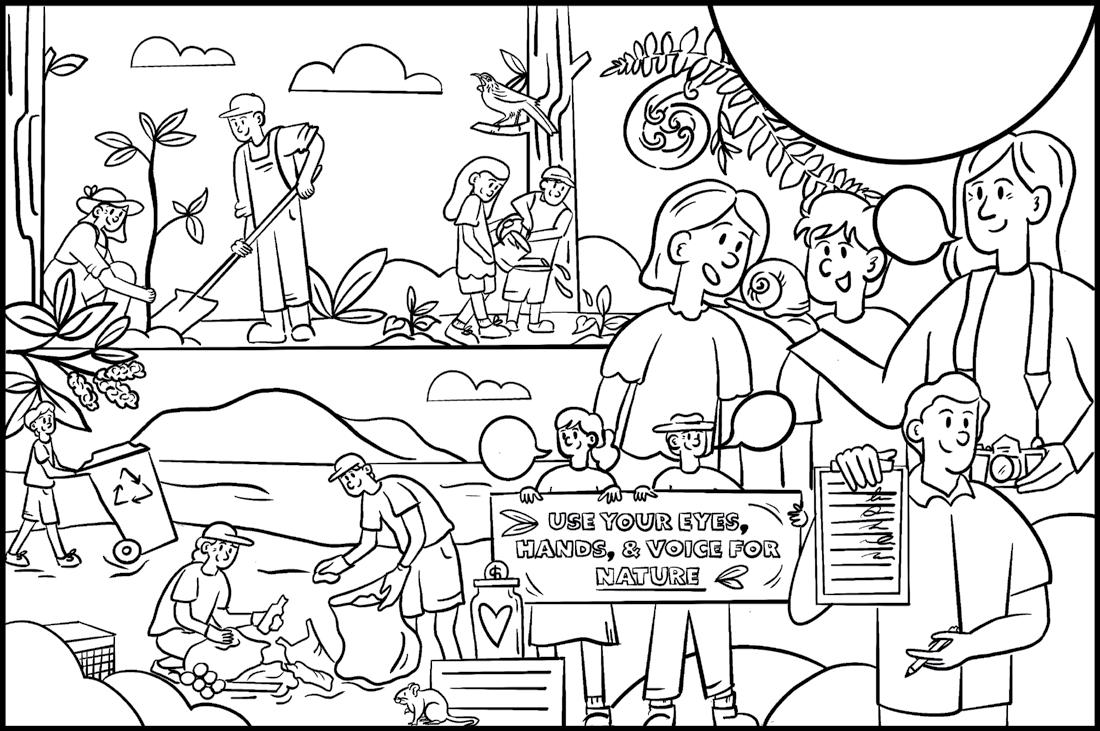
You might like to share their story with Forest & Bird too bit.ly/ ConservationHeroes
Closes 29 February 2024