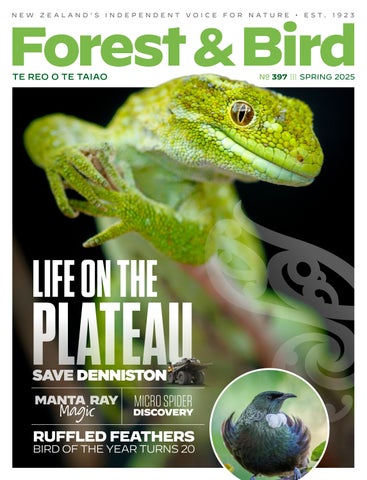
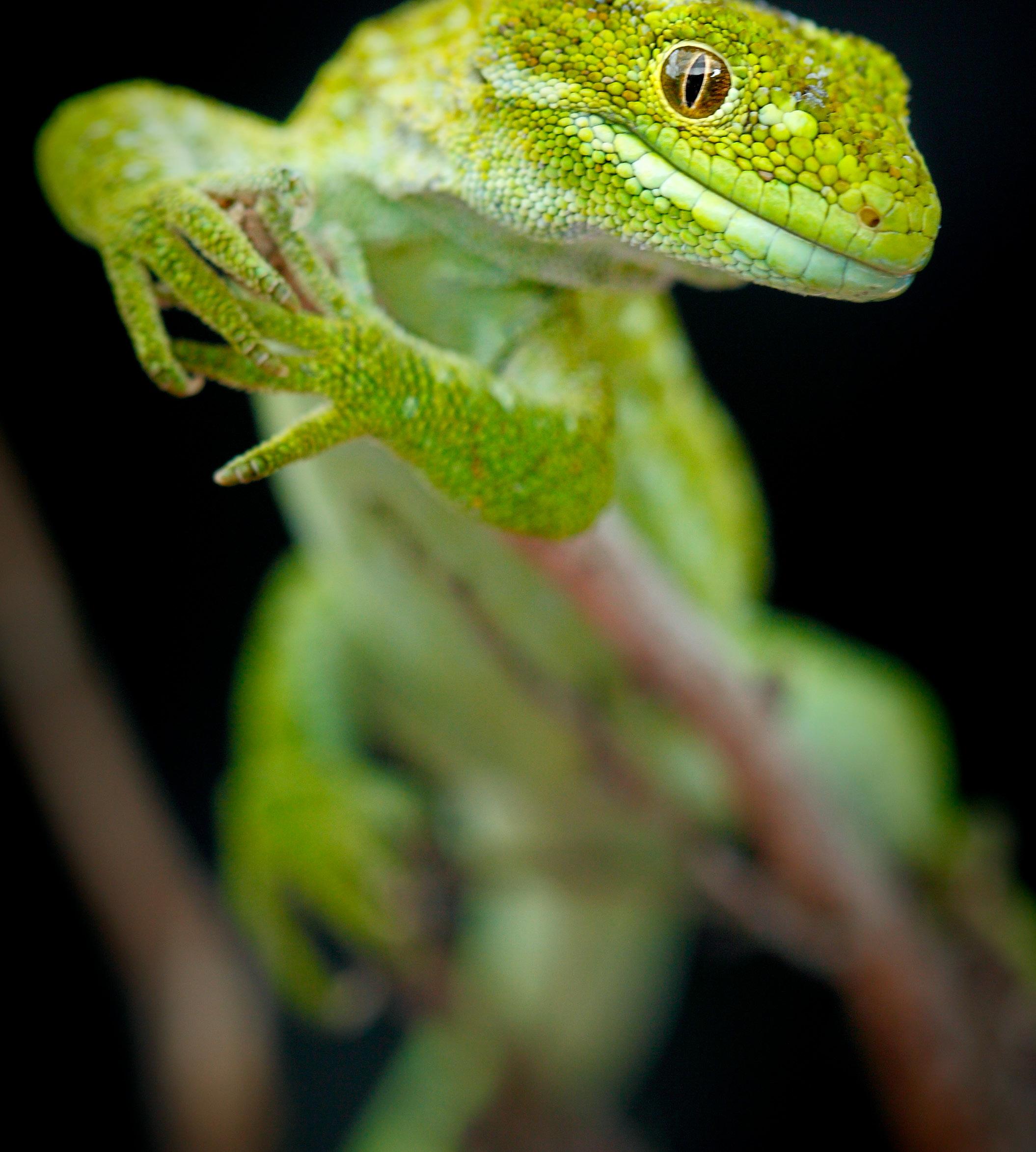
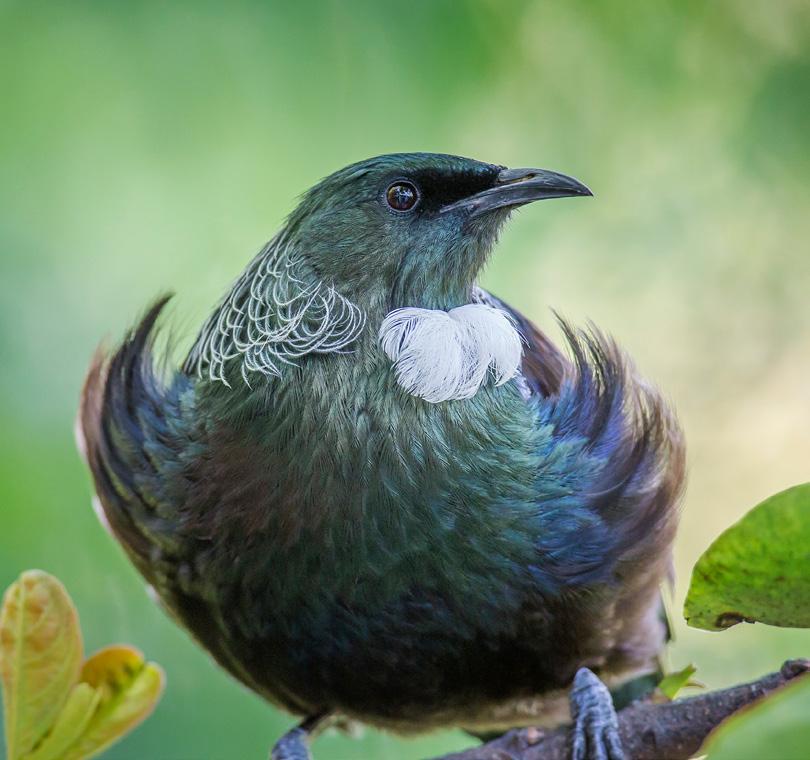
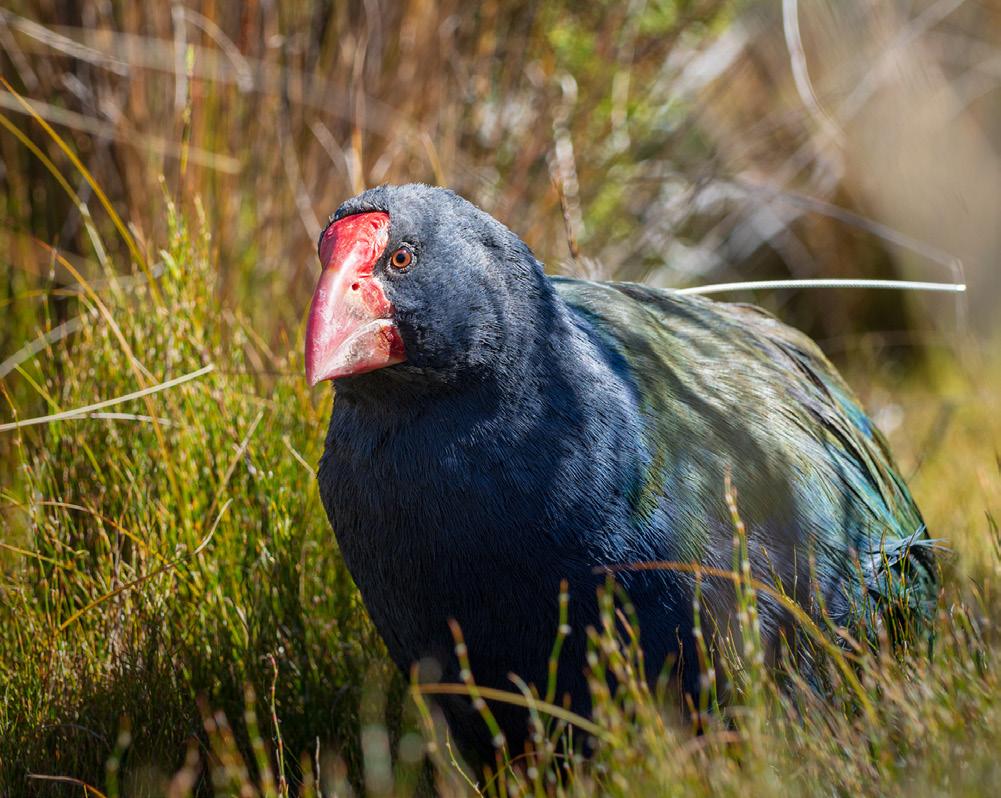
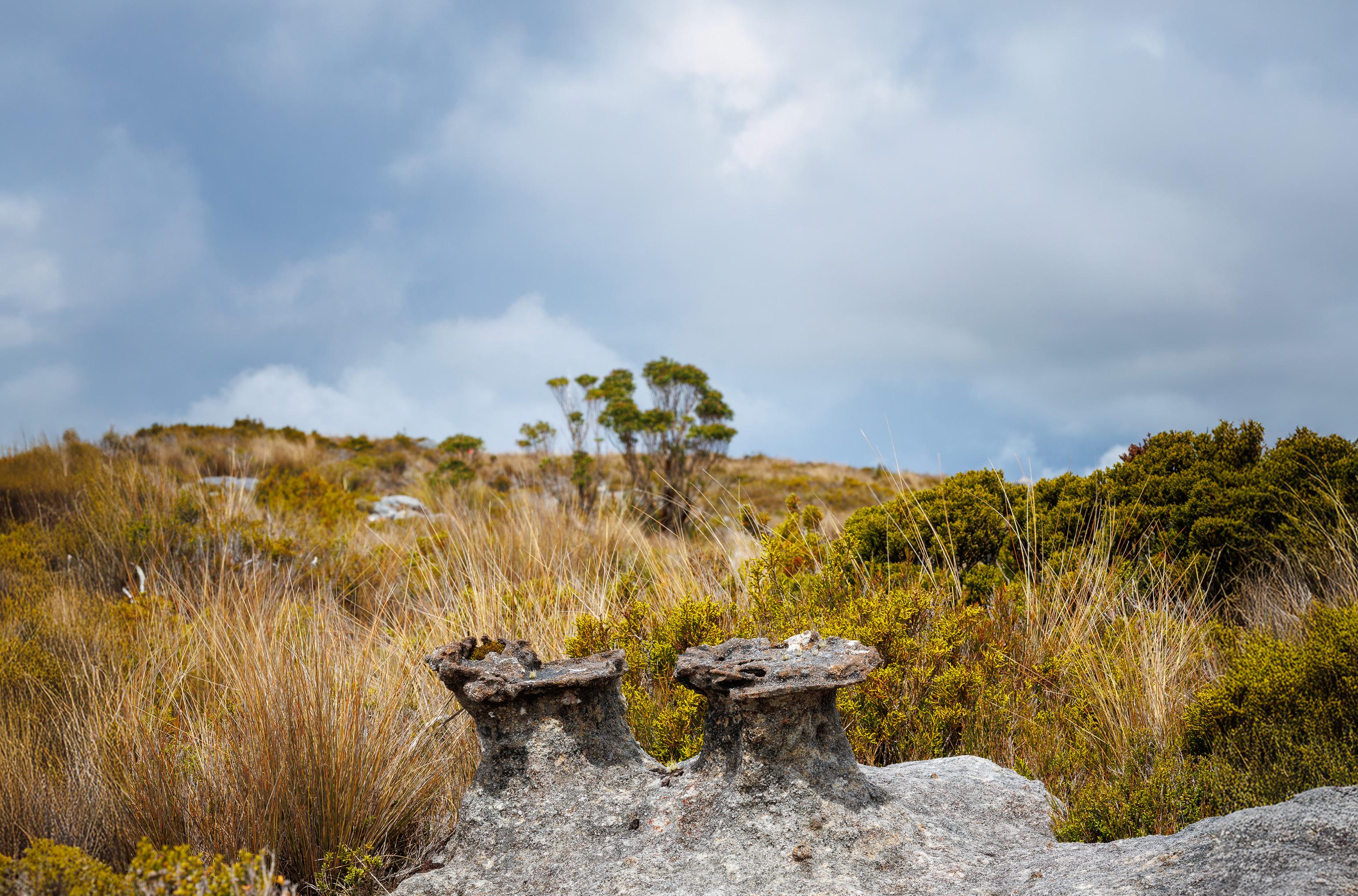
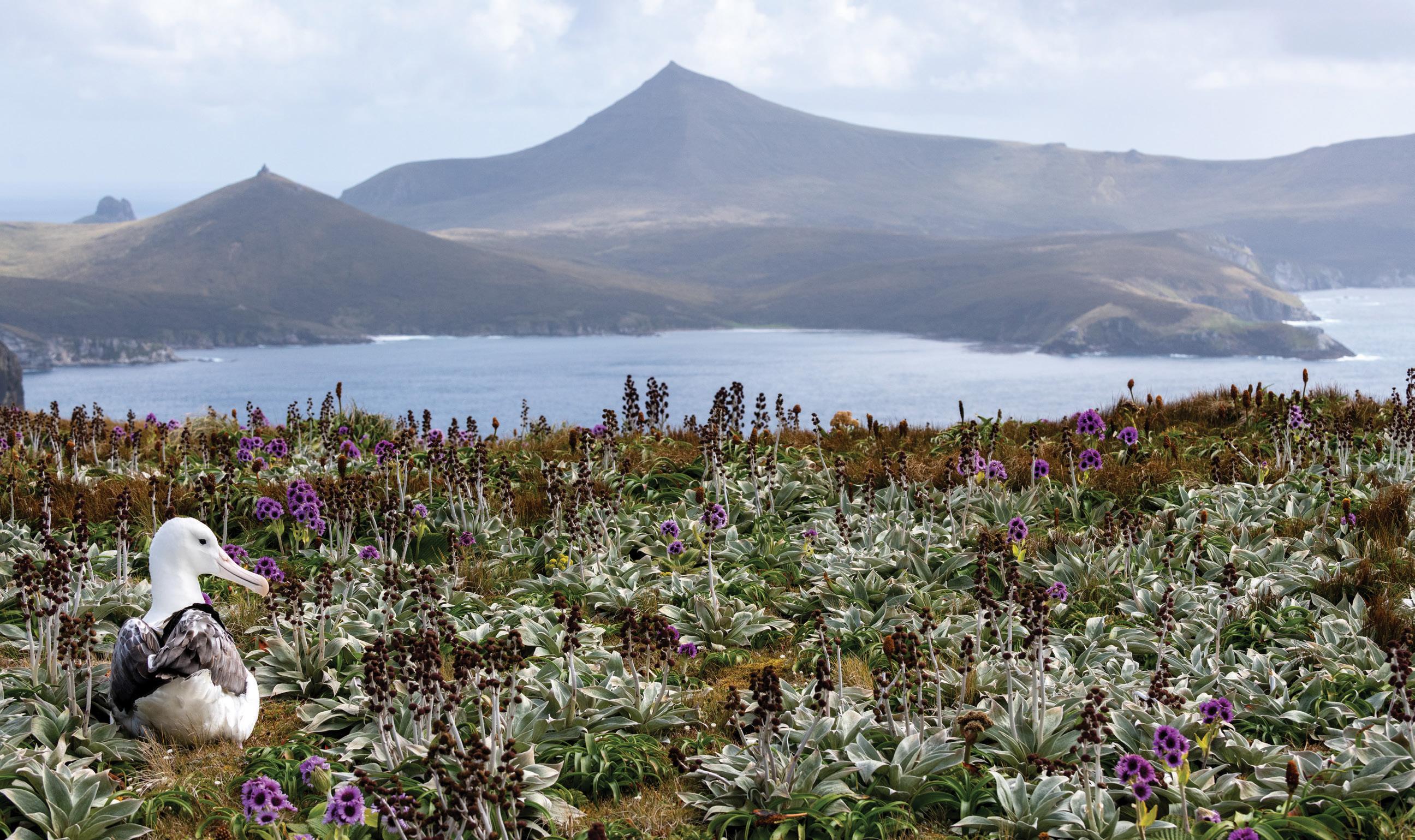
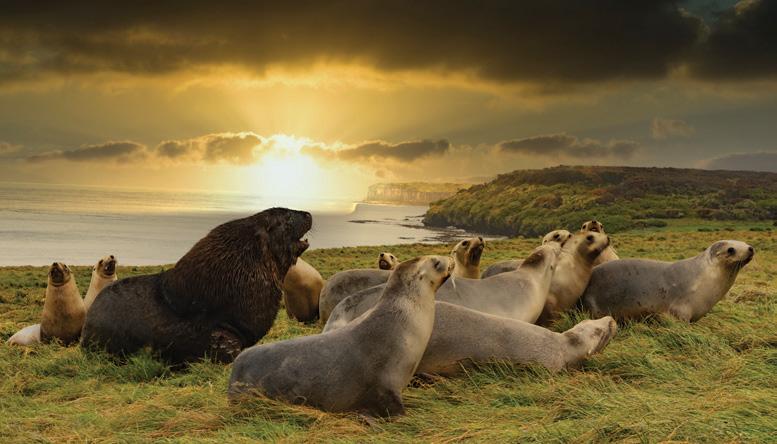
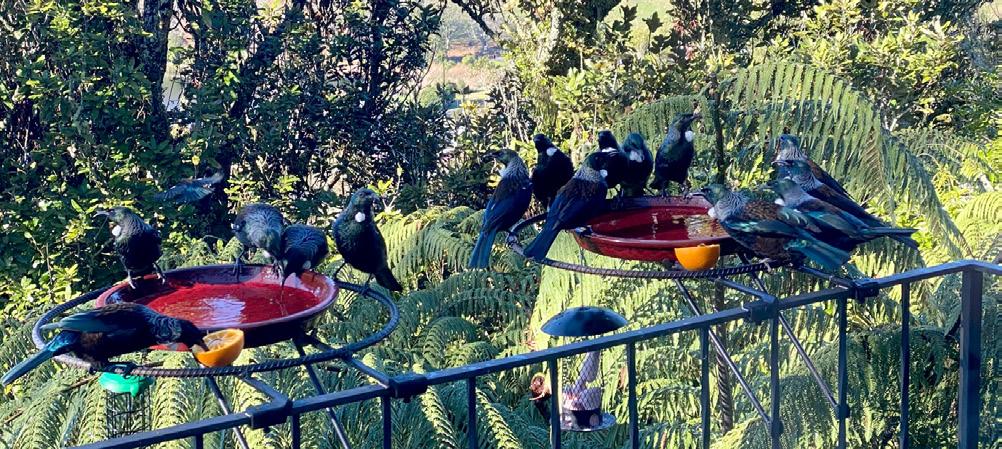
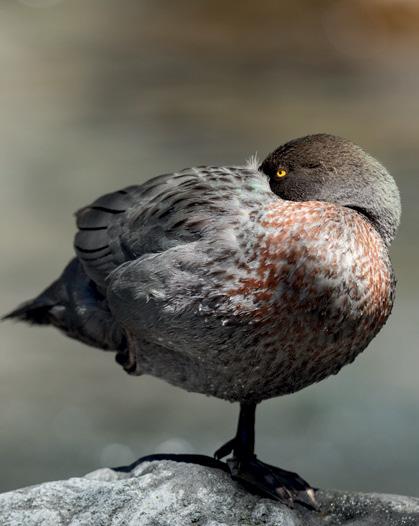
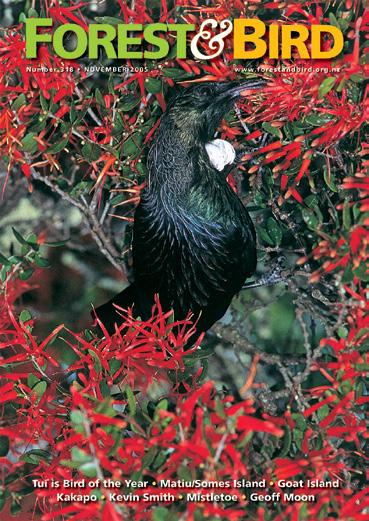
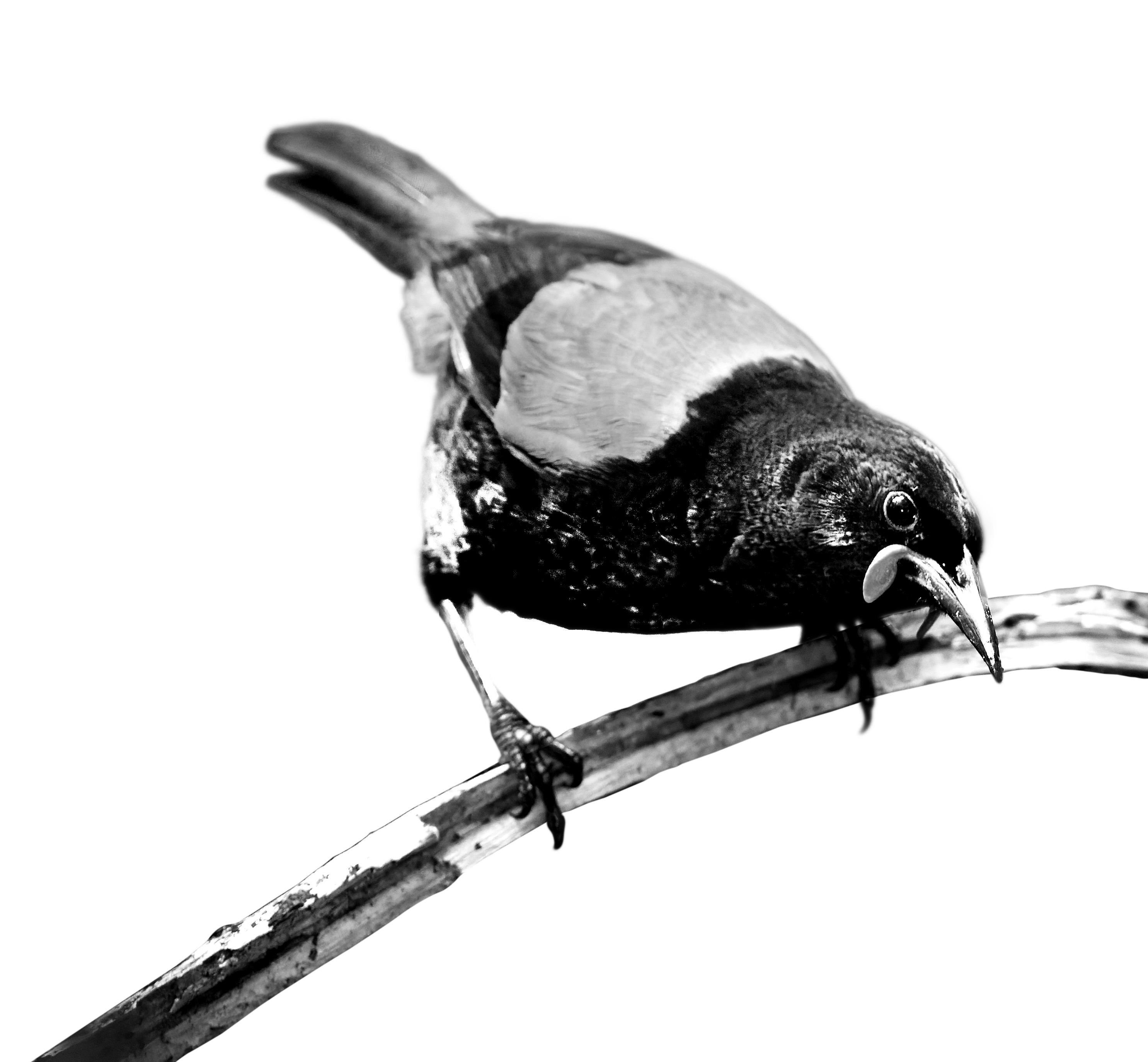
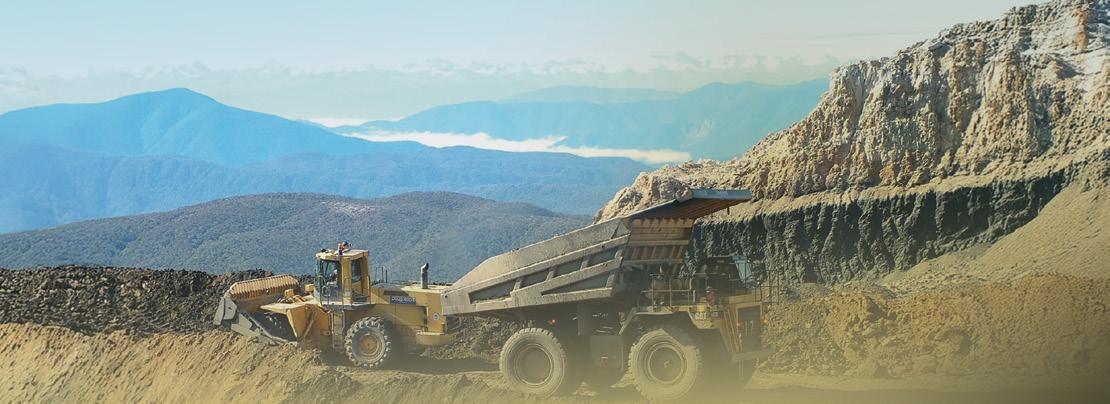
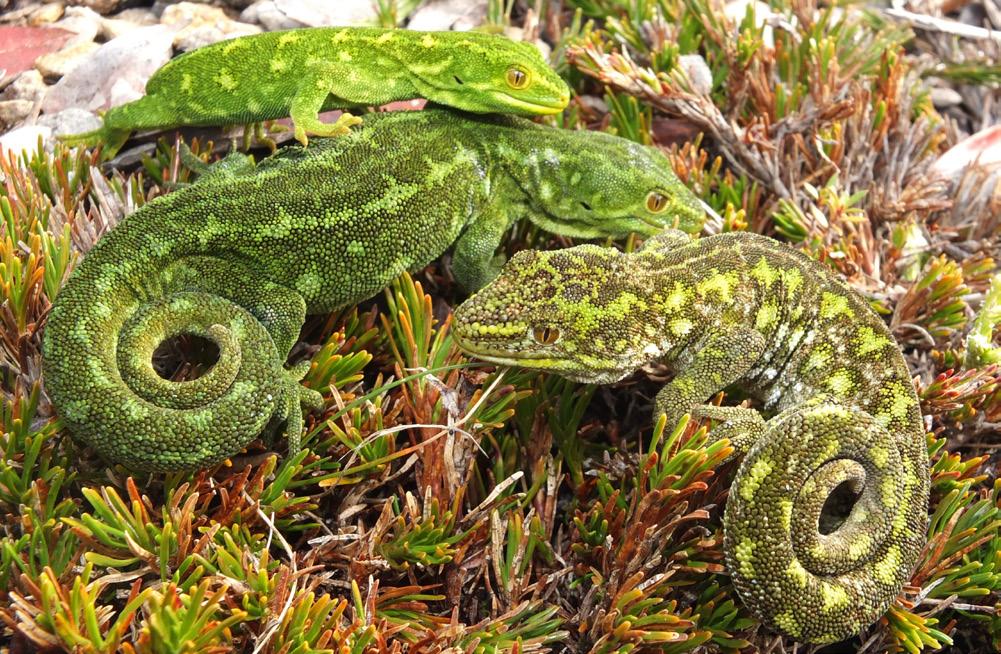
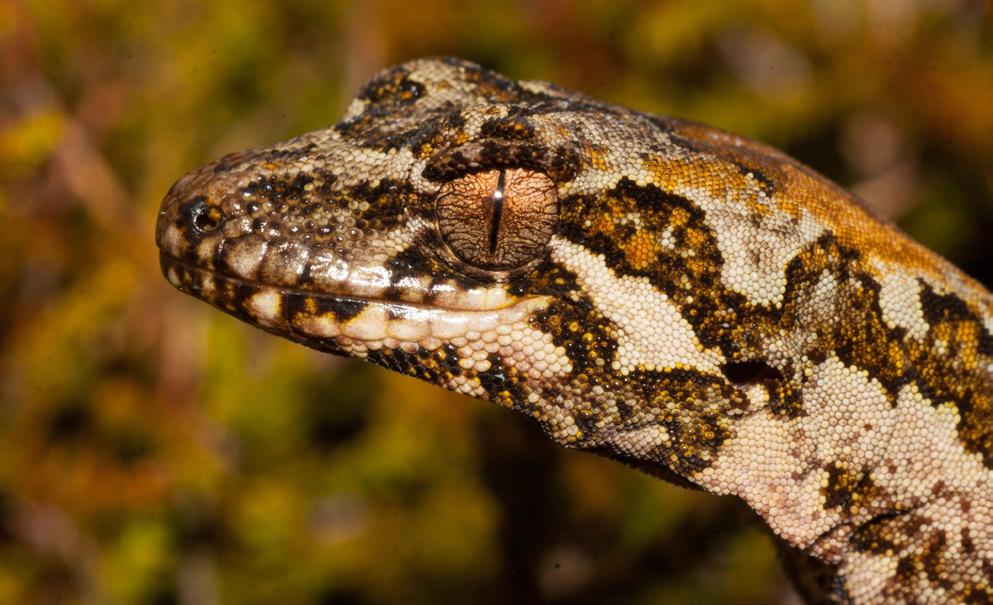
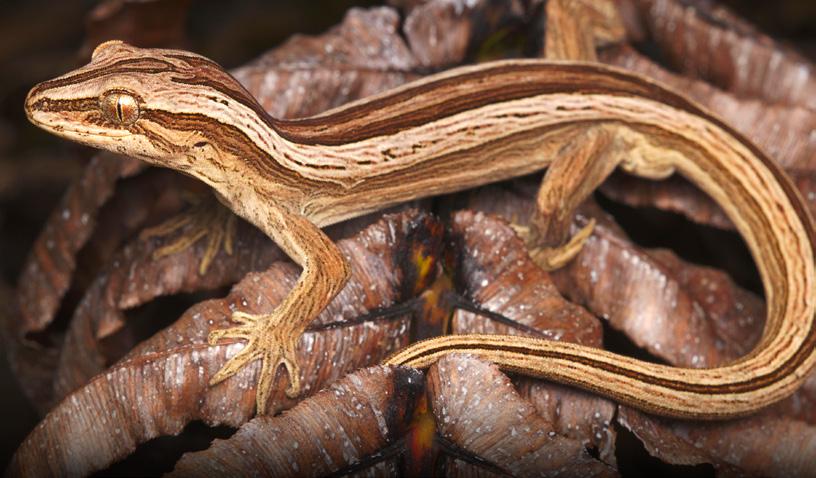
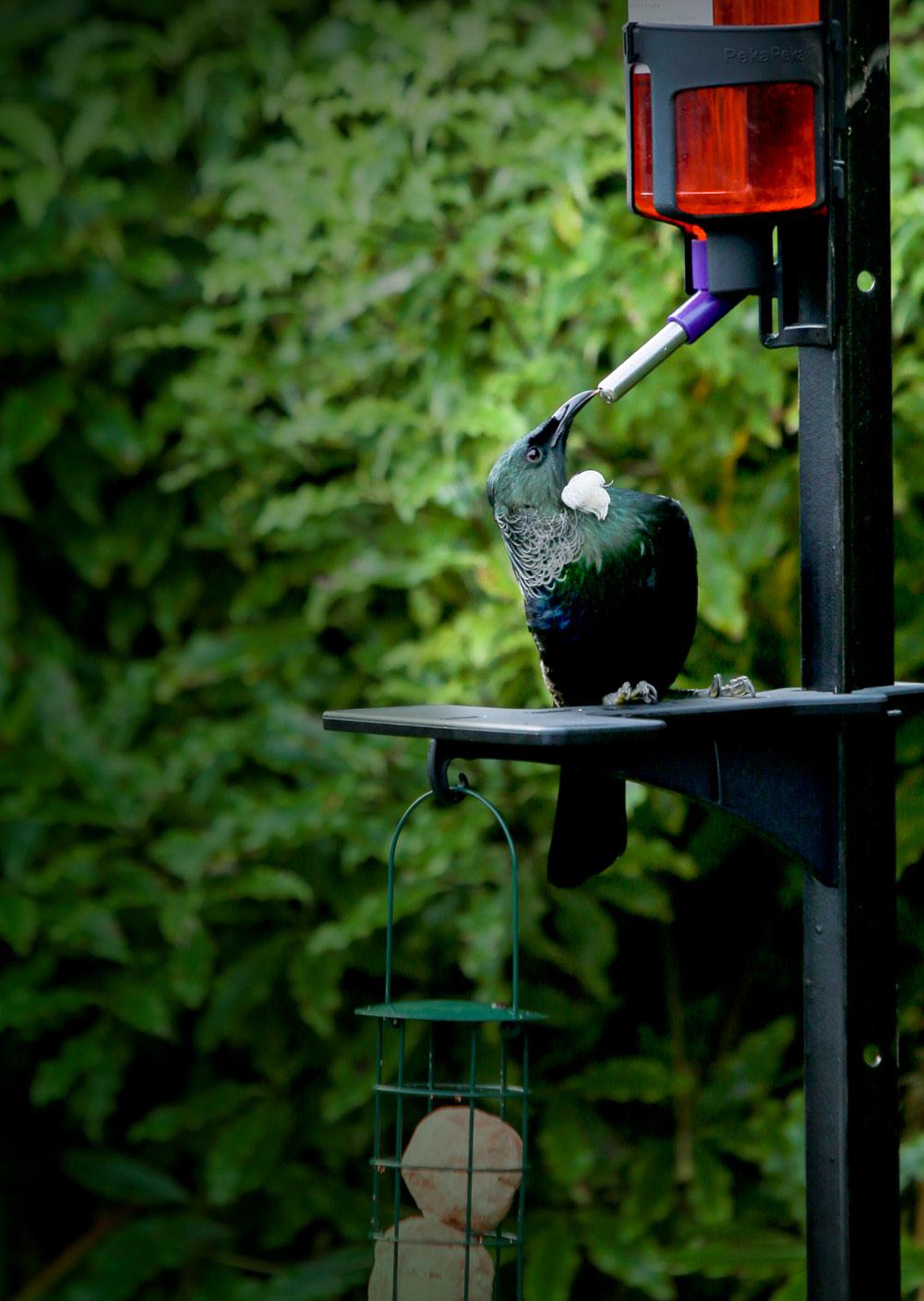
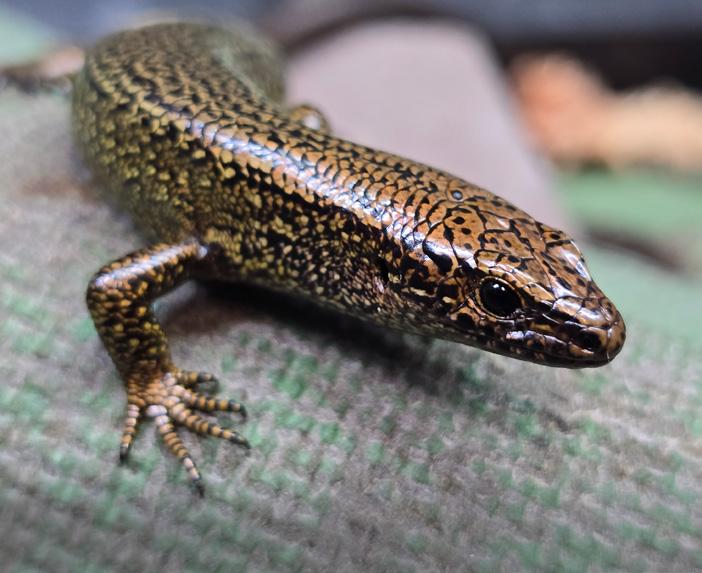
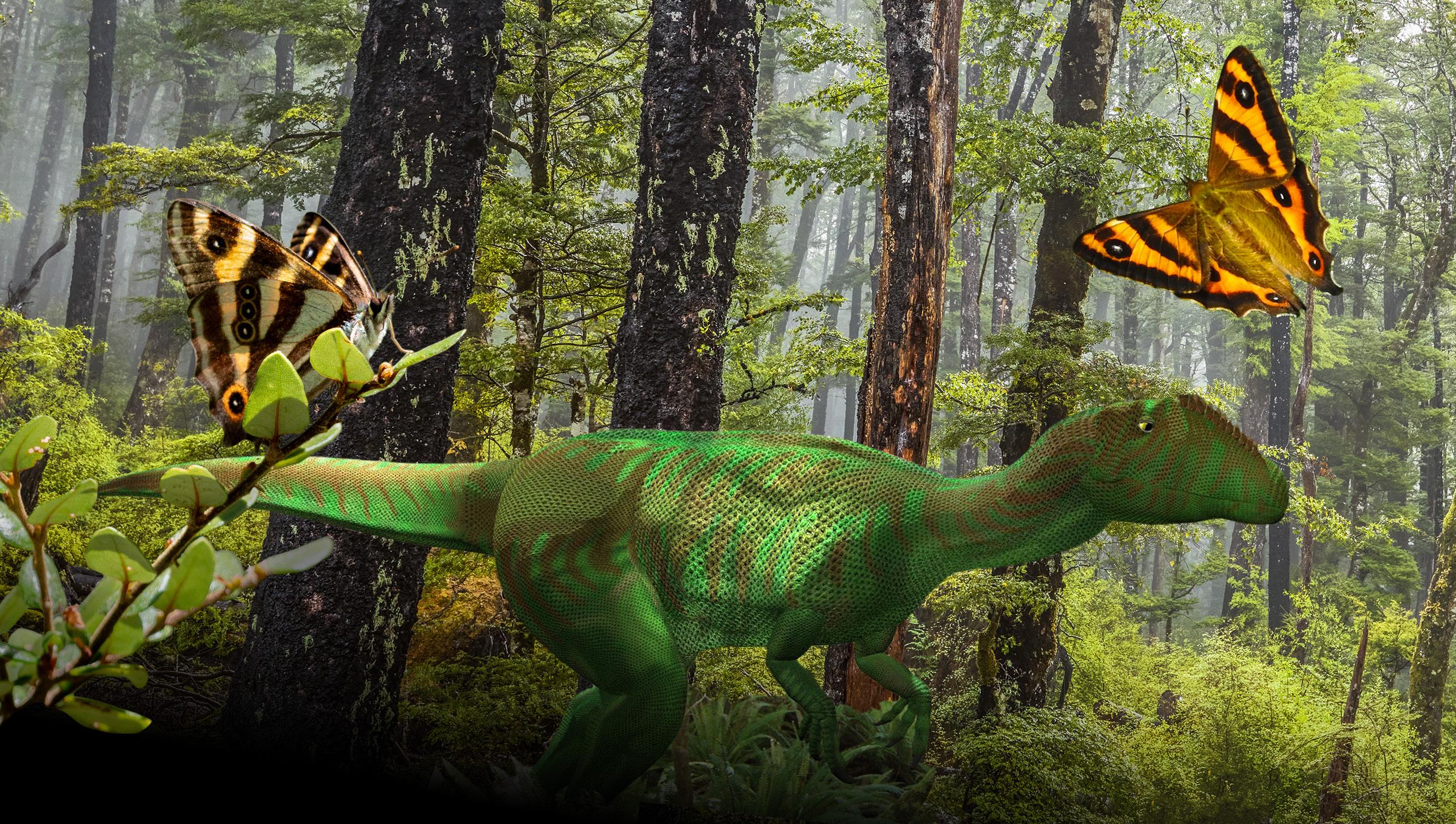
COVER SHOT West Coast Green Gecko. Rob Suisted INSET IMAGE Tūī. Richard McBride
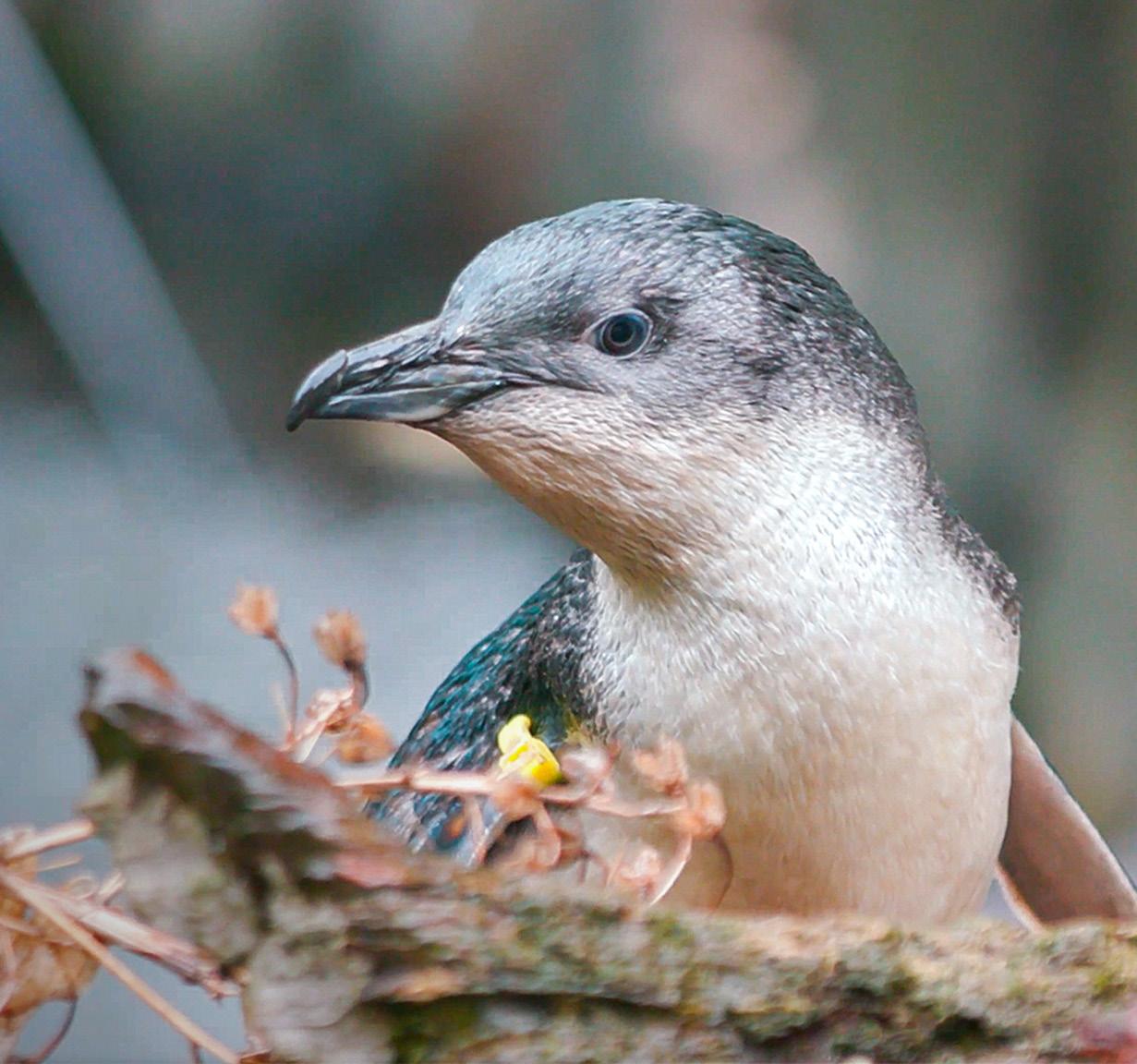
PAPER ENVELOPE Hoiho yellow-eyed penguin. Ross Mastrovich
RENEWAL Waiū atua shore spurge (Euphorbia glauca). Rob Suisted
EDITOR Caroline Wood E editor@forestandbird.org.nz
ART DIRECTOR/DESIGNER Rob Di Leva, Dileva Design E rob@dileva.co.nz
PRINTING Webstar webstar.co.nz
PROOFREADER David Cauchi
ADVERTISING ENQUIRIES Karen Condon T 0275 420 338 E karen.condon@xtra.co.nz
MEMBERSHIP & CIRCULATION T 0800 200 064 E membership@forestandbird.org.nz
Forest & Bird is published quarterly by the Royal Forest and Bird Protection Society of New Zealand Inc. Registered at PO Headquarters, Wellington, as a magazine. ISSN 0015-7384 (Print), ISSN 2624-1307 (Online). Copyright: All rights reserved. Opinions expressed by contributors in the magazine are not necessarily those of Forest & Bird.
KCC
26 Play meets nature
Forest & Bird branch
27 A spidery tale
Nature-based solutions
28 Carbon capture
29 Forests for climate
Bird of the Year
30 Ruffled feathers: A celebration of Aotearoa’s birds
Community
32 Caring for kororā
Thank you for supporting us! Forest & Bird is New Zealand’s largest and oldest independent conservation charity.
Join today at forestandbird.org.nz/joinus or email membership@forestandbird.org.nz or call 0800 200 064
Every member receives four copies of Forest & Bird magazine a year.
Biodiversity
34 Saving Awakōpaka
46 Forest ringlet survival story
Forest & Bird project
35 Tautuku: Wild about nature
Freshwater
38 Fresh Pasifika perspectives
Predator-free NZ
40 Kōkako step up
41 Going global: Launch of biodiversity credits
60 Island of hope
Climate
42 Ice cave library
Browsing mammals
43 No special treatment
In the field
44 Take a little time
Our partners
49 Canopy of protection
Forest & Bird awards
50 Old Blue winners
53 Inspiring Youth Action
54 Outstanding volunteers
55 Branch award
CONTACT NATIONAL OFFICE
Forest & Bird National Office Ground Floor, 205 Victoria Street Wellington 6011 PO Box 631, Wellington 6140
T 0800 200 064 or 04 385 7374
E office@forestandbird.org.nz W forestandbird.org.nz
Science
56 What’s in a (scientific) name?
61 Deep-sea super highway
Conservation hero
59 Diana Shand
Market place
62 Classifieds
Last word
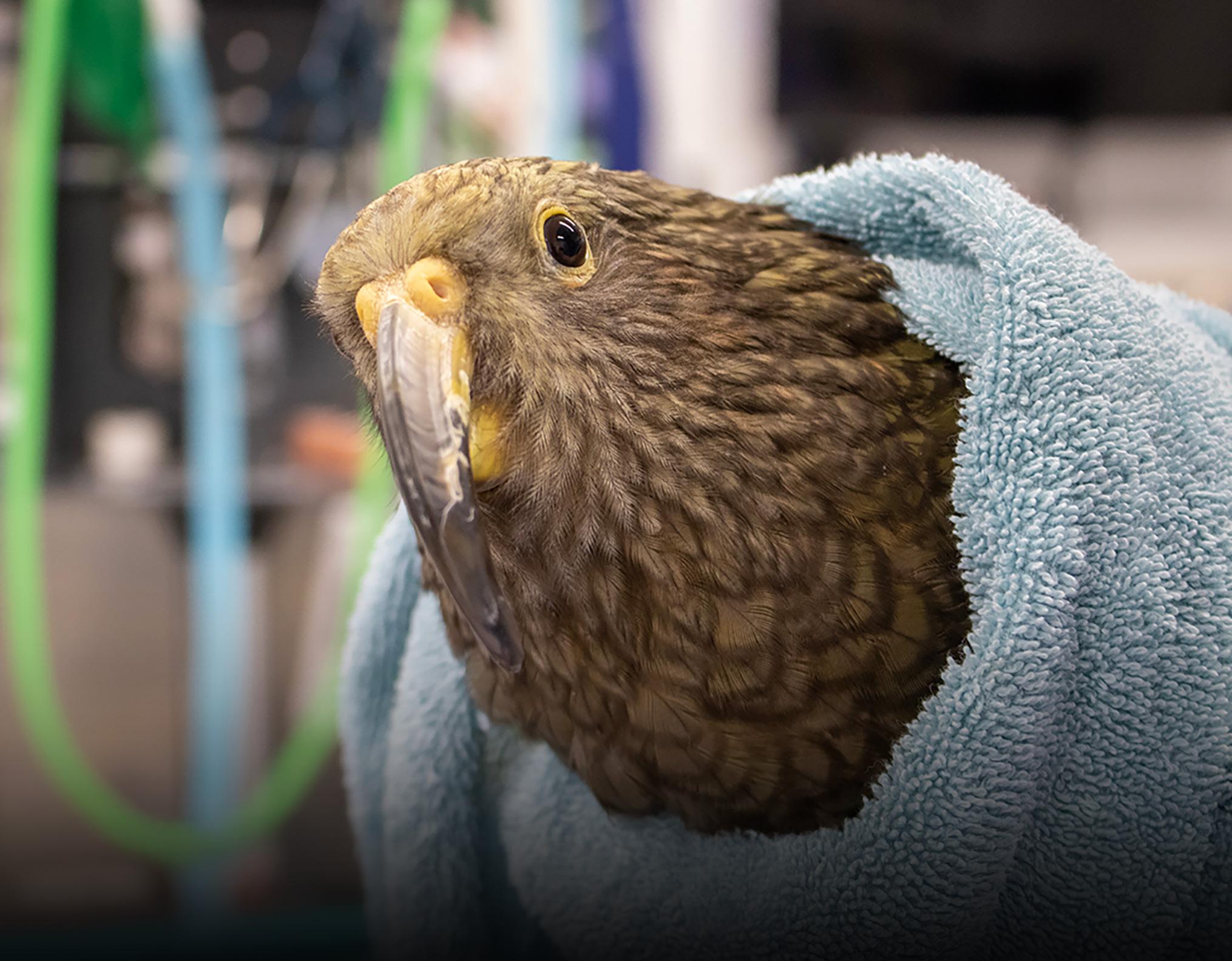
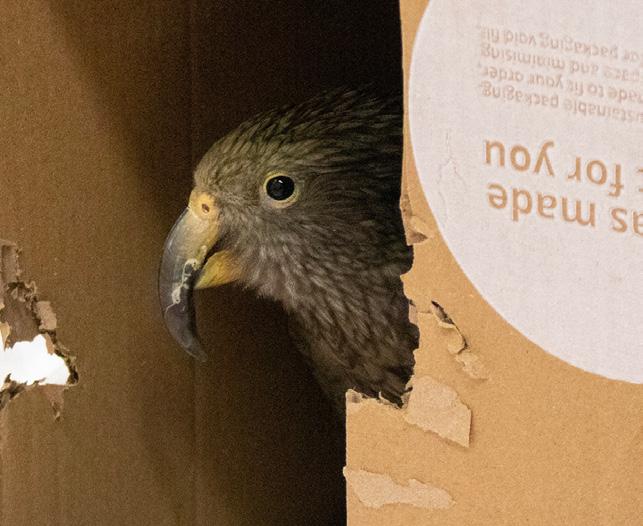
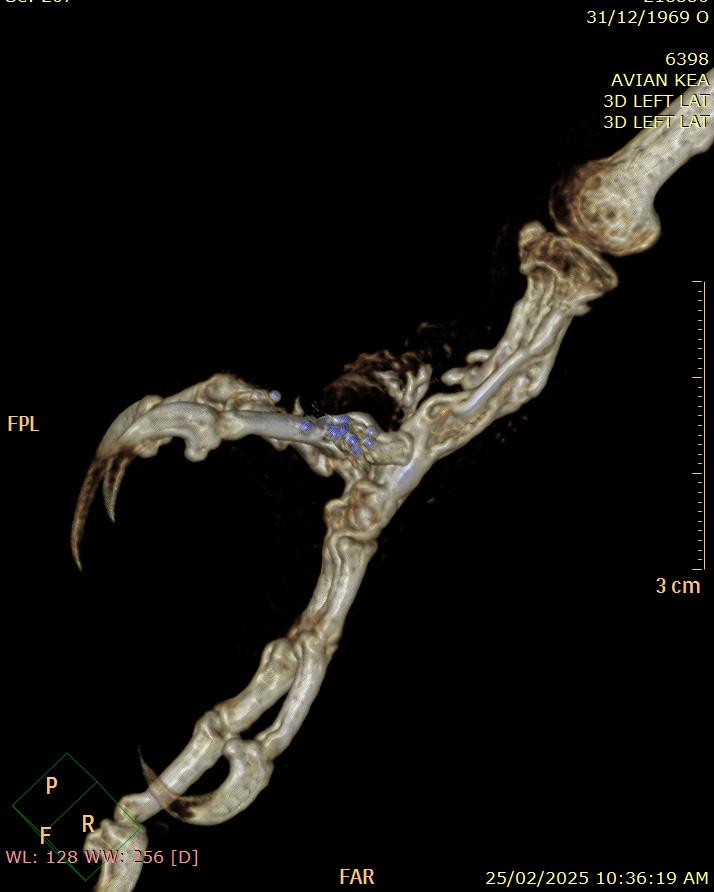
64 Kea’s lucky escape
Parting shot
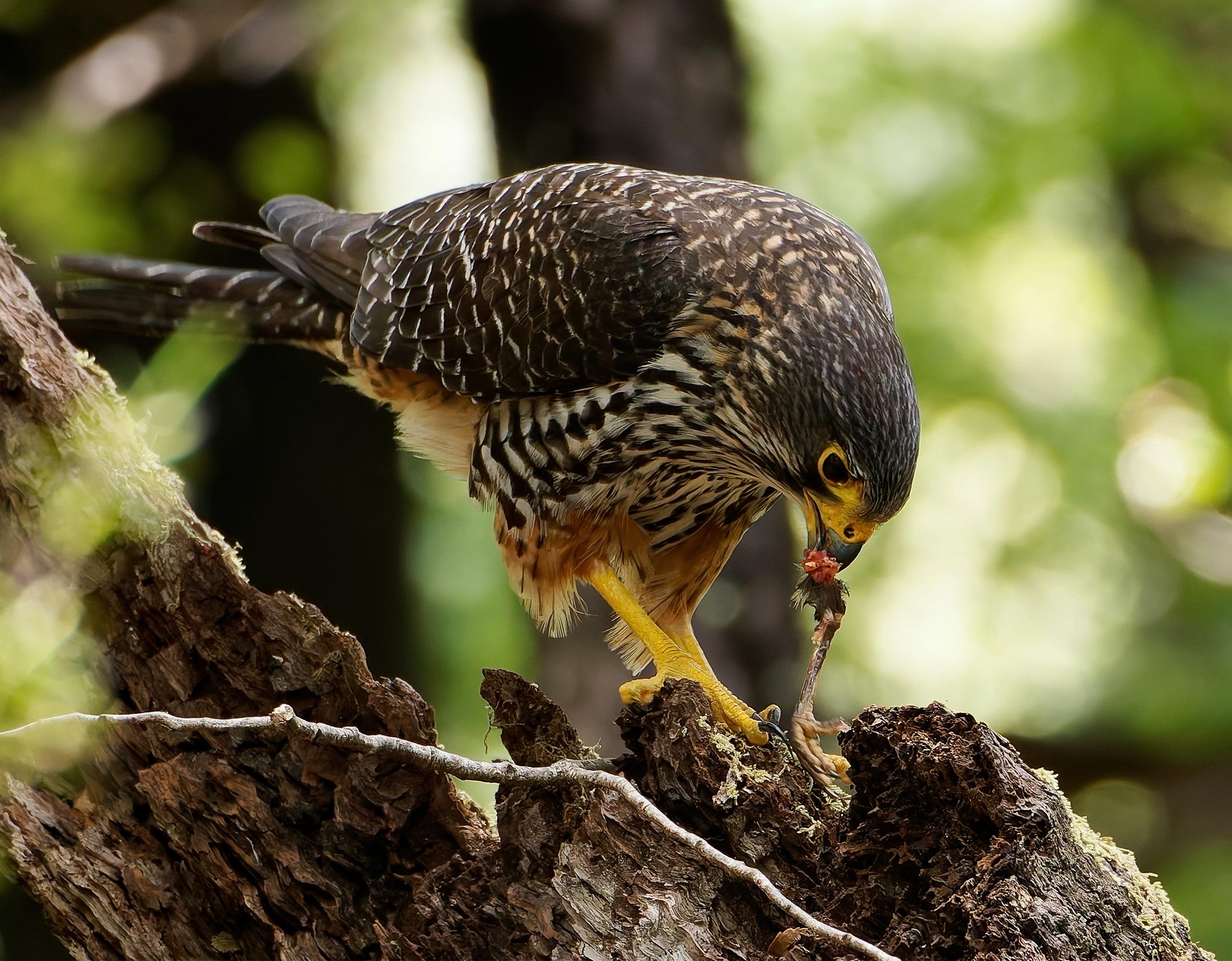
IBC Kārearea New Zealand falcon
CONTACT A BRANCH
See forestandbird.org.nz/branches for a full list of our 45 Forest & Bird branches.
Royal Forest and Bird Protection Society of New Zealand Inc. Forest & Bird is a registered charitable entity under the Charities Act 2005. Registration No CC26943.
PATRON Her Excellency The Rt Honourable Dame Cindy Kiro, GNZM, QSO Governor-General of New Zealand CHIEF EXECUTIVE Nicola Toki PRESIDENT Kate Graeme DEPUTY PRESIDENT Mark Hanger BOARD MEMBERS Romilly Cumming, Patrick Holmes, Tui Kaumoana, Kate Littin, Tim Park, Vicky Robertson, Eugenie Sage, Nigel Thomson CONSERVATION AMBASSADORS Sir Alan Mark, Gerry McSweeney, Craig Potton DISTINGUISHED LIFE MEMBERS Graham Bellamy, Linda Conning, Ann and Basil Graeme, Philip Hart, Joan Leckie, Hon. Sandra Lee-Vercoe, Carole Long, Peter Maddison, Sir Alan Mark, Gerry McSweeney, Craig Potton, Fraser Ross, Eugenie Sage, Guy Salmon
Back the fight SAVE DENNISTON
Irecently visited the Denniston Plateau on a stunning blue-sky day. It was both uplifting and horribly confronting knowing this precious landscape could soon be lost forever. I saw fascinating plant life on the exposed sandstone pavements and sub-alpine wetlands, including bonsai southern rātā – hundreds of years old but only a few centimetres tall – rare tussocks, alpine flowers, and tiny lichens.
The high and cold plateau is inhospitable to mammalian predators, such as rats, making it a safe sanctuary for a huge diversity of animal life. Like the plants, they too have adapted to thrive in this windswept cold place, a secure home for important populations of West Coast green gecko, giant land snails, newly described wētā, and a unique moth species only found at Denniston.
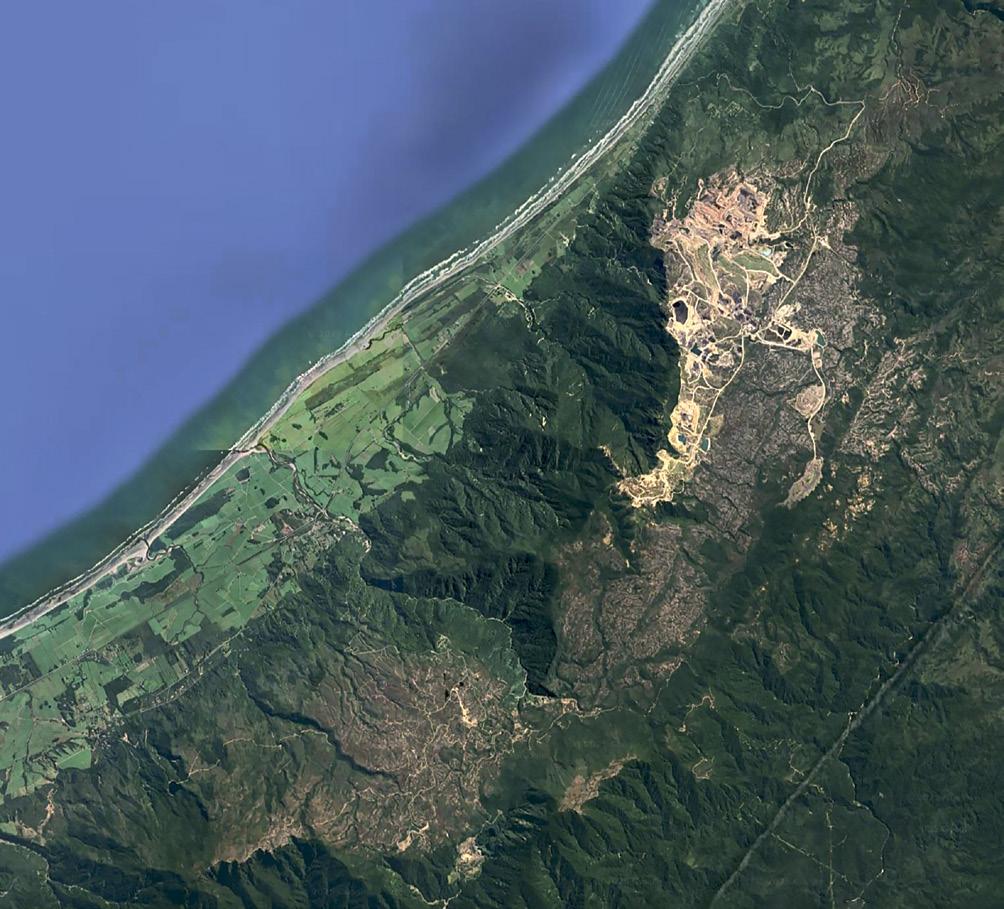
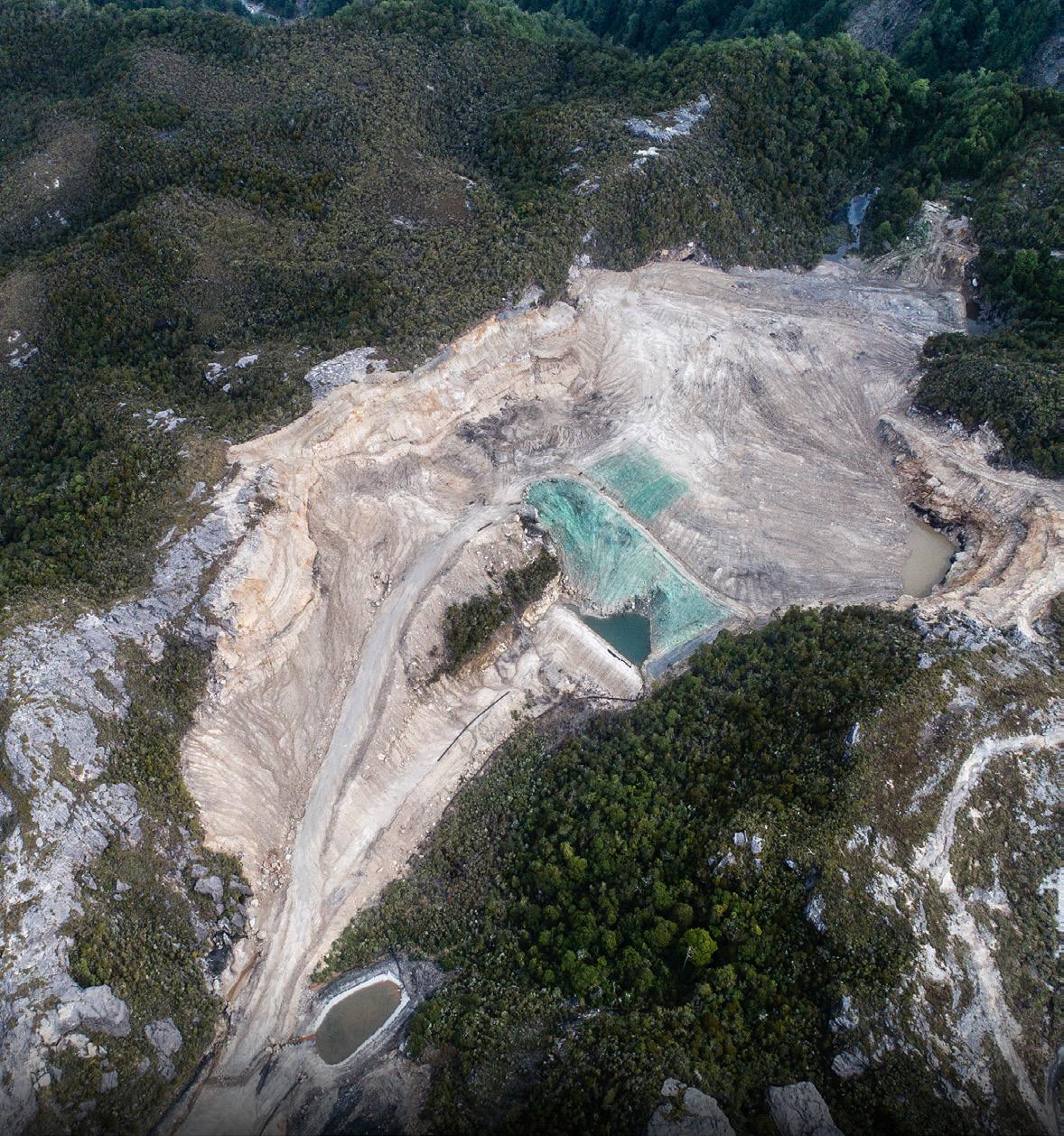
I also saw Bathurst’s Escarpment Mine, a brutal deep excavation of the landscape. The mine closed two years after it was opened and has been mothballed for nearly a decade. The devastation left from open-cast mining is stark, whereas the area’s historic mining of last century was contained underground and did not impact habitat on the surface.
It’s hard to believe we are offering up the Denniston Plateau, a place owned by all New Zealanders, to a majority-foreign-owned mining company. Is the obliteration of this ancient place, the last of its kind, really what “progress” for Aotearoa New Zealand looks like in 2025?
About 80 people travelled to the West Coast from throughout the North and South Islands to attend our hui and field trip – tangible evidence it is not just locals who are worried about this massive fast-track coalmining plan. Our conservation land is a common good,
not a commodity. It certainly shouldn’t be given over to a declining industry, one that is making climate change worse.
The volunteers of Forest & Bird’s West Coast Branch are our brave voices on the ground. We need to get behind them in every way we can to save Denniston. Please give generously to our Denniston fundraising appeal or support them in other ways, such as writing a letter to your local MP. Together, we can be a strong united voice for te taiao nature.
Forest & Bird is determined to protect this wild beautiful place from being destroyed by coal mining. There are several other fast-track proposals in the pipeline that, if approved, will trash the environment. We can and must do better as a country that prides itself on its clean green image.
I want to take this opportunity to thank outgoing Board members Chris Barker, Bruce Clarkson, Ben Kepes, and James Mackenzie for their dedicated service to Forest & Bird over several years. We welcome new Board members Tim Park, Tui Kaumoana Steedman, Patrick Holmes, and Vicky Robertson, who join us at a critical time for nature and conservation.
Perehitini, Te Reo o te Taiao President, Forest & Bird
Forest & Bird president Kate Graeme reflects on what is special about the Denniston Plateau in this short video: youtube.com/watch?v=YUbVxdL8dms
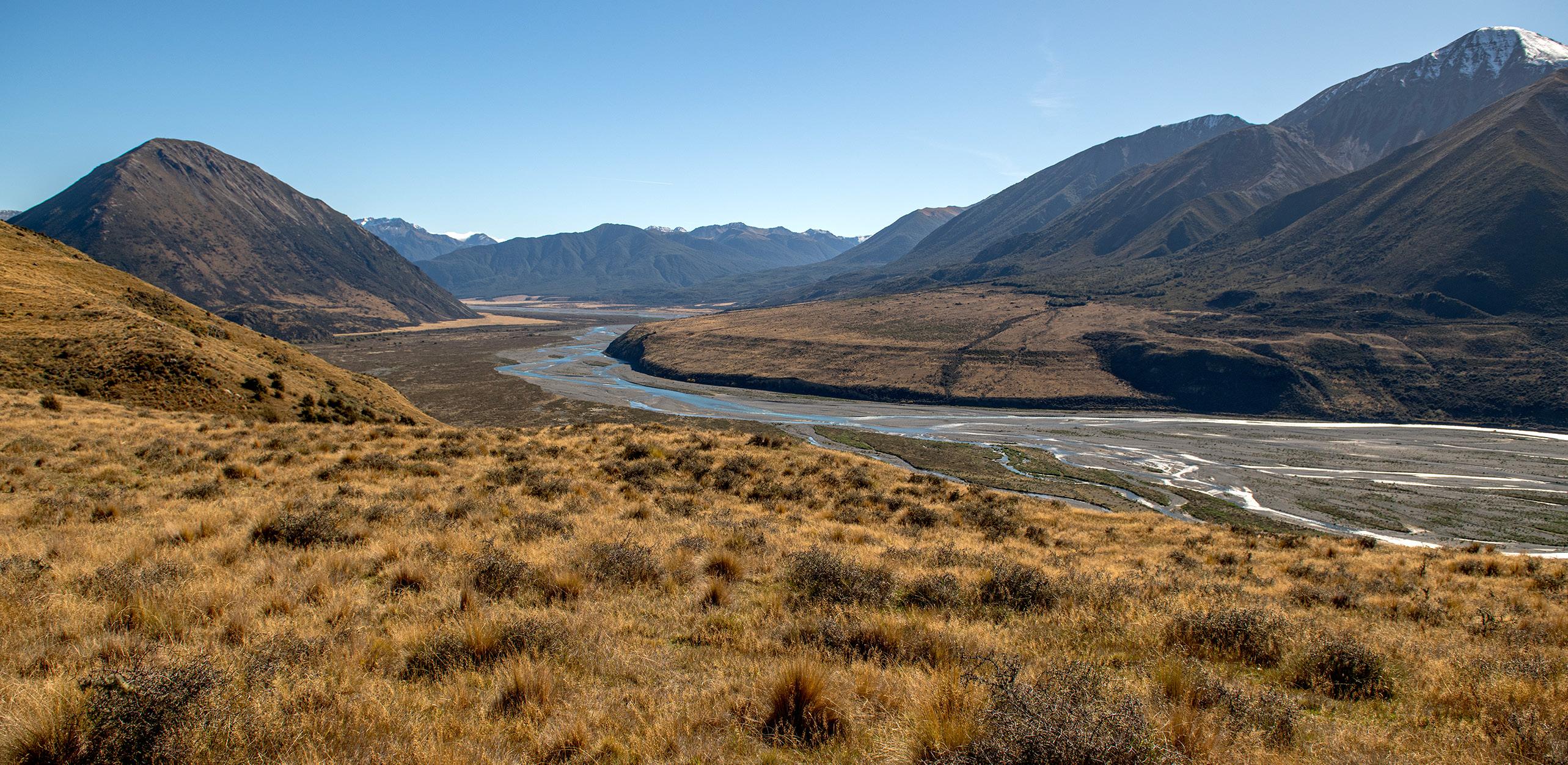
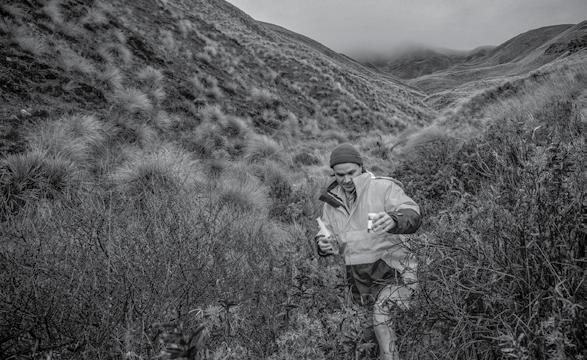
Denniston Plateau. Scott Burnett
DISCOVER NATURE’S WILDEST PLACES
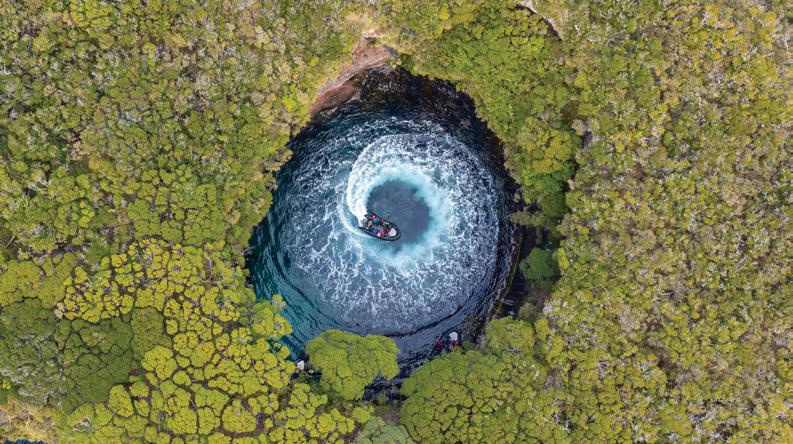
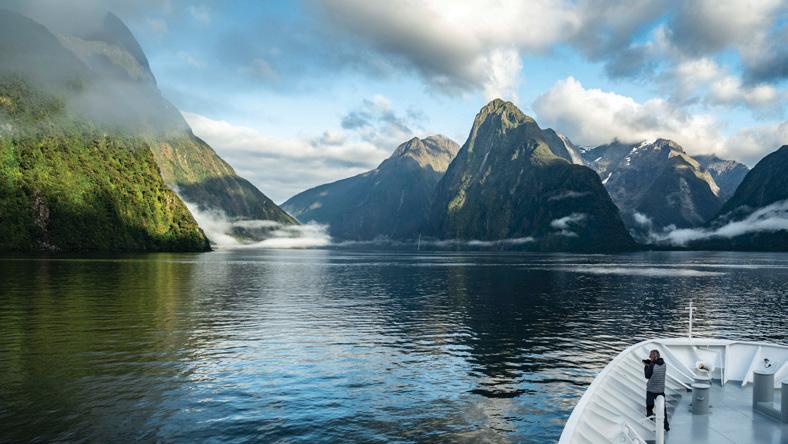
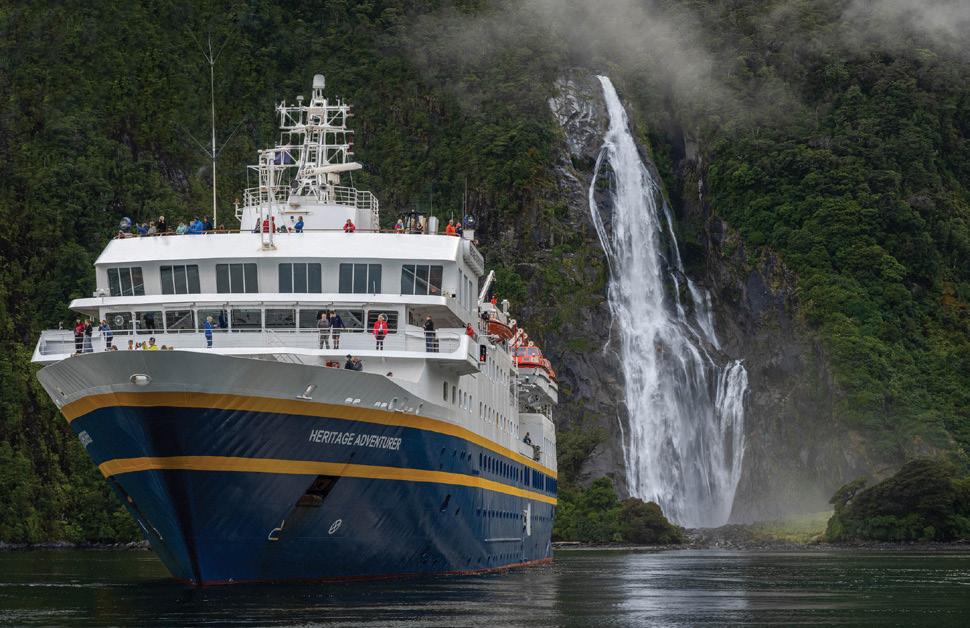
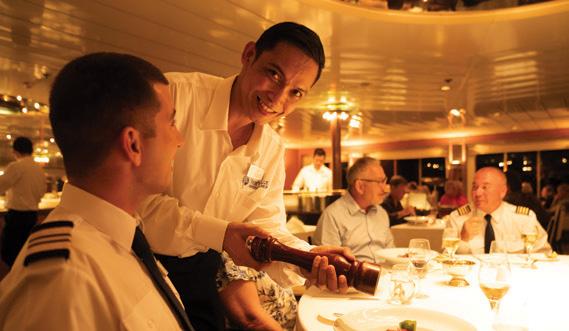
Join Heritage Expeditions, New Zealand’s only family-owned and operated smallship expedition cruise company and benefit from our more than 35-year’s experience exploring the Subantarctic Islands. Discover the wild and remote incredible wildlife havens of the Subantarctic Snares, Auckland and Campbell Islands and explore the untamed wilderness of Fiordland’s ice-carved mountains, forests and fiords, and Stewart and Ulva Islands aboard our luxurious, 140-guest expedition flagship Heritage Adventurer.
LETTERS
YOUR FEEDBACK
Forest & Bird welcomes your thoughts on conservation topics. Please email letters up to 200 words, with your name, home address, and phone number, to editor@ forestandbird.org.nz, or by post to the Editor, Forest & Bird magazine, 205 Victoria Street, Wellington 6011, by 1 November 2025. We don’t always have space to publish all letters or use them in full. Opinions expressed on the Letters page are not necessarily those of Forest & Bird.
NO FENCES NEEDED
WRITE AND WIN
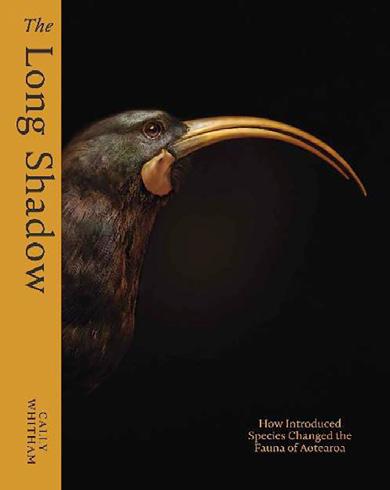
The best letter contribution for our summer issue will receive a copy of The Long Shadow: How introduced species changed the fauna of Aotearoa by Cally Whitman (Bateman Books, RRP $89.99). A powerful visual and historical exploration of the animals and birds that settlers brought to this land – and the consequences of their arrival.
throughout the Auckland region, and further into the Far North. In 2015, when a new supermarket was built in Whangaparaoa, the 13 trees planted in the carpark were all privets, highlighting the lack of knowledge about this species being a pest. Last summer, we passed through Ranui and Swanson and were horrified by the invasion of privet in townships so close to the Waitākere Ranges. I believe these invasive trees must be eradicated before it’s too late, as it has become almost impossible to control in some parts of Australia and the US.
Dave Douché, Whangaparāoa
NEW COAL MINES
Bathurst Mining, in the article “No New Coal Mines” (Winter issue) is largely Singapore owned. According to Google, Singapore is decreasing its use of coal and is working towards phasing it out. They’re not building any new coal-fired power plants. Good on them! Why then is Singapore supporting coal mining in New Zealand to the tune of 20 million tonnes over 25 years via fast-track legislation? I’m horrified. It will surely ruin our beautiful country. How can we stop this?
BEST LETTER WINNER
The claim that the only possible means of preventing species extinction on mainland Aotearoa is through large fenced sanctuaries (Winter 2025) is unduly pessimistic. The Predator Free 2050 vision is becoming a reality in Wellington, most likely the world’s only capital city where biodiversity is increasing. Stoats, weasels, and rats have been removed from the Miramar Peninsula (possums are long gone), and native birdlife populations and invertebrates, including wētā, skinks, and geckos, are booming. Large swathes of the city, including Mt Victoria and the suburbs from the CBD to Island Bay, are also becoming free of the deadliest predators. Birds spilling over from the famed Zealandia sanctuary are finding safe places to breed and thrive. Further to the southwest at Terawhiti, abutting Cook Strait, kiwi have been reintroduced to the wild and are breeding across the project’s 24,000ha network, further proof of concept that, with dedicated pest management and local government and community support, our revered birdlife can thrive in urban-adjacent areas. Other areas throughout the country, notably on Banks Peninsula and south Westland, are achieving similar success. Tūī, kākā, kererū, pīwakawaka, and kārearea are becoming common sights in Wellington city. With continued dedicated support, they don’t need fences.
Tim Pankhurst, Chair, Predator Free Wellington
PRIVET PESTS
I believe one of the biggest threats to our native forest is the increasing encroachment of tree privet Ligustrum ludicium and Chinese privet Ligustrum simese. These hardy, invasive pest trees outgrow and outcompete our slower-growing native trees, eventually taking over. It is hard to detect unless in flower due to its dark green leaves blending with our native forest, and the seeds are quickly and easily spread by birds over a wide area. My wife and I first saw privet invading bush in Whakatāne in summer 2015. Since then, we’ve noticed it in the rural areas of the Waikato, where it is used for hedges,
Heather McGuire, Waikato
HOPE FOR NATURE
I’ve finished reading a news article about the plight of the hoiho yellow-eyed penguin after 17 fishing-industryrelated deaths in the past five years and facing starvation as fish stocks decline, as much related to climate change as depleted fish stocks. This is another sad blow to our wildlife at a time when our flora and fauna seem to be completely under siege, both marine and land based. Degradation sanctioned, not only from a coalition government hell-bent on removing protections that the Department of Conservation has spent decades supporting (stewardship land is just one example) but also from mining corporations, developers, and fishing interests that the government is bending over backwards to prioritise ahead of our precious and fragile,
intergenerationally important natural environments. The only consolation I found was in the pages of Forest & Bird’s latest magazine, where it profiles so many of its vital and valuable initiatives, where the organisation takes
Suzi Phillips,
COUNTING OUR BIRDS
I was just reading your article in the Winter Forest & Bird and noted that many people were counting birds in their gardens and sending that information to you. We are most fortunate to live in gorgeous Lake Ōkareka in Rotorua and have many fabulous bird species that visit us regularly, including many tūī who enjoy our birdfeeders. Thank you for your wonderful work.
Elsie Truter, Rotorua
BOOK GIVEAWAY
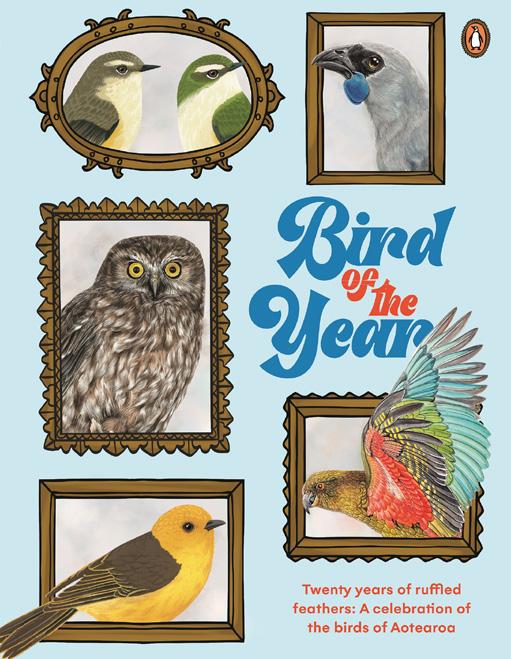
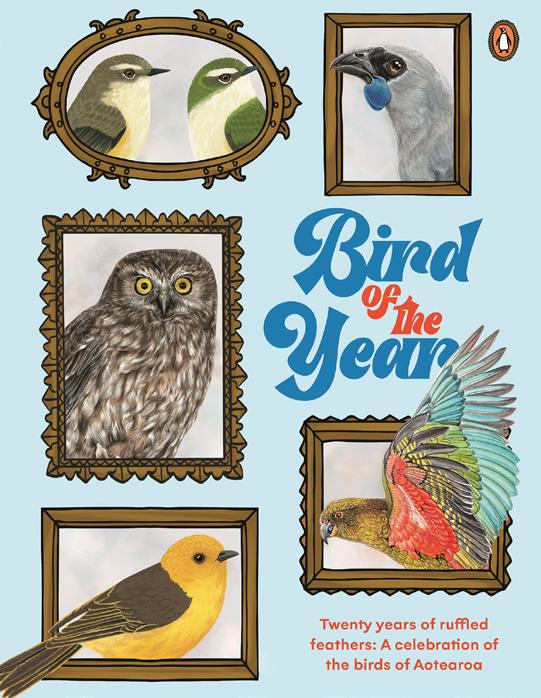
We have two copies of Bird of the Year: Twenty years of ruffled feathers, a celebration of the birds of Aotearoa (Penguin Random House New Zealand, RRP $45) to give away. This richly illustrated tribute to Aotearoa’s native birds, and why we love them, will warm your heart.
To enter, email your entry to draw@forestandbird. org.nz, put BIRD in the subject line, and include your name and address in the email. Or write your name and address on the back of an envelope and post to BIRD draw, Forest & Bird, PO Box 631, Wellington 6140. Entries close 1 November 2025
The lucky winners of Aotearoa Light by Peter Laurenson were David Thomas, of Auckland, and Alex Wearing, of Dunedin.
NATURE NEWS
FLAP-TASTIC FUN
Two decades of ruffled feathers, Bird of the Year turns 20.
Bird of the Year 2025 is shaping up to be bigger than a moa as we celebrate two decades of ruffled feathers, scandalous campaigns, and iconic manu.
Polls open on 15 September and close on 28 September, with the 2025 champion announced on Monday 29 September.
This year, the voting system has been tweaked to make it easier to take part. Voters can still choose up to five birds, but there’s no ranking. Each manu receives one point and needs as many individual votes as possible to win.
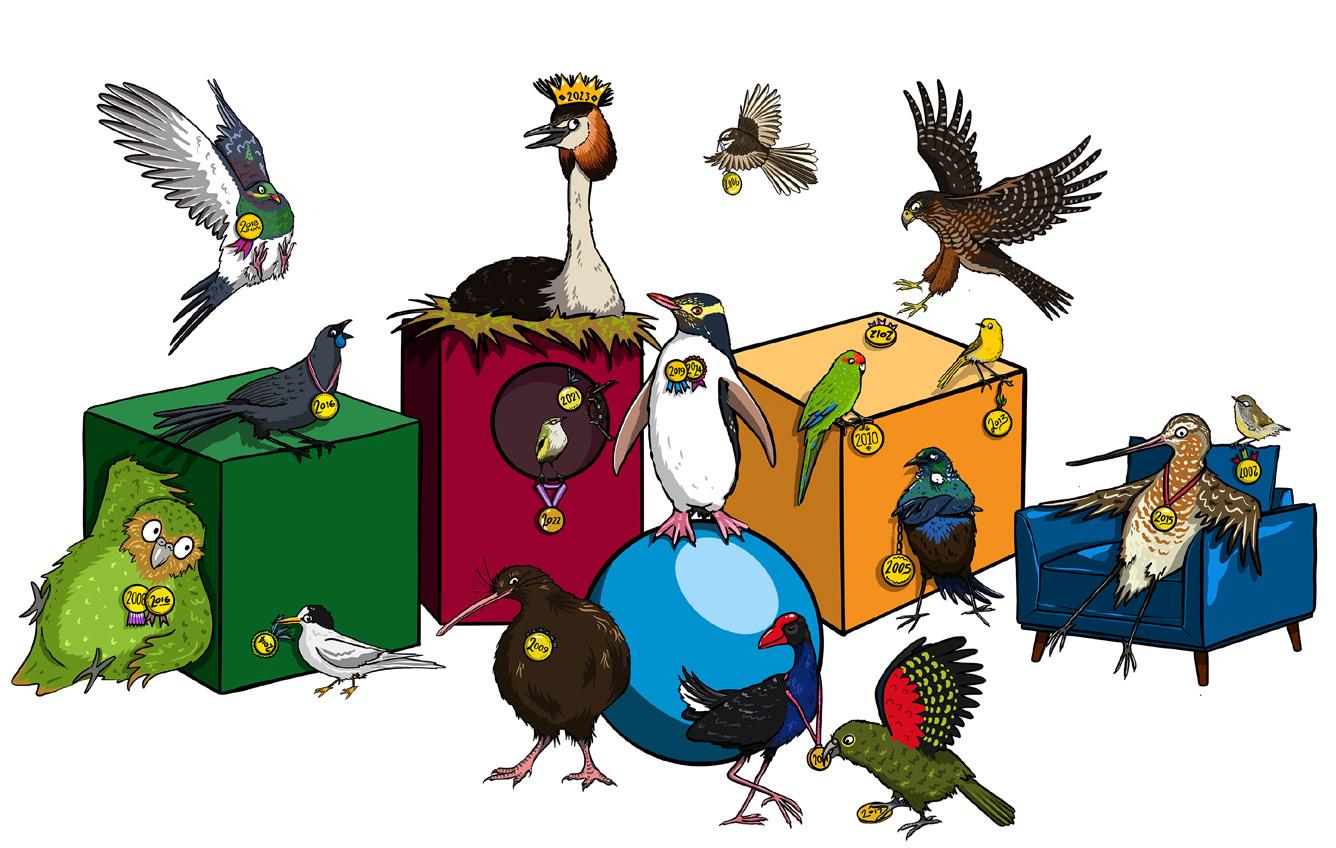
This year marks Bird of the Year’s 20th birthday. From a simple newsletter poll in 2005, with tūī crowned the winner, the competition has grown, captured the public’s imagination, and been replicated around the world.
There have been many memorable moments, from viral memes and voting scandals to the outrage caused by a native bat winning “Bird of the Year”.
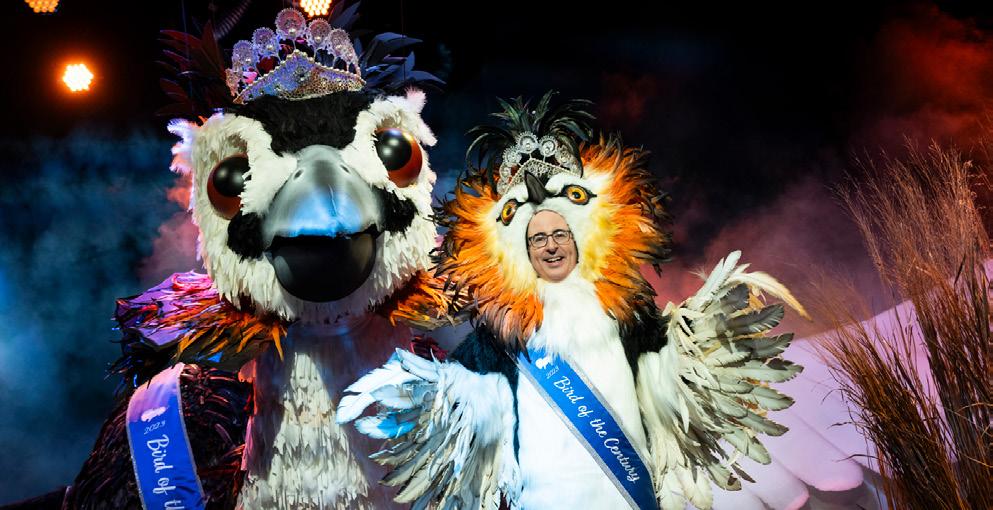
Then American TV host John Oliver took Bird of the Century global in 2023, securing a win for the previously obscure pūteketeke Australasian crested grebe.
Of course, Bird of the Year isn’t just about who looks cutest in a crown. It also connects people to wildlife and inspires action – from backyard trapping to conservation careers.
“Throughout its 20-year history, Bird of the Year has been a highlight of the conservation calendar,” said Forest & Bird chief executive Nicola Toki.
“It sparks thousands of conversations about conservation and helps get more eyes on our endangered manu, including some of the lesser known but still extremely lovable species.
“I encourage people to pick an ‘underbird’ this year and help raise awareness for them. Maybe this year, we will have a brand new champion.”
For this year’s 20th competition, the team has dreamed up some “peck-tacular” new ways to celebrate New Zealand’s birds.
Lovers of Wordle won’t want to miss the launch of Birdle NZ, created in partnership with Raining Rock Studio. The popular word puzzle has been a hit around the world, and now Aotearoa has its own birdy version – check it out at https://birdle.nz
Meanwhile, fans of Lego are snapping up our pīwakawaka, kākāpō, pekapeka, and tūī brick kits, created in partnership with Mike Murray (@bricks.by.mike_).
We’re making it easier for school kids to vote and also encouraging office workers to have some feathered fun with a Bird of the Year workplace kit full of avianthemed resources. If you live in Auckland, look out for a Metalbird scavenger hunt popping up in Ponsonby.
Once the competition ends, there’ll be a new Metalbird sculpture featuring the winner and the launch of Blunt’s marine-bird-themed umbrella – along with a few other surprises to be revealed.
But first we need a winner. Who will be the 20th Bird of the Year? Will a new species join the class of champions? We can’t wait to find out.
Ruffled Feathers, a celebration of New Zealand’s birds, see page 30. For a sneak peek of the Blunt umbrella design, see page 47.
To buy a limited edition Lego brick bird or bat, head over to https://shop.forestandbird.org.nz/
Class of champions
Lily Duval
Pīwakawaka brick kit. Mike Murray
Inaugural winner, tūī, Forest & Bird 2005.
John Oliver backs pūteketeke for Bird of the Century. HBO
Bringing you closer to the wild.
Reconnect with whānau, nature and extraordinary wildlife at Auckland Zoo.
Te Pā Hono – a place of connection.
Auckland Zoo tickets
NATURE NEWS
CONSERVATION AT CROSSROADS AROWHENUA BUSH PROTECTED FOREVER
The government’s proposed rollback of nearly 40 years of conservation land protection has been criticised by environmental groups, including Forest & Bird.
In August, Prime Minister Christopher Luxon and Conservation Minister Tama Potaka announced at the National Party Conference they would be “unleashing economic growth on one third of New Zealand’s land”.
“First, we’re going to fix the Conservation Act to unleash a fresh wave of concessions – like tourism, agriculture, and infrastructure, in locations where that makes sense,” said Mr Luxon.
“At the same time, sites that are truly special to New Zealanders should be protected, so we are giving DOC more support by introducing a charge for foreign visitors to access high volume sites.”
The government plans to make five million hectares of public conservation land (60%) available for exchange or disposal if deemed “surplus” or to “support other government priorities”.
“This is not conservation reform, it’s conservation retreat,” said Nicola Toki, Forest & Bird’s chief executive. “It risks turning the Department of Conservation into a land-use manager rather than a protector of nature.
“The government is attempting to quietly offload our conservation land, without a mandate, without public consultation, and without any signal before the general election that this was on the agenda.”
Last year, the government released its Modernising Conservation Land Management consultation. Forest & Bird made a detailed submission and encouraged our supporters to do the same.
The proposals included removing important checks and balances in the conservation system, including reducing the decision-making powers of the New Zealand Conservation Authority and conservation boards, and concentrating power in the hands of the Minister.
“These reforms represent the most significant weakening of conservation law in a generation,” added Nicola. “They shift the focus from protection to exploitation, dismantling the very purpose of our national parks and conservation lands.”
The government is also fast-tracking environmentally damaging developments, which could lead to new mines on conservation land (see page 12), and proposing to allow trophy deer hunting in national parks (see page 43).
Help save conservation land. Use this quick letter-writing tool to ask political parties to keep conservation land safe for future generations –see forestandbird.org.nz/save-conservation-land.
Plans are underway to build a pest exclusion fence to protect Forest & Bird’s newest bush reserve from invasive deer, wallabies, and pigs.
This October marks half a century since South Canterbury Branch member Fraser Ross, 91, first set foot on Arowhenua Bush. It looked like a battlefield, he recalled, as a huge 1975 storm had knocked over many of its mature trees.
With permission of the then landowners, the Lyon family of Arowhenua Station, Fraser started collecting seeds from the remnant bush, propagating them, and planting them back out in the bush.
Over time, Fraser’s mahi turned into a five-decade labour of love and an important restoration project for the branch, supported by other volunteers in the community.
Forest & Bird bought the land in 2022 after Fraser and another South Canterbury Branch member Robert Birks made significant gifts towards the cost of the land, together with two other donors who asked to remain anonymous.
Juvenile kakī Te Manahuna Mackenzie Basin.
Liz Brown/DOC
Arowhenua Bush Ash Ronald
Fraser Ross
Today, thanks to their legacy, Arowhenua Bush is the last remnant of tall podocarp forest on the lower plains of South Canterbury and filled with regenerating kahikatea, mataī, houhere, manatu, and kōwhai.
In a huge milestone, Forest & Bird signed a covenant with the QEII National Trust in August to permanently protect Arowhenua Bush from development.
The next step will be to protect the forest from invasive browsing mammals. This work will start in the summer, thanks to funding from the QEII National Trust and member Robert Birks.
“Building a pest exclusion fence will be the next milestone in five decades of awesome people power and collaboration,” said Forest & Bird’s chief executive Nicola Toki.
SAVE OUR SEAS
Oceans and Fisheries Minister Shane Jones has announced worrying plans to reform the Fisheries Act later this year, rolling back a decade of important progress towards ecosystem-based management in New Zealand.
Changes include withholding video footage gathered from cameras on fishing trawlers, which means it can’t be requested under the Official Information Act by environmental groups such as Forest & Bird.
We fought hard over the past eight years to persuade previous governments to put cameras on boats to verify bycatch deaths of seabirds, corals, Hector’s dolphins, and other marine mammals.
The footage captured by these cameras plays a vital role in ensuring transparency in an industry that often operates out of public view.
The government also intends to change the law on how the minister makes catch limit decisions – prioritising social, cultural, and economic factors rather than sound science. This effectively reverses a landmark ruling, in 2023, when the Court of Appeal sent a strong message that the government must put sustainability before commercial interests when setting limits. Forest & Bird secured this legal win for our oceans after challenging a former Fisheries Minister’s decisions on tarakihi catch limits.
The government also plans to allow quota holders to carry over their catch limits from one year to the next, allowing them to take more seafood even in low abundance years.
Forest & Bird believes the government’s amendments to the Fisheries Act 1996 represent a step backwards for sustainability.
“We are incredibly concerned that the proposed changes would be damaging to our marine ecosystems and wildlife,” said Chelsea McGaw, Forest & Bird’s marine spokesperson.
“These policies will lead to an increasing likelihood of fish discards and wastage, putting stock sustainability at risk.
“It would also prioritise the use of unvalidated, self-reported catch data, which can be skewed to maintain existing fishing limits.”
Forest & Bird will be fighting to protect our oceans when the Fisheries Act Amendment Bill is introduced into Parliament later in the year. We hope you will join us in making a submission on the Bill.
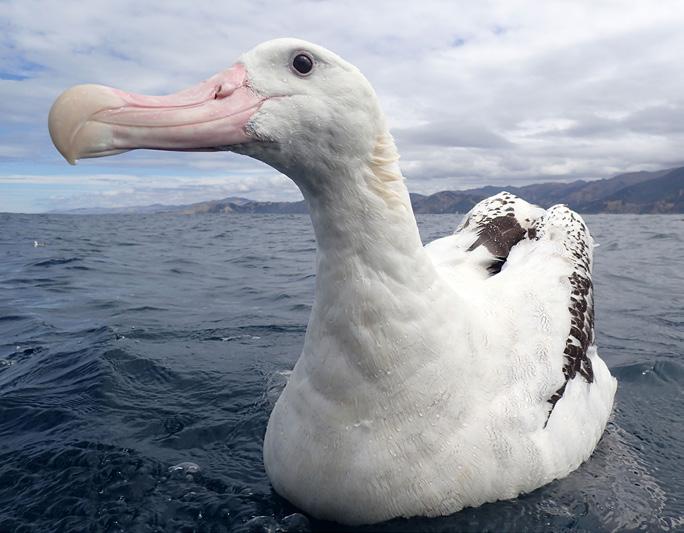
Antipodean albatross John Oates
Hoki trawler NIWA
From left, South Canterbury Branch member Ines Stäger and Nicola Toki with Jamie Pearson and Max Crowe, of QEII National Trust. Forest & Bird
NATURE NEWS
KCC GIFT PACK
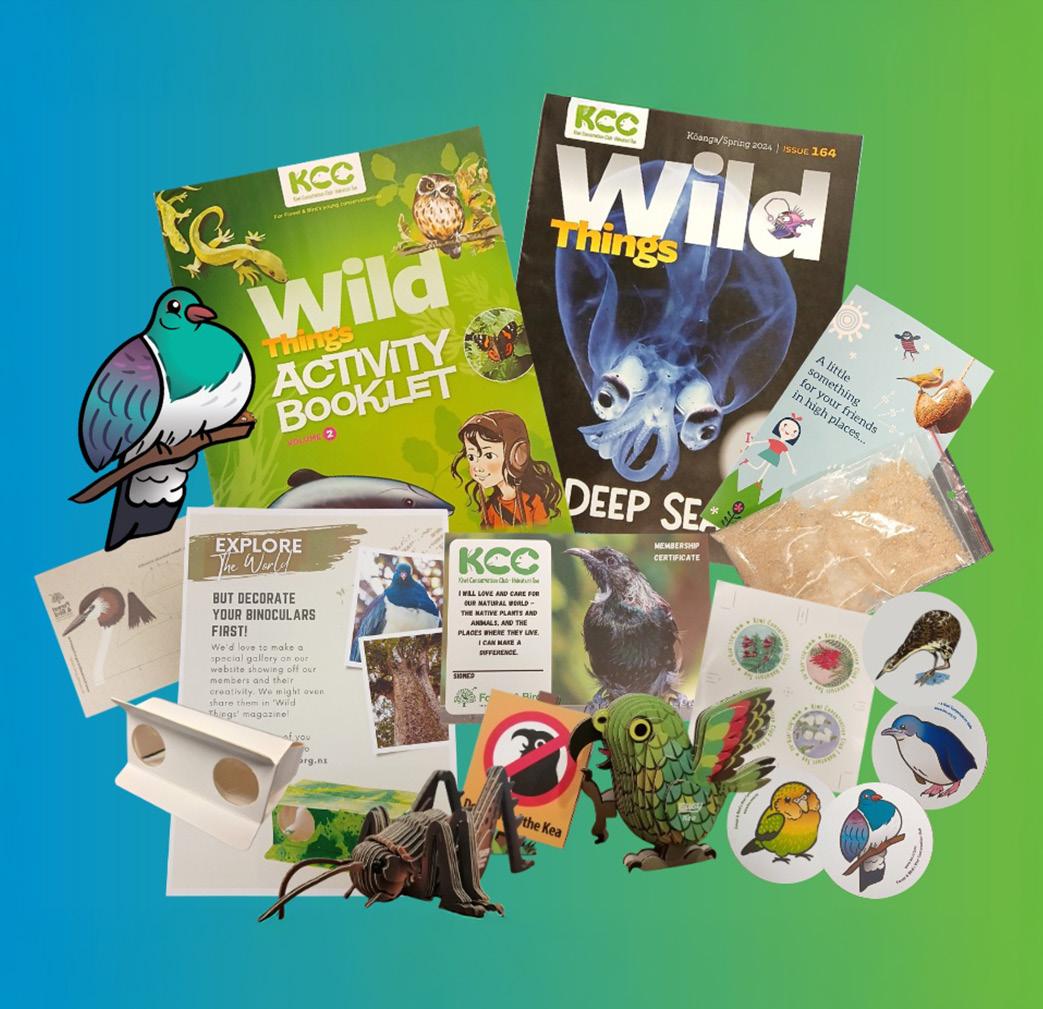
Looking for a meaningful gift that inspires a love of nature in young children? Our Hakuturi Toa Kiwi Conservation Club crew has put together a fabulous Christmas gift pack that includes an annual membership (RRP $24), plus a bundle of nature-themed goodies perfect for tamariki aged 5 to 13 years.
The festive pack aims to spark curiosity and care for the environment. It costs $50, including tracked postage (New Zealand addresses only).
KCC members receive a quarterly Wild Things magazine, access to a wide range of fun nature adventures run by our volunteers, challenges, competitions, craft projects, and other benefits.
“Children benefit so much from engaging with the outdoor environment and nature,” said KCC manager Sarah Satterthwaite.
“Our Christmas packs give recipients a year’s KCC membership and lots of ways to use their hands, voice, and eyes to help protect the natural taonga in their backyard.”
KCC Christmas Packs go on sale from 24 October 2025. See KCC’s website kcc.org.nz for more details.
RMA REFORM
Forest & Bird is sounding the alarm over the government’s sweeping changes to the Resource Management Act (RMA), warning that the reforms could undermine decades of progress in protecting Aotearoa’s natural environment.
The three-phase reform programme began with the repeal of the previous government’s resource management laws in late 2023. Phase 2 is now underway and includes the controversial Fast-track Approvals Act, changes to national direction, and amendments to the RMA itself.
one cardboard model (wētā or kea), a window decal to prevent birdstrike, pocket binoculars, nectar powder for a bird feeder, wildlife stickers, and more.
Forest & Bird made a submission in July 2025 opposing the proposed changes to national direction, which we believe ignore clear evidence of freshwater degradation, wetland loss, biodiversity decline, and rising carbon emissions.
“The reforms treat environmental protection as a hurdle to development, rather than a safeguard for ecosystems, communities, and climate resilience,” said Erika Toleman, Forest & Bird’s general counsel.
“Of particular concern is a new amendment to the RMA, which was passed in August, that halts most planning. It also gives the Minister for Resource Management sweeping powers to override district and regional plans if they’re deemed to hinder economic growth. This could lead to the removal of vital environmental protections by ministerial decree.”
Phase 3 of the reform will see the complete replacement of the RMA with two new laws – a Planning Act and a Natural Environment Act – expected to be introduced later this year.
Forest & Bird will be closely scrutinising these proposals to ensure they include strong protections for biodiversity, freshwater, and the natural world.
Given the development-heavy focus of the reforms so far, we remain deeply concerned that nature is being left behind.
Each Christmas pack includes an annual KCC membership, Wild Things magazine, Wild Things activity book,
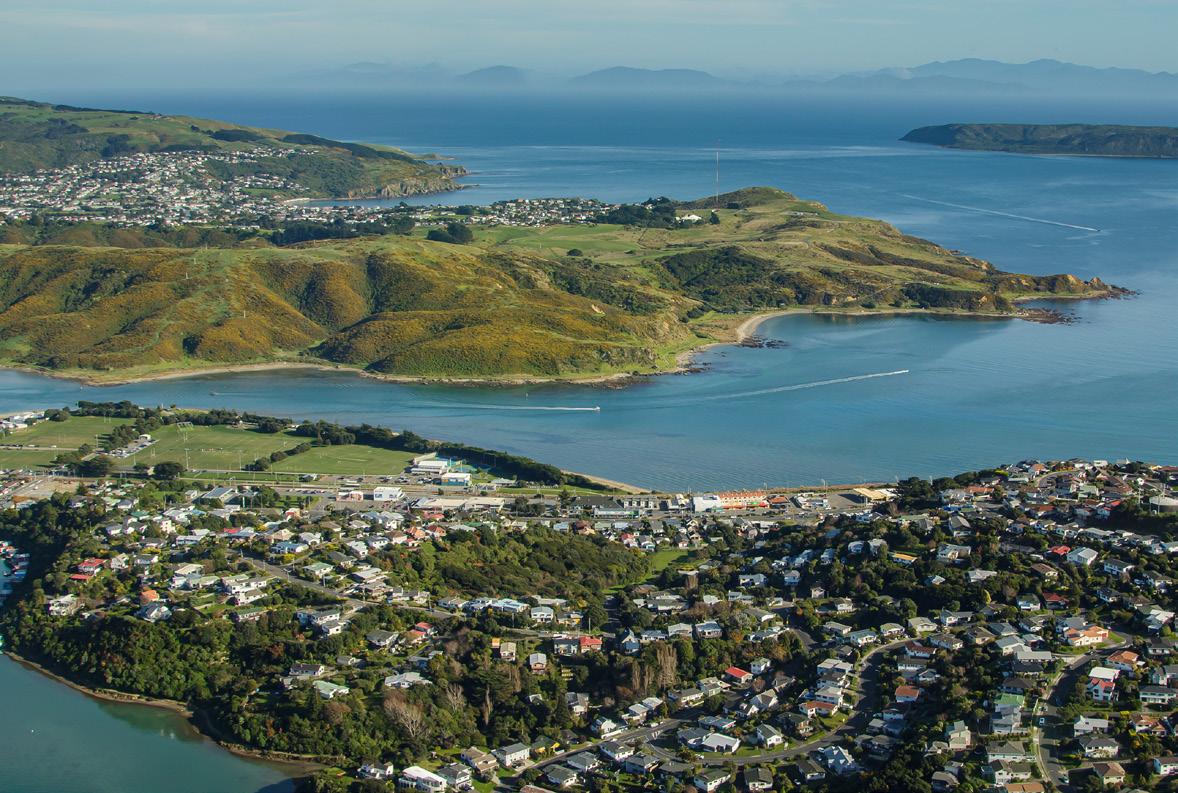
Porirua Harbour, north of Wellington Roger Smith
PEST FREE HIBISCUS COAST: COMMUNITY EFFORT FOR CONSERVATION
One of Forest & Bird’s six national priority projects, Pest Free Hibiscus Coast, spans a vast 3100ha area on the Whangaparāoa Peninsula, from Ōrewa Estuary to Shakespear Open Sanctuary. Across the water lies the renowned bird sanctuary of Tiritiri Matangi Island.
Peninsulas are ideal sites for predator control, and Forest & Bird is working to create a safe haven for native species as they transition from surrounding nature sanctuaries – engaging and inspiring the local community along the way.
Over the past 12 years, the project has grown to include six staff and more than 175 local volunteers. Together, they maintain a network of 3000 traps and bait stations across local parks and large private blocks, targeting rats, stoats, weasels, possums, and hedgehogs.
The team also manages a Backyard Trapping Programme that has engaged 2000 residents.
Forest & Bird chief executive Nicola Toki visited the project recently and joined the Pest Free Hibiscus Coast team in hosting young visitors from Gulf Harbour School.
RECHARGE IN THE WILD
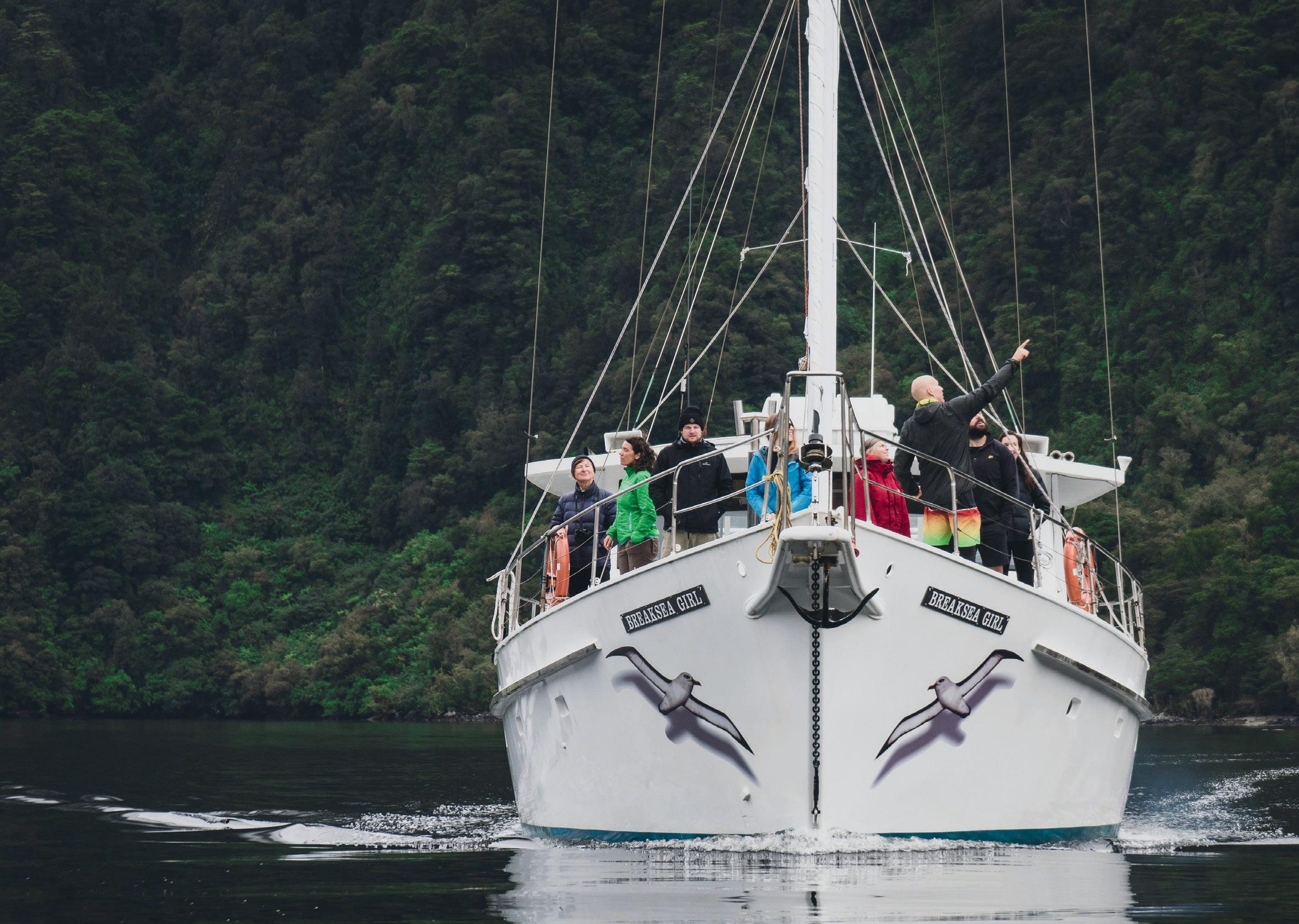
Escape the hustle of modern life and sail into the tranquility on a remote, bespoke adventure into Fiordland. The Breaksea Girl your home in the wild, has all the creature comforts, a small family of expert guides and hosts a collection of multi-day adventures customised to get you closer than ever before.
From hihi stitchbird to kererū and everything in between, Nicola and the 14 students soaked up the sights and sounds of Shakespear Open Sanctuary’s thriving ecosystem. The children also quizzed Nicola on all things conservation, including why she chose to protect endangered species.
“I was a kid who loved nature and then, when I grew up, I became a big kid who still loves nature. I feel really lucky about that,” Nicola told them.
She also caught up with project volunteers, Hibiscus Coast Branch members, and Auckland Council staff, and personally thanked the Hibiscus and Bays Local Board –key funders of the project.
“I’m so grateful to everyone who made the day special for the children, especially the volunteers and our funders who keep this vital mahi going,” added Nicola.
Watch Nicola’s Q&A with Gulf Harbour School pupils at https://bit.ly/3UqTbJB
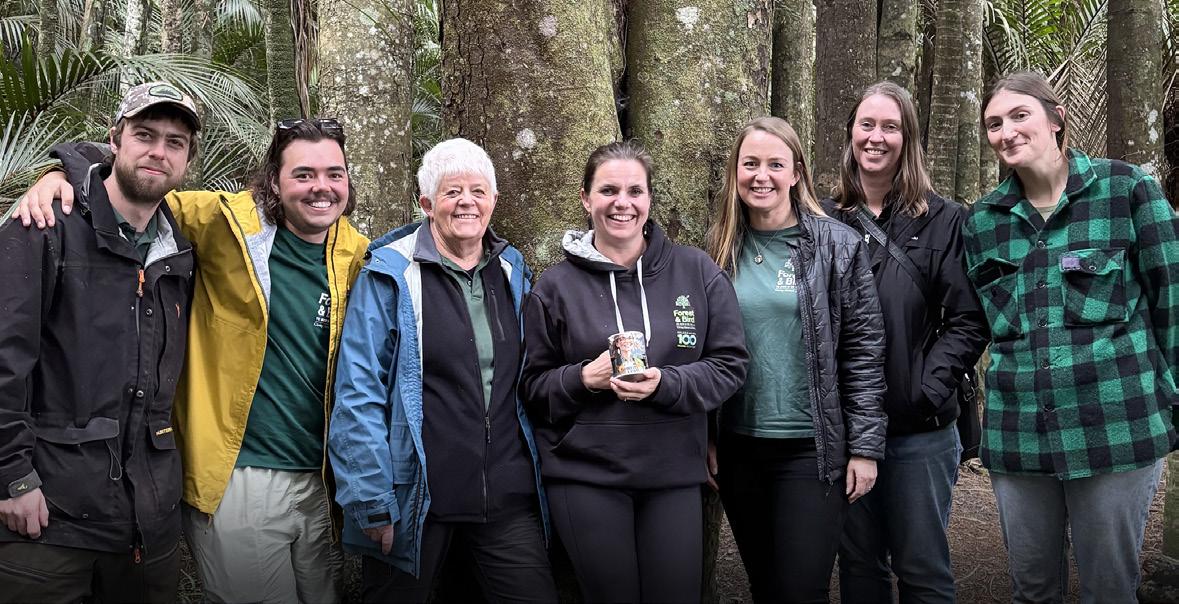
Nicola Toki with Forest & Bird’s Pest Free Hibiscus Coast team. Forest & Bird
SAY NO TO THE MEGA MINE
Forest & Bird is fighting (again) to save Denniston’s ancient landscape, home to plants and animals found nowhere else in the world. This time will be harder as the government has silenced conservation voices with its undemocratic process.
The Denniston Plateau was millions of years in creation with its layers of elevated sandstone pavement, a mosaic of wetlands, and scant soils forming a unique “lost world” ecosystem, home to plants and animals that have evolved to thrive in this challenging landscape.
On this cool, wet, and windy plateau, dwarf forests of rātā and pygmy pine grow low to the ground, while many endemic invertebrates, such as land snails, wētā, and moths, have evolved to be giants.
The microclimate keeps introduced predator numbers low, creating a precious mainland island refuge for many vulnerable range-restricted endemic species, including two kinds of gecko, mātātā South Island fernbird, and roroa great-spotted kiwi.
“Denniston is special. It should be permanently safeguarded as a scientific reserve and given a level of protection similar to that of a national park,” said Scott Burnett, Forest & Bird’s Save Denniston spokesperson.
“Instead Denniston is under imminent threat of destruction, with proposed open-cast coal mining on a vast scale. One of the mines on the plateau would cover an area the size of downtown Auckland or Wellington.
“Once this Gondwana-era landscape has been ripped up by bulldozers, the last of its kind will be gone forever.”
The mine would be built by majority-foreign-owned Bathurst Resources Ltd. Under the Buller Coal Plateau Continuation Project, the company is seeking to:
n Massively expand the mothballed Escarpment Mine
n Build a new coal mine in an untouched area (Mt
Frederick South/Deep Creek)
n Construct a 19.7km coal haulage road, the Upper Waimangaroa Transport Corridor, linking the
new mines with Bathurst’s existing Stockton Mine infrastructure
n Operate the mines for 25 years, digging up 20 million tonnes of coking coal.
Bathurst’s mega-mine is one of the most environmentally damaging of all the projects currently listed for government fast-tracking. It proposes long-term, open-cast coal mining on ecologically invaluable public conservation land, with minimal public consultation.
We’ve been here before, most recently in 2011, when Forest & Bird launched a public campaign and took legal action to try to stop mining taking place at Denniston.
More than 10,000 New Zealanders signed our petition, while branches, staff, and campaign supporters travelled
Open-cast mining would destroy Denniston’s “lost world” landscape, including this view. Neil Silverwood
to Denniston for a bioblitz in 2012 to document the native plants and animals living at Denniston, resulting in the discovery of two new-to-science species.
Forest & Bird’s lawyers defended Denniston at an Environment Court hearing, the largest and costliest legal action the Society had ever undertaken against a well-resourced mining company.
The court ruled in favour of consents to mine but required pest control and land rehabilitation efforts to mitigate the environmental impacts. Conservation Minister Nick Smith subsequently granted the mining company permission to mine conservation land, against his own officials’ advice.
The Escarpment Mine opened in 2014 with the promise of 225 direct jobs and a bright economic future. But only a small amount of coal was dug up before coal prices fell. Two years after it opened, production halted and it hasn’t been mined since.
The mine covers only 1%–2% of the plateau, leaving the vast majority of life on Denniston to carry on thriving as it has for millions of years (see overleaf).
The plateau could be developed into a visitor attraction, a place where people go to walk in the wilderness and learn about New Zealand’s precious biodiversity and fascinating mining heritage. This historic mining took place underground last century and largely left the surface intact.
But that is not the kind of future Bathurst Resources has in mind. To access the coal deep underground, Bathurst must obliterate the sandstone pavements and irrevocably destroy the plateau’s fragile ecosystem.
The company is expected to seek consents for its Buller Coal Plateau Continuation Project this spring, using the government’s Fast-Track Approvals Act.
Designed to streamline development, at the expense of public participation, the highly controversial legislation inherently favours economic arguments over robust environmental protection.
There is a real risk that the voices of the local community and environmental groups, including Forest & Bird, will not be able to be heard.
Forest & Bird will be seeking the opportunity to provide comments on the proposal.
“We trust that the panel appointed to consider the miner’s plans will agree that Forest & Bird should be consulted on this,” added Scott.
“We think that the environmental impacts of the Buller Coal Plateau project are so significant that consent for the mines should be declined.”
VOICES OF DENNISTON
Listen to West Coast local Terry Sumner and others talk about why Denniston is special at https://bit.ly/4lxpRft.
Back the fight to
DENNISTON SAVE
The window to save the Denniston Plateau from being obliterated by coal mining is fast closing. There is still time – but we can’t do it without you.
Your support will help Forest & Bird defend Denniston, so we can act fast and fight on multiple fronts, including:
n Campaign and advocacy work
n Legal avenues
n Engaging expert legal witnesses
n Seeking its protection as a scientific reserve.
Together, we can stop this mega-mine going ahead. Your gift will play a critically important role in the battle to protect Denniston and other damaging fast-track projects. Please give today at www.forestandbird.org.nz/support-us/appeals.
TE KUHA UPDATE
The huge amount of expertise and knowledge gathered for our Denniston Environment Court case in 2012 helped Forest & Bird win another long-running legal fight at nearby Te Kuha, home to pristine oldgrowth forest as complex as the tall forests of the Heaphy Valley.
Thanks to your generous donations, our lawyers defended Te Kuha in the Supreme Court in 2019 and won! Together, we stopped an open-cast mine being built at Te Kuha, which lies at the southern end of the same towering escarpment as Denniston and Stockton.
Five years later, Stevenson Mining is still trying to get consent for its Te Kuha project. But in a recent win for nature, its application to join the fast-track approval process was knocked back by the government. This may not be the end of the story, but – for now –Te Kuha is safe.
LIFE ON THE PLATEAU ☛ New Zealand experts help us understand the landscape, plants, and animals that make Denniston too precious to lose.
Terry Summer
PLANT LIFE ON THE PLATEAU
Harsh conditions on the Denniston Plateau have given rise to an elfin world of tiny trees, wetland tussocks, and fascinating
Rated by DOC’s own scientists as one of the top 50 most ecologically valuable sites on mainland New Zealand, Denniston is a unique “lost world” of botanical as well as animal treasures.
Since its formation, millions of years of weathering have left a nationally outstanding ecosystem of unusual geological formations, elevated wetlands, and bare sandstone pavements with scant pockets of soil for vegetation to gain a foothold.
At more than 600m above the coastal plains, Denniston Plateau is often windswept, frequently foggy, and freezing during winter. The environment encourages plants to hunker down and hug the ground out of the elements. Here, plant life is dwarfed and ancient, largely safe from browsing mammals and introduced predators.
Sir Alan Mark, Emeritus Professor in Botany at the University of Otago, says the unusual combination of geology, soil chemistry, and microclimate has combined to create a globally rare mosaic of wetland and upland plant communities.
Sir Alan, who successfully fought to Save Manapōuri in the 1970s, believes Denniston should be reclassified and protected as scientific reserve.
“I think that would be an appropriate category. Its scientific values aren’t questioned,” he said.
“On its own, Denniston would be too small to rank seriously for world heritage status, but together with Kahurangi the wider area would really qualify as a World Heritage Area.”
Giving evidence for Forest & Bird in the case against the Escarpment Mine, south of Denniston, in 2012, Sir Alan told commissioners the plateau was internationally significant.
lichens Lynley Hargreaves
“There were many unique features, and I felt that it was very special in the context of New Zealand biodiversity,” he said.
“The gradation from grassland to shrubland to coniferous podocarp forest was better represented there than anywhere else in New Zealand.”
Sir Alan points to the rare and fragile ecosystems of the plateau, particularly the special Chionochloa juncea plateau-tussock wetland. This distinctive high-altitude wetland is named for the endemic tall north Westland snow tussock that dominates much of the landscape.
The plateau supports biodiverse podocarp-beech forests in more sheltered areas and a remarkable range of wetland and grassland plant species.
On the exposed sandstone erosion pavements, trees that are forest giants in other places, such as southern rātā, only grow tens of centimetres high, despite great age. Likewise mānuka, which usually grows to three to four metres, is lucky to reach ankle height in more exposed areas of the plateau.
Dr David Glenny, of Manaaki Whenua Landcare Research, found nationally threatened and nationally critical liverworts on the Denniston and Stockton plateaux. Some have tiny areas of habitat measuring just
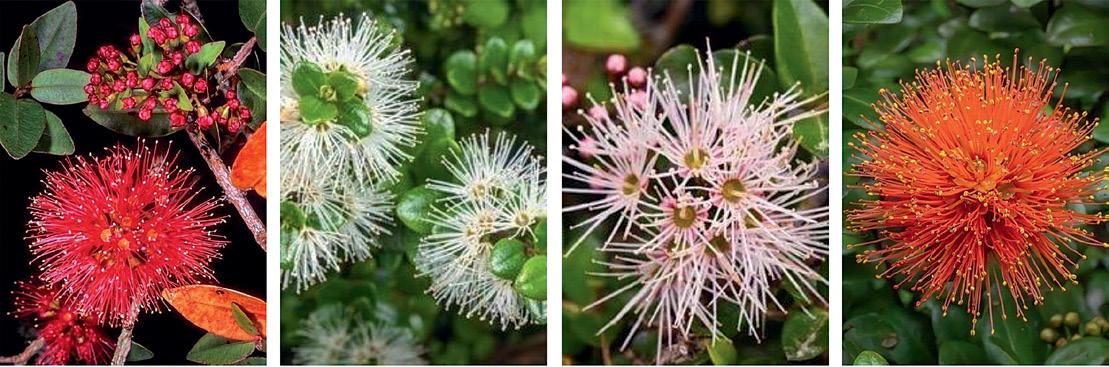
Denniston’s forest pockets contain a high diversity of vulnerable plants, including a great variety of rātā species. From left 1 Parkinson’s rātā (Metrosideros parkinsonii), 2 Small white climbing rātā (M. perforate) 3 White climbing rātā (Akakura M. diffusa) 4 Orange climbing rātā (M. fulgens) Rod Morris
Southern rātā, Denniston Plateau. Rod Morris
Sir Alan Mark
tens of centimetres, making them vulnerable to any kind of mining disturbance. Other endemic plants that thrive in this mainland sanctuary include eyebright, pixie hat moss, and silky fan fern.
In 2013, despite the strength of the ecological case, the Environment Court allowed the Escarpment Mine to go ahead. That finely balanced decision, Sir Alan said, was swayed in part by comments from the then Minister of Conservation Nick Smith, who downplayed the site’s value on the basis that it was “stewardship land”.
“I really hold Nick Smith responsible for that outcome and the failure of Forest & Bird’s excellent submission on the values of Denniston,” added Sir Alan.
It was an example of government ministers misunderstanding the ecological value of stewardship land.
LOVE OUR LICHENS
Denniston’s harsh environment – wet, nutrient poor, and exposed – creates the perfect niche for an often-overlooked group.
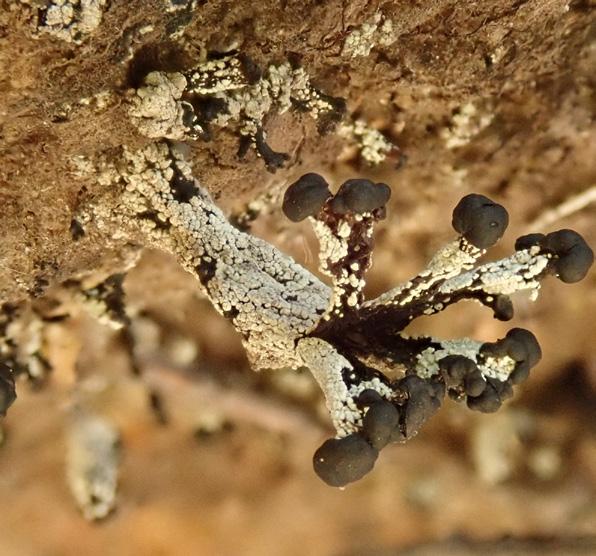
Ecologist Dr Melissa Hutchison recalls her first sighting at Denniston of Pycnothelia caliginosa, a nationally endangered lichen, which looks a bit like a black and white multi-headed hydra.
It was growing on a pedestal of soil, with a layer of clay over peat and a capping of sandstone rock on top, a very specific habitat requirement.
“It occurs in a naturally uncommon ecosystem and has a really narrow niche,” said Melissa, who was the first to share an observation of the species on iNaturalist.
Another threatened species, the gritty peat pelt lichen, Austropeltum glareosum, tends to prefer saturated peaty soil mixed with grit that’s eroded off the rock.
Once the bulldozers move in, it will be almost impossible to recreate the complex habitats these lichens need to survive.
“As soon as you change any of the conditions, these lichens won’t occur there. That’s why the whole idea of
Richard
Stewardship land is managed by DOC to protect its natural and historic values, pending assessment of its natural values and reclassification or disposal.
Much of this publicly owned land was allocated to the Department of Conservation when it was formed in 1987. It includes former State forest and Crown land considered to have conservation value.
Forest & Bird wants to see the Denniston Plateau reclassified from stewardship land to scientific reserve, which would protect it from mining.
restoring the habitat is a fallacy,” said Melissa.
“If you look at the land rehabilitation, they’re effectively smoothing everything out, leading to homogenisation of the habitat, where only common species with a broader ecological tolerance can survive.
“You’re replacing a diverse and unusual suite of lichens with common and widespread species.”
New Zealand is a global lichen hotspot – with 10% of the world’s lichen flora occurring in only about 0.18% of Earth’s land area. Up to 10 new species are being added to our national species list every year.
“They are so weird and diverse and striking. They’re often bright colours as well,” said Melissa.
“They’re an important part of the whole ecosystem. They provide food and habitat for other species, with complex interactions that we don’t even know about.”
There are about 56 lichen species found at Denniston, including several threatened species.
More than half of the country’s roughly 2300 known lichen species are classified as “data deficient”, which means scientists know little or nothing about their distribution, population trends, or conservation status.
One example is Pertusaria dennistonensis, a lichen that appears to be endemic to the Denniston and Stockton Plateaux but has barely been seen since it was first found and described.
“New Zealand lichenology is still very understudied. I’d say 10% of our lichens have only ever been seen once,” added Melissa.
“If the mining goes ahead, we could be losing species that we don’t even know are there.”
LIFE ON THE PLATEAU Giant invertebrates ☛ see overleaf
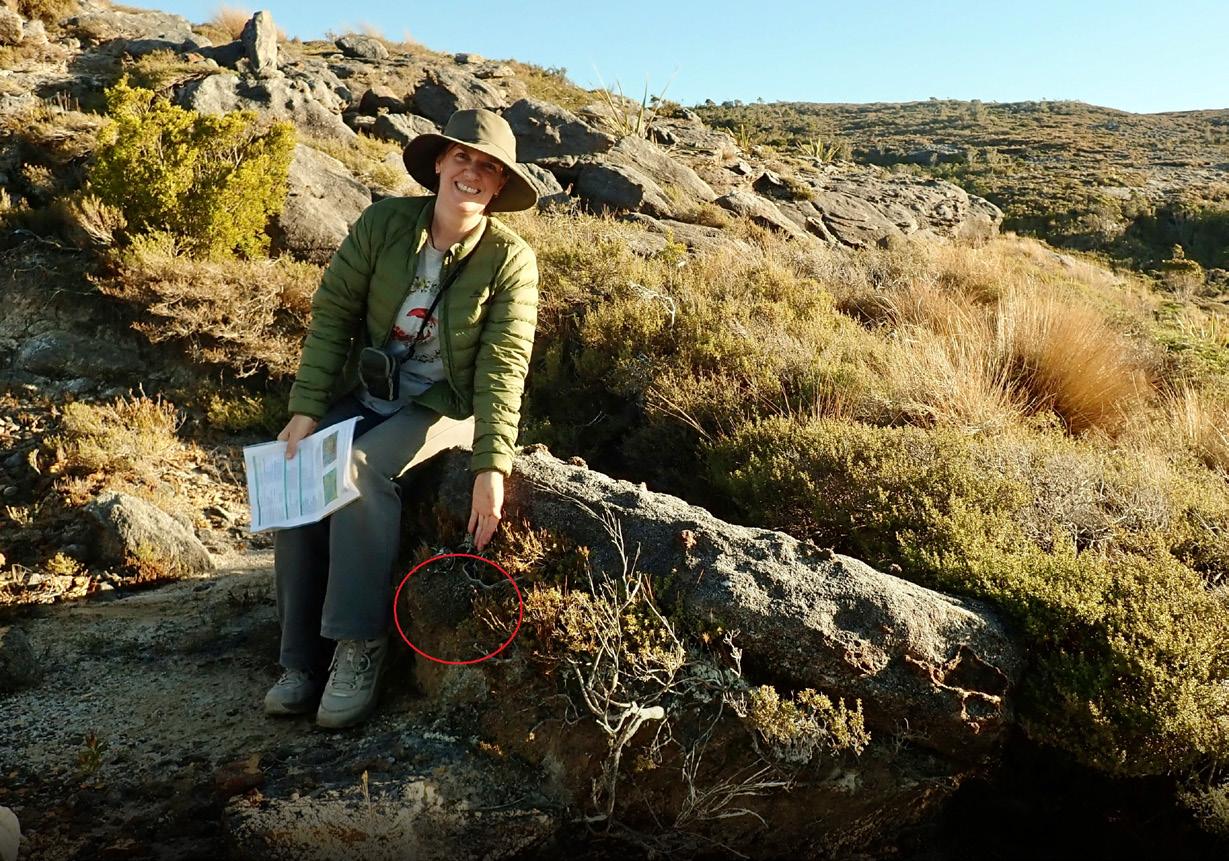
Dr Melissa Hutchison points to the area she found
Pycnothelia caliginosa on Denniston, with snow tussock behind Supplied
Pycnothelia caliginosa
Melissa Hutchison
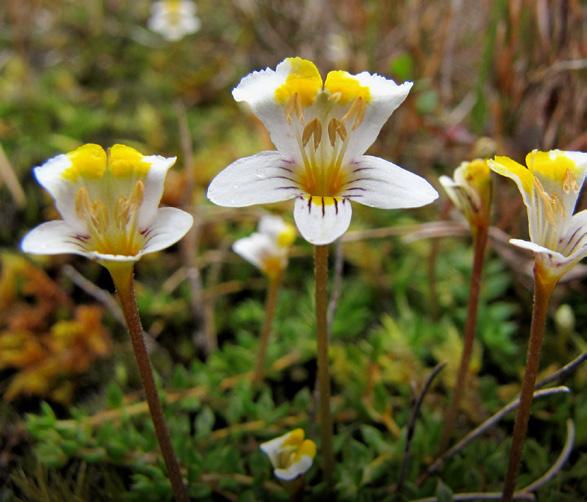
Eyebright Euphrasia wettsteiniana, Denniston
Harry Lurling/iNaturalist
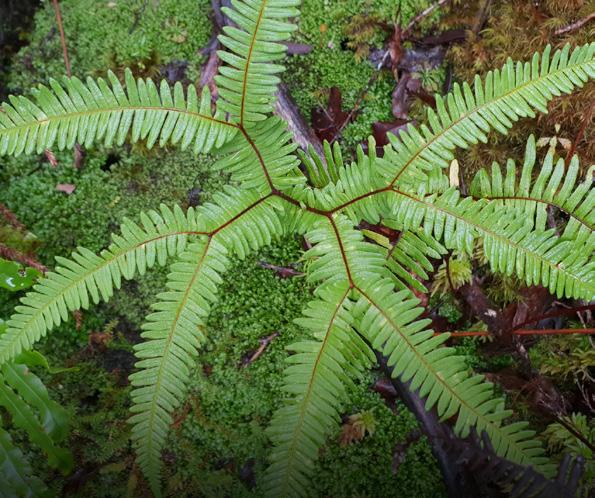
Silky fan fern (Sticherus tener) is found on Denniston’s coal measure.
Nicol/iNaturalist
LAND OF GIANT INSECTS
Mining threatens the future of two recently discovered wētā and moth species, part of the rich fabric of life on the Denniston Plateau
Caroline Wood
Steve Trewick recalls the day he first spotted a small dark-coloured tokoriro cave wētā with striking white flame markings on its head.
The Professor of Evolutionary Ecology at Massey University was taking part in Forest & Bird’s Denniston 2012 bioblitz.
He had discovered something special, which turned out to be a whole new genus of New Zealand tokoriro cave wētā.
“Given the area’s historic mining, it was quite unexpected to find a new species and extraordinary to discover a whole new genus up there,” said Steve. “It just goes to show how important it is to look.”
Steve is an international expert on Aotearoa New Zealand’s endemic wētā and has discovered several new species in his career. The wētā was formally described last year and named Occultastella morgana or the white-headed tokoriro.
“The first find of Occultastella, which means hidden star, was from coal seam soils in remnant native scrub just down from the Denniston Plateau, and it was probably also up on top,” added Steve.
“Subsequently, we found other specimens in the Kahurangi and near Lake Rotoiti, St Arnaud. This animal has been seen so rarely that we cannot be sure about range but almost certainly just the north-west corner of the South Island.”
The fact that scientists are still finding new invertebrate species at Denniston, including a whole new genus of wētā, adds weight to the case for the plateau to be protected.
“Mining should not be allowed on this conservation land,” said Steve. “The recent moves to put economic gains above the environment and biodiversity are
abhorrent, narrow minded, and will provide only limited short-term benefits.
“Stockton has already been devastated, and Denniston should not be allowed to go the same way.”
Steve supports Forest & Bird’s campaign to protect Denniston as a scientific reserve, the highest form of landscape protection in Aotearoa.
“Yes, that would be justified as an area where elevation, rock strata, orientation, and proximity to one of the country’s biodiversity hotspots,” he said.
Other interesting wētā species found at Denniston include Crux heggi, which was also described in 2024, and the the green moss wētā Maotoweta virescens.
“The little green maotowētā are in the area,” said Steve. “At least one undescribed species is in the vicinity of Denniston.”
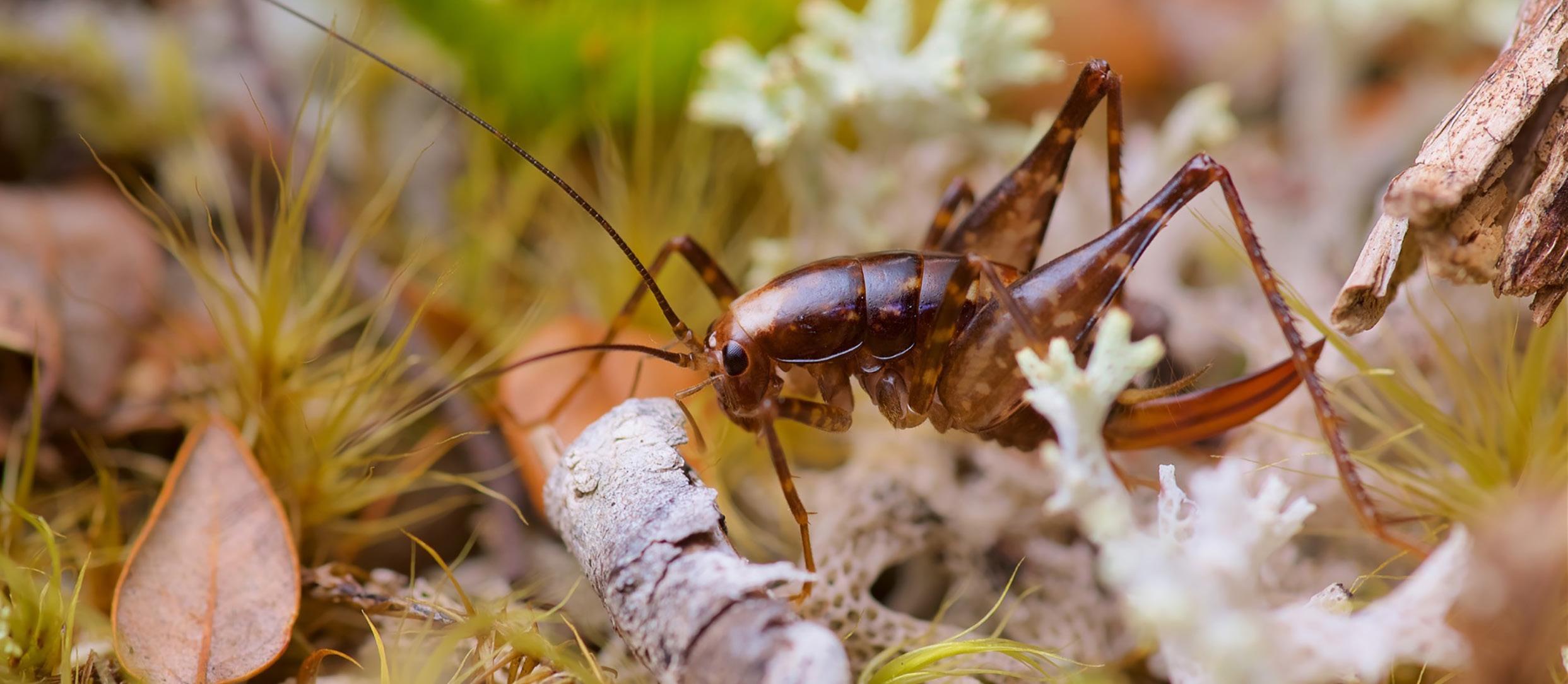
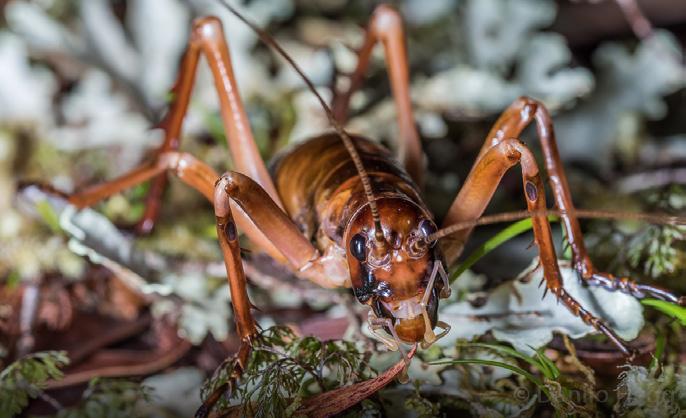
Denniston is also home to the West Coast bush wētā Hemideina broughi, which was seen in stunted trees on the edge of the plateau during the 2012 bioblitz.
“This is a big species only found on the West Coast that probably takes several years to mature, so population recovery is likely to be slow if its habitat is disturbed,” added Steve.
“Strip mining, such as that seen on the nearby plateau, is always going to be devastating for ecological communities and species.
“That said, if the impacted area is not too big and there is intact habitat nearby, small invertebrates are amazingly resilient.”
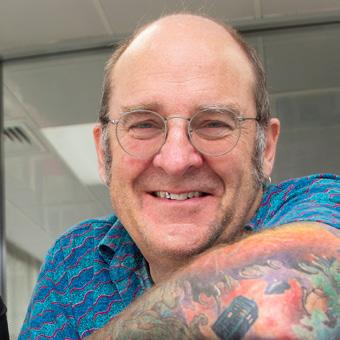
Prof. Steve Trewick
Wikimedia
White-headed tokoriro cave wētā Occultastella morgana discovered at Denniston. Andy MacDonald/iNaturalist
West Coast bush wētā. Danilo Hegg
AROHA FOR
AVATAR
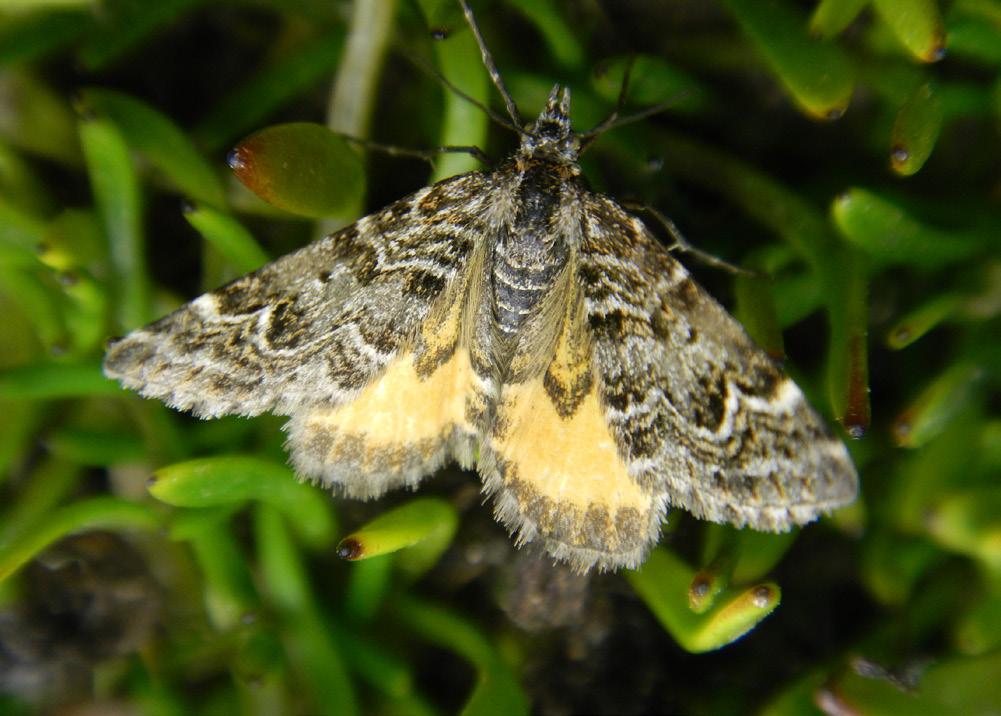
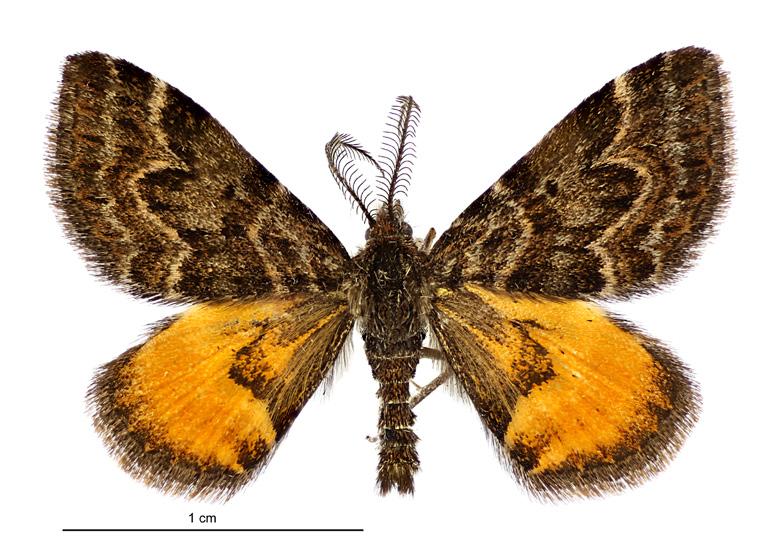
The expert who discovered the Avatar moth on the Denniston Plateau is warning the species could be wiped out if open-cast mining is allowed. Lynley Hargreaves
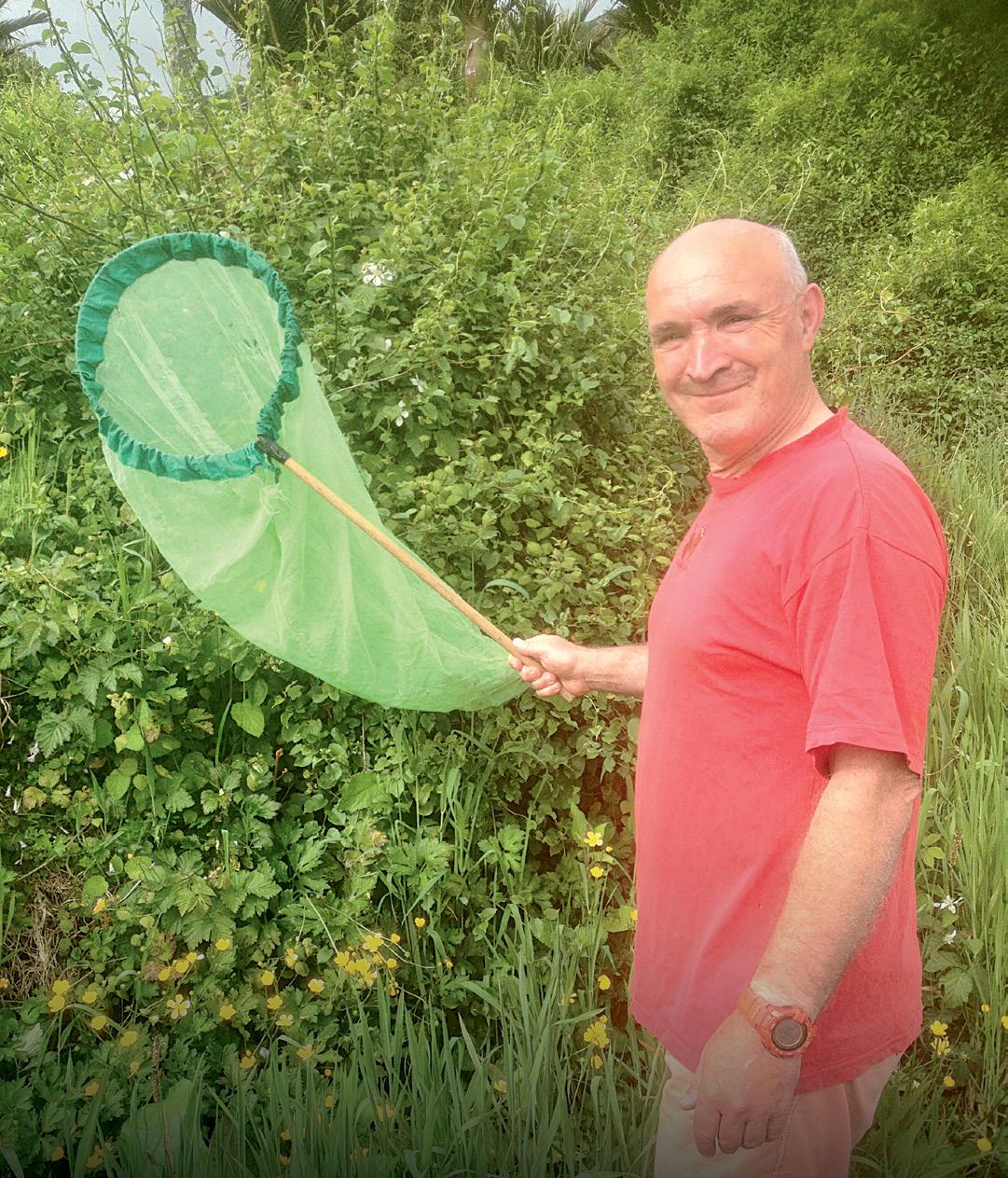
Brian Patrick and his son Hamish Patrick were holding their nets aloft as they moved swiftly across the Denniston Plateau chasing butterflies in the sunshine.
The pair had volunteered to take part in Forest & Bird’s 2012 bioblitz and were there to survey Denniston’s Lepidoptera, including pepe pouri forest ringlet.
“I knew right away it was a new species,” said Brian, of the day-flying moth they captured that day.
The moth lived in a damp herbfield on Denniston’s wetland fringes. It was diurnal – active by day.
Brian, who is a leading New Zealand ecologist, entomologist, and lepidopterist, sought the public’s help in naming the new species.
He chose Avatar (Arctesthes avatar) after the eponymous 2009 movie. It tells the story of a humanled megacorp attempting to colonise and pillage Pandora, home to the indigenous Na’vi, for its natural resources.
Entomologist Brian Patrick with his butterfly net in 2015. Supplied Denniston Plateau,” said Brian. “Not only is it pretty, day-flying, and locally abundant, it’s also only found there.
“I’ve checked many places in the South Island since 2012 and found it at seven sites on the Denniston Plateau but nowhere else.
“It’s endemic to that environment. If the mining goes ahead, the Avatar moth will absolutely become extinct. We destroy the plateau, we lose it.”
With nearly 2000 species, Aotearoa is incredibly important in the world of moths and butterflies. We also have a very high rate of endemism, species found nowhere else on Earth.
“The Avatar moth is a wonderful part of that genetic biodiversity and a vital part of the wider ecosystem at Denniston,” said Brian.
The species belongs to the Geometridae family – a group of moths closely related to butterflies, named for the distinctive “looping” gait of their caterpillars.
“Moths and butterflies exist on a continuum of evolution from primitive ghost moths, which have no feeding tube because they evolved before flowering plants, to the most advanced butterflies,” explained Brian.
“The Avatar moth sits closer to the butterfly end of that scale – and helps tell the story of that evolutionary journey.”
Forest & Bird’s bioblitz took place over a single weekend, and moths can be so cryptic it’s likely that Denniston still holds secrets.
“The Avatar moth is a wonderful celebration of the magnificent biodiversity of the
“That weekend barely scratched the surface,” said Brian. “If we did a proper year-long survey on the plateau, we’d almost certainly find other new species of moths and butterflies. But to do that, we first need to protect what’s left.”
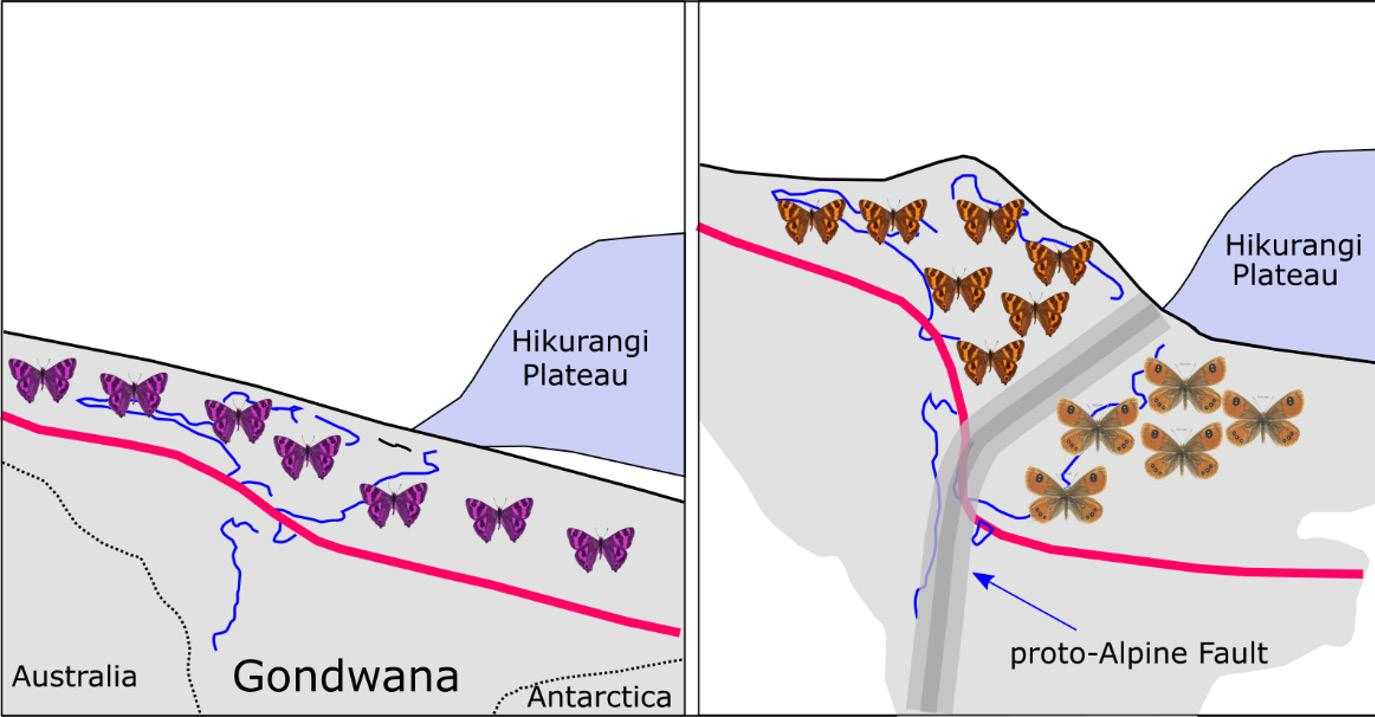
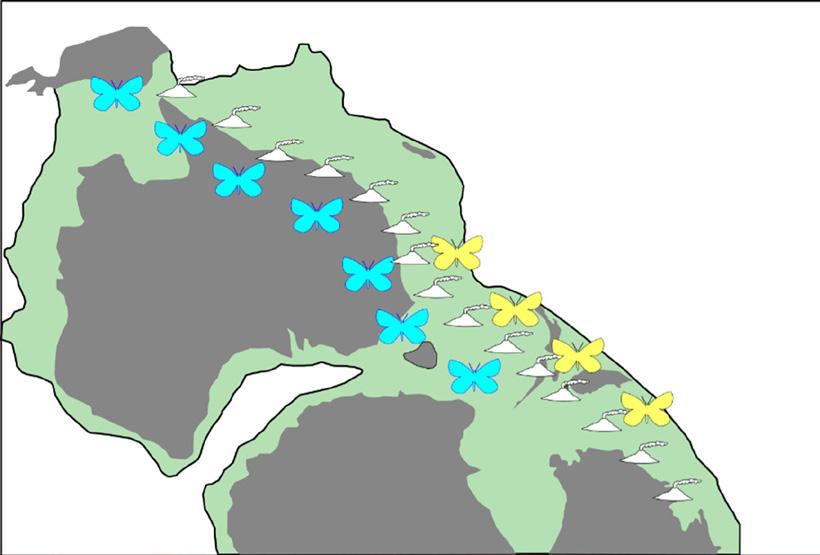
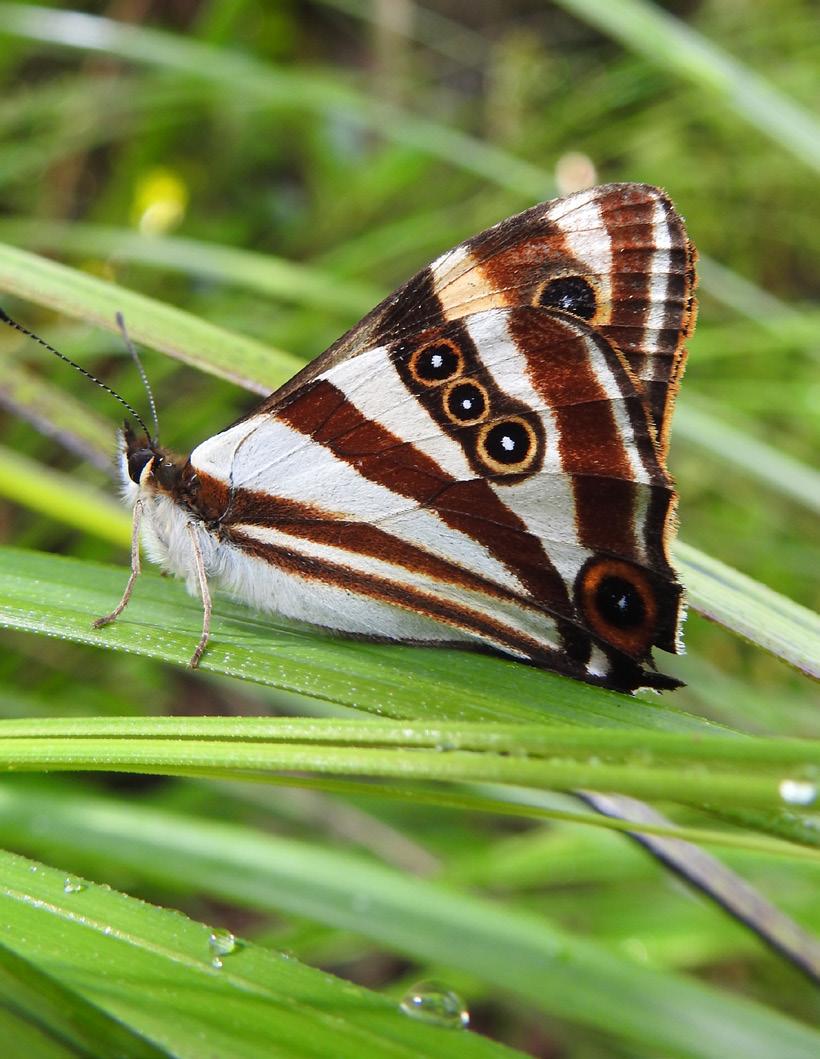
Denniston’s forest ringlet in the time of dinosaurs –see page 44.
The pretty day-flying Avatar moth. Brian Patrick
Avatar moth. Brian Patrick
LAND OF LIZARDS
Denniston is home to a threatened population of West Coast green gecko and a unique striped forest gecko. What will happen to them if mining gets the go ahead?
Caroline Wood
Life on Denniston’s exposed sandstone erosion pavements, a naturally rare ecosystem, can be harsh for lizards – and the scientists who study them.
It may be cold, damp, and windy, but there’s no other place quite like it for Dr Marieke Lettink, one of Aotearoa New Zealand’s most experienced herpetologists.
Marieke describes the sub-alpine Denniston Plateau as a “living laboratory” for lizard research. It hosts a large and healthy population of West Coast green geckos – and the only known population of striped forest geckos in Aotearoa.
New Zealand’s geckos and skinks usually need much higher levels of pest control than endangered native birds, but predator-proof fences are not needed at Denniston.
“The plateau is naturally grim for most predators, including cats, stoats, rats, and mice,” said Marieke. “So it’s a safe haven for lizards and other animals, including our giant Powelliphanta land snails.”
“There are not many places like this in Aotearoa, where it’s possible to find such good numbers of cryptic geckos.
“Denniston is like a lost world, where nature has done all the work to protect them.”
More than 90% of our 125 native lizard species are struggling elsewhere on the mainland because of predation, including by mice. But Denniston is different.
“DOC has to run their tracking tunnels for three weeks instead of the standard one fine night to get any meaningful tracking data for mice. I don’t know of any other place like that,” added Marieke.
“The geckos still need to keep an eye out for mice, but if they do come across one they can hide in rock gaps and crevices the width of a finger.”
Marieke, who runs the ecological consultancy Fauna Finders, has carried out extensive lizard work throughout the South Island and loves the West Coast.
“I would love for Denniston to be a protected scientific reserve. It’s ecologically extremely valuable and a haven for West Coast green gecko and forest geckos,” she said.
Denniston’s slow-growing stunted forests are home to one of the two largest-known populations of moko kākāriki West Coast green gecko in the country. The species is classified as being nationally vulnerable.
“Green geckos normally live in trees and shrubs. At Denniston, you can find them in woody vegetation just four inches tall,” said Marieke. “They have adapted perfectly well to this environment.
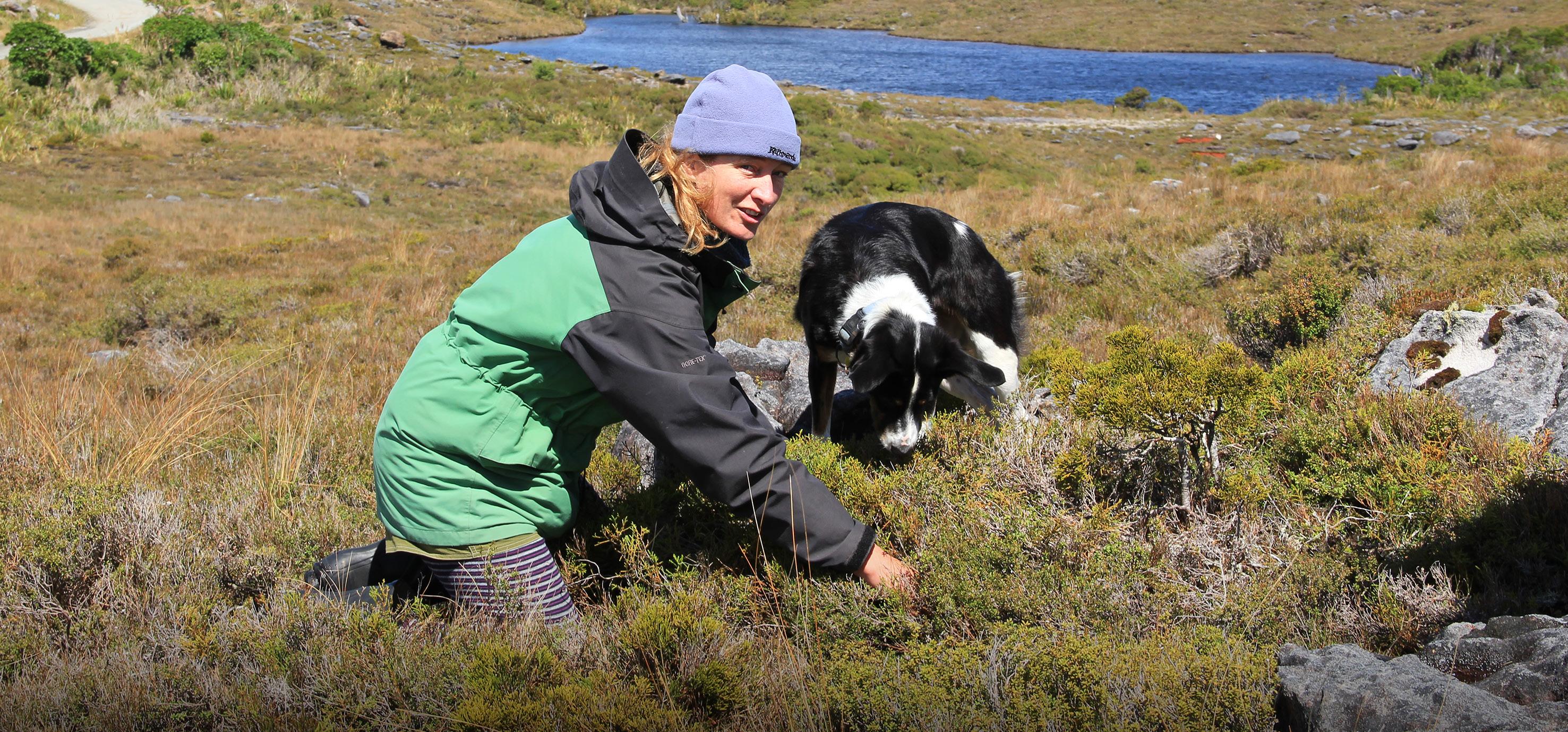
“It also made it easier for my gecko dog Manu to find them as they were at her nose level, instead of up in a tall tree.”
Variation in markings of (from top) juvenile, female, and male West Coast green gecko. Marieke Lettink
Marieke Lettink and Manu searching for lizards at Denniston, during Forest & Bird’s 2012 bioblitz. David Brooks
It’s unusual to have such a colourful and variable population.
This high-quality lizard habitat would be destroyed by the proposed Denniston mega-mine, and it would be almost impossible to recreate, rehabilitate, or restore this complex mosaic of huge pavement slabs, shrublands, and dwarf forests.
“It’s not rocket science – we’d lose a lot of individuals from any large-scale habitat clearance, leading to the viability of the lizard populations being compromised,” said Marieke.
“Making a big dent in a nationally significant gecko population could lead to a worsening threat status of a species.”
Can’t Denniston’s geckos and skinks just move out of the way of the miners’ bulldozers? “Not really,” says Marieke.
“For six months on the plateau, it’s too cold and wet so they go to ground. As they are hidden from sight in vegetation and underground, chances are they will just get squashed by the diggers.
“Even when it is warm, disturbed lizards won’t move far, usually a few metres or less, before finding another hidey-hole. That is just their instinct.”
UNIQUE FOREST GECKOS
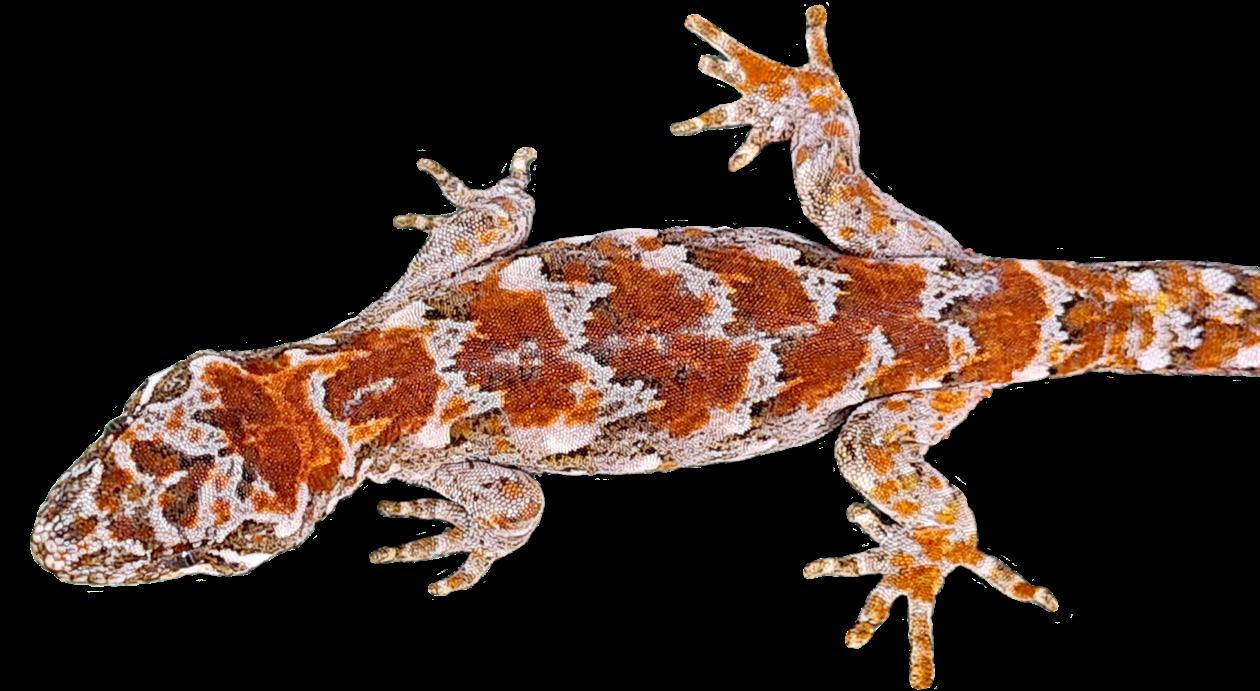
Denniston is also home to a thriving population of mokopirirākau forest geckos, including the only known striped variety of the species in Aotearoa.
“The complexity and safety of their rocky habitat is one reason they are thriving here on the plateau,” said Marieke.
“It’s what allows them, a cold-blooded species, to keep warm and avoid freezing in their rock and tunnel networks.
“Surprisingly, we’ve also found them living in Denniston’s pakihi wetland and forest habitats, well away from any sandstone pavements.
“About 5% of the animals I’ve seen are striped. It’s part of the natural variation of the population. There are some very colourful individuals and huge diversity in markings and patterns.
“It’s unusual to have such a colourful and variable population, but then again I’ve not seen such large numbers of animals in any one place.”
New Zealand’s geckos are remarkable in living for half a century or more, compared with an average lifespan of only a decade worldwide.
Earlier this year, Marieke and two DOC Rangers discovered two 60+ year old Waitaha geckos on predator-free Motunau Island.
Marieke suspects that geckos on the cold Denniston Plateau could live just as long because it is such a hostile place for pest mammals.
Like many other native plants and animals on the plateau, its lizards have adapted and evolved so they
can survive in their unique environment.
“Everything slows down. For example, forest geckos likely breed every second year instead of annually, mature later, grow slower, and have longer pregnancies,” said Marieke.
Time also moves slowly at Denniston. Its sandstone pavements, where the geckos bask in the sunshine, are millions of years old.
It will take just a few months for a mining company to destroy this landscape. A blink of an eye in evolutionary terms. Please help save this unique lost world – it’s too precious to lose.
For more information and to make a donation, go to forestandbird.org.nz/campaigns/denniston-tooprecious-mine
Denniston’s lizards: Tricky to translocate
Expert ethical investing advice
• Winner or Highly Commended in the Mindful Money Best Ethical Financial Adviser awards 2022, 2023, 2024, 2025
• Independently-researched portfolios
• Expert advice
Call 09 337 0997 to talk to one of our advisers or find out more at ethicalinvesting.nz
TRICKY TO TRANSLOCATE
What will happen to Denniston’s geckos and lizards if open-cast mining is allowed?
It would not be easy to move geckos and skinks out of harm’s way if mining is approved at Denniston, and many animals will die as a result.
The salvage teams may only find a minority of the geckos living in the mine footprint, leaving the rest to be killed by the bulldozers digging up the sandstone pavements to get at the coal underneath.
Before diggers moved in to destroy valuable lizard habitat to make way for the Escarpment Mine, 29 geckos were salvaged from the mine footprint and fitted with tiny transmitters.
This allowed them to be tracked in the days and months following their release into a new location on the plateau. Two female geckos were found dead immediately following their translocation, and a male died 28 days later. The total mortality rate was just over 10%.
Another 22 geckos living elsewhere on the plateau were also tracked as a comparison group, to monitor their movements and home ranges. None died.
Tracking data showed both moko kākāriki and mokopirirākau lived in forest, shrubland, and prostrate vegetation. When under rocks, the geckos mostly chose ones that were too large to lift, making it hard to move them out of harm’s way.
“With the right approvals in place, geckos can be relocated, but this isn’t a good solution for Denniston because even lizard experts will miss most animals,” said Marieke.
“It’s also not best practice to do dump-and-run translocations – to put them somewhere else and not monitor how they do.”
There are further challenges when translocating lizards, which are territorial, to a new home.
Other geckos and skinks will already be living at their new location. There will be a maximum carrying capacity and possibly too many animals in one place.
“There may be disputes. Some may be pushed out and eaten by predators,” said Marieke. “We don’t know what survival rates are for translocations. It’s no doubt stressful for the animals.”
More than a decade after the Escarpment Mine opened, Buller Coast Limited (a subsidiary of Bathurst Resources Limited) is still paying for habitat remediation, lizard relocation, and research as part of the lizard management plan for the mine.
Although it was the largest lizard tracking study of its kind at the time, the mining company’s research was never published. Even if it had been, the short-term tracking data wouldn’t have revealed the ultimate fate of animals that can live five or six decades.
Mokopirirākau forest gecko, Denniston. Tony Jewell
Escarpment Mine in 2017. Neil Silverwood
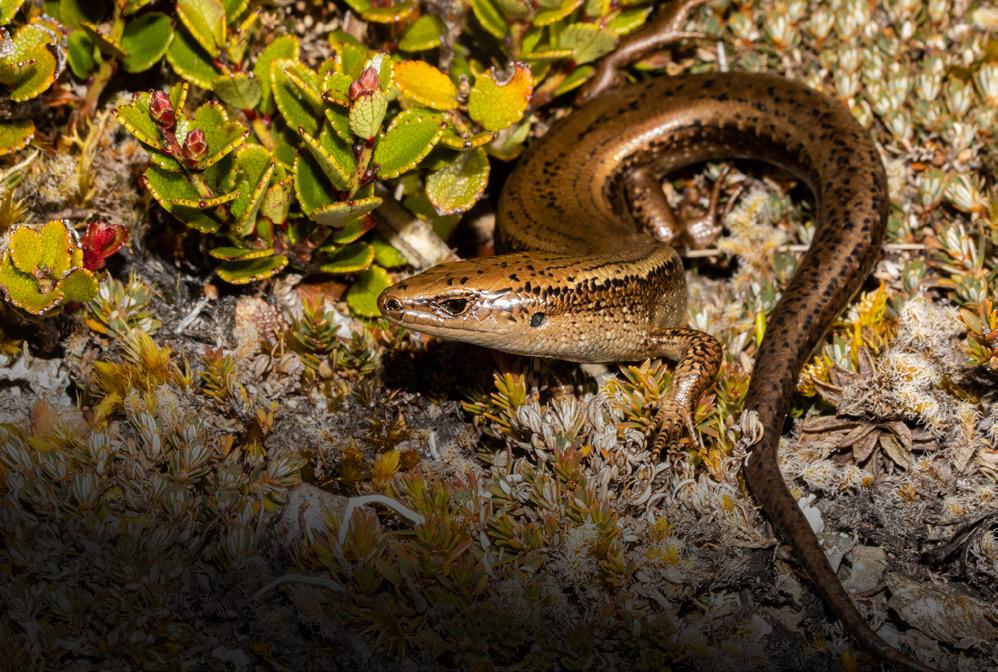
Denniston is also home to a cryptic speckled skink, but little is known of them. Proper investigation, including genetic analysis, is needed to uncover more about their lives. Speckled skink. Carey Knox
ONE-IN50-YEAR FIND
“Miraculous”
rediscovery of little-spotted kiwi supports the case for properly protecting West Coast stewardship land. Caroline Wood
It was like looking for a needle in a haystack.
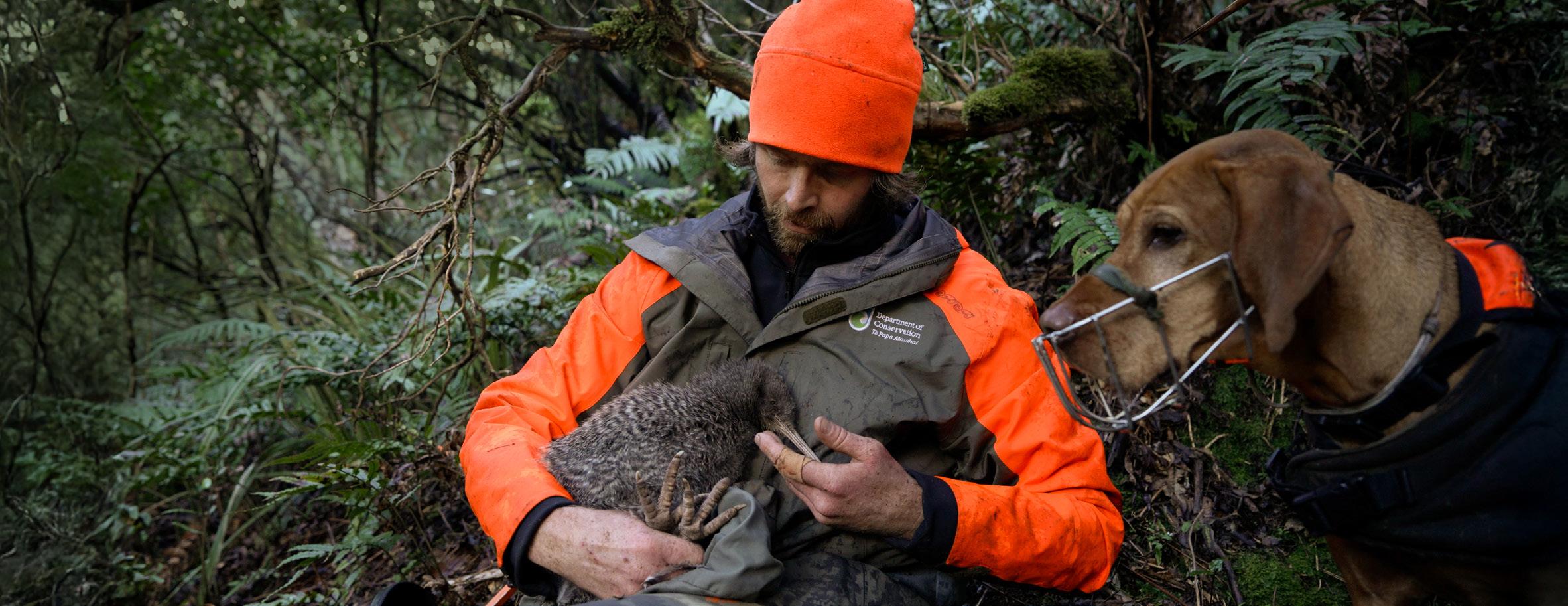
Department of Conservation biodiversity ranger Iain Graham and his conservation dog Brew had been dropped into the rugged Adams Wilderness Area on a mission to find a kiwi species that hadn’t been seen in the wild on the mainland for half a century.
They were acting on a tip-off from a DOC-contracted tahr hunter, who had seen what they believed to be a kiwi pukupuku little-spotted kiwi two months earlier. They provided a location, and DOC sent Iain to Kā Tiritiri o te Moana the Southern Alps to look for the elusive bird.
“I heard kiwi calling the first night – two of them duetting – and immediately knew they didn’t sound like other kiwi. It was exciting, but it took a few days to narrow down the area,” said Iain.
“We were in rough terrain, in typical West Coast weather, and I was running out of dry clothes. Brew would find a burrow, but I couldn’t get to the bird. We were so frustratingly close.
“I was stoked when we finally caught up with the female on our final night, the absolute last chance before getting flown out.”
Testing of the bird’s feathers confirmed it was the first little-spotted kiwi to be found in the wild on mainland Aotearoa in 50 years.
“This is huge news for conservation and on a par with rediscovering takahē in Fiordland in 1948,” said Nicky Snoyink, Forest & Bird’s Canterbury and West Coast regional conservation manager.
“It shows these wild
places still hold rare undiscovered treasures. If kiwi pukupuku are here, they could also be in neighbouring stewardship land areas that have less legal protection than a wilderness area or national park.”
The kiwi pukupuku was found in Adams Wilderness Area, south of Harihari, on land that is managed by DOC to remain in a near-natural state, free from development or human intervention. It is surrounded by West Coast stewardship land in the process of being reclassified.
Forest & Bird has called for the area to the south of Adams, Waitangi Forest, to be gazetted as national park. This would provide a safe wildlife corridor between the area where the little-spotted kiwi was rediscovered and Westland National Park.
“It’s a timely reminder that we need to finish the job of reclassifying West Coast stewardship land, giving these and other taonga native species the full conservation protection they deserve,” added Nicky.
Until this discovery, it was believed the country’s entire little-spotted kiwi population, about 2000 birds, was located in predator-free fenced sanctuaries and offshore islands.
Kiwi pukupuku are the smallest of our kiwi species and extremely vulnerable to introduced predators. The last confirmed sighting of them in the wild on the mainland was 1978.
“We’re grateful to the hunter for reporting this and capturing evidence,” said Kiwi Recovery Group leader Emily King. “I’m not sure how to express how thrilling this rediscovery is for the conservation world!”
Since the initial find, Iain and Brew have returned to the area and successfully captured a male littlespotted kiwi.
“Knowing kiwi pukupuku have survived this whole time in our takiwā is incredible,” said Kara Edwards of Kāti Māhaki ki Makaawhio. “We are extremely excited and looking forward to working with DOC to secure the future of kiwi pukupuku.”
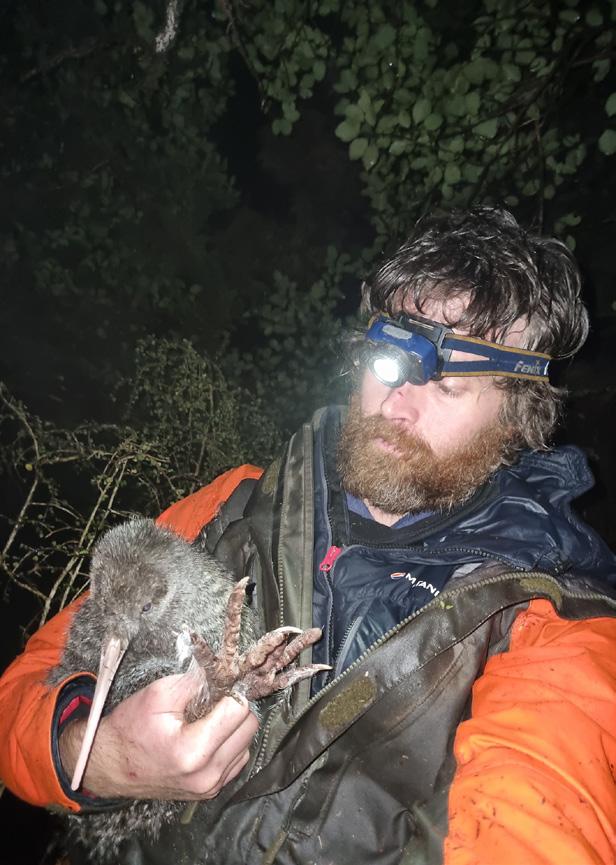
The moment Iain Graham rediscovered the female little-spotted kiwi. Iain Graham/DOC
Biodiversity ranger Iain Graham with the kiwi pukupuku and his conservation dog Brew. Lucy Holyoake/DOC
GIANTS OF THEIR KIND
Unlocking the secret lives of Aotearoa
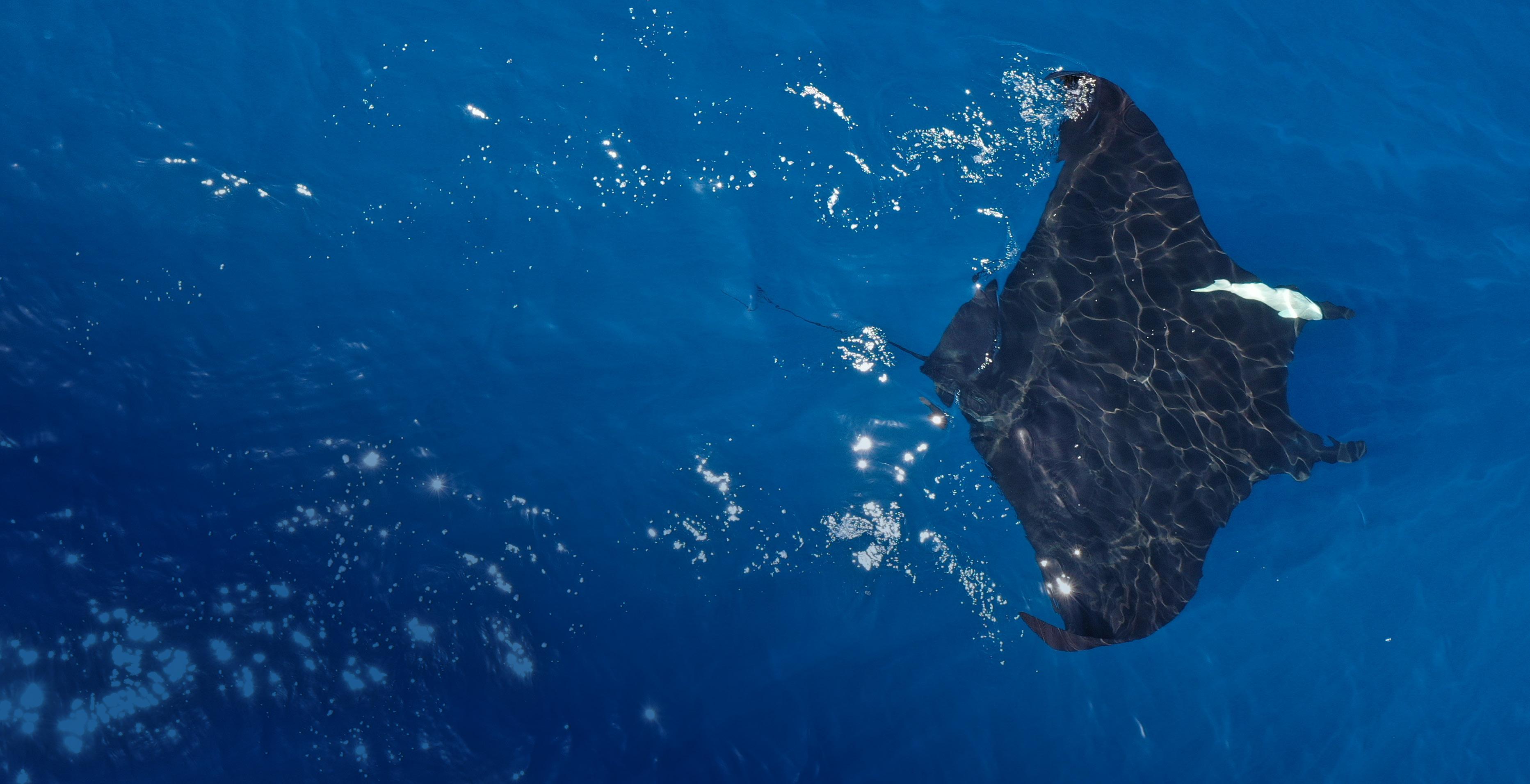
New Zealand’s oceanic manta rays Lydia Green
Te whai rahi the giant oceanic manta ray glides through the water, its large winglike pectoral fins flapping and undulating, propelling the huge animal efficiently and gracefully through the water.
Mobula birostris is the largest ray in the world, growing up to 7m across (four times the height of me) and weighing up to two tonnes. They spend most of their lives far from land, moving with the currents in search of food in tropical and temperate waters.
They are one of a rare group of animals with a worldwide distribution in both northern and southern hemispheres. They are commercially fished in some places (their gill plates are used in traditional Asian medicine) and protected in others, including in Aotearoa New Zealand’s waters.
Unfortunately, over the last few decades, commercial fishing and bycatch deaths have had a massive impact on the species, leading to their global threat classification of “Endangered and in decline” on the IUCN Red List.
The southernmost populations live off Peru, South Africa, and New Zealand. They are often found near offshore oceanic islands, including
Tīkapa Moana, Te Moananui-o-toi the Hauraki Gulf, although until recently little was known about this elusive population.
Lack of data is a big threat to their wellbeing. This is where Manta Watch New Zealand comes in. We are a small charitable trust dedicated to uncovering the many mysteries surrounding Aotearoa’s special te whai rahi population.
In 2020, we set out to answer some key questions, including how and why mantas use New Zealand waters and the kinds of threats they are exposed to during their day-today lives.
This project has led to some exciting discoveries. It turns out that New Zealand’s manta rays dive deeper, travel further, and go into colder water than any other manta population in the world.
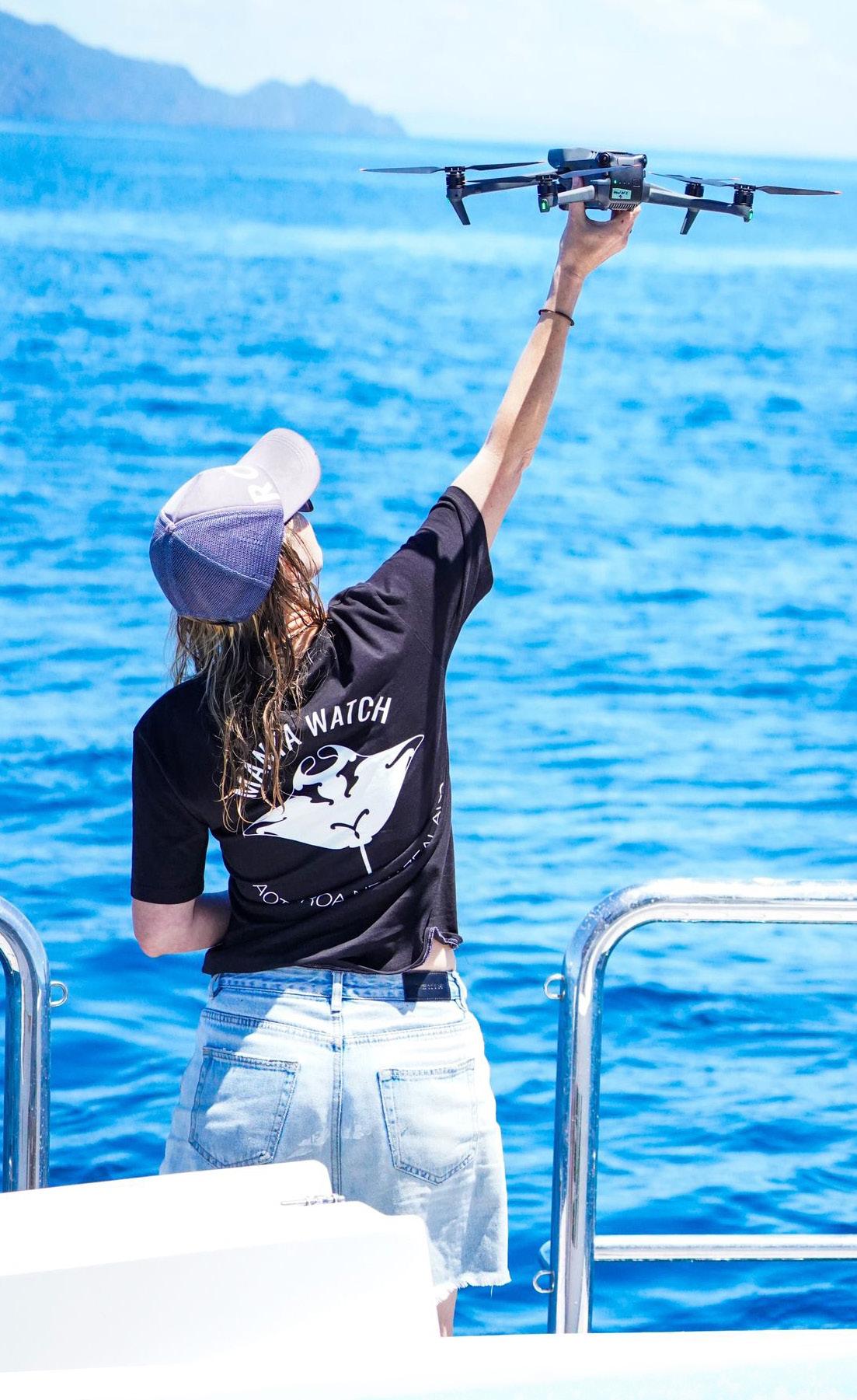
How did we discover this? Our dedicated Manta Watch NZ research team spent the past five years tracking manta rays in Aotearoa waters, from Northland to the Bay of Plenty. We gathered lots of useful new data in the form of high-quality videos via aerial drones and underwater cameras.
We also collected a host of vital demographic data, including gender, size, injuries, pregnancy,
as well as behaviour. The markings on a manta ray’s belly are unique to that individual and remain unchanged over its lifetime. So we’ve been working to identify individual manta rays by collecting their photo IDs.
This means researchers can track individuals over time and gain valuable insights into how a population is structured, as well as estimate its size.
Researching a highly mobile marine species that doesn’t need to come to the surface can be tricky. The project’s research efforts are supplemented by a national manta network – aka hundreds of citizen scientists who submit sightings to the project. We developed a Manta Watch NZ app so people can record sightings, key facts, and videos and images.
This collective manta mahi provided invaluable insight into seasonal distributions and habitat use. Moreover, real-time and historic sightings helped the team focus their manta survey efforts, increasing overall encounter success.
Satellite tagging has also been a vital tool in accelerating our understanding of how mantas are
Giant oceanic manta ray.
Lydia Green
using their habitat, horizontally and vertically. They exhibit two distinct modes – feeding and migrating.
Our inshore waters serve as important seasonal feeding grounds. Individuals have been tracked moving between regions in search of kai, spending most of their time within the top 5m and feeding on dense swarms of krill.
Tagging data has also confirmed that at least a proportion of Aotearoa’s manta population seasonally migrate out of our waters into the wider Southwest Pacific. More than 70% of mantas tagged left New Zealand waters around late summer and early autumn, heading towards Fiji and Tonga.
While on the move, Aotearoa’s mantas have redefined what we previously thought the species was capable of doing – they dive deeper (1400m), travel further (4500km in 52 days), and venture into colder water (3.5°C) than any other manta population has been shown to do!
CONSERVATION WINS
The data and knowledge gains achieved through our Manta Watch NZ project have enabled the New Zealand Threat Classification Status for oceanic manta rays to be upgraded from Data Deficient to Nationally Vulnerable.
We also gained Important Shark and Ray Area status for a total of 445,546.4km² ocean habitat.
This includes the Hauraki Gulf Marine Park as an important feeding area and the newly defined migratory corridor between New Zealand, Fiji, and Tonga as an important movement area.
These two wins set the foundation for greater species and ecosystem conservation management in New Zealand and the Pacific. By establishing greater protections for our oceanic manta rays, entire marine ecosystems will benefit.
Our next steps will be studying the population’s genetics and potential nursery areas, and investigating the threats our mantas face when migrating out of New Zealand’s Exclusive Economic Zone into the high seas.
Manta Watch NZ’s research partners include Conservation International Aotearoa, the University of Auckland, the Department of Conservation, and the Tindall Research Charitable Trust.
Our primary funders are Whakatupu Aotearoa Foundation, Live Ocean Foundation, Manta Trust, and Pub Charity Ltd.
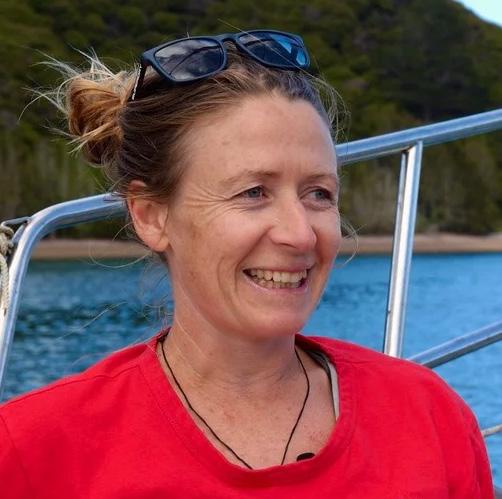
Lydia Green is the founder and project director of Manta Watch New Zealand.
FASCINATING FACTS
Giant oceanic manta rays have only been protected in New Zealand waters since 2011. It is illegal to hunt, kill, or harm them. If caught by mistake, they must be released alive and unharmed.
Te whai rahi are essentially flat sharks and share key attributes – for example, they have dermal denticles (tiny teeth) instead of scales and a light flexible skeleton made of cartilage instead of bone. They can only travel forward and cannot reverse out of fishing nets.
Oceanic manta rays have the largest brain of any fish and also one of the most conservative life histories of all shark and ray
species. They are slow growing, long lived (at least 40 years), and late to reach sexual maturity. They typically only give birth to one pup at a time, after an extensive 12.5-month gestation period.
Like all marine life, te whai rahi is impacted by climate change. Changes in sea surface temperatures and other climate-related phenomena, such as El Niño, can affect their distribution, food supply, and potentially their survival.
Put that all together, and you have yourself a highly vulnerable species whose populations really cannot cope with any form of fishing exploitation.
Lydia Green launches a manta-tracking drone Rebecca Pratt
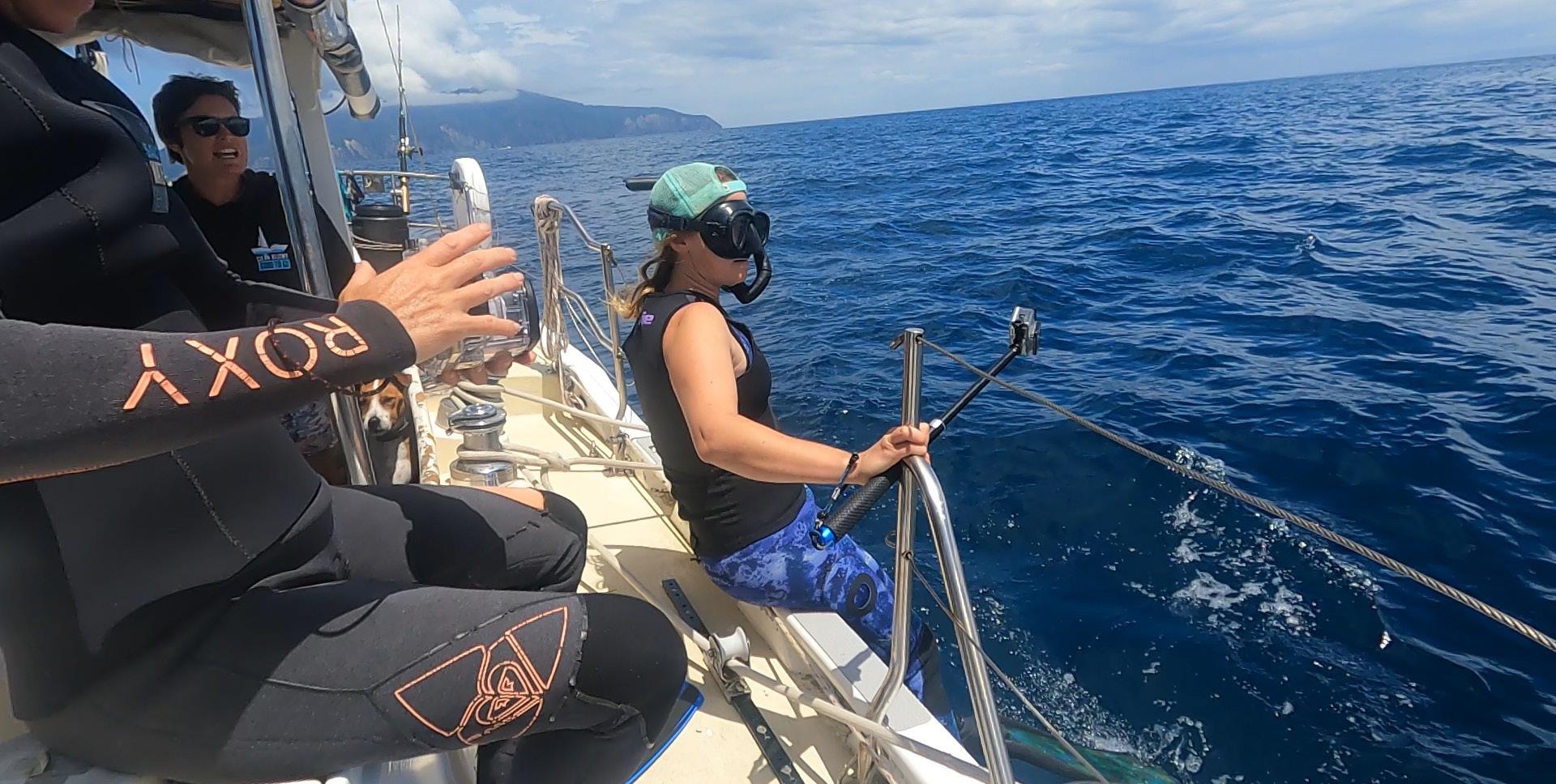
Getting ready to survey manta rays in the Hauraki Gulf. Rebecca Pratt
WHEN A FOREST COMES ALIVE
The team at Mahakirau Forest Sanctuary has removed more than 18,000 predators over two decades, helping restore a precious Coromandel biodiversity hotspot.
Night time at Mahakirau is conservation advocate Sara Smerdon’s favourite time to take a walk. “It is when the forest truly comes alive. It’s dark, warm, and damp – an incredible time for exploration,” she said.
Sara and her husband are one of 24 private landowners whose properties together form the 580ha Mahakirau Forest Estate, almost all of it protected by a QEII covenant.
Situated on the crest of the Coromandel Range and bounded on three sides by Department of Conservation land, the estate is ranked as holding “outstanding wildlife value”.
It is home to critically rare and endangered species such as the northern striped gecko, and Hochstetter’s and Archey’s frogs. It is also the habitat for Coromandel brown kiwi, North Island kākā, and forest ringlet butterflies.
Kerrie Waterworth
These species are supported by the sanctuary’s diverse indigenous vegetation, including more than 50 varieties of trees and high-risk species, such as kauri, king fern, and Kirk’s daisy.
Sara says Mahakirau is her home and living there allows her to easily get a half hour “fix” of oxygen-filled nocturnal observation before bed.
“These precious moments motivate me for the next day’s conservation efforts,” she said.
Mahakirau Forest Sanctuary is featured on Forest & Bird’s Give a Trap website, which matches donors with predator-free projects and sends gifted traps directly to recipients so they can be put to use straight away.
After sharing the Give a Trap link on Facebook, the project was gifted a box of six rat traps and a Flippy Timmy possum trap.
“Every donated trap helps to close the gaps in our extensive trap network and strengthens our protective buffer,” added Sara.
In 2001, the Mahakirau Forest Estate Society Incorporated was established to act on behalf of the landowners. Sara has been the Society’s volunteer conservation advocate for more than a decade.
Her role covers everything from overseeing predator control, monitoring biodiversity, and facilitating scientific research and educational outreach programmes to raising awareness of the forest’s rarest species on social media.
Sara says the ultimate goal is to provide a safe haven and a safe corridor to neighbouring sanctuaries for the estate’s rare indigenous species. But, unlike other predator-free sanctuaries, there is no fence surrounding the estate to keep out the predators.
“Our fence is vigilance, meticulous trap placement, regular
Sara and Holly the frog dog Debbie Bishop
Mahakirau Forest Sanctuary forest
Sara Smerdon
maintenance, adaptability, and swift response to predator incursions,” she said
More than 3500 traps, bait stations, and monitoring devices are positioned strategically in known predator hotspots, along animal corridors, and near sensitive habitats with breeding populations of frogs, geckos, kiwi, and other native species.
Many predator species are targeted, including mice, rats, ferrets, stoats, weasels, feral cats, possums, pigs, goats, and wasps.
More than 100 mustelids, thousands of rats, and numerous
feral cats, pigs, and possums are caught annually.
Over the past two decades, populations of miromiro tomtits and kākā have increased, and more recently kārearea New Zealand falcons and petrels have been spotted.
Recent findings from a decadelong research collaboration with Auckland Zoo and several universities studying the northern striped gecko and Archey’s frog populations have confirmed the team’s methods are working.
However, eDNA studies have found ferrets, stoats, and pigs regularly prey on those species. Later this year, Sara will employ eDNA to check for mice incidence in the sanctuary.
Conservation work at Mahakirau continues daily and year-round. When conditions aren’t ideal for fieldwork, Sara catches up on essential desk-based tasks, and, at night, she “embraces” the perfect
wet conditions for monitoring frogs and geckos, creatures she is particularly passionate about.
“There’s always rewarding work to do; this labour of love keeps me inspired every day.”
The Give a Trap website was created in memory of conservationist Penny Willocks. It matches donors with community trapping projects throughout the country. You can choose how many traps to donate and who to give to. Check it out at giveatrap.org.nz.
Archey’s frog Tom Miles/Zoomology
Northern striped gecko Samuel Purdie
PLAY MEETS NATURE
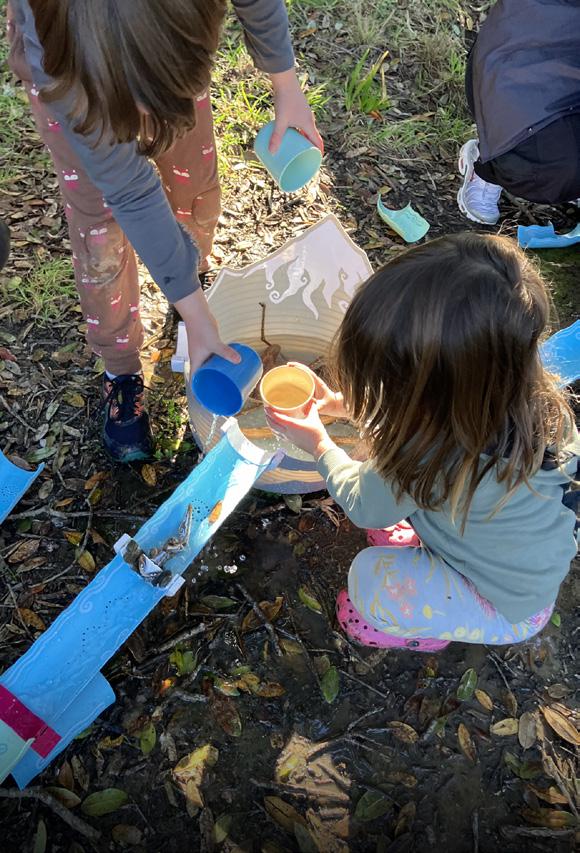
Encouraging families to have fun in nature is the name of the game for tertiary design students – with a little help from our KCC kids. Caroline Wood
Over the past decade, design students at Te Kunenga ki Pūrehuroa Massey University have been creating environmental toys and games for children.
Their early prototypes are put through their paces by members of our Hakuturi Toa Kiwi Conservation Club, who provide valuable real-user feedback.
Some of the creations to come out of this unique partnership between Massey’s College of Creative Arts and KCC are still being played today. Games such as Poolootion Revolution, which teaches children about the impact of unsustainable dairy farming on the environment.
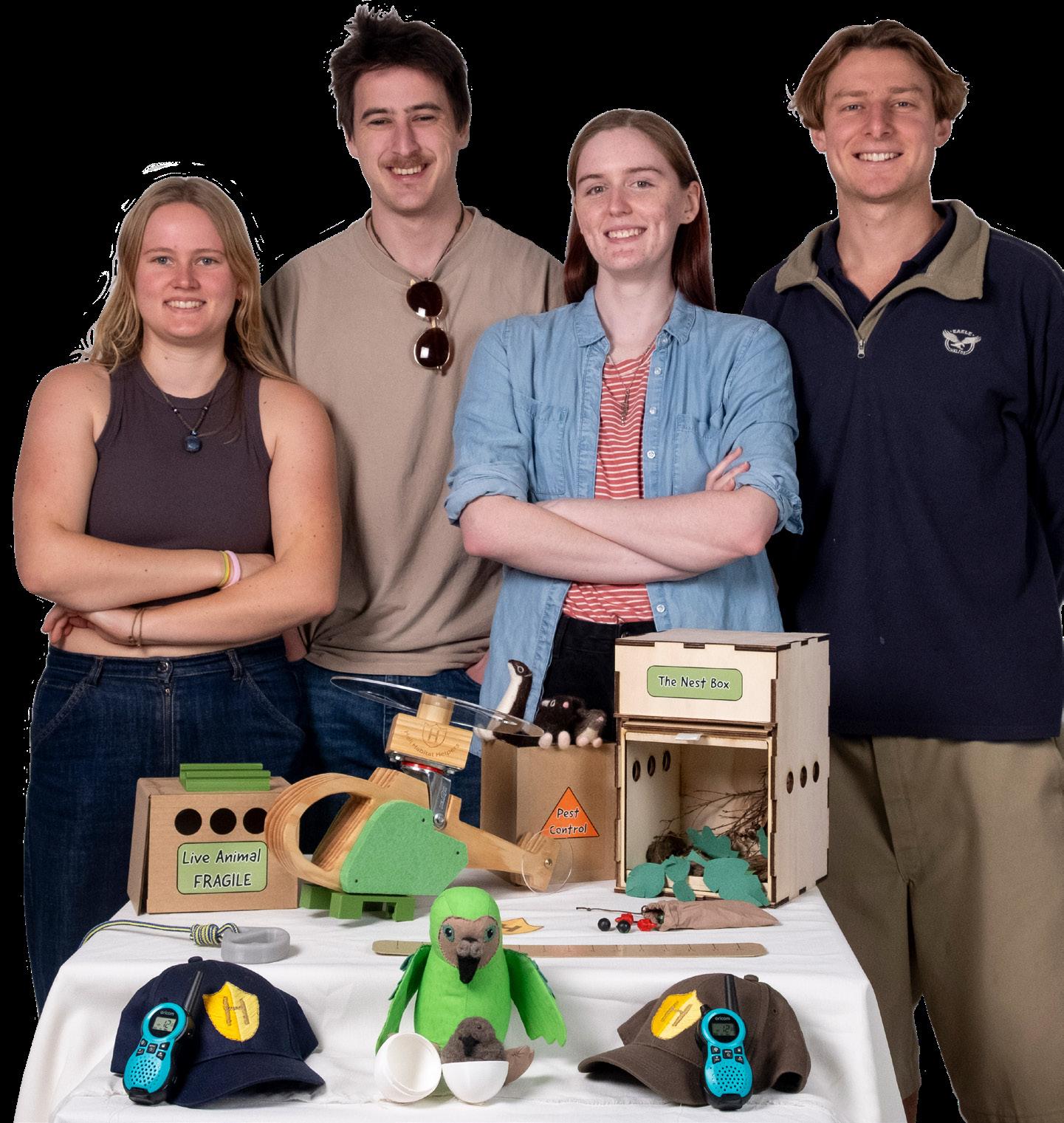
This year’s clear favourite was Heli-Habitat Helpers, inspired by the conservation resources needed to manage offshore island sanctuaries and their native species.
It was created by Massey students Theo Jones, India Lindsay, Fionn Norgrove, and Sarina Oetgen.
“Being able to play test our toy with our target audience was such a unique opportunity,” said India.
“It allowed us to get feedback and make sure our final design was something that children would enjoy and learn from.”
“Seeing the kids play with the helicopter in the way I had envisioned was rewarding, but what really amazed me was seeing them play with it in ways I hadn’t imagined,” added Fionn.
Teams have to create a naturethemed game that could be played outdoors by children aged 5–13 years as a toy, as an activity game, as role play, or as a mix of all three.
“Play is a powerful tool to change and shape our realities,” said Dr Tanya Marriott, senior lecturer in concept design, who leads the play, research, and design course.
“The aim is to connect tamariki and their families to nature within Aotearoa, some of the problems it is facing, and critically what actions they can take to help.”
The design process involves Tanya’s students being briefed by KCC manager Sarah Satterthwaite before they embark on their research and initial concept.
Early prototypes are play-tested by 20 or so willing KCC members before being refined and undergoing two further play sessions with tamariki out in nature.
“It was wonderful to see the students and children taking part in the play-testing events,” said Sarah.
“Months after children have played the games, they have reminisced with me about them and can recall key conservation messages they contained.
“We love being involved in this partnership with Massey. Over the years, students have come up with some fantastic games.”
Other Massey students who took part this year were Flow Play – Megan Uttley, Mae Rose-Wills, Jake Fisher, and Ela Liu – and Critters in Crisis – Faith Belisario, Frances Le Mesurier, Grace Hensley, and Tara Stockwell-Williams.
Heli-Habitat Helpers team (from left) Sarina Oetgen, Fionn Norgrove, India Lindsay and Theo Jones Massey University
KCC members Manu and Tadhg Desmond test one of the prototype toys.
Chloe Bisley-Wright
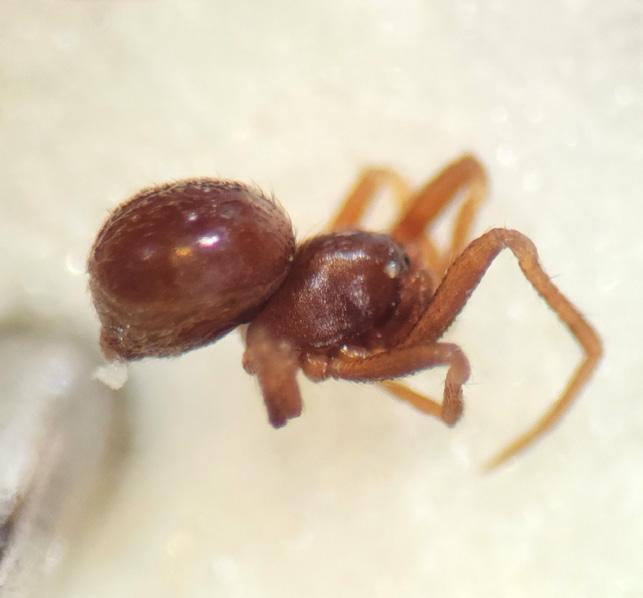
A Spidery
TALE
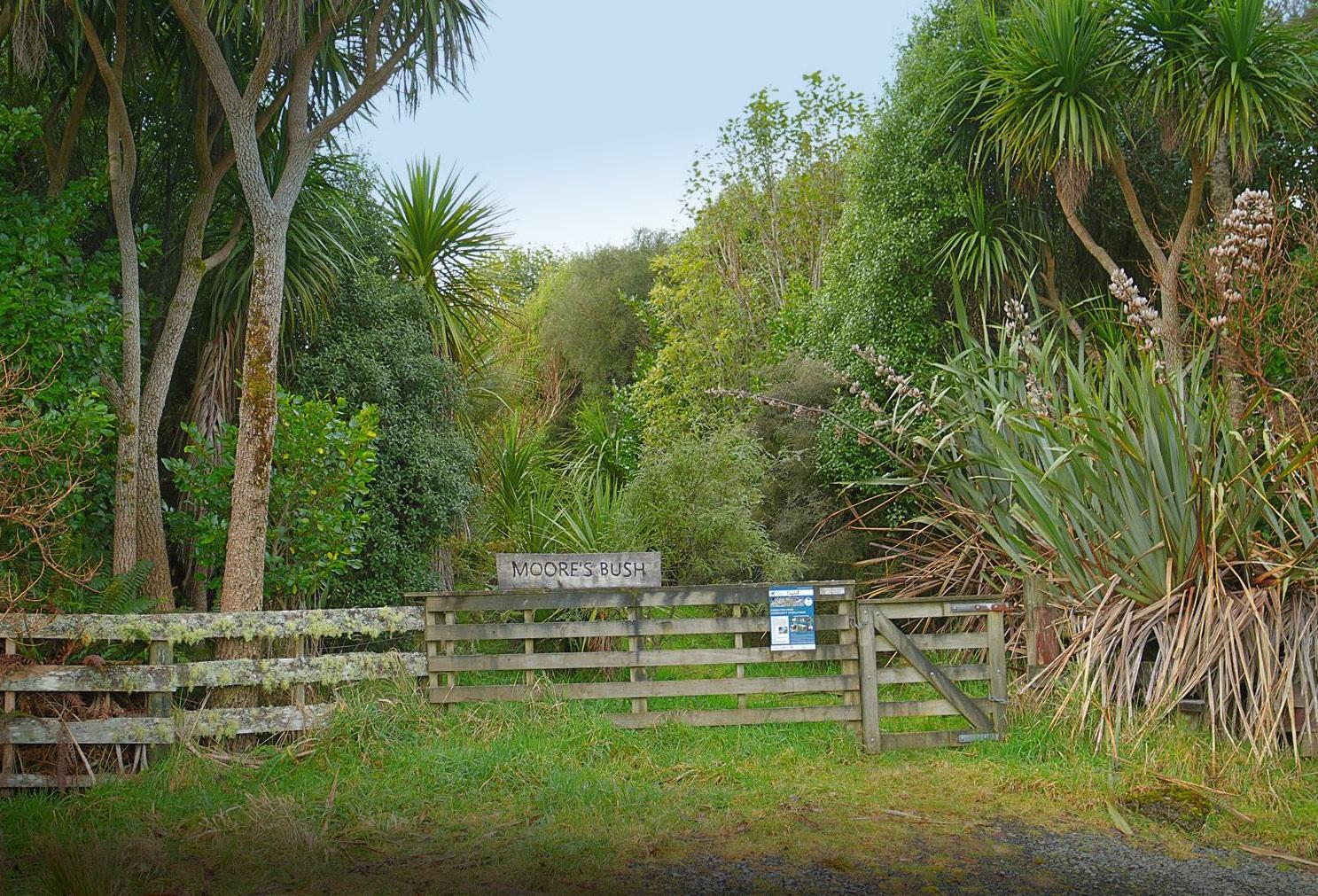
Two exciting arachnid discoveries in a single day suggest Forest & Bird’s Moore’s Bush could be a micro-spider hotspot.
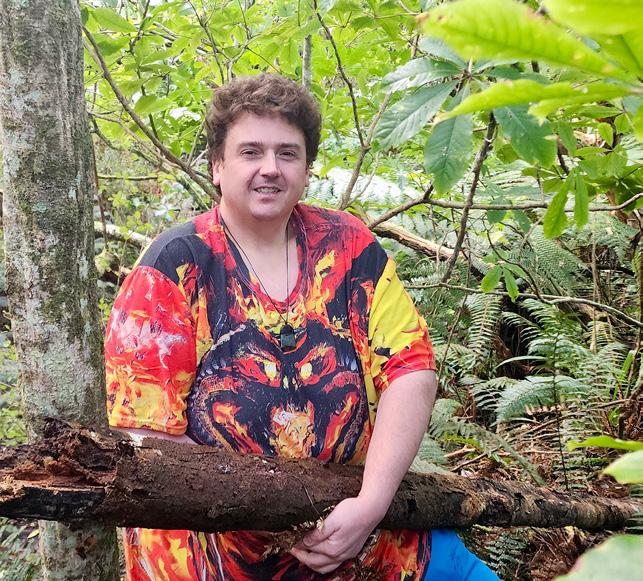
Three years ago, Otago University PhD student James Crofts-Bennett (Kāi Tahu, Kāti Māmoe) sought permission to visit Forest & Bird’s Moore’s Bush, near Ōtepoti Dunedin, to search for spiders.
The reserve, a 10-minute drive from the city, was a favourite haunt of renowned arachnid experts Ray Forster and his wife Lynn, who between them discovered and named about 700 species, more than half the known diversity of New Zealand arachnid fauna.
Little did James know that he would go on to unearth not one but two new species of spiders in the forest leaf litter he collected and analysed in the lab.
He discovered a tiny orb-web spider (family Anapidae, possible new genus) and an undescribed comb-footed spider (family Theridiidae, genus Pholcomma).
“We have two micro-spiders unearthed from leaf litter collected at Moore’s Bush that are completely new to science,” said James.
“Historically, we’ve had Ray Forster combing Dunedin for spiders. There’s nearly a full century of extensive collecting, yet we’re still finding all this new stuff. It’s all very exciting!
“It’s becoming apparent the
Caroline Wood
relatively damp conditions of Dunedin’s various bush and forest habitats provide a sanctuary for a wide variety of micro-arachnids and is a bit of a hotspot for Anapidae diversity,” added James.
Moore’s Bush is nestled in the beautiful Leith Valley, north of Ōtepoti. It was gifted to Forest & Bird in 1974 by local farmer Percy Moore, and our Dunedin Branch volunteers have been restoring the land for more than half a century.
The 4ha nature reserve has been turned from a dairy farm into native bush and is home to a variety of birds, freshwater fish, crayfish, and invertebrates. The branch was thrilled to hear about the spider discoveries, which James shared with them earlier this year.
These species are so tiny (just 0.75mm–1.2mm in length), you won’t ever knowingly come across them in the wild.
The male tiny orb-web spider found at Moore’s Bush has an immensely elongated embolus that coils twice over around the palpus (a leg-like appendage used for reproduction).
“As it currently stands, we have no idea where to place this species in the current fauna. We suspect a new genus at this point, but a female sample would greatly improve our analysis,” added James.
Inspired by the massive Forster spider collection held at Otago Museum, James set out to see whether modern collecting would provide similar results to those that Forster found during his lifetime (1922–2000). James is currently completing his PhD on the topic.
“Dunedin has benefited from a local desire to preserve and protect the realm of Tāne Mahuta. As a result, we appear to be an isolated oasis of natural diversity that is largely absent from the surrounding Otago area,” said James.
“I’m very grateful to Forest and Bird for letting me have a poke around Moore’s Bush.
“Your volunteers’ protection of this site – and willingness to let me visit and collect further – expands our wider knowledge of the lesser known children of Tāne.”
Moore’s Bush. Paul Smale
James Crofts-Bennett at Moore’s Bush. Janice Lord
Comb-footed spider (Pholcomma) specimen. James Crofts-Bennett
CARBON CAPTURE
Our native forests are bigger climate heroes than we realised.
Caroline
Wood
We have been underestimating the amount of carbon taken up by New Zealand’s mature indigenous forests for at least a decade, according to a new study.
Instead of being roughly carbon neutral, New Zealand’s carbon sink is removing more CO2 than originally thought, particularly in Fiordland and parts of the West Coast.
The significant findings could influence New Zealand’s climate policies, including greenhouse gas reporting, carbon credit costs, and land use.
“It was thought that some areas and land use types were in a near-balance state with the absorption and release of CO2,” said study leader Dr Beata Bukosa, of Earth Sciences New Zealand (formerly NIWA).
“Our research found that New Zealand’s natural environment absorbed approximately 171 million tonnes of CO2 annually.”
Using advanced modelling and a supercomputer, the researchers examined a decade of atmospheric data, from 2011 to 2020, to better estimate the amount of CO2 absorbed by New Zealand’s land ecosystems.
The team worked with collaborators at GNS Science and Manaaki Whenua, as well as other New Zealand and overseas universities and institutes.
The research follows a pilot study in 2017, which also suggested indigenous forest in Fiordland might be absorbing more CO2 than expected.
“That study was based on only three years of data, and we weren’t sure if it was just a transient effect related to the climatic conditions or if the effect was confined to Fiordland,” explained Beata.
“Our new study shows the carbon sink is more widespread than we thought, particularly across the South Island, with greater uptake of CO2 extending up the West Coast.
“With improvements in our modelling techniques and data coverage, we’ve now shown the extra carbon uptake has persisted for at least a decade.”
New Zealand was the first country to develop the capability to infer national CO2 emissions from atmospheric data and has since supported other countries to develop similar capability.
“The findings help build a clearer picture of the role New Zealand’s natural systems play in absorbing emissions from the atmosphere,” said co-author Dr Andrea Brandon, of the Ministry for the Environment.
The study’s authors say the findings have important implications for New Zealand’s tracking of carbon emissions and climate policies.
However, further work will be needed before they can be included in official emissions reporting.
“The findings from this study indicate there may be additional carbon uptake somewhere in the system that we are currently not tracking,” added Andrea. “We need to identify what we are missing so that we can further refine our inventory methods to capture it.”
“Earlier estimates of how much carbon was removed by New Zealand land ecosystems ranged from a net 24 to 118 million tonnes a year.
“Projections suggest New Zealand will need 84 million tonnes of emissions reductions on top of what can be done at home to meet its 2030 international commitments under the Paris Agreement,” said Dr Sara Mikaloff-Fletcher, principal scientist at Earth Sciences NZ.
“In addition to reducing the need for overseas offsets, better management of our native forests and other lands could enable New Zealand to be long-term stewards of our carbon sinks and offer magnificent biodiversity co-benefits.”
The results were published in the journal Atmospheric Chemistry and Physics.
Fiordland forest. Earth Sciences NZ
Beata Bukosa
FOREST FOR CLIMATE
Forest & Bird is calling on the government to support the full climate-fighting potential of our native forests.
As well as locking in carbon and helping reduce emissions, healthy pest-free native forest and shrublands can prevent erosion and sedimentation in our waterways and restore biodiversity.
“This new research proves our native forests are working hard to draw down vast amounts of carbon from the atmosphere,” said Forest & Bird’s native forest advocate Dean Baigent-Mercer.
“But most of these forests are under constant attack by millions of pest deer, pigs, goats, wallabies, and possums. They are literally eating our forests to death. They kill the trees, which rot and release carbon dioxide, which feeds more climate change.
“The Earth Sciences NZ-led study is a wake-up call and reinforces the urgent need for large-scale coordinated action to knock down pest animals to low levels, and keep them low, so our native forests have the greatest opportunity to lock in even more carbon each year.
“This is the best spend for taxpayers’ money, not sending it overseas to pay other countries to lock in carbon. We need to back our own native forests.”
Forest & Bird is calling on the government to act on this new research to ensure our native forests can meet their full carbon-capturing potential, by:
n Investing in further research to improve how we measure carbon sequestration and emissions in native forests.
n Funding large-scale co-ordinated pest control on public and private land to protect vital natural carbon sinks.
n Raising awareness among landowners of the benefits of protecting and restoring native forests to boost carbon sequestration and biodiversity.
n Rejecting the Herds of Special Interest (HOSI) proposals put forward by the Minister of Hunting and Fishing that would see introduced pests given specially protected status within national parks and other important conservation areas (see page 43).
Choose nature-based solutions: Looking after our native forests and shrublands so they absorb more carbon helps mitigate climate change by reducing the amount of CO2, a major greenhouse gas, in the atmosphere. This process, known as carbon sequestration, can occur naturally through photosynthesis in plants. Increasing carbon absorption helps stabilise the climate, improve air and water quality, and protect natural resources. For more information, see forestandbird.org.nz/ campaigns/choose-nature-based-solutions.
Feed tūī, bellbird, hihi, kākā, silvereye & more
● Cat proof! 360 degrees of visibilty while birds feed
● Provides sugar water, fruit & energy truffles
● Feeder can go anywhere, it’s on a waratah
● Stainless steel nozzle ensures safe, hygienic feeding & easy cleaning to prevent the spread of avian pox.
Buy a feeder at PFNZ shop.predatorfreenz.org.
For more info go to our website pekapekabirdfeeders.nz
Introduced non-native browsing pests, such as this wild deer, are damaging New Zealand’s carbon sinks. Neil Foster
RUFFLED FEATHERS
The story behind Forest & Bird’s new Bird of the Year book, which celebrates all things avian. Lynn Freeman
These days, you can vote for your favourite New Zealand bug, fish, fungi, and tree of the year, but it all started 20 years ago with Forest & Bird’s much loved and often infamous Bird of the Year contest.
The contest, conceived by then staffer Michael Szabo, started small and could easily have been a one-off bit of fun. Michael, though, saw the
potential for a quirky rather than worthy approach to conservation advocacy led by the public.
Award-winning writer Ellen Rykers had co-led Bird of the Year for Forest & Bird with Kirk Serpes for three years and was the perfect person to research and write a book reflecting on the competition’s history and how it has captured the the votes (and hearts) of hundreds
of thousands of people.
Ellen turned detective, tracking down dozens of former Forest & Bird staff members and many of the most dedicated and ambitious manu campaign managers. She tracked down voter comments, GIFs, posters, and even a betting form sheet for each bird.
More than 80 birds – and one bat – are profiled and beautifully illustrated in their habitats by several of New Zealand’s leading wildlife artists. The text has been crafted so readers can dip in and out of the book.
South Island wildlife and botanical artist Jo Ogier is one of the artists whose work you’ll see in the book.
“I love how facts about the birds have been woven with shared stories from conservationists, ecologists, ornithologists, artists, enthusiasts, and those amazing volunteers working with them first hand to help save them,” said Jo.
“The humour and shenanigans
The 20th Bird of the Year poll runs from 15 September –
Ellen Rykers
The River’s Lament –A Pathway of Treasures. Jo Ogier
Artist Hannah Shand with one of her illustrations. Supplied
that go with the Bird of the Year competition have been hilarious and help make it the success that it is.
“It creates and encourages community spirit and involvement, while also highlighting the precarious situation so many of our beautiful birds are in. I think the book makes you reflect on the different species and which species are extra special to you.”
In an illustrated essay at the start of the book, Ellen charts Bird of the Year’s growth, its charm, and the controversies that are still raised with Forest & Bird staff years later.
Yes, we’re talking about the outrage over the (outrageous!) inclusion of pekapeka-tou-roa the long-tailed bat in 2021 and John Oliver’s multi-million dollar “interference” in the 2023 Bird of the Century.
Right from the start, Penguin Random House New Zealand and Forest & Bird envisaged a book that was more than a history of the competition. It was to be a celebration of our birds and the people who love them, illustrated by artists who specialise in drawing and painting our wildlife.
These artists all have their individual styles, and seeing how
they portray the same bird in different ways is fascinating – and insightful.
Hannah Shand, a long-time friend of Forest & Bird, was one of the artists invited to contribute some of her favourite highly detailed black fine-tip pen drawings to the book.
“I’m so proud and happy to have been chosen as one of the artists for the Bird of the Year book, as one of my goals as a native New Zealand bird artist is to share how beautiful our birds are, and this book does this so wonderfully,” said Hannah.
“Myself and other artists in the book have been campaign managers for Bird of the Year, so we’ve been personally involved with the mission.
“This is one of the really special things about the New Zealand bird art community. Many of us are not just artists but are also active conservationists, working with conservation groups and organisations throughout the country to raise funds and awareness for our native birds.”
Jo Ogier illustrated the wetland birds section of the book. It’s a habitat she knows very well.
“My goal was to show a thriving
wetland, with lots going on, the main idea being the more you look the more you see,” she said.
“So often our wetlands are taken for granted, yet they provide such a necessary habitat and breeding ground for so many different species. I have loved being able to highlight just how special they are.”
Royalties from the sale of each book will go to Forest & Bird to support its conservation mahi.
Chief executive Nicola Toki hopes the book will encourage more New Zealanders to love their backyard birds and work to protect and restore their habitats.
“Bird of the Year has always been more than a popularity contest,” she said. “It connects people to our precious wildlife and inspires action – from backyard trapping to conservation careers.
“New Zealanders have a special connection with nature, and this competition is a fun and inclusive way for people to work together to raise awareness of their favourite bird.”
Bird of the Year – 20 Years of Ruffled Feathers is a richly illustrated celebration of Aotearoa’s native birds and the efforts we all make to protect them. Published by Penguin Random House New Zealand (RRP $45).
Past Bird of the Year champions featured in Salient, the student magazine of Te Herenga Waka Victoria University of Wellington. Kelly Chang
Caring for
KORORĀ
Storm-hit penguin nesting boxes in Muriwai have been rebuilt by local volunteers using custom monitoring tech. Luke Appleby
When birdwatchers think of Muriwai, tākapu gannets may come to mind – but the small settlement west of Auckland is also home to a growing population of kororā little penguins.
The birds, the world’s smallest penguin, used to nest in the dunes along Muriwai’s main beach. Facing predation by ferrets, stoats, weasels, cats, and even dogs, as well as an increasing amount of human and vehicle traffic on the beach, the colony had been on the decline.
But, thanks to the efforts of the Muriwai Environmental Trust, this plucky species has been rebuilding its presence in the area.
Since 2014, the trust’s volunteers have installed and maintained dozens of nest boxes, and trapped more than 12,000 rats, possums, and other predators.
The trust has documented more than 50 burrows in the coastal forest and dunes, and about 100 kororā are nesting in the project area.
However, the Muriwai Penguin Project faced a setback in February 2023 when Cyclone Gabrielle decimated the coastline around Muriwai, including penguin nest sites.
Since then, the trust has been working to rebuild and enhance the penguin’s habitat with the help of community volunteers, installing new nest boxes and enhancing predator trapping in the area – to the tune of tens of thousands of volunteer hours.
The group estimates more than 80 penguin chicks have been protected from predators through their efforts.
Chair Richard Wright remembers how there was little awareness of the penguin population when the project
began – even among Muriwai locals – but enthusiasm for the cause has grown significantly.
As well as helping the penguins, Richard says the group’s efforts are leading to significant increases to birdlife in the area due to enhanced trapping.
“I originally got involved as a trapper after I noticed there wasn’t a lot of birdlife around. I’ve met a whole lot of like-minded locals who want to improve the environment out here,” said Richard.
“I’m really glad I did – we’ve seen some incredible results already. We see so many more ruru moreporks, pīwakawka fantails, and kererū at our place.”
Trustee Andy Corbett, who co-leads the Muriwai Penguin Project, said the community has come together to support the effort.
“There’s a bit of amazement about the fact we actually have penguins and a lot of curiosity about what we’re doing, especially with the nest boxes,” Andy said.
“Community awareness has been absolutely key to growing the organisation and encouraging the protection of all the biodiversity we have in the area.”
Auckland Zoo birdkeeper Jasmine Rabaud, who works closely with kororā, said community conservation efforts like these are key.
“It’s super important that communities get behind any sort of conservation work – there are the big organisations that are doing their thing too, but every little bit counts,” she said.
“It’s kind of like that small little stone you throw in a lake and then it ripples out.
“If we can get everybody involved, we’re going to
Andy Corbett
Kororā little penguin. Joseph Jowitt
Richard Wright
have a better success rate in the future and a better outcome not only for species like little blue penguins but for all of our native species.”
Little penguins are secretive, which explains why so many Muriwai locals were previously unaware of their presence.
The birds typically leave their burrows (or nest boxes) around dawn, heading out to sea to look for food, and return to their nest at dusk to spend the night.
This means there are penguin rush hours – at dawn and dusk – where the chance of kororā encountering humans is greatly increased.
Unfortunately, several penguins have been found run over by vehicles on the beach over the years, and there have also been dog attacks when owners don’t follow the rules.
While little penguins are found in most parts of New Zealand, Richard said colonies on the country’s west coast will be crucial to the preservation of the species.
“West Coast penguins are really important, because they will face less problems with marine heatwaves due to cooler water coming up from the Tasman Sea,” he said.
Little penguins generally only dive to a depth of around 30–40ft to forage for food, and warmer ocean temperatures are pushing their prey species deeper, depriving the kororā of food.
“Our population, and the science we’re doing, is really important to the wider conservation effort,” added Richard.
Muriwai Environmental Trust, like many other charities, is constantly on the lookout for funding to keep the project going or undertake new initiatives.
“We’ve had amazing support from Auckland Council and the Department of Conservation, as well as from WWF, the AI Forum of New Zealand, Predator Free NZ, Warehouse Building Supplies, and the New Zealand Penguin Initiative,” said Richard.
Another recent donor was the ANZ New Zealand Staff Foundation, which gave $9900 to help pay for nest box materials, predator control supplies, and monitoring
equipment. The funding also helped develop remote nest box monitoring technology (see box).
Looking forward, Richard said the trust wants to see the Muriwai penguin colony restored and protected for generations to come.
“The ultimate goal is to have a really thriving, sustainable kororā colony – hopefully, hundreds of birds – and to be recognised as a haven for them on the west coast,” he said.
NESTBOX INNOVATIONS
The Muriwai Environmental Trust has been developing new ways to help monitor traps and nest sites.
“We’ve been trying to develop nest box monitors which have temperature sensors in them, which will tell us when penguins are present, right down to whether that’s a single bird or a parent with chicks,” said Richard.
The monitoring devices are ingenious – they make use of a small self-contained computer chip called an ESP32, which is tiny enough to fit in the palm of one’s hand.
Various modules can be installed on these ESP32s, including accelerometers, thermometers, light sensors, and more.
The devices convey a wide range of information back to the Trust using long-range low frequency radio signals, which pass through 4G relay stations installed by volunteers.
“Our plan is to open source the code and schematics so that it can be implemented by other groups in the future,” said Richard.
For more about the project, see tinyurl.com/ anzpenguins.
Trapping is helping endangered little penguins. Joseph Jowitt
Volunteers walk along Muriwai Beach. Joseph Jowitt
Penguin nestbox and ESP32 computer chips. Muriwai Environmental Trust
SAVING AWAKŌPAKA
The race to save a critically endangered mountain skink from extinction has been given a welcome boost. Jane Healy
Four awakōpaka, an alpine skink species with fewer than 20 animals ever recorded, have been born in a special climatecontrolled facility at Auckland Zoo.
The highly anticipated babies are the offspring of a pregnant adult female urgently translocated from Homer Saddle, Te Rua-o-temoko Fiordland, last November.
It is part of a collaborative effort by the Zoo, Department of Conservation, and Ngāi Tahu to prevent the extinction of this critically endangered taonga. First discovered a decade ago, awakōpaka means “the skink that lives in the footprints of mighty glaciers”.
Born in late April, these tiny offspring weighed just 0.32–0.42 grams – about a third of a paperclip! In an exciting moment for the Zoo team, one birth was even captured on video.
While one has since died, at the time of writing, the remaining three had grown to a little over half a gramme and were progressing well – although remaining incredibly delicate.
The Zoo’s climate-controlled facility, established in late 2023 when the first awakōpaka arrived, provides the skinks with a range of the wildly fluctuating temperatures and humidity the skinks would experience in their high-altitude home in the wild.
“These first births are an exciting step for the awakōpaka project, as this is an almost entirely unknown and unstudied species,” said Richard Gibson, Auckland Zoo’s head of animal care and conservation.
“With the support and trust of Ngāi Tahu and DOC, and building on our successful mahi with other critically endangered lizards like cobble and Kapitia skinks, we are fast learning about many aspects of this enigmatic skink’s natural history and reproductive biology, as well as developing a formula for successful husbandry and breeding in human care.”
The awakōpaka was only discovered in 2014 and is thought to be on the very precipice of extinction. As with nearly all of our lizard species, introduced
predators present a continuous threat, including the highly predatory but often over-looked mouse populations.
The project is being supported by Ngaī Tahu. “With the births of awakōpaka at Auckland Zoo, it is really pleasing to see the programme to save them from extinction showing such positive signs,” said Ngāi Tahu kaumatua, Michael Skerrett.
The awakōpaka is currently known from only a handful of hectares of steep, rugged boulder habitat near the Homer Saddle, where beech and tussock masts can result in an explosion of mammalian predators, including rats and mice.
“While DOC is rapidly developing and deploying mouse control measures, which we all hope will be effective, this early husbandry research is preparing us to ramp up the breeding programme for a larger safety-net population or even reintroduction if required,” added Richard.
DOC undertakes regular and extensive rodent control across this challenging and precarious terrain as part of its ongoing effort to protect awakōpaka skinks in the wild.
“The exciting find of a female last summer gives us motivation to search other bluffs after the snow retreats this summer,” said Megan Willans, DOC’s awakōpaka project lead.
“If the species exploits this type of habitat, then it may radically expand their known area of occupancy.”
Auckland Zoo’s lead keeper Sonja Murray weighs one of the baby awakōpaka. Auckland Zoo
The pregnant adult female was found in Fiordland in November. Auckland Zoo
Awakōpaka. Auckland Zoo
Wild
ABOUT NATURE
As three years of Jobs for Nature funding comes to an end, our Tautuku project manager reflects on what has been achieved. Francesca Cunninghame
How to sum up the last three years, eight months, and 24 days of Mahi mō te Taiao Jobs for Nature funding at Tautuku? Three words: unique, humbling, and invaluable.
Forest & Bird’s ecological restoration project, near Papatōwai in the Catlins, was awarded $579,444 of Jobs for Nature funding in August 2021. It allowed us to significantly expand our pest control and work harder to protect Tautuku’s threatened species.
From hilltops to the ocean, this special landscape supports a huge diversity of life, and, nearly a decade into this project, we are still learning more about its many inhabitants, from a giant 700-yearold southern rātā to the tiny Gollum galaxias in Tautuku’s wild rivers.
Before Jobs for Nature, the paid team who managed the huge project area, including the 550ha Lenz Reserve, consisted of a 0.25 parttime project manager (me) and a casual predator control contractor (local resident Gavin White).
The three-year grant allowed Forest & Bird to provide casual paid employment to 16 people, a fulltime pest control role for Gavin, and additional field time for myself. Our numerous hard-working volunteers, including from Forest & Bird’s South Otago, Southland, and Dunedin Branches, continued to play a
significant role.
Our Jobs for Nature contractors came from a wide range of backgrounds, including local farmers, mana whenua, first-time employed youth, early career scientists, and experienced ecologists. Together, the team contributed 10,642 hours in the field.
Botanical surveys revealed an ever-growing list of threatened native plants, including a nationally important population of creeping endemic foxglove Ourisia modesta, only the seventh known site for this species in Aotearoa New Zealand.
Knocking back browsing mammals is vital to protect these vulnerable plants, which occupy a small area. The population could be destroyed by one pig rooting at the site. We have applied for funds to fence off the plants but haven’t yet been successful.
Jobs for Nature funding allowed us to double the range of our pest control operations from 3000ha to 6000ha. We were resourced to target red deer, pigs, possums, goats, and feral cats for the first time, as well as expanding our existing mustelid and rat trapping.
The grant also helped us learn more about what is predating the nests of secretive mātātā South Island fernbird and track the breeding success of other vulnerable birds, including
titipounamu rifleman.
We were able to further study the distribution of pekapeka-touroa roost sites in the Tahakopa Valley beech forest and carry out site-specific weeding, including expanding forest edge habitat for Tautuku gecko.
“Jobs for Nature gave me an opportunity to make some real gains, for conservation and personally,” said Gavin White, who has spent thousands of hours in the field.
Now the challenge is to maintain the momentum, knowledge, and skills we’ve learned over the past three years so we can continue to protect Tautuku for future generations.
The end of Jobs for Nature leaves a big funding gap. To support Francesca and Gavin’s conservation mahi, please go to forestandbird.org.nz/donate. Please reference Tautuku in the “I would like to help” box on the donation page. Thanks for your support!
Searching for titipounamu nests.
From left: Gavin White, Francesca Cunninghame, Jobs for Nature contractors Myrene Otis and Petra Simpson, with Jorge JimenezCaisabanda and son Niko. Francesca Cunninghame
Gavin White creates new trapline tracks, Tautuku river valley. Jorge Jimenez
HEAL THE HAURAKI GULF
High Protection Areas won’t hinder recreational fishing but will restore local marine life for future generations. Elvisa van der Leden
Residents and regular visitors to Tīpaka Moana Hauraki Gulf understand the intrinsic value of its stunning ocean environment – diverse seascapes, incredible diving spots, soft silica sand beaches, and kai gathering are just some of the things we love.
These waters are part of the Hauraki Gulf Marine Park and easily accessible to Auckland’s huge population, as well as a growing number of coastal residents living on the Coromandel Peninsula, Hauraki, and Bay of Plenty regions.
But long-term evidence shows the whole of the Hauraki Gulf is in decline and, without action, irreversible loss of marine life will follow.
To protect the Gulf from further degradation, a network of High Protection Areas, Seafloor Protection Areas, and marine reserves are about to be put in place (see map right).
High Protection Areas are relatively new in New Zealand, having been established in the Hauraki Gulf/ Tīkapa Moana Marine Protection Bill.
They will protect a selected zone from the surface of the sea to the bottom, including the foreshore. They are designed to ban activities that can harm the marine biodiversity of the area while allowing for Māori customary fishing practices.
Dumping or discharge of waste, sewerage, or litter would be banned. Careful anchoring would be allowed, as would permitted marine restoration activities.
Commercial and recreational fishing – including collecting lobsters and other shellfish – would be be prohibited.
The Bill originally banned commercial fishing in all 12 areas, but in a controversial last-minute change the government said it would allow ring-net fishing in two of them.
High Protection Areas will help sustain balance within an ecosystem, leading to more fish, healthier reefs, and places for seabirds and marine mammals to breed, feed, and thrive.
One of the cool things about the ocean is that marine life tends to move fluidly throughout a wide area. There are no predator-free fences as there might be on land, so fish and kōura can leave the marine protected areas. In time, they are extremely likely to spill over into surrounding areas, where fishing is allowed.
Recreational fishers may argue their environmental impact is offset by returning accidental catches to the ocean, but species mortality is likely to be high given the injuries incurred during release.
We also need to protect vulnerable areas from seabed damage caused by recreational boats anchoring, especially in areas where marine species shelter while young to protect them while they grow to maturity.
Those who have dived in the Hauraki Gulf know how quickly kina barrens can spread once big tāmure snapper and kōura crayfish are fished out. The kina are free to multiply once their predator species disappear.
But there is hope, if we restore degraded rocky reefs, we know snapper, crayfish, seabirds, and marine mammals will return.
Sustainable marine management will ensure our marine life can bounce back and our mokopuna will
Children snorkelling. Project Kahurangi
be able to fish, dive, snorkel, and explore a coastline full of life, with plenty of fish, seabirds, and marine mammals for everyone to enjoy. Surely that’s a future worth abstaining a little for now.
Supporting these new High Protection Areas is the equivalent of planting a tree in a mainland nature reserve. We may not be the ones who will enjoy the shade it will bring, but it’s an investment in our collective future.
30% PROTECTION BY 2030
While it’s great news that 6% of the Gulf will now have some form of marine protection, it is not enough to reverse the ecological damage.
Forest & Bird would like to see:
n At least 30% of the Gulf fully protected by 2030, in line with global biodiversity goals.
n An end to destructive fishing methods like bottom trawling, scallop dredging, and Danish seining.
n Stronger measures to address land-based pollution and sedimentation, which all stakeholders agree is a major threat to marine life and must be addressed in the RMA reforms.
Elvisa van der Leden is Forest & Bird’s Waikato regional conservation manager.
Map of proposed new marine protection areas in Tīkapa Moana the Hauraki Gulf. DOC
FRESH PERSPECTIVES
Two Pasifika photographers documented efforts to restore high country river catchments in a Creative New Zealand Pacific arts-meets-nature project.
In a pilot creative conservation project, two Pasifika photographers spent a month documenting the freshwater and climate stories of locals living in rural areas in Canterbury and Otago.
Raymond Sagapolutele, of Auckland, was based in the Upper Waimakariri Catchment, Canterbury, while Nick Netzler, of Wellington, undertook his residency in Wai Wānaka, Otago.
The aim of Creative New Zealand’s Pacific Arts Nature Residencies is to use photography and digital storytelling to highlight the importance of freshwater
ecosystems and sustainable land use for restoring biodiversity and climate resilience.
Both Pacific artists are alumni of a Creative New Zealand Pacific Arts partnership with the VII Academy, which promotes and trains world-class photojournalists from around the globe.
A catchment is an area where rainfall gathers and flows through soil and streams into rivers, lakes, and wetlands – important natural systems that support people and nature.
The Upper Waimakariri Catchment spans about 145,000ha of South Island high country, with the Waimakariri River flowing through it.
Raymond noticed similarities between the Samoan values he was raised with and the people he met while living in the Waimakariri catchment.
“My time here has given me so much perspective on our own Pacific community and their connection to the agricultural sector here in Aotearoa,” he said.
“The values of alofa [love] and ‘aiga [family] that mean so much to us as Samoans can be seen here among the families that call the high country their home. I’ve absolutely loved this project.”
“There have been a lot of realisations for me as an artist and a Samoan that have come about from being in this community. I have been well cared for here and all doors have been open for me to explore the valley.”
Wānaka is part of the Upper Clutha catchment, where locals are working together to protect the health of their waterways and ecosystems.
Nick said he was in awe of how the Wānaka community was looking after the landscape and its resources.
Waikamakiri River. Raymond Sagapolutele
Raymond Sagapolutele, self portrait, Roadmans Hut, Castle Hill Station. Raymond Sagapolutele
“This was a whole new experience for me. As someone from urban Wellington, spending time with the Wai Wānaka community really opened my eyes,” he explained.
“I was surprised by how familiar it felt, like working with whānau. The way we came together and valued the environment felt very natural for me from a Pasifika worldview.
“They’re doing all this research on measuring nitrate levels and macroinvertebrates. There were some things I had no idea existed!
“As a photographer, it was a big learning curve seeing how hands on and practical the work is to keep the waterways healthy and flowing.”
Creative New Zealand’s Mana Pasifika navigator Erolia Ifopo managed the project, which was the first of its kind for the organisation and part of its Pacific Arts Strategy, with the aim of highlighting actions to mitigate climate change.
“This pilot has been about bringing Pasifika artists and regional communities together to tell real grounded stories through image and word,” said Erolia.
“These stories won’t just stay local – they’ll reach wider audiences, sparking interest in sustainability, climate action, and the relationships between people and the environment.”
Ben Ensor, chair of Aotearoa New Zealand Catchment Communities, said he was delighted to collaborate with Creative New Zealand on the initiative. The organisation found catchment groups willing to host the artists’ residencies.
“Each catchment group is addressing complex issues such as water quality, climate change, and biodiversity
that are specific to their area, and they are doing so through community-led initiatives,” he said.
“We are looking forward to supporting these stories being shared to a broader audience.”
Creative New Zealand hopes to run the initiative again next year with other water catchment communities.
“We want to thank our partners and everyone involved for their hospitality, for making our visiting artists feel welcomed, and working together with shared values, generosity, and goals,” added Erolia.
Jose Cranfield from Wai Wānaka working with preschool children at Bullock Creek. Nick Netzler
Collecting freshwater samples for analysis. Nick Netzler
Nick Netzler
Kokako
STEP UP
Meet the mystical birds singing a new song at Sanctuary Mountain Maungatautari.
Auckland’s conservation community celebrated as the Hunua Kōkako Recovery Project began translocating up to 20 kōkako to their new home at Sanctuary Mountain Maungatautari.
It was a milestone event, marking the first time the Hunua Ranges population has contributed birds to another recovery project.
Chair of Auckland Council’s Policy and Planning Committee Richard Hills said the moment was deeply emotional and symbolic.
“The haunting, melodious call of the kōkako was nearly lost forever in Hūnua,” he said.
“Thanks to three decades of perseverance and hard work by volunteers, mana whenua, and council staff, we’ve turned that around. It is a success story that gives other conservation projects
across Aotearoa huge hope and drive to keep going.
“This project shows why investing time and money into our environment is so crucial. We must continue work like this into the future to protect our precious native species.”
Once teetering on the brink of local extinction, the kōkako of the Hunua Ranges have made an extraordinary recovery from a low of one breeding pair and 23 individuals in 1994.
This achievement has only been possible through intensive pest control, including three aerial 1080 operations and thousands of volunteer hours maintaining 3000 bait stations and 700 traps across rugged terrain.
The National Kōkako Recovery Programme says the Hunua Ranges is one of only two mainland habitats to surpass 500 birds. It’s a success story of resilience, community, and hope.
“Other projects once gifted us birds to strengthen our population. Now we have the privilege of paying that generosity forward,” said Miranda Bennett, Auckland Council’s Project Lead for the Hunua Kōkako Recovery Project. “It’s a full-circle moment that fills us with pride and gratitude.”
The translocation, which was supported by Ngāti Paoa, Ngāti Tamaoho, Ngāi Tai ki Tāmaki, Ngāti
Tamatera, and Ngāti Whanaunga, involved a carefully coordinated twoweek operation in June.
Led by certified kōkako bander Dave Bryden, a skilled team of Auckland Council staff, volunteers, and contractors netted adult birds, and health-checked and banded them.
They were transported in specially designed boxes for the two and a half hour journey to their new Waikato home. The receiving iwi, Ngāti Korokī Kahukura, Ngāti Hauā, Raukawa, and Waikato, welcomed the new arrivals with aroha and kaitiakitanga.
Sanctuary Mountain Maungatautari, devoid of kōkako since the 1970s, has become a stronghold for the species after earlier translocations in 2015 and 2016.
VOTE NATURE
The Hunua project is funded by Auckland Council’s Natural Environment Targeted Rate, which continues to support pest control efforts, including a planned aerial 1080 operation in 2025 to sustain the hard-won progress. If you love this initiative and want the best for Auckland’s future, vote for nature in the upcoming local council elections.
Kōkako Maungatautari. Tania and Andrew Wilkinson
Miranda Bennett and Dr Janelle Ward with one of the newly released kōkako. Tania Wilkinson
GOING GLOBAL
A
nature sanctuary in Waikato has become the first conservation project in New Zealand to offer biodiversity credits on the international market.
Sanctuary Mountain Maungatautari has teamed up with Ekos to launch the Ekos BioCredita programme, part of the government’s voluntary nature credits pilot scheme.
It’s the first time a New Zealand conservation project has traded biodiversity credits on an global trading platform.
Sean Weaver, CEO of Ekos, a New Zealand carbon-trading and nature-based solutions consultancy, says it is a milestone moment for the future of conservation funding.
“The need for conservation funding in New Zealand far outweighs the current resources available through traditional grants and philanthropic support,” he said.
“Biodiversity credits from the Ekos BioCredita programme offer a new pathway to integrate biodiversity conservation into the heart of the economy here and around the world.
“These biodiversity credits don’t commodify nature. Instead, they represent the human labour and technology cost to look after it.”
At 3363ha, Sanctuary Mountain is by far the largest pest-proof-fenced project in the world.
CEO Helen Hughes says being the
first in New Zealand to offer nature credits aligns with the innovative thinking that led to the sanctuary being established 20 years ago.
“Our 1000-year plan and our scale provide the opportunity to test new ways of doing things, including finding new revenue streams to enable the sanctuary to continue to deliver exceptional biodiversity outcomes,” she said.
“By connecting to impact investors and values-based buyers – both here and abroad – we’re not just funding conservation, we’re
shaping a future where nature and communities thrive together.”
While biodiversity credits are still a relatively new concept here, Sean Weaver says they are well established overseas.
“Being able to trade on the international trading platform ClimateTrade opens the door to foreign exchange to help fund biodiversity conservation in a global biodiversity hotspot,” he said.
“This opportunity is made possible by our rigorous standard, third-party verification protocols, and blockchain registry system for biodiversity credit issuance and tracking.
“This allows us to tap into a well-established global market where conservation-linked ESG targets and reporting are becoming standard practice.
“The BioCredita programme enables New Zealand to align with international frameworks and attract investment from companies already familiar with these mechanisms.”
Sean Weaver
Helen Hughes
LIBRARY ICE CAVE
The
Ice Memory Foundation has opened the first sanctuary of climate archives in the world.
Caroline Wood
Over several months, ice core samples from mountain glaciers in France, Switzerland, Italy, Bolivia, and Russia will be moved from cold storage in Europe, via New Zealand, to the new Ice Memory Sanctuary in Antarctica, where they will be safeguarded for centuries.
These precious archives will give future generations of scientists access to intact climatic and environmental archives, enabling them to continue their research in the decades and centuries to come.
A decade ago, the Ice Memory Foundation, a not-forprofit based in France, launched a race against time to collect and preserve ice cores from endangered glaciers around the world before they disappear.
The first alpine ice cores – extracted between 2016 and 2023 – will leave the laboratory cold rooms of the Institute of Polar Sciences of the National Research Council of Italy, in Venice, for a historic journey to the High Plateau of Antarctica, where the annual mean temperature provides a safe environment for fragile ice cores.
Departing Trieste port, the first Ice Memory archives will travel aboard the icebreaker RV Laura Bassi, an Italian research vessel. After crossing the Atlantic and sailing to Christchurch, the ice cores will finally reach the Antarctic continent in early December.
“The transport of the initial Ice Memory samples to Antarctica marks a pivotal moment, truly bringing the project full circle,” said Carlo Barbante, Professor at Ca’ Foscari University of Venice and vice-chair of Ice Memory Foundation.
“It conclusively demonstrates the complete feasibility of this vital endeavour to safeguard our planet’s climate archives.”
The ice core samples will be kept in the dedicated Ice Memory Sanctuary, which was approved by the Antarctic Treaty System in 2024. It has been funded by the Prince Albert II Foundation.
Research engineers created an ice library, in the form of a cave dug into the snow at Concordia Station. Here,
the heritage cores will be stored at a stable temperature of -50°C, guaranteeing a long-term preservation of the samples.
The innovative design uses 100% “natural” storage with no energy consumption required for refrigeration, thereby protecting the samples from any risk of disrupted refrigeration, such as technical problems, human error, economic crises, or international conflict.
In the coming years, other Ice Memory heritage ice cores from all over the world will join them, including samples from a crucial expedition to the glaciers of the Pamir Region, Tajikistan, Central Asia, in September.
Scientists will attempt to extract two deep-ice cores to measure and preserve this remote and vulnerable region’s environmental and climatic history.
“This ice holds hundreds and possibly even thousands of years of physical records of snowfall, temperature, dust, and atmospheric chemistry,” said project leader Dr Evan Miles, of the Universities of Fribourg and Zurich.
“We are racing against time to retrieve it before climate-change induced melt damages these natural archives forever.”
Watch how they made the ice cave library at https://youtu.be/L8Su5jH81dk. More information at icememory.org.
Ice core collected at Svalbard, Norway, in 2023. Riccardo Selvatico/Ice Memory Foundation
Constructing the ice cave library French Polar Institute
NO SPECIAL TREATMENT
Regardless of the number of predator traps being maintained by a hunter group in the name of conservation, the habitat is still being eaten and destroyed, with the most palatable native plants disappearing first.
Concerning legislation – the Game Animal Council (Herds of Special Interest)
Amendment Bill – is being quietly pushed through Parliament.
It would set a precedent by allowing introduced invasive pest species, such as Asian sika deer, Himalayan tahr, and American elk (wapiti), special treatment in our national parks.
The “special herds” of deer and other invasive browsing mammals would be managed by hunters for the purpose of trophy hunting rather than for the purpose of conservation.
If the Bill is passed, the next phase would be the development of specific Herds of Special Interest draft management plans.
Forest & Bird anticipates plans for sika deer and American elk this spring.
I cannot find anywhere else in the world that has successfully managed an invasive animal in a national park for trophy hunting while also preserving the native species that the national park has been set aside for.
New Zealand’s unique plants and animals and their habitats evolved in the absence of browsing pests such as deer, tahr, chamois, pigs, goats, wallabies, and possums.
After being released by European settlers, these animals multiplied and became a major
Nicky Snoyink
National parks are for protecting indigenous nature not trophy hunting
threat to the sensitive ecosystems. Forest & Bird has been sounding the alarm about their impact since 1923.
They eat thousands of tonnes of native vegetation every day, destroying the habitat for native animals such as kiwi, kākā, and kererū. Their browsing also reduces the ability of native forests to absorb carbon.
There has been some wild animal control in national parks by the Department of Conservation, but this effort is heavily influenced by hunting interest groups.
There is no incentive or requirement for these groups to eradicate or reduce the numbers of browsing mammals to levels necessary for te taiao nature to recover and thrive.
Herds of Special Interest (HOSI) represent a dangerous shift in approach to invasive species management in Aotearoa New Zealand.
It’s vitally important to maintain our national parks in their natural state – as refuges for endemic plants and animals.
Forest & Bird is calling on the government to scrap its HOSI proposal and invest in more browsing mammal control.
NATIONAL PLAN OF ACTION
A large body of research confirms that deer, goats, possums, and other invasive browsing pests need to be eradicated or reduced to the lowest possible numbers to restore New Zealand’s wildlife and habitats.
Having been largely uncontrolled for decades, deer, goats, and pigs are now having severe adverse effects on private land as well as public conservation land.
Together with farmers and foresters, Forest & Bird is calling for a national plan of action that coordinates invasive browser pest control across all land tenures, including national parks.
This is urgently needed to protect New Zealand’s primary production as well as restoring native species and habitat.
Forest & Bird made a detailed submission on the Game Animal Council (Herds of Special Interest) Amendment Bill. We also presented at a hearing on the Bill in August. Thank you to all of our supporters who made a submission.
Nicky Snoyink is Forest & Bird’s regional conservation manager for Canterbury and the West Coast.
TAKE A LITTLE TIME
A walk in the neighbourhood is a chance to connect with nature and appreciate the little details that make it special. Ann Graeme Lee Jones
Ilive near a wetland reserve. Once degraded into boggy paddocks, it has been reborn as a series of ponds surrounded by native plantings and linking paths.
It now plays so many roles. It is a flood plain, it is a sponge to soak up the heavy downpours we experience increasingly frequently, its waters clean the runoff from the roads, it gives people opportunities to walk, cycle, run, and watch the birds, and it is a haven for wildlife.
This morning’s walk was slow. Our elderly dog ambled along on her lead, stopping to sniff and leave messages on the bushes. I stopped to watch a matuku moana white-faced heron. It was close by, on the grass verge, unworried by me or Jess. Neck outstretched, it was concentrating on a rough patch of turf.
We waited. Then, although its head seemed still, its neck began to quiver. I was alarmed. Was it sick? Was it choking? Then the bird lunged forward and snatched a lizard from the grass.
What was that about? I found out that the most likely reason for the neck to quiver is to cause small movements of the head, helping the bird to focus, first one eye then the other, so it can judge the distance to its prey.
Because the heron’s eyes are on the sides of its head, it does not have binocular vision, as we have. I had never seen that behaviour before, and now alerted I see
it again and again! This is the joy of a new observation.
The path leads on past an old macrocarpa tree. When the tide is high, it is a roost for the spoonbills. Sometimes I see the huge birds arriving. It’s like watching planes land on a windy day in Wellington as they wobble and lurch to alight on the branches. Often, a bird has to do an emergency circuit and try again.
Now I pass a five-finger tree, puahou or whauwhaupakua. It is a favourite with tūī. Its modest flowers provide copious nectar in autumn and tasty fruit in the winter. I can see a tūī singing. Sometimes the song seems to stop, but all the while its throat is fluttering. It is still singing but in a register too highpitched for me to hear.
The path leads around the margin of a small lake. The papango scaup, an endemic duck, are in breeding plumage. The male birds have shiny black plumage and golden eyes while the females are drab brown. Typical, I think (although I know that is a silly response to a sensible adaptation).
The scaup keep their distance from the mongrel mob of mallards who throng the area in front of the seats and clamour to be fed by visitors. Again, I must not be judgmental. Feeding the ducks is a kind thing to do, even if it is misguided and fouls the shallow waters, and the introduced mallards are not to blame.
The mallard is the king of hybrids and the progenitor
A
poor life this
if, full of care, We have no time to stand and stare.
William Henry Davies
of most domestic ducks. It has hybridised with at least 40 species worldwide. It has largely wiped out the pārera native grey duck by breeding with it.
Its amorous intermingling with domestic breeds means I can see ducks with touches of khaki Campbell and white pekin swimming amongst the flock.
I walk on, the boardwalk edged now with bulrushes and marsh ribbonwood. There’s the squeak of a mātātā fernbird, but I keep going. It takes time and patience to see this elusive bird.
The cyclists whirl past me, bright in their Lycra vests. They wave and call “Thank you, thank you” as I step aside lest my dog wanders into their path.
Some walkers smile and greet me, but most stride by, headphones clamped to their ears and faces impassive, except those talking loudly to an unseen friend on their telephones.
No-one stops to watch the thrush, collecting yet more worms to add to those wriggling it his beak. He must have a nest nearby.
I feel sad watching people walk on by without stopping to enjoy the natural world around them, without seeing the little details that lift my heart.
The Welsh poet William Henry Davies was right when he wrote: “A poor life this if, full of care, we have no time to stand and stare.”
FOREST RINGLET’S
SURVIVAL STORY
Why are forest ringlets only found in Aotearoa New Zealand and nowhere else? Their story starts 100 million years ago during the time of dinosaurs.
John Grehan, Brian Patrick, Karin Mahlfeld, Frank Climo, and Jurg DeMarmels
Asurprising diversity of endemic plants and animals have managed to survive the extensive degradation and reduction of ecological systems in Aotearoa New Zealand, particularly over the last two centuries.
But future survival remains precarious for many species that continue to face incremental and destructive exploitation of natural resources.
This fragility is exemplified by the te pēpe pōuri forest ringlet butterfly, the sole member of its genus and one of only four endemic butterfly genera in New Zealand, all belonging to the subfamily Satyrinae.
The forest ringlet’s survival requires habitats that support its cutty grass (Gahnia) and tussock (Chionochloa) host plants. Further degradation or elimination of its habitats, including mining on the Denniston Plateau, could be fatal to its future survival.
Forest ringlets are found across large areas of the North Island and northwest of the South Island south to Lewis Pass both in beech forest glades and just above the treeline at 980m to 1020m.
With this broad range, the loss of relatively small habitats may seem inconsequential, especially if biodiversity is treated as a collection of objects.
But this view of biodiversity disconnected from the rocks beneath is not supported by the science of biogeography.
The analysis of plant and animal distributions shows that the geographic location of species – or any larger evolutionary groups (taxa) – is as much a result of evolution as their biological form.
The science of biogeography (in this case, panbiogeography) recognises the interdependence of both location and biology in the evolution of animal and plant distributions.
Location is where organisms occur and the geological substrate beneath. By analysing the geographic relationships of animal and plant distributions with the geological structures involved with the origin of the land beneath (tectonics), it is possible to understand how species such as the forest ringlet are endemic to New Zealand rather than somewhere else.
From Gondwana to Aotearoa. Photocollage: Beech forest. Bryce McQuillan. Forest ringlet. Pete McGregor/iNaturalist. Zealandia therapod. cdylke.blogspot.com
Distribution of forest ringlet and its close relatives, tussock and mountain ringlets, in New Zealand. Supplied
It would be a sorry state of affairs to lose 100 million years of evolution in the blink of an eye.
Forest ringlets in the South Island are restricted to the northwest, including important populations on the Denniston Plateau and nearby Te Kuha, but there is no apparent ecological reason why they should not occur more widely.
In contrast, the closest relatives of the forest ringlet, the tussock butterflies and mountain ringlets, are widespread over much of the South Island but do not occur in the North Island.
The most prominent tectonic boundary for the two butterfly groups is the Alpine Fault. The forest ringlet distribution is to the west of the Alpine fault, while the tussock butterflies are to the east, other than where they overlap with the forest ringlet in the northwest. Mountain ringlets are only east of the fault.
Biogeographic analysis of this pattern (and many other similar examples) leads to the conclusion there was originally no overlap between the two groups.
The distribution of their common ancestor ranged across northern and southern Zealandia until fragmented by formation of the proto-Alpine fault about 100–80 million years ago. This fragmented the ancestral range – forest ringlet
to the north, and the tussock and mountain ringlets in the south.
This original break was followed by a range expansion of one or both butterfly groups into what is now the northeastern South Island.
While forest and mountain ringlets are endemic to New Zealand, their nearest relative is made up of several genera and many species. These are found only in eastern Australia and New Guinea.
The origin of the forest ringlet 100–80 million years ago precedes the final separation of Zealandia from Australia by the formation of the Tasman Sea.
Therefore, another isolating event must have taken place earlier. A clue to this is the absence of ringlets in western Fiordland and Rakiura Stewart Island – and the absence of forest ringlet from Taranaki – despite the presence of extensive areas of apparently suitable habitat.
The western limit of the New Zealand ringlets coincides closely with a geological belt known as the Median Batholith. This structure represents an immense volcanic belt extending between Antarctica and New Guinea that, was active about 130 million years
of separation of ancestral New Zealand ringlet butterflies (yellow) from their nearest relatives (blue) now in Australia, with a huge volcanic belt separating the two. Supplied
ago, well before seafloor spreading separated Zealandia from the Median Batholith.
This massive volcanic activity would have disrupted the distributions of many animal and plant taxa. For the ringlet butterflies, it separated ancestral populations to the west, where descendants are now in Australia and New Guinea, from ancestral poulations to the east, whose descendants were later separated on Zealandia and are now confined to New Zealand.
Further back in time, the New Zealand and Australian ringlets were descended from an even wider ancestral range that extended over much of the world but not in Africa, most of Southeast Asia, and South America.
Left: The forest ringlet’s common ancestor was widespread in Gondwana 105 million years ago. Right: Hypothesis of how the proto-Alpine Fault fragmented the population 105–45 million years ago – with forest ringlets moving to the north of what is now the South Island, while tussock and mountain ringlets were confined to the south. Supplied
Hypothesis
Te pēpe pōuri forest ringlet. Sara Smerdon
It may seem incredible that the forest ringlet lineage survived for so long in Zealandia given the extensive drowning of most of the region, at times leaving only relatively small islands above sea.
But even small islands can harbour a diverse biota. And unlike the rocks beneath, animals and plants can occupy multiple habitats (or islands) and can colonise new habitats as they appear while older
habitats (or islands) are lost.
This local movement has not entirely erased features of its ancestral distribution. In this way, the forest ringlet is part of life as the uppermost “geological layer”, where the distributions of today are the traces of distributions in the past.
It also means that, instead of there being a few relict groups, much of modern New Zealand life, like the ringlet butterflies, has ancient Mesozoic roots.
As a trace of the past, every locality of a species such as the forest ringlet has an evolutionary significance in its historical relationship with the localities occupied and how these localities are connected to those of their evolutionary relatives.
Loss of any locality is more than just a loss of that locality alone. It fragments the evolutionary record and degrades, or even destroys, the evolutionary matrix of New Zealand’s biodiversity.
This is a perspective similar to te ao Māori concept of whakapapa that emphasises the interconnectedness
of all life forms and traces the universe back to its origins.
This is why the threat of ecological degradation from mining on the Denniston Plateau has a direct impact on the future continuity of evolutionary processes that make New Zealand biodiversity as we know it. It would be a sorry state of affairs to lose 100 million years of evolution in the blink of an eye.
The authors are published biogeographers who share an interest in how the distribution patterns of animals and plants provide evidence of their origins and evolution.
Further reading: Heads, M, Grehan, JR, Nielsen, J, & Patrick, B 2023. Biogeographic–tectonic calibration of 14 nodes in a butterfly timetree. Cladistics 39: 293-336; Heads, M 2017. Biogeography and Evolution in New Zealand. CRC Press, Boca Raton. 663 pp; Patrick, BH & Patrick, H 2012. Butterflies of the South Pacific. Otago University Press, Dunedin.
Forest ringlet on Forest & Bird's centennial stamp celebrating life on the Denniston Plateau.
CANOPY OF PROTECTION
Seabirds and shorebirds are the stars of a new limited edition Blunt umbrella created to raise awareness of the importance of protecting marine life. Fee Cortis
Often overlooked in favour of their land-dwelling counterparts, Aotearoa New Zealand’s seabirds and shorebirds are also in trouble and equally deserving of our attention.
Many of our incredible marine species – from soaring giant albatross to tiny tara iti fairy terns – are classified as endangered or at risk of extinction. They need our help to survive habitat loss, climate change impacts, and introduced predators.
To bring this conservation story to life, Blunt and Forest & Bird have partnered with acclaimed artist Tanya Wolfkamp to create a 2025 limited edition marine bird Metro umbrella, available for sale from mid-October.
Inspired by the natural surroundings of her own backyard, Waiheke Island and the Hauraki Gulf, Tanya
brought a painterly approach to the project, one that was shaped by her background in textile and mural design.
We’ve featured a sneak peek of the canopy design here, but you will have to wait until October to see Tanya’s full glorious creation.
Tanya chose to depict 16 different species, reflecting the fact that Aotearoa New Zealand is a globally important hotspot for a multitude of marine birdlife.
Her design includes critically endangered birds, such as hoiho yellow-eyed penguin, kōtuku great white heron, and tūturuatu shore plover, alongside other at-risk species, including Kaikōura tītī Hutton’s shearwater, tarāpuka black-billed gull, penguins, and dotterels.
“The list of seabirds was suggested by Forest & Bird, and I added a poaka pied stilt as there was a gap in the composition and I love them,” said Tanya.
Tanya began the design by painting a layered background of teal and aqua gouache waves, complete with rocky shoreline details.
Each bird was illustrated individually in pencil and ink before being arranged in a harmonious, swirling composition across the canopy.
“Hopefully, people using the umbrella will feel cheerful on a rainy day, as they look through the semitransparent canopy at the seagulls and petrels swirling above,” said Tanya.
“Or maybe, if they enjoy rain like I do, feel empathy with the birds who relish it too and perch there, happily buffeted by the salt spray and wet weather.”
This is the third canopy collaboration as part of Blunt’s ongoing partnership with Forest & Bird. Each limited edition umbrella, brought to life by a New Zealand artist, raises awareness of the challenges facing nature and helps support our conservation work.
The partnership continues beyond the umbrella itself. This year also marks the first of many volunteer days, with Blunt staff working alongside Forest & Bird’s Pest-Free Hibiscus Coast Project staff and volunteers.
They helped record native species, removed invasive weeds, and looked after newly planted bush. Habitat protection like this is vital for the wellbeing of our seabirds and shorebirds.
“This collaboration is more than a beautiful design. It’s a celebration of nature, a call to awareness, and a tangible way to support the guardians of Aotearoa New Zealand’s precious coastal wildlife,” said Greig Brebner, founder and design director of Blunt Umbrellas.
Fee Cortis is head of marketing at Blunt. To see more of Tanya’s artworks, visit tanyawolfkamp.com.
Tanya Wolfkamp working on her Blunt design in her studio. Supplied
FOREST &
BIRD
AWARDS 2025 OLD BLUE AWARD
CARING FOR THE CATLINS
South Otago conservationist couple Jane and Jim Young have been honoured with Forest & Bird’s Old Blue award for their outstanding work for South Otago Branch and national conservation causes over many years.
Jane Young remembers how she ended up joining Forest & Bird during a local campaign to create a marine reserve in the Catlins, close to where she lives.
Hoping for a civilised discussion, Jane had arranged a meeting between both sides of the debate. However, the proposal drew a lot of hostility, and one woman complained on the local radio about the “Forest & Bird greenie” trying to promote propaganda.
“At that time, I wasn’t a member of Forest & Bird, but I duly became one, thinking if I’m going to be accused of being a greenie I’m going to become one,” Jane recalled.
She hasn’t regretted her decision and said her experience with Forest & Bird has been very rewarding, including serving on the South Otago Branch committee.
“One of the nice things about Forest & Bird is you end up with a group of friends who share your interests and are passionate about what they do,” she said.
“We’re a very small branch, but probably about a third of our members are actively involved on the committee and doing stuff.”
South Otago co-chair Roy Johnstone described Jane and Jim Young as passionate, hardworking volunteers who have brought many skills to the branch.
“Jane and Jim have contributed enormously and continue to
contribute to the success of our small branch,” said Roy. “Between them, they give thousands of volunteer hours annually for Forest & Bird.”
Jim and Jane both have a background in teaching biology, which gave them a solid grounding as advocates for conservation, and since retirement they have channelled their passion and energy into protecting and enhancing nature.
“As biology teachers, we always had an interest in environmental issues and would take kids on trips. We tried to preach the good word, and so we kicked off from there,” said Jim.
The couple runs the branch’s native plant nursery at their Ōwaka property, raising more than $10,000 each year through sales and donating 400–500 plants to revegetation projects. Recently, they have been involved with establishing a native plant arboretum, sponsored by the branch, at a local school.
Jim has been trapping predators at hoiho yellow-eyed penguin nesting sites along the Catlins coast since 2010 and is also involved in predator-control projects at other reserves, including Forest & Bird’s Lenz Reserve.
He uses his teaching experience to advocate for conservation and climate change issues. For a number
of years, he organised the branch’s Catlins environmental summer programme and continues to lead bushwalks at the Lenz Reserve.
Jane is also a committed advocate for nature, speaking to schools and other groups about the environment.
She is a skilled writer and has written books on genomics and coal mining, as well as letters and articles for the local media. She has also written a branch history and newsletters, and edited the branch’s publication Catlins Birds: a pocket guide.
Both Jim and Jane have served on the South Otago Branch’s committee for at least a decade and a half, and Jane was elected chair in 2020 and has served as co-chair since 2023.
Leon Bernard
Jim and Jane Young run the branch’s native plant nursery in South Otago Supplied
FOREST & BIRD AWARDS 2025
OLD BLUE AWARD
NATURE’S DEFENDER
New Zealand ecologist and botanist Kelvin Lloyd has been awarded Forest & Bird’s Old Blue award for his outstanding work protecting and enhancing New Zealand’s natural treasures.
Kelvin has provided expert evidence for Forest & Bird and other conservation organisations in multiple court cases that have resulted in important wins for nature.
He also played an important role in the establishment of the Orokonui Ecosanctuary near Dunedin and its halo project to expand predator control to neighbouring properties.
Kelvin has a family membership of Forest & Bird and is a former chair of Dunedin Branch. He has given up large amounts of time volunteering for other conservationrelated organisations too.
“For several decades, Dr Kelvin Lloyd has played an immense role in New Zealand conservation,” said Nicky Snoyink, Forest & Bird’s Canterbury and West Coast regional manager.
“Kelvin’s expertise and knowledge of New Zealand’s native botany, especially rare species, is a major asset to the country.”
Joining Wildland Consultants in 2004, he quickly became a valuable source of expert evidence in courts and council chambers.
One of the successful outcomes he helped secure was the prioritisation of wilding conifer control sites for the Ministry of Primary Industries. This helped lead to $16m being allocated for wilding pine control.
His knowledge of wetlands and botany has been very valuable to Forest & Bird in the Environment Court and other forums. For example, his expert evidence helped improve protection for wetlands on the West Coast.
His evidence was also pivotal in the Environment Court’s decision to turn down the proposal for a mine at Te Kuha on the West Coast.
He also provided evidence against the land swap for the Ruataniwha Dam in Hawke’s Bay, and Forest & Bird eventually won its case in the Supreme Court.
Kelvin recalled his conservation work started with trips to the Catlins with distinguished botanist and Forest & Bird ambassador Sir Alan Mark to plant trees. He was also involved in the Dunedin Branch’s project to tackle wilding pines across Otago.
A keen tramper, he was a member of the national executive of Federated Mountain Clubs for five years. He was also a Trustee of Otago Natural History Trust for 15 years during the period the trust’s Orokonui Ecosanctuary proposal was developed and turned into reality.
Kelvin and his family live on a lifestyle block north of Dunedin, and they own a small farm nearby where they have covenanted about 30ha of native forest. Kelvin said they have planted thousands of
native trees on the farm and fenced off a wetland and filled it with harakeke flax.
Kelvin has always been generous in sharing his knowledge and treats others with kindness and respect.
“His experience, enthusiasm, reliability, and communication skills make him a stand-out amongst botanists in New Zealand,” added Nicky.
“As a science communicator, Kelvin has mastered the art of taking complex scientific information and making it accessible to everyone.”
Leon Bernard
Kelvin Lloyd in his wetland. Robert Lloyd
FOREST & BIRD AWARDS 2025 OLD BLUE AWARD
SAVING MOHUA
Ian (Mo) Turnbull, of Hawea, received an Old Blue for his outstanding service to Forest & Bird’s Central Otago Lakes Branch and to conservation in his region.
Southern Lakes battler Mo Turnbull is a conservation powerhouse whose tenacity and hard work has helped protect mohua and other endangered species in his backyard.
The retired geologist has always been close to the land, and, after moving to Central Otago in 2013, he and late partner Jane Forsyth became very active in the local Forest & Bird branch.
Mo was also a founding trustee on the Southern Lakes Sanctuary Trust, a fundraising and planning consortium of conservation organisations in the region.
He and his team have vastly expanded Forest & Bird’s Makarora predator-control project, increasing the number of traps and helping Sanctuary staff put out hundreds of bait stations.
The aim of the project is to improve protection for the critically endangered population of mohua in the Makarora Valley, Mount Aspiring National Park, as well as other rare and endangered native species.
“Mo’s extreme modesty, self-deprecating manner, and inexhaustible patience are only equalled by his tenacity, tolerance, and simple hard work,” said Central Otago Branch chair Andrew Penniket.
“Without Mo at the helm, it is likely our trapping network would
still be in its infancy and the Makarora trapping project would have achieved only a fraction of what has been done.”
Mo’s connection with Makarora goes back to childhood, when the family had a holiday house there. Over the years, the numbers of kea and other birds declined, and this has motivated him in his conservation efforts.
“When you can, you try and fix it, and you can only do that when you have a group of good people,” Mo said.
“The volunteers are a really good bunch, and without them and without the Southern Lakes Sanctuary we would just about be dog tucker by now.”
Mo was an influential member of the Southern Lakes Sanctuary Trust, fostering several programmes to expand conservation in the Central Otago Lakes region and helping recruit workers through the Jobs for Nature programme.
He is very reluctant to take credit and always emphasises the role of the teams he has worked with.
“Through the Southern Lakes Sanctuary, there’s been an amazing increase in what we’re able to do. The sanctuary has some very smart people on it. They’re very keen and have raised money from all sorts of places,” he said.
Andrew Penniket said Mo had written dozens of reports to funders
and hundreds of newsletters for Forest & Bird branch members, keeping them informed, motivated, and entertained.
He had also worked towards making the branch’s trapping programmes as carbon neutral as possible by encouraging the use of electric vehicles for transport and planting to offset emissions.
Mo says he and his Makaroa team are motivated by seeing more birds, mistletoe, and wētā in the bush following predator control.
He also carries out predator control on an 80ha block of kahikatea swamp land that he owns near Bruce Bay on the West Coast.
The bush has been protected with a QEII covenant, another of his many legacies for nature in Aotearoa New Zealand.
Mo Turnbull has spent hundreds of hours protecting mohua at Makarora. Supplied
Leon Bernard
FOREST & BIRD AWARDS 2025 YOUTH AWARD
INSPIRING YOUTH ACTION
Jessica Lamb, of Christchurch, has been awarded our Te Kaiārahi Rangatahi o te Taiao Youth Award for her leadership in Forest & Bird Youth and dedicated service to conservation and the environment.
Jess has made a big impact on Forest & Bird Youth since setting up a Youth Hub in her home town of Rotorua with her twin sister Kaitlyn in 2019.
The pair carried out clean-up projects, plantings, trapping, and composting projects, brought in new members, and worked closely with the Rotorua Branch of Forest & Bird on predator control at their Tikitapu project.
“I think Forest & Bird Youth has really helped me grow. I’ve been so grateful for everything I’ve learnt and for all the people I’ve met throughout my journey at Forest & Bird,” Jess said.
“That’s also why I’m so passionate to get other rangatahi involved because I know how inspired and empowered they can become.”
Later, as a University of Canterbury student, Jess went on to become a leader and coordinator of Forest & Bird’s Ōtautahi Christchurch Youth Hub in 2022 and stepped up to become national Youth director the following year.
Jess said she and Kaitlyn have worked on environmental projects together since setting up the Rotorua Hub and both attended Canterbury University. Jess finished her geography and environmental science degree last year.
“We’ve been on this journey
together, and we inspired each other throughout the whole time,” she said.
Shreshaa Guhan, Jess’s successor as national Forest & Bird Youth director, said Jess had inspired other young people to join.
“She has inspired others to become leaders to carry on her positive legacy,” said Shreshaa.
“Jess’s strength lies in her ability to connect people and organisations, and bring multiple perspectives to the table.”
As leader of the Christchurch Youth Hub, Jess was “incredibly passionate” about fighting the Fast-track Approvals Act, as well as leading restoration work, tramping trips, and other events, Shreshaa added.
After taking over as national Youth director, Jess organised events, including an online hui in February 2024 and an advocacy workshop during Forest & Bird’s centennial celebrations. She formed official partnerships with other organisations, such as School Strike 4 Climate, Gen Z Aotearoa, and Generation Zero.
This year, Jess started work at Without Waste, a business that aims to help businesses and events eliminate or reduce waste. Minimising waste and food sustainability are interests Jess and Kaitlyn have shared since their Rotorua Youth Hub days.
Jess stepped down as Youth director in October last year, but she is still involved in mentoring the next generation of hub leaders as an advisor to Forest & Bird Youth.
She also started a Christchurch hub this year for Athletes in Nature, a group of outdoor enthusiasts acting to protect the environment and educate about environmental issues.
For the future, Jess said she continues to have a strong interest in waste minimisation, food sustainability, and restoring our connection to nature.
“Growing up in Rotorua, I had a strong love for the forests, so forest regeneration is something I would love to do more mahi in,” she added.
Jessica Lamb. Supplied
David Hallett
FOREST & BIRD
AWARDS 2025
TĪ KŌUKA AWARD
OUTSTANDING VOLUNTEERS
Forest & Bird has honoured six long-serving members with the Tī Kōuka award for exceptional service to the organisation and conservation in their regions
David Cornick is the longestserving member of the Lower Hutt Branch committee, joining it in 1991. He has been involved in some of the most significant restorations in the region, including Mātiu Somes and Mana Islands and Pāuatahanui Wildlife Reserve. He has also been a member of teams reintroducing rare native birds into these areas.
“David is a knowledgeable and passionate conservationist, a handy photographer, and a humble, hardworking contributor to so many of Forest & Bird’s projects,” said Andy Mitchell, Lower Hutt Branch chair.
Another long-serving Lower Hutt member John Groombridge has been branch treasurer for a quarter of a century. John is also a long-time volunteer and organiser of restoration work on Mātiu Somes Island and a regular volunteer and organiser for other branch projects.
“John has been a solid contributor to the branch for almost 30 years, and our committee recognises his long service and the tremendous amount of mahi he has undertaken,” said Andy Mitchell.
Christine Major has been running the North Shore Branchled Tuff Crater restoration’s predator control programme since
2010. Christine has been central to the success of the Auckland project’s predator control. She has been responsible for recruiting and training the baiting and trapping teams and liaising with the council, among her many responsibilities.
“Tuff Crater requires a sustained, coordinated predator control effort, and Christine has been the main reason it has been a success,” said Tuff Crater project lead Richard Hursthouse.
Another Tuff Crater volunteer, Paul Pyper, has been leading Thursday working bees at the project since 2016, a total of at least 280 events. Among his responsibilities, he liaises with and trains new volunteers and works with adjoining landowners over access to control pest plants on their land.
The North Shore Branch has spent more than $300,000 on restoration efforts at the project and planted more than 28,000 native plants.
“Since Paul has been involved, we have planted 17,000 plants, much of which Paul has been part of,” added Richard Hursthouse.
Peter Smith has been the Ashburton Branch treasurer since 1996 and has also been a major
contributor to many other branch and community activities and projects. He played a key role in the establishment of the Ashburton Community Conservation Trust in 2007, which manages the Harris Scientific Reserve. He is still closely involved in management of the reserve, a significant Canterbury plains dryland vegetation site, and he is a strong advocate for conservation in the local media.
Ashburton committee member Mary Ralston said the branch would probably not have been able to function without Peter’s expertise and support. His wife Edith has been branch chair for three decades.
Eric van Essen of the Waitākere Branch has been involved in the care of the Colin Kerr-Taylor Memorial Reserve in Waimauku since the early 1990s, where he is honorary ranger. He has created a halo project around the reserve to expand predator control with adjoining landowners. He has also been a regular volunteer at the branch’s Matuku Reserve.
“Eric is the ultimate volunteer, willing and able but humble,” said founding chair of Forest & Bird’s Waitākere Branch, John Staniland.
David Cornick John Groombridge
Christine Major Paul Pyper
Peter Smith Eric van Essen
Rob Suisted
FOREST & BIRD
AWARDS 2025 BRANCH AWARD LEAVING A LEGACY
Forest & Bird has honoured Upper Coromandel Branch for its exceptional advocacy for nature and hands-on environmental protection and restoration work.
Upper Coromandel Branch has four environmental restoration projects, involving planting, trapping, and weed control, but much of its focus is on advocacy.
The branch works with other environmental groups and lobbies councils and politicians to promote conservation and oppose inappropriate developments.
It aims to get Forest & Bird’s views incorporated in council planning and ensure biodiversity is at the forefront of local policies.
“We are grateful to past and present committee members. We’re standing on the shoulders of those who came before us, and we’re passionate about conservation. We feel those people strongly in the mahi that we do,” said co-chair Kate Donoghue.
“There is a strong legacy of environmental protection in our area, and we’re building on that. We have greatly benefited from the knowledge and wisdom of those who came before us.
“We work really hard to produce and present submissions advocating for local, regional, and national environmental protection.”
The branch also manages environmental restoration projects on council reserves at Long Bay Kauri Grove and Esplanade, Waitete Kauri Grove, and Torehina Bay. They also coordinate predator
control at MacGregor Bay saltmarsh.
“These projects are a great way to promote practical conservation in our community,” said co-chair Dr Kate James.
The branch has great relationships with the community, local and regional councils, and the mayor. They meet regularly with their MP.
“We’re also working with the local business association, which is a worthwhile collaboration and helps to mainstream conservation in our community,” added Kate Donoghue.
The branch spends hundreds of hours each year meeting with other local conservation groups, iwi, and schools, encouraging collaboration and advocating for the local environment.
The co-chairs said they work well together and have complementary skills and experience.
Kate Donoghue has an education background and years of experience in fighting harmful mining proposals. Kate James, an environmental scientist, has years of experience in conservation advocacy and sourcing funding for conservation projects.
Both are also proud of their family connections to conservation. Kate Donoghue’s late husband, Mike Donoghue, was a marine
scientist who played a key role in New Zealand’s efforts to end commercial whaling globally.
Kate James’s grandmother Dorothy James was an active member of the Upper Coromandel Branch.
Since the pair joined forces, they have applied for and obtained over $1 million in funds for Coromandel conservation efforts, including more than $800,000 in Jobs for Nature funding.
“We’ve taken on a lot, but we can’t stop – it’s all hands on deck,” added Kate Donoghue.
All the Forest & Bird award stories (pages 48–53) were researched and written by David Brooks.
Co-chairs Kate James (left) and Kate Donoghue (right). Supplied
Craig McKenzie
WHAT’S IN A NAME? (SCIENTIFIC)
The scientific
names
of animals
and plants
can be poetic and meaningful, but more importantly they provide a naming system that is international, functional, and reasonably stable. Brian Gill
Iwas in Vienna for two conferences about natural history museums. On a conference field trip, I walked through woodland with birdwatchers from France and Germany. My companions knew few English names of birds, and I knew no French or German bird names.
Instead we used scientific names. When I saw my first woodpecker and they said it was Picus viridis, I knew it was the common green woodpecker. Scientific names were serving as a universal language.
We name species so we can recognise and begin to understand them. Our current system of scientific names for animals and plants was developed by Carl Linnaeus (1707–1778) in Sweden, using Latin and Ancient Greek words.
Each species has a unique twopart name. First a generic name, always starting with a capital letter and which can be abbreviated, followed by the specific name with no capitals. By convention, scientific names are put in italics to highlight them. In a block of italic text, they should be reversed to Roman type.
Examples are Porphyrio hochstetteri and P. melanotus for the South Island takahē and pūkeko
respectively. Sharing the same genus (Porphyrio) indicates that these two rails are very closely related in the tree of life. A bit like two siblings sharing the same surname.
Zoologists became concerned at increasing inconsistency in the application of names, so, in 1895, they founded the International Commission on Zoological Nomenclature (ICZN). It continues today as a committee of zoologists nominated from around the world and served by a small secretariat, currently based at the National University of Singapore.
The Commission develops the quasi-legal International Code of Zoological Nomenclature, now in its fourth edition (1999). The code contains compulsory rules and voluntary recommendations. Separate but similar systems govern the names of plants and bacteria.
The Commission controls only naming (nomenclature) and leaves scientists to decide, based on scientific evidence, which species are valid or not (taxonomy).
By convention, scientific names of animals are considered to have begun with those in the 10th edition of Linnaeus’s book Systema Naturae, published in 1758.
Any earlier names are excluded. For names to be contenders for a species, they must be “available” (not used as the valid name of another animal) and “valid” (correctly formed and published).
One of the Commission’s main aims is stability – the desire that scientific names change as seldom as possible. There are about 10,000 species of living birds, but there are more than 100,000 scientific names for these birds, so birds are overdescribed with much potential for chaotic naming.
The principle of “priority” establishes that the correct name of a species is the earliest available and valid name. All later names for the same species become “synonyms”.
The huia (Heteralocha acutirostris) is an interesting example. The Zoological Society of London received two partial specimens, lacking feet and much of the wings, from a sea captain who got them from a Māori chief. In 1837, John Gould (in London) used these specimens to describe and name the huia.
With the different beaks of what
These two rails are closely related in the tree of life. Takahē. Jake Osborne Pūkeko. Leanne Buchan
we now know to be the male and female, Gould made the mistake of treating them as separate species. He described the long-billed female first, as Neomorpha acutirostris, and the nomenclatural rules give that name priority over the name of the male huia (N. crassirostris), which came later in the text (and becomes a synonym).
Long-established use of a name can be overturned if someone discovers an earlier name for the same species. But the system is flexible, and zoologists can apply to the Commission to conserve a much-used name that is found to lack priority.
In the huia example, Gould placed the bird in the new genus Neomorpha. Cabanis, in 1851, coined the name Heteralocha, and since 1865, for wrong reasons, this name has been in general use for the huia.
New Zealand ornithologists became aware that Neomorpha had priority over Heteralocha and requested the Commission use its plenary powers to validate the name Heteralocha for the huia.
With no objections received after international notification of this proposal, the Commission voted 23:1 in favour and ruled to this effect
in Opinion 514 (dated 5 January 1958). The Commission placed Heteralocha on the “Official List of Generic Names in Zoology” and suppressed Neomorpha as a name for the huia, thus preserving stable nomenclature.
Sometimes scientific names have to change because science improves our understanding of the relatedness of animals and the names must reflect that. For example, the Caspian tern has been called Sterna caspia, joining many other terns in the large genus Sterna
Recent research, giving a better understanding of the diversity and evolution of terns, led to the breakup of Sterna and supported the distinctive Caspian tern being in its own genus as Hydroprogne caspia
Eighteenth century naturalists developed poetic species names in Latin and Greek because all contemporary scholars could read and understand classical languages.
You might think people today would find these names intimidating and unpronounceable, but children love names like “Brontosaurus” or “Tyrannosaurus rex” and gardeners seem to cope with “Chrysanthemum” and “Anemone”. Today’s taxonomists can coin scientific names using words from any language (including te reo Māori or ta re Moriori), so long as they are rendered in the Roman alphabet.
The first species known to have been given a Māori epithet was the North Island tomtit, Petroica
macrocephala toitoi, described by Lesson in 1828. Toitoi means to dart briskly, as the bird does.
The descriptive specific names may indicate a quality in the animal, as in the song thrush Turdus philomelos, the “lover of song”.
Other specific names may acknowledge a person or place.
In 2023, a new species of gecko was named Hoplodactylus tohu, in honour of an important tribal figure Tohu Kākahi. The name was suggested by Te Ātiawa o Te Wakaa-Māui, mana whenua of NgāwhatuKai-ponu the Brothers Islands, Cook Strait, home to the largest surviving population.
A Latin or Greek genus name is usually a noun, and the specific name, which qualifies the generic name, can be an adjective, a “noun in apposition”, or an arbitrary combination of letters.
If the specific name is adjectival, the scientific name forms a latinised phrase. This must be grammatically correct, the specific name agreeing in gender with the generic name. This is unfortunate because few of us today know Latin or Ancient Greek grammar.
In 2002, two scholars published reports on the grammatical gender of generic names of birds. They found that some genders had been wrongly determined or assumed. The corrections included some New Zealand birds. The South Island kōkako, for example, has had to change from Callaeas cinerea to C. cinereus as the genus Callaeas went from being considered feminine to masculine.
One blessing of the system is that scientific names need not be descriptively appropriate or accurate. It does not matter, for example, that the extinct South Island piopio (Turnagra capensis) is named from confusion with labels. Sparrman described the species in 1787 from specimens collected on Cook’s second voyage and thought they were from the Cape of Good Hope.
Female and male huia. Lily Daff/Forest & Bird
Caspian tern (Hydroprogne caspia) Neil Foster
If names could be changed because someone thought another name was better, there would be no end to the argument and instability.
When scientists publish the description of a new species and name it, they identify a museum specimen to be the “holotype”, the principal, name-bearing “type” or reference specimen. The ICZN code recommends that such specimens be placed in public, rather than private, collections.
the species in 1942. Many museums mark holotypes with a red spot to draw attention to them. Brian
John Dowding’s research on New Zealand dotterels (Charadrius obscurus) discovered that northern and southern populations were sufficiently different to be subspecies (but not full species).
Subspecies have a third scientific name added, and the naming rules are much the same as for species. When Gmelin described the dotterel in 1789, the original specimen was from Dusky Sound, Fiordland. Hence the southern population gets called Charadrius obscurus obscurus.
given a third
No northern specimen had been previously named, so John named the new subspecies Ch. obscurus aquilonius in 1994. As holotype, he chose a specimen at Auckland Museum (LB2709) that had been shot at Mangere in 1967, at a time when birds were controlled at Auckland International Airport to prevent bird-strike.
cookii orientalis from birds collected at sea off Peru, the area to which southern Cook’s petrels migrate. DNA from Murphy’s Peruvian specimens in a US museum matched the DNA of living Codfish Island birds. As the oldest valid and available name, “orientalis” became the current name for the southern subspecies.
The specimens in natural history museums, along with their collecting details, form a permanent and verifiable record of our biodiversity. Type specimens, as foundational elements in taxonomy and nomenclature, are even more important.
Public museums are obliged to make their type specimens accessible and available to the global scientific community. Museums publish lists of their type material and increasingly have images and details of such specimens available via online databases.
Scientific names can be endlessly fascinating. For example, the blackand-white-speckled cape petrel is in the genus Daption. Instead of having some classical significance, this pleasant name is merely a meaningless anagram of “pintado”, an old Portuguese name for the bird.
Did you know that the shortest scientific name for a living animal is Ia io for the great evening bat of Asia? “Io” is a priestess in Greek mythology regarded as “flighty”. “Ia” was a shout of joy in the classical world.
Robert Falla described Pycroft’s petrel in 1933 and chose as holotype a male study-skin in Auckland Museum (now LB11852) that he had collected on Hen Island on 27 January 1932. The holotype carries the new name with it, and animals belonging to the same species as the holotype use its name assuming the name is accepted in the current taxonomic scheme.
In similar fashion, recent work by Matt Rayner and colleagues showed that northern and southern populations of Cook’s petrels (Pterodroma cookii) warranted recognition as separate subspecies.
GR Gray had named Cook’s petrel in 1843 from a specimen collected in Taranaki. The northern population on Little Barrier Island can therefore be called Pterodroma cookii cookii. In 1929, RC Murphy described Pt.
Brian Gill is a former Curator of Land Vertebrates at Auckland War Memorial Museum. For more of his natural science stories, see The Owl that Fell from the Sky: Stories of a Museum Curator and The Unburnt Egg: More Stories of a Museum Curator at awapress.com.
For more on te reo names for native species, see Ann Graeme’s article at forestandbird.org.nz/ resources/whats-name.
The extinct South Island piopio Turnagra capensis was mistakenly named after the Cape of Good Hope. John Keulemans
Holotype specimen of Archey’s frog Leiopelma archeyi held at Auckland Museum. Graham Turbott described
Gill
Auckland Museum’s holotype specimen of Pycroft’s petrel Pterodroma pycrofti, described in 1933 by Robert Falla. Brian Gill
Subspecies are
scientific name. North Island dotterel Ch. obscurus aquilonius. Bryce McQuillan
Legend CANTERBURY
HONOURED
Forest & Bird stalwart Diana Shand has been recognised in the King’s Birthday Honours for her services to the environment and community.
Diana Shand, immediate past-chair of our North Canterbury Branch and current committee member, has been a strong voice for nature for decades.
She was an early climate advocate and attended the 1992 United Nations Conference on Environment and Development in Rio de Janeiro as a community representative on the New Zealand delegation.
On her return, she established the ChristchurchŌtautahi Agenda 21 Committee to make the case for the environment being crucial to the health of the economy and human wellbeing, which at that time was not widely understood.
“It is hard to imagine, now, how infrequently the word environment appeared or was discussed back then,” she said.
“Rio aimed to mainstream concepts of sustainability, which we should understand is always, ultimately, based on ecological sustainability.”
The Shand family has a long history of standing up for nature in the high country and beyond. Diana’s grandfather, Yeo T Shand, was an early adopter of sustainable farming practices, writing a powerful environmental pamphlet The Crime Against the Land, which Forest & Bird published in 1942.
Diana and her older sister Lesley were raised on Island Hills station in the Canterbury high country. Father Arthur kept the station free of pests, while their mother Olga ensured both girls, and their brother Ed, were members of Forest & Bird from an early age. Pioneering soil conservationist Lance McCaskill was a frequent guest.
Both sisters were involved in fighting to save the West Coast native forests in the 1980s. Lesley, who helped save State Forest 53 at Lewis Pass, went on to win a Forest & Bird Old Blue award in 1988 for services to conservation. Two years later, she became the youngest elected member of the Nature Conservation Council.
In the 1980s, Diana returned from a 10-year OE, which included living in Canada and completing an MBA.
“North America had opened my eyes to the loss of wetlands, public transport issues, and the trampling of indigenous rights,” she said.
“I took up a position in the Business Studies Department of the University of Canterbury and, in my outside life, became involved in the Native Forests Action Council and the West Coast Forests Campaign.
“Every weekend, I was organising an expedition from Canterbury to the West Coast to learn the issues, explore yet more country, and campaign for the protection of these forests, including the establishment of what is now the Paparoa National Park.”
Diana was elected to the inaugural Canterbury Regional Council in 1989 and began a long career in local government. She retired in 2004 to lead ICLEI’s Communities for Climate Change New Zealand, as national project manager.
As a regional councillor, she led campaigns to increase the quality and frequency of public transport, raise awareness of climate change, sustainability, and biodiversity issues, and reduce smog in Christchurch.
Between 2004 and 2016, Diana held various roles in the International Union for the Conservation of Nature. While regional councillor for Oceania, she initiated and led a report examining how voluntary certification standards impacted biodiversity and human livelihoods.
As a Human Rights Commissioner in the late 1980s, she established and led its South Island office. Diana also served on the government’s Ministerial Advisory Group on Water in 2007 and 2008.
Diana was awarded a New Zealand Order of Merit in the King’s Birthday Honours List in June. Read more about Diana and Lesley Shand’s conservation lives in Forest & Bird’s history Force of Nature, published by Potton & Burton, RRP $89.99.
Diana Shand. Supplied
Lesley and Diana Shand circa 1946 with their pet lamb Tiny. Supplied
ISLAND OF HOPE
Forest & Bird’s Dean Baigent-Mercer was invited to visit Rakiura Stewart Island to share his experience of how native biodiversity bounces back after 1080 is used to suppress invasive mammalian predators.
Rakiura Stewart Island is home to the last 105 pukunui New Zealand southern dotterel. It’s the only place in the world they breed, but trail cameras show their mountain-top nesting sites are under siege from feral cats, rats, and possums.
Experts from the Department of Conservation and Zero Invasive Predators (ZIP) are racing against time to prevent this critically endangered species from becoming extinct.
“Without some serious intervention, pukunui could be gone in a matter of years,” said Duncan Kay, ZIP’s operations director.
In August, 1080 was distributed within a 6500ha trial area. ZIP’s experts are attempting to eradicate invasive predators here, including three types of rat, feral cats, and possums. A wider suppression operation followed, covering 40,000ha, which should help the dotterels nest in peace this year.
It’s the first step towards an ambitious goal of making Rakiura predator free by the end of the decade. If successful, it would become the largest predator-free sanctuary in the world. Locally extinct species, such as kākāpō, would be able to return to a place they once flourished.
In June, the Predator Free Rakiura Engagement and Advisory Group hosted conservationists who have been involved in similar 1080 operations in other parts of the country, and asked them to share their experiences at a public hui in Oban.
“Although their landscapes and goals are different, the people behind these projects know what it’s like to live in a tight-knit community and have difficult conversations about what actions to take,” said Shona Sangster, a spokesperson for the group.
“Even those locals who aren’t sure about Predator Free Rakiura made time to come along and join the kōrero – we think that’s a really good thing, and we hope that continues as we work through this together.”
The visiting group included Dean Baigent-Mercer, Forest & Bird’s conservation advocate, who has been restoring bush on his land in Te Tai Tokerau Northland. There were also representatives from Raukūmara Pae Maunga, in the Bay
of Plenty, an iwi-led effort to save their collapsing forest.
Wiremu Wharepapa told the story of the Raukūmara Pae Maunga project: “We had no money, we had nothing. But when we went into the forest and realised that it was collapsing, that it was silent, that it was dying, the question became ‘What are we going to do about this?’”
The whānau went around the country, visiting other sites that had received aerial 1080. “We had to go and find out how other people had restored the mauri of their forest,” added Wiremu.
What followed was a long conversation about options, and the whānau eventually agreed to mount a 1080 operation of their own, which has been successful.
“When one of the Raukūmara crew said they started with nothing, just a sense that they had to do something, that really hit home,” said Riki Everest, of the Rakiura Māori Lands Trust. “We’re all trying to figure out what’s best for our place, even if our challenges or terrain are different.”
“Assessing the results of the first operation will indicate what pestcontrol tools are most likely to be successful in the future,” said Dean.
“Removing predators will enable huge numbers of seabirds to return, including tītī Cook’s petrel, Whenua Hou diving petrels, and fairy prions.”
Rakiura panorama taken from Table Hill, Tin Range. Jake Osborne
Pukunui New Zealand southern dotterel. Jake Osborne
Dr Tim O’Hara
ophiuroids onboard RV Investigator Robert French/Museums Victoria
DEEP-SEA
SUPERHIGHWAYS
A landmark study of the DNA of ancient sea creatures links New Zealand to oceans around the world Keith Lyons
Aworld-first study of marine life, including sea creatures found in New Zealand’s dark, cold, pressurised ocean depths, has revealed that deep-sea life is surprisingly more connected than previously thought.
The research, led by Australia’s Museums Victoria Research Institute and just published in Nature, found that, while marine life in shallow waters is regionally unique, deeper ocean life shows more global connectivity, with some deep-sea species found across vast distances, even on opposite sides of the world.
A previous lack of global data meant that the connections of deep-sea species weren’t fully known, but the researchers from 19 different institutions, including Earth Sciences New Zealand (formerly NIWA), were able to discover how marine life is
connected across the sea floor.
The ground-breaking study mapped the global distribution and evolutionary relationships of brittle stars (Ophiuroidea), an ancient spiny animal found from shallow coastal waters to the deepest abyssal plains and from the equator to the poles.
In the most comprehensive study of its kind, brittle star DNA from four dozen collections, including from Earth Sciences New Zealand’s invertebrate collection in Wellington, was examined.
By analysing more than 2500 DNA samples collected from over 300 research voyages in all oceans and at various depths, researchers were able to uncover how the deepsea invertebrates have evolved and migrated across the oceans over the past 100 million years, linking ecosystems from Iceland to Tasmania.
“You might think of the deep sea as remote and isolated, but for many animals on the seafloor it’s actually a connected superhighway,” said study lead Dr Tim O’Hara, Senior Curator of Marine Invertebrates at Museums Victoria Research Institute.
“Over long timescales, deep-sea species have expanded their ranges
by thousands of kilometres. This connectivity is a global phenomenon that’s gone unnoticed until now.
“As threats from deep-sea mining and climate change increase, this new appreciation of how life is distributed and moves through this vast environment is essential if we want to protect it. It’s a paradox. The deep sea is highly connected but also incredibly fragile.”
The brittle star was chosen because the animals, which have lived on Earth for over 480 million years, are found on all ocean floors, including at depths of more than 3500m.
“These animals don’t have fins or wings, but they’ve still managed to span entire oceans. The secret lies in their biology; their larvae can survive for a long time in cold water, hitching a ride on slow-moving deep-sea currents,” added Tim.
However, the deep sea is not uniform, and while species can spread widely factors such as extinction events, environmental change, and geography have created a patchwork of biodiversity across the seafloor.
Deep-sea ecosystems are more connected than first thought, says study co-author Sadie Mills, invertebrate collection manager at Earth Sciences New Zealand.
“Understanding how species are related and their connections in the ocean at different depths and different latitudes is key to protecting marine biodiversity across the entire planet. These global links should be taken into account in planning.”
Keith Lyons is senior media advisor at Earth Sciences NZ (formerly NIWA).
Join us on our Okarito EcoTour amongst the birds, wetlands and forest. Where nature speaks – we listen, where predator control now joins planting for our future Experience Okarito with us this summer.
Vinnie has a thirst for knowledge about the nearby
Will stories about a ghost frighten
The trust provides financial support for projects advancing the conservation and protection of New Zealand’s natural resources, particularly flora and fauna, marine life, geology, atmosphere, and waters.
More information is available from the Trust at PO Box 10-359, Wellington.
AREA: 7 ha (20 ac) PHONE: 027 755 7310
EMAIL: orchards@xtra.co.nz Old ChCh Rd, Hokitika, Westland
Kahikatea Memorial Forest and Wetland”
Advertise to Forest & Bird readers here
Please contact Karen Condon PHONE 0275 420 338 EMAIL karen.condon@xtra.co.nz and reach 80,000 people who are passionate about nature and the outdoors.
Force of Nature is the landmark history of Forest & Bird, celebrating 100 years of groundbreaking effort. This magnificent publication is one of the most important books about conservation in Aotearoa to have been written in decades. It is guaranteed to make you proud to be a supporter of Forest & Bird. For more information – see forestandbird.org.nz/forceofnature.
LUCKY ESCAPE
A kea shot with a lead bullet has been released back into the wild after being treated by staff at Wildbase Hospital. The shooter has not been caught.
The young male kea was found on a beach in Golden Bay with a serious injury caused by a lead bullet, which shattered its lower leg bone, resulting in a deep open wound on his foot.
It took five months of care at Massey University’s Wildbase Hospital before he could be transferred to a recovery facility to receive rehabilitation treatment in preparation for a return to the wild.
Department of Conservation staff want to hear from anyone with information about this worrying incident. It is not the first time kea have been shot in the region.
A Kea Conservation Trust worker caught the injured bird at Ligar Bay, in February, after it had been seen limping over several days.
Golden Bay Air kindly flew it to Wellington for free. It was picked up by DOC staff and driven to Te Kunenga ki Pūrehuroa Massey University’s Wildbase Hospital in Manawatū.
The injury was caused by a leadbase bullet and left a deep open wound on his foot.
After receiving stabilising treatment, the kea had several diagnostic tests, including radiographs and a CT scan, which showed a shattered lower leg bone.
Avian and wildlife veterinarian Professor Brett Gartrell says that lead-based rifle ammunition causes additional problems beyond the immediate injury.
“Lead shots shatter when they hit bone, making them more ‘effective’ as ammunition but also much harder to treat clinically due to the significant damage they cause.
“Another concern is the lead can be absorbed into the body, leading to lead toxicity – although fortunately in this case this hasn’t occurred.”
While the kea’s fracture was healing, the team noticed the bird had a secondary respiratory issue,
airsacculitis, which was causing breathing difficulties. It was treated for this condition as well.
Avian and wildlife veterinarian Dr Megan Jolly says that, despite the challenges, the kea’s inquisitive nature shone through during his long stay at Wildbase Hospital.
“We make sure to provide plenty of enrichment to distract the kea from his bandage, knowing how these clever birds can get into all sorts of mischief with their beaks,” she explained.
His recovery was closely monitored as he fought an infection caused by the severe bone injury. In July, the kea was released back into the wild, in the Cobb Valley area, Upper Tākaka, after his lengthy recovery.
Kea are an iconic alpine parrot found nowhere else in the world. They are in serious trouble largely due to the threat of predators like stoats and feral cats.
“Kea are found from the mountains to the sea, and we need to do all we can to protect and live alongside them,” said DOC senior science advisor Kerry Weston.
Kea are legally protected, and deliberate harming of kea carries serious penalties under the Wildlife Act.
Anyone with information about this or other kea-related incidents or injuries should call DOC’s 24hour hotline, 0800 DOC HOT.
Young kea recovering from its ordeal. Wildbase Hospital
3D reconstruction of the injured leg from CT scans. Purple areas are lead shot in the wound. Wildbase Hospital
The kea’s temporary home. Wildbase Hospital
Parting shot
This photo of an adult kārearea New Zealand falcon with prey was taken at the Brook Waimārama Sanctuary in Nelson. A falcon pair was nesting near one of the tracks used by the volunteers. We fenced off the area to keep them undisturbed and enjoyed watching them as they went about their daily business. The pair subsequently raised two chicks to adulthood.
WILD ABOUT NATURE | PHOTO COMPETITION
How to enter: Share your images of native birds, trees, flowers, insects, lizards, marine animals, or natural landscapes, and be in to win.
Send your high-res digital file and brief details about your photo to Caroline Wood at editor@forestandbird. org.nz. The best entry will be published in the next issue of Forest & Bird magazine.
The prize: The winner will receive an A3 limited edition print of this pīwakawaka artwork Take Flight by bird artist Hannah Shand (RRP $220). Capturing a fantail in flight is challenging because of their speed and quick direction changes,. Much time was spent at her local gardens and bush reserves, working toward getting the perfect reference images for this artwork. Each of Hannah’s meticulous fine-tip black pen artworks takes four to 16 weeks to create. Check out how she does it here https://bit.ly/3ETCwu5
Take Flight by Hannah Shand. For more of Hannah’s artworks, see hannahshandart.com
Deb Corbett
we ARE climbing
For over thirty years Bivouac Outdoor has been proudly 100% New Zealand owned and committed to providing you with the best outdoor clothing and equipment available in the world. It is the same gear we literally stake our lives on, because we are committed to adventure and we ARE climbing.