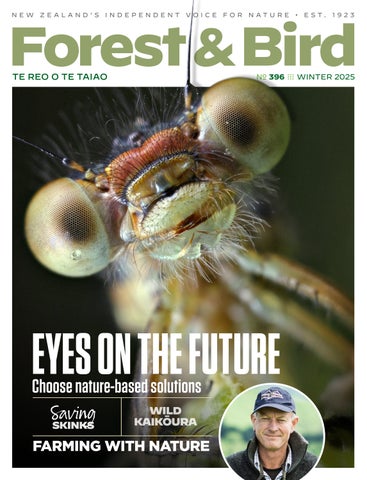
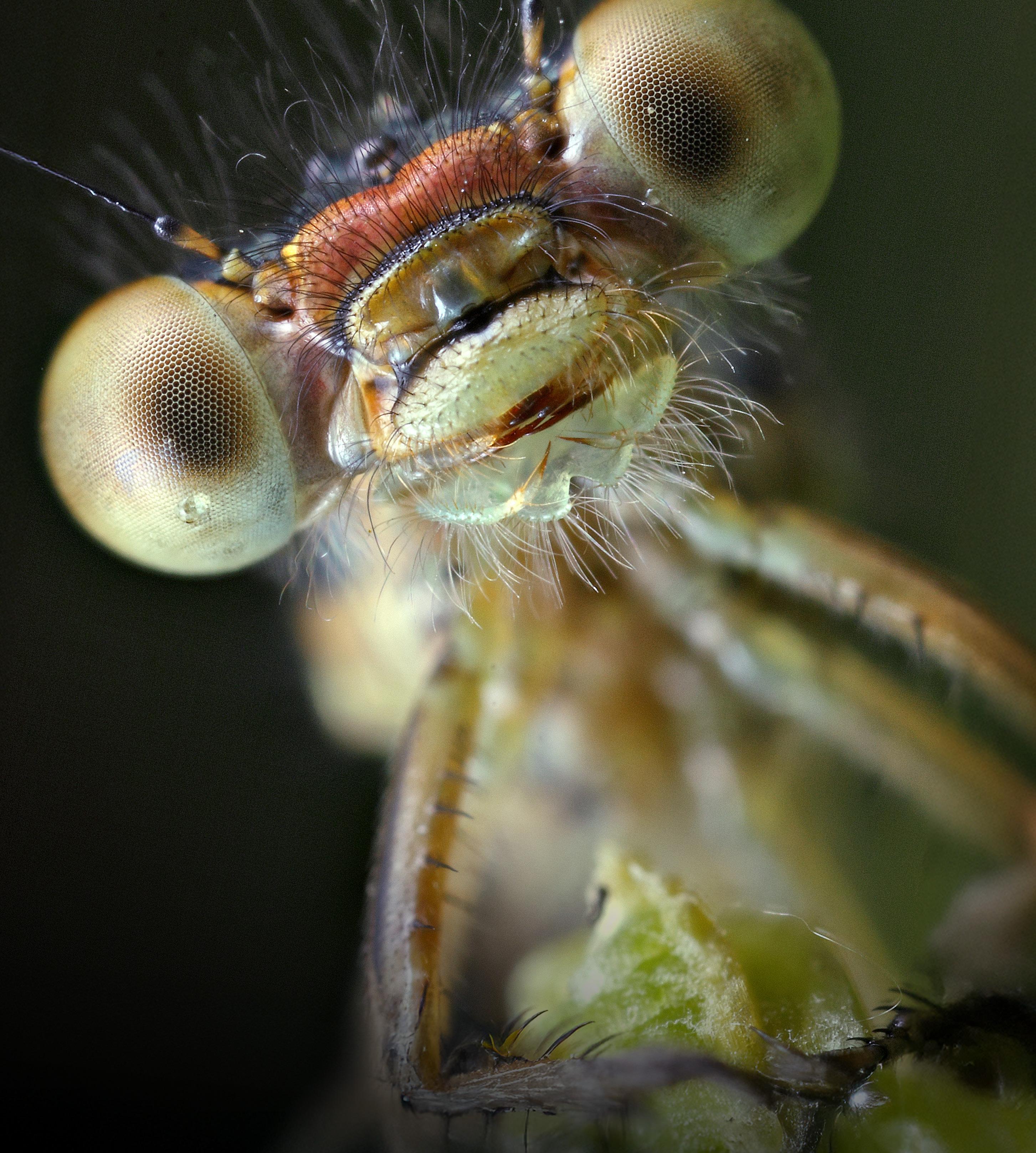
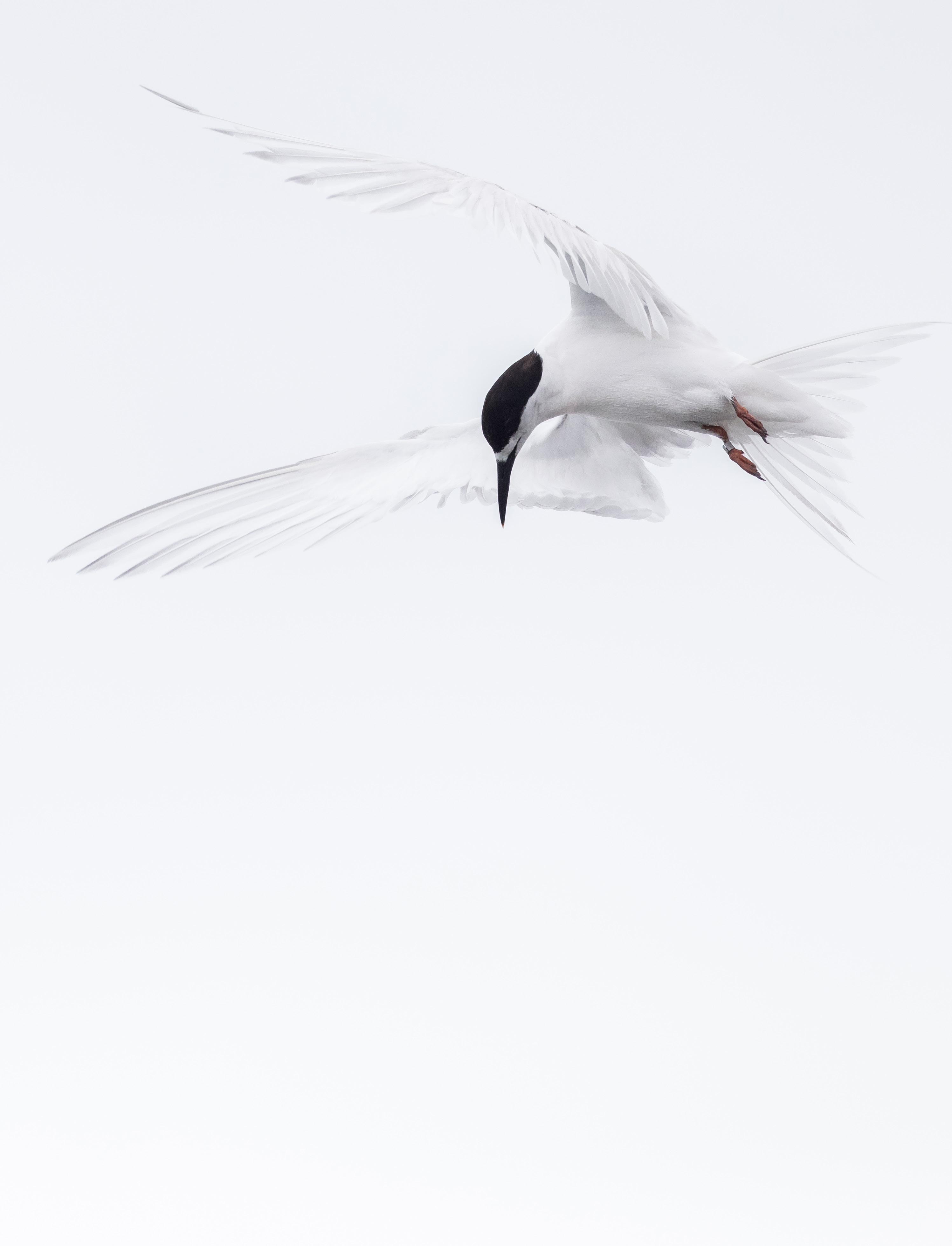
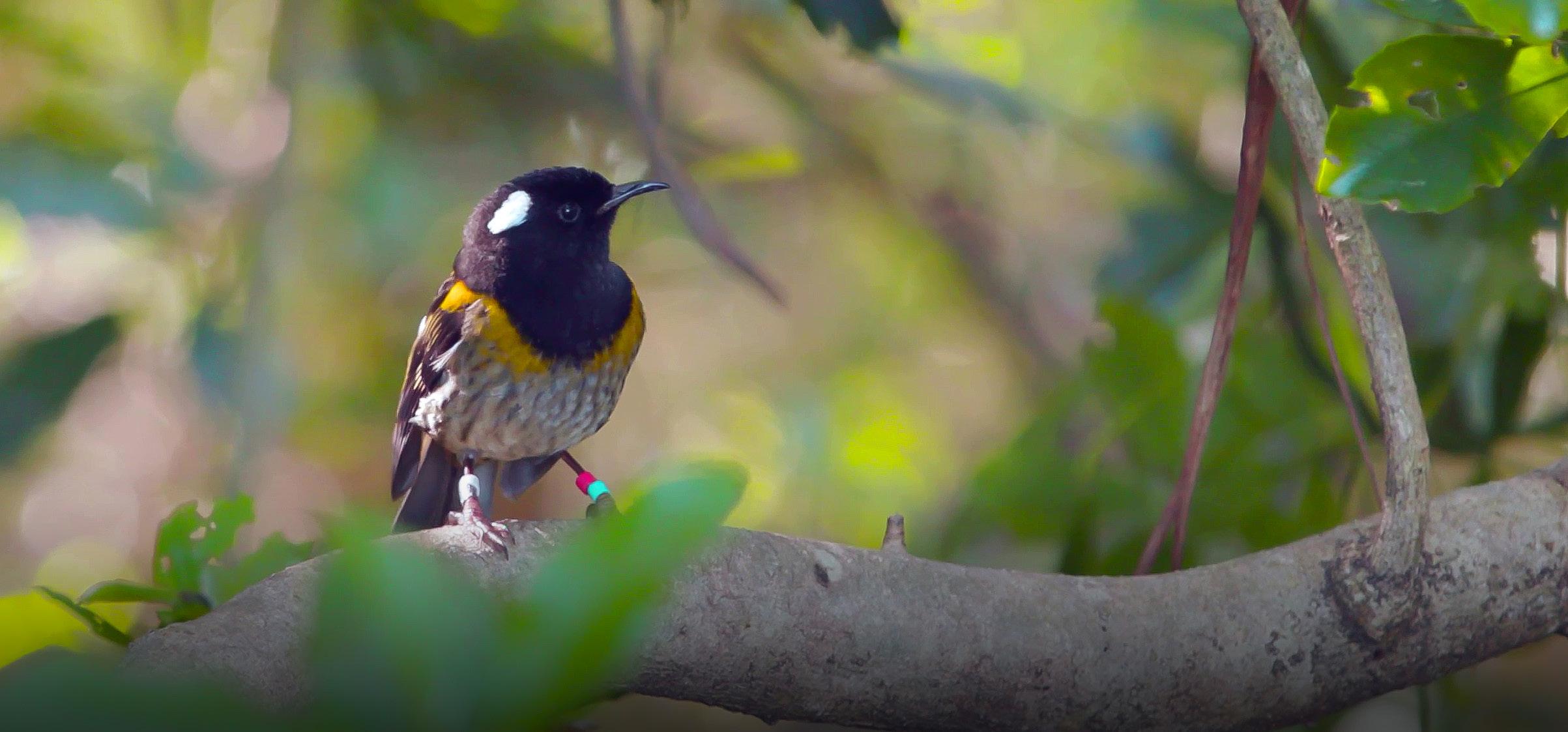
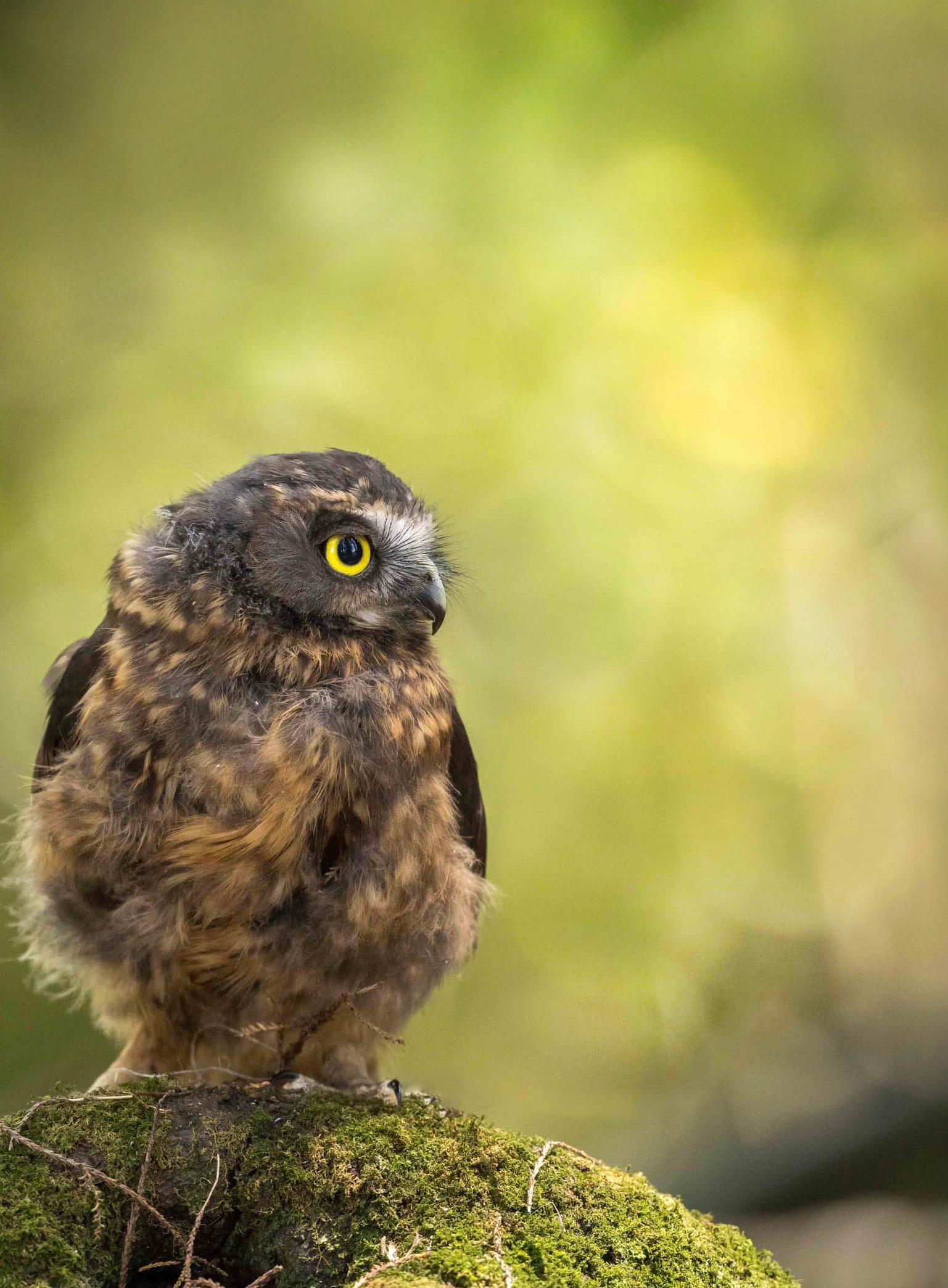
COVER SHOT Kihitara red damselfly. Bryce McQuillan
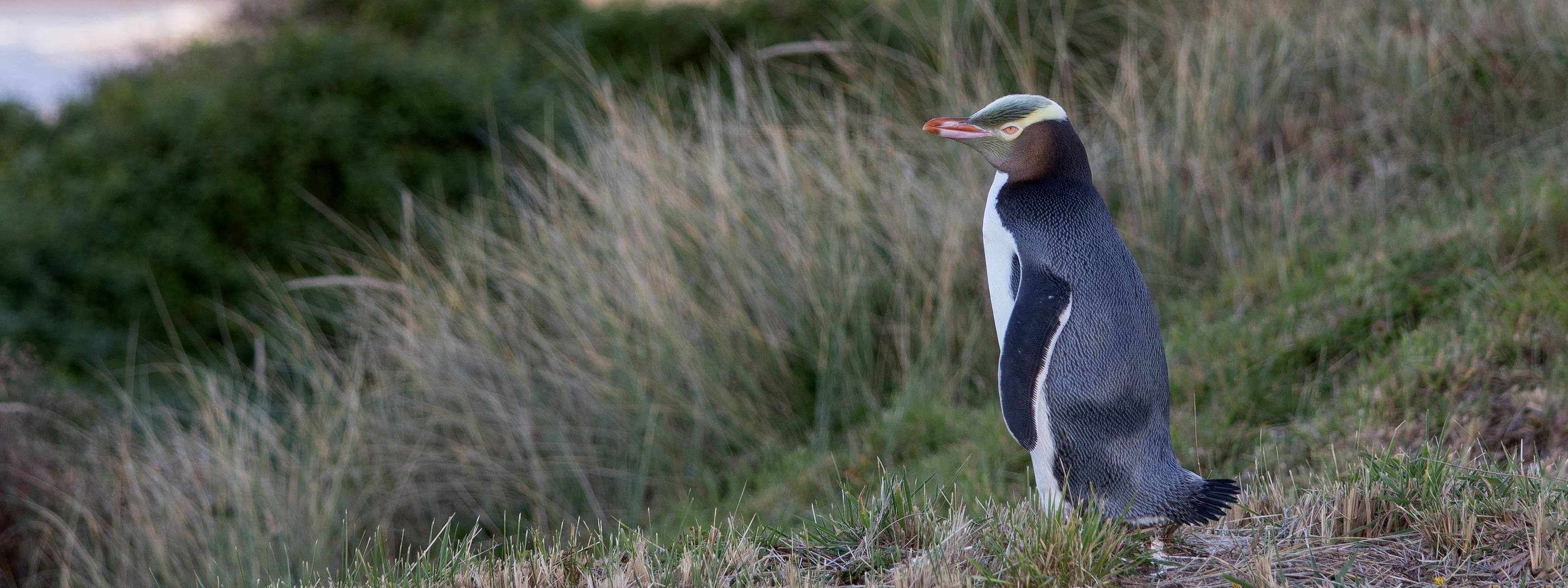
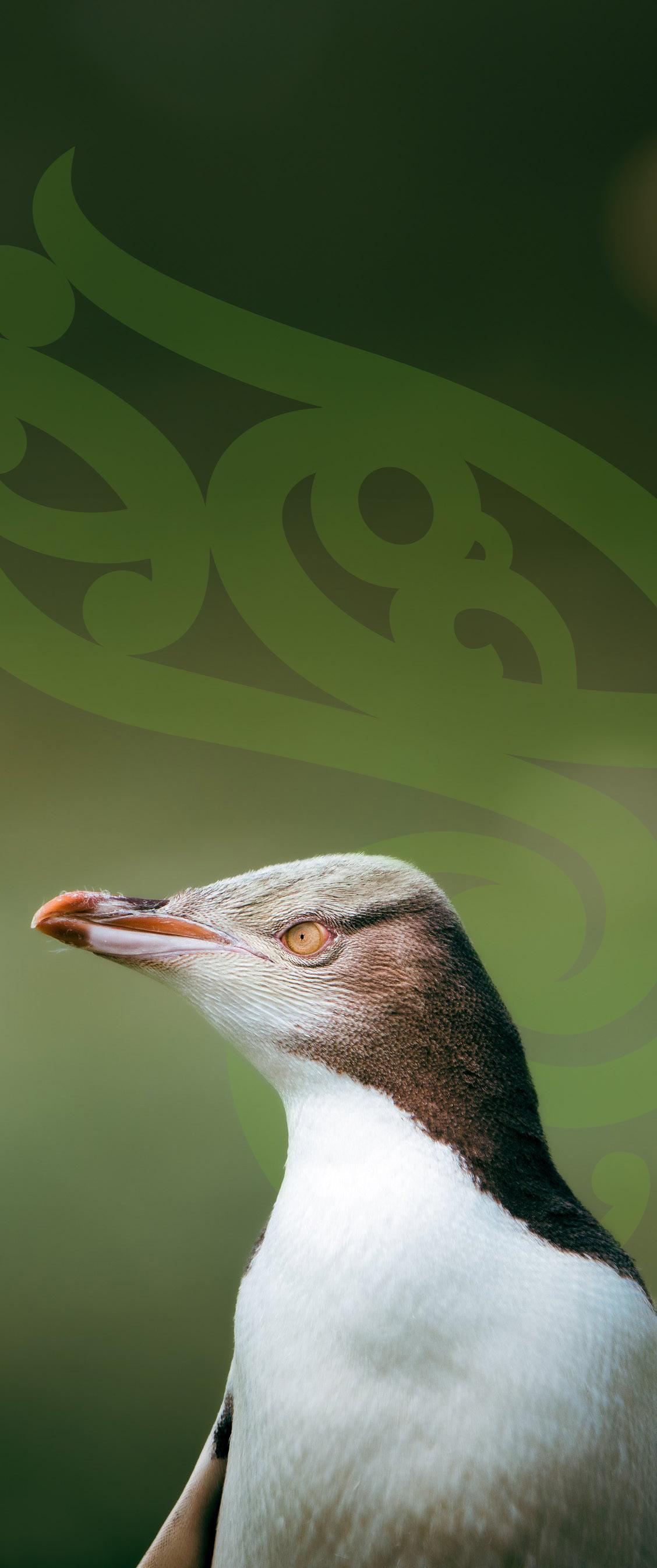
PAPER ENVELOPE Hoiho yellow-eyed penguin. Ross Mastrovich
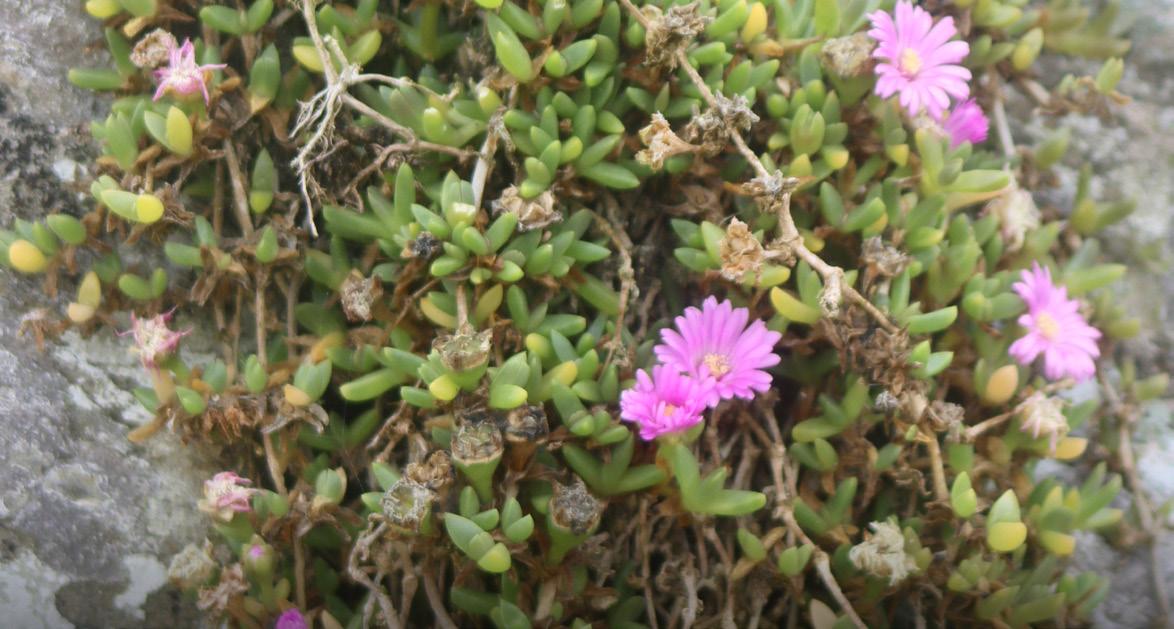
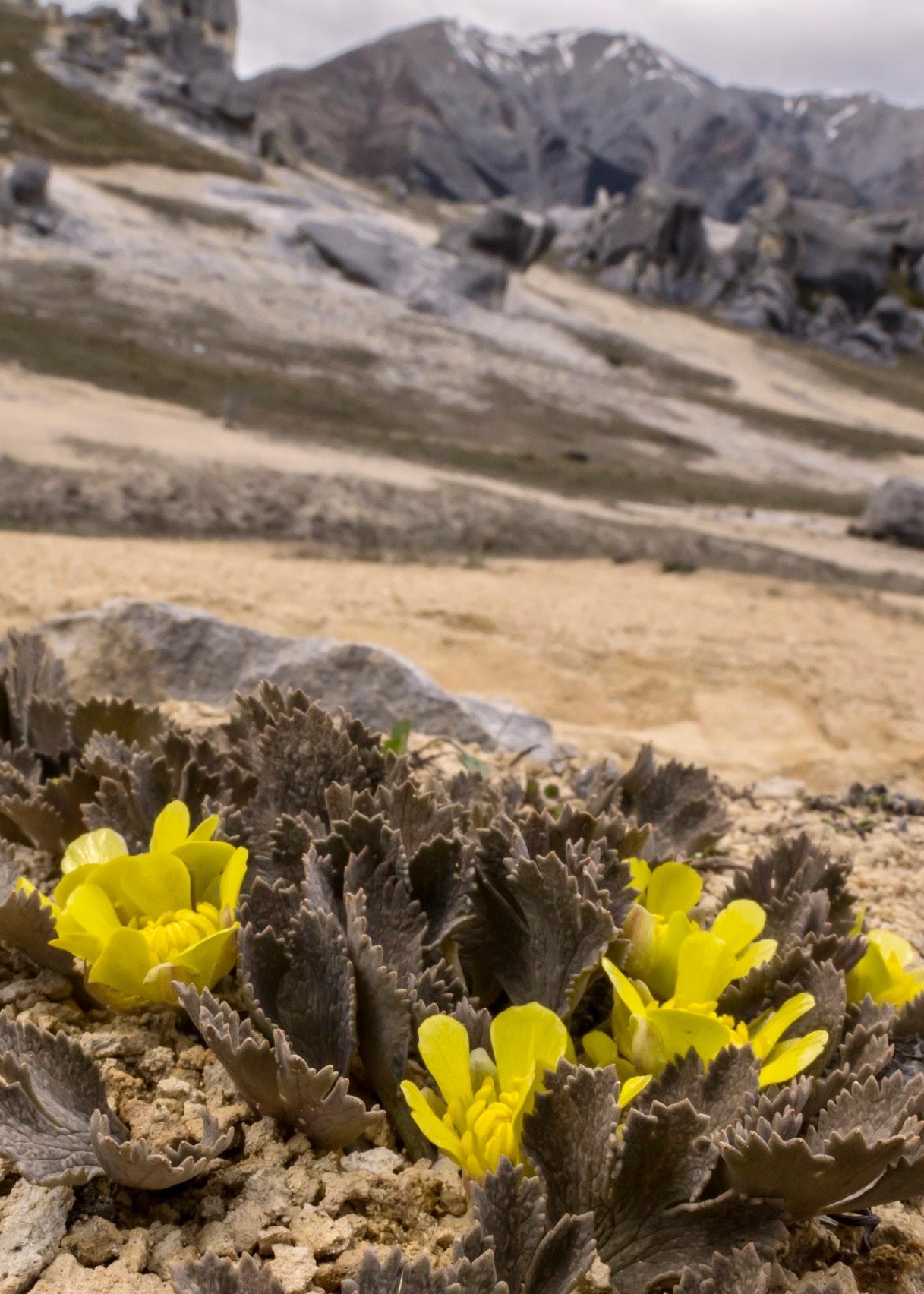
RENEWAL Waiū atua shore spurge (Euphorbia glauca). Rob Suisted
EDITOR Caroline Wood E editor@forestandbird.org.nz
Nature-based solutions
23 Forests for climate
F&B Branch
24 Saving dotterels + Give a Trap
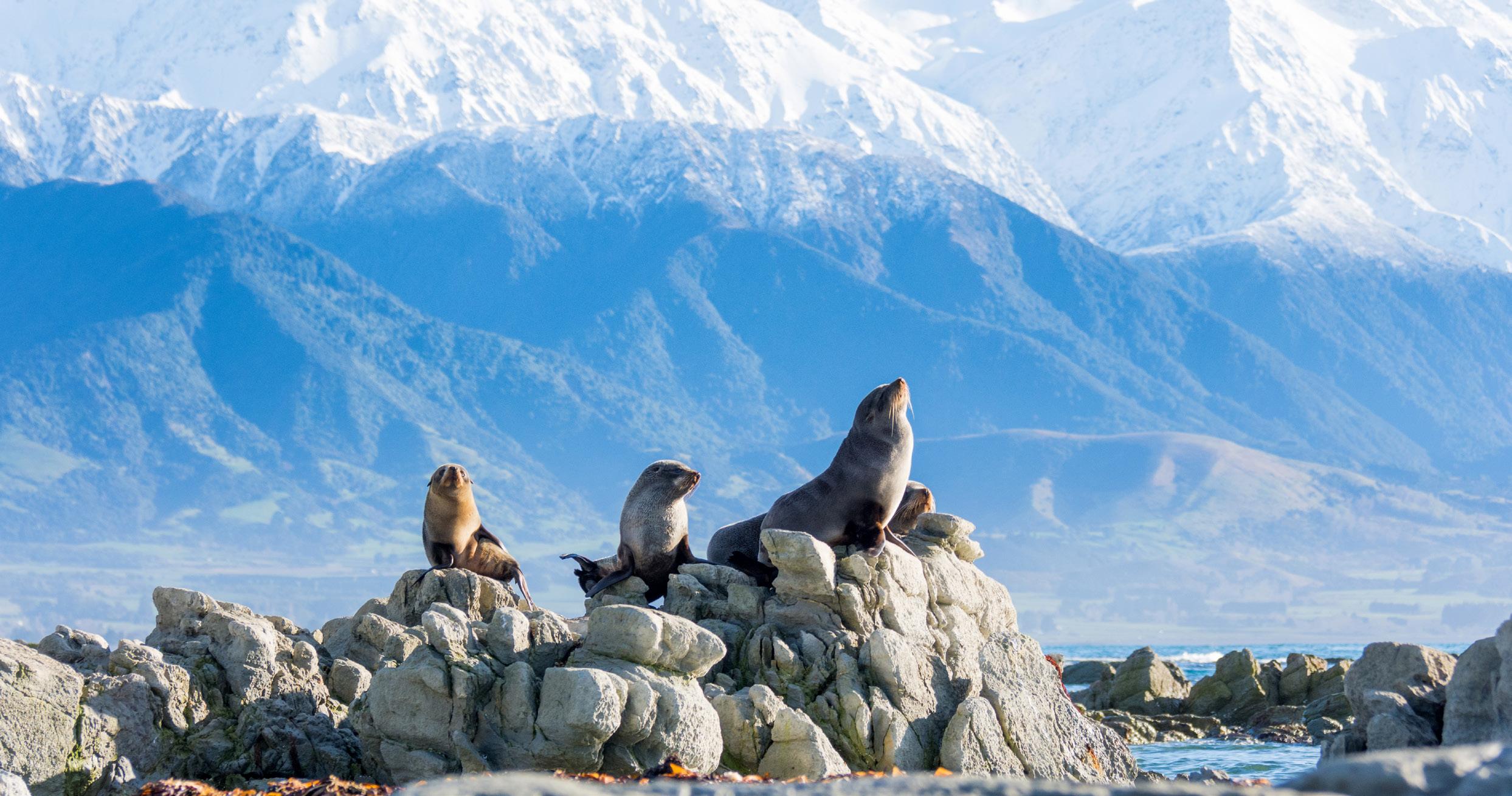
38 Wild Kaikōura + ESA 2
Forest & Bird Youth
26 Join the movement
Birdlife
27 Garden Bird Survey 2025
Predator-free NZ
28 Five wild wins
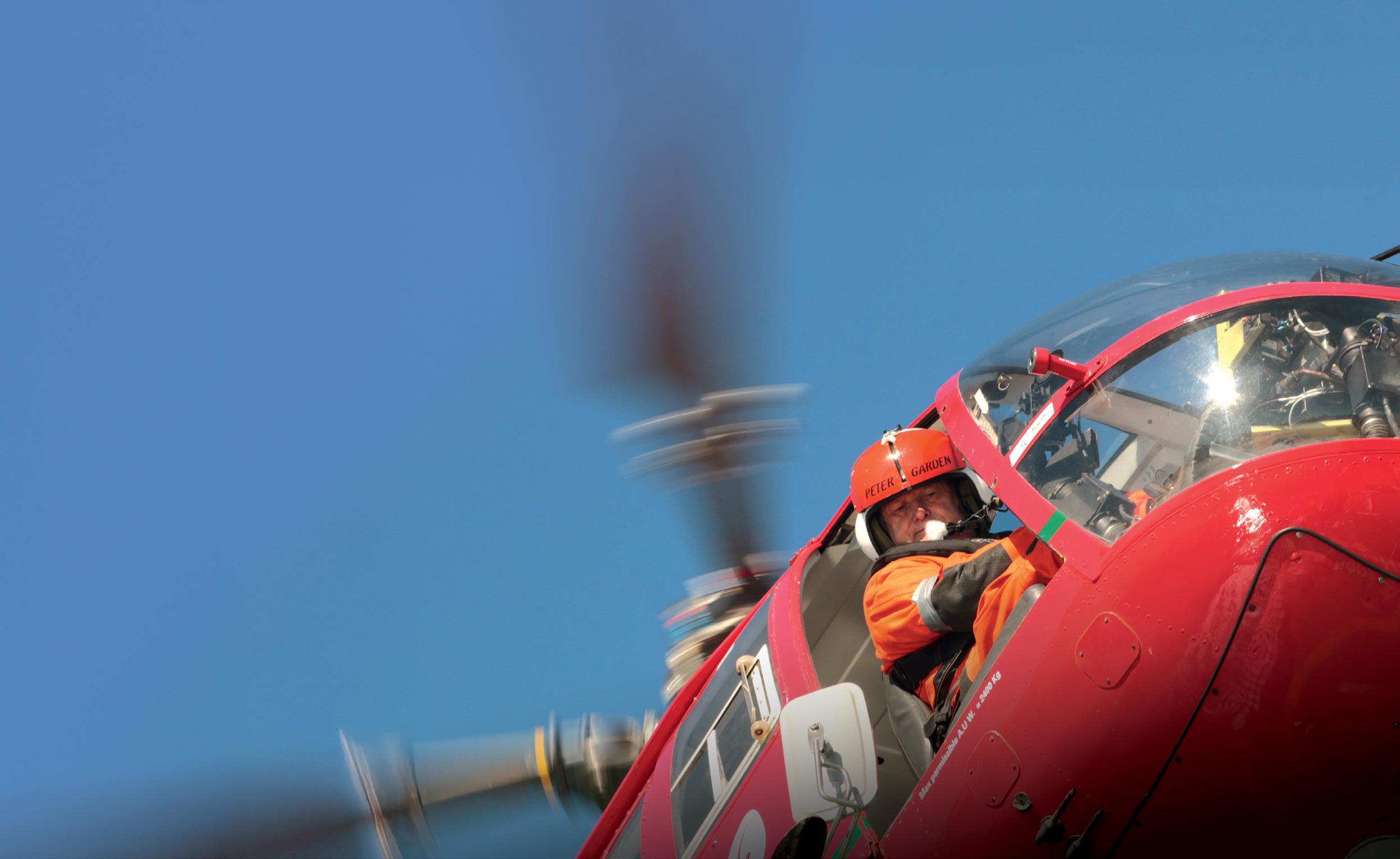
42 Peter Garden: Sky’s the limit
45 Island sanctuaries
ART DIRECTOR/DESIGNER Rob Di Leva, Dileva Design E rob@dileva.co.nz
PRINTING Webstar webstar.co.nz
PROOFREADER David Cauchi
ADVERTISING ENQUIRIES Karen Condon T 0275 420 338 E karen.condon@xtra.co.nz
MEMBERSHIP & CIRCULATION T 0800 200 064 E membership@forestandbird.org.nz
Forest & Bird is published quarterly by the Royal Forest and Bird Protection Society of New Zealand Inc. Registered at PO Headquarters, Wellington, as a magazine. ISSN 0015-7384 (Print), ISSN 2624-1307 (Online). Copyright:
Thank you for supporting us! Forest & Bird is New Zealand’s largest and oldest independent conservation charity.
Join today at forestandbird.org.nz/joinus or email membership@forestandbird.org.nz or call 0800 200 064
Every member receives four copies of Forest & Bird magazine a year.
F&B project
29 Tarapuruhi Bushy Park rat hunt
Going places
30 Restoring Rēkohu Chatham Island Marine
36 Baby blues
51 Seaweed: A Love Story
56 Heal the Hauraki Freshwater
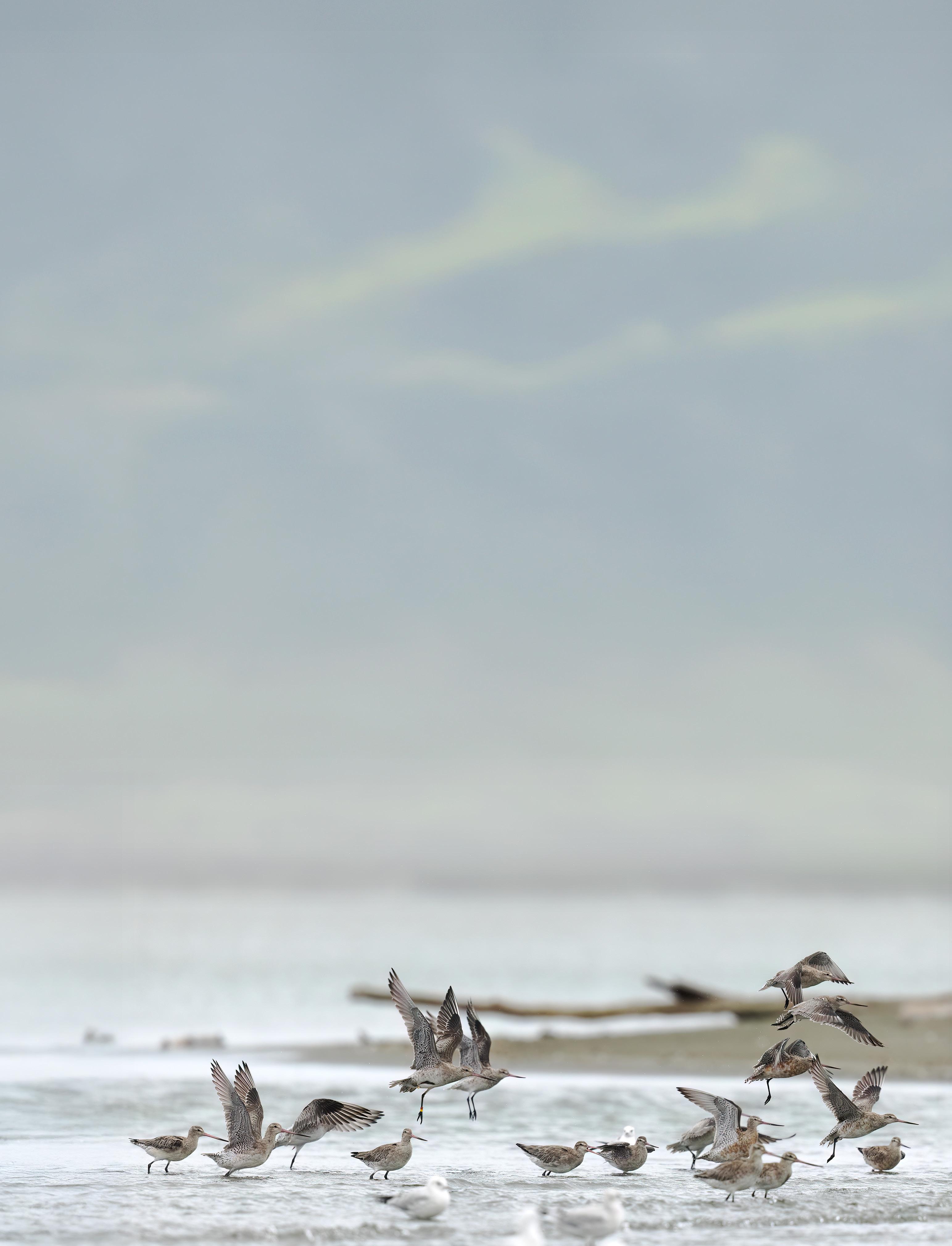
37 Manawatū Estuary
CONTACT NATIONAL OFFICE
Forest & Bird National Office Ground Floor, 205 Victoria Street Wellington 6011 PO Box 631, Wellington 6140
T 0800 200 064 or 04 385 7374
E office@forestandbird.org.nz W forestandbird.org.nz
Vote nature
Electing environmental champions
Through the lens
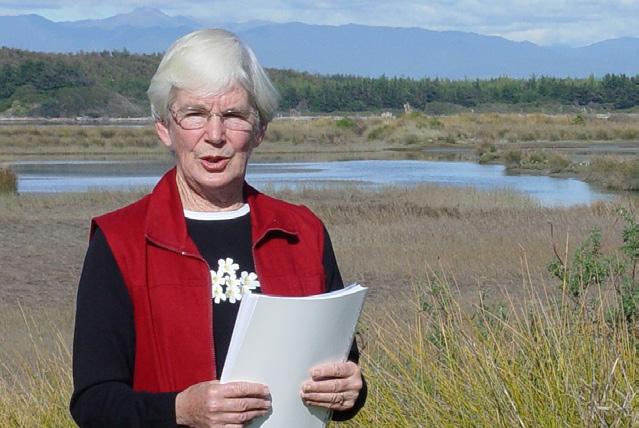
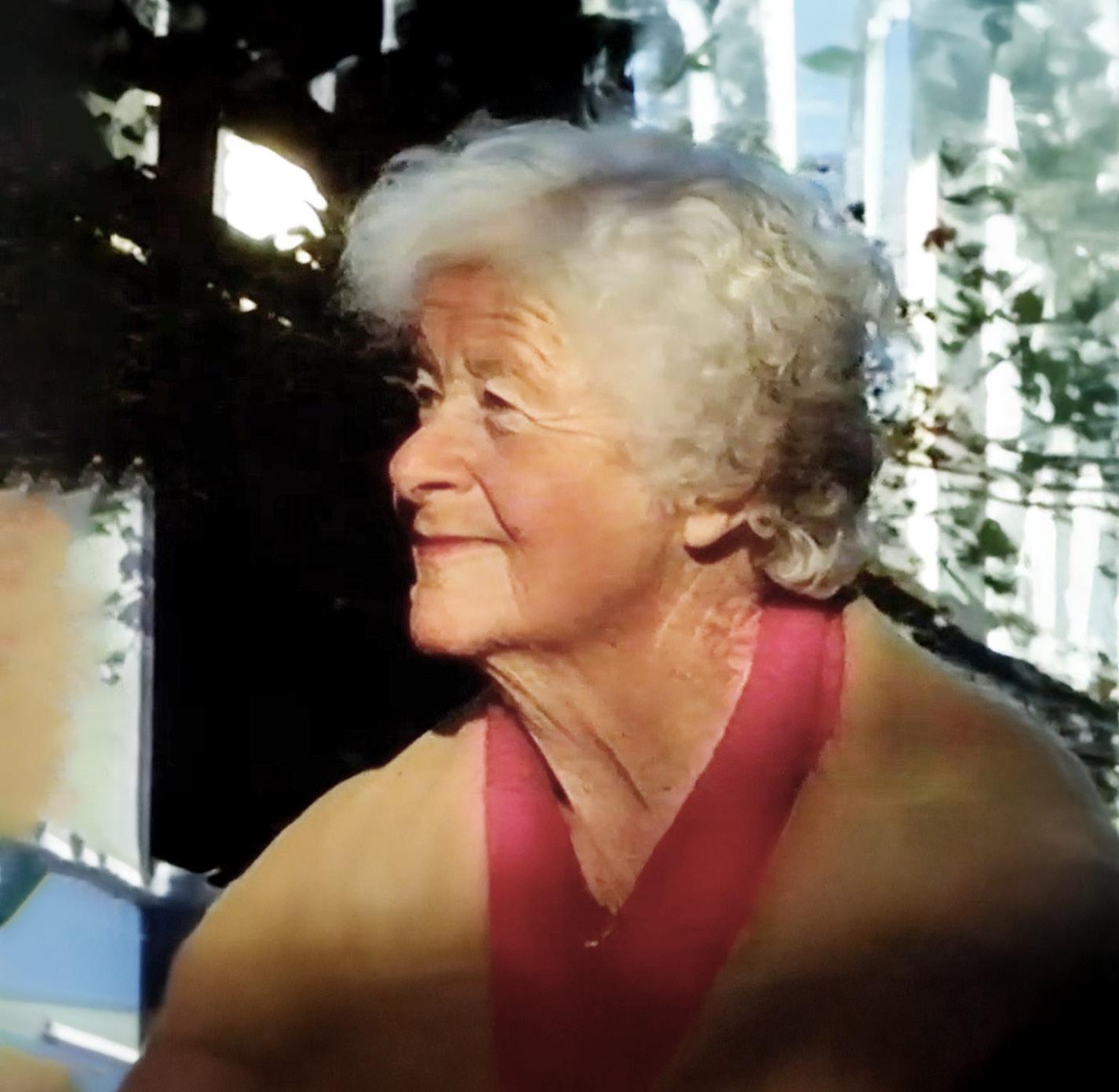
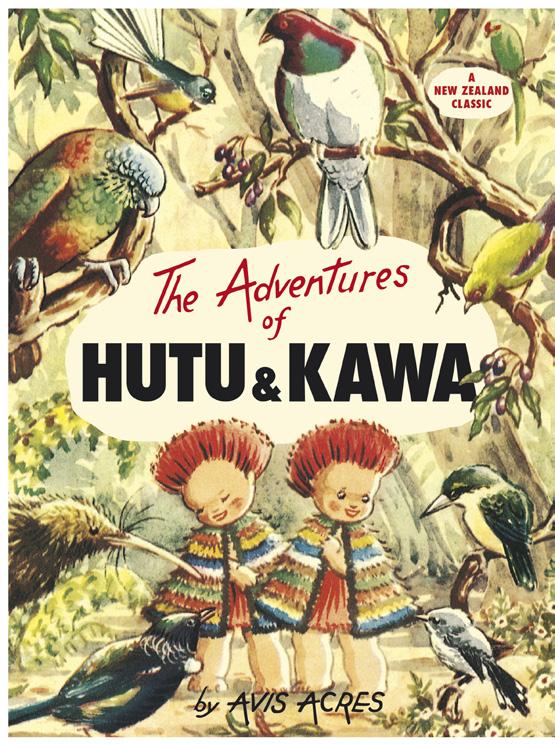
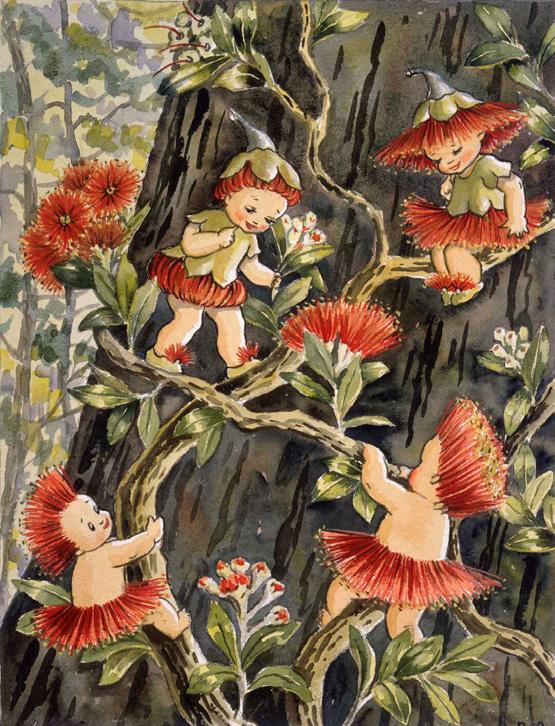
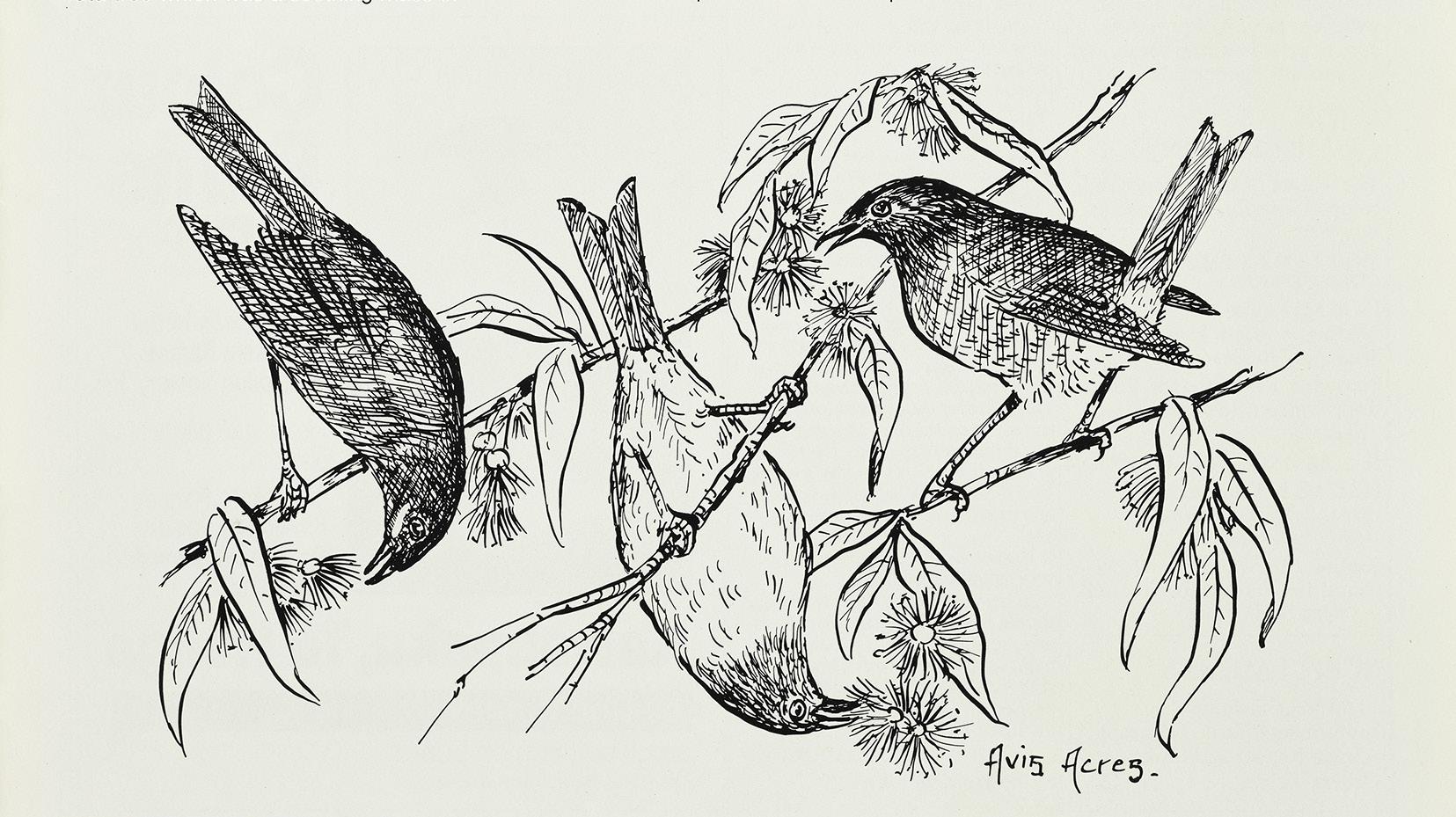
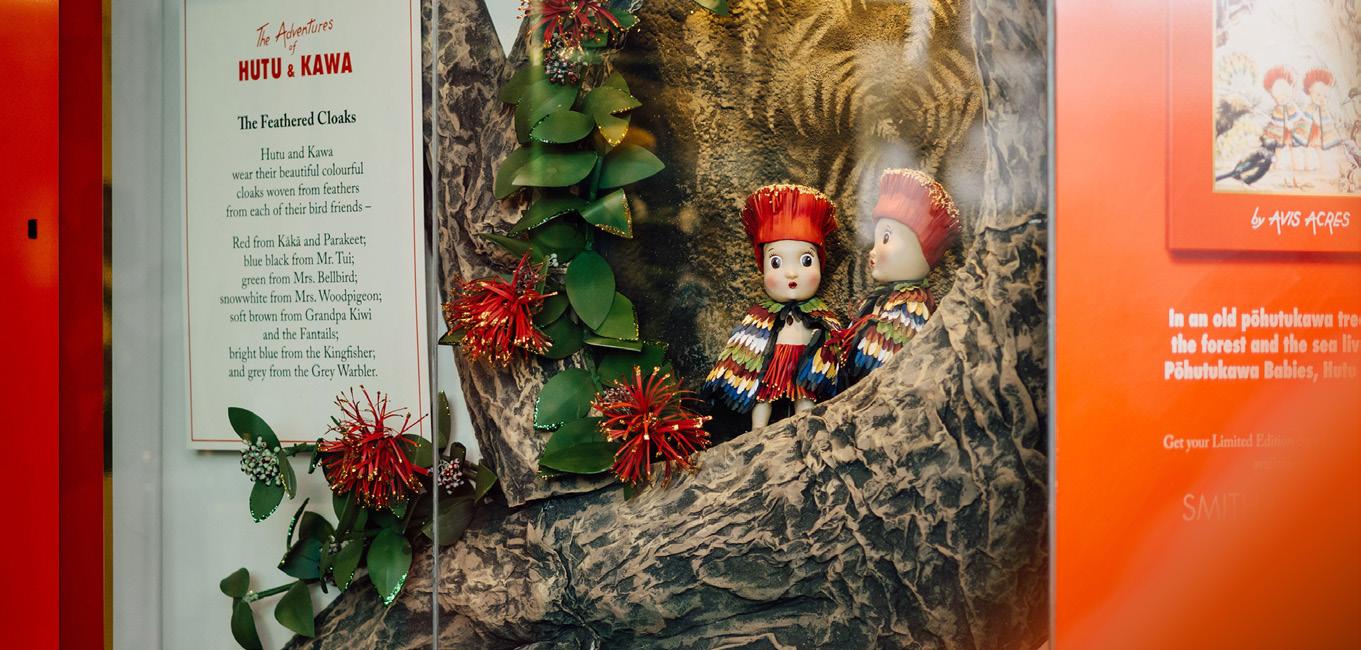
48 Avis Acres: A writer’s legacy
Biosecurity
50 Winds of change
Focus on flora
52 Standing tall: Kiwis and their trees
In the field
54 For the love of rails
Poetry
60 Ode to nature: Four poems
Market place
62 Classifieds
Last word
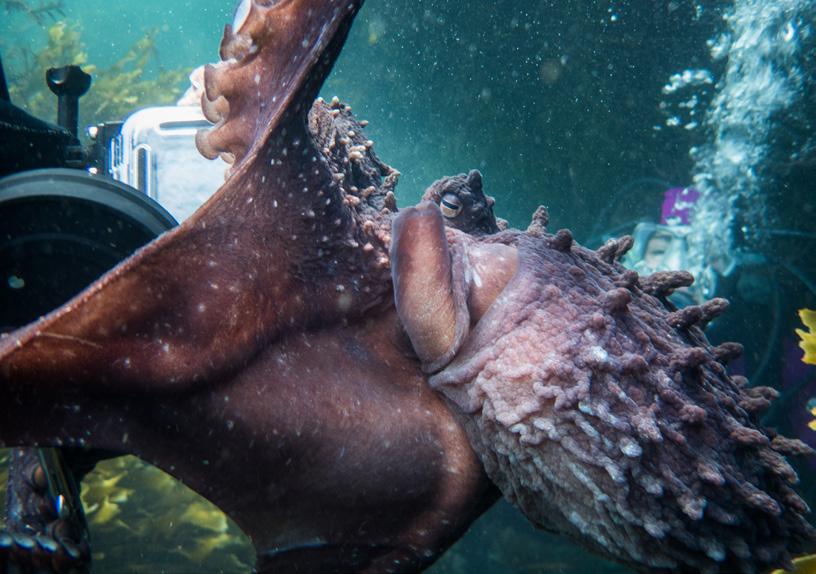
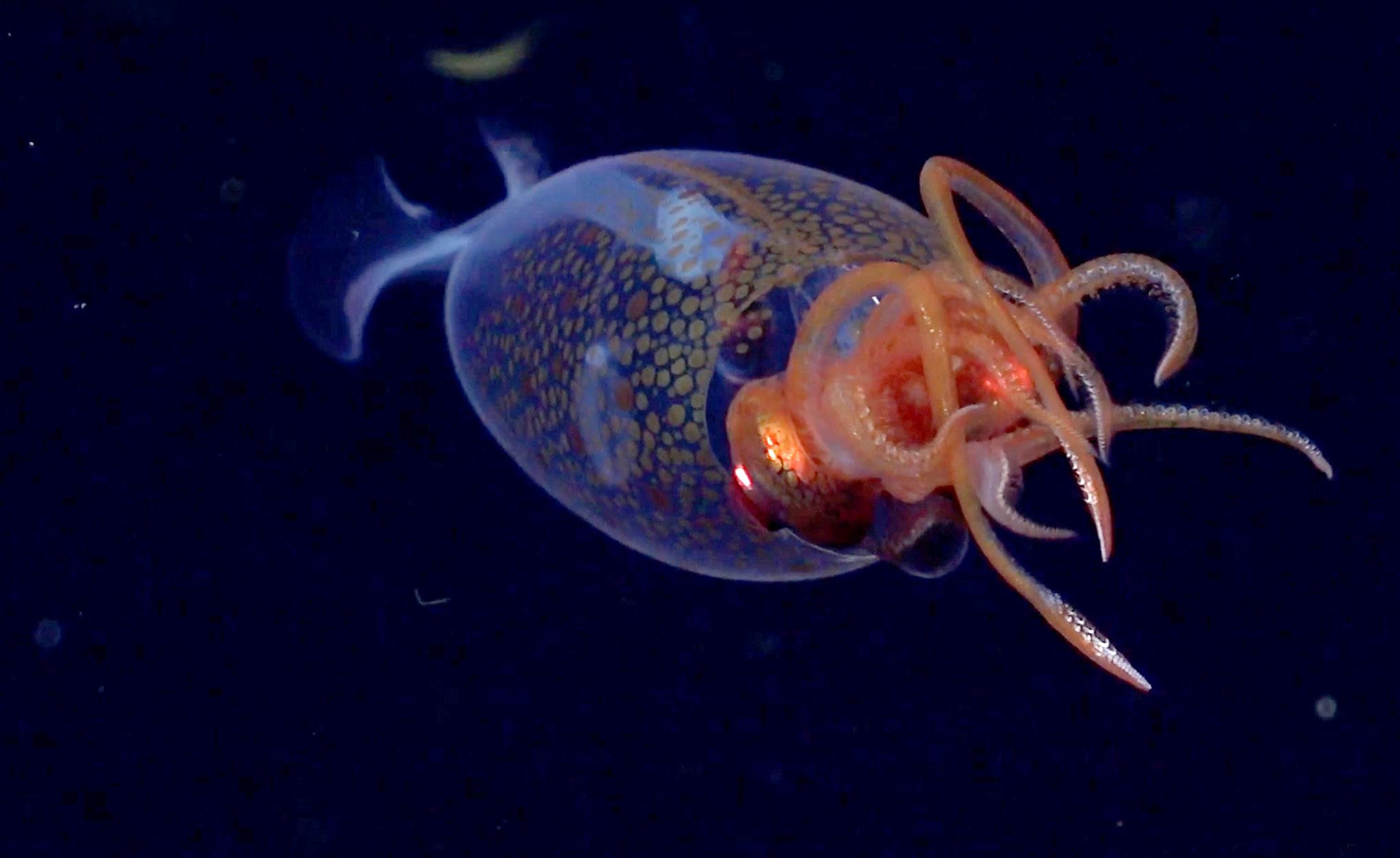
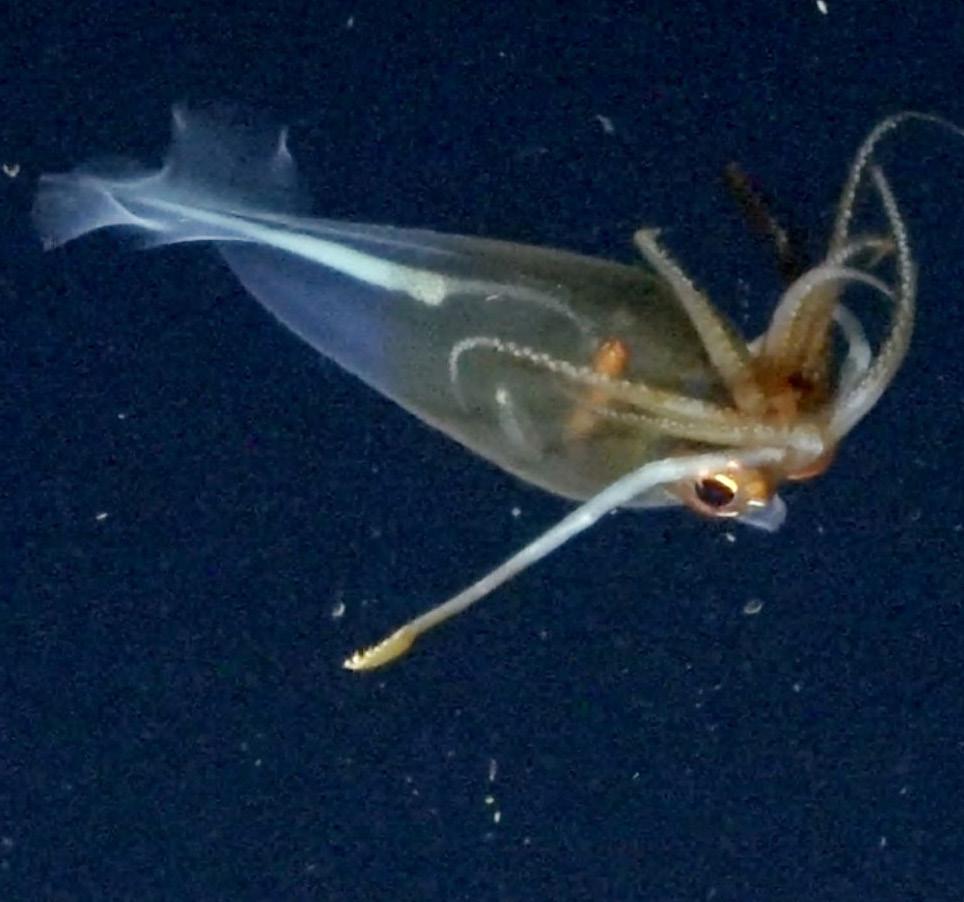
64 Colossal squid: First live sighting
Parting shot
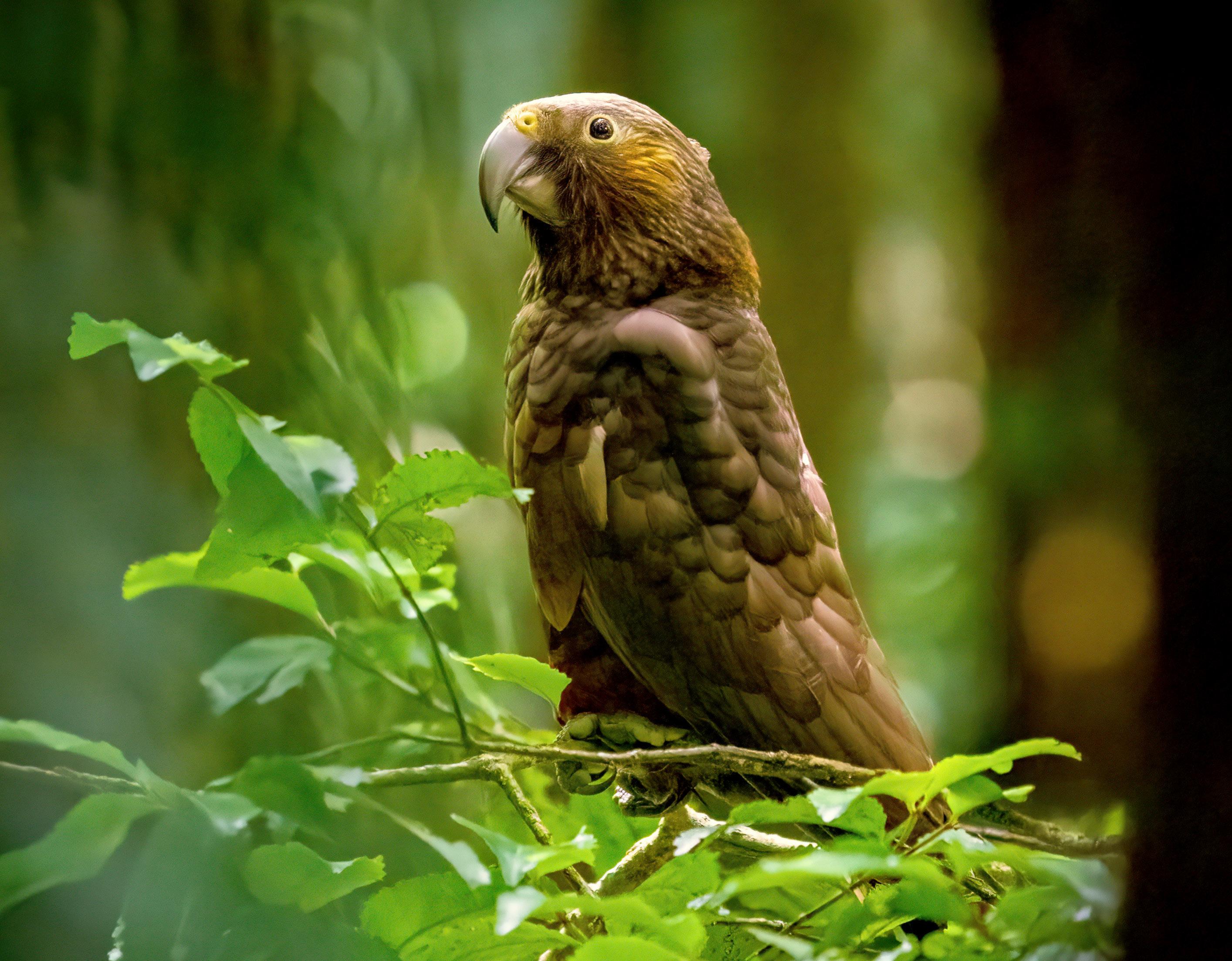
IBC Kākā
CONTACT A BRANCH See forestandbird.org.nz/branches for a full list of our 45 Forest & Bird branches.
Royal Forest and Bird Protection Society of New Zealand Inc. Forest & Bird is a registered charitable entity under the Charities Act 2005. Registration No CC26943.
PATRON Her Excellency The Rt Honourable Dame Cindy Kiro, GNZM, QSO Governor-General of New Zealand
CHIEF EXECUTIVE Nicola Toki PRESIDENT Kate Graeme DEPUTY PRESIDENT Mark Hanger TREASURER Nigel Thomson BOARD MEMBERS Chris Barker, Bruce Clarkson, Romilly Cumming, Ben Kepes, Kate Littin, James Mackenzie, Eugenie Sage
CONSERVATION AMBASSADORS Sir Alan Mark, Gerry McSweeney, Craig Potton DISTINGUISHED LIFE MEMBERS Graham Bellamy, Linda Conning, Ann and Basil Graeme, Philip Hart, Joan Leckie, Hon. Sandra Lee-Vercoe, Carole Long, Peter Maddison, Sir Alan Mark, Gerry McSweeney, Craig Potton, Fraser Ross, Eugenie Sage, Guy Salmon
CHOOSE NATUREBASED SOLUTIONS
Here at Forest & Bird, we love nature-based solutions because of the multiple benefits they bring for both people and wildlife. This is why it makes sense for councils and the government to work with nature rather than against it.
Healthy natural ecosystems, such as pest-free forests and well-managed wetlands, give us essential services such as clean water, carbon sequestration, and flood protection.
Other built solutions – for example, stormwater basins or living green roofs – create valuable habitat for wildlife while mitigating climate change.
All nature-based solutions offer new ways for communities to connect with te taiao. As we all know, being surrounded by nature gives us a wonderful sense of mental and physical wellbeing.
Of course, nature-based solutions are not a new concept. The Society has been advocating for some of them – planting native forests, protecting rivers and wetlands, and restoring native habitat – for 100 years.
You may have your own lived example from your childhood. Mine is Matua Saltmarsh Reserve, north Tauranga.
In the 1980s, a developer purchased the Matua estuarine saltmarsh to build a canal housing development. The local community opposed the proposal, saying it would lead to the loss of significant habitat and be a flooding risk.
Had the plans progressed, by now the community would be facing bills in the millions from repeated flooding events in Tauranga. The city council (aka ratepayers) would have had to invest in hugely expensive stormwater infrastructure to protect local homes.
Luckily, that’s not what happened in my home town. Instead, the local planning tribunal refused the development, and the council purchased the land for recreation, wildlife, and flood mitigation.
Today, this urban wetland reserve holds and filters stormwater from the surrounding suburbs before controlling its release it into the estuary, preventing flooding.
There was another benefit for locals too. My childhood neighbourhood had no walking tracks, no safe places to wander or cycle, a sparse treescape, and no visible native birds.
Once the Matua Saltmarsh reserve had been constructed, we had an exciting place to visit, with offroad walking and cycling paths connecting us safely to other parts of the city.
Today, these accessible wetland pathways are heavily used by locals for recreation, cycling, running, and dog walking. Tūī and pīwakawaka visit our gardens, and moho pererū banded rail, mātātā fernbird, and even critically endangered matuku hūrepo bittern are present in this urban wetland.
The councillors’ decision to create a wildlife and stormwater reserve four decades ago has paid off. It’s time for more councils to chose smart nature-based solutions like these.
Let’s work with nature to help communities become more resilient and happier, while bringing back birdlife for future generations to enjoy and cherish.
Graeme Perehitini, Te Reo o te Taiao President, Forest &
Bird
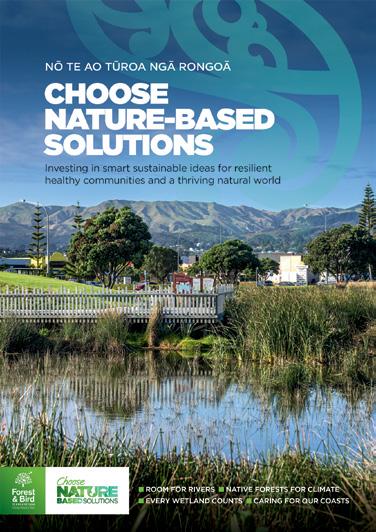
Enclosed with your magazine is a copy of Forest & Bird’s new resource with examples of nature-based solution case studies from around the country. Please share it with your friends, whānau, local councillors, and council officials ahead of the local elections. You can download and print more copies at forestandbird.org.nz/ campaigns/choose-nature-basedsolutions.
Kate
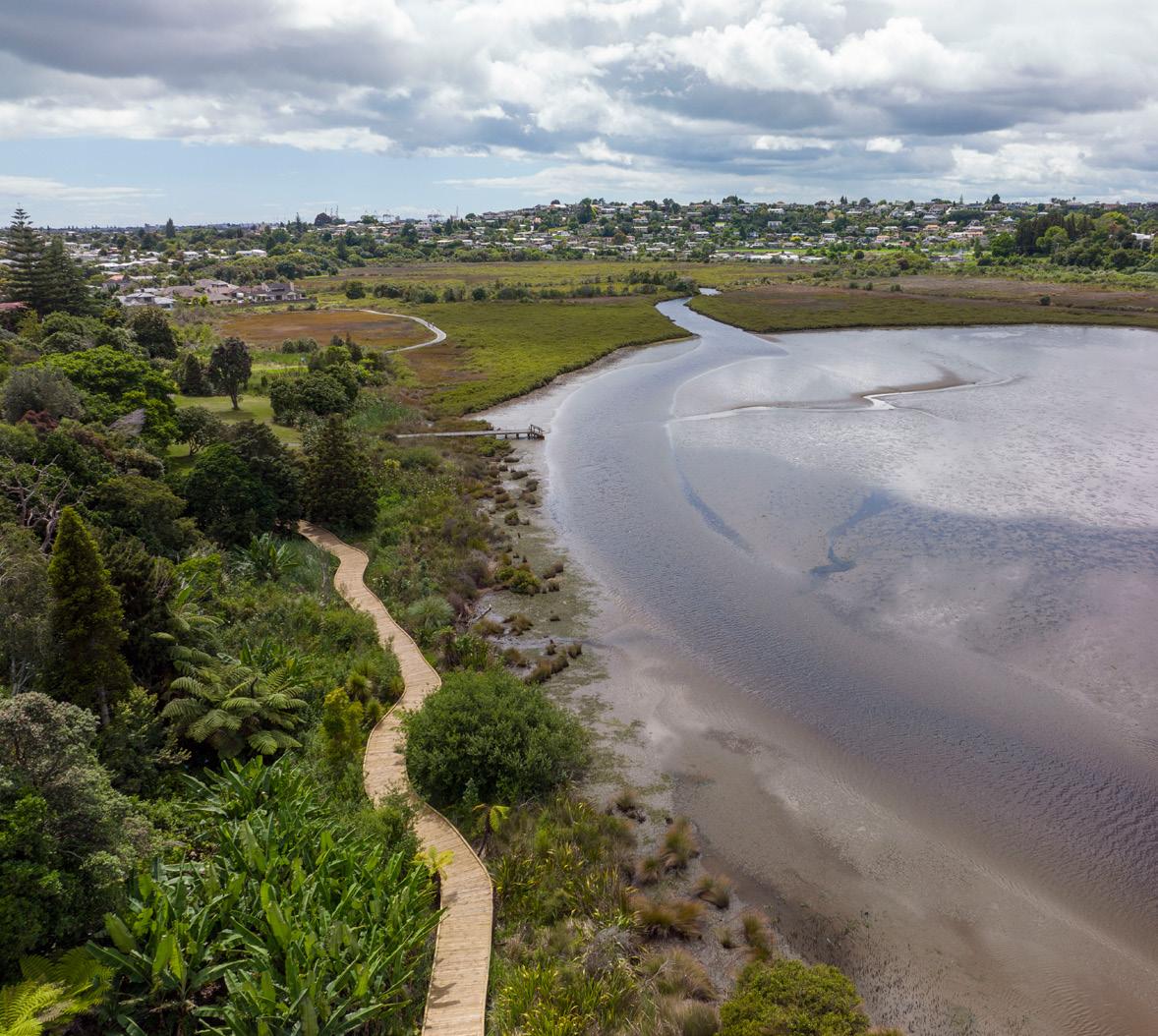
Matua Saltmarsh. Tauranga City Council
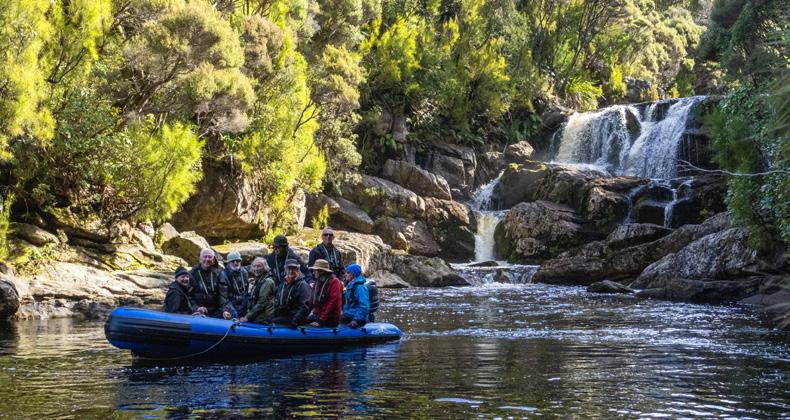
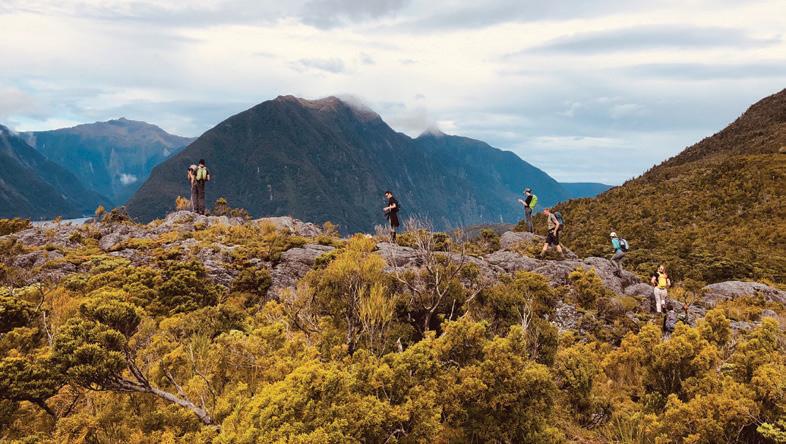
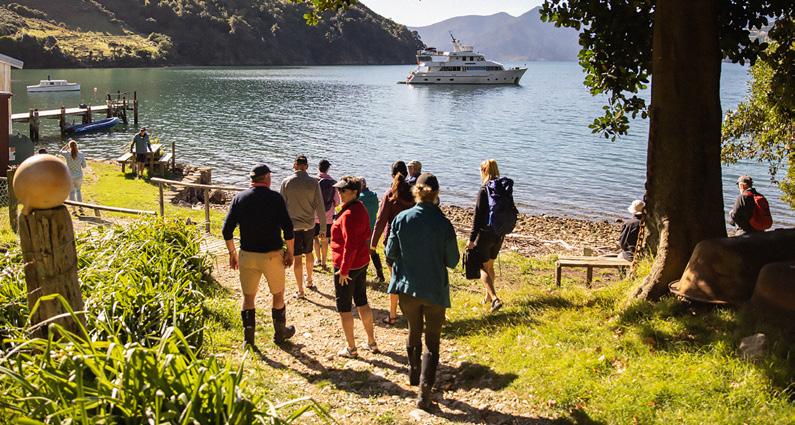
Heritage Expeditions have been sharing the wilds of New Zealand with like-minded guests for more than 40 years and ensuring their conservation for more than 50 years. We invite you on the voyage of a lifetime on an unforgettable, intimate exploration of some of Aotearoa’s most remote, and iconic locations, many only accessible by sea. Travel is aboard our luxurious 18-guest expedition yacht, Heritage Explorer, and by Zodiac, kayak and on foot with New Zealand’s own expedition cruise pioneers.
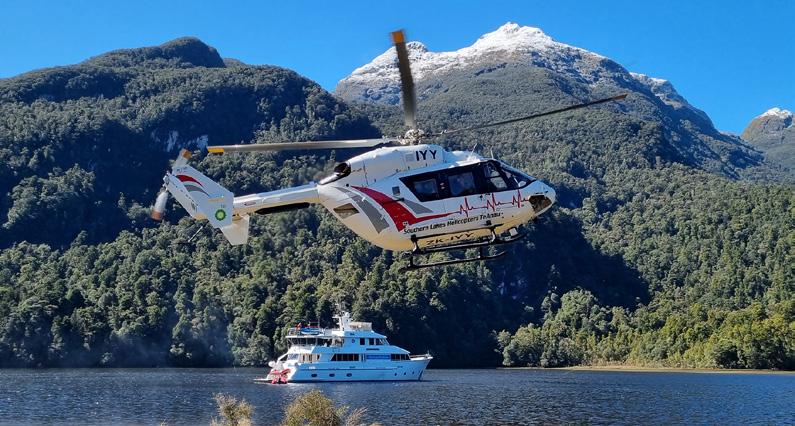
ALL-INCLUSIVE CRUISING Scenic helicopter transfer^ • all on board accommodation & meals • house wine, beer & soft drinks • all shore excursions • experienced expedition team • kayaks & fishing equipment available • transfers to and from Heritage Explorer
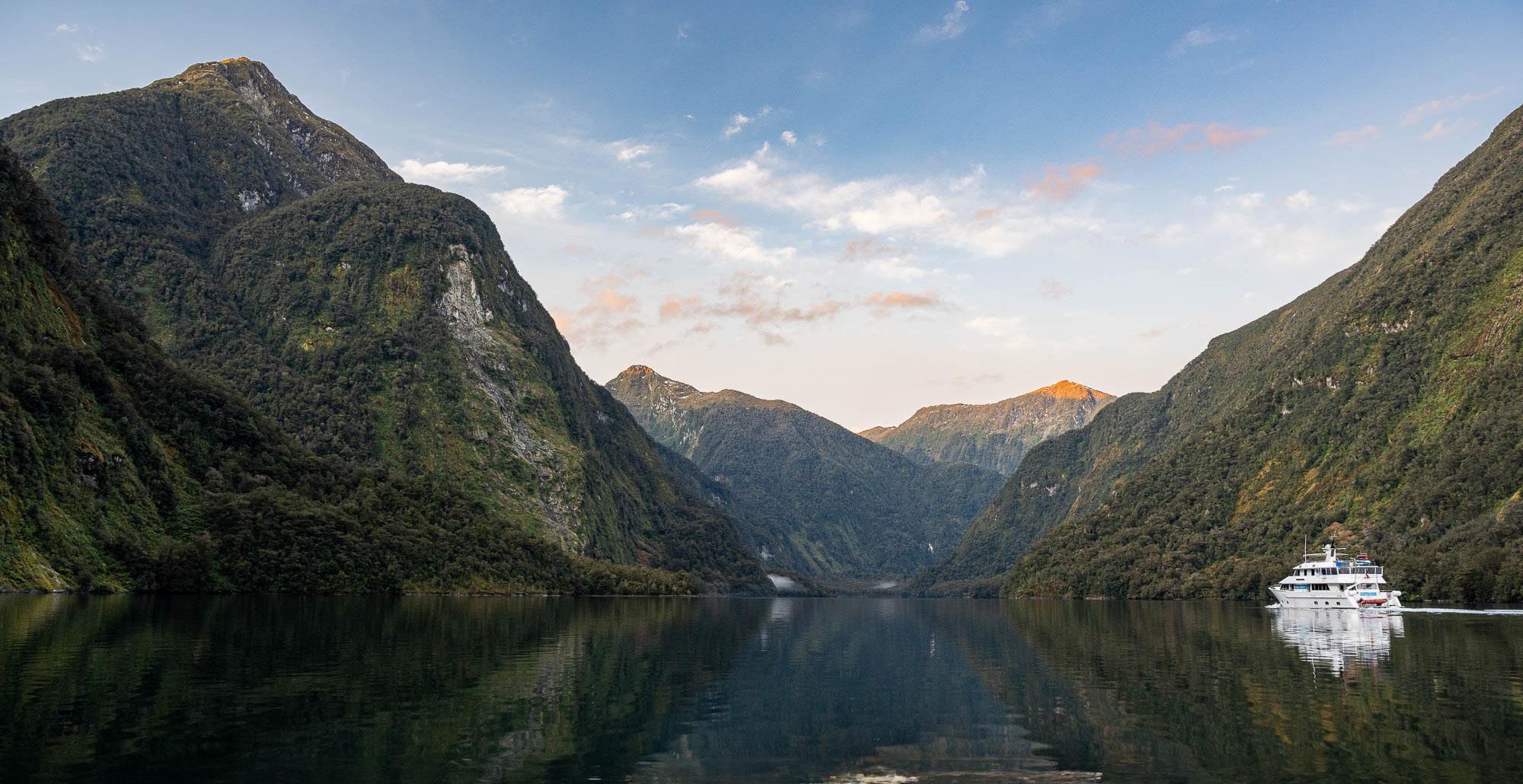
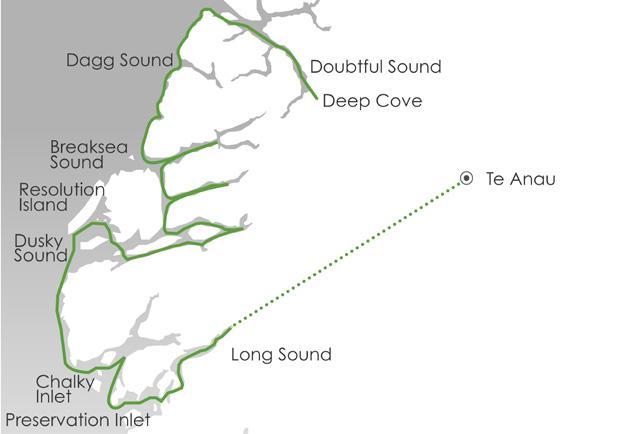
Explore the sunken valleys, towering mountains and stunning scenery of Fiordland, Dusky and Doubtful Sounds, Luncheon Cove, Acheron Passage and more on an intimate cruise of this iconic wonderland.
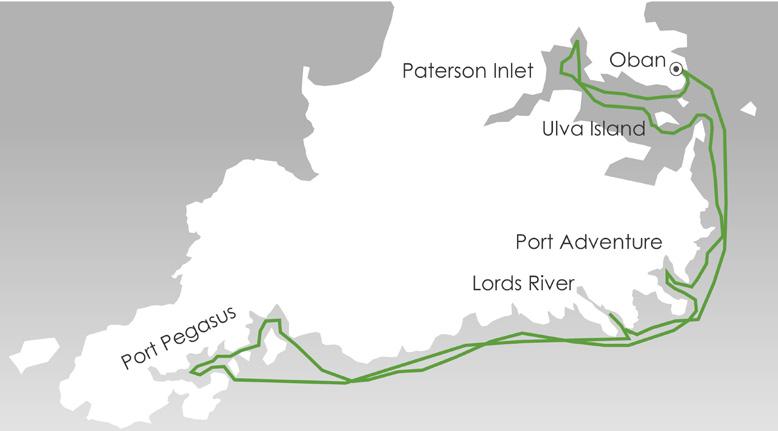
Experience the time-forgot rawness of wildlife-rich Stewart Island and visit Ulva Island - your best chance of seeing a Kiwi during the day. Explore Ports Pegasus and Adventure, Zodiac safari up Lords River and more.
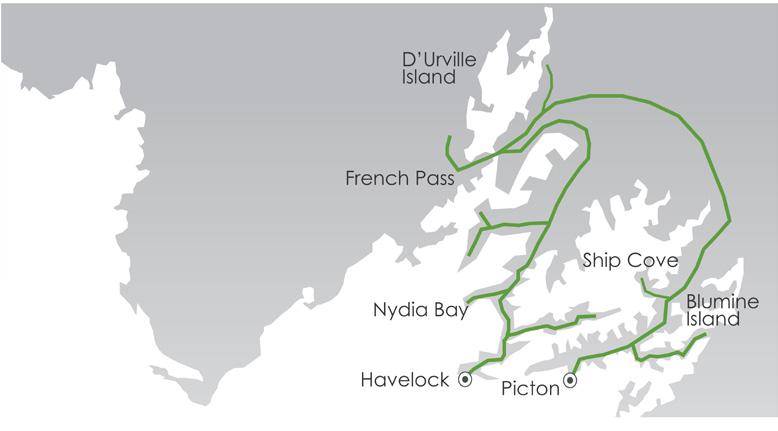
Discover the tranquil waterways, wildlife and rich history of New Zealand’s Marlborough Sounds on an unforgettable adventure exploring Queen Charlotte and Pelorus Sounds, French Pass and D’Urville Island.
LETTERS
YOUR FEEDBACK
Forest & Bird welcomes your thoughts on conservation topics. Please email letters up to 200 words, with your name, home address, and phone number, to editor@ forestandbird.org.nz, or by post to the Editor, Forest & Bird magazine, 205 Victoria Street, Wellington 6011, by 1 August 2025. We don’t always have space to publish all letters or use them in full. Opinions expressed on the Letters page are not necessarily those of Forest & Bird.
NATURE FOR EVERYONE
I know of at least three examples of special and unique places on conservation land where access is restricted. This is reasonable given the special nature of these places. But the access is restricted essentially by money. The first is the White Heron Sanctuary in South Westland. To visit the sanctuary, you will need to take a tour with the local company costing $150. The second is visiting the Royal Albatross Colony on Otago Peninsula. The cheapest option here is $60. The third is visiting the Honeycomb Caves near Karamea. This will cost a whopping $155 per adult. The problem here is that essentially only middle class or wealthy people can afford to do this. For ordinary people, and especially families, the amount of money involved is exorbitant. While I understand the need to restrict access, only a small group of people will ever get to them. These are special and interesting places and should be available to all New Zealanders.
Scott Stocker, Nelson
FAST TRACK FIASCO
I was one of thousands of concerned people who lodged a submission rejecting the Fast-track Approvals Bill. Moreover, the excellent article headlined “Communities silenced” (Summer 2024) shows that this ill-conceived Bill is both antidemocratic and contrary to the rule of law! Furthermore, the day that Parliament went into recess for its summer holidays, the House Speaker Gerry Brownlee allowed a further 150 infrastructure projects to be included despite the advice of the Clerk David Wilson and his deputy warning that this was constitutionally unwise. The full effect of the environment was kept below the radar, and the banners proclaiming “Stop the fast-track” fell on deaf ears. The Minister for Infrastructure Chris Bishop was well aware of his actions and often posits: “All I want to do is to build more houses.”
Brian Collins, Lower Hutt
WRITE AND WIN
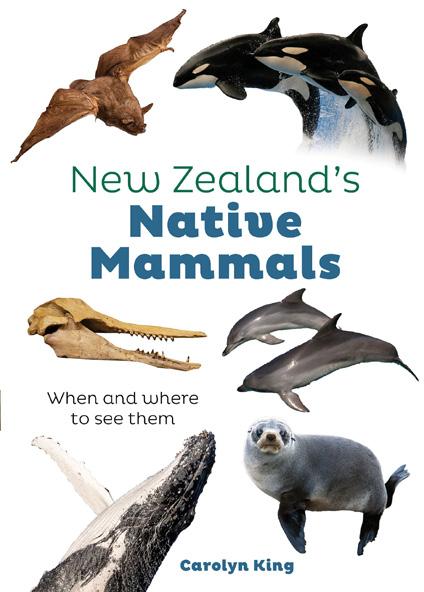
The best contribution will receive a copy of New Zealand’s Native Mammals by Carolyn King (Upstart Press, RRP $39.99). Learn about our bats of unique and ancient descent, plus 57 species of seals, dolphins, and whales. This book describes these mammals and celebrates their extraordinary history and diversity.
SUPER SANCTUARIES
Predator Free 2050 is controversial because no-one has explained or shown how feral cats will be eradicated –or rats, possums, goats, pigs, deer, wasps, or old man’s beard for that matter. Predator Free 2050 was a great political sound bite, but the reality is different. It is a war without end, and wherever effort reduces, pests bounce back with alacrity. Predator Free was the brainchild of Sir Paul Callaghan. The great irony is that Sir Paul was not advocating for what we have now. Instead, he promoted the example of Zealandia, founded by Forest & Bird members Jim and Eve Lynch. Sir Paul proposed several large fenced sanctuaries of around 1000ha each, surrounded by a “halo”. The essential but missing component in Predator Free 2050 was and remains the fenced sanctuary. Sir Paul makes plain this thinking in an address in a 2013 YouTube. Many years on, and Jim Lynch is still trying to persuade legislators and anyone who will listen that what he describes as Mega Sanctuaries (3000ha each) are the only possible means outside offshore islands to prevent species extinction. Economically viable, achievable, and ecologically a winner – surely it is time that Callaghan’s original vision was revisited.
Greg Billington, Picton
CARBON FARMING
In the battle to stop global climate change, all nations must reduce their use of fossil fuels and offset their emissions of CO2. Offsetting emissions by means of “carbon farming” is appealing at first sight. It may entail removing pasture from food production, then planting trees on the sites. This has potential downsides: The land may have been sold to people or companies not resident in Aotearoa, thus difficult to control. The loss of food production from the land despite the world’s increasing population and thus need for food. The spread by birds, wind, or water of the seeds of the trees if they are not native to Aotearoa. This would exacerbate the problem of weed infestations already
facing territorial and regional councils, the Department of Conservation, and Pamū (Land Corp). It would also detract from the natural beauty of our countryside. Our only chance of large-scale carbon sequestration is to eliminate the millions of introduced animals infesting our native forests and high country: deer (six species), wapiti, tahr, chamois, wallabies, goats, pigs, possums, hares, rabbits, Canada geese, rodents, mustelids, hedgehogs, wasps, plus feral cats, sheep, cattle, and horses.
Chris Horne, Wellington
VOTE FOR NATURE
Reading Kate Graeme’s editorial (Autumn 2025) regarding conservation and ensuring politicians get the message, I was motivated to write. It’s a timely reminder that local government elections are coming in October 2025. With a good part of conservation management delegated to local decision-making, we need to ensure that politicians campaigning for better environmental protection are heartily supported with your votes. Some of those standing have received the message loud and clear that New Zealanders care deeply about nature. Noting that the fishing and mining lobbies are not shy about supporting their representatives, let’s make sure our voice for nature is heard. Anyone can look up candidates’ policies for nature and climate on policy. nz from July. Make sure you and your whānau back the right people with your vote this election.
Jess Rose, Waitākere
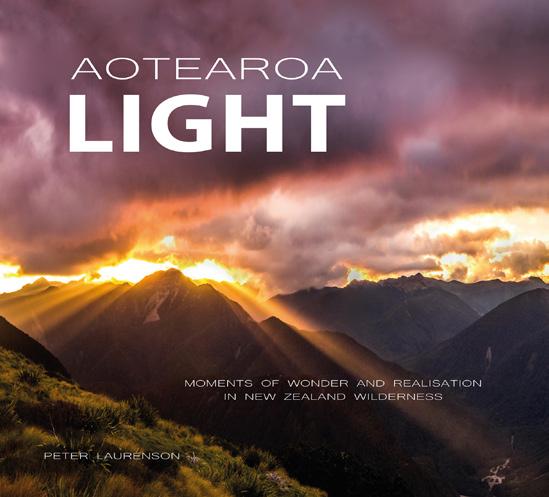
We have two copies of AOTEAROA LIGHT: Moments of Wonder and Realisation in New Zealand Wilderness by Peter Laurenson (Bateman, RRP $69.99) to give away. This magnificent, beautifully photographed book blends landscape photography, wilderness experiences and messages of concern, with a call to individual positive action.
To enter, email your entry to draw@forestandbird. org.nz, put LIGHT in the subject line, and include your name and address in the email. Or write your name and address on the back of an envelope and post to LIGHT draw, Forest & Bird, PO Box 631, Wellington 6140. Entries close 1 August 2025
The lucky winners of Fungi of Aotearoa New Zealand were Philippa Harrison, of Kaikōura, and Alan Rogers, of Hāwera.
FORCE OF NATURE
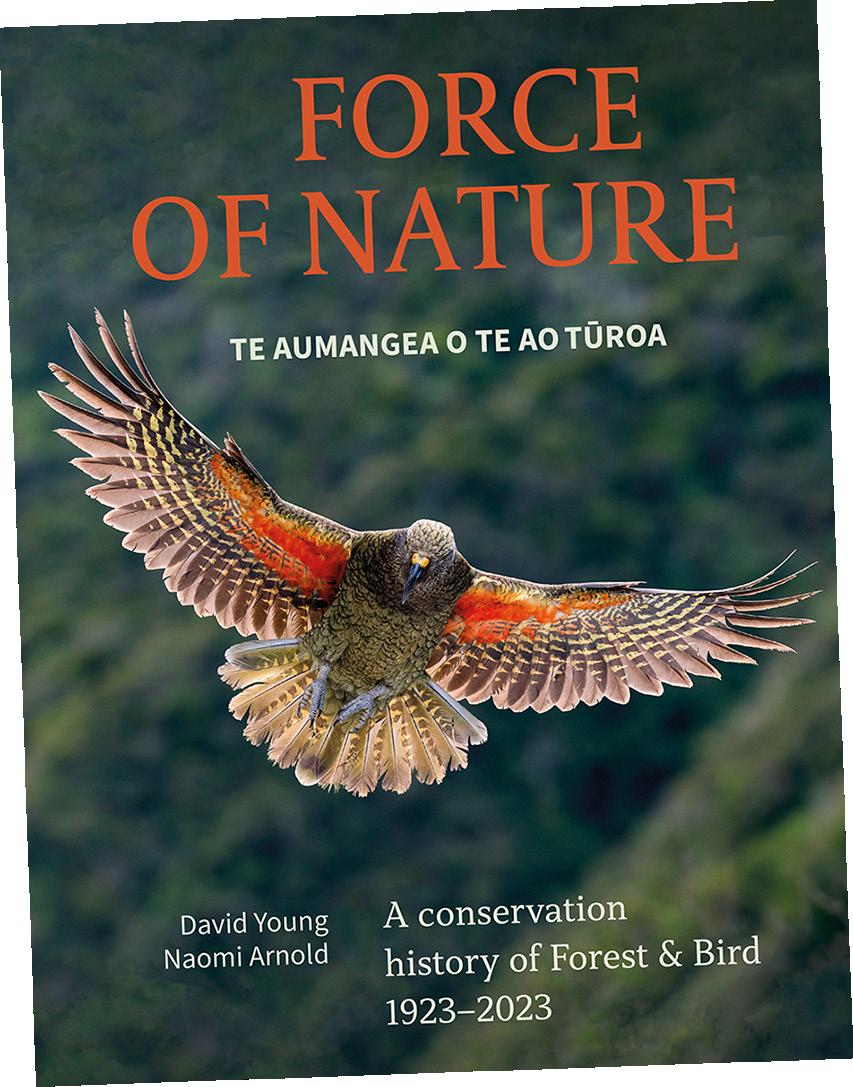
Force of Nature is the landmark history of Forest & Bird, celebrating 100 years of groundbreaking effort. This magnificent publication is one of the most important books about conservation in Aotearoa to have been written in decades. It is guaranteed to make you proud to be a supporter of Forest & Bird. For more information – see forestandbird.org.nz/forceofnature.
NATURE NEWS
STEWARDSHIP LAND NOT FOR SALE
A lowland braided river terrace on the Cook River near Fox Glacier may be sold off instead of being added to its neighbouring national park.
Lynley Hargreaves
New Zealanders love getting out onto public conservation land, whether they are trampers, birdwatchers, cyclists, boaties, hunters, or wild swimmers. But some of your favourite places on the West Coast could soon be sold off to private interests or mined for coal and gold.
The long-running (four-year) review of public conservation land on Te Tai Poutini the West Coast is set to conclude soon, with Minister for Conservation Tama Potaka poised to take final decisions on the future of huge tracts of wild rivers, native forests, wetlands, and mountains.
A national panel was convened to consider 644,000ha across 504 West Coast land parcels in the stewardship category, a statutory “holding pen” for land that hasn’t had its ecological and other natural values assessed. The panel made a series of recommendations on which category of public conservation land each parcel should be permanently assigned to.
It recommended that only 12% be added to the existing national parks, one of the highest categories of environmental protection (see box right). It didn’t recommend any scientific reserves be gazetted, even on the Denniston Plateau, home to many ecological rarities only known in this location.
Instead the panel said 54% of the West Coast’s stewardship land should become conservation park,
a category that barely offers better protection than stewardship land. While both are still types of public conservation land, and their natural and historic resources must be protected first, conservation parks and stewardship land can still be exploited for development.
To make matters worse, current rules say conservation parks cannot be disposed of – sold off –but under the government’s Modernising conservation land management proposals, such protection could be removed.
Forest & Bird is particularly concerned about the future of the Denniston Plateau, the Waitaha River catchment, and large areas of mature native forest in South Westland.
“Despite their ecological significance, these land parcels were recommended as only conservation park,” says Nicky Snoyink, Forest & Bird’s regional conservation manager for the West Coast.
“We’re concerned that some areas are at further risk of fragmentation, as there are parts of significant land parcels recommended for disposal or left out of the process altogether.”
In our submission, Forest & Bird sought stronger protection for all of these areas, saying Denniston should become a scientific reserve and the magnificent rimu and kahikatea forests of South Westland should
Westland Tai Poutini National Park
Rare braided river bed for sale?
Kā Tiritiri o Te Moana Conservation Park (proposed)
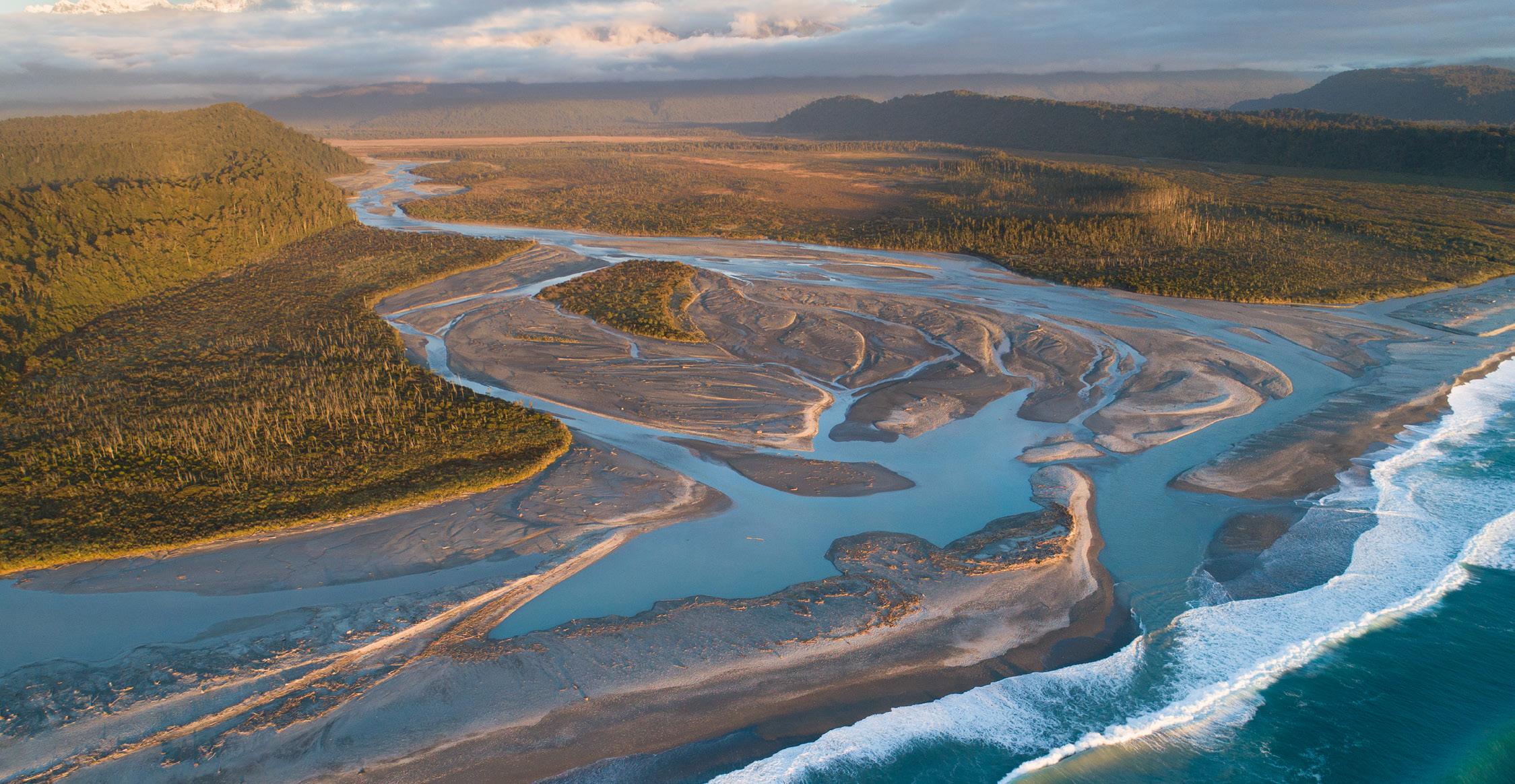
Cook River, South of Haast. Neil Silverwood
receive higher protection.
We also recommended the Waitaha become part of neighbouring Westland Tai Poutini National Park, along with the Waitangi Conservation Area to the south, or that it be managed as a stand-alone national park.
Elsewhere, a number of larger parcels, particularly those adjoining riverbeds, were put down for “part disposal”, where the section of the conservation area over which a grazing licence is held would be sold off.
This includes the Cook River Weheka Flat conservation area, comprising 1600ha of West Coast braided riverbed. It is flanked on both sides by globally significant native forests and part of Te Wāhipounamu South West New Zealand World Heritage Area.
To the north, it is bordered by Westland Tai Poutini National Park, and to the south is an area recommended to become part of Kā Tiritiri o Te Moana Conservation Park, a lower level of protection.
In between is a large braided riverbed home to a wide diversity of birdlife, such as tūturiwhatu banded dotterels, matuku-hūrepo Australasian bitterns, and kotoreke marsh crakes.
This grazed area of riverbed could be sold off for farming and developed, fragmenting the birds’ habitat, if the Minister agrees with the national panel’s recommendations.
“Forest & Bird’s submission argued that it is wrong to dispose of these lowland river terraces,” says Nicky. “Retaining them as public conservation land presents an opportunity for ecosystem restoration and regeneration, and for climate mitigation.”
“To avoid the fragmentation of these important ecosystems and to retain the natural character of these wild West Coast rivers, the Minister must reject the disposal of any river flood plains and maintain them as public conservation land.”
PROTECTING NATURE
A national park, scientific reserve, or wilderness area has the highest form of protection and generally cannot be destroyed by the government’s new fast-track legislation. This land must be managed by the Department of Conservation for its intrinsic values with its native species protected.
Other categories of public conservation land, such as conservation parks, scenic reserves, and ecological areas, have lesser protections and can exploited for development. For example, under fast-track, companies can be given approval to mine or develop without the public having its say.
A RESERVE MAKE DENNISTON
The West Coast stewardship land review offers a once-in-a-lifetime opportunity to permanently protect the Denniston Plateau – with its treasure trove of ecological curiosities – as a scientific reserve.
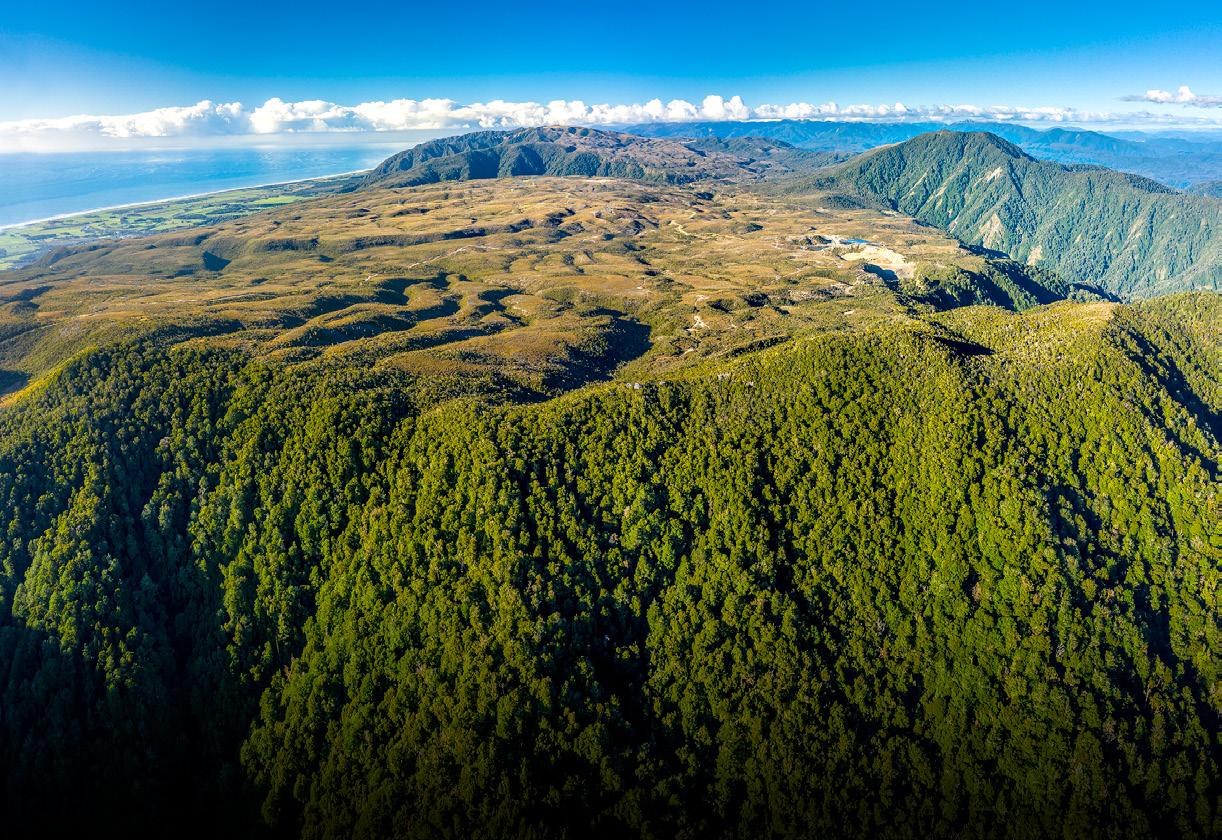
Forest & Bird has long believed the 7539ha Mount Rochfort Conservation Area should be gazetted as a scientific reserve. It includes most of the Denniston Plateau, with its complex mosaic of interrelated habitats, high degree of continuity and integrity, and lack of exotic flora and fauna.
But the national panel recommended giving the area conservation park status despite Denniston being home to native ecosystems that aren’t known anywhere else in New Zealand.
This recategorisation will put it at risk of unfettered large-scale coal mining, which can now be approved, with little environmental oversight, under the government’s Fast-track Approvals Act.
When the nearby now-mothballed Escarpment Mine had its consents granted in 2012, the hearing panel said, “From the evidence presented to us, it is abundantly clear that large scale mining is poised to invade the entire Denniston Plateau coal reserves which if unchecked, will totally destroy the ecosystems which are present.”
“The Mount Rochfort Conservation Area should be reclassified into a scientific reserve because it contains rare and important ecosystems which are found nowhere else in New Zealand,” says Nicky Snoyink.
“Its regionally important geological features are integral to the function of the natural landscape and ecosystems, and significant ecological values on the Denniston Plateau.”
The conservation area supports strong populations of numerous bird species, such as rorora great-spotted kiwi and mātātā South Island fernbird, and is a national stronghold for lizards.
It’s the only home of the threatened Denniston land snail subspecies of Powelliphanta patrickensis, which saw its threat ranking increased to nationally critical last year because of the threat of large-scale coal mining under Fast-track Approvals Act.
☛Celebrating Denniston Forest & Bird hui, see page 10.
Denniston-Stockton Plateau, seen from the south and looking over Rochfort Stream. Rob Suisted
NATURE NEWS | 3 LEGAL WINS
Shellie Evans
PROTECTING THE NGARURORO
The Environment Court has agreed with Forest & Bird that the Ngaruroro River should be protected by a Water Conservation Order (WCO), and the future of the 164km river now rests with the Minister for the Environment.
In its final report on the Ngaruroro WCO, published in March, the court confirmed its earlier interim findings that the entire river has outstanding characteristics and warrants protection.
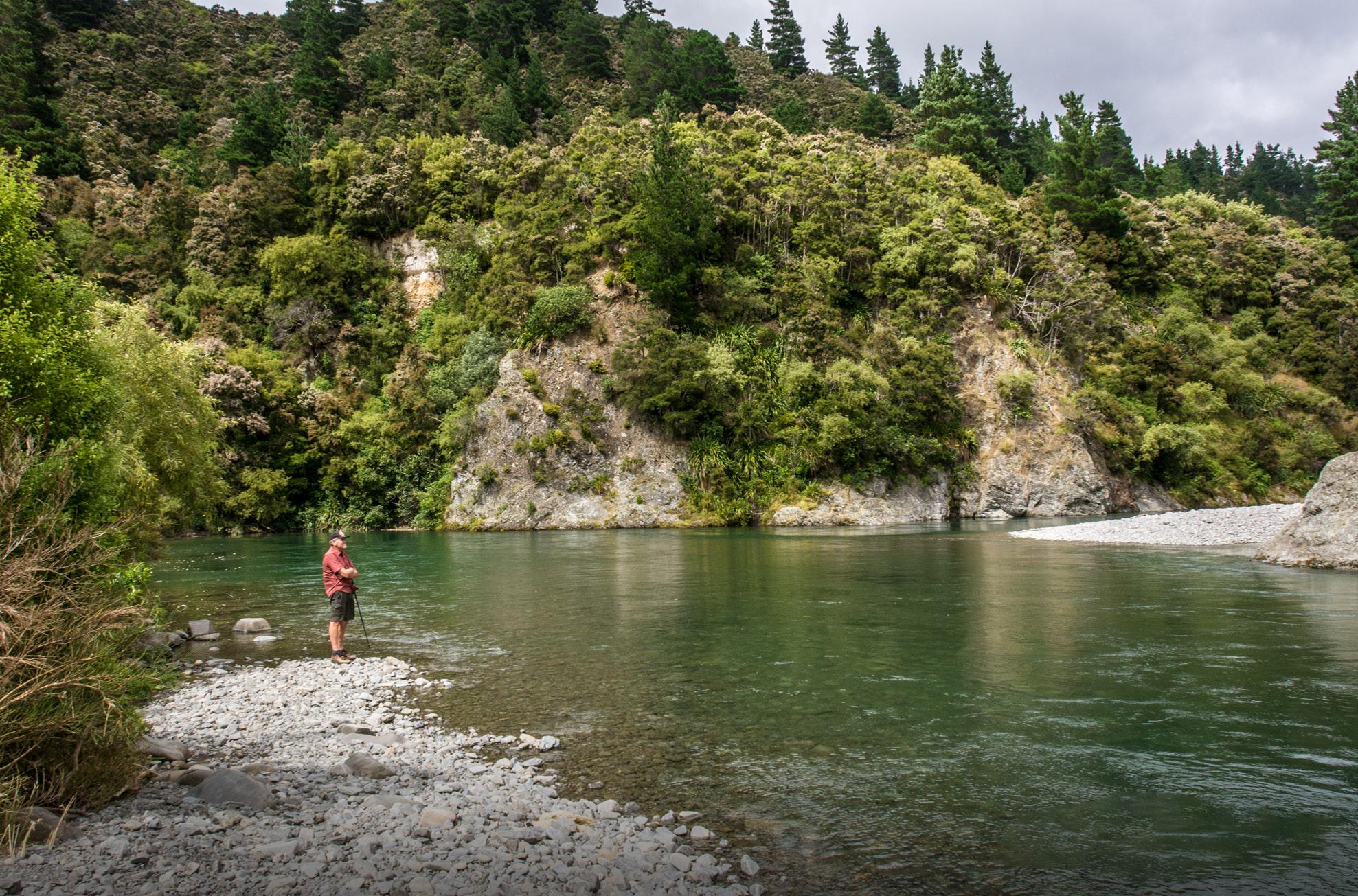
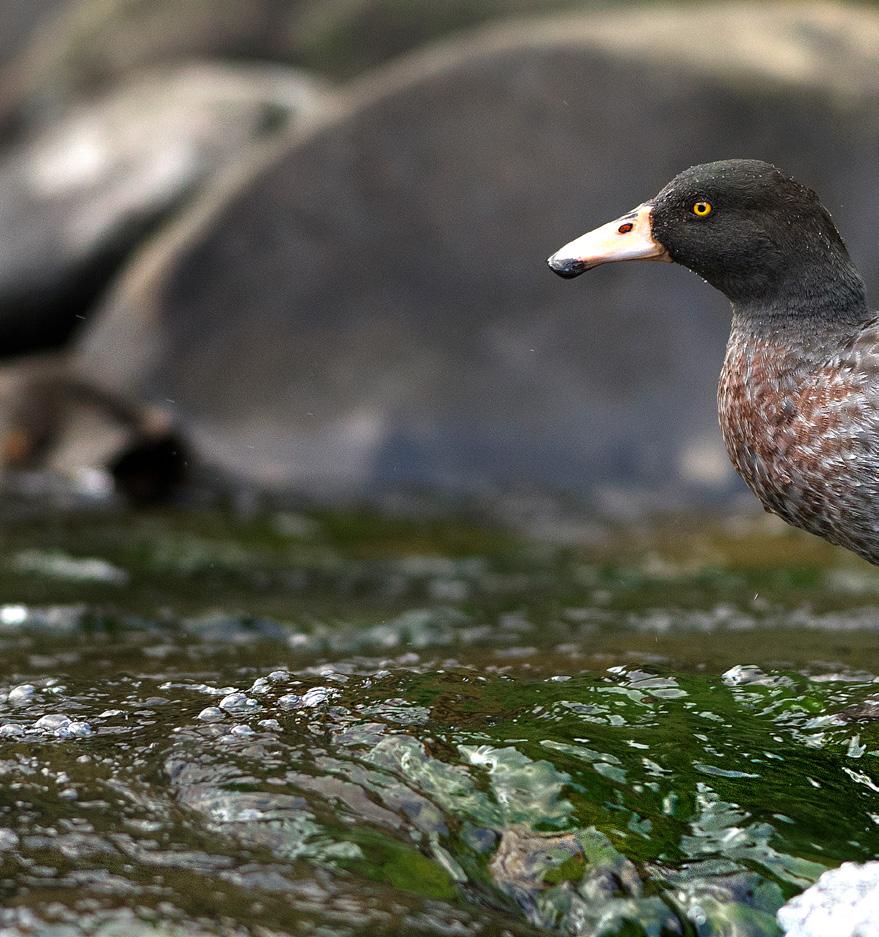
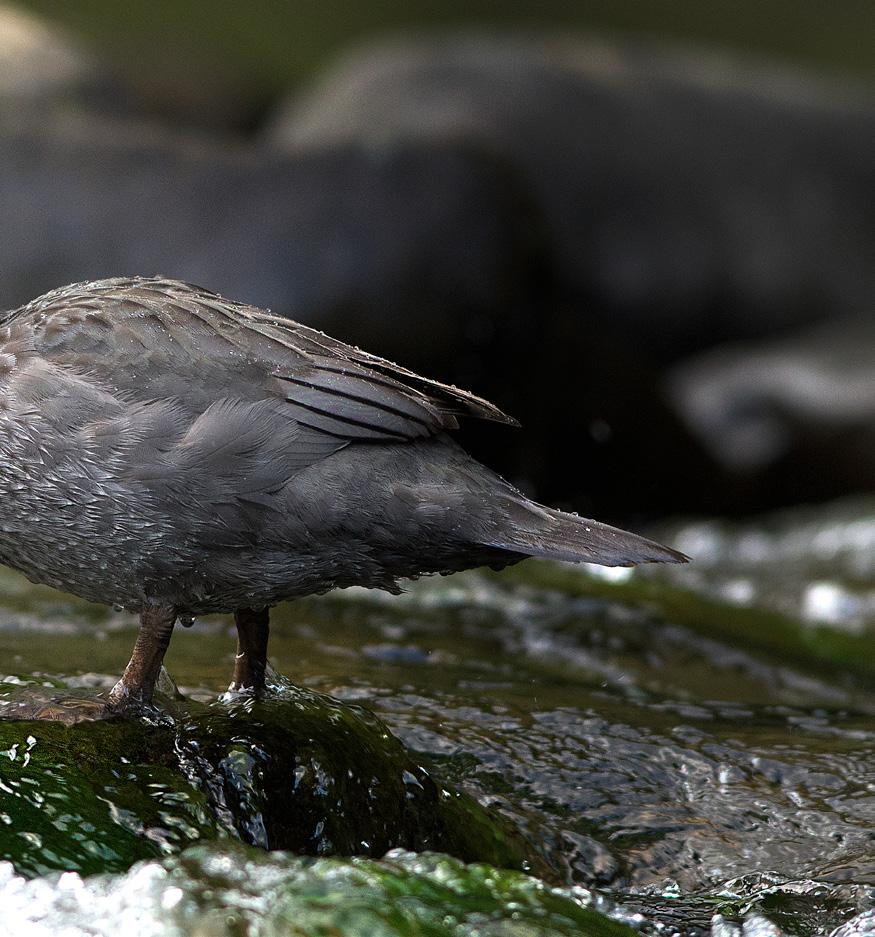
It found the lower braided section of the river had nationally outstanding avifauna values that should be protected. It also said the upper river should be retained in its natural state because of its outstanding values, including habitat for whio blue duck.
“Forest & Bird has been fighting to protect the Ngaruroro River for 10 years, and we’re thrilled that the Environment Court has agreed with us,” said Erika Toleman, Forest & Bird’s general counsel.
“With a WCO in place, the Ngaruroro River would benefit from protections such as limits on altering the flow and form of the river, water quality minimums, and fish screen requirements for water takes.”
A coalition of organisations, including Forest & Bird, Ngāti Hori Ki Kohupatiki, Fish & Game, Whitewater NZ, and Jet Boating NZ, applied for a WCO for the river in 2015.
Forest & Bird’s legal case was to demonstrate the value of the lower Ngaruroro River as an outstanding habitat for birds.
This part of the river supports nationally important populations of endangered pohowera banded dotterel and tarapirohe blackfronted tern, as well as other threatened birds such as the kōtuku white heron and matuku hūrepo Australasian bittern.
“I want to acknowledge all the Forest & Bird donors who helped us take this important case to the Environment Court,” added Erika. “Thank you for standing up and fighting for the future of our precious rivers.”
Water conservation orders are a type of protection under the Resource Management Act 1991. The Environment Court’s report is now with the Minister for the Environment, Penny Simmonds. The Minister’s approval is needed for the WCO to come into effect.
PLANNING FOR FRESHWATER
Forest & Bird has also been involved in a separate long process to identify and protect Outstanding Water Bodies in the Hawke’s Bay region.
In April, the Environment Court released its decision on Plan Change 7 to the Hawke’s Bay Regional Resource Management Plan, the section that deals with Outstanding Water Bodies.
It agreed with Forest & Bird’s former freshwater advocate Tom Kay that braided rivers, such as the Ngaruroro River, can be recognised as outstanding despite some degree of human modification to their margins and the temporary effects of gravel extraction.
“Thanks to the efforts of Forest & Bird, the Ngaruroro from the Whanawhana cableway all the way downstream to Fernhill Bridge has been recognised as an Outstanding Water Body for its braided character,” said our senior lawyer Tim Williams.
The court also agreed with
DOC’s Kuripapango campsite next to the Ngaruroro River.
Whio appreciate outstanding water body. Neil Foster
other key points that Forest & Bird raised about the screening criteria used by the regional council to identify Outstanding Water Bodies, including that these should not limit the number of water bodies recognised as being outstanding to only one or two per category.
The revised Plan Change 7 should now provide enhanced protection and better management for all Outstanding Water Bodies in the Hawke’s Bay region. It incorporates the hierarchy of obligations in Te Mana o te Wai, part of the Essential Freshwater reforms introduced by the government in 2020.
Te Mana o te Wai prioritises the health and wellbeing of water bodies and freshwater ecosystems, and the regional plan now requires conflicts between values relating to Outstanding Water Bodies to be managed in accordance with this hierarchy.
“The court’s decision sets the scene for future catchment-based plan changes that will provide more detailed rules for activities affecting Outstanding Water Bodies in Hawke’s Bay, including the Ngaruroro River,” added Tim.
SAVING THE MACKENZIE
Forest & Bird, the Environmental Defence Society, and Mackenzie Guardians have been working with Mackenzie District Council to limit pastoral intensification and the “greening” of an area of outstanding biological diversity.
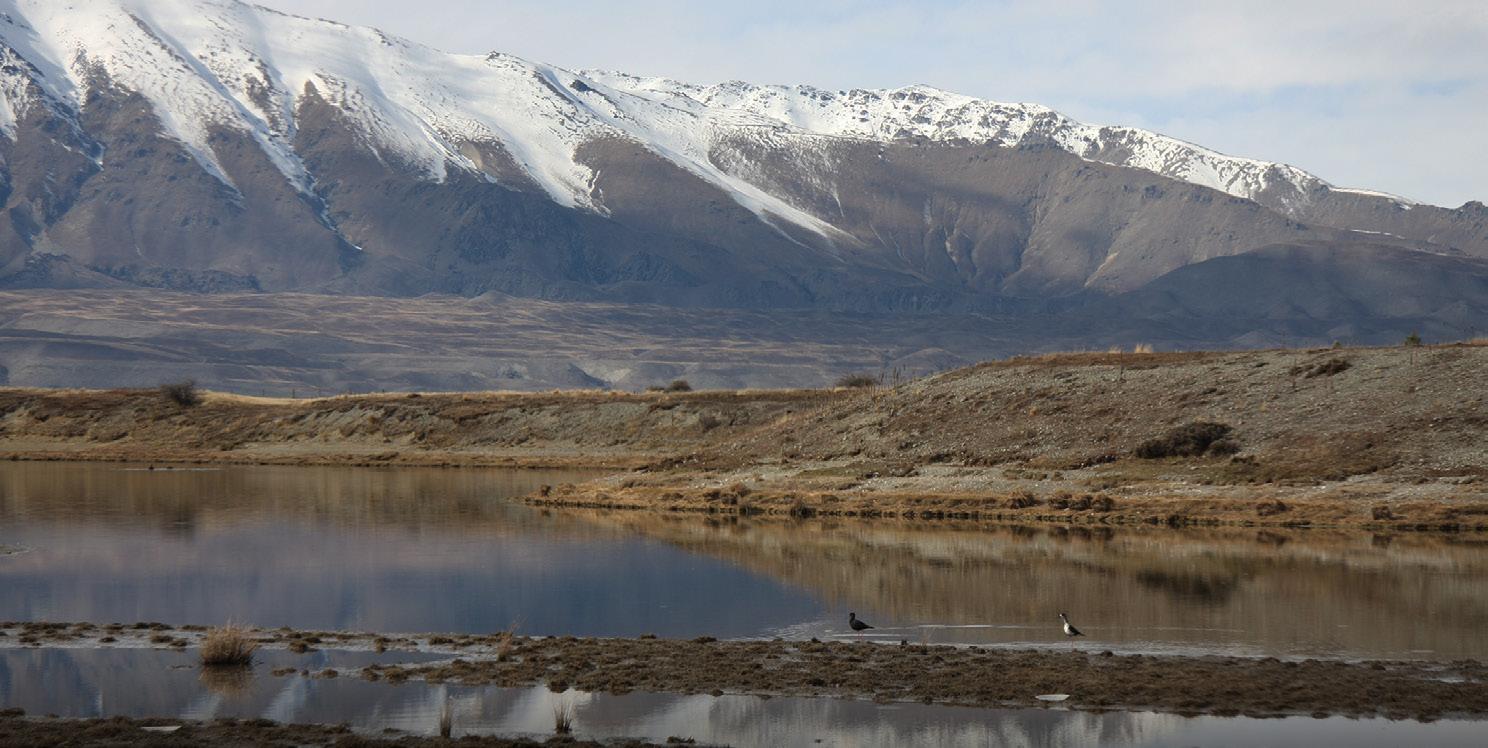
The Mackenzie Basin is a prime example of a tussock dryland, a unique but fast-disappearing ecosystem dominated by shrubs and tussock grasses. More than 80 rare plants are found on the basin floor alone.
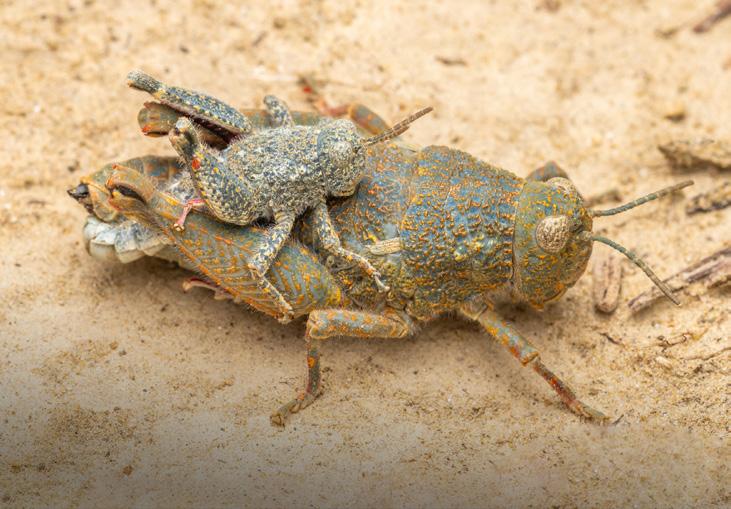
The basin is an internationally important breeding ground for wading birds, including kakī black stilt, and home to the Mackenzie skink, scree skink, and jewelled gecko. The endangered robust grasshopper is endemic to the area.
In 1990, just 3% of the Mackenzie Basin floor’s 228,000ha had been developed. By 2016, a third had gone. Since 2016, the greening of the Mackenzie Basin for intensive dairying has accelerated and extended into the special landscapes located in the northern part of the basin.
Forest & Bird has been raising awareness of the need to protect the unique ecological and landscape values of the Mackenzie Basin for many years, sometimes in the face of strong opposition from some local farming interests.
In our submission on Plan Change 18 of the Mackenzie District Plan, Forest & Bird’s ecological experts argued the basin floor remains the “only remaining viable stronghold” for many nationally threatened, at-risk, or uncommon indigenous plants and animal
species. This is despite the high degree of modification by exotic species.
In April, the Environment Court released its interim decision on the plan change. It agreed with Forest & Bird that the special characteristics of the basin warrant a bespoke planning approach.
It also emphasised the need to strike a balance that ensures economically sustainable farming operations can continue, while also maintaining indigenous biodiversity.
“Under new planning provisions, farmers in the basin will now need to satisfy the council they are not intensifying their indigenous vegetation clearance activities, including over-sowing and topdressing,” said Nicky Snoyink, Forest & Bird’s regional conservation manager for Canterbury.
The court also recognised the important stewardship role that many farmers play, especially in controlling wilding pines and other pest species in the basin.
The Environment Court’s decision is the latest of a series of positive Mackenzie plan changes.
At the time of writing, the plan 18 decision had been appealed to the High Court.
Kakī in Mackenzie country. DOC
Robust grasshopper and baby. Danilo Hegg
NO NEW COAL MINES
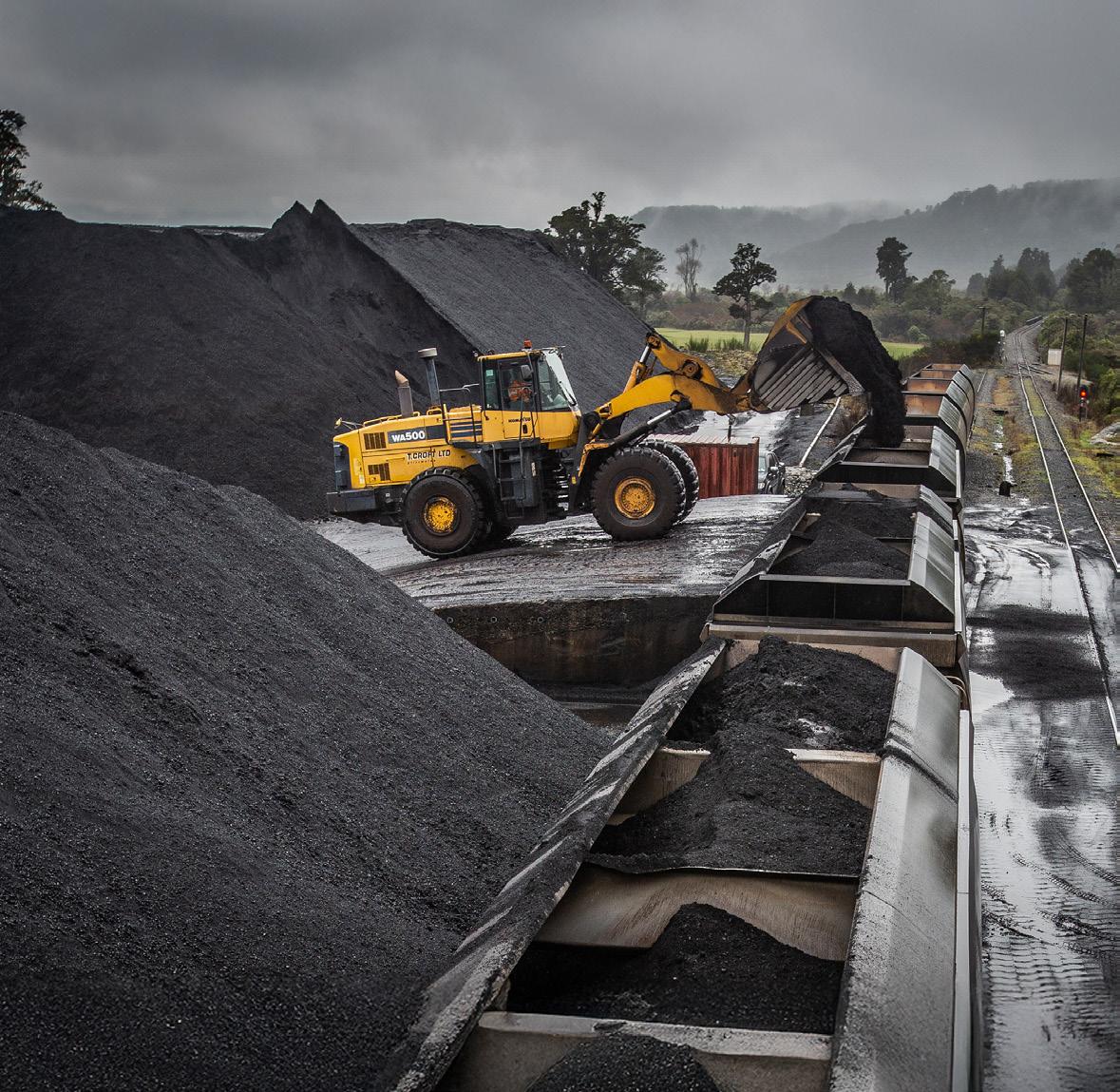
The treasured Denniston Plateau on the West Coast faces the looming threat of destruction from coal mining company Bathurst. The company’s huge fast-track project seeks to mine 20 million tonnes of coal from the wider area over 25 years.
Forest & Bird doesn’t want to see this happen, so we asked a selection of experts who know the ecology of the area well to join our members and supporters in travelling to Westport for a hui in May, including a field trip to the Denniston Plateau.
We wanted to share the natural wonders of the plateau (see page 7) and mobilise public support to stop the huge coal mine going ahead.
The event featured guest speakers such as founding New Zealand Geographic editor Kennedy Warne as well as ecologists to help show the detail of the landscape, from the unusual lizards to rare and unique flora like pygmy pines.
“This is a landscape that needs explaining,” said Nicky Snoyink, Forest & Bird’s regional conservation manager for the West Coast.
“Denniston doesn’t have huge towering forests, but the geologically ancient historically rare sandstone erosion pavements are home to a fascinating array of species.”
Twelve years ago, Forest & Bird hosted a bioblitz on the plateau, leading to some new endemic species being discovered, such as the Avatar moth and a new species of tokoriro cave wētā.
“Large-scale mining threatens to destroy the rare ecosystems that support these animals and many more native species,” added Nicky.
SAVE OUR SEABIRDS
Forest & Bird hosted an event called “Catch seafood, not seabirds” for international delegates attending an ACAP meeting in Dunedin. The aim was to raise awareness of best practice fishing measures available to reduce bycatch injury and deaths.
The meeting of the parties to the Agreement on the Conservation of Albatrosses and Petrels (ACAP) took place in Ōtepoti Dunedin in May.
“The aim of our event was to advocate for ACAP best practice for mitigating bycatch and encourage other countries to adopt these measures to protect toroa albatross and petrels throughout their range,” said Forest & Bird’s strategic policy advisor Geoff Keey, one of the event’s organisers.
“Any protection secured for albatross and petrels is going to help other seabirds and possibly other marine life as well,” added Geoff.
ACAP is a multilateral agreement that seeks to conserve listed albatrosses, petrels, and shearwaters by coordinating international activity to mitigate known threats to their populations.
The meeting of parties is held every three years and is hosted by one of the 13 countries party to the agreement. They are Argentina, Australia, Brazil, Chile, France, Ecuador, New Zealand, Norway, Peru, South Africa, Spain, and the United Kingdom.
New Zealand hosted the meeting in coastal Otago, a globally important hotspot for the world’s toroa albatross and many other species of seabirds.
“Aotearoa New Zealand is widely recognised as the seabird capital of the world, due to the diverse and abundant seabird populations in its waters and on its coasts,” said Chelsea McGaw, regional conservation manager for Otago and Southland.
“DOC estimates that more than 80 species of seabirds, many of whom are endemic, can be found in New Zealand, with many of these breeding only here.”
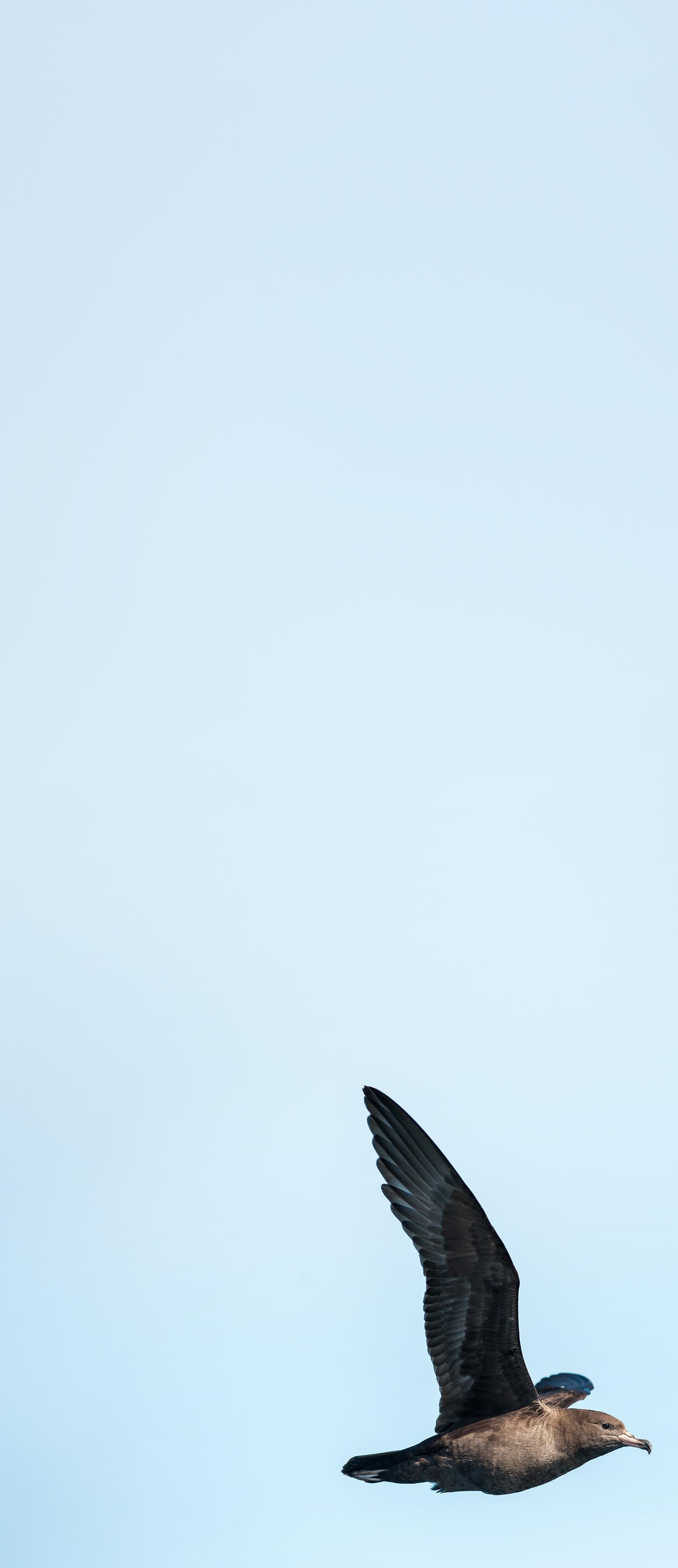
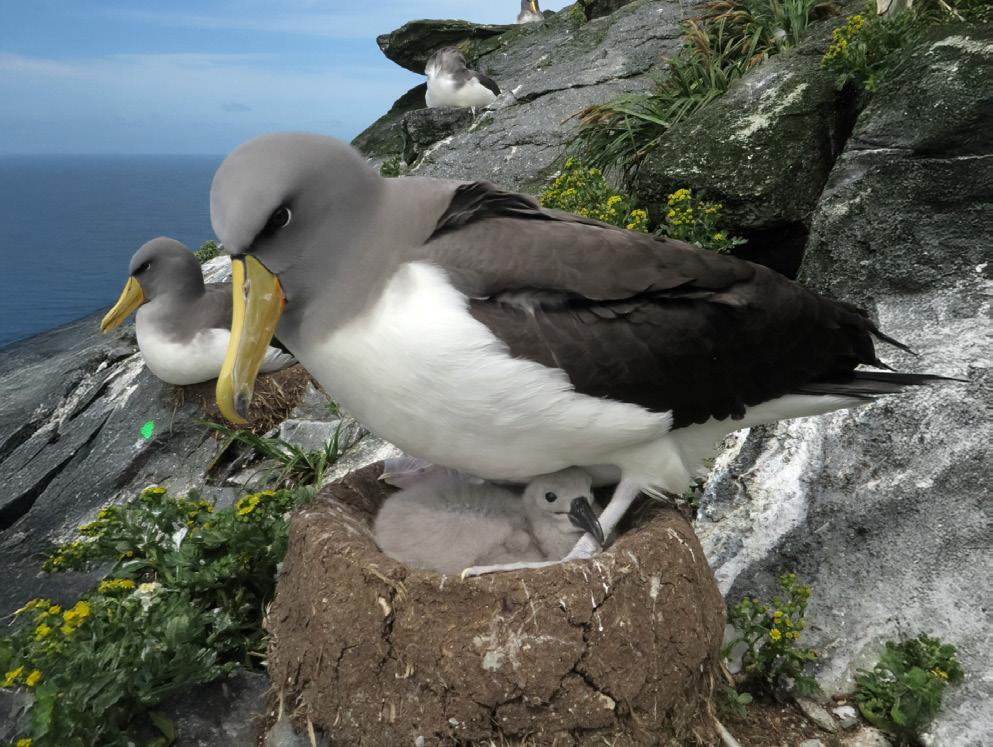
In Aotearoa, species such as flesh-footed shearwaters, Salvin’s albatross, white-capped albatross, and black petrels are considered at high risk of commercial fishing impacts.
Forest & Bird manages several Save our Seabirds projects in Dunedin. See forestandbird.org.nz/projects/ bring-back-seabirds-otago
Neil Silverwood
TŌ TĀTOU
2025 TAIAO
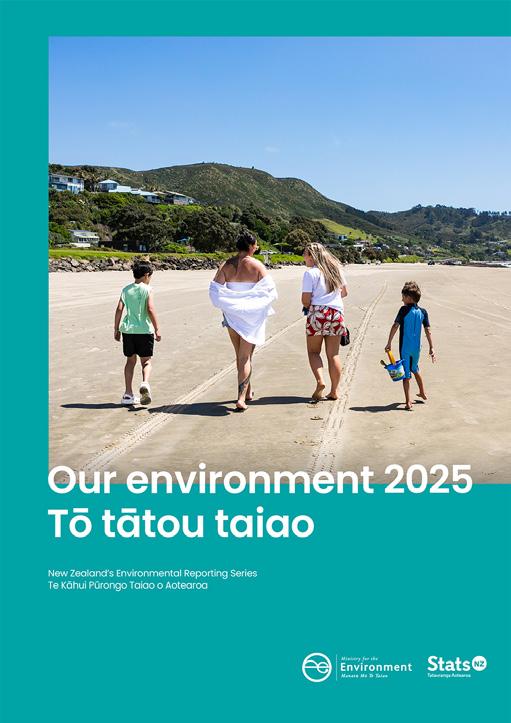
Native species will go extinct if the coalition government ignores stark evidence outlined in a concerning new report.
Our Environment 2025, published by the Ministry for the Environment and Stats NZ, confirms what we know about the fragile state of our indigenous flora and fauna.
It shows ongoing pressures on natural ecosystems, including land, freshwater, and coasts, driven by human activities.
For example, intensification and other land-use changes are putting pressure on water quality. The report says 46% of the 1000 groundwater monitoring sites failed to meet the New Zealand drinking water standard for E. coli on at least one occasion between 2019 and 2024.
Indigenous forest, scrubland, and tussock grasslands are threatened by pest animals and weeds, with wilding conifers a particular threat for rare sub-alpine habitats.
“This report lays bare the perilous state of our environment and provides hard evidence that many of our native species are threatened with extinction or at risk of being threatened,” said Nicola Toki, Forest & Bird’s chief executive.
“That’s 94% of indigenous reptiles, 93% of indigenous frogs, 80% of indigenous bats, and 78% of indigenous terrestrial bird species. Too many of our indigenous plants, often forgotten, are also at risk.
“New Zealanders expect their government to protect our unique species. This coalition government risks allowing species to go extinct under its watch if it ignores the evidence in this report.”
The risks to nature keep ramping up. The fast-track
regime is now in place and other profound legislative changes are under way, including how we manage natural resources, fisheries, and public conservation land. These are being pushed through at breakneck speed.
Forest & Bird is calling for an alternative approach, one that allows sustainable economic development while addressing climate change and biodiversity loss. These include:
n Setting binding targets for gross emissions reductions across all sectors.
n Committing to large-scale investment in nature-based solutions, with a strong focus on pest control and native forest restoration.
n Reforming the ETS to drive gross emissions reductions and provide strong incentives for indigenous afforestation.
n Ensuring meaningful climate action and biodiversity protections are included into all policy and planning decisions.
Download the full report here environment. govt.nz/ publications/ourenvironment-2025/.
Pōpokotea whitehead. Jake Osborne
The vision is that we’re going to be growing animals surrounded by biodiversity. We’re going to have a farm that looks after nature.
FARMING
WITH NATURE
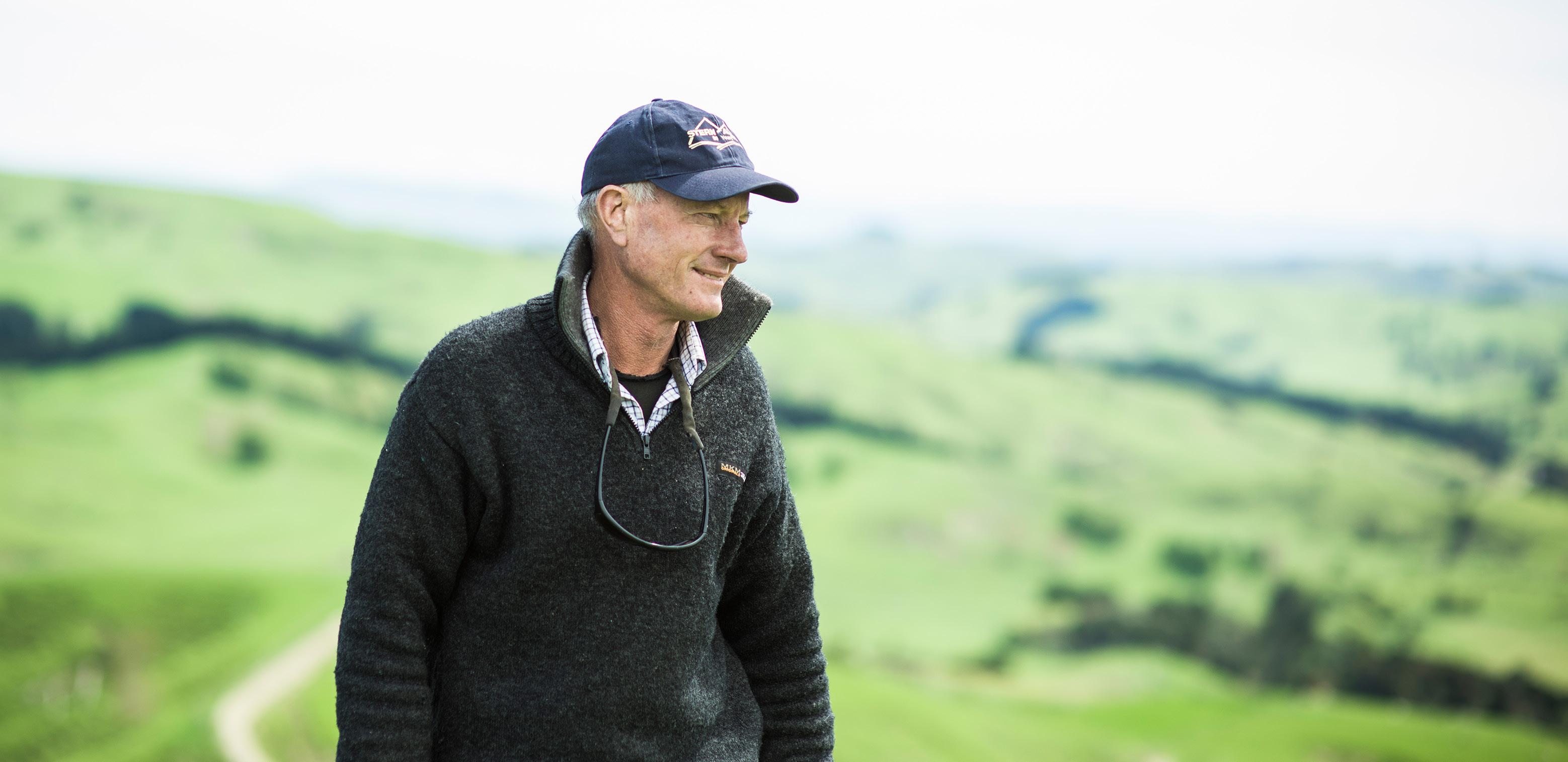
Hawke’s Bay farmer James Hunter shares his conservation story in the hope it will inspire others to choose nature-based solutions on their farms. Caroline Wood
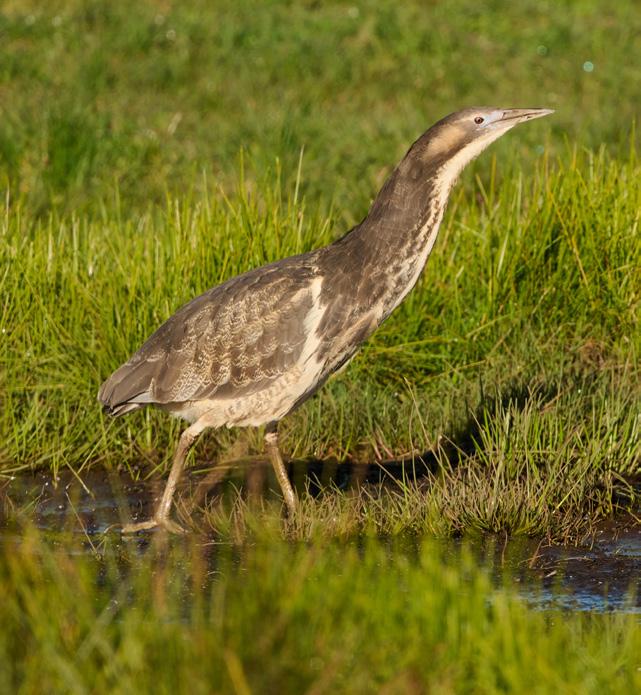
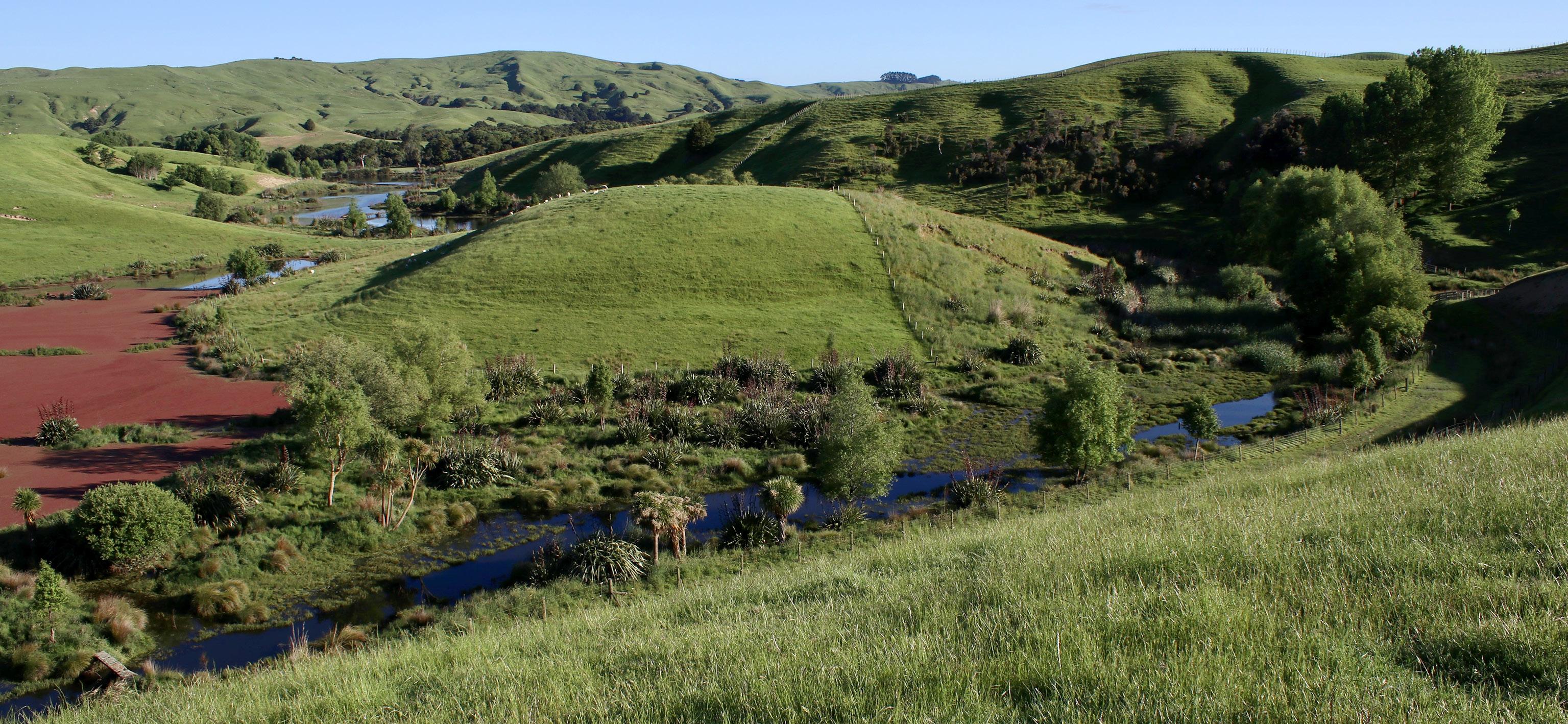
James Hunter is on a mission. He wants to provide a permanent home for matuku hūrepo Australasian bittern on his central Hawke’s Bay farm. He is planning to create 15ha of new wetlands to add to an existing network of waterways and create a whole farm habitat for the critically endangered species.
The farmer-conservationist, who served on the Board of the QEII National Trust for nine years, has been building new permanent wetlands and restoring native vegetation and biodiversity on Rangitoto Station for decades.
Today, 54ha of his sheep and cattle farm near Pōrangahau is protected in perpetuity under a QEII covenant, including a 12ha network of thriving wetlands that play a key role in the health of his property.
All the native vegetation on Rangitoto is fenced off, and James pays for pest control to protect it from browsing deer and predators, such as feral cats. He says he has quadrupled the amount of carbon the 660ha farm has been sequesting since 1990 – with 150ha as permanent forest in the government’s emissions trading scheme.
James plans to create new wetlands and protected bush areas to create a nearly 30ha refuge for the iconic booming bittern, which are occasionally spotted at Rangitoto. With fewer than 1000 bitterns left in Aotearoa and their wetland home disappearing, they need a helping hand to survive.
“Bittern are in trouble. The talk is you need roughly 20ha of wetlands for them to have permanent habitat, and that’s what I’m aiming to create,” says James.
“The plan is to flood more areas to create this
extensive wetland system surrounded by native bush and give them a permanent home, so they don’t have to leave.
“Our vision is that we’re going to be growing sheep and cattle surrounded by biodiversity. We’re going to have a farm that looks after nature.”
James’s family has owned and operated Rangitoto Station for more than 170 years – with successive generations fostering a deep connection with the land since 1854.
Over time, James has retired 15% of the land for conservation purposes, with the rest supporting a farming business raising lamb and beef.
You can see the Pacific Ocean from Rangitoto, which is fitting as James’s lamb is shipped across the ocean to be sold in the United States. For American consumers, the way their lamb is farmed matters.
Atkins Ranch, which markets and distributes highquality New Zealand lamb from a small number of farms in Aotearoa, shared James’s conservation story with its customers recently.
“His dedication to the environment runs deep, from creating thriving ecosystems to ensuring crystal-clear water leaves his property,” said Karen Atkins. “The result? 100% grass-fed lamb raised with care, purpose, and a whole lot of heart.”
Marketing aside, James believes it’s possible to run a successful farming business while also being good guardians of the whenua land. His passion is inspiring others to follow in his footsteps, focus on their farm’s ecology, and help local biodiversity.
“I want to be able to say we haven’t just made money farming, we have also given nature a chance, and it’s
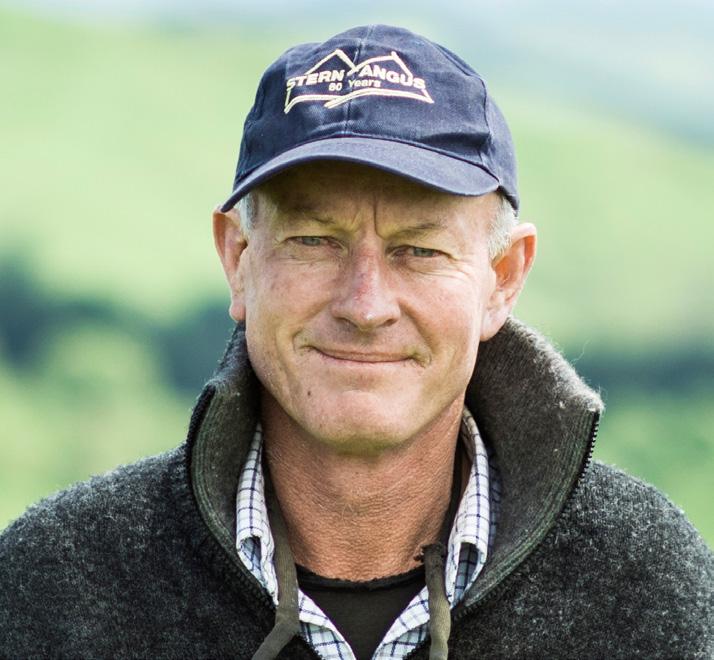
James Hunter, Rangitoto Station. Atkins Ranch
James Hunter
flourished as a result,” he explains.
“We have done something for the ecosystem and environment to help birds, fish, insects, fungi, plants. It’s surprising how much has changed [for the better] over the years.
“This biodiversity stuff, it matters. We need to address it as a community, not just as individuals.”
In February, James organised a farm forestry field day to showcase the restored wetlands and the biodiversity benefits of allowing areas of farm “scrub” to return to thriving bush and native forest, a process he expects to take 100 years.
Field day speakers included specialists in indigenous biodiversity, water quality, and tree-growing. Together, the speakers covered issues such as building resilience on farm, addressing soil and nutrient loss, habitat restoration, and carbon sequestration.
The event was attended by local conservation legend and wetland expert John Cheyne, who talked about the special nature of matuku hūrepo.
Bittern are near the top of the food chain in a wetland, which means they play a crucial role in maintaining the overall balance of a freshwater ecosystem.
For them to survive, conservationists need to consider all the elements needed for a healthy wetland, such as water quality, plants, invertebrates, frogs, fish, and tuna eels.
As well as supporting biodiversity, wetlands offer a nature-based solution to help us adapt to climate change and reduce disaster risk.
They store large amounts of carbon, recharge ground water, have a local cooling effect, reduce fire risk, and buffer communities from flooding and coastal storm surges.
He believes that creating a new native habitat starts
with one small action. For him, it was restoring a wetland on the property because he didn’t want farm run-off containing polluting nutrients and sediment reaching the nearby Pōrangahau River.
James was in his mid-20s and travelling around South America in 1988 when he received a call from his father asking him to return to Rangitoto and help him with the farm.
He had spent a year travelling and saw first-hand the rate of burning and deforestation in the Amazon and the devastating impact of gold mining on local rivers. A family friend in the UK gave him a book on how to remove sediment and nutrients from waterways, which he read on the way home to New Zealand. These experiences left their mark.
Once home, he and his father John fenced off remnant pockets of native habitat, protecting them from farm animal browsing. Then James set about creating his first wetland. Things snowballed from there, as he found giving nature a helping hand rewarding personally and professionally.
Today, the interlinked wetland areas, carefully carved out by James before being flooded, act as giant kidneys for the property. During a major weather event, stormwater is captured in the wetlands and farm nutrients are filtered and processed.
Even after a huge rainstorm, the water run-off from James’s property is clear. He is proud that his farming operations are not polluting local waterways.
“When I started farming, I was one of the changing faces who wanted to do things differently,” he explains. “I can show that it is possible to have farming and
The farm is a welcome refuge for bittern Craig McKenzie
New wetlands and native plantings at Rangitoto Station in 2020 Marie Taylor/Plant Hawke’s Bay
→
environmental custodianship.
“If every farmer in the country created 5ha or 10ha of wetlands, we’re going to redress some of what has been lost over the past decades. We can be agents for change. Like osmosis, we affect the actions of those around us.
“I’m hopeful for the future. I see a new generation of farmers who care about biodiversity on the farm. I believe more and more of them will restore wetlands as well as native bush.
“There’s some really neat things happening out of sight on farms. Give it 10 years, and we will see a real reversion.”
One of the aspects he wants farmers to understand is the importance of biodiversity in a thriving natural system and encouraging the right elements, including critters of all kinds, into a newly created habitat.
Worms, for example, are a sign of soil health. In 1982, his parents took part in a trial involving releasing black-headed worms (Aporrectodea longa) that can burrow down into a metre of soil. Over time, the worms spread across the whole station.
AgResearch returned a decade ago and found a huge
number of worms in the soil – 1400 worms per square metre (300 worms per square metre is pretty good). The worms take organic matter deep into the lower layers.
“Those worms are changing our soil structure. It means it is freer draining, got everything going for it,” says James.
He is a proponent of restorative farming, an approach to food production that aims to create healthy, resilient farm ecosystems by restoring natural ecological systems, improving environmental outcomes, and enhancing soil and animal health.
Farming attitudes and techniques have changed and evolved over the last century. In the 1940s, for example, farmers were draining wetlands to create more pastureland, and this was seen as the future of farming.
Farmers also cleared hundreds of hectares of “scrub” – aka indigenous vegetation – to make way for productive land, resulting in a huge loss of local biodiversity. In the 1970s, the government set up the Rural Bank and started offering loans to farmers to clear the land, leading to the loss of an estimated 940,000ha of indigenous vegetation.
But not all farmers agreed with the government’s policy. Visionaries, such as Forest & Bird Distinguished Life Member Gordon Stephenson and his wife Celia, who co-founded the Queen Elizabeth II National Trust in 1977 (see right), understood the value of the indigenous vegetation on their land and wanted to protect it in perpetuity.
“Farmers change every generation,” says James. “In the past, when selling a farm, they would never show bush or water on the property. Now having a dam or bush is a selling point. Having a wetland is pretty cool too.”
But the cost of not grazing the land, restoring or building wetlands, and carrying out pest control on huge swathes of land can be huge.
James says farmers need sustained government funding for this kind of conservation work that is
TROUBLE WITH DEER
The problem with blanket planting of pines on farms and threats to habitats posed by browsing mammals, such as deer and pigs, are also on James’s mind.
He is concerned that the owner of a neighbouring farm is planning to turn all of their land over to pine trees.
“I’m worried that all my work will come to nothing. Deer will come out of the pine forests and destroy everything. They will chomp their way through my
restoration plantings.
“What’s the point in doing all this [conservation] work if something is coming onto your land for dinner?
“Pests don’t care if it’s QEII covenanted or not, and pine forest owners won’t control them. These remnant ecosystems are so valuable. The key ingredient is keeping pests out.”
James carries out pest control over his 660ha farm. They recently caught 40 feral cats, along with stoats, weasels, and ferrets.
Deer are a threat to the regenerating bush at Rangitoto Station. John Cowpland
supporting the government’s climate and biodiversity goals. They can’t fund it all by themselves.
He is attempting to do his bit with his QEII covenants and a pest-control programme that he funds despite the financial challenges of farming.
“Guardianship is not just the farm. It’s the whole system. Guardianship is about looking after more than
QEII TRUST’S LEGACY
An independent charitable trust has been quietly achieving huge gains for nature over the past half century.
Ngā Kairauhī Papa the Queen Elizabeth II National Trust works with private landowners, the majority of whom are farmers, to protect and restore open spaces of ecological and cultural significance.
Since 1977, generous New Zealanders have registered more than 5300 covenants covering 180,000ha of private land (an area roughly the size of Tongariro, Whanganui, and Taranaki National Parks combined), thereby protecting some of Aotearoa most endangered biodiversity and ecosystems.
A covenant is an agreement between the QEII Trust and a landowner to protect land forever. The landowner continues to own and manage the protected land, and the covenant and legal protection stays on the title, even when the property is sold to a new owner.
The covenants play a critical role as a refuge for some of New Zealand’s rarest and most endangered species, including birds, bats, native fish, invertebrates, plants, and fungi.
“We would be stunned when shown photographs of the latest covenanted land,” says James Hunter, who served three terms on the QEII Trust Board from 2007.
“They are out of sight, so the public may not realise the quality of what has been protected, but if all these
the animals – guardianship is about caring for where we live,” he adds.
You can hear James talking about Rangitoto Station and see the network of wetlands and restored bush here: https://vimeo.com/manage/ videos/1035436234/e5c4d6ed9b
small parcels of land were laid out contiguously it would be the best national park in the world. I’m fully confident of that.”
Anyone can put a covenant on their land, and QEII’s network of protected areas range from small backyard patches to huge swathes of high country.
But looking after the land doesn’t come cheap. A 2018 study by the University of Waikato estimated that QEII’s covenanting landowners spent a combined $25m of their own money every year protecting native species, forests, wetlands, and other special areas, adding up to an incredible $1.1–$1.3bn since 1977.
With nearly 70% of Aotearoa New Zealand’s land in private ownership, landowners play a critical role in delivering nature-based solutions, such as creating new wetlands and planting native forests, helping the whole country become more climate resilient.
One of QEII’s farm covenants in the North Island. QEII Trust
SEARCHING FOR SKINKS
Could the newly described Okuru skink already be extinct, or is the species waiting to be rediscovered?
Geoff Patterson
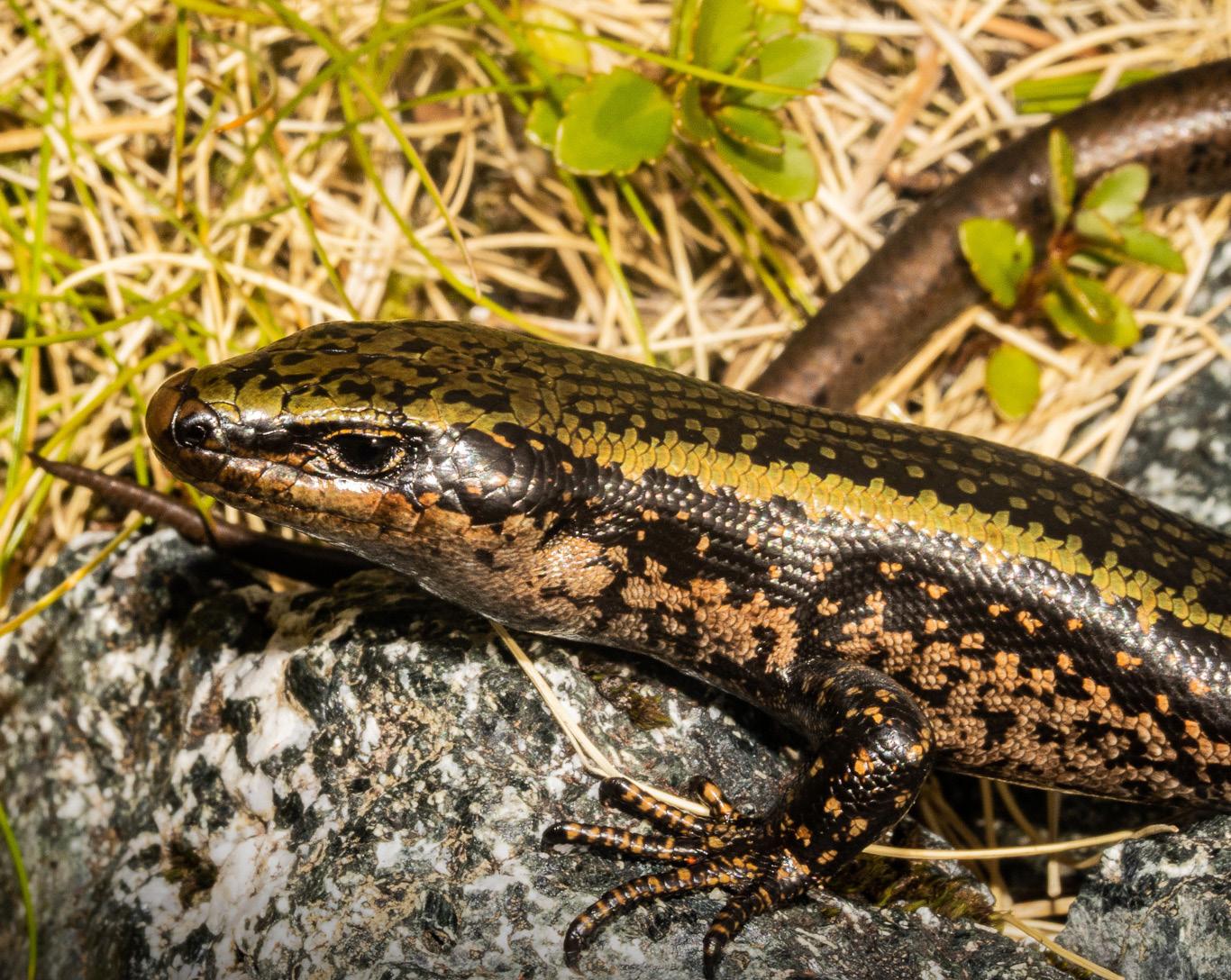
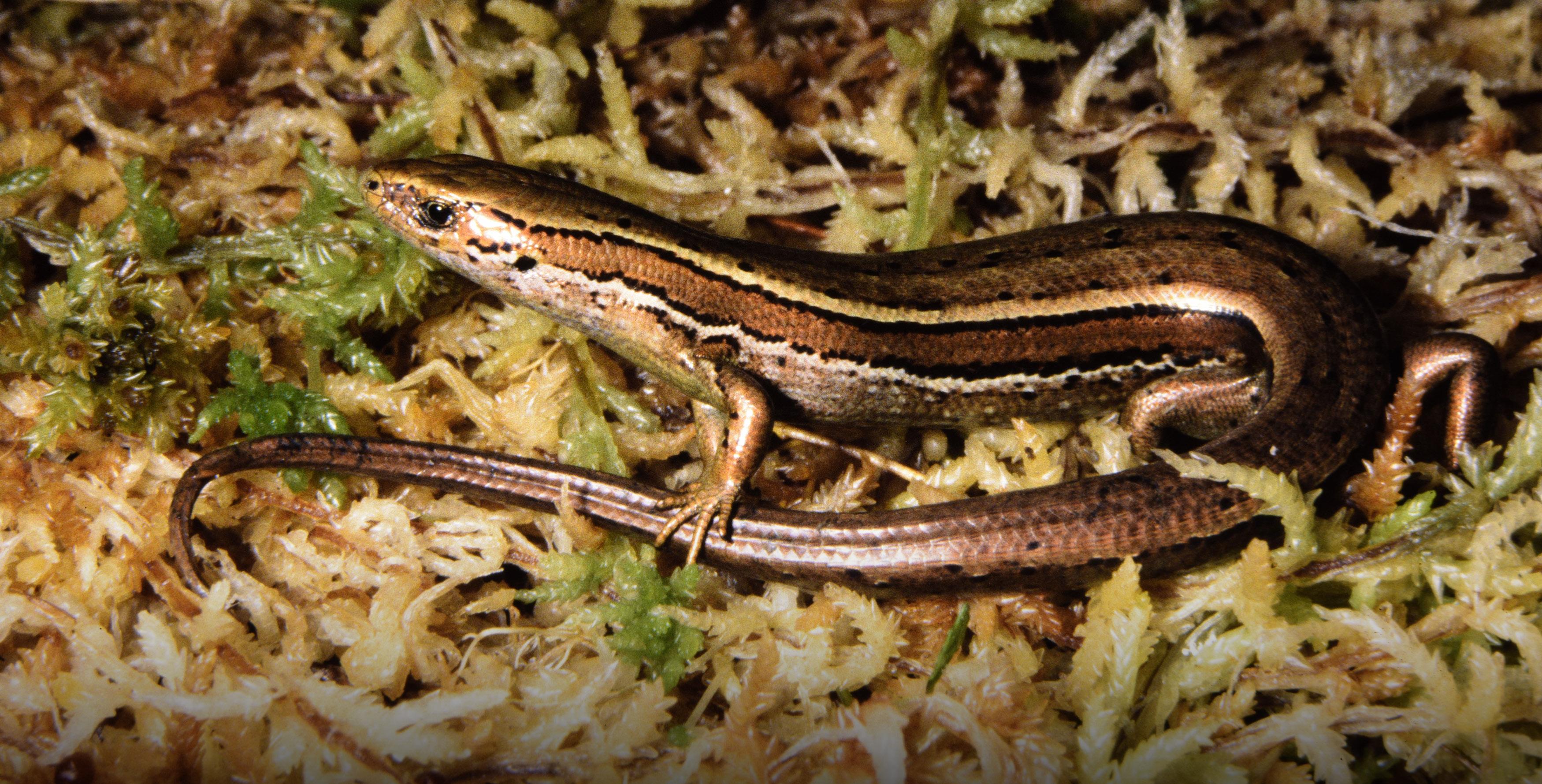
In June 2000, while collecting sphagnum moss at Okuru, near the township of Haast, South Westland, local resident Peter Philpott came upon a most unlikely animal. It was a small live brown skink, something seldom if ever seen in that area before.
He had the presence of mind to keep the animal and send it to the noted herpetologist Tony Whitaker, who immediately recognised it as a possible new species. Christened the Okuru skink, it was added to the natural history collection in the national museum, Te Papa Tongarewa.
A colleague and I recently re-examined the animal and were able to show that it had a combination of characters, such as a keeled tail and various scale counts on the head, that indicated it was quite different to any other New Zealand skink. We therefore described it as the new species Oligosoma carinacauda
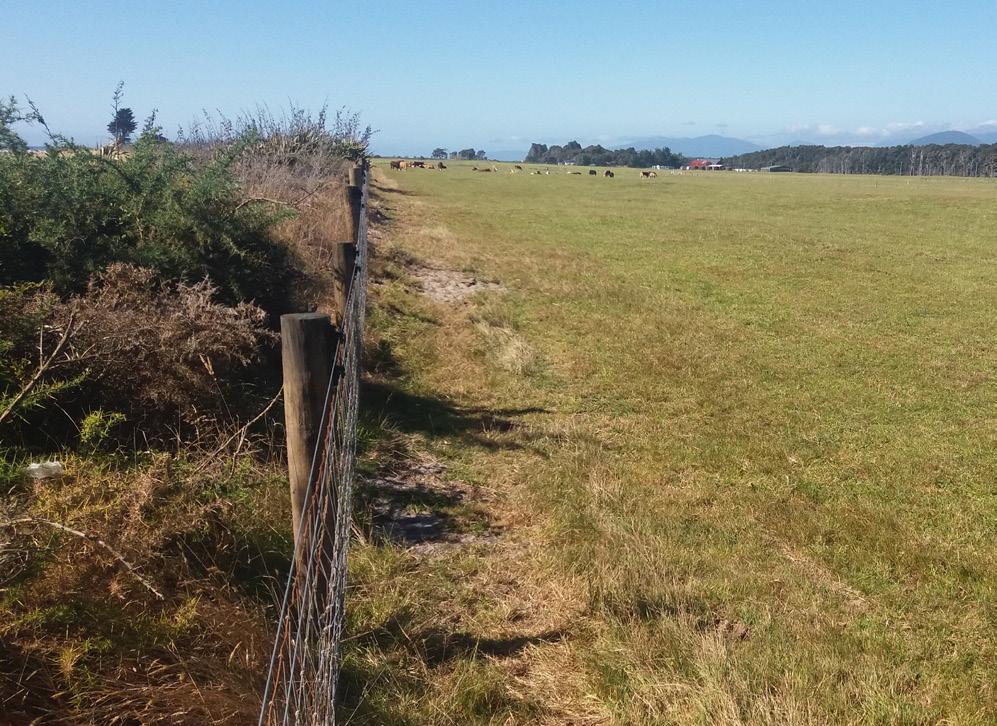
Various searches in the same area were carried out after its discovery but with no success. Unfortunately, the place where the single lizard was found, described as “Sphagnum, coastal wetland”, has been drained.
Today, the locality is short-cropped pastoral and dune land, having been cleared for agriculture. Assuming that the species prefers moist, boggy environments, then it is unlikely to have survived this change in land use.
It is possible that the species may be discovered in other more remote locations, but there have been survey efforts in apparently suitable areas, and no skinks resembling O. carinacauda were found.
The IUCN Red List defines extinction as “when there is no reasonable doubt that the last individual has died.
A taxon is presumed extinct when exhaustive surveys in known and/or expected habitat, at appropriate times (diurnal, seasonal, annual), throughout its historic range have failed to record an individual. Surveys should be over a time frame appropriate to the taxon’s life cycle and life form.”
The Okuru skink unfortunately meets this definition – it is unlikely to have a lifespan greater than 20 years.
The last apparent terrestrial vertebrate extinctions in New Zealand took place in the 1960s. This was when ship rats arrived on Big South Cape Island in 1964 and rapidly eliminated the last known populations of South Island snipe, Stead’s bush wren, and the greater shorttailed bat.
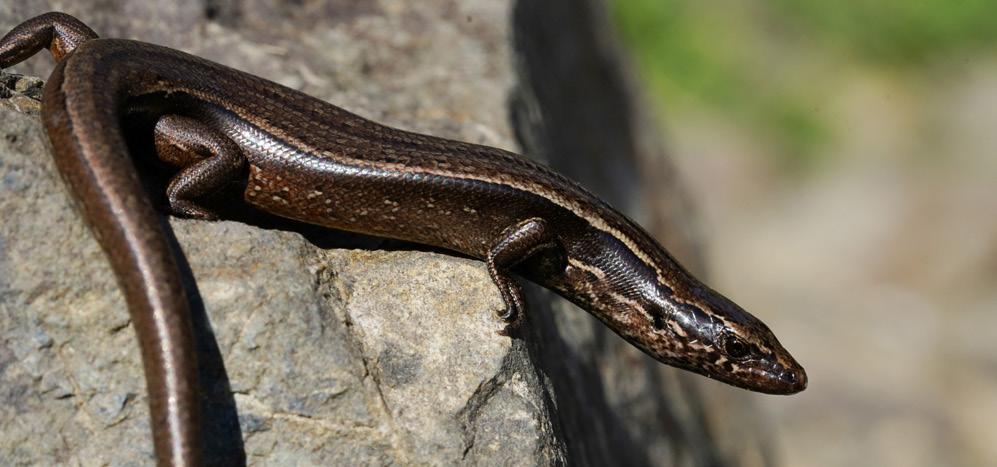
Only one Okuru skink has ever been found. This is it. Anthony Whitaker, Te Papa
Habitat loss at Okuru skink locality. The type specimen was found in sphagnum in the centre of this photograph. The land has since been drained and converted into pastureland Trent Bell
In response to this crisis, conservation workers in New Zealand began to implement intensive conservation management techniques, which narrowly averted extinction in a number of critically endangered species, such as the South Island tīeke saddleback, toutouwai South Island robin, kākāpō, grand skink, and Otago skink.
Unfortunately for smaller vertebrates, such as lizards, the prospects of effective conservation management are less positive. New Zealand may have lost at least two other species since the arrival of humans.
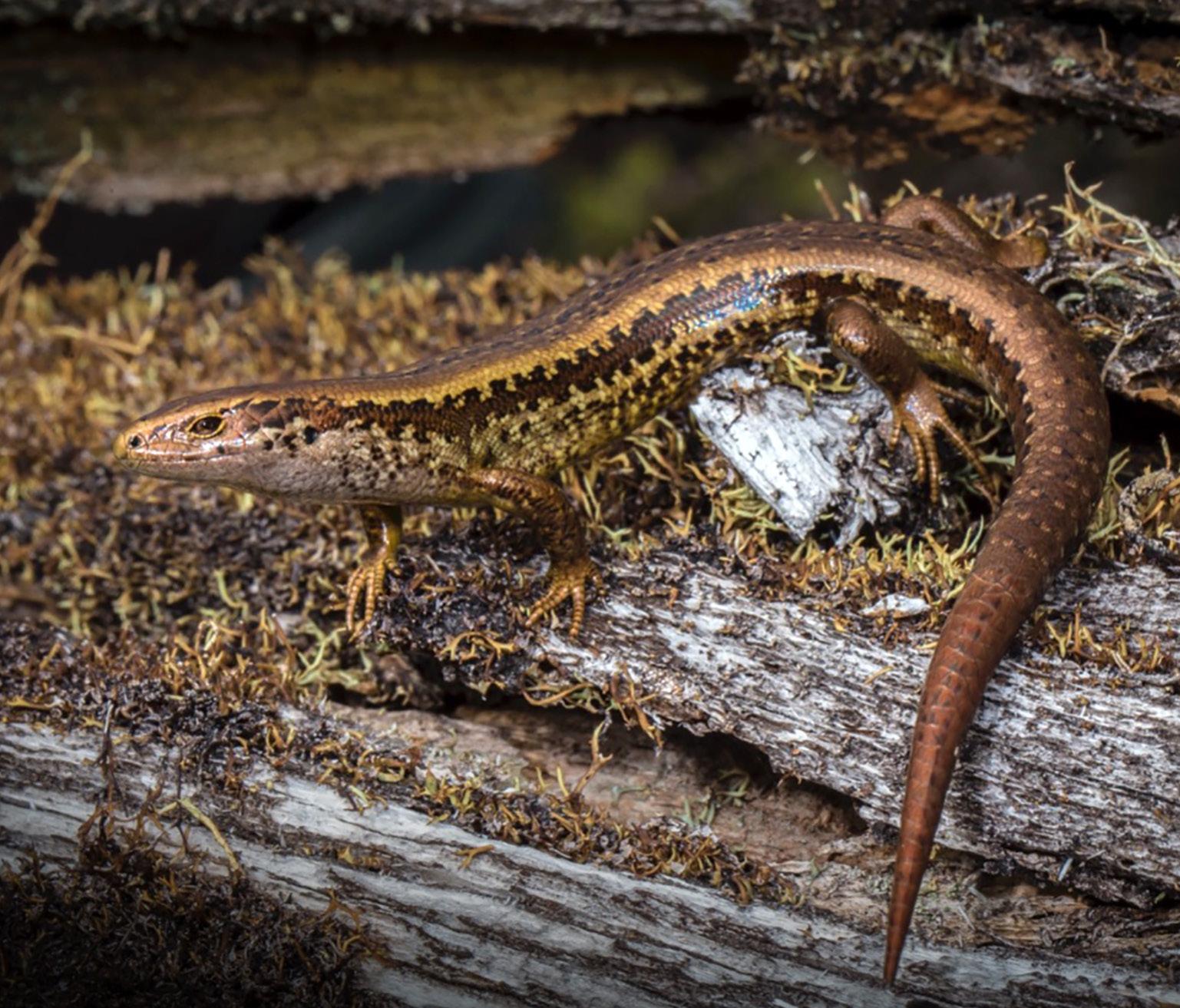
This includes the large skink O. northlandi from the top of the North Island. Meanwhile, it has only been realised recently that another species of New Zealand skink, O. infrapunctatum, has not been seen for more than 130 years.
Lizards fortunately have a tendency to reappear when least expected. A student came across a single uniquely patterned gecko in the Nelson Lakes in the 1960s, which became known as the Cupola gecko. It was not seen again for almost 40 years, and it took another 14 years before a population of the species was discovered. So there may be still hope for the Okuru skink.
LIZARD WATCH
Significant new skink and gecko discoveries are often made when experts follow up observations from locals. DOC is asking Forest & Bird members to report any alpine lizard sightings to them, especially in Fiordland, Westland, and Buller. If you can, send them a photo of the lizard, a photo of the area you found it, and the exact location information. Email your information to lizardresearch@doc.govt.nz. For more information, check out doc.govt.nz.
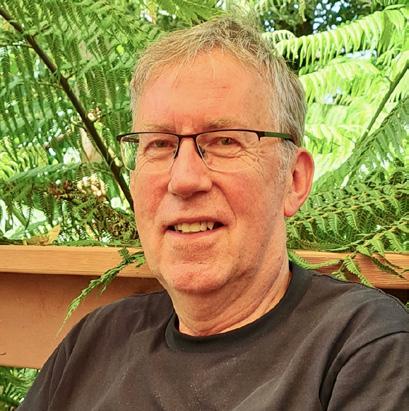
Geoff Patterson is a research associate at Te Papa. He is an expert on New Zealand skink taxonomy, having described about two-thirds of the currently known species. You can read his paper co-authored with Trent Bell: “The Okuru skink (Oligosoma carinacauda sp. nov) of South Westland, New Zealand—simply elusive or extinct?” at mapress.com/zt/article/view/ zootaxa.5536.1.4
☛ Story continues overleaf
MOUSE VS SKINK
Mice predation is a big risk to New Zealand’s lizard fauna and will become an increasing threat as our planet warms. Will DOC be able to respond fast enough? Geoff Patterson
The race to save native skink species is being made harder by climate impacts. For example, flooding leads to the loss of critical habitat, a particular threat to lizards that are rangerestricted.
At higher elevations, global warming allows predators such as rats and mice to move upwards into new areas with devastating consequences.
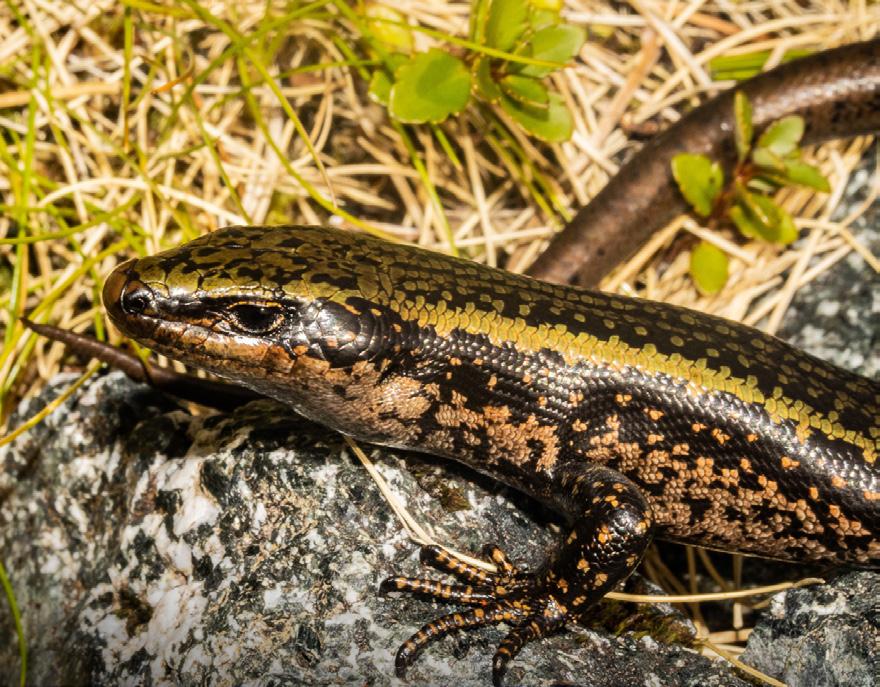
The Sinbad skink, inhabitant of a sheer rock wall at the head of the Sinbad Gully near Mitre Peak, Fiordland, is in particular trouble.
Pikitanga means mountain climber, and Oligosoma pikitanga is one of two Fiordland skink species that lives exclusively in the alpine zone.
DOC senior science advisor James Reardon has been tracking this species and is alarmed at an apparent steep decline in population numbers. He believes this is caused by mice scaling the wall and eating the lizards when
they are immobile due to the cold.
He is planning to translocate a population of these rare animals to an island sanctuary, but this is a race against time with no guarantee of success even once the animals are moved to a safer habitat.
The Alborn skink, only found on the West Coast of the South Island, is also facing extinction because of a mouse eruption.
Discovered in the 1990s, there are probably 30 or fewer individuals remaining today, the numbers halving in less than two years.
With the species declining at such a rate, James Reardon said the situation was “an emergency”, meaning urgent steps needed to be taken.
This included a pest-control operation specifically targeting mice in the area the skinks inhabit. Eventually, a pest-free enclosure will be built around the skinks, but this is not funded yet.
The extinction risk to these two skink species comes at a challenging time for the Department of Conservation. When it was formed in 1987, there were 39 known lizard species. There are now more than 126, with more being described every year.
DOC’s funding has not kept pace with this huge increase in species diversity. In fact, it has been cut this year by a government that does not seem to appreciate the seriousness of the problems facing many of our native species, especially the less well known ones.
This issue is compounded by the lack of information about many of our native flora and fauna. A number of our newly discovered lizards, for example, are known only from a handful of records.
It’s quite possible that more of these data-poor species could become extinct before herpetologists are able to properly assess their threats and protect their habitat. That would be a huge tragedy.
Alborn skink
James Reardon
Sinbad skink Carey Knox
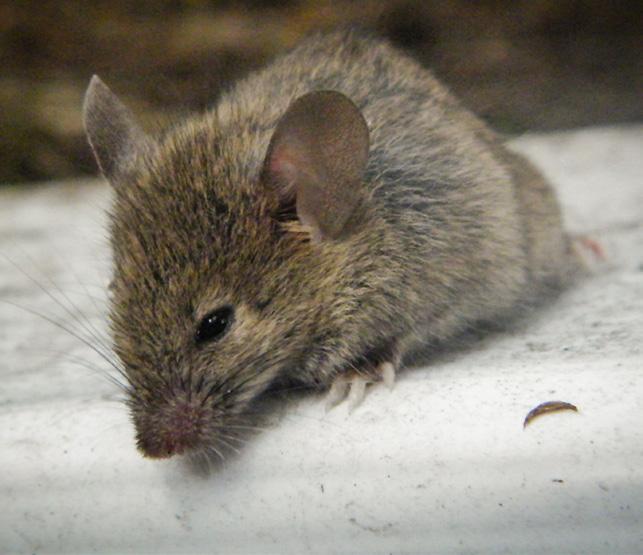
Mouse. Carey Knox
EVERY BIRD COUNTS
Join us in helping celebrate Bird of the Year’s 20th birthday this September.
Time to bust out the “birdday” cake: New Zealand’s favourite avian election is turning 20 in 2025.
Starting out as a simple poll in Forest & Bird’s first email newsletter in Spring 2005, Bird of the Year has grown into a beloved fixture on the Kiwi calendar (and beyond) – an opportunity to banter, meme, and generally support our native birds.
The 20th competition, which takes place this September, builds on a colourful legacy of birdy political tactics, voting scandals, and controversial champions –from pekapeka to pūteketeke.
Many of these memorable moments are captured in a new Forest & Bird book, researched and written by award-winning writer Ellen Rykers, who co-led Bird of the Year for three years.
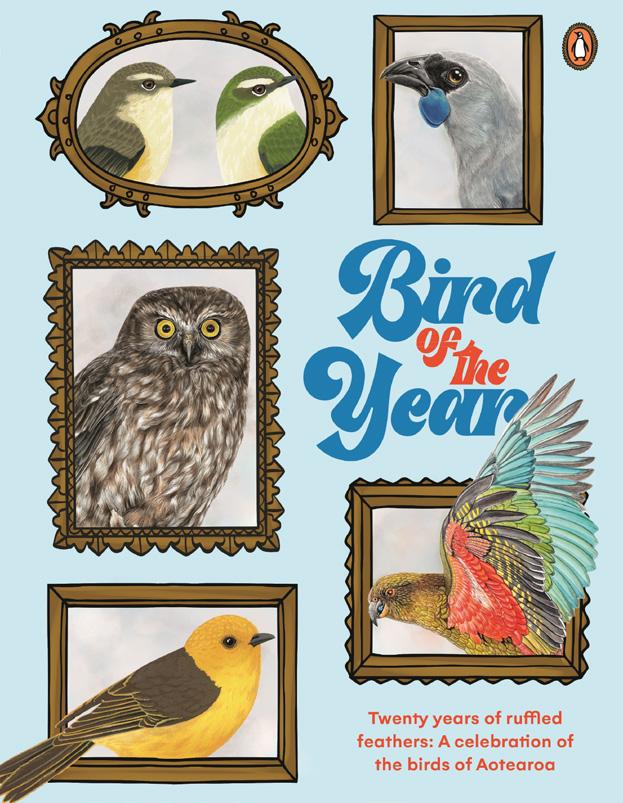
The soon-to-be published book Bird of the Year: Twenty years of ruffled feathers – A celebration of the birds of Aotearoa traces the history of the contest from its humble origins to its biggest, craziest exploits.
More than 80 native birds –and one bat – are profiled and beautifully illustrated by several of New Zealand’s leading wildlife artists.
“It was so much fun uncovering little-known scandals and forgotten rivalries from across the competition’s 20-year run,” says Ellen.
“Our native birds – and the
people who love them – bring such joy to the page, with their quirky personalities and fascinating lives.”
Forest & Bird chief executive Nicola Toki – and erstwhile wrybill campaign manager – says the book is the perfect treat for bird lovers of all ages.
“The gorgeous illustrations leap off the page, while the bite-sized bird stories entertain, intrigue, and inform,” says Nicola.
“You’ll laugh out loud – and hopefully feel inspired to get out there and take action to help our birds.”
You will need to wait a little while to get your hands on a copy of the book, which is being published by Penguin Random House New Zealand. It will be available for purchase from August (RRP $45).
Other activities, surprises, and “tr-weets” are being planned, including a daily quiz challenge and LEGO brick kits of past winners.
Over the years, lots of Forest & Bird’s partners, such as Bennetto Chocolate and Honeywrap, have helped share the word and make Bird of the Year a uniquely Kiwi experience while raising money for te taiao nature protection.
“We are hugely grateful to many partners over the years, including global names such as Blunt and Allbirds, who helped our fundraising with bird-themed umbrellas and sustainable shoes, both of which flew off the shelves,” says Alexandra Moyes, Forest &
Bird’s corporate fundraiser.
“In 2023, for Bird of the Century, the incredible team at Metalbird raised around $600,000 by creating a stunning silhouette metal artwork of the winning pūteketeke and selling it all around the world.
“Now is a great time for existing and new partners to come on board and help us make a big squawk with our 20th birthday Bird of the Year.”
The competition will run from Monday, 15 September to Sunday, 28 September 2025. A ballot for up to five birds may be cast at birdoftheyear.org.nz once voting opens.
Campaign managers are invited to apply to advocate for their favourite feathered friend at forestandbird. org.nz/applyboty2025. If you are a business looking to work with Bird of the Year, contact Alexandra Moyes at fundraising@ forestandbird.org.nz.
Hoiho was crowned Bird of the Year in 2024. Kimberley Collins
LOSING OUR PEATLANDS
Who should pay for the climate cost of peat removed to allow residential housing developments to go ahead? Russell Bell
Recently, RNZ reported on the problem farmers and Fonterra were having farming on drained peat soils. The article explained that rewetting old peatlands could help cut the country’s carbon emissions.
Government officials believed this could be achieved at a cost of $40 per tonne of emissions –cheaper than the current market price of buying a tonne of carbon. The RNZ article asked “Should Fonterra pay?” for the privilege of farming on peat.
I ask the same question of land developers currently digging up old peat swamplands here on the Kāpiti Coast. Two current examples are a residential development north of Waikanae and another development on the old SH1 just south of Paraparaumu.
The world’s dense ancient peatlands cover just 3% of the Earth’s surface, yet they store more carbon than all the forests combined, according to the UN’s Environment Programme.
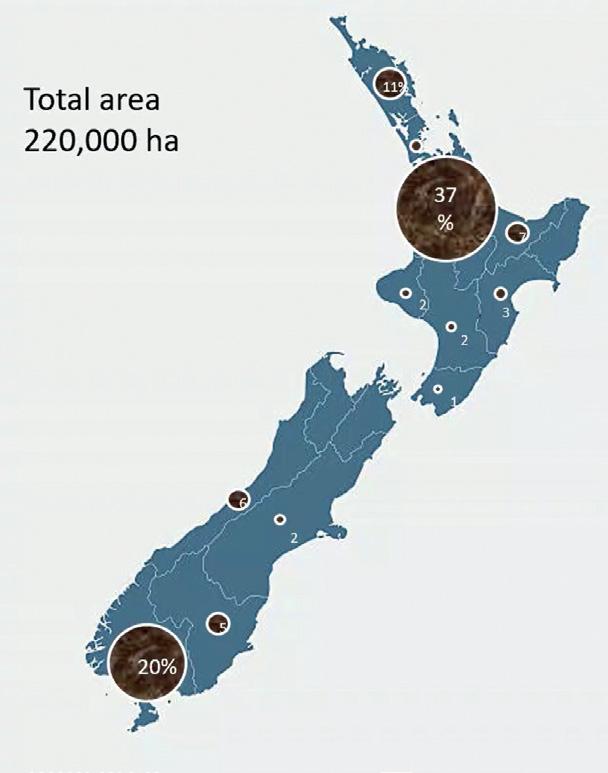
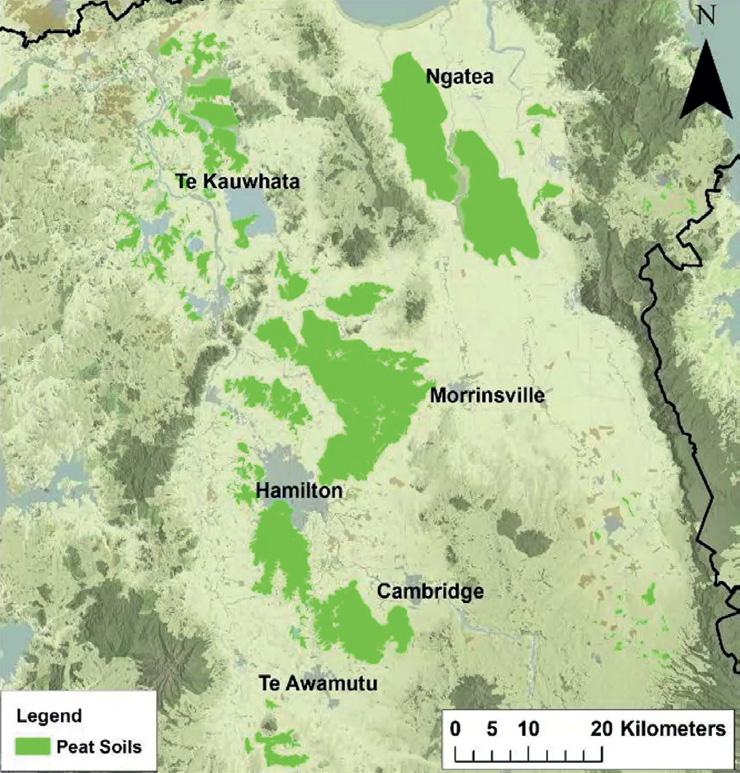
Here in Aotearoa New Zealand, peat covers 1% of the mainland, about 220,000ha, with Waikato being particularly peat rich. The ongoing loss of our mainland peatlands accounts for 6%–7% of New Zealand’s climate emissions, according to Manaaki Whenua Landcare Research.
On the Kāpiti Coast, there used to be rows of forested sand dunes with kahikatea and pukateadominant peat swamps in between.
These peat wetlands sequestered and held a huge amount of carbon. Then the undulating sand dunes interspersed with flat peat areas were cleared and drained for farming.
It remained farmland for some time, but now there is a building boom and the former peatland along the Kāpiti Coast is being turned into housing, new roads, and other developments. This is creating more emissions.
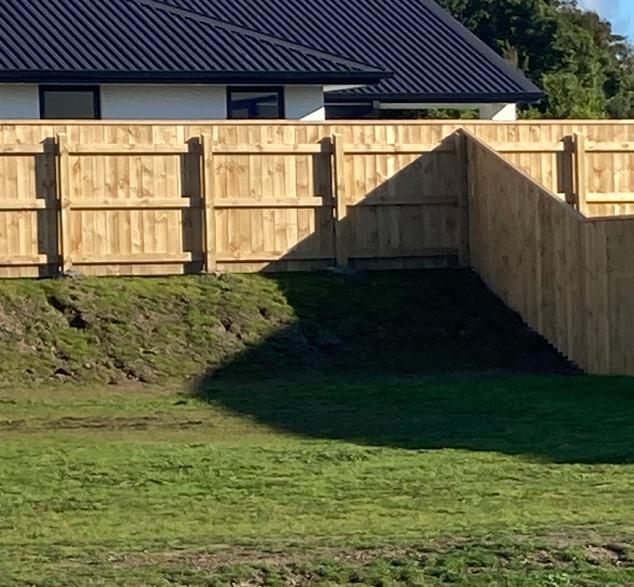
First, the developers terrace the sand dunes so each house will have a flat section, often a metre or so
above the next neighbour. Then the operation shifts to peat. Building on peat is always a problem because peat contains water, is not load bearing, and can be unstable.
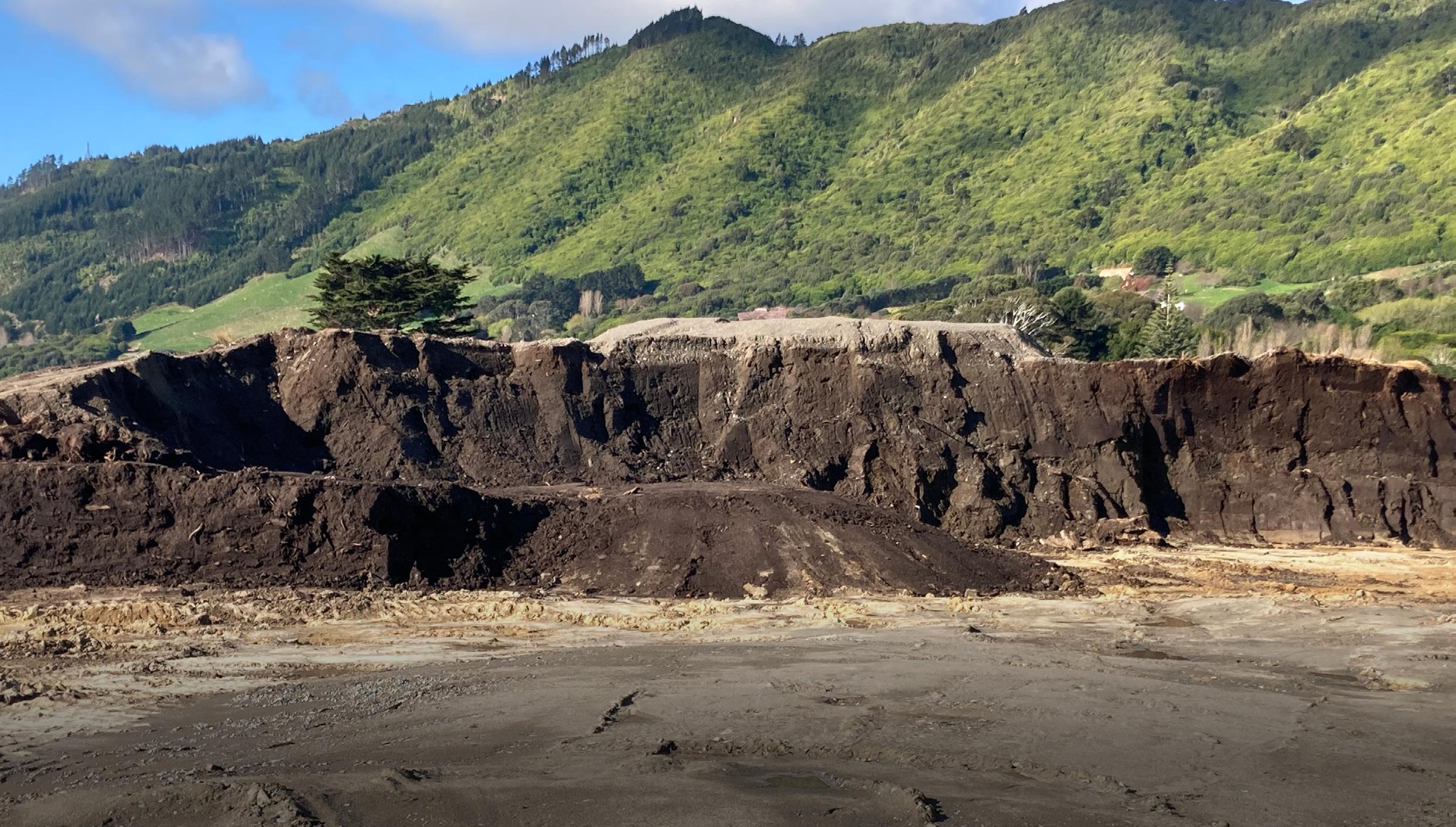
In north Waikanae over the past two years, about 19ha of peat was extracted – dug up and put in huge piles awaiting its final destination. When all the peat has been taken, the substrate below is sand. Drains are put in to keep the water table low, and the area is backfilled with the sand stockpiled from terracing the sand dunes and
Peat farmland like this is being turned into new housing along the Kāpiti Coast. Russell Bell
Piles of peat dug up to create a new housing development, north Waikanae, Kāpiti Coast. Russell Bell
creating those flat sections.
The flat sand is compacted and top coated with peat, then the area is grassed ready to be divided into sections. This process is called extract and replace.
This is a very satisfactory process for building new homes unless you live in a climatechanged world.
In the original peat swamp, the water level would be near ground level, no carbon would be emitted from it, and the peat would be increasing by about 1mm per year.
On a farm, the water table might be 400mm below ground level, leaving the surface dry, which would allow the carbon in the surface peat to oxidise to atmospheric carbon dioxide.
In a residential area, the oncesoaked peat has been dug out, trucked around, put into piles, then shifted back as a thin layer on top of dry-sand sections ready to be built on. It will be exposed to atmospheric oxygen and produce a lot of carbon.
Some of the peat may be sold. Whatever happens to it, it is fairly certain that it will not be rewetted, so all of it will contribute to climate change.
This is not only happening in north Waikanae. The Kāpiti Expressway also used the extraction and replace process when it crossed peat areas, and a new 28ha New Central Park housing development in Paraparaumu will also be built on former coastal peatlands.
Neither farmers nor Fonterra pay for the carbon that their peat fields emit, nor does anyone associated with developing new residential areas on the Kāpiti peatlands.
Kāpiti Coast District Council prides itself on changing its street lights to LEDs and taking other actions to mitigate climate change, but this largest emission continues and is not discussed.
I wonder if the carbon releases of these kinds of housing developments across the country are even accounted for? If they are not accounted for, there will be no incentive to reduce this source of carbon.
Should Kāpiti Coast District Council or the developer pay for the emissions from the peat they have effectively mined? This is a difficult question to ask, but as climate change ramps up it is a discussion we have to have.
Every council, business, community, and individual needs
to do their bit to reduce emissions locally, regionally, and nationally.
I’m reminded about a cartoon about littering that equally applies to our treatment of peat – “We can see the enemy, and it is us.”
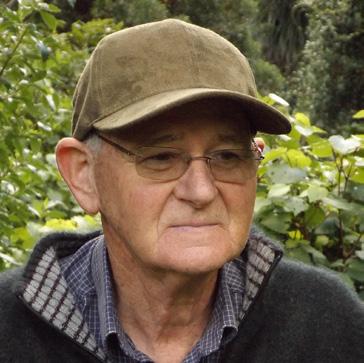
Russell Bell is former chair of Forest & Bird’s Kāpiti Branch and Friends of Queen Elizabeth Park. In 2017, he received an Old Blue for 40 years of conservation work, including leading a project to rewet former peatlands at Queen Elizabeth Park. As Chair of Forest & Bird’s Lower Hutt Branch, he persuaded Greater Wellington Regional Council to buy the Pencarrow Lakes, near Eastbourne, one of New Zealand’s last relatively unspoiled wetlands and home to many birds, fish, and flora.
New Zealand peatlands form 1% of mainland.
Example of new housing built on old peat wetland. Russell Bell
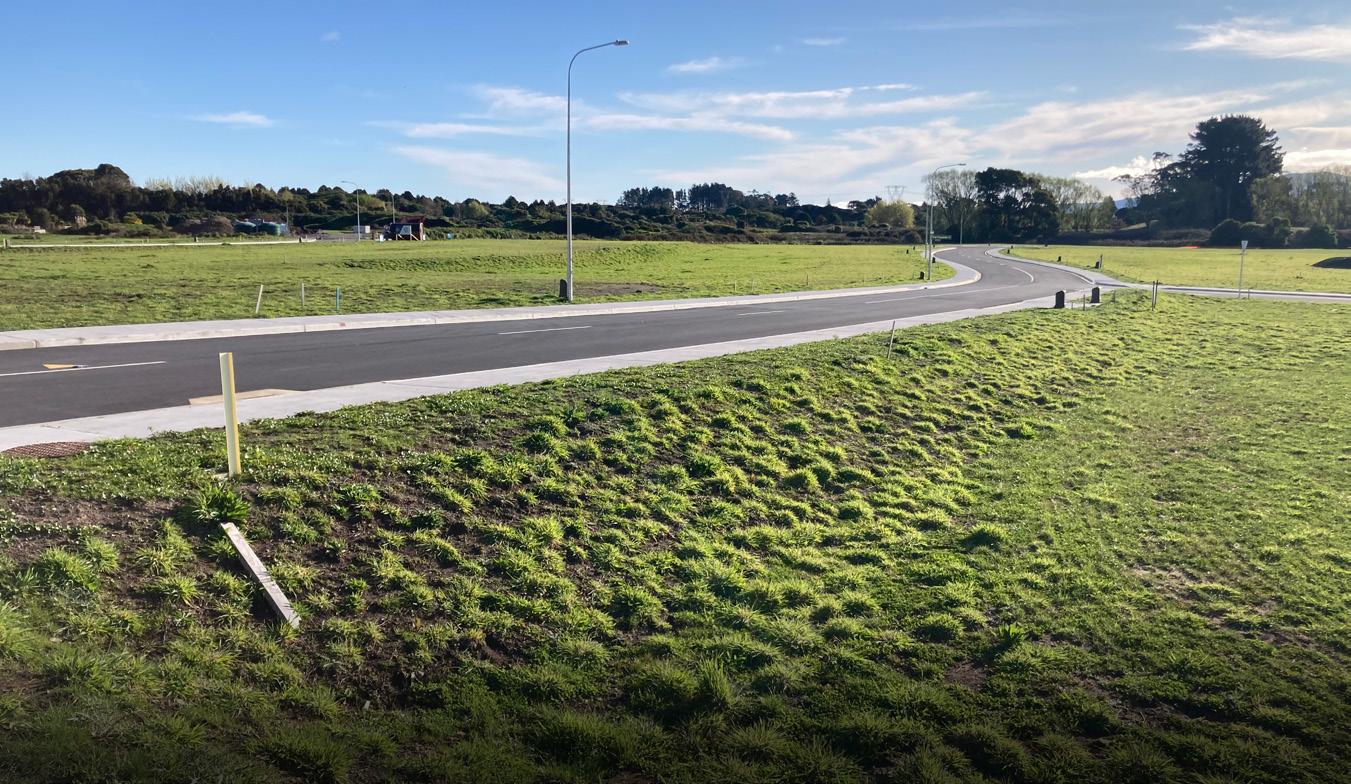
New residential road where peat wetland once existed, Kāpiti Coast, north of Wellington. Russell Bell
Waikato Regional Council
SMART SUSTAINABLE INFRASTRUCTURE
Is your council choosing the best nature-based solutions to mitigate climate impacts, such as flooding, in your community? Russell Bell
Kāpiti Coast District Council is worried about flooding. This can be seen from the work being undertaken on local stormwater systems and in new residential areas.
In new housing areas, channels have been built so water from small streams can flow into them when a heavy rain event occurs.
There are also specific flood areas that will take large amounts of water and release them slowly over time, saving downstream areas.
That will address the flooding effects of climate change and is called adaptation. But it does not address climate change itself. Actions that do that are called mitigation, and we need more mitigation.
In a north Waikanae residential development, a flood area of over 2.5ha has been put aside (see photo). But it is a lost opportunity to implement a nature-based solution and reduce climate emissions.
The flood area is on peat and is well below the houses. It could have been returned to a wetland, helping mitigate the climate and biodiversity crises and providing habitat for wetland species.
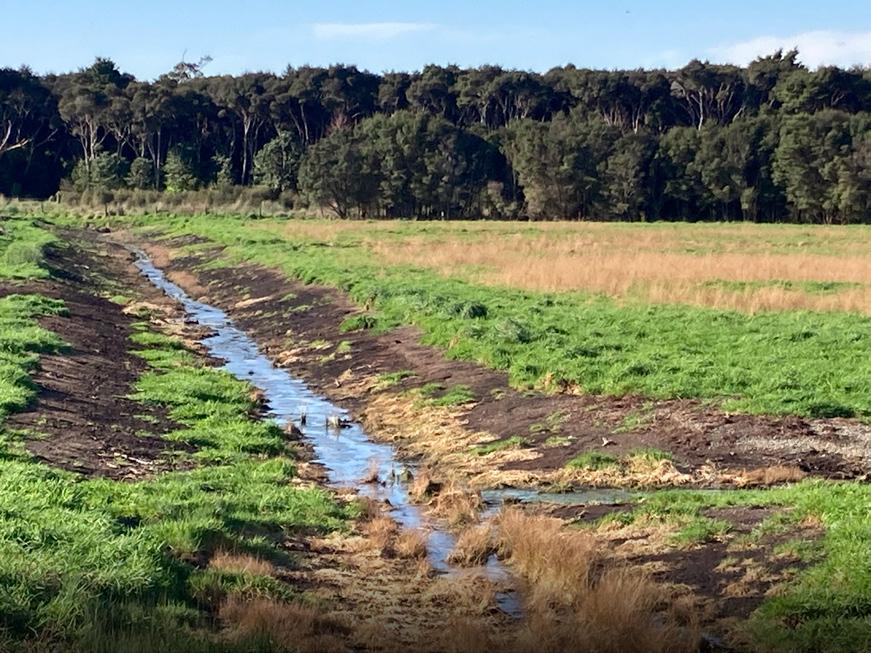
Instead, a drain has been dug around its perimeter that constantly drains the peat, drying out its top surface and allowing the peat to oxidize to carbon dioxide. This also allows the surface to harden, and it has been mowed.
From a biodiversity point of view, humans have changed this piece of land from original wetland into partially drained farmland and subsequently into a fully drained and mowed paddock.
From a climate mitigation perspective, it has
changed from an absorber of carbon to a large emitter of about 70 tonnes of carbon every year.
In time, this area of land may become used as an area for sports or a general park. It will flood from time to time with little damage. But it will keep emitting carbon until there is no peat left.
Over many decades, we have seen this happen up and down the coast in the peat areas between Kāpiti’s sand dunes. In the past, we did not know climate disruption was coming. But we do now.
Does the council not know about peat? Or is it just not responsible? Perhaps our councillors need a reminder that it is possible to work with nature and reduce emissions when building new developments.
When a serious climate event hits a town or city, or New Zealand’s farming and fishing exports are hit by global warming, the chances are that we will blame our councils and our governments.
We will say they didn’t do enough to reduce carbon emissions when they still had the chance. But we vote our elected representatives in and out. There are local elections later this year and a general election in 2026.
Now is a great time to ask your elected representatives about whether they are adopting nature-based climate solutions in your local community.
Are they building or restoring wetlands, making room for rivers, looking after native forests, and restoring coastal dunelands to mitigate against climate change?
With local elections just a few months away, I urge you to be the voice of nature in your community.
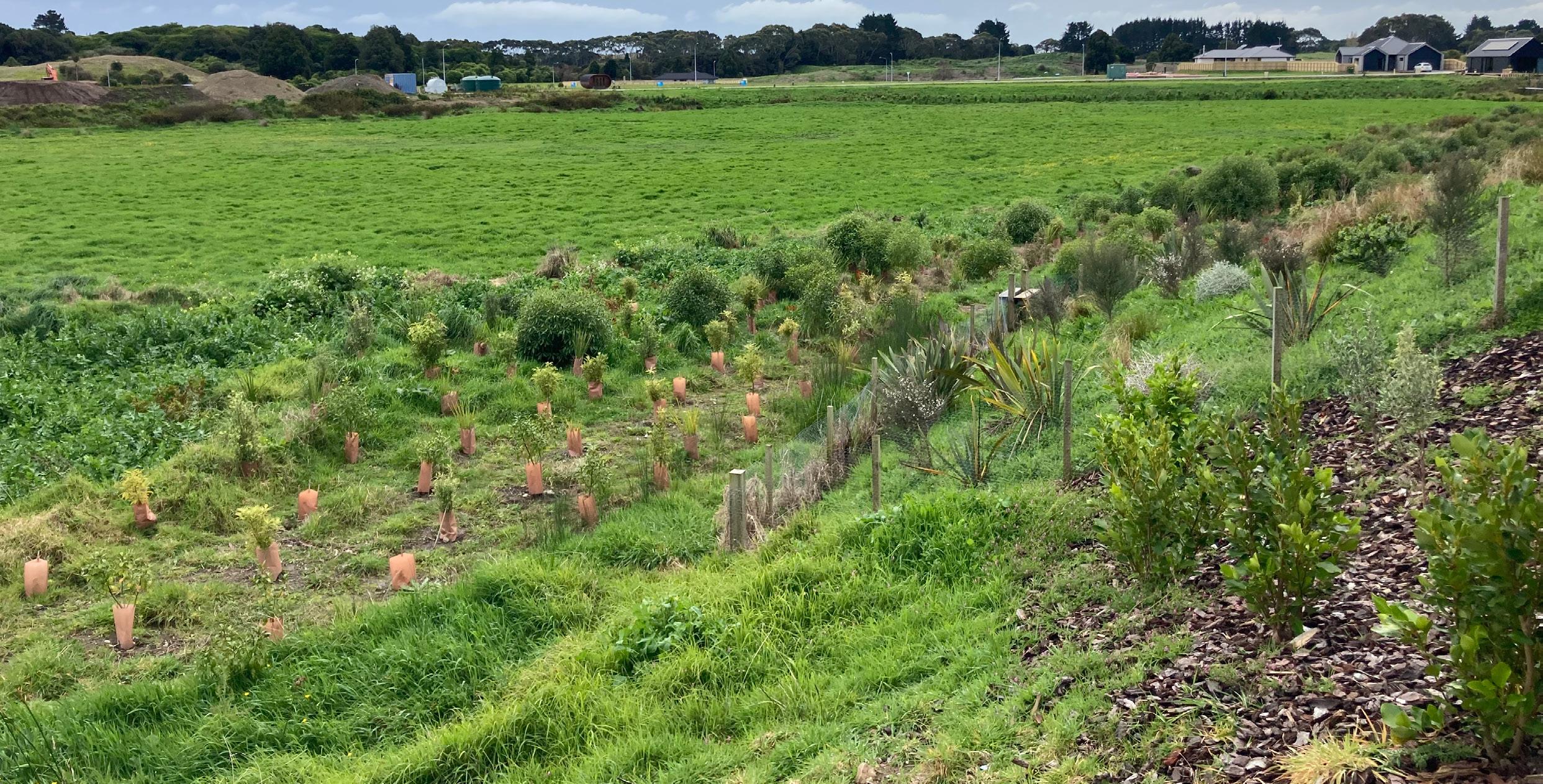
Native planting next to a newly created flood area, north Waikanae. This could have remained a peat wetland. Russell Bell
FORESTS FOR LIFE
Native forests rather than permanent pine plantations should be planted on public conservation land to help New Zealand meet its climate goals.
Forest & Bird is concerned that current plans for meeting the government’s climate commitment of net-zero emissions by 2050 would require private companies planting vast areas of permanent pine forests on conservation and other Crown land.
Ministry for Primary Industries modelling indicated that 280,000ha of non-native pine trees could be planted on Crown land and that 230,000ha of this would be permanent – locking up public conservation land forever.
The extent of the pine planting had not been clear until an Official Information Act request revealed the figures in early April. The planting would absorb more than 15 million tonnes of CO2 by 2050.
The combined area of 330,000ha of Crown land being discussed is close to the size of Mount Aspiring National Park. In contrast, there would be just 50,000ha planted in native trees.
“This is another move in a worrying trend where the government has been looking to open up public conservation land for development by private interests,” said Forest & Bird’s chief executive Nicola Toki.
“Fast-track and other resource management and conservation reforms are all eroding protections that are in place for conservation land. Conservation land needs to be for conservation.”
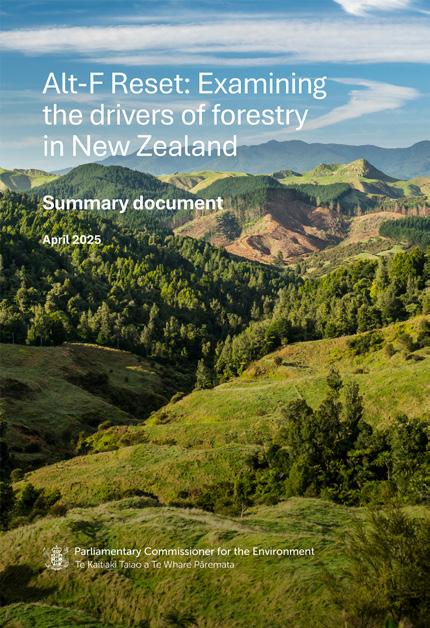
The Parliamentary Commissioner for the Environment, Simon Upton, expressed similar concerns in April, when he released Alt-F Reset: Examining the drivers of forestry in New Zealand.
He says current Emissions Trading Scheme rules make radiata pine the most economically attractive tree for carbon farming. However, this could leave the Crown with future carbon liabilities if they’re damaged by pests, disease, fire, or extreme weather events.
“Our policies, particularly settings under the current New Zealand Emissions Trading Scheme, are driving a wave of land use change to carbon forestry with significant environmental, economic, and social risks,” he said.
Mr Upton said permanent forest should be permanent and a “reset” is needed so native trees are given greater forestry priority across Aotearoa.
His report identifies some key barriers to establishing alternative forestry systems, such as new native forests, and suggests ways to address them.
“The good news is that there is an opportunity here – we can plant native trees for carbon and deliver for our native wildlife and wild places,” added Nicola.
Native trees are suited to our soil and weather conditions and are more robust during the growing number of extreme weather events caused by climate change.
Getting this right would be a win-win – helping meet our emissions target and ensuring conservation land is protected for our unique biodiversity and the benefit of generations of New Zealanders to come.
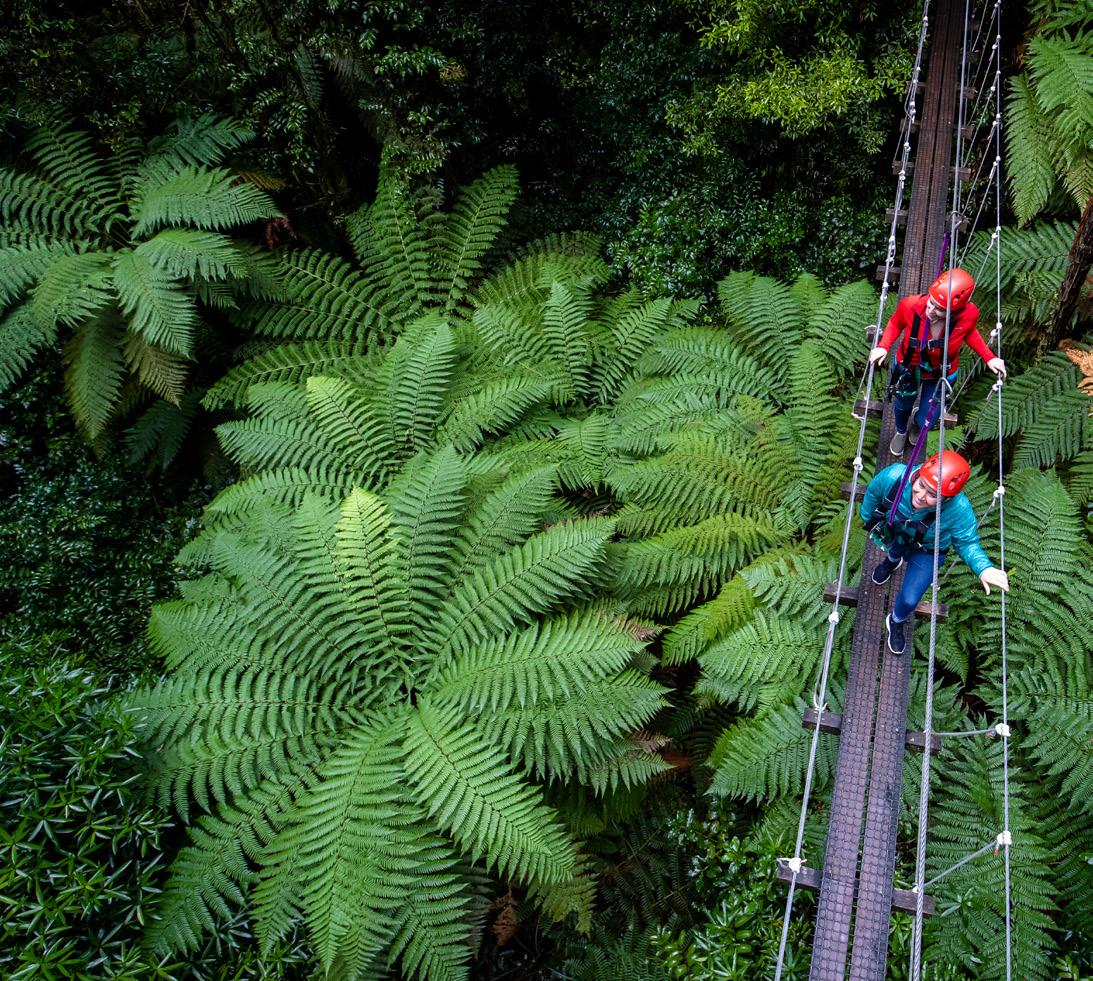
Restored Rotorua forest. Canopy Tours
SAVING DOTTERELS
A Forest & Bird Warkworth Branch project to protect tūturiwhatu at Snells Beach is bearing fruit. Jackie Russell
When an invitation to help band tūturiwhatu New Zealand dotterels appeared in my inbox, it was one email that did not get an instant delete.
To get close to the few New Zealand dotterels that live and breed at Snells Beach sounded like an intriguing experience and a bonus resulting from volunteering with Forest & Bird’s Warkworth Branch.
Over the past few years, volunteers far more experienced than me have dedicated limitless hours to protecting nests and birds from several threats in an increasingly urbanised coastal town.
While no dotterel chicks had survived since the 2019–20 breeding season, the 2024–25 season promised to be one of the most successful in many years.
Five chicks were to be banded before they could fly, and in mid-December I joined a small team to assist renowned ornithologist Adrian Riegen.
He was confident he could catch the chicks with a borrowed butterfly net. I was not convinced. Being the youngest in the group, a spritely 59 year old, I realised I was possibly included because I can run.
We adopted a sheepdog strategy by creating a wide circle around the target, then we walked and flapped our arms to herd the chick towards the shoreline.
But the 39-day-old chick managed to both outsmart and outrun us, as it zigzagged in different directions to avoid capture.
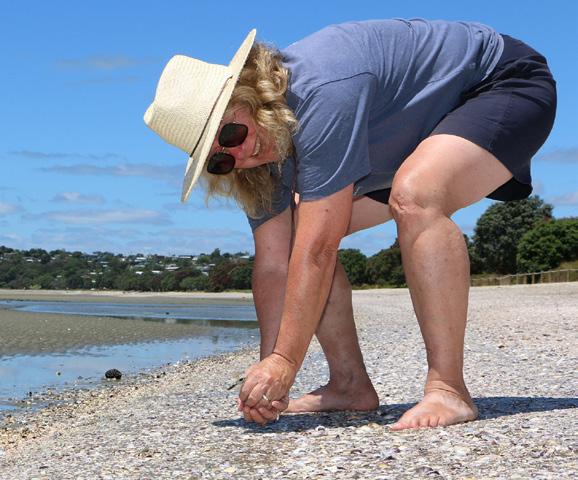
I ran to block gaps while Adrian dodged logs, seagrass, and spinifex runners, then swooped in with his butterfly net to gently capture a survivalist tūturiwhatu.
Fellow dotterel minder Becky Swan had the honour holding the bird in a bag while Adrian prepared to weigh and band it.
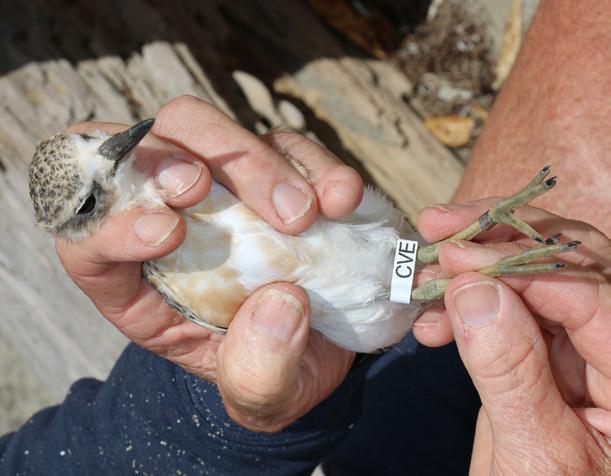
Watching him clamp a metal band onto the dotterel’s leg was a heart-stopping moment. Would the pliers harm the chick?
However, the skilled and experienced ornithologist was relaxed, and the vulnerable bird was in good hands.
Another volunteer, Lois McPherson, then glued a flag onto the metal band. While waiting for it to set, Adrian measured a wing, discussed the feathers, and assessed the age and stage of the chick. Becky released the first chick – adorned with its new identifying bling – onto the beach.
We repeated the process with its two siblings as well as a younger pair of tūturiwhatu that occasionally hung out on a riskier (for dotterels) grass reserve. People and their pooches often walked in their space, which kept the adult birds on an exhausting schedule of defending their offspring.
“Dotterels would not successfully raise young on a beach like [Snells] without people who care about them, says Adrian. “If all five fledge, that is a wonderful effort.”
All did fledge, with some soon recorded more
Dotterel minder Becky Swan released the first banded bird at Snells Beach. Jackie Russell
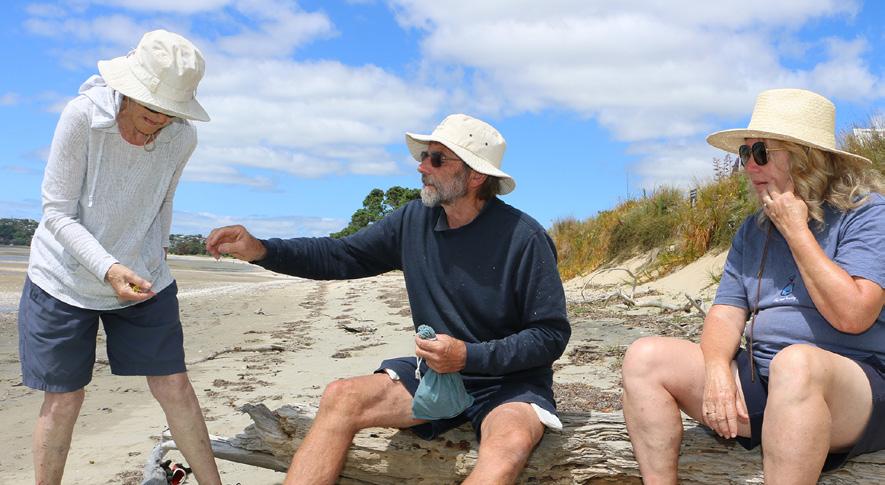
Five chicks were given identifying flags Jackie Russell Banding team. From left, Lois McPherson, Adrian Riegen, and Becky Swan Jackie Russell
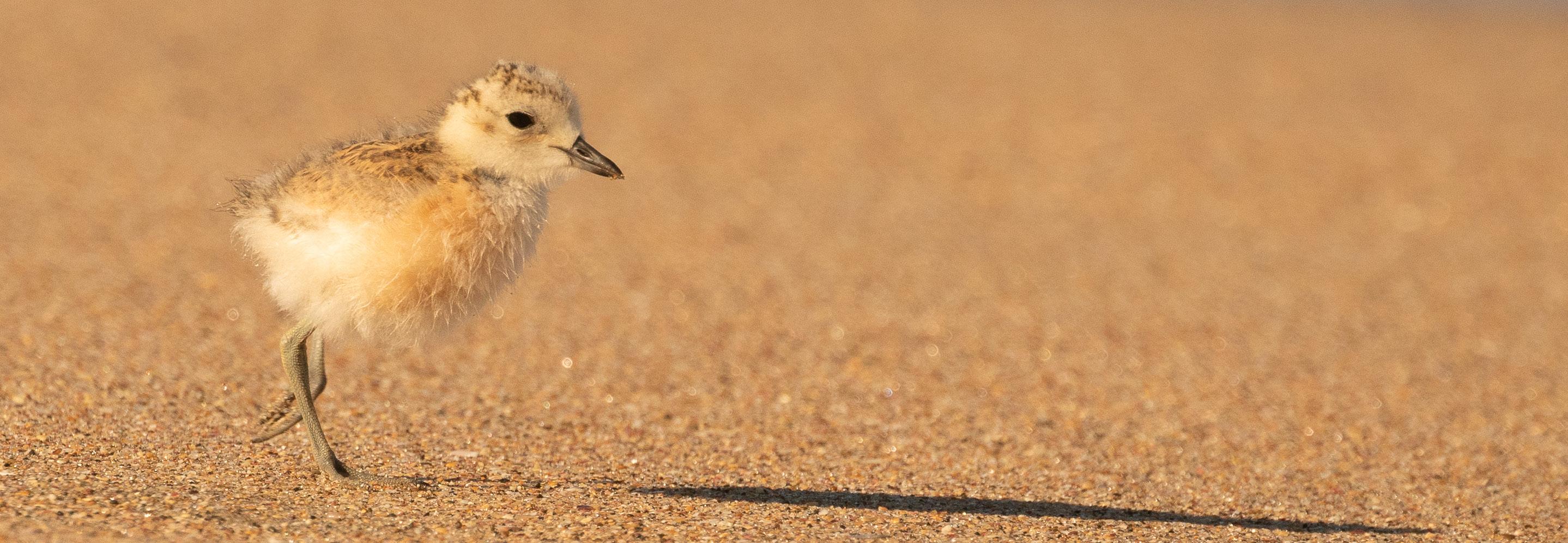
Dotterel chick. Michelle Martin
than 10km away at Tāwharanui Open Sanctuary and Ōmaha. Good weather helped, as well as many years of dedicated volunteer-led community mahi.
Forest & Bird’s Warkworth Branch has raised awareness with community events, a Birdlife puppet show, and media coverage of trapping. We are grateful for support from Ngāti Manuhiri and Auckland Council.
The project teams gives frequent social media updates on nests, chicks hatching, and problem cats visiting nests. Our prototype ScanACat, which harmlessly reads roaming cats’ microchips, was used to capture identifying data to share with local vets and council.
Volunteers cordoned off nests, protected them from king tides, and talked to dog owners who wandered into the wildlife-friendly zone.
The challenges of raising awareness of the many threats experienced by the dotterels continue. But I feel lucky to have been part of the banding team. It’s a privilege to witness the success of conservation work paying off for tūturiwhatu in its Snells Beach environment.
Jackie Russell is a writer and member of Forest & Bird’s Warkworth Branch – see forestandbird.org. nz or contact warkworth.branch@forestandbird. org.nz if you’d like to volunteer on one of its branch projects.
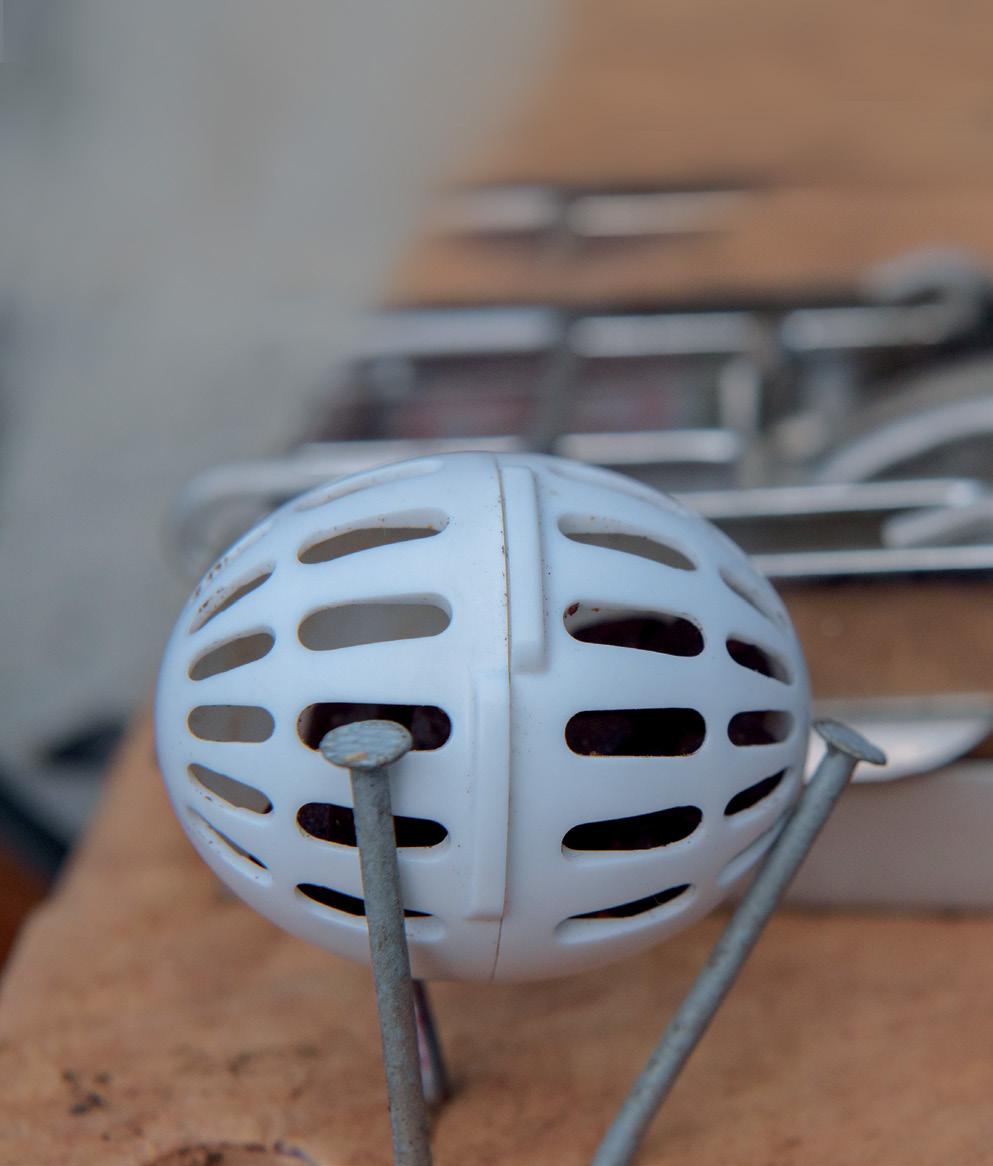
GIVE A TRAP TODAY
Imagine an Aotearoa New Zealand where native wildlife flourishes throughout the mainland. A landscape made safe from introduced predators, filled with beautiful birdsong, and containing the full diversity of flora and fauna.
There are thousands of volunteer-led community groups working towards this predator-free vision, helping kiwi, kākā, kōkako, bats, and many more endangered species survive the onslaught of rats, stoats, possums, and other predators. But they need help accessing traps and tracking cards.
Give a Trap is a clever national initiative that matches donors with community trapping projects around the country. Through the website, you can choose how much to give and who to give it to.
Once you’ve paid, the traps will wing their way directly to your chosen trapping group. Once they receive your gift, volunteers will put them to work and send you regular updates through the platform.
Give a Trap was created in memory of conservationist Penny Willocks, who died in 2021. Her family generously gifted the website to Forest & Bird. We now manage it as part of our Predator Free 2050 mahi.
Expert ethical investing advice
• Winner or Highly Commended in the Mindful Money Best Ethical Financial Adviser awards 2022, 2023, 2024
• Independently-researched portfolios
• Expert advice
Call 09 337 0997 to talk to one of our advisers or find out more at ethicalinvesting.nz
There are several Forest & Bird branch conservation projects on Give a Trap, alongside our major projects Ark in the Park, Predator Free Hibiscus Coast, and Te Hoiere Bat Recovery. Check it out at giveatrap.org.nz
Jack Gibbs setting up a trap along the Banks Track, Akaroa Harbour behind Supplied
STANDING UP
It’s more important than ever for rangatahi to make their voices heard and protect our precious planet.
Brianna Gibson
Ngā Māhuri Tiaki Forest & Bird Youth is a nationwide network of young people who, like me, want to protect and restore our unique flora and fauna. From tree plantings and beach clean-ups to public advocacy campaigns, there is something for everyone.
A significant 12% of the population is aged between 14 and 25 in Aotearoa New Zealand, according to the 2023 census. That’s more than 632,000 young people, and together we can make a big difference for te taiao nature today and in the future.
We have six location-based Youth Hubs around Aotearoa filled with like-minded passionate young people working to create positive change in our communities by managing nature projects, running events, and leading environmental restoration efforts.
Our local hubs plan projects and go on trips to explore what Aotearoa New Zealand nature has to offer. Recently, our Dunedin Hub visited the Royal Albatross Centre
on the Otago Peninsula. Last July, Forest & Bird Youth leaders from across the country met in Taranaki for a national hui. We planted more than 300 native trees, completed a bioblitz workshop at Sandy Bay, and discussed seabed mining off our coasts.
Joining Forest & Bird Youth is a great way to learn more about yourself while developing leadership skills to help tackle the environmental issues of today and tomorrow. If you are interested in politics and advocacy, you can join one of our virtual nationwide hubs, where our members plan national actions.
Members of our national campaigns hub recently stood up for te taiao by writing a detailed Forest & Bird Youth submission on the Treaty Principles Bill. Campaign Hub leader Petra Cogger, 15, was invited to appear before MPs and told the Justice Committee how Forest & Bird’s Youth members felt about this bill.
I’m a member of the national communications hub, and together
we run Forest & Bird Youth’s social media pages and create content, such as this article, to share perspectives on issues important for the youth of Aotearoa today.
Our recent communications projects include writing “creature features” highlighting wacky, wild, and wonderful native species, sharing our favourite local nature spots, and promoting Youth activities all over the motu, letting people know how to get involved.
Aotearoa New Zealand is facing many environmental challenges, such as the new fast-track legislation and the global climate crisis. We all know how easy it is to feel disempowered in the face of an increasingly uncertain and chaotic world.
But at Forest & Bird Youth, we can help you make a difference. Many of our hubs are recruiting new members and leaders right now. If you would like to join and make a positive difference in your community, sign up as a member on our website forestandbird.org.nz/ourcommunity/forest-bird-youth and get connected to your closest hub.
For more information, find us on social media @forestandbirdyouth or contact us at youthsupport@ forestandbird.org.nz.
Originally from Wellington, Brianna Gibson is in her second year studying a Bachelor of Veterinary Science in Palmerston North.
Applications are open for this year’s Valder awards, administered by Forest & Bird’s Waikato Branch. Grants of $1000 to $10,000 are available for conservation projects throughout Aotearoa New Zealand. Previous awards have supported research and practical conservation work. For an application form, email waikato.branch@forestandbird.org.nz. Applications close on 30 September 2025.
Forest & Bird Youth leaders planting trees in Taranaki during last year’s Forest & Bird Youth hui Supplied
GARDEN BIRDS
As we get ourselves ready for the 2025 Garden Bird Survey, here are some highlights from last year ’s results.
It’s Aotearoa New Zealand’s longest-running citizen science project, having been organised by Manaaki Whenua since 2007.
A record number of people took part in the survey in 2024, with more than 17,000 New Zealanders spending one hour counting the birds they could see or hear, and submitting nearly 8000 responses to add to this valuable dataset.
To date, more than 77,000 surveys have been gathered from gardens, school grounds, and parks across the country.
The data that New Zealanders submit can help scientists understand how local predator-free projects are affecting bird numbers.
“Getting more data increases the statistical power of the analysis, enabling us to better detect when a trend at a smaller or larger scale, such as regionally or nationally,” said Manaaki Whenua scientist Dr Angela Brandt.
Highlights from 2024 include:
n Kererū counts show a shallow increase over 10 years (39%) and a shallow decline over five years (7%). Moderate to rapid declines were seen in seven regions in the short term – Northland, Auckland, Gisborne, Hawke’s Bay, Nelson, Otago, and Southland.
n We continue to see a shallow increase in tūī counts in both the long term (23%) and the short term (7%). Their regional long-term trends continue to show a rapid increase in Canterbury (207%) and now show a moderate increase in Marlborough (68%). Tūī are only usually reported in a few gardens, so a big increase is actually only a doubling or tripling of the small number of gardens where tūī are spotted.
The 2025 survey runs from 28 June to 6 July. More details are at gardenbirdsurvey.nz/
28 June – 6 July 2025
Run by Manaaki Whenua
FIVE WILD WINS
From alpine wrens to kiwi, native species bounce back when predators are controlled in their habitats. Caroline Wood
TURNING THE TIDE
FIORDLAND TOKOEKA KIWI
Before predator control, every single kiwi chick the Department of Conservation monitored at Shy Lake, east of Resolution Island, died. This meant the species was facing extinction. After predator control, last year’s kiwi chick survival rate climbed to 60%, helped by eight years of research.
SCIENCE WORKS BEECH MASTS
DOC’s scientists carefully reviewed how staff timed their control operations during beech mast events. Following their advice, staff changed tack and targeted rats either before beech seed was produced or after it had germinated. It paid off – DOC says all operations suppressed rats effectively, in most cases down to undetectable levels.
PĪWAUWAU ROCK WREN BOUNCING BACK
Every year, DOC’s team surveys alpine rock wren populations. Research across 25 sites shows that aerial 1080 operations help pīwauwau populations recover
and grow. DOC says there are an average of twice as many rock wrens at predator control sites compared to sites with no control.
RECORD-BREAKING ROOST
PEKAPEKA LONG-TAILED BATS
DOC found a record-breaking pekapeka bat roost while monitoring the results of predator control. It discovered 275 bats in a single tree roost at Whirinaki Te Pua-aTāne Conservation Park, where it undertakes regular predator control operations. That’s a lot of bats!
BALANCING THE SEXES
KĀKĀ COME BACK
Female kākā are more vulnerable to predation, especially when they’re confined to nest cavities during breeding season. Therefore, studying the ratio of kākā males to females can help us understand the health of a population and its predation pressures. This year, kākā monitoring in Pureora Forest (an ongoing predator control site) revealed a 1:1 sex ratio – the most balanced DOC has ever recorded.
These five stories are from DOC’s National Predator Control Programme Annual Report 2024, published in April. The department controls predators over about 1.8 million hectares (20%) of public conservation land on a sustained rotational basis. Staff use biodegradable 1080 toxin (sodium fluoroacetate), which is the only effective tool for controlling predators across vast, remote, and rugged landscapes. They also carry out large-scale trapping and ground-based baiting when needed. But they can’t do their work alone, which is why Forest & Bird and many other volunteer-led groups are giving them a helping hand with predator control.
BE PART OF MAKING AOTEAROA NEW ZEALAND PREDATOR FREE BY 2050.
You can help by going to giveatrap.co.nz and donating a trap or funds to the cause.
Pīwauwau rock wren. Jeremy Sanson
TRACKING RATS
It was all hands on deck to find two rodents that breached the perimeter of a forest ecosanctuary owned by Forest & Bird.
Volunteers and staff launched into action after rat footprints were found inside Tarapuruhi Bushy Park, near Whanganui, at the end of April.
The presence of rodents was found on tracking cards within the sanctuary, home to ancient forest and wetland gifted to Forest & Bird by Frank Moore in 1962.
Swift action was immediately taken and emergency monitoring and trapping measures were activated.
Forest & Bird and the Tarapuruhi Bushy Park Trust, local iwi Ngaa Rauru Kiitahi, DOC, Horizons Regional Council, and volunteers were all part of this intensive trapping and monitoring programme.
“The integrity of Tarapuruhi Bushy Park’s predator fence and the sanctuary’s pest-free status is critical to protecting our native species, said Rosi Merz, Forest & Bird’s sanctuary manager.
To protect the sanctuary’s precious manu and ensure their safety, Forest & Bird also brought in mustelid and rat detection dogs and set up extra tracking tunnels, cameras, bait stations, and traps.
The large size of the 98ha sanctuary made it difficult to check the whole park in one sweep, so a call went out for volunteers with backcountry skills to assist. Forest
& Bird is grateful to all the people who came to help. We’d also like to thank Orillion and Goodnature for donating equipment and resources.
The team then discovered a rat tunnel next to the predator-free fence.
“Our fence goes into the ground and therefore rats usually can’t dig under it, but this one was smart enough to follow a deep culvert and avoid the underground mesh,” said Rosi.
“They are clever creatures. I’m regularly amazed at their sneakiness.” The team’s efforts have paid off, judging by the bait that has been taken.
“While it would have been ideal to confirm rat presence through trap captures, the evidence suggests that the bait has been effective in controlling our unwanted visitors.”
Feed tūī, bellbird, hihi, kākā, silvereye & more
● Cat proof! 360 degrees of visibilty while birds feed
● Provides sugar water, fruit & energy truffles
● Feeder can go anywhere, it’s on a waratah
● Stainless steel nozzle ensures safe, hygienic feeding & easy cleaning to prevent the spread of avian pox.
Buy a feeder at PFNZ shop.predatorfreenz.org.
For more info go to our website pekapekabirdfeeders.nz
Bushy Park Manager Rosi Merz (far right) briefing volunteers after the rat incursion. Joe Dobson
A rat made this tunnel and sneaked into Tarapuruhi Bushy Park. Rosi Merz
RESTORING
RĒKOHU
Locals are working hard to restore the unique flora and fauna of the Chatham Islands. Lynn Freeman
Afuture free of possums, feral cats, and rats, with karure kakaruia black robin thriving in restored native bush covering the main island of Rēkohu in the Chatham Islands.
This is the vision shared by islanders doing the hard mahi, including fencing, trapping, planting, and weeding, needed to make it a reality on Rēkohu, which means misty skies in Moriori.
To be realised, a genuinely sustainable future for the Chathams must be a joint effort, a shared goal among all residents and landowners.
Spend any time there, as I did in March on a weeklong tour as one of 24 avid birders, and you can picture it. Talk to some of the key players, and you will leave convinced this transformation will happen within a decade.
Ornithologist Mike Bell, who’s also a wildly enthusiastic member of the Chatham Islands Landscape Restoration Trust, was our tour guide. He describes himself as a birder, an ornithologist first and a restoration farmer second.
The Chatham Islands Restoration Trust gets behind ecosystem restoration projects, protects the unique miheke taonga species, and supports a healthy island and community.
Mike took us to some places most visitors wouldn’t get to go because of our shared love of “all things birds” and because of his relationship with landowners. Everywhere we went, we heard that Mike had helped them out with planting, trapping, and encouragement.
“The Trust has 100% support from landowners for a
predator-free future for the Chathams,” Mike says.
“The only question is how we’ll achieve that future, including the use of toxins in some areas. But we’re not having those discussions yet because it’s hypothetical.”
The plan is to start in one area of Rēkohu, the main island, make it predator free, and have a buffer zone of traps in place before moving to the next, making their way around the island.
“We are starting up in the northeast where we’re using traps and will also use possum detector dogs. It’s around 4000ha, with nice little pinch points you can go into. We’ll take out the possums and feral cats,” he says.
“Then people will see that we are actually achieving something. It’s not just talk. This very much is an island of doers. Talk is cheap, and doing the mahi is what counts. It’s how you’ll be judged.”
Mike first became involved in conservation on Rēkohu around 30 years ago as a teenager. The main island has changed dramatically in that relatively short time.
“A lot of people a bit older than me remember their grandparents and fathers clearing the land,” he says. “At that time, it must have felt like the bush was never going to disappear. There was so much of it.
“Now islanders are seeing places where they used to go camping in bush as children are now barren. They know that they have to do a better job of looking after the biodiversity that remains.”
Mike and others have noticed big areas of bush dying off over the past three decades.
“When I first came to the island, and I’m still quite young, there was probably about twice as much bush up north as there is now.
“It’s not about active felling any more. These areas are just ‘falling to pieces’ due to domestic stock getting
Mike Bell. Lynn Freeman
Rugged coastal cliffs take a battering from the southern ocean swells. Near Cape L’Eveque, Rēkohu, Chatham Islands. Rob Suisted
in but also because of wind damage.”
Historically, trees grew huddled close together, so the prevailing winds simply blew across the top of the healthy dense canopy.
Mike says there is a false perception on mainland Aotearoa that Chatham Islanders don’t care about conservation.
“Chatham Islanders would hate to call themselves conservationists because it’s a word they associate with being told what to do by outsiders,” he says.
“A lot of conservationists think you have to ban people from places to get the best results. I think the opposite.
“One of the reasons that I’m protecting these areas is so that people can see and experience them. Connecting with nature is good for our mental health and wellbeing. I feel best when I’ve got my hands in the dirt.
“The fact is, many landowners have put up fencing at their own cost, done heaps of planting, covenanted areas of their land, and run trap lines.”
Those involved in restoring native vegetation in Rēkohu have a significant advantage over other parts of Aotearoa – no winter.
“No snow, no frost, so things don’t stop growing in the wintertime. There’s no dormant period,” Mike says.
“Unlike on mainland New Zealand, where you plant
tōtara and have to wait hundreds of years for it to mature, in some places here we plant hakapiri, and it goes from 30cm to four metres in five years. You really feel like you’re getting somewhere!”
The distinctive and gnarly endemic fast-growing coastal tree Olearia traversii, called hakapiri in Moriori, is commonly referred to as “akeake” on the Chathams.
Understanding native trees and their biggest threats shapes the approach to restoration planning. First off, it’s fencing because domestic stock, cattle and sheep, do the most damage to the land by far. After that, it’s the possums eating the trees. Luckily, possums don’t
A LAND APART!
Take a step back in time and discover the unique, diverse and historic Chatham Islands.
Akeake trees donated by Forest & Bird supporters in the 1970s flourishing on Mangere Island in 2023. Enzo Rodriquez-Reyes
particularly like munching on hakapiri akeake, which is the Chatham Island’s most predominant tree.
“It’s probably their least favourite tree to eat,” Mike says. ”We plant them first, and once they’re established they act as a kind of nursery for other more vulnerable plants.
“So you can do akeake restoration planting, but once you introduce other plants you must control possums. As you get the biodiversity back in balance, with the birds and the bugs, you have to start dealing to the feral cats and rats.”
The lucky people are the ones who have little pockets of bush left on their land, as they have a head start. The unlucky ones, Mike points out, are those with a bare paddock so they are starting from scratch.
During the 1970s, Forest & Bird raised money so the government could buy Maung’Rē Mangere Island to save the karure kakaruia Chatham Island black robin. The society raised more money to buy akeake to plant on the bare slopes, a game-changer for the robins. Mike’s father was involved with the efforts to replant Mangere Island so the last few remaining birds could be translocated there. This mahi laid the ground for the famous race to save the robins led by New Zealand’s Wildlife Service, the forerunner to DOC.
Mike reminded us that Chatham Islanders who shared their local knowledge of the birds and territory with Don Merton and his translocation team in the early 1980s have been largely excluded from the story of Old Blue, the last breeding female robin who saved her species.
I, like many other Kiwis, have been inspired by Old Blue’s extraordinary story of survival against all odds. Seeing the islands where her descendants currently live was the absolute highlight of our trip.
We saw many other wonderful species there too, such as the colourful Forbes parakeet and the Chatham Islands koko tūī and tomtit. We also marvelled at the many species of albatross soaring or bobbing hopefully around our boat as we explored some of the island’s coastline.
While restoration planting will ensure a healthy ecosystem for all species who call Rēkohu home, there are hopes that it will also stimulate more tourism and contribute to the local economy. Crayfish, for example, aren’t bringing in the sky-high prices they once were.
“Ecotourism, if we have to use that word, is definitely part of the sustainable future for the Chathams,” Mike says. “But we’re not a Queenstown – tourism here is always going to be limited by bed space. And if you ask visitors why they came here, they’re probably say they came because it’s remote, there aren’t many people.”
Mike has written heaps of funding applications to support the islanders’ restoration efforts. They all ask the same thing: “How are you going to connect people to nature?”
He says the locals are already connected with nature.
“The wind blows through us every day,” he says with a chuckle. “People here are rooted to the land. The environment is part of their DNA, and they have a cultural and spiritual connection to it.”
Lynn Freeman’s photography tour was organised by Lesley Whyte (travelwithlesleywhyte.com). Her trip was self-funded. Find out more about the Chatham Islands Restoration Trust at www.chathamrestorationtrust.org.nz
Disphyma papillatum, commonly known as Chatham Island ice plant. Lynn Freeman
Kids from Kaingaroa School learn about conservation during a tītī hakoakoa sooty shearwater translocation on Rēkohu. Hokotehi Moriori Trust
Karure kakaruia Chatham Island black robin. Leon Berard/ Wikimedia
RESTORATION IN ACTION
One of the most dramatic examples of what can be achieved with bloody-minded determination, hard graft, and love for the land is a once-bare paddock on Rēkohu that’s now home to a wide range of thriving plants and species.
Husband and wife powerhouse – Moriori barrister and indigenous rights negotiator Maui Solomon and archaeologist Susan Thorpe – have achieved something truly miraculous on family land in Manukau, on the island’s southeast coast.
Most tourists will visit here to see the Chatham’s most famous statue of Tommy Solomon, Maui’s grandfather. It’s also the best spot to see the black and white papua Chatham Island shag and soft brown Pitt Island shags co-habiting on rocky outcrops.
Maui and Susan welcome visitors to their land and are happy to share their profound knowledge of the island’s history and their hopes for its future. Their
possum-hunting dogs Harley and Rose joined us for the tour. While Harley hung out with us as we sheltered from the rain, Rose patrolled the area on high alert, looking for pests to dispatch.
Maui and Susan are charismatic and inspirational speakers. Knowing they were addressing 24 bird lovers, they talked about the island’s spiritual connection to its birdlife. Afterwards, they showed us through bush so diverse and dense it’s hard to believe it was paddock just 10 years ago.
They are also very open about what’s worked and what hasn’t gone entirely to plan. Neither are botanists, and they wanted to get plants in the ground quickly. Tens of thousands of them!
Some decisions they’d make differently with the benefit of hindsight. But there are also many fabulous successes. Susan showed us with immense pride a large area of Chatham Island toetoe native tussock grass –“the biggest patch of it on the island”.
“Manukau means ‘place of many birds’, but due to deforestation over 150 years no trees were left and the birds disappeared with them,” explains Maui.
“So it is our hope and aspiration to bring the native birds like koko tūī and parea Chatham Island pigeon back to the henu land.
“The first step is in planting the trees and also reduce/eradicate the predators such as possums, rats, and feral cats. We’ve made a start!
“The first time I walked the land at Manukau as a young man, I felt the land speak to me. I could feel its pain and yearning. It is an honour to work with, and on, our family land to help replace its korowai cloak of native forest cover in selected areas of the farm.”
Susan explains how restoration mahi is done best as an inclusive process – learning from others and sharing. “Sharing seeds, sharing knowledge and ideas, sharing propagation tips,” she says.
Mike Bell is one of the many Rēkohu locals who have shared their conservation expertise with Maui and Susan over the years. This spirit of deep friendship and collaboration is one of the real joys of island life.
Maui Solomon and Susan Thorpe. Supplied
Hokotehi Moriori Trust are restoring a tītī hakoakoa sooty shearwater breeding colony on the main island with support from the Chatham Island Restoration Trust and DOC. Hakoakoa chick translocation in May. Hokotehi Moriori Trust
Chatham Island albatross and chick. Dave Boyle
UNDER PRESSURE
Nearly a third of New Zealand’s native species will be “highly vulnerable” to climate change by the middle of the century.
Many of Aotearoa New Zealand’s coastal and alpine plants and animals are in for an increasingly rough time over the next three decades, as our climate warms.
A major assessment released by the Department of Conservation in 2025 looked at 1145 species of birds, bats, lizards, and frogs, as well as land-based invertebrates and plants.
The aim was to identify the most vulnerable native species so they could be prioritised for conservation action to help protect them from the increasing impacts of climate change.
In total, 31% (351 species) were classified as highly vulnerable to climate change by the middle of this century, rising to 65% (746 species) by the end.
Caroline Wood
DOC senior science advisor
Anni Brumby, the report’s lead author, said the results reflect the specialised habitats and threatened status of many of our flora and fauna. This is caused by small population sizes, limited distributions, and low reproductive rates.
“DOC’s ongoing work programme is focused on prioritising species and habitats where we can make the most difference,” she said.
“We know that, when pressures are managed through tools such as invasive pest eradication, nature is restored and, in turn, species and habitats become more resilient in the face of pressures, including climate change.
“We also need innovative
solutions such as establishing ‘insurance’ populations of rare species that could become extinct in a single extreme weather event and implementing nature-based solutions to help control climaterelated erosion, for example.”
A staggering half of all the seabird species covered in the report were assessed as being “highly vulnerable” to climate change by the middle of this century – only a few decades away.
New Zealand is a global hotspot for the world’s seabirds. We are known as the world’s seabird capital, with the Hauraki Gulf, Kaikōura, and Otago being particular hotspots.
Numerous seabird species only breed on one island, including pokotiwha Snares penguin, toroa
Erosion is impacting the nesting habitat on Whenua Hou Codfish Island, the only known breeding grounds of the kuaka Whenua Hou diving petrel. Seabird expert Johannes Fischer with kuaka. Brooke Tucker
Castle Hill Buttercups are restricted to lime-rich soils and highly vulnerable to the frequency and severity of droughts. Euan Brook/iNaturalist
Chatham Island mollymawk, and kuaka Whenua Hou diving petrel, meaning they have nowhere else to go if climatic conditions change drastically.
“Seabirds travel internationally, but many depend on New Zealand’s territory for their breeding grounds,” explained Anni.
“When we looked at climate change pressures such as projected sea level rise and warmer temperatures, 50% of seabirds were assessed as highly vulnerable to climate change by mid-century.
“Snares penguin only breeds on one island and may have nowhere to go if climate conditions change drastically.
“Tara iti fairy tern – New Zealand’s rarest bird – was found to be particularly vulnerable to climate change, as projected higher spring tides and increased storm surges could impact their Northland beach breeding ground and warmer temperatures could put additional stress on adults, chicks, and eggs.”
Many already critically endangered plant species that are confined to rare ecosystems are also assessed as highly vulnerable to climate change by mid-century.
For example, three-quarters of South Island limestone-dependent plants were assessed as highly
vulnerable, such as the Castle Hill buttercup. Taonga coastal species at risk include pīngao, which is highly vulnerable to projected increases in coastal flooding and sea surges.
Native species of reptiles and frogs already have small highly fragmented populations. Climate change is predicted to increase the impact of current pressures, including habitat loss and introduced predators.
The most vulnerable lizards include alpine and coastal species, such as the Hura te ao gecko and the cobble skink Oligosoma aff. infrapunctatum ‘cobble’.
Alpine invertebrates, including the Paparoa tunnelling wētā, were also found to be vulnerable, as they may get increasingly squeezed out of their habitats with nowhere to go as the climate warms.
DOC says all New Zealand bat species were assessed as vulnerable by the late 21st century. Bats are already under pressure from predators, habitat loss, and human disturbance, which will only get more extreme as climate change progresses.
“This information isn’t only useful for DOC – we also expect that other agencies, environmental NGOs, iwi, and communities will find this valuable data helpful to take action for nature,” Anni added.
The report is available on DOC’s website.
HOW CAN YOU HELP?
Forest & Bird has been working to protect and restore endangered species and native habitats since 1923. Here are four ways you can help nature become more resilient to climate impacts.
G IFT
By making a donation and help Forest & Bird do more to protect precious endangered species, see forestandbird.org.nz/endangeredspecies-aotearoa/
I NNOVATE
By spreading the word about the benefits of nature-based solutions to help native biodiversity while also solving some of New Zealand’s climate issues.
V OLUNTEER
On a Forest & Bird or other local conservation project and help native flora and fauna by planting, weeding, trapping, or coastal care. Find out more at forestandbird. org.nz.
E NGAGE
With your local MP, councillors, and council on conservation issues. Vote for environmentally friendly candidates in local body elections this coming October.
Tara iti New Zealand fairy terns are at risk of rising sea levels and increased storm surges. Malcolm Pullman/DOC
The Cromwell chafer beetle lives in a single small protected reserve and could be severely impacted by fire. Danilo Hegg/ iNaturalist
Baby
BLUES
New Zealand’s only known population of blue whales is breeding in the Taranaki Bight, but climate change and seabed mining could threaten their long-term future in our waters.
Caroline Wood
American and New Zealand scientists spent three weeks getting up close and personal with New Zealand’s special population of blue whales in the Taranaki Bight.
The expedition, part of a multi-year study of the impact on climate change on the whales, was led by the State of Oregon University Marine Mammal Institute’s Dr Leigh Torres and Dr Dawn Barlow, in partnership with the Department of Conservation and NIWA.
The team released stunning drone footage of blue whales in the Taranaki Bight taken during January–February this year, including images of mothers and calves.
Researchers say the largest current threat to the blue whale population is marine heatwaves because they reduce the amount of krill in the oceans.
“We were collecting data to assess the impacts of climate change on krill and blue whales,” explained Dr Leigh Torres.
“In years with poor environmental and prey conditions, we have found that blue whales reduce their amount of feeding effort and reproduction effort.
“Krill are important prey items for many marine animals, and blue whales are indicators of the ecosystem.”
By studying how blue whales and krill change their distribution, health, and abundance relative to environmental change, scientists hope to better understand the response of marine ecosystems to climate change.
It’s a multidisciplinary effort using drones to assess whale body condition; cameras to identify individual whales; hydrophone deployments to record blue whale call rates; whale biopsy sampling to conduct genetic, stable isotope, and hormone analysis; and krill collection to determine their caloric and lipid content and to
conduct respiration experiments.
Project marine scientist Dr Dawn Barlow told The Post that 66 blue whales had been observed during the trip.
“We did see five pairs of mums and calves, and that’s a high number,” she said. “The calves are fairly old when we see them. They’re not super, super tiny babies, but they were feeding on their own and were interacting and looking healthy.”
Last year, no blue whales or krill were found in the Bight, said Dr Barlow. Instead, there were dense areas of salps, which are linked to heatwaves and higherthan-average ocean temperatures.
New Zealand’s blue whale population is also threatened by experimental seabed mining in the South Taranaki Bight, which stretches from Taranaki to the Nelson bays and Farewell Spit.
Trans-Tasman Resources is hoping to get consent through the government’s new fast-track legislation to start ironsand mining off Pātea, Taranaki. If approved, this would allow the company to mine 50 million tonnes of sea bed per annum for 30 years.
Blue whale and calf, Taranaki Bight, 2025. Oregon University
Map showing locations of blue whales documented during this year’s research expedition. Oregon University
MAGICAL MANAWATŪ
Joan Leckie helped put the Manawatū Estuary on the global map 20 years ago. Our Horowhenua Branch volunteers are still helping look after this important wetland today.
As Chair of Horowhenua Branch, Joan devoted three years preparing and promoting the case for 200ha hectares of river and adjoining wetland at Foxton to be recognised as a globally important biodiversity hotspot.
She submitted the application to the Department of Conservation, and, in September 2005, the Manawatū Estuary was declared a Wetland of International Importance under the Ramsar Convention on the Protection of Wetlands. Joan went on to establish and become the first chair of the Manawatū Estuary Trust.
The Ramsar site included a beautiful wetland area called Fernbird Flat, where rare wetland birds such as mātātā fernbird and kororeke marsh crake still persisted, safe from the widespread drainage that had claimed most coastal wetlands by the turn of the last century.
“Around 2000, I helped establish the Manawatū Estuary Trust and was involved with the move to clean up the Manawatū River,” said Joan.
“Ramsar status allows the wetland to be valued and protected but still used wisely for recreation by all the different groups which enjoy the estuary – the birdwatchers, the boaties, the recreational fishers, and those taking their daily exercise.”
Today, Papangaio Te Wharangi Manawatū Estuary is one of
Caroline Wood
the most significant estuaries remaining on the southwest coast of the North Island. At different times of year, hundreds of wading birds can be seen, including kōtuku ngutupapa royal spoonbills, tūturiwhatu New Zealand dotterels, and poaka pied stilts.
March is when the kuaka godwits and other migratory wading birds wing their way back to Alaska and Siberia to breed – an annual reminder of the global significance of the Manawatū Estuary.
It’s also an important site for ngutuparore wrybill, who overwinter at the wetland each year before returning to their breeding grounds on Canterbury’s braided rivers.
Joan’s successful Ramsar application was supported by many organisations and individuals, including local iwi, the Department of Conservation, Horowhenua District Council, Horizons Regional Council, Otaki MP Darren Hughes, farmers, and schools. Today, these same groups are still involved in helping to look after the wetland.
In March, the Manawatū Estuary Management Team held a special event in Foxton to celebrate the highly anticipated launch of the Papangaio Te Wharangi Manawatū Estuary Management Plan 2025–2035. The Trust says it is the first organisation in Aotearoa to futureproof a Ramsar site.
Forest & Bird’s Horowhenua Branch supported the development of the plan, which includes a focus on restoring water quality for native fish and carrying out pest control to protect the declining birdlife.
Joan attended the event together with Horowhenua Branch chair Geoff Ritchie, while our Manawatū Branch was represented by former chair Anthea McClelland.
Manawatū Estuary Management Team chair Brett Russell, Horowhenua Māori ward councillor Justin Tamihana, and Reihana Adlam of Ngāti Raukawa lifted a korowai cloak to symbolise the beginning of the plan.
Justin Tamihana said all the groups involved were committed to continue the work to maintain the beautiful taonga treasure.
To find out more about Manawatū Estuary and see the new management plan, go to www. metrust.org.nz
Joan Leckie in 2005, Manawatū Estuary. . Forest & Bird archives
Kuaka bar-tailed godwits, Manawatū Estuary. Rob Scotcher
ENDANGERED SPECIES AOTEAROA
Forest & Bird members Ailsa McGilvary-Howard and Ted Howard explain why they are passionate about saving endangered species in Kaikōura. Lynn Freeman
Chair of Forest & Bird’s Kaikōura branch, Ailsa McGilvary-Howard QSM, and her husband Ted Howard QSM, also a long-time branch member, have been supporting the survival of the endangered Hutton’s shearwater and other native species for decades.
With a lifetime of dedication to te taiao nature in Kaikōura, they were a natural choice to accompany Forest & Bird chief executive Nicola Toki and her copresenter Pax Assadi during their visit to the area for the second series of TVNZ’s Endangered Species Aotearoa.
Over six episodes, Nicola and Pax introduce viewers to a host of fascinating marine species, birds, insects, and other critters that make Aotearoa New Zealand their home. The aim is to remind New Zealanders why they are at risk and why we all need to take action to save them.
Ted and Ailsa were surprised and delighted when we asked them be part of the show, which was supported by Forest & Bird. They loved every minute of filming, despite having to keep the experience “top secret” until the show aired earlier this year.
The Seaward Kaikōura Range is the only breeding place in the world for Kaikōura tītī Hutton’s shearwater, and their survival rests with local volunteers like Ailsa and Ted, and with DOC rangers.
During episode four (available to stream on TVNZ+), Nicola and Pax meet the cute (but nippy) Kaikōura tītī chicks in the mountains behind the Kaikōura coastline, and hear about conservation efforts to stop the species becoming extinct.
The upwelling of nutrient-rich waters from the
Southern Ocean supports dense populations of plankton, marine algae, and the all-important krill, squid, and fish that attract many marine mammals and prolific seabird life to Kaikōura, making it a globally important biodiversity hotspot.
But Hutton’s shearwater encounter many threats too, such as climate change, overfishing, pollution, and introduced mammalian pests and predators.
The vulnerability of the species became apparent during the 1960s and 1970s, when at least eight breeding colonies were reduced to just two. Pigs are thought to have been the main culprit.
Recognising the birds’ survival required the species to lay their eggs in a greater number of baskets, a bold, gutsy, but as yet unproven attempt was made to create a new colony in an area that was more accessible and stable than the birds’ traditional breeding grounds.
Creating a new colony is not easy. The first birds were translocated in 2005 in a project inspired by longtime Forest & Bird member Geoff Harrow who was a fierce advocate for the birds. Five major translocations followed, bringing immature tītī chicks from the high mountains to the new site on the Kaikōura Peninsula and hand feeding them until they were ready to fledge.
There has been a massive commitment of time and aroha by the Hutton’s Shearwater Charitable Trust (of which Ailsa and Ted are also dedicated members). DOC has played a vital part, and vast numbers of conservation volunteers also did their bit.
Geoff Harrow
Seals sunning themselves at Kaikōura. Kyle Mulinder
This colony, though still small, is now established and proved its worth when Kaikōura’s 7.8 earthquake struck during the breeding season in 2016. It killed around one-third of the mountain population, but the birds nesting at Te Rae o Atiu, the translocation colony, were unharmed.
At the time of filming, there were more than 20 chicks in their artificial burrows enjoying regular and delicious “Uber Eats” seafood deliveries by volunteers.
One of the most memorable moments in the show was when Pax got nipped on the finger by a feisty shearwater chick (see photo bottom right). He took it in his stride. Mind you, he is used to this kind of treatment – during Endangered Species Aotearoa, he has been bitten, crawled over, and pooped on numerous times.
“I always know that our species will deliver with their crazy and often startling uniqueness – give them a few moments of exposure, and they will charm,” Ailsa says.
“Filming on the day was pure good fun. Great people, great job, and of course great critters! Thanks to everyone who contributed to coming up with this plan to make advocacy (which can often be difficult) so completely joyous. I felt so fortunate to be involved.
“As an environmental volunteer, it is the people who continually inspire. Just as Nicola inspires New Zealanders to give a damn about te taiao nature, I hope seeing our story of how we can give a species a helping hand will inspire others around the motu to take action.”
Ailsa and Ted are also guardians of Kaikōura’s pohowera banded dotterels. These tiny shorebirds are in deep trouble due to feral cats and thoughtless humans destroying their nests on the beach and killing chicks. In the 2024/25 breeding season, of 56 nests and 157 eggs, only four chicks fledged at South Bay.
As well as sharing their passion for nature and conservation, Ted Howard was also proud to highlight what makes the region so special.
“The biophysical complexity present in Kaikōura is as great as anywhere on the planet,” he says. “It is an interesting, beautiful, and exciting place to live that calls for the highest levels of cooperation and
responsibility if these natural treasures are to survive the degree and rate of change that our human activities are forcing upon them.
“The show will hopefully encourage more people to actively engage with the amazing environment we have here and the work that needs to be done to more deeply understand it and give it a reasonable chance to survive into the future.”
Over six thrilling and life-affirming episodes, Nicola and Pax travelled to the Hauraki Gulf, Fiordland, central North Island, Kaikōura, Fiji, and Tonga. Watch Endangered Species Aotearoa on TVNZ+. Made with support from New Zealand On Air.
Our precious and endangered species like Hutton shearwater and pohowera banded dotterels urgently need your help! Your donation will help Forest & Bird protect our most vulnerable native species across the motu. With support from nature-lovers like you, we can deliver more boots-on-the-ground conservation mahi – from planting and weeding to pest control. Your gift will also give nature a national voice – in the Beehive, courts, local councils, communities, and the media. Our endangered birds, bats, fish, insects, plants, fungi, and marine animals can’t speak up for themselves, but you can.
Ailsa and Ted with pohowera dotterel. Supplied
Hutton’s shearwater chick. Ailsa McGilvary-Howard
ELECTING ENVIRONMENTAL
CHAMPIONS
Make your vote count for conservation in this year’s local elections. Scott Burnett
Imagine the scene in a council chamber near you.
Councillors are debating whether to allow a housing subdivision on land near a major river where native bats are known to forage.
The conversation revolves around how to “balance” the rights of the developer with the need to protect the city’s critically endangered pekapeka-tou-roa longtailed bat population.
From nature’s perspective, the notion of “balance” in decision-making often translates into a managed decline for an already fragile native species.
In this case, based on a real life example, the council didn’t have a strategic plan to protect the bats’ habitats or flying routes. New developments, such as subdivisions and roads, had already cut off their access routes to half the city.
The councillors decided to allow the housing to be built with conditions to protect the local bat population and ensure they could access the river. It was a win for the bats.
This kind of dynamic plays out constantly in local government decision-making. Every month, councillors are making crucial decisions that can make or break local nature protection efforts.
The coalition government is pursuing a war on nature, and councils are on the frontline. It’s their job to interpret national environmental legislation and policies, and implement them.
On any given week, councillors can be taking a number of important decisions such as:
n Approving, declining, or amending economic developments. This might include making choices on resource consents for housing subdivisions that
VOTE FOR NATURE 2025
carve up native habitats, infrastructure projects that may destroy vital ecosystems like wetlands or forests, and activities impacting the health and flow of our rivers, streams, and groundwater.
n Developing long-term spatial plans. These dictate where housing and infrastructure should go, aiming to contain urban sprawl, protect highly productive land and sensitive natural areas, and manage land use activities to prevent downstream environmental harm like sedimentation choking waterways.
n Protecting native wildlife and habitats. Identifying and safeguarding important areas for native plants and animals, for example Significant Natural Areas, and determining the level of protection required to ensure their survival and prevent further loss, particularly for threatened species.
n Managing parks and reserves. Overseeing green spaces, deciding on the balance between recreation and conservation values, funding efforts for crucial pest and weed control, and supporting vital community-led restoration projects.
n Coastal stewardship. Developing rules and making decisions about development pressures, public access needs, and environmental protection requirements along our precious coastlines and within our harbours and estuaries.
Councils are facing tight budgets, and councillors may be tempted to trade environmental protection for cost savings or short-term economic gains.
But a healthy, functioning environment is not a luxury item to be afforded only in good times. It is the fundamental bedrock upon which our economy and society depend.
Clean water, breathable air, fertile soil, natural flood protection from wetlands and forests, pollination services, climate regulation, and sustainable resources are essential services that underpin all human wellbeing and prosperity.
When council decisions allow the degradation of these systems – approving developments that destroy critical habitats, permitting activities that pollute waterways, or failing to invest in pest control and restoration – they are not saving costs in the long run. They are actively undermining our future resilience and prosperity, accumulating environmental debt that
YOUR VOICE YOUR VOTE
The councillors elected to our city, district, and regional councils in 2025 will hold power over the future of our local natural environments for the next three years.
We need elected members who understand that true sustainability prioritises ecological health. Nature is not another local stakeholder to be “balanced” – it is the non-negotiable foundation of a thriving resilient economy and vibrant community.
Councillors should take a “precautionary approach” when taking decisions involving areas of high biodiversity and natural values. The environmental hierarchy (avoid, remedy, mitigate, offset) must be rigorously applied. Mitigation and offsets are poor substitutes for native habitats lost forever.
Decisions cannot be made in isolation. What happens in catchments affects the coast, land use impacts freshwater, and urban expansion impacts biodiversity. Councils need councillors who see the whole ecological picture and understand the importance of Ki Uta Ki Tai integrated habitat management.
As Forest & Bird members and supporters, we must be active participants in these vitally important elections. Here’s how you can help:
n LEARN ABOUT YOUR CANDIDATES. Find out who is standing for your local and regional councils and mayoralty. Attend “meet the candidate” events online or in person. Read their policy statements.
n ASK THE TOUGH QUESTIONS. Don’t let candidates get away with vague promises of “balance” or solely focusing on rates. Ask them specifically:
n “How will you ensure decisions are made with a strong emissions reduction and climate adaptation lens, even if it means saying no to some development?”
will inevitably lead to far greater economic and social costs down the line, from infrastructure damage due to flooding to loss of productive land and compromised public health.
Focusing solely on immediate balance sheets while nature unravels is futile – true lasting prosperity requires putting nature first. This is why every vote matters this October, when New Zealanders will go to the polls for local government elections.
Scott Burnett is Forest & Bird’s regional conservation manager for the top of the South Island.
n “Will you champion stronger rules in our District/ Regional Plans to actively protect and restore habitats and water quality?”
n “How will you ensure that long-term environmental sustainability, which underpins our economy, is prioritised over short-term economic convenience in council decision-making?”
n “What specific actions will you take to address the cumulative negative effects of human activities on our environment?”
n “Do you commit to upholding the principle of avoiding adverse effects on significant biodiversity?”
n VOTE FOR NATURE’S CHAMPIONS. Cast your vote for candidates who demonstrate a clear understanding of ecological principles and a strong commitment to prioritising genuine environmental protection and restoration over compromise. Look for evidence of their past actions or clear, decisive current policy positions.
n STAND FOR COUNCIL OR SUPPORT AN ENVIRONMENTAL CHAMPION. If you have the passion and capacity, consider standing for election to be a strong voice for nature inside council chambers. Alternatively, actively support candidates who you know will champion genuine environmental protection – offer your time, skills, or resources to help their campaign succeed.
n ENGAGE LOCALLY. Connect with your local Forest & Bird branch and other groups. They may have valuable insights into candidates or be running local campaigns you can support. Share information with your networks.
Let’s elect representatives who understand the urgency of the biodiversity and climate crises, recognise that environmental health is the bedrock of our wellbeing, and have the courage to make decisions that decisively tip the scales back in nature’s favour.
The future we want – one of genuine restoration, resilience, and lasting regeneration – depends on it.
SKY’S THE LIMIT
An elite group of pioneering conservationists with a “can do” attitude has made New Zealand a global leader in island pest eradication. One of them is retired helicopter pilot Peter Garden, who shares what it was like working in some of the remotest places on Earth, including South Georgia, his toughest assignment.
Kerrie Waterworth
Growing up during the last of the gold-mining days in the small northern Southland town of Waikaia in the early 1950s, Peter Garden was always on the lookout for adventure.
His father owned the local garage, his mother had her hands full taking care of his two younger sisters, so Peter spent much of his childhood exploring the surrounding dryland beech forest.
Always keen to see around the next corner and over the next ridge, Peter, now 78, can recall the day his father took him on a Southland Aeroclub joy ride over the mountains.
He was only four years old, but when the plane left the ground a panoramic view materialised. It was the moment Peter decided he would one day be a pilot.
Peter went on to become one of the world’s first aerial bait helicopter experts, working in some of the remotest and nature-rich places in the world.
During his long career, he flew missions to control invasive mammals on Rakiura Stewart Island and Fiordland’s Whenua Hou Codfish Island. He also spent months in South Georgia, where he helped complete the world’s largest rodent eradication project.
After working as a farmhand and apprentice motor mechanic in Waikaia during the 1960s, Peter started as an “ad hoc” pilot flying fixed-wing aircraft before switching to helicopters.
“A lot of my spare time was spent raising money to fly and hunt deer, but helicopter hunters were encroaching on the areas where I hunted, so I could see that if I wanted to compete I needed to get into helicopters,” he says.
In the 1970s, Peter was involved in live deer recovery and in the 1980s in agricultural operations in England and Scotland. In 1985, he formed his own helicopter company (Peter Garden Helicopters) in Southland.
When an American company based in Christchurch hired Peter to conduct field tests of new Global Positioning Systems (GPS) equipment in the mid1990s, it proved to be a game changer.
It was a guidance tool that enabled pilots to fly accurate flight lines when delivering agricultural sprays, fertilisers, and toxic baits. It also reported data back to the field manager, including any gaps they had missed.
Peter Garden lifting supplies from a ship in Fortuna Bay, South Georgia. Roland Gockel
Grytviken whaling station, King Edward Point, South Georgia. Roland Gockel
Soon after, the Department of Conservation Southland came knocking. With the biggest area of Crown land in the country and the greatest numbers of critically endangered species to look after, it was proactively seeking ways to expand and improve its predator eradication programme.
First, Peter conducted trials of aerial baits on smaller islands around Rakiura and Fiordland. This was followed by the removal of the Pacific rat or kiore from Whenua Hou Codfish Island.
This mahi allowed the relocation of the last remaining kākāpō from mainland Fiordland to Whenua Hou during the 1990s under the direction of the legendary New Zealand conservationist Don Merton.
At this point, Whenua Hou, at 1400ha, was DOC’s largest predator-free island.
The eradication of rats from 11,500ha Campbell Island, 700km from New Zealand’s mainland, turned the international spotlight onto Peter and the DOC eradication team.
Peter McClelland was DOC Southland’s programme manager offshore islands in 2001. When I spoke to him, he was managing a pest eradication project in the Galápagos Islands.
He says Peter (Garden) was lead pilot and closely involved in the planning for the Campbell Island project, coordinating the drop pilots and transport. He did all this while also managing a successful helicopter business.
“Being a good baiting pilot is not easy,” says McClelland. “Watching the GPS bar to make sure you are on line, looking at the bucket to make sure you don’t run out of bait – a major crime in our world as it could leave a gap in the baiting – watching for seabirds, and flying a helicopter is a challenging enough task anywhere but especially when operating in the subAntarctic with unpredictable weather.”
Overseas operations quickly followed, first in the Seychelles, which then led Peter to support other island pest eradication projects around the Pacific and in Puerto Rico, the Aleutian islands off the Alaska coast, then South Georgia island, a British overseas territory in the southern Atlantic Ocean.
South Georgia is a remote and rugged island far from anywhere, being 1300km from the Falkland Islands (its nearest neighbour), 2000km east of the southernmost tip of South America, and 1500km from Antarctica.
The long narrow curved island is covered almost entirely in ice-capped mountains, glaciers, and snow. It is one of the most remote and inhospitable islands in the world but also a biological hotspot and home to millions of birds and hundreds of thousands of marine mammals.
Two hundred years ago, stowaway rats and other rodents arrived on whaling and sealing ships to South Georgia. They predated on the endemic pintail ducks and pipit, who by 2007 were at risk of imminent extinction.
In 2007, the South Georgia Heritage Trust decided to attempt the largest rat eradication operation in the world to date and contacted Peter Garden to lead the aerial operation.
There are no permanent residents on South Georgia, there is no airport, and it is a three-day sea voyage from the Falklands Islands, often in some of the roughest conditions.
The operation was carried out in three phases over five years, starting in 2011. With the glaciers forming natural boundaries to the rat populations, each phase covered a third of the island, with a one-year gap between applications to monitor the effect on nontarget species.
It was arguably Peter’s toughest assignment. He was away from his family for months at a time, and communication with the outside world was by email and infrequent. His accommodation ranged from a disused radio shack in a former whaling station to a tent.
South Georgia Bryan Beck, project director Tony Martin, chief pilot Peter Garden, pilot Dave McLaughlin. Roland Gockel
King penguins, Fortuna Bay, South Georgia. Oliver Prince
Flying was treacherous, with 60 knot winds “coming out of nowhere” and the weather shutting down the operation for hours or days at a time.
South Georgia Heritage Trust chief executive Alison Neil says Peter’s involvement was crucial to the success of the South Georgia eradication, not only as the lead pilot in the most challenging terrain imaginable but also as a key advisor to the project director.
“His vast experience tackling invasive species in locations around the world meant that nothing fazed him. Our pilots were stranded with their helicopters for days in 2013 due to unflyable weather, their helicopter blades were frozen some mornings, and in 2015 one helicopter was spun into the ground by katabatic winds and had a broken blade.”
Peter delivered the last load of rat bait on South Georgia on 23 March 2015. When the last bait hit the ground, Alison says she felt many emotions. Relief that they had completed the work with everyone safe and sound, gratitude to those like Peter who had brought their expertise and passion for conservation to the team, and hope for the future of the island’s native birds.
South Georgia was officially declared rat free in 2018. Since then, the South Georgia pintail (Anas georgica georgica) has recovered and is thought to number 2000. Prior to the rat eradication, it was rare to see South Georgia pipits, but their numbers have increased and they are often seen by visitors.
Peter went on to carry out a predator eradication in the Caribbean in 2016, but after 15,000 hours of flying decided “it was time for someone else to run with it”.
He was awarded the Officer of the New Zealand Order of Merit for services to aviation and conservation in 2017, and in 2021 he published his memoir Southern Wanderer: A Habitat Restoration Pilot’s Life. These days, Peter no longer flies but continues to advise on island pest eradication projects around the world. He has not returned to South Georgia but has visited Campbell Island.
“It was incredible to see the Campbell Island teal thriving and what had been barren ground covered with waist high megaherbs. Those are the things that make you really quite proud of what you have done.”
He firmly believes DOC’s goal to eradicate all mammalian predators from New Zealand’s uninhabited offshore islands, including Rakiura (see right), will be achievable by 2050.
NATURAL REFUGES
New Zealand’s offshore islands are rich in biodiversity and home to birds and other animals that cannot survive on the mainland due to the introduction of predators.
The world’s first island rat eradication project took place on Maria Island, near Waiheke, in 1959. It was carried out by a Forest & Bird Junior Section led by their schoolteacher Alistair McDonald.
DOC set up the Island Eradication Advisory Group (IEAG) in 1997 to provide technical advice to island eradication projects. There are now more than 110 New Zealand predator-free islands.
The group advises international island eradication projects and was involved in the eradication of rats on Australia’s Macquarie and Lord Howe islands.
Today, New Zealand is recognised as a pioneer of island pest eradications and is a world leader in this work.
Whale bones at sunset, Grytviken, South Georgia. Oliver Prince
Bait loading, King Edward Bay, South Georgia. Tony Martin
ISLAND DREAMS
Rakiura Stewart Island could become predator free as part of New Zealand’s most ambitious offshore island restoration plans to date. Kerrie Waterworth
Earlierthis year, Aotearoa New Zealand joined the international Island-Ocean Connection Challenge (IOCC). This global initiative aims to restore at least 40 globally significant island-ocean ecosystems by 2030.
The challenge is led by three American conservation organisations: Island Conservation, Re:wild, and the Scripps Institution of Oceanography, part of the University of California.
DOC has pledged to restore and rewild Rakiura Stewart Island, Maukahuka Auckland Island, and Rēkohu the Chatham Islands as New Zealand’s contribution to the global initiative.
“The IOCC Rakiura, Auckland, and Chathams ocean island eco-restoration projects are the largest and most challenging Aotearoa New Zealand has ever attempted,” says DOC’s acting Predator Free 2050 manager Rachel Kirkman.
“They are a step change in achieving our nationwide predator-free goal. Joining the IOCC benefits New Zealand by connecting us to international donors who will work with us to raise an expected $137m for these important conservation projects.”
Peter Garden says it will be a complex operation but the time to start is right now using currently available baits and aerial drop techniques.
“We do not have the technology yet, but that does not mean we should not use the tools we have got now to try and draw a line in the sand and as new tools come along pick them up and run with it,” he says.
Zero Invasive Predators (ZIP), a not-for-profit conservation organisation, is leading the planning and delivery of the Predator Free Rakiura project to remove rats, possums, feral cats, and hedgehogs from Rakiura Stewart Island.
ZIP has a great track record in delivering ambitious predator-free projects, including working in remote and difficult places such as South Westland and Te Manahuna Aoraki.
Its Rakiura operations manager, Duncan Kay, says they’ve been doing a lot of work connecting with the community to understand their aspirations for the island’s biodiversity, as well as any concerns.
“We’ve established a small team on Rakiura, and over the next year we’ll be working hard to understand and address the specific challenges of predator elimination in this unique island environment.
“We’ll be building on a lot of good work that has come before us, and I’m confident we can achieve this important mahi.
“Every community has its own distinct culture and character, so there’s no ‘one size fits all’ approach. There has been some great discussion, and there is a lot of support for the predator-free vision.”
Forest & Bird’s Southland Branch has been supporting predator-free efforts on Rakiura and its surrounding islands for more than half a decade.
Its legendary founding chair Les Henderson promoted fencing on the island to protect the island’s dwindling kākāpō population and led a campaign to provide free rat bait to Māori muttonbirders to control newly arrived rodents on the offshsore Tītī Islands in the 1960s.
One of the aims of Predator Free Rakiura is to return the kākāpō to Stewart Island as well as helping other taonga species found nowhere else in the world, including the critically endangered pukunui southern dotterel, which has a current population of just 101 adult birds.
IOCC partners on a field trip to Rakiura Island. Chatham Island Restoration Trust
“In capturing this tara tern, my approach centred around simplicity and purity, focusing on its natural elegance. The high-key style floods the scene with soft, even tones, creating an almost dreamlike atmosphere. By overexposing just slightly, I remove distractions, allowing the bird’s movement and grace to take centre stage.” John Parker
THROUGH THE LENS
Finding healing while sharing the unique beauty of Aotearoa
New Zealand’s birds. John Parker
Inever expected photography to become my life’s calling. I never expected to find solace in the quiet of the forest or the rhythm of the tides. But after the death of my young son, Maddox, in 2015, I found myself searching for something – anything – that could help me make sense of my grief. What I found was the world of birds.
Nature and the outdoors have always been a part of my life. Before photography, I spent years working as an outdoor instructor, guiding people through wild landscapes and helping them connect with the natural world.
I was also involved in conservation work, including efforts to protect the North Island brown kiwi, a humbling experience that deepened my appreciation
for our native wildlife and the challenges they face. Those experiences shaped my understanding of the land and the creatures that call it home, but that’s a story for another time.
Bird photography for me is an act of presence. It’s not just about capturing an image; it’s about being there – really being there. In the beginning, I would sit in the forest with my camera, not to take photos, but just to listen and sometimes cry.
The rustle of leaves, the distant call of a tūī, the wingbeats of a kererū shifting on its perch. I started to notice things I never had before: the way light filters through an ancient kahikatea canopy, a bird’s behaviour before it takes flight, the delicate moment when a reef heron dives for its prey.
Every time I go to press my shutter button, I think, what is the story I’m trying to tell here and why?
Grief to me teaches patience and so does bird photography. There is no rushing the perfect nature shot. Some of my best images have taken years to achieve, such as my long-envisioned shot of a backlit kōtuku ngutupapa royal spoonbill. Other images are still waiting to come to life. The process is slow, often frustrating, but always rewarding.
But photography, for me, has become more than just taking beautiful images. I want my work to educate and inspire. New Zealand’s birds are extraordinary – some of the rarest and most unique species in the world – but many people never get the chance to truly see them.
Through my photos, I want to show people what’s out
After seven years of tracking and studying ruru morepork behaviour in a private block of ancient kahikatea forest, patience and nature aligned perfectly. As the early morning light filtered through the dense canopy, a sunbeam illuminated the ancient moss-covered roots beneath, and there, perched gracefully within this ethereal glow, was a ruru. I wasn’t just capturing a photograph — I was witnessing something spectacular, something that will stay with me for a long time.
there, help them connect with nature, and encourage conservation. The more we understand, the more we care, and the more we care, the harder we will fight to protect our wildlife and wild places.
Being outdoors, surrounded by birds and forests, has had a profound impact on my own wellbeing. There’s something about standing amongst nature, waiting for a pōaka pied stilt to land or a tīeke saddleback to emerge from the undergrowth.
In a world that moves too fast, where we’re constantly connected to screens, nature offers something rare –stillness, presence, and perspective. I’ve seen first-hand how spending time in the wild can help people heal, just as it helped me.
This photo of kōtuku ngutupapa royal spoonbill took two years to capture as I wanted every element to be just right. It all came down to patience and timing — the sun had to be at the perfect angle, backlighting and casting a warm glow around the bird. The spoonbill perched on just the right branch, and after what seemed like hours of waiting it struck a pose that accentuated its elegant form. It was a rare moment of everything coming together.
That’s why I now run photography workshops, not just to teach basic technical skills but to give others the opportunity to slow down, observe, and appreciate the beauty of Aotearoa New Zealand’s birdlife.
What began as a personal journey has grown into something bigger. Every photo I take is to celebrate New Zealand’s unique birds while educating, connecting people to conservation, and honouring Maddox’s life.
Patience, presence, and a deep love for our wild places — these are the lessons bird photography has taught me. And in those quiet moments behind the lens I have found not just beauty but healing.
John Parker is an award-winning photographer. For more about his work and his new birding photography tours, go to maddoxphotographynz.co.nz.
One of the first images I captured after Maddox’s death was of this beautiful tūī.
A Creative
LEGACY
Artist, writer, conservationist, and Forest & Bird
member Avis Acres is still supporting nature three decades after her death. Laura Mackie
There are certain books we read as children that stay with us. Thinking they are long forgotten, the mention of a title or the sight of an illustration not seen for decades can transport you back to childhood.
When an email arrived in my inbox about a bequest of ongoing royalties from the book The Adventures of Hutu and Kawa by Avis Acres, I was carried straight back to being eight years old, tucked in bed at my grandparents’, reading a tatty but much-loved copy under the covers by torchlight.
This was the story of the pōhutukawa babies. Two forest fairies who go on an arduous journey throughout Aotearoa New Zealand and introduce the reader to a world of native birds and bush, beautifully described and illustrated in Avis’s warm and comforting style.
First appearing as a weekly comic strip in the New Zealand
Herald in 1950, then published in a series of three books from 1955, Hutu and Kawa helped a generation of post-war children understand the fragility of their natural world.
Although the forest fairy genre was popular at the time, thanks to British authors such as Enid Blyton and later – and closer to home –Maurice Gee, Avis’s ecological spin on children’s literature was received with curiosity and adoration.
Hers was a contribution to the national shift from human-centred to nature-centred values in the second half of the last century. Her ecological thinking was even more evident in her contributions to our very own Forest & Bird magazine.
Avis was a conservationist and passionate nature lover. A member of Forest & Bird for many years, she wrote an article called Kapiti – Island of Enchantment that was published in the February 1959 issue. She describing coming
under the island’s spell during a solo week-long stay in a cottage surrounded by friendly native birds, including her favourite Willie Weka.
Her longstanding column in the children’s section of Forest & Bird magazine was called “Birds I Have Met”, and it ran from 1978 to 1984. It was a factual and engaging introduction to native and oftentimes endangered species, such as korimako bellbirds, accompanied by her own skilfully accurate sketches.
Throughout her long career, Avis was regularly published in other
Avis Acres in 1992 Te Ao Mārama Tauranga City Libraries
“We must be cousins!” Hutu and Kawa climbing a rātā vine on meeting rātā babies Ra and Ta. One of the original illustrations for Hutu and Kawa find an island, 1956–57. Avis Acres/Alexander Turnbull Library
The Adventures of Hutu and Kawa book cover. Penguin Random House
journals and magazines, writing and illustrating articles about native flora and fauna. She also published several other classic children’s books. She died in 1994, aged 84.
In 2020, Penguin Random House New Zealand let us know that the estate of Avis Acres wanted to donate all future royalties from her books to Forest & Bird. We were thrilled by this generous legacy that will continue to stand the test of time.
Having been reprinted in 2015, a whole new generation of children are now enjoying The Adventures of Hutu and Kawa. A popular limited edition hardback cover version was published last year exclusively for Smith & Caughey’s, and it inspired the department store’s animated
Christmas display last year.
I urge you to buy a copy of the book from your local bookstore for the children in your life or as a piece of nostalgia from your own childhood if you remember it fondly, as I do. Thanks to Avis, this simple act will also support Forest & Bird’s nature conservation work through the gift of her royalties.
Legacies and bequests come to Forest & Bird in many forms, each of them unique depending on the individual donor’s personal connection to te taiao nature and conservation. From monetary bequests to property, perpetual trusts, and book royalties, these gifts allow our staff and volunteers to carry on giving nature a strong voice.
As Forest & Bird’s dedicated legacies manager, I am readily available to speak to any of you, our wonderful supporters, about how you can turn your passion for conservation into a lasting voice for generations to come. If you have any questions or wish to talk in confidence, please get in touch with me, Laura Mackie, at legacy@forestandbird.org.nz.
If you’d like to talk in confidence about investing in nature in your lifetime or including a gift in your will, please reach out to our friendly team at legacy@ forestandbird.org.nz
Bellbird illustration from one of Avis’s “Birds I have met” columns. Forest & Bird magazine
The Adventures of Hutu and Kawa Christmas display at Smith & Caughey’s. Smith & Caughey’s
OF CHANGEWinds
Atmospheric scientist Ilze Pretorius is part of a team developing an early-warning system that will forecast the risk of airborne pest arrivals to Aotearoa. Julie McGlashen
Aotearoa New Zealand’s natural world is rich with life found nowhere else — from towering kauri to the soft flutter of a kākāriki through the bush. But this uniqueness comes with vulnerability.
Invasive pests have long posed a threat to our ecosystems, and while border biosecurity catches many would-be invaders, some arrive in ways we can’t yet control. They are carried between land masses on the wind, guided by Tāwhirimātea, the Māori weather god.
Some, such as fall armyworm and the fungal disease myrtle rust, are thought to have ridden wind currents from Australia, quietly taking root in crops, nurseries, and our forests before detection. Once established, many pests are nearly impossible to eradicate.
These airborne travellers can be difficult to detect and even harder to stop. To help address this challenge, a five-year research programme led by Crown Research Institute Scion is turning its
attention to the skies.
Running from 2023 to 2028, Protecting Aotearoa from WindDispersed Pests aims to predict when and where pests might arrive. In future, this will enable us to act before new unwanted exotics take hold. The programme is supported by the Ministry of Business, Innovation and Employment.
At its centre is atmospheric scientist Dr Ilze Pretorius. Her team is developing an earlywarning system called the Aerobiological Surveillance and Prediction System (ASaP) that will monitor wind conditions and forecast the risk of airborne pest arrivals.
“New Zealand has developed strong systems to monitor and manage pests arriving by human activity,” Ilze says. “But when it comes to windborne arrivals, we’ve had far less visibility.
“This project is about filling that gap — understanding how the atmosphere moves organisms and where they might land.”
A key part of the work is identifying and studying airbridges — natural wind pathways that can carry spores, seeds, or insects across vast distances.
Not all airbridges lead to an arrival, and not all organisms survive the journey. But when the right weather conditions align, the risks rise sharply. ASaP will help track those patterns and identify when conditions are right for potential arrivals.
The system is being tested using two windborne pests already in Aotearoa – fall armyworm and myrtle rust – to see if their arrival could have been predicted. The next step will be applying the model to pests not yet present but considered high risk.
Taranaki is one of the key study areas, chosen for its location and frequent airbridge connections to Australia.
The research is being carried out alongside the Taranaki Mounga Project, Taranaki Regional Council, and OMV, a major energy company operating in the region.
As climate change alters weather patterns and raises average temperatures, the risk of wind-borne invasions is expected to grow. Warmer conditions could allow tropical pests to survive here for the first time, opening the door to species that previously couldn’t establish a foothold.
“The atmosphere has always been understood to play a significant role in biosecurity,” Ilze says. “But what we’ve underestimated is the ability of some pests to survive long-distance travel to reach new land masses.
“By combining meteorology with biology, we’re now able to close this critical gap in our defences.”
Julie McGlashen is a communications advisor for Scion.
Dr Ilze Pretorius. Scion
SEAWEED: A LOVE STORY
Citizen scientist Nicole Miller shares the beauty of Wellington’s underwater forests in a new documentary. Caroline Wood
There’s an old conservation adage: you can’t love what you can’t see, and not many Wellingtonians have seen the octopus, kōura crayfish, sponges, and other critters that live on the rocky reefs of Te Whanganui-aTara Wellington Harbour.
Marine advocate Dr Nicole Miller is on a mission to change this. Seaweed: A Love Story is a short but powerful film that follows Nicole as she attempts to be the first person to scuba dive and film 70km of coastline around the harbour.
Along the way, she explores the hidden underwater kelp forests along Wellington’s coast. The film draws attention to the previously undocumented decline of these vital nursery grounds and habitats.
“The seaweed forests along our coastlines are nursery grounds for many treasured kaimoana species, including pāua and crayfish,” says Nicole.
“Like rainforests on land, our seaweeds support many other species and build the foundation for a food web that benefits penguins, dolphins, and us.
“We hope to inspire Wellingtonians to protect these incredible ecosystems and the species that depend on them –from seahorses, octopuses, and kaimoana to the diverse marine life that thrives there – before it is too late.”
With almost 1000 hours logged underwater, Nicole has dedicated her life to raising awareness of the rich but fragile biodiversity of New Zealand’s marine environments.
She is the founder of Explore Your Coast, the Chair of the Friends of Taputeranga Marine Reserve Trust, and a Winston Churchill Fellow.
While revealing the intricate beauty and diversity of our native seaweeds, the documentary also exposes the growing threats these vulnerable ecosystems face from overfishing, pollution, and climate change.
It captures drastic changes unfolding on the rocky reefs of Te Whanganui-a-Tara and shows how important it is to properly protect them.
Produced by Salty Slate, in collaboration with Nicole’s citizen
science project Explore Your Coast (see the Winter 2024 issue), Seaweed: A Love Story was filmed over two years.
Director and producer Rebecca Pratt said, “Growing up, I always saw Wellington as this lively, bustling capital city, full of people. And while that’s true, I now see it as a place teeming with another kind of life — these delicate, awe-inspiring underwater forests.
“If only I had gills, I’d stay down there filming all day! But beyond showcasing the wonder of Wellington’s giant kelp forests, I want the film to spark a sense of urgency, highlighting the mounting pressures these vital ecosystems face and the need for their monitoring.
“Through sharing Nicole’s journey, I hope this film encourages others to find their own ways of connecting to and caring for their local ocean.”
Nicole plans to carry on advocating for stronger protections for marine biodiversity across Aotearoa and hopes others will be inspired by the documentary to do the same for their local coastlines.
Seaweed: A Love Story premiered in May. You can watch the trailer here and find out about forthcoming viewings and Explore Your Coast events at www. exploreyourcoast.co.nz/docu. Nicole’s ocean-inspired artwork can be viewed at www.oceanart. co.nz, with all profits going to her marine advocacy mahi.
Nicole Miller is passionate about protecting New Zealand’s kelp gardens. Salty Slate
A friendly octopus gets up close and personal during filming. Nicole Miller
Standing
TALL
Trees are an intrinsic part of New Zealand’s identity. From the towering kauri forests that once blanketed the North Island to the solitary shelterbelt trees dotting farmland, trees are as much a part of our heritage as the land itself. But how do we, as New Zealanders, really feel about trees? Are we protecting them with enough fervour, or do we see them as a hindrance when their size or placement no longer suits us? The answer isn’t straightforward. While we’ve embraced tree planting initiatives and revegetation projects, our attitude toward tree protection – especially in urban areas – has been mixed at best. This article highlights why our trees deserve not just our appreciation but our active safeguarding.
PLANTING VS PROTECTING
We love planting trees. It feels productive and hopeful, like we’re doing our part for the environment. But what about the trees already standing tall in our communities? Tree protection often takes a back seat to urban development, convenience, or
misguided fears about safety. Trees are cut down because they’re “too big” or supposedly hazardous, yet many of these removals are based on misconceptions rather than reality. Now consider this: most people only live in a home for around seven years. Cutting down a tree that’s been growing for 100 – or even 30 – years seems disproportionately shortsighted, doesn’t it? That tree has likely weathered generations of change, offering shade, beauty, and environmental benefits that simply can’t be replaced by a sapling. It’s worth asking ourselves: are we thinking about the next century or just the next tenant?
URBAN TREES: A GLOBAL PERSPECTIVE
The importance of urban trees is not just a Kiwi concern; cities worldwide are proving their worth. In Melbourne, Australia, urban trees are credited with reducing summer temperatures by up to 2°C in heavily treed areas, cutting energy costs and making the city more liveable. Singapore, often hailed as a model for green urban planning, boasts 47% green cover,
with vertical gardens and urban forests contributing to its residents’ wellbeing and reducing heat stress. In contrast, cities with fewer trees suffer. Studies in the United States show that neighbourhoods lacking green spaces have higher rates of depression, obesity, and even violence. The message is clear: the more trees, the healthier the people.
PLANNING CITIES FOR TREES
As New Zealand’s urban lots shrink and housing density increases, the need for street trees and community gardens becomes critical. Gone are the days when sprawling gardens were the norm. Today, many Kiwis live in compact homes with little outdoor space. This makes public green infrastructure essential. City councils and developers must prioritise tree-lined streets and shaded spaces. A supermarket car park that scorches your car in summer because it’s treeless is not only unpleasant but poor urban planning. Trees in these spaces provide much-needed shade, cooling surrounding areas
New Zealanders and their relationship with trees. Michael Mansvelt
Hagley Park, Christchurch, was created in 1855 and is the city’s largest open space. Bernard Spragg
by as much as 10°C, making errands less gruelling on hot days. Communities need to demand trees as part of basic urban living. If you can’t see trees from your window, something’s gone wrong. Every New Zealander deserves to live within sight of greenery, a fundamental marker of quality of life.
THINK ABOUT THE BENEFITS OF A TREE
Before cutting down a tree, consider the countless benefits it provides – not just for humans but for the environment and wildlife. Pōhutukawa trees, with their brilliant crimson blooms, offer an abundant food source for native birds and insects over summer. Kōwhai trees are a favourite for kererū and other nectar-feeding birds, their golden flowers a beacon of life and sustenance. Even nonnatives provide benefits. Oak trees, for example, are a magnet for bees, crucial pollinators whose populations are under threat worldwide. Camellias, often thought of as ornamental shrubs, provide valuable nectar for native birds like tūī and korimako bellbird during winter when food sources are scarce. Trees along riverbanks help stabilise soil, preventing erosion and improving water quality for aquatic life.
TREES ON FARMS: SHELTER AND PRODUCTIVITY
On farms, trees aren’t just beautiful – they’re hardworking. They provide essential shelter for livestock during storms and scorching summer days, improving animal welfare and productivity. Tree roots prevent soil erosion, and strategically placed windbreaks can protect crops and buildings from high winds. Farmers worldwide recognise the value of trees. In Kenya, agroforestry projects have shown increases in crop yields by up to 30% due to improved soil health. Similarly, New Zealand
farmers are increasingly planting riparian zones to filter runoff and boost water quality.
THE MYTH OF THE “TOO-LARGE” TREE
There’s a persistent belief that large trees are dangerous or somehow inherently bad. But what exactly makes a tree “too large”? In most cases, it’s not size that’s the problem but poor maintenance or misconceptions. Properly caredfor trees, through techniques such as professional limb lifting rather than destructive topping, can coexist beautifully in urban and rural environments. Large trees like the pōhutukawa and Norfolk Island pine are often unjustly maligned. Yet these species, common in New Zealand landscapes, are incredibly resilient. Pōhutukawa trees, for instance, are masters of coastal survival, with their salt-tolerant, aerodynamic forms enabling them to withstand ferocious winds and storms. Norfolk Island pines, often dismissed as relics of a bygone era, are remarkably stable even in adverse weather conditions.
NATURE AND MENTAL HEALTH
Tree-filled environments are proven mood boosters. Research from the UK found that residents in greener neighbourhoods reported
Michael Mansvelt is a landscaper, interior designer, and TV host of Te Arawa and Dutch descent based in Aotearoa New Zealand. His new book Everyday Opulence: Homes, Gardens, Interiors Inspired by Aotearoa – designed by Michael Mansvelt is available in bookshops now, published by Bateman Books, RRP $69.99.
15% lower stress levels, while a study in Toronto estimated that having just 10 more trees on a city block was equivalent to feeling seven years younger in terms of health benefits. Leafier cities encourage exercise, improve air quality, and create community pride. New Zealand has the opportunity to lead by example, integrating trees into our urban designs and ensuring every resident can enjoy their benefits.
If you’re lucky enough to have trees in your garden or on your street, treat them with respect. Never top a tree — a harmful practice that creates weak, unstable growth and ruins its natural form. Instead, consider lifting the lower branches to let sunlight through in winter while preserving the canopy’s shade and shelter in summer.
Trees are not just a luxury; they’re a necessity. Whether it’s the pōhutukawa on your coastal walk or the Norfolk pine standing sentinel over your neighbourhood, these trees are guardians of our environment and our mental well-being. The next time you consider removing a tree, pause and ask: what value does this tree bring – not just to me but to my community and the generations that follow? Let’s think long term, not just about the next seven years. Let’s stand tall for our trees.
ON THE
RAILS
In this uncertain world where the natural world has its back to the wall, let’s celebrate the colourful confident pūkeko and its friends weka, takahē, and coot. Ann Graeme
Pūkeko is a handsome bird. Its plumage is striking, black wings over a cobalt blue breast, and it has long legs, a scarlet head plate, and a flirty white tail.
These birds prefer to walk, striding elegantly over the rushes (or foolishly over the highways), but they can fly if they need to, and this is a saving grace.
One of our earliest ornithologists, Sir Walter Buller, (1838–1906) described it as “one of the best of our native birds”.
When Aotearoa was a land of forest and wetland, pūkeko knew their place. It was in the wetland. Then, as forests fell to pasture and soft grasses replaced twiggy plants, they needed to find new habitat.
This wasn’t a problem for the adaptable pūkeko. Why fossick in those tough rushes when grass stems abound, worms lurk beneath the turf, and vegetable gardens beckon?
For pūkeko, it is Christmas all year round, thanks to the abundance of farmland, with water troughs supplied. Pūkeko now number in the hundreds of thousands.
Farmers worry about pūkeko poo or drowned birds contaminating stock troughs. But this can be avoided by providing a ramp of stones or concrete blocks so pūkeko, and other birds, can climb out of troughs.
New Zealanders still think of pūkeko as one of our best native birds – crowning them Forest &
Bird’s Bird of the Year in 2011.
Pūkeko are swamphens, belonging to the worldwide family of birds called rails.
Their ancestors, the Australian purple swamphen, flew across the Tasman about 1000 years ago. Our native birds look little different from their Australian relations, of whom they are a sub-species.
Those ancestral swamphens weren’t the first rails of this type to arrive on our shores.
Another population arrived some four million years earlier, when Aotearoa was a land of birds and lizards, with no hungry mammal predators.
A new endemic species called takahē evolved. Over the millennia, these birds grew heavier, their wings smaller, and their flight feathers softer, until they could no longer fly.
A big body conserves heat and flying consumes energy, so natural selection favoured big flightless birds. It also favoured small egg clutches because, with few predators, fewer chicks were needed to sustain populations. But when people and mammal predators arrived, these adaptations nearly led to takahē’s extinction.
Pūkeko parents feeding a fluffy chick. Roger Smith
Weka feeds one of its chicks. Shellie Evans
Between the arrival of pūkeko and takahē colonists came another rail. This was the endemic weka or woodhen. It too lost the power of flight, and it evolved into another flightless, ground-dwelling bird.
With the arrival of people and predators, weka populations declined, but they were more resilient and adaptable than takahē.
Charlie Douglas, one of the great early explorers of New Zealand, thought highly of weka.
About the choice of kiwi as our national bird, he said: “Why did New Zealand not select the weka? Here is a bird full of good qualities and whose vices lean to virtue’s side. Personal valour of the highest order. An undying thirst for knowledge...”
Weka spread throughout forested Aotearoa, and different habitats and land barriers led them to diverge into sub-species.
The North Island sub-species used to be widespread, but by the 1980s its distribution had shrunk to Poverty Bay and Gisborne city.
There, following a combination of drought, Cyclone Bola, and the arrival of ferrets, weka numbers plummeted.
DOC carried out pest control in the upper reaches of the Motu
River, where a small number of weka survived, and Forest & Bird members began a breeding project with the aim of establishing a new population.
Fast forward 30 years and Forest & Bird’s weka population, released on the Russell Peninsula, is thriving (along with kiwi), thanks to community conservation and pest control.
Meanwhile, the remnant weka population from the Motu has multiplied, spreading back into Poverty Bay, north to Ōpōtiki, and towards Whakatāne.
These three large rails – pūkeko, takahē, and weka – nicely illustrate how natural selection, given time, chooses traits that suit a particular environment. They also show the drastic consequences of man-made changes to their environment.
Takahē, the most ancient endemic species, were least able to meet the challenges of their changed homeland.
Weka, a long-established but more recent endemic species, are more able but still vulnerable.
For our most recent arrival, pūkeko, a flighted and more predator-savvy native, present-day Aotearoa is just fine.
THEN CAME COOTS
Our newest native rail, the Australian coot, arrived less than 100 years ago. It was first recorded breeding here in 1958. It probably fills a niche like that of the extinct New Zealand coot, which was widespread before the arrival of Māori. Coots are almost entirely aquatic, living in freshwater lakes and ponds, and diving for waterweeds to eat. They have clown feet with lobed toes, well designed for swimming and diving.
FAMILY FACTS
The chicks of songbirds and parrots hatch naked, blind, and helpless and rely on their parents to keep them warm and fed.
Ducklings and chickens are quite the opposite. They hatch feathered and independent, feeding themselves and getting little care from their parents.
Rail chicks are different again. They hatch fluffy and alert, but initially they do not feed themselves. Their parents or other adults bring them food and give them shelter.
Pūkeko often live in communal groups including adult males and females and non-breeding teenagers, the juveniles from earlier clutches. All the eggs are laid in a single nest, and all the group members help to raise the chicks.
Juvenile coot. Daniel Dirks
Takahē. Jake Osborne
HEAL THE
HAURAKI
Aroha in action sums up the three passionate wahine Māori who star in a new docuseries asking people to work together to restore Tīkapa Moana.
Cassie Roma
When we’re young, we’re full of imagination and hope. As we grow older and learn about the world around us, especially when it comes to the state of the natural world, it feels like solutions to healing te taiao are nigh on unimaginable.
But, for a moment – right now – imagine a world with clean air above us, healthy whenua land below us, and a thriving moana ocean of crystal clear waters. Imagine aroha in action. Communities connected through action. Imagine the Hauraki Gulf –alive with diverse ecosystems, her biodiversity in balance, and te taiao nature restored to her full glory.
This kind of imagining is at the heart of Heal the Hauraki, a threepart docuseries brought to life by filmmakers Mandy Kupenga and me, Cassie Roma.
As a first-time director and producer on the project, I’ve
spent 20 years in marketing and advertising, working with some of the world’s most iconic brands. I’m now “Robin Hooding” my experience to bring impactful stories of hope and change to Aotearoa and beyond.
My goal in life is to be a good ancestor. Working on this project and imbuing my work and life in te ao Māori has given me such passion and purpose.
More than a docuseries, Heal the Hauraki is an action-based, aroha-laden, environmental impact campaign that reaches from the natural world into the digital world.
Across three in-depth episodes that focus on whenua land, moana ocean, and tangata people, Mandy Kupenga spends a “day in the life” with a wāhine Māori leading significant work to turn around the ecological collapse of the Hauraki Gulf.
Throughout the series, viewers
will uncover the experts’ passion and drive to restore te taiao to her most energised state, working with the community. Their stories are beautifully shared through the lens of both mātauranga Māori indigenous wisdom and western science.
Aerial view at sunrise, the Noises group of islands in the Hauraki Gulf. Gareth Cooke/Project Kahurangi Kina barrens are destroying native kelp beds, Hauraki Gulf. Darryl Torckler
In each episode, Dr Dan Hikuroa, of Auckland University, brings science, mātauranga, and the ideals of shared knowledge and worldviews to cement hope, healing, and joy into topics that can often be overwhelming or scary. New Zealand environmental hero of the year Nicola Macdonald, cochair Ngāti Manuhiri Settlement Trust and Hauraki Gulf Forum, is also interviewed, along with regenerative ecologist and te taiao practitioner Charmaine Bailie, who was New Zealand’s environmental hero in 2022.
Leading viewers through the Tangata: Aroha in Activism episode is Waiheke local board councillor Bianca Ranson, who is also Forest & Bird’s Hauraki Gulf advocate.
Bianca’s deep knowledge of, and firm foundation in, aroha in action across her lifetime made her an absolute dream storyteller to bring impact and kindness to environmental and cultural action.
Filmed over two days on Waiheke Island, Kupenga and crew headed there to learn about Bianca’s work, her drive to get youth out into nature and on the right track.
During the episode, we also meet locals working at the Waiheke Native Bird Rescue helping to bring connection to wildlife and humanity in tandem.
“Heal the Hauraki is a vital kaupapa that champions the protection, restoration, and celebration of the biodiversity and
ecosystems of Tikapa Moana,” says Bianca.
“It is a powerful call to action, an invitation for communities, tangata whenua, and organisations to unite in kaitiakitanga and collective responsibility.
“Together, we hold the power to create meaningful, lasting change.”
A tireless campaigner for the restoration of the Hauraki Gulf, Bianca regularly heads to the Beehive to meet with decisionmakers to find positive pathways forward.
“For me, being part of this kaupapa is not just a choice. It’s a deeply personal commitment. It reflects everything I stand for and believe in when it comes to the wellbeing and mauri of our moana.
“The time to act is now, and I’m proud to stand alongside others who are determined to heal, protect, and honour Tikapa Moana.”
Mandy Kupenga, an environmentalist, TV host, producer, and fisher, loved her time filming on Waiheke Island, saying it was deeply moving.
“Working with Bianca and hearing the stories about her mahi alongside rangatahi, local community boards, national environmental campaigns, and global movements inspired me beyond my greatest imaginings. We need more Biancas in this world.”
More than stories, Heal the Hauraki is a call to action, impact campaign, and community of change. We will be driving positive change through our social media
and action hub healthehauraki. com.
Here we will share aroha across generations, audience segments, and geographies – this project is what the world – and Tīkapa Moana – needs.
The docuseries will be released in June 2025 and can be watched online. Catch Bianca’s episode on YouTube, follow the filmmaking and social media journey on Instagram, TikTok, and Facebook, and dive into stories aimed to turn the tides.
Join us on the journey. Be part of the solution at healthehauraki. co.nz.
Filmmakers Cassie Roma and Mandy Kupenga. Emily Chalk
The Heal the Hauraki team filmed Bianca at a protest, in the studio, and on Waiheke Island. Supplied
Elisabeth Easther, Trustee, Hihi Conservation Trust
HELPING HIHI
Scientists, volunteers, and iwi are making progress in re-establishing hihi on the mainland, but this little forest bird still faces some big challenges Luke Appleby Humans don’t exist outside of nature – we are nature – and any act of conservation is an act of intergenerational good manners.
Rare on the mainland, aside from several small reintroduced populations in the North Island, hihi stitchbirds delight anyone lucky enough to spot one of these plucky endemics in the bush.
The males sport a black hood over their head, extendable white ear tufts, and a bright yellow chest band befitting a proud Wellington Phoenix supporter, with the loud voice to match.
Females wear a more demure greyish-brown coat, accented with chic white wing bars and a touch of olive green.
Hihi are unique in a number of ways. They are the sole member of their own scientific family, Notiomystidae, and their mating behaviour is also notable for sometimes taking place face to face – a unique trait among birds.
They are also known to be rather promiscuous – so much so that an adult toy retailer adopted the hihi’s cause during the 2020 Bird of the Year competition, extolling their “polyamorous” and “sex positive” virtues.
Hihi are also ecologically useful. They distribute pollen and seeds while feeding on nectar, fruits, and
insects – similar to other endemic birds like korimako bellbirds or tūī.
However, as one of New Zealand’s most threatened species, the hihi’s survival has long been balanced on a knife edge.
Once widespread across the North Island, including on many larger offshore islands, the hihi was almost wiped out by habitat destruction, introduced predators, and disease after European colonisation in the 1800s.
As a result, they became extinct on the mainland during the 1890s, with the only remaining population found on Te Hauturu-ō-Toi Little Barrier Island, in Auckland’s Hauraki Gulf.
Drawing from that small but relatively stable population, scientists, conservationists, and iwi have worked together over the last few decades to re-introduce hihi to sites across New Zealand.
One of those sites was Forest & Bird’s Tarapuruhi Bushy Park sanctuary near Whanganui. Hihi were introduced in 2013 and are looked after by a team of volunteers led by Rosi Merz.
These feisty little birds have also been successfully translocated to Tiritiri Matangi
Island, Kāpiti Island, Wellington’s Zealandia, Sanctuary Mountain Maungatautari, Waikato, Rotokare Scenic Reserve, in Taranaki, and Shakespear Regional Park in Auckland.
Professor John Ewen, a trustee of the Hihi Conservation Charitable Trust, has been a hihi conservation stalwart and one of its proudest advocates since the early 1990s.
“This is the best little bird in the world,” John said. “I’ve loved hihi for decades now, and it’s hugely rewarding seeing how the populations have grown across northern New Zealand.
“Our best estimates put them at about 2000 on Te Hauturu-ōToi, then we’ve managed to grow another 500 or 600 adult birds across their former range following successful reintroductions.”
The trust works closely with the Department of Conservation and with Ngāti Manuhiri, who are the kaitiaki guardians of Te Hauturu-ōToi. While the effort has seen much success over the past few decades,
Male hihi, Tarapuruhi Bushy Park. Dan Dirks
Professor John Ewen
hihi conservation is not without its challenges.
Hihi require intensive management to thrive when establishing a new population. Research continues to identify the exact habitat needs for the birds and how best to efficiently support them when those habitat elements are missing.
“For most forest birds in New Zealand, the main things we have to do are provide them with a habitat free of non-native predatory mammals,” John said. “But hihi are an exception, and that’s not enough. We have to provide them with boxes to nest in, protection from parasites, and supplementary food, which is sugar water.”
Hihi require old-growth forests, which provide them the abundance of natural nest cavities and a diverse smorgasbord of fruiting and flowing tree species – meaning older, more established forests are the best. Such undisturbed habitats are themselves rare.
Aside from the physical and scientific challenges facing the hihi, there’s also the matter of money to keep the effort going –
all that care adds up. The trust is funded through a diverse mixture of government, private, and corporate donations.
Last year, the ANZ New Zealand Staff Foundation gave the Trust a $6500 grant and made a video documenting the hihi work happening on Tiritiri Matangi (see tinyurl.com/anzhihi).
Science has been a cornerstone of the hihi conservation effort, with data driving decision-making processes when assessing the viability of reintroduction sites.
“The information they’re finding has been used all over the world to save similar populations of small passerine [perching] birds,” explained Mary-Ann Rowland, who is also a member of the Hihi Conservation Charitable Trust.
“The health of hihi populations can also be a useful indicator for the general health of our forests. They are the litmus paper – they show us how our conservation efforts are working in New Zealand.”
Mary-Ann said the success of hihi conservation efforts in New Zealand is testament to the power of community and volunteer efforts.
“There are hihi populations in eight different locations around New Zealand, and most of it is done by volunteers,” she said. “It’s amazing.”
Another trustee, actress and writer Elisabeth Easther, said she finds a huge amount of personal fulfilment in working with hihi.
“One of the things I love about being a kaitiaki for nature is that, with the world being increasingly chaotic, I feel my spirits lift when something good has been done with the day,” she explained.
John said he hopes more New Zealanders will get to know the hihi and become passionate supporters, so momentum for their recovery can continue.
“We can recover this bird. We’ve got the science, we’ve got the people, and if we can get the resources to back it up we can deliver for hihi and for New Zealand,” he said.
With continued support and awareness, this remarkable bird will not only survive but thrive and bring a welcome touch of colour to New Zealand’s forests for generations to come.
For more information, see hihiconservation.com.
Elisabeth Easther (left) and Mary-Ann Rowland. Supplied
Forest & Bird’s Tarapuruhi Bushy Park, near Whanganui, is a mainland sanctuary home for hihi Joe Potter
POEMS INSPIRED BY NATURE
Here we publish a selection of nature poetry from our talented readers Arthur Bennett, Allan Horwell, Kate Jensen, and Oliver Patterson.
HUIA
Arthur Bennett
Who are ya, huia? Give us a clue, As I pass in front of a glass front box And stare up at your mate and you. You were birds unique in size and shape of beak. You with your stout and stabbing chisel. Your mate with the curving tweezer tongs. In fact to procure the grub you ate, You and your dear dimorphic mate Simply had to co-operate.
Were you the last pair shot for the pākehā For gaudy plumes for ladies’ hats?
Or were you killed by feral cats?
Or was your death legitimised By Māori customary rights.
I suppose it didn’t really matter Who limed the branch or pulled the trigger. You couldn’t give a feather whether You adorned the Ariki of the Tuhoe clan Or a milliner’s shop in Nottingham.
Arthur Bennett is a retired teacher, conservationist, and poet from Hawke’s Bay. His book Elusive: the craft of poetry was published in 2015, and many of his poems are inspired by the native birds and bush of Aotearoa New Zealand.
OLD TIMERS
Allan Horwell
On the forest fringe are they Branches intertwined Surrounded by a strew Of leaves
Bared to wind and snow Eighty seasons they do know
Allan Horwell is a freelance journalist and published poet. He has been a Forest & Bird supporter most of his life and is currently a member of our Timaru Branch. His poem was inspired by Annemieke Hendriks’ artwork, which featured in our last issue.
RIRORIRO
Kate Jensen
Where mountain rises from the valley sometimes cloud, hair-like pours down the sides, catching in gullies sometimes first light picks out secret folds sometimes, behind the peak a Riroriro calls in summer’s heat singing it’s long, trilling lament for other times, other summers.
Kate Jensen is a poet working in Wellington. This poem is about a riroriro grey warbler she heard on a hot summer day back in the 1980s, while walking on Dunedin’s Kapukataumahaka Mt Cargill. It was the first time she had heard a riroriro and she says getting out into nature helped her through a tough time as a solo mum.
Huia Lily Daff
Riroriro grey warbler. Kyle Bland
Te Toki a Rātā. Annemieke Hendriks
SKINK
Oliver Patterson
Out here at the start of Boulder Bank
Wind enhances waves a glassy green; Small and hardy weeds each humbly thank The world for their small amount of soil; Seagulls on the air have hunger lean And cumbersome to keep them at their toil.
There are five of us. We’re all related, Either through our blood or through a marriage, Drinking in the atmosphere, elated, Glancing casually towards the brink Of vision, where the sun within its carriage Hovers like a mind, stopped, trying to think.
You wouldn’t necessarily believe There’d be much fauna out here on the Bank. You might think that the tide would come relieve The stones of dryness, daily, and most life. But in fact there is sufficient rank
Above the ocean, glittering and rife,
For a certain type of creature to Find solace in the bare austerity
Of head-sized chunks of rock that somehow knew To come together in a solid line
And separate the coastline from the seaA real natural marvel, to opine.
In childhood there was the urge, with rocks, To overturn them. Why would one do that?
To see what lives beneath them, in the pocks Built up around them, glove-like; or at rest
On smaller rocks beneath sea-smoothed and fat, Day-heated parents. It’s by far the best
Method known to herpetologists
To find the local skink, or sometimes gecko, Without preparation. Dad insists, Being a herpetologist himself, On doing this throughout my youth. An echo Of his passion lingered in myself.
And on this day I’m with him, and he goes To turn a few rocks over. Not for years Have I employed this practice; and who knows What species we might find out here today?
(He does, for certain.) As we turn, the cares Of decades shift and start to roll away.
There’s a dart: a slender body amidst the dirt
And several bugs all scattered in the light
So suddenly brought forth. From cold, inert, To fleeing in quick spasms, searching for A space away from predatory sight
Like hope when told that there is nothing more.
I barely gain a settled image; just Enough to have a rough idea what kind Of animal I’ve witnessed. I adjust The fleeting visions in my inner view; Comparing them with names and traits I find In childhood knowledge easy to renew:
A glossy brown skink, formerly just brownZelandicum – the colour and marks suggest. I used to have a pair as pets, with Crown Permission, in a terrarium with earth And leaves and other things skinks might request. I always hoped, with two, one might give birth.
(They have live young, do almost all our skinks; The only ones that don’t being called the “eggLaying”. This is unusual. Science thinks It might be due to a cooler climate.) But Anyway: this skink, each tiny leg Dashing off to safety in a glut
Of sun-fed energy – I couldn’t catch It this time. I expected nothing, and was Fairly surprised to see it; so to match My lower hopes there came a slow response. I watched it disappear: and then because I must have voiced surprise, Dad comes, and wants
To know just what I saw and where it went. “Below.” With haste we start to turn fresh stone, This time alert and ready, bodies bent, One hand to lift, one hand to pin with care This solitary creature in a zone Of scientific venture. It’s not there –
Vanished now beyond an easy reach. Never mind. It was zelandicum, Which you’d expect to come across in beach Environments. And as we travel home, We fly directly over, over him Or her, this smallish reptile. A dome
Of sunlight’s on the window, on the wing The Boulder Bank’s not quite straight as I’d thought, Scimitar-like, sort of threatening The sea, I think. There must be many skinks Along this feature; and, perhaps, I ought To turn more rocks, and touch those older links.
Oliver Patterson, who lives in Wellington, has been involved in conservation work throughout his life. This is his first published poem, and it is inspired by a true story.
Oliver’s dad Geoff Patterson is a herpetologist – see page 16.
Glossy brown skink. Blair Balsom
AUSTRALIA
World-Class Birding Experiences, Local Expertise
Join our award-winning team & local expert guides on unforgettable small group & private adventures.
Join our knowledgeable local guides on walking tours in the stunning Glacier Country region.
Learn about glaciology, flora & fauna, geomorphology, geology & history of this world renowned landscape. We cater for all ages & abilities, with 2 hr, half day & full day tours in our small groups, at your pace.
0800 925 586 www.glaciervalley.co.nz
FOREST & BIRD’S WILDLIFE LODGES
Arethusa Lodge
Near Pukenui, Northland Sleeps 6 herbit@xtra.co.nz 03 219 1337
Ruapehu Lodge
Whakapapa Village, Tongariro National Park Sleeps 32 office@forestandbird.org.nz 04 385 7374
Mangarākau Swamp Lodge
North-west Nelson Sleeps 10 mangarakauswamp@gmail.com 03 524 8266 www.mangarakauswamp.com
Forest & Bird members can book all of these lodges at reasonable rates. Join today and feel good knowing you are making a difference for New Zealand’s nature. See forestandbird.org.nz/joinus
Tai Haruru Lodge Piha, West Auckland Sleeps 5+4 hop0018@slingshot.co.nz 09 812 8064
Victor Pro Rat Trap $5.10 Legholds, #1 Victor & #1.5 Duke. Conibear 220 & 460. Victor Power Kill Rat Trap. New design, very powerful. Victor Mouse Traps, Pro and Power Kill SA2, Flipping Timmy, D-Rat Pro, Supervisor Max, DOC. Lure: Fishy Cubes, Sweetie Cubes, Possum Dough.
Carol Johnston E carol@grantleyimports.co.nz
JS WATSON GRANTS
The JS Watson Trust has been giving out grants to support te taiao nature for more than 40 years. Forest & Bird administers the perpetual trust with grants being awarded of up to $5,000 per project. Applications are invited from researchers, organisations, or community groups for conservation projects that enhance the flora, fauna or natural features of New Zealand. Grants are also available for literary contributions, essays, articles, or the general education of the public to better appreciate and cherish the natural world around them.
Applications close 25 July 2025. Go to www.forestandbird.org.nz or email Claire Mangan c.mangan@forestandbird.org.nz for an application form.
The trust provides financial support for projects advancing the conservation and protection of New Zealand’s natural resources, particularly flora and fauna, marine life, geology, atmosphere, and waters.
information is available from the Trust at PO Box 10-359, Wellington.
COLOSSAL SQUID FIND
A giant of the deep has been observed alive in its natural habitat for the first time – 100 years after it was first discovered.
Ageneration of children have admired the colossal squid that has been on display at the Museum of New Zealand Te Papa Tongarewa since 2002. But little was known about the life of the largest squid on Earth.
In a major breakthrough, a team of international scientists and crew on board Schmidt Ocean Institute’s research vessel RV Falkor Too became the first people to observe and film a live colossal squid (Mesonychoteuthis hamiltoni).
The sighting occurred on 9 March as the team searched for new marine life in a remote area off the South Sandwich Islands, near South Georgia, in the South Atlantic Ocean.
The 30cm juvenile squid was captured on video at a depth of 600m by the Institute’s remotely operated vehicle (ROV) SuBastian
This year is the 100-year anniversary of the identification and formal naming of the colossal squid,
Caroline Wood
a member of the glass squid family (Cranchiidae).
“It’s exciting to see the first in situ footage of a juvenile colossal and humbling to think that they have no idea that humans exist,” said Dr Kat Bolstad of the Auckland University of Technology, one of the independent scientific experts the team consulted to verify the footage.
“For 100 years, we have mainly encountered them as prey remains in whale and seabird stomachs and as predators of harvested toothfish.”
The species grows to 7m in length and can weigh as much as 500kg, making them the heaviest invertebrate on the planet.
Little is known about the colossal squid’s life cycle, but eventually they lose the seethrough appearance of the juveniles. Dying adults have previously been filmed by fishermen but have never been seen alive at depth.
The 35-day Ocean Census flagship expedition that captured the footage was a collaboration between Schmidt Ocean Institute, the Nippon Foundation-Nekton Ocean Census, and GoSouth, a joint project between the University of Plymouth (UK), GEOMAR Helmholtz Centre for Ocean Research (Germany), and the British Antarctic Survey.
ANOTHER FIRST
Asecond deep-ocean expedition has captured the first confirmed footage of the glacial glass squid Galiteuthis glacialis. Taken at 687m, the transparent critter positions its arms loosely above its head, similar to the cockatoo pose commonly observed in other glass squids.
It was documented in the Bellingshausen Sea, near Antarctica, during a Schmidt Ocean Institute expedition in January. Scientists were examining the seafloor after an iceberg the size of Chicago calved from the George VI ice shelf.
On board was deep-sea expert Dr Thom Linley, of Te Papa, who alerted his colleague, Dr Kathrin Bolstad, a squid scientist, as he watched the ROV footage from the vessel’s mission control room.
“The first sighting of two different squids on back-to-back expeditions is remarkable and shows how little we have seen of the magnificent inhabitants of the Southern Ocean,” said Schmidt Ocean Institute’s executive director Dr Jyotika Virmani.
“Fortunately, we caught enough high-resolution imagery of these creatures to allow the global experts, who were not on the vessel, to identify both species.
“These unforgettable moments continue to remind us that the ocean is brimming with mysteries yet to be solved.”
First confirmed footage of a colossal squid. Schmidt Ocean Institute
Glacial glass squid. Schmidt Ocean Institute | Forest & Bird Te Reo o te Taiao
Research vessel RV Falkor Too. Schmidt Ocean Institute
Parting shot
I spotted this young kākā resting on a branch in a glade of light at Sanctuary Mountain Mangatautari, near Cambridge, Waikato. It remained there for a few minutes, and I managed to capture this image. Kākā means parrot in te reo and they were considered kaitiakitanga chief of the forest by early Māori. Sanctuary Mountain Maungatautari protects the stunning ancient forest, plant, and animal species living on the maunga. This precious ecosystem is protected by one of the largest pest-proof fences in the world.
WILD ABOUT NATURE | PHOTO COMPETITION
How to enter: Share your images of native birds, trees, flowers, insects, lizards, marine animals, or natural landscapes, and be in to win.
Send your high-res digital file and brief details about your photo to Caroline Wood at editor@forestandbird.org.nz
The best entry will be published in the next issue of Forest & Bird magazine.
The prize: The winner will receive an A3 limited edition print of Fearless Falcon, a stunning new artwork by bird artist Hannah Shand (RRP $220). Kārearea are one of Aotearoa New Zealand’s most endangered birds of prey. Hannah created this artwork of Ribbon, a falcon living at Wingspan Bird of Prey Centre, Rotorua, as a conservation fundraiser. Each of Hannah’s meticulous fine-tip black pen artworks takes four to 16 weeks to create. Check out how she does it here https://bit.ly/3ETCwu5
Fearless Falcon by Hannah Shand. For more of Hannah’s artworks, see hannahshandart.com
David Blanchard
For over thirty years Bivouac Outdoor has been proudly 100% New Zealand owned and committed to providing you with the best outdoor clothing and equipment available in the world. Gear to keep you dry, warm and safe either in-bounds, sidecountry or backcountry this season. Ski, board and gear hire plus full workshop and servicing facilities available this season at our Tower Junction (Christchurch) store.
Earning your turns; about to ski off Mt Rolleston, Arthur’s Pass National Park, New Zealand.