
Central Park in Media
By KATHERINE HOHMAN, CAILEY KOCH AND ALICE MORENO Contributing Writers and Multimedia Editor
Central Park is one of the most icon ic parks New York City has to offer. It opened its gates in 1858 — five years after its proposal, originally known as “Green sward Plan” — with construction finish ing nearly 20 years later in 1876.
By the beginning of the 20th centu ry, the park was deteriorating. There was an effort in the 1930s by urban planner Robert Moses to restore the park. In 1980, the Central Park Conservatory was created, renovating the park to give it the charm it holds today.
And, of course, is the park really a New York staple if it isn’t featured in films? Central Park retains its status as one of the most filmed locations in the world, being credited in 532 films, rang ing from hippie musicals, to rom-coms, to a classic ghost-hunting film.

Lanternflies in New York: Squash or Spare?
By EESHITA WADE Asst. Social Media EditorThe spotted lanternfly, scientifical ly referred to as Lycorma delicatula, is an invasive species native to Asia which has been increasing in the United States at a steady rate. The species first appeared in 2014 in Berks County, Pennsylvania, and reports have indicated that the invasive species has since settled in New York, Maryland, Virginia, North Carolina and, more re cently, the Midwest.
The spotted lan ternfly infests the sap of trees and poses threats to a wide range of agricultural crops such as wal nuts, grapes, hops, apples, blueberries and stone fruits.

The increasing presence of lanternflies makes efforts to control and manage them challenging. Experts are send ing one clear message: If you see it, squash it.
The lanternflies do not bite or sting. However, when they suck phloem sap, they excrete honeydew, causing molds that inhibit photosynthesis of plants. These molds are the primary reason that lanternflies are deemed as harmful to the environment.
New York City saw a particularly extreme lanternfly invasion this sum mer. The sudden increase in the number of spotted lanternflies can mainly be attributed to increasing environmental temperatures caused by the climate cri sis. This climate change which length ens the span of the growing season, a period of time in which heavy rainfall and temperature allow lanternflies to reproduce. Spotted lanternflies prefer warm climates, so as temperatures rise in the northern states, the bugs also in crease in number.
Litter in New York City Continues to Grow
By ALEXA VILLATORO Asst. News EditorLittering and cleanliness in New York City is an ongoing concern for residents. In parks, waste management extends to the preservation of biodi versity and health benefits of greenery. At the same time that parks in dense, urban areas have experienced a grow ing trash problem, commitment to the New York City Department of Parks and Recreation’s budget has wavered.
Investment in high-quality green spaces supports public health by encour aging increased physical activity and connection with nature. Parks also miti gate environmental pollution, especially in urban areas such as New York City.
Amelia Medved, Fordham College at Rose Hill ’23 and president of Ford ham’s Students for Environmental Awareness and Justice Club (SEAJ), explained that the presence of parks in cities alone has a significant impact on how people think about how their neighborhood looks and feels.
“It has an impact on people’s out looks and the fabric of their daily lives,” Medved said.
Littering poses a significant con cern for public and environmental health, and waste is a sanitation haz ard. Litter in the city’s green spaces can result in groundwater contamination, an increase in pests such as rodents that can spread diseases, and exposure to toxic chemicals. Although the city prohibits littering in public parks, it remains a worry for residents.
This year, the New York City Council approved in creases to the Department of Parks and Recreation operating budget this year, after a $84 million cut made during the COVID-19 pandemic un dermined waste management across the city’s green spaces.


New York City Mayor Eric Adams campaigned on the commit ment to allocate 1% of the city’s $100 billion overall budget to the Depart ment of Parks and Recreation.
The city council’s vote on the 2023 budget approved only about half of a percent to the de partment.
OPINIONS
Private Parks

see LANTERNFLIES page 2 see LITTERING
The Student Voice of Fordham Lincoln Center
O
October 26, 2022 VOLUME XLII, ISSUE 12 the NEWS PAGE 4 Horticultural History How New York City's green spaces came to be
The city's green spaces should be available to all
Shakespeare Shows Celebrate the Shakespearean hallmark of New York theater culture
CENTERFOLD PAGE 8 Park’s Past Central Park's complicated history of demolition and displacement SPORTS & HEALTH Capturing the Court Explore a public basketball court local to Fordham Lincoln Center
ALICE MORENO/THE OBSERVER
Bow Bridge, built in 1862, was restored in 1972.
Kirsten Dunst and Tobey Maguire stand on the bridge in “Spiderman 3” when Mary Jane
Watson breaks up with Peter Parker.
R O X A NNE C U B E R O / T H E O B S E R V E R
Spikes in Crime Threaten Safety of NYC Parks
New Yorkers adjust to the recent uptick in violent crimes and share their tips for remaining safe in these frequented sanctuaries
By LIBBY JASKWHICH Contributing WriterAs many COVID-19 restrictions ease throughout New York, the city’s green spaces have seen a rise in visitors over the summer. As more people fre quented these urban grounds, crime rates also increased in these spaces.
Crime statistics from September 2022, published by the New York Po lice Department (NYPD), indicate that there has been a 15.2% increase in general crime compared to Septem ber 2021. Surrounding the Fordham Lincoln Center area, crimes reported from April 1 to June 30 in Riverside Park totaled at five with four of them being robberies and one of them being felony assault and crimes reported in Bryant Park totaled 11, with one of them being felony assault and 10 of them being acts of grand larceny.
In January, Adams announced a plan to combat these changes in crime patterns and introduced the forma tion of a Gun Violence Prevention Task Force, which aimed to increase the number of officers on patrol, create jobs for at-risk residents and revive the Neighborhood Safety Teams.
Crime in outdoor spaces normally spikes from July to September due to hotter temperatures and a lack of central air conditioning, leading people to gather in outdoor public spaces.
Rasheed Blain, is a violence inter rupter for the crime prevention pro gram Cure Violence. Violence inter rupters are individuals who, due to their past positions in the community or his
tory with criminal involvement, retain the ability to contact gang members. Blain is a critic of the mayor’s policies on crime, which includes an increased police presence. He believes these pol icies do little to address the underlying factors contributing to crime spikes like inflation, mental health, homeless ness, and drug addiction.
Hannah Poisson, Fordham Col lege at Lincoln Center (FCLC) ’26, agrees with Adams’ push for more po lice presence in certain areas such as Washington Square Park.
“I think the police presence is honestly a bit much in some parks,” Poisson said. “But for Washington Square Park I get it.”
Detailed reports released for Wash ington Square Park from April 1 to June 30 displayed an uptick in crime in parks, with 32 crimes in total reported during the period compared to the five crimes reported from Jan. 1 to March 31. According to research conducted
by the Pratt Institute, crime in outdoor spaces normally spikes from July to September due to hotter temperatures and a lack of central air conditioning, leading people to gather in outdoor public spaces.
Similar to Washington Square Park, recent NYPD statistics reveal that crime in Central Park is also on the rise.
This past August 2022, when pa trolling the Washington Square Park area, a Parks Maintenance Supervisor claimed he was the victim of an assault
when attempting to confiscate mar ijuana from a vendor. According to The Village Sun, the victim was beat en, resulting in a broken nose and 16 stitches for facial lacerations. Both the primary assailant and an accomplice were arrested.
Following the incident, Captain Stephen Spataro, commander of NYPD’s Sixth Precinct in Greenwich Village, told the press he blames the “gray market” of cannabis for the in crease in crime at the park.
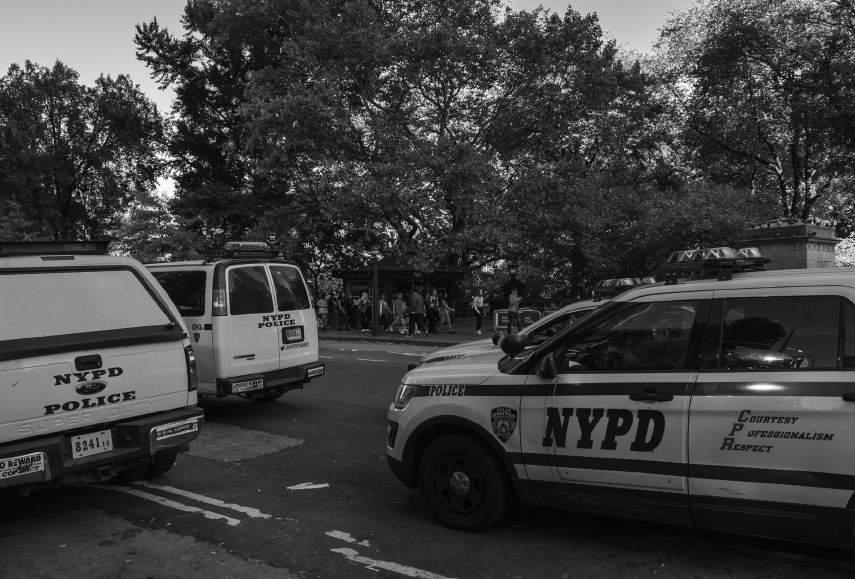
Similar to Washington Square Park, recent NYPD statistics reveal that crime in Central Park is also on the rise. As of August 2022, there was a 24% increase in crimes committed in the park. While murder rates through out the city remain low, there was an increase from four felony assaults to 10 in the last year and an increase in grand larcenies from 15 to 18 in the same time period.
Multiple robberies occured on Sept. 14 in the Ramble, a popular spot in Central Park for bird watching. Two individuals approached a man walking alone and took his possessions at gunpoint. The duo struck again less than an hour later in the same area. Witness accounts and increased police surveillance aided in the arrest of two suspects, according to the New York Daily News.
Despite this, a report released by the city assured the public that Cen tral Park can be safely enjoyed. The re port recommended that parkgoers ad here to park guidelines, such as staying out of the park after nightfall, espe cially between 1 and 6 a.m., when the park is closed. Furthermore, the report encouraged visitors to stay away from heavily wooded and less frequented ar eas like the Ramble and North Woods when exploring the park alone. The re port added that it is generally safer to remain in groups.
Historically, runners are more vulnerable to random robberies in the park. For this, city officials advise that runners carry a whistle, pepper spray or another other form of per sonal protection.
Located a few blocks from the uni versity’s Lincoln Center campus, Ford ham students are frequent visitors of Central Park.
Ariane Martinelli, FCLC ’25, advised fellow students to “only put one earbud in” when exploring the parks alone in order to remain vigi lant of one’s surroundings. Reports from the Community Affairs Bureau Crime Prevention Division suggest a friend or family member track your location with apps such as Find My or Life360. While on the path, the city recommends that runners stay in populated and well-lit areas and are aware of the locations of emergency call boxes.
Since the start of the pandemic, green spaces have claimed new impor tance as spaces for safe socialization. A recent spike in theft and violent attacks as we enter the fourth quarter of 2022 leads many New Yorkers to reexamine their approach to enjoying the city’s public spaces.
Efficacy of Killing Lanternflies Called Into Question
Spotted lanternflies are rapidly increasing at a rapid rate in the New York City, causing concern about their negative environmental impact
In 2021, New York’s Department of Agriculture received nearly 5,000 re ports of lanternfly sightings. However, the number has nearly doubled, with an increase to 9,500 so far in 2022.
“If you see a spotted lanternfly, please squish and dispose of this invasive pest,” Megan Moriarty, spokesperson of the New York City Department of Parks and Recreation, told online newspaper Observer, of Observer Media.

Julie Urban, an associate research professor of entomology at Pennsylva nia State University, told CNN that it has been hard to manage lanternflies in urban areas like New York City be cause they thrive in so-called “disturbed areas.” The flies are fond of the invasive Tree of Heaven, a rapidly growing decid uous tree which often grows through the cracks of sidewalks and rooftops com mon across the city. Lanternflies can also camp on plants along roadsides or railroad lines.
Ellen Van Wilgenburg, a professor of natural science at Fordham College at Rose Hill, is currently conducting research on lanternflies. Through her research, she aims to locate the number of lanternflies in the New York City area through an application called iNatu ralist, a social network for sharing ob servations of and mapping biodiversity across the world. Van Wilgenburg stated that she obtains data about the number
when the flies were first found in New York City two years ago, they were fewer in number, but they have since had time to multiply. She suspects that the per centage of lanternflies will continue to fluctuate in population growth.
Regarding messaging that advis es people to squash the lanternflies on sight, Van Wilgenburg noted that stomping on lanternflies is not necessar ily the solution.
“While this can somewhat decrease the population size, when you take some away, it leaves room for others since the spotted lantern flies are all competing for space and food,” she said. “So if you take some of them away, it might make other spotted lantern flies more successful.”
Van Wilgenburg noted that remov ing the lanternflies’ eggs is a more effi cient way of reducing their growth since they lay about 15 to 30 eggs in a cluster. If people find the flies and scrape their eggs, they will be killed more efficiently. The eggs, however, are typically located high up on the Tree of Heaven, where they are not reachable.
Overall, Van Wilgenburg believes that squashing the lanternflies will not eradicate them.”
“We missed the opportunity to get rid of them,” Van Wilgenburg said. “When they were first found in Pennsyl vania, they were in a small amount. Now they are so abundant everywhere, and they are laying eggs everywhere.”
2 News October 26, 2022 THE OBSERVER www .fordhamobserver.com
of flies through the app by locating the Tree of Heaven, an invasive tree found throughout New York City where lan tern flies most commonly breed, and at
tributes the sudden increase in lantern flies to mild winters.
“I think it’s mainly because of the lack of predators and parasites in this
region,” she said. “There are a lot of host trees around so there is a lot of room for them to grow.”
According to Van Wilgenburg,
COURTESY OF VALMIRA POPINARA
The spotted lanternfly population has been growing in New York City as temperatures are rising. They are an invasive species that can inhibit photosynthesis in the plants they infest.
LANTERNFLIES from page 1
ANDREW DRESSNER/THE OBSERVER
NYPD cars parked outside the Columbus Circle entrance to Central Park which had a 24% increase in crime.
New York Rock Exchange: Understanding the Geological Variations of Central Park
Rock formations dating back to 400 million years ago display evidence of frozen-over glaciers and other geological activity in the park
By QUINCY REYES Asst. Copy EditorCentral Park is full of green space with its towering trees, verdant bushes and groves. However, there is more than what meets the eye as the park is home to frozen-over glaciers and numerous other rock formations; many of which were re shaped by glaciers and now serve various purposes for parkgoers.
logic time, dating back to nearly 460 million years ago. According to Guy Robinson, a natural science professor at Fordham College at Lincoln Center (FCLC), Central Park provides evi dence of past geological activity.

“Central Park opens a window into the deep past of the northern hemi sphere,” he said. “The landscape displays bedrock and boulders of rock formed deep in the earth by repeated collision then separation of ancient continents over the past billion years or so.”
More recently, much of North America was covered in large ice sheets. According to Kaori Tsukui-Shockey, a natural science professor at FCLC, the ice sheet movement can be very pow erful and erode the underlying terrain while picking up rocks from where it passes. In the case of New York, the ice sheet over the region moved southeast, passing by and dropping debris.
arc formed off the coast of the ancestral North American continent and moved toward North America near the equator.
Due to its proximity to Columbus Circle and the southern entrances of the park, Umpire Rock is a common spot for leisure and enjoyment, particularly on sunny days in the warmer months.

Today, much of Manhattan is made up of this rock, which is dubbed Manhat tan schist.
Manhattan Schist and Where To See It
Today, schist present throughout New York City and Central Park provides evi dence of the glaciers that once existed in New York. One of the most prominent rock formations that shows the most ev idence of glacial activity is Umpire Rock. Located on the Upper West Side near 63rd Street, the rocky outcrop is named after the surrounding ballfields.
ciers. They may often be of a rock type not native to New York. While most of Central Park sits atop Manhattan schist, there are pieces of Inwood marble along the upper east portion of the park con tributing to the hilly landscape and dot ted outcrops of rock.


The rock formations scattered throughout the six square miles of Cen tral Park serve as locations for parkgoers to climb, explore, picnic and enjoy views of the surrounding scenery, including the Midtown skyline. They also act as phys ical bumps in the road, carving out the pathways that make up Central Park.
A Brief Geological History of New YorkThe geology of New York is under lain by a mosaic of different types of rocks formed over a long period of geo
Tsukui-Shockey said that rocks that have been incorporated into glaciers drop in large masses as the ice melts due to the warming climate.
This movement led to the formation of Long Island, which has a different geological makeup compared to the rest of New York and New Jersey. Long Is land is made up of much younger rocks that were deposited and left behind by a melting and receding glacier around 12,000 years ago. On the other hand, in Manhattan, the “pre-existing rock” of the schist found in Central Park was predominantly sedimentary rocks and was made out of sediment deposited on a continental shelf over 460 million years ago. Around this time, a volcanic island
It was at this time around 460 mil lion years ago that a volcanic island arc formed off the coast of the ances tral North American continent and moved toward North America near the equator. As the volcanic island moved closer to North America, the marine sediment that separated the two land masses in the ocean became compressed, folded and buried. The force of the collision sent some of the rock deeper down, and that is when the marine sediment became subject ed to much higher temperatures and pressure creating metamorphic rock.
Due to its proximity to Columbus Circle and the southern entrances of the park, Umpire Rock is a common spot for leisure and enjoyment, particularly on sunny days in the warmer months. Vis itors can stroll along the bottom of the rock, enjoy the open fields and climb to the top for views of the Midtown skyline. Moreover, the rock also features different traits that represent glacial activity. One of these is in the striations, or parallel groove marks embedded in the rock.
“Since the glacier moves generally in one direction, those groove marks tend to run parallel to each other and indicate the direction of the glacial movement,” Tsukui-Shockey said.
She also noted that the smooth and polished surfaces atop outcrops in the park are due to abrasion. According to Tsukui-Shockey, an ice sheet is polishing the rock underneath “like sandpaper.”
More evidence of glacial activity is found in the glacial erratics, large boul ders carried and dropped off by gla
To the north of Umpire Rock near the ballfields are collections of glacial landforms called roche moutonnée, asymmetrical knobs that consist of a shorter and steeper face on one side and a longer and gentler slope on the other. The glacier usually flows in the direction of the steeper and shorter slope. By the asymmetrical profile of the landform, you can identify which it was flowing.
“It erodes the underlying rock as the upstream side of the knob becomes mostly worn away, creating a gentle and smooth surface,” Robinson said. “On the down stream side, it’s more steeply inclined.”
These rocks found throughout the park were formed hundreds of millions of years ago, and they serve as a reminder that geology plays a role in the appearance of the park and its surrounding areas. For a city as bright and modern as New York, it’s surprising to see that there’s evidence of the past at the heart of Central Park. There’s more to the stones that lie abound in the concrete jungle. Additionally, they are a reminder of the unique geological history of New York, which remains ev ident in the park’s rocks.
“A lot of the material left by the gla cier might have been modified,” Robin son said. “The park has been designed to look natural very effectively, but the underlying rock formation has not been changed.”
www .fordhamobserver.com THE OBSERVER October 26, 2022 News 3
“ Central Park opens a window into the deep past of the northern hemisphere. ”
Guy Robinson, natural science professor at Fordham College at Lincoln CenterPHOTOS BY QUINCY REYES/THE OBSERVER The large rock formations allow for visitors to picnic, lounge and catch views of the Manhattan skyline. The geological history present in Central Park dates back to nearly 460 million years ago. Evidence of glacial activity throughout the park is found in large boulders that were once carried and dropped off by the glaciers as the ice froze over and melted. The crevices of the rocks show evidence of glaciers that were once frozen-over.
New York City’s Green Spaces Date Back to 1733
By MEGAN YERRABELLI Asst. News EditorNew York is home to 180 state parks with locations spanning from Long Island to Niagara Falls in Buffalo. Bel mont Lake State Park on Long Island and Niagara Falls State Park in Buffalo are two of the most popular state parks in New York. New York City alone houses more than 1,700 parks, play grounds and recreational facilities across its boroughs, which take up 14% of the city in total. The landscape of these green spaces has a history dating back to 1686, when New York’s first park was designated in what is currently known as lower Manhattan’s Financial District.
The first parks in New York City were originally outdoor marketplaces and public commons acquired under the 1686 Dongan Charter of the City of New York, according to the New York City Department of Parks and Recre ation. Thomas Dongan, New York’s first governor, granted the New York City Council, previously known as the Common Council, the power to utilize all "waste, vacant, unpatented and unap propriated lands” for municipal use.
Bowling Green Park, the first park in New York City, then solely defined as the borough of Manhattan, and was designated as a green space in 1733. Cur rently located in the Financial District, the Common Council leased the land for a small sum to John Chambers, Peter Bayard and Peter Jay in return for park maintenance.

After the British left New York in 1748, the assembly of the Congress of the Confederation made New York City the official capital of New York. The resulting influx of tourists incited improvements to city parks, especially The Battery, formerly known as Bat tery Park, which began deteriorating from overuse.
In 1811, however, former City Com missioners Gouverneur Morris, John Rutherfurd and Simeon De Witt noticed that the city’s rapid development left little room for the allocation of green spaces.
In 1920, each borough was assigned its own commissioner to form the centralized New York City Department of Parks and Recreation.
“Boss” Tweed and a group of politicians known as the Tweed Ring or Tammany Hall overthrew the Board of Commis sioners of Central Park, established the Department of Public Parks in its place and appointed Peter B. Sweeny as com missioner. Sweeny subsequently fired Olmsted and Vaux.
In his book, Caro noted that Tam many Hall demolished many aspects of Olmsted and Vaux’s vision, such as cleaning up the “wilderness” along Fifth Avenue so park strollers would have a better view of the mansions.
characterized New York City parks during this time as the “scabs on the face of the city.”
The Brooklyn Park Department was renting out park land for private uses. Playgrounds had essentially no equip ment, and the remaining amenities were usually dangerous. Fences, benches and playground ironwork were rusted. Her mann W. Merkel, a landscape architect, formulated a report documenting the decline in park conditions and offered suggestions for maintenance.
zoos, 10 golf courses and 53 recreational buildings, to name a few.
"It may be a matter of surprise that so few vacant spaces have been left ... for the benefit of fresh air," a group of commis sioners shared during a development meet ing about New York’s grid system, accord ing to Phelps Stokes’ book “New York Past and Present: Its History and Landmark.”
A lack of land available for new parks generated a massive campaign for park reformation and development during the late 1840s and early 1850s. William Cullen Bryant — poet and namesake of Bryant Park, a park located in midtown Manhattan — argued for creating a cen tral green space in New York City to al leviate the overcrowdedness from rising population rates. As a result, in 1852 the Common Council chose a site for Cen tral Park and began its acquisition; sub sequently, the Board of Commissioners of Central Park was created, with the first commissioners being former May or Fernando Wood and former Street Commissioner Joseph S. Taylor.
In 1857, landscape architects Fred erick Law Olmsted and Calvert Vaux’s revolutionary design for Central Park, known as Greensward, won a nationwide contest. According to Robert Caro’s “The Power Broker,” Olmsted’s design includ ed “half a million trees and shrubs on its 840 rocky, bared and arid acres, bowers, mazes, lawns and vistas, revolutionary sunken traverse roads, bridle paths, and delicate and colorful gardens.”
A little over a decade later in 1870, former U.S. Congressman William
In 1871, the Tweed ring was exposed for its corruption, and some of the previ ous commissioners were reinstated. Un der this new administration, Central Park was completed, and parks such as Mad ison Square Park, Washington Square Park, Union Square Park and Tompkins Square Park were relandscaped. In 1872, the Department of Public Parks acquired the land that would eventually become Riverside Park.
What worried New York City re formers the most was not the unsightly conditions of the parks but rather the lack of space available to create new parks. The least amount of green space available was in the places that needed it, such as NYC tenements and lower-income areas.
“After nearly a century of agitation for the creation of ‘breathing spaces’ in slums, there were on the Lower East Side — in an area a mile wide into which were crammed more than half a million people — exactly two small parks, nei ther of which contained a single piece of play equipment,” Caro noted.
In 1932, there were only four play grounds on the Lower East Side, four in Harlem and 36 in all of Brooklyn. In the city, there were 119 playgrounds total, equivalent at the time to one for every 14,000 children.
Many of Moses’ projects were lim ited to certain areas and demographics. His works were often not accessible by public transit. Moses instructed Sidney M. Shapiro, chief engineer and general manager of the Long Island State Park Commission, to build bridges above his parkways low enough that buses would not be able to fit underneath. Thus, bus trips to his parks and beaches had to be made on local roads due to the conges tion caused by traffic on the highways Moses built, which made commutes to the parks longer.
Over the next few decades, new green spaces, parks and programs con tinued developing. Even so, park fund ing inequities remain an issue for parks in lower-income areas.
According to Bruce Berg, a professor in both the political science and urban studies departments at Fordham, New York’s park budget is notoriously low per capita compared to the parks budget in other cities. Parks in affluent areas tend to secure more private funding, such as Central Park and Riverside Park, where as parks in lower-income neighborhoods rely on the Department of Parks and Recreation’s city funded budget.
“As a result, parks in affluent neigh borhoods look much nicer and are bet ter equipped because it is private money supplementing these parks,” he said.
Berg also discussed some notable initiatives under former Mayor Mi chael Bloomberg’s administration, such as converting school playgrounds into public parks and the Million TreesNYC program, an initiative to plant and care for one million trees in New York City. Due to the COVID-19 pandemic, however, the Department of Parks and Recreation faced the second largest budget cuts of all of the city’s agencies.
The Department of Public Parks underwent another administrative change when Staten Island, Brooklyn and Queens were consolidated with Manhattan and the Bronx to become the “Greater New York” in 1898. At the time, the Bronx had 4,058 acres of pub lic parks. Manhattan had about 1,300 acres, and Brooklyn and Queens had 1,574 acres combined Staten Island had less than three acres.
In 1920, each borough was assigned its own commissioner to form the cen tralized New York City Department of Parks and Recreation.
The Great Depression had a det rimental impact on the physical con ditions of New York City parks. Caro
Around this time, Robert Moses gained notoriety as Long Island state park commissioner. Moses’ parks in Long Island were becoming the arche type of park development in New York. At the New York Park Association’s Metropolitan Conference, Moses began his plans to transform New York City parks alongside the creation of a new system of parkways.
In 1933, former U.S. President Franklin D. Roosevelt’s New Deal gave Moses the necessary federal funding for his projects. Most of this funding would later be allocated to the construction of highways instead of public parks.
A year later, former Mayor Fiorello H. LaGuardia appointed Moses as the sole commissioner of the Department of Parks and Recreation for New York City. Under Moses, public park projects skyrocketed, and the green spaces in the city changed forever. During Mo ses’ time as commissioner, park acreage expanded from 14,000 to 34,673 to include hundreds of playgrounds, three
When Black civic groups began to pro test, Roosevelt ordered an investigation.
According to Caro, one of Moses’ aides confirmed that “Bob Moses is seeking to discourage large black parties from pic nicking at Jones Beach attempting to di vert them to some other of the state parks.”
After Moses retired as commissioner in 1960, New York City parks were still dealing with issues with park mainte nance. In 1968, then-Mayor John Lind say created the Parks, Recreation and Cultural Affairs Administration to support libraries, botanical gardens and performing arts groups, yet the parks de partment itself suffered extreme budget cuts and staff reductions.
In 1981, however, then-Mayor Edward Koch allocated $750 million to restore city parks, and the parks department began re building its permanent workforce.
Recently, the Committee on Parks and Recreation has recognized inequi ties and held a hearing in April 2022 to discuss their recommendations moving forward. Additionally during his cam paign for New York City mayor, Eric Adams expressed his commitment to allocating 1% of the city’s budget to the Department of Parks and Recreation, compared to the 0.5% it is currently receiving now. Adams’ 2023 executive budget, however, cut the department’s budget by $20 million.
Play Fair, a campaign for parks and open spaces co-founded by New York ers for Parks, the New York League of Conservation Voters, District Council 37 and New York City Parks workers’ union, has created the Five Point Plan for Park Equity, which they request the Mayor and City Council to adopt. The plan five points include: dedicat ing one percent of the city’s budget to parks, building more parks, reducing the amount of time park projects take in New York to complete, empowering communities and creating a director of the public realm.
4 News October 26, 2022 THE OBSERVER www .fordhamobserver.com
GIGI ALT VIA WIKIMEDIA COMMONS/THE OBSERVER
Bowling Green Park, located in the Financial District, was created in 1733 and was New York City's first park.
The parks have experienced numerous fluctuations in funding due to changes in government administrations
What worried New York City reformers the most was not the unsightly conditions of the parks but rather the lack of space available to create new parks.
“ As a result, parks in affluent neighborhoods look much nicer and are better equipped because it is private money supplementing these parks. ”
Bruce Berg, political science and urban studies professor
NYBG Fosters 131 Years of Conservation and Plant Research

The New York Botanical Garden has been adjacent to the Rose Hill campus since the 19th century, residing across the street on Southern Boulevard
By ERIC BISHOP Contributing WriterThe New York Botanical Garden (NYBG) in the Bronx has neighbored the Rose Hill campus for over a hun dred years. This 250-acre garden is the largest urban botanical garden in the United States with over 1 million plants. The garden receives 1 million visitors each year.
Despite the gardens always chang ing, the focus of the staff running the garden has been on conservation, sci entific research and recreational use for the community.
According to essays about the gar den’s history written by Kim E. Tripp, former director of the NYBG, in 1888, two botanists from New York City, Elizabeth Knight Britton and Na thaniel Lord Britton, saw the Royal Botanic Gardens at Kew in the United Kingdom. The two were enamored by the beauty of the garden and the range of plants to study. This experience in spired the couple to publicly campaign for a similar botanical garden in New York City. Elizabeth Britton, in partic ular, gave several speeches and worked with several publications to spread awareness for the cause.
Three years later, in April 1891, the New York State Legislature passed the Act of Incorporation, which allowed for land in northern New York City to be used “for the collection and culture of plants ... the advancement of botanical science ... and for the entertainment, rec reation, and instruction of the people.”
Nathaniel Lord Britton chose to es tablish the new Botanical Garden near Hemlock Grove, a 50-acre forest next to the Bronx River. The forest, now named the Thain Family Forest, used to be sub ject to less intervention by the staff.
Previous managers of the garden and the forest had a “let alone” policy for maintaining the forest to keep it from being tarnished. Over time, this policy proved to be ineffective for the forest because several human factors damaged the forest throughout the 20th century.
Some of these human interferences in clude climate change, pollution, loss of predator populations in the ecosystem and over collection of plants.
ganization, with the help of volunteers, spent 24,400 hours on ecological main tenance with a strong focus on remov ing invasive species. This effort led to a decrease in invasive species within the forest by 2011.
Gallery,” which contains over 2,500 types of tropical palms.
garden also has ties with Fordham’s biology department in its graduate and undergraduate programs. Dr. Steven Franks, a biology professor and the cur rent department chair specializing in ecology and evolutionary dynamics of natural plant populations, said, “Stu dents can take courses at the Botanical Gardens, and students at the Botanical Gardens can take courses at Fordham.”
Invasive species have also been dam aging the Thain Family Forest. The hemlocks that the grove was known for have been nearly completely de stroyed due to two invasive insect spe cies: the elongate hemlock scale and the hemlock wooly adelgid. In 2008, the NYBG began taking a more active approach to conserving native plants in the Thain Family Forest. Through the Thain Family Forest program, the or
The centerpieces of the botanical garden are the LuEsther T. Mertz Li brary and the Enid A. Haupt Conser vatory. According to texts by Ogden Tanner and Adele Auchincloss, a past official at the New York City Parks and Recreation Department, the library, designed by architect Robert Gibson in 1901, is a Beaux-Arts building that contains several exhibitions and bot any-related texts. The conservatory, built in 1902, was inspired by the Palm House at the Royal Botanic Gardens in the United Kingdom designed by Wil liam R. Cobb.
According to Tripp’s essays, the conservatory functions as a green house and as the primary attraction of the botanical garden that contains a large variety of plants. There are sev eral attractions of note in the conser vatory, like the “Palms of the Americas
The conservatory also holds sev eral desert plants in the “Deserts of the Americas and Africa” section, which contains several types of cacti. Beside the permanent plant galleries, there are also several seasonal attrac tions that the conservatory puts on for visitors. Some of these seasonal exhibitions include Fall-O-Ween, the Holiday Train Show and The Orchid Show: Jeff Leatham’s Kaleidoscope. The library and the conservatory fulfill Britton’s goal to provide recre ational and educational opportunities for the people.
The NYBG has a general commit ment to furthering the research on the natural world. Since 1897, researchers from the NYBG have been heavily in volved in field research conducted in over 100 countries. For example, in the 1970s, researchers at the garden part nered with the Brazilian government to collect 73,000 plants.
The NYBG functions as a hub of plant research across the globe. The
Franks has been working with the NYBG since he started working at Fordham in 2007. At the time, Fordham was looking for individuals that had ties to the garden and were knowledgeable about plant conserva tion. The university and the NYBG confirmed their partnership in 2008 that gave Fordham graduate students in fields like ecology, conservation bi ology and plant sciences the opportu nity to use the facilities and resources from the garden in a joint graduate program.
According to Franks, the NYBG has a lot of amazing facilities and he noted that professors, undergradu ate students and graduate students have used facilities like the Enid A. Haupt Conservatory for student lab work and tours, the William & Lynda Steere Herbarium for access to plant specimens for research, and many more lab and garden facilities.
Fordham Community Comments on Park Sanitation

As an environmental science major, Medved noted that physical appearance and public health, in addition to main tenance, and upkeep of parks, is also important for local species of animals and biodiversity.
“When you build out the parks in the city, you are making connections available for animals and plant species as well and making sure that there’s enough native biodiversity,” Medved said.
In previous years, SEAJ has visited green spaces to engage with park con servatory and clean ups in conjunction with organizations such as RIPA (Ran dall Island’s Park Alliance).
Within Campus Ministry, Pedro Arrupe volunteers also engage with park restoration efforts in partnership with Bronx is Blooming, a non-profit focused on “environmental steward
ship, community building, and youth leadership development.”
Carol Gibney, director of the Office of Campus Ministry Solidarity and Leadership, explained that many of the volunteers are motivated by the uni
versity’s Jesuit Catholic traditions and multifaith approach.
“All of our traditions invite us to be good stewards of our land that God has created,” Gibney said. “It’s not an op tion. It’s part of who we are as humans
to be good stewards of the land, and we haven’t been doing such a good job.”
She added that the park clean-ups are part of “caring for our common home.” Gibney cited that in boroughs like the Bronx, it is important to also
invest in parks and green spaces in neighborhoods that are neglected. Gibney associated environmental rac ism with budgetary and service cuts to green spaces that “bring vibrancy to communities.”
Medved also advocated for secur ing more funding for parks and noted that “political” will is a necessary part of doing so. She pointed to funding disparities between average small neighborhood green spaces and large parks like Central Park in affluent neighborhoods.
“It’s not that people in wealthier neighborhoods treat their spaces bet ter,” Medved said. “It’s that they have charitable donations funding those parks, and then the parks department does not service any of the parks suffi ciently.”
According to a report by the New York Restoration Project, not-for-profit organizations and conservancies have been an important source of revenue for the maintenance of parks due to the insufficiency of public investment in the last three decades.
An example of investment in main taining cleanliness in green spaces is The Central Park Conservancy, which raises nearly $74 million annually, au thorized an overhaul of waste manage ment and long-term restoration efforts.
Despite city campaigns to engage the public in decreasing litter and waste, green spaces and parks in poorer neighborhoods are still struggling with park maintenance.
www .fordhamobserver.com THE OBSERVER October 26, 2022 News 5 LITTERING from page 1
The NYBG has a general commitment to furthering the research on the natural world.
“ Students can take courses at the Botanical Gardens, and students at the Botanical Gardens can take courses at Fordham.”
Dr. Steven Franks, biology professor
“ It's part of who we are as humans to be good stewards to the land , and we haven't been doing such a good job. ”
Carol Gibney, director of Office of Campus Ministry Solidarity and LeadershipALICE MORENO/THE OBSERVER Urban parks are experiencing a growing garbage problem and littering has strong negative effects on environmental health.
Community members voice their concerns about trash levels in NYC’s parks and urban spaces
ALICE MORENO/THE OBSERVER
The Enid A. Haupt Conservatory is one of the notable centerpieces of the NYBG and was inspired by the Royal Botanic Gardens in the United Kingdom.
Sports & Health
Access to Green Spaces Directly Linked to Health Outcomes
Proximity to nature can have a number of health impacts, and these are only set to worsen as climate change continues
By CHRIS MURRAY Sports and Health EditorFor many New Yorkers, parks and green spaces serve as an escape from the “concrete jungle” to which they are ac customed. But, for many of its residents, New York does not feature enough greenery to meet their needs. It may take blocks for you to find a park to relax in, or even just a row of trees to protect you from the sun.
Herein lies a key problem: For many living in New York, greenery is scarce or completely inaccessible. This reality comes with a multitude of health issues for New Yorkers, both mental and physical.
Studies have shown that a lack of vegetation in urban areas typically leads to a phenomenon known as “urban heat islands.”

First, it is important to evaluate the distribution of vegetation across the five boroughs. New York City is extremely densely populated — so densely pop ulated, in fact, that there are only 146 square feet of green space per person liv ing in the city.
To compare that to the amount of space dedicated to roads in New York City; If all of the roads were dis tributed evenly to each person in the city, everyone would get 247 square feet of road to themselves. Due to its density, New York City features the least green space in terms of area per person of the cities that Geotab ana lyzed. Needless to say, this does not bode well for city residents.

Studies have shown that a lack of vegetation in urban areas typically leads to a phenomenon known as “ur ban heat islands,” which refers to ur ban areas being much warmer than the surrounding regions. New York is one of the metropolitan areas that is most impacted by the urban heat island ef fect due to its dense population, abun dance of impermeable surfaces like concrete and asphalt, and its average building dimensions. This results in the New York City metropolitan area
being 7.6 degrees warmer than its sur rounding regions, on average.
Even within the city, the tempera ture increase varies from community to community. But the entire city, includ ing neighborhoods adjacent to more greenery, feels the effects of the urban heat island.
Greenery and vegetation absorb the sun’s rays, leading to less heat being reflected back into the atmo sphere. They also provide shade and reduce air pollution. For these rea sons, trees and other types of vegeta tion are vital to reduce the impacts of the urban heat island effect.
It’s easy to wonder why this mat ters. People live in warm climates worldwide, so what difference do a couple of degrees make? Unfortu nately, the climate change resulting from a lack of greenery has numerous detrimental physical and mental im pacts on city residents.
Access to vegetation is vital to our health as humans. Accessible green spaces increases physical activ ity, which in turn decreases the risk of heart disease and can reduce the risk of mortality. Green spaces also greatly impact mental health, leading to lower rates of depression, reduced stress and healthier cortisol profiles.
Richard Louv, author and jour nalist, coined the term “nature-defi cit disorder” in 2005 to “serve as a description of the human costs of alienation from nature.” He points to research linking the lack of access to nature with ailments such as atten tion difficulties, conditions of obesi ty, as well as mental and physical ill nesses as evidence of the importance of nature in individuals’ lives.
This concept was put on full dis play during the COVID-19 pandemic. As many individuals were forced to re main in their homes, they began to feel the drastic effects of the disconnection with nature. Children especially suf fered from the inaccessibility to the outdoors and green spaces.
Children require exposure to nature to experience healthy devel opment, with access to the outdoors showing positive impacts on atten tion, self-discipline, enjoyment and more. During the COVID-19 pan demic, many families living in urban areas experienced the consequences of isolation, with parks being closed and individuals fearful of getting sick if they left their homes.
Louv underlined that the pan demic added “a greater sense of ur gency to the movement to connect children, families and communities to nature.” Nature-deficit disorder is non-diagnosable, but Louv’s theory holds that the impact of such removal from nature will be far reaching and long lasting.
The importance of having access to greenery, especially in urban settings, cannot be understated.
Although it is a nonmedical term, since nature-deficit disorder was in troduced as a concept, research has supported Louv’s claims. The impor tance of having access to greenery, es pecially in urban settings, cannot be understated.
The environmental consequences of a lack of green spaces, namely in creased temperatures in urban areas,
also lead to harmful health outcomes.
For one, extreme heat kills more peo ple in the United States each year than any weather-related phenomenon.
Furthermore, extreme heat wors ens the consequences of air pollution, leading to possible health problems such as respiratory distress, asthma or heightened sensitivity to allergens. And these issues, like all of the ones mentioned throughout, will dispro portionately impact low-income com munities because they are less likely to have accessible green spaces.
Currently, the city’s Department of Parks and Recreation (NYC Parks) has several initiatives in place to at tempt to remedy New York City’s green space problem. By rejuvenating the city’s parks, NYC Parks can pro tect the health and well-being of its many residents.
New York is not the only city wres tling with this difficult issue. Many ur ban areas, such as Houston, Chicago and Miami, overlooked the necessity of greenery while organizing the lay out of their cities and are experiencing similar implications. But New York City specifically is undoubtedly facing the impacts of its lack of green spaces,
with the highest population density of any metropolitan area in the country and the highest urban heat island in tensity score of any city analyzed by Climate Central.
Residents need more parks and trees to avoid serious physical health impacts and damage to their men tal well-being. The city’s increasing temperatures will only make things worse.
But as the city begins to react to these challenges, the best way that city residents can protect their health for the time being is by reconnecting with the nature that does currently exist. With the resources given, New York City residents should do what they can to keep themselves mentally and physically healthy.
NYC Parks should continue its initiatives such as the Community Parks Initiative, the Walk to the Park Initiative, Parks Without Borders and MillionTreesNYC have worked to make New York City’s parks more accessible in an equitable manner and to expand the city’s urban forest. Progressive plans like these must con tinue to be invested in because New Yorkers’ health is at stake.
October 26, 2022 THE OBSERVER
PHOTO COURTESY OF FORMULANONE VIA FLICKR
The environmental consequences of a lack of green spaces, namely increased temperatures in urban areas, also lead to harmful health outcomes.
Sports & Health Editors
Gabriella Bermudez Chris Murray
GRAPHIC BY MARIA TERZULLI/THE OBSERVER
Samuel Bennerson Park’s Basketball-Centric Design

Basketball courts in New York City’s public parks bring New Yorkers together while providing them with valuable sporting and recreational space

 By AURELIEN CLAVAUD
Asst. Photo Editor
By AURELIEN CLAVAUD
Asst. Photo Editor
Just a few blocks from Fordham’s Lincoln Center campus, nestled within the Amsterdam Houses pub lic housing project, sit two basketball courts at awkward angles and at differ ent elevations.
Today is Sunday, and both are empty.
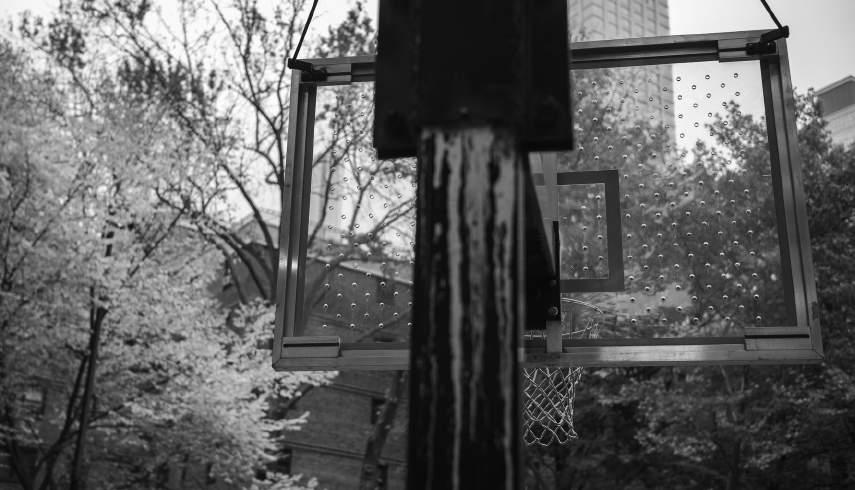
The crashing silence of the morn ing is not lost on the Samuel N. Ben nerson 2nd Playground. The air over the concrete bristles at our footsteps; each crack and dent tell a story of crossovers and fadeaways. A few pi geons make their way across the lower court. The blue concrete is the heart of the park.
Any other day of the week, the
court bustles with the intense com petition of five-on-five pickup basket ball. Today, there are no rim-shatter ing dunks, no crowd-silencing threes. The community will be back tomor row, reimposing the ecstatic energy of New York basketball.
The upper court watches its neighbor closely. Although shaded by trees and a 10-foot fence, this second
hardtop fits its niche comfortably. While the larger, lower court hosts rough-and-tumble pickup, impatient squads shoot around on the upper court, waiting for their turn on the big stage.
Public parks are vessels for basket ball culture. In this city, they bring people together, and Samuel Bennerson does just that.
If you find yourself at Samuel Bennerson, keep an eye out for Ford ham students. An active community of Lincoln Center hoopers convenes regularly to compete with the best in the neighborhood. Draining shots and dropping dimes in between class es, these students inject Fordham spirit in the sport for which New York is the capital.
 KREENA VORA/THE OBSERVER
Samuel Bennerson is quiet on Sunday morning. A tantalizing energy shimmers as we wander the grounds.
KREENA VORA/THE OBSERVER
Samuel Bennerson is quiet on Sunday morning. A tantalizing energy shimmers as we wander the grounds.
www .fordhamobserver.com THE OBSERVER October 26, 2022 Sports & Health 7
KREENA VORA/THE OBSERVER
The maple leaf of the New York City Department of Parks and Recreation is painted over center court.
KREENA VORA/THE OBSERVER
The upper court’s ripped nets hardly discourage motivated ball players.
AURELIEN CLAVAUD/THE OBSERVER Sunlight breaks through the clouds to shine on the autumn trees lining the park.
AURELIEN CLAVAUD/THE OBSERVER New York is the capital of basketball, in no small part due to the accessibility of the sport. According to the Wall Street Journal, there are over 500 public outdoor courts in the city.
By CHANTEL SIMS Staff Writer
Prior to the establishment of Cen tral Park, a small, thriving commu nity of Black Americans and Irish immigrants located alongside what is now West 82nd and West 89th Street.
Known as Seneca Village, the settle ment prospered for 32 years before it was destroyed by the city to create Cen tral Park in 1857.
The racial dynamics during the early 1800s in New York impacted the nature of this community and its culture. Ac cording to the Central Park Conservan cy, a private nonprofit organization that preserves and manages Central Park, white slave owners in New York bene fited from the slave labor that existed in the South as well as the Caribbean.
Slave conditions were laborious and harsh. Many households had two or more slaves in cramped living spaces. In addition, slave owners often sold young mothers to avoid accommodating for children. Both of these factors made it difficult to maintain a familial unit.
During the American Revolution, male slaves in New York were offered legal freedom for the first time. In 1775, over 10,000 slaves fled to New York City after British General Henry Clinton granted freedom to those who ran away from their rebel slave owners.
By 1810, 26 years after the revolution ended, the number of freed Black New Yorkers outnumbered the enslaved ones by nearly three to one.
Efforts by freed Black Americans led to the abolition of slavery in New York in 1827, despite the state’s efforts to maintain slavery.
The group of freedmen,
Seneca Village: A

The settlement is part of Central Park’s of Black Americans was displaced
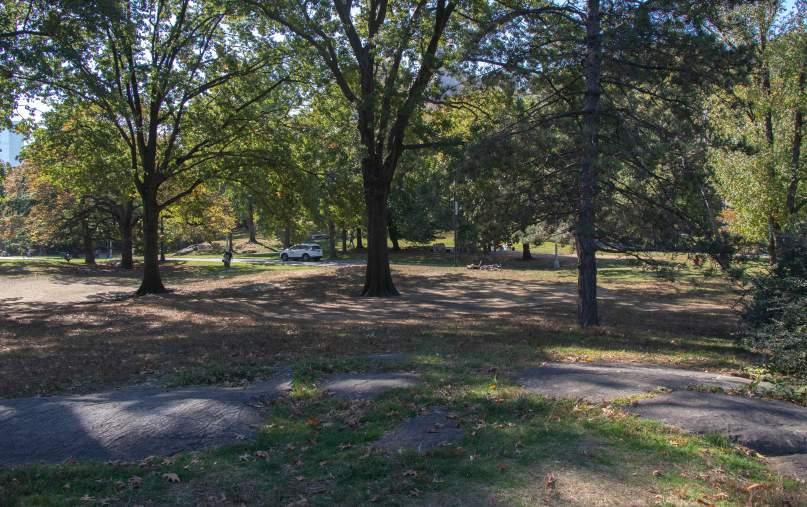
In an effort to counteract pollution and unhealthy conditions associated with urban living, city officials decided to construct a large municipal park in central Manhattan in the early 1850s. To acquire the land for the park, the city used eminent domain, a legal principle under the fifth amendment of the U.S. Constitution that states that the government can take private land for public use if given proper compensation to the land owner. As a result, approximately 1,600 people were displaced and made to leave by the end of 1857, including those who lived in Seneca Village.
with help from the Manumission Soci ety, an abolitionist organization found ed by John Jay, a former New York gov ernor, led the fight to abolish slavery in the state.
At the same time that slaves were freed in 1827, the voting requirements changed. Previously any free man could vote, but after slavery ended in New York, it changed to be any man who “owned
substantial property,” according to his torical society of the New York courts.
Black men also had to own $250 in property for three years before they were able to vote.
The Seneca Village community was created in 1825 when Andrew Wil liams, a 25-year-old Black man, used $120 to buy the first three lots; Epiph any Davis, a store clerk, bought 12; and the African Methodist Episcopal Zion Church bought six. The remaining lots were sold to other Black people and a few Irish Immigrants, allowing a total of ten homes to be built.
Seneca Village was a flourishing
community that served as an escape from the harsh treatment that Black people endured in Manhattan. The community was home to gardens, farm animals and allowed fishing in the Hudson River. By the 1850s, the com munity had 50 homes with about 225 residents, a school for African Ameri can youth, churches and graveyards.
The inhabitants of Seneca Village carried a special privilege compared to other Black communities in New York: Because half of them owned their homes, they were allowed to vote. Of the 100 Black voters eligible to vote in 1845, 10 lived in Seneca Village.
After the displacement, historians believe the Seneca Village inhabitants went to other Black communities in the area. While those who owned property were compensated, some historians be lieve their compensation wasn’t equal to the actual property value.
When construction of the park be gan in 1858, the city left no trace of Sen
This field was once occupied by the flourishing Seneca Village community where Black Americans owned homes and were able to escape the harsh treatment they faced in everyday life. The Central Park Conservancy created an exhibition to highlight the important sites and history of Seneca Village.Although the community existed for only three decades, Seneca Village was a cradle for the rights and upward social and economic mobility of emancipated Black Americans and new immigrants.
A Forgotten Story
Park’s hidden history, and a community displaced when it was destroyed


In order to create Central Park, the city used eminent domain which displaced 1,600 residents in the area.
eca Village — homes and buildings were destroyed, and existing graves were dug up and moved to a cemetery in Queens.
Until authors Roy Rosenzweig and Elizabeth Blackmar published their book “The Park and The Peo ple: A History of Central Park,’’ in 1992, little was known about Seneca Village. The New York Historical Society soon created an exhibition on the village’s history. As a result, Seneca Village’s history was incorpo
rated into a curriculum that was to be taught in schools around the city.
An outdoor exhibition created by the Central Park Conservancy high lights important historic buildings and provides deeper insight into the life and death of Seneca Village. Although the community existed for only three de cades, Seneca Village was a cradle for the rights and upward social and eco nomic mobility of emancipated Black Americans and new immigrants.

Map of Seneca Village
NYCGreen Spaces
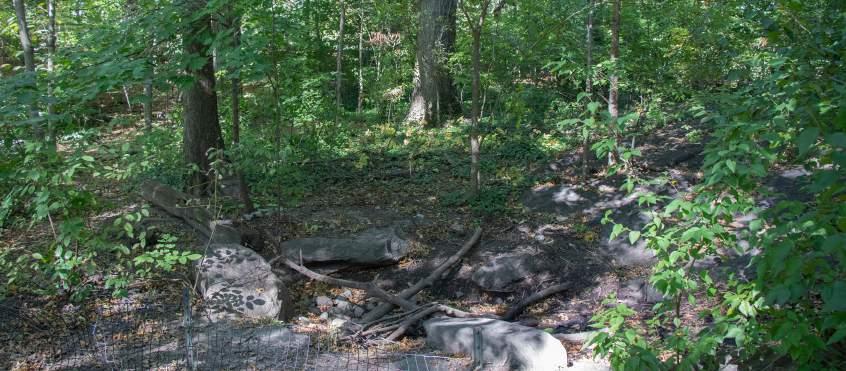
The wooded area seen here used to contain a pool of water, supplied by a natural spring, which brought a water source to Seneca Village.
 The top of this Seneca Village hill is known as Summit Rock, the highest point in Central Park.
Graphics and page design by Tara Lentell Photos by Andrew Dressner
The top of this Seneca Village hill is known as Summit Rock, the highest point in Central Park.
Graphics and page design by Tara Lentell Photos by Andrew Dressner
Opinions
Central Park: An Accurate Reflection of New York’s Racist History
The history of Central Park paints a sinister portrait of the city’s history and the future of urban development
ANA WINSTON Contributing WriterManhattan in the early 1800s was an undeveloped land full of opportunity, a stark contrast to the overcrowded island we know today. Amid the racial prejudice rife in New York at that time, a predom inantly Black community called Seneca Village sprouted up in 1825 in what is now Central Park along the Upper West Side. It was a safe haven from the crowded and racist downtown area of Manhattan. Seneca Village eventually developed into a thriving middle-class neighborhood, complete with 50 homes, three churches and a school for Black children. But in 1857, Central Park was built over their land, and the commu nity was forced to leave. What happened to cause such a drastic change?
Elite, white landowners in the early 19th century were unimpressed by New York, especially when compared to already-estab lished European cities like London and Paris. They decided that New York was missing an elegant, recreational park, much like the ones scattered across Europe. Central Park would become the remedy to New York’s reputa tion as a dirty, industrial and unhealthy city. Once the plans for the park were drawn up in 1853, the New York state legislature voted to acquire more than 700 acres of land in the middle of Manhattan through eminent do main, including the land occupied by Seneca Village and other communities of Irish and German immigrants.
A potential cultural touchstone of New York was obliterated for the sake of what the rich, white elite wanted.
An entire established community was displaced, and although landowners were monetarily compensated for the property tak en from them, it was not enough to remedy the injustices caused by the seizure of their land. The evicted residents were scattered, and the
school and three churches that served the com munity were destroyed. A potential cultural touchstone of New York was obliterated for the sake of what the rich, white elite wanted.
The disappearance of Seneca Village was also politically destructive: The New York State Constitution of 1821 stated that Black men were only able to vote if they had more than $250 in property in their possession. The seizure of their land was also, in effect, a termination of their right to vote.
Low-income communities are the most in need of parks, and yet, when parks are built, they are the ones least likely to benefit from their construction.
That is the short and tragic story of Seneca Village: It started in 1825 and was brutally terminated in its prime in 1857 for the devel opment of Central Park. But why should this matter to us now?
For one thing, Seneca Village is just one of many examples of times where history has been whitewashed. The existence of Seneca Village was largely forgotten until Elizabeth Blackmar and Roy Rosenzweig brought it back into the public consciousness in their 1993 journal article, “The Park and the Peo ple: A History of Central Park.” It is essential that we acknowledge the injustices that our beloved city was built upon, not only because it’s important to be aware of our history, but also because it is vital for us to learn from it.
In 2011, an archaeological dig of the land formerly occupied by Seneca Village from West 82nd to West 89th Streets was conduct ed by researchers from Columbia University and The City University of New York in order to improve our understanding of the way the village’s inhabitants lived. After wards, the Central Park Conservancy placed signs around former important sites in Seneca Village and created a self-guided outdoor tour for park visitors to reflect upon. It is clear that Central Park has begun to be more open

about its complex and discriminatory history, but is that all the work that needs to be done?
Green spaces similar to Central Park are still being constructed in New York to solve problems like the ones that plagued the city in the mid-1800s, such as air pollution, overcrowding and generally declining mental health. These issues are all reason enough to begin planning more parks around the city. It’s mostly agreed upon that parks are a net positive to any community; however, given the context of Central Park’s history, it’s im portant to note that the construction of green spaces often have negative consequences on the communities in which they are built because potential future parkgoers are prioritized over the existing needs of marginalized residents.
Construction of green spaces has often been linked to gentrification, or the process by which lower-income residents (who tend to be people of color) are eventually priced out of their homes, due to the movement of high er-income people (who are mostly white) into their neighborhoods. It makes logical sense that parks are correlated with gentrification: Who wouldn’t want to live next to a park, especially a newly constructed one? There’s a reason why apartments close to Central Park are so expensive. Parks raise property values and, in turn, displace the low-income com munities they were built near. This is ironic: Low-income communities are the most in need of parks, and yet, when parks are built, they are the ones least likely to benefit from their construction.
It’s undeniably a good idea to build more parks around New York City, but it can also be dangerous if handled incorrectly. Our city government should take the story of Seneca Village as a lesson in what not to do. The gov ernment needs to take accountability for what happened to the inhabitants of Seneca Village as well as make efforts to change the way we think about urban development in New York.
Green spaces should be planned to spe cifically benefit the communities they are built in, not just to add the beauty of nature to an otherwise urban part of the city. Com munity participation in urban planning is the best way to ensure that this happens. Protection of lower-income housing must also coexist with urban development. Res idents should not have to be evicted from their homes — whether by eminent domain or by gentrification — for New Yorkers to enjoy more fresh air.
Observer the
Editor-in-Chief
Allie Stofer
Managing Editor Maddie Sandholm Online Editors Emily Ellis Kreena Vora
Creative Director Alexa Stegmuller

Advertising Coordinator Luis Castellanos
Layout Editors Roxanne Cubero Tara Lentell
Photo Editors
Alyssa Daughdrill Andrew Dressner
Asst. Photo Editors Aurelien Clavaud Molly Higgins
Head Copy Editors Ana Kevorkian Alyssa Macaluso Nora Reidy Asst. Copy Editors
Matthias Lai Quincy Reyes Shelby Williams News Editors Maryam Beshara Insiya Gandhi Asst. News Editors Alexa Villatoro Megan Yerrabelli
Sports & Health Editors Gabriella Bermudez Chris Murray Asst. Sports & Health Editor Aurelien Clavaud
Opinions Editors
Ava Peabody Isabella Scipioni Asst. Opinions Editors Jake Eraca Laura Oldfather Jessica Yu
Arts & Culture Editors
Isabella Gonzalez Olivia Stern Asst. Arts & Culture Editor Mael Quentin Features Editor Erika Tulfo Asst. Features Editors
Abhipri Chowdhury Olivia LeDuc Fun & Games Editor Irene Hao
Social Media Editor Alexa Villatoro Asst. Social Media Editor Eeshita Wade
Multimedia Editors Lauren Bocalan Alice Moreno Podcast Hosts Shaily Jani Christian Madlansacay IT Manager Zayda Bleecker-Adams
Editorial Adviser Richard Rosen
POLICIES AND PROCEDURES
No part of The Observer may be reprinted or reproduced without the expressed written consent of The Observer board. Letters to the Editor should be typed and sent to The Observer, Fordham University, 140 West 62nd Street, Room G32, New York, NY 10023, or emailed to editor@fordhamobserver.com. Length should not exceed 200 words. All letters must be signed and include contact information, official titles and year of graduation (if applicable) for verification. If submitters fail to include this information, the editorial board will do so at its own discretion.
The Observer has the right to withhold any submissions from publication and will not consider more than two letters from the same individual on one topic. The Observer reserves the right to edit all letters and submissions for content, clarity and length.
Opinions articles and commentaries represent the view of their authors. These articles are in no way the views held by the editorial board of The Observer or Fordham University.
The Editorial is the opinion held by a majority of The Observer’s editorial board. The Editorial does not necessarily reflect the views held by Fordham University.
• To reach an editor by e-mail, visit www.fordhamobserver.com
The Observer is published on alternate Wednesdays during the academic year.
Printed by Five Star Printing, Flushing, N.Y.
Opinions Editors Ava Peabody Isabella Scipioni October 26, 2022 THE OBSERVER
ANDREW DRESSNER/THE OBSERVER
Central Park has a self-guided walking tour to teach visitors about the Seneca Village neighborhood.
Accessing Green Space Is Anything But a Walk in the Park
Underserved communities in New York continue to lack equal access to parks and green spaces
 ADITI PRAVEEN KARIYANAHALI Staff Writer

Environmental racism has become a hot-button issue, with many New York City-based case studies highlighting that predominantly Black communities across the city tend to encounter more toxic substances than predominantly white neighborhoods. The high levels of pollution that Black and Latine New Yorkers face in their communities has led to them experiencing higher levels of respiratory issues compared to their white counterparts.
As green spaces and parks start to be recognized as a necessity in urban spaces, there has also been a realiza tion that underserved communities have a disproportionately low number of green spaces. This aspect of envi ronmental racism must be addressed by city officials.
Those who are prioritized as worthy of having access to these valuable resources and locations tend to be the city’s rich, white residents.
Park inequity in New York has been an issue for decades. Neighborhoods that were historically redlined still tend to lack green space today despite the fact that green space isn’t something that the city lacks. In fact, according to the New York City Mayor’s Office of Climate and
Environmental Justice, “New York City is home to over 20,000 acres of natural areas — with 7,300 acres of forest within NYC Parks jurisdiction.” However, when it comes to the placement of these green spaces, it is evident that under served neighborhoods often miss out.
As of May 2020, roughly 82% of New Yorkers live within walking distance of a city park. Even though that seems to be a large number of people, over a million New Yorkers still live over a 10-minute walk from a park. Most of these New Yorkers live in low-income neighborhoods that are predominantly Black and Hispanic in the boroughs outside Manhattan.
During the peak of the COVID-19 pandemic, this meant that many people
were stuck inside without easy access to any green spaces. The lack of green spaces in these communities made it more challenging for residents to comply with lockdown protocols.
Although New York City has plenty of green space, those who are prioritized as worthy of having access to these valuable resources and loca tions tend to be the city’s rich, white residents. Parks in more affluent areas like Central Park and Riverside Park receive significantly more maintenance and funding than parks in historically Black communities in Manhattan and other boroughs of New York City.
Having easy access to a public park has health benefits as well as aesthetic value. Green space has been scientifically
shown to improve physical well-being and mental health, as well as provide a place for people to interact with others in their communities. The New York City Mayor’s Office of Climate and Environ mental Justice explained that “Each year, the city’s trees … remove 1,300 tons of pollutants from the atmosphere, with an annual savings in health costs of $93.2 million.” Knowing the benefits of green space access, it is vitally important to ensure we prioritize their placement in underserved communities.
New York City’s government is currently taking steps to solve this dis crepancy. Citywide efforts have been launched in order to increase access to green spaces, with the Walk to a Park Initiative being at the forefront of that
Parks Shouldn’t Be Private
ANGELINA BAICU Contributing Writer
Having lived in Queens for prac tically my entire life, there is no place that I adore more than the park near my house. It is always welcoming, and offers the perfect escape from the bustling city life while simultaneously serving as the local neighborhood hangout. I formed some of my closest friendships at that park, almost all of which have stuck with me until this very day.
The privatization of public spaces means no longer being able to hold private companies accountable for their actions.
Aside from the social benefits that green spaces provide, parks have a multitude of other important uses as well. Having easy access to a park has been shown to reduce stress and increase physical activity. The presence of a green space has also been associated with better air quality in the surrounding area. Green spaces are essential for the structure and function of urban communities, which is why most environmental ists have sought to protect them.
However, the privatization of green spaces has been an ongoing cause of
debate. By making the transfer from public to private ownership, parks suddenly become open to government and corporate corruption on a much larger scale.
Privatization is often proposed under the guise of development. Some argue that the privatization of certain green spaces can lead to the further expansion of infrastructure and other commodities within the park that could improve the experience overall. However, privatization and policies such as these seldom serve the actual public interest.
One of the most prominent exam ples of the dangers surrounding pri
vatization can be seen right across the Hudson River at Liberty State Park. In June 2022, the Liberty State Park Conservation, Recreation, and Com munity Inclusion Act was passed by the New Jersey Legislature to allocate $250 million toward park renovations in addition to creating a committee of advocates to oversee any changes to the park. However, this bill does not explicitly ban the privatization of Liberty State Park. Environmental advocates also fear that the language used in the bill might lead to further privatization, as the park was referred to as an “economic resource” on mul tiple occasions.
Citizens and individuals who frequent Liberty State Park are concerned that the bill focuses more on the potential revenue generated by structures such as stadiums and amphitheaters rather than actually using money to renovate park spaces, which is what most New Jersey citizens are advocating for. This is a blatant example of the forces of privatization being used to the economic advantage of people in positions of power instead of actually improving the well-being of the park and its surrounding communities.
The trend toward privatization has been reflected on the national scale as

cause. Walk to a Park seeks to increase the number of parks and green spaces in the city so that more residents can live within walking distance of a park in the future.
Another organization, the Community Parks Initiative, invested over $300 million to “reimagine and rebuild 67 underinvested parks in neighborhoods demonstrating the highest need (with high poverty, densi ty, and population growth), effectively improving and greening 70 acres of parkland and the quality of life for nearly half a million people who live within a walk of these parks.”
While this is progress, the speed of this undertaking leaves much to be desired, especially given its urgency for the quality of life of so many New Yorkers. The Walk to a Park initiative is aiming for 85% of New Yorkers to have walkable access to a park by 2030, which is well within reach considering 82% of New Yorkers currently live just a few minutes from a public park.
We must dedicate more time, mon ey and energy to ensure that all New Yorkers have equal access to public parks and green spaces. Underserved communities in New York City are facing the brunt of the consequences, and increasing green spaces must become a more valued and important part of the city’s agenda.
well. In 2019, the Trump administra tion set out to “modernize” national park campgrounds. Former President Donald J. Trump led an effort to sell 2 million protected acres of land from the national parks for mineral development. He even went so far as to propose the option to receive Amazon deliveries and connect to Wi-Fi in national parks.
None of these policies do anything to improve the quality of the green spaces. Instead, they were only brought up as an excuse to line the pockets of the corporations involved. The privatization of public spaces means no longer being able to hold these private companies accountable for their actions.
Overall, the dangers of turning over public spaces to private ownership outweigh any potential “benefits” that these private owners want the average individual to believe in. Upon the privatization of green spaces, there is no longer a democratic vote as to what goes on in these spaces. Private owners have no reason to listen to the concerns of the average citizen. A better alter native would be to keep parks public, in New York City and elsewhere, and allow everyone to enjoy the services they have to offer.
www .fordhamobserver.com THE OBSERVER October 26, 2022 Opinions 11
CHAISE JONES/THE OBSERVER
LAUREN MOON/THE OBSERVER
Gramercy Park, a private park exclusively for residents in its surrounding affluent neighborhood, exemplifies the park disparity in New York City.
The privatization of green spaces puts our beloved parks at risk of degradation
The Walk to a Park initiative is aiming for 85% of New Yorkers to have walkable access to a park by 2030.
The dangers of turning over public spaces to private ownership outweigh any potential “benefits.”
The Public Garden at 550 Madison Comes at a Price
MATTHIAS LAI Asst. Copy Editor
In Midtown East, construction is well underway to expand the open-air greenspace at 550 Madi son, a towering skyscraper seated on Madison Avenue between 56th and 57th Streets. The commercial building was acquired in 2016 by the Olayan Group, a multinational investment and contracting group.
Olayan is redeveloping the former Sony headquarters, which currently serves as the U.S. headquarters of Hermès, to include a retail center, office space, a multistory corporate penthouse and a public garden at the back of the building.
Before construction, there was an open-air greenspace available to the public at 550 Madison, which developers claim they are nearly doubling in area. The building’s new interior and the garden have been designed by Oslo-based architecture group Snøhetta, which has worked on notable buildings in New York and around the world, including the National September 11 Memorial Museum Pavilion.
You shouldn’t need to live in a brownstone to be surrounded by a bouquet of beautiful botany in New York.
The newly expanded public space boasts a concrete and bricklined veranda dotted with curved wooden benches as well as metal coffee tables and chairs. They are surrounded by tiered platforms populated with bushes and trees, with the entire space sitting under a sloped glass roof supported by thin concrete columns. It is an open-air oasis of organic vegetation in the middle of a concrete jungle, and it is expected to be open to the public within the next few weeks.

More green space is always a plus in midtown Manhattan, where full-sized trees are hard to come by outside of Central Park. Only a block away from the urban deca dence of Fifth Avenue, 550 Madison offers a reprieve from the stale air and bustle of the city.
But don’t be deceived — this public garden is no modern-day Eden. Rather, it represents the newest form of socially conscious capitalism, waving flags and ban ners for environmentalism while in
reality having no stake in the issues it exploits to attract consumers.
550 Madison is still a commer cial building, acquired for $1.8 billion for the express purpose of making money. It is being developed into a retail center, complete with a club and a private fitness center that is sure to only be accessible to the upper echelon of New York’s business class. And don’t forget the three- to four-story penthouse, which could only be rented out by a corporation that can afford the hun dreds of millions of dollars in rent that it will command.
While the care that Snøhetta has put into developing the public garden is a good thing, and the building’s website boasts its com mitment to meeting air quality and environmental standards, 550 Mad ison cannot escape its commercial purpose. Craig Dykers, a founding partner of Snøhetta, said that the goal of the design of 550 Madison is to create a “shared life between the public realm and the commercial realm that occurs in the building.” In other words, come for the green space, get lured into shopping.
550 Madison is exploiting consumers’ desire to connect with nature, and it touts an interest in the environment to seem more envi ronmentally conscious than it really is. Ironically, the building’s anchor tenant is Chubb Limited, an insur ance firm which offers extensive environmental insurance policies to shield large companies from taking
responsibility for the negative envi ronmental impacts of their actions. Obviously, 550 Madison has a vest ed interest in attracting the public’s attention and physical presence, but it also benefits from actions which are destroying the earth. So what is the role of commercial powers in public access to verdant landscapes, and should the public garden at 550 Madison really be celebrated?
office or buy out a skyscraper. This garden is a welcoming gesture, but it is also a bad apple. The worm inside will eat through your pockets if you bite too hard.
In fact, the green space provided by 550 Madison is only an exception that proves the rule that corpora tions are only interested in sapping our money, time and brain space for their gain. The fact that this public space is such an anomaly should be a cause for outrage — after all, we dump billions of dollars into the pockets of multinational corpora tions every day. The least they can do is provide us with a place to rest and enjoy some peace.

case study in consumer marketing, a space as green on the street as it is green in the wallet.
First, it should be noted that there are some good intentions be hind the building. Dykers expressed his desire to provide “a space for plants and smaller species of birds and butterflies to flourish” in the busy city. Having publicly available vegetated space is a positive thing for New York City. However, this isn’t enough to merit plaudits for the developers of the building. They will make billions of dollars from us, the everyday people who will never sit in a Manhattan corner
Consumer culture has con vinced us that we don’t deserve a reprieve from the shop-till-you-drop pressure of the city, no matter how many of our resources we contrib ute. Instead, we should understand that we have a right to publicly accessible green spaces throughout the city, and you shouldn’t need to live in a brownstone to be surround ed by a bouquet of beautiful botany in New York. Big businesses should fund public green spaces wherever they center their commerce, in New York City and beyond.
If 550 Madison can be the start of that trend, then it deserves praise. But until then, it is a
Public parks are a great place to find peace, but not next to a behe moth of a shopping center which protrudes so high into the New York sky that it’s impossible to get a photo of the whole building that doesn’t look like it went through a stretch filter in Photoshop. So yes, if you’re in the area, I encourage you to enjoy the welcome sight of plants and dirt amid a sea of billboards and flashing lights. But as you disem bark from your well-deserved rest, remember that free just means you don’t know who’s paying for it — odds are if you’re enjoying it, it’s actually been you all along.
The space will be open to the public and will offer a green oasis in the middle of Manhattan.
12 Opinions October 26, 2022 THE OBSERVER www .fordhamobserver.com
Free never means free when there are corporate interests involved, and the newly renovated green space at the old Sony Building is no exception
As you disembark from your welldeserved rest, remember that free just means you don’t know who’s paying for it.PHOTOS BY MATTHIAS LAI/THE OBSERVER Construction is almost finished on the public garden at 550 Madison, a skyscraper in Midtown East.
Arts & Culture
Hudson Parkway Piers Offer Reprieve from Concrete Jungle
The piers that are interspersed along the West Side provide calm, green oases as an escape for city dwellers
By MARIA AKOSTA GKALINTO Staff WriterFor a low-budget, adventurous college student like me, exploring the Hudson Parkway by foot or bike has provided the perfect combination of city and nature. While Central Park offers an escape from the concrete strips of New York City, the Hudson Parkway exposes nature’s resilience to urban structures, as seen through the protruding root systems that lift up cobblestone or the vines that consume fence wiring. The Hudson Parkway offers not a competition but a cohabitation of nature and city dwellers.
The openness of the lawn seems mythical as you enter from the highway side.
Each day, visitors migrate to the westernmost end of the island, cross ing over the congested West Side Highway and reaching the winding pedestrian, bike and geese lanes that the parkway offers every city dweller.
Whether you head north or south from the 60th Street entrance to the parkway, you will encounter grassy areas and piers jutting into the Hud son River. Each area presents a unique connection to our city, but Piers 63 and 64 give every New Yorker, and tourist, a green oasis for community and privacy.
Traveling southbound via the Hudson Parkway, just past the con spicuous Frying Pan boat stationed in the harbor, you will eventually arrive at Piers 63 and 64.
The small trail then guides you, un covering a figure-eight-shaped lawn that hosts groups of friends, couples, families and dogs as an audience to the flowing Hudson River.
The slanted hills outside of the lawn slope down to the open, grassy middle of the bowl. Visitors propped on the slopes are in danger of kids who take advantage of the hills and roll themselves down the sides into the luscious middle. Dogs bounce along the hills, allowing their momentum to propel them past their canine compet itor that trails behind, wagging its tail.
The openness of the lawn invites a communal experience of relaxation and conversation. The bowl of the lawn con nects visitors to each other, to the river and to the sky, while the hills and the trees block the nearby city life.
makes the location ideal for catching the fiery orange sun rays that roll over the Hoboken skyline and paint the river with pink and orange hues.
While the towering skylines of downtown Manhattan and Hoboken appear in front and to the side of this pier, the tunnel of English oaks draws all the attention. Dozens of trees line


the edges of the rectangular lawn, cre ating a barrier between the concrete pe destrian walkways and the restful grass.
The oaks also provide shaded areas for picnicgoers to read their latest book with maximum relaxation. The breeze of the river wisps through the branch es of the oaks, rustling its leaves while muting the beeps of the highways, barks
of the dogs, and surrounding conversa tions — and providing a more private environment in an open public area.
There are many more green spaces to explore up and down the west side, inviting New Yorkers to an intimate collaboration of pedestrian and cyclist-dominated paths.

The small rectangle of grass coddles each visitor, and the oaks shield them.
These piers are just two of many green spaces on the Hudson River Park way that snake along the west side of Manhattan. There are many more green spaces to explore up and down the west side, inviting New Yorkers to an inti mate collaboration of pedestrian and cy clist-dominated paths, waterfront views and the grassy oases of the parkway.
Pier 63
Pier 63 offers open and communal space for all Chelsea residents and visitors who venture into the grassy bowl adjacent to Chelsea Piers and at the foot of the Hudson River.

The entrance is dark as trees huddle together, lining the eastern periphery of the lawn and forming a distinct three-shaped border. The openness of the lawn seems mythical as you enter from the highway side. Visitors emerge from a dark hidden abyss. Only a few small slabs of concrete, smushed into dirt and mulch residue, bridge the busy bike lane and the open lawn.
Pier 64
At Pier 64, a green stretch of perfect ly manicured grass greets you. In con trast to Pier 63, the grass seems stronger and more resilient to the groups of vis itors who lay out their synthetic picnic blankets or to active individuals war rior-posing on their yoga mats.
During the summer, the grassy strip became a weekly yoga studio where hundreds of New Yorkers met for free sunset yoga, sponsored by lululemon.
The sunsets along the western coast of Manhattan are already unbeatable. However, it is this pier’s elevation at “15 feet above the bulkhead” that
Arts&
Culture Editors
Isabella
Gonzalez
Olivia
Stern
October 26, 2022 THE OBSERVER
PHOTOS BY ALICE MORENO/THE OBSERVER
The green spaces at Pier 63 and 64 along the Hudson Parkway are scattered with tall trees that overlook the view of New Jersey.
At Pier 64, parkgoers can sit on the grass and enjoy the view of the Hoboken skyline.
and bike, run or walk on the conveniently placed bike lanes and pathways.
Some of the piers on the west side of Manhattan provide pathways for leisurely strolls along the Hudson River.
Cinema in Central Park
While not all 532 films will be men tioned, this article will cover a few that have featured some of the most wellknown spots in Central Park.
Sheep Meadow
Due to its expansive greenery, Sheep Meadow is not only known as a classic hangout spot for picnics and birthday parties but also for its large-scale demon strations, having been used previously for concerts, political rallies and protests. Before this, Sheep Meadow was known simply as a sheep farm — hence the name.

The 15-acre lawn has proven to have various uses, even as a prime filming location. During the musical number “That’s How You Know” from the 2007 film “Enchanted,” main character Giselle (Amy Adams) is seen singing through the park alongside street performers and parkgoers that suspiciously know how to dance and sing to the song. In one part of the scene, Giselle is seen having a picnic at Sheep Meadow with love interest Robert Philip (Patrick Dempsey) — alongside dancers, singers and a marching band.
Furthermore, in the 2004 film “13 Going on 30,” characters Jenna Rink (Jennifer Garner) and Matt Flamhaff (Mark Ruffalo) are at Sheep Meadow when Jenna hires him to shoot for her magazine, Poise. As the yearbook-in spired photoshoot goes on, a seed of love sprouts between the two as Liz Phair’s “Why Can’t I” plays in the background.
Conservatory Water
The Conservatory Water was also featured in “13 Going on 30,” making its appearance in a scene where Jenna is eat ing an ice cream cone on a stroll through Central Park and stops to pet some dogs along the way. The ornamental pond fea tured in this area of the park is called the “Model Boat Pond,” known for being a spot for children and even those of the older generation to race model sailboats.
Surrounding the water are two fa mous monuments within the park — the “Alice in Wonderland” statue and the monument for children’s book author Hans Christian Andersen.
Strawberry Fields
Strawberry Fields features the Imag ine mosaic designed for the late classic rock star and Beatles member John Lennon. Located on West 72nd Street, Strawberry Fields is a landscaped section of the park designed by architect Bruce Kelly.
The mosaic itself is in the shape of a circle on the ground within Strawberry Fields, with its design resembling Portu guese pavement. It is certainly a beautiful sight to behold, with crowds gathering around it to take pictures and pay their respects with flowers. One specific film that featured the Imagine mosaic was “New York, I Love You,” a romance mov
ie released in 2008 that tells the story of different citizens of New York finding love in different ways. While nothing like this occurred while I was visiting, there were still many couples and groups of loved ones sharing their experience at the memorial with one another.
Tavern on the Green
A small but long red building that once housed a sheepfold and barn lies in between a busy Upper West Side street and the greenery of Sheep Mead ow. Tavern on the Green is an Ameri can restaurant that’s been in operation since 1934. Though Tavern on the Green temporarily closed its doors in 2009, it reopened in 2014 with a hefty multimillion-dollar renovation.
The inside of the restaurant pays homage to classic 1930s Americana with a beautiful outdoor dining area that offers gorgeous views of the park. The restaurant is not commonly known for being a safe haven — especially for Lou is Tully (Rick Moranis), a character in the 1984 hit film “Ghostbusters.” In one scene, Louis is seen running away from a demon, Vinz Clortho, and finds the restaurant, hoping it will serve as a form of refuge. His pleas to enter the restaurant go unheard, and he is eventually attacked as onlookers watch nonchalantly and continue with their business.

The 1987 film “Wall Street” depicts Tavern on the Green in a different light. Toward the end of the film, a disheveled and rain-drenched Bud Fox (Charlie Sheen) walks into the restaurant after a fistfight with Gordon Gekko (Michael Douglas), a Wall Street player and Bud’s own hero, with the 1980s-esque facade prominently displayed in the back ground.
The Mall and Literary Walk
Not to be confused with a shopping
mall, The Mall and Literary Walk is a long esplanade surrounded by Ameri can elm trees, street vendors selling their artwork or snacks, and visitors peo ple-watching on benches. It was created for carriages to be able to pick up people at Bethesda Terrace, whose scenery also garners much interest.
The Bethesda Fountain and Terrace, which overlooks the sprawling Central Park Lake, is a monument revered for its open layout and relaxing waters.
famously appeared.
J.D. Salinger’s novel “The Catcher in the Rye,” a story so well known for its depiction of adolescence, features the carousel and has come to represent that same adolescence as well. As Holden Caulfield watches his sister Phoebe on the carousel and realizes the ride still plays the same song from when he was a kid, Holden finally comes to terms with what it means to grow up and move on. While the exact carousel described in the novel burned down in 1950, the image of reclaimed childhood and easy going innocence that the carousel now represents still stands.
Naumburg Bandshell
Croton Aqueduct, which brought the first fresh water to New York City in 1842. The highlight of this space comes in the form of the iconic Angel of the Waters statue, designed by Emma Stebbins in 1868. The statue features a looming bronze angel standing tall above four smaller cherubs, and the five figures seem to hold the gaze of each
In the 1979 film “Kramer vs. Kram er,” we witness a heartwarming scene — amid the onslaught of divorce — be tween father Ted (Dustin Hoffman) and son Billy Kramer (Justin Henry), as Ted teaches Billy how to ride a bicycle through the Mall. This film shot at The Mall and Literary Walk illustrates that the area is the perfect place for family bonding.
Central Park Carousel
The Central Park Carousel is one of the oldest carousels in the United States and is a pillar of the park, having been remodeled four times since its opening in 1871. Once a bustling part of the park’s Children’s District, the Central Park Carousel stands today as more of a relic, its status as a genuine amusement ride overshadowed by the films in which it has
The Naumburg Bandshell was once the prime spot for free outdoor classical music concerts, when the Naumburg Orchestral Concerts, founded in 1905, held concerts there during the summer. Throughout the latter half of the 20th century, the Naumburg Bandshell began to deteriorate, expected to be torn down by 1989. In 2021, the Central Park Con servatory began plans to restore it.
Naumburg Bandshell is a musically inclined place — after all, a scene from a musical was filmed here. In the 1979 film “Hair” (based on the 1968 Broadway mu sical of the same name), main character Claude Bukowski (John Savage) wakes up at the Bandshell after a long night of drugs, dancing and singing musical num bers. He looks at his surroundings and ex its before being stopped by hippie George Berger (Treat Williams).
Bethesda Terrace

The Bethesda Fountain and Ter race, which overlooks the sprawling Central Park Lake, is a monument re vered for its open layout and relaxing waters. The opening of the fountain commemorated the creation of the
passerby who walks past the fountain. In the hit British television show “Doctor Who,” the unmovable stares of these icons are played up, as the Doctor (played by “House of the Dragon” actor Matt Smith) and his companions must flee the gaze of these angels in the episode “The Angels Take Manhattan.” By trans forming the Angel of the Waters figures into terrifying villains, “Doctor Who” plays up the stoic, unyielding nature of the statues that have long occupied the ever-changing New York landscape.
The Loeb Boathouse
The Loeb Boathouse is an American restaurant that opened in 1954 and has since become known for its scenic lake side views and fine-dining experience. The Loeb Boathouse closed for good this month after remaining an immensely popular institution within Central Park for decades, representing a major shift in the landscape within the park as the upkeep of expensive restaurants begins to outweigh the profits.
The Loeb Boathouse was featured in classic pieces of New York media, serv ing as a space for stories to indirectly tell the audience that a character has their life together in the city. In the 1989 romcom “When Harry Met Sally,” the Loeb Boathouse acts as the setting for Sally’s relationship check-ins with her friend Marie, two characters that are thriving professionally but down on their luck emotionally. The restaurant they occu py acts as the movie’s nod to the wealth of both Sally and Marie and how that wealth doesn’t necessarily translate to romantic happiness. Sally, Marie and the Loeb Boathouse embody the concerns of a more carefree and bygone generation. Next time you visit Central Park, make sure to keep an eye out for any spots that have been filmed — you nev er know what sites are shown in your favorite movie!
14 Arts & Culture October 26, 2022 THE OBSERVER www .fordhamobserver.com CINEMATIC SPOTS from page 1
Tavern on the Green reopened in 2014 after a multimillion-dollar
renovation. The American restaurant is featured in “Ghostbusters” and “Wall Street.”
A look at all the sites within the park that have been featured in movies, television and morePHOTOS BY ALICE MORENO/THE OBSERVER The underpass near Bethesda Terrace is decorated with intricate tiling and artwork. Bethesda Terrace has been featured in TV shows like “Doctor Who.” Sheep Meadow is a popular green space for New Yorkers to picnic — and for movie stars like Amy Adams and Patrick Dempsey.
In the 1989 rom-com “When Harry Met Sally,” the Loeb Boathouse acts as the setting for Sally’s relationship check-ins with her friend Marie.
Time Landscape: An Ode to Old New York
Alan Sonfist’s Time Landscape serves both as a tribute to 17th century Manhattan and a timeline of its history
By FABIOLA ARIAS Former Asst. Arts & Culture EditorThe Time Landscape was created by Alan Sonfist in 1978 in honor of the forest that used to live over Manhattan Island. This landscape, which lies on the corner of West Houston Street and LaGuardia Place, is meant to be a repre sentation of the native natural life once present in New York.

“ It’s a collage of time, and that’s why I call them time landscapes — because they’re meant to change in time. ”
The area that is now known as Greenwich Village was once filled with sandy hills called the Sapokanikan by the Canarsee Indians. The Minetta Brook ran through the western part of the area and served as a hub for fish and duck hunting. Multiple plants grew there, such as elm trees, tulip trees, bindweed and dogwood shrubs.
As the years went by, the integrity of the space that was once inhabited by Native Americans began to fade away, and the land was filled with residential, commercial and industrial structures that erased any trace of the Manhattan that was before.
In a lecture at the XIV Internation al Forum, Sonfist expressed that the Time Landscape was meant to be “his childhood forest giving birth in lower Manhattan.” Through the years, Son fist has come to be known as one of the pioneers of the land art movement.
According to the New York City Department of Parks and Recreation, the landscape portrays “three stages of forest growth from saplings to grown trees.” In its original rendition, the plot of land’s youngest stage of growth lived at the southern part, with birch trees and hazelnut shrubs. Red cedar and black cherry trees lived in the center of the plot, and oaks and elm trees could be found in the north.
This space isn’t just meant to high light the natural growth of what used to be Manhattan’s forest. It is also meant to represent the landscape that was inhabited by Native Americans in the early 17th century.
Growing up in the south Bronx, Sonfist expressed anxiety toward the ongoing deforestation in the area, and it is evident that this experience informs multiple aspects of his art. The Time Landscape even contains a small grove of beech trees that were grown from saplings and transplanted from Sonfist’s favorite childhood park in the Bronx.
Looking at Sonfist’s work feels like a memory. Even though the native plants that reside there have since grown in size and become more common around the world, one can still feel the inten tion and history in the habitat.
“It’s a collage of time,” Sonfist said. “and that’s why I call them time land scapes — because they’re meant to change in time.”
There’s a certain beauty in this, but the journey toward building the land scape wasn’t an easy one.
“When I created the landscape, the lower officials of the city were all afraid
of what would happen if I created a wild forest in the city of New York,” he said.
To be able to build it, Sonfist had to agree to put a steel fence around the space because officials were scared of the danger of wildness in the city and the plants’ po tential to overtake the surrounding area.
“At first I objected, but then I real ized the city was contributing to another
way of looking at a forest,” Sonfist said.
“Actually, I kind of like the idea of the fence around it now because it creates a viewing arrow into the forest, and that’s a very special way of looking at it.”
Over 40 years later, the nature with in Time Landscape still stands tall.
”I still think it’s a miracle that I was able to create a major monument
to the city,” Sonfist said.
Alan Sonfist’s Time Landscape is an ode to old New York. It’s a love letter to the 17th century and to those who first lived in the city. It’s like a time capsule that continues to adapt to our current life and stays true to history at the same time. Having this space as a monument to the city is truly a miracle.
Shakespeare in the Park: Over 60 Years of Free Theater
By OLIVIA STERN Arts & Culture EditorSince 1962, Central Park has hosted over 5 million audience members to see more than 150 Shakespearean produc tions — all for free.
Shakespeare in the Park began in 1954, but it didn’t start in the park.

Originally named New York Shake speare Festival by its founder Joseph Papp, the program began with Shake speare workshops on the Lower East Side and eventually also included free shows. These workshops led to Papp’s founding of what is now known as the Public Theater, which is the company that manages all Shakespeare in the Park programs. His motivation in cre ating the program was to make theater more accessible, a goal that remains to the present day.
Once the program gained traction, it moved to the lawn of Turtle Pond in Central Park. However, then-Parks Commissioner Robert Moses demand ed that Papp charge a fee for the plays to combat the cost of “grass erosion.” Papp strongly opposed this idea, as the entire purpose of Shakespeare in the Park was its free admission.
Papp and Moses fought back and forth — Papp even sent Moses bags of grass seeds in protest — until finally the city’s Board of Estimate allocated funds to construct an amphitheater in the park.
In 1961, the Delacorte Theater was constructed in the southwest corner of the Great Lawn, near 81st Street and Central Park West. With 1,872 seats, the theater sits right in front of Belve dere Castle and Turtle Pond to provide a medieval-esque landscape for the au dience.
The first performance at the Dela
corte Theater took place the following year with “The Merchant of Venice” starring George C. Scott and James Earl Jones.
Over the years, Shakespeare in the Park has featured other big-name ac tors: Meryl Streep, Morgan Freeman, Martin Sheen and Al Pacino — to name a few.
People wait in line at Delacorte Theater to get tickets for that day’s performance starting as early as the park opens at 6 a.m.
were originally scheduled for the 2020 season. The shows featured famous Broadway actors such as Danai Gurira, Robert O’Hara, Michael Potts and Ali Stroker.
Compared to when the program first began, there are many more ways to get tickets for Shakespeare in the Park. People wait in line at Delacorte Theater to get tickets for that day’s per formance starting as early as the park
opens at 6 a.m. At noon, the box office starts distributing tickets, up to two per person in line.
For people downtown, the Public Theater at 425 Lafayette St. holds an in-person lottery for a limited amount of vouchers that can be used to see that evening’s performance.
The most recent development in getting tickets is the Public Theater’s partnership with TodayTix. Users of
the app can apply for a daily virtual lot tery to see the show, and they find out if they win between 12 and 2:30 p.m.
No matter where attendees get their tickets, they will get to experience the magic of free and accessible theater in Manhattan’s largest public park. The Delacorte Theater and Shakespeare in the Park have been an integral part of Central Park and New York City for over 60 years — here’s to 60 more.
The theater hosts between one and three productions per summer, but in recent years, they have put on two shows each summer — and not all of them have been written by Shake speare. About 20 of the 150 produc tions have been by other playwrights such as Anton Chekhov, Bertolt Brecht and Henrik Ibsen.
In 2020, Shakespeare in the Park canceled both of its productions due to COVID-19, but the two shows were rescheduled for the 2022 season. In 2021, Shakespeare in the Park returned but with only 500 audience members at each show rather than the usual 1,800. They also produced only one show rath er than the usual two per summer.
This past summer, Shakespeare in the Park featured “Richard III” and “As You Like It,” the two shows that
www .fordhamobserver.com THE OBSERVER October 26, 2022 Arts & Culture 15
FABIOLA ARIAS/THE OBSERVER
Time Landscape opened 13 years after Alan Sonfist proposed the project to the city.
ANDREW DRESSNER/THE OBSERVER
5 million people have come to Central Park’s Delacorte Theater to see productions like “Romeo and Juliet” or “Macbeth” through Shakespeare in the Park.
How a program to make theater more accessible has brought audiences around the world to Central Park’s Delacorte Theater
Alan Sonfist, artist and creator of Time LandscapeBY IRENE HAO
The Grass is Greener Here
BY IRENE HAO AND KREENA VORADOWN
direction of (2
Category under which Adzuki, Alfalfa and Anasazi might be found in a plant encylopedia

Eek!
Singer Redding
Belonging to
Highest
Gave a name to
Accompany
Indian fried snack stuffed with potato
Smell
___ Dyer from “Love Island”
Mountain height in short
Painting of a fast food restaurant by Edward Hopper
Similar to an alpaca
Sound made by a cold one
Not better
The sighting mechanism of any instrument used for surveying or navigation.
The GRE, MCAT or LSAT, for three
Inventor Thomas
“Here’s looking ___, kid” (2 wds)
Pope from 1566 to 1571
Lake at the border of California and Nevada
Son of Seth in the Bible
Anonymous
“Oh my God,” à Paris 91. Seems 94. Zoned out
An eccentric fellow (2 wds) 96. Disregards
Lefebvre and Matisse
2002 movie starring Sid and Scrat 101. President Ronald 103. British version of an unleavened flatbread?
School for toddlers 107. Titan pharmaceutical stock letters 109. Mother chickens 111. Authorization to act on one’s behalf (Abbr.)
Said in French
Pencil gradings, e.g.


Golf stand
Up to now
BY IRENE HAO97. Trumpeter birds’ genus 100. Tender, loving music 102. Unit of force 103. *Possibility 104. French actress Catherine 105. For a puppy, it usually happens at seven to nine weeks 108. LA to NYC dir. 109. ______ seance (2 wds) 110. Channel that airs trials 111. Marching bands play in one 113. LXXX 117. Alliance, from France 118. Starting point 119. Naval battalion member 120. A mouse rolls around on it 121. Benefits 122. *It happens right after golden hour 1. Cop lookout acronym 2. ___ favor 3. Wail 4. Old video game consoles 5. Cheap flooring 6. Santa ___ Island, LA 7. Eons 8. One of the deadly seven 9. A very loud utterance 10. Objects that bend light 11. Spiritless 12. Kid 13. Broke apart 14. The news 15. A round of duties 16. ____ what ____ (2 wds) 17. Weed with stinging hair 18. Detroit baseball team 19. Laughs through the nose 27. Family name of art patrons in Florence 29. Clubs 30. Dots on a cat 31. ___ meenie 32. Car sound 33. Defensible 34. Rapper Chief 38. Leafy plant 41. First major civilization in Mexico 43. One candy, maybe 44. Move in the
wds) 47.
49.
50.
51. Russian no 53.
an object 55.
floor 56.
59.
60.
63.
64.
65.
67.
68.
70.
73.
75.
77.
78.
81.
82.
83.
85.
87.
88.
95.
98.
99.
106.
112.
114.
115.
116.
1. Challenging high school course, taken AB or BC 7. Fire remnant hole (2 wds) 13. Races or darts 20. Belmont heiress in Shakespeare’s “Merchant of Venice” 21. Protagonist from the fifth arc of JoJo’s Bizarre Adventure 22. Macronutrient: carbohydrate, fat, or ____ 23. *Shooting guard for LA Lakers 24. Recruit, for the army, for instance 25. Viral Disney song on snow and ice 26. Wanders 28. Acronymic 1992 single by The Shamen 29. Catastrophe; “A recipe for ____” 30. Andalusia’s capital 33. *VP under Monroe 35. Edm. transport mode 36. Summer 2022 meteor shower ap pearing from the Perseus constellation 37. Simplest, most straightforward 38. ____ up, or admit wrongdoing 39. Phrase said when concerned (2 wds) 40. *Guild or association 42. Death, formally 45. Hermano de padre o madre 46. Where Apple computers are made? 48. *Army post named for the last British governor of New York 52. Large truck 54. Phrase said exhausted (2 wds) 57. Peace 58. Make a mosaic 61. Addition into a bank acct. 62. Easy as ____ 63. Ukrainian seaport 66. *Like this word’s placement in the grid 69. Most optimistically (2 wds) 71. Indian lentil dish 72. Scotty the Scottie dog college 74. Flight trainer 76. Exactly corresponding (3 wds) 79. Strong engineering plastic 80. Fascinated by 84. *Bank of a stream? 86. *Tile made to fall 89. Feminine version of 45 Across 90. Endurance 92. Title for a lady 93. “Get Into It ( __ )” by Doja Cat 94. Like a pillow ACROSS
Crossword:
un & ames Fun & Games Editor Irene Hao October 26, 2022 THE OBSERVER GRAPHIC ILLUSTRATIONS AND PAGE DESIGN BY ROXANNE CUBERO K V R I N U G L Z P B R C Y F S E A A R G H A W L B Y R D O L Q E P V P I T V S R E I T C P Z N M P I A A J R N V E J E A P C L G E G C H C A U T U M N E V V T Y Y B E E A P A E G A I L O F T O O J E N V I R O N M E N T M L A C I N N A T O B Word Search
PROSPECT BOTANNICAL GARDEN PARK CENTRAL AUTUMN CLIMATE TREE FOLIAGE ENVIRONMENT Sudoku
6 2 5 6 8 4 4 5 9 2 8 3 9 9 6 1 3 9 7 5 5 8 9 9 9 6 6 2 2 3 4 4 8 9 5 2 1 4 1