18
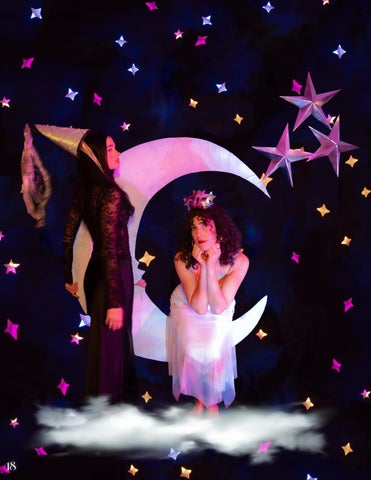
We Wer e Or at least, we tried to be. Remembering the crazed Manic Panic dye jobs in our bathrooms, dramatic liquid lip colors, and ripped leggings, our collective goth phase has been a timeless rite of passage across generations. What might have seemed like an era of embarrassing makeup looks and judgmental stares was actually something deeper: an outlet for discovering personal style through experimentation. I believe this phase stems from a shared curiosity to try new aesthetics that feel foreign, untouched, and eccentrically oneofakind. Being bold enough to try that dramatic eyeliner wing and edgy statement piece was a way of testing how each little stylistic change
16
All Goth impacted how we our sense of individuality. Shimmery eyeshadow? Facial glitter? Adding a white inner shade to your waterline? No matter how small, all of these aesthetic changes create a larger process of trialanderror where we indulge in stylistic fantasies to discover our likes and dislikes. This desire to venture out and try fresh new aesthetics has stayed with us throughout the years. Now we see these curiosities in the form of the new trending personas: clean girl, dark feminine, office siren, and many more. We are in a constant state of reinventing ourselves every time we dare to try the unknown. As global fashion icon Iman once said, “In a world full of trends, I want to remain a classic.” Maybe we were never simply goth, alt, preppy, or sporty, maybe we were always experimenting, drafting, and ultimately becoming our truest selves.
Written by Emily Sauget
at 15 Photographed by Emily McRae Modeled by Lucy Gile, Layla Hughes, and Zariyat Ahmed Styled by Elene Gorgadze Makeup by Layla Hughes Layout by Kate Dowd
Beauty as Becoming
17
Dressingfor
D reams
by Kailey Sigoda
20
Sometimes the clothes we wear are as much about the worlds we imagine as the lives we live in. So why would we limit our dreamiest selves to existing solely at night, when no one else is around? F a s h i o n has turned to dreamwear— nightgowns, slips, and satins—as a way to bring those imagined worlds to life, all
in the bright of day. These ethereal garments reclaim the frivolous, daring us to wear what feels good, not just what fits the occasion. Dressing isn’t only for practicality, but for aspiration, an act of manifesting who we want to be, and sleep is the one time we truly dress for ourselves. The flowing silks, billowing chiffons, and pastel satins of whimsical sleepwear bespeak our collective desire for softness, escapism, and magic in our daily lives. Intensifying the femininity of dreams beyond the bedroom doors pushes the boundaries of private wear in public, blending our fantasies with reality. Dreamwear slips easily into the everyday. Layering a silk slip under a coat or dressing up a pair of satin shorts with heels can evolve your sleepwear into streetwear. For those craving just a whisper of whim, accessories offer the subtlest nod to fantasy. Pastel hued bows, silk ribbons, or even simple, lace trimmed socks peeking from your sneakers can spin something ordinary into something celestial. This line between loungewear and luxury is thinner than we think. Crossing it can feel taboo—or many dare to say inappropriate—but living inside the beauty we once saved for sleeping can be not just fashionable, but liberating. And yet, maybe the true dream is refusing to take off what makes us feel most alive.
Photographer: Leah Stuart Models: Mona Marukawa, Mia Ortega, Margaret Craney Stylist: Chloe Hebert Makeup Artist: Kimberly Fernandes Layout: Isabella Le
21
Bejeweled Dreams Written by Ava Kokoros
Photographed by Anna Brown Modeled by Lainey Nguyen, Ava Kokoros and Fiona Dunphy Styled by Kimberly Fernandes Makeup by Mona Marukawa Layout by Anna Brown
22
Glass beads glisten like stars, colored jewels catch the light like a mirrorball, and metallic threads weave shimmer into fabric. In fashion, embellishment has the power to transform the ordinary into the fantastical, turning clothes into costumes of whimsical wonder. Beading and jewels don’t just decorate, they create dreamscapes you can wear. London luxury designer, Clio Peppiatt, captures this spirit perfectly. Her dresses feel like scenes from a storybook. The Island Mini Dress is handembroidered with thousands of deep midnightblue crystals, its surface alive with golden mermaids chasing fish beneath a beaded night sky. The Lucina Bridal Dress sparkles with celestial motifs made of pearls and Swarovski crystals, turning a wedding gown into a fluorescent cosmic scene within the clouds. In the Indigo Meadow Dress, layers of lilac and green beadwork form trees, butterflies, and wildflowers over a river, evoking the soft light of a countryside evening. Each piece is handembroidered, blending imagination with craft in a way that draws you into every mesmerizing detail. While Peppiatt creates bejeweled dreamworlds through her evening gowns, Staud, the Los Angeles label founded by Sarah Staudinger, brings beading into the everyday with its cultfavorite Tommy Bag. Twinkling with cherries, ocean waves, florals, constellations, zebra stripes, and even the New York City skyline. The bag beautifully shifts how an outfit comes across: from stepping onto an East Coast sailboat, wandering through a garden in London, or heading out to a city rooftop at night. It carries the same spirit of makebelieve, turning outfits into little scenes of their own. Together, Peppiatt and Staud show how embellishment can elevate fashion into something aspirational. From gowns embroidered with imaginationsparking scenes to handbags that become focal points of personal style, beads and jewels remind us that expressive detail matters, catching the eye with a dreamlike allure.
23
Fashion as Collective Written by
Noah Bury
Inspiration
At its core, fashion is less about clothing and more about dreams. Haute couture, with its fantastical silhouettes and impossible fabrics, operates like a shared language of imagination. Haute couture designs are less about practicality and more about visions of the people we long to be. Nowhere is this dynamic more apparent than in the work of Dutch designer Iris van Herpen. Her use of 3D-printed fabric and laser cutting results in haute couture collections that are a fusion of futuristic technology and traditional craftsmanship. Her designs are often more akin to wearable sculptures, unbound by the constraints of everyday life. This is the essence of haute couture’s role as a collective dream. While Van Herpen’s work is rarely seen in everyday life, her influence is felt throughout the world of fashion. The innovative silhouettes, materials, and boundary-pushing concepts presented in her couture shows serve as inspiration to the
24
broader fashion industry. Van Herpen’s haute couture designs are translated into more accessible ready-to-wear collections. The journey from fantastical haute couture creation to a wearable garment is one of translation. This process acts as a laboratory for innovation, testing new materials and techniques that eventually find their way into the mainstream. The innovative texture of a 3D printed dress might inform the sleeve of a ready-to-wear blouse. An extraordinary runway idea is transformed into a single detail that can be worn in everyday life. Through this translation, the seemingly impractical dreams of haute couture envisioned by designers like Iris van Herpen subtly influences our reality and gives form to our collective fashion dreams.
Layout by Caroline Abella
THE DREAM
Of Your Dream Wardrobe
By: BROOKE SWENSON
Choosing one’s wardrobe is a very personal decision, but it is never made alone. It is almost always influenced, often by figures in the public eye. These celebrities and influencers are considered tastemakers, sitting at the beginning of the trend cycle before their decisions trickle down to the public. The public has bestowed this coveted place in the trend cycle upon these tastemakers based on the aspirational nature of the celebrity lifestyle. Before the age of influencers, traditional celebrities occupied the “tastemaker” role. The supermodel era propelled women like Cindy Crawford to the center of the fashion scene, and having a supermodel as a muse could bring a brand to industry domination. Within other celebrity spheres, simple decisions from popular figures could influence the masses, such as Jennifer Aniston’s introduction of the famous ‘Rachel’ hairstyle. Today, celebrities have been joined in the public eye by social media influencers. The power of a paparazzi photo is now mirrored by the power of a viral TikTok. Whether it be seeing Alix Earle posting in skinny jeans or Kendall Jenner posting in Skims, it is clear that small fashion decisions shown in media still have the power to influence the public. This power begs the question–what makes celebrities the markers of style instead of everyday people? When looking at trends that have risen from the media, it can be seen that these trends derive their power from the aspirational quality of the lives of those that bring them to popularity. These celebrity taste makers embody many people’s dream lives: beauty, wealth, a dream career. The power of an Alix Earle fashion endorsement isn’t purely from her style, but from the desirable lifestyle her clothing fits into. Consumers want what she has. MODELS: KENNEDY KLEIN DANIELLA GRONO STYLIST: BROOKE SWENSON LAYOUT: EMILY MCRAE PHOTOGRAPHER: CHRISSY THEBUWANAGE
25
A Legacy of Fashion Freedom: Stevie Nicks
Written by Emily McRae
Flowing fabrics, crystal jewelry, platform boots, and denim are a few of Stevie Nicks’ signature pieces. While her impressive voice captivated her Fleetwood Mac fans, Nicks’ fashion marked a cultural shift in the purpose of clothing. Nicks embodied her art through her fashion choices, influenced modern ethereal style, and normalized individuality and selfexpression. Rather than following the mainstream fashion trends of the ‘70s and ‘80s, Nicks blended different styles and decades, showcasing outfits that embodied her story. For instance, one of her carefully curated outfits featured a shiny, patterned skirt, a flowing sheer shawl, and a tambourine. Transcending traditional shapes, forms, and colors, Nicks used these unconventional features to present clothing as an entryway into the surreal, where imagination can become reality. Dressing for the life she wanted, Nicks showed fans how embodying your dream persona can make it a reality. Flowing lace, maxi dresses, and layered shawls signified her dreams of individuality and the freedom to dress, express, and live authentically. She once described this vision clearly, claiming she wanted “beautiful handmade suede platform boots that are high, but not bulky. And I want a top hat, which I will find out on the road myself.” Her style was selfdirected, rejecting industry pressure and treating her garments as portals to tell stories of who she was, where she’d been, and where she would go. She embraced the idea of our stories shaping our fashion, normalizing unique style, decided only by oneself. Just as Nicks repurposed elements of different eras and styles, today’s thrift and vintage culture reflects the same compulsion to create identity and dress for yourself through personal practices. The moon motif, glitter embellishments, and the bohemian and surrealist aesthetics are further examples of her influence on modernday trends. Normalizing these practices and otherworldly styles can be traced back to Nicks’ fashion and ideological innovation.
Photographer: Emily McRae Models: River Pann, Rita Hagerty, Campbell Brown Stylist: Sofia Lakdawalla Layout: Nina Skelly
26
27
SUBCONCIOUS POWER OF YOUR
THE
28
Grandma’s Style
By Maeve McCurdy
Sitting in a college classroom listening to my professor discuss the upcoming midterm, you’d think you were in a church pew listening to the priest guide everyone through a hymn when looking around the room. Surprisingly, it’s not because of Fordham’s Catholic architecture. Instead, it’s the style of young women recently; these girls are dressing like grandmas. Being in a room of young’uns nowadays means swimming in a sea of cardigans, high necklines, lace, wideleg jeans, cotton eyelet, buttondown shirts, and ballet flats paired with scarves. A turn that older folk are shocked to see, as back in their day they were sporting tight pants, short tops with even shorter skirts with big hair that today gets slicked into a tight bun with a bow. So, where is this inspiration coming from? Is it truly coming from those who came before us? Older women who truly know ball? While styling ourselves like older women simply to emulate them may be the answer, our subconscious aspirations also play a part. We intuitively recognize the calm of a lady who lunches, as we speed past their snail’s pace to make it to class on time after a job interview. Relaxed demeanors radiate from huge glasses, implying that older women peacefully float about life, as we are drowning. To take charge of our seemingly uncertain world, a subconscious manifestation takes place through what we always control: our clothing. Becoming those who have already dealt with life’s struggles and variability, hoping the serenity knitted into their wool socks rubs off on us. The intentions set in our outfits mirror the intentions in our goals, and reflect to the world that, just like grandmas, we too want to live a life of peace. Photographer: Meghan Cattani Models: Warda Hassan, Anna Brown, Massimo Mendoza Stylist: Kate Dowd Makeup: Mia Garcia Layout: Grace Biesterfeld
29
Closer Than You Think
Drag, Showgirls, and
Burlesque 30
Written by Elaine Linehan
For most of us, we think our interaction with drag, showgirl, and burlesque culture is a faraway thing. But the reality is a bit different. While you may not realize the connection, it’s very likely that your favorite musicals, theatre, and music artists have been influenced by drag, showgirl, and burlesque performers. To understand how these performers permeate our favorite media, we have to look at the history of drag, showgirls, and burlesque. Today, drag is associated with the LGBTQIA space, however it wasn’t always that way. In ancient Greece and in Shakespeare’s time, women were not allowed to perform on the stage due to the misogynistic ideals. This left the female roles to be played by men. LGBTQIA connections to drag began in the 1920s with drag queen William Dorsey Swann, who hosted gender swap dress parties. Because Swann and his friends were LGBTQIA and formerly enslaved people, these parties were under constant threat of state violence. Burlesque grew alongside drag and was created in the late 1800s. Burlesque built some groundwork for showgirls to be an iconic facet in Broadway and Vegas in the early to mid 1900s. Today, we think of drag in the RuPaul Drag Race fashion, but one clear example of drag in music is Chappell Roan, who clearly takes from drag makeup aesthetics. She also takes inspiration from showgirls and burlesque in her costuming. Other examples can be found in even the military, who held drag performances during WWII up to 2023. In general, drag, showgirls, and burlesque is a caricature of femininity and gender roles. Think Lady Gaga, Dolly Parton, or Cole Escola’s works. The next time you go to that concert, play, or see that movie, remember, it’s all closer than you think.
Photographer: Elaine Linehan Model: Victoria Pérez-Huerta Makeup Artist: Kim Lazzara Layout: Caroline Abella
31