One of the original founders of Women of Asphalt talks about their new venture and the future of the industry.
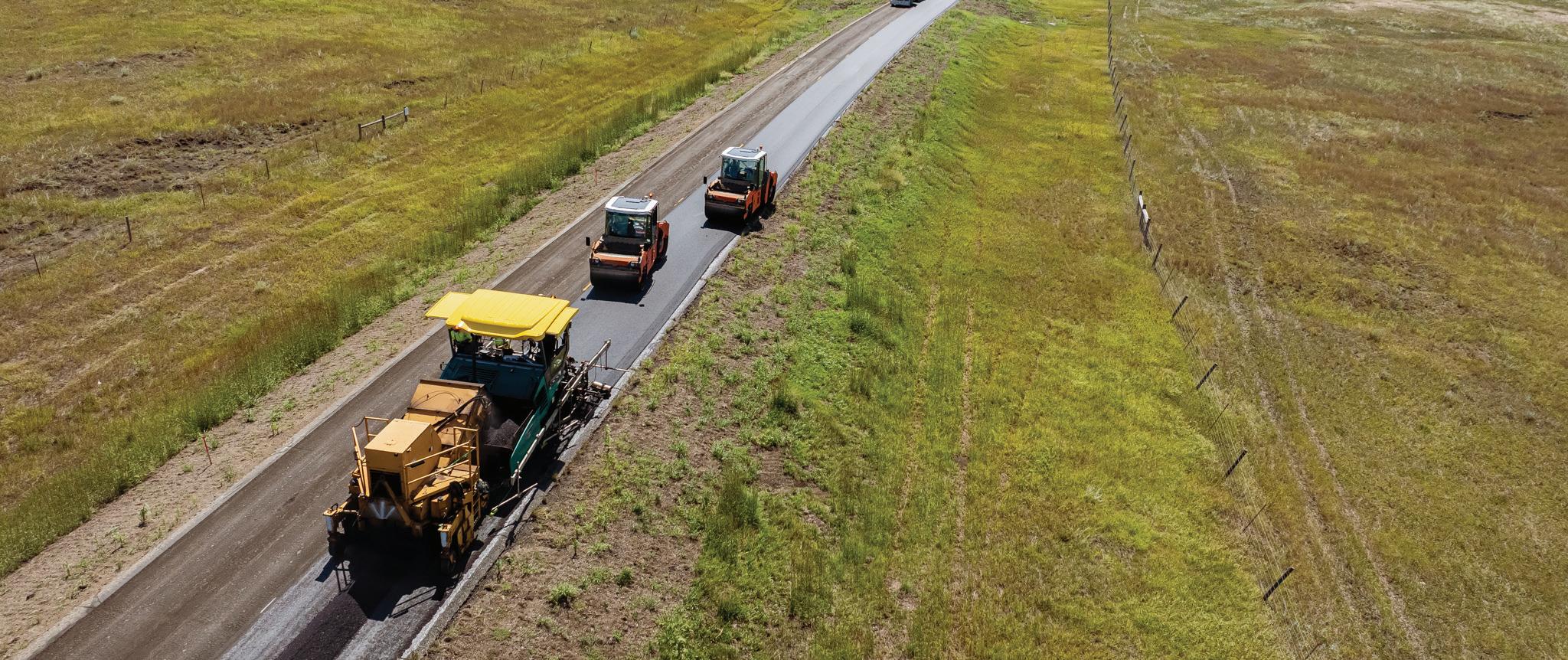
Set up your paving job like an Airstream campsite — connect early, watch fuel usage and travel the miles faster with smart paving tech and real-time data.
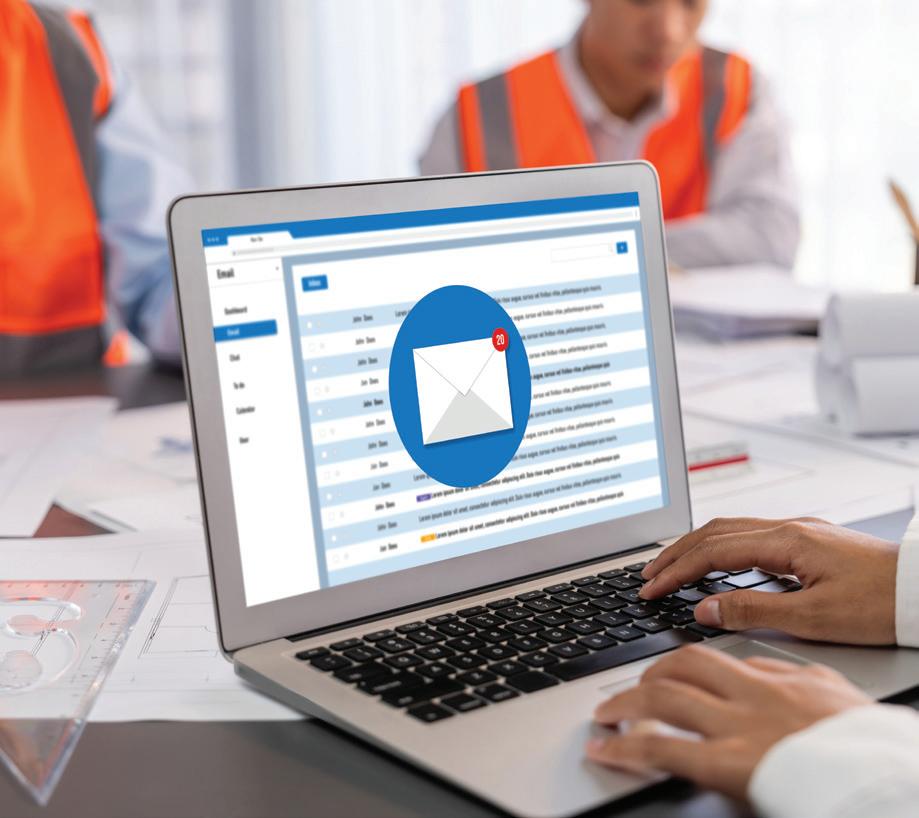
Why Construction Software Fails on the Jobsite — and What Must
Construction software often fails on the jobsite due to workflow mismatch, poor integration and training gaps. Here’s why adoption breaks down — and what must change in 2026.
Published and copyrighted 2026 by IRONMARKETS. All rights reserved. No part of this publication may be reproduced or transmitted in any form or by any means, electronic or mechanical, including photocopy, recording or any information storage or retrieval system, without written permission from the publisher. Asphalt Contractor (ISSN 1055-9205, USPS 0020-688): is published ten times per year: January, February/March, April, May, June/July, August, September, October, November, December by IRONMARKETS, 201 N. Main St. Ste 350, Fort Atkinson, Wisconsin 53538. Periodicals postage paid at Fort Atkinson, Wisconsin and additional entry offices.
POSTMASTER: Please send change of address to ASPHALT CONTRACTOR, 201 N. Main St. Ste. 350, Fort Atkinson, WI 53538. Printed in the U.S.A.
SUBSCRIPTION POLICY: Individual subscriptions are available without charge only in the USA. The Publisher reserves the right to reject nonqualifying subscribers. One-year subscription to nonqualifying individuals: U.S. $45.00, Canada & Mexico $65.00, and
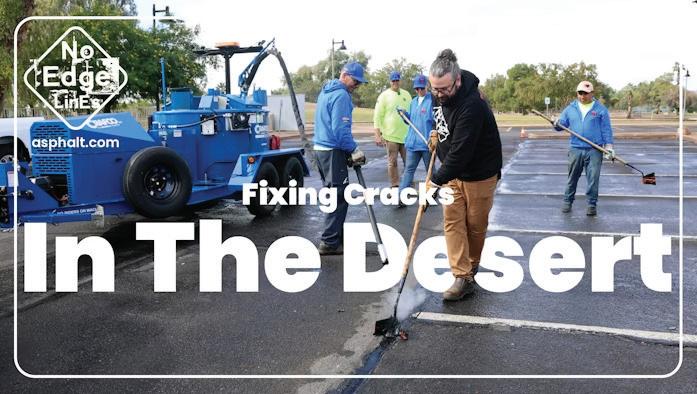
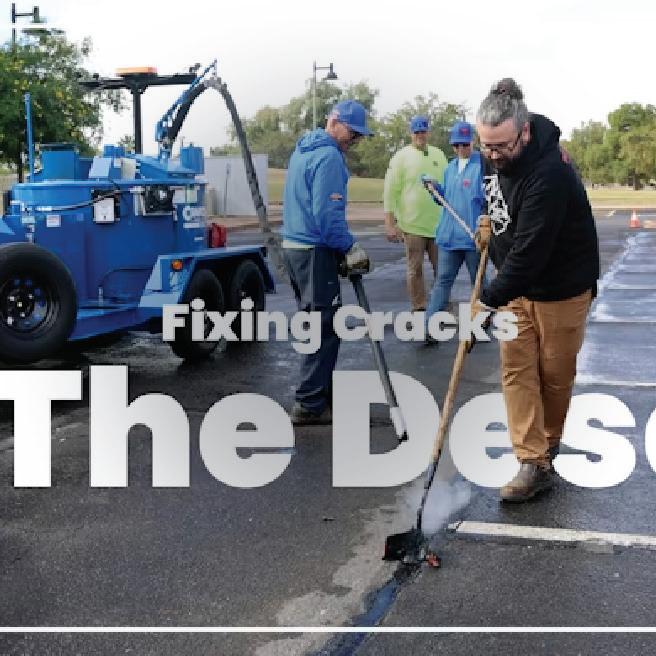
I Learned Crack Sealing In A Desert Rainstorm | No Edge Lines Season 3 Episode 4
Desert conditions and extreme temperatures push pavements to their limits, and learning how to repair them is even harder when you’re fighting bad weather.
Watch the video at: https://asph.link/ ACONNELS3E3
Targeting the Labor Gap with Training, Recruiting and Immigration
Construction firms face a labor gap of hundreds of thousands of workers, driving focus on apprenticeships, onboarding, recruiting and legal workforce pathways.
Read more at: https://asph.link/ b0vsacga
Jean-Claude Fayat On Digitalization, Trade, And The Future Of Road Building
The president of FAYAT Group sat down with Asphalt Contractor at CONEXPO-CON/AGG 2026 to talk technology adoption, the economics of sustainability, tariff pressure, and what makes a wine truly great.
Read more at: https://asph. link/1twyscq1
Construction Efficiency Gap Persists as Firms Lag on Technology Investment
A new report shows construction firms are prioritizing efficiency, but limited technology adoption is slowing progress.
Read more at: https://asph.link/ h51z58sk
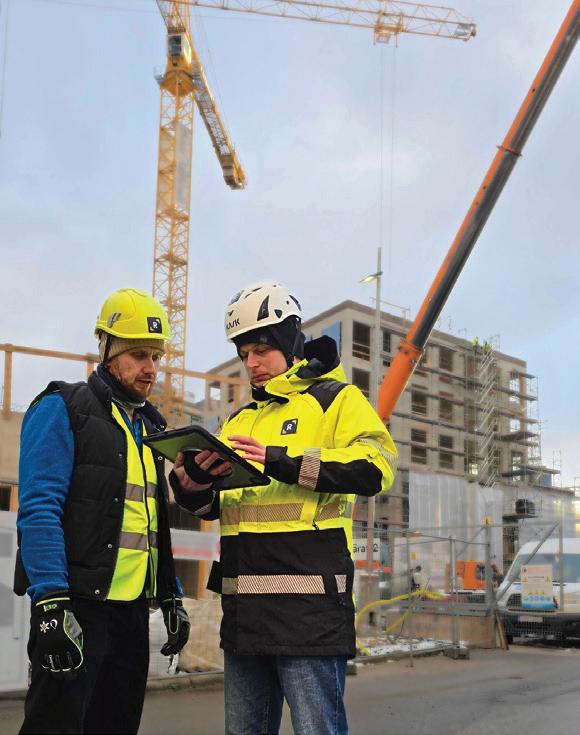
10 Ways Technology is Improving Safety on Construction Jobsites and Roadways
From smart PPE to AI-driven alerts, new technologies are helping reduce risks, improve visibility and strengthen safety across construction sites and work zones.
Read more at: https://asph. link/92n0q7kh
Signup for the Roadbuilding Update, a free bi-monthly newsletter for the most up-to-date DOT, FHWA, asphalt, and other industry news
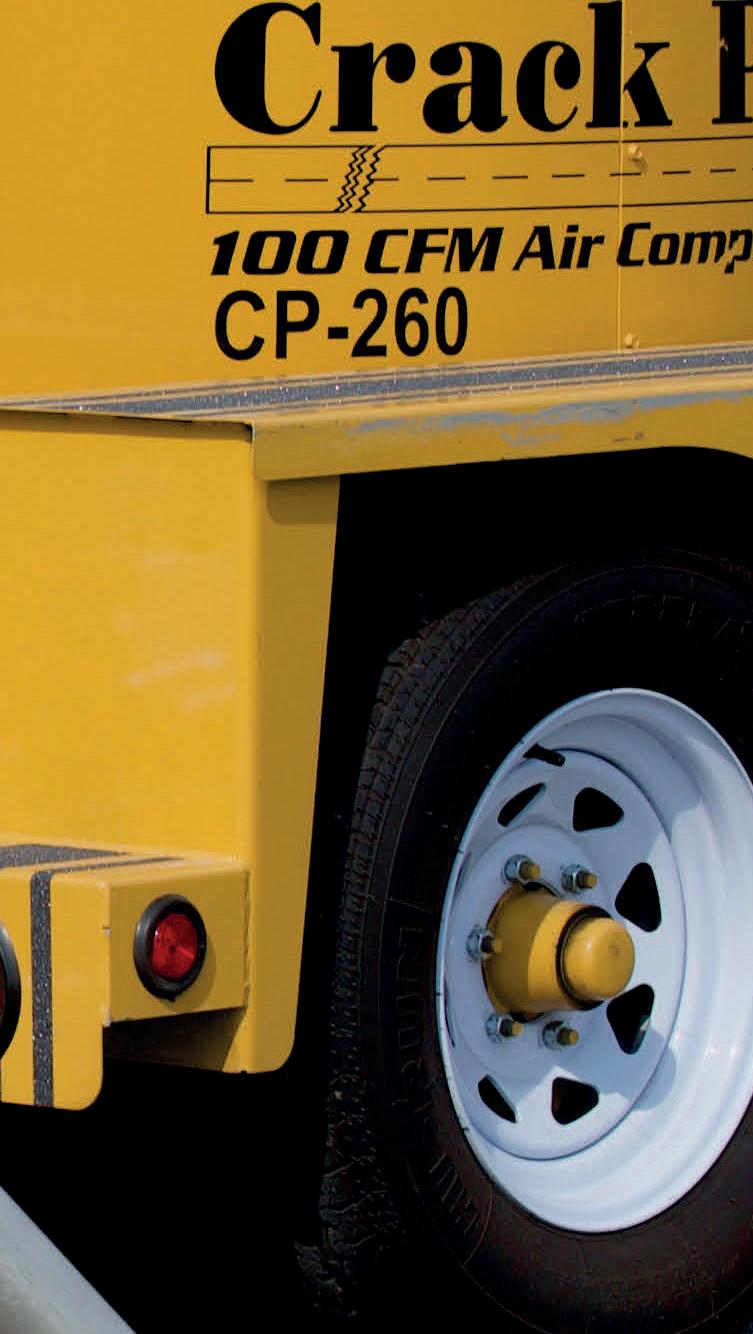
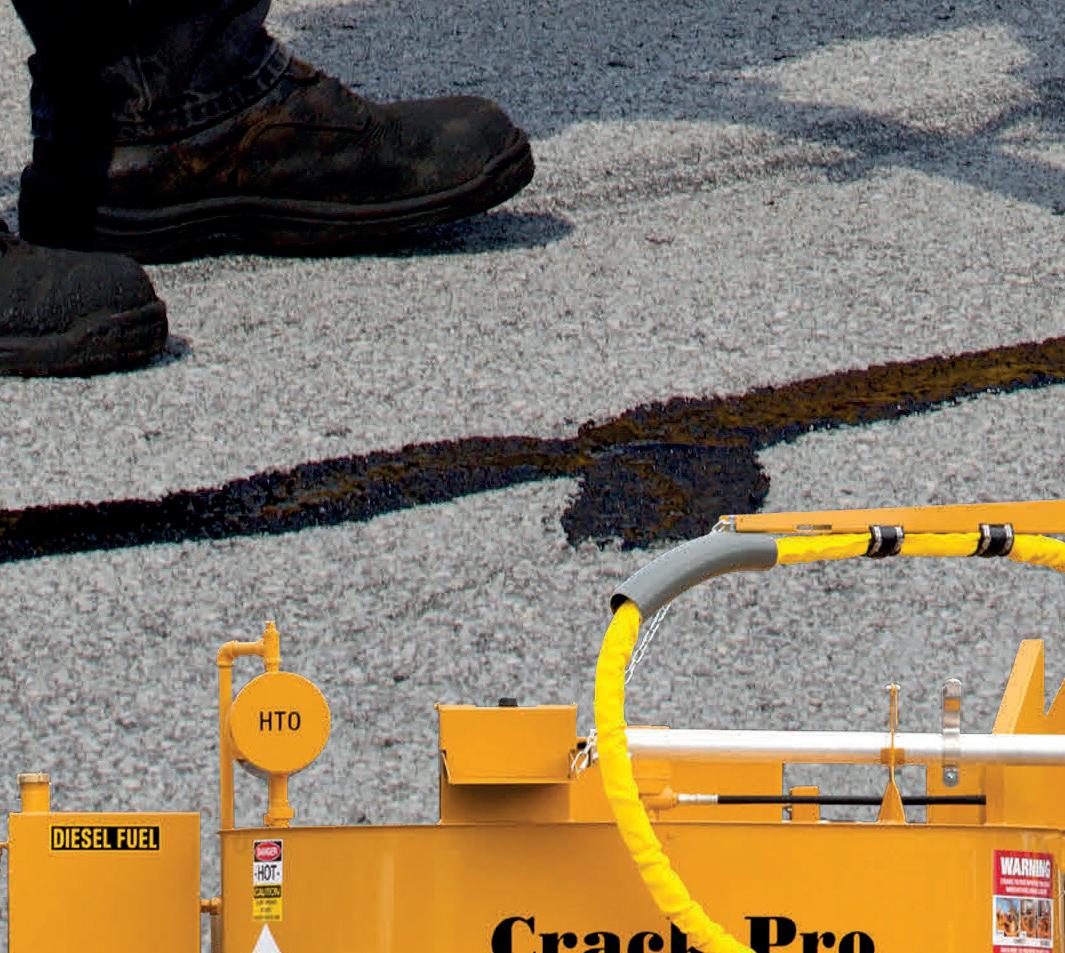
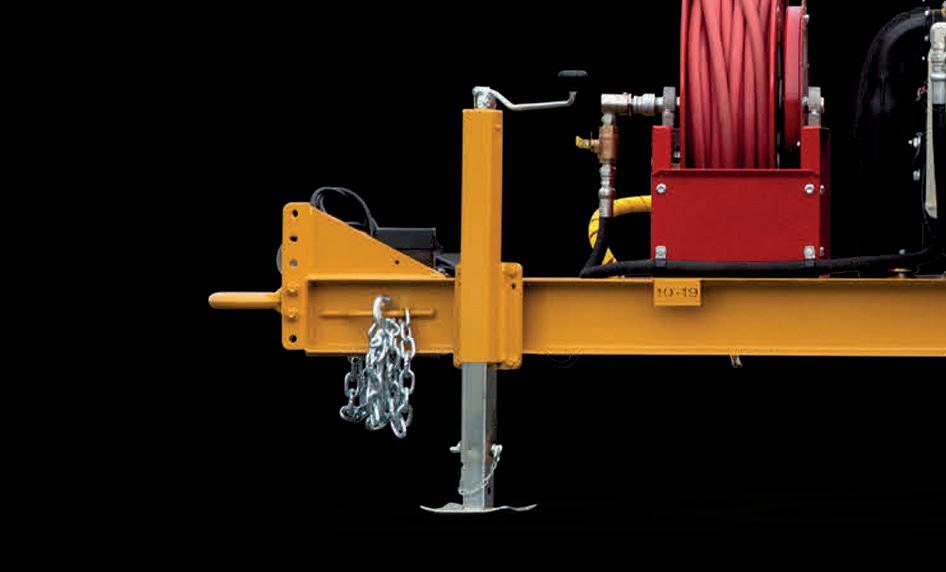
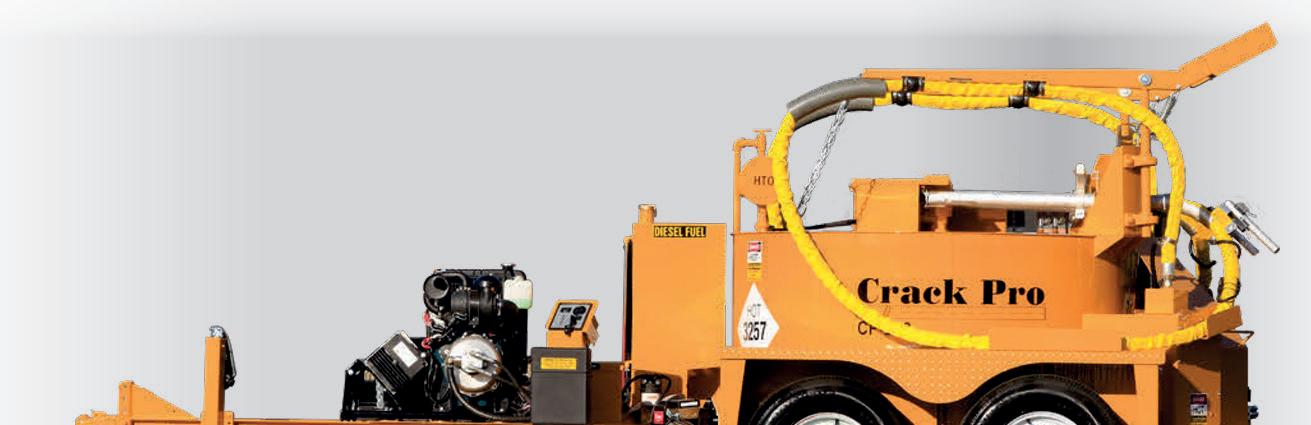
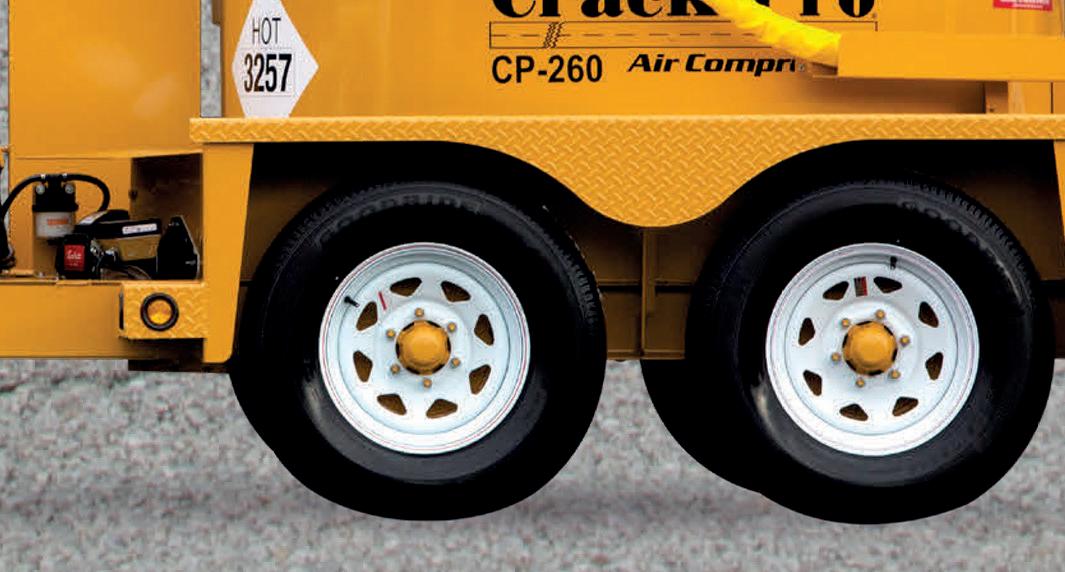
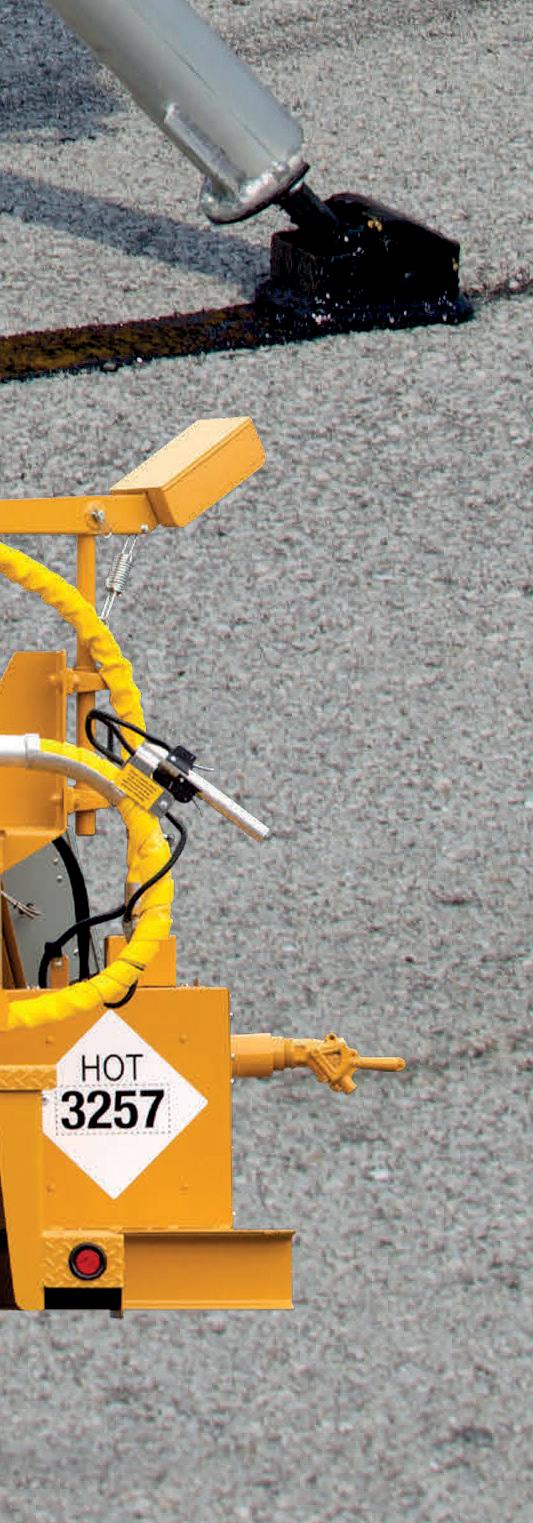
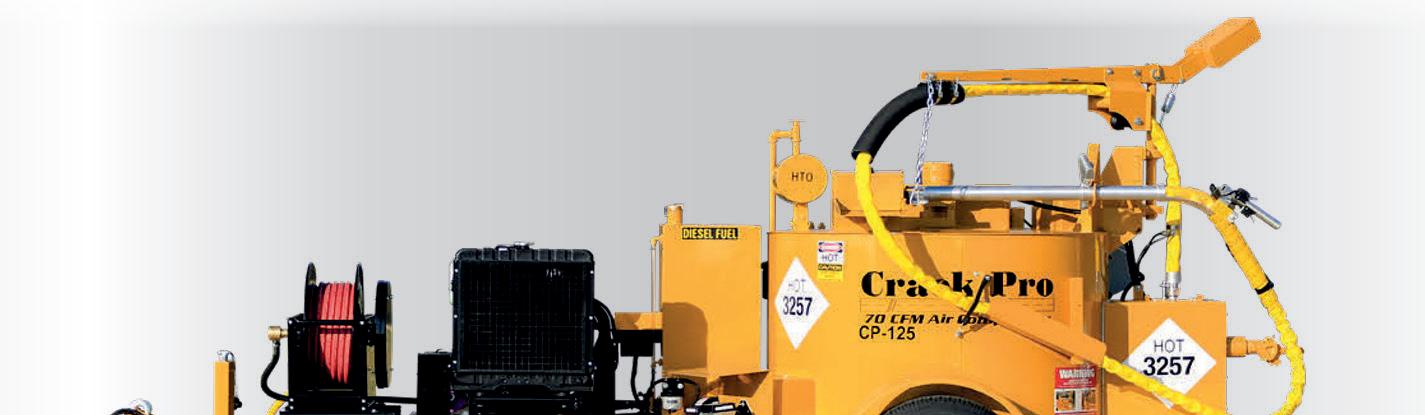
CRACK SEALING EQUIPMENT
POWERED BY INNOVATION
DRIVEN BY SAFETY DRIVEN BY SAFETY
• Low profile design for maximum operator safety. Full view of traffic during application. FEATURES:
• Industry’s fastest heat up time - less than one hour.
• operator fatigue.
• All diesel power (burner and performance.
• Nationwide
Ergonomic counter-balanced hose boom. Dramatically reduces operato engine) for maximum efficiency and Nationwide rental, sales and service.
Brandon Noel, Editor-in-Chief
bNoel@iron.markets
234-600-8983
Our Transportation Infrastructure Future
This is an inflection point.
While we were in production on this issue, the text for the next surface transportation bill dropped: The BUILD America 250 Act is ambitious... in its own way. Obviously, having not been inside the halls of power where these things get discussed, however, my opinion is that the House Transportation & Infrastructure Committee (T&I) decided to really punt on any sort of framing, or funding, that could be mistaken for an act of future-forward leadership.
What is frustrating about that, from my perspective, is that one would think that is exactly their job. We send them to Washington to do the work we cannot. Review the research. Maybe look into how others have solved the problems we face, and then, act accordingly. Sadly, it is this editor’s opinion that, the BUILD250 Act is nothing more than a status quo move that screams: We have no new ideas.
THE FUTURE IS ALREADY THE PAST
The Toyota Prius came to America in the year 2000, three years after it launched in Japan. I was fifteen years old, and it felt like a joke to us since gas was about $1.50 a gallon. It was just a hybrid, but it felt like an incremental step towards a future that never arrived for us.
It’s been thirty years since that product came to market, now succeeded by Chinese EV manufacturers who are swiftly taking the world by storm, and some still argue about its value and practicality. The American auto industry has responded by sticking its head in the sand.
That move worked with the Prius, because America’s economic dominance insulated Detroit from the pressure to change. But that level of influence was based on the power of oil, just like it has been since the mid-century.
In 2026, that paradigm is no longer the security it once was, as the dominion of the petrodollar is under serious threat.
The world is changing and, as it does, it reveals a possible future without the energy bottleneck of crude oil. As we speak, the “third-world” is undergoing a rapid and unprecedented transition to renewables by necessity. Those markets won’t look back, and why would they? More poignantly, though, is why aren’t we? Why not declare energy independence on our nations 250th birthday? We’ve been told we can’t. It won’t work. You don’t want it, they tell you. The grid. The dark. The cold. etc. etc.
Filling up your tank at the gas station, hearing the roar of your internal combustion engine has been sold to us as essential Americanism. As a result, to question that becomes a treatise on Americanism itself. But it grows harder and harder to accept as we witness others across the globe do exactly what we have been told cannot be done.
What happens next will be painful, as all transformational events are, but there is a lesson to be learned for those who will inherit this mess and forge a new future. Public infrastructure and public transportation must serve the public before all else, and not the corporatized private interests of a few select industries.
At one time in history, the American interstate system was a crown jewel of our nation’s prominence, a sign of our economic prowess. It was a true achievement in every sense of the word. But the jewel has become a millstone, as our leaders seem to have abdicated any hope of maintaining it, exposing a lack of imagination and willpower to conceive a tomorrow that is anything other than its past.
Published and copyrighted 2026 by IRONMARKETS. All rights reserved. No part of this publication may be reproduced or transmitted in any form or by any means, electronic or mechanical, including photocopy, recording, or any information storage or retrieval system, without written permission from the publisher.
@ASPHALTCONTRACTOR @ASPHALTCONTRCTR
@ASPHALTCONTRACTOR
@ASPHALT-CONTRACTOR-MAGAZINE
NEW PRODUCTS
Link-Belt Excavators Reveals New Excavators, Grade Control Technology
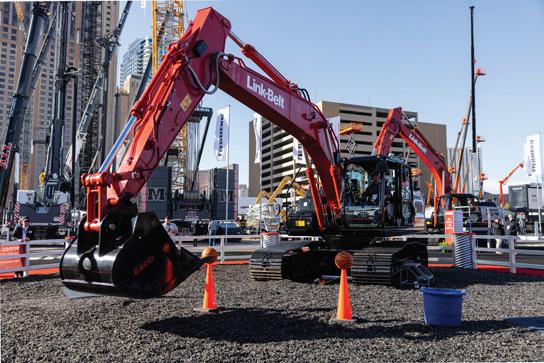
Link-Belt Excavators unveiled the 245 X4S and 80 X4 models, which are designed to improve fuel efficiency, operator comfort and machine connectivity. The company also introduced an expanded Precision Grade 3D platform that supports grade control systems from Trimble and Topcon. The system is designed to allow contractors to install machine guidance technology more easily.
Trimble Roadworks Integrates Real-Time Asphalt Compaction Quality Control
Trimble Roadworks paving control platform for asphalt compactors integrates with Geophysical Survey Systems Inc’s (GSSI) highly accurate and rugged ground penetrating radar sensor, PaveScan RS, gives asphalt paving contractors a solution for mapping the dielectric profile — or percentage of air voids — throughout the asphalt compaction process rather than by testing core samples after the completion of a project. This functionality can transform asphalt paving projects. The ability to monitor quality throughout the project in real time takes the guesswork out of roller patterns and can significantly reduce the likelihood of rework or fines.
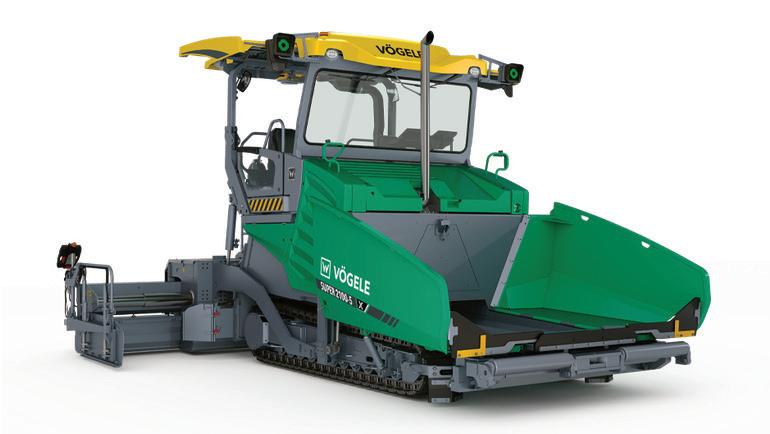
Vögele Super 2100-5 X
Developed as part of VÖGELE’s X-Tier “Dash 5” generation, the SUPER 2100-5 X meets the growing demand for paving quality, automation, and efficiency while preparing contractors for digital jobsites. This tracked paver combines high output with intelligent process control through systems like Smart Pave and Auto Grade Plus, ensuring precision and consistency.
The ErgoPlus 5 operating concept reduces operator workload, while advanced material management supports continuous flow. EcoPlus drive technology lowers fuel consumption without sacrificing performance. The result is a powerful, future-ready machine delivering reliable, high-quality paving across demanding applications.
With the SUPER 2100-5 X-Tier tracked paver, VÖGELE takes several steps into the future at once: new operator ergonomics, more automated processes and faster setup times, together with reduced noise and exhaust emissions. Highway Class pavers are perfectly at home whether on highways or handling other large-scale projects.
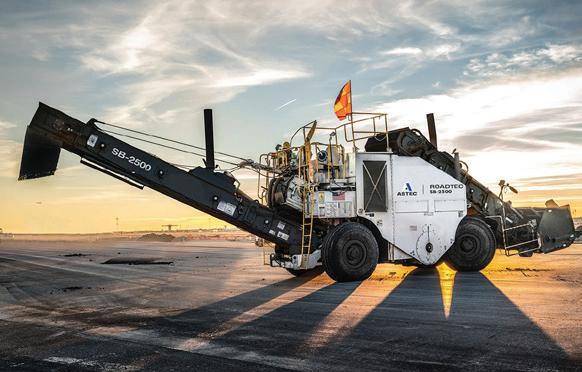
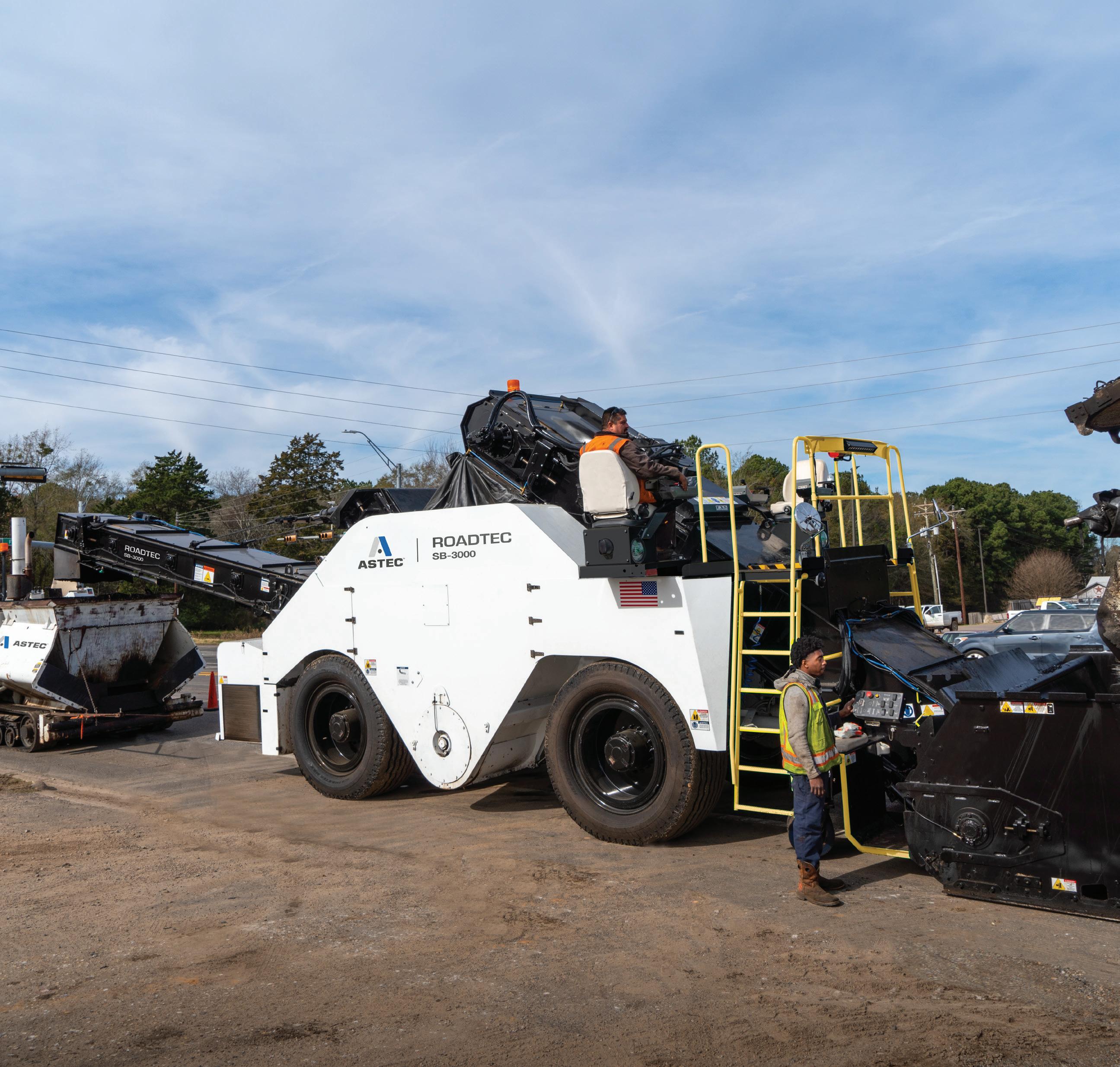
Astec SR-2500 Shuttle Buggy MTV
Whether you’re paving highways or tackling urban infrastructure, this machine is engineered to keep your crew moving.
Operator Comfort
• Dual operator stations
• FXS fume extraction system is standard Better Maintenance Access
• Engine access is gained by hydraulically lifting the one-piece hood
• Hinged access doors that make the oil cooler, radiator and pumps easy to reach Agile Steering
• Four steering modes enhance agility | Ability to maneuver through tight turns Triple Pitch Augers
• Triple pitch augers remixes contents at the bottom of the storage hopper
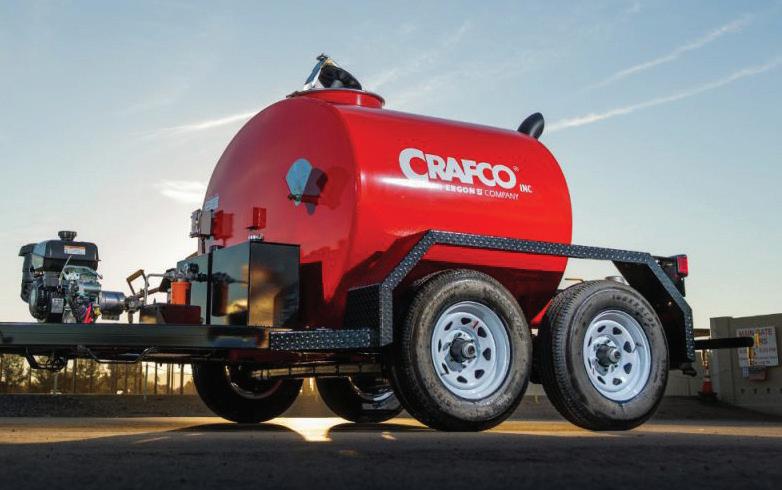
Crafco Tack Tank for Asphalt and Paving Applications
Crafco has introduced a new Tack Tank designed for asphalt and paving operations, with models available in 300- and 600-gallon capacities. The units feature a hydraulically driven pump capable of output up to 35 gallons per minute, allowing crews to handle a range of job sizes.
The Tack Tank is equipped with a 250,000-BTU burner and a triplepass flue design to improve heating efficiency and reduce warm-up time.
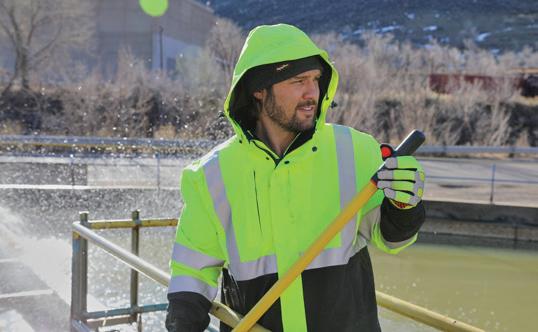
Jacket for Cold, Wet Jobsites
The jacket includes a waterproof, wind-resistant outer shell with 2-inch reflective tape for visibility. The outer layer meets ANSI/ISEA 107-2020 Type R, Class 3 and CSA Z96 Class 3, Level 2 standards. An insulated inner jacket, featuring 120-gram polyester fill and knit cuffs, provides additional warmth and can be worn separately or combined with the outer shell for cold, wet weather.
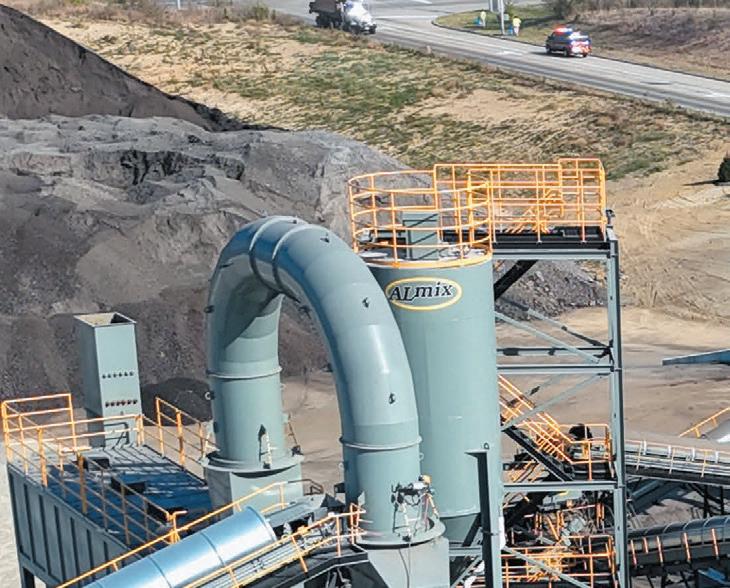
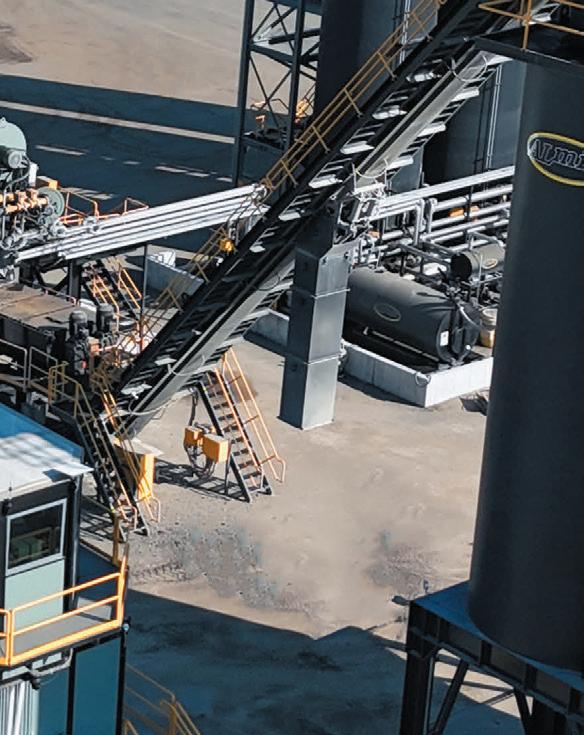
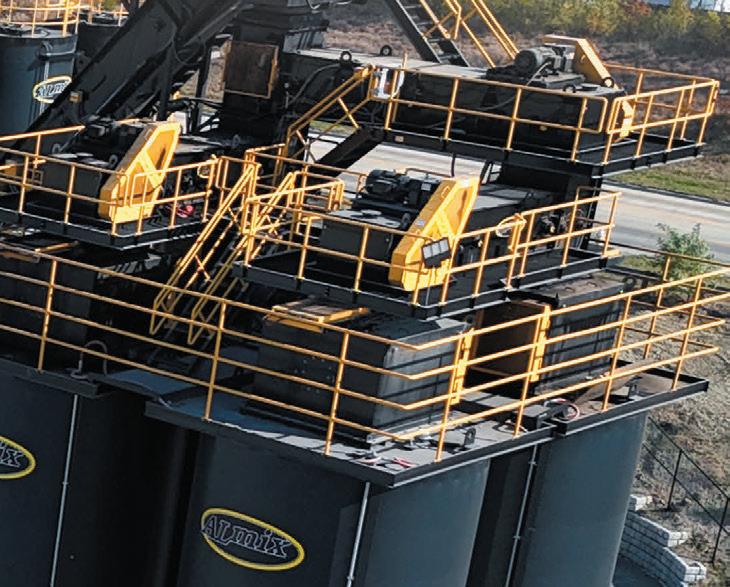
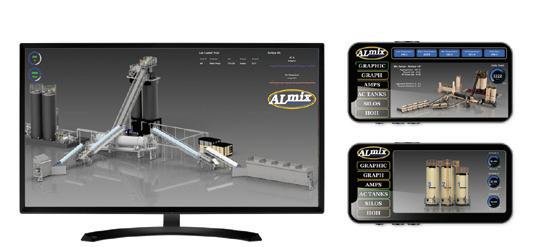
ALmix INSIGNIA VISION
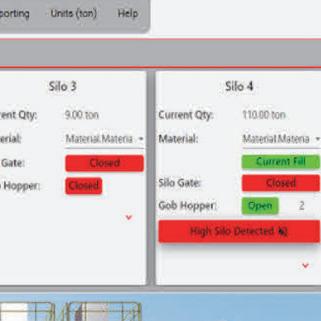
Insignia Vision, or ALmix IV, is designed to deliver a continuous, high-speed infusion of plant data directly into the heart of your headquarters.
• Continuous Data Flow: View TPH, daily totals, and real-time loadout progress from any web-device.
• Precision Diagnostics: Monitor the “vitals” of your machinery. Identify maintenance needs before they
cause an outage.
• Multi-Plant Visibility: Manage multiple sites through a single dashboard.
• Operational Health: Track liquid AC usage, fuel consumption, and mix.
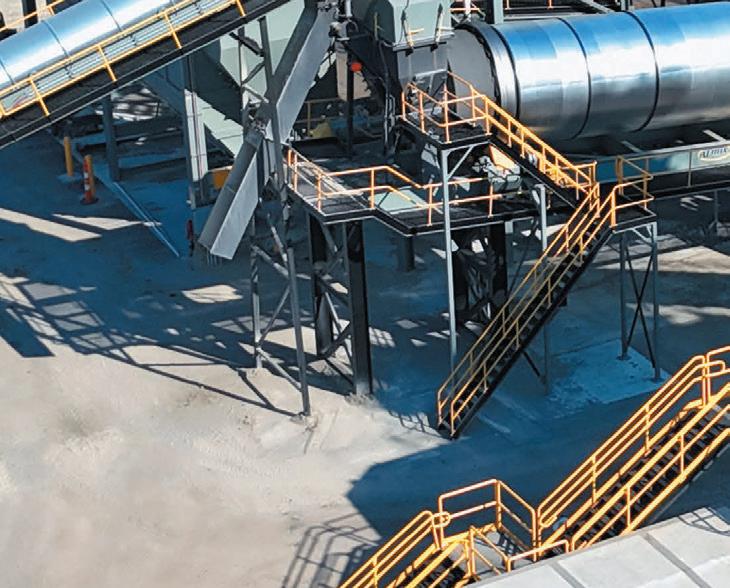
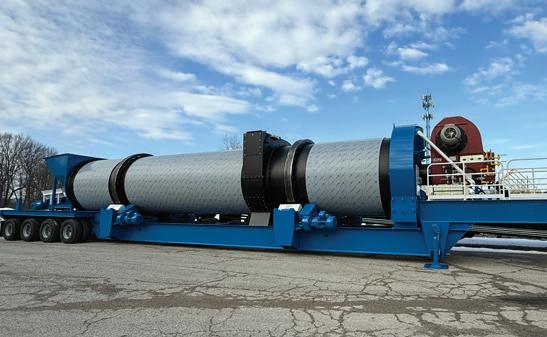
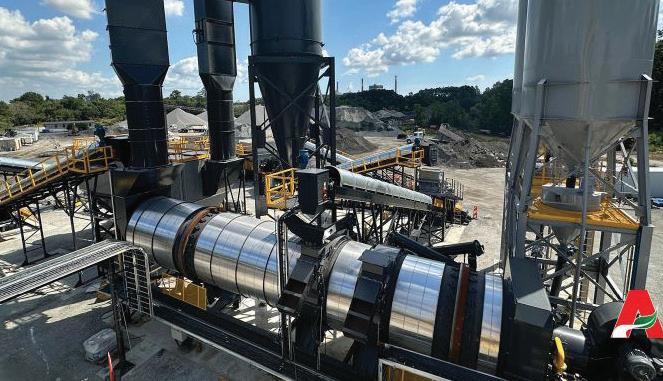
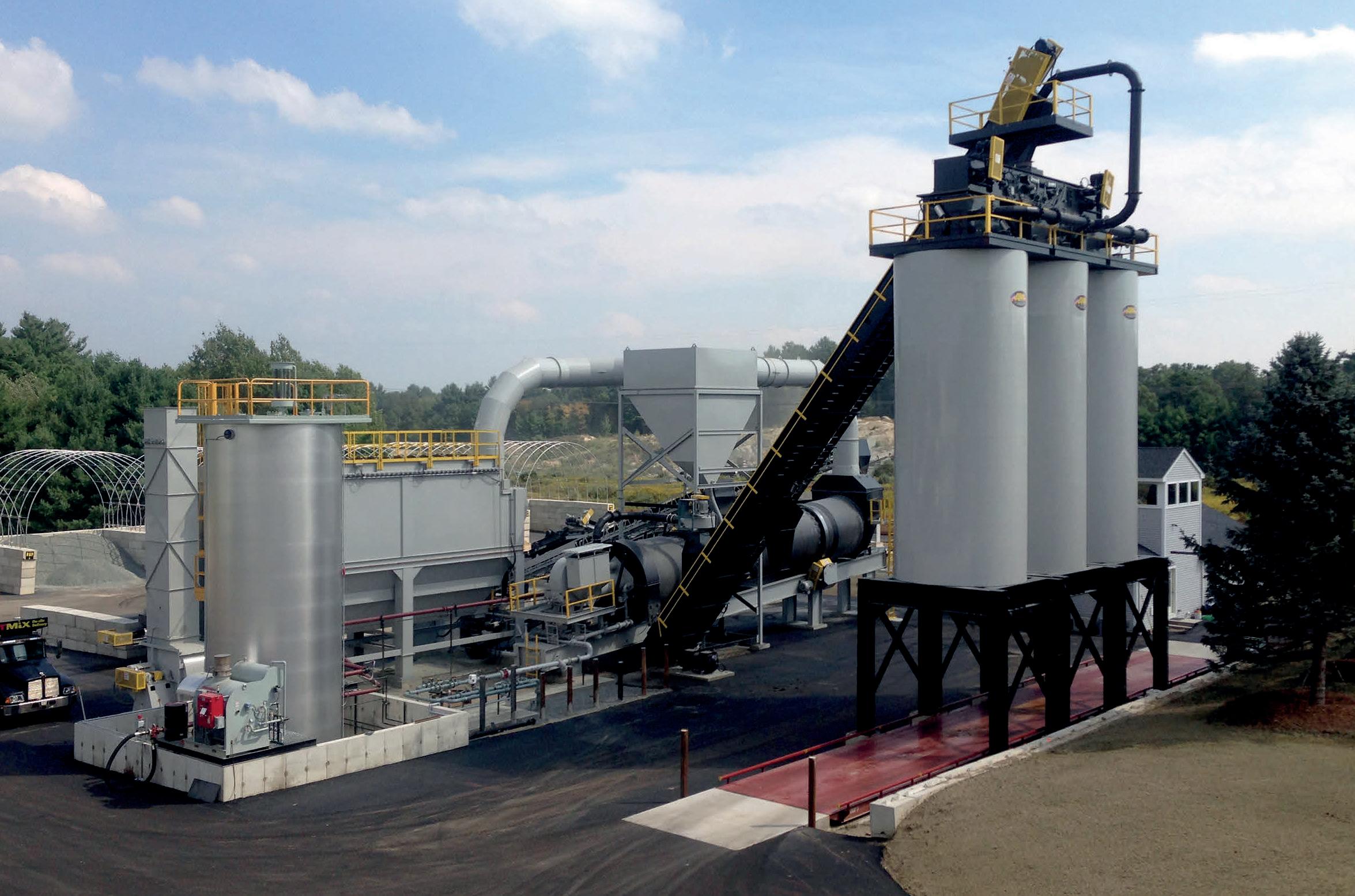
ADM EX 300 Asphalt Plant
With existing EX plant capacities of 120, 170, 225, 325, and 425 TPH, the new EX 300 has a capacity of 300 TPH. Like all EX Series plants, the EX 300 can handle up to 50% RAP. Unique features of the EX 300 counterflow asphalt plant include:
• Single drum diameter
• High efficiency CBS total air burner with variable drive frequency (VFD)
• Trunnion drive with VFD, no V belts
• Drum insulation with stainless cover
• Flights designed for easier maintenance
As with all EX Series asphalt plants, the EX 300 achieves maximum heat transfer and fuel efficiency through separate drying and mixing zones with its single-drum counterflow-system technology which provides the longest aggregates drying and mixing times.
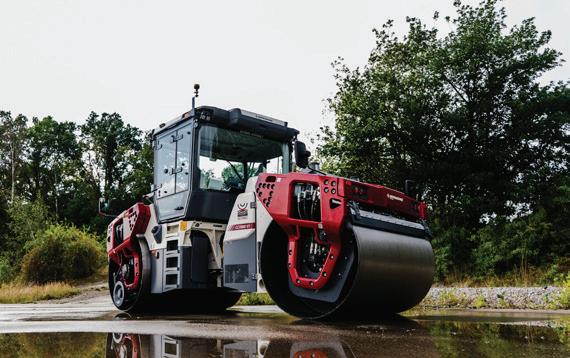
Dynapac New CC7000 VI With SEISMIC
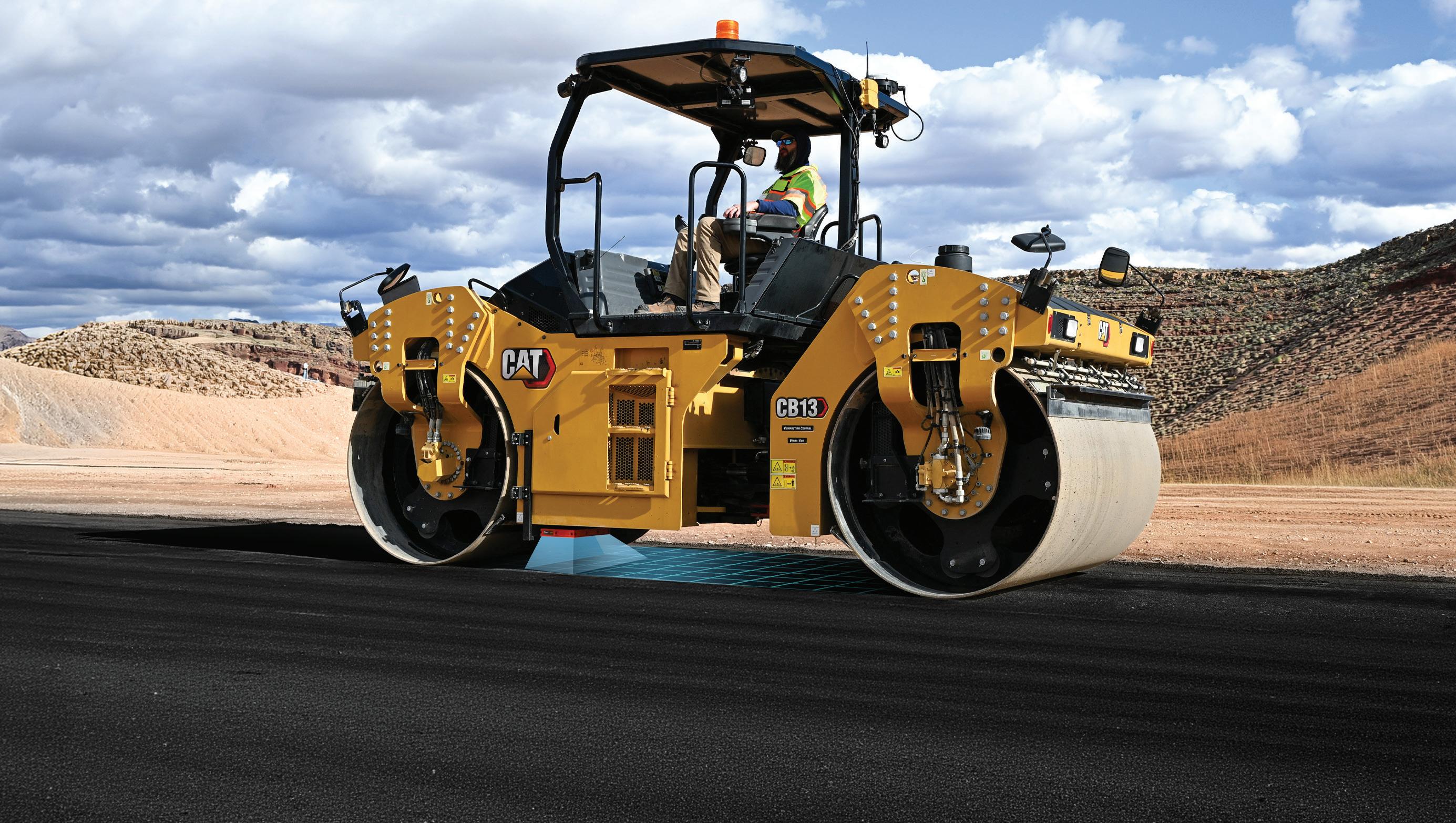
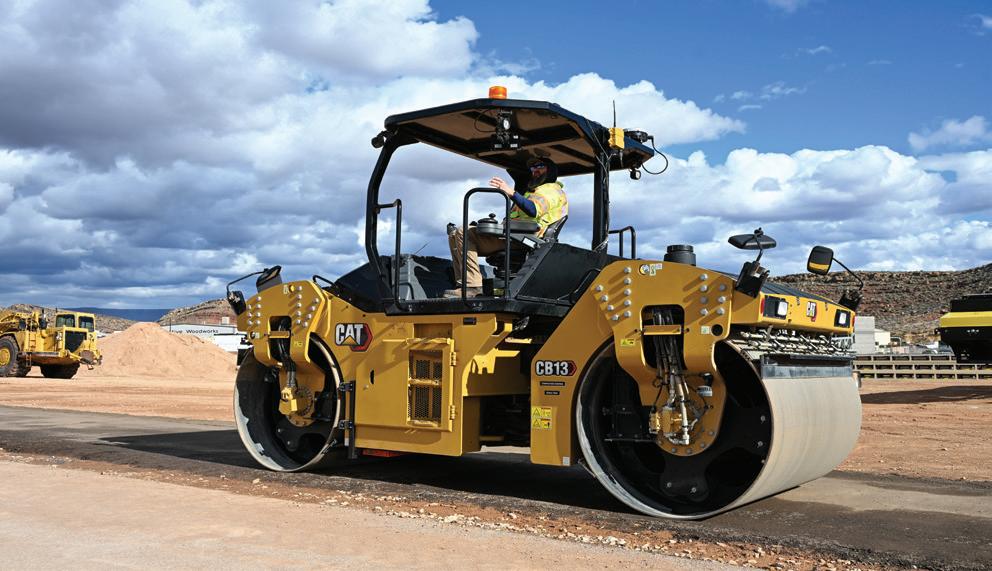
Dynapac announced its return to the 16-ton asphalt roller category with the launch of the all-new CC7000 VI, the heaviest asphalt roller in the world. With an operating weight exceeding 32,000 lbs., the CC7000 VI sets a new benchmark for power, performance, and durability. Built for the most demanding large-scale applications, the CC7000 VI is engineered to deliver exceptional compaction results while maximizing productivity. Equipped with Dynapac’s patented Seismic Asphalt technology, the roller automatically adjusts vibration frequency in real time based on material stiffness— ensuring optimal compaction, reduced energy consumption, and lower operating costs while operator comfort is enhanced from less shaking and less noise.
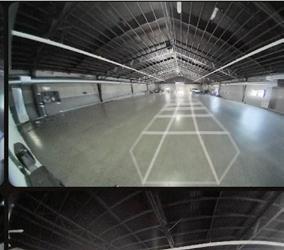
Elgin Sweeper 360 Camera System
Elgin Sweeper and CPAC Systems introduced a new 360 camera system for street sweepers designed to reduce blind spots and improve operator visibility.
The system uses four heated highdefinition cameras to create a single adapted view around the machine. It also includes radar support and automatic view transitions designed for low-speed sweeping and lane changes.
Operators can use a 3D view and adjust camera angles through a touchscreen display. The system also changes views automatically when the operator signals a turn or shifts gears, with settings that can be customized.
Radar sensors monitor the rear and both sides of the sweeper and trigger warnings when the system detects obstacles. According to the companies, the system filters out static objects to focus alerts on actual hazards.
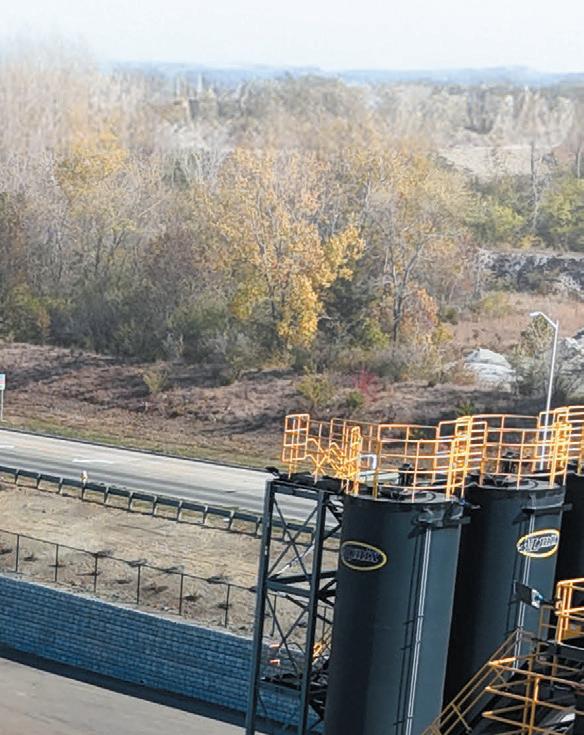
Ammann Alpine Series Asphalt Plants
Known primarily for batch plants, Ammann recognized that existing continuous designs were undersized for many producers. The Alpine delivers higher-capacity performance with an American-made approach— featuring a domestic factory, local partnerships, and a dedicated U.S.based design, service, and sales team—ensuring customers receive a solution tailored to their production needs and supported by a strong regional presence.
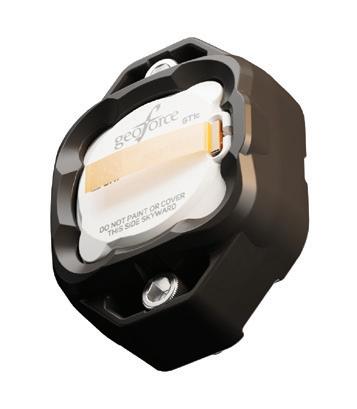
Geoforce Launches Cellular Asset Tracker for Construction Equipment
Geoforce has launched the GT1c, a rugged cellular tracking device designed for construction, equipment rental and other asset-heavy industries. The GT1c operates on AT&T’s cellular network and is built to track non-powered equipment and assets in harsh environments.
According to Geoforce, the tracker offers up to 10 years of battery life and is designed to provide visibility into equipment location, movement and utilization while reducing maintenance needs. The device is intended to provide a lower-cost option for tracking more types of assets across jobsites and fleets.
AUGMENTED REALITY AND AI ON THE JOBSITE: The Future Of Training And Quality Control In Asphalt
The asphalt industry is losing experienced operators faster than it can replace them. AI and augmented reality are giving younger crews a fighting chance.
Last summer, standing behind a paver in ninety-degree heat, I watched a foreman climb back up to the screed for the third time in under an hour. Same issue every time. The right side of the mat was tearing. Head of material running low. Auger timing inconsistent. Crown adjustment slightly off. The foreman already knew the
problem before he even got up there. The operator was brand new.
That moment right there is the real reason AI and augmented reality are becoming such a major topic in the asphalt industry.
Not because contractors suddenly want futuristic gadgets on jobsites. Not because Silicon Valley thinks paving
roads is exciting. The real issue is that our industry is losing experienced people faster than we are replacing them, and the knowledge gap is becoming impossible to ignore.
A good screed operator used to take years to develop. Great roller operators learned compaction almost by instinct. Foremen came up through the field over
Adobestock_ Andrey Popov
decades. Today many contractors simply do not have that kind of time anymore. At the same time, owners and agencies are demanding tighter tolerances, better documentation, smoother mats, and higher quality standards than ever before.The margin for error keeps shrinking while the experience level across the industry is shrinking with it.
TECHNOLOGY IS NOT REPLACING EXPERIENCE
There is a lot of hype surrounding AI and AR right now, but most of the conversation completely misses the point. Nobody is trying to replace experienced asphalt crews with computers. That is never going to happen. Asphalt paving is still a hands-on trade that depends heavily on field judgment, communication, and experience.
What this technology can do, however, is help younger crews identify problems earlier and make better decisions before mistakes become failures.
Right now, many paving mistakes are still discovered too late. Density failures come back days later from the lab. Thermal segregation sometimes is not noticed until compaction is already lost. Drainage mistakes might not show themselves until the first major storm. Daily reports get written from memory at the end of a fourteen-hour shift while sitting in a pickup truck trying to remember truck counts and tonnage numbers.
The industry has become extremely reactive.
That is where AI and augmented reality start becoming valuable.
WHAT AUGMENTED REALITY ACTUALLY LOOKS LIKE ON A JOBSITE
A lot of people hear “augmented reality” and picture workers walking around in giant headsets looking like science fiction movie characters. In reality, the technology is becoming far more practical than that.
Systems like the Trimble XR10 allow contractors to overlay digital project models directly onto real-world jobsites before construction even begins.
Contractors can physically walk a site while viewing underground utilities, drainage structures, ADA slopes, or grading conflicts in real scale before asphalt is placed.
For asphalt contractors, that has serious potential.
Anyone who has worked on commercial parking lots, HOA projects, or municipal roadway work knows how many costly mistakes happen because of missed elevations, drainage conflicts, utility problems, or incorrect slopes. One missed ADA cross slope can create a major liability issue after the project is complete. One drainage mistake can leave standing water throughout an entire section of pavement.
Today those issues are often caught after paving. AR allows more of them to be caught before paving.
That does not replace field experience. It simply gives crews another tool to visualize problems earlier.
AI AND REAL-TIME QUALITY CONTROL
The bigger long-term impact may actually come from AI-driven quality control systems.
Thermal imaging technology mounted behind pavers is becoming increasingly advanced. Intelligent compaction systems are giving roller operators live feedback instead of relying entirely on passes and experience. Machine control systems are improving screed guidance and steering precision. More importantly, many of these systems are beginning to provide predictive warnings before quality problems happen.
That is a major shift.
Asphalt paving is all about consistency. The difference between a beautiful long-lasting mat and an early failure is usually not one catastrophic mistake. It is dozens of small decisions made correctly over the course of a paving operation. Material transfer consistency. Roller timing. Joint construction. Head of material management. Temperature control. Compaction sequencing.
Experienced crews understand these things naturally because they have seen failures before.
The challenge now is figuring out how to transfer that knowledge faster to newer operators entering the industry.
AI can help bridge part of that gap. Imagine a paving operation where the system warns the foreman in real time that a section of mat is cooling too quickly before density is lost. Imagine compaction maps highlighting weak areas instantly instead of waiting for testing results later. Imagine automatically generated production reports, temperature tracking, truck cycle times, and project documentation without relying entirely on handwritten notes and memory after a long shift.
That is where this technology becomes practical instead of gimmicky.
THE CONTRACTORS WHO WILL BENEFIT MOST
The contractors who will benefit most from AI and AR will not necessarily be the ones buying every new gadget that comes to market. They will be the companies that figure out how to combine experienced field knowledge with technology that improves consistency, training, and documentation.
Because at the end of the day, owners do not care whether artificial intelligence was used on their project. They care whether the pavement lasts. They care whether drainage works properly. They care whether density numbers pass. They care whether callbacks are minimized.
Technology alone will never build great asphalt.
Great crews still build great asphalt. But if these systems help contractors train people faster, catch mistakes earlier, improve consistency, and preserve institutional knowledge before more experienced operators retire, then AI and augmented reality are going to become a very important part of the future of this industry.
Not because they replace craftsmanship.
Because they help protect it.
by Ryan Clark, Estimator/ Project Manager, Forticon Inc.
LEADING THE WAY
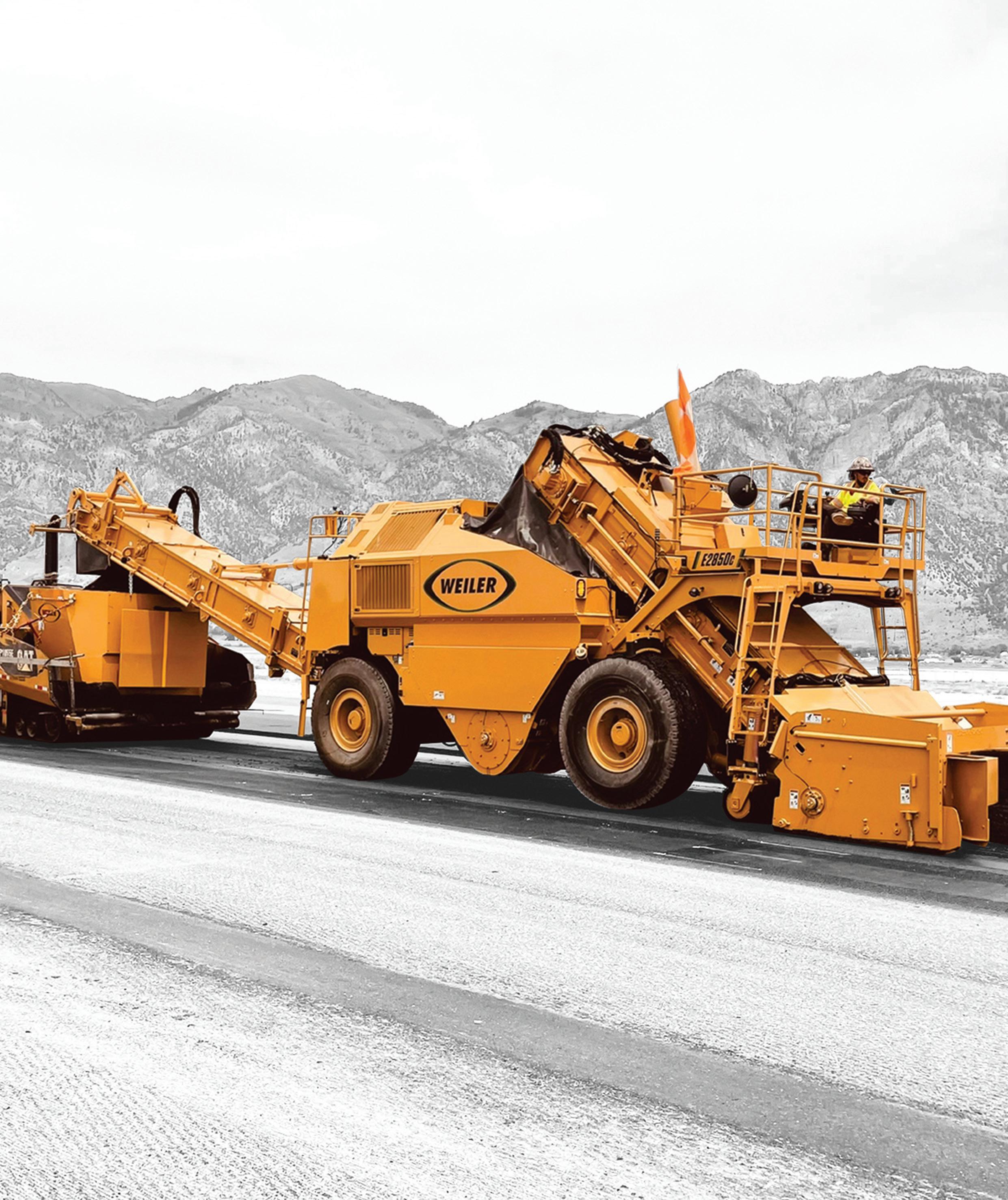
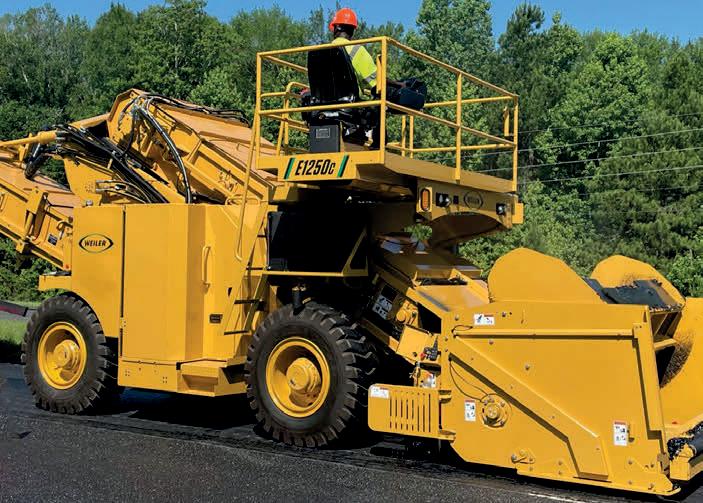
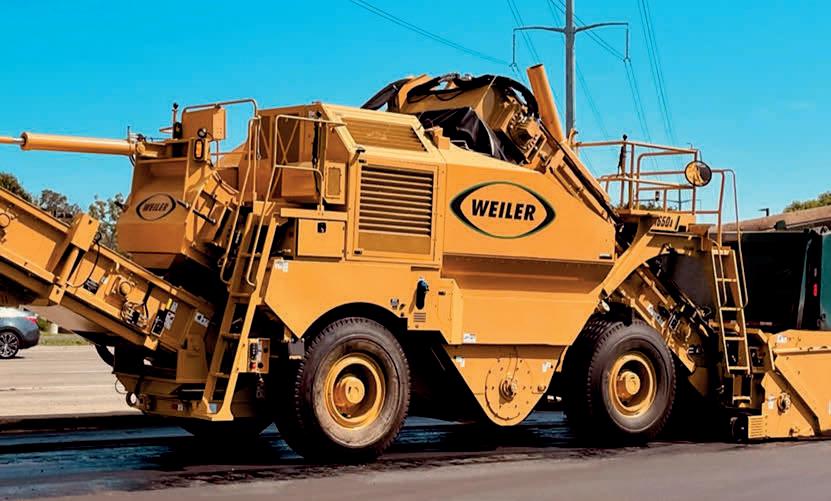
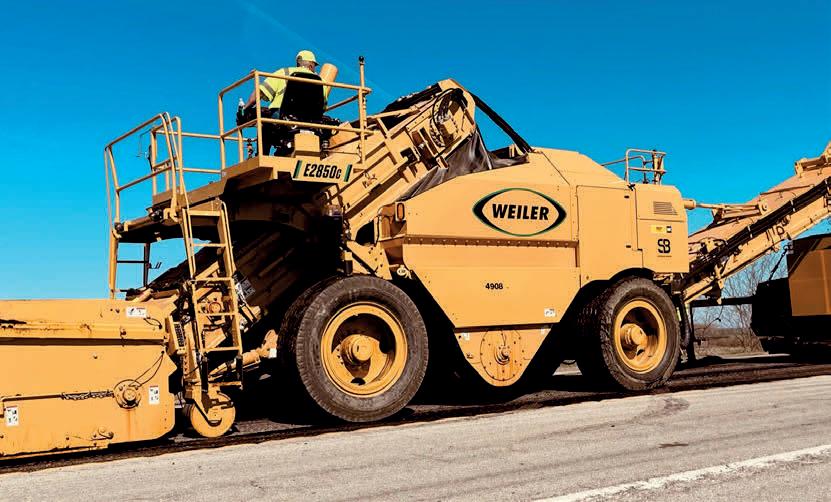
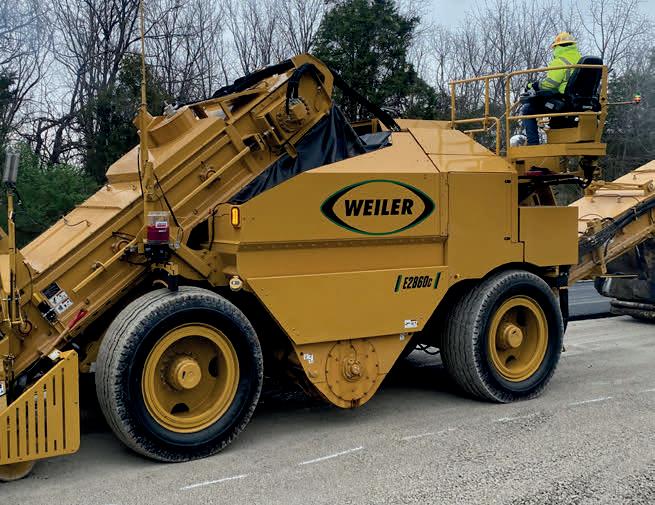
Weiler Material Transfer Vehicles lead the way with proven innovations to provide the lowest cost per ton of operation.
Innovative and reliable operator friendly features such as paver hopper management system with distance to paver, storage hopper management and auto chain tensioning.
Clam shell doors and full width drop down floors provide unmatched access for cleanout and maintenance.
Variable speed elevator and conveyors meet production requirements while minimizing wear.
The multiple, incremental improvements to the 4th generation of chains, sprockets and augers are retrofittable to all machines and provide increased wear life.
The Pattern Is the Problem: The Invisible Standards Women In Leadership Are Still Navigating
Blame the pattern, not the person.
Sometimes when the topic of gender bias comes up, people immediately think the conversation is about blatant discrimination or intentionally unfair treatment. While those situations still exist, most workplace bias today is far more subtle, particularly in maledominated industries like the heavy building materials and construction space. More often, it appears through expectations, perceptions, and standards that are applied differently depending on who is in the room.
That subtlety is part of what makes these experiences so difficult to articulate. Many women know they are feeling friction somewhere in their careers, but they struggle to explain why. The issue is rarely capability. More often, it is the accumulation of small moments that quietly shape credibility, influence, and advancement over time.
The good news is that once these patterns are recognized, they become easier to navigate intentionally.
THE SECOND SCORECARD
On paper, men and women may appear to be measured against the same standards. In reality, women are often being evaluated not only on their performance and results, but also on their tone, likability, communication style, and delivery. Traits that are praised in men can suddenly become liabilities when women display those same behaviors.
A man who is direct may be described as decisive, while a woman who is direct may be labeled difficult. A man who is confident may be viewed as leadership-ready, while a woman showing that same confidence may be called abrasive or intense.
Individually, these moments can seem minor, which is exactly why they are easy for organizations to overlook. The problem is that they compound over time. They quietly influence who is trusted, whose ideas are heard first, who receives sponsorship opportunities, and who gets viewed as ready for advancement.
In the book What Works for Women at Work, Joan C. Williams and Rachel
Dempsey describe these dynamics as creating invisible escalators for men and headwinds for women. That phrase resonated with me immediately because it captures the reality so many women experience in leadership environments.
NAMING THE BIAS
Williams and Dempsey outline several bias patterns in their research. One of the most common patterns is Prove It Again. Women are frequently evaluated on demonstrated performance while men are more likely to be evaluated on future potential. In practice, that means women often have to repeatedly establish competence in order to maintain the same level of credibility. That pressure to continually reestablish credibility often overlaps with another familiar dynamic: He’s Skilled, She’s Lucky. This is especially common in industries where women are still underrepresented in leadership. A man’s success is more likely to be attributed to talent or expertise, while a woman’s success may be explained away through timing, luck, support from others, or organizational agendas.
At the same time, many women are also navigating what’s called The Tightrope. This is one of the most exhausting professional dynamics because women are often expected to be warm, collaborative, and agreeable while simultaneously being authoritative, decisive, and confident. Lean too far in either direction and criticism tends to follow.
For many women, these expectations become even more complicated when motherhood or flexibility enter
AdobeStock_Gorodenkoff
the conversation. The Maternal Wall describes the way assumptions about family responsibilities can quietly shape perceptions around commitment and readiness.
These dynamics can also create unintended tension between women themselves, which is where The Tug of War comes in. When there are only a few seats available at the table, people can begin competing for legitimacy rather than creating more opportunities for others. Scarcity has a way of turning potential allies into competitors.
Most of these behaviors are unconscious and deeply embedded in longstanding workplace norms and leadership expectations. Once you recognize the pattern, you can begin navigating it more intentionally. In these next few sections, I’d like to help you do that.
MAKING YOU VISIBLE
Many women have been taught that if they simply work hard enough, the work will eventually speak for itself. In reality, work often only becomes visible when it is clearly translated into business impact.
One practical way to shift this dynamic is by intentionally framing work in leadership language. Most people are better at explaining what they worked on than why it mattered to the business, but leadership teams are often listening for impact, influence, operational improvement, risk reduction, or strategic value.
That is where tools like ChatGPT can become incredibly useful. One practical approach is to take raw work, projects, metrics, and responsibilities and ask AI to help translate them into executive-level business language.
A simple prompt might look like this:
“Here’s what I worked on this month. Can you help me translate this into business impact that leaders care about, benchmark it against comparable industries or peers, and summarize it in executive-ready language I can use for performance reviews, calibration conversations, or leadership updates?”
Both descriptions may reflect the same work, but one communicates far more clearly at a leadership level.
STOP CHASING THE BAR
Sometimes success alone is not always enough to establish credibility if the narrative behind that success gets rewritten afterward. Women often experience situations where accomplishments are acknowledged, but the competence, preparation, and leadership behind those accomplishments are minimized. People may say things like:
“She was in the right place at the right time.”
Notice the statement doesn’t deny the result itself, but disconnecst success from competence and leadership. The solution is is calmly anchoring the narrative back to the work, preparation, and decision-making that created it.
Statements like, “Preparation made the difference,” or “Aligning the team was intentional,” reinforce that the outcome was strategic and repeatable. If accomplishments are continually minimized, women often find themselves constantly re-establishing credibility instead of building on previous success.
CLARITY, NOT APOLOGY
Communication style can also quietly shape how authority is perceived. Many women have been socialized to soften their language in ways that feel collaborative or polite, but that can unintentionally dilute clarity and confidence.
Words like “just,” “maybe,” “sorry,” and “I think” often seem harmless, yet they can subtly weaken the impact of an otherwise strong recommendation. One practical habit that can make a meaningful difference is intentionally trying to reduce these types of cushion words in workplace communication whenever possible. The goal is not to sound cold or impersonal. The goal is to communicate ideas with greater clarity and confidence.
There is a significant difference between saying, “I’m sorry, I just think maybe we should adjust this,” and saying, “We need to adjust this to avoid repeating the issue.” Both statements communicate the same concern, but one sounds uncertain while the other sounds clear and actionable.
DON’T ACCEPT AN UNMARKED DETOUR
The conversation around the Maternal Wall resonates deeply with many working mothers because it touches such a personal and complicated intersection between career growth, leadership, and family responsibilities. Sometimes, after women have children, career trajectories begin shifting quietly.
Opportunities become smaller, stretch assignments stop appearing., and advancement conversations become less frequent. In many cases, these shifts are not framed as limitations, but as concern, protection, or assumptions about what a mother may realistically want.
Flexibility should not automatically be interpreted as reduced commitment; flexibility is simply a system that protects outcomes. The way someone works may look different than it once did, but that does not mean the quality of leadership, performance, or results changed.
STOP MISTAKING ADAPTABILITY FOR INADEQUACY
Many women are already highly capable leaders. The issue is rarely a lack of ambition, competence, or work ethic. More often, it is the accumulation of subtle expectations, perceptions, and leadership standards.
The goal is not perfection. It is awareness, clarity, and intentionality. It is understanding how leadership dynamics operate and learning how to communicate value with confidence.
Women need workplaces that recognize competence consistently, evaluate leadership more fairly, and create room for different leadership styles to exist without penalty.
Until that happens more broadly, one of the most powerful things women can do is stop internalizing every difficult experience as a personal failure. Sometimes the problem is not the person; sometimes the problem is the pattern.
by Karli Langner, Public Relations Manager at Command Alkon.
Big Tech Roundtable 2026: Talking Intelligent Compaction
Provided by Trimble Inc.
Discussing the cuttingedge of compaction technology for road builders in 2026.
Asphalt Contractor convened product leaders from some of the biggest names in asphalt compaction across the industry: Volvo CE, Hamm (Wirtgen Group), BOMAG, Trimble, and Dynapac, to pin down what intelligent compaction actually delivers on the mat in 2026. Where does the ROI live for contractors running tighter margins than ever, who owns the data flowing off a connected roller, and where does the future of technology in compaction go from here?
While their answers took many forms, they overlapped on one point: the technology has outpaced the specifications, the workforce, and in many cases the contractors deciding whether to buy-in.
PART 1: BRAND SOLUTIONS
How does your company define Intelligent Compaction (IC), and what specific technologies or data inputs does your solution rely on to achieve that end?
Kevin Garcia, Trimble: We define IC as a compactor equipped with GNSS
for positioning, a controller for operator visibility, and an onboard documentation system that records pass count, temperature, and a compaction metric value (CMV). That data is recorded and sent back to the office for analysis. Our definition is built to support the industry definition, so that when someone specifies an IC roller, there’s a shared understanding of what that means and what accuracy is required.
The specific technology inputs our solution relies on are GNSS positioning, the onboard controller providing realtime operator visibility, and the documentation system capturing and transmitting compaction data. When integrated with a compaction profiling sensor through a partner like GSSI, the system also captures a continuous percent compaction map across the surface, adding a continuous compaction measurement layer on top of the traditional IC data set.
Tim Kowalski, HAMM: Our company defines intelligent compaction as a tool that helps contractors monitor their work and develop their people into better operators. It is a system that guides operators through daily operations in a consistent way that aligns with state requirements.
This is achieved through multiple sensors on the machine that map roller coverage by color and display mat stiffness and temperature as the operator is rolling. The goal is to help less experienced operators perform at a higher level while allowing experienced operators to achieve even better results.
Justin Zupanc, Volvo CE: We define intelligent compaction as a platform that gives the operator clear, realtime insight into the conditions of the material and the effectiveness of their compaction. They can use this information to make the right decision for their
job at the right time.
The way we see it, intelligent compaction is essentially putting a smart assistant right in the cab with the operator. Instead of forcing them to guess whether the mat is still hot enough or whether they’ve rolled a section enough times, we give them in-the-moment actionable data. Our Compact Assist system is delivered through a fully integrated platform on an intuitive 10-inch touchscreen display called the Volvo Co-Pilot. Compact Assist combines high-accuracy GPS positioning, non-contact temperature sensing and Volvo’s proprietary advanced drum response measurement technology to continuously evaluate the machine-tomaterial interaction.
The “intelligent” part is how those various systems and inputs are integrated with our algorithm. Instead of presenting disconnected data, the system interprets that information in real time and translates it into easy-to-understand guidance for the operator. This helps them to understand not only what has happened but also what needs to happen next to achieve optimal compaction, reducing guesswork and ensuring more uniform results.
Compact Assist emphasizes ease of use and decision support rather than data overload. By integrating these various systems into one platform, Compact Assist enables crews to work more efficiently, achieve higher quality results and maintain consistency regardless of operator experience level.
Eric Booth, Dynapac: You can ask five people what IC “is” and you’ll get seven answers back. In that same regard, at Dynapac, we look at IC in a couple of different ways.
Most of the time when we speak with contractors about IC, they are really talking about pass mapping. We
have two different branded IC systems that fit this request … Dynalyzer,and the newly released Nexus. These systems offer the contractor the ability to capture compaction data, so one, the operator can see pass, temperature, or compaction value mapping to assist them on the job; and two, there is a digital record that the contractor can see for quality control.
We like to categorize our Seismic Asphalt technology as “Smart Compaction” to distinguish from common view as Intelligent Compaction. The Seismic Asphalt system takes live vibration and temperature sensor data from a roller to adjust the vibration frequency on the job site. This allows the machine to get an amplitude boost for superior compaction results, while reducing fuel consumption up to 25% and giving the operator and more smooth and less noisy environment.
John Gravatt, BOMAG: IC refers to the compaction of fill or roadway materials, such as soils, aggregate bases, or asphalt pavement materials, using modern vibratory rollers equipped with an integrated measurement system, an onboard computer reporting system, Global Positioning System (GPS) based mapping, and optional feedback control. IC rollers facilitate real-time compaction monitoring and timely adjustments to the compaction process by integrating measurement, documentation, and control systems.
The variability in definitions starts to become apparent when the discussion of iCMV (or intelligent Compaction Measurement Value) is raised. iCMV is a generic term for the measurement of asphalt layer stiffness. This measurement can be used in either a passive format (recording / mapping only) or potentially as an input for an active compaction control system. While passive and active systems both fall under the definition of, “Intelligent Compaction,” they have a rather large variance in user benefit. The passive systems are essentially data recording and display tools while the active systems can potentially adjust machine parameters to optimize compaction.
BOMAG offers a solution for both Passive and Active systems:
• BOMAP is the BOMAG solution for pass-, temperature- and stiffnessmapping for Asphalt and Soil rollers. This is considered a passive system which collects and maps the data that can be used by the operator to ensure quality output, like achieving consistent pass coverage across an asphalt mat.
• BOMAG VARIOCONTROL
(BVC) is an automated amplitude adjustment system for the BOMAG heavy soil roller line. This system utilizes a proprietary vibration system design that allows the drum vibration to be aimed (vectored) to optimize the effective vibration amplitude and energy. This system is adjusted continuously based on sensor readings that measure EVib – a stiffness measurement which correlates well to static plate load tests for soil.
• ASPHALT MANAGER is an automated amplitude adjustment system for the BOMAG heavy tandem asphalt roller line. It was designed for asphalt applications, also utilizing vibration system design that allows the drum vibration to be aimed (vectored) to optimize the effective vibration amplitude and energy. This system also uses sensors to allow continual automated adjustments to the effective amplitude during the compaction process.
What is the machine measuring, what decisions is it making, and at what point does the operator remain in control versus the system?
HAMM:The operator begins by selecting the project name and the layer they will be working on within the system. The system then asks whether the project is soil or asphalt (soil applications do not use temperature data). Once this information is entered, the operator simply presses the record button. From there, the operator can choose what data to display on the screen, such as roller passes, temperature, stiffness, or density. All selected data is recorded and saved. In the background,
additional data—including roller speed, amplitude, frequency, and GPS location—is also captured.
The system maps activities using color coding, but it does not control the process at this stage. The operator monitors color patterns to ensure consistency throughout the rolling pattern. The operator remains fully in control at all times; the system simply provides information to support informed decision-making.
Volvo CE: Our Compact Assist software comes in three different packages for different needs and budgets, and in variations for asphalt versus soil. I’ll answer this question based on the most advanced asphalt package called Compact Assist with Density Direct.
Before compaction begins, the operator runs a quick calibration strip. This allows the system to establish a relationship between the material behavior for that job and the measured drum response. This essentially trains the advanced neural network to understand the specific stiffness and behavior for those specific jobsite conditions.
Once compaction is underway, the Volvo Co-Pilot screen displays a map showing pass counts, surface temperatures and an estimated density percentage in real time. The system is continuously evaluating the interaction between drum and material. That response is processed through Volvo’s proprietary algorithm to generate a calibrated density estimate, which is displayed alongside pass count and temperature mapping data. The operator always remains fully
Tim Kowalski, Applications Support ManagerHamm, Wirtgen Group
John Gravatt, Product Marketing ManagerBOMAG
in control of the machine. The system’s role is to provide clarity and confidence in decision-making, not to automate machine operation.
Dynapac: Five times every second, Seismic Asphalt analyzes asphalt stiffness and temperature, to instruct the asphalt roller to vibrate at a certain frequency. Using inputs from multiple vibration and temperature sensors, the algorithm matches the drum vibration frequency to the unique resonance frequency of the asphalt. Matching the resonance frequency means greater amplitude for compaction and optimized results.
IC systems like Dynalyzer and Nexus, use a radio antennae or GPS to track location and count the number of times the machine passes over each part of the new asphalt lane. These systems can also use the data from the compaction value and temperature sensors for mapping as well.
BOMAG: For a passive system like BOMAP, geolocated compaction parameters are recorded several times per second. That is to say that the system will record a dataset that includes the GPS coordinates and timestamp, along with compaction parameters like vibration status (on or off), frequency, amplitude, temperature (for asphalt rollers), stiffness, travel direction, etc. As this data is collected, it is processed into a grid format, which counts the number of passes at a given point on a grid. This grid format is used to display a map of the compaction progress in terms of pass count. Likewise, the latest temperature and stiffness values are also displayed in this format.
Active systems like the BOMAG
VARIOCONTROL and ASPHALT MANAGER systems, on the other hand, actively control the drum output based on feedback from the soil or asphalt. These systems start at a predetermined setting and begin measuring the feedback. If that feedback indicates low stiffness, the vibration system will adjust the vibration vector to a more vertical position, which increases the effective amplitude. This process repeats until the feedback indicates optimal compaction rates for the specific material being compacted.
Trimble: What happens during a pass involves two connected pieces. The compaction profiling sensor — from an integration partner like GSSI — mounted under the roller sends radar pulses into the asphalt mat and analyzes the signal changes to generate a continuous compaction profile. That’s the measurement layer.
The Trimble Roadworks Paving Control Platform receives that data and displays the compaction map instantly in the cab, alongside the rest of the machine guidance information the operator is already working with. The operator can see where the mat is meeting target compaction and where it isn’t, and can correct low-compaction areas while the asphalt is still workable. If target compaction is achieved ahead of the planned pass count, they move on. If a section isn’t at target, they make another pass. The decision is theirs; what the combined system eliminates is the guesswork that used to drive it.
What qualities does your system measure and how does it use that data? For instance, does your system measure density directly, and if so, how?
Dynapac: The Seismic Asphalt system measures asphalt stiffness which is different from density itself, but helps in the determination of the optimal vibration frequency on the asphalt at that specific spot within the paved lane.
Our IC systems tie into the on-board compaction and temperature sensors as well as GPS for location services and pass mapping.
BOMAG: BOMAP records Pass Count (either vibratory, static, or
pneumatic tired), temperature, and stiffness (either EVib from BVC or ASPHALT MANAGER, or a CMV value from ECONOMIZER digital compaction gauge).
BOMAG does not currently use a method to correlate specific measurements to density. It’s important to understand that there is only one true measurement of specific gravity (aka density) – and that is by measuring weight and volume in a lab. However, there are three technologies on the market currently that correlate other measurements to density:
1. Vibration feedback method: This method has been used by Volvo in the Density Direct system for about a decade, and is also now available in the aftermarket through RTDensity. It uses the vibration response from asphalt to estimate density, based on a correlation of vibration and core measurements on a test strip.
2. Dielectric correlation: Ground penetrating radar produces a value called a dielectric constant, which can be correlated to density. The dielectric constant increases as air (dielectric constant of 1) is removed from the asphalt (dielectric constant of 5-7).
3. Nuclear radiation correlation: Nuclear densometers use a radioisotope to emit radiation and measure the gamma ray returns, which is correlated to density. A lower number of returning gamma rays indicates higher density.
These methods have significant weaknesses though.
1. Vibration feedback method: The vibration of a drum doesn’t magically stop at the boundary between two lifts. Rather, the energy waves penetrate beyond that top layer –sometime much further - so the vibration return signal is a combination of not only the target layer, but rather the entire structure of the area being compacted, as far down as the vibration energy goes. This makes correlation of that data to density rather difficult
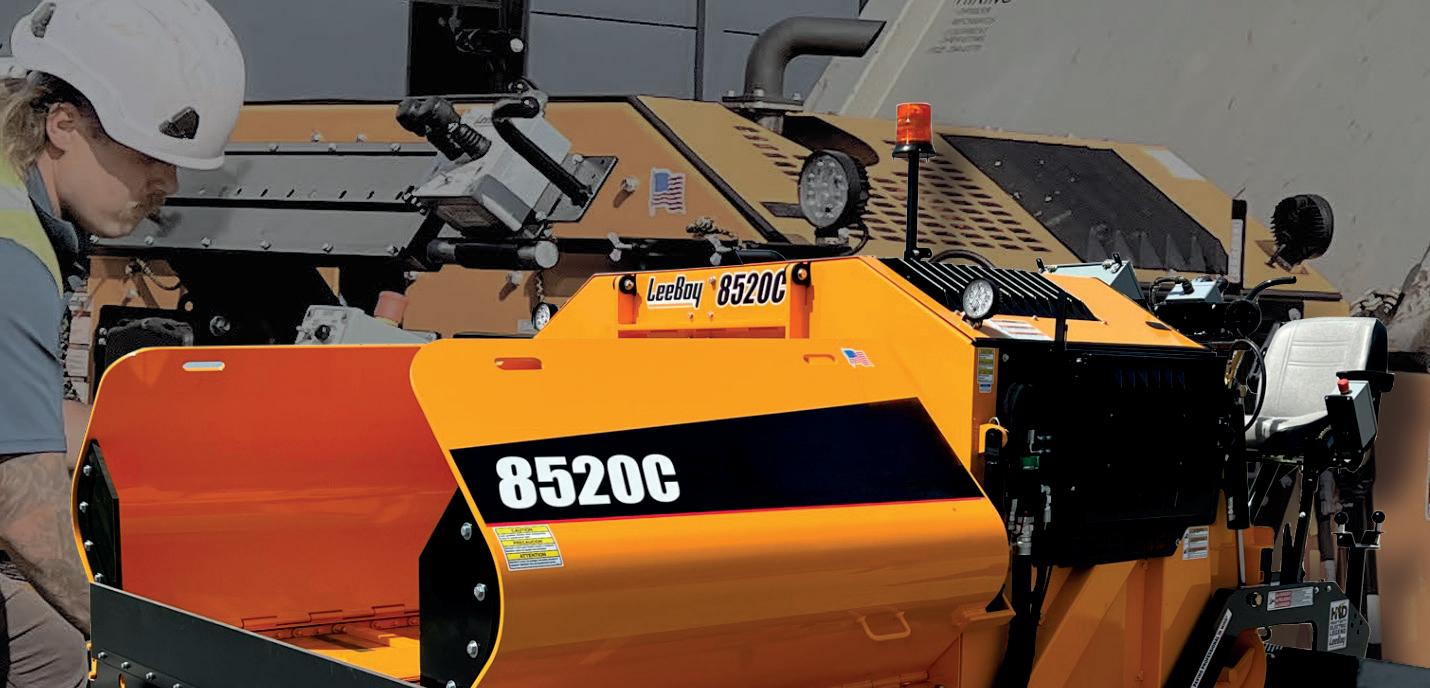
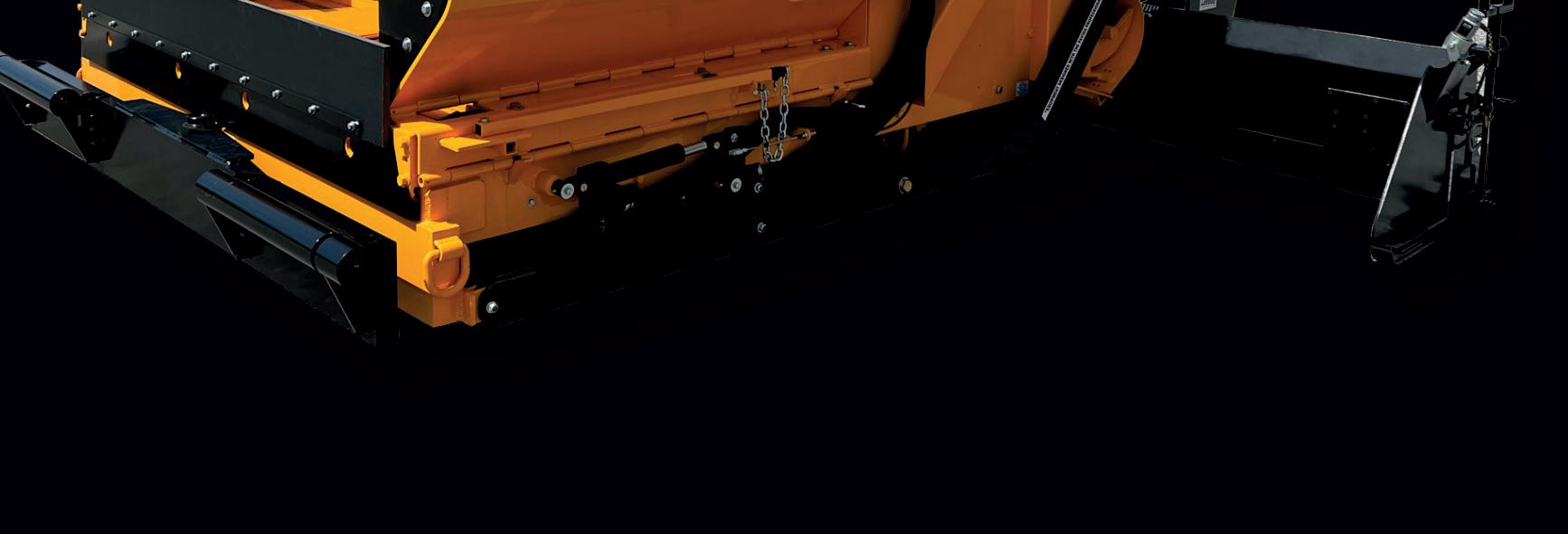
LeeBoy 8520C—where heavy-duty 125 HP performance meets seamless precision. With wide variable paving widths up to 15' and the HD PRO Screed available with paving widths up to 15' 6", this is high-powered reliability built for pro-grade results.
Contact Your Local Dealer
Features & Benefits:
Optional Legend HD PRO Screed
Heavy-duty, wide conveyor system
Operator-friendly controls
– especially on roads where the foundation wasn’t very consistent and sturdy (think interstate roadway systems and airport runways). This method requires high consistency in subbase structures.
2. Dielectric correlation: This is very promising technology, in that it can be used to gather more data than ever before. This technology’s kryptonite, however, is water. Water has a dielectric constant of 80 (relative to asphalt in the 5-7 range and air at 1), so just a little bit of water can skew the density numbers significantly and provide false-high readings. No problem if you are scanning the asphalt after everything is done – but rollers use significant amounts of water on the drum to prevent asphalt pickup. And where and how much water end up on the mat varies quite a bit.
3. Nuclear correlation: This technology tends to be the gold standard as far as density correlation but comes with significant restrictions and regulations regarding their use. Trimble: To be precise about terminology: no one can measure density directly in the field. Density is mass and volume, and the only way to determine it definitively is to take a core sample. What we are measuring is percent compaction or the ratio of solids to air voids in the mix. Every mix design has a target percent compacted value, and we can now measure that instantly with high accuracy and high repeatability in the field. Those two qualities are what give contractors and owners confidence in the result.
The measurement comes from a ground penetrating radar sensor mounted under the roller, which sends radar pulses into the asphalt mat and analyzes signal changes to generate a continuous compaction profile. In comparison, traditional QA methods like core samples and nuclear densometers typically sample less than 1% of a job. Our system maps the entire surface, giving a level of confidence in the finished surface and the long-term performance of the asset that wasn’t previously available.
HAMM: Smart Compact Pro measures true density in real time. The system must be calibrated in the field using either a nuclear or non-nuclear density gauge. Once calibrated, the ground-penetrating radar provides highly accurate density measurements, giving contractors confidence that the roller is operating at optimal efficiency.
Volvo CE: Density Direct is designed to provide a calibrated density value rather than a relative measurement. Traditional intelligent compaction systems typically generate stiffness values (ICMV), which can vary depending on material and conditions and require additional interpretation to relate back to density.
Our approach uses drum response data combined with a neural network to generate a density estimate that is tied to the specific material being compacted. To achieve a high level of accuracy, the system uses a calibration strip that establishes the relationship between response and the actual in-place density on that specific job.
The system can operate without core samples, but when core samples are incorporated with the test strip during calibration, the accuracy can be refined to within 1.5% of measured density. We’ve had this system in the field for many years and contractors have seen consistent, repeatable results across a wide range of applications, so we know what it’s capable of.
PART 2: ROI AND PROBLEMSOLVING?
What is the most common and/or costly compaction mistake your system prevents?
Tim Kowalski, HAMM: The most common mistakes are over-rolling and under-rolling. Once calibrated, our system helps operators stay much closer to the target density throughout the process. Over time, this consistency results in longer-lasting pavements and helps contractors qualify for quality bonuses. Without IC, it is easy to unknowingly damage roads due to inconsistent compaction. IC provides measurable consistency and documented proof of proper compaction throughout the job.
Justin Zupanc, Volvo CE: If an operator makes unnecessary extra passes, especially when the mat has cooled outside the optimal temperature window, they risk fracturing the aggregate within the mix (not to mention wasting time). When you fracture the material, you compromise the structural integrity of the pavement, which can lead to premature cracking, rutting and, ultimately, a failed job that requires expensive rework. On the flip side, under-compaction leaves too many air voids, which is just as bad. Without IC, an operator is relying heavily on their gut feeling or a static rolling pattern that doesn’t account for changing jobsite variables like how long it’s been since the paver laid the mat. With IC technology, they see exactly when they’ve hit their density targets and know to stop rolling, preventing the wasted time and material damage of over-compaction.
Eric Booth, Dynapac: Seismic Asphalt adjusts vibration frequency of the drum, so helps reduce the possibility of over compaction, which damages the asphalt. Dynalyzer and Nexus help the operator insure complete compaction coverage of the asphalt. This leads to uniform compaction and less likely to have future issues from under-compacting the asphalt.
Kevin Garcia, Trimble: The most common mistake isn’t dramatic; it’s running the same roller pattern on every job without knowing if it’s actually delivering the compaction you need. Mat conditions change (temperature, mix, lift thickness), but a fixed pattern doesn’t. That’s where you see both over-compaction, where extra passes start crushing aggregate and shortening pavement life, and under-compaction, where you leave air voids in the mat and invite early failure.
Instead of relying on a pattern and a few cores or gauge readings that touch well under one percent of the job, the roller is effectively measuring compaction across the entire mat in real time. Operators see percent compaction in the cab and adjust while the mix is still workable, so they hit spec consistently without over-rolling—and owners get a
lot more confidence that the pavement will perform the way it’s supposed to. John Gravatt, BOMAG: BOMAG technologies like VARIOCONTROL AND ASPHALT MANAGER prevent several real-world mistakes:
1. Prevents the use of the wrong amplitude setting by automating and optimizing the setting. Incorrect settings can lead to multiple issues:
a. Amplitude too low can lead to a slow density growth rate per pass – this could lead to inability to achieve the proper density
b. Amplitude too high can lead to crushing of aggregate and mat damage
2. Prevents drum bounce (have you ever heard a roller operator turn on vibration on a cold mat? The rattling sound it makes is known as drum bounce or double hit, and can be extremely destructive to an asphalt mat)
What are the hurdles your IC solution actually requires to adopt, and what does a realistic return on that investment look like?
Volvo: The biggest hurdle isn’t the hardware — it’s trust. Operators who have been doing this work for years rely on instinct, and shifting to a data-driven approach takes some adjustment.
From an ROI standpoint, the value shows up in a few different ways. Operators can reach their targets faster, which also means lower fuel consumption and minimal machine wear. More importantly, it significantly lowers the risk of
failing a density requirement, which can lead to costly penalties or rework. It’s easy for an operator to lose track of the edge of a rolling pass and have too much or too little overlap. If they’re continually rolling over the same area, they’re burning more fuel, adding wear to the machine and taking time away from other tasks. With the labor challenges contractors are facing, this adds up in both additional costs and missed opportunities. We’ve done testing with and without a system being visible to the operator and noticed as much as 30% improvement with Compact Assist. There is an upfront cost to these systems, but when you look at the associated value, they pay for themselves.
Dynapac: Seismic Asphalt is [included] with any Dynapac Heavy Tandem Roller, as it’s a standard feature. Giving the contractor up to fuel savings of about $3,500 a year if they run 1,000 hours, is quite a benefit for just having Seismic Asphalt on the roller.
Trimble: The ROI case starts somewhere contractors don’t always expect: the inspector. Third-party compaction inspection on a public project can run up to $1,500 per day. When real-time compaction data is visible from the cab throughout the paving operation, the inspector doesn’t need to be on site for the full job. Early validation that the roller pattern is working and numbers are tying out is sufficient. That reduction alone pays down the technology investment quickly.
The system itself is designed to be learned in about ten minutes. The display is intuitive—the target is always green. Below target is one color, above target is another. The premise is simple: roll it till it’s green. This generation of workers responds to that kind of interface, and it removes a significant onboarding burden from crews.
On the access side, a large upfront capital outlay isn’t the only option anymore. Subscription models let you carry the cost as an operating expense rather than a capital expenditure. You’re always on the latest hardware, and you’re covered if equipment gets accidentally damaged. It’s an opportunity that’s not talked about enough.
BOMAG: The ASPHALT MANAGER and VARIOCONTROL technologies are designed to take the expertise of that 30-year veteran operator and put it into the machine’s control. Then combine that with a pass count system like BOMAP, which is essentially a GPS navigation system for compactors, and you’ve set a novice operator up to achieve the exact same results as that 30-year veteran. With a pass count reduction and density consistency improvement to boot, payback might not be measured in number of jobs, but rather a single job.
HAMM: Many of the benefits are already reflected in the question: reduced rework, fewer cores, lower penalties, and increased bonuses through real-time density visibility. Additionally, contractors can analyze machine utilization data such as fuel consumption, maintenance costs, and idle time. As margins tighten, contractors are paying closer attention to this information to identify efficiencies and gain a competitive edge.
PART 3: DATA, INTEGRATION, AND INTEROPERABILITY?
What data does your system generate during a compaction operation, and where does that data go?
Eric Booth, Dynapac: IC systems like Dynalyzer and Nexus share information to the cloud, so the data can be utilized at the home office for quality control purposes. The information is captured by the compaction meter (accelerometer based), the IR temperature sensors and the GPS antenna. Based on these signals, we are able to show pass mapping, temperature maps, compaction meter data (Evib-values) and compaction progress in terms of percentage. If the compaction progress shows a very low value (in percent), then it indicates that making another pass will not make much sense, since the increase in the compaction meter value was very low compared to the previous passes, so it sort of indicates to the operator if the maximum stiffness has
Kevin Garcia, General Managare of Civil Specialty Construction - Trimble Inc.
been reached or not, i.e. it tries to predict whether an additional pass makes sense or not.
Kevin Garcia, Trimble: Compaction data generated during a pass flows into the same connected environment as the rest of the jobsite. Trimble WorksManager is the hub where design files go out to machines, as-built data comes back in, and project managers can see what’s happening on the site without actually being on-site. That same flow applies to compaction data: it doesn’t sit on the machine or require a manual export at the end of the day. It moves through the connected environment and lives in Trimble Connect, where it’s accessible to anyone with the right access. For IC-specific analysis, that data is also compatible with VETA, the industryaccepted intelligent compaction analysis tool many agencies use.
The broader principle is that we’ve built Trimble Connect as an open environment. It has APIs that let contractors pull data into their own systems, combine it with information from other sources, and build the workflows that make sense for their business. Compaction data becomes part of the complete project record alongside grade control, paving, and as-built verification.
John Gravatt, BOMAG: If the customer opted for a CONNECT license in order to share and collect data from multiple machines, then the data is stored in a cloud. That data is accessible in the cloud for as long as the license is renewed. Customers can also export that data in raw CSV or VETA format. A CONNECT license also allows customers to share their data with outside users as they see fit, with an adjustable time window. Licenses are flexible and are only used when recording starts on an app, so licenses only need to be purchased for the number of machines that would be running and recording simultaneously.
Tim Kowalski, HAMM: Sensor and machine data flows into our IC software and is stored in John Deere Operations Center. Contractors can view and analyze both machine and IC data there. The contractor owns the data and may grant access to the dealer or
manufacturer if desired. Data can also be converted into VETA format, which allows state agencies to review IC data using standardized software instead of multiple proprietary platforms.
Justin Zupanc, Volvo CE: With our entry level systems like Compact Assist Start, the data is for display only. It’s a lower-cost system to provide feedback to the operator on pass mapping and temperatures. Stepping up to Compact Assist and then Density Direct adds high-accuracy positioning antennas and the ability to record and export the data. This allows us to tailor the system’s performance as well as the cost to the needs of the customer.
On our Compact Assist and Density Direct systems, the operator can set up specific jobs or even lifts — whatever meets their needs — and save the results accordingly. They can create job reports automatically after a lift is completed, export data into systems like Veta, save to USB or upload over the air.
How does your IC solution interact with rollers, pavers, or platforms from other manufacturers? Does it require your own hardware Can it layer onto existing equipment a contractor already owns?
Dynapac: The newly released Nexus system is brand-agnostic. There are sensor kits that can be placed on any brand, and the data from each can be shared in one centralized location.
Trimble: We’ve intentionally built toward openness. If a contractor is running a mixed fleet, their compaction data, grade control data, and as-built survey data can all live in the same project record even if not every piece of equipment is from Trimble.
Our infield solutions are also brand agnostic. A Trimble intelligent compaction system can be installed on any OEM roller. That means an operator doesn’t have to learn a different IC system for each manufacturer in the fleet. One system spans all of it, whether that’s a single company’s mixed equipment or an entire fleet operated across multiple crews. You get continuity of training, continuity of support, and consistent data across every machine.
The ISO 15143-4 standard reinforces all of this. It establishes a common framework for cross-manufacturer data sharing, which means the interoperability conversation has moved from custom integrations to a recognized industry standard. Every contractor asking about multi-brand compatibility should be asking every vendor at this table whether their systems comply.
BOMAG: The BOMAP system can actually be used on any machine. BOMAG offers a sensor kit that includes a temperature and vibration sensor, allowing any brand machine to report into the BOMAP system with pass count (vibratory, static, or pneumatic), temperature, and CMV value.
HAMM: This capability is still under development. We recognize that contractors operate mixed-brand fleets and want centralized data access. While integration is challenging, progress is being made toward that goal.
Volvo: Compact Assist is fully integrated into Volvo CE machines, which allows us to optimize system performance, reliability and user experience. At the same time, we recognize that contractors operate mixed fleets. That’s why we focus on interoperability at the data level — supporting standard file formats and compatibility with platforms like Veta — so contractors can incorporate compaction data into their broader jobsite workflows regardless of equipment brand.
PART 4: FUTURE FORECASTING
Where is intelligent compaction technology genuinely underdeveloped right now?
Tim Kowalski, HAMM: The main barrier is cost relative to the price of the roller. Without agency specifications requiring IC, many contractors struggle to justify the investment. However, technologically forward-thinking contractors are already leveraging IC to gain a competitive edge and maximize ROI.
Justin Zupanc, Volvo CE: One area that will continue to evolve is how the industry fully utilizes the data that’s generated. The technology
can deliver consistent, high-quality results, but there’s still an opportunity to better connect that data into project specifications, acceptance processes and contractor workflows. Improving alignment between contractors, governing agencies and technology/ machine producers — and more education on effective use of the tools — will be key to unlocking the full value of intelligent compaction systems.
Kevin Garcia, Trimble: The biggest unsolved problem isn’t on the technology side — it’s on the adoption and acceptance side. The sensor technology works, the data flows, and the connected environment is real. What hasn’t kept pace is the infrastructure around it. Legacy QA/QC methods and specifications take time to change, and we understand that.
On the pure technology side, the gap that matters most is data at scale. We’re generating more compaction data per project than we’ve ever been able to process intelligently. The ability to analyze compaction data across an entire road network — and use it to predict where maintenance is needed before failures occur — is still an unsolved problem. The sensors can collect it; the algorithms to make full use of it at that scale are still catching up.
The bigger shift we’d like to see is in how people think about IC. Stop treating it as a point solution for the roller operator and start treating it as input to wider jobsite and asset decisions. Project schedules, predictive maintenance models, asset lifecycle cost estimates, if IC data is connected into the broader asset management system, it becomes part of how owners understand the true cost and performance of their infrastructure. That’s where the full value lives, and as an industry we’re not fully there yet.
John Gravatt, BOMAG: The biggest problem in intelligent compaction to date has been the adoption rate, primarily due to system complexity and cost. But luckily, consumer technology advancements have been helping push costs down in this area, and the market
seems to be gaining interest in intelligent compaction tools, both passive and active systems.
In five-to-ten years, what role do you see human operators playing in the compaction process and how does your current IC technology build the foundation for that?
Volvo: Autonomy is definitely a part of the future. In fact, back in 2021, we showed our futuristic single-drum, autonomous compactor concept, the CX01; and the feedback from contractors was highly encouraging. They were interested primarily because of the labor shortage issues we talked about earlier.
In the next five to 10 years, though, I think we’ll see autonomy take root in applications that are highly repetitive, like soil compaction, where a machine is running forward and backward in predictable patterns. The technology to geofence an area and run parallel paths is already largely here.
But human operators aren’t going away anytime soon, especially on complex asphalt jobs. Right now, current IC technology is the essential foundation for that future. It’s getting contractors and operators comfortable with digital information and proving that screenbased mapping is reliable. Once the industry fully trusts the sensors and the data, the transition to automated steering and propulsion becomes the natural next step.
Eric Booth, Dynapac: For now, you are still going to need someone to set parameters and settings for autonomous equipment. We see a future where our automatically adjusting compaction technology marries up with an autonomous roller. Basically, put the roller on the asphalt, tell it the compaction parameters you want it to reach … and watch it go.
Trimble: The market perspective is likely more useful than the standard autonomy answer. We held a customer advisory board meeting with some of our most strategic accounts recently, contractors who are actively shaping where we take product development.
The message was direct: even if Trimble released a fully autonomous roller tomorrow, they wouldn’t buy it. Autonomy isn’t the problem they’re trying to solve. What they want is tools that make their operators better and data flowing across the site. The operator isn’t going away. The operator is becoming more informed, more connected, and more capable of acting on better information.
We believe agentic AI plays a significant role in this advancement. Where traditional AI assists a single machine or operator, agentic AI observes conditions across multiple systems simultaneously and coordinates actions with minimal human oversight. We’re not there yet, but the foundation is going in: the ISO standard exists, the sensors are proven, and interoperability is becoming real. Our current IC systems are part of that groundwork — they get the data flowing reliably so agentic AI can eventually coordinate multiple machines instead of each one working in isolation.
BOMAG: Autonomy in soil compaction applications will likely precede asphalt jobsites, simply due to the ability to isolate them and reduce complexity / increase safety. I would expect to see a growing use of Autonomy on the soil jobsites, which will likely trigger new sensor development to continually improve the efficacy of those systems.
HAMM: Full autonomy in asphalt compaction is still a long way off. Jobsite complexity—other equipment, people, traffic, and ever-changing conditions— makes autonomy challenging. For now, we are focused on increasing automation within the roller to support operators, reduce workload, and move gradually toward greater autonomy.
This Q&A was heavilyedited for length, and will be published as a four part series at Forconstructionpros.com. Scan this code to see the full conversation
By Brandon Noel, Editor-in-Chief
AMPLIFYING ASPHALT: The Voices Driving Our Industry
One of the original founders of Women of Asphalt talks about their new venture and the future of the industry.
Natasha Ozybko did not arrive in the asphalt industry with an engineering degree or a family business behind her name. She arrived with an open mind and a strong personal drive, but was swiftly met with an incredibly difficult task. It was her job to head out on the road and try to sell
a product that, at the time, had never been seen before.
“It was something completely new,” Ozybko said. “It had been sitting on the shelf at our company for forty years, and they were like, here, go sell this.”
So, that’s just what she did. Working out of Pittsburgh, she opened the
Natasha Ozybko
northeast market for high-tensilestrength synthetic fiber reinforcement for asphalt pavement, a product that up until that point had gone largely untouched in the industry. To her benefit, this meant that while she wasn’t introducing a new competitor into the market, facing entrenched customer loyalties. Unfortunately, the job was to educate and spread awareness about an entirely new category. But she was determined to get it out there.
directors and a national presence. One of its early initiatives was to document 100 women working in asphalt, featuring a photograph and short bio for each. The campaign ran for 100 consecutive days.
“I didn’t [even] know if there were a hundred women in the industry,” Ozybko said. “We started panicking.”
That willingness to walk into a room, read it fast, and make something out of nothing became a recurring theme throughout her career, and eventually, the foundation for something bigger than a sales territory. The relationships she forged with like-minded people in asphalt would eventually influence the present industry we know today.
FROM FIVE PEOPLE TO A MOVEMENT
In June of 2017, Ozybko was attending a conference in Atlanta when a handful of industry colleagues pulled her aside with an idea. They wanted to build something for women in asphalt. She did not need a detailed pitch.
“I didn’t even care what it was,” she said. “I was like, yes, I’m on board.”
They found them. The campaign appeared on the cover of an industry trade publication and became one of the more visible moments of the organization’s early years. Ozybko served as the organization’s second president before stepping away in September of 2021.
Ozybko kept the platform running after Dutcher stepped away. Then, in December of 2024, she pivoted and launched “Conversations with MOXY,” which was a LinkedIn Live interview series in which she sat down with women working throughout infrastructure and drew out their stories in long-form conversations. She originally committed to just ten episodes to start, five days a week over two weeks. However, when those wrapped, she kept going.
MOXY: THE VOICE OF WOMEN IN INFRASTRUCTURE
Her departure from Women of Asphalt was a new chapter, and the beginning of something broader.
That conversation was the beginning of what became Women of Asphalt (WoA), which Ozybko co-founded alongside Audrey Copeland (President & CEO, National Asphalt Pavement Association), Amy Miller (President, Asphalt Contractor Association of Florida), Ashley Batson (Global Business Director, Ingevity) and Tracie Schlich (Director of Marketing, Asphalt Institute). The group launched in earnest at World of Asphalt, where they hosted an open bar on the trade floor on the first day of the show, handed out branded T-shirts, and by the end of the three-day event, had fielded two questions more than any other: Is there a Women of Asphalt chapter in my state? And where can I send a check?
“We captured lightning in a bottle,” Ozybko said.
The organization grew into a formal 501(c)(6), complete with a board of
Teaming up with Monica Dutcher, then-editor of Asphalt Pavement magazine, Ozybko co-founded MOXY, a digital platform carrying the tagline, “The voice of women in infrastructure.” The idea was built around a simple observation: women working across nearly two dozen industries that fall under the infrastructure umbrella were having the same conversations, fighting the same battles, and rarely hearing themselves reflected in the media covering their fields.
During its initial run, MOXY published more than two hundred stories from women across construction, engineering, transportation, and other related industries. Some wrote their own pieces while others were interviewed and had their stories told on their behalf. The platform hosted sections dedicated to entrepreneurship, motherhood, and the intersections between professional and personal identity in male-dominated fields like the asphalt industry but not limited to just that field.
During this time, however, finding an audience hungry for that type of content was never the problem.
“People wanted to help, but nobody had any money [to help],” Ozybko said.
Despite the financial headwinds,
At the time of our interview, there were fifty-one episodes recorded, each running close to an hour. The conversations featured women across a wide demographic range, including young professionals, veterans of the trades, and executives. Ozybko told us the episodes were being compiled, to then be published on a dedicated YouTube channel, with a relaunched website tying the full MOXY archive together.
“Perfection cannot hinder progress,” she said.
The platform is still searching for a sustainable way forward, a challenge Ozybko discussed with a characteristic directness. But the content archive she built represents something rare in the industry media landscape: a consistent, practitioner-driven record of what women in infrastructure actually experience, in their own words. That is something we’ve tried to create with this column, as well, despite it being on a much smaller scale that she achieved.
Ozybko now lives in Charlotte and remains active in advocacy and consulting work. She is open to speaking opportunities and collaboration with trade publications and industry events that share MOXY’s mission.
THE COMPLETE GUIDE to Paving Equipment and Technology for Today’s High-Efficiency Road Crews
Set up your paving job like an Airstream campsite.
Im looking at the calendar, attempting to block out the next week when I can take the wife and the Airstream to see more of this country. While setting up an Airstream is far less complicated than getting paving equipment ready to roll, connected to its digital platforms, and understanding how each machine’s data can inform operational decisions, I can’t help but notice the similarities.
You don’t just pull onto the highway with your home-on-wheels and push play on Willie Nelson’s “On the Road Again.” No, it’s actually a multistep, agile process before the always-hard-toschedule travel week, so that trailer won’t wobble as the odometer miles go up.
Building a data-driven paving train with equipment and technology is the same way: first, inspect the equipment before getting the machine ready to connect, level the machine data collection process, evaluate performance after a few passes and adjust. Then, turn the ignition and start all over again.
“Most contractors today aren’t struggling because they lack demand — they’re struggling because they’re trying to deliver more miles of road with fewer people and tighter schedules,” said Craig Lamarque, vice president of digital products at Wirtgen America. “That’s why digital planning and connected workflows matter just as much as what’s happening on the machine itself.”
Let’s consider steps paving crews can take to follow the now-proven, datadriven playbook for smooth, long-lasting roads.
STEP 1: HITCH THE PAVING TRAIN TO OPERATIONS
Before machine control, sensors and fleet software systems, paving crews had to rely on those who had spent years on the road. Now, with today’s equipment and technology solutions, crews can finish the road with fewer do-overs and precise documentation — documentation that can be used at the end of the project during reports to Department of Transportation (DOT) officials.
“When crews connect machines early, they’re not just capturing data for later — they’re creating alignment before the first pass,” Lamarque said.
“Everyone knows what success looks like before steel ever touches the surface.” Ensure consistent and quality data by connecting your mill, compactor and paver. For mixed fleets, having a centralized system for data collection for planning, monitoring and maintenance helps contractors create “better data” to prevent blind spots in fleet monitoring.
“Paving crews we’ve partnered with say their machine data is at its best when it can be used to influence operational decisions over the course of a project,” said Cody Wagner, paving technology product manager at RDO Equipment Co. “Be it knowing aggregate sizes in mixture, the asphalt binder in mix, what the previous day’s density results are — these are basic data points that could help spot quality issues as they happen.”
STEP 2: TRACK AND STORE DATA FROM ALL MACHINES
Built to measure, automate and document, a digital platform can record machine data sets including:
• Amount of materials moved
• Fuel burn
• Material temps
• Machine health
• Paver output
• Production hours
• Roller passes
• Water usage and more
“The value of machine data isn’t how much you collect — it’s how quickly crews can act on it,” Lamarque said. “If something starts drifting off target, you want to know while the paving train is moving, not after the job is over.”
When the paving train is moving, a fleet manager can view machine data dashboards from the office and help fleet managers spot bottlenecks.
“Paving crews can even lean on remote support teams to consolidate dashboards to monitor each machine’s utilization and fuel usage,” Wagner said.
Some pavers and rollers include integrated setup assistance for a fleet management system and automatic data sharing with the owner so fleet managers and operators can see real-time information. Some asphalt pavers include setup assistance, adjustable material flow and digital documentation tools to help operators achieve mat targets even when schedules are tight. Some rollers can deliver continuous, real-time density guidance and automate compaction energy — the quickest route to spec without over-rolling.
STEP 3: CALCULATE AVERAGE PRODUCTION
In using a digital platform, consider each machine in the paving train’s output. Then use certain applications in the platform to look ahead.
• Milling — Capture depth, output, fuel and tool changes through WPT/ Mill Assist to forecast haul and plant needs accurately.
• Paving — Log speed, layer thickness, screed settings and temperatures — especially helpful for night work or thin lifts.
• Compaction — Map passes and density in real time so the foreman can call the pattern before you burn hours chasing stubborn spots.
“When production planning, machine control and documentation all live in the same platform, it dramatically reduces rework,” Lamarque said. “Crews spend less time reacting and more time running the plan.”
Plus fleet managers can work with a support team to create 3D models or schedule parts and service so the required paving machines in the train won’t miss a pass during key production.
STEP 4. USE THE HUB TO COMPRESS AND REDUCE
Digital platforms can be used as a project management tool to plan paver crews’ schedules in the upcoming weeks. Here are two ways paving crews can use such a platform:
• Machine health — Integrated maintenance plans and alerts, so managers can pre-plan service instead of only acting after a breakdown backs up traffic.
• End‑of‑job reporting — Pull documented production, idle time and emissions to get paid faster and defend your work.
With this info, the fleet manager can adjust the plant’s rate of asphalt production or concrete mix or increase the speed of material delivery machines.
STEP 5: TEST, MEASURE AND MONITOR THE NEXT PASS
Top crews use the data from the last roadbuilding project to inform their next bid. With machine data unified in one place, a fleet manager can start to benchmark shift-to-shift and operator-to-operator: how quickly they reached target density, where temperature control slipped, how many minutes the paver idled and which roller pattern won the night.
Together, machine data with machine control solutions like roadscanning systems to deliver real-time info to the digital platform to create a semi-autonomous paving train.
“Semi-autonomous doesn’t mean hands off,” Lamarque said. “It means operators stay in control while the technology helps guide setup, maintain consistency and document every step of the process.”
Semi-autonomous paving combines instrumented pavers and intelligent rollers guided by real-time data and automation:
• Some pavers are equipped with automated material feed. Some
rollers with smart technologies can automate compaction energy based on continuous density feedback and location that reduce the likelihood of over or under compaction.
• A digital platform centralizes telematics, job progress, service planning and end-of-job reporting for fleets including many colors of iron. Together, these systems create the backbone of semi-autonomous paving technology — operators remain in control, but the machines guide setup, maintain consistency and document every step, which is how you keep speed without sacrificing spec.
WHY THIS MATTERST
Lamarque explains if the entire crew treats data like another part of the team to help make decisions, their entire paving train will run smoother.
• Fewer surprises — Real-time visibility across the train cuts reaction time from hours to minutes.
• Less rework — Automated compaction and documented temperatures keep you on spec the first time.
• Higher utilization — Integrated maintenance planning helps you conduct maintenance and repairs during expected downtime instead of after a breakdown.
• Right‑sized fleet — Paver and roller rentals let you surge for deadlines without carrying iron you don’t need in the off-season.
If you want to finish projects quickly and efficiently, stabilize your digital campsite before pulling the paving train onto the highway. Connect your paving technology — asphalt pavers, intelligent rollers and other machines — into a digital platform. We’re all eager to feel the air stream across our faces as we are building the open run everyone enjoys during the annual summer road trip. But we’ll be able to make quick, wellinformed decisions, document densities and confidently hand the keys off when we complete these five steps to create a semi-autonomous paving train.
by Dennis Howard, senior vice president of Roadbuilding and Minerals at RDO Equipment Co.
Why Construction Software Fails on the Jobsite — and What Must Change
Construction software often fails
Construction has no shortage of software – planning tools, field apps, document platforms, quality systems, safety trackers, progress dashboards. Furthermore, every year brings another promise that this time the site will finally run smoothly through a screen.
Yet on many jobsites, reality looks very different.
Printed drawings still circulate. Messages fly through informal chat groups, like messenger or WhatsApp. Whiteboards decide tomorrow’s work. Updates appear late, if at all. Software exists, but it often lives slightly outside the work instead of inside it.
That said, a reasonable question keeps coming up online and on site: Why does construction software fail on the jobsite?
In practice, construction software fails not because the technology is broken, but because it does not align with
how work is planned, executed and adjusted on an active jobsite.
This article looks at what studies, implementations and daily practice keep revealing. Secondly, it focuses on what must change by 2026 if digital tools are expected to support real construction work rather than report on it afterward.
On site, the “unit of work” is usually a foreman/super solving today’s constraints (materials, access, inspections, RFIs), not “updating the system.” If the software requires extra steps, duplicate entry, or office-style precision, it gets bypassed.
Research on mobile/field ICT adoption repeatedly flags lack of time, steep learning curve and fit with day-to-day site practices as major barriers.
Another common search question is: Why is construction data often inaccurate or incomplete?
In practice, data quality follows perceived value. Construction stacks are messy. If the new tool doesn’t integrate cleanly, people end up doing duplicate work or reconciling mismatched IDs/ statuses.
If entering information helps the person entering it today, accuracy improves. If it mainly helps someone else later, accuracy declines.
Furthermore, many field users experience software as a reporting obligation rather than a working tool. Updates happen at the end of the day, end of the week, or just before a review meeting.
CONNECTIVITY + HARDWARE REALITIES
If it doesn’t work offline, sync reliably, load fast on mediocre connections and
handle dust/rain/gloves/battery life, it will fail in the field even if it’s great in a demo.
And slow load times matter more on site than in offices. Waiting thirty seconds feels like nothing at a desk, but it can feel endless on a scaffold or in a rainstorm. Mobile ICT studies in UK infrastructure construction specifically call out practical constraints and adoption barriers in live site conditions. This explains why people still ask: Does construction software work offline? When the answer is uncertain, confidence drops quickly.
FAILED INCENTIVES
A big reason adoption stalls: the people asked to do the work (foremen, engineers, subcontractor leads) often don’t get a direct benefit from the extra data entry, while management does. Construction is also risk-averse, and implementation commonly fails when training, commitment and integration into standard procedures are weak. More often than not, software is mandated by the company, so users comply minimally or game the system. This behavior explains why technology adoption in the construction industry often stalls after initial rollout, even when leadership believes the tool has been successfully deployed.
CONTRACTS AND RESPONSIBILITY BOUNDARIES
Construction software often assumes clarity that contracts do not provide. Without guidelines, software workflows become ambiguous and people fall back to contractual “safe” communication
Remato Solutions
patterns (email, PDFs, signed forms). BIM/change management research frequently flags contractual frameworks and organizational resistance as barriers.
When ambiguity appears, people protect themselves. They fall back on communication methods that feel contractually safe. Emails. PDFs. Signed forms. Verbal confirmations followed by written summaries.
Furthermore, when responsibility is unclear, no one wants to be the first to rely fully on a system that may later be challenged. Software remains present, but formal decisions happen elsewhere.
Over time, this creates a split reality. The system exists, but it is not trusted as the source of record. Usage continues on the surface, while contractual certainty lives outside the platform.
TRAINING IS TREATED AS AN EVENT
Construction projects rotate people constantly. New starters arrive mid-project. Experienced staff move on. Subcontractors change between phases. Field teams need role-based, real-time training, refreshers for turnover and job-aids. Systematic reviews of digital tech barriers consistently list training/knowledge gaps and ongoing implementation challenges. A crew can learn a certain software, but then three months later half the crew is new again.
Additionally, without reinforcement, systems decay into partial use. Features disappear. Shortcuts spread. Incorrect habits settle in. Why does only one person on site understand the software properly? Because knowledge concentrates when learning is not continuous.
WHAT MUST CHANGE IN 2026?
The construction digital transformation is hitting roadblocks every day. The issues above are well known in the construction industry. The next step requires changing priorities, not adding features.
1. Software must serve production first
Tools need to help people and companies build today. That means fewer steps, faster actions, and tolerance for partial information early in the process.
2. Integration must reduce effort, not advertise capability
Many platforms claim integration. In practice, field users care about one thing: fewer repeated actions.
3. Offline behavior should feel normal, not exceptional
Offline mode should not feel like a fallback. It should feel like part of normal operation. Sync conflicts, missing attachments and delayed updates must be predictable and transparent.
4. Learning must match construction site turnover
Training needs to exist in small pieces. Short guides. Contextual prompts. Peer support. Regular refreshers. Learning should assume people arrive mid-stream with no history..
5. Measurement should reflect reality, not appearance
Metrics influence behavior. If systems reward frequent updates regardless of accuracy, people will update frequently regardless of accuracy. In 2026, measurement needs to align with meaningful signals: clarity, predictability, reduced friction.
by Kadri Lajal, Marketing Manager, Remato Solutions
By Allyson Sherrier, Managing Editor
7 of the Most Popular Buzzwords in Construction Right Now
From “AI-powered” to “digital transformation,” construction press releases are
full of familiar terms.
Here’s what those buzzwords actually mean on the jobsite.
When you read as many press releases as I do in a day, certain patterns start to stand out.
Not industry trends — those are genuinely worth paying attention to. I’m talking about the language. The same words show up again and again, regardless of the product, company or announcement. Over time, they start to blend together. And when everything is described the same way, it becomes harder to understand what really matters to the audience at large.
Here are a few of the biggest repeat offenders lately, and what they really mean after stripping away the marketing lingo.
James_AdobeStock
➊ “AI-Powered” This phrase is everywhere, from scheduling tools to safety systems. In some cases, it reflects meaningful capabilities. In others, it may simply refer to automation happening behind the scenes.
A useful question for contractors: Is this helping improve decision-making, or just speeding up existing processes?
➋ “Autonomous” As automation and equipment technology advance, “autonomous” is appearing more frequently in product announcements. In some cases, it refers to fully self-operating systems. In others, it may describe features like assisted controls or semi-automated functions.
Understanding the level of autonomy — and where human input is still required — is key to evaluating how this tech fits on a jobsite and whether it’s important to the “every contractor”.
➌ “Real-Time Visibility” Access to real-time data can be powerful. But visibility alone doesn’t drive results. The value comes from how that information is used in the field.
When evaluating these claims, I like to look at what actions the data allows contractors to do on the jobsite, and not just how quickly it’s delivered.
➍ “Sustainable” / “Sustainability”
These terms show up consistently in product announcements, from materials to equipment to software. Sometimes they highlight measurable improvements, like reduced emissions, lower fuel consumption or recycled content. Other times, they’re less clear.
For contractors, the key is understanding what “sustainable” looks like in real-world practice. Does it reduce operating costs? Help meet regulatory requirements? Improve jobsite efficiency? The most useful examples tie sustainability efforts to specific outcomes, rather than broad environmental claims.
➎ “Streamlined Process” Many platforms created today are aiming to be a sort of one-stop-shop, reducing the need to switch between tools. Something that can simplify workflows and improve coordination.
At the same time, a lot of contractors still rely on a mix of systems, conversations and field experience. The goal isn’t always one tool that does everything, but a process that works efficiently across the operation. The goal is to be seamless and simple.
➏ “Data-Driven” To be data-driven is a common goal industry-wide, but it can mean different things. Collecting data is one step; consistently using it to guide decisions is another.
A helpful way to determine if this matters in a press release: What decisions are changing as a result of the data?
➐ “Digital Transformation” Here we’re typically talking about long-term strategic goals. But on the jobsite, the focus is usually more practical: reducing delays, improving communication and keeping projects on track.
Framing these efforts in terms of day-to-day impact can make them more relevant to the people using the tools.
None of this is to say these tools — or the ideas behind them — don’t have value. Many deliver real benefits, and I certainly don’t mind seeing them in a press release. But the more specific the language, the more those benefits stand out.
Roadtec Shuttle Buggy ® SB-3000
Astec revolutionized the paving industry with the introduction of the Shuttle Buggy, and now the SB-3000 sets a new standard in material transfer vehicles. Effortless maintenance, unmatched performance, and four steering modes for ultimate agility keep paving seamless. Experience groundbreaking innovation with the patented Ground Crew Control Station for the ultimate user experience and protection. The SB-3000 isn’t a machine, it’s a revolution in material transfer, built on Astec’s legacy of industry firsts.