EDUCATION PLAN 2026-2029

FNMI Statement

In the spirit of reconciliation, Foothills Academy acknowledges that we live, work, and play on the traditional territories of the people of the Treaty 7 region in Southern Alberta, which includes the Blackfoot Confederacy (comprised of the Siksika, Piikani, and Kainai First Nations), as well as the Tsuut’ina First Nation, and the Stoney Nakoda (including the Chiniki, Bearspaw, and Goodstoney First Nations). The City of Calgary is also home to the Otipemisiwak Metis Government, Metis Nation Battle River Territory (Districts 5 and 6).
We acknowledge the many First Nations, Metis and Inuit peoples whose footsteps have marked these lands for generations. We are grateful for the traditional Knowledge Keepers and Elders who are still with us today and those who have gone before us. We recognize the land as an act of reconciliation and gratitude to those whose territory we reside on or are visiting.
Accountability Statement
The Education Plan for Foothills Academy, commencing on May 31st, 2026, was prepared under the direction of the operator and governing body in accordance with the responsibilities under the Private Schools Regulation and the Ministerial Grants Regulation. This plan was developed in the context of the provincial government’s business and fiscal plans The operator and governing body has used its performance results to develop the plan and is committed to implementing the strategies contained within the plan to improve student learning and results.
The operator and governing body approved the 2026/2027 Education Plan on May 28th, 2026.
Signed:
Kristin Smith (Chair of the Board of Governors)
Education Plan Review
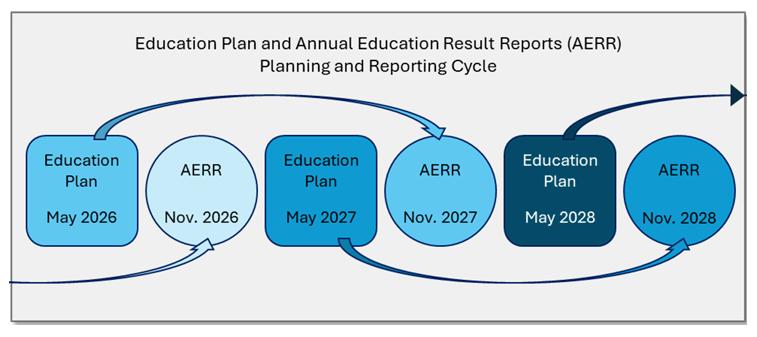
The 2026-2029 Education Plan targets areas for growth based upon key findings of the Annual Education Results Report and provides transparency towards our commitment to continuous improvement regarding effective and meaningful approaches to student learning and success. As a Designated Special Education Independent (Private) School (DSEPS) where every student has a diagnosed Learning Disability (LD), the Education Plan’s Priority Areas focus upon the needs of these students and their families
The previous Education Plan focused upon the Priority Areas of:
1.Enhancing opportunities to engage in active citizenship
2 Targeting literacy and numeracy interventions to enhance success in elementary and junior high
3.High school students maximize their potential upon graduation and beyond
4.First Nations, Metis and Inuit Student Success
This 2026-2029 Education Plan is a continuation of these priority areas. Some amendments have been made, such as blending ‘Welcoming, Safe, Respectful Learning Environment’ into the Citizenship Priority, but the priorities remain aligned with the rolling three-year plan
These priorities align with Foothills Academy’s foundational philosophy and understanding of Self-Determination Theory, which is encapsulated by:
Find Understanding (Develop strong RELATIONSHIPS)
Build Confidence (Provide a sense of AUTONOMY)
Maximize Potential (Nurture COMPETENCE and success)
The outcomes for each priority area are updated in this 2026-2029 plan, to ensure continuous growth and improvement Strategies, performance measures and implementation timelines have been updated and adjusted to accommodate the new outcomes. The plan gives assurance to stakeholders, and the wider public, that Foothills Academy is continuously striving to grow; ensuring the best possible learning experiences for students with LDs It illustrates the deliberate and purposeful decisions that are being made to create ongoing improvement; all of which focus on the best use of resources to maximize the implementation of effective, evidence informed teaching and learning strategies for individuals with LDs and associated disorders.
Education Plan Review
3 Year Plan: Outcomes
Education Plan Priorities
#1: Enhancing Opportunities to Engage in Active Citizenship In A Welcoming, Caring, Respectful and Safe Learning Environment
#2: Targeting Literacy & Numeracy Interventions and Outcomes Based Assessments to Enhance Student Learning and Success
#3: High School Students will Maximize Potential Upon Graduation and Beyond
Increased engagement in citizenship Truth and Reconciliation recommendations are foundational to what we do Students launch into adulthood
#4: First Nations, Metis and Inuit Success
Increased competence and confidence in PATs
Set up for success by graduation.
All grade 12s show continued value added growth in personal achievement
Greater access for students to a wider range of opportunities at postsecondary or the workplace
Continued support implementing recommendations from the Truth and Reconciliation Commission.
Elementary students have a shared understanding of the characteristics of active citizenship, and a consistent feeling of a welcoming, caring, respectful and safe learning environment
Literacy and Numeracy skills are enhanced for students entering junior high and high school.
All students have a strong sense of belonging, care for one another, and demonstrate values of respect and responsibility
All junior and senior high students are involved in citizenship activities throughout the community.
Outcomes based assessments are consistently implemented schoolwide
All students maximize their potential and meet relative success in PATs & Diplomas
Students are set up for successful transition to adulthood, with continued valued added growth in Diplomas.
Continued support implementing recommendations from the Truth and Reconciliation Commission.
All students graduate with the academic, social, emotional and executive functioning skills to be successful in post-secondary and the workplace.
Continued support implementing recommendations from the Truth and Reconciliation Commission
Stakeholder Engagement
A range of stakeholders are integral to the success of Foothills Academy. Teachers, parents and students provide input through Alberta Education and Childcare Assurance Measures (AECAMs) surveys, and staff & parents are given annual local surveys for additional feedback.
Parents meet once a month at Foothills Academy Parents’ Association (FAPA) meetings, where school administration is in attendance to provide school updates and to receive feedback for consideration from parents. Additionally, the president of FAPA is an ex-officio voting member of the Board of Governors of Foothills Academy Society, to represent parents at the board level. 86% of parents reported in the AECAMs data that they are satisfied with parental involvement in decisions about their child’s education, which is over 10% higher than the provincial average We strive to have all parents involved in the school to support their child’s learning and they are an important voice to help guide the direction of school improvement.
General meeting(s)
Weekly newsletters
Teacher and homeroom communication
Admin communication
Parent, Guardian and Family
Engagement:
Student
Engagement:
School Staff
Engagement:
Other stakeholders:
Social media
IPP meetings
Parent teacher conferences
Monthly Parents’ Association meetings
Community events (block party, gala, golf fundraiser)
Conversations with homeroom staff
Meetings with school administration
Ongoing volunteering opportunities
School start up pancake breakfast BBQ Information nights throughout the year for:
Transition to Junior high
Transition to high school
Transition to adulthood
Monthly parent education workshops (also open to the wider community)
Advocating through student groups and extracurricular clubs
Leadership initiatives
Grade 12 local surveys upon graduation
Student transition surveys
Staff meetings
Team meetings
Administrative meetings 1:1
Professional growth meetings
Professional development sessions
Association of Independent Schools and Colleges of Alberta (AISCA), Alberta Education, Learning Disabilities Association of Alberta (LDAA), Learning Disabilities Association of Canada (LDAC), Centre for ADHD Awareness Canada (CADDAC), LD & ADHD Network
Insights from Results Analysis
Strengths
Higher Than Provincial Averages
Foothills Academy’s three-year average for every assurance domain of the AERR (Student Growth & Achievement, Teaching & Leading, Learning Support, and Governance) is higher than the provincial average; apart from the PAT and Diploma data. Our three-year high school completion rate for this year is nearly 20% higher than the provincial average, which is a testament to the work completed by our students, and the outstanding support and guidance provided by our staff. Our overall scores for Student Learning Engagement, High School Completion (three & five years), Education Quality, Access to Supports and Services, and Parental Involvement, are all ranked as Excellent overall.
Excellent Supports & Services
Foothills Academy is an exceptional Designated Special Education Independent (Private) School, and a leader in the field for students with Learning Disabilities, which is supplemented by incredible access to support and services for our students Experienced and expert teachers, educational assistants & support staff, including Occupational Therapists and Speech Language professionals, work closely with students to meet their daily needs Additionally, and critically, Foothills Academy’s Community Services provides essential targeted support for literacy & numeracy interventions, and psychological support for student counselling and mental health support. Psychological support is also provided by assessment psychologists who conduct consultations with classroom staff and administration, as well as meeting with students to help prepare them for post-secondary education.
It is no surprise that our measure for Access to Supports and Services is excellent with an overall score of 91 2% (over 10% above the provincial score) Both parents and teachers report 15% higher than the provincial scores
Excellent Learning and Engagement
School poses many additional challenges for LD students, and the demands of literacy and numeracy skills throughout the curriculum can be vastly more taxing, taking a more exhausting toll on students’ cognitive load. Students’ cognitive energies can become depleted far more readily than neurotypical students, which, without appropriate and meaningful programs, can lead to a greater impact upon engagement and learning. Despite this, students at Foothills Academy maintain strong scores for learning and engagement, and our overall measure is excellent. Parents report at an excellent level of 979%, over 10% higher than the provincial measure, and similarly, teachers report at 967%, in response to questions such as:

“Theliteracyskills yourchildis learningatschool areuseful”
“The
numeracy skills
your child is learning at school are useful”
l“Studentsare earningwhat theyneedto know”
Insights from Results Analysis
Meeting Student Needs
The LD needs of students at Foothills Academy are being met successfully Learning Disabilities are predominantly language based, and English Language Arts is typically a demanding subject for these students. Subsequently, individuals with math LDs such as dyscalculia, face challenges in classes involving numeracy. Despite this, most students acknowledge the importance of language arts & mathematics, and understand how useful it is to them for future success.
59% of elementary students reported to like learning language arts, and 25% did not know.
63% of elementary students like learning math, and 14% did not know.
72% of junior high students understand how the language arts they are learning is important to them.
66% of junior high students understand how the math they are learning is useful to them.
81% of junior high students understand how the science they are learning is useful to them.
of junior high students understand how the social studies they are learning is useful to them.
The quality of education at Foothills Academy remains very high and has an overall result of excellent; higher than the provincial result. Parent satisfaction with the quality of education has risen, despite being already very high, with over 90% of elementary, junior high and high school parents all reporting satisfaction with the quality of education.
“AttendingFoothillshaschangedthetrajectoryofmychild’sacademic, social,andemotionalwellbeing.ThankyouFoothillsfromthebottomofmy heart.” ~ Parent of a Foothills Student
Insights from Results Analysis Areas for Improvement
THE5'C'SOF FOOTHILLSCULTURE
CHILDREN
Children and families must always come first.
CONTINUOUS LEARNING
Continuous reflection and learning are key to professionalism
COMMUNICATION
Communication must always be professional and honest, even when it is difficult.
CARING
Caring and supporting colleagues is a hallmark of who we are.
COMMUNITY
Community is built on diversity, respect, inclusion and belongingit takes a village
Students’ Uncertainty of Citizenship
Data for Welcoming, Caring, Respectful, Safe Learning Environments (WCRSLE), and Citizenship declined, despite there being significant strengths within these domains. Considering this, we have adjusted the Education Plan to include WCRSLE data into the Citizenship priority area #1 Although Citizenship data also showed a decline in some areas, it remains on par with the provincial average but remains a priority in our Education Plan A caring and respectful school environment is integral to our success, and the positive school culture is supported by Foothills’ 5 Cs of Culture:
Teachers and Parents Recognize the Elements of Citizenship in the Student Population
Teacher ratings for the citizenship measure are excellent, and parent responses are on par with the provincial measures However, student results have declined and therefore remain an important part of this Education Plan.
The decline in student responses could be due to some elementary students neither agreeing or disagreeing but reporting that they ‘do not know’ the answer to the citizenship questions. 51% of elementary students agreed that students follow the rules, but 34% reported that they ‘do not know’. Subsequently, 49% of elementary students agreed that most students respect each other, but 45% stated that they ‘did not know’. Although these scores have declined, there is not a clear indicator that a greater problem has emerged The data suggests that we should focus upon students’ understanding and clarity of the questions, as well as awareness of the school and classroom culture.
Insights from Results Analysis
Focus on Junior High
Junior high students reported lower on the citizenship questions and will be a focus of the Education Plan. 62% of junior high students feel that they are encouraged to help people in their community, but 13% did not know. The implementation of the new behaviour plan ‘The Right to Learn & The Right to Teach’ could have impacted reporting, as all junior high teachers agreed, or strongly agreed, that students follow the rules and respect each other
Upon further analysis of the student reporting, it is apparent students do feel cared for at Foothills Academy.
88% (11% did not know)
Junior High 80% (10% did not know)
High School 91% (6% did not know)
Grade Level
Students reporting that their teachers care about them
The high rates of reporting show that students feel supported, and the reduced scores this year could be accounted for by the increased number of students reporting that they ‘do not know’.
Grade Level
Students reporting that they feel safe at school
Elementary 90% (8% did not know)
Junior High 77% (9% did not know)
High School 89% (5% did not know)
Grade Level
Students reporting that they feel safe at school
Grade Level
Students reporting that they feel welcome at school
Elementary 92% (5% did not know)
Junior High 79% (10% did not know)
High School 79% (11% did not know)
Grade Level
Students reporting that they feel welcome at school
Grade Level
Students reporting that their teachers care about them
Elementary
Insights from Results Analysis
There are obvious strengths in our WCRSLE data, but we have opportunities to bolster this school-wide.
"One of the biggest highlights has been the incredible academic progress Our child went from reading at a kindergarten level to early grade 3 in just one school year, that's an amazing leap, and a testament to the teaching and support they've recieved."
~ Parent of a Foothills Student


Emerging Growth Trends and Developing Needs
As a school for students with diagnosed Learning Disabilities, our focus is to support the LD needs of every student so that they can successfully graduate from high-school and transition to post-secondary or the workplace. Students require specific, evidence-based interventions to support their LDs, and to ultimately be successful and maximize their true potential at school and beyond.
Parity in Diploma Exams
Notably, our high-school students’ diploma exams were on par with the provincial average at the acceptable level, as 806% met this level compared to 820% in the province
Diploma / Subject
Our grade 12’s diploma scores for the languagebased core subjects (ELA and Social Studies) are significantly higher than the provincial results; other than the -1 ELA results, which were within 1% of the provincial result
The Need for Equitable Access to Accommodations
Grade 6 Math PATs Part B:
In the younger grades, where students sit Provincial Achievement Tests (PATs) in grades six and nine, the gap between a students’ ability and achievement can be great, considering students have naturally spent less time at school and therefore have received less consistent intensive intervention.
It can be challenging to meet the standards of some PATs, when appropriate accommodations are not permitted by Alberta Education For example, part B of the grade 6 math PAT does not allow for the accommodation of a calculator, which massively impedes a child with a math LD such as dyscalculia Part B of the grade 6 math PAT tests students’ conceptual understanding of complex, multistep problems Denying calculators as an accommodation in part B, to any student (including those with deficits in working memory and processing speed), is unfair and it deprives these students of the opportunity to express their real understanding of math All children should have an equal opportunity to shine and succeed at school Unfortunately, the most recent change that has been made for this grade 6 math PAT has been the announcement that “if a student requires a calculator… the student should be excused from the provincial achievement test” (Grade 6 Subject Bulletin Mathematics, 2026). This is unfair to the students who could be successful in complex mathematical problem solving questions if they had the appropriate accommodation (a calculator), and is harmful to those students with significant math anxiety; as permitting students to avoid the anxiety of math will only heighten their anxiety in the future.
Grade 12 Diplomas:
Furthermore, in Diploma exams in grade 12, students are not allowed to have a paper copy of the exam as well as the digital exam; they may only have one or the other This impedes many high school students who benefit from test taking strategies that require a paper copy of a test as well as a digital copy By only allowing students to have one or the other, many are deprived of the opportunity to thrive and demonstrate their full potential Ideally, high school students should be permitted both the paper copy of a Diploma to work on, and the digital copy to submit as their final copy of the exam
Priority Area #1
Enhancing Opportunities to Engage in Active Citizenship, In A Welcoming, Caring, Respectful and Safe Learning Environment.
Outcomes
All students will have a strong sense of belonging and care for one another, and demonstrate values of respect and responsibility
Junior and senior high students will be involved in citizenship activities throughout the community.
Measures
Elementary and junior high students will report, in the AECAMs, a 10% higher level of agreement that they are treated fairly by adults in the school
10% more students will report having a strong sense of belonging at school
10% more students will report noticing a greater sense of respect amongst the student population.
Strategies
Students in elementary and junior high will be engaged in refining classroom & school expectations and the updated code of conduct
Team Two Vice Principal will engage in focus groups with Team Two students to explore student experiences, supports and solutions to enhance the sense of belonging in Junior High.
The clubs fair will become an annual event for all students to attend, and will be well promoted for high attendance and participation by students
Citizenship opportunities will be provided to junior high, and high school students in electives, including leadership, and extra-curricular including first aid, drama production and youth singers.
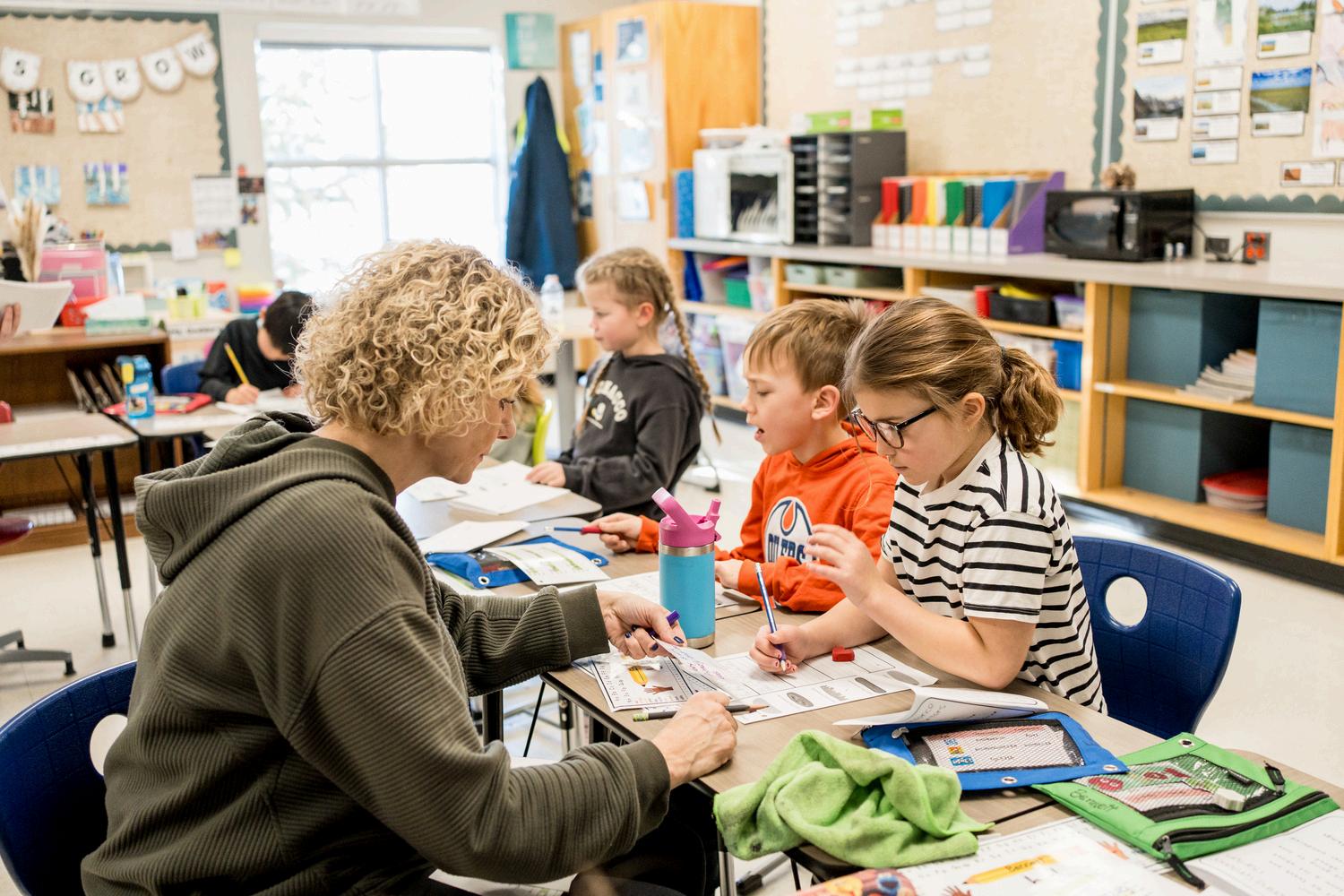
Elementary programs will continue to develop and support the programs for anxiety, executive functioning and social interactions; such as ‘Coping Cat’, ‘Unstuck’, ‘Kindness Club’, and ‘Friendship Club’
Professional Learning scheduled throughout the year will be focused upon specific language aspects of Collaborative Problem Solving, and trauma informed classrooms.


Priority Area #1
Enhancing Opportunities to Engage in Active Citizenship, In A Welcoming, Caring, Respectful and Safe Learning Environment.
Implementation
Strategy Resources
Updating the Code of Conduct
Currently established Classroom
NormsCurrent Code of ConductThe Right to Learn & The Right to Teach doc.
Professional Learning Review & Evaluation
August professional learning regarding amendments to the Education Act and subsequent requirements.
Admin to review by the end of SeptemberPosted in all classrooms
Student Focus Groups
Team Two Vice Principal to establish focus groups.
Collaborative
Problem Solving, Social Thinking & Trauma Informed Classrooms
Community Services psych team.School administrationOnline
CPS training videos
August professional learning opportunity to engage all Team Two staff in developing focus group questions
Focus groups in: Sept December March June Comprehensive evaluation in June
June and August professional learning opportunities.Febru ary professional learning.
Ongoing monthly review during scheduled Friday afternoon professional learning sessions.
"Wecouldnotbehappierwiththeschoolfacilities,teachers,and supportsthatareprovidedtoourson.Foothillshasbeenagame changer-heisnotonlymeeting,butexceedingacademic expectations."
~ Parent of a Foothills Student
Priority Area #2
Targeting Literacy & Numeracy Interventions for School-Wide Success
Outcomes
All students maximize their potential and demonstrate value added success in Provincial Achievement Tests & Diplomas
Outcomes based assessments are consistently implemented to improve student learning school-wide.
Measures
Increase in overall grade 9 PATs by 5%
Increase in overall diploma scores by 5%
School awarded marks will increase per subject by 5%
School awarded marks will all use Outcomes Based Assessments
Strategies
CBM and Skills charts will be shared for every student in elementary and junior high to demonstrate growth, provide accountability, and give direction for professional learning and parent education.
Tracking value added growth for each student in Skills will continue so that we can continually review and refine student outcomes and successes
Outcomes based assessment measures will be required in every subject, with specific professional learning provided internally.
Proficiency scales will include Blooms’ vocabulary , specific to each grade and subject, as well as a range of ‘I can’ statements per subject.
Implementation
CBM & Skills tracking
All CBM data collected and analysed
Outcomes Based Assessment in every subject
Previous OBA resources Updated OBA practices
Administration and Literacy & Numeracy Specialist to provide staff training in August, December, February and April
Administration to deliver August professional learning, and subsequent monthly review and support
End of year review to ensure all families understand the value added growth being made by their child.
Administration to review during each report card cycle and parent/teacher interview in the fall, spring and summer terms.
Priority Area #3
All Students will Maximize Potential by Graduation for Successful Launch to Adulthood
Outcomes
All students graduate with the academic, social, emotional and executive functioning skills to be successful in post-secondary and the workplace.
Measures
AECAM data for work preparation will rise to 85% for parents who will agree that students are taught attitudes and behaviours that will make them successful at work when they finish school
90% of students in high school will be eligible for the Rutherford Scholarship
Maintain 100% high school completion rate for 3 year completion
Over 60% of students in junior high will agree that their school work is interesting
Over 50% of high school students and families will attend the Education Liaison
Association of Alberta (ELAA) Post Secondary Fair
75% of grade 12 students will participate in the Transition Portfolio Program
Strategies
Pink forms will be used throughout team one and two for positive acknowledgement from teachers, to celebrate student success; academically, socially and emotionally.
The ELAA Post Secondary Fair will be held in the Fall semester.
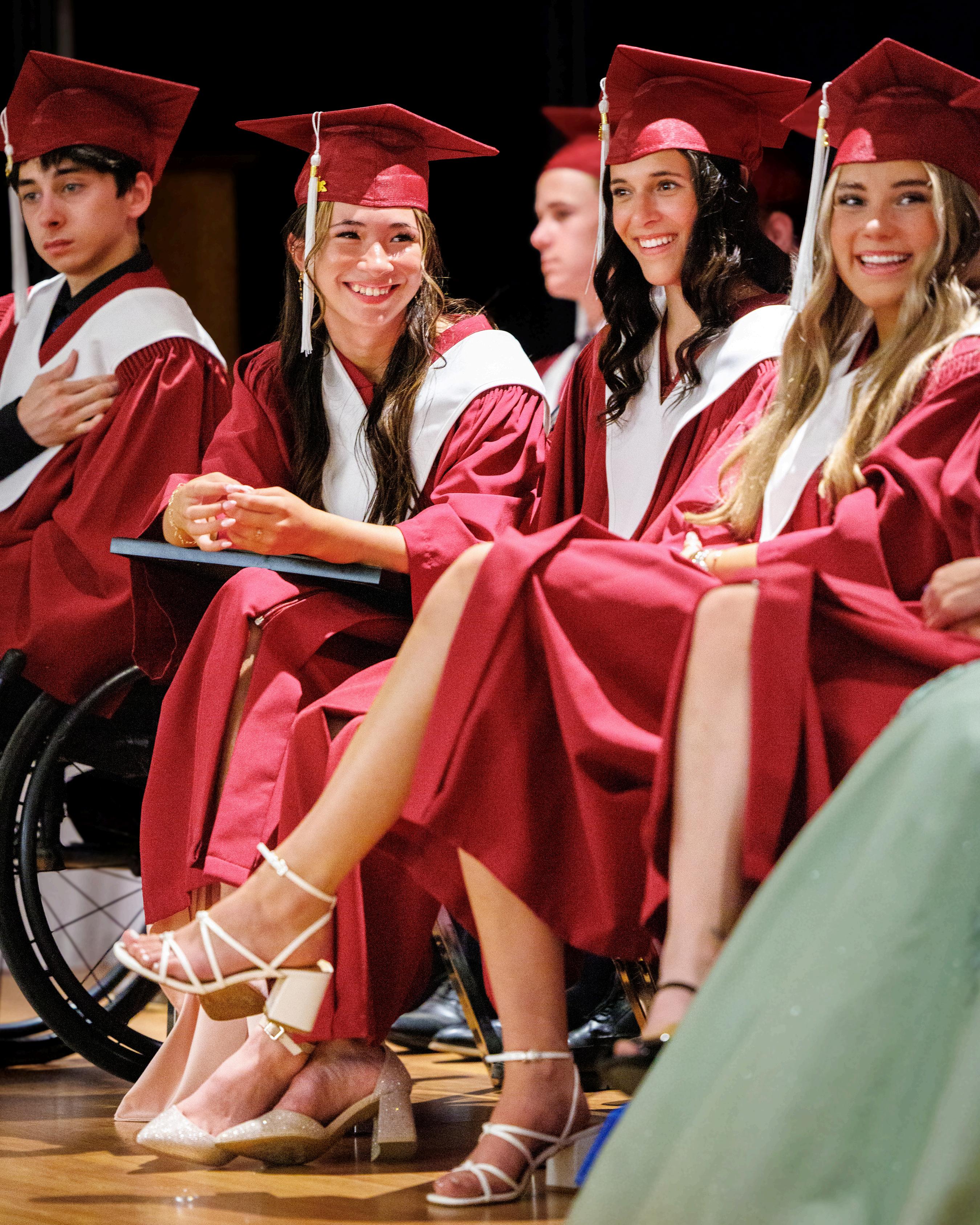
Alumni will be invited in to present to current students about their experiences in post secondary and the workplace
Time will be provided in the schedule to engage grade 12 students in the Transition Portfolio Program
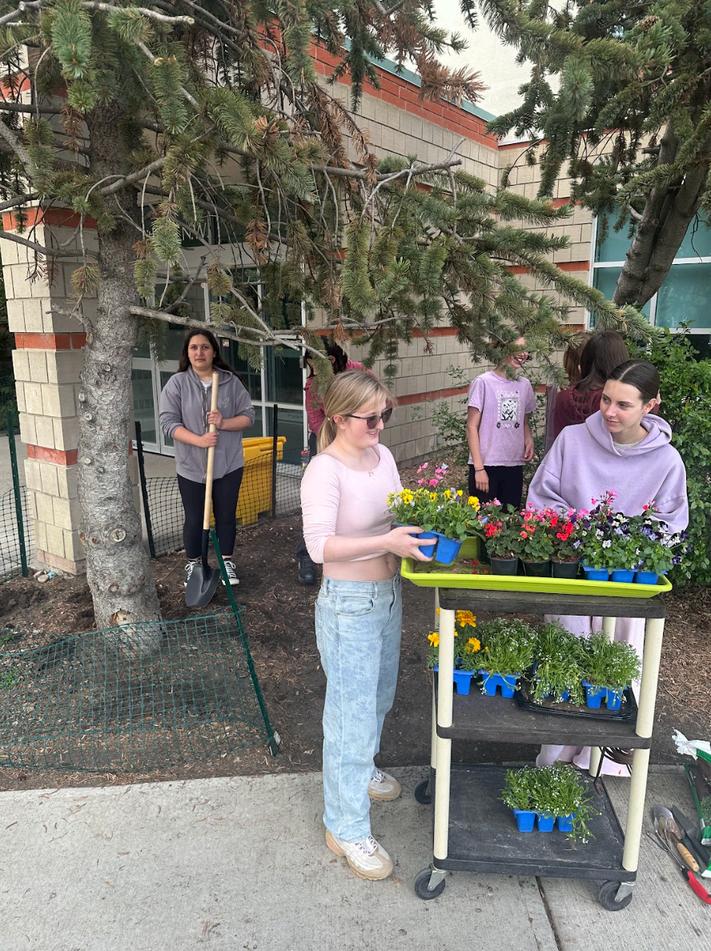
High school will continue to expand opportunities for student internships, work experience and volunteerism.
Parent involvement and education will include a ‘Transition ‘Transition to Post-Secondary & the Workplace’ parent night l
Priority Area #3
All Students will Maximize Potential by Graduation for Successful Launch to Adulthood
Implementation
Student Engagement and Recognition
Parent Education
Administration and staff develop engagement items during collaboration sessions.
Parent Transition nights for grade 10 and 12
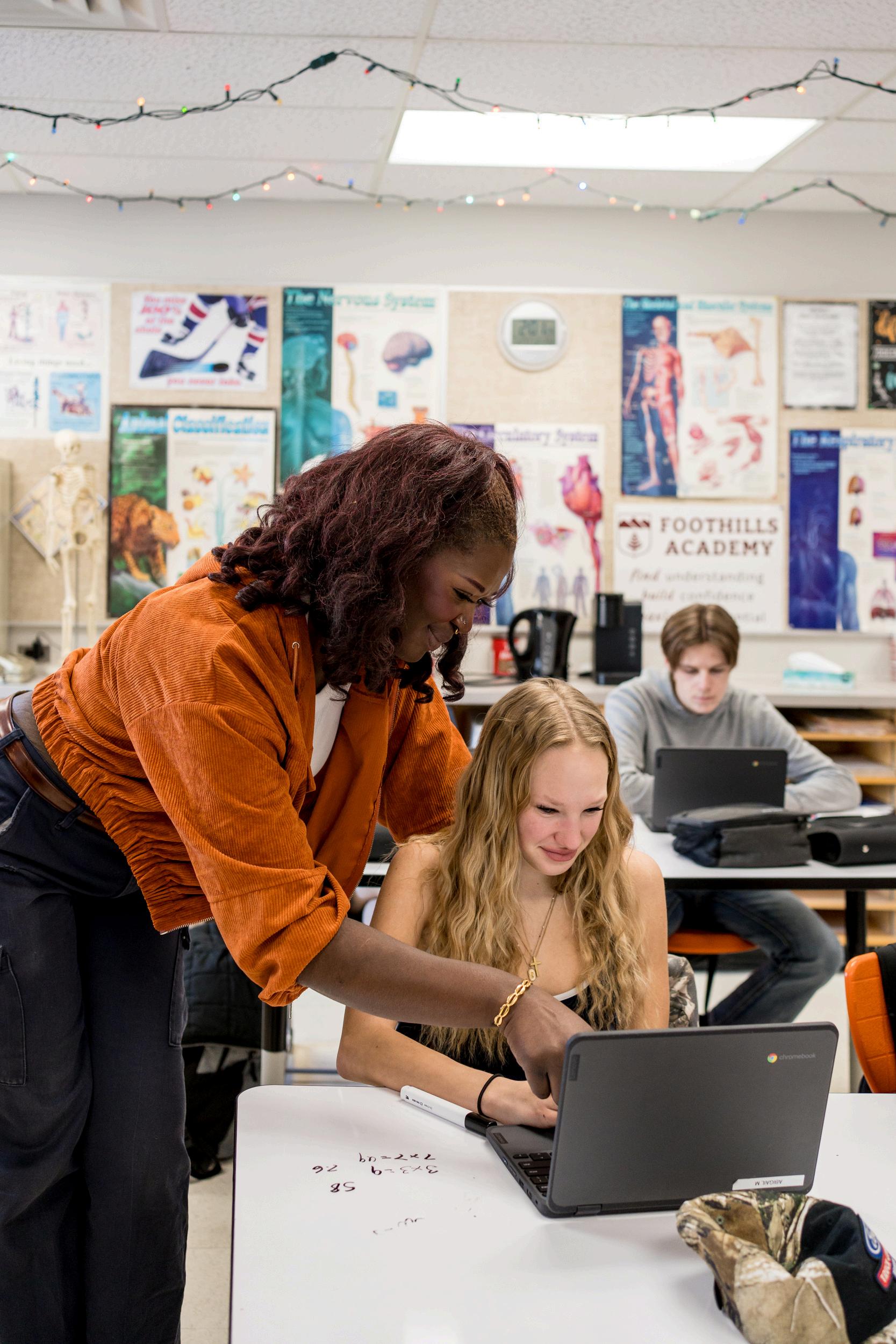
Monthly professional learning during Friday PL time, to share the established engagement initiatives.
Friday afternoon staff meetings to review parent feedback to local surveys
August professional arning opportunities to view psychoeducational sessments and derstand the role of ych’ in the transition rtfolio
December, March and June review.Evaluate impact of the engagement programs.
Review at the end of year in June 2027.
October and March review.
“At Foothills Academy our son feels welcomed, understood, and encouraged every single day. Seeing him excited to go to school and proud of his progress means more than words can express.”
~ Parent of a Foothills Student
Priority Area #4
Foothills Academy remains focused upon the continued implementation of strategies, activities and programs to support recommendations from the Truth and Reconciliation Commission
Outcomes
The Indigenous Education and Reconciliation committee will continue to create school-wide opportunities for First Nations, Metis and Inuit activities and programs, in further support of implementing Truth and Reconciliation Commission recommendations.
Measures
Student and staff surveys will report a greater degree of understanding and awareness about the significance of incorporating FNMI events and cultural experiences in school life.
FNMI activities and programs will occur every month throughout the school.
Strategies
During all events recognized throughout the school year, members of First Nations, Metis & Inuit communities will be clearly represented, including, but not limited to; Literacy Week, Numeracy Week, Remembrance Day Ceremony, and Pride Week. Indigenous members of the community present to high school students about their personal experiences in the armed forces from an indigenous perspective, and systemic challenges facing the FNMI community.
First Nations Elders will share Ani to Pisi (spiderweb) creation story practice and activity school wide (bi-annual event).
First Nations Elder will demonstrate brain tanning of animal hide and share knowledge
Implementation
In order to achieve successful implementation of these strategies, we require strong and positive connections with members of FNMI communities. We continue to maintain our current connections and also strive to foster new collaborations in the wider community. School Administration provides ongoing support and training to staff, so that we can help to consistently and appropriately follow protocols when approaching elders to ask for help in sharing knowledge and education; eg: offering tobacco & fabrics appropriately and respectfully. Furthermore, School Administration delivers professional learning for staff to not only ensure that members of FNMI communities are approached respectfully and appropriately, but so that collaborations can continue to grow. These practices are evaluated and reviewed at the end of each school year
Financial Information Summary of Budget
Financial Information Summary of Budget
Financial Information Summary of Budget
Foothills Academy's building maintenance fund was allocated $196,500 by the Board of Governors, as per the building lifecycle review that was conducted in 2022 by Williams Engineering Annual capital spending for the coming year includes the cyclical replacement of student computers, iPads, technology and associated resources, with $242,500

"My daughter loves school now that she is getting the help she needs and is reaching her potential to a degree I could have never imagined. Her dreams are now within reach and we are so proud of her. Thanks to the Foothills comunity as everyone is part of her success."
~ Parent of a Foothills Student
STATEMENT OF OPERATIONS - Segment Disclosure for the Year Ending August 31 (in dollars)
REVENUES
Alberta Education and Childcare Revenues
Less: Childcare Revenues
TOTAL
Home Education
Instruction ECS
Instruction Grades 1 to 12
Operations and Maintenance
Transportation
Board and System Administration
Other (specify):
TOTAL ALBERTA EDUCATION EXPENSES ONLY
Government of Alberta Funds Balance*