3 minute read
FOCUS ON NATURAL GRASS PITCHES


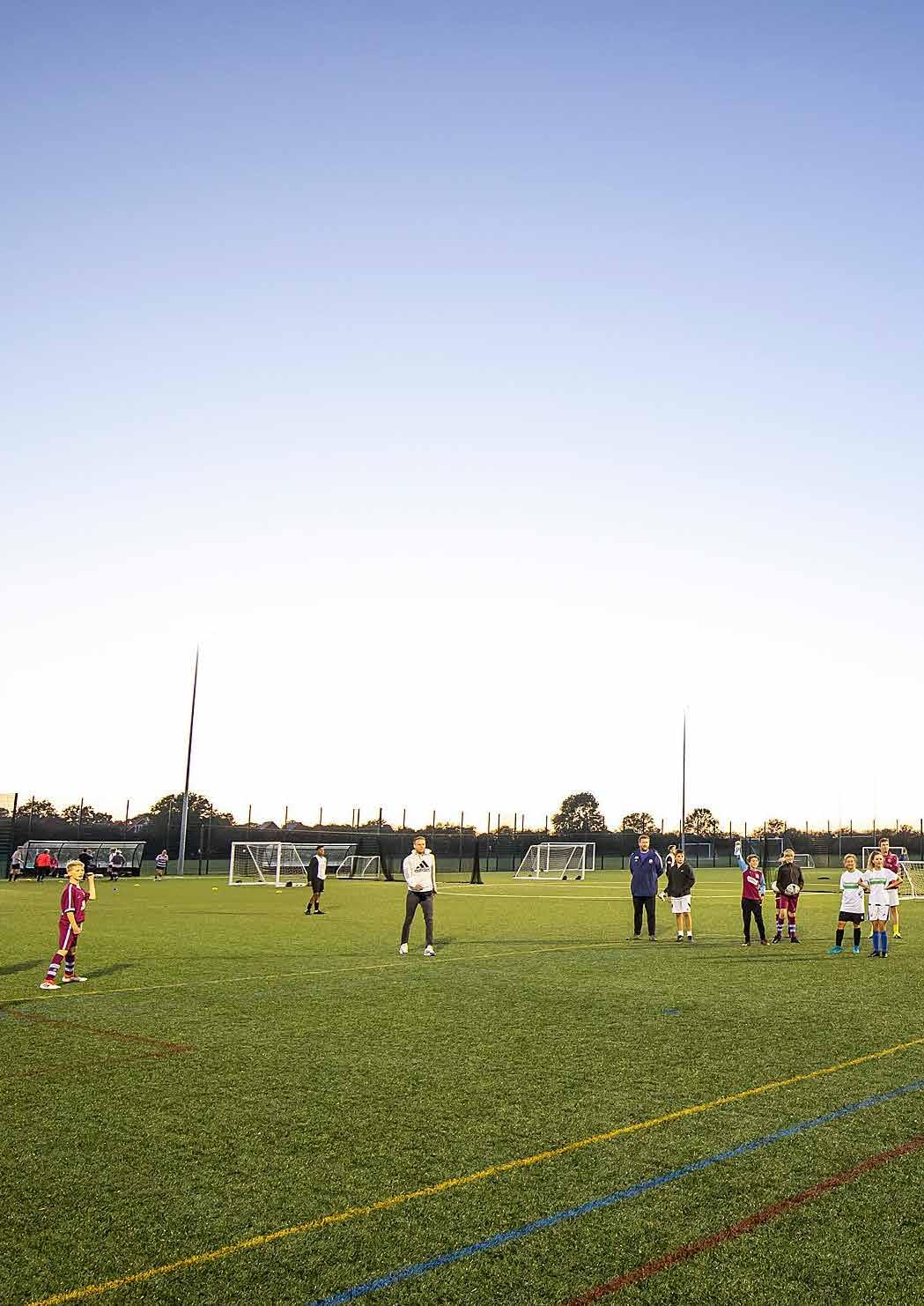
With the weather becoming increasingly unpredictable in recent years, natural grass pitches have often borne the brunt of harsh winters and long, dry summers. Whilst floodlit 3G pitches offer fantastic all-weather alternatives to guarantee playing time, the majority of community football still takes place on natural grass surfaces. That is why we are committed to ensuring we help to maintain natural grass pitches across the country, too. Over the last 12 months, our natural pitch grants awarded have gone towards new drainage systems, pitch maintenance equipment and the levelling out of surfaces, helping to reduce postponements and enable players to continue playing on traditional grass surfaces.
TEETERING ON THE CLIFFE EDGE – EMERGENCY FUND PRESERVES FUTURE OF STORM-HIT CLIFFE FC
Maintaining natural grass pitches poses a challenge to community clubs under normal circumstances, but when they are subject to an extratropical cyclone, the aftermath is an altogether different prospect.
This was the situation that Yorkshire-based Cliffe FC were forced to contend with after Storm Desmond struck in December 2015.
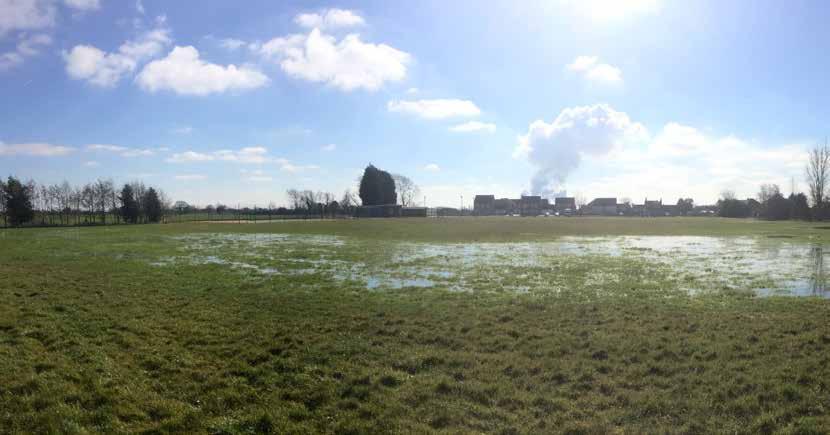
The club’s Cliffe Park home ground was left in a desperate state following heavy rain and gale force winds, with pitches completely waterlogged and access to the changing rooms obstructed by flooding. The extent of the water covering the surface of the field was such that a local family of ducks had taken up residency on the pitch in the absence of any competitive football. The pitch was rendered unplayable for over six months, and, with the club forced to rent alternative venues and travel further for training and matches, the increased cost to players was significant.
However, as part of the Foundation’s Emergency Football Relief Fund, the club were given a grant of £14,839 to install a new state-of-the-art drainage system as well as to perform vital surface improvement work. The progress since has been remarkable.
Malcolm Bryce, Cliffe FC Club Secretary said: “Since the refurbishment, I’d say we have probably lost less than five fixtures to the weather and that’s in spite of also having to contend with the Beast from the East.
“While the majority of clubs around us were having to call games off for waterlogging, we were still able to fulfil the majority of our fixtures, which is pretty good going after what we’d seen with previous harsh weather conditions.
“Without the funding support, Cliffe FC would have struggled along having to hire pitches out during the wetter months, which would have been physically, mentally and financially unsustainable and would’ve put the club’s future and the community facilities in real jeopardy.
“Thankfully we’re in a much better position now and count ourselves very lucky for the funding support we’ve received – it’s made a huge difference.”
BOYS AND GIRLS GIVEN ANOTHER ALDER-SHOT BY PITCH IMPROVEMENT WORKS
Aldershot Boys and Girls FC were another example of a team who were plagued by problems with their natural grass pitches.
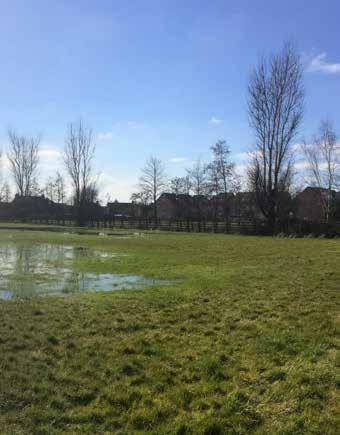
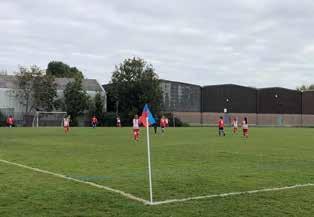
The surface at their home ground of Ivy Road playing fields was covered in large undulations which, when the heavens opened, resulted in unplayable pools forming across the pitch. Not only was this having an impact on the playing time of junior footballers, with a large number of postponements to contend with, but the undulations were also hampering the skill level of children, with the free movement of the ball completely restricted.
However, after receiving a £56,875 grant from the Premier League & The FA Facilities Fund, the club were able to relevel the surfaces and improve drainage, which significantly reduced the number of match and training cancellations.
Martin Sterio, Rushmoor Borough Council’s health and physical activity officer, said: “Before the refurbishment, our concerns were that the pitches were completely stunting the growth and development of our young footballers. The pitches just weren’t in a conducive state to accommodate quality football and it was important that we solved this issue.
“Since the refurbishment, the pitches have become the best in the area and the talent at Aldershot Boys and Girls club has been able to flourish. In the last two seasons, we’ve had more teams gain promotion than at any other stage in the club’s history, while football participation has tripled, with the number of girls teams rising from two to six.”