

TERESA

KERRY



ARIANA ALCANTARA

AARON BERKSHIRE
HARRY STRAUSSMAN Writer
ABIGAIL BODENHAM

Subject: Rich Get Richer
The rich get richer and the poor get poorer. There has been a coordinated plan by people such as those in the Heritage Foundation, to dumb down regular people in the USA since the Reagan years/1975 or so. Alvin Toffler even said in his book, The Third Wave, that Industrial Era schools were designed to teach students to be obedient, on time, and do rote, repetitive work. There are wealthy people who feel they are entitled to live off of the labor of others. George Orwell had this to say, “So long as they continued to work and breed, their other activities were without importance.To keep them in control was not difficult.” (1984).
Progressives have been playing defense and only responding to threats from the regressive right. We, the people, need to support better education and better leadership to break the control of the very wealthy. We progressives must work together and have a plan. Planning, execution, and control are the 3 phases of a project. Planning is by far the most important part. We have been winging it, while the authoritarians have been methodically pursuing their plan of action.
David Stearns, Otto, NC
Fletcher High School Class of 1965



To Troy R. Alston for turning endurance into a Jacksonville tradition with a jaw-dropping 14-year winning streak in the American Lung Association’s Fight For Air Climb — an achievement now recognized by Atlas World Records. That’s not just climbing stairs: that’s climbing into local legend status.
To JEA, because nothing says “welcome to May in Jacksonville” quite like sewer spills popping up across town. According to JEA’s environmental incident reporting, early May brought multiple pipe-failure spills, including roughly 1,000 gallons at 4733 Mandarin Station Dr. N on May 1, plus 100-gallon incidents at 7019 San Fernando Place on May 1 and 661 Riverside Ave. on May 5. Pipes fail, sure — but when the system keeps coughing up sewage, the public deserves more than cleanup crews and paperwork. It deserves urgency, transparency and infrastructure that doesn’t treat local streets like a plumbing confession booth.
By Ambar Ramirez & Carmen Macri
If you want to make money, and we know you do, it’s time to bring that vision board to life. No more sitting around and waiting for opportunities to find you. It’s time to go on the hunt. And with Mars spinning through your sign until the end of the month and the Taurus Sun blazing, it’s the perfect time to take aim and shoot.
Being vulnerable is sexy, Libra. You know what’s not sexy? Being superficial. Take a long look inward and ask yourself, “Does this really matter to me?” Or does it only matter because you think other people find value in it? The supermoon on the 16th will leave you with more questions than answers, and it is up to you to truly dissect them.
Happy Birthday, Taurus! Even though your birthday may have already passed, everyone knows you own the month of May. Consider this your annual invitation to undergo a complete personality transplant or at least a very thorough transformation. And since this is the first year that the destabilizing Uranus isn’t in your sign, you may actually witness some life-changing results.
It’s ’bout time to dig a little deeper, Gemini. May is all about being reflective and introspective. Just in time for your birthday season right around the corner. Take the downtime to recharge, reset and tie up loose ends. With Pluto spinning in retrograde, your personal healing will involve a lot of shadow work. Think of it as fixing everything up backstage before you walk out and face the crowd.
After a demanding and exhausting April, May finally rolls in like a cooling spring breeze. You’re finding your way back to your circle, but more importantly, you’re finding your way back to yourself. Expect the end of the month to feel like one long mental health retreat … in the best way possible, of course.
While it is technically Taurus’s month, you are front and center in the limelight. Career momentum is steadily building all month long under the Taurus Sun with help from a retrograde Pluto and a Supermoon. It feels as if the planets are perfectly aligning for you to start building your financial future.
Feeling ambitious, Virgo? On the 21st, the Sun moves into Gemini and your tenth house of career and success. It’s time to check off some of those boxes. But remember, while it’s good to keep your eye on the overarching goal, don’t define yourself by one thing.
So long are the days of flying solo, Scorpio. It’s all about partnerships this summer. And before you tuck tail and run, remember, partnerships aren’t always romantic — think business partners or creative duos. Whatever it is, it’s time to define your terms. With your ruling planet (Pluto) spinning in retrograde until October, everything will feel a bit … more. Emotions will be heightened, which isn’t that unusual for you, but maybe start practicing thinking before speaking.
You’re truly taking the path less traveled, Sagittarius, and by that, I mean a path paved in green. You’re scanning labels for three-ingredient simplicity and choosing workouts that tone more than just your muscles. Stay the course. On May 31, the year’s only Sagittarius full moon arrives, making it impossible to suppress your voice or hide from the spotlight. You’ll definitely want that “clean living” glow when all eyes are on you.
Passion projects take center stage this month, Capricorn! Forget work, what makes you happy? What hobbies are you filling your time with? Whatever they are, start pouring your energy into them tenfold. Your fifth house of creativity is lit up all month long, so set time away for art, pleasures or even a budding romance. Who knows what will come of it, but don’t you want to find out?
Every now and then, it’s OK to be a homebody, Aquarius. Don’t beat yourself up over it. Try reframing your nesting phase as a creative project; once you focus on turning your space into a sanctuary, the task won’t feel so daunting. And once Gemini season hits, spring fever will officially kick in, and you’ll be spending plenty of time outside.
You’re uncharacteristically sensitive this month, Pisces. And as the Sun enters Gemini and your domestic, emotional fourth house, expect to feel every bit of it. To balance the tears or balled fists with smiles and deep breaths, keep the social engagements to a minimum, and dive into some creative projects. You’re not avoiding; you’re just busy!
LIVE WILDLY PRESENTS
JJ GREY'S
BLACKWATER SOL REVUE FEATURING
JJ GREY & MOFRO
WITH SPECIAL GUESTS WAR & BIG BAD VOODOO DADDY
MAY 16
IRATION & SOJA WHERE IT ALL BEGAN SUMMER TOUR 2026
WITH SPECIAL GUESTS TRIBAL SEEDS & ARTIKAL SOUND SYSTEM
MAY 17
WILLIE NELSON & FAMILY
WITH SPECIAL GUEST LILY MEOLA
MAY 21
SAM BARBER
THE AMERICAN ROUTE TOUR WITH SPECIAL GUESTS MICHAEL MARCAGI & BEBE STOCKWELL
MAY 23
THE BLACK CROWES SOUTHERN HOSPITALITY TOUR
WITH SPECIAL GUEST SOUTHALL
JUNE 2
YOUNG THE GIANT VICTORY GARDEN TOUR WITH SPECIAL GUESTS COLD WAR KIDS & ALMOST MONDAY
JUNE 5
ROLLING TOGETHER REVUE TOUR G. LOVE
DONAVON FRANKENREITER & MOON TAXI
LIVE FROM THE BACKYARD STAGE
JUNE 6
CLAYPOOL GOLD
FEAT: PRIMUS, LES CLAYPOOL’S FROG BRIGADE & THE CLAYPOOL LENNON DELIRIUM
JUNE 19
APEX THEATRE PRESENTS: THE COMPLETE WORKS OF SHAKESPEARE ABRIDGED
LIVE FROM THE BACKYARD STAGE JUNE 24-25

VINCE GILL
50 YEARS FROM HOME TOUR
JUNE 27
MEN AT WORK
WITH SPECIAL GUESTS TOAD THE WET SPROCKET & SHONEN KNIFE
JULY 17
DIERKS BENTLEY OFF THE MAP TOUR WITH
RICKY SKAGGS & KENTUCKY THUNDER & COLE GOODWIN
JULY 18
LINDSEY STIRLING
WITH SPECIAL GUEST PVRIS
JULY 20
LORD HURON
JULY 27
THE BLACK KEYS PEACHES ‘N KREAM WORLD TOUR WITH SUPPORT FROM EDDIE 9V JULY 29
STEPHEN WILSON JR. GARY THE TORCH TOUR WITH THE LONE BELLOW AUGUST 7

THE FRAY WITH SPECIAL GUESTS DASHBOARD CONFESSIONAL & COLONY HOUSE AUGUST 8
JORDAN DAVIS AUGUST 16
SQUEEZE WITH SPECIAL GUESTS ADAM ANT & HAIRCUT 100 AUGUST 18
BUDDY GUY 90 AUGUST 22
SLIGHTLY STOOPID ROAD TRIPPIN SUMMER TOUR 2026 WITH SPECIAL GUESTS THE ELOVATERS & DENM AUGUST 23
BLUES TRAVELER & GIN BLOSSOMS WITH SPIN DOCTORS SEPTEMBER 4

WITH SPECIAL GUEST ROBBER ROBBER SEPTEMBER 17
JOHN FOGERTY & STEVE WINWOOD THE LEGACY TOUR SEPTEMBER 18
BRAD PAISLEY LIVE SEPTEMBER 19

JAMES TAYLOR AND HIS ALL-STAR BAND SEPTEMBER 22 & 23
FLIPTURN SEPTEMBER 25
RISE AGAINST SEPTEMBER 26
BOZ SCAGGS THE RHYTHM REVIEW 2026 OCTOBER 7
TY MYERS THE LEGAL TOUR WITH SPECIAL GUESTS LANIE GARDNER & BENNY G OCTOBER 8
TEDESCHI TRUCKS BAND FUTURE SOUL TOUR 2026 OCTOBER 9 & 10
THE AVETT BROTHERS WITH THE SECRET SISTERS OCTOBER 11
ALABAMA OCTOBER 17
AN EVENING WITH CAKE OCTOBER 21
TURNPIKE
TROUBADOURS
WITH SPECIAL GUESTS MUSCADINE BLOODLINE & DRAYTON FARLEY OCTOBER 24
O.A.R.
THREE DECADES TOUR WITH SPECIAL GUESTS GAVIN DEGRAW & KT TUNSTALL NOVEMBER 14
THE REVIVALISTS NOVEMBER 21



Words by Harry Straussman
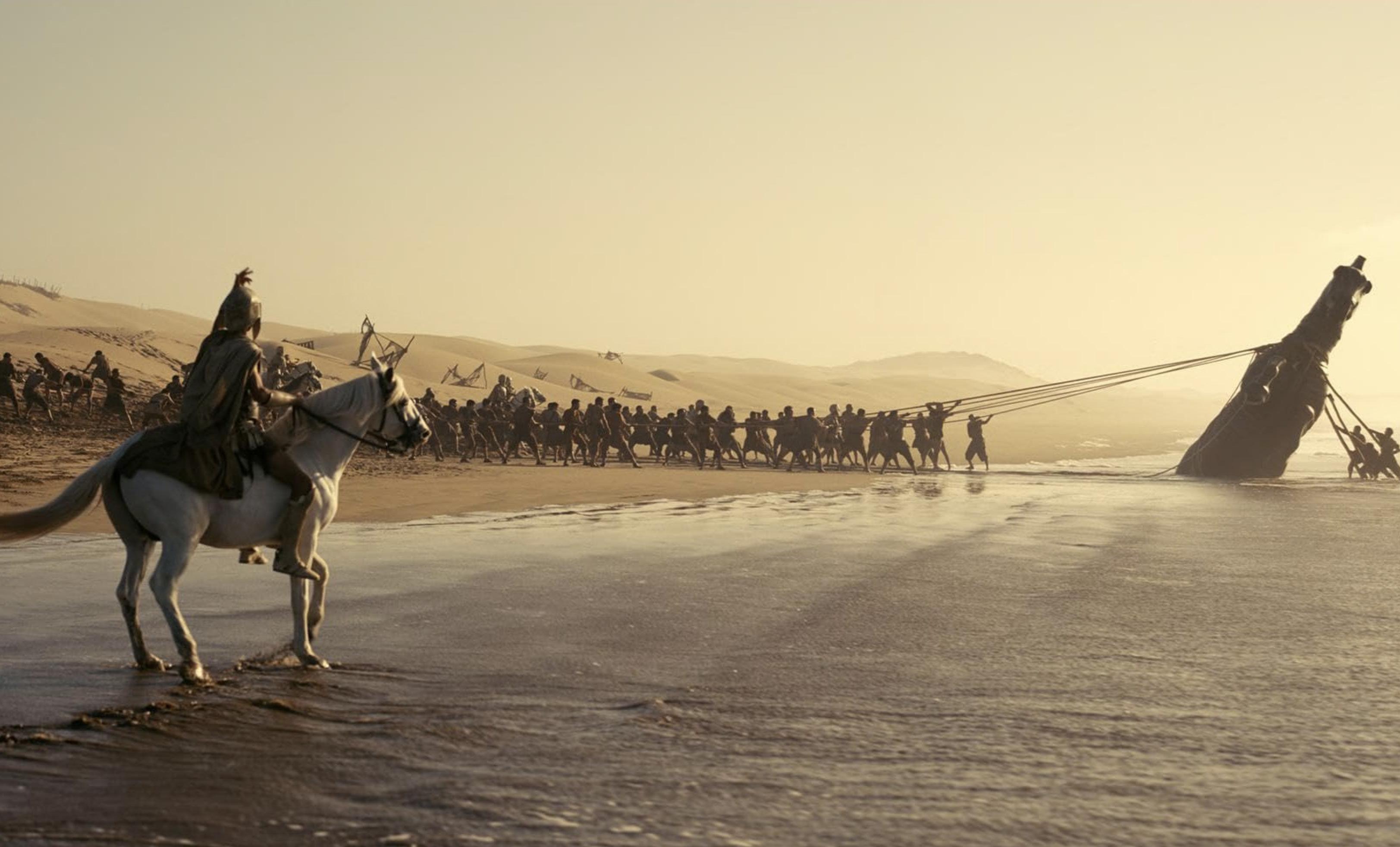
Summer is here, which, for many, means hitting the beach, chopping it up at barbecues and crushing a few day beers, while for others it means crowding in a dark, heavily air-conditioned room, and letting the Hollywood dream machine ease your troubles for a few hours. Take a look at the tantalizing offerings that are in store for the latter this year.
Let’s start with the big kahuna of the season, Christopher Nolan’s “The Odyssey” (released July 17). After winning a host of awards and blowing up the box office with Oppenheimer, Nolan received the blankest of checks written in recent movie memory and appropriately cashed it to tackle the grandest story ever told. As undoubtedly the premier director of this generation, every newly announced Nolan film is met with eager anticipation, and a sword and sandal epic promises to be an exciting, but fitting, swing from the director. This take on Homer’s classic tale, which boasts one of the most stacked casts of intergenerational A-listers in Hollywood history, looks to be the perfect billing as the summer’s headline blockbuster.
Speaking of maestro directors, Steven Spielberg returns to science fiction, the genre he partly defined for the modern era, with the extraterrestrial spectacle “Disclosure Day” (June 19). Little is known about the film’s story, other than it being an original from Spielberg himself and will feature aliens, but given this comes from the man who gave us “E.T.” and “Close Encounters of the Third Kind,” that should be more than enough incentive
to get asses in seats for what may well be the swansong event from the godfather of blockbusters.
Marvel looks to dust off their cobwebs with “Spider-Man: Brand New Day” (July 31), which sees the friendly neighborhood hero butting heads with the Hulk before they must team up to fight a common enemy. The superhero movie’s time in the sun may have set, but it’s comforting to know that there will be Spider-Man movies coming out until long after I’ll be in my cold grave, and I for one plan on seeing many, if not all of them.
While some may say that the “Toy Story” saga should have remained wrapped up as a perfectly capped trilogy, those people, as a matter of fact, do not know ball, as “Toy Story 4” was yet another excellent entry that showed the series still has some juice in its batteries. And the streak looks to continue with the upcoming “Toy Story 5” (June 19), which has a pitch so perfect and obvious that it’s a surprise it took them this long to do it — Woody, Buzz and the toys find themselves pitted against their most formidable foe yet in the form of an attention-hogging iPad.
To read the rest of this feature.

Words by Teresa Spencer
There’s a certain mythology around cannabis and the seasons. Summer weed is supposed to feel carefree — beach days, reggae playlists, grilled burgers and sunsets that seem to last forever. Winter weed? That’s the hibernation strain. Hoodies, blankets, late-night movies and philosophical conversations that somehow start with pizza and end with the meaning of life.
But beyond the stereotypes, cannabis actually hits differently depending on the weather. Your body changes. Your environment changes. Even the weed itself can change. Florida smokers especially know this because Northeast Florida summers feel less like weather and more like living inside a damp gym sock with palm trees.
In summer, heat amplifies almost everything. Cannabis already increases heart rate slightly and can lower blood pressure, which is why some people feel lightheaded after smoking. Add brutal Florida humidity and dehydration into the mix, and suddenly that relaxing joint on the beach can turn into a one-way ticket to “I need to sit down right now.” Nobody looks cool fainting next to a cornhole board at a backyard cookout.
Summer smoking also tends to create a more social high. People are outside more. Concerts, festivals, beach hangs, skate sessions, fishing trips — cannabis becomes part of a movement and activity. Sativa-heavy strains often dominate summer culture because users lean toward energetic, creative or euphoric effects. Whether that’s science or simply decades of stoner tradition is still up for debate, but the vibe is undeniable.
Then there’s the smell. Heat intensifies odor. That skunky cloud coming off a pre-roll in July carries like a warning flare. Anyone trying to be discreet in Florida summer air is fighting a losing battle against humidity and thermodynamics. Your neighbor three houses down might suddenly become an amateur narc.
Winter cannabis culture shifts in the opposite direction. Cold weather naturally slows people down. Smokers tend to gravitate toward heavier indicas, stronger edibles and cozy indoor
sessions. The high often feels more sedative because your environment encourages stillness. You’re not heading to a music festival in 45-degree weather wearing flip-flops and optimism. You’re parked on a couch debating whether you really need to get up for snacks.
Ironically, winter can sometimes make smoking physically easier. Cooler air can feel less harsh than inhaling scorching hot smoke in August. But there’s a catch: cold temperatures can also constrict airways for some people, especially smokers with respiratory issues. That means giant bong rips in freezing weather might sound legendary in theory but can hit your lungs like a Mike Tyson body shot.
Edibles behave differently seasonally too. In summer, dehydration and heat exhaustion can intensify the effects unexpectedly. In winter, slower activity levels and heavier meals may make the experience feel longer and more sluggish. Translation: that gummy you thought was “mild” in December may glue you to the couch hard enough to miss half the Jaguars game.
Florida’s medical marijuana scene has also changed seasonal cannabis culture. With legal access for qualified patients through many different dispensaries/companies in the area, many users are becoming more intentional about strain selection instead of simply buying whatever “their guy” had in a sandwich bag in 1998. Summer strains are marketed around energy and creativity. Winter strains lean toward relaxation and sleep. Cannabis branding has basically become astrology for adults with grinders.
Of course, veteran smokers will tell you the real answer is simple: good weed works year-round. The setting just changes the soundtrack.
Still, if you’re lighting up during a Northeast Florida summer, drink water. Lots of it. The combination of blazing temperatures, blazing flower and blazing bad decisions has humbled many otherwise confident people. Somewhere in Jacksonville right now, a guy named Chad is learning this lesson shirtless on a pontoon boat. And honestly? That’s kind of part of the tradition too.


Words by Abigail Bodenham
For four decades now, Jacksonville has spent one weekend every year transforming itself into something completely different.
Downtown stops feeling like a collection of office buildings and one-way streets people complain about parking near. Instead, it becomes loud. Alive. Full of saxophones echoing between buildings, folding chairs lined up before gates even open, and crowds moving toward the St. Johns River carrying drinks, lawn chairs and the kind of excitement that only comes from traditions people have repeated for years.
The Jacksonville Jazz Festival is back Memorial Day Weekend, May 21-24, and after more than 40 years, it still somehow manages to feel both massive and deeply personal at the same time.
For people new to Jacksonville, the scale of it can honestly be surprising. Especially because it’s free.
Completely free.

No general admission tickets. No wristbands. No “starting at $249 before fees” situation. Just an entire weekend of nationally-recognized artists performing in the middle of Downtown while thousands of people gather around the river like it’s one giant neighborhood block party.
And people here really do build their year around it.
You see it immediately once the festival starts. Families who clearly know exactly where they’re setting up before they even arrive. Groups of friends who have probably been attending together since college. Older couples carrying perfectly worn folding chairs that have definitely survived at least 10 Jazz Fests already. Downtown workers sneaking over after clocking out Friday afternoon. Tourists accidentally stumbling into the middle of it and realizing Jacksonville may actually have a pulse after all.
That’s probably what makes Jazz Fest different from a lot of other music festivals. The music is obviously the centerpiece, but the reason it lasts is because Jacksonville residents have attached memories to it. Entire timelines of their lives exist inside these weekends.
The festival officially began in 1981 after then-Jacksonville mayor Jake Godbold and aide Mike Tolbert envisioned it as a way to help revitalize Mayport.
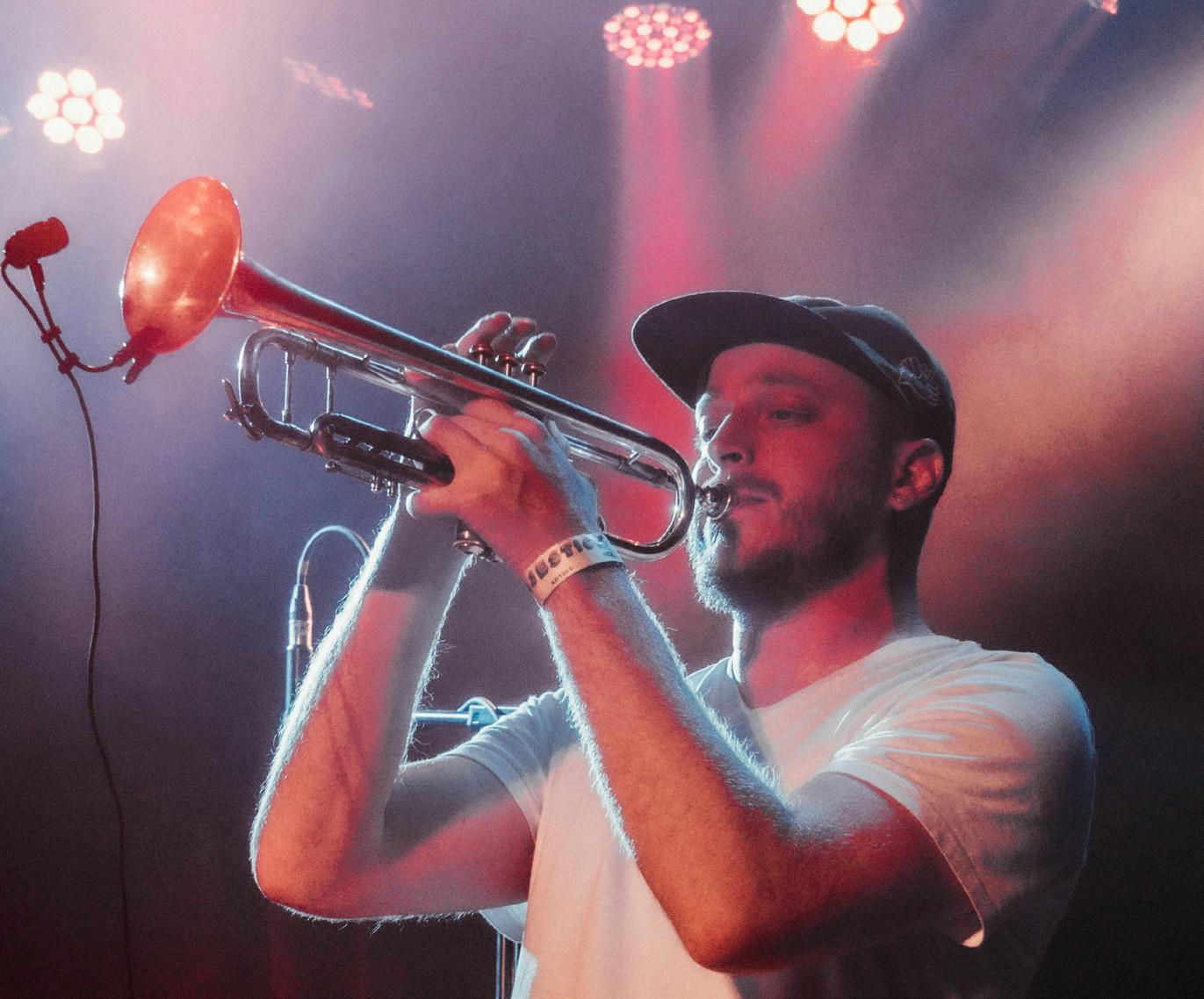
Organizers initially expected only a few hundred attendees: Around 25,000 people showed up, proving you can never anticipate the crowds of Jacksonville.
The city spends most of the year acting too spread out and disconnected to rally behind anything collectively, then suddenly hundreds of thousands of people are downtown listening to jazz under unbearable Florida sun while somebody nearby argues about whether parking at the courthouse garage was “actually not that bad this year.”
Over time, the festival moved Downtown and evolved into one of the largest free jazz festivals in the country. And while jazz remains the foundation, the lineup has expanded far beyond what some people imagine when they hear the word “jazz.”
This isn’t one of those festivals where everyone stands silently nodding at an upright bass for six straight hours.
There’s traditional jazz, contemporary jazz, funk, soul, fusion, R&B and artists whose music barely fits neatly into genre labels anymore. That flexibility is part of why the festival continues attracting both longtime jazz fans and younger audiences who may have first discovered artists through TikTok clips or Spotify playlists instead of old vinyl collections.
This year’s lineup especially leans into that mix.
Friday night brings Parliament Funkadelic featuring George Clinton alongside Ghost-Note and Butcher Brown, which honestly feels less like easing into the weekend and more like immediately throwing Downtown into chaos in the best possible way.
To read the rest of this feature.

TUESDAY, JUNE 2 – SUNDAY, JUNE 7

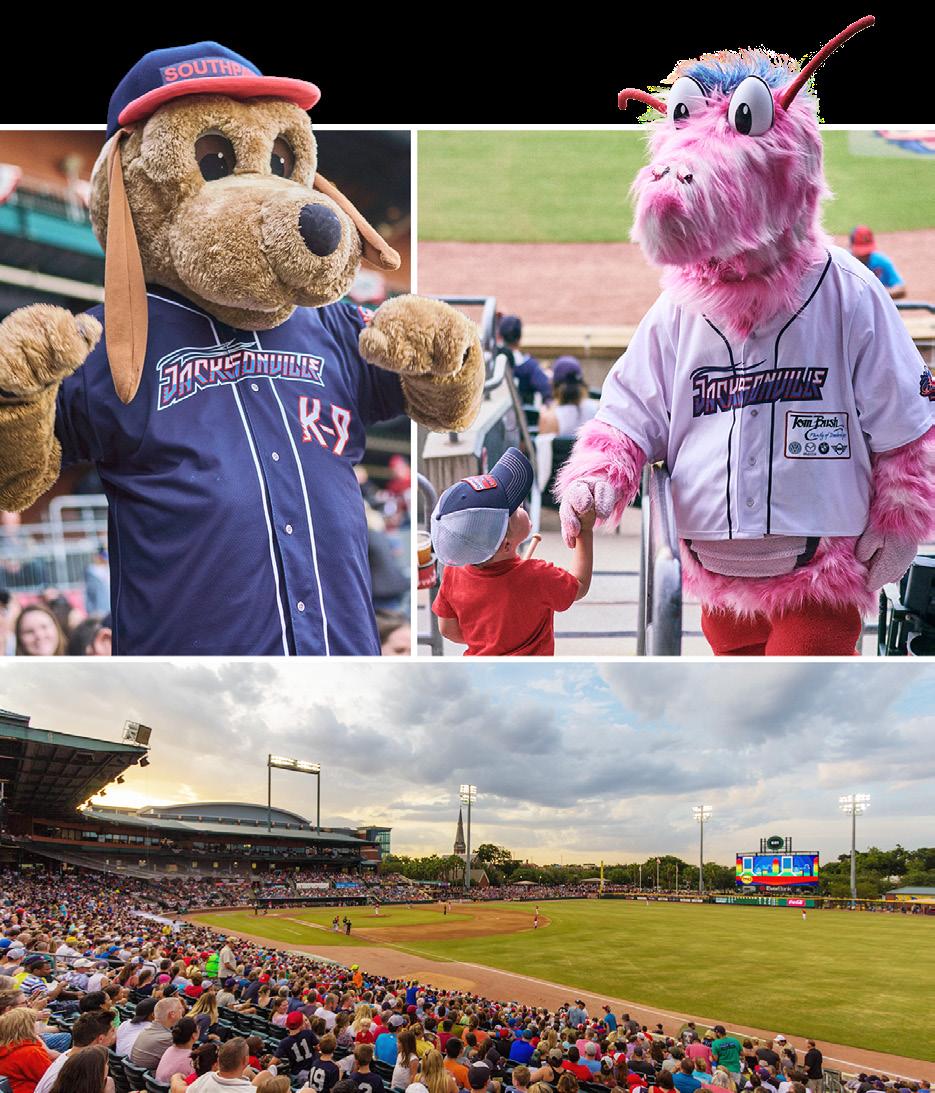
so head out to the center field gate where we will host catch on the field until 20 minutes after the gates have opened. Kids can also feel like the pros after each Sunday game by rounding the bases once the field is clear. Plus, face paint, balloon animals & more, presented by Baptist Health.
TUESDAY, JUNE 9 – SUNDAY, JUNE 14


Words by Carmen Macri
What originally started as a side hustle for a broke college student ultimately turned into a dessert empire.
It is a tale as old as time. Austin Crittenden was attending Tufts University in Massachusetts when he was desperate to make a quick buck to pay off his student debt. One night while wandering the dining hall, he came up with the idea to buy tubs of ice cream for cheap and deliver them to local students who have the late-night munchies and don’t want to make the trek themselves.
At first, it was a few casual stops around campus, but once word got out, Crittenden’s phone wouldn’t stop blowing up. It quickly became more than one guy and a motorcycle could handle, so he did what any resourceful student would do: He recruited his fraternity.
Picture exactly what you’re imagining — a bunch of college guys running a makeshift ice cream shop out of a frat house, microwaving toppings and prepping drizzles between classes. It was chaotic, it was peak college side hustle, and it worked.
Once graduation hit, Crittenden realized he was sitting on something bigger than a campus trend. He hit up his childhood friend, Sean Sally, and thus The Scoop N Scootery was born.
By 2014, the duo stopped playing around, bought a food truck and got to work. For the next two years, Crittenden and Sally cemented themselves as a late-night staple in the Boston area, grinding away as a dedicated dessert delivery service. They spent those two years refining the menu and tightening up the business model until they were confident enough to finally give the “Scootery” a permanent home with a brick-and-mortar storefront. Don’t get it twisted, though — delivery is still the heart of the operation.
Now, The Scoop N Scootery is famously known (very famous, actually, like millions of views famous) for their over-the-top, fully-loaded sundaes, and they just opened up shop right here in Jacksonville. It’s exactly what the cityscape needed. A late-night (we’re talking 2 a.m.), munchie-fueled dessert delivery service. From corner to corner, Jacksonville is bustling with lively restaurants, bars and coffee shops, so it’s only natural for us to dip our toes into the dessert scene.
Their ice cream is built with 14% butterfat — a step up from the industry-standard 12% — which isn’t just for the rich texture; that extra 2% is the secret to making sure your sundae doesn’t turn into soup while it’s scooting your way. Before it even leaves the shop, the team flash-freezes the ice cream for a few seconds to lock everything in place.
While chatting with Chief Marketing Officer Isabella Sidoruk, she let me in on another trick to their madness: it’s all about the “slam.”
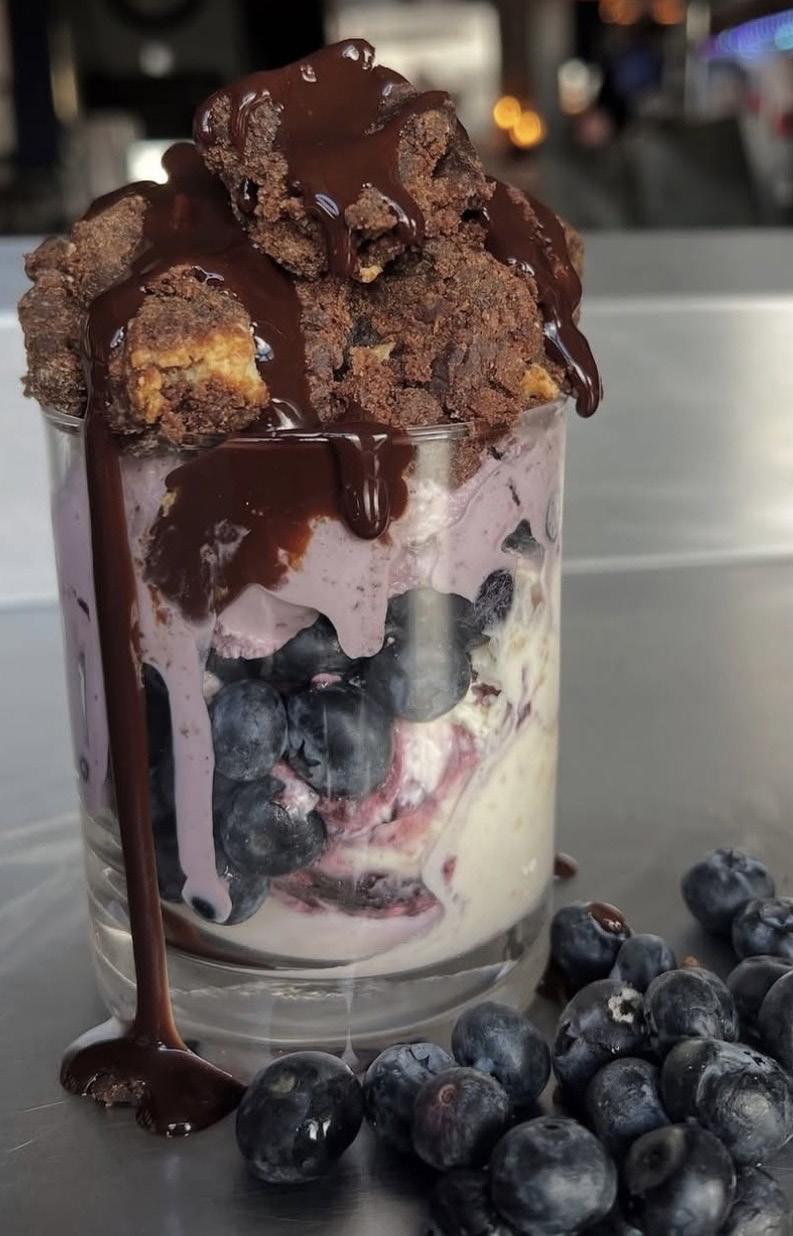
“We’re pretty much slamming as many [ice cream and toppings] as we can into the sundae cup and then pushing it down to limit oxygen,” Sidoruk explained. “That way, it doesn’t melt as fast. We can pretty much reach up to 45 minutes away without melting.”
Something else worth noting is just how vast their menu truly is. It’s miles above your average mom-and-pop ice cream shop with 10 or so flavors. At The Scoop N Scootery, they’re boasting 75 signature sundae creations, each one more impressive than the last. And if that weren’t enough to get your mouth salivating and your ass in the car, their sizes might. A “medium” sundae is a literal pint.
“So our business model is really ‘save it for later.’ In college, my friends and I would order the size that’s equivalent to two pints, and we would freeze it for a couple of days — it’s still just as good,” Sidoruk shared. “We definitely have big portion sizes, but it’s meant to save or to share or, you know, I have even eaten them in one sitting.”
As someone with a certified sweet tooth, this is music to my ears.
For more information, check them out on TikTok at thescoopnscootery (trust me).
Words by Abigail Bodenham
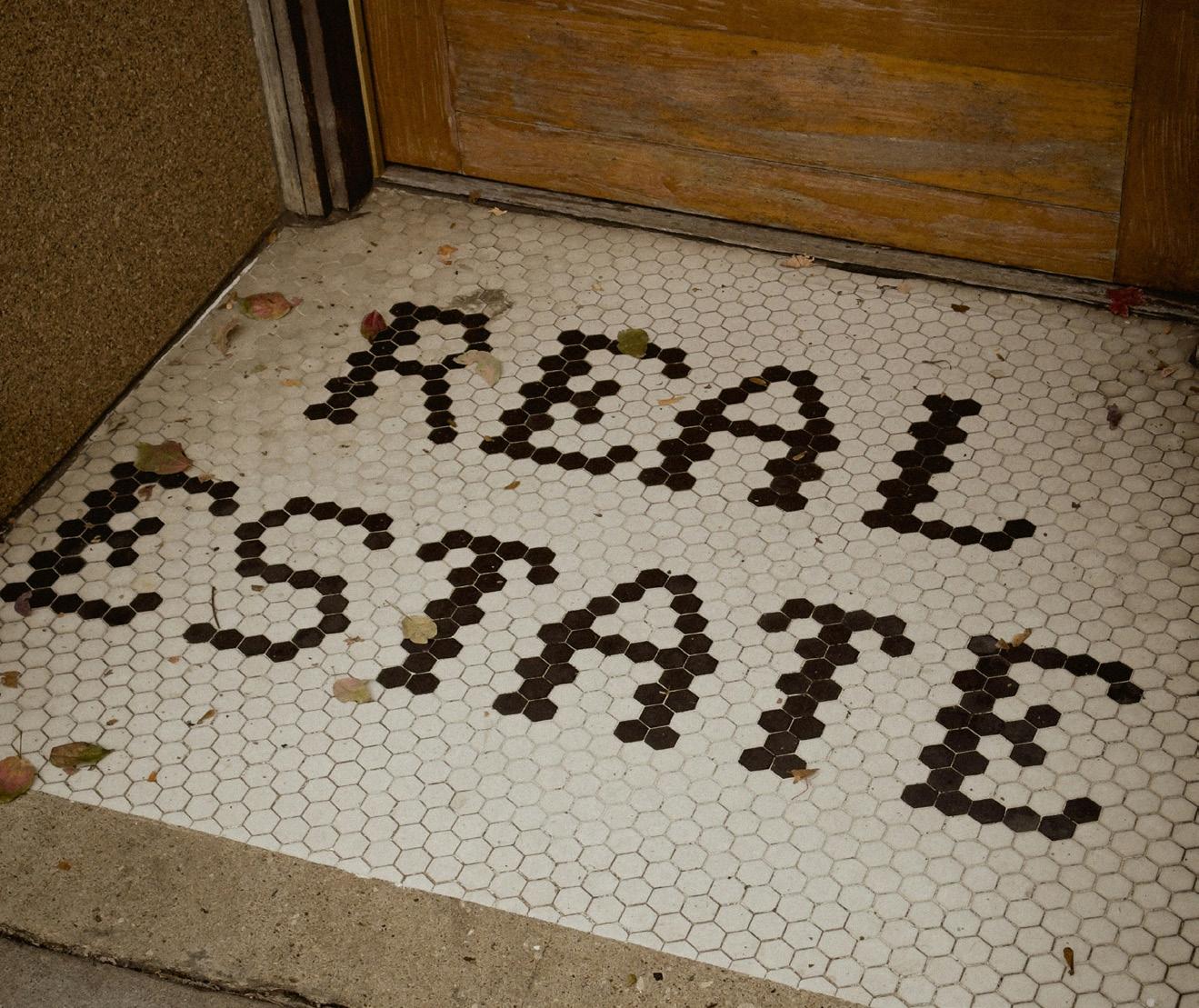
There is a certain point where a neighborhood starts feeling less lived in and more passed through.
You notice it slowly at first. A house that used to belong to the same family for years suddenly has a keypad lock attached to the front door. Cars with out-of-state license plates rotate through every few days. Rolling suitcases replace grocery bags on the sidewalks. Someone arrives Friday afternoon with beach chairs and a cooler, then disappears again before Monday morning.
Across Jacksonville, especially in Riverside, San Marco and the Beaches, short-term rentals have quietly become part of the landscape. What once felt like the occasional spare bedroom listed online has evolved into something much larger. Entire homes are now designed around weekend visitors, football weekends, bachelor trips and tourists looking for a more “local” alternative to hotels.
And while platforms like Airbnb and Vrbo have created obvious opportunities for tourism and income, they have also started raising a difficult question across the city: at what point does a neighborhood stop functioning primarily for the people who actually live there?
Jacksonville Was Almost Built for This
In some ways, Jacksonville feels uniquely vulnerable to the rise of Airbnb.
The city is enormous geographically, but its most recognizable neighborhoods are relatively concentrated.
Riverside, San Marco and Jacksonville Beach all offer something visitors increasingly search for when traveling: walkability, local coffee shops, nightlife, historic charm and the feeling of staying somewhere authentic rather than generic.
Airbnb listings know this too.
Scroll through enough Jacksonville rentals online and the descriptions start sounding familiar. “Steps from 5 Points.” “Historic bungalow.” “Walkable to local bars and restaurants.” “Experience Jacksonville like a local.”
That version of the city sells well.
According to AirDNA, there are now thousands of active short-term rental listings operating across the Jacksonville market, with the Beaches and urban neighborhoods consistently performing among the strongest areas for hosts and investors. Properties near the ocean or in highly walkable districts can generate substantial income, especially during football season, concerts and large Downtown events.
And that is part of what makes the issue so complicated.
The same qualities that make neighborhoods desirable places to live also make them profitable places to monetize.
Spend enough time talking to residents in Jacksonville Beach, and the same concerns come up repeatedly.
People mention noise complaints and overflowing street parking, but most conversations eventually circle back to something less tangible: the feeling that their neighborhoods are becoming temporary.
To read the rest of this feature.


The cyclical nature of time, paired with humanity’s apparent short-term memory issues, led us to the insanity that is 2026. “Nostalgia” is the appropriate word for this chapter, though more than just bohemian styles, this era is reminiscent of the 1970s for many other reasons.
In every corner of popular culture, 2026 reflects the turbulent times of the 1970s. From an unpopular war, the draft being reinstated and the youth pushing back against unjust government systems, we can learn a lot about how to proceed with caution over the next few years. The art of our current period is a main indicator of how people are dealing with the current political issues with similarities in the films and music being created, reflecting the parallels in society at large. Though many people may hang their heads in hopeless defeat, this art may signal the way out of this mess, a beacon of humanity and our will to persevere.
It goes without saying: the war is here. Sure, war has been around for thousands of years, but the extensive documentation of this particular era of death and destruction is so reminiscent of the 1960s and ’70s. During the Vietnam War, the intensity of photojournalism forced Americans to come face-to-face with the atrocities of their government. “LIFE” magazine covers told us, “Do not look away, not for their sake.” Now, TikTok and social media, again, tunes a new generation into the horrors being perpetrated worldwide.
Film has transformative properties, especially when using real life as its source material. Just like with the magazine covers and social media posts, documentaries capture them and filter them through the medium of film. The 1974 documentary “Hearts and Minds” depicted Americans and Vietnamese people suffering from the war, granting insight, unfiltered, to the government’s apathy toward humanity. In the modern age, documentaries are regaining traction as more and more unimaginable acts occur. Log in to Netflix or Hulu and you will find a documentary on Jeffrey Epstein, P. Diddy or any other person committing heinous crimes. The documentaries are a catharsis of sorts, fitting the sick psychological issues of man into an eight-part series narrative. These art forms prove themselves essential as they ingest the chaos happening around the world and make sense of it from a specific lens.
Music, another significant social signifier, serves as a more interpretive indicator of the collective, reflecting cultures as much as it expresses individual feelings. What happens, though, when everyone is feeling chaotic, unstable and restless under the boot of an unjust government? Rock music, that’s what. The counterculture takes root as the majority suffer, giving way to bands like Led Zeppelin, Black Sabbath and Pink Floyd — the sound of the ’70s. The American Dream was dying with the soldiers in Vietnam, and there grew a need to
express the deep disillusioned state of the masses. Fast forward to 2026, after years of soft pop ruling the charts, rock is re-entering the mainstream, though the evolution of music presents the energy of rock differently than before. Rock and hardcore sounds mix with other genres, setting it apart from the great rock songs in history but revelling in the chaotic energy all the same. Artists like Charli XCX with “Rock Music” and Machine Gun Kelly with “FIX UR FACE,” represent the anger of the masses but present it in a pop format, making their sounds more digestible for the modern youth.
I knew I was going to talk about the similarities in the oil crisis between the 1970s and now, but while researching this article, I stumbled upon this quote that was too good to not include. According to the Department of State, “[d]uring the 1973 Arab-Israeli War, Arab members of the Organization of Petroleum Exporting Countries (OPEC) imposed an embargo against the United States in retaliation for the U.S. decision to resupply the Israeli military and to gain leverage in the post-war peace negotiations.” Sound familiar?
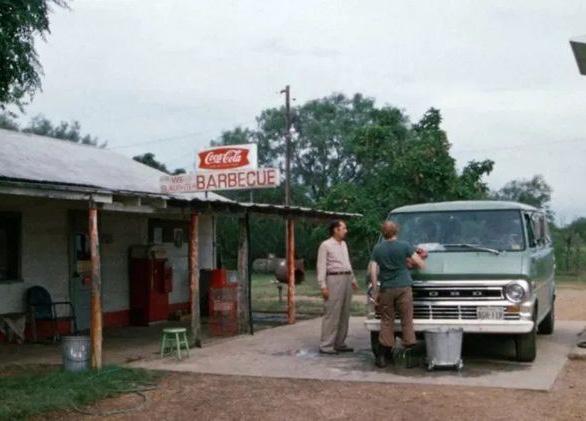
Well, back then the oil was so scarce that miles-long lines would form from the gas station as people attempted to fuel up. This crisis affected everyone so much that it made its way into art, specifically, into the most influential horror movie of all time, “The Texas Chain Saw Massacre.” In the film, the characters are forced to stay the night in a strange house after being unable to get gas on their road trip due to the gas shortage, leading to the ultimate deaths of most of them. Horror had made its way to American soil, but instead of monsters, the scariest elements were based in real life— insidious neighbors and gas crisis.
A few weeks ago, Saturday Night Live used a gas station as the backdrop of their cold open. A family attempts to get gas but discovers that the high prices of gas may force them to leave one of their children behind to make up for the cost. These instances of
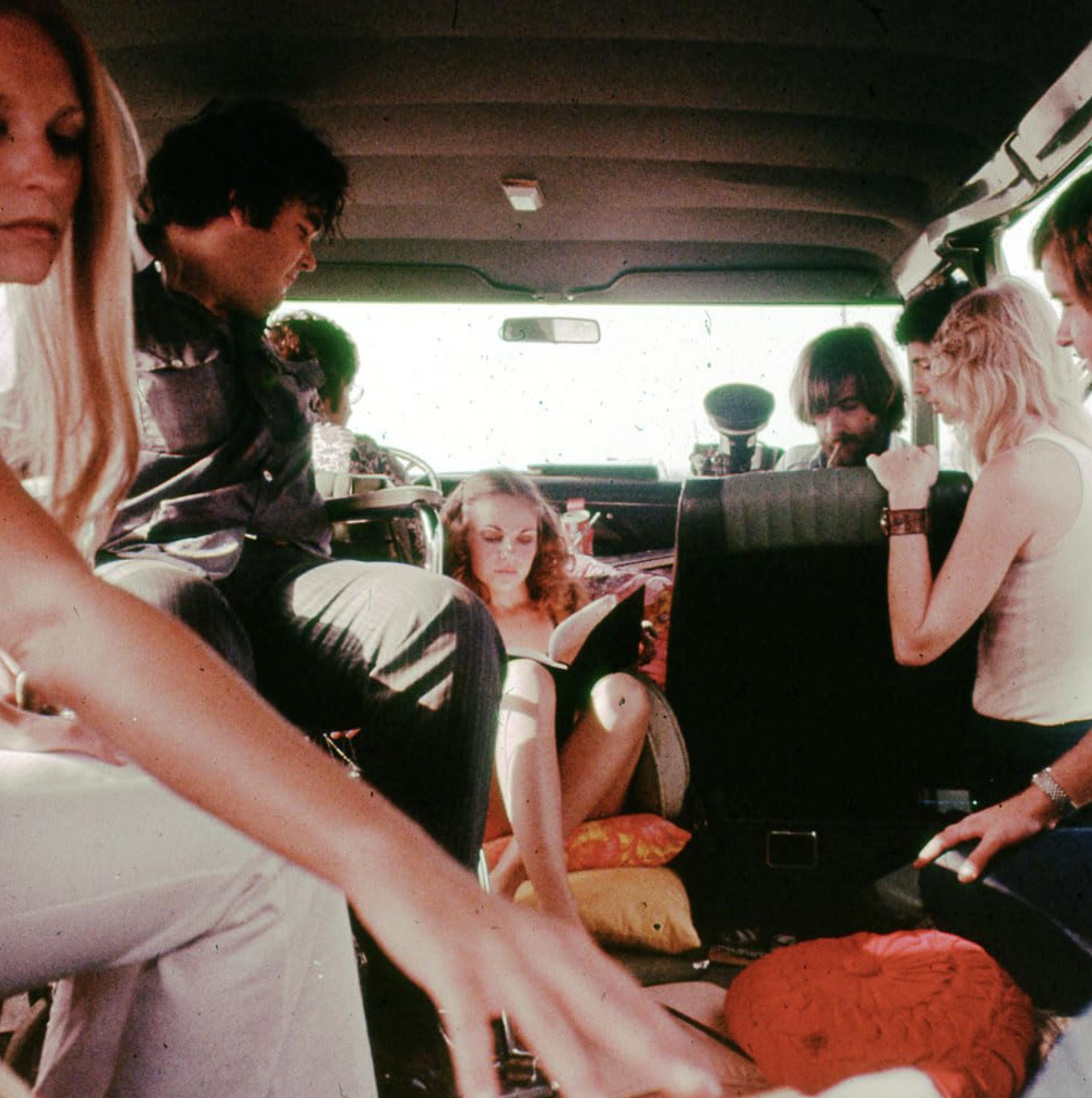
including social issues in filmography unite audiences through their shared circumstances, using both comedy and horror to make sense of the prices being out of their control.
The pendulum will always swing. After years of repressed, clean, minimalist sensibilities, the human spirit feels stilted and underexpressed in light of growing global tensions. Expression is nothing but a reflection of an outer circumstance, which is being shown more and more in the social landscape. If the 1970s taught us anything, it is that no matter how far gone world issues may seem, humans have a way of using art to unite. The issue now is the introduction of divisive technology, while creating an assumed bridge for community, isolating ideologies into echo-chambers. In order for the current art to transform and influence as it did in the past, people have to re-engage. Interaction does not have to look like full blown protests, organizations or revolt, but the energy has to exist somewhere; this is where attention comes in.
Our eyes must turn toward the artists’ work surrounding us, instead of escapism blinding us through dopamine saturation.Though it feels like the end of the world, coming together through art and creation is something that people have always done.
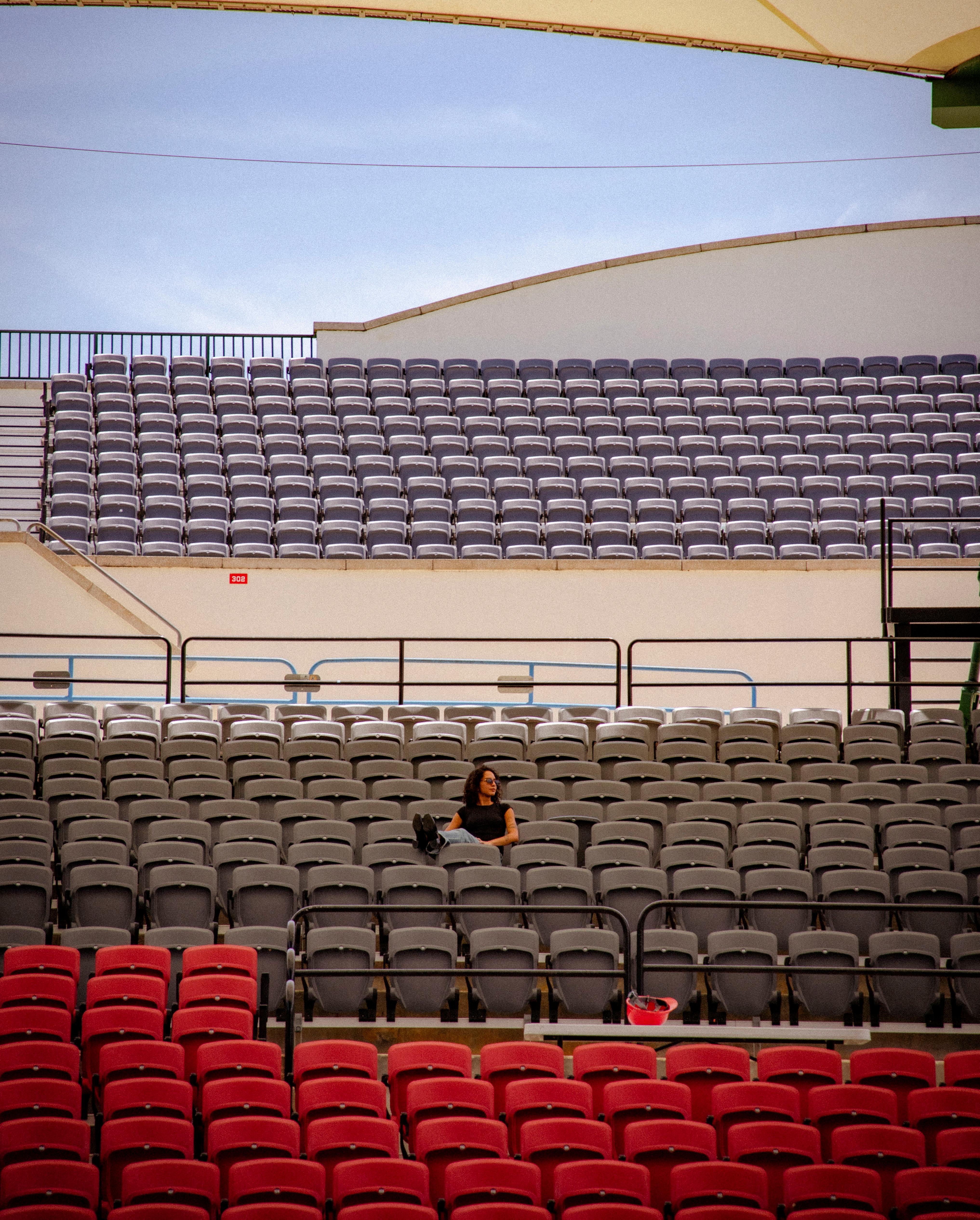
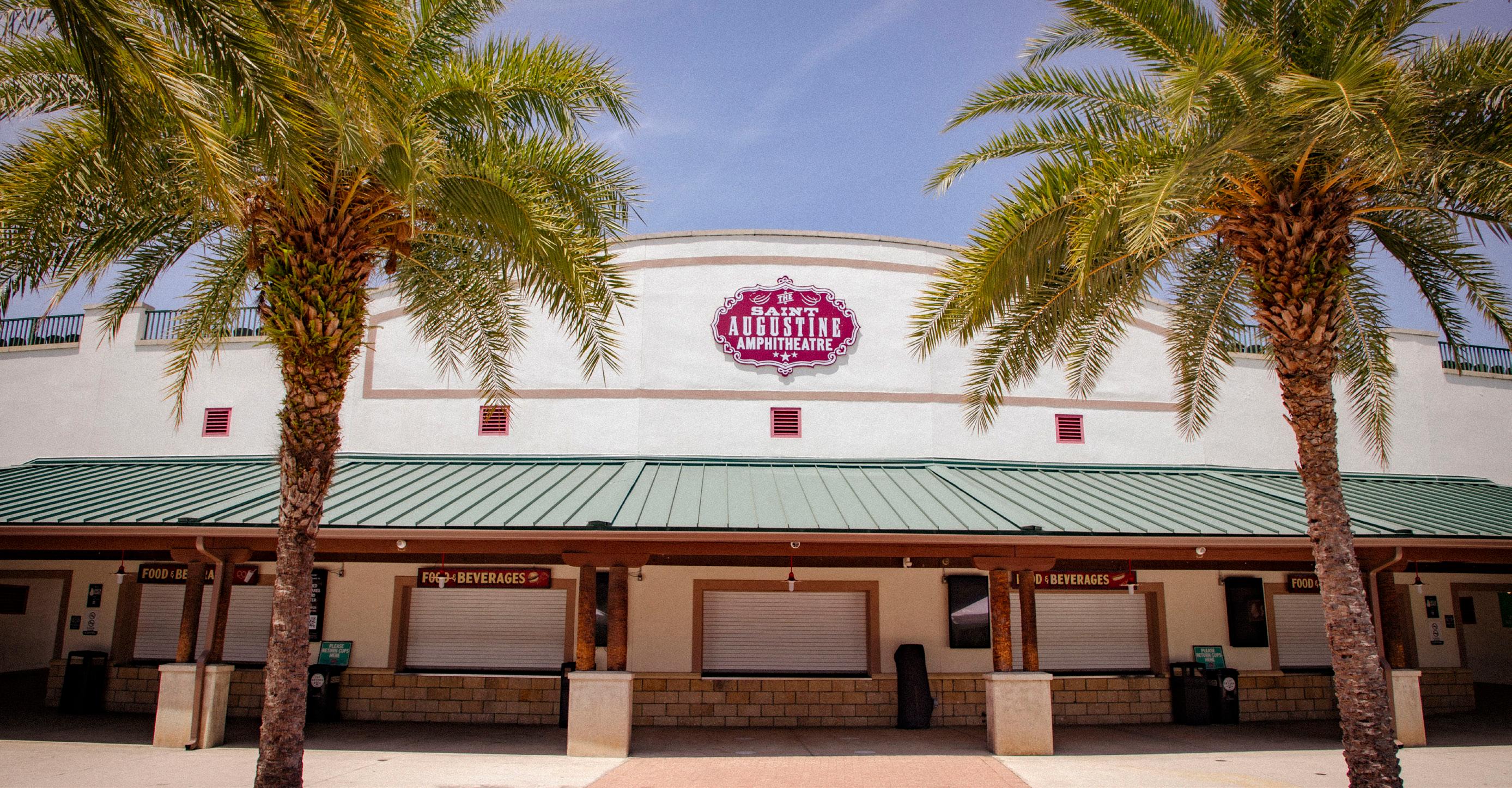
“I think this has always been a community space since the days of ‘Cross and Sword.’ We are community-led, community-operated and community-owned, and we take that commitment to heart. We are fully committed to making sure that this is a venue where everyone feels welcome, and there are ample opportunities for them to come see a concert, come to a market, come to our graduation, or come to a variety of events, so that it stays in the community’s hands.”
Long before it became the St. Augustine Amphitheatre, and even before it served as the birthplace of the famed “Cross and Sword” production, this site was simply a rugged stretch of land, a stretch of land that was rich in coquina, a sedimentary rock that became the foundation for most of St. Augustine’s buildings.
We’ll spare you the history lesson on the city’s 1565 settlement, but there is something undeniably poetic about the fact that the “Amp” sits atop an ancient coquina quarry. It’s fitting that a venue now considered a cornerstone of the local culture was built upon the very materials used to build the city itself. This history is embedded in the city’s fabric, and walking the grounds feels like stepping into a moment frozen in time. While the theater itself has undergone quite a transformation from the once single-use stage, the surrounding environment has stayed true to its community roots.
Pulling into the historic St Augustine Amphitheatre alone is an experience that very few venues in Northeast Florida can match. Rather than industrial infrastructure and paved parking lots trapping in the Florida heat, the Amp is surrounded by a sprawling canopy of Southern Live Oak and gravel roads that draw you in, inviting you to stay a while.
And we did just that on a sunny Tuesday afternoon when we met with Director of Public Relations and Partnerships Dianya Markovits and Director of Programming and Strategy Tim Kirkpatrick inside the newly added Kookaburra coffee shop that doubles as a merch store.
Before we decided on the perfect place to set up camp, we wandered around the merchandise sporadically sparking conversation about summer plans and how we like our coffee. Coincidentally, we found out that Markovits and Ambar have similar caffeine addictions, and that the three of us will be in Italy at the same time in July. In the midst of our revelation, we almost forgot we were there for business, not pleasure, though being at the Amp, it’s hard to tell the difference.
Once the final member of our quintet arrived, Kirkpatrick led us single-file through the venue to a hidden pocket just off the right side of the stage called The Amp Choice Pavilion, where we rearranged a few chairs, sat down and got to work.
“We are a very unique venue in that we are nestled inside a state park right on the coast, surrounded by nature. There aren’t a lot of venues that are like that. So if you’re an artist and your van pulls up and you get out, you’re immediately struck by a very different scenario than what you’re used to on any given night at any other venue,” Kirkpatrick shared. “Not to disparage any other venues because live music is great —it’s in every city, and that’s special.
But we’re a venue that’s rooted in nature, and artists feel that. And I think that our community members who come here feel that.”
From the pavilion, we had a clear view of the stage, a space that has hosted an incredible lineage of talent. Long before they were household names, acts like Twenty One Pilots, The 1975 and even Kendrick Lamar (well before he became “Super Bowl Kendrick”) graced this platform. The Amp has always been a springboard for greatness, possessing a keen eye for emerging legends.
The St. Augustine Amphitheatre, according to Markovits and Kirkpatrick, hit a turning point in 2014 when they had the Jack “Banana Pancakes” Johnson perform his only Florida show. Having a national artist of that caliber choose to perform at the Amp felt like a door had opened. Because now, the intimate venue was catching the eyes of powerhouse performers like Diana Ross, Willie Nelson, Bob Dylan, James Taylor and Robert Plant.
“That [Jack Johnson show] got a lot of attention and got a lot of people from out of town really putting us on their radar for shows to come. Later, around 2020, 2021, we started making the ‘top lists’ for ‘Pollstar Magazine’ as the industry leader,” Markovits expressed. “And we started to [consistently] make those top 10 lists. We were ranking up there with Merriweather Post Pavilion and Red Rocks; we’re in that pantheon of iconic venues.”
Beyond its scenic backdrop of lush trees, nature trails and the occasional resident raccoon, the Amp distinguishes itself through the specialized backstage team it has cultivated. As Markovits noted, many staff members are either former or active musicians themselves; this shared history creates a natural affinity for the artist experience, allowing the team to anticipate exactly what a touring act requires. While world-class sound is a given, the Amp’s team prides itself on meeting needs that are a bit more ... unconventional.
“Everyone kind of talks about artist riders. Artists have very particular needs; they have needs because they’re traveling. Their home is on the road, and so we understand that those are needs. But one of the best ones was somebody who requested a live unicorn and said, ‘If you cannot provide a live unicorn, you must write a handwritten note as to why you cannot provide a unicorn.’ And we did that. We wrote that they simply don’t exist. We tried, but they don’t exist,” Markovits shared. “I mean, there are some fun things, you know, like Mountain Goats want homemade hummus. So we make sure that they get homemade hummus, and to Tim’s point, we want to make sure that we meet all of their needs so that they have a high-end, exceptional experience here.”
“They do say a lot that this place feels like home. We really pride ourselves on focusing heavily on the artist experience,” Kirkpatrick added.
And this dedication goes beyond just the artists passing through; that type of attention to detail spans throughout the community, especially to the concert-goers. While it is incredibly important to ensure the performers are happy with their experience at the Amp, it’s equally important to provide a core memory for the fans.
“They do say a lot that this place feels like home. We really pride ourselves on focusing heavily on the artist experience,” Kirkpatrick added.
They leave it up to the performer to give a great show, sure, but everything that falls into the venue’s hands — the sound, the seating, the lighting, the snacks, the drinks — they take care of it tenfold.
“We care about every element of the experience deeply. I mean, we pay attention to the fans from the point that they purchase tickets and come into the venue, experience the show, the food, the beverages, but also the sound. We’re huge on sound. That’s the kind of cornerstone of the experience,” Markovits said.
For those who have grown up in Jacksonville, the Amp has always been a venue in steady rotation. And as two girls who have attended dozens of shows right here — in the 300s, the 200s, all the way down to the pit — we can attest to Markovits sentiment. The sound travels through the venue; whether you’re close enough to catch stray sweat or up in the stands, the sound is the same. And so is the energy.
“You feel like you’re being hugged by the audience, and the artists really feed off of that. They go to the edge of the stage, and they just look up, and you can see them beaming,” Markovits expressed. “We talked about the Tame Impala show, you know, where he comes out and he’s just embraced by the audience. And the energy is so contagious. And I think that’s hard to replicate night after night after night. But when you come to a very unique setting, it’s just magical.”
Toward the end of our informal, formal interview, Markovits and Kirkpatrick asked us who we would most want to see live right now. Our answers ranged from Olivia Rodrigo and Olivia Dean to Hot Mulligan and The Story So Far. And that’s usually how the venue and more specifically Kirkpatrick, goes about choosing artists to perform at the Amp. It happens organically through conversations. This process highlights their passion for music. It isn’t about who is gonna bring in the most revenue, it’s about who is gonna give a great show that the city wants to see.
“At the core, we want a program of a very diverse set of artists so that everybody can feel like there’s a show that they can come to. And we look at the full spectrum. We love going after artists that play arenas and bringing them here so that the surrounding community can come see a fantastic artist in our space,” Kirkpatrick said. “But we also like to discover new bands, and we try to get them when we think that we can lock them in.”
This sentiment of the Amp as a community-driven establishment echoes beyond the concerts to the events the venue hosts. Every Saturday morning, the Amp hosts a local farmers market, putting money back into the community’s pockets. Every three months, the Amp puts on a Night Market. So, if you’re more of a night owl than an early bird, you’re in luck.
“We just did a BRAVE mental health summit here, and that was brought by UF Health St. Johns. And that was where 3,200 high school students came to talk about mental health and how to take care of mental health. To be in a space where they can have those open conversations, meet with groups that they’re interested in or maybe they were a little bit too shy to get involved in, but they all got to come here for free,” Markovits explained. “They got to experience the amphitheater, and they had a performance — Waka Flocka Flame. And actually, for
that show too, a lot of Flagler students who are photography and video communications majors came and took pictures of the event, and they were fantastic. That’s something that we like to try to do too; help people grow and help people develop skills they are passionate about.”
As a nonprofit, the Amp, along with its sister venue Ponte Vedra Concert Hall, curates events like the Sing Out Loud Festival and the Jazz Blues Series, but they are also implementing a new initiative in partnership with Friends of Ponte Vedra Concert Hall called the music enrichment program. Continuing the thread that music is therapy, this program creates a safe space for students who may not be the best at math or history but come alive when creativity is involved.
“It is still in formation, but we were able to partner with the St. Johns County Parks and Rec, and we have classes at a couple of sites where board-certified music therapists are able to provide music therapy sessions to students who have registered for the program,” Markovits explained. “You have a lot of artists talking about it. You have Noah Kahn who talks about mental health and how music can help bring out the emotions that maybe are hard to materialize or vocalize. You have a lot of artists that take up a lot of really cool initiatives, and then they bring them out on the road, like when Jack Johnson came, he really kick-started our sustainability program here, and Widespread Panic does a food drive every time that they come. We’re just really excited to say we open our doors up to groups that come along with the tour.”
They are a venue run by the community for the community, especially when it comes to sustainability. The Green Hands initiative, established in 2014, is dedicated to conserving valuable resources and reducing the ecological footprint of concert venues and live events. Live events can produce a lot of waste, whether it’s from cups, pallets of cardboard or leftover food, and the Amp has made it its mission to cut down the amount of waste produced.
Through their commitment to pollutant elimination, the Amp has retired 318.69 tons of carbon through We Are Neutral, an environmental nonprofit based in Gainesville. Through their commitment to waste reduction, they replaced all single-use cups with reusable, high-quality, BPA-free cups. At the end of the show, just drop the cup in the return bins on your way out. All cups are washed, sanitized and restocked.
“To date, we’re above the 1 million mark in terms of cups saved from the landfill. I think we’re even closer to the 2 million mark,” Kirkpatrick noted.
Our interview concluded much like it began, with the logistics of the venue fading into a spirited conversation about the shows we’re dying to catch. We eventually wandered back toward the cafe to take photos and browse the shops, but even with the work finished, there was a lingering reluctance to head for the exit.
That, at its core, is the Amp’s greatest superpower. Even on a night without a headliner or a roaring crowd, the venue’s identity as a welcoming nature sanctuary makes you want to stick around. It isn’t just a place to see a show; it’s a place where you simply want to be.


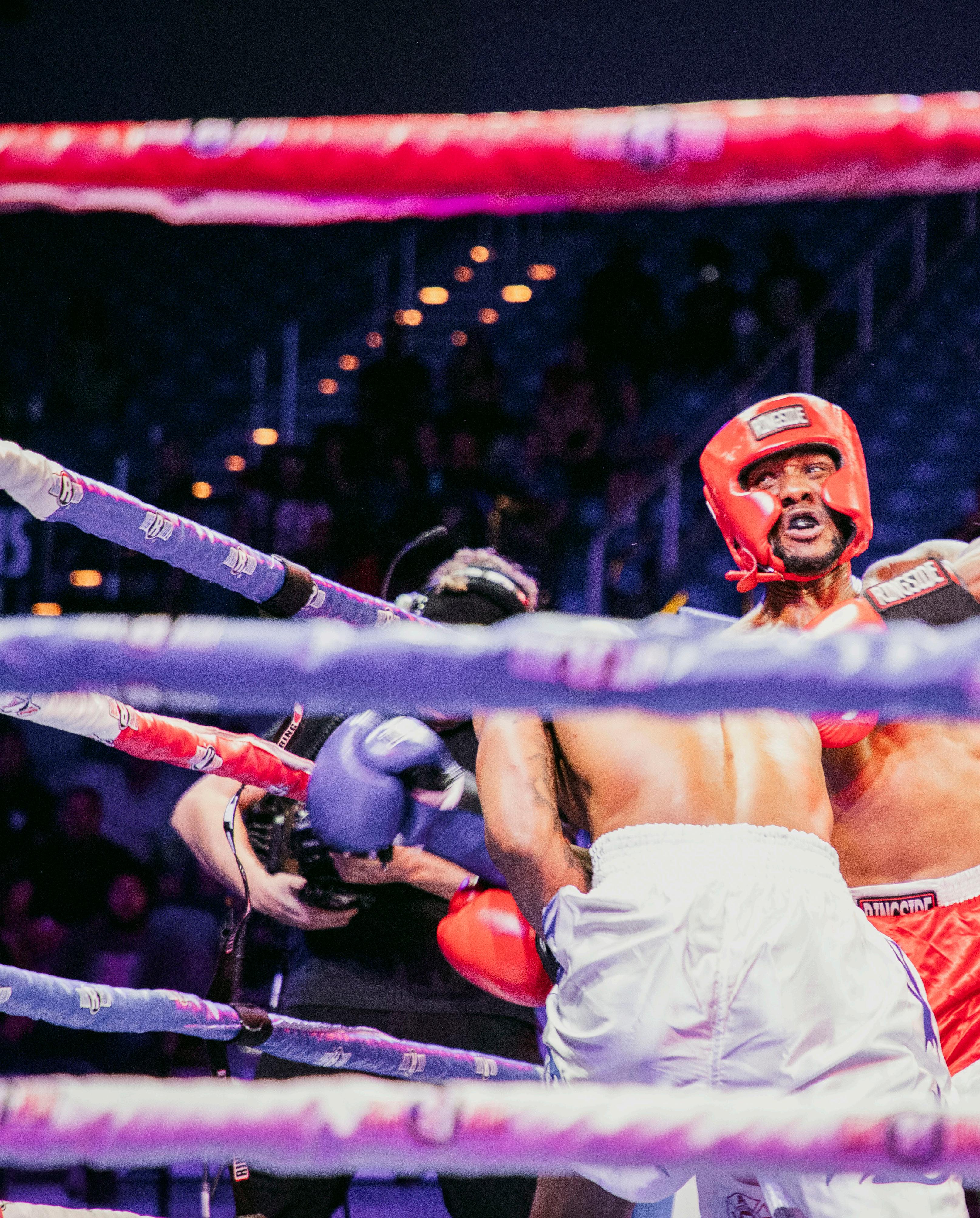
I’d like to start this article with a necessary disclaimer: When my friend texted asking if I “wanted to go to Guns N’ Hoses,” I genuinely thought she’d just fat-fingered a text about Guns N’ Roses, so, naturally, I said “yes.”
I immediately followed up by asking where they were performing — mostly because working for “Folio” means I’m usually the first to know when a massive tour is passing through, and I hadn’t heard a peep about Axl Rose coming to town. When she replied “UNF,” I was officially stumped. I mean, huh? There was a very clear miscommunication happening.
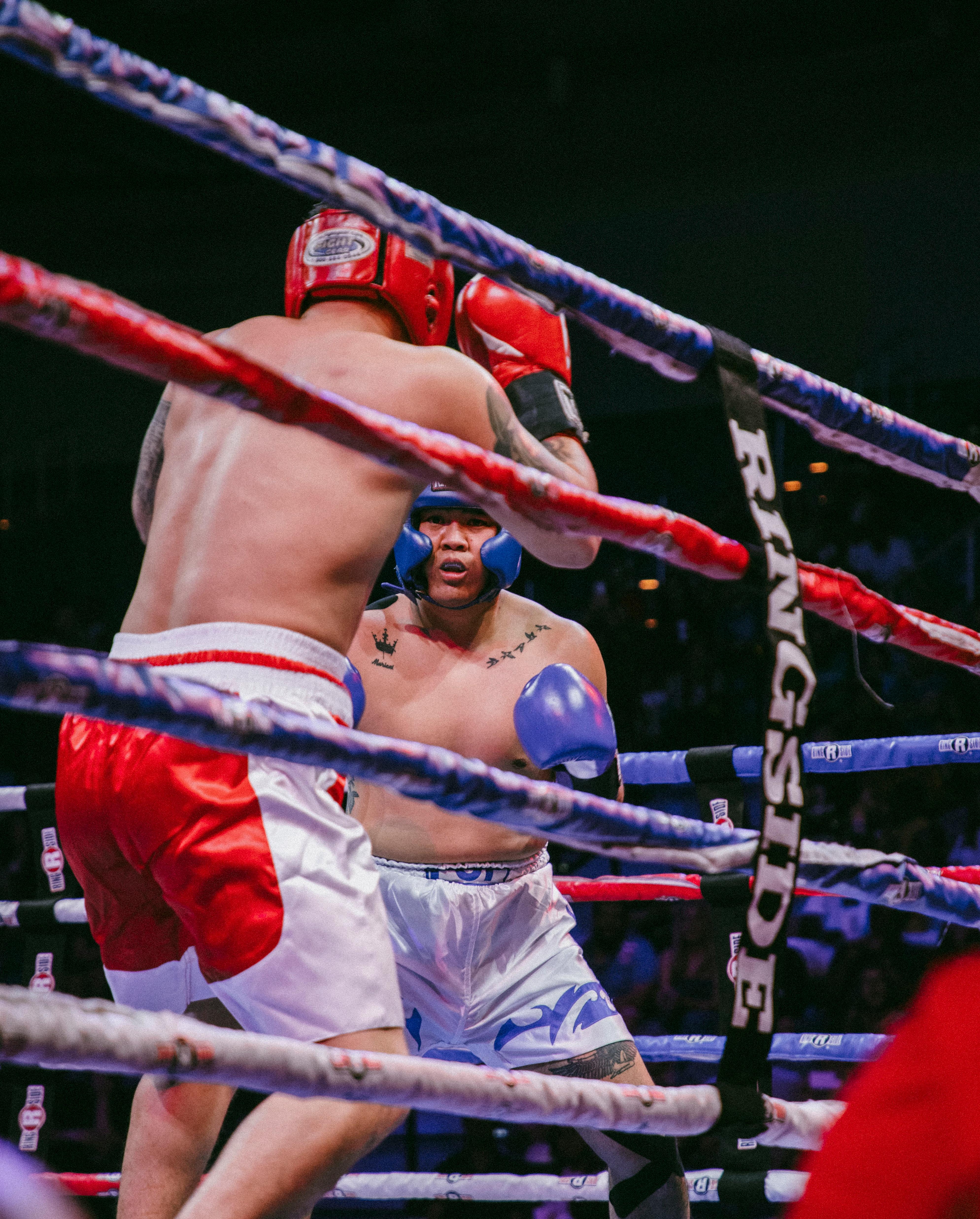
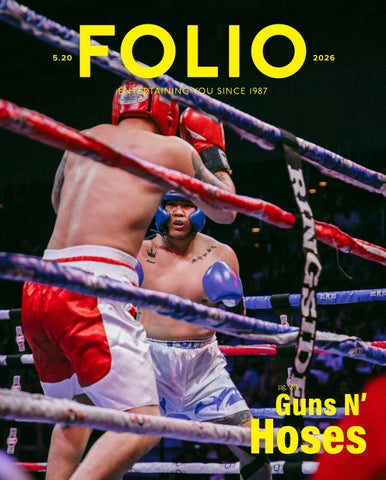
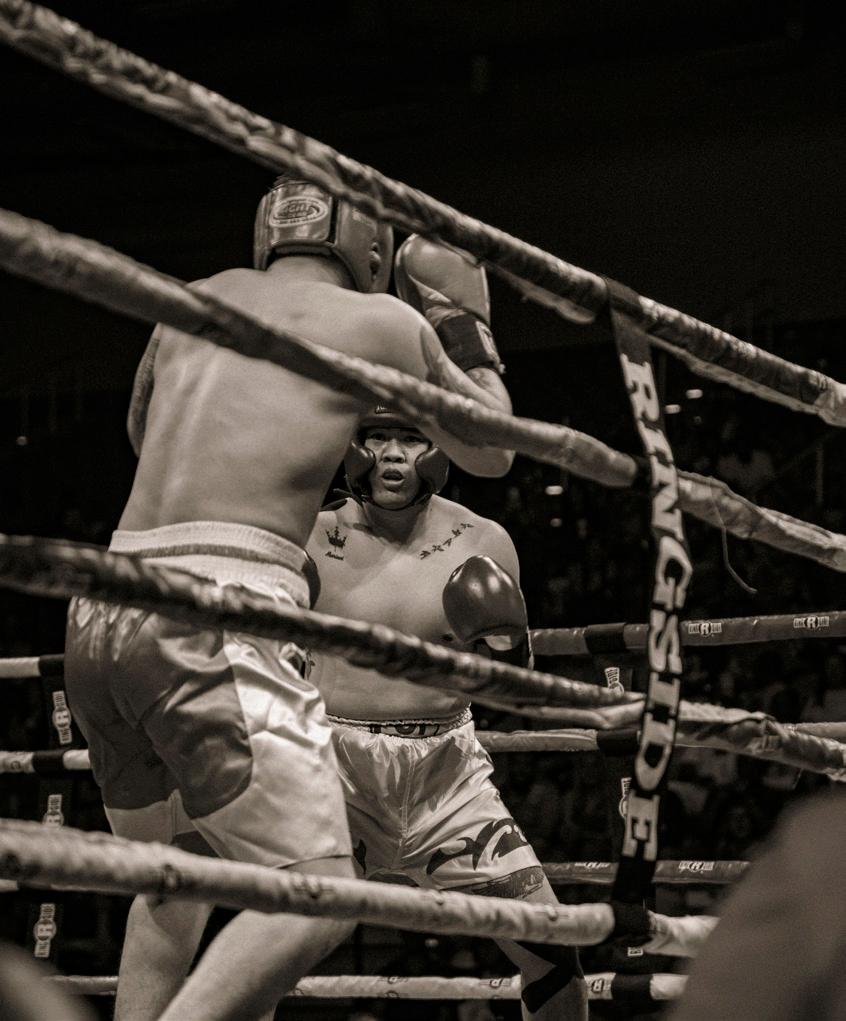
Nope. She meant exactly what she typed: Guns N’ Hoses. No rock legends, just a high-stakes boxing match between police officers and firefighters duking it out for charity.
Once that was cleared up, my answer remained the same: yes. Albeit the reason for my answer changed. I have a thing for a man in uniform, especially when that man is no longer in uniform, sweating, beating the sh*t out of someone… for charity.
Once a year, the “heated rivalry” between the thin blue line and the thin red line boils over. It’s a night where the best of the best step into the ring for three grueling one-minute rounds, all for ultimate bragging rights.
What started in 1999 as Jacksonville’s first Guns N’ Hoses has evolved into a championship-level tradition where every year feels more personal than the last. But beyond the pride and the punches, there’s a bigger mission: since its inception, the event has raised over $1.6 million for the Muscular Dystrophy Association and the FOP Foundation, fueling vital support for a variety of local charities.
This year was no different. Neither side came to play, and you could feel that energy sizzling long before anyone actually stepped into the ring. By the time the weigh-ins rolled around, the tension was so thick you could’ve sliced through it with a knife.
Since I was hanging with some seasoned veterans, they made sure I knew the ropes — walking me through exactly what to expect and, more importantly, who I should be rooting for. To be frank, I was Team Firefighter from the jump; you could not sway me. Their energy was just contagious. Every time one of their guys (or girls, because yes,
there is a ladies’ match) hit the stage to face off and weigh in, the whole crew broke into a pre-rehearsed chant. And they nailed it. Every. Single. Time.
Meanwhile, it was crickets from the cops.
I guess that was to be expected. When I caught up with the event coordinator and JSO officer, Trevor Hall, he laughed about how rowdy the firefighters usually get. But when it came to the actual match, he was singing a different tune: “Normally I would say fire all day, but this year, I think the police got them.”
Which leads us directly into fight night.
Arriving fashionably late is a real talent of mine, so we didn’t have a second to linger for drinks or whatever snacks actually count as “boxing match appropriate.” We barely made it to our seats before the lights went down.
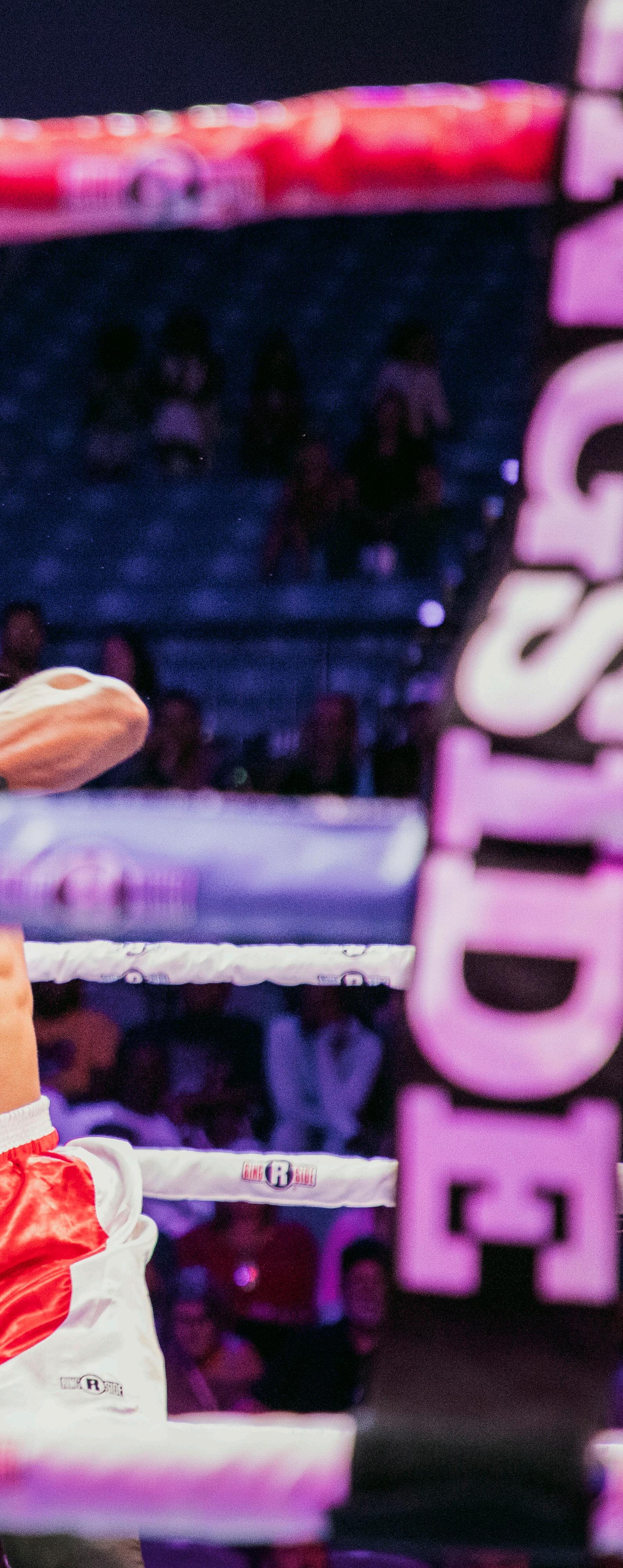
Thanks to Hall, we were sitting front row — on the cop side, no less. The first thing that hit me was just how official the setup was. It’s not that I was expecting some rinky-dink ring with a few folding chairs thrown around it, but seeing the UNF arena transformed into a fullblown WWE-style spectacle…I was hooked. Although I was a single red dot in a sea of blue, because, as I said, I would not be swayed.
It was fine in the end because the second the lights went low and the first walkout song blared, I was wiggling my way past the sponsors and families to get ringside. One of the things Hall was incredibly proud of, especially this year, was how evenly matched the fighters were.
“And this year, as you saw, turned out almost perfect,” he said. “I mean, it was the most evenly matched set of fights we’ve had in a long time.”
Coming from a background with zero boxing experience — real, fake or otherwise — I was essentially going in blind. I eventually found a makeshift home for the night, squatting and kneeling in front of some sponsor tables, trying my best to stay focused on the action and out of the way. It was a constant balancing act: paying enough attention to follow the fight while simultaneously trying to nail “the shot.”
The opening match of the night set a brutal tone. Both men were clearly out for blood. Regardless of how much of that rivalry is for the cameras and the crowd, there was absolutely nothing scripted about the way these two were throwing hands.
It was a total toss-up; at no point could I gauge who was actually going to come out on top. It was a literal slugfest between “The Gun” Frank Hernandez and “The Hose” Logan Bradshaw, and neither one looked interested in backing down.
The Hoses took that first match, and then another, and then another. It was almost enough to get my hopes up that the firefighters might actually run away with the whole thing. According to Hall, ever since he took over the event five years ago, it’s basically been a clean sweep for the red side, and selfishly, I really wanted to see that streak stay alive… subtle foreshadowing (it didn’t).
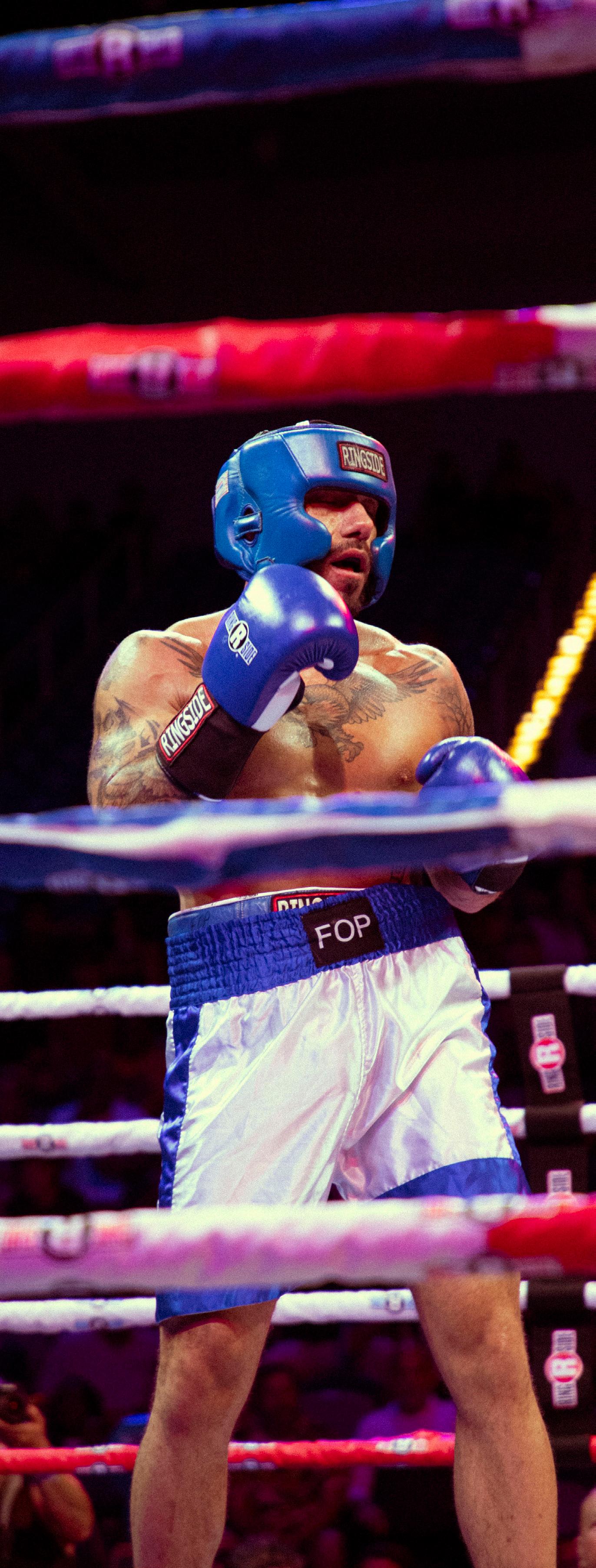
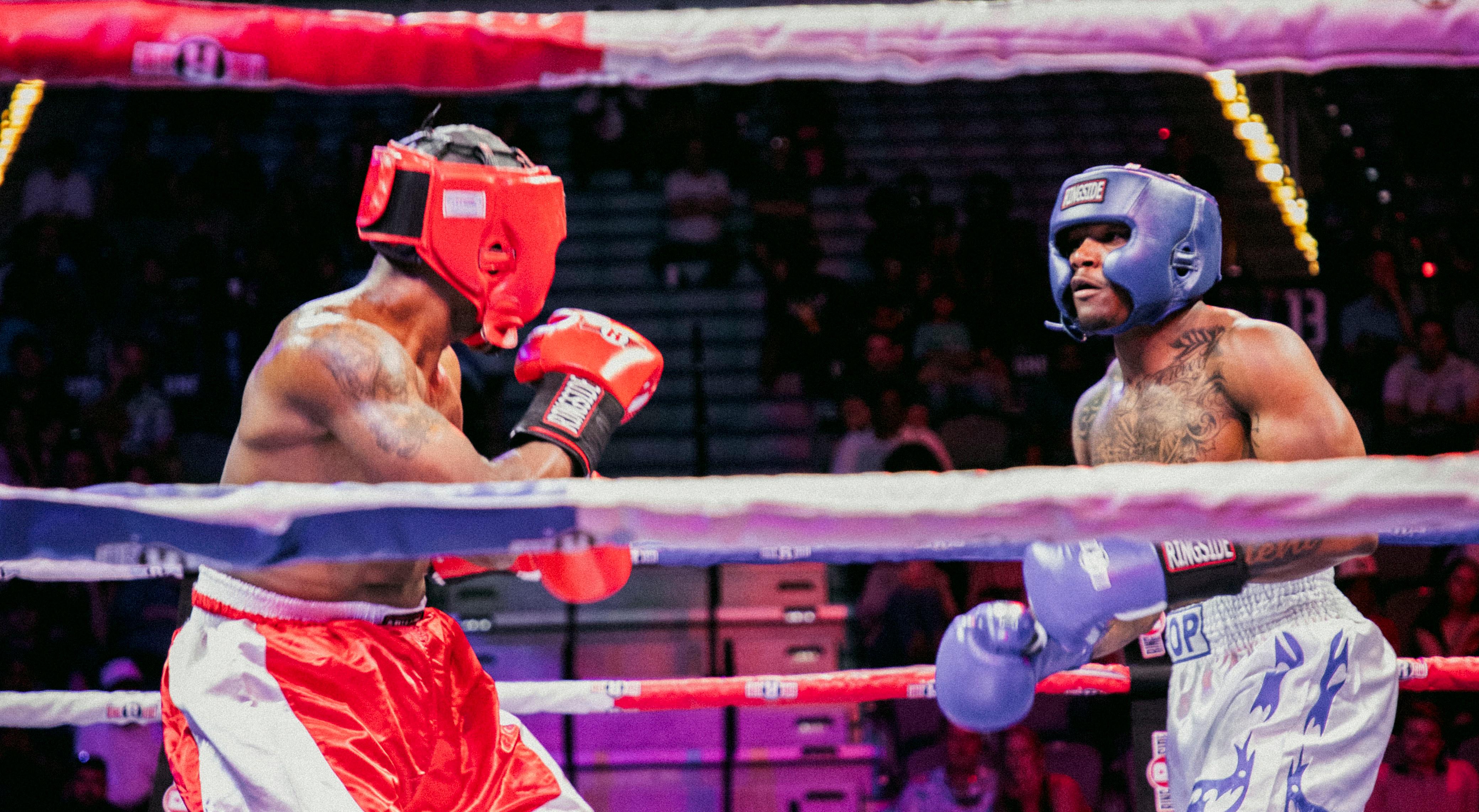
Fight after fight, the intensity only ramped up. Blood was drawn, knockouts were delivered, and the sheer volume inside the UNF Arena was reaching deafening decibels. Just like Hall had predicted, the blue side was finally starting to wake up, and once Ciara Chapman and Zharia Brooks took the stage, the energy in the stadium went all the way to 11.
“The female fights are hands down, no doubt about it, the best fights every year. The crowd goes absolutely crazy when they fight. I mean, you saw it,” Hall shared. “The crowd was on their feet for the last 45 seconds of that fight, just screaming at the top of their lungs.”
I can definitely attest to that shift in the atmosphere. By the middle of the fight, there wasn’t a single person left in the arena still glued to their seat; the crowd had become a standing-room-only wave of adrenaline. Every person in the building was indeed screaming at the top of their lungs — myself included.
I’d even made a momentary alliance with a member of the JSO social team. In the heat of the most brutal round, we found ourselves practically latched onto one another, bracing for impact as if we were the ones taking the hits. It was a temporary truce in the interest of survival, at least in my eyes. Because, to be clear: despite the camaraderie and the shared bracing, I still wasn’t swaying. My heart was still firmly on the side of the Hoses.
Though, as fate would have it, the Guns came out on top. It was neck and neck until the police officers ultimately took home the last match of the night, coming out victorious with 6 wins opposed to the Hoses’ 5.
It’s hard to stay bummed about the “loss” for long when you look at the scoreboard that actually matters.
By the end of the night, the event had raised around $40,000 for charity, which is exactly what Guns N’ Hoses stands for at its core.
It’s easy to get swept up in the high-octane thrill of the fight, but at the end of the day, that figure is the real knockout.
Something else worth noting — if only for my own amusement and genuine shock — was the raffle happening throughout the night. Now, usually, you’re looking at a 50/50 draw or maybe a gift card to a local steakhouse. Not here. At Guns N’ Hoses, the grand prize was an AR-15.
Maybe I’m just too “woke,” or maybe I’ve spent too much time in newsrooms, but raffling off an AR-15 on a university campus feels a little too on the nose, doesn’t it? To be fair, I’m sure the majority of the attendees were licensed and perfectly well-versed in firearm safety. But when the announcer called out the prize, I didn’t just double-take, I literally spit out my drink. I fully choked and needed a solid two minutes to collect myself.
All I could think was: What if I actually won? What on earth would I do with an assault rifle? It’s not exactly the kind of accessory that fits the vibe of my home office, and I’m pretty sure my neighbors aren’t ready for that kind of career pivot.
Luckily, that was not something I had to worry about because I didn’t win (nor did I even enter the raffle). What I can confidently say, however, is that I will most definitely be back next year.
If you want to keep up to date with the action or check out any other Guns N Hoses events (golf tournaments, poker matches, etc.), check out their Instagram at jaxgunsnhosesboxing.
A couple of weeks ago, I got a text message from my boyfriend. He’d been gifted a cookbook by a customer. A woman who, he quickly explained, was a pioneer of home IV therapy in Northeast Florida and a transplant veteran at Mayo Clinic. The cookbook was a result of recipes this woman, whom I’ll reveal shortly, had collected over a lifetime, sourced from both her medical rounds and those perfected in the quiet of her own kitchen. My curiosity was piqued, and when I saw the title: “The Cougar Den: Recipes to Catch a Man,” I knew I had to meet the woman dressed in a biker jacket on the cover.
And so there I found myself, standing before a muted yellow house in Atlantic Beach.
Cindy Rene Bishop opened the door with a walker in hand and a sharp glint in her eye. She warmly welcomed me into her home, where walls were lined with posters, medical certifications, family photos, illustrations, and every surface held stacks of magazines or books. Every inch of the house told a story, and altogether, it told her story.
Past the kitchen, where I eyed some freshly baked cakes, we sat down at the dining table and began what would feel like more of a conversation with an old friend than a formal interview. An eccentric conversation, albeit, as you’ll quickly learn, but a conversation nonetheless. But make no mistake, Bishop is no stranger to the spotlight. Before our formal sitdown, Bishop sent me a curated archive of newspaper clippings that proved, quite clearly, that while I was the one with the recorder, she was the one who knew exactly how this game of question and answer was played.
Long before she was an Atlantic Beach staple, Bishop was a girl from Corbin, Kentucky, living on a property that belonged to a very famous Colonel ( the Colonel Sanders of KFC). And as Bishop tells it, her family’s exit from Kentucky was less of a graceful departure and more of a colorful catastrophe involving a hospital meeting and a little too much drinking. Her father’s transfer to Jacksonville’s Riverside Hospital in 1964 wasn’t a promotion; it was a pivot.
“My father was a hospital administrator, and my mom was a master’s degree nurse. And again, it’s a funny story, but we lived in a shack below Colonel Sanders. He was on the board of directors, and my father and Colonel Sanders went to one of these hospital meetings and got drunk and urinated on a competitor’s booth. My father got fired,” Bishop shared. “I can’t lie about this.”
At just 16, Bishop probably didn’t have the best first impression of Jacksonville, and I doubt that at the time she would have imagined she would call this place home for the next 60 years. Moving into a house that sat on a lake, right before a catastrophic hurricane hit, went exactly how you would imagine. For seven days, they were without water and electricity.
But as it goes, the storm passed, the water and electricity returned, and Bishop got acclimated to her new life.
“I immediately became the president of the dramatics club in high school, started with the American Heart Association and started going in, being a volunteer and donating,” Bishop noted.
Competitive, confident and refreshingly candid, Bishop is the living embodiment of a “go-getter.” She attributes her sharp edges and her “main character” energy to her father, a man who, by all accounts, set the bar exceptionally high.
“And my father, like me, was the president of his class at his college in Michigan. And he was a hospital administrator and was on all these boards,” Bishop said.
Yet, for all the talk of boards and presidencies, there is a deep-seated resilience in her that feels distinctly maternal. If her father taught her how to lead a room, her mother taught her how to stay in one, no matter how long the shift lasted. She occupies the space exactly between her father’s drive and her mother’s grit.
“My mother was a master’s prepared nurse and proceeded to work until she was 79 years old,” Bishop added.
“Here’s my adventure; you’re not dead at 70. Life doesn’t stop at any age,” Bishop expressed.
After graduating from junior high, Bishop wasted no time diving into the professional world and working three jobs to fund her way through getting a B.S.N. from the University of North Florida. She seemed to possess that rare, enviable clarity of knowing exactly who she wanted to be, well before anyone else. Maybe it was ambition, maybe it was just a celestial alignment, or maybe it was just the fact that her father was a hospital administrator — and it was the ’50s.
“You gotta remember, this is the 50s. My father dictated I had to go to nursing school; there was no discussion, so I immediately went,” Bishop said.
Still, despite this being something that was dictated for Bishop, there might not have been a better profession for her. Or a better time. When UNF launched its nursing program in 1977, Bishop wasn’t just a student; she was a vanguard. It was a transformative era for Florida medicine. For the first time, students could evolve from LPNs to advanced degree holders without ever crossing state
lines. While the university was broadening its horizons, she was already on the ground, clocking R.N. shifts at local hospitals and carving out a trajectory that would lead her to the graduating class of 1981.
This was neither the first nor the last time Bishop would find herself at the edge of a new frontier, well before it became the industry standard. Medicine is a game of constant evolution, and one of its most radical shifts was the birth of home IV therapy. Naturally, Bishop was there at the inception, working with the first wave of patients and hospitals to pilot a program that fundamentally rewrote the hospital handbook. Suddenly, the sterile walls of a long-term ward were no longer a requirement. Patients were reclaimed from months of rotating antibiotics and gifted back their daily lives.
“There were four of the six of us at the time that furnished the drug for the six therapies; chemo TPN, antibiotic and all of the ECGs, basically home infusion,” Bishop explained. “And for the Mayo patients, I actually set up the hotels for the patients to come into. I would fly to a new city and train a home health agency on how to take care of the patient, and we would teach them how to hook up their own antibiotic.”
There is a difference between following a path and owning it. For Bishop, the transition from being a nurse-by-proxy to a nurse-by-passion happened early, fueled by a restless energy that couldn’t be contained by a single department. The profession that once felt dictated by lineage transformed into a genuine, bone-deep passion. And that “aha” moment happened with her first paycheck.
“I was at St. Luke’s in 1974, and my first paycheck was $4.10. I still have it. And I used to be not assigned to one floor because — I was bored from when I came out of the womb — so I used to work double shifts, and I floated the house. I didn’t want one floor, so I got to know everybody. And the doctors loved me because they knew I was on duty, and I was like a P.A. And that’s how it happened,” Bishop explained. “I got 300 letters of reference, and I said, ‘ If I start my own home health agency, will you support me?’ And I had 120 doctors that supported me.”
It became clear that for Bishop, the white coat was never just about the clinical administration of care. It was about the voice. Being a registered nurse was the title, but being a medical advocate, the relentless force standing between the system and the patient, was the true calling.
“I have had this great life. God, let me live so that I can tell my story so people can live and be their own advocate, and I think my whole purpose for doing this is that God wants me to tell people that doctors are not gods, that there is always an alternative,” Bishop expressed.
The conversation continued to flow through a catalog of career highs. We talked about the celebrities she’d treated, from Christopher Reeve to Magic Johnson, and the way she mastered the art of walking into a room full of men and instantly commanding the floor. From her time as a CEO in the CVS lineage to launching a private practice with a tribe of trusted friends, her professional life was a series of shattered glass ceilings. Yet, I was looking for the pulse behind the prestige. I wanted to know who Cindy was when she wasn’t saving lives or running companies.











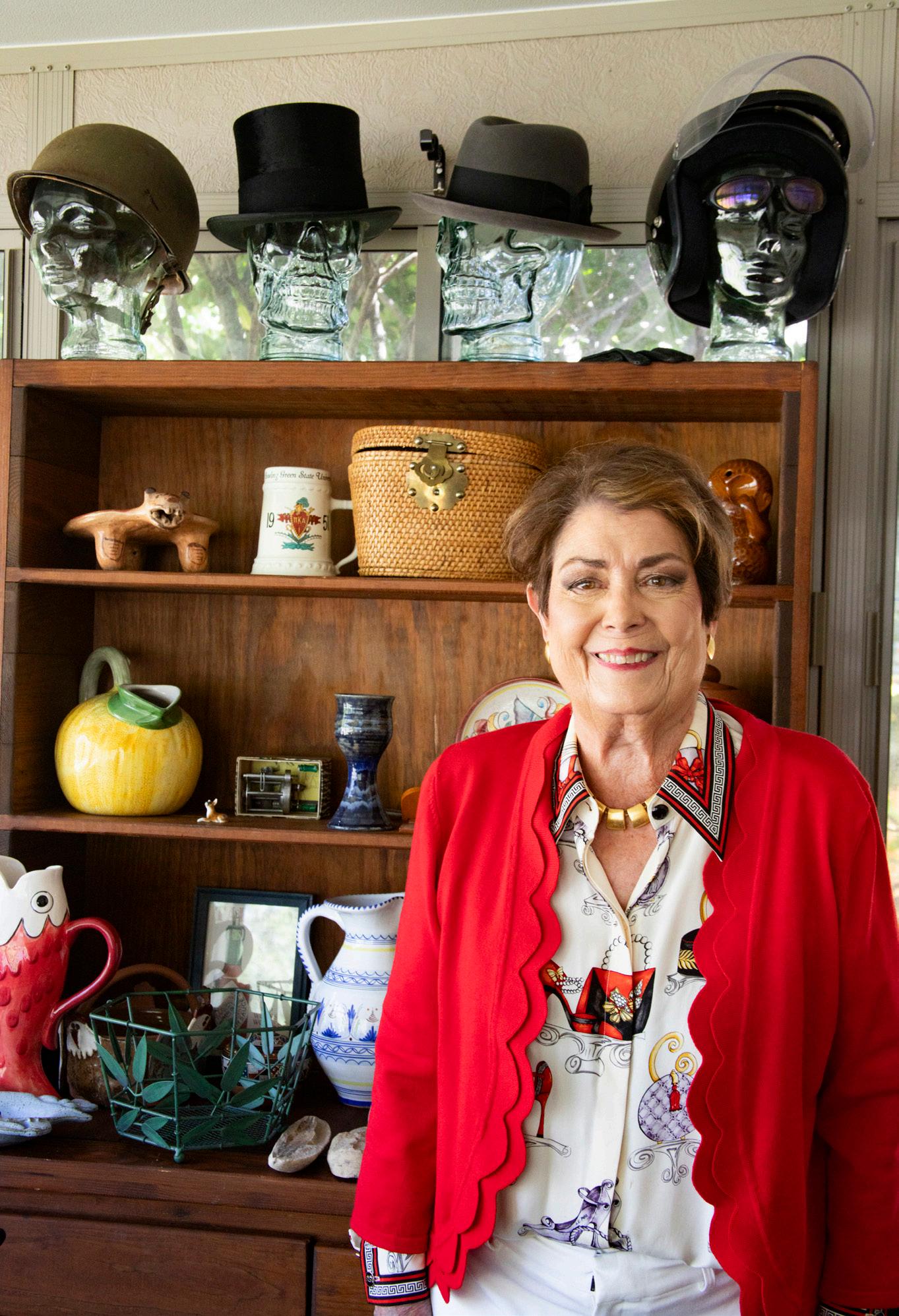
We eventually and inevitably started to talk about one of the things that tends to reveal itself when two women are left alone in a room. Love, heartbreak and everything in between.
You might have noticed by now that she’s still a Bishop. And no, it wasn’t a calculated political statement against the institution of marriage, though I don’t doubt she would have held her ground regardless. The simple truth is that Bishop never married, and she never had children. She told me she had once dreamed of having six of them, but as a dedicated worker who spent her life chasing horizons, the opportunity to settle down simply never caught up to her. But don’t mistake a lack of a wedding ring for a lack of romance. Bishop had many lovers, and she would gladly tell you about all of them.
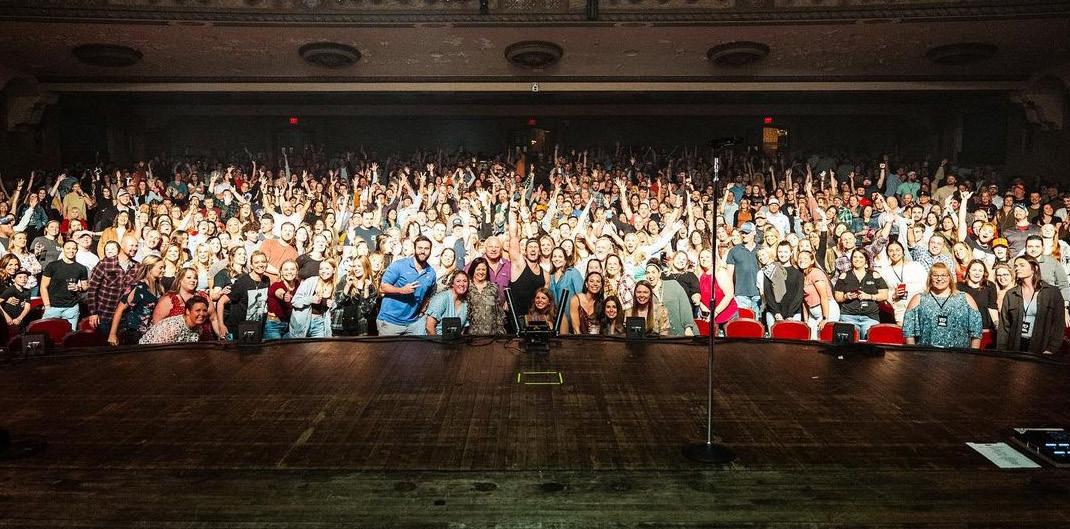



As a lifelong lover of motorcycles, she was frequently the only one in her circle of girlfriends who actually rode. It was through this subculture that she met one of the great loves of her life: Roy, a DJ for Jacksonville’s Rock 105.
Their relationship, which began in 1998, spanned seven years. While Roy lived across the street, caring for his 90-year-old mother (whom Bishop helped look after), the couple also spent nearly seven years traversing the country. Together, they clocked an astounding 90,000 miles cross-country, a period Bishop remembers as a
adventure.
For Bishop, riding was never just about the wind in her hair; it was another avenue for her innate need to organize and advocate. She became a fixture in the local motorcycle scene, serving as a chair member with Riding into History, an organization that brought motorcycle clubs from around the world to North Florida.
“I’ve had this great life. We did all these charity events, and I started riding into history, which is still going on today,” Bishop expressed. “ I can’t remember the date, but we had a fight and he went out with his brother and got drunk and got paralyzed. The family offered me $5 million to take care of him. But then I went to his house to check on his cats. He didn’t have one girlfriend; he had seven — and an illegitimate child.”
It’s a story with enough plot twists for a primetime soap. Most would have retreated, but Bishop moved on to the next chapter. She traded the drama of the road for the discipline of the kitchen, proving that while men may be unpredictable, a good recipe is something you can actually count on
One of the first things I learned about Bishop, and the very catalyst for our meeting, was her venture into the culinary world. In an archive from 2010, she noted that writing a cookbook was a long-held ambition. I asked her if preparing food was a craft she inherited from her mother, much like the medical instinct she garnered from her father, but her answer was simple: she cooks because she loves it. For Bishop, the act of cooking has always been inextricably linked to the act of caregiving.
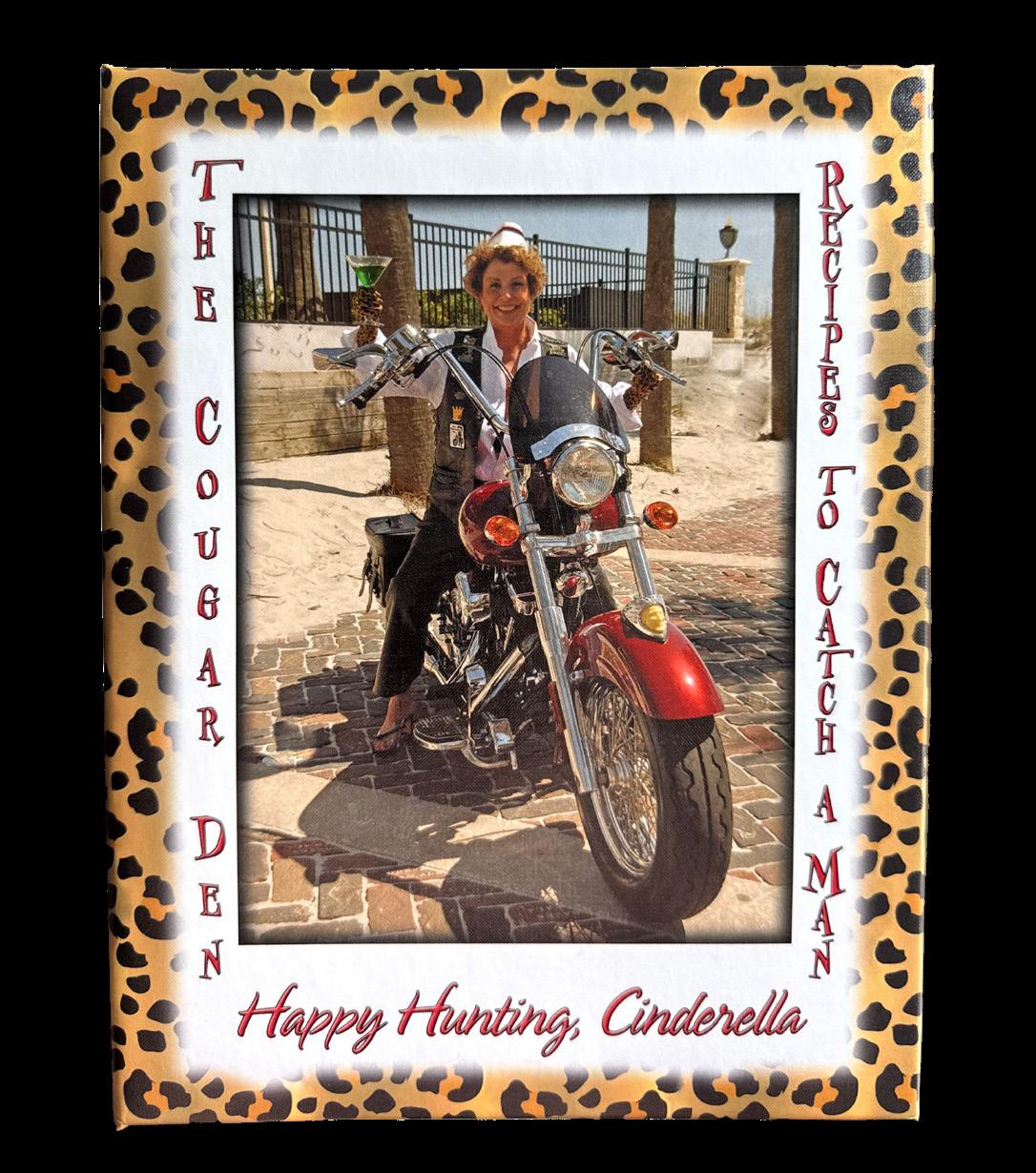
For instance, in 1990, Bishop baked a staggering 287 dozen cookies. At the time, she was a district manager for CarePlus, and she told the “Beaches Leader” that the sheer volume of sweets wasn’t just for show. She hand-delivered them to physicians, hospitals and insur ance companies, as a way of adding her own “personal touch.”
“I’ve been collecting recipes since ’78. I just love to cook; it’s my ther apy,” Bishop shared.
However, in 2008, the woman who had spent her career navigating the healing of others was forced to confront her own.
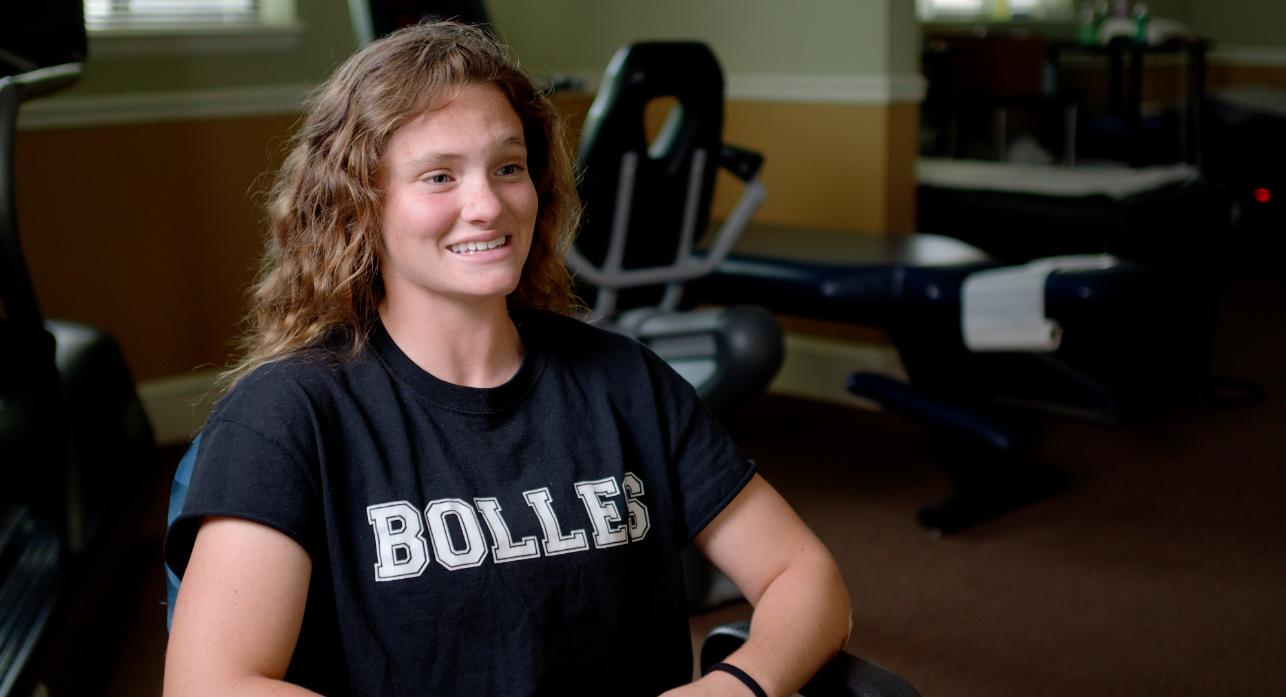
Bishop faced a sudden, jarring setback: a diagnosis that stole the sensation from her legs and threatened her mobility. It was a profound shift in the narrative. The advocate was suddenly cast in the role of the patient.
“I formed a corporation, a trusted medical care advocate, around 2016. And I had that up until 2020 because I got this disease, which I became completely bed-bound and needed total care, I couldn’t practice,” Bishop said.
But if you expect a woman like Bishop to falter under the weight of a diagnosis, you haven’t been paying attention. True to form, she met the challenge with sharp wit and a refusal to be sidelined. Leveraging decades of clinical expertise, she decided that if the world wasn’t built for her new reality, she would simply redesign it herself.
“I turned my house into an assisted living [facility], and I have hired help because I still can’t feel my left leg,” Bishop noted.
As she led me through her home, the “curated clutter” took on a new meaning. Nestled among the vintage posters and stacks of books was the practicality of her current reality: pill bottles tucked into corners and walkers standing ready. It is a house built for survival, yes, but more importantly, it is built for a life lived on her own terms.
At 72, Bishop is nowhere near a final chapter. If anything, she’s in the middle of a prolific second act. Between participating in clinical trials in regenerative medicine, she is researching her second cookbook — a collection of anti-inflammatory recipes — and another book documenting the men who have crossed her path. The working title? “Thanks for the Memories, Boys,” with a wink that is nothing short of iconic. And in true Bishop fashion, she would love to have her own cooking show one day.
“Here’s my adventure; you’re not dead at 70. Life doesn’t stop at any age,” Bishop expressed.
But in the end, the lack of an official corporation or title could never silence the advocate within. Bishop continues to navigate the complexities of care with the same ferocity she brought to those first double-shifts at St. Luke’s, only now, she’s doing it on her own terms. Our conversation ends, we share our goodbyes, and she sends me home with a generous slice of her legendary “It’s Raining Men” cake tucked under my arm.


Words by Teresa Spencer
America has a strange relationship with age. We celebrate wisdom, experience and longevity — until it comes time to hand over the car keys. Then suddenly everyone understands the obvious truth: eventually, age catches all of us.
Except in politics.
In Washington, D.C., we routinely watch elected officials well into their late 70s and 80s make decisions that shape the future of generations they may never live to see. Some struggle through speeches. Some freeze mid-sentence. Some appear confused during hearings. Others seem more connected to decades past than the realities of modern America. Yet somehow, suggesting there should be an age limit for politicians is treated like a radical idea.
It shouldn’t be.
The United States already recognizes age matters in leadership. A president must be at least 35 years old. Judges face competency reviews. Airline pilots have mandatory retirement ages because public safety matters more than personal ambition. Corporate executives step aside. Police officers retire.
Even local firefighters and military personnel eventually age out because performance, reaction time and mental sharpness are not eternal.
Why should the people controlling nuclear codes, federal budgets, foreign policy and constitutional law be exempt from the same common-sense standards?
This is not about disrespecting older Americans. Far from it. Many people over 75 are brilliant, active and fully capable. Some run businesses, mentor communities and outperform people half their age. But governing a nation is not a casual hobby or honorary title. It is one of the most demanding jobs on Earth. The stakes are too high to pretend biology no longer applies once someone gets elected.
Politics has quietly become America’s only profession where people often gain more power as visible decline sets in. That creates a dangerous culture where party loyalty and seniority matter more than capability. Instead of fresh leadership rising naturally, younger generations are told to wait their turn while the same names dominate headlines for decades.
Meanwhile, the country changes rapidly. Technology evolves. Culture shifts. Economic realities transform. Yet many of the people writing laws about artificial intelligence, cybersecurity and digital privacy still struggle to use smartphones without staff assistance. That disconnect matters. A healthy government should reflect the energy and future of the population it serves. America cannot keep operating like a retirement committee with nuclear weapons.
Critics will call the idea discriminatory. But age limits already exist throughout society because reality exists. We do not let 14-year-olds run for Senate because maturity matters. At some point, we also have to admit that cognitive decline, slower processing and health concerns become legitimate public issues at the other end of life too. The presidency should not resemble a nursing home chess tournament with better security clearance.
A reasonable age cap — perhaps 75 at the start of a term — would not erase wisdom from the government. Former leaders could still advise, mentor, teach, write and influence policy. Their experience would remain valuable without forcing the country to gamble on whether aging officials can physically and mentally withstand the pressures of office. America was built on the idea of peaceful transition of power. Somewhere along the way, too many politicians stopped seeing public service as a temporary responsibility and started treating it like lifetime ownership.
No one beats time. Not billionaires, presidents, senators or judges. At some point, leadership requires knowing when to step aside and let the next generation take the wheel before the country ends up driving into a ditch.

Words
& photos by
Ariana Alcantara
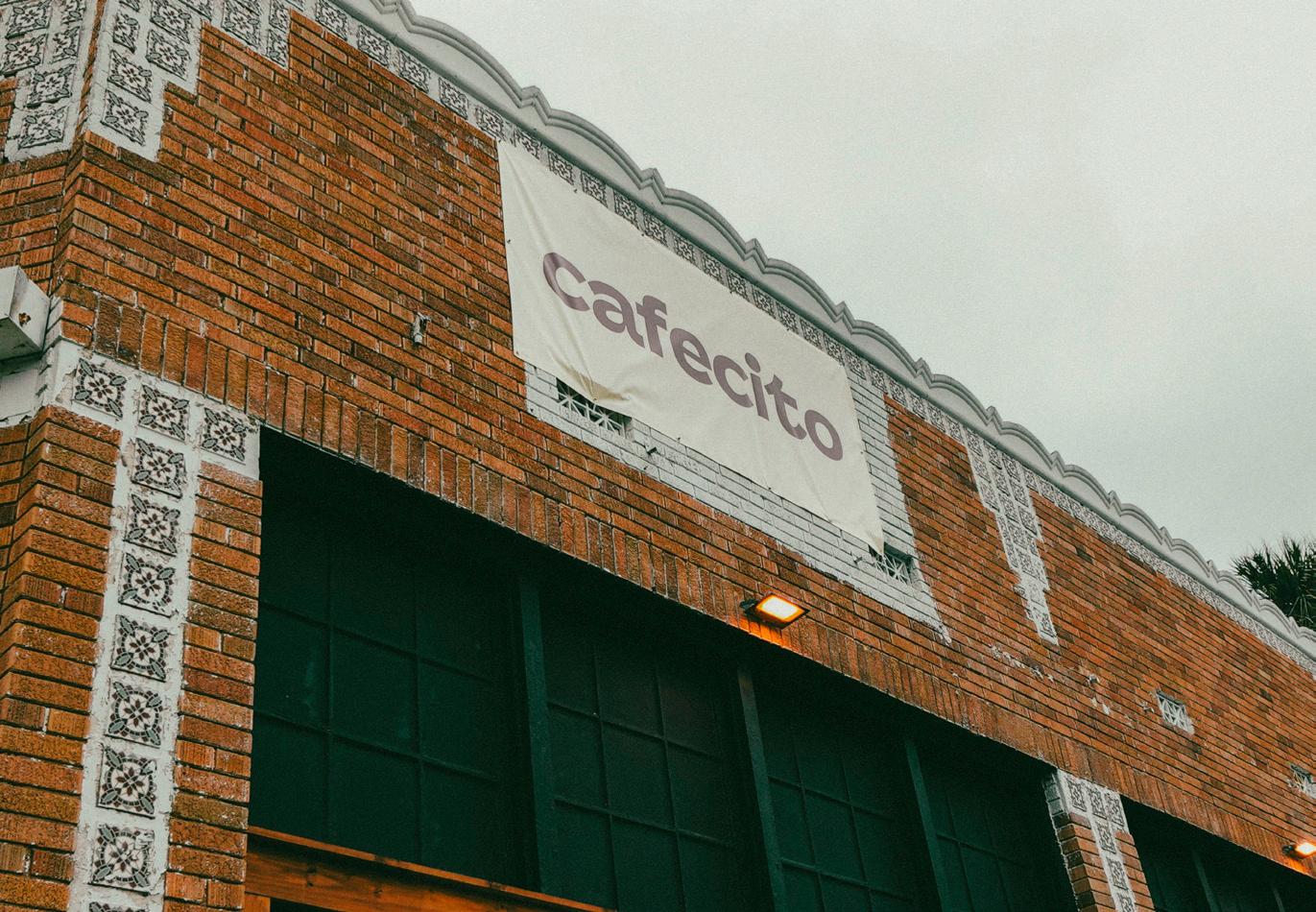
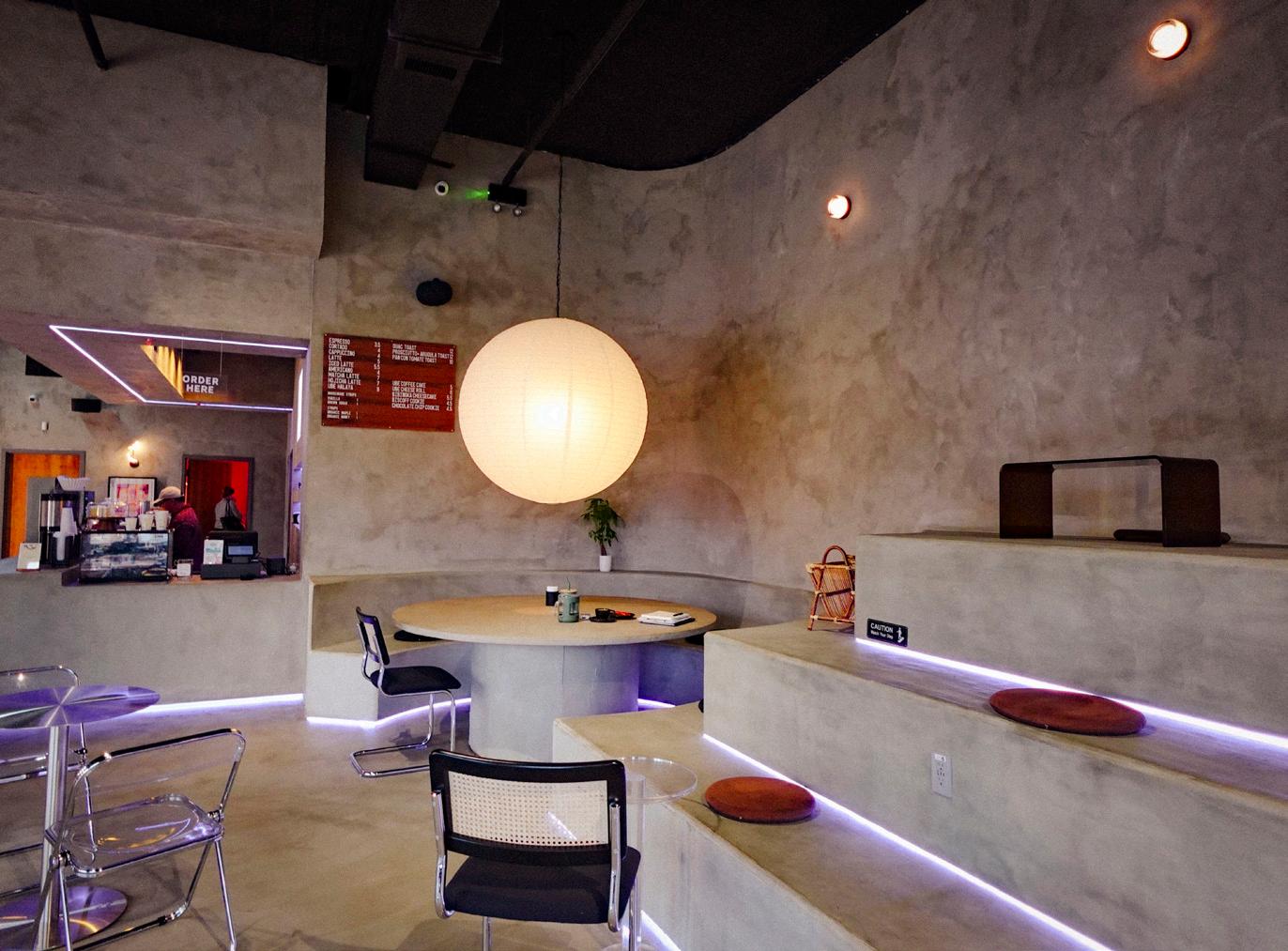
Here is one more point for Riverside in the ongoing battle for the best neighborhood in town; Cafecito just opened on Post Street, and it may just be worth all that internet attention it’s getting.
The past month, Instagram has been inundated with posts about this new stylized cafe, from review videos to influencer photoshoots, but Cafecito is more than just its unique interior design. The store upholds a value of community and creativity, intent on bringing the world to Jacksonville.
We caught up with Kevin Perez Velazquez, one of the owners to speak about his journey from art student to entrepreneur, the world travels that influenced every corner of Cafecito, and to ask some questions that the public may be wondering like, what’s with the bleachers?
So, where did you have coffee experience before opening?
Just at my house. Like, I’ve never been a barista, but I always tell people I’ve been drinking coffee since I was like six. But not in a crazy way just, you know I’m at grandma’s house on Sunday after church.
What was your profession before that?
Oh, that’s a good one. So my background is actually in art. I didn’t know what I wanted to do after high school, although I knew I always liked art, but I didn’t know what I wanted to do. Then my parents kinda pushed me to do business, specifically accounting, and I failed out of that, so then I went to my counselor. And then she was like “What do you really like?” and I was like “Well, I like art, but that doesn’t make money.” Then I started doing graphic design, but then I realized I really liked art history, so I just went that route.
What drew to art history specifically?
It was just so interesting. I had to take an American art history class… It was [about] art when the Europeans started migrating to America, and then just how it showed the progress of society but through the American lens. Let me tell you, not much has changed. My favorite American artist is Thomas Cole [and] he painted a whole series showing how fast America was expanding but in a way that was gluttonous. And, like, eventually, it would fall and he was comparing it to Rome, so he painted and the classical manner deflecting images of Rome and showing the downfall eventually.
What was the inspiration that took you to go from art into being a business owner?
So I worked in an art museum, and I worked in an art gallery. This is when I was in Charlotte. So after the art gallery, I started kind of finding myself in a way. I know that sounds super corny, but I was, like, ‘OK, I love art, but, like, what do I want? So I started working as service security just randomly because I needed some money, and then I got laid off, and I was like, ‘OK, well, great, this is a perfect opportunity to do whatever it is that I think I need to do. And then everything after that was a little bit serendipitous ’cause it just opened up, and I just
kept walking. I didn’t know where I was going, but the more I walked, the more connections came. My husband and I decided to move back to Jax. He’s never been here, but I grew up here, so we came back to Jax, and then I just started hitting up people that I knew were entrepreneurs here. Meeting people through people, I ended up in a circle of entrepreneurs, and then I just kind of started doing little projects with them, and coffee came up. And then here we are.
My business partner, [John Panghulan] was a part of the business that was there prior, it was called the CoLab Cafe, which was a studio people could rent out, or you could come take pictures. When I started talking about coffee, he hit me up one day and just asked if he could partake in the project with me, and I said, ‘yeah.’ I explained to him my ideals and my purpose as to doing coffee as business, and he agreed… It’s been great ever since.
What were some of those values that you were expressing to him? So my top thing is always quality. I love hospitality, which he does as well. His thing is mainly hospitality; he just loves to treat people well, and he loves to create a good environment. For me, it’s quality in everything that I do. I like quality, food quality ingredients. I don’t buy food for my house that has chemicals or preservatives and all stuff, like, I eat pretty clean. For me, to have a business is basically to invite someone into your home and like I never would invite someone into my home and give them something I wouldn’t eat myself.
Even with that, quality stems through everything, even to customer service… because people like to feel welcome and they like to feel warm. I feel like that’s something that Jax is missing, maybe more than just Jax, I wanna say a bigger part of the U.S. [is missing that.] Coming from Puerto Rico, it’s like you talk to people like you’ve known them forever even though you just met. That’s kind of the dream that I hoped for Jax to make its way toward.
It’s valuable to have somewhere that has quality because there’s so much now that doesn’t, and if you’re spending your hard-earned money somewhere you want to make sure that it’s something worth investing in.
Exactly, that was my mindset because I am a pretty patient person, but something that gets me kind of upset or annoyed is when I go out somewhere, and I pay good money for a product that is kind of crappy.
and that’s neither a good thing or a bad thing, but it’s not what I’m used to. Even when people are more reserved and individualized, I feel like they still crave that warmth.
So you’ve come up with this idea together for a coffee shop, what were those first steps like as someone who is more artistically minded?
Well, I realized that entrepreneurship is— you have to be creative. It’s like a yin and yang as well because it’s kind of hard to be creative and then also be like a number person at the same time. Although I will say John is kind of very gifted at both. But for me, everything is always in my head, I have 1,000 ideas, but I need someone who executes, and that’s John. For him, nothing is impossible.
Trust, I will say, trust was definitely something that I would consider a first step because you really have to trust the person you’re working with otherwise it’s not gonna work. I trust that man wholeheartedly.
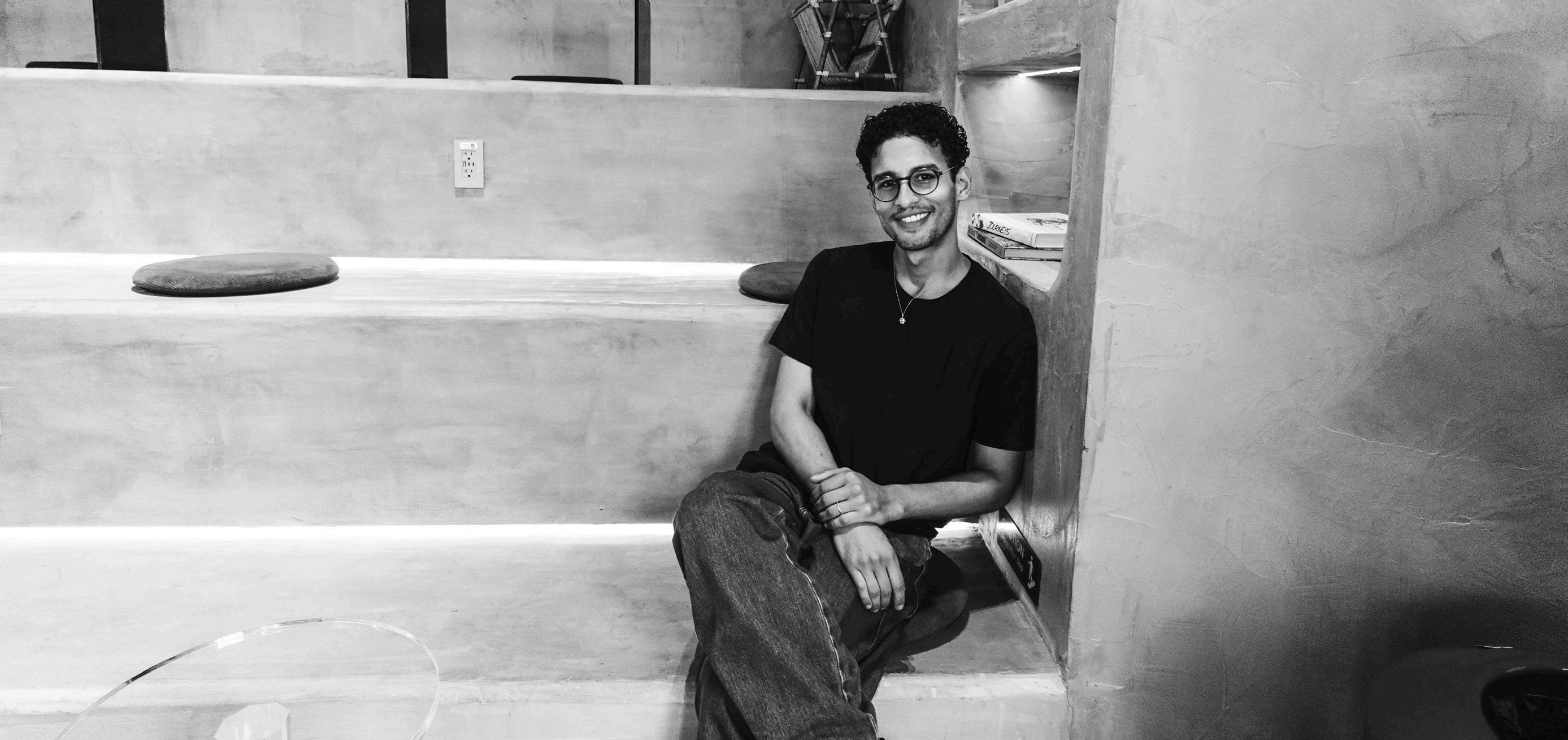
So I also wanna circle back a little bit. You were talking about Puerto Rico. Did you spend any time in your childhood there?
Yeah, I actually lived until I was 10, and then we moved to the States in 2004, but my mom would ship us out every summer. So every summer since I was 10, I’ve gone back to Puerto Rico to this day, like, I’m actually gonna go back this summer, I think. I was just there in December too.
What part are you from?
Salinas, so it’s like if you take a line from San Juan all the way down, that’s where it’s at.
How do you feel that experience informed your business?
I think it’s 100 % due to that. So my business partner is Filipino and it’s very similar in the Philippines. I’ve been twice already, my husband’s Filipino, but it’s a very similar culture. It’s just a cultural thing like the way that the culture is set up here is more distant and more reserved,
We’re talking about the building of the business, how was the interior design process?
It was all done in house, but it was like a group of us. It’s a brutalist aesthetic, and, like, I think it started off as a joke if I’m remembering correctly. One of our friends just kind of jokingly said, “Yeah make it brutalist,” and we were like, “ha ha,” but then we actually did. Then there’s so many elements that are from us going abroad all the time because we like to just venture out. [There are] ideas that we brought from different places. The staircase or bleacher-looking area, I saw for the first time in the Philippines and then the second time in Spain. I thought, “That’ll be a great idea because it’s such a great usage of space.” It was a coffee shop in the Philippines called Ancon, and they had, like, a bleacher thing as well, but it was wooden. At the top you would put a DJ, which I thought was kind of dangerous cause if people are jumping they would fall off. In Spain, they had a brutalist concept breakfast place that we went to.
How did you balance, stylistically, the brutalist and the approachable in the design?
So that’s why the bathrooms look the way because I am what you call a maximalist. I saw the outside like a blank canvas, you know everything is cement, and so I was like well, we have to put colour somewhere. So we put it in the bathrooms that way, so when people walk into the bathroom, they’re like, “Whoa! I’m in a different place.”
Let’s talk a little bit about the menu. What was your intent for the coffee and food options?
I use a specific [coffee, a dark rose single origin from Brazil and it’s pricey, Yeah, so I wanted to stick with a seasonal concept, so the main menu will consist of the traditional like espresso, cortado, cappuccino, lattes, and then we have a seasonal menu that comes with signature drinks. Right now we have the “Ube Halaya”, which is, halaya, a Filipino word that means jam, and ube is a purple yam, and then they make a jam with it. We’ll change the signature drinks seasonally and keep a traditional menu. As far as food, that will also change seasonally. Right now we have two toasts which is guac toast and the prosciutto arugula. I think avocado toast is so boring. The prosciutto arugula is pesto on the bread, prosciutto that comes imported from Italy and then some arugula, balsamic and then Parmesan cheese because I love cheese. But again those are, like, just different things from different places ’cause that’s something I learned from Italy. I never liked arugula until I went to Italy, and I was, like, “Damn arugula is good.” Also we’re gonna have some salad as well. So we’re gonna make it with quinoa and sofrito and then put that on a salad, so I’m experimenting with that after this.
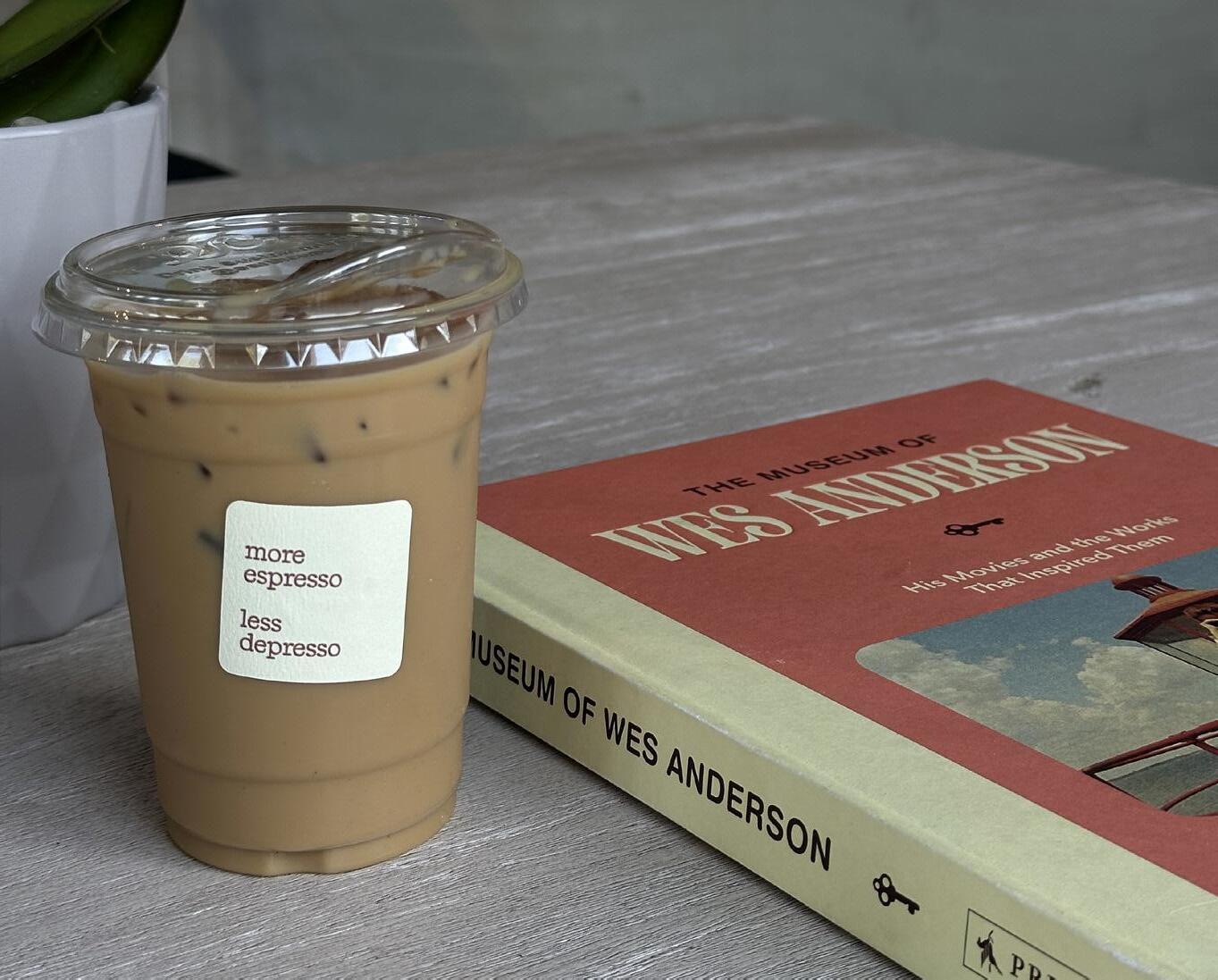
What do you hope people in Jacksonville will be saying about Cafecito in a year from now?
Honestly nothing. I want people to feel that that is the place I want people to not even have to say I’m gonna go to Cafecito. They just get in the car because they want some coffee, and they just show up because they know the coffee is good. They know the vibes are great, and they just wanna chill for a little bit. So it’s not necessarily what people say, but how they feel toward the place, like I want Cafecito and 15-plus years to bring a sense of nostalgia.






Words by Teresa Spencer
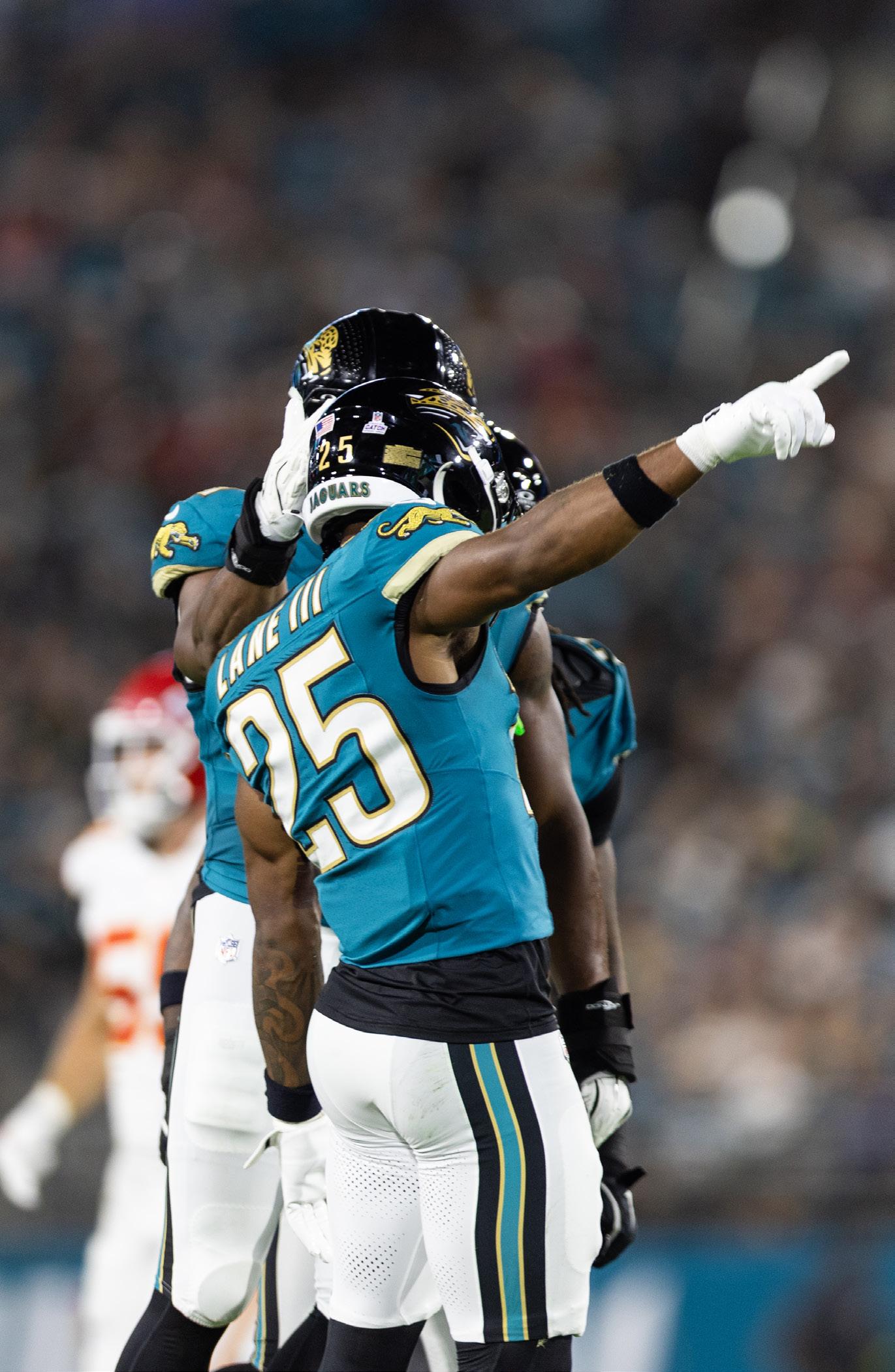
There’s something uniquely hopeful about rookie minicamp in the NFL. No standings. No playoff math. No furious postgame callers demanding coaches be fired before sunrise. Just fresh jerseys, fresh legs and the annual belief that somewhere on those practice fields stood the next cornerstone of the franchise.
Like it does every year, optimism returned to Jacksonville as the Jacksonville Jaguars wrapped up rookie minicamp at Miller Electric Center on May 10, introducing a new wave of draft picks, undrafted free agents and longshot hopefuls trying to claw their way onto an NFL roster.
For three days, the pressure cooker of professional football looked almost innocent. Almost.
That’s football in Jacksonville. Hope has always been part of the uniform. Still, the minicamp carried real importance.
The Jaguars entered the offseason looking to stabilize after an uneven 2025 campaign that left lingering questions about depth, consistency and long-term identity. Rookie minicamp served as the first real evaluation period for the coaching staff. It was the first chance to see how these young players moved, communicated, processed the playbook and reacted once the speed of the NFL hit them squarely in the facemask. And even in limited-contact practices, the speed difference was obvious.
Among the rookies generating the most buzz was undrafted running back J’Maru Taylor whose physical style, speed and handling of the ball immediately stood out during drills. Coaches appeared eager to test his versatility as a result. Tight ends Tanner Koziol and Nate Boerkircher also drew attention with the kind of blue-collar approach football people love to celebrate. Both of these players were very impressive with their pass-catching.
Veteran scouts often say the first thing they notice during rookie camp is simple: Which players don’t look overwhelmed? Defensive back Jalen Huskey showed confidence and excellent coverage. Offensive lineman Emmanuel Pregnon, presented himself as a true NFL athlete with a physique that is sure to enhance his professional career.
Because the NFL exposes uncertainty quickly.
Players who dominated Saturdays in college suddenly find themselves surrounded by athletes just as fast, just as physical, and just as desperate. The margin for error disappears in a hurry.
Still, the weekend carried undeniable energy.
The sound of cleats snapping against fresh turf. Coaches barking corrections before drills even ended. Helmets gleaming in the sun. Somewhere inside that organized chaos, careers quietly began taking shape.
And in Jacksonville — where fans have spent years riding the emotional roller coaster of rebuilds, playoff pushes and frustrating resets — rookie minicamp once again delivered something valuable: Possibility.
No one knows yet which rookie will emerge as a starter, which lateround pick will outperform expectations or which undrafted player will become the preseason favorite fans refuse to stop talking about by August.
But every NFL success story starts somewhere.
Usually in May. Under the Florida sun. Wearing a helmet that still looked brand new.









Words by Ambar Ramirez and Carmen Macri
girlies
CARMEN: In honor of arguably the most anticipated sequel release ever, Ambar and I decided to rewatch “The Devil Wears Prada” as adults for the first time in 20 years. Sitting through our impromptu living room screening, I had a few major revelations. First off: Miranda is absolutely NOT the villain—she is simply a magazine mogul. She built an empire from the ground up, so of course, she’s going to be incredibly particular and a bit cold. Clearly, doing things her way works. You want to know who the real villain is? Andy’s bumass boyfriend, Nate, who has the nerve to break up with her just because she’s out here chasing that bag.
AMBAR: If we’re being real, the villain isn’t a person. It’s the industry. In the first film, a fresh-grad Andy Sachs treats “Runway” as a stepping stone to “serious” journalism, only to get seduced by the climb. Somewhere between the Chanel boots and the high-stakes errands, she loses the plot, becoming so consumed by the “Emily” persona that her only goal is to hear Miranda finally call her by her first name. But we won’t bore you with all the details. If you haven’t seen the first film, stop reading this column and go fix your life. There’s a reason we finally got a sequel, and it wasn’t because of a cliffhanger (cue the iconic phone-in-thefountain toss). It’s because this movie speaks to women across all fields and times in their lives. We all know a devil who wears Prada, and frankly, we all want to be her.
CARMEN: Cut to the sequel, which, naturally, kicks off at the cinematic equivalent of the Met Gala. (A timely coincidence, considering we watched this the day after our universe’s Met Gala.) Our beloved Nigel, played by the Tucc (aka Stanley Tucci), is whisper-yelling with Simone Ashley’s character, Amari — the new Emily who may or may not be HR. They’re spiraling over a sobering report detailing the magazine’s accidental dip into unethical fast fashion, and the story is on the absolute brink of leaking midevent. Spoiler alert: it drops, and the fallout is a total disaster.
AMBAR: My real-time theater inner monologue went something like this: I can’t believe I’m watching “The Devil Wears Prada 2” in theaters. Justice for “Suddenly I See” by KT Tunstall; it should have been the opener. Take a shot every time someone mentions Ozempic. Meryl Streep … the woman that you are! I wish Stanley Tucci would give me a hug.
CARMEN: Mine was as follows: Oh, my god, what happened to color in movies? Ugh, Stanley Tucci, I love you so much. Wow, there are a lot of influencers in this film. Oh, who is this random love interest? I wonder if he will be important? (isn’t). Why didn’t they bring back Christian Thompson? The WELL-KNOWN journalist amidst the whole “journalism is dying” debacle. Speaking of that plot point, ouch.
AMBAR: Hits a little too close to home, doesn’t it?
CARMEN: Honestly, I was feeling a hint of career anxiety just watching this. Beyond the fast-fashion mess, the real crisis is that the “Runway” parent company has been handed over to a guy who couldn’t care less about authenticity, artistry or actual journalism. He’s more interested in building spaceships that can fly into the sun and replacing everyone with AI models.
To read the rest of this month’s Combined Minds Column.






Solve this puzzle like a regular sudoku, but instead of using numbers, use the letters Z-E-N-D-O-G (for the Jax dog groomer) to fill each row, column and box.