










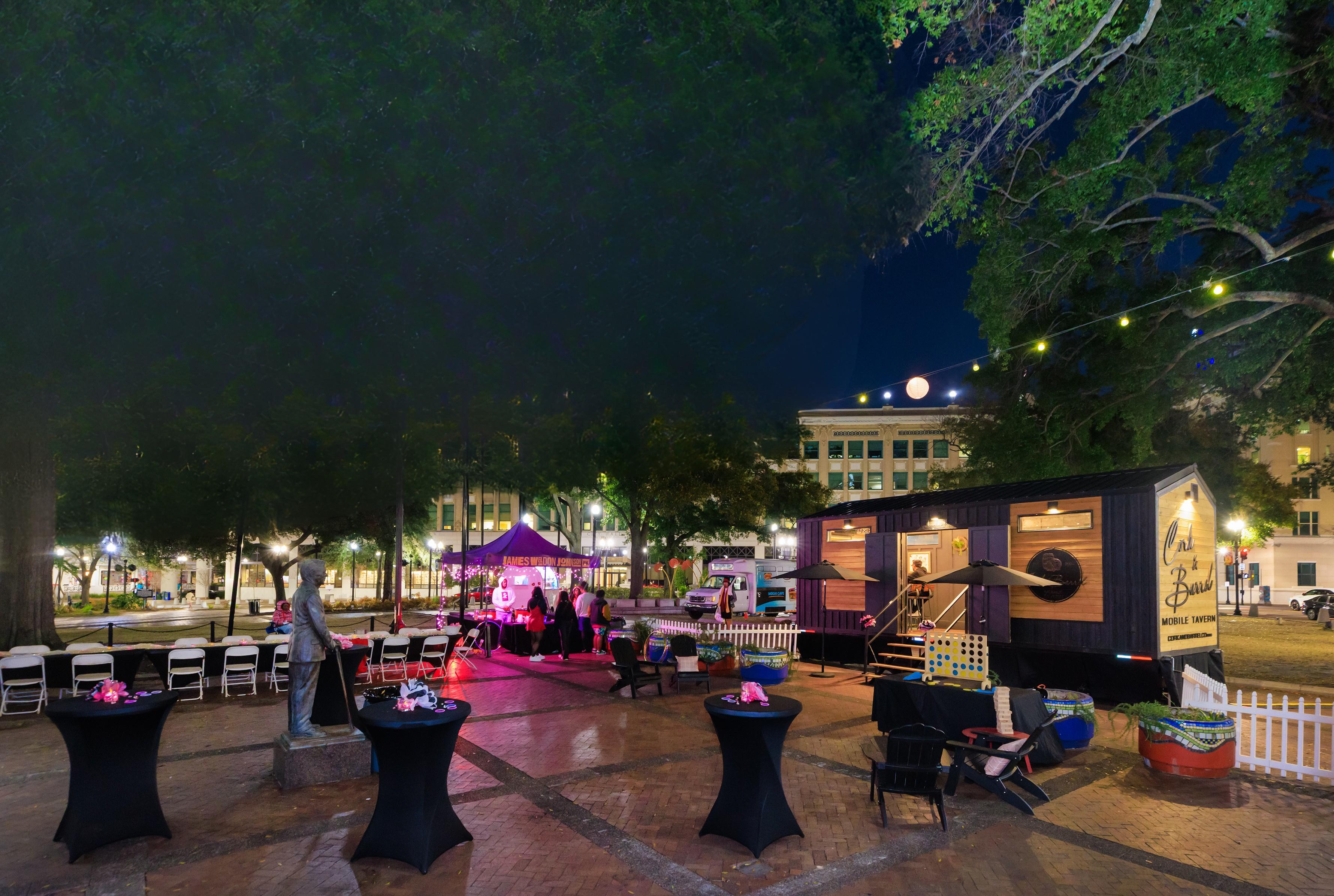
To Sharon Coon for receiving the Advancing the Legacy Award from the James Weldon Johnson Foundation. Presented at the historic James Weldon Johnson estate in Great Barrington, Mass., the award honors her dedication to preserving the legacy of one of America’s greatest literary and civil rights figures. It’s well-deserved national recognition for a local leader making a lasting impact.

To Megan Mallicoat and the team at Jacksonville Today for earning national recognition for investigative journalism. Great journalism serves the public, holds institutions accountable and strengthens the First Amendment. Congratulations on a well-earned honor that reflects positively on all of Northeast Florida journalism.
To JEA … ONCE AGAIN!! Just when Jacksonville families thought they might catch a break, JEA is reaching back into everyone’s wallet again. Beginning this fall, electric rates will increase by 6.2%, while water and sewer rates jump another 8%, all in the name of closing a nine-figure budget gap. Nobody argues that utilities don’t require maintenance or longterm investment. But at some point, a “necessary rate adjustment” starts sounding like an annual subscription service that nobody signed up for. For a city-owned utility, affordability shouldn’t be an afterthought. Jacksonville residents deserve transparency, accountability and confidence that every possible efficiency has been exhausted before asking customers to pay more — again.

To Gov. Ron DeSantis for vetoing millions of dollars in Jacksonville projects and leaving Northeast Florida wondering why its priorities were among the first to hit the cutting-room floor. To be specific: Jacksonville lost approximately $18 million in local projects, including funding for the Emerald Trail, Edward Waters University, the Jacksonville Fairgrounds and other community initiatives.
We want to know if there is a partisan pattern. There is some evidence of a political pattern, but it is not absolute. House Democratic leaders argued that districts represented by Democrats were affected at roughly twice the rate of Republican districts.
By Ambar Ramirez & Carmen Macri
This month is all about refining your routines, Aries. With the start of summer, you’ve found yourself a bit… lax with your daily routines. There’s nothing wrong with that, except the internal spiral you feel every Sunday evening around 5 p.m. when you realize you pushed everything off until then. So, chop chop. Pull out that planner and get to work.
Look, Libra. Stop sugarcoating things just to play nice. This month is demanding radical honesty, which means you need to actually spit out what you want for a change. Thanks to Mercury retrograde and a heavy dose of Cancer energy, you’re looking at a serious career reset. It is time to set some damn boundaries and trust your gut instead of overthinking yourself into a corner.
You’re on a roll this month, Taurus. You have an answer for every question and a quick quip for every joke. As the sun lingers in Cancer and your fast-thinking third house, expect a wave of déjà vu and unexpected connections. Once Leo season kicks in on the 22nd, prepare to shift gears as your focus centers squarely on home and family.
Put the wrecking ball away, Scorpio. This month is about laying bricks, not tearing down the house. The cosmos is lighting a fire under both your career and your personal growth, but strategy alone isn’t going to cut it this time. Lean into your actual instincts, build some steady foundations and, for once, just trust your gut instead of over-calculating your next 10 chess moves.
With Mars charging through your sign in early July, you will feel like starting everything over from scratch. And it’s the perfect month to do so since your ruling planet Mercury begins to retrograde mid-month, igniting that flame. There is nothing wrong with a little rebrand.
It’s your birthday, and you can cry if you want to, Cancer. Your sign is not the only thing in orbit this month. Mercury retrograde makes this particular season a reflective one. It’s best not to fight these emotions. Instead, embrace this revival, and enter this next chapter of your life with a clean slate.
July is all about value over volume, depth over dazzle. With Cancer season lighting up your intimate eighth house (and Mercury in retrograde, naturally), your relationships are officially under a microscope. Time to voice what you’ve been bottling up and hash it out. Just pace yourself. Once Leo season hits on the 22nd, you’ll be right back to your favorite coping mechanism: booking trips and staying busy. It’s all a balance, right?
Brace yourself, Capricorn. This month is forcing a deep reflection on your life and your wallet. While some early drama in your partnerships might force a quick recalibration, the New Moon on July 14 is handing you a clean slate in love and commitment. Weather the early storm because the end of the month is setting the stage for a seriously lucrative financial boost. Get your “cash rules everything around me” playlist ready.
Pump the brakes this month, Leo. You’ve been go, go, go for as long as you can remember, and it might be time to take a breather and recharge for the rest of the summer. Late July, Jupiter in Leo connects with Pluto, Uranus and Neptune, which is basically just one giant cosmic stop sign. Remember, it’s a marathon, not a sprint.
Rally the troops, Virgo! July puts teamwork and collective wins in the spotlight as the sun lights up Cancer and your 11th house of community. Don’t shy away from asking for help and divying up the workload, especially as driven Mars stations in Gemini and your ambitious 10th house, urging you to take bolder steps in your career.
We’ll let you in on a secret, Aquarius. Most horoscopes will tell you to use this Cancer sun to optimize your routines and workflows. But the truth? You don’t thrive in rigid schedules — they just make you feel stuck. Instead of doing what you think you should, relieve yourself of the heavy expectations this month. Do what you actually want in the moment and trust your gut. It’s never failed you before.
This month you are taking notes from the wise Sheryl Crow because all you wanna do is soak up the sun…or, in this case, the joy! This Cancer season lights up your playful fifth house, pushing you to be, well, playful. Dive into new creative projects, explore summer flings and maybe join a niche community club.
CLAYPOOL GOLD
FEAT: PRIMUS, LES CLAYPOOL’S FROG BRIGADE & THE CLAYPOOL
LENNON DELIRIUM
JUNE 19
VINCE GILL
50 YEARS FROM HOME TOUR
JUNE 27
MEN AT WORK
WITH SPECIAL GUESTS TOAD THE WET SPROCKET & SHONEN KNIFE
JULY 17
DIERKS BENTLEY
OFF THE MAP TOUR WITH RICKY SKAGGS & KENTUCKY THUNDER & COLE GOODWIN
JULY 18
LINDSEY STIRLING
WITH SPECIAL GUEST PVRIS
JULY 20
LORD HURON
WITH SPECIAL GUESTS THE ARMY, THE NAVY
JULY 27
THE BLACK KEYS PEACHES ‘N KREAM WORLD TOUR WITH SUPPORT FROM EDDIE 9V
JULY 29

STEPHEN WILSON JR. GARY THE TORCH TOUR WITH THE LONE BELLOW AUGUST 7
THE FRAY
WITH SPECIAL GUESTS DASHBOARD CONFESSIONAL & COLONY HOUSE
AUGUST 8

JORDAN DAVIS
AUGUST 16
SQUEEZE
WITH SPECIAL GUESTS ADAM ANT & HAIRCUT 100
AUGUST 18
BUDDY GUY 90
WITH SPECIAL GUESTS TAJ FARRANT
AUGUST 22
SLIGHTLY STOOPID ROAD TRIPPIN SUMMER TOUR 2026 WITH SPECIAL GUESTS THE ELOVATERS & DENM AUGUST 23
BLUES TRAVELER & GIN BLOSSOMS WITH SPIN DOCTORS
SEPTEMBER 4
MODEST MOUSE
WITH SPECIAL GUEST ROBBER ROBBER SEPTEMBER 17
JOHN FOGERTY & STEVE WINWOOD THE LEGACY TOUR
SEPTEMBER 18
BRAD PAISLEY LIVE SEPTEMBER 19

JAMES TAYLOR AND HIS ALL-STAR BAND SEPTEMBER 22 & 23
FLIPTURN
WITH SPECIAL GUESTS WINYAH
SEPTEMBER 25
RISE AGAINST
WITH SPECIAL GUESTS ALKALINE TRIO & TEEN MORTGAGE SEPTEMBER 26

GOV'T MULE & ZIGGY MARLEY DREAMING THE SAME DREAM TOUR WITH DJ SET BY YOLA OCTOBER 3
BOZ SCAGGS THE RHYTHM REVIEW 2026 OCTOBER 7
TY MYERS THE LEGAL TOUR WITH SPECIAL GUESTS LANIE GARDNER & BENNY G OCTOBER 8
TEDESCHI TRUCKS BAND
FUTURE SOUL TOUR 2026
OCTOBER 9 & 10
THE AVETT BROTHERS WITH THE SECRET SISTERS OCTOBER 11
ALABAMA
OCTOBER 17
AN EVENING WITH CAKE OCTOBER 21
TURNPIKE TROUBADOURS WITH SPECIAL GUESTS MUSCADINE BLOODLINE & DRAYTON FARLEY OCTOBER 24
O.A.R. THREE DECADES TOUR WITH SPECIAL GUESTS GAVIN DEGRAW & KT TUNSTALL NOVEMBER 14
THE REVIVALISTS NOVEMBER 21
BEARTOOTH
WITH SPECIAL GUESTS DON BROCO, MAGNOLIA PARK & WINDWAKER

DECEMBER 4


Words by Emily Cannon
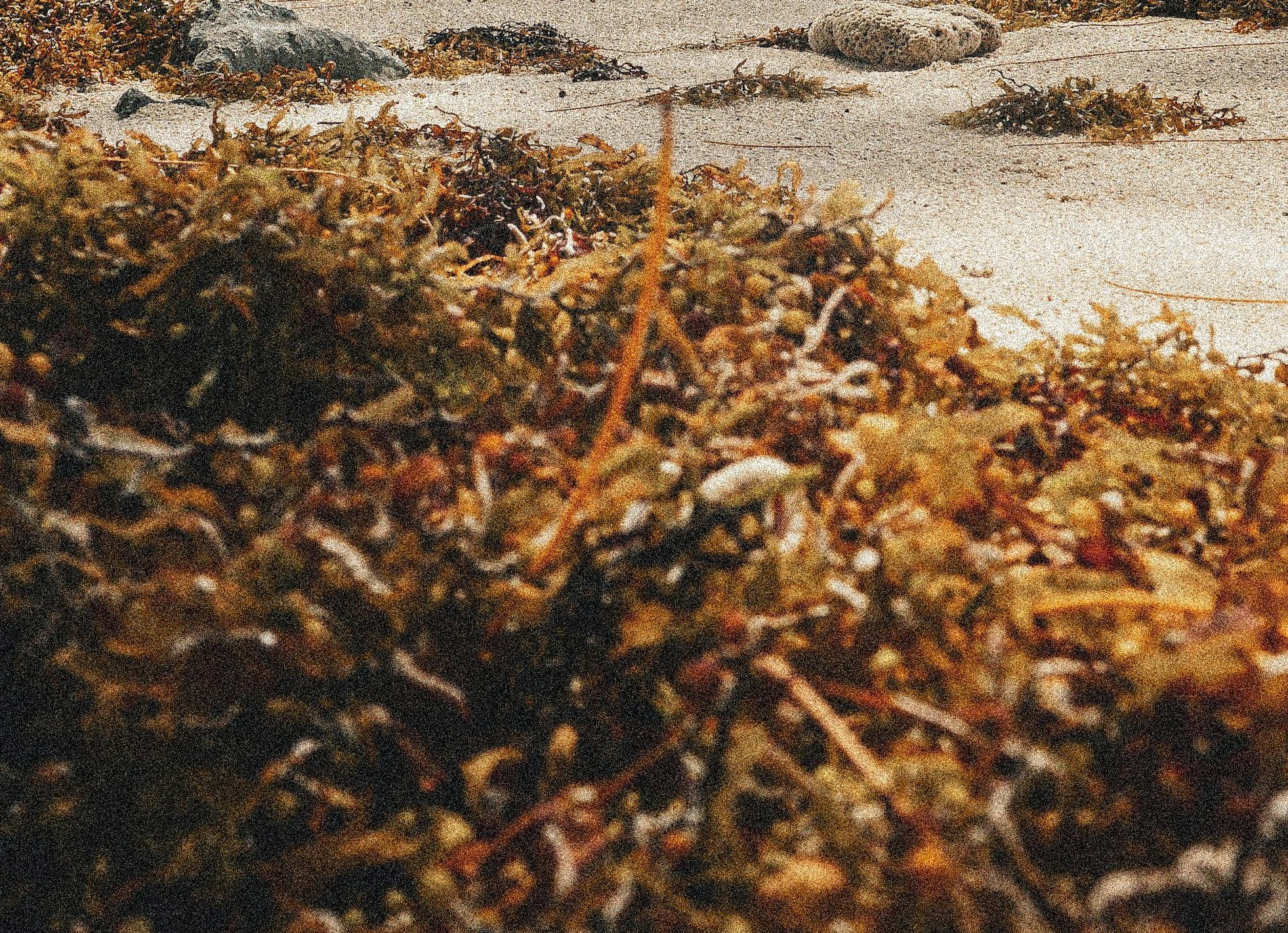
If you’ve visited Jacksonville Beach, Neptune Beach, Atlantic Beach or Ponte Vedra Beach this summer, you’ve probably noticed something unusual lining the shoreline: massive piles of brown seaweed stretching across the sand. The smell has been hard to miss, and for many beachgoers, the sight of the seaweed has sparked one big question: Why is there so much of it this year?
The answer lies hundreds and even thousands of miles away in the Atlantic Ocean.
The seaweed washing onto Jacksonville’s beaches is called sargassum, a floating brown algae that naturally grows in the Atlantic Ocean. Unlike many types of seaweed that attach themselves to the ocean floor, sargassum floats freely on the surface of the water. In moderate amounts, it plays an important role in the marine ecosystem by providing shelter and food for fish, sea turtles, crabs and other marine life.
What Northeast Florida is experiencing this summer, however, is far from moderate.
Scientists have been tracking a massive accumulation of sargassum known as the Great Atlantic Sargassum Belt, a floating mass of seaweed that stretches thousands of miles across the Atlantic Ocean. Researchers monitoring the bloom say 2026 is on pace to become one of the largest sargassum years ever recorded, surpassing many previous records. Satellite imagery has shown enormous concentrations of seaweed moving through the Caribbean Sea, the Gulf of Mexico and along the southeastern United States. Several factors have contributed to this year’s explosion in seaweed growth.
One major factor is warmer ocean temperatures. As global ocean temperatures continue to rise, conditions become more favorable for sargassum growth. Warm water acts almost like fertilizer for the algae, allowing it to reproduce more quickly and survive for longer periods. Scientists have also linked increasing seaweed blooms to changing ocean circulation patterns and stronger nutrient availability in the water.
Another contributor is nutrient pollution.
Fertilizers from agriculture, runoff from rivers and other nutrient-rich sources eventually make their way into the Atlantic Ocean. These nutrients, particularly nitrogen and phosphorus, provide additional food for the seaweed, fueling larger blooms than were seen in decades past. Researchers have found that nutrient-rich waters combined with warmer temperatures create ideal conditions for sargassum to thrive. While the seaweed grows far offshore, ocean currents and weather patterns determine where it ultimately ends up. Jacksonville’s location along Florida’s Atlantic coast makes it particularly vulnerable during certain times of the year. Easterly winds and shifting ocean currents can push large mats of sargassum directly toward Northeast Florida’s beaches. Once the seaweed reaches shore, tides continue depositing more of it along the high tide line. For beach visitors, the biggest complaint isn’t usually its appearance but its smell.
As sargassum decomposes on the beach, it releases gases that produce a strong sulfur-like odor often compared to rotten eggs. During hot summer days, that smell can become especially noticeable.
Large accumulations can also make it difficult to walk along the beach, launch boats or enjoy a day by the ocean. Jacksonville Beach officials have reported that this year’s buildup has created additional cleanup challenges due to the unusually large volume washing ashore.
Despite the inconvenience, sargassum is not entirely bad. Offshore mats provide critical habitats for marine species and support entire ecosystems. Young sea turtles often hide within floating seaweed to avoid predators, while fish use the algae as a feeding ground. Environmental experts note that the challenge isn’t the existence of sargassum itself but the unprecedented amounts now reaching coastlines.
Many longtime Florida residents say they have never seen accumulations quite like those occurring in recent years.
Online discussions from coastal communities across Florida reflect growing concerns that the problem is becoming more severe and more frequent. Scientists monitoring the blooms agree that the trend has intensified significantly over the last decade.
The good news is that sargassum is highly seasonal. Peak arrivals typically occur during late spring and summer with conditions often improving during the fall months as ocean currents shift and growth slows. However, researchers warn that large blooms could remain a recurring challenge for Florida’s Atlantic coast as long as ocean temperatures remain warm and nutrient levels continue to support growth.
For now, Jacksonville beachgoers may need to be patient. While the seaweed may not make for the picture-perfect beach day many envision, it serves as a visible reminder of the changing conditions occurring in the Atlantic Ocean. What washes up on our shores is part of a much larger environmental story, one that scientists are still working to fully understand.
Whether it’s a minor nuisance or a sign of broader environmental change, the seaweed season of 2026 will be one Northeast Florida residents remember for years to come.


Words by Harry Straussman
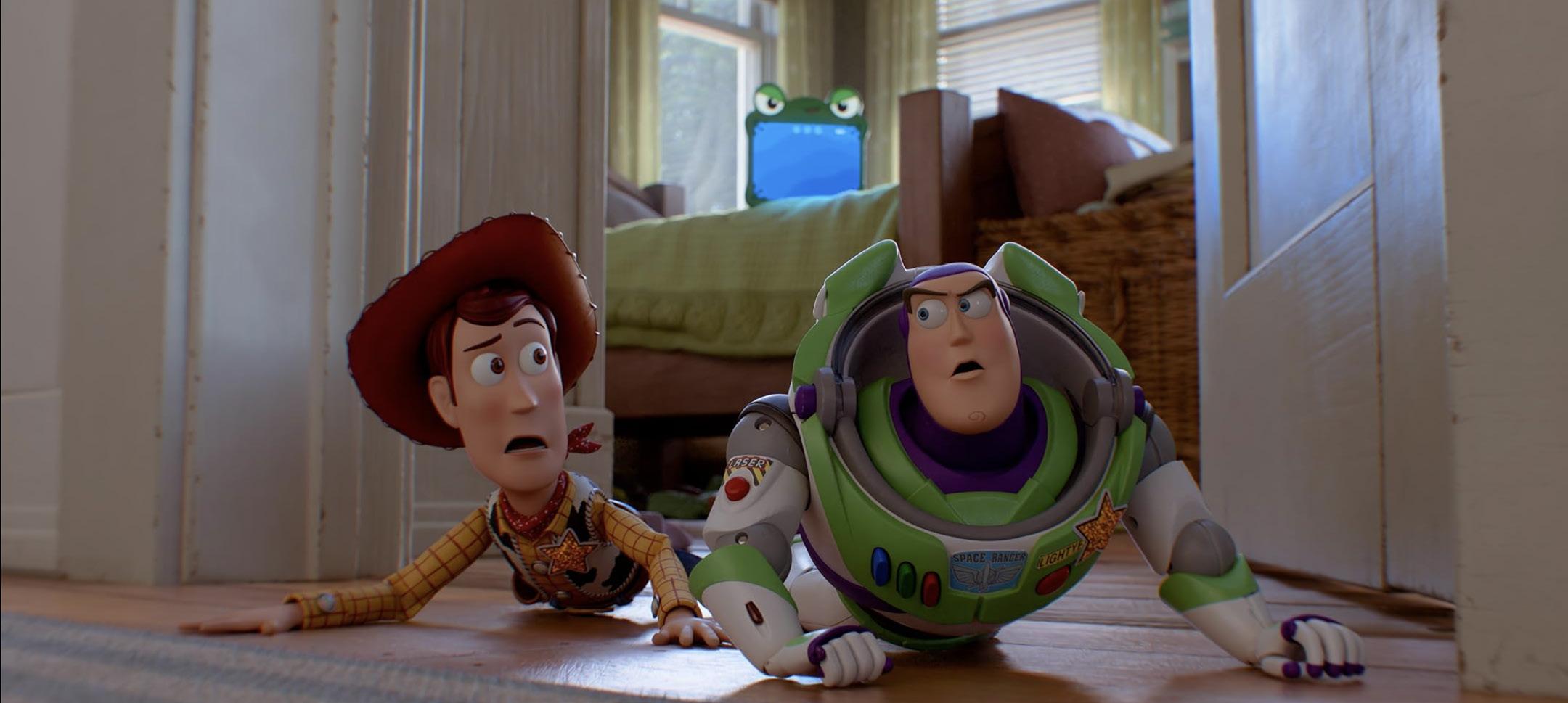
Woody, Buzz and Jessie are back for another grand adventure that puts the yodeling cowgirl front and center in the battle against the greatest threat to toys yet — technology. Andrew Stanton, one of Pixar’s founding fathers and director of beloved childhood classics such as “Finding Nemo” and “WALL-E,” takes the reins here to continue the “Toy Story” hot streak as one of the most consistently excellent film series to ever be produced. Stanton, who is the creative spearhead of the series working as either a writer or co-director on each entry, brings the emotional acuity that made his fish and robot movies resonate so well with audiences to this movie. Here, though, he taps into the anxiety that has surely affected most, if not all, modern parents on whether or not kids today are too attached to their phones, tablets and game consoles.
“Toy Story 5” picks up not long after we previously saw our friends with Jessie now leading the toy crew after Woody decides to live a life on the road helping lost toys with Bo Peep, but when Bonnie’s parents buy her a Lilypad tablet, the toys soon are cast aside as she gets sucked into the world of addictive games and subtly hostile group chats. While the analog vs. digital toy premise could have easily swerved into “old man yells at cloud” territory, Stanton and his team smartly thread the needle to show why the parents aren’t wrong for buying their young child an attention-depleting screen and how crucial it is for modern children to socialize. They also make the salient argument on the importance of logging off and building relationships away from screens. Though the film tackles these themes, it never feels like lecturing and maintains the fun, irreverent humor that has remained a pillar of the series since it debuted in the mid ’90s.
“Toy Story 5” also continues the franchise’s longstanding tradition of having some of the best vocal performances in all of animation.
I will go out on a limb to say that Tom Hanks is a very good actor, and there’s an argument to be made that Woody is both his best performance, as well as the most indelible character of his storied career. While he takes a backseat for this outing, Hanks gives another winning performance as cinema’s most lovable cowboy. Joan Cusack also shines as Jessie, the emotional core of this movie, which best serves the character since her arrival in “Toy Story 2.” But a special mention must go to Tim Allen as Buzz Lightyear, the franchise’s eternal most valuable player. As Buzz, Allen taps into a transcendent comedic persona that still hits the mark after three decades. While Allen may not have the transformative range of, say, Mel Blanc or Dan Castellaneta, his work as Buzz is so singular and brilliant that it puts him amongst those luminaries of voice acting. As for the new additions in the cast, Greta Lee gives a strong turn as the well-intentioned but destructive Lilypad, but it is a comedian who has scarcely acted before who really steals the show. Conan O’Brien may be the best late night and awards show host of my lifetime, but his performance as a defunct potty-training toy shows that he might actually have been born to be a voice actor. While many celebrities lend their voices to animation for an easy paycheck, O’Brien fully commits to the bit to breathe life into the character and make us feel sympathy for a useless toy.
“Toy Story 5” is another wonderful chapter for these characters and further deepens this world that has one of the great premises. Should Pixar decide to keep the show going in another few years, I will be happy to return, and I’m sure it will be just as charming as ever.

Words & photo by Trent Moorman
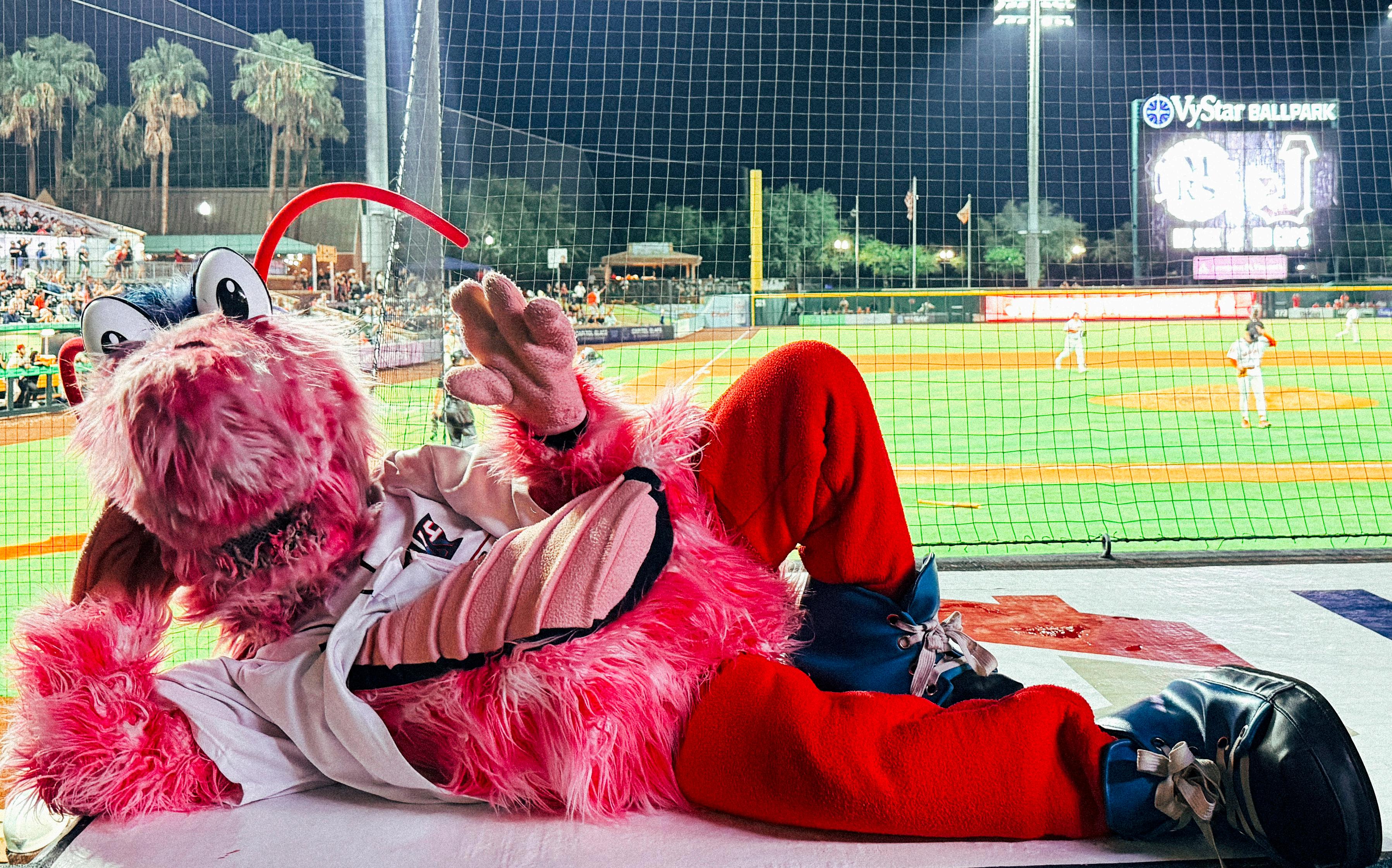
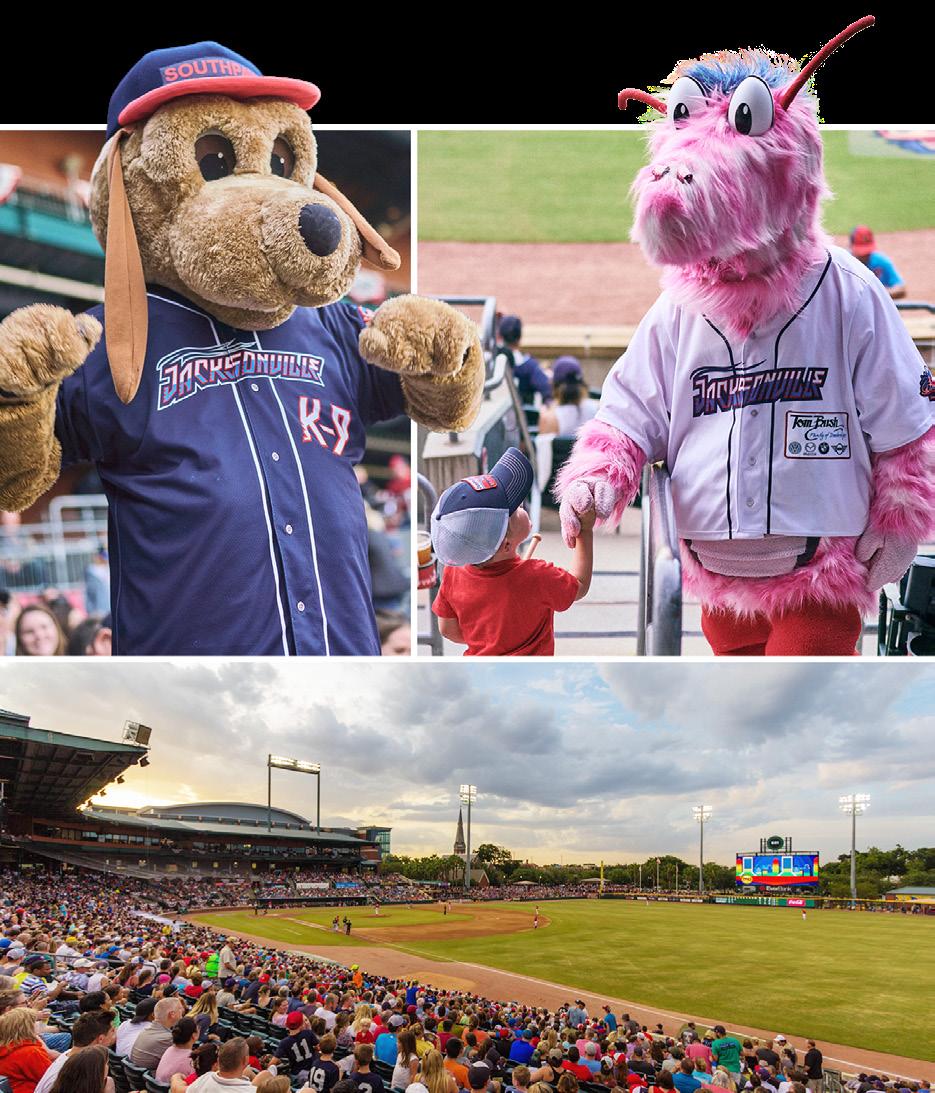
He’s pink. He’s furry. He’s the 6-foot-6 dynamo strutting around VyStar Ballpark during Jacksonville Jumbo Shrimp baseball games, and he does not like tartar sauce. And this rockstar only needs one name. Like Beyoncé, Prince, Oprah, Amadeus and Plato. Ladies and gentlemen, buckle up.
We’re talking about … Scampi. The crustacean sensation straight out of Mayport who’s been hyping Shrimp crowds, delivering hugs and sparking smiles like a superpower since 2017.
It’s the bottom of the eighth inning. Scampi spots a waving toddler from the dugout and shimmies up three rows to the child. A flurry of moves busts out. A 360-degree spin into a sky-point into a belly-bop and wiggle. High-fives are doled out. The entire section zaps into a frenzy with chants of “Scampi … Scampi … Scampi!” The toddler’s mind is completely blown.
Between a barrage of hugs and crowd hyping, Scampi answers questions.
Folio: It’s gotta be like a zillion degrees in the suit. How do you handle the humidity?
Scampi: What suit?
Folio: How do you stay cool in the heat?
Scampi: A pair of Wayfarers and Levi’s 501 jeans.
Folio: How much water do you consume during a game?
Scampi: About a 25-gallon aquarium’s worth.
Folio: You’re active out here, hopping around. Ever pull a hamstring or an antenna or a tail?
Scampi: I’ve never pulled an antenna or a tail, but kids have! [Scampi combs his antennae.]
Folio: You sort of have a sign language you’ve developed to communicate, how do you go beyond high fives?
Scampi: High fours.
Folio: Do you have a pregame routine, a pregame meal? Are there special ingredients in your power bar?
Scampi: Precisely three deep squat thrusts followed by a plankton smoothie and soft pretzel, light salt. I like my meat so rare, I only eat unicorns.
Folio: Seems like you might have extremely limited visibility? How do you manage to navigate so smoothly around the park?
Scampi: Lasik.
Folio: Let’s talk about workouts. How do you stay fit? Elliptical? Jazzercise? Pilates?
Scampi: Clamshell reps to build mussels.
Folio: Do you feel competitive with Rocko, the crab mascot of the Chesapeake Baysox, to be the better crustacean?
Scampi: There’s never any beef with fellow members of Crustacean Nation.
Folio: What struggles were there coming up as a young shrimp? Was it tough out there in the Mayport waters?
Scampi: [Scampi turns and gives a pondering head tilt. A group of fans comes in for photos. Hugs are dispensed.]
Folio: Can we talk about your love life? Are you seeing anyone? Is it true that you had a couple of dates with Pearl the octopus from “Finding Nemo”? You’re both sort of pink.
Scampi: [Scampi turns and gives a perturbed head tilt, glaring silently with two huge eyes. Another group of kids swarms in for hugs and pictures.]
Folio: I’d love your thoughts on another famous crustacean from Greek mythology: Cancer. During Heracles’ battle with the Hydra, the goddess Hera sent a crab to distract him. Because of the crab’s loyalty, Hera placed it in the sky as the constellation Cancer. Do you ever look at those stars and think, right on?
Scampi: [Scampi turns slowly toward me. The antennae are not wiggling. He shrugs, gesturing “We’re done here.” Then Scampi bows, bounds back up onto the dugout and bounces across the crowd, pumping pink fists to the thick night sky. Chants of “Scampi … Scampi … Scampi!” start up again. Louder this time.]

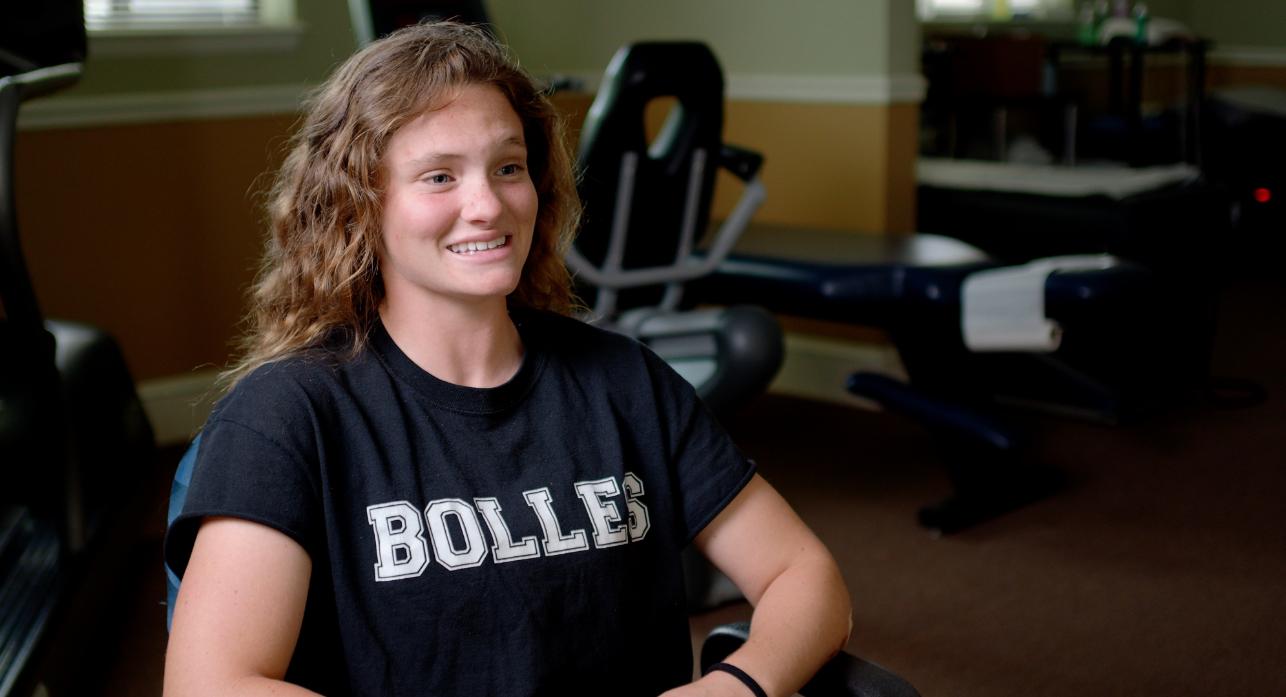
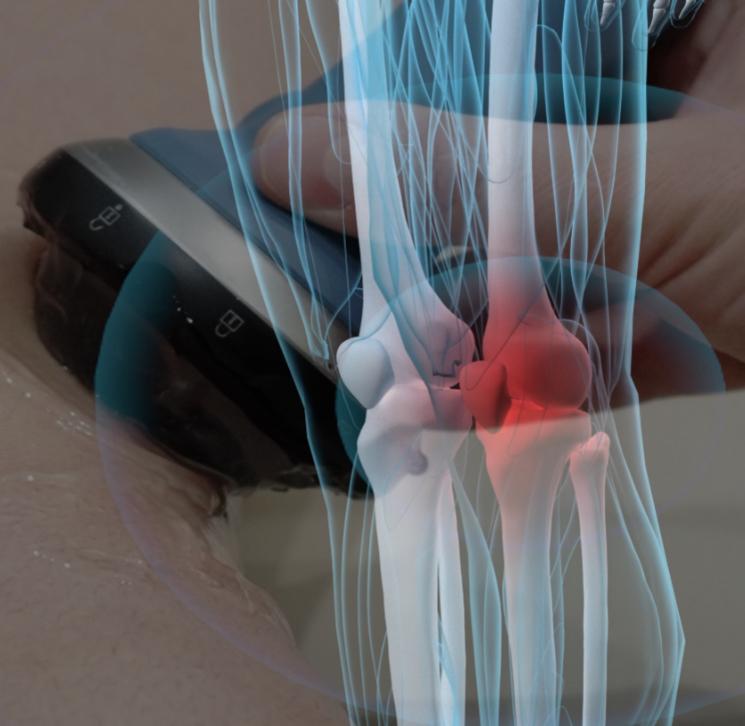
Annabella suffered a meniscus tear but thanks to Injury Care Centers & our Biotarget Therapy she was back on the field in only 3 weeks.









Words by Chandler Thompson & photos by Michael Teal

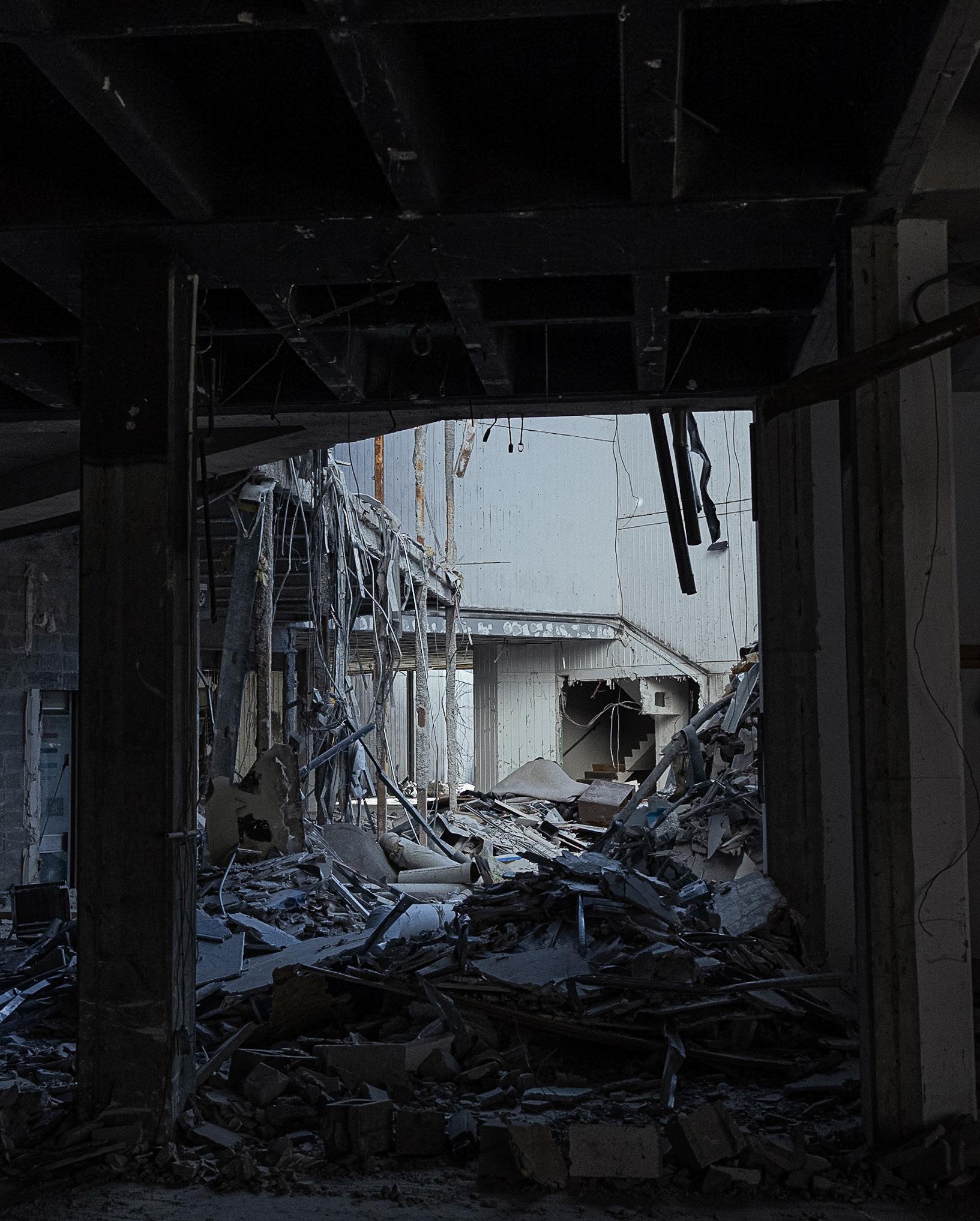
The demolition of Jacksonville’s beloved Museum of Science and History is officially underway, and it’s bittersweet. The museum’s closure is like watching your kid go off to college. We know they’re going off to do bigger and better things, but the time away still makes us sad. While we’re waiting for the museum’s grandiose return, it’s good to remind ourselves what MOSH provides to our city and why it’s so important.
MOSH officially closed its Southbank location in September 2025 with plans of reopening a bigger and better location on the Northbank. According to the museum’s website, the new location will be situated on 7.2 acres with 110,000 square feet of indoor space, making it the largest museum project of its kind in Florida.
The state-of-the-art update was expected to open in 2028, but delays may push it back to summer 2029.
While we’re counting down the days until the 55-year-old interactive museum returns to us, let’s recount all the reasons why we’re going to miss it.
MOSH promotes STEM education through its focus on making learning about science interactive and fun for kids. The exhibits encourage learning by developing critical thinking skills to problem-solve, while the hands-on approach promotes a level of memory retention that passive learning can’t hold a candle to. Interactive learning forces the brain to actively process information and use that information in an activity.
This process also boosts the ability to retrieve that information later. Some of MOSH’s interactive exhibits include live animals, astronomy and decades of local artifacts.
The museum also focuses on local history. Learning about local history gives students identity in their community, which fosters community-building behavior. Community building creates a shared sense of purpose, which inspires local positive change. Local history education also encourages the deepening of civic engagement, leading to important change in the community, such as holding elected officials accountable, boosting egalitarianism and reinforcing democracy.
The most direct way MOSH has benefited Jacksonville over the years is by boosting the economy. According to tax records, the museum made a total of $20.2 million in 2024, with $3.8 million going back into its own programs, including exhibits and education programs, such educational camps, early learner programs and outreach programs. The museum also encouraged tourism to the area, which helped lead Downtown’s redevelopment. Lastly, MOSH supported local school education through its many partnerships. These partnerships included bringing mobile exhibits directly to schools, subsidizing access and on-site voluntary pre-kindergarten (VPK).
The most obvious benefit MOSH has given to our city is fun. It offered seasonal events, educational exhibits, stargazing events, workshops and more, consistently giving Jacksonville residents something new, interesting and educational to explore.
We give a warm goodbye — for now — to the Museum of Science and History.
Words & photos by Michael Teal
Jacksonville, take a second and think back to the last reason that brought you to our sleepy city center. Maybe you needed a trip to the tax collector’s office, had an appointment at the courthouse, or maybe you work Downtown. My point being that the heart of our city has become devoid of joy and instead seems to be reserved for the legal necessities of our society. It wasn’t always like this though. So, join me for a ride through time on my magic school bus as we explore five reasons why Downtown Jacksonville became the No. 1 place to avoid when recommending fun for tourists.
Anyone who grew up under the umbrella of our Florida Board of Education can probably recollect the destruction caused by the Great Fire of 1901, which swept away 2,367 buildings from Davis Street to Hogans Creek. This tragedy instead acted as an opportunity for our city, and when the dust dispersed two years later, clothing stores, pharmacies, butcher shops, hotels and more lined Bay, Forsyth and Adams street, and a short carriage ride north brought you to dwellings as far as the eye could see. This expansion continued for about 70 years, and at its pinnacle, Downtown was the place to be for our city.
All good things must come to an end, I guess, because entering the ’70s, the newest craze was the shopping mall, shifting commerce to the Regency Square Mall. Meanwhile Downtown, car dealerships became vacant, department stores became the City Hall, hotels became courthouses, and the people left. After all the fun relocated, what was left brings us to our next stop.
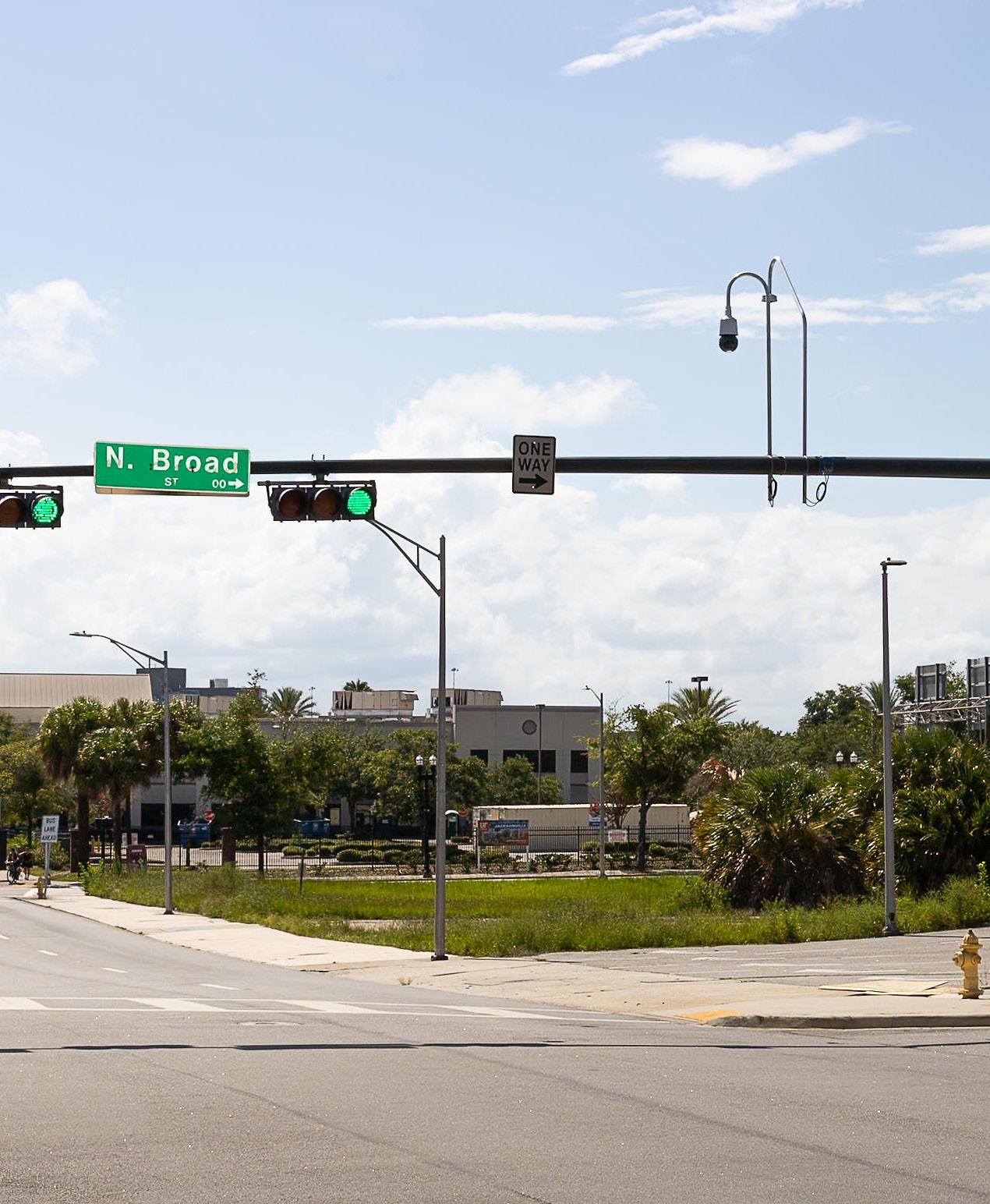
As we pull up to the corner of Bay and Broad, take a look around. You might think to yourself, “Wow, there’s a whole lotta nothin’ over here” or “What could they put over there?” Maybe another parking lot. A bird flying over our city center may have its feathers ruffled by the overabundance of hot asphalt, lack of habitable safety and rather wasted space. From that avian advantage, the plethora of parking is remarkable. It seems like in every other block business is conducted in one quadrant, while the remaining three only soak up sun. This limits usable space for development, and becomes comical as we drive down Main Street.
Looking to our right sits a parking garage, and on the left, you’ll see an empty parking lot. Continuing straight, taking a right on Bay and a left on Laura, you find yourself face to face with the root of our city and our next issue.
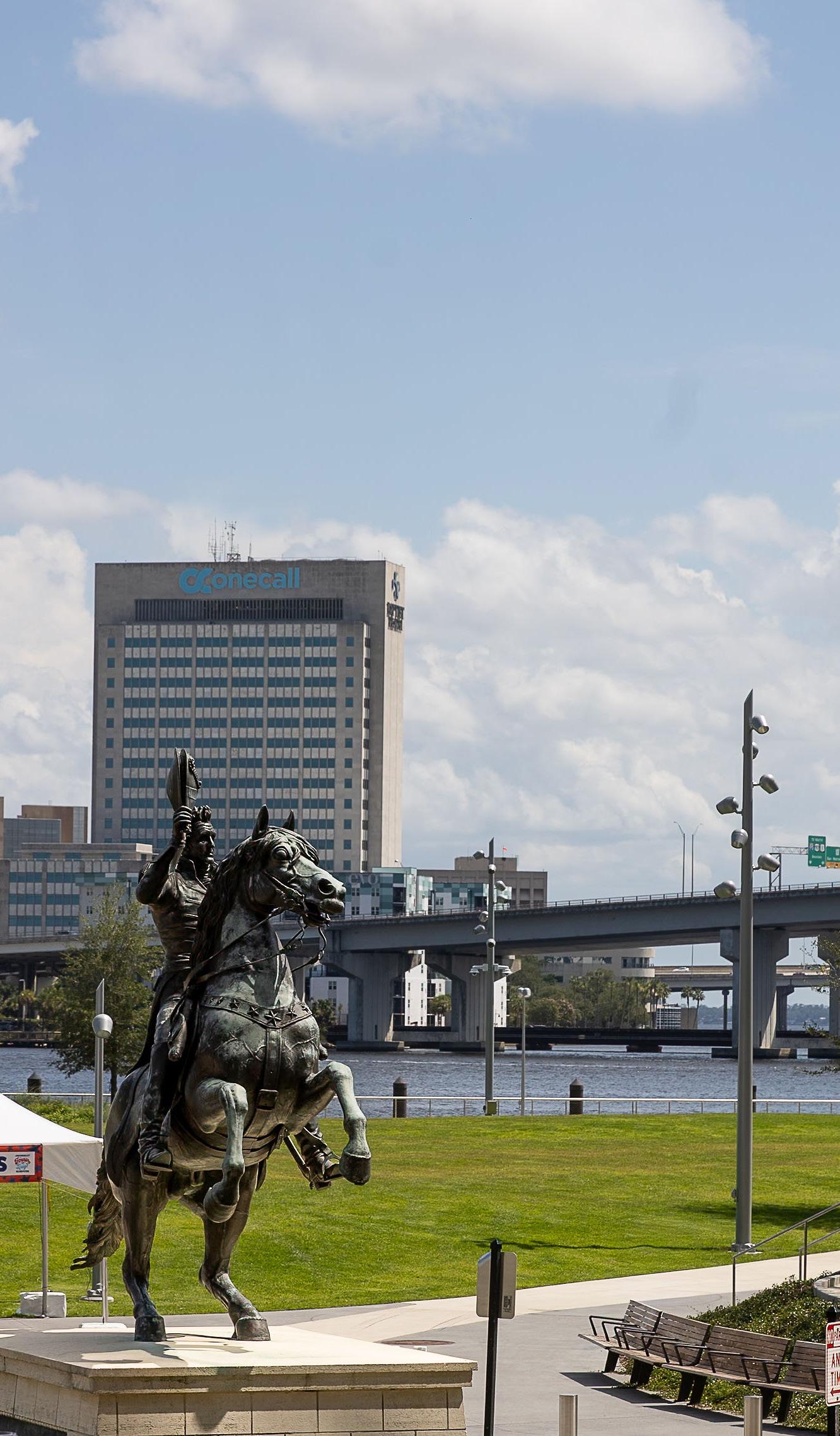
In the shadow of our prized sculpture of Andrew Jackson was once a massive horseshoe-shaped mall that hosted a variety of community events and entertainment. When the Jacksonville Landing was still with us and being used to its full extent, it was a space full of excitement and excited people. Upon entry, every sense could register that excitement: the smell of food stalls, the ringing notes of entertainment, and the sights of smiles. It was the last family-friendly place Downtown people could go to have a good time without breaking the bank. Opening to the public in 1987, Jacksonville had already made its statement on where the shopping district should be, and, needless to say, the gradual decline of the Landing was imminent. In May of 2018, the City of Jacksonville issued a failure to pay rent, and only a month later, there was a mass shooting at an event on site. Let’s just say The Landing didn’t last much longer, and with it gone, the people lost their place, and the real residents of Downtown found a new home.
Every city eventually runs into the same issue. Some manage it better than others, but if you were to ask a local what major issue Downtown is seemingly being neglected, one may stand out among the rest: homelessness. There is, indeed, no easy or right answer to solving homelessness, but avoiding the issue is definitely not it. With the congregation of aid for the homeless being mainly in the city center, it is no surprise that’s where those seeking aid would be. Sulzbacher, Salvation Army and “Church” Street can all be found within walking distance from City Hall. Without further explanation and one stroll Downtown, it’s pretty clear these struggling members of society aren’t enticing anyone to visit.
Finally, the No. 1 thing leading to the demise of Downtown Jacksonville: the jail. Looming over Sulzbacher, segregating the city center from EverBank Stadium and monopolizing pivotal waterfront property, the city’s Pre-Trial Detention Facility is the biggest impediment to the revitalization of our city. The 13-story eyesore takes up ~433,000 square feet of total land and sits only a block off the St. Johns River, separating neighboring restaurants, bars, and entertainment venues from gameday spectators’ money. The only reason this abomination is still standing is found in its name. The purpose of the facility is to temporarily hold prisoners who will appear before the court. However, the sheer capacity of this honeycomb of horror is no longer necessary all thanks to COVID-19. Like businesses and schools incorporated Zoom and other video chatroom software into the workforce, so did the legal system, and many detainees found themselves experiencing the judicial system through a screen rather than a courtroom. As a result, fewer inmates are needed so close to the courthouse. Thus, there is no need for such capacity; thus, there is no need for the building. Therefore, erase that 13-story monstrosity and usher Downtown into an age of growth and rebirth.
Jacksonville has many problems. Still, we call it home, and many of us will always see it that way. We love our home, but we sure do have quite the fixer-upper, don’t we?

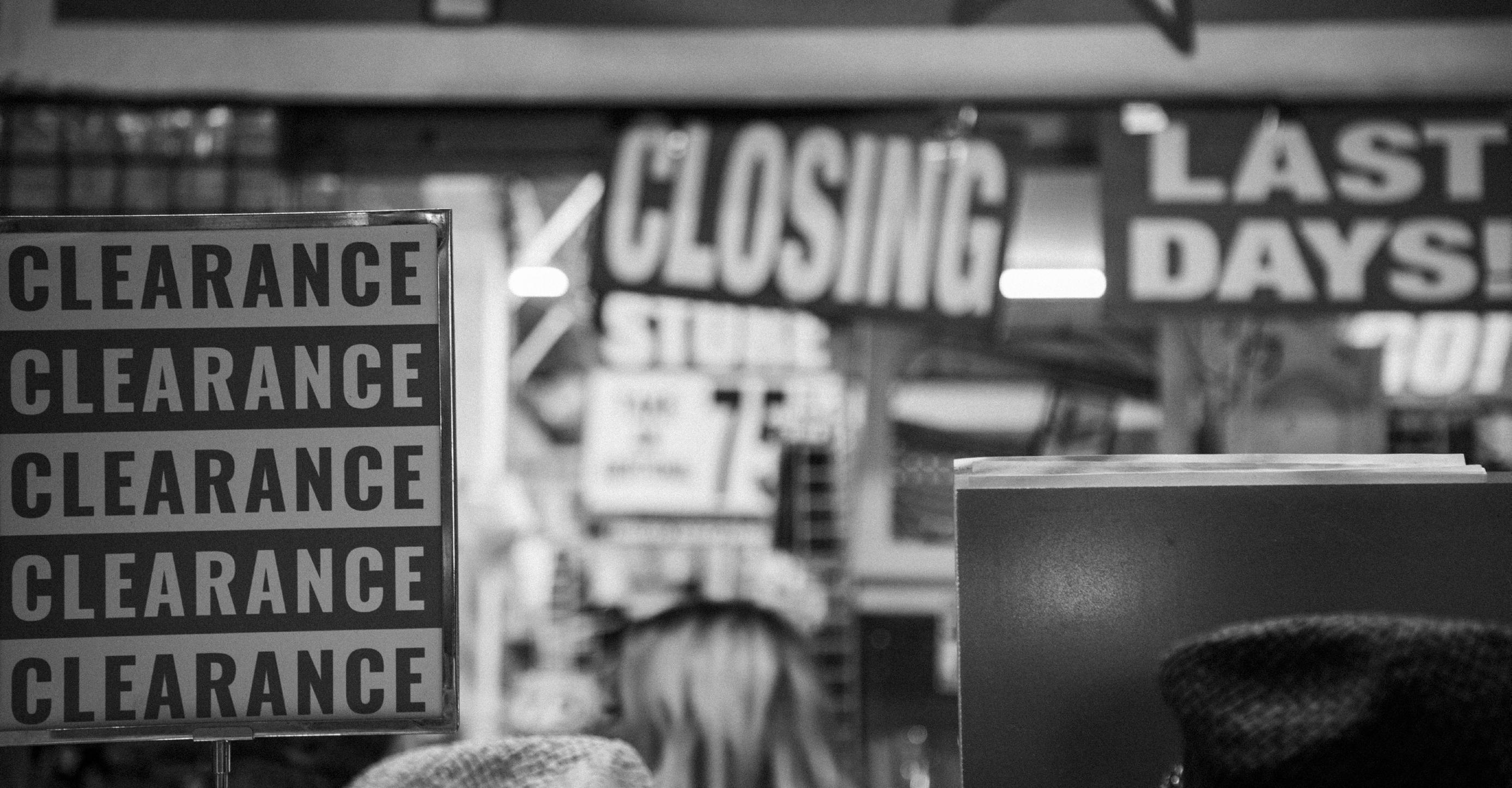
Jacksonville’s Largest Flea Market Closes Its Doors After 40 Years
Words & photos by Carmen Macri
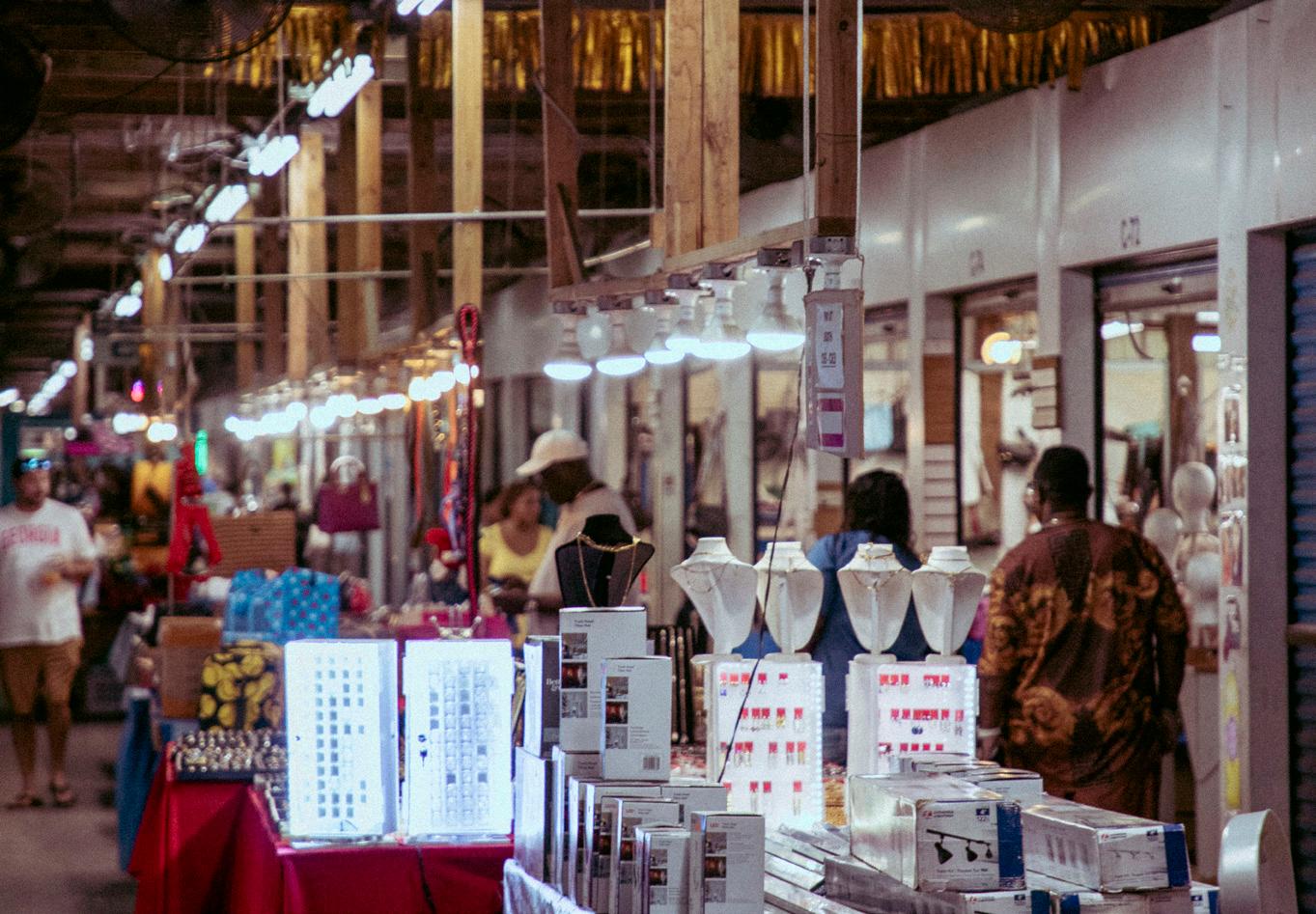
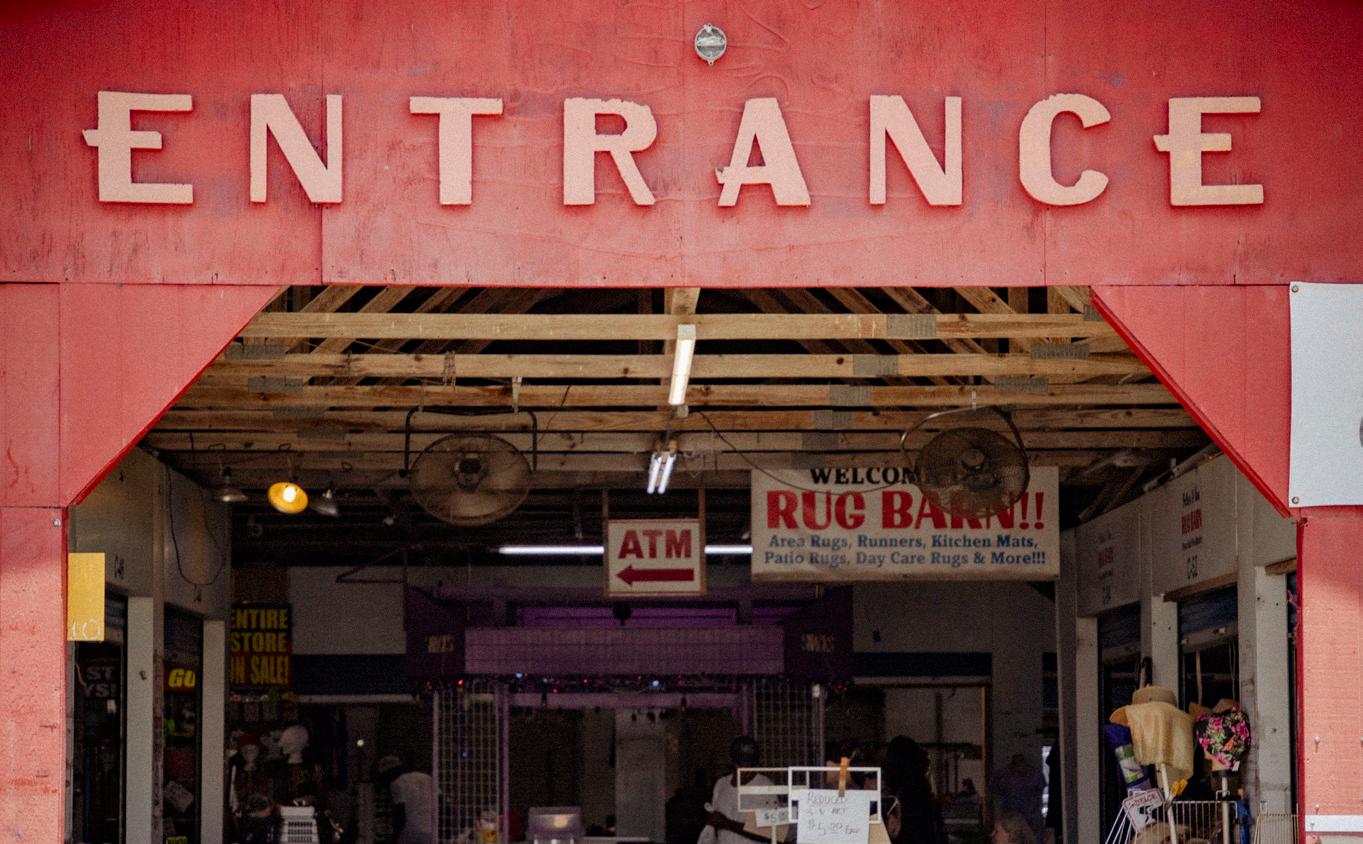
For over four decades, the Pecan Park Flea Market has been a weekend staple for Jacksonville’s Northside community with over 700 vendor stalls. Come Sept. 27, however, the market will close its doors permanently following the sale of the property to a Georgia-based automotive group. Because if there is one thing Jacksonville desperately needs, it’s another car dealership. Hooray.
Vendors flooded the market every Saturday and Sunday, creating a vibrant ecosystem for handmade crafts and secondhand treasures. Now, in the wake of the sudden closure news, many longtime vendors are facing an uncertain future.
According to a local gray-haired consignment shop owner who struck up a conversation after spotting my camera during a recent visit, vendors found out about the sale around the same time as the general public — with a letter taped to their doors from previous ownership declaring closure with a tight timeline. Left entirely in the dark, business owners immediately began scouting alternative locations across town, only to find a grim reality. The source noted that competing venues, such as the Beach Boulevard Flea Market and the Ramona Flea Market, have already hiked their vendor fees to capitalize on Pecan Park’s demise.
For that nine-year resident vendor, the looming September deadline brought a bittersweet realization: It’s time to retire the shop for good.
It’s a sentiment echoing across the market’s soon-to-be-vacated aisles. A T-shirt vendor, whose tenure at Pecan Park spans an impressive 33 years and multiple generations, is facing the exact same reality. Come September, his doors will close permanently. For him, the loss isn’t just financial; it’s human. Over three decades, he has forged deep, generational connections with his customers. He recalled a moment years ago when a mother changed her baby’s diaper right inside his shop; decades later, that same baby, now a grown man, walked back through his doors to say hello.
Even with closing sales and clearance signs littering the bustling halls, a few smaller vendors were blissfully unaware of the impending closure. One ring stand in particular was caught off guard when asked where she was planning to go in September, saying she had no idea the market was even closing, so take that however you will — maybe her closing letter got lost in the mail.
For some vendors, their weekend booths are a fun way to pass time during retirement and make a quick buck, but for others, their live -
lihood is being ripped away to make space for luxury cars. And for those vendors, they have no choice but to face the high prices other local flea markets are demanding.
While the business owners are taking the heaviest hit, local shoppers are feeling the gut-punch just as hard. As news of the sale broke, regulars immediately took to social media to find solace in a grieving community and figure out where the hell they’re supposed to go now that their holy grail flea market is being wiped off the map. Unanimously, social media users recognized the steady decline of other local flea markets (i.e., Beach Boulevard) while sharing memories of years spent at Pecan Park.
One Reddit user stated, “I have many childhood memories of the family going to Pecan Park many weekends in the late ’80s through late ’90s and early 2000s.”
Another followed up saying, “Seems like Ramona is going to be the only good one left. Have lots of memories growing up at Pecan as well as the Beach one. But the Beach one hasn’t been that great every time I go lately.”
In the parting note, the previous owners offered vendors a rent-free August and September, followed by the month of October to pack up and clear out their booths. After that, the grace period ends: Anything left on the property past Oct. 31 automatically becomes the property of the new automotive group.




Three
As it turns out, you can’t compress three decades and six bands into 60 seconds. But bless them, they tried.
Ask someone to name America’s great rock cities, and you’ll likely hear Seattle, Los Angeles, Detroit, Athens, Austin and maybe Nashville. Jacksonville rarely gets an invite to that conversation. It should. It just never RSVP’d.
Long before playlists were run by algorithms, the city was turning out rock bands with a consistency that borders on suspicious. There was no Music Row here. No Sunset Strip. No A&R guy wandering into a bar hoping to discover the next platinum act. Just sweat-soaked clubs with no air conditioning and musicians who loaded their own amps because there wasn’t anybody else around to do it. Nobody came to Jacksonville to get famous. They got famous because they refused to leave.
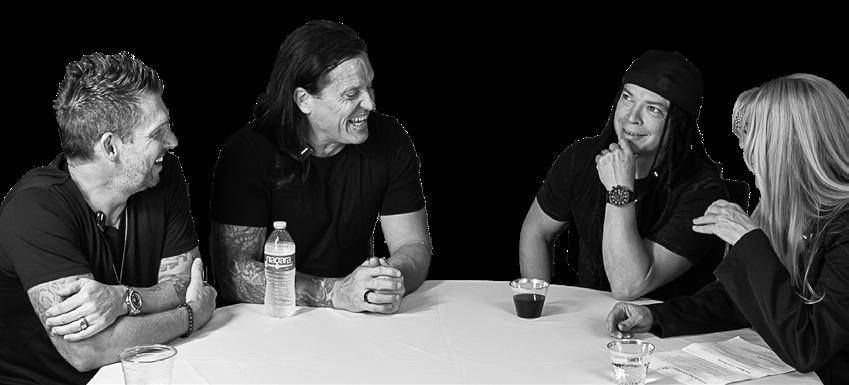
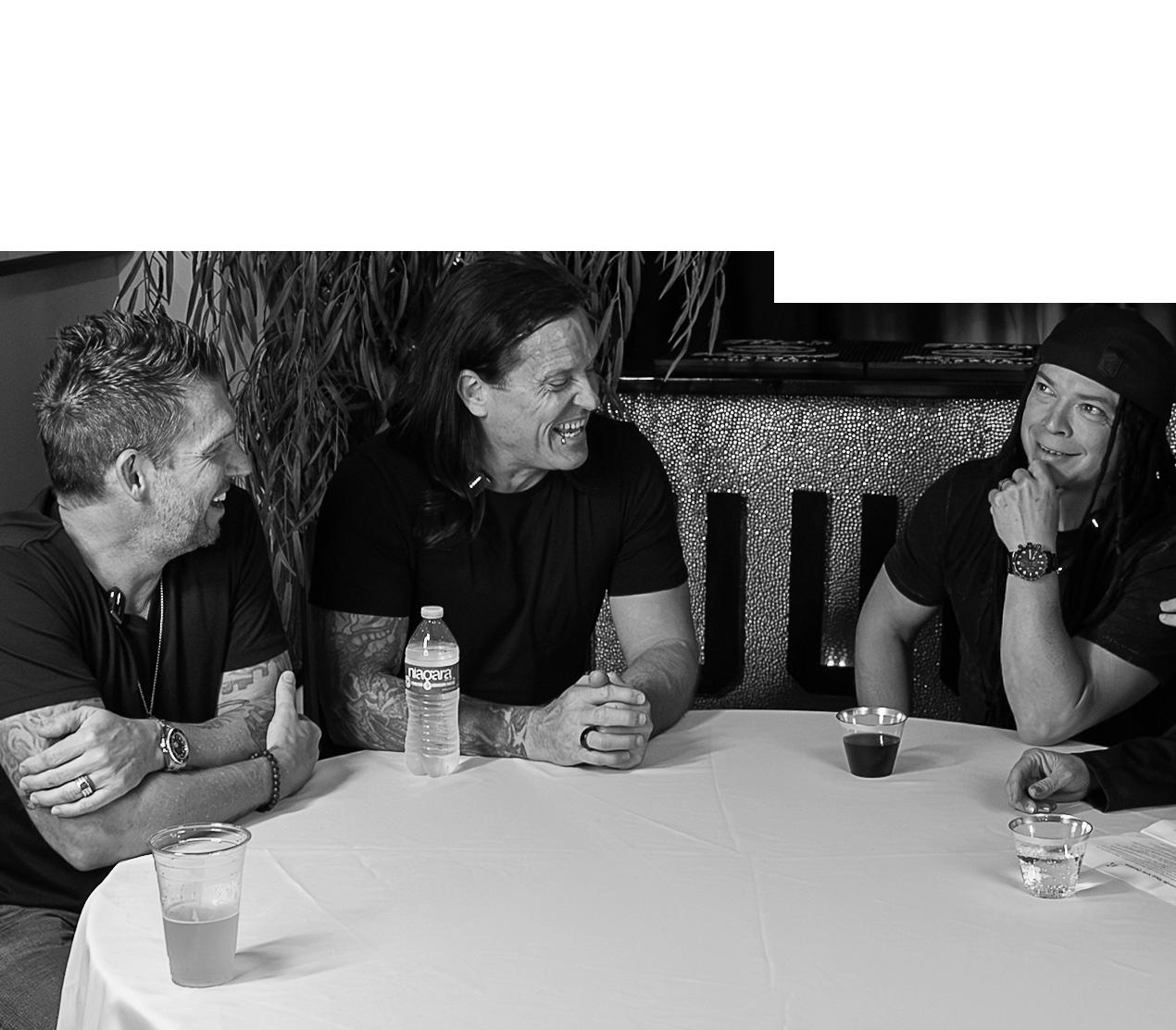
Three of them are sitting across from me right now: Brad Stewart, Jasin Todd and Damien Starkey, men whose collective resume reads less like three separate careers and more like one long, incestuous family tree grown out of the sandy soil between the St. Johns River and the Atlantic. Add up their bands — Shinedown, Saliva, Puddle of Mudd, Fuel, Burn Season, Society Red, Maylene and the Sons of Disaster — and by about the fifth one, you stop taking notes on individual biographies and start drawing a flowchart.
For nearly two hours, nobody watched the clock. Because the best stories never begin with the questions you planned to ask.
NOBODY GETS A ONE-MINUTE VERSION I made the mistake of asking each of them for the 60-second version of their career.
Brad Stewart went first. Mandarin-raised and a lifer in local bands since high school, Stewart’s break arrived in the mid-’90s through an unlikely friendship with a then-unknown Jacksonville musician named Fred Durst — yes, that Fred Durst. The friendship turned into a songwriting education, which turned into an audition for a feisty new band called Puddle of Mudd. However, Stewart didn’t get the job. Most people would call that a rejection letter with extra steps. Stewart, though, calls it the best career break he never asked for because he walked away with a co-writing credit on the band’s breakout single — “Control” — the song that effectively launched him professionally, even though his name wasn’t the one on the poster.
From there, the resume keeps sprawling: founding bassist for Shinedown, a stint in Society Red alongside Starkey, time in Fuel and current bass duties in Saliva. Married 25 years with two kids now in college, he summed up 30 years in the music business with a shrug: “That’s it. That’s my one-minute snippet.”
It was, everyone agreed, a stellar opening move.
“Damn, you murdered it,” Todd told him — half laughing, half pondering as he now had to follow that act. Todd’s own answer arrived deadpan: “Jasin Todd. Busy dancer. That’s all I got, man.”
The name everyone actually attaches to Todd is Shinedown, where he and Stewart were both founding members present for the unglamorous, load-your-own-gear years before the rest of the country had any idea who
they were. Being early to something enormous, it turns out, is its own kind of fame.
Last year, Saliva shared a festival bill with Shinedown in Ocean City, Md. Barry Kerch, drummer of Shinedown, pulled Stewart on stage for a guest spot with zero advance warning.
“I had no idea,” Stewart said. “I wasn’t prepared, and I might’ve been drinking a little because our set was over.” He assumed his obligations for the day were finished, but the universe disagreed.
Months later, it happened again, this time in Jacksonville with a text asking him to bring his in-ear monitors, no explanation of what song or when. It turned out to be “Fly From the Inside,” slotted 13th song in the set, which meant Stewart spent a lot of time pacing side stage half-joking that the band could’ve at least scheduled him third.
But once he was up there, in front of a packed house? “The funnest feedback” a musician can get, he said. Two hours of dread, gone in four bars.
Here’s the theme that ran under nearly ev erything these three men said: The music people know you for is rarely the music you’re proudest of.
Todd didn’t sugarcoat it. The industry runs on what he called “target words,” shorthand names the public latches onto, like Shine down, and a lot of genuinely excellent work simply never gets attached to a name big enough to travel. He pointed to a project called Vanilla Women, made with Starkey, as




Born in 1974, Brad Stewart co-founded Shinedown in 2001, recruited as the band's first member by frontman Brent Smith through Jacksonville producer Pete Thornton. He played bass on the band's breakout debut, “Leave a Whisper” (2003), and stayed through “Us and Them” (2005) before departing in 2007. He went on to play with Burn Season, Society Red, Fuel, and currently Saliva, and co-wrote Puddle of Mudd's hit "Control."
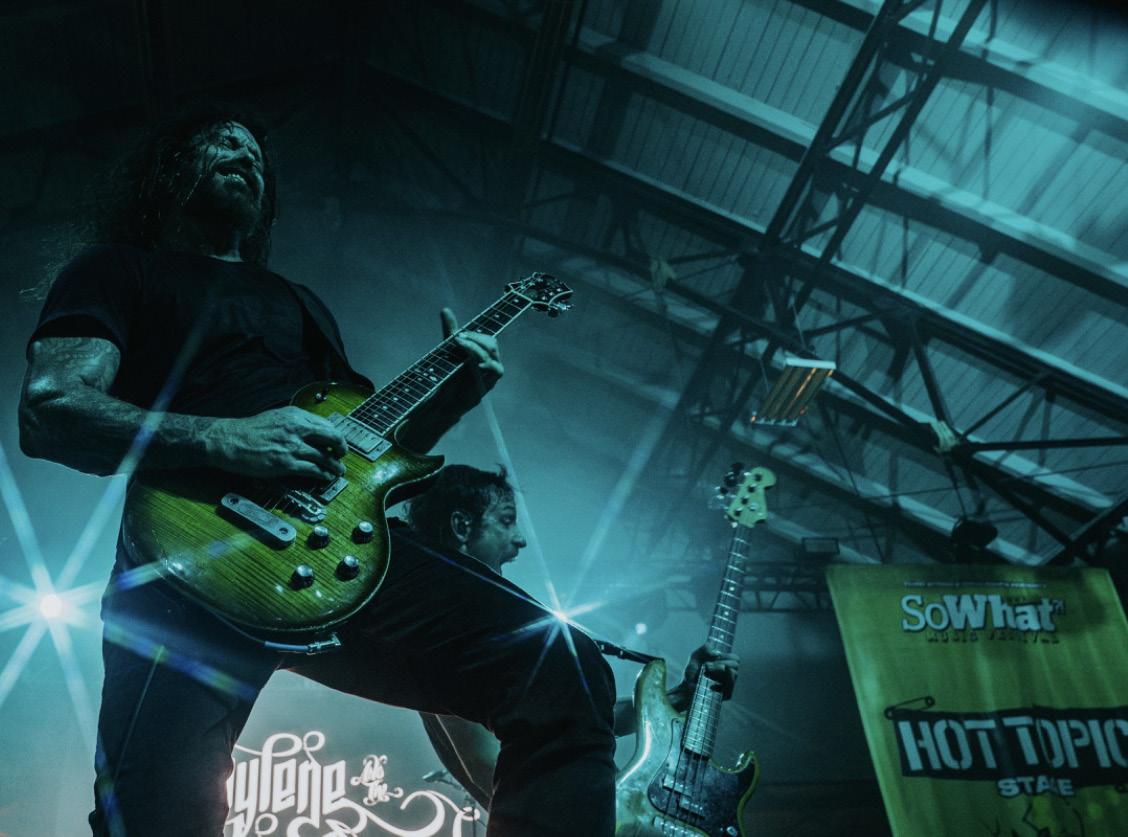
Raised in Lake City, Florida, Jasin Todd picked up guitar in sixth grade and joined Shinedown as its original guitarist in 2001, brought in after the band's producer introduced him to front man Brent Smith. He played on “Leave a Whisper” and “Us and Them” but grew creatively restless and left the band in 2008. He later joined Maylene and the Sons of Disaster in 2014, where he

DAMIEN STARKEY — Vocalist/Guitarist
Born in Cincinnati and raised in Jacksonville, Damien Starkey started an early version of Burn Season with drummer Bobby Amaru at 15, landing a deal with Elektra Records by 18. Burn Season released its debut in 2005 before splitting in 2007; Starkey then fronted Society Red (2007–2011) and later played bass for Puddle of Mudd. He's since built a career as a producer and composer, scoring music for film and TV and producing artists like Saliva, Daughtry and Avril Lavigne.
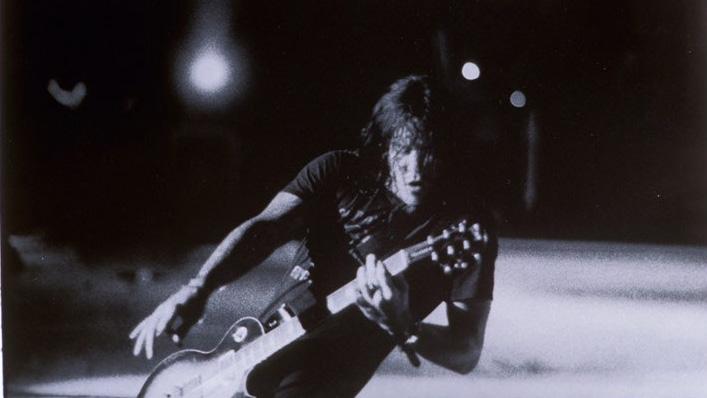
some of the best guitar playing of his career. Songs finished in minutes, at a blistering, almost telepathic pace. “People will never hear it ’cause it’s not a target word,” he said, “But we have it. We know it.”
Starkey has a name for that particular kind of heartbreak: The bird that wouldn’t fly. It’s what he and his old Society Red bandmates called a project that kept almost breaking through and just never quite got there. Someone at the table pointed out that this phenomenon has a modern name now: the algorithm.
Starkey compared it to painters who die broke and get famous posthumously, the uglier flip side of an industry that so often rewards timing and marketing over talent. But he refused to let the comparison turn into bitterness: “What matters is that the effort was real regardless of what happened to it afterward.” He tells younger artists their recordings are essentially their cave paintings: the thing that outlasts them, whether or not anybody notices right away.
“Some birds fly. Some don’t. Either way,” Starkey said, “You still have to build them wings.”
Now we arrive at the part of the story that should be legally required reading for everyone with a Fender and a dream because nothing radicalizes a musician faster than an itemized invoice.
When Burn Season’s Starkey and future Saliva frontman Amaru signed with Elektra Records (the same label behind Metallica, AC/DC and Mötley Crüe) just two months after high school graduation, they believed exactly what every 18-year-old with a record deal believes: They made it.
Then the label collapsed out from under them during one of the industry’s biggest corporate consolidations. One day, they were the label’s next priority, and the next, the company simply didn’t exist. “It’s amazing how fast everything changes,” Starkey said.
Here’s the part everyone at the table still thinks is hilarious. While the deal was alive, the label’s A&R rep took Starkey and Amaru out for a lavish birthday dinner. Months later, the paperwork arrived with charges for flights, hotels, rental cars and promotional costs. Then came one line nobody expected. The birthday dinner.
Starkey recalled, “I remember thinking, wait a minute, I owe you for my birthday dinner?”
Stewart has his own version. Nobody ever asked the band if they wanted to fly first class; the label just booked it. At 20-something, flying across the country in first class and rolling up in SUVs instead of vans felt exactly like every rock documentary you’ve ever watched. Then, years later, you find out somebody was keeping a ledger the entire time. “You don’t realize you’re paying for all of it,” Stewart said. Todd summed up the whole arrangement in four words: “It’s basically a loan.” A terrible loan. With guitars.
If there’s one piece of advice all three of them wish somebody had screamed at them before they signed anything, it’s this: Hire a lawyer, immediately, before you think you need one. Stewart credited a sharp attorney with making sure he actually got paid for his “Control” co-writing credit instead of getting quietly erased from the paperwork. Starkey brought up John Fogerty’s infamous legal saga as the extreme-case warning label when Fogerty was sued for allegedly plagiarizing himself because a new song sounded too much like an old one he’d also written. “He wrote the song,” Starkey said, still audibly
90 MINUTES ON STAGE. 22 HOURS WAITING FOR IT.
Ask anyone who’s never toured what being in a rock band is like and you’ll get the highlight reel: crowds, lights, backstage passes, adrenaline. They’re not wrong. They’re just leaving out about 95% of the actual job.
“You ever fly somewhere, and you’re exhausted when you land, even though you didn’t really do anything?” Starkey asked. Everyone nodded. “That’s touring.” Airport. Hotel. Interview. Soundcheck. Waiting. More waiting. Finally, the stage. Ninety glorious minutes where thousands of strangers somehow know every word you’ve written. Then it’s over, back on the bus, and the whole cycle repeats the next day in a city that looks exactly like the last one.
Todd’s favorite memory from the early Shinedown days is Planet Fest, where the band wasn’t headlining, wasn’t close to headlining and was simply thrilled to be on a bill with The Used and Kidneythieves. “We were first,” he recalled. “We were just excited to be there.” But something shifted that afternoon when a sudden thought crossed his mind mid-set: Maybe this is actually happening.
Stewart’s favorite memory involves 50,000 people and Shinedown frontman Brent Smith asking an entire festival crowd to split down the middle. Slowly, they obeyed, creating a canyon of humanity opening down the center of the field. Then Smith counted them in, and two human tides crashed together. “You couldn’t help turning around and looking at your guitar tech,” Stewart said. “It was everything I imagined standing in my garage as a kid.”
Todd spent months in Fuel alongside Stewart. Stewart did a stint in Burn Season. Practically everyone in the room played in or alongside Puddle of Mudd or Society Red at some point. Stewart even auditioned for Puddle of Mudd with the guitarist who eventually got the gig, Paul Phillips, who stuck around for two albums. Stewart went home after two days. “I was given my plane ticket,” he said before pointing out that at least the co-writing check “paid some bills.”

“It’s a very incestuous business,” Todd said, and the other two agreed.
Starkey’s path off the tour bus into an entirely different career started with a chance meeting at a Connecticut show, where he crossed paths with Kevin Wilson, director of music for ESPN at the time. Starkey had been quietly teaching himself production out of a home rig between gigs. Wilson offered him his first job scoring music for television, and Starkey realized he’d already been doing this work for free, purely because he loved it, and somebody was finally offering to pay him for it. Since then, he’s scored music for more than 100 TV shows and films.
At the height of the Skrillex-driven dubstep boom, someone asked Starkey, a self-described “heavy metal rocker guy” with zero prior interest in the genre, if he could produce a track in that style. He said yes on
instinct, then spent two weeks reverse-engineering how the genre actually worked. It didn’t matter. He delivered a couple of usable tracks, and the requests kept coming … orchestral dubstep, hip-hop dubstep, whatever the client needed that week. He never would have chosen the genre himself. Being forced to learn it under deadline pressure sharpened tools he still uses today.
Say yes to the weird gig. That’s basically the moral of the story and possibly the moral of this entire article.
THE INTERNET SAVED MUSIC. AND RUINED IT A LITTLE.
Starkey laid out the old math with the plainness of someone who lived through it: There used to be exactly one door into this industry, and it ran through a record label. No deal, no chance anybody outside your own ZIP code would ever hear what you made. He knows that math intimately, having spent
“It was everything I imagined standing in my garage as a kid.”

Words by Ariana Alcantara
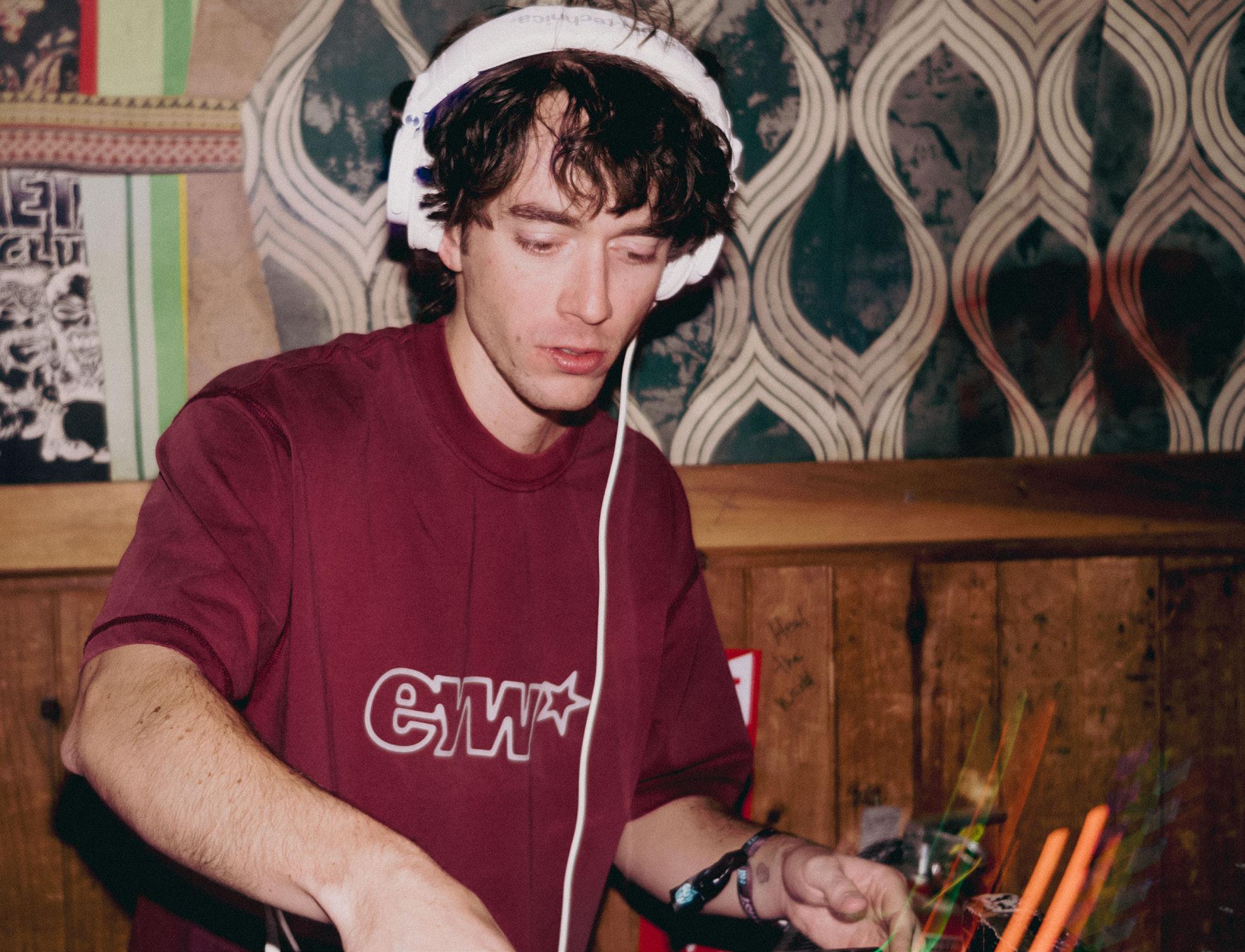
“Humidity.” A word Floridians know all too well, like “hurricane party” or “Pub sub.” But humidity is more than just the sticky nuisance that takes your hair from pinstraight to Sarah Jessica Parker with one step outside. It is also the name of Mitch Fountain’s latest EP, under his DJ name Druzin.
A fitting title for a Florida boy, “Humidity” is a slight deviation in genre and sonic style than one might expect from Flipturn. In the band, Fountain plays keyboard with the band’s last album, “Burnout Days,” introducing more elements of synth, giving a peek into the artistic growth of the band as a whole.
The decision to pick up the DJ kit stemmed from years of creating, learning and following curiosity more than logic. This attitude is exactly what got Fountain into Flipturn all those years ago. “I lied on my resume,” Fountain joked during our phone conversation on a stormy summer afternoon.
Folio: What got you into electronic music?
Fountain: Bonnaroo and Okeechobee are the reason … literally from the time you go to bed ’til eight in the morning, you’re hearing house music outside your tent. You would feel it on the ground because you’re sleeping on the hard ground. So you’d wake up, and you just hear the kick drum constantly. But I would wake up [thinking] people really like this music, and I didn’t know anything about it. I just looked up on YouTube “What is house music?” and watched a bunch of videos.

Folio: How does the more electronic atmosphere of Druzin compare to the energy of Flipturn crowds?
Fountain: Both crowds are amazing, and honestly, a lot of Flipturn fans come out to Druzin shows. ... With DJing, you’re not playing live. You’re kind of just mixing songs, so you’re literally trying to play to the crowd. It’s entirely different. Flipturn crowds know what they’re gonna see. If you go to a house show, people come in thinking, “I have no idea what I’m gonna listen to.” It’s more of a show of discovery, while a live show is, you’re seeing your favorite band, and you know exactly what you want that to sound like.
Folio: How did your comfort level change from those initial days of joining Fliipturn to now?
Fountain: “Burnout Days” was the most comfortable I’ve ever been writing with Flipturn. I understood how everyone thought in the band, and I understood how to bring up ideas. I’ve also grown a lot as a musician with the keyboarding and the synthesizer, so it was a lot more freedom.
The first album I did with them was “Shadowglow,” but I kind of leaned more on my guitar playing because … I wanted to do something that was familiar to me. ... “Burnout Days” was the first time [the keyboard and synthesizer] weren’t just a background. It’s not just supporting, which I’m a huge fan of by the way. I love filling in the cracks of song. That’s my favorite thing about music. I definitely got a lot more comfortable on that album.
Folio: What is your process for trying to read the room and build off the energy of the crowd?
Fountain: The first thing that I think of whenever creating a set [is] it’s almost weirdly similar to marketing. You think, what’s your demographic? Who’s there? What time are you playing?
So you go in with an expectation … of what you think it’s gonna be, and then you just have to have a shit ton of music to adapt. That’s where the talent of that world comes into play because mixing music is step one, and then after that, it’s kind of really just becoming almost an empath to the crowd.
Folio: What advice would you give to musicians about being able to catch that flow?
Fountain: For me, music is very impulsive. It’s a weird kind of combination of procrastination and the actual complete opposite because you don’t wanna force an idea. … In those moments where you can’t create music, you should just be listening to music or learning how to do something that you don’t understand. … In those moments that you do get really creative, I think it’s really important if you immediately try and get something down because that type of creativity will disappear.
Folio: On the topic of inspiration, what new artists inspire you?
Fountain: I am a huge fan of this artist named Bonobo. He’s a multi-instrumentalist, so a lot of his samples and songs, he’s creating the actual music for it. …. I also sample, but he kinda has a work process that I look up to. He also will play live, so a long-term goal is to be able to play songs in a group or a setup where I don’t have to rely on a DJ desk solely. I could go and bring in a synthesizer and re-create it live because there was a cool aspect of that, too. There’s a guy named Jamie xx. He is also a musician who will create his own things, but he’s also a really good sampler, so a lot of the stuff he creates is from digging through vinyl, cutting it up and completely repurposing it. And then a third one, Barry Can’t Swim, massive fan of his. I’m a big fan of anyone that plays an instrument just coming from my own background.
Folio: I was requested by my friend to ask you when you’re doing more house shows in Jacksonville.
Fountain: I wanna do one again. I like doing shows in, like, not a venue. For electronic music, it’s cool. You’ll hear of people doing a show in, like, a laundromat. I wanna go back and find a cool place. I’m trying to do one after our St. Augustine show. I don’t know where it’s gonna be yet, but that’s the next Jacksonville adjacent place, possibly.
Folio: Is there anything we didn’t talk about that you want to share?
Fountain: Listen to the EP and keep an eye out for new stuff. I create music pretty much all the time, and I’m gonna keep releasing music … and look out for possible after-shows for Flipturn.




Words by Emily Cannon
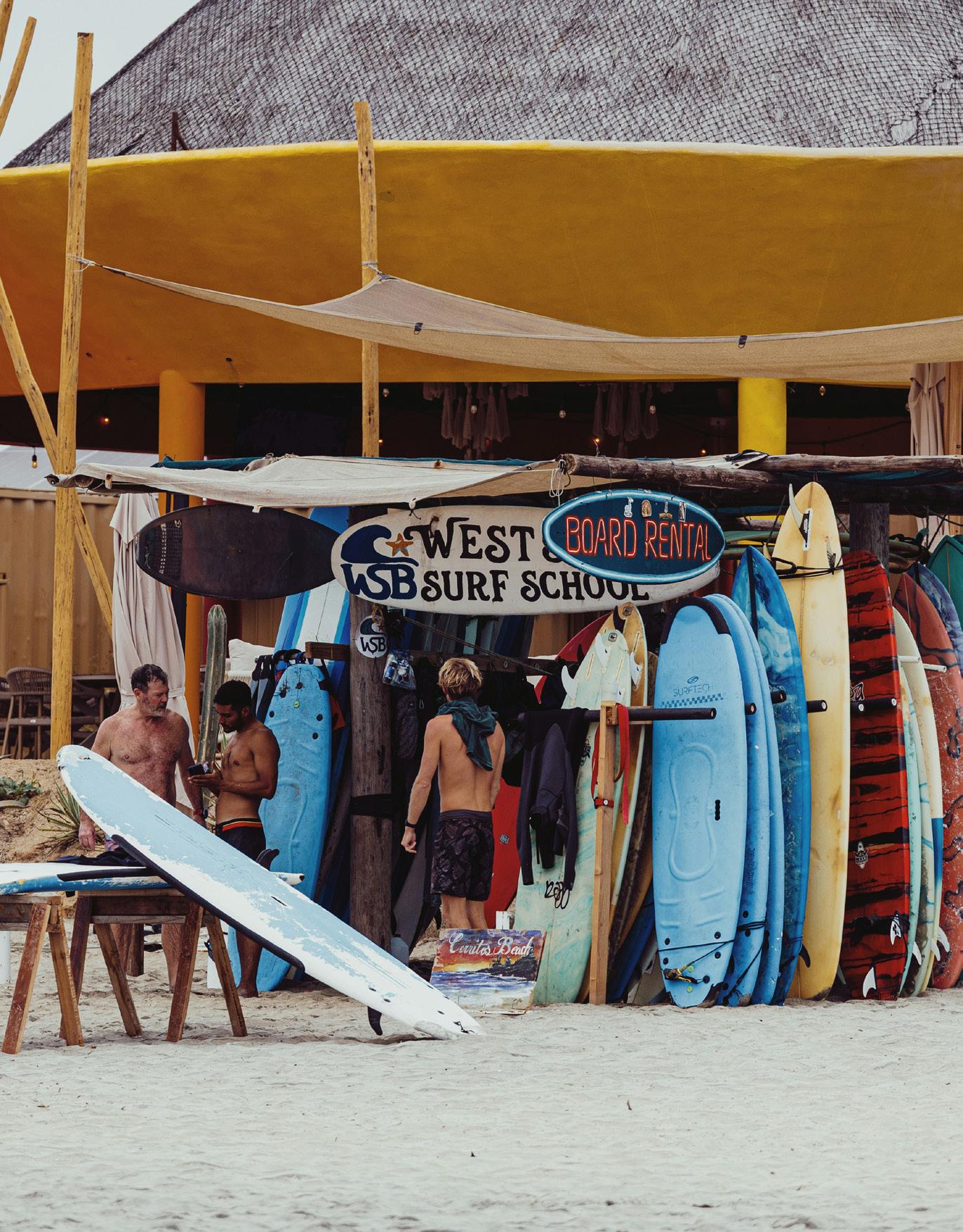
Step into a surf shop and something feels different.



Maybe it’s the smell of surf wax mixed with salty air. Maybe it’s the rows of colorful boards stacked against the walls or the sound of old reggae music drifting through the speakers. Whatever it is, surf shops seem to exist in a world untouched by the rush of modern life.
In an age dominated by online shopping, self-checkout lanes and endless scrolling, surf shops offer something increasingly rare: authenticity.
Walking through the door of a surf shop feels like stepping into a time warp back to the good old days. The employees aren’t reading from a sales script or trying to push the latest trend. More often than not, they’re surfers themselves, people who have spent countless mornings chasing waves before heading into work.
Conversations flow naturally. A customer might come in looking for a new board and leave with local surf reports, restaurant recommendations and stories about the biggest swell of the year.
That’s because surf shops have always been more than retail stores. They’re community hubs.
Long before social media connected people online, surf shops connected people in person. Surfers gathered to check wave conditions, swap stories and meet others who shared their passion for the ocean. Even today, local surf shops remain gathering places where generations cross paths. Teenagers buying their first board might find themselves chatting with someone who has been surfing the same break for 40 years.
The walls tell stories, too.
Unlike big retailers with perfectly curated displays, surf shops often feel personal. Faded competition posters, old photographs, stickers collected over decades and boards signed by local legends create a sense of history. Every item seems to have a story behind it. The shop itself becomes a living scrapbook of the local beach community.
Perhaps that’s why surf shops evoke such strong feelings of nostalgia, even for people who don’t surf.
They remind us of a time when businesses knew their customers by name. When recommendations came from experience rather than algorithms. When spending an afternoon browsing wasn’t about efficiency but about connection.
Nowhere is that feeling stronger than in beach towns. Whether it’s Jacksonville Beach, St. Augustine or small coastal communities across America, local surf shops serve as cultural landmarks. They preserve the laid-back spirit that first drew people to the coast. While beachfront hotels, restaurants and attractions may change over the years, many surf shops remain steadfast reminders of what made these towns special in the first place.
In many ways, surf shops represent the opposite of modern convenience. They encourage people to slow down, ask questions and stay awhile. That’s a rare experience today.
So the next time you pass a surf shop, step inside. You may be looking at surfboards and T-shirts, but you’ll find something much deeper, a glimpse into a simpler era when community mattered, conversations happened face-to-face and life moved at the pace of the tides.
For a few minutes at least, the good old days are still alive and well.
TUESDAY, JULY 28 – SUNDAY, AUGUST 2
Friday, July 31, 7:05PM WHO STOLE SCAMPI NIGHT
Scampi’s been kidnapped in VyStar ballpark! Come out and watch the videoboard in between the innings to see how this mystery unfolds! Plus, enjoy Friday Night Lites from gates until 7:30pm, with $2 12oz. Miller Lites, presented by Miller Lite, and Friday Night Fireworks!
Saturday, August 1, 6:35PM BACK TO SCHOOL NIGHT
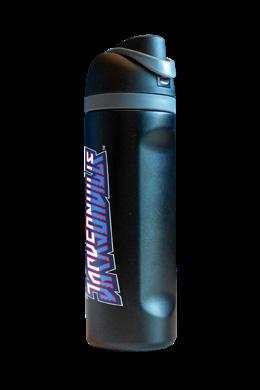
Make the thought of going back to school fun with the Jumbo Shrimp! Also, Be one of the first 2000 fans through the Main Gate at the Baptist Health Centerfield Plaza to obtain a Jumbo Shrimp Water Bottle! Presented by Wolfson Children’s Hospital.
Sunday, August 2, 5:05PM MILITARY APPRECIATION DAY
TUESDAY, AUGUST 11 – SUNDAY, AUGUST 16 VS
Join the Jumbo Shrimp and Boeing for Military Appreciation Night as we are providing free tickets (subject to availability) to all active, retired, veterans and former military members and their dependents. It’s Baptist Health Sunday Family FUNday, so head out to the center field gate where we will host catch on the field until 20 minutes after the gates have opened. Kids can also feel like the pros after each Sunday game by rounding the bases once the field is clear. Plus, face paint, balloon animals & more, presented by Baptist Health.

Words by Chandler Thompson
Style lends to a person’s sense of self. It provides a nonverbal way of self-expression and has a great impact on confidence, creativity and even mental health. However, with more than 36 million people living in poverty in America, style can be forced to the wayside more often than not. Something that has been helping in this area is thrifting clothing or buying secondhand. Yet, inflation’s iron grip has scooped up consignment shops along with everything else, leaving consumers baffled, especially considering the items were completely free for thrift stores to obtain.
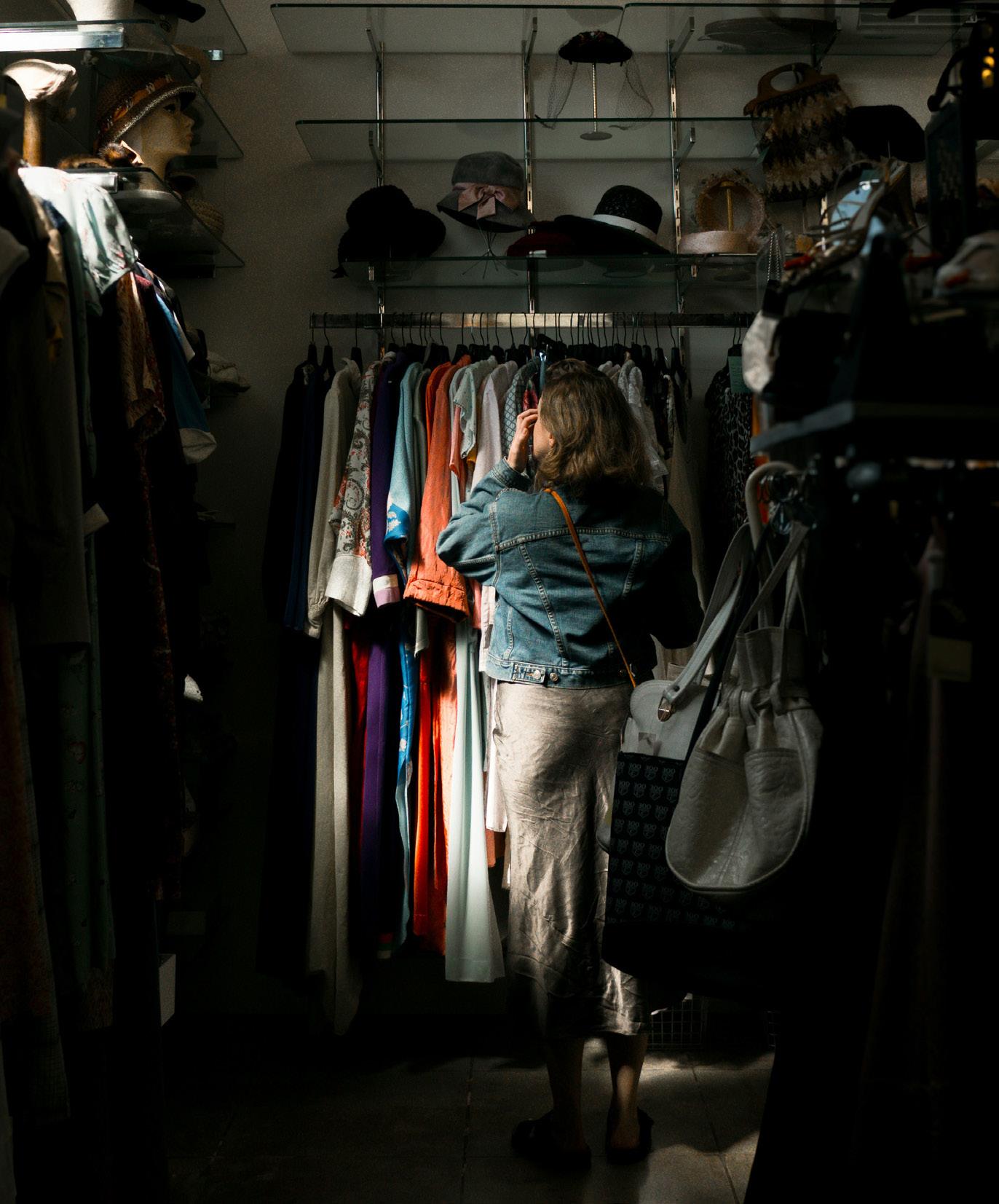
Thrifting used to be looked down upon due to its association with poverty. If something was bought secondhand, it was hush-hush and even thought to be “dirty.” The tides have drastically turned. Now, thrifting is seen as trendy. Something viewed as old is now vintage, and handme-downs are now environmentally conscious. Affordability is now in, and finding designer vintage items is post-worthy. Due to the newfound desire, corporate greed is, unsurprisingly, swooping in to ruin the fun.
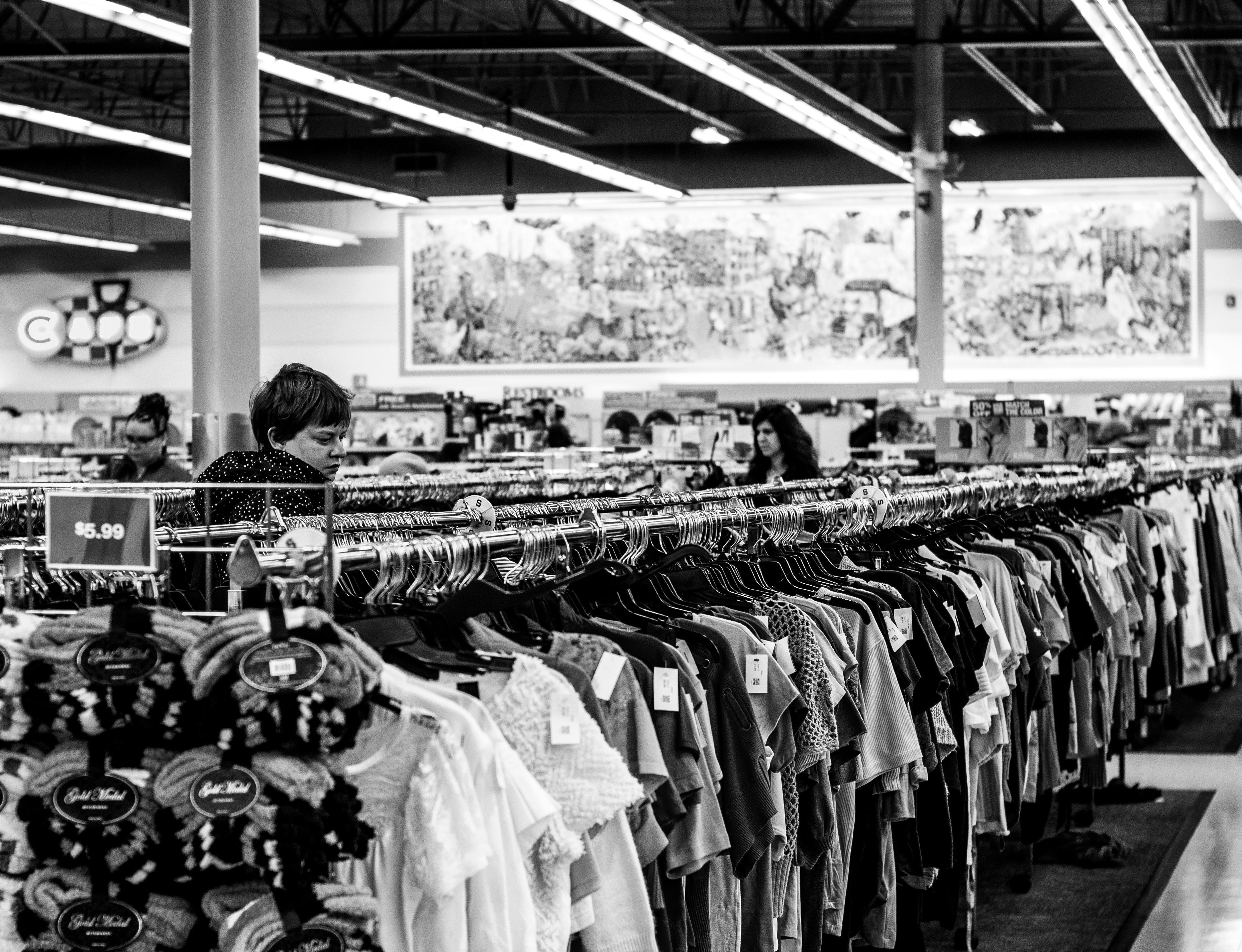
Goodwill, a corporation (as opposed to a community-supported store), has been receiving the brunt of the backlash. Many shoppers have compared items they purchased in the past for much lower prices. There have also been examples on social media of people finding the original tag on an item with its original price being less than the Goodwill price.
Other than the obvious criticism that thrift stores are given the items they’re up-charging for free, there are many other concerns to be aware of.
Thrift stores have always been an affordable alternative to retail stores’ high prices, and now, the prices are the same, if not higher. With no where to turn, consumers who rely on the affordability of thrift stores are turning to fast fashion.
Fast fashion is the production of clothing and shoes focusing on quick turnaround rather than quality. Concerns such as environmental im pact, quality and the exploitation of workers have been a discussion, especially on social media. Many have been shamed for posting Shein (a popular fast fashion brand) hauls for these reasons. Now that thrift stores are increasingly becoming unaffordable, however, many explain that fast fashion is all they can afford.
stores
The items being sold are given to them for free, and with their increase in popularity, it’s evident they’re thinking about the profit they could be making rather than who they’re affecting. Costs can’t be an excuse since most lower-level employees are getting paid minimum wage, and there’s a 30% year-over-year increase in thrift store visits, according to Worldmetrics. The corporate greed is unbecoming of an industry whose entire mission has always been its dedication to accessibility and equity for all.

Words & photos by Ozni Foxglove
Nestled in the embrace of my childhood magnolia tree, I crocheted my first hat at the age of 11. My legs clutched to its largest branch, I worked tirelessly to the song of birds chirping and wind blowing through the leaves. My cousin’s birthday was coming up, and I was determined to make her a gift. Wonky and oblong as it was, the hat made her smile, and it still encourages me to crochet to this day.
I was reminded of this moment when visiting River City Yarn and Fibers in Mandarin. There, Sarah Gant, the shop owner, pointed me toward a blackboard with a question across the top: “What is the strangest or most unique place you’ve ever crocheted?” I wrote my answer, amongst the other interesting and beautiful stories.
I found River City Yarn and Fiber while looking for yarn for a new project. Whether you dabble in sewing, knitting or crocheting, it was likely a great disappointment to hear that all Jo-Ann stores were closing due to bankruptcy. For years, Jo-Ann was the go-to place for fabric and yarn, and suddenly, thanks to private equity, poor financial decisions and even poorer understanding of their customer base, the chain crumbled. It has been said the head of Jo-Ann’s sewing department didn’t even know what a sewing pattern looked like, let alone how to use one. It’s easy to imagine how such little understanding could impact larger decisions about what kind of products to sell and what their customers actually wanted.
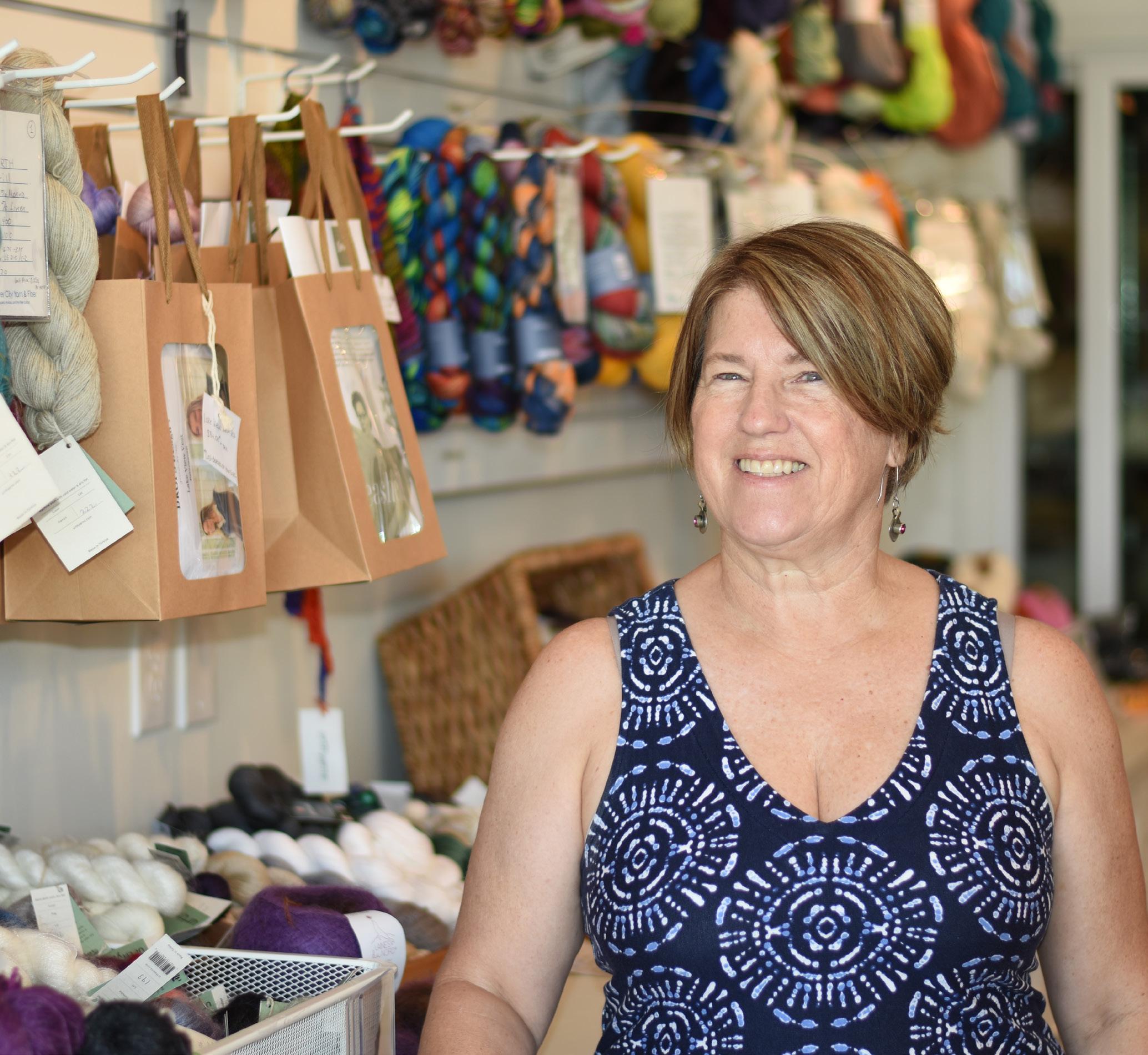
I stopped crocheting for some time in the absence of Jo-Ann. However, after discovering River City Yarn and Fiber, I found a new, more beautiful yarn haven. It is an expertly curated and creative store filled with admiration for the craft and love for its customers. And as Gant said, it gives back to the fiber community.
Jo-Ann was basically a monopoly in the fabrics and crafts sphere. As it grew in abundance, it pushed out many local businesses, and consequently, its closure left a huge gap in the industry. Many had nowhere to purchase new materials locally, leaving crafters frustrated. We were left with the somewhat disparate selections at Michaels and Hobby Lobby. As I need to see the yarn I’m buying in person to know whether it would suit my needs or not, buying online wasn’t an option for me, and I’m sure many felt that way.
“My reason for opening the store is because I have been in a few different yarn groups, you know, knitting and crochet groups, and they are soul-sustaining. I’ve gone through a few rough periods in my life, and those women just saved me, held me up. And so, when I was planning it, I thought: I want to create a space that supports the local maker community.”
Just being in the store is a treat for the eyes. So many glorious yarns of all colors, types and sizes, from the softest baby alpaca to sturdy cotton and bamboo blends.
Unlike most corporate stores like the aforementioned Hobby Lobby and Michaels, River City Yarn and Fiber offers yarns that are high-quality, specialty and chosen with the opinions of local fiber artists.
Gant also offers in-person classes in a cozy corner of the store where local crocheters and knitters teach their craft in an engaging and empowering way. If you’re at all curious about creating something in the fiber realm, I urge you to try one of the beginners’ classes where you will be walked through how to start your first crochet or knitted piece.
Whether you are an expert, novice or just fiber-curious, as Gant put it, River City Yarn and Fiber is a haven of positivity and endless possibilities.




Words by Teresa Spencer
With training camp approaching, the Jacksonville Jaguars are solidifying their leadership structure. Head coach Liam Coen recently announced the promotion of two key assistants: Shane Waldron has been elevated to assistant head coach/pass game coordinator, while Heath Farwell takes on the role of assistant head coach/special teams coordinator. These moves signal a clear intent to reinforce the coaching staff’s continuity and experience ahead of a pivotal season.
On the field, much of the optimism surrounding the franchise centers on quarterback Trevor Lawrence. National analysts have been quick to praise Lawrence’s performance this spring, with many describing it as the strongest offseason of his career. Now fully healthy, Lawrence has demonstrated a mastery of the offensive system that suggests he is poised for a significant step forward.
While the stars are shining, several units remain in flux. When training camp opens later this month, all eyes will be on critical roster battles
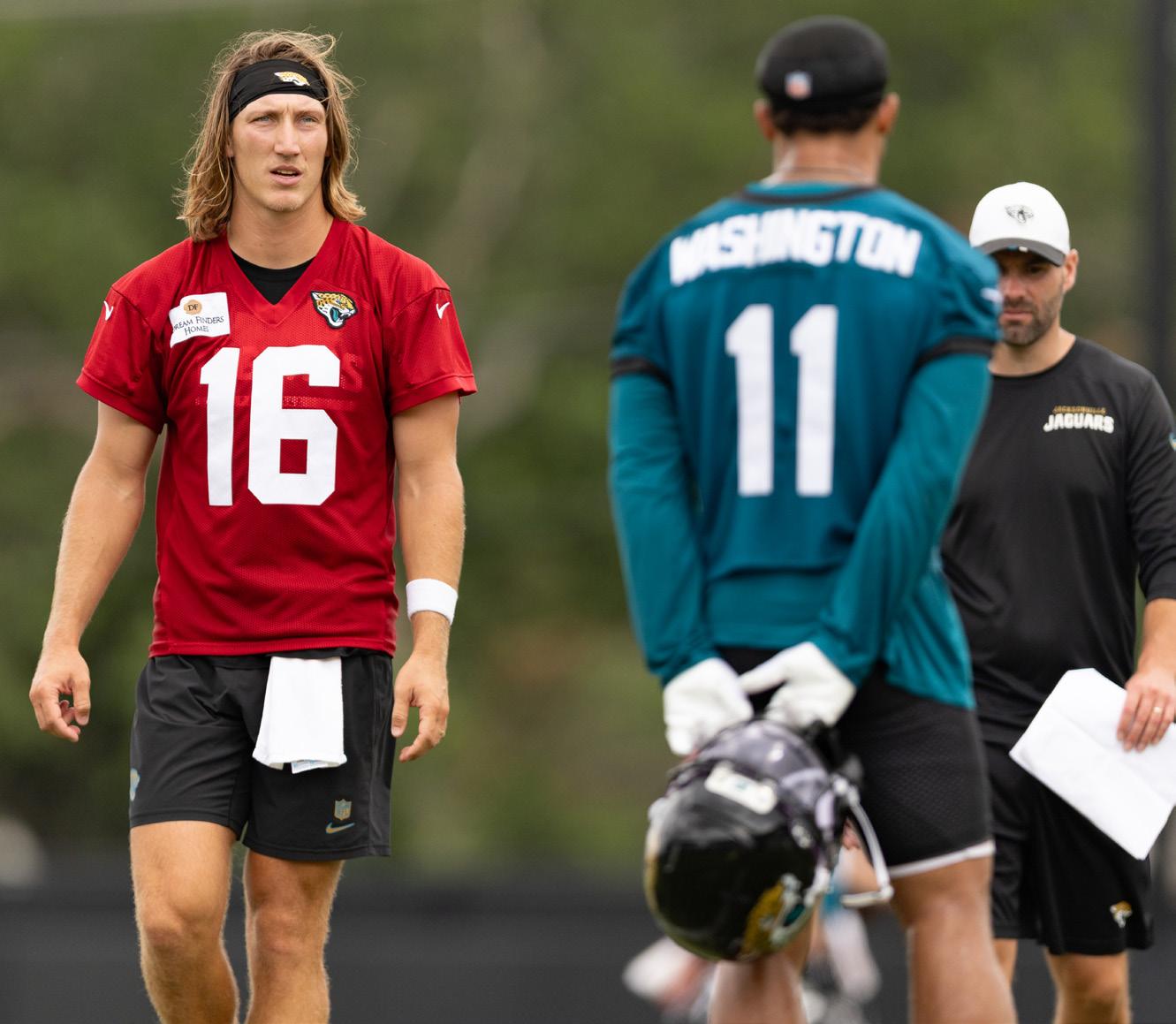
at wide receiver, defensive back and along the offensive line. With a revamped coaching staff and a locked-in franchise quarterback, these position competitions will be the final pieces to settle before the Jaguars kick off their 2026 season.


Words by Ambar Ramirez and Carmen Macri
CARMEN: There have been echoes across womanhood, an empty space where something once was. A long-forgotten act that recent movies have brought back to the forefront. Where the hell did all the yearning go? What happened to men groveling? What happened to a man chasing a woman in the rain and not immediately stopping after the third date? The women yearn for the yearn. I yearn. You yearn. We all yearn. Except men. They stopped for some reason.
PAM TILLIS
September 3, 2026 | 7:30PM
September 25, 2026 | 7PM
PAULA POUNDSTONE November 13, 2026 | 7:30PM PAVLO February 5, 2027 | 7PM

And what happened to long, loving looks? To love letters and handwritten notes? I’m seriously asking. It’s like men stopped going to war and, in the same breath, stopped yearning. They traded over-thetop monologues and grand gestures for the path of least resistance. Now, they just like an Instagram story and somehow expect you to
And we clearly aren’t the only ones thinking this. How do we know this, you ask? Because of the influx of chick flicks where the one common denominator is a yearning male lead. A man with sad puppy dog eyes who will do absolutely anything for the girl of his
As Carmen said, women yearn for yearn. Denied it in reality, we seek it vicariously through fictional scenarios, plots and characters. And trust us, we have a lot to say on the topic. For the men reading this, take some notes. Ladies? Grab a glass of wine, a blanket and

We should honestly start a podcast, but there’s literally no time because we leave for Europe in 12 hours. But that’s beside the point — back to the yearn! Before we can truly dive in, we have to talk about the death of the slow burn. Nowadays, between social media and dating apps, everyone is just way too available. There are no landlines to call, no waiting around for messages, and zero letters sent hoping they got the address right. And god forbid a man actually walks up to your doorstep holding roses. Nope. All we get now is a
Right about now, I bet the guys are thinking, “See? It’s not our fault!” Nice try, but you’re wrong. Modern technology is not a valid excuse to abandon your yearning, your whimsy. Still, to give credit where it’s due, bringing yearning back isn’t entirely a one-way street. Women have a part to play in this game of cat and mouse, and our job is to raise the stakes. We need to be a lot more selective. Does he open the door for you on the first date? No? Walk out. Does he call to check that you made it home safe? If that’s a no, too? Block him. Maybe if we all become a bit more ruthless, then maybe the men will
Standards, ladies, standards. There is nothing wrong with being picky and nothing wrong with waiting around (if ya wanna) for a man chock full of whimsy and yearning. They’re out there, I’m sure



Solve this puzzle like a regular sudoku, but instead of using numbers, use the letters
(for the Jax diner) to fill each row, column and box.