Subject: A rebuttal to Carson Haines’ An American Girl’s Take on the War
As I was flipping through Folio Weekly the other day I came across this article written by a young woman named Carson Haines and I couldn’t help but laugh. Her article offers a personal look at growing up during wartime. However, the piece makes a major mistake by completely leaving out President Barack Obama’s role in the conflicts in Iraq and Afghanistan. President Obama did not just watch from the sidelines.
He ordered a major troop surge in Afghanistan. He authorized the mission that ended Osama bin Laden’s life. He also managed the official withdrawal of combat forces from Iraq. If we are going to look back honestly at this era, we cannot sanitise it. We must confront the severe mistakes and human costs that defined those years. Under the Obama administration’s watch, the expansion of remote drone strikes led to devastating civilian casualties. Most notably, horrific errors occurred like the December 2013 drone strike in Yemen that mistakenly hit a wedding procession, turning a celebration into a funeral.
Furthermore, omitting these years hides the staggering economic toll that these decisions placed on American taxpayers. According to data from the Brown University Costs of War Project, the total budgetary cost and future obligations of the post-9/11 wars exceed $8 trillion. This massive sum includes over $2 trillion funded by borrowing and interest, along with hundreds of billions spent on homeland security and critical medical care for our returning veterans. The domestic ripple effects were felt deeply by everyday citizens; as wartime instability and global oil markets collided, the national average gas price skyrocketed from $1.79 when President Obama took office to a historic national peak of $3.93 per gallon during his administration.
For a generation that grew up under President Obama, it is impossible to separate the wars from his famous “hopey-changey” campaign rhetoric. He wasn’t perfect neither is Trump. But at least offer a real dissection.
Leon Terajewicz
T H E MAIL
BOUQS & BRICKS BOUQUETS
To the St. Johns Riverkeeper for raising a glass to conservation through its annual 25 Taps for the St. Johns campaign. Through July 31, residents can visit participating breweries and businesses throughout the St. Johns River watershed, enjoy local craft beverages and help support the organization’s mission of protecting and defending one of Northeast Florida’s most treasured natural resources. It’s a creative way to support local businesses, celebrate clean water and remind us all that great beer starts with a healthy river. Cheers to St. Johns Riverkeeper for 25 years of advocacy, education and stewardship of the mighty St. Johns River.
BRICKBATS
To those who continue wasting water despite Northeast Florida being under a Phase III Water Shortage Declaration. The region is experiencing historic drought conditions, and landscape irrigation is currently restricted to just one day per week. Yet some property owners continue running sprinklers on unauthorized days, watering during rainfall or allowing irrigation systems to spray streets, sidewalks and driveways.
Water conservation isn’t a suggestion right now — it’s a necessity. Every gallon wasted today puts additional strain on our water supply tomorrow. Northeast Florida residents are being asked to do their part during these drought conditions. Those who ignore the restrictions aren’t just wasting water; they’re showing a disregard for their neighbors and the community’s shared resources.
By Ambar Ramirez & Carmen Macri
Horoscopes
Aries
Are you ready for some soul-deep relief, Aries? Luckily for you, that’s exactly what June will provide, especially with Mars spending time in Taurus until the end of the month. That brain fog is finally starting to lift, resulting in a wave of mental clarity. Those life-altering decisions don’t seem so monstrous now, huh?
Taurus
Cue “Headlines” by Drake because this month your personal anthem is “money over everything, money on my mind.” As the sun blazes through Gemini and your second house of income and values until June 21, expect your ideas to become profitable.
Gemini
It’s your birthday, and you can cry if you want to! And you might want to, unfortunately. As the sun powers through your first house, you will be feeling an undying need for a fresh start and a complete rebrand. Out with the old and in with the new! Think of yourself as a snake shedding its skin just in time for spring cleaning.
Cancer
It’s never too late to start your spring cleaning, Cancer. Unless it’s no longer spring. In that case, you have until June 21, aka the summer solstice and the beginning of your solar return, to shed anything that’s been holding you back. As the sun sits in Gemini and your 12th house of rest and release, it’s the opportune time to tie up loose ends and clear your space.
Libra
Hopefully, your bags are packed, Libra, because an adventure awaits. No more pushing it off ’til next year. With the sun moving through Gemini in your ninth house of exploration, there is no better time than the present. Money comes back, memories last forever, blah blah blah. Just get on that damned plane.
Thought you would catch a break? Think again, Scorpio. The whole tough independent act is only cool for so long … after time, it just looks rather sad. And with the Sun in Gemini and your soul-deep eighth house until the 21st, you are likely finding yourself craving intimacy and connection. The only way out is through, so … better get to it.
Peanut butter and jelly, two peas in a pod — this month is all about your favorite pairings. With the sun blazing through Gemini and your seventh house of partnerships until the 21st, your relationships are taking center stage. From business alliances to romantic bonds, be prepared for exciting new connections and partnership opportunities to come your way.
Capricorn
It’s never too late for practical magic, Capricorn. Mars is spinning through Taurus and in your fifth house, fueling your creativity, self-expression and romance. And as the wise Hannah Montana once said: “Mix it all together, and you’ll get the best of both worlds.”
Aquarius
Leo Virgo
June is all about closure, Leo. Having those tough conversations is necessary to move forward. Rather than biting your tongue and regretting it, say everything you need to say. You’d be surprised how much better you feel without that heavy weight hanging on your heart.
Whoever said the sky’s the limit clearly hasn’t met you this month, Virgo. Ambition is taking the driver’s seat as you step up to showcase your skills. With Mars fueling your ninth house of expansion until June 28, you have a cosmic green light to pursue the travel, higher education or boundary-pushing projects that truly stretch your horizons.
Throw logic out the window this month, Aquarius. With the sun lighting up your fifth house of romance, passion and creativity until the 21st, it’s time to follow your heart and dare to put your art on display. And that’s not the only part of your life ablaze right now. Mars is charging through Taurus and your domestic fourth house until June 28th, meaning home life is anything but quiet. Redecorate, rearrange or host the kind of gatherings that turn your space into a hub of connection.
This month, Pisces, the stars are inviting you to find your safe space and linger there until the summer solstice. As the sun simmers in your domestic fourth house until the 21st, your focus is entirely on nurturing your nest and connecting with loved ones. Simultaneously, a burst of social energy arrives as Mars charges through Taurus and your third house until June 28, balancing your cozy home life with short trips, bold ideas and lively conversations.
THE BLACK CROWES
SOUTHERN HOSPITALITY TOUR
WITH SPECIAL GUEST SOUTHALL
JUNE 2
YOUNG THE GIANT VICTORY GARDEN TOUR
WITH SPECIAL GUESTS COLD WAR KIDS & ALMOST MONDAY
JUNE 5
ROLLING TOGETHER REVUE TOUR
G. LOVE
DONAVON FRANKENREITER & MOON TAXI
LIVE FROM THE BACKYARD STAGE
JUNE 6
CLAYPOOL GOLD
FEAT: PRIMUS, LES CLAYPOOL’S FROG BRIGADE & THE CLAYPOOL LENNON DELIRIUM
JUNE 19
APEX THEATRE PRESENTS: THE COMPLETE WORKS OF SHAKESPEARE ABRIDGED
LIVE FROM THE BACKYARD STAGE JUNE 24-25
VINCE GILL
50 YEARS FROM HOME TOUR
JUNE 27
MEN AT WORK
WITH SPECIAL GUESTS TOAD THE WET SPROCKET & SHONEN KNIFE
JULY 17
DIERKS BENTLEY OFF THE MAP TOUR WITH
RICKY SKAGGS & KENTUCKY THUNDER & COLE GOODWIN
JULY 18
LINDSEY STIRLING
WITH SPECIAL GUEST PVRIS
JULY 20
LORD HURON
JULY 27
THE BLACK KEYS PEACHES ‘N KREAM WORLD TOUR WITH SUPPORT FROM EDDIE 9V
JULY 29
STEPHEN WILSON JR. GARY THE TORCH TOUR WITH THE LONE BELLOW
AUGUST 7
THE FRAY
WITH SPECIAL GUESTS DASHBOARD CONFESSIONAL & COLONY HOUSE
AUGUST 8
JORDAN DAVIS
AUGUST 16
SQUEEZE WITH SPECIAL GUESTS
ADAM ANT & HAIRCUT 100 AUGUST 18
BUDDY GUY 90
AUGUST 22
SLIGHTLY STOOPID ROAD TRIPPIN SUMMER TOUR 2026 WITH SPECIAL GUESTS THE ELOVATERS & DENM AUGUST 23
BLUES TRAVELER & GIN BLOSSOMS WITH SPIN DOCTORS SEPTEMBER 4
MODEST MOUSE WITH SPECIAL GUEST ROBBER ROBBER SEPTEMBER 17
JOHN FOGERTY & STEVE WINWOOD THE LEGACY TOUR SEPTEMBER 18
BRAD PAISLEY LIVE SEPTEMBER 19
JAMES TAYLOR AND HIS ALL-STAR BAND SEPTEMBER 22 & 23
FLIPTURN
SEPTEMBER 25
RISE AGAINST SEPTEMBER 26
GOV'T MULE & ZIGGY MARLEY OCTOBER 3
BOZ SCAGGS THE RHYTHM REVIEW 2026 OCTOBER 7
TY MYERS THE LEGAL TOUR WITH SPECIAL GUESTS LANIE GARDNER & BENNY G OCTOBER 8
TEDESCHI TRUCKS BAND FUTURE SOUL TOUR 2026 OCTOBER 9 & 10
THE AVETT BROTHERS WITH THE SECRET SISTERS OCTOBER 11
ALABAMA
OCTOBER 17
AN EVENING WITH CAKE OCTOBER 21
TURNPIKE TROUBADOURS WITH SPECIAL GUESTS MUSCADINE BLOODLINE & DRAYTON FARLEY OCTOBER 24
O.A.R. THREE DECADES TOUR WITH SPECIAL GUESTS GAVIN DEGRAW & KT TUNSTALL NOVEMBER 14
THE REVIVALISTS NOVEMBER 21
BEARTOOTH
WITH SPECIAL GUESTS DON BROCO, MAGNOLIA PARK & WINDWAKER DECEMBER 4
folio weed
Cannabis Tourism: The Next Big Travel Trend?
Words by Teresa Spencer
Not long ago, cannabis tourism meant one thing: booking a flight to Colorado, wandering into a dispensary and posting a photo on social media with a bag of legal weed. Fast forward to 2026, and the landscape has changed dramatically.
Today, cannabis tourism is evolving into a full-fledged travel industry complete with luxury resorts, cannabis-friendly lodging, infused dining experiences, wellness retreats, cultivation tours and even cannabis-themed festivals. Much like wine tourism transformed Napa Valley decades ago, marijuana is beginning to reshape travel destinations across North America.
For a growing number of travelers, the journey is no longer just about getting high. It’s about the experience. With that said, welcome to the “Green Vacation.” All across the country, destinations are finding creative ways to cater to cannabis consumers. In states where adult-use marijuana is legal, visitors can book cannabis-friendly accommodations, attend guided cultivation tours, enjoy infused dinners prepared by private chefs and participate in educational workshops focused on everything from terpene profiles to cultivation techniques.
Some travelers are replacing traditional brewery tours with visits to cultivation facilities. Others are combining cannabis with wellness activities such as yoga, meditation, spa treatments, hiking excursions and outdoor adventures. The result is a travel niche that blends recreation, education and lifestyle into one rapidly growing industry.
Colorado may have pioneered legal cannabis tourism, but it no longer owns the market. States like California, Nevada, Oregon, Michigan, Massachusetts and Illinois have developed thriving cannabis tourism sectors. Las Vegas now attracts visitors looking to combine world-class entertainment with legal cannabis consumption. California offers luxury cannabis experiences that rival some of the state’s most famous wine country destinations. Even destinations that aren’t traditionally associated with cannabis culture are beginning to explore opportunities.
Tourism officials recognize that cannabis consumers represent a large and growing demographic with significant spending power. Hotels, restaurants, tour operators and event organizers are all taking notice.
One of the biggest challenges facing cannabis tourists has always been finding a legal place to consume. Many hotels prohibit smoking. Public consumption remains illegal in most jurisdictions. Vacation rentals often have their own restrictions. To address this gap, cannabis-friendly lodging options are beginning to emerge.
Some properties offer designated consumption areas. Others market themselves specifically to cannabis consumers while maintaining strict rules regarding responsible use. A few upscale destinations are even incorporating cannabis experiences into broader wellness packages.
Perhaps the most surprising evolution in cannabis tourism is its growing connection to wellness. While cannabis still carries a party reputation in some circles, many travelers are seeking experiences focused on relaxation, stress relief, sleep, recovery and mindfulness. Cannabis yoga retreats, meditation weekends, infused massage treatments and wellness-focused educational programs are becoming increasingly common. Consumers are also showing greater interest in products featuring CBD, CBN and lower-dose THC formulations rather than simply pursuing the strongest products available. For many travelers, cannabis is becoming less about excess and more about enhancing an overall wellness experience. Florida occupies an interesting position in the cannabis tourism conversation.
The state already attracts more than 140 million visitors annually thanks to its beaches, theme parks, fishing, nightlife and year-round sunshine. Medical marijuana is legal, but recreational cannabis remains prohibited. If Florida eventually adopts adult-use legalization, tourism experts believe the state could become one of the largest cannabis tourism markets in the country almost overnight.
Imagine visitors pairing a beach vacation with cannabis-friendly entertainment districts, educational cultivation tours, wellness retreats and culinary experiences. The infrastructure is already here. The tourists are already here. The question is whether or not lawmakers will eventually allow the market to develop.
Federal law continues to create complications for travelers. Crossing state lines with cannabis remains illegal. Airports operate under a unique set of federal regulations. Cruise lines maintain strict no-cannabis policies regardless of state laws. There are also concerns about impaired driving, public consumption and balancing tourism interests with community expectations.
As the industry expands, destinations will need to navigate these challenges carefully while educating visitors about local laws.
For now, destinations across the country are competing to become the next must-visit cannabis hotspot. Whether it’s a luxury resort in California, a cannabis lounge in Las Vegas or a future beachside cannabis retreat somewhere along Florida’s coastline, one thing is becoming increasingly clear. As laws continue evolving and public acceptance grows, cannabis tourism appears poised to become one of the most fascinating developments in modern travel. Whether or not Florida joins the movement or watches from the sidelines remains one of the industry’s biggest unanswered questions.
The YouTube Generation Goes to the Movies
Words by Harry Straussman
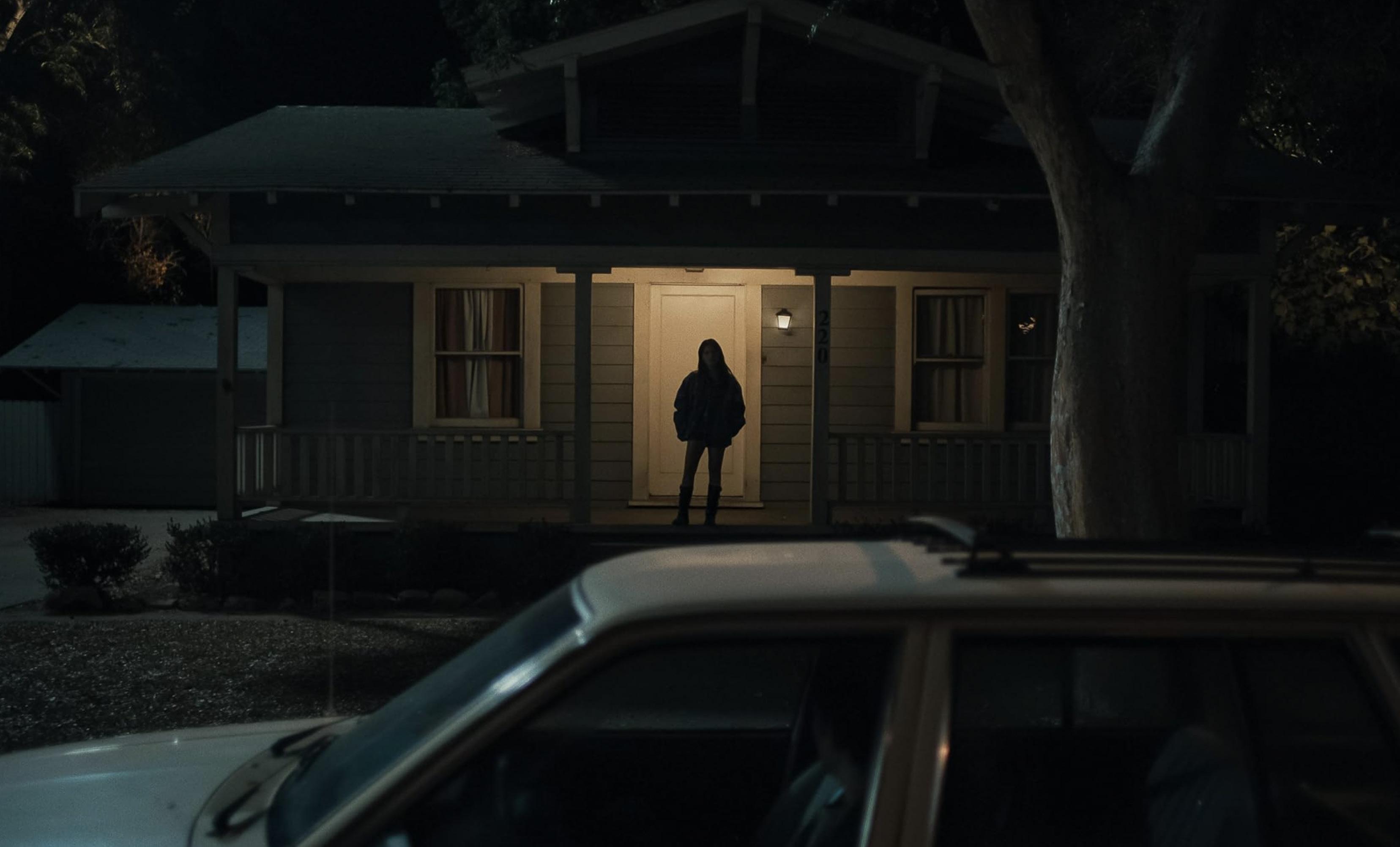
Film lovers, filmmakers and theater owners can all breathe a big sigh of relief. Cinemas across the nation have been full this year, culminating in the May box office seeing the strongest returns since 2019. While that has been driven by a string of big studio films, such as “The Devil Wears Prada 2” and “Michael,” landing with audiences, it is a pair of horror movies made by filmmakers raised on the internet that has caught theatergoers and the industry by storm.
Kane Parsons’ “Backrooms” and Curry Barker’s “Obsession” connection is almost entirely surface level, but due to their shared simultaneous success and their capturing the zeitgeist, the two appear destined to be cosmically intertwined for what they represent to this moment in film history. Beyond their respective qualities, the two debuts will be a marker for when the born online generation came of age in American cinema, similarly to how “Easy Rider” and “Midnight Cowboy,” or “Jaws” and “Star Wars” ushered in a new era of film led by a younger generation. Whether Parsons’ and Barker’s respective careers continue on the astronomical trajectory remains to be seen, but what is definitive is the success of their first features, which have had some historic box office returns: “Backrooms” opening at No. 1 made Parsons the youngest director to ever hold that title, while “Obsession” became the first film since “E.T.” to have grown its ticket sales over three consecutive weekends.
The films are also representative of the two sides of the horror coin. “Obsession” looks destined to be a scary sleepover classic that could have been released at any point since 1979 and will be a mainstay for Halloween movie marathons for the foreseeable future. While “Backrooms” feels like a kind of culmination of A24’s elevated horror that will be endlessly celebrated, deciphered, cut down and reclaimed on a variety of movie subreddits. “Backrooms” feels truly born from the internet, despite its ’90s setting, while “Obsession” feels like more of a throwback to video store horror with its simple hook and premise.
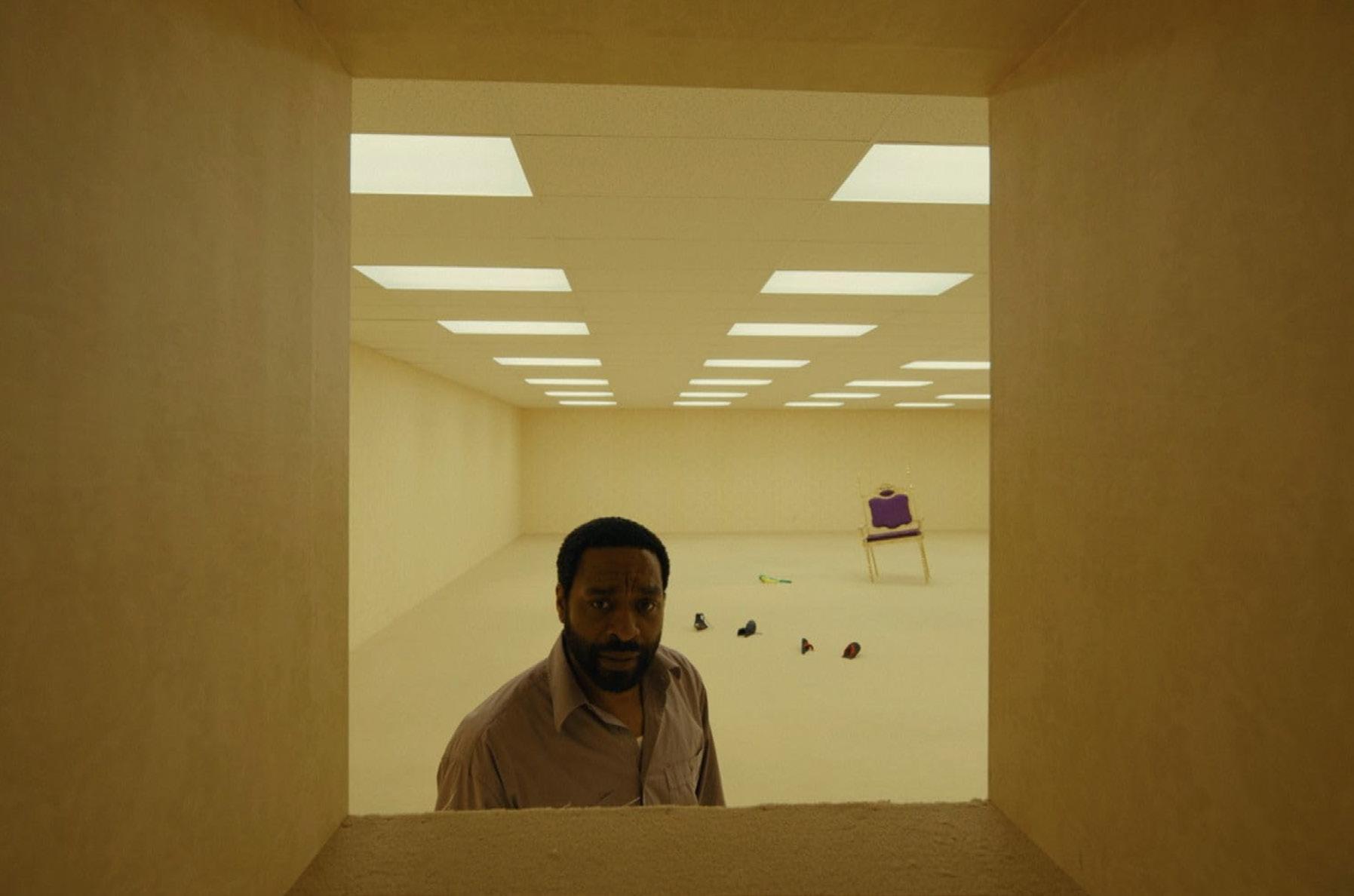
Neither film is perfect, nor do they, in my opinion, convincingly announce the arrival of a fresh cinematic voice as some of the other high-profile horror debuts we have seen in the past decade or so, such as “Barbarian,” “Get Out” and “The Witch,” to name a few. “Obsession” is an effective horror that has tapped into a prevalent social anxiety among younger audiences who are relating to the film’s themes surrounding toxic relationships and shifting friendships. That they are being explored by filmmakers and a cast who are similarly young creates a sense of lived-in authenticity, which alludes to “Backrooms” as it follows Chiwetel Ejiofor’s Clark, a divorced middle-aged furniture store owner, who finds himself lost in a dimension beyond reality beneath his store. What 20-year-old Parsons knows about being middle-aged and divorced, I do not know, but it is reflected in the character who we’re given little to hold on to despite Ejiofor’s
Obsession (2026) / Focus Features
Backrooms (2026) / A24
seemingly effortless ability to hold the screen. “Backrooms” has a distinctive fluorescent look that is antithetical to a traditional horror palette but contains many provocative shots and moments that get under your skin and haunt your dreams for days to come. “Obsession”, on the other hand, is much more traditional in its approach to horror with high contrast lighting, jump scares and possession freakouts all being taken out of the toolbox.
Barker is certainly talented and shows a steady hand as a director, but the true reason to see the film is the showstopping turn from the eponymously possessed obsessive Inde Navarrette giving an instantly iconic performance as both monster and scream queen. A genuine star-making showcase from Navarette, who demonstrates a mountain of range, as well as a Jim Carrey-esque ability to contort and reorganize her face like putty.
“Backsession” is not the first time filmmakers have made the jump to the big screen after plying their craft on YouTube. Elsewhere in horror, the Aussie sibling directors Danny and Michael Philippou made waves with their genuinely unsettling feature debut “Talk To Me.” Beyond scaring audiences, this year also saw the release of the unhinged time travel comedy, “Nirvanna the Band the Show the Movie,” a spinoff from a niche web series that drew rapturous acclaim from comedy circles for its approach to comedy filmmaking and is among the most subversive and hilarious films to have been released in recent years. The generation who grew up with a camera in one hand and Final Cut in the other have come of age and are ready to get you back to the movies.
JUNETEENTH
Words by Amia King
Juneteenth serves as a federal holiday honoring the freedom of enslaved people in the states. The holiday was originally named “Jubilee Day” in 1866 by freedmen, who organized the first celebration. Texas declared Juneteenth an official holiday in 1979, later becoming a federal holiday in 2021. With the migration out of the state of Texas, the U.S. found itself in a nationwide celebration of freedom. June 19 is an annual day of celebration through friends, families and communities coming together.
In African American communities, Juneteenth is a largely celebrated holiday where heritage and culture are recognized and applauded. Traditionally, celebrations are through parades, music, barbecues and dancing. With this excitement and freedom, comes education. June 19 serves to inform others of generational struggles from the past. Acknowledgement and awareness of what Juneteenth is and why it is celebrated is a vital portion of celebrating the holiday. Many partake in educational events, along with the traditional celebrations. Even though victory is celebrated, it is important to highlight the current state of ongoing change and fight for equality.
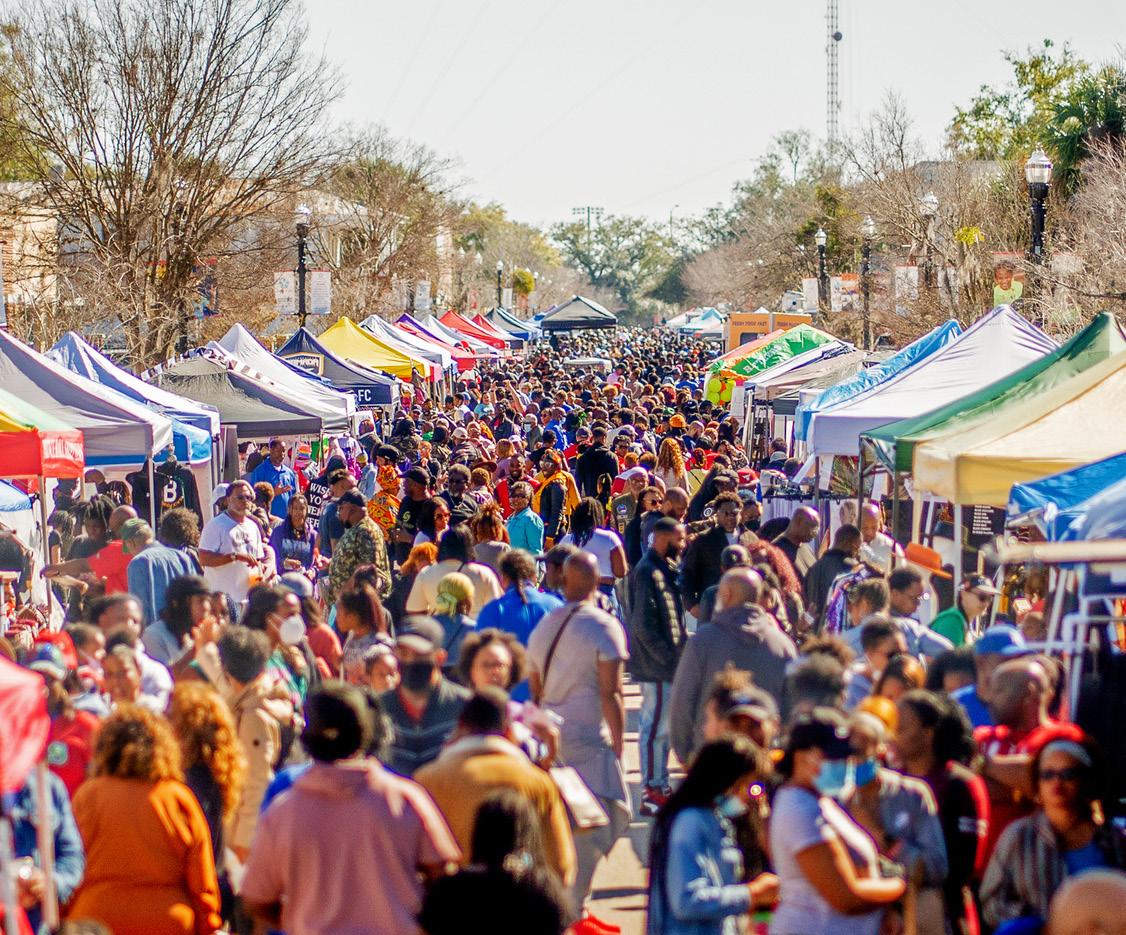
The Jacksonville community is having a Juneteenth celebration of its own on June 20. The Jax Melanin Market is a non-profit collective of black-owned businesses igniting pride, unity and culture in the local community. This organization started out as an intuitive advocate for inclusivity and blossomed into a driver of culture and community in the Eastside.
The Melanin Market’s Juneteenth Festival is a gathering packed with a variety of vendors from traditional Southern eats to colorful art collections. This year, the festival will be holding workshops focused on empowering our voices and live art performances. The Juneteenth Festival focuses on honoring the past struggles and achievements, how we are currently able to celebrate our community and how we can continue to grow our passion for change and unity.
Location: 822 A Phillip Randolph Blvd Saturday, June 20; 3 - 9 p.m.
Along with the Juneteenth Festival, the Melanin Market has hosted a variety of events including business expos, Jazz on the Ave. , the Black Friday market and the Buy Black Business Blitz Tour – occurring this July.
The success of the Melanin Market is highlighted within the Jacksonville community with back-to-school giveaways granted to over 1,000 children, mini-grants of over $70,000 for local initiatives, educating over 500 small business owners through business education workshops, seasonal festivals and guided tours honoring a former, successful African American community.
Not only does the Melanin Market give back to the community, but the community put its support into the organization. The once small marketplace grew into a colorful Black History Event with the help of 100 business owners and a parade of 80 groups including fraternities/sororities, dance teams, social and bike clubs, and bands from high schools and HBCUs.
Celebrate with the Jacksonville community and embrace the culture and empowerment that is rooted in Juneteenth.
Photo by Joseph V. Moore
Photo courtesy of the Jax Melanin Market
It’s Not Your Fault You Can’t Log Off
EXTREMIST Language is Holding You Hostage
Words by Ariana Alcantara
Navigating screens has become like driving past a bad car crash: It is horrifying and unnerving, and yet, you cannot look away. Every platform sets out to perform some sort of psychological torture on the masses. If it is so awful, though, why do people stay tuned in? It’s like everyone is in this twisted, toxic relationship where the devastation of the latest war, famine or environmental loss drags us deeper into bed with X.
While this level of anxious attachment can be explained from a relationship standpoint as some sort of childhood trauma, when it comes to the current social landscape, the cause is much more sinister: Fear feeds the billionaires.
Language is a tool employed by humans to communicate, but in the modern age, the CEOs and tech bros have weaponized language to turn a profit. The people who own the platforms that many depend on to socially connect or stay informed have their own quotas to hit. Therefore, these sites adopted a method, which has been prevalent in the news for years … using intense words to garner views.
For the news, article titles have to grab attention so that people will click and read. For social media, the first three seconds of a video have to jolt the viewer out of a scrolling daze to stay on a video. All of this is done through extremist language, not necessarily in the form of left versus right, but in our subconscious need for preservation. Words like “death,” “crisis” and “a whole civilization will die tonight” are methods to attain and maintain attention. Why? Because attention means redirection to sell.
Sensationalized language is not a new concept. Since the start of newspapers, journalists and publications have plotted to find a way to get people to read their work. What has changed is the mass attention span. In order to make up for the decline in attention, there seems to be a rise in intense language.
Not all of the language is bad, though. Doom and gloom would be a bad business model because, eventually, people would burn out on overactive anxiety and throw their phones in the Atlantic. Now, there exists a sick dopamine game that transforms that “cute” bathing suit into a “life-changing must-have.” The good became exceptional, and the bad became devastating in the span of a decade.
Since the media channels have to keep their revenue up, the people have to stay engaged. This means, whether anyone agrees to it or not, logging on means being susceptible to a cartoonish, skewed version of the world built on sensationalizing everything. A responsibility is then shifted to individuals to choose the kind of words they are being exposed to. The methods of this are endless, from simply limiting screen time to living on a technology-free compound in the woods. The specifics do not matter. What does matter is to stop the doom scroll before it starts. Recognizing that if the reels start looking like “You’re not going to believe which A-list celebrity wants you to die” or “10 ways to know if it is cancer or allergies,” then the algorithm is trying its best to hold you.
Spirit Airlines Took Its Name Too Literally
Words by Chandler Thompson
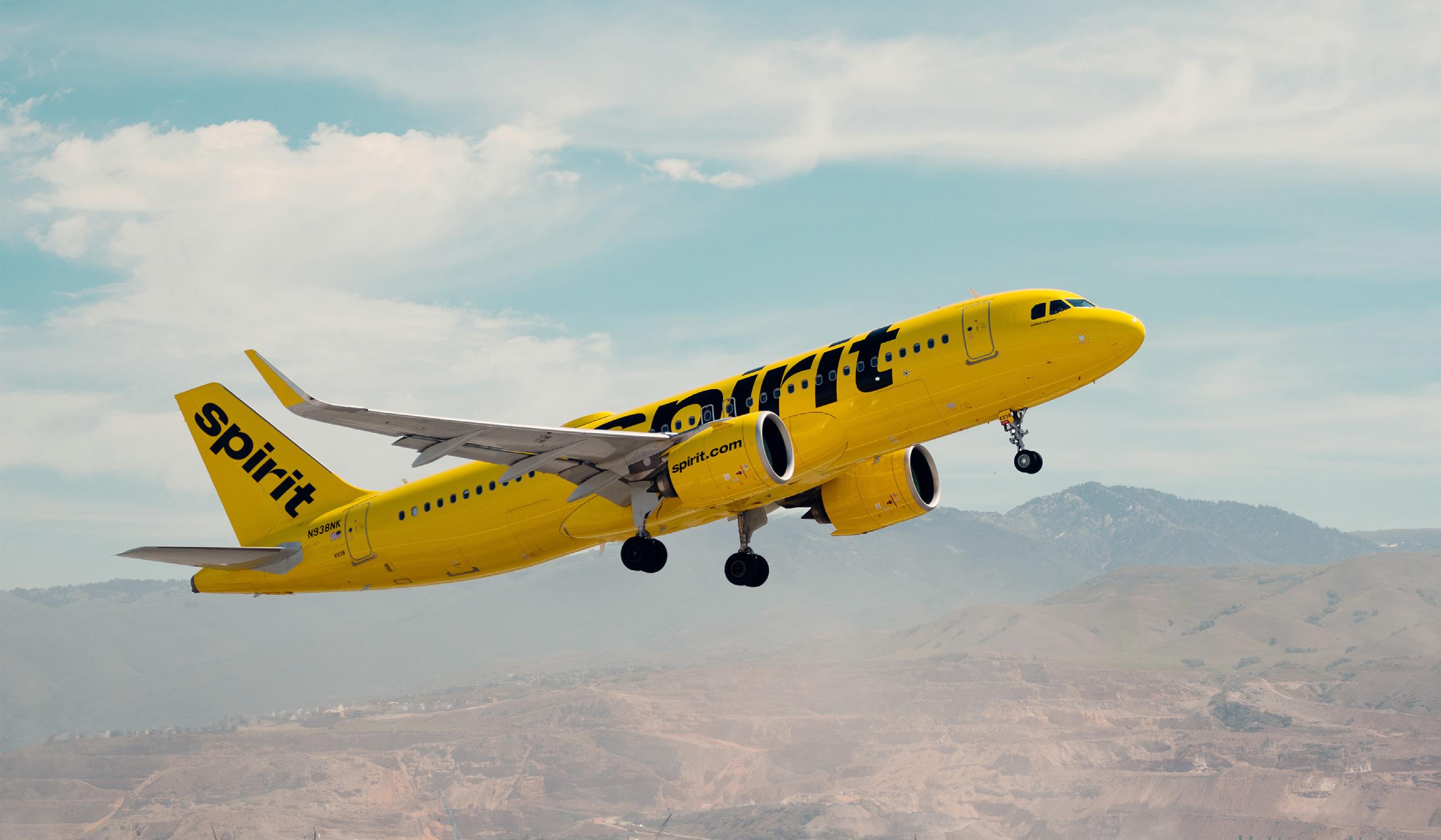
The infamous Spirit Airlines has officially shut its doors. The company that was known for its dirt-cheap flights and questionable quality released an official statement on May 2, 2026, on its website. “Sustaining the business required hundreds of millions of additional dollars of liquidity that Spirit simply does not have and could not procure. This is tremendously disappointing and not the outcome any of us wanted,” Dave Davis, Spirit’s president and chief executive officer, said in the statement.
The airline approached President Donald Trump for a $500 million federal bailout as a last-ditch effort to keep its head above water, according to CBS News. Trump replied he would look at the options, but Spirit failed to secure the lifebuoy causing them to go under. Considering Spirit filed for bankruptcy twice since 2024, it’s unsurprising Trump didn’t see them as a profitable investment.
Spirit claims the final nail in the coffin was the rising oil prices due to the war in Iran. Inflation, as well as other pressures, caused severe strain. Eventually, with no other additional funding at their disposal, it was forced to close shop.
Spirit was one of the main airline companies at Jacksonville International Airport, but they have now been completely wiped from the system. Hundreds of flights have been cancelled because of the erasure across states. They have automatically processed refunds for any flights purchased with a credit or debit card. Anyone who purchased through a third party, however, should contact their point of purchase.
The closure has not only affected travelers — more than 4,000 people were laid off from Spirit in Florida, according to NBC Miami. Many are learning how to file for unemployment, while others are scrambling with no backup plan. On Career Source Broward’s website, there’s a Spirit Airlines Rapid Response in which it’s assisting those affected with resumes, job searching, career counseling and access to training.
Now that one of Jacksonville’s cheapest flight options is no longer available, it would be fair to be concerned about the price of future travel. However, there are still plenty of affordable options. Based on the companies’ websites suggested flights, the cheapest options still flying out of the Jacksonville International Airport are Frontier Airlines, Allegiant Air, JetBlue Airways and Southwest Airlines. The cheapest of the options are Frontier and Allegiant with an average price of $50-$100 per one-way flight on their suggested trips section. JetBlue and Southwest follow closely behind with an average of $100-$300 per one-way flight.
A movement to buy Spirit has taken TikTok by storm with people suggesting they’re going to raise money to buy out the company. The crowdfunding campaign has now raised a whopping $300 million and counting, according to letsbuyspiritair.com, the official website. Hunter Peterson, a content creator and voice actor, is the original brain behind the idea. Peterson said in the video, “We nationalize Spirit Airlines. Owned by the people. Airlines gone. We make a new airline.”
Photo courtesy of Spirit Airlines
Farewell to Adventure Landing
Words by Ana Grace Anderson
by Michael Teal
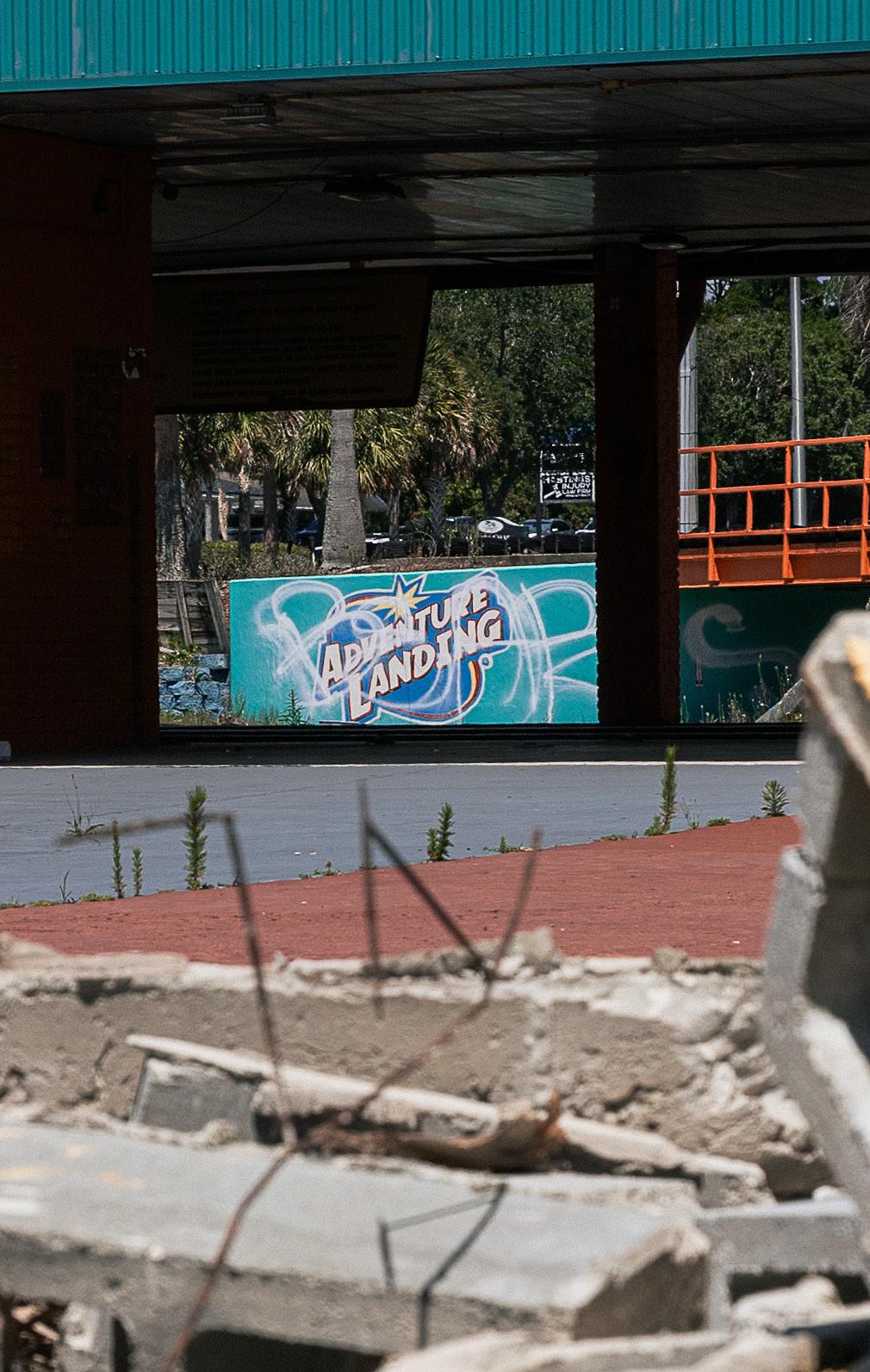
After years of rumors and speculation, Adventure Landing’s closure has officially been announced. The beloved amusement park has served the Jacksonville community since 1995, and for decades, families have treasured memories from joy-filled days spent with loved ones. Whether it was cooling off at the water park, birthdays filled with go-kart racing and mini-golf, or rainy summer afternoons in the arcade, Adventure Landing welcomed generations of Jacksonville locals to a place of community and fun.
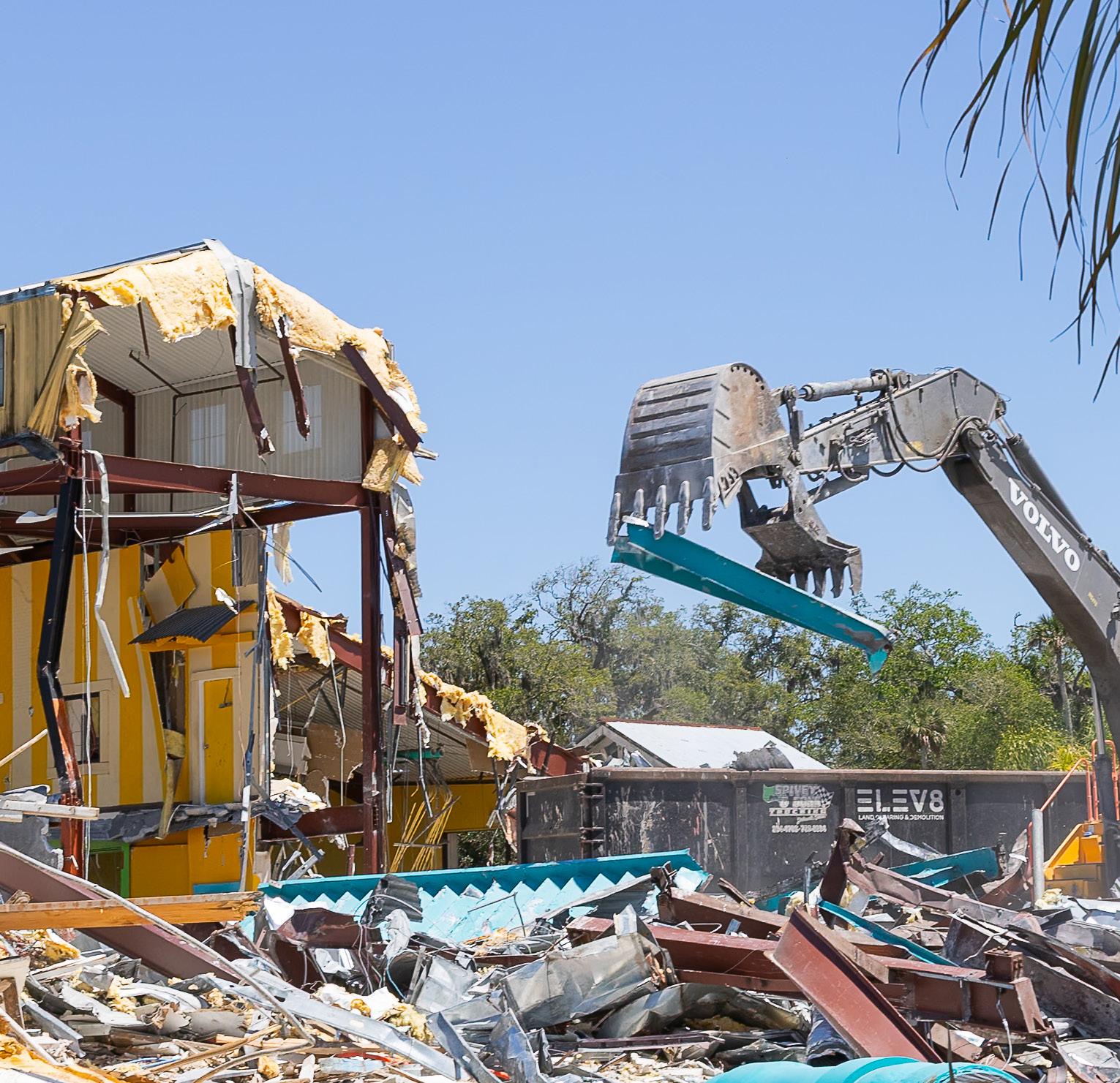
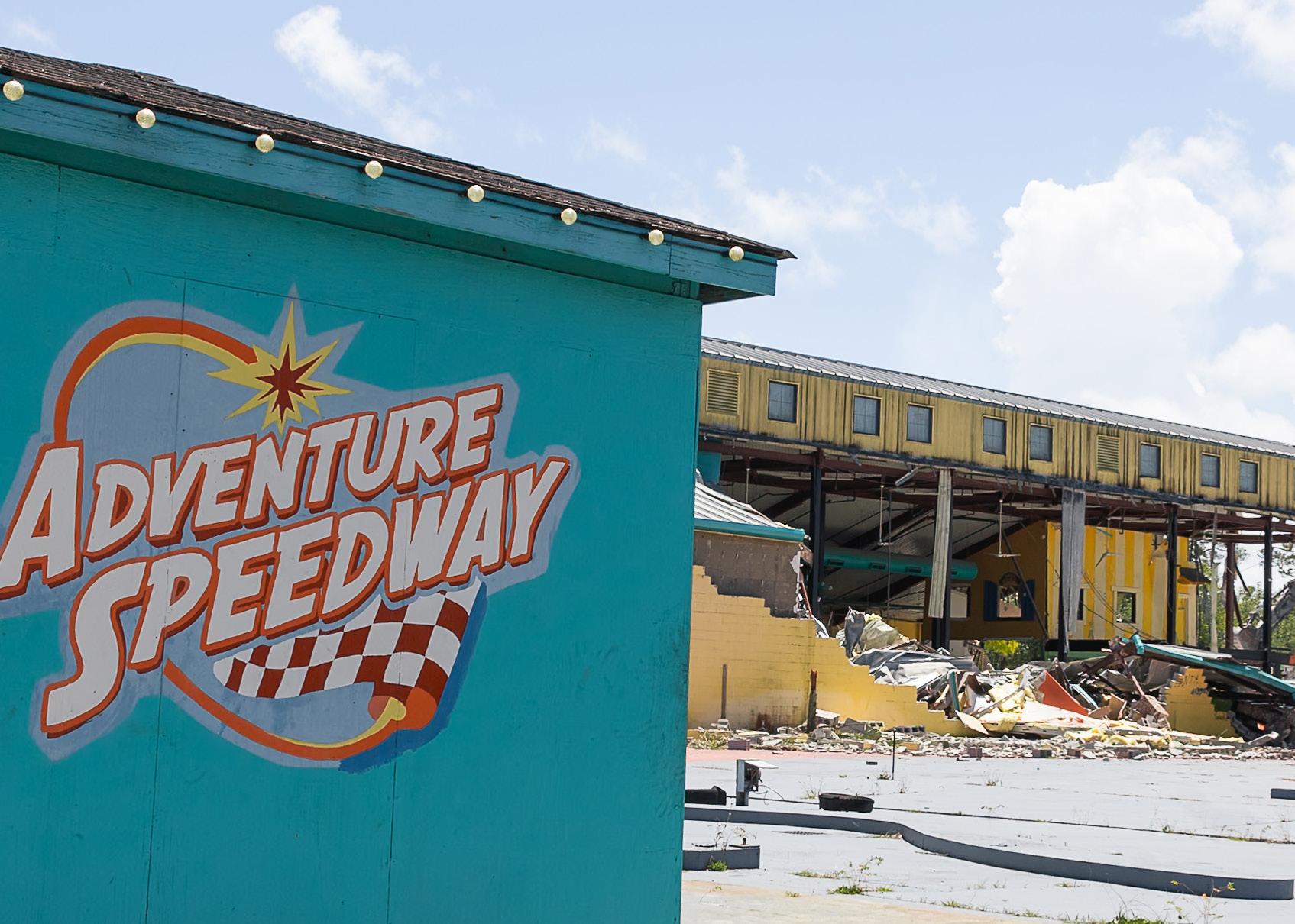
Adventure Landing finally sold its property to Trevato Development Group, which purchased the 26-acre site to develop a 415-unit luxury apartment complex in the first quarter of 2026. After years of hinting at a closure, the park permanently closed its doors in October 2025, and demolition is underway.
The city sees businesses close every day, but Adventure Landing’s closure was more than that. For many, it was the end of an era — the loss of a place that defined their childhood. And many local residents are having a hard time saying goodbye to the cherished attraction. Whether it was time for the company to move on or not, residents have a lot to reminisce about from their time spent at Adventure Landing.
Gabriel Anderson, born and raised in Jacksonville, remembers spending days at the park with friends, hanging out in the water park — especially the lazy river — and playing laser tag with his boys. After years of birthday parties, first dates and family visits, he was surprised to hear the park was actually closing because its closure seemed to be teased every year, yet it never happened.
“It’s genuinely messed up that they’re making apartments there,” Anderson said. “No one wants to live in the graveyard of Adventure Landing.”
Now living in Jacksonville Beach, Anderson drives by what was once Adventure Landing every day and sees the construction zone that, to him, is now just an eyesore. He’s sad to see it demolished after all these years and isn’t fond of Trevato’s plans for a new luxury apartment complex.
“We don’t need more apartments. They could at least make a strip complex for small businesses with apartments on the second floor,” Anderson lamented. “It would bring in so much more diversity.”
With new apartment complexes seeming to pop up every day in Jacksonville, many are tired of their favorite local spots being bought out by development companies.
“There is an oversaturation of new ‘luxury’ apartments in the city. It’s taking away from our community’s local businesses,” Anderson said. “I can tell you right now, I don’t know any locals who will move into the new apartments on Adventure Landing’s old property.”
Another Jacksonville native, Lily Robison, is equally disappointed to see the end of Adventure Landing’s glory days. “Growing up, I loved going to the park with my family and extended family,” she said. She remembers years of attending birthday parties at the park and is sad to see a place that brought so much joy and connection being torn down.
For many, the park remained a special spot later in their teenage years, and some even found love stories at Adventure Landing. Angelique Boyette, a Jacksonville Beach resident, met her boyfriend at the park during her sophomore year of high school. They’ve now been in a relationship for almost four years and just finished their sophomore year at the University of North Florida.
Photos
Despite being known for its popular summer activities like the waterpark and other outdoor attractions, Adventure Landing offered year-round entertainment. During the winter months, the park transformed into a winter wonderland, also known as “WinterFEST,” where parkgoers could enjoy festive light displays, winter activities and, most important, its famous ice skating rink. Season pass holders waited all year for the winter festivities and loved that the park was versatile and welcomed the community during all seasons. For Brooke Renfro of Atlantic Beach, this was her favorite time of the year.
“Many of my favorite holiday memories were nights spent at Adventure Landing’s WinterFEST,” Renfro said. “I loved going with all my friends every year. It was so special to us.”
Adventure Landing brought so much joy to the Jacksonville community, and the company is receiving a lot of gratitude after its closure. Locals remain optimistic about what will replace the park as the new go-to spot for entertainment and outdoor fun. As construction on the property continues, many Jacksonville residents are left holding on to memories of Adventure Landing and what it meant to their lives.
Photo by Teslariu Mihai on Unsplash
Words by Emily Cannon
Microplastics
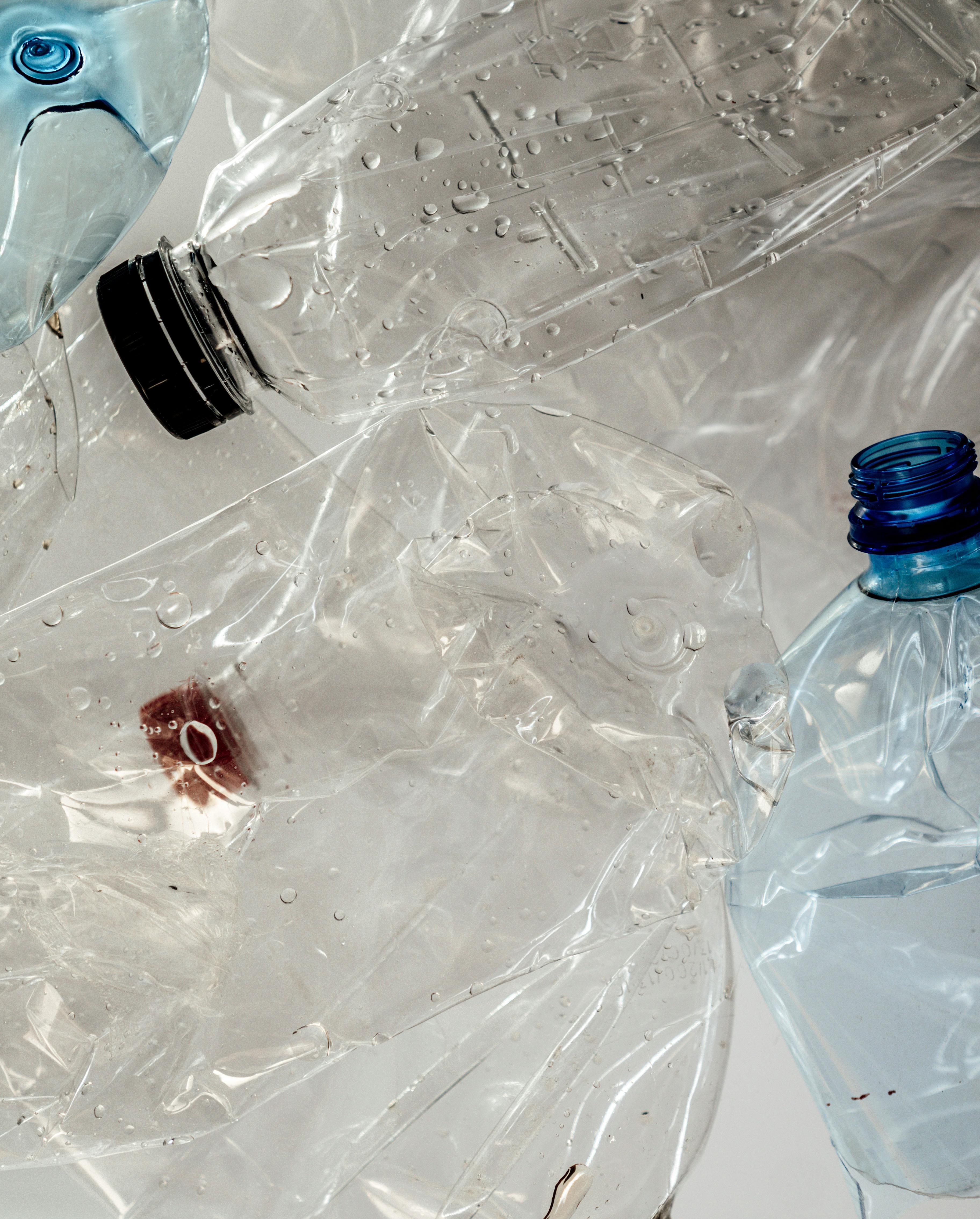
Plastic has become an essential part of today’s society and our dayto-day lives. It’s found in everything from food packaging and water bottles to clothing, electronics and household products. While plastic offers convenience and affordability, it has also created one of the most significant environmental challenges of the 21st century. As plastic waste accumulates around the world, it breaks down into tiny particles known as microplastics. These nearly invisible fragments are now found in our oceans, rivers, soil, air, food and even inside the human body.
Microplastics are plastic particles smaller than five millimeters in size. They are created when larger plastic items deteriorate due to sunlight, weather and everyday wear. Some microplastics are intentionally manufactured for use in products such as cosmetics, cleaning supplies and industrial materials. Because these particles are so small, they are difficult to remove from the environment and can travel great distances through water and air.
Scientists have discovered microplastics in some of the most remote places on Earth, including Arctic ice, deep-sea trenches and mountain peaks. Their widespread presence highlights the scale of the problem. Every year, millions of pieces of plastic enter the environment, where it slowly breaks apart into smaller and smaller pieces. Unlike natural materials, plastic does not fully decompose, which means these particles can remain in ecosystems for hundreds of years.
One of the most concerning discoveries in recent years is that microplastics have been found inside the human body. Researchers have detected plastic particles in blood, lungs, placentas, breast milk and even brain tissue. While scientists are still studying the long-term effects of this exposure, early findings suggest that microplastics may pose a risk to human health.
Many plastics contain chemical additives designed to improve flexibility, durability and heat resistance. Some of these chemicals have been linked to hormone disruption, reproductive issues and developmental concerns. As these plastics break down, substances can be released into the environment and potentially enter the body through food, water, or inhalation.
Research has also shown that microplastics may trigger inflammation when they accumulate in tissues. Chronic inflammation is associated with a variety of health problems, including heart disease, respiratory illnesses and immune system disorders. Scientists are working to better understand how plastic particles interact with the body’s natural defenses and whether or not long-term exposure increases the risk of certain diseases.
The environment is equally affected by microplastic pollution. Marine animals often mistake plastic particles for food, leading to malnutrition, digestive problems and even death. Fish, sea turtles, birds and other wildlife can become entangled in larger plastic debris or consume microplastics that accumulate in their bodies over time. As these animals move through the food chain, plastics can spread throughout entire ecosystems.
Although the problem may seem overwhelming, there are steps individuals and communities can take to reduce microplastic pollution and protect both human health and the environment. One of the most effective solutions is reducing the use of single-use plastics. Choosing reusable water bottles, food containers and utensils can significantly decrease plastic waste. Small changes made consistently by millions of people can create a meaningful impact.
Consumers can also support products made from natural materials such as cotton, glass, stainless steel and wood. Synthetic fabrics release microplastic fibers during washing, so choosing natural fibers when possible can help reduce pollution.
Recycling and proper waste disposal are also critical. While recycling alone cannot solve the plastic crisis, it helps reduce the amount of plastic entering landfills and natural environments. Participating in community cleanups and supporting local environmental initiatives can further protect ecosystems from plastic contamination.
The growing presence of microplastics serves as a reminder that everyday choices can have lasting consequences. While scientists continue to study the full effects of these particles on human health, one fact is clear: reducing plastic pollution benefits both people and the planet. By making conscious decisions, supporting sustainable practices and encouraging innovation, society can work toward a cleaner future with healthier ecosystems and communities. The fight against microplastics may be challenging, but it is a challenge that affects everyone.
The Wild Boars Are Winning
Words by Abigail Bodenham
If you’ve spent any time scrolling through Jacksonville neighborhood Facebook groups lately, you’ve probably seen the photos.
Freshly laid sod torn apart overnight. Perfectly manicured lawns transformed into what looks like a construction site. Deep tracks carved through front yards. And, in some cases, grainy doorbell camera footage, revealing the culprit: a sounder of wild hogs casually roaming through Jacksonville suburbia.
Residents of Seven Pines have become the latest Jacksonville homeowners to discover that living close to nature isn’t always as idyllic as the brochures make it seem.
The master-planned community near Kernan Boulevard and J. Turner Butler Boulevard has been dealing with repeated visits from wild
boars, which have developed a habit of rooting through yards in search of food. The result has been thousands of dollars in landscaping damage and plenty of frustration among homeowners who are finding their lawns destroyed overnight.
Seven Pines residents aren’t thrilled about wild boars treating their landscaping like a buffet. The boars, meanwhile, could probably make a similar complaint about the thousands of acres of pine forest that used to occupy the same ground.
That’s the irony at the heart of Jacksonville’s latest wildlife dilemma.
The area that is now Seven Pines was once heavily wooded land associated with the Skinner family, one of Jacksonville’s best-known land-owning families. In fact, the development takes its name from the seven Skinner brothers and the pine forests that once defined the property. For generations, the land served as hunting and recreational grounds long before roads, sidewalks and backyard patios arrived.
But the hogs were here first.
As Jacksonville continues expanding eastward, stories like this are becoming increasingly common. New communities emerge where forests and wetlands once stood, and the wildlife that occupied those spaces doesn’t simply disappear. Instead, it adapts.
Photo by Wolfgang Hassleman on Unsplash
And few animals adapt better than wild hogs.
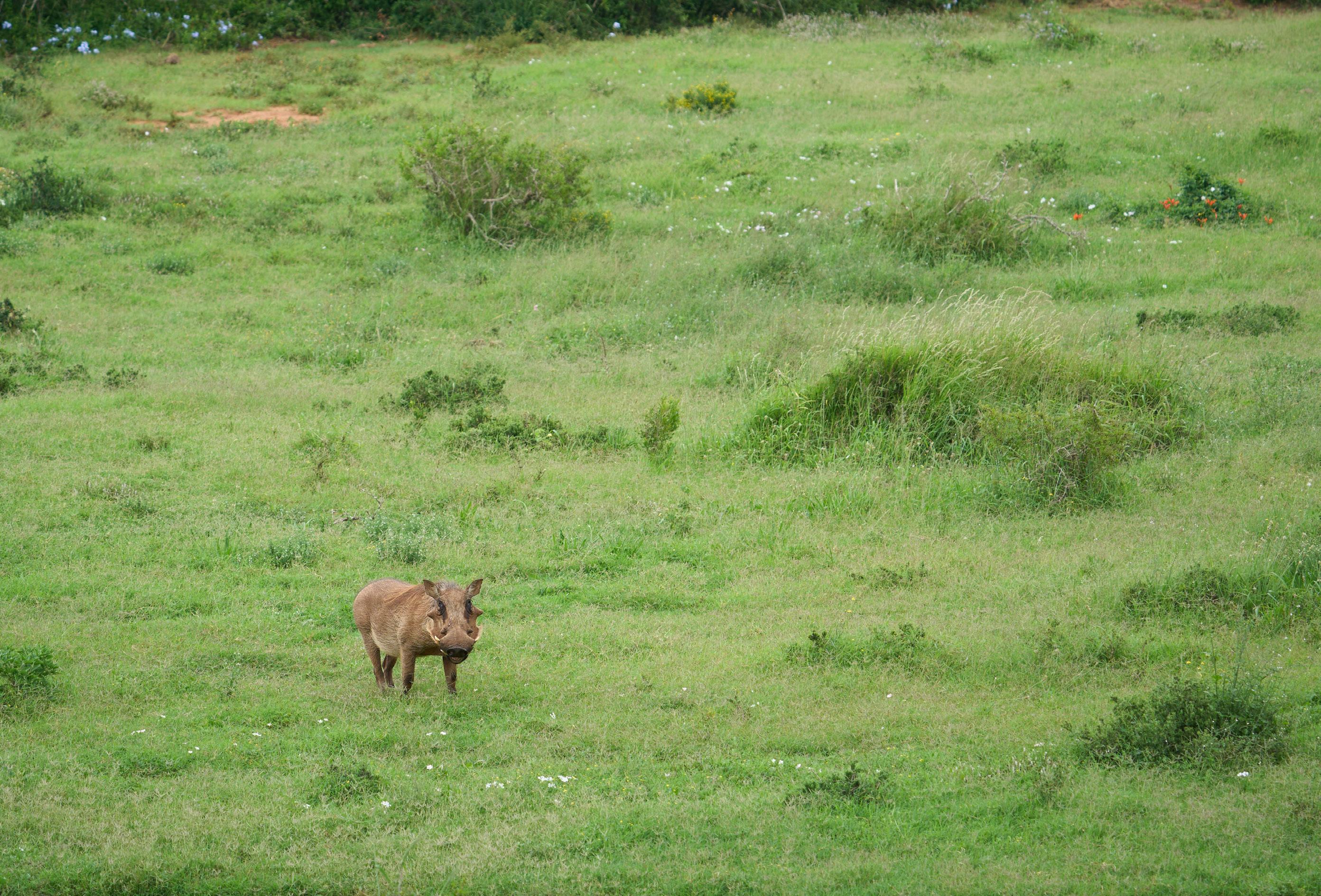
Originally introduced to Florida centuries ago, wild hogs now occupy every county in the state. They’re intelligent, resilient and opportunistic. They will eat roots, insects, bulbs, small animals, pet food and just about anything else they can find. Unfortunately for homeowners, one of their favorite ways to find a meal involves using their powerful snouts to dig beneath the surface of the ground.
To a wild hog, your front lawn isn’t landscaping.
It’s dinner.
What homeowners wake up to the next morning can look as though someone drove a rototiller across their property in the middle of the night. Fresh sod is especially attractive because the soft ground makes rooting easier, which may explain why newer developments often seem particularly vulnerable.
While much of the conversation has centered around damaged lawns, wildlife experts say the animals can create more serious concerns as well. Adult boars can weigh several hundred pounds and should never be approached. They’re also known carriers of various diseases and parasites that can affect livestock, pets and wildlife.
Still, for most Seven Pines residents, the issue remains far more immediate: How do you stop them?
According to reports, developers have begun placing traps near wooded areas where the hogs are believed to be entering the neighborhood. Residents are also being encouraged to secure garbage, avoid leaving pet food outdoors and eliminate anything that might attract the animals. Whether or not those efforts will solve the problem remains to be seen.
The reality is that Florida’s wild hog population isn’t going anywhere. Neither, for that matter, is Jacksonville’s growth. As new neighborhoods continue replacing undeveloped land across the city, encounters between residents and wildlife are likely to become more common.
In many ways, the Seven Pines boar problem feels uniquely Jacksonville.
This is a city where alligators turn up in retention ponds, deer wander through suburban streets and coyotes occasionally make appearances in residential neighborhoods. Despite the rapid pace of development, much of Jacksonville still exists alongside untamed nature.
Sometimes that coexistence is beautiful, and sometimes it means a family of wild hogs tears apart your fresh lawn while you’re sleeping.
And perhaps that’s the lesson Seven Pines is learning right now. The community was named after the pine forests that once stood there. The roads, homes and landscaping may be new, but some of the original residents never really left.
They’re just making themselves at home.
JUNE
JULY
AUGUST
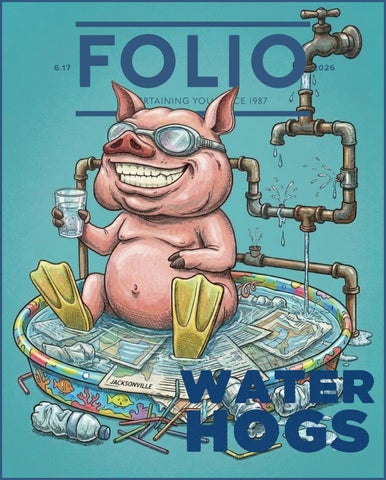
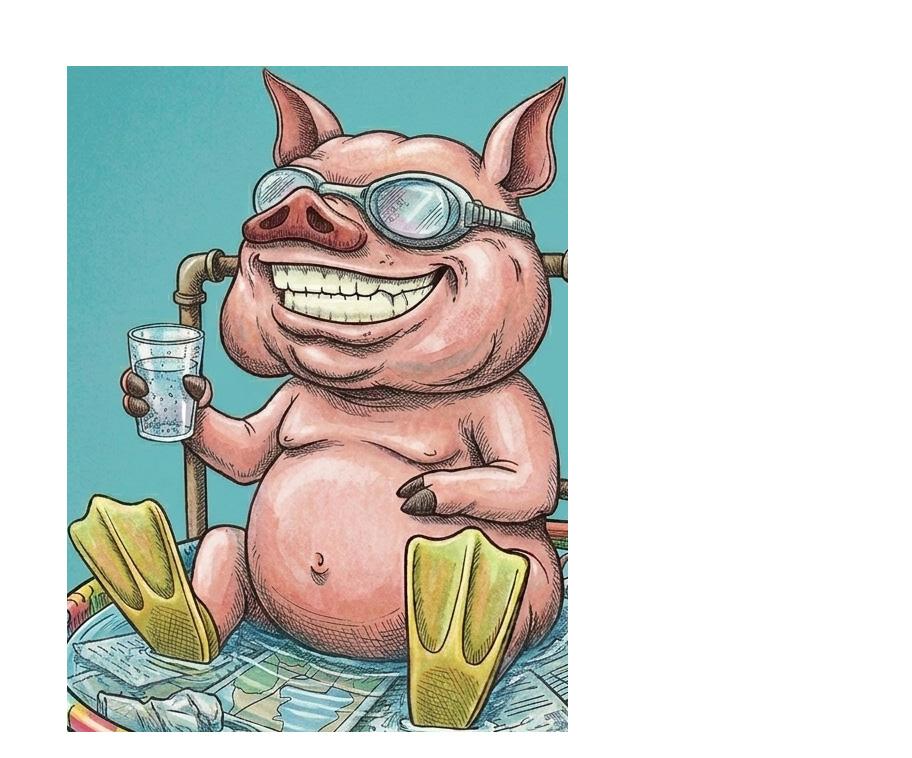
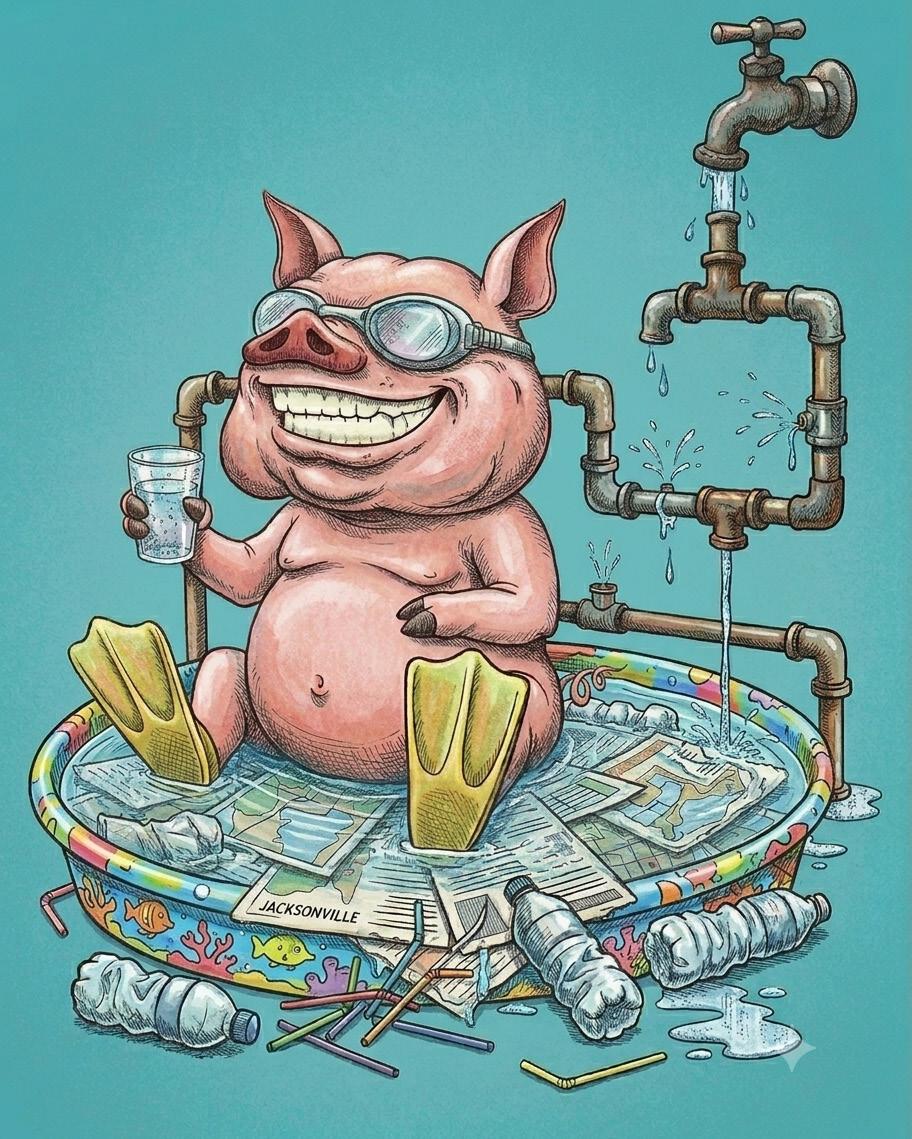
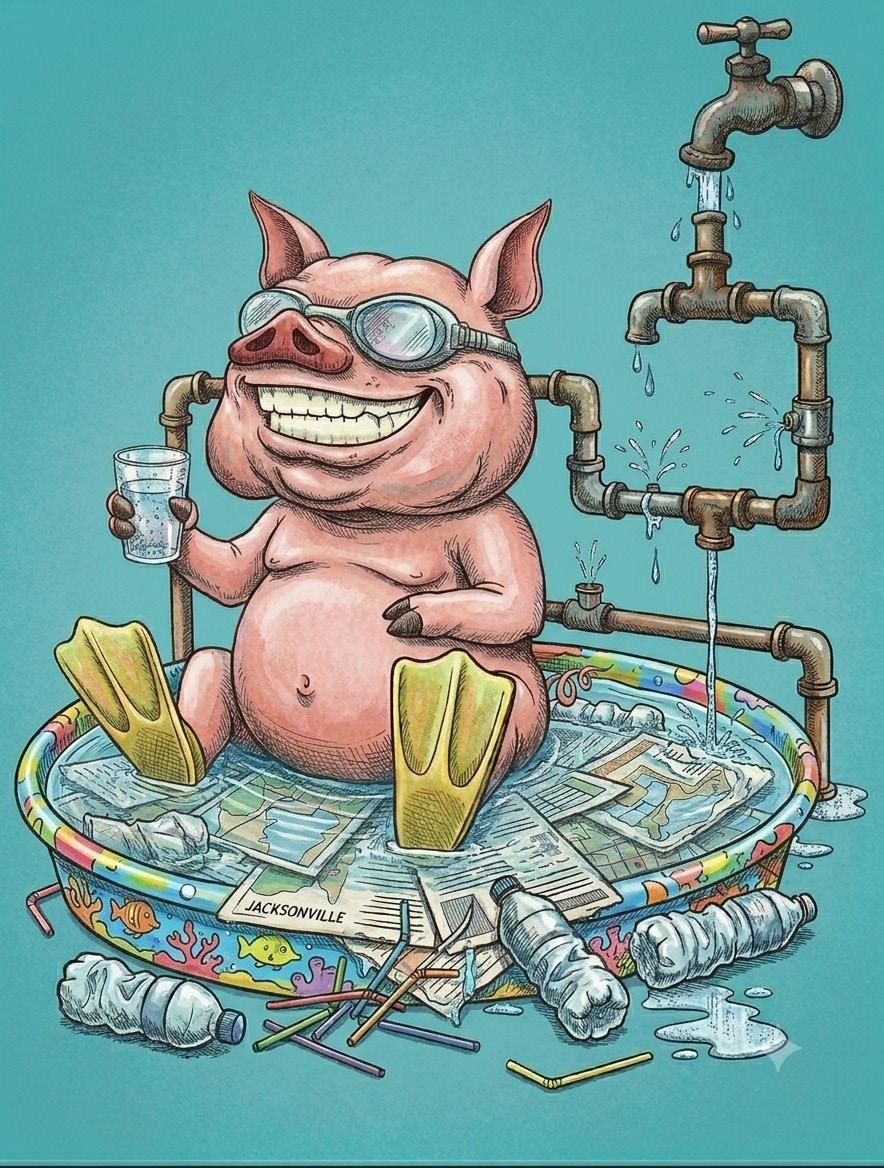
We drink it, swim in it, clean with it, rely on it to manufacture every single thing we touch, and sometimes we even play with it. It is our most fundamental, non-negotiable resource, a literal prerequisite for life. Yet, because it’s everywhere, it is functionally invisible. Taken so completely for granted that millions of gallons vanish down the drain of public awareness every day.
And while 71% of the Earth is covered in water, we are all well aware (hopefully) that more than 97% of Earth’s natural water supply is practically unusable, whether it’s frozen in glaciers, trapped deep below the Earth’s surface or simply too salty for human consumption or industrial and agricultural use. So, Earth’s only usable water is a very, very tiny percentage with an even tinier decimal — 0.3% ~ 0.7%, to be (somewhat) exact. All that said, out of that measly … let’s just call it 0.5% … the great US of A withdraws approximately 349 billion gallons of fresh water per day
The top national water hogs are as follows: Thermoelectric power, using roughly 40% (~133 billion gallons). This use of water is to cool down big power plants — think those giant cement cylinders pumping out plumes of smoke on your drive to the Jacksonville Zoo. Next up is irrigation with another 40%. This is used for crop irrigation, landscaping and, you guessed it, golf courses! Next up is public supply with 12% (~39 billion gallons). This is water delivered to homes, businesses and public facilities. Then we have industrial and mining with 6% (~20 billion gallons) and aquaculture, livestock and domestic self-supplied with 4% (~12 billion gallons).
But say we just focus on Northeast Florida. Being a part of this grand and, albeit, odd peninsula brings some perks. No, we’re not talking about our gorgeous beaches and lack of seasons making it feel like summer essentially all year. We’re talking about our aquifer. If you paid any attention in your science classes, then you would remember that Florida’s base sits on a layer of porous limestone
and dolomite rock that’s formed from ancient marine deposits over millions of years. This Floridan aquifer is one of the most productive underground water systems in the world and spans approximately 100,000 square miles, serving as the primary source of drinking water for nearly 10 million people. It is one of nature’s biggest flexes. It replenishes naturally when rainfall seeps into the ground in areas where limestone is near the surface, ergo, Florida. Daily, this aquifer produces 1 billion gallons of water, which is then divided and used for public drinking supplies, crop irrigation and industrial purposes.
Because of this seemingly endless supply of water, we get cocky. We keep the tap on while we brush our teeth, which, if you’re brushing correctly, is about two minutes of water going down the drain. We take our time in the shower, especially if you are like the average person who makes shower time their own personal concert, and we flush and flush and flush. Not to mention if you are one of those people who dedicate an entire load of laundry to three pairs of socks and a stale towel. If you truly cared about your water usage, you’d do laundry once your dirty hamper is overflowing and you can’t shut your closet door anymore.
And maybe it’s because of the things we’ve listed, or maybe there’s a secret fifth option that explains why the total water (potable and reclaimed) consumed by JEA customers in calendar year 2025 was 47,021,857 Kgals (kilogallons, which is 1,000 gallons).
It’s been a while since we’ve run this story, calling out Jacksonville’s biggest guzzlers of our vital and diminishing water resources. In fact, the last time we knocked on the doors of those using seemingly all of our water was back in 2022. Call it boredom, call it a public service, call it whatever you like — it was well past time we hit up JEA for a public records request for the top 20 residential and commercial accounts with the highest water usage. The findings were shocking. The excuses? Entirely predictable. Let’s get into it.
Quick note: We obtained the homeowners’ names via an address search of the city’s property appraiser website. Internet sleuthing produced occupations, home value, lot sizes and floor plans. Personal observations about the properties were based on true investigative journalism — driving around town to the top 9 water hogs with nothing but our camera and a dream (and a four-month-old golden retriever na med Nash for brownie points).
Christian “Andy” Allen 4054 Alhambra Dr. W.
Market Value: $3,019,200
Lot Size: 1.04 acres
Water Usage: 2,908,002 Gallons
— If Allen got into leatherworking, specifically in the field of making leather wallets, he would be able to make one leather wallet a day for the next 18,107 years with the amount of water he used in one year.
But Andy Allen isn’t into leather making. He is actually the CEO of Corner Lot Development Group, a real-estate development firm established in 2009 that focuses on single-family and multi-family homes, urban development, hospitality, historic preservation and home construction.
This 4-bed, 4.5-bath, modern farmhouse waterfront mansion with a pool is our top water hog. Whether the water was used to fill, drain and refill said pool 168 times in 2025 (assuming it’s a standard 16x32 foot pool) or to water their ludicrously capacious front lawn, the water was used, and we wanted to figure out why.
We spoke to Allen via Ring Doorbell and informed him of his high water usage. In which he shared that he had no idea it was so high and that he was going to call JEA “right away.” There are two things we would like Allen to know if he is reading this. One, please don’t ever let that Ring Doorbell footage see the light of day because we might’ve said some things not safe for public consumption, and two, this isn’t personal. We are just doing our job.
“Tony”
6926 Camfield St.
Market Value: Unknown
Lot Size: Unknown
Water Usage: 2,185,000 Gallons — If the unknown owner of 6926 Camfield St. decided to pick up a hobby in slime making, specifically to make ASMR videos for TikTok, it would take 191,562
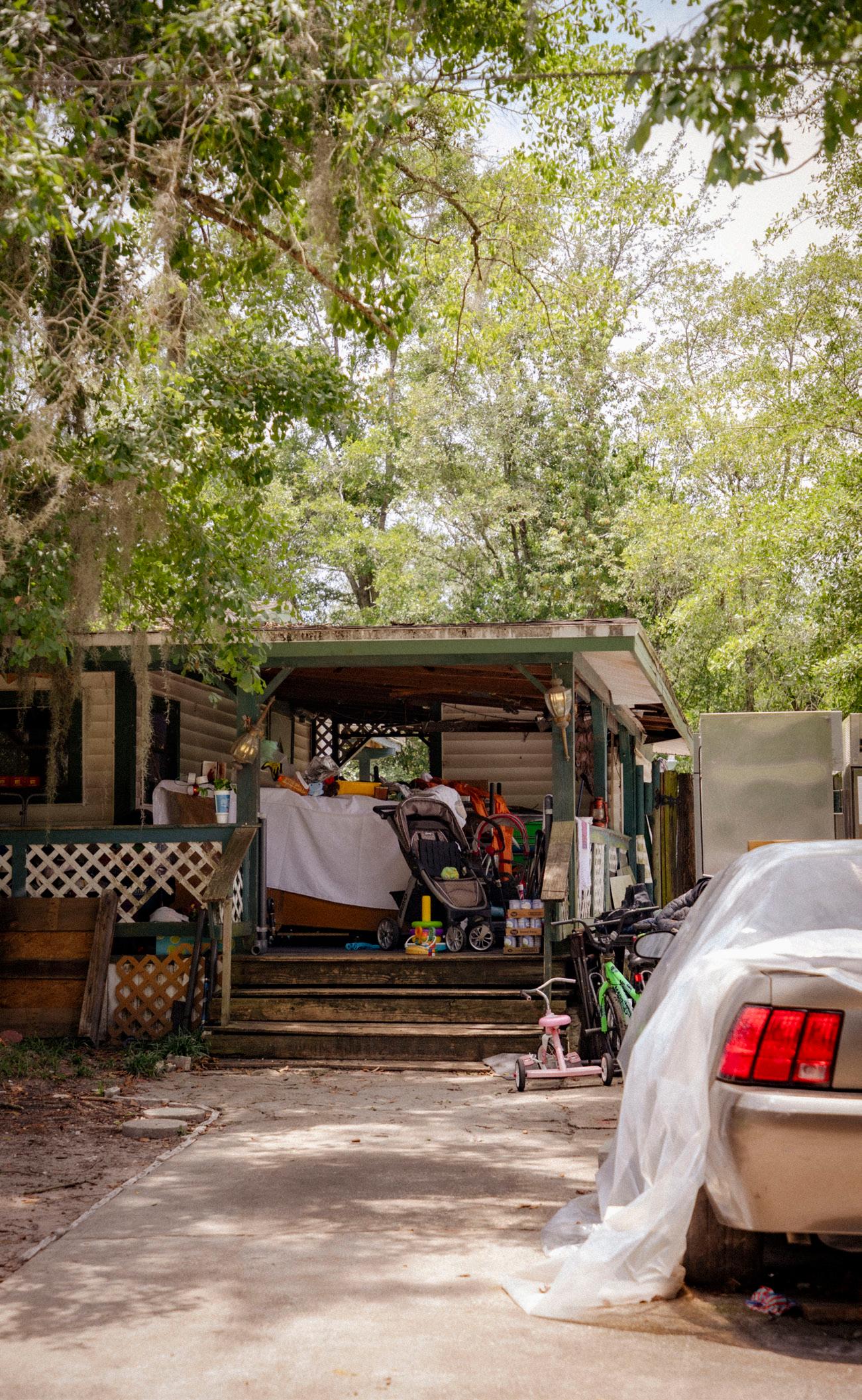
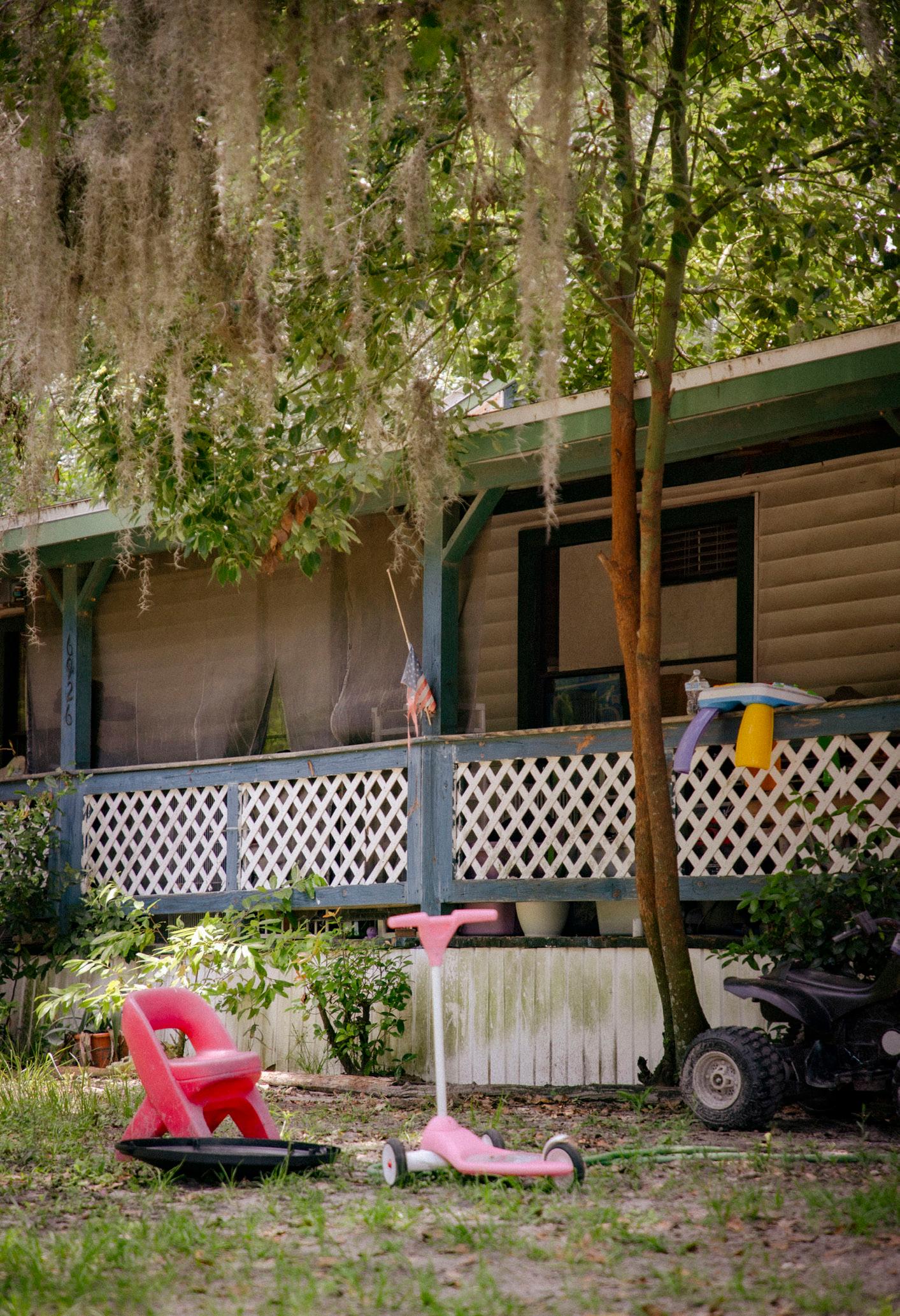
While we weren’t able to find out much about this lot via our sleuthing on the internet, we were able to find out some interesting details during our visit to this site. For starters, this unassuming home was littered with toys, enough bikes for an entire fifth-grade class, broken-down cars on cinder blocks and an industrial-size, restaurant-grade walk-in freezer. Why this current tenant is in need of all things is beyond us and well above our pay grade.
We arrived just as an Amazon driver pulled up to drop off a delivery, which worked in our favor because if the delivery driver had not walked up to the front door to complete the delivery, we would not have known where the front door was (because of said litter). And also, if that delivery driver had not been there, the current tenants would not have walked out to get said delivery, making finding the front door a moot point.
We then spoke to the current occupant, unnamed, about her water usage. She informed us that “Tony” (assumed landlord) includes water in her rent, so she was blissfully unaware. She also mentioned that there had been a pesky backyard leak that she brought to “Tony’s” attention many times. According to her, “Tony” would have someone come check the leak, fix it and be on his way … only for the leak to pop back up a few weeks later, thus continuing the cycle of wasting water for the hell of it.
Arlene B. Hillerson
737 Ponte Vedra Blvd.
Market Value: $7,493,600
Lot Size: 1.09 acres
Water Usage: 2,056,000 Gallons — Enough to make 4,283,333 plastic bags
We knocked on the massive wooden doors of this sleek, modern oceanfront mansion and were met with a surprisingly friendly face. While we didn’t catch the homeowner’s name at the time of our visit, we did manage to find her name on Florida Parcels. When we asked if Arlene B. Hillerson realized they had burned through over two million gallons of water this past year, she didn’t even blink — she already knew. In fact, JEA flagged the property multiple times, but after running tests, the pipes came up totally dry on leaks. Naturally, Hillerson assumed the problem must be JEA’s meter playing tricks. It’s a convenient theory, though it’s worth mentioning that this particular “glitch” has been recurring like clockwork for the past three years.
Carl R. Sparado
4439 Heaven Trees Road
Market Value: $4,640,300
Lot Size: 1.39 acres
Water Usage: 2,075,000 Gallons — If Sparado were secretly lactose intolerant but really loved flan and replaced the recipe call for milk with 2,075,000 gallons of water and baked this flan as one single, monumental, record-breaking flan, it would fill more than three standard Olympic-sized swimming pools to the brim with custard.
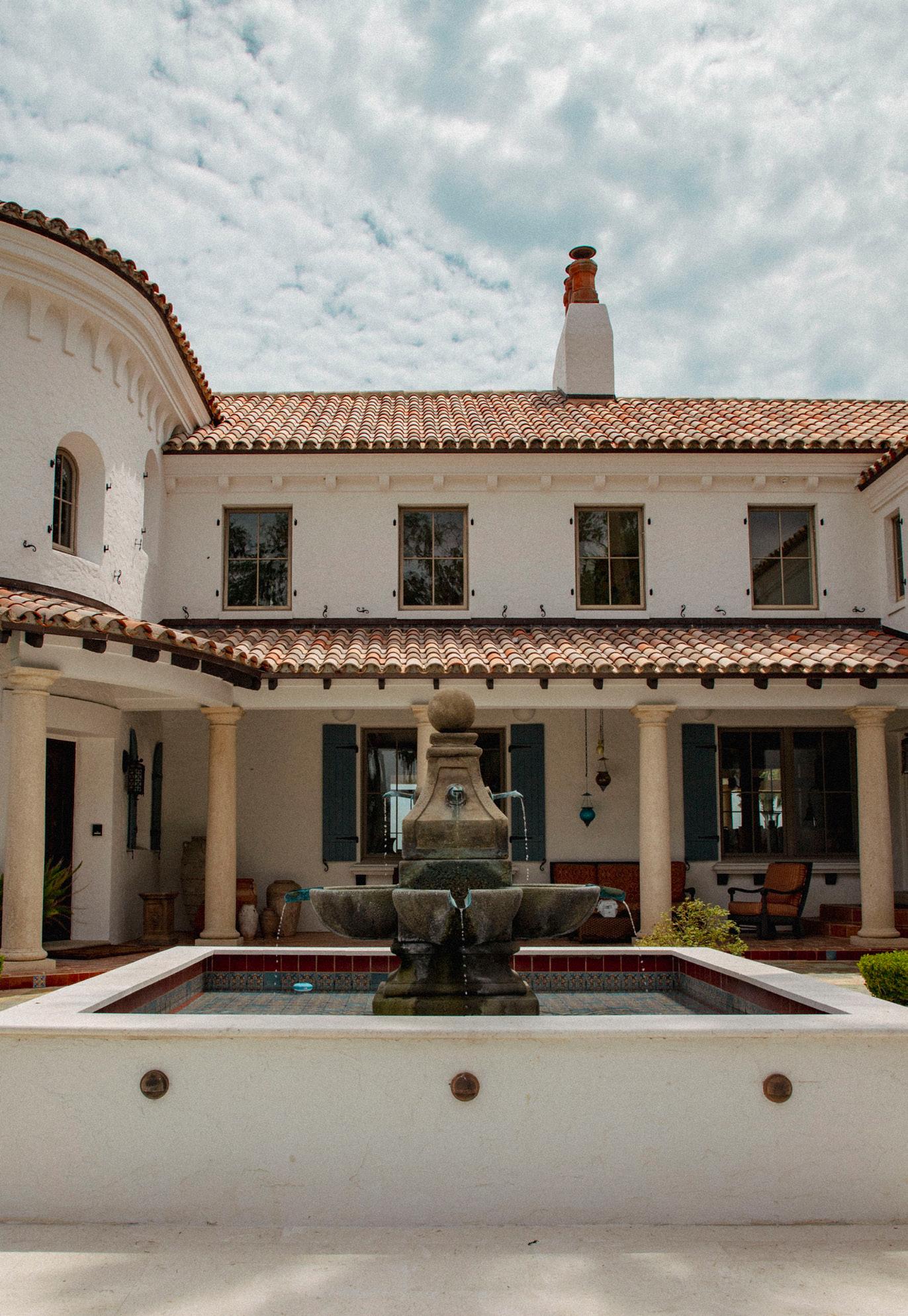
Who knows if Sparado is secretly creating Olympic swimming poolsized flan, and if he is, I guess we aren’t here to yuck his yum. What we are here to yuck is the obscene amount of water used in one calendar year. Sparado did not open the door even though his black Jeep truck was in the driveway, so we can only assume he was busy making flan. Or off working on building a fireplace or pizza oven, as Sparado is the CEO of Earthcore Industries, LLC.
Some key grievances we had while walking up the drive to the beautiful 7-bed, 6-bath waterfront Spanish-style mansion were these: The grass was fake. Not all of the grass, but a very decent-sized chunk of lawn, was turf, so landscaping can’t be that big of a factor. Then there was the massive fountain in the courtyard that could double as a kiddie pool. Now, we’re not fountain experts, but we’re pretty confident it’s not “two million gallons of water” huge. Enter the flan hypothesis.
Govil Family Revocable Trust
1232 Windsor Harbor Dr.
Market Value: $1,425,000
Lot Size: 0.84 Acres
Water Usage: 1,854,000 Gallons — If the owner of 1232 Windsor Harbor Dr. got into the business of backyard hamster breeding, they could successfully raise 927,000 hamsters through their entire lifespan with the amount of water used in 2025.
This 4-bed, 4.5-bath waterfront brick house is safely tucked away in the gated community of Queen’s Harbor, perfectly hidden from (our) prying eyes. And according to the Duval property appraiser site, the “owner” is listed under a revocable trust — an arrangement where a legal document gives someone the authority to manage another person’s money or property within the trust. So, without a name or a contact number, the owner was completely stripped of the chance to plead his or her case in the face of water-hogging accusations.
Speaking of accusations, a search for the family name uncovered something rather incriminating — assuming the individual in question is tied to the Govil Family Revocable Trust home. If not, consider it a bizarrely timed coincidence. Aron Govil, chairman and CEO of the Ducon Group, was recently charged by the SEC for defrauding investors across two of his companies, later shelling out $1.2 million to settle the matter. Safe to say, a high water bill is likely the least of his worries right now.
Tabitha Ann Furyk 2600 River Road
Market Value: $4,847,500
Lot Size: 1.15 acres
Water Usage: 1,728,000 Gallons — If water were single-use socks, Furyk would go through 12,800 pairs of socks or, in other words, could wear a new pair of socks every day for the next 35 years.
As we drove around Jacksonville doing some classic, boots-on-the-ground investigative reporting, we speculated about what we’d find. We expected heavily gated compounds, figured some residential addresses might actually be disguised front businesses, considering we had asked JEA for a list of both residential and commercial addresses with the highest water usage. But what we didn’t fully expect was that a house on this revealing list would be under construction. With no one around to talk to in the field, we took the investigation digital, and a quick internet deep-dive yielded some fascinating results.
The owner of this sprawling, Spanish Colonial Revival home is none other than Tabitha Ann Furyk of the Jim and Tabitha Furyk Foundation. A cursory Google search revealed that she has 1,000 Instagram followers, co-hosts the PGA Tour Champions event Constellation Furyk & Friends alongside her pro golfer husband Jim and was recently spotted at the “Happy Gilmore 2” movie premiere. Does any of this have to do with her massive water usage? Probably not. Let’s face it, that pool-sized consumption is almost certainly due to the ongoing construction, at least I hope it is for her sake. But her high-profile side hustles absolutely deserved some recognition. Oh, and did we mention she’s also big into charity?
Richard Caplin
13762 Mandarin Road
Market Value: $2,149,100
Lot Size: 3 Acres
Water Usage: 1,621,000 Gallons —
Meaning Caplin could paint exactly 12,968,000 paintings of a flamingo wearing a tutu on an 8” x 10” can vas, which would take him roughly 35,529 years.
Giving ol’ Dick the benefit of the doubt here, his beautiful 5-bed, 7-bath (???) waterfront property was under construction during 2025. So, odds are, he wasn’t living there, nor was he privy to the high water usage. Or, maybe he was and just doesn’t care and/ or hates the environment. Who knows! We don’t since we were unable to get in contact with the co-Founder of Aurora Forge LLC.
Aubrey L. Edge
3626 Richmond St.
Market Value: $3,500,000
Lot Size: 1.27 acres
Water Usage: 1,461,000 Gallons — If Edge had a craving for snap peas and a standard garden bed (4 feet by 8 feet) in his backyard, he could produce an astronomical 6,136,200 individual snap peas. It would take 7,305 years of consecutive spring planting to empty the tank — meaning he would have had to plant his
TUNE IN ALL MONTH LONG
ON JAX PBS 7.1
(Comcast Channels 8 & 440) For more information scan below or visit
Join Jax PBS in commemorating the country’s 250th Anniversary with content exploring how the United States came together, showcasing its rich history, treasured artifacts, performances and art that define America.
Daniel Iracki
4486 Hunterston Lane
Market Value: $3,302,100
Lot Size: 0.72 Acres Water Usage: 1,436,000 — Enough water to rebuild the four corners of the Jaguars stadium’s grand staircases ... and then do it all over again 11 more times.
Hey, so what the f*ck? Seven bathrooms strike again! How one family home could need SEVEN bathrooms is truly beyond us, but you already know that by now, so let’s just get on with it.
This was another unfortunate case of a gated community, but that’s fine; we don’t need it anyway. We have Google Maps and Zillow for that. So jokes on you, Iracki, we already know what the inside of your house looks like.
This six-bed, seven-bath coastal contemporary home is truly fit for a king — or queen — with its built-in spa, hot tub, and pool. What’s next?
A lazy river? An indoor water park? Safe to say, their water bill likely came as no surprise. Not to mention the sheer amount of water it would use to maintain the pristine landscaping. Unless Zillow photos have the saturation turned up to 100, that’s the greenest grass we’ve ever seen … and we’ve been to the other side.
So, there you have it. The top nine highest water guzzlers of Jacksonville, according to JEA’s public records. But before you pull out the pitchforks and roll out in angry mobs to these properties, Karen McAllister, JEA’s public information officer, mentioned that water leaks are a common cause of unusually high water usage.
“JEA encourages customers to check for leaks with their irrigation systems and inside their homes. Customers can
learn about how to minimize spikes in their water bill and conserve water on jea. com,” McAllister explained.
At the time of our public records request in March 2026, the total amount of potable and reclaimed water consumed by JEA customers sat at a staggering
10,835,884 Kgals — or roughly 10.8 billion gallons. While the city’s biggest offenders certainly account for a massive chunk of that number, we can all do our part to take the pressure off our local water
To help lower our collective usage, here are five easy ways to slash your water footprint starting today:
1. Practice Xeriscaping: Replace thirsty, high-maintenance lawns or ornamental plants with native, drought-tolerant Florida landscaping. Native plants are adapted to our local rainfall and soil, meaning they require little to no supplemental irrigation once established.
2. Stop pre-rinsing: Scrape your plates rather than rins ing them off before loading them into the dishwasher.
3. Collect rainwater: Set up a rain barrel or put out buckets when you know a storm is about to roll in. You can then reuse that water to hydrate plants.
4. Pool maintenance: By simply using a pool cover when the pool isn’t in use, a homeowner can cut water evaporation by up to 95 percent.
5. Rethink your hose: Sweep your driveways, sidewalks and patios with a broom instead of hosing them down.
Hogpen Creek Water Deteriorates Amid Calls for Investigation
Words by Ariana Alcantara
Imagine waiting your entire life to purchase a house. In this economy. For many, there are factors to check off when considering the options, like a white house with blue shutters and a room looking over the river so you can paint. OK, that’s a line from “The Notebook,” but the sentiment is the same. Purchasing a house is a big commitment, so when the time comes, the home has to be worth it.
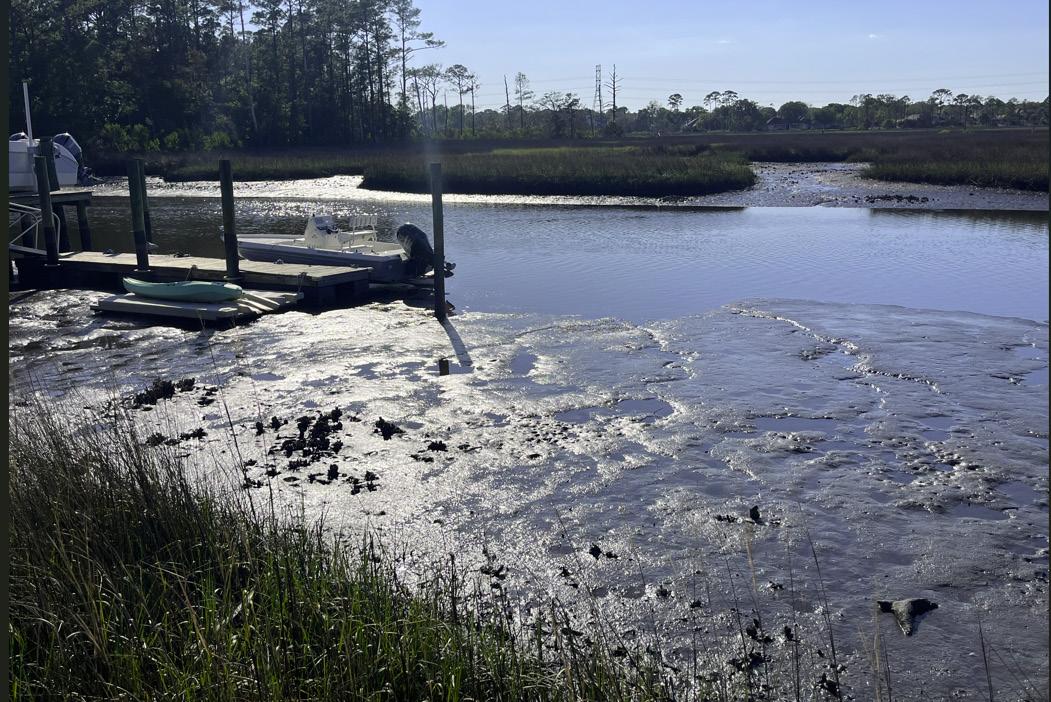
For the residents of a San Pablo suburb, a major selling point for their homes was Hogpen Creek, which runs behind the houses into the Intracoastal Waterway. Imagine their surprise when that water became more of a mud bath when the tide is low. According to the residents in the area, the creek fills with a few feet of water at high tide, but at low tide, the water level gets so low that it looks more like a dirt lot.
The cause of the issue has yet to be determined, but the residents suspect that sediment buildup is to blame. They want to conduct a scientific study to get down to the root cause to find out where the buildup is coming from and, thereafter, develop a plan to fix the issue.
For this scientific study to move forward, though, there needs to be funding to support it. Said funding, from the residents’ perspective, is an issue to be supported by the city, as the sediment deposit does not seem to be naturally occurring. Possible causes could be the instability caused by the city-made Sandalwood Canal, stormwater runoff from recent developments or JEA utility work causing disturbance. Without the study, there is no way of truly knowing, but if it is the fault of the city, then their part in the investigation is valuable.
The residents do not want to point fingers; they just want the issue solved so they can enjoy their homes to their fullest potential. The investigation must be handled with care so that the correct measurements can be taken to remedy the landscape of Hogpen Creek. Council members have committed to allocating part of this year’s budget for the study, but questions remain unanswered with the specificities of where that money would be going. To uncover the true cause of the sediment buildup, a high-quality examination must be executed.
Photo shared by Jake Jacobs via email
Jacksonville’s Food Problem
Words & photos by Chandler Thompson
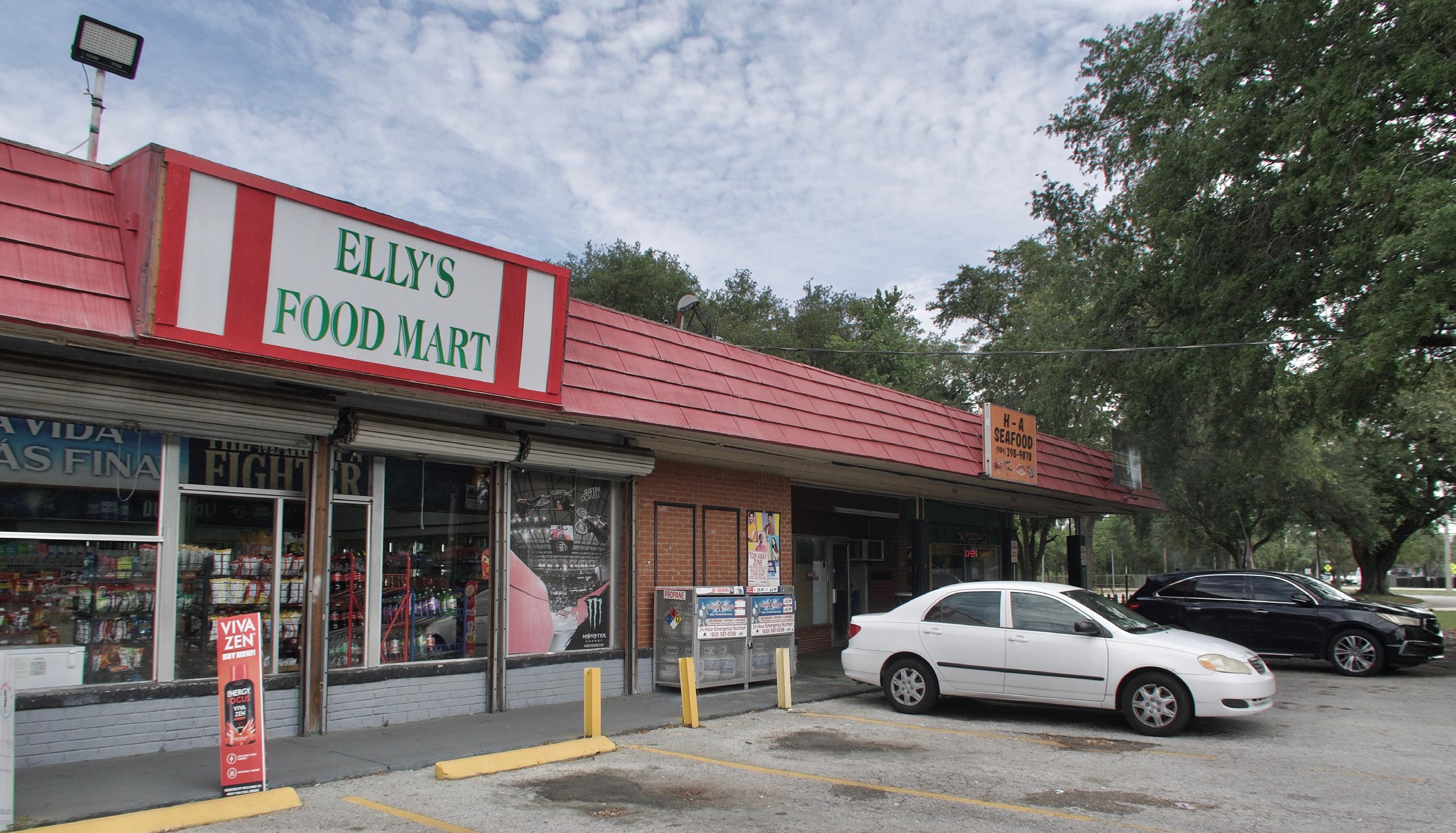
Food insecurity is a problem in Jacksonville. Many don’t have access to food for multiple reasons, one of the biggest being the food deserts. A food desert is when residents live a mile or more from a grocery store with fresh foods. And Jacksonville is covered in them.
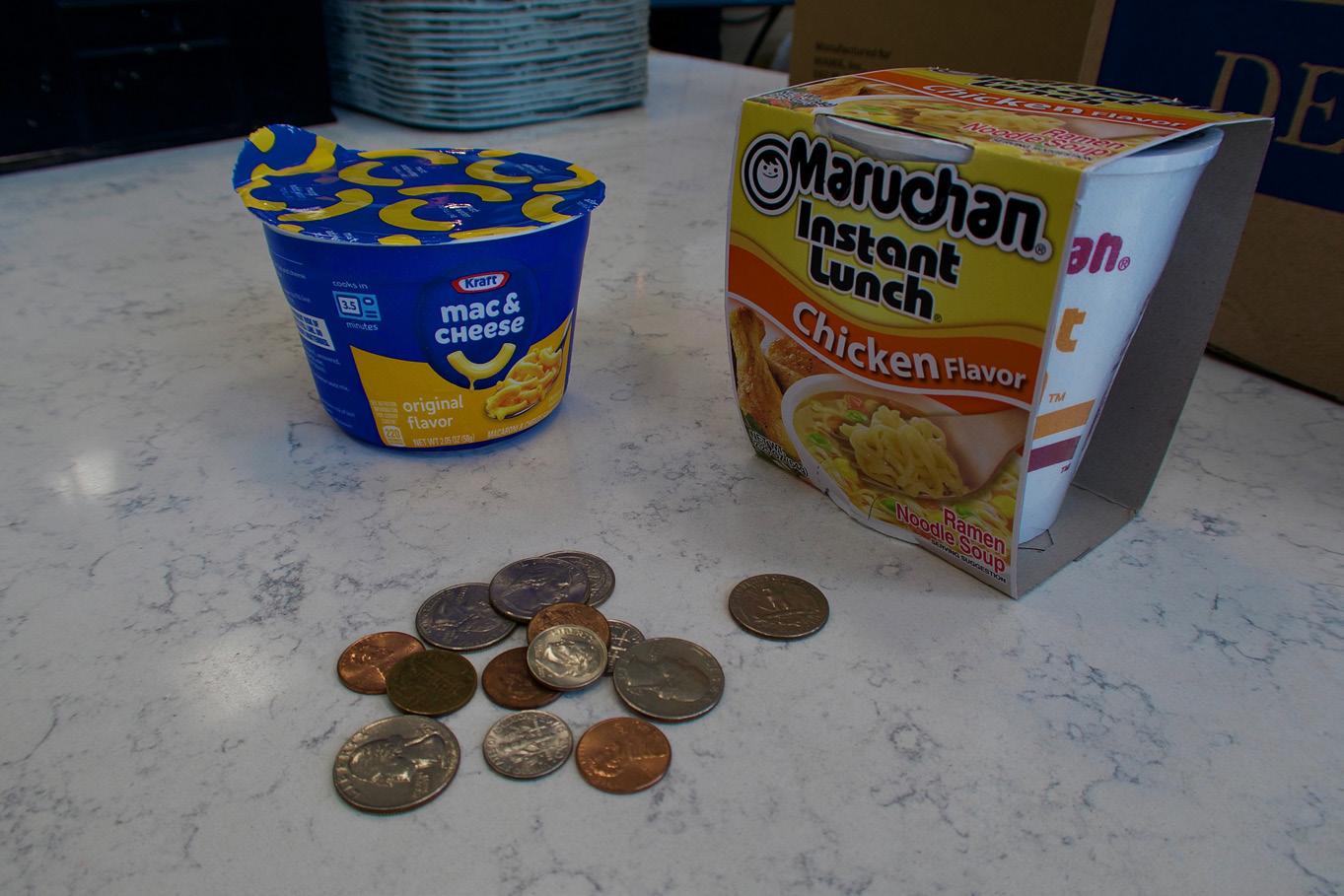
Food deserts are particularly suffocating for those with a limited income. Due to the difficulty navigating public transit in Jacksonville, those without cars are the ones who suffer. The walkable food sources are convenience stores, gas stations and fast food. Left with limited options, the ones affected are forced to rely on the unhealthy leftovers.
There are 29 food deserts in Jacksonville, making Duval County one of the highest rates of food insecurity in Florida, according to Jacksonville Mom’s website. If this sounds bleak, imagine being those affected. If having a healthy diet has a direct impact on the longevity of a person’s life, having access to fresh food is not only inconvenient but detrimental to our health.
The statistics are grim. Jacksonville seems to be a black hole for low-income residents with no end in sight. But there is a light in the distance. Many initiatives have been popping up all over Duval County to ease the weight.
Jacksonville is developing a new plan called “State of the Food.” The plan is set to face food insecurity head on. According to First Coast News, many Jacksonville residents attended a public meeting to address what concerns should be addressed in this new plan. Here, it was revealed that Jacksonville residents produce an exuberant amount of food waste each year: 500 million pounds worth to be exact.
The new plan sheds a hopeful light on the resolution of Jacksonville’s food problem. However, city staff say partnerships, funding and education will be the determining factors if success comes to fruition. Jacksonville city residents can help too by pushing organizations to get involved in helping transform the city into a healthier place for all.
One of them being Bridge the Gap, which distributes fresh vegetables to families in need across Northeast Florida.
The Hunt Jaguars Controversial Draft and Standouts from
OTA’s
The Jacksonville Jaguars’ 2025 season came to an incredibly disappointing end after a crushing defeat by the Buffalo Bills in the wildcard round. Fortunately for Jaguars fans, the offseason has been relatively inactive, and a lot of key components of the team have remained in black and teal. But this offseason has had its fair share of controversy.
The Draft
The Jacksonville Jaguars had the most controversial 2026 draft class of any team in the NFL. Since they were missing their first-round pick this year due to the trade they made for Travis Hunter in the 2025 draft, their first pick would come in the second round, where they would take Nate Boerkircher, a Texas A&M alumnus who was primarily used as a blocking tight end throughout his collegiate career.
This move shocked everyone: Jags fans, sports analysts, other GMs and head coaches around the NFL. Everyone. Boerkircher was barely listed on most draft boards, let alone a second-rounder. Naturally, head coach Liam Coen and general manager James Gladstone were immediately pressed by the media as sports journalists scrambled to figure out what the thought process behind this pick was, especially given that Anthony Hill Jr., a top five linebacker prospect out of the University of Texas, was still on the board and projected for months to be the Jaguars second round pick. However, Coen and Gladstone stood firm in the press conference, claiming that Coen allegedly had a dream about drafting Boerkircher, and once Gladstone heard that, he knew they were going to take him off the board as soon as they could.
photos by Aaron Berkshire
Coen has been known to run heavy-set offensive schemes. He did it several times in 2025, utilizing Brenton Strange, Johnny Mundt, Hunter Long and Quentin Morris to stretch the O-line out while also allowing for potential misdirection when allowing these tight ends to get off the line of scrimmage and run a route after a chip block. Boerkircher is the exact player Coen was looking for, a stockier blocking tight end who can also get down the field and use his hands if he needs to.
This wasn’t the Jaguars’ only risky move of the draft, though. Almost every single pick they made caused some form of controversy. The Jaguars’ next pick was Albert Regis at pick 81, a defensive tackle out of Texas A&M. Regis made more sense to most fans than Boerkircher did, but he was still a big question mark, as many people believed that there were still better players in the same position on the board. Coen and Gladstone care more about personality than anything, though. They’ve been quoted many times as saying that they want to find talent who want to win more than they want a guy who might look a little better on paper.
With their next pick, the Jaguars selected offensive lineman Emmanuel Pregnon from the University of Oregon. This was the first pick of the draft that wasn’t met by immediate criticism from analysts and fans alike. Pregnon was an incredibly efficient blocker throughout his collegiate career, and given that the O-line was a huge issue for the Jaguars at the beginning of last season, it seems safe to say that Pregnon will have plenty of opportunities to shine in his rookie season.
The next selection was defensive back Jalen Huskey from the University of Maryland. Huskey was another head scratcher for most people; he wasn’t in most people’s top 250 and definitely wasn’t thought to be a third-rounder. But Huskey is another one of those players who embodies the culture that Gladstone and Coen are trying to produce in Jacksonville. During his draft call, Husky said he would do anything it takes to be able to get on that field and prove to Gladstone and Coen that they made a good choice when they chose him. And that’s exactly what this new Jaguar regime is founded on; it doesn’t matter who you are or how well known you are if you can make plays. That’s all that matters.
The Jaguars selected linebacker Wesley Williams out of Duke University with their fourth-round pick. Williams primarily played as an EDGE in college, where he found moderate success with 11 sacks over the past three seasons. Given that Travon Walker and Josh Hines-Allen are both slated to stay in Jacksonville for the next few years, Williams’ role will be more of a rotational one or on special teams where he also shone in college with five blocked kicks.
The fifth round saw the Jaguars select another tight end, Tanner Koziol, out of the University of Houston. Koziol significantly differs from Boerkircher; he is a pass-catching tight end to his core. Koziol led the FBS conference in tight end receptions last year, and in the past two years, he led the entire FBS in receptions for any player. As mentioned before with Boerkircher, Coen loves to run multiple tight end formations, so having a variety of both blocking and pass-catching TEs will keep defenses guessing at who the ball will go to.
The sixth round was a wide receiver round for the Jags, where they took both Josh Cameron out of Baylor University and CJ Williams out of Stanford University. Cameron and Williams are very similar players; they’re both tall, strong receivers who will more than likely come in, primarily, for heavier set formations.
The Jaguars picked EDGE Zach Durfee out of the University of Washington and linebacker Parker Hughes out of Middle Tennessee in the seventh and final round of the 2026 draft. Durfee recorded 18 sacks in two seasons at Washington. Hughes caught the eyes of some scouts at the combine, where he recorded a 4.39 40-yard dash, a very fast time for a linebacker. However, it is difficult to say whether or not either of these two will be around when the final roster is assembled.
According to PFF, all of the Jaguars’ picks this season were off projection. But this doesn’t mean the draft was bad, despite what almost every analyst and critic has said about the team in the past few months. Gladstone said they based their picks on “Jaguars DNA,” meaning they went after players that they believed to share the core values that the team is beginning to embody.
OTAs
OTAs have officially begun, and with that, we have been able to see some familiar and unfamiliar faces getting into action in preparation for the 2026 season.
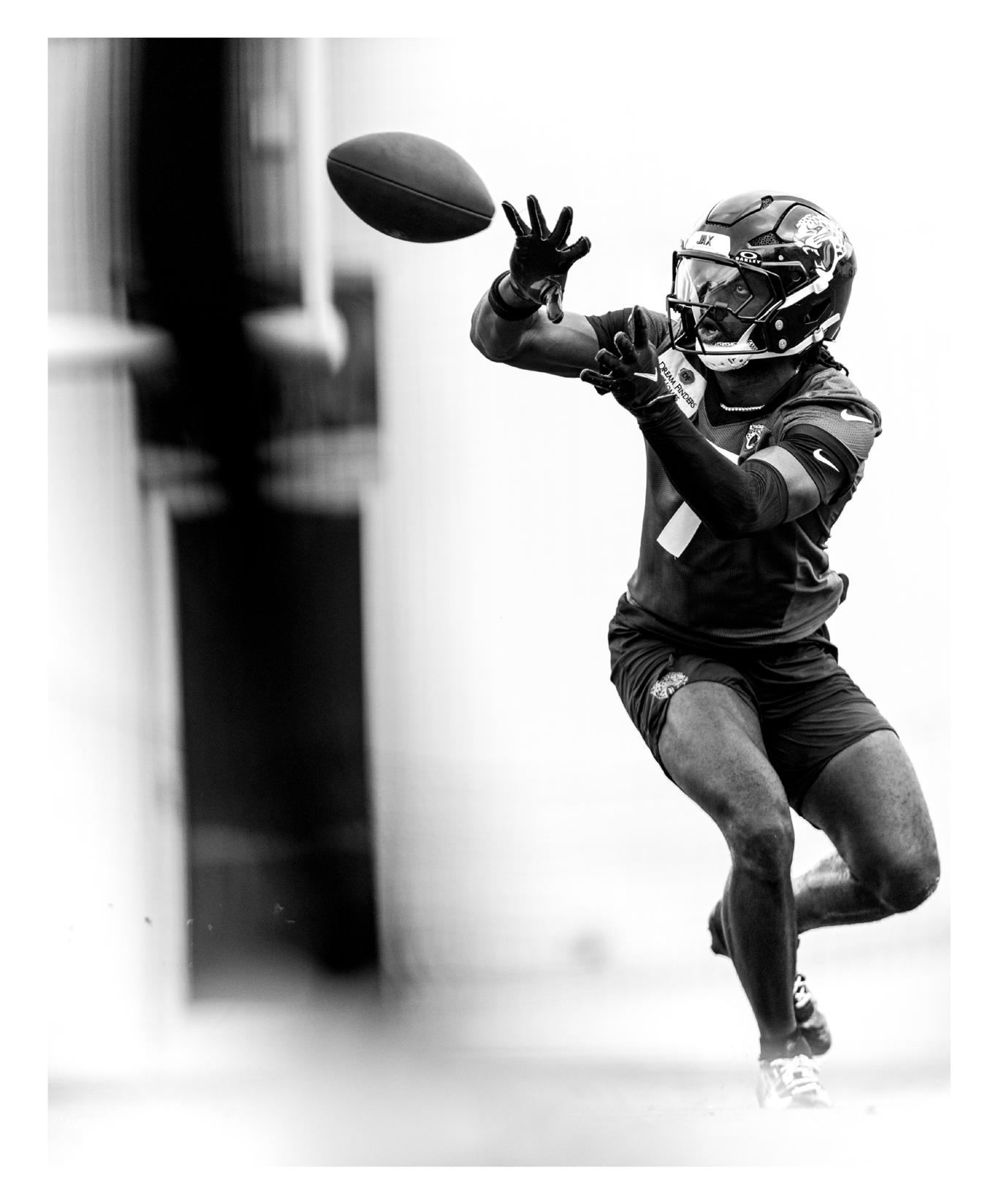
One of the most notable stories to come out of the OTAs is that wide receiver Brian Thomas Jr. has looked fantastic; he’s been making plays and looks to have completely returned to form after his shaky season last year. When asked about how he’s faring so far in OTAs, BTJ said that he feels great, specifically, “It doesn’t hurt to run anymore,” referring to a lingering ankle issue that plagued him for almost the entirety of last season, causing him to be a little slower in his routes and allowing defenders to cover him more easily. According to him, that should be a thing of the past now, and he’s as confident as ever to be getting back on the field for the Jaguars.
Quarterback Trevor Lawrence was also asked about what he’s been focusing on this offseason, and he claimed that the biggest thing for him is making sure that he and BTJ are always on the same page and improving their chemistry. Unfortunately, Lawrence wasn’t the primary quarterback when BTJ recorded his fantastic rookie season in 2024 as he was sidelined with a shoulder injury that kept him off the field for nearly half the season.
In his stead, Mac Jones was the one primarily dishing the ball out to BTJ, so it is incredibly important for the two of them to build a good relationship because with Lawrence’s arm talent and BTJ’s height, speed and hands, they could easily become one of the best QB/WR pairings in the NFL.
Breakout wide receiver Parker Washington has been continuing to show that he might be Lawrence’s most valuable offensive asset through OTAs so far with steady hands and quick route running. Last season’s game-changing signing of Jakobi Meyers at the trade deadline has also continued to bear fruit, as he continues to show that he’s a reliable target over the middle for Lawrence.
Running back Bhayshul Tuten has taken over the backfield after the departure of Travis Etienne Jr. over the offseason and has looked very promising. It’s hard to judge how great a running back is going to be through the beginning of OTAs since there’s very limited contact, but one can infer that after his impressive stats last season, despite having the shorter side of the workload split with Etienne, that he’ll be just fine.
The Jaguars’ lone free agency signing, running back Chris Rodriguez, has been notably absent from all of OTAs so far with an undisclosed injury. This is alarming because Rodriguez was supposed to add some much-needed depth at the running back position; however, his absence has created an interesting situation. J’Mari Taylor, an undrafted rookie free agent out of the University of Virginia, has been a dominant force in OTAs, according to many local media outlets, which means players like DeeJay Dallas, Ameer Abdullah and LeQuint Allen Jr., could be knocked down the depth chart if he continues to produce at high volume.
Another developing story out of OTAs is that last year’s second-round pick, defensive back Caleb Ransaw, has been making a big splash. Ransaw was an incredibly talented safety in college, and fans are hopeful to see him starting alongside last year’s breakout safety Antonio Johnson.
In an interview with Action Sports JAX, defensive back Jarrian Jones said he’s confident playing any position in the defensive secondary. He said he’s become somewhat of a Swiss Army knife for the defense who can adapt to any position and play as needed in order to stay on the field. Jones didn’t see much playing time in his rookie season but saw increased playing time last year and even more time after Jourdan Lewis got hurt.
Defensive back Jabbar Muhammed, an undrafted free agent from last year’s offseason, has also been making a big defensive impact and could even knock some veteran Jaguars DBs down the depth chart or potentially off the roster.
Kicker Cam Little has been spotted doing his best Slim Shady cosplay with a new bleached blond look. The highlight reel kicker has been drilling massive field goals all OTAs, and if he continues, we might even see yet another one of his records broken by him again.
Several Jags are now sporting new numbers as well with Montaric Brown picking up Etienne’s 1, Jarrian Jones taking 4, LeQuint Allen taking 5 and Antonio Johnson taking 6.
Feature sponsored by
The not-so-new world virus
Words by Amia King
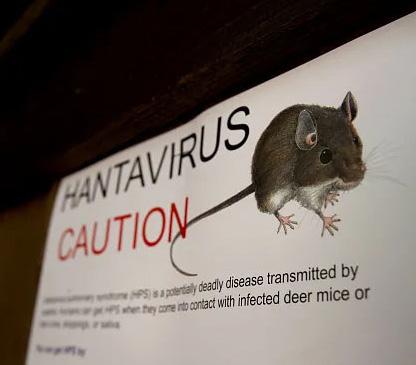
Is the 2020 lockdown making a comeback? The outbreak of the hantavirus infection may be the start of another global pandemic. Coronavirus, or COVID-19, sent the world into a state of panic and isolation for several years. With the help of vaccines and public restrictions, the virus has been minimized to a flu-like illness. But with the rise in cases of the animal-to-human infection and lack of medication or vaccine, could hantavirus become the next pandemic?
What Is Hantavirus?
The source of hantavirus comes from infected rodents, specifically contaminated waste/urine or saliva. There are many species of hantavirus globally, but only a handful are linked to human disease. The spread of the virus lies within the bounds of those consistently in close contact with infected individuals during its early stage. The treatment or “cure” for this infection has not yet been determined, and there is currently no vaccine.
2026 is not the first appearance of the hantavirus infection. During the Korean War, more than 3,000 cases involving hemorrhagic fever were reported within UN troops. In 1981, the virus was confirmed to be contracted from rodent hosts, and hantavirus was introduced as the virus that causes hemorrhagic fever. As time went on, it was perceived that hantavirus was no longer an issue, but 1993 changed this belief, as the U.S., specifically the Southwest, experienced an outbreak affecting respiratory systems, which was found to be connected to the hantavirus infection.
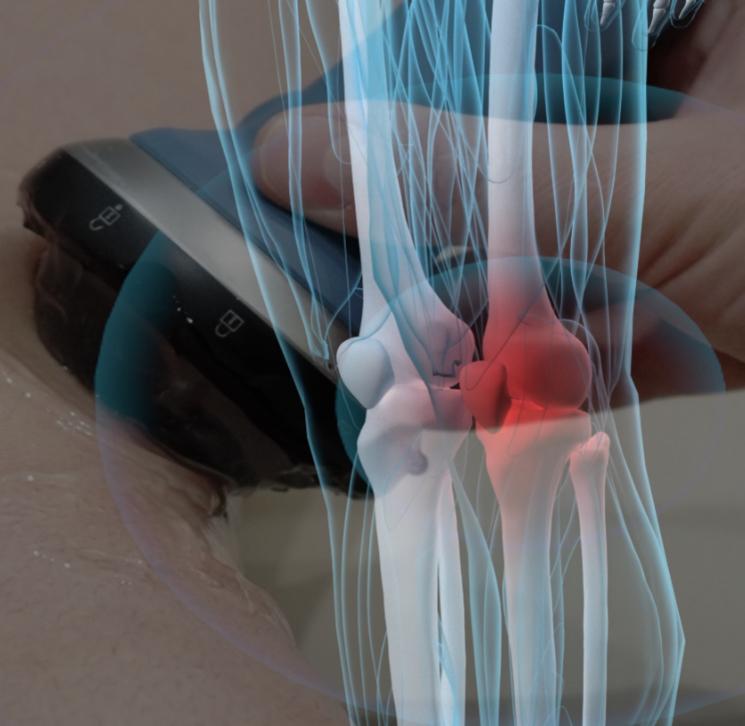
Annabella suffered a meniscus tear but thanks to Injury Care Centers & our Biotarget Therapy she was back on the field in only 3 weeks.
Photo by Michael Macor / San Francisco Chronicle via Getty Images
A virus outbreak occurred on May 2, 2026 with passengers aboard a cruise ship. The ship held a total of 147 people — 88 passengers and 59 crew members. It was reported to the World Health Organization that a small group of passengers were undergoing respiratory illness.
Two days later, four passengers were confirmed to have Andes virus, and four days later, six more passengers were diagnosed with the virus. Three of these cases were fatal. All 10 cases were confirmed to be Andes virus, a form of hantavirus infection. The risk of illness for other passengers was at a moderate level, and the cruise ship evacuated all passengers and crew, returning to its port in the Netherlands.
Patient 1, who traveled to Uruguay and Chile prior to the cruise, died on the ship due to respiratory complications. Patient 2, his partner, departed the same ship the same day after facing similar complications and passed away while receiving emergency care. Patient 3 suffered from a severe respiratory infection and fever and was evacuated from the ship. Patient 4, a German national, passed away from the Andes virus. Patient 5, the ship’s doctor, and Patient 6, the expedition guide, were moved to the Netherlands after testing positive for infections. Patient 7 tested positive for Andes virus after going to Saint Helena but showed no symptoms and returned to Switzerland for testing. Patient 8 received medical care after visiting Tristan da Cunha and showing symptoms. Patients 9 and 10 were evacuated from the ship in Spain after showing symptoms and were confirmed to have the virus.
Global Impact
Hantavirus is continuing to largely affect Asia and Europe, as infections increase annually: 10,000 to potentially more than 100,000. The rate of fatality is 50% or less in the Americas and <1-15% in Asia and Europe. The infection can lead to hantavirus cardiopulmonary syndrome, affecting the heart and lungs (New World hantavirus), in the Americas. The virus has been associated with hemorrhagic fever with renal syndrome (Old World viruses) in Asia and Europe, affecting the kidneys and blood vessels.
Prevention
In order to prevent the infection of hantavirus, there are several safe measures to practice: ensuring your home is kept clean, effective cleaning of animal waste or areas contaminated by rodents, protecting spaces where rodents may enter, decreasing contact with those who are feeling ill or contagious and avoiding rodents. Although the risk is lower, rodent bites or working in areas with potentially infected rodents may also put humans at risk of Andes virus. Additionally, it is important to monitor any implications with kidneys and the cardiac and respiratory systems to assist in early care.
Research for the primary source of the outbreak is ongoing as the virus continues to be monitored.
Presented by VyStar Credit Union.
Sunday, July 12, 1:05PM CHRISTMAS IN JULY
It may be hot in July, but not too hot for Jumbo Shrimp Santa hats! Be sure to get here early as the first 500 fans through the Main Gate at the Baptist Health
Words by Ambar Ramirez and Carmen Macri
Combined Minds
The 2000s Nostalgia Mirage
Are
we out of ideas, or is the modern world so exhausting that we are retreating into an era where smartphones didn't dominate the plot?
CARMEN: What happens when we run out of the 2000s? Are we going to see a sh*tty reboot of “The OC” where Ryan is just fighting housing costs instead of people? Another “Beverly Hills, 90210” revival where they’re all complaining about their knees and a different set of pills? The people yearn for new ideas, not a poorly made (and poorly lit) regurgitation of a classic. Down with Netflix lighting! Bring color back to cinema!
AMBAR: We’ve officially hit peak deja vu. It genuinely feels like every “new” movie or show hitting our screens is just something we already watched 15 years ago with a fresh coat of paint. Take, for example, “The Devil Wears Prada 2” … did we really need a second movie? Not really. Am I mad about it? You would know the answer to that if you read last month’s column. But as the endless cycle of reboots rolls on, the real question isn’t just “Are we out of ideas?” It’s whether or not our digital-fatigued society has reached a point where we are so desperate for that homey, 2000s-era serotonin that we’ve actively manifested this era of creative recycling.
CARMEN: There are a few — and I really do mean few — remakes or reboots that are welcomed with open arms (i.e., “Practical Magic” and “Elle”), but the majority fall under the category of “ruining legacies.” We don’t need a new “How I Met Your Mother (Father),” “Gossip Girl” or “Freaky Friday.” Keep the classics classic and come up with new ideas, which clearly isn’t that difficult. There have been a handful of new shows and movie releases recently that scratch the itch (i.e., “Something Very Bad Is Going to Happen,” “Widow’s Bay,” “Obsession,” “Overcompensating”), so why is Hollywood wasting billions on reboots?
AMBAR : There is, however, a science behind this reboot renaissance. Look, it’s easy for me to sit here and say we’re running out of ideas because, seriously, a “Harry Potter” remake? But the industry math isn’t quite that black and white. One of the main reasons we keep getting these reboots comes down to something called “algorithmic risk aversion.” In plain English, the entertainment industry is terrified of losing money on anything unproven. They’d much rather invest in a safe bet. We might collectively roll our eyes at a “That ’90s Show” revival, but executives know that when you’re exhausted after a long day, you’re always going to gravitate toward the comfort of what you already know.
CARMEN: And to play devil’s advocate, nostalgia historically moves in a 20-year cycle. In the ’70s, everyone was romanticizing the ’50s with “Grease” and “Happy Days.” In the ’90s, the ’70s had a major comeback with “That ’70s Show” and “Dazed and Confused.” I think you can pick up what I’m putting down. Now, it’s the 2000s turn. Which, WOW, doesn’t that make you feel old? The 2000s brought us a healthy dose of comfort food in the pre-smartphone era, where a missed call on the landline created an entire plot point. People are craving the era when we weren’t so readily available to everyone and everything. Thus continuing the argument of leaving the god damn classics alone. We don’t want to hijack the early 2000s charm with iPhones and algorithms and, again, sh*tty Netflix lighting.
AMBAR: So, has Hollywood officially run dry? Sort of, but it’s not that simple. We’re always going to romanticize the past. The nostalgia cycle will keep turning every 20 years, and we’ll keep doing what we do best, rolling our eyes at the remakes that didn’t need to happen, while instantly binging the ones we desperately wanted (yes, I’m absolutely looking at you, “Practical Magic”). But let’s not be totally cynical. The creative well isn’t empty. There are still genuinely unique, phenomenal stories out there if you’re willing to look past the nostalgia bait. Keep an open mind, and with that, I say farewell!
CARMEN: Bon voyage!
Gilmore Girls / Courtesy of Warner Bros. Television
this puzzle like a regular sudoku, but instead of using numbers, use the letters
(for the beach at Big Talbot Island) to fill each row, column and box.