
How businesses across the region are responding to change and putting new ideas in motion


• Workforce and talent alignment
• Policy decisions impacting business
• Perspectives from regional leaders


Visionary Community Builders are an elite group of Community Builders who represent the highest level of investment in The Chamber. We thank them for the substantial and positive impact they have on The Chamber and the future of our region.
Becoming a Visionary Community Builder distinguishes your business among the ranks of the most prominent, successful, impactful and community-minded companies in the region.






Community Builders are a group of leading corporate citizens dedicated to the economic prosperity and progress of the region. Community Builders represent a significant level of Chamber investment, and their commitment enables The Chamber to be a catalyst for growth and prosperity.
All Community Builders receive access to top officials and Chamber leadership, and contribute input that shapes public policy and strengthens the local business climate through The Chamber’s work. Further, Community Builders receive unprecedented recognition throughout the business community.
Thank you to our dedicated sponsors for investing in these Chamber events and programs. CHAMBER

Charlie Adams Center for Civic Engagement Director
Nicolette Bresnahan Senior Vice President
Setareh Campion Director of Programs
Betsy Christianson Workforce Project Manager
Courtney Desautel Director of Finance and Operations
Teresa Dick Executive Assistant
Cale Dunwoody Vice President of Public Policy
Corey Eidem Director of Advertising and Sponsorship
Bernt Eidsmoe Graphics and Multimedia Specialist
Shannon Full President and CEO
Katherine Grindberg Executive Vice President
Anja Kalvoda Administrative and Finance Specialist
Kolbie Kapaun Director of Events
Hannah Kliniske Director of Content Strategy
Nicole Meland Vice President of Finance and Operations
Briann Sandholm Graphics and Multimedia Specialist
Gregg Schildberger Vice President of Communications and Marketing
Heidi Schultz Director of Workforce Engagement
Jacob Schoenborn Public Policy Specialist
Abby Styf Director of Member Development
Amanda Susag Director of Events
Jane Vangsness Frisch Vice President of Workforce
Abby Zimmerman Engagement and Program Strategist
Kristi Huber Perspective Shift Chair Consulting
Paul
Kevin Bucholz Moore Engineering, Inc.
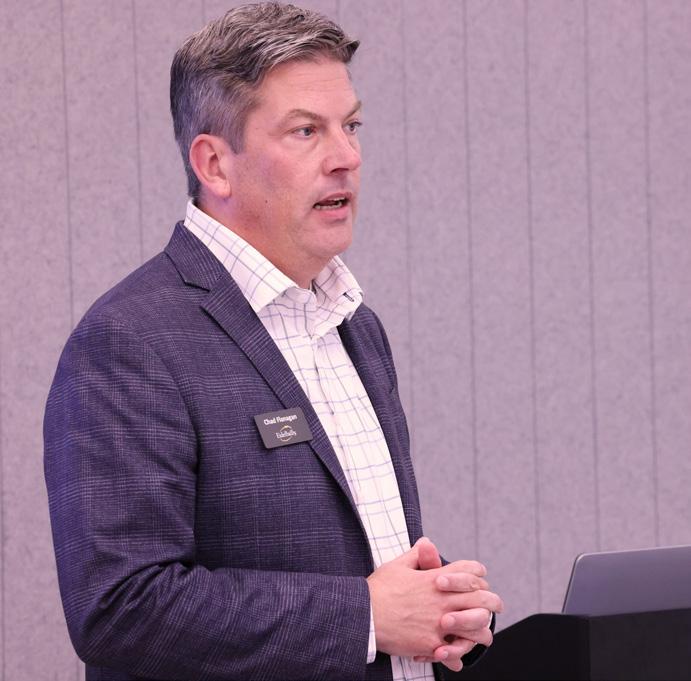
Chad Flanagan Eide Bailly LLP Julie Whitney Gate City Bank
To be a catalyst for inclusive growth by protecting businesses, inspiring individuals, cultivating communities and influencing action.
• Regional Enhancement and Influence
• Workforce
• Public Policy and Civic Engagement
• Business Vitality
• Organizational Excellence



























































































In mid-March, I had the opportunity to join 23 chamber leaders from across the country at our national Major Cities convening. Over two days, we explored what it takes for regions to stay competitive in an increasingly complex environment.
I heard about the successes of communities that both align and compete with us and saw how those regions bring business, government, education and community partners together with greater focus and coordination. It reinforced that while momentum plays a role, alignment is what carries work forward.
Just after returning from Major Cities, The Chamber had the opportunity to host finalists for the NDSU president position. As we spent time together touring our community and discussing what lies ahead, each candidate shared a similar perspective. They were struck not only by the opportunity here, but by the people, the energy and the commitment.
Our region may be unassuming, but it is anything but ordinary.
As I have said so many times, we have leaders who continue to show up across sectors, industries and this community with a shared desire to build something stronger. That is a competitive advantage, and it positions us well for what comes next.
Sustained growth requires clarity of direction, alignment of effort and disciplined execution.
Over the past 18 months, that is exactly what we, your Chamber staff and Board of Directors, have been focused on. Together with our partners, we are taking a deliberate look at where we are today as an organization, as leaders and as a community. We have challenged ourselves to think beyond our individual roles and move toward a more aligned, system-level approach.
The work happening today, grounded in our five cornerstones, is strong. The future we are building will require even greater coordination, a shared vision and focused execution.
You will see that work reflected throughout this issue of The Bridge, from The Chamber and our partners to workforce, public policy and business vitality, along with perspectives from experts and stories from our members.
In the months ahead, we look forward to sharing more about where this work is leading.
Because the next chapter for this region will not be defined by what we do individually, but by how we move forward together.
As you read this issue of The Bridge, think about where you show up and how you can contribute to what comes next.
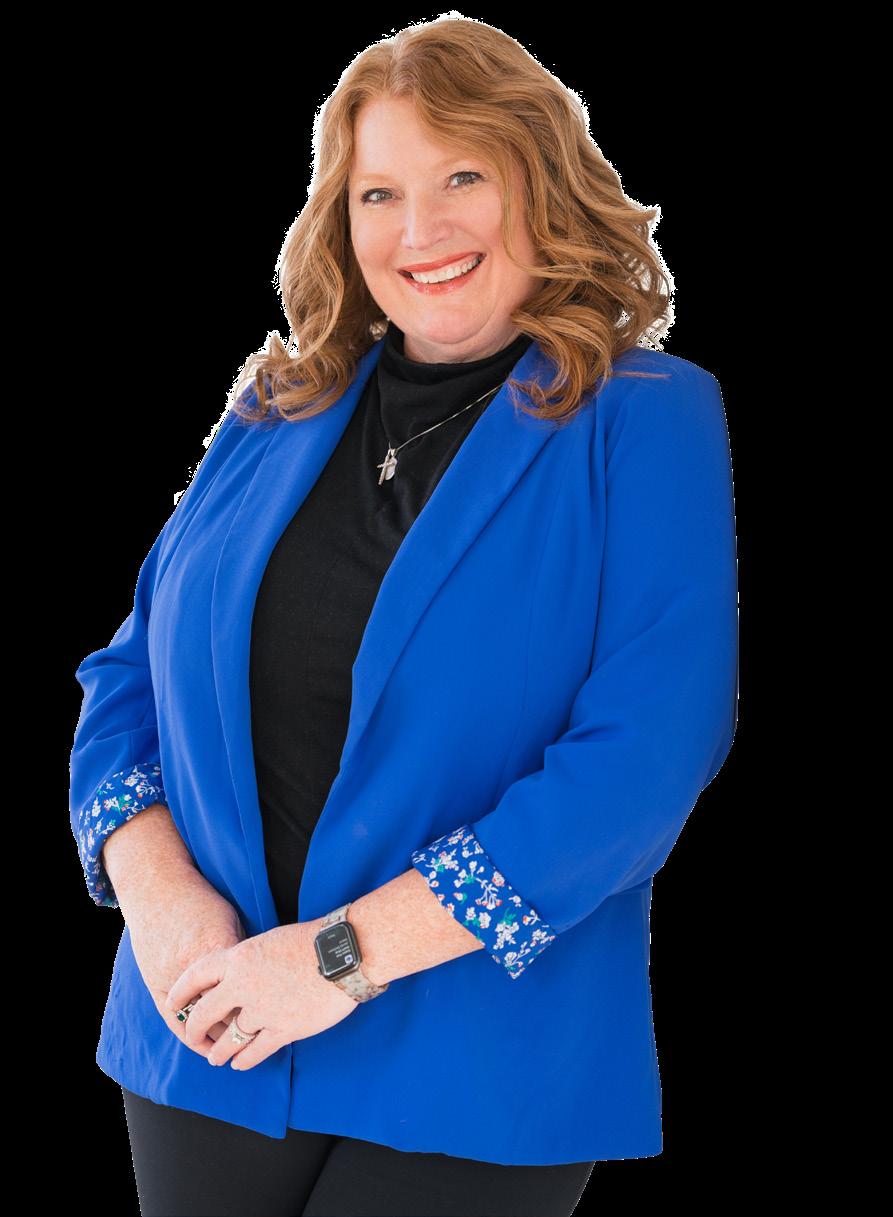
Shannon Full President and CEO
Fargo Moorhead West Fargo Chamber of Commerce
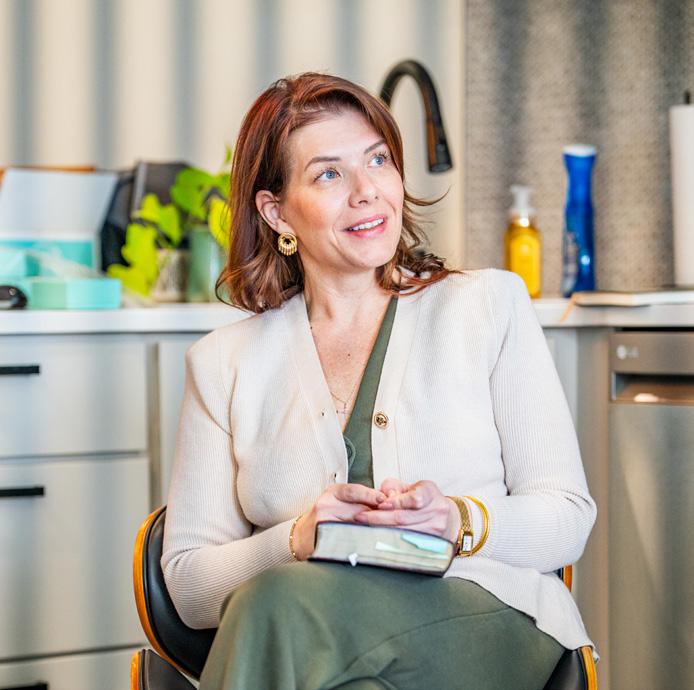
This issue of The Bridge explores how innovation is showing up across our region in practical, measurable ways. From large-scale investments to everyday operational shifts, these stories reflect how businesses are adapting, testing new approaches and moving ideas forward.
See how employers and partners are strengthening talent pipelines through work-based learning, skills-based training and leadership development.

Hear directly from those doing the work. These insights reflect what businesses are navigating and how organizations are responding.

Follow the work of The Chamber and its members through programs, partnerships and regional engagement.
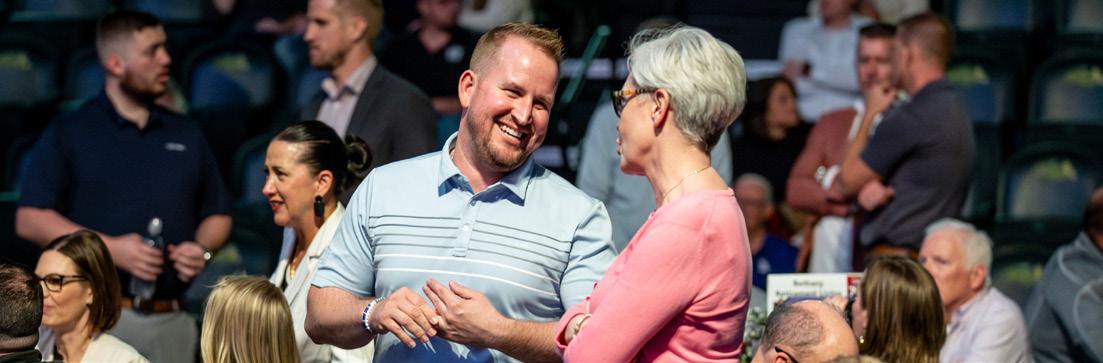
Policy and participation shape the business environment. This section covers legislative updates, advocacy efforts and opportunities to get involved.
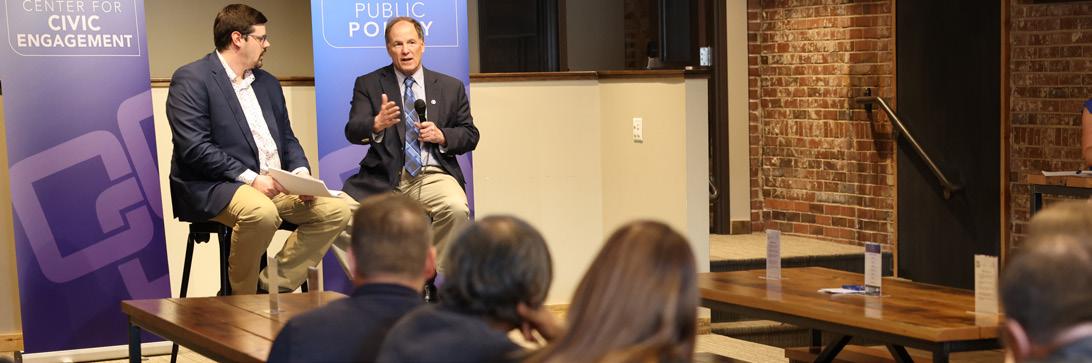
Events, industry conversations and recognition highlight how businesses are connecting, investing and growing.



cross the Fargo-Moorhead-West Fargo region, innovation is showing up in how businesses are evolving their services, investing in new capabilities and responding to changing demands. Organizations across industries are testing new approaches, adjusting how work gets done and finding ways to stay competitive in a shifting environment.
In this section, you’ll read how that work is taking shape, from new models in housing, health care and financial services to strategies that are helping businesses rethink operations and growth.
You’ll also see how broader developments, including the continued expansion of Hector International Airport and insights shaping aviation, are influencing how the region connects and moves forward.

Together, these stories offer a look at what innovation requires in practice and what others can take from it.


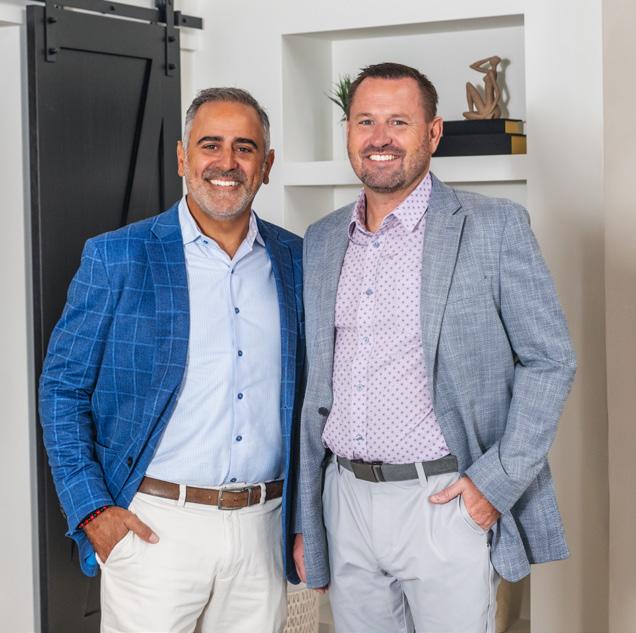
In today’s housing landscape, innovation is often tied to materials, finishes or technology. But sometimes, the most meaningful innovation is quieter, it’s the kind that changes how people live, connect, and grow every day.
For trusted local homebuilder Heritage Homes, that idea began with a simple question:
What if a community could be designed not just for a moment in life, but for the entirety of it?
That question became the blueprint for something different and the foundation of SunSet Valley in Horace.
“At the very beginning, the vision behind SunSet Valley wasn’t just to develop land or build homes. It was to create something you could feel the moment you entered it,” said Tyrone Leslie, President of Heritage Homes. “We wanted to design a place where people felt a sense of pride, connection and belonging. Over time, that vision has become even more clear. It became less about what we’re building and more about how people will live and create memories here.”
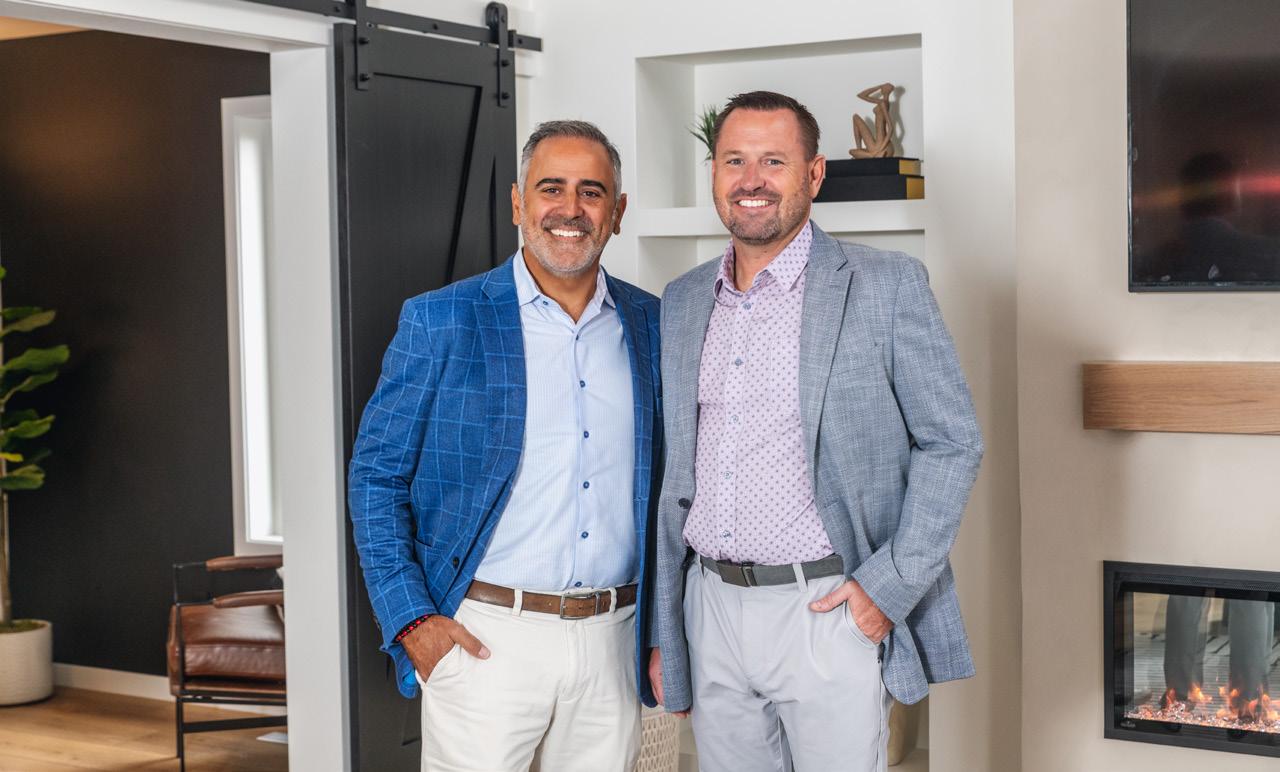
This 135-home boutique community reflects more than a new development. It reflects over three decades of building in the Fargo-Moorhead region and understanding what truly makes a place feel like home.
Traditionally, neighborhoods have been designed around specific phases of life. Families start in one place, grow out of it and often have to leave behind the community they love. SunSet Valley was designed to challenge that idea.
Rather than separating homeowners by life stage, Heritage Homes took a more connected approach, one that recognizes that life changes and that the right community should be able to grow with you.
By integrating multiple housing styles into one cohesive neighborhood, SunSet Valley creates a rare opportunity: a place where individuals and families at different stages of life can live side by side, connected not just by proximity, but by shared experience.
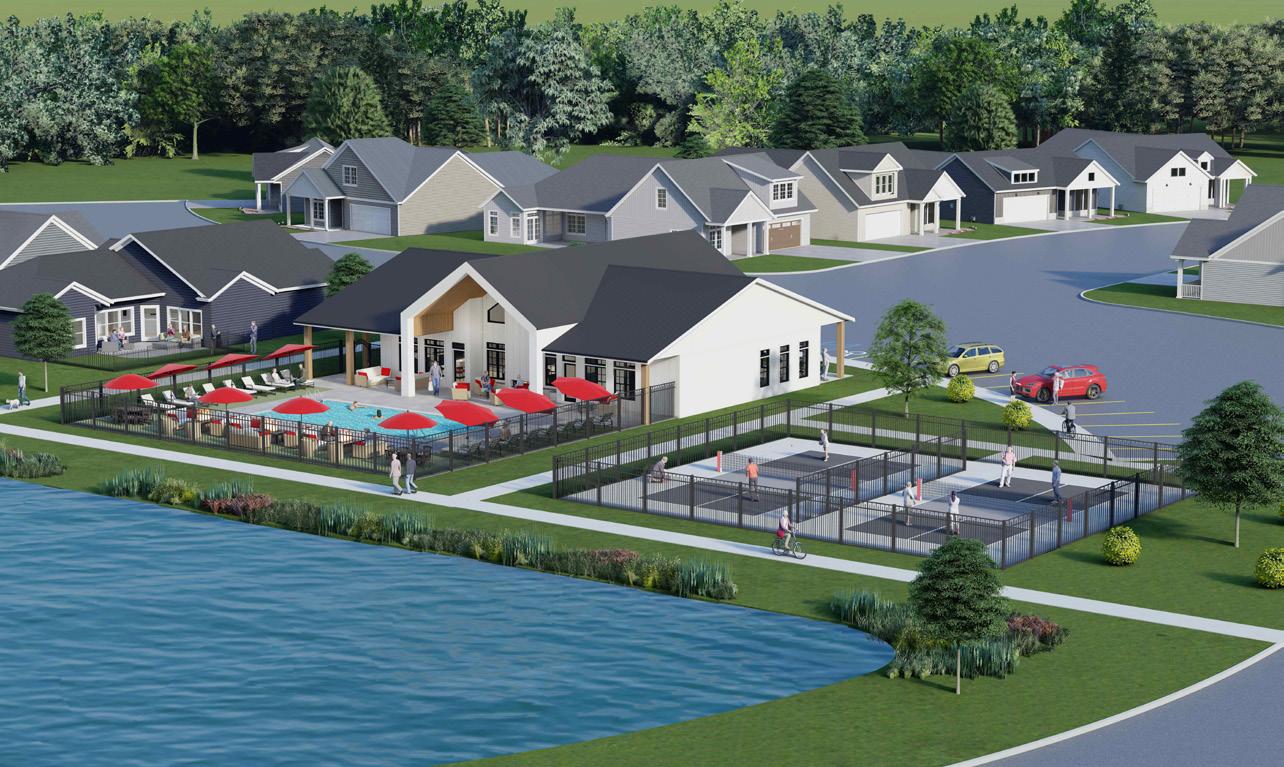

SunSet Valley isn’t defined by a single feature, it’s shaped by a series of thoughtful decisions that influence how the community looks, feels and functions over time.
Curved streets soften the landscape. Varied home placements create character and individuality. Green spaces and gathering areas are woven throughout, naturally encouraging interaction, movement and connection.
“To me, community goes far beyond rooftops and square footage,” Leslie said. “It’s about how a neighborhood brings people together, how kids play, how neighbors connect and how families grow into the space. It’s about designing an environment that naturally fosters relationships, comfort and a true sense of belonging. If we’ve done it right, it won’t just look different, it will feel different.”

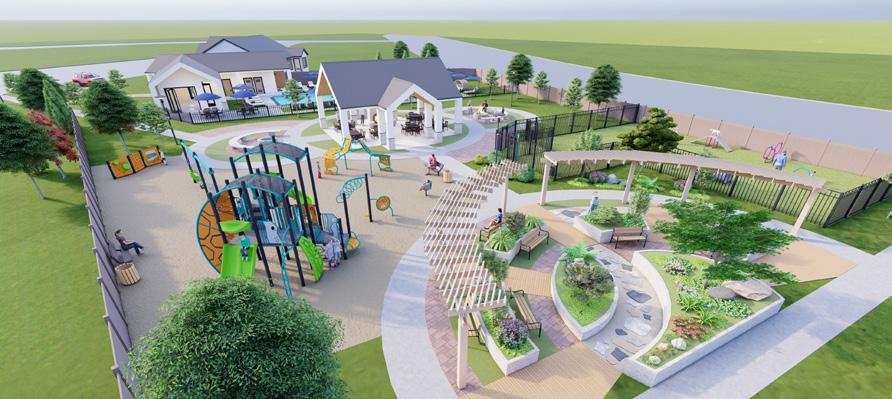
At SunSet Valley, that vision comes to life through two distinct, but connected ways of living.
The single-family homes reflect the craftsmanship Heritage Homes has built their reputation on. With both two-story and rambler plans, these homes are designed for flexibility, open layouts, the ability to support growing families and evolving needs.
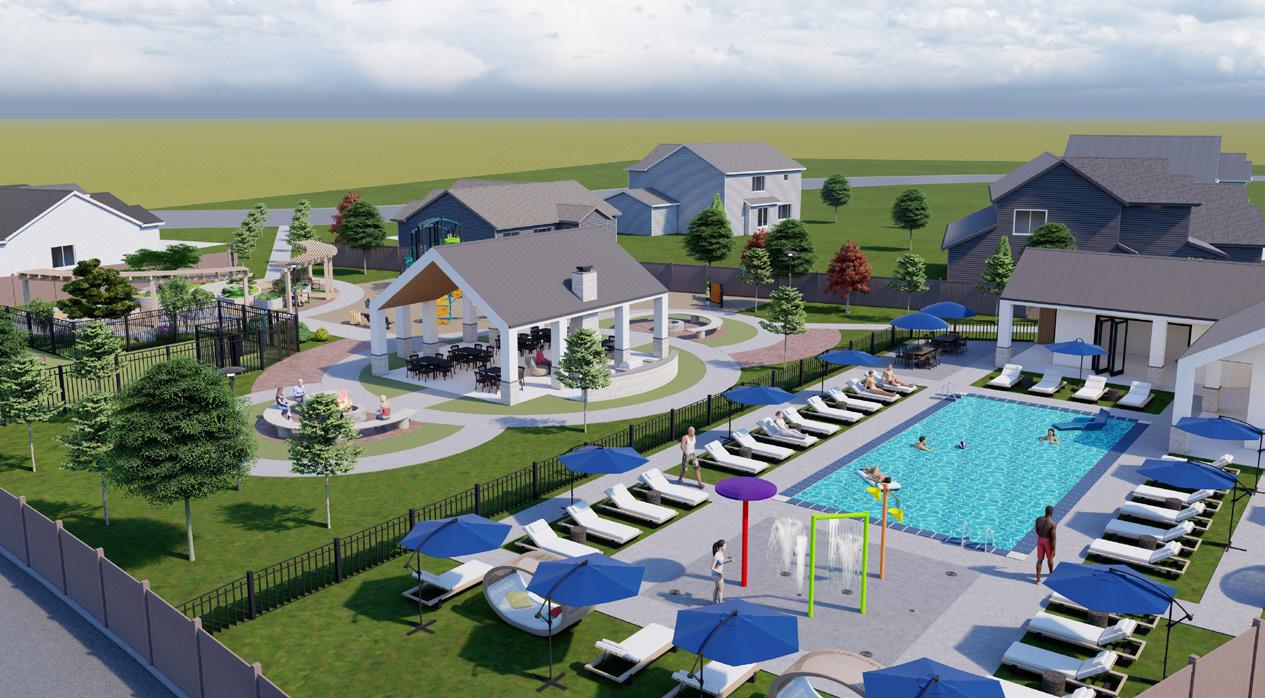
Imagine starting your day with a walk along scenic, lit paths, spending time at the pool or pavilion, and unwinding in spaces designed for both connection and quiet. With everything from a dog park to a zen garden and optional low-maintenance living, life here simply feels easier.
The Ranch offers a different kind of experience, centered on ease, simplicity and intentional living, especially for homeowners 55+ looking for a lifestyle that feels both active and low-maintenance.
With main-level primary suites and exterior maintenance taken care of, homeowners can spend less time managing a home and more time enjoying it.
From mornings at the fitness center to afternoons by the pool, it’s easy to settle into a natural rhythm. With two pickleball courts, walking paths and a clubhouse designed for gathering, connecting with neighbors feels effortless.
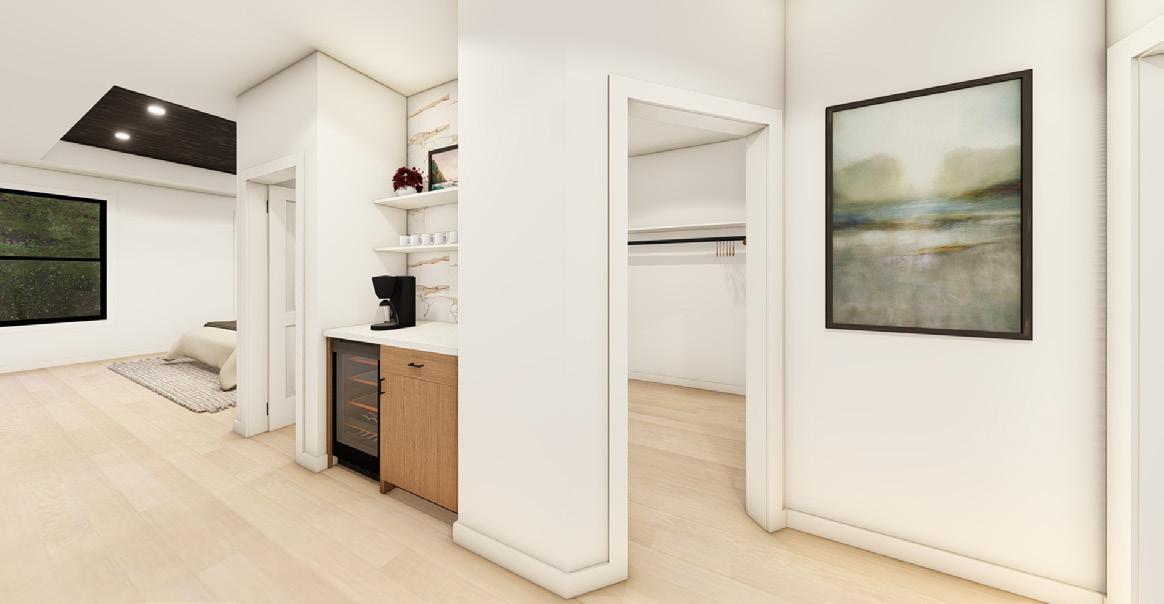
What sets SunSet Valley apart is that it was never meant to be just a collection of homes. From the beginning, it was designed as a complete living experience.
“There was a moment during the planning process where everything really clicked,” Leslie said. “We stepped back and realized this wasn’t just another development. It was something unique, something that hasn’t truly been seen before in this area. That’s when it became clear: SunSet Valley isn’t meant to compete with other communities, it’s meant to stand on its own.”

That same philosophy carries into the homes themselves.
After more than 30 years of building homes in this region, one thing has become clear: people don’t just want a place to live, they want a place they can stay.
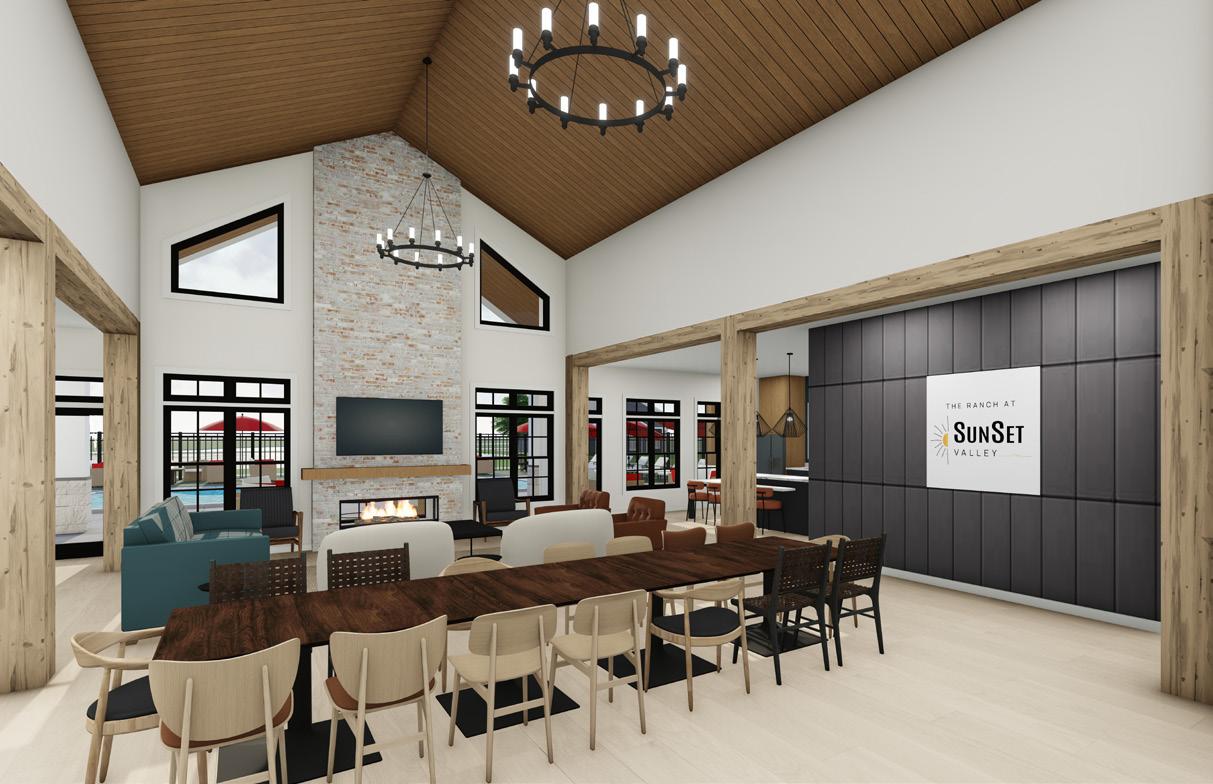
“Today’s homes need to do more than just look beautiful, they need to support real life,” said Vice President, Troy Mattern. “That means spaces where kids can unwind, areas that make working from home feel natural and small everyday comforts, like starting your morning with coffee in your own private bedroom retreat.”
These aren’t trends for the sake of trends. They’re thoughtful responses to how life actually happens inside a home.
SunSet Valley was designed with that in mind. It may be where someone makes this their first home, or where someone else chooses to simplify and enjoy a new pace of life. What makes it meaningful is that those moments can happen within the same community.
Because the goal has never been just to build homes. It’s to build a place where people can settle in, stay connected and continue living their lives, right where they are.
Heritage Homes is the only builder in the Fargo-Moorhead area that has 5 model homes open 5 days a week.
6841 Sunrise Point, Horace: The Sedona Model Home & Welcome Center
6440 Sun Valley Blvd, Horace: The Promenade Model Home & Welcome Center
• Monday – Thursday: Noon-5 p.m.
• Friday & Saturday: VIP Appointment
• Sunday: 1-4:30 p.m.
HeritageFargo.com | 701-281-7184
Tiffany Lawrence, president and CEO, Sanford Health Fargo
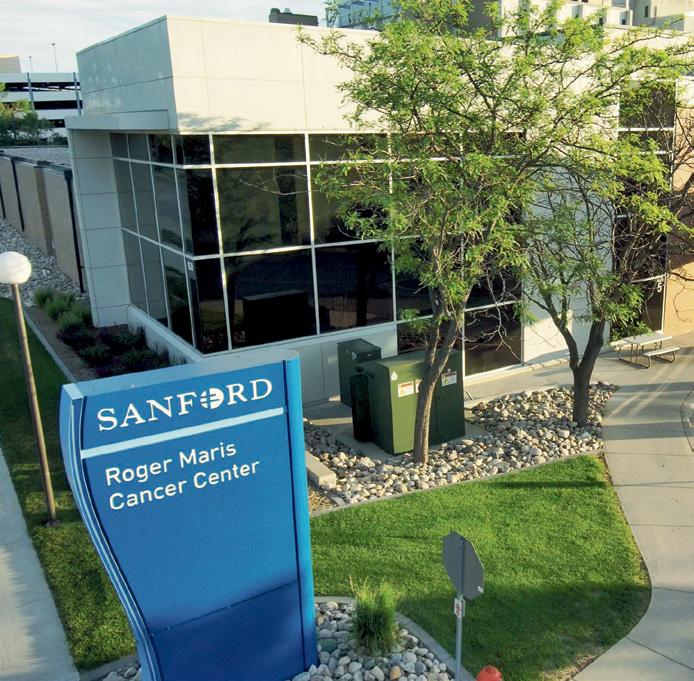
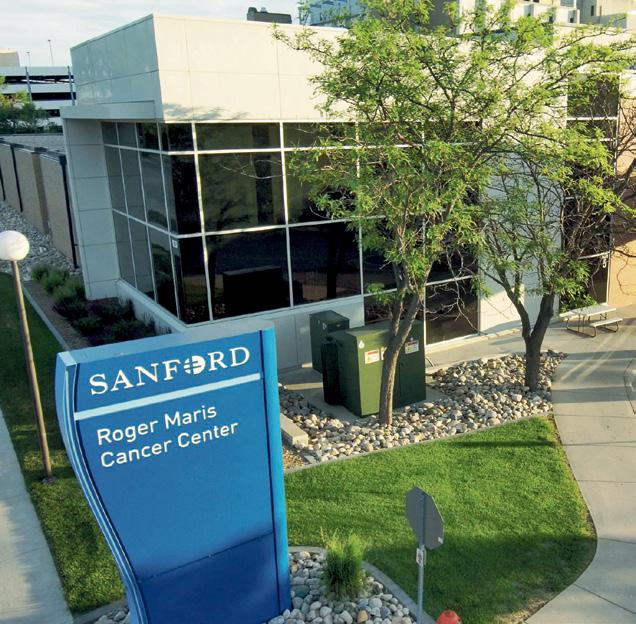
At Sanford Health Fargo, we strive to bring advanced health care closer to home for the patients we serve across the region. Over the past few years, this effort has defined the Sanford Roger Maris Cancer Center, where several new, innovative offerings have been implemented.
In 2021, we launched the first and only blood and bone marrow transplant program in the Upper Midwest, introducing it in three initial phases to treat blood cancers and disorders. The first phase, autologous transplants, went live in October 2021 and uses a patient’s own stem cells to treat cancer. The second phase, allogeneic transplants, rolled out in December 2022 and uses donor stem cells for treatment instead of the patient’s own. The third phase, CAR T therapy, went live in May 2023 and involves genetically modifying a patient’s own cells to recognize and fight their type of cancer when reinfused. Last year, we expanded the program with our first cellular therapy for solid tumors – tumor-infiltrating lymphocyte (TIL) therapy, which removes immune cells from a patient’s tumor, grows them in the lab and returns them to the body to help fight cancer. Together, these transplants and therapies have impacted more than 170 patients, reducing the long journeys they would otherwise have had to make to the Twin Cities or Rochester.
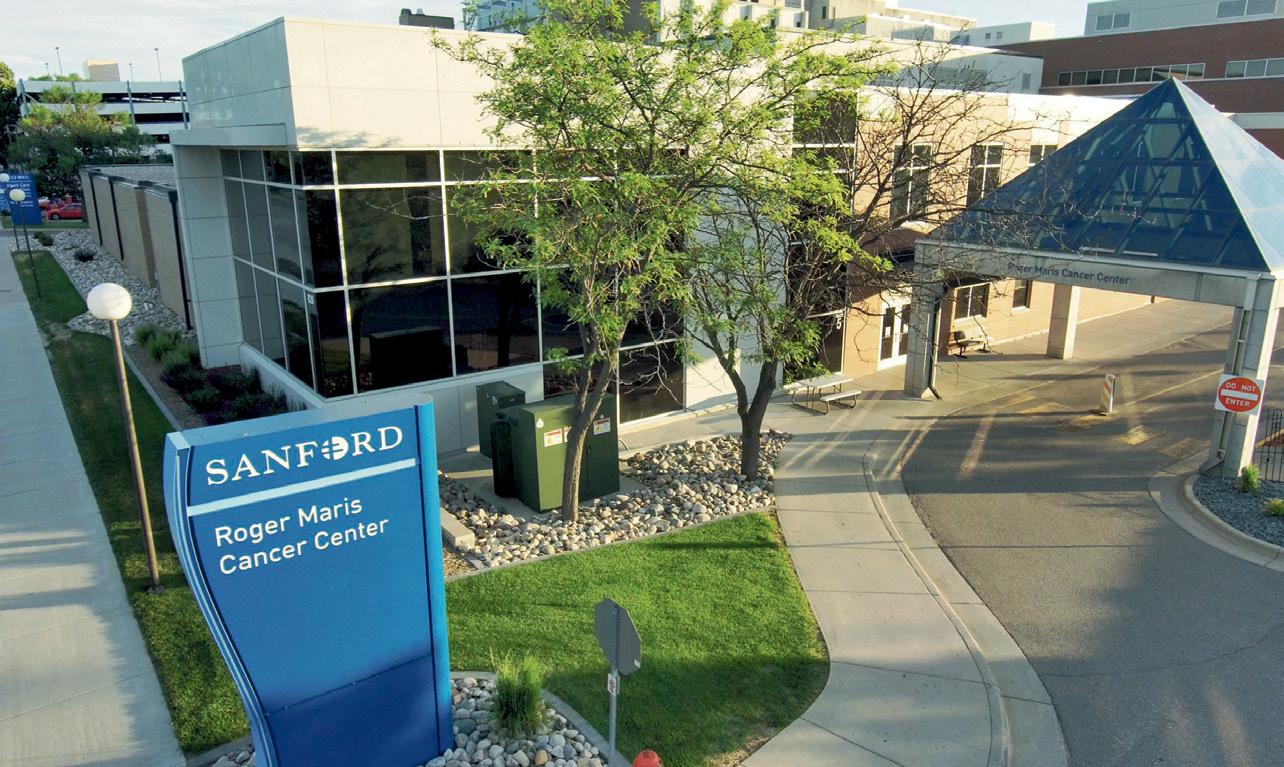
To meet this critical need, we were inspired to introduce our own patient lodging solution, the Peltier Lodge.
Located across the street from the Roger Maris Cancer Center, the Peltier Lodge will serve as a home away from home for patients and caregivers during extended cancer treatments. The lodge is fully funded through philanthropic support, including a generous lead gift from our project’s namesake, the late Norma Peltier. Construction is set to begin this spring, with plans to open in 2027.
We are excited to celebrate this project and our innovations with the community during our fifth annual Roger Maris All-Star Week, June 15-19. The week includes free youth sports clinics, a 9-hole golf scramble, an 18-hole golf tournament and the Roger Maris Gala.
Through every innovation, every treatment, and soon, every stay at the Peltier Lodge, I’m so proud of how we’re redefining what’s possible for patients and families across the region.
As a result of these innovative services and many others, the Roger Maris Cancer Center has become a regional hub for care, welcoming 600 patients through our doors each day – nearly half of whom travel 60 miles or more. For our blood and bone marrow transplant patients, who need to remain close to the cancer center for 30 to 100 days after treatment for outpatient care and monitoring, having reliable lodging is essential to their health and recovery.
SCAN THE QR CODE TO GET INVOLVED!
In business and technology circles, innovation is often framed as bold, fast, and disruptive. But for business owners, innovation usually means something more practical: clearer cash-flow visibility, fewer manual processes and tools that reduce risk while saving time.
At First International Bank & Trust (FIBT), innovation starts there.
As businesses evolve, expectations around banking have changed. Payments move faster. Fraud threats are more sophisticated. Financial decisions increasingly rely on real-time insight rather than end-of-month reports. The real challenge isn’t finding new technology. It’s finding technology that fits how businesses actually operate.
That’s where FIBT stands apart.

Rather than chasing trends or flashy tools, FIBT takes a practical -first approach to innovation. The focus is on digital banking and treasury solutions that solve everyday challenges for businesses across our markets from agriculture and energy to manufacturing, professional services and growing commercial teams.
Modern treasury tools give businesses real -time access to balances, payments and activity, allowing leaders to understand their financial position at any moment. Better visibility leads to better decisions, fewer surprises and more confidence when planning for growth.
As business payments move to digital channels, security and convenience both matter. Businesses need tools that protect their accounts while still supporting efficient dayto-day operations.
FIBT continues to invest in technology that gives businesses more control over their accounts, not more complexity. Permissions, alerts, monitoring tools and safeguards are designed to help teams spot issues early and respond quickly while keeping daily operations running smoothly.

Time is one of the most valuable resources for any organization. Banking technology should reduce administrative work, not add to it.
From streamlined payment workflows to automated reporting, FIBT’s digital tools are built to eliminate friction. The result is less time spent reconciling accounts or tracking transactions and more time focused on customers and strategic priorities.
What truly differentiates FIBT isn’t just the technology, it’s how it’s implemented.
No two businesses operate the same way, which is why FIBT pairs modern banking platforms with experienced local teams who take the time to understand each operation. Instead of a one - size -fits - all setup, businesses receive guidance that aligns technology with their current needs and future growth.
This combination of advanced tools and relationship - based service gives businesses the confidence to adapt as conditions change without being left to navigate complex systems alone.
The most effective innovation isn’t always flashy. Often, it shows up as smoother operations, clearer insight, stronger controls, and fewer barriers to progress.
At First International Bank & Trust, innovation is about making banking work better for the businesses that power our communities, today and into the future.
Visit us at one of our two locations in Fargo, or our Moorhead location Member FDIC
She is often the most capable person in the room.
She leads, she delivers, she carries more than her share—and she does it while navigating a system that was not built with her in mind. Her intelligence is relied upon and, at times, quietly resented. Her emotion is scrutinized. Her authority is questioned in ways her male counterparts rarely experience. She has learned to manage all of it—the professional demands, the relational complexity, the silent cost of being exceptional in spaces that were not designed for her.
Before we go further, let us name something clearly: this is not a conversation about men versus women. It is a conversation about systems—the long-standing structures of work, family and culture that have rewarded performance over presence, productivity over wholeness and strength over the honest acknowledgment of need. These systems have shaped everyone. But they have placed a particular and largely unexamined burden on women who lead—creating a chronic, low-grade nervous system activation that shows up not as weakness, but as exhaustion. Not as failure, but as the quiet cost of carrying too much, for too long, without language for what is happening inside.
She is not struggling. From the outside, she is thriving.
But inside, she is carrying something no performance review has ever measured: a pattern. A way of relating to herself and others that was formed long before she entered the boardroom—shaped by her earliest attachments, her place in her family and the nervous system that has been faithfully protecting her ever since.
She is the high-achieving woman who has been told—directly or indirectly, by a person or a system—that her capability is acceptable, but her needs are not. The woman who leads with strength because she learned early that vulnerability was not safe. The woman who is exceptional at her work and quietly exhausted in her life.
— Mel
This is the woman PRIM was built for.
Pause, Remember, Integrate, Maintain (PRIM) is a proprietary, structured framework for wholeperson transformation, designed for women who are ready to understand the relational patterns that have governed their lives and move, with grace and intelligence, into something new. It is clinically informed, spiritually anchored and built on the conviction that the most important work a high-achieving woman will ever do is not the work on her calendar. It is the work of understanding herself.
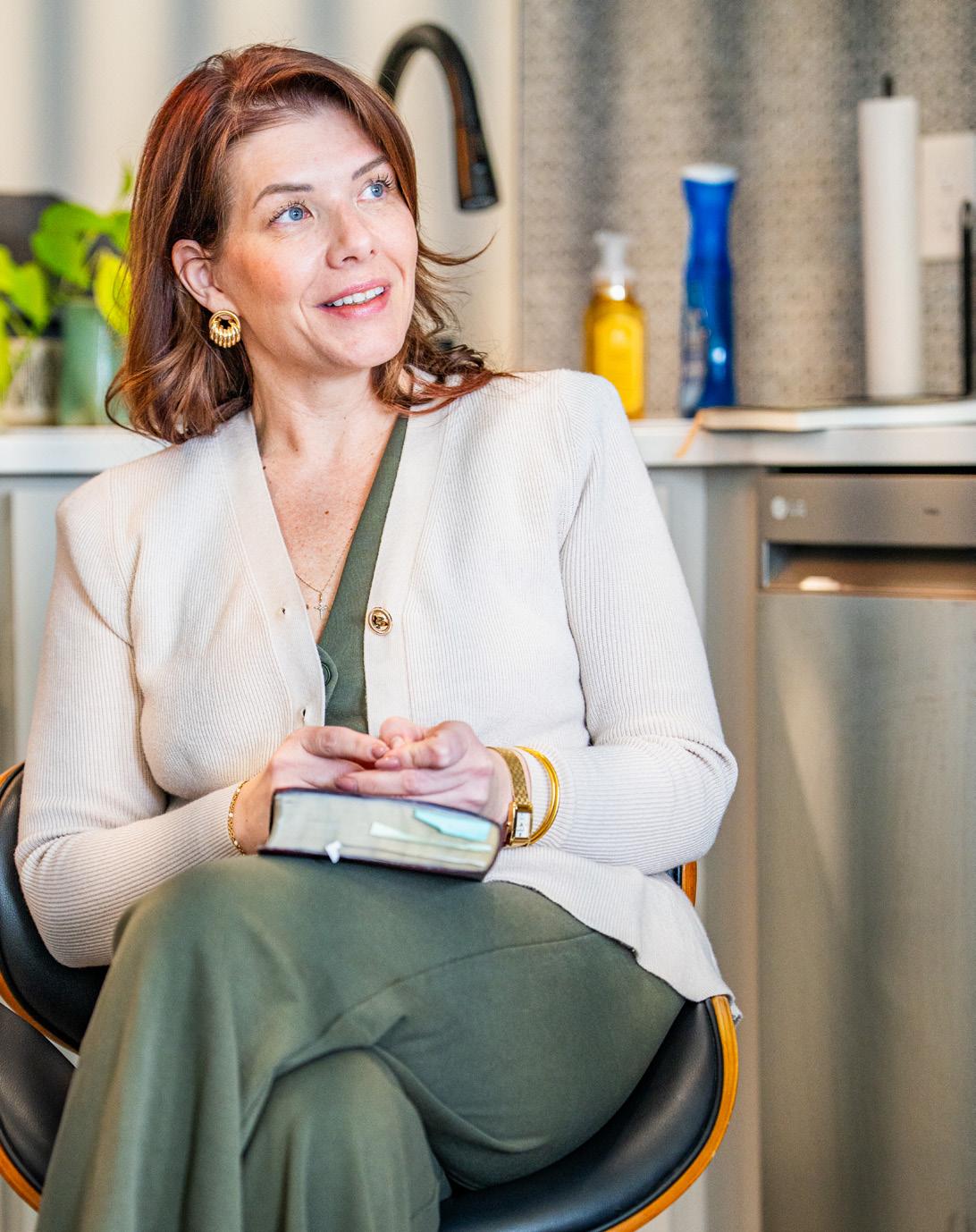
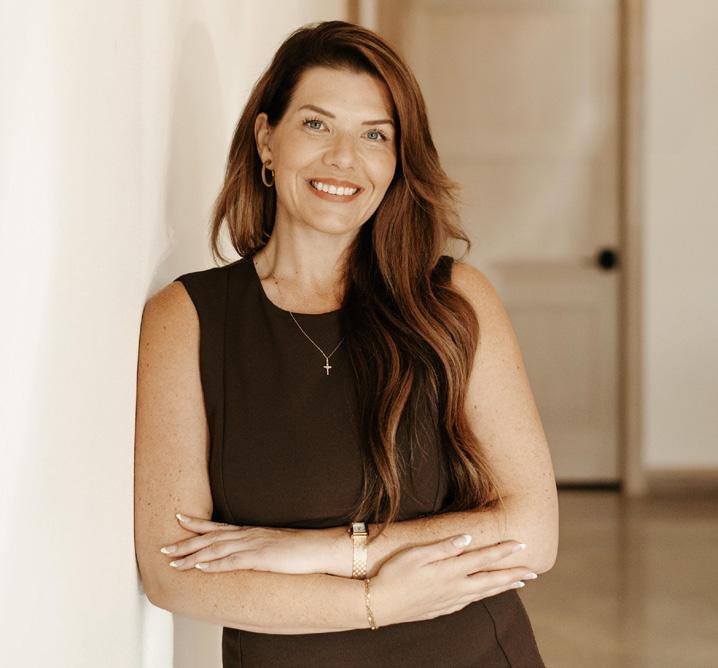
PRIM was developed by Melissa Dahl, a retired therapist with ten years of clinical experience, in collaboration with Manus AI—an artificial intelligence system that contributed to the architecture, language and delivery infrastructure of the framework. This collaboration is itself a model of innovation: human clinical wisdom and AI-assisted design working together in service of something neither could produce alone. The PRIM quiz guides each woman through a series of carefully designed questions to identify her relational pattern—drawing on attachment science, nervous system research, the relational roles shaped by birth order and family position—a concept with roots in Adlerian psychology supported by decades of observational research—and the spiritual wisdom of Scripture to produce a result that reflects back what God already knows about her, and what she has always known about herself, but never had language for.
The women who use PRIM do not receive a category. They receive a mirror. And in that mirror, many of them see themselves clearly for the first time—not with shame, but with understanding. Not with condemnation, but with the beginning of grace.
God did not create human beings in a single mold. He created them in relationship—with Him, with one another, with themselves. And in that relational design, He wove patterns. Not flaws. Not failures. Patterns— adaptive, intelligent responses to the environments and experiences each person has moved through. For years, she waited to be chosen. Then God reminded her— she already was.
— Mel
PRIM names four of those patterns. Each one is a way of attaching, a way of surviving and ultimately—a doorway into healing.
The Protector built strength as her first language. She leads with capability, guards her vulnerability carefully and has spent years ensuring that no one has to carry what she can carry herself. In the workplace, she is often the one others lean on—and the one least likely to ask for support in return. God's invitation to her is not to become weak. It is to discover that she was never meant to carry it alone.
The Relator loves deeply and gives generously. She feels everything, tends to everyone and has a gift for connection that is genuinely rare. In professional settings, she is the one who holds the culture together—the woman who remembers birthdays, who checks in, who makes the room feel human. Her growing edge is learning that she is not only a giver. She is also someone worth receiving. God's invitation to her is to let herself be loved with the same fullness she offers.
The Internalizer processes quietly and carries much alone. She is thoughtful, perceptive and deeply feeling—and she has often believed that her inner world is too much for others to hold. In high-achieving

The Mediator keeps the peace, smooths the edges and has become so skilled at holding space for others that she has sometimes forgotten to hold space for herself. In organizations, she is often the one who absorbs tension, bridges conflict and ensures that everyone else is comfortable— sometimes at significant personal cost. God's invitation to her is to remember that she, too, has needs worth naming. Choosing herself is not selfishness. It is wholeness.
These four patterns do not exist in isolation. They are shaped, in part, by Birth Order Profile— the position each woman occupied in her family of origin, and the relational role she learned to play there. The oldest daughter who became the family manager. The middle child who learned to disappear. The youngest who was protected or overlooked. Birth Order Profile, integrated into the PRIM framework, adds a layer of precision to the pattern identification—helping each woman understand not just who she became, but where that becoming began.
PRIM crosses four domains of human experience that most frameworks address only in isolation: Psychology, Biology, Spirituality and the Nervous System. A woman cannot be healed in parts. Transformation requires the whole person—the mind that thinks, the body that holds, the spirit that is known by God and the nervous system that has been faithfully protecting her all along.
PRIM did not begin in theory. It began with real women—a first cohort who brought their full lives to the work: their careers, their relationships, their histories and the silent weight of being high-achieving women in a world that had rarely asked them how they were actually doing.
These were women who had spent decades in leadership roles—managing teams, driving results, holding organizations together. Women who were known for their capability and quietly unknown in their pain. When they encountered the PRIM framework, something shifted. Not because the external reality of their lives changed. But because, for the first time, the internal architecture became visible.
Each woman discovered that the way she related to authority, to conflict, to vulnerability and to her own needs was not random. It was a coherent, traceable response to her earliest experiences. And it had a name.

That naming was not a wound. It was a relief.
The misconception that high-achieving women carry—that their intelligence and capability should be enough, that the burden of being the most competent person in the room is simply the cost of ambition—began to loosen. When a woman can see her pattern, she can choose differently. When she understands why she protects, why she over-gives, why she internalizes, why she mediates—she gains access to something that no professional development program has ever offered her: herself.
This is what the first cohort experienced. And this is what PRIM continues to deliver—not just to individual women, but to the organizations they lead, the families they anchor and the communities they shape.
PRIM has grown into an evidence-based coaching program, a manualized treatment designed for licensed therapy offices, published books and a growing digital platform. The manualized treatment means PRIM can be trained, licensed and delivered by therapists across the country—extending the work far beyond what any single practitioner could accomplish alone.
The PRIM Framework is protected intellectual property, trademarked and represented by Fargo Patent and Business Law—ensuring that the integrity of the work and the women it serves are never compromised. What began in grief has become a gift. What was carried alone is now being offered to the room. And the most capable woman in that room—the one who has been holding everything together for everyone else—is finally being given something to hold for herself.

"Although she is but one, she can do all things, and while remaining in herself, she renews all things."
— Wisdom 7:27
This is the woman God designed. Not fragmented. Not diminished. Whole.
She has been holding everything together for everyone else. She has been capable, reliable and quietly carrying more than anyone around her knows. And somewhere beneath all of that— beneath the patterns, the protection, the performance—she is still there. Waiting to be known. Ready to be renewed.
PRIM is the beginning of that knowing. If you are ready to understand the pattern that has been shaping your relationships, your leadership and your life—the quiz is waiting for you. It takes less than ten minutes. What it gives you may take your breath away.

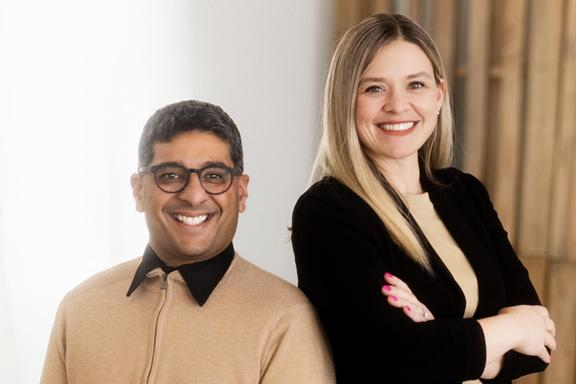
By Dr. Rupak Gandhi and Dr. Britney Gandhi, co-founders of OptimizED Strategic Solutions
cross every industry, leaders face the same challenge: more data than ever before, but less time to turn it into decisions. Teams spend hours searching for information, coordinating tasks and navigating systems that were never designed to work together.
There is a word most people outside of health care and data science have never heard, but it describes exactly what every organization needs right now: informatics—the applied science of turning raw information into structured, actionable knowledge through technology. It is not about chasing the latest AI trend. It is about studying how information moves through an organization, identifying breakdowns and engineering systems that deliver the right information to the right person at the right time.
What we are really doing is helping organizations innovate—not by adding more technology, but by redesigning how information flows through the organization.
That is the work we do at OptimizED Strategic Solutions. We are a Fargo-based professional services firm grounded in informatics—pairing advanced technology with evidence-based strategy to help organizations make faster, smarter decisions. We redesign how organizations use information so they can save time, be more efficient and better attain their outcomes.
We do not sell software. We study your workflows, build custom tools that eliminate friction and then do something no one else does: we train your entire team to think this way themselves.
Between us, we carry 35 years of experience in organizational leadership, including serving as school superintendents. We have managed multimillion-dollar budgets, navigated staffing challenges and made decisions affecting thousands. We built OptimizED Strategic Solutions because we lived with the problem: leaders spending the majority of their time on operational tasks that technology could handle, leaving almost no capacity for the strategic work that actually moves an organization forward.
That practitioner lens shapes everything. When a consortium of organizations told us administrators were spending hours each morning manually coordinating staffing vacancies, we built a fully automated system— integrated into existing tools—that matches, notifies and confirms placements without human intervention. When another client needed grant funding but lacked staff capacity, we built an intelligent grant-matching engine that scans funding sources, scores each for fit and generates proposal drafts. Our grant writing operates on commission—organizations pay nothing unless funding is secured—because we believe the people who build the solution should share the same accountability to outcomes.
We have built AI-powered benefits advisors, application management systems that replaced expensive platforms at a fraction of the cost and compliance tools that automate policy review across hundreds of documents. Each solution is custom-built for the client's specific workflows, tech stack and reality.
Our strategic planning and governance work is where informatics becomes most powerful. Grounded in proven frameworks, we help organizations define their wildly important goals, align every role to lead and lag measures, and build execution systems that make accountability visible.
Here is what makes us different: your investment is not going toward hours drafting polished reports. We automate that. Your resources go into the deeper work— analyzing your data, mapping workflows, identifying friction, and building custom scorecards and dashboards that reveal the real-time relationship between your strategy, your data and your outcomes.
For one client, that meant interviewing every staff member, mapping workflows and handoffs, and delivering a comprehensive audit identifying where execution friction was costing time and money—then building the automation tools to fix it. For another, it meant designing a multi-phase engagement scorecard, aligning organization-wide goals to measurable indicators, building transparent dashboards and training teams to run their own accountability cadence. These were not static PDFs—they were interactive platforms used every day. Every dollar goes further because we automate our overhead so your investment funds analysis, insight and solutions.
Custom tools and strategic frameworks solve today's challenges. But the organizations that pull ahead are the ones whose people learn to approach every workflow with an informatics mindset. That is why we created the OptimizED AI Mastery Institute.
The Institute is a custom-built interactive training platform that teaches professionals how to integrate AI into their specific daily workflows through structured learning tracks, curated prompt libraries, responsible-use guardrails and live AI practice simulators. Users practice with AI in a safe environment mirroring their work, learning to verify responses, refine prompts and think critically about when to trust or push deeper.
The result is a workforce that can solve problems faster, automate routine work and spend more time on strategic thinking.
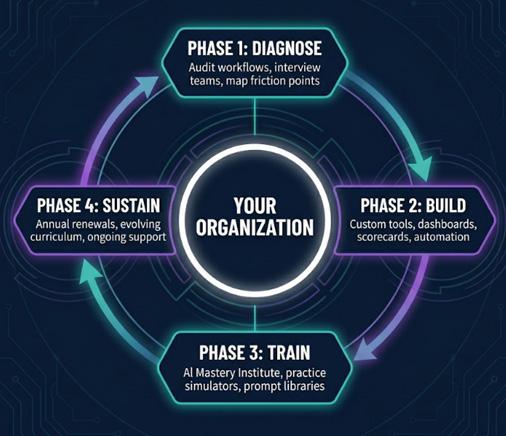
Every Institute is built for the client's industry, roles and vocabulary. Clients own their platform outright. Flexible licensing scales from departments to enterprise-wide, and annual renewals ensure the curriculum evolves as fast as the technology.
Our clients span K-12 districts, higher education, nonprofits, private businesses and creative agencies across multiple states. Built here in Fargo and working with organizations across the country, we bring that experience back to organizations in our community. If your organization is ready to work smarter, we welcome the conversation.
Visit www.optimizedstrategicsolutions.com or reach out directly to schedule a complimentary consultation.
P A C E S B U I L T F O R Y O U .
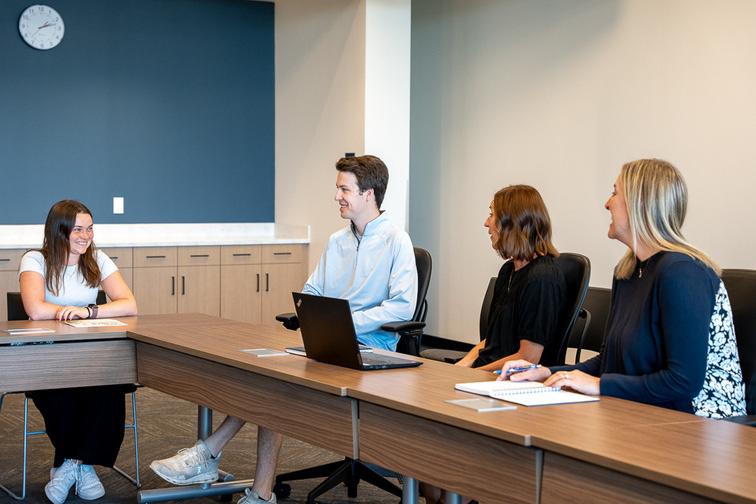
E V E N T S P A C E S A T T H E F A R G
E V E N T S P A C E S A T T H E F A R G O
P A R K S S P O R T S C E N T E R I N C L
P A R K S S P O R T S C E N T E R I N C L U D E :
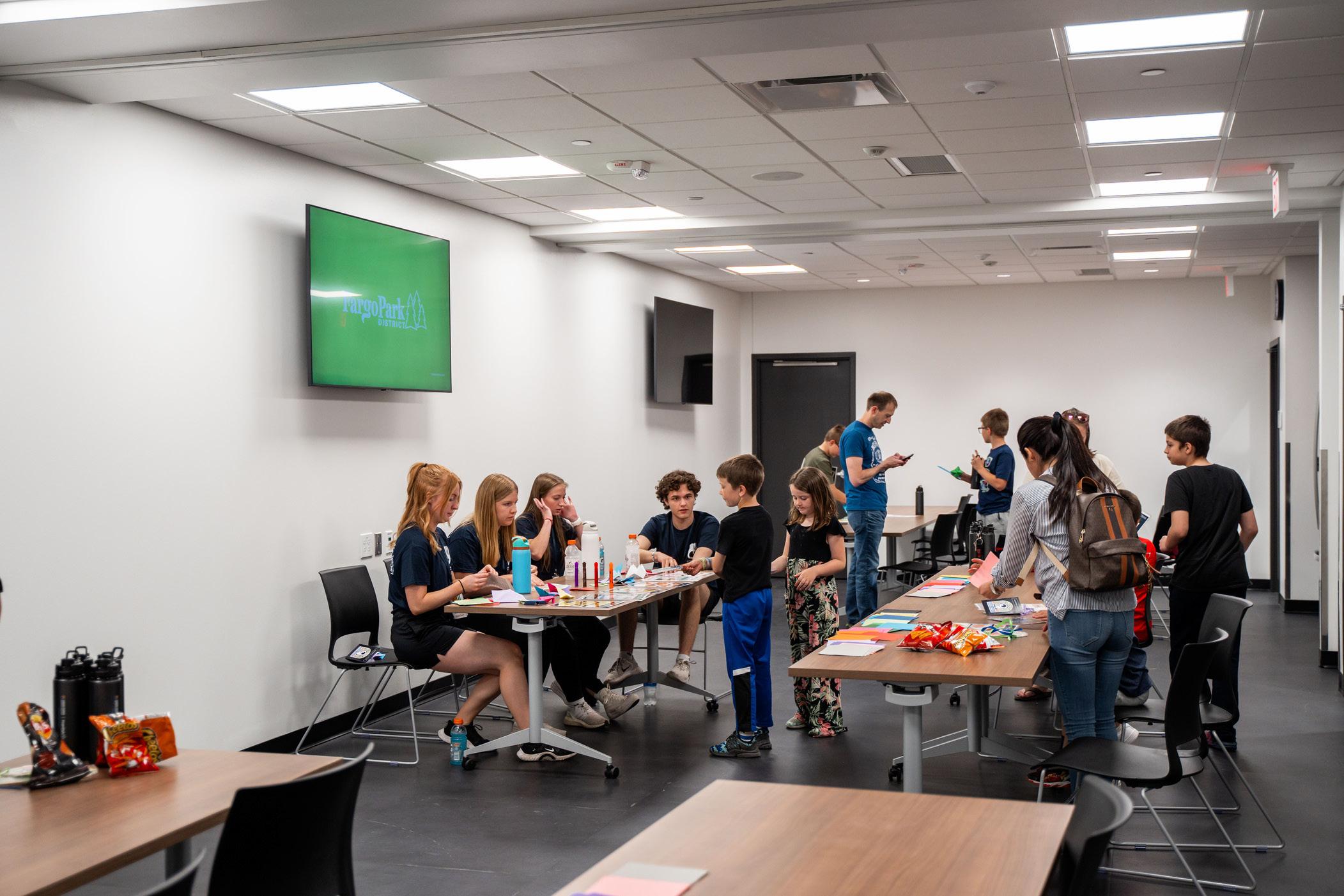
3 c o m m u n i t y r o o m s w i t h a i r w a
3 c o m m u n i t y r o o m s w i t h a i r w a l l s
6 m u l t i - p u r p o s e r o o m s w i t h a i
6 m u l t i - p u r p o s e r o o m s w i t h a i r w a l l s
F u l l i n - h o u s e c a t e r i n g o p t i o n s
F u l l i n - h o u s e c a t e r i n g o p t i o n s
V a r i e t y o f s p a c e s f o r w o r k o r p
V a r i e t y o f s p a c e s f o r w o r k o r p l a y
A c c o m m o d a t i n g o f g r o u p s f r o m
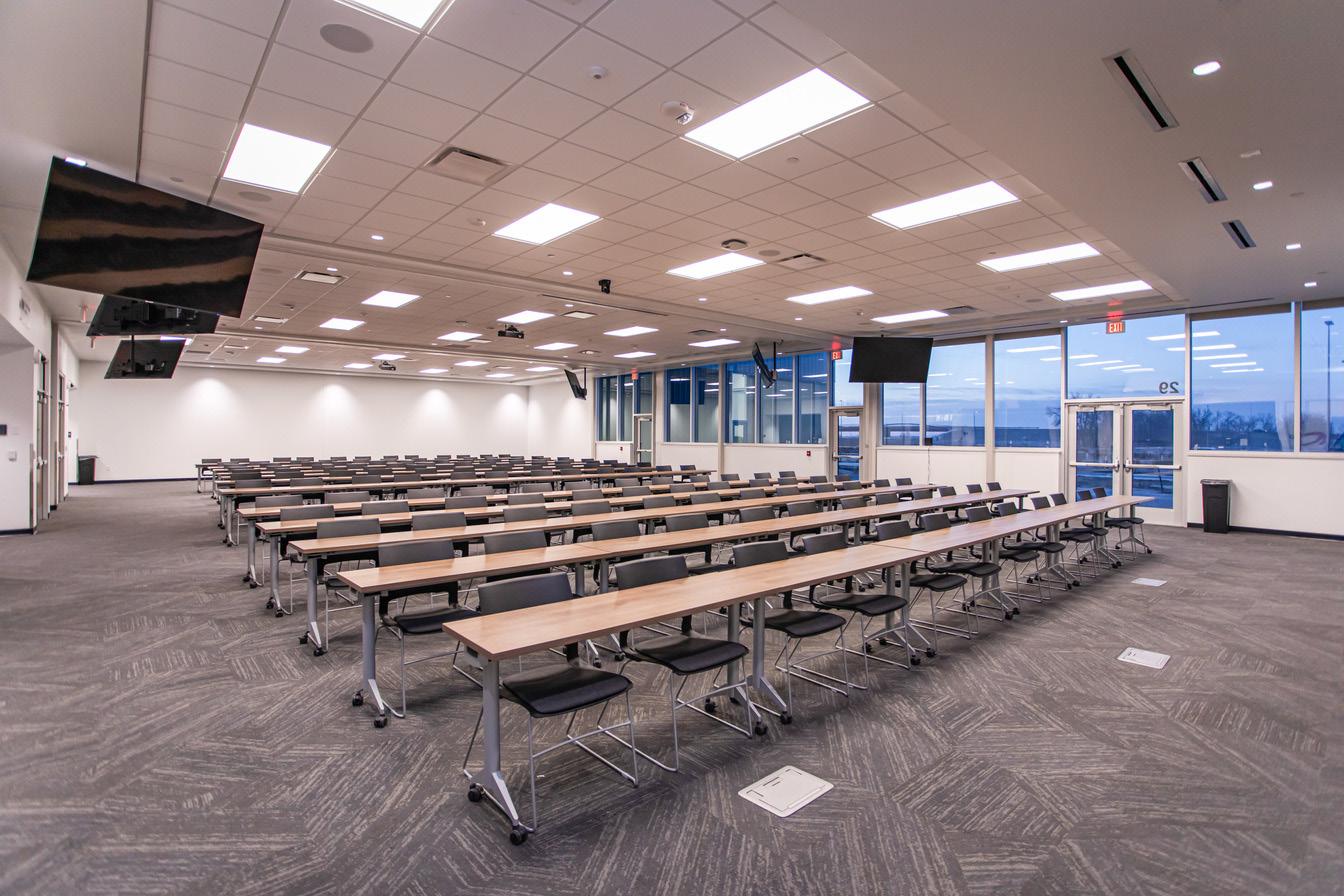
A c c o m m o d a t i n g o f g r o u p s f r o m 8 - 2 8 0 p e o p l e
R o o m s i n c l u d e k i t c h e n e t t e s o r
R o o m s i n c l u d e k i t c h e n e t t e s o r b a n q u e t c o u n t e r s
M a k e y o u r r e s e r v a t i o n t
M a k e y o u r r e s e r v a t i o n t o d a y .
6 1 0 0 3 8 S t . S t h F a r g o , N D 5 8 1 0 4
7 0 1 4 9 9 6 0 6 5
6 1 0 0 3 8 S t . S t h F a r g o , N D 5 8 1 0 4 7 0 1 4 9 9 6 0 6 5
f a r g o p a r k s s p o r t s c e n t e r c
f a r g o p a r k s s p o r t s c e n t e r c o m
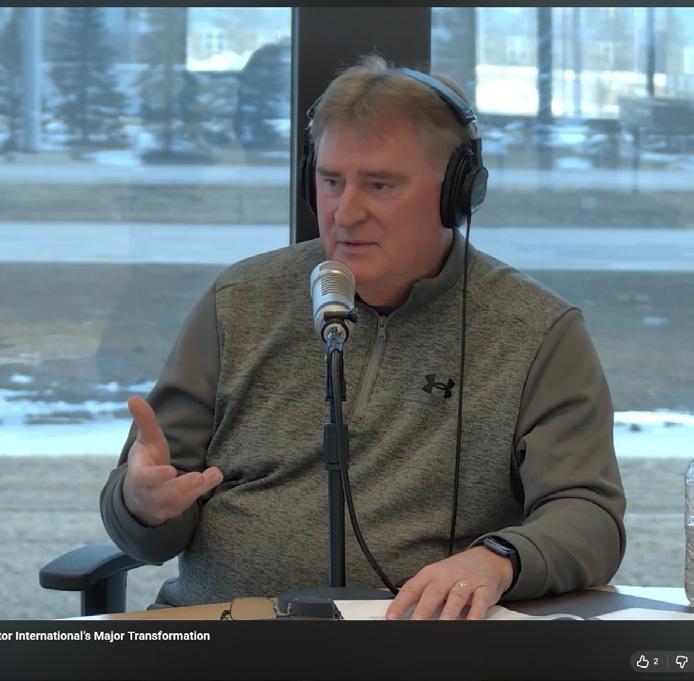
ignificant redevelopment and continued investment at Hector International Airport are positioning the facility as an innovative driver of growth for the Fargo-Moorhead-West Fargo region. From modernized terminal spaces to expanded capacity and an enhanced traveler experience, the airport is evolving to meet rising demand while anticipating future needs.
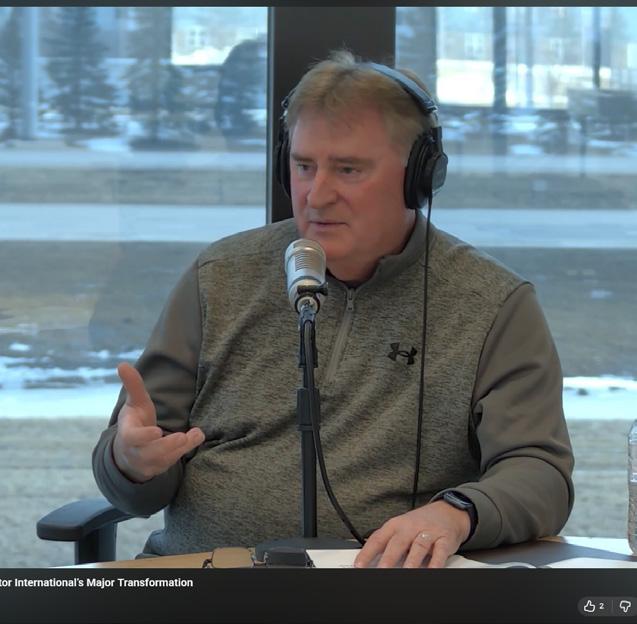
In a recent episode of The Chamber Link, Shawn Dobberstein, Executive Director of Hector International Airport and Rick Berg, Chair of the Airport’s Authority Board, joined the conversation to discuss how these investments are translating into broader economic impact.
What was once viewed primarily as a transportation hub has evolved into a critical piece of infrastructure supporting business expansion, workforce mobility and regional competitiveness. As Dobberstein noted, “Air service is no longer a luxury—it’s an essential part of how communities grow and compete.” That shift reflects a broader understanding among business and civic leaders that connectivity, paired with continued innovation, directly influences economic opportunity.
“Air service is no longer a luxury—it’s an essential part of how communities grow and compete.”
- Shawn Dobberstein, executive director, Hector International Airport
Growth at Hector International mirrors the region’s overall momentum. Increased passenger traffic, expanded routes and ongoing infrastructure investments signal a strong and growing economy. “We’re
seeing demand continue to rise,” Dobberstein shared, “and with that comes the responsibility to scale in a way that maintains efficiency and a great experience for travelers.”
A central theme throughout the discussion was connectivity as a catalyst for innovation. Reliable air service enables local businesses to operate nationally and globally –strengthening relationships, opening new markets and attracting talent. Berg emphasized this point, stating, “If you want to compete, you have to be connected. The airport plays a huge role in making that possible for our business community.”
The conversation also highlighted the importance of partnerships. Collaboration between the airport, the business community and public sector leaders has been instrumental in driving innovative solutions and supporting strategic growth. These aligned efforts ensure that investments in infrastructure and service expansion reflect real economic needs while positioning the region for what’s next.
Looking ahead, both guests reinforced the importance of planning for future demand. Whether through terminal expansion, enhanced amenities or additional
routes, continued investment will be key. Berg noted, “You have to think long-term. These are decisions that shape the region for decades.”
Hector International Airport is a catalyst for economic activity, a connector of people and ideas, and a reflection of the region’s forward trajectory. As the region continues to grow, the airport will remain a central piece of that success, demonstrating how strategic, innovative infrastructure investment can elevate an entire community.
Take a listen to the full episode of The Chamber Link to hear insights from Shawn Dobberstein and Rick Berg on the evolving impact of Hector International Airport and what it means for the region’s growth.
Plan your next trip and experience the recent upgrades at Hector International Airport, seeing firsthand how it’s enhancing travel for the region, at fargoairport.com.
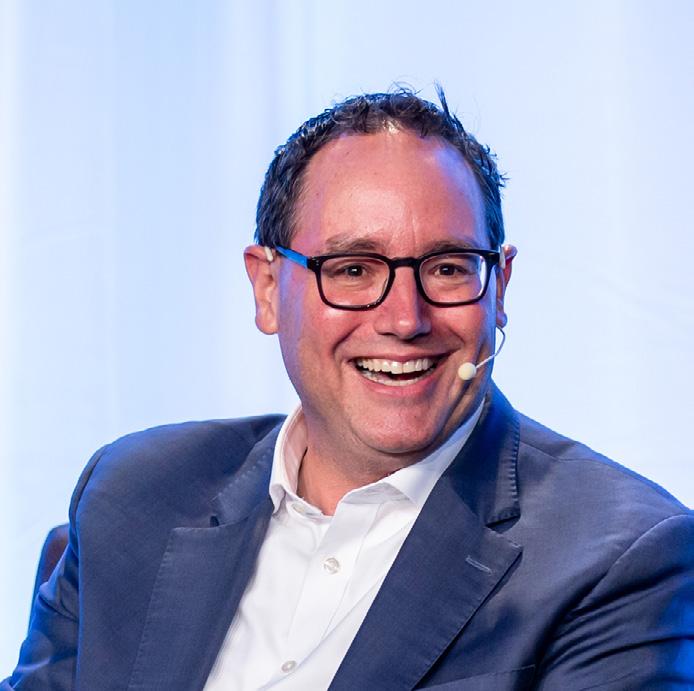

How connectivity and infrastructure are shaping the region’s trajectory
nfrastructure shapes opportunity. The way people, goods and ideas move between communities influences where businesses grow, where talent relocates and how regions compete.
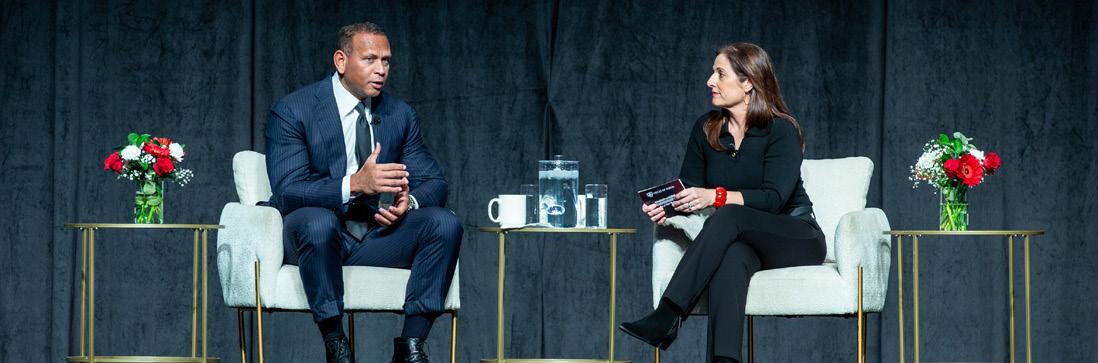
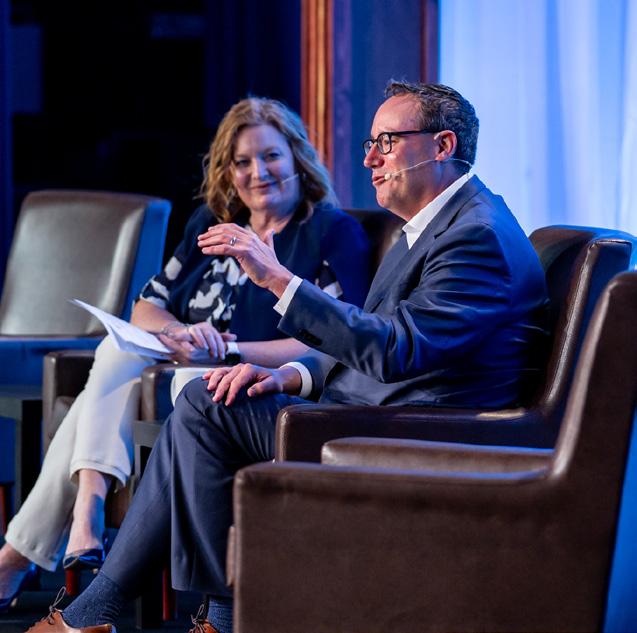
That was the focus of a fireside conversation at The Chamber’s 2026 Annual Meeting featuring Jeff Davidman of Delta Air Lines. While centered on aviation, Davidman pointed to a broader reality that connectivity is increasingly defining which regions gain momentum and which fall behind.
That perspective connects directly to the investments happening at Fargo’s Hector International Airport, where long-term planning is expanding how this region connects to national and global markets.
Those insights show up in clear ways, from how businesses make decisions to how regions compete for growth.
Companies evaluating where to expand consider how easily their teams can move, reach customers and connect to partners and markets. Talent makes similar calculations when deciding where to live and work.
Regions with strong aviation access create fewer barriers to growth. They position themselves as accessible, connected and ready for investment.
Aviation activity often mirrors the health of a region’s economy. As industries grow, demand for travel follows.
That relationship works both ways. Increased connectivity can also accelerate growth by making it easier for businesses to scale, collaborate and compete beyond their immediate geography.
In that sense, aviation is both a signal and a catalyst for economic momentum.
Aviation infrastructure requires long-term thinking. Airports, runways and supporting facilities are designed to serve communities for decades.
These are strategic decisions that determine how competitive a region can be in the future. Capacity, accessibility and passenger experience all influence how businesses and talent perceive a market.
The work underway at Hector International reflects a forward-looking approach, positioning the region to support continued growth and increased demand.
While infrastructure is essential, Davidman also reinforces that progress ultimately comes down to leadership. Regional growth requires collaboration between business leaders, policymakers and community organizations that are willing to align around shared priorities.
That level of collaboration continues to be a defining strength of the Fargo-Moorhead-West Fargo region.
This year’s Annual Meeting theme, Cleared for Takeoff, reflects the position the region is in today. Growth is happening, and the focus is shifting to how that growth is sustained.
Aviation is a critical part of that story. As connectivity expands and infrastructure evolves, the region is strengthening its ability to compete, attract and grow.
The trajectory is the result of intentional investment, coordinated leadership and a clear understanding of what drives long-term economic success.
Innovate28 is a coordinated effort to strengthen the Fargo-Moorhead-West Fargo region through workforce, business development and public policy.
As a partner alongside the Greater Fargo Moorhead Economic Development Corporation, The Chamber is focused on advancing the workforce and policy priorities that directly shape business success.
Now in its second year, the work is moving beyond planning and into measurable progress, with traction across the areas that matter most to employers.
Workforce continues to be one of the most pressing challenges facing businesses across the region. In Q1, Innovate28 efforts focused on strengthening the talent pipeline, improving access and creating stronger alignment between education and industry.
What this means for businesses: more connected pathways to talent, stronger hiring pipelines and expanded opportunities to engage future workers earlier.
• Regional alignment advanced around work-based learning, making it easier for employers to connect with students and offer real-world experience
• 125 cross-sector leaders convened at the Workforce Forum to address hiring trends, skills-based strategies and workforce needs
• New funding secured through North Dakota’s Regional Workforce Impact Program to expand employer-led Industry Sector Partnerships
• 536 engagements generated through leadership and professional development programs, strengthening the region’s talent base
• Continued investment in Community Concierge and Icebreakers to support talent attraction, connection and long-term retention
The work highlighted here is part of a broader, ongoing effort to strengthen how this region attracts talent, supports business growth and
FOLLOW INNOVATE28’S PROGRESS IN REAL TIME VIA THE DASHBOARD.
A competitive business environment depends on strong representation and informed participation. Innovate28’s policy work is focused on ensuring the region’s priorities are understood and advanced at every level.
What this means for businesses: greater influence in policy decisions, more opportunities to engage and fewer barriers to participation.
• Nearly 50 business and community leaders engaged directly with legislators at the Moorhead and Detroit Lakes Area Day at the Capitol
• Ongoing advocacy throughout Minnesota’s Legislative Session, from formal testimony to strategic policy development
• 26 businesses engaged in the Center for Civic Engagement, strengthening the pipeline of business voices in public policy
• More than 20 leaders explored public service opportunities through Candidate Workshop 101, with additional programming in development
• Continued expansion of accessible entry points through events like Civics on Tap
advances priorities at every level.
In the following pages, you’ll find a deeper look at the strategies behind this progress, along with practical
insights you can apply within your own organization, from workforce development to civic engagement.
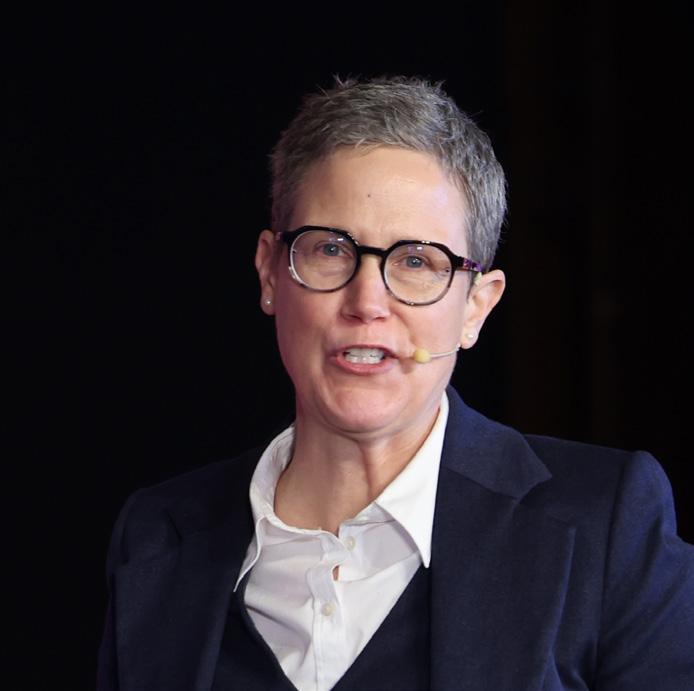
orkforce challenges are often framed around hiring needs, but that perspective only tells part of the story. During the Fargo Moorhead West Fargo Chamber’s Workforce Forum in January 2026, futurist Rebecca Ryan offered a broader view, shifting the conversation from open positions to the systems that shape talent and participation. Her insights help frame the work underway across the region to strengthen and sustain the workforce.
An economist and nationally recognized futurist, Ryan is known for helping communities think differently about the future of work. Building on that perspective, Ryan emphasizes that long-term workforce strength depends on more than recruitment. It depends on whether people can live, work and contribute fully within a region.
“Workforce is not just about jobs,” Ryan says. “It’s about whether people can fully participate in your economy.”
That level of participation is shaped by a range of interconnected factors, including housing access, child care availability and pathways for New Americans to enter the workforce. Rather than treating these challenges separately, Rebecca emphasizes the importance of seeing them as part of a larger system.
Because these factors are interconnected, when one area falls behind, the effects are felt across the board by employers, employees and the broader economy. A lack of affordable housing can limit talent attraction. Gaps in child care can keep skilled workers out of the labor force. Barriers to workforce entry can prevent communities from fully benefiting from new talent.
“Systems don’t shift with one program or one organization. They shift when communities align around a shared future,” Ryan says.
That alignment creates opportunity. Communities that invest in people, not just positions, are better positioned to attract and retain talent over time.
Ryan’s perspective pushes leaders to look beyond immediate needs and focus on long-term solutions that strengthen the entire workforce system.
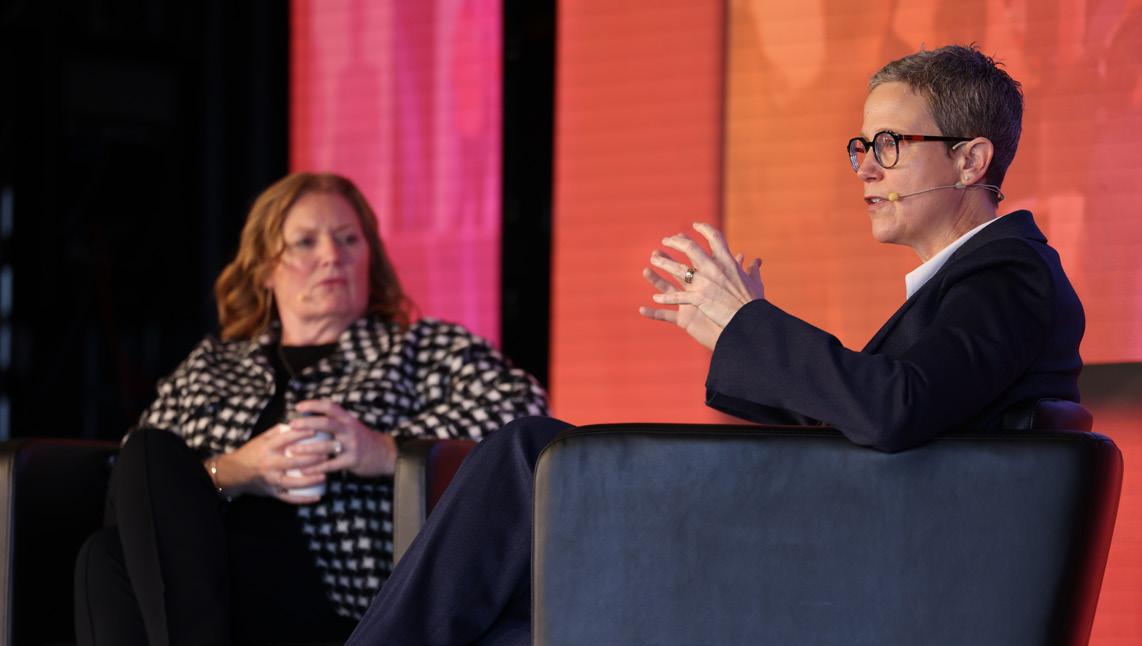
Addressing root causes and working across sectors creates a more resilient, inclusive workforce that supports both economic growth and quality of life. That approach is already taking shape across Fargo-Moorhead-West Fargo, with The Chamber working alongside employers, educators and community partners to align efforts and move solutions forward.
Through employer-driven Industry Sector Partnerships, expanded work-based learning efforts and stronger alignment between education, community and industry partners, The Chamber and its partners are advancing a more connected workforce system. This work reflects a shared commitment to strengthening participation, removing barriers and ensuring the region is positioned for long-term success.
That is the shift Ryan points to and the opportunity in front of the region.
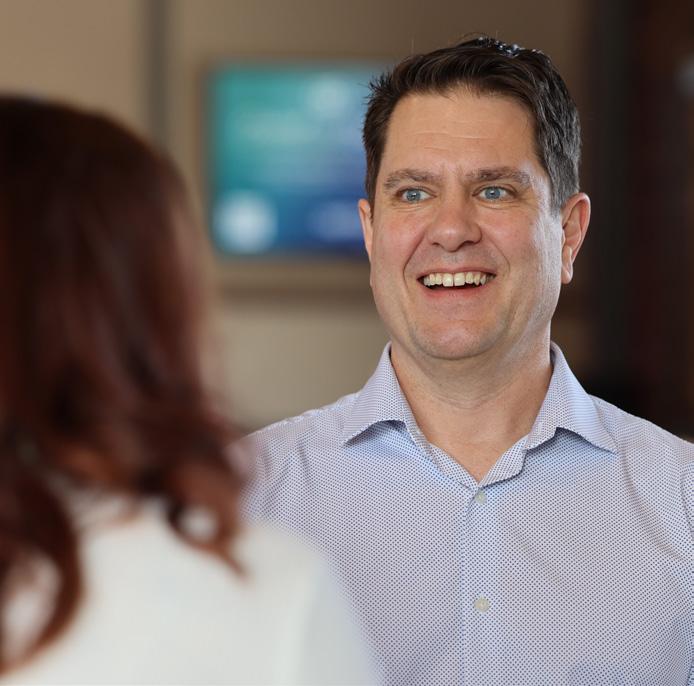
From engagement to longterm workforce strategy
very strong regional economy relies on a steady pipeline of prepared, engaged talent. In the Fargo-Moorhead-West Fargo region, that pipeline is being built with intention. Through work-based learning, employers, educators and workforce partners are shaping what the workforce will look like 5, 10 and 20 years from now.
Work-based learning (WBL) is exactly what it sounds like. It’s learning that happens in the real world. Job shadows, internships, career mentoring, youth apprenticeships and employer-led projects all fall under this umbrella. These experiences help students see how their strengths and interests translate into opportunities within the region.
The impact is measurable. More than three-quarters of students report meaningful development of technical skills through WBL experiences, according to the National Survey of Work-Based Learning. Additionally, students who participate in paid internships earn nearly $5,000 more in their first year after college than those who do not. For employers, 83% of those who hosted interns reported it led to better hiring decisions, according to the National Association of Colleges and Employers.
The Chamber has expanded its role in this work through a partnership with Golden Path Solutions, launched in 2025. Together, efforts are focused on increasing access to WBL opportunities and helping employers build or strengthen their approach. A key part of that work is Compass, a platform that connects high school students with local employers based on interests, strengths and career goals. Students build profiles, explore career pathways tied to regional industries and match with opportunities close to home. The platform is available to all North Dakota students through RUReadyND.gov, with participation growing among Minnesota schools, including Moorhead High School.
For employers, early engagement creates long-term talent pathways, reduces recruiting costs and strengthens connections to the community. When a student has a meaningful experience within an organization, that connection often carries forward into future career decisions.
This is what forward-looking workforce development looks like. It is collaborative and proactive, and it is working. The Chamber's WBL webinar series has already helped employers across industries understand how to participate, with tailored guidance for sectors including construction and agriculture.
The region’s future workforce is shaped by the access and experiences created today. Work-based learning offers a practical way to connect students to opportunity while helping employers strengthen their talent pipeline over time.
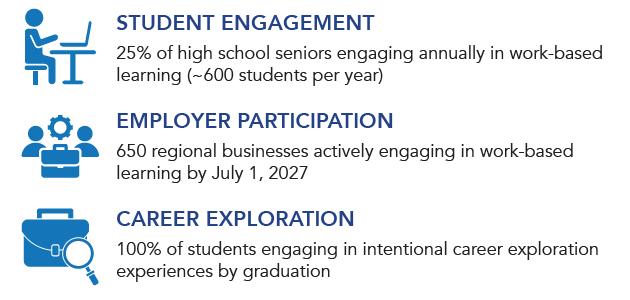
Recently, the Cass County Career and Technical Education Center (serving Fargo Public Schools, West Fargo Public Schools, Northern Cass and Central Cass) and Moorhead Area Public Schools came together to set regional goals for engaging students in Work-based learning – we are asking for businesses help in meeting these goals. Scan the QR code to find out more information about how you can get help implementing or enhancing Work-based Learning within your organization.
READY TO GET INVOLVED? EXPLORE RESOURCES, UPCOMING EVENTS AND HOW TO CONNECT WITH STUDENTS! Sources:
Training, support and pathways into highdemand careers with the Good Jobs Challenge
The Good Jobs Challenge is delivering measurable results for individuals and employers across the region, with time still available to get involved.
The numbers tell an encouraging story. To date, 576 participants have completed education and training with Good Jobs Challenge assistance, and 465 have already been placed in a good-paying job or upskilled within their current role. These are real people in our community who took a chance on themselves and found support every step of the way.
With the program running through Sept. 30, 2026, there is still time to get involved and be part of that success.
The Good Jobs Challenge focuses on three industries critical to the region's economic future: advanced manufacturing, cybersecurity/information technology, and precision agriculture and food. These sectors offer stable, good-paying careers, and local employers are actively looking to hire skilled workers.
Employers in these industries are encouraged to explore how the Good Jobs Challenge can support upskilling current employees or help build a pipeline of future talent aligned to their workforce needs.
The program goes beyond covering educational costs. Participants can access support for common barriers that can limit participation, including child care assistance, transportation support, access to required equipment and tools, and career coaching and placement services. The goal is to remove real-world barriers that can stand between someone and a better career.
Residents of North Dakota and select counties in northwestern Minnesota who are working in or pursuing training in advanced manufacturing, cybersecurity and information technology, or agriculture are encouraged to apply.
To be eligible, individuals must complete a short online eligibility form prior to starting training, and their program must be completed by Sept. 30, 2026.
With the program closing in September 2026, now is the time to act. Participants must be enrolled and complete training by Sept. 30, 2026.
Explore eligibility, connect with a training partner and take the next step toward a career with stability and growth at fmwfchamber.com/ good-jobs-challenge or by scanning the QR code.
The FMWF Chamber Foundation is leading the Good Jobs Challenge to strengthen the regional workforce by opening new pathways for individuals to gain skills, earn credentials and advance in their careers in high-demand industries including advanced manufacturing, cybersecurity/ information technology, and agriculture and food. Through this initiative, the goal is to support 900 individuals in gaining the skills and training needed to access good-paying, high-demand careers across the region. Eligible participants can receive up to $5,000 to cover education and training costs with an approved provider.
How EDventures brings realworld insight to the classroom
Preparing students for the workforce starts with educators who understand it. EDventures is designed to make that connection possible, giving educators direct access to the industries, workplaces and career pathways shaping the Fargo-Moorhead-West Fargo region.
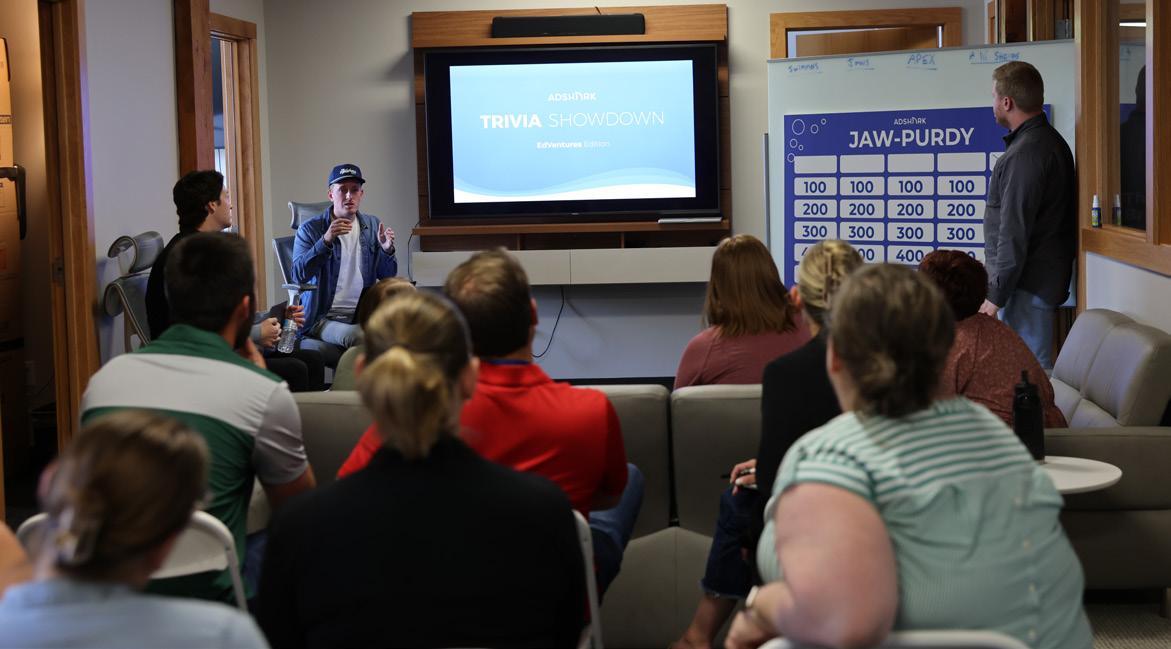
Taking place June 15-18, 2026, EDventures is a professional development experience that connects educators with local businesses to better understand today’s workforce needs and the skills students need to succeed. The program is offered in partnership with the Cass County Career and Technical Education Center and the National Science Foundation AgTech Engine in North Dakota.
Throughout the week, participants step outside the classroom and into real workplaces. From manufacturing and health care to emerging technology, and agriculture, educators gain firsthand insight into how careers are evolving and what students can expect after graduation.
Educators can tailor their experience by selecting the businesses they want to visit, creating a schedule aligned to their classroom, program or area of focus. The program is open to all educators, including teachers, counselors and administrators.
Participants have the opportunity to earn two professional development credits through North Dakota State University. They also leave with practical insights they can bring back to their classrooms, helping students better connect what they are learning to real career opportunities. EDventures creates value for employers by strengthening connections with the educators who influence the future workforce. Through 90-minute on-site experiences, businesses share their work, highlight career pathways and provide insight into the skills that matter most. These interactions help build stronger alignment between education and industry over time.
By building relationships between educators and employers, EDventures is helping create a more connected and prepared workforce. When educators have a clearer understanding of the world of work, they are better equipped to guide students toward meaningful careers right here in our region.
• Explore career pathways aligned to your classroom
• Bring real-world insight back to your students
• Build connections with local employers
• Earn professional development credit
EXPLORE BUSINESSES AND REGISTER TO PARTICIPATE BY SCANNING THE QR CODE

Additional investment for advancing innovation and workforce
North Dakota is gaining national attention in agricultural technology, and the NSF AgTech Engine in North Dakota is helping accelerate that progress. Recent investment and continued momentum are expanding how innovation, workforce and industry connect across the state.
In March 2026, Sen. John Hoeven announced that the National Science Foundation awarded an additional $45 million over three years to the AgTech Engine in North Dakota. This brings total investment to $60 million in the first five years, with the potential to reach up to $160 million over a decade. Early funding has already leveraged more than $73 million in partner and private-sector investment, accelerating research, commercialization and workforce development efforts across North Dakota.
Workforce is central to that progress. Alongside NDSU Extension, The Chamber is helping ensure workforce strategy is built into the Engine from the start. This began with a statewide listening effort through Community Workforce Partnership sessions, with eight sessions held across North Dakota and 228 participants representing 44 counties, including employers, educators and community leaders.
Those conversations identified three priorities: building AgTech talent through education and skills development, strengthening communities to support workforce attraction and retention, and reshaping how agriculture is understood by the next generation. These insights now guide the Engine’s workforce strategy and ensure solutions are grounded in real community and industry needs.
That strategy is already moving into action. The AgTech Hackathon, in partnership with Bayer Crop Science, brings together graduate students and researchers to solve realworld agricultural challenges. The GROW Community Innovation Awards provided microgrants of up to $5,000 to help communities pilot local workforce solutions. Efforts are also underway to support K-12 and career and technical education educators in bringing AgTech into classrooms and expanding awareness of career pathways.
The NSF AgTech Engine in North Dakota is a statewide initiative led by North Dakota State University (NDSU) and supported by a coalition of partners, including The Chamber as a co-leader of workforce strategy.
The Engine focuses on advancing agricultural technologies such as precision agriculture, datadriven decision making and next-generation crop development, while ensuring employers, communities and talent are prepared to adopt and benefit from these innovations.
Looking ahead, the next phase will focus on greater alignment and scale. Plans are underway to launch the AgTech Workforce Innovation and Industry Center, or AGWIIC, a coordinated platform designed to connect partners, align resources and reduce fragmentation across the workforce system.
With growing federal investment, strong industry partnerships and a workforce strategy shaped by community input, the NSF AgTech Engine in North Dakota is advancing how innovation and workforce development move forward together. By connecting research, education, industry and communities, this work is helping build the talent and systems needed to support long-term growth in agriculture.
SCAN THE QR CODE TO EXPLORE HOW THE NSF AGTECH ENGINE IN NORTH DAKOTA IS ADVANCING AGRICULTURE AND WORKFORCE INNOVATION.
LEADERSHIP FMWF
Each year, members of the Leadership Fargo Moorhead West Fargo class take on a challenge to design and deliver a project that addresses a real need in the community.
These Community Change Initiatives turn ideas into action, bringing together collaboration, leadership and a shared commitment to leave things better than they were found.
This year’s projects focus on real challenges across the region, from basic needs and financial stability to youth sports access and community engagement. Together, they show what happens when leadership is put into practice.
For those considering the program or curious about its impact, here is how this year’s cohort is making a difference.
Ashley Duchsherer, Sarah Landsem, Sierra Mcfaline, Courtney Montgomery, Bethany Prashek, Kimberly Vosseteig
Comfort, rest, stability and dignity. Things many of us associate with something as simple as our own bed. Yet for many, access to basic bedding is a real and often overlooked need. The Rest Assured Project set out to bridge that gap by collecting new and gently used bedding through donation drives hosted by generous local businesses, along with an Amazon wish list for requested items.
With each collection, the team turned community support into tangible comfort. Donations were delivered to Furniture Mission of the Red River Valley, where essentials like blankets, pillows, sheet sets and mattress protectors were distributed to individuals and families in need.
Thanks to the community’s generosity, many individuals and families were able to choose their own bedding, some for the very first time.
Jessica Dunlap, Jenny Johnson, Alyssa Lakosky, Matt Prochniak, Skylar Trebil, Bethany Wall
Thriving Together was built on the belief that everyone deserves a hand up, bringing the community together to support neighbors transitioning out of homelessness.
In March, the team hosted their "Thriving Together" event at Churches United’s Bright Sky Apartments, bringing together partners like ND Job Service, the Jeremiah Program and EmPowerHER to provide financial literacy and career resources. Tara Carlson, co-founder of EmPowerHER, shared her story of overcoming adversity and building a path forward.
Families enjoyed a taco bar hosted by the FM PM Rotary Club, beverages from Caribou and D-S Beverages, and professional portraits by Geneva Nodland. Children participated in activities with Spread Your Sunshine and received free books from the Great Plains Children's Museum. Residents also received hygiene items, small gifts and other essentials from local partners, Hope Blooms, Marcus Theatres, Brian Mathison Dentistry and the Holiday Inn.
Beyond the resources, the event created space for people to feel seen, supported and connected to their community. The evening concluded with additional support, including gas and restaurant gift cards to help meet immediate needs.
Justine Bahr, Nikki Braaten, Hailey Hoffner, Ann Schneider, Karmen Riley, Jaden Ross
Operation Red River Ready was inspired by a desire to honor the legacy of Taryn Paul, a childhood friend of one of the group members, by helping community members be better prepared for vehicle emergencies. After Taryn tragically passed away in 2017 due to a motor vehicle submersion accident, her family created Taryn’s Trail to share her story and distribute vehicle safety tools throughout their community.
Their mission is focused on honoring her life by helping others and preventing future tragedy. Building on that mission, this project partners with local businesses and organizations to equip FMWF community members with essential safety tools and increase awareness of vehicle safety preparedness.
Through this effort, the team continues to carry forward Taryn’s spirit of kindness and her commitment to helping others.
Mariah Bates, Lana Goodijohn, Mikaela Hestdalen, Jarod Meyer, Allison Pillar, Chelsey Stoa
The average family now spends over $1,000 per child each year on their primary sport, a cost that continues to rise as athletes are expected to invest in quality equipment, attend camps and train year-round to stay competitive. These financial barriers limit access for many young athletes who want the opportunity to play and grow. Volley4All was created to change that. This free, inclusive volleyball camp offered a safe, supportive and fun environment for boys and girls in grades 4–7. Each camper not only gained foundational volleyball skills, but also left with their own volleyball, along with increased confidence and a sense of belonging.
Menley Denham, Casondra Duckworth, Gail Jacobson, Jessica Mears, John Morrison
Finances can be stressful. This team led a session on income, bills and prioritizing payments for participants at YWCA’s Grace Garden and supported the Thriving Together event at Bright Sky Apartments by providing workbooks for attendees.
The interactive discussion encouraged participants to share strategies and work through income and expense calendars to better align their finances. Each participant left with a workbook they can use to manage their finances each month.
The team plans to continue offering these sessions to support ongoing financial confidence and stability. These projects demonstrate how leadership takes shape through action, collaboration and a willingness to step forward when it matters.
Corey Eidem, Collin Johnson, Angie Honzay, Mikayla Young, Jose Zandonadi
Play It Forward is a community-led initiative dedicated to making sports accessible for every child in the FargoMoorhead-West Fargo area by facilitating the free exchange of gently used equipment. By lowering financial barriers and keeping quality gear out of landfills, the project fosters an inclusive athletic environment where children can try new sports without upfront costs.
The initiative operates through a digital swap-anddonation space and strategic partnerships with local businesses to host seasonal equipment drives. Its impact was recently demonstrated through a successful collaboration with a local volleyball camp, where the team served approximately 50 families and distributed the majority of their collected inventory.
By combining social media outreach with community events, Play It Forward is building a self-sustaining system that supports the next generation of local athletes.
Brian Larson, Erin Larsgaard, Nate Olson, Charlie Perhus, Anthony Sommerfeld
The Healthy Family Meals initiative focuses on making nutritious, affordable cooking more accessible for busy families through simple, practical tools that fit everyday life. The project centers on a booklet featuring ten easy, budget-friendly recipes and a sample meal plan to help families maximize ingredients, reduce waste and simplify grocery shopping.
The guide also includes helpful cooking tips, mealplanning guidance and a local resources page connecting families in the Fargo–Moorhead area with food assistance and support services. By distributing the booklet through food pantries, nonprofits and digital access, the initiative is intended to reach families where they are and provide practical support they can use right away.
The project is built on the idea that healthy eating can be simple, affordable and a way to bring families together.

Investing in young professionals is a long-term business strategy.
Insights from Jim Buus, president of JBC Commercial Real Estate
or companies focused on retention, culture and growth, creating opportunities for early career talent to connect, develop and engage in the community is a clear advantage.
At JBC Commercial Real Estate, that investment shows up through consistent support of The Chamber’s Young Professionals Network (YPN). For President Jim Buus, it’s an approach shaped by experience and reinforced through results.
Early in his career, Buus understood the importance of building relationships and seeking out opportunity.
“I got heavily involved in networking activities, service clubs and Chamber events,” Buus says. “I even used the Chamber Directory to research companies and reach out directly.”
That proactive approach continues to shape how he develops talent today.
At JBC Commercial, YPN is viewed as a long-term investment in people.
“We’ve always encouraged our team to get involved,” Buus says. “It’s not just about meeting people or generating business. It’s about building relationships that last.”
That investment shows up through stronger communication, increased professionalism and a more connected team.
YPN provides access to leadership development, professional connections and community engagement that can be difficult to build alone.
For JBC Commercial team members, that experience translates into greater confidence, expanded perspective and a stronger sense of belonging.
“YPN has played a pivotal role in my professional journey,” says Alyssa Lakosky, commercial real estate agent at JBC Commercial and chair of the YPN social committee. “It gave me the connections, confidence and visibility that directly influenced my career path.”
JBC Commercial continues to invest in its team through additional Chamber programming, including Leadership FMWF and Women Connect.
“We believe the strength of our company lies in the strength of our people,” Buus says.
Together, these programs create a pipeline of talent that is more engaged and better prepared to lead.
For JBC Commercial, supporting young professionals is both a business decision and a commitment to the region’s future.
Companies that prioritize early career development build stronger teams and a more connected, competitive business community.
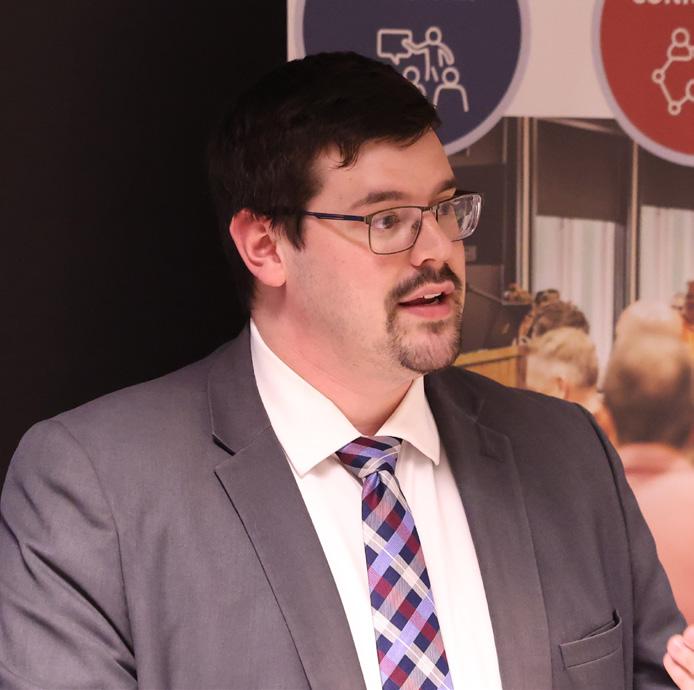
What’s advancing in St. Paul and why it matters for the region
s the 2026 Minnesota legislative session approaches its May 18 adjournment, decisions in St. Paul are poised to impact employers, communities and regional competitiveness.
The Minnesota House is evenly divided, with 67 Republicans and 67 Democrats, while the Senate holds a narrow one-seat DFL majority. With margins this tight, any legislation that advances will require bipartisan support.
In a divided legislature, business engagement carries weight. Since the session began Feb. 18, the Fargo Moorhead West Fargo Chamber policy team has been actively representing regional priorities and advocating for policies that support growth, competitiveness and community vitality.
Here are some of the issues The Chamber has been working on this session.
As of Jan. 1, 2026, eligible employees in Minnesota may access up to 20 weeks of leave in a benefit year through the state’s paid leave program. The Chamber has consistently heard from employers that, as currently structured, the program creates significant compliance, cost and operational challenges that weaken Minnesota’s competitive position.
Throughout this session, The Chamber has worked closely with business leaders, coalition partners and elected officials to advance meaningful, pragmatic reforms to workplace policies to improve flexibility, reduce unnecessary burdens on employers and make the program more workable for businesses of all sizes.
Minnesota is a manual-conformity state, meaning federal tax law changes are not automatically adopted at the state level. As a result, federal updates made through HR 1 have created misalignment, adding complexity and potential unintended tax burdens for employers and taxpayers.
Throughout this session, The Chamber has urged lawmakers to advance key conformity provisions, including
the pass-through entity tax, research and development expensing, Section 179 expensing, business interest deductibility and bonus depreciation. These pro-growth tax policies are important to reducing compliance burdens and strengthening Minnesota’s economic competitiveness.
This session, The Chamber has tracked legislation that would prohibit “stay-or-pay” provisions in employment contracts. These agreements typically require employees to repay an employer if they leave within a defined timeframe, often tied to training or onboarding investments.
Because the proposed changes could limit employer flexibility and create new uncertainty around workforce investments, The Chamber has worked to ensure employer perspectives are represented as these proposals are evaluated.
Capital investment remains a central focus as lawmakers review statewide infrastructure needs, including transportation, water systems and public facilities.
The Chamber, alongside many regional partners, has been a strong advocate for an additional $64.07 million in funding to complete the Minnesota components of the FM Diversion project. This funding is critical to flood protection, long-term economic growth and regional resilience.
Each of these issues, along with others under consideration, carries meaningful implications for the Fargo-Moorhead-West Fargo region. The Chamber will continue its work through the remainder of session to advance pro-business policies, oppose proposals that create barriers and ensure the business community’s voice is represented in St. Paul.
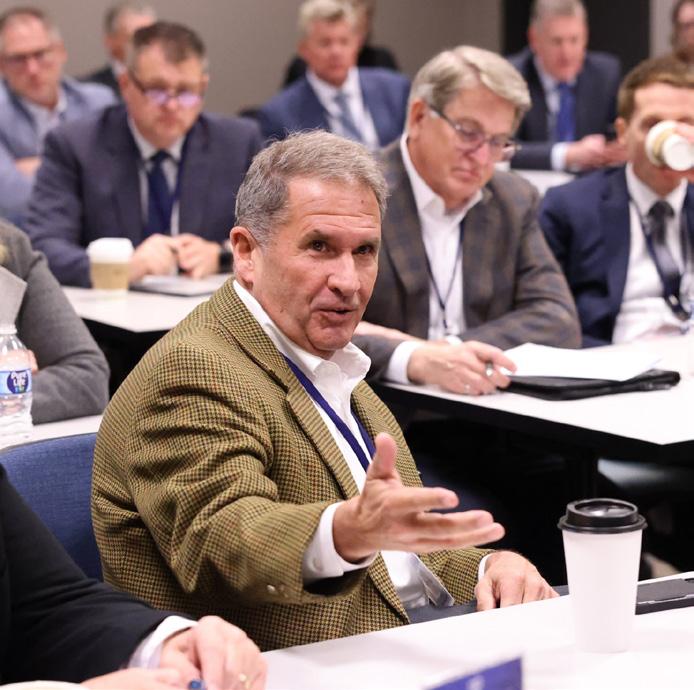
Top policy conversations from the Capitol that are shaping how businesses hire, grow and compete.
Recent conversations with legislators and state leaders provided a clear look at the issues currently shaping Minnesota’s business environment. During Moorhead and Detroit Lakes Area Day at the Capitol, nearly 50 regional business and community leaders met directly with policymakers and agency leaders to discuss the policies impacting employers across the state.
Here’s a snapshot of the key topics driving those conversations and what they mean for businesses right now.
Workplace mandates: What’s changing for employers
Paid Family and Medical Leave
• Now in effect statewide, as of Jan. 1
• Funded through employer and employee payroll contributions, currently 0.88% of payroll tax
• Employers navigating cost and implementation questions, such as broad definition of family, small business grants, collective bargaining agreements, replacement workers, seasonal employees, exemptions, etc.
Business climate: What’s impacting costs and competitiveness
Affordability and competitiveness
• Rising costs impacting employers and residents
• Increased focus on how Minnesota compares to neighboring states, such as business attraction and retention
• Key issue for border communities, including taxes and regulations
EVENT SPONSORS


Infrastructure: Where the state is investing
Bonding and regional investment
• Funding for flood mitigation, a non-secure detention facility and other critical infrastructure
• Direct impact on Red River Valley communities
Accountability and enforcement: What’s shaping trust and immigration stability
Fiscal oversight and immigration impacts
• Increased focus on fraud prevention and program oversight
• Ongoing conversations around immigration enforcement
These conversations are evolving as the legislative session continues. Staying informed is critical for businesses navigating what comes next.
Want the full breakdown?
SCAN TO READ THE FULL ARTICLE AND EXPLORE MORE POLICY UPDATES IMPACTING YOUR BUSINESS.
re you planning to vote this election season? Have you considered putting your name on the ballot in the future?
Strengthening civic engagement, whether through voting or public service, is essential to the long-term success of our region. Elections shape the policies, leadership and the economic environment in which businesses operate. Individual participation matters, and so does organizational leadership in encouraging it.
The Chamber’s Center for Civic Engagement exists to support this work. As a non-partisan initiative, the Center is designed to inspire, educate and equip business and community leaders to take an active role in public life.
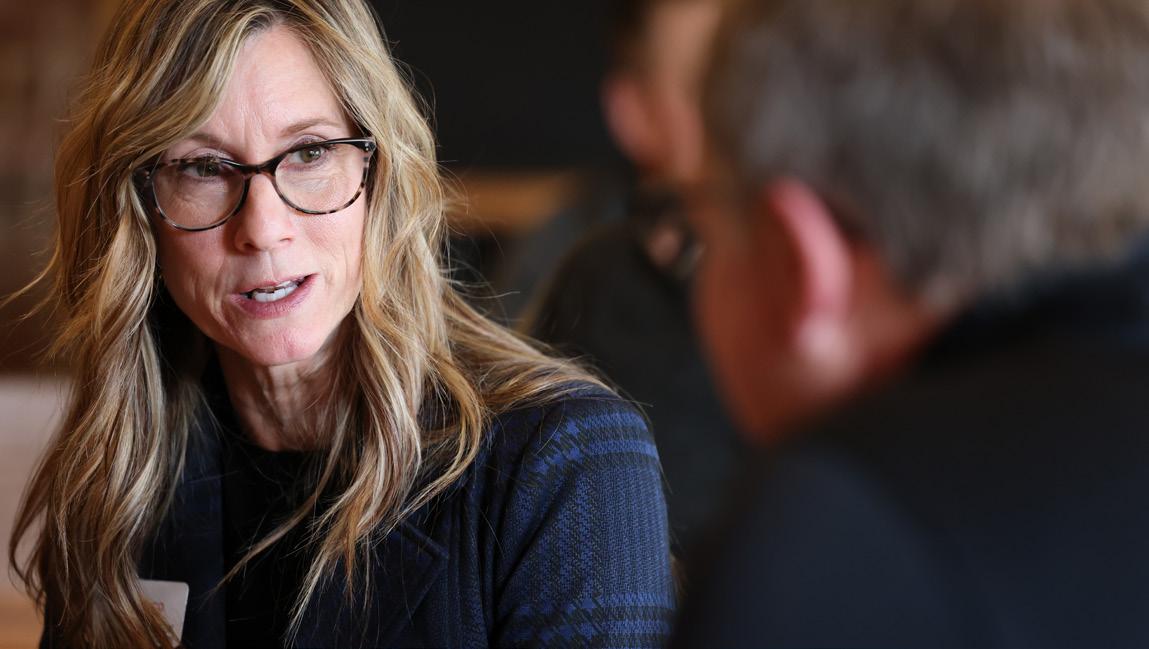
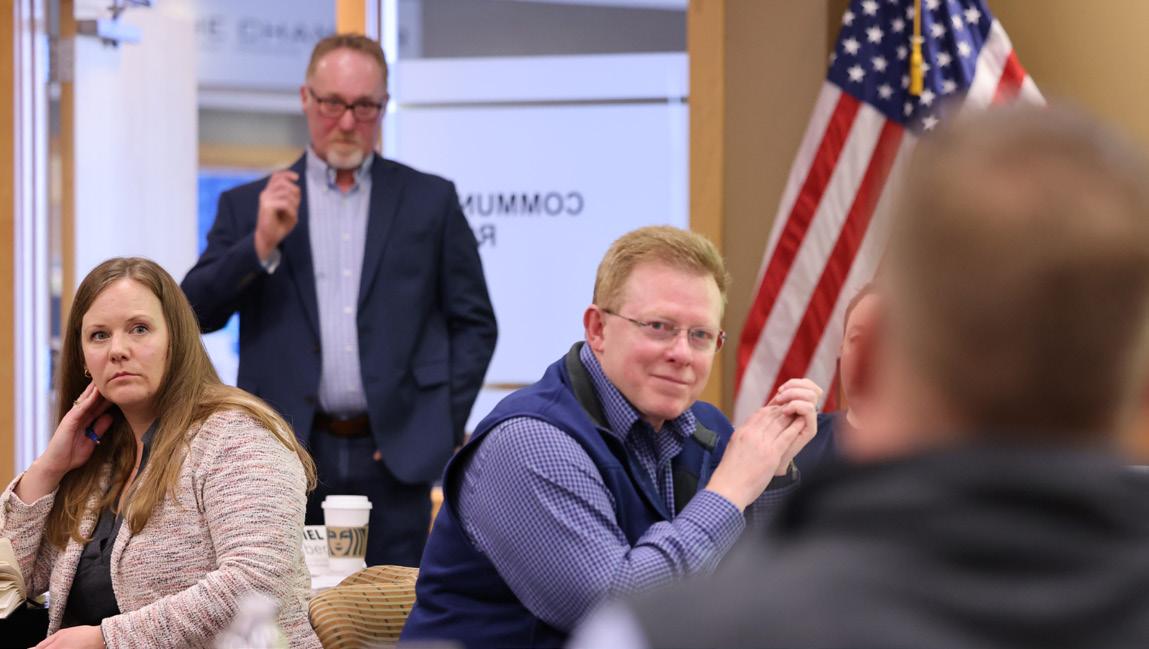
Civic engagement takes many forms, from voting and staying informed on issues and candidates to stepping forward to serve in roles such as your local park board. For employers, it means creating a culture that supports participation whether through clear policies that allow time to vote, being open to employees pursuing public service or joining as a Founding Circle Member.
• In North Dakota, one in every 45 adults needs to serve in an elected leadership.
• In Minnesota, that number is one in every 241 adults.
• By 2028, North Dakota’s legislative term limits will result in turnover of approximately two-thirds of the region’s legislative seats.
• Primary election turnout in the Fargo area remains below 20% of eligible voters.
• More than 60 elected positions across the FargoMoorhead-West Fargo region are on the ballot this year.
Business leaders are some of the greatest influencers of civic participation. We invite you to join the Center for Civic Engagement’s Founding Circle Members and demonstrate your organization’s commitment. Members receive tools, resources, and thought leadership opportunities to support engagement. No additional financial investment is required. Connect with our team to get involved.
SCAN THE QR CODE TO LEARN MORE, EXPLORE OPEN ELECTED POSITIONS OR JOIN THE FOUNDING CIRCLE.
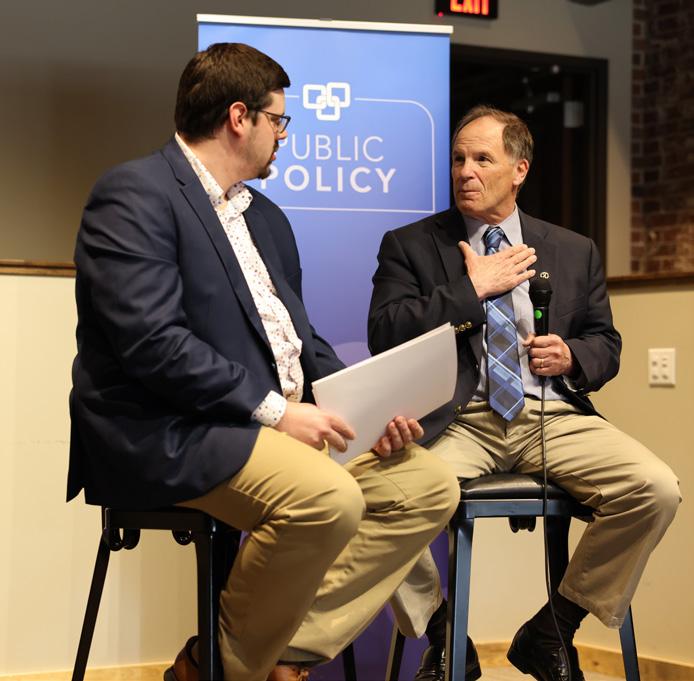
Step into civic leadership, get involved in public service and build trust in your community
hat happens when civic engagement moves beyond the confines of a formal meeting room and into the heart for the community?
The Fargo-Moorhead-West Fargo Chamber is tackling this question through its Center for Civic Engagement Civics on Tap series. An initiative crafted to make civic participation not only more accessible but also more dynamic and impactful.
At its core, Civics on Tap is about breaking down barriers to civic involvement. These informal gatherings offer an inviting space for business leaders, professionals and community members alike to ask questions, share perspectives and deepen their understanding of how local government works. Whether someone is civically curious or already engaged, the goal remains the same: meet people where they are and welcome them into the conversation.
The series closely aligns with The Chamber’s Center for Civic Engagement's mission to educate, empower and inspire individuals to take an active role in shaping their communities. Across the country, and here at home, participation in civic life has declined. Fewer people are running for office, voting in local elections and feel connected to the decisions that shape their daily lives. Civics on Tap is one way The Chamber is working to reverse this trend by making civic learning approachable and relevant.
Action” and “Brewing Pathways to Civic Action” have embodied this mission by helping attendees move from interest to involvement. These sessions have highlighted real pathways to engagement, from serving on local boards and commissions to learning what it takes
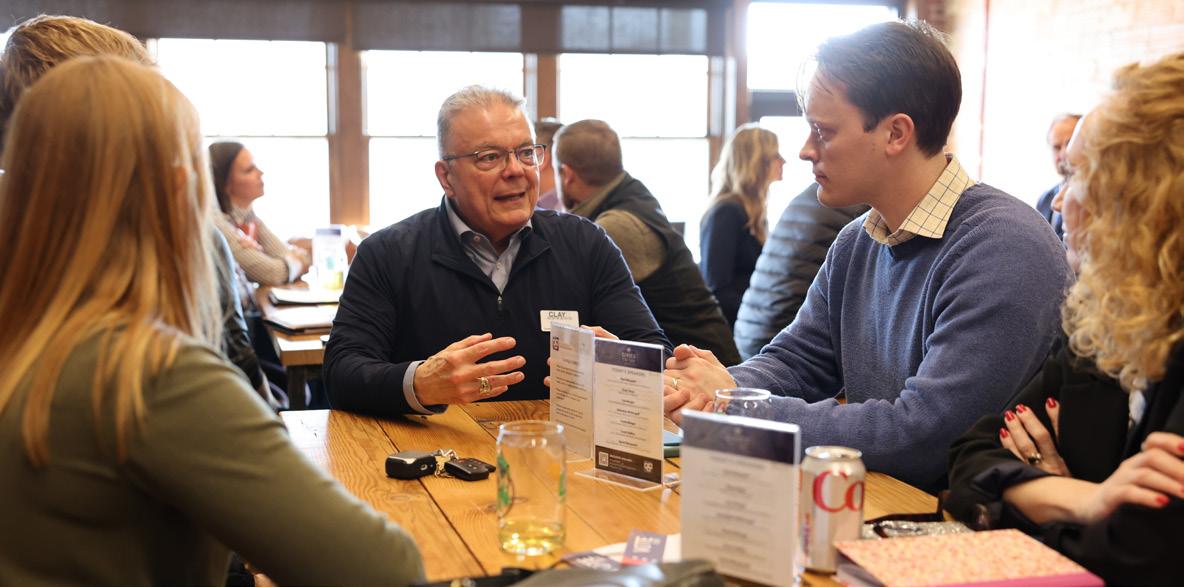
to run for office. Most importantly, they foster an environment where questions are encouraged, and next steps feel within reach.
This is especially significant for the business community. Strong civic participation leads to better-informed decisions, broader perspectives in leadership and policies that reflect the evolving needs of our region. The Center for Civic Engagement works to bridge the gap between the private sector and public service, equipping individuals with the knowledge and confidence to lead.
Civics on Tap is an early, yet pivotal, step in that journey. The Chamber, through its Center for Civic Engagement, is on a mission to empower people with the tools and opportunities to get involved.
After all, strong communities aren’t built on the sidelines. They’re built by people who show up.
Recent Civics on Tap events such as “Turning Curiosity into Civic
That’s where meaningful impact begins. Civic engagement starts with understanding, conversation and authentic connection. When individuals see themselves as part of the process, they are more likely to step forward, whether by voting, volunteering or leading.
LEARN MORE ABOUT THE CENTER FOR CIVIC ENGAGEMENT
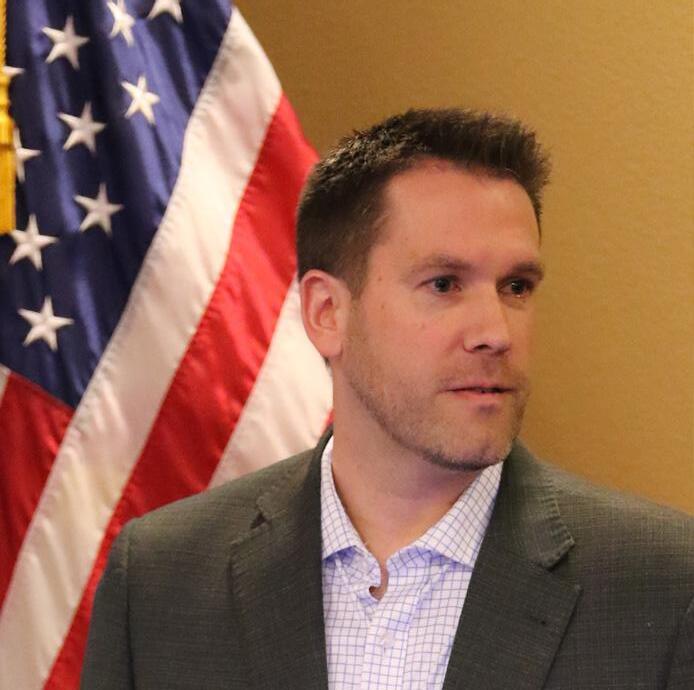
Local leaders and experts guide prospective candidates through the realities of running for office
ast quarter, a packed room of citizens ranging from health care executives and small-business owners to retirees gathered at the Fargo Moorhead West Fargo Chamber for the Candidate Workshop 101. The event, hosted by the Center of Civic Engagement, aimed to move prospective leaders from interest to informed action.
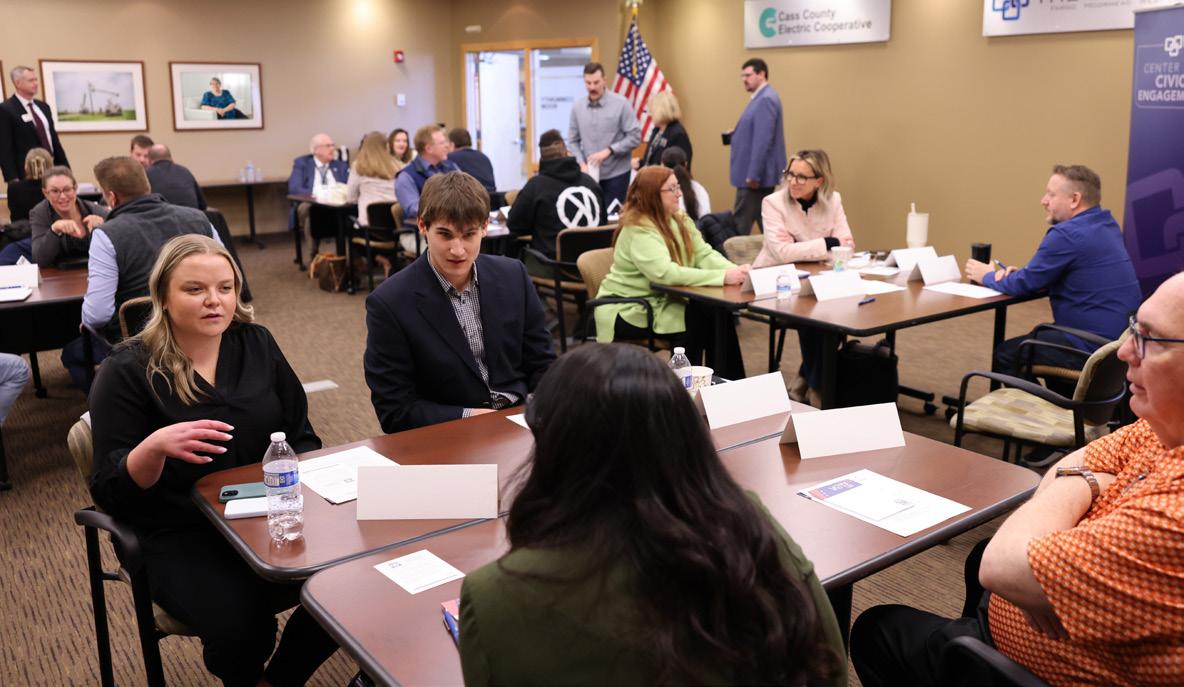
Shannon Full, president and chief executive officer of The Chamber, opened the session by emphasizing the importance of strong civic participation. Shannon noted that the Fargo-Moorhead-West Fargo region benefits when individuals with industry expertise and community insight step forward to serve in public office. Predictable and stable governance, she said, is essential to maintaining the region’s economic momentum and quality of life.
Michael Howe, North Dakota secretary of state, helped demystify the formal process of running for office. Michael walked attendees through the mechanics of filing for candidacy, including petition requirements and campaign finance rules.
He also outlined campaign finance reporting expectations, including pre-primary reports and the requirement to disclose contributions of $500 or more within 48 hours.
While paperwork is part of the process, campaign strategy ultimately determines whether candidates connect with voters.
Carl Kuhl of Velocity Public Affairs encouraged attendees to think of time as their most valuable campaign resource. Carl advised prospective candidates to build a campaign calendar starting with Election Day and working backward to plan fundraising, outreach and messaging.
Door-knocking and phone calls, Carl said, remain far more effective than social media when it comes to building trust with voters. He also encouraged candidates to send handwritten thank-you notes to every donor as a way to build lasting relationships.
The workshop also introduced a new digital tool designed to make civic engagement easier. Charlie Adams, director of the Center for Civic Engagement, demonstrated a Chamber website feature that allows users to search offices up for election by political subdivision and expiring terms.
To close the event, rotating small groups with local political leaders offered a candid look at the realities of public service. They described how workloads can vary significantly depending on current issues and committee assignments, which may include public works, public safety or administration. Despite the demands, local leaders emphasized that serving in public office remains one of the most meaningful ways to give back to the community.
The workshop made it clear that running for office requires commitment and preparation, but with the right plan and support, community members from all backgrounds can step forward to lead.

Help your employees feel great, so they can do great things for your business.
Affordable premiums
Fitness incentives
Access to top doctors
Behavioral health assistance
24/7 $0 video visit copays*
Prescription coverage
Personalized wellness programs
Preventive screenings

Request a quote today at (888) 851-2408 or sanfordhealthplan.com/employers.

North Dakota’s primary election includes more than partisan races. Voters like you will help decide who serves in key local leadership positions and weigh in on issues that directly affect our communities. For employers, employees and community members alike, these decisions matter.
Local elected officials shape the future of our cities, schools, parks, infrastructure, public safety and quality of life. These races may not receive the same level of attention as a November general election, but their impact is immediate and significant.
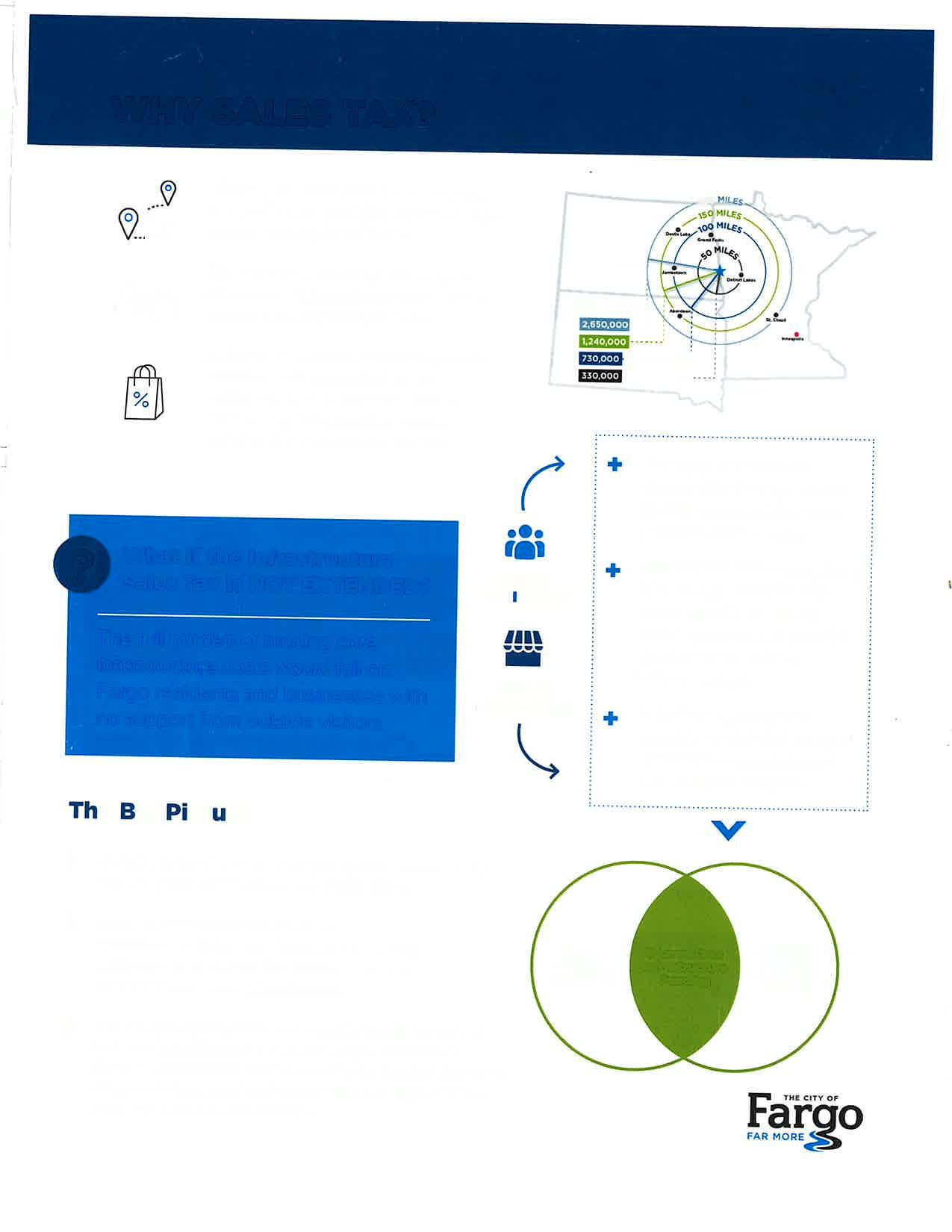
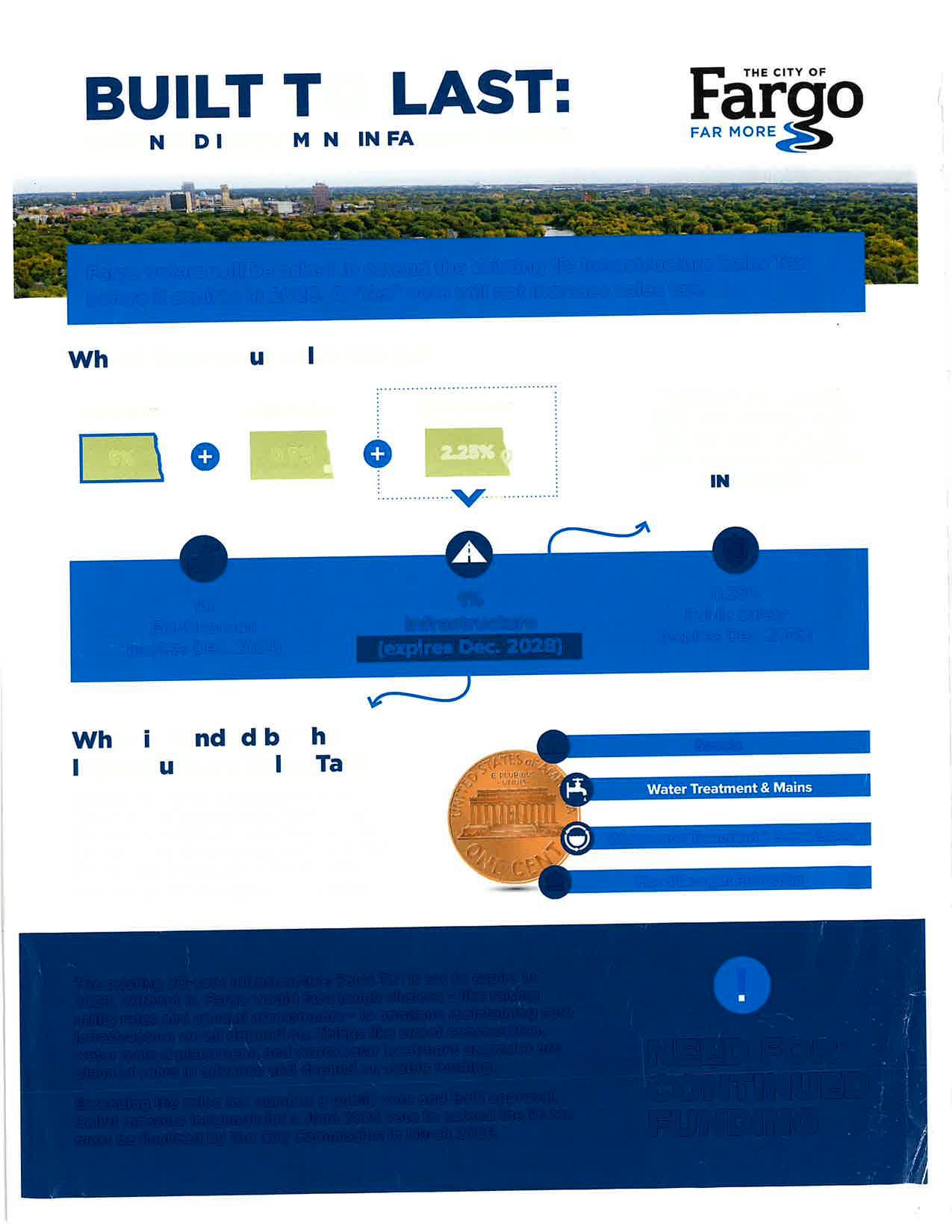
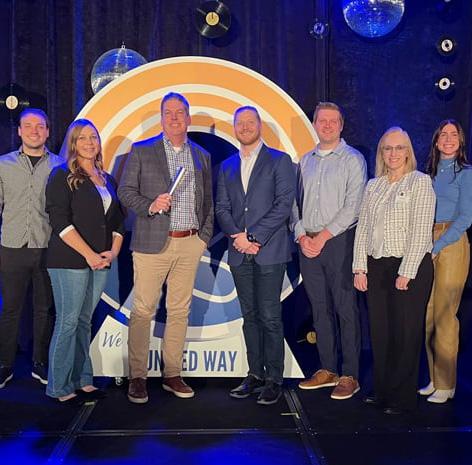
Expert perspective grounded in real work, decisions and results.
n the following pages, leaders and specialists from across the region share what they’re seeing and how it is shaping business now and moving forward. These insights come from experience, challenges and the realities of today’s operating environment.
Read on for perspective you can apply, adapt and use to move your business forward.
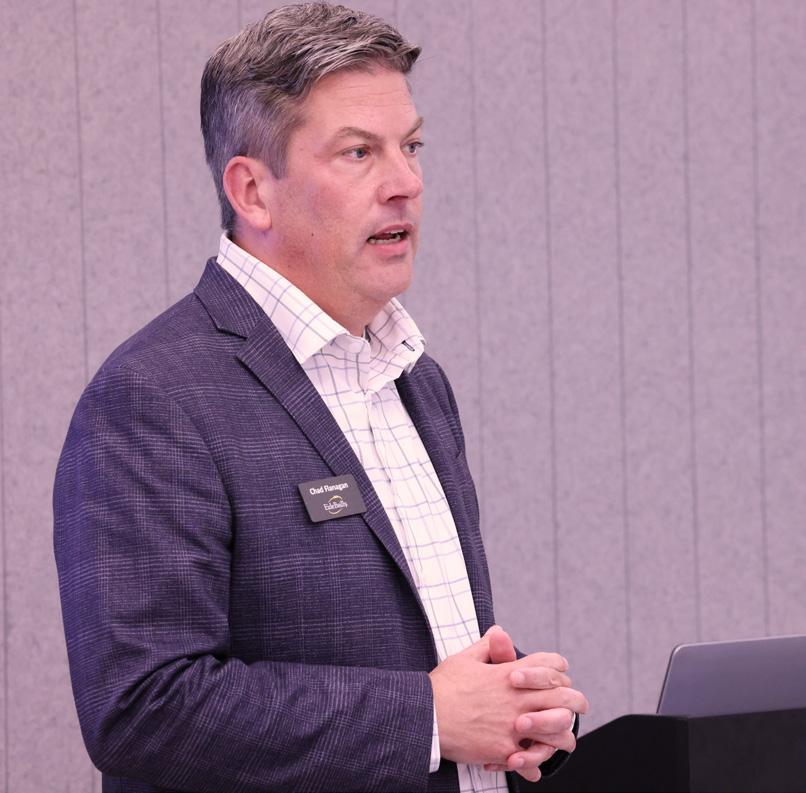
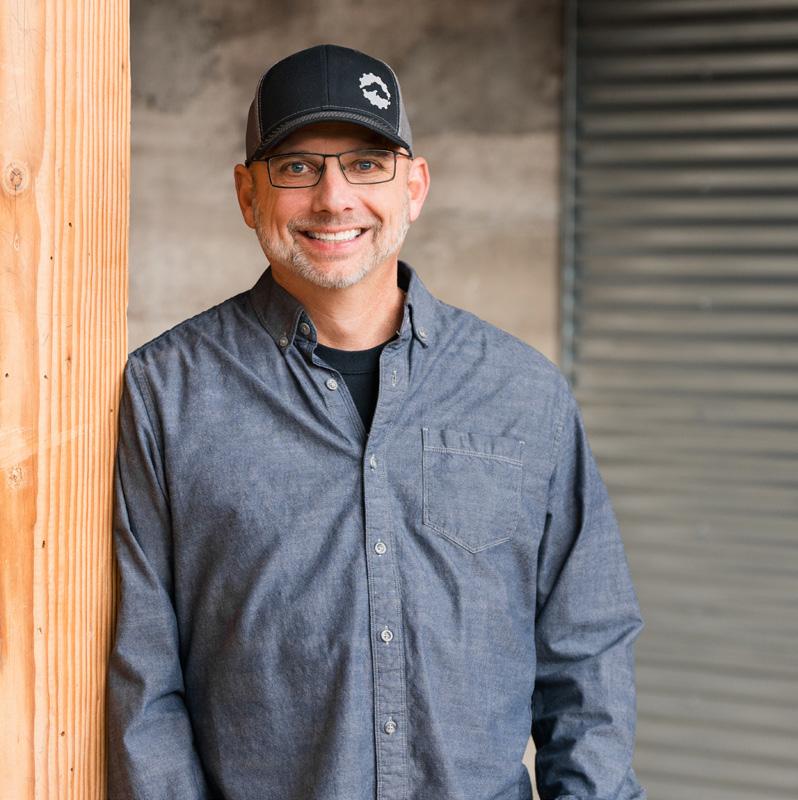
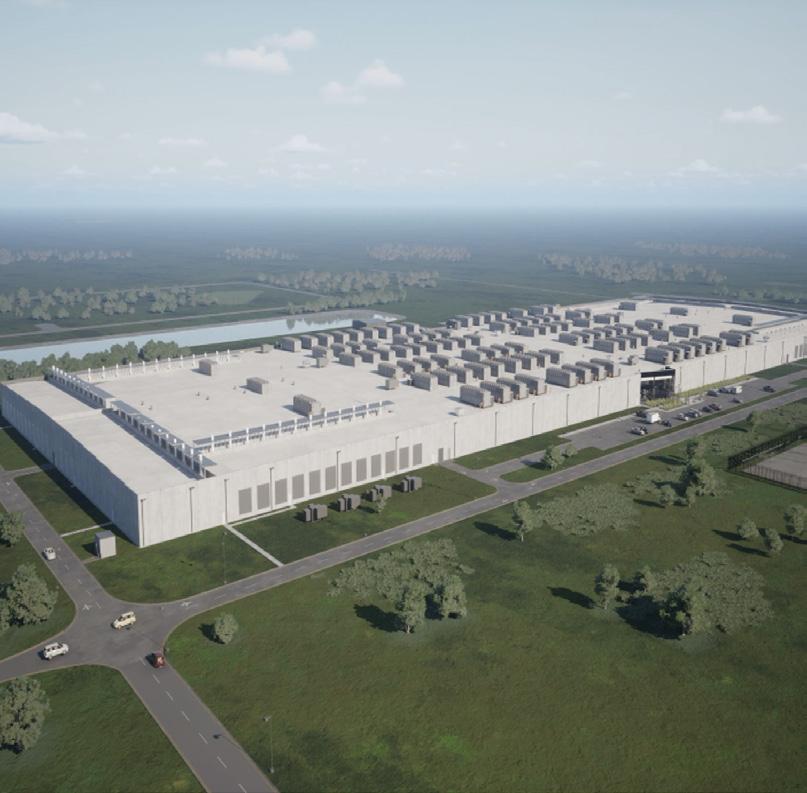


In a world where audiences pay extra to avoid advertising, authenticity is no longer optional
By Dan Altenbernd | CEO, H2M Brand Haus
Let’s start with a little honesty about marketing and advertising. Marketing is an industry that people pay extra to avoid. Streaming services offer ad-free versions. Apps offer premium tiers with no ads. Consumers install blockers to avoid banners and pop-ups. Entire technologies have been created just to escape what marketing produces.
I’m not sure how we got here, but here we are. Still trying to communicate. Still trying to persuade. Still trying to close sales.
So maybe the question isn’t how we get people to see our marketing. Maybe the real question is:
When did honesty become the boldest strategy in the room? Because the truth is, most marketing today doesn’t feel very honest…or even human. It feels manufactured. Automated. Algorithmically optimized. Over-measured and under-felt.
We all should work to push back against this. Marketing is still a “people” business and process.
Businesses don’t choose to work with media plans or creative decks. They choose people. Teams they trust. Chemistry that turns ideas into something worth believing in. Marketing departments can sometimes forget that. (Agencies can too.)
Too often, we get caught chasing the next tactic, the newest platform or the latest industry buzzword. Meanwhile, the fundamentals of communication—trust, clarity, relationships—get buried under dashboards and performance reports.
Marketing should work to get back to its roots: Relationships with clients. Relationships with media partners. Relationships with audiences. And those relationships only work when the communication is honest.
Do you know who your audience isn’t?
When companies try to appeal to everyone, they end up resonating with no one. Clear positioning requires discipline. Sometimes that means saying things differently than your competitors. Sometimes it means celebrating the parts of your business others might overlook.
Which leads to another belief to hold close. Celebrate radically! No apologies!
Every business does something worth celebrating. Maybe it’s farm equipment. Maybe it’s printer toner. Maybe it’s insurance. Maybe it’s water. Someone recognized a real need and cared enough to build something that solved it. Call it Radical Celebration.
Celebrate your work. Celebrate your effort. Celebrate the value you bring to people’s lives—even if the product seems ordinary. Because the moment you stop believing your work matters is the moment your marketing starts sounding like everyone else’s.
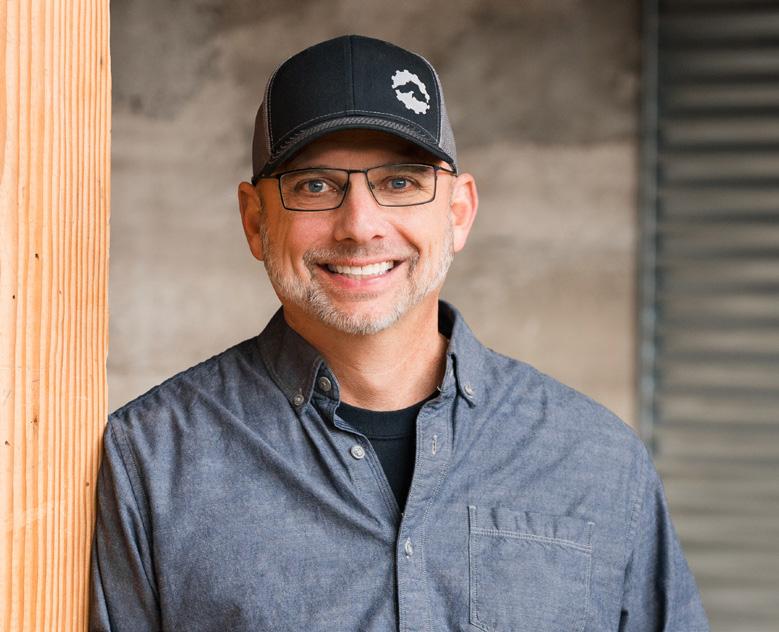
challenge today, tomorrow.
Marketing today is more complicated than it has ever been. More channels. More data. More noise.
But the fundamentals haven’t changed. People trust people. Clear messages beat clever ones. And communication that feels human will always outperform communication that feels manufactured.
Maybe that’s why I keep asking the same question: When did being human become a form of rebellion? Because in marketing today, it might be the most powerful strategy we have left.
By Stacey Seeger | Benefits Manager
As a Benefits Manager with PRO Resources, my role centers on partnering with business owners and leadership teams to design and manage benefits that truly work for the company and for the people who make it successful. Benefits are no longer just about checking a box; they are a strategic tool that supports recruitment, retention, employee wellbeing and long-term cost control.

Going on 10 years with PRO Resources, I work closely with employers to guide them through the full lifecycle of their benefits program, including design, strategy, implementation and ongoing administration and compliance. Every organization is different, so my approach begins with understanding a company’s goals, workforce demographics and budget. From there, I help create benefit plans that are competitive in the marketplace while remaining financially sustainable.
One of the most important parts of my role is helping employers explore innovative benefit solutions that go beyond traditional offerings. Today’s employees expect convenient access to care, transparency around costs and benefits that fit into their daily lives. By offering thoughtful design options, I help companies stand out while giving employees meaningful support.

A great example of this is NICE Healthcare, an innovative care model that brings health care directly to employees and their families. NICE provides virtual and in-home primary care services, including chat and video visits, same-day in-home visits, labs and testing, mental health support, physical therapy and care coordination. NICE also includes a robust Nice Rx program, offering medication management along with hundreds of free acute and chronic medications, delivered directly to the patient’s home.
For employers, NICE can help control health care costs by reducing unnecessary claims and simplifying benefit administration. For employees, it removes common barriers to care such as long waits, rushed appointments and surprise medical bills. The result is better engagement, better outcomes and a more positive benefits experience overall.
At PRO Resources, my goal is to help employers feel confident in their benefits strategy while knowing their employees are supported. When benefits are designed thoughtfully, everyone wins.

From power, water and noise to long-term community impact
As AI accelerates, data centers are becoming essential civic infrastructure, not just remote facilities powering the cloud, but visible parts of local economies. That visibility brings questions about power rates, water use, noise and long-term community impact. Real-world data separates myth from reality.
While AI data centers require large amounts of electricity, scale alone doesn’t determine impact. In North Dakota, where Applied Digital operates an AI Factory campus in Ellendale and is building a second in Harwood, the state generates significantly more electricity than it consumes, exporting the excess to other regions. By choosing to locate near existing infrastructure, these facilities reduce grid congestion.
Between 2023 and 2025, data center load from Applied Digital’s Ellendale facility caused more than $38 million in avoided fixed costs, transmission and fuel costs, directly lowering energy bills for other utility customers. Large users pay a significant share of fixed utility costs, helping spread infrastructure expenses across a broader base.
Modern AI Factories do not have to rely on open evaporative systems. Applied Digital campuses use a closed-loop system that is filled once and recirculate continually. These systems were designed to require minimal make-up water, with chillers engaged only when outdoor conditions demand it.
Nearly all on-site water use supports everyday functions such as restrooms, kitchens, cleaning and landscaping. Not servers. With North Dakota’s climate delivering 200+ days per year of “free cooling,” overall water demand is significantly reduced.
For Applied Digital, operational noise is a design consideration from day one. Data center sites use setbacks, equipment enclosures, sound-attenuating materials and compatible land-use planning to remain within regulatory sound limits. Once operational, facilities run quietly and continuously, with fewer daily traffic and noise impacts than many industrial uses.
The long-term benefit shows up in people and places. In Ellendale, AI campuses are expected to support 300–350 permanent on-site jobs, with average salaries around $64,000, spanning operations, security, maintenance and high-tech roles. At peak construction, more than 1,500 workers are on site.
Property tax contributions grow rapidly as projects come online. In Ellendale alone, two operational projects and two partially constructed
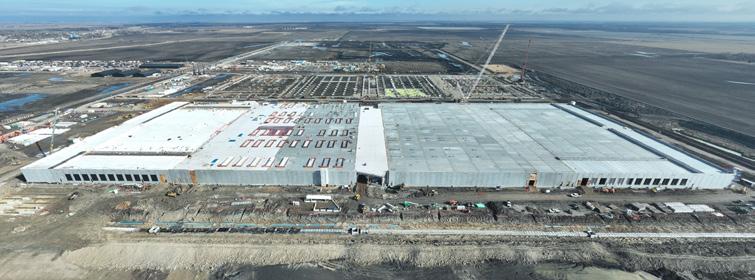
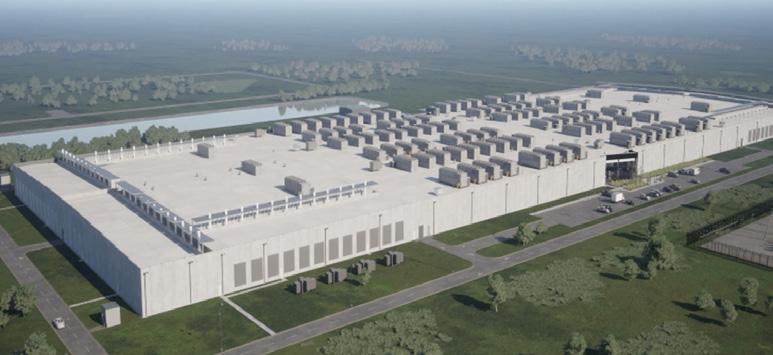
projects are generating more than $4.2 million in tax revenues for 2026. While these projects qualify for a 10-year tax abatement, Applied Digital voluntarily pays its full share of taxes to directly support the community. Beyond tax revenue, the Applied Digital Cares initiative donated nearly $100,000 to local organizations critical to North Dakota just in 2025 alone.
Data centers are neither invisible nor extractive by default. When built around excess power, closed-loop cooling and community partnership, AI infrastructure can stabilize grids, protect water resources and deliver durable economic benefits, turning regional strengths into long-term opportunities.

This shows up in familiar ways:
• The owner wants growth; finance wants control.
• The CFO pushes back on systems investment; the CEO wants speed.
A version of this article first appeared on EideBailly.com
Acommon barrier to growth is misaligned leadership. When no one takes full ownership, complexity leads to lost value.
• IT implemented an ERP; finance must live with the reporting reality.
• Leadership is generally aligned, but priorities shift weekly.
In the middle-market, leaders are making enterprise-level decisions without enterpriselevel structure.
In the middle-market, that changes. Companies become:
• More data and system dependent
• More risk-exposed
• More stakeholder-driven Tensions often surface around:
• Visibility and reporting
• Technology investment and ownership
• Capital readiness
• Transition and continuity
These tensions aren’t a sign of poor leadership, but a sign that the organization has reached a point where decision-making requires stronger structure than it used to.
1) Growth without visibility
Growth introduces complexity before it appears in results. Reporting takes longer. Decisions require more explanation. When visibility lags, leaders begin debating direction when the real issue is information.
2) Technology without strategy
When data, governance and ownership are misaligned, new systems increase complexity and can become fragmented. Misalignment often shows up as:
• IT optimizing for features
• Finance optimizing for control
• Owners optimizing for speed
Step 1: Align outcomes before debating tools
Technology should enable how you operate and grow. Alignment happens when leaders define shared goals and use technology to support measurable outcomes.
Step 2: Clarify decision ownership and document it
Most initiatives fail because accountability is implied. Ensure ownership is clearly documented for every strategic initiative and process, including who owns:
• Decision-making • Adoption • Data integrity • Risk and control
Step 3: Create governance that enables speed
Governance isn’t a barrier to execution. It addresses unclear ownership and inconsistent adoption.
Establish a monthly leadership cadence that reviews:
• Performance and visibility • Priority shifts
• System constraints •Risk thresholds
critical
3) Capital infusion without readiness
Financing, investment or M&A brings increased scrutiny. Gaps in reporting, controls and operations surface quickly, especially when timelines are tight.
4) Transition without continuity
Leadership transitions fail when institutional knowledge, decision rights and long-term plans aren’t documented and aligned. In fact, 62% of global executives say they currently lack a successful C-suite succession strategy.
Step 4: Use a “buy vs optimize” rule to reduce internal conflict
If systems are underused, poorly integrated or inconsistently adopted, optimization often delivers faster value than replacement. New technology makes sense when existing tools can’t scale, integrate or support future needs.
Step 5: Treat alignment as readiness
Readiness is the ability to make confident, timely decisions as complexity increases. It is built on reliable data, systems that support strategy, disciplined governance and continuity. When alignment is left unaddressed, decision-making slows, systems sprawl, risk accumulates and strategic options narrow—often long before performance declines.
Leadership alignment isn’t about agreement on every decision. It’s about creating shared clarity on outcomes, ownership and governance.
The earlier teams address alignment, ownership and governance, the more options they preserve as complexity increases.
For nearly 40 years, Alerus has helped Fargo area businesses grow. We’re here for what’s next for you.

Cole Keney SVP, Business Banker
You shouldn’t have to think about your connectivity. DCN’s broadband solutions run seamlessly, leaving you free to focus on innovation, growth, and serving your customers. Let’s talk about effortless connectivity.
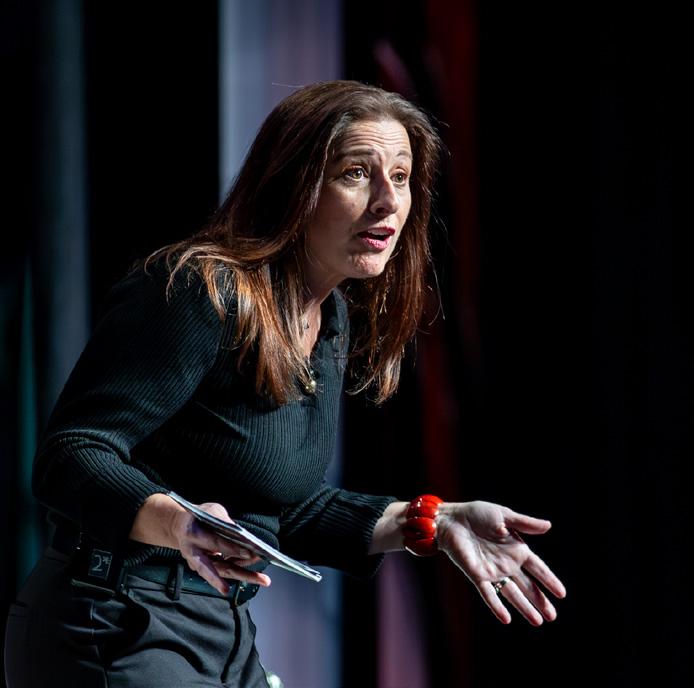
usiness vitality is strengthened when the right conditions exist for businesses to compete, adapt and lead, and The Chamber works alongside the business community to help make that possible.
In the following pages, you will find the conversations, events and initiatives shaping that environment across our region. From economic outlooks and industry insights to opportunities for recognition, connection and investment, each piece reflects how The Chamber is working alongside businesses to move the region forward.

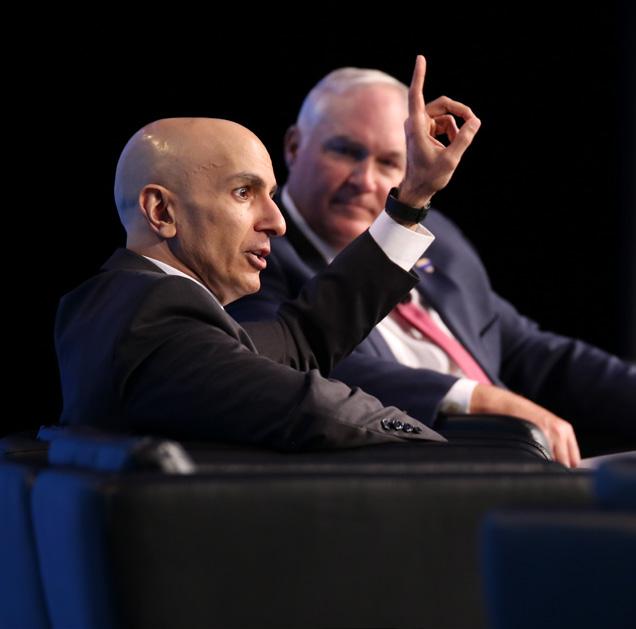

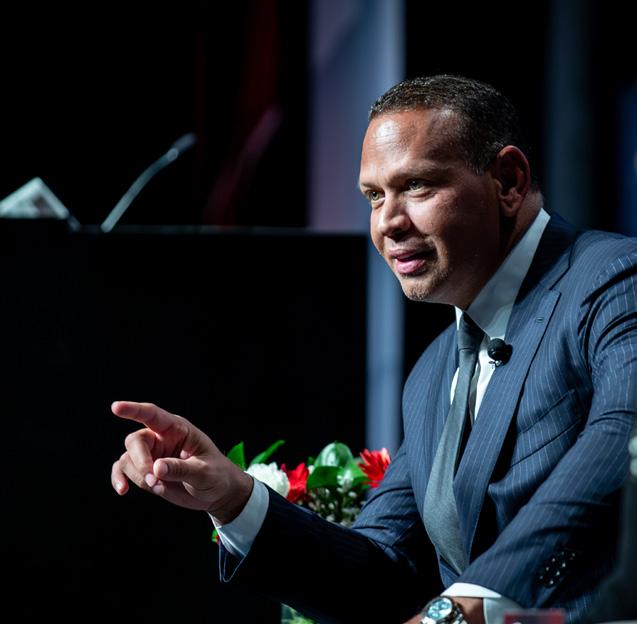
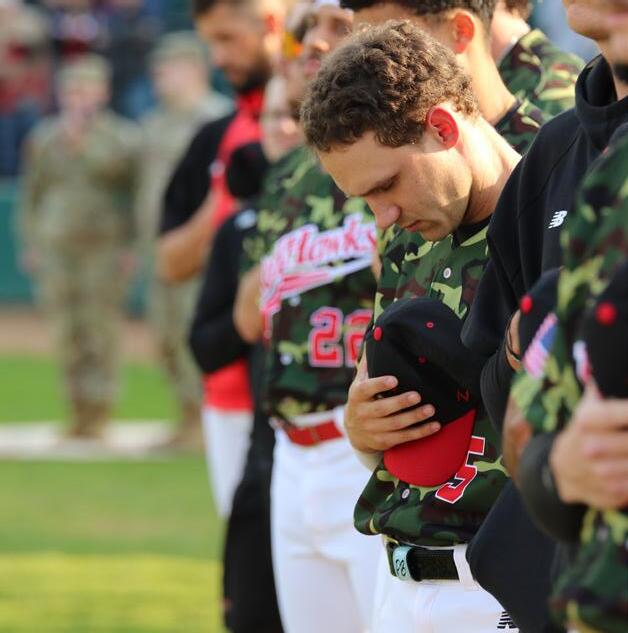
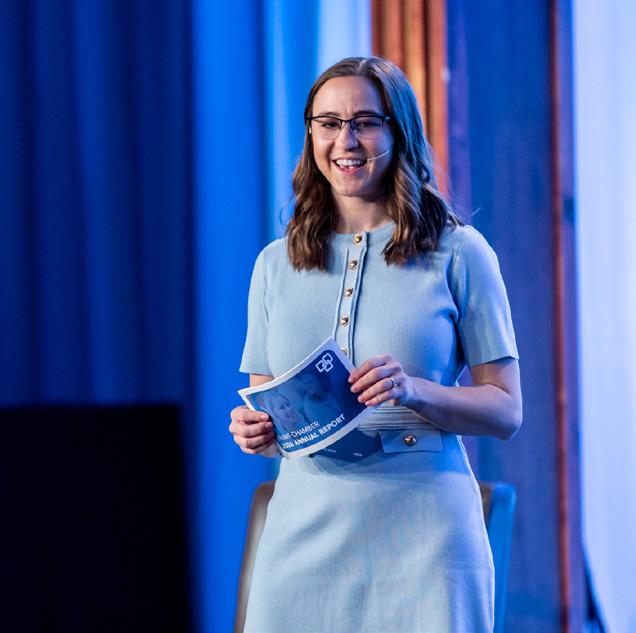
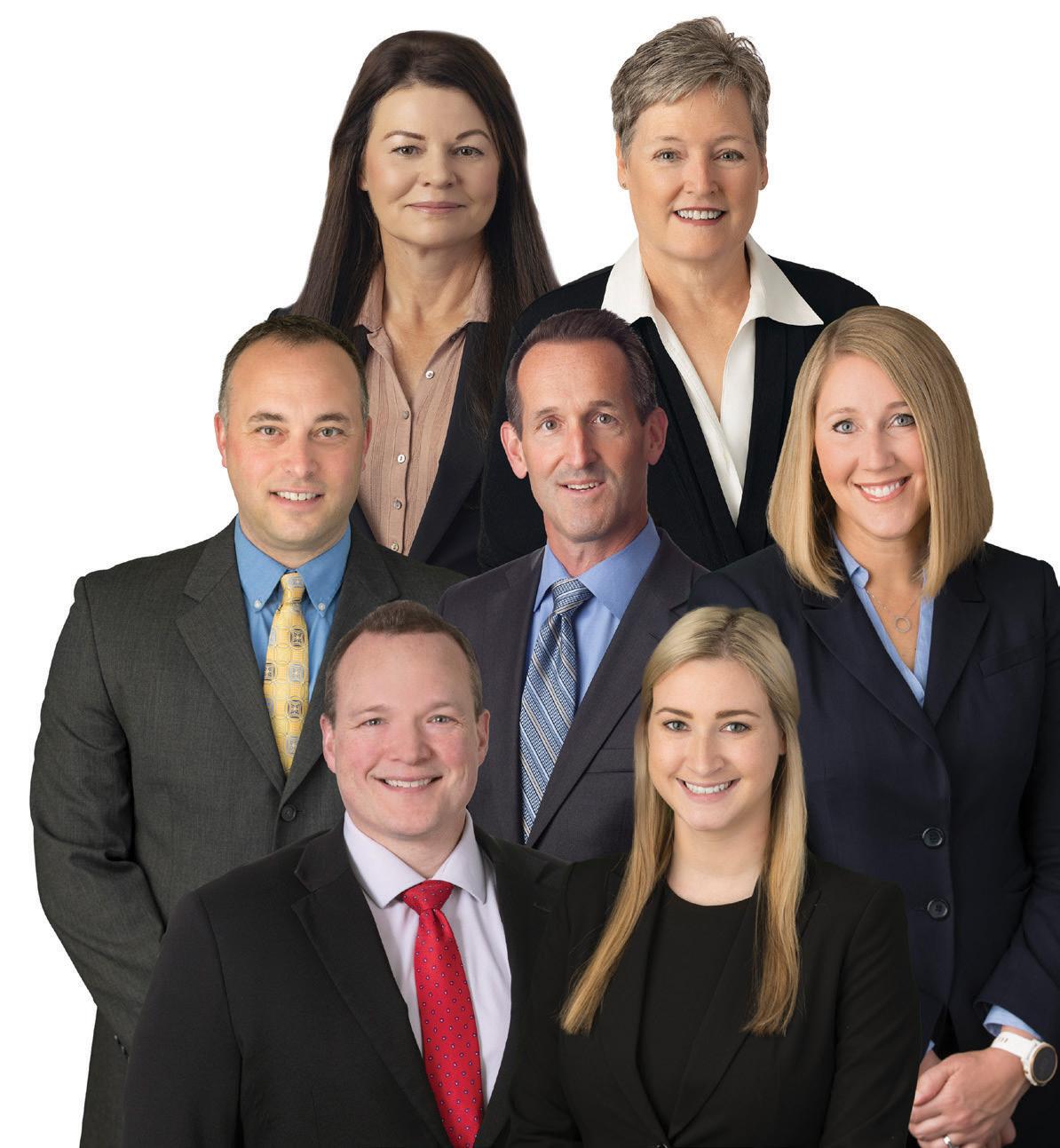

Engagement, collaboration and perspective are shaping leadership and driving regional momentum
he strongest leaders look beyond their own organizations and into the broader business community around them.
At The Chamber’s 2026 Annual Meeting, regional leaders JT Froning, Kara Jorvig and Levi Otis shared how engagement across Chamber programs and initiatives is shaping both their leadership and the future of the Fargo-Moorhead-West Fargo region.
Their discussion centered on how perspective, collaboration and involvement shape stronger leadership and regional progress.
Here’s how engaging beyond your organization can strengthen your leadership.
When your focus stays within your own organization, decisionmaking can become narrow. Through Chamber engagement, leaders connect with peers across industries and gain exposure to different approaches to workforce challenges, economic shifts and leadership strategies.
Collaboration is a defining advantage for this region. When leaders share ideas and experiences, they create alignment around the issues that matter most, including workforce development, infrastructure and long-term competitiveness.
Your leadership has impact beyond your organization. Chamber engagement creates opportunities to contribute to conversations around policy, workforce and regional strategy.
When business leaders bring real-world experience into those discussions, decisions are more informed and more connected to the realities businesses face. That involvement strengthens leadership pipelines and supports long-term regional success.
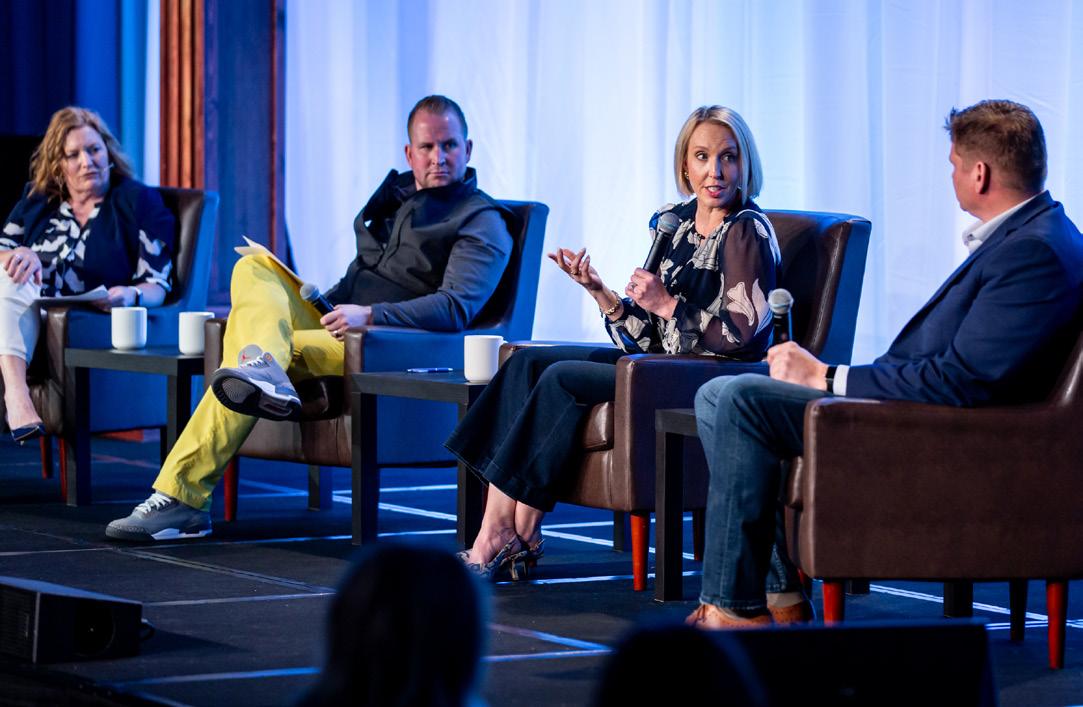
That broader perspective strengthens how you guide your team and respond to change.
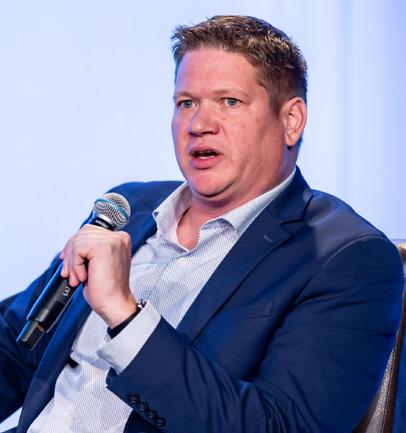
That alignment allows businesses to move beyond individual challenges and contribute to solutions that support broader economic growth.
The Annual Meeting theme, Cleared for Takeoff, reflects the energy building across the region. That progress is driven by leaders who step forward, connect and contribute their perspective.
The work continues well beyond a single event.
Explore how business leaders across the region are advancing Business Vitality and where you can engage in the pages ahead.
Pressure never shows up at the right time. Expectations stay high, and the margin for error stays tight.
Ahead of his appearance at Voices of Vision on April 16, Alex Rodriguez shared how he approaches performance in that kind of environment. Across more than two decades in Major League Baseball, and now as an owner and business leader, his work has been tied to results that are public, visible and often immediate.
That same pressure shows up for leaders across Fargo-Moorhead-West Fargo every day, in boardrooms, on job sites and in moments where stepping back is not an option.
So what allows someone to perform consistently when expectations do not ease?
“Consistency of habits,” says Rodriguez. “When expectations are high, you need to rely on the routine that has served as the foundation of your success. The best performers stay committed to preparation, discipline and recovery.”
Consistency comes from how you make decisions over time. Effective leaders are the ones who stay clear on what matters and are deliberate about where they give their attention. That level of focus requires discipline.
“If something doesn’t align naturally with me or my team, it becomes a distraction. Over time, I’ve learned that doing fewer things at a high level is far more effective than trying to do everything. I take a narrow and deep versus wide and shallow approach.”
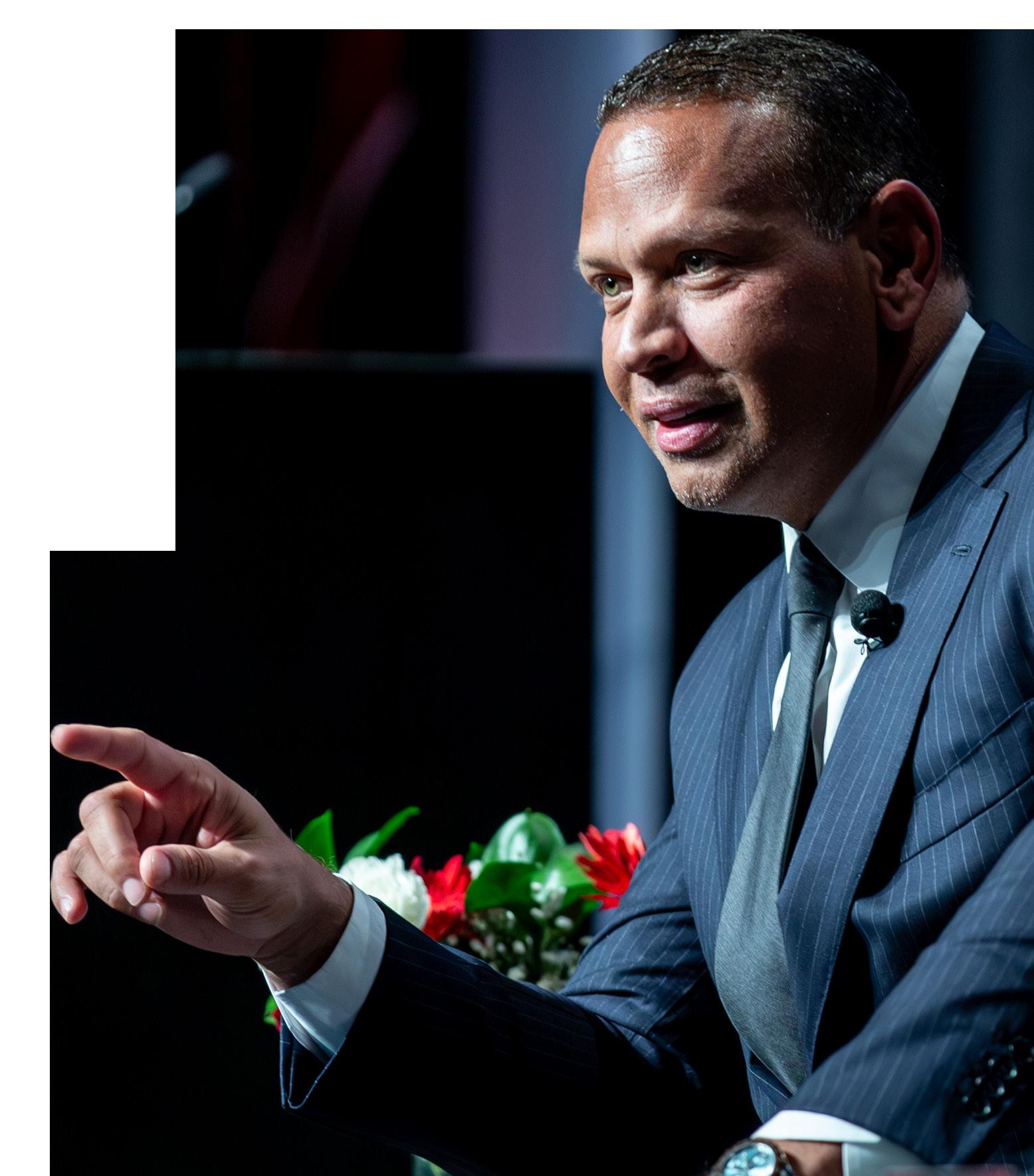



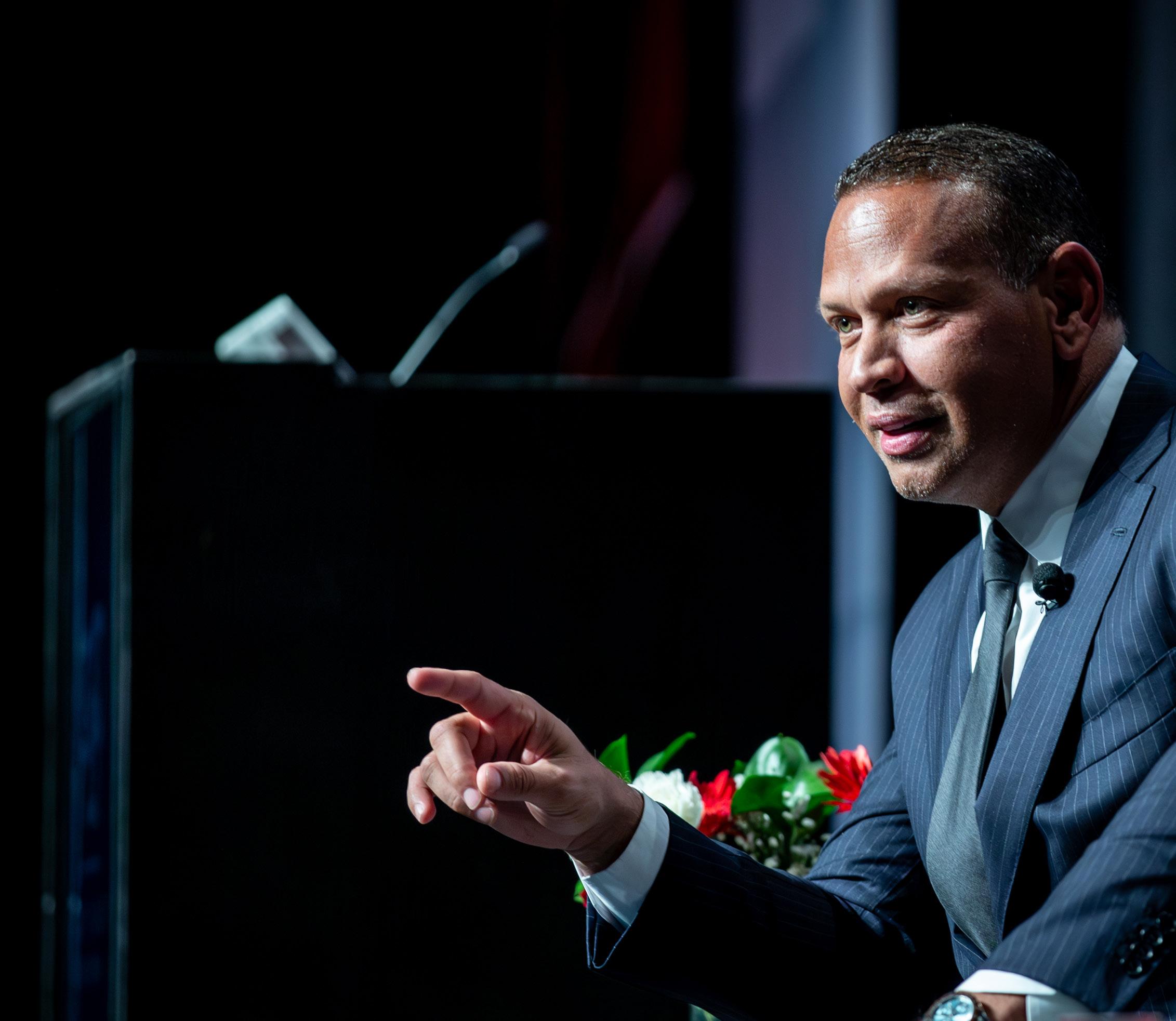
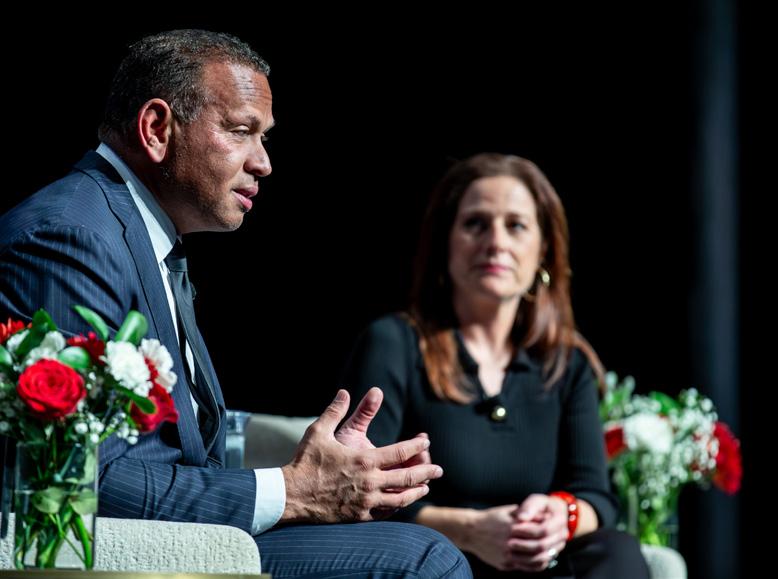
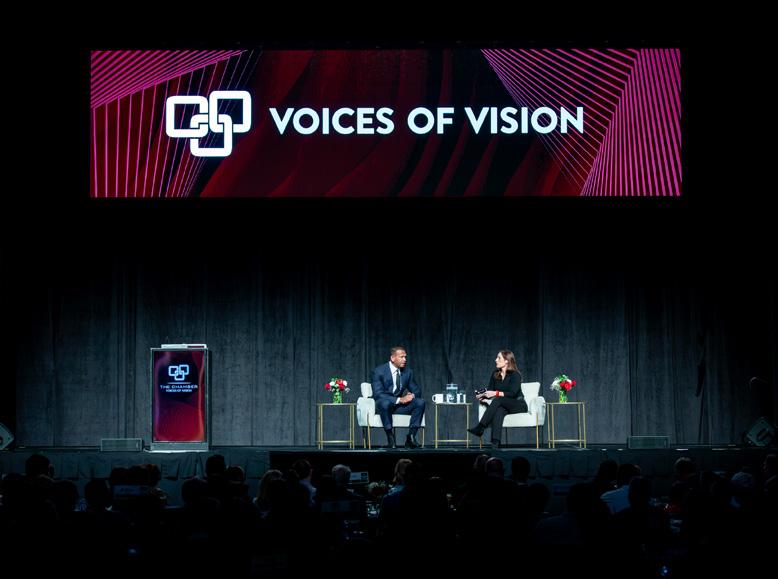
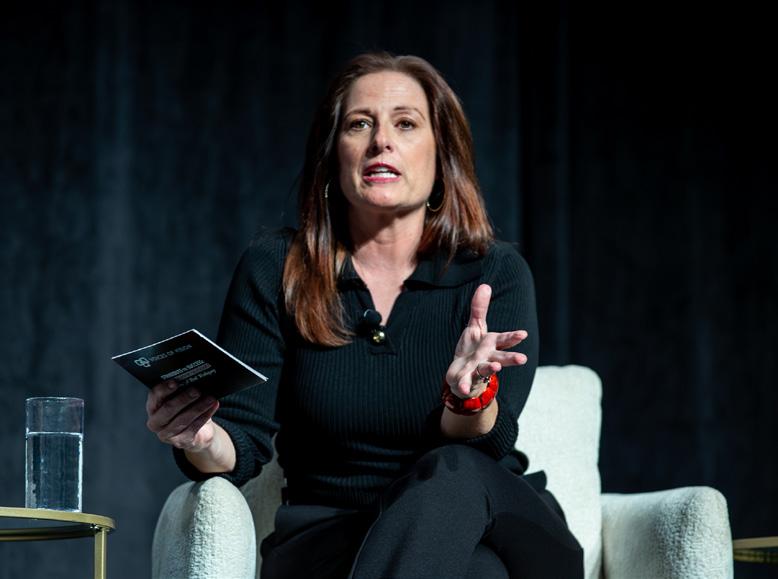
As responsibility grows, the work changes with it. Early performance is often measured by individual output, but leadership shifts that measure, moving the focus to setting direction, building teams and making decisions that affect more than one role or situation.
For leaders in this region, that reality is already in front of us. It shows up in the pressure to grow, navigate workforce challenges and make decisions that hold up over time as visibility continues to increase.
“As a leader, it becomes about empowering the right people, creating alignment and building a culture that allows others to perform to their full potential,” says Rodriguez.
With that shift comes a different level of accountability. Decisions take longer to play out, the impact is shared across a team or organization, and the expectation is to stay consistent, even when conditions change.


“You need a clear vision of where you’re going and the discipline to make decisions that align with it. The best decisions are the ones that compound over time.”
Performing at a high level relies on managing your attention, making sound decisions and following through over time. The pressure does not go away. What changes is how you respond to it.
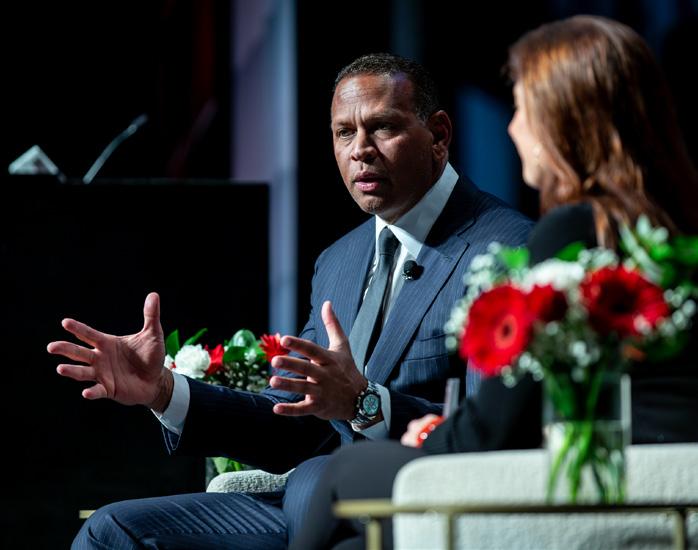
“You need a clear vision
you’re going and the discipline to make decisions that align with it."











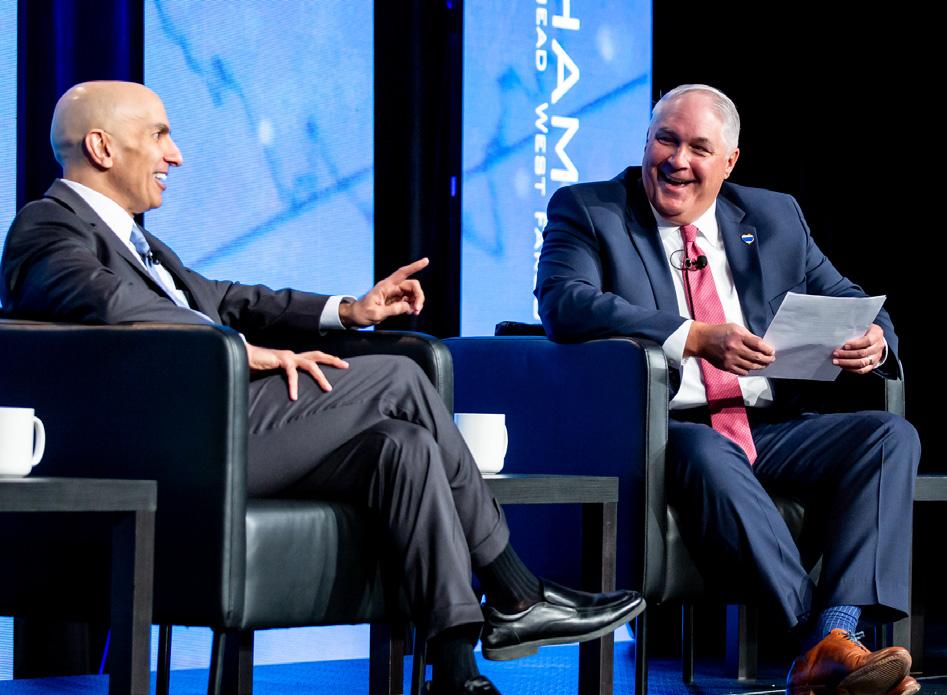

conomic conditions are shifting, and the signals are not always pointing in the same direction.
Inflation has eased, but uncertainty remains. Interest rates continue to influence investment decisions. Workforce constraints persist across industries. At the same time, emerging technologies such as artificial intelligence are beginning to reshape how businesses operate and compete.
For leaders across the Midwest, the challenge is not just understanding these forces but determining how to respond.
That intersection was the focus of the Midwest Economic Outlook Summit, where business leaders, policymakers and industry experts gathered to examine the conditions shaping the region’s economic future.
Understanding where the economy is headed requires looking beyond a single indicator.
During the Summit, national and global trends were brought into focus through a discussion with Neel Kashkari, president and CEO of the Federal Reserve Bank of Minneapolis. The conversation highlighted how inflation, interest rates and federal policy continue to influence business conditions across the country and within the Upper Midwest.
At the same time, leaders pointed to the growing role of artificial intelligence in shaping productivity and long-term economic growth. Businesses are not waiting to adopt these tools. Many are already integrating them into daily operations,
using technology to improve efficiency and remain competitive in a tight labor market.
Trade dynamics are also adding complexity. Shifts in global relationships, tariff strategy and supply chain decisions are influencing how companies approach expansion, investment and risk.
Taken together, these signals reinforce a clear reality for business leaders. Economic conditions are evolving, and decisions made today must account for both shortterm uncertainty and long-term transformation.
Long-term growth in the Midwest is increasingly tied to one factor: people.

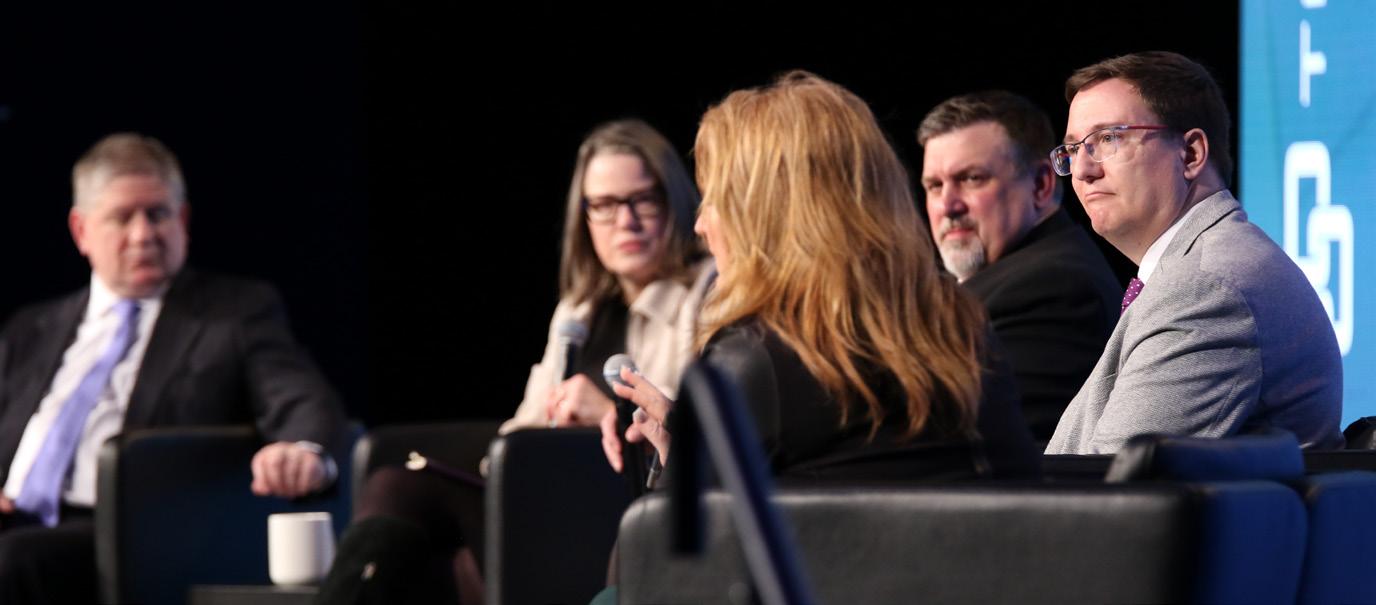
Across the region, labor force constraints influence how businesses expand and invest. Unemployment remains low, and in many industries, demand for talent outpaces supply.
At the Summit, regional leaders pointed to demographic trends as a key driver. Population growth is slowing, and the workforce is not replenishing at the pace needed to sustain economic expansion.
That shift is forcing businesses and communities to think differently about how talent is developed, attracted and retained.
Immigration is one part of that conversation. As a contributor to labor force growth, it is increasingly relevant for states working to maintain a competitive workforce.
Employers are adapting. Some are investing in automation and new technologies to offset labor shortages. Others are strengthening partnerships with education and training providers to better align talent pipelines with industry needs.
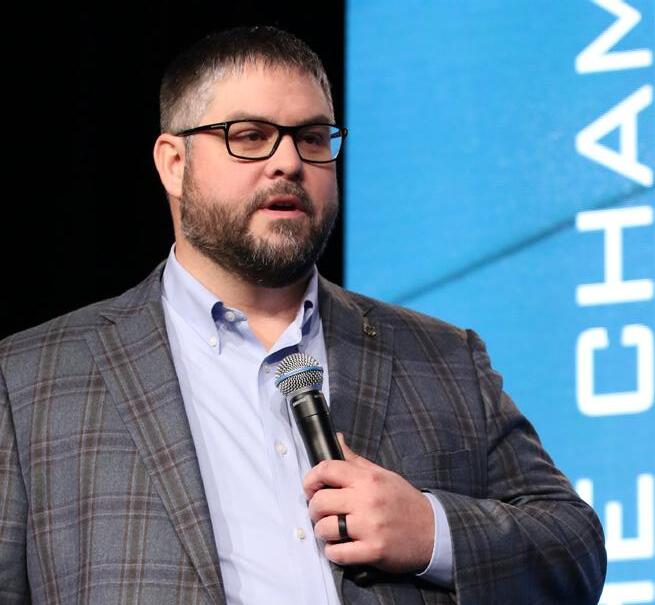
In a globally competitive market, workforce must be central to regional economic strategies.
How regions respond will influence their ability to grow and compete.
While economic signals and workforce trends set the conditions, industries across the Midwest are adjusting how they operate.
In health care, technology is helping address access and efficiency. Tools that reduce administrative burden allow providers to focus more time on patient care, while telehealth expands access across rural communities.
Manufacturing is also evolving. As roles become more technical and automated, the industry is redefining modern manufacturing work. This shift is changing how employers think about training, safety and long-term career pathways.
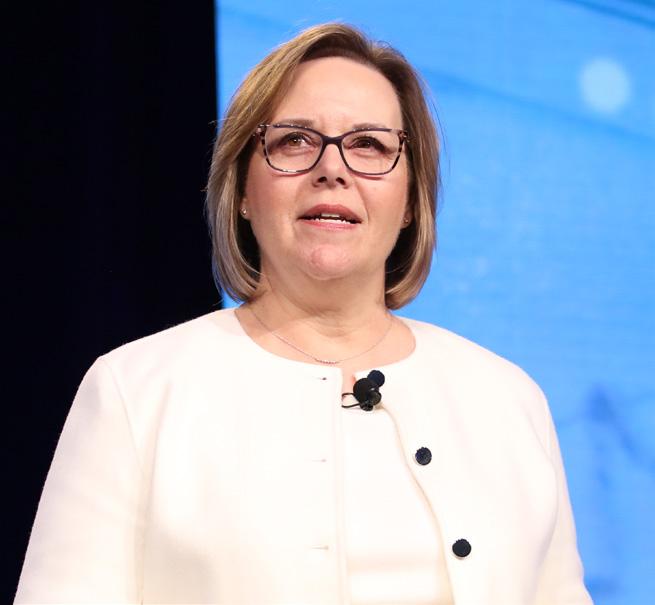
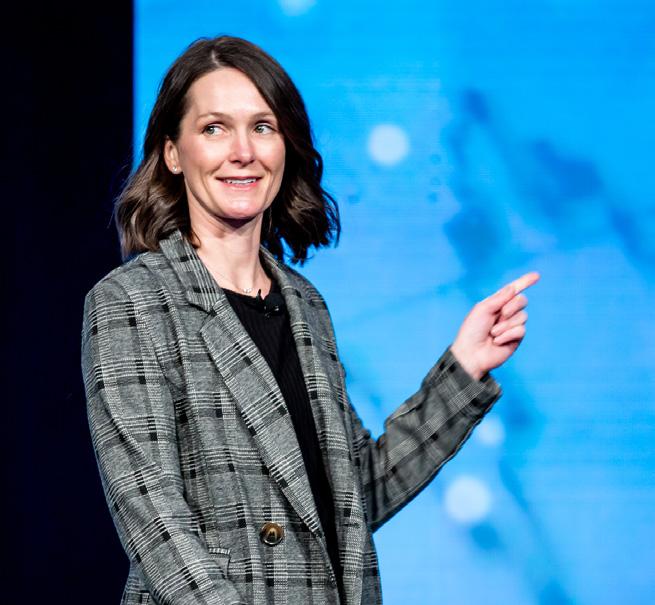
Technology is shaping how businesses operate, and industry leaders are not waiting for conditions to stabilize. They are aligning operations, technology and workforce strategies to remain competitive.
The Midwest has long been defined by resilient businesses and a strong work ethic. Those traits remain, but they are no longer the full story.
Economic conditions are shifting. Workforce dynamics are changing. Technology is accelerating how businesses operate and compete.
Leaders across the region are navigating these forces in real time, making decisions that will shape their organizations and the long-term trajectory of the Midwest economy.
Understanding these dynamics is no longer optional. It is part of leading today.
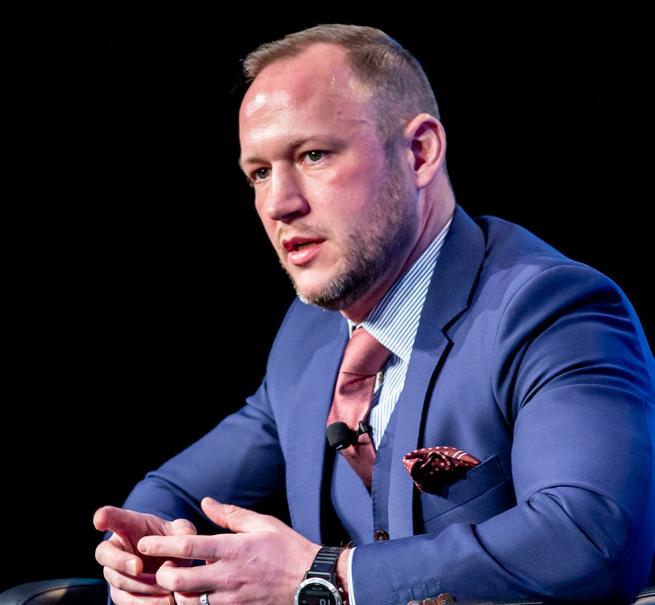
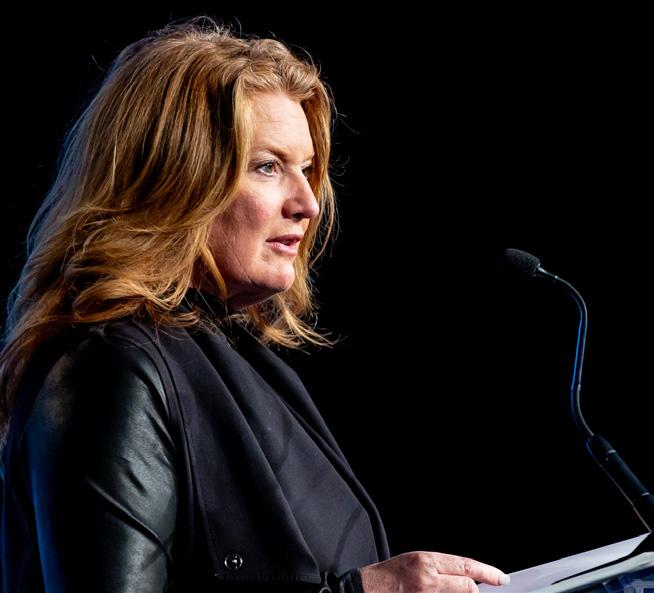

NEEL KASHKARI
president and CEO, Federal Reserve Bank of Minneapolis
NIGEL HAARSTAD
state demographer, North Dakota Dept. of Commerce
ARIK SPENCER
president and CEO, Greater North Dakota Chamber
SUSAN BROWER
Minnesota state demographer, Minnesota State Demographic Center
KURT ZELLERS CEO, Minnesota Business Partnership
JIM RYAN chairman and CEO, Old National Bank
KRISTIN HERRMANN chief financial officer (Fargo), Sanford Health
JON GRANDON
vice president, attachments, parts & service, Bobcat Company
ANGIE WHITCOMB president and CEO, Hospitality Minnesota
DAVID O'HARA managing director, MKI Global Partners
GEORGES TIPPENS
VP of finance & administration, Minnesota State Moorhead

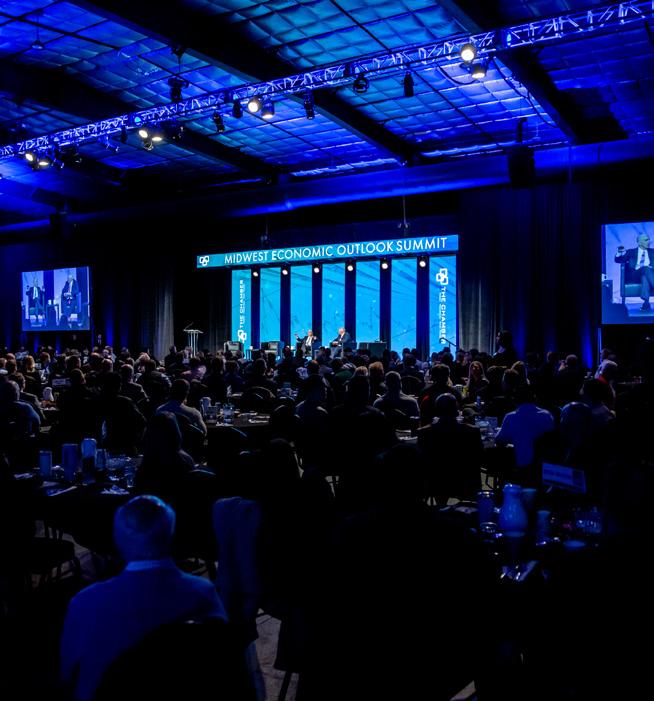
















TUESDAY, JUNE 9
8-11 a.m. | Red River Valley Fairgrounds
Butler Machinery Arena



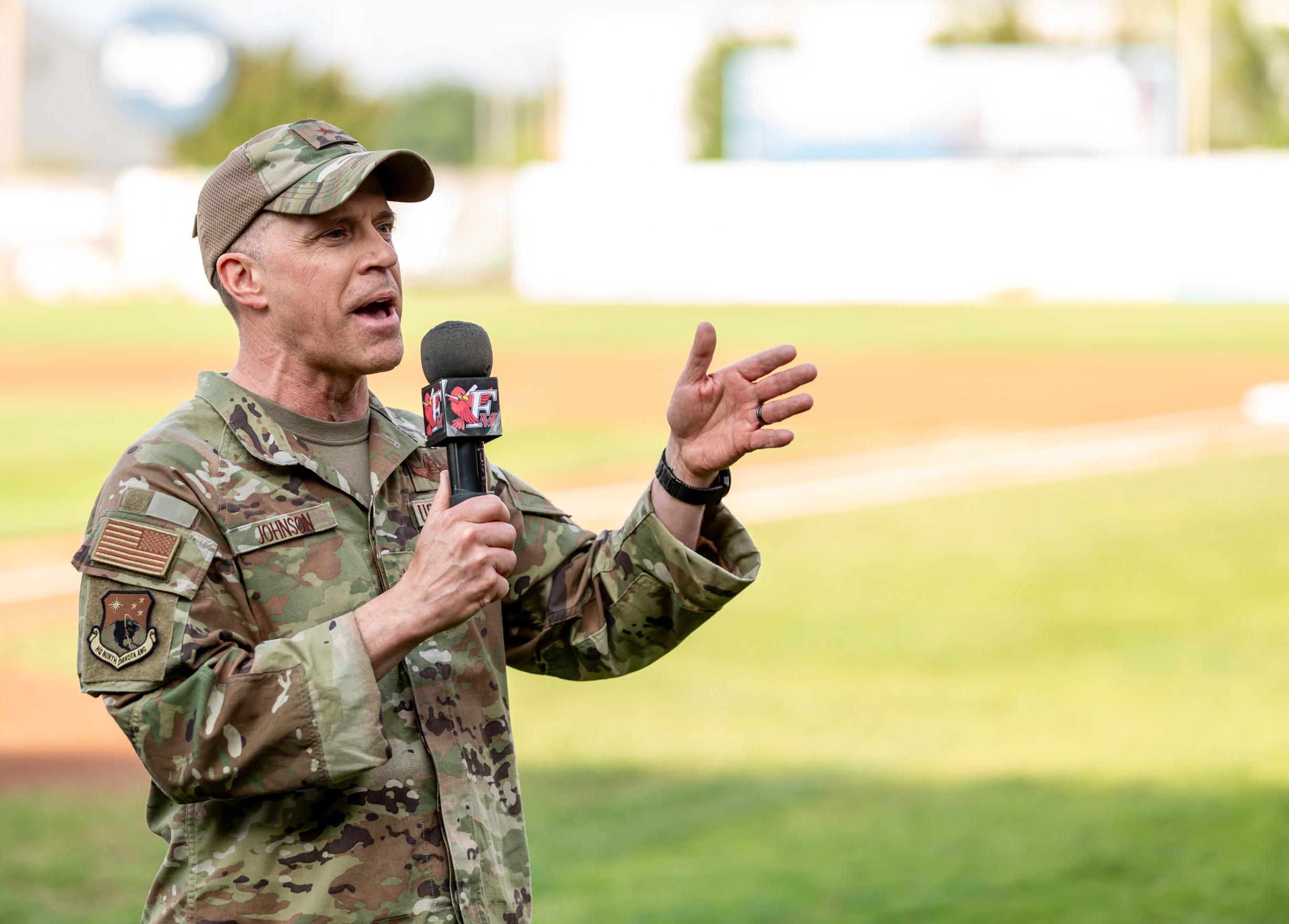
Purchase tickets for military members and their families to attend.
Each year, The Chamber’s Military Appreciation Night brings together military members and their families to the ballpark to be recognized in a meaningful, memorable way.
This year, as we commemorate America’s 250th birthday, the Fargo-Moorhead RedHawks game becomes a place where patriotism, community and gratitude come together.
When you purchase a ticket, it goes directly to a military member or family. Not for you to attend, but for them to experience the night.
If you’d like to attend the game, tickets are available for personal purchase at FMRedHawks.com
WHAT YOUR SUPPORT DOES
• Provides tickets for military families
• Expands access so more can attend
• Shows visible support from the business community
• Helps make this event possible year after year
THANK YOU TO THIS YEAR’S SPONSORS
WEDNESDAY, JUNE 24
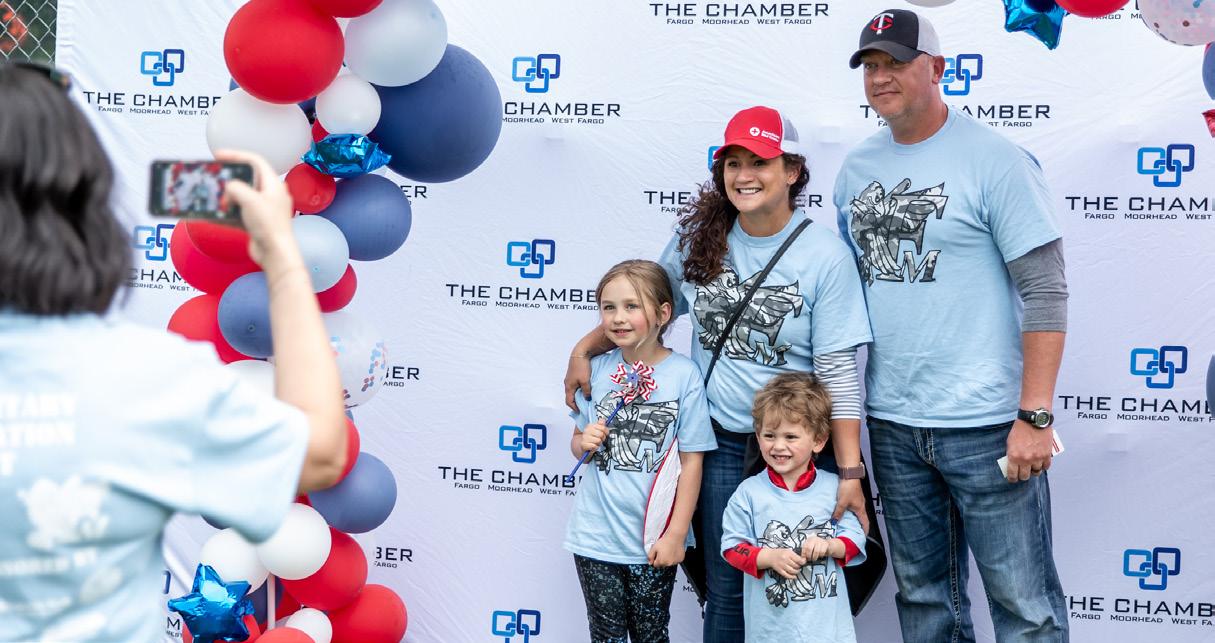
Support from local businesses helps make this event possible and expands access for more military families to attend.




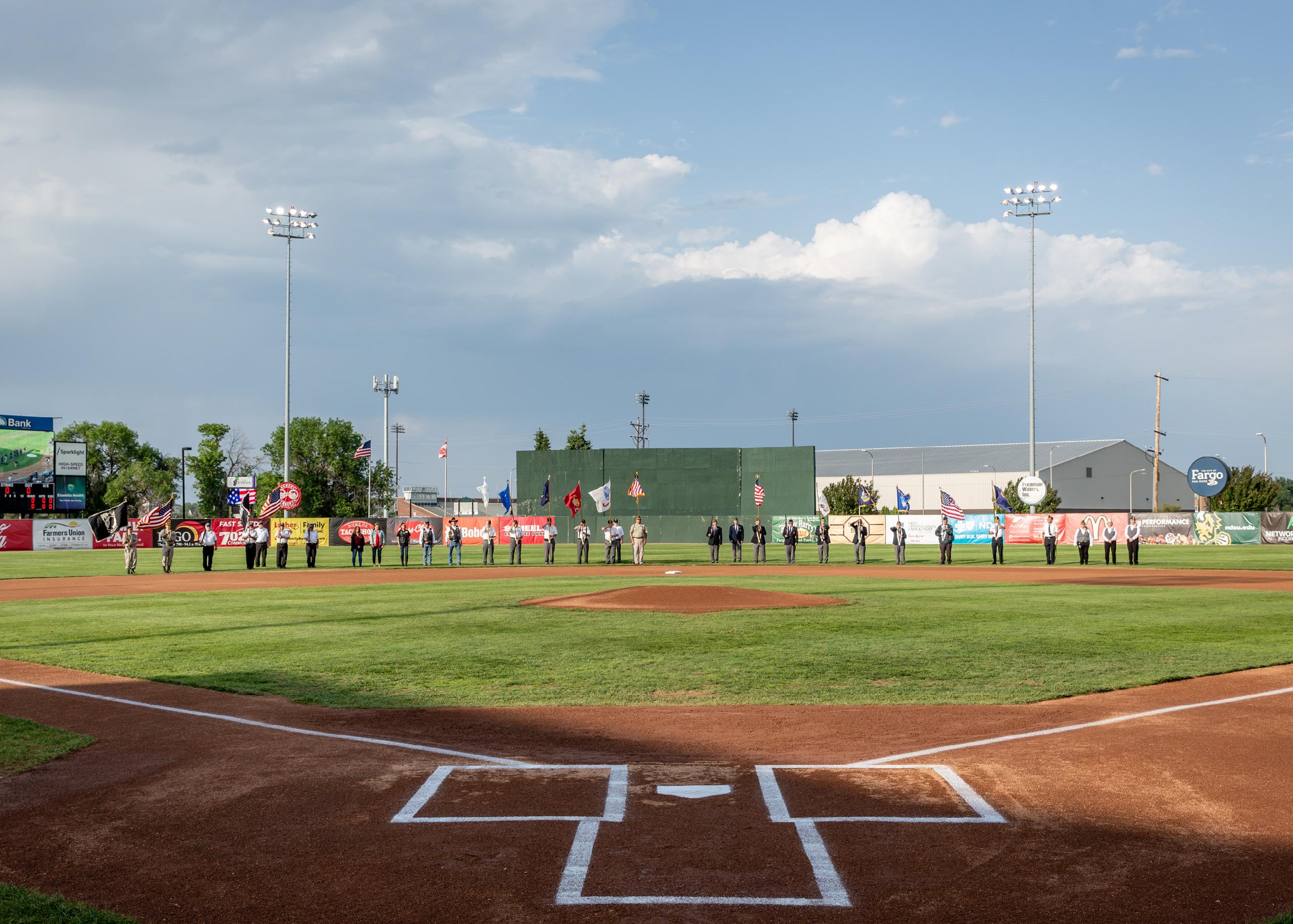
Be
It is a simple way to show appreciation and make sure more families are included.
Sponsor a ticket. Support a family. HOMETOWN HERO SPONSORS
SCAN TO PURCHASE

The Chamber Challenge Golf Outing returns with two tournaments to choose from, each offering its own course, setting and experience. Choose the date that fits your schedule or take advantage of both opportunities to connect with professionals from across the region.
This is where conversations happen, relationships take shape and business moves forward.
YOUR FIRST SHOT AT THE TEE BOX

HAWLEY GOLF CLUB
WEDNESDAY, JULY 9 | 11 A.M.
EDGEWOOD GOLF COURSE WEDNESDAY, JULY 15 | 11 A.M.
THANK YOU TO THIS YEAR’S SPONSORS
HAWLEY GOLF CLUB
SNACK CART SPONSORS

EDGEWOOD GOLF COURSE
LEADERBOARD SPONSOR

SNACK CART SPONSORS
TEE BOX SPONSORS
• Cardinal IG
• Cass County Electric Cooperative
• Cornerstone Bank
• Mid-States Wireless, Inc
• S & S Promotions
• Starion Bank
PUTTING GREEN SPONSOR
Magnifi Financial
DRIVING GREEN SPONSOR
Legacy Financial Partners of Ameriprise Financial Services, LLC
HOLE SPONSOR
Fargo Parks Sports Center
Participants will enjoy 18 holes of golf, on-course contests and sponsor activities throughout the day, followed by the 19th Hole Happy Hour Social with food, drinks and networking. Each tournament brings together professionals from across the Fargo-Moorhead-West Fargo region, creating space to build relationships, stay visible and engage in a setting that feels natural and approachable.
Choose your course, secure your team and be part of a day designed to keep you connected to the region’s business community.
JOIN US!
TEE BOX SPONSORS
• 702 Communications
• AdShark
• Aspire Optical Co. of Fargo
• Cardinal IG
• Cornerstone Bank
• Eide Bailly LLP
• Express Employment Professionals
• Fargo Park District
• First International Bank & Trust
• First Western Bank
• Grand View Lodge
• Heritage Homes, LLC
• Minnesota State Moorhead (MSUM)
• Mortenson
• Pro Resources
• Starion Bank
• Vance Thompson Vision
• Western State Bank
$5,000 ON THE LINE
300 BALLS. ONE DROP. TWO WINNERS.
On July 15 at Edgewood Golf Course, 300 numbered golf balls will drop onto the practice green. The two closest to the pin take home the prizes. No tournament registration required. No need to be present to win.
• $50 per ball
• No purchase limit
• Venmo or cash accepted
PURCHASE YOUR GOLF BALLS
• First place: up to $5,000
• Second place: up to $1,000
Your ticket is not valid until The Chamber has received payment.
Cash can be delivered to The Chamber: 3312 42nd St. S, Ste. 101, Fargo, N.D. 58104
Digital payments will be accepted via Venmo: Venmo: @FMWFChamber | Memo: Golf Ball Drop + your first and last name
Proceeds support The Chamber’s Leadership FMWF program, Military Affairs initiatives and Chamber Impact Day.
« SCAN TO PURCHASE YOUR GOLF BALLS




• 50+ years in education and academic leadership
• Concordia College professor, department chair and assistant academic dean
• National leadership as president of the American Association of Colleges for Teacher Education
• First woman to serve as interim president of Oak Grove Lutheran School
• Regional influence across civic, nonprofit and philanthropic leadership
• Generational impact through students, educators and institutions shaped by her work


For more than five decades, Marilyn Guy has shaped the educational foundation of the Fargo-Moorhead-West Fargo region.
As the 2026 Legacy Leader, she is recognized for a career defined by leadership, service and lasting influence across generations.
Guy’s leadership extended from the classroom to the national stage, where she helped shape conversations around teacher education, accreditation and the connection between higher education and K-12 systems. Across every role, her work has been grounded in mentorship, institutional stewardship and a
Her legacy lives in the educators she prepared, the institutions she strengthened and the standards she helped elevate across the region.
The Legacy Leader recognition now takes its place at The Awards, where The Chamber honors the businesses and individuals shaping the future of the




Recognizing the businesses and individuals driving regional progress
Selected from across the region, these finalists represent a high standard of performance, leadership and impact.
BUSINESS OF THE YEAR
SMALL BUSINESS OF THE YEAR

EMERGING BUSINESS OF THE YEAR


Tyler Brandriet
Casondra Duckworth
JT Froning
Hans Grafstrom
Whitney Jensen
Alex Lacey
Jordan Ottoson
Brandon Schulze
NONPROFIT OF THE YEAR
Shannon Bock
Don Dabbert, Jr
Leola Daul
Dan Kleist
Noelle Riehl
Shannon Roers
Stephen Wonderlich
Bryan Zingraf
Formerly known as the ChamberChoice Awards, The Awards reflect a broader recognition of how impact happens across our business community.
For the first time, individual leaders are recognized alongside organizations, acknowledging the people driving progress behind the scenes and at the forefront.
These awards represent sustained leadership, forward-thinking ideas and the collective momentum shaping the trajectory of our region.
Finalists are determined through nominations and evaluated by an independent panel, ensuring a thoughtful and credible selection process.
SEE WHO TAKES THE STAGE
Awardees were announced live at The Awards on May 7.
See the awardees and explore more about the businesses and leaders recognized this year.
VIEW AWARDEES

THANK YOU TO OUR SPONSORS
AWARD SPONSORS

LEGACY LEADER AWARD SPONSOR
CORPORATE SPONSORS
Alerus | Apex Physical Therapy | BeTold | Blue Cross Blue Shield of North Dakota
Bobcat Company | Cass County Electric Cooperative | Choice Bank | Cornerstone Bank
Eide Bailly LLP | Essentia Health | Fargo-Moorhead Area Foundation | First International Bank & Trust
Gate City Bank | Great Plains Food Bank | Heart-n-Soul Community Cafe | KFGO AM 790/104.7 FM
Legacy Wealth Management | Marvin | Moore Engineering, Inc. | Old National Bank
PACK Power LLC | Packet Digital | Red River Valley Fair Association | ROERS
The 44 Venue | TrueNorth Steel | Visit Fargo-Moorhead | Western State Bank
YMCA of the Northern Sky | Zere Berg Architects / Gehrtz Construction Services
EVENT PRODUCTION
SPONSOR

EVENT PHOTOGRAPHY

VENUE SPONSOR
Congrats to these members celebrating milestone anniversaries with The Chamber in April, May and June! SEE OUR ONLINE MEMBER DIRECTORY
• F-M Forklift Sales & Service, Inc.
• Red River Commodities, Inc.

30 YEARS
• C'mon Inn
• Fargo-Moorhead Symphony Orchestra
10 YEARS
• A-1 Sewer & Drain, Inc.
• A-OX Welding Supply, Inc.
• APi HVAC Services Inc dba Metropolitan Mechanical Contractors, Inc.
• Allegro Group
• Bill's Gun Shop & Range
• Chef's Table Catering
• Dixon Insurance
• Folkways
• New Perspective Senior Living
• Power Plate Meals
• Puzzled Escape Rooms
• Roll-A-Ramp
• WoodSpring Suites
25 YEARS
• Burdick Job Corps Center
• Network Center, Inc.
• Nexus-PATH Family Healing
• Quality Auto Body Shop, Inc.
5 YEARS
• Amazon
• Country Financial
• Legacy Plumbing LLC
• Penske Truck Leasing
• Premier Wealth Management Group
• ShareHouse Foundation
• Soul Solutions Recovery Center
• Suite Shots
• Velocity Public Affairs
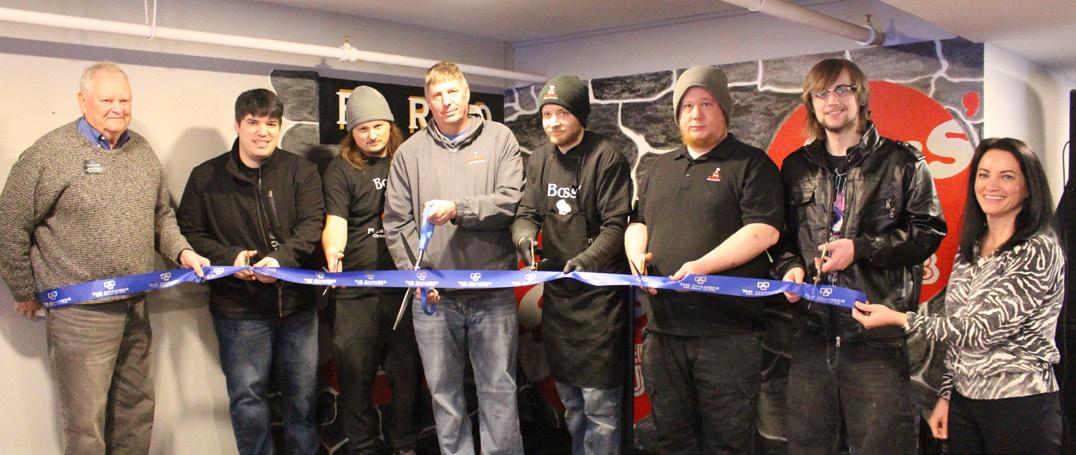
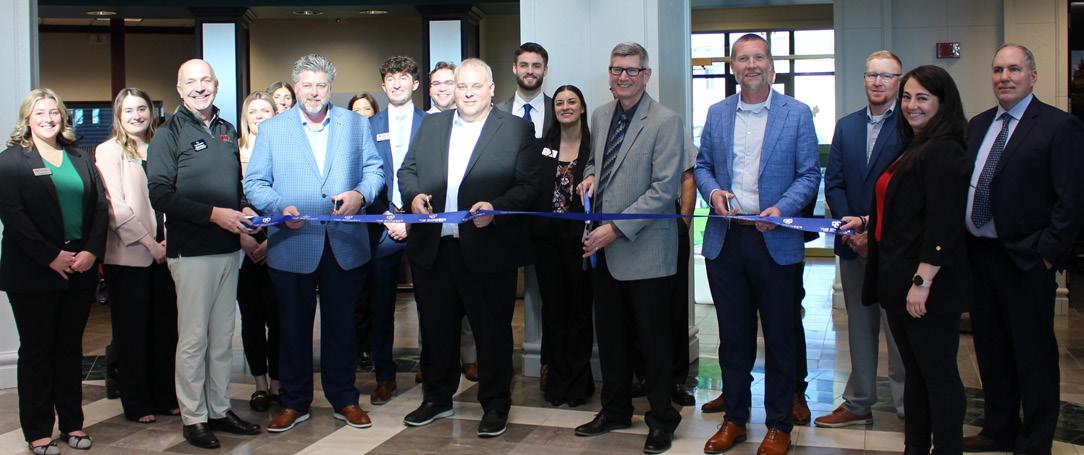
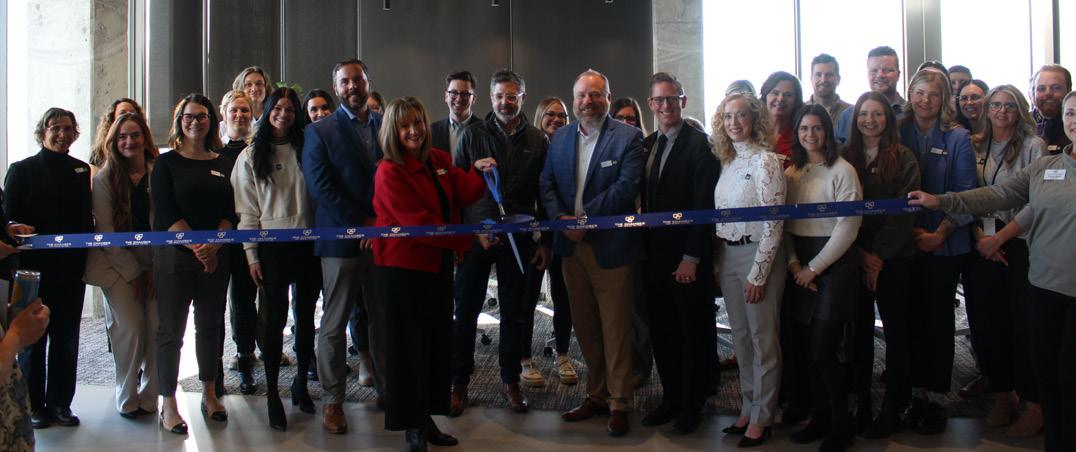
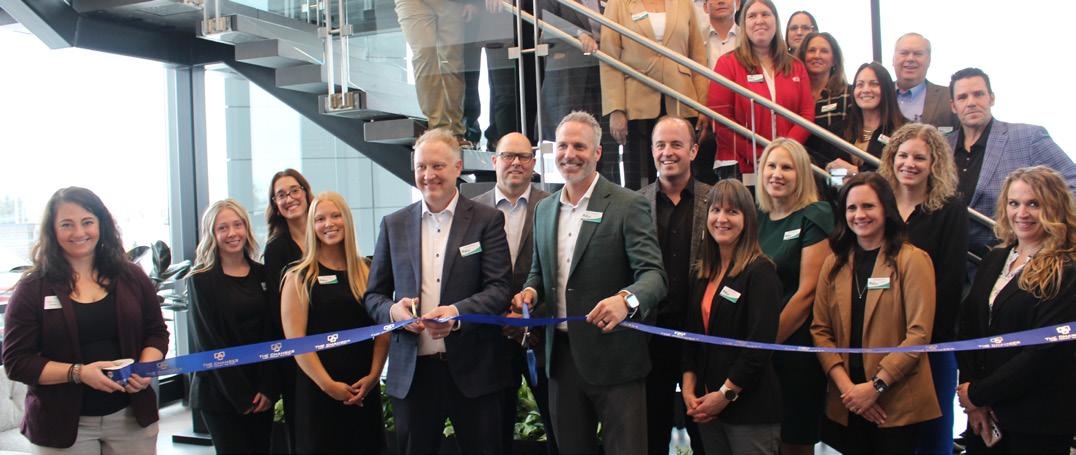
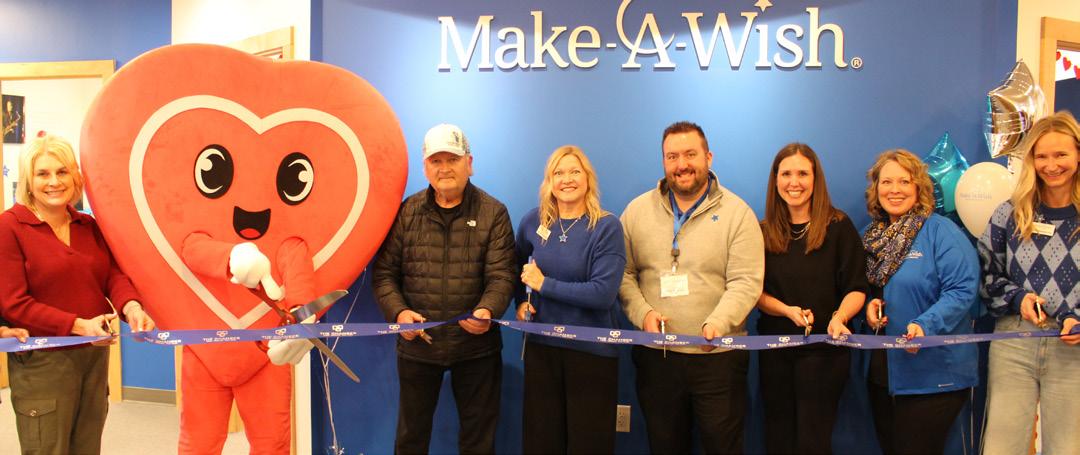
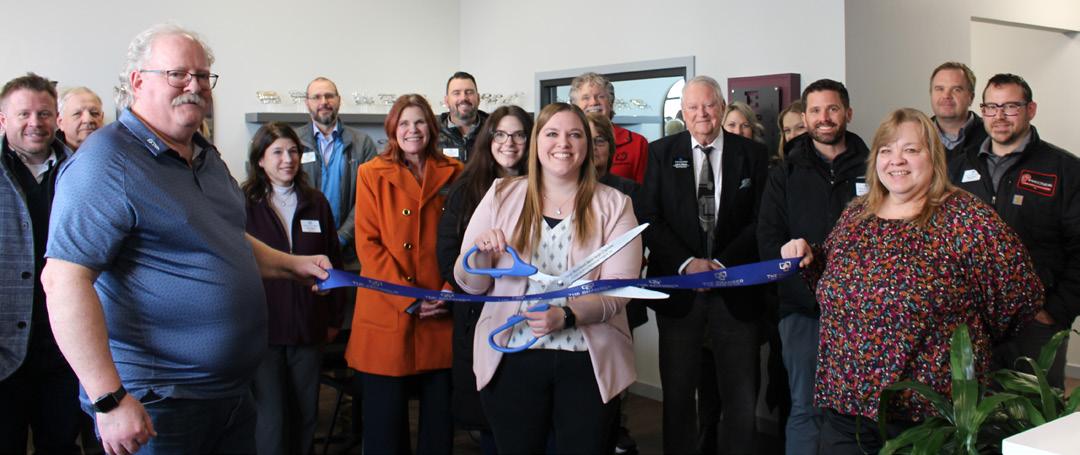

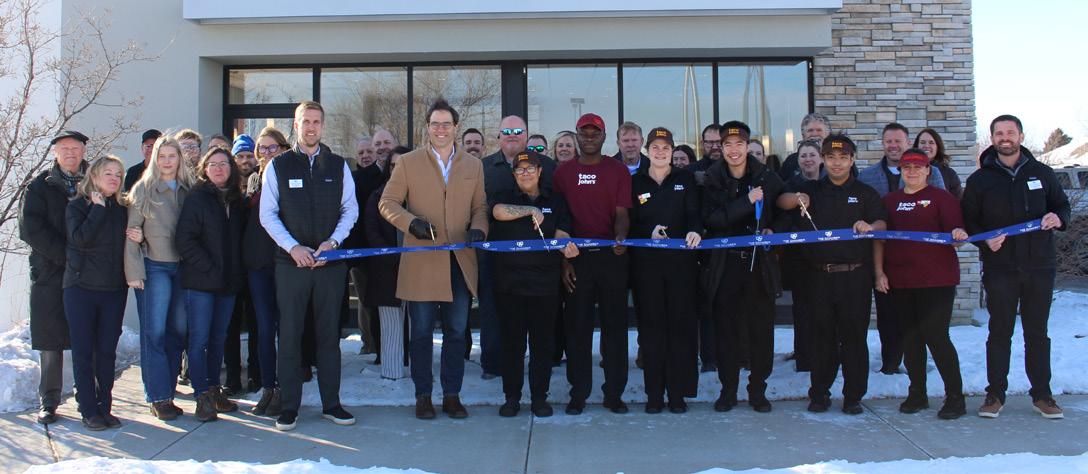
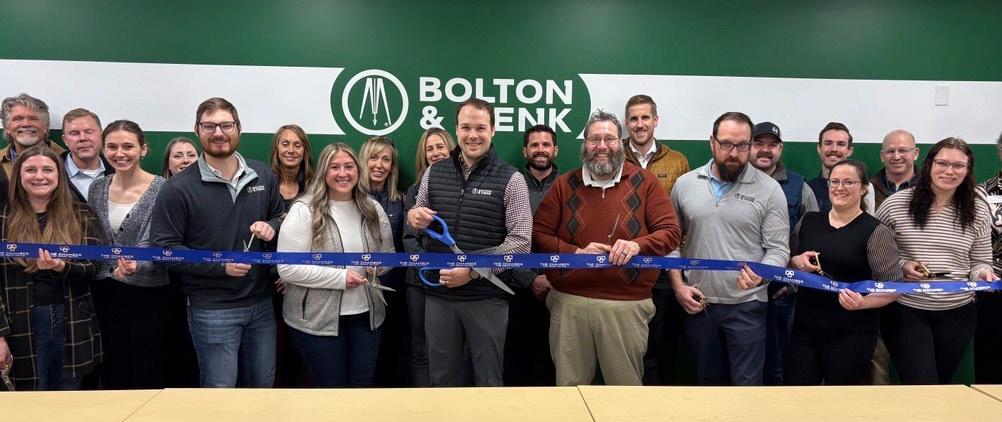
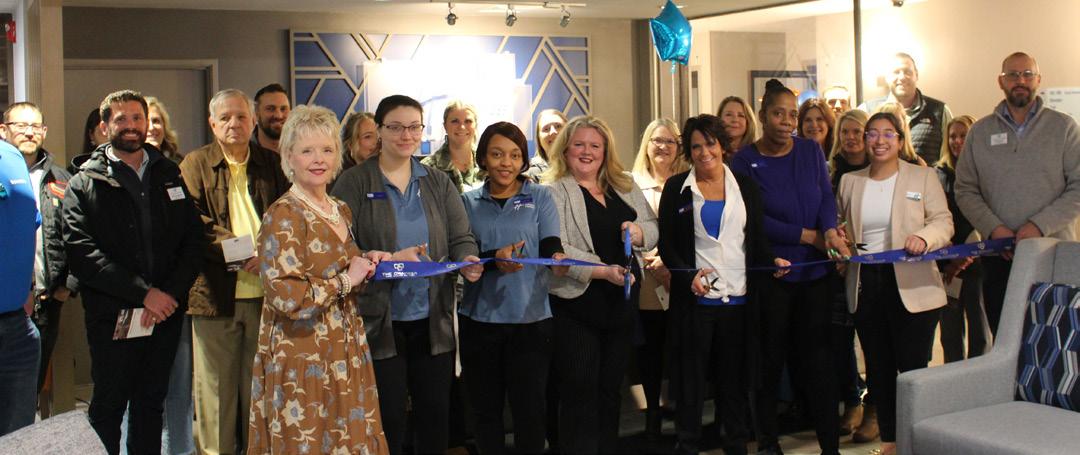
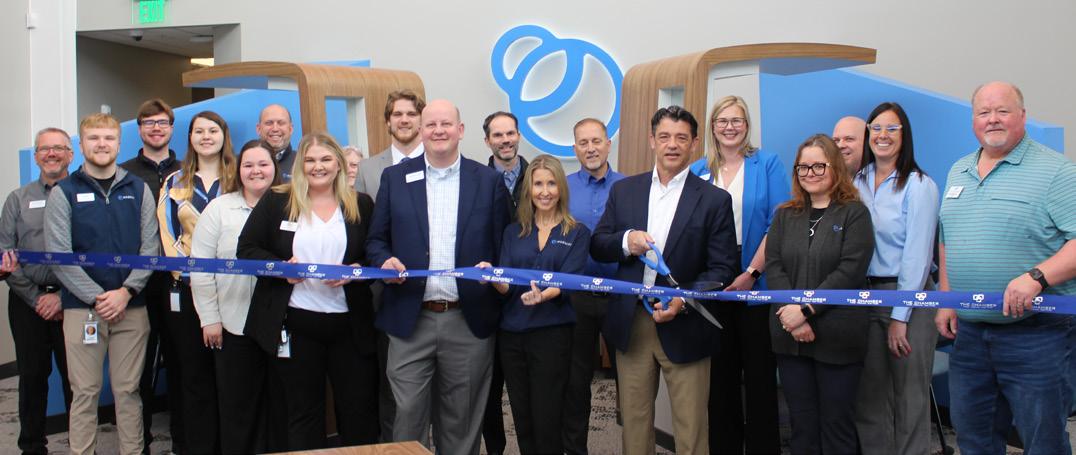

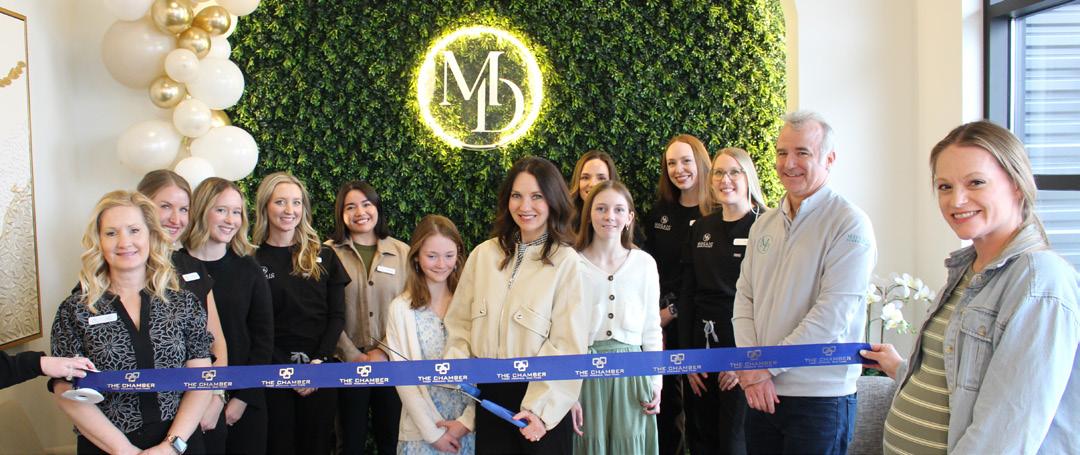


Join us in welcoming the following businesses that joined The Chamber in January, February and March.
We thank each of you for your support in our mission and investment in your business and community. Please consider doing business with your fellow Chamber members first!
Janitorial Services - Home and Office
aqc-cleaning.com
Locally owned, familyoperated company providing reliable commercial cleaning services that keep workspaces clean and professional.
Nonprofit https://blamebates.com/ Nonprofit focused on supporting individuals affected by mental health and substance use disorders through recovery-centered programs.
Network Inc.
Family, Community and Nonprofit chd.org
Organization providing financial support, educational opportunities and community connections for children and families facing medical challenges.
Agency
Health Care
calvaryplacementagency.com
Agency providing home-based case management, wellness checks, life skills and resources to ensure the success of integrating back into everyday life in the community.
Vizance
Finance and Insurance
vizance.com/choice-insurance
Insurance provider offering coverage solutions for business, personal and agricultural needs.
Other emporium706.com
Local boutique offering gemstones, crystals, handcrafted jewelry and unique gifts.
Medical – Ophthalmologists/Optometrists/ Opticians
enlightenedeyecarefargo.com
Locally owned optometry office providing comprehensive eye exams and personalized care.
Museums fmsm.org
Community initiative working to develop a hands-on science museum focused on STEM education and regional innovation.
Insurance
Finance and Insurance
flomregionmutual.com
Regional insurance provider offering coverage through a network of independent agents.
Dance – Instruction fredastaire.com/fargo-west
Dance studio offering instruction for all experience levels with a focus on technique and performance.
&
Arts, Culture and Entertainment gatheredfm.com
Indoor play space and creative studio designed for children and families.
Business and Professional Services Business Services
goldenpathsolutions.com
Firm helping students and employers align skills, education and career pathways.
Golf – Resorts grandviewlodge.com
Year-round resort offering lodging, golf and recreational experiences.
Contractors – Mechanical Contractors –Plumbing Contractors - Specialty Services harriscompany.com
Mechanical contractor providing design, construction and maintenance services for commercial and industrial systems.
Architects,
Architects hepperolsonarchitects.com
Architecture firm specializing in projects for small communities across the region.
Business and Professional Services houserlabs.org
Nonprofit biotech incubator supporting innovation and access in drug development.
Family, Community and Nonprofit matthewsvoiceproject.org
Nonprofit supporting local high school students experiencing homelessness.
Family, Community and Nonprofit MedicalPhysical/Occupational Therapy mynaearlyintervention.com
Provides therapy services for children ages 0–3 with developmental delays.
Health – Nutrition herbzandspicez.com
Botanical shop offering smallbatch products focused on wellness and natural health.
Transportation Services – Buses Transportation Services olanderbus.com
Provides school transportation and charter motorcoach services across the region.
Contractors – Electrical packpower.com
Electrical contractor specializing in high-voltage infrastructure and energy solutions.
Employment and Staffing, Disability and Rehabilitation Services, Employment Services productivemn.org
Nonprofit providing employment services, training and job placement for individuals with disabilities.
Wellness
revivmedical.com
Wellness provider focused on whole-person care through non-invasive treatments.
Agriculture Products saybroker.com
E-commerce company specializing in outdoor power equipment and backyard products.
Financial Consultants/Advisors Finance and Insurance Financial Services sequoia-financial.com
Wealth management firm offering long-term financial planning and investment services.
Financial Institutions simplicitygroup.com
Financial services partner delivering wealth accumulation and protection solutions.
Pet Supplies and Services smartk9training.com
Dog training service focused on individualized attention and instruction.
Janitorial Services - Home and Office snowdenprofessionalcleaning.com
Professional cleaning company providing reliable services for commercial spaces.
Clubs and Organizations technd.org
Statewide organization supporting the technology sector through advocacy and workforce initiatives.
Real Estate - Titles/Abstracts/Closings thetitleteam.com
Title company providing closing and real estate transaction services.
Finance and Insurance Financial Services vandamfinancialgroup.com
Financial planning firm helping clients build personalized strategies for long-term stability.
Real Estate and Construction Real Estate - Real Estate - Commercial/Industrial Real Estate –Investment visionrealtyfm.com
Full-service brokerage assisting with buying, selling and leasing across the region.
Contractors - Specialty Services
wir3delectric.com
Electrical and automation services
provider specializing in HVAC controls and energy systems.
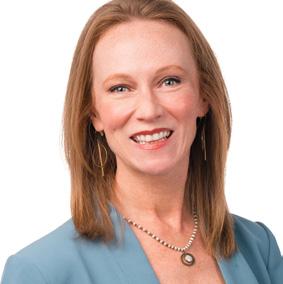
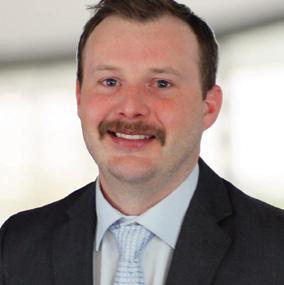

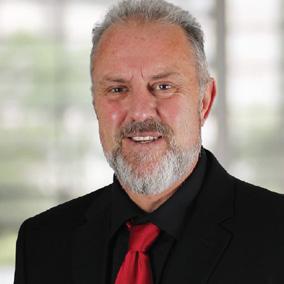
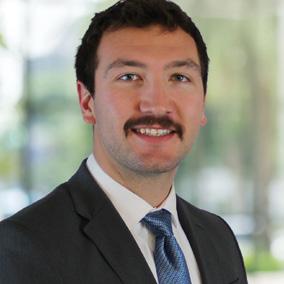

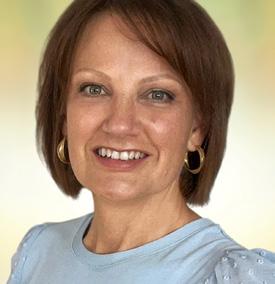
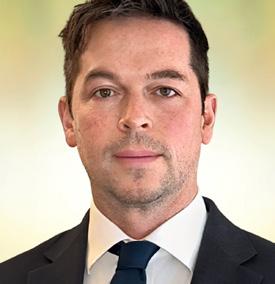

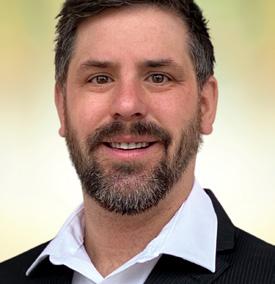

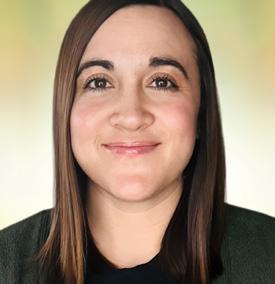










Signature Events Highlighted
INFLUENCER BREAKFAST
Tuesday, May 5
8 – 9:30 a.m.
Kingpinz Social
MEMBER MINGLE
Thursday, May 7
7:30 – 9 a.m.
Chamber Community Room
PUBLIC POLICY COMMITTEE MEETING
Thursday, May 7
8 – 9 a.m.
Location TBD
THE AWARDS
Thursday, May 7
5 – 8:30 p.m.
Delta Hotel by Marriott Fargo
YPN VOLUNTEER EVENT
Tuesday, May 12
3:30 – 5 p.m.
Location TBD
LEADERSHIP FMWF
Session 10
Thursday, May 14
8 a.m. – 3 p.m. Border States
MEMBER MINGLE
Thursday, June 4
7:30 – 9 a.m.
Chamber Community Room
PUBLIC POLICY COMMITTEE MEETING
Thursday, June 4
8 – 9 a.m.
Location TBD
CHAMBER CHALLENGE GOLF OUTING - HAWLEY
Thursday, July 9
11 a.m. – 6 p.m. Hawley Golf Club
YPN: COFFEE AND CONNECTIONS
Friday, July 10
8 – 9:30 a.m.
Location TBD
MILITARY AFFAIRS COMMITTEE MEETING
Thursday, June 4
11 a.m. – Noon Chamber Community Room
MIDWEST AGRICULTURE SUMMIT
Tuesday, June 9
8 – 11 a.m. Butler Machinery Arena
EDVENTURES WEEK
Monday, June 15 – Friday, June 19
Various times
Various locations
WELCOME TO YPN
Thursday, June 18
3:30 – 5 p.m.
Location TBD
LEADERSHIP FMWF GRADUATION SOCIAL
Thursday, May 14 3 – 5 p.m. Sanctuary Events Center
WASHINGTON, D.C. BUSINESS FLY IN Monday, May 18 –Wednesday, May 20 Washington, D.C.
CORPORATE CUP
Thursday, May 21 12 – 5 p.m. MSUM Football Field/ Nemzek Fieldhouse
WOMEN CONNECT
Tuesday, May 26
3:30 – 5 p.m. Armory Event Center
MILITARY APPRECIATION NIGHT AT THE REDHAWKS
Wednesday, June 24 5:30 – 10 p.m.
Newman Outdoor Stadium
YPN: BUSINESS TOUR
Thursday, June 25 4 – 7 p.m.
Location TBD
CHAMBER CHALLENGE GOLF OUTING - EDGEWOOD
Wednesday, July 15 11 a.m. – 6 p.m. Edgewood Golf Course
MINN. LEGISLATIVE WRAP UP
Thursday, July 16
4 – 6 p.m.
Location TBD
YPN: OFF THE CLOCK SOCIAL
Wednesday, July 22
5 – 7 p.m.
Location TBD
PUBLIC POLICY COMMITTEE MEETING
Thursday, July 23
8 – 9 a.m.
Chamber Community Room
WOMEN CONNECT SUMMER EVENT
Tuesday, June 30 3:30 – 5 p.m. Armory Event Center
WOMEN CONNECT
Tuesday, July 28 3:30 – 5 p.m. Armory Event Center












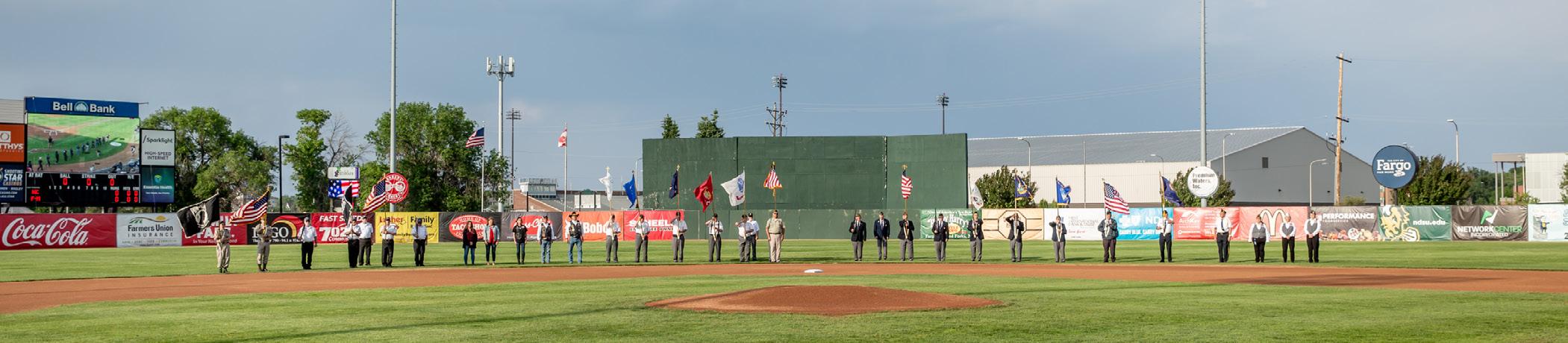

Thank you to these leading businesses for investing in the future of our region. Innovate28 powers The Chamber’s Public Policy and Workforce and Talent efforts.
| $125,000+ ANNUALLY




CHAMPION | $15,000+ ANNUALLY



SUPPORTER | $5,000 ANNUALLY