

Tuesday, April 14 | Dakota Medical Foundation
“Collective challenges inform collective solutions”
(Manufacturing Institute, 2025)
Jane Vangsness Frisch, Ph.D.
Vice President of Workforce – FMWF Chamber

• Quick Introductions (tables)
• Connect/Network
• Review and Recap from last ISP Meeting
• Good Jobs Challenge
• Update on Workforce Data
• What was our focus and what is next?
• ND RWIP Award – Track A (FUNDED!)
• Real Time Talent = Talent Pipeline Management Opportunity
• Discussion and Action Items
• Next Steps
• Name • Role
• Connection to or Interest regarding Advanced Manufacturing
• Industry Sector Partnership
• Driven by employer needs
• Who? employers, training/education providers, government agencies, community partners, non-profits, etc.
• Collaboratively address workforce needs through supporting growth in the industry
• Funding, innovation, regulation, upskilling/education path development
• Focused on identifying and addressing both the opportunities and gaps of the region’s workforce
Jane Vangsness Frisch, Ph.D.
Vice President of Workforce – FMWF Chamber
Economic Development Administration
Goal
Enhance our regional workforce by helping over 900 individuals from underserved populations in North Dakota and Minnesota secure goodpaying jobs by October 2026
Upward Mobility
Current or Future Positions
Striving for $45,000
Numbers through December 31, 2025
Submitted January 30, 2026
465 Total Placed
• Funds are still available!
• $5,000 per participant
• Must complete by September 30, 2026
• Various Training and Educationn Providers
• Customized training
• Focused on upskilling/placement into good jobs
• Approval/tracking required

% of working-age population that is either employed or actively seeking work
• Fargo-Moorhead MSA: 71.0%
• National: 68%

Our region’s growth is outpacing national population growth
• Since 2020: 8.6% increase • 2025 – 2030: 7.1% increase

North Dakota has 47 available workers for every 100 open jobs
Minnesota has 83 available workers for every 100 open jobs

US has 100 available workers for every 100 open jobs
• Workforce shortages remain the top barrier to industry growth
• Immigration has emerged as a critical workforce solution
• Increased focus on AI, automation, and upskilling
• Stronger push for work-based learning & early career exposure
• Retention, leadership development, and career pathways are key priorities
• Greater need for coordination across industry, education, and partners
• RWIP Funding
Expand Work-Based Learning & Apprenticeships
Insider Access: April 24th
PWP Grant Application
Invest in modern equipment, simulations, and tech-enabled training
Wraparound Skill Development
Leadership, soft skills, and frontline supervisor training
Course development through Good Jobs Challenge
English Language Learning (ELL) and accessible upskilling pathways
Adult Learning Center (resource)
• Adopt Skills-Based & Attitude-Based Hiring
• Continue momentum from Workforce Forum
• Strengthen Talent Pipeline Engagement
• Coordination throughout the sector on skills and competencies needed
• Work-Based Learning opportunities
• Golden Path Solutions: Compass
• Insider Access: April 24th
• PWP Grant Application
• Improve Integration & Retention
• Employer supported immigration pathways
• Collaborate with ELL providers, workforce agencies, community partners
• CAPLP, SENDCAA, JobServiceND
• Invest in leadership development and workplace supports
etc.)
• Lead Coordinated Advocacy Efforts
• Immigration, childcare, housing, and workforce participation supports
• UWCC Collaboration: Childcare & ALICE data
• Immigration insights and perspectives provided insight to Chamber’s Public Policy Position
• Strengthen Workforce System Navigation
• Access to immigration resources, training programs, and workforce tools
• Continue Convening & Sector Strategy Work
• Maintain employer-led discussions and alignment
• Support RWIP Track A sector strategy development
• Advance Regional Workforce Innovation
• Lead future conversations on AI & automation impacts
• Focus: 2026 Tech Summit → August 2026 (more information coming!)
AWARDED!
Extend ISP work
Develop two long-term sectoral strategies
Health | Advanced Manufacturing
Provide opportunity for us to develop more actionable, data-driven, outcomes
• Next step with our Industry Sector Partnership
• Employer-focused
• …but why?
• Focused skills and occupation outcomes to provide structure
Manufacturing ISP Working Session
April 14, 2026
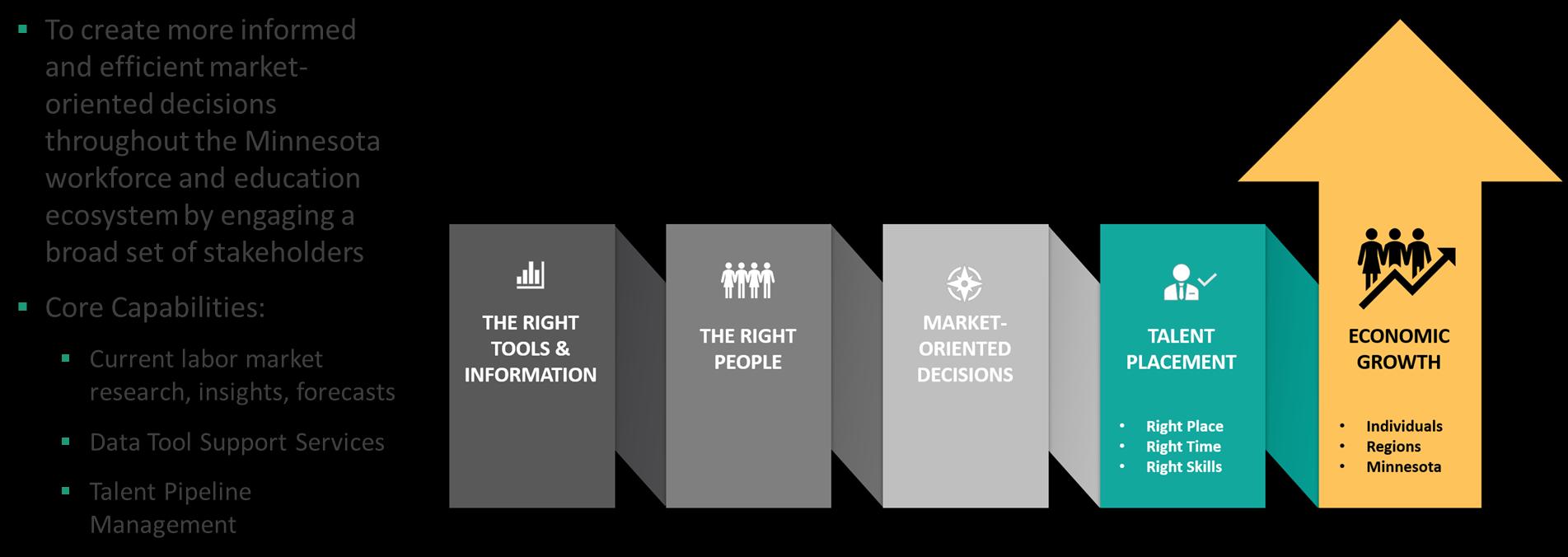
Introduce the team and core capabilities
Review demand insights shared by the ISP
Discuss regional talent shortages and trends
Discuss Talent Strategy approach and desired results
The Talent Pipeline Management Model to further the sector partnership efforts in the Fargo-Moorhead and West Fargo region
Employer opt-in to collaborative talent strategies
Opportunity to identify critical talent pain points and positions with collective talent challenges for businesses who opt into this next phase or your work
Overview process and timing for employer groups, meetings, and identifying occupation(s) of focus





Deb Broberg
Executive Director RealTime Talent
Bryan Lindsley Director of Strategic Initiatives RealTime Talent
Erin Olson, MURP, MPH
Senior Director of Strategic Research RealTime Talent
Catherine Jett, MPH Research Strategist RealTime Talent
Melinda Fierro, Ed.D Research Strategist RealTime Talent
Data-Informed
People-Centered Community-Led
OutcomeOriented
Methods
• Labor Market and Education Data Analysis
• Facilitation, Engagement, and Strategy Design (Art of Hosting, ToP Facilitation Methods, Talent Pipeline Management)
• Strategic Planning, Action Planning, and Qualitative/Quantitative Analysis
Where We Work
Workforce & Economic Development
• Identification of critical career pathways and Gateway Occupations for strategic investment
• Comprehensive labor market alignment studies
• Employer talent assessments and talent attraction strategies
Education
• Program to labor market alignment analysis
• Equity of access evaluation
• Career and Technical Education supports
Research and Consultation
Facilitation toward Action Data Access and Training
Where We Work - Continued
Employer Talent Strategies
• Implementing demand-driven, employer-led approaches to close the skills gap and address the workforce shortage, building pipelines of talent aligned to dynamic business needs.
• Existing Collaboratives: Public Sector (Public Works), Older Adult Services (Nursing Assistants), Behavioral Health (Mental Health Practitioners), Transportation (CDL)
Making Career Navigation and Program Evaluation more Data-Informed
• Providing access to data tools, resources, and reports that elevate the advising abilities of CareerForce Centers, CBOs, and higher education career services (3 data platforms, 100 users at 70 orgs statewide)
• WHY? Because real-time labor market information in the hands of education and workforce professionals results in more data-informed programming, curriculum, RFPs, talent strategies, and career choices
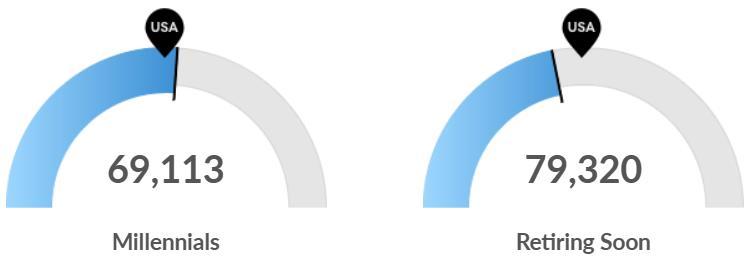
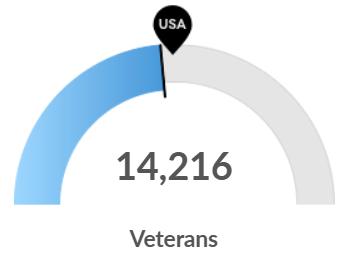
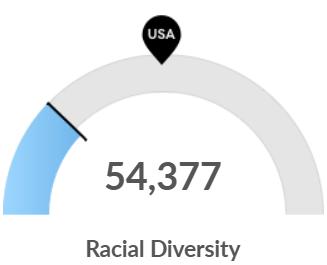
• 9 Counties
• Approximately 320,978 residents (2025)
• About 194,831 employed
• 72.4% labor force participation
• Less racially diverse than the national average
• About 4,600 unique firms advertising jobs in 2025.
Source: Lightcast 2025Q3 Dataset. January 2026 LAUS.
Regional Population Characteristics
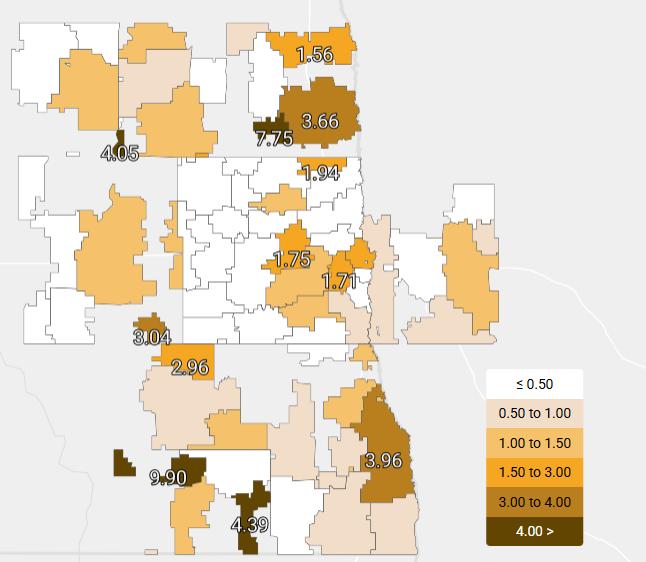
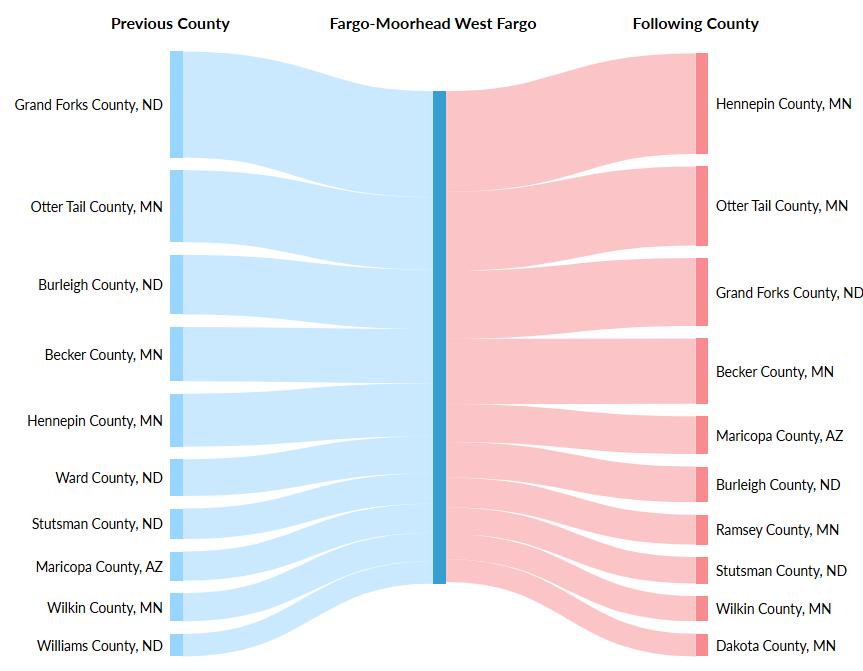
Location Quotient by Zip Code, Benchmarked Nationally
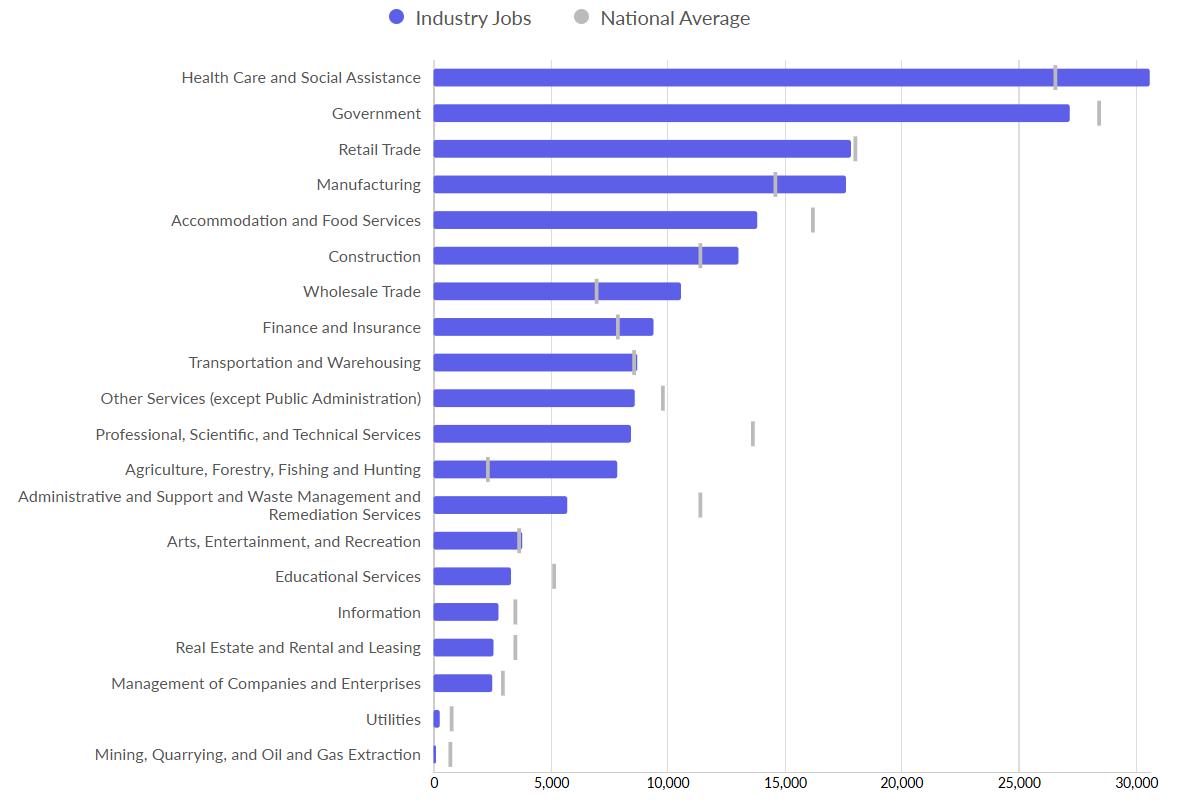
851 Companies posted healthcare job opportunities in 2025
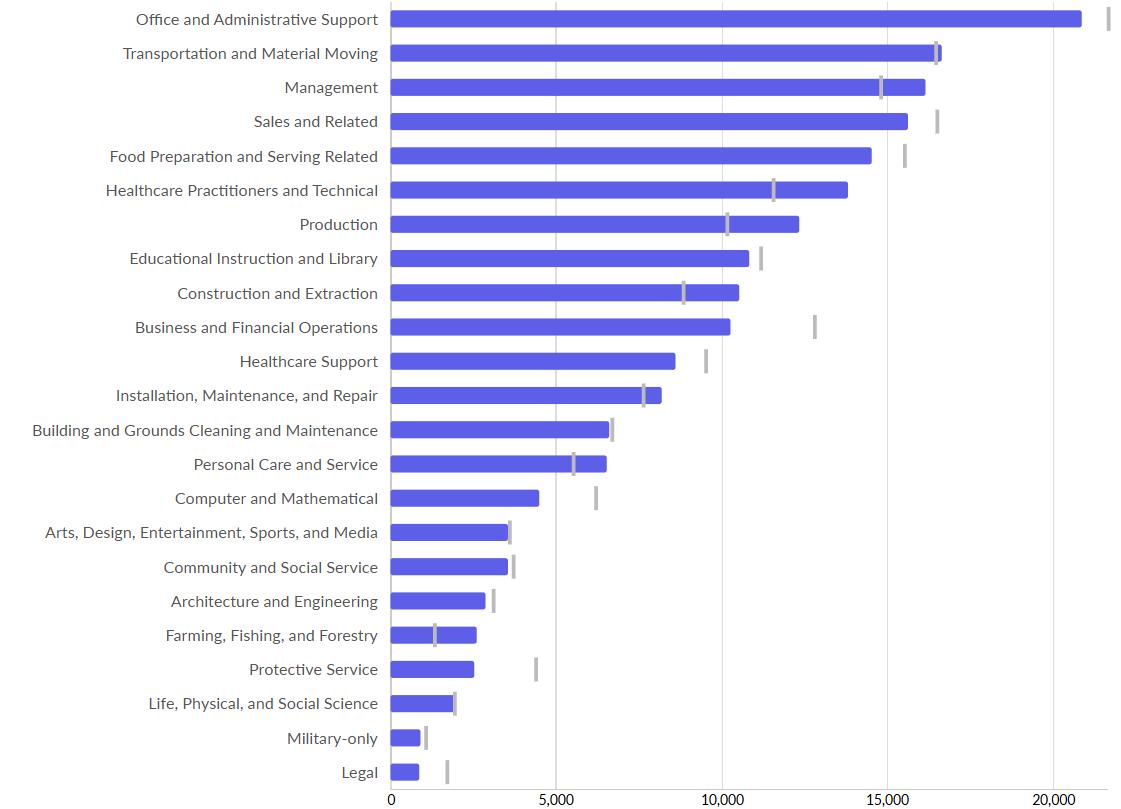
Annual Average Talent Shortage Forecast
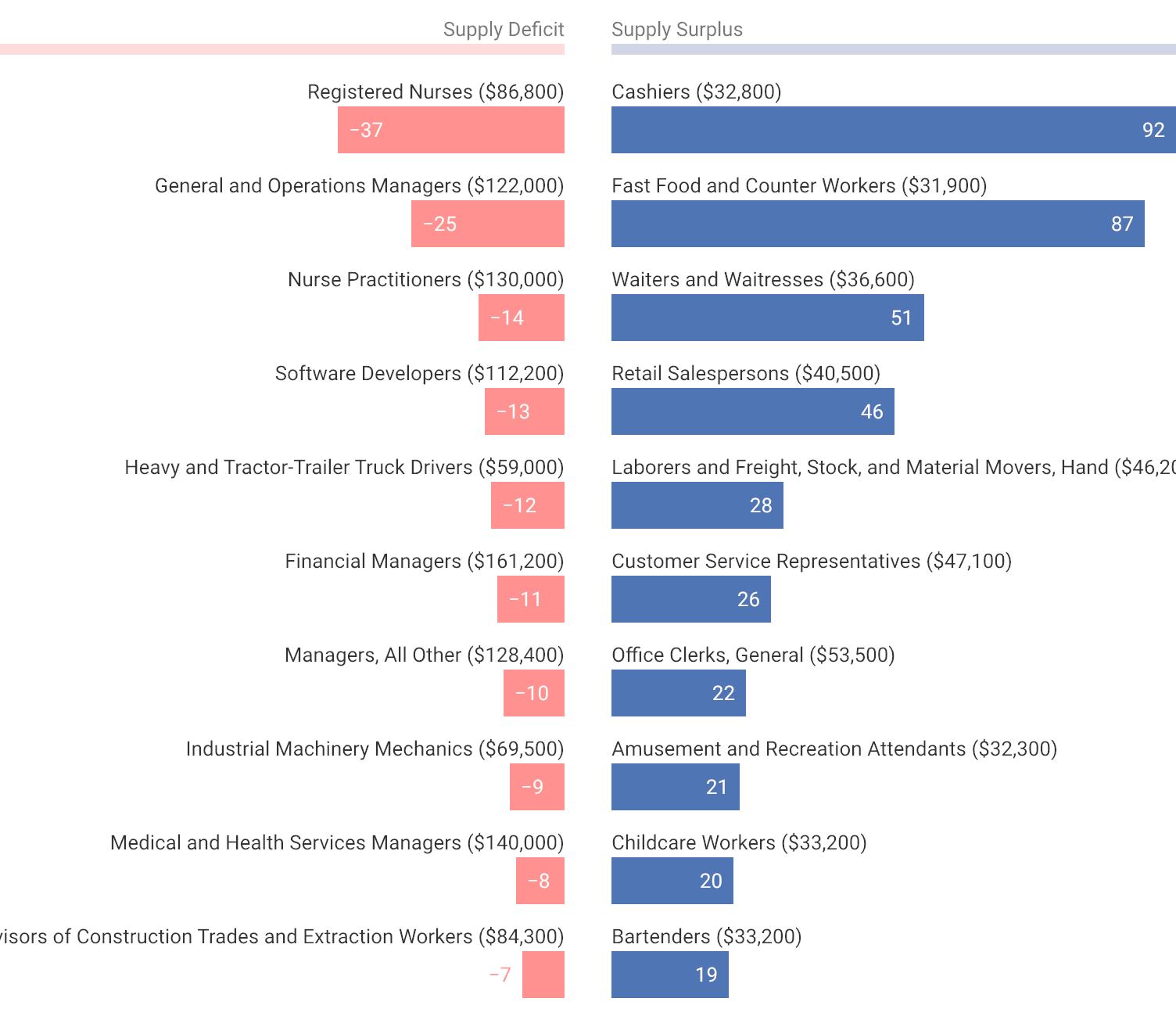
($46,200)
Highlights
• Significant shortages of Nursing and Medical Services Managers anticipated
• Management, Software Development, and Production workers across all industries forecast shortages
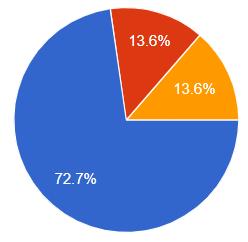
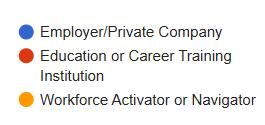
How many new workers do you anticipate needing (estimated) to fill open positions in each of these roles over the next 12 months?
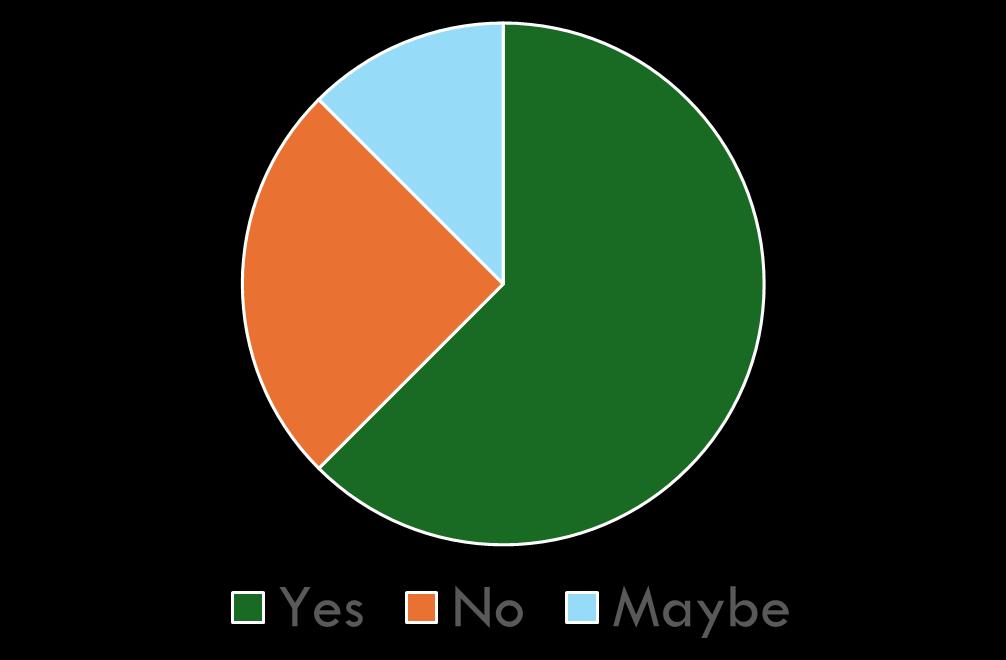
of you who responded (5/8) expressed that you would be open to exploring a collaborative approach with other employers to solve your talent shortage together.
What do you see as the most significant barrier or challenge facing new entrants into this industry sector (ISP)?
• Shift work or location of employers when transportation is a barrier.
• Not understanding what exactly manufacturing entails as a career or what the possibilities are.
• Applicable skills or training, whether that be a degree or the appropriate soft skills.
• Internal recruiting practices may limit opportunities for applicants.
Have you identified any possible solutions to address these barriers or challenges?
• Forming relationships as soon as possible in order to help with transportation. Education of the manufacturing industry.
• Our WorkReady event will be a test for some of this, as well as the many grants we offer to get people the appropriate degrees and certifications.
• Roles with travel involved can be seen as attractive to applicants.
& Why It’s the Natural Next Step
TPM® is a demand-driven, employer-led approach to close the skills gap. Employers drive the process, define the need, and hold partners accountable — not the other way around.
Multiple employers with shared needs work together, gaining leverage no single employer has alone. Developed by the U.S. Chamber of Commerce Foundation.
Treats talent like a supply chain: define the demand, map the supply, and close the gap systematically.
44 U.S. States + D.C. & Canada | 91 Active Collaboratives (2025) | 1,427 Network Members | Proven since 2014
You Built the Table
Employers and partners meeting regularly, sharing common concerns.
You Identified Shared Needs
Sector data reviewed; talent shortages confirmed.
TPM: Take Action
Now target specific gaps with structured tools.
You already have the foundation — participating employers, shared data, and trust. TPM gives you the structured framework to convert that foundation into real action on your most pressing talent gaps. It’s not a new partnership — it’s your partnership, now equipped to produce measurable results.

Traditional Partnerships

Action taken, but specific talent gaps remain unfilled

Employers invited to participate, not to lead
Vague “needs” shared — no granular occupational data
Education/training partners guessing at employer needs
No shared accountability or performance measures
Relationships built, but pipelines not built
Talent Pipeline Management

Gaps identified first — action is targeted to close them

Employers are in the driver’s seat from day one
Precise demand data: occupation, volume, timeline, credentials
Providers co-design training based on real employer specs
Scorecards, metrics, and milestones hold all partners accountable
Relationships AND functional talent pipelines built together
Most partnerships take action first. TPM identifies the gap first, then builds precisely to close it.
TPM starts by quantifying your most critical, hardest-to-fill occupations — not broad “workforce needs.”
Turnover & Retention
Demand planning surfaces whether the issue is external supply or internal pipelines — then targets the root cause.
Credential Mismatch
Employers define the exact competencies and credentials needed, eliminating the guesswork for training providers.
Partner Alignment
Preferred providers are selected and contribute to improved outcomes — not just invited to the table and left to interpret needs.
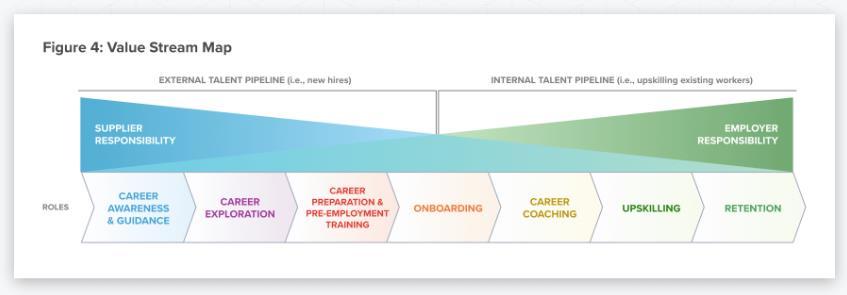
Re-Examine Hiring Practices and Policies to Maximize Hidden Talent Pools
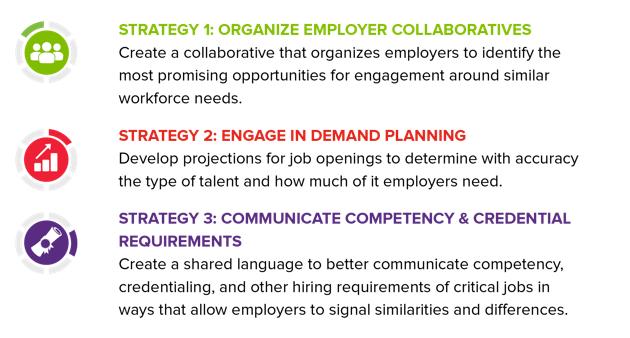
1. Organize Employer Collaborative
Bring together employers with shared workforce needs around a common occupation or skill area.
2. Engage in Demand Planning
Project job openings: volume, timeline, and specific skills needed — datadriven, not guesswork.
3. Communicate Competency & Credentials
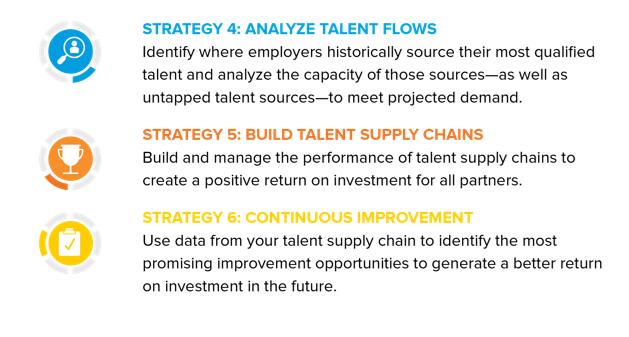
4. Analyze Talent Flows
Create shared language for what “qualified” looks like so training providers can hit the mark.
5. Build Talent Supply Chains
Map where qualified candidates currently come from and identify capacity gaps in the supply.
Co-design pipelines with preferred education and training partners based on real employer specs.
6. Manage Pipeline Performance
Track outcomes, hold partners accountable with scorecards, and continuously improve the pipeline.
→ Each strategy builds on the previous, creating a complete demand-driven talent supply chain

The Problem Minnesota public works departments couldn't fill critical CDL roles — not from lack of job postings, but because qualified applicants were falling out of a broken hiring process. Snowplow and road maintenance operations were at risk.
The Solution RealTime Talent partnered with three public works employers using the TPM® framework to map recruitment funnels across 10 high-need CDL roles, pinpoint dropoff points, and build shared hiring metrics.


• Lower cost per hire and improved candidate quality
• Targeted actions to streamline hiring at each department
• Data turned into meaningful, measurable change


1. Employers Opt-In
Today | Indicate your organization’s interest in participating. No commitment to the full process yet — just a commitment to the conversation.
2. Identify Your Top Talent Pain Point
Now – Late 2026 | We’ll connect with each participating employer to surface your most pressing workforce gap — typically a specific occupation — and begin to quantify the need.
3. Regular Employer Check-Ins
Ongoing | We’ll maintain ongoing connection with participating employers between now and the next full sector partnership meeting. These touchpoints ensure no employer gets left behind.
4. Reconvene at Sector Partnership Meeting
Late 2026 | We’ll bring participating employers back together with aggregated pain point data — ready to formally launch into the next phases of TPM together.
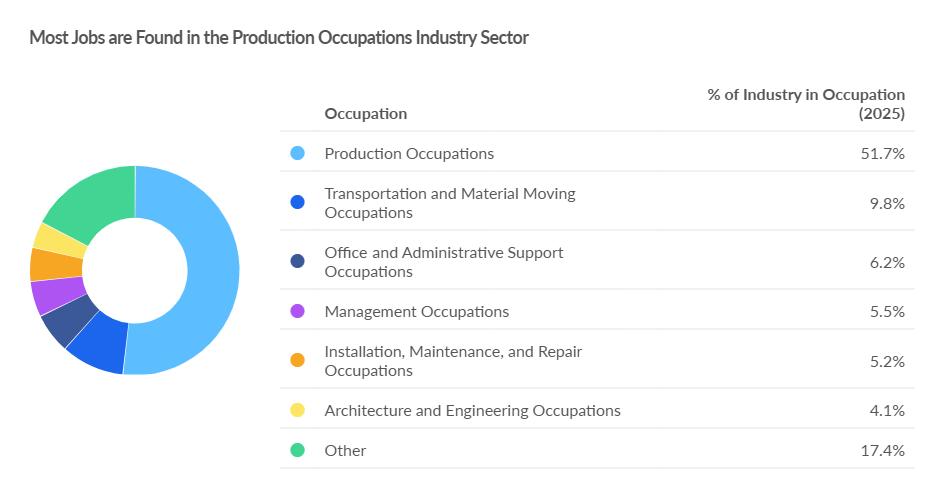
Source: Lightcast 2025Q3 Dataset.
TPM ® Framework is used in 44 states and Canada
Partnering and Supporting for Action!
• Employers: commit to engaging in TPM (monthly, virtual meetings – September)
• Watch for newsletter for opportunities
• Consider attending Insider Access!
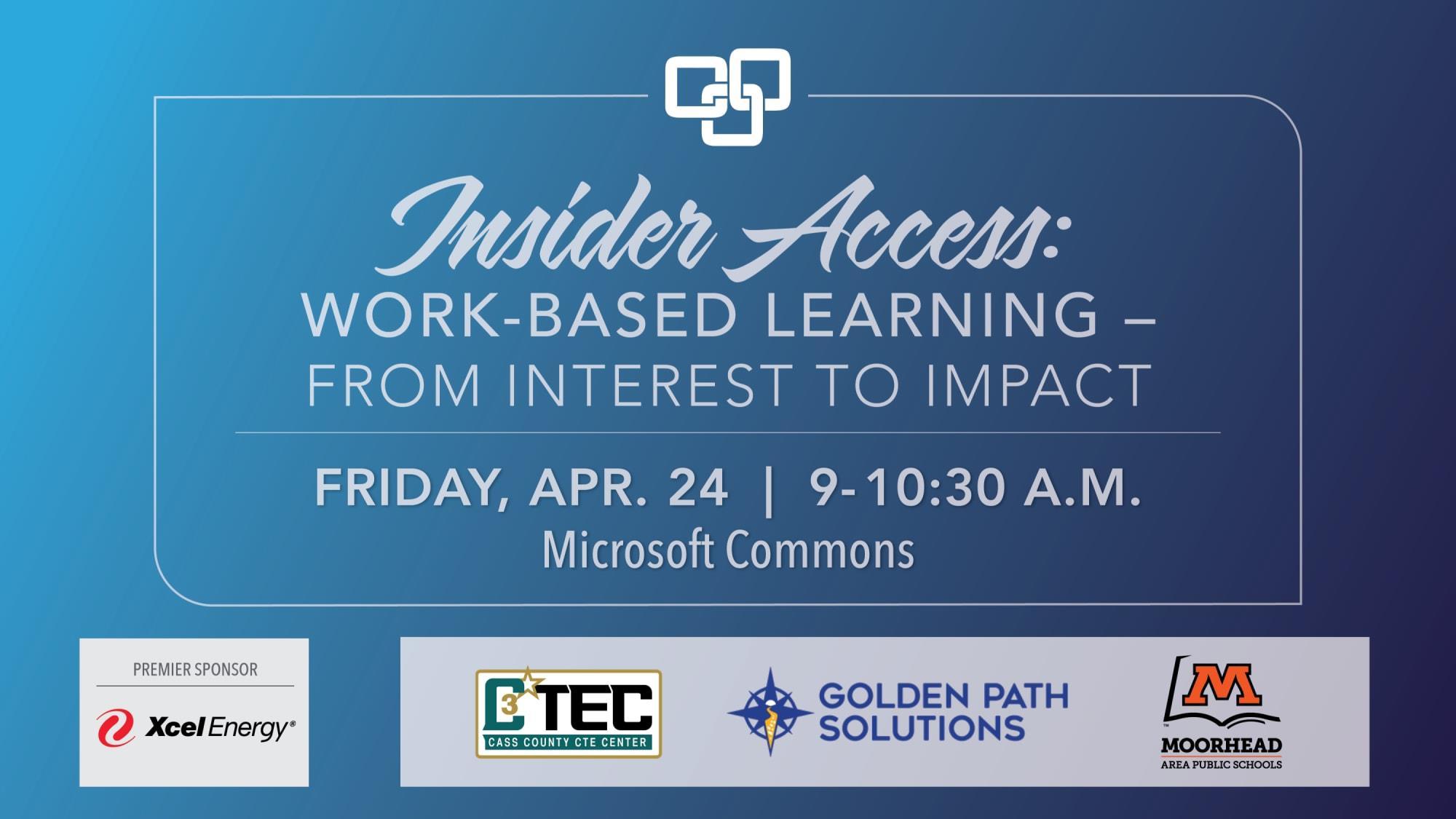
Sign up now!

Your connection to growth, collaboration and opportunity. Let’s get started!
Jane Vangsness Frisch – VP of Workforce
Heidi Schultz – Workforce Engagement Coordinator