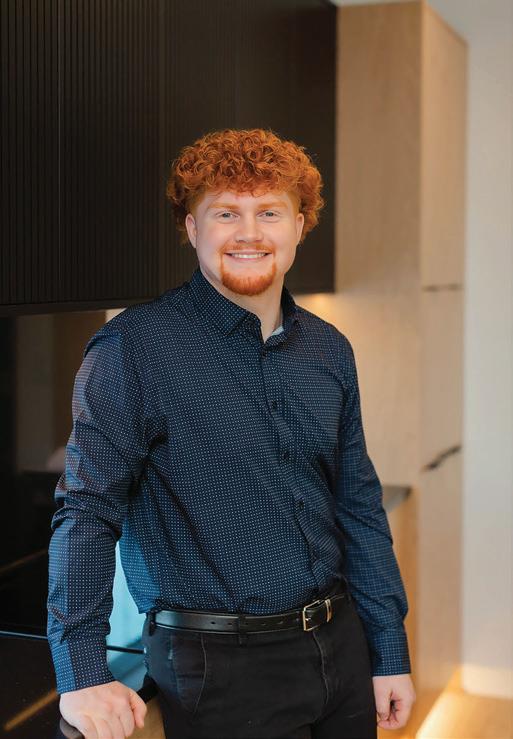
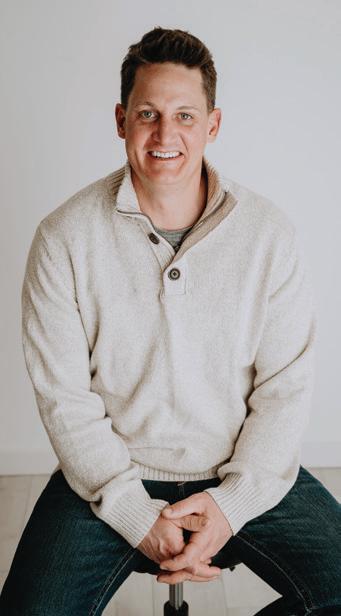
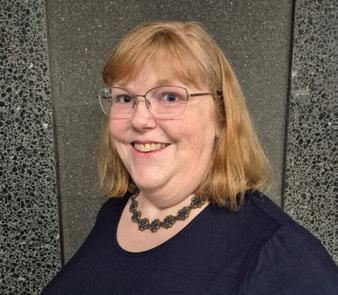
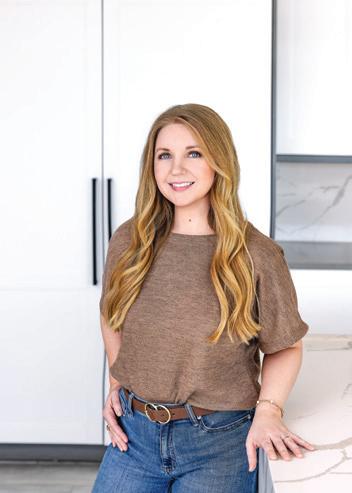
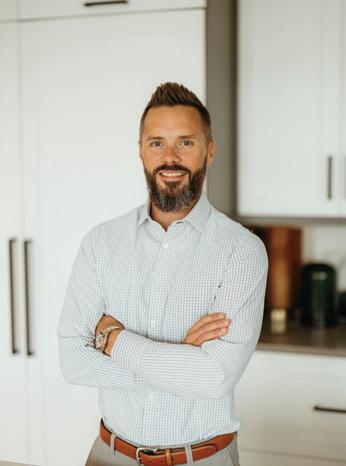
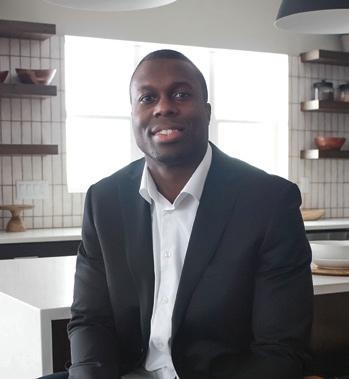
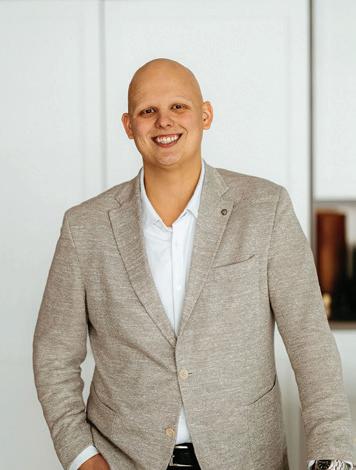
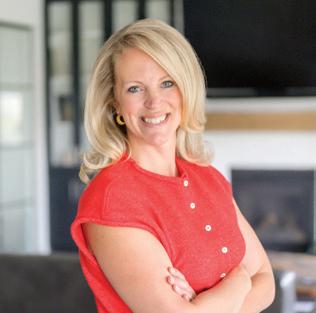
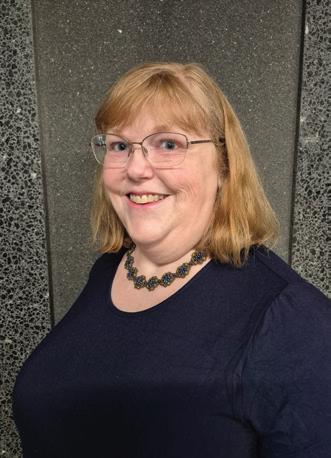
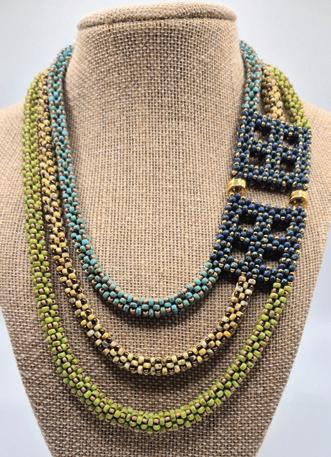
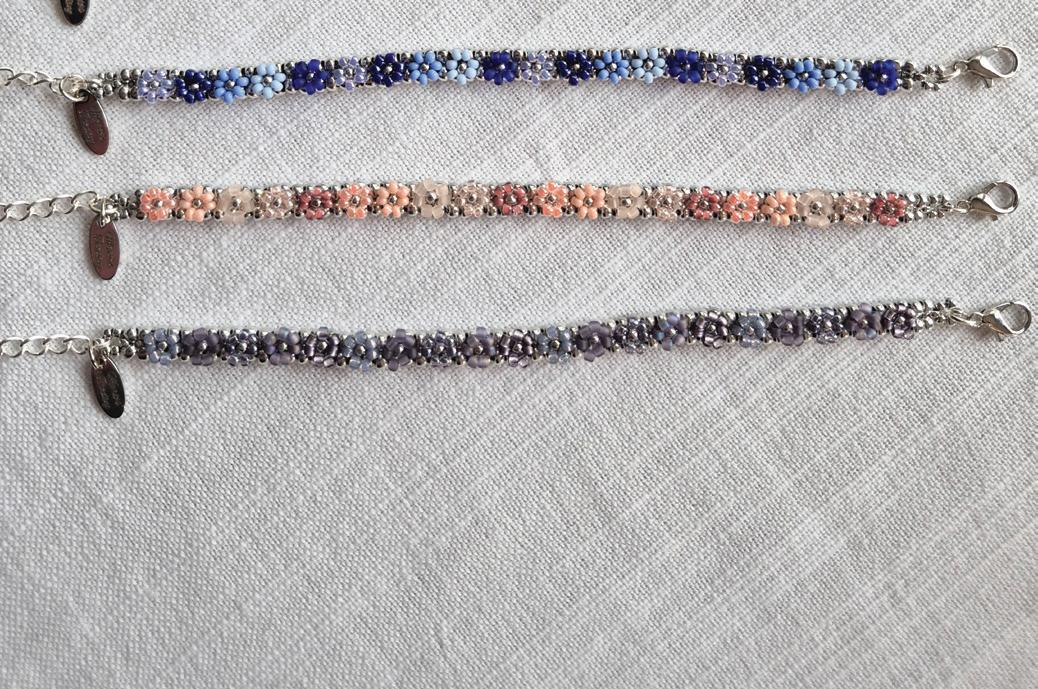
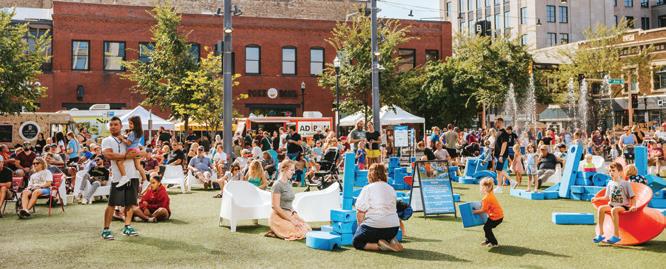
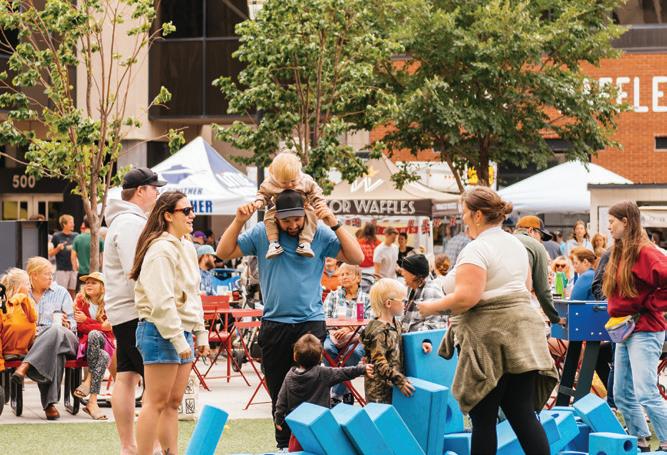
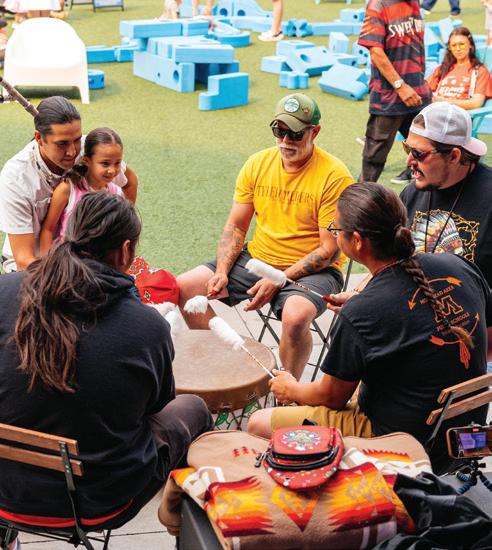
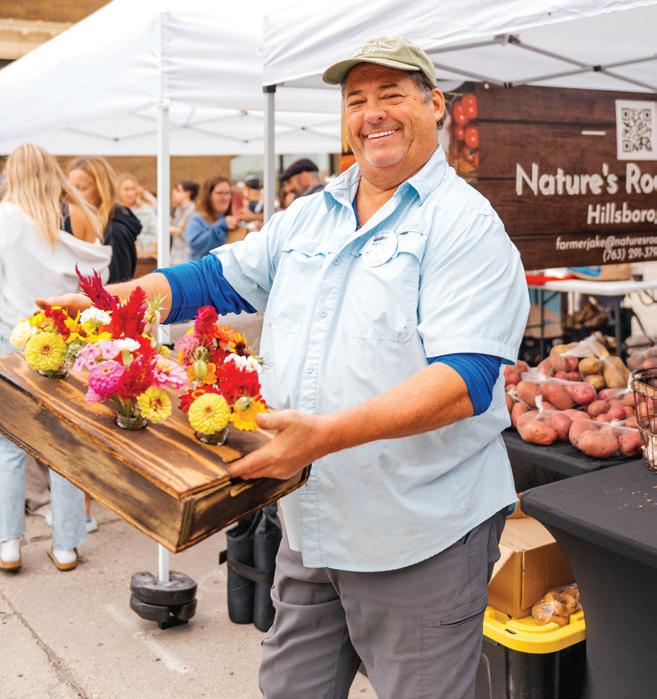
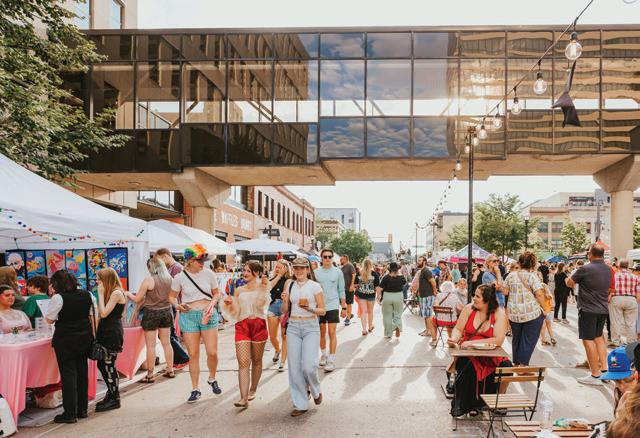
Amanda Frost (Folkways) and Ashley Morken (Unglued)
Kellen
ADVERTISING
Tammy Fogle
Paul Hoefer Paul@SpotlightMediaFargo.com
Al Anderson Al@SpotlightMediaFargo.com
Abby Schauer Abby@SpotlightMediaFargo.com
Spencer Hall Spencer@SpotlightMediaFargo.com
Matt Purpur Matt@SpotlightMediaFargo.com
ClientRelations@SpotlightMediaFargo.com
Jessica Ventzke
Tyler Duclos
Missy Roberts
John Stuber
ome is one of those words that carries a lot of weight.
It can mean the house we grew up in, the apartment where we started over, the neighborhood where our kids learned to ride bikes, or the kitchen table where the best conversations somehow always seem to happen. It is where we rest after long days, gather with the people we love, celebrate milestones, grieve losses, build routines,
and turn ordinary moments into lasting memories.
That is why real estate has always been about more than listings, interest rates, square footage, neighborhoods, and market trends. Of course, all of those things matter. They shape decisions, determine possibilities, and help people understand what comes next. But beneath every closing, every renovation, every firsttime purchase, and every move across town, there
is something much more personal happening.
There is the search for a place that feels like ours.
That search looks different for everyone. For some, it is finding a first home and imagining the life that will unfold inside it. For others, it is downsizing after decades in the same place, making room for a new chapter. Sometimes it is a fresh start. Sometimes it is a dream finally
coming together. Sometimes it is simply finding a home that makes daily life feel a little easier, warmer, and more connected.
In Fargo-Moorhead, home also extends beyond our front doors. It is the block we wave from, the local businesses we support, the schools, parks, coffee shops, restaurants, and gathering places that become part of our routines. It is the neighbors who shovel a sidewalk without being asked, the familiar faces at community events, and the shared pride that comes from living in a place that continues to grow while still feeling deeply personal.
That is what makes this issue so meaningful. Real estate is not just about property. It is about people. It is about the spaces that shape our days, the communities that surround us, and the sense of belonging we all hope to find.
Because at the end of the day, home is not just where we live.
It is where life happens.
Brady Drake Meet Fargo Editor
Partner Content:
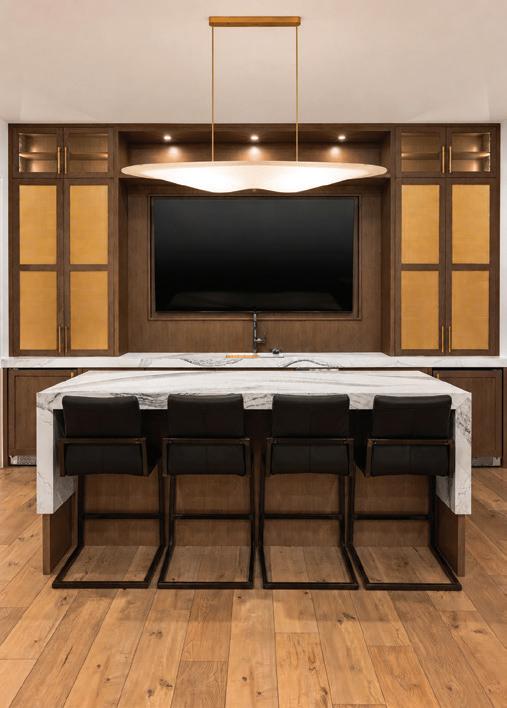
Designer Homes of Fargo Moorhead: Built Around The Way You Live
Heritage Homes: Step Inside The SunSet Valley Lifestyle
Strive Chiropractic: Why High Performers Crash
The Red River Valley Fair Is Worth Exploring All Over Again
The Title Company: When Experience Matters Most
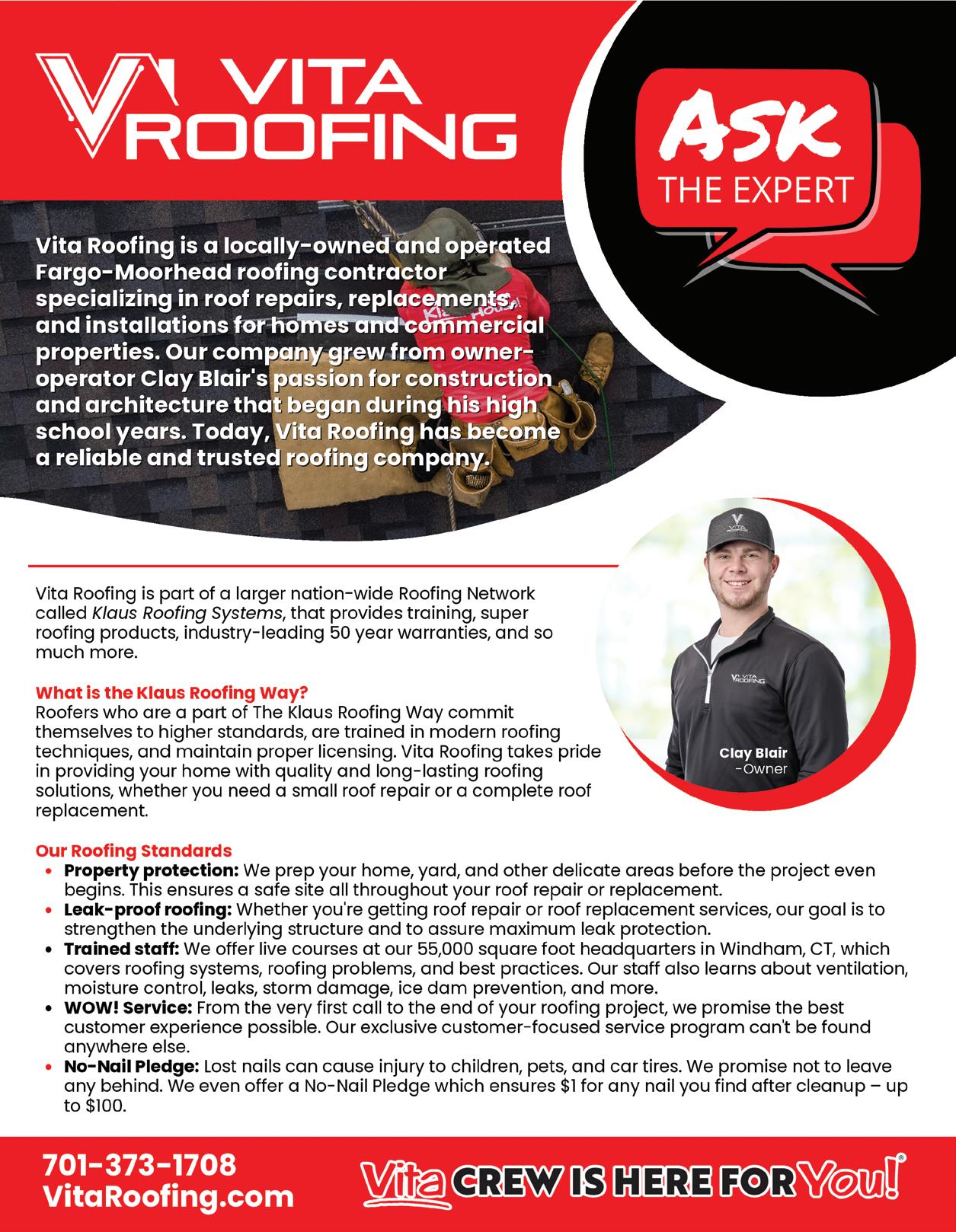
Vita Roofing: The Roof Is No Longer Just A Roof
EagleRidge: Two New South Fargo Apartments
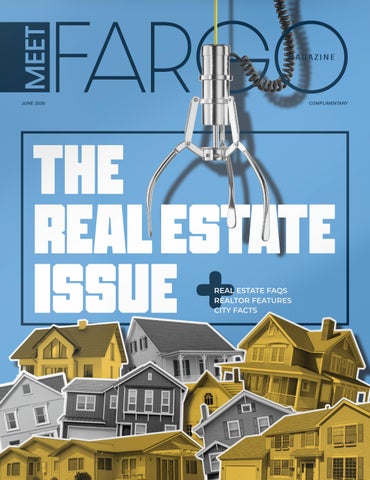
The Real Estate Issue
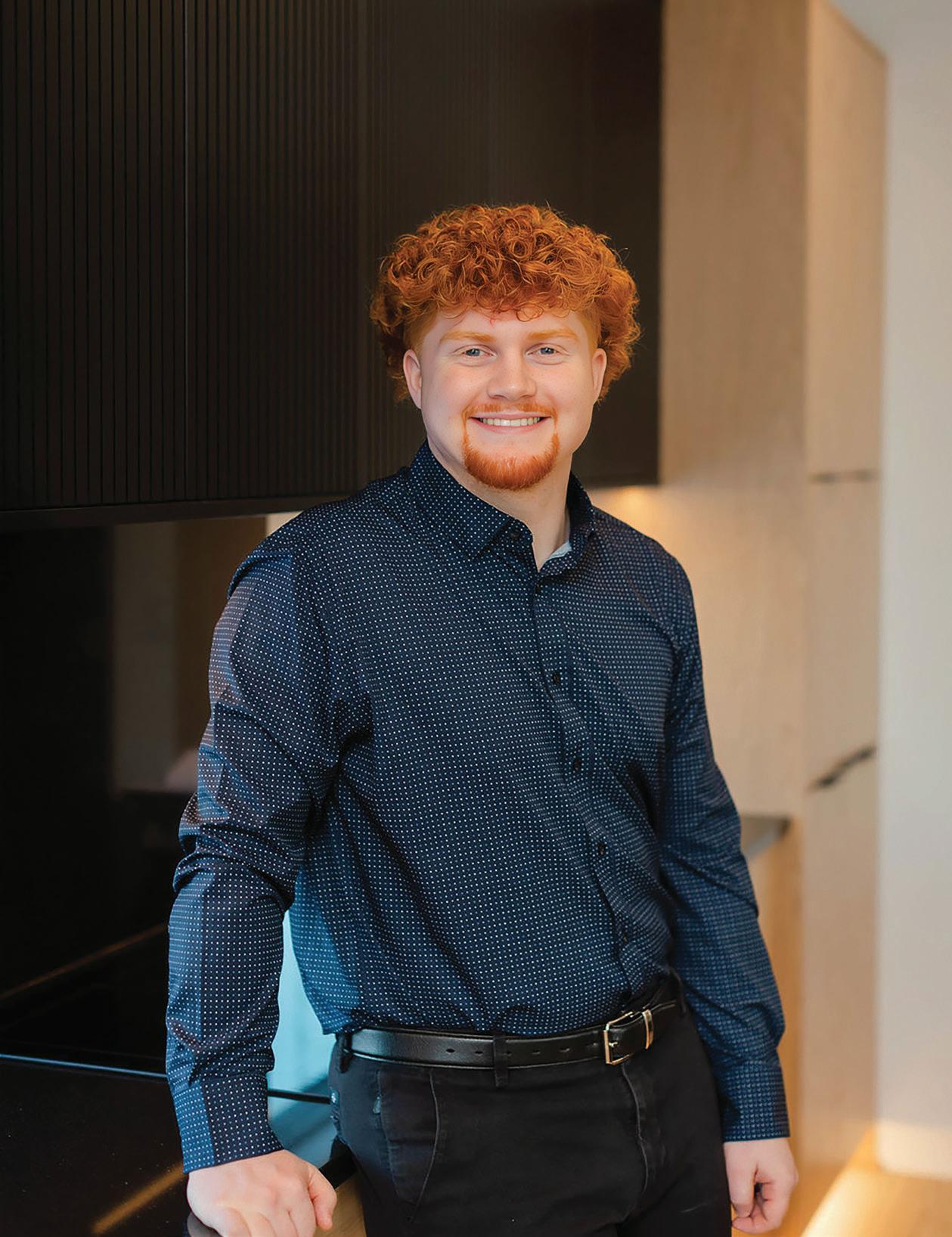
The Redheaded Realtor
Shareen Mossa Is Here To Help People Find Their Way Home
Real Estate FAQ
Eric Christians: Built On Experience
FARGO: Real Estate Facts
MOORHEAD: Real Estate Facts
WEST FARGO: Real Estate Facts
HORACE: Real Estate Facts
Meet The 2026 TEDx Fargo Speakers
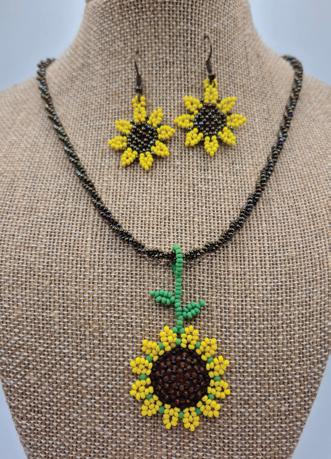
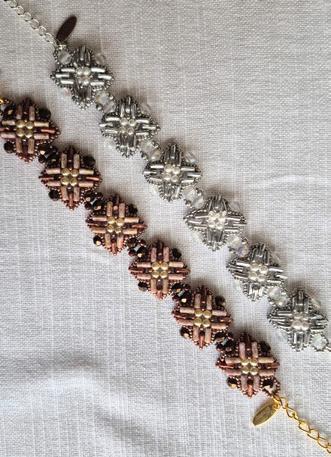
110 114 Meet the Maker: Marie's Beading
Folkways: How Folkways Is Creating A Community
Built Around The Way You Live
DESIGNER HOMES OF FARGO MOORHEAD
By Brady Drake
For most people, building a home begins with a dream.
Sometimes that dream is fully formed. A family knows the exact kind of kitchen they want, how the living room should feel, where the kids’ bedrooms should be, and what kind of view they want to wake up to every morning. Other times, the dream is harder to define. There are ideas, saved photos, a few musthaves, maybe a feeling more than a floor plan.
That is where Designer Homes of Fargo-Moorhead has built its reputation.
Founded in 2007, Designer Homes has spent nearly two decades helping clients turn those early ideas into homes.
With roughly 325 homes completed and a building radius of about 80 miles, the company has grown into one of the region’s recognizable names in custom residential construction.
But ask the team what they really build, and the answer goes beyond square footage, finishes, or curb appeal.
They build around people.
“The best way to do this is to listen to our clients,” said Robert Leslie, Founder and Owner of Designer Homes. “They will tell us exactly what they want and how they are going to live, so that we are able to utilize our expertise to create the very best floor plan and amenities to fit their needs. We feel that listening is the most important thing we can do so that we can get it right for our clients each time.”
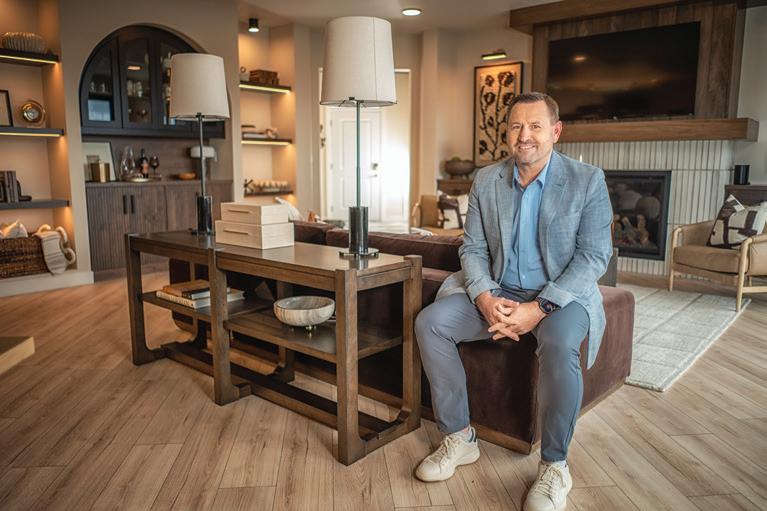
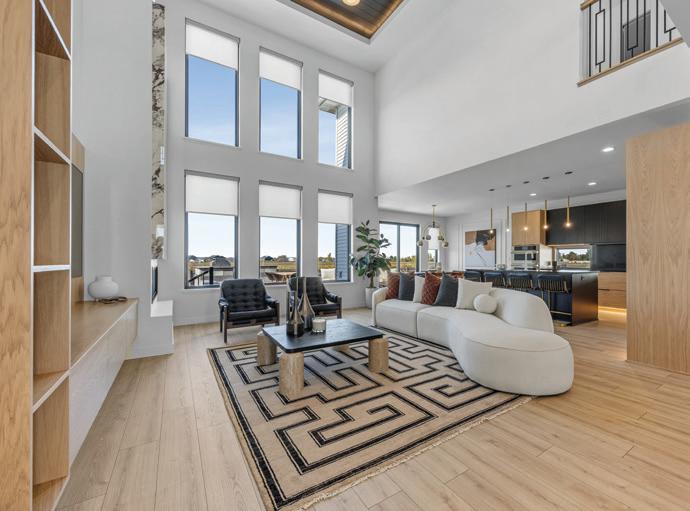
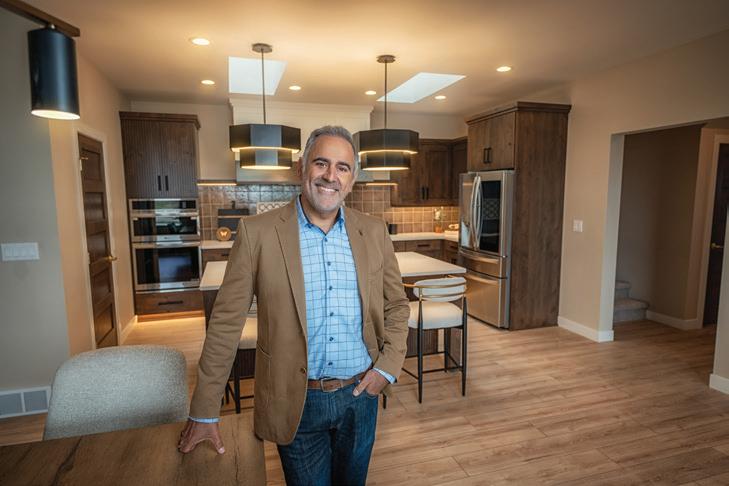
Photos by Chase Chapters
A Custom Home Is Personal
BEFORE IT IS PHYSICAL
Designer Homes’ process begins long before construction equipment arrives on site.
The company’s “9-Step Path to Building Home” starts with an initial consultation, where clients meet with a Designer Homes specialist to talk through lot options, lifestyle needs, design inspiration, and budget. From there, clients may choose one of the company’s designed standard plans or begin the custom design process with a design deposit that is applied toward the final purchase price.
For clients building a fully custom home, the second phase is one of the most important, which is custom floor plan design. According to Designer Homes’ process guide, clients meet one-on-one with an in-house architectural designer to create a floor plan tailored to their lifestyle, design preferences, and day-to-day routines. That collaborative phase typically includes one to three design meetings before the plan moves into pricing and preconstruction.
For Architectural Designer Dylan Walton, that early stage is where the work becomes especially meaningful.
“Every client has a unique vision,” Walton said. “Sometimes that vision is very clear, and other times it isn’t. In either scenario, there’s no greater reward than seeing that lightbulb of excitement go off—the moment it all comes together and they can see their dreams quite literally coming to life.”
Walton said the key is not forcing people into a standard template. It is asking the right questions, listening closely, and understanding that each family uses space differently.
“We don’t have a one-size-fits-all mentality,” he said. “Everyone lives a little differently, and the spaces that are important to one client may not be the same for another. Unpacking that information and creating something for that specific individual or family is what makes every home a rewarding journey.”
That philosophy is echoed by Design Specialist Ashley Tweten, who said the design process starts with understanding the client as a person—not just a buyer.
“I start by asking questions about how clients live— their values, routines, habits, and priorities,” Tweten said. “We talk about their hobbies and interests, what is working in their current home, and what is not. That early phase is the foundation of everything that follows. It’s not just about aesthetics. It’s about alignment, lifestyle, and vision.”
DESIGN SPECIALIST ASHLEY TWETEN
DIRECTOR OF DESIGN & MARKETING
BROOK SKJERSETH
ARCHITECTURAL DESIGNER
DYLAN WALTON
FOUNDER
ROBERT LESLIE
That kind of support is especially important during selections, when clients may be choosing flooring, cabinetry, tile, hardware, lighting, plumbing fixtures, paint colors, countertops, and more.
Brook Skjerseth, Director of Design & Marketing, said her goal is to simplify that process without taking away the excitement.
“I try to help clients focus on the bigger vision first—how they want their home to feel, what matters most to them, and how they live day to day,” Skjerseth said. “From there, I can guide them toward selections that fit their style and budget. I help clients understand where to invest and where they can simplify, with the goal of making the build process exciting instead of stressful.”
The Designer Homes process continues through construction, framing and electrical walkthroughs, final walkthrough, closing day, and even a oneyear warranty visit. Around the one-year mark, a warranty manager schedules a customer satisfaction visit to ensure the home continues to meet both the company’s standards and the homeowner’s expectations.
Custom
Over the years, Designer Homes has incorporated a wide range of unique features into client homes.
Walton has seen everything from airplane hangars to gun ranges, pool rooms, libraries, and hidden rooms.
Tweten enjoys the chance to explore design ideas that push beyond the expected, whether that means unique material combinations, statement lighting, or shower designs that give a space a more distinctive feel.
However, custom does not have to mean extravagant. Sometimes custom means a pantry designed around the way a family cooks. A garage built for hobbies and storage. A primary suite that supports a specific morning routine. A laundry room that makes daily chores easier.
“At Designer Homes, we pride ourselves not only on building beautiful homes,” Leslie said, “but on building beautiful homes that are extremely livable.”
By Brady Drake
by J. Alan Paul Photography
There is a difference between seeing a neighborhood on a map and standing inside the place it is becoming.
That difference is what Heritage Homes is inviting people to experience at SunSet Valley in Horace.
When they first introduced SunSet Valley, the vision was to create a beautiful boutique community unlike anything else in the region, designed around connection, lifestyle, and the idea that home should extend beyond the walls
of a house. It was designed from the beginning to feel different, while also offering something for everyone.
"At Heritage Homes, every community begins with a commitment to the people who will live there," President Tyrone Leslie said. "With SunSet Valley, we set out to create more than a neighborhood. We wanted to create a place that feels connected, welcoming, and unique. By listening to our homeowners and staying true to our values of communication and integrity, we've
built a community unlike any we've created before."
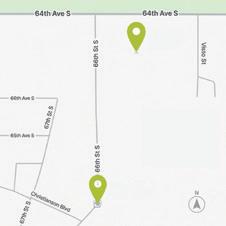
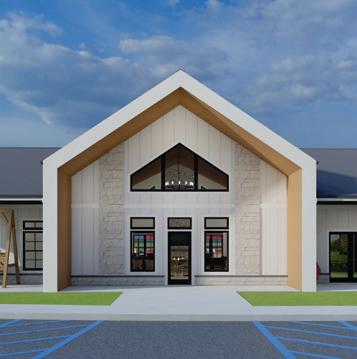
With five model homes available to tour and community amenities already established and taking shape, SunSet Valley has moved from rendering to reality on 66th Street South and 64th Avenue South in Horace. Visitors can walk through the homes, see how each space is designed for real life, and discover what Heritage Homes is been building toward.
Photos
Heritage Homes Vice President
Heritage Homes President
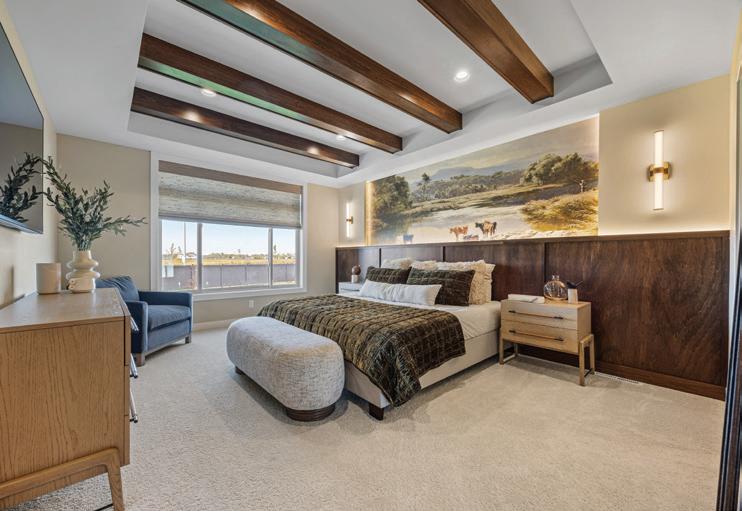
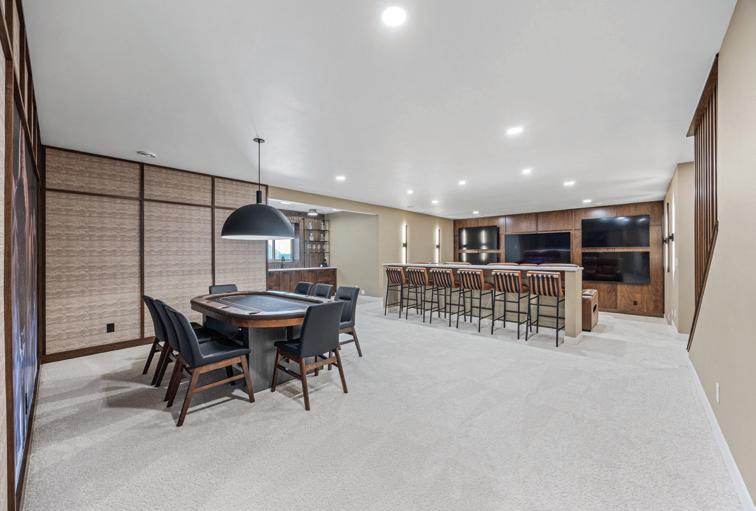
Their model homes are open five days a week in SunSet Valley, giving future homeowners the chance to envision the community in a way that a blueprint or brochure never could. Rather than imagining how the home will support their lifestyle, visitors can step inside, explore the spaces, and decide for themselves if it feels like home.
Their model homes provide inspiration, ideas, and a chance to explore the features and spaces that matter most.
A great home is about more than square footage, it’s about creating spaces that support the life you want to live. From gathering with family and friends to enjoying the quiet moments, thoughtful design makes all the difference.
Monday–Thursday: Noon–5 p.m.
Friday & Saturday: VIP Appointment
Sunday: 1–4:30 p.m.
Located at 6841 Sunrise Point & 6440 Sun Valley Blvd in Horace.
Today’s homeowners are asking more from their spaces. Homes need to support busy mornings, relaxed evenings, remote work, family time, hosting, hobbies, privacy, and connection.
Drawing on more than 30 years of homeowner feedback and experience, SunSet Valley was thoughtfully designed around the features, amenities, and lifestyle people value most.
Featuring two communities in one, Heritage Homes offers single-family home plans perfect for newlyweds or growing families, along with main-level living home plans, popular among 55 and older adults.
For Leslie, bringing these two concepts together is one of the development's defining features.
"We are excited to bring two unique living experiences together within one boutique neighborhood," Leslie said. "A homeowner can begin on the Heritage side while raising a family and later transition to The Ranch, all while remaining in the same neighborhood they know and love."
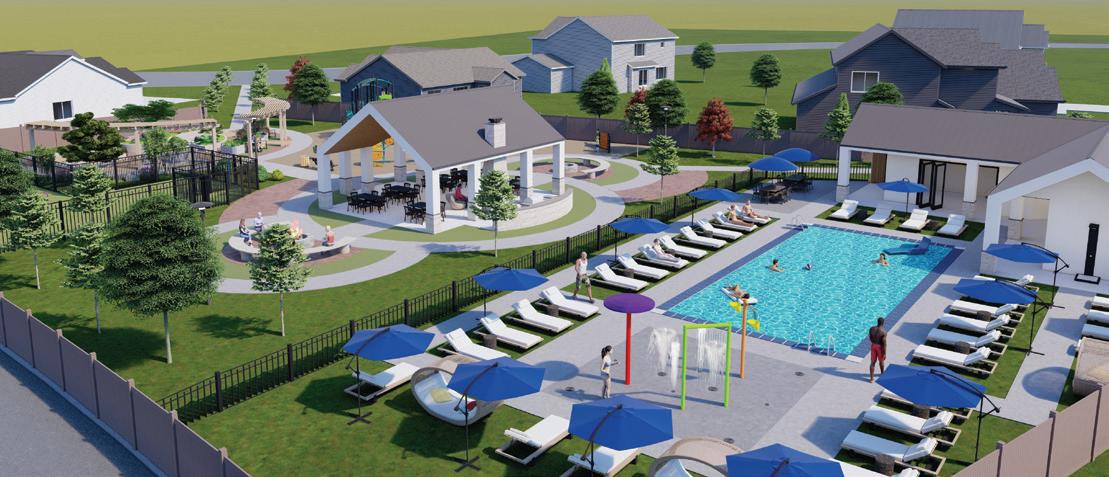
Spanning more than 50 acres, SunSet Valley offers residents exclusive access to amenities designed to enhance everyday living. Designed with gathering spaces to create opportunities
to connect with neighbors, stay active, and enjoy a lifestyle that extends well beyond your front door.
"We're investing heavily in landscaping and outdoor amenities because we believe they contribute to both quality of life and long-term value," Leslie said. "From the lit walkways and ponds to the gardens and gathering spaces, every element has been thoughtfully designed to create a neighborhood homeowners are proud to be part of today and confident investing in for the future."
Playground
• Scenic pond views with fountain features
• Beautifully lit walking pathways
• Optional lawn care and snow maintenance
• Distinctive home placements, driveway setbacks, and meandering streets
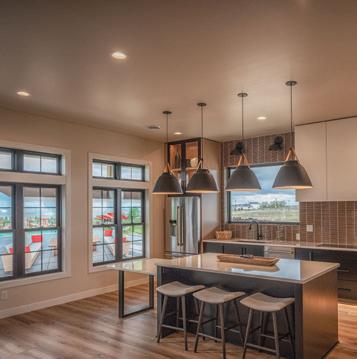
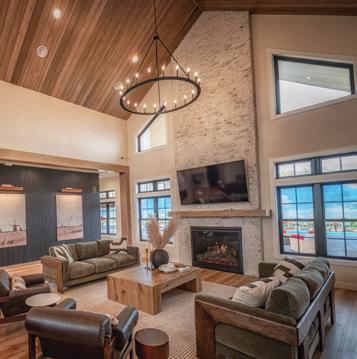
• Exclusive Clubhouse featuring a gourmet kitchen, space to gather, fitness center, and golf simulator
• Private heated pool
• Sitting areas and fire pits overlooking the pond
• Two pickleball courts
• Lit walking pathways
• Professionally maintained lawn care and snow removed included
• Premium courtyard homes designed for easy living
Of course, the community is only one part of the Heritage Homes story.
For homeowners, the building journey matters just as much as the home they will be moving into.
For more than 30 years, Heritage Homes has earned a reputation for quality craftsmanship and guiding homeowners with confidence every step of the way. For many, building a home can feel overwhelming. There are decisions to make, timelines to understand, budgets to manage, and details that can quickly become stressful without the right team in place.
Heritage's commitment is to make that process feel streamlined and enjoyable.
That starts with communication. Homeowners want to know what is happening, what comes next, and who they can turn to with questions. They have built their process around keeping people informed and supported from the first conversation, through final walkthrough, and beyond closing day.
"Building a home is one of the most important journeys a person will embark on, and we never take that responsibility lightly," said Leslie. "That's why we're always looking for ways to improve. Whether it's how we communicate, how we serve our clients, or how we support our team. Our mission is simple: to provide an experience built on trust, integrity, and care."
The Heritage team has helped countless homeowners move from an idea to a completed home. Their project coordination, design guidance, and building systems are built around making the journey feel clear.
For Leslie, those long-standing relationships are central to the way Heritage Homes does business.
"Life is built on relationships, and that's a principle we've never lost sight of," said Leslie. "While many interactions today can feel transactional, that's not how we approach our work at Heritage Homes. We focus on building lasting relationships because trust and connection are the foundation of every experience."
Heritage Homes' relationship-driven philosophy extends from its team to its trade partners and homeowners. With many trade partners working alongside Heritage for more than three decades, those ensures consistent quality, trusted craftsmanship, and a seamless experience for every homeowner.
It is also one of the reasons referrals have become such an important part of the company’s story.
With proven company feedback, 98% of their clients recommend Heritage Homes to friends and family, and four out of every 10 homes the company builds come through referrals from past clients. Leslie also noted that 100% of surveyed homeowners reported experiencing no financial surprises at closing, reflecting Heritage Homes' commitment to transparency and clear communication throughout the building process.
For Leslie, one of the strongest indicators of success is the trust homeowners place in Heritage Homes long after their homes are complete.
"There is no greater compliment than when a homeowner recommends us to their family and friends," Leslie said. "That trust is earned based on our commitment to them."
This guiding principle extends beyond the homebuilding process itself throughout every stage of their journey. From the initial planning process to long after move-in day, Heritage Homes strives to create an experience that is as meaningful as the home itself.
The same long-term perspective guided the development of SunSet Valley.
Through strategic planning and investment in the infrastructure and amenities, they focused on creating a community designed to serve residents for years to come. Leslie said the goal is to create lasting value, not only through the quality of the homes, but through the strength of the community itself.
"Great communities don't happen by accident," Leslie said. "They're created through intentional design, strong partnerships, and a clear vision for the future."
For Heritage Homes, SunSet Valley represents their continued commitment to building with purpose. It's a place where families can grow, adults can embrace a simplified lifestyle, and neighbors can build lasting connections. A community not only built for today, but a lifetime of fun.
Why High Performers Crash
By Dr. Jake Grinaker, Owner, Strive Chiropractic
From the outside, high performers look like they have it together.
They’re productive. Driven. Reliable. They push through stress, stay busy, and keep showing up long after everyone else would slow down.
Until one day, they can’t.
The energy disappears. Sleep stops helping. Brain fog sets in. Patience gets shorter. Anxiety gets louder. The body starts breaking down.
And most high performers blame themselves.
But burnout usually isn’t a motivation problem. It’s a nervous system problem.
Your Body Was Never Designed to Stay “On”
High performers are often great at ignoring stress signals. They override fatigue, push through tension, live on caffeine, and tell themselves recovery can wait.
The problem? The nervous system keeps score.
Your body is built to handle stress in short bursts—not nonstop pressure, stimulation, deadlines, poor posture, and mental overload. Eventually, the system stops adapting and starts surviving.
That’s when people begin feeling exhausted but wired, mentally foggy, emotionally flat, constantly tense, and unable to truly recover—even after rest.
Why Rest Alone Doesn’t Fix It
You can take a weekend off, get more sleep, or try to “manage stress better” and still feel drained.
Because if your nervous system is stuck in fight-or-flight mode, your body may no longer know how to shut down and recover properly.
That’s not weakness. That’s dysregulation.
The Missing Piece: Your Nervous System
Your spine protects your spinal cord—the system controlling how your body responds to stress. When that system stays overloaded, stress hormones remain elevated, muscles stay tight, sleep becomes lighter, and recovery slows down.
Eventually, even high-capacity people crash.
Why Getting Checked Matters
At Strive Chiropractic, we don’t just look at symptoms. We evaluate how well your nervous system is functioning under stress.
Using comprehensive evaluations and objective diagnostic testing, we identify patterns of nervous system overload that may be driving exhaustion, tension, brain fog, poor sleep, and burnout.
Many patients are shocked to realize they don’t have a willpower problem. They have a body stuck in survival mode.
Stop Running on Empty
Burnout is not normal. Constant exhaustion is not a badge of honor. And pushing harder is not the answer.
If your body feels like it can’t keep up anymore, stop guessing.
Get checked. Get answers. Fix the problem at the source.
Strive Chiropractic helps high performers reset their nervous system, recover fully, and perform at the level they were built for.
THE RED RIVER VALLEY FAIR
Is Worth Exploring All Over Again
By Brady Drake
Photos provided by Red River Valley Fair
2026 GRANDSTAND SCHEDULE
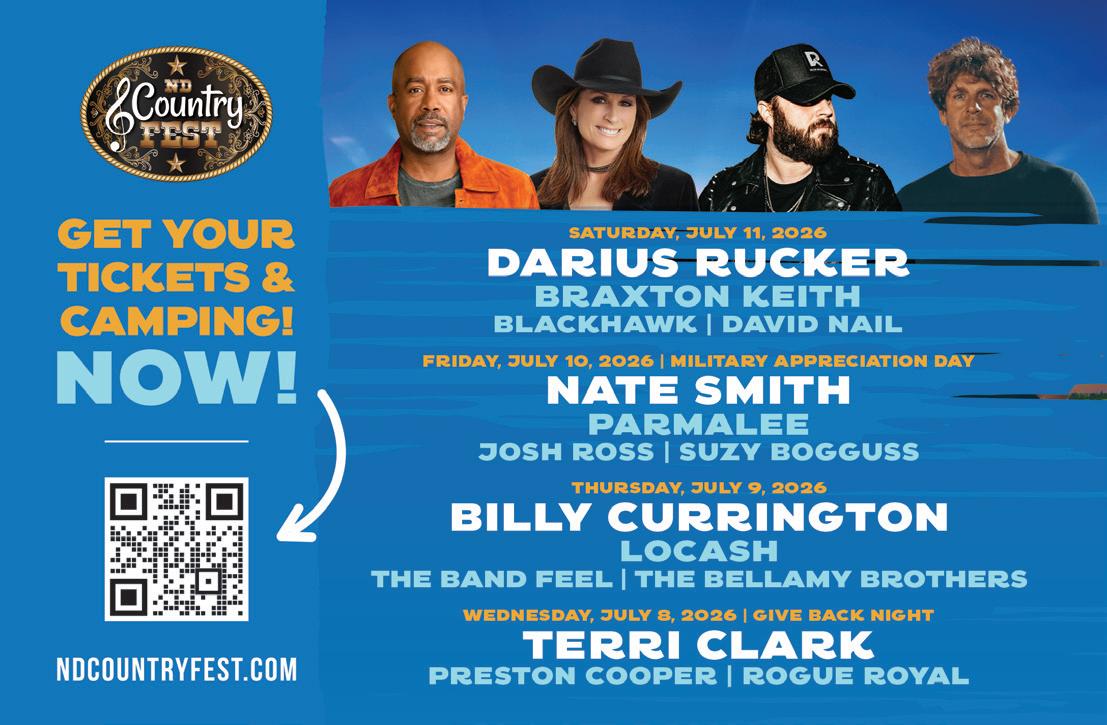
The Red River Valley Fair runs July 3-12, 2026, with grandstand concerts and events throughout the fair. Grandstand concert gates are listed as opening at 6 p.m., with concerts beginning at 8 p.m. Dirt Series event hours differ, with gates at 5 p.m. and events beginning at 7 p.m.
Friday, July 3
FAIR RACE
Saturday, July 4
COMBINE DEMO DERBY & DEMOLITION DERBY
Sunday, July 5 DEMOLITION DERBY
Tuesday, July 7 HAIRBALL*
Wednesday, July 8 BLACKHAWK*
Thursday, July 9
STONE TEMPLE PILOTS, CANDLEBOX & POP EVIL
Friday, July 10
JASON DERULO & BOBBY V
Saturday, July 11
TRACE ADKINS, CHASE MATTHEW & UNCLE KRACKER
Sunday, July 12
ANNE WILSON, CHRIS TUNGSETH, & MATT MAHER
*Free with gate admission
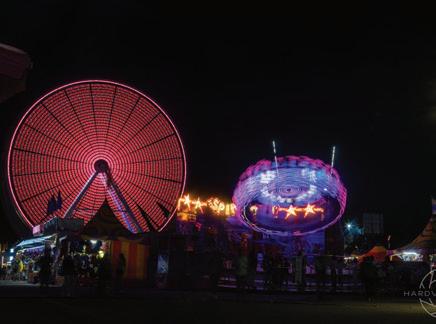
The Red River Valley Fair rises over West Fargo like the summer landmark that it is. It's visible from the interstate, familiar from childhood, and always unmissable.
There are lights, the music, the smell of fried food, the grandstand buzz, the carnival games, the livestock barns, the kids tugging parents toward the rides, and the friends making plans.
The Red River Valley Fair returns July 3-12, 2026, bringing 10 days of concerts, carnival rides, agriculture, food, and family fun to West Fargo. The fair is one of North Dakota’s largest annual events and a summer tradition built around community, entertainment, and hands-on experiences.
But if you ask CEO Cody Cashman, the real story is bigger than the headline concerts or the carnival wristbands. The modern Red River Valley Fair has grown into something much larger than a midway and a music schedule.
It is a concert venue, yes. It is also an agriculture classroom. A youth livestock program. A place for free entertainment. A food crawl. A family day. A nostalgia trip. A summer night out.
And this year, the invitation is come for what you already love, but leave room to discover something you didn’t know was there.
More Than a Concert Ticket
Over the last several years, the Red River Valley Fair has become known for bringing bigger and bigger names to West Fargo.
That shift has changed the way many people talk about the event. Instead of asking, “Are you going to the fair?” people often ask, “Who’s coming to the fair this year?”
It’s an understandable change. The 2026 grandstand lineup includes a mix of dirt events, rock, pop, and country, with scheduled entertainment ranging from Hairball and BlackHawk to Stone Temple Pilots, Candlebox & Pop Evil, Jason Derulo & Bobby V, and Trace Adkins, Chase Matthew & Uncle Kracker.
That level of entertainment has helped introduce the fair to people who may not have otherwise come through the gates. It has added energy, attention, and value.
But before the headliner takes the stage, before the lights come up at the grandstand, before the last song of the
night, there is an entire fairgrounds worth exploring.
There are the familiar carnival rides. There is the food that people wait all year to eat. There are the livestock barns, the 4-H projects, the STEM exhibits, the kids zone, the free stage, the Barnyard Bar, the agricultural education center, and the small moments that don’t always make the biggest ads but often become the memories people keep.
The fairgrounds have an improved infrastructure, renovated buildings, new asphalt, better gathering spaces, more shade and indoor options, and behind-thescenes upgrades that make the experience smoother for guests.
Those improvements may not be the first thing people notice, but they shape the day. They make it easier to stay longer, bring kids, move around, cool off, and take in more of what the fair has to offer.
The Fair’s Agricultural Heart
For all the changes, agriculture remains central to the fair.
One part of the Red River Valley Fair deserves more attention: the part many casual fairgoers walk past.
“People who aren’t involved in showing livestock never experience that,” Cashman said. “That’s going on all fair. There are kids in our livestock barn showing animals that they raised, and they’re getting prizes and scholarships. Unless you’re a parent or a family member of those kids, or you grew up showing livestock, I don’t really think anyone ventures back there for that, which is a really cool part of fair. That’s more of the heritage side of things. That’s why fairs exist.”
That agricultural foundation is not just preserved at the Red River Valley Fair. It is being expanded.
One example is the Cass County Farm Bureau Agriculture Education Center, which recently underwent major renovations and is open yearround for field trips and agricultural education. During the fair, it
becomes one of the most handson, family-friendly places on the grounds, with exhibits about crops, livestock, and regional agriculture. The renovated center includes grain bin entrances, interactive exhibits, year-round operation capabilities, and an Interactive Immersion Room designed to help families experience grain farming and animal agriculture.
Visitors can learn about corn, soybeans, livestock, equipment, and what shapes life across the region. They can connect the food on their plate to the people, animals, land, and work behind it.
And, if you time it right, you might even see new life arrive.
The fair’s birthing center has become one of its most memorable educational experiences, with calves and other animals born during the fair.
For families, it is a chance to show kids something they may never see in daily life. For adults, it is a reminder that the fair’s oldest traditions still surprise.
The Kids Raising the Animals
Another part of the fair’s agricultural story is the Livestock Enrichment Program.
The program gives young people— especially those who may not live on farms—the chance to raise and show livestock. Through the Red River Valley Fair Foundation, youth ages 8-18 can participate in raising and showing animals, learning the care and responsibility involved along the way. The foundation describes the program as free for participants and focused on helping youth develop the skills needed to care for and show their animals.
Cashman said the program has grown significantly in a short period of time.
Participants care for animals such as pigs, goats, and sheep in the months leading up to the fair. They feed them, groom them, work with them, show them, and eventually participate in the livestock auction after the fair.
For kids who live in town, that opportunity can be rare.
“They can’t raise a pig in your backyard,” Cashman said, “but they can come take care of it and learn to take care of a farm animal.”
The impact has grown dramatically. According to Cashman, the livestock auction raised around $14,000 when the program began a few years ago. This past year, it raised $214,000.
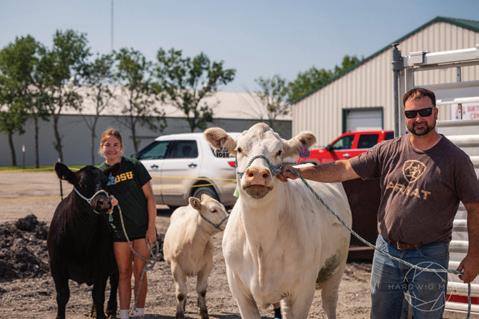
The Red River Valley Fair gives students the opportunity to raise and show animals!
Come Hungry
Of course, no one should pretend the food is not part of the main attraction.
Fair food has its own gravitational pull. It is nostalgic, indulgent, photogenic, and often the thing that gets people to stop flipping through a magazine page in the first place.
For many fairgoers, the food plan is as important as the concert plan.
Maybe it is the first lemonade of the day. Maybe it is a bucket of something fried. Maybe it is something new, something ridiculous, something you would not eat anywhere else, and
something you will absolutely tell someone about later.
That is part of the fun.
The fair is sensory by nature. It is lights, sounds, smells, heat, music, dust, sugar, grease, laughter, and motion. Food is one of the easiest ways into that experience.
So make a lap before you commit. See what is there. Share with friends. Try one classic and one wild card. Take the picture. Eat the thing you only eat once a year.
A fair day is not the time to be too practical.
Five Fair Stops to Seek Out
1. The Ferris Wheel
It is the visual cue that fair season has arrived. Even if you do not ride it, the Ferris wheel is the fair’s unofficial landmark.
2. The Agriculture Education Center
This is one of the best stops for families and curious fairgoers. It connects visitors with the region’s agricultural roots through interactive, year-round educational exhibits.
3. The Livestock Barns
This is where the fair’s heritage lives. Stop in, watch the shows, and see the work local youth put into raising and presenting their
4. The Free Entertainment
Not every great fair memory requires a grandstand ticket. The free stage, acoustic stage, and other entertainment options give fairgoers more reasons to stay and explore.
5. The Food Vendors
Come with a plan—or don’t. Either way, leave room for at least one fair-food classic and one thing you have never tried before.
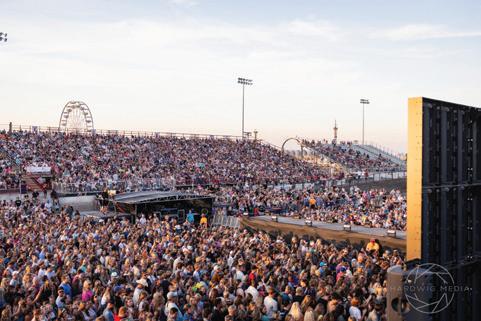
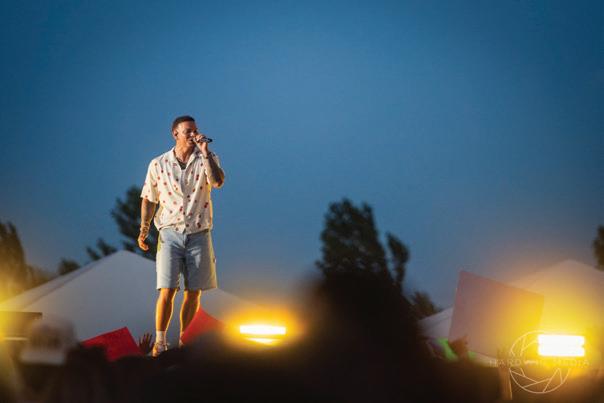
Kane Brown performing at the 2025 Red River Valley Fair.
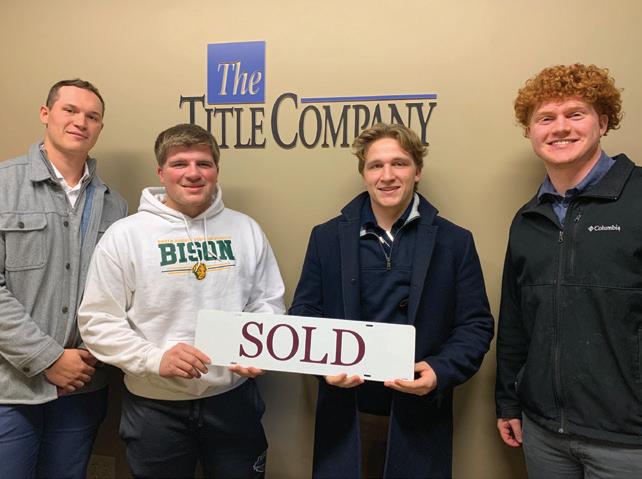
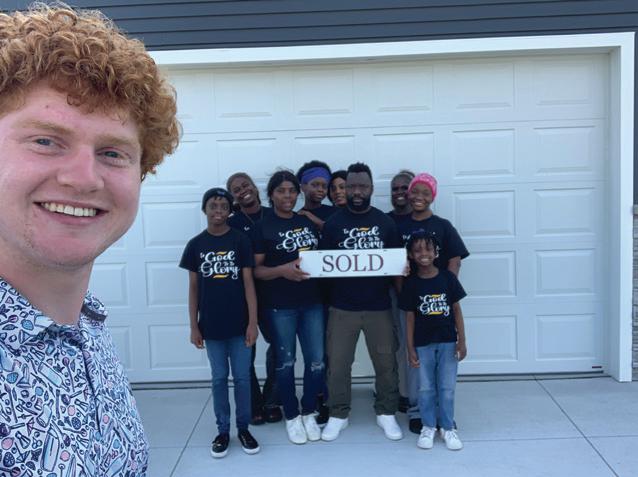
or years, the real estate industry has focused on everything leading up to the closing. The open houses, the showings, the negotiations. It is where deals are built, long hours are worked, and every detail is negotiated. But at the end of the day, homebuyers often remember one thing. Closing Day.
Someone lets out a breath they did not realize they were holding. It is not something you will find on a checklist, but you can feel it the moment you walk into the closing room. More importantly, that feeling stays with people.
Some closings are efficient. Others are routine. And some feel like the kind of moment that was meant to be.
By Brady Drake
Over the last four decades, we have noticed something. A closing should not feel like the end of something, but the start of the memories that make a house a home. It is the moment everything finally feels real. It is where the work, the anticipation, and the emotion of the entire process come together.
Two closings can follow the same process and still feel completely different.
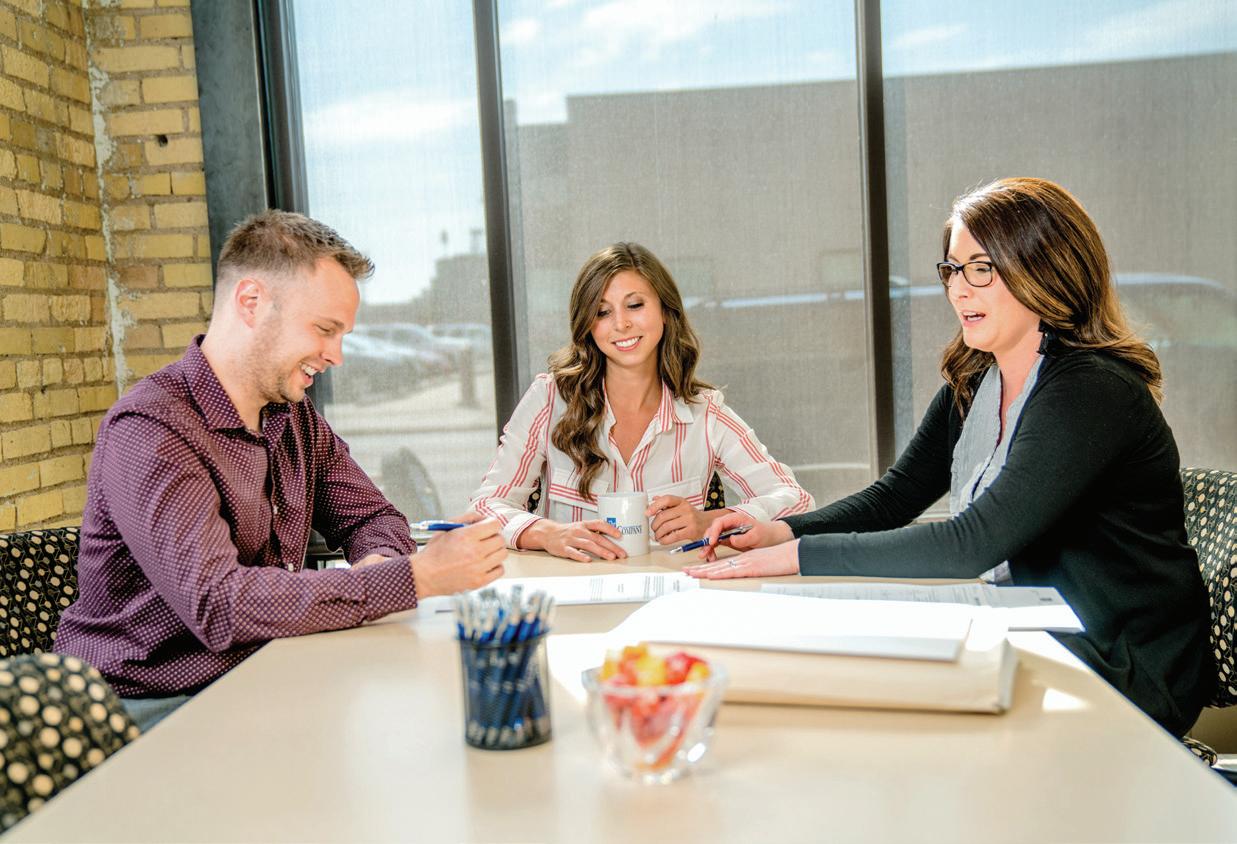
A blue pen slides across the table. A glance, a smile shared with a spouse.
At The Title Company, we have learned that difference does not happen by accident, but it seems to show up when it matters most. And when it does, people walk out smiling. Everything just feels right. They pause for a moment longer than expected. Later, when someone asks about the experience, they remember how it felt.
In a business built on relationships, that moment has a way of staying with people, and they seem to find their way back.
Closing Day at The Title Company
Fargo
Fargo
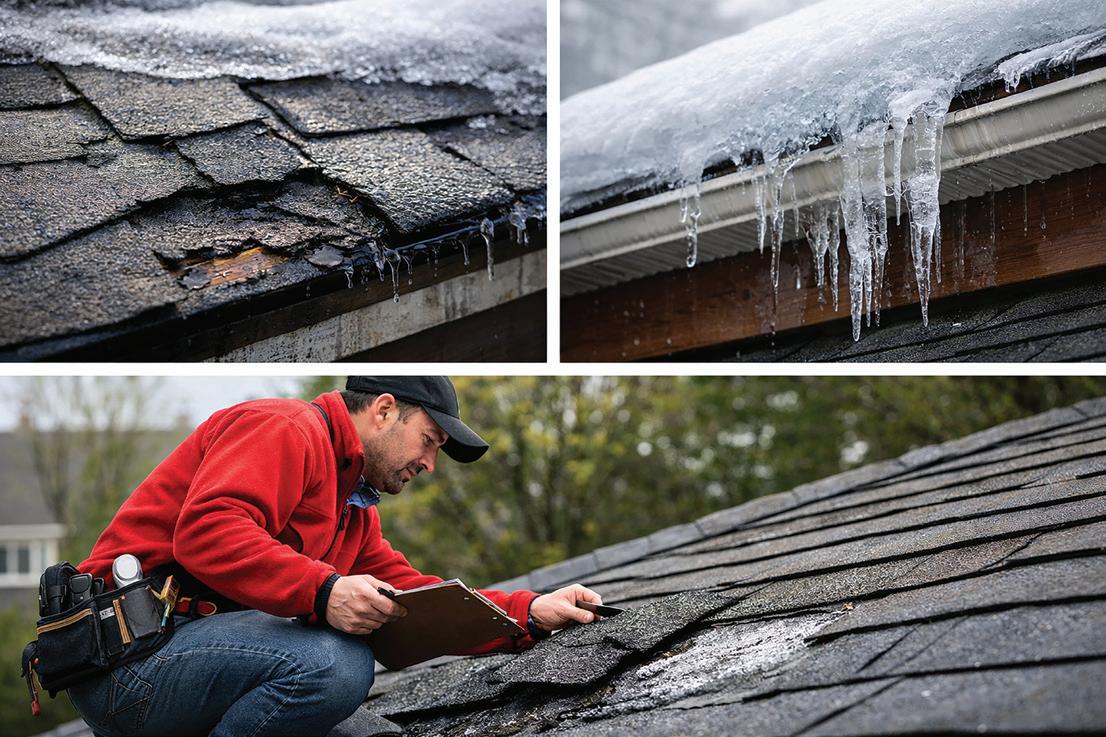
renew our policy,’” Blair said.
For many homeowners, that can be a jarring call to receive. A roof may look “fine” from
subtracting depreciation. With actual cash value coverage, the insurer pays the depreciated value based on age, condition, and expected remaining life. The National
18, 20, 27 years old,” Blair said. “That’s just such a new thing that insurance is starting to roll out now. It changes the market a lot.”
Questions to Ask Before Replacing Your Roof
What class of shingle am I getting?
Class 3 and Class 4 shingles are designed for better impact resistance than older or lower-rated products. Class 4 is typically the highest impact rating.
Does this roof qualify for an insurance discount?
Some insurance carriers offer discounts for impact-resistant shingles, but the amount and requirements vary by policy.
Is my roof covered at replacement cost or actual cash value?
Replacement cost coverage generally pays more after a covered loss. Actual cash value factors in depreciation, which can reduce the payout on an older roof.
What exactly does the warranty cover?
Ask whether the warranty covers materials, labor, tear-off, disposal, workmanship, leaks, storm damage, or only certain defects.
What does “lifetime” actually mean?
A “lifetime” warranty may mean the lifetime of the roof or product—not necessarily the homeowner’s lifetime.
Is it in writing?
If a contractor says something important during the sales process, make sure it appears clearly in the contract or warranty paperwork.
Why Insurance Companies Care so Much About the Roof
To a homeowner, the roof is one part of the house. To an insurance company, it is one of the home’s first and most important lines of defense.
A failing roof can turn a hailstorm, wind event, or heavy rain into a much larger claim. Once water enters a home, damage can spread quickly to insulation, ceilings, walls, flooring, electrical systems, and personal property. That is why insurers often evaluate roof age, roof material, maintenance history, and prior claims when pricing or renewing homeowners' policies.
Roof-related claims are also a major part of the property insurance
landscape. Wind and hail are among the most common causes of homeowners' insurance claims, and roof condition plays a central role in how vulnerable a home is during those events.
“I think they’re just cracking down and trying to cover themselves a little bit,” he said of insurance companies. “They’re pushing people to go for higher impact-graded shingles to make those policies last longer.”
That is where Class 3 and Class 4 shingles enter the conversation.
The Rise of Impact-Rated Shingles
Most homeowners do not spend much time thinking about shingle ratings until they are forced to choose a new roof. But in hail-prone and wind-prone regions, the rating can matter.
Impact-resistant shingles are commonly rated under UL 2218, a test standard used to evaluate how roofing materials respond to impact. Class 4 is the highest rating in that system. GAF, one of the major roofing manufacturers, explains that Class 4 shingles pass a test involving a 2-inch steel ball dropped onto multiple
locations of a shingle test deck from a height of 20 feet.
That does not mean a Class 4 shingle is indestructible. No roof is. Large hail, repeated impacts, installation quality, roof pitch, age, ventilation, and storm conditions all still matter. But a higher impact rating gives homeowners a better-performing product in the kinds of storms that routinely damage asphalt roofs.
Class 3 vs. Class 4 Shingles
Class 3 shingles
These are impact-rated shingles that have become increasingly common for residential roofs. For many homeowners, Class 3 is now closer to the modern baseline than a premium upgrade.
Class 4 shingles
Class 4 is generally considered the highest impact rating for asphalt shingles. These shingles are designed to better withstand hail and severe weather impacts.
The Insurance Institute for Business & Home Safety has gone even further in studying how impact-resistant shingles perform in real-world hail conditions. IBHS uses lab-made hailstones designed to better replicate actual hail impacts and has developed ratings to help compare products beyond the basic UL 2218 classification. In 2025, IBHS said its updated hail impact-resistant shingle ratings evaluated 24 products representing roughly 95% of impactresistant shingles sold in the U.S.
For Blair, the industry shift is easy to see.
“Nowadays, it’s all Class 3, Class 4,” he said. “Everyone’s got their Class 3 impact-rated shingle.”
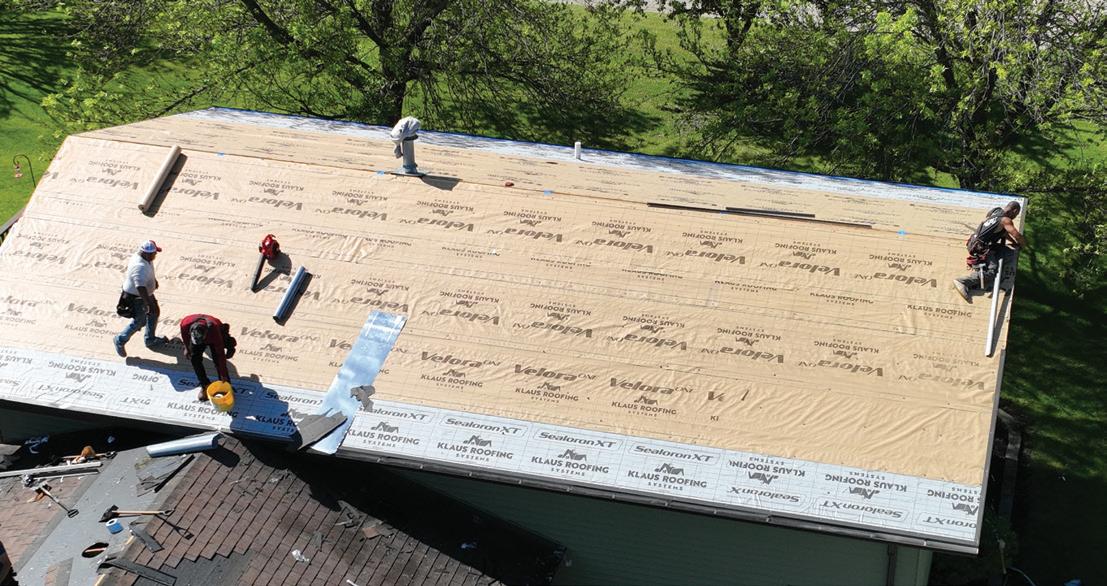
Vita Roofing primarily uses IKO Dynasty for Class 3 and IKO Nordic for Class 4. IKO’s own product information states that Dynasty shingles provide a Class 3 impact
rating, while Nordic shingles carry Class 4, the highest possible rating against hail.
“I remember when I first started, nobody was putting on Class 3,” Blair said. “We were one of the first with IKO, because they were Class 3 from the first day they were made.”
Now, he said, Class 3 has become the new normal. Class 4 is becoming the upgrade more homeowners are asking about.
“Class 3 is the new Class 4,” Blair said. “Now, instead of people wanting Class 3, they want Class 4 because insurance is cutting some slack.”
GRAND 52
AMENITIES
• STUDIO, 1, 2, AND 3
BEDROOM FLOOR PLANS
AVAILABLE
GOLF SIMULATOR FULLY EQUIPPED FITNESS CENTER
STYLISH COMMUNITY ROOM
• PET WASH STATION
• SECURE PACKAGE ROOM
• UPSCALE FINISHES
• SPACIOUS FLOOR PLANS
CONVENIENT SOUTH FARGO
LOCATION
ALL UTILITIES INCLUDED
STARTING AT $1,585/MONTH
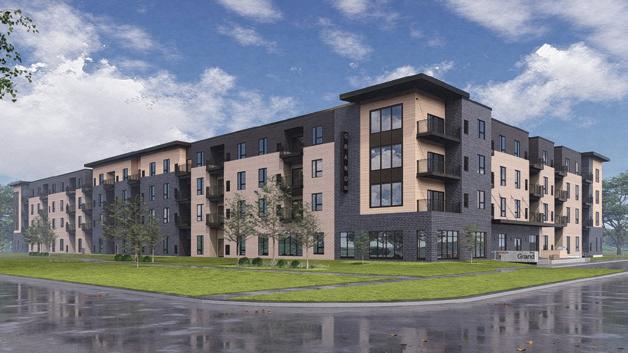
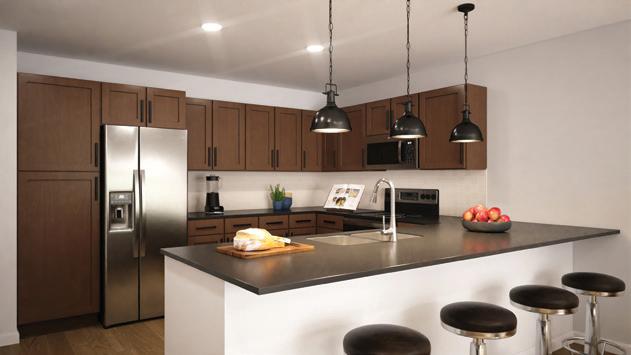
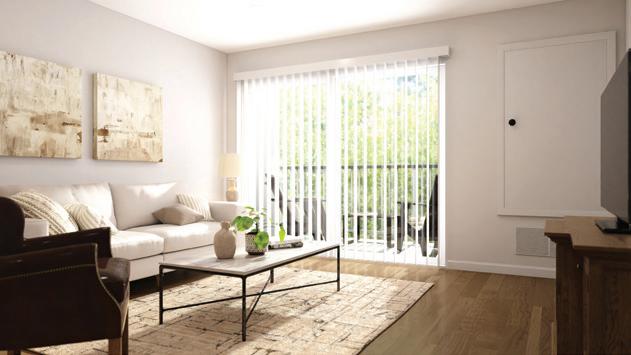
Grand 52 is the newest addition to The Grand off 45th campus, located near 45th Street and 52nd Avenue in south Fargo.
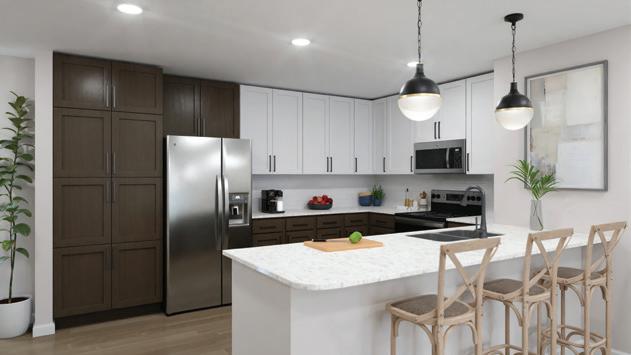
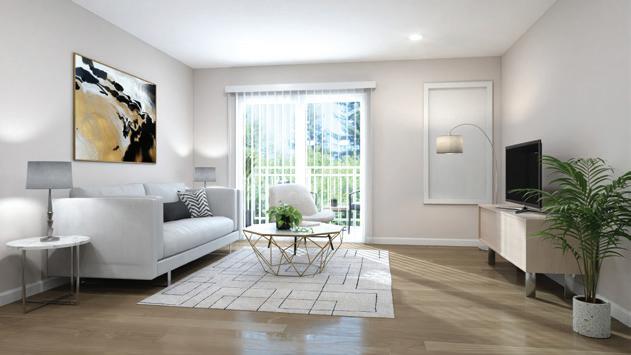
Grand 52 brings upscale apartment living to one of Fargo’s most sought-after areas. Residents will enjoy spacious layouts, refined finishes, and access to amenities that make daily life easier and more enjoyable.
Here you can start your morning in the fitness center, host friends in the community room, wash off your pet after a muddy walk, or sneak in a round on the golf simulator.
The Mill
THEATER GOLF SIMULATOR • CLUBROOM • GYM • PET WASH STATION • 1-BEDROOM, 2-BEDROOM, AND 3-BEDROOM APARTMENTS
UPSCALE COMMUNITY
SPACES
ALL UTILITIES INCLUDED
• STARTING AT $1,585/MONTH
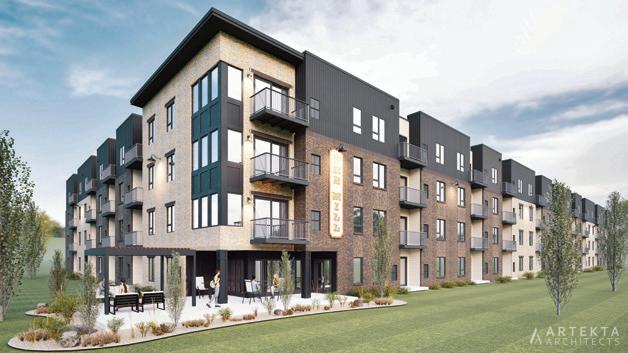
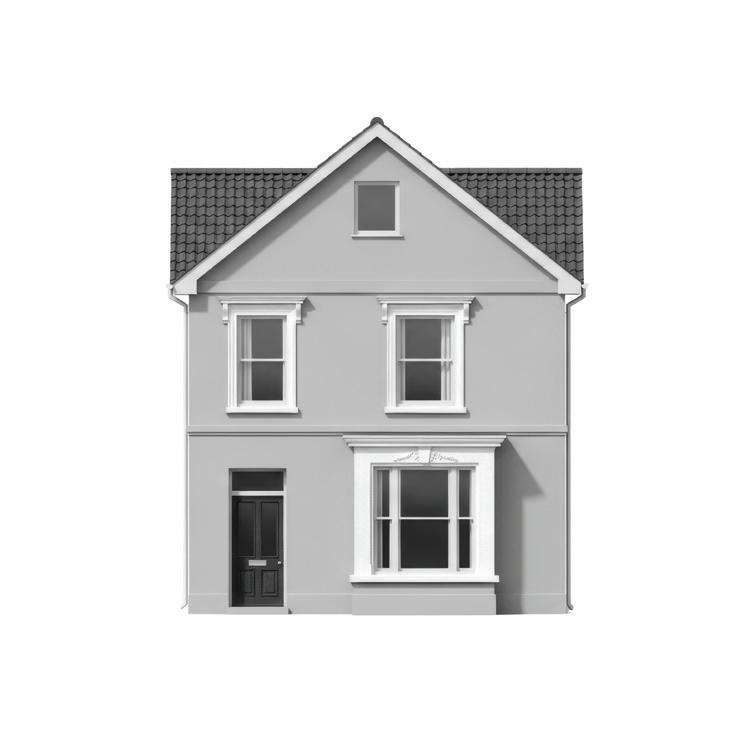
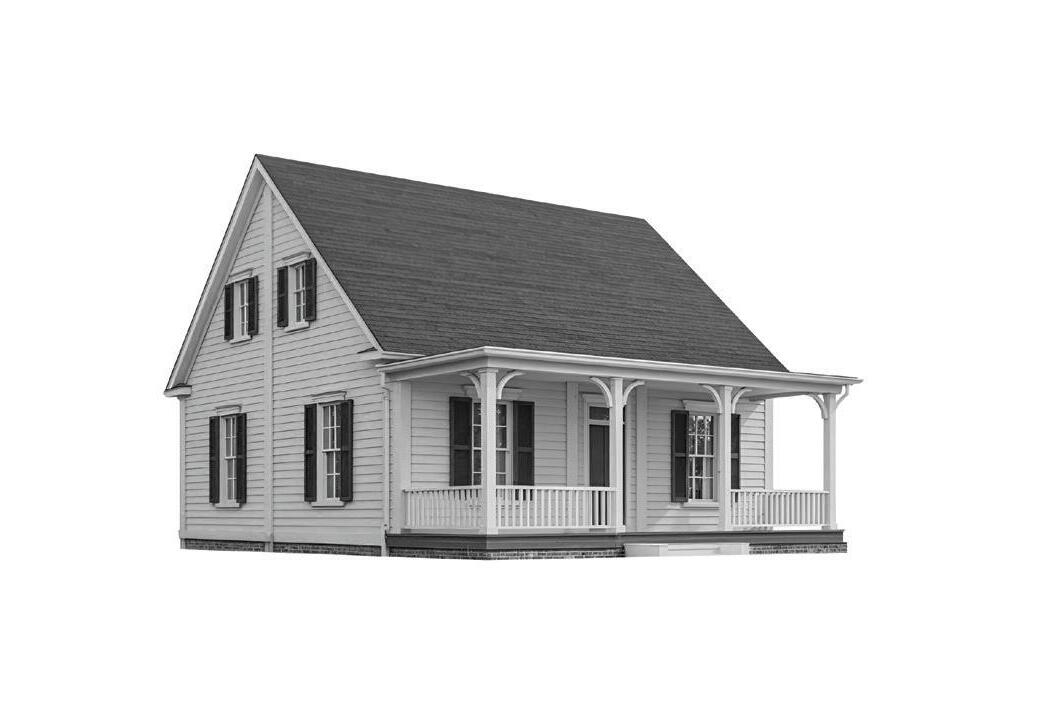
The Mill is coming soon to the intersection of 42nd Street and 32nd Avenue in south Fargo.
This new apartment community will feature onebedroom, two-bedroom, and three-bedroom apartments.
The Mill is designed to offer a classic, elevated living experience with the amenities today’s renters are looking for. From a theater and clubroom to a gym, golf simulator, and pet wash, the community will make it easy to relax, connect, and feel at home. COMING SOON TO 42ND STREET AND 32ND AVENUE
The Real Estate Issue
Home is one of those words that carries a lot of weight. It can mean the house we grew up in, the apartment where we started over, the neighborhood where our kids learned to ride bikes, or the kitchen table where the best conversations somehow always happen. It is where we rest, gather, celebrate, grieve, build routines, and make memories out of the ordinary.
Real estate is more than listings, interest rates, square footage, neighborhoods, and market trends. All of that matters, but beneath every closing, every renovation, every first-time purchase, and every move across town there is the search for a place that feels like ours.
That is what makes real estate so important. It is not just about property. It is about people. It is about the spaces that shape our days, the communities that surround us, and the sense of belonging we all hope to find.
At 20 years old, Zach Sykora is building career
When Zach Sykora graduated high school, he did not have a five-year plan.
He did not come from a real estate family. He had not spent years dreaming about becoming an agent. He was not following some carefully paved path into the industry.
What he did have was a simple question that kept pulling at him.
"Why spend time and money going to college if I don’t know what I want to do yet?"
That question led him to start looking at careers where his success would depend largely on him. He wanted something entrepreneurial. Something where he could be his own boss. Something where effort mattered. Something where the ceiling was not set by someone else.
Eventually, he shadowed a few Realtors in Valley City, where he grew up. He liked the pace. He liked that every day looked different. He liked houses. He liked people. And, maybe most importantly, he liked the idea that he could jump in, work hard, and see what happened.
So he did.
“I kind of just jumped into it and was like, screw it. Let’s just see what happens,” Sykora said. “Put the time in, and it’s working out.”
He got his real estate license before he even graduated high school.
Today, at just 20 years old, Sykora is building a residential real estate career in Fargo with Berkshire Hathaway HomeServices Premier Properties. He moved to Fargo after graduation because he saw more opportunity here than in Valley City—more people, more homes, more momentum, and a market large enough to build a business in while still feeling connected to the community around him.
“Fargo is like the good happy medium between big but not too big, but also not too small,” he said.
For Sykora, that move was not just about geography. It was a decision to take himself seriously before most people his age are expected to have things figured out.
By Brady Drake
And he is the first to admit that the beginning was not glamorous.
It took him seven months to close his first deal.
For someone entering a commissionbased career at 18 or 19, that could have been enough to shake his confidence. Instead, Sykora saw the situation as part of the grind. He did not have a spouse, kids, or the financial obligations that often make risk harder later in life. If there was ever a time to bet on himself, it was then.
From that first closing to where he is now, he has seen the work start to compound.
“It’s exponential,” he said. “It goes up, but also it’s kind of a grind right away to get the first one.”
That willingness to grind has become one of the defining pieces of Sykora’s young career.
Every Sunday, he is usually hosting two open houses. That face-to-face time has become one of the biggest drivers of his business. It gets him in front of people. It helps him practice conversations. It gives buyers and sellers a chance to meet him before they ever officially become clients.
But Sykora has also leaned into something many agents are still trying to figure out, which is online visibility.
Photos provided by Zach Sykora
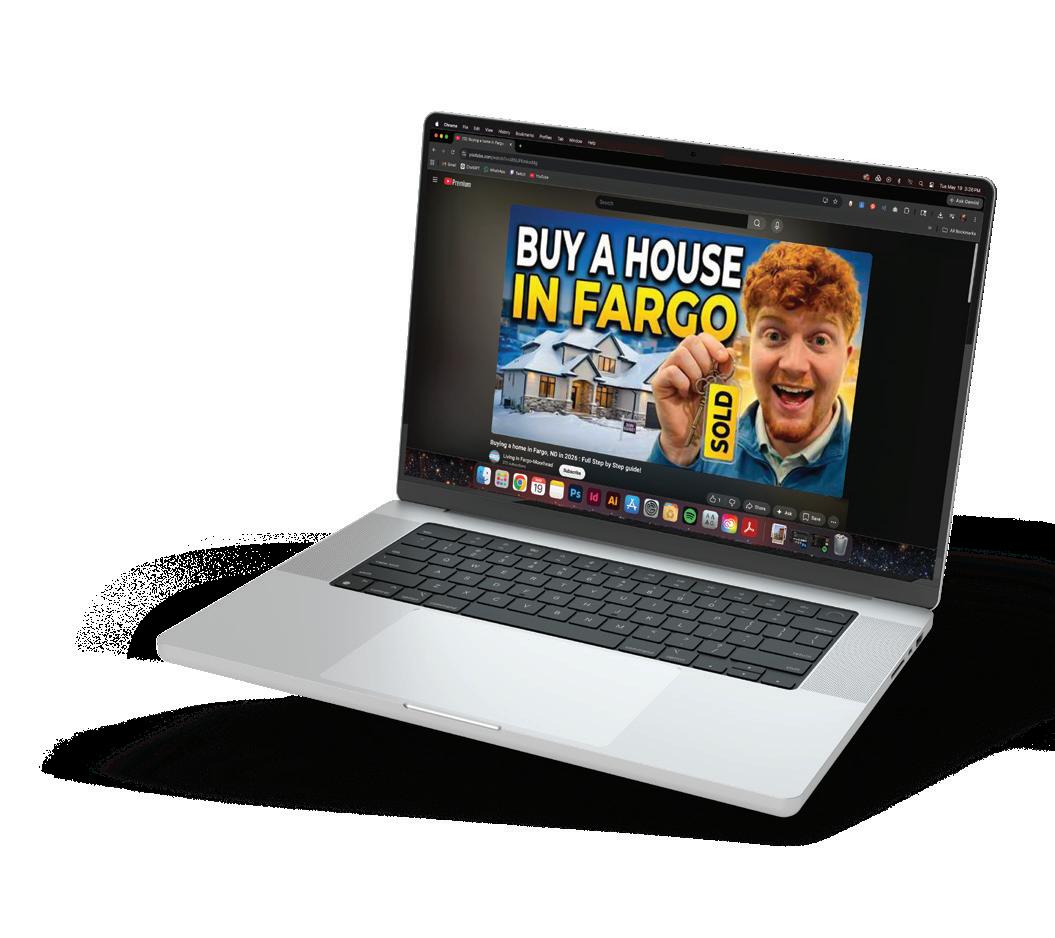
He runs a YouTube channel where he posts real estate content, building recognition before people ever walk through the front door at an open house.
“People walk through my open houses and they’ll be like, ‘Oh, I’ve seen your videos on YouTube,’” he said. “It kind of builds that rapport ahead of time.”
For Sykora, YouTube is not just about trying to generate leads. It is about familiarity. It is about letting people see his face, hear his voice, and begin to feel like they know him.
It also helps that he is easy to remember.
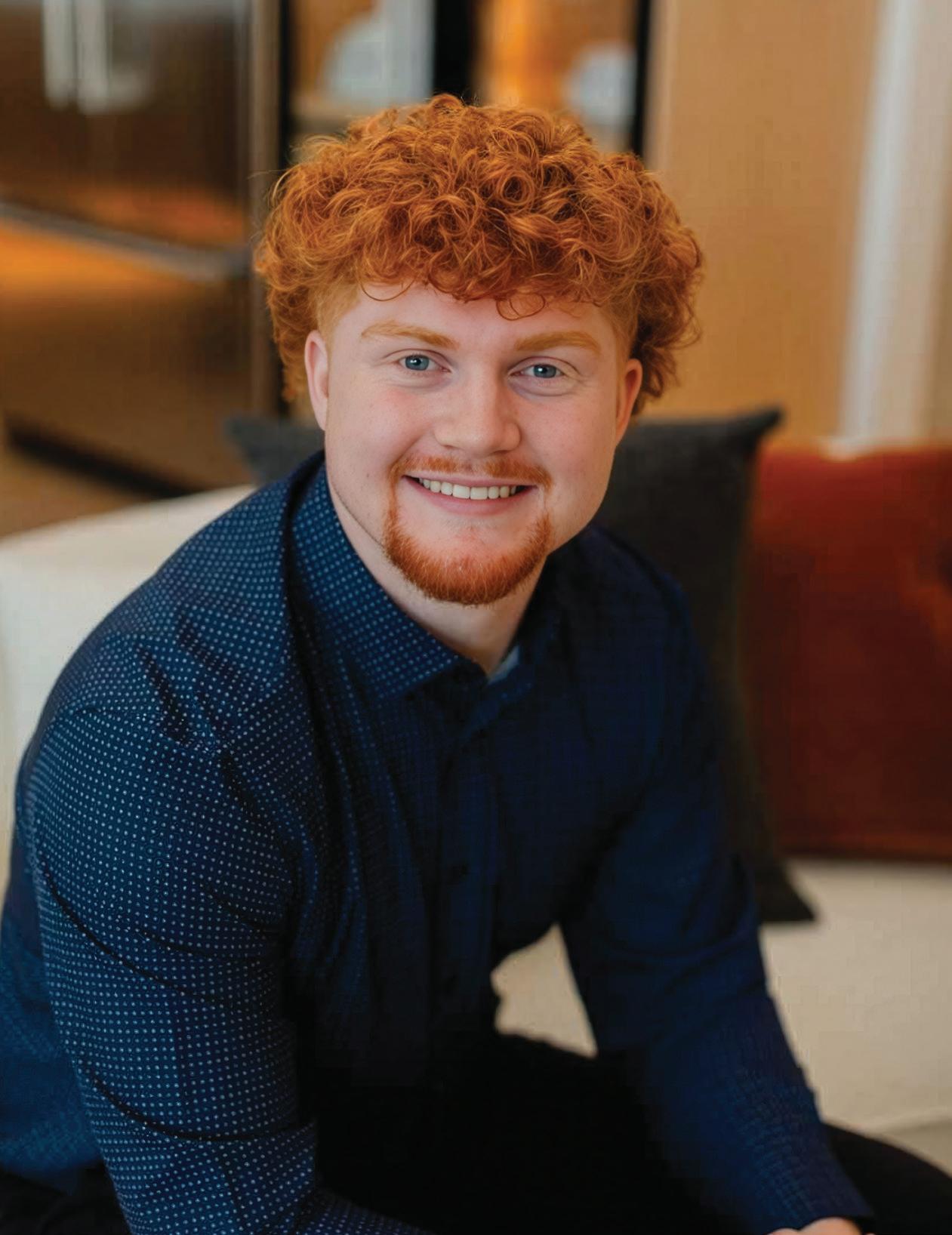
With bright red hair and a natural sense of humor about it, Sykora has leaned into the personal brand. His tagline is, "Your redheaded real estate agent."
“I am very recognizable with my hair, and a lot of people know that,” he said. “So I try to play into that as much as possible.”
Still, being recognizable only gets someone so far. Real estate is a
problem-solving, and emotional steadiness. Sykora has learned that quickly.
Early on, one of his biggest mistakes was trying to make everything perfect. If one part of a transaction went sideways, he would overthink it. He would stress. He would carry the weight of every bump in the road.
Over time, he has come to understand that no transaction is perfectly smooth.
Something is almost always going to come up. A home inspection may reveal an issue. An appraisal may create tension. A buyer may get nervous. A seller may have to adjust expectations. Financing, timelines, repairs, negotiations—there are plenty of places where things can get complicated.
The job, Sykora has learned, is not to pretend those complications will not happen. The job is to help people move through them.
to go wrong in every transaction or some little bump,” he said. “It’s more of how can I look at it and problem solve and figure it out instead of stressing about it.”
That mindset has changed how he works with clients. Now, he tries to be upfront from the start.
“Hey, there’s going to be something that’s going to go wrong in this transaction,” he said. “It might not be your fault. It might not be the other side’s fault. It might just be something that happens. How can we problem solve and overcome that?”
That honesty is a theme that comes up often when Sykora talks about the business. He wants clients to feel confident buying or selling a home, but he also wants them to know he will tell them the truth, even if the truth is not what they expected.
Sometimes, that means telling someone the house is not right. Sometimes, it means telling a would-be seller that staying put might actually be the smarter move.
“You are in a perfect living situation right now,” he said as an example. “Even though you might want to sell a house, you don’t need to.”
That perspective is part of what he values about the people-first culture at Berkshire Hathaway HomeServices Premier Properties. Sykora said mentorship and training played a major role in helping him get started, especially the guidance of Justin Kolling, a Realtor in his office who served as one of his early mentors.
Jumping into real estate is one thing. Being successful and able to find your business is another thing.”
The support helped him learn not just how to complete transactions, but how to build a career with the right priorities. To Sykora, that means focusing less on chasing numbers and more on building long-term relationships.
“How do we make sure our clients are comfortable? How do we make sure they’re excited?” he said. “How can we make sure we keep them for clients every time they buy and sell a house?”
The harder part is understanding people.
Through real estate, he has learned how to read different personalities. Some people need direct bullet points. Some need more explanation. Some are analytical. Some need reassurance. Some need space to process. Some need an agent who can slow things down and help them breathe.
That education, he said, has been valuable far beyond home sales.
The real-world experiences, as far as business-wise, not even considering home sales—the people I know, the connections I’ve made, how to talk to people. That helps me in business, whether it’s real estate, whether it’s any business you can think of.”
It is also why he encourages other young people to jump into something where they have to talk to people, sell, listen, and learn. It does not have to be real estate. It could be cars, boats, houses, or anything else. The product changes. The core skill does not.
“It’s all people,” he said.
Of course, being young in real estate comes with challenges. Sykora knows that some people look at him differently when they meet him at an open house.
His answer is not to dodge the subject. Depending on the situation, he addresses it honestly.
“I’m young,” he said. “There’s pros and cons whether I’m young or whether I’m old.”
At this point, he is comfortable with that reality. If someone decides they do not want to work with him because of his age, he does not take it personally.
“I’ve come to a point where I’m confident where I’m at,” he said. “If someone doesn’t want to work with me because of my age, then I don’t want to work with them either.”
Outside of work, Sykora likes to stay active. He golfs during the summer, plays pickleball, and curls in the winter. He is also involved at Holy Spirit Catholic Church in North Fargo, where he teaches youth group each week.
He does not pretend to know exactly what his business will look like 30 years from now. He wants to grow his residential real estate career. He wants to eventually get into real estate investing personally. He wants to help as many people as he can buy and sell homes.
IS HERE TO HELP PEOPLE FIND THEIR WAY HOME
hareen Mossa knows what it feels like to step into unfamiliar territory.
She knows what it feels like to grow up between two worlds. She knows what it feels like to become independent before she was fully ready. She knows what it feels like to work, save, sacrifice, and figure things out because there was no other option.
And now, as a REALTOR® with Park Co., Realtors, she wants to use all of that lived experience to help others—especially first-time buyers, immigrant families, Kurdish families, single parents, and anyone who feels overwhelmed by the home-buying process—feel seen, supported, and understood.
“I’m just here to help people and support them and guide them in the right way,” Mossa said. “It took so much to get where I am today. It really, really did.”
For Mossa, real estate is about stability and confidence. It is about helping someone walk into a process that can feel confusing, intimidating, and expensive—and making sure they never feel alone in it.
“I would never try to push anyone to buy something that they didn’t feel like was their actual home or feel comfortable in,” she said. “Buying a home is a really big milestone. It’s a lot of money. I would want them to have the best experience and get them into the best home that’s going to be for their future.”
GROWING UP BETWEEN TWO WORLDS
Mossa’s family came to the United States in 1992. She grew up in a large household—13 people in all, including her parents and 11 children. Her background is Kurdish and Muslim, and much of her childhood was shaped by the traditions, expectations, and values that came with being raised in a close-knit Kurdish household.
At home, family, faith, respect, and responsibility were central. Like many children of immigrant families, Mossa often found herself learning how to move between two worlds:
the culture and values she was raised with at home, and the American culture she was growing up around outside of it.
“It was kind of hard to fit into both versions of being Americanized and then having such a strong culture of growing up Kurdish and Muslim,” she said. “Trying to balance that dynamic of everything.”
Because of those cultural expectations, much of her childhood centered around family and home life rather than the kind of carefree activities or weekend
adventures some of her peers experienced.
“Honestly, not much,” she said when asked what she did for fun as a kid.
As she got older, that upbringing helped shape her sense of independence. At 16, she became a mother. At 19, she moved out with her son and never moved back home. That was when life forced her to grow up quickly.
“It really taught me how to become more independent and teach myself how to work, save, and rely on myself,” she said.
BECOMING A MOTHER YOUNG
Mossa does not romanticize how hard that season was.
Having a child at 16 meant missing out on parts of being a teenager. While other people her age were out having fun, she was home taking care of her son, working, and trying to build a life.
“It was really challenging,” she said. “It’s like being a kid and having a kid. You lose out on a lot. You lose out on doing things that normal teenagers get to do.”
But that experience shaped her.
It taught her organization. It taught her independence. It taught her how to keep
moving even when life felt heavy. And perhaps most importantly, it gave her a deeper understanding of what people are carrying when they walk through the door.
Mossa believes that empathy is one of her biggest strengths as an agent. She knows what it is like to be under pressure. She knows what it is like to be a young parent trying to make smart decisions. She knows what it is like to want something better for your family.
“You know what people are going through,” she said. “You know exactly what other people are feeling.”
THE KIND OF AGENT SHE WANTS TO BE
Mossa is clear about the kind of REALTOR® she does not want to become.
A LOVE OF HOMES, AND A BIGGER PURPOSE
Before real estate, Mossa worked in retail, waitressing, and as a leasing agent. But homes had always interested her.
“I’ve always had a hobby in homes,” she said. “I don’t know what it is, but I’ve always just loved houses. Even in my free time, I just drive around and go look at houses—even still today.”
Real estate offered the possibility of flexibility, a stronger income, and a career that could help her support her son. But there was another motivation, too.
Mossa wanted to help families who may not know how to navigate buying a home—especially Kurdish and foreign-born families who may face language barriers, cultural barriers, or simply a lack of familiarity with the process.
“I always thought it would be really nice to help out other Kurdish families too, or foreign families that don’t know how to purchase a home or know anything about it,” she said.
Her own parents have lived in the United States for more than 30 years and have never owned a home. Mossa said she is now helping them through that process.
“They’ve been here for 30 years. They’ve never owned a home,” she said. “I’m actually in the process of helping them get one right now.”
For her, that is exactly why this work matters.
A house is not just a transaction. It can represent belonging. It can represent permanence. It can represent the kind of security a family may have spent decades working toward.
She has heard people talk about experiences where they felt rushed, dismissed, or treated like a number. She has heard stories from buyers who felt like their agent did not care, did not explain enough, or just wanted to close the deal.
“I just can’t imagine ever being that way,” she said.
She does not want to pressure people into a home that is not right for them. She does not want to gloss over concerns or push clients toward whatever is fastest. She wants her clients to feel informed, comfortable, and confident.
“I’m not one of those pushy agents where every house I’m going to show you, I’m going to tell you, ‘This is nice. This is the one,’” she said. “I would never do that.”
LIFE WITH HER SON
Outside of work, Mossa’s closest relationship is with her son.
The two travel often, play video games, and share a love of food. They have been to New York, Arizona, Florida, Mexico, and more. They once took a road trip from North Dakota to
Arizona and circled back around. California and Paris are also on the dream list.
“We like to travel a lot together,” she said. “We both really like food, so we will literally travel anywhere to go try new foods together.”
“NEVER GIVE UP ON YOUR DREAMS”
Mossa’s story is not one of an easy, straight path.
It is a story of growing up in a large immigrant family. Of trying to balance culture and identity. Of becoming a mother at 16. Of moving out at 19. Of working jobs, saving money, and figuring out adulthood while raising a child.
It is also a story of refusing to quit.
“I want people to know to never give up on their dreams,” she said. “It’s always possible, and never let anybody stop you. If I can do it, anyone can do it.”
Real Estate FAQs
WHAT’S HAPPENING IN OUR LOCAL MARKET THAT MOST BUYERS/SELLERS ARE MISUNDERSTANDING RIGHT NOW?
Erik Hopperstad, RE/MAX LEGACY REALTY
A lot of people think the market is either “slow” or “crashing,” but Fargo-Moorhead is still very active for the right homes. Inventory is improving in some areas, but wellpriced, well-presented homes are still moving.
Cooper Wahlo Jr., REAL BROKER
A lot of people still think the market is either “crazy competitive” or “completely dead,” and honestly, it’s neither. In Fargo-Moorhead, we’re seeing a more balanced market depending on price point and location. Well-priced homes are still moving quickly, but buyers have become more selective. Sellers can’t just throw a number on a house and expect multiple offers by the weekend anymore.
Luke Haldis, RE/MAX LEGACY
Everyone's waiting for rates to come back down to 3%. That's just not realistic. The people buying right now are building equity while everyone else sits on the sideline. You can refinance a rate, but you can't get back the time you spent waiting.
For anyone trying to make sense of the Fargo-Moorhead housing market right now, the answers are not as simple as “hot” or “slow.”
Local real estate professionals say today’s market is more balanced, more selective, and more strategy-driven than the frenzy of a few years ago. Well-priced homes are still moving, buyers are still active, and opportunities still exist—but both sides need to be more prepared than they may have been in the past. Buyers are watching monthly payments more closely. Sellers are learning that presentation, pricing, and first impressions matter again.
To get a clearer picture of what is actually happening in the local market, we asked Erik Hopperstad of RE/MAX Legacy Realty, Cooper Wahlo Jr. of Real Broker, Luke Haldis of RE/MAX Legacy, Callie Feeney of REALTY XPERTS, Dane Fuglestad of REALTY XPERTS, May Wu of REALTY XPERTS, and Josh Knutson of REALTY XPERTS to weigh in on the questions buyers and sellers are asking most right now. From pricing mistakes and overlooked opportunities to financing options and whether it makes sense to wait, their answers offer a practical look at how to navigate the market with confidence.
Callie Feeney, REALTY XPERTS
I would say that interest rates are the most misunderstood issue in our local market right now. Yes, rates are higher than they were a few months ago, but not significantly. Also, just because the national average might be 6.75%, doesn't mean that rates are that high locally. I spoke with a local lender a couple of days ago, and they had rates as low as 5.875% on a 30-year conventional loan. Also, if rates drop significantly in the near future, you can always refinance. It's best to buy when it is right for you personally, and the payment works for you.
Dane Fuglestad, REALTY XPERTS
A lot of people still think the market is either completely frozen because of interest rates or still operating like the frenzy we saw a few years ago. In the Fargo-Moorhead area, neither is really true. Good homes that are priced correctly and show well are still moving quickly, but buyers are more cautious and much more payment-focused now. Strategy matters a lot more than it did during the peak market.
May Wu, REALTY XPERTS
Some people think the market is either “crazy competitive” like few years ago or crashing due to the high interest rates, but neither is true. Inventory has increased, giving buyers more options, while well-priced homes are still selling quickly. The market is becoming more balanced, and strategy matters more than timing.
Knutson, REALTY XPERTS
I would say specials and taxes. I can’t answer this for the entirety of the FM area, but no matter which zip code you’re in, take some time to educate yourself about what is happening at the local level. Sales taxes, property taxes, etc., are all necessary, but know to what extent and exercise your voting rights to help. Having an idea of this helps when reviewing your own property taxes and understanding them each year. Specials and taxes can significantly impact what you can afford. So, if you’re buying in a certain area, make sure to research and have your agent research what that looks like. This will help remove any surprises down the road that you don’t want.
Josh
IF
YOU HAD TO DESCRIBE TODAY’S MARKET IN ONE SENTENCE FOR A CLIENT, WHAT WOULD YOU SAY?
Erik Hopperstad, RE/MAX LEGACY REALTY
It’s a more balanced market than the frenzy of a few years ago, but great homes are still selling quickly when price, condition, and presentation line up.
Cooper Wahlo Jr., REAL BROKER
It’s a market that rewards preparation, pricing correctly, and having a strategy.
Luke Haldis, RE/MAX LEGACY
It's still a good time to move if you have the right plan going in.
Callie Feeney, REALTY XPERTS
The Fargo market is balanced, but selective—well-priced, prepared homes are selling quickly as buyers are more cautious.
Dane Fuglestad, REALTY XPERTS
The Fargo-Moorhead market is still strong, but buyers and sellers need to be realistic, prepared, and patient.
May Wu, REALTY XPERTS
Today’s market rewards proper preparation, realistic pricing, and strong negotiation more than simply “waiting for the perfect moment.”
Josh Knutson, REALTY XPERTS
Today’s market remains competitive, but there are opportunities available for virtually every type of buyer and seller—creating a more balanced market overall.
WHAT’S CHANGED THE MOST IN THE PAST
6–12 MONTHS?
Erik Hopperstad, RE/MAX LEGACY REALTY
Buyers are more selective. Higher payments have made people more cautious, so homes need to feel “worth it” from the first showing.
Cooper Wahlo Jr., REAL BROKER
Buyers are paying closer attention to value and monthly payment instead of just rushing to buy. Interest rates changed the mindset a little. People want to feel confident in the purchase, not pressured into it. At the same
time, sellers are slowly realizing presentation and pricing matter more than they did a couple years ago.
Luke Haldis, RE/MAX LEGACY
How buyer representation works. There's a written agreement now between buyers and their agent that spells out exactly what's being done and what the compensation looks like. Honestly it's a good thing, it just brings more transparency to the process.
Callie Feeney, REALTY XPERTS
Well, first of all, luckily, Fargo-Moorhead has a pretty healthy economy and doesn't see the dramatic market correction some larger metro areas do. Buyers are more cautious than they were a year ago. There have been more price reductions and negotiations. It is more of a balanced market right now, locally.
Dane Fuglestad, REALTY XPERTS
Buyers are taking more time and doing more due diligence before making decisions. We’re seeing fewer emotional “must-win” offers and more focus on inspections, financing, monthly payments, and long-term value. Sellers also have to work harder upfront with pricing and presentation than they did a couple years ago.
May Wu, REALTY XPERTS
The biggest change is inventory growth and buyer behavior. Buyers are taking more time, comparing more homes, and becoming more selective, while sellers can no longer rely on simply listing a home and expecting multiple offers immediately.
Josh Knutson, REALTY XPERTS
I think the anticipation and excitement around potential interest rate cuts is starting to lose its momentum. People are beginning to realize that interest rates are difficult to predict, and waiting for the “perfect” rate may not be realistic.
WHAT’S THE BIGGEST MISTAKE YOU’RE SEEING BUYERS MAKE RIGHT NOW?
Erik Hopperstad, RE/MAX LEGACY REALTY
Waiting for the “perfect” home or trying to time the market. In reality, the best opportunities usually come when buyers are prepared and ready to move.
Cooper Wahlo Jr., REAL BROKER
Trying to time the market perfectly. I’ve seen people sit on the sidelines waiting for rates to crash while prices continue to hold steady or inventory stays limited. The “perfect time” usually ends up costing people
opportunities. If the payment works and the house fits your goals, that matters more than trying to predict the market.
Luke Haldis, RE/MAX LEGACY
Starting on Zillow before they have a strategy. By the time you find something you love scrolling on your phone, you're already a step behind. Having a conversation with an agent first changes everything.
Callie Feeney, REALTY XPERTS
Waiting for the "perfect" combo of lower rates and lower prices. If rates do drop, that will also mean more competition and higher prices. Focus more on the payment making sense for you right now.
Dane Fuglestad, REALTY XPERTS
Trying to perfectly time interest rates. I’ve worked with buyers who waited hoping rates would drop, only to watch prices stay steady or competition increase. If the payment makes sense and the home fits your longterm goals, it can still be a smart time to buy. Rates can change later—the right house doesn’t always come back around.
May Wu, REALTY XPERTS
Waiting endlessly for rates to drop or prices to crash. Meanwhile, prices have remained stable and inventory is improving. Buyers who are financially ready often benefit more from negotiating today than trying to perfectly time the market.
Josh Knutson, REALTY XPERTS
Waiting for interest rates to drop. It’s not likely we will ever see the glory days of 3 or 4%, but I don’t know that. Keeping rates into perspective will help buyers realize that now is as good a time as ever to pursue their next home. I recently read an article that showed past interest rates from 1981 being 18%. Knowing that helps us understand that we are in a fairly average interest rate timeframe.
Real Estate FAQs
WHAT SHOULD BUYERS BE LOOKING FOR THAT THEY’RE CURRENTLY OVERLOOKING?
Erik Hopperstad, RE/MAX LEGACY REALTY
Homes with strong fundamentals: good location, layout, mechanicals, storage, lot, and resale potential. Cosmetic updates can be changed; location and floor plan are harder to fix.
Cooper Wahlo Jr., REAL BROKER
Potential and location. A lot of buyers are overlooking solid homes because they don’t have trendy finishes or Pinterest-style updates. Cosmetic stuff can be changed over time. You can’t change the location, lot, school district, or layout.
Luke Haldis, RE/MAX LEGACY
New construction. Builders are offering some really solid incentives right now, rate buydowns, upgrades, move-in ready homes. A lot of buyers assume it's out of their budget without ever actually looking into it.
Callie Feeney, REALTY XPERTS
Right now, a lot of buyers are looking for the perfect home when they could be getting deals on homes that could use a little work, but are in a great location.
Dane Fuglestad, REALTY XPERTS
Potential and location. In our area, I think some buyers are overlooking homes that may need cosmetic updates or homes in growing communities just outside Fargo. Those can end up being some of the best long-term investments, especially for first-time buyers trying to build equity.
May Wu, REALTY XPERTS
Homes that have been sitting slightly longer on the market. Those properties often create the best opportunities for negotiation, seller concessions, and long-term equity.
Josh Knutson, REALTY XPERTS
Building of your team! The team you surround yourself with when preparing to buy a home can significantly impact your experience and experiences to follow. Find a lender, an agent, a friend, and family members that you know and trust to help provide sound guidance along the way. The lender will get you on track for what you should truly plan to spend as opposed to what you may think. The agent makes or breaks your whole experience. Find someone who gives you the right vibe. An agent that will communicate, educate, and walk alongside you the entire time while finding the perfect home for you. The FM area has an amazing number of qualified and exceptional agents. Rely on friends and family during the process, both to help cheer you on and to help keep you grounded in what your goals are in buying a
home and diving into the next chapter in your life. Combine all of that, and you’ll have an amazing experience.
WHAT’S THE BIGGEST MISCONCEPTION SELLERS HAVE RIGHT NOW?
Erik Hopperstad, RE/MAX LEGACY REALTY
That they can price based on what their neighbor got two years ago. Today’s buyers are informed, payment-conscious, and quick to pass on homes that feel overpriced.
Cooper Wahlo Jr., REAL BROKER
That buyers will overlook everything if inventory is low. Buyers today notice deferred maintenance, clutter, poor photos, and homes that feel overpriced. The homes winning right now are the ones that feel move-in ready and are marketed correctly.
Luke Haldis, RE/MAX LEGACY
That pricing high gives them room to negotiate. What it actually does is give buyers a reason to scroll past. Homes that are priced right from the start still get multiple offers in this market. Overpriced homes just sit.
Callie Feeney, REALTY XPERTS
A lot of sellers are still thinking the market is like it was 4-5 years ago. The truth is, they need to be priced right, or buyers will overlook their home.
Dane Fuglestad, REALTY XPERTS
That every home will automatically sell fast no matter how it’s priced. Buyers are much more educated today and they’re comparing everything online before they even schedule a showing. Overpricing usually ends up costing sellers time and negotiating power.
May Wu, REALTY XPERTS
Some sellers still believe they can price based on peak-market expectations from a few years ago. Buyers today are much more paymentsensitive and comparison-focused. Proper pricing and presentation matter more than ever.
Josh Knutson, REALTY XPERTS
Similar to buyers holding out for better rates. Sellers are concerned about listing a home due to the fear that buyers are waiting for rates to drop significantly. Truth is, no one knows what rates will do. Don’t let it stop you from living your life; whether you’re selling or buying, reach out to a trusted agent and at least have the conversation. There are a ton of homes moving on the market today.
WHAT MAKES A HOME
STAND OUT IN TODAY’S LISTINGS?
Erik Hopperstad, RE/MAX LEGACY REALTY
Clean presentation, smart pricing, great photos, updated finishes, and a move-in-ready feel. Buyers want to picture themselves living there without immediately seeing a long to-do list.
Cooper Wahlo Jr., REAL BROKER
Clean presentation, good lighting, quality photos, and realistic pricing. Honestly, buyers decide how they feel about a home within seconds online. If the home doesn’t stand out digitally, they may never even schedule the showing.
Luke Haldis, RE/MAX LEGACY
Great photos and a price that makes sense. Buyers are moving fast online. If the photos don't grab them or the price feels off, they're gone. That's where it starts.
Callie Feeney, REALTY XPERTS
In today's market, a home that is priced competitively, has good listing photos, is move-in ready, and is well staged is winning.
Dane Fuglestad, REALTY XPERTS
Clean presentation, realistic pricing, and condition. Homes with good photos, neutral finishes, updated mechanicals, and strong curb appeal are standing out right now. Buyers want homes that feel move-in ready and well cared for.
May Wu, REALTY XPERTS
Clean presentation, clutter-free, updated photos, neutral finishes, good lighting, and realistic pricing. Homes that feel move-in ready and are marketed professionally are still attracting strong attention quickly.
Josh Knutson, REALTY XPERTS
Curb appeal is number one! Kitchen functionality and quality is a close second in my opinion.
WHAT’S ONE THING SELLERS CAN DO IMMEDIATELY TO INCREASE THEIR HOME’S VALUE?
Erik Hopperstad, RE/MAX LEGACY REALTY
Declutter, deep clean, and handle obvious maintenance items. It sounds simple, but first impressions can dramatically impact perceived value.
Cooper Wahlo Jr., REAL BROKER
Declutter and make the home feel brighter and more open. It sounds simple, but first impressions matter. Fresh paint, clean landscaping, and removing excess stuff can completely change how buyers perceive value.
Luke Haldis, RE/MAX LEGACY
Clean and declutter before photos are taken. I know it sounds simple, but it makes a massive difference in how a home shows online. You don't need to remodel anything; you just need it to feel ready.
Callie Feeney, REALTY XPERTS
One thing sellers can do immediately to increase value is declutter and depersonalize. First impressions are everything, and buyers are looking online first.
Dane Fuglestad, REALTY XPERTS
Focus on the basics first. Deep clean the home, declutter, touch up paint, improve curb appeal, and take care of the small maintenance items buyers notice during showings. Those simple things usually give sellers the biggest return.
May Wu, REALTY XPERTS
Focus on the first impression. Simple improvements like fresh paint, decluttering, landscaping touch-ups, and deep cleaning can dramatically improve buyer perception and offer strength without major renovation costs.
Josh Knutson, REALTY XPERTS
I would say some of the most beneficial things are keeping a clean and organized home. Clutter can sometimes take away from the true value of a home if that’s all that distracts a potential buyer. Other things include curb appeal, paint, and lighting. Curb appeal can be fairly broad, but think of
what catches your eye when you first look at a home. Is it the landscaping, color of the home, or something else? Don’t go crazy with paint colors. Colors can distract a buyer as well from what is truly there. Stick with neutral colors if possible.
ARE THERE FINANCING OPTIONS OR PROGRAMS PEOPLE AREN’T TAKING ADVANTAGE OF?
Erik Hopperstad, RE/MAX LEGACY REALTY
Yes. Rate buydowns, seller-paid closing costs, first-time buyer programs, and local/state assistance options can make a meaningful difference. A good lender can often create options buyers didn’t know existed.
Cooper Wahlo Jr., REAL BROKER
Absolutely. There are first-time buyer programs, down payment assistance options, rate buydowns, and creative financing strategies that many people don’t even know exist. A lot of buyers assume they need 20% down, and that’s just not true for many situations.
Luke Haldis, RE/MAX LEGACY
Yes, and it comes up constantly. The North Dakota Housing Finance Agency has down payment assistance programs that most first-time buyers have never even heard of. Builders are also buying down rates right now, which can seriously move the needle on a monthly payment. It's worth the conversation before you assume what you can or can't afford.
Callie Feeney, REALTY XPERTS
There are many great financing options. It is best to talk to your lender to see what is best for you personally. A couple of simple choices are asking sellers to pay concessions instead of a price reduction. This can help if you don't have the extra cash to pay closing costs or maybe want to save the cash for other items. There are also rate buydown options, and ND Housing has great benefits for those who qualify.
Dane Fuglestad, REALTY XPERTS
Definitely. A lot of buyers don’t realize there are still great options out there like VA loans, first-time buyer programs, rural development loans, and down payment assistance programs. I work with a lot of veterans, and
many people don’t fully understand how powerful VA financing can be when used correctly.
May Wu, REALTY XPERTS
Yes, some buyers don’t realize there are still down payment assistance programs, temporary rate buydowns, assumable loans in some cases, and seller-paid closing cost opportunities available. A good lender can often structure financing creatively to improve affordability.
Josh Knutson, REALTY XPERTS
There are significant first-time home-buying programs that drop rates for those in the market. It’s worth having a conversation with a local lender who will know the local, state, and federal programs. Even many veterans out there aren’t completely aware of the benefits afforded to them when buying a home. Zero down payment is just one example.
SHOULD PEOPLE WAIT TO BUY OR SELL RIGHT NOW? WHY OR WHY NOT?
Erik Hopperstad, RE/MAX LEGACY REALTY
I wouldn’t make the decision based only on headlines. If the move improves your life, finances, family situation, or long-term goals, it’s worth exploring now. Timing the market is difficult; making a smart, well-advised move is much more realistic. Fargo-Moorhead data continues to show an active market, with FM REALTORS reporting year-over-year increases in homes sold, active listings, and new listings through March 2026. April Fargo metro data also showed roughly 3 months of supply and a median sale price around $325,000, suggesting a market that is not frozen but still rewards good pricing and presentation.
Cooper Wahlo Jr., REAL BROKER
I think people should make decisions based on their life situation, not headlines. If you need more space, are relocating, downsizing, or financially ready, there are opportunities right now. Waiting for the “perfect market” usually keeps people stuck. The people who win long term are the ones who make smart decisions and stay in the game.
Luke Haldis, RE/MAX LEGACY
I'd say no, and I mean that genuinely. FargoMoorhead is one of the most stable markets in the country. If life is pointing you toward a move, the market shouldn't be the thing that
stops you. I've watched people wait for the "right time" for years and miss out on real equity. The right time is usually just when it makes sense for your life. Now, if you're sitting on a 2.5% rate, that's a different conversation. The only reason to give that up is if you truly have to. Job change, growing family, major life shift. But if you're just thinking about it? Stay put and enjoy that payment.
Callie Feeney, REALTY XPERTS
Buyers and sellers right now should focus on whether a move is right for their life and finances right now rather than trying to time the market. The local market is truthfully more balanced now, not broken. Buyers have more negotiating power, and good homes that are prepared and priced correctly are still selling.
Dane
Fuglestad, REALTY XPERTS
May
Wu, REALTY XPERTS
I don’t think people should try to “time” the market perfectly. Fargo-Moorhead has remained a pretty stable market compared to many parts of the country because of our job market, growth, and overall affordability. If someone is financially ready and the move makes sense for their family or goals, there are still good opportunities on both the buying and selling side right now.
Usually, no. Trying to perfectly time the market rarely works. The better question is whether the move makes sense for your personal goals, finances, and timeline. Buyers currently have more negotiating power than they did a few years ago, and sellers still benefit from relatively stable pricing and active demand in many price ranges.
Josh Knutson, REALTY XPERTS
I certainly can’t speak on behalf of everyone. Each person needs to make that decision for themselves, but if there’s confusion or concern about how rates, taxes, specials, or even location can affect a deal, just have that conversation with an agent or lender. Don’t stop pursuing your next dream home or even upgrading based on everything you hear in the news or on social media. Often, those are overly inflated, and your best option is to simply talk with a local agent.
Built on
By Brady Drake
Eric Christians believes in listening. He’s not trying to be the loudest agent in the room.
Today, he focuses on people over transactions, but he learned to be this way. It didn’t come all at once. It was built over decades, shaped by experience, and sharpened by a moment that forced him to stop everything and rethink what mattered.
Photos provided by Alison Monke
OWNER-OCCUPIED 43.7%
FARGO HOUSING MIX
-US CENSUS BUREAU
FARGO’S MEDIAN RENT IS PER MONTH
-REALTOR.COM’S APRIL 2026 MARKET DATA $1,037
RENTER-OCCUPIED 56.3%
136,285
FARGO HAD AN ESTIMATED POPULATION OF IN 2024, UP 8.2% FROM THE APRIL 2020 POPULATION ESTIMATE BASE.
-US CENSUS BUREAU
$281,900
THE MEDIAN VALUE OF OWNEROCCUPIED HOMES IN FARGO WAS FOR THE 2020–2024 CENSUS ESTIMATE PERIOD.
-US CENSUS BUREAU
FARGO’S MEDIAN HOUSEHOLD INCOME WAS IN 2020–2024
-US CENSUS BUREAU $66,998
BUREAU
CENSUS BUREAU $321,900
35.6% WEST FARGO HAD AN ESTIMATED POPULATION OF
41,027
-US CENSUS BUREAU
HORACE’S MEDIAN GROSS RENT WAS PER MONTH
-REALTOR.COM’S APRIL 2026 MARKET DATA $2,146 OWNER-OCCUPIED 94.4%
HORACE HOUSING MIX
-US CENSUS BUREAU
RENTER-OCCUPIED 5.6%
6,286
HORACE HAD AN ESTIMATED POPULATION OF IN 2024, UP 96.1% FROM THE APRIL 2020 POPULATION ESTIMATE BASE.
-US CENSUS BUREAU
$414,500
THE MEDIAN VALUE OF OWNER-OCCUPIED HOMES IN HORACE WAS FOR THE 2020–2024 CENSUS ESTIMATE PERIOD.
-US CENSUS BUREAU
HORACE’S MEDIAN HOUSEHOLD INCOME WAS IN 2020–2024
-US CENSUS BUREAU $138,578
By Brady Drake
very year, TEDxFargo brings together people who are asking bigger questions about work, community, creativity, technology, and purpose.
The 2026 speaker lineup continues that tradition with voices from a wide range of backgrounds, each bringing a different perspective on how ideas become action. Some are artists. Some are entrepreneurs. Some are leaders, builders, educators, or advocates. But what connects them is a shared willingness to think deeply, challenge assumptions, and invite others into a new way of seeing the world.
In the pages ahead, we’re introducing you to some of the people who will take the TEDxFargo stage in 2026.
Meet the
TEDx Fargo Speakers
THERESA ASHBY | provided by Theresa Ashby
TEDx Fargo Speaker
Finding Your Highest Self Theresa Ashby, PhD
or much of her career, Dr. Theresa Ashby understood business through the language of execution.
Build the plan. Drive the numbers. Hit the targets. Measure the results. Move faster.
And she was good at it.
Ashby has spent decades in leadership, consulting, speaking, and advising, building a reputation as a business scaling expert. Her background includes high-level corporate leadership, business strategy, digital transformation, and helping entrepreneurs turn their ideas into scalable products, platforms, and systems. She is the author of "Better Implementation Now! Eight Ways Great Strategies Fail and How to Fix Them" and "Exposing the eLearning Mystery: Secrets to
Digitizing Your Business." She is also listed by NAWBO as its Institute Board Treasurer and a business scaling expert.
In other words, Ashby knows the spreadsheet side of business. She knows the systems. She knows the pressure. She knows the version of leadership that says success is something you push toward with enough strategy, intensity, and force.
But that is not the version of leadership she is bringing to the TEDxFargo stage.
Her talk, she said, is about collective consciousness, and more specifically, how women can “reconnect, recommit, and reimagine how we change the world together.”
To Ashby, that the next evolution of business.
“Our business models that we’ve been running our businesses off of are outdated,” she said. “Not outdated in the sense of AI that has forced us to look at things, but more in line with these philosophical viewpoints of separateness.”
Ashby believes the next era of business will require leaders to move away from separateness and toward wholeness. Toward relationships. Toward community. Toward philanthropy. Toward a deeper kind of self-awareness. Toward what she describes as spirituality—not religion, but the essence of who a person is.
“Gone are the days of being the egoic leader,” she said. “The world is in turmoil, and the more we come at it from an egoic mind, the more we forget to be inclusive of others.”
For Ashby, this is not soft thinking. It is not a retreat from business discipline.
It is a challenge to look at where that discipline begins.
Too often, she said, leaders build from the outside in. They create a business, define products and services, push for growth, and then try to align their people around the machine they have built.
Ashby is suggesting the opposite.
Start with the self. Understand what is driving you. Understand your nervous system, your emotions, your blind spots, your values, and your purpose. Then build from there.
“When you bridge the inner self,” she said, “the outer results will be far greater.”
That sentence could almost serve as the thesis of her current work.
It also represents a major personal shift.
Ashby said her own turning point came after a mission trip to Chad, Africa. She had gone, in her words, with the subconscious expectation of helping—of doing good, of serving, of being useful.
“I went and I was going to be the hero,” she said. “When I got there, I wasn’t the hero. Everybody else was the hero.”
The experience shook her. She witnessed suffering, death, instability, and a level of human resilience that forced her to reexamine the way she had been moving through the world.
“It was my awakening,” she said. “I’ve really been holding up the world thinking my purpose was to help others, but really I had to help myself before I could see how I was able to help others.”
What followed was not a quick reinvention. It was a healing journey. Ashby worked with a psychologist
experienced in post-traumatic stress disorder. She brought in a spiritual coach. She surrounded herself with women and friends who could “hold space” for her as she processed what she had experienced and began to rebuild from the inside out.
“I’m still on the journey,” she said. “It’s not over. What I realize is it’s not a destination anymore. I think I lived my life in such a destination. Now it’s really just about feeling what I need, hearing what I need, doing what I need, just being—and then, of course, taking action.”
Ashby is not telling business owners to abandon action. She is telling them to examine the place their action comes from.
There is a difference between execution born from fear and execution born from alignment. There is a difference between scaling a business because the market says you should and scaling a business because the work is rooted in a clear purpose. There is a difference between chasing numbers and building something that reflects the truest version of the people behind it.
For business owners, that can be uncomfortable.
Ashby knows it is easier to talk about alignment than to live it. It is easier to say a business should be heartdriven than to risk changing an offer, a service, a customer base, or a strategy that is producing revenue. But she believes many companies are quietly carrying the cost of building around the wrong center.
“If I go beyond the numbers and I go beyond the spreadsheets and I take the time to really sit back and say, ‘What is it that I really want to do in my business?’ we will find that you created a program or a service that was driven by financials instead of by what is heart-driven,” she said. That does not mean money is
irrelevant. It means money cannot be the only compass.
For Ashby, the work begins with questions. Who do I really want to serve? What do I actually want to build? What values are showing up in the way I lead? What blind spots are showing up in the way my business operates? What part of me is driving this decision—fear, ego, scarcity, purpose, love?
She believes a business will reveal all of it.
“Our businesses completely reveal our values and our blind spots,” she said. “Your healed self and your wounded self play out in your business.”
That is a demanding view of leadership. It asks leaders to stop treating business as a separate compartment from the rest of life. It asks them to see the workplace as one of the clearest mirrors they have.
It also asks them to think differently about impact.
Ashby’s idea of collective consciousness is rooted in the belief that individual healing does not stay individual. When one person becomes more grounded, more aware, more compassionate, and less driven by ego, the environment around that person changes.
“When one of us rises, the environment completely shifts,” she said. “When one of us heals ourself, it creates all of this space for others to heal. And when we start to use our voice, then what we’re doing is we’re giving everybody else permission to speak.”
JEN BURGARD | provided by Jen Burgard
TEDx Fargo Speaker
Being Weak Jen Burgard
The
Strength of
en Burgard did not set out to become a public voice on grief.
She did not set out to build an organization around loss. She did not set out to speak from a TEDx Fargo stage. She did not set out to become the person other people point to and say, “You’re so strong.”
In fact, those words have always sat strangely with her.
“I don’t feel strong,” Burgard said. “Sometimes I would prefer people not say that.”
She understands why people do. They mean it kindly. They mean it as encouragement. They mean it as admiration for what she has survived and what she has built.
But strength, as Burgard has come to understand it, can become its own kind of performance.
It can put people on a pedestal when
what they really need is someone willing to sit beside them. It can turn survival into something that has to look inspiring before it is considered valuable. It can make grief feel like something a person is supposed to overcome neatly, publicly, and productively.
That is the idea Burgard plans to challenge at TEDx Fargo.
“I think as a society we value strength and grit and hustle,” Burgard said. “Work harder, achieve these goals, set your mind to it. But I think there is a version of that that’s unfair to the general person.”
Burgard knows that tension intimately. After the death of her son, Henry, grief became more than an abstract concept. It became part of the architecture of her life. Like many parents who experience pregnancy or infant loss, she was discharged from the hospital without a baby in her arms, but with a memory box—hand and foot molds, footprints, wisps of hair, cards, notes, and the few
physical reminders that would have to stand in for a lifetime. In a piece she later wrote, Burgard described it as “a box of everything you will ever have to remember your child instead of a baby in your arms.”
That kind of loss changes the way a person moves through the world.
For Burgard, grief made her quieter, softer, and more aware of mortality— her own, and the mortality of everyone she loves. It narrowed her circle, but deepened the connections that remained.
“When grief happened to me, my circle every time got smaller,” she said. “My circle got smaller, but my connections with the people that were still in that circle grew.”
In time, that grief became part of her work.
Burgard helped build what was then known as Hopeful Heart Project, a nonprofit serving families experiencing
JEN BURGARD | provided by Jen Burgard
pregnancy and infant loss. The work was intimate and tender. It meant walking alongside people in the most devastating moments of their lives. It meant creating healing gifts. It meant offering support when language often fails. It meant knowing, firsthand, that grief does not end when the flowers die, when the lasagna is gone, or when everyone else quietly goes back to normal.
But Burgard’s story did not become simpler once she found purpose in the work.
It became more complicated.
In the years after Henry’s death, Burgard poured herself into supporting other families experiencing pregnancy and infant loss. She helped build what was then known as Hopeful Heart Project, a nonprofit rooted in tenderness, memory-making, and the belief that no family should have to walk through loss alone.
The work was sacred. It was also deeply personal.
And eventually, it brought another kind of grief.
A close friendship and working relationship with Kayla, someone Burgard had trusted deeply inside that grief-support world, began to unravel after painful questions surfaced around Kayla’s own story of loss. Burgard has written publicly about that chapter, including the confusion, loyalty, doubt, and heartbreak that came with trying to understand what was true while also protecting a mission that mattered to grieving families.
For Burgard, the details of that experience are less central now than what it exposed in her: the weakness of not knowing what to believe, the ache of wondering what she missed, and the regret that can follow when love, trust, grief, and leadership collide.
“I have so many regrets,” Burgard said. “Absolutely.”
That is one of the things she wishes people would ask her more directly. Not the polished question. Not the one that lets her give the easy answer. The harder one.
Do you carry guilt and regret? Her answer is yes.
She carries regret from the day Henry died. Regret from the days after. Regret about work, relationships, decisions, and moments she wishes she could redo. She carries regret about things she missed and things she did not understand at the time.
“And they eat at me,” she said.
That honesty is central to her message. Burgard does not want to stand in front of people and pretend she has mastered grief, motherhood, leadership, forgiveness, or life.
“I’m not over here 100% like, ‘This is the way you do it,’” she said. “That’s not how it works.”
The world often wants stories like hers to resolve cleanly. A mother loses a child. She starts an organization. She helps others. She becomes strong. She inspires people.
But Burgard is more interested in the parts that do not fit that arc. The
parts where someone makes the best decision they can with the information they have, and later wonders if they should have known more.
“There is strength and beauty and value in simply just surviving,” Burgard said. “In simply just getting up every single day and just getting stuff done.”
That belief has changed the way she thinks about support.
When someone is grieving, Burgard’s advice is to not ignore it.
Especially in the Midwest, she said, people have a habit of sending a meal and moving on. The gesture is kind. But grief does not end when the meal train ends.
Instead of asking, “What can I do?” Burgard encourages people to offer something specific.
Drop off coffee. Do the laundry. Watch the kids. Send a message that says you are thinking about them and the person they lost. If they say no, try again later.
“Just do the thing,” she said.
And if someone has died, say their name.
“They haven’t forgotten that their person died,” Burgard said. “They’re terrified that everyone else has.”
Before Henry died, Burgard understood the fear of saying the wrong thing. The loss of a child made her uncomfortable too. She knows why people freeze. They do not want to hurt someone. They do not want to make grief worse. They do not want to end up on a list of things people should never say.
That is why Burgard does not like focusing only on what not to say.
“I think we scare people out of saying anything,” she said.
Instead, she wants people to practice showing up.
Say, “I’m here with you.”
Say, “I can’t fix this.”
Jen and Henry
Say, “I’ll sit with you in it.”
Then actually sit.
The people who helped Burgard most were not the ones who tried to explain away the pain. They were the ones who stayed. They watched movies. They prayed, when prayer fit the moment. They sat on the couch. They allowed the silence to be awkward. They allowed grief to exist without rushing to make it useful.
“Sit with them in the uncomfortable,” Burgard said. “Get weak with them.”
Burgard knows that is difficult. To truly imagine someone else’s loss, even briefly, can feel almost unbearable. But she believes people are more capable of it than they think.
“You can go back to putting that armor back up,” she said. “You shouldn’t have to walk around holding that all day either. But give that person five minutes.”
Burgard sees it in ordinary connection, too. She has never loved small talk. It drains her. She would rather know what someone actually cares about, what they are thinking, what they are carrying.
“When I meet someone, I love to just get to know who they are and what they’re thinking and what they actually care about,” she said. “That’s connecting with humans.”
It is also why she thinks so many attempts at connection fail. Traditional icebreakers, forced introductions, “fun facts”—to Burgard, those often do the opposite of what they are meant to do. They make people self-conscious instead of connected.
Through her work, she has seen the value of shared experience. Haven events often include an activity— floral workshops, creative projects, something people can do with their hands—because connection often comes more naturally when people are making something, laughing at themselves, and being imperfect together.
“Let yourself be bad at something in front of someone else and you’ll all laugh together,” she said.
Burgard’s own relationship with trust has changed, too. She once trusted blindly. Now, trust is earned slowly.
After everything she has lived through, she has had to learn how to let people in again, one small step at a time. New people entered her life gradually. Some taught her things. Some opened her eyes. She did not have to give them full access to her heart all at once.
She could check in with the people who had remained in her smaller circle. She could ask whether a feeling was intuition or trauma. She could admit she did not have it all figured out.
That, too, is weakness.
And that, too, is strength.
When asked what gives her purpose today, Burgard paused. The answer was not as automatic as it might have been years ago.
At one time, she may have said the organization was her purpose. Helping families was her purpose.
Now, she sees it differently.
“I think my purpose is inspiring change,” she said.
That change begins close to home. Burgard wants to give her children and her family a different life experience than the one she had. Not necessarily better, she said, but different. She wants her community to be more open to growth. She wants people to be willing to look at grief, loss, weakness, and regret without turning away.
That is one of the reasons she said yes to TEDx Fargo, even though the stage itself is outside her comfort zone.
“I think I have something to share that makes sense and that matters and is worth exploring,” she said.
havenmidwest.org /havenmidwest @haven_midwest
RYAN MAUK | provided by Ryan Mauk
TEDx Fargo Speaker
To Walk Amongst the Giants Ryan Mauk
y the time most people see a wall cloud, they are already looking for shelter. Ryan Mauk sees something else first.
He sees motion. Structure. Pressure. Shape. A living system pulling itself together in real time. He sees danger, yes, but also presence. A kind of scale that makes a person feel very small, and, strangely, very alive.
That feeling has followed him since childhood.
“I have been fascinated by tornadoes since I was like five years old,” Mauk said. “I have memories of being in daycare and there’d be tornado warnings and the teachers are trying to pull me inside, and I’m out the door like, ‘No, I want to see.’”
That curiosity eventually became storm chasing. Then filmmaking. Then an online cinematic series called "The Rear Flank," where Mauk documents severe weather with the eye of a storyteller rather than a highlight-reel hunter.
But the real story is not just that Mauk runs toward tornadoes.
It is that, in many ways, he has been doing that his whole life.
Today, Mauk is a Flight RN in Fargo, a filmmaker, a father, and one of the region’s most distinct storm chasers. His professional life puts him inside high-stress situations where seconds matter. His creative life puts him underneath rotating supercells, waiting to see whether the sky will organize itself into something beautiful, violent, or both.
His upcoming TEDx talk is tentatively titled “To Walk Amongst the Giants,” a phrase he uses to describe what it feels like to stand in the presence of the atmosphere’s most powerful moments. It is also a metaphor for the rest of his life: fear, chaos, failure, reinvention, and the decision to keep moving anyway.
“When you witness something like that up close,” Mauk said, “it almost seems like there’s a palpable presence there. Almost like an alien landing.”
“Every time I’m out there and I see something like that,” he said, “it’s just another walk amongst the Giants.”
Check Out Ryan Mauk's YouTube Page!
THE FIRST CHASE
Mauk’s first storm chase happened on foot.
He was about 16, hanging around Clara Barton Elementary School in South Fargo with a friend named Ted, when he looked up and noticed something happening in the clouds. The storm had a lower, shelf-like feature. Scud clouds were rising into it. The air was moving in a way that made sense to him, even then.
“That’s a wall cloud,” he remembers thinking. “That’s going to throw down a tornado.”
They ran to grab a camcorder—the old kind with a VHS tape—and headed toward Lindenwood Park. From the concrete baseball bleachers, they watched a funnel begin to form as the storm moved southeast toward Minnesota.
They filmed it.
Then, years later, the tape disappeared.
Mauk has searched for it. At one point, he found a VHS labeled “severe storms 96” in his own handwriting. But the footage was gone, likely taped over.
“That was my first chase ever,” he said. “And it was on foot.”
The first successful chase he planned—the first time he studied the setup, weighed the forecast, drove toward the target, and actually saw what he hoped to see—came much later, on Father’s Day in 2015 near Bison, SD.
this is it. I’m in love. I have to go do this again.’”
Mauk had already been interested in cameras by then. His path into filmmaking started through music. He wanted a music video, could not get one made the way he wanted, bought a camera, and taught himself.
“I made some awful music videos and learned the hard way,” he said.
That learning curve became useful. Storm chasing, after all, is not studio work. There is no controlled set. No repeat take. No guarantee that the subject will appear. Mauk might drive hundreds of miles, study a dozen variables, prepare a concept, and end the day with nothing but wind, rain, and a long ride home.
He likes it anyway.
That day changed the hobby into something more serious.
“From that point on is when it really, really took off for me,” he said. “That was like, ‘Oh my God,
“I bring out a cinema camera, and I have a rough plot idea,” he said. “Nature will provide the props or FOR THE FULL ARTICLE, MAKE SURE TO CHECKOUT OUR SISTER MAGAZINE FARGO INC!
Meet The
MAKER
Marie's Beading
Athena designed by Rebecca Webster
Purple Passion designed by Stefanie Dedo-Evans
Daisy Peyote Bracelets
Designed by Beadicted Girl Sonysree
Designed by Pepita by Puca
By Ashley Morken, Owner, Unglued
Photos provided by Ashley Morken
There’s just something about summer and beaded florals that is the perfect vibe, and Marie Thress of Marie’s Beading has got us all inspired! We met Marie through one of the Brewhalla Craft Markets and love the intricate, gorgeous work she is creating. Learn more about how she dove into this handcrafted work and her inspo.
Tell us a bit about yourself!
I grew up in Moorhead, MN. I’m married. I’m a stay-at-home mom with two children. One is an adult, and one is in high school. On the weekends in the summer, we enjoy spending time at a camper we keep parked outside of Detroit Lakes, MN. I like music and singing. My favorite genre right now is 70s folk music. I just sing for myself usually while I’m beading or driving. Sometimes I actually know the words to the songs. I watch a little TV. Usually, it’s reality TV like Below Deck, Survivor, or Traitors. I also love a good quirky drama or comedy. I listen to audiobooks, both fiction and non-fiction, while I bead (of course). Mostly my life is centered around family and beading.
Describe what type of products you create as Marie's Beading.
I do a type of beading called bead weaving. I make beaded jewelry and sometimes beaded ornaments. I use a needle and thread to bead. The finished product is intricate and unique. I think that’s why I’m attracted to it. One of the best parts of beading is just finding out what my project will look like when it’s finished. It’s something I am proud of, and I feel an attachment to each piece. I might turn around and make the same piece again in different colors because it will probably look completely different. It’s like magic! I love it!
One of the questions I get asked a lot is how long it takes to make a certain piece of jewelry. The answer will vary. A bracelet usually takes anywhere from an hour to sometimes eight hours, depending on the design and type of stitch used. Necklaces will take longer and earrings shorter. I think the amount of time it takes to make a piece of jewelry is the reason why it’s unusual to find bead weavers at craft and vendor fairs.
Sometimes I get asked if I upcycle beads. I use all new beads. I use mostly glass beads, but occasionally I will use crystals. I prefer to use Japanese and Czech beads. They are the best quality in my opinion.
Tell us how you got started with your handcrafted business? What inspired you? I didn’t set out to start a business. In March of 2018, I was going to have bariatric surgery to lose weight. In preparation for the surgery, the doctor put me on a very restrictive diet. It consisted of protein shakes and then a frozen meal for supper. It was very difficult for me, so I decided to get a craft kit from the craft store to keep me busy. I found a kids' beading kit that is very different from what I do now. I bought it and finished it in a couple
of days. Then, I just dove into the world of beads. I found tutorials on YouTube for bead weaving. I just kept going from tutorial to tutorial and soon learned lots of stitches and techniques. Keeping myself immersed in the world of beading got me through the hard times before and after bariatric surgery. I started gifting the jewelry I was making. But I was making A LOT of jewelry. Then, as the holidays neared, I learned how to make snowflakes and ornaments. On November 30, 2018, I did my first craft show as a vendor. I only sold bracelets and ornaments. It must have been successful for me because I just kept on going. Essentially, I was able to buy more beads.
What was one of the most difficult pieces you've created?
I’ve done two projects that I consider my most difficult pieces. I made lanterns that hold little battery-operated tea-light candles. I enjoyed that project and made three different designs of it. I gave them as gifts to friends and family. The other project was an ornament that I kept for my family. It ended up taking me about 30 hours to bead. I remember the stress of beading it, and just not wanting to make any mistakes because I didn’t know if I could fix it without having to start over again. I think I did make a couple of mistakes, but I was able to fix those mistakes, thankfully. Putting that ornament on the tree is special!
Where does your inspo come from for new pieces?
I love what I do. Part of that is I make what I love. I tend to love flowers and things that look antique or lacey. I look on Facebook, Etsy, and YouTube for designs that I love. I have my favorite designers that I follow, but it’s a great day when I find someone new to follow.
The colors that I pick for projects also influence what the piece looks like in a profound way. Another beader might make the same design with different colors, and it might look completely different. The colors I pick and the designs I pick go hand in hand to make my style. I guess you could say that of any artist, but it’s something that surprised me with beading.
I actually have quite a bit of variety just doing what I love. I guess I have eclectic tastes.
What has been the most challenging part of this handcrafted business?
For me, the most challenging part of the business is keeping my confidence up. I question myself on just about everything from prices to booth layout to website design. Is
what I’m saying to customers alright, or do I sound super awkward? Most of the time, I just accept that I’m unique, and I like that about myself.
I put a lot of myself into my craft. My jewelry is an extension of me, so it can be difficult to show it off to the world. I get criticism sometimes, and it’s hard not to let it get to me. On the other hand, I also get so many more compliments, so I try to focus on that. I remember the joy I see on the faces of customers who find that one piece they absolutely love. That’s what keeps me going—that connection I feel when someone falls in love with something I made. There’s really no feeling quite like it.
What has been the most rewarding part?
The most rewarding part of having a business is being in a vendor show and having someone just love a piece of jewelry that I made. Their joy is contagious. It’s something I think about when I’m making the jewelry. Frequently, they come back and tell me they bought such and such a piece. And they just love it. It really makes me feel happy and proud. I feel like there’s a connection. I love talking about beading with anyone who will listen, and sometimes there are people who just want to start beading and want to hear what I have to say. Then there are those who have plenty of jewelry but want to tell me that they love my work, and I appreciate them. I take it all in and just really enjoy my days at the vendor shows. I also love meeting the other vendors and supporting them. Not bad for this introvert!
What is something(s) people would find surprising about beading?
If you start out with the right project, most people could bead. I think a lot of people would find that surprising. Start with simpler projects and work your way to the more complex. Learn as you go. Just make sure you are doing something that speaks to you. It takes a lot of time to bead. Put the time in on creating something you will love when you are finished.
Where can people find your work or connect with you?
Watch Facebook for when and where I’ll be in vendor shows. I also post pictures when I make new items. You can shop for my jewelry on my website.
YOU WANT TO LINGER IN
CREATING VIBRANT SPACES PEOPLE WANT TO SPEND TIME IN
Through events like Red River Market, Night Bazaar, and Christkindlmarkt, Folkways transforms ordinary spaces into places people genuinely want to gather and spend time in. More than an opportunity to shop, these events often turn into a slower, fuller afternoon than people planned for. Someone may arrive at the Red River Market intending to quickly grab groceries, but end up staying for lunch while their child plays nearby with the blue blocks. More time is spent listening to live music, browsing local artists, cooling off by the splash pad, or stopping to chat with a community club they had never heard of before. Along the way, they might unexpectedly run into someone they know or pause for a photo in front of the red truck simply because the atmosphere feels inviting and alive. In 2025 alone, Folkways hosted 48 event days, helping create spaces where memories, traditions, and shared experiences naturally form.
BY AMANDA FROST, MARKETING COORDINATOR,
y sense of home is more than an address. It is a place where I feel connected to the people in my neighborhood and where I have access to experiences that make life feel full. Seeking out community is an essential part of what makes a place feel like somewhere I belong, yet modern life is not designed to make connection easy. Corner stores have disappeared, third spaces often require memberships or purchases, and infrastructure is built around cars instead
of people, which is why placemaking matters so deeply. Folkways is a local nonprofit that creates free events and experiences designed to foster connection through markets, music, cultural programming, and public spaces. From 2003 to 2019, the average time adults spent with friends dropped from 60 hours to 35 hours per month. Placemaking is not just about designing physical spaces. It is about creating belonging, identity, and emotional attachment to a city.
02
DESIGNING SPACES THAT MAKE HUMAN CONNECTION EASIER
Folkways intentionally designs spaces that make it easier for people to connect with one another. Their events are created to help people walk in, drop their guard, and naturally interact without pressure. At Christkindlmarkt, a communal craft table gives parents and children an easy reason to sit beside someone new and start a conversation while making something together. Shared experiences also create connection naturally, whether that is strangers dancing together during a cover band set at Night Bazaar or families gathering around a cultural performance. Consistent programming like the Red River Market every Saturday from July through October gives people repeated opportunities to recognize familiar faces and become regulars with vendors and attendees alike.
This year, Folkways is also inviting community clubs to the market, focusing on organizations with low or no cost barriers so people can discover hobbies and meet others with shared interests. In a world where connection often requires planning weeks in advance, Folkways creates spaces where community can happen more spontaneously.
2026 EVENTS
NIGHT BAZAAR
June 25 - Renaissance
July 30 - Circus
August 20 - Galactic Rodeo
September 10 - Sunset on the Riverfront
October 15 - SpookRed
RIVER MARKET
July 11 - Opening Day (12th Season)
July 19 - Sunday Market
July 25 - Grill-Out Day
August 1 - Jazz Fest
August 8 - Pride at the Market
August 15 - Kids Day
August 22 - Grower’s Day
August 29 - College Day
September 5 - Labor Day
September 12 - Arts Day
September 19 - Friendship Day
September 26 - Global Day
October 3 - Harvest Fest
October 10 - Hero Day
October 17 - Red Rover Market
October 24 - Mental Health Day
October 31 - Closing Day/ Halloween
CHRISTKINDLMARKT
Weekend 1 - November 20-22
Weekend 2 - November 27-29
STRENGTHENING WEAK TIES THAT HOLD COMMUNITIES TOGETHER
Not every relationship in a community needs to become a close friendship to matter. Sociologists refer to “weak ties” as the familiar faces we recognize around town, such as the vendor at the market, the barista who remembers your order, or the person you repeatedly see at community events. These interactions may seem small, but they are often how culture spreads, opportunities surface, and communities begin to feel connected. Modern life has made relationships increasingly scheduled and transactional, which makes repeated casual interactions even more valuable. Folkways creates spaces where these weak ties can naturally form through consistency and shared experiences. Over time, these familiar encounters help people feel more recognized, comfortable, and connected to the city around them.
05
SUPPORTING ECONOMIC GROWTH AND WORKFORCE RETENTION
Community is also an important part of economic development and workforce retention. People increasingly choose cities not just based on jobs, but based on whether they enjoy living there. Vibrant public spaces help local businesses thrive, encourage walkability, and create experiences that make people emotionally invested in a city. In 2025, Folkways events generated an estimated $2.2 million spent with merchants and a $1.7 million impact on downtown Fargo businesses. Employers benefit when workers feel rooted in their community because people are more likely to stay long term in places where they feel connected. Real estate and placemaking are deeply connected because successful cities are places where people want to spend time, not just work. The cities that retain talent are often the ones that give people reasons to stay, explore, and build a life beyond the workday.
04
FOSTERING BELONGING THROUGH ACCESSIBILITY AND INCLUSION
Folkways creates belonging by making events free, accessible, and welcoming to everyone. Their gatherings become spaces where children can play, grandparents can enjoy music from their youth, and friends can reconnect after a long week. In 2025, Folkways supported 134 live performances and continues to invest directly into artists, musicians, and cultural programming that make public spaces feel alive. The Red River Market also travels throughout the winter and spring to neighborhoods in West Fargo, Moorhead, and at the West Acres Mall, helping make these experiences accessible beyond downtown Fargo. Their SNAP Match program provides a match of up to $15 at every market, helping make fresh local food more accessible while supporting local growers. Events like Night Bazaar encourage people to embrace whimsy, dress up, dance, and reconnect with a sense of play that adults often lose in everyday life. Placemaking creates spaces for people and helps them feel like they belong.
BUILDING COMMUNITY TAKES CONSISTENCY AND REPEATED PRESENCE.
The more we engage with our neighborhoods, support local businesses, attend recurring events, and recognize familiar faces, the more connected we become to where we live. Community is not something we simply find. It is something we practice through small, repeated moments of showing up for the places and people around us. 06
This summer, Folkways invites you into that rhythm at the Red River Market, the largest farmers' market in North Dakota, where you can wander through more than 60 local vendors, listen to live music, let kids play yard games, and stop for cooking demonstrations that turn seasonal ingredients into something you can take home. The market opens July 11 and runs Saturdays 10 a.m. -2 p.m. through October, with a special Sunday market on July 19 during the street fair. As summer continues, the Night Bazaar returns on June 25 with a Renaissance theme, followed by other themes like Circus, Galactic Rodeo, and Spook. Visit folkways.org to learn more.