YouTube Agriculture Accounts You Should Follow aerialPLOT Relocates
The Top Agriculture Podcasts
Traceability In Our Fields
What NDSU's 2026 Price Projections Mean For Your Farm
5 Numbers Farmers Should Know Before Planting
Abby
Spencer
Better Drainage. Better Yields.
Deep Roots Drainage
that stay wet too long. They know the fields that are always the last to plant. They know the acres that look good from the road but struggle year after year because the soil never quite dries out, the roots never get enough oxygen, or saline spots keep creeping farther across the field.
Deep Roots Drainage was built to solve those problems.
The North Dakota-based company is new by name, but not new to the work. Its team brings over 60 years of combined experience in agricultural drainage, surveying, design, installation, sales, operations, and water management. For many farmers, the faces behind Deep Roots Drainage will already be familiar.
“We’re the same handshake,” Levi Otis said. “The same friend. The same partner in your water management solutions."
relationships, and doing right by both customers and employees.
Drain tile is not new technology. Versions of subsurface drainage have been used for centuries across the world. But in North Dakota and northwest Minnesota, adoption is still relatively young compared to states like Iowa, Illinois, and other parts of the Midwest where tiling has been common for generations.
Many local producers are still asking, "Is it worth the investment?"
For the Deep Roots team, the answer depends on the field—but the opportunity is often clear.
Wet fields cost money in ways that are easy to overlook until the season is already slipping away. Saturated soils can delay planting, reduce root development, cool the soil, create drown-out areas, and
By
Tile Drainage Has Been Around Longer Than You Think
make it harder to get equipment across the field when timing matters most. In a region with a short growing season, a few lost days can make a major difference.
Then there is salinity.
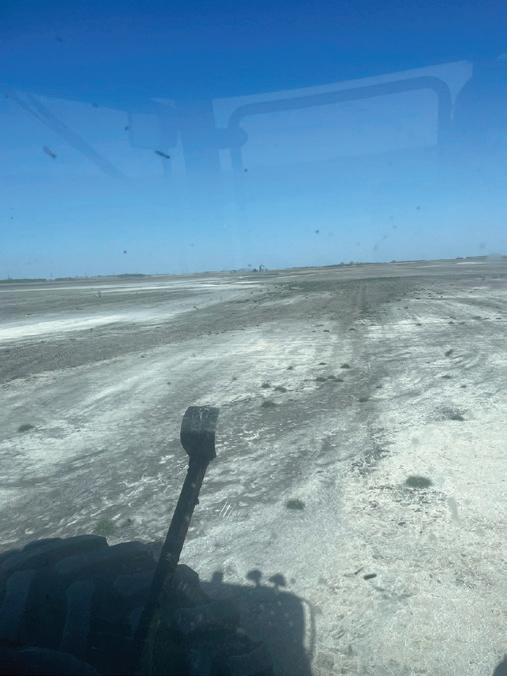
Across North Dakota, farmers have watched white, crusted patches spread across fields that once produced. Those saline areas form when excess water pushes salts toward the surface. As the water table rises, salts move up with it, and over time, productive ground can become difficult—or nearly impossible—to grow on.
Drain tile helps by lowering the water table and by moving excess water out of the soil profile. Instead of sitting on the surface or pushing salts upward, water can filter through the ground and exit through a properly designed system.
The result is a drier field and a healthier growing environment.
To be clear, tile does not remove all the water from the soil. It removes the water
Tile drainage may feel modern, but farmers have been trying to move excess water off their land for thousands of years. Buried clay drainage pipe has been found on the island of Crete dating back to 5,000 B.C. Ancient farmers in Egypt, Babylonia, and Rome also used drainage systems to make wet ground more productive.
Photo by J. Alan Paul Photography
Brady Drake
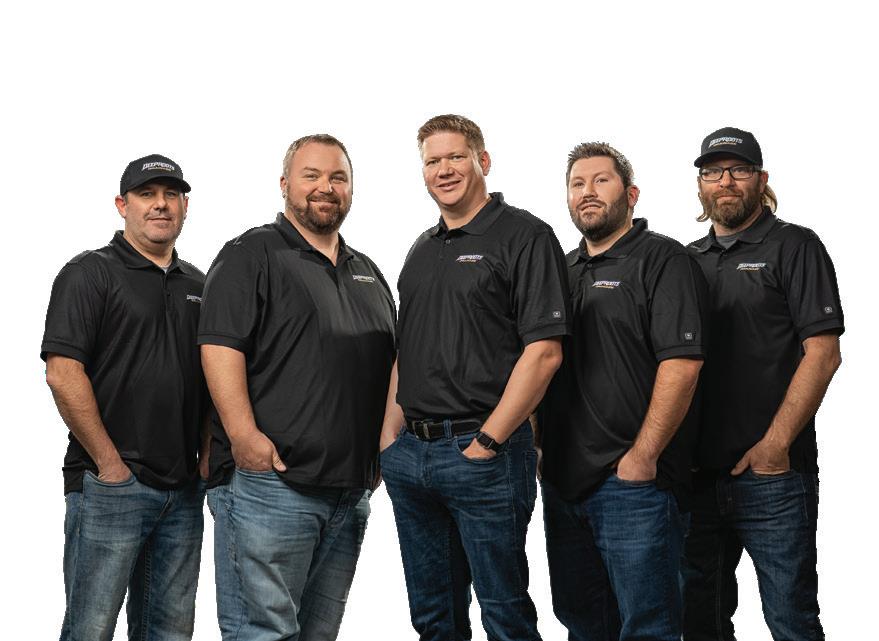
(left to right) DUSTIN LUNDEBY, COREY HAAG, LEVI OTIS, COLIN ANDERSON, AND KYLE MAGNUS
that the soil does not need. Think of a flowerpot with drain holes; the soil stays moist, but the excess water has somewhere to go. That balance matters because plant roots need both water and oxygen.
For some operations, the return can show up quickly. In wet years, tile can protect a crop from major loss. In dry years, tiled ground can still benefit from earlier access, warmer soils, stronger root systems, and better field conditions. According to NDSU's frequently asked questions, drain tile ROI returns 12-15% on average.
Deep Roots generally talks about drain tile as a long-term investment, often with a seven-year average payback. But in the right year, on the right field, the impact can be immediate.
A properly installed drain tile system can help protect your investment
What Deep Roots Drainage Offers
Drain Tile Systems
Custom drainage systems designed to manage water table levels, reduce erosion, reclaim wet acres, and improve yield potential. Services include targeted drainage runs, full pattern tiling, GPS-guided installation, custom spacing based on soil type, professionally designed tile plans, lift stations, and control structures.
Water Conveyance
Because a tile system is only as good as its outlet, Deep Roots Drainage also helps improve how water moves off the field. Services include cleaning existing ditches, permitted ditch enhancement, ditch reconstruction, snagging, clearing, and GPS-integrated grading work.
Land Clearing & Grubbing
Deep Roots helps turn nonproductive ground back into usable farmland through tree and shelterbelt removal, unwanted vegetation clearing, and rock pile burial or removal.
tile goes in the ground and stays there. That makes trust essential.
Deep Roots Drainage builds each system around the field itself. The process begins with surveying the land and identifying problem areas using topography, soil types, water movement, and customer input. From there, the team designs a custom system based on field slope, drainage needs, outlet options, and long-term
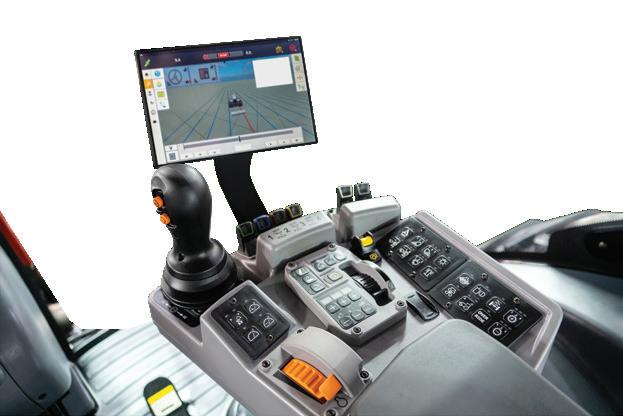
Installation is done with modern tile plows and RTK GPS grade control, allowing the team to maintain precise depths and grades across complex terrain. The company handles everything from targeted drainage runs to full pattern tile systems, as well as lift stations, control structures, gravity outlets, ditch enhancement, water conveyance, land clearing, grubbing, shelterbelt removal, vegetation clearing, and rock pile
Just as important, Deep Roots understands the regulatory side of drainage. Between permitting, NRCS rules, U.S. Fish and Wildlife easements, drainage law, and local water management requirements,
some producers may assume a project is impossible before they ever ask.
Deep Roots wants to be a partner in that process, too.
Deep Roots backs its work with a craftsmanship warranty and uses heavy-duty corrugated pipe, proper fittings, and proven installation practices.
For farmers who have lived with problem ground for too long, the first step is simply to take a closer look.
Because every season is costing something.
And with the right drainage plan, those acres may be capable of far more than they are producing today.
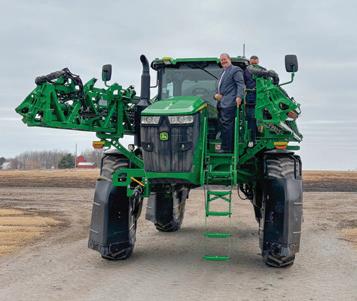
Drain tiling can help prevent saline disasters like this!
Deep Roots Drainage
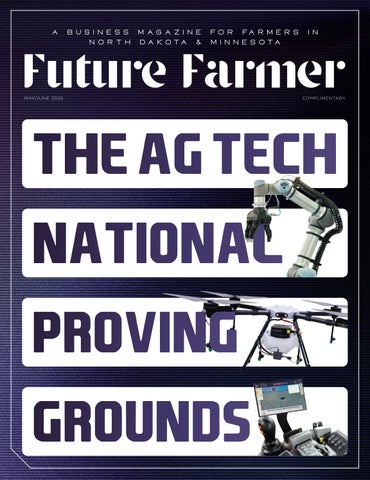
USDA’s National Proving Grounds Network
AIMS TO TAKE THE GUESSWORK OUT OF AGTECH
For generations, American agriculture has moved forward on the strength of innovation.
Whether it was the advent of hybrid seed, crop protection, precision equipment, biotechnology, or digital tools, each era has brought new promises to the farm gate, and each has forced producers to ask: Will this actually work for me?
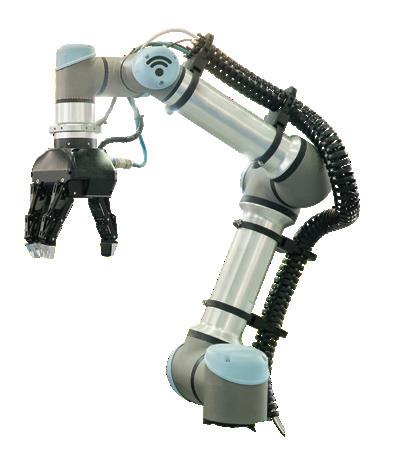
That question has become more urgent as agriculture enters a new wave of technology built around automation, artificial intelligence, robotics, sensors, digital scouting, precision application, biologicals, and data-driven decision-making.
The opportunity is enormous, but so is the uncertainty.
That is why the U.S. Department of Agriculture has announced the creation of the USDA National Proving Grounds Network for AgTech, or NPGAg, a nationwide initiative designed to test and validate agricultural technologies under realworld U.S. farming and ranching conditions.
The ultimate goal is to give farmers and ranchers trusted, objective, practical information before they make major technology investments.
For Dr. Scott Hutchins, USDA Deputy Under Secretary for Research, Education, and Economics & USDA Chief Scientist, the initiative is about helping producers sort through a rapidly changing marketplace and identify the tools that can truly improve profitability.
“What I’ve been looking for since I’ve been in public service is, what role does the public sector play? What role does USDA specifically play to help the acceleration of these really exciting technologies get into the hands of our farmers and ranchers?” Hutchins said.
His answer is the National Proving Grounds Network.
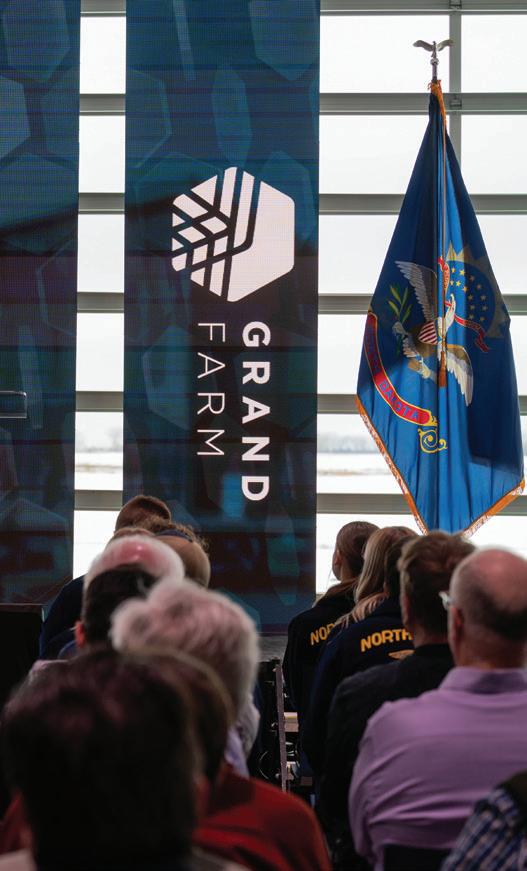
The initiative will be led by USDA’s Agricultural Research Service in coordination with other USDA research agencies. Grand Farm, the North Dakotaheadquartered AgTech ecosystem and innovation testbed, will serve as the national program manager. Land-grant universities across the country will serve as primary research and testing partners.
Together, the network is intended to create a trusted, transparent way to evaluate new technology before producers are asked to bet real money on it.
DR. SCOTT HUTCHINS ABOUT
Dr. Scott Hutchins serves as Under Secretary for the U.S. Department of Agriculture’s Research, Education, and Economics & USDA Chief Scientist mission area, where he helps guide USDA’s work in agricultural research, innovation, education, and economic analysis. Before entering public service, Hutchins spent more than three decades in the private sector, giving him extensive experience with the discovery, development, and launch of agricultural technologies. In his role at USDA, he is focused on helping accelerate practical innovations that improve farm and ranch profitability, strengthen U.S. agricultural competitiveness, and give producers better tools for making informed decisions. Hutchins has been a leading voice behind the USDA National Proving Grounds Network for AgTech, emphasizing the need for objective, transparent, real-world data that helps farmers and ranchers adopt technologies that truly add value.
PHOTO FROM USDA'S WEBSITE
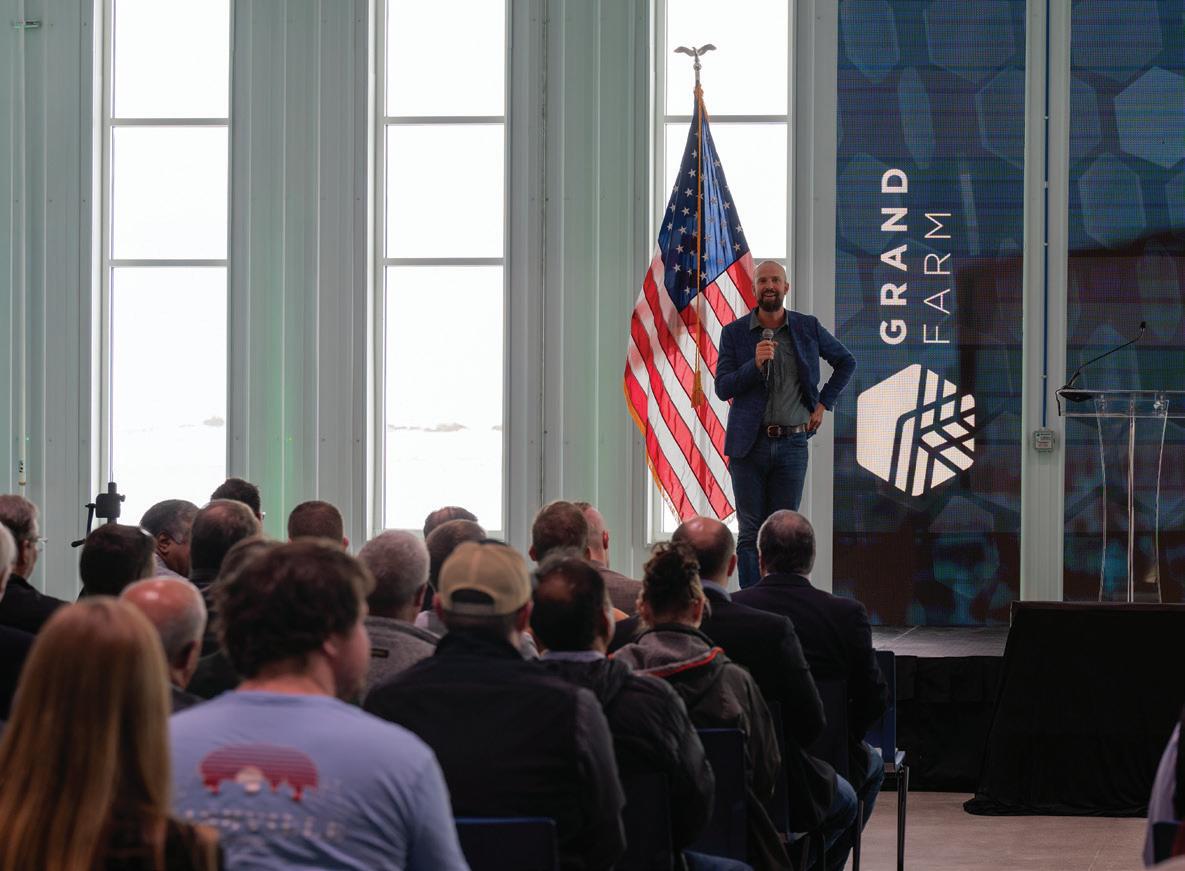
GRAND FARM CEO & FOUNDER GREG TEHVEN AT THE NATIONAL PROVING GROUNDS NETWORK ANNOUNCEMENT
Why This Especially Matters Now
Farmers and ranchers are no strangers to new technology. But Hutchins said the current wave of AgTech is different from many of the major innovations that came before it.
In the past, many agricultural technologies—such as genetically modified crops, herbicides, insecticides, and fungicides—went through years of regulated testing and demonstration before they were commercially available. By the time a farmer could buy them, they often had years of extension trials, demonstration plots, and field data to rely on.
“They know by the time they get to the point of purchase what they do,” Hutchins said. “They know how they fit on their farm. They know all of those things. So it’s not a very risky purchase.”
Digital agriculture does not always work that way.
Today, a startup may bring a new artificial intelligence tool, sensor platform, autonomous machine, scouting system, or decision-support product to market far faster than traditional agricultural technologies. That speed can be good. It can also leave farmers without enough independent
data to know whether a product will perform under their conditions.
“In the case of AgTech, and in the case of this next generation of digital ag, it’s a Wild West in terms of innovation, in terms of startups and the rest of it,” Hutchins said. “And I say that in a good way.”
The challenge, he said, is making sure U.S. farmers and ranchers can adopt the best technologies early without being forced to carry all the risk themselves.
“If we want our U.S. farmers to be the first to adopt and get the most benefit, we need to find a way to give them confidence that these technologies are actually going to provide the value that’s being proposed,” Hutchins said.
ABOUT THE NATIONAL PROVING GROUNDS NETWORK
The USDA National Proving Grounds Network for AgTech, or NPG-Ag, is a new national initiative designed to test agricultural technologies under real-world farming and ranching conditions. The network will evaluate tools such as digital scouting systems, robotics, automation, AI-driven platforms, precision application technologies, livestock monitoring tools, and other emerging innovations. The goal is to provide farmers and ranchers with objective, transparent performance data so they can make better technology investment decisions. USDA’s Agricultural Research Service will lead the effort, with Grand Farm serving as the national program manager and land-grant universities acting as research and testing partners.
ABOUT GRAND FARM
Grand Farm is a North Dakota-based AgTech ecosystem and innovation testbed that brings together growers, startups, corporations, researchers, educators, government partners, and investors to solve real-world challenges in agriculture through applied technology. Headquartered in the Fargo area with an Innovation Campus near Wheatland, Grand Farm supports field trials, technology testing, industry collaboration, and events that connect agriculture with emerging tools such as automation, artificial intelligence, robotics, sensors, and precision agriculture. As the national program manager for USDA’s National Proving Grounds Network for AgTech, Grand Farm will help coordinate technology companies, USDA’s Agricultural Research Service, and land-grant universities to evaluate new innovations under real farming and ranching conditions.
At the end of the day, our priority is the same: to get proven, valuable technologies into the hands of our farmers and ranchers as quickly as possible so they can boost profitability."
—
DR. SCOTT HUTCHINS, USDA DEPUTY UNDER SECRETARY FOR RESEARCH, EDUCATION, AND ECONOMICS
A PublicPrivate Bridge
The Proving Grounds concept itself is not entirely new.
Agriculture has long relied on field trials, extension research, demonstration plots, university testing, and equipment evaluation. Hutchins pointed to examples like tractor testing at the University of Nebraska and the long history of seed, crop protection, and extension trials.
What is new, he said, is the national coordination, the USDA’s leadership role, and the intentional focus on emerging AgTech.
“I’m not here to say that the proving concept itself is completely novel,” Hutchins said. “But I think what is novel is the application that we have and how we’re building a true public-private partnership in a way that is flexible and continuous.”
The network is not designed to test one type of technology, one crop, or one production system. Instead, it will be built around categories of need like weed control, digital scouting, precision fertilization, automated harvesting, livestock monitoring, food safety inspection, geofencing, and other technologies that could improve efficiency and profitability.
The network will also support both commercial and precommercial technologies.
For products already on the market, the value is independent performance data.
For pre-commercial products, the network could help innovators refine technologies before they reach farmers. Hutchins said many startup founders may have strong technical expertise but limited experience with the realities of agricultural production. By connecting those companies with land-grant universities, USDA scientists, and field-testing environments, the network can help shape tools around actual producer needs.
"At the end of the day, our priority is the same: to get proven, valuable technologies into the hands of our farmers and ranchers as quickly as possible so they can boost profitability," Hutchins said.
North Dakota’s Role
Grand Farm will serve as the project management office for the national initiative, which will include many moving parts like technology companies, USDA agencies, ARS scientists, land-grant universities, crop-specific protocols, trial locations, data reporting, confidentiality agreements, and producer-facing communication.
Hutchins said USDA expects pilot projects to begin in 2026 with a limited number of concepts and sites. Those early pilots will help USDA and its partners learn what works, what needs adjustment, and how to scale the effort.
“We will have some pilot projects with a very limited number of concepts and a very limited number of sites,” Hutchins said. “For us to kind of fine-tune how we’ll do it, what we need to know, what we don’t know.”
Those first pilots are expected to be based in North Dakota and Georgia, with work spanning row crops and specialty crops.
From there, USDA plans to expand in 2027 and continue scaling the network over time.
How large could it become?
Hutchins said that depends on the technology concept being evaluated, the crops or markets involved, and the locations where testing is needed.
For example, if the network evaluates digital scouting in cotton, testing would need to happen in cotton-producing regions with land-grant partners who understand that crop and production system. If the focus is on automated apple harvesting, the network would involve a completely different crop, geography, and set of research partners.
“That’s why we call it a network,” Hutchins said. “The network’s going to be fluid.”
The National Proving Grounds Network is beginning with AgTech and digital agriculture, but the potential categories are broad.
Hutchins mentioned several examples, including:
• Next-generation weed control, such as robotics or see-and-spray technologies.
• Digital scouting for insects, diseases, and crop conditions.
• On-the-fly precision fertilization.
• Automated harvesting in specialty crops.
• Automated processing and food safety inspection.
• Livestock health assessment tools.
• Remote geofencing.
And other technologies that could improve efficiency, reduce labor needs, lower input costs, or support better management decisions.
The network is not meant to be limited to a fixed list.
“We’re not going to limit that and say we’re only doing five,” Hutchins said. “We’re going to try to identify the ones that do have the biggest impact.”
What Technologies Could Be Tested? How Products Will Be Selected
One of the details still being developed is how specific technologies will be selected for testing.
Hutchins said Grand Farm will help manage the process with USDA. Companies with relevant technologies will likely go through an applicationstyle process to determine whether their product fits the concept being tested.
The goal is not to force a technology into the wrong trial. If a tool is not designed for a certain application, testing it under that category would not help the company, the researchers, or the producers who eventually read the results.
“We don’t want you to put your technology in something it’s not really set up to do,” Hutchins said.
Once USDA and its partners identify a technology category and participating products, land-grant universities will help execute trials in the appropriate regions.
The details are still being worked through, including how many technologies can be evaluated in a single trial and how testing capacity will be managed if interest is high.
“We hope we get to that,” Hutchins said. “We hope that’d be a good problem to have.”
The Importance of Protocols
For the network to be useful, testing must be consistent, transparent, and relevant to real farm and ranch decisions.
That means protocols matter.
USDA and its partners are working through how to design testing methods that are scientifically sound while still answering the questions producers actually care about.
“We want to make sure the protocol is one that really, truly reflects what the farmers and ranchers need,” Hutchins said.
A weed control technology, for example, cannot simply be judged in broad terms. Producers need to know what level of performance was achieved, under what conditions, and how consistently. Was it 95% control? Was that level of control achieved 95% of the time? How should that performance be interpreted?
Those are the kinds of questions USDA will need to define before results can be communicated in a way that producers can use.
Hutchins emphasized that USDA will not be making product recommendations. Instead, the role of USDA and the landgrant partners will be to provide objective, repeatable, transparent data.
“We will not be making recommendations,” Hutchins said. “The USDA and land-grants should never make recommendations on products. But what we can do is certainly provide the objective, repeatable, and transparent data so that farmers and ranchers can make decisions with good knowledge.”
Technologies That Could Be Tested
The National Proving Grounds Network could eventually evaluate a wide range of technologies, including:
• Digital crop scouting tools
• AI-driven decision platforms
• Robotic weed control
• See-and-spray systems
• Precision fertilizer application
• Automated harvesting
• Specialty crop automation
• Food safety inspection technology
• Livestock health monitoring
• Remote geofencing
• Soil biologicals
• Other emerging AgTech tools
For Hutchins, the Proving Grounds Network ties directly to USDA’s broader mission around farm and ranch profitability.
He said the top priority for USDA’s Research, Education, and Economics mission area is helping farms and ranches become more profitable. Once operations are profitable, he said, other goals—such as conservation and long-term resilience—become more achievable.
“If the farms and ranches are more profitable, then all of the other things we want farms and ranches to do, whether it’s conservation or the other things, will come much more naturally,” Hutchins said.
Profitability Comes First What Farmers and Ranchers Can Do Now
For farmers and ranchers, the immediate role is not necessarily to host trials or submit applications. Some trials may eventually take place on production farmland, but the early network will be built through USDA, Grand Farm, ARS, land-grant universities, and participating technology companies.
For producers, Hutchins said the first step is to pay attention.
Most farmers cannot set the price they receive. They operate in markets shaped by commodity prices, weather, global competition, input costs, labor availability, and policy conditions. But they can manage costs. They can improve efficiency. They can make better-timed decisions. They can adopt tools that help them produce more effectively.
“Most of agriculture is very dependent on a cost position,” Hutchins said. “They can’t set the price that they sell for in most cases, but they can manage their inputs, and they can manage the efficiency of how they produce it.”
That is where technology can matter most.
Follow the development of the network. Watch for results. Look for opportunities to learn which tools are being tested and how those tools perform. Most importantly, think carefully about where technology could create value in your own operation.
“We want them to lean in on the need and the opportunity for the technology,” Hutchins said. “It’s all about trying to get them to adopt the things that make sense and add value.”
Only the Beginning
Although the initial focus is AgTech and digital agriculture, Hutchins sees the model as much broader.
One future application could be soil biologicals. Like digital tools, biological products are a fast-growing area with significant claims, inconsistent results, and a real need for objective testing.
“There’s a lot of those out there,” Hutchins said. “Some of them seem to have some pretty good promise. Some of them don’t seem to have a lot of promise. But there’s no way for farmers today to really have any kind of objective, consistent data with a reliable and an objective protocol to really know which ones would make sense for them.”
Whether biologicals become the second generation of the
As new technologies emerge, agriculture will keep facing the same question: How do producers know what works?
USDA’s answer is to build a national network capable of testing those tools in the field, reporting results transparently, and helping farmers and ranchers make better decisions.
The details are still being developed. The early pilots are still ahead. The network will have to prove itself, just like the technologies it evaluates.
But Hutchins said the response so far from land-grant universities and agricultural partners has been strongly positive.
By Brady Drake
griculture has always had its storytellers. For generations, those stories were told over coffee at the elevator, across the fence line, or in the cab of a pickup after a long day in the field.
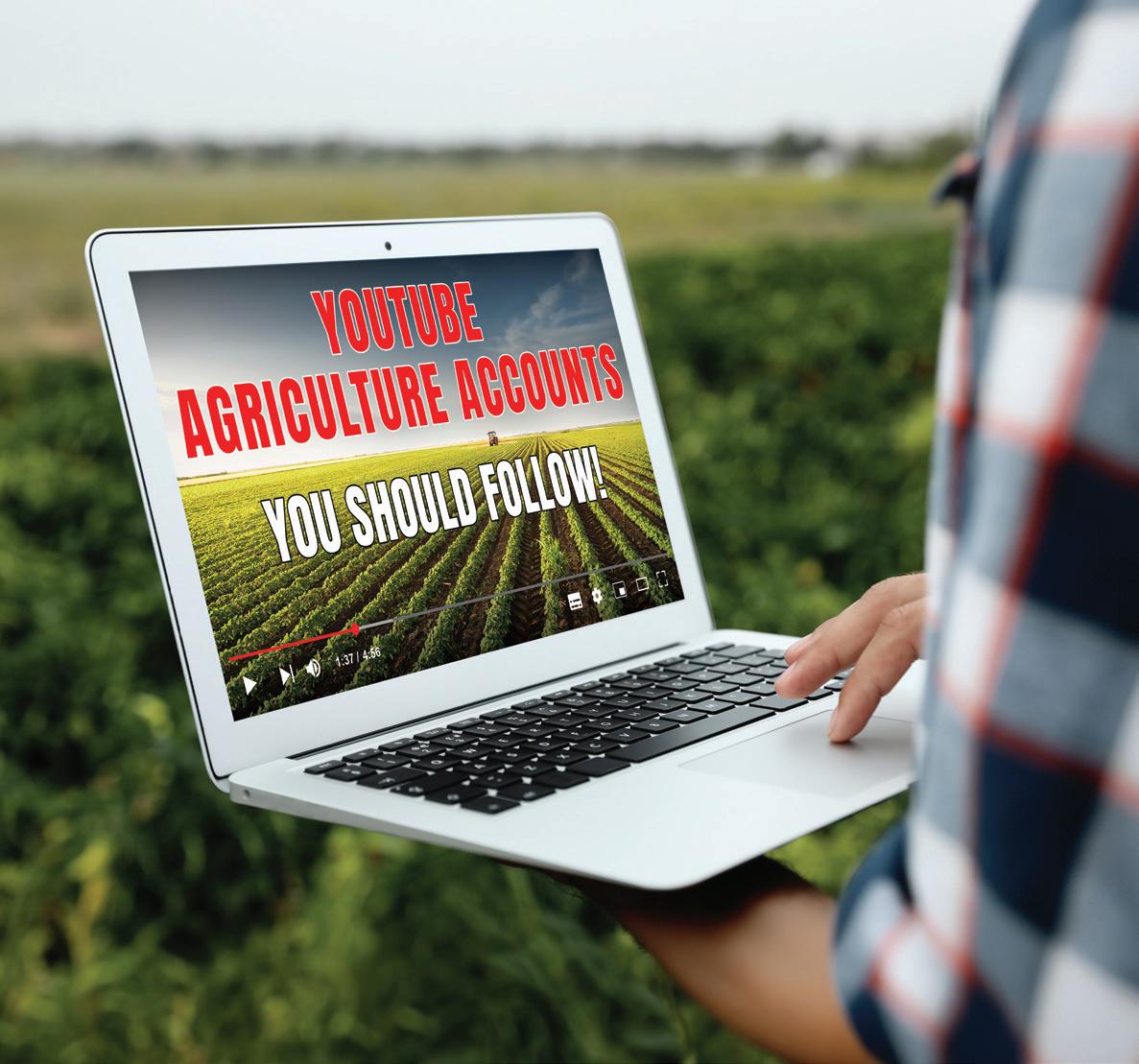
Now, a lot of those stories are being told on YouTube.
The best agriculture channels explain risk, weather, markets, family dynamics, equipment breakdowns, livestock care, conservation, and the million small decisions that make modern farming work. For viewers inside agriculture, they feel familiar. For viewers outside agriculture, they open a door into a world most people depend on but rarely understand.
This ranking is based on a mix of audience size, consistency, educational value, storytelling, authenticity, and overall influence in the agriculture space.
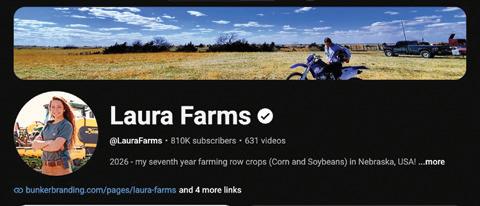
Laura Farms has become one of the strongest nextgeneration voices in agriculture media. The Nebraska-based channel follows Laura as she farms corn and soybeans, learns in real time, and brings viewers along for the process. Her YouTube page describes 2026 as her seventh year farming row crops in Nebraska, and the channel lists about 800,000 subscribers and more than 600 videos.
The appeal of Laura Farms is its accessibility. The channel feels welcoming, especially for younger viewers or people who did not grow up around agriculture. Laura explains what she is doing without talking down to the audience. She is also comfortable showing the learning curve, which is a big part of why the channel works.
In a field that has often been represented by older male voices, Laura Farms brings a fresh perspective while still keeping the content grounded in real production agriculture.
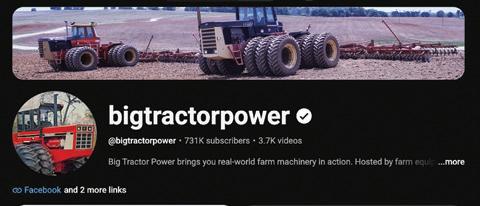
Big Tractor Power is the channel for people who want machinery, specifications, field action, and the history behind the iron. Hosted by farm equipment expert Jason Hasert, the channel focuses on tractors, combines, harvesters, sprayers, implements, rare machines, vintage equipment, and realworld field performance.
This is less of a personality-driven farm vlog and more of a deep equipment library. That gives it a different kind of value. Big Tractor Power documents machinery in use, often with context on model history, size, horsepower, production background, and how farmers use the equipment in the field.
For anyone interested in the mechanical side of agriculture, it is one of the best channels on the platform.
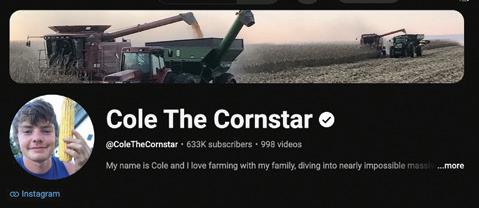
Cole The Cornstar blends farming, family, construction projects, problem-solving, and high-energy storytelling. Cole’s YouTube page describes the channel as a look at farming with his family, taking on major projects, and learning through failures and successes.
What separates Cole The Cornstar from a traditional farm channel is pacing. The videos often carry the momentum of a reality show with big problems, big projects, big reveals, and a lot of personality. It is not only about what happens in the field. It is about the larger life around the farm.
That makes it one of the most entertaining channels in the category, especially for viewers who want agriculture mixed with renovation, family business, and project-based storytelling.
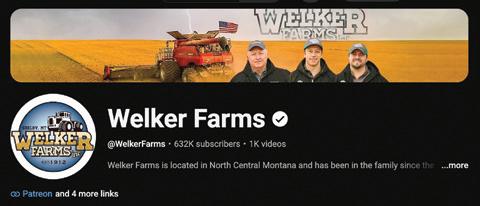
Welker Farms brings viewers to north central Montana, where the Welker family operates a large-scale farm with deep roots. The channel’s YouTube page says the farm has been in the family since the homestead of 1912 and follows third-generation farmer Bob Welker and his sons Nick and Scott. The channel lists about 632,000 subscribers and more than 1,000 videos.
Welker Farms is especially strong for viewers who love big equipment, broad-acre farming, Montana landscapes, and the legacy side of agriculture. The family’s connection to machinery, including iconic large tractors, gives the channel a distinct identity.
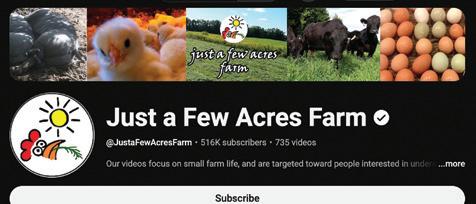
Just a Few Acres Farm offers a different pace from many large grain-farm channels. The channel focuses on small farm life, sustainable farming methods, and helping viewers understand small-scale agriculture.
The strength here is calm, practical storytelling. The channel is less about spectacle and more about the rhythm of a smaller farm that include chores, animals, repairs, old tractors, direct marketing, and daily decisions. It has a strong “come along and learn” feel.
For viewers who are interested in small farms, diversified agriculture, or simply a quieter style of farm content, Just a Few Acres Farm is one of the best.
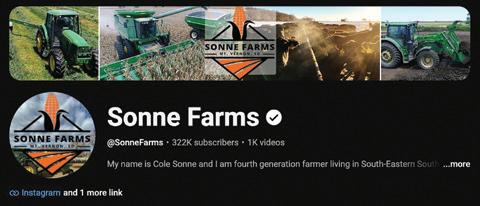
Sonne Farms is based in southeastern South Dakota and follows Cole Sonne, a fourth-generation farmer raising Black Angus bulls while also growing alfalfa, grass hay, corn, and soybeans.
This channel is valuable because it brings livestock and crops together. Many farm channels lean heavily toward row crops or machinery. Sonne Farms gives viewers cattle work, calving, haying, crop production, family dynamics, and the unpredictable nature of livestock agriculture.
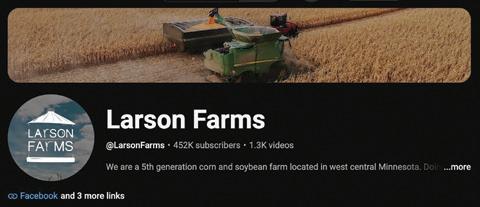
Larson Farms follows a fifth-generation corn and soybean farm in west central Minnesota. The channel’s YouTube page says the family is focused on respecting and improving the land while sharing its love of agriculture, and it currently lists about 451,000 subscribers and more than 1,300 videos.
The channel has built a loyal audience by showing the everyday reality of a working crop farm with planting, spraying, harvest, shop work, repairs, equipment upgrades, and family life. It is polished enough to be engaging but still feels rooted in the actual demands of the farm.
Larson Farms is especially good at making repetitive farm work feel personal. Viewers come back not just for the equipment, but for the people.
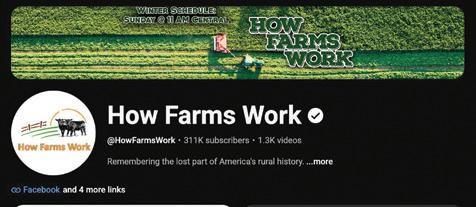
How Farms Work is one of the longer-running educational farm channels on YouTube. The channel describes itself as a look at rural history and farming life for people who were not born on a farm.
The value of How Farms Work is right in the name. It helps explain the systems behind agriculture, including equipment, chores, livestock, fieldwork, farm infrastructure, and rural life. It is a strong bridge channel for non-farm viewers because it does not assume the audience already knows the basics.
For people who want to understand agriculture from the ground up, this is still one of the most useful accounts to follow.
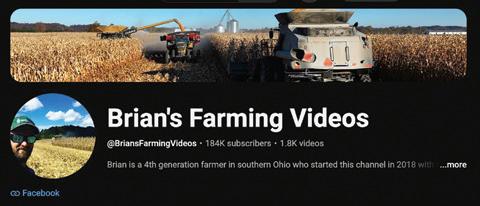
Brian’s Farming Videos follows Brian, a fourth-generation farmer in southern Ohio. According to the channel’s YouTube page, he started posting in 2018 to record memories from daily farm life before the channel evolved into a farm vlog focused on educating viewers about the ups and downs farmers experience.
The channel earns its spot because of consistency and honesty. Brian’s Farming Videos does not feel overly manufactured. It is a working-farm channel that shows what happens when weather, equipment, family, time, and money all collide.
It is especially strong for viewers who want the day-to-day texture of farming rather than only the highlight reel.
The Hoof GP is one of the biggest agriculture-adjacent channels on YouTube, with about 2.87 million subscribers and nearly 1,000 videos. The channel follows real hooftrimming work, mostly with cattle, showing hoof problems, lameness cases, treatment, recovery, and the skilled work that goes into animal care.
It is not a traditional farm vlog, but it absolutely belongs in the agriculture conversation. The channel gives viewers a close look at a part of livestock care that most people never see. It is educational, oddly satisfying, and often a reminder that animal agriculture depends on specialized people doing difficult, physical work behind the scenes.
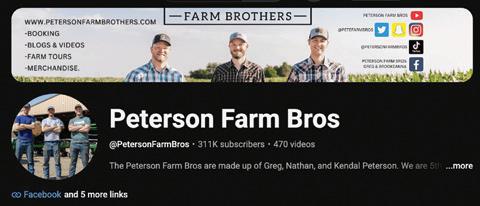
The Peterson Farm Bros are one of the most recognizable ag-advocacy groups on YouTube. Made up of Greg, Nathan, and Kendal Peterson, the brothers are fifth-generation family farmers in Kansas who create a mix of farm vlogs, comedy videos, educational content, and agriculturethemed music parodies.
Their strength is reach. While some farm channels are built mostly for people already interested in agriculture, Peterson Farm Bros have long been good at making agriculture shareable. Their parody videos helped introduce millions of viewers to farming in a way that felt fun, approachable, and positive.
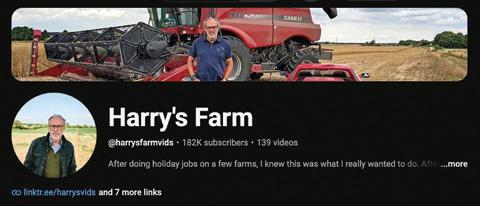
Harry’s Farm brings a British perspective to the list. The channel follows Harry Metcalfe’s farming life in the United Kingdom and currently lists about 181,000 subscribers. His page describes his long connection to agriculture, beginning with holiday jobs on farms, agricultural study, and work as an on-farm grain buyer.
The channel stands out because it offers a different geography, different regulations, different crop conditions, and a different farming culture than many of the U.S.based channels. For viewers who want to broaden their understanding of agriculture beyond the American Midwest, Harry’s Farm is a strong follow.
Let us know! Send us an email brady@spotlightmediafargo.com
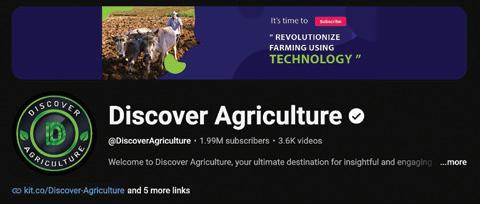
Discover Agriculture is more of an educational agriculture channel than a farm-vlog channel. Its YouTube page says it covers crop management, sustainable farming practices, agricultural technology, and practical knowledge for farmers around the world.
That makes it useful for a different reason. While many channels on this list are built around one family or one farm, Discover Agriculture takes a broader informational approach. It is a strong fit for viewers who want explanations, ideas, and general ag education rather than a personality-driven series.
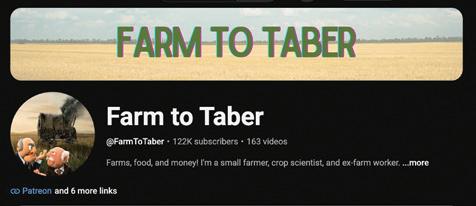
Farm to Taber is one of the more thoughtful and opinionated agriculture channels on the platform. The channel is run by a small farmer, crop scientist, and former farm worker, and its page describes the focus as “farms, food, and money.” Recent videos cover topics like farm subsidies, why people do not start farms, food debates, rural politics, and broader agricultural systems.
This channel belongs on the list because it is not only showing farm work. It is interrogating the food system around it. That makes it especially valuable for readers who want agriculture content with more analysis, context, and debate.
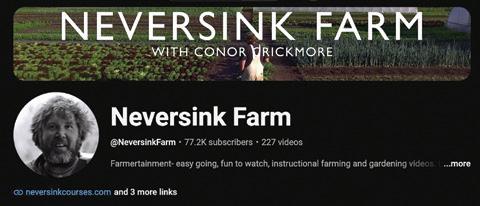
Neversink Farm is a strong follow for people interested in small-scale vegetable production, no-till farming, and market-garden-style agriculture. The channel describes itself as “farmertainment” and features instructional farming and gardening videos from Conor Crickmore’s no-till, notractor vegetable farm.
It is a great counterbalance to the big-equipment channels. Instead of massive combines and thousands of acres, Neversink focuses on efficiency, systems, soil, handscale production, and direct farm knowledge. For aspiring growers, it may be one of the most practically useful channels on this list.
This Farm Wife, created by Meredith Bernard, brings a personal, family-centered view of farm life. The channel covers cattle, hay, equipment, motherhood, homeschooling, farm stress, and the emotional realities that come with rural life. Her videos include beef cattle work, baling, combining, family updates, and behind-the-scenes farm decisionmaking.
The value of this channel is tone. It feels human before it feels strategic. Meredith does not present farming as a polished lifestyle brand. She shows the hard days, the family demands, the uncertainty, and the small joys that make farm life meaningful.
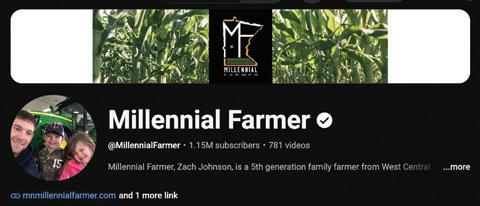
Zach Johnson, better known as the Millennial Farmer, remains one of the most recognizable voices in farm YouTube. Based in west central Minnesota, Johnson has built a channel around day-to-day life on a family grain farm, using humor, transparency, and steady storytelling to connect farmers and consumers. His YouTube page describes him as a fifth-generation family farmer, and the channel currently lists about 1.15 million subscribers and more than 770 videos.
What makes Millennial Farmer stand out is not just the scale of the audience. It is the tone. The channel does not try to make farming look easy or perfect. It shows the weather delays, repair bills, stuck equipment, tight windows, family moments, and decision-making that define real agriculture.
NY Farm Girls gives viewers a look at dairy and crop farming in upstate New York. The channel’s description says the family operates a 2,100-acre, 1,200-cow dairy and crop farm, offering a glimpse of what farming is like in that part of the country.
This channel adds important variety to the ranking because dairy farming has a very different rhythm from grain farming. The work is constant. The cows need care every day. The margin for error is small. NY Farm Girls helps show that side of agriculture in a way that is personal, visual, and easy to follow.
By Brady Drake | J. Alan Paul Photography
For all the sophistication of modern agriculture, a surprising amount of field research still comes down to a person with a clipboard, a pen, and a best guess.
That is the problem Jeremiah Roeth has spent the last several years trying to solve.
Roeth, the founder and CEO of aerialPLOT, did not come into agriculture through the usual front door. He grew up on a farm in Ohio, but left to study chemistry, earned a Ph.D. in cell biology, then built his career
in synthetic biology, where he helped develop automated, high-throughput screening systems inside a startup that eventually went public. Then he came home.
What he found when he returned to the family farm and joined Buckeye Ag Testing was an industry full of opportunity, but also one still leaning heavily on manual measurements, subjective ratings, and long gaps between observation and insight.
That contrast stuck with him. “In an afternoon, I can put a
drone up, fly an entire research farm, generate data on 50,000 plots,” Roeth said. “Rather than sending one person out and having them be able to do a couple hundred plots at a time.”
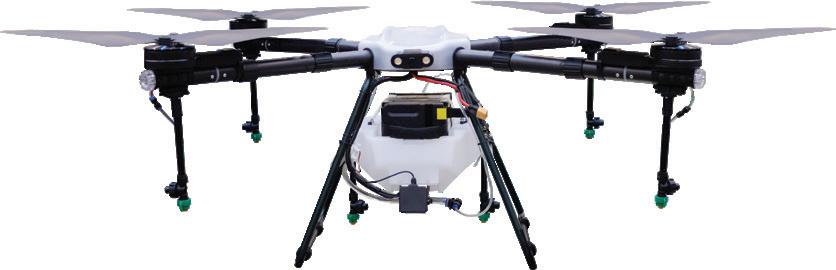
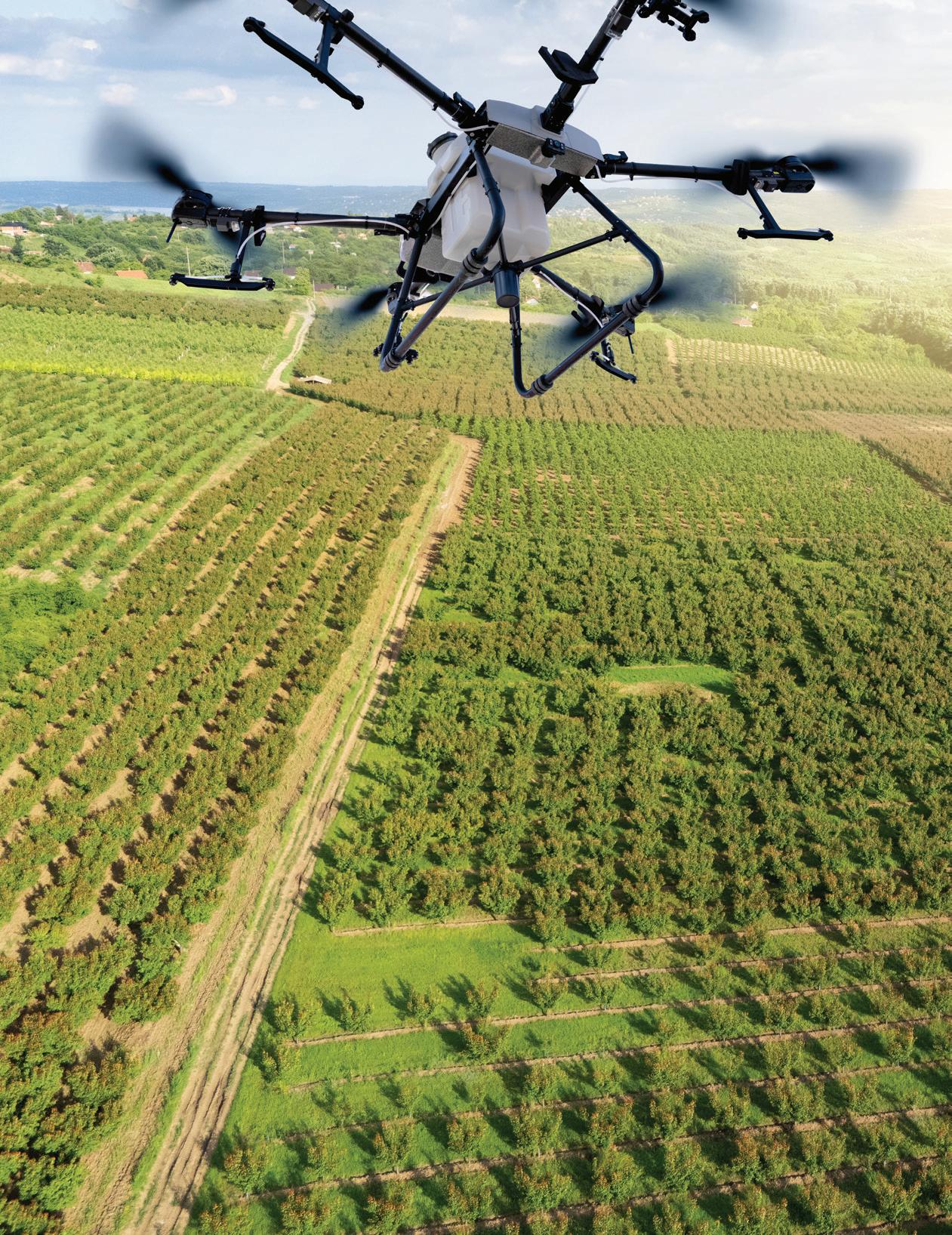
That idea became aerialPLOT, an ag tech company built around high-resolution drone imagery, cloud-based analytics, and objective crop measurement. The company works primarily with ag input companies, not directly with farmers, helping them test how products perform in the field across time, environments, and geographies.
aerialPLOT CEO Jeremiah Roeth
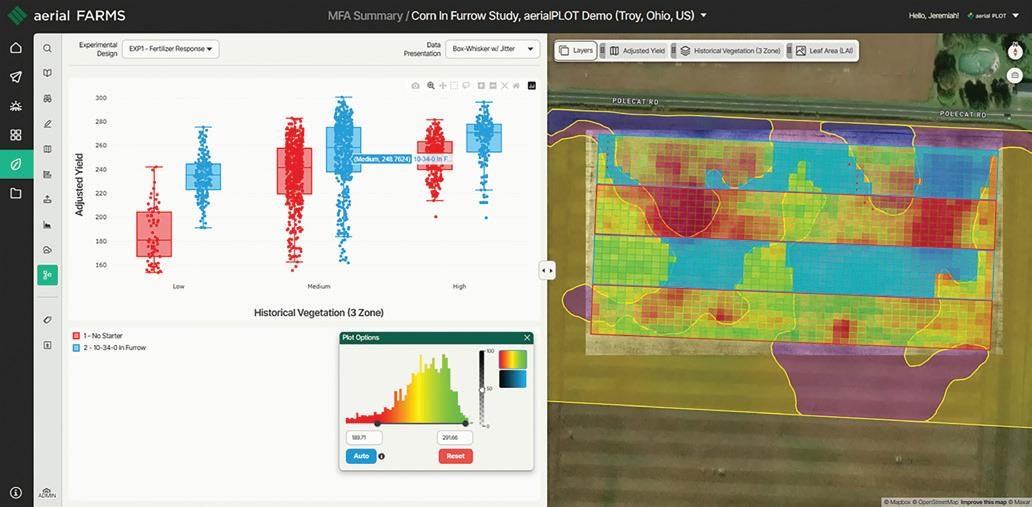
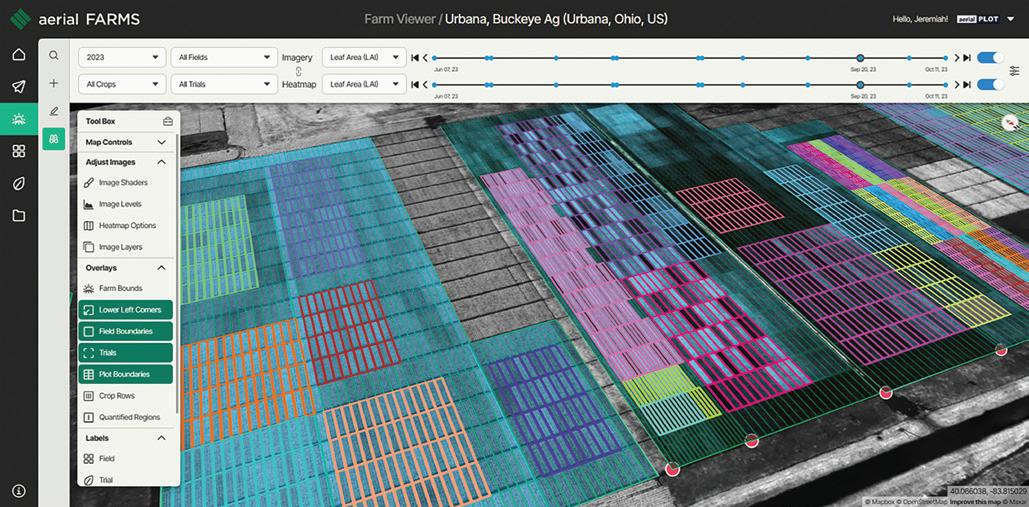
aerialPLOT's novel geospatial multi-factor analytics (geoMFA) dashboard reveals insights about crop responses in grower field trials, enabling companies to build performance models for better confidence and broad-scale adoption.
In simple terms, aerialPLOT helps the companies behind genetics, crop protection products, fertilizers, and biologicals understand what their products are actually doing in realworld conditions.
That matters because agriculture is increasingly a game of nuance.
There are very few blockbuster products anymore, the kind that produce obvious, universal results in every field. More often, the products entering the market today work differently depending on soil type, weather, genetics, management practices, and geography. A product may perform well, but only under the right conditions. The challenge is proving that clearly enough to make smarter recommendations.
That is where aerialPLOT has found its lane.
The company flies drones over
research trials throughout the season, not just once, but on a repeating schedule that builds a time-series record of crop development. By systematically capturing imagery every couple of weeks, aerialPLOT can measure canopy development, model crop growth, and help clients understand not just whether a product worked, but where, when, and under what conditions it worked best.
Traditional field trials often operate like a black box. A company may hire researchers in the spring, wait through the growing season, and get a final package of results in the fall, with limited visibility into what happened in between. Unless someone physically visits every site and walks every trial, much of the season is hidden.
Roeth saw that as both inefficient and avoidable.
With aerialPLOT’s system, clients
can log into a cloud-based platform and see imagery and measurements from trials throughout the season. Instead of waiting until harvest to understand how a product behaves, they can follow crop response as it unfolds.
aerialPLOT’s work spans a broad geographic footprint, reaching from the Mississippi Delta through the Corn Belt and now into Canada, according to Roeth. To handle that, the company has built a distributed drone pilot network, standardized equipment, and heavily automated the movement of data from drone to analytics platform.
Roeth said aerialPLOT has invested heavily in making sure its pilots use the same hardware, follow the same process, and feed data into the same system. That avoids the “mixed bag” that can come from relying too heavily on outside contractors and inconsistent equipment.
It also helps explain why aerialPLOT has carved out a distinct niche in a crowded ag tech market.
There are no shortages of digital tools aimed at farmers. But aerialPLOT chose a different route. Rather than asking growers to buy into another platform and prove return on investment on the front end, the company focused on serving the businesses that develop and test agricultural products.
“We want to basically empower companies that are taking products to the farmer and give them better data to better optimize the production system,” Roeth said.
For Roeth, the bigger issue is not just gathering more data. It is gathering the right data, early enough, often enough, and with enough context to make it meaningful.
He points to biologicals as a good example. Many growers see potential in biological products, but adoption has been tempered by inconsistent
performance. Roeth believes that inconsistency is often less a product problem than a data problem.
If a company cannot say with confidence that a product works best in a specific soil type, climate condition, or genetic background, then the recommendation will always feel vague. aerialPLOT’s goal is to help close that gap.
That larger philosophy runs through the entire business.
Roeth is wary of ag tech that starts with flashy tools and then goes looking for a problem to solve. His view is almost the reverse. He came out of the field research world knowing exactly where the pain points were, then built technology around them.
“A lot of times, technology companies have cool tech, and they’re looking for a problem,” he said. “I had a problem, and I found some cool tech to build a solution from.”
That practical mindset also shaped one of the company’s biggest early decisions.
At first, aerialPLOT was conceived more as a software business. The plan was to build a SaaS platform that researchers could use to process their own drone imagery. But the concept hit a wall. Too many users had different hardware, different skill levels, and different workflows. Without consistent data coming in, the software could not deliver consistent value.
So the company pivoted.
Instead of selling software alone, aerialPLOT bundled drone flight services with its analytics platform. That shift created a more vertically integrated model, one in which the company could control data quality from collection through analysis.
Roeth credits that pivot in part to the blunt advice of Gary Nijak Jr., now the company’s COO and head of business development, who pushed
A lot of times, technology companies have cool tech, and they’re looking for a problem. I had a problem, and I found some cool tech to build a solution from.”
early on for a service-based model. It was a bigger lift, requiring more operational complexity and investment, but it also made the business stronger.
It forced aerialPLOT to stay close to the market.
That, in many ways, is one of the most revealing parts of Roeth’s story. aerialPLOT has grown largely without raising fresh outside capital since its early partnership phase. Roeth said the company has funded its growth primarily through revenue, building the business on a model that customers were willing to keep paying for.
That bootstrap mentality has shaped how the company thinks.
“When you run a revenuedriven business, you stay super in touch with what your value proposition is,” Roeth said.
It is a perspective that stands out in a sector where many startups have raced to scale on investor capital before fully proving demand. Roeth believes growing on revenue has kept aerialPLOT disciplined, close to customer needs, and honest about what actually works in the market.
Now the company is entering a new phase.
In March 2026, aerialPLOT announced it had relocated its headquarters to Fargo, saying the move would help accelerate growth and provide a stronger home base for its analytics platform, software development, and UAV-based data collection. The company also said Fargo’s ag innovation ecosystem, business climate, and available incentives were key factors in the decision.
Roeth said the move was
driven by several factors, including a desire to build more of a concentrated team around software and data science, a more central location in the Upper Midwest, and the chance to plug into a broader ag tech ecosystem than he initially realized existed in the region. The company also now has a Canadian entity, aerialPLOT Canada, and operations/FTEs there for this growing season.
With the move, aerialPLOT plans to expand functions in software development, data science, and UAV-based data capture, while also working with Grand Farm on 2026 field trial collaborations.
That partnership makes sense.
Grand Farm has positioned itself as a collaborative agricultural innovation network built around growers, startups, corporations, researchers, and technology partners. For a company like aerialPLOT, which lives at the intersection of agronomy, geospatial data, and field-scale validation, it is a natural fit.
Even with that momentum, Roeth remains clear-eyed about where the company fits and where it does not.
He is skeptical of some of ag tech’s more ambitious promises, especially the idea that imagery alone will unlock seamless reactive management during the season. Detecting a disease or stress event early is one thing. Acting on it quickly enough, under real field conditions and real weather constraints, is another.
That is why Roeth is more interested in predictive and
prescriptive systems than reactive ones.
His long-term view is not just about telling someone what is wrong in a field today. It is about helping them make better decisions before the season even begins. What product, what placement, what management plan, in what environment, gives the crop the best probability of success?
That is a harder problem. But it may also be the more valuable one.
And aerialPLOT may be unusually positioned to tackle it.
Because the company starts with high-resolution drone imagery collected in controlled trial environments, it can build models using a much richer layer of detail than lowerresolution satellite systems alone can provide. Roeth sees that as a potential bridge between highly precise research data and more scalable applications in production agriculture.
In other words, the company’s future may not stop at helping product developers run better trials. It may eventually extend into helping distributors, consultants, co-ops, and larger growers make better, more data-driven decisions at scale.
For now, though, the company is focused on what it already does well, bringing structure, transparency, and objectivity to a part of agriculture that has gone too long without enough of any of the three.
aerialplot.com /aerialplot
griculture has always been an industry built on shared knowledge. Farmers learn from neighbors, agronomists, market analysts, researchers, ranchers, and other producers who have already solved the problems they are facing. Today, some of those conversations are happening through podcasts.
The best agriculture podcasts do more than fill time in the tractor cab. They offer practical production advice, market perspective, policy updates, business strategy, and honest stories from people working across the food and farming world. Whether you are a row crop producer, livestock operator, agribusiness professional, student, or simply someone who wants to better understand modern agriculture, these shows are a strong place to start.
The Top Agricultur Podcasts
By Brady Drake
AgriTalk Ag PhD Radio
For listeners who want a steady pulse on American agriculture, AgriTalk is one of the most recognizable names in the space. Hosted by Chip Flory, the show airs each weekday and covers farm production, policy, technology, and market analysis. Farm Journal describes it as a two-hour weekday program built around timely information for farmers and ranchers.
What makes AgriTalk valuable is its broad view of the industry. One episode might focus on grain markets, while another digs into policy, equipment, weather, or input costs. For producers trying to make decisions in a fast-moving environment, that mix of news and analysis can be especially useful.
agweb.com/agritalk
/AgWeb
@farmjournal
@FarmJournal
Ag PhD Radio is a practical, agronomy-focused podcast hosted by Brian and Darren Hefty. The show is connected to Ag PhD’s larger educational platform and airs on Rural Radio SiriusXM Channel 147 each weekday.
This podcast is especially useful for farmers who want specific, field-level advice. Topics often center on fertility, weeds, crop protection, soils, and production practices. It has the feel of a call-in agronomy clinic, which makes it approachable for growers looking for direct answers to real-world questions.
agphd.com/listen /agphdmedia
@agphdmedia
@AgPh
Wheat Pete’s Word Farm4Profit
Hosted by Peter “Wheat Pete” Johnson, Wheat Pete’s Word from RealAgriculture is a weekly podcast built around agronomy questions from listeners. Although wheat is in the title, the show covers far more than wheat, including soil health, cover crops, corn and soybean planting, fertility management, and herbicide options.
The strength of this show is its practical tone. Johnson explains agronomic issues in a way that is technical enough to be useful but clear enough to follow. It is a particularly strong option for listeners interested in crop production, especially in Canada and the northern United States.
realagriculture.com/wheat-petes-word /realagmedia
@realagriculture
@RealAgricultureMedia
Farm4Profit blends farm business, ag technology, and entertainment. The show positions itself as a resource for new farmers, experienced growers, and ag professionals who want to stay connected to industry trends, expert insights, and strategies for improving farm profitability.
This podcast stands out because it treats farming as both a lifestyle and a business. It is not only about what happens in the field; it is also about margins, management, marketing, relationships, and long-term sustainability. For producers who want to think more like business owners, Farm4Profit is a strong listen.
farm4profit.com /Farm4ProfitLLC
@farm4profit
@farm4profitpodcast
SharkFarmer Podcast Farm Food Facts
Hosted by Illinois farmer Rob Sharkey, the SharkFarmer Podcast leans into storytelling, humor, and honest conversations about agriculture, food, and rural life. he show releases interviews with farmers, ranchers, and others connected to agriculture.
Its value comes from personality. While some ag podcasts focus heavily on markets or production, SharkFarmer gives listeners a human look at the industry. It highlights the people behind the work, which makes it appealing to both agriculture insiders and general listeners who want a more personal view of rural life.
sharkfarmer.com/podcast
/SharkFarmer
@sharkeyfarms
Farm Food Facts is produced by U.S. Farmers & Ranchers in Action and focuses on sustainable food systems. The show features conversations with people working on the future of food, agriculture, and sustainability. Apple Podcasts lists it as a biweekly show active from 2018 to 2025 with more than 200 episodes.
This podcast is a good fit for listeners interested in the bigger picture of agriculture. Rather than focusing only on daily farm management, it explores how farming connects to food systems, sustainability, climate, consumer expectations, and the future of production.
North American Ag Spotlight covers agriculture news, ag issues, policy, technology, new products, family, and faith. FeedSpot describes it as a podcast and news platform focused on the people and companies serving the agriculture industry across North America.
This is a useful show for listeners who want variety. It brings together industry updates and personal stories, making it a solid option for people who want to stay informed without listening only to market reports or technical agronomy discussions.
northamericanag.com/ag-spotlight
/NorthAmericanAg
@northamericanag
@NorthAmericaAg
Successful Farming Podcast
The Successful Farming Podcast is tied to one of the most established media brands in American agriculture. Its podcast and video episodes cover topics such as equipment markets, cover crops, manure credits, crop updates, business skills, and farm management.
The show’s advantage is its practical editorial focus. It tends to cover issues that directly affect producers, from machinery prices to disease pressure to next-generation farm leadership. For listeners who already follow Successful Farming, the podcast is a natural extension of that trusted farm media voice.
The Agronomists
Produced by RealAgriculture, The Agronomists brings together crop advisors, scientists, and other experts for discussions on field-level issues. It is frequently recommended for listeners who want deeper insight into topics like herbicide resistance, soil health, nutrient efficiency, fungicide timing, and crop management.
This show is especially valuable for agronomists, crop consultants, and producers who like technical detail. It is not just about headlines; it is about the “why” behind agronomic decisions.
realagriculture.com/agronomists
/realagmedia
@realagriculture
@RealAgricultureMedia
THE NEW BLUEPRINT FOR AGRICULTURAL SUCCESS
Innovation is a mindset, not just a skill set. It's about looking past the technology to lead with boldness, resilience, and inclusivity. Innovation requires rethinking how we co-create together, not just upgrading our technology stack. Innovation is about creating explicit value for the customer.
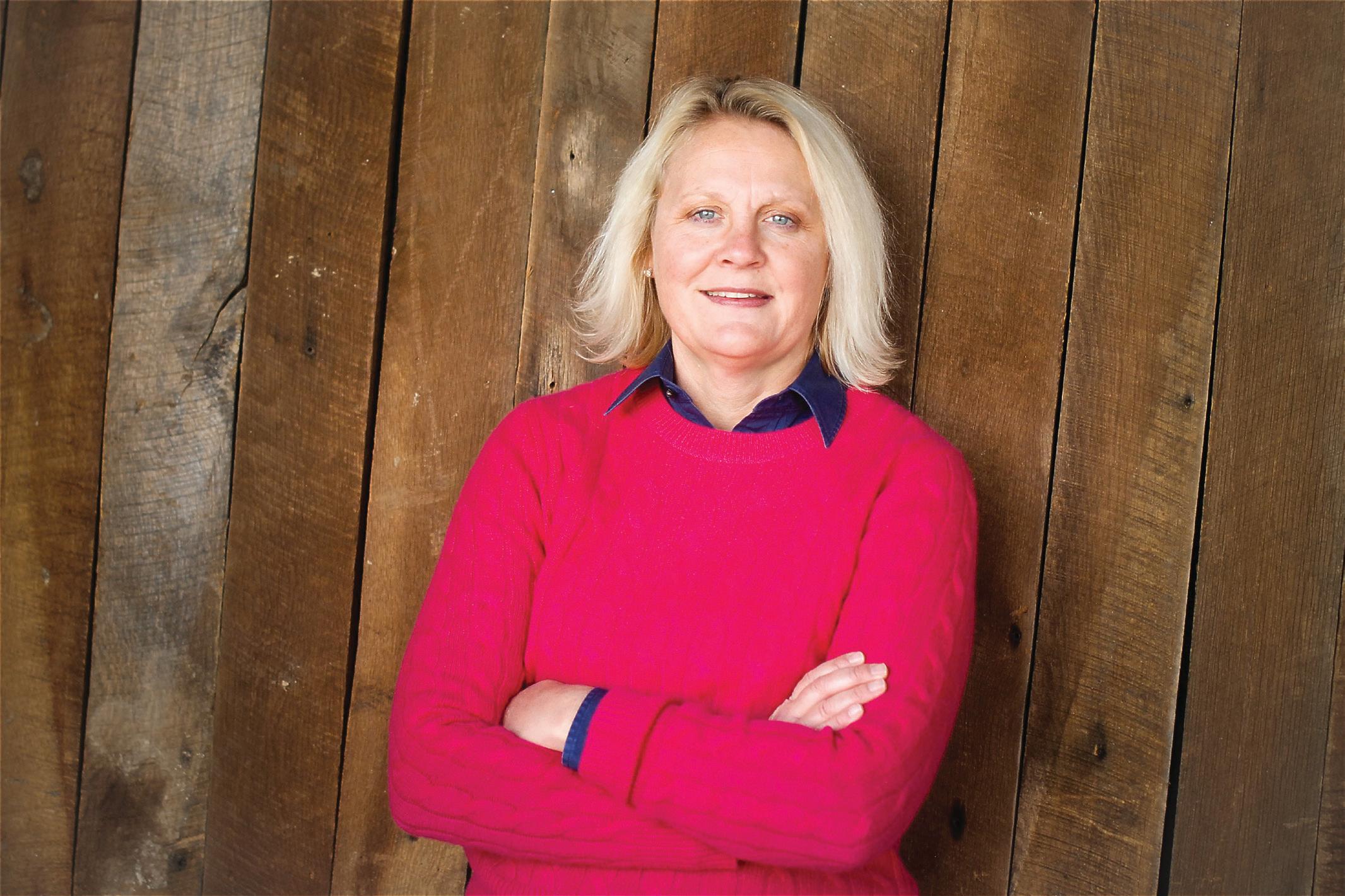
Shannon Hauf, PhD, Senior Vice President and Head of Seed Production Innovation, Bayer Crop Science, knows this, which is why we interviewed her to learn more about innovation.
BY LES C. MEYER, MBA | PHOTOS
SHANNON HAUF
Q: WITH BAYER’S NEW INITIATIVES TO CONNECT SEED INNOVATION DIRECTLY WITH LOW-CARBON BIOFUEL MARKETS, HOW ARE YOU ADJUSTING YOUR LOGISTICS AND SUPPLIER STRATEGIES IN THE RED RIVER VALLEY TO ACCOMMODATE DEMAND FOR MORE TRACEABLE AND ENVIRONMENTALLY SUSTAINABLE PRODUCTS?
A: Our 32-location footprint across the U.S. includes a key dedicated team in Fargo, and as we look at our operations, we're the largest seed production company in the world. We try to do the right things across all our sites and support the farmers we're partnering with. This is to help them achieve good yields and superb quality, while also enabling sustainable practice in the production of those seeds.
When it makes sense for the farmer's operation, this includes utilizing reduced tillage and cover cropping, which are practices that improve soil structure. Many of them are utilizing cover crops and implementing precision farming practices throughout the growing season, and they're using tools that provide a digital receipt of those practices. So, every herbicide used, every fungicide used, if there's an insecticide, everything is tracked through a digital tool. That's important in driving measurable, predictable outcomes, and this encompasses more than environmental sustainability. What our customers are looking for is a highquality product.
The importance of that outcome can't be understated when discussing traceability.
Q:
AND WHAT ARE SOME OF THOSE PRECISION AGRICULTURE PRODUCTS?
A: There are three seasonal crops in our sphere regarding low intensity low carbon intensity crops: 1) camelina; 2) winter canola; and 3) CoverCress
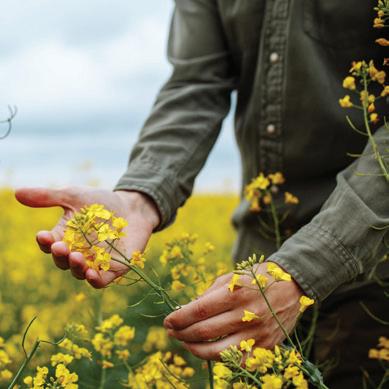
Our new multi-crop seed brand newgold® in 2026 was engineered to provide low-carbon intensity oilseed crops (like camelina and winter canola) for the renewable fuel market. It is strategically positioned in the northern and southern Great Plains regions with the goal of being a "profit multiplier" for farmers, aiming to fit between existing seasons or on underutilized land.
The first crop, which is super exciting because this is the space that would be in the North Dakota geography, is around camelina. We secured our first order on day one of the announcement, so we have customers ready to grow camelina in Montana, western North Dakota, Saskatchewan, and Alberta, and deliver it to local crushers to produce a key ingredient in sustainable aviation fuel (SAF). It's about creating new revenue opportunities and new value streams for our customers in those geographies, and we're poised to further expand the footprint between 2026 and 2027.
There are two other crops we're looking at in this space. The first is winter canola, the same crop you plant in North Dakota, except you plant it in the fall and harvest in the spring. This will be in areas where you plant winter wheat - the southern Great Plains of Kansas, Oklahoma, and northern Texas.
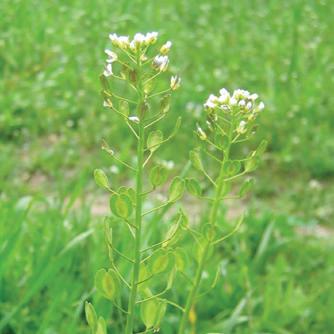
The third is CoverCress. It's pennycress, where we've applied some gene editing technology, and we can utilize this as a Midwest cover crop that can be harvested in the spring as a cash crop for the production of SAF. It's perfect in a crop rotation for many of the farmers we partner with for seed production. First, they plant their seed corn, and seed corn grown for production is harvested early, typically in August or September. So instead of the field remaining bare and unprotected for a long period of time, they can plant CoverCress, which provides the dual benefit of soil protection and a harvestable, profitable spring crop. Then you can go back and plant soybeans following spring harvest. In that system, you can get three revenue streams in two years—three harvested crops—versus the typical corn-soy rotation.
KRISTIAN PETERS, WIKIPEDIA
WHAT NDSU’S 2026 PRICE PROJECTIONS MEAN FOR YOUR FARM
WHAT THE CROP NUMBERS SAY
very farm budget starts with a guess. What will spring wheat bring? What about corn, soybeans, canola, barley, sunflowers, hay, cattle, milk, hogs, or lambs? What price should a farm use when building a cash flow? What number should a banker, landlord, or family member look at when discussing the year ahead?
That is where NDSU Extension’s 2026 planning price projections, released in January, can help.
The projections are not meant to tell farmers exactly what the market will do. Nobody can do that. Instead, they give North Dakota producers a reasonable set of planning prices to use when building annual budgets, cash-flow projections, and longer-term business plans.
NDSU Extension says the short-term planning prices should be used as a guide for setting price expectations for 2026 production and for preparing annual enterprise budgets and whole-farm cash-flow projections. The same publication cautions that short-term prices should not be used for long-term capital purchases or expansion decisions, because current supply and demand conditions rarely continue for long periods of time.
A one-year crop plan and a ten-year machinery, land, or livestock expansion plan are not the same decision.
For the 2026-27 marketing year, NDSU’s short-term planning prices include:
Spring wheat at $5.75 per bushel
Durum at $6.75 per bushel
Corn at $3.75 per bushel
Soybeans at $9.75 per bushel
Canola at $20 per hundredweight
Flaxseed at $13.50 per bushel
Winter wheat at $5 per bushel
Dry beans at $27 per hundredweight
Dry peas at $11.67 per hundredweight
Lentils at $19 per hundredweight
Alfalfa hay at $95 per ton
Other hay at $70 per ton
Farmers should be building budgets with realistic prices, not wishful prices.
A crop that only works with a price well above the planning projection deserves a closer look. That does not automatically mean the crop is a bad choice. It may still fit the rotation. It may manage weeds. It may spread workload. It may protect soil. It may serve a contract or livestock need.
But if the crop needs a better-than-projected price to pencil out, the farm should know that before the seed is ordered.
SHORT-TERM PRICES ARE FOR SHORT-TERM DECISIONS
One of the most useful parts of the NDSU guidance is also one of the easiest to overlook—short-term prices are for the next production year.
That makes them useful for annual crop budgets, cash flow, operating loan discussions, and marketing expectations.
They are not the best tool for deciding whether to buy land, build a new facility, add major machinery, or make a large expansion that depends on several years of strong prices.
For those decisions, the long-term averages are more useful. Long-term planning smooths out some of the market noise and helps avoid building a permanent cost structure around temporary prices.
This is especially important in agriculture, where a few strong years can make expansion feel safer than it really is. High prices can fade. Input costs can stay. Debt payments can last longer than the market cycle that inspired them.
LIVESTOCK PRODUCERS SHOULD PAY ATTENTION, TOO
The NDSU publication also includes livestock planning prices.
For 2026, NDSU lists short-term prices for feeder steers at $450/cwt for 400-500 lb. steers, $395/cwt for 500600 lb. steers, and $360/cwt for 600-700 lb. steers. The projection also lists $155/cwt for cull cows and $235/cwt for 5-Area Direct slaughter steers
For hogs, sheep, lambs, and milk, NDSU’s 2026 shortterm prices include $65/cwt for 250 lb. slaughter hogs, $90/cwt for slaughter ewes, $220/cwt for 105-140 lb slaughter lambs, $260/cwt for 60-90 lb. feeder lambs, and $20/cwt for all milk
Those numbers can help livestock producers evaluate feed costs, replacement decisions, culling plans, expansion, and cash-flow timing.
For crop farms with livestock, the projections can also help connect both sides of the business. Feed prices, hay values, cull cow prices, feeder prices, and crop revenue all affect the same checkbook.
THE PRICE IS ONLY HALF THE STORY
Price projections are useful, but they do not tell the whole story.
A $5.75 spring wheat price means very different things on two farms with different yields, land costs, machinery costs, input programs, and debt levels. A $3.75 corn price may look workable on one field and impossible on another.
That is why NDSU’s crop budget projections matter alongside the price projections.
NDSU Extension released 2026 crop budgets organized by multicounty region and noted that projected profits vary by region and crop. The budgets estimate returns to labor and management and do not account for price and yield variability or risk. NDSU also stated that in most regions and for most crops, projected profitability is low or negative.
In plain English, the price projections are a starting point, not a guarantee.
Farmers still need to plug in their own numbers.
WHAT FARMERS SHOULD DO WITH THE PROJECTIONS
The best way to use NDSU’s planning prices is not to read them once and move on. The best way is to test the farm against them.
Start with your expected acres, yields, and costs. Use NDSU’s short-term price for each crop. Then ask four questions:
Does this crop cover direct costs?
Does it cover total costs?
What yield does it need to break even?
What price does it need to break even?
Then run a lower-price scenario. Run a lower-yield scenario. Run both at the same time.
A PLANNING TOOL
Farmers do not need another prediction. They already hear plenty of predictions.
What they need is a practical way to make decisions in the middle of uncertainty.
That is what NDSU’s 2026 planning prices offer. They give producers a common starting point for budgeting, cash flow, lender conversations, crop comparisons, and marketing expectations.
The numbers will not be perfect. Markets will move. Basis will matter. Weather will matter. Local conditions will matter. Contracts, storage, quality, timing, and transportation will all affect the final price received.
But a realistic planning price is still better than a hopeful one.
The farms that manage 2026 well may not be the farms with the most optimistic price outlook.
They may be the farms that know exactly what their numbers mean before the crop goes in the ground.
Numbers Farmers Should Know
Before Planting
efore the planter rolls, most producers already have a rough idea of what the year needs to look like.
They know which fields are going to corn, soybeans, wheat, canola, barley, sunflowers, or hay. They know which pieces of equipment need attention. They know which input bills are coming. They probably have a gut feeling about whether the year looks tight, manageable, or uncomfortable.
But gut feeling is not enough.
In a year when margins are thin, five numbers can tell a farmer a lot about the season ahead: break-even price, cost per acre, projected yield, cash rent, and operating loan interest.
BreakEven Price
Break-even price is one of the clearest numbers on the farm.
It answers a simple question: What price do I need just to cover my costs?
The basic formula is:
Total cost per acre ÷ expected yield per acre = break-even price
For example, if a crop costs $600 per acre to raise and the
expected yield is 150 bushels per acre, the break-even price is $4 per bushel.
That number matters because it gives marketing decisions a starting point. Without a break-even, it is easy to focus only on whether the market price “feels good.” But a price that sounds decent may still lose money if costs are too high. On the other hand, a modest price may protect a margin if the farm’s cost structure is strong.
Farmers should run break-evens more than once. Start with a realistic yield. Then run a lower-yield scenario. Then run a higher-cost scenario. That gives a better picture of how quickly profit can disappear if weather, input costs, or basis move the wrong way.
2.
Cost Per Acre
Cost per acre is the number that makes the break-even real.
Seed, fertilizer, chemical, fuel, repairs, crop insurance, labor, machinery ownership, land, interest, and overhead all matter. Some costs are easy to see because they show up as spring bills. Others are easier to ignore because they are already owned, already financed, or spread across the whole operation.
That is where farmers can get into trouble.
A crop can look profitable if only seed, fertilizer, and chemicals are counted. But the farm still has machinery payments, depreciation, repairs, family living needs, hired labor, interest, insurance, and land costs. A more complete cost-per-acre number may not be as pleasant to look at, but it is far more useful.
For 2026, this is especially important. USDA’s Economic Research Service forecasts total U.S. farm production expenses at $477.7 billion, up 1% in nominal terms from 2025, even though expenses are projected to decline slightly after inflation. USDA also projects cash labor expenses to rise 2.2%, while property taxes, fees, and electricity expenses are expected to increase.
That does not mean every farm will see the same cost changes. But it does mean producers should not assume “lower costs” across the board. Some categories may ease. Others may quietly climb.
3.
Projected Yield
Projected yield is where optimism can get expensive.
Every farmer knows the field that “should” do better. Every farmer also knows the field that usually disappoints. The
danger comes from building a budget around the yield you hope for instead of the yield you can reasonably expect.
A strong projected yield should be based on actual history, not coffee shop averages or one great year.
Look at the field’s five- or ten-year average. Consider the crop rotation, drainage, fertility, soil type, weed pressure, salinity, compaction, and past weather problems. Then ask: “Is there a clear reason this field should do better than normal this year?”
If not, use the realistic number.
This does not mean farmers should plan scared. It means they should know the difference between a goal and a budget. A yield goal can be ambitious. A budget yield should be defensible.
One useful exercise is to calculate break-even price at three yield levels: expected yield, 10% below expected, and 20% below expected. If the budget only works at the top yield, that is not a plan. That is a gamble.
4.
Cash Rent
Cash rent deserves its own line because it can make or break the budget before the crop is planted.
For rented ground, cash rent is often one of the highest fixed costs per acre. Unlike fertilizer or chemicals, it does not automatically adjust if yields fall or markets weaken. Once the agreement is made, the farm has to carry that cost.
That does not mean every rent agreement needs to be renegotiated every year. Good landlord relationships matter. Long-term access to land matters. Fairness matters.
But farmers should know what each rented acre needs to produce to pay its way.
A simple question helps: At this rent level, what yield and price
does this field need to break even?
If the answer requires above-average yields and strong prices, the risk is high. If the field has drainage issues, weed problems, poor access, or lower productivity, the rent needs to reflect that.
This is not just about lowering rent. In some cases, it may mean discussing flexible leases, crop-share arrangements, improvement plans, drainage investments, or longer-term agreements that give both sides more stability.
The key is to avoid treating all acres the same. The best land may justify a premium. Marginal acres need a harder look.
Operating Loan Interest
Interest is easy to underestimate because it does not always feel like an input.
But borrowed money has a cost, and in a tight-margin year, that cost matters.
Operating loans pay for seed, fertilizer, chemical, fuel, rent, repairs, labor, insurance, and family living before crop revenue arrives. The longer money is borrowed, the more interest becomes part of the crop’s true cost.
Farmers should know three things before planting:
• What is the operating loan rate?
• How much will be borrowed at peak?
• How long will the money be outstanding?
A farm may not be able to control the rate, but it can often manage timing, inventory, prepay decisions, marketing, and repayment plans. Even small improvements in cash flow can reduce interest expense.
This is also a good reason to talk with lenders early. Not because something is wrong, but because surprises are expensive. A lender who understands the plan before planting is better positioned to help if markets, weather, or yields turn against the farm.
Put the Five Numbers Together
None of these numbers stands alone.
Break-even price depends on cost per acre and projected yield. Cost per acre depends heavily on land, machinery, input, labor, and interest costs. Cash rent affects both cost and risk. Operating interest affects cash flow and the true cost of production.
Together, the five numbers answer the question every farm needs to ask before spring work begins: What does this crop need to do for this farm to make money?
That question is not negative. It is not pessimistic. It is good management.
In strong years, these numbers help farmers capture profit. In tight years, they help farmers protect the business. And in uncertain years, they help farmers make decisions based on math instead of pressure, habit, or hope.