







fargoinc@spotlightmediafargo.com



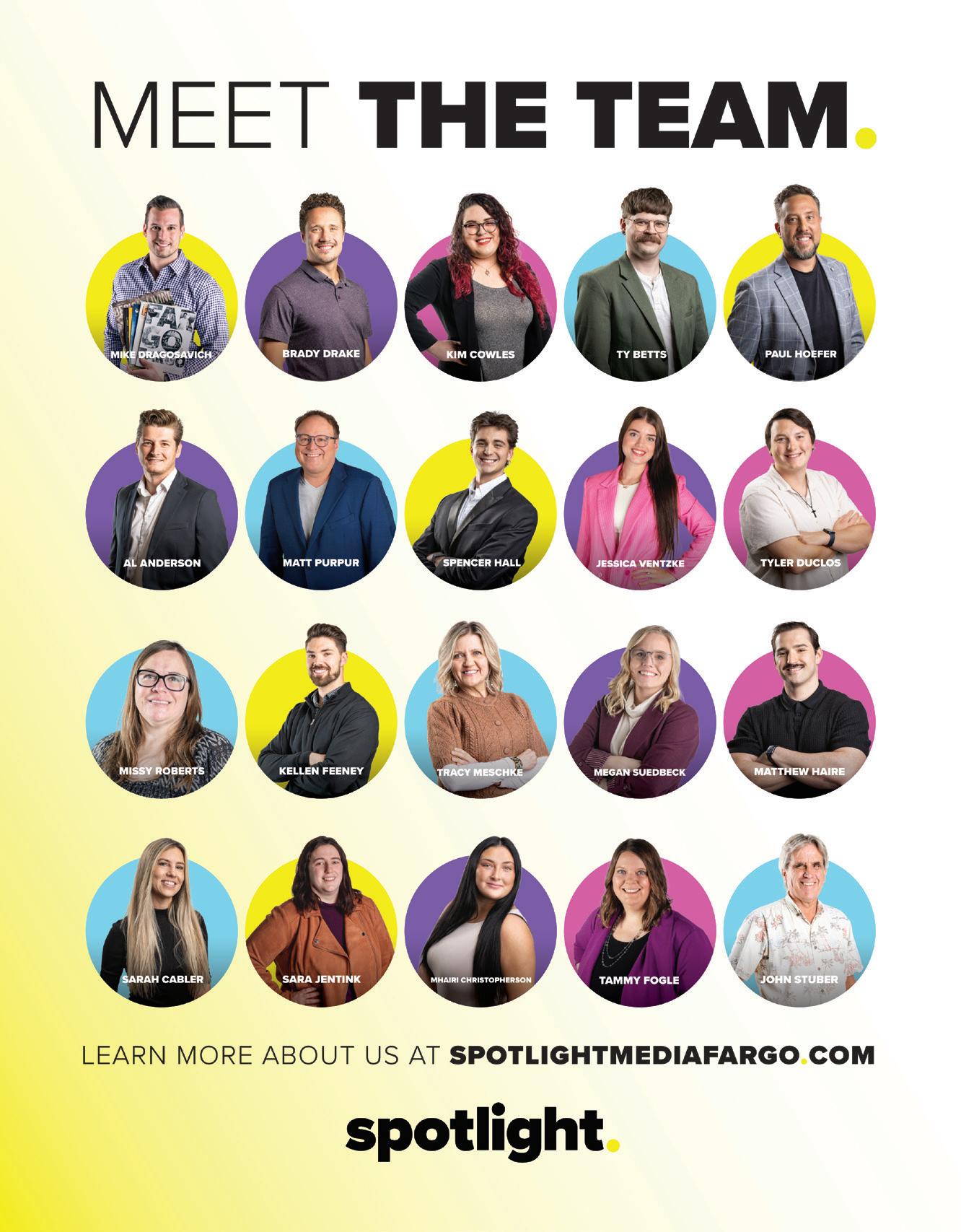
Brady
Al
Spencer
Matt
ClientRelations@SpotlightMediaFargo.com
Jessica Ventzke
Tyler Duclos
Missy Roberts
John Stuber




By Reed Rufer
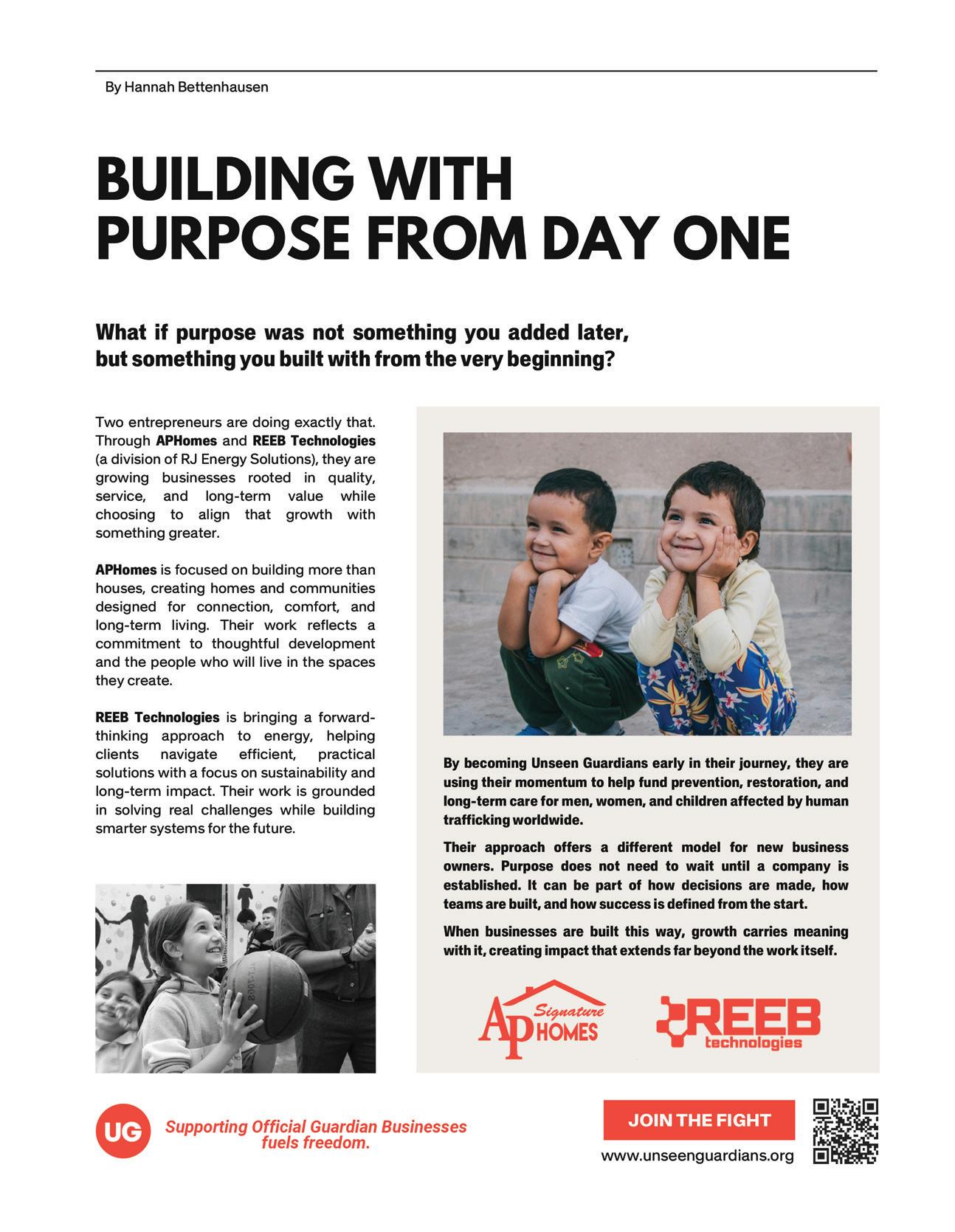
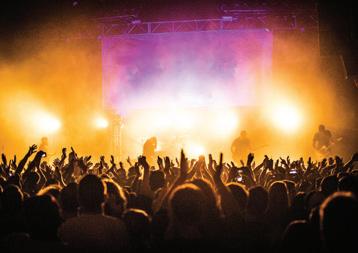
hen an audience attends a professional event, they shouldn't necessarily notice the audio. They should simply hear every word with perfect clarity and feel the impact of the presentation. This seamless experience is never an accident; it is the result of what we call audio architecture.
At Livewire, our team builds a solid foundation and designs systems for reliable production across each event we produce. Let’s take a look at a few aspects that you may not know much about!
We view the airwaves like a crowded highway; if two wireless microphones try to occupy the same frequency "lane," the signal crashes, resulting in static or total dropouts. RF coordination is a critical first step in modern venues where smartphones, Wi-Fi, and local broadcasts saturate the airwaves. Our team uses specialized hardware to scan the local environment in real-time and assign every wireless microphone and in-ear monitor to a dedicated, interference-free lane. This coordination ensures your speakers
stay crystal clear from the first word to the last, regardless of how many devices are in the room.
Most people have experienced the piercing squeal that happens when a microphone gets too close to a speaker. That unpleasant effect is called a feedback loop, or simply feedback. To prevent this, the Livewire team "rings out" the room during the setup phase. We identify the specific frequencies prone to looping in that unique environment and surgically cut them from the system using precision EQ. This allows the audio to remain loud and impactful for the entire audience without ever crossing the line into a feedback loop.
Overall audio quality depends heavily on gain staging. This is the process of building a clean, distortion-free signal path by calibrating volume levels at every stop the sound makes—from the microphone preamp to the final power amplifier. If the gain is set incorrectly at any point, the result is either a "hissy" background noise or a "crunchy" distortion. Proper gain staging

ensures the audio remains polished and professional, providing enough "headroom" to handle everything from a quiet whisper to an enthusiastic shout.
Our team also prioritizes monitor mixing to support the people on stage. While the audience hears the main speakers, presenters and performers need their own custom audio feed to perform with confidence. Whether it’s a CEO who needs to hear their own voice clearly to maintain a natural pace or hear questions from her audience, or a band that needs to hear one another to stay in sync, we provide a tailored mix just for them. When the people on stage are comfortable and can hear themselves perfectly, they can focus entirely on their delivery rather than the equipment.
At Livewire, we believe great sound is engineered, not just enabled. We handle these technical complexities so you don't have to. If you are ready to elevate your next event with a team that understands the architecture of audio, visit our website or give us a call. Let’s make sure your message is heard.


By Brady Drake
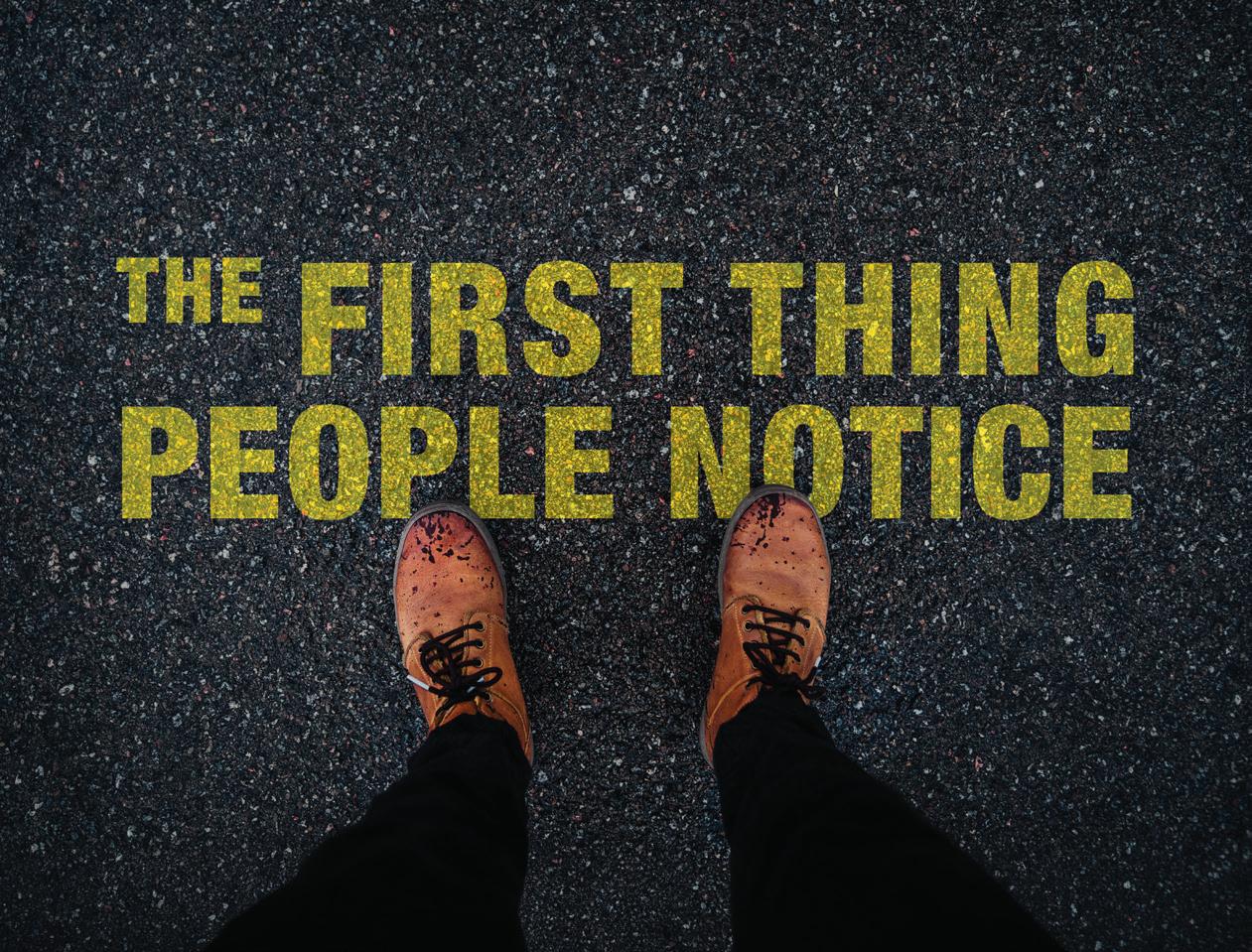
obody walks into a business thinking about the parking lot.
But they notice it. They notice the cracks. The faded lines. The puddles they step around on the way to the door.
“That’s the first thing people see,” Tyler Anderson, founder of Advanced Striping, said. “You can usually tell—if the outside looks taken care of, the inside probably is too.”
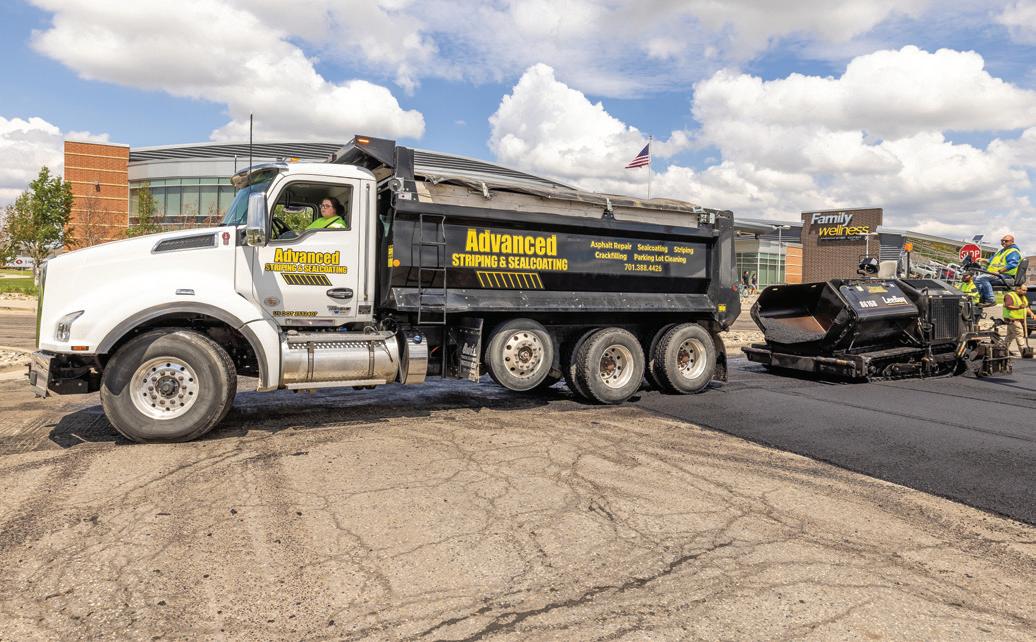
Advanced Striping doesn’t focus on building parking lots. They focus on saving them.
While large asphalt companies often prioritize new construction and municipal jobs, Advanced built its
business on maintenance services like crack filling, sealcoating, striping, and targeted repairs that extend the life of existing asphalt.
“A lot of companies come in and install brand-new lots,” Tyler said. “Our focus is on what happens after that. How do you protect it? How do you make it last?”
Because without that maintenance, asphalt doesn’t age gracefully. Water seeps in. Cracks spread. Small issues turn into structural failures. And eventually, what could have been a few thousand dollars in upkeep becomes a full tear-out and replacement, often costing 2 to 3 times the price of a mill and overlay.
“The goal is to save people money before it turns into a major repair,” he said.
Jeremy Albright
There’s another reason Advanced has carved out its niche. They take on the jobs others won’t. They take on smaller repairs and partial fixes.
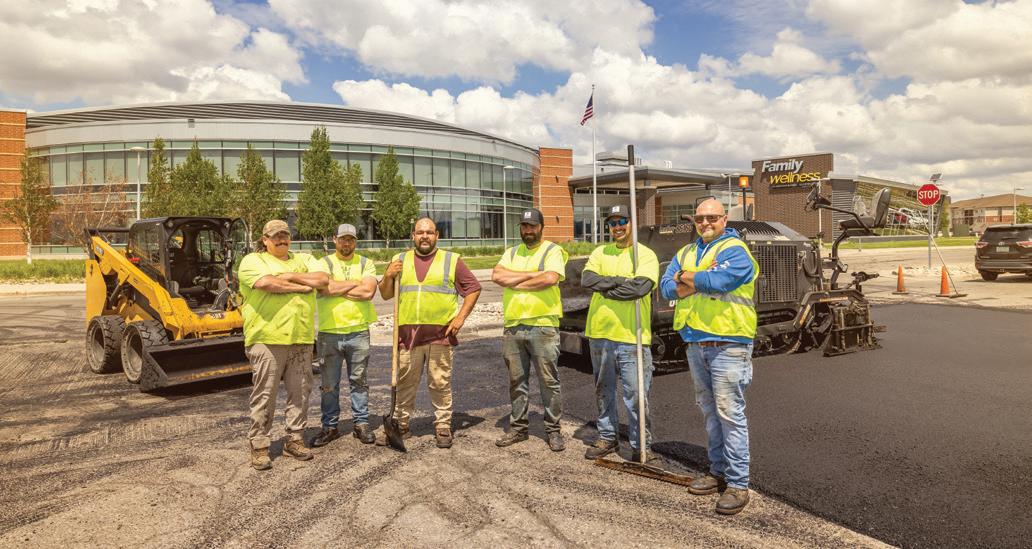
Today, Advanced works with thousands of customers, including business owners, property managers, and organizations across the region. Many of whom they’ve worked with for over a decade.

Calls are answered and logged immediately
A project manager follows up directly
Site visits are scheduled quickly
Quotes are typically delivered within 48 hours
Jeremy Albright
Ask Tyler why customers keep coming back, and he doesn’t talk about equipment or materials first.
He talks about communication.
“Our biggest thing is staying in touch,” he said. “If something changes, we'll call. If there’s a delay, we'll let you know. We don’t just disappear.”
And once a project is scheduled, the same level of communication continues.
“We just want people to know what’s going on,” Tyler said. “That’s it.”
There’s another differentiator, and it’s not what most people expect. Sometimes, Advanced talks customers out of work.
“If it’s too far gone, we’ll tell them,” Tyler said. “Sealcoating won’t help at that point. It would just be wasting money.”
Instead, they often recommed bigger asphalt
ADVANCED STRIPING HAS OVER 127 5 STAR REVIEWS!
companies to reconstruct the lot instead of having Advanced patch it up. Its whatever is best for the customer.
“I look at it like it’s my own parking lot,” he said. “What would I do if I owned this?”
Want a free lot assessment or help deciding if it’s time to seal? Give us a call—we’re happy to take a look.


By Brady Drake
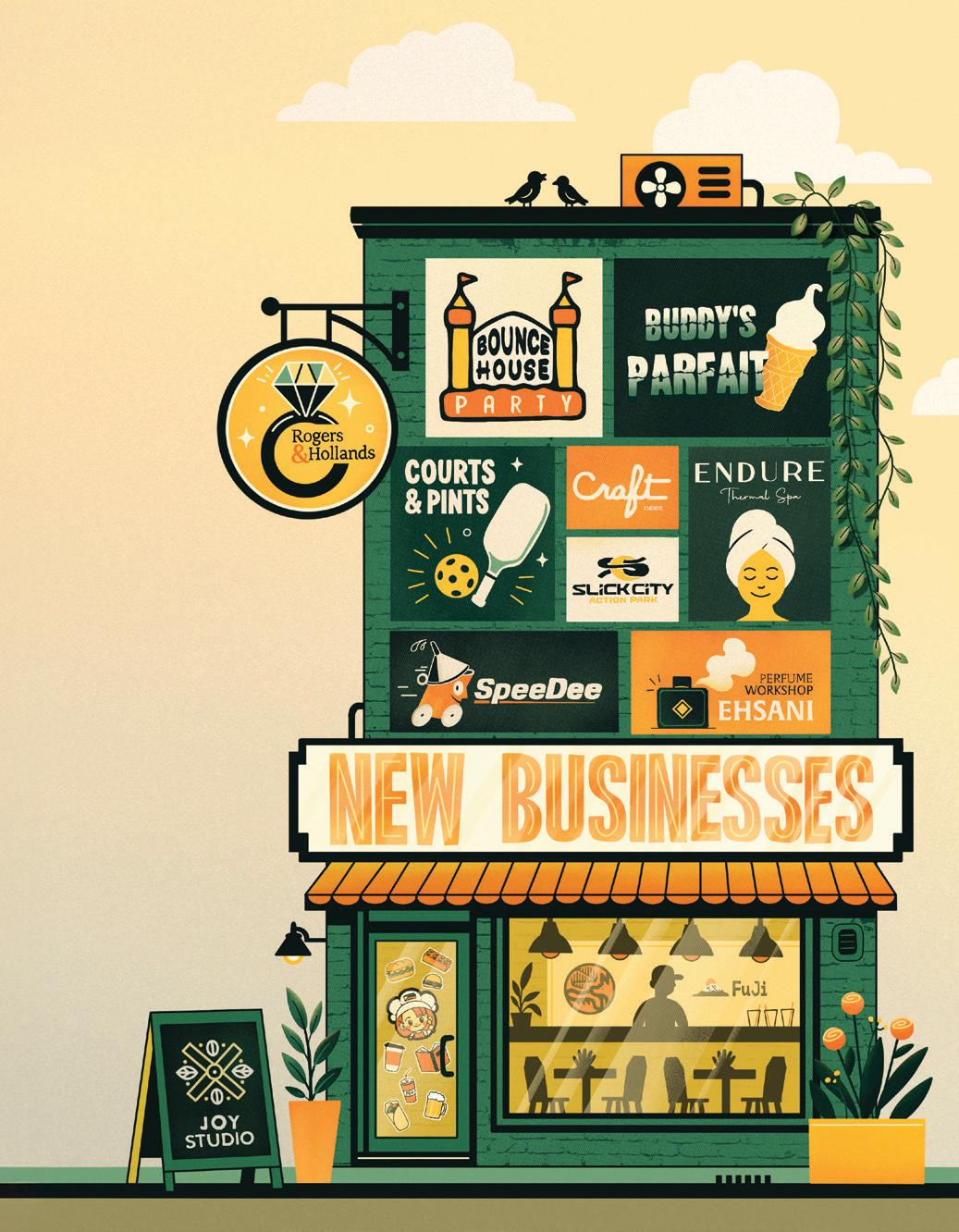
Fargo continues to grow in both scale and variety, with a mix of new restaurants, entertainment venues, and service-based busin sesses opening across the met sro. There are more options for financial services, more shops, and more importantly, more entrepreneurs to learn from!
By Brady Drake | provided by Erick Roder
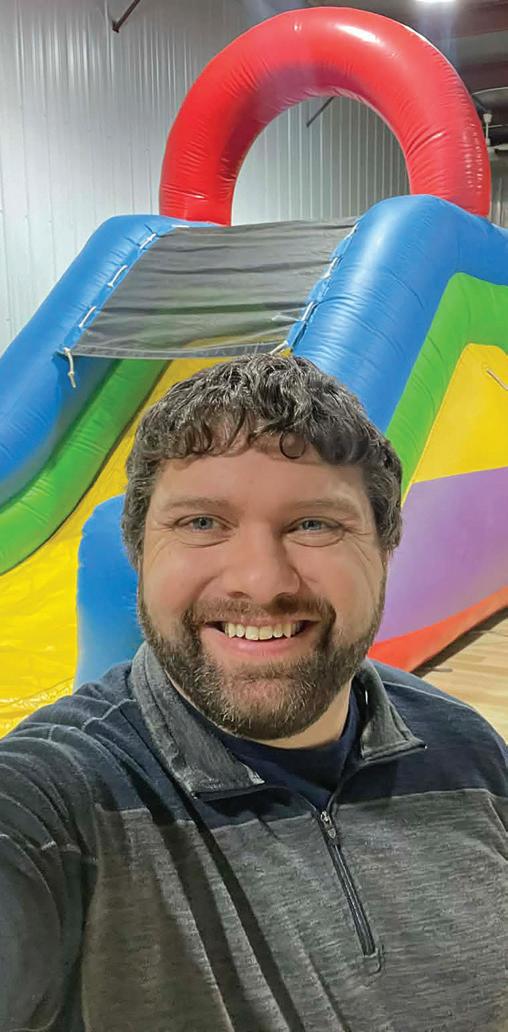
Rodemerica was born from a blizzard-day dream. Bounce House Party grew out of hard lessons about margins, logistics, and what families need. Together, they show how Fargo founder Erick Roder is learning to balance passion with practicality.
By Erick Roder’s own telling, the strangest thing about his business life is also the simplest:
“My garage for my van is more profitable than my van.”
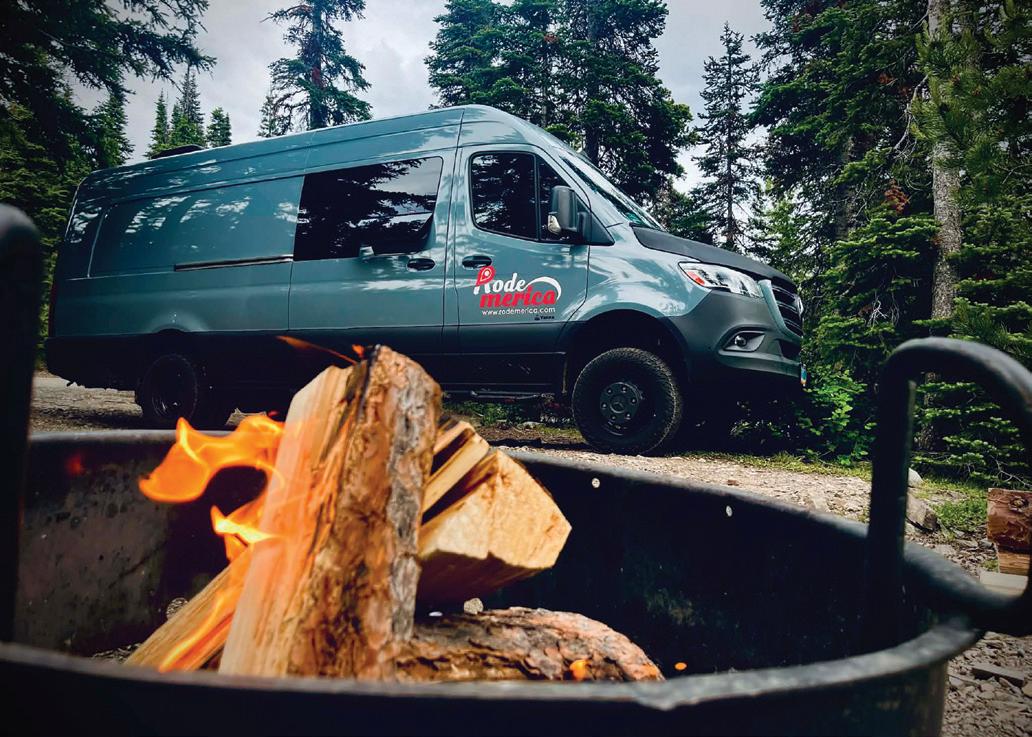
Rodemerica—his camper van business—is his passion. The vision. The thing he built because he had to.
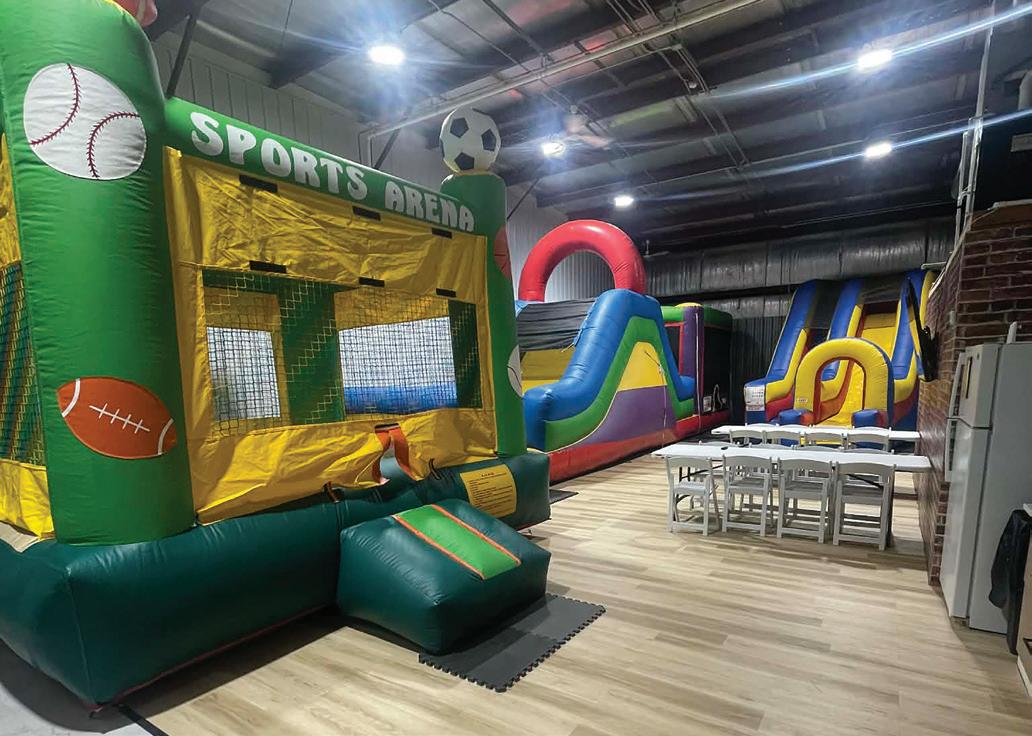
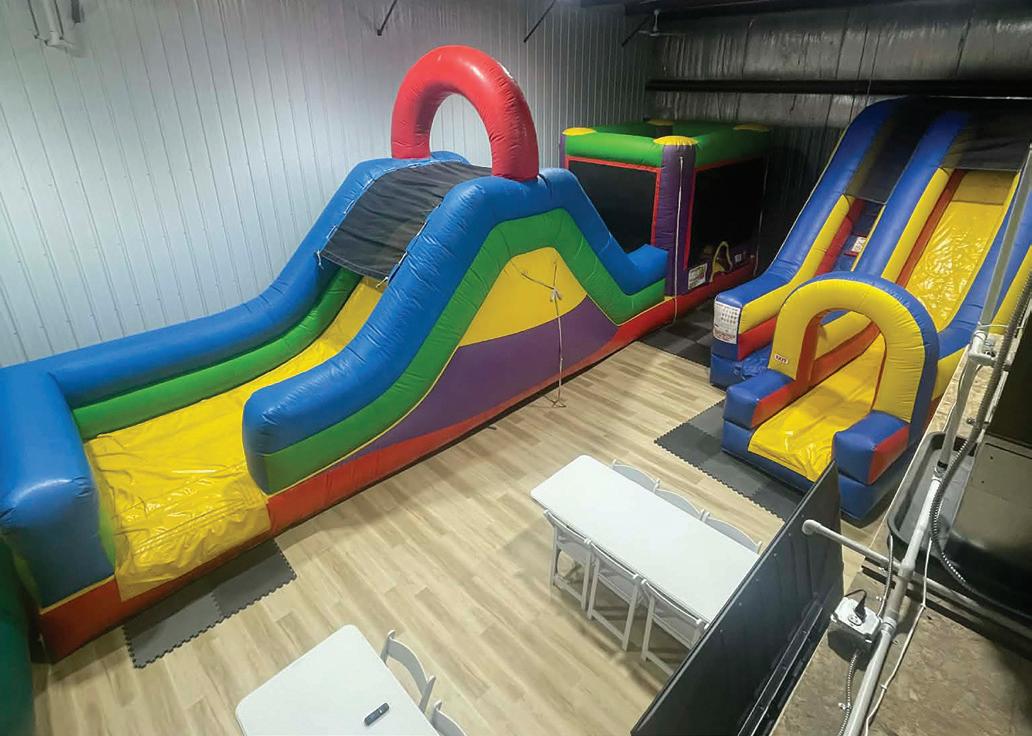
Bounce House Party—the indoor birthday venue on Page Drive—is the one that works on paper. The one that makes sense. The one that, so far, has produced real, consistent profit.
One is built around freedom. The other is built around efficiency.
Together, they tell a much more honest story about entrepreneurship than most founders are willing to admit.
At first glance, the two businesses don’t seem related.
Rodemerica is about the open road. It's a fully equipped camper van with beds, Wi-Fi, workspace, and just enough structure to make remote work possible from anywhere. It’s designed for people
who want to see Zion, Sedona, or the Tetons without burning all their PTO.
Bounce House Party is the opposite. It's a fixed, controlled environment designed for kids’ birthdays—private, clean, simple, and predictable.
But look closer, and the connection becomes clear.
Both are selling escape.
One takes you out of Fargo.
The other gives parents a break from chaos.
Rodemerica came first.
Like a lot of good North Dakota ideas, it started in the middle of winter, watching snow pile up and wondering why work had to be tied to one place. The concept was simple. If people can work remotely, why not build something that lets them do it somewhere better?
Somewhere warmer. More interesting. More alive. Roder didn’t just think about it he had it built by the team at Vanna Vans in town.
And then he lived it.
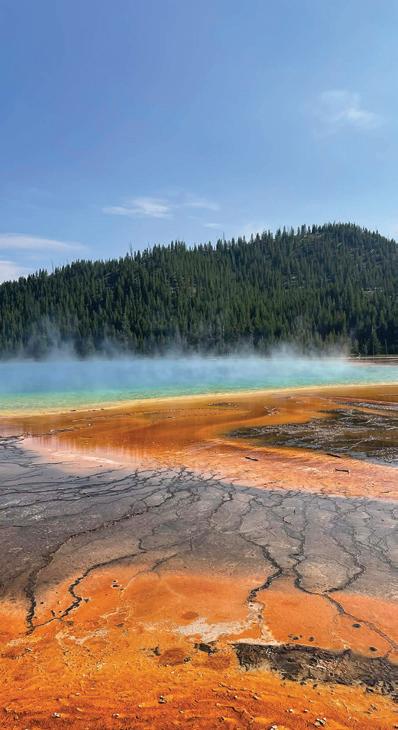
He’s taken the van to Medora,
Yellowstone, Zion, Sedona, the Grand Tetons, and beyond. One trip in particular, taken with his cousin after their grandmother passed, still sticks with him.
“That was a forever trip,” he said. “This van is my soul.”
The challenge is that passion doesn’t always translate cleanly into profit.
Rodemerica launched into a very specific moment—when travel was constrained due to the COVID-19 pandemic, remote work was booming, and demand for alternative experiences was sky-high.
That moment didn’t last.
More people went back to the office. Inventory in the RV and camper market surged. Prices dropped, and demand softened.
“It’s not just me… the market shifted," Roder said.
But he’s not walking away from it. Because not everything you build is meant to be optimized first. Some things are meant to be figured out over time.
Bounce House Party wasn’t a grand idea. It was a necessity.
When Games Galore closed— where Roder had been general manager—he needed a place to store the van. That’s it. That was the starting point.
He found a warehouse that happened to be bigger than he needed and that led him to an idea.
“Oh, I know what to do with half of a warehouse.”
What followed was pattern recognition.
During his time at Games Galore, Roder had seen what worked and what didn’t.
Big attractions were exciting, but operationally fragile because of expensive transport, heavy labor costs, and lots of variables.
• Expensive to transport
• Labor-heavy
• Dependent on too many variables
“They’re cool… but every time we took the dunk tank somewhere, we lost money.”
So he stripped it down to the simplest, most reliable part, which is birthday parties.
The numbers made it obvious. Low overhead. Minimal staffing. Repeatable process.
More importantly—control.
Instead of competing with large venues packed with people, Bounce House Party offers private experience.
No lines. No chaos. No outside variables.
“If you control how many people are there, there are no lines,” Roder said.
Bounce House Party isn’t flashy. It’s intentional.
Every detail comes from something
Roder saw firsthand:
• Kids wandering off when overstimulated » built a quiet room
• Adults wanting space » added a mezzanine lounge
• Setup friction » streamlined booking and layout
• Noise issues » improved flooring and acoustics
“I just took what worked… and fixed what didn’t.”
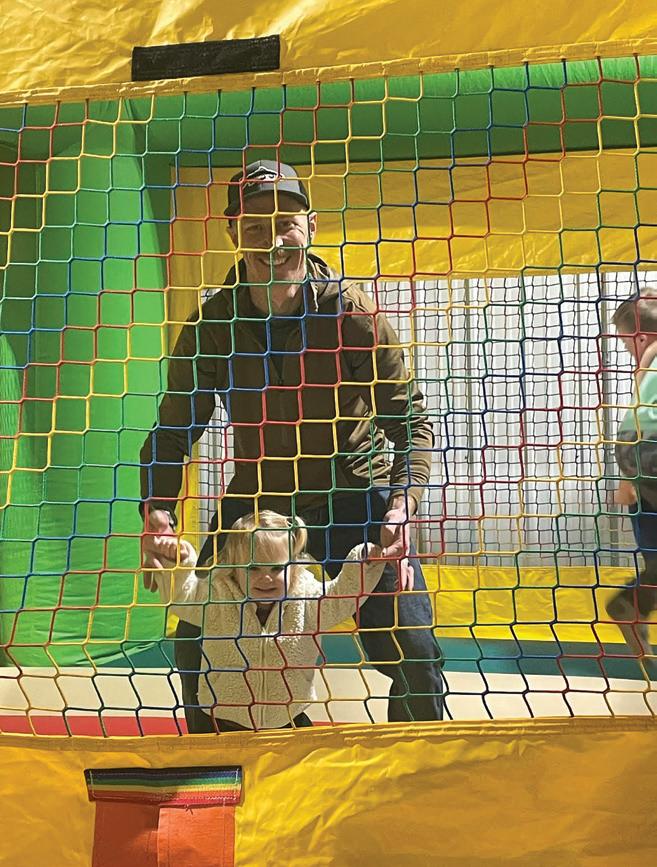
For Roder, neither business is the full picture on its own. One feeds the soul. The other keeps the lights on. And somewhere in the middle is where the real work of entrepreneurship happens—figuring out how to hold onto what excites you while building something that actually lasts. He’s not pretending to have it all solved. But in a world where most founders only talk about wins, that honesty might be the most valuable thing he’s building yet.
Bounce House Party
bouncehousepartyfargo.com
Search "Bounce House Party"
@bouncehousepartyfargo
Rodemerica
rodemerica.com
Search "Rodemerica"
@rodemerica
“I just took what worked… and fixed what didn’t.”



By Brady Drake | provided by JOY Studio
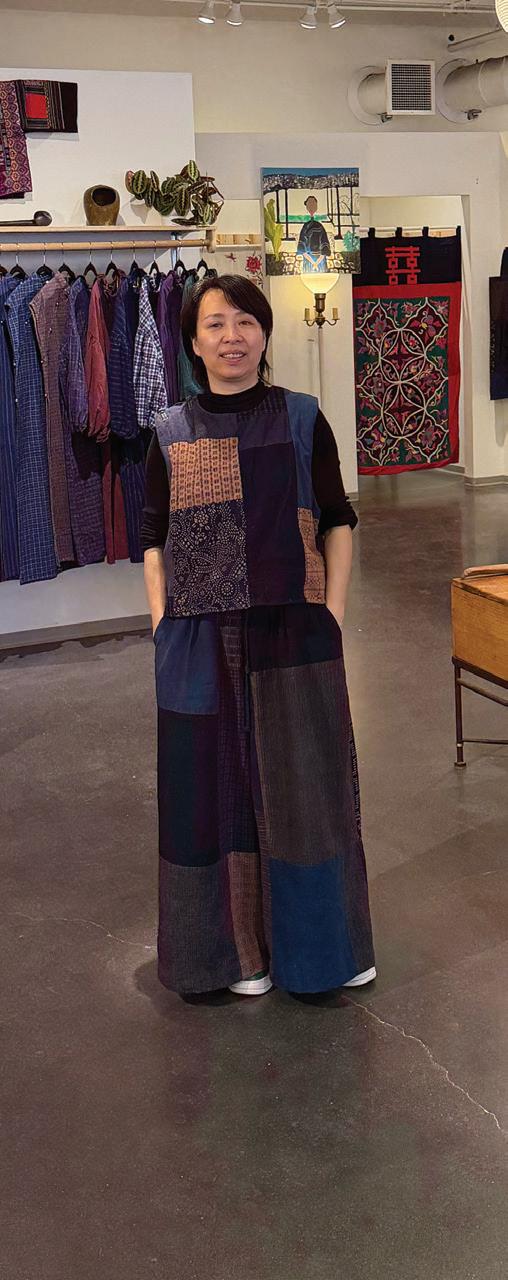
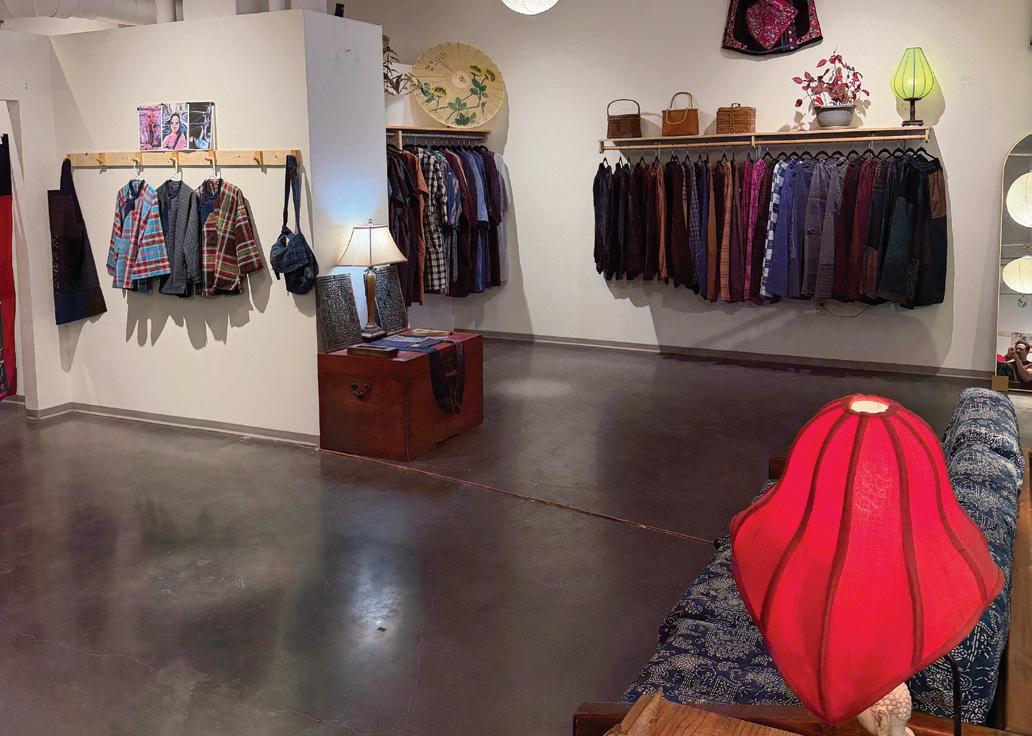
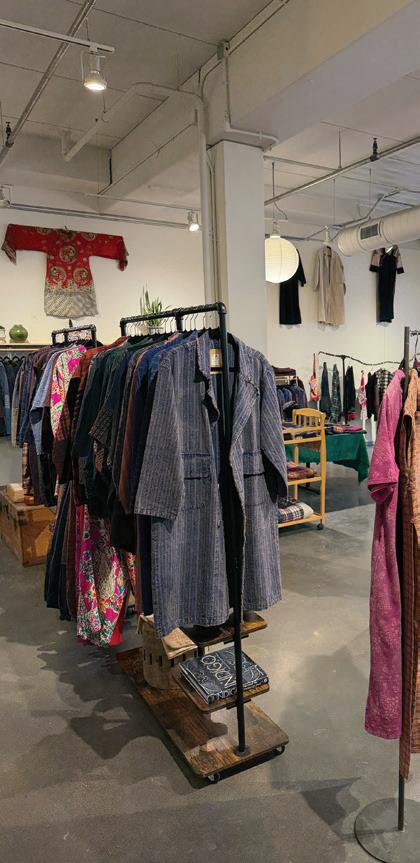
To truly understand JOY Studio, you need to feel the fabric and see the beautiful, loose, textured garments from handwoven fabric that dates back to the 1960s.
“That’s when people understand,” Owner Aying Zhang said. “You just touch—you will know.”
That is the foundation of JOY Studio. It’s also the reason the shop has quietly outperformed expectations in its first year.
But to understand why this small Broadway storefront matters, you have to start much earlier. Long before Fargo. Long before the store.
Back to fabric that almost doesn’t exist anymore.
For 15 years, Aying collected fabric simply because it mattered to her.
“I didn't know what I was going to do in the beginning,” she said. “I was just going to make little things.”
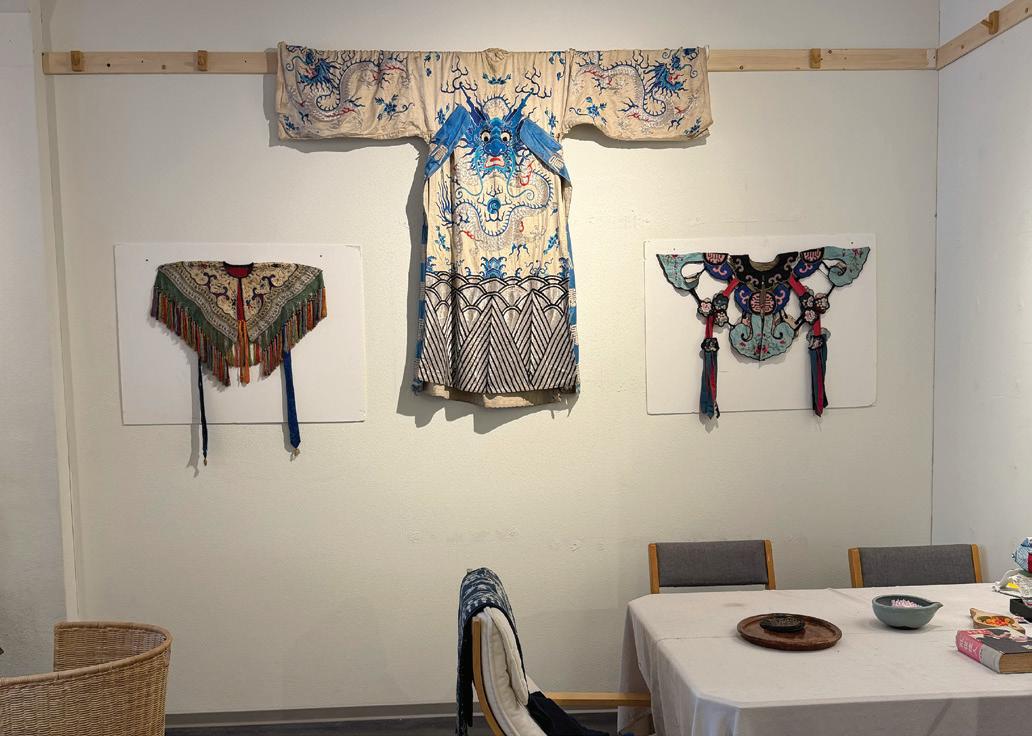
But these weren’t ordinary textiles. Every piece in JOY Studio comes from handwoven cotton made in the 1960s— fabric created before modern industrial farming, before chemical-heavy production, before speed replaced craft.
Back then, cotton was grown in healthier soil, without synthetic fertilizers or heavy chemical sprays. The fibers were stronger.
The texture was richer. The durability was unmatched.
“It’s like free-range chicken versus farm eggs. They look similar—but you taste the difference.”
With fabric, you may not “taste” it— but you feel it.
And more importantly, you feel the absence of what modern materials bring like static, stiffness, and discomfort.
Aying moved to the U.S. from China six years ago. Eventually, she landed in the Midwest—first Montana, then Fargo two years ago.
Her reasons for starting JOY Studio weren’t purely business-driven. They were personal.
“I want to connect with local people, make friends, and grow here,” she said.
She also wanted to contribute to sustainability.
When she arrived in the U.S., she was struck byhe sheer volume of plastic use.
“In my country, we already started to limit it,” she said.
And over time, it became something she wanted to address with something tangible and personal to
her, clothing. Clothing with natural materials. No polyester. No plastic buttons. Even the closures—like traditional frog buttons—are made from fabric instead of synthetic materials.
JOY Studio didn’t launch in a prime storefront. It started tucked away in the alley by Cat’s Cradle.
It was hard to find and easy to miss.
“Once people come in and touch the clothing, most like it,” she said.
She estimates around 70% of customers connect with the pieces. Some don’t buy—price can be a factor—but the reaction is consistent.
That early traction led to the move to her current Broadway location—a more visible space.
If you try to categorize JOY Studio as a clothing boutique, you’ll miss the point.
Aying isn’t designing for trends. Or even for aesthetics first.
“The first is healthy and practical,” she said.
That word—practical—means something different to her. It means these clothes can be worn anywhere. They can be worn when you at work, traveling, in coffee shops, in offices, and even at the farm.
“Pretty or fancy is second,” she said.
Make no mistake, the clothing is beautiful.
Ask Aying if she considers herself a businessperson, and she hesitates.
“I’m not quite a business person,” she said.
What she is, instead, is someone chasing a very specific kind of satisfaction.
Joy—not the loud, short-lived kind, but something steadier.
“Not up and down… more stable… a long-lasting happy,” she said.
That idea is baked into everything at JOY Studio.
“You are not just wearing clothing,” she said. “You are wearing your attitude.”
What’s happening inside JOY Studio isn’t limited to retail.
One of the most compelling parts of Aying’s work is through her collaboration with North Dakota State University. As part of the ARMD355 Apparel Design Studio (Spring 2026) course, eight student designers are worked directly with JOY Studio as their client—an opportunity that gives them access to Aying’s rare, handwoven 1960s fabrics.
I would also love to express my appreciation to the Downtown Community and the Kilbourne Group. As a newcomer from China, I’ve received tremendous support from them, which has made it possible for me to establish my business here on Broadway. I’m truly grateful and hold them in the highest regard."
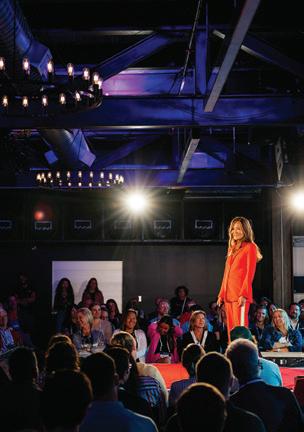
The project came to life on April 29 at noon during NDSU’s annual fashion show, “Community Garden: A Fashion Show in Bloom,” held in the Memorial Union’s Oceti Sakowin Ballroom. The show celebrated connection and creativity through fashion, featuring work from students, seniors, alumni, and collaborations with local businesses.
But Aying’s involvement came with one nonnegotiable condition: “No waste,” she told them.
If a student uses part of the fabric, they must use all of it. Leftover material can’t be discarded—it must be repurposed, whether through trims, accessories, or even shared among classmates. Nothing is wasted. Everything is considered.
Because these materials aren’t replaceable.
“They are limited,” she said.
Opening a business in a new country comes with a learning curve.
Opening one that challenges how people think about clothing makes it even steeper.
For Aying, the past year hasn’t just been about
running a store. It’s been about understanding Fargo.
“I work to learn the culture here,” she said.
Because without that, the business doesn’t work.
You have to understand how people live. What they value. What they’re used to. What they’re open to.
If you ask Aying for business advice, she doesn’t talk about margins or marketing strategies.
“The first thing to think about is does your business bring benefit to the community, to people, to the earth."
JOY Studio isn’t trying to chase trends or be something it’s not, and that’s the whole point. Aying Zhang is building something intentional that starts with fabric, but is really about how things are made, how they’re worn, and how they fit into your life over time.
thexjoy.com
Search "JOY Studio"
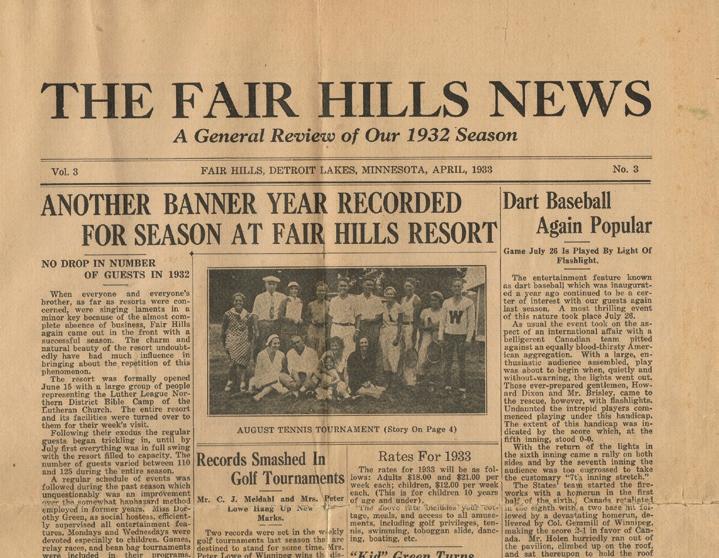
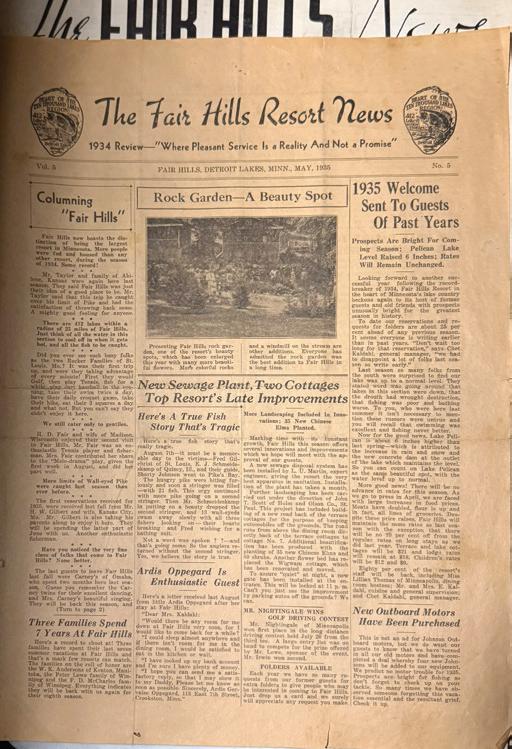
By Brady Drake
There are places you visit, and then there are places that become part of your life.
Fair Hills is the second kind.
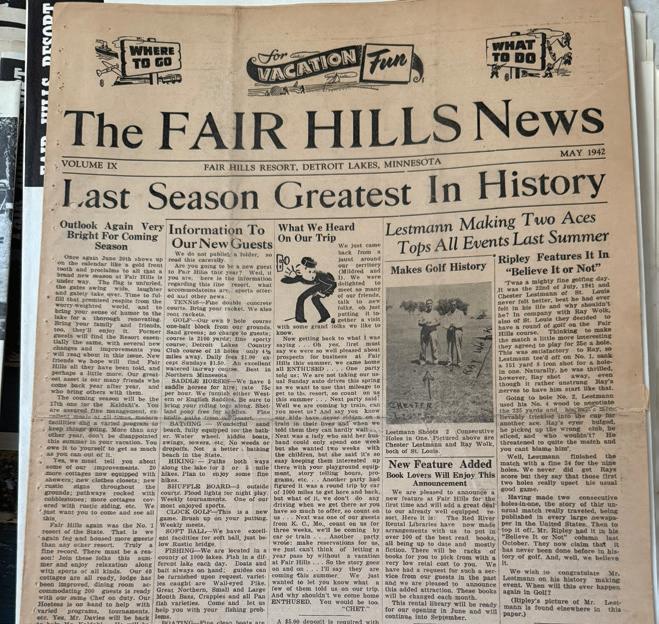
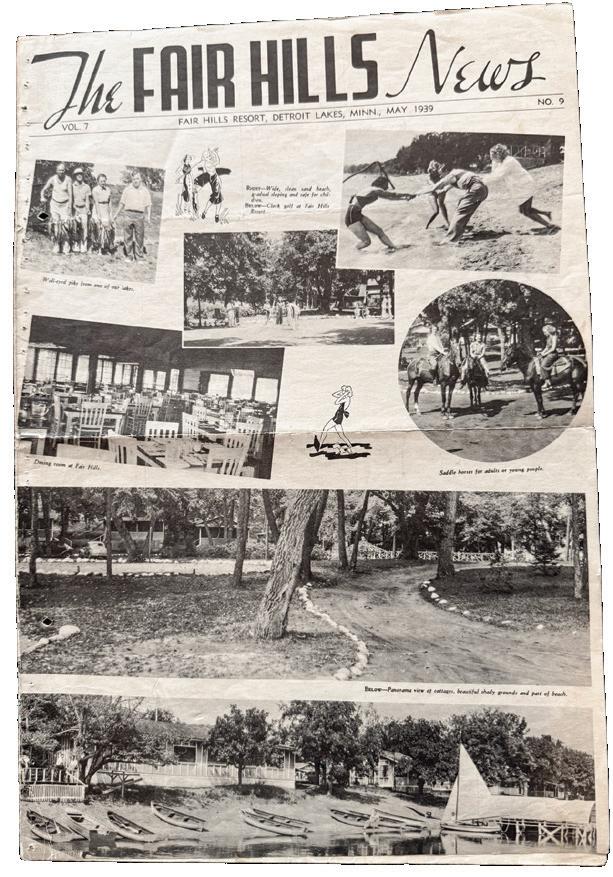
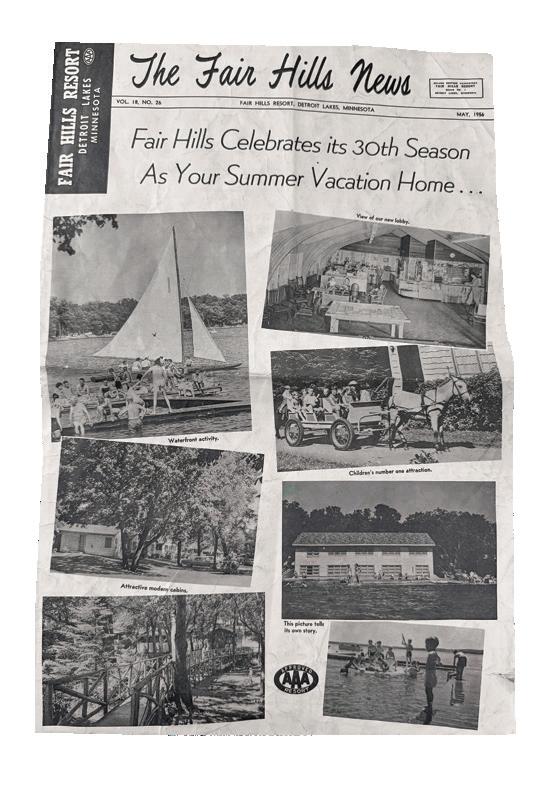
For nearly a century, families have been making the same trip—year after year—back to the shores of Pelican Lake in Detroit Lakes, MN. Because Fair Hills isn’t just somewhere you stay. It’s somewhere you return.
In 2026, the resort celebrates 100 years under the ownership of the Kaldahl family. And anyone who has been to the resort will tell you, they have not lasted that long on accident.
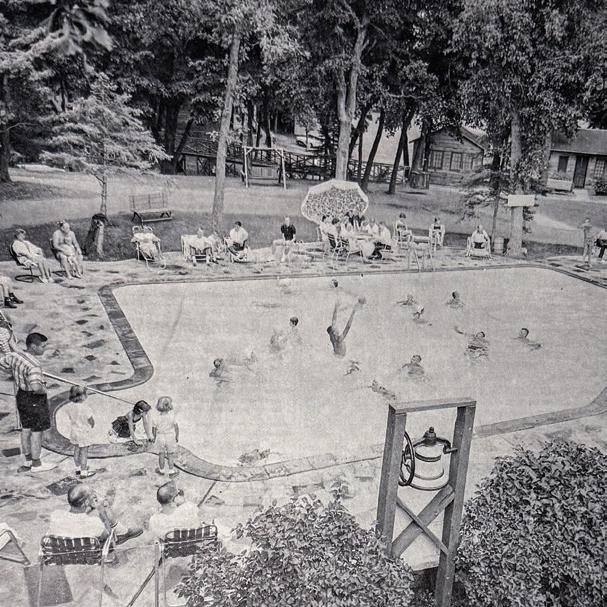
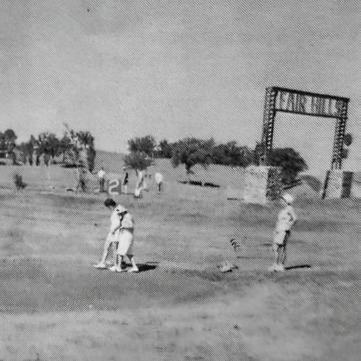
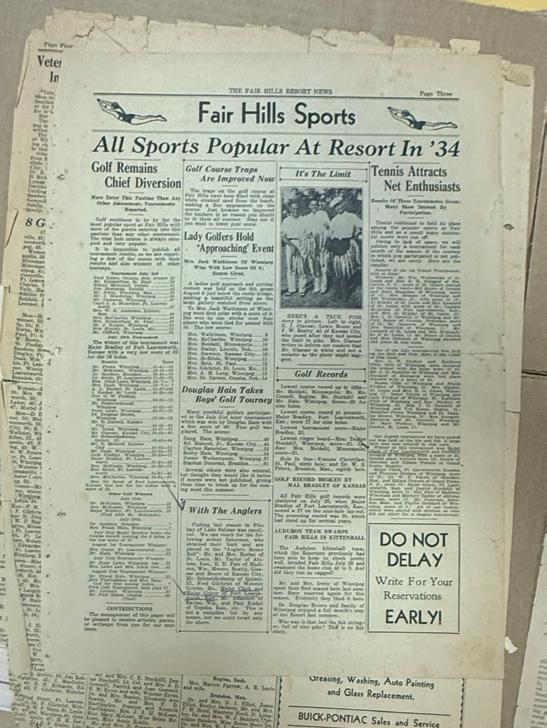
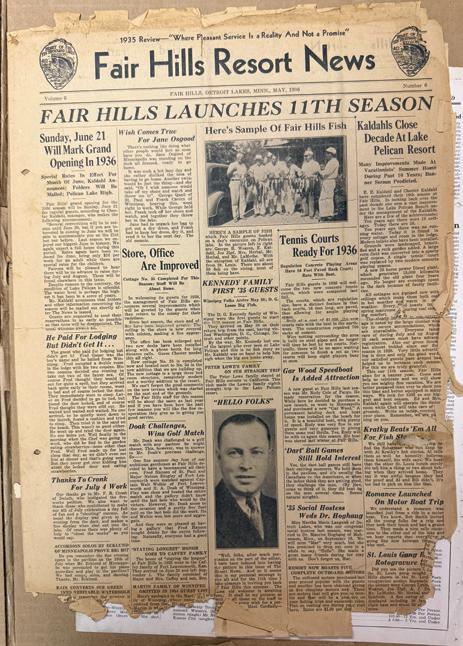
Long before it became one of the most recognized all-inclusive family resorts in the country, Fair Hills was something much simpler.
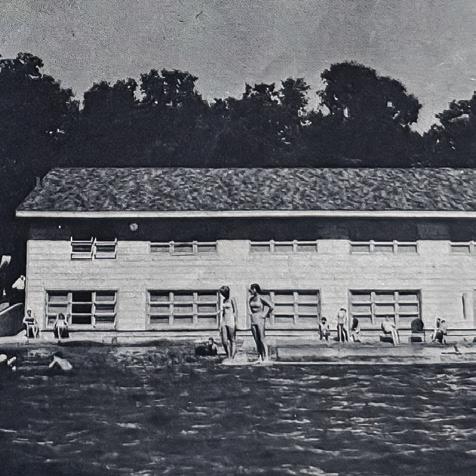
In the early 1900s, three brothers—Hud, Frank, and George Ashelman—began welcoming guests to a quiet stretch of lakeshore. What started as a farmhouse with a few summer boarders gradually grew into something more structured. Cabins were added. A lodge followed. Guests arrived by canal boats, and later, by early automobiles that made the journey feel like an adventure in itself.
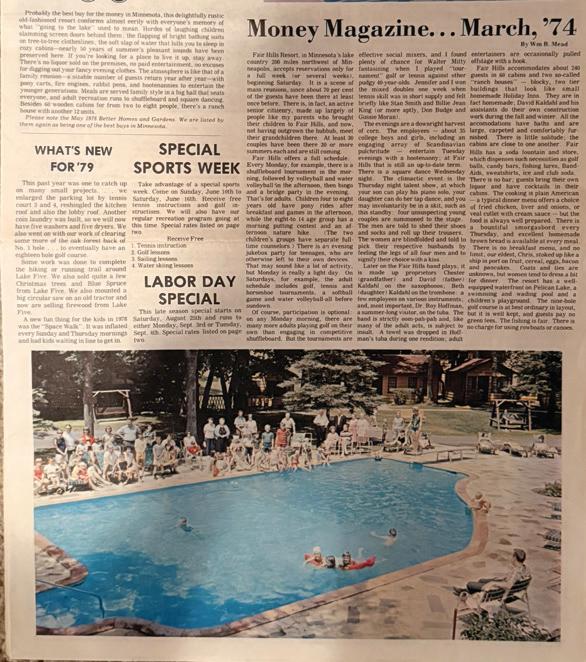
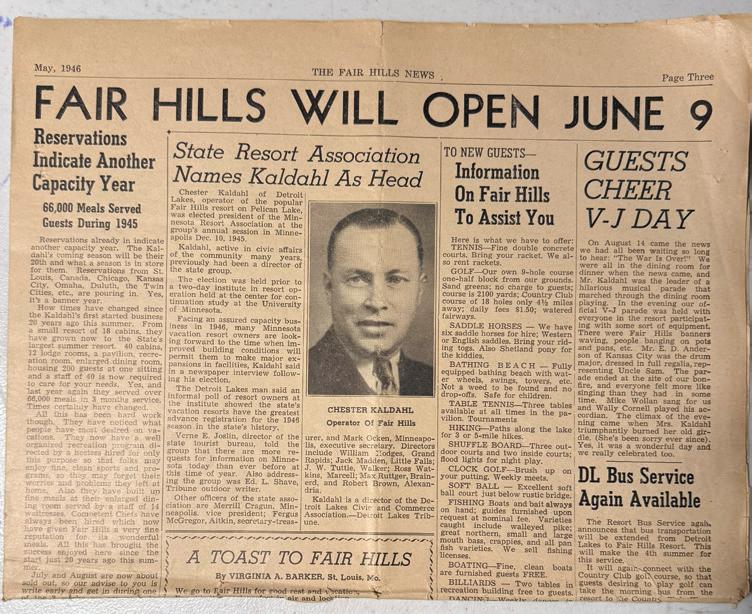
But the real turning point came in 1926.
That’s when Ed and Bessie Kaldahl purchased the resort for $18,500, stepping into what would become a multi-generational legacy that still defines Fair Hills today.
Their first day didn’t exactly go as planned.
He never sent it.
The weather turned. The lake settled. And something told him to stay. That decision changed everything.
Nearly 100 years later, the Kaldahl family is still here.
When Ed and his sons arrived to open the resort, they discovered that nearly everything—linens, dishes, bedding— had been sold off by the previous owner. Frustrated, Ed drafted a letter to cancel the purchase.

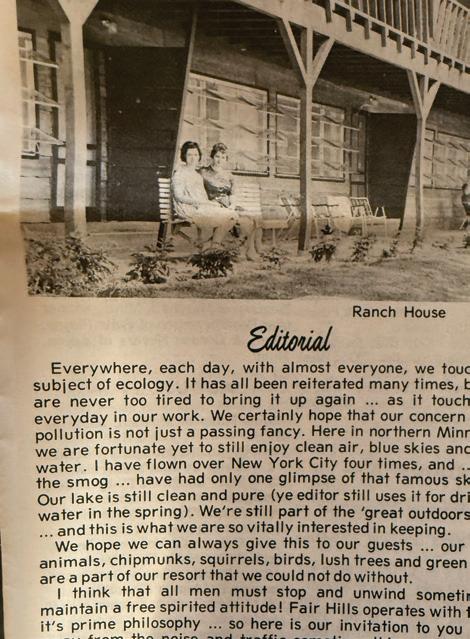
Over the years, Fair Hills has expanded beyond its original footprint, but always with the same philosophy.

Wildflower Golf Course, developed in the early 1990s, adds a championshipcaliber experience just minutes from the lake.
Five Lakes Resort extends the reach of the property, offering additional lodging and private, scenic escapes.
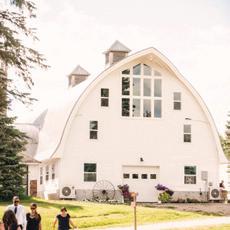
And The Barn at Five Lakes has reemerged as a destination for weddings, corporate retreats, and large gatherings, bringing a modern event experience into the same ecosystem.
Fair Hills has never been “family-owned” as a tagline.
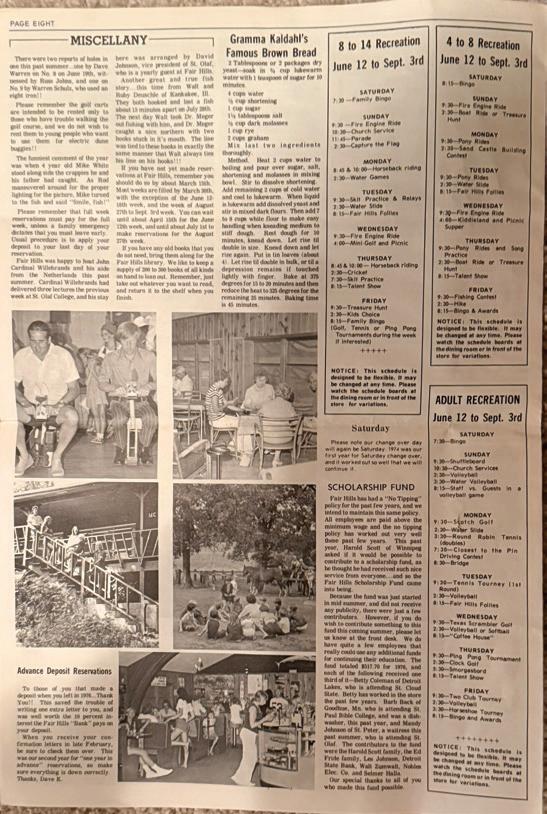
From Ed and Bessie to their son Chester, to Dave and Barb, and now to Beth Kaldahl Schupp and her family, each generation has taken on the responsibility of preserving what makes the resort special— while carefully evolving it just enough to stay relevant.
Today, that leadership extends into a fifth generation.
Beth’s daughter, Emily Meyers, grew up at Fair Hills and now plays a central role in shaping its future—from operations to creative direction.
Relationships have formed here. Marriages started here. Entire family histories trace back to weeks spent on this lake.
Most resorts focus on what they offer. Fair Hills focuses on how it feels.
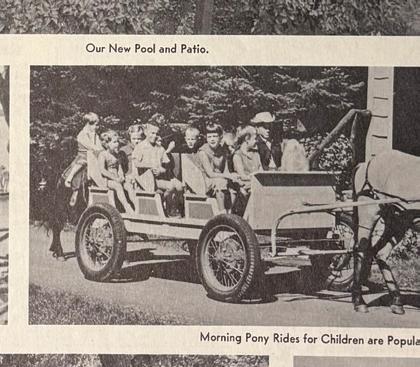
Yes, there are over 100 cabins. Yes, there are activities—golf, sailing, pickleball, waterskiing, fitness classes, kids programming. Yes, meals are served daily, family-style, with everything included.
But none of that explains why 87% of guests return. What brings people back is something less tangible. It’s the rhythm of the place.
Mornings that start slowly. Days that unfold without pressure. Kids disappearing into activities and returning sunburned and smiling. Evenings that bring everyone back together—whether it’s around a dinner table or at a lakeside show.
Guests often describe the resort the same way, "like stepping into a different time."
In recent years, Fair Hills has gained national recognition.
It’s been named the #1 all-inclusive family resort in the United States by USA TODAY.
It’s been featured by Forbes, Travel + Leisure, and National Geographic.
Did you know that 87% of Fair Hills guests return?
And in 2025, it earned multiple honors in the Minnesota’s Best awards, including Gold for Summer Resort.
But the recognition hasn’t changed the approach. If anything, it’s reinforced it.
At its core, Fair Hills isn’t defined by its amenities or its history.
It’s defined by the people who keep showing up.
Families who return every summer.
Kids who grow up and bring their own children.
Staff members who come back season after season because the place means something to them, too.
That’s what 100 years actually represents.





By Brady Drake | J. Alan Paul Photography
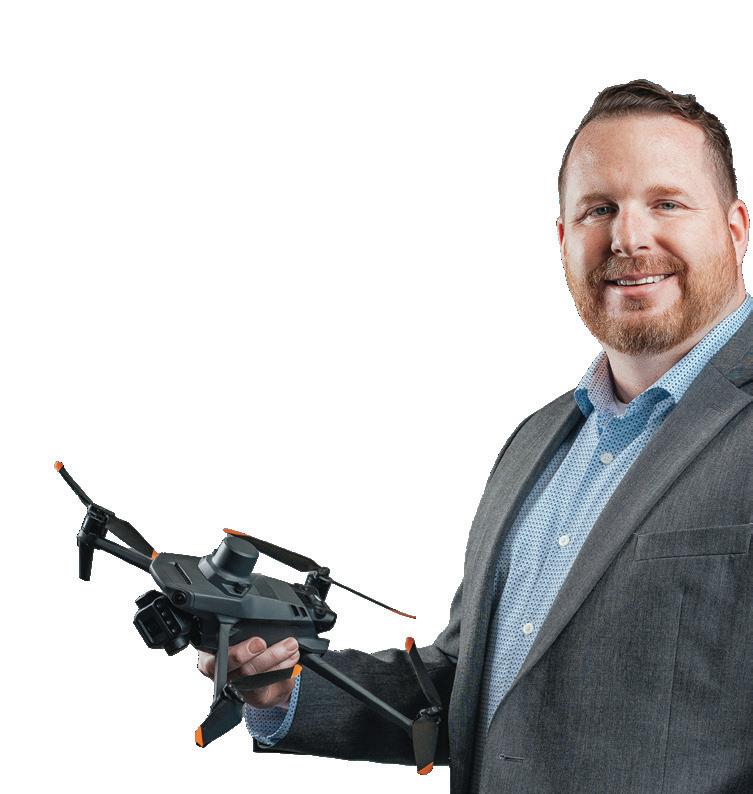
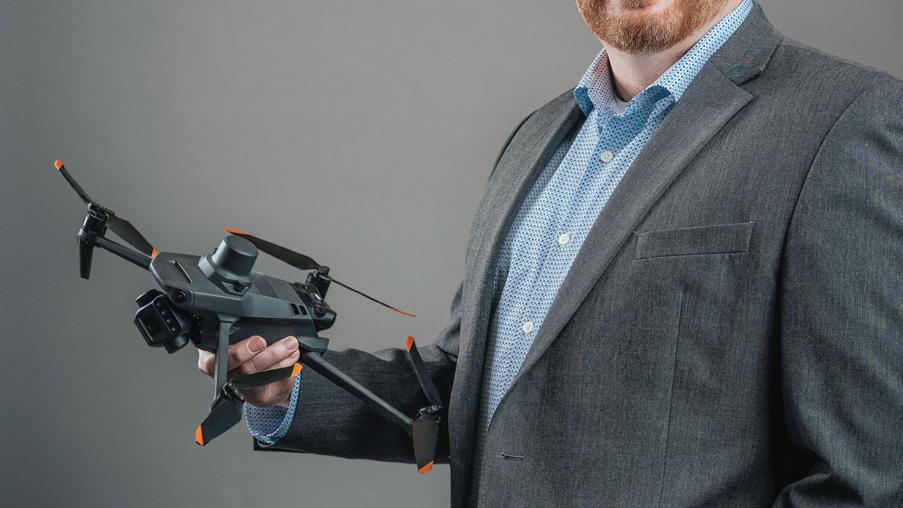
For all the sophistication of modern agriculture, a surprising amount of field research still comes down to a person with a clipboard, a pen, and a best guess.
That is the problem Jeremiah Roeth has spent the last several years trying to solve.
Roeth, the founder and CEO of aerialPLOT, did not come into agriculture through the usual front door. He grew up on a farm in Ohio, but left to study chemistry, earned a Ph.D. in cell biology, then built his career
in synthetic biology, where he helped develop automated, high-throughput screening systems inside a startup that eventually went public. Then he came home.
What he found when he returned to the family farm and joined Buckeye Ag Testing was an industry full of opportunity, but also one still leaning heavily on manual measurements, subjective ratings, and long gaps between observation and insight.
That contrast stuck with him. “In an afternoon, I can put a
drone up, fly an entire research farm, generate data on 50,000 plots,” Roeth said. “Rather than sending one person out and having them be able to do a couple hundred plots at a time.”
That idea became aerialPLOT, an ag tech company built around high-resolution drone imagery, cloud-based analytics, and objective crop measurement. The company works primarily with ag input companies, not directly with farmers, helping them test how products perform in the field across time, environments, and geographies.
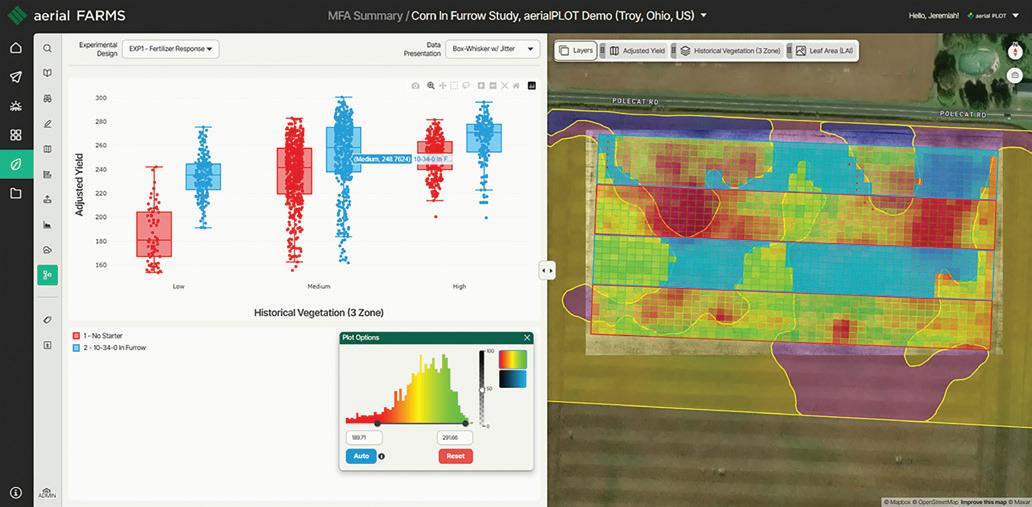
aerialPLOT's novel geospatial multi-factor analytics (geoMFA) dashboard reveals insights about crop responses in grower field trials, enabling companies to build performance models for better confidence and broad-scale adoption.
In simple terms, aerialPLOT helps the companies behind genetics, crop protection products, fertilizers, and biologicals understand what their products are actually doing in realworld conditions.
That matters because agriculture is increasingly a game of nuance.
There are very few blockbuster products anymore, the kind that produce obvious, universal results in every field. More often, the products entering the market today work differently depending on soil type, weather, genetics, management practices, and geography. A product may perform well, but only under the right conditions. The challenge is proving that clearly enough to make smarter recommendations.
That is where aerialPLOT has found its lane.
The company flies drones over
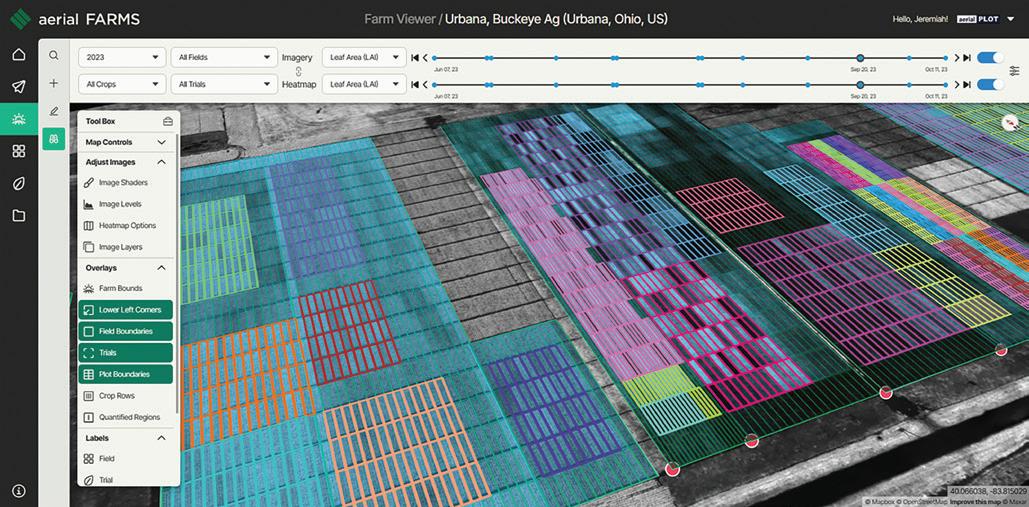
research trials throughout the season, not just once, but on a repeating schedule that builds a time-series record of crop development. By systematically capturing imagery every couple of weeks, aerialPLOT can measure canopy development, model crop growth, and help clients understand not just whether a product worked, but where, when, and under what conditions it worked best.
Traditional field trials often operate like a black box. A company may hire researchers in the spring, wait through the growing season, and get a final package of results in the fall, with limited visibility into what happened in between. Unless someone physically visits every site and walks every trial, much of the season is hidden.
Roeth saw that as both inefficient and avoidable.
With aerialPLOT’s system, clients can log into a cloud-based platform and see imagery and measurements from trials throughout the season. Instead of waiting until harvest to understand how a product behaves, they can follow crop response as it unfolds.
aerialPLOT’s work spans a broad geographic footprint, reaching from the Mississippi Delta through the Corn Belt and now into Canada, according to Roeth. To handle that, the company has built a distributed drone pilot network, standardized equipment, and heavily automated the movement of data from drone to analytics platform.
Roeth said aerialPLOT has invested heavily in making sure its pilots use the same hardware, follow the same process, and feed data into the same system. That avoids the “mixed bag” that can come from relying too heavily on outside contractors and
inconsistent equipment.
It also helps explain why aerialPLOT has carved out a distinct niche in a crowded ag tech market.
There are no shortages of digital tools aimed at farmers. But aerialPLOT chose a different route. Rather than asking growers to buy into another platform and prove return on investment on the front end, the company focused on serving the businesses that develop and test agricultural products.
“We want to basically empower companies that are taking products to the farmer and give them better data to better optimize the production system,” Roeth said.
For Roeth, the bigger issue is not just gathering more data. It is gathering the right data, early enough, often enough, and with enough context to make it meaningful.
He points to biologicals as a good example. Many growers see potential
in biological products, but adoption has been tempered by inconsistent performance. Roeth believes that inconsistency is often less a product problem than a data problem.
If a company cannot say with confidence that a product works best in a specific soil type, climate condition, or genetic background, then the recommendation will always feel vague. aerialPLOT’s goal is to help close that gap.
That larger philosophy runs through the entire business.
Roeth is wary of ag tech that starts with flashy tools and then goes looking for a problem to solve. His view is almost the reverse. He came out of the field research world knowing exactly where the pain points were, then built technology around them.
“A lot of times, technology companies have cool tech, and they’re looking for a problem,” he said. “I had a problem, and I found some cool tech
to build a solution from.”
That practical mindset also shaped one of the company’s biggest early decisions.
At first, aerialPLOT was conceived more as a software business. The plan was to build a SaaS platform that researchers could use to process their own drone imagery. But the concept hit a wall. Too many users had different hardware, different skill levels, and different workflows. Without consistent data coming in, the software could not deliver consistent value.
So the company pivoted.
Instead of selling software alone, aerialPLOT bundled drone flight services with its analytics platform. That shift created a more vertically integrated model, one in which the company could control data quality from collection through analysis.
Roeth credits that pivot in part to the blunt advice of Gary Nijak Jr., now the
A lot of times, technology companies have cool tech, and they’re looking for a problem. I had a problem, and I found some cool tech to build a solution from.”
company’s COO and head of business development, who pushed early on for a servicebased model. It was a bigger lift, requiring more operational complexity and investment, but it also made the business stronger.
It forced aerialPLOT to stay close to the market.
That, in many ways, is one of the most revealing parts of Roeth’s story. aerialPLOT has grown largely without raising fresh outside capital since its early partnership phase. Roeth said the company has funded its growth primarily through revenue, building the business on a model that customers were willing to keep paying for.
That bootstrap mentality has shaped how the company thinks.
“When you run a revenuedriven business, you stay super in touch with what your value
proposition is,” Roeth said.
It is a perspective that stands out in a sector where many startups have raced to scale on investor capital before fully proving demand. Roeth believes growing on revenue has kept aerialPLOT disciplined, close to customer needs, and honest about what actually works in the market.
Now the company is entering a new phase.
In March 2026, aerialPLOT announced it had relocated its headquarters to Fargo, saying the move would help accelerate growth and provide a stronger home base for its analytics platform, software development, and UAV-based data collection. The company also said Fargo’s ag innovation ecosystem, business climate, and available incentives were key factors in the decision.
Roeth said the move was CONTINUED
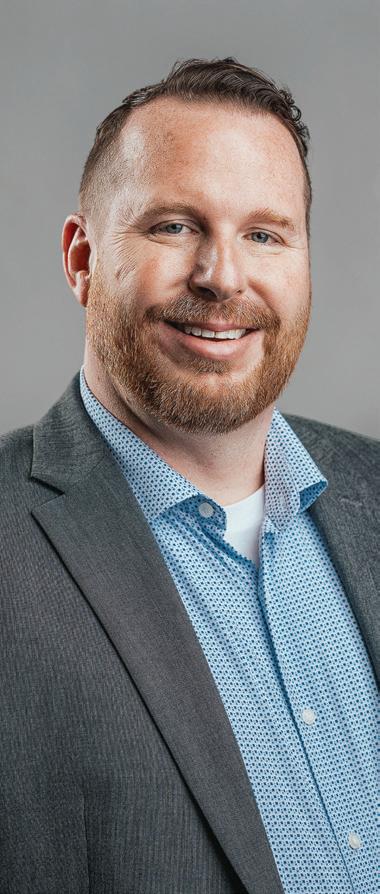
driven by several factors, including a desire to build more of a concentrated team around software and data science, a more central location in the Upper Midwest, and the chance to plug into a broader ag tech ecosystem than he initially realized existed in the region. The company also now has a Canadian entity, aerialPLOT Canada, and operations/FTEs there for this growing season.
With the move, aerialPLOT plans to expand functions in software development, data science, and UAV-based data capture, while also working with Grand Farm on 2026 field trial collaborations.
That partnership makes sense.
Grand Farm has positioned itself as a collaborative agricultural innovation network built around growers, startups, corporations, researchers, and technology partners. For a company like aerialPLOT, which lives at the intersection of agronomy, geospatial data, and field-scale validation, it is a natural fit.
Even with that momentum, Roeth remains clear-eyed about where the company fits and where it does not.
He is skeptical of some of ag tech’s more ambitious promises, especially the idea that imagery alone will unlock seamless reactive management during the season. Detecting a disease or stress event early is one thing. Acting on it quickly enough, under real field conditions and real weather constraints, is another.
That is why Roeth is more interested in predictive and
prescriptive systems than reactive ones.
His long-term view is not just about telling someone what is wrong in a field today. It is about helping them make better decisions before the season even begins. What product, what placement, what management plan, in what environment, gives the crop the best probability of success?
That is a harder problem. But it may also be the more valuable one.
And aerialPLOT may be unusually positioned to tackle it.
Because the company starts with high-resolution drone imagery collected in controlled trial environments, it can build models using a much richer layer of detail than lowerresolution satellite systems alone can provide. Roeth sees that as a potential bridge between highly precise research data and more scalable applications in production agriculture.
In other words, the company’s future may not stop at helping product developers run better trials. It may eventually extend into helping distributors, consultants, co-ops, and larger growers make better, more data-driven decisions at scale.
For now, though, the company is focused on what it already does well, bringing structure, transparency, and objectivity to a part of agriculture that has gone too long without enough of any of the three.
aerialplot.com /aerialplot

By Brady Drake | Urban Toad Media
Our area is not built for golf.
You finally start to figure it out in season. Your swing feels consistent, you’re striking the ball clean, your confidence builds, and then winter hits and everything stops. And by the time spring rolls around again, you’re not building on progress. You’re trying to get back to where you were.
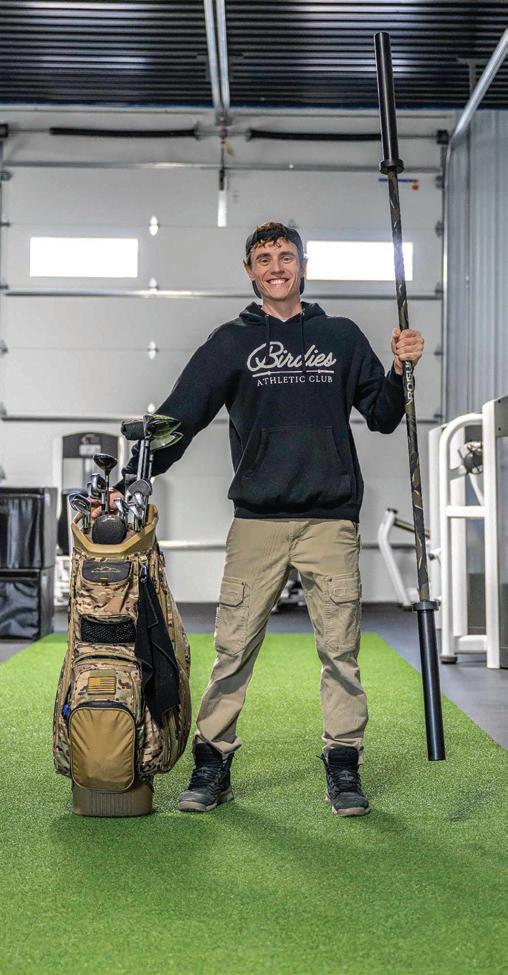
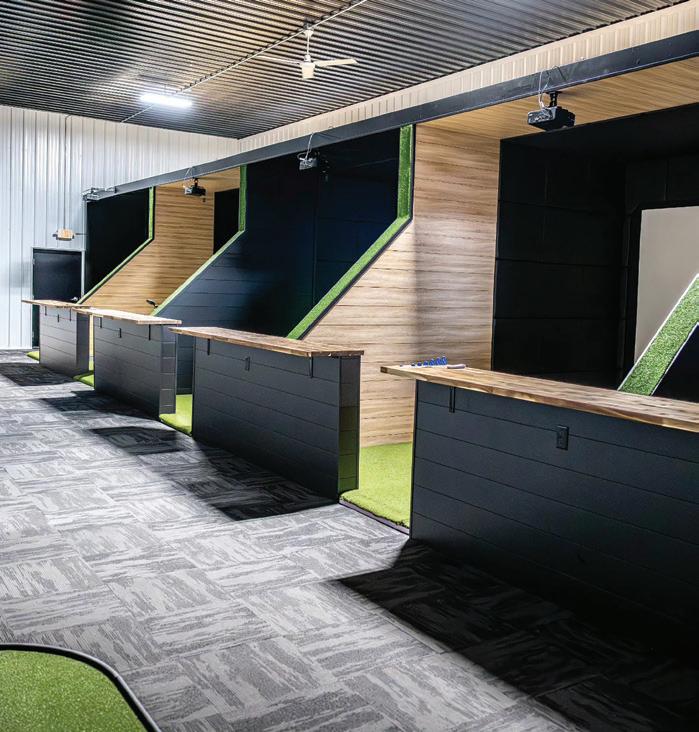
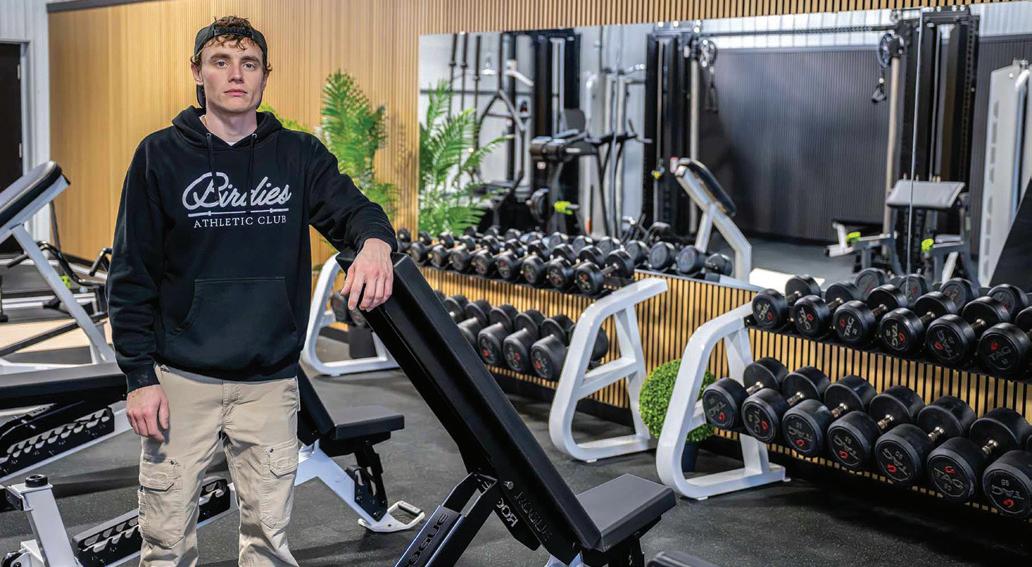
Ty Zaczkowski felt that halt in progress and decided it didn’t make sense. So he built a solution. A hybrid golf simulator and gym business designed around the idea that if you remove the friction like cost, access, and intimidation people will actually get better.
Golf isn’t just hard, it’s inefficient. Most people don’t practice with intention. They buy a bucket of balls, hit them until they’re gone, and leave without learning much of anything. There’s feedback, but it’s mostly visual.
Ty didn’t fully understand how much that mattered until recently.
“It’s crazy… when you really start paying attention to the data instead of just cranking balls,” he said. “Face angle, club speed, ball speed… you make significantly quicker progress.”
That shift from casual repetition to intentional training is the foundation of everything he’s building.
Golf has always been expensive. That’s not new. What is new is how people are starting to think about value.
“Do you spend $500 on a new driver,” Ty said, “or do you spend $100 a month and train as much as you want?”
Instead of charging per hour— where every session feels like a ticking clock—he flipped it into a membership. Unlimited access. No pressure. No rush. No decision fatigue halfway through a round about whether it’s worth another $30 to keep going.
The golf side solves the improvement. The gym solves everything else.
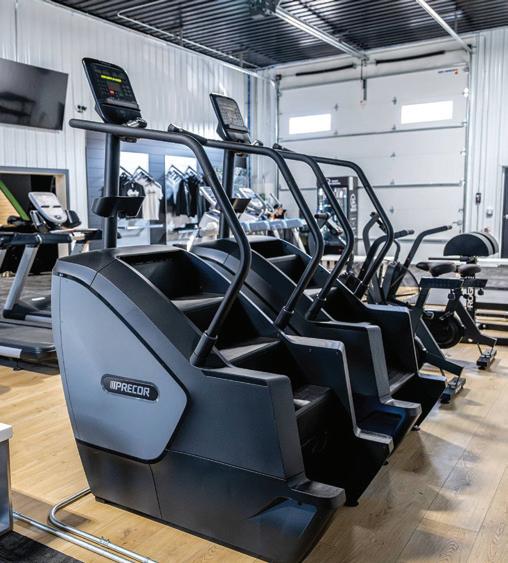
Ty didn’t want a side room with a few weights. He built a full facility because he knows fitness is what keeps people showing up year-round.
“The gym is very important,” he said. “It’s not a couple pieces of equipment—it’s a full build-out.”
That decision ties directly back to his background.
Before this, before simulators, before Birdies, Ty spent over a decade in the fitness industry—building gyms, sourcing equipment, and understanding how people actually use spaces, not just how they look on paper.
That experience shows up everywhere.
In the layout. The pricing. The pacing of how the business is growing.
And especially in one key decision: he capped it.
Most gyms sell volume. Ty did the opposite.
He limited memberships on purpose—so when people walk in, it doesn’t feel crowded. Even at capacity.
“I think people will be shocked,” he said, “when we hit capacity and they come in and there’s still very few people here.”
That’s not an accident.
Unlimited
It’s the result of understanding how usage actually works in a 24-hour facility—and designing around behavior, not assumptions.
Walk through the space and there’s another detail you start to notice. Almost everything—he built himself including the simulator bays, the framing, the flooring and the finishes. Even parts of the bathrooms.
“This is what I really enjoy,” he said. “The building process.”
That’s not just a personality trait—it’s a business advantage.
By doing the work himself, Ty kept costs low. And by keeping costs low,
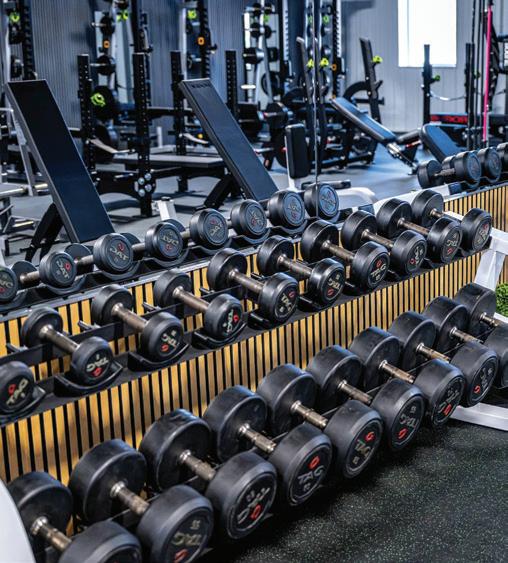
he can charge less while still building a profitable model.
That’s what makes the entire concept work.
Ty Zaczkowski didn’t stumble into this. He’s been building toward it—whether he realized it or not—for more than a decade.
His first attempt came early.
“I think we were 20 or 21,” he said.
The business was called Midwest Muscle, which was a gym that was raw, scrappy, and built with more ambition than experience.
They found a space. Bought equipment. Got someone to take a chance on them with a lease.
And for a while, it worked. Then reality set in.
A competing gym opened that was better positioned, more established, targeting the same audience. Within months, Midwest Muscle was done.
Seven or eight months, start to finish.
Looking back, Ty doesn’t frame it as failure.
If anything, it was necessary.
Because it forced him into the next phase.
After closing Midwest Muscle, Ty asked for help.
He reached out to the owners of Metroflex (now ILL-EGO HQ GYM)—a gym that had just opened and was thriving—and asked two things; could they take care of his former members, and could he come work with them?
They said yes to both requests.
“I worked with them for like a year and a half,” he said.
That time became an informal apprenticeship.
He brought over his remaining equipment. Learned how a successful gym operates. He watched what worked.
The next major step was Apex Fitness.
This time, it wasn’t just Ty. It was a group that brought shared risk, shared capital, and shared workload.
They found the right location in Moorhead, surrounded by college campuses and a younger demographic that fit perfectly with what they were offering.
And this time, the fundamentals lined up.
“We just happened to put that business in a pocket that had no other solid gym options,” he said.
The business grew from there.
What makes Ty different is why he builds businesses. From early on, he was thinking beyond the business itself.
“My ultimate passion was real estate,” he said.
The gym was the vehicle. A way to acquire commercial property, control the space, and build equity while operating a business inside it.
He started with house hacking, buying a duplex, living in one unit, renovating the other. Then moving. Then doing it again.
Now, he’s applying that same model here by leasing the current space with an option to purchase.
“I’m attempting to acquire the buildings as time goes on,” he said. Ty doesn’t actually want to run a gym. At least not in the traditional sense.
“It’s not really my goal to manage a gym,” he said.
What he enjoys is the process with the build, the concept, and the early stage growth.
Once it’s running?
He’s already thinking about what’s next.
That mindset shows up in everything he does.
He’s flipped houses. Built out commercial spaces. Sourced gym equipment for over a decade. Started side businesses just to test ideas.
He even has a gutter cleaning company.
“It’s just fun,” he said. “It's fun to try to acquire new customers.”
For a long time, Ty thought this would stay local.
He thought he would maybe build one location, get it right, and maybe expand to Grand Forks and West Fargo.
Then he started posting online and started getting serious attention from outside of the metro with one video reaching 150,000 views.
“I have people reaching out from all over,” he said. "They're asking about the concept and how to open one. So, down the line, franchising might be an option."
birdiesathleticclub.com
701-552-1254
birdiesathleticclub@gmail.com
Search "Birdies Athletic Club" @birdiesathleticclub
By Brady Drake
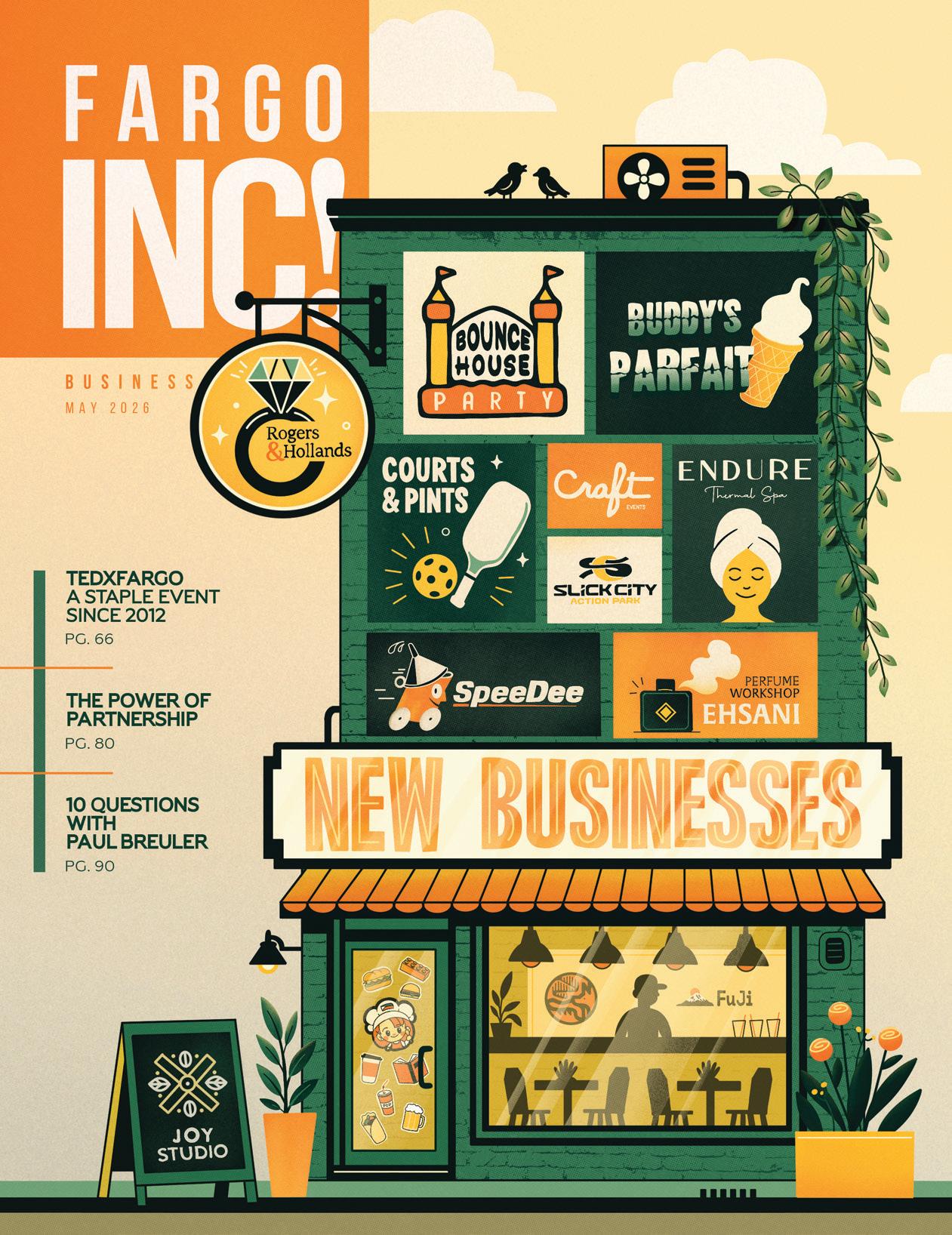
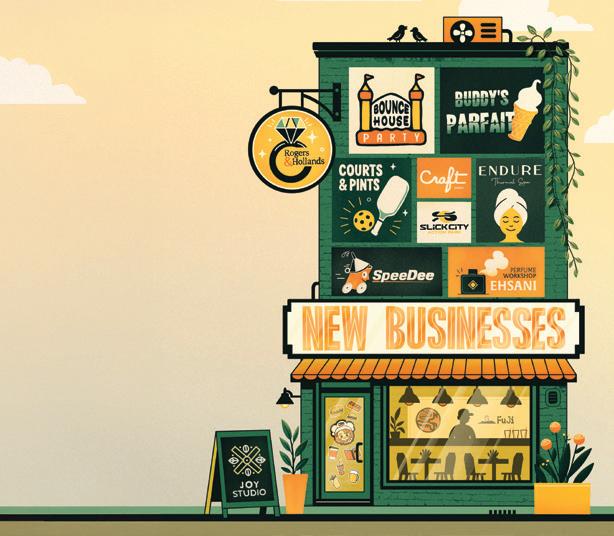
argo, Moorhead, and West Fargo are diversifying. From experiential retail and globally influenced dining to wellness spaces and entertainment built for four seasons, we've got new businesses!
This means more culture. More variety. More intention behind the concepts themselves. Whether it’s a supper club reimagined, a hands-on perfume workshop, or a family-run restaurant adding new flavors to the scene, these businesses are shaping what’s next for the metro.
Let's take a look at what has opened in the last year!
JOY Studio is a boutique creative space focused on custom Chinese garments and handmade textiles, which brings a cultural and artistic layer to downtown Fargo. It’s less traditional retail and more experience-driven—blending fashion, craftsmanship, and storytelling. This isn’t fast fashion or off-the-rack retail—it’s slow, deliberate creation rooted in tradition. Every garment carries a sense of origin, pulling from cultural history while still feeling modern and wearable.
"We offer timeless essentials crafted from 1960s handwoven fabric and natural materials, like silk and cotton. We honor traditional weaving techniques. Every inch of fabric is handwoven in 1960s by skilled artisans, carrying texture, care, and cultural heritage. We use natural & healthy materials, such as cotton and silk and naturally dyed using time-honored techniques — gentle on the skin, free from synthetic chemicals, & safe for the body. We focus on sustainable Revitalization: We cherish the value of existing resources. By repurposing never-used vintage fabrics from the 1960s, we give new life to forgotten textiles and continue their stories in the modern age. In a world rushing toward the new, we choose to preserve. We believe that true beauty lies not in mass production, but in stories in fabric touched by time. Crafted to outlast trend. Handwoven with Soil and Soul. Sustainable and 100% Natual." - The JOY Studio Website
thexjoy.com Search "JOY Studio" @ayingzhang69
Nova leans into the nostalgia of a Midwestern supper club but modernizes it. Come here and expect elevated comfort food—smashburgers, cocktails, and polished plates. It’s part restaurant, part throwback, part reinvention. The concept works because it understands what people miss about supper clubs: the pace, the mood, and the social experience. Nova recreates that feeling with dim lighting, conversation-first dining, and cocktails that feel classic while tightening execution for a more contemporary audience.
novaeatery.com /novaeateryfargo @novaeateryfargo
( LIVE PIANO MUSIC! )
A major regional department store addition, Von Maur elevates West Acres’ retail mix with a more upscale, service-oriented shopping experience. Known for its customer service model, curated selection, and slower, more attentive retail approach, it introduces a level of polish typically found in larger metro markets. Unlike highturnover retail environments, Von Maur is built around time and attention—staff interaction, product knowledge, and a more relaxed.
novaeatery.com /novaeateryfargo @novaeateryfargo
( CATERING AND BAR SERVICES AVAILABLE! )
A flexible venue designed for gatherings, celebrations, and community events. The newly
opened Craft Event Space reflects the growing demand for curated, aesthetically driven spaces rather than traditional banquet halls. More than just square footage, it emphasizes atmosphere— clean design, adaptability, and experience-forward hosting.
crafteventsfargo.com
( GREAT PRICES! )
Daan Middle Eastern Cuisine is a family-run restaurant serving shawarma, rice plates, and housemade sauces. It adds to Fargo’s increasingly diverse food scene, which has expanded rapidly in recent years.
701-532-1378
( GAMBLE ON SITE! )
Lil Jimmy's is a casual eatery that leans into comfort food and familiarity, adding another approachable option to Fargo’s
growing restaurant base. It’s built around simplicity, recognizable menu items, relaxed atmosphere, and consistency over experimentation.
"Lil Jimmy’s is Fargo’s best low-key joint for drinks and gaming. It’s a place where you can come as you are, park it at the bar, unwind with a cold one while catching up with old friends – or making new ones. You’ll feel like you just stopped by your old friend’s garage. No pressure. No pretense. Just a few machines, good drinks and plenty of room for stories. Come on by. We’ll leave the light on for you." -The Lil Jimmy's website liljimmysfargo.com /liljimmysfargo
701-532-1558
( BODY OILS, PERFUMES, CANDLES! )
This is an Afro-Arabian fragrance house offering small-batch perfumes and workshops. It’s retail, but also experiential and cultural. Customers aren’t just
buying a scent—they’re learning the process, understanding the ingredients, and creating something personal. What makes Ehsani stand out is the level of interaction. Fragrance is typically a finished product—something you sample and purchase. Here, it becomes a craft. Guests move through the process of blending, testing, and refining, turning scent into something deeply individual rather than mass-produced.
/Ehsanefragrance @ehsaniheritage
"While we are starting off small, we seek to be the connect you with the titles and authors often left out of the popular crowd. Our focus is on providing the Downtown Fargo area with more options to take home than the hype novels (yes, talking about you Stephen King and Sarah J Maas). But mostly, we want to build a place where the unique—and maybe a bit weird— thrive." -The Emry's Cove website
emryscove.com /emryscove
@emryscovfm
Endure Thermal Spa is a wellness-focused facility built around sauna, cold plunge, and lymphatic drainage. Endure taps into a growing mindset shift where people treat wellness as maintenance rather than luxury. The sauna and cold plunge
model is simple, but the appeal lies in repetition, resilience, and measurable benefits over time.
"Discover the transformative power of infrared sauna and cold plunge therapy at Endure Thermal Spa. Experience relaxation, restoration, and rejuvenation like never before in one of our luxury thermal cycle rooms." -The Endure Thermal Spa website
endurethermalspa.com
@endure.thermalspa 701-428-1458
( FAST AND DELICIOUS! )
Fast-casual Asian fusion—hibachi meets poke—designed for speed, variety, and broad appeal. Customers can build meals around preference—protein, base, sauces— without slowing down the line.
fujifargo.com
@fuji_hibachipoke
( DIRTY SODAS, COFFEE, BREAKFAST, AND MORE! )
A retro-inspired soda shop focused on craft sodas and nostalgic experiences, this place is part beverage, part entertainment. It leans heavily into experience and memory, appealing to both younger audiences and adults looking for something familiar.
popssodashack.com @popssodashack
A new financial-services presence expanding commercial and retail banking access in Fargo, offering personal and business banking, loans, and agricultural services.
uvbank.net /UnitedValleyBank @united_valley_bank 701-412-2227
Another new entrant in the credit union space, their model is fundamentally different from traditional banking—built around ownership and member benefit rather than shareholders. That often translates into better rates, more personalized service, and stronger local ties.
levo.org
/LevoFCU @levocreditunionfargo
605-334-2471
This longtime favorite under a new name is still serving up great treats!
/moorheadfreez 218-227-9905
( FORMER OWNERS OF RANDY'S DINER! )
Located inside Moorhead Billiards, this restaurant is run by the former owners of Randy's Diner!
A family-friendly indoor play space with arcade games, kids’ gym features, and casual food. It’s built for parents trying to burn off energy—especially in winter.
levitywf.com
@levitywestfargo 701-991-1916
( UPSCALE ITALIAN! )
A full-service Italian restaurant located in The Lights, Ziti's is part of West Fargo's growing entertainment district.
zitiswest.com
@zitiswest /ZitisWest/ZitisWest
( TRY THEIR MILKSHAKES, INCLUDING A FRUITY PEBBLES SHAKE! )
This place has classic supper club energy with approachable food.
wfmarge.com
@margessupperclub /margessupperclubandcasino 701-532-0376
Korean fried chicken continues to expand nationally, and this brings that crispy, flavor-heavy style to the local scene alongside other entrees, soups, stews, desserts and more!
oneefargond.com
@oneekoreanbar 701-532-2166
Smoke & Iron positions is as an elevated dining experience built around “comfort food in a new light,” with bold, smoke-kissed flavors, seasonal ingredients, and a setting designed for connection, celebration, and a more sensory night out. Its menu backs that up with dishes like honey smoked salmon dip, roast carrot and asparagus platter, hanger steak frites, and smoked gouda mac and cheese push it beyond standard barbecue framing and into polished, chefdriven comfort food.
smokeandironnd.com
@smokeandironnd 701-532-1051
Harry’s Steakhouse in West Fargo is a classic steakhouse experience with steaks aged a minimum of 21 days, plus seafood, shareable sides, house-made cocktails, beer, and wine. The restaurant is just as much about ambiance and service as product. Diners repeatedly highlight the atmosphere, service, and special-occasion feel, which reinforces Harry’s as a place meant for celebrations, business dinners, and nights out rather than everyday traffic.
harryssteakhousend.com @harryssteakhousend 701-415-2333
So+Lo’s is an “Icelandic-inspired” grab-and-go eatery from Chris and Jen Nelson, with house-made skyr and so much more!
( COMING SOON! )
Amazing coffee coming soon this summer!
@brunoscoffee.co
( INSIDE BIG TOP BINGO! )
Located inside Big Top Bingo, Joey's has a straightforward, casual menu built around burgers, hot dogs, wraps, fries, wings, and sandwiches.
aerialPLOT is clearly more than a vague agtech relocation story. On its own site, the company describes itself as bridging the gap between ag tech innovation and farm success through data science and objective agronomy, with technology for small-plot research, on-farm trials, UAV imagery, analytics, and field research workflows. Its platform and droneservices pages make clear that this is a research and analytics business built around practical agricultural decision-making, not simply a generic software company.
aerialplot.com
540-449-2688
Fiona’s Filipino Cuisine specializes in Filipino dishes, desserts, and delicacies, and presenting itself explicitly as a vehicle for sharing the flavors of its owner’s heritage.
/fionasfilipinocuisine 701-518-6010
Little Bodega is a new deli and grocery store in downtown Fargo offering deli sandwiches, soups, fresh sliced meats and cheeses, groceries, and fresh produce.
littlebodegafargo.com 313-701-0885
Bounce House Party is a local event rental business focused on inflatable rentals for birthdays, parties, and community events, with offerings that typically include bounce houses, obstacle courses,
and similar setups. The model is straightforward but proven and built around high-frequency, repeatable demand tied to family events and celebrations.
bouncehousepartyfargo.com
@bouncehousepartyfargo
The name says it all! Burgers, franks, and fries!
iloverockys.com
@iloverockysfargo 701-532-0348
Ziggi’s Coffee is a Colorado-based drive-thru coffee chain built around speed, consistency, and a broad, highly customizable menu.
ziggiscoffee.com
/ZiggisCoffee180 701-508-0088
A hybrid concept, this is a pickleball courts + bar + social space. It taps into one of the fastest-growing recreational trends in the country. More than just courts, it’s built around community—league play, casual hangouts, and social energy.
Pickleball brings people in, but the bar and social environment keep them there. pickle.fun /courtsandpints @courtsandpints_mhd 218-910-1005
New Day Auto Sales is a used vehicle dealership operating in a repurposed commercial space that also includes Daans Middle Eastern Cuisine!
ziggiscoffee.com /newdayautofargo @ newdayautofargo 701-412-1011
SpeeDee Oil Change & Auto Service is part of a national quick-service auto maintenance chain, offering oil changes, inspections, and routine vehicle services.
218-593-5001
Gathered FM operates as a hybrid play café— combining children’s play areas with a café-style environment for parents.
gatheredfmplaycafe.com /gatheredfm @gatheredfm
218-303-5706
JD Sports is an international athleticwear and sneaker retailer focused on branded footwear, apparel, and streetwear, with a strong emphasis on global brands like Nike, Adidas, and other performance and lifestyle labels.
jdsports.com /jdsportsus @jdsportsus
701-212-4852
Fargo Brick Co is a specialty retail store focused on LEGO products, including sets, minifigures, and accessories for both casual buyers and serious collectors.
fargobrickco.com @fargobrickco 701-866-9269
MINISO is a global lifestyle retail brand offering low-cost, design-forward products across categories like home goods, accessories, beauty items, and novelty products.
By Madi Simpson, Director of Marketing, Emerging Prairie | provided by Studio Freshly and Emerging Prairie
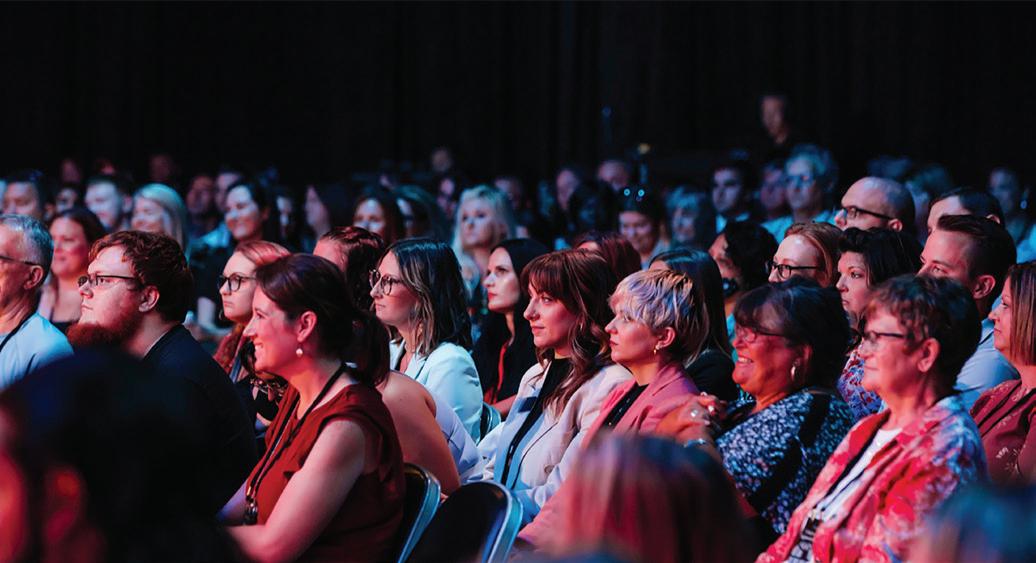

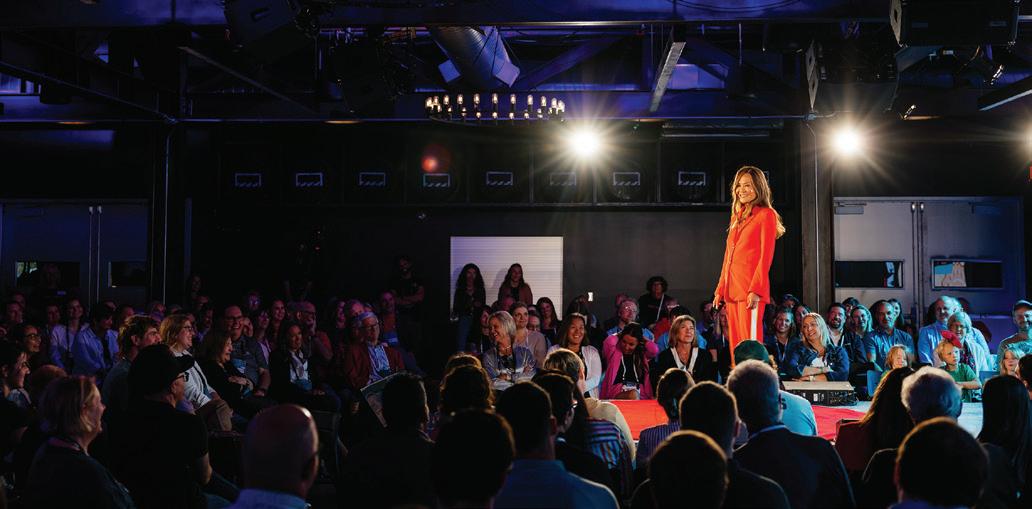
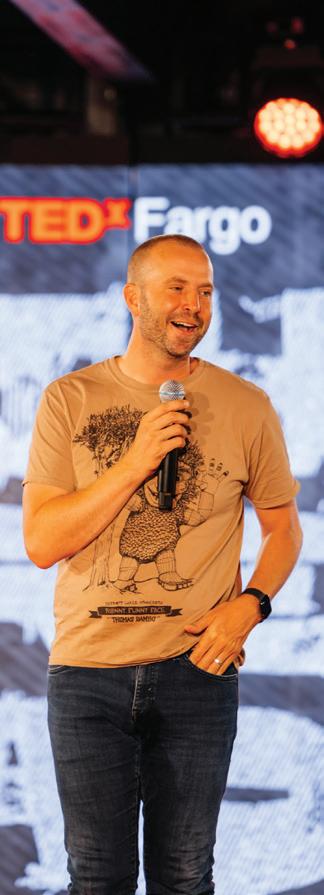
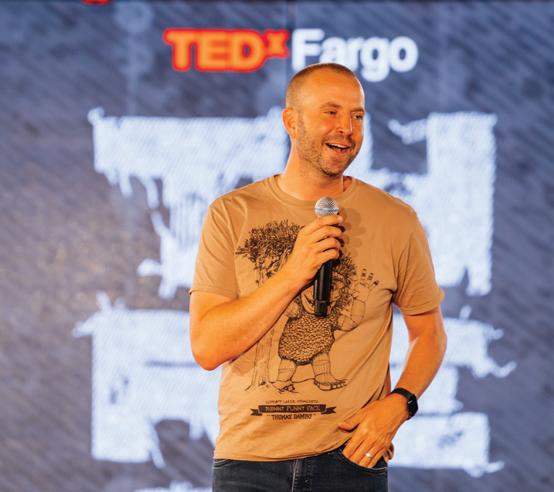
EDxFargo is, at its simplest, a love letter to the Fargo-Moorhead community. It’s built around the TED tagline: “ideas change everything”. When the right idea lands in the right room, something tends to happen. Sometimes that looks like a new connection or collaboration. Other times it’s quieter. A shift in perspective… a conversation that sticks. A new way of thinking about something you thought you already understood.
The experience doesn’t follow a single lane, and that’s intentional. In one stretch, you might move from a talk on finding humor in grief to a live Irish drum performance, then into a deep dive on rare minerals in North Dakota. Not every talk will resonate with every person, but something will. The mix keeps the room engaged. It stays a little unpredictable.
TEDxFargo is also more than a series of talks. The twoday event is designed as a full experience, with morning adventures around Fargo, smaller moments built into the main program, and opportunities to spend time with speakers outside of the stage. Brewhalla serves as the backdrop, which shifts the feel from a traditional conference to something more open and interactive. It’s independently organized but part of the larger TED network, so there’s a global standard behind it, but the experience itself is rooted here. The speaker lineup reflects that mix. Local voices share the stage with people from outside the region, all contributing to something that feels both grounded and expansive.
It isn’t built for a specific industry or type of attendee. It’s built for people who want to stay curious and pay attention to what’s happening around them. The goal isn’t to leave with all the answers: it’s to leave with something that sticks, and a little more energy to do something with it.
x Speaker curation is led by Greg Tehven, TEDxFargo's curator since the beginning
x The team starts by identifying hot topics, emerging issues, and areas where an alternate or unexpected perspective would resonate
x The strongest source of speaker recommendations is the TEDxFargo alumni network — nearly 300 speakers strong! Alumni are prioritized as recommenders because they've been through the process and understand what a TEDx talk requires vs. a standard speech or seminar
The central question asked of every potential speaker: What solution, perspective, or idea do you have that people haven't heard before — or haven't heard framed this way?
x Every selected speaker goes through multiple meetings with the team to develop and refine their talk
x Support is tailored to the speaker: seasoned public speakers get a different level of coaching than first-timers
Getting on the TEDxFargo stage typically isn’t an application and a quick yes or no. It’s a months-long process that starts with a single question and builds from there.
x Current speakers are often connected with alumni mentors for additional guidance and perspective
Speakers are coached to think beyond the Fargo room — their talk will reach the TEDx YouTube channel's 44M+ subscribers!
x Speakers arrive a few days ahead of the event to get acclimated, meet one another, and step into the experience before taking the stage
x A full day is dedicated to speaker rehearsal, where each speaker gets time on stage with full production from the Livewire team — red dot, microphones, slides, lighting, and timing
x On event day, speakers have a dedicated space to focus, practice, and prepare. Once it’s their time to shine, they’re mic’d and onto the red dot they go!
TEDxFargo talks are typically edited and published within a few months of the event.
Greg Tehven
TEDxFargo Curator, CEO of Emerging Prairie & Co-Founder of Grand Farm
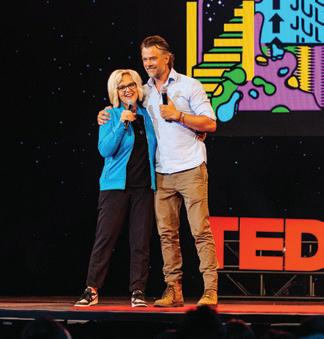
Julie Peterson Klein
Executive Vice President & Chief Culture Officer at Bell Bank
Under the advocacy of Julie Peterson Klein, Bell Bank has been a beloved sponsor of TEDxFargo since 2016!
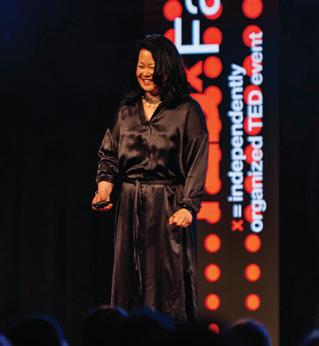
Senior Advisor the Department of Human Services, Behavioral Health Division of the State of North Dakota
TEDxFargo talk: “Surviving Depression With Indigenous Teens” (2022)
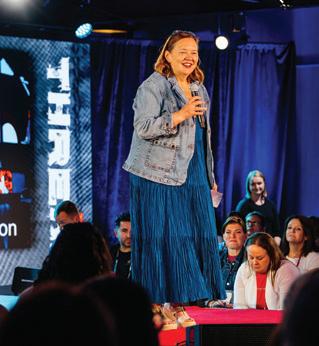
Owner of Catalyst Medical Center
TEDxFargo talk: “Beauty Makes Us Happy: The Importance of Beauty In Our Lives” (2012)
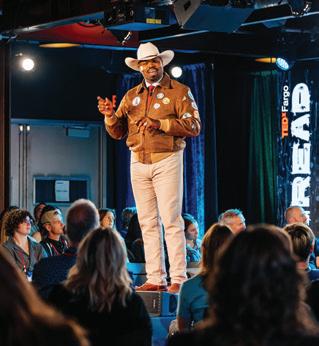
Marshall Johnson
Chief Conservation Officer at National Audubon Society
TEDxFargo talk: “How your purchasing decisions can save our most endangered ecosystem.” (2019) & “It All Begins with Birds: Following the Thread of Connection” (2025)

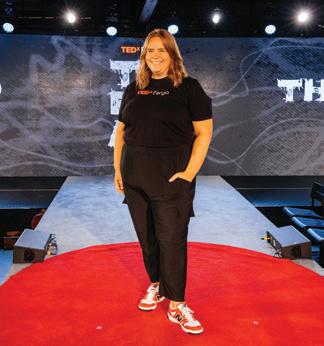
Liz Campbell
Executive Producer and Speaker Coaching
Favorite moment: All of it, from start to finish
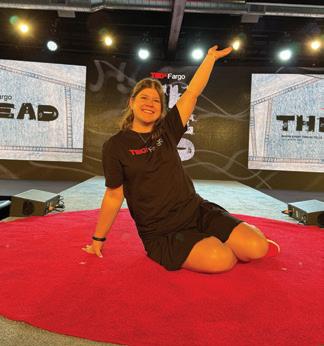
Sydney Brusseau
Operations and Logistics
Favorite moment: Watching the community come together for a common purpose and listen to the speakers share their unique stories
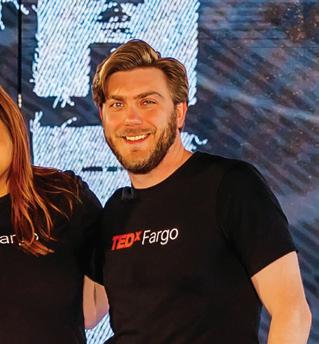
Matt Wendel
PR and Media
Favorite moment: The look on a speaker’s face when they exit the stage after their talk and the joy and relief hit themTEDxFargo since 2016!
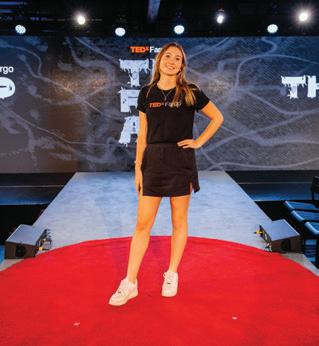
Ashlyn Schauer
Strategy and Marketing
Favorite moment: The shared energy when an idea resonates with an audience and getting to witness those moments of connection and inspiration

Madi Simpson
Brand and Creative
Favorite moment: The intentionality behind every single touchpoint for our attendees, speakers, and sponsors
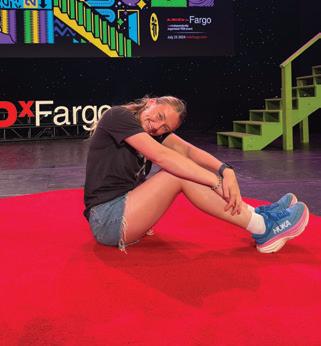
Jada Schwindt
Hospitality and Attendee Experience
Favorite moment: When we open the doors and witness the anticipation and energy of the crowd firsthand


By Brady Drake | provided by Jay Dietz Construction
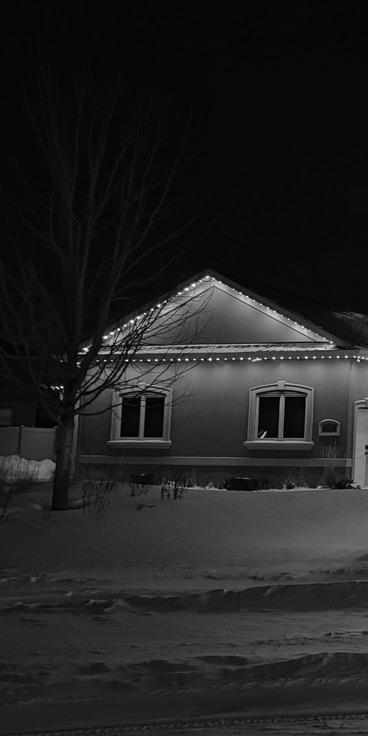
ermanent LED lighting is becoming one of the most requested exterior upgrades in the region.
At Jay Dietz Construction, it’s not just an add-on service. It’s a system. And now, it’s more accessible than ever.
For years, outdoor lighting meant climbing ladders, untangling cords, and hoping everything worked when temperatures dropped.
That’s the problem these systems solve.
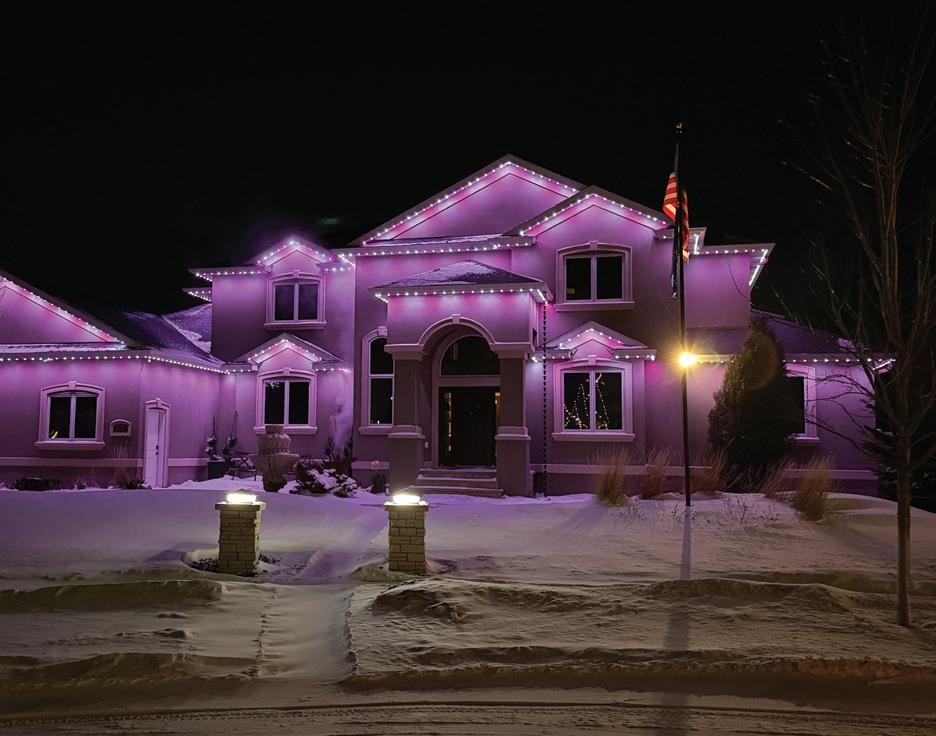
Jay Dietz Construction now offers permanent LED lighting installations that stay in place year-round— professionally mounted, nearly invisible during the day, and fully customizable at night.
No more seasonal setup. No more take-down. Just one install, and you’re done.
At the top end, the company offers a high-performance lighting system designed for homeowners who want longevity, control, and a clean finish.
These aren’t off-the-shelf lights. They’re built for permanence.
• 100,000-hour lifespan
• Lifetime warranty
• Seamless, low-profile track system
• Fully app-controlled with millions of color options
What makes these systems so great is their flexibility.
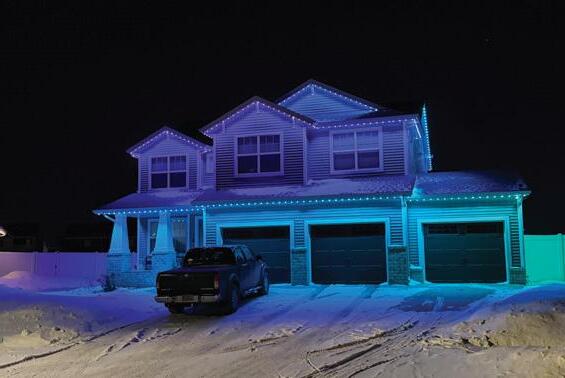
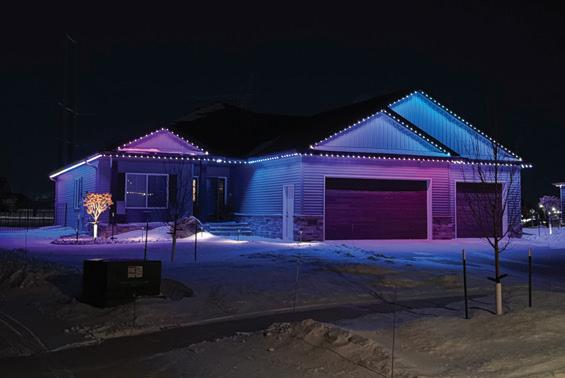
Homeowners can create and control lighting scenes directly from their phone:
• Holiday themes that change with the season
• Team colors for game days
• Subtle architectural lighting for everyday use
• Security-focused lighting for added visibility
Previously, Jay Dietz Construction focused solely on premium installations.
That’s changed.
Now, they also offer more affordable professional systems, similar to popular consumer brands like Govee— but installed properly, with a clean finish and long-term reliability in mind.
For those considering the upgrade, there’s flexibility built in. Financing options are available, making it easier to invest in a long-term solution without a large upfront cost.

BY WENDY KLUG DEPUTY DISTRICT DIRECTOR, NORTH DAKOTA SBA
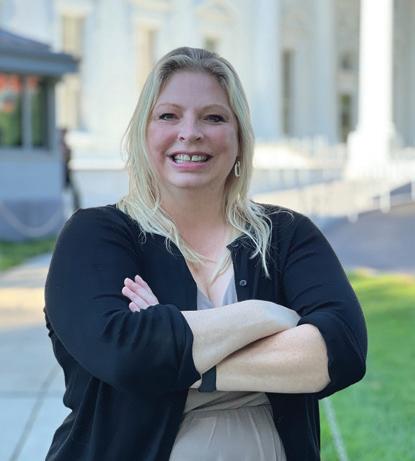
orth Dakota’s economic vitality is not merely a product of its natural resources or its vast geography; it is powered by a resilient spirit and a deeply ingrained culture of innovation. This spirit currently supports more than 78,000 small businesses across the state! These enterprises account for over 98% of all North Dakota businesses and employ nearly 60% of our private-sector workforce. While our state is home to a diverse array of support systems, two influential entities—the Pride of Dakota (POD) program and the U.S. Small Business Administration (SBA)—are joining forces to ensure these entrepreneurs don't just survive but thrive.
While their individual missions and daily operations are distinct, their alignment creates a unified support network focused on a single goal: the success of North Dakota’s entrepreneurs. This partnership moves beyond simple programming to showcase a team of dedicated experts and advocates. It is a collaborative ecosystem designed to ensure no business owner has to navigate the complexities of business startup, scaling, or market entry in isolation.
Managed by the North Dakota Department of Agriculture under the leadership of Agriculture Commissioner
Doug Goehring, the Pride of Dakota program has become a household name and a badge of honor for local producers. Since its inception in 1985 with just 20 original companies, the program has grown into a powerhouse representing over 500 member companies. These members range from gourmet food producers and local artisans to technical manufacturers and specialized service providers.
Membership in Pride of Dakota offers far more than just the right to use the iconic logo on a label. It provides a comprehensive suite of business development tools designed to launch local products into the regional and national spotlight. While the popular Holiday Showcases are the most visible benefit — drawing tens of thousands of eager shoppers to events in Fargo, Bismarck, Grand Forks, Minot and Dickinson — the program’s reach extends much deeper into the retail and digital marketplace.
POD offers specialized Retail Store Promotion grants to help local retailers feature North Dakota products, effectively putting member goods on more shelves across the state. For entrepreneurs looking to expand their footprint, the program provides Trade Show Assistance to help businesses gain exposure at national levels, offsetting the significant costs associated with breaking into larger markets. Through digital profile listings, networking seminars, and coordinated "Pride of Dakota Month" promotions, the program acts as a massive megaphone for the
state's diverse array of small businesses, turning "local" into a competitive advantage.
While Pride of Dakota focuses on market visibility and branding, the U.S. Small Business Administration (SBA) serves as the structural catalyst for long-term operational viability. In North Dakota, the SBA District Office acts as the bridge between a great idea and a bankable, sustainable operation.
The SBA’s impact is most tangibly felt through its capital access programs. Programs like the 7(a) and 504 loans empower local lenders to provide financing to businesses that might not otherwise qualify for traditional credit. By providing a government guarantee on a portion of the loan, the SBA reduces risk for North Dakota banks, allowing them to say "yes" to the startup in West Fargo or the manufacturer in Grand Forks.
Beyond funding, the SBA oversees a robust statewide network of resource partners, including the North Dakota Small Business Development Centers, SCORE, VBOC of the Dakotas, and the Women’s Business Center. These partners provide hundreds of hours of no-cost, confidential business advising. Whether an entrepreneur needs help decoding a balance sheet, understanding federal contracting, or registering their entity with the Secretary of State, the SBA serves as an engine
that provides resources of a national organization with the personal connection of a local advisor.
The true power of the ND entrepreneurial engine is found at the intersection of these two organizations. Imagine a local maker who has perfected a family salsa recipe. They join Pride of Dakota to gain immediate brand recognition and a spot at the Fargo Holiday Showcase. The salsa is a hit, and the demand is overwhelming. Suddenly, that maker needs to move from a home kitchen to a commercial facility, hire three employees, and secure a distribution deal with a major regional grocer.
This is where the partnership shines. Pride of Dakota provides the "Market-Ready" validation and the promotional platform, while the SBA and its resource partners step in to help the entrepreneur draft a formal business plan, project cash flow for the expansion, and secure the SBA-backed loan needed for equipment.
This collaborative spirit is what locals often call "North Dakota Nice," but in the business world, it’s a strategic advantage. As program leaders often note, the goal is to ensure that the technical side of the business is as strong as the product itself. When a Pride of Dakota member walks into an SBA resource partner's office, they aren't just a number; they are part of a shared mission.
The collaboration between the SBA and Pride of Dakota does not exist in a vacuum. It is part of a vast, interconnected network that includes community banks, statewide organizations, local Chambers of
Commerce, Economic Development Corporations (EDCs), the Bank of North Dakota, and our universities. This ecosystem thrives on the shared expertise of professionals who understand that a business's needs are multifaceted.
Local community banks and credit unions serve as the financial bedrock, often acting as the first point of contact for capital. Chambers of Commerce provide vital networking infrastructure and advocacy that connect business owners with their peers and potential customers. Meanwhile, EDCs and regional organizations focus on the high-level strategy, helping businesses find suitable locations, navigate local regulations, and tap into regional incentives that make expansion feasible. Together, these entities form a collective wealth of knowledge that makes the journey a little smoother. .
Whether it's navigating local zoning through an EDC, accessing networking opportunities at a Chamber, or leveraging university research for product development, this network acts as both a safety net and a springboard. This "village" approach is a humble recognition that no single organization can be an expert in every facet of business management. By collaborating and building a team around the entrepreneur, these organizations offer a more well-rounded ecosystem. If Pride of Dakota identifies a marketing need and the SBA identifies a capital gap, they can work together to solve both simultaneously.
The results of this unified vision are clear. According to recent data from Forbes Advisor and the SBA Office of Advocacy, North Dakota has consistently ranked #1 for the best states to start a business. This isn't an accident. The ranking is based on a combination of low entry costs — with
LLC formation fees among the lowest in the country — and a robust support climate.
Perhaps the most telling statistic is our business survival rate. At approximately 77%, North Dakota's small business survival rate significantly outpaces the national average. This high rate of success is a testament to the support provided by programs like POD and the SBA.
As we look toward the future of the North Dakota economy, the collaboration between the SBA and Pride of Dakota represents a gold standard for professional partnership. By sharing synergies and streamlining business services, these organizations are ensuring that North Dakota remains the best place to turn a dream into a reality.
This partnership is fueled by a genuine, shared belief that when one local business flourishes, the entire community rises. Whether you are a "mom-and-pop" shop in a rural town or a high-tech startup in downtown Fargo, the message from the SBA and Pride of Dakota is the same: the engine is running, the village is ready, and your success is our state's greatest achievement. The collaboration between these organizations adds up to something much greater than the sum of their parts because, at its core, everyone involved is personally invested in seeing your business cross the finish line.
For the North Dakota entrepreneur, the path forward is clear. You bring the innovation and the hard work; the Pride of Dakota and the SBA will bring the power and the partnership.
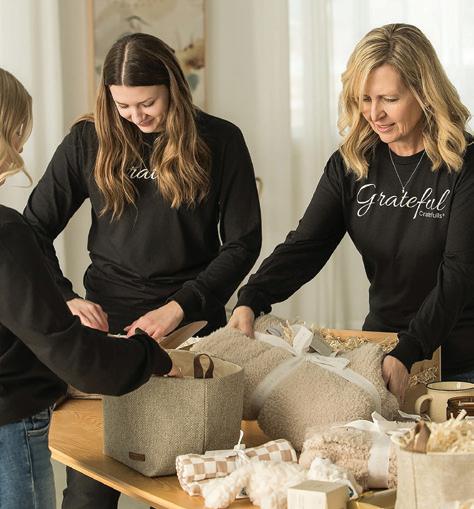
A: Grateful Cratefulls is a Midwestinspired gifting company based in rural Hillsboro, North Dakota, specializing in thoughtfully curated gift boxes for both personal and corporate occasions.
We focus on high-quality, regionally sourced products to create meaningful gifting experiences that help businesses strengthen relationships, show appreciation, and celebrate important moments.
Our offerings range from ready-toship gifts to fully customized, branded corporate gifting programs. We primarily serve businesses looking for a more thoughtful and personal approach to client and employee gifting, along with individuals wanting to truly brighten someone’s day.
A: EVERY GREAT BUSINESS STARTS WITH A SPARK. WHAT WAS THE PRIMARY MOTIVATION OR INSPIRATION THAT LED YOU TO START THIS BUSINESS?
A: Grateful Cratefulls was inspired by an overwhelming sense of gratitude during a time when we were navigating a family member’s cancer journey. The support we received, especially
from small businesses, was incredibly meaningful and reinforced the power of community. It’s what we now refer to as North Dakota KiND.
That experience sparked a passion to help others express appreciation through elevated, intentional gifts that not only strengthen relationships but also support and showcase the small businesses within our region.
A: WHAT PROGRAMS HAVE HELPED YOU?
A: In the very beginning, we met with Paul at the Small Business Development Center to share our vision and gain perspective from someone outside of family and friends. After hearing our story, he encouraged us to share our “why,” something that has stayed with us and continues to shape how we tell our story today as we’ve grown into a trusted corporate gifting partner for businesses.
Christy at the Women’s Business Center has been an incredible ongoing source of support. She has helped us build meaningful connections within the community and has always been approachable, encouraging, and invested in helping businesses grow. Those connections have been instrumental as we’ve expanded our work with companies looking for thoughtful ways to connect with clients and employees.
While we did not formally engage with SCORE, we were so fortunate to connect with Roger early on. He was a great resource, encouraged us to apply for the Visa grant we were awarded, and was always checking in and supporting us during our storefront days.
A: HAVE YOU UTILIZED ANY SBA LOAN SERVICES (SUCH AS THE 7(A) OR 504 PROGRAMS) TO BUILD CAPITAL, AND IF SO, HOW DID THAT FUNDING IMPACT YOUR ABILITY TO GROW?
A: We utilized an SBA Disaster/ Economic Injury loan during the period of uncertainty, which allowed us to continue operating and move forward with confidence. That financial support played an important role in helping us stay in business while making necessary pivots, including strengthening our focus on serving businesses through meaningful, intentional gifting.
A: HOW LONG HAVE YOU BEEN A POD MEMBER? WHAT PROGRAMS HAVE YOU TAKEN ADVANTAGE OF?
A: Grateful Cratefulls has been a proud member of Pride of Dakota since 2018.
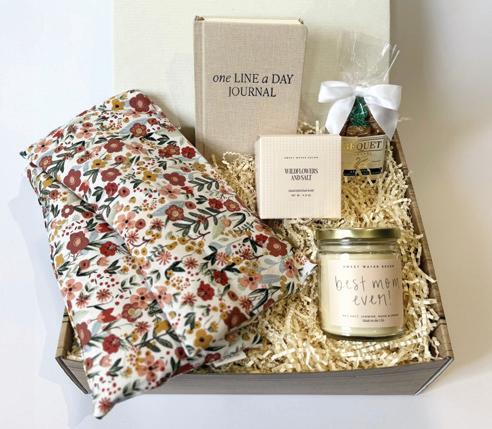

• Pride of Dakota Showcases –We have participated in the POD showcases in Minot, Grand Forks, Fargo, and Bismarck.
• Pride of Dakota Vendors – We source many of the products for our LegeNDary ND Treats box from several POD vendors and are always looking to expand with new vendors and products.
A: AS A NORTH DAKOTABASED COMPANY, HOW HAS YOUR MEMBERSHIP OR INVOLVEMENT WITH THE PRIDE OF DAKOTA PROGRAM CONTRIBUTED TO YOUR BRAND AWARENESS AND BUSINESS SUCCESS?
A: Being a Pride of Dakota member and participating in Showcase events has been instrumental in growing our visibility while building meaningful connections with other small business owners across the state. Many of those relationships have led to partnerships, allowing us to thoughtfully source and feature products from fellow North Dakota businesses. Through our corporate client gift boxes, Pride of Dakota products are now reaching customers across 50 states and several other countries.
It’s exciting to see the Pride of Dakota program really gaining momentum. As a member for the past eight years, I’ve seen renewed energy and passion for North Dakota products. I’ve loved the support and promotion of POD businesses, Katrina has been amazing to work with, and our Department of Agriculture is doing an incredible job.
A: REFLECTING ON YOUR JOURNEY SO FAR, WHAT IS ONE PIECE OF ADVICE OR "WORD OF WISDOM" YOU WOULD OFFER TO FELLOW ENTREPRENEURS OR THOSE JUST STARTING THEIR BUSINESS JOURNEY?
A: Building a business takes persistence, adaptability, a willingness to learn as you go, and a sense of humor when things feel overwhelming. Focus on the problem you’re solving, treat people well, and build genuine relationships. Those connections will always be your strongest asset.
A: WHERE CAN CUSTOMERS CURRENTLY FIND AND PURCHASE YOUR PRODUCTS OR SERVICES?
A: You can find Ready-to-ship gifts and create your own gift box at
GratefulCratefulls.com
For corporate gifting inquiries, email aimee@gratefulcratefulls.com
We ship nationwide and can coordinate multi-location deliveries to make the process simple and seamless.
We’re also looking forward to bringing our North Dakota KiND apparel, Happy Tea, and a new custom Pride of Dakota box to the Pride of Dakota showcases this year.
SUPPORT GRATEFUL CRATEFULLS gratefulcratefulls.com /GratefulCratefulls @gratefulcratefulls
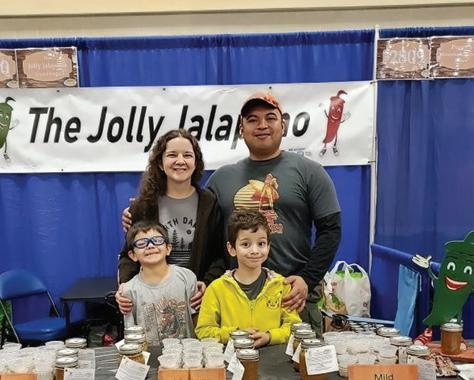
Q: WHAT IS THE JOLLY JALAPENO?
A: The Jolly Jalapeno is a veterpreneur (veteran entrepreneur) business that provides quality salsa, sauce, and seasonings, providing a flavorful experience to anyone that wants to enhance their food, without adding a menagerie of synthetic ingredients. They serve their community through volunteering at local events, donations of time or products.
Q: WHAT WAS THE PRIMARY MOTIVATION OR INSPIRATION THAT LED YOU TO START THIS BUSINESS?
A: The experience behind The Jolly Jalapeno has been tried and tested around the world. Passion in the kitchen has been an important component, as some people have a specific dish or dessert that generally sets them apart from everyone else. For The Jolly Jalapeno, it was bringing quality food with minimally processed ingredients. For years, the Lugos were asked to bring their dishes or culinary delights to potlucks or host deployment meals, but it wasn’t until personal passion became a hobby and now a full-time business that the brand began to really take shape. Keeping a limited amount of ingredients without sacrificing taste has been one of the most important ingredients to The Jolly Jalapeno’s success.
Q: WHAT PROGRAMS HAVE YOU UTILIZED?
A: The specialized mentoring and tutelage from the Boots to Business course was an invaluable learning tool
that accelerated The Jolly Jalapeno into becoming more than a “cottage food” or local cuisine. The SBA and VBOC were integral in providing a medium for research, development, and branding for our venture.
Q: HOW LONG HAVE YOU BEEN A PRIDE OF DAKOTA MEMBER? WHAT PROGRAMS HAVE YOU TAKEN ADVANTAGE OF?
A: We have been POD members since 2019, and the organization has been very welcoming from the outset. We have worked hand in hand not only with the organization, but with members to foster a community of support for one another. We have been spotlighted during “chef presentations” and radio interviews. The overwhelming success of expanding our network has been in large part due to transparency and a willingness to assist others.
Q: HAS A NORTH DAKOTA-BASED COMPANY, HOW HAS YOUR MEMBERSHIP OR INVOLVEMENT WITH THE PRIDE OF DAKOTA PROGRAM CONTRIBUTED TO YOUR BRAND AWARENESS AND BUSINESS SUCCESS?
A: As POD members, it has been great to not only watch others grow their brand but also facilitate in a capacity where sharing information or colleagues is of mutual benefit. Brand awareness is an instrumental part of the marketing paradigm. The POD is an awesome organization where we are constantly learning to become aware of the resource potential. If anyone is thinking of joining, please do not hesitate.
Q: REFLECTING ON YOUR JOURNEY SO FAR, WHAT IS ONE PIECE OF ADVICE OR "WORD OF WISDOM" YOU WOULD OFFER TO FELLOW ENTREPRENEURS OR THOSE JUST STARTING THEIR BUSINESS JOURNEY?
A: The piece of advice or “word of wisdom” we would like to offer is: “Nobody sees the no’s or how much hard work it takes; they only see the end result.” The statement is meant for each entrepreneur to take a look at themselves and realize they are the ones who have to look at themselves in the mirror and utilize sweat equity rather than compromising morals for shortterm gain. It can seem a faster route to concede, but holding true to your values will be the best sleep in the long run.
Q: WHERE CAN CUSTOMERS CURRENTLY FIND AND PURCHASE YOUR PRODUCTS OR SERVICES (ONLINE, RETAIL LOCATIONS, OR SEASONAL MARKETS)?
A: We have been fortunate to be on the POD website, and also found at these locations: Midtown Marketplace, Runnings Grand Forks, Happy Harry’s Grand Forks, Burggraf’s Ace Grand Forks, Scheels Home & Hardware Fargo, Scheels Fargo, Minn-dak Market Fargo, Market Society Cavalier, Do It Best Cavalier, Bob Wallace Orchards Hankinson.
SUPPORT THE JOLLY JALAPENO
thejollyjalapeno.com
/thejollyjalapenos
@thejollyjalapeno

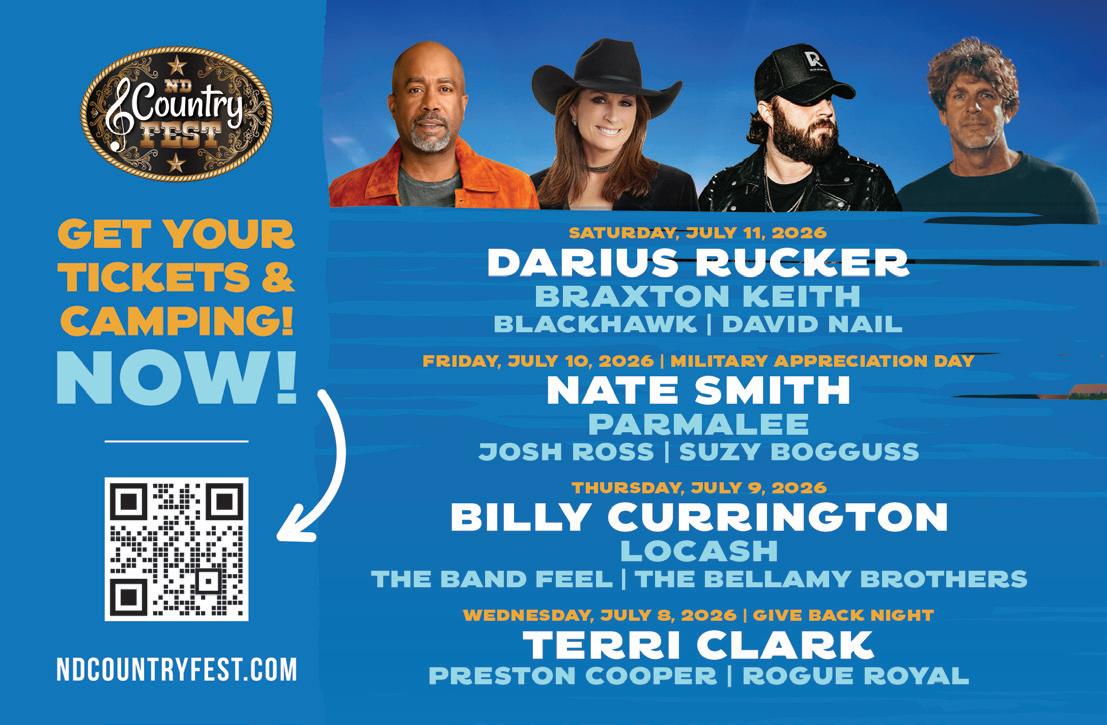
By Michael Danielson, Veterans Business Outreach Specialist
Courtesy of VBOC of the Dakotas
The Veterans Business Outreach Center (VBOC) program is designed to provide entrepreneurial development services such as business training, counseling, and resource partner referrals to transitioning service members, veterans, National Guard and Reserve members, and military spouses interested in starting or growing a small business. U.S. Small Business Administration (SBA) has 22 organizations participating in this cooperative agreement and serving as VBOCs.
For many veterans across North and South Dakota, the transition from military service to civilian life is not defined solely by employment status or financial stability, but by something far less tangible and far more complex: the loss of mission. In the military, purpose is immediate, structured, and shared. Roles are clearly defined, objectives are explicit, and the sense of contributing to something larger than oneself is constant. When that structure disappears, many veterans find themselves navigating an unfamiliar landscape where identity, direction, and meaning are no longer guaranteed. In this space, entrepreneurship has emerged as a powerful, if demanding, pathway, not just to economic opportunity, but to renewed purpose.
The concept of a “second mission” resonates deeply with veteran entrepreneurs. Starting a business offers more than autonomy or income; it provides a framework for rebuilding identity. The discipline, leadership, and problem-solving skills developed during military service often translate naturally into business ownership. Yet the deeper appeal lies in the ability to create something meaningful from the ground up. Whether launching a logistics company in Fargo, opening a service business in Bismarck, or building a tech startup in Sioux Falls, veterans are finding that entrepreneurship can restore a sense of direction that mirrors, in some ways, the clarity of military life. It is not a replacement for service, but it can be a continuation of purpose, one defined on their own terms.
This transition, however, is rarely straightforward. The same traits that make veterans effective leaders such as resilience, high standards, and a willingness to push through adversity, can also contribute to significant mental health challenges in the entrepreneurial environment. Business ownership is inherently uncertain, often isolating, and frequently allconsuming. For veterans already adjusting to civilian life, these pressures can compound feelings of stress, anxiety, or disconnection. The loss of a structured support system,
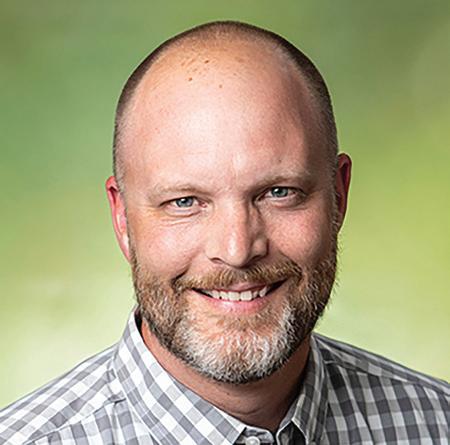
combined with the demands of running a business, creates conditions where burnout is not just possible, but likely if left unaddressed.
Burnout among veteran entrepreneurs often manifests differently than in traditional corporate settings. It can appear as overcommitment, difficulty delegating, or an inability to step away from the business. Many veterans are accustomed to operating in high-intensity environments where rest is secondary to mission completion. In entrepreneurship, this mindset can lead to unsustainable work patterns, particularly in the early stages of a business. The challenge lies in recognizing that the “mission” has changed, and that long-term success requires a different kind of discipline, one that includes rest, balance, and self-awareness.
Mitigating these risks requires both individual and systemic approaches. On a personal level, veteran entrepreneurs are increasingly embracing practices that prioritize mental health, such as setting boundaries, seeking mentorship, and building routines that include time away from the business. These strategies may
seem simple, but they represent a significant shift in mindset. Learning to measure success not only by business performance but also by personal wellbeing is a critical step in sustaining both. At the same time, access to professional support, whether through counseling, peer groups, or coaching, plays an essential role in helping veterans navigate the psychological demands of entrepreneurship.
Equally important is the role of community. One of the most profound changes veterans experience after leaving the military is the loss of a built-in peer network. Entrepreneurship, while empowering, can be isolating, particularly in rural areas of the Dakotas where business owners may be geographically dispersed. Rebuilding a sense of community is therefore not just beneficial, but necessary. Across North and South Dakota, organizations and informal networks are stepping in to fill this gap, creating spaces where veteran entrepreneurs can connect, share experiences, and support one another.
These peer networks often extend beyond formal programming. Local chambers of commerce, small business meetups, and industry associations provide opportunities for connection, but the most impactful relationships are often formed through shared experience.
Veteran-to-veteran mentorship has proven to be a powerful tool. The ability to speak openly with someone who understands both the military background and the challenges of entrepreneurship creates a level of trust and understanding that is difficult to replicate. These connections not only reduce isolation but also foster collaboration, knowledge sharing, and mutual encouragement.
In addition to community support, a range of resources is available to veteran entrepreneurs throughout the region. Small Business Development Centers (SBDCs) in both North and South Dakota offer tailored advising, helping veterans navigate everything from business planning to financial management. SCORE chapters provide mentorship from experienced business professionals, while Veterans Business Outreach Centers (VBOCs) deliver specialized training and support designed specifically for those transitioning from military service. These resources are complemented by state and local initiatives, as well as federal programs through the Small Business Administration, which offer access to capital, training, and contracting opportunities.
Higher education institutions also play a role in supporting this transition. Universities across the Dakotas are increasingly integrating entrepreneurship programs that cater
to non-traditional students, including veterans. These programs not only provide technical skills but also create environments where veterans can explore new identities and career paths in a supportive setting. By combining education with practical experience, they help bridge the gap between military service and business ownership, offering a structured yet flexible pathway forward.
Despite the availability of these resources, awareness and accessibility remain ongoing challenges. Many veterans are unaware of the full range of support available to them, or they may hesitate to seek help due to stigma or a strong sense of self-reliance. Addressing this gap requires continued outreach and a cultural shift that normalizes the use of support systems. Entrepreneurship, while often portrayed as an individual pursuit, is rarely successful in isolation. Recognizing the value of collaboration and support is essential, particularly for those navigating the dual transition of leaving military service and building a business.
The broader business community also has a role to play in this ecosystem. By actively supporting veteran-owned businesses, through partnerships, procurement opportunities, and mentorship, established companies can contribute to a more inclusive and resilient economy. In the Dakotas,
where relationships and reputation are central to business success, these efforts can have a significant impact. Supporting veteran entrepreneurs is not only a matter of social responsibility; it is also a strategic investment in a group of individuals who bring unique skills, perspectives, and leadership capabilities to the marketplace.
As conversations around mental health continue to evolve, there is growing recognition that well-being is not separate from business performance, but integral to it. For veteran entrepreneurs, this understanding is particularly important. The drive to succeed, combined with the weight of transition, can create conditions where mental health is overlooked until challenges become acute. Integrating well-being into the foundation of a business, through intentional practices, supportive relationships, and access to resources, offers a more sustainable path forward.
Ultimately, the idea of a “second mission” is not about replacing one form of service with another, but about redefining purpose in a new context. Entrepreneurship provides a vehicle for this transformation, offering both opportunity and challenge in equal measure. For veterans in North and South Dakota, the journey is shaped by the same qualities that defined their military service: resilience,
adaptability, and a commitment to something greater than themselves. By acknowledging the mental health dimensions of this journey and strengthening the networks that support it, communities across the region can help ensure that this second mission is not only successful, but sustainable.
In the end, the story of veteran entrepreneurship in the Dakotas is not just a business story—it is a human one. It is about individuals navigating change, seeking purpose, and building new paths forward. It is about communities coming together to support those who have served, recognizing that the transition does not end with a uniform, but continues in the choices and opportunities that follow. And it is about the enduring belief that purpose, once found, can be rebuilt, one business, one connection, and one mission at a time.

ohn Machacek, Chief Innovation Officer for the Greater Fargo Moorhead Economic Development Corporation, has worked with countless startups throughout our community over the years. He knows their ups, and their downs, but most of all, he knows the questions to ask them. Here are John Machacek’s 10 questions for Paul Breuler, Founder, BaseState LLC.
By John Machacek
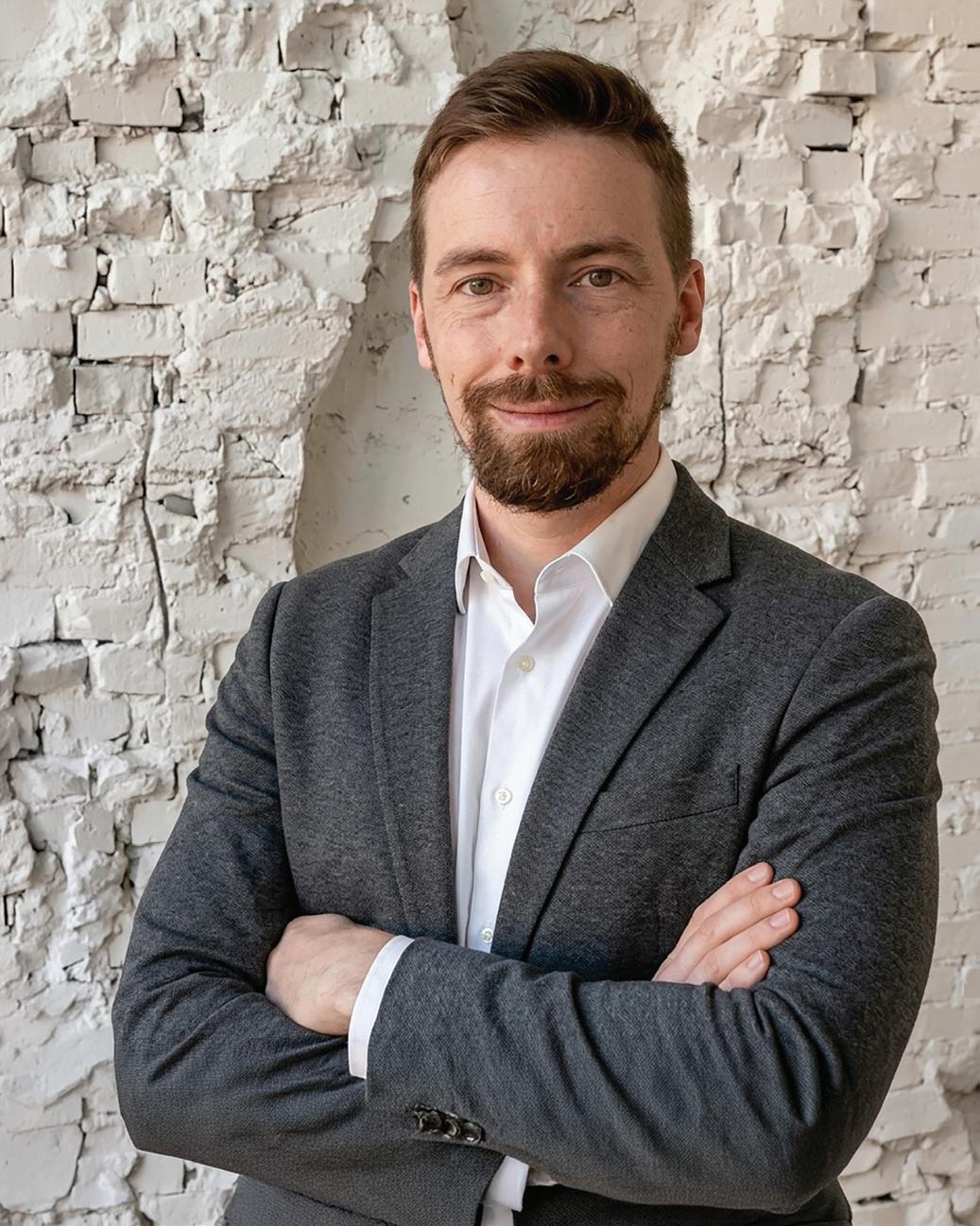
Will you please tell me your elevator pitch to describe your startup BaseState?
BaseState is the company. Alder is the product—the operating system for physical infrastructure, starting with utilities. Think of it as institutional memory for critical infrastructure: we turn field evidence—photos, voice reports, sensor data, drone imagery— into asset-linked records that crews and ops teams can review, route, and act on. And we capture how your best inspectors actually think about those assets, so when they retire after 35 years, that judgment stays in the system. Utility inspections are our first wedge; the same engine ports to water, telecom, pipeline, and rail.
02
With
this targeting utility infrastructure and assets, did
this focus
come about from your past experience working at Thread?
It was something I saw every week at Thread, but the same problems were sitting in front of me at Microsoft too—and at Maktelier, the company I founded before this one—big customers all wrestling with the same thing: what do I actually have, where is it, what condition is it in, and how do I keep that record alive?
At Maktelier, it was 68,000 pallets in a warehouse, tracked with
permanent marker, at the end of COVID when nobody could staff forklift drivers. I built the multiagent pathfinding solver—the software that choreographs a fleet of robots without collisions—and my co-founder Aaron Russell, a lead robotics engineer and a licensed PE, integrated it into the hardware. We put those pallets into a floor-to-ceiling automated storage and retrieval system that moved thousands overnight, with 100% location tracking 100% of the time inside the controlled envelope. Same pattern at Thread, same pattern at Microsoft, same pattern now with utilities. Data entry is the thing nobody likes doing. And yet understanding the systems around us—the poles, the conductors, the infrastructure—is tremendously important. The least-favorite task holds up the most important work.
With Alder, I meet crews where their day already is. They plan their work, dispatch missions, go to the field, and capture what they see. Take a picture of a pole—it automatically ties to the asset. Drop a voice note—“I see an issue on the pole at my location, send someone to inspect”—and the system enriches the signal against the asset’s history, generates a work order, finds the nearest qualified crew, and routes the work. No dispatcher in the loop for the routine stuff. The back office sees the same record in real time. Honestly, it feels more like a multiplayer game than paperwork, and that’s intentional.
The bigger piece, and the thing I think matters most: most inspection tools record what was found. Alder records how your best people found it—the reasoning chain behind an expert judgment call. When the inspector who’s been reading transmission hardware for 35 years retires, that knowledge doesn’t walk out the door with them. It stays in the Alder Context Engine, available to every crew member who comes after. Utilities are losing irreplaceable expertise to retirement faster than
apprenticeship can replace it. That’s the real problem we’re solving.
Distribution is the hardest surface. Transmission is straight lines—fly a corridor, see it from the road. Distribution is everywhere, and most utilities don’t know what they have, where it is, or what condition it’s in until they get a call to fix something. Alder lets that data compound instead of disappearing.
03
As you are still in an early-stage startup, how have things been going traction or progress-wise?
Good, in the ways that matter early. Our lead design partner is the City of Troy, AL—specifically a Senior Director of UAS with oversight of around 12,000 power utility assets, who evaluated five competitors over two years before partnering with us. He’s become an honest-to-God cheerleader for what we’re building. We’ve also got a DSP signed on as a design partner.
The founder-market fit is real. I led the team at Thread that built the DJI drone-box deployments Xcel Energy is running today: a box at the Sherco Solar Site, one mounted in the back of a lineman truck in Amarillo, and one flown over a power line in the Colorado mountains tied to a construction project that kept tripping. That last one cut their review-and-reenergize time from around eight hours to under one.
What I’ve learned is that understanding someone’s problem is step one, but building community is even more important than building product. Your community tells
you whether what you’re doing actually resonates. I’ve started with community before product—you don’t need to write a single line of code to get your first customer. You need an idea that resonates, and a solution that makes somebody’s Tuesday better than their Monday. That’s really it, and it’s extremely hard.
I actually had a breakthrough this week on a functional through-line I can walk my Alabama partner through next week—from there we line up paid pilots. We’re also raising a $750K pre-seed round right now to harden the Context Engine, close the first paying cohort, and prove the workflow in a second vertical.
04
With being located here in the Fargo Moorhead metro and with your past work, have you been able to plug into these networks to have conversations around what BaseState can do in this part of the country?
Honestly? The local ecosystem has been a bigger challenge than anywhere else. I’ve got warm contacts in Singapore, Germany, California, Alabama and other places down south who’ve been far more receptive than local connections, despite my local network. I’d love for that to flip. Having local customers would let me sit in someone’s truck, go out in the field, and really understand what their day looks like. That’s what I did at Thread and at my former company—sitting with people who were doing the data entry, understanding the pains.
Nothing replaces it.
The upper Midwest is full of rural electric co-ops and municipal utilities, and the silver tsunami— losing domain expertise to retirement faster than apprenticeship can replace it—hits hardest in exactly those kinds of organizations. That’s who Alder is built for. Not the large IOUs; smaller co-ops and munis with lean teams, distributed assets, and a retirement cliff coming.
I’m also not trying to grow-up-andexplode-fast. I want the first ten customers to love us, which means spending real time making sure they feel it. Community building is already in motion locally. Bigger conversations—with co-ops, municipalities, and local power— are coming soon.
Shifting gears a bit; from knowing you and being connected on LinkedIn, I see you post and comment a lot about new tech, software, AI and other things you are tinkering with. How do you go about staying on top of tech advancements?
Mostly by staying involved — reading the news, following certain channels, and having really sharp contacts to bounce ideas off. I talk often with Scott and Hunter at Chipp about different tech angles. Scott has an incredible knack for building community, which I think is going to be the sustaining power for companies like theirs.
On AI specifically, I’ve been at this a long time. In college I worked on AI-driven agent communication and pathing in multiplayer games over physics-simulated networks. At Microsoft I got involved in AI work before OpenAI went public, before most people knew anything about it. I was in the top 20 globally inside Microsoft’s internal dogfooding programs—one of the most prolific beta testers. It’s like a game to me: if you show me something and ask me to fix it, break it, or evolve it, I can’t stop myself.
06
I also notice that some of your posts or comments may include cautionary guidance or critiques from you dissecting the tech. Is that an accurate assessment?
I caution people a lot because I’ve been in the weeds of this stuff for years. In the age of AI, it matters more than ever who you trust with your data. You’re handing a smaller number of companies a much larger slice of your life and your work than ever before, and that should be terrifying. But the growth hasn’t slowed—we keep giving AI intimate access to our lives and our businesses.
Recent high-profile AI security disclosures—prompt-injection attacks and exfiltration vectors demonstrated against production AI assistants—show real threat vectors are out there, and people shrug and keep using the tools. Some know the risks. Some don’t. I think it’s unpopular to ask “are you sure you’re getting what you think you’re getting?”—or to push back on the
people selling something. There are a lot of charlatans. That’s probably a whole other interview on AI ethics.
What we’re seeing reminds me of the early SaaS boom in the 2010s; and a conversation with a former coworker stuck with me on selling to consumers vs. selling to business. For consumers, your job is hooking them. Apple does this well—it’s a brand, people are hooked. For business, buyers know what they want and are willing to pay for it. But with AI, everyone wants it, everyone’s using it, and nobody’s paying. The old SaaS playbook was give everything away, get them entrenched. We’re living in that again.
It’s all happening fast. AI is everywhere. It’s been given so much access it’s already a governance nightmare. When companies ask me about adopting AI, one of the first things I ask is: do you even need it? First understand the problem. If your first thought is “I need AI,” you’re already set up for failure. Second, don’t marry any specific AI approach yet. It’s changing too fast. We don’t even know who owns the outputs, because there’s no legal precedent.
07
So, as you talk to people or businesses about their actual needs for AI, would I be correct in saying some of the quickly coded AI out there may be helpful for easier tasks, but it’s not that simple when thinking about more complex or secure processes?
It’s a wild time to be alive—you
can build a product overnight. And honestly, most of what’s getting replaced is what I’d call bottommarket work: make my PowerPoint, clean up my spreadsheet, help me organize my email. That’s fine. That’s where off-the-shelf AI shines.
But the work I’m doing with Alder, generic AI can’t do 90% of what I need it to do. It fails miserably, because it’s not trained on it. AI is largely regurgitating what it’s already seen. Half the time it’s wrong, or pointing you in the wrong direction.
That’s exactly why Alder is deliberately manual-first in the places that matter. The AI proposes, it doesn’t decide. Humans drive the review. The system surfaces the 5% of cases that actually matter, ranked by severity and by how your best reviewers have worked similar cases before. We capture the reasoning chain, not just the outcome, so expert judgment survives the retirement of the expert. That’s a fundamentally different design from “AI replaces the human.”
True innovation is still hard. Building community around it is harder. That’s a superpower Scott’s got that I wish I had.
As we get close to the end of this interview, I wanted to be sure to ask about your path to Fargo, as I know you’re originally from Ohio. And that not only did you move to Fargo about a decade ago, but you briefly moved back to Ohio, and then made the move back to
Fargo. Will you share some comments on how you originally got here and why you have decided to come back?
Here’s the short version of that answer. I had no idea Fargo was even on the list. Microsoft recruited me in college and didn’t tell me where I was going. I had 13 other offers, but Microsoft was the most interesting. I’d always had a passion for Halo and game development, and Microsoft was the epitome of what that could be. I landed in their Accelerated College Hire program. Wasn’t sure I’d like it, but I’d grown up in some pretty rural places, so a smaller city turned out to be my jam.
My wife Lindsay followed me out. She’s a go-getter and when she couldn’t find the job she wanted, she just started showing up to events. She met then GFMEDC President Jim Gartin, who happened to be an Ohio State grad. We started watching football with him and his family. He gave us his tickets to the Midnight Brunch event because he thought we’d benefit more. At the event, Greg Tehven sat me across from Doug Burgum thinking we’d hit it off on tech. Doug ended up chatting more with Lindsay and walking her around the room, which led to a connection with Joe Burgum, which led to helping with the Red River Market back when it was tiny.
That pulled us deeper into the community. I’m a bit of a lone wolf—I like one or two close friends, not a big crew — but there was something about Fargo that made me want to be part of the growth.
A side note too; I got pulled into a Microsoft event to say a few words about the move, and the positive comments I shared to encourage other transplants to get engaged got noticed by leadership and led to getting hired as a premier field
engineer. That’s kind of where my career took off.
We moved back to Ohio for a stretch to help care for Lindsay’s grandma, who’d been like a mother to both of us. We tried to make a home of it—community work, a parks & rec initiative Lindsay led, renovating our dream home. Had everything we wanted except community. COVID had just started, and one day we looked at each other and said, if we’re going to be stuck in our house, I’d rather be stuck in my house in Fargo. There was always something going on, always people to talk to. Felt more like family here than where we’d actually grown up.
We moved back. I was slammed with work at the time, and I said let’s make this one for you. We’ve traded off like that our whole relationship; there were years in our twenties where we swapped who was working and who was studying. For the first time in a decade, I’m taking a step back, building BaseState, and Lindsay is focused on her own startup—the Great Plains Children’s Museum, a non-profit. I don’t think this is possible anywhere but Fargo, at least for us.
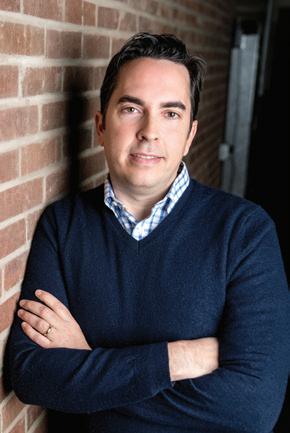
09
Well, I’m already at my time machine question that I always use for #9. If you could go back in time to visit with a younger Paul, what kind of hindsight advice would you give yourself?
Three things. First, start with community before product. Every time I've led with what problems are these people actually living with, it's worked. Every time I've led with look at this cool thing I built, it hasn't. Second, the boring answer is usually the right one—sit in one more truck, talk to one more inspector, write one more thank-you note. That's what compounds. And third, the one I'd tattoo on younger me's forehead: make things you'd miss if they were gone. If nobody would notice it's gone, don't build it.
John Machacek has been helping local startups with the Greater Fargo Moorhead Economic Development Corporation for over a decade. Before joining the GFMEDC ream, John's career path has varied in areas such as banking, accounting, and management in the nonprofit, food & retail sectors.
10
Lastly, what can we do as a community to help you and BaseState succeed, and the Great Plains Children’s Museum, too, since you’re so closely connected to that?
For BaseState/Alder: If you work at a rural electric co-op, a municipal utility, a water authority, or any organization that operates physical infrastructure in this region—I’d love thirty minutes. No slides, no pitch, just questions about how your team actually works today. Alder is built for organizations exactly like the ones we have all around us here. I’d rather build with local partners than anywhere else, and warm intros to co-op or muni leadership go a long way.
For Great Plains Children’s Museum, Lindsay and her team are building something that genuinely doesn’t exist in this region yet. If you have kids or grandkids, or just care about this place having a world-class early childhood experience, please go volunteer, donate, show up. Classic Fargo “just build the thing” energy, and it needs community juice to get across the line.
BaseState LLC
basestate.io