The Quarterly is published four times a year: winter, spring, summer, and fall.
Advertising Inquiries: editor@fly-nd.com
Advertising deadline is the first of the preceding month.
NORTH
Tanner Overland – Chairman
Devin Cole – Vice Chairman
Jake Werner – Board Member
Ryan O’Rear – Board Member
Shae Helling – Board Member
Zoe Graham – Board Member
2024-2025 BOARD MEMBERS
Justin Weninger – Past Chairman
Rénee Murrish - Manager
Kyle Wanner - NDAC Director
Mike McHugh - NDAC Aviation
Education Coordinator
From the Editor
Greetings to all of our wonderful readers. Spring is that delightful time of year, when the snow begins to melt, the temperatures rise, and we are filled with a renewed vigor for life. So take your springtime energy and head out to your local airport! Whether that means taking someone flying for the first time or volunteering at your airport’s next event, there are so many ways to connect with your local aviation community in the warmer months. Don’t forget to check out the calendar of events on the back cover. Looking for more opportunities to network and learn? Make sure you save the date for the upcoming Fly-ND Summit, which will be held in Devils Lake from August 5-6, 2025. Also, a reminder if you are missing your paper copy of the FlyND Quarterly, to visit www.fly-nd.com/membership to register as a North Dakota Aviation Association member. It’s as easy as that!
Wishing you clear skies and unlimited visibility, Nicolette
Statements of fact and opinion are the responsibility of authors alone and do not imply an opinion on the part of officers and members of the NDAA or Fly-ND Quarterly staff. If you’ve received more than one copy of this newsletter, please share it with a friend. Email admin@fly-nd.com to update your address.
Tanner Overland, Chairman North Dakota Aviation Association chairman@fly-nd.com
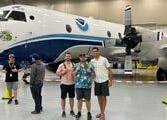
Happy Spring! I’m writing this on my journey home from the warm and sunny Sun ‘n Fun Aerospace Expo in Lakeland, FL. It was an incredible few days filled with awesome airshow performances, an impressive array of static aircraft displays, and even a surprise tour of the National Oceanic and Atmospheric Administration’s (NOAA) Hurricane Hunters Aircraft Operations Center, including a close-up look at a P-3 Orion Hurricane Hunter aircraft.
After Saturday night’s airshow, we struck up a conversation with someone standing outside the NOAA hangar—turns out, he was an aircraft mechanic named David McGee and a fellow University of North Dakota (UND) alumni. That connection led to an unexpected invite inside the hangar and onboard one of the iconic P-3 Orion Hurricane Hunter aircraft!
Back home, another successful Fly-ND Conference is in the books! A sincere thank you to everyone who helped make this year’s Fly-ND Conference such a success. From the Ice Breaker Social at Fargo Jet Center’s stunning new facility to insightful discussions during the UND Mental Health and Unmanned Aircraft Systems (UAS) panels, it was a meaningful and informative few days.
We were proud to welcome nearly 300 attendees, 37 exhibitors, and over 60 students—our highest student turnout ever! Seeing so many young, passionate aviation professionals in the making is a powerful reminder of why we do this work.
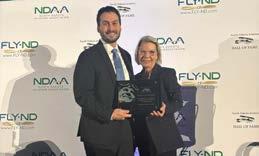
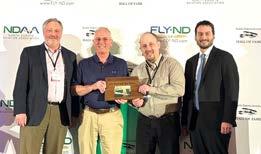
The conference concluded on a high note as we honored Cindy Schreiber-Beck as the 50th inductee into the North Dakota Aviation Hall of Fame. Her lifelong dedication to aviation—from agriculture advocacy to legislative leadership— has made a lasting impact on our industry. Thank you, Cindy, for everything you’ve done.
To continue her legacy, please consider donating to the Cindy Schreiber-Beck North Dakota Aviation Hall of Fame Scholarship. We aim to award a $5,000 scholarship in Cindy’s name at next year’s Fly-ND Conference in Minot, ND. Donations to Cindy’s scholarship, as well as all other donation opportunities, can be made at https://fly-nd.com. Since revitalizing our scholarship program in 2020, the North Dakota Aviation Association has proudly awarded nearly $70,000 in scholarships—empowering the next generation of aviation professionals!
Continued on page 4
CHAIRMAN ’S COMMENTS
Looking Ahead: We’re excited to announce that a brandnew Fly-ND website is launching June 1, 2025! Expect a modern, fresh look, easier event registration, improved member connectivity, and streamlined membership renewals. Please note that members must create profiles and enter their payment details into their new member profiles on the new website.
Mark your calendars for the Fly-ND Summit (formerly Fly-ND Summerfest), happening August 5–6, 2025, at Woodland Resort in Devils Lake, ND. Join us for two days of camaraderie, networking, business meetings, and updates from the Association. Stay tuned to https://fly-nd.com for additional details and registration.
And don’t miss out on the exciting fly-ins and events happening across the state this summer—check out the full calendar at https://aero.nd.gov/events/ I hope to see many of you out and about this summer! On behalf of the North Dakota Aviation Association, thank you for your continued support. It’s your passion, participation, and commitment to our aviation community that makes everything we do possible. Together, we’re shaping the future of aviation in North Dakota—one event, one connection, and one student at a time.
Blue skies, Tanner Overland Chairman, North Dakota Aviation Association
Murrish, Manager
701-226-1640 / manager@fly-nd.com
It’s Time for Takeoff
The first quarter of the year is already behind us, and the North Dakota Aviation Association (NDAA) has already had a great productive year! The 2025 Fly-ND Conference was full of great networking opportunities, insightful breakout sessions, and amazing camaraderie. Planning has already started for the 2026 Fly-ND Conference in Minot, ND, on March 8-10, 2026; you will NOT want to miss it, so mark your calendars and do take note of the date change as it is a week later than previous years.
I believe the opportunities to exchange ideas, questions, goals, and success stories with other individuals is crucial to growth. The NDAA has our annual board meeting and another collaborating opportunity coming up at the Fly-ND Summit. The Summit will be held at Devils Lake on August 5-6, 2025; be on the lookout for details coming soon.
The NDAA will be embarking on a new website, inhouse
data, and financial system change that will be beneficial to all of us. It will be a challenge and a welcome change, so please be patient with us as we set the NDAA on a better road to success.
Lastly, I would like to leave you with encouragement. In aviation, every flight begins with the takeoff—a moment of trust, power, and commitment. The engines roar to life, the aircraft gains speed, and then, the ground is left behind. This mirrors the risks we take in life when we embrace change, pursue new opportunities, or step beyond our comfort zones (oof, that is the hard one.) It can be daunting, but just as a pilot trusts their training and aircraft, we must trust in our abilities and the potential of what lies ahead. Keep pursuing your dreams, your goals, and your mission on this earth…you are worth it!
Let’s kick the tires and light the fires! Reneé
2025 ND Aviation Hall of Fame recipient Cindy Schreiber-Beck
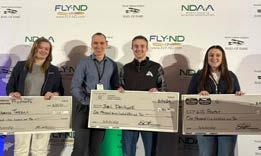
2025 ND PAMA aviation scholarship recipients
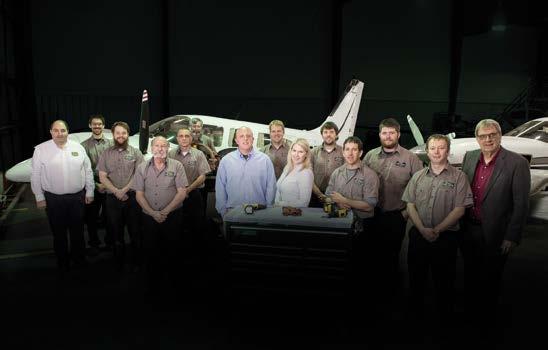
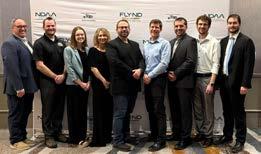
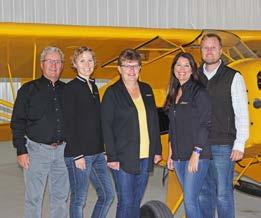
The NDAA Leadership Team
General Aviation Airport of the Year: Stanley Airport
Kyle Wanner, Director
North Dakota Aeronautics Commission
701-328-9650 | kcwanner@nd.gov
DIRECTOR ’S Chair
Charting the Future: Strengthening North Dakota’s Aviation System
North Dakota’s skies are busier than ever, and its airports continue to become even more essential to the state’s economy and its overall connectivity to the rest of the world. To ensure that our aviation system remains safe, efficient, and prepared for additional future growth - the North Dakota Aeronautics Commission (NDAC) is working to provide an update to the North Dakota State Aviation System Plan and Economic Impact of Aviation Studies.
Why is This Important?
Aviation is a cornerstone of North Dakota’s economy and quality of life. From small rural airfields to major commercial hubs, each airport strengthens local communities, drives business growth, and supports many essential services.
These two studies will provide critical insights to help prioritize resources, guide funding decisions, and shape strategic recommendations for the effective management and development of North Dakota’s aviation system. By proactively planning for the future, the state can ensure that its airports remain safe, resilient, and well-equipped to meet evolving demands. Additionally, the NDAC is working to develop interactive geographic information system (GIS) tools and story maps to help communicate aviation’s value to the public in a more engaging and accessible way. Ultimately, these updated studies will serve as a roadmap for strengthening airport infrastructure, enhancing safety, and expanding aviation access across North Dakota.
North Dakota State Aviation System Plan
The 2025 North Dakota State Aviation System Plan update will provide a comprehensive assessment of all 89 public-use airports in North Dakota. This study will evaluate current conditions, identify improvement areas, and establish priorities to meet the needs of pilots, travelers, and businesses.
Building upon the last study conducted in 2014, this update acknowledges the significant changes that have shaped North Dakota’s aviation landscape over the past decade. The updated plan will address six primary objectives:
• Maintaining a Safe Aviation System – Promoting clear approaches, proper land use compatibility, and identifying strategic infrastructure improvements that will preserve and enhance current and future airport operations.
• Enhancing Aviation System Coverage – Evaluation of the public’s accessibility of commercial and General Aviation airports to ensure comprehensive statewide transportation options exist for the traveling public.
• Improving Air Access – Assessing the needs of aeronautical users by improving on-site weather
reporting, navigational aids, fueling facilities, and other essential services.
• Leveraging Aviation for Quality of Life – Identifying opportunities to enhance North Dakota’s economic and social well-being through a strong and efficient aviation system.
• Preserving Airport Infrastructure – Identifying facility needs, planning strategies, and funding priorities to support long-term airport preservation and community growth.
• Advancing Aviation Education & Workforce Development – Identifying and providing support to aviation education programs, airport community engagement, and aviation industry initiatives in order to strengthen the state’s aviation workforce and business opportunities.
North Dakota Economic Impact of Aviation
The ongoing efforts to update the Economic Impact of Aviation Study will build upon the previous 2015 analysis and will complement the ongoing State Aviation System Plan by quantifying the economic contributions of each airport and the collective impact of North Dakota’s aviation system.
The findings of this study will illustrate and provide:
• How airports drive economic growth and provide social benefits for residents, visitors, businesses, and our critical industries.
• The return on investment of airport infrastructure, demonstrating how funding improvements lead to economic prosperity and standard of living enhancements.
• Tools and data for local communities to showcase the value of their aviation facilities to elected leaders, stakeholders, and the surrounding community.
This study will include both quantitative data (jobs created, economic output, tax revenue) and qualitative insights (aviation’s broader impact on people’s lives).
Next Steps
The NDAC is currently in the data collection phase and is actively gathering input from travelers, airports, businesses, and the public to assess current aviation operations and future needs. If you have already participated or will be involved in any of these efforts, I sincerely appreciate your contributions in shaping the outcomes of these studies.
To ensure a broad range of stakeholder perspectives, the NDAC has also formed a Technical Advisory Committee (TAC) to assist in reviewing the project deliverables. Throughout the duration of the studies, this committee will
will provide valuable insights, support development efforts, and help to share information within their community and organizations. Additionally, we encourage anyone interested in offering feedback to subscribe for updates and share comments or recommendations on any draft materials posted online.
To stay informed and subscribe for updates, visit 2025ndsasp.com or scan the QR code on this page. At any time if you have concerns, ideas, or recommendations regarding North Dakota’s aviation system, we encourage you to share your input through the website or by contacting NDAC staff directly.
These studies are expected to be completed by the summer of 2026. A significant update will be provided at next spring’s Fly ND Conference, followed by regional public presentations that are planned to occur across the state to encourage in-person discussion and feedback on the findings.
By collaborating with aviation stakeholders and local communities, we hope that these studies will provide data-driven insights and actionable recommendations that will strengthen North Dakota’s aviation network for generations to come. Together, let’s chart a course to ensure continued success for our legendary skies!
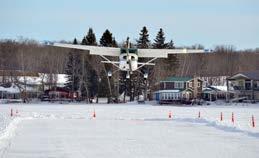
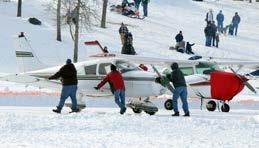
Rare winter weather allows planes to land on Lake Metigoshe
Aviators had the perfect weather to fly to Lake Metigoshe this weekend and enjoy something they seldom get to do as pilots, which is to land and take-off on natural ice, but on Saturday a good number of pilots did just that by landing their planes in front of the former Twin Oaks Resort where they had a get-together for about five hours before they took off and returned back to their homes.
“We have been working on this for about a month,” said Mark Brekke of Lake Metigoshe who made the decision to have a fly-in on the ice at Metigoshe. “They do this all the time in Wisconsin and Minnesota, and they’ve actually have sanctioned ones like in New Hampshire and other places.
“I have flew into Warroad, Minn., several times where the Lions Club sponsor it and where we would land on the river, and they put on a nice meal and fun social,” Brekke said. “They don’t do fly-ins here in North Dakota in the winter time because of our snow and cold temperatures, so the weather has to work, but in North Dakota we could have planned this thing for a whole month and have the event be just a disaster because of the weather.
“So, with the weather we have this winter we just took our chances, and it turned out nice.”
Brekke stated that heavy snow and cold temperatures in the state makes it difficult to have fly-ins on ice.
“I’ve been trying to do this for years,” Brekke said. “I lived up here for 17 years and I’ve been a pilot and involved in aviation for 45 years, but to be involved in something like this is difficult because the weather has to work.
“This year, we were lucky. Number one, the ice froze nice and clear, we didn’t have rough ice. Number two, we had good thick ice before we got snow on it. Number three, we didn’t have a pile of snow on the ice this year, we didn’t have to move three feet of snow, we only had to remove 10, 11, or 12 inches.
Brekke added that there is also the issue of water overflow on the ice which can happen at Lake Metigoshe.
“There’s no overflow on the ice this year,” Brekke said.
“We’ve had three consecutive years of overflow on this lake, which means you could not have done this.
“By overflow that means you get too much snow on the ice, too much weight and the snow pushes down, the water comes up through the cracks and you’ve got water underneath the snow on top of the ice and an event like this can’t happen then. The weather this year was the perfect scenario, the perfect year, so it worked out great.”
Fly-In
With good winter conditions this year in the state, plans were made and Brekke and some of his friends started clearing the snow off the ice and making a runway for the pilots to land on for the fly-in.
The fly-in at Lake Metigoshe was from 10 a.m. to 2 p.m. on Saturday with pilots coming from around North Dakota.
Sixteen planes landed on Lake Metigoshe with a couple from Fargo who flew farthest in an Aeronca Champ. Of the 16 planes, five of them landed with skis on. One Jet Ranger helicopter landed on the lake from Minot.
As pilots started landing at Lake Metigoshe they were greeted by other pilots, onlookers and snowmobilers who came to the events and people enjoying ice fishing in and around the landing area.
For those who attended, there was free hot chocolate and candy that was given out, track vehicles were used to transport people and pilots from the lake to the Metigoshe Coffee House or the A-Frame to enjoy. All of the pilots were given free tickets when they landed and received a free meal and coffee at the Metigoshe Coffee House. Overall, it was a fun day for everyone to enjoy.
For Brekke, and the other pilots, one can only hope for the perfect winter again next year to continue the fly-in on ice at Lake Metigoshe. For now, as most North Dakotans do, they enjoy the moment, and Saturday was the perfect moment for aviation in the state.
By Scott Wagar
Reprinted with permission from the Bottineau Courant.
FLIGHT DEPARTMENT
• 7 Aircraft Rentals
• Flight Instruction
• Multi-Engine Instruction/Rental
• Tailwheel Instruction/Rental
• Pilot Services
TESTING CENTER • FAA Regulated Testing
Mike McHugh, Aviation Education Coordinator
North Dakota Aeronautics Commission
701-328-9650 | mmchugh@nd.gov
The Four Forces of Flight
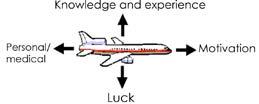
When learning how an airplane achieves flight, one of the first things we learn about is the Four Forces of Flight. Lift, weight, thrust and drag are needed to be controlled by the pilot in order to achieve successful flight. The four forces can also be used to describe the path to a successful career in aviation. I will use the example of a career as a pilot, but I believe that these four forces will be applicable to most if not all careers in aviation.
Lift = Knowledge and Experience
Much like an aircraft needs the combination of Bernoulli’s principle and Newton’s Third Law to generate lift, achieving lift in your career can be attributed to a combination of knowledge and experience. I am often asked, “Should I attend college if it is not required to become a pilot?” I typically answer that adding knowledge through a collegiate program will almost certainly benefit you longterm. Initially, it may be faster and/or cheaper to obtain the experience needed to be hired as a pilot without attending post-secondary education, but in the long term you will be in a pool of other pilots with similar experience. It is the knowledge obtained through a degree program that may help set you apart from other candidates. Typically, the higher degree obtained the better off you will be. Remember, not all collegiate programs are created equal. While the core knowledge needed to obtain a pilot certificate, or many of the other classes, may be similar, knowledge may also be quality of the training fleet, and standardization, and especially industry relationships. While one school may give a minimum knowledge needed to move on, another may give you access to industry relationships, which will help you succeed faster. I have written previously about the importance of a personal learning network. Remember the WHO you know may be just as important as the WHAT you know.
Experience may be more like Newton’s Third Law: for every action there is an equal and opposite reaction. Employers will have requirements, such as a minimum number of hours, or other required experience. Again, the more experience you have, the better! Add your knowledge and experience and you are sure to obtain more lift!
Thrust = Motivation
Motivation is like the thrust on the aircraft. Remember, it is excess thrust that causes lift. While some aircraft have bigger engines and some smaller, only you can determine the size of your engine. The more motivation or thrust
you have, the easier it is to generate lift. Students who show motivation will have a much easier time building relationships, studying for tests, and getting to the airport to fly. This motivation will shine and before you know it, you will develop more personal relationships and your career path will become easier. Students who are motivated tend not only to score better on knowledge exams, but also find themselves with many more opportunities. Scholarships, internships, and other experiences tend to find their way to motivated individuals. Remember, only you can determine how big your engine is! Just as engines require fuel, oil, and maintenance, it helps to surround yourself with people who will motivate you. Joining aviation organizations such as the North Dakota Aviation Association (NDAA), Aircraft Owners and Pilots Association (AOPA0, Experimental Aircraft Association (EAA), Civil Air Patrol (CAP), American Association of Airport Executives (AAAE), and others will help keep you fueled.
Drag = Personal/Medical
Drag: nobody likes to talk about it, but it is there. Something is holding you back. Just as in an aircraft, there are two forms of drag: parasitic, the drag caused by going faster, and induced drag, the bi-product of lift. Personal factors, such as past medical history, or not being in a community close to an airport are the personal “aerodynamics” that we must live with. As you gain momentum in your career path, it may seem more and more difficult to go faster. Remember, motivation is the thrust that is needed to overcome drag. Much like parasite drag is caused by the shape of the aircraft, each of us has different levels of being “aerodynamic”.
Induced drag is an inevitable consequence of lift. As your motivation increases, you may become physically and mentally worn out. You may struggle to find more fuel or money to keep flying, amongst other factors. Remember to stay ahead of the power curve. Try to plan ahead so these factors are not holding you back right after you begin your
takeoff roll. In most cases, personal factors can be overcome. I would like to remind students that even if there is so much personal drag that motivation cannot overcome it, such as a medically disqualifying factor, there is still a career for you in the industry. I encourage you to talk to an Aviation Medical Examiner (AME) before deciding you are unable to fly. They may be able to help you overcome the issue. In most cases, putting in some additional effort may help you overcome the drag that you naturally have. In any case, don’t give up. Many other careers in aviation exist other than being a pilot. Consider Unmanned Aircraft Systems (UAS), Air Traffic Control (ATC), maintenance technician, airport management, or the many other paths to a career in aviation.
Weight = Luck
While the weight of an aircraft is relatively fixed, you may find yourself with a different amount of luck than one of your peers. While some students have a natural advantage, we all come with different levels of baggage. Luck is the only one of the four forces of flight which you have little influence over. A great quote that holds true in many cases is “The harder I work, the luckier I get.” While you may have the least control over the weight of the aircraft or how lucky you are, you do have some control on how much baggage you
bring on the journey or where you place it in the aircraft. My tip for you: remember, lift opposes weight and excess thrust creates lift. Remember that with a little bigger engine, or with a little more motivation, your career in aviation can and will take flight.
Flight Planning
In addition to getting the hypothetical aircraft in the air, flight planning is a critical step in your career. While some students choose to take a jet on a direct course to their destination, this takes quite a bit of lift to get to the higher altitudes and a lot of additional thrust to get the aircraft moving. Some students will take a J-3 Cub approach: it may take a little longer to get there, but in the end, the destination is the same and it will take a lot less lift and thrust. There is no wrong path. For some students, the best answer is low and slow and many refueling stops along the way, for others, a direct path with a high-altitude view. Whatever your course, whatever aircraft you choose to fly, and wherever your destination, I hope that the advice mentioned above will help you get there. As always, please feel free to contact me to assist in your career flight planning.
Meet our NDAA Leadership
Tanner Overland Overland Aviation NDAA Chairman
Jake Werner Experimental Aircraft Association NDAA Board Member
Devin Cole Cole Aviation NDAA Vice-Chairman
Shae Helling Bismarck Aero Center NDAA Board Member
Justin Weninger Air Fleet Capital NDAA Past Chairman
Zoe Graham UND Student NDAA Board Member
Kyle Wanner NDAC Director Non-Board Leadership
Renee Murrish Signature Events NDAA Manager
Ryan O’Rear Williston Basin International Airport NDAA Board Member
Mike McHugh NDAC Education Coordinator Non-Board Leadership
Passport Program Awards
Multiple pilots were recently presented with awards for participating in the “Fly North Dakota Airports” Passport Program. This program began in North Dakota in 2011 and it rewards pilots who fly to North Dakota’s publicly owned airports, attend FAA safety seminars, and visit North Dakota’s aviation museums. This program promotes safety, continuing education, and encourages pilots to practice approaches and landings in many different environments. This program also offers an opportunity to promote and support North Dakota’s airports and their community businesses and tourism opportunities.
There currently are three award levels within the North Dakota passport program and the highest and most prestigious award level of Gold is achieved by flying to all 89 ND public airports, visiting the Fargo and Minot Air Museums, and attending three FAA safety Seminars.
The gold award was achieved by twelve pilots during the past year and these individuals received a leather flight jacket embroidered with the North Dakota Flying Legacy logo. These pilots join the 102 others who have completed the passport program in previous years, making a grand total of 114 pilots who have achieved the gold award since the program’s inception.
The following is a list of the individuals achieving the gold level in 2025:
Josh Axt – Hatton, ND
Steve Bodin – Grand Forks, ND
Jonathan DeLone – Rochester, MN
Baily Hoff – Hazen, ND
Kyle Hoffman – Edmon, OK
Greg Johnson – Stanley, ND
Charlie Kalvoda – Mandan, ND
Thomas Sando – Williston, ND
John Seyler – Urbana, IL
Ryan Starkey – Grand Forks, ND
Noah Stevens – Minot, ND
Jeff Zarling – Williston, ND
Fireside chat encourages UND to ‘Aim High’
Commercial pilot, former fighter pilot Kenyatta Ruffin talks determination, mentorship and patriotism with UND Aerospace dean
On Feb. 21, in honor of Black History Month, UND welcomed Kenyatta Ruffin to campus for a fireside chat that explored Ruffin’s career in aviation and public service. The event, titled “Aim High: Leave a Legacy,” was held at the Memorial Union and featured a conversation between Ruffin and Bob Kraus, dean of the John D. Odegard School of Aerospace Sciences.
Ruffin’s career spans decades and includes service as a U.S. Air Force officer, F-16 fighter pilot, United Airlines captain and White House Fellow under the Biden administration.
Over the course of the hour-long discussion, Ruffin reflected on the influences that have affected him and the challenges he has faced, as well as the mentors who have helped him inspire the next generation of aviators.
UND Vice President for Student Affairs Art Malloy opened the event by highlighting the significance of Black History Month and the collective effort it takes to advance equality.
“We can all proudly observe Black History Month because it took each of us to achieve what has been achieved and, together, we can face any challenge that comes our way,” Malloy said.
A dream takes flight
The seeds of Ruffin’s passion for aviation were planted early in life: at just 5 years old, he was inspired by watching the news coverage of the Space Shuttle Challenger tragedy unfold on television. While the news was upsetting, Ruffin found inspiration in the astronauts’ courage.
“I could be like them. I could do something brave and great,” Ruffin recalled thinking as he watched the news coverage.
From then on, Ruffin had a singular focus on his dream, attending space camp and combing through every book he could find at his local library. He recalled getting odd looks from librarians as he brought them towering stacks of books to check out.
His interest would pay off: by 13, he was flying. By 14, he was flying solo. By 16, he had earned his private pilot’s license — before even earning his driver’s license.
And by 18, he was a certified flight instructor, one of the youngest in the nation at the time.
As Ruffin recounted with a laugh, “I could teach anyone to fly an airplane. The only problem was, they had to drive themselves to the airport because I couldn’t legally drive yet.”
Ruffin’s passion for flight led him to the U.S. Air Force Academy, where he earned a degree in aeronautical engineering. His accomplishments led to a distinguished military career; over the years, he logged more than 750 combat hours in F-16 and M-12 aircraft, with deployments to Iraq and Afghanistan.
As he recalled his Air Force pilot training, Ruffin described it as one of the most challenging experiences of his life.
“There was nothing harder that I’ve ever done in my life than pilot training,” he said. “It was four years at the Air Force Academy condensed into one. So, it was a challenge, but it was rewarding and allowed me to fly the best plane in the world.”
That plane, the F-16, brought Ruffin some of the most memorable moments of his career. He recalled the awe of seeing the curvature of the earth while flying at 49,960 feet, and the life-altering moment during a combat mission in Iraq, where he and his team provided air support for ground troops under fire.
“When we were leaving station, they said, ‘You saved our lives.’ That still gives me chills,” he recalled.
In time, Ruffin served as a strategist at the Pentagon and later as a White House Fellow, where he worked in the Office of the National Cyber Director during the Biden administration.
Continuing the legacy of the Tuskegee Airmen
For Ruffin, military service carried a special and personal connection to the Tuskegee Airmen, the first Black military pilots in the U.S. armed services.
As a child, Ruffin attended a Tuskegee Airmen youth program. During his time at the Air Force Academy, Ruffin met half a dozen Tuskegee Airmen, all of whom he viewed
Kenyatta Ruffin, U.S. Air Force Reserve officer, F-16 fighter pilot, United Airlines captain and former White House Fellow was joined by Dean Bob Kraus for the Black History Month fireside chat.
Photo by Walter Criswell/UND Today.
as his mentors.
Then he deployed with the 332nd Air Expeditionary Wing, a unit whose history dates back to the lead World War II unit of Tuskegee Airmen: the 332d Fighter Group.
“When I landed in Iraq and got to put the 332nd patch on my shoulder, which is the same patch that the original airmen had, it was surreal because I was now a real Tuskegee Airman myself,” he said.
In 2012, he drew inspiration from his connection to the “Red Tails” when he co-founded the Legacy Flight Academy (LFA), a nonprofit organization that introduces young people — particularly those from underrepresented backgrounds — to aviation through mentorship, flight experiences and STEM education.
To date, LFA has flown nearly 3,000 young people, awarded $100,000 in scholarships and helped thousands more through its mentorship and educational programs.
“LFA was never a choice; it was a necessity,” Ruffin said. “I have been so blessed that so many people gave to me. How could I not give back to others?”
Mentorship and leaving a legacy
Ruffin credited much of his success to the mentors and supporters who shaped his journey through aviation. From
by Walter Criswell
his mother — a 45-year United Airlines flight attendant who drove him hours back and forth to flight camps — to the Tuskegee Airmen he learned from, Ruffin said that the support of others was a crucial factor in helping him accomplish his goals.
“Nothing that I’ve done has been on my own. It is absolutely what they say: it takes a village,” he said.
One of his proudest moments came just months ago, when he shared a milestone with his mother, his greatest mentor. That was when he piloted his first flight as a United Airlines captain, while his mother worked as a flight attendant on the same flight.
“She sacrificed so much to support my dream, and now I got to share that moment with her,” he said.
Ruffin concluded the fireside chat with a quote from General Daniel “Chappie” James Jr., the first Black four-star general in U.S. military history:
“The power of excellence is overwhelming. It is always in demand, and nobody cares about its color.”
“I have fought in three wars for my country and three more would not be enough,” Ruffin added. “America is not perfect, but when she is sick or has ills, I’ll hold her hand. Hopefully we will all hold her hand.”
So, You’ve Been Appointed To An Airport Board or Commission… Now What?
At this year’s National Association of State Aviation Officials (NASAO) fall convention in Pittsburgh, Pennsylvania, Kim Kenville, Ph.D. C.M., presented an eye-opening workshop on the duties and expectations of being an effective airport board or commission member.
As you may be aware, it’s fairly typical for a mayor, city council or a county board to appoint people with various backgrounds to those boards to provide innovative ideas and their expertise in various disciplines to establish a well-rounded and informed board. However, in most cases, the appointees may not be totally prepared to take on the responsibilities associated with the functions of an airport. For that matter, the same could occur with any board or commission that is charged with making effective decisions.
Dr. Kenville notes that rarely do new members arrive at their first board meeting ready to jump into the fray with most just having some familiarity with the organization and no formal board training. She states that there are some essential elements necessary to orient and train board members. Giving those members a clear understanding of their role on the board, their level of authority, expectations of the members, meetings and meeting etiquette and a basic understanding of the specialized nature of the industry, which in this case is aviation, is essential.
To help, it is essential for new board members to understand their roles and responsibilities, by familiarizing them with the ownership or type of board on which they are serving and what state regulations must be followed.
Most public airports are owned and operated by some local level of government such as a city, county or a statecreated authority. In Illinois, the state-created authorities include Port Districts, Park Districts, Airport and Bi-State Airport Authorities. Although many are similar, it’s necessary to check the individual state laws to determine the board members’ real authority and if there are certain rules that must be followed.
Secondly, the function of the board may either be advisory or authority based. Simply stated, advisory means that your only responsibility is to “advise” the airport executive or management without any decision-making authority. In short, the board acts as a liaison between the airport and elected officials. Advisory boards are usually found at the city or county airport ownership level.
Where the airport ownership has been established by legislation, such as an “authority,” the board is the owner and responsible for the safety, operation, development, etc. of the airport. In effect, the board has the same powers as a city or county. As such, the board members should acquaint themselves with their governing documents including bylaws, resolutions and policies.
Obviously, being appointed to an airport board that has “authority” as established by legislation requires more responsibility and awareness than one that is only advisory in function. For that reason, our discussion will concentrate on those with authority.
The Board of Directors role should include:
• Setting organizational policy, direction and goals for employees to execute.
• Supporting and encouraging the airport executive.
• Function as a sounding board for innovative ideas.
• Providing guidance to assist airport management to reach set goals, while balancing the notion of acting as a business and public asset.
• Focusing on promoting the airport and economic growth.
• Ensuring fiscal responsibility and executing contracts. But should not include:
• Micromanaging the executive director and staff by failing to understand their roles and responsibilities.
• Participating in personal and professional conflicts of interest.
• Ignorance of governing documents and laws.
• Tolerating members who carry on business outside of specified meeting times.
Like a board member, the airport manager’s or director’s role should include:
• Ensure a safe, secure, and efficient airport.
• Implementing policies and procedures codified by the board.
• Research and recommend policies, projects, and a strategic direction for the board’s consideration.
• Promote and ensure fiscal responsibility.
• Ensure compliance with federal regulations.
• Engaging the public through various outreach activities.
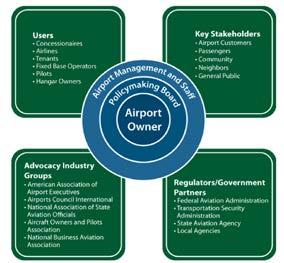
Even though there are specific duties and responsibilities of board members, management and staff, there are other stakeholders that should be included in the direction and management of an airport. As you can see in the figure below, there are at least four (4) diverse groups that can usually be found in the mix. Understanding the interrelationships of the board, manager/executive director, tenants and the public is important.
Effective board members should thoroughly understand the fiduciary responsibilities of their position by ensuring they always act in good faith in promoting the airport’s mission. Failure to do so could result in liabilities that can be damaging to the airport and its reputation. Remember,
all board members are responsible for the decisions of the board, whether they voice an opinion or not. Each decision must be vetted carefully by asking questions and considering all sides of a topic of discussion. Simply expressing the lack of understanding of their fiduciary duties does not relieve any board member of the ensuing consequences.
Expanding on the liability issue, the board may want to consider the need for director’s and officer’s insurance to cover those liability issues should they arise. To assist in the decision, it is important to consult a legal representative to determine whether or not the board member’s liability is effectively covered by existing state laws or the 1997 Volunteer Protection Act. The Act is specifically designed to protect volunteers from liability that may arise while serving a nonprofit organization or governmental entity.
To ensure effective meetings:
• They should be held on a regular schedule.
• Be open to the public with pre-published agendas and meeting minutes.
• Follow meeting etiquette or parliamentary procedures and relevant state open meetings laws. Some states are far stricter on what constitutes a meeting and specifically on how email and virtual meetings are to be handled. Many state government offices offer open meetings and board orientation training sessions.
• Consult the board’s lawyer prior to any “closed” session on subject appropriateness.
Continued on page 18
Source: Airport Cooperative Research Program Report 58: Airport Industry Familiarization for Part-time Policy makers (2011)
Sometimes it is difficult for airport board members to separate which agency controls its aviation functions. Part of the board’s orientation and ongoing training is to separate those items that are controlled by federal law or regulation from those under the jurisdiction of the state. In its most simplistic form, aviation is governed by the FAA and laws about property and the governance of public assets are at the state or local level.
Congress passed the 1926 Air Commerce Act which gave the responsibility of aviation safety to the Federal Department of Commerce, and later in 1938 to the Civil Aeronautics Authority, and in 1958 to the Federal Aviation Administration (FAA) we know today. Over the years, there have been many modifications, but the FAA still remains in charge of aviation safety. However, board members need to be knowledgeable about the other function of the FAA and that is the distribution of funds for airport development from the 1970 Aviation Trust Fund.
There are approximately 383 airports served by commercial airlines and 2904 general aviation airports out of a total of 19,000 airports nationwide. Only those airports listed in the National Plan of Integrated Airports (NPIAS) are eligible to receive funding, not the entire 19,000 facilities.
Funds are distributed to four (4) classifications of airports: Commercial Service, Primary Commercial Service (hubs), General Aviation and General Aviation Reliever. Board members must be aware of their airport’s classification. For high priority projects, additional funds are available which are called Discretionary. Competition for those funds are national and are at the discretion of the Secretary of Transportation. Airports with a significant amount of cargo traffic can also receive additional funds. To be eligible to receive federal funds, the board must approve and submit its proposed projects to the FAA so they can be included in the National Airport Capital Improvement Plan (ACIP) or just CIP as its most used acronym. The CIP is a “living” document that is updated annually to reflect the airport’s desired projects. The FAA then applies its priority system to each of the submitted projects which competes with every other airport in their specific category for the available funds.
Of course, federal funds come with a substantial list of grant assurances which are the conditions (obligations) associated with the acceptance of each federal grant. In short, the board has to assure the FAA that they will maintain and operate their facilities safely and efficiently per the specified conditions. The duration of these obligations depends on the type of recipient, the useful life of the project being developed, and other conditions stipulated.
Because the terms of service for board members may be staggered or expire simultaneously, the airport executive should be mindful of which members will be rotating off the board or reinstated by the governing body and be proactive in initiating an orientation meeting for incoming board members. As such, carefully crafting a meaningful, intelligent orientation and training opportunity should be a priority to ensure a smooth transition between outgoing and incoming members so that all members feel valued and have an introductory working knowledge of the operations and business of the airport. Considering that the airport board members will be required to make important decisions, such
as the approval of the airport budget, capital improvement, master plans, contracts, grants and select consultants, they should feel confident in making and acting on these items with as much knowledge as possible.
To achieve a highly functioning, efficient, effective board, training should be developed and implemented on an annual basis. This will provide the new members and refresh existing members with valuable information on new projects, regulatory or rule changes or perhaps a change in the strategic direction of the organization and airport.
If not currently available, it is suggested that the current board chair or airport executive should create an up-to-date reference “binder” or training outline for each authority board member, including those who serve exclusively in an advisory capacity. Whether available on paper or electronic, it shouldn’t matter. The fact that they receive a reference guide is the important take away. It is suggested that the following list of documents be contained in the binder:
• Airport name, NPIAS classification, brief history, and organizational chart.
• Guiding documents for the airport: bylaws, resolutions, policies and procedures, minimum standards, and state laws (including information about state open meeting laws).
• Board member’s information.
• Meeting calendar (one year in advance preferable).
• Basic parliamentary procedure information.
• Aviation acronyms (most commonly used).
• Approved airport master plan or proposed updated version awaiting FAA approval.
• Airfield maps and layout of the buildings (annotated aerial photos are acceptable).
• Airport tours (terminal, airfield, landside)
• Strategic plans.
• Current capital improvement plan (approved 5-year CIP).
• Budgets (present along with synopsis of previous 5 or 10 years).
• State aviation rules/regulations and aviation system plan.
• List of tenants, and if possible, contract obligations.
• List of consultants/service providers and when selection will be required (usually 3-5 years) to meet FAA requirements.
• Public relations toolkit.
• Past agendas and minutes.
To assist new board members, it is suggested that one of the existing members be assigned to a “seasoned” member to facilitate a greater understanding of the board’s responsibilities.
As you can see, becoming an effective airport board or commission member requires a great deal of responsibility and effort. Developing airport board orientation and training documents may seem like a daunting task, but it is vital. The importance of having a safe, secure, and efficient airport cannot be overstated; therefore, an educated and confident advisory/authority board is necessary. The volunteers who agree to serve should be educated about all the unique aspects of running an airport. While it is understood that the part-time policymakers will not have the same depth of
As you can see, becoming an effective airport board or commission member requires a great deal of responsibility and effort. Developing airport board orientation and training documents may seem like a daunting task, but it is vital. The importance of having a safe, secure, and efficient airport cannot be overstated; therefore, an educated and confident advisory/authority board is necessary. The volunteers who agree to serve should be educated about all the unique aspects of running an airport. While it is understood that the part-time policymakers will not have the same depth of understanding about the issues as the airport management team, it is incumbent upon the executive director and board chair to spend time developing meaningful orientations, training, and guidance for the membership.
To assist with this effort, three (3) You-tube videos have been developed to assist airport managers and board members alike. They can be accessed at the following:
Ph.D., C.M & James Bildilli, P.E. Reprinted with permission from Midwest Flyer Magazine. Subscribe at https://midwestflyer.com/
North Dakotan Selected to Co-Chair NBAA Leadership Conference
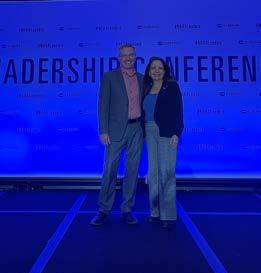
Mark Scheele, CAM has been selected to co-chair the 2026 and 2027 National Business Aviation Association (NBAA) Leadership Conference. Mark is the Chief Pilot and UAS Program Manager for Basin Electric Power Cooperative based in Bismarck, North Dakota. He is a member of the NBAA Business Aviation Management Committee and previously served as the chair of the Career Development subcommittee.
The NBAA Leadership Conference is the premier gathering of leaders and aspiring leaders in the aviation industry. Each year, hundreds of industry professionals gather to learn new skills and improve their leadership styles. As co-chair, Mark will be responsible for developing the conference content, selecting speakers, and acting as emcee of the event. The 2026 NBAA Leadership Conference will be held February 2-4, 2026 in San Antonio, TX.
More information about the conference can be found at https://nbaa.org/events/2026-nbaa-leadershipconference/
Adam Dillin, Airport Planner
North Dakota Aeronautics Commission
701-328-9657 | adillin@nd.gov
Thinking Ahead: The Importance of Airport Capital Improvement Planning
Planning and executing airport projects is not an easy task. Even small community airports are the size of a small town main street, and major airports are practically cities themselves. The sheer scale, cost, and complexity of most projects makes diligent and thoughtful planning imperative. Let’s explore some of the challenges encountered in the planning process.
A core component of any project is funding. Big projects inevitably come with big price tags. It’s a common misconception that the Federal Aviation Administration (FAA) pays for 90% of any project; and while that’s partly true at most federally-eligible airports, in reality it’s much more complicated.
Firstly, not every part of a project is considered eligible for federal funding. Infrastructure not usable by the general flying public, elements chosen to exceed normal FAA design standards, and numerous other items are considered ineligible, leaving the airport to either pay for those themselves or seek non-federal partners.
Secondly, there’s a finite funding ceiling that is typically determined by the amount of available entitlements, essentially the airport’s annual allowance from the FAA, that the airport has saved to date. This is limited to either three or four years maximum depending on airport type, and at a typical small General Aviation (GA) airport this amounts to only $600,000 total. Additional financial support has been available through COVID-related relief programs like the Infrastructure Investment and Jobs Act, but many of those programs will begin winding down in 2026. A few projects may be fortunate enough to receive additional funds via the FAA’s discretionary grants or the Airport Terminals Program, but those dollars are limited and competition is fierce. And then we have the airports that don’t qualify for federal funding – in North Dakota, 39% of our public airports are not FAA eligible and must finance all of their projects by either state or local means.
Further, it’s a well-known fact that the dollar simply doesn’t go as far as it used to. GA airport entitlements have been locked at $150,000 per year for more than 20 years, while construction costs have grown dramatically. For example, a runway overlay project that would have cost $300,000 in 2005 now exceeds $1 million. Inflation and supply-chain issues have in turn wreaked havoc with electrical, structural, and vehicle costs.
Finally, it takes a substantial amount of time for a project
to work its way from concept to completion. It all begins with an idea, often followed by studies or testing, sometimes environmental clearances and land acquisition, then design work, bidding, grant applications and awards, actual construction, and ultimately the closeout process. Even small projects take several years, while generational megaprojects may require more than a decade. Airports must carefully take these steps into account when considering how their project will affect their operations, financial plan, and overall priorities.
With climbing costs, limited FAA, state, and local funding, and monetary shortfalls commonplace, it’s become increasingly important to be adaptable, resourceful, and creative. In North Dakota, we consider a sound capital improvement planning process to be absolutely crucial at both the individual airport and statewide levels. To that end, every summer the North Dakota Aeronautics Commission (NDAC) hosts dozens of Capital Improvement Program (CIP) meetings where we gather all project stakeholders, including state and FAA officials, airport staff, engineers, and municipal representatives. We meet with each airport individually and talk about their needs and priorities, delve into near-term project plans, and walk through proposed projects reaching out ten years into the future. By gathering everyone together, we can quickly answer questions, tackle funding problems, strategize project design and construction phasing, and help to optimize project benefits while minimizing costs and negative impacts to tenants and passengers. In 2024, the NDAC met with 39 of our 89 public airports, and in some years we met with more than 50.
North Dakota has had great success working with our airports to plan smart and worthwhile infrastructure projects. In the last biennium, we provided nearly $36 million in state grants for 370 different airport projects, including both state shares of federal projects, as well as numerous non-federal projects. For every $1 that North Dakota put into our FAAfunded projects, we were able to then bring in about $5 in federal funds. That’s an excellent return on our state’s investments.
With an estimated $1.2 billion in future needs identified at our states’ airports over the next ten years, there’s still a lot of work to do but North Dakota is up to the task. Aeronautics plans to kick off the next round of airport CIP meetings in July and hope to notify airports of available dates shortly after this issue goes to print.
From the Field Campaign
2nd Battalion, 285th Assault Aviation Regiment
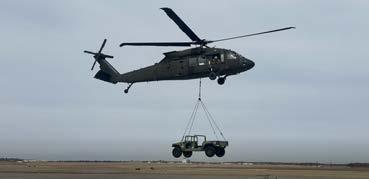
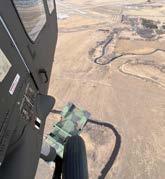
U.S. Army Spc. Emma Rouse, a UH-60 Blackhawk crew chief with Charlie Company, 2nd Battalion, 285th Assault Aviation Regiment, performs sling load training at the Army Aviation Support Facility in Bismarck, March 12. (U.S. Army National Guard photos by Staff Sgt. Leif Anderson, Detachment 2, Delta Company, 2nd Battalion, 285th Aviation Regiment, Maintenance)
SOLUTIONS
North Dakota Aviation Association
P.O. Box 5020
Bismarck, ND 58502-5020 ADDRESS SERVICE REQUESTED CHANGE SERVICE REQUESTED RETURN SERVICE REQUESTED FORWARDING SERVICE REQUESTED
CALENDAR of EVENTS
June 2025
Planes & Pancakes
JUN 08 | 08:30-12:00 | Mandan Regional Airport (Y19)
KBWW Annual Bottom Line Aviation Poker Run & Fly-In
JUN 14 | Beach Airport (20U)
Valley City Fly-In
JUN 14 | 07:00-09:00 | Valley City Airport (KBAC)
Garrison’s Annual Fly-In Breakfast
JUN 15 | 08:30-12:30 | Garrison Municipal Airport (D05)
Dunn County Fly-In
JUN 21 | 10:00-14:00 (Mountain time) | Dunn County Airport (9Y1)
Wings & Wheels Fly-In & Car Show
25 JUN | 16:00-21:00 | Thief River Falls Airport (TRVF)