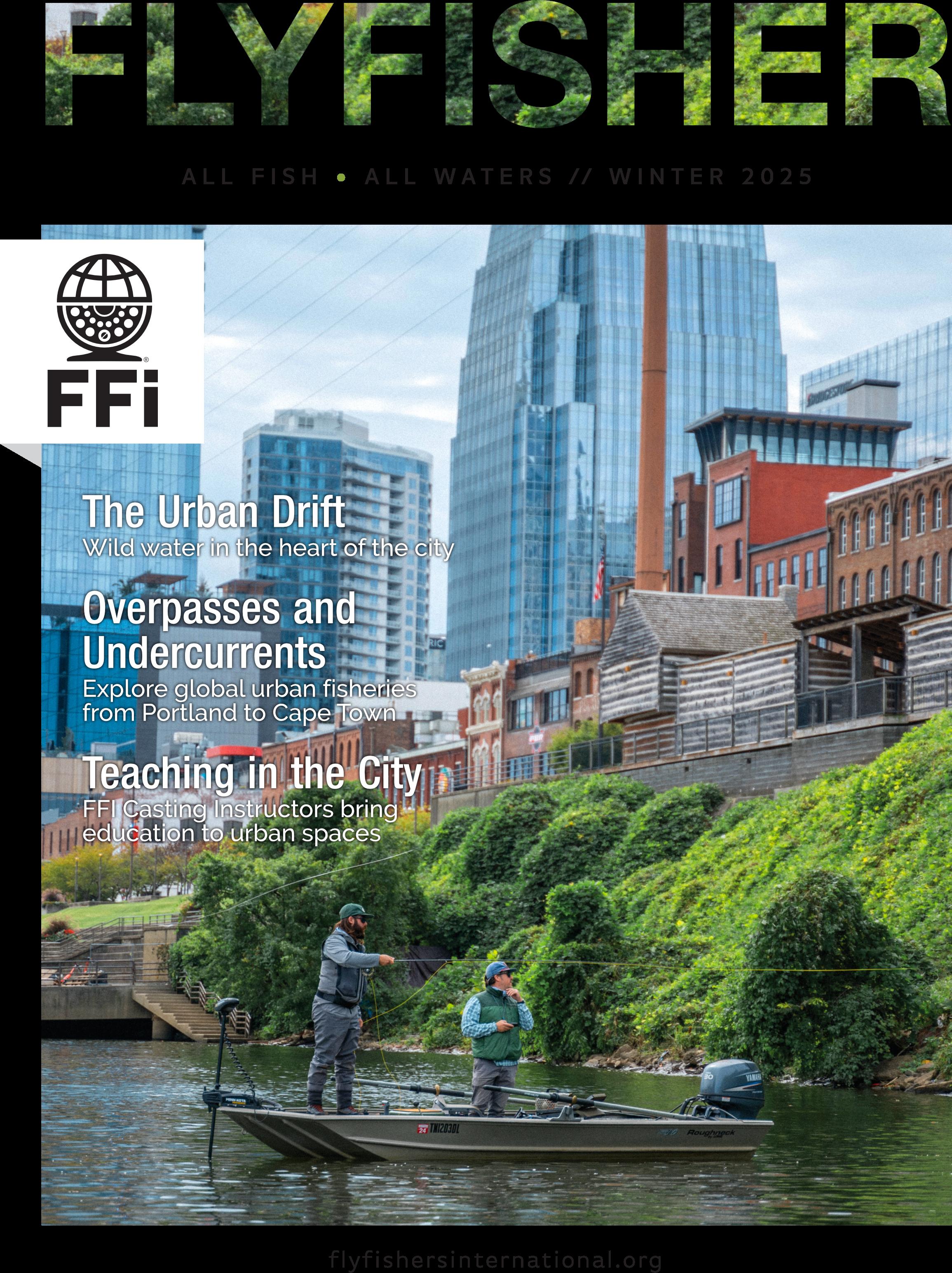
Flyfisher is the official publication of Fly Fishers International, published two times a year and distributed by mail and online free to members.
Send membership inquiries, fees and change of address notices to the FFI Headquarters at the address listed above. Flyfisher is produced for FFI by Bird Marketing Group Inc. Editorial & Advertising Inquiries: Editorial queries are welcome and should be sent to Bird Marketing Group Inc at the address listed above attention to the Editor.
Email queries can also be emailed to editor@flyfishersinternational.org. Visit flyfishersinternational.org for the full writer and photographer guidelines.
Advertising inquiries can be directed to jbird@birdmarketinggroup.com. Visit flyfishersinternational. org for Ad rates and spec guidelines. Reprints & Permissions
All facts, opinions and statements appearing within this publication are those of the writers and are in no way to be construed as statements, positions, or endorsements. No part of this publication may be reproduced in any manner without the written consent of the publisher.
Copyright 2025 Fly Fishers International. Letters to the Editor
Send your comments about any aspect of Flyfisher to the Editor at editor@flyfishersinternational.org. We will endeavor to reply to each letter. We reserve the right to edit all submissions. Letters published in Flyfisher become the property of Fly Fishers International.
Executive Publisher
Jennifer Bird
jbird@birdmarketinggroup.com
Editor Chris Bird
Group Art Direction
Terry Paulhus
Office Administrator Kim Carruthers
Department Contributors
Conservation
Rob
Dave Mccoy
Rick Mikesell
Blake Parsons
Tim Romano
Jen Ripple
Casting & Conservation FlyFisher
INTHIS ISSUE
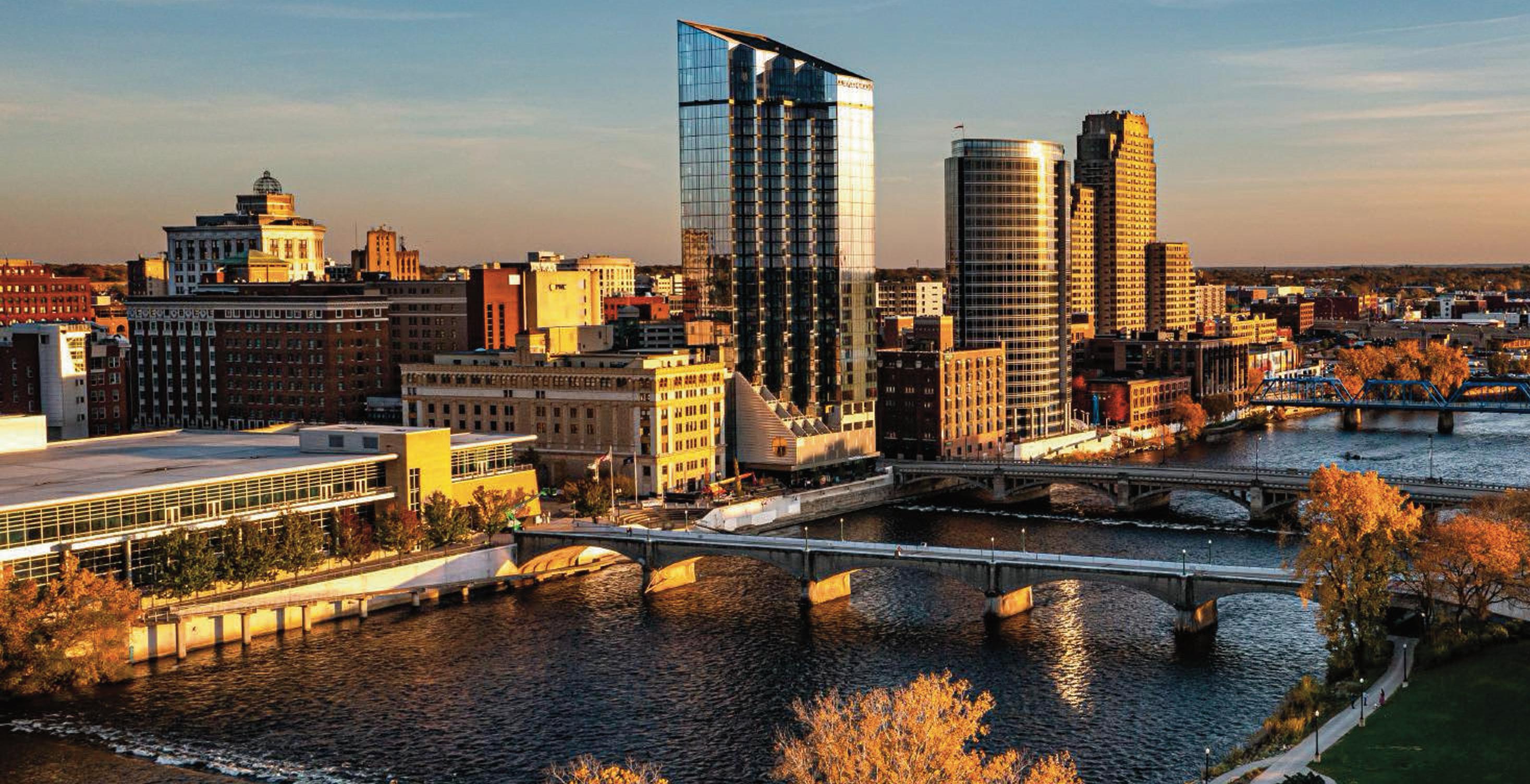
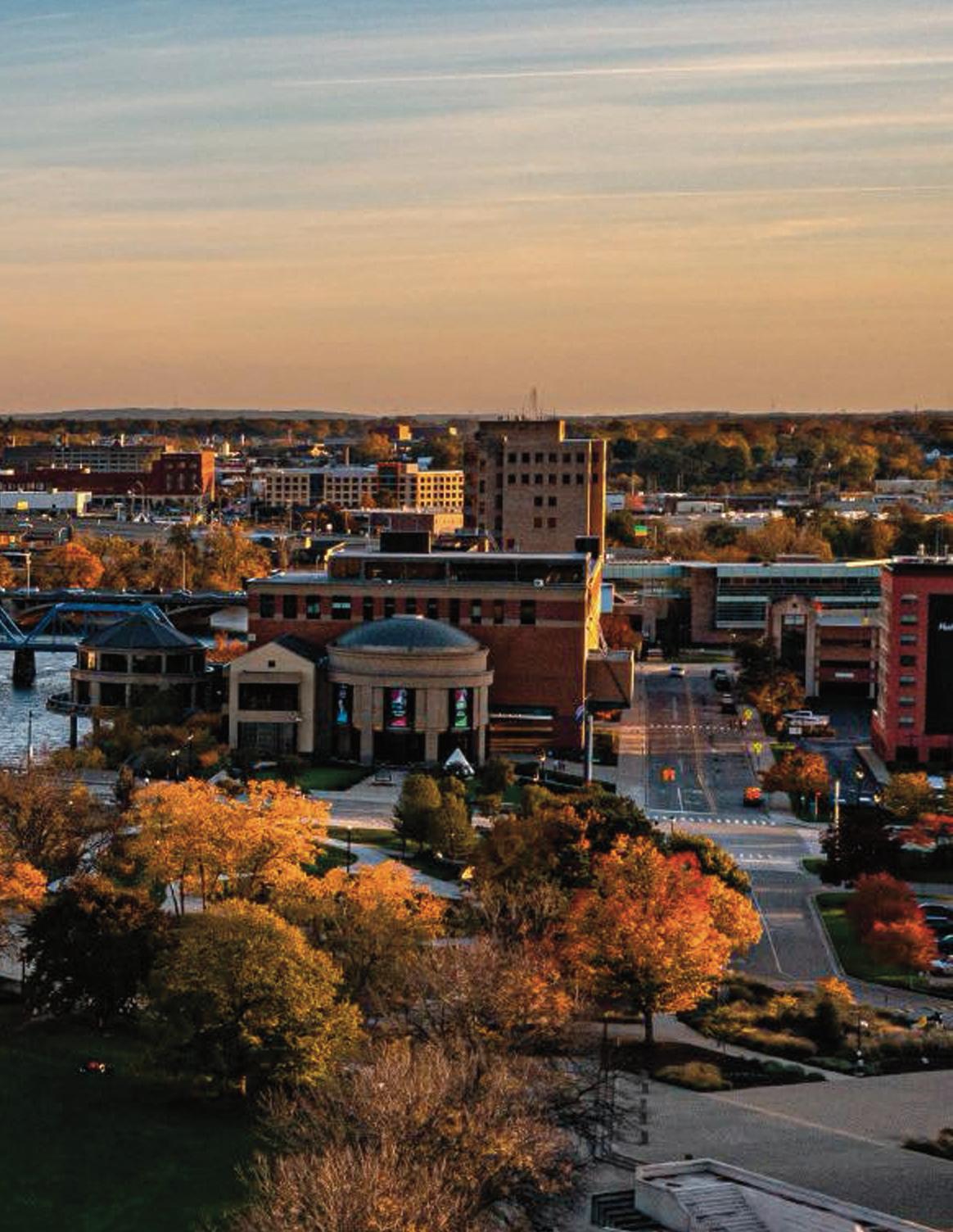
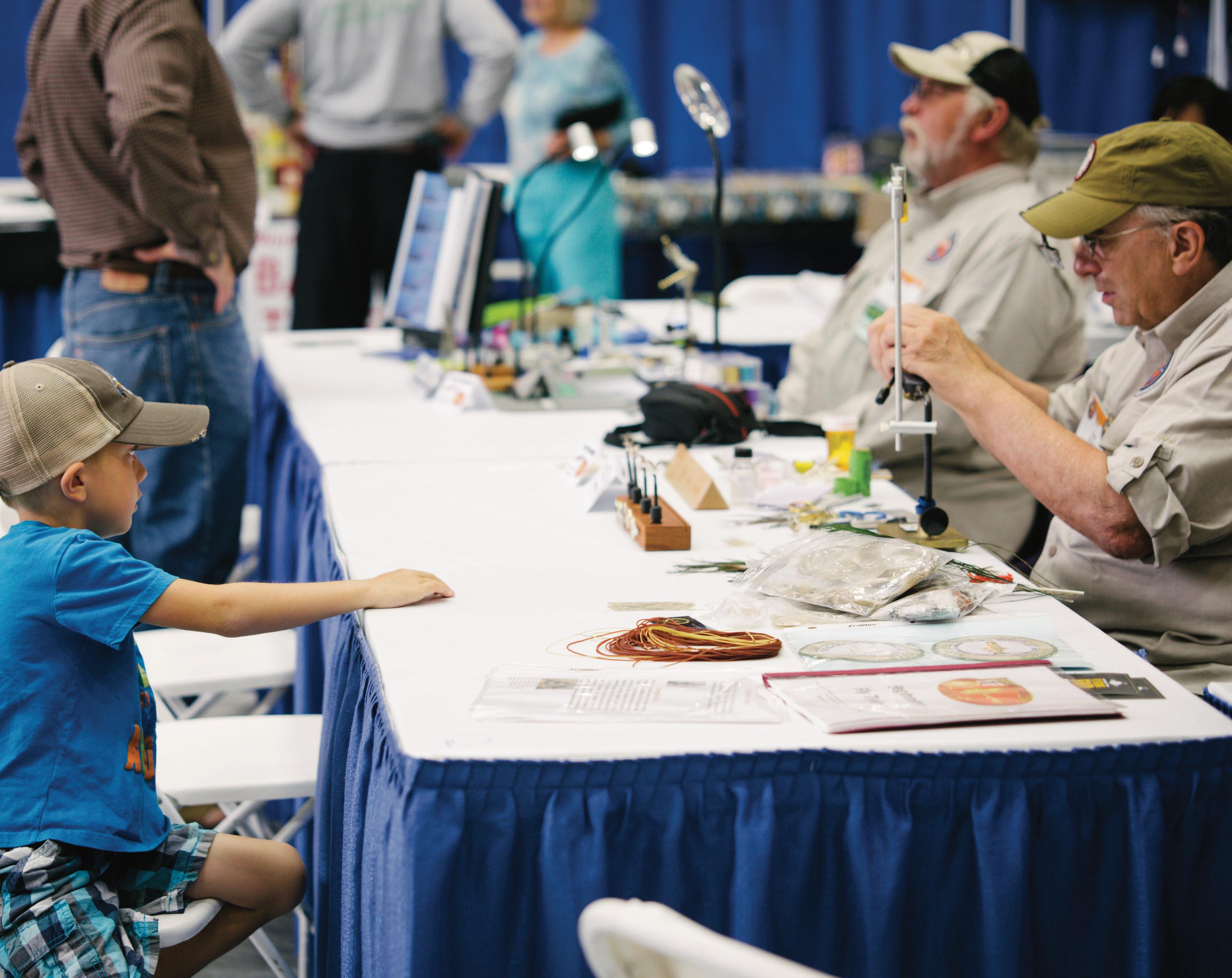
FFI celebrates the return of FlyFest in Grand Rapids, honoring decades of shared tradition, community, and learning while embracing a renewed focus on connection.
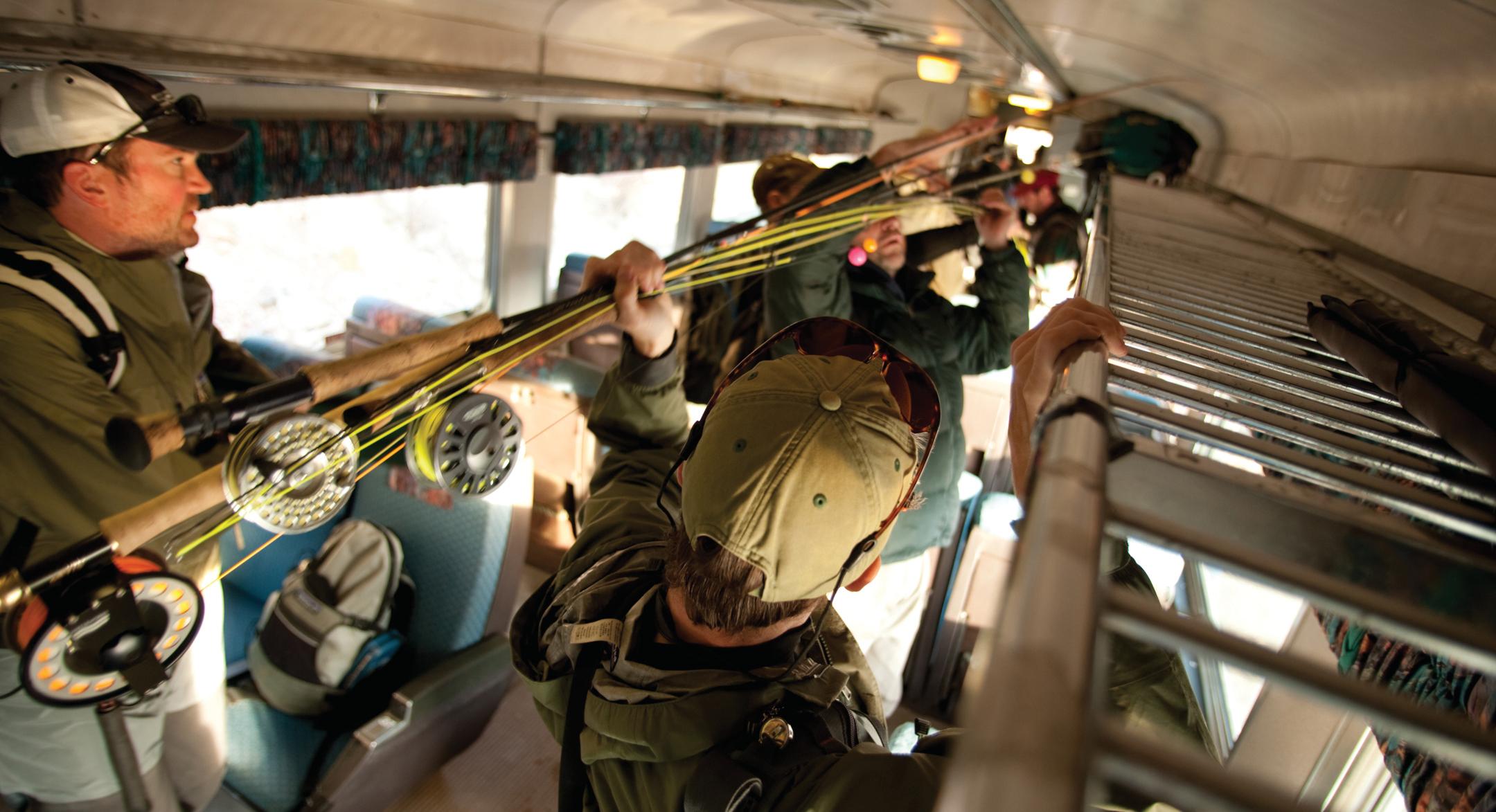
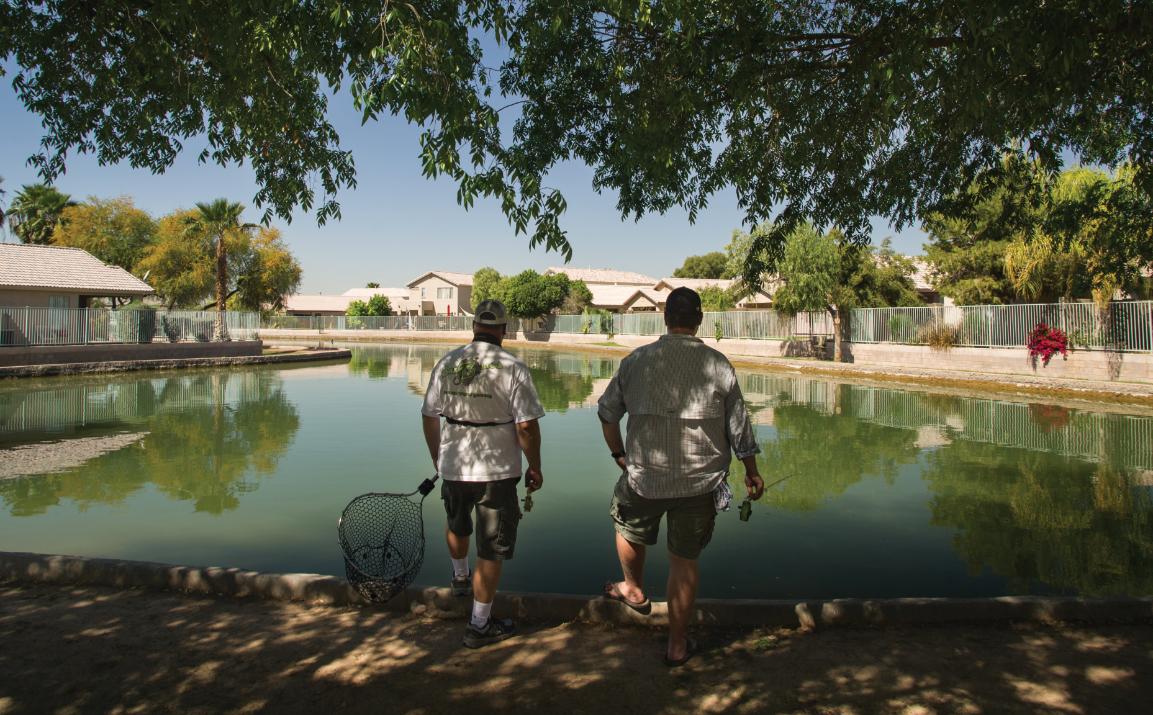
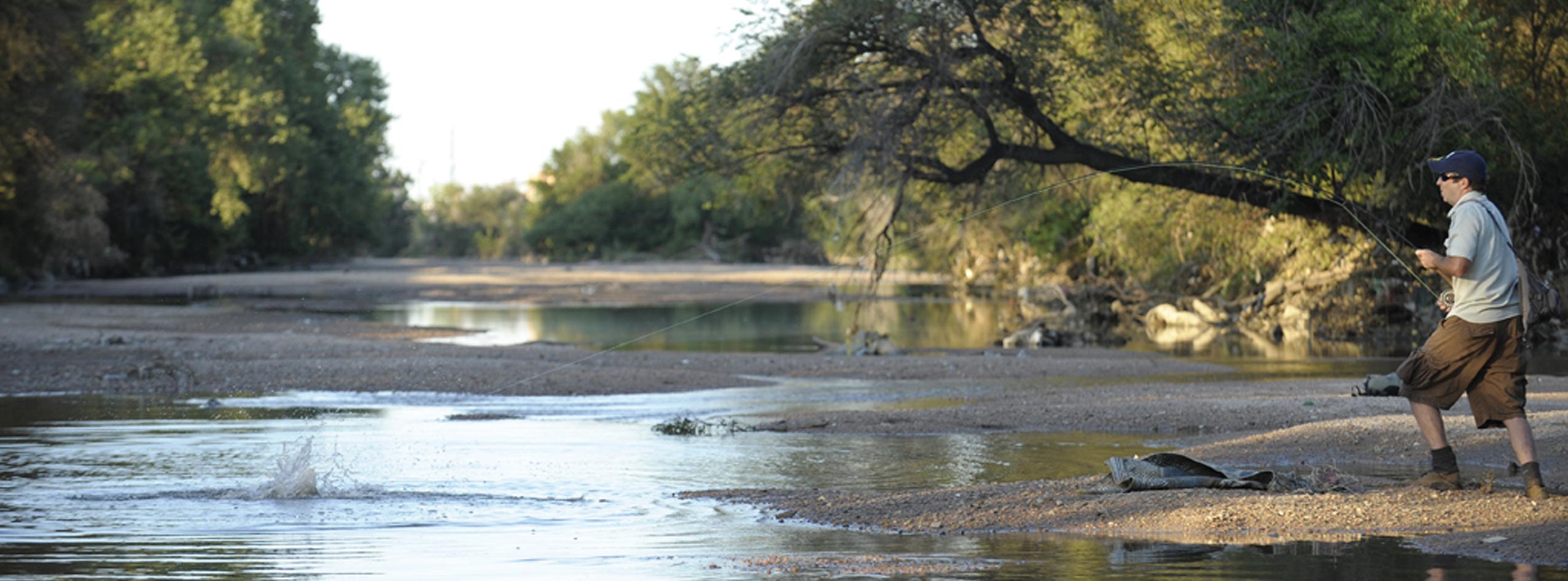
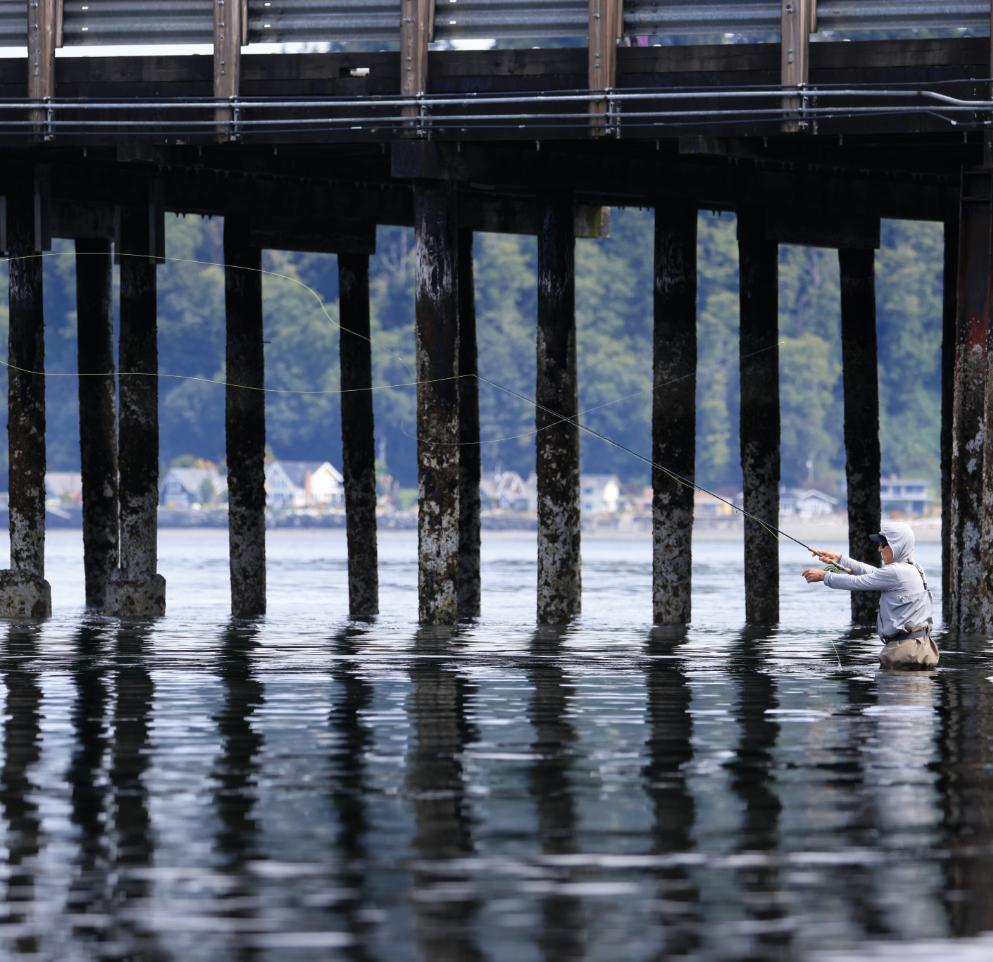
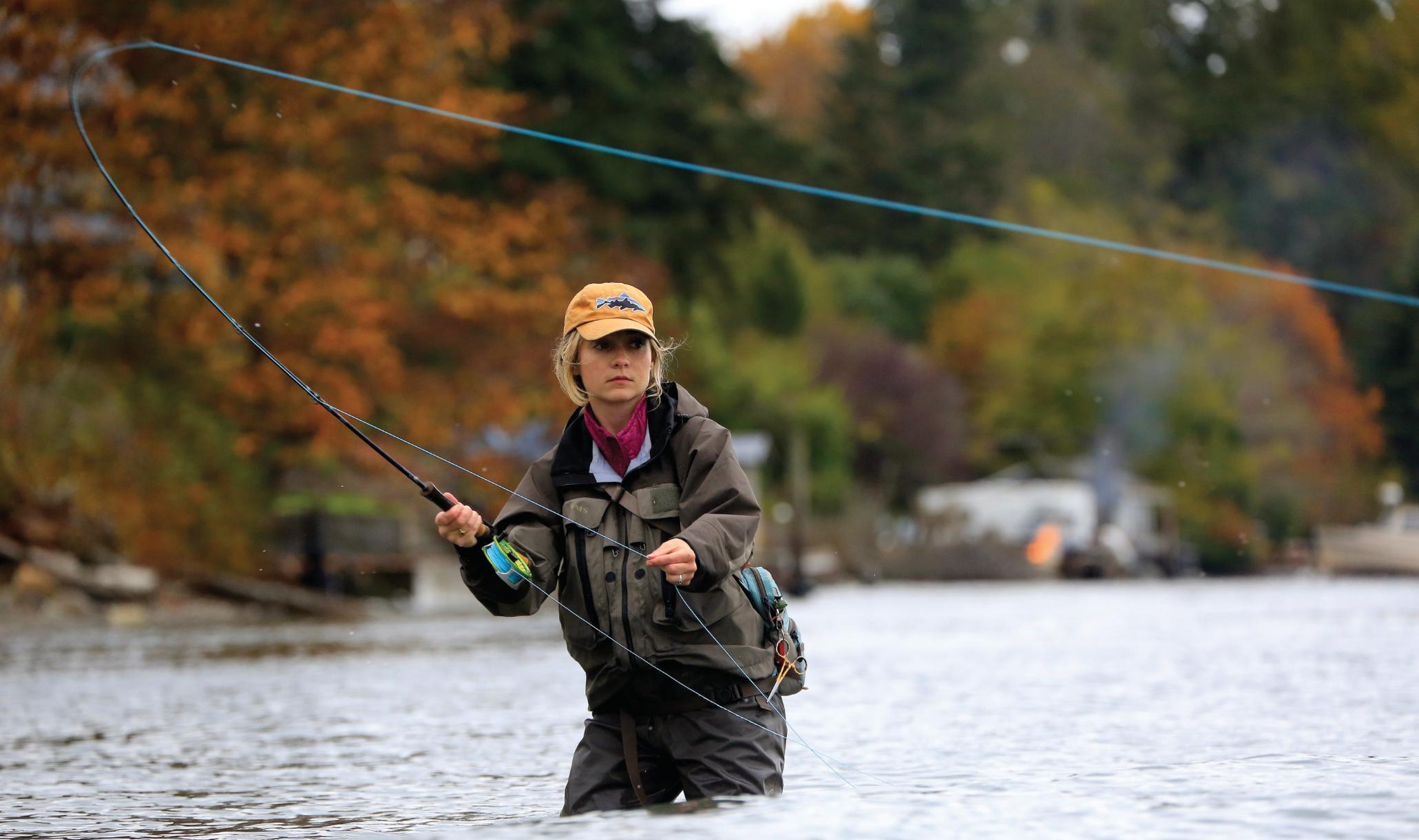
Discover the unexpected beauty and abundance of urban fly fishing and how hidden or overlooked city waterways can offer rewarding experiences and a fresh appreciation for nature in the city center.
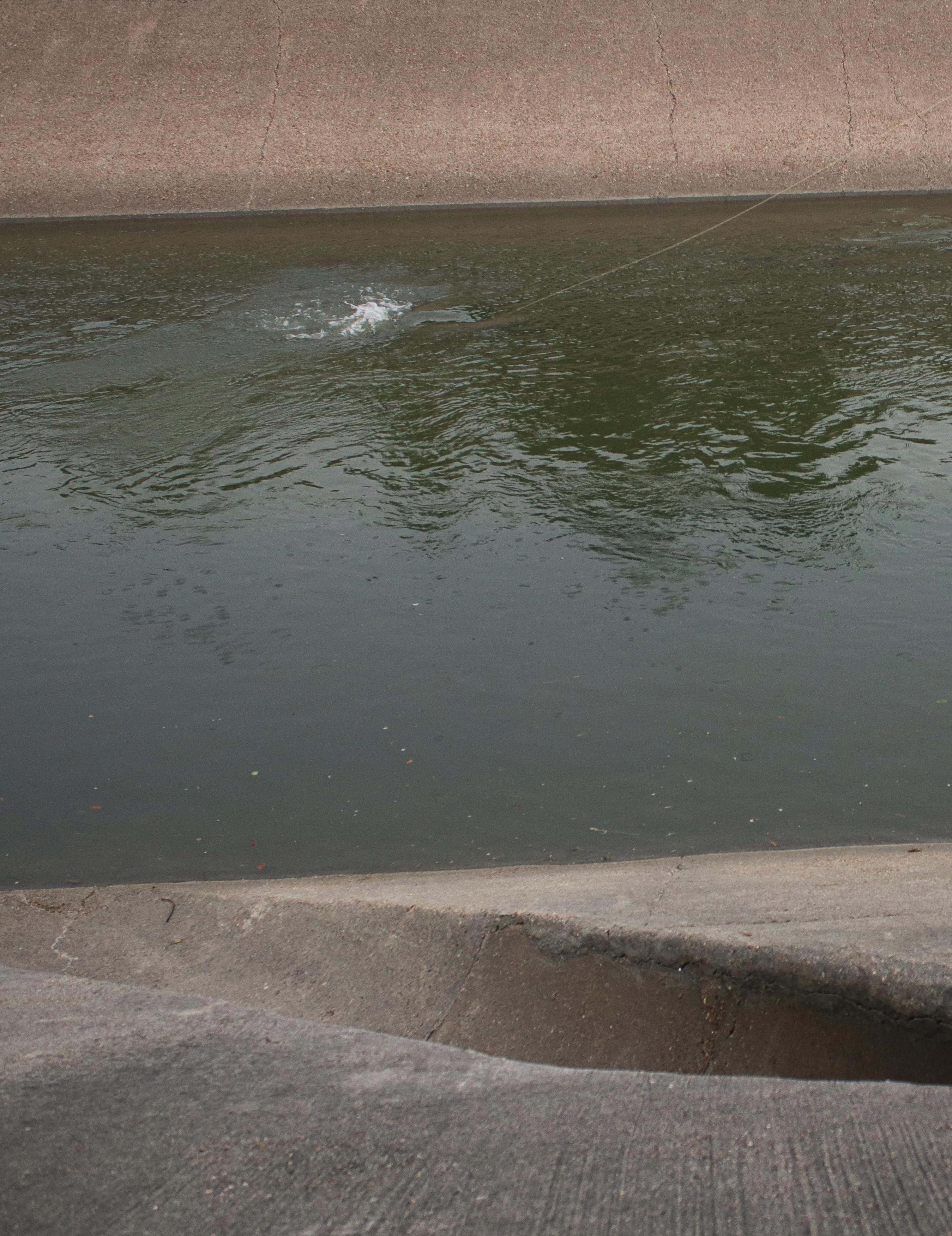
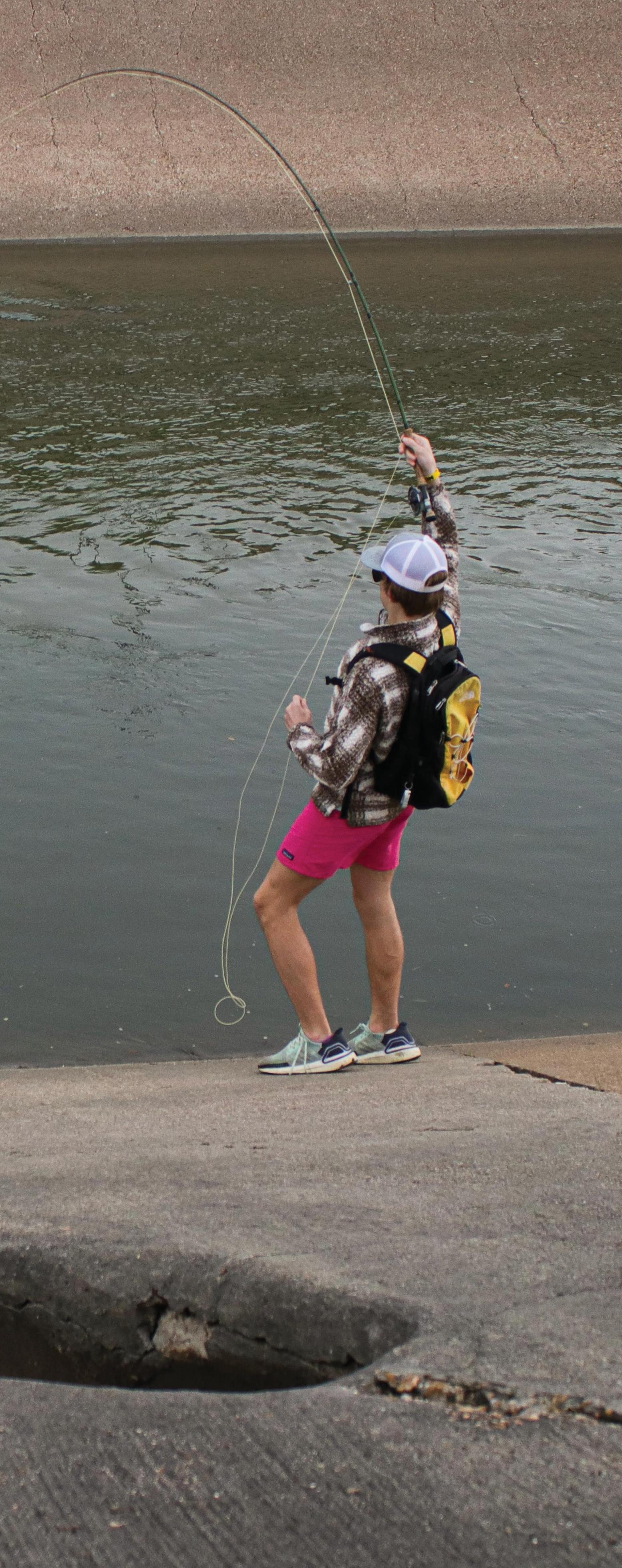
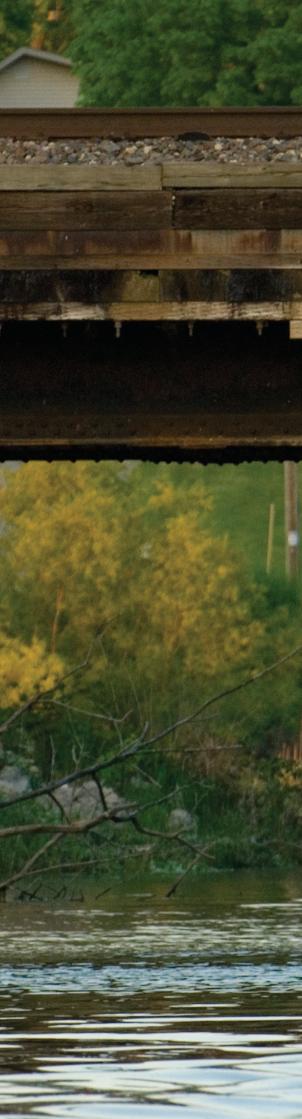
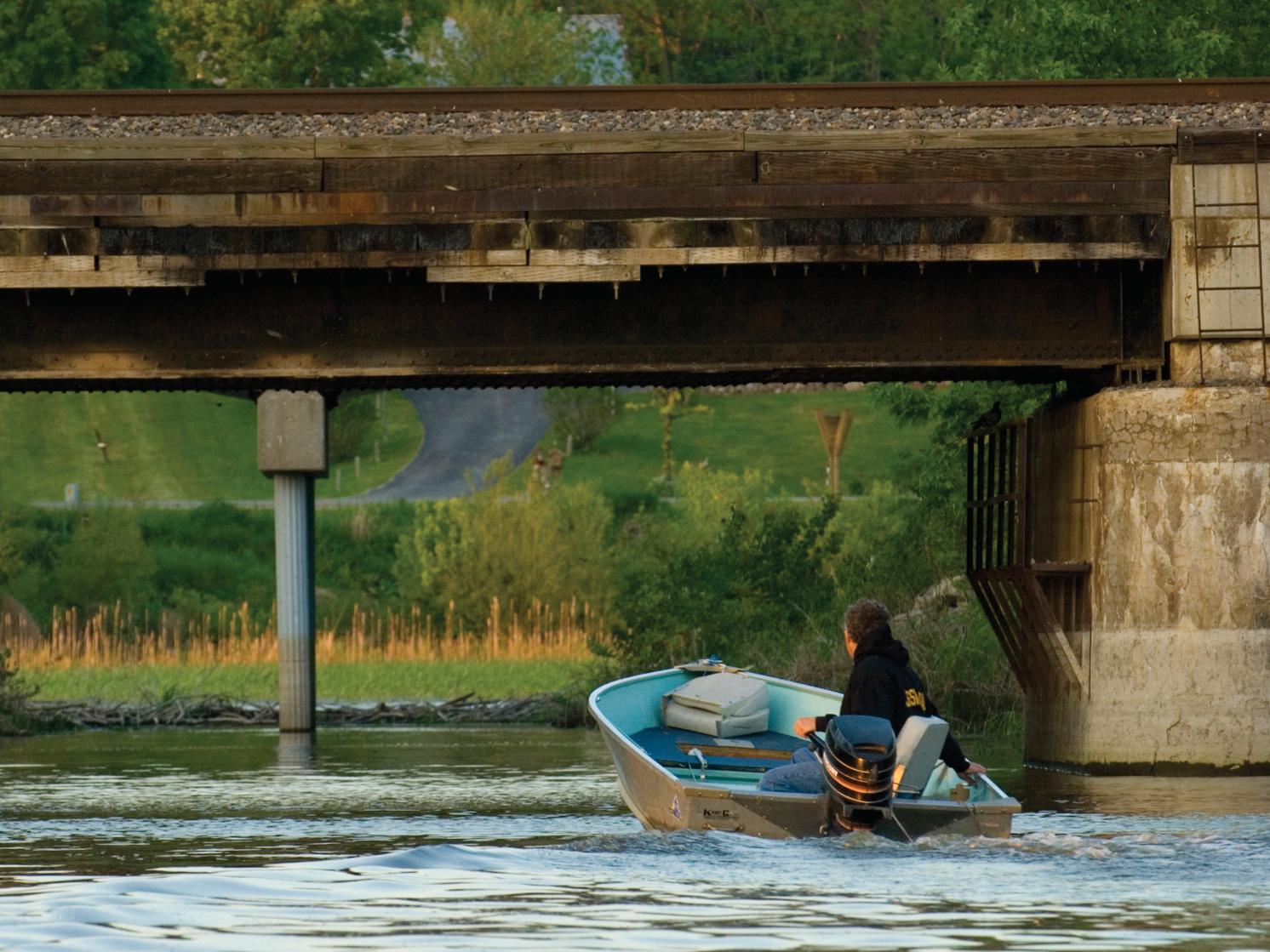
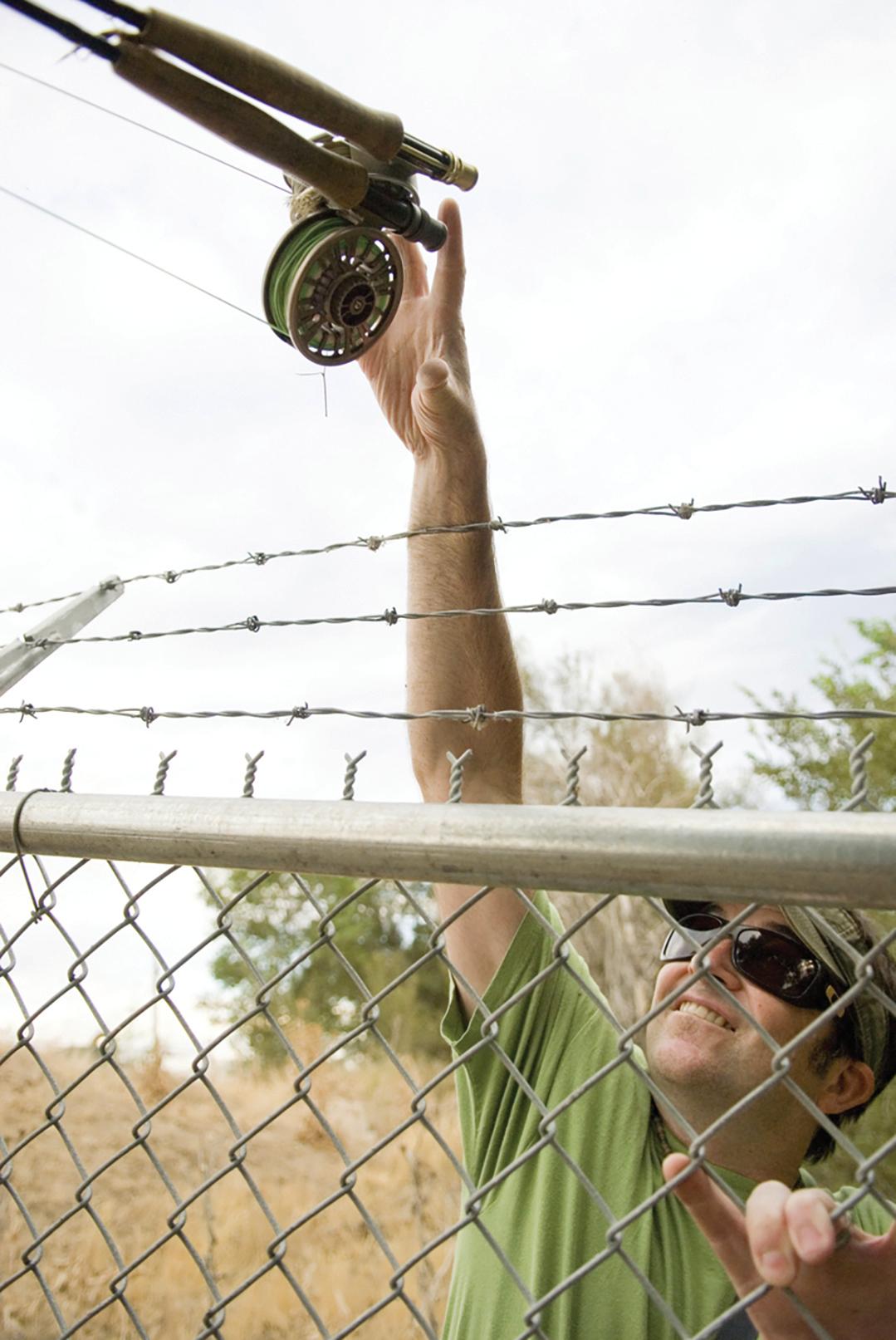
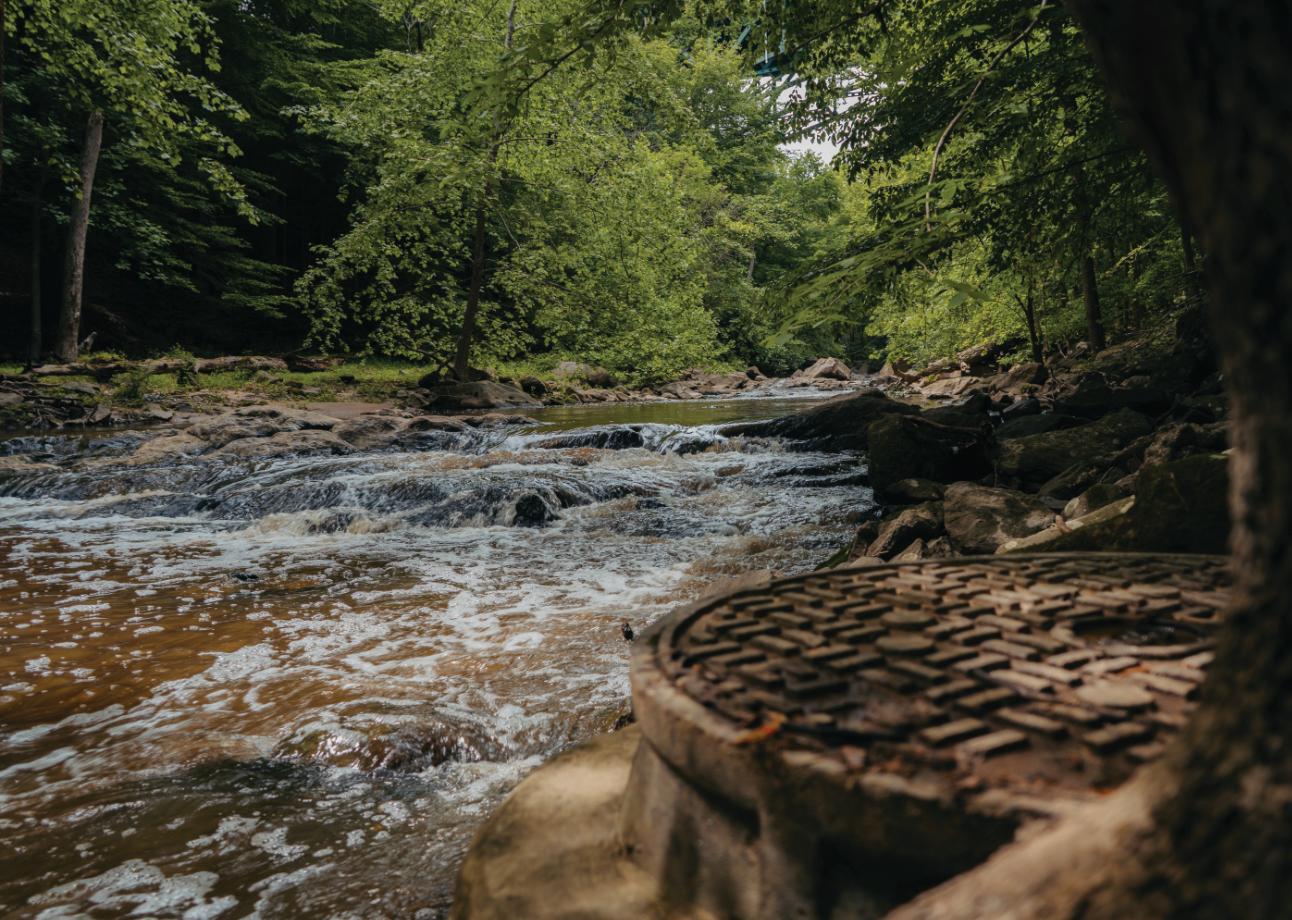
A visual journey through the overlooked waterways of the city—where grit meets grace, and life thrives beneath the hum of the urban landscape.
From the urban waters of the Cumberland River to the wild streams of the Smokies, explore the rich diversity, year-round opportunity, and vital conservation efforts that make Middle Tennessee a hidden gem for fly fishers.
From Cape Town to Washington, Portland to Denver, explore four thriving urban fisheries to find wild moments amid cityscapes.
Look beyond the famous trout streams and embrace the connection found in the overlooked urban fisheries flowing right through your own city.
The battle to keep invasive carp out of
Photo credit: Tim Romano
What an exciting time we had at FlyFestinGrandRapids.Iloved seeing old friends and making new ones. The Board had a great strategic planning session where we came together to discuss the future of Fly Fishers International (FFI). We will give out more informationastheBoardcompletesthenew strategic plan. One of the important things about having Fly Fest in Grand Rapids was the chance to fish in an urban area. The Grand River runs through the middle of town and provides great fishing opportunities. Most of our fly-fishing community lives in an urban area. You will find in this issue more information about fishinginurbanareas.
So many metropolitan areas are built along rivers, lakes and oceans. All types of fish live close to or in urban areas. This
gives people the opportunity to fish where they live. Their home waters can be just a few minutes away. Not everyone wants to fish out in the wild. For me, fly fishing is a way to relax and shed the stress of what is happening in my life. Being able to find your fishing Zen spot in an urban area wouldbehuge.
Metropolitan fly-fishing clubs provide the community for fly fishers. I love clubs. That is where I learned to fly fish. Clubs bring education, fishing trips, camaraderie and safety to their members. I get to hear amazing speakers talk about destinations, fly fishing techniques, how to tie flies, how tocast,andalotofotherfly-fishingtopics.I gettogoontripswithmembersoftheclub to learn about unfamiliar places and help others. Some of the most fun fishing trips I havebeenonwerewithclubmembers.
FFI provides so much for our members and our clubs through our casting, fly tying, women, guide and conservation programs. Imagine having a certified casting instructor in your club who can teach the members and prospective members how to cast. Imagine having an endorsed fly-tying instructor who can teach others. Imagine supporting an endorsedguideoroutfitterinanewarea. This is what the FFI Community can provide for you.
This issue also celebrates some of the volunteers who have given their time and talent to FFI. Join me in congratulating and thanking these leaders for their contributions.
This is an exciting time for FFI. Bring your friends to the Community and join us forthejourney.
Tilda Evans
A lifelong angler with a deep passion for conservation and education, Tilda Evans has been actively involved in FFI for over 15 years, serving on the Board of Directors and most recently as Board Secretary and a member of the Executive Committee. Her leadership has been pivotal in expanding fly fishing opportunities, promoting conservation initiatives, and educating new anglers. Recognized for her outstanding contributions, she has received multiple honors, including the FFI Distinction for Leadership and Service award, Fly Fisher of the Year, and the Women’s Community Development award.
While at times, fly fishing can be a pretty solitary sport, it no doubt connects fly fishers in unique ways. Getting together to talk fly fishingisalmostascoretothesportasthe fishingitself.
For nearly 55 years, from 1965 through 2019, Fly Fishers International (FFI) produced an in-person event without fail. When you think about that statement and calculatethemaththatwasmorethanfive decades, our members and guests gathered in one location to celebrate fly fishing. Historically, our events attracted about 400 people who joined together to share experiences, learn new skills, and generally have fun, that was centered around the sport we are so passionate about. That in itself is quite an accomplishment.
I stepped into the picture when I was hired by this organization in 2011. That particular year, our annual gathering was held in West Yellowstone, Montana. I remember having to learn the ropes of producing an event of this magnitude. I was fortunate that we had a seasoned eventcoordinator,JessicaAtherton,who had seven years of experience at that point.Butforme,Iwaslikeadeerinthe headlights, trying to learn all the moving parts and making sure we produced the best event possible. As we did every year from that point forward, our staff and volunteers worked hard to bring great experiences to the attendees in places like Spokane, Livingston, Bend, Boise and Bozeman.
When we were faced with the pandemic and cancelling the event in 2020, we had a chance to step back and assess how these gatherings provided value to our members compared to the resources we were spending to produce them. For five years, we took a hiatus, but the call of our members who wanted the event to return was heard. We decided to get back in the game in 2025.
This decision to return to an annual gathering wasn’t made lightly. We surveyed our members, who shared valuable thoughts about how to proceed. Given that we had been in the West for many years, we decided to look to the Midwest. We landed in a place not new to FFI gatherings, Grand Rapids, Michigan, having been there in 1997.
We extend a sincere thanks to our 2025 host city, and the Michigan Sports Commission in Grand Rapids, for the warm hospitality and help to provide
support for our event held this past September. It was fortunate that the Sheraton Inn – Airport had a grassy field just across the street, owned by a local business, Our Daily Bread, willing to let us use it for our casting activities. Our heartfelt gratitude goes out to all of them for making our event a success.
We also thank the leadership and members of the Great Lakes Council for providing such great support while we were in their region. Mark Johnson and Dave Peterson worked tirelessly to support our efforts in Grand Rapids, while many members of the council and regional clubs stepped forward to help. One person stands out above all of us, Cath S. from Grand Rapids. She stepped forward on her own and brought skills that we desperately needed every single day before and after the event. The entire FlyFest Committee are to be commended for their hard work to bring all the resources needed to provide the experience to our members and guests.
As I reflect on the event now, I can truly say these events are important to our organization. FlyFest provides an opportunity for us to unite as a group of dedicated people and get excited again about why we are all connected through FFI. We talk about our experiences, share ideas, dream of what is to become, and go home with a renewed sense of dedication to the sport and to get the answer to “Why FFI”? You just cannot put a price tag on that kind of wonderful return.
Rhonda Sellers
Rhonda Sellers is the Executive Director of Fly Fishers International (FFI). She has an integral part of FFI since 2011, managing operations and working to improve the organization’s responsiveness to members, groups, and industry. She is a trained professional in managing government and community relations having served on numerous non-profit boards during her career. Rhonda was awarded the FFI Award of Distinction for Leadership and Service in 2024.
Photo: Western Michigan Sports Commission
EVENTS CALENDAR
JANUARY
Fly Fishing & Wine Festival
Event Date: January 9 - 10
Participating Organization:
Chesapeake Council
Location: Doswell, VA
Facility: Meadow Event Park vaflyfishingfestival.com
The Fly Fishing Show
Event Date: January 16–18
Participating Organization: North Eastern Council
Location: Marlborough, MA
Facility: Royal Plaza Hotel & Trade Center flyfishingshow.com
The Fly Fishing Show
Event Date: January 23–25
Participating Organization: Eastern Waters Council
Location: Edison, NJ
Facility: New Jersey Convention & Expo Center flyfishingshow.com
Western Idaho Fly Fishing Expo
Event Date: January 30-31
Sponsoring Organization: Boise Valley Fly Fishers
Location: Garden City, ID
Facility: Expo Idaho idahoflyfishingexpo.com
FEBRUARY
The Fly Fishing Show
Event Date: February 6–8
Participating Organization:
Eastern Rocky Mountain Council
Location: Denver, CO
Facility: Gaylord Rockies Resort & Convention Center flyfishingshow.com
Greater Cincinnati Fly
Fishing Show
Event Date: February 7
Sponsoring Organization: Buckeye United Fly Fishers, Inc.
Location: Cincinnati, OH
Facility: Oasis Conference Center
buckeyeflyfishers.com/fly-show
The Fly Fishing Show
Event Date: February 14–15
Participating Organization: Washington Council
Location: Seattle/Bellevue, WA
Facility: Meydenbauer Center flyfishingshow.com
The Fly Fishing Show
Event Date: February 27 – March 1
Participating Organization: Northern California Council
Location: Pleasanton, CA
Facility: Alameda County Fairgrounds flyfishingshow.com
MARCH
Northern Ohio Fly Fishing Expo
Event Date: March 7
Participating Organization: North Coast Fly Fishers
Location: Painesville, OH
Facility: Lakeland Community College northcoastflyfishers.com
Northwest Fly Tyer & Fly
Fishing Expo
Event Date: March 13–14
Sponsoring Organization: Oregon Council
Location: Albany, OR
Facility: Linn County Expo Center orcffi.org
Great Waters Expo
Event Date: March 13–15
Location: St. Paul, MN
Facility: Hamline University Walker Fieldhouse greatwatersflyexpo.com
Trinity FlyFest
Event Date: March 14
Assisting Organization: Texas Council FFI
Location: Fort Worth, TX
Facility: River Park & Acme Brick Headquarters streamsandvalleys.org/flyfest-1
The Fly Fishing Show
Event Date: March 14–15
Participating Organization: Chesapeake Council
Location: Lancaster, PA
Facility: Lancaster County Convention Center flyfishingshow.com
2026 International
Sowbug Roundup
Event Date: March 26-28
Sponsoring Organization: North Arkansas Fly Fishers
Location: Mountain Home, AR
Facility: Baxter Country Fairgrounds northarkansasflyfishers.org
APRIL
Washington FFI Fly
Casting & Tying Fair
Event Date: April 19
Sponsoring Organization:
Washington State Council FFI
Location: Issaquah, WA
Facility: Pickering Barn Park wscffi.org
MAY
Gulf Coast Classic
Event Date: May 1-2
Sponsoring Organization: FFI Gulf Coast Council
Location: Gulf Shores, AL
Facility: Gulf State Park Learning Campus
ffigulfcoastclassic.com
FFI Women Connect
Missouri River Rendezvous
Event Date: May 22, 2026, 4:35 PM – May 24, 2026, 4:35 PM
Sponsoring Organization: FFI
Women Connect
Location: Missouri River, Craig/ Cascade/Wolf Creek, MT flyfishersinternational.org
Urban Solitude
A new respect for hidden metropolitan ecosystems
Rob McConnell
For many people, the art of fly fishing is all about the Congress of nature and tranquility. It’s what brings most people into the fly-fishing fold. We have a yearning for rocks, trees, water and solitude. We often equate the activity of waving a long stick in the air with standing in or hiking along a wild and secluded stream.
However, due to pesky circumstances in life (like a job), many of us live in urban areas surrounded by concrete and steel, far away from picturesque freestone streams. I live in Houston, Texas, the fourth-largest city in the United States. It is massively urban. From my front door, a stereotypical “wild” trout stream is four hundred miles away, at least.
When I first moved to Houston, I resigned myself to the idea thatflyfishingforayswouldonlyoccuronceortwiceayearand only after I had saved enough vacation time and money to travel. I convinced myself that the waterways in the Houston metro area weren’t worthy of fly fishing. This was despite the fact that Houston is surrounded by hundreds of miles of water. Rivers, bayous, lakes, swamps, streams and cement-lined ditches all exist within the Bayou City’s metropolitan sprawl, and that’s just the freshwater. But the idea of fly fishing in any urban setting was anathema to me. I couldn’t look past the harsh geometric cityscape and see any desirable waterway worth plunking a fly into. Thankfully, I soon snapped out of my pity party and realized that my preconceived notion about urban waterways was wildly incorrect.
One sunny afternoon, I was riding my bike through a local city park. There was a narrow ditch, about 3 feet deep, that paralleledthebiketrail.WhileIpeddledalong,Inoticedseveral cormorants in the ditch. As I went by, I watched the birds dive under the water, each time emerging with a plump sunfish clasped between their hooked bills.
I squeezed the brakes on my bike handle and skidded to a stop. I stalked to the edge of the bank and watched in amazement as the cormorants dove down repeatedly, bringing up sunfish, some of which were quite large.
The cormorants weren’t too pleased with my snooping. Their guttural croaks signaled their irritation. Eventually, they took flight, leaving the ditch in peace. After they were gone, I scanned the water and noticed a partially submerged culvert protruding into the ditch. If any sunfish had been lucky enough to escape the mortal jaws of the avian predators, they likely sought refuge here.
The next day, I biked back to the same ditch, but this time I had my 3-weight fly rod with me. This was my brook trout rod,
and until then, it had been casually discarded in the corner of my closet, gathering a layer of dust.
I found the partially submerged culvert and eyed it eagerly while I rigged up. My fly selection consisted of trout flies, but I figured panfish weren’t too picky. I tied on a size-12 dry fly and made my first cast. My eyes grew wide as I watched a green sunfish abandon its haven at the mouth of the culvert and swim over to the fly. The greenie pecked at the fly a couple of times, then, without further delay, ate the whole thing.
The fish turned sharply and swam back for the culvert, pulling hard. Despite myself, I laughed aloud. The 3-weight pulsed hard with each run. Eventually, the greenie gave up and was brought to hand.
Several more sunfish were caught from the meager ditch before I decided to call it a day. I was still smiling while I walked back to my bike. As I peddled home, it dawned on me; if there were healthy populations of fish in a tiny urban ditch like this one, how many other urban waterways also harbored fish?
Catching those ditch-dwelling sunfish was the catalyst that changed my perception of urban waterways. As I became more aware of the aquatic ecosystems in and around Houston, I began to notice larger fish, like gar and carp, breaching or rolling on the water’s surface. I even noticed small bass finning in shallow weed beds along the banks of city ditches. I began to realize that fish lived in some of the most unassuming places.
Although urban fly fishing was new to me, it was far from being novel. For many decades, Houston has been the epicenter of a robust urban angling scene. One of the local pioneers of urban fly fishing is Mark Marmon. Marmon, the owner of Metro Anglers, a fly-fishing guide service, has been casting flies into Houston bayous since the late 1970s.
Originally, Marmon was strictly a saltwater fly angler. His weekends were spent driving to the Texas coast, where he fished for redfish and sea trout. However, in between his weekend excursions, Marmon still felt the urge to fish. To remedy this, he started taking his fly rod to a local cement-lined bayou near his home, called Brays Bayou. He began toying with various species of fish that lived in the bayou, including populations of common carp and grass carp (Ctenopharyngodon idellaon). It didn’t take long before he figured out how to catch these fish on the fly. It’s doubtless that Marmon is one of the first people in the country to consistently catch grass carp using a fly rod.
When Marmon talks about his early days as an urban fly-fishing guide, he can’t help but smile. “My early clients were mostly Europeans,” he says. “Carp fishing in Europe was popular, but it was done with conventional tackle. I didn’t know of anyone who was offering fly fishing trips for carp. When my clients from Europe would travel to Houston on business, they’d hire me and I’d walk the bayous with them.”
Today, Brays Bayou is still considered one of Houston’s most iconic urban fisheries. “People don’t realize there are fish in there,” says Danny Scarborough, another Texas fly fishing guide and owner of Houston Fly Fishing Guides, “and that they can be up to 20 pounds!” Danny grew up in the Houston area and is one of the few freshwater-specific fly guides who works the Houston region. To this day, Marmon and Danny guide clients along Houston’s “concrete flats.”
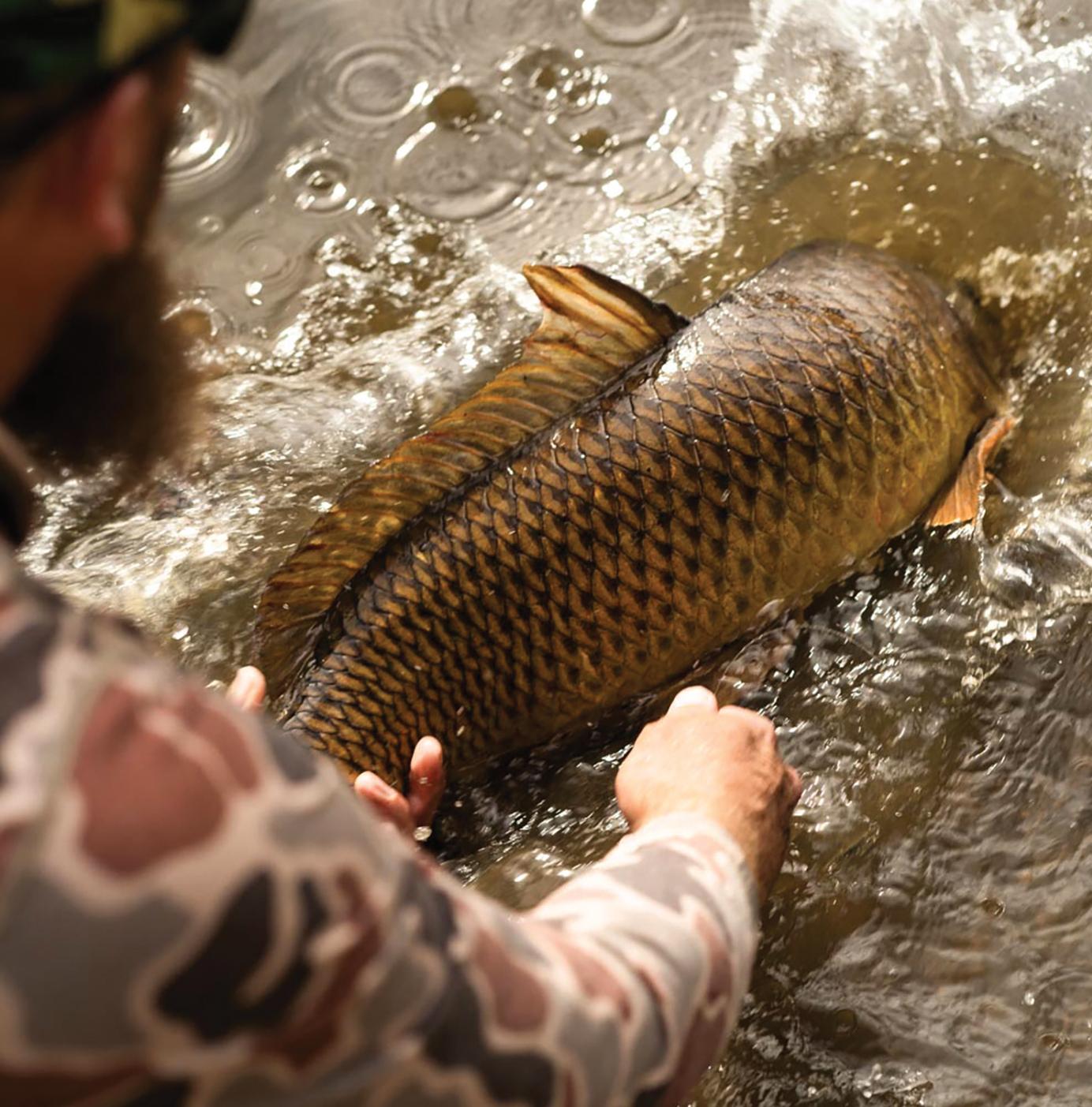
For most local urban fly rodders, carp are considered the most popular sport fish. This is due to their large size and the fact that they can be sightfished in many urban waterways. On top of that, grass carp will hit dry flies, which makes them an especially fun fish to target with a fly rod. In 2014, Danny Scarborough landed a grass carp that weighed 16.5 pounds and was over 32 inches long. This Brays Bayou record was caught on a dry fly.
But it isn’t only carp that can be pursued in Houston’s urban waterways. All manner of species can be found. Anglers can catch native fish like channel catfish, sunfish, gar and largemouth bass, but also find exotic species like tilapia, koi and occasionally, a Rio Grande cichlid. To date, Marmon has caught 18 different species from Brays Bayou alone.
My perception of urban fly fishing certainly has changed, and for the better. Had I never brought my 3-weight to that sunfish-filled ditch, I never would have discovered the vast fishery that exists in the urban jungle.
I fully acknowledge that urban fly fishing might not be for everyone. With that said, I encourage any adventurous angler to give it a go. Sure, the experience is vastly different from standing on the banks of a freestone stream, and no, the incessant humming in your ears won’t be the sound of summertime cicadas; it’ll be the hum of the interstate. Nevertheless, once you land a fish from an unassuming urban ditch, I think you’ll develop a new respect for hidden metropolitan ecosystems. I know I did. It may only take one cast, and you too could be pleasantly surprised by what you find on the end of your line.
Reprinted with permission from Hatch Magazine
LEADING
THROUGH
INNOVATION.
For over 80 years, we have been at the forefront of innovation. Sharpened by experience. Pushing the boundaries of material science to make our lines stronger and more durable.
Then testing in the most demanding environments with the world’s best anglers. Those who demand the best choose Scientific Anglers.
SA Advisor Camille Egdorf McCormick
Overpasses and Undercurrents
A visual journey through city waterways
Tim Romano
The Rhythm of Middle Tennessee Waters
Blake Parsons
Photo:
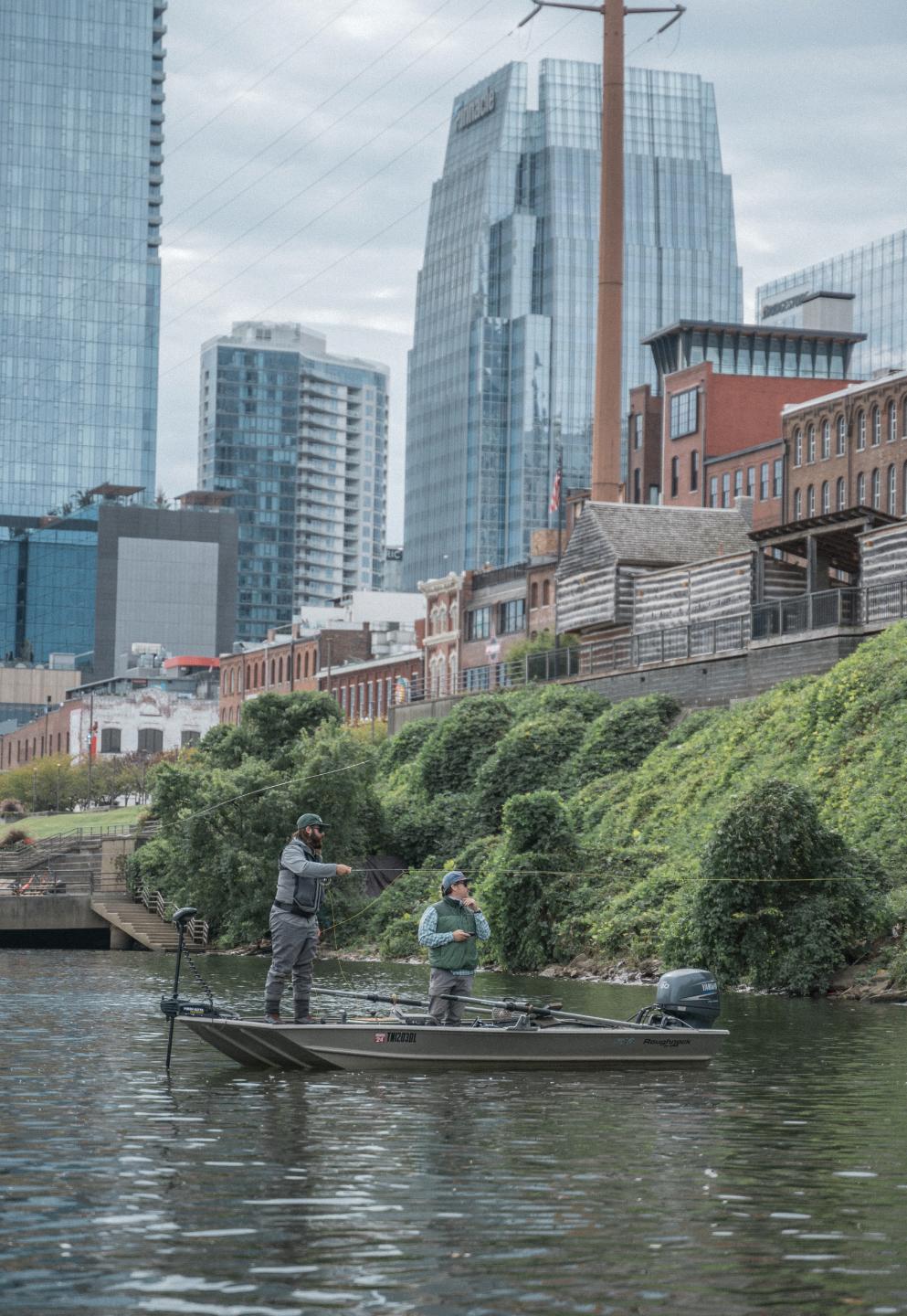
On a sleepy Sunday morning in Nashville, the neon lights of Lower Broadway are still bright and the last of Saturday night’s revelers are headed home from the town’s legendary honkytonks. The Cumberland River, just steps away from the party scene, holds so much fly-fishing potential for a river bisecting a major metropolis. If you’re curious about fly fishing in Middle Tennessee — whether you live here, are passing through Nashville, or are planning a weekend getaway — you might want to throw a fly rod into your suitcase.
On this early morning, Andrew Smalling is ready to roll for a morning on the hunt for a mixed bag. Anything from smallmouth bass, grass carp, spotted bass, and stripers is possible on this stretch of the river from downtown Nashville to Old Hickory Dam, about 23 miles upriver.
“It’s such a cool thing to have right here in the middle of town. I live in East Nashville, so the Cumberland offers several access points nearby and is fishable almost year-round,” says Smalling.
“So many people drive over this every day and dismiss it, but there are opportunities like this in cities everywhere.”
Beyond the Cumberland and its downtown fishery, Middle Tennessee holds what seems like an endless number of bluelines, creeks, streams, and smaller rivers offering a chance at large smallmouth on the fly.
Close to Nashville, the Harpeth River gives city-dwellers a place to escape without a long drive. While much of the Harpeth is bordered by private land, state parks and public access points allow wading and floating opportunities. The Harpeth’s lower stretches hold a wide variety of fish and are particularly friendly to warm-water fly fishing for
Blake Parsons
Blake Parsons is Communications Director at Fly Fishers International. He’s rarely far from a fly rod, having escaped a career in advertising to make the rounds as fly shop guy and guide. Blake lives in Nashville, Tennessee with his wife Ally, who out fishes him on a regular basis.
Photo: Flylords/Connor Grimes
smallmouth and redeye bass, carp and even the native buffalo. If you’re new to wading or looking for quick access to good water after work, the Harpeth and its tributaries are worth exploring.
Drive a little further and you’ll find the Duck River — often touted as one of North America’s most biologically diverse rivers. It can certainly be a fly-fisher’s paradise because of sheer variety: smallmouth and spotted bass, drum, stocked rainbow trout in spots and a host of panfish. The river’s varied habitats — shallow runs, deeper holes and backwater sloughs — keep it interesting for anglers. For smallmouth, the focus is current seams and rock points with baitfish streamers stripped aggressively. For bass in slower water, its topwater flies in the warmer months or crawfish flies year-round.
“Living on the Duck, I watch firsthand Middle Tennessee’s boom pressing against a river that can’t be replaced. This is North America’s most biodiverse river, top three in the world. When water withdrawals rise and banks erode from hurried development, biodiversity isn't an abstract loss; it affects tomorrow's fishing report,” Ripple says. “As an angler who calls this river home, I know what must happen. We need to show up for habitat days, plant roots instead of concrete, and back the conservation organizations protecting important places. That's how we protect America's most diverse waterway."
Like many areas in the southeast, Middle Tennessee’s
Middle Tennessee’s rivers are biologically rich and ecologically sensitive. However, as is the case with many important waterways near large cities, the Duck River is an example of the importance of conservation efforts advocating for these waterways. The Duck’s world-class biodiversity is fragile — mussels, insects and native fish rely on clean, connected habitats. Urbanization, sedimentation, and poor riparian management can degrade water quality and habitat. By participating in habitat projects, reducing bank erosion, and supporting local conservation groups, anglers play an active role in keeping these fisheries productive. Respect for river health isn’t just idealism — it’s the long game that keeps the water fishable for the next generation. Jen Ripple is an avid fly angler and lives along the Duck River.
Photo:
trout fishing is centered around the two main tailwaters: the Caney Fork River and the Elk River. Both offer good options for a day out of the house, catching brown trout and rainbow trout. But if you’re willing to make a weekend out of it, Great Smoky Mountains National Park is only a few hours away. Cloistered within its rhododendron forests are 800 miles of tiny mountain streams holding a prized, native population of brook trout.
Andrew Smalling, who we met earlier on the downtown banks of the Cumberland River, is originally from East Tennessee and guided the Smokies for many years.
“Fly fishing the Smokies, both in the park and the surrounding areas, is such a special experience. I’ve been lucky to fly fish far-ranging places from Alaska to South America, but there’s nowhere I’d rather spend my last day than the Smokies streams.”
The small streams of the national park offer a chance to pare down your set-up, and are often fished with seven-foot three-weights. Soft two-weights can really be a pleasure for anglers catching six-inch native brook trout, spectacular for their beauty in such a compact size.
In Middle Tennessee, seasons define the rhythm of fly fishing as surely as hatches do in Montana. Late winter and early spring are the best times to plan on fishing the area tailwaters. These rivers are ideal for four to six-weight fly rods, and small two-weight short spey rods are becoming popular. The fly game here isn’t out of the ordinary, and classic tailwater flies like the hare’s ear, rainbow warrior, and scuds are popular.
This region really comes into its own in early spring as the pre-spawn smallmouth action picks up, and begins a spring fishing season lasting through May. Every creek, stream, and trickle in Middle Tennessee will have a crawfish of some size in it, so some variety of crawfish patterns is something you don’t want to be caught without. There’s a reason at least a few Whitlock’s Near-Nuffs live in just about every well-stocked fly box in this area. The Harpeth River has been known to give up 20-inch smallmouth, so 6 and 7-weight rods are common, with fly lines typically featuring heavier compact heads.
Summers bring topwater opportunities for warm-water species. Traditional poppers are popular very early in the morning, but don’t overlook western-style terrestrials under trees for an afternoon outing. Smallmouth bass and brown trout have some handy similarities, so try a few of your trout tricks every now and then. Late in the summer, though, carp
has had a chart-topping rise as a fly-fishing preference, largely due to its hearty nature in the southern heat and a ready abundance of carp fishing spots in the region. This will call for your larger bass fly rod, with most carp anglers picking up a stout seven-weight.
If you’re making it to Music City for sports, business or hony-tonkin’ any time of the year, there should be a good fly-fishing opportunity to add to your trip. A weekend itinerary could look something like this: Friday evening, a quick trip to the Harpeth for an evening smallmouth outing; Saturday morning, a guided float or wade trip on the Duck to chase smallmouth and try a few streamers; Saturday afternoon, explore a quieter tributary for carp; Sunday, a sunrise run below Center Hill Dam on the Caney Fork to swing a soft-hackle in the tailwater fog.
Fly fishing in Middle Tennessee isn’t about chasing trophies or ticking off destinations. It’s about learning to see beauty in subtle places — the breeze across a farm pond, a quiet spot on a river a few miles from a busy city, and the flash of a bronze fish in green water.
Photo: Flylords/Connor Grimes
Four Cities One Current
From Portland to Cape Town
Cape Town, South Africa–Andrew Apsey
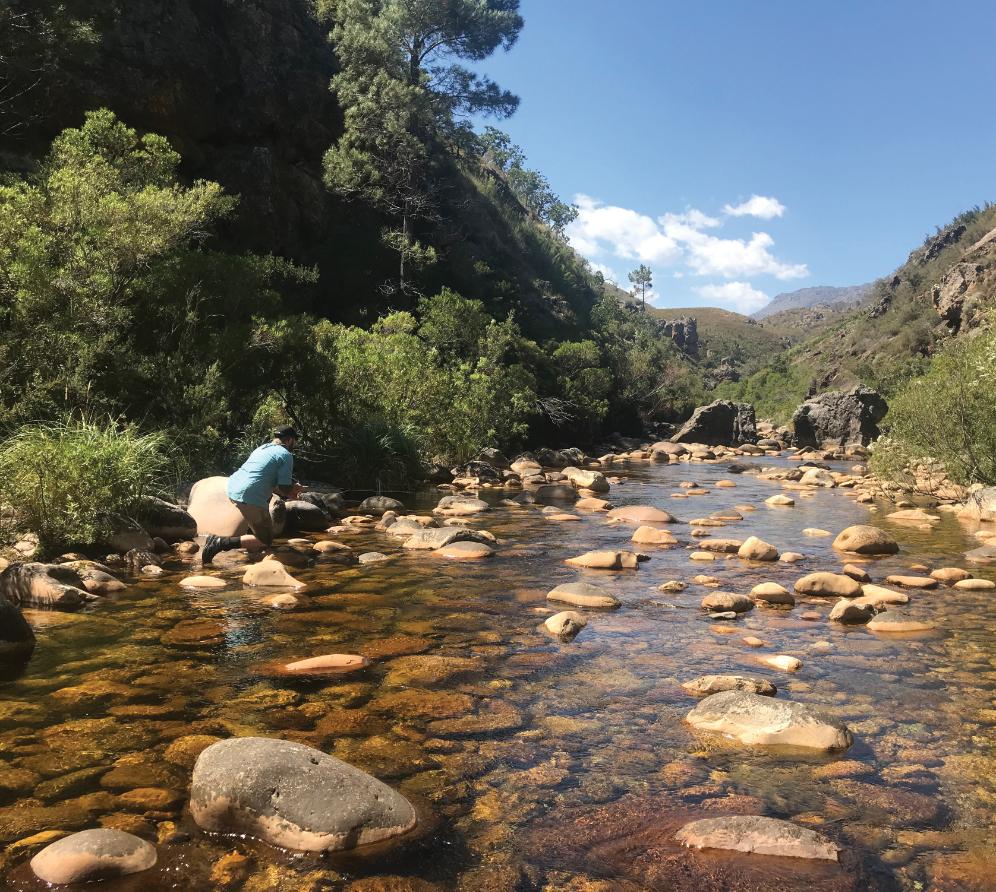
In regard to our local “urban” scene around Cape Town (within the Western Cape province), we have excellent fly fishing for both freshwater and saltwater species within an hour’s drive or a short boat ride in the well-known False Bay.
On the freshwater front, we have local Cape freestone streams fed by winter rains. These run gin-clear and offer superb dry fly-fishing opportunities for “wild” rainbow trout, which were introduced over a hundred years ago. We traditionally fish 7–9-foot 2/3wt setups with floating lines and long leaders (9–14 feet), down to 6X and 7X tippets during the hot season when the rivers run low. Recently, with the rise of euro nymphing, anglers are using 10-foot 2/3wts to fish a variety of nymphs and dry flies. Access is open to the public and to members of our local club, The Cape Piscatorial Society, which coordinates beat bookings across our three main rivers: the Smalbaar, the Elandspad and the Holsloot. The season runs from September 1 to May
31 and is closed in June, July, and August due to winter rains and spawning. Guided services are available on all three rivers during the season.
We also have a local “inshore” saltwater fishery, where we target Yellowtail Kingfish (Seriola lalandi). Unfortunately, unlike striped bass in the U.S., these fish cannot be targeted on foot from the rocks or beaches because of our rugged coastline. Yellowtail are a pelagic species that occasionally move closer inshore within False Bay, offering thrilling sport if you can entice them to take the fly. They can grow up to 20 lbs—a true trophy—but we mostly land fish between 6–12 lbs using 10wt setups, 30 lb fluorocarbon and baitfish patterns such as sprats, clousers, and synthetic-style baitfish on #1/0 and #2/0 hooks.
We use both floating and sink-tip lines to target shoals, depending on whether the fish are deep or near the surface. A common tactic is to locate diving birds feeding on small baitfish; Yellowtail often patrol directly underneath these shoals. They are incredibly strong, so we rely on 10wt rods and smooth-drag reels—if given half a chance, they will head straight for structure! We target Yellowtail year-round, with peak months being April, May, October and November. Even in the winter months, you can enjoy bluebird days with excellent fishing between our notorious Northwesterly storms.
Washington, DC–Andrew and Eric Braker
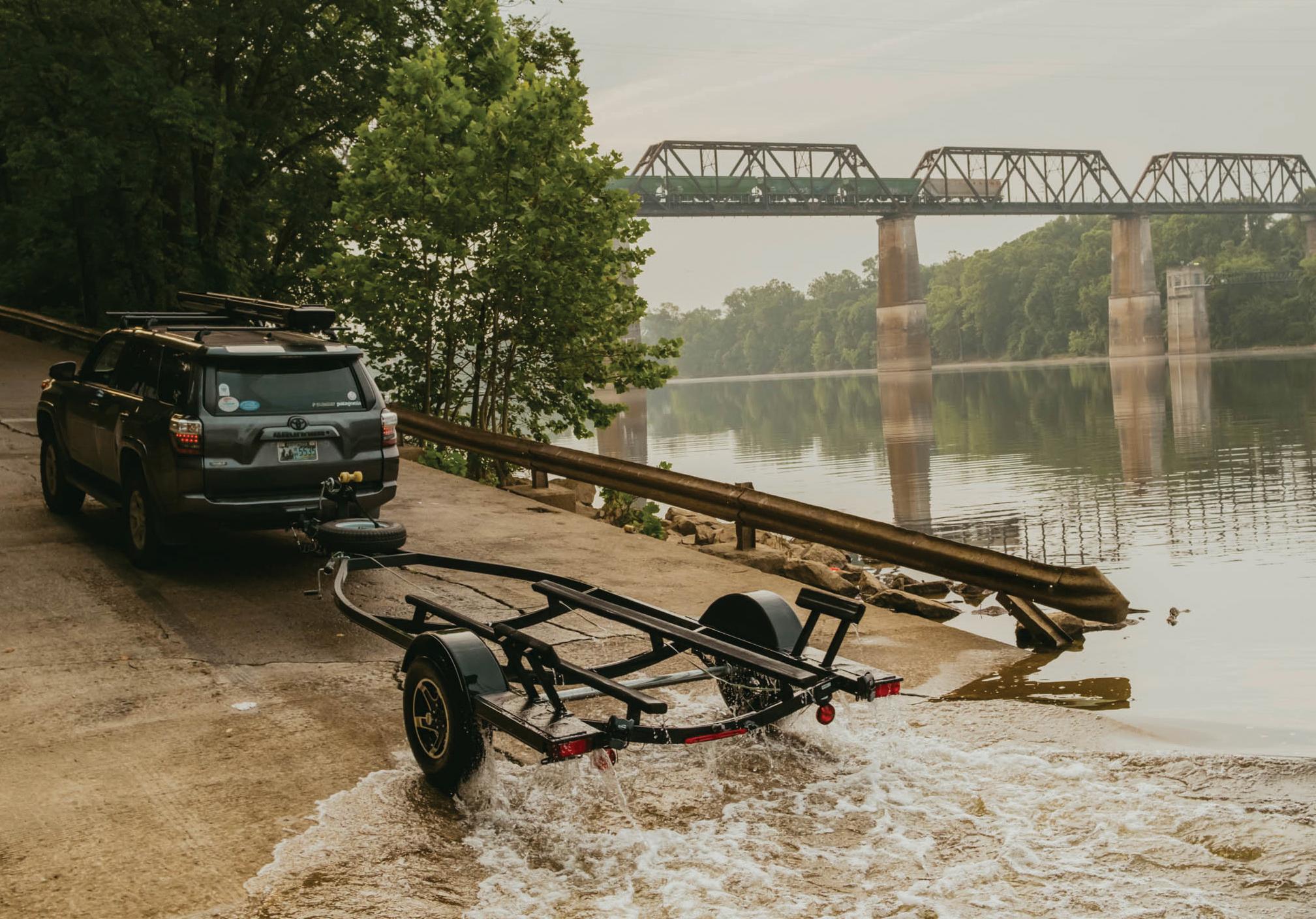
Washington, DC, isn’t often thought of as a fishing destination, but spend enough time near the water and you’ll realize the city has far more opportunities than most people know. We learned that firsthand one humid summer morning, when we trailered a Flycraft toward the Anacostia with one purpose in mind: to find a northern snakehead on the fly.
The Potomac, the Anacostia, and even smaller tributaries like Rock Creek hold a surprising variety of species. In the spring, anglers crowd spots like Fletcher’s Cove to intercept the shad run; American and hickory shad pushing upriver to spawn. Though they aren’t feeding, they’ll swipe at small, flashy flies and shad darts, offering fast action when the timing is right. Stripers, carp, catfish, smallmouth, and largemouth all can be found in these waters, too. But that day, none of them were the goal.
We launched into the Anacostia in search of snakehead. Invasive, aggressive and controversial, they’re one of the most electric fish you can chase on a fly rod. Sight-casting frog patterns tight to weed lines, waiting for the subtle push of water. It’s long stretches of silence broken by sudden violence. For gear, a 7–8 weight with a floating or intermediate line and stout 20–30 lb leaders gives you a fighting chance.
Fishing here comes with a backdrop you won’t find in Montana or Maine. The abandoned RFK Stadium looming behind us like a rusting monument, the Metro rattling past. A constant reminder that nature endures, even here.
Access is easier than many expect. Fletcher’s Cove remains one of the best launch points on the Potomac. Areas near Kingman Island on the Anacostia allow shoreline casting and small craft launches. Rock Creek winds through parkland, offering walk-and-wade pockets beneath sycamore shade.
As much fun as they are to fish, these rivers carry scars. Especially the Anacostia, once written off entirely. Although they have a long way to go, restoration is working – clearer
water, returning grasses, signs of resilience.
Urban fly fishing here isn’t about escape. It’s about seeking wildness where most people never think to look –and some days, like that summer, finding it staring back with red eyes.
Portland, OR–Chester Allen
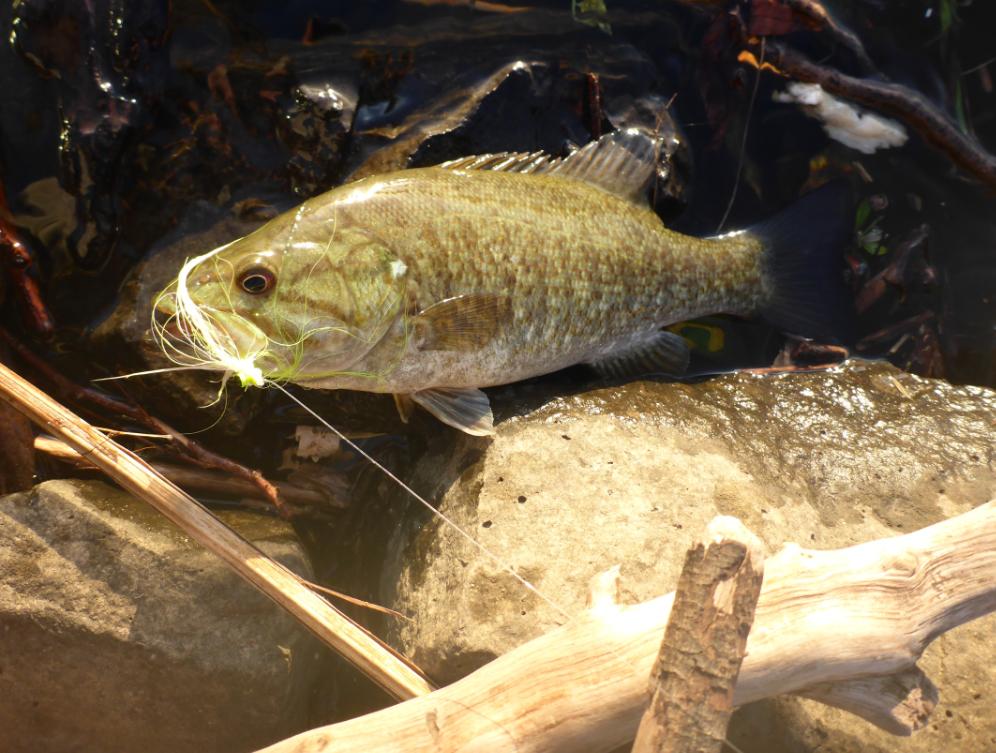
If you ever find yourself in Portland, Oregon, you’re probably within walking distance from world-class smallmouth bass fishing on the Willamette River.
Some of the best fishing happens from May through October, right in downtown — on the west bank waterfront from the RiverPlace Marina downstream to the Hawthorne Bridge. The marina is full of aggressive smallmouth — you can see hundreds of them spawning, along with a few largemouth bass — right next to the docks in the spring.
I like to fish popping bugs early in the morning or in the evening, when the sun is off the water. I usually start off by fishing the riprap banks at the marina and work downstream along the long grassy curve of Tom McCall Waterfront Park, which is the site of the huge Waterfront Blues Festival in July. The Portland Marriott Downtown Waterfront hotel is just across Naito Parkway from this spot. The bouldery water is full of smallmouth, from 10 inches to 20 inches long. They love to whack popping bugs, Clouser Minnows and Woolly Buggers. I usually cast a 6-weight rod with a weight-forward floating line and a 7.5-foot leader tapering to a 3X tippet. These fish are not leader shy. This is great water all the way to the Hawthorne Bridge. Further downstream, a concrete river wall makes fishing impossible. Another good spot is the rocky west bank near the Broadway Bridge. This spot is an easy walk from the Pearl District’s shops and restaurants.
Much of the eastern bank of the Willamette in Portland is riprap bank — great smallmouth habitat. Try the water near the world-famous OMSI — aka Oregon Museum of Science and Industry.
Portland is a very safe city, but don’t leave anything unattended, as it will vanish in minutes. Sometimes you will find a group of homeless people hanging out nearby. It’s a good idea to give them their space, especially if they’ve pitched a tent. Watch out for goose poop in grassy areas. You don’t need waders.
Denver, CO–Rick Mikesell
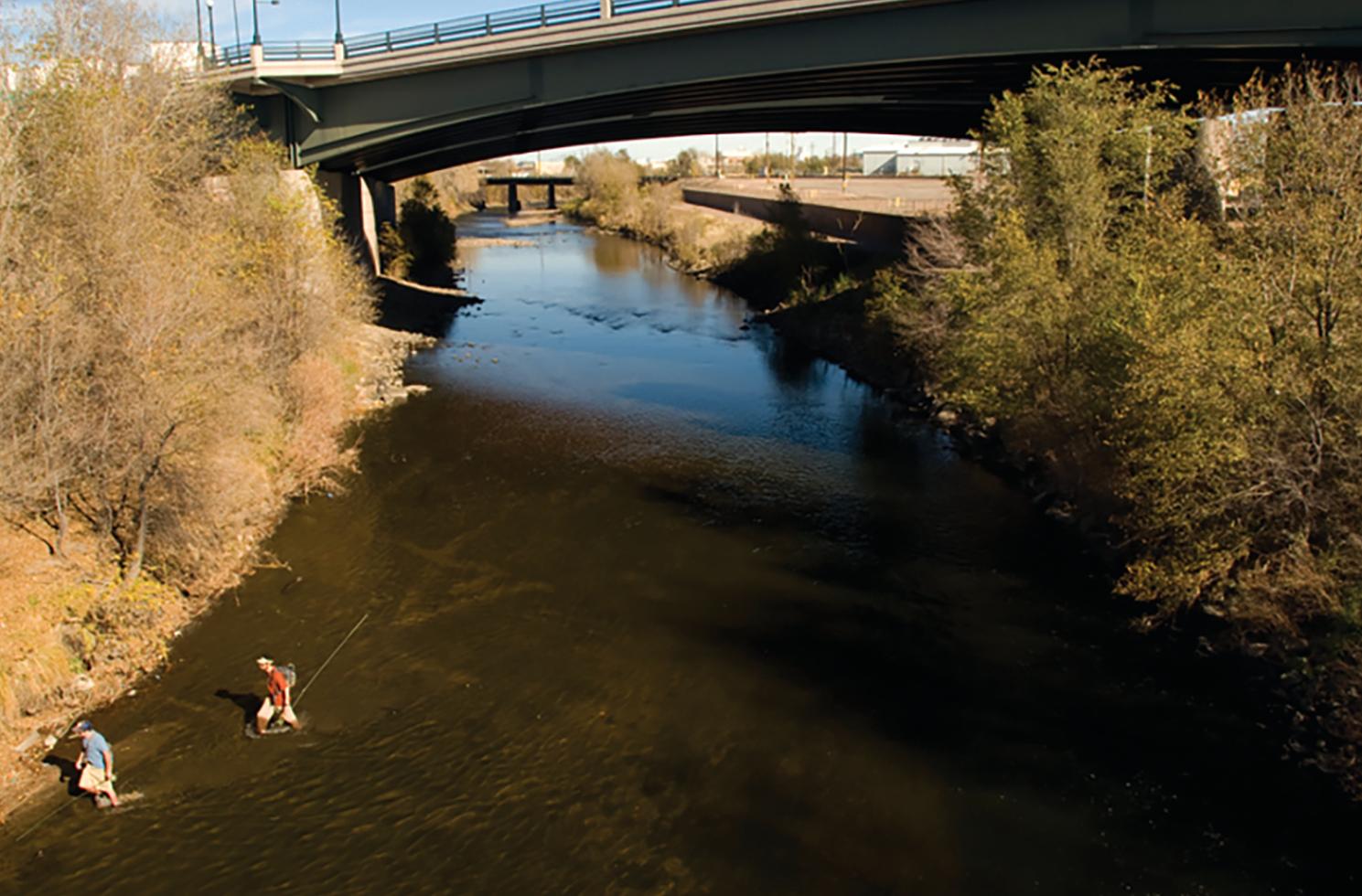
Flowing quietly through the heart of the Denver Metro Area, the South Platte River is the lifeblood of the city and the thread that has tied the Front Range together for centuries. Long before Denver existed, the Kiowa, Cheyenne, and Arapaho peoples lived and fished along its banks. Western settlers followed the discovery of gold at the confluence of Cherry Creek, marking the beginning of Denver’s rise around this vital waterway. Despite the challenges of an urban river in a booming metropolitan corridor, the South Platte remains a thriving fishery with more than 30 miles of public access, all accessible by a well-maintained trail, and an incredible diversity of species. Carp, bass, walleye, native white suckers, channel catfish, and trout all inhabit its distinct stretches, each finding their niche in a system that continues to surprise even seasoned anglers.
For many Denver residents, the South Platte offers a rare luxury: legitimate fly fishing just minutes from home. From Chatfield Reservoir to the industrial corridor north of I-70, this river delivers distinct personalities in every section. The southern reaches near Chatfield hold strong populations of smallmouth and walleye, while mid-city runs between Union and Alameda are home to trophy carp and the occasional brown trout migrating in from Bear Creek. As water quality and habitat continue to improve through local conservation efforts, fish numbers and size are steadily increasing.
Smallmouth bass have arguably become the river’s new stars. Their population has surged in recent years, thriving in improved habitat and sustained flows. Meanwhile, carp, the original icons of the Denver South Platte, remain the ultimate test of skill. First targeted on the fly by Barry Reynolds and Brad Befus in the 1980s and ’90s, these fish still reward only those patient enough to sight cast with precision. Forage is abundant throughout the system and while breathe-through-your-teeth mayfly and caddis hatches do occur, most of these urban fish prefer bigger meals such as crayfish, leeches, and baitfish. Given the size of the prey and the power of the fish, a six- or seven-weight rod paired with 12- to 16-pound fluorocarbon is ideal. You can leave the 5X at home. Add in the occasional surprise of a hefty trout or tailwater walleye, and it is easy to see why the Denver South Platte continues to draw global attention.
The Denver South Platte is an urban success story, a reminder that with care and collaboration, a city’s working river can evolve into a world-class fishery. For those willing to explore it on foot, fly rod in hand, there is no better place to rediscover what home water really means.
Closer Than You Think
Looking beyond famous trout streams
Dave McCoy
Today, even the small towns of the Rockies have traffic getting into and out of them. Shows like Yellowstone have put fly fishing in mainstream media once again, and crazy enough, most of us who fly fish don’t live near the namesake watersheds so publicly exploited on social channels. The ones we yearn to wet our feet in for enjoyment, connection, and to test our skills.
Ask the average fly angler how many days a year they find themselves on the water, and my guess would be somewhere between 5-10 days a year. Putting this together through a quick gauge of conversations had daily at the shop here in Seattle. A mix of young and seasoned, well off or early retired, fresh out of college, lifelong fly anglers, and those just stepping in to see what it is all about.
It is a mix to be sure, but the one commonality among them is living in an urban area, which seems to be the substantial hurdle to more time on the water.
I get it. Traffic in the past ten years in every big city in the U.S. and Canada has become increasingly worse, so just trying to get out of the city to fish is a considerable deterrent. Getting from one side of our city to the other just to visit a fly shop invites a third and fourth commute into
your day. I hate it and not for the reasons most are going to immediately assume.
Yes, customer visits usually mean more money, and we obviously need this to survive. But I opened our store for the connection to people. I am as social a butterfly as anyone in this sport, and the daily conversations are what get me out of bed in the morning, excited to live vicariously through the experience of other anglers, both good and otherwise. Bearing witness to those who figure IT out and seeing the transformation is a reward only for those who set out to never find one in the first place. Asking thoughtful questions and listening intently to every single angler about what their struggles and successes are, and helping to navigate them together.
We are partners in this. A fly shop is supposed to be your conduit to success, and when IT happens, BOOM! That is what I live for these days.
Call it the evolution of a fly-fishing guide and ski race coach. I am a tinkerer and, in this arena, it means finding places for myself and our customers to fish without a two-hour drive in each direction.
Seattle is a mecca for this, and honestly, we are just beginning to come around to it here, and I feel as though other
Dave McCoy
Dave McCoy was raised in Eugene, OR and was forced into fly fishing by his family shortly after birth. In the early 90’s, Dave moved to Colorado to coach ski racing and found a summer home on the Gunnison River guiding multi-day trips. After moving on to Seattle, he opened a fly shop and guide service with the hopes of sharing incredible western Washington fly fishing opportunities with everyone.
cities are beginning to as well, for all the same reasons.
Fly fishing isn’t only for beautiful mountain streams, among austere, roadless old growth forests for miles while you’re in the only boat on the water. Yes, this is dreamy, no doubt enjoyable and at times attainable. For most, it happens 2-3 times per year.
What we all need to do is appreciate every watershed for
what it is. Comparing one to another when they are in different locations, hold different species and serve different applications, comparison is a waste of time. Each is what you make of it.
If you love fly fishing, frequency is your best friend. Frequency is what keeps you focused while at work in the middle of the week. IT provides you more patience with and appreciation for your children and partner, it may even bring all of you together out there. Frequency, if you love fly fishing, will make you better with which comes enjoyment at a higher level, opening all the doors within the sport.
What I am talking about is taking a closer look at where you live. Los Angeles, NYC, Detroit, Edmonton, Vancouver, Chicago, Seattle or Atlanta. Get on Google Earth and just take note of what shows up blue…that’s water. What is the access, what swims there, is it open and how close is it to where you live or work? Before Google, it required a Gazetteer, gas, and time, so consider yourself lucky. The one thing technology has done right by fly fishing, depending on how you look at it!
People drive, walk, run, skate, bike and bus past these little blue gems in urban areas all the time, usually paying them little attention. I want to change this, not just for those reading but for the sport. Our namesake watersheds can’t handle the growth our capitalistic sports hope for. We can’t continue to bring new people into fly fishing, only hoping to put them on the same watersheds as everyone else.
We must diversify our attention, spread the “wealth” if you will and give other species, blue lines, ponds, ditches and canals our full-fledged focus.
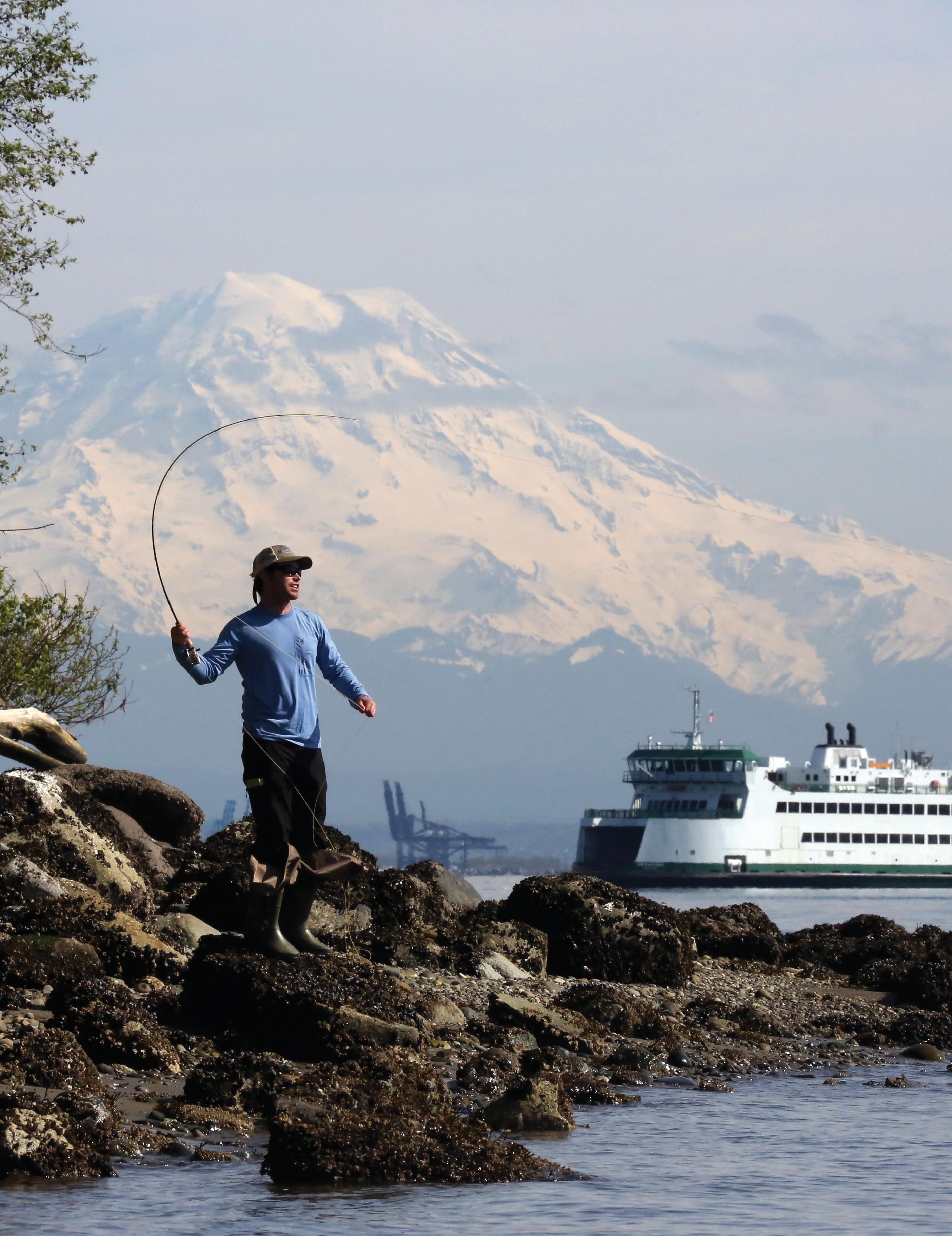
Here in Seattle, we have over 60 urban lakes, over 3000 miles of stream courses in King County, and Puget Sound, our most prolific and visible watershed, offers over 2500 miles of shoreline. So, we have it pretty good and yet of the over 6 million who live in western Washington, few fly fish these urban waters. Why not?
Well, first, I believe people need to let go of trout a bit. Yes, we all love them. Our sport was almost literally
founded upon their backs. At the end of the day, aren’t we simply looking for a bent rod and a great take that gets us outside and away from all our daily demands?
Here in Seattle, this could mean carp at Greenlake, bass on Lake Washington, muskie on Lake Tapps or if it must be trout, then Rattlesnake Lake, the Cedar or Green Rivers. I just want to see more people get out of their own way and just get on the water more regularly. From downtown Seattle, these are all within 40 minutes. However, to my point, these are namesake watersheds here in Seattle, and enroute to these, many anglers will pass others offering a similar experience. The only bridle on this is that nobody has written about it or posted it on their social channel so therefore it must not be worth the time.
Here in the summer months, the sun is up or nearly so around 5 a.m. At that hour, traffic is light and getting to one of the myriads of fisheries nearby is easy. Go hit the water for an hour or two and be back home before the kids are up for school or the morning staff meeting.
The same goes for the evening. Sun stays up until nearly 10 p.m. in mid-summer, so take your equipment to the office with you. Use the commute home to quick side trip to a fishery and be home for dinner.
Obviously, during the winter when we lose so much of our light, squeezing this in is a bit more of a challenge. Still, though it is more of a shifting of thought, simply add a headlamp to the equipment list.
In many locations, the standard 5wt rod with a floating line will very likely do the job. Are there rods and lines potentially more suited to smaller fish or throwing larger flies better? Absolutely, but I don’t want this to be a barrier to exploring. Should you stop along the side of the interstate and toss a little Wooley Bugger in the ditch and on your 5wt and come tight to a 15-pound carp…there are worse problems!
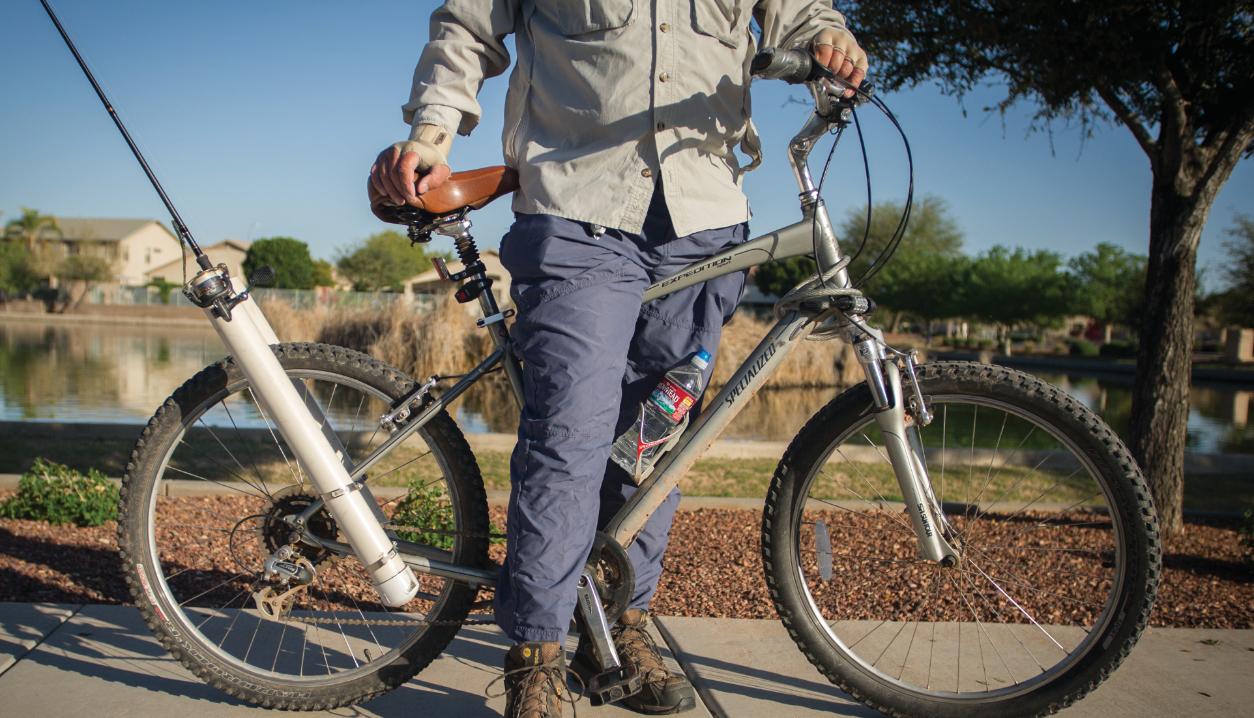
Also, on the list and this is for the gear hounds in the room, inflatable SUP or peddle kayak, new bike with a rack, 1 person raft or U-boat for solo jaunts or if you are more of the socialite, a drift boat
or small Whaler so a friend or family member can join. For the shop owners and manufacturers out there, it will likely mean another rod or two, lines, flies, a book or a magazine subscription. We all win!
Yes, I just green-lighted everyone to go buy more equipment, a little like a prescription from your physician. Look up and around you, figure out what will enable you to more easily enjoy a nearby watershed and get it or find someone with it and borrow.
As I talk with people in our store here in Seattle, I often ask if any of them have ever fished Puget Sound at night. Not that I have exact numbers here, but I would absolutely stand
by it being very close to 100% of them say no. It has never crossed their minds.
This is our job as fly fishing industry professionals. We should be your conduit to exploration. We should be putting new ideas in front of you for consideration and be willing to answer questions with honesty and transparency to help you broaden your fly angling horizons. You will be a better angler for it, I promise.
Finally, if you have kids, grandkids, nephews or nieces and want to share fly fishing with them, these urban fisheries should be your sanctuary. Not because they may or may not be aesthetically the most beautiful places in the world, but because your kids don’t care. They want to spend time with you doing what you love, and you should do so as often as possible. Here again, frequency is your closest friend in this equation, and you don’t get this time back, trust me!
Try to leave the promise of results, aka fish, at home, particularly with young ones. That can be a part of their evolution later. Put a rod in their hands, let them snap flies off, hook trees, and maybe cry a bit. Pivot to skipping rocks, stick boat races, catching crawdads or whatever else surrounds water they show an interest in, it all matters.
Yes, they may push back at times. I certainly did, and look
It won’t always be the path of least resistance, but what you are doing is planting some of the most valuable seeds of their lives. As they grow, these will be what brings them home and what finds common ground to spend fleeting time together way down the road. This is an endeavor for life, theirs and yours, and it is in your hands.
where that landed me.
FLY FISHERS INTERNATIONAL CLUB LISTING
UNITED STATES
ALABAMA Tennessee Valley Fly Fishers Huntsville info@tvff.club @TennesseeValleyFlyFishers tennesseevalleyflyfishers.org
ARIZONA
Arizona Flycasters Inc Phoenix info@azflycasters.org @Arizona Flycasters Group azflycasters.org
Cape Fear Flyfishers Inc Southport cffrdd2006@gmail.com @Cape Fear Flyfishers Inc capefearff.com
Carolina Fly Fishing Club Concord jewettwg@gmail.com; dwest13580@carolina.rr.com @Carolina Fly Fishing Club - chapter of Fly Fishers International carolinaflyfishingclub.org
French Broad Fly Fishers Brevard frenchbroadflyfishers@gmail.com
Triangle Fly Fishers TU / FFF Raleigh contacttff@gmail.com @triangleflyfishers triangleflyfishers.org
OHIO
Buckeye United Fly Fishers Cincinnati info@buckeyeflyfishers.com @BuckeyeFlyFishers buckeyeflyfishers.com
Patriots On the Fly Willoughby info@PatriotsOnTheFly.org @patriotsonthefly patriotsonthefly.org
OKLAHOMA
Green Country Fly Fishers Bartlesville ffi-greencountryflyfishers@turtlegak.com @Green Country Fly Fishers greencountryflyfishers.com
Tulsa Fly Fishers Tulsa bretmspears@gmail.com @Dave Whitlock Chapter #420 of Trout Unlimited and Tulsa Fly Fishers tu420.com
The clubs of Fly Fishers International are the heart and soul of FFI at the local and regional level. These clubs provide highquality educational opportunities, create strong and inclusive fly fishing communities, and help FFI achieve the mission of fostering the legacy of fly fishing for all fish in all waters. We encourage all of our members to join and participate in a nearby club. Below is a list of clubs by region.
OREGON
Cascade Family Flyfishers Springfield treasurer@cascadefamilyflyfishers.com @Cascade Family Flyfishers cascadefamilyflyfishers.com
Central Coast Fly Fishers Waldport flyfisherscentralcoast@gmail.com sites.google.com/view/ flyfisherscentralcoast
Central Oregon Fly Tyers Guild Sisters steelefly@msn.com
@Central Oregon Fly Tyers Guild
Central Oregon Flyfishers Bend president@coflyfishers.org @CentralOregonFlyfishersClub coflyfishers.org
WASHINGTON Alpine Fly Fishers Lake Tapps flytier015@gmail.com alpineflyfishers.org
Bainbridge Island Fly Fishers Bainbridge Island INFO@bainbridgeislandflyfishers.org @Bainbridgeislandflyfishers bainbridgeislandflyfishers.wordpress.com
Clark Skamania Flyfishers Vancouver gullingphil@q.com @Clark-Skamania Flyfishers csfly.net
Southern Fly Fishers Australia Incorporated Melbourne secretary@southerflyfishers.org.au @Southern Fly Fishers Australia Incorporated southernflyfishers.org.au
ITALY
Fly Angling Club Mosca Club d'Italia Milano postmaster@flyanglingclubmilano.it @Fly Angling Club Mosca Club d'ItaliaMilano flyanglingclubmilano.it
Mosca Club Piacenza Piacenza moscaclubpiacenza1988@gmail.com @MoscaClubPiacenza moscaclubpiacenza.weebly.com
JAPAN
Japan Fly Fishing Assoc (JFFA) Mitaka jffa.info@gmail.com jffa1205.com
An Urban Fly Box
For the land of 10,000 lakes
Larry Olson
For the last 40 years, I have been fortunate to have some amazing trout fishing in the Driftless Area (MN, WI and IA) that I could get to in an hour or two. I was also able to spend many weeks in Wyoming each year. What totally escaped me was that
"Urban fly fishing is fun because it’s ironic! The usual supposition of fly fishing is throwing tiny dry flies to rising trout in a far-off mountain stream. In urban fly fishing in Mississippi, you’re casting at surface-slurping carp below a storm drain with cars honking and all facets of humanity passing by.”
—Evan Griggs
within 10 to 20 minutes, there were opportunities to fly fish, some literally a few blocks away!
Let’s start with the bigger bodies of water. You may know the slogan that Minnesota is the “Land of 10,000 Lakes” (It’s actually higher), but there are 22 different lakes in the city of Minneapolis itself. And then there is
Larry Olson
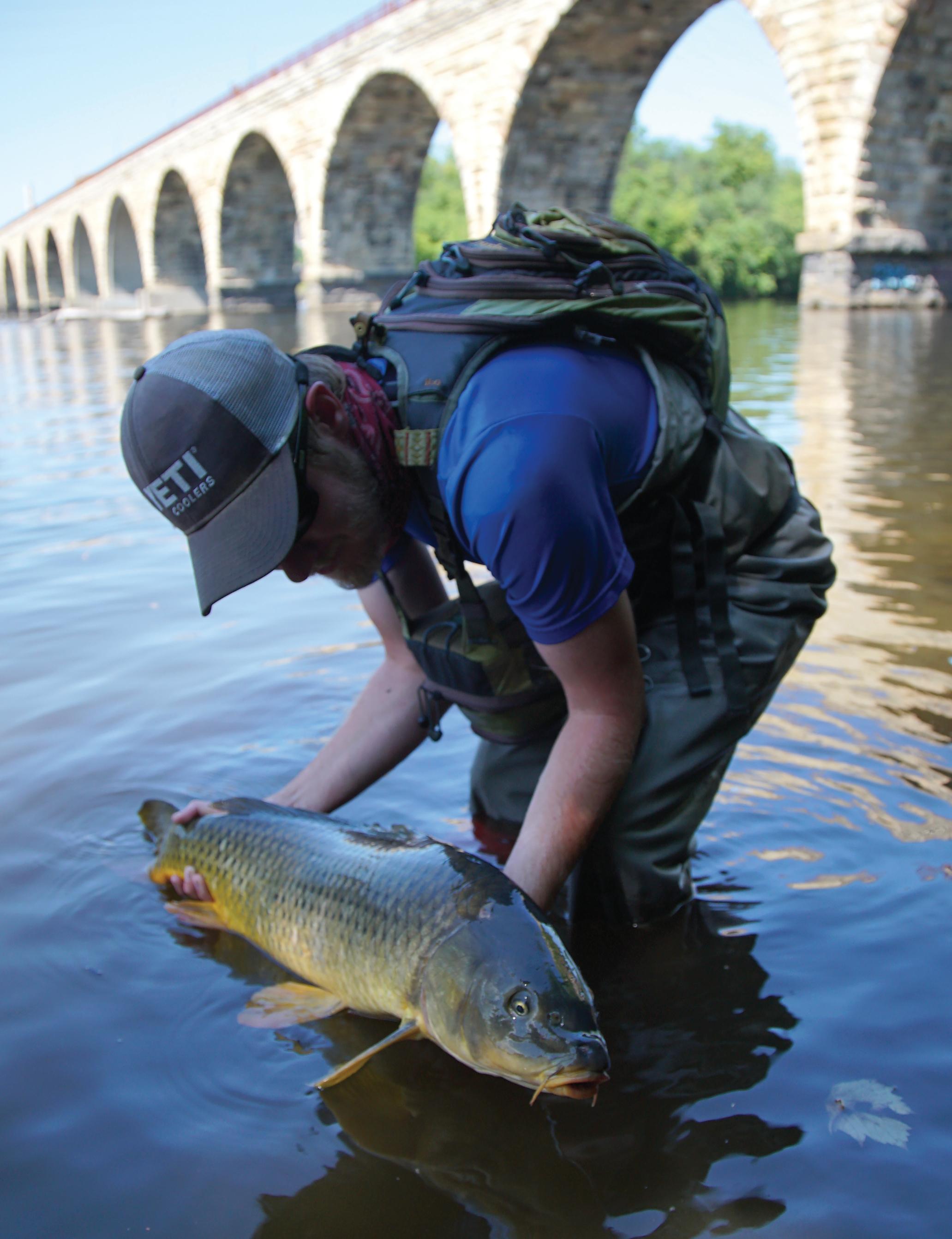
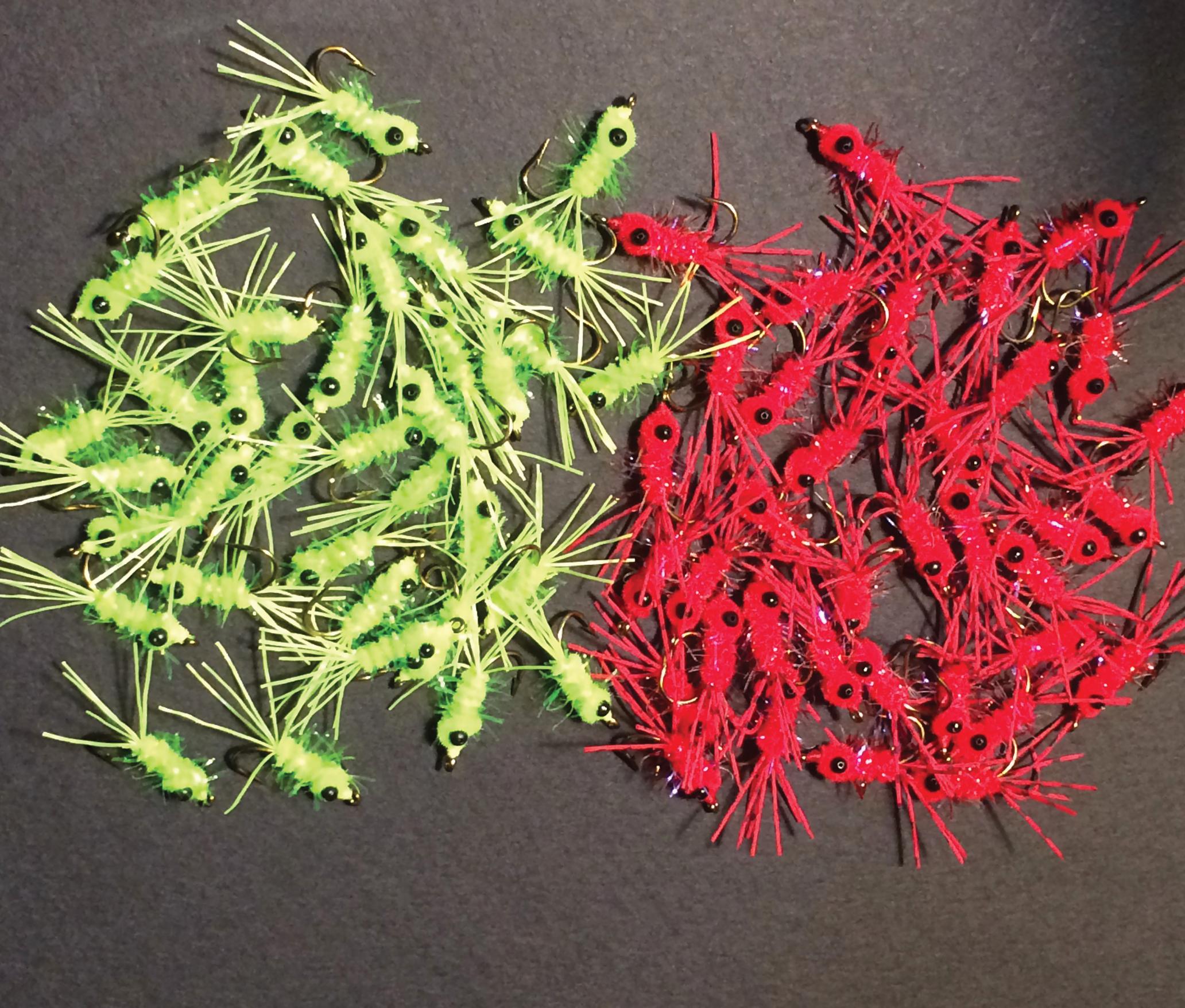
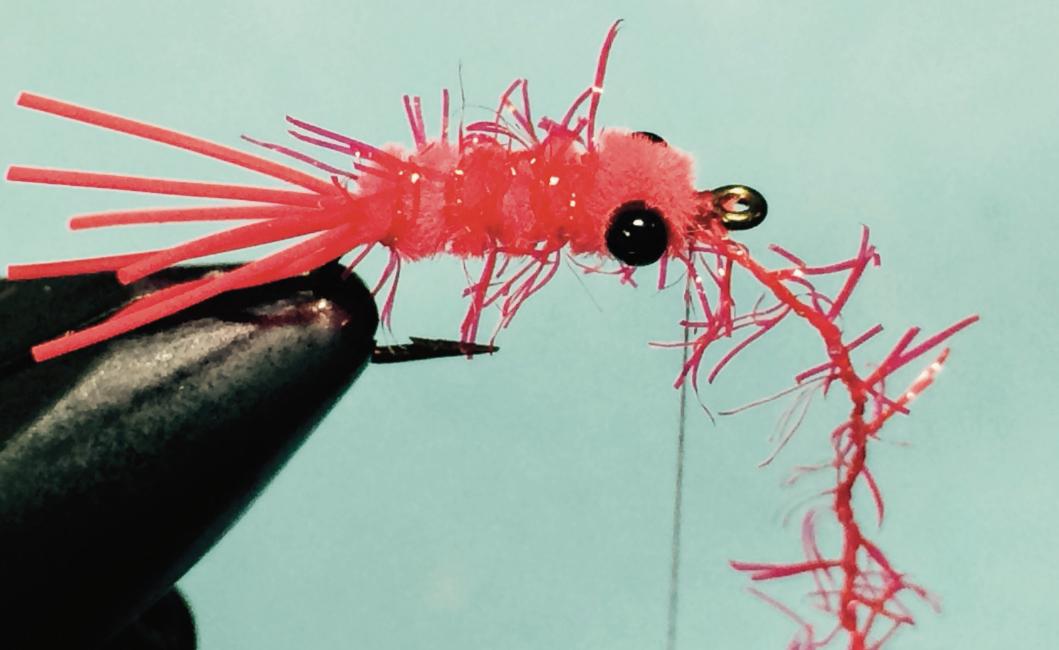
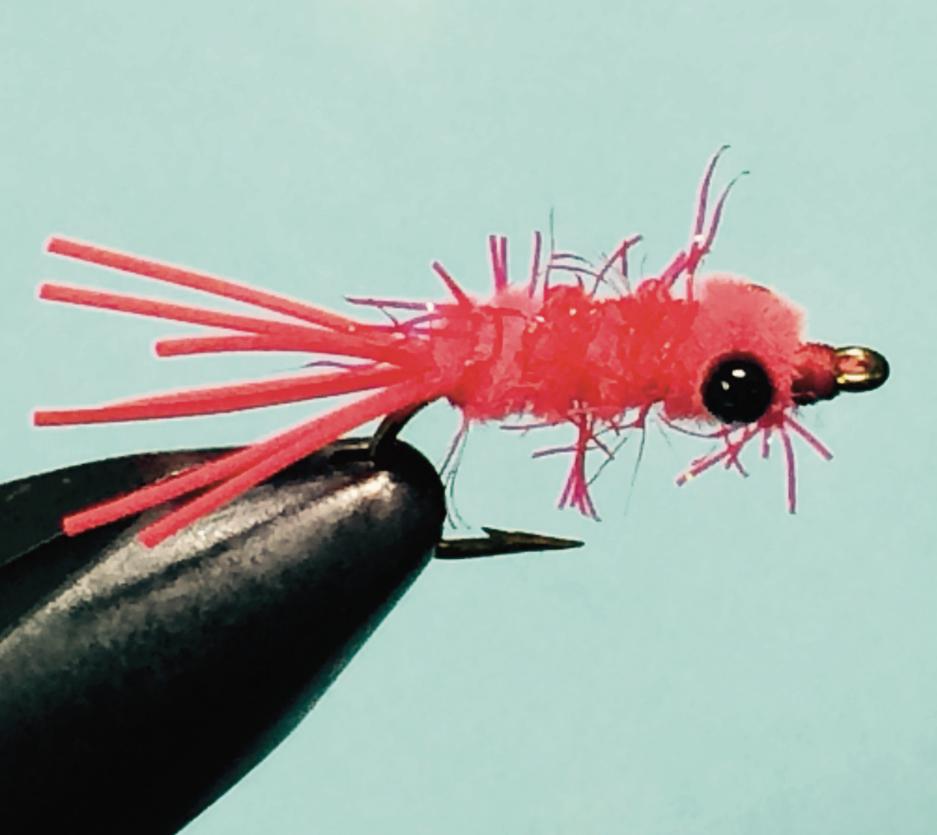
the divider of Minneapolis and St. Paul, the Mississippi River. Throughout its whole corridor, the river supports more than 127 different fish species. Local guide, Evan Griggs, grew up fishing these waters and today routinely catches bigmouth buffalo, smallmouth bass, channel catfish, northern pike, panfish, walleye, quillback suckers and muskies. But perhaps his favorite is the common carp. A carp’s diet is primarily aquatic plant roots, small water bugs, freshwater mussels and crayfish. Most carp flies are too heavy, creating a big splash or sink way too quickly. Evan’s Sewer Rat has more subtle colors, smaller bead chain eyes and an attention-getting pink that sticks out when the fly does a headstand on the bottom.
John Montana’s Hybrid Nymph pattern was revolutionary for its time because it was one of the first purpose-built, readily available and
publicized “carp flies.” Tied on a wide gap hook, jig style, with a San Juan worm tail that would stand vertically from the bottom to achieve a resting headstand position. This proved deadly for carp, which are keyed in on fresh plant sprouts or emerging insects from the bottom. However, the colors that were made commercially available were bright and flashy, and the dumbbell eyes were often too heavy. Hence came the adaptation, the Sewer Rat, a more subtle version of John Montana’s Hybrid Nymph.
Minneapolis carp are much harder to catch than many other carp in fisheries across the country. With an overall lack of vegetation in the urban river through MSP, due to dredging for barge traffic, their diet has grown to include small freshwater mussels, zebra mussels and many native species as well. And many of these species have a brownish color shell and will have a light pink tongue/foot that sticks out to filter feed in the substrate.
Larry Olson is a current member of the FFI Fly Tying Group Board of Governors. He is the Managing Editor of the Whip Finish Journal and the Lead Editor of the new book on fly tying, "Fly Tying for All Fish All Waters". He is the 2025 recipient of the Darwin Atkin Fly Tying Achievement Award. He has also conducted and developed courses and events for introducing youth to tying flies and leads the Fly Tying Group's grant program.
Photo: Beau Meier
Sunny Chumb
by Scott Nordby
RECIPE
Hook: Mustad 3366 or equivalent, Size 8
Thread: 6/0 Red (Uni-Thread)
Eyes: 2.4mm Black Bead Chain
Tail: Fine Red Round Rubber ( 4 strands 1-1/4”)
Body: Red Ultra Chenille
Rib: Red or Red UV Micro Polar Chenille
Note: Enjoy different color combinations of your choice.
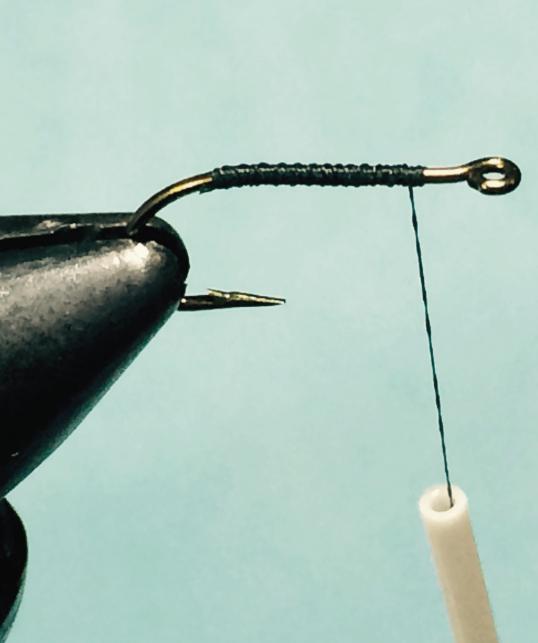
Step 1:
Lay a thread base from one eye length behind the eye to the bend, then back up to 1-1/2 eye lengths behind the eye.
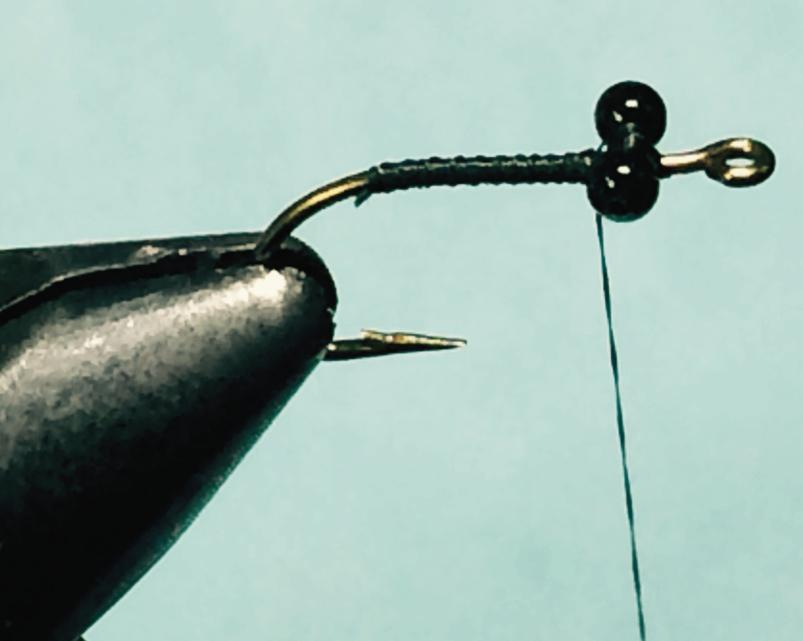
Step 2:
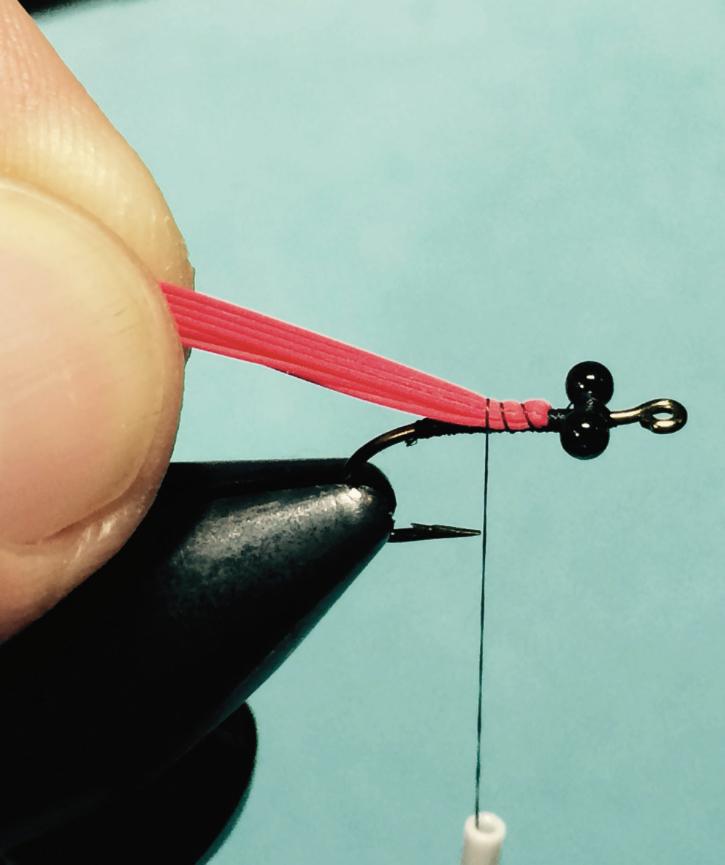
Lay the bead chain eyes on top of the hook (at 1-1/2 eye length behind the eye). Figure eight wrap and secure in the eyes. And move the thread to the back side of the eyes.
Step 3:
Cut four strands of Fine Red Round Rubber to 1-1/4” long. Fold the strands over the thread. Take two wraps of thread around the hook to securely capture in the rubber. Holding the Rubber up at a slight angle and start winding to the bend. As you wind over the rubber, stretch the rubber back as you wind it in. The tighter you pull, the more it will flare / splay.
Step 5:
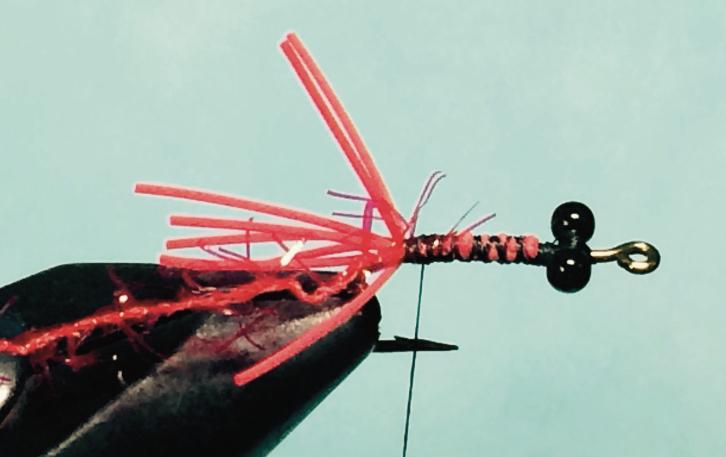
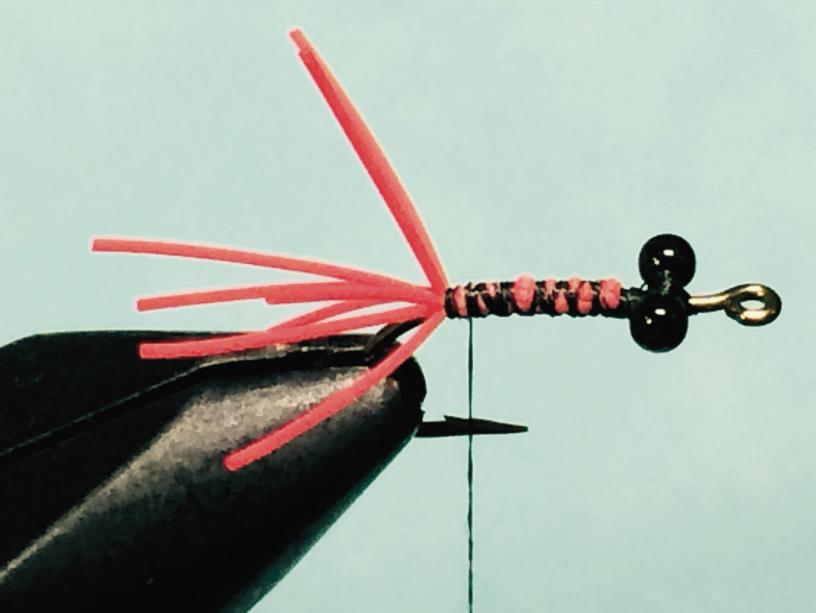
Secure in the Micro Polar Chenille for the rib. Wind up to behind the eyes.
Step 7:
Step 4:
After the tail is secured in, wrap back up to behind the eyes and then back down to the bend. Separate the tails, creating a splayed-out tail.
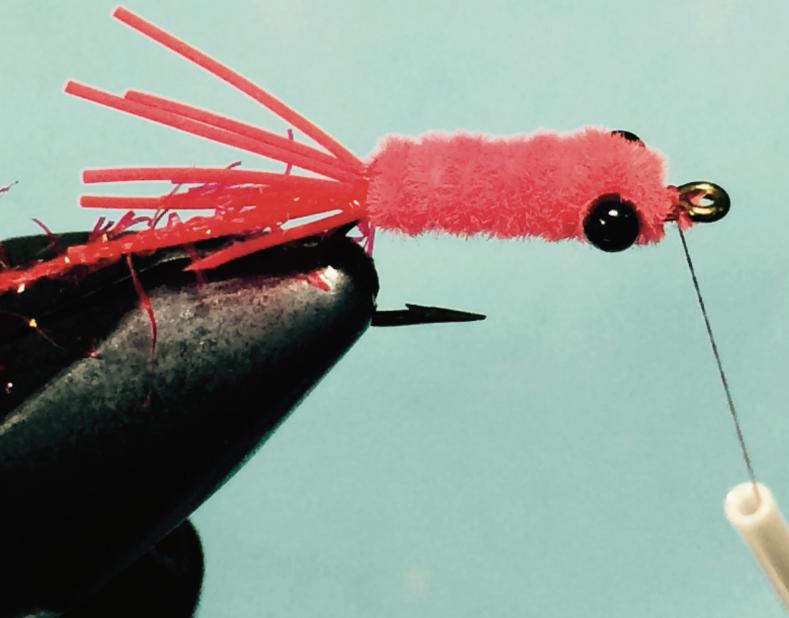
Spiral wrap the Micro Polar Chenille forward as a rib to behind the bead chain eyes (approx. 4 to 5 wraps). Wind the Micro Polar Chenille in the same direction as the ultra-chenille so it will fall in the grooves of the ultra-chenille. Pull the polar chenille diagonally under the eyes to the front and secure. Trim off the excess material.
Step 6:
Secure in the Ultra Chenille and wrap toward the back, securing it in. Once everything is secured, bring the thread back up in front of the bead chain eyes. Wrap the Ultra Chenille to the back of the bead chain eyes. Figure eight wrap between the eyes with the ultra-chenille, and secure in front to the bead chain eyes. Trim off the extra ultra chenille.
Step 8:
Finish the head by securing the materials and creating a small tapered head with the thread. Half hitch or whip finish and cement.
Sewer Rat
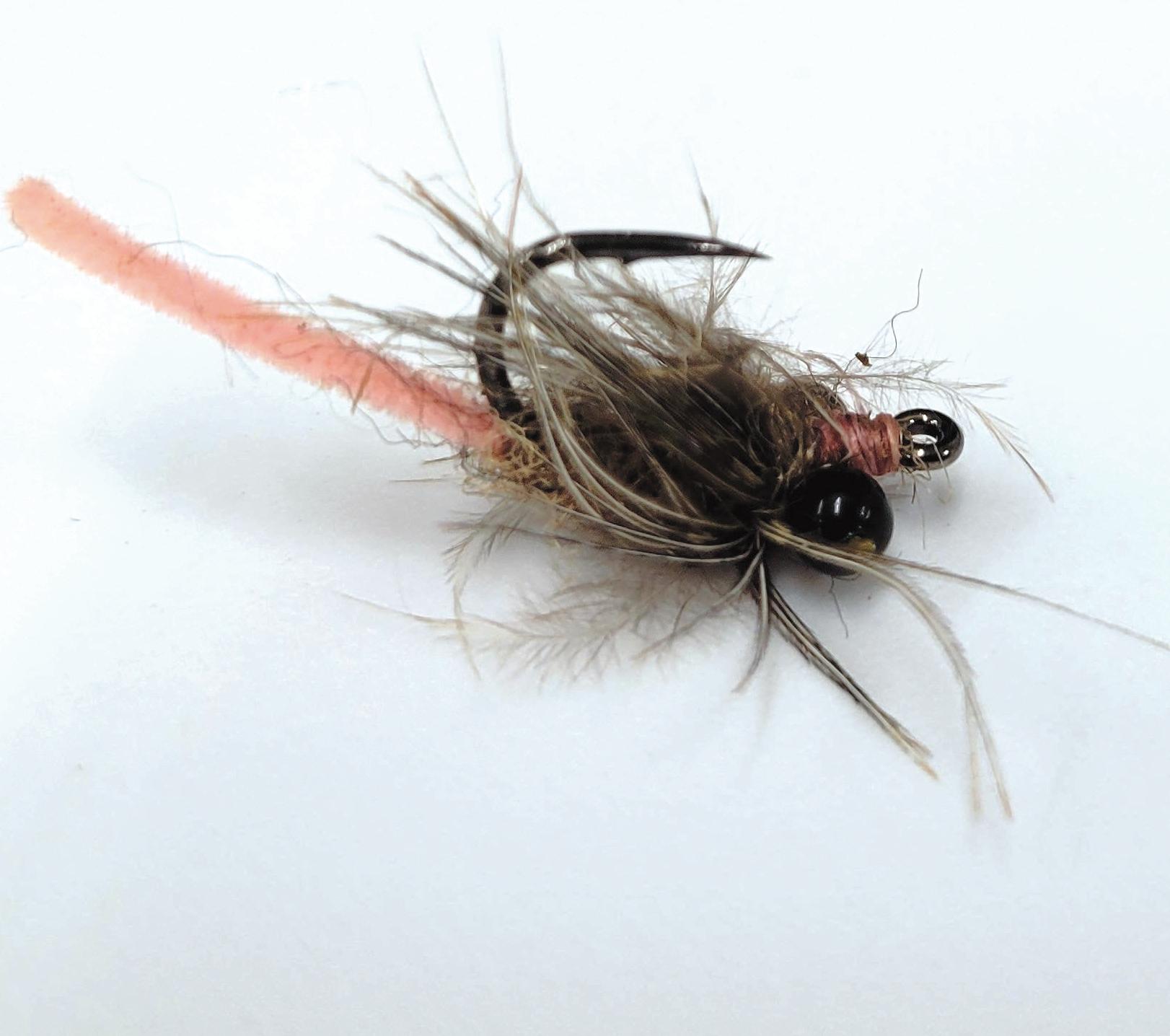
RECIPE
Size 10-6 scud or egg hook
Bead chain eyes, black or brass
Brown dubbing (Ex: Spirit River
Mottled Nymph Blend)
Light pink ultra chenille, standard or medium size
Grizzly CDC or hen hackle
Step-by-step
Step 1
Cut off one link of bead chain (two eyes, one link). Make a small thread dam 1-2 eye widths behind the eye of the hook.
Step 2
Place bead chain on top of thread dam and use a figure-8 wrap to secure tightly to the top of the hook shank.
Step 3
Cut a piece of chenille about 2-3 times
the length of the hook shank. Wrap the thread back to the bend and tie in chenille at the bend. Wrap over the chenille past the bend a few times so the chenille is angled slightly down. Secure the rest of the chenille to the top of the shank.
Step 4
Create a tapered body of dubbing from the bend to behind the bead chain eyes, getting gradually thicker as you go up the shank. Do a looser dub right behind the bead chain to create a buggier look and to support the CDC.
Step 5
Tie on the CDC/hen hackle and do three tight wraps behind the bead chain eyes. Cut off excess material and secure to the hook.
Step 6
Add a small amount of tightly twisted dubbing, wrap once fully between the CDC/hackle and the bead chain. Then do 1-2 figure-8 wraps around the bead chain, being sure all thread wraps are covered by material. Create a small thread dam behind the eye of the hook and do your finishing knots.
Additional flies in Evan’s Urban Fly Box
Woolly Buggers (with rubber legs)
Black & Olive Size 2-10
Bead Head Hare’s Ear Nymph
Brown Size 8-12
Note: also tie with rubber legs.
Yarn Egg Patterns
Yellow or Chartreuse
Note: mid-column carp and buffalo.
Clouser Minnows
White or White & Chartreuse
Pink San Juan Worms Tequeely Poppers
Chubby Chernobyls
“Urban fly fishing is fun because it’s ironic! The usual supposition of fly fishing is throwing tiny dry flies to rising trout in a far-off mountain stream. In urban fly fishing in Mississippi, you’re casting at surface-slurping carp below a storm drain with cars honking and all facets
of humanity passing by. Both situations are fun and challenging for astute anglers. Instead of rapids and waterfalls, we have storm drains and other industrial outflows. Instead of boulder-studded runs, we have runs dotted with shopping carts, e-scooters and other man-made
structures. The nature and art of reading the water isn’t removed from urban fly fishing, the fish still need dissolved oxygen, structure and food. It’s just a different habitat that your flies will get snagged on than most anglers are used to.”
~ Evan Griggs
Teaching in an Urban Environment
Focusing on student enjoyment
Teaching a class can be tough. Teaching a class in an urban setting can add to the challenges. Often urban settings have constrained water access, fewer places to park and cast and being in a group without interruption. I provide this account as an anecdote and opportunitytolearn.
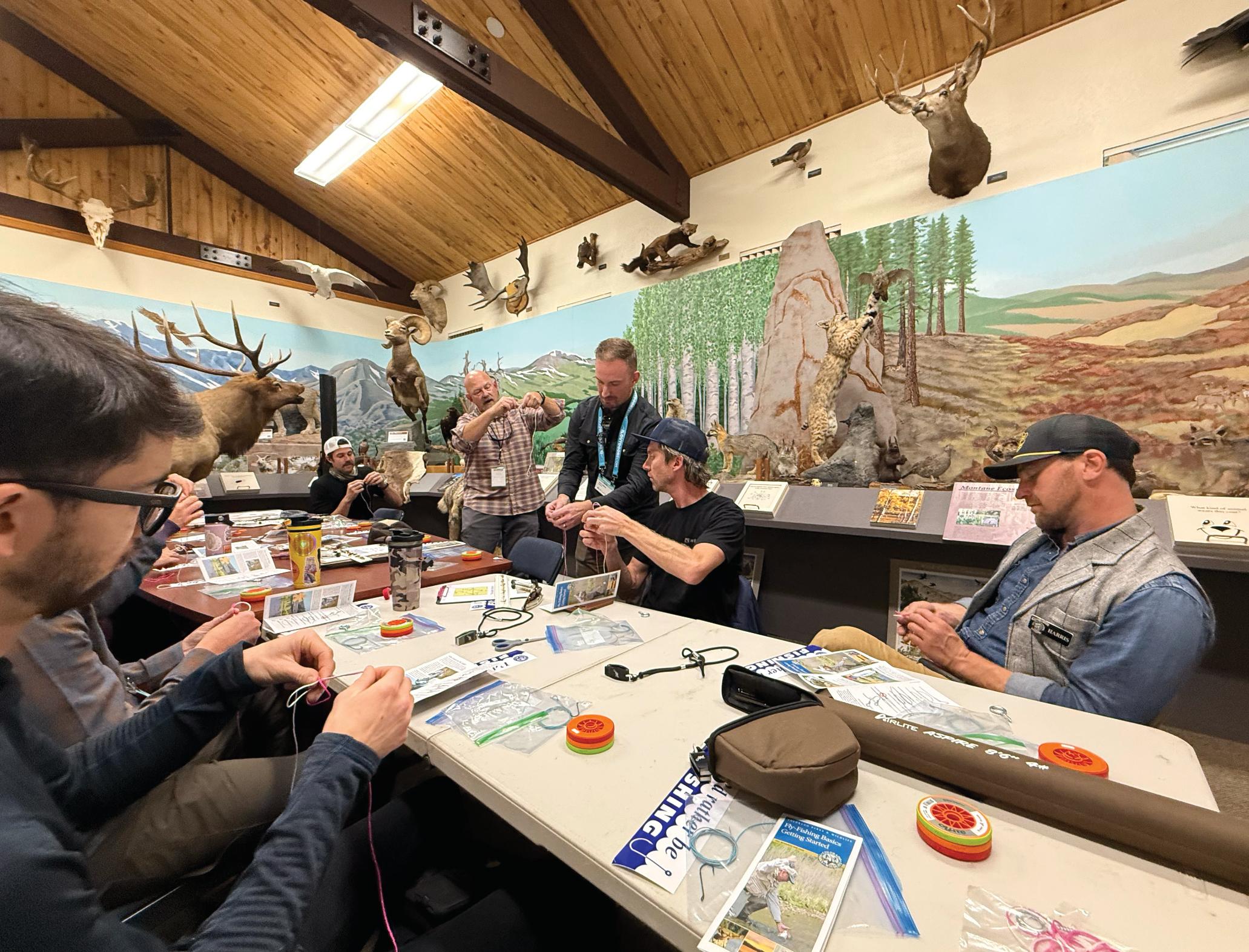
We recently had an opportunity to work with some members of the Outdoor media. We had about 45 days notice, and it was in a town none of us were from and that we would not have a chance to visit until the class. It was a great opportunity, and while the details were far and few between, we wanted to present them with the best learningopportunity.Theclasswouldbein a college town of moderate population and needed to be in the middle of town near a groupofhotels.
First,wenarroweddownthedetailsthat were clear. After some conversation with the event organizer, who wanted a
Jeff Wagner
Jeff Wagner
fly-fishing class for over 25 people, we negotiated the number down to 12 students for a 3:1 student-to-instructor ratio. Add to that, we only had about three hours, and this was quickly turning into a courseonfundamentals.
Fortunately, we had the list of attendees, and most had some social media presence, so we were able to do a little sleuthing and inquirewiththemtounderstandhowmuch fishing experience the group had. Unfortunately, and fortunately, we had a very split course. They had either been fly fishing for 15 years or had really never been.Withthatque,wesplitthegroupinto two. The 4 individuals who had a lot of experience we put in their own group, fishingonthewater.Weneededtorecruita few more instructors so that the on-the-watergroupcouldbemore1:1,aswe wouldbefishingmovingwater.
Now it was time to dig into the location. The event organizer provided the hotel and
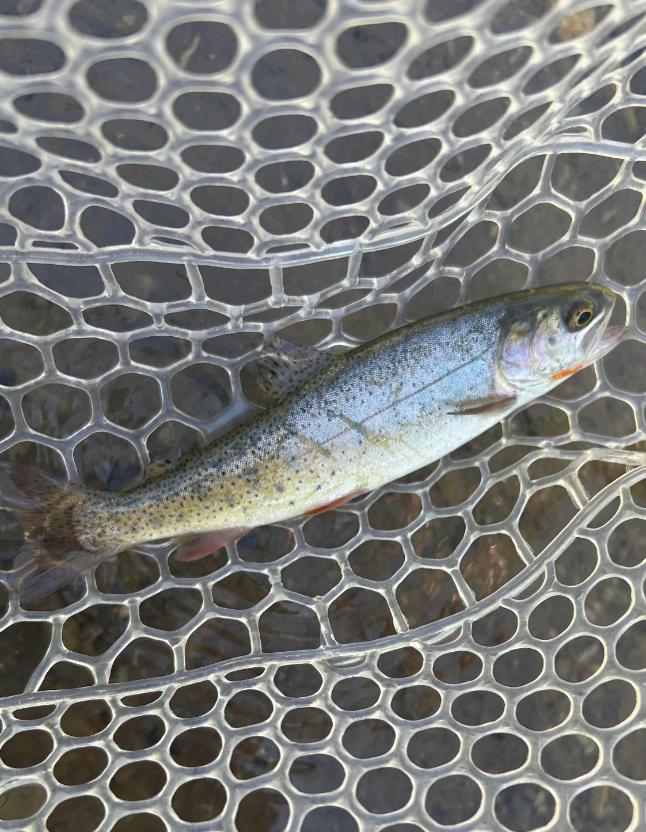
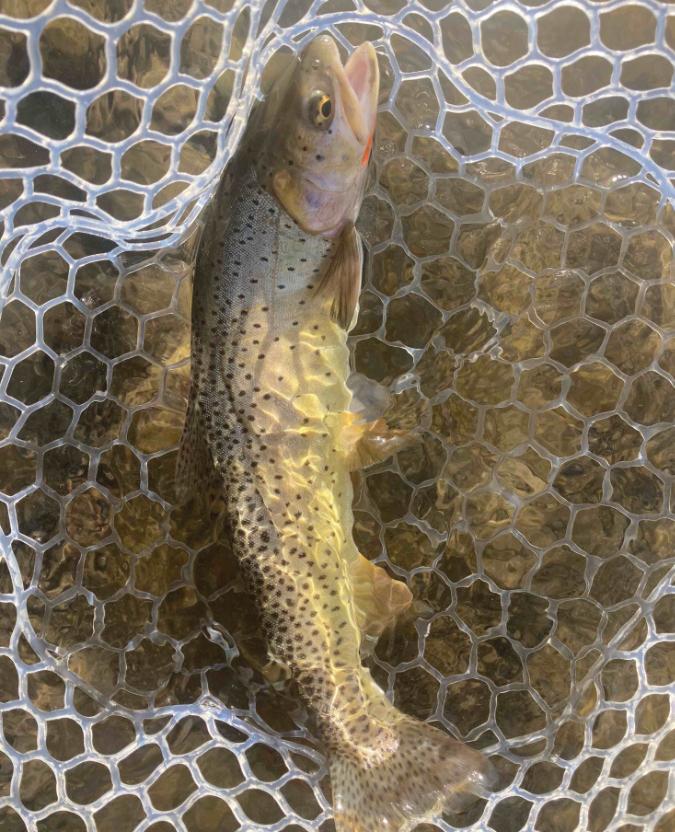
venue location. We were fortunate that there was a river running through town. However, for a class of 12, moving water would not be the best choice to ensure safety. We reached out to a local Parks department and found a pond near the river.Uponcloserinspection,wealsofound there was a hatchery nearby. We made a few phone calls and learned that the pond had trout in it from the hatchery and that the hatchery was part of a conservation effort to raise a rare lineage of Colorado Cutthroat trout. After a few more calls, we made arrangements to use a wildlife museumonthepropertyofthehatcheryfor an indoor session, the lawn for casting and haveatourofthehatcherysowecouldadd a conservation element to the course and fish the pond. The logistics had worked themselvesoutbybeingsomewhatflexible. Wenowhadavenuewithexcellentparking andneartheriverforthemoreexperienced anglers and an area to teach knot tying,
When he’s not fishing or casting you’ll find Jeff hiking or biking the back country with his family. They also volunteer their time to conservation efforts with groups such as Fly Fishers International. Oh, and during business hours Jeff does business stuff.
flies, and rigging, a lawn for casting, and a pond that had fish to hopefully have a few successfulfirstattempts.
Withthetimingandnumberofstudents determined, we looked at the amount of timeanddeterminedthatwecouldstartin on the agenda. With that we were able to break the class down into a quick tour of the facility with a discussion of conservation and fish handling using live fish. Then we would move to the museum with tables and chairs already set. We would go through two simple knots and rigging with some explanation of basic flies.Thiswouldthenleadintoassembling of the rod and basic grip. From there, we would go into casting just out front of the museum. The casting was broken up into
smallgroupswherewecouldgothrougha basic pick up and lay down, roll cast and then stripping flies, shaking out fly line, recasting and fish fighting. Then off to the pondtomakeafewcasts.
With that sorted, we had to make arrangementsremoteandwithtwoweeks to do final prep. With any class, it is important to establish roles and give instructors time to prepare. For each group, we established a leader as well as an overall leader. From there, we made equipment lists and assigned teaching of different subjects. The final equipment list and making sure all equipment was brought to the venue was up to each individual instructor, as well as preparation. We gave one week for each
team member to dial in their program. With that, we met the next week, and each instructor went through their run-of-show. As a team, we discussed ways we could improve. We went through the final equipment list and finally determined a place to meet the day before the class so wecouldgothroughthefinallogistics.
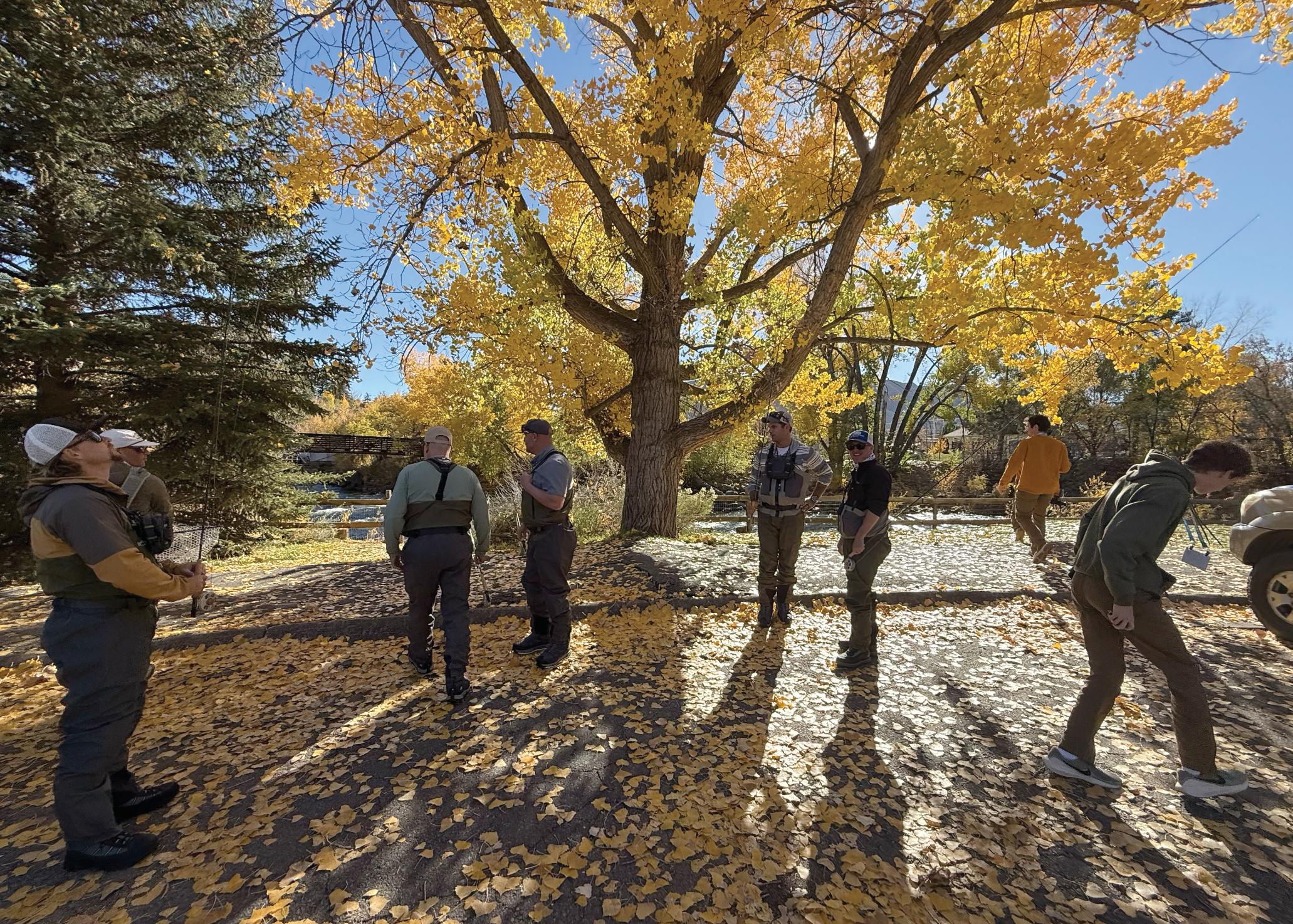
The day before travel, we started a text stringsowecouldstayintouchandbesure we were connected. The day before the class, we met at the venue and met the Parks employee who would be doing the tour.Wefirstwalkedthevenueintheorder plannedandtooknotes.Ourdecisiontonot have the 12-person class on moving water wasfortunate.Duetoheavyrains,thewater level was six times normal October flows.
This was manageable for the experienced anglers in pre-selected locations, but made our use of the ponds on the property that muchmoreadvisable.
This final step was eye-opening. All of the areas were very close and would work great, except for the pond. The pond had steep sides, little area to stand and lots of vegetation. After a few minutes of reviewing the space, we found four areas thatwereclearofvegetationandsafetoget to and fishable. We decided to break the class into smaller groups of through to align with the instructors and carry that onto the fishing. Additionally, we decided to focus more on the area prior to the fishing and limit the fishing component. Ourgoalwastoemphasizetheimportance of the class and helping students feel confident they could rig and cast so they
could be functional on their own and focusedlessontheactualfishing.
On the day of the event, we had another challenge. The shuttles that were intended to be used by the event were not available. We quickly rallied a few people with vehicles that had cars with multiple seats andcouldtransportstudents.
We met in the parking lot, and the prep work paid off. Each class split, the leaders took the lead, and we were off. Of course, along the way, we maximized the time and gave space for questions, but also tried to stay on schedule. The hatchery tour with conservation was, predictably, popular. There were many questions, and we could havegoneformorethananhourjustinthat area. However, we kept this to roughly 40 minutes but made sure to let the students havethetimetoenjoyauniqueexperience.
Knot tying and rigging was simple and straightforward. We had fly line, heavy mono that was multicolored and a few hooks with no point. While this part of a classmightbethemostpractical,itisone of the hardest to keep students engaged in. A few practice knots and a knot-tying card for future reference, and we were off to casting.
Similarly, casting and fishing went well. We spent time where the students wanted to, but also made sure we held to the primary components we knew were necessary and felt the students walked away with a basic understanding of knots, castingandfishingtechniques.
The key to any kind of successful class like this, especially in an urban setting, is flexibility,solidpreparationandfocusingon thestudents’enjoyment.
The Battle to Keep Invasive Carp Out of the Great Lakes
Imagine millions of 10-to-15-pound carp swimming inexorably up the Illinois River, escaping into Lake Michigan, and then establishing breeding populations, forever changing an ecosystem that supports native lake trout, brown trout, chinook salmon, steelhead, as well as whitefish, perch and many others.
Dave Peterson
In July 2024, Michigan Governor Gretchen Whitmer and Illinois Governor
J.B. Pritzker signed a historic agreement committing to a $1.5 billion project to prevent invasive Asian carp from invading Lake Michigan and the other Great Lakes. If successful, this project will prevent an unprecedented disaster threatening a diverse fishery that generates $7 billion a year in recreational and commercial fishing. The health of the entire Great Lakes fishery is at stake if this project is n ot successful.
The Watershed
The Problem - A Multiplicity of Invasives
The Great Lakes have long been victims of escalating invasions of invasive species. Quagga and zebra mussels, brought to the lakes in the ballast of
The Great Lakes include lakes Michigan, Superior, Huron, Erie and Ontario and are bordered by eight states and Ontario, Canada. They represent the largest supply of freshwater in the world,holdingsixquadrillion(that’ssix followed by 15 zeros!) gallons of water, which constitutes 21% of the world’s fresh surface water. The water in the Great Lakes could engulf the continental United States in nearly 10 feet of water. The lakes’ surface areas encompass 94 thousand square miles, and their watershed spans 200 thousand square miles, ranging 750 miles east to west. Their average depths range from Lake Erie’s 62 feet to Lake Superior’s 483 feet. It is estimated that 5000 tributaries connect the lakes.
Dave is Chairman Emeritus and Conservation Committee Chair for the Board of Fly Fishers International. He is a semi-retired school superintendent who fly fishes as often as he can. The Pere Marquette River in Michigan is his home water and he also fishes regularly in Montana, Maine, Florida and the Turks and Caicos Islands. He is a Life Member of FFI, the Conservation Vice President for the Great Lakes Council of FFI and a dedicated member of the West Michigan Hacklers, his local FFI charter club.
Dave Peterson
Photo: Corps Of Engineers
oceangoing ships via the St. Lawrence Seaway, have significantly altered the lakes’ ecosystem. These filter-feeding mollusks attach themselves to boats, seawalls and can encrust the bottom of the lakes. In doing so, they displace invertebrates that sustain young fish, as well as consuming the plankton that juvenile fry rely on. Additionally, the mussels endless filtering of algae and other nutrients creates crystal clear water, driving sport fish like chinook and coho salmon into deeper water for their forage.
Moreover, according to the Center for Invasive Species Research at the University of California, Riverside, “it has been estimated that these mussels can bioaccumulate organic pollutants in their tissues by as much as 300,000 times when compared to concentrations in the water in which they are living. Consequently, these pollutantscanbiomagnifyastheyarepassed up the food chain when contaminated musselsareeatenbypredators(e.g.fishand crayfish), who in turn are eaten by other organisms (e.g. recreational fishermen who eatcontaminatedfish).”
The Latest Threat - Asian Carp
Asian carp could have an equally devastatingeffectonthelakes.
Bighead and silver carp are species of Asian carp that pose unprecedented dangers to the Great Lakes and their recreational,commercialandtribalfishing industry.
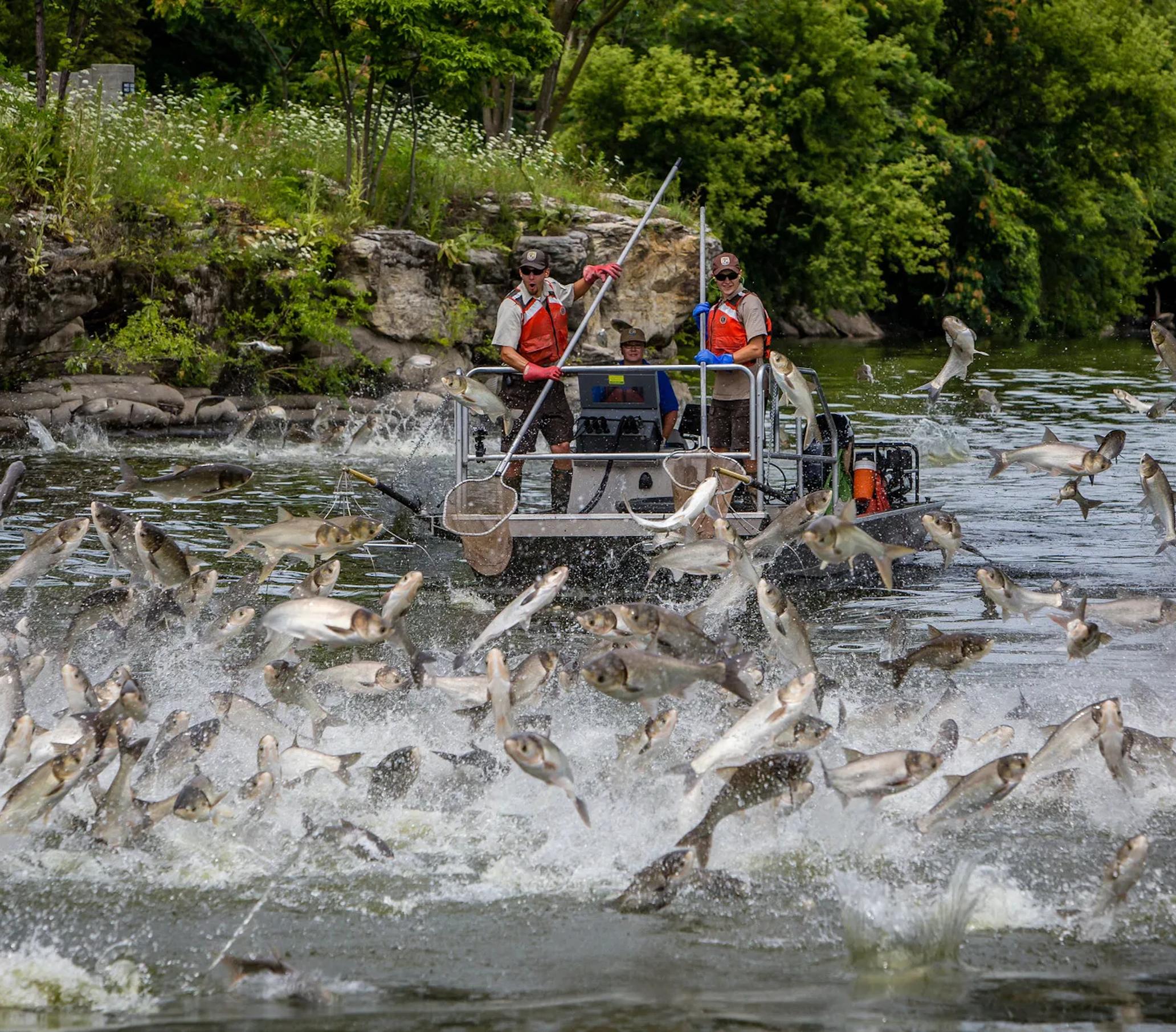
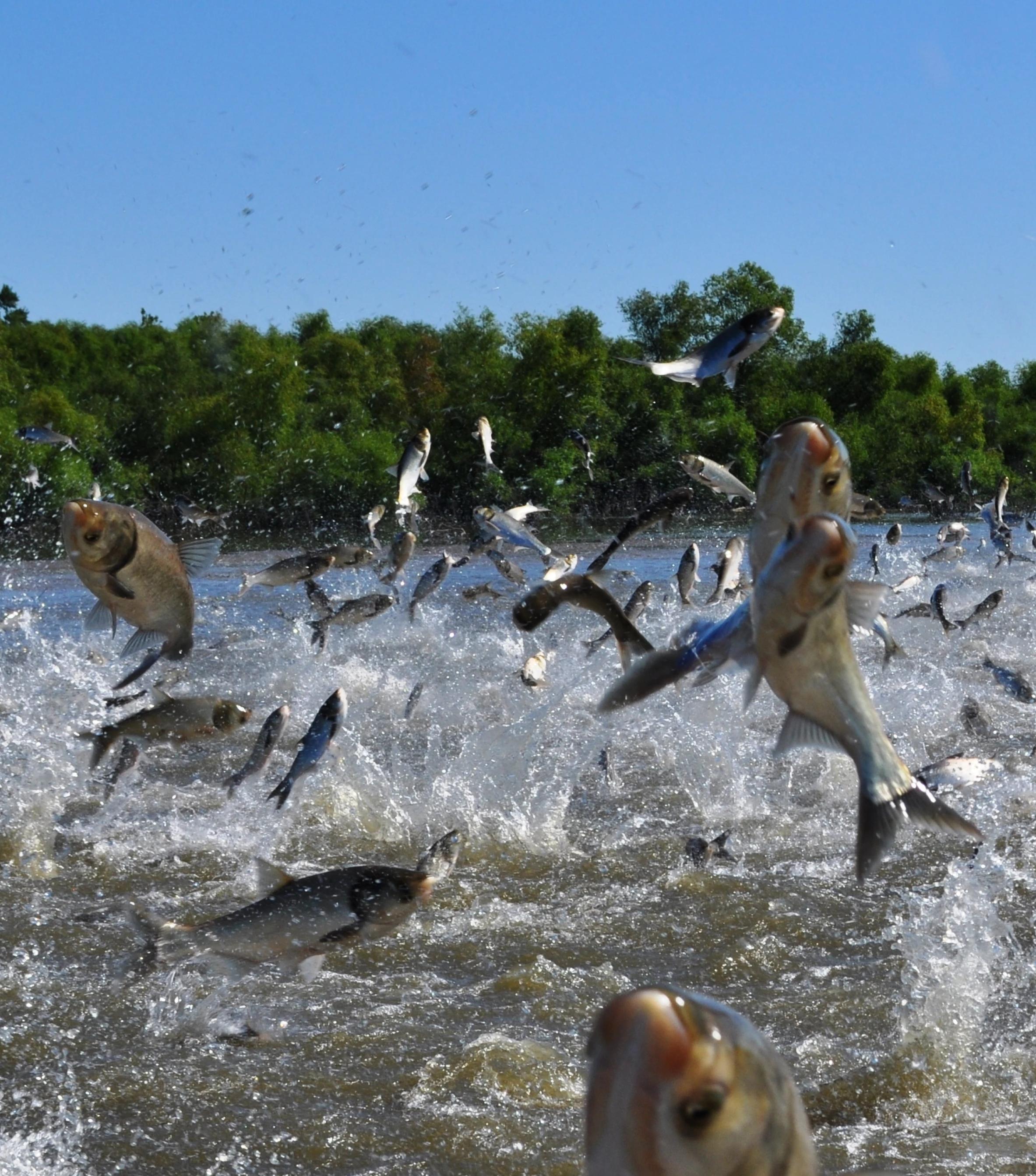
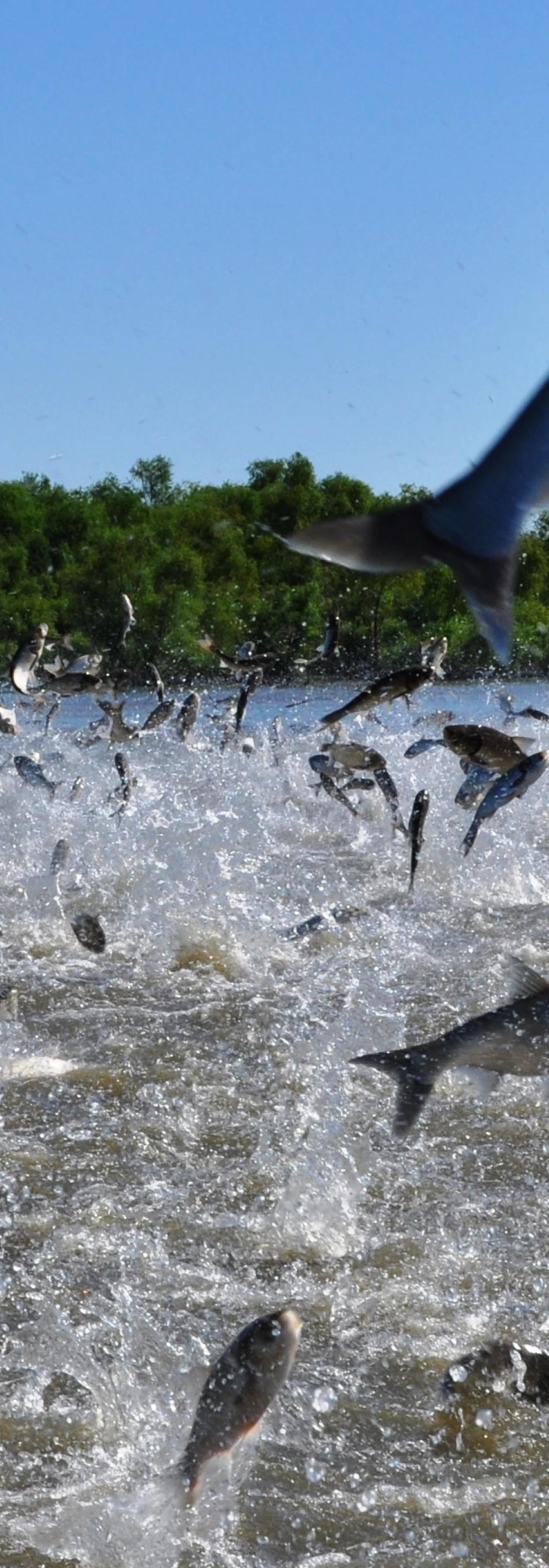
These fish can grow to 4 feet in length and weigh up to one hundred pounds. Known for their tendency to leap as high as 10 feet out of the water when startled, they have injured anglers vaulting into
Photo: Ryan Hagerty/U.S. Fish and Wildlife Service
Photo: Thad Cook/The Nature Conservancy
boats. They are insatiable filter feeders, consuming vast quantities of algae and othertypesofplankton.Originallybrought to the Southern United States to control algae in aquaculture facilities, they escaped their original waters and quickly spread through the Mississippi River basin. A University of Michigan study estimates they represent over 60% of the fishbiomassintheIllinoisRiver.
While there was originally some doubt that there was sufficient algae in Lake Michigan to sustain a breeding population of fish, a University of Michigan study foundtheirfeedinghabitstobemuchmore diverse, suggesting that the carp would thriveiftheyescapedintothelakes.Other studies suggest that, once established, Asian carp could badly damage the ecology of the lakes as well as harming or outcompeting native species and the economytheysupport.
The Plan to Stop the Carp
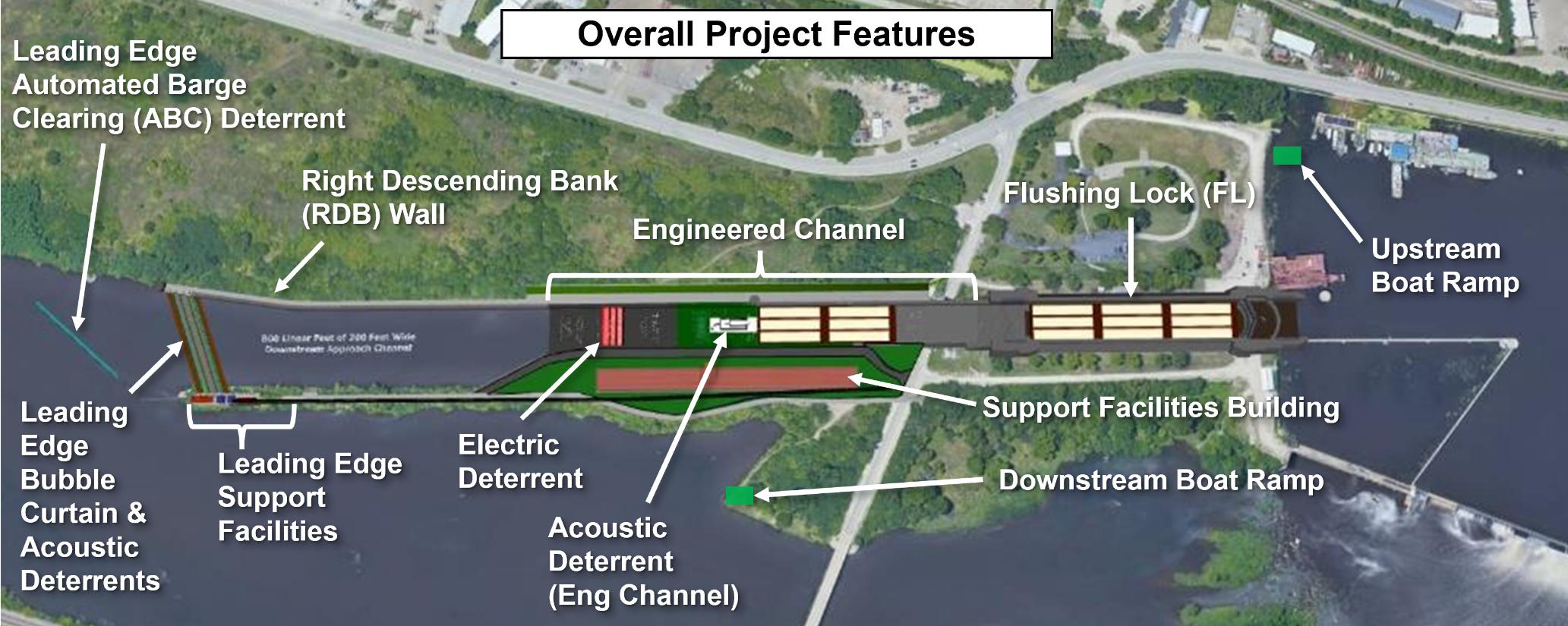
In July 2024, Michigan Fisheries Chief Randy Claramunt announced the finalization of the “Brandon Road InterbasinProject.”Acollaborativeeffort between the Michigan Department of Natural Resources, the Illinois
Department of Natural Resources and the U.S. Army Corps of Engineers, this $1.15 billion project sounds a bit like a Rube Goldberg invention.
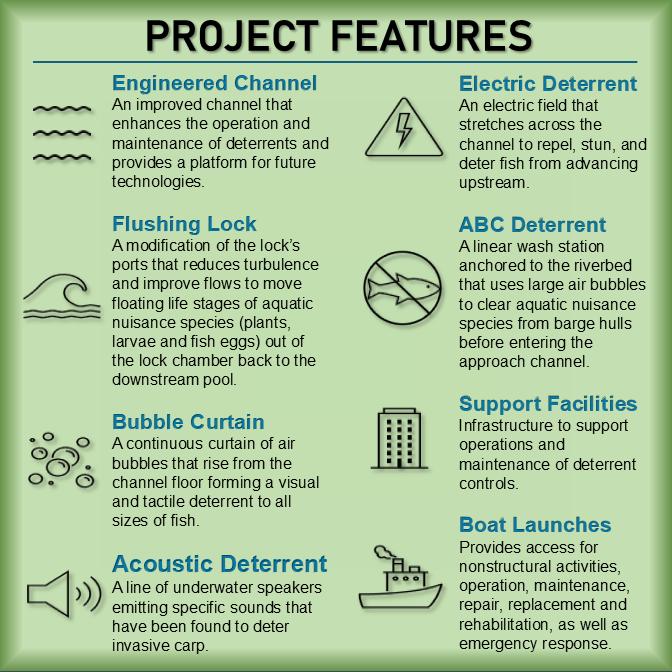
Located near Joliet, Illinois, at a pinch point on the Des Plaines River, the project will incorporate acoustic and electric barriers designed to repel the fish, a “flushing” lock and an air bubble curtain, among other technologies. Once completed, this complex array of interacting barricades will hopefully prevent the migration of the fish into Lake Michigan.
Emphasizing the importance of the project,MichiganGovernorWhitmersaid, “The Great Lakes are the beating heart of Michigan's economy, and Brandon Road will help us protect local communities and key industries, including fishing and boating that support tens of thousands of good-paying jobs.” Construction on the project has now begun and is expected to be completed in six to eight years. Whether or not the project succeeds remains to be seen, but it represents a monumental and innovative effort to protect the world’s most wondrous lakes from the ruinous impact of yet another invasive species.
Photo: Corps Of Engineers
2025 FFI Awards
Awards presented by Fly Fishers International (FFI) acknowledge those individuals who demonstrate the highest levels of achievement, dedication and contributiontopreservingtheLegacyofFly Fishing.Theinformationprovidedaboutthe recipient comes directly from the nominationsthatwereconsideredtobestow theaward.
FFI Award of Distinction for Leadership & Service
Dave Peterson
Pentwater, Michigan
Dave Peterson is a retired school superintendent who fly fishes as often as possible but always finds time to lend a hand at FFI. Dave has been a dedicated volunteer at many levels for more than 20years.
Dave’s home water is on the Pere Marquette River in Michigan, and he also fishes regularly in Montana, Maine, and Florida. He has served as Chairman of the Board of FFI, Chairman of the FFI Conservation Committee, is a Life Member of FFI, and is a member of the FFI President’s Club. He is also Conservation Vice President for the Great Lakes Council
of FFI and a dedicated member of the West Michigan Hacklers, his local FFI charter club. He belongs to three other FFI clubs, including the Red Cedar Fly Fishers, the Anglers of the AuSable, and the Pere MarquetteWatershedCouncil.
DavebeganhisservicetoFFIatthelocal level with the West Michigan Hacklers, a charter club of FFI. He was then elected to the Board of the Great Lakes Council and served as the Conservation Vice President. While serving as the Council’s Conservation VP, he became a member of thenationalconservationcommittee.When asked, he gladly accepted the role as the Chair of FFI’s Conservation Committee and
remainedinthatrolefrom2016to2020.In 2020, Dave assumed the position of Chairman of the Board, giving countless hours to Fly Fishers International while serving in that position. Even as Chair responsibilities came to an end, he stepped back into the role as Chair of the FFI ConservationCommitteeatatimewhenthe landscape was changing in the conservation arena. He continues to serve as the Great Lakes Council Conservation VicePresidentaswell.Hissteadyhandand thoughtful approach to leadership have been invaluable to the organization at all levels.Daveisverydeservingofthisaward.
FFI Fly Fisher of the Year
Sam Decker
Cuddebackville, New York
Sam Decker has always been a fly fisher. Sam took up fly fishing on her first trip to Alaska with her husband, Wayne. They weredroppedoffonalakeinthemiddleof Gates of the Arctic National Park, and Sam decided it would be interesting to fish for a week.Shetooktoitlike-well,afishtakesto water, and she never stopped. Sam started asoneoftheveryfewwomenonthewater andhasseenmanymorejointheranksover the years. Her home waters have been the
Delaware,whichshehasfishedforthepast 33 years. She guides on the East Branch, West Branch and the Main Stem down to Barryville. She has been an FFI Certified Casting Instructor for many years and enjoysteachingfolkshowtoflyfish.
Her travels have taken her to many beautiful places within the U.S., Eastern Canada, Western Canada, New Zealand, South America and places in between. She and her husband, Wayne, usually spend September into October out west; her fishing and him riding his bike. It always amazes her husband that no matter where theygo,sheknowssomeone.
Her favorite species happens to be Steelhead, and casting for them with a two-handed rod. You can find her in most years on the Olympic Peninsula in
March and April swinging a two-handed rod for steelhead.
Sam joined Fly Fishers International in November 2000 and turned her attention tobecomingaCertifiedCastingInstructor. In 2002, she joined the instructor community and used her skills to teach people how to fly fish and to guide clients onherhomewaters.
She stepped into a leadership role with FFI when she became president of the newly formed Eastern Waters Council in 2014, which served members and clubs in New York and New Jersey. She served as president of the Council for 11 years when she stepped back from that position in 2025.
While serving in that capacity, she organized meetings with the clubs on a regular basis, worked with the members in the area, coordinated activities at the Fly FishingShowsinEdison,andvolunteeredat theshowsinLancaster,Pennsylvania.
ServingasaCouncilPresidentrequiresa highlevelofcommitmentanddedicationto the organization. Sam demonstrated that commitment and dedication for 11 years, and we are grateful that she did. Sam is well-deservingofbeingnamedFlyFisherof theYear.
North Eastern
George Sylvestre
george.sylvestre@sylvestreoutdoors.com
Pat Johnson paddy.johnson65@gmail.com
Northern California Ron Beltramo rjbeltramo@aol.com
Ohio Cari Vota carivota267@gmail.com
Oregon Steve Savill orcffi@gmail.com
Southeastern Brian DeLoach president@secffi.org
FFI McKenzie Cup
North Arkansas Fly Fishers Mountain Home, Arkansas North Arkansas Fly Fishers (NAFF) is an FFI Affiliate Club and has been for many years. The club follows the FFI legacy by using education, community and conservation as its three pillars. NAFF accomplishes its mission by having regular club meetings, quarterly outings, and keeping its members informed through monthlynewsletters.
NAFFnotonlyservesitsmembers,butit also serves the community. Over the last two years, NAFF has taken the lead in establishing Dry Run Creek Academy (DRCA) by providing most of the mentors, financial support, teachers and one of the twovisionariesforthisproject.Threeother
Southern Chris Allen callenshooter@aol.com
Southwest Leigh Ann Swanson president@swcffi.org
Texas
Russell Husted president@texascouncilffi.com
Upper Midwest Ray Morris raywmorris@gmail.com
Washington State Steve Jones president@wscffi.org
Western Rocky Mountain Dave Londeree dlonderee@roadrunner.com
fishing-related entities are also involved, with the four entities working together to resolve a need for a defined program to teach children how to fish, cast, tie flies, learn knots, stream etiquette and conservation. Prior to this program, for several years, NAFF worked with the very large homeschooling community to teach a multi-week class each year on fly fishing andtying,culminatinginafieldtriptofish Dry Run Creek with the flies they tied duringthepriorweeks'classes.
NAFF helps financially and with manpower to maintain Dry Run Creek under the supervision of The Game and Fish Commission. This very special resource allows youth under 16 to fish a heavily populated trout stream. This past year, we contributed to upgrading the handicap access area with finances and manpower.NAFFalsosetupamemorialby the creek to Dave Whitlock, the primary architectoftheenhancementstothecreek. NAFFhasworkedformanyyearshelpingto maintain the creek access, which is about 1/4milelong.
NAFF has been involved in many conservationeffortsovertheyears,working toprotectournumerousfishingwatersand theirtributaries.Thisincludescontributing tothefundforthelawsuitoverthedamages donetotheNorforkRiverbyadevelopment construction company, with one of our members testifying about the harm caused to the Norfork River. NAFF members also write letters and "spread the word" when a threatisdetected.NAFFmayevendedicate an entire meeting to the issue and how NAFF members can contribute to minimizingoreliminatingthethreat.NAFF also monitors ongoing and potential conservation issues. NAFF was instrumental in getting a project started to build a Pavilion at Wild Cat Shoals on the White River in conjunction with the Arkansas Game and Fish. Currently, NAFF
is waiting on the Corps of Engineers to approvethesiteanddesignforthePavilion sothatconstructioncanbegin.
NAFF has previously donated a Pavilion at the Mountain Home City Park by Lake McCade. This Pavilion is regularly used for educational fishing events. It is feet from the lake and serves as a great gathering place for youth and adults. These are only two examples of their community involvement. NAFF meets the criteria for short and long-term improvements to the community served, provides educational opportunities for its members and the community in general, provides tangible objects that enhance the ability to use the land (ex. Pavilions) and works well with other fishing and conservation entities, including the Arkansas Game and Fish. NAFF supports FFI through its many local efforts following FFI's three pillars of education,communityandconservation.
FFI Buz Buszek Fly Tying Memorial Award
Tom Logan Tallahassee, Florida
Tom H. Logan is a retired certified wildlife biologistbasedinTallahassee,Florida,with over 47 years of professional experience in research, recovery, and management of threatened and endangered wildlife species. His career included roles such as Bureau Chief of Wildlife Researcher for the Florida Fish and Wildlife Conservation Commission, where he notably contributed to conservation efforts concerning the Florida panther, bald eagle and other endangeredspecies.
Beyond his biological work, Tom is a passionate fly fisher and fly tyer. He is the founder and manager of North Florida Fly-fishing Adventures and School, an initiative dedicated to teaching fly tying, casting and fishing techniques that enhance the fly-fishing experience for
anglers using artificial flies. In his local waters—including the Wacissa and St. Marks Rivers, as well as lakes Miccosukee, Talquin and Hall—he enjoys fishing for southern bream and bass. His fly-fishing pursuits also take him to trout streams in the Smoky Mountains, the Sierras, and otherwesternU.S.waters.
Tom has a particular interest in tying historic and modern soft hackles and other wet patterns, favoring traditional materials over synthetics. He believes that many classic trout patterns, some dating back centuries, are highly effective for southern freshwater species like bluegill and bass. Hisfavoritefly,theWesternCoachman,has proven successful across various freshwaterspecies.
Anactiveeducator,Tomteachesflytying and casting classes in Tallahassee and has conducted workshops at events organized by Fly Fishers International (FFI). He frequently demonstrates fly tying at FFI Councileventsandhaspresentedprograms on the laws pertaining to the possession and transportation of natural fly-tying materials.
Tom's contributions to the fly-fishing community have been recognized with severalawards,includingthe“2004Tyerof the Year” by the Southeast Council of FFI, the “FFI Silver King Award” in 2013, the “FFI Conservation Award” in 2015 and the “FFI Award of Distinction for Leadership & Service” in 2021. He is a Life Member of FFI,anFFICertifiedCastingInstructor,and has served in various leadership roles, including Chairman of the FFI Board of Directors, Chairman of the FFI Board Conservation Committee, Chairman of the FFI Fly Tying Group Board of Governors, and currently as Board Chairman Emeritus andSeniorAdvisorforConservation.
TomcurrentlyservesasVicePresidentof the Florida Council of FFI and has planned the Council’s Fly Tying Demonstrations sinceearlyinitsorganization.Hecontinues to write articles on the biology of fly selection and remains active in promoting conservation and education within the fly-fishingcommunity.
FFI Lifetime Achievement in Fly
Casting Education Award
Brian McGlashan
Kirkcaldy, Fife, Scotland
Brian McGlashan has been an indispensable pillar of stable leadership for theFFIinEurope.Hehasbeenteachingfly casting for more than 20 years and holds both Master Casting Instructor (MCI) and Two Hand Master Casting Instructor (THMCI)qualifications.HeisalsoaLevel3 ExaminerandwasamemberoftheCasting BoardofGovernors.
Unlike in North America, Japan and Australia,wheretheFFIhasamonopolyon professionalinstructorcertification,Europe is a highly competitive environment. We constantly battle for instructors and students against well-established
organizationslikeGAIA,AAPGAI,EFFAand SGAIC in Scotland. A unique lack of Spey casting skills in our entry-level one-hand curriculum is a particular challenge in the UKthatBrianworkshardtoovercome.
Brian's unwavering dedication has been a source of stability through challenging times. The FFI's past in Europe has been marked by disruptions, including the departure of our European joint venture members to form EFFA and the acrimony surrounding the departures of Denise MaxwellandDanMcCrimmon.
He has continuously taught, mentored and examined, while now leading our EuropeRegionteam.Hewasakeyfigurein driving positive change in our Examiner Education Program by persuasively advocating to empower faculty members to make on-the-spot decisions. He regularly organizes successful testing events and shows,runningorscheduledtoruntestsin Scotland, and Southern and Northern Englandin2024and2025alone.
BrianworksalongsideJamesMurrayand Barry Mitchell to lead FFI’s presence at high-profileeventsliketheScottishandUK Game Fairs, where we handle all casting instruction. The UK Game Fair is particularly high profile and attracts over 100,000 attendees annually. Following a highly successful event there in 2024, the FFI team is returning this year.As Brian says, “Recognition for the UK Game Fair shouldgotoBarryMitchellforbringingthe
team of instructors together for such an importantevent.”
Brianhasbeenaremarkablementor,not just to candidates, but to his colleagues. He has been especially encouraging other instructorstotakeongreaterresponsibility with impressive energy and skill.As a result, there is a magnificent Europe-wide team of coordinators that Brian gives accolades for the accomplishments they have achieved.“I certainly couldn’t do it withoutthem,”saidBrian.
Don Simonson
Camano Island, Washington
Don Simonson's length, breadth, and quality of service to the FFI is extraordinary. He joined in the 1980s, became a Certified Casting Instructor (CI) in 1995 and a Master Casting Instructor (MCI) in 2000. Don joined the Casting Board of Governors in 2006. He received a well-deserved Mel Krieger Award in 2013.
Throughout the years, he has continued to actively mentor and examine candidates as a Level 2 examiner and put a tremendous amount of energy and effort into running CI teaching workshops at Fairs and other events. He has always emphasized the history of our casting education program and helped pass our culture down to newer colleagues. He volunteered to be one of the MCI faculty at the recent CI boot camps and put in a large amount of online and in-person time of the highest quality.
Don has been an extremely important member of the casting education leadership team over the past few years. He agreed to take on joint leadership of theCandidatePipelineCommittee,which has produced well-received roadmaps for all levels of instructor candidates. He has also done a great job of mentoring and working with his co-lead, Andy Manley. Finally, he provided valuable input to the team working on the recently released CI Candidate Workshops and is volunteering his time to help present them.
FFI Conservation Award
Tarrant Regional Water District
Fort Worth, Texas
Tarrant Regional Water District’s (TRWD) mission is to deliver a reliable, resilient supply of water to the public at the lowest cost and highest quality possible. Reduce the risk of flooding in our communities with dependable flood reduction infrastructure and operations. Enhance the quality of life in North Texas communities by creating recreation opportunities around TRWD infrastructure to enable active lifestyles. Recreation activities, mainly the most successful fly-fishing event in the State of Texas, Trinity FlyFest, have been thoroughly enjoyed by the Fort Worth Fly Fishers and the Texas Council FFI. This ongoing event just recently celebrated its 10th year of existence. Bringing thousands of attendees together to enjoy, compete, and learn more about fly fishing each year. Not only do we enjoy this event immensely,
but the clubs also supply a large number of volunteers to support the needed roles to make an event of this magnitude successful. https://trinityflyfest.com/
TRWD also has many litter programs in place throughout the year. Trash Bash focuses on litter pick-ups throughout the area, focusing on the Trinity River and lakesinNorthTexas.KeepingFortWorth beautiful, and maintaining the best Urban experience for recreation, especially fly fishing and kayaking, in Texas!! TRWD also has a large number of educational awareness activities that take a more proactive stance on litter control. The Fort Worth Fly Fishers have been participating in these cleanups for quite some time.
TRWD also focuses on water standards, keeping our water safe for personal use, along with recreational use. Recently, TRWD, along with our clubs and other conservation groups, workedtopreventanewwatertreatment site from discharging treated water into the Trinity River water system. Had they not worked to prevent this, the water system would have been drastically altered, and the future of game fishing here would have never been the same. They were successful in doing so, and the city of Fort Worth changed their plans, and the water system remains in excellent shape for recreational activities.
TRWD has been and still is a great conservation partner. Not only have they been great for the Fort Worth Fly Fishers, but they are also partners with Streams and Valleys, an organization that is also another great conservationfirst organization.
TRWD is so deserving of being recognized for their conservation efforts,andwecongratulatethemonthis FFI award.
FFI Council Leadership Award
Steve Jones Camas, Washington
Sherry Steele Sisters, Oregon
FFI Darwin Atkin Fly Tying Achievement Award
Larry Olson Minneapolis, Minnesota
FFI Dick Nelson Fly Tying Teaching Award
Al & Gretchen Beatty Boise, Idaho
Glenn Wilson Graham, Washington
FFI Fly Fishing Skills Education Award
Dorothy Schramm Pentwater, Michigan
Dick Erickson Willoughby, Ohio
FFI International Ambassador Award
Kastine Coleman Newfoundland & Labrador, Canada
FFI Lee Wulff Award
Miss Mayfly & Kim Ranalla Manassas, Virginia
FFI Mel Kreiger Fly Casting Instructor Award
Mark Surtees
London, England, United Kingdom
FFI Women's Community Development Award
Leigh Ann Swanson
CuttcatchProject Recognizes Species Diversity
The Cuttcatch Project is part of an effort by FFI to express the value of species diversity in fisheries. The project is designed to help flyfishers appreciate diversity of native species in general and, in this particular case, value the many subspecies of cutthroat trout. Historically, 14 subspecies of cutthroat
12 Subspecies of Cutthroat Trout
Bonneville cutthroat
Oncorhynchus clarkiutah
Coastal cutthroat
O.c. clarki
Colorado Rivercutthroat
O. c. pleuriticus
Greenback cutthroat
O. c. stomias
Humboldt cutthroat
O. c. ssp
Lahontan cutthroat
O. c. henshawi
Paiute cutthroat (see below)
O. c. seleniris
Rio Grande cutthroat
O. c. virginalis
Snake River Finespottedcutthroat
O. c. behnkei
Westslope cutthroat
O. c. lewisi
Whitehorse cutthroat
O. c. ssp
Yellowstone cutthroat
O. c. bouvieri
Congratulations to Cuttcatch Award Recipient 1-4
Penny Woodcock Saint Anthony, ID
trout once existed.Presently, 12 subspecies exist in some portion of their historic native range.Learning to value these cutthroat in their native range is a critical first step for their recovery.
To aid in their recovery, the Cuttcatch Project encourages the flyfisher to collect memories of the different species caught and released.
Those FFI members who successfully
catch foursubspecies of cutthroat trout will receive a certificate in recognition of their accomplishment. Fly Fishers catching and documenting 4 additional, different subspecies of cutthroat troutcan receive a second Cuttcatch award.Fly Fishers catching and documenting all twelve listed subspecies will be eligible for the All Cuttcatch award. Each participant in the program will receivean FFI hat.
International Ambassadors Nominees
Marco Boretti, Italy
Marco is an Italian fly-fishing guide and well-knownflycasterwhoenjoysbuilding bamboo fly rods and was active in pioneering the Renaissance of fly-casting competitions in Italy in the early 1990s.
A proud member of FFI, Marco is a certified Single Handed Master Casting Instructor, L1 Examiner and Mentor for Scuola Nazionale di Lancio, Italy’s National Casting School, a division of UNPEM (Unione Nazionale Pescatori a Mosca).
In the 1980s, Marco was a student of Mario Riccardi, one of the most famous fly fishers and fly casters in Italy and Europe, where he learned many of the
techniques he shares with his students today.Marco’shomewatersincluderivers throughout the north of Italy and Austria, and he currently collaborates with Proguide Fly Fishing Austria, leading fishing trips across the region.
Pat O’Toole, Ireland
Pat O’Toole has been passionate about fishing since the youngest of ages. Pat’s lengthy professional career in the angling industry includes roles such as Casting Instructor, fishing academy instructor, mentor to casters studying for various exams, including FFI and Game Angling Instructors’ Association (GAIA) certifications, as well as for children with disadvantaged backgrounds, children with disabilities and with the nonprofit organization, Casting for Recovery.
Pat’s proudest moments centered aroundhiseffortstorehabilitatehislocal spawning streams to save Atlantic Salmon when he was Secretary of his local flyfishing club. He is still heavily involved in these projects today. Pat has been instrumental, along with other fishermen,inunitinglocalanglingclubs into one entity known as the Boyne Catchment Angling Association, comprising 14 clubs whose aim is to promote conservation on the River Boyne. Pat has served as chairperson since its inception.
Pat has traveled to Alaska, Argentina, Canada, New Zealand, Tasmania, America and Iceland on angling excursions, fished Ireland extensively and has angled in various other European Countries as well, including acting as Casting Certification Examiner across the region. One of Pat’s favorite memories is of holding a casting workshop in West Yellowstone in 2013.
Pat has served as a committee member of Trimathboy Anglers for over 40 years and as Secretary for 14 years. He is now Chairperson of the Boyne Catchment Angling Association, which he has chaired for the last five years.
Pat’s certifications include FFI MCI & THMCI, and he is also an FFI Level 3 Examiner. Pat also represents GAIA and is an APGAI Single & Double Hand Casting Instructor and also an Examiner for that organization.
René Gerken, Denmark
For the past 15 years, René has worked professionally in the flyfishing industry and considers himself fortunate to combinehispassionwithhisprofession.
René holds a degree in Agricultural Technology (Nature & Environment) and trained as a fishing guide and tour leader at Sweden’s Sportfiskeakademin. René is one of only three FFI Certified Master Casting Instructors (MCI & THMCI) in Denmark and regularly hosts casting courses and demos for private clients, angling clubs, tackle shops, and fishing exposbothinDenmarkandabroad.
From2009–2012,Renéguidedfull-time in Iceland for Lax-á and also guided in
Pablo Rodrigo Pérez, Argentina
Pablo Rodrigo Pérez is one of the most respected and influential voices in fly fishing across Latin America. With more than 30 years of uninterrupted experience, he has built a reputation as a passionate educator, ethical angler, and authentic advocate for the values of fly fishing. Based in Mendoza, Argentina, Pablohasplayedapivotalroleingrowing the sport throughout the region—not only as a technician and outfitter, but as a community leader and communicator. He is the founder and director of Mendoza Fly Shop, the official Orvis distributor for Argentina and Chile since 1993. Through his multifaceted career, a s instructor, entrepreneur, product developer and media host, he has helped shape the fly-fishing culture of a continent.
Above all, Pablo is a teacher. For decades, he has committed himself to teaching fly casting, entomology, conservation ethics, and guiding principles to students of all levels. He is an FFI Certified Instructor and serves as
Argentina, Sweden and Ireland. He later led trips for Atlantik & Diana Fiskerejser, exploring and testing top fishing destinations worldwide. From 2015 to 2021, he worked at Olderø Fly Fishing Lodge in Norway and in 2022, consulted for Fairpoint Fly Fishing, focusing on
Master Instructor of the Aguas Arriba International Academy, a program focused on developing guides and instructors with strong foundations in both technique and values.
Pablo’s educational style blends clarity, patience and deep knowledge with the ability to connect emotionally
marketing and dealer support for SAGE, RIOProducts,andUniqueFlies.
Besides hosting trips to fly-fishing destinationsaroundtheworld,Renéworks for Odense Jagt & Fritid, one of Denmark’s premier fly-fishing stores, known for its exceptionalservice.
and intellectually with students. He has trained dozens of professional guides across Argentina, Chile and Uruguay, and continues to run in-depth clinics and workshops throughout the region. His belief is simple: "Fly fishing is not a secret to be kept, but a language to be shared."
Gerald “Jerry” Hamon (1954 – 2025)
We mourn the passing of Gerald “Jerry” Hamon, Past President and a founding partner of the Texas Council of the Fly FishersInternational(FFI)in2012.Jerry passed away on February 25, 2025.
Jerry played a pivotal role in the Council from its earliest days. As Vice President, he helped assemble the board and set the organization on a strong path. His passion, energy and dedication were felt by all, and under his guidance, the Council quickly achieved many milestones.
A committed conservationist and exceptional fly fisher, Jerry also had a deep love of teaching and sharing his knowledge with others. Above all, he delighted in fly fishing from a kayak—an art he mastered with remarkable skill.
Jerry’s contributions extended beyond the Texas Council. He was actively
Ron Cordes (1943–2025)
Dr. Ronald Alan Cordes, a man of boundless curiosity, intellectual brilliance, and adventurous spirit, passed away peacefully on May 16, 2025, at the age of 81. His life was a vibrant tapestry of global exploration, scholarly achievement, and deep devotion to his family. He lived in Rigby, Idaho, with his beloved wife, Elizabeth “Betty” Cordes, who passed just days after him.
Ron’s heart belonged to Betty, whom he married on January 1, 1980. He devoted himself to her care throughout her long illness with unwavering love. Their home was a sanctuary where Ron fed bald eagles and welcomed wildlife, including Daisy the Canada goose. His memoir reflected on aging, cancer, and the joys of life, encouraging his granddaughters to embrace love, adventure, and curiosity.
involvedinotherorganizationsandretail companies within the fly-fishing industry, earning widespread respect and admiration. In addition, he served his community as a police officer, reflecting his lifelong commitment to service.
This obituary is adapted with gratitude from a tribute originally published by FFI’s Texas Council.
Born August 12, 1943, in Rockford, Illinois, Ron’s early brilliance led him to Washington University in St. Louis for a B.S. in Chemical Engineering, followed by an M.S., Ph.D., and Juris Doctor from UC Berkeley’s Boalt School of Law. He earned national awards from the American Institute of Chemical Engineers and served as an attorney and Vice President of Plasma Quench Technologies, securing landmark NSF and NIST grants.
An avid fly fisherman, Ron traveled to Rhodesia, Nepal, New Zealand, and beyond, facing tigerfish, cobras, and elephants. As editor of Fly Fisherman Magazine and FlyFishing Heritage, and author of Lake Fishing with a Fly and the Cordes/LaFontaine Pocket Guide series, he inspired countless anglers. A longtime
leader in Fly Fishers International, he served as Chairman of the Board in 2006, establishing the FFF Fly Tying Group in 2008 and advancing education in the fly-fishing community.
Ron’s legacy endures through his scholarship, adventures, mentorship, and the love he shared with Betty and their family.