By CAITLIN BUTLER
The story of the Indian River Lagoon and the Upper St. Johns River Basin (IRL/USJRB) is, in many ways, a story of connection, both natural and created
Permitting Accountability is Needed
and Family Lands is Protecting Agriculture
Address label change?
If your mailing label is inaccurate or incomplete, please contact us with the correct information at SPECIFIER PUBLISHING LLC, P.O. Box 1857 Tallahassee, FL 32302, or email us at admin@floridaspecifier.com. We appreciate your help with keeping our circulation database accurate.
For much of Florida’s history, the two systems were naturally separated by the Atlantic Coastal Ridge, but as communities grew and land was drained, primarily for agricultural purposes, canals were cut through the ridge to move water off the landscape more quickly. Over time, those alterations created new connections between the Upper St Johns River Basin and the lagoon, increasing the volume of freshwater, sediments and nutrients into the estuary. Today, those connections continue to influence both the environmental challenges facing the region and the strategies used to restore and protect it.
Over the years, the lagoon has navigated ongoing environmental challenges, from excess altered freshwater flows, nutrients, algae blooms and habitat loss. Now, a different story is beginning to emerge – one centered on restoration, regional coordination and a growing understanding that protecting the lagoon starts several miles west.
The St. Johns River Water Management District (District) recently reached an important milestone through its Basin Management Program with the finalization of the IRL/USJRB Basin Plan.
More than just a planning document, the IRL/USJRB Basin Plan represents
years of collaboration among scientists, engineers, local governments, water managers, environmental organizations and community stakeholders working together toward a common goal of improving water quality and restoring the health of both connected systems. The plan also helps align shared restoration priorities and long-term water quality goals within the IRL/USRJB.
That collaborative approach is guiding projects across the watershed, from nutrient reduction and stormwater improvements to large-scale regional initiatives designed to improve the quality and movement of water entering the lagoon, while maintaining essential flood protection.
One of the most important pieces of that effort is diversion projects, which are focused on reestablishing the historical flow of the freshwater back to the St. Johns River.


By STAFF REPORTS
Gov. Ron DeSantis nalized the state’s 2026-2027 state budget at the end of June, vetoing more than $800 million in individual projects on top of roughly $900 million legislators placed in last year's budget during the budgeting process to land on budget of $117.6 billion.
DeSantis' reported budget is higher than the $114.5 billion budget lawmakers announced passing in May because that number didn't account for items shi ed between funds, supplemental funding items and money added to the 2025-2026 budget.
apart on key budget items. A er a break past Mother’s Day, lawmakers returned for a special session to nalize the budget.
On June 29, a day before the scal year ended, DeSantis announced the nal budget with his veto items, touting years of budget cuts under his direction, including a state spending decline for four consecutive years and an increase in state reserves.
Throughout the region, these projects are helping redirect nutrient-rich freshwater that historically flowed to the St. Johns River, away from the lagoon, preventing excess runoff from reaching it where it can contribute to algae blooms and degrade water quality. By rerouting flows to treatment areas, storage features or alternative receiving waters, they reduce nutrient loading while also helping maintain healthier salinity conditions within the lagoon. When combined with stormwater improvements, wastewater infrastructure upgrades and habitat restoration efforts,
DeSantis spared several key environmental items this year. Among them:
• $15 million for oyster reefs, including $11 million in Apalachicola Bay
• $425 million for Rural and Family Lands conservation easements.
• $20 million to the Florida Department of Agriculture and Consumer Services for land management
• $175 million for citrus research
• $160 million for resilience projects
• $63 million for state park infrastructure improvements
• $665 million for Everglades restoration
• $50 million for St. Lucie and Caloosahatchee Estuaries protection CONTINUED ON PAGE 15 FDOT is Using Milkweed to Help Pollination
DeSantis' actions come a er the Florida House of Representatives and the Florida Senate voted to approve the budget on May 29. is followed the budget process halting in March at the end of the legislature’s annual legislative session without a deal because the two chambers were far
“We’ve delivered billions in tax relief to families while making historic investments in the priorities that matter most to Floridians,” he said in a news release. “ e FY 2026-2027 Budget I signed today re ects the core priorities I laid out from the beginning. is budget protects taxpayers’ interests, cuts spending for the fourth year in a row and makes meaningful investments to build on Florida’s successes in education, public safety, environmental conservation, infrastructure, cancer research, and more.”
• Of the $665 million, $475 million is for the Comprehensive Everglades Restoration Plan
• $79 million for the Northern Everglades and Estuaries Protection Program
By STAFF REPORTS
e U.S. Environmental Protection Agency announced in May changes to regulation of per uoroalkyl and polyuoroalkyl substances, or PFAS. e changes would allow public water systems more time to meet standards, while also eliminating restrictions on four of the six chemicals for which the prior administration set standards.
PFAS are man-made chemicals said to be resistant to heat, water, and oil, used in a variety of products. Experts warn that as PFAS are ingested by people and animals, they can cause a variety of health problems. EPA Administrator Lee Zeldin has said that addressing PFAS will be a top priority of the administration.
e plan, unveiled by Zeldin alongside Health and Human Services Secretary Robert F. Kennedy Jr., would continue regulating per uorooctanoic acid (PFOA) and per uorooctane sulfonic acid (PFOS), which a prior rule submitted under the Biden Administration did. e proposed changes will be laid out in rule that will allow for public comment.
However, standards for Per uorohexanesulfonic acid (PFHxS), Per uorononanoic acid (PFNA), Hexa uoropropylene oxide dimer acid (HFPO-DA/GenX), and the hazard-index mixtures involving those
FROM RESTORATION ON PAGE 1
these projects form part of a broader restoration strategy.
The District’s recent completion of the Crane Creek/M-1 Flow Restoration Project is just the latest of many projects implemented to support restoration efforts. The next project, the C-10 Water ManagementArea project, is currently in the design phase and will redirect another source of freshwater that would otherwise enter the lagoon, treat it and then return it to its natural destination — the St. Johns River, where it can then be used for environmental restoration and possibly an alternative water supply.
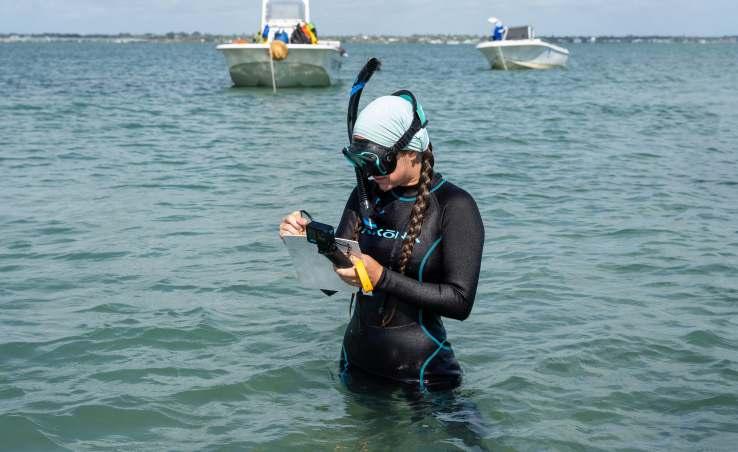
At the center of the IRL’s recovery story is seagrass.
Seagrass is the backbone of the lagoon’s ecosystem, providing critical habitat and food sources for fish, shrimp, crabs and iconic species, such as manatees. Healthy seagrass beds also improve water clarity, stabilize sediments and support the overall health of the lagoon's ecosystem.
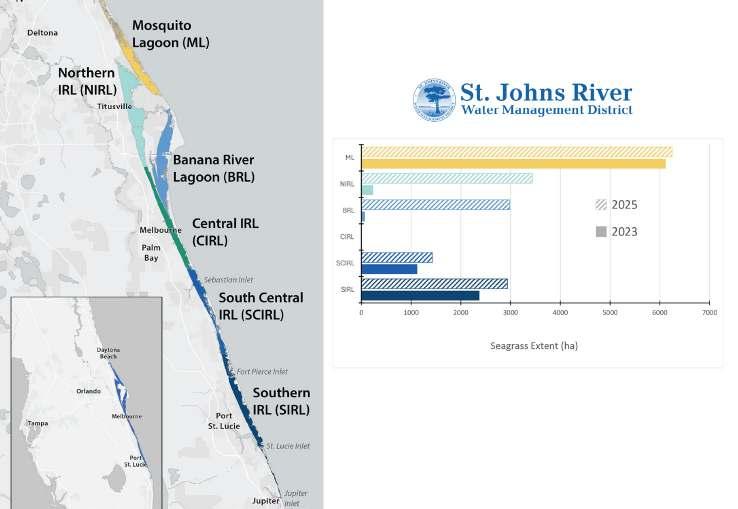
Recent monitoring efforts by the District have provided some of the clearest signs that restoration efforts are beginning to make a difference. Updated seagrass monitoring data released in May by the District document 17,042 hectares of seagrass in the IRL in 2025, an increase of more than 7,000 hectares from 2023 (roughly equivalent to 13,000 football fields).
District staff collect data through biannual aerial mapping and twice-yearly field transects. Using high-resolution aerial imagery paired with in-the-water assessments, scientists can track changes in seagrass coverage, density and distribution throughout the Indian River Lagoon over time. Because seagrass is highly sensitive to environmental conditions, the monitoring data serves as one of the clearest
three PFAS plus per uorobutanesulfonic acid (PFBS) are not addressed in the new rules. e proposed rule would also create an opt-in process for eligible drinking water systems to add two additional years, until 2031, to come into compliance.
“ e Trump EPA is committed to Make America Healthy Again by ensuring clean air, land and water—and by taking on PFAS the right way, across the full lifecycle and built to last,” said Zeldin. “ at means rules grounded in gold-standard science and the Safe Drinking Water Act, support for water systems on the front lines, and action to stop PFAS pollution at the source before it ever reaches a tap. e Biden administration cut corners and failed to follow the law. We are xing that error with standards water systems can actually implement and that will hold up to scrutiny, while addressing PFOA and PFOS, two of the best-studied PFAS with well-documented health impacts.”
e opt-in process to gain additional time would require drinking water systems to meet agency-proposed criteria, while systems that do not meet the criteria or don’t seek an extension will need to meet the original 2029 goal.
In the same week, the EPA announced more than $10 billion would be made available to address PFAS, through a $4 billion revolving fund and a $6.5 billion
indicators of improving water quality and overall ecosystem health.
Those efforts, and the partnerships behind them, are also highlighted in the recently released “Connected by Water: The Indian River Lagoon” video, which showcases the collaborative restoration work taking place throughout the watershed. Featuring scientists, restoration practitioners, agency leaders, environmental partners and community stakeholders, the video emphasizes how coordinated regional efforts are helping protect and restore the lagoon.
Even recent weather conditions have played a supporting role in the larger restoration picture. Periods of drier weather have temporarily reduced stormwater runoff and nutrient loading entering the lagoon, improving water clarity in some areas and creating conditions that have allowed seagrasses greater opportunity to recover. While restoration depends on long-term projects and sustained investment, these conditions have, in some cases, provided a brief window that supports recovery alongside ongoing restoration work.
low-interest loan program. EPA also announced $1 billion directly to states to address PFAS in drinking water, including a $37.4 million award to Florida through the Emerging Contaminants in Small or Disadvantaged Communities (EC-SDC) grant.
EPA alleges that the Biden administration failed to follow the requirements of the Safe Drinking Water Act when the prior administration proposed rules for its PFAS enforcement. e EPA in January 2025 withdrew those rules as one of Zeldin’s rst actions as Administrator. e two proposed rules will go through a public comment period and response before being nalized and adopted.
e announcement was made in Washington D.C., by Zeldin, Kennedy, industry leaders and EPA O ce of Water Assistant Administrator Jessica Kramer, the agency’s PFAS lead.
“ e message today is that EPA is delivering real solutions to reduce PFAS exposure for Americans,” said Kramer, the former Florida Department of Environmental Protection Deputy Secretary for Regulatory Programs. “Today’s announcement – combined with the agency’s recently announced PFAS OUT strategy, and a forthcoming proposed rule to address PFAS before it is discharged to our waterways – make that clear.”
Still, restoration partners emphasize that progress is the result of many moving parts working together at once. Strategic planning, scientific monitoring, diversion projects, infrastructure improvements, strong regional partnerships and even variations in rainfall are all helping build momentum toward long-term recovery.
And for the first time in years, that momentum is becoming increasingly visible.
Across portions of the lagoon, clearer water and recovering seagrass beds are beginning to tell a different story; one not solely focused on decline, but on resilience. It is a story shaped by collaboration, guided by science and driven by the understanding that the health of the IRL/USJRB will always be connected by water.
Caitlin Butler is a Regional Media and Communications Coordinator at the St. John’s River Water Management District

Publisher SPECIFIER PUBLISHING LLC
Editor-In-Chief
PATRICK GILLESPIE
Staff Writers
Senior Correspondent
LINA ALFIERI STERN
BLANCHE HARDY, PG MBA, MSRED, LEED Green Associate
Contributing Writers and Columnists
CAITLIN BUTLER St. Johns River Water Management District
JENNIFER MARSHALL Florida Department of Transportation
KAREN CYPHERS Sachs Media
DANIELLE FITZPATRICK St. Johns River Water Management District
JIMMY PATRONIS U.S. House of Representatives
HERSCHEL VINYARD Adams and Reese
KEVIN BJORKMAN Adams and Reese
WILTON SIMPSON Florida Department of Agriculture and Consumer Services
KEYNA CORY Public Affairs Consultants
BILL CONERLY Florida House of Representatives
SEAN R PARKER Boswell & Dunlap LLP
OWENS T. PARKER Rising 3L Stetson University College of Law
BRUCE RITCHIE Environmental Reporter
The Florida Specifier (ISSN 07401973), founded in 1979, is published every other month for $60 per year in-state; $80 out-of-state, by SPECIFIER PUBLISHING LLC, P.O. Box 1857, Tallahassee, FL 32302.
POSTMASTER: Send address changes to the FLORIDA SPECIFIER, P.O. Box 1857, Tallahassee, FL 32302.
© Copyright 2026 by SPECIFIER PUBLISHING LLC. All rights reserved. No part of this publication may be reproduced or transmitted in any form without the publisher’s prior written permission.
By PATRICK GILLESPIE
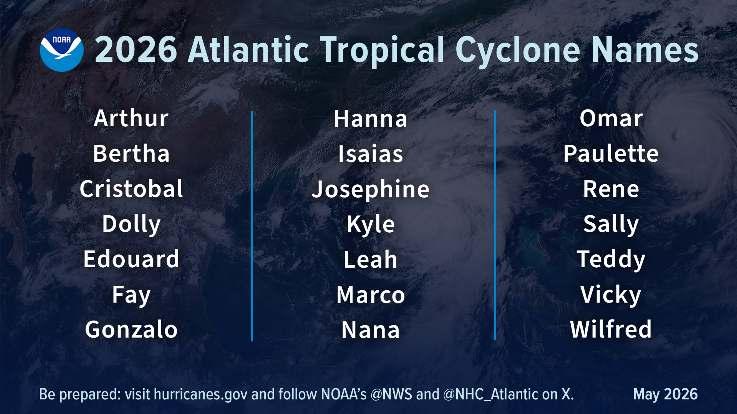
For most Floridians, June 1 marks a date of importance on the calendar as the Atlantic hurricane season o cially begins. And while thoughts of disastrous storms may linger in the memories of coastal residents, hurricanes in recent years have taught the world that inland areas are also vulnerable.
While understanding the exact likelihood of storms occurring is impossible, the National Oceanic and Atmospheric Administration is predicting a lighter-than-normal season. But that still means NOAA is predicting 8-14 named storms, with a 35 percent chance of a normal season and a 10 percent chance of an above average season. Still, the agency predicts 1-3 major hurricanes.
O cials are asking residents to be prepared.
“Early action drives tangible results, and Florida residents should begin their preparations now,” said Kevin Guthrie, Executive Director of the Florida Division of Emergency Management. “ ough last season produced minimal activity in Florida, we remain extremely vulnerable to hurricanes and their associated hazards. By taking small steps now to prepare,
residents can make a signi cant di erence in protecting lives and property.”
A reason for the potentially lighter-than-normal hurricane season is El Niño. According to Yale Climate Connections, a publication of the Yale Center for Environmental Communication, when a positive phase of the El Niño–Southern Oscillation occurs, the tropical Paci c has warmer-than-average temperatures.
Although the oceanic warming is centered in the eastern tropical Paci c, El Niño has impacts worldwide. e phenomenon can occur at any time of the year, but when it is present in the summer, it directly a ects the number of tropical systems likely to develop in the Atlantic by increasing wind shear, which disrupts storm development.
Regardless of the predictions, Florida lawmakers continue to attempt to nd ways to help the state prepare for the natural destruction that comes with hurricanes. In March, Gov. Ron DeSantis signed into law SB 302, which, among other provisions, requires the Florida Department of Environmental Protection by January to develop rules that establish guidelines for nature-based methods to address coastal resiliency and create a statewide permitting process.
“Senate Bill 302 also underscores our commitment to building stronger communities by directing the department to develop guidelines for using nature-based methods to make our coastal communities more resilient to the impacts of storms and ooding,” said DEP Secretary Alexis Lambert at the bill signing ceremony. “I want to thank the Governor and the Legislature for supporting this legislation.”
e state also funds several programs designed to help residents with mitigation, which can ultimately prevent harmful debris from polluting the state. e My Safe Florida Home Program through the
Florida Department of Financial Services provides inspection services and grants for residential upgrades and Elevate Florida through the Division of Emergency Management is a federal and state program that makes home improvements to prevent ooding and damage.
e state also annually funds programs to restore beaches that have su ered from erosion, which can mitigate the e ects on natural and created structures further inland. Mitigation and preparation are still necessary to help Florida weather what could still be an impactful hurricane season.
By STAFF REPORTS
e federal de nition of “waters of the United States” has spent most of the last 20 years in motion. Administrations have written and rewritten it. Courts have stayed it, vacated it, narrowed it, revived older versions and sent the agencies back to the drawing board. Regulated parties have been le to work through a patchwork in which the operative federal de nition can depend on the state where a project is located.
EPA and the U.S. Army Corps of Engineers are now trying again.
e agencies’ latest proposal, published in the Federal Register on Nov. 20, 2025, would revise the de nition of WOTUS to conform to the U.S. Supreme Court’s 2023 decision in Sackett v. EPA. e public comment period closed Jan. 5. A nal rule is expected later in 2026.
at raises the practical question: What will survive into the nal rule?
e Florida Speci er asked a small group of Florida-based practitioners with WOTUS experience to react to a set of predictions about the proposed rule. e responses received were consistent — the core Sackett framework appears well-established. e proposed “wet season” methodology is the most likely piece to change.
e most stable part of the proposal, experts believe, is the basic legal architecture drawn from Sackett. at means federal jurisdiction will continue to focus on traditionally navigable waters, relatively
permanent waters and wetlands, which abut the WOTUS, have a continuous surface connection to those waters and are indistinguishable from those waters.
e Supreme Court rejected the “signicant nexus” test and directed the agencies back toward a more limited de nition tied to relatively permanent waters and wetlands that are, as a practical matter, indistinguishable from those waters.
It appears that the nal rule will retain:
• e focus on relatively permanent waters;
• e continuous surface connection standard;
• e proposed tributary de nition requiring relatively permanent ow and a downstream connection to a traditional navigable water;
• e exclusion of groundwater as a jurisdictional connector;
• e exclusion of ditches constructed entirely in dry land; and
• Continued recognition of the prior converted cropland exclusion.
e Florida experts we asked generally agreed with that premise and while that does not mean every word of the proposed rule will remain untouched, the foundation appears durable.
One of the most important changes in the proposal is the de nition of “tributary.”
Under the proposed rule, a tributary must have relatively permanent ow and must connect to a downstream traditional navigable water. A tributary may pass through natural features, such as beaver dams or debris piles, or arti cial features, such as culverts, ditches, pipes, tunnels, pumps or tide gates. is is true even if those features are not jurisdictional on their own, though those features must convey relatively permanent ow.
at last point is signi cant because if ow becomes non-relatively permanent downstream, federal jurisdiction would be severed upstream. In other words, jurisdiction cannot simply leap across a dry or ephemeral segment to reach an upstream feature.
Experts believe this approach is likely to survive because it directly implements the high court’s direction. It also gives regulators and applicants a clearer way to analyze tributaries than the older case-by-case signi cant nexus framework. Whether it is always easy to apply is another question. But it is a more structured test than the agencies have used in some prior rules.
e proposed rule excludes groundwater as a basis for connecting otherwise non-jurisdictional features to WOTUS. at provision is also likely to remain.
Some commentators have suggested potential confusion between this exclusion and the Supreme Court’s earlier decision in County of Maui v. Hawaii Wildlife Fund at concern is understandable, but the two cases address di erent parts of the Clean Water Act.
Maui involved the NPDES program and whether a point source discharge through groundwater could require a permit when the groundwater pathway was the functional equivalent of a direct discharge to navigable waters. Sackett and the WOTUS rule address the geographic scope of federal jurisdiction. Groundwater may matter as a discharge pathway in a Section 402 case. It does not follow that groundwater can be used to extend WOTUS jurisdiction over wetlands or other waters that lack the surface connection required by Sackett
ose two principles can operate at the same time.
e most vulnerable part of the proposal is the proposed use of “wet season” concepts to de ne relatively permanent waters and continuous surface connections.
e agencies are trying to solve a real problem. Hydrology varies across the country. A bright-line rule that works in Florida may not work in Arizona, Alaska, Oregon or the upper Midwest. e agencies have also suggested the potential use of web-based tools to help identify wet seasons.
at is where the clarity problem returns.
If jurisdiction depends too heavily on model outputs, professional interpretation or region-speci c wet-season determinations, the rule could recreate the uncertainty that Sackett sought to reduce. Practitioners need a rule that can be applied in the eld without turning every drainage feature into a technical dispute.
By JENNIFER MARSHALL
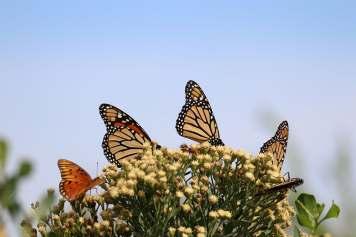
Across Florida, pollinators quietly sustain ecosystems that de ne the state’s natural character. From backyard gardens to sprawling agricultural lands, bees, butter ies and other pollinating species play a foundational role in the health of both natural and human systems. Increasingly, environmental professionals are recognizing that meaningful pollinator conservation must extend beyond preserves and parks into the everyday landscapes that crisscross the state.
One of those landscapes is Florida’s transportation network.
e Florida Department of Transportation (FDOT), through its O ce of Environmental Management (OEM), is leaning into that reality by treating highway right of way not just as infrastructure, but as opportunity. rough its Wild ower Program and participation in the nationwide voluntary Monarch Butter y Candidate Conservation Agreement with Assurances (CCAA), FDOT is reframing roadside land as part of Florida’s broader pollinator solution.
Denise Rach, FDOT’s Project Delivery Coordinator within the O ce of Environmental Management, is helping lead implementation on the ground.
“Roadsides are really valuable spaces that are o en overlooked,” Rach said. “ ey can collectively provide signi cant pollinator habitat. Pollinators are critical to our ecosystems and FDOT is looking to protect and preserve vulnerable pollinators like the Monarch Butter y, through our milkweed initiative.”
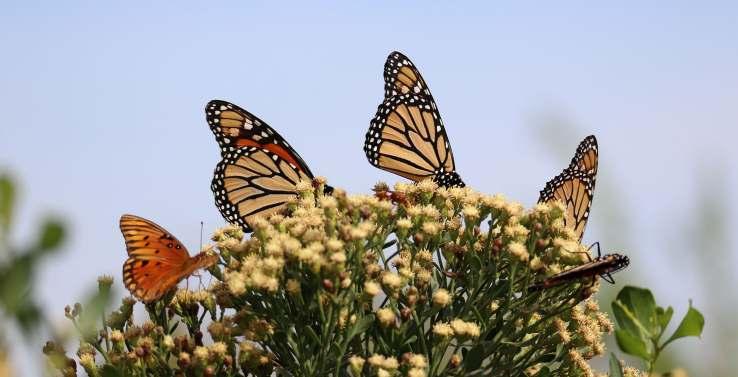
Milkweed occupies a uniquely important place in pollinator conservation conversations, largely because of its direct relationship with monarch butter ies. Monarchs rely exclusively on milkweed species to lay their eggs; without it, their life cycle cannot be completed. In Florida, this relationship carries additional complexity due to the state’s climate and geography.
Unlike northern states where monarchs pass through seasonally, Florida hosts both migratory and resident populations. at means milkweed availability, placement and management matter year-round, not just during migration windows.
Rach emphasized that milkweed is not a one-size- ts-all plant. Species selection, geographic placement and maintenance practices all in uence ecological outcomes.
"Milkweed is critical to the return migration that occurs each spring as it allows for the recolonization of Florida, which couldn’t happen if the plant were absent from the landscape,” Rach said. “Additionally, resident populations of monarchs in south Florida would not be able to complete their life cycle if these plants weren’t available for a large portion of the year. Understanding the needs of these host plants helps to inform decisions, such as milkweed species selection, planting location and maintenance practices that work to promote successful populations of milkweed in the right of way.”
FDOT maintains tens of thousands of acres of right of way across the state. Historically, this land has been managed primarily for safety, visibility, drainage and asset protection. ose priorities remain foundational, but they do not limit how the Department thinks about this asset.
“Right of way,” in OEM’s view, is one of the largest contiguous land assets available for environmental stewardship in Florida. When managed strategically, it can serve transportation needs while also supporting native vegetation and pollinators.
Rach and her team work closely with district maintenance o ces to ensure that milkweed and wild ower plantings are compatible with roadway operations and maintenance activities.
“Our goal is to enhance the right of way to provide more pollinator habitat but also to increase the beauti cation of Florida’s roadsides for the traveling public,” Rach said. “Planting and fostering wild populations of wild owers is a compatible use with meeting the safety requirements within the right of way on transportation corridors.”
FDOT’s Wild ower Program has long been a visible symbol of the agency’s environmental commitment. Originally centered on beauti cation and community pride, the program has matured alongside advances in ecological science and public expectations.
Today, wild owers are selected not only for visual impact, but for their ecological function. Milkweed ts naturally into this program as both a native plant and a critical host species.
Rach notes that years of wild ower management provided valuable lessons. Plant survival rates, mowing cycles, soil conditions and seasonal timing all played into how FDOT now incorporates milkweed.
“Native milkweed is not a commercially available seed and must be grown and planted as an established plant making it di cult to source,” Rach said. “Soil, sun exposure and water availability all play a crucial role in the plant’s survival. Consideration of planting locations are crucial for long term survival and establishment of new plantings. Limited availability of plants places a higher importance on survivorship so care and consideration go into the selection of each planting location.”
Recognizing the technical and scientific complexity of milkweed production, FDOT partnered with the University of Florida to strengthen its approach. e collaboration supports research, propagation and best practices tailored speci cally to Florida’s regions.
e partnership allows FDOT to base decisions on applied science rather than assumptions. It also provides a feedback loop where eld observations from FDOT corridors help inform academic research.
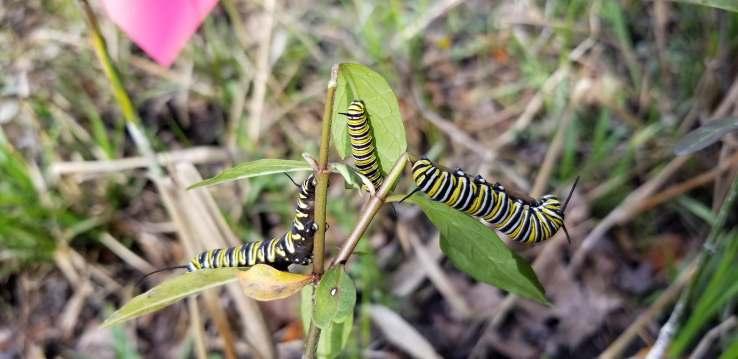
Rach describes the relationship as mutually reinforcing. FDOT brings scale and real-world conditions while the University brings research expertise and innovation.
“Our partnership with the University of Florida is what makes these plantings possible. UF has the ability to grow native milkweed from their private seed sources, install the plants and monitor them to determine success,” she said. “ e FDOT partnership with UF is a win for both the partners and the pollinators.”
Further University study allows FDOT to create and implement best practices. As of this year, University sta have installed more than 9,000 milkweeds on FDOT right of way.
Turning pollinator goals into reality requires translating policy into eld level decisions. FDOT District Maintenance sta identify appropriate locations, manage planting schedules and coordinate longterm maintenance.
Milkweed integration o en occurs alongside native wild owers, creating layered habitat rather than isolated plantings. OEM emphasizes that success depends on patience; ecological bene ts accrue over time, not overnight.
Rach noted that roadside habitat can serve as connective tissue between larger natural areas, supporting pollinator movement across fragmented landscapes.
“Roadsides are o en overlooked,” said Rach. “ ese spaces provide a great conservation opportunity through compatible usage that t together to meet the needs of pollinators and roadway safety.
Wild owers along the roadsides also can provide a beautiful aesthetic for the traveling public which may encourage them to slow down and take a second look. Creating pollinator habitat in these spaces gives FDOT ROW [right of way] an ecological
purpose that is compatible with the needs of transportation,” noted Rach.
As Florida continues to grow, the need to connect ecosystems remains. From a production and delivery standpoint, FDOT’s approach demonstrates how large public agencies can integrate environmental stewardship into core operations.
Future e orts may include expanded research partnerships, re ned planting guidance and continued collaboration across disciplines.
“ e CCAA is a long-term agreement and we’re constantly evaluating our performance under that program,” said Rach. “Moving forward, we hope to improve and re ne our planting methodologies and strengthen our coordination between OEM, maintenance and our UF partners. We also hope to further our educational outreach on the importance of pollinator habitat and how we can use our ROW to help meet this need.”
Milkweed may be a modest plant, but its impact is anything but small. rough intentional management of right of way, strategic partnerships and a broadened view of transportation landscapes, FDOT is contributing to Florida’s pollinator future in tangible ways.
e work is ongoing. e bene ts are cumulative. And as Rach and her team’s work demonstrates, the roadside may be one of the most overlooked and most powerful tools available for environmental stewardship in Florida.
“It’s a shi in how we think about our right of way,” Rach said.
Jennifer Marshall, P.E., is the Chief Engineer of Production at the Florida Department of Transportation
It’s possible the wet-season concept may survive in some form. e agencies may add clearer guardrails, adopt a more objective duration threshold, de ne a hierarchy of acceptable evidence or clarify that eld-observed surface ow carries more weight than broad climatological modeling.
Our prediction was that the wet-season methodology is least likely to survive unchanged. e expert responses conrmed that view.
Experts were split on whether the continuous surface connection standard may be revised before nalization.
e continuous surface connection standard is central to Sackett. e agencies have already moved away from earlier interpretations that allowed discrete features, such as ditches or pipes, to establish jurisdictional connections to wetlands that did not physically abut jurisdictional waters. e proposed rule is much closer to the Supreme Court’s formulation than a 2023 rule.
Still, the nal rule may need additional clari cation. e risk is not that the agencies abandon continuous surface connection, but that eld implementation again becomes elastic enough to generate uncertainty and litigation. Sackett requires a wetland to be practically indistinguishable from a jurisdictional water. is test actually comes from a written Supreme Court decision, United States v. Riverside Bayview
Two other areas that may get close attention: stormwater control features and waste treatment systems.
e 2020 Navigable Waters Protection Rule expressly excluded stormwater control features constructed or excavated in upland or non-jurisdictional waters to convey, treat, in ltrate or store stormwater runo . Engineers, local governments and developers have strong practical reasons to support restoring that exclusion.
e proposed exclusion for ditches, including roadside ditches, constructed entirely in dry land is likely to survive. It is simple, observable and administrable.
Ditches have been one of the most persistent sources of WOTUS confusion.
Stormwater systems are not natural waters. ey are engineered infrastructure built to meet regulatory requirements, manage runo , reduce ooding and improve water quality. Treating them as potential WOTUS can discourage maintenance and retro ts — the very activities needed to keep them functioning.
A similar argument applies to waste treatment systems. Some believe that if a feature is designed and operated as part of a treatment system, the law should not create uncertainty by treating the treatment feature itself as a jurisdictional water. at is especially applicable in Florida, where stormwater infrastructure is deeply integrated into environmental permitting, land development, roadway design, ood protection and water quality compliance.
A ditch may be a channelized natural tributary in one setting, a roadside drainage feature in another and an agricultural or stormwater conveyance somewhere else. e proposed rule draws a line: if the ditch was constructed entirely in dry land, it should not be treated as WOTUS.
e nal rule may also clarify that temporary ow in response to precipitation does not defeat the exclusion. Many upland ditches are designed to carry stormwater. at does not transform them into federal waters. Maintenance, repair, reconstruction and modi cation of excluded ditches should also remain excluded.
e narrowing of federal jurisdiction does not mean wetlands are unprotected. It means state programs matter more.
Florida has regulated wetlands for decades through state law and the Environmental Resource Permitting program. e state does not depend on WOTUS to protect
wetlands and the narrowing of the federal de nition does not eliminate state wetland regulation.
at distinction is o en missed in national news coverage. Some states may need to expand their own wetland laws if they want to back ll federal jurisdiction a er Sackett. Other states, including Florida, already have robust programs in place.
at is not an argument against wetland protection. It is an argument for locating authority where the Constitution and the Clean Water Act place it. Congress’s authority is limited to navigable waters. States have broader police powers to regulate land and water resources within their borders.
e nal WOTUS rule will probably not end the litigation. But the proposal does represent a serious e ort to respond to Sackett and provide clearer jurisdictional lines.
Based on the proposal, prior litigation and the responses from Florida experts, the likely outcome is a nal rule that keeps the core Sackett framework intact while revising the wet-season methodology and possibly clarifying implementation details around tributaries, ditches, stormwater features and waste treatment systems.
e most important question is not whether the nal rule uses the right legal vocabulary. e question is whether the nal rule can be applied predictably by regulators, engineers, landowners and consultants without recreating the expert-driven uncertainty that got WOTUS into trouble in the rst place.

While drought conditions persist, both the St. Johns River and Suwannee River Water Management Districts reported receiving above-average rainfall in May. Most of Florida is in the severe or moderate draught category according to the U.S. Drought Monitor. e Floridan Aquifer continues to decline in some areas, and the potentiometric surface remains below normal. Other than Silver Springs, which continues to ow at the low range, springs in the St. Johns District tracked in the normal range. Each District publishes monthly Hydrologic Conditions Reports on its website.
e Orlando Utilities Commission (OUC) is not being permitted to place coal red Stanton Energy Center Unit 1 into extended cold shutdown this month as planned. In accordance with the administration’s desire to preserve coal red power plant generation, on June 4, 2026, the U.S. Department of Energy (DOE) issued an emergency order (No. 202-26-26) OUC directing the utility to ensure that Unit 1 at the Stanton Energy Center in Orlando remains available to operate.
DOE cited the non-pro t North American Electric Reliability Corporation’s (NERC) 2025 Long-Term Reliability Assessment, which notes an increase in data center energy needs, a projection of hotter summer temperatures, the need for reliable energy sources and consumer demand as reasons to keep the plant in place. NERC is a non-pro t organization created in 1968 by the utility industry to promote reliability and adequacy of bulk power transmission.
University of South Florida Ocean Monitoring on Track Despite Fire
University of South Florida marine researchers are back in business a er su ering the loss of their 80,000-squarefoot Marine Science Laboratory to re in May. More than 100 sta members were displaced and research activities were signi cantly disrupted with hurricane season less than a month away.
e Ocean Circulation Lab that maintains USF’s buoy program was among the destroyed facilities. Data collected by the program’s sensors is used to forecast storm surge, rapid intensi cation, and other key hazards associated with tropical storms.
To preserve their mission, sta secured a vessel and took to the eld to collect data used to inform detailed scienti c models that forecast the movement of water along Florida’s west coast and in Tampa Bay. e resulting models are used to track hurricane data, predict red tides and locate plumes of marine pollution. Modeling data and eld instruments are shared with
the National Oceanographic and Atmospheric Administration to assist local governments and emergency agencies prepare and communicate risks to the public.
Vertical land motion a ects sea level locally. A research team that includes University of Central Florida Associate Professor omas Wahl found that sinking land and rising sea levels are occurring more rapidly than previously considered, increasing the risk of ooding.
In a recently published study, Wahl and his collaborators found the rate of vertical land motion is nonlinear in many coastal communities, particularly in Louisiana and along the Mississippi Delta. As the land sinks, relative sea level rises, increasing the risk of coastal ooding from high tides and storm surge.
e study challenges current projections of future sea-level change based on ground motion behaving linearly over time. e team, led by Associate Professor S nke Dangendorf of Tulane University, used observational data from tide gauges to reconstruct vertical land motion back to the early 20th century.
“Our results reveal that human activities such as groundwater extraction and natural phenomena such as earthquakes have led to periods of rapid sinking or rising of coastal land,” Dagendorf says. “ is has largely increased the rates of sea level rise relative to the land, particularly in cities where increasing water demand led to increased groundwater withdrawals and subsequent compaction of the ground.”
FSU Researchers Find New Value in Pelagic Sargassum
A combined team of scientists at Florida State University, Florida Atlantic University and Florida International University are demonstrating that pelagic sargassum can be converted into a functional food ingredient. e research is being supported by the U.S. Department of Agriculture’s National Institute of Food and Agriculture.
Mats of pelagic sargassum, a brown seaweed that oats freely across the open ocean, dri across the Atlantic Ocean
annually and wash ashore along coastlines from West Africa to the Florida Gulf. Sargassum becomes a serious problem once it reaches land by smothering beaches, disrupting ecosystems and generating a rotten egg smell as it decays.
e research is timely as pelagic sargassum quantities are expected to reach unprecedented levels in 2026. Data suggests that as early as February 2026, more than 13 million metric tons of sargassum were already dri ing toward Florida and the Caribbean. e researchers indicate cleanup is expensive. In Miami-Dade County for example, sargassum removal has previously cost an estimated $35 million per year.
e research team is focusing on how to extract sodium alginate, a naturally occurring compound used in foods as a thickening, gelling and stabilizing agent in products such as salad dressings, desserts and plant-based alternatives rather than removing sargassum and discarding it. Sargassum is not directly usable without processing due to its high salt content.
Florida Leads the Nation in Clean Air
e 2026 State of the Air Report from the American Lung Association indicates 21 Florida counties are among the nation’s cleanest for ozone pollution. No Florida counties were included on its list of the 25 Most Polluted Places to Live.
“Florida’s natural resources are central to our economy, our quality of life and the communities we call home,” said DEP Secretary Alexis A. Lambert. “ e ndings in this report reinforce the progress Florida continues to make through a long-term commitment to sound science and strong environmental standards.”
Florida communities receiving national recognition for low ozone pollution levels include Crestview, Fort Walton Beach, Destin, Gainesville, Lake City, Palm Bay, Melbourne, Titusville. and Tallahassee – Bainbridge.
Florida is the most populous state in the nation to meet or exceed all federal air quality standards for the h consecutive year. DEP reported that since 2000, industrial emissions in Florida have declined 78 percent, while ozone levels, the most widespread air pollutant, have fallen by nearly half over the past twenty years.
Floridians can track daily Air Quality Index (AQI) conditions in their area through the DEP’s Air Quality Web Page Air Quality Today | Florida Department of Environmental Protection and at the USEPA’s https://www.airnow.gov
Restoring the Flow: A Milestone in the Revival of the Everglades
e U.S. Army Corps of Engineers has completed restoring the natural ow of water across the Everglades Picayune Strand State Forest land. e project restores the ow of water to 55,000 acres that had once been drained for the development of Gulf American Corporation’s Golden Gate Estates.
e project has taken more than two decades. e last of the canals cut into the limestone bedrock for drainage has been plugged, using the soils used to create miles of elevated roadway that, once constructed, acted as dams cutting o natural owways. With hydrology restored, lands are returning to their typically wet state.

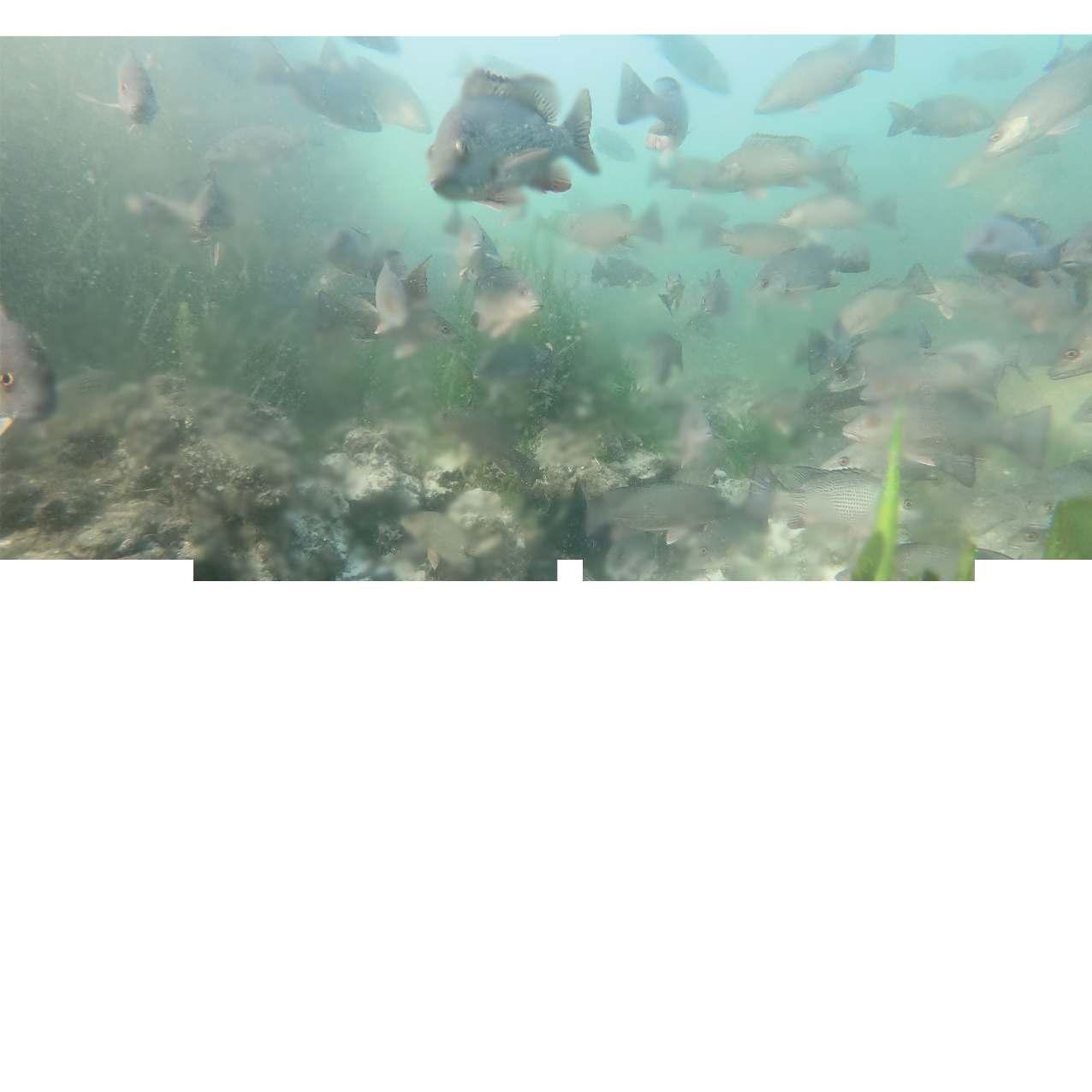
Mitigation | Breakwaters/Hybrid Reefs | Benthic Resource Surveys | Dune and Beach Restoration | Springs Restoration |

FOR THE WILDLIFE AND COMMUNITIES THAT DEPEND ON THEM.
Survey of conference registrants and Florida voters reveal alignments and gaps on big issues
By KAREN CYPHERS
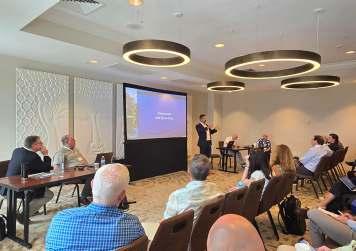
When more than 1,000 environmental professionals gather in Marco Island this July for the Environmental Permitting Summer School, they will bring decades of experience with them. Roughly six in 10 of this year's registrants have spent more than 20 years in the environmental, energy or growth-management eld.
Sachs Media invited all EPSS registrants to participate in a survey on various environmental and water issues facing Florida. Paired with a companion survey of Florida voters, the results o er a rare look at how this seasoned community sees the issues, and where its judgment parts ways with the public's view.
First, on the inside-baseball questions, a clear pattern emerges – experts agree on the federal pressures ahead, and they want practical xes:
Asked which federal actions now under discussion in Washington will most a ect Florida, registrants pointed rst to Clean Water Act Section 404 permitting (58%) and federal wetlands jurisdiction, or "Waters of the U.S." (57%), followed by PFAS drinking water standards (41%) and Endangered Species Act changes (36%).
e wetlands questions clearly dominate the eld's attention.
On the perennial question of permitting speed, from most to least, registrants said timeframes would improve most through more agency sta ng (54%), pre-application meetings and early review (46%), tiered review based on project complexity or risk (39%), better digital permitting systems (37%), and greater use of general permits (36%). Arti cial intelligence and machine learning nished last at 6% – a striking verdict from a group that ranks AI among the topics it most wants the conference to cover.
Registrants gave Florida's own programs solid marks:
About half (51%) rated the state's stormwater permitting above average or a national leader, and greater shares of the most experienced attendees offered that praise.
A strong majority of those familiar with the Rural and Family Lands Protection Program (84%) rate the program as at least somewhat e ective.
On living shorelines, a majority (62%) favored a streamlined or general permit to encourage nature-based shoreline protection, with another 56% supporting incentives or technical assistance.
AN OPTIMISM AND CONFIDENCE DIVIDE
e companion survey of Florida voters
yields interesting results. EPSS registrants are markedly more positive about Florida’s water and environmental status and institutions compared with the general public: ree in four registrants (76%) believe Florida pays more attention to its environment than other states do, a view shared by only 38% of voters.
72% of registrants believe the Florida Forever program is e ective at protecting land and natural resources, compared with just 38% of the public.
Half of registrants (50%) are generally optimistic about where Florida's environment will stand a decade from now, double the rate of Florida voters at large (25%).
at con dence gap runs through nearly every institution tested. Environmental professionals express far more con dence than voters in the private sector and industry (61% versus 26%), water management districts (76% versus 49%), and the scienti c community (85% versus 65%). Voters, by contrast, place more trust in environmental NGOs (52% versus 43%) and the courts (39% versus 27%) than the EPSS crowd does.
Florida’s environmental professionals and the public also express di erent perceptions of the biggest threats to Florida’s environment over the next decade. Growth and development pressure tops the list for both registrants (56%) and the public at
Florida's Geology Licensing Framework, Its Legislative History and the Urgent Case for Professional Engagement
By FLORIDA ASSOCIATION OF PROFESSIONAL GEOLOGISTS
Florida's geology is not an abstraction. It is the karst aquifer system supplying drinking water to millions of residents. It is the subsurface assessed before every major construction project, and the discipline that identi es sinkhole risk, evaluates soil contamination, and informs land-use decisions a ecting public safety. e professionals who do this work operate under a regulatory framework that has existed since 1987, one that the Florida Legislature has challenged repeatedly and with increasing intensity.
at framework was not handed to the profession. In 1987, Florida Statutes Chapter 492 established the Board of
Professional Geologists and the licensing requirement, a er geologists pooled their own funds to hire a lobbyist and navigate a skeptical Legislature. Chapter 492 included a built-in sunset review, and the rst one, in 1996, nearly ended the license before it had taken hold. at threat prompted the formation of the Florida Association of Professional Geologists (FAPG), a nonpro t built speci cally to fund lobbying and coordinate advocacy. A second sunset review followed in the early 2000s. Each time, FAPG mobilized and the license survived, but never by a wide margin.
e pattern has continued. Since 2000, the license has faced more than ten deregulation attempts. In 2020, HB 1193 eliminated geologists’ Certi cate of Authorization as part of a sweeping occupational licensing overhaul. In 2023, HB 1333 and SB 1364 would have forced Florida to recognize out-of-state geology licenses without verifying equivalent standards; both died at session’s end. e most serious threat came in 2025. HB 1461 proposed eliminating the Board of Professional
Geologists outright. When it stalled, its language resurfaced inside HB 991, then inside SB 110, a rural development bill that had already cleared the Senate with broad support, making it the most dangerous vehicle yet. Only FAPG’s lobbying and a wave of constituent contact persuaded Senate leadership to reject the amendment.
e stakes are not administrative. e Board of Professional Geologists is the only body in Florida with the expertise to evaluate licensure applications and adjudicate complaints. If its functions moved to DBPR’s general sta , licensing and discipline would be handled by people with no geological training, Florida’s standing with peer-licensed geologists in other states would weaken, and the public safety protections built into the license would erode. Puerto Rico eliminated its geology board this way and later had to rebuild it.
e license itself carries real weight. Only a licensed Professional Geologist may sign and seal geological reports or serve as a qualifying agent for a geolo-
large (48%), but the groups diverge from there. Registrants cite water supply and availability (41%), and loss of wildlife habitat and biodiversity (31%) as the next two biggest threats, while Florida voters cite concerns with hurricanes and storm resilience (39%) and sea-level rise (35%).
Even where the two groups align on a threat, registrants tend to read it as less severe: 53% see data centers as a ecting Florida's water resources, against 64% of the public.
e upcoming election also divides registrants and the public. A majority of registrants (62%) expect November's ballot amendment to reduce property taxes to harm Florida's environment if it passes, compared with 42% of voters.
If there is reassurance for the Florida public in these numbers, it is this: the people who know the state's water and environmental regulation best are also its most con dent in its future. at optimism comes from the same professionals who gather at Marco Island this July, as they have for 40 years, to trade ideas, nd solutions, learn from one another and connect. ey then return to their agencies, rms, agencies and districts to deliver the results that make such optimism warranted.
Karen Cyphers is Director of Research at Sachs Media in Tallahassee. e Florida Speci er and Sachs Media launched a partnership in 2026 to bring surveys and data to readers
gy rm in Florida, and the path there, years of documented experience and rigorous examination, exists to protect the public and distinguish credentialed professionals. Yet for the past ve years, the entire burden of defending that license fell to roughly twelve people, out of 1,700 licensed practitioners statewide. at is not a sustainable defense against well-organized, recurring deregulation campaigns.
e license was earned through organized e ort, defended through organized e ort, and will only survive what comes next the same way. A larger, more engaged membership means more lobbying capacity, more voices at Lobby Day, and more hands on FAPG’s Legislative, Fundraising, and Grassroots committees, work currently carried by far too few. Pursue the license. Join FAPG. Participate in its work. e profession’s future in Florida depends on it.
Visit www.fapg.org


New Natural Gas Units
Increase Houston Area Grid Capacity by 456 MW
NRG Energy has completed the construction and commenced the operation of natural gas simple-cycle generating units at its TH Wharton Generating Station in Houston. ese new units provide a capacity of 456 MW, which is su cient to power more than 100,000 homes during peak demand. e project was supported by Gov. Greg Abbott’s Texas Energy Fund Loan Program, which aims to enhance reliable power generation to meet the state’s expanding electricity requirements. Construction generated more than 500 jobs.
Data Center Regulations
Proposed by Governor Abbott
Gov. Greg Abbott released regulatory recommendations for data centers, aiming to ensure they bear the costs of their growth. ese include requiring data centers to add power generation to the grid, pay for grid interconnection, use closed-loop water systems and report electricity and water use. Abbott also proposes repealing sales tax exemptions for data centers and establishing best-practice standards to address community concerns.
Meta Data Center Project Survives City Council Vote
e El Paso City Council in June rejected a plan to terminate the city’s agreement with Meta for its substantial Northeast data center. e City Council voted 5-3 to reject a plan that would have instructed city sta to initiate negotiations to terminate the company’s 380 Agreement and other incentives, thereby severely hindering the project’s progress.
Vesper Energy secured $236 million in debt nancing for its 201MW Nazareth Solar project in Swisher County. e project, expected to generate enough electricity to power 53,000 homes annually, will occupy over 2,400 acres and is scheduled to begin construction in June 2026 with an expected completion date of Fall 2027.
Hill County has approved a one-year halt on the construction of new data centers in unincorporated areas. e decision was made to address public safety and health concerns. e 3-2 vote by the county commissioners in Hill County, located approximately 55 miles south of Fort Worth, marks the rst instance of a Texas county implementing a moratorium on the
rapidly expanding data center industry. Residents and local o cials had expressed their concerns about the potential impact of a proposed 300-acre development by the Dallas-based developer Provident Data Centers in north Hillsboro.
Louisiana has joined a select group of Republican states that have recently enacted legislation aimed at prohibiting lawsuits against oil and gas companies over the adverse e ects of climate change. e Louisiana Energy Protection Act, authored by state Representative Brett Geymann, of Lake Charles, seeks to prevent lawsuits led by states and local jurisdictions in other parts of the United States from being heard in Louisiana. Nationwide, about 30 lawsuits seeking to hold industry accountable for the consequences of climate change have been progressing through the legal system, but none have been led in Louisiana.
C&C Forest Products intends to invest more than $21 million in rebuilding and modernizing its sawmill in Coushatta, following a re that destroyed the facility in 2025. e newly constructed mill will feature updated equipment and a redesigned site layout, aimed at enhancing e ciency and expanding the production of specialty lumber and timbers. e project will retain 27 existing employees and generate 77 new positions. Louisiana Economic Development estimates that the project will also create an additional 256 indirect jobs, resulting in a total potential employment impact of 333 jobs in the region.
New Orleans will be able to complete its extensive roadwork program a er federal o cials approved a long-awaited funding extension, providing the city with an additional two years to nalize expenditures. City o cials will have until June 2028 to utilize the remaining $1.7 billion in federal funding to complete the 6,000-block initiative,
Faith Technologies Inc. announced an investment of $80.5 million to establish a 500,000-square-foot manufacturing facility in Monroe. e project is anticipated to generate more than 500 direct and indirect jobs and provide training and skills certication opportunities for employees. e facility will support its Excellerate brand and manufacture electrical assemblies and modular energy solutions. Operations are projected to begin in the spring of 2027.
A project to construct the United States’ inaugural oating lique ed natural gas (LNG) export terminal o the Louisiana coast has secured $5 billion in nancing. Del n Midstream, a Houston-based
rm, aims to construct the world’s largest oating LNG facility. is facility will be connected to an undersea pipeline that the company is repurposing to transport natural gas from onshore locations to a platform situated approximately 40 miles o the coast of Cameron Parish. e state already boasts four operational export terminals.
e U.S. Department of Energy has selected a project in Louisiana to extract rare earth elements from waste streams. Spearheaded by the Colorado School of Mines and Element, the project, bolstered by $67 million in federal funds, aims to establish a facility in Louisiana that will extract and re ne rare earths from bauxite waste. e facility is expected to conduct commercial-scale testing of the process and produce between 150 and 1,000 metric tons of rare earth elements annually.
Elon Musk’s data center company, xAI, faces a lawsuit from the NAACP over pollution concerns from dozens of mobile gas-powered turbines at its Southaven facility just south of Memphis, Tenn. But the U.S. Department of Justice recently intervened in the case, telling a federal court that shutting down the facility would be a threat to national security, according to the New York Times.
e lawsuit by the NAACP alleges that pollution from “mobile” gas turbines sitting on trailers should be regulated under the Clean Air Act and are harming nearby Black neighborhoods. However, the Mississippi Department of Environmental Quality allows mobile turbines to operate without permits for up to a year.
FEMA awarded the City of New Albany more than $948,000 to assist with debris removal from January’s winter storm Fern. e storm, which caused signi cant damage across multiple states, resulted in more than $400 million in damages in Mississippi alone. Union County, along with 33 other counties and the Mississippi Band of Choctaw Indians, was among the 34 a ected by the storm and approved for all funding categories of FEMA’s Public Assistance program. is program assists
in funding repairs to public buildings and infrastructure.
Gov. Kay Ivey announced $87 million in funding for coastal restoration projects in Alabama. e projects, approved by the Gulf Coast Ecosystem Restoration Council (RESTORE), aim to restore and protect Alabama’s coast, improve waterways and preserve natural resources. e projects include wetland creation, beach renourishment, water quality improvement and collaboration with Mississippi on island restoration. Overall, more than $403 million was approved for e orts throughout the Gulf Coast states.
Residents of Lowndes County are expressing their opposition to the construction of a hyperscale data center campus, Project Red Clay. e data center campus, consisting of four large buildings, a warehouse and an o ce, is planned for construction on 800 acres. e facility is expected to require 1,500 megawatts of energy and up to 100,000 gallons of water daily. Residents have concerns regarding the potential environmental and health impacts of the project.
A prolonged court battle over the 21.7 million tons of coal ash stored in one of Alabama’s most ecologically sensitive areas will persist a er the U.S. 11th Circuit Court of Appeals ruled that a lawsuit led by Alabama-based environmental group Mobile Baykeeper challenging Alabama Power’s plans to leave the coal ash in place can proceed. is decision overturns the dismissal of the complaint by a lower court. Mobile Baykeeper’s lawsuit contends that the nearly 600-acre coal ash pond at Alabama Power’s James M. Barry Electric Generating Plant, located near Mobile, violates the Environmental Protection Agency’s coal ash regulations. e primary reason for this contention is that a signi cant portion of the coal ash remains saturated with groundwater.









By JEFF LITTLEJOHN
is July, the Environmental Permitting Summer School (EPSS) will celebrate its 40th anniversary. What began as a small permitting short course in Tallahassee has grown into Florida’s largest and most in uential environmental conference, bringing together more than 1,400 regulators, attorneys, engineers, consultants, developers, utility professionals, policymakers and environmental leaders each year.
e growth of EPSS mirrors the growth of Florida itself.

When the rst conference was held in 1985, Florida was entering a new era of environmental regulation and growth management. Wetlands permitting, stormwater regulation, water supply planning, hazardous waste management and growth management were rapidly evolving. Environmental professionals needed a place to learn from one another, exchange ideas and better understand a changing regulatory landscape.
Forty years later, those same themes remain at the center of the conference’s courses, although the challenges have become more complex. Today, conversations at EPSS include resilience, ecosystem restoration, alternative water supplies, nutrient reduction, permitting reform, environmental markets and emerging contaminants. e issues have changed, but the need for informed dialogue has not.
One of the reasons EPSS has endured is that it has always been more than a conference. It is one of the few places where regulators, permit applicants, consultants, attorneys, local governments, utilities and environmental advocates can gather in the same room to discuss di cult issues, learn from one another and build professional relationships that o en last for decades.
Many of Florida’s most signi cant environmental policy discussions have either started at EPSS or continued in its hallways, meeting rooms and networking events. e conference has become a place where ideas are tested, perspectives are challenged and solutions are developed.
As we celebrate the 40th anniversary, it is worth re ecting on how much Florida’s environmental profession has accomplished. e state has experienced extraordinary growth while continuing to advance environmental

protection, water resource management and ecosystem restoration. at progress has required collaboration among people with di erent perspectives but a shared commitment to Florida’s future.
EPSS has been part of that story for four decades.

As the conference enters its h decade, its mission remains unchanged: bringing together Florida’s environmental community to learn, collaborate and prepare for the challenges ahead.
Je Littlejohn is a Senior Policy Advisor at Adams and Reese and an organizer of the Environmental Permitting Summer School
40 Years
We've been counting down 40 years of EPSS — and now you can explore them all in one place. Scan the QR code to browse every year of Environmental Permitting Summer School history, from 1987 to today.
e 40th Annual Environmental Permitting Summer School is introducing ve new courses as part of its 2026 program, continuing its commitment to delivering timely, relevant education for Florida's environmental professionals. ese new o erings are among the conference's 64 educational courses, each designed to address today's most pressing permitting, policy, and resource management issues.
In addition, the conference, located at the JW Marriott Marco Island Beach Resort, features key experts and government o cials of all levels to facilitate discussions about key environmental, energy, and regulatory issues facing Florida.
NEW FOR 2026 ARE:
Under the Dome: Florida Legislators on Environmental Policy, Progress, and the Path Ahead
Featuring state lawmakers discussing the future of environmental policy, including Sen. Keith Truenow, Rep. Bill Conerly and Rep. Toby Overdorf
Wednesday, July 22 8:30-10:10 a.m. Banyon Ballroom
Nutrient Trading Under Florida's New Stormwater Rule: WQEA, RSMS, and Compensating Treatment
Examines Florida's evolving stormwater regulations
ursday, July 23 10:30 a.m.-12:10 p.m. Calusa 4&5
Delivering One Water Outcomes: Aligning Across Florida's Water System
Highlights collaborative approaches to water resource management.
ursday, July 23 1:30-3:10 p.m. Calusa 11
Permits, Politics, and Public Perception: Communicating High-Pro le Environmental Projects
Explores strategies for navigating complex projects in the public eye
ursday, July 23 3:30-5:10 p.m. Banyon Ballroom
Mastering Expert Testimony at Wins
O ers practical insights into presenting e ective technical testimony
Friday, July 24 8:30-10:30 a.m. Calusa 11
e course additions re ect EPSS's ongoing commitment to keeping the program fresh, relevant and responsive to the issues shaping Florida's environmental future. Whether attendees are coming for the rst time or returning for another year, the 2026 conference o ers opportunities to learn from leading practitioners, regulators, policymakers and industry experts.
Key speakers bring expertise in their eld and provide attendees with insights through candid conversations about the realities of regulatory programs, impacts of legal decisions and working within bureaucracies.
SPEAKERS INCLUDE:
Shawn Zinszer, U.S. Army Corps of Engineers, Regulatory Chief of the Jacksonville District
Kevin J. McOmber, U.S. Environ-
mental Protection Agency, Region 4 Administrator
John Truitt, Florida Department of Environmental Protection, Deputy Secretary for Regulatory Programs
Wilbur Mayorga, Miami-Dade County, Department of Regulatory and Economic Resources
Frank Walker, Florida Chamber of Commerce, Executive Vice President Scan to get the most up to date course schedule.

Schedule
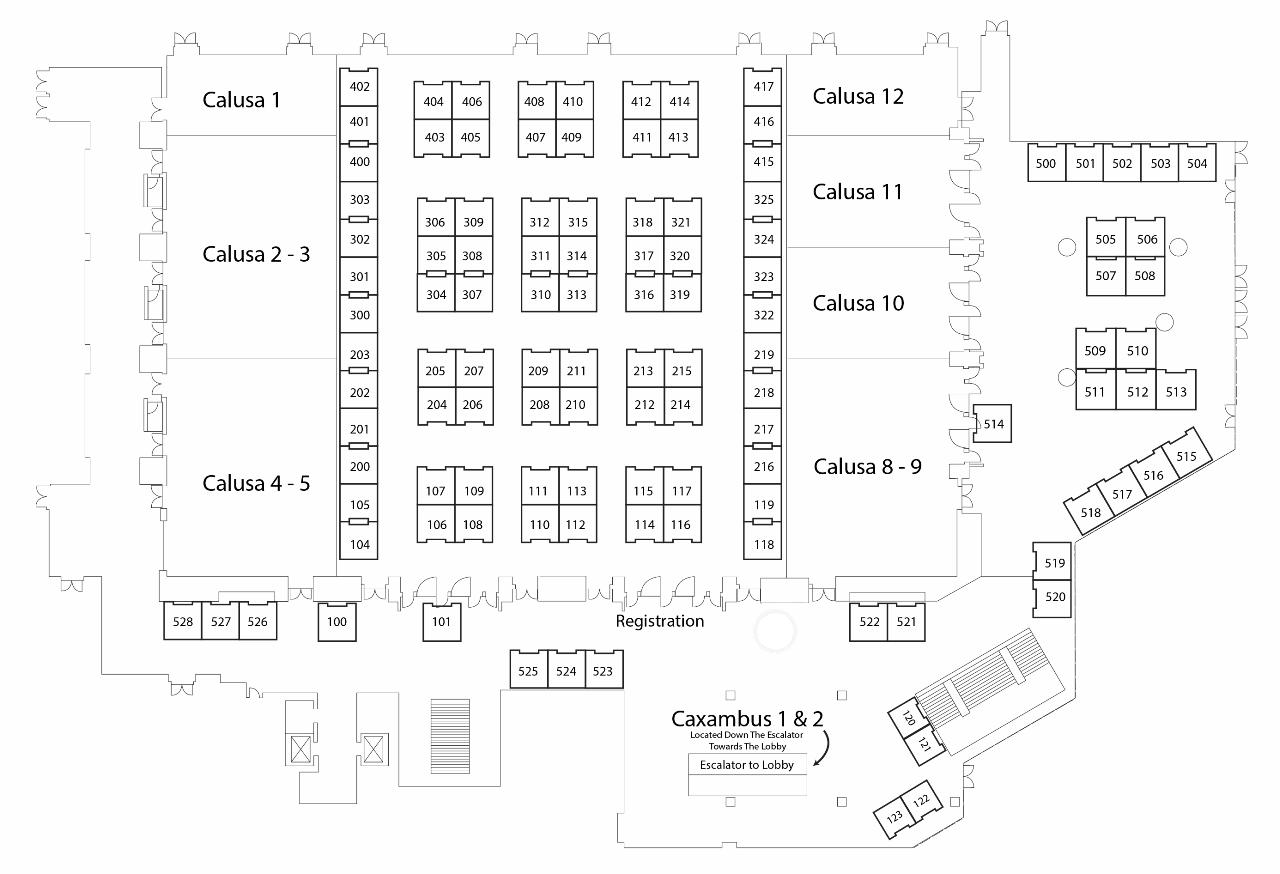
207 A-C-TEnvironmental&Infrastructure
520 ActalentServices
402 ActionEnvironmental
105 Adams&Reese
308 AdvancedEnv.Laboratories,Inc.
527 AECOMTechnicalServices,Inc.
214 AkermanLLP
528 Alpha-OmegaTrainingandCompliance
313 ApexCompaniesLLC
514 AppliedSciencesConsulting,Inc.
300 APTIM
411 AquaTechEcoConsultants,LLC.
412 AquaticusPlants
107 Ardaman&Associates
111 ArdurraGroup,Inc.
404 Assoc.ofFloridaCommunityDevelopers
524 AtkinsRealis
416 Atwell
123 Azuria
518 BargeDesignSolutions,Inc.
321 BilzinSumberg
413 Bio-TechCons.|AnEnviroTracCompany
323 BirkittEnvironmentalServices,Inc.
218 Black&VeatchCorporation
504 C-HAWQInitiative
322 Cerebulb
410 ChenMoore&Associates
510 CleanHarbors
309 ColliersEngineering
408 ColumbiaClimateSchool
325 CompassEnvironmental
519 CumminsCederberg
110 Dewberry
401 EarthResourceConsultingScientists
205 EarthBalance
301 EcoCreditMarketing
217 EcologicalAssociates,Inc.
500 EcologicalConsultingSolutions,Inc.
503 EcosystemInvestmentPartners
506 EcosystemsInsurance
312 EcoWildConsultingGroup
505 ECSFlorida,LLC
211 Env.Consulting&Technology,Inc.
414 EnviroTrac
314 ErinL.Deady,P.A.
212 ERIS-Env.RiskInformationServices
210 ESA
101 EutroPHIX
305 FergusonWaterworks
100 FisherArnold
509 FLAssociationofEnv.Professionals
302 FloridaAssoc.ofMitigationBankers
320 Freese&Nichols
208 GeosyntecConsultants
407 GHD
409 GreenSourceEnv.Professionals,Inc.
109 GreenbergTraurig,P.A.
310 GulfCoastUnderground,LLC
526 Gunster
405 HalffAssociates,Inc.
512 HDR
112 Holland&KnightLLP
415 HullsEnvironmentalServices,Inc.
119 ICF
522 JMBEcologicalOffsets
206 JMT
114 JSA
215 Kimley-Horn
417 Kleinfelder
201 Langan
118 Lewis,Longman&Walker,P.A.
202 LightBoxEDR
117 LiveWildly
501 LykesBros.Inc.
209 MillerLegg
108 MitigationMarketing,LLC
324 Modica&Associates
311 MonarchEcologyGroup,LLC
525 NasonYeagerGersonHarris&Fumero
113 NorthStar
502 OnSyte
317 Onterris
204 Pace
200 PartnerEngineeringandScience,Inc.
516 Passarella&Associates,Inc.
315 PetrotechSoutheast,Inc.
116 Phillips
515 PineEnvironmentalServices
403 Pond&Co.
121 PurePolymerSolutions,LLC
511 R.H.Moore&Associates
306 ReefArches
106 RES
319 RESPEC
203 SCSEngineers
521 Sea&ShorelineAquaticRestoration
507 SEARCH
304 SGSNorthAmerica
517 Smart-SciencesEnv.Consulting
513 SouthernWasteInformationExchange
307 Stantec
216 StearnsWeaverMillerWeisslerAlhadeff &Sitterson,P.A.
122 SummitDrilling
120 SundtConstruction,Inc.
219 SurvTechSolutions,Inc.
508 SustainableWaterInfrastructureGroup
115 SWCAEnvironmentalConsultants
303 TaylorEngineering,Inc.
406 Terracon
104 TetraTech,Inc.
400 TheWetlandsbankCompany
213 TrinityConsultants
318 Verdantas
316 VHB
523 WSP
By STAFF REPORTS
North Florida’s springs, rivers, and parks are drawing large crowds as summer temperatures rise and outdoor recreation ramps up. To help protect these natural areas during the busy season, the Suwannee River Water Management District (District) is once again promoting its annual “Leave No Litter” campaign.
e initiative encourages visitors to do their part to preserve the region’s waterways and landscapes by cleaning up a er themselves and leaving natural areas exactly as they found them.
Whether oating down the Ichetucknee River, kayaking on the Suwannee, or spending the a ernoon along the Santa Fe River, visitors are reminded to pack out everything they bring in – including trash and disposable items.
Trash le behind near springs and rivers can do far more than spoil the scenery. Debris in waterways can disrupt water ow, contribute to pollution, threaten wildlife and create conditions that negatively a ect recreation areas and aquatic ecosystems.
ese impacts become even more significant during the summer months, when increased visitation places added pressure on North Florida’s most popular outdoor destinations.
roughout the season, the District will share reminders and practical tips aimed at helping visitors reduce their environmental impact while enjoying the outdoors.
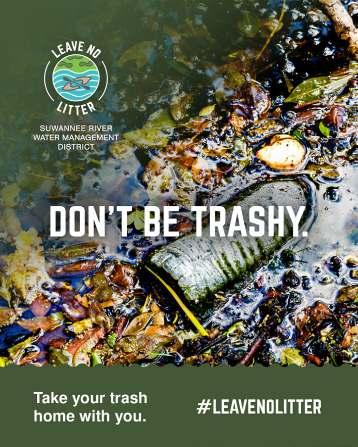
e campaign encourages the public to follow a few simple guidelines:
Properly dispose of all trash and personal items, including bottle caps, food wrappers, and other small debris.
Avoid stepping on or disturbing aquatic vegetation while swimming, snorkeling, or diving to help protect fragile habitats.
Stay on designated trails and paths to reduce erosion and prevent damage to natural areas.
Operate boats carefully in shallow water by li ing motors when appropriate to avoid harming vegetation and aquatic life.
District o cials emphasize that protecting North Florida’s waterways starts with individual responsibility. Small actions – like carrying out trash and respecting marked recreation areas – can have a last-
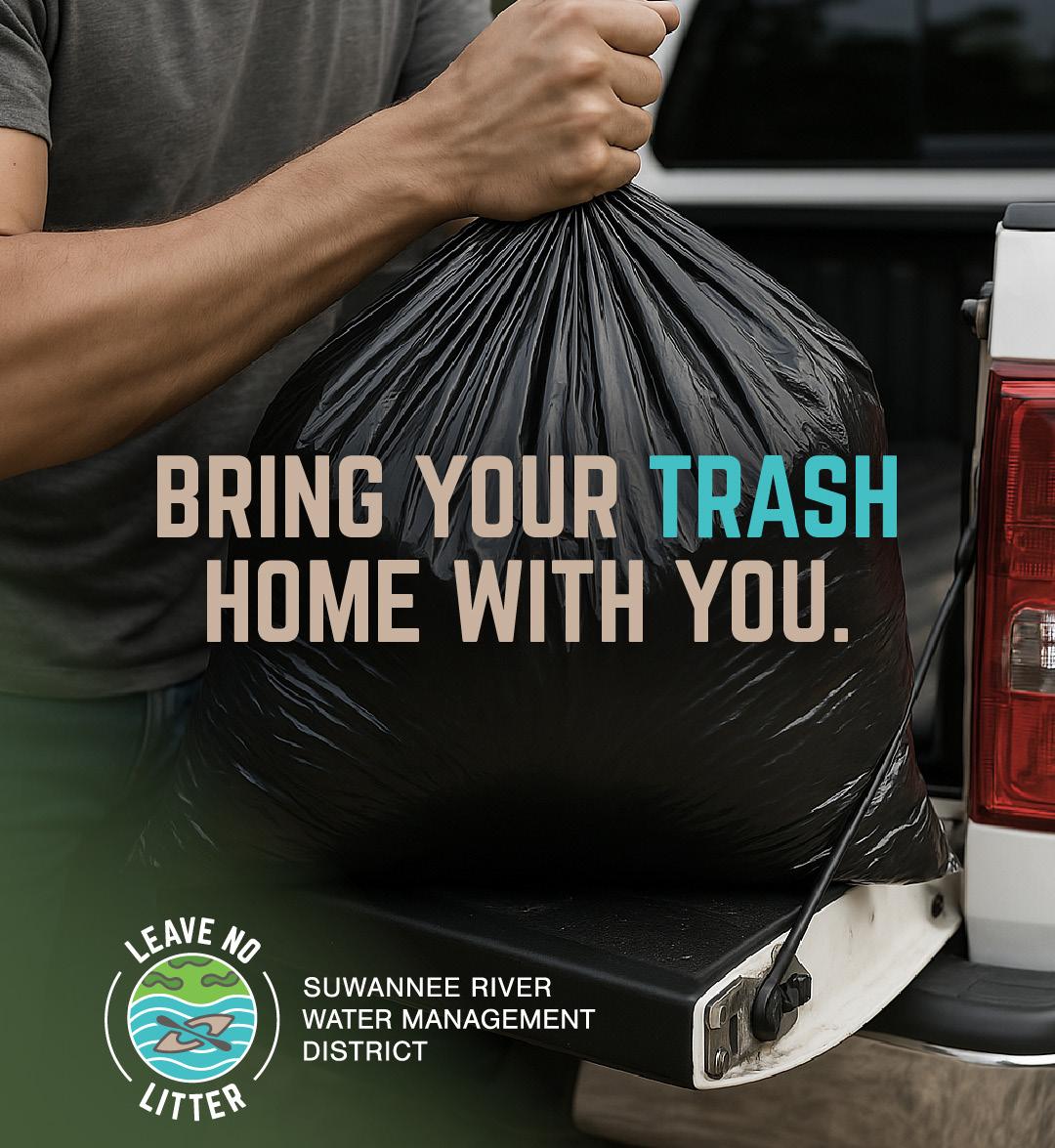
ing impact on preserving these treasured natural resources.
e “Leave No Litter” campaign serves as a reminder that enjoying Florida’s outdoors also means helping care for them. By working together, residents and visitors alike can help keep the region’s springs and rivers clean, healthy and beautiful for generations to come.
By BLANCHE HARDY
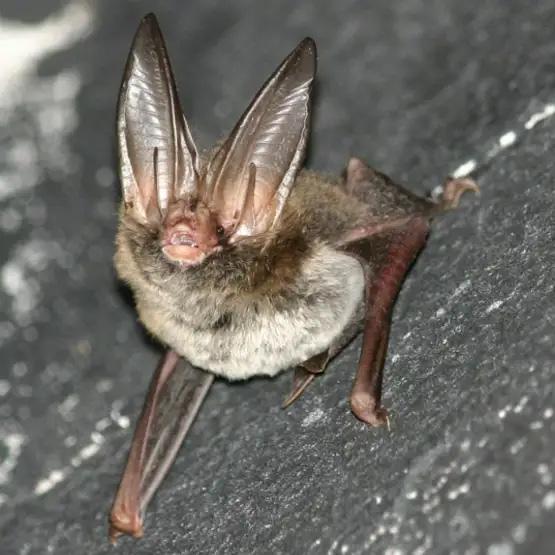
Contrary to general fears, bats are bene cial and serve as an important part of Florida’s ecosystem. ey are the only signi cant predators of night- ying insects in the state, and all 13species of bats found in Florida are protected.
Bats do not target people and will avoid humans at all costs if they are able. Florida’s bats are small, roughly the size of a thumb, wings folded.
ey use natural roosting shelters such as trees, palms, rock crevices, and caves during the day but may roost in human occupied structures if convenient and accessible where natural structures are missing. e best way to prevent bat occupation is to install exclusion devices, when seasonally permitted, which allow bats to exit but block them from returning to their roosts.
Bat protection is governed under Florida Administrative Code rule 68A-4.001 General Prohibitions. It is illegal to kill, harm or harass bats at any time of year. Bat conservation is particularly important between April 16 to August 14, during which it is also illegal to harm, to exclude or damage bat roost structures, destroy bat roosts or block the exit/entrance to bat roosts.
Spring and summer are bat breeding and youth raising seasons and the rule is designed to protect maternity colonies with newborn bat pups. Each female bat typically has only one pup per year, typically born in April or May and cannot y until July or August. A roosting colony of female bats will stay within the same
roost for the entire maternity season. Pups remain inside the roost while the adult females y out of the roost to nd food and return in the morning to feed the pups.
e use of exclusion devices is limited to between August 15 and April 15. Blocking a roost during this season may block juvenile bats inside where the pups will die of starvation. e decay of dead bats can produce o ensive smells and attract pests. It is also not legal to trap bats and relocate them. e Florida Fish and Wildlife Conservation Commission (FWC) has speci c rules for properly conducting an exclusion and it is prudent to hire a professional to ensure the work is done properly.
Florida regulations also prohibit the use of pesticides or poisons for the purpose of harming, killing or deterring bats at any time.
Bats have a number of bene cial aspects. As pollinators, bats are bene cial to plant life and agriculture, they are vital for pest control by consuming insects such as mosquitoes and bat guano supports the complex and unique cave community ecosystems of a wide variety of creatures from insects to amphibians, sh, and mammals.
We can help conserve bats by installing a bat house, avoiding disturbing bats during hibernation and maternity seasons and preserving natural roosts such as cavity trees.
Guidance for the installation bat houses is available through FWC and University of Florida’s IFAS.
“Not all arti cial roosts are created equal.
Follow the Suwannee River Water Management District on social media, or visit www.MySuwanneeRiver.com, for more information and seasonal reminders about how to support the “Leave No Litter” campaign.
Previous work in our lab has shown some bat boxes can be very dangerous for bats because they can’t properly bu er against temperature swings,” said Joy O’Keefe, associate professor in the Department of Natural Resources and Environmental Sciences from the University of Illinois Urbana-Champaign, who lead researchers partnering with the U.S. Army Corps of Engineers and FWC to study Florida’s federally endangered Florida bonneted bat (Eumops oridanus), one of the rarest bat species in the United States.
FWC has information available on its website about bats. If someone is aware of and can observe a colony of bats nearby, they can help the Florida Bat Working Group in collaboration with FWC to monitor bat roosts, using the Florida Bat App through the Florida Bat Working Group. Maternity season is an especially useful time to monitor bat roosts and presence of young bats can be reported in the App.
By STAFF REPORTS
rough state funding championed by Gov. Ron DeSantis and the Florida Legislature, the Florida Department of Environmental Protection (DEP) is partnering on ve projects aimed at improving the water quality and ecological health of Lake Okeechobee.
In coordination with South Florida Water Management District, local governments and the U.S. Army Corps of Engineers, DEP’s performance-based grant program only pays contractors as they demonstrate successful removal of harmful levels of phosphorus and other nutrients from the lake. Much of the work will take place on the eastern portion of the lake beginning this summer.
Among the ve projects underway, the aquatic restoration approach centers on removing phosphorus and nitrogen-laden muck from targeted, high-concentration areas of the lake. e muck is diverted to constructed wetlands and bio ltration ponds on-site, designed to replicate and accelerate natural ltration processes. Filtered water is then returned to the lake and the treated organic material can be bene cially reused as a soil amendment on farms or other approved applications.
As with many of its previous restoration projects, Sea & Shoreline's method involves removing harmful elements from the lake that will create the conditions that encourage the return of submerged aquatic vegetation (SAV) and support its expansion long term.
"When aquatic vegetation thrives, it means cleaner and clearer water for our ecosystems and communities for years to come,” said Carter Henne, Sea & Shoreline CEO and Chairman. “And that’s why our team jumped at the chance to join the e ort to restore Lake Okeechobee. We’re excited about the opportunity to dig into this important work and are grateful for the support of state leaders who are focused on delivering real results.”
DEP has also enlisted several other companies approaching restoration through a mix of physical muck removal and science-backed occulant applications. One method will remove nuisance vegetation and nutrient-rich muck to improve water quality and clarity, relocating the mixture for bene cial reuse as soil amendment in approved applications. Another will remove phosphorus through an iron-based extraction process, returning cleaner water to the Kissimmee River as it ows into the lake. Still another involves the application of occulants to bind excess phosphorus and sequester or stabilize it in the lake to prevent reabsorption.
“EutroPHIX is proud to partner with the Florida Department of Environmental Protection and stakeholders across the state to advance the restoration of Lake Okeechobee,” said Dr. Tyler Koschnick, President and CEO of SEPRO Corporation. “Excess phosphorus remains the primary driver of water quality impairment and addressing legacy sediment phosphorus is essential to achieving longterm restoration goals. Our EutroSORB® technologies, built on a strong scienti c and technical foundation, consistently deliver measurable, scalable water quality improvements by binding and permanently sequestering phosphorus. As part of an integrated lake management strategy, we
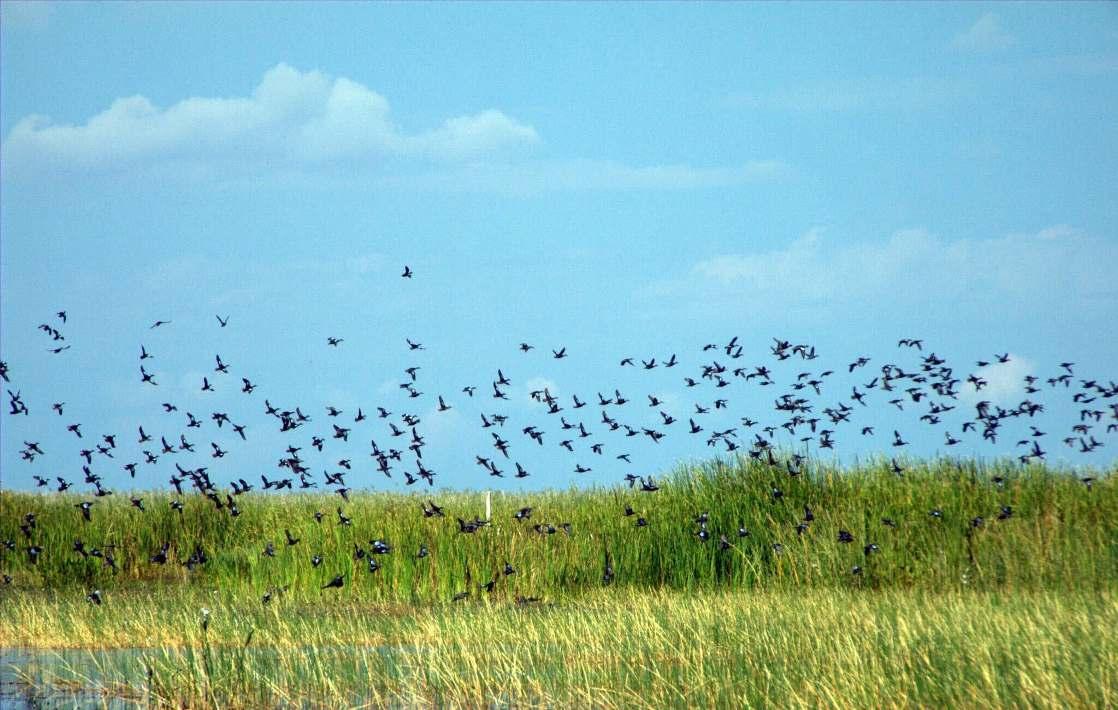
believe this proven approach can accelerate meaningful, lasting progress in Lake Okeechobee’s restoration.”
Decades of environmental pressures, including nutrient accumulation, storm impacts and sediment disturbance, have sti ed restoration e orts, a ecting the long-term health of the lake and the region’s communities that depend on it for their livelihoods.
However, the state’s latest e ort may re ect a more sustained commitment to restoring the largest lake in the southeastern U.S. and one of Florida’s most important ecological and economic resources.
Speaking at a recent meeting of the County Coalition for the Responsible Management of Lake Okeechobee, DEP's Director of Water Policy and Ecosystem Restoration Ed Smith signaled that this commitment will be paired with responsible stewardship of state dollars.
"We will be looking at each of these from a cost-e ectiveness means,” Smith said.
As algal blooms on the lake became more frequent over the last three decades, state agencies stepped up e orts to better understand the lake’s ecosystem. In the early 2000s, studies evaluated potential sediment management strategies, while Florida implemented phosphorus and nitrogen reduction targets through its Total Maximum Daily Load program. Additional research in 2011 and again in 2020 con rmed that legacy phosphorus stored in lake sediments remained a signi cant obstacle to recovery, particularly when stirred up by wind and storm events.
Recent hurricanes and extended periods of elevated water levels increased turbidity throughout the lake, as strong winds churn bottom sediments and reduce water clarity. e suspended sediments combine with excess phosphorus in the water to fuel harmful algal blooms that contribute to the ongoing decline of SAV.
A critical component of the lake's ecosystem, SAVs provide habitat for wildlife and support natural water quality functions. e extended absence of adequate SAVs allows phosphorus-rich muck to accumu-
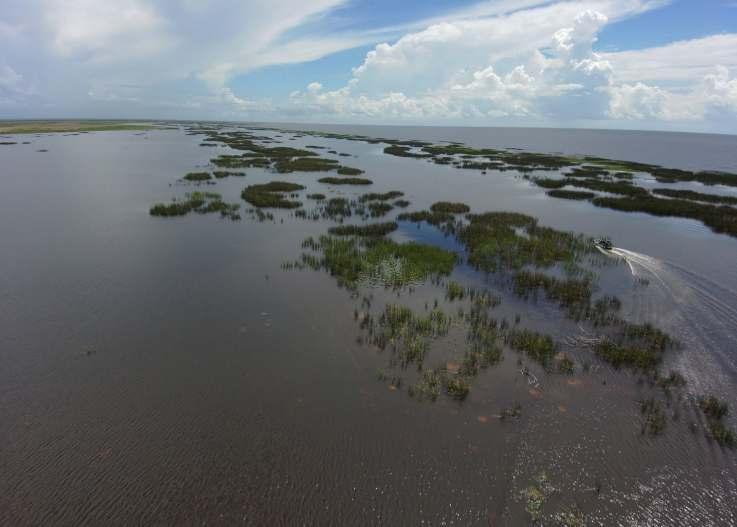
late on the lake bottom, creating a self-perpetuating cycle that continues to degrade the health of Lake Okeechobee.
As restoration e orts gain traction, state leaders and environmental partners are beginning to view these recent investments as an important step toward improving water quality, ecological resilience and recreational opportunities for future generations.
Greg Knecht, Executive Director of e Nature Conservancy of Florida, praised the e orts.
"As restoration e orts gain traction, we view these recent investments as an important step toward improving water quality, ecological resilience and recreational opportunities for future generations,” he said.
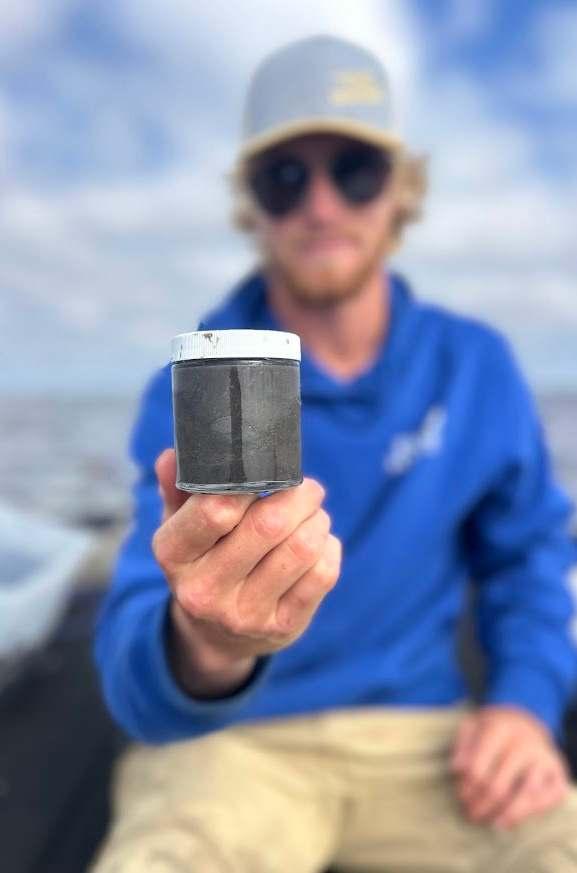
By DANIELLE FITZPATRICK
On any given morning at Lake Apopka, anglers launch boats into the water, birders scan the skies along the North Shore and cyclists ride the scenic shoreline, a scene that would have been di cult to imagine until recently. Once considered one of Florida’s most polluted lakes, Lake Apopka has undergone a dramatic transformation through more than 40 years of restoration work led by the St. Johns River Water Management District and its partners.
Today, improving water quality, restoring wetlands and expanding wildlife habitat remain at the center of ongoing e orts across the lake and its North Shore. While restoration work continues, decades of progress are already reshaping the lake for both people and wildlife.
“Lake Apopka is an example of restoration, resilience and partnership,” said Jim Peterson, the District’s strategic planning basin coordinator who has spent most of his career working on Lake Apopka. “While there’s still more work ahead, the progress made here shows what long-term commitment to restoration can achieve.”
Since the late 1980s, phosphorus concentrations in Lake Apopka have declined by 66 percent, while water clarity has increased by 52 percent as of March 2026. In 2022, the annual average phosphorus concentration fell below the restoration target for the rst time, a major milestone in the lake’s recovery.
ose achievements are the result of decades of innovative, science-based strategies designed to reduce nutrient pollution and restore the lake’s natural systems. One of the most signi cant turning points came in 1996, when the Florida Legislature directed the District to purchase former muck farms along the lake’s North Shore. e purchase dramatically reduced phosphorus loading into the lake and allowed thousands of acres of former farmland to be transformed into restored wetlands that now help lter and clean water before it reaches the lake.
In 2003, the District began operating the Marsh Flow-Way, a 760-acre lter marsh located on the southwest corner of the District’s North Shore property. e system removes algae and excess nutrients from lake water before return-

40TH
When: July 21-24
Where: J.W. Marriott Marco Island Beach Resort
e 2026
EPSS will bring public and private professionals together for unparalleled leadership and professional devel-
ing cleaner water to the lake, and to the downstream lakes connected through the Harris Chain of Lakes. As the headwaters of the chain, Lake Apopka’s water quality directly impacts the health of the entire system. Today, the Marsh Flow-Way lters approximately 30 percent of Lake Apopka’s volume each year.
Another important component of the lake’s restoration is the ongoing removal of gizzard shad, a sh species that contributes to poor water quality. Each year, approximately 750,000 pounds of gizzard shad are removed from the lake through a public-private partnership. e sh feed along the lake bottom, stirring up sediments and reducing water clarity while recycling nutrients back into the water column.
As water clarity in Lake Apopka improved, submerged aquatic vegetation (SAV), an indication of a healthy aquatic environment, began to naturally return to the lake’s bottom. SAV plays a critical role in the restoration process by absorbing phosphorus from both the water and lake sediments. Large, dense areas of vegetation improve water clarity by trapping particles and stabilizing lake sediments.
Beyond improving water quality, SAV provides essential habitat for sh and wildlife, including important habitat for largemouth bass. To help accelerate the recovery e orts, the District, with legislative support and in partnership with the Florida Fish and Wildlife Conservation Commission and the Florida Department of Environmental Protection, has planted 174 acres of SAV in Lake Apopka. Many of these plants are now spreading on their own, a strong sign of recovery.
ose e orts are producing visible results. A 2024 survey found native SAV present along approximately 95 percent of Lake Apopka’s shoreline, compared to virtually no native SAV at the height of the lake’s degradation. is marks a signi cant milestone in the lake’s ecological recovery.
For those who have been shing on the lake their whole life, the transformation is personal. Daniel Whitehouse has been shing on Lake Apopka for more than 30 years and said the di erence is night and day.
“Anglers used to be limited to just a
opment, networking and best-in-class programming you won’t want to miss!
https:// oridaenet.com/
FLORIDA RESILIENCE CONFERENCE
When: Sept. 23-25
Where: Sunseeker Resort Charlotte Harbor
e purpose of the conference is to provide a professional forum for in-depth discussion on the state’s burgeoning resilience programs. e conference program will feature concurrent sessions on: Beach management, energy, gray and green infrastructure, cyber, transportation and smart planning.
A cross-industry approach is needed to ensure the preservation of Florida’s unique natural resources and thriving communities from the e ects of rising seas, weather
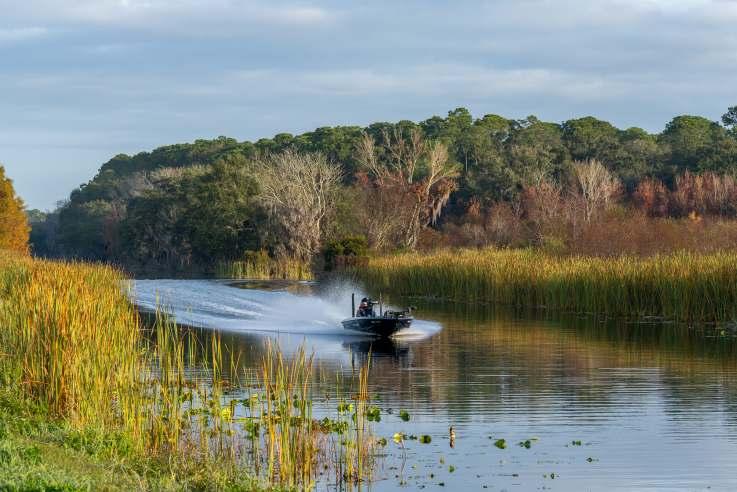
few spots,” he said. “Now, you can sh the whole lake.”
Today, Lake Apopka has become a destination for shing, birdwatching, cycling and wildlife viewing. e District’s North Shore is open to the public and remains one of the area’s most popular outdoor recreation destinations. e Wildlife Drive allows visitors to explore the restoration work from the comfort of their vehicle. e property’s restored wetlands and diverse habitat support over 370 bird species, drawing birders from all over the world. e Lake Apopka Loop Trail allows cyclists to circumnavigate the lake on a
extremes, intensi ed ooding and coastal erosion. e Florida Resilience Conference is our response to this challenge.
https:// oridaresilienceconference.org/about-us
31ST FLORIDA REMEDIATION CONFERENCE
When: Oct. 25-27
Where: Rosen Centre Hotel Orlando
e Florida Remediation Conference was formed in 1995 to ll a professional education niche in the soil and groundwater cleanup industry. e conference is attended by regulators, engineers, consultants, contractors, technology providers and site owners.
https:// oridaremediationconference.org/
47-mile route, including nearly 20 miles on the District’s North Shore.
e District’s e orts, along with the support of its partners, have made this progress possible. e story of Lake Apopka is ultimately one of long-term commitment by scientists, policymakers, partners and the community.
To learn more, watch Connected by Water: Lake Apopka’s impact
Danielle FitzPatrick is a Public Communications Coordinator at the St. Johns River Water Management District
When: Jan. 28-30, 2027
Where: Naples Grande Beach Resort
is annual forum brings together an alliance of over 60 local, state and national conservation groups, alongside scientists, policymakers, and public partners, to collaborate on the full ecological restoration of the Greater Everglades Ecosystem. e objective is to foster dialogue and align strategic advocacy on climate change resilience, water quality and habitat preservation across the historic River of Grass.
https://www.evergladescoalition.org/conference

North Florida Land Trust (NFLT) has acquired and permanently protected 860.55 acres in Bradford County, securing a critical piece of land within both the Ocala-to-Osceola (O2O) Wildlife Corridor and the Camp Blanding Army Compatible Use Bu er Zone. e $5.42 million acquisition was funded by the Army National Guard (ARNG) and the Department of Defense’s Readiness and Environmental Protection Integration (REPI) Program, with additional support from the Florida Defense Support Commission.
“ is is a signi cant property for connectivity within the O2O, and strengthens the regional conservation network,” said Allison DeFoor, president and CEO of NFLT. “We’re excited about what this means for wildlife, water resources and the long-term protection of Camp Blanding’s mission. Camp Blanding has been an outstanding conservation partner, helping ensure these lands remain protected in their natural state forever. e time to protect Florida’s natural lands is now.”
FROM BUDGET ON PAGE 1
• $38.6 million for the Lower Kissimmee Basin Stormwater Treatment Area project
• $396 million identi ed as water quality improvement projects
• $301 million for wastewater facility upgrades
• $45 million for Indian River Lagoon and Biscayne Bay
• $20 million for Total Maximum Daily Load nutrient reduction goals
• $30 million for water quality improvement projects through the state’s water management districts
• $50 million for springs protection
• $23 million to improve water quality related to algal blooms and red tide
• $50 million for alternative water supply projects
• $64 million for beach projects
• $167 million for the petroleum tanks cleanup program
e budget contains additional grant programs, authority to spend various federal funding and other line items associated with FDACS, the Florida Department of Environmental Protection, the Florida Fish and Wildlife Conservation Commission and Florida Department of Citrus.
Everglades Trust CEO Anna Upton praised the continued Everglades funding.
“Wtih the signing of this budget, Governor DeSantis has secured nearly $9.5 billion for environmental e orts during his two terms. He made a funding pledge at the start of each of his terms and exceeded both,” she said. “ is budget continues to move Everglades restoration forward so that Floridians – and those that visit our great state – can realize the ultimate benets ahead of schedule.”
Following completion of the proposed budget by lawmakers in May, Senate President Ben Albritton touted several
e property was previously owned by Rayonier Forest Resources, LP, which managed the land for timber production. e 860-acre tract lies adjacent to and south of NFLT’s Triangle Preserve and the Suwannee River Management Santa Fe Swamp Conservation Area. Its location expands a growing network of conserved lands that support wildlife movement, protect water quality and strengthen climate resilience across Northeast Florida.
e land includes signi cant oodplain storage and provides natural bu ers to wetlands associated with Prevatt Creek, a tributary that contributes to the headwaters of the Santa Fe River. Protecting this property helps maintain the ecological integrity of the watershed. e site also supports habitat for a wide range of wildlife, including deer, turkey, and black bear, all of which are well documented in the area. NFLT will own and manage the land, which has future potential for public access, including hiking trails and passive recreation opportunities.
e O2O Corridor is a 1.6-million-acre network of public and private lands connecting the Ocala and Osceola National Forests. e acquisition strengthens one of Florida’s most important connected landscapes and helps safeguard its ecological health for generations to come.
For many Florida homeowners, lawn mowing can feel like a never-ending chore, especially in the heat of summer.
of these items, including agriculture and citrus programs.
“Research and new technologies o er renewed hope for the future of Florida citrus, and with this key funding, our state will lead the way in pursuing these opportunities. We’re on the edge of something special,” Albritton said in a news release a er the special session on the budget.
“Florida citrus is making a comeback, one tree at a time.”
House Speaker Daniel Perez spoke to the legislature’s scal restraint in a post-special session statement.
“Floridians expect their government to spend responsibly and prioritize the issues
New guidance from experts suggests autonomous or robotic lawn mowers can ease that burden while e ectively managing Florida’s hardy lawns, including St. Augustine grass.
“ e simple question was, can a robotic or autonomous mower’s lower cut height at 2.4 inches maintain hardy St. Augustine grass?” asked Bryan Unruh, UF/IFAS West Florida Research & Education Center associate center director. at was a major concern since, for most warm-season grasses,, a height average between three and four inches is recommended.
According to the recently published UF/IFAS WFREC research, the answer is yes. Autonomous mowers not only reduce manual labor and gas emissions but also improve the overall health of warm-season grasses.
“Our conventional mowing recommendations are basically every seven days to remove a third of the grass blade,” said Unruh. “Part of the success with the autonomous or robotic mowers is the di erence that daily mowing makes by clipping o a small amount of grass repeatedly, which helps keep the grass healthier and denser.”
ese ndings are signi cant because most robotic or autonomous mowers were originally designed for European lawns and cool-season grasses. Typically, these types of grasses require less intensive maintenance and thrive at the lower cut height of 2.4 inches. In contrast with the warm-season grasses, daily mowing using a robotic mower’s small, double-edged razor blades increased turf density and
that matter most to families across our state,” he said in a news release. “For the second year in a row, the Florida House has led the charge in passing a budget that reduces spending while continuing to invest in public safety, education, environmental protection, health care and
promoted healthier turf that was more resistant to pests and disease.
SATELLITE SCIENCE: FSU RESEARCH INCREASES ACCURACY OF HIGHRESOLUTION OCEAN SURFACE MEASUREMENTS
Florida State University research published in June in Science Advances demonstrates a new framework for predicting the motion of kilometer-scale underwater waves that complicate satellite readings of the ocean.
By accurately modeling these subsurface waves, scientists can remove their interference from NASA’s Surface Water and Ocean Topography, or SWOT, satellite, improving the satellite’s signal and allowing for observations of the Earth’s ocean circulation that are about 60 percent more accurate.
“SWOT is giving us the clearest view we have ever had of the ocean’s ne-scale circulation, the small eddies and currents that govern how much heat and carbon the ocean draws down from the atmosphere,” said study lead author Yadidya Badarvada, a researcher at FSU’s Center for Ocean-Atmospheric Prediction Studies who completed the work at FSU and while a postdoctoral researcher at the University of Michigan. “But those measurements have been partially obscured by internal tides, which mimic the very features we are trying to observe. What this work shows is that the interference we assumed was too chaotic to x is actually predictable, once you have a model that accurately tracks the evolving ocean state.”
infrastructure. We’ve maintained strong reserves, protected taxpayers and ensured Florida remains in a strong nancial position for the future.”

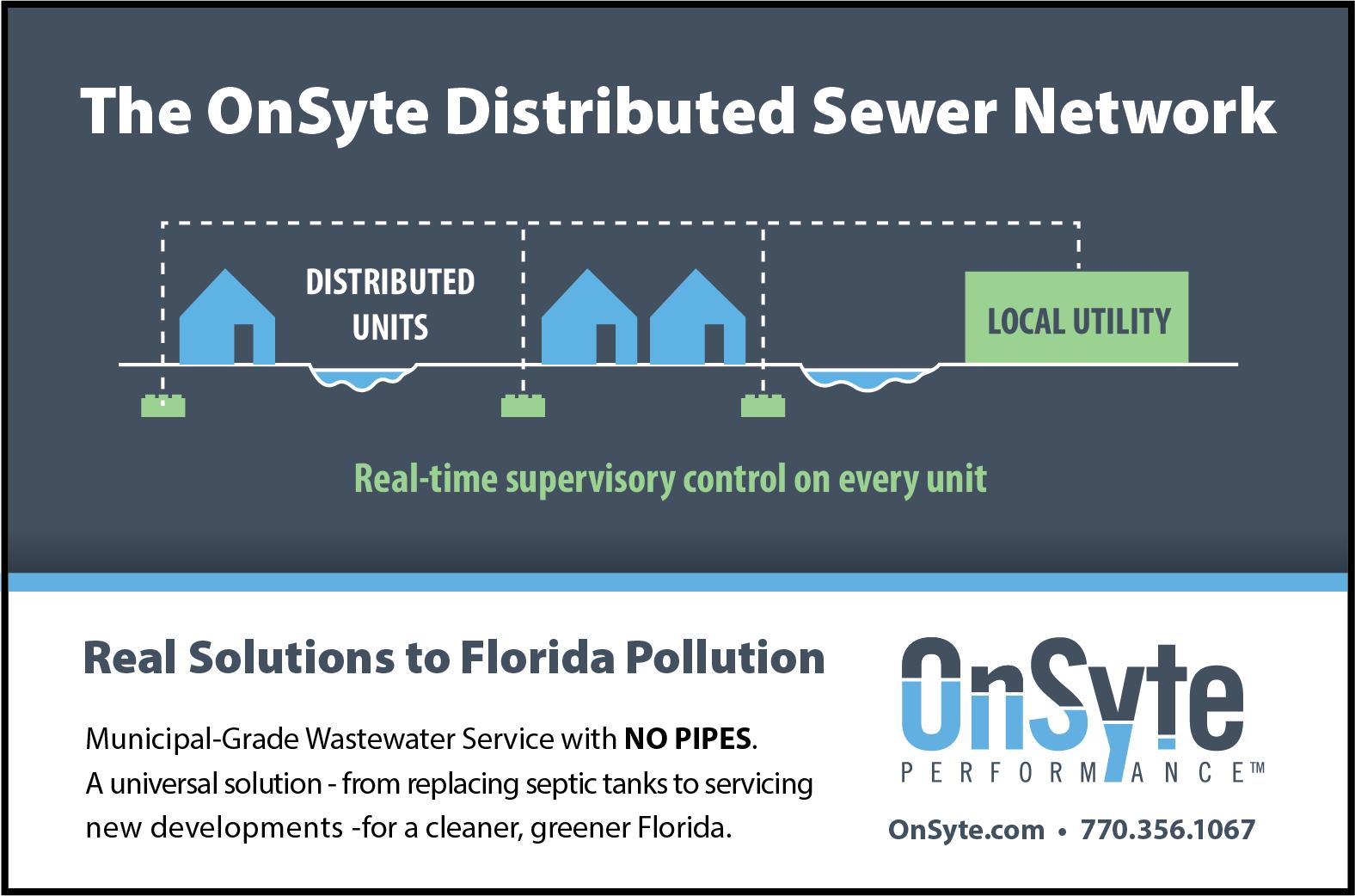
is opinion piece was originally published in the Washington Times on May 19, 2026 and is reprinted with permission
By JIMMY PATRONIS
Building has always been at the heart of the American Dream, not just as an economic driver, but as the way communities take shape, families put down roots and opportunity is passed from one generation to the next.
Roads, schools, housing and infrastructure are more than projects on paper; they’re the foundation of daily life and the promise of progress made real.
Yet too o en, that promise runs into a frustrating reality. Washington o en preaches the importance of investing in infrastructure and revitalizing communities, but when projects move from concept to construction, the government throws a bunch of red tape and delay at people who
are spending their own money to try and make a dream happen.
In many cases, especially in a state like Florida with its sensitive environment, projects require permits from both the federal government and the state to ensure they are built responsibly and with strong environmental protections in place. Historically, the Florida Department of Environmental Protection has played a key role in that process, helping administer “404 Permits” on behalf of the federal government. at partnership has allowed projects to move forward e ciently while still safeguarding Florida’s natural treasures. In 2024, however, a single federal judge took that authority from Florida, which caused projects like schools and re houses to restart the entire process. And this may not surprise anyone: the federal government is very slow and o en bad at what it does. is suit, by the way, was brought on behalf of environmental crazies who want it all shut down, the kind of people who want mankind back in the caves so the butter ies and the bears can dance to whimsical music in the forests like one of those movies where everyone breaks out into song and dance. Total ction.
Environmental protection is essential, but there’s got to be a balance. When
the regulations become so complex that it delays housing, schools, public safety and basic infrastructure, the system is no longer working as intended. Florida has shown there is a better way by doing the federal permitting on the state level. is approach allows projects to move forward more quickly, with greater predictability and o en at lower cost a er all, time is money. e result is more housing for families, faster construction of essential public facilities and stronger con dence in future investments.
at’s why I worked to include essential provisions in the PERMIT Act, a commonsense e ort to restore clarity and accountability to the permitting process by setting reasonable timelines, reducing unnecessary delays and improving consistency in how projects are reviewed.
Right now, too many projects are slowed by overlapping requirements, unclear expectations and prolonged litigation that can stretch for years. is legislation addresses that breakdown without weakening environmental protections. Reviews remain rigorous, but they are guided by clear timelines and de ned expectations so they cannot dri inde nitely or trap projects in limbo.
Because the Democratic party is so beholden to the environmental crazies, agencies were essentially weaponized to shutdown projects through bureaucratic malaise. President Donald Trump, however, who knows how to build things, has made it clear that America needs more roads, more housing, more of everything, to meet the needs of our country.
At its core, the PERMIT Act is about restoring balance to how we build in this country. Our country has always been a nation of builders and problem-solvers, capable of turning shared priorities into lasting progress. But that tradition weakens when outdated processes slow action to a crawl. It is time to cut the red tape, trust our states and make it possible to build again with clarity and purpose. Because when building stalls, communities wait and the future does too.
Jimmy Patronis Jr. proudly represents Florida’s 1st District in the Panhandle. A fourth-generation Floridian and man of faith, he’s a strong advocate for the Second Amendment, veterans and rst responders. He’s a member of the House Transportation and Infrastructure Committee.
By HERSCHEL T. VINYARD and KEVIN BJORKMAN
Every time you turn on the tap or ush the toilet in Florida, you are relying on infrastructure that is, on average, 40 to 60 years old. Many of these systems require substantial upgrades due to age and increasingly stringent standards. Failures within water infrastructure contribute to water contamination, harmful algal blooms and the degradation of ecosystems that are essential to sustaining Florida’s communities, environment and economy.
Public utilities, which are widespread in Florida, face enormous costs to upgrade these aging systems and convert outdated septic tanks to central sewer service. According to the 2025 American Society of Civil Engineers Florida Section Report Card, Florida will need to invest approximately $30.37 billion in water collection, treatment, storage and distribution systems over the next two decades just to keep pace with current demand.
In response to this infrastructure crisis, the Florida Legislature in recent years has dramatically increased appropriations for water quality improvement grants distributed by the Florida Department of Environmental Protection. e intent of this public investment is clear: cleaner water, healthier communities and modernized infrastructure.
Unfortunately, some local governments requesting grant funding from Tallahassee are simultaneously transferring utility revenues designed to improve this infrastructure to the municipality’s General Fund to pay for unrelated programs and services. ese transfers are under the guise of var-
ious labels known as “sweeps,” “transfers” or “payments in lieu of taxes.”
e practice of transferring funds that should be used for infrastructure upgrades to improve our water quality is widespread. is practice, in essence, is like a hidden tax: revenue generated by a city or county utility is used to plug holes in the local government’s budget, at the direction of a mayor, city council or county commission. Despite this practice, many of these same local governments still go to Tallahassee each session seeking state appropriations and grant funding for water infrastructure projects that the revenue transfers have le unfunded.
According to Florida TaxWatch, local governments that divert utility revenues to their General Fund are more likely to need state funding, and in larger amounts, to o set the nancial burden they have created for themselves. As Florida Tax Watch points out, this unfairly reduces the total pool of state funding available to other local government utilities that have managed their infrastructure funds responsibly.
is hidden tax is a shell game played on local ratepayers. Citizens pay their water and sewer bills believing those dollars will maintain and improve the systems that serve them. Instead, a portion of every ush, every shower and every load of laundry funds pothole repairs, community centers, a parade, administrative overhead or whatever other budget gap the local government seeks to ll, rather than allowing those resources to be used for water quality improvements. e consequence of this practice is undercapitalization of critical water infrastructure and poor water quality.
Local governments are, of course, free to manage their own a airs under Florida's broad Home Rule authority. No statute currently prohibits this siphoning of funds. But freedom to act does not mean freedom from consequence.
e Florida Legislature should send a clear message: if a local government chooses to raid the co ers of its utility rather than reinvest those ratepayer dollars in infrastructure and improved water quality, that locality’s public utilities should be deemed ineligible for state grants and appropriations for water and wastewater projects. Taxpayers across Florida should not be asked to subsidize infrastructure improvements for municipalities that have chosen to divert their own utility revenues to unrelated purposes.
Floridians deserve cleaner water. ey are paying for it every month on their utility bills. It is time the Legislature ensures that every dollar Floridians pay for water goes toward delivering the clean, safe water local governments promised through funding their local wastewater utility systems.
Herschel T. Vinyard is Partner in Charge of the Jacksonville o ce of the Adams and Reese Law Firm and former Secretary of the Florida Department of Environmental Protection. Kevin Bjorkman is a second-year law student at the University of Florida and a Summer Associate at Adams and Reese in Jacksonville


By WILTON SIMPSON
If you've spent any time in agriculture, you've learned a simple truth: we're not really farming for ourselves.
Every seed planted, every fence repaired, every grove, pasture and eld we care for is an investment in what comes next. Agriculture has always been about leaving something better behind for the next generation than what was le to us.
at's one reason I believe so strongly in Florida's Rural and Family Lands Protection Program.
As a h-generation Floridian and someone who has spent his life in agriculture, I've seen rsthand how much the land means to farming families. It's more than an asset on a balance sheet. It's where families have built their livelihoods, raised their children, weathered
hard times, and created opportunities for future generations.
e Rural and Family Lands Protection Program helps ensure those opportunities remain available.
rough voluntary conservation easements, the program allows agricultural landowners to permanently protect working lands while continuing to own, operate, and pass them down to future generations. e land stays in private hands. e operation stays productive. Farmers keep farming and ranchers keep ranching.
In a state that continues to grow by thousands of new residents every week, protecting the future of agriculture requires more than good intentions. It requires commitment and long-term investment.
at's why I am grateful to Gov. Ron DeSantis, Senate President Ben Albritton, House Speaker Daniel Perez, and the Florida Legislature for approving a historic $425 million investment in the Rural and Family Lands Protection Program this year – the largest funding commitment in the program's history.
is record investment builds on the momentum we've created over the last several years. Since I took o ce, Florida has permanently preserved more than 168,000 acres of working agricultural land through the program, bringing the statewide total to more than 234,000 acres. Together with the Legislature and Gov. DeSantis, we have secured more than $1.1 billion for the program since 2022.
But this program has never been about acres on a spreadsheet.
It's about making sure a cattle ranch can stay a cattle ranch. It's about helping a family farm remain productive for another generation. It's about keeping Florida agriculture strong in a world where food security is becoming increasingly important.
For specialty crop growers, that matters. Every acre that remains in agricultural production helps support Florida's position as a national leader in food production. It strengthens our rural communities, supports local economies, and helps ensure future generations have the opportunity to continue producing food right here in Florida.
Many of the lands protected through this program also provide important bene ts for water resources and wildlife habitat. But at its heart, this program is about people – the farmers, ranchers, and agricultural families who have helped shape Florida for generations.
Agriculture built much of this state. e responsibility we share today is to make sure it remains part of Florida's future.
e Rural and Family Lands Protection Program is one of the most e ective tools we have to accomplish that goal, and I look forward to continuing our work with Florida's agricultural community to protect working lands and strengthen Florida agriculture for generations to come.
Wilton Simpson is Florida’s 13th Commissioner of Agriculture, a member of the Florida Cabinet and previously served as Florida Senate President. For more than four decades, he owned and managed a large-scale egg-laying operation that supplied families across the state. A lifelong Florida farmer and entrepreneur, he has deep personal and professional roots grounded in agriculture.
By KEYNA CORY
is legislative session, the Florida Legislature came close to taking an important step forward with the Safe Battery Collection and Recovery Act, SB 912, sponsored by Sen. Stan McClain.
Although the bill ultimately did not pass, supporters are expected to le the legislation again during the 2027 Legislative Session. As batteries become increasingly common in everyday life, powering everything from cell phones and laptops to power tools, e-bikes and electric vehicles, Florida’s waste and recycling systems must adapt to address the growing safety and environmental challenges associated with improper battery disposal.
One of the most important aspects of SB 912 is that it would modernize outdated statutory de nitions related to batteries and battery management. Florida’s existing laws were written long before lithium-ion batteries became a standard part of consumer products. Today, these batteries are everywhere, and when they are improperly thrown into household trash or curbside recycling bins, they can create dangerous res at recycling facilities, transfer stations, land lls and even inside collection trucks.
Across the country, waste and recycling operators have reported a dramatic increase in res caused by damaged or improperly disposed lithium-ion batteries. ese res threaten worker safety, damage expensive infrastructure, interrupt recycling operations and create signi cant costs for local governments and private companies. In some cases, res can smolder for days and release harmful pollutants into the air.
SB 912 would help address this growing issue by establishing a battery stewardship
organization that would coordinate and support the safe collection and recovery of batteries throughout Florida. Stewardship programs are designed to create shared responsibility among manufacturers, retailers, consumers and waste professionals to ensure batteries are managed safely at the end of their useful life. By creating a statewide framework, Florida could improve battery recovery access, reduce re risks and keep hazardous materials out of land lls.
Education will also play a critical role in addressing this issue. Many Floridians simply do not realize that batteries should never be placed in standard trash or recycling bins. Fortunately, Florida already has strong educational resources that can help raise awareness.
e Florida Department of Environmental Protection’s “Take Charge Florida” campaign provides consumers with important information about safe battery handling, storage, and recycling options. e campaign encourages residents to properly prepare batteries for recycling and understand the risks associated with improper disposal. https:// oridadep.gov/ TakeChargeFlorida
In addition, the National Waste & Recycling Association has partnered with Woodsy Owl on the “Skip the Bin, Turn Your Batteries In” campaign. is national educational initiative uses simple messaging to remind consumers that batteries do not belong in curbside recycling or household garbage. Campaigns like these are essential to changing public behavior and protecting workers and facilities across the waste and recycling industry. https://batterysafetynow.org/
While SB 912 did not cross the nish line this year, the conversation surrounding
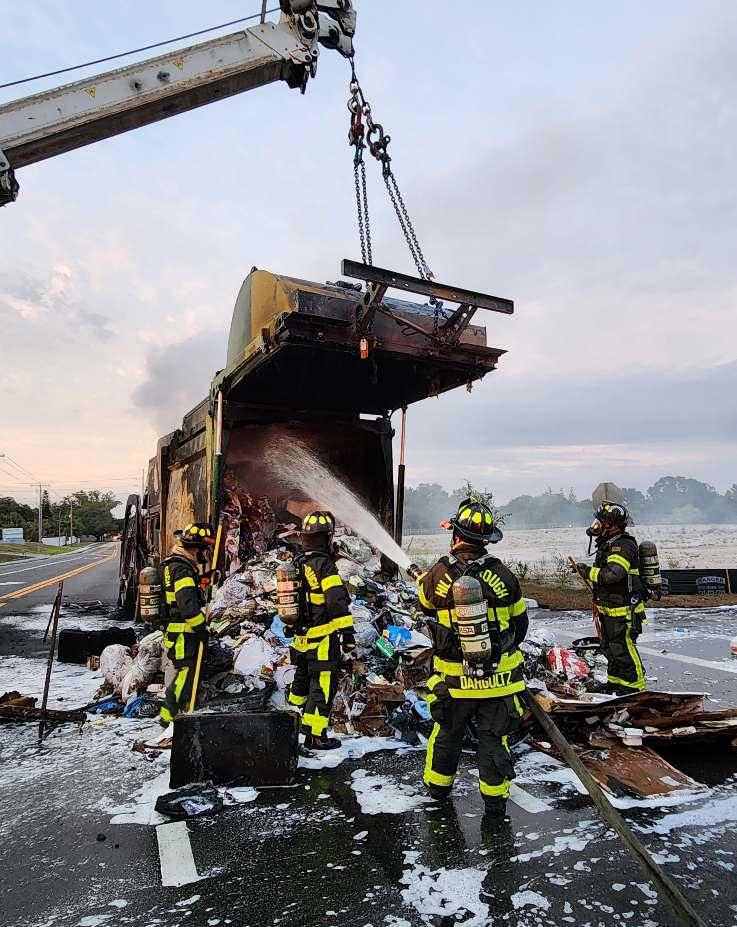
battery safety and recovery is far from over. As battery use continues to grow, so too will the need for responsible collection, recycling, and recovery systems. Re ling the legislation in 2027 will provide another opportunity for Florida to modernize state law, improve public safety and support a more sustainable future for communities across the state.
Keyna Cory is President of Public A airs Consultants, a governmental consulting and public a airs rm based in Tallahassee, Florida. rough her extensive experience in government relations and public policy, she has worked closely with the solid waste and recycling industry to advance legislative priorities and advocate for policies that support sustainable waste management and recycling initiatives.
By WILLIAM “BILL” CONERLY
Public concern about land ll leachate is understandable. When people hear that contaminated liquid from a land ll may be injected thousands of feet underground, the instinctive reaction is concern for drinking water.
at concern is real, and the agencies charged with protecting our state’s worldclass natural resources take it very seriously, enforcing some of the most robust waste disposal regulations in the nation. ose protections include both surface wastewater regulations and the Underground Injection Control (UIC) program, each designed to manage these risks.
e problem is not the concern itself. e problem is the way this issue is o en framed in Florida.
ere is no question that land ll leachate should be carefully managed. Leachate is a highly contaminated waste stream, consisting of heavy metals, organic chemicals and other toxic chemicals that “leach out” of the mountains of household garbage that we Floridians generate. It may also contain emerging contaminants, including per- and poly uoroalkyl substances (PFAS), which present additional treatment and disposal considerations. e real question is which management pathway presents the lowest overall risk when the full system is evaluated.
Modern land lls operate under a dense
network of federal, state and local regulations speci cally designed to prevent threats to surface and groundwater. Municipal land lls are regulated on the assumption that leachate will threaten our groundwater if it is not properly contained, which is why Florida land ll regulations require multiple layers of tested liners, leachate collection and leak detection systems to protect groundwater, all regularly monitored and inspected.
If leachate is not collected and placed in a deep disposal system, it is managed through a surface-based system.
Surface-based systems collect leachate at the land ll, then pump it into trucks or pipelines, transport it over roads or through force mains, unload it at a wastewater treatment plant, mix it with domestic wastewater, treat it and ultimately manage it through e uent and biosolids pathways. is process is carefully regulated by the Florida Department of Environmental Protection, but it involves multiple handling and transfer points. Each of those points introduces potential opportunities for release if systems fail or are disrupted prior to treatment.
A second issue that is o en le out of the discussion is uid density. Density a ects how uids behave in the ground. In general terms, since leachate is denser than groundwater, it will favor downward movement. e subsurface movement is controlled by multiple factors, including pressure conditions, formation
permeability and the integrity of conning layers. Properly designed systems account for these factors to ensure that injected uids remain contained within the intended zone.
Florida’s Class I UIC program is built around placing waste far below the lowest underground sources of drinking water and beneath geologic con ning layers that limit upward movement. e Florida Department of Environmental Protection and the U.S. Environmental Protection Agency require these wells to be sited, constructed, operated, tested and monitored so that injected uids remain within the authorized injection zone and do not migrate into drinking water sources. ese systems include multiple layers of casing and cement, mechanical integrity testing, pressure and chemical monitoring and ongoing regulatory oversight.
Class I injection wells are not new. More than 180 are active in Florida today, and they have been used for many decades as a safe method of managing liquid waste streams under a highly regulated framework. When properly sited and operated, these systems are designed to isolate waste within deep, con ned geologic formations beneath drinking water resources.
While there are associated risks, as with all engineered waste disposal systems, Florida’s injection wells adhere to strict federal and state regulations and incorporate layers of redundancy and monitoring systems. e key risks that must be con-
tinuously evaluated include well integrity failure, uncertainties in subsurface geology and the potential for inadequate connement if conditions are not properly understood or maintained.
is is why the debate should be reframed. It is not a choice between risk and no risk. e choice is between two highly regulated systems with di erent risk pro les. One distributes risk across multiple steps at the surface, above our drinking water sources. e other concentrates risk in a controlled, subsurface environment designed for long-term isolation beneath our water supply.
e relative performance of these systems depends on site-speci c conditions, infrastructure capabilities and the characteristics of the waste stream itself.
Florida has long been a national leader in responsible waste management, driven by a regulatory culture that emphasizes science, engineering and performance-based solutions. As this conversation continues, decisions should be informed by veri ed data, advances in treatment technologies and careful evaluation of local hydrogeologic conditions to ensure the most protective outcome for public health and the environment.
Bill Conerly is a Florida Representative serving District 72
By SEAN R. PARKER and OWENS T. PARKER
e Florida Legislature recently proposed a constitutional amendment that would increase the homestead exemption from its current level of $50,000 to $150,000 in 2027 and ultimately to $250,000 in 2028, if 60 percent of Florida voters approve it this fall. It also proposes to reduce the maximum annual assessment increase on non-homestead properties from 10 percent to ve percent, and limits what municipalities can spend property tax revenue on, without any meaningful mechanism to compensate municipal budgets.
A study commissioned by the Florida League of Cities analyzed the scal impact of a variety of exemption reforms, including the proposed $250,000 assessed value exemption, and the ndings paint a grim picture for future municipal budgets if the amendment passes. e researchers found that property taxes account for roughly 41 percent of general fund revenue statewide, and the proposed exemption would eliminate just under 25 percent of property tax revenue, decreasing municipal general funds by approximately eight percent on average.
Hypothetically, if a municipality were to attempt to compensate for the lost revenue exclusively by increasing millage rates, it would need to increase rates an average of 46 percent just to break even. at proposition is untenable particularly because it would unreasonably shi the burden to commercial property owners
and non-homestead properties. e report concluded that these losses would most impact smaller municipalities — creating service inequities among municipalities and reducing service quality as they will likely be forced to use less reliable revenue sources or outright reduce funding.
e City of Bartow serves as a prime example of the type of municipality that would be put under the most strain by the proposed changes. e city’s current budget includes approximately $9.1 million in ad valorem property tax revenue, but an estimated $3.3 million, over a third of the current property tax revenue, would be lost by the time the exemption would take full e ect in 2028.
If Bartow wanted to o set its lost revenue solely through its property taxes, its current millage rate of roughly 6.1 would jump to 8.9, assuming the city would only need to increase the rate by the average amount among municipalities. ese millage rates are capped at 10 by statute, so depending on a municipality’s present millage rates, increasing them to compensate for the lost revenue may be literally impossible, and they would be forced to rely on other less stable taxes, such as sales taxes, to make up the di erence.
In reality, Bartow and other similarly situated municipal governments will need to reduce services to balance the budget. In the context of a local government already running a lean and e cient operation, cutting funding in any operating area may have signi cantly detrimental e ects
over the long term. Imagine a wastewater treatment plant being forced to run with less sta , needing to make hard decisions about operational maintenance schedules, deferring improvements or stretching the life of critical equipment to avoid costs. Imagine stormwater systems not being serviced as o en, roads and sidewalks being pushed to the outer boundaries of resurfacing and repair. Imagine needing to make tough decisions about the right amount of money to be held in reserve and hoping and praying that your city doesn’t feel the impact of a major hurricane.
e budgetary restrictions also happen to coincide with the increase in sovereign immunity caps from the recently signed HB 145 and the proposed reduction of municipal water and sewer fees for recipients outside municipal boundaries in SB 1724. Also, the language in HB 1595, signed in 2023, allows budget reductions over ve percent for municipal law enforcement agencies to be more easily challenged. Each of these endeavors by the state legislature reduces revenue, increases expenditures, or does both in some manner, exacerbating the di culties that municipalities would face as they try to fund their various public services, including the provision of utilities.
e proposed amendment’s impact on speci c utility services will vary by municipality and it is di cult to determine without a particularized scal study. However, if the amendment passes, the reality for municipalities across the state is that they will have less money to fund the
same, if not growing, demand for public services and will be more constrained in how they can spend it. Consequently, municipalities will either need to replace the lost revenue by raising taxes (likely untenable) to maintain current service levels or be forced to make cuts (far more likely outcome) to critical services in the face of growing demand as people continue to move into the state.
Another interesting nuance of the proposed amendment is that it would also require future residents to reside in the state for ve years before qualifying for the new exemption threshold. is could theoretically mitigate some revenue losses, but the requirement likely violates the 14th Amendment Privileges and Immunities Clause. e United States Supreme Court held in Saenz v. Roe that durational residency requirements implicate the right to travel and must survive strict scrutiny to be permissible. Consequently, a federal constitutional challenge to that portion of the proposed amendment would have a high likelihood of success, negating any possible mitigating e ect on lost revenue if the provision is struck down as unconstitutional.
Sean R. Parker is City Attorney of Bartow and is Partner at Boswell & Dunlap, LLP in Bartow
Owens T. Parker is a rising 3L student at Stetson University College of Law
By BLANCHE HARDY
e Society for the Protection of Underground Networks (SPUN) have produced an application for viewing Earth’s underground fungal networks and Florida is a fungus mecca.
SPUN is a scienti c research organization dedicated to mapping and protecting Earth's underground fungal networks. SPUN scientists research and publish data intended to inform real world decisions considering the fungal network when planning to protect biodiversity, restore ecosystems and track carbon below ground.
Two recent publications highlight a signicant volume of data and discovery details. SPUN data is featured in Global density and biomass of arbuscular mycorrhizal fungal networks published in Science under SPUN lead Justin D. Stewart and Global extinction risk assessment of soil-dependent species: recent progress and recommendations in Cambridge University Press.
e bulk of Earth’s biodiversity lives underground. e Global Density study reviewed the International Union for Conservation of Nature’s (ICUN) Red List and found only a small fraction of soil organisms have ever been assessed for extinction risk. Among the 8,653 soil-dependent species currently listed, scientists found many are threatened or too poorly studied to evaluate properly for extinction risk. SPUN calls for urgent global e orts to
map, monitor and conserve soil biodiversity before invisible extinctions occur.
Beyond biodiversity, most life on Earth lives in the soil. Species include fungi, insects, mites, worms and countless microscopic organisms integral to ecosystem function. SPUN describes the associated arbuscular mycorrhizal (AM) fungi network as the sub surface’s ecosystem engineers.
e AM fungi network creates a trading relationship with over 70 percent of plant species building hyphae, networks of tubular cells, that extend the area of root systems up to one hundred-fold. SPUN characterized these collective networks as Earth’s circulatory system. ese underground communities regulate nutrients, store carbon, support plant growth and keep soil healthy by exchanging nutrients for host-derived carbon.
e network provides plants with up to 80 percent of their phosphorus and 20 percent of their nitrogen in exchange for their carbon. e denser the network, the better the opportunity for carbon to ow. Because the networks are subterranean and microscopic, they have been invisible to observation tools. A global team of researchers, including SPUN, set out to change that.
e scientists assembled data from 322 studies representing more than 16,000 soil cores across nine biomes and developed machine-learning models to predict hyphal densities globally. ey combined
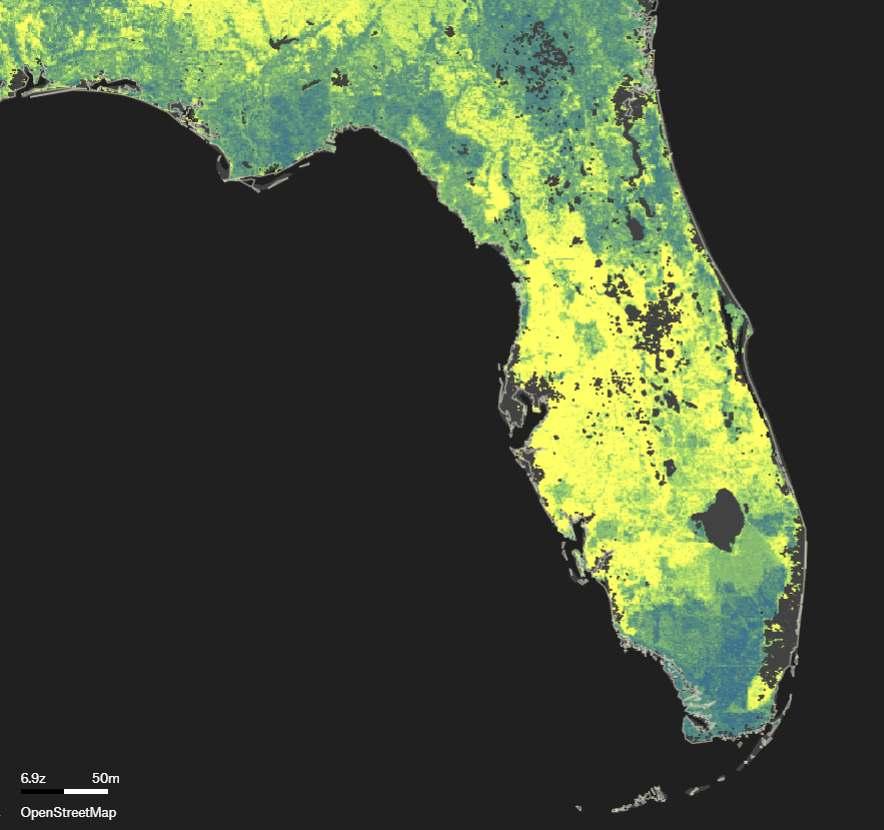
eld measurements with global data on climate, soil chemistry and vegetation then calibrated a biomass model from spatial predictions using Dutch Research Council member AMOLF’s robotic imaging of more than 300,000 hyphae.
SPUN estimates that global topsoil contains the equivalent living hyphae of 1 billion times the distance from Earth
to the Sun. is volume equals 3 billion tons of biomass, roughly ve times the weight of all humans.
Florida is underlain by a distinct and prevalent fungal network. e global map is available at: Underground Atlas: Mycorrhizal Biodiversity Map v1.0
“Water links us to our neighbor in a way more profound and complex than any other.” — John orson
By BRUCE RITCHIE
If we are all connected by water, is anyone actually reporting and writing stories to help de ne that connection?
I'm giving it a shot for a shared river system in Alabama, Florida and Georgia.
I have covered the Apalachicola, Chattahoochee and Flint rivers for more than 25 years as just one of many issues involving environmental policy and politics at the Florida Capitol.
But now I've le the grind of daily journalism in an e ort to solely focus on covering the river system for my ACF River News on Substack.
My goal has been to write a book that examines the competing needs for water throughout the drainage area. Covering it as a reporter on a weekly basis is the best way I know to dive back into the issue.
You may remember the river system only because of a long-running legal dispute among the three states.
Alabama and Florida originally sued the U.S. Army Corps of Engineers in 1991 over the allocation of water from the Chattahoochee River. Georgia sided with the Corps in defense of its water supply.
e states put the litigation on hold to work out their di erences until 2005, when they declared an impasse.
Florida sued again in 2013 over Georgia's water use. But the U.S. Supreme Court tossed out that direct action, saying Florida had not adequately documented its arguments that Georgia was causing an oyster die-o in Apalachicola Bay.
e original federal lawsuit over water allocation led the Corps of Engineers to develop a new water-control manual that allocated water for the Atlanta area.
Alabama sued and eventually settled its case to provide water ow down the river. Florida groups still are appealing a federal judge's decision siding against their case.
ere is now no litigation remaining among the states.
But e orts to work cooperatively have always continued in the background, even during the years of litigation. A group called the ACF Stakeholders has been meeting for nearly two decades to keep discussions going.
Albany State University in Georgia holds its ACF Waters Conference every two years. It brings together diverse interests to hear about federal management of the river system, water conservation
e orts and scienti c research to protect sh and wildlife.
Backed by the Pew Charitable Trusts, a group of scientists is now trying to de ne the needs of threatened and endangered sturgeon and mussels living in the Apalachicola River, along with the abundant marine life in the Apalachicola Bay estuary.
My friend Cynthia Barnett wrote in her book "Mirage: Florida and the Vanishing Water of the Eastern U.S." that water "is intensely personal for most people."
And it goes both ways. If we want them to understand how personal it is for us, then we also have to understand what it means to them. I hope my journalism will help increase that understanding.
is is part of a semi-regular series of articles that will be featured in the Florida Speci er by Bruce Ritchie, a long-time Florida environmental reporter. Ritchie’s work can be found on his Substack at https:// bruceritchie.substack.com/



41st Annual