“WHIPLASH” TRAUMA: BIOMECHANICS, HEAD RESTRAINT GEOMETRY, AND CERVICAL INJURY MECHANISMS
PROPER MEDICAL DOCUMENTATION IN FLORIDA SLIP-AND-FALL CASES
PERSONAL INJURY HEALTHCARE M&A: INTEREST IS BUILDING, BUT LARGE TRANSACTIONS REMAIN ELUSIVE SERVING PAPERS IN FLORIDA: WHAT LAW FIRMS MUST GET RIGHT
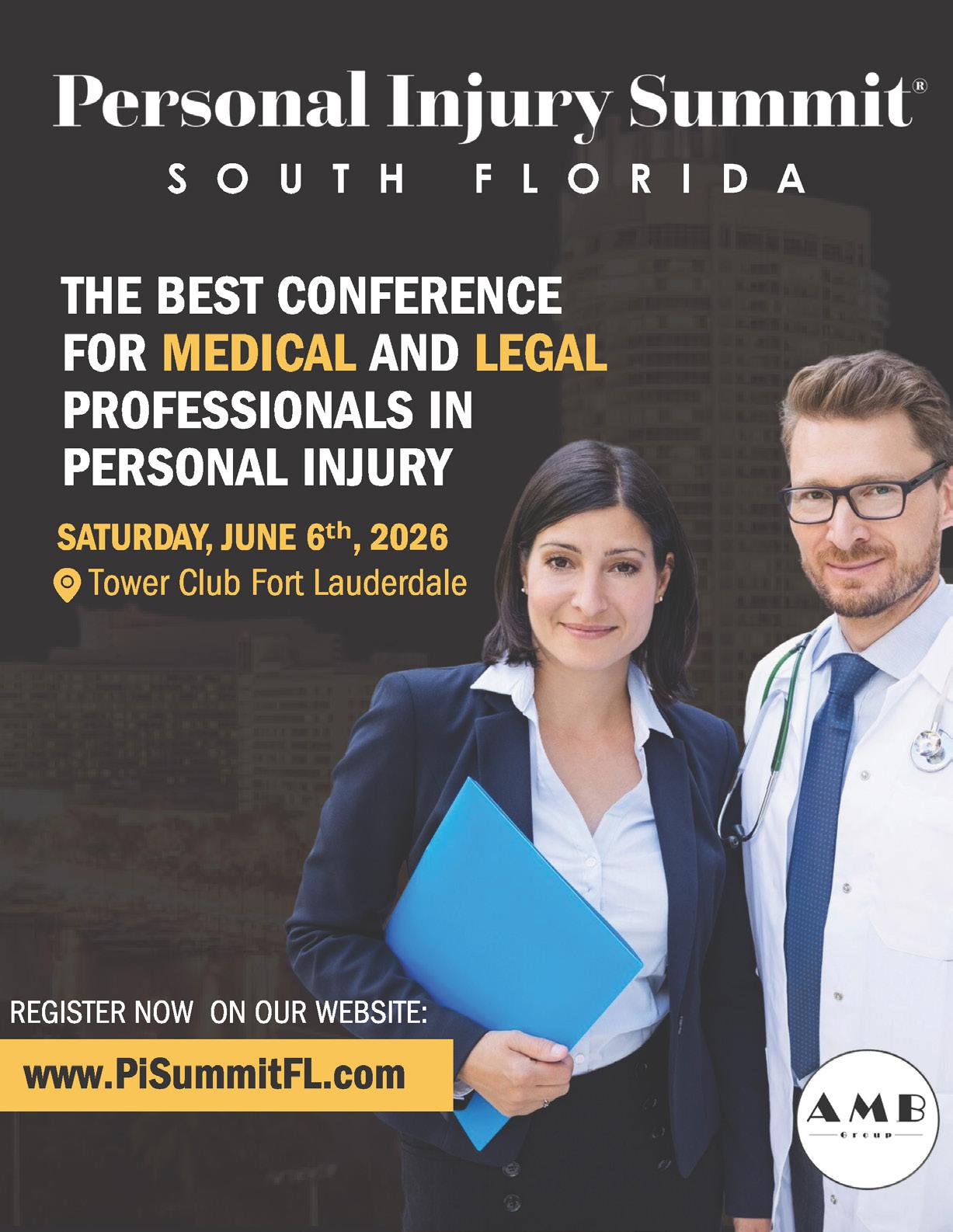
COMING TO FT. LAUDERDALE! PERSONAL INJURY SUMMIT, SATURDAY, JUNE 6TH, 2026
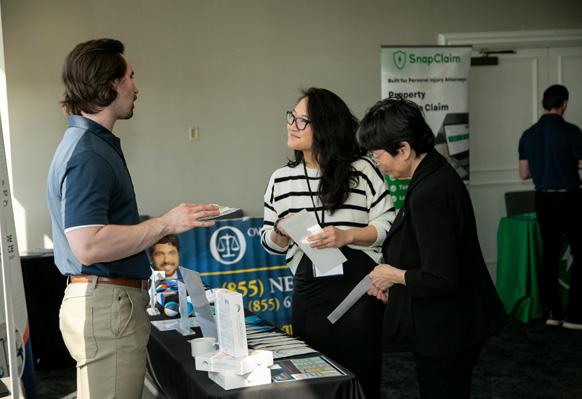
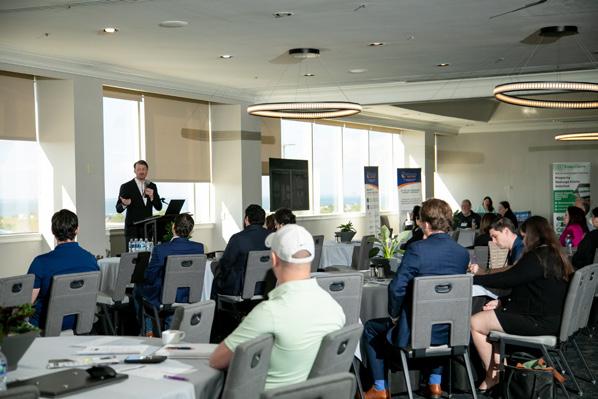
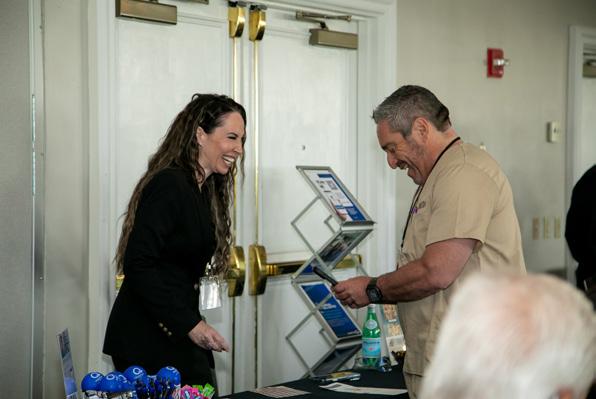
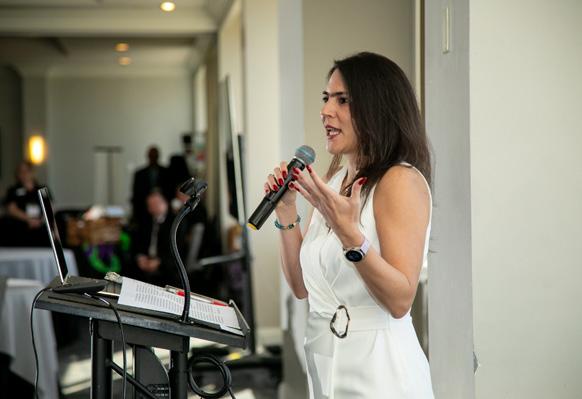
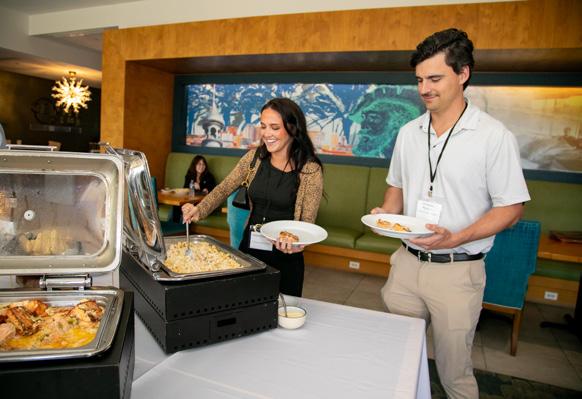
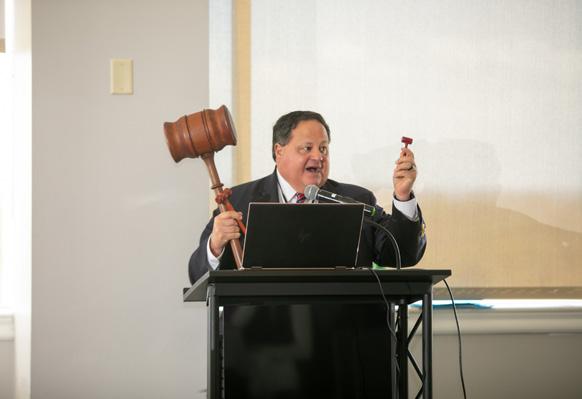
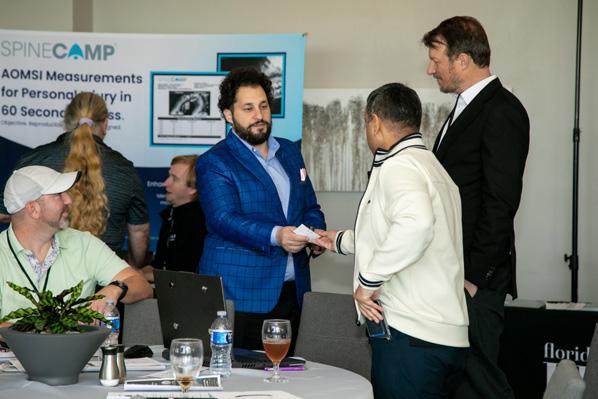
PICTURES FROM OUR PERSONAL INJURY SUMMIT IN TAMPA, MARCH 7 TH, 2026!
TORT REFORM SERIES ARTICLE #9 EVIDENCE IS NOT A NEW ELEMENT OF THE PRIMA FACIE CASE
Market your business to doctors & lawyers online
Shared with over 12,000 contacts in the Personal Injury industry regularly via e-mail
Showcase your expertise by sharing educational articles to be permanently featured on the PI magazine and website
Various advertising packages and payment options available to fit your marketing needs and budget
Reserve your spot in the next
Nearly 20 years of experience in billing for Chiropractors
CONSIDER US PART OF YOUR OWN TEAM!
PIP coverage verifications
Submission of Notice of Initiation
Billing done in your own system, so you always have access
EMC reports sent directly to the PIP adjuster to avoid cut-offs
PIP suit management and frequent updates to PIP attorneys
Staff support with handling PIP files
All claims are timely sent by certified mail - at no additional cost to you!
From the Editor
WELCOME TO THE PERSONAL INJURY MAGAZINETM !
Since the release of our previous issue, we hosted the seventh Personal Injury Summit® since we started in 2019, and first one ever in Tampa, FL. In this issue you we’ve included some of the pictures of that day, where you can see the energy of collaboration between the doctors and lawyers who joined from all over the state (and even some from Canada!). We also had a very diverse group of vendors from all over the country, many of whom have been our loyal supporters over the years and greatly contributed to making this event a success with their expert presentations, fun giveaways and support. We can’t thank everyone enough for being a part of it and are looking forward to our next stop in Ft. Lauderdale on Saturday, June 6th, 2026 at the prestigious Tower Club. We are preparing a great program that all medical and legal professionals in the PI industry will not want to miss!
We hope you enjoy this new issue, and as always will like to invite you to reach out to us with questions or topic suggestions for upcoming editions. We strive to keep the information we share relevant and valuable to help the Personal Injury professionals thrive, so we welcome all your feedback!
Sincerely yours,
Angely C. Maria EDITOR IN CHIEF
envelope-square amaria@ambgroupcorp.com
George A. David P.A.
We are the law firm that is not afraid of difficult cases. We handle all cases, including the more difficult cases such as where insurance companies deny claims because:
◦ $10,000.00 policy limits are exhausted
◦ Material misrepresentation
◦ Fraud
◦ Invalid reductions in medical bills
◦ Failure to appear to examinations (EUOs) under oath or “independent” medical examinations (IMEs)
We work with medical providers in EUO and IME requests from insurance companies. We also will co-counsel with personal injury attorneys in making a special appearance in scheduling and appearing to EUOs and IMEs. We are available to answer any PIP questions. Just call or email us.
George David represented insurance companies from 1991 up until 2001. Since 2001 George David has been representing medical providers in PIP suits. We know all the insurance companies’ tricks. We handle cases throughout Florida and have suits filed in the Tampa, Tallahassee and South Florida areas. Our main office is in Coral Gables.
MARCH
We thank all of our sponsors, speakers and guests for making this event a success!
CENTRE CLUB TAMPA
PERSONAL INJURY HEALTHCARE M&A:
INTEREST IS BUILDING, BUT LARGE TRANSACTIONS REMAIN ELUSIVE
By Ron Reed
The Personal Injury (PI) healthcare market continues to attract growing attention from institutional capital, yet the transaction environment tells a nuanced story. While interest is intensifying across multiple investor categories, meaningful large-scale M&A has been slow to materialize. The gap between expressed interest and closed transactions — particularly at the upper end of the deal-size spectrum — remains a defining characteristic of the market today.
The PI healthcare subsector, focused primarily on treating uninsured and under-insured auto accident victims, is driven by significant inflows of institutional capital, evolving state-by-state regulatory dynamics, and an emerging network of integrated, patient-centric providers delivering coordinated care. Despite this backdrop, Cascade's ongoing market dialogue reveals a clear bifurcation: robust engagement from a wide range of capital sources that has not yet translated into the volume or scale of M&A that the level of interest might suggest.
Among the most notable sources of growing engagement that Cascade has tracked is the debt and lending community. Debt institutions have become increasingly active in the PI healthcare space, drawn by the sector's predictable, long-duration cash flow profile and its lien-backed receivables structure. Yet despite this interest, they have largely remained on the sidelines of larger, transformative M&A transactions.
As sponsors, lenders, and operators become better educated on the sector's margin profile, care coordination model, and collections cycle, a broader second wave of platform and add-on activity is expected to emerge. For now, the PI healthcare market remains in an early "first wave," where scaled, quality assets can still command premium valuations.
The transaction evidence supports this view. Recent deal activity has been dominated by tuck-in acquisitions concentrated in the sub-$50 million range, as existing platforms consolidate regional coordinated care capabilities. Notable examples include acquisitions by Excelsia Injury Care, Physical Rehabilitation Network, and Clearway Pain Solutions — all regional add-ons rather than large platform-defining events.
Cascade anticipates this trend will continue. We expect a meaningful number of sub-$50 million transactions over the next 12–18 months as PE-backed
Debt institutions have become increasingly active in the PI healthcare space, drawn by the sector's predictable, long-duration cash flow profile and its lien-backed receivables structure.
platforms pursue regional tuck-ins to deepen care coordination, expand geographic footprints, and strengthen referral networks. These deals are strategically sound and executable in the current financing environment.
Larger transactions are a different story. Cascade is tracking a small but notable set of potential 2026 processes, including one anticipated PE-backed sellside and two scaled founder-owned platforms in the ~$20–30M EBITDA range. If launched, these could become early pricing-defining references for the sector — but they remain prospective, and until they close, the upper end of the market will stay quiet.
In sum, the PI healthcare M&A market reflects genuine but measured momentum. Interest from debt institutions and other capital sources is real and growing. Smaller, consolidating transactions will continue. But market participants should not mistake engagement for execution — larger deals remain rare, and the catalyst for a true step-change in large-transaction volume has yet to arrive. ■
Ron Reed MANAGING DIRECTOR, CASCADE PARTNERS
phone-alt 734-646-1061
info-circle cascade-partners.com
envelope ronreed@cascade-partners.com
Cascade Partners.
Personal Injury Merger & Acquisition Advisory.
Personal injury practices face challenges many M&A advisory firms are unfamiliar with.
We are.
Our team continuously researches and works with the complexities unique to your world — regulatory requirements, infrastructure integration, cash collections, referral relationships, provider retention, payor dynamics, and the demands of running multiple modalities.
You’re already one step ahead. Let’s talk.
Reed Managing Director Practice Lead
Personal Injury Practice Team
Thomas Director
President
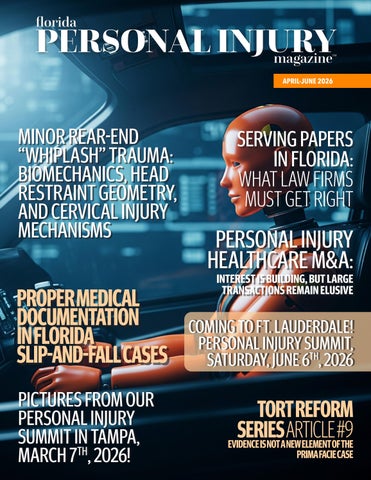
MINOR REAR-END “WHIPLASH” TRAUMA: BIOMECHANICS, HEAD RESTRAINT GEOMETRY, AND CERVICAL INJURY MECHANISMS
By Richard Hulse, DC
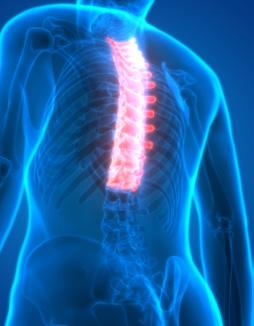
Rear-impact motor vehicle collisions, even at very low velocities, remain a major source of cervical soft-tissue injury. Despite the common misconception that minimal vehicle damage implies minimal injury potential, biomechanical research consistently demonstrates that the forces transmitted to the occupant—not the property damage—govern cervical loading. This review summarizes rear-impact occupant kinematics, the critical influence of head restraint geometry (especially backset), and research on out-of-position seating that helps explain why real-world occupants remain vulnerable even in modern vehicles.
The Critical Role of Head Restraint Geometry and Backset
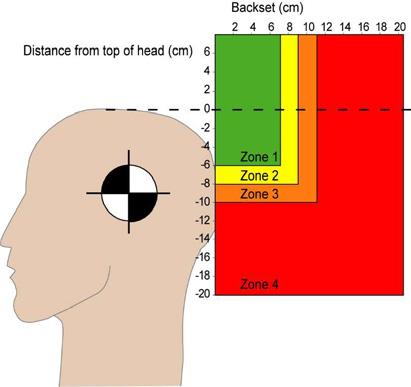
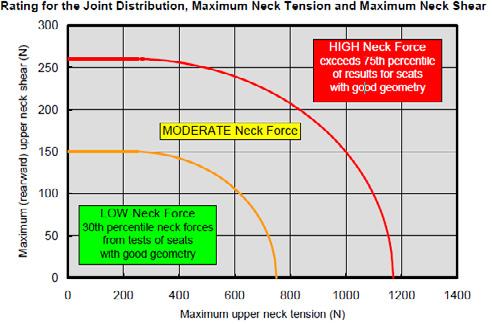
Head restraint geometry—particularly backset, the horizontal distance between the back of the head and the front of the headrest—has been repeatedly validated as an important determinants of cervical injury risk. As early as 1995, research published in Accident Reconstruction Journal identified that restraints with “good geometry” significantly reduce neck injury rates. Mertz and Patrick (1967) first quantified the relationship between backset and kinematic protection, noting a sharp decline in protective value at backset measurements greater than 2 inches. Epidemiological research expanded this finding: in an in-depth analysis of rearend injury cases, Olsson et al. (1990) found that neck symptom incidence increased when backset exceeded 4 inches. Modern crash test data support these human studies. Zuby et al. (1999), using the BioRID dummy, showed that reducing backset lowered NIC (Neck Injury Criterion) values—directly correlating geometry with predicted tissue loading. Jakobsson and Norin (2004), in a Volvo fleet evaluation of vehicles with and without WHIPS (Whiplash Protection System), likewise documented a significant reduction in AIS 1 (abbreviated injury scale) cervical injuries when pre-impact backset was under 4 inches. Importantly, these findings indicate that even advanced systems cannot fully compensate for excessive initial backset—a key reason why correct head restraint adjustment remains critical.
Biomechanical
Vulnerability
Low-speed impacts frequently produce injury because:
• Peak loads occur before protective musculature activates.
• Cervical ligaments and facet capsules are highly strain-sensitive.
• The spine experiences complex shear, tension, and coupled bending forces.
• Real-world posture often places the neck in a pre-stressed configuration.
• Stiff bumper and seat systems transmit high accelerations with little crush deformation to the vehicle.
These combined factors explain why rear-aligned collisions with low property damage can still produce clinically significant symptoms.
Clinical and Engineering Considerations
For injury prevention backset must be minimized and head restraints must be properly adjusted. From a clinical standpoint, biomechanical awareness is essential when evaluating patients whose symptoms appear disproportionate to vehicle damage. For clinicians understanding the real-world mechanics provides a more accurate basis for assessing injury. ■
References
1. Mertz HJ Jr, Patrick LM. Investigation of the kinematics and kinetics of whiplash. 11th Stapp Car Crash Conference, SAE 670919. Society of Automotive Engineers; 1967.
2. Olsson I, Bunketorp O, Carlsson G, et al. An in-depth study of neck injuries in rear-end collisions. International IRCOBI Conference; 1990:1–15.
3. Zuby DS, Vann DT, Lund AK, Morris CR. Crash test evaluation of whiplash injury risk. 43rd Stapp Car Crash Conference Proceedings 99SC17; 1999:267–278.
4. Jakobsson L, Norin H. AIS 1 neck injury reduction effect of WHIPS. International IRCOBI Conference; 2004:297–305
5. Accident Reconstruction Journal. Head restraints with good geometry can reduce neck injuries. Accid Reconstr J. 1995;7(5):53–54.
6. Keifer J, Layson J, Reckamp J. The Effects of Seated Position on Occupant Kinematics in Low-speed Rear-End Impacts. 2005.
7. Croft A. Crash testing and biomechanical analysis of actively braced 95th-percentile males (industry technical reports).
8. Insurance Institute for Highway Safety. (2019). Vehicle seat/head restraint evaluation protocol: Dynamic criteria (Version V). Insurance Institute for Highway Safety.
Richard Hulse, D.C.
BAUMAN CHIROPRACTIC
phone-alt (850) 785-8311
map-marker-alt 3613 US-231 Panama City, FL 32404
info-circle www.baumanchiropractic.net
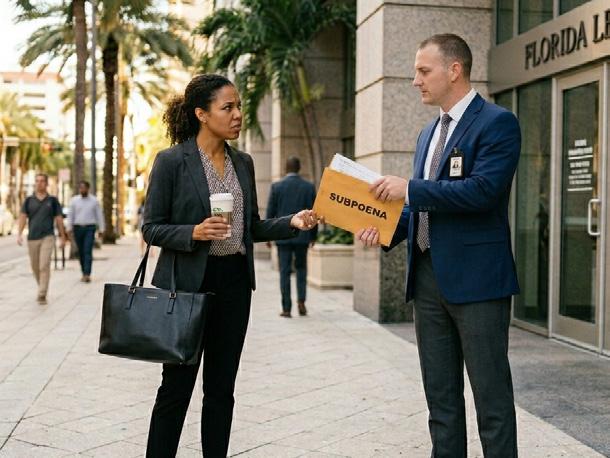
SERVING PAPERS IN FLORIDA: WHAT LAW FIRMS MUST GET RIGHT
By Amaro Hesen
Service of process is not simply administrative paperwork. It is the foundation of due process, and when handled incorrectly, even the strongest case can unravel before it ever reaches the merits. In Florida, the rules governing service are specific, technical, and strictly enforced. Understanding them is essential, but applying them correctly is what protects a case from delay, dismissal, or unnecessary motion practice.
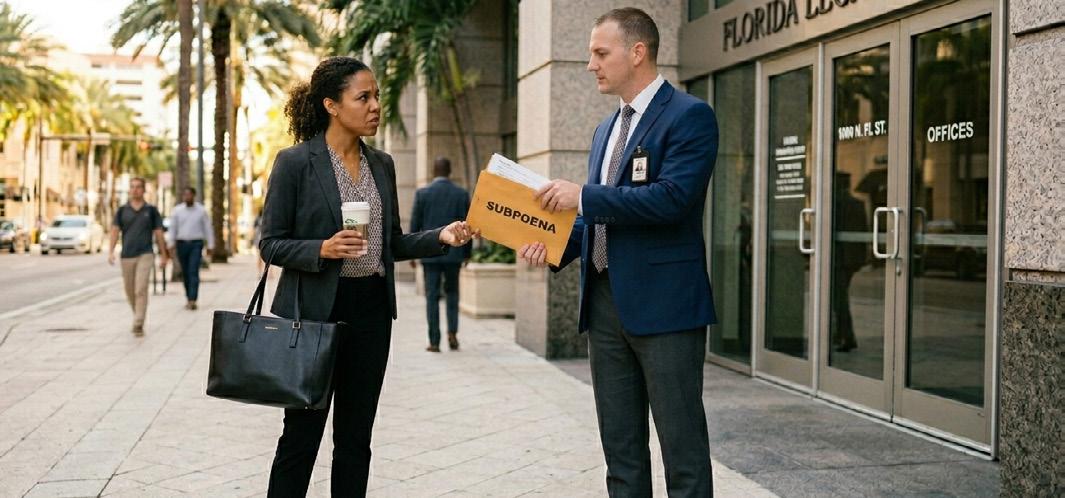
Florida law requires that service of process be carried out by a properly authorized individual. Process servers must be appointed by the sheriff in the county where service occurs or certified under Florida Statutes §§ 48.021 and 48.27. Using someone who lacks proper authorization can invalidate service entirely, even if the documents ultimately reach the intended recipient. In certain counties, including Miami-Dade and Broward, additional local registration requirements apply. Failing to account for these county-specific nuances can create avoidable vulnerabilities in otherwise sound litigation.
Timing is another critical consideration. Florida law generally prohibits service of process on Sundays unless a judge has specifically authorized it. While this rule may appear minor, violating it can result in motions to quash service and procedural setbacks. Ensuring compliance with statutory timing requirements helps preserve the integrity of service from the outset.
When personal service at a residence is not possible, Florida permits substituted service under defined conditions. The documents may be left with a person who is at least 15 years old and resides at the defendant’s usual place of abode, but the process server must explain the contents of the papers and properly document the interaction. Leaving documents with a neighbor, visitor, or non-resident occupant does not satisfy statutory requirements and can render service invalid. Careful documentation is essential to withstand later scrutiny.
Service on business entities presents its own challenges. Delivering documents to a front desk employee or receptionist is not necessarily sufficient. Florida statutes require service on a registered agent,
officer, manager, or another individual authorized to accept service, depending on the structure of the entity. Serving the wrong person within a corporation or limited liability company can result in void service, even if the business has actual notice of the lawsuit. Verifying the appropriate recipient before attempting service helps prevent costly re-service efforts.
Deadlines must also be carefully monitored. Under Florida Rule of Civil Procedure 1.070(j), a plaintiff generally has 120 days from filing to complete service. Failure to do so may lead to dismissal absent a showing of good cause. Beyond initial complaints, strict timing requirements govern subpoenas, notices of hearing, and discovery documents. Missing these procedural windows can delay proceedings and complicate case strategy.
Finally, proof of service must be precise and complete. An affidavit should clearly identify the individual served, specify the date, time, and location of service, and accurately describe the method used. Courts rely heavily on the sufficiency of this documentation. An incomplete or ambiguous affidavit can undermine valid service and invite unnecessary disputes.
In Florida litigation, proper service is more than a procedural step - it is a safeguard that protects both the case and the client. Careful attention to statutory requirements and thorough documentation ensures that service holds up under scrutiny and allows the focus to remain where it belongs: on the merits of the case. ■
Amaro Hesen, President PROFESSIONAL PROCESS SERVERS & INVESTIGATORS, INC.
This is the ninth article in a series that lights the way to success under Florida Tort Reform’s Section 768.0427. This article updates Article 7 and focuses on the conflicting trial court orders that address the question of whether subsection (2)(b) evidence is actually a new element of the prima facia case.
The conflicting orders center on the heart of the statute – Subsection (2)(b) – which states:
“Evidence offered to prove the amount necessary to satisfy unpaid charges for incurred medical treatment or services shall include, but is not limited to, evidence as provided in this paragraph.”
Four subsections within subsection (2)(b) describe the admissible evidence applicable to the various scenarios regarding the availability and use of commercial health insurance, Medicare, Medicaid, and sales of medical bills. The fifth subsection is a catchall for any other evidence tending to establish reasonableness.
The majority view is that the statute is evidentiary only and that the “shall” means that the court must admit the subsection (2)(b) evidence that is presented – not that the plaintiff must present all the subsection (2)(b) evidence. The minority view intermixes three slightly different concepts: (1) subsection (2)(b) evidence is a new element to the prima facie case – i.e. that Section 768.0427 is a “cause-of-action” statute, (2) presentation of the subsection (2)(b) evidence is a condition precedent to “boarding” the bills, and (3) the plaintiff bears the burden of introducing the subsection (2)(b) evidence. Because a plaintiff’s failure to comply with any of these types of minority orders would likely lead to a directed verdict, the minority view is best construed as “subsection (2)(b) evidence is a new element to the prima facie case.”
The majority orders present a plethora of reasons that each independently support the view. These include: (1) the statute is titled “admissibility of evidence” and all sections discuss admissibility and discovery, (2) the Legislature uses certain express language in “cause-of-action” statutes and did not do so here, (3) nothing in the statute alters the common law that the prima facie case is satisfied by a plaintiff’s own testimony that the bills are reasonable, (4) the minority view is unconstitutional because it is in
derogation of this common law and the statute does not meet the procedural requirements required to abrogate common law, (5) the “shall” followed by “but not limited to” means the statute is a directive of admissibility to the courts to admit what is introduced – not a list of all the things that a plaintiff must introduce, (6) if the subsection (2)(b)(5) catchall of “any evidence of reasonable amounts” does not satisfy the “shall,” then that subsection has no field of operation, (7) the minority view renders the statute absurd because it requires a plaintiff to present unobtainable evidence (what “health care coverage is obligated to pay”) and unknowable evidence (the amount at which future bills “could be satisfied”), and (8) the minority view renders the statute absurd because one of the items a plaintiff “shall” present is the subsection (2)(b)(5) catchall of “any evidence of reasonable amounts,” which means a plaintiff must present every conceivable piece of evidence both establishing and contradicting the reasonableness of the bill.
The minority orders provide little more reasoning than to say that a plaintiff always has the burden to establish reasonableness of bills and thus, the “shall” means that the plaintiff must submit all the subsection (2)(b) evidence in order to meet that burden.
As of March 13, 2026, the “score” is 53 to 33 in favor of the majority view that the statute is merely evidentiary and does not create a new element to the prima facia case. Fortunately, the majority is trending – in 2026, the “score” is 14-3. In your motions in limine, make all the arguments discussed in the majority orders summarized above. ■
Aaron Proulx, Esq. THE DOCTOR’S LAWYER, PLLC. phone-alt (813) 486-7321
PROPER MEDICAL DOCUMENTATION IN FLORIDA SLIP-AND-FALL CASES
By Christopher M. Tuccitto, Esq.
In Florida slip-and-fall litigation, proper medical documentation is the set of medical records and related proof that reliably connects the fall to the claimed injuries and supports the reasonableness and necessity of the medical care for which damages are sought.
Florida law requires that a causal relationship be established by reasonable medical probability, not mere possibility. That causal relationship may be established by medical testimony or, in some circumstances, lay testimony. However, lay testimony is not sufficient to establish causation for conditions that are not readily observable or discoverable without medical examination. Consistent with that principle, lay testimony can be corroborative where symptoms are within the claimant’s sensory experience, but not for non-obvious conditions.
In a slip-and-fall case, medical documentation is proper when it is sufficient to prove the fall caused the complained-of condition to a reasonable medical probability and substantiates the medical expenses as medically necessary and reasonable, within Florida’s evidentiary and damages framework.
Since Florida requires causation to be shown to a reasonable medical probability, proper documentation should include records that allow a provider to opine (or allow the factfinder to infer, where permitted) that the fall caused the injury. Where the condition is not readily observable without medical examination (for example, internal pathology), Florida law indicates lay testimony alone is insufficient, so proper documentation should include medical evaluation and medical causation opinions grounded in examination and treatment records. Lay testimony is not enough for non-obvious conditions, reinforcing the need for medical documentation that captures the objective findings and clinical assessment.
At the same time, Florida authority recognizes that medical testimony is not always required if the inference of causation is warranted- such as a symptom-free person before the incident who experiences disability afterward. Practically, that means proper documentation can sometimes be simpler (e.g., contemporaneous treatment notes and a clear timeline), but it should still be organized to show the before-and-after change that supports the inference.
Proper medical documentation should also support that the billed care was reasonable and medically necessary and that it relates to the injuries at issue. Florida case law indicates that, in some circumstances, a plaintiff’s own testimony can establish the reasonableness and necessity of medical bills, especially where the plaintiff provides a detailed description of treatment procedures that clearly relates the therapy to the incident. Accordingly, proper documentation often includes itemized bills and treatment records that the plaintiff can accurately describe and connect to the injury mechanism and symptoms.
In addition, Florida’s statutory framework contemplates evidence of reasonable amounts billed for medically necessary treatment, and limits recoverable medical damages to amounts paid, amounts due and owing, and reasonable and necessary future treatment. Therefore, proper documentation should include billing statements showing amounts billed, proof of amounts paid (if any), account statements showing what remains due and owing, and records supporting any claim for future medically necessary care.
In conclusion, proper medical documentation in Florida slip-and-fall cases is documentation that supports causation to a reasonable medical probability and substantiates medical expenses as reasonable and medically necessary, consistent with Florida case law and statutory limits. Depending on the nature of the condition, Florida law may require medical testimony and objective medical records, while in some circumstances detailed lay testimony and clear treatment documentation may be sufficient to support the reasonableness and necessity of medical bills. ■
M. Tuccitto,Esq.
phone-alt (754) 263-4252
envelope chris@fladvocates.com
info-circle www.fladvocates.com
FROM SUMMONS TO SUBPOENAS COMPLETE PROCESS SERVING WITHOUT THE GUESSWORK
When deadlines are tight and cases can’t wait, law firms depend on reliable partners to move matters forward. For more than 30 years, Professional Process Servers & Invetigators, Inc.. (Professional Process Servers & Invetigators, Inc..) has earned that trust. Founded in 1994 and based in Fort Lauderdale, Florida, Professional Process Servers & Invetigators, Inc.. has grown into one of the nation’s leading legal support service agencies, with over 2,500 process servers nationwide and a record of accuracy, speed, and professionalism.
A Full Legal Support Agency
Professional Process Servers & Invetigators, Inc.. specializes in the service of process, private investigations, and background checks. The team handles a wide range of legal documents—including summons and complaints, subpoenas, eviction notices, family law documents, notices of hearing, and deposition notices. By offering multiple services under one roof—skip tracing, surveillance, subpoena preparation—Professional Process Servers & Invetigators, Inc.. makes it easy for firms to keep cases on track with a single, trusted provider.
Why Law Firms Choose Professional Process Servers & Invetigators, Inc..
Attorneys and paralegals can’t afford uncertainty. Professional Process Servers & Invetigators, Inc.. is designed to eliminate it with:
• Unlimited Attempts, One Price – Never worry about hidden fees or extra invoices.
• High-Volume Capacity – Built to handle large caseloads for busy firms.
• Competitive Rates and Custom Plans for HighVolume Clients.
• Rush Services in All 67 Florida Counties – When “urgent” means hours, not days.
• Dedicated Support Team – Real people, ready to answer questions and provide updates.
• Secure Online Client Portal – 24/7 live status updates ensure clients are never left guessing.
Proof That Experience Matters
With over 31 years of expertise, Professional Process Servers & Invetigators, Inc.. brings unmatched knowledge and dependability to every case. The agency has served more than 500 satisfied clients, supported by a nationwide network of 2,500+ servers. Every affidavit is court-ready—filed fast, filed right—and every update is transparent. It’s this combination of scale, experience, and precision that has made Professional Process Servers & Invetigators, Inc.. a trusted name in the legal industry.
Trusted by the Legal Community
What sets Professional Process Servers & Invetigators, Inc.. apart is not only its network and technology, but also its dedication to accuracy and client confidence. Firms know that when Professional Process Servers & Invetigators, Inc.. is on the job, service will be professional, timely, and handled with the care that legal matters demand.
Partner With Professional Process Servers & Invetigators, Inc.. Today
When your firm needs a reliable partner for process serving, investigations, or complete legal support, Professional Process Servers & Invetigators, Inc.. is ready. Call (844) 722-8835 or visit proprocessservers. com for a free quote—and see why firms have trusted Professional Process Servers & Invetigators, Inc.. since 1994.
PROFESSIONAL PROCESS SERVERS & INVESTIGATORS, INC.