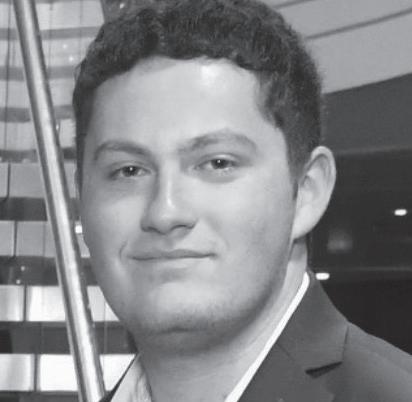
Announcement of UF presidential finalist stirs online controversy
GOVERNMENT AND HIGHER EDUCATION OFFICIALS
CRITIQUED THE CANDIDATE AND SEARCH PROCESS
By Swasthi Maharaj & Sofia Meyers Alligator Staff Writers
UF’s Presidential Search Advisory Committee unanimously named Stuart R. Bell the sole finalist for UF’s 14th president May 18.
Despite Bell’s experience in academia, his selection created a flurry of controversy online questioning the finalist’s stance on DEI and the transparency of the search.
Bell’s history
Until last July, Bell served as
the 29th president of the University of Alabama, where he founded the Center for Advanced Vehicle Technologies while he served as the head of the UA Department of Mechanical Engineering in the late ‘90s. Before his decade-long tenure at UA, he served as provost and professor of engineering at Louisiana State University and as dean of the School of Engineering and professor of mechanical engineering at the University of Kansas.
According to a UA press release, the university surpassed 40,000 students for the first time and achieved record retention and graduation rates during Bell’s presidency. UA also achieved Carnegie R1 research status un-
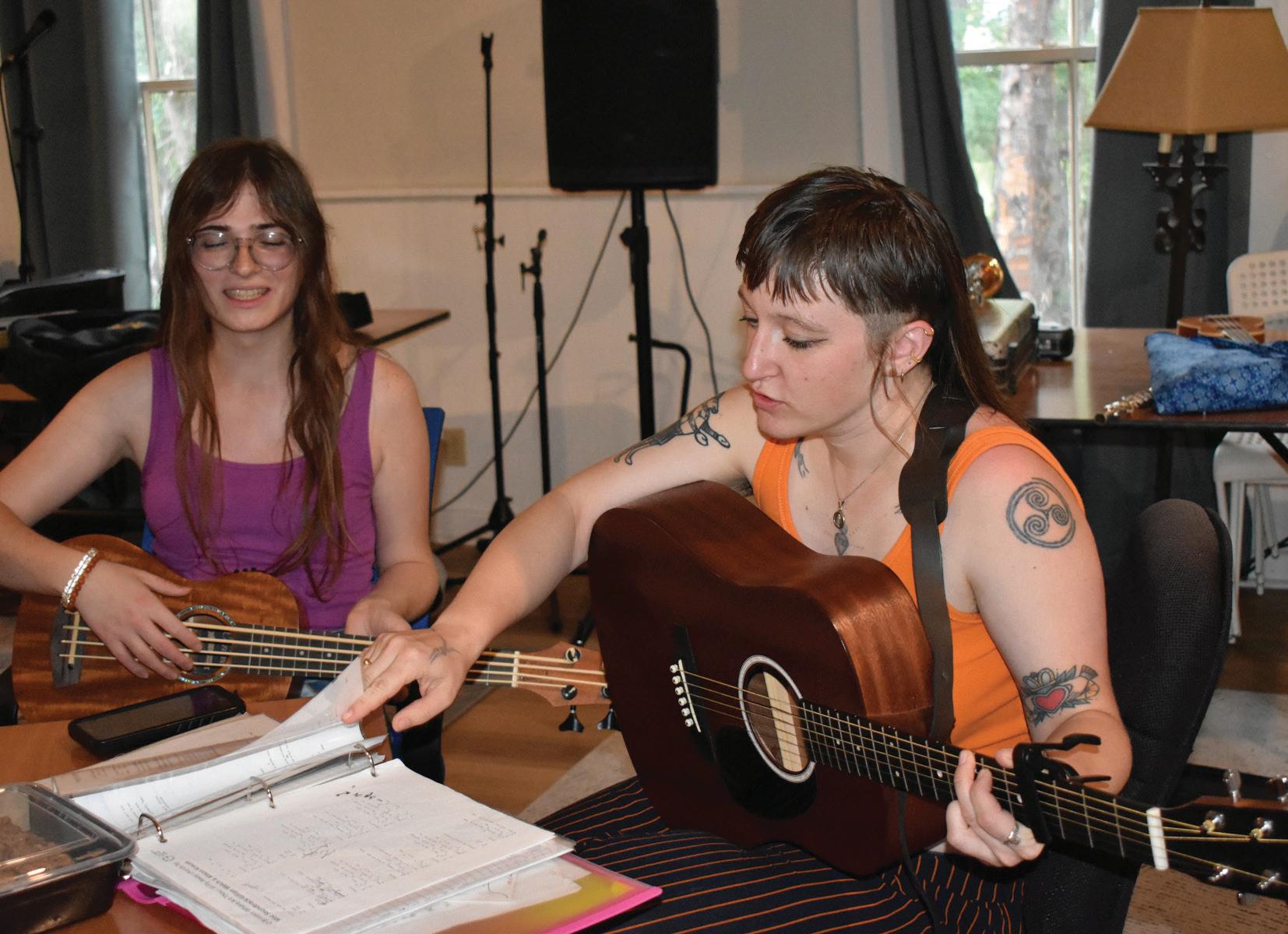
Helena Boehling flips through sheet music at
Friday, May 22,
in Gainesville, Fla. Find this story in TheAvenueon pg. 7. SEE UF PRESIDENT, PAGE 4
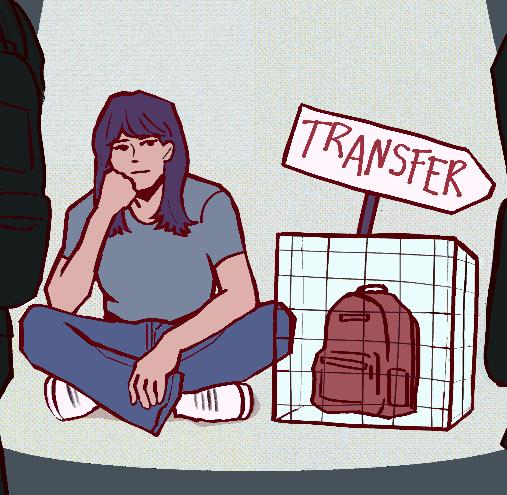
UF continues pause on out-of-state, international transfers
The pause, which was intended to last a week, has lasted over two months
By Swasthi Maharaj Alligator Staff Writer
Over two months after UF temporarily halted transfer admissions for out-of-state and international students, the restriction remains in place.
UF initially paused transfer admissions for out-of-state and international students in February, and labeled it a temporary measure administrators deemed necessary to “better balance UF’s resident and nonresident populations.” The restriction, outlined in emails sent by Provost Joe Glover and
SPORTS/SPECIAL/CUTOUT
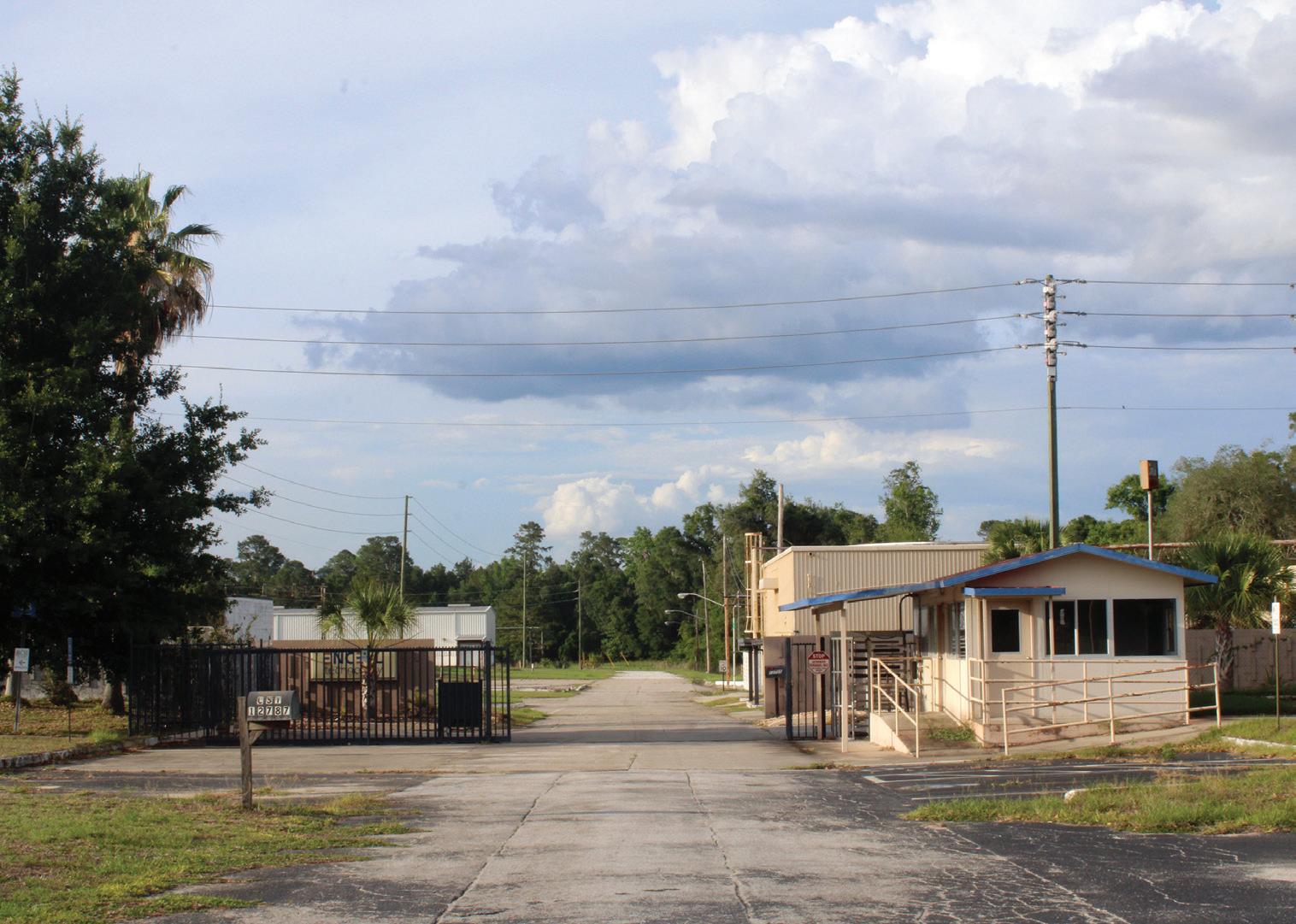
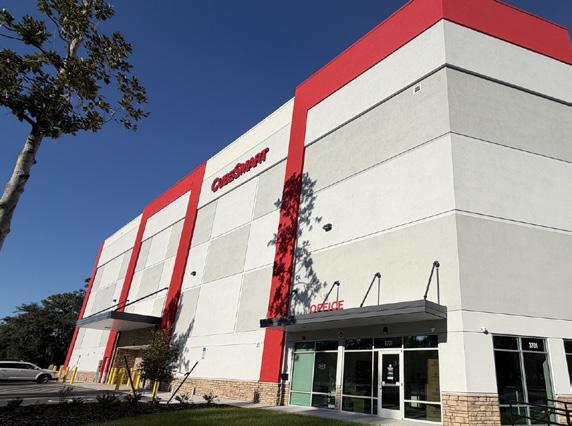
Data center
Story description finish with comma, pg#
Real estate listing spurs concern in Alachua. Read more on pg. 3.
Vice President of Enrollment Management Mary Parker to college deans and assistant deans, was expected to last one week.
The pause came amid broader state-level efforts to limit nonresident enrollment in Florida’s public universities.
In February, the House Budget Committee approved a proposal by Rep. Jennifer Kincart Johnson, R-Lakeland, that would require Florida’s state universities to reserve 95% of new fall enrollments for in-state students.
The proposal would reduce the current allowance of out-of-state students from 10% to 5% in incoming cohorts.
UF enrolled 2,124 transfer students in Fall 2024 from a pool of 5,870 applicants, according to the university’s most recent Common Data Set. Among all first-year students, nearly two in 10 came from outside Florida.
The policy also carries financial implications for the university. In the 2024-25 academic year, out-of-state students paid over $22,000 more annually in tuition and fees than in-state students.
UF didn’t respond in time to multiple requests for comment from The Alligator.
For students, the policy shift raised concerns about access and institutional identity.
Sulei Mejia, a 19-year-old public health
junior and director of transfer affairs for UF’s Student Government Cabinet, transferred to UF a year ago. Mejia said she understands the pressure surrounding UF admissions for Florida residents, but she still believes the university shouldn’t close the door on qualified applicants from outside the state.
“I feel like UF is such a diverse place,” Mejia said. “It would be wrong to not be able to get more culture and more diversity from these other parts of the world where students are able to transfer in from.”
Transferring to UF transformed Mejia’s college experience, she said. Through Student Government and cultural organiza-
SEE TRANSFERS, PAGE 4
AIDS assistance
Florida temporarily resumes funding after abrupt cut, pg. 5
The Avenue: Music
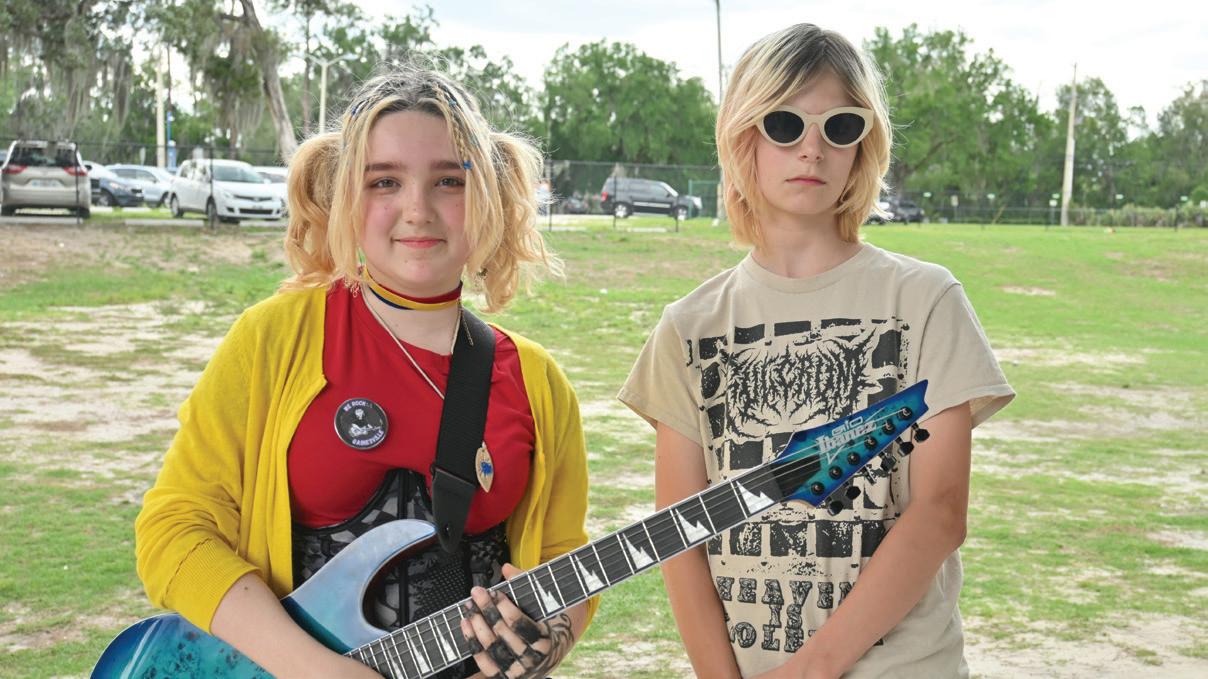
Meet punk preteen duo Youth Ambulance, pg. 6
Grace Sands // Alligator Staff
Nightjar Gallery & Studios,
2026,
Today’s Weather
Santa Fe College adds new radiation certificate program
STUDIES CONTINUE TO SHOW A SHORTAGE OF HEALTHCARE PROFESSIONALS
By Tess Lippincott Alligator Staff Writer
Florida’s healthcare workforce is projected to be nearly 60,000 workers short by 2035, according to a 2021 Florida Hospital Association analysis. To combat this, the state has started to invest more in education programs, like healthcare certificate programs.
Santa Fe College introduced a Radiation Therapy Specialist Program earlier this month. It’s a hands-on program relating to cancer treatment and oncology care.
The program will welcome its first students this Fall. Eligible students will have already completed an associate’s degree in either nuclear medicine technology or radiography.
The certificate enables graduates to look for employment in hospitals, cancer treatment centers and specialized oncology clinics, according to the program overview.
The program hopes to fill a local and national need as vacancy rates continue to increase in the field, said Matthew Allen, the department chair of Allied Health programs at Santa Fe College.
A study by the Radiological Society of North America found the va-
cancy rate of radiology technicians more than doubled between 2021 and 2024.
Santa Fe’s program hopes to help fill that gap, Allen said, especially in cancer care.
“Most people know somebody that’s been impacted by cancer,” Allen said. “I feel like it hits that personal piece with most people as well.”
Another factor of the increased demand is the growth of advanced medical imaging, said Dr. John Arrington, a radiologist at Moffitt Cancer Center in Tampa.
Radiologic technology has gotten faster and more involved, so more patients can undergo scans and learn more from them. However, there aren’t enough qualified radiologists to decipher them.
“It’s really just a numbers game.” Arrington said. “There’s just simply not enough radiologists.”
Expanding the number of radiology programs and residency programs after medical school would help, he said.
There aren’t any specialization programs in Gainesville or surrounding areas that are available to Santa Fe College students, Allen said. The program will open more career opportunities for the students and serve the community at the same time.
Four radiation therapists at UF Health will teach the program.
Mike Springborn, a radiation therapist at UF Shands, said five peo-
ple at his facility alone have retired, and the facility has struggled to fill those spots.
The field needs radiologists now more than ever, which is different from previous years of waiting periods and hoping for a job, Springborn said.
He said he hopes the program will encourage students to stay in the area and work locally in Gainesville to address the ongoing need.
Mallory Southwell, a radiation therapist at UF Shands, said radiation therapy allows more time with the patient than other fields, like nuclear medicine.
“You get to know your patients over six weeks and develop relationships,” she said. ”You get to be there for them during the process … and give them their best experience.”
The field remains largely unknown, Connie Gladden, a UF Health radiation therapist, said. Gladden attended Santa Fe College and didn’t know about the program until the college’s radiology director advised her to try the field.
The professors said they’re looking forward to the Fall, when they’ll host students in their own clinical sites for hands-on learning.
Registration for the program will remain open until July 1.
The Alligator strives to be accurate and clear in its news reports and editorials. If you find an error, please call our newsroom at 352-376-4458 or email editor@alligator.org
Anenaa Kumar // Alligator Staff
need for
providers in Florida.
Rumored data center packs public meetings in Alachua
CITY AND COUNTY OFFICIALS DISPUTED JURISDICTION WHILE DENYING ANY ACTIVE PROPOSAL
By Julianna Bendeck Alligator Staff Writer
When Sherri McCormick saw a real estate listing advertising land for a potential data center, she said she wasn’t shocked.
“I just didn’t expect it to be a few miles down the road,” she said.
A growing number of large-scale facilities are appearing in rural areas nationwide. As of this year, 67% of planned data centers are in rural areas, according to a Pew Research Center study.
For residents like McCormick, speculation that one of the facilities would appear in Alachua never felt far-fetched. Whispers only intensified after a listing surfaced online advertising rural land as a potential site for large-scale technological development.
Though the listing now markets the 104acre property as a manufacturing site, it previously labeled the land as a high-megawatt data center location — wording that remains visible in the website’s URL.
The site was formerly home to an Energizer battery factory.
The area is only a four-minute drive from 63-year-old McCormick’s house. She said she worries about the potential for excessive water use.
Research shows large data centers can consume up to 5 million gallons of water per day, raising concerns about strain on local resources.
McCormick was among the nearly 60 residents who packed the Turkey Creek Clubhouse in a neighborhood meeting May 14, seeking updates and ways to respond to the rumored project. McCormick led the meeting alongside Alachua City Commissioner Jacob Fletcher.
Throughout the meeting, residents spoke openly, expressing their concerns over how a data center would impact utility bills and the environment.
Data centers are shown to increase electricity bills because of their high resource
demand. Some states may see rates increase by more than half by 2030, according to a study published in peer-reviewed journal Environmental Research Letters.
Loretta Shane, a 75-year-old Turkey Creek resident who helps manage the clubhouse, first learned of the listing when community members reserved a room for the neighborhood meeting.
Days later, after researching the site and spreading word through the homeowners’ association, she watched the room fill with concerned neighbors.
“We didn’t know about this until Saturday,” she said at the meeting held just five days later. “So it was impressive to see a room full of people.”
Shane said she’s concerned about the potentially constant noise a nearby data center would produce. People living near existing data centers in other areas have reported
hearing a continuous hum from cooling systems operating day and night.
At the neighborhood meeting, Fletcher encouraged residents to attend the Alachua City Commission meeting on May 18 and workshop the evening of May 19. The workshop focused on evaluating Alachua’s comprehensive city plan, discussing the future of development in the area.
May 18 was originally scheduled as a joint city-county meeting, but county officials were unable to attend, leaving residents only able to address the city commission. During public comment, at least 15 people spoke against the possibility of a data center in Alachua.
Dahlia White, a 64-year-old customer service worker, was among those who took the podium at the meeting. She said the marketing of the land for a data center was especially concerning because the city re-
Riana Morales // Alligator
The site of a proposed data center on US-441, Saturday, May 23, 2026, in Gainesville, Fla.
mains in a drought.
“I just don’t think it’s a good thing for the community,” she said before the meeting. “I’m not for it, and I know several people that I speak to — they’re not wanting the data center.”
It’s unclear whether the rumored site is governed by the city or county commission. City officials have said the property falls under county jurisdiction, while county officials have pointed ownership to the city.
According to Alachua County Property Appraiser, the rumored site is listed in the city of Alachua.
However, City Manager Rodolfo Valladares said the parcel is located outside Alachua city limits at the commission meeting.
Meanwhile, Alachua County Commissioner Anna Prizzia wrote in an email May 19 that the county hasn’t approved any data center projects, and the property is under the city of Alachua’s jurisdiction.
Both the city and county said they want to preemptively strengthen regulations on data centers to make Alachua and the county less appealing to developers.
These desires have met pushback from a 2025 law that limits how local governments can regulate substantial repairs and redevelopment after storms.
The law prohibits local governments from adopting “more restrictive or burdensome” land development regulations or comprehensive plan changes after a hurricane emergency. It currently prevents local governments from making the changes until October 2027 due to 2024 storms like Hurricane Milton.
The law adds restrictions each time there is a hurricane within a 100-mile radius of the county.
Fletcher said the law leaves him and other city commissioners with little room to respond to community concerns.
“It does not support the residents of any place in Florida,” Fletcher said. “There are good things in Senate Bill 180 regarding emergency management, but this specific portion is way too broad, and it’s detrimental to small communities.”
Read the rest online at alligator.org. jbendeck@alligator.org
Innovation Academy turns Summer semester into its centerpiece
The program’s unconventional schedule aims to foster a collaborative environment focused on creativity, problem solving and career readiness
By Hailey Kon Alligator Staff Writer
While most UF students leave for the summer, students in UF’s Innovation Academy are just getting started.
Summer is anything but a slow season for innovation students. It’s one of the program’s primary semesters, focused on hands-on projects, design challenges and collaborative coursework intended to prepare students for careers built around entrepreneurship and problem solving.
Through the IA’s unique SpringSummer calendar, students earn an exclusive minor in innovation while taking courses focused on prototyping and leadership.
Classes begin in the Spring and continue through the Summer. Firstyear students don’t take on-campus courses in the Fall. Instead, students can study abroad with IA, pursue internships, travel or use the semester to prepare for the upcoming Spring
term.
After their first year, students have the option to take online courses in the Fall.
According to Ken Swan, IA’s assistant director, the schedule often creates misconceptions among students outside the program who assume IA Summers are quieter or less intense than the Spring.
“What’s happening in summer here is a full UF semester,” Swan said. “It’s buzzing in exactly the same way that a full UF semester for Fall or Spring is for anybody who’s not in the IA program.”
Swan described the innovation minor as very different from other minors UF offers. While minor courses are often supplementary to a student’s major, he said, the innovation minor is a primary focus for IA freshmen.
“If you’re in this program, the very first thing you do for your first year is incredibly intensive and innovation focused,” Swan said.
This Summer, most of that activity is centered around Catalyst. The academy’s summer showcase challenges students to apply innovative solutions to problems posed by community partners, businesses and government agencies.
Amy Freeman, an IA academic adviser and faculty member, described the course leading up to Catalyst as an intensive introduction to problem solving and design thinking. This year, students are working with the Department of Veterans Affairs to ideate solutions for reducing falls among veterans in inpatient settings.
“Students will start brainstorming, prototyping, iterating on what solutions — once they find a good problem — can come about,” Freeman said. “And then at the end … Catalyst is an equivalent to Shark Tank.”
For many students, Catalyst becomes one of the defining moments of their freshman year.
Allison Tivvis, a 21-year-old computer science senior and IA office assistant, said the five-week course leading up to Catalyst pushes students to fully immerse themselves into a single project.
“You basically just make this problem like your baby, and you nurture it,” Tivvis said. “You do all the things, the marketing, the finances. You create it, and then you present it at Catalyst.”
Tivvis’ team worked on a project for Citibank Tampa during her freshman year. Her group designed a volunteer initiative where employees could earn rewards and recognition for community involvement.
At the end of the term, students present their projects at Catalyst, where judges and audience members vote on their favorite ideas. Top teams receive awards for their concepts and prototypes.
Students and faculty say IA’s close-knit community is one of the program’s defining characteristics. While the UF student body exceeds over 60,000 students, IA classes are capped at 25, creating a small college experience within a major research university.
“I’ve come to enjoy the Summers more than the Falls,” Tivvis said. “I make friends easier because I’m seeing the same people.”
Smaller Summer classes helped her build relationships with classmates, professors and campus staff in ways she didn’t expect when she first arrived on campus, she said.
“All IA students are very adaptable people, and if you suggest a better alternative, it doesn’t mean they’ll always take it, but they’ll at least consider it,” she said.
Kieran Boodram, a 21-year-old business management senior, said IA experiences like Catalyst have allowed students to learn skills applicable to any major or field.
“I don’t care what major you are, whether it’s your business, you’re in the arts, you’re in STEM — everyone needs people skills,” Boodram said. “I would say the biggest takeaway students can take are just those people skills.”
IA’s main goal, he said, is to help students reach their next step, regardless of what it looks like.
hkon@alligator.org
Out-of-state, international admissions pause continues
TRANSFERS, from pg. 1
tions, she found leadership opportunities, friendships and access to experiences like study abroad, which she said wouldn’t otherwise have been possible.
Julie Habboush, a 20-year-old botany junior, transferred to UF last fall from Santa Fe College through UF’s Going Gator Program. It guarantees acceptance for students pursuing Associate in Arts degrees at several Florida community colleges.
Under Florida’s statewide articulation agreement, students graduating with Associate of Arts degrees from Florida public colleges receive priority over out-of-state applicants.
Habboush said many of her international friends at Santa Fe had hoped to transfer to UF before the university paused nonresident transfer admissions.
“You did all that work to achieve your dream,” she said, “and it’s just out of your hands because of what UF and the state issued.”
Habboush said she didn’t understand why UF wanted to make it more difficult for out-of-state and international students to transfer. With UF increasingly being viewed as a “New Ivy” institution, she said the university should aim for more diversity.
The pause, combined with UF’s consideration of increasing tuition for out-of-state and international students, didn’t make sense to Habboush.
UF’s Board of Trustees will consider a proposal to increase out-of-
UF presidential finalist draws online controversy
UF PRESIDENT, from pg. 1
der his leadership, indicating high research spending and doctorate production.
Bell is expected to be considered by UF’s Board of Trustees June 11. If approved, he’ll await final confirmation by the Florida Board of Governors.
If approved by both boards, Bell would replace Interim President Donald Landry, who was selected last summer after Santa J. Ono, the University of Michigan’s thenpresident, was rejected by the Florida Board of Governors.
Bell’s academic career is rooted in engineering and scientific research. A graduate of Texas A&M University, he earned a bachelor’s degree in nuclear engineering before completing his master’s and doctoral degrees in mechanical engineering.
Bell also served on the Executive Committee of the Southeastern Conference from 2021 to 2025, serving as its president from 2023 to 2025. During this time, Bell oversaw a period of conference expansion and name, image and likeness (NIL) reform.
Rahul Patel, the vice chair of the Presidential Search Advisory Committee, said in a UF press release that Bell’s academic and athletic success make him a perfect fit for the university.
“We believe Dr. Bell is uniquely positioned to help UF continue its trajectory
toward becoming consistently recognized among the top three public universities in America,” Patel said.
The UF Presidential Search Committee began its search last year following months of interim leadership at the university. Bell, if approved, would be UF’s first non-interim president since Ben Sasse stepped down in 2024, citing concerns about his wife’s health.
Within hours of his selection, Bell faced both support and criticism from politicians and higher education specialists.
Gov. Ron DeSantis wrote on X that Bell has his full support.
“I have no doubt that he will help UF reach new heights during his tenure in Gainesville,” he wrote.
Bell and DEI
Former Florida Rep. Anthony Sabatini, who is currently running for U.S. Congress, took to X and Instagram to share his position on Bell’s career trajectory and diversity, equity and inclusion beliefs.
“Major red flag here,” he wrote. “UF’s Board of Trustees must pump the brakes on this ASAP.”
Bell opened UA’s Division of DEI in 2017. However, he ordered it shut down in 2024 to comply with legislation banning support of DEI, replacing it with the Division of Opportunities, Connections and Success.
The criticism of Bell’s DEI stance sports similarities to criticism of Ono. The former University of Michigan president was rejected by Florida’s Board of Governors in a 10-6 vote largely because of his past support for DEI. Ono closed DEI offices during his presidency at Michigan, but the board wasn’t convinced.
UF called DEI “discriminatory by design” in its May 22 response to an X post by Linda McMahon, the U.S. Secretary of Education. McMahon’s post expressed the need for UF’s next president to pursue reforms against DEI.
UF’s post also highlighted the university’s past efforts to eliminate DEI. Last December, the Board of Trustees introduced its institutional neutrality policy, which prevents UF leadership from discussing material related to political, ideological, moral or religious beliefs.
In February 2025, the university also cut all DEI activities funded by federal grants.
“Dr. Stuart Bell stands with Secretary McMahon, the board, and the people of Florida on this,” UF wrote in its X post. “He is ready to lead UF forward as a university defined by merit, rigor, and the pursuit of truth.”
Nontransparency allegations in the search
Florida Sen. Rick Scott posted a letter on X addressed to Chancellor Ray Rodrigues in
state and international student fees by 15% at its next meeting on June 11. If approved, UF will have increased tuition for out-of-state students by 25% in two years, after a 10% increase in 2025.
“I think it’s really stupid,” Habboush said of the proposed tuition raise.
In the 2024-25 academic year, international students made up 921 of 35,629 undergraduate students.
Marta Esteves de Melo, a 22-year-old business student at Santa Fe, came to the U.S. from Lisbon with hopes of studying at UF. Like many Santa Fe students, she chose the college because of its reputation as one of UF’s strongest transfer pipelines.
Esteves de Melo has other international friends who applied to UF this year as transfers and got rejected, she said, despite meeting all the prerequisites. Some even signed apartment leases near UF, believing they would get in, she said.
“It’s just a little bit heartbreaking seeing these students getting their rejection letters," she said.
Even though she still plans on transferring next year, Esteves de Melo said watching other out-ofstate and international students face rejections this cycle has increased uncertainty.
“Right now, I’m a little bit scared,” she said, “I know I’m not the only one that my dream is to go to UF.”
@s_maharaj1611 smaharaj@alligator.org
which he brought up his concerns about the presidential search’s lack of transparency and feedback.
Scott also expressed concerns with UF’s contracting process and finances. He questioned how UF’s spending — particularly concerning Landry’s $2 million severance pay and James Uthmeier’s $100,000 law professor salary — helps students receive high-paying jobs post-graduation.
In a May 22 X post, UF denied allegations it had violated Florida law or lacked transparency in picking a presidential finalist.
UF said the search requires confidentiality so qualified candidates participate.
“Florida’s process reflects a deliberate policy choice by the Legislature and the Board of Governors to ensure universities can attract the strongest possible candidates while still providing robust public scrutiny of finalists,” the university wrote.
According to the post, as UF’s search enters its second, public phase, students, faculty and staff may participate in public forums, where they can ask a variety of questions.
Bell will visit Gainesville June 3, and the university will hold forums at 1 p.m. at Emerson Hall. Students, faculty and staff are encouraged to join.
@s_maharaj1611 smaharaj@alligator.org
@SofiaMeyer84496 smeyers@alligator.org
Daniela Ortiz // Alligator Staff
UF’s extended ban on out-of-state and international transfer students has left some students facing uncertainty.
Florida restored HIV assistance funding after an abrupt cut. Patients worry it’s only temporary
PATIENTS
AND PROVIDERS SAID TEMPORARY RELIEF HASN’T RESOLVED CONCERNS ABOUT LONGTERM
ACCESS TO CARE
By Swasthi Maharaj Alligator Staff Writer
Over 132,000 people in Florida live with HIV, according to 2024 state health data. In Alachua County, approximately 370 of every 100,000 residents live with the virus.
This spring, many of them were forced to ask whether they would still be able to afford the medication needed to suppress it.
Earlier this year, the state abruptly scaled back parts of Florida’s AIDS Drug Assistance Program, also known as ADAP. The program helps low-income Floridians living with HIV pay for medication and health insurance. The changes would have reduced aimed eligibility to only cover patients around the federal poverty level. Previously, patients with incomes up to four times the poverty guideline could qualify. The program would have also eliminated access to insurance premiums for many enrollees starting March 1, leaving people who previously qualified for the program without assistance.
After pressure and protests led by the AIDS Healthcare Foundation, lawmakers temporarily reversed course in March. Gov. Ron DeSantis signed emergency legislation restoring roughly $31 million in funding, reinstating eligibility through June 30 for over 12,000 Floridians who lost access during the cuts. Still, the emergency funding doesn’t fully restore the program’s previous structure. Insurance premium access remains limited, and some medication restrictions are in place.
In an email statement to The
Alligator, the Florida Department of Health wrote the changes were driven by rising healthcare costs and insufficient federal funding.
“Due to the rising health care insurance premiums nationwide and lack of additional Ryan White Grant funding, adjustments had to be made to ensure resources to the greatest number of individuals within the Department’s funding constraints,” the department wrote.
Ryan White Grant funding backs cities, states and local communitybased organizations to provide HIV care and treatment to over half the people diagnosed with HIV in the U.S.
State Sen. Carlos Guillermo Smith, D-Orlando, wrote in an email interview to The Alligator that the restored funding was lifesaving for more than 12,000 Floridians. He said he’s working to extend the funding for a year while lawmakers search for a better longterm solution.
“While this emergency relief was absolutely necessary, it was never intended to be a permanent solution,” he wrote.
Smith said lawmakers still have unanswered questions about how the state arrived at the funding shortfall that prompted the reductions. Premium assistance programs not only helped patients maintain access to care, he wrote, but also generated millions in revenue, allowing ADAP to largely sustain itself.
ADAP helps uninsured and underinsured residents living with HIV afford medication and treatment. Before the proposed cuts, the program also helped many patients cover insurance premiums and medication co-pays.
Those insurance payments often determine whether patients remain consistently connected to care.
Tristan Shuckraft, the CEO of telemedicine platform MISTR, said the company has already seen increased demand from patients in
Florida’s new ADAP eligibility limits could reduce access to HIV medication and services for low-income residents in Alachua County.
Florida seeking alternatives after losing premium assistance or facing challenges to medication coverage.
MISTR provides HIV prevention and treatment services through telehealth. It offers free consultations, at-home testing and medication delivery services.
“We’re concerned about rural patients, people without employersponsored insurance and individuals who may already face barriers accessing consistent healthcare,” Shuckraft said.
Even small increases in outof-pocket costs can destabilize treatment for patients working paycheck to paycheck, he added. Without assistance, HIV medications can cost thousands of dollars a month.
“If someone loses insurance coverage, premium assistance or access to their prescribed medication, interruptions in treatment can happen within days or weeks,” he stated.
Those interruptions can have
broader public health consequences.
Constant treatment lowers the amount of HIV in the body to undetectable levels, reducing health complications. Patients living with HIV who maintain viral suppression through consistent treatment can no longer sexually transmit the virus to someone else.
According to the federal Health Resources and Services Administration, more than 90% of patients receiving care through the Ryan White HIV/AIDS program achieved viral suppression as of 2024.
Michael Rajner, an HIV activist who has lived with the virus since 1995 and previously served on Florida’s ADAP advisory workgroup, said Florida’s earlier system maintained even higher suppression rates.
“The model that the Department of Health just went to takes away the remarkable 97% viral suppression rate,” Rajner said. He criticized the Department of Health for implementing the
changes without public discussion. Rajner explained that the sudden changes created panic among patients.
“People have been so traumatized and wondering where they’re going to get their medications from,” he said.
The controversy has also drawn attention from healthcare and student advocacy organizations at UF.
Amanda Hiatt, a 22-year-old UF alum who served as the Spring 2026 president of Planned Parenthood Generation Action at UF, said the proposed cuts could create additional barriers for patients already struggling to access HIV treatment and sexual healthcare.
“I think this is outrageous, and it’s very clear to me that it is an attack on a certain population because of who this impacts most,” she said.
Hiatt explained how the cuts disproportionately affect communities already more vulnerable to HIV infection and who face increased barriers to healthcare access.
Black Americans and Hispanic Americans continue to be unequally affected by HIV nationwide, according to the Centers for Disease Control and Prevention.
“Communities of color, especially Black communities, are impacted by AIDS at a much higher rate,” Hiatt said. “Also, people who are queer are impacted by AIDS at a much higher rate.”
Financial barriers can make long-term treatment inaccessible for students and younger patients without government assistance, she added.
Hiatt also spoke about how some college students may avoid seeking treatment in fear their family members will discover HIV or STI-related care through insurance records, and she believes there is a need for more HIV education and awareness in Florida.
@s_maharaj1611 smaharaj@alligator.org
Sidney Lanier’s ‘Transition to Life’ program aims to help young adults blossom
THE PROGRAM TEACHES LIFE SKILLS TO STUDENTS WITH SPECIAL NEEDS
By Logan McBride Alligator Staff Writer
Tucked in the corner of Gainesville’s Sidney Lanier Center campus between rows of vegetables and strawberries, students nurture a growing garden — and blossom alongside it.
The school, which serves around 150 students with special needs, uses the garden as a resource and educational tool. The garden is a part of the school’s “Transition to Life” program, which focuses on vocational training, communication and living experiences for young adults between ages 18 and 22.
With the help of Sidney Lanier staff and local volunteers, students learn to harvest a variety of fruits and vegetables throughout the year. They also learn how to prepare the produce on their own.
Much of what’s grown in the garden is served in the school’s cafeteria and to families in the local community.
The program allows students with special needs to remain in school after graduation and continue developing workplace and life skills, according to Sidney Lanier principal Royce Kamman.
“The garden is one part of the opportunities that we provide the kids to learn job skills,” Kamman said.
The transition program also features a professional kitch-
en where students make dog biscuits, a recycling program and a home living program.
The garden recently received $3,500 through the Whole Foods Kids Garden grant, which will help Sidney Lanier expand its grounds as an agricultural and educational space.
Support from local organizations has also helped expand the effort.
Sidney Lanier works in tandem with the Gainesville Garden Club, which helps other Alachua County schools run their gardens. The club’s “master gardeners” volunteer at Sidney Lanier every Tuesday morning, providing tools, soil and hands-on help to students and staff.
Blanca Albeno McNab, the committee chair for the garden club’s youth program, said the most rewarding part has been working with the students.
“They are very curious and want to learn,” Albeno McNab said. “It’s really good for us to teach them and stimulate their knowledge and love for gardening.”
Another volunteer from the club, Mark Zadra, said they’ve seen students who’ve never gardened before get more excited each week to harvest crops. Zadra recalled one student being nonverbal when they began working at the garden. Now the student excitedly greets the volunteers every Tuesday.
The growth hasn’t gone unnoticed by families either. Carol Carlisle, a 70-year-old Gainesville resident, has watched her grandson, Nathan, develop through the program.
Carlisle said she’s seen Nathan become more self-sufficient, learning how to cook, garden, fold laundry and run a washing machine.
However, the most impactful thing she’s witnessed has been his relationship with Gloria Valladares, a Sidney Lanier teacher he calls “Ms. V.”
Nathan has become more expressive since working with Valladares, Carlisle said. Usually, when he gets upset, Carlisle tells him to sit and think about why. Since joining the program, Nathan sits for only a few minutes before pointing to his smile to let his nana know he’s happy — a strategy Valladares taught him.
“She’s so good with him and patient. I think she has helped him get more confident in himself,” Carlisle said. “It’s just wonderful what I see him learning there.”
Nathan will turn 22 in October, which means he’ll age out of the school — but the program and Ms. V have left a lasting impact on him, giving him skills he can carry into the rest of his life. Carlisle hopes he’ll continue to garden, and said she plans to plant crops with him this summer.
For Valladares, her philosophy is all about the care given to students. She compared it to taking care of seeds. Seeds start low in the soil, she said, but as you take care of them, providing the resources they need, they’ll continue to grow.
“It’s a really beautiful thing to cultivate, pun intended, not just with growing our food but growing our relationships,” Valladares said.
At the Sidney Lanier Center, Valladares, her students and volunteers will continue to grow both.
@LoganDMcBride lmcbride@alligator.org
Daniela Ortiz // Alligator Staff
TUESDAY, MAY 26, 2026
www.alligator.org/section/the-avenue
Meet the preteens keeping Gainesville punk rock alive
MIDDLE SCHOOL DUO YOUTH AMBULANCE CARRIES ON A DECADESDEEP LOCAL LEGACY
By Isabel Kraby Avenue Staff Writer
The members of indie-punk band Youth Ambulance technically aren’t old enough to play The Atlantic — a 21-plus venue they’ve performed at anyway. But they’re not too young to be rock stars.
Middle schoolers Vera Podlesnik and Hudson Martin, both 12, retook The Atlantic’s stage at the fourth annual Big: Culture & Arts Festival in April. Among nearly 150 artists, the Youth Ambulance kids might have been the only Generation Alpha musicians in the lineup.
But Gainesville’s punk rock scene doesn’t discriminate. It’s accepted all ages since its establishment in the ‘80s, when sweaty punk patrons filled venues like the Hardback Cafe, now Boca Fiesta.
Decades later, the historic punk scene that saw its peak in the ‘90s is as dominating as ever — and preteens are helping keep it alive.
Youth Ambulance’s 5-foot-1 frontgirl Vera has her dad, who would play her his favorite bands during breakfast, to thank for her affinity for punk rock. She grew up
FASHION
listening to her parent’s Operation Ivy and Descendents CDs.
Vera has been passionate about making music for as long as her parents can remember, ever since she was able to get her toddler hands on various instruments laying around the house.
But it was at nonprofit We Rock Gainesville’s summer camp that pursuing punk rock herself first felt possible.
With fresh-dyed platinum blonde hair reminiscent of Hayley Williams’ 2020 hairdo, Vera wears a confidence she lacked as a timid camper last summer. Hudson can’t imagine his singer as anything but a chatterbox.
Now, it’s evident in Vera’s eyes — decorated with glittery eyeshadow and eyeliner — that becoming “famous-famous” is something she believes can happen.
Beyond getting rockstar-rich and buying cool clothes with her royalties, Vera means to inspire others with her music and express herself in ways many 12-year-olds aren’t expected or allowed to.
“Punk is so important, because punks speak about topics that a lot of other people don’t dare to talk about,” she said. “That’s why punks are seen as rebels.”
At WRG’s summer camp, kids are assigned an instrument and bandmates and tasked to write a song in just one week.
Vera wrote a song called “Cop Chase” with her camper band Astynomia, named for the modern Greek word for “police.” She said the track predicted the current injustices imposed by ICE officers, with lyrics like “ice gets thinner.” Today, “Cop Chase” is one of around 10 songs in Youth Ambulance’s regular rotation.
Liz Davis, the co-director of We Rock Gainesville, said the politically charged track is one of her all-time favorite songs. She’s proud that Vera, the once-quiet camper, be-
came empowered through songwriting to openly express herself and her feelings about the state of the world.
Davis, who’s largely responsible for coordinating the almost entirely volunteer-run summer camp, knows kids like Vera have important things to say — and that they’re too rarely listened to, she said.
The camp isn’t just meant to build bands and teach professional music etiquette, Davis said. It’s meant to amplify expression by encouraging up-and-coming musicians their voices matter just as much as
decades-older veteran performers.
“I strongly believe that door shouldn’t be open just based on your age,” she said. “These 12-yearolds are coming out here and kicking ass.”
Vera recruited Hudson on the drums, and the duo — reminiscent of an early Halestorm — made its first appearance as Youth Ambulance in October at a Teen Open Mic organized by WRG.
Two days later, the pair played a WRG-sponsored FEST 23 show at the Civic Media Center. The preteens took the stage in the same annual punk festival that’s hosted Gainesville punk royalty like Less Than Jake and Hot Water Music.
Hudson promised his former teacher he’d invite her to FEST when he made the lineup one day. He fulfilled his promise sooner than either of them dreamed.
Sporting another flowy blonde head of hair with faded pink underlights is Hudson, a percussionist who can’t finish a sentence without using the word “tuff” — today’s equivalent of “tubular.” Hudson’s skateboarder swagger and red-and-black-painted nails hint that punk rock is his home.
Read the rest online at alligator.org/section/the-avenue.
@isabelgkraby ikraby@alligator.org
Wearing the sound: The behind-the-scenes of band merchandise
LOCAL BANDS AND DESIGNERS FIND CREATIVE WAYS TO DESIGN AND PRODUCE MERCHANDISE
By Christopher Rodriguez Avenue Staff Writer
While a local indie band tears through its set, a folding table covered in piles of shirts sits tucked away in the corner of the venue, surrounded by listeners with cash in hand. They all hover over the table for one reason: to snag some band merchandise.
Band merch can range from stickers to tote bags to the ever-popular band tee. When someone sees a band sticker on a water bottle or someone repping their favorite local artist’s shirt, they might be inclined to check them out.
Merch can serve as a kind of visual branding for an act, according to graphic designer Reed Mann.
Opinions
The 22-year-old designer has worked with a number of local Gainesville bands, getting her start with fan favorites The Nancys and Buboy. Just as merch acts as an advertisement for the bands, it has also served as promotion for Mann, as other bands seek to hire her after seeing her work.
Because of the highly representative nature of the merchandise, design development often involves close communication with the band, calling for a deep understanding of their style and ethos, she said. Through lengthy dialogues and trial and error, Mann evolves the designs to find the bands’ likes and dislikes.
“It involves a lot of communication, a lot of back and forth,” Mann said.
But it’s not just the designs themselves that communicate a band’s identity. Manufacturing methods can also speak volumes about the community a band inhabits, said Macy McClarin, a 22-year-old graphic designer and recent UF graduate.
Are public universities becoming too expensive? Read more on page 8.
While printing through on-demand services like Printful or Custom Ink remains a popular choice, many small bands handcraft their merch to save on production costs. The artisanal manufacturing process can add to a band’s indie aesthetic.
“Just being able to hold it, feel it, touch it, see the little imperfections of the hand drawing, it’s just so human,” McClarin said.
“I think that the people who are making DIY merchandise are tuned into the DIY nature of all of it and really respect the artistic process of music and art and the community.”
One band that captures this DIY spirit is Tallahassee-based Weatherboys.
Rather than sending its merch designs to a print-on-demand company, Weatherboys buys blank clothes from a local thrift shop.
The band then hand prints its graphics with a heat press machine at the church its guitarist — 21-year-old Jacob Da Costa — attends.
“When we would order from Shopify and
Printful and stuff, we could only get maybe eight shirts max for 150 bucks,” Da Costa said.
“Now we can get 45 shirts for 150 bucks.”
The money saved allows the band to bring down expenses for fans and bolster its own revenue. While a shirt from another local college band like The Nancys — whose merch is printed by Aesthetic Print and Design in Gainesville — would cost $30, most items sold by Weatherboys cost about half of that.
Weatherboys’ innovative approach to merch production also gives each piece a unique flair — no two pieces are exactly the same.
Whether it’s adorning the backs of laptops, enhancing an outfit or displaying your taste in music, band merch serves as a physical manifestation of an intangible sound.
@ChrisRodri29386 crodriguez@alligator.org
Sonaiya Brown // Alligator Staff Gainesville young punk band, Youth Ambulance, poses together after a concert at P.K. Yonge Developmental Research School, Saturday, May 16, 2026, in Gainesville, Fla.
‘Tiny Desk Club’ creates women-centered space for local musicians
NIGHTJAR GALLERY AND STUDIOS OFFERS MONTHLY ACOUSTIC JAM SESSIONS
By Brandy Sumner Avenue Staff Writer
Tucked into the small, softly lit room of Nightjar Gallery & Studios, instruments sit waiting in every corner. Guitars, banjos and a piano invite every type of musician to take part in Gainesville’s monthly Tiny Desk Club, a space for strangers to share their love for music.
Helena Boehling, a 26-year-old who works various food service and tutoring jobs, started the original Tiny Desk Club while in high
school. They decided to recreate it as a space for women when she moved to Gainesville from Raleigh, North Carolina, in 2021.
“There’s just a lot of women in my life, queer people in my life that weren’t feeling super confident in bringing their music out into the community,” Boehling said.
Musicians come to the space to perform original songs and get feedback from others. Boehling, who records music under the name Heldog, played her song “Tides” to get the room’s opinions before its release.
Focused on acoustic and indie music, the club provides a place for musicians to come together and find a community different from
other “jam sessions” held in town.
Kay Hoff, a 24-year-old music teacher at P.K. Yonge Developmental Research School, attended Tiny Desk Club for the first time May 22. Hoff said the club provided a more welcoming atmosphere than other music groups she’s participated in.
“I have spent the last year or so kind of branching out of classical music and going and meeting other people in different genres and going to a lot of jams, and a lot of those jams are very male-dominated spaces,” Hoff said.
The club is a place centered around empowering women’s voices, which sets it apart from much of Gainesville’s male-dominated music scene. It was exciting to hear
about finding a women’s community jam, Hoff said.
Trying new things is a big part of Tiny Desk Club’s mission. Mistakes are welcomed as part of the process, and the “jam” is prioritized over perfection.
The club is designed to be a place to find community, using music as a means to foster connection. Throughout the night, participants dedicate equal time to sharing stories and laughter as playing their music.
Angie Strickland, a 30-yearold Gainesville resident, is in her fourth year of COVID-19 recovery. One of her main goals for improving her life was to find ways to be more involved in the community,
she said, and Tiny Desk Club has allowed her to do that.
“There’s a lot of things I’ve had to let go in my life due to getting sick, but music was the one thing I chose to really keep around, so it ties in to what I like doing, and then community at the same time,” said Strickland.
The group isn’t always large. Sometimes, it consists of just four to five people, allowing each instrument and voice to be heard in the close-knit circle.
Read the rest online at alligator.org/section/the-avenue.
bsumner@alligator.org
Collage artist kicks off rotating gallery at Dad’s Bar
SHAWN MASCHINO’S ART WILL BE
By Mackenzie Haas Avenue Staff Writer
Museums aren’t the only places people can enjoy art. Art can be admired anywhere it finds an audience. Local artist Shawn Maschino knows this.
Maschino’s is the first artist to be showcased at Dad’s Bar, surrounded by live music, colorful fairy lights and a boutique right next door.
Since late March, 48-year-old Maschino has had his work on display and for sale at the local beer and wine shop on Northwest Sixth Street. Dad’s Bar recently introduced a new feature of rotating artwork, becoming a hot zone for art-
ists to share their work with the community.
Having grown up in a creative household, Maschino has always been interested in and exposed to artistic expression. His father was a painter, and his grandparents were in the circus. For him, entering an artistic field was supported and encouraged.
In 1997, at 20 years old, Maschino moved to Gainesville. He’s since made a splash in the local art scene. He runs a North Main Street art gallery called Top Secret Space, where Gainesville artists display their work in varying group and solo shows.
Maschino’s art largely consists of collage and graphic design. His artwork is rooted in the desire to occupy his brain and his time, giving him something to do to avoid being stuck in his head.
He also draws inspiration from his son.
“My most recent pieces are sort of reimaginings of coloring books, so a lot of that stuff is made with coloring books that were my child[’s],” he said. “I’ll just find repeating images and cut them out and sort of make new images.”
In a time of artificial intelligence, Maschino values local artistic displays and the creation of handmade work.
He said audiences find appeal in the talent and wonder of physically creating artwork.
“Your regular layperson that doesn’t really like art, or your person that does really like art, it’s always this novel experience to everyone,” he said. “Art is a mystical thing to people who can’t do it or don’t do it, and so I think it’s important especially to have humans doing it, and to have humans representing their own artwork.”
Maschino’s collaboration with Dad’s Bar stems from his connections with the Gainesville art community.
Heather Bjorn, the 53-year-old communications lead at Dad’s Bar and curator of Maschino’s show, has known the artist for over a decade. She was introduced to his work after a friend gifted her a piece when her daughter was born.
To Bjorn, using Dad’s Bar as a gallery is a way to showcase the community’s appreciation for art. She said Gainesville is a town filled with creativity and talent, and Maschino is a huge contributor.
Read the rest online at alligator.org/section/the-avenue. mhaas@alligator.org
TUESDAY, MAY 26, 2026
www.alligator.org/section/opinions
Public universities must remain affordable
Public universities, as the name suggests, are meant to serve the public.
The 1862 Morrill LandGrant Acts established land-grant universities to provide affordable higher education to ordinary Americans, particularly farmers and working-class families.
These institutions opened opportunities to those ordinary Americans previously excluded from higher education. Over 160 years later, that mission still matters.
The University of Florida loves to show off its affordability. In 2023, UF celebrated being named a “best value” university and emphasized its accessibility for Florida students. But that affordability increasingly feels like a thing of the past.
For many students, attending UF is becoming harder to justify finan-
cially.
While UF often touts its affordable tuition, that’s just one part of the equation in a student’s consideration.
Florida’s in-state tuition remains relatively low compared to many states, but the actual cost of attending college has increased through other fees, such as housing and living expenses. UF’s estimated in-state cost of attendance this past academic year was more than $24,000. That number is expected to rise to nearly $26,000 for the next academic year.
Meanwhile, out-of-state students feel the worst of the rising costs. UF recently proposed increasing fees for non-Florida residents by 15%, a proposal met with fierce online opposition.
At the same time, students are watching dorm prices climb while
many residence halls disappear altogether.
UF continues to enroll massive freshman classes while demolishing dorms faster than it replaces them. Students are pushed off campus and left to compete in Gainesville’s increasingly expensive housing market.
And as students fight these financial battles, university leadership appears increasingly disconnected from the financial realities of its students.
UF’s next president will make nearly $3 million annually when salary, bonuses and benefits are combined. Even as students are told budgets are tight and costs must rise, university executives continue to receive growing, corporate-like salaries.
Supporters of rising costs often
argue college remains “worth it.” While they’re correct, acknowledging the value of higher education should not mean accepting endless price increases as inevitable.
Student loan debt in America now exceeds $1.6 trillion. Many students delay graduation to work excessive hours so they can pay off their debt. Some may abandon college entirely because they simply can’t afford it.
Public universities shouldn’t become institutions where affordability exists only for the wealthy, scholarship recipients or the lucky few with prepaid tuition plans. This ignores their original purpose to aid the public in their educational pursuits. They exist because an educated population benefits society as a whole.
By making education and a
Timothy
Dillehay
opinions@alligator.org
college degree available to those who have been historically excluded from them, public universities strengthen the country’s democracy and provide a means for economic mobility.
UF is one of the nation’s flagship public universities. It should lead both the state and country not only in rankings and research output, but in accessibility.
A public university cannot fulfil its mission – to provide affordable education to anyone who seeks it –if that public is slowly being priced out of it.
@timothydilleh
tdillehay@alligator.org
Cinderella stories just became harder to write
Everyone loves a Cinderella story. But those stories just became harder to write thanks to the NCAA’s expansion of the beloved March Madness tournament from 68 to 76 teams.
The good news is the 64-team bracket we’ve come to know will stay the same. What’s changed is what occurs in the days leading up to the tournament after Selection Sunday. The “First Four” will now be known as the “Opening Round,” with 24 teams playing in 12 games to officially have their school’s name printed on the bracket.
The NCAA cites its primary motivation for expansion as “more championship opportunities for student-athletes.” In reality, this is a move that continues to widen the gap between power conferences and mid-major leagues.
Under the new format, the eight teams who would’ve made this year’s tournament are Oklahoma, Auburn, San Diego State, New Mexico, Indiana, Stanford, Cincinnati and Seton Hall, per Bracketology expert Joe Lunardi. That’s five power conference teams
— six if you include Seton Hall from the Big East, which is a de facto power conference in college basketball. Two other teams are midmajors by definition but tournament regulars anyway, so they are not mid-majors in the true sense of the term.
Even if these teams are double-digit seeds and win a couple tournament games, is it still a Cinderella story? Ask yourself what’s more magical: No. 11 seed NC State making the Final Four in 2024, or No. 9 seed Florida Atlantic making the Final Four in 2023? How about No. 15 seed St. Peter’s making the Elite Eight in 2022?
It’s not like power conference bubble teams haven’t had the opportunity to prove themselves worthy of making the tournament. They had 30 regular-season games to prove it, and they didn’t. Pretty soon, they may have 32. They played against tournament competition over the course of the regular season and, by losing, proved they weren’t good enough.
Of course, anything is possible in March, but it’s unlikely a team like Auburn that went 7-11 in SEC play and 17-16 overall is going
to miraculously win seven games in a row en route to a National Championship — especially considering the power dynamics like more Name, Image and Likeness currency for the top teams. Auburn, being in the SEC, has those resources, but it simply wasn’t a top contender.
Not only does this expansion make it more difficult for smaller mid-majors to get into the dance, but it also decreases the likelihood of them causing chaos. Consider the University of Maryland, Baltimore County in 2018, the first No. 16 seed to ever upset a No. 1 seed. UMBC didn’t play in the First Four that year. Would they have beaten Virginia after playing a competitive game just two days earlier? Would they have even gotten the chance?
Now, the road to the Final Four is much harder, even for projected No. 1 seeds like Florida, who might have to play what would’ve been a low-level No. 15 seed before the expansion. In any other year, they’d be guaranteed to play one of the bottom six teams.
Even before the new format is implement-
The views expressed here are not necessarily those of The Alligator.
Brayden Schultz opinions@alligator.org
ed, we’re coming off of back-to-back seasons with zero teams seeded lower than 12 advancing to the round of 32. No. 11 seed Texas was the only double-digit seed to make it to the Sweet 16 in 2026. More games might just lead to more chalk results instead of more chaos. For the NCAA, more games equals more eyeballs, and more eyeballs mean more money. While casual fans might be confused filling out their brackets this coming season when there are 12 empty slots instead of the usual four, die-hard college basketball junkies will appreciate the ability to watch more meaningful games in March.
Just don’t expect the glass slipper to fit on an unknown school’s foot any time soon.
@schultzbrayden9 bschultz@alligator.org
The Alligator encourages comments from readers. Letters to the editor should not exceed 600 words (about one letter-sized page). They must be typed, double-spaced and must include the author’s name, classification and phone number. Names will be withheld if the writer shows just cause. We reserve the right to edit for length, grammar, style and libel. Send letters to opinions@alligator.org, bring them to 2700 SW 13th St., or send them to P.O.
14257, Gainesville, FL 32604-2257.Columns of about 450 words about original topics and editorial cartoons are also welcome. Questions? Call 352-376-4458.
Los Angeles Times Daily Crossword Puzzle
How to Place a Classified Ad:
APT FOR RENT - Furnished 1BR/ 2nd floor, heat/air not central. 10 Minutes to campus 409 SE 14th Pl. Asking $875. Grad students preferred. 1 pet cat allowed. No drinking, drugs, smoking. 55 & Older. 352-213-5942 5-26-26-3-1
We Buy Houses for Cash AS-IS! No repairs. No fuss. Any condition. Easy process: Call, get cash offer and get paid. Call today for your fair cash offer: 1-321-603-3026 5-11-24-5
Sublease Apartment I am trying to find someone to sublet my apartment in Cabana Beach from May-July. It is 1BR/1BA in a 4BD/4BTH unit. Rent is $529/mo includes utilities in rent, large walkin closet, private bathroom, updated kitchen and bath, full kitchen with appliances, free parking. 352-222-1029 6-1-26-4-3
missing kids and keep kids safe. Fast free pickup, running or not, 24 hr. response. No emission test required, maximum tax deduction. Support Find the Children Call – Call 1-833-546-7050 5-18-51-12 You need the money to do
Seeking: Paranormal & Cryptid Enthusiasts for informal group. Especially psychics and mediums. gnvshadows@protonmail.com 5-26-3-13
Submit your ad today! www.alligator.org/classifieds
for a quote or inspection today 1-833-542-1732 Have zip code of property ready when calling! 5-18-107-15 When you're stuck out in Oz and you need cash to get home, click your heels three times and think of Best Jewelry and Loan. 523 NW 3rd Ave 352-371-4367 8-12-13-15
1. ANIMAL KINGDOM: What is a female fox called?
2. HISTORY: In what year was the first iPhone released?
3. MOVIES: What was the first U.S. movie to be rated PG-13?
4. GEOGRAPHY: What is the southernmost capital city in the world?
5. U.S. STATES: Which state is home to the world's largest cave system?
6. GENERAL KNOWLEDGE: What category of writing are the Hugo and Nebula Awards given for?
7. TELEVISION: In what year did the comedy show "Saturday Night Live" debut?
8. MATH: What is a polygon with seven sides?
9. LITERATURE: What city is the setting for Shakespeare's "Romeo and Juliet"?
10. ENTERTAINERS: Which New Jersey city has a statue of singer Frank Sinatra?
Planning an event?
Let people know today! www.alligator.org/classifieds
BATH & SHOWER UPDATES in as little as ONE DAY! Affordable prices - No payments for 18 months! Lifetime warranty & professional installs. Senior & Military Discounts available. Call: 1-833-754-2465 5-18-100-15 Submit your ad today! www.alligator.org/classifieds
FOR RENT (FURNISHED)
North Florida Al-Anon Family Groups
Help for the family and friends of alcoholics Find a local Al-Anon Meeting at our website: alanonfla2.org 12-1-15-16
2. What
tennis player ended Martina Navratilova's 74-match winning streak and her bid for a calendar Grand Slam at the 1984 Australian Open?
3. What NFL stadium set a new Guinness World Record for the loudest crowd roar when it
142.2 dB in September 2014?
4. Major League Baseball's Rule 7.13, prohibiting catchers from blocking baserunners at home plate, is informally named after what former San Francisco Giants catcher?
5. "Welcome to the legendary Pit, a mile high and louder than ..." is a phrase painted on the tunnel walls of what college basketball team's home arena?
6. In 1942, the first artificial nuclear chain reaction took place at the University of Chicago's Stagg Field, on a court used for what sport?
7. What university band has been the official host band of the Indianapolis 500 auto race since 1919?
William Eckert.
Helena Sukova.
The Kansas City Chiefs' Arrowhead Stadium.
Buster Posey.
The University of New Mexico Lobos.
Squash.
Marching Band.
Heptagon.
Verona, Italy.
Hoboken, New Jersey.
1. What retired U.S. Air Force lieutenant general was named Major League Baseball Commissioner in 1965 but was forced to resign in 1968?
Czechoslovakian
TUESDAY, MAY 26, 2026
www.alligator.org/section/sports
BASEBALL
Florida’s offense powers deep run in SEC Tournament before heartbreak in the semifinals
BLAKE CYR AND ETHAN SUROWIEC EARNED ALLTOURNAMENT TEAM HONORS
By Colton Veres Sports Writer
The Gators looked unstoppable in the SEC tournament — until they didn’t. It was a strong showing for Florida as it went 2-1 in its SEC Tournament run, making it as far as the semifinals.
UF powered its way to dominant wins over No. 12 seed Vanderbilt and No. 4 seed Alabama behind explosive hitting performances from multiple players, but a lategame collapse against No. 1 seed Georgia ended the Gators’ run one game short of the SEC Championship game.
Offense was one area Florida didn’t struggle with throughout the tournament. The Gators scored 28 runs across three games, with senior left fielder Blake Cyr the biggest performer. Cyr went 9-13 over the three games with two home runs, one triple, two doubles and eight RBIs while being named to the SEC All-Tournament Team. He hit a goahead homer against Vanderbilt in the fifth inning that put the game away for the Gators before providing most of the offense against
SOFTBALL
Errors and
THE
GATORS
Georgia by driving in four runs.
Sophomore third baseman Ethan Surowiec also earned SEC All-Tournament Team honors after producing one of the best stretches of his season. Surowiec continued his hot end to the regular season by consistently driving in runs, with his best tournament performance coming against Alabama. Surowiec went 4-5 with a home run, two doubles and three RBIs in the 13-3 win.
Sophomore shortstop Brendan Lawson also had a great few games despite not being named to the SEC All-Tournament team. He continued to dominate after breaking out of his slump earlier in May. The sophomore homered in each of the first two games, headlined by a 441-foot blast that plated the first run of the game against Alabama.
In fact, it was Florida’s left side of the infield that overwhelmed Alabama in the quarterfinals. Lawson and Surowiec’s combined six hits, two home runs and four RBIs led the charge in UF’s run-rule victory.
The Gators also received major contributions from junior outfielder Hayden Yost, whose power surge at the bottom of the lineup became a defining story of the tournament. Yost went 3-for-4 with a towering home run against Vanderbilt, continuing his hot end to the regular season that saw him produce a three-homer game against LSU.
Redshirt sophomore two-way player Caden McDonald added critical production as well. Despite going 0-for-5 against Vanderbilt, he bounced back in the next two games by drilling a three-run homer against Georgia and hitting multiple RBI doubles against Alabama.
Florida’s starting pitching wasn’t the problem —; the team only allowed four runs the whole tournament. Sophomore starting pitcher and SEC Pitcher of the Year Aidan King dominated Vanderbilt early with four scoreless innings and five strikeouts before running into trouble in the fifth, giving up three runs. Junior starting pitcher Liam Peterson followed with a strong outing of his own against Alabama, striking out eight batters across five innings. He touched 100 mph multiple times and allowed just one run to a hard-hitting Crimson Tide offense.
While the bullpen is what ultimately did the Gators in, it also delivered several important moments throughout the tournament. Against Georgia, sophomore right-hander Jackson Barberi came in for junior starting pitcher Russell Sandefer after he was drilled in the forearm by a line drive and later struck out the side.
The only things that went wrong for Florida during the tournament happened in the later innings against the Bulldogs.
exits: What went wrong at Super Regionals
SAW THEIR 2026 SEASON END IN RUN-RULE FASHION
By Zach Moore & Curan Ahern Sports Writers
A 21-0 start, multiple batting records, a 30-5 record at home and 6-2 conference series record, all culminating in a stinging postseason loss at Katie Seashole Pressly Stadium.
The 2026 campaign has been a whirlwind of a time for Florida softball, to say the least. Despite the raw power and long-term dominance the Gators flashed throughout the season, they fell short of their 14th Women’s College World Series. After three hard-fought games in the NCAA Super Regionals, UF saw its season end at the hands of the Texas Tech Red Raiders. After a slugfest loss in Game 1, Florida jumped right back to form in Game 2, stifling the Red Raiders 10-2. However, the all-deciding Game 3 saw the Gators simply run out of steam. With the season suddenly in the rearview and wounds still fresh, here’s a breakdown of what went wrong for Florida in the 2026 NCAA Super Regionals.
An overreliance on Keagan Rothrock
The workload in the circle all season fell heavily on Florida ace Keagan Rothrock. The junior accounted for 28 of UF’s 36 postseason innings, and while she was no stranger to carrying the load after logging 209.1 innings this year, the heavy usage finally caught up to her in Game 3. Rothrock allowed seven earned runs, her highest total surrendered all season. In fact, the Gators ace received two bags of IV fluid after playing in the extreme heat during Game 1 on May 22.
A major what-if for Florida heading into the offseason is how different the pitching staff may have looked had two-way star
and UF junior Ava Brown not suffered an injury. Brown was on pace for the best season of her career in the circle, posting a 0.49 ERA across 28 innings in the circle before going down. Although she returned to the lineup as a hitter a month later, she never fully regained her form in the circle, highlighted by an appearance against Georgia in which she allowed four runs while recording just one out.
“Keagan Rothrock put us on her back this season and really carried the brunt of the innings,” UF head coach Tim Walton said. “We were one game away, but give her credit. I’m really proud of her and what she’s meant not only to our program, but to this team in general.”
Traffic on the bases
One thing the Gators needed to avoid against a hard-hitting Texas Tech offense was handing out free bases. Through the three-game Super Regional, Florida issued 15 walks to the Red Raiders’ eight, consistently positioning Texas Tech’s offense to do damage. Additionally, Red Raider second baseman Mia Williams was hit by a pitch five times in the series, adding to TTU’s ample scoring opportunities.
Florida’s command in the circle wasn’t all bad, though. It was the Game 3 unraveling that skewed the numbers in favor of Texas Tech and blew open the weekend’s box score. It was also the nail in the coffin for Florida’s season. The Gators hurled eight walks in the season-ending loss, five of which were tossed by UF junior Allison Sparkman in the fifth and final inning of the Red Raiders’ 16-run offensive explosion. Sparkman threw just 14.2 innings this season, surrendering 20 hits and 13 walks.
Rothrock didn’t have her best in Game 3, either. Despite walking just four batters and allowing five runs through 11 innings prior, she surrendered three walks and eight runs in her short-lived two-inning outing.
Florida built a commanding 6-0 lead by the third inning and looked firmly in control before an hour-long rain delay completely shifted the momentum. The Gators were winning 6-4 entering the seventh inning, coming off a 1.2-inning, four-strikeout performance from graduate lefty Ernesto Lugo-Canchola. They were able to score another run on a Cyr RBI single in the seventh to make it 7-4 before the sky opened up.
After the delay, Georgia immediately attacked Florida’s redshirt freshman closer Joshua Whritenour. The Bulldogs scored two runs in the seventh inning before two consecutive sacrifice flies completed the comeback in the eighth. Defensive miscues also hurt Florida late, including a difficult ground ball that skipped past Surowiec and helped ignite Georgia’s rally.
Despite the disappointing ending, Florida left Hoover playing some of its best offensive baseball of the season.
The Gators will look ahead to regionals, which they will host, starting May 29. Florida enters the double-elimination tournament as the No. 1 seed, with Miami, Troy and Rider traveling to Gainesville to compete as the No. 2-4 seeds, respectively.
@colton_veres cveres@alligator.org
Costly fielding mistakes
The weekend saw uncharacteristic defense from the Gators’ infield. Heading into Supers, they had been lights out, only committing 26 errors all season. But six errors across the threegame series proved costly.
In the top of the fourth of Game 1, an error committed by UF Senior Kenleigh Cahalan led off an inning to forget for the shortstop. Shortly after, Texas Tech catcher Lagi Quiroga lined a grounder that nicked off Cahalan’s glove, putting the Red Raiders ahead 2-1.
The defensive woes continued in Game 3. Sophomore second baseman Gabi Comia made a costly throwing error in the first inning that gave TTU its third run, and in the third, an error by Cahalan allowed senior center fielder Mihyia Davis to reach safely. The damage could have been mitigated, given there were two outs, but the error brought senior first baseman Jackie Lis to the plate, who launched a three-run homer that broke the game open 11-7.
Defensive miscues struck for the final time in the fourth inning and allowed TTU to push its advantage to seven, 14-7. UF senior Jocelyn Erickson booted a ground ball at first base with the bases loaded, putting the game further out of reach and signaling the collapse of Florida’s defense.
Texas Tech’s intensity
The biggest edge Florida held entering Super Regionals was home-field advantage. Thousands of rowdy Gator fans congregated at the stadium to support Walton and his squad en route to their 14th Women’s College World Series appearance. The Red Raiders had other plans.
Read the rest online at alligator.org/section/sports. @zach_moore27 zmoore@alligator.org @CuranAhern cahern@alligator.org
us for updates For updates on UF athletics, follow us on Twitter at @alligatorSports or online at www.alligator.org/section/sports.
The return: Florida basketball primed for another title run
UF IS PROJECTED TO BE A POWERHOUSE IN THE 2026-27 SEASON
By Nicole Scura Sports Writer
Some familiar faces are returning to Florida’s O’Connell Center, and this time, they have more collegiate experience under their belts.
Gators basketball was shrouded in uncertainty following the abrupt, earlier-than-expected end to the season in the second round of March Madness, but Florida unexpectedly evaded all major blows to its rotation.
With guard Xaivian Lee graduating and multiple Gators expected to test the waters of the NBA Draft, questions arose about whether Florida could rebuild a championshipcaliber roster. Nonetheless, four out of five starters will make their return for the 2026-27 season, providing the Gators with a promising, experienced core and a high level of continuity.
On May 21, Rueben Chinyelu, who fans nickname “Big Freaky,” announced his return to Florida basketball for his senior year.
Chinyelu had participated in the NBA Combine for this year’s draft. The Nigerian center was projected to go No. 46 overall to the Orlando Magic, according to ESPN’s mock draft.
After rising junior Boogie Fland announced his return March 26, fans spent nearly two months eagerly waiting for Chinyelu’s announcement; when it came, the highly touted center’s return marked the final piece of Florida’s puzzle. Its frontcourt, the same one ranked first in the nation heading into last
season, was solidified once again.
The 6-foot-10 center averaged 10.9 points and 11.2 rebounds per game in the 2025-26 season. In his sophomore year, he started all 40 games and averaged 6 points and 6.6 rebounds per game.
According to EvanMiya, Chinyelu ranks second among top projected rebounders (44.5%), just behind Arizona’s Tobe Awaka (44.6%).
For Florida’s frontcourt, this translates to greater possessions and more scoring opportunities.
Chinyelu also made history this season as the fourth player at UF to record four straight double-doubles. This did not just increase his draft value; it made him a top-level threat for the Gators.
However, dramatic scoring leaps are not foreign to Florida.
Rising senior Alex Condon significantly improved his game since starting with the Gators in 2023, nearly doubling his points per game average. The forward averaged 15.1 points per contest in the 2025-26 season, a higher average than both his freshman (7.7) and sophomore (10.6) seasons.
This past season, the Aussie led the team in blocks (1.4) while ranking second on the team in minutes, points, rebounds and assists per game.
That said, the frontcourt trifecta is only made complete by forward Thomas Haugh.
Returning for his senior year, Haugh may just have the most impressive improvement. Last season, the 6-foot-9 forward more than quadrupled his average points per game in his freshman campaign.
Haugh finished this year with a points per game average of 17.1. His freshman year, he averaged just 3.9 through 36 games.
Saturday, March 14, 2026, in Nashville, Tenn.
It was unclear how Florida’s Round 32 fall to Iowa would impact the All-American. Distraught and emotional after the loss and projected to be a first-round NBA draft pick, Haugh was expected to turn pro and leave his Florida career behind. But instead, he turned his attention from the league to winning another NCAA title.
Haugh recorded four doubledoubles this year and was crucial to UF’s success. As the team’s leading scorer, he would have left a major hole to fill.
As essential members of Florida’s 2025 National Championship team, Chinyelu, Condon and Haugh
will serve as frontcourt weapons, providing the team with the needed versatility and experience to make yet another deep postseason push.
In the backcourt, Denzel Aberdeen waits for approval on his fifthyear eligibility. The guard played for Florida his first three years of college before transferring to Kentucky, where he averaged over 30 minutes of playing time per game for the Wildcats.
This past season, the 6-foot-5 Orlando native led Kentucky in assists (3.4) and ranked second in points per game (13.5).
Aberdeen hopes to obtain permission from the NCAA to officially
return to UF on the court, and if approved, he will elevate Florida’s program and stabilize its defensive roster.
Outside of Aberdeen, head coach Todd Golden, who recently shut down all rumors of a transition to the NBA this season, has acquired three other recruits, including Jones Lay, Artūras Butajevas and Domen Petrovi
Still, Fland and Urban Klavžar remain prominent players on the team.
Klavžar, the SEC Sixth Man of the Year, will return as a senior for his final season. The sharp-shooting Slovenian has made a splash in his time at UF thus far, showing off his three-point shooting. Klavžar ended the season shooting an impressive 40.6% from behind the arc — a mark higher than any of UF’s starters.
As aforementioned, Fland will return to UF as a junior and remain a top ball-handling option for the Gators. After showing promise and capability in a consistent starting role last season, Fland remains a valuable asset in a team full of incoming seniors — and he still has two years of eligibility remaining. Though the memory of a title run still plays through the Rowdy Reptiles’ heads, the best may still be yet to come. These star players have not just proven their worth statistically — they have given fans hope. Now that the stage is set for another championship push, the only thing to do is wait.
Read the rest online at alligator.org/section/sports.
@NicoleScuraa nscura@alligator.org
Noah Lantor // Alligator Staff
Florida center Rueben Chinyelu (9) moves to the ball during the first half of an SEC Men's Basketball Tournament semifinal game against Vanderbilt,