Newberry residents report constant noise, dust from nearby cement plant
NEIGHBORS SAID FREQUENT BLASTS DAMAGE HOMES AND DISRUPT DAILY LIFE
By Lily Hartzema & Juliana DeFilippo Alligator Staff Writers
When Jeff White moved to Newberry 16 years ago, he and his wife planned to stay for the rest of their lives. They used to joke that the sound from the nearby cement plant was the beach making “a little breezy noise,” despite living two hours from the nearest ocean.
But the noise has gotten harder for the 57-year-old retiree to ignore. Dusty air and a lack of communication from Quikrete, the company that now owns the plant, has heightened White’s frustration
Despite complaints about the noise and dust resulting from the blasts — controlled explosions done in quarries to extract materials to mix into concrete — Newberry residents report very little change from Quikrete. But the plant’s byproducts
are more than just an annoyance. Exposure to cement dust could be harming residents and their crops.
The cement plant, located at 4000 NW County Road, was originally opened by Florida Rock Industries around 25 years ago. Quikrete recently took over the plant from the previous owner, Argos USA.
When blasts take place at the plant, White said, his house shakes. A tan, hard-to-remove dust covers the area.
Sometimes, the blasts shake White’s home so much the pictures hanging on his walls start to slide out of their frames, he said. The constant sound of machinery “messes with your mind,” he added.
On Easter morning, White said he woke up to the beeps of reversing vehicles outside his home.
“I said, ‘Give me your address, and I'm going to come sit in front of your house on Sunday morning, pull out a piece of equipment, just let it sit out there and run in the yard with the back-up beeper on
SEE QUIKRETE, PAGE 4
Inside GPD's use of facial recognition technology
QUESTIONS GROW OVER DISCLOSURE PRACTICES, ACCURACY AND RACIAL BIAS IN ALGORITHMIC IDENTIFICATION
By Julianna Bendeck Alligator Staff Writer
A Gainesville detective said he has entered photographs into facial recognition software more than 30,000 times.
The technology works by comparing a submitted image against large databases of
SPORTS/SPECIAL/CUTOUT
Study abroad
publicly available photographs, including mugshots, driver’s license photos and images scraped from the internet. The software then returns a ranked list of possible matches based on facial similarity.
Of his more than 30,000 searches, Detective Sgt. Nick Ferrera, a nearly 30-year veteran of the Gainesville Police Department, estimates roughly a quarter generated investigative leads: potential matches used to guide investigations. Those leads, Ferrera said, are only the beginning of an investigation. Detectives never treat facial recognition results as definitive identifications, he said, but instead weigh
them alongside other evidence.
“The general public thinks that, as soon as we find a match, boom, we put a warrant out on somebody,” he said. “[That’s] not the case.”
To confirm investigative leads, Ferrera said police will further look into the identified person. They gather information, such as where the person lives and whether they’ve had past run-ins with law enforcement, to convince a jury it's the same person.
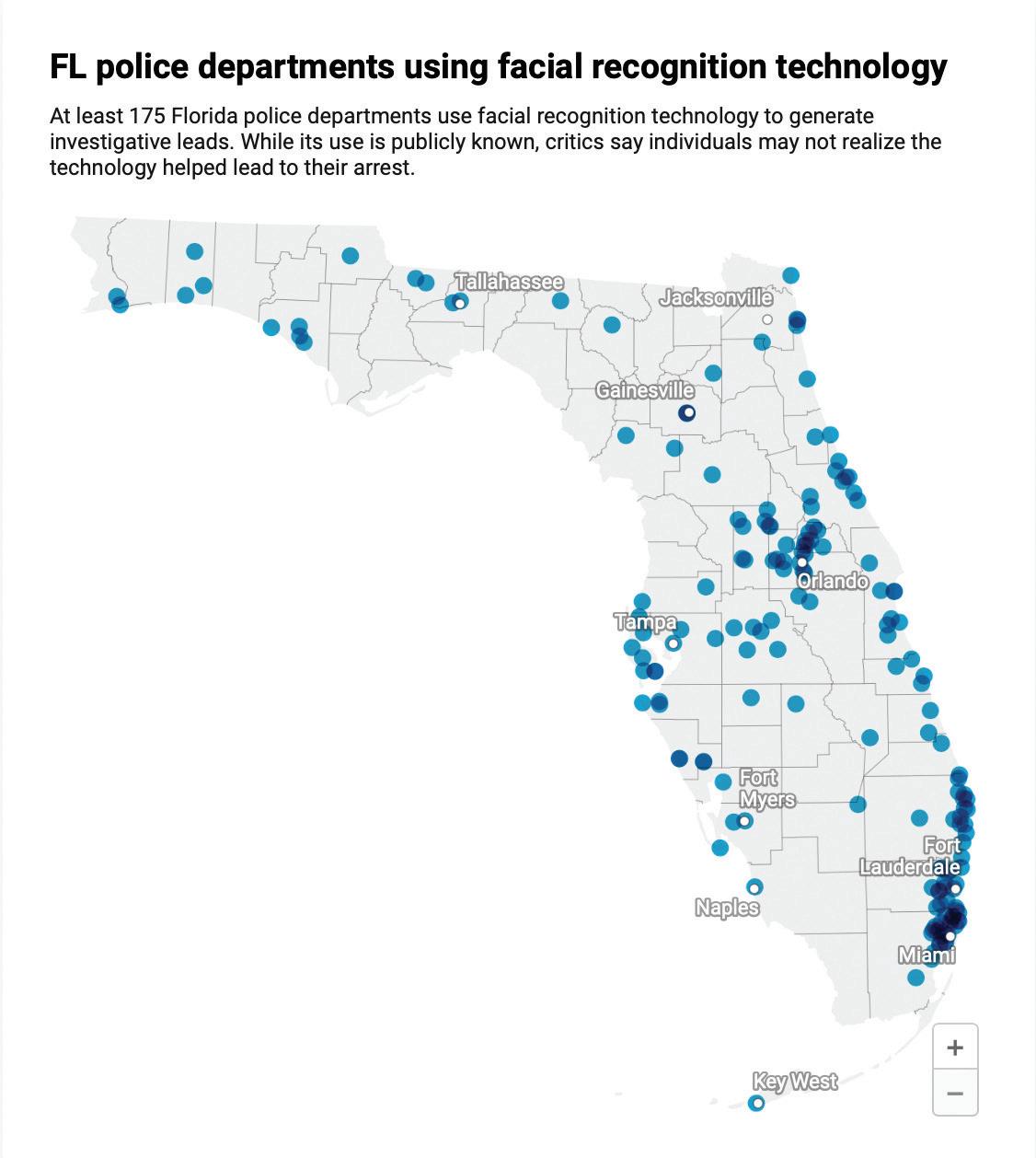
Across Florida, police agencies are increasingly relying on facial recognition technology as part of a broader shift toward
data-driven policing, which has expanded over the past decade.
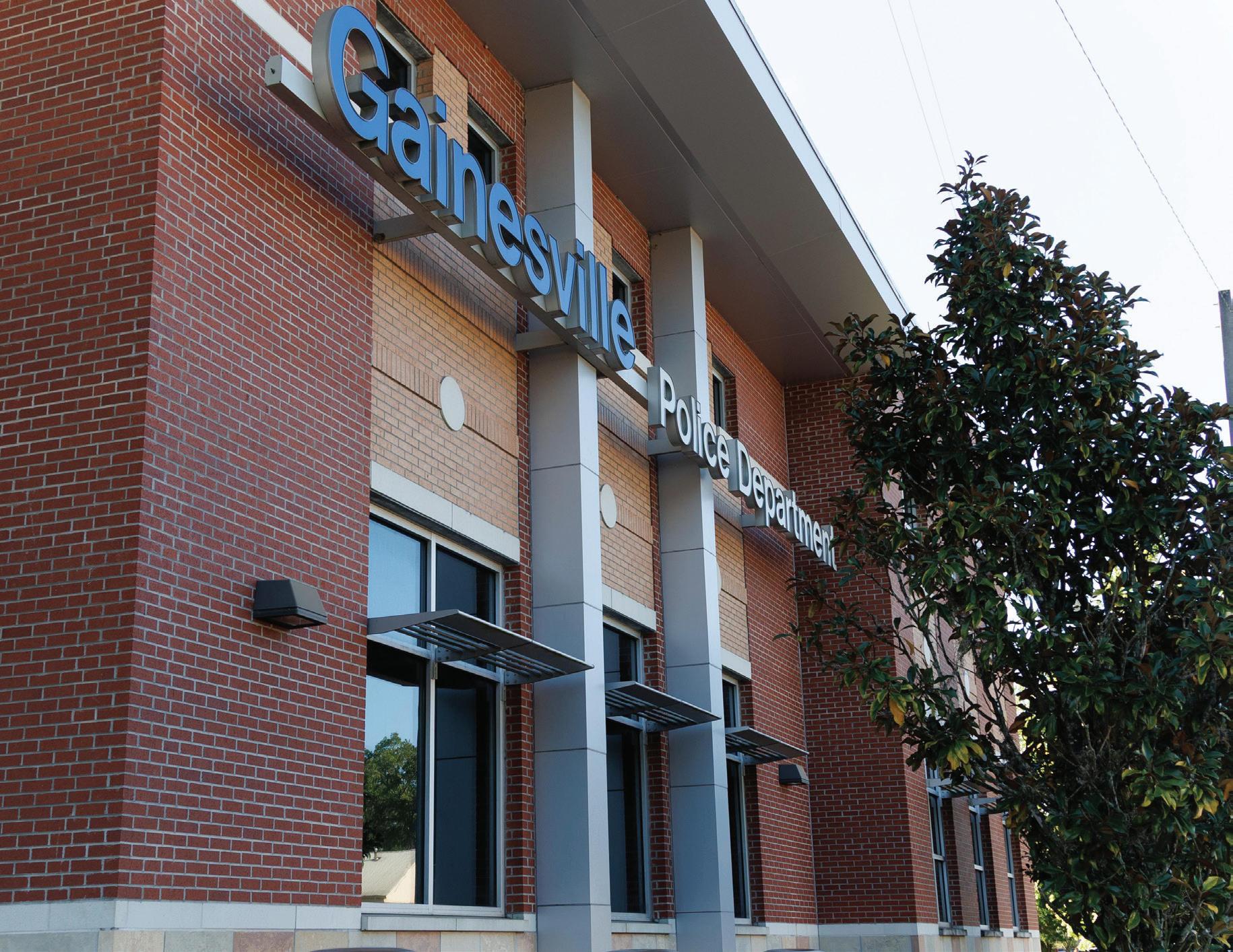
Within GPD, investigators use two systems — Faces Analysis Comparison & Examination System NXT and Clearview AI — to compare images against databases of publicly available images.
Faces Analysis Comparison & Examination System NXT, also called FACESNXT, is a statedistributed program. FACESNXT’s database is composed of driver’s license photos and mugshots.
Clearview AI, a private company, has a database of more than 300 million images. In addition to ID photos and mugshots, the
Story description finish with comma, pg#
Host cities and students share insight into tourist relationships.
Read more on pg. 2.
The Avenue: Art
The Repurpose Project to open fourth location, pg. 6
Opinions
High school student encourages youth civic engagement, pg. 8
SEE FACIAL RECOGNITION, PAGE 3
Riana Morales // Alligator Staff
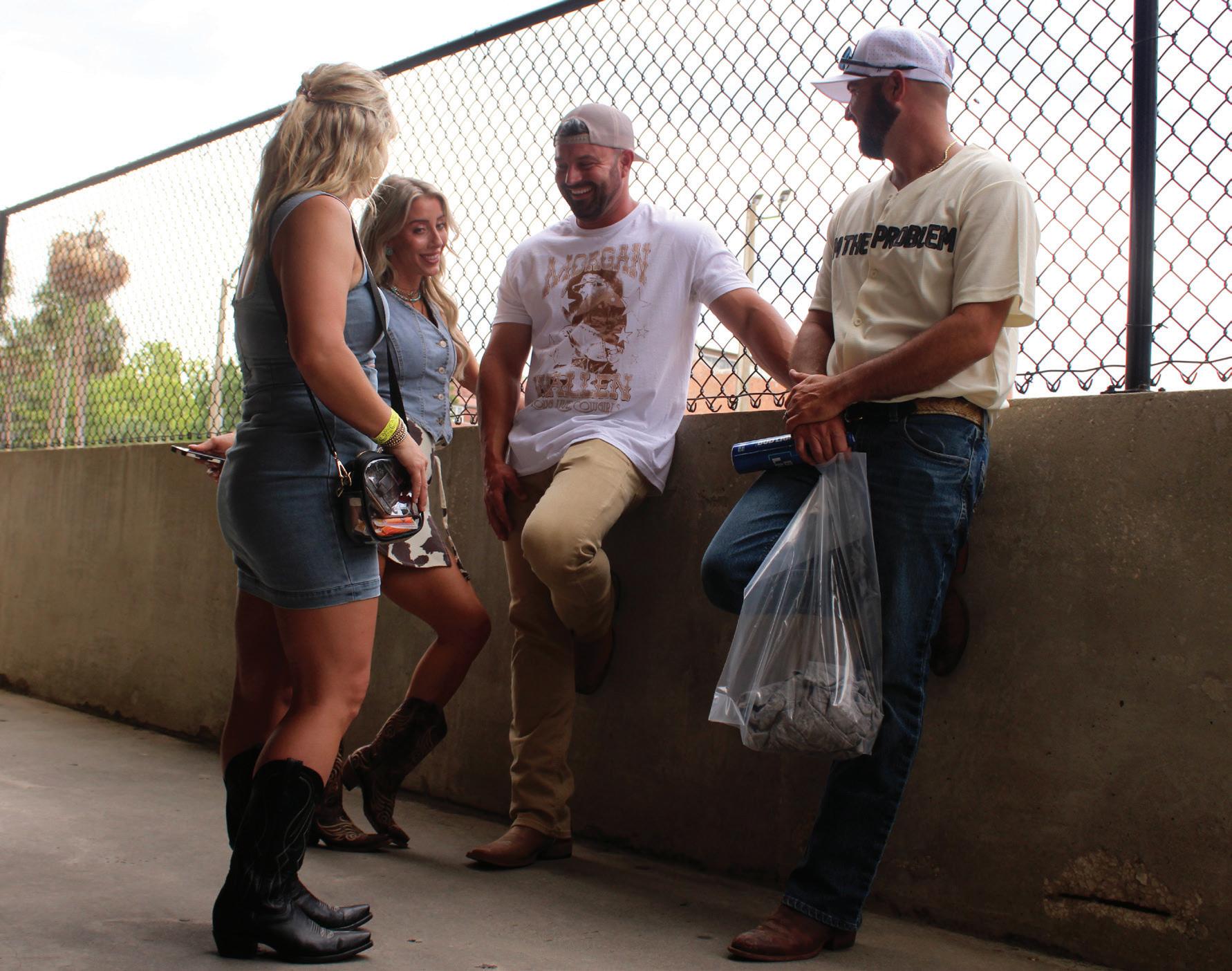
Megan Stone, Haley Nix, Steve Nix and Jake Stone chat at a fence while waiting for the Morgan Wallen Concert at Ben Hill Griffin Stadium in Gainesville, Fla., Saturday, May 16, 2026. Find this story in TheAvenueon pg. 5.
Today’s Weather
Beyond the classroom: How UF study abroad shapes local communities
LOCAL BUSINESS OWNERS AND STUDENTS SHARE THE IMPACT OF STUDY ABROAD PROGRAMS
By Kendall O’Connor Alligator Staff Writer
Studying abroad is an enriching experience for students — but how are host city communities dealing with UF’s condensation of abroad programs?
During the 2024-25 academic year, nearly 3,500 UF students took part in study abroad programs around the world. As UF’s programs evolve from many smallenrollment offerings to fewer programs serving larger student populations, cultural awareness is more important than ever, according to the UF International Center Study Abroad Dashboard.
But with larger groups of students, the goal of intercultural understanding could become more daunting.
Brooke Reeves, a 21-year-old UF business administration senior, recalled how her experience traveling with over 100 other students in Florence last year meant being more mindful in public spaces when in large groups.
“The biggest thing they said when we got the keys for our place was to abide by their rules and respect them,” she said.
While most other students stayed in UF-provided dorm accommodations, Reeves said she and her friend opted to stay in a local residential area also provided by the university. While it gave her a more immersive local experience, she said she wasn’t close with any of her neighbors.
Some students talked with local residents more often than others, she said. She suggested study abroad program leaders have preemptive conversations with residents living near student accommodations and local businesses to
determine which spots might be more tourist-friendly.
Aline Panajotov, a Viennese tour guide of 10 years, has a passion for sharing her city with tourists — but she knows most locals in Vienna don’t feel the same.
“They don’t appreciate the tourists, but also tourists don’t follow the rules,” Panajotov said.
What makes the relationship ironic, she said, is that Vienna relies on tourism. The city hit a record high of 20 million overnight stays in 2025. For Panajotov and many other locals, this overcrowding has led to debate about increasing tourist presence.
“[It’s] one of our strongest branches, but most people are criticizing it at the same time,” she said.
Panajotov’s main gripe with tourists, she said, is that they love exploring the city but not its unique aspects. Tourists might visit the Schonbrunn Palace, but they often miss Vienna’s vibrant coffeehouse culture, music festivals and movie nights.
Tim Neziri, the operations manager at Babu’s Bakery & Coffeehouse in Zurich, said some cultural differences give tourists a bad reputation and lead to similar criticisms.
For Neziri, the tables in his cafe are the biggest sign of tourist presence. Often when tourists sit in his cafe, he said, “everything is used, everything is quite dirty.”
Regardless, Neziri has become accustomed to the influx of tourists. He feels Zurich has long been for visitors, and tourism is integral to the city.
“Zurich also lives from the diversity, from the countries, from the people,” he said.
Wojciech Harbacewicz, the front office coordinator at the Citadines Danube Vienna hotel, is also a believer in diversity from different cultures.
While some may suspect a lack of cultural immersion by student
tourists, Harbacewicz, a foreigner himself, said he is also “part of that bubble.”
Instead of chastising tourism, he suggests people understand not everyone in Vienna speaks German. He sees the lack of a unified language as a normal outcome of European mobility and Englishlanguage instruction during study abroad programs.
Moreover, he encourages students to partake in study abroad programs to gain perspective on life, cultures and their own country.
“The more diverse people you know, the more you learn about the world,” Harbacewicz said.
Ben Devlin, a 19-year-old UF finance junior, said he’s experienced just that. This summer, Devlin’s been studying abroad in Sardinia for the Blue Zones: Sardinia and Ikaria program. He’s found locals are “more accommodating to tourists” in Sardinia.
His most memorable interaction with the locals so far, he said, was when he visited a 95-yearold woman’s home to learn more about the local everyday lifestyle. Devlin’s tour guide thought it’d be interesting for students to meet her because of her personality and life stories.
“She didn’t even want to sit down,” Devlin said. “She just wanted us all to be comfortable.”
He said he thinks locals may not be ready for large groups of students to enter their establishments, but they were just excited for them to spend their money and time there.
Devlin and other abroad students also immersed themselves into Sardinian culture through cooking classes with the locals. The blue zones are famous for their healthy cuisine, emphasizing fruits and vegetables — and, to his surprise, lots of carbs.
“I think they really liked that we’re interested in their daily lives,” he said.
The Blue Zones program has just 25 students, allowing them to interact on a more personal level, Devlin said. When compared to the increasing number of students on high-volume study abroad programs, the number is a lot more manageable for host cities.
Devlin suggests other study abroad programs follow his trip’s lead by encouraging students to interact with the locals.
“I think we really are able to connect with the locals a lot,” he said.
It seems most locals want to preserve the traditions that make the city their home, but it’s difficult to share these traditions with visitors that don’t care to know more.
Editor-In-Chief
Digital Managing Editor
Senior News Director
Senior News Director
Social Desk Chief
Metro Editor
University Editor
Opinions Editor
Bailey Diem, bdiem@alligator.org
Switzerland.
@kmoconnor koconnor@alligator.org
Max Bernstein, mbernstein@alligator.org
Alanna Robbert, arobbert@alligator.org
Lindee Walker, lwalker@alligator.org
Grace Larson, glarson@alligator.org
Sofia Meyers, smeyers@alligator.org
Aaliyah Evertz, aevertz@alligator.org
El Caimán Editor
Sadie Johnson, sadiejohnson@alligator.org
Isabel Kraby, ikraby@alligator.org
Angelique Rodriguez, arodriguez@alligator.org
Curan Ahern, cahern@alligator.org
The Alligator strives to be accurate and clear in its news reports and editorials. If you find an error, please call our newsroom at 352-376-4458 or email editor@alligator.org 352-376-4458
database includes images scraped from Facebook, YouTube and other platforms.
At GPD, access to Clearview AI is restricted to roughly 25 user accounts, Ferrera said, with about 17 active users. Access is concentrated among a small number of detectives who conduct the majority of searches, he said.
Even though facial recognition technology has been credited in helping solve missing persons cases and criminal investigations like child sexual exploitation cases, its use remains controversial. The technology has been linked to wrongful arrests and disputed identifications in cases nationwide.
Ferrera said GPD takes the use of facial recognition technology seriously.
“Nobody wants to lock up the wrong person,” he said. “It looks bad for their department and it looks bad for all law enforcement across the country.”
In Florida, the use of facial recognition technology has drawn attention in cases where the technology was not immediately disclosed in arrest records.
Max Tipping, a public interest attorney and policy director at Community Springs, an organization focused on ending cycles of poverty and mass incarceration, said this lack of transparency limits defendants’ ability to challenge evidence in court.
“The fundamental thing for any system of justice is you have to be able to challenge what it is you’re being accused of,” he said. “You can’t challenge something if you don’t know that it
GPD doesn’t have a policy specifying when facial recognition technology use must be disclosed in reports. Instead, the decision is left up to officers’ discretion.
Stacy Scott, the lead public defense attorney at the Eighth Judicial Circuit Court, said her team has encountered several cases where facial recognition was reportedly used — mostly in theft cases.
“There's probably plenty of instances where they're using the technology, but they're not disclosing it,” she said. “They don't necessarily have to report on that unless they relied on it.”
In addition to debate over the lack of transparency, facial recognition technology has made some question whether its use is considered a search under the Fourth Amendment, which protects against unreasonable government searches and seizures.
Courts haven’t ruled on if and how the Fourth Amendment applies to facial recognition technology, but past surveillancerelated rulings generally focus on whether the information collected could also be obtained through ordinary visual observation.
In Congress, there have been at least two legislative attempts in 2021 and 2023 to limit or ban law enforcement’s use of facial recognition technology, but neither bill was voted on.
Scott said facial recognition technology also raises concerns about racial bias.
Past studies claim facial recognition can produce biased results because it’s trained on data that doesn’t represent everyone
equally, which can make it less accurate for people with darker skin tones and other marginalized groups.
Timnit Gebru, the founder of the Distributed AI Research Institute, a group that studies the intersection between technology and equity, helped lead the Gender Shades study. The study found significantly higher error rates for darker-skinned women compared to lighter-skinned men in commercial facial analysis tools.
Clearview has disputed the findings, arguing the study is a measure of how well the technology classifies images based on gender. This gender classification task differs from facial recognition.
However, DAIR research director Alex Hanna said both tasks are similar and relevant to each other's success.
There’s a tendency to overestimate what the technology is able to accomplish, she said.
“They think it's foolproof, they think it can do more than it can do,” Hanna said. “There's definitely a veneer of infallibility.”
GPD spokesperson Art Forgey said the department is open to updating its policies to be more transparent to the public, and it evaluates concerns of racial profiling and bias on a yearly basis.
While the department understands facial recognition technology is controversial, Forgey said it's a valuable investigative tool.
“Everybody has an opinion on it, and we just can't run from it,” he said.
jbendeck@alligator.org.
Caroline Walsh // Alligator Staff
Cement plant blasts frustrate Newberry neighbors
QUIKRETE, from pg. 1
it,’” White said. “But he wouldn't do that.”
He and other residents are in a group chat with Quikrete environmental manager Keith Shannon, who gives them warnings in advance of any blasts.
The blasts cause eruptions of dust, which get blown into neighboring areas. The dust is not easy to remove, so Quikrete sends employees to clean it off of cars.
To White, the blasts cause more serious disruptions than pesky collections of dust. He and his wife’s double-wide mobile home has started to split down the middle as a result of the shaking, White said.
But Quikrete won’t acknowledge the damages, he added, and his repeated attempts to communicate with the company have gotten him nowhere.
“I wish they would just be a little more understanding and more willing to just fix their issues,” he said.
In an email to The Alligator, Quikrete spokesperson Patrick Lenow acknowledged the “small number of neighbors” who had complained about dust and noise. He wrote other nearby businesses could be contributing to these issues, though he didn’t name any specific examples.
“We listen and take what is shared seriously, even when it’s not clear what business may have caused their concern,” Lenow wrote. “We’ll do our best to work with this handful of neighbors to alleviate their concerns.”
He emphasized the plant’s economic benefits and wrote the facility complies with all federal and state regulations.
“While QUIKRETE’s ownership is recent, we’re thrilled to be here, and it’s important we’re viewed as a good neighbor making a positive impact,” he wrote.
Juan Briceno moved to Newberry in 2021. Before the move, the 41-year-old UF agricultural and biological engineer researched the cement plant and found no serious health concerns.
According to a cement pollutant study, a
distance of at least 4.6 miles is recommended to maintain safe public health conditions. Briceno lives less than a mile from the Newberry plant.
Loud noise, dust accumulation and vibrations soon became pests in Briceno’s day-today life, he said.
“That doesn’t affect my livelihood [but] affects my house, and I have cracks in the walls, ceiling, everywhere,” Briceno said.
“It’s like a little earthquake that shakes the whole house.”
Briceno initially wrote off the explosions as a nuisance, he said, until he noticed cement kiln dust, a highly alkaline byproduct of cement manufacturing, began to coat his truck’s windshield and roof.
“A big plume of dust goes in the air, wind picks it up and it goes everywhere,” he said.
“My neighbor said, ‘It looks like it’s snowing.’”
Each year from late spring to early fall, he said, the plant blasts multiple times a week. He compared the noise to a generator running 24 hours a day.
While Briceno said he’s tried to communicate with Quikrete, no progress has been made.
“They send very threatening letters,” he said. “There’s nothing I can do. I feel like I have my hands tied.”
In a letter Briceno received Oct. 13, 2025, Elkin Rodriguez, the plant manager, wrote the company would no longer listen to his grievances. He cited Briceno’s “escalating use of abusive and threatening behavior” toward environmental manager Shannon, who didn’t respond to requests for comment.
“We are cutting off all communications with you,” Rodriguez wrote.
Other neighbors received letters alleging the same behavior. Briceno denied making any threats to the company or its employees.
In a previous letter from 2024, Argos USA, then-owner of the plant, wrote operations wouldn’t be deterred by damage complaints.
Paul Miller, a 77-year-old Newberry resident and certified organic farmer, said the build-up of dust has begun to affect his farm-
ing practices.
To remain U.S. Department of Agriculturecertified organic, farmers are required to keep an audit trail of documentation that complies with USDA organic regulations, according to the USDA.
Miller said he’s worried the dust could cause potential health risks that may cause him to lose his certification. He contacted a USDA organic certifier to inspect the site, he added, but he hasn’t heard back yet.
“They also emit aerosols, and that gets on things,” he said. “Our fields are wide open.”
Cement kiln dust can cause extreme nutrient imbalances in agricultural soil, which can result in reduced crop yields, according to the same cement pollutant study.
The blasting has caused severe vibrations and damages to Miller’s property, he said, which has in turn led to issues like flooding.
“I was out in the field, but when I came in they [had] blown the toilets off the wall,” he said.
Miller said he’s requested compensation for the destruction caused by Quikrete but has
been dismissed each time.
Shortly after Miller moved to Newberry, the plant manager and two staff members visited to discuss the damage complaint he’d submitted. Since the plant was operating under legal noise limits, the manager told him he couldn’t take legal action, Miller said.
When he accused the blasting of destroying his plumbing, Miller said the manager told him it was his problem — not the plant’s.
“He said, ‘We could blast the windows out of your house, and you could do nothing about it,’” Miller said.
A Newberry resident since 2019 and a lifelong Alachua County resident, Miller said he doesn’t plan on leaving his property.
“We’ve been farming organically [for] at least 55 years,” he said. “I was raised here, and this is my home.”
@JulianaDeF58101 jdefillipo@alligator.org
@lilyhartzema lhartzema@alligator.org
At least 5 arrested during Morgan Wallen’s stop at The Swamp
The two nights saw a flurry of arrests on campus
By Bailey Diem Alligator Staff Writer
Country music rang through campus and beer flowed heavily May 15 and 16 as Morgan Wallen made his Gainesville debut. The star’s only tour stop in Florida and one of only a few in the South, the back-to-back concerts drew thousands to The Swamp.
At least five people were arrested amid the floods of cowboy boots and baseball caps.
Night one: May 15
A pair of Jacksonville brothers, Michael and Ryan Chase, were charged with resisting arrest following an incident reported by two 12-year-olds around 10 p.m.
According to the arrest reports, a Florida Highway Patrol officer was working a section of seats on the east side of the stadium when
the preteens approached.
The two alleged a group of men in their section had been inappropriately touching them. As they gave the officer the men’s descriptions, the group happened to walk by, according to the report, and began “hastily walking away” from law enforcement.
When told to stop, 27-year-old Michael Chase reportedly twisted away from the officer. It took three troopers to restrain him, according to the report, and Michael repeatedly threatened to fight the officers and tried to spit on them during the process.
Officers report Michael was “apparently impaired,” allegedly displaying bloodshot eyes and slurred speech.
After his arrest, Michael told law enforcement he knew the officers were there and only resisted because he was going to the bathroom.
His brother, 24-year-old Ryan Chase, also attempted to pull away from officers when they came to detain the pair, according to the report. Unlike Michael, Ryan reportedly didn’t show any “obvious indicators of impairment,” and he soon complied.
According to the report, officers investigated the battery allegations raised by the two 12-yearolds but determined there wasn’t enough evidence to charge them for it.
Michael was charged with one count of disorderly conduct and one count of resisting without violence. Ryan was charged with only the latter.
Night two: May 16
Two Ohio men were arrested around 6:30 p.m. and charged with trespassing.
Beau Mathis, a 34-year-old
Cleveland resident, and Roshad Harris Lamont, a 35-year-old South Euclid resident, had reportedly been trespassed by the UF Police Department the previous day. The two were selling T-shirts but weren’t authorized to vend on campus, according to the arrest reports.
When they were seen selling shirts again May 16, both were charged with trespassing after warning and transported to the Alachua County Jail.
A few hours later, a man was arrested in the stadium for disorderly conduct.
When investigating a separate report of the same allegation, a FHP officer noticed shirtless Vincent Lee Neil, a 29-year-old from Fort White, Florida. According to the arrest report, Neil displayed “signs of being intoxicated” like stumbling and slurring his words, and his uncle helped him out of the crowd.
Officers carried Neil down the
stadium stairs to escort him out, according to the report. They were previously advised Neil had been fighting other people in the crowd.
While escorting him out, Neil reportedly “postured up” to the reporting officer, and his “aggressive nature” eventually forced them both to the ground so Neil could be handcuffed.
According to the report, Neil continued to fight the effort as the officer cuffed him. Once his hands were cuffed, he allegedly kicked the officer’s leg — tearing his uniform, according to the report — and spit at him while cursing loudly.
Neil was charged with a count of battery on a law enforcement officer, resisting without violence and disorderly conduct. He was transported to the Alachua County Jail.
Bayden Armstrong // Alligator Staff
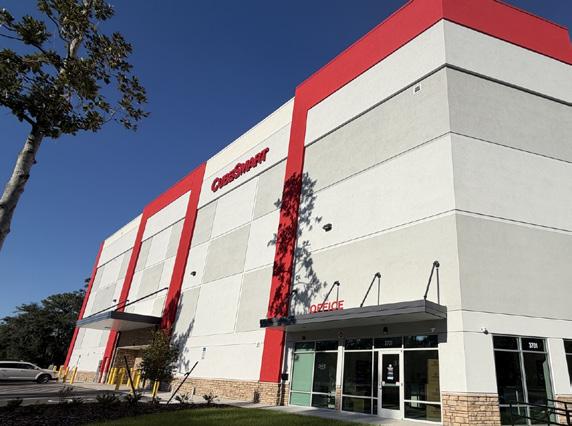
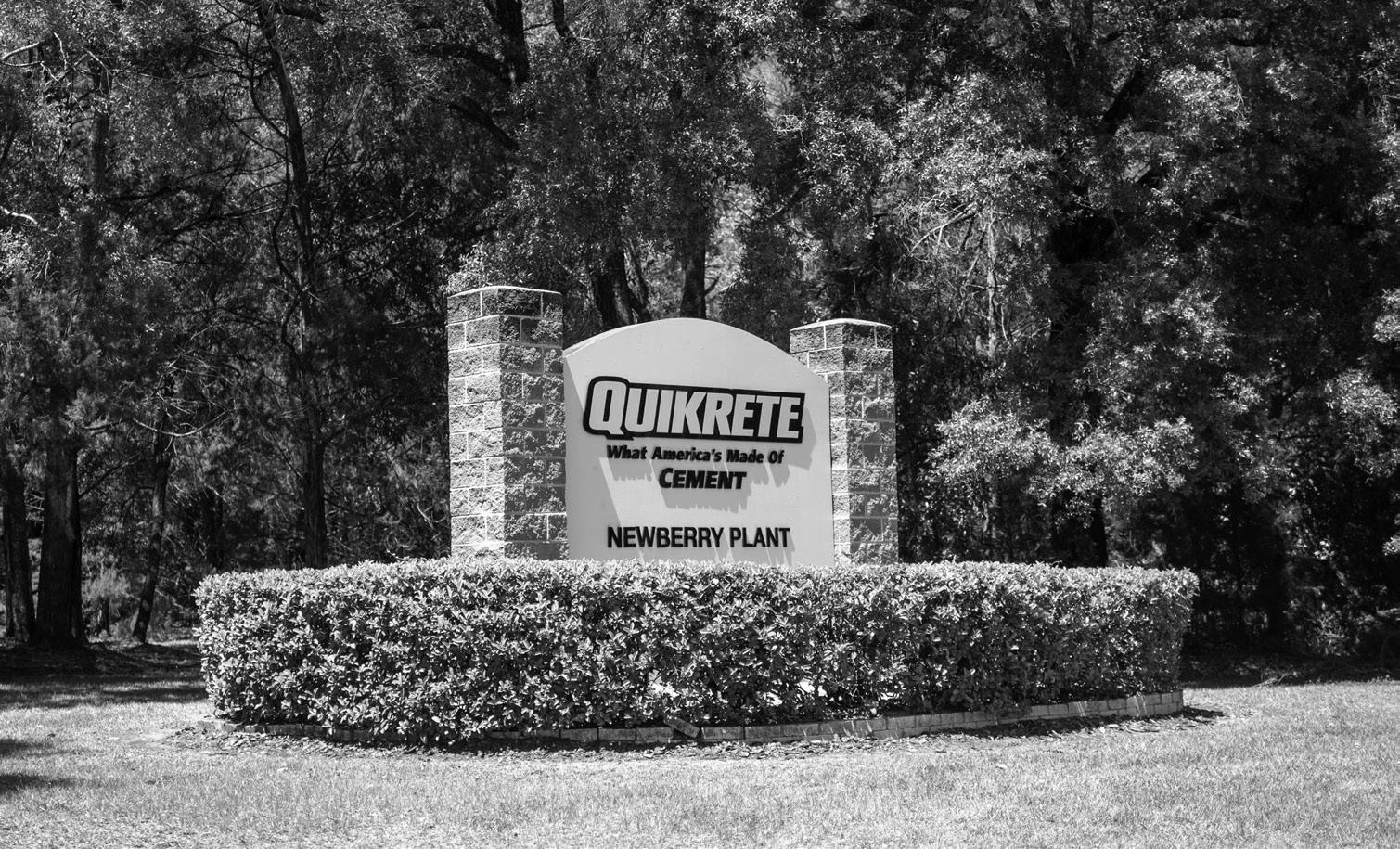
A sign for Quikrete Cement sits at 4000 NW County Road 235, in Newberry, Fla., Friday, April 17, 2026.
MONDAY, MAY 18, 2026
www.alligator.org/section/the_avenue
Morgan Wallen brings ‘Still the Problem Tour’ to the Swamp
THE COUNTRY MUSIC STAR MADE HIS GAINESVILLE DEBUT WITH BACK-TO-BACK SHOWS AT BEN HILL GRIFFIN STADIUM
By Isabel Kraby & Brandy Sumner Avenue Staff Writers
Despite the sweaty, 89-degree heat on May 15, 13-year-old Jackie Griffin wrapped herself in a warm blanket adorned with photos of Morgan Wallen as she waited in a merch line.
Griffin was about to see the country artist for the first time, though she estimates she’s been a fan since age 7 or 8. The concert was a belated birthday gift.
“I love his accent,” she said. “I just love his songs and stuff. They’re very connectable; he has a story behind every one.”
Wallen shared dozens of those stories across two nights as the Grammy-nominated artist made his Gainesville debut.
He swung by The Swamp nearly halfway through his “Still the Problem Tour” on May 15 and 16. Wallen headlined back-to-back shows at Ben Hill Griffin Stadium, accompanied by Thomas Rhett, Ella Langley, Gavin Adcock and Zach John King.
The concerts were the first held in The Swamp since country music legend Garth Brooks performed in 2019 — the stadium’s first large-scale performance in 25 years after The Rolling Stones in 1994.
Workers began setting up the concert stage early in the week, while locals braced for road
FOOD & DRINK
closures and traffic.
University Avenue and Stadium Road were flooded with thousands of southern-styled fans donning denim, cowboy hats, boots and baseball caps. It wasn’t too different from a Saturday football game crowd.
Patrons picked up buy-one-get-one-free cowboy hats and took to the Regional Transit System cooling buses to escape the heat before they entered the sauna of a stadium.
Zach John King opened the concert around 5:30 p.m. with “Hole In The Wall,” a song off his 2025 EP “Slow Down.” King’s songs about life in the rural South allowed him to connect with the Gainesville audience, despite his early jokes about being a Georgia Bulldogs fan, which were met with boos from the crowd.
The second artist of the night — Watkinsville, Georgia-born Gavin Adcock — had a humorously crass approach to his performance. He entered the stage by throwing a case of beer ahead of him, shotgunning one while others fizzed across the platform.
Adcock was the only musician to have previously performed in Gainesville. His first show was to a crowd of around 600 people.
Thomas Rhett, the main opener for night one, took the stage to a near-full crowd at his first concert in Gainesville. The crowd filled in the choruses to “Die A Happy Man,” Rhett’s most-streamed song, and sang and danced to all 14 tracks in his set.
As Rhett’s set reached its midway point, the last sliver of sun was disappearing over Section 33. Sitting on the shady west side of the stadium was Halle Pevoroff, a 19-year-old Florida Atlantic University student from Orlando. She had already seen the headlining act twice —
once in Tampa, a second time in Miami. She’d left both shows with a face wet and red from crying, she said.
Seeing Wallen before her own teary eyes felt surreal, she said, and sharing the moments with friends only made the memories more special for Pevoroff.
“All I remember is in seventh grade, I was listening to ‘Chasin’ You’ with one of my best friends, Colby, and I FaceTime him every time when we’re at the concert when that song plays,” she said.
Lucky for her — and for Colby — Wallen played the 2018 track sixth in the night’s set.
Half an hour after the expected start time of the evening’s most anticipated set, impatience growing among the fans, Wallen walked out as he usually does — with a local legend at his side.
The crowd roared when the camera panned to former Gators quarterback Tim Tebow, as the pair patted the alligator statue in typical pregame fashion. On night two, Wallen walked through the tunnel with former Gators football coach and player Steve Spurrier.
At Wallen’s previous show May 9 in Indianapolis, he walked out with Indiana Fever basketball player Caitlin Clark.
Wallen emerged from a cloud of smoke to kick off his set with “Don’t We.” He rocked a Gainesville Harley Davidson muscle tee, jeans and boots. His orange baseball cap was perhaps a nod both to UF and the University of Tennessee.
The Sneedville, Tennessee, native played songs throughout his discography. He brought out Adcock and King to perform “Up Down” from Wallen’s 2018 debut album “If I Know
Gainesville’s tastiest acai restaurants
BEAT THE HEAT WITH THESE FIVE ACAI SHOPS THIS SUMMER
By Madelyn Hassey Avenue Staff Writer
With summer quickly approaching, those sticking around The Swamp for the next few months may already have plans to make the most of their time in the sun. Whether spending a day at Lake Wauburg or tanning by the poolside, acai bowls might offer the perfect treat once the sunscreen wears off and the temperature grows unbearable.
Acai stores have grown in popularity since their beginning in the early 2000s, with the first stores in Hawaii and Southern California made for surfers. Now, these shops are popping up everywhere in Gaines-
Caimán
Me,” and Wallen performed songs like “20 Cigarettes” from his latest album “I’m the Problem,” which turned 1 year old on May 16.
Wallen celebrated his 33rd birthday on Wednesday. Fans held signs wishing him a happy belated birthday.
The artist’s first appearance in Gainesville saw a 28-song set illuminated by flames, fireworks and light-up bracelets donned by the audience of 70,000 people. Wallen joked he thought his first time in The Swamp would be to witness the Tennessee Volunteers football team lose to the Gators.
“I Won’t Back Down” blared from the speakers before Wallen’s three-song encore. After he retook the stage, fans sang “It’s Great to be a Florida Gator.”
The night concluded with “Whiskey Glasses,” after which Wallen stuck around to sign T-shirts and cowboy boots. All the acts autographed signs and took selfies with fans during their sets.
It’s Wallen’s personable persona that Wendy Vivian found most appealing.
Vivian arrived in a VIP line on May 15 at 2 p.m. Others had started lining up as early as 9 a.m.
The 56-year-old had caught Wallen in Miami, too, and was eager to experience his engaging performance for a second time.
“[He was] very relatable when he was on stage, you know what I mean?” she said. “He felt like he brought you in with him.”
ville. Here are a few restaurants to check out to refresh, recharge and escape the summer heat.
Playa Bowls
Playa Bowls opened on Southwest Fifth Avenue in Gainesville in 2024. Since then, it’s rapidly become one of the most popular spots for acai near campus. From its beachy summer aesthetic to its extensive list of bowls and smoothies, Playa Bowls has become a fan favorite in Gainesville.
The shop’s distinct aesthetic sets it apart from others. With its colorful and beachy wall painting and decor, Playa Bowls truly makes its customers feel like they’re on a tropical vacation when they step inside, despite Gainesville’s location an hour and a half from the nearest beach.
Beach vibes aside, its acai bowls are delicious, and the acai base is
Propietarios de negocios locales y estudiantes comparten el impacto de los programas de estudio en el extranjero. Leer más en la página 7.
comparable to those of beachside acai stores. Each bowl comes with two to three fruits. Toppings include granola, honey and coconut flakes, along with Nutella, peanut or almond butter.
Rush Bowls
Located inside The Standard Apartment Complex on West University Avenue, Rush Bowls opened in Gainesville in 2023. Its location is only a brief walk from UF campus and many other apartment complexes.
Unlike Playa Bowls, this shop offers a more smoothie-based acai bowl, mixed with various juices and fruits. The acai bowls do not come with as many toppings; bowls include granola, honey and one topping of choice. Additional toppings can be added for a dollar each.
Rush Bowls is designed to be a
more health-focused acai shop. Sections of its menu promote endurance and wellness, making its bowls appeal to a post-workout audience.
GainzVille Hub
A secret downtown gem, GainzVille Hub opened on Southwest Second Street in 2022.
Its menu consists of protein-based acai bowls that are low in calories and sugar — but extremely tasty and nutritious.
A family business owned by Melanie Floyd, GainzVille Hub offers a family-oriented, cozy interior for lunch, studying and socializing.
Vale Food Co.
Vale Food Co. is located on Southwest Archer Road, where it opened its doors to Gainesville in 2017. It is a health-based, wellness-oriented food spot that serves acai bowls in addition to rice bowls and wraps.
The shop’s acai bowls are nutrient-packed and delicious. Vale offers
multiple serving sizes for its bowls. Its largest size, a “super,” is big enough to serve up to three people. Vale advertises a giant list of toppings for customers to add to their bowls. The acai texture is thick and not watered down, and the fruit and granola are fresh and high in vitamins.
Shake Smart
With two locations on UF campus, Shake Smart opened in the Southwest Recreation Center in 2020 and the Reitz Union in 2021. The shop was founded by two college students, Kevin Gelfand and Martin Reiman, who wanted healthy, fast and reliable food options that fit their busy lifestyle.
Shake Smart’s acai bowls are made for on-the-go students needing a bite between classes. The shop offers many protein add-ons targeted toward students and athletes.
mhassey@alligator.org
The Repurpose Project to open fourth location
THE NONPROFIT THRIFT STORE ANNOUNCED DYSTOPIAN DOLLAR
By Mackenzie Haas Avenue Staff Writer
When driving down Northeast 23rd Avenue, maybe on your way to lunch at Satchel’s Pizza, a vintage boat on the side of the road may catch your eye.
Painted on its hull, bright white lettering stands out on rusted metal.
“Buy Used! It’s good for the planet!” it reads.
Upon entering a tiny, almost hidden nook of road, you’re greeted by a friendly, bustling, creative community. This is The Repurpose Project, one of three related sustainability shops in Gainesville.
But three will soon become four. The store recently announced it will open a new location: a clearance shop and donation center called Dystopian Dollar. It will be located next to The Repurpose Project thrift store and Renovator Reuse on Northeast 23rd Avenue.
Mellow Star, the 30-year-old site manager of The Repurpose Project, views the opening of the fourth store as a wonderful opportunity for the organization. It’ll allow for more efficiency within the organization and its relationship with the Gainesville community, they said.
“We, at all three of our stores, are always just inundated with stuff from the community, which is a beautiful problem to have,” Star said. “But whenever it gets nearer to peak times in the city, like UF student move out … we really just are unable to keep up and … process everything that the community has to offer us.”
Dystopian Dollar will aim to be a one-stop destination meant to streamline the donation process, they added.
TECHNOLOGY
The Repurpose Project, founded in 2012, not only acts as a non-profit thrift store but a network of pure dedication, goals and creativity all spread out with the same mission: Give items a second chance and increase the Gainesville community’s access to affordable self-expression and innovation.
The organization currently operates three stores: The Repurpose Project, The Renovator Reuse and Reuse Planet. The Repurpose Project thrift store is the main location. Renovator
Reuse is its hardware store and Reuse Planet is its furniture store.
In an effort to help fund its expansion, The Repurpose Project participated in The Amazing Give, a local fundraising event that took place April 30.
As of May 17, the organization has raised a little over $2,000. Its goal is to reach $20,000 to build the future store and continue to promote a more sustainable, affordable community.
”There’s something to be said about looking
at what we have available to us within our own town and redefining the usage of certain items to make everything that we already have work for us,” Star said.
When someone walks into The Repurpose Project, they are greeted warmly by a cashier. A sign on the door says no hate will be tolerated here, and a pride flag hangs on the ceiling. Yarn, ribbon, old notebook pages, film strips, forgotten instruments and trinkets sparkle in the light as they wait for a creative eye to take a chance on them. Customers compliment each other while searching through old paint and pieces of fabric.
Gustavo Franco, a 32-year-old bartender, has been to The Repurpose Project quite a few times in search of new projects. Each time, he marvels at the items people give up and the type of crafts he’s able to discover.
He held up a glass he picked off the shelf. It was small and thin and ringed with black metal.
“This thing is just $1,” Franco said. “I use it to propagate my plants. But [it’s] supposed to be something for a light or something. I don’t know. It’s cool.”
He’s always on the lookout for something to jump out at him, he said, and he hopes to give items a new life.
Tamara Ramos, a 34-year-old bartender, went into the thrift store for the first time May 12 and found it the perfect place to shop.
“[I’m] just looking for something interesting for the house,” she said. “It’s working for me.” When turning out of The Repurpose Project, a haul of miscellaneous items in your car, you’ll see a building under construction next to Renovator Reuse.
A sign taped to the building reads “Dystopian Dollar: coming soon.”
mhaas@alligator.org
UF professor and artist Fatimah Tuggar reflects on the future of art and AI
THE RECENT FULBRIGHT AWARD RECIPIENT DISCUSSES CURRENT WORK, THE IMPORTANCE OF DIVERSITY AND THE FUTURE OF TECHNOLOGY
By Christopher Rodriguez Avenue Staff Writer
Fatimah Tuggar, a Nigerian interdisciplinary artist and associate professor of artificial intelligence in the arts at UF, has always kept an eye on the future.
Tuggar’s work has been featured at the Venice Biennale — a prestigious international art exhibition in Italy — and she was recently awarded a Fulbright U.S. Scholar Program Award in Visual Arts Research, which will take her to New Zealand this coming January. Fulbright scholars receive a grant to travel to a foreign country to conduct work that promotes cross-cultural understanding.
Born in Nigeria, the 58-year-old artist has spent her life across the globe. She attended the Blackheath School of Art in London and received degrees from the Kansas City Art In-
stitute and Yale University.
Tuggar is currently working on a project centered around the calabash, a gourd that serves a variety of purposes in African cultures, like being fashioned into a drum or used as a suitcase.
Besides their many uses, these calabashes are often decorated with a plethora of patterns, varying from country to country. However, as a result of colonialism, travel between different African countries is difficult even if they neighbor each other, Tuggar said, preventing the cultural exchange of these varied patterns and uses.
Using UF’s HiPerGator, the fastest university-owned supercomputer in the country, Tuggar imagines a reality in which these ideas were allowed to flow freely.
“I am using the database of calabashes that I’ve created from six countries so that the hues, the patterns, … you see them intermixing infinitely and coming up with new patterns, new forms, new hues that are from a mixture of those,” she said, “to speak to this idea of how we will never know really what would have come out of the intercultural exchange, but we can imagine it through AI experiences.”
By immersing the audience in this simulated reality, Tuggar showcases the diversity of the calabash and provides commentary on what could be lost when the traditional gourds are replaced with artificial plastic containers.
While the use of AI technologies remains a contentious topic within the art world, Tuggar views artificial intelligence as a tool no different from a hammer.
“At least from my perspective, I think art has to be compassionate, and it’s about really accessing human-to-human emotional intelligence and experiences,” she said. “I don’t think AI has that, or maybe it will have it in the future, but it certainly doesn’t have it now.”
Incorporating diverse perspectives — especially when building new technologies — is crucial, Tuggar added. She encourages the incorporation of humanities perspectives into the development of language models, arguing humanities scholars can provide useful outlooks. Pulling from her own multicultural background, Tuggar likened this multifaceted approach to how someone who speaks bilingually thinks; two frameworks of how to perceive something can lead to different interpretations.
Tuggar seeks to challenge the perspectives of her students. For 61-year-old Karen Maggs, who was one of Tuggar’s students at the University of Memphis 17 years ago, that sentiment rang true when Maggs was working on a project with QR codes.
Tuggar made Maggs realize a piece of art that requires a smartphone to view it would restrict her audience to those privileged enough to afford one.
“She continually looked for ways to push a student’s work and challenge the student to think: ‘Why are you making this image?’ ‘What is the image actually saying?’ ‘What do you want to say with this?’ ‘Do you realize what you’re saying is what you think you’re saying?’” Maggs said.
Maggs and Tuggar remain friends, maintaining a relationship past their original teacher-student dynamic. When an injury caused Maggs to nearly lose sight in her right eye, Tuggar stayed with her through the process and even drove her to emergency surgery.
Maggs values Tuggar’s intelligence and vivacity. She’s the most honest person she’s ever met, she said.
Tuggar’s honesty is something 26-year-old studio art master’s stu-
dent Dylan Taylor also appreciates. Tuggar has served as a reorienting presence, reminding Taylor of what he’s making and why.
“Fatimah’s a great voice in reminding us what we’re really here for, which is not to perpetuate what’s been done but to explore the frontier of what art can be,” Taylor said. “She really is phenomenal about reminding us about what our contribution not only to the field is, but to the world as artists.”
Taylor worked with Tuggar in an independent study over the Spring 2026 semester, and she helped him “encourage humor and play” in his studio practice.
Tuggar’s upcoming work will take her to New Zealand as a Fulbright scholar, where she will research the dynamic between functional and aesthetic objects in Maori culture. She’ll then compare the dynamics of the indigenous Polynesian culture to those present in West African cultures.
Blending complex understandings of diverse schools of thought, Fatimah Tuggar is a student of the world, and her upcoming trip is the next chapter in her education.
@ChrisRodri29386 crodriguez@alligator.org
Grace Sands // Alligator Staff
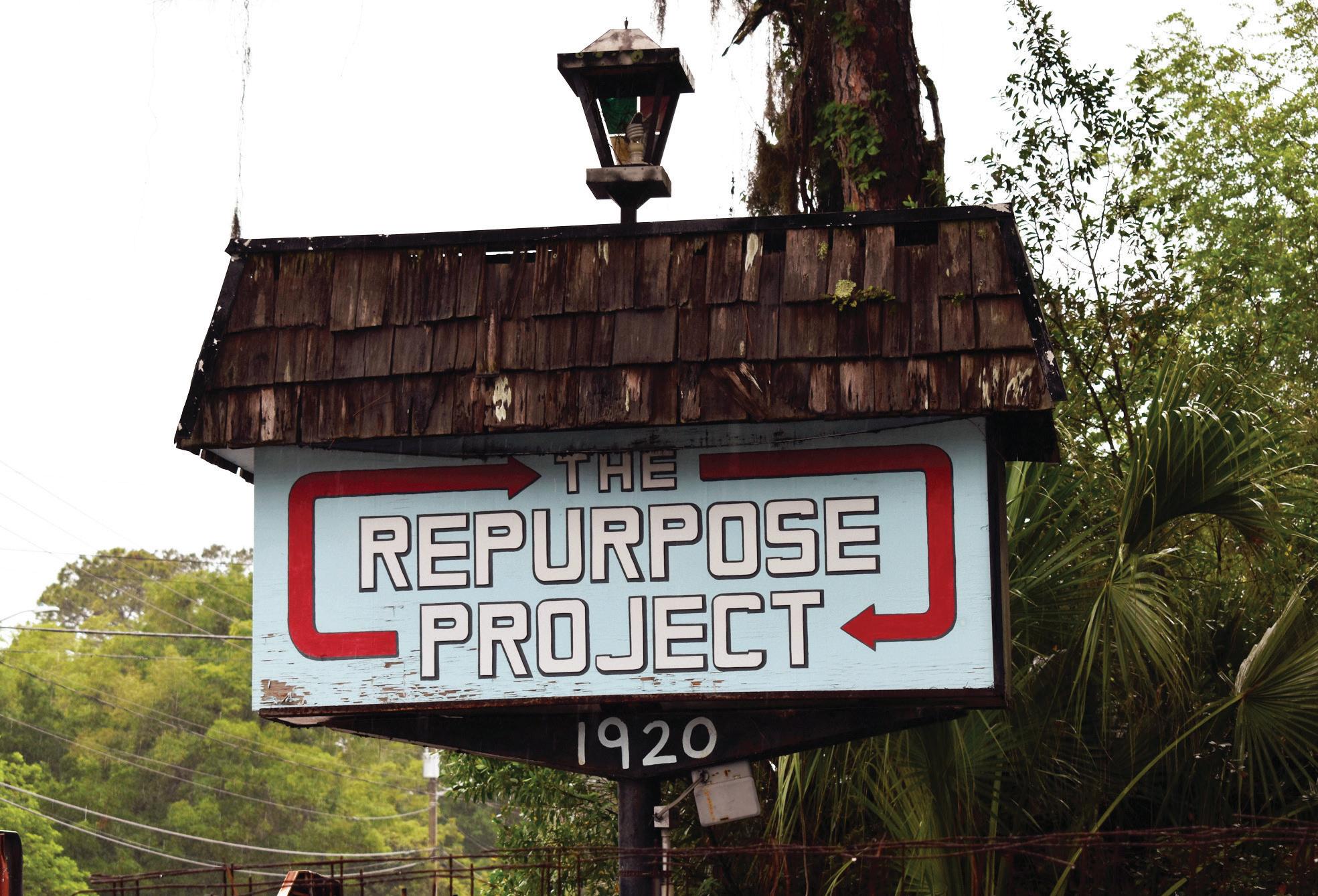
The outside of The Repurpose Project, Tuesday, May 12, 2026, in Gainesville, Fla.
El Caimán
Más allá del aula: Cómo los programas de estudio en el extranjero de la UF moldean a las comunidades locales
PROPIETARIOS DE NEGOCIOS
LOCALES Y ESTUDIANTES
COMPARTEN EL IMPACTO DE LOS PROGRAMAS DE ESTUDIO EN EL EXTRANJERO
Por Kendall O’Connor
Escritora de El Caimán
Traducido por Angelique Rodriguez
Escritora de El Caimán
Estudiar en el extranjero es una experiencia enriquecedora para los estudiantes — pero ¿cómo están lidiando las comunidades de las ciudades anfitrionas con la concentración de programas en el extranjero de la UF?
Durante el año académico 2024-25, cerca de 3,500 estudiantes de la UF participaron en programas de estudio en el extranjero en diversas partes del mundo. A medida que los programas de la UF evolucionan pasando de ofrecer muchas opciones con grupos reducidos a menos programas que atienden a poblaciones estudiantiles más amplias, la conciencia cultural se vuelve más importante que nunca, según el Panel de Control de Estudios en el Extranjero del Centro Internacional de la UF.
Sin embargo, con grupos de estudiantes más numerosos, el objetivo de la comprensión intercultural podría volverse más desalentador.
Brooke Reeves, una estudiante de último año de administración de empresas de la UF, de 21 años, recordó cómo su experiencia viajando con más de otros 100 estudiantes en Florencia el año pasado implicó tener que ser más consciente en los espacios públicos al desplazarse en grupos grandes.
“Lo más importante que nos dijeron al en-
tregarnos las llaves de nuestro alojamiento fue que debíamos acatar sus normas y respetarlas,” dijo.
Mientras que la mayoría de los demás estudiantes se alojaron en las residencias universitarias proporcionadas por la UF, Reeves dijo que ella y su amiga optaron por alojarse en una zona residencial local, también facilitada por la universidad. Mientras que esto le brindó una experiencia local más inmersiva, dijo que no entabló una relación cercana con ninguno de sus vecinos.
Algunos estudiantes interactuaron con los residentes locales con más frecuencia que otros, dijo Reeves. Sugirió que los responsables de los programas de estudios en el extranjero mantengan conversaciones preventivas con los residentes que viven cerca de los alojamientos estudiantiles y con los propietarios de negocios locales, a fin de determinar qué lugares podrían ser más receptivos a la presencia de turistas.
Aline Panajotov, guía turística en Viena desde hace 10 años, siente una gran pasión por mostrar su ciudad a los turistas – pero sabe que la mayoría de los habitantes de Viena no comparten ese sentimiento.
“Ellos no aprecian a los turistas, pero los turistas tampoco respetan las normas,” dijo Panajotov.
Lo irónico de esta relación, dijo, es que Viena depende del turismo. La ciudad alcanzó un récord histórico de 20 millones de pernoctaciones en 2025. Para Panayotov y muchos otros residentes locales, esta masificación ha suscitado un debate en torno al creciente aumento de la presencia turística.
Lee el resto en línea en alligator.org.
@angeliquesrod arodriguez@alligator.org
LUNES, 18 DE MAYO DE 2026
www.alligator.org/section/elcaiman
Residentes de Newberry denuncian ruido constante, polvo provenientes de una planta de cemento cercana
LOS VECINOS DIJERON
QUE LAS FRECUENTES EXPLOSIONES
DAÑAN LAS CASAS Y PERTURBAN LA VIDA COTIDIANA
Por Lily Hartzema & Juliana DeFilippo
Escritora de El Caimán
Traducido por Angelique Rodriguez
Escritora de El Caimán
Cuando Jeff White se mudó a Newberry hace 16 años, él y su esposa planeaban quedarse allí por el resto de sus vidas. Solían bromear diciendo que el sonido proveniente de la cercana planta de cemento era la playa produciendo "una suave brisa,” a pesar de vivir a dos horas del océano más cercano.
Pero el ruido se ha vuelto cada vez más difícil de ignorar para el jubilado de 57 años. El aire cargado de polvo y la falta de comunicación por parte de Quikrete, la empresa que ahora es propietaria de la planta, han intensificado la frustración de White.
A pesar de las quejas sobre el ruido y el polvo resultantes de las detonaciones — explosiones controladas realizadas en canteras para extraer materiales destinados a la mezcla de concreto — los residentes de Newberry informan de muy pocos cambios por parte de Quikrete. Pero los subproductos de la planta son algo más que una simple molestia.
La exposición al polvo de cemento podría estar perjudicando a los residentes y a sus cultivos.
La planta de cemento, ubicada en el 4000 de NW County Road, fue inaugurada originalmente por Florida Rock Industries hace unos 25 años. Recientemente, Quikrete adquirió la
planta de su anterior propietario, Argos USA.
Cuando se producen detonaciones en la planta, dijo White, su casa tiembla. Un polvo de color ocre, difícil de eliminar, cubre toda la zona.
En ocasiones, las detonaciones sacuden la vivienda de White con tal intensidad que los cuadros colgados en las paredes comienzan a deslizarse fuera de sus marcos, dijo. El sonido constante de la maquinaria “te altera la mente,” dijo.
La mañana de Pascua, White dijo que se despertó sobresaltado por el pitido de vehículos dando marcha atrás frente a su casa.
"Dijo, 'Dame tu dirección, y voy a sentarme frente a tu casa un domingo por la mañana, sacaré una máquina, la dejaré allí parada en el jardín y la mantendré encendida con la alarma de marcha atrás activada,’” dijo White. "Pero él no haría eso.”
Él y otros residentes forman parte de un grupo de chat con el gerente de medio ambiente de Quikrete, Keith Shannon, quien les envía avisos con antelación antes de realizar cualquier detonación.
Las detonaciones provocan nubes de polvo que son arrastradas por el viento hacia las zonas vecinas. Dado que el polvo no resulta fácil de eliminar, Quikrete envía a sus empleados para limpiarlo de los automóviles.
Para White, las explosiones provocan perturbaciones más graves que las molestas acumulaciones de polvo. La casa móvil de doble ancho de él y su esposa ha comenzado a partirse por la mitad como consecuencia de las sacudidas, dijo White.
Lee el resto en línea en alligator.org. @angeliquesrod arodriguez@alligator.org
Locally owned and operated. Plenty of parking. Indoor and patio dining. Take Out and Delivery (352 and Door Dash) Catering
MONDAY, MAY 18, 2026
www.alligator.org/section/opinions
‘Shaine in Spain’: You can’t be everywhere at once
As my time studying abroad wraps up, I can’t help but think about the places I’ve been — and the places I still want to see.
Even though I’ve spent four months in Spain, the reality is I didn’t visit all the places I thought I would.
Before I left, I thought I would be able to travel all of Spain, as far north as the Basque Country and as far south as Malaga. I imagined I would be able to see more of eastern
and northern Europe, from Budapest and Vienna to Stockholm and Copenhagen.
But the truth is, it’s impossible to do that and still be present in Madrid. It’s also financially impossible.
I have no regrets; I have loved every minute I’ve spent in Madrid.
But even if I stayed for another few months, I still feel like there’s much left to explore
Travel never quite feels like enough because it doesn’t stifle curiosity; it expands it. Once you start
traveling, you gain the momentum to keep going — and the more places I’ve visited, the more I’ve wanted to see.
One of the hardest things to process is the fact this experience is ending. Since I was a kid, I have always wanted to study abroad. Now that I’ve finally done it, it’s hard to imagine when I might have an experience like this again.
As the end of my trip draws near, the reality of my summer has started to poke through. I’m incredibly lucky
to have a summer internship, but my daily routine will be drastically different from the last 16 weeks. In Spain, I’ve enjoyed a more relaxed culture, savoring long meals and leisurely walks. I’ve adapted well to the slow-paced European lifestyle.
But in a few weeks, I will wake up at sunrise to commute to an office every day for work. I will come home and spend most of my summer within the same 20-mile radius.
Knowing this experience is almost over has disrupted my abil-
ity to stay present in Madrid.
Every time
Shaine Davison opinions@alligator.org
I find myself thinking about what waits for me when I return home, I ground myself with the reminder that I still have time left here.
Time to savor every last bit.
@shaine_in_spain
sdavison@alligator.org
Youth civic engagement is more than service; it’s crime prevention
Since middle school, I have served as a volunteer juror, attorney and clerk in Teen Court programs in Eugene, Oregon and Gainesville. These experiences have provided me new perspectives on how adolescents can change their lives through the restorative juvenile justice system.
Teen Court programs are designed to hold youth accountable while offering an alternative to the traditional, fully adult-led juvenile justice system. Through Teen Court programs, juvenile offenders can be heard by their peers and trained adult volunteers, allowing them to reconnect with the communities they serve and inspire personal change.
My experience in Teen Court inspired me to conduct a study examining whether these programs reduce juvenile recidivism — and if so, how?
I analyzed Teen Court program data from North Central Florida and interviewed volunteers, coordinators and program participants to understand its impacts. My study found Teen Court programs play a vital role in reducing
repeat offenses, and participating communities experience broader declines in youth crime.
The interviews from the study revealed one consistent, standout factor: youth civic engagement.
Teens who participated in the program — which connects them to service opportunities and local volunteer work — often felt a sense of belonging and responsibility to their communities. Volunteers and participants repeatedly said young people are less likely to reoffend when they feel valued.
In these programs, civic engagement isn’t just an activity; it is a protective factor against juvenile recidivism.
Based on my findings, I think Teen Court programs should expand beyond case resolution and intentionally partner with middle and high schools to create structured pathways for youth civic involvement.
My Teen Court volunteer experiences encouraged me to become more involved in civic work outside the courtroom. After joining Teen Court in Eugene, I founded the Youth Civic Ac-
tion Network. Also known as YouCAN, the initiative is designed to unite students, neighbors and community organizations through civic engagement.
Through YouCAN and my school’s Key Club, where I serve as secretary, I have helped organize donation drives supporting homeless shelters and food banks. I’ve mobilized students to serve their communities in direct, visible ways, and I’ve reported neighborhood concerns — including potholes and fallen trees — to city officials for resolution.
Those experiences reinforced the same lesson: When young people are trusted with responsibility, they rise to meet it.
Policymakers, practitioners, city councils and school leaders should consider establishing Youth Civic Liaison Programs that connect middle and high school students with community organizations like homeless shelters, food banks, senior centers and mentorship programs.
These partnerships would help students build a civic identity while strengthening com-
The views expressed here are not necessarily those of The Alligator.
munity support systems that reduce the likelihood of juvenile reoffending.
Reducing juvenile recidivism requires more than intervention after misconduct. It requires investment before repeat offenses occur.
Justice Nah opinions@alligator.org
Teen Court works because it doesn’t treat young people as permanent offenders but as future leaders. Communities should continue to create pathways for youth to build social accountability, civic belonging and long-term career success.
Youth civic engagement is about more than service; it’s crime prevention — and actions speak louder than words.
Justice Nah is an Eastside High School junior and the founder of the Youth Civic Action Network.
The Alligator encourages comments from readers. Letters to the editor should not exceed 600 words (about one letter-sized page). They must be typed, double-spaced and must include the author’s name, classification and phone number. Names will be withheld if the writer shows just cause. We reserve the right to edit for length, grammar, style and libel. Send letters to opinions@alligator.org, bring them to 2700 SW 13th St., or send them to P.O. Box 14257, Gainesville, FL 32604-2257.Columns of about 450 words about original topics and editorial cartoons are also welcome. Questions? Call 352-376-4458.
How to Place a Classified Ad:
APT FOR RENT - Furnished 1BR/ 2nd floor, heat/air not central. 10 Minutes to campus 409 SE 14th Pl. Asking $875. Grad students preferred. 1 pet cat allowed. No drinking, drugs, smoking. 55 & Older. 352-213-5942 5-26-26-3-1
We Buy Houses for Cash AS-IS! No repairs. No fuss. Any condition. Easy process: Call, get cash offer and get paid. Call today for your fair cash offer: 1-321-603-3026 5-11-24-5
When the heat is on and it's bucks that you need, Best Jewelry and Loan your requests we will heed. 523 NW 3rd Ave 352-371-4367 8-12-13-5
The surf's up at "Pawn Beach". We're all making the scene. If you're in need go see Rich, Best Jewelry and Loan's got the "green" 523
8-12-13-5
Los Angeles Times Daily Crossword Puzzle
3
Sublease Apartment I am trying to find someone to sublet my apartment in Cabana Beach from May-July. It is 1BR/1BA in a 4BD/4BTH unit. Rent is $529/mo includes utilities in rent, large walkin closet, private bathroom, updated kitchen and bath, full kitchen with appliances, free parking. 352-222-1029 6-1-26-4-3
Submit your ad today! www.alligator.org/classifieds
Donate your vehicle to help find missing kids and keep kids safe. Fast free pickup, running or not, 24 hr. response. No emission test required, maximum tax deduction. Support Find the Children Call – Call 1-833-546-7050 5-18-51-12
Seeking: Paranormal & Cryptid Enthusiasts for informal group. Especially psychics and mediums. gnvshadows@protonmail.com 5-26-3-13
14 Help Wanted
15 Services
a quote or inspection today 1-833-542-1732 Have zip code of property ready when calling! 5-18-107-15
When you're stuck out in Oz and you need cash to get home, click your heels three times and think of Best Jewelry and Loan. 523 NW 3rd Ave 352-371-4367 8-12-13-15
1. FOOD & DRINK: When fish eggs are served as food, what are they called?
2. LITERATURE: Which Dr. Seuss book about trying new foods has a character called SamI-Am?
3. GEOGRAPHY: What is the most populated country in Africa?
4. U.S. STATES: Which state's nickname is The Pine Tree State?
5. ANIMAL KINGDOM: What kind of animal produces mohair?
6. GENERAL KNOWLEDGE: How many tines does a standard dinner fork have?
7. FOOD & DRINK: In what year was Kool-Aid introduced?
8. TELEVISION: Which animated TV show features a baby named Stewie?
9. MOVIES: What is the name of the character played by John Travolta in "Saturday Night Fever"?
10. SCIENCE: What is a googol?
Planning an event?
Let people know today! www.alligator.org/classifieds
BATH & SHOWER UPDATES in as little as ONE DAY! Affordable prices - No payments for 18 months! Lifetime warranty & professional installs. Senior & Military Discounts available. Call: 1-833-754-2465 5-18-100-15 Submit your ad today! www.alligator.org/classifieds
1: FOR RENT (FURNISHED)
FOR
2
North Florida Al-Anon Family Groups
Help for the family and friends of alcoholics Find a local Al-Anon Meeting at our website: alanonfla2.org 12-1-15-16
Tony
who has more Stanley Cup championships as a player?
3. Psychologist Dr. Joyce Brothers won the top prize on TV game show "The $64,000 Question" in 1955 by displaying her vast knowledge of what sport?
4. Who compiled a 13-15 regular season record as head coach of the NFL's New York Giants from 2016 to 2017?
5. Former University of Oregon Ducks women's basketball star Sabrina Ionescu holds the NCAA Division I record for career triple-doubles with how many?
6. A Pro Football Hall of Fame Class of 2018 wide receiver shares a name with a horse racing handicapper/analyst. What's their name?
7. At the 1963 Phoenix Open, which golfer inspired the 1964 "10-second rule" change in the Rules of Golf after he waited seven minutes for a ball on the edge of the hole to drop?
Argentina's Lionel Messi and Portugal's Cristiano Ronaldo.
Phil, with two (1970, 1972). Tony has one (1969).
Boxing.
Ben McAdoo.
Randy Moss.
1. Two soccer players combined to win 10 Ballon d'Or awards between 2008 and 2017. Who are they?
2. Between Hockey Hall of Fame brothers Phil and
Esposito,
MONDAY, MAY 18, 2026
www.alligator.org/section/sports
BASEBALL
Highs, lows and more to come: Florida baseball wraps regular season
THE GATORS ARE POISED FOR A DEEP POSTSEASON PUSH
By Ethan Feinberg Sports Writer
At its very best, Florida baseball looked capable of beating anyone in the country. But on any given day, the Gators looked liable to lose.
After starting the season with a homeopener loss to Alabama at Birmingham — UF’s first home-opener loss since 2024 — the Gators quickly regained control with 13 straight wins. It marked another dominant Florida win streak, the largest since the 2020 season, which started with 16 wins.
Though its hot start saw UF face mostly lower-tier competition, the Gators swept then-No. 17 Miami in a dominant showing and cruised to wins over in-state foes Florida Atlantic and Florida A&M. Yet, Florida’s redhot streak faced a roadblock: High Point. The Panthers bested the Gators 7-2 and 6-2, but UF scraped out a 12-11 win in the series closer. From there, the Gators won five straight games, but tougher challenges awaited, and UF was swept on the road by Alabama.
Florida logged a 37-18 (18-12 SEC) record through a daunting 55-game schedule as it won the season’s final three conference series against Oklahoma, Kentucky and Louisiana State. Overall, the 2026 regular season was filled with dominant victories, frustrating inconsistencies and standout performances, leaving looming questions about what's next.
BASEBALL
Sweeping series
Florida produced dominant performances all season against both unranked and ranked teams. The Gators have battled their way to a 23-12 record against unranked opponents and a 14-6 mark against ranked ones. At the regular season’s conclusion, Florida sits at No. 19 in the D1Baseball.com Top 25 rankings and tied for third-most Quadrant 1 wins with 15.
While the Gators have various wins over ranked opponents, including multiple series sweeps and hard-fought victories, their most notable came against No. 4 Arkansas.
A dominant showing took center stage on the diamond against the Razorbacks as senior catcher Karson Bowen led the charge with three successful swings. His two-run homer in the seventh inning lifted Florida to a 9-4 series-opening win against the Razorbacks. To sweep the series, Florida tallied its thenseason-high of 17 hits, led by sophomore infielders Ethan Surowiec and Brendan Lawson, who went 4-for-5 and 3-for-5, respectively. They delivered Florida’s highest-ranked road sweep this century with their 7-6 victory in Fayetteville, Arkansas, March 29.
Just nine days later, UF completed a season-long sweep of No. 5 Florida State with a close 4-3 win. Both teams set the tone on the mound, but the pitching success did not hold up for the Seminoles. They let up three runs in the top of the fifth frame as UF graduate catcher Cole Stanford launched a solo homer, and both Surowiec and Bowen added RBI singles down the right field, giving the Gators a 4-1 lead. FSU answered with a two-run homer
late in the eighth inning, but it was too little too late as redshirt freshman right-hander Joshua Whritenour slammed the door shut with a pair of strikeouts to secure the season sweep over the Seminoles.
Only three days later, Florida continued its conquest over No. 4 Georgia as its ace, sophomore righty Aidan King, delivered a masterclass performance. He tossed seven scoreless innings and allowed just one hit. The Gators scored seven runs in the seventh that game, underscored by a three-run double, an RBI single and two more home runs. Though UF lost game two, it bounced back with a 13-7 victory to win the series.
Florida wrapped up near the end of the season with a successful series against thenNo. 15 Oklahoma, Kentucky and LSU. It combined for 26 runs across three games against the Sooners, 18 against Kentucky and 36 against the Tigers. In the last game against the Tigers, the Gators set a new season high in hits with 18. Across these final nine conference games, the Gators clobbered 23 home runs and totaled 80 runs.
The inconsistencies and struggles
Despite their overpowering offense and shutout pitching staff, the Gators fell to a variety of opponents — from juggernauts to unranked teams.
The Gators have seen their fair share of errors and costly mistakes this season. Whether a failed pickoff attempt that allowed runners to advance, an infield collision between shortstop and third baseman, or fielding errors, the Gators have induced more of their own suffer-
ing than they’d like.
In fact, on April 18, Florida set a singlegame high with four errors in its 8-5 loss to then-No. 13 Auburn.
“We had more errors than hits going into the ninth,” head coach Kevin O’Sullivan said. “That’s not going to help you win many games.”
The Gators also found themselves on the receiving end of a historic no-hitter by Alabama pitcher Tyler Fay — the first against Florida since 1963.
But even when the Gators saw the ball well and strung together momentous series, their biggest weakness was inconsistency. One week, they would sweep a top program — and the next, the Gators would be foiled by an unranked opponent in a midweek contest.
This was evident when UF swept then-No. 4 Arkansas at the end of March, only to lose back-to-back games to Jacksonville University and Ole Miss, both of which were unranked at the time. In fact, both teams won their season series against Florida as Ole Miss split a three-game stint 2-1, and the Dolphins swept the Gators 3-0 throughout the year. UF’s inconsistent mid-week play was further highlighted when Bethune-Cookman posted 13 runs on 13 hits to topple Florida 13-7 just after the Gators had defeated then-No. 4 Georgia on the road.
Read the rest online at alligator.org/section/sports.
@thefeinline efeinberg@alligator.org
Brendan Lawson breaks out of April slump, mashes against Kentucky, LSU
THE SOPHOMORE WAS 0-19 BEFORE HIS BASESCLEARING DOUBLE ON MAY 15
By Colton Veres Sports Writer
After weeks of searching for answers at the plate, Brendan Lawson found them in an unlikely place: P.K. Yonge Developmental School.
Florida’s sophomore shortstop, one of college baseball’s most touted young players, had a rough month of April. The star underclassman started striking out at a much higher clip than he had during the first part of the season. April also saw Lawson battle allergies and a sinus infection that kept him out of three games early in the month.
May 14, before the weekend series against Kentucky baseball, Lawson’s father flew from Toronto
to Gainesville to work with his son.
They went to the baseball field at P.K. Yonge for batting practice. They got kicked off the field and were sent back to the cages at Condron Family Ballpark because Lawson kept hitting balls onto the softball field.
“When I’m not feeling my best and kind of just need to make a few tweaks, my dad’s the best person to go to,” he said.
The adjustments paid off in a big way.
With the Gators trailing Kentucky by four in their second-to-last conference series and Lawson riding an 0-for-19 clip, the sophomore delivered with the bases loaded and two outs in the bottom of the eighth inning.
Lawson smoked a double down the left field line that cleared the bases and signaled the end of his cold spell. He also advanced to third on the play and then scored on a passed ball to tie the game at six.
The Gators went on to win the
game on a walk-off single by redshirt sophomore centerfielder Kyle Jones, but Lawson wasn’t finished.
The following night, he pummeled his first home run since March 29 against Arkansas. Though the Gators weren’t able to pull out a second-straight comeback win, losing 4-2, Lawson still finished 2-for-4 at the plate.
In the series finale, he sparked UF’s offense in the first inning when he smoked another home run that led the Gators to their first home series win since March 15.
While his bat returned, Lawson also continued to shine defensively.
“I played first for most of the season last year and took most of my reps at third, and then, you know, throughout the spring, they moved me back over to short,” Lawson said. “I think just gaining more confidence over there, just getting reps there every day, and just being able to relax and trust my abilities, that has just helped.”
Despite his bounce-back series, questions remained about the longevity of Lawson’s surge and whether he could continue his strong performance in UF’s final regularseason series against the LSU Tigers. He dispelled all doubt.
It wasn’t as hot a start to the series for Lawson as he went 1-for-4 with a single in the opener, but he got on base three times via walks and being hit by a pitch. Despite his recent struggles, Lawson’s on-base percentage has continued to hover around .500.
In the second game of the series, he showed why his name is among the top prospects for the 2027 MLB Draft by pulverizing a 496-foot home run — his third in four games. It was the second-longest home run in Florida baseball history, trailing only Jac Caglianone’s 516-foot blast in 2024. Lawson found his way on base three times once again in the 11-1 victory over LSU via a walk and hit by pitch.
In the series finale, he went 1-for3 with a single and was hit by three pitches. Whether it’s a testament to his hot streak is up for debate, but Lawson was hit by seven pitches through his last seven games.
He also flashed his glove once again, diving to field a ground ball before beating the runner to second base to end the inning. Later, he fielded a ball that ricocheted off sophomore third baseman Ethan Surowiec’s glove and made a long throw to nab the runner at first.
After an April filled with frustration, Lawson has found his swing again at the right time.
He’ll look to continue his strong stretch when the Gators head to Hoover Met Stadium in Hoover, Alabama, for the SEC Baseball Tournament on May 20 to face the winner of Kentucky and Vanderbilt, who clash May 19.
@colton_veres cveres@alligator.org
‘A testament to the athletes that have believed’: How Will Palmer has helped revamp
PALMER’S ATHLETES HAVE SET ALL 16 PROGRAM DISTANCE RECORDS SINCE 2023
By Paul Hof-Mahoney Sports Writer
At the start of Will Palmer’s tenure in Gainesville, Florida’s track and field program records in distance events were scattered across a four-decade span from 1982 to 2018. In 16 events UF’s high-water marks were set in 14 distinct years.
That was in January of 2023, just before the start of the indoor season. Palmer sits just over a month away from concluding his fourth track season at the helm of the Gators’ distance squad, having fueled an overhaul of the program’s storied all-time lists that was completed over the weekend at the SEC Outdoor Track and Field Championships.
“It’s a fun metric,” Palmer said. “I think it’s more a testament to the athletes that have believed in what the vision for this place is and really just believed in themselves and what they could do.”
Palmer, alongside his wife, Sam, who was an assistant coach from 2023-25, began leaving an early imprint on Florida’s record books. The distance medley relay team of Imogen Barrett, Vanessa Watson, Gabrielle Wilkinson and Parker Valby posted a clocking of 10:57.58 at Palmer’s second meet with the Gators.
“We didn’t run as fast as we wanted to that night,” Palmer said. “I remember kind of being a little grumpy afterwards, and [Florida
head coach Mike] Holloway picked me up and he basically said … ‘The women just set the school record, you better be able to celebrate this.’”
That time reset an 11-year-old record and set the new standard for Florida’s distance program, as the Gators have gone faster in each of their eight relay performances across the last three seasons.
Valby has carried the burden of Florida’s recent record revolution.
She set records in the indoor 3,000 and outdoor 5,000 meters in 2023 which she went on to reset the following spring. By the time she hung up her Gator kit, Valby owned the program records in the indoor 3,000 and 5,000 meters as well as the outdoor 5,000 and 10,000 meters.In the latter three distances, her best times also stood as NCAA records, making her the first collegiate woman to break 15 minutes for 5,000 meters and 31 minutes for 10,000 meters.
Capping off her impressive redshirt sophomore with a 5,000-meter national title — the first in any distance event by a Gator since 2010 — Valby’s success served as immediate validation that the Palmer era would be a bountiful one. With a full offseason now at his disposal, he was able to construct one of the best rosters in the nation through recruiting and leveraging the transfer portal.
During the fall, the new-look women’s squad earned its first SEC cross country title in over a decade. The season changed, but the success on the track didn’t. Valby established a new quartet of records, but newcomers Flomena Asekol and Elise Thorner also joined the upper echelon of the program’s all-time lists.
Florida distance running
Asekol became the first Gator woman to break 4:30 in the indoor mile, running 4:26.47, which was also the third-fastest time in NCAA history. She replicated her record over the outdoor 1,500 meters, while Thorner ran 9:28.49 in the 3,000-meter steeplechase to overtake Florida hall of famer Genevieve LaCaze’s mark from the 2012 London Olympics.
Palmer’s women delivered performances worthy not just of the record books, but also the championship scoring tables. The Gators finished as a runner-up in both national championships and the SEC Indoor Championships. They also delivered a third-place finish at the SEC Outdoor Championships in 2024, and distance athletes delivered a whopping 132 of Florida’s 290 cumulative points across those four meets.
“I sat down with Will Palmer, and he told me he wanted to be great, he wanted to take the Florida distance program to another level,” Holloway said. “He’s done that. Will would probably tell you he’s just doing his job, but I’m very proud of him and very proud of the athletes.”
The first three years of Palmer’s tenure were characterized by a leap forward on the women’s team, but this season has showcased the fact that the men’s squad is closing the gap in the record books.
Prior to this spring, the only men’s records established by Palmer-coached athletes were in the indoor mile and outdoor 1,500 meters, set by Parvej Khan in 2024. Following the conclusion of his collegiate season, Khan tested positive for the banned substance erythropoietin in Panchkula after winning
the Indian 1,500-meter title. He is currently serving a six-year ban.
During the 2026 indoor season, star freshman Kelvin Cheruiyot took 11 seconds off a 34-year-old record in the 3,000 meters and 26 seconds off an 11-year-old record over 5,000 meters. While Khan’s mile record remained, freshman Oussama Allaoui and sophomore Riley Smith doubled the number of Gators to have broken the four-minute barrier. Allaoui still managed to earn a place in the history books, however, anchoring a quartet featuring juniors
Miguel Pantojas and Gavin Nelson and sophomore Nicholas Spikes to a distance medley relay record of 9:23.16. That team shed nearly 10 seconds from a record that had stood since 2002.
It took a few seasons for the men to get their feet under themselves, but the pieces have now come together to imitate the success of their teammates.
“There’s that really small percentage of, like, ‘Hey, I see it, I believe it, I want to be a part of that,’” Palmer said. “The gratifying part is now, those guys that believed are here, and this is exactly what we talked about.”
At the Wake Forest Invitational in Winston-Salem, North Carolina, on Apr. 16-17, the advancement of the men’s group came to full fruition. In just under 24 hours, three Gators set three school records: Cheruiyot in the 10,000 meters, Allaoui in the 1,500 meters, and sophomore Josh Ruiz in the 5,000 meters.
Cheruiyot’s performance was to be expected after his historic indoor season and Allaoui had run the
third-fastest metric mile in UF history two weeks earlier at the Florida Relays, but Ruiz’s performance came somewhat out of left field. In March, he ran a personal best of 14:07.19 in his outdoor opener, but that was still 16 seconds off Dan Middleman’s program best from 1989. Palmer was expecting the Miami native to shave more time off, but he was blissfully unaware of Ruiz’s record-breaking capabilities.
“That was just a little beyond where I thought he was at,” Palmer said. “I’m pretty accurate with predicting where someone is at, but it’s really fun when I’m wrong like that.”
At the SEC Outdoor Championships from May 14-16, sophomore Graham Myers had the best opportunity of his career to break the 3,000-meter steeplechase record, which would secure the clean sweep for Palmer-coached athletes. Myers had run 8:42.63 earlier in the season, less than five seconds behind the 11-year-old all-time mark. Myers, a Florida native, demonstrated impressive patience over the opening laps before throwing in a major surge over the final two. He passed four athletes, eventually scoring five points for the Gators with a fourth-place finish, and also had the fastest final lap in the field. The clock stopped at 8:34.68, cementing Myers’ place as the fastest steeplechaser in UF history by nearly three seconds.
Read the rest online at alligator.org/section/sports.