Vydavatelství Filozofické fakulty Univerzity Palackého v Olomouci Edice Konvikt
Provincial Theater and Its Opera German Opera Scene in Olomouc, 1770–1920
Jiří Kopecký Lenka Křupková
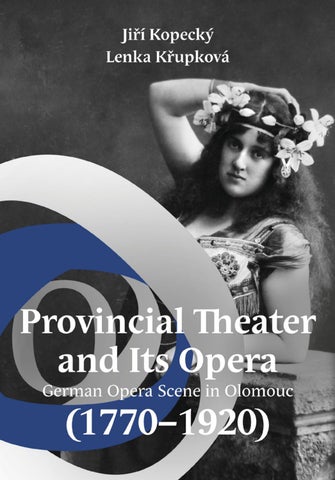
Reviewers: doc. PhDr. Mikuláš Bek, Ph.D.; Dr. Patrick Devine Edition Konvikt, Vol. 1 Edition managed by: prof. PhDr. Rostislav Švácha, CSc.; doc. PhDr. Lenka Křupková, Ph.D. Making and publishing of this book was enabled by financial support granted in 2015 by Ministry of Education, Youth and Sports, CZE, under the Institutional Development Plan, the Excelence Programme to Faculty of Arts, Palacký University Olomouc: Support of Scientific Outputs at the Faculty of Arts, Palacký University Olomouc project. / Zpracování a vydání publikace bylo umožněno díky finanční podpoře udělené roku 2015 Ministerstvem školství, mládeže a tělovýchovy ČR v rámci Institucionálního rozvojového plánu, okruhu Excelence ve vzdělávání, Filozofické fakultě Univerzity Palackého v Olomouci: Podpora vědeckých výstupů na FF UP. Unauthorized use of this work amounts to copyright infringement and may result in civil, administrative or criminal liability. / Neoprávněné užití tohoto díla je porušením autorských práv a může zakládat občanskoprávní, správněprávní, popř. trestněprávní zodpovědnost. Cover Photo: Photograph of the singer Clementine Krauss (SOkA, Collection of images and photographs, call no. xv-79) First edition © Jiří Kopecký, Lenka Křupková, 2015 Transl. © Eva Černínová, Viktor Heumann © Palacký University in Olomouc, 2015 ISBN 978-80-87895-50-4
5
Obsah Introductory Notes . . . . . . . . . . . . . . . . . . . . . . . . . . . . . . . . . . . . . . . . . . . . . . . . . . . 9 Theatre and City . . . . . . . . . . . . . . . . . . . . . . . . . . . . . . . . . . . . . . . . . . . . . . . . . . . . . 13 Local Administration in Olomouc and the City Theatre . . . . . . . . . . . . . . . . . . . . 13 Theatre Agreements between Managers and the City . . . . . . . . . . . . . . . . . . . . . 21 Separation of Duties between the City and the Theatre Manager . . . . . . . . . 23 Fire Safety Measures . . . . . . . . . . . . . . . . . . . . . . . . . . . . . . . . . . . . . . . . . . . . . . . 27 Theatre Season . . . . . . . . . . . . . . . . . . . . . . . . . . . . . . . . . . . . . . . . . . . . . . . . . . . . 29 Theatre Orchestra . . . . . . . . . . . . . . . . . . . . . . . . . . . . . . . . . . . . . . . . . . . . . . . . . 32 The City’s Supervision of the Repertoire and Theatre Staffing . . . . . . . . . . . . 36 Subscriptions and Admission Rates . . . . . . . . . . . . . . . . . . . . . . . . . . . . . . . . . . . 38 Olomouc Opera between 1770 and 1830 . . . . . . . . . . . . . . . . . . . . . . . . . . . . . . . . 49 The Opening of the Theatre on the Lower Square . . . . . . . . . . . . . . . . . . . . . . . . 49 Olomouc Citizens and Their Theatre . . . . . . . . . . . . . . . . . . . . . . . . . . . . . . . . . . . . 52 Bannholzer, Heir to the Olomouc Theatre Tradition . . . . . . . . . . . . . . . . . . . . . . . 56 New Theatre on the Upper Square . . . . . . . . . . . . . . . . . . . . . . . . . . . . . . . . . . . . . 59 Leopold Hoch 1830–1834 . . . . . . . . . . . . . . . . . . . . . . . . . . . . . . . . . . . . . . . . . . . . . 60 Difficult Beginnings . . . . . . . . . . . . . . . . . . . . . . . . . . . . . . . . . . . . . . . . . . . . . . . . 60 Karl Burghauser 1834/1836–1847 . . . . . . . . . . . . . . . . . . . . . . . . . . . . . . . . . . . . . . 61 Experienced Practitioner in Theatre . . . . . . . . . . . . . . . . . . . . . . . . . . . . . . . . . . 61 First Heyday of the Olomouc Opera . . . . . . . . . . . . . . . . . . . . . . . . . . . . . . . . . . 64 Friedrich Blum 1847–1859 . . . . . . . . . . . . . . . . . . . . . . . . . . . . . . . . . . . . . . . . . . . . 67 Maker, Fighter, and Loser . . . . . . . . . . . . . . . . . . . . . . . . . . . . . . . . . . . . . . . . . . . 67 Theatrical Empire . . . . . . . . . . . . . . . . . . . . . . . . . . . . . . . . . . . . . . . . . . . . . . . . . . . 71 The Theatre as a Court Institution . . . . . . . . . . . . . . . . . . . . . . . . . . . . . . . . . . . . 72 Beginning of the End . . . . . . . . . . . . . . . . . . . . . . . . . . . . . . . . . . . . . . . . . . . . . . . 84 Carl Haag 1859–1862 . . . . . . . . . . . . . . . . . . . . . . . . . . . . . . . . . . . . . . . . . . . . . . . . 89 A Debacle in the City Management . . . . . . . . . . . . . . . . . . . . . . . . . . . . . . . . . . . 89 The Maximum out of the Minimum . . . . . . . . . . . . . . . . . . . . . . . . . . . . . . . . . . . 91 Carl König 1862–1868 . . . . . . . . . . . . . . . . . . . . . . . . . . . . . . . . . . . . . . . . . . . . . . . 96 Actor Turned Manager, Manager Turned Swindler . . . . . . . . . . . . . . . . . . . . . 96 Violation of Contractual Terms: Who Is to Blame? . . . . . . . . . . . . . . . . . . . . . . 98 Wagner Times . . . . . . . . . . . . . . . . . . . . . . . . . . . . . . . . . . . . . . . . . . . . . . . . . . . . 100 The Fall of König and Overall Evaluation . . . . . . . . . . . . . . . . . . . . . . . . . . . . 105
OBSAH
6
IIgnatz Czernits 1868–1872 . . . . . . . . . . . . . . . . . . . . . . . . . . . . . . . . . . . . . . . . . . 108 Austrian Theatres around 1870 and the Insight of Czernits . . . . . . . . . . . . . 108 Negotiations with the City, the Crisis of the 1869–1870 Season . . . . . . . . . . . . 111 Opera Battles Mediocrity . . . . . . . . . . . . . . . . . . . . . . . . . . . . . . . . . . . . . . . . . . . 114 Julius Schwabe 1872–1874 . . . . . . . . . . . . . . . . . . . . . . . . . . . . . . . . . . . . . . . . . . . 118 Curious Theatre Audition . . . . . . . . . . . . . . . . . . . . . . . . . . . . . . . . . . . . . . . . . . . 118 Seasons under Criticism . . . . . . . . . . . . . . . . . . . . . . . . . . . . . . . . . . . . . . . . . . . . 121 Carl Joseph von Bertalan 1874–1878 . . . . . . . . . . . . . . . . . . . . . . . . . . . . . . . . . . . 123 An Excellent Clerk in the Theatre . . . . . . . . . . . . . . . . . . . . . . . . . . . . . . . . . . . . 123 Tender Proceedings and the Cautious Attitude of the City . . . . . . . . . . . . . . 126 Opera According to the Kapellmeister: Victorious Wagner and Uninteresting Meyerbeer . . . . . . . . . . . . . . . . . . . . . . . . . . . . . . . . . . . . . . . . 127 Julius Fritzsche 1878–1880 . . . . . . . . . . . . . . . . . . . . . . . . . . . . . . . . . . . . . . . . . . . 133 Aida in Olomouc for the First Time Ever – the Path to a Financial Crisis . . . 133 The Peak of the Financial Crisis – Departure from Olomouc . . . . . . . . . . . . . 137 Emanuel Raul 1880–1883 . . . . . . . . . . . . . . . . . . . . . . . . . . . . . . . . . . . . . . . . . . . . 138 Wasted Potential of the Ensemble . . . . . . . . . . . . . . . . . . . . . . . . . . . . . . . . . . . 138 Frugality at the Expense of Quality . . . . . . . . . . . . . . . . . . . . . . . . . . . . . . . . . . . 141 Gustav Mahler in the Misery of the Olomouc Theatre . . . . . . . . . . . . . . . . . . 143 Emil Schönerstädt 1883–1884 . . . . . . . . . . . . . . . . . . . . . . . . . . . . . . . . . . . . . . . . 148 Scandalous Opera with New Scenery . . . . . . . . . . . . . . . . . . . . . . . . . . . . . . . . 148 Robert Müller 1884–1887 . . . . . . . . . . . . . . . . . . . . . . . . . . . . . . . . . . . . . . . . . . . . 152 Attempts to Close the Opera . . . . . . . . . . . . . . . . . . . . . . . . . . . . . . . . . . . . . . . . 152 Emanuel Westen 1887–1888 . . . . . . . . . . . . . . . . . . . . . . . . . . . . . . . . . . . . . . . . . 157 Still Unprofitable . . . . . . . . . . . . . . . . . . . . . . . . . . . . . . . . . . . . . . . . . . . . . . . . . . . 157 Carl Stick 1888–1890 . . . . . . . . . . . . . . . . . . . . . . . . . . . . . . . . . . . . . . . . . . . . . . . . 159 Manager of Theatre Scum . . . . . . . . . . . . . . . . . . . . . . . . . . . . . . . . . . . . . . . . . . 159 Carl Berghof 1890–1896 . . . . . . . . . . . . . . . . . . . . . . . . . . . . . . . . . . . . . . . . . . . . . 164 The Rise to Standard Operations . . . . . . . . . . . . . . . . . . . . . . . . . . . . . . . . . . . . 164 Remaining in Olomouc in Exchange for Lower Subsidies . . . . . . . . . . . . . . . 168 The Bartered Bride in the Municipal Theatre for the First Time . . . . . . . . . . . 171 Berghof Adored and Damned . . . . . . . . . . . . . . . . . . . . . . . . . . . . . . . . . . . . . . . . 172 Stanislaus Lesser 1896–1904 . . . . . . . . . . . . . . . . . . . . . . . . . . . . . . . . . . . . . . . . . 174 Seeking the Favour of the Local Audience . . . . . . . . . . . . . . . . . . . . . . . . . . . . . 174 The Only Performance of Smetana’s Dalibor . . . . . . . . . . . . . . . . . . . . . . . . . . 177 Another Non-Refundable Investment and the Adamant Municipal Council . . . . . . . . . . . . . . . . . . . . . . . . . . . . . . . . . 180 The Tragic Ending to Lesser’s Career in Olomouc . . . . . . . . . . . . . . . . . . . . . . 185
OBSAH 7
Carl Rübsam, Leopold Schmid 1904–1908 . . . . . . . . . . . . . . . . . . . . . . . . . . . . . . 188 Investing in Costly Performance Rights . . . . . . . . . . . . . . . . . . . . . . . . . . . . . . 188 Report on Deficiencies in the Management of the Municipal Theatre . . . . . . . . . . . . . . . . . . . . . . . . . . . . . . . . . . . . . . . . . . . 193 Leopold Schmid 1908–1917 . . . . . . . . . . . . . . . . . . . . . . . . . . . . . . . . . . . . . . . . . . 198 In the Name of Wagner . . . . . . . . . . . . . . . . . . . . . . . . . . . . . . . . . . . . . . . . . . . . 199 Competition from Cinema and Modern Music and Related Concerns . . . . . . . . . . . . . . . . . . . . . . . . . . . . . . . . . . . . . . . . . . . . . 203 Discontinuation of Opera Production during the War . . . . . . . . . . . . . . . . . . 206 Dr. Robert Schlismann-Brandt 1917–1920 . . . . . . . . . . . . . . . . . . . . . . . . . . . . . . 207 Assistance from the Brno Ensemble . . . . . . . . . . . . . . . . . . . . . . . . . . . . . . . . . . 207 Criticism of the Theatre Management . . . . . . . . . . . . . . . . . . . . . . . . . . . . . . . 209 “Nouveaux riches” in the Olomouc Audience . . . . . . . . . . . . . . . . . . . . . . . . . . 211 Takeover of the Olomouc German Theatre by Czech Management . . . . . . . . . 213 Czechs Returning to the German Theatre . . . . . . . . . . . . . . . . . . . . . . . . . . . . 213 Epilogue . . . . . . . . . . . . . . . . . . . . . . . . . . . . . . . . . . . . . . . . . . . . . . . . . . . . . . . . 216 German Seasons in the Czech Theatre: 1920–1922 . . . . . . . . . . . . . . . . . . . . . . .218 The Opera Repertoire and Its Critical Reflection at the Time . . . . . . . . . . . . 221 From Singspiel to Opera . . . . . . . . . . . . . . . . . . . . . . . . . . . . . . . . . . . . . . . . . . . . . 221 Before the Opening of the Theatre on the Upper Square . . . . . . . . . . . . . . . . . 224 Triumphant Victory of Italian Opera and French Grand Opéra . . . . . . . . . . . . . 226 Introduction of “Modern” Repertoire . . . . . . . . . . . . . . . . . . . . . . . . . . . . . . . . . . 231 The Public and Its Opinion on Olomouc Opera . . . . . . . . . . . . . . . . . . . . . . . . . . 233 German Opera . . . . . . . . . . . . . . . . . . . . . . . . . . . . . . . . . . . . . . . . . . . . . . . . . . . . . .236 Older German Opera . . . . . . . . . . . . . . . . . . . . . . . . . . . . . . . . . . . . . . . . . . . . . . 236 Acclaimed Wagner . . . . . . . . . . . . . . . . . . . . . . . . . . . . . . . . . . . . . . . . . . . . . . . . 244 Second-Rate Operas . . . . . . . . . . . . . . . . . . . . . . . . . . . . . . . . . . . . . . . . . . . . . . . 248 Search for New National Opera . . . . . . . . . . . . . . . . . . . . . . . . . . . . . . . . . . . . . 251 French Opera . . . . . . . . . . . . . . . . . . . . . . . . . . . . . . . . . . . . . . . . . . . . . . . . . . . . . . 255 Faust . . . . . . . . . . . . . . . . . . . . . . . . . . . . . . . . . . . . . . . . . . . . . . . . . . . . . . . . . . . . 255 “Inanimate Antiquities” and “musikalischer Schmarrn” . . . . . . . . . . . . . . . . 256 Operas by the Greats of Grand Opéra . . . . . . . . . . . . . . . . . . . . . . . . . . . . . . . 258 Famous Operas of the Late 19th Century . . . . . . . . . . . . . . . . . . . . . . . . . . . . . . 263 Italian Opera . . . . . . . . . . . . . . . . . . . . . . . . . . . . . . . . . . . . . . . . . . . . . . . . . . . . . . 265 Donizetti, Bellini, Rossini . . . . . . . . . . . . . . . . . . . . . . . . . . . . . . . . . . . . . . . . . . . 265 Verdi . . . . . . . . . . . . . . . . . . . . . . . . . . . . . . . . . . . . . . . . . . . . . . . . . . . . . . . . . . . . 270 Modern Italian Opera . . . . . . . . . . . . . . . . . . . . . . . . . . . . . . . . . . . . . . . . . . . . . 274 Czech and Slovak Opera . . . . . . . . . . . . . . . . . . . . . . . . . . . . . . . . . . . . . . . . . . . . . 276
OBSAH
8
Opera Staging Practice in the Olomouc Theatre . . . . . . . . . . . . . . . . . . . . . . . . 281 From Panoptical Scenes to Grand Opera Effects . . . . . . . . . . . . . . . . . . . . . . . . . 281 Imperfect Means of the Universal Provincial Stage . . . . . . . . . . . . . . . . . . . . . . . 290 Singers of the Municipal Theatre in Olomouc . . . . . . . . . . . . . . . . . . . . . . . . . 297 Fluctuation of Members . . . . . . . . . . . . . . . . . . . . . . . . . . . . . . . . . . . . . . . . . . . . . 297 Young Talents and Fading Stars . . . . . . . . . . . . . . . . . . . . . . . . . . . . . . . . . . . . . . . 298 Specialised or Versatile Singing Skills? . . . . . . . . . . . . . . . . . . . . . . . . . . . . . . . . . 299 Remuneration of the Singers . . . . . . . . . . . . . . . . . . . . . . . . . . . . . . . . . . . . . . . . . 302 Blame It on the Manager . . . . . . . . . . . . . . . . . . . . . . . . . . . . . . . . . . . . . . . . . . . . . 307 Singers under the Scrutiny of the Audience . . . . . . . . . . . . . . . . . . . . . . . . . . . . 308 Audience of the Municipal Theatre in Olomouc . . . . . . . . . . . . . . . . . . . . . . . . 313 Noblemen and Townsmen around 1800 . . . . . . . . . . . . . . . . . . . . . . . . . . . . . . . . 313 Emergence of Municipal Audience . . . . . . . . . . . . . . . . . . . . . . . . . . . . . . . . . . . . .314 The “Voice of the People” Selects the Repertoire . . . . . . . . . . . . . . . . . . . . . . . . 316 Confident Townsmen and Their Theatre . . . . . . . . . . . . . . . . . . . . . . . . . . . . . . . . 318 Gallery Seats . . . . . . . . . . . . . . . . . . . . . . . . . . . . . . . . . . . . . . . . . . . . . . . . . . . . . . . 319 Clerks in the Theatre . . . . . . . . . . . . . . . . . . . . . . . . . . . . . . . . . . . . . . . . . . . . . . . . 320 “Mandatory” Visit to the Theatre . . . . . . . . . . . . . . . . . . . . . . . . . . . . . . . . . . . . . . 321 Manipulation of the Audience . . . . . . . . . . . . . . . . . . . . . . . . . . . . . . . . . . . . . . . . 323 Zusammenfassung . . . . . . . . . . . . . . . . . . . . . . . . . . . . . . . . . . . . . . . . . . . . . . . . . 327 Abbreviations . . . . . . . . . . . . . . . . . . . . . . . . . . . . . . . . . . . . . . . . . . . . . . . . . . . . . . 337 Bibliography and Sources . . . . . . . . . . . . . . . . . . . . . . . . . . . . . . . . . . . . . . . . . . . 339 Lexicons: . . . . . . . . . . . . . . . . . . . . . . . . . . . . . . . . . . . . . . . . . . . . . . . . . . . . . . . . . . 351 Web Sources . . . . . . . . . . . . . . . . . . . . . . . . . . . . . . . . . . . . . . . . . . . . . . . . . . . . . . . 352 Archival Sources, Almanacs, Periodicals . . . . . . . . . . . . . . . . . . . . . . . . . . . . . 354 Index . . . . . . . . . . . . . . . . . . . . . . . . . . . . . . . . . . . . . . . . . . . . . . . . . . . . . . . . . . . . . 359
OBSAH
Introductory Notes 9
Introductory Notes An emphasis on exploring topics related to the development of the bourgeois society of the 19th century is one of the relatively new phenomena of Czech historiography. The reasons behind this revived interest are obvious – they are related to the changes Czech society has been undergoing since the early 1990s. With the optimism of the November 1989 revolution gradually waning, the restitution or restoration of functional bourgeois institutions and societal structures is proving much more difficult than was thought. This has prompted historians to study the history of the 19th century, a period which saw the birth of many institutions that still form the foundations of the “bourgeois” or “capitalist” society. This applies to political parties, public administration, the social system, and cultural institutions alike. The present text deals with the social history of a bourgeois cultural institution par excellence – a city opera house. A glimpse into the history of this institution shows a number of problematic constellations that continue to trouble the operations of city theatres and cultural institutions even today. There are already several monographs available on the Olomouc Theatre of the 19th century. Authors such as Mořic Remeš or Stanislav Langer described the historical development of theatre operations. Although their texts are still usable, other analyses have been following the opposite direction, opting for detailed research and specialised studies.1 The present publication does not aim to be anything other than a study of sources that preliminarily evaluates only one component of the whole theatre (opera, next to farce, operetta, and drama). There is still the problem of the disintegration of the history of the Olomouc Theatre into individual sections. All the information sources we analysed are listed in the sources and literature. The unfortunate starting point of our contemplations was the fact that the Olomouc Theatre archive was destroyed in a flood in the 1930s (at that time, a branch of the River Morava ran down the street behind the theatre building). In addition, the remaining and newer sources describing the operations of the theatre were taken by the high water of 1997. What we had was the contemporary press, and the largest number of sources on theatre and opera operations in particular was found in the Olomouc City Archives. Apart from a collection of posters, theatre contracts, and records of the Municipal Board, they house numerous and as yet unprocessed documents involving heterogeneous material of a mostly official nature (correspondence between theatre managers and the
1 In this context, attention needs to be drawn to texts by Jitka Balatková, Jiří Fiala, and, in particular, Jiří Štefanides, who, besides publishing, is also building a collection of resources concerning individual Olomouc seasons under the auspices of the Documentation Centre of Theatre Studies at the Faculty of Arts of Palacký University in Olomouc.
OBSAH
Introductory Notes 10
Municipal Council, the Theatre Committee’s reports for the Municipal Council, reports of interviews with theatre managers, theatre managers’ testimonials, wage records, inventories, etc.). Information on the operation of the theatre was also generated from (i) statistical yearbooks published by the Municipal Council, (ii) the membership lists of the theatre ensemble for several seasons which were found in the Olomouc theatre annals, and (iii) a valuable resource describing the staffing of the theatre and especially its theatre managers which consists of particularly Berlin almanacs that each year detail the German Theatre groups. Furthermore, we searched the Foundation of the Brno Provincial Archives; a series of questions were answered thanks to materials stored in Vienna, the centre of the Habsburg monarchy, and in order to finalise some of the problems, other theatrical centres needed to be taken into account: Bratislava, Lviv, Karlovy Vary, Krakow, Prague, Opava, Graz, and Teplice. The history of the German opera scene is described using the socio-historical background of the development of the city of Olomouc. The relationship between the city as the owner of the theatre and the theatre managers, the system of powers and responsibilities on both sides, and the structure of the economic and artistic life of the city theatre are best understood when consulting the contracts that the city would make with the new theatre managers before handing the theatre over. By analysing the various provisions of the contracts at different times we aim to show that, over time, there was hardly a single step that the theatre manager could make without the consent of the municipal government. In the last third of the 19th century, the theatre manager was no longer an independent impresario, who would, at the moment of concluding the lease, enter the theatre business with all the risks, but also freedom. The role of the city as the theatre owner strengthened substantially, especially since the theatre manager was no longer required to pay rent for the building; the city took over the majority of the operating costs. The core section of the publication is divided according to the historical stages of the Olomouc German opera stage, which depended on the individual terms of office of theatre managers, because theatre managers played a decisive role in determining the character of each term. The theatre manager was also the chief economist of the institution, the production manager, and the purchaser of performance rights for new pieces, which he himself procured; he searched for talented and, if possible, cheap singers and built the theatre ensemble; additionally, he was the chief stage director, set designer, and sometimes an active performer – actor, singer, or Kapellmeister. Thus, the theatre manager continued in many ways to be a sort of a universal principal; even in the first two decades of the 20th century, the German Olomouc venue still lacked the modern organisation of theatre operations based on the division of labour and specialisation, with professionals responsible for individual artistic components and a separate theatre management. Olomouc theatre managers were no different from the opera impresario of the Italian theatre of the second half of the 19th century, who was also a “patron of the arts” and a “sucker” at the same time because he was under constant pressure to earn money through art (Toelle
OBSAH
Introductory Notes 11
2007, 8). Additionally, Olomouc maintained a general opinion of the theatre manager as an untrustworthy miser who was stingy with others, cheated artists by reducing their wages, and deceived the city government. Permanent distrust of the theatre manager as someone who could never be completely trusted to tell the truth and therefore needed to be properly investigated emanates from nearly all the records of the Municipal Board discussing the numerous requests of theatre managers. The operational problems of the theatre and its organisation are therefore outlined in order to illustrate the situation in the individual stages. The terms of office of the theatre managers are described in chronological order in terms of the staffing of the opera ensemble and major events in the opera dramaturgy. As the processing of these chapters depended directly on a highly diverse base of sources, the resulting heterogeneity of the text is a necessary concession of the authors to the given information sources. The second part of the book consists of general chapters devoted to crosscutting themes across a chronology of the period under review. A separate chapter is dedicated to the repertoire of German opera houses through the prism of the opera dramaturgy of the time and to the national origin of the repertoire (German, Italian, French, and Slavic opera). The repertoire of the Olomouc Theatre and its development, transformation, and the dominant figures of the stages are also seen through the lens of the history of its reception, which may to some extent help to create the image of the preferences in taste of the theatre audience of the provincial Austro-Hungarian theatre. Despite the fact that there are no extant direction books, sketches, or drawings of the decorations, costumes, or scenes available, a separate chapter attempts to reconstruct the directional approaches and stage management of the operas performed in the Olomouc Theatre. Another chapter deals with the typology of singers and the principles of compiling vocal ensembles at different stages of the period being monitored in the history of the Olomouc City Theatre. Of the enormous number of singers who performed in this venue over the course of 150 years, only the best-known or most successful are mentioned in detail; further research could perhaps focus on the individual singers’ fates and career paths. Similarly, based on the limited resources, a sociological probe of the structure of the opera audience at the Olomouc City Theatre was carried out. The enclosed electronic medium and website http://vffup.upol.cz/edice/konvikt/jiri-kopecky-lenka-krupkova-provincial-theater-and-its-opera-1770-1918 contain a list of members of the Olomouc Opera and an updated list of premieres, including the number of repeats, sorted by season, which was provided by Jitka Balatková. Contemporary identifying practice offers a reliable solution to terminological problems. The adjective “Austrian” appears too general, requiring a more detailed identification, as is the case, for example, in the 1839 theatre yearbook (see the sources of the Prague Theatre Institute). The title of a major chapter, “Personalstand sammt Novitäten-Angabe der österreichischen Bühnen höhern Ranges” (“Headcount together with information on novelties on of Austrian stages of higher rank”), suggests a division of selected operas (in the case of Lviv it is “deutsches Theater” (“German Theatre”) and “polnische Nationalbühne”
OBSAH
Introductory Notes 12
(“Polish National Stage”)), while in the case of Prague it is “deutsche Bühne” (“German Stage”) and “böhmisches Theater” (“Bohemian Theatre”)). With other stages – e.g. “K. k. Hofburgtheater”, “Iglau”, “Leitmeritz”, “Graz”, “Brünn”, “Ofen”, “Ollmütz”, “Pesth”, “Pilsen”, and “Troppau” – no such specification was necessary as these were German or German-speaking. In Olomouc, the Czech nationalist movement had to rely on the platform of amateur theatres or perform outside the main stage season of the theatre building. Czech members acted patriotically, especially after leaving the Olomouc Theatre; tension in the repertoire, between the increasingly assertive Czech opera and the most popular German opera drama pieces (Carl Maria von Weber, Richard Wagner), escalated into an irreconcilable conflict around 1900. The crisis ended symbolically with the fall of the whole institution and the foundation of a new one, this time in the context of early Czechoslovakia. It should be noted that operas were usually performed in German and under German names. The relation to the original was not always straightforward. Some works were known under several titles, and the naming system changed continuously (see e.g. Cherubini’s Die Tage der Gefahr (The Two Days) or Der Wasserträger (The Water Carrier)). As personal names were often found to have several spelling variants, these variants appear unchanged in the text. Our work would not have been possible without the help of a plethora of experts who have long studied 19th–century musical life and theatre. Our thanks go to Jitka Balatková (Olomouc), Jiří Fiala (Olomouc), Jiří Štefanides (Olomouc), Jan Trojan (Brno), Alena Jakubcová (Prague), Jitka Ludvová (Prague), and Judith Fiehler (Washington). Luba Kyjanovska (Lviv), Jana Laslavíková (Bratislava), Vlasta Reittererová (Prague, Vienna), and Małgorzata Woźna-Stankiewicz (Krakow) helped us uncover the links between the Olomouc Opera and other theatres, which once played a significant role in the movement of theatre managers and singers. Olomouc, September 2015 Lenka Křupková, Jiří Kopecký
OBSAH
Theatre and City 13
Theatre and City Local Administration in Olomouc and the City Theatre A look back at the history of the permanent theatre in Olomouc reveals a finer division into the periods 1770–1806, 1806–1830, 1830–1847, 1847–1868 and 1868–1878, 1878–1890, and 1890–1920. While this periodisation relies on the individual terms of office of theatre managers, it also reflects cultural and social transformations and political events. The information about the developmental stages is limited by the sources available, which do not provide us – at least for now – with an insight into the management of the opera from 1770 to 1830 and to 1847, as compared to the knowledge we have of the post-1848 period. Life in Olomouc was determined by the fact that the city was a stronghold and the seat of an archbishop. Periods of apparent inactivity alternated with times of heightened alert – Olomouc had to both fight and represent. The citizens of Olomouc had good manners instilled in them, they knew what cultivated entertainment was like, and yet, at the same time, these modes of behaviour reek of a certain superficiality. Everything which was perhaps too directly appealing attracted a selfcontained world that protected its own, while being informed of the “big” world around. The time of the 1815 “waltz” Congress of Vienna was when Olomouc hosted nine French generals, other troops from Napoleon’s defeated army, and a large group of servants. Prior to their return to France, they danced at a farewell ball with the daughters of the members of the sharpshooter unit and socialised with the local officers (Fiala 2009a, 519). A welcome boost to the social life of Olomouc, which also certainly helped the theatre manager, was the foundation of the Casino, “wo sich höhere Beamte, Professoren, Offizier, Aerzte, Advokaten zusammenfanden und unter dem politisch unverfänglichen Namen ‘Casino’ einen Sammelpunkt freierer Geister begründeten (ca 1813), um hier nicht bloß Unterhaltungsabende mit Konzert, Tanz, Dilettantentheater oder lebenden Bildern zu veranstalten, sondern auch persönlichen Meinungsaustausch über Zeit- und zu Streitfragen zu pflegen.” (“where senior officials, professors, officers, physicians, and lawyers came together and under the politically innocuous name ‘Casino’ founded a rallying point of freer spirits (ca. 1813). They organised not only entertainment evenings such as concerts,
OBSAH
Theatre and City 14
Annex 1: Compare two prints of the interior of the Olomouc Theatre (Černý 1968, no. 122), AMO, C 1838/1 (printed data above: Alois Rohn: Královské městské divadlo v Olomouci, litography, 1839, VMO, O 437), reverse of the poster of the show Der Puls, 27 May, 1838.
OBSAH
Theatre and City 15
dances, or amateur theatre with ‘living pictures’ but also maintained an exchange of opinions and disputes over various matters.” [Kux 1937, 288]).2 Around 1820 the city enjoyed a good cultural life: the theatre manager Josef Bannholzer upgraded the interior of the theatre, renovated the stage sets and costumes, and raised the quality of the performances, transforming a fairly average theatre into the natural centre of the city’s culture. This all culminated with the construction of a new theatre building on the Upper Square (1830). When the city advertised a tender for the new theatre, it was proud to draw attention to the “das hiesige städtische, seit Jahren einigen ganz neu erbaute Theater und die Benützung des mit allen Vorrichtungen der Bequemlichkeit und des Vergnügens hergestellten Redoutensaales, samt übrigen hinzu gehörigen Lokalitäten” (“the local municipal theatre, newly built a few years ago, and the Reduta (Ballroom) Hall equipped with every device for convenience and pleasure, together with other related localities”) (Inteligenzblatt für Mähren, 1836, February 18, 261–62, AMO, box no. 1047). Here it is necessary to recall Alois Vojtĕch Šembera (1807–1882), a linguist and literary historian, and future professor at the University of Vienna. Following below, Šembera’s description could apply to both the 1850s and his own experience of being a student in the 1840s: “The citizens of Olomouc mostly entertain themselves at the theatre, at book clubs, and in cafés, while in summer they spend their leisure at the city shooting range and by walking along the Rudolph and John Avenues and around the Franz Orchard, beautifully restored in 1858. Plays are usually staged from September until Easter, and, since other forms of entertainment are scarce, are more popular here than elsewhere” (Šembera 1861, 84). The revolutionary explosions of the late 1840s initially contributed to the overall flourishing of the city and theatre. The support from the Viennese court and the Olomouc coronation of Emperor Franz Joseph I put the Olomouc Theatre on the level of a court theatre. The then theatre entrepreneur Friedrich Blum managed to make the best of the situation. Building his business on the basis of a broad combination of entertainment, education, and representation, Blum had a major impact on the life of the city. He was able to negotiate competitive conditions with the Municipal Council, and thus welcomed the neo-absolutism of the 1850s as an influential “cultural politician”. Perhaps proposed by Blum himself, perhaps prompted by the city, the theatre was to acquire a noble character and, particularly in the “fifties”, keep pace with France, meaning the fashionable and impressive lifestyle of the Second Empire. Before the start of the 1847–1848 season, the theatre manager was to bring ten new stage sets with him to replace the old ones, mend the theatre furniture, and bring fifty new items to equip the scene. The interior of the theatre was to be newly decorated “nach der Leopoldstädter Theaterbühne in Wien im Rococo-Style” (“after the Leopoldstädter Theatre in Vienna in the Rococo style”)
2 The Casino was founded in 1817, not in 1813. At the very beginning it had 136 members; the orchestra could gradually count with 200 members (Nešpor 1998, 217).
OBSAH
Theatre and City 16
(AMO–RH, doc. board 1048).3 The city helped enrich the theatre one more time in 1852, requesting the theatre manager in the last article of the contract to donate the stage sets of Meyerbeer’s opera Der Prophet (The Prophet) to the Municipal Council and provide the faded pieces of the stage with a fresh coat. We assume that this gift, entered in the inventory of the theatre, included the “sun machine” (“Sonnen-Apparat”), which was absolutely essential to this opera (and other opera pieces). It was, therefore, not any trivial whim of the city but the acquisition of completely modern technical equipment that the leading stages in Paris, Dresden, Vienna, and Prague could boast. Thanks to Blum, a summer stage opened in Olomouc, filling the hearts of the city representatives with high hopes, because now Olomouc ranked alongside Vienna and Prague, which also put on shows during the summer. Blum submitted his application to build the Arena to the Municipal Board on 21 January, 1854; at that time he already had a project for the summer theatre, which was to stage both farce and drama (AMO, doc. board 1048, file no. C. 6. XII). He made use of the experience he had gained in the summer, which he spent in Karlovy Vary, and he also designed the location of the auditorium with regard to the shade and the relation of the Arena to restaurants. To give a better idea, he enclosed a picture of the Leipzig arena (“Sommertheater in Leipzig”) in the letter. Carl König reminisced about the high status the theatre enjoyed within the social life of Olomouc, claiming that Blum had used his Olomouc earnings to subsidise the Krakow theatre, which he took over in 1856 with a state subsidy of 10,000 florins. Not only was the Olomouc Theatre not subsidised, but the theatre manager even paid a yearly rent (Štefanides 2009c, 45). The theatre had the power to soften the understanding that the former capital of Moravia was losing its significance (Štefanides et al. 2008, 43).4 The post-1848 education reform introduced a seventh and eighth grade in grammar schools, which took over the role of the Faculty of Arts. In 1847 the Collegium Nobilium was transferred to Brno; in 1851 the Faculty of Arts was closed down, followed by the Faculty of Law in 1855. This led to the downfall of the entire university, which was officially shut down on 30 June, 1860 (Šembera 1861, 37; Nešpor 1998, 293). The revolutionary year also affected the demographics of the city. In 1848, Jews were given permission to settle in Olomouc, after having been banished by Vladislaus II of Hungary in 1454. However, the right to own immovable property was given to them only in 1860. As of 1857 the city had 238 citizens of the Jewish faith, while 3 The renovation of the theatre soon included the Reduta as well (Moravia, 1848, February 21, 96). 4 In addition, new information platforms emerged, which supported the theatrical culture. Blum had to do without the book printer Alois Skarnitzl, a music enthusiast, whose house was open to artists. Skarnitzl printed theatre yearbooks when Burghauser headed the theatre. From November 1852, the editorial staff of Franz Slawik published Die Olmützer Eilpost with the subtitle Blätter für belletristische Belehrung. Olmützer Allgemeiner Anzeiger, Tagesblatt zur Unterhaltung und Belehrung, Kunst, Leben geselliges, Handel und Gewerbe was first published in 1855 by the bookseller Johann Neugebauer, who dealt with the music market, among others, and who died in early 1857 (Olmützer allgemeiner Anzeiger, 1857, February 1).
OBSAH
Theatre and City 17
the records of 1865 speak of 125 Jewish families. While for merchants this meant unwelcome competition,5 theatrical life, however, could now benefit from a more diverse audience and a potential influx of Jewish theatre members. Musical life began to be dominated by the Musikverein, founded in 1851.6 The musical society set up a music school headed by Franz Trousil (1852) and, above all, had the intrada cancelled. Pressured by the Musikverein, the city hall cancelled the city trumpeters in 1852; the reorganisation of the city offices brought about the dissolution of the 3rd Artillery Regiment, thus releasing many professional musicians. The late 1870s saw the city of Olomouc undergo a rather tumultuous development. The comprehensive development of the city was considerably affected by the process of tearing down the city fortification system, which culminated with the imperial decree of 9 March 1886 that abolished the city statute of a national stronghold, and with the subsequent annulment of demolition reverses relating to the outposts (Skoupý 2009, 43–44). While the building boom was not always smooth and trouble-free, because first the city had to purchase the expensive lands occupied by fortifications, Olomouc was finally able to modernise itself and make up for the delay it had suffered in the preceding decades compared to other cities in the surrounding area. The new layout of Olomouc followed the principles of modern urban planning. Industrial buildings were erected along the main railway line and new residential neighbourhoods built around the local line and access roads (Skoupý 2009, 46). An important railway junction, Olomouc became the seat of the Directorate of State Railways. At the turn of the 1880s and 1890s the whole city was electrified, electric street lighting was introduced, and, in 1888, power was also brought to the city theatre. A little later (in 1899), electric trams started riding the Olomouc streets. Additionally, a telephone switchboard was launched in 1890. As the city grew in size, it attracted more and more people: while around 1880 it had approximately 12,000 inhabitants, in 1918 their number reached 25,000. The ratio of Czechs versus Germans, however, remained about the same throughout this period; roughly two thirds of the inhabitants claimed German citizenship. The Czech population lived primarily in the surrounding villages and suburbs, which raised concerns among the Olomouc Germans and prompted the city hall and some of the German associations to entice Germans living in the northern regions of Moravia and Silesia to move to Olomouc. Control over the city, nevertheless, remained safely in German hands, because the election 5 Before 1848, Jews had been trading in Olomouc for almost 20 years (Drábek 1948, 49; Leitmetzer 2001, 17; Nešpor 1998, 238; Fiala 2009c, 37). 6 In 1868 Wladimir Laber was made its conductor. Under his baton the club gradually grew until in the 1880s it attained the quality that met both the city and critics’ expectations. The Männergesangverein was founded in 1860 (Štefanides et al. 2008, 52; Hirnerová 2006, 67), and in 1871 Laber took over as its head. The predecessor of both the institutions was “Männergesangverein der Rechtshörer” (a student musical society), which was founded in 1846. The first choirmaster of the chalice association was Arnošt Förchtgott-Tovačovský. Other Olomouc associations included the Kammermusikverein (1862, active until 1867) and Damensingverein.
OBSAH
Theatre and City 18
code of the time and especially the predominance of Germans among voters prevented Czechs from joining the Municipal Board. Despite elections, the city government was traditionally managed by the mayors, who exercised long-term influence over the running of institutions. From 1851 to 1865 Franz Kreiml was the Olomouc mayor; he, his deputy mayor, and six members of the great committee founded a municipal council (“Gemeinderath”). From 1850 to 1855 the importance of Olomouc grew thanks to the fact that the city became the seat of the regional government for half of Moravia (“K. k. Kreis regierung”). Following its abolition in April 1855 the city, the seat of one of the six regional offices (“K. k. Kreisbehörde”), was subordinated directly to the Brno provincial government (Fiala 2009c, 17–18). In addition, with the arrival of Archbishop Friedrich Egon von Fürstenberg in 1853, Olomouc began losing the favour of the imperial court. Franz Joseph I imposed monetary penalties on the Olomouc Archdiocese in 1857. Fürstenberg refused to recognise the 1861 February constitution, and also criticised the Austro-Hungarian Compromise of 1867. Great disillusion spread when the Prussians defeated the Austrian army in 1866: following massive preparations in the stronghold, the Prussians marched around Olomouc, and the decisive battle took place near Hradec Králové. Peace negotiations were concluded on 23 August, 1866, in Prague. The Olomouc fortress thus finally lost its original function. The city remained a military centre, but acquired a new status in 1866. From 1866 to 1872, Mayor Karl Schrötter reorganised the police force, fire department, and general education system, and strove to reopen the university. He contributed to the setting up of the city archives and the enrichment of the museum collections.7 His successor Josef von Engel remained in office for a full 24 years, starting in 1872; as a capable entrepreneur he supported the demolition of the fortifications and thus the closure of the Olomouc fortress. This brought to an end the key role of Olomouc as a massive fortress near the AustroPrussian border, which was still being built between the years 1850 and 1875, housing the headquarters of several military institutions (Fiala 2009c, 17, 27, 30–35). In terms of language, both the city and the theatre remained relatively tolerant of the Czech language until the 1860s, despite the clear superiority of the German element, but subsequently the leading representatives of Olomouc were careful to preserve the German character of the main institutions. The mayors Josef von Engel8
7 While touring regions affected by the war, on 20 September, 1866, the carriages of Franz Joseph I travelled through Vyškov and Prostějov to Olomouc, heading to Opava. On 21 September, the emperor decorated Mayor Karl Schrötter, at 6 p.m. a reception was held in the archbishop’s palace, and a comedy and an operetta were put on in the theatre for the emperor and his entourage. The emperor left in the morning of 22 September, 1866; during his visit he issued a permit to establish junior grammar schools in Brno and Olomouc with instruction in Czech (Fiala 2009c, 33). 8 Josef von Engel (1830–1900) was Mayor of Olomouc from 1872 to 1896. He had a large share in improving the city finances and establishing a balanced budget. His main objective was to keep the German character of the city (Tichák 2005, 43).
OBSAH
Theatre and City 19
and Karl Brandhuber9 were not very accommodating of the Czech minority either. During the period in office of the latter, political unity among the German population was maintained especially as a result of the close familial and proprietorial relations between important members of the Municipal Council (Skoupý 2009, 52, 580). The city government, which influenced the events in the city theatre, was elected on the basis of a statute dating to 1866. The government consisted of thirty aldermen forming the Municipal Board, which elected an eight-member Municipal Council headed by the mayor and his deputy. The mayor was elected for four years, the deputy mayor and Municipal Councillors for two years; half of the Municipal Board changed every two years, and its members were elected by adult citizens of the city, albeit only those who paid the city at least six florins in taxes. The Municipal Board reported to the Provincial Assembly in matters of the management of municipal property; the governing authority of the Municipal Council was the Brno Provincial Government. When the statute expired in 1920, mayors in the Czechoslovak Republic were confirmed by the government; the Municipal Board consisted of sixty members, and the Municipal Council of a total of twenty members, including the mayor and his two deputies (Spáčil 2002, 20–23). In the Austro-Hungarian Empire the Municipal Council and Municipal Board were assisted by municipal authorities. Prior to 1866 the theatre manager communicated with the Municipal Council, but the subsequent boom of the bureaucratic apparatus hindered the manager’s communications with the city, as all that could be done now was to shift the responsibility around. The city agenda was divided between three departments (sections) and several committees: the first department dealt with construction, agricultural, and forest issues, the second department with humanitarian, sanitation, and education issues, and the third department with financial, accommodation, organisational, and legal issues. The sections and committees were made up of members of the Municipal Council (SJ I, 121–22). The theatrical entrepreneur was obliged to discuss any renovations or the purchase of new stage sets and building modifications with Section 1, while Section 2 monitored contractual terms and arts management, provided a report on each theatre season, and specified the selection procedure. Section 3 was in charge of adjusting the manager’s rent, imposing sanctions, and recovering debts. Members of Sections 1 and 3 who opposed extra spending (the theatre furnishings were thus deteriorating and the manager lacked the funds
9 Karl Brandhuber (1846–1934) served as mayor of Olomouc from 1896 to 1918. Through his business and family he was related to the major large-scale Olomouc industrialists Maurice and Robert Primavesi (Brandhuber’s wife was the daughter of Maurice Primavesi). Like von Engel, he also tried to keep a mainly German population in the city and prevent an influx of Czechs by not allowing the latter to purchase land or buildings. He helped the city flourish; under his guidance the city acquired a development plan, built a city power plant, street railway system, central cemetery, and new civic schools, and remodelled the city hall (Tichák 2005, 44–45). Also, between 1900 and 1918, Karl Brandhuber was the guardian of the Olomouc Male Chorus (Männergesangverein) and between 1896 and 1918 he was the guardian of the Music School of the Olomouc Music Association (Musikverein) (Hirnerová 2006, 115, 149).
OBSAH
Theatre and City 20
to restore his own equipment because of the high fees he paid the city) would often find themselves in conflict with members of Section 2, who, on the contrary, understood the importance of investments in an art institution. It was, for example, Section 3 which, in 1867, forced through a free lease of the theatre;10 this, however, came at the cost of extremely severe financial penalties if the contractual terms were violated. A number of complex negotiations preceded this step. Heated discussions marked the 1863–1864 season: Section 3 did not recommend the rent to be remitted after ascertaining that the theatre was making a profit. The influential councillor Josef Mandelblüh then stood up against the conclusion which was reached too superficially, highlighting the case of subsidised theatres. In addition, the Olomouc manager was limited by the admission and rental rates. In the end, the manager, Carl König, did not have to pay 500 florins for the 1863–1864 season; instead, he had to provide a guarantee that he was able to meet all his material and artistic obligations under the contract. The city thus gained direct supervision over the manager’s competencies concerning the economic and arts management. In reality, however, the city had been functioning as a supervisor all along and was not going to give up such influence. Theatre-related issues were first processed by the Theatre Committee (Theatercomité), which consisted of the members of the Municipal Board and Municipal Council, who worked across sections (usually three members from each section, i.e. 9 members in total). The chairman of the committee usually drafted a report on a particular application or issue, providing the opinion of the Theatre Committee. The report was presented at a meeting of the Municipal Board, which would take place every Monday; the board then voted for or against the opinion of the Theatre Committee. Thus, for example, with each new selection of the manager, the Theatre Committee shortlisted three candidates whose job references were found to be the best, and the representatives then elected a new manager of the Olomouc Theatre. The chairmen of the Theatre Committee were important citizens of the city. In 1878 the Theatre Committee was chaired by the notary Adolf Klim,11 five years later by Mayor Josef von Engel (Protocol, 1883, January 15), and from 1886 it was headed by the technical school manager Adolf Thannabaur.12 The next chairman was the future mayor and then deputy mayor Karl Brandhuber (from 1888 to 1895), followed by the Jewish entrepreneur Edward Hamburger (from 1899), and the last to head the committee was the Olomouc bookseller Friedrich Gross (from 1904) (SJ I–V). The Theatre Committee consisted primarily of important city officials and members of the urban intelligentsia – doctors, headmasters, traders, and large-scale entrepreneurs. For example, one of the long-time members of the Theatre Committee was Robert Primavesi (1854–1926), a factory owner, farmer, and wholesaler. 10 The Board considered this subsidy for the theatre, when discussing support for music in churches (NZ, 1870, November 3). 11 The notary Adolf Klim also chaired the Olomouc Male Chorus (Männergesangverein) from 1876 to 1879 and from 1879 to 1882 (Hirnerová 2006, 149). 12 Adolf Thannabaur (1831–1899) also chaired the Olomouc Male Chorus (Männergesangverein) from 1872 to 1875 and 1882 to 1898 (Hirnerová 2006, 161).