For more information, please contact Fletcher Priest: sustainability@fletcherpriest.com
Joanna Wilson
Sustainability Lead MA(Hons) MPhil ARB
Lorraine Chan
Project Leader and Material Reuse Champion
BArch MArch AACA
For more information, please contact Fletcher Priest: sustainability@fletcherpriest.com
Joanna Wilson
Sustainability Lead MA(Hons) MPhil ARB
Lorraine Chan
Project Leader and Material Reuse Champion
BArch MArch AACA
It has been encouraging and exciting to hear the conversations around circularity gaining momentum in the last few years. Despite the growing ambition, however, we find there is often a lack of knowledge about how to break down material reuse into understandable, manageable and actionable steps.
We wrote this Guide to share our experience and provide a replicable process for those who want to reuse materials, but don’t know where to start. We hope that by setting out a straightforward framework that can be adapted to individual projects or different materials, we can demystify material reuse and integrate it into project planning and design.
Collaboration and communication are key. We recognise that this guide is only one part of a wider movement to develop our industry’s capacity to reuse materials. Building on the knowledge others have shared, and working with our collaborators has been essential to developing this guide. We hope that by sharing what we have learnt, we can help streamline this process for others, enabling all of us to more efficiently develop and implement reuse strategies.
Each project and each material will have its own challenges and opportunities, and we know there are people who will be able to add more than we could at the time. We encourage others to adapt, develop, explore and share new opportunities as the industry evolves. In time, we hope that valuing existing materials will become the new normal, and we will create better buildings for everyone as a result.
Joanna Wilson, Sustainability Lead
Fletcher Priest Architects
Purpose
This guide aims to help those in the building industry to identify, develop and implement strategies for material reuse.
Components: the Guide vs the Catalogue
The Material Reuse Guide
The Guide first summarises the key background theory that explains why we reuse materials and what the priorities are.
It then sets out a step by step process by which to structure the material reuse process for your project. This is useful to read and explain to the project team at the start of a project. Refer back to throughout the design process and when preparing for the next stage of work .
The Material Reuse Catalogue
The Catalogue is a supplementary document to help you work through the reuse analysis process for specific materials.
It is a starting point to build on, rather than a completed report. Materials in the catalogue should be updated and added to as knowledge and experience is gathered through projects.
Theory
Waste and recovery
Circularity principles
Reuse options
Reuse processes
Timeline Setting up for success
Analyse
Refine + Build
Material catalogue
1. Skin
2. Structure 3. Service 4. Space plan 5. Stuff 6. Site
Theory
Waste and recovery
Circularity principles
Reuse options
The UK construction industry creates almost 140 million tonnes of waste and half comes from building demolition and construction*. As an industry we can significantly reduce this by focusing our efforts on reusing and recovering this waste.
Source:
of the UK’s total annual waste is from material waste from the construction industry ***
Material Reuse minimises the ecological, social, and climate impacts of the extraction and disposal of construction materials. Instead of mining the earth for new materials, we need to find ways to repurposing existing ones.
Reduce the production of new materials by repurposing the existing materials
Material assessment methods to investigate potential future uses. Material information is recorded to enable future reuse.
Buildings can be a material source, rather than continuing the damaging extraction of new materials.
Utilising the value of the existing The result is 'Urban Mining' or BAMB (buildings as material banks). This means circulating materials we already have in our built environment, not extracting new. Urban Mining, however, requires a deeper understanding of these material resources, and a deeper collaboration across consultants, contractors, and suppliers.
Need to reinvent disposal methods to reduce the amount of construction waste goes to landfill
'Building as Material Banks, BAMB, assumes that a material's time 'locked up' in a building, is just one period of time in it's life-cycle'.
When these materials are no longer needed in the building, they are freed and could be ready for reuse.
Historically, cities were built in this way, however recently, cheap energy and production has meant that we became used to a linear 'take, make, waste' system.
The circular economy is based on three principles, driven by design:
• Eliminate waste and pollution
• Circulate products and materials (at their highest value)
• Regenerate nature
(Ellen MacArthur Foundation)
materials
Upcycled / downcycled materials
Biogenic materials
Materials can be seen as always being in a constant state of flux, their time “locked up” in buildings is just one chapter in their lifecycle.
The bigger the loop the more energy and value lost
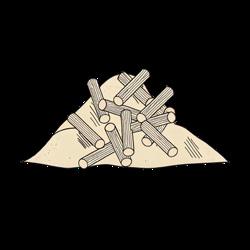

Re-Introduction to natural cycles where possible
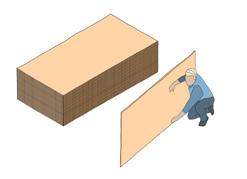
COMPOST (BIO-BASED MATERIAL)
Primary Source

RECYCLE
Turn into new materials
REMANUFACTURE
Turn materials into new products
Re-use products
REUSE

A Constructed Lifetime
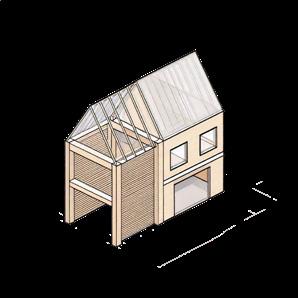
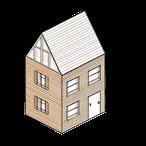
Circular economy aims to keep materials in use, prioritising the minimum reprocessing possible.
Keep the loop small
1. In-situ
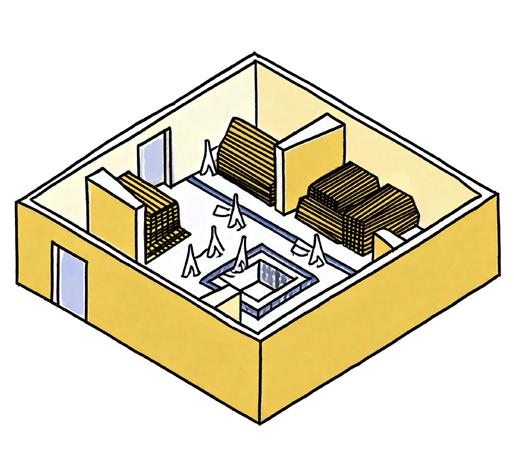
Prioritise retaining materials in-situ. This minimises cost and carbon associated with deconstruction and reconstruction. Often materials can be refurbished, reconditioned, or upgraded to meet new performance or aesthetic requirements.
2. On-Site
Retaining materials on-site enhances their value by utilising their narrative, reducing travel distances, and minimising processing. This approach, known as a closed-loop, emphasizes minimal processing and travel. The project should aim to reuse materials directly at the construction site by adapting to existing materials and structures in the development.
If on-site reuse is not feasible, keeping the materials within the same ownership (for example, reuse in another project owned by the same developer) increases the level of control over programme, cost and risk associated procuring reused materials, while directly reducing the embodied carbon of client’s other projects.
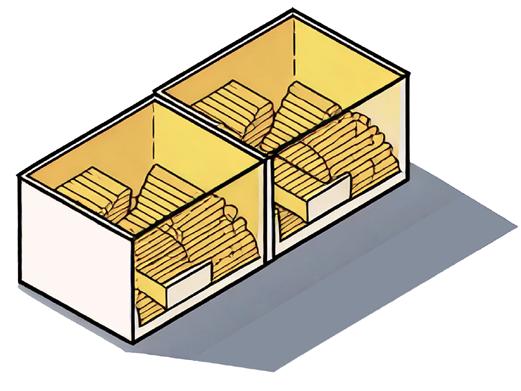
When materials cannot be reused within the same site or ownership - sale or donation to a third party should be considered. Markets and marketplaces for reused materials are growing rapidly as projects look to decarbonise, however demand, travel distances and processing requirements vary considerably.
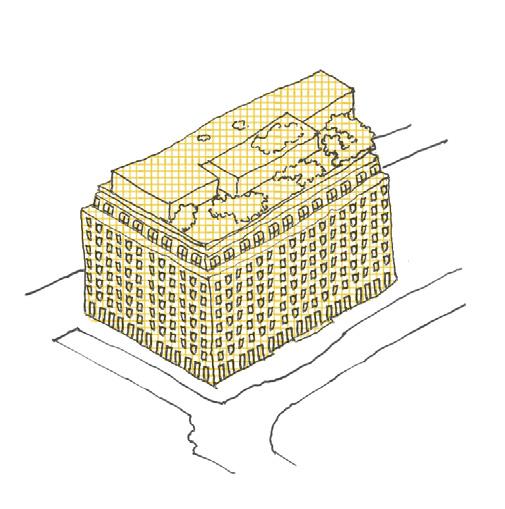
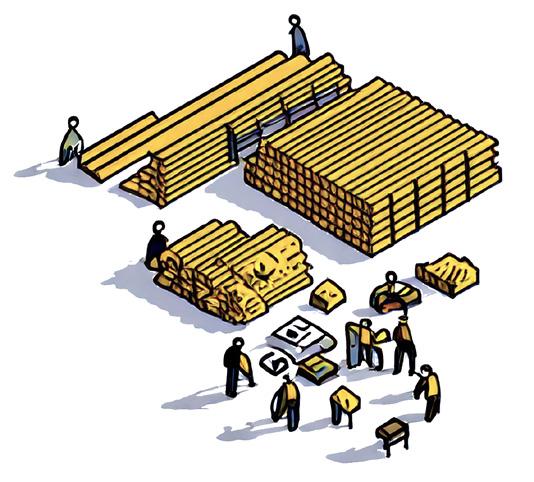
Donor projects are vital to developing economies of scale in reuse markets, giving designers a wider and more reliable choice of reused materials to design with.
Timeline Prepare
Step 1. Setting up for success
Analyse
Overview
Step 2. Investigate
Step 3. Possibilities and Priorities
Step 4. Who can do it?
Bring it together: record findings
Bring it together: decide strategies
Refine + Build
Step 5. Getting things done
Step 6. Logistics
Step 7. Long term value
An iterative design process
The material reuse process is not linear. Investigation of the site and exploration of material opportunities informs initial strategies which may in-turn inform further material and site investigations.
This process is repeated using a degree of trial and error until a convincing reuse strategy is developed.
Plan, and start early!
In order to do this, it is important to set ambitions from the beginning, and start early. This timeline sets out how this process should progress alongside RIBA stages.
PREPARE
ANALYSE
REFINE + BUILD
1. Setting up for success
2. Investigate
3. Material possibilities
4. Who can do it?
Knowledge not implemented
Consider project requirements
Each project will have different existing conditions, design scope, and programme. Some material reuse processes will need to be started earlier and require more in-depth analysis than others. For example structural and facade reuse will likely need coordination earlier than interior finishes. Adapt this timeline according to the project and systems that are within the project scope.
Successful material reuse needs to be considered from the outset of a project. It requires early inclusion of design team and early engagement and collaboration with supply chains.
Form the project narrative
Identify the ways that circular economy and material reuse could bring value to the project. Integrate into the project brief to ensure it remains a core component.
Assemble a talented team
Appoint a team with the knowledge, experience and ambition to align with the project narrative and clearly communicate the project brief.
Define reuse ambition
Identify specific goals and opportunities with the team and in the project brief. Review specific material strategies and design options against these.
Build the programme (+ costs)
Incorporate testing, recovery and processing time. Early demolition contractor input will be crucial.
Set measurable targets
It is important to develop a shared and specific set of metrics for the project, keeping these measurable targets front and centre of all design decisions throughout all material reuse steps. Ensure the entire design team understand the project ambition and the review and reporting requirements that go alongside these.
Collaborative problem solving
The right team with the right attitude and the right experience at the right time will include design consultants, project management, client and construction / logistics / deconstruction advice.
This does not necessarily make projects longer or more complicated. A well thought-through project set-up and programme are key to an effective reuse strategy.
architects
building owners
local authority
existing tenants
engineers
other consultants
suppliers
future tenants
deconstruction
contractor
contractors
recycling depots
The analysis process is inherently circular, each new piece of information will inform the next step and revisit the one before.
Step 1: is where the project team and ambition is set up where the opportunities have to be analysed to develop reuse strategies.
There are 3 key steps in the analysis process:
Step 2: Investigate
Step 3: Possibilities & Priorities
Step 4: Who can do it?
These steps will inform one another, findings should be recorded and brought together into a set of initial strategies.
The Material Reuse Catalogue aims to guide the design team through each of these steps in detail on a material by material basis.
PREPARE
ANALYSE
2. Investigate
Output: Audit
3. Material possibilities
Output: Sketching and banding
4. Who can do it?
Output: Supplier Matrix
Bring it together
Output: Record of investigations
Output: Comparison Table
REFINE + BUILD
Understanding the materials in a building is essential preparation for them to be reused.
Aligning the information criteria with the agreed project targets before inspection allows for a focused approach. Some values include: condition, quantity, homogeneity, historical significance, economic value, ease of dismantling, logistics and possible re-homing of reclaimed materials.
Visual inspections first
Visual inspections may be sufficient for some materials and can be started early, others may need intrusive investigations or disassembly. Often this is not possible in occupied buildings, so time should be allowed in the programme to pick up later if necessary.
Collaborate
Live databases, such a airtable, are useful to pool and share information and ideas in an organised and digestible way. The more information that can be gathered, the better decisions can be made and the more time saved.
By planning in advance, material reuse surveys can be programmed to coincide with other inspections of the building.
create accurate recovery scope
Steps to investigation
1. Site visit photography, notes and survey
2. Material properties e.g. glass, brick etc catalogue all findings to be shared across the team
3. Research e.g. Filtering out items worth saving based on initial assessment
4. Identify materials that may need more in-depth assessment
Use the checklist below for the initial audit:
Focus on 'good quality' material
Record potential reusability & location
Think about the potential work involved in reharvesting
Note areas that may require specialists opinions

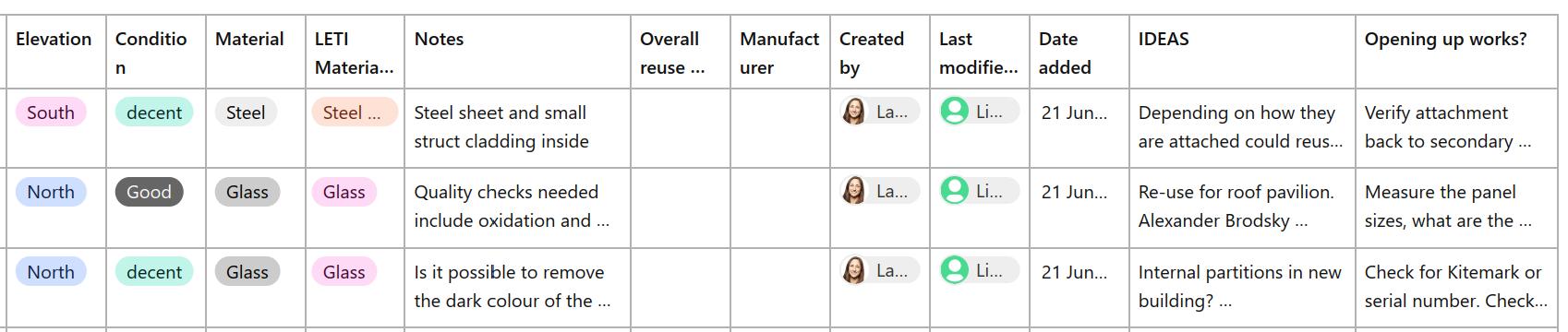
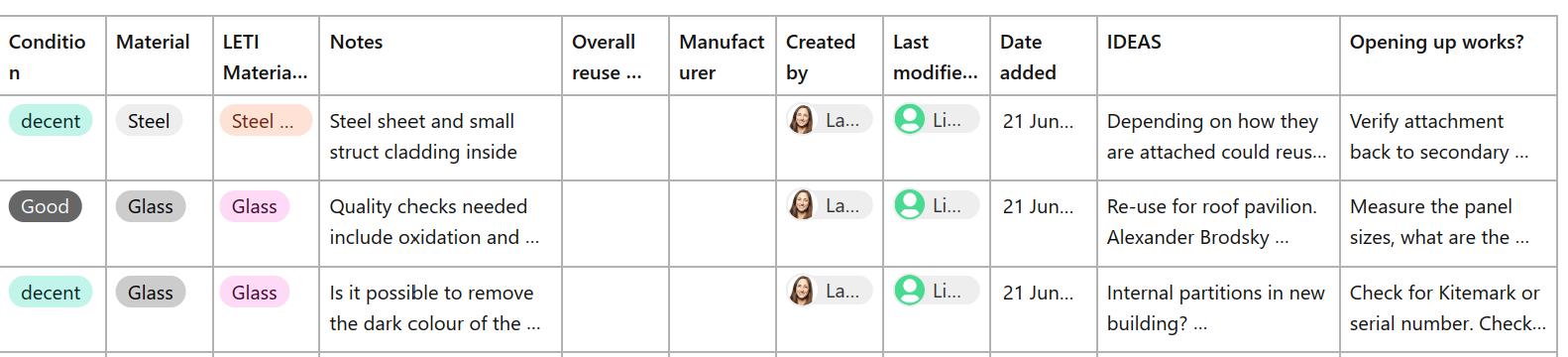
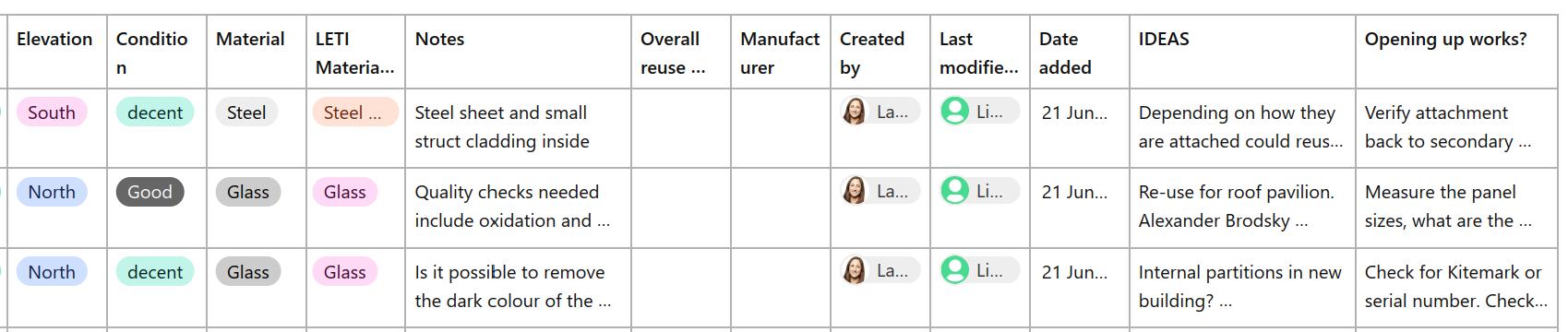
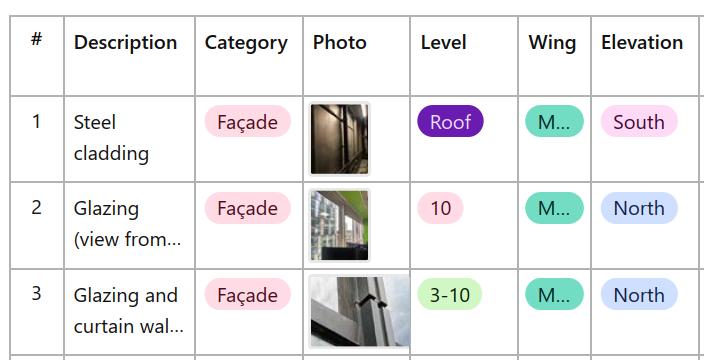
Example of findings recorded in Airtable
Each condition should reflect an additional question. For example, can it be modified? Is it easy to remove? Does it have many reuse oppportunities? The answer will help determine its overall band.
Identify key opportunities for material re-use
Undertaking a detailed material audit can uncover a matrix of varying materials with a spectrum of qualities and quantities. The number of materials in a project can be overwhelming if not sorted. To distil the findings, it is helpful to focus the attention on the top 10 materials based on project criteria, e.g. embodied carbon.
Use existing materials to drive design opportunities
The process is iterative. Once the priority materials have been indentified, the proposed design should aim to absorb as many of those materials as possible. For the materials that are unable to be reused on site, other reuse options offsite should be explored.
Highlighting materials that are in high in carbon is also an opportunity to consider the whole life impact of any new materials.
The materials on the adjacent page are an example of identifying direct reuse opportunities at an early stage in the design development.
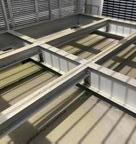
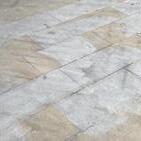



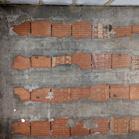
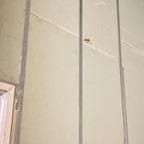
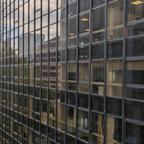

PRECAST CONCRETE
Materials identified from the Auditing Possible New Products
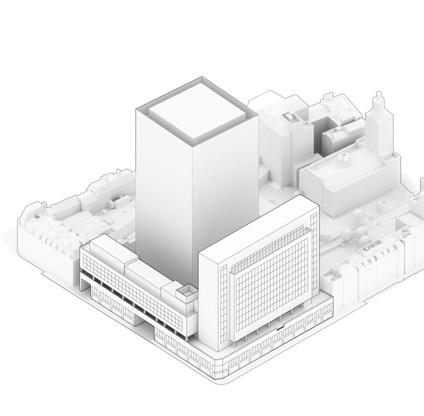
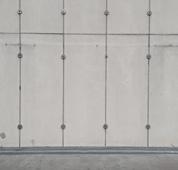


Precast concrete facade panels
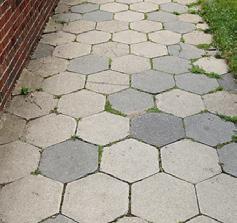
External paving
External cladding

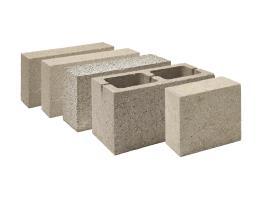
Masonry Partitions

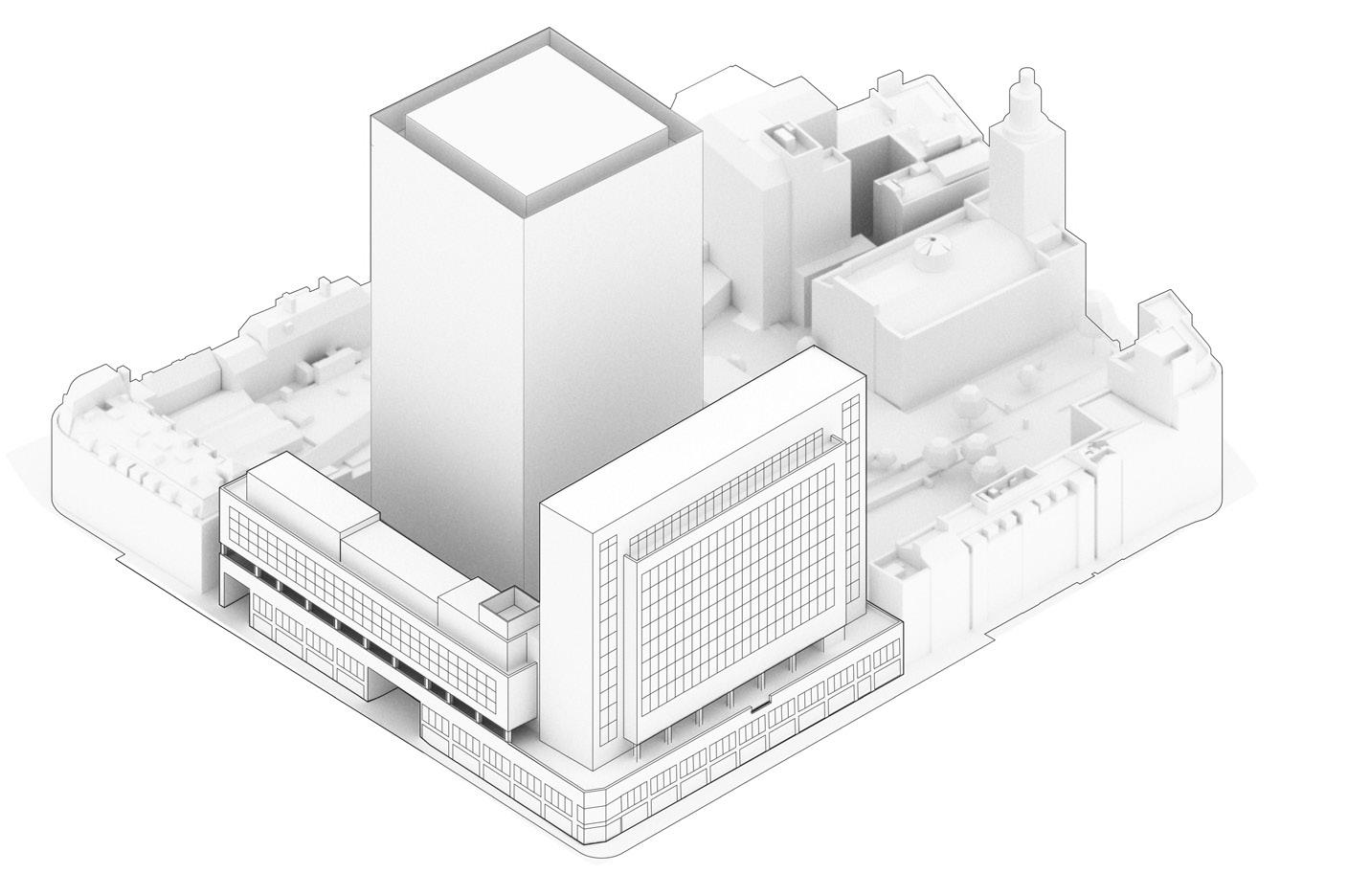
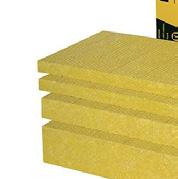
Project Example: The 10 materials containing the most embodied carbon are identified from the site audit alongside their potential design opportunities from reuse.
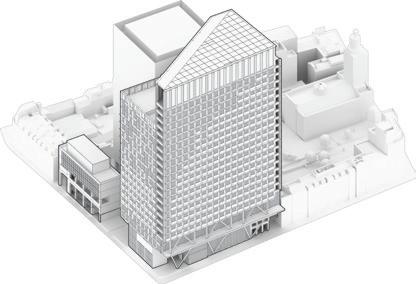




Refine a logic for material sorting
To categorise and prioritise materials for reuse, assessment criteria must be set. Banding is one of the methods that can used to used to organise material according to the criteria identified.
The purpose of banding Specification banding is an analytical process to study the existing building condition and potential possibilities for all materials.
The diagram illustrates the decision making of each material by asking gateway questions.
The banding process therefore helps to identify the most suitable reuse strategy for each material type and quality.
The quality metric example below illustrates possible descriptions and conditions for each band, showing a correlation with the level of intervention required for the materials. A higher number within the band indicates a greater degree of intervention necessary to reuse the materials.
Reuse Suitability: Quality Metric
• “As New”
• Visible Finish Item
• Satisfies performance criteria to use as is i.e. warranties, structural integrity etc.
• Standard Sizes?
• High visibility
• Visible wear / tear like hairline cracks and holes
• Partially satisfies performance
• Refurbishable
• Visual based on Aesthetic Standards of context
• Standard Sizes?
• Low visibility
• Damage / degradation
• Doesn’t satisfy performance criteria
• Refurbishment not practical
• Standard composition
• Can be recycled and reused
• Almost “As New”
• Satisfies performance criteria
• Applicable to Aesthetic Standards
• Standard Sizes?
• Applicable to Front of House
• Visible wear / tear and some damage
• Partially satisfies performance
• Refurbishable
• Non-standard Sizes
• Low visibility
• Within Build-up (not visible)
• Damage / degradation
• Fails performance criteria
• Non-Standard composition/ harder to break down/ Possible contaminants
• Recycling and reuse or safe disposal
GATEWAY QUESTION 1
Tile e.g. To be used as is YES NO
Can the materials be used AS IS? Can it be MODIFIED to be reused?
GATEWAY QUESTION 2
Set project specific quality metrics
By defining a quality metric early on, the most appropriate reuse action can be determined, based on different environmental, practical and aesthetic requirements specific to the project.
For example, in a building with an industrial aesthetic, exposed steel beams and aged timber may be an appropriate aesthetic. But for a high end shopping mall, these items may need to be painted, polished or treated before they are deemed suitable.
Project specific criteria will vary, but could include:
- Embodied Carbon
- Fire
- Aesthetic standard
- Thermal Performance
- Warranty
- Structural
- Cost
- Programme
Additional examples of quality metrics for different materials are provided in the Material Reuse Catalogue.
ESTIMATED %
e.g. Trimmed to acceptable size
Can it be PROCESSED to be reused?
GATEWAY QUESTION 3
ESTIMATED %
Once the interventions are defined, it is important to find out who can execute them. Various materials may involve multiple steps in the supply chain, including processors, manufacturers, and fabricators.
Decisions can be based on:
– Supplier experience, stability and location
– Testing time and cost
– Quantity of material required
– Process requirements
Understanding and engaging with the material reuse supply chain is a time-consuming process. Experience of past material reuse projects can streamline this and provide a springboard for new ideas.
Following the material reuse process, this page provides a brief starting point of some relevant contacts to help initiate ideas, but there are many more out there. One supplier might also work with multiple products/materials so it’s best to speak to them to check even if it's not listed.
Circotrade: Trading platform for building materials. Services include material inventory/ material passport and marketplace.
Multivista: Surveyors using point cloud to convert point scans into usable Revit models.
Site audit and analysis. Time to gather all you can find out about the building, listing all the materials, quantity, quality and begin visual assessments to identify areas in need for specialist input.
Extract materials from the audit list that are suitable for trading/ resell, usually materials in Band 1, and contact the 3rd party materials markets to identify options.
Think local to reduce carbon emissions!
Globechain: Reuse Marketplace.
Excess Materials Exchange: Digital platform for material exchange, resource material is part of the service.
Madaster: Helps to create material passport.
The Reclaim and Salvage: Reselling or bricks, flooring, roofing , antique building elements e.g. fire places etc.
Environmate: Closed loop material market buys and resells building materials, plumbing, carpentry etc.
Best Reclaimation: Reclaimation yard located in Heathfield, East Sussex.
General Demolition: expert demolition and enabling works services across.
Collect and Recycle: paper and cardboard recycling collection companies, supplying waste packaging material back into manufacturing.
Sea Cadets: Donation platform for second hand items.
Reuse Network: Donation platform for second hand items.
Collecteco: Based in the UK, donation platform for furniture, equipment and fitout materials.
Armstrong ceiling: Donation platform for used ceiling tiles.
Sorting
Identify possibilities and priorities
Talk to specialists to understand how materials can be harvested and connect with the supply chain to understand how to realise the possibilities
Think across sectors to help with small batches of testing and reuse
JF HUNT: Specialist Contractors in Construction, Demolition & Regeneration.
General Demolition: expert demolition and enabling works services across.
Lawmens: Demolition/waste/site logics and labour provided. Also provide sustainability service including waste report, pre-demolition audit,Circular economy statement.
Szremley: Restoration and new-build specialist.
May glass: Glass recycling specialist.
Recolight: Reuses and specialises in safely disposing luminaries.
EMR: Metal recycling for salvage and recovery, construction, demolition and decommissioning.
SSAB: Provides recycled steel.
Cappagh: Recycles construction and demolition waste and making it into concrete aggregate.
Techcrete: Supply of precast concrete facades constructed offsite. Possibility of collaborating to make new panels with site materials.
Clayworks: Mixes demo waste into their clay render product.
Saint Goban: One of UK largest glass recycling and manufacturer
CollectandRecycle: paper and cardboard recycling collection companies, supplying waste packaging material back into manufacturing.
Kbriq: Creates new bricks from recycled brick rubble.
La Pietra Compattata: Produces new stone tiles from crushed stone from site.
Clayworks: Mixes demo waste into their clay render product.
RMF: Recycling and reusing raised access floor.
Tarkett: Flooring take-back scheme, collects carpet, linoleum, vinyl etc. and makes 100% recycled flooring.
Who can do it
Bring it together: record findings
Recording what you find
Use an excel table to help track the material reuse possibilities.
The excel should include minimum information as below:
A. Building layer
B. Quantity
C. Potential embodied carbon saving
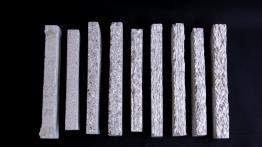
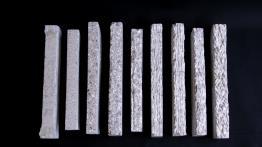
D. Sizes and other relevant description
E. Reuse possibility/suggestion
F. Reuse recommendation
A. Building layer
B. Quantity
Future use
The information that is recorded can be useful further into the project to create material passports for existing elements during technical design (see Step 7).
C. Potential embodied carbon saving
E. Reuse possibility /suggestion



D. Sizes and other relevant description


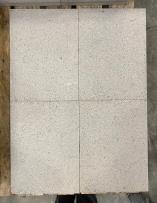
Bring the analysis together
After analysing results from the material investigation, prioritising key materials, and identifying possibly reuse strategies based on project criteria, it is time to draw together all of this analysis to identify the strategies to take forward into the next phase of design.
Make decisions collaboratively Ensuring this process is a collaborative effort with the input from the whole design team helps to ensure the strategies chosen are robust and will be carried through.
Reuse recommendation can sometimes only be determined after demolition. You can still list items that are predicted to be reuseable.
Key
Possible impact level
Easy/net benefit
Slight disadvantage /challenge
Significant disadvantage /challenge
ITEM
Concrete + Hollow Pot
Services + Plant
1 (a) Steel (b) Steel elements
2 Pre-cast Cladding
3 Glass
4 Aluminium
5 Bricks
6 (a) Red Granite “as is” (b) Red Granite “down-cycled”
7 Exterior Paving
8 Sanitary-ware
9 Soft Strip
Example of material comparison table
Just because it’s technicality possible doesn’t mean it should be done. Once application scope and possibilities have been discussed - project specific and practical criteria should be set.
Project specific criteria can be added to assess the value of the ‘reuse‘ after application scope has been identified. The table is only an example, criteria like warranties, fire rating or design intent can also need added.
Origin Recipient Evaluation
Project Other Client projects 3rd party
Blockwork?
Piling mat? Recycle plants
Additional projects specific criteria for assessment
Produce clear documentation
Drawings and sketches can help to clearly communicate to designers and contractors on site what materials are being collected, where they are in the building, and how they should be extracted.
Material inventories
Building on the site investigation and reuse analysis, an inventory of materials and their associated reuse requirements can be created.
This is a accompanied by structural sketches indicating locations of the structural elements with any IDs referenced in the inventory.
The inventory is used to:
– measure material quantities and establish the type of elements available for reuse
– help select reclamation markets to target (based on aggregated inventory data)
– feed into the BIM model of the existing building and material passports for individual elements
– guide demo contractor
The drawings on the right page indicate how recovery scope can be incorporated into deconstruction tender documents.
Programme
This whole process will take time, but does not have to delay the project if properly planned. Delays can be avoided if the process is started early and the benefits to the project are widely understood.
COMMUNICATION IS KEY
Directly discussing these documents during the tender process and with site teams ensures reuse intentions and implications are clear.
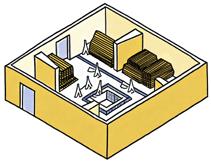
Steel elements
Pre-cast panels
Exterior paving
Site logistics
The close collaboration of the disassembly and design teams ensures site logistics and testing requirements associated with reused materials are accommodated into the programme.
Minimising waste
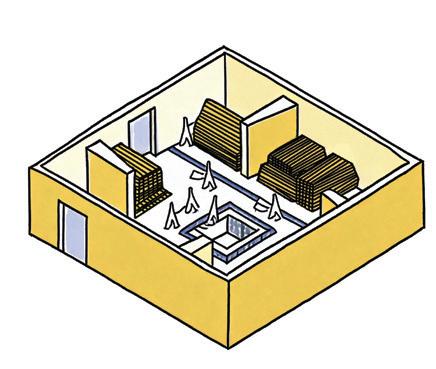
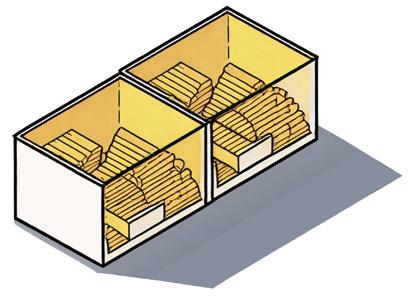
The handling of materials on site is crucial to minimising wastage and maximising recovery. How materials are safely deconstructed and stored needs to be carefully considered.
Coordination champion(s)
Champions are incredibly valuable when trying to coordinate the material reuse process, but you may need different individuals at different times depending on the project and programme. During design and deconstruction, access to parts of the building, testing, transportation, processing, manufacturing, and delivery, will need to be organised - a champion within the project team can help this run smoothly.
It is also highly valuable to have a champion on site during construction who can oversee the deconstruction and coordinate any material collections.
Continuing reuse
The design team should ensure that recovered and new materials are designed and handled to enable reuse. Designing according to the principle of ‘shearing layers’ where building systems of lifespans can be repaired or replaced independently, is key. Considering and recording assembly and disassembly information will enable this future deconstruction.
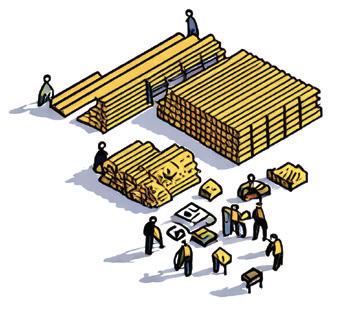
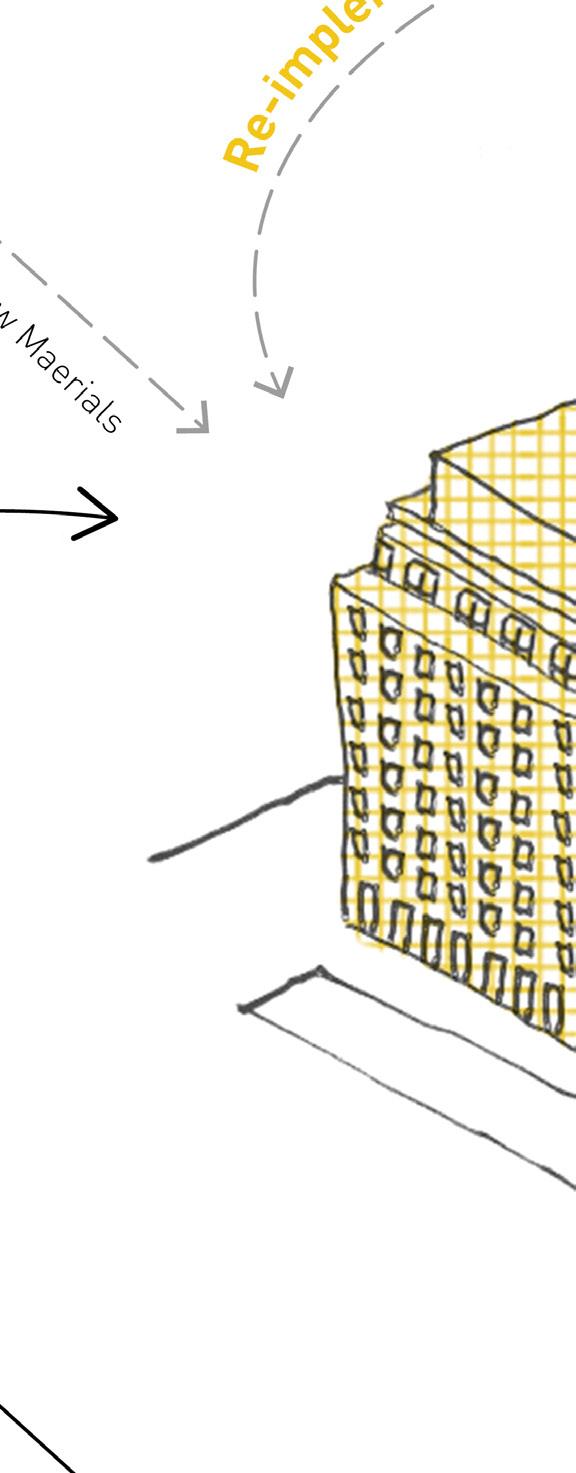
Re-implementation
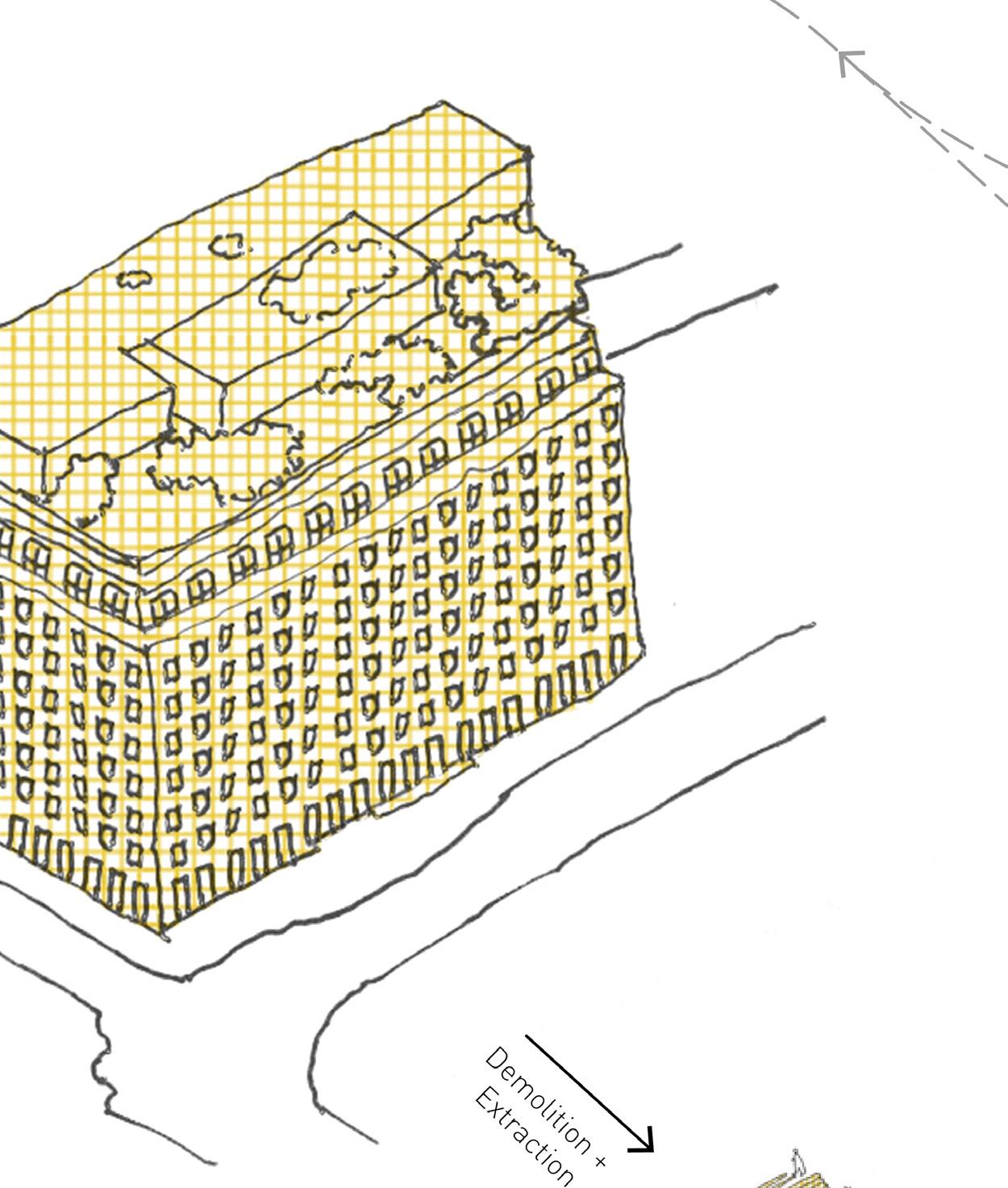
LOOP 1
Minimise Wider Transport Logistics
Demolition+ Extraction
Deconstruction
Temporary In-situ Store
Long-term Storage / Third Party Recycle materials from other material stores
Other Sites recycle faclilties and wider material store
LOOP 2 Wider Transport Logistics
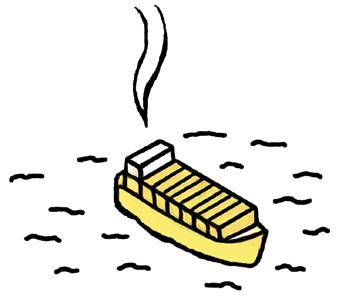
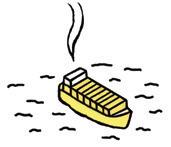
The logistical challenges of material reuse will be different depending on whether materials are kept within a site or project, or handed to a 3rd party.
Build for future reuse
With all the analysis that it takes to reuse existing materials, it is important how those materials can also be reused in future. The information that is gathered as part of the investigation and analysis process can be extremely helpful in speeding up this process if it is stored in an accessible and legible manner for future stakeholders to understand.
The role of material passport Materials passports is a method to consolidate the history, specification and evaluation of the salvaged materials. With the use of modern day algorithms and BIM software, clients will now have a detailed schedule of materials across their portfolio.
Materials from different projects can be shared and connected through a database, making material exchange more user friendly and quantifiable.
Add value to building components
Information from the material passport can be accessible via QR code. The table creates a detailed inventory, providing information for maintenance, repair, replacement and reuse opportunities, onsite or offsite.
This information helps organise and connect reuse opportunities across the industry - facilitating a futures market and increasing material and asset value.
A Digital Twin is a virtual model that accurately reflects a physical object, system, or process. With increasing use of BIM, the process of developing and maintaining a digital twin becomes more efficient and accessible
For more information on material passports please refer to Watermans Material Passports Framework.

Environmental Product Declarations describe the environmental impact of a product throughout its life cycle and are based on findings from a Life Cycle Assessment (LCA) study. To help compare the sustainability of products, EPDs simplify complex manufacturing and production processes from LCAs into shorter table of numbers.
Base on European standard (EN 15804+A2), the EPD has been an established and verified information measurement since 1998. It is fast becoming a global standard as it focuses on quality and consistency of measurement verified by a third-party assessor.
EPDs should comply with ISO 14025, but they can also be self-declared. Before relying on self declared EPDs consider if there is a good reason why the product may not be certified.
Life cycle stages
EPDs can be understood in stages and lists the GWP value (Global Warming Potential) for each stage.
Cradle-to-gate (A1-A3): Covers extraction of raw materials to manufacturing.
Gate-to-completion (A4-A5): Covers transport and construction.
Cradle-to-grave (B1-B5): Covers the entire lifecycle, from extraction to disposal.
Cradle-to-cradle (C1-C4): Includes recycling at the end of life, listing the CO2 emissions from product disposal.
Beyond life (D):
Lists potential benefits from possible reuse, recovering or recycling.
EPDs tell you more than carbon... But Carbon isn’t a bad place to start if you’re new to understanding the information. When evaluating material reuse choices and implications, always consider whether your choice has wider ecological and environmental impacts such as water use and habitat loss.
Look out for:
– The validity period
– Which lifecycle stages (right) are included in the assessment
– A table of impacts (GWP or Global warming potential will tell you the embodied carbon)
These are usually written exponentially to allow big and small numbers to appear alongside each other. If you don’t know how to translate them, get some help from the internet!
If in doubt, as a colleague, supplier, or sustainability consultant to explain.
The catalogue will focus on this stage, showing the environmental impact of manufacturing this product.
Benefits and load beyond the system boundary
Potential To: Reuse / Recovery / Recycling BEYOND LIFE CYCLE
Approximate distribution of A1 - C4 emissions. Adapted from LETI, ultra-low energy residential model.
Below is a selection of organisations, reports and books to go to for more information on different topics. These titles have also informed the development of reuse theory and process described in this guide. There are many more useful documents not listed here, but this is a good starting point.
General Circular Economy Content
Ellen MacArthur Foundation
Material Reuse References
Institution of Structural Engineers, Circular Economy and Reuse: guidance for designers (very useful for structural materials)
Key Circular Economy Summaries
LETI, Circular Economy Primer
ACAN, Circular Economy Design Guide Summary
Urban Mining and Buildings as Material Banks
ReLondon
BAMB
More Information on Circular Economy
UKGBC, System enablers for a circular economy
ACAN, Circular Economy Design Guide UKGBC, Circular Economy Metrics for Buildings
Reuse Case Studies and Inspiration
Duncan Baker-Brown, The Reuse Atlas Lendager Group
For more information on Material Passports
Watermans, Material Passports Framework Lancaster Uni and Orms, Material Passports Policy Paper
How to read EPDs
Institution of Structural Engineers, How to read an EPD: basics for the structural engineer
For more information, please contact Fletcher Priest: sustainability@fletcherpriest.com
Joanna Wilson Sustainability Lead MA(Hons) MPhil ARB
Lorraine Chan Project Leader and Material Reuse Champion BArch MArch AACA
Book Production Team
Joanna Wilson
Lorraine Chan
FPA Team
Ayshah Begum
Benjamin Koslowski
Caterina Izzo
Chris Radley
Gabriella Badeira
Jaxon Kelly
Myungin Lee
Rotem Lewinsohn
Shafia Motaleb
Stephanie Kukulka
Yue Jiang
Zi Kang Lim
Every effort has been made to trace the authors of copyright. We would be happy to rectify any errors or omissions in further editions. Unless otherwise stated, all images are copyright of Fletcher Priest Architects.
© 2025 Fletcher Priest Architects LLP
All rights reserved. No part of this publication may be reproduced or transmitted in any form or by any means, electronic or mechanical, including photocopy, recording or any other information storage or retrieval system, without prior permission of both the copyright owner and Fletcher Priest Architects.
Fletcher Priest Architects is a limited liability partnership.