




We started this catalogue because we wanted to capture and communicate the learning that we had gathered discussing and testing reuse opportunities over the past few years. We wanted to create a material by material reference, in a standard format, where the relevant information could be picked up and developed by any designer.
The challenge of collating this information was eye-opening. Providing a level of detail that is comprehesive (without being overwelming), yet approachable (without being oversimplified) was a constant balancing act. We don't expect to have covered everything, and we know industry capabilities are constantly evolving, but we hope we have provided information that can springboard further investigation.
As with all material reuse - it is inherently a collaborative process. We need clients, designers, contractors and suppliers to work together to share knowledge and find solutions.
This is how we wrote this guide, we could not have done it without the detailed input of our collaborators. We are very greatful to these committed individuals who gave up their time to capture their knowledge and experience, in the hope that this will drive action across the industry.
Lorraine Chan
Project Leader and Material Reuse Champion Fletcher Priest Architects
Joanna Wilson Sustainability Lead
Lorraine Chan Project Leader and Material Reuse Champion
Alexia Laird Sustainability Director

Gianluca Rapone Associate Director Sustainability Lead

Daniel Sweeney Group Head of Sustainability
Ethan Verrall Sales Engineer
Laura Batty Associate Technical Research & Sustainability
Tom Watson Director
Gustavo Brunelli Technical Director
For more information, please contact Fletcher Priest: sustainability@fletcherpriest.com

Saul Heard Associate Andy Kerry Project Consultant Workspace & Hospitality
James Bagdadi Technical Advisor







2. Investigate
Output: Audit
Output: Supplier Matrix PREPARE REFINE + BUILD ANALYSE
3. Material possibilities
Output: Sketching and banding
4. Who can do it?
Output: Record of investigations
Output: Comparison Table Bring it together
Instructions
When implementing the reuse strategies and theories learnt in the Material Reuse Guide, the Material Reuse Catalogue will help you navigate the decision processes for reuse on a material by material basis.
The Catalogue is a collection of materials researched for reuse purposes and will help you navigate steps 2-4 of the reuse process set out in the Reuse Guide. Rather than read the whole guide, navigate to the elements that are relevant to your project.
Sharing knowledge is key to growing a circular economy. This collection is the beginning of an expanding library to help fast-track the reuse process to help you on your reuse journey.
Please use this as a guide to begin your research journey. Inside you find common materials, but there will also be specific conditions particular to each project or site and the supply chain is constantly developing new opportunities. For new or materials, use the template to create your own and add to this library.
The first chapter is an example explaining how to read and use the catalogue template. Refer to this each time you work with a new material.
Share updates as new materials are explored and new reuse opportunities develop.

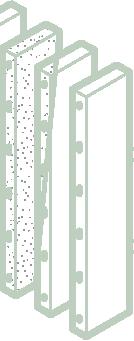
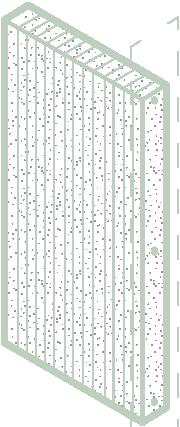


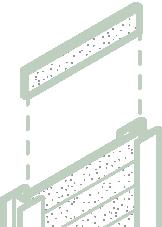

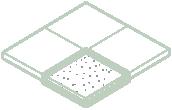

The concept of 'shearing layers' describes how buildings are composed of different systems that age and change at different rates (Stewart Brand, 1994). 'Shearing' explains how each layer should be able to flex independently, without compromising systems with different lifespans.
Thinking about materials as building components categorised in system layers helps us to target reuse approaches are suitable for the functional and life cycle requirements of each layer.
The layers are defined as:
Site is ground the building is built on, which remains constant, but the context surrounding the building can change.
Skin is the facade and roof of the building. This can require updating to differing extents every 15-30 years depending on the system used.
Structure is the foundations and load bearing elements of the building. It is the most expensive element to change and usually has the longest lifespan, but it can be hard to adapt if requirements change. The structure usually contains the most embodied carbon.
Services include HVAC systems, lighting, water and fire systems, as well as moving parts like elevators. These often become costly to maintain as warranties expire and more efficient systems are developed.
Buildings aren’t static objects. They are layers of components and systems with different rates of change.
The Space Plan describes the layout of the internal walls and partitions. These move with tenant preferences and as the functions change.
Stuff is easy and quick to change based on user requirements. For example furniture and loose fi t-out items that change with trends and use patterns.
Recovering materials by layer helps the team to organise the materials according to their location, design and construction package, and to consider their different lifespans and requirements.
Material info sheet
Key properties
Record key properties of the material. Here are some categories:
–Bio-based, synthetic or manufactured –Longevity
–Commercial value
–Structural properties
–Application
Key sub-types
Describe the different sub types of the material if applicable. e.g.
–X component or type has Y properties –W component or type has Z properties
Condition
This should provide a guidance to factors that might need to be considered when sorting materials by condition. For example, the element must not have rusting or broken edges, scruff marks are acceptable.
Re-certification process
Some materials will need to be re-certified before they can be reused. Re-certification is often a significant challenge for the reuse of materials. This section should evaluate the viability of re-certifying the material. If re-certification is feasible, the process typically begins with the removal of the material, which needs to be addressed early in the discussion.
Additionally, contractor and subcontractor information is crucial in this section. Each step of the process should be clearly documented.
Prior to deconstruction
Describe any considerations or actions to be mindful of before deconstruction.
Insert an image of the material taken from site
Post deconstruction
Describe any considerations or actions to be mindful of after deconstruction.
Embodied carbon of the material/element: Source of data should include ICE database, EPDs, One Click LCA.
Note: This section exclusively focuses on the embodied carbon content of materials and elements. It does not account for ‘Carbon Saved,’ which involves calculating the net benefit by subtracting the carbon required to prepare the element for reuse from the carbon that would be needed to produce a completely new element.
This is a developing knowledge, refer to UKGBC embodied ecological impacts webpage for more information and review EPD information on environmental impacts where appropriate.
The project team define the banding strategy at the beginning of the project. This would include setting the standards of design quality, level of efficiency and workmanship.
It's an important process lead reuse decisions. This can either be text description or image of the current material condition for each banding.
Recovery Checklist
Once a material is deemed reusable, here are some common considerations and tips before intrusive extractions happen. Please add to this list as per your project.
Before deconstruction
Visual condition (structural integrity, wear/tear etc.)
Disassembly potential.
Modification potential.
After deconstruction
Packing requirements.
Requirements to “made good”.
Transport panels off-site.
Processing requirements.
Processing location.
Possibilities for storage.
Opportunities for Material Passporting.
Re-use opportunity and process
Recycling or Re-purposing
Record initial estimations on the percentage of reusability.
Use the banding table below to determine what process should be applied to maximise reuseability by grading the condition of the material from best (1) to worse (3).
Use the banding table below to determine what process should be applied to maximise reuseability by grading the condition of the material from best (1) to worse (3).
1.(a)1.(b)2.(a)2.(b)3.(a)3.(b)
• “As New”
• Applicable to Front of House
• Satisfies performance criteria to use as is i.e. warranties, structural integrity etc.
• Standard sizes (if applicable)
• Almost “As New” with minor surface wear and tear but meets aesthetic standards
• Applicable to Front of House
• Satisfies performance criteria
• Standard sizes (if applicable)
• Minor damage but meets aesthetic standards
• Refurbishable
• Partially satisfies performance
• Standard sizes (if applicable)
• Some damage but could meet aesthetic standards
• Refurbishable
• Can be used in low visibility areas or within buildups
• Partially satisfies performance
• Non-standard Sizes
• Significant damage or degradation
• Doesn’t satisfy performance criteria
• Refurbishment not practical
• Standard composition
• Can be recycled
• Significant damage or degradation
• Doesn’t satisfy performance criteria
• lNon-standard composition/ harder to break down/ possible contaminants
• Recycling or safe disposal
Action 1
What is the best way to remove this material? Record the basic process of deconstructing the material. Record how much labour is required to complete the task. How intrusive will it be? Does it need to be skilled professional or specialist?
Action 1
Record any costs involved. This may be closely related to labour but also include any use of specialist equipment or time.
Material information such as material type, havesting location, quality range etc. should be recorded in the material audit.
Any information regarding the deconstruction and harvesting of the material
What is the likely impact on the programme? How much time will testing take?
Record the value of the materials extracted.
DATA SHEET: Investigate
Consider engaging with a deconstruction contractor or specialist supply chain to gather this information
Possible impact level
Minor impact
Major impact
How popular is the material?
Traffic light marking system quickly highlights any challenges and allows the team to compare different methods.
Expand table if there are other possible actions.
This should be a section where key ‘lessons learnt’ from the previous experience or knowledge collected from specialists can be recorded.
Re-use opportunities and process
This page gives some examples of how materials might be reused and explores harvesting processes. A project specifi c investigation will be required to identify the opportunities for each project
What actions can be taken to prolong the life of the material?
Reuse
Upcycling transforms waste into higher-value products with minimal processing, preserving original material integrity.
Opportunity 1: .....................................................................
Sketching ideas at the beginning is a useful way to brainstorm new possibilities!
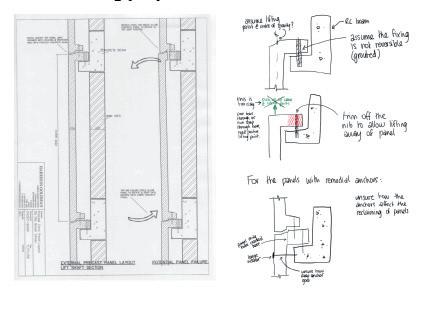
Repurpose
Re-manufacture involves moderate processing to create a new product.
Opportunity 2: .........................................................................
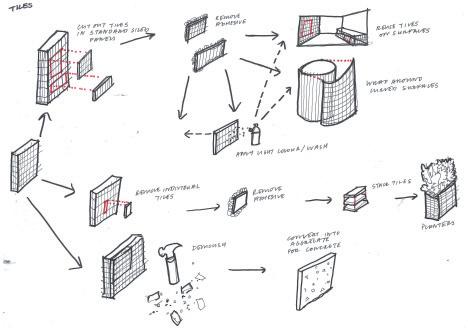
Downcycle
Down cycling involves signifi cant processing to create a lower value product that may be combined with other/new materials to create a new product. Ideally to be avoided but there are many sustainable products that diverts materials becoming waste for landfill.
Opportunity 3: .........................................................................
BandingProductSupplierTestingQuantity Required
Supplier
List suppliers who can make the products.
Description of the product
For reuse or for recertification - explain the testing process - who can do it? - does it need recertification?
List suppliers who can make the products.
Insert image of product / expected outcome.
Description of the product
Embodied
Low
Minor
Major
After assessing the material it is rated into bands. Possibilities are listed out into outcomes.
How many units or what mass of material
Fill in this page once specific material investigations have taken placekeep the record investigations and options in the table.
ProcessCertification/applicationEmbodied carbonNotes
Describe the making and testing procedure
Describe where the new product will be used, and maybe application procedures
Embodied if known from an EPD. Can also be estimated carbon saving. Include carbon cost in transport and production. Traffic light system to be qualitative.
Any notes on the quality, or recertification process etc
Some materials will have more band specific outcomes than others. Use as many pages as you need to present all possibilities.
EXPAND TABLE TO FIT NEW P OSSIBILITIES
“When considering buildings as material banks, façades are a valuable asset. Unlocking reuse of façade components is challenging but it’s an essential part of decarbonising buildings and moving towards a circular economy.”
Gianluca Rapone Associate Director and Sustainability Lead, FMDC
Chapter input by:




Façade elements
2.1

Chapter input by façade engineers FMDC and structural engineers Heyne Tillett Steel.
Key properties
Precast concrete is a versatile material that is used in many parts of construction, including structural elements and as cladding. This is due to its many properties some of which are listed below:
–High compressive strength
– Typically reinforced with steel rebar to provide tensile strength but can also be without.
–Good fire performance
–Robust
–Low maintenance
–Can be prone to staining
– When used as cladding, panels can incorporate an additional facing material (e.g. brick slips, terracotta tiles, stone).
Key sub-types
Precast concrete can be divided into two main classifi cations: load bearing and non-load bearing. In the past, it was also used in smaller sizes as cladding tiles, requiring a support sub-structure.
Load bearing cladding systems provide;
–Inner structural panel (part of main structure)
–An insulation layer
–Outer non-structural panel (as cladding)
Non-load bearing cladding systems provide;
–A self-supporting cladding elements
–Air and weather barrier
This section will focus on non-load bearing systems, i.e. the single-leaf precast cladding.
Condition
Pre-cast concrete panels can be reused in various applications such as new façade panels, stair treads, and new tiles. A detailed banding strategy will help to identify potential for reuse. Some factors to consider are listed below but this will vary project to project, depending on their original size and configuration.
Re-certification process
Prior to deconstruction
Ferrous scanning determines rebar levels in concrete and measures residual cover over the rebar. Tests will need to be
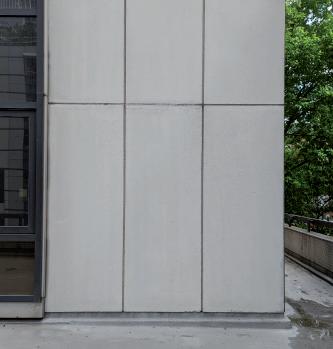
carried out on the concrete to check for defects and strength. Drilling a hole into the concrete will quickly reveal if there is rebar or other impurities to the material that could affect its reuseability.
Post deconstruction
Cut panels must be tested to meet performance requirements for reuse. Cutting precast concrete panels exposes rebar, making them unsuitable for reuse in weatherexposed applications, unless a suitable anti-rust treatment can be agreed with a specialist. There is also an opportunity for internal use, where exposed rebar is less of a problem.
Embodied carbon
Cement is essential for creating concrete panels, but its production generates high levels of CO2. This process contributes to 8% of global carbon emissions.
Embodied carbon varies signifi cantly depending on the amount of cement replacement and steel reinforcement required.
Approx. 0.22 - 0.28kg CO2e/kg (A1-A3) for standard precast concrete lower if cement replacement is used.
Ecological impact
Over 46% of aggregates are used in manufacturing cement and concrete. The extraction process significantly impacts biodiversity and oceans. During this process, over 1,000 species are threatened.
Recovery Checklist
Once a material is deemed reusable, here are some common considerations and tips before intrusive extractions happen. Please add to this list as per your project.
Before deconstruction
Visual condition - wear/tear etc.
Structural condition - e.g. rebar cover
Disassembly potential - examine connections and process e.g. tower crane (or similar) will be required due to weight
Modification potential - consider component materials
After deconstruction
Packing and storage requirements - robust fl oor / support and sub-structure to avoid overturning.
Requirements to “make good” - structural connections and weatherproofing
Transport panels off-site
Transportation requirements - panel sizes and weight
Processing requirements - machinery/space requirements
Processing location - onsite or offsite
Possibilities for storage - coordinate special requirements to avoid damage to panels or substrate and to guarantee safe conditions (stability)
Opportunities for Material Passporting - what information to collect and how to track
Quality banding
Record initial estimations on the percentage of reusability according to agreed banding.
Use the banding table below to determine what process should be applied to maximise reuseability by grading the condition of the material from best (1) to worse (3).
ReuseRe-purposeRecycle
1.(a)1.(b)2.(a)2.(b)3.(a)3.(b)
• “As New”
• Applicable to Front of House
• Satisfies performance criteria to use as is i.e. warranties, structural integrity etc.
• Standard sizes (if applicable)
• Almost “As New” with minor surface wear and tear but meets aesthetic standards
• Applicable to Front of House
• Satisfies performance criteria
• Standard sizes (if applicable)
• Minor damage but meets aesthetic standards
• Refurbishable
• Partially satisfies performance
• Standard sizes (if applicable)
• Some damage but could meet aesthetic standards
• Refurbishable
• Can be used in low visibility areas or within buildups
• Partially satisfies performance
• Non-standard Sizes
• Significant damage or degradation
• Doesn’t satisfy performance criteria
• Refurbishment not practical
• Standard composition
• Can be recycled
• Significant damage or degradation
• Doesn’t satisfy performance criteria
• lNon-standard composition/ harder to break down/ possible contaminants
• Recycling or safe disposal
Deconstruction / recovery considerations
Approximations, advise and input from John F Hunt and BAM.
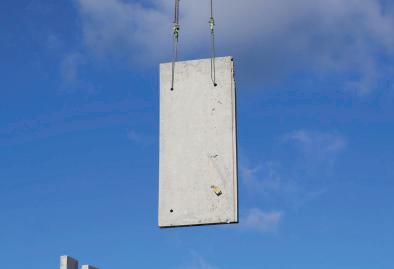
If the strategy is to reuse whole panels, then they need to be removed as individual pieces with an appropriate size crane, after being detached from the main structure. If panels are to be broken down into smaller pieces on site, then sections are either or cut with track saws of holes are drilled through the concrete and diamond wire fed through to create a look and cut through.
1. Machine with breaker attachment will break through the concrete into rubble.
2. Material moved to ground floor for further processing (On site crusher) or sent off as waste.
Additional labour required and equipment required, at least 1 x additional person to drill and cut and then second person needed for the lifting of the slab.
Additional costs if working on uneven surfaces.
None - this is current practice across all sites.
Concrete is harder to donate but there are some companies that are doing material development on this. Lignacite (blockwork), Biolth (paving slips), EFC concrete (Earth friendly concrete). Will require all the concrete panels to be extracted separately and placed into a separate bin to avoid contamination.
Should be included in demolition costs but additional care will be needed.
Embodied Carbon impact Major impact
Low impact Minor impact
Neutral
Panels will be large and heavy so will need adequate storage and arrangements to guarantee stability.
Additional care when separating the material. Still in its infant stage.
Consider the logistics of the harvesting location including height, access, condition, and sequence of works. Process can be carried out floor by floor or with long reach machinery. May be able to save costs elsewhere as potentially less propping required as not placing 5 - 8t machines on floors.
Reuse opportunities and process
Examples
Reuse
Re-use Panels
Panels in good condition can be reused ‘as new panels’ in their original sizes, if a “recipient” building can be found, which can be challenging. Alternatively, panels should be tested for performance and structural properties before reusing.

Repurpose
Cut into decorative panels
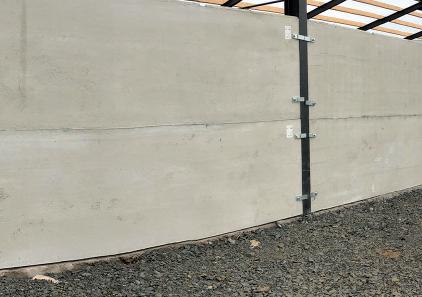
Panels could be cut into smaller sections for other applications. Trimming or resizing will mean that rebar is exposed, and so a suitable treatment would need to be applied. This could mean the panels are only suitable for low-risk areas or as a rainscreen. Precast concrete elements can be reused as stair treads after being cut and painted. However, not all panels are suitable for reuse, as their bending capacity will need to be assessed. When the existing panels with rebar are cut, if the rebar is exposed to the external environment it will corrode over time. To prevent this, special anti-rust paints can be applied.
Crush into aggregates for New Product
Precast concrete elements, including pieces gathered from elements cuts for reuse, can be crushed into aggregates.
If panels recovered from a donor building are deemed appropriate to use “as is” on the recipient building, panels can be reused.
This is subject to maintaining structural, weathering and thermal integrity i.e. Pre-cast concrete can’t be cut if it is to be reused as façade panels.
Paint panels to improve surface finish (durability and visual quality). Cut panels can be reused for non-cladding areas such as stair treads.
Trim into manageable sections. Potential to use as king post system for plant screen or other non-structural walls. Ensure rebar is not exposed for external application.
Block in beam + Block Floor
Salvaged / broken ribs and clay are combined to create aggregates or tiles or other finishes.
Exposed reinforcing steel bars can be treated with anti-rust coating and become a decorative screen.
Newly created aggregates could be used into remaking façade elements such as new cladding or donut panels.

Creation of a new material
Reuse opportunities tracker
Example of cataloguing potential reuse outcomes. Please use as a template to guide design decisions and add new innovations. Add and remove rows as required to refl ect emerging opportunities.
Embodied Carbon impact
Low impact Minor impact
Neutral
Major impact
BandingProductSupplierTestingQuantity Required
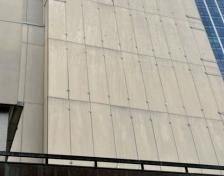
Precast claddingFaçade contractor Szerelmeyw

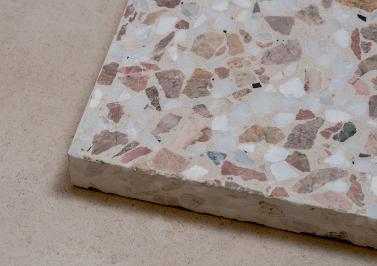
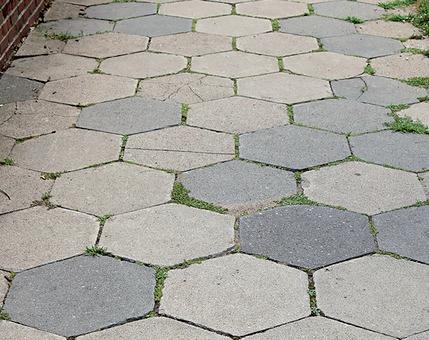
Paving
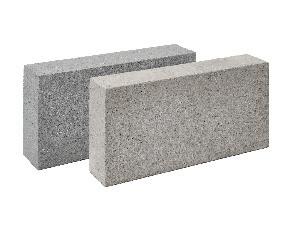
Aggregates for concrete blocks
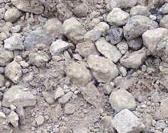
Aggregate
Contractor to cut concrete onto suitable paving sizes. Only applicable if no rebar.
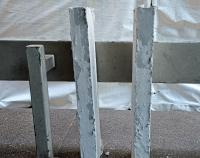
Re-use existing precast panels as hand-set battens to make a decorative screen/ shading element for the Pod building’s new façade for 55OBS. Panels carefully removed and cut into strips. 1-2 panels
Lignacite - make concrete blockwork out of 50 70% recycled building materials, making sustainable building blocks.
Carefully removed and cut to standard sizes. Test cut a sample to check presence of rebar.
Material will need to be crushed up to 10-12mm, aggregate to ensure minimal dust before material can be incorporated into the recipe to make new blocks.
1-2 panels
Slka - converts old concrete back to raw materials (e.g. aggregate) for concrete reproduction
Manufactures usually require aggregate to be crushed up to 32mm, before being sorted for concrete production.
1-2 tonnes to test compatibility
Hard to determine as façades are usually a combination of elements with different levels of carbon. A traffic light system used to be qualitative over quantitative. Further analysis can be made by a case by case study.
• Drill into panel to check depth and quality of concrete panel.
• Test by removing one panel and cutting it into appropriate sections.
• Drill into panel to check depth and quality of concrete panel.
• Test by removing one panel and cutting it into appropriate sections.
• Check any potential of rusting rebar
• Treat rebar and agree maintenance requirements.
• Check if the existing materials can be used to make a new durable material. Material properties may not be appropriate for curing.
• Ensure structural compatibility if used for flooring.
• Check any potential of rusting rebar.
• Check if the existing materials can be used to make a new durable material. Material properties may not be appropriate for curing.
• Demo waste must be free of all clay and metals. Possibility to make a dense block.
• QA testing at Lignacite factory, checking weight, density, dimensions & crushing capacity. Further third party testing will be additional cost.
• Can use up to 30% of recycled materials (similar carbon to the new)
• R&D is done in-house.
• Consideration required for storage options.
• Will require storage space.
• Demo waste must be free of all clay and metals. Possibility to make a dense block.
• QA testing at Lignacite factory, checking weight, density, dimensions & crushing capacity. Further third party testing will be additional cost.
You may notice some empty fields. The industry is always evolving and we want to encourage more clarity in reuse strategies. If you find any suppliers with reuse capacity please get in touch!
Chapter input by façade engineers FMDC.
Key properties
There are multiple types of stone with different properties. Stone is usally selected for its hardness and resistance to scratching and weathering.
Historically, stone was used as large blocks in mass walls, fulfilling both the asesthetic and the structural function. Later, it also started to be used as cladding only, first in selfsupporting cavity walls and later also as a rainscreen.
The existing building stock offers many opportunities for stone to be reused, and in this chapter we are going to explore some innovative solutions.
Stone taken from façades will have good weather resistance so it will be suitable for both exterior and interior applications. It is also highly resistant to wear and tear and should be able to maintain its appearance and structural integrity for a long time.
Condition
Talk to a stone specialist to undertake a condition survey to establish the best way to remove panels.
If lime mortar was originally used in the construction of the stone wall, then it will be easier to deconstruct. If a different mortar was used, try other methods (such as cutting) to carefully remove the stone and take care in removing the stone in large peives for maximum retention.
Most stone can be reused as new after being carefully removed from the building, being cleared of gluing agents (typically mortar), and being surface cleaned. Some of the rougher finished materials will need to be sanded down or re-cut.
Re-certification process
Prior to deconstruction
– Stone Assessment: Includes visual inspections and structural tests to detect cracks, damage, or weaknesses.
– Once a sample is taken, material identifi cation: Petrographic analysis confirms the stone type and its properties.
– Mechanical and Chemical Testing: Evaluates compressive strength, frost resistance, and contaminants like asbestos to meet UK regulations.
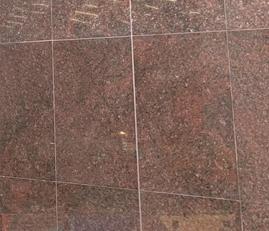
– Deconstruction Planning: Ensures careful removal to preserve stone integrity while adhering to the Construction (Design and Management) Regulations 2015.
Post deconstruction
– Reclaimed natural stone undergoes material identification, mechanical testing, and chemical analysis to ensure compliance with UK building regulations, including strength, frost resistance, and absence of contaminants like asbestos.
– Dimensional verification assesses usability, while provenance documentation and certifi cations confirm compliance with standards like BREEAM.
– Residual materials are removed to meet environmental regulations, ensuring the stone’s structural integrity and suitability for reuse in new construction projects.
Embodied carbon
Approximately 0.1 - 0.3kg CO2e/kg (A1 - A3) can vary depending on the type of stone and method used for extraction.
Ecological impact
Quarrying and (to a lesser extent) mining require a change in land use, which can damage habitats in the vicinity of the site, and the processes can produce air pollution. Quarrying also removes topsoil and can accelerate soil erosion. Responsible quarrying can include remediation measures to restore biodiversity and create new habitats. Additionally, large amounts of fresh water can be used in the process.
Once a material is deemed reusable, here are some common considerations and tips before intrusive extractions happen. Please add to this list as per your project.
Before deconstruction
Visual condition - structural integrity, wear/tear etc.
Disassembly potential - test removing any adhesives or fixtures.
Modification potential - test surface treatments.
After deconstruction
Packing requirements - protect from chipping and scratching.
Making good requirements if panels are extracted from the façade.
Transport panels off-site
Processing requirements.
Processing location.
Possibilities for storage.
Opportunities for Material Passporting.
Quality banding
Record initial estimations on the percentage of reusability according to agreed banding.
Use the banding table below to determine what process should be applied to maximise reuseability by grading the condition of the material from best (1) to worse (3).
• “As New”
• Applicable to Front of House
• Satisfies performance criteria to use as is i.e. warranties, structural integrity etc.
• Standard sizes (if applicable)
• Almost “As New” with minor surface wear and tear but meets aesthetic standards
• Applicable to Front of House
• Satisfies performance criteria
• Standard sizes (if applicable)
• Minor damage but meets aesthetic standards
• Refurbishable
• Partially satisfies performance
• Standard sizes (if applicable)
• Some damage but could meet aesthetic standards
• Refurbishable
• Can be used in low visibility areas or within buildups
• Partially satisfies performance
• Non-standard Sizes
• Significant damage or degradation
• Doesn’t satisfy performance criteria
• Refurbishment not practical
• Standard composition
• Can be recycled
• Significant damage or degradation
• Doesn’t satisfy performance criteria
• lNon-standard composition/ harder to break down/ possible contaminants
• Recycling or safe disposal
Deconstruction / recovery considerations
Approximations, advise and input from John F Hunt and BAM.
Demo contractor to manually remove each stone panel. Most stone will be salvageable and valuable to recover.
Additional labour and equipment required, at least 1 x additional person cut and then second person needed to remove and manoeuvre heavy panels.
Offcuts / broken slabs should be segregated on site during demolition works.
Stone, especially granite is a common material in material markets. Best Reclamation is a good place to start. Commonly used as kitchen counter tops etc. Demo contractor to manually remove each paving slab e.g. Material Index and other material brokerage storage services.
Common practice. If you specify aggregate, extra process required to crush stone into specific sizes.
Will require all the stone panels to be extracted separately and placed into a separate bin to avoid contamination.
Additional programme to demolition package. If intention is to further retain as full sized panels, increase cost and programme to be stacked an stored prior to collection/delivery to specialist stone company. To be arranged by demo contractor.
Testing and storage will be required, resulting in added costs.
Should be included in demolition costs but additional care will be needed. Maybe a cost uplift for storage.
Additional care when separating the material.
As it is a popular material, it is possible for rebate.
Every stone will have different attributes but the processes will be the same. Explore all levels of intervention to find the right solution for your project.
Reuse opportunities and process
Examples
Reuse
As is
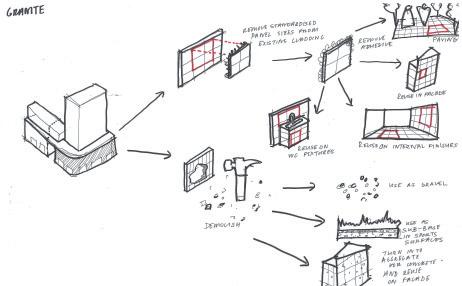
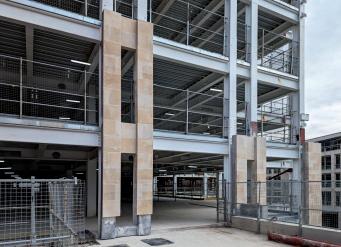
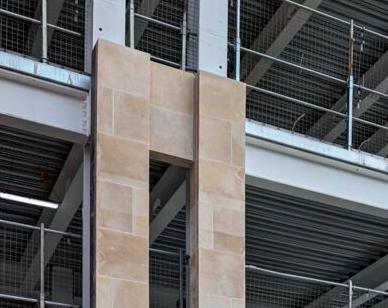
Stone in good condition can be cleaned up and reused as cladding. Honing, fl aming and sandblasting can be surface treatments to change the visual quality of the stone.
Trimming and resizing is not necessarily required, if the quality is appropriate, but can be done in different sizes as desired.

Reuse
Cut into smaller tiles / finish
Stone cladding can be altered to become fl oor and wall tiles. Smaller sizes can also be used as building blocks for landscaping, planters, pavers etc.

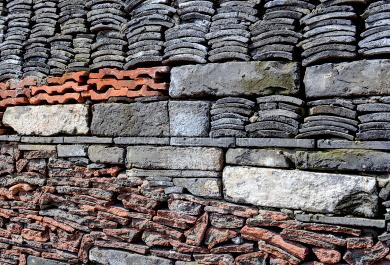
Downcycle
Crush into aggregate for new product
Stone can be processed into aggregate and be incorporated into new tiles in terrazzo or reconstituted stone.
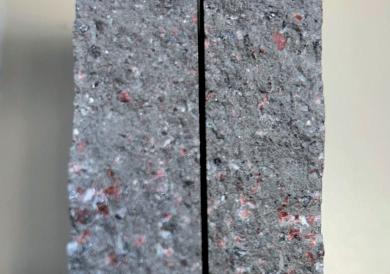
Remove panels and remove adhesive or damaged edges.
Surfaces can be treated and applied to both external and internal finishes such as WC fixtures, paving and façade. remove mortar
Extract almost “As New” panels
Panels can be extracted and turned into other applications such as part of walls or planters.
Salvaged / broken ribs and clay are combined to create aggregates or tiles or other finishes.
Materials
Newly created tiles can be used as interior

Newly created aggregates could be used into remaking façade elements such as new cladding or doughnut panels.
Creation of a new material
Reuse opportunities tracker
Example of cataloguing potential reuse outcomes. Please use as a template to guide design decisions and add new innovations. Add and remove rows as required to refl ect emerging opportunities.
Recovered element used as is - façade
Recovered tiles or panels for different use e.g. Flooring
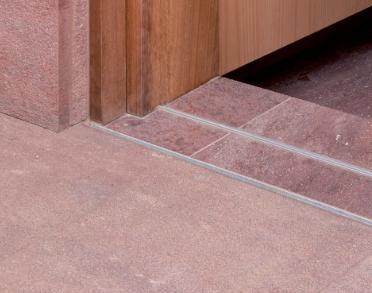
Smaller wall tiles

Terrazzo and reconstituted stone
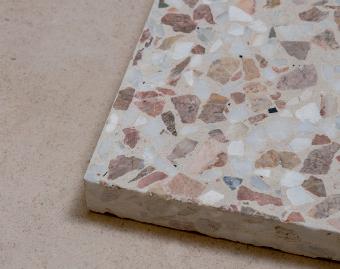
Demolition contractor
Embodied Carbon impact
Low impact
Neutral
Some testing (e.g. flexual strength) would be required on sample.
Minor impact
Major impact
London Stone - recycles existing stone
Stone Rescue - restores and polishes existing stone
Szeremely
London Stone - recycles existing stone
Stone Rescue - restores and polishes existing stone
Szeremely
• Aesthetic quality and appearance test
• Slip-resistances, acoustics, durability
N/A
Diespeker and Co / Granby workshop - uses crushed marble, recycled brick to produce new tiles
Le Pietra Compatta presses crushed stone into new brick slips, tiles etc.
Ethical Stone terrazzo
Aesthetic quality and appearance test
N/A
Check if the existing materials can be used to make a new durable material. Ethical Stone can crush material themselves, prior to producing terrazzo product.
N/A
400 kg of granite aggregate (dust to 3mm size). Cleaned with no trace of clay. Concrete and glue is fine.
Carefully remove, chip off excess mortar and clean element for conduct quality check.
• Ensure structural compatibility
• Slip-resistances, durability (for paving applications only)
General cleaning and slip resistance check. Surface treatments to change the texture. e.g. slip resistance
• Ensure structural compatibility
Existing cladding and tiles to be ground and polished for producing new tiles.
• Demo waste must be free of all clay and metals. Possibility to make a dense block.
• QA testing at Lignacite factory, checking weight, density, dimensions & crushing capacity. Further third party testing will be additional cost.
Crushing the stone into small pieces in a stone factory and sending it to manufacturer to be remade into tiles.
• Demo waste must be free of all clay and metals. Possibility to make a dense block.
LPC (Italy) will need others to crush the granite (dry @3mm and smaller) and transport arranged overseas (which given potentially tonnage will increase budgets as well as carbon).
• Take care when removing large piece of stone as it can be heavy and hard to move.
• Consider doing surface treatments in place
• Take care when removing large piece of stone as it can be heavy and hard to move.
• Consider doing surface treatments in place
• Take care when removing large piece of stone as it can be heavy and hard to move.
• Consider cutting pieces smaller
• LPC product is from a mix of quartz, granite, marble, limestone, bricks and porphyry that is crushed into a stone powder and cold pressed with cement binding into new bricks
• R&D is done in-house.
• Consideration required for storage options.
You may notice some empty fields. The industry is always evolving and we want to encourage more clarity in reuse strategies. If you find any suppliers with reuse capacity please get in touch!
Chapter input by structural engineers HTS and brick specialists K-briq.
Key properties
–Highly durable, weather resistant and stable
– Can be easily handled manually, small alterations are possible.
–Excellent fire resistance and thermal mass
Key sub-types
Bricks are categorised as load bearing and non-load bearing. For non-load bearing bricks refer to section 3.0 Structure for more detail.
To understand how to deconstruct bricks you must first distinguish between mortar types.
Cement mortar vs lime mortar
–Most handset bricks will use cement mortar.
– Some bricks will be laid in lime mortar and are easier to remove individually. Good quality recovered bricks usually have a high resell value.
– Bricks laid cement mortar are difficult to extract as mortar is stronger than the bricks.
Load bearing bricks are usually made for structural purposes and can be very durable if properly maintained.Refer to the London Brick Guide for more information on brick types.
Condition
Early access to potential locations for brick recovery will allow brick specialists to assess the reuse potential. Scratching the bricks can give an indication of material strength. Check the bricks for potential metal contamination. For more information please refer to For this section refer to FutuREuse document “Evaluating the technical performance of reclaimed building materials” (D Baker-Brown, 2021).
Re-certification process
Prior to deconstruction
Perform a visual inspection to confirm the condition and whether it is load-bearing or non load-bearing and look for any evidence of moisture ingress, cracking or spalling. Contact a brick specialist or brick manufacturer to inspect the bricks as they are. They will be able to quickly tell you the type of brick material, mortar and estimate the period of manufacture. This will help you assess which banding to place the material - whether time should be spent in removing the bricks individually.
Once initial assessment is made, a trial of taking a portion of
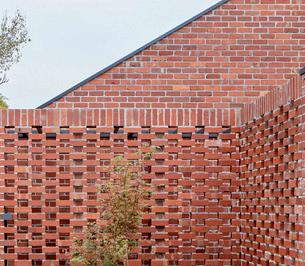
bricks out is encouraged so the bricks can be crushed and their material qualities can be assessed. Some of these test include:
–Dimensions (as per BS EN 772-16:2011
–Gross Dry Density (as per BS EN 772-13:2000)
– Unconfined Compressive Strength- Dry and Saturated (as per BS EN 772-1:2011)
– Initial Rate of Water Absorption - Capillary Action (as per BS EN 772-11:2011)
– Total Water Absorption- 24hr Cold Water Immersion (as per BS EN 772-21:2011
–Freeze -Thaw resistance (as per 772-18:2011)
–Microscopy Analysis
– Particle Size Distribution (as per BS EN ISO 17892-4:2016)
Determining if the bricks can demonstrate meeting the same standards and requirements of a new brick, it can be factored into the reuse direction.
Post deconstruction
Reclaimed bricks are usually not certified, but some salvage dealers will have done the above tests before reselling on the market. Reclaimed bricks are not covered by British Standard, so specifiers should check that their insurance policies cover their use.
Embodied carbon
0.24 to 0.54 kg CO2e/kg. Figure for embodied carbon will differ depending on the mix/ materials used.
26 kg of CO2/m2 for clay bricks (2022 -British Ceramics Confederation)
26.5 kg of CO2/m2for concrete blocks (2020 - Marshalls PLC -Average)
Ecological impact
Firing bricks is energy-intensive, as is the production of cement often used in the mortar to bind them. The burning of fuel for firing bricks releases pollutants and ash into environment, affecting both soil and air quality. The removal and unearthing of large amounts of virgin materials for bricks has major impacts on habitats.
Recovery Checklist
Once a material is deemed reusable, here are some common considerations and tips before intrusive extractions happen. Please add to this list as per your project.
Before deconstruction
Visual condition - access aesthetic criteria, bonds, breakage etc.
Load bearing or non-load bearing.
Disassembly potential - trial to assess % of recovery. This could be very labour intensive.
Possibilities of storage.
After deconstruction
Packing requirements - storage considerations.
Making good requirements.
Extract individually or in panels.
Processing requirements - palleting.
Transport panels off-site
Transport bricks off-site.
Processing location.
Opportunities for Material Passporting.
Quality banding
Record initial estimations on the percentage of reusability according to agreed banding.
Use the banding table below to determine what process should be applied to maximise reuseability by grading the condition of the material from best (1) to worse (3).
• “As New”
• Applicable to Front of House
• Satisfies performance criteria to use as is i.e. warranties, structural integrity etc.
• Standard sizes (if applicable)
• Almost “As New” with minor surface wear and tear but meets aesthetic standards
• Applicable to Front of House
• Satisfies performance criteria
• Standard sizes (if applicable)
• Minor damage but meets aesthetic standards
• Refurbishable
• Partially satisfies performance
• Standard sizes (if applicable)
• Some damage but could meet aesthetic standards
• Refurbishable
• Can be used in low visibility areas or within buildups
• Partially satisfies performance
• Non-standard Sizes
• Significant damage or degradation
• Doesn’t satisfy performance criteria
• Refurbishment not practical
• Standard composition
• Can be recycled
• Significant damage or degradation
• Doesn’t satisfy performance criteria
• lNon-standard composition/ harder to break down/ possible contaminants
• Recycling or safe disposal
Deconstruction / recovery considerations
Approximations, advise and input from John F Hunt and BAM.
REUSE: If cement mortar has been used, potential to cut out into sections for façade reuse.
If lime mortar, remove mortar using hand tools, mortar rake, raking blade etc. and palletise for reuse.
Significant additional labour required and may have impact on scaffold programme to remove bricks from upper levels. Consideration on how you will move bricks from upper levels to ground.
TBCUnlikely to affect programme if there is enough space on site to clean bricks outside of demolition area.
RECYCLE: Crushed into aggregate Labour requirements should be the same as traditional recycling.
Donated
If bricks can be reclaimed individually, bricks can be sold or donated back into the material market.
If bricks are crushed, K-briq can run tests to test compatibility to make new bricks,
Bricks to be carefully extracted, ideally intact, and packaged separately for transport. If crushed, the resulting brick aggregate must be meticulously sorted to prevent metal contamination.
Should be included in demolition costs but additional care will be needed
Should be included in demolition costs but additional care will be needed
Additional care when separating the material.
Depends on the brick, varies from £0.5 - £1.5 per brick
Recovery method depends on the resulting value and use of the reclaimed bricks. The type of mortar significantly impacts the time and effort required for removal, as well as the final quality of the reclaimed bricks. Some bricks may have higher value as individual bricks but if a buyer is lined up to buy whole panels, it will affect how the bricks are extracted. Reuse route needs to be considered if not decided upfront. Some companies offer onsite brick cleaning services using excavators, providing quotes based on the number of bricks processed.
Potential to get a discount if project buys back made bricks
Reuse opportunities and process
Examples
Reuse
Brick wall as new
Existing wall to be painted or plasterboard to be applied on the top to use the wall as new. Bricks to be extracted individually, reclaimed and reused with new mortar to make a new wall.
Reuse
Cutting the existing wall /bricks in pieces
Sections of the existing wall or bricks will be cut into pieces if bricks are held tgether with cement mortar. Some parts will be incorporated into the new walls or other areas of the building.
As aggregate
Crushed into aggregrate to make gabion walls or crushed into brick dust that can be incorporated into cement mixed (research underway) or blended to create clay tennis courts.
Reuse opportunities tracker Example of cataloguing potential reuse outcomes. Please use as a template to guide design decisions and add new innovations. Add and remove rows as required to refl ect emerging opportunities.
Harvesting bricks as panels
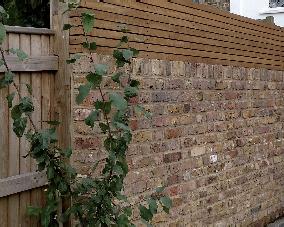
Harvesting bricks/ blocks individually
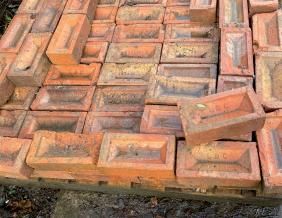
Bricks as a Façade
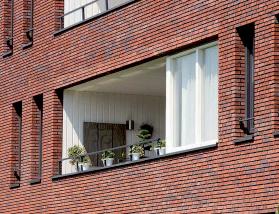
Bricks cladding
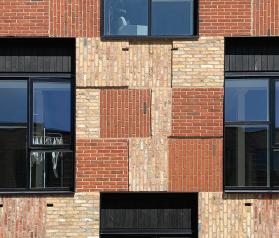
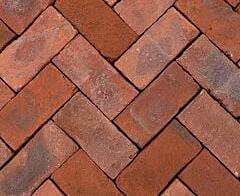
Demolition Contractor Suggestion is to cut brick/ blocks into usable panels. Investigation on the strength and feasibility to use as internal partitions.
Embodied Carbon impact
Low impact Minor impact
Neutral
Major impact
London Reclaimed Brick Merchants is a reuse market.
JS Buyers and sellers stock a wide range of reclaimed bricks, tiles, slates, stone and chimney pots.
Required to see if bricks can be dismantled in panels, strength testing and durability. Testing with programme, logistics, cost, and testing with demolition contractor.
Building Contractor Suggestion is to cut bricks into new shapes and use as a façade texture.
Required to see if bricks can be dismantled individually. Compressive strength, density, water absorption, pore filling capacity and resistance to freeze/ thaw. Testing will vary depending on reuse requirement.
Not required but worth reviewing the aesthetic.
Resource Row by Lendager Group recycled 3m3 panels mounted onto a steel frame or bedding into a thin backing of concrete.
Required to see if brick walls can be cut and mounted onto a new frame. Tests on thermal performance, safety, structure etc.
Building Contractor Suggestion to use bricks as paving, either as individual bricks or as panels.
Not required but worth reviewing the aesthetic.
Cutting existing walls into panels or blockwork sized pieces.
The elements required to support or brace the brick panels may be extensive (brick is heavy) which might negatively impact overall embodied carbon. There would also be carbon involved in transporting bricks to and from the factory
Extract bricks individually. Drill holes into mortar joints between bricks, chipping hammer to remove bricks, clean mortar off with chisel.
Labour intensive and there would also be carbon involved in transporting bricks to and from the factory if testing is required.
Cutting bricks into new shapes and bonded to precast panels. Process is quite labour intensive and would require large equipment.
Cutting brick walls into useable sections.
Separating brick walls into useable sections.
You may notice some empty fields. The industry is always evolving and we want to encourage more clarity in reuse strategies. If you find any suppliers with reuse capacity please get in touch!
Reuse opportunities tracker
Example of cataloguing potential reuse outcomes. Please use as a template to guide design decisions and add new innovations. Add and remove rows as required to refl ect emerging opportunities.
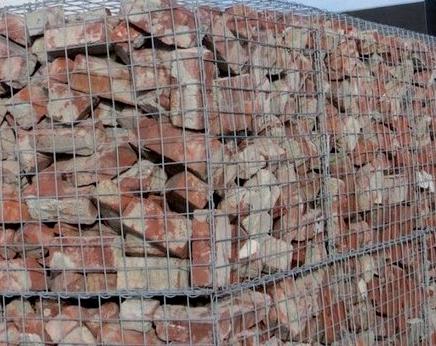
Brick gabion
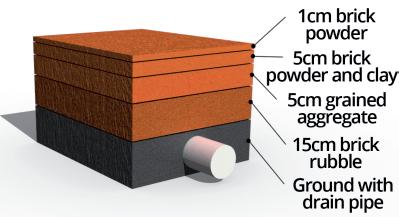
Brick powder
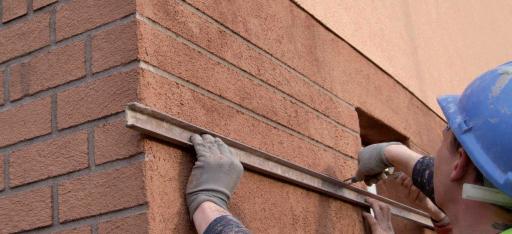
Brick/ clay render
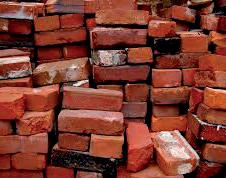
New bricks
Gabion 1 UK using recovered brick and placing them in gabion baskets for landscaping.
BECOCLAY produces brick powder made by Cegielnia Trojanowscy (polish)
Redcourt uses brick powder to make tennis courts.
Clayworks producer of natural clay plaster based in Cornwall.
Matteo Brioni producer of natural clay plaster based in Northern Italy.
The reclaim and salvage company, Environmate material reuse market. SHS, NAL description.
Lignacite produces concrete blockwork with up to 30% recycled materials.
Not required but may need to test compatibility to their product range.
Low impact Minor impact
Embodied Carbon impact Major impact
Neutral
Required to test brick aggregate’s compatibility to their product range.
40-44 tons of brick powder with milled clay and approximately 1-2 tons of the same brick powder to cover a tennis court.
Required to test brick aggregate’s compatibility to their product range.
5kg, particles < 5mm (can be a mix of concrete and clay) 500kg of milled powder (MB).
Not required but worth reviewing the aesthetic.
Not required but may need to test compatibility to their product range.
1-2 walls, to test possibilities of dismantling the bricks individually.
500kg of 10-20mm of aggregate (can’t be dust). Will need 20 - 50kg to test compatibility.
Stripping and breaking bricks.
Cutting bricks into new shapes.
Crushing bricks into new a fine powder
Cutting brick walls into useable sections. Grinding and sifting materials.
Crushing bricks into new a fine powder
Separating brick walls into useable pieces.
Carbon involved in transporting bricks to and from the factory, and carbon in new mortar.
Stripping and breaking bricks.
You may notice some empty fields. The industry is always evolving and we want to encourage more clarity in reuse strategies. If you find any suppliers with reuse capacity please get in touch!
Chapter input by façade engineers FMDC.
Key properties
Glass is used in several parts of the building - including internal façade/skin. This section discusses glass applications in façade.
– Typically maintains its clarity and strength, with minimal degradation in quality.
– Thermal and solar performance of IGUs (Insulated Glass Unit) degrade with time due to gas leakage from the cavity and moisture eventually seeping into it.
–Generally high demand in the market.
– Unless processed in a way that alters its chemical composition (e.g. fritting) it can be recycled in closed loop.
Key sub-types
Architectural glazing can be broadly categorised as follows:
– Single (monolithic) glass panes can be annealed or heat treated (heat strengthened or toughened) to improve strength. They can also be coated to confer enhanced thermal and solar control properties when used in IGUs (see below).
– Two or more monolithic panes can be combined into laminated glazing with the use of interlayers.
– IGUs (insulated Glass Units) are made by combining two (double glazing / DGU) or three (triple glazing / TGU) glass panes separated by a tightly sealed cavity filled with inert gas (typically Argon) or air.
Non-intrusive surveys can be undertaken to establish the configuration (glasstypes and thicknesses) of sngle glazing and of IGUs. Look for glass kitemarks (stamps) in the corner of the glass; if present, a kitemark identifies ‘safety glass’, providing information on the type, the impact resistance properties, and the fire resistance, if relevant.
Glass specialists will be able to determine the configuration of IGUs with the use of simple tools. Saint Gobain will carry out surveys for free and buy collected cullet.

Direct re-use of IGUs is problematic because at its end-oflife (25-30 years) the unit will have likely lost its thermal and solar properties to some degree. Also, to be re-used, and IGU needs remain unchanged and retain its original dimensions. Direct reuse could be possible if the specific application required lower performance parameters.
If reusing glass panes, the inner and outer glass layers of an IGUs can be separated and individual panes can potentially be re-used, with some limitations. However, this requires special machinery to avoid breaking the glass so it needs to be done off site, and it's novel process, still in its infancy and under research and development, and not yet common in the industry.
Close loop glass recycling is relatively simpler. It can be done on-site by carefully breaking the panes and collecting cullet in bags. Avoiding contamination is key. Bags of cullet will be transported to a recycling processor.
Contaminated glass waste can be down-cycled into container glass, glass wool insulation or other applications.
Re-certification process
Direct glass reuse is very uncommon in the industry, therefore there is no known examples of re-certification processes to date.
In general, re-certification will depend on the new application, and the performance requirements specified for it. For example, if a single pane is to be reused as a balustrade, impact testing including post-breakage behavious will be required.
Embodied carbon
Single glazing: 1.2 - 1.8 kg CO2e/kg
Double glazed units: 1.7 - 2.2 kg CO2e/kg
Triple glazed units: 2.1 - 2.3 kg CO2e/kg
Values should be considered indicative; variation within range will depend on actual glass configuration (glass type and thicknesses).
Ecological impact
Glass production significantly impacts the environment by releasing CO2 and greenhouse gases due to the high temperatures required for melting raw materials and the ensuing chemical reaction. The extraction of raw materials required to make glass (sand, soda ash, lime) impact habitats and potentially adds pollution to local environments during processing.
Recovery Checklist
Once a material is deemed reusable, here are some common considerations and tips before intrusive extractions happen. Please add to this list as per your project.
Before deconstruction
Visual condition - Check existing information in O&M manual or conduct non-destructive testing to determine the composition.
Disassembly potential.
Modification potential - Glass can be cut into specified sizes.
Testing to understand the gas content in IGUs.
After deconstruction
Packing requirements - ensure no contamination from metals or other substances.
Making good requirements.
Transport panels off-site
Processing requirements.
Processing location.
Possibilities for storage.
Opportunities for Material Passporting.
Quality banding
Record initial estimations on the percentage of reusability according to agreed banding.
Use the banding table below to determine what process should be applied to maximise reuseability by grading the condition of the material from best (1) to worse (3).
1.(a)1.(b)2.(a)2.(b)3.(a)3.(b)
• “As New”
• Applicable to Front of House
• Satisfies performance criteria to use as is i.e. warranties, structural integrity etc.
• Standard sizes (if applicable)
• Almost “As New” with minor surface wear and tear but meets aesthetic standards
• Applicable to Front of House
• Satisfies performance criteria
• Standard sizes (if applicable)
• Minor damage but meets aesthetic standards
• Refurbishable
• Partially satisfies performance
• Standard sizes (if applicable)
• Some damage but could meet aesthetic standards
• Refurbishable
• Can be used in low visibility areas or within buildups
• Partially satisfies performance
• Non-standard Sizes
• Significant damage or degradation
• Doesn’t satisfy performance criteria
• Refurbishment not practical
• Standard composition
• Can be recycled
• Significant damage or degradation
• Doesn’t satisfy performance criteria
• lNon-standard composition/ harder to break down/ possible contaminants
• Recycling or safe disposal Record
Deconstruction / recovery considerations
Approximations, advise and input from John F Hunt and BAM.
Prepare for reuse
Glazing units suitable for reuse to be identified and carefully removed and stored safely to avoid breakage until they are transported to a storage facility.
Reuse of individual IGU panes
After being removed from the building, IGUs need to be transported to a specialist glass processor. Once separated, individual panes can potentially be reused, although there are limitations.
Closed loop recycling to make new architectural glass is becoming popular in the industry, with Saint Gobain Glass leading the way.
Any glass deemed not suitable for closed loop recycling can be downcycled to make container glass or other products.
Additional labour and equipment required, at least 1 x additional person to remove.
Requires a glass processor owning a special machine that can separate the two glass panes without breaking them. It’s a novel process so its not common on the market.
Cost of storage likely to offset cost saving from procurement of new product. Will require equipment and transport to storage facilities.
For closed loop recycling glazing units need to be segregated from other materials to avoid contamination. Then it can be either transported to a processor as entire units or broken in site under controlled conditions and transported with suitable bags. This is not required for downcycling.
Should be included in demolition costs but additional care will be needed.
Additional care when separating the material.
If glass is selected for closed loop recycling it must be stored away from any metals and magnetic materials. The contamination can cause visual and structural defects. Glazing units to be carefully removed and broken on site in line with remanufacturers recycling process. Demo contractor to undertake works to avoid contamination given strict method for breaking and bagging (specified by glass receiver).
Embodied Carbon impact Major impact
Low impact Minor impact
Neutral
As it is a popular material, it is possible for rebate. Saint Gobain will also offer discount on procuring low carbon glass.
Minor due to the process being still in development stage.
Reuse opportunities and process
Examples
As is
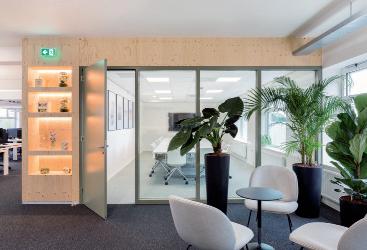
If an IGU / single pane of a specific size is deemed suitable for direct reuse, it can be demounted ‘as is’ and reframmed to form new enclosures or balustrades. For IGUs that have lost some of their thermal performance, the application might be one with lower performance requirements. Specific testing might be required depending on the type of application.

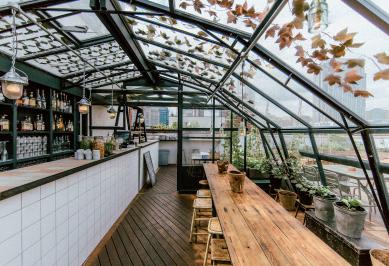
Individual glass panes used in a different application
Single glass panes, or individual panes of an IGU after being separated with a special machine, can be repurposed. If a pane is deemed reuseable but is chipped or damaged at edges, it can be trimmed (unless the glass is toughened) and edge working can be applied.
Crush into lower grade glass cutlets for new product
Glass can be crushed to make many interesting products, such as glass pebbles, recycled glass blocks and terrazzo.


Reusing standardised pieces of glass as partitions, façade or balustrade (subject to material assessment)
Reuse opportunities tracker
Example of cataloguing potential reuse outcomes. Please use as a template to guide design decisions and add new innovations. Add and remove rows as required to refl ect emerging opportunities.
Recycled window ROTOR Deconstructiondismantles, processes and trades salvaged building components
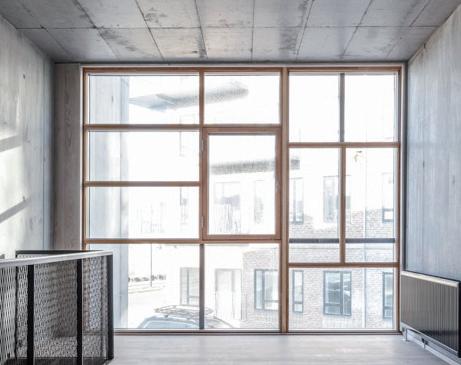
Fig. 2.57
Glass Balustrade Optima a glass partition and door specialist with reuse ambition Glass Partitioning UK
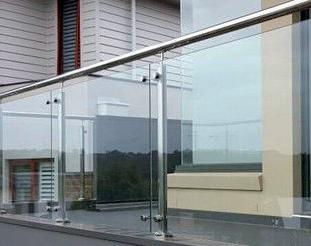
Fig. 2.58
Suitability tests (e.g. thermal performance, safety, stability...) 1-2 panels + frames
Impact testing required for balustrades with different requirements depending on the type of area.
Office Partition/BalustradeTest whether the glass can be stripped back to ensure its compatibility for use as office partitions.
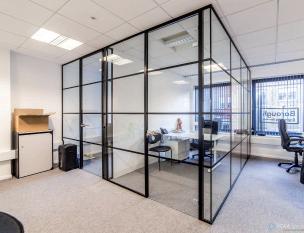
Fig. 2.59
Recycled glass (closed loop)
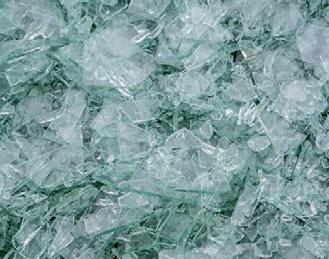
Fig. 2.60
Glass is a commonly recycled material. Saint-Gobain has an established supply chain that can audit, collect, recycle and supply recycled glass.
Glass specialist to inspect glass and conduct a crack testing to separate the glass that can be recycled.
1 panel
ProcessCertification/applicationEmbodied
Carefully remove, chip away excess sealants, then clean element to prepare it for a quality check.
Ensure structural compatibility Acoustics, durability
Take care when removing large glass panel as it can be heavy and hard to move.
Storage will need to be carefully coordinated to avoid damage.
Unless a reuse strategy has been carefully coordinated, it may be more beneficial to arrange for panels to be recycled rather than risk them breaking in storage.
You may notice some empty fields. The industry is always evolving and we want to encourage more clarity in reuse strategies.
If you find any suppliers with reuse capacity please get in touch!
Reuse opportunities tracker
Example of cataloguing potential reuse outcomes. Please use as a template to guide design decisions and add new innovations. Add and remove rows as required to refl ect emerging opportunities.
Kiln formed glass

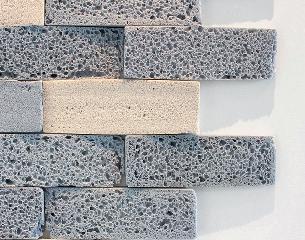
Glass aggregate
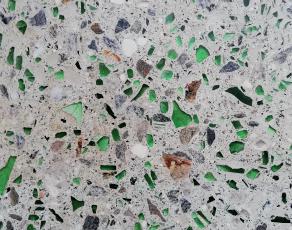
Glass foam
Band 3
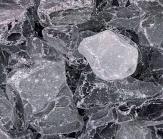
Glass pebbles
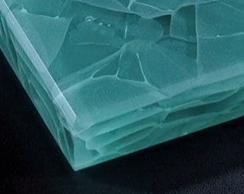
Magma glass
Chelsea Artisans / Fusion glass Makes interesting coloured glass.
Embodied Carbon impact
Low impact Minor impact
Neutral
Only applicable to monolithic glass panes.
Test compatibility to be used in façade applications or only as an internal feature.
Major impact
1-2 panels + frames (1700x3000)
Sureset / Craftstone - uses recycled glass and resin to produce paving.
Check if the existing materials can be used to make a new durable material.
300kg - 1 tonne
Steven Akoun - makes sound insulated foam
Glapor - makes gravel insulation of 100% recycled glass
GlasGo garden pebbles made from recycled glass, used in parks, gardens, ponds etc. Manufacturer is Restructa
Check if the existing materials can be used to make a new durable material.
tbc
Magma glass
Magna Glaskermik - Makes interesting rainscreen glass.
Required to see if 55 OBS glass can be included in their mix. tbc
Required to strip back the glass, as the lamination on the glass may restrict processes. To test its compatibility to be used as a façade or as an internal feature. Only applicable to monlithic panes are suitable for this application.
1-2 panels + frames (1700x3000)
ProcessCertification/applicationEmbodied
Individually, glass panes can be Kiln heated to make a variety of decorative products. Pigments can also be added to create a unique aesthetic.
Crushing up glass and mixing with resin.
Crushing into a slurry and baking into strengthened elements.
Separating glass panels from the frames, cleaning. They can be reshaped/cut to then be heated or add a new pigment.
Impurities (metals, organic material, and dirt) interfere with the bonding process and affect the strength of the paving. Variations in glass type can lead to inconsistent properties.
Cleaning and sorting systems ensure glass is free of contaminants.
Glass foam’s high porosity is advantageous for lightweight applications but may limit its use in load-bearing or high-strength applications. Its insulating properties can be leveraged in new products, such as panels or bricks.
Crushing into pebble size.
Glass pebbles are durable, but they are often brittle, which means they can break or chip under stress. This makes them more suitable for decorative or non-structural applications unless reinforced.
Recycled glass is broken into shards and then undergoes a complex sintering process without added binders or pressure but uses temperature and time to bind the glass.
Separating glass panels from the frames, cleaning. They can be reshaped/cut.
You may notice some empty fields. The industry is always evolving and we want to encourage more clarity in reuse strategies. If you find any suppliers with reuse capacity please get in touch!
Chapter input by façade engineers FMDC.
Key properties
Aluminium plays a crucial role in façades as it’s used in the form of frames for window, doors and curtain walling, thus contributing to both aesthetics and functionality. Although other materials can also be used for such elements (e.g. wood, uPVC, steel), aluminium is the most typical one and will be encountered on most buildings.
Aluminum window and curtain wall facades need to meet a large number of key performance parameters including structural stability, air and water tightness, thermal and acoustic performance and security.
It should be noted that aluminium extrusions an also be used in other façade elements, for example as sub-structure for rainscreen cladding.
Key sub-types
Aluminium frames are extrusions, typically made with specific alloys (6000 series) and then distinguished between the possible finishes: anodised, PPC (Polyester Powder Coating), PVDF, or mill finish (only for non-exposed elements).
When assembled in frames, they incorporate plastic thermal breaks (generally polyamide), gaskets, and possibly other filler elements that improve thermal performance and air / water tightness. When assessing recyclability, it’s important to keep in mind that some of these components might not be recyclable, or will need to be separated to be recycled independently.
Look for any labels or certifications provided by the manufacturer, typically included in product documentation or packaging, which may indicate the materials type, thermal performance ratings, or compliance with safety standards. If such markings are absent or unclear, further inspection may be required to verify the frame’s properties.
Window / curtain wall frames can potentially be re-used as they are, although the obvious limitation is that they would need to retain their original sizes. Alternatively, frames can be disassembled and altered to form a new configuration, with the integration of new elements (screws, cleats, sealant, etc.). In both cases checks need to be performed on the structural properties, on potential corrosion, and on the condition of the finish. Depending on the age and condition, the finish might need to be refurbished.
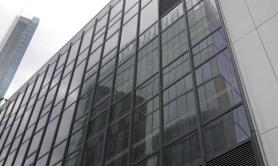
Re-use is uncommon in the industry at the moment, while recycling is the standard. Closed loop recycling to make new aluminium extrusions should be preferred to downcycling (e.g. cans and other containers). To ensure proper recycling, it's essential to remove non-recyclable components such as sealants, adhesives, plastics, and metal reinforcements. It is essential to segregate the framing elements from any other metal (including aluminium of other alloys) to avoid contamination during the sorting and shredding processes.
For direct re-use, testing can be performed to guarantee the structural performance, and the air / water tightness of the window / curtain wall system. Since the latter depend on gaskets and other elements as much as on the profiles, it might be necessary to replace some of these. Any on-site and off-site testing is unlikely to lead to new warranties being issued, but it’s an essential process to gauge whether re-use is a possible solution.
Refurbishment of the finishes (most likely re-spraying) will allow to achieve a new warranty for them, albeit limited.
Embodied carbon
Aluminium is extremely carbon intensive. Direct re-use would avoid all the carbon required to make new framing systems.
Closed loop recycling allows to avoid most of the emissions due to the electrolysis and the smelting processes required to make aluminium billets, thus producing elements with a much lower carbon footprint. The values below refer to a mill finish aluminium extrusion:
- New (average European production) ~ 7.4 kgCO2e/kg
- New (produced with renewables) ~ 4.7 kgCO2e/kg
- 75% post-consumer recycled content ~ 2.5 kgCO2e/kg
Ecological impact
Re-using or recycling aluminium allows to avoid extraction of new bauxite and eliminates waste from its processing, which hugely benefits ecosystems.
Recovery Checklist
Once a material is deemed reusable, here are some common considerations and tips before intrusive extractions happen. Please add to this list as per your project.
Before deconstruction
Visual condition - finish, structural integrity.
Disassembly potential - how easily can the glass be separated from the frame?
Modification potential.
After deconstruction
Packing requirements - how will contamination be avoided?
Making good requirements.
Transport panels off-site
Processing requirements.
Processing location.
Possibilities for storage.
Opportunities for Material Passporting.
Quality banding
Record initial estimations on the percentage of reusability according to agreed banding.
Use the banding table below to determine what process should be applied to maximise reuseability by grading the condition of the material from best (1) to worse (3).
• “As New”
• Applicable to Front of House
• Satisfies performance criteria to use as is i.e. warranties, structural integrity etc.
• Standard sizes (if applicable)
• Almost “As New” with minor surface wear and tear but meets aesthetic standards
• Applicable to Front of House
• Satisfies performance criteria
• Standard sizes (if applicable)
• Minor damage but meets aesthetic standards
• Refurbishable
• Partially satisfies performance
• Standard sizes (if applicable)
• Some damage but could meet aesthetic standards
• Refurbishable
• Can be used in low visibility areas or within buildups
• Partially satisfies performance
• Non-standard Sizes
• Significant damage or degradation
• Doesn’t satisfy performance criteria
• Refurbishment not practical
• Standard composition
• Can be recycled
• Significant damage or degradation
• Doesn’t satisfy performance criteria
• lNon-standard composition/ harder to break down/ possible contaminants
• Recycling or safe disposal
Deconstruction / recovery considerations
Approximations, advise and input from John F Hunt and BAM.
Prepare for reuse
Demo contractor to manually separate aluminium window frames from glazing. Any additional items such as plastic spacers must be removed to avoid contamination.
Once removed from the building and segregated from other materials to avoid contamination, frames are transported to a specialist processor where they will be shredded prior to being remelted to make new aluminium.
Novelis Recycling handles aluminium, including mullions and transoms. Reconal Ltd dismantles curtain walls for recycling or reuse. Alutrade Ltd recycles aluminium and UPVC architectural frames.
Likely to be a demo programme impact as the process is time consuming. Also likely to impact the demo package value as the demo contractor will not profit from the scrap.
Cost impact TBC (dependant on volume of material recovery). Impact on demo programme as this is likely to be a time consuming manual process.
Cost for temporary storage before materials can be checked for reuse.
Frames with hazardous coatings may require special disposal, as recyclablity depends on local facility capabilities.
Will require the glass to be carefully extracted as sheets separately and package for transport.
Should be included in demolition costs but additional care will be needed.
Additional care when separating the material.
When storing recycled window frames, prioritise dryness, ventilation, and organization. Protect materials from moisture, UV light, and damage. Address magnetic materials if frames contain steel for sorting or near sensitive electronics. Ensure safety, environmental compliance, and readiness for reuse.
Embodied Carbon impact Major impact
Low impact Minor impact
Neutral
Wicona to provide a rebate based on the volume of aluminium recovered.
As it is a popular material, it is possible for rebate.
Reuse opportunities and process
Examples
Reuse
Direct reuse
Involves minimal process to retain the maximum material value.
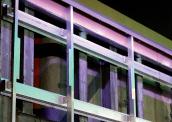
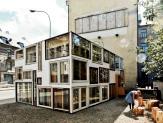
Direct re-use is possible, either on-site or on a different site, but sizes need to be maintained, and there could be limitations on performance.
Reuse
Cut and remake
Involves some processing to create a new product.
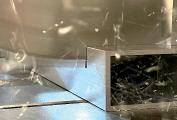
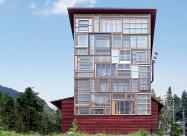
The final process of re-assembling the pieces into window frames. Extract frames
Carefully separate glass from frames
Trim edges to make the frames the desired length
Could be reused as an internal partition
Downcycle Strip and recycle
When sorted aluminium is the correct alloy (6000 series), it can be reused as a base material. It can be melted and cast into billets which can then be shaped into new extrusions.
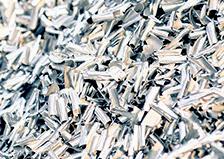
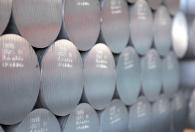
When the sorted aluminum, it can be reused as base material and re-extruded for new frames.
For any damaged frames, separate aluminum from the plastics
Creation of new materials
Note: there may be mastic sealants or coatings which can be hard/messy to remove.
Reuse opportunities tracker
Example of cataloguing potential reuse outcomes. Please use as a template to guide design decisions and add new innovations. Add and remove rows as required to refl ect emerging opportunities.
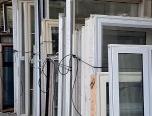
Recycled window Musgroves Buyers and sellers of recycled and new building materials and joinery.

Closed loop recycling
Novelis Recycling handles aluminium, including mullions and transoms.
Reconal Ltd dismantles curtain walls for recycling or reuse.
Alutrade Ltd recycles aluminium and UPVC architectural frames.
Assess frames for their condition for rot, flaking paint, drafts, and if selling the entire window check for broken glass or cracks, and consider the potential for energy inefficiency.
Neutral Low impact Minor impact
Embodied Carbon impact Major impact
Closed loop recycling Wicona by Hydro provides sustainable aluminium solutions for windows, doors and façades. WICONA’s new solutions contain at least 75% recycled and 95% recyclable material. A site visit with a specialist from Hydro can quickly determine the recyclability of the frames.
Submission of photos and a description with key dimensions. You can also arrange for someone to come and inspect the product before delivery/collection.
None.
None.Can take these aluminium extrusans: All Mill finish (clean) alloys, Painted aluminium, Thermal Break Plus aluminium based materials such as: Irony Ali, Old rolled, Alloy wheels, Cast aluminium.
Collect and sell high quality second hand & new aluminium windows (complete) and can match an existing window or find a recycled replacement window. Musgroves stock double glazed and single glazed windows.
Frames are stripped and remelted and extruded into new frames.
Older powder-coated aluminum frames can take on a creamy or grey chalky surface discolouration if they have been exposed to airborne salt, dust or dirt, a lack of cleaning or if they’ve come to the end of their expected life, typically between 15-20 years.
Hydro CIRCAL is a range of prime quality aluminium made with a minimum of 75% recycled, postconsumer scrap. A rebate can be given if frames are recycled through them but ensure it is included into the demolition programme from the beginning.
Cutting, shredding and sorting metals – and grading them for global smelters.
Taking contaminated products – filtering out the various contaminates and cleaning up the recyclable metal and aluminium can scrap so it can be recycled back to its original form without compromising quality.
You may notice some empty fields. The industry is always evolving and we want to encourage more clarity in reuse strategies. If you find any suppliers with reuse capacity please get in touch!
Chapter input by:

Load
3.1

Chapter input by structural engineers Heyne Tillett Steel.
Key properties
Also known as post-tension slabs are commonly used in flooring and roofing systems due to its effi cient design. Some of its traits are:
–High compressive strength
– Typically reinforced with steel rebar, enhancing tensile strength
–Good thermal and sound insulation properties
– Fire-resistant due to concrete’s natural fireproof characteristics
– Can span long distances with fewer supports, offering flexible design options
–Low maintenance
–Prone to cracking if not properly installed or handled
Key sub-types and properties
There are many types of reinforced concrete slabs but the only type of system that has potential for reuse is precast slab.
In order of reuse difficulty (easiest to hardest):
1. Block and beam - including hollow core slabs
2. Pre-cast slab system without a structural toppingpotential to remove section that aren’t tied together
3. Solid in-situ slabs (potential for retaining and jacking slabs to a different level)
4. Post- tension slabs and precast slabs with structural topping
Condition
Hollow core slabs can be reused if they are in good condition. They should be inspected for cracks, damage, or corrosion in the reinforcement.
Slabs with surface damage may need repair or resurfacing. Adhesives or fasteners should be carefully removed to avoid further damage. The slabs must be reassessed to ensure they meet the load-bearing requirements of the new design, which may require re-engineering or strengthening.
Proper handling during deconstruction is essential to preserve the slabs' integrity, ensuring they remain intact for reuse in large sections. For material testing - carbonation testing, Concrete strength - refer to euro codes for specifi cs.
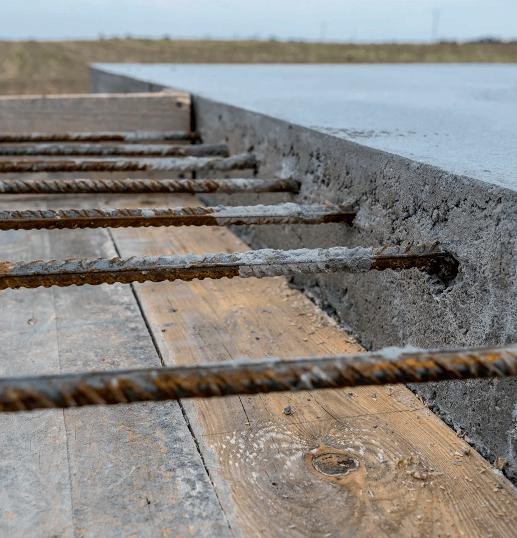
Embodied carbon
Slabs generally contain the greatest volume concrete for the structure so therefore contain the most carbon. So a great target for testing innovative reuse strategies.
For reinforced concrete structures, the resulting material intensity ranged from 719 to 768 kg/m2, and the embodied carbon, from 163 to 196 kg CO2e/m2.
Ecological impact
Over 46% of virgin aggregates are used in manufacturing cement and concrete. The extraction process signifi cantly impacts biodiversity and oceans. During this process, over 1,000 species are threatened.
Recovery Checklist
Once a material is deemed reusable, here are some common considerations and tips before intrusive extractions happen. Please add to this list as per your project.
Before deconstruction
Visual condition (structural integrity, wear/tear etc.)
Disassembly potential (e.g. precast or in-situ?)
Modification potential.
After deconstruction
Packing requirements.
Making good requirements.
Transport panels off-site
Processing requirements.
Processing location.
Possibilities for storage.
Opportunities for Material Passporting.
Quality banding
Record initial estimations on the percentage of reusability according to agreed banding.
Use the banding table below to determine what process should be applied to maximise reuseability by grading the condition of the material from best (1) to worse (3).
1.(a)1.(b)2.(a)2.(b)3.(a)3.(b)
• “As New”
• Applicable to Front of House
• Satisfies performance criteria to use as is i.e. warranties, structural integrity etc.
• Standard sizes (if applicable)
• Almost “As New” with minor surface wear and tear but meets aesthetic standards
• Applicable to Front of House
• Satisfies performance criteria
• Standard sizes (if applicable)
• Minor damage but meets aesthetic standards
• Refurbishable
• Partially satisfies performance
• Standard sizes (if applicable)
• Some damage but could meet aesthetic standards
• Refurbishable
• Can be used in low visibility areas or within buildups
• Partially satisfies performance
• Non-standard Sizes
• Significant damage or degradation
• Doesn’t satisfy performance criteria
• Refurbishment not practical
• Standard composition
• Can be recycled
• Significant damage or degradation
• Doesn’t satisfy performance criteria
• lNon-standard composition/ harder to break down/ possible contaminants
• Recycling or safe disposal
Deconstruction / recovery considerations
Approximations, advise and input from John F Hunt and BAM.
Carving into concrete to make skylights, impressions etc. Modification will be project specific. Suggestion is to carry out intrusive investigations to uncover rebar and thickness etc.
Aggregate to be reused in other concrete/cement applications.
Specialised work required to ensure structural integrity isn’t compromised.
None - this is current practice across all sites.
If intent is to reuse, ensure no cross contamination by providing a dedicated skip bin for rubble.
Will depend on the scope and scale of modification. Will depend on the scope and scale of modification.
Metals found in demolition waste is one of the main reasons why much concrete can’t be reused. To mitigate this, intrusive investigations through concrete panels and slabs can reveal if any rebar is used. Where possible, avoid exposing any rebar. If exposed the rebar is vulnerable to rusting and a anti-rusting solution will need to be applied. Contact local recycling facilities to see if they have the machinery to separate any rogue metals from concrete rublble before it is crushed into smaller aggregates.
DATA SHEET: Investigate
Embodied Carbon impact
Low impact Minor impact
Neutral
Major impact
There is a growing demand for concrete aggregates to be used as ingredients for new products.
Reuse opportunities and process
Examples
Modifying
Carving into the slabs or cutting
Cutting up and modifying slabs for other applications can be possible pending structural study. Precast concrete slabs can be recovered and reused as smaller structural interventions such as retaining walls or new slabs. However, not all panels are suitable for reuse, as their structural capacity will need to be assessed.
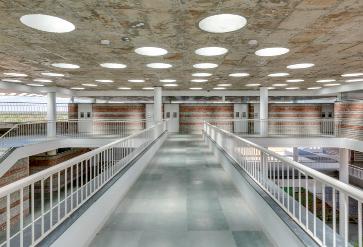
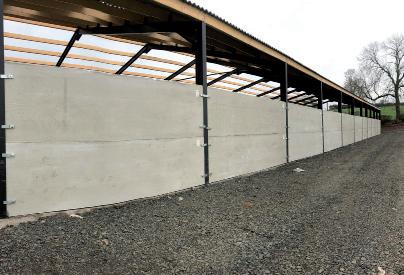
Re-manufacture
Extracting the clay pots from the concrete
Clay is a versatile material and can be reused in aggregates, garden walls or other landscaping opportunities like clay tennis courts. Fine aggregate can be remixed into rendering applications.
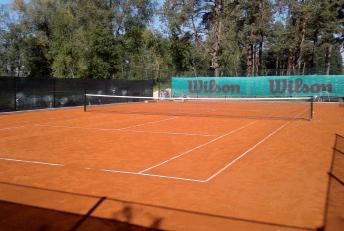
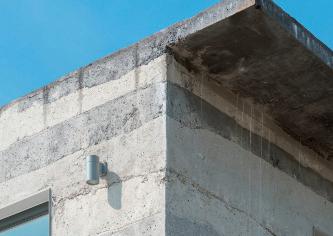
Down-cycle
As aggregate
Crushed into aggregate to make new concrete mix for other applications. Aggregate can be used as landscaping features or as gabion walls.
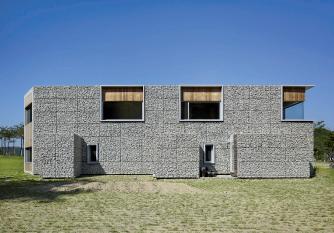
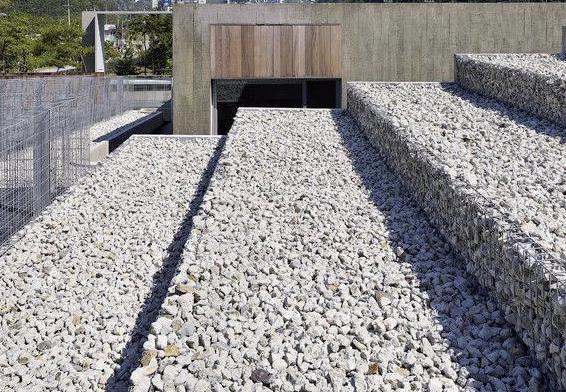
Reuse opportunities tracker
Example of cataloguing potential reuse outcomes. Please use as a template to guide design decisions and add new innovations. Add and remove rows as required to refl ect emerging opportunities.
Embodied Carbon impact
Low impact Minor impact
Neutral
Major impact
BandingProductSupplierTestingQuantity Required
Gabion Walls
Band 1
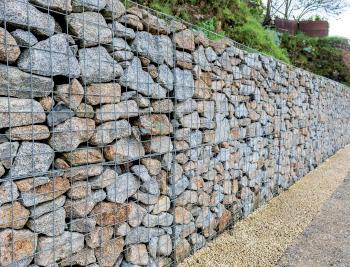
Down-cycling concrete
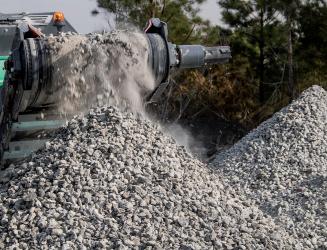
Mineral Foam - Airium
Mainland Aggregate UK based company that can manufacture large particles for gabion walls.
Not required standard procedures. But confirm demolition waste can be used.
Sika is a company that has a product called ‘ReCO2ver’ that converts old concrete back into raw materials.
Band 2
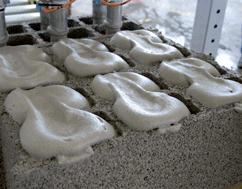
Blockwork
Lafargeholcim characterizes its new product, Airium, for insulation. Developed at the producer’s global research & development center near Lyon, France, the fireresistant, mineral insulating foam improves buildings’ energy efficiency from floor to ceiling.
Required to see if the projects concrete is a suitable material. Testing of its compressive strength of particle size.
Lagnacite makes blockwork out of 30% recycled materials.
Required to see if the projects concrete is a suitable material. Testing of its compressive strength of particle size.
Required to see if the projects concrete is a suitable material. Testing of its compressive strength of particle size.
500 Kg in particle size to test all three types of mineral foam.
1 - 2 tonnes to test compatibility.
ProcessCertification/applicationEmbodied
Breaking panels.
Crushing up to 32mm in diameter - Old concrete is broken up and sorted into aggregates of varying sizes.
Crushing into a slurry and baking into strengthened elements.
Crushing up to 10-12mm aggregate to ensure minimal dust.
You may notice some empty fields. The industry is always evolving and we want to encourage more clarity in reuse strategies. If you find any suppliers with reuse capacity please get in touch!
Chapter input by structural engineers Heyne Tillett Steel.
Key properties
Steel is the perfect material to be reclaimed and used repeatedly when kept in its current form.
– It is strong, robust, stable and if kept in the right conditions (a warm, dry environment), and has an incredibly long lifespan.
– Typically composed of iron, carbon, and other IT alloying elements like manganese, chromium, or nickel, can be easily shaped, welded, and fabricated. Highly recyclable, it retains its properties through multiple cycles of recycling, as is business as usual.
– Steel reused as is will require minimal to no re-heating. If recycled, the steel will be fully remelted to be remade into steel.
As steel is widely used for its versitility, consider all steel elements including steel mesh, louvers, balustrades, posts etc. Any elements related to safety will need to be tested and rewarrantied by the manufacturer.
Condition
Most steel can be reused as new after being cleaned and coatings removed and reapplied. Some of the rougher finished materials will need to be sanded down or recut. Speak to engineer on other considerations.
Re-certification process
Follow the process in SCI P427 and/or P440 (depending on the age of the steel)
Recondition: CST / EMR, Recertification: Masteel, SGS, Metaltest, Sandberg
Prior to deconstruction
1. Assess visual quality of the steel, grade in terms of acceptable damage.
2. Samples extracted for metallurgical testing.
3. Results determine appropriate products for reuse.
The process for reusing is straightforward. The following information will need to recorded for each element:
– A description of the structure. This should include a description of how the building is stabilised.
– The age of the structure, which may be from records, or local information.
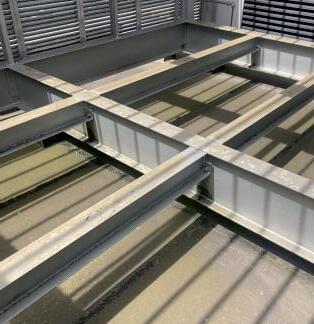
– A preliminary listing of the steel components deemed suitable for reuse, with numbers in each group, e.g. numbers of rafters, numbers of floor beams.
Steel within the construction industry is already a heavily recycled product. In the UK, the recycled content of steel is typically 20% scrap and, on the continent, where electric arc furnaces are utilised, this increases to 95% or more. However, the process of melting the steel scraps and reforming still requires vast amounts of energy, around 1.7kgCO2e/kg as an average figure for structural steel sections.
3.03 kgCO2e/kg for electrogalvanized steel- with world average steel thin layer coating with zinc / zinc nickle. (Varies depending on the type and content of steel)
Iron ore is the world’s most extracted metal and 98% goes into steel production. More than 86% of iron ore is extracted from Australia, Brazil, China, India, Russia and South Africa. Open-pit mining destructs the habitat as the mines are generally located in remote and ecologically diverse areas,
A significant amount of fresh water is used, causing local scarcity but it is also associated ecological damage caused by dam construction.
Once a material is deemed reusable, here are some common considerations and tips before intrusive extractions happen. Please add to this list as per your project.
Before deconstruction
Visual condition (structural integrity, wear/tear etc.)
Disassembly potential (bolted or welded connections, encasement and fireproofing).
Modification potential (larger, longer, sections are more attractive for reuse markets)
After deconstruction
Packing requirements (record location)
Making good requirements.
Lifting and removal requirements.
Transport panels off-site
Processing requirements.
Processing location.
Possibilities for storage.
Opportunities for Material Passporting.
Quality banding
Record initial estimations on the percentage of reusability according to agreed banding.
Use the banding table below to determine what process should be applied to maximise reuseability by grading the condition of the material from best (1) to worse (3).
• “As New”
• Applicable to Front of House
• Satisfies performance criteria to use as is i.e. warranties, structural integrity etc.
• Standard sizes (if applicable)
• Almost “As New” with minor surface wear and tear but meets aesthetic standards
• Applicable to Front of House
• Satisfies performance criteria
• Standard sizes (if applicable)
• Minor damage but meets aesthetic standards
• Refurbishable
• Partially satisfies performance
• Standard sizes (if applicable)
• Some damage but could meet aesthetic standards
• Refurbishable
• Can be used in low visibility areas or within buildups
• Partially satisfies performance
• Non-standard Sizes
• Significant damage or degradation
• Doesn’t satisfy performance criteria
• Refurbishment not practical
• Standard composition
• Can be recycled
• Significant damage or degradation
• Doesn’t satisfy performance criteria
• lNon-standard composition/ harder to break down/ possible contaminants
• Recycling or safe disposal
Deconstruction / recovery considerations
Advise and input from John F Hunt and BAM.
Embodied Carbon impact
Low impact
Neutral
Unbolting steel wholeTo reclaim them to reuse them, steel will need to be kept at full length which makes the deconstruction process different and it usually requires more labour.
Deconstruct
High potential in reusing unencassed steel created after 1970. Exposed ends of beam with a machine with a small breaker attachment so that the ends can be sheared off and dropped safely. Sections are then lifted to ground floor. May require a crane to lift large sections down multiple floors. Label and reevaluated steel.
Demolition contractors usually cut beams and columns into shorter lengths to make them easier to handle.
For scrap valueBusiness as usualcutting beams and columns into shorter lengths and then remelting.
Cost uplift would come from any additional lifting requirements or if there is a need to decase on site. Additional costs associated to testing. Additional time taken to expose ends of encased beams, lift sections to ground floor in long lengths
It hasn’t been proven that steel is still viabale once casing it removed. Focus on steel made after the 1970s, try and keep the sections as long as possible and avoid any drop cuts (where the ends are cut at an angle).
Minor impact
Major impact
Cost fluctuates a lot, and depends on the contractual arrangement. Reused steel can fetch higher prices than new steel. Not always a rebate however, after factoring in deconstruction costs.
Reuse opportunities and process
Examples
Up-cycle
As is
Assess visual quality of the steel grade in terms of acceptable damage. Explore ways to reuse the steel without extraction e.g. painting, exposing or encasing. After unbolting steel, existing holes will need to be repaired. Historic plates, connections etc. will need to removed and deep cleaned. If the steel is to be reused structurally there are more onerous requirements (as listed in earlier parts of this section).
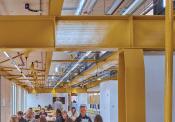
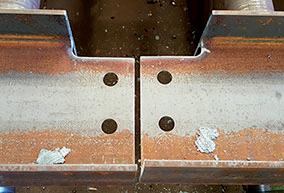
Cut into smaller sizes
Keep elements as long as possible, until a reuse application is finalised. Beams will need certified structural testing before returning to the marketplace. Be innovative and consider reusing some elements that might require lower structural requirements e.g. balustrades, screening, folly, installations etc.
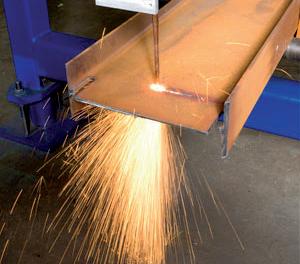
Remelted
Steel is very versatile because of its recyclability. If reselling isn’t an option, steel can be remelted.
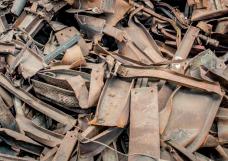
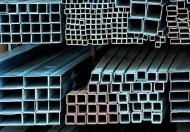
Consider disassembly and transportation early to avoid hidden costs and time.
Reuse opportunities tracker
Example of cataloguing potential reuse outcomes. Please use as a template to guide design decisions and add new innovations. Add and remove rows as required to refl ect emerging opportunities.
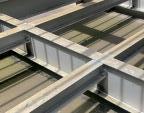
Assessment - Quality assessment
You may notice some empty fields. The industry is always evolving and we want to encourage more clarity in reuse strategies. If you find any suppliers with reuse capacity please get in touch!
Chapter input by structural engineers Heyne Tillett Steel and recycled brick supplier K-briq.
Key properties
–Highly durable, weather resistant and stable
– Can be easily handled manually, small alterations are possible.
–Excellent fire resistance and thermal mass
Key sub-types
Bricks are categorised as load bearing and non-load bearing. For non-load bearing bricks refer to section 2.0 Skin for more detail. To understand how to deconstruct bricks you must first distinguish between mortar types.
Cement mortar vs lime mortar
–Most handset bricks will use cement mortar.
– Some bricks will be laid in lime mortar and are easier to remove individually. Good quality recovered bricks usually have a high resell value.
– Bricks laid cement mortar are difficult to extract as mortar is stronger than the bricks.
Load bearing bricks are usually made for structural purposes and can be very durable if properly maintained. Refer to the London Brick Guide for more information on brick types.
Condition
Early access to potential locations for brick recovery will allow brick specialists to assess the reuse potential. Scratching the bricks can give an indication of material strength. Check the bricks for potential metal contamination. For more information please refer to FutuREuse document “Evaluating the technical performance of reclaimed building materials” (D Baker-Brown, 2021).
Re-certification process
Prior to deconstruction
Perform a visual inspection to confirm the condition and whether it is load-bearing or non load-bearing and look for any evidence of moisture ingress, cracking or spalling. Contact a brick specialist or brick manufacturer to inspect the bricks as they are. They will quickly tell you the type of brick material, mortar and estimate the period of manufacture. This will help you assess which banding to place the material and whether time should be spent in removing the bricks individually.
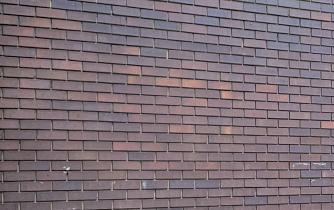
Once initial assessment is made, a trial of taking a portion of bricks out is encouraged so the bricks can be crushed and their material qualities can be assessed.
Some of these test include:
–Dimensions (as per BS EN 772-16:2011
–Gross Dry Density (as per BS EN 772-13:2000)
– Unconfined Compressive Strength- Dry and Saturated (as per BS EN 772-1:2011)
– Initial Rate of Water Absorption - Capillary Action (as per BS EN 772-11:2011)
– Total Water Absorption- 24hr Cold Water Immersion (as per BS EN 772-21:2011
–Freeze - Thaw resistance (as per 772-18:2011)
–Microscopy Analysis
–Particle Size Distribution (as per BS EN ISO 17892-4:2016)
The bricks can demonstrate that it can achieve the same standards and requirements of a new brick. It can determine the reuse direction.
Post deconstruction
Reclaimed bricks are usually not certified, but some salvage dealers will have done the above tests before reselling on the market. Reclaimed bricks are not covered by British Standard, so specifiers should check that their insurance policies cover their use.
Embodied carbon
0.21 to 0.54 kg CO2e/kg. Figure for embodied carbon will differ depending on the mix/ materials used.
Ecological impact
Firing bricks is energy-intensive, as is the production of cement often used in the mortar to bind them. The burning of fuel for firing bricks releases pollutants and ash into environment, affecting both soil and air quality. The removal and unearthing of large amounts of virgin materials for bricks has major impacts on habitats. Over 46% of aggregates are used in manufacturing cement which is used in mortar. The extraction process significantly impacts biodiversity and oceans. During this process, over 1,000 species are threatened.
Recovery Checklist
Once a material is deemed reusable, here are some common considerations and tips before intrusive extractions happen. Please add to this list as per your project.
Before deconstruction
Visual condition - access aesthetic criteria, bonds, breakage etc.
Load bearing or non-load bearing.
Disassembly potential - trial to assess % of recovery. (This could be very labour intensive)
Possibilities of storage.
After deconstruction
Packing requirements - storage considerations.
Quality assessment and sorting.
Extract individually or in cut into panels.
Processing requirements - e.g palleting/ cleaning.
Transport panels off-site
Processing location.
Opportunities for Material Passporting.
Quality banding
Record initial estimations on the percentage of reusability according to agreed banding.
Use the banding table below to determine what process should be applied to maximise reuseability by grading the condition of the material from best (1) to worse (3).
• “As New”
• Applicable to Front of House
• Satisfies performance criteria to use as is i.e. warranties, structural integrity etc.
• Standard sizes (if applicable)
• Almost “As New” with minor surface wear and tear but meets aesthetic standards
• Applicable to Front of House
• Satisfies performance criteria
• Standard sizes (if applicable)
• Minor damage but meets aesthetic standards
• Refurbishable
• Partially satisfies performance
• Standard sizes (if applicable)
• Some damage but could meet aesthetic standards
• Refurbishable
• Can be used in low visibility areas or within buildups
• Partially satisfies performance
• Non-standard Sizes
• Significant damage or degradation
• Doesn’t satisfy performance criteria
• Refurbishment not practical
• Standard composition
• Can be recycled
• Significant damage or degradation
• Doesn’t satisfy performance criteria
• lNon-standard composition/ harder to break down/ possible contaminants
• Recycling or safe disposal
Deconstruction / recovery considerations
Advise and input from John F Hunt and BAM.
REUSE in current state if lime mortar has been used over cement, potential to cut out into sections for facade reuse.
Remove using hand tools, mortar rake, raking blade etc. To remove mortar from bricks and palletise for reuse.
Bricks that are in good condition can be used as it is or can be remanufactured into another product after cleaning. Those that cannot be recycled will be crushed into aggregate.
If bricks can be reclaimed individually, bricks can be sold or donated back into the material market.
If bricks are crushed, some companies such as K-briq can run tests to test compatibility to make new bricks.
Significant additional labour required and may have impact on scaffold programme to remove bricks from upper levels. Consideration on how you will move bricks from upper levels to ground.
TBCUnlikely to affect programme if there is enough space on site to clean bricks outside of demolition area.
Labour requirements should be the same as traditional recycling.
Should be included in demolition costs but additional care will be needed.
Bricks to be carefully extracted, ideally intact, and packaged separately for transport. If crushed, the resulting brick aggregate must be meticulously sorted to prevent metal contamination.
Should be included in demolition costs but additional care will be needed.
Additional care when separating the material.
Depends on the brick, varies from £0.5 - £1.5 per brick.
Major impact
Recovery method depends on the resulting value and use of the reclaimed bricks. The type of mortar significantly impacts the time and effort required for removal, as well as the final quality of the reclaimed bricks. Some bricks may have higher value as individual bricks but if a buyer is lined up to buy whole panels, it will affect how the bricks are extracted. Reuse route needs to be considered if not decided upfront. Some companies offer onsite brick cleaning services using excavators, providing quotes based on the number of bricks processed.
Potential to get a discount if project buys back made bricks.
Reuse opportunities and process
Examples
Up-cycle / reuse
Brick wall as new
Existing wall to be painted or plasterboard to be applied on the top to use the wall as new. Bricks to be extracted individually, reclaimed and reused with new mortar to make a new wall.
Re-manufacture
Cutting the existing wall /bricks in pieces
Sections of the existing wall or bricks will be cut into pieces if bricks are held together with cement mortar. Some parts will be incorporated into the new walls or other areas of the building.
As aggregate
Crushed into aggregrate to make gabion walls or crushed into brick dust that can be incorporated into cement mixed (research underway) or blended to create clay tennis courts.
Reuse opportunities tracker
Example of cataloguing potential reuse outcomes. Please use as a template to guide design decisions and add new innovations. Add and remove rows as required to refl ect emerging opportunities.
Harvesting bricks as panels
Harvesting bricks/ blocks individually
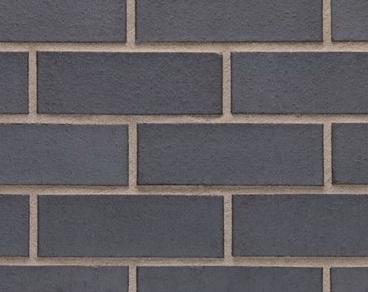
Bricks as a Façade
cladding
Bricks paving
Demolition Contractor Suggestion is to cut brick/ blocks into usable panels. Investigation on the strength and feasibility to use as internal partitions.
London Reclaimed Brick Merchants is a reuse market.
JS Buyers and sellers stock a wide range of reclaimed bricks, tiles, slates, stone and chimney pots.
Required to see if the bricks can be dismantled in panels, strength testing and durability. Testing with programme, logistics, cost, and testing with demolition contractor. 1-2 walls
Building Contractor Suggestion is to cut bricks into new shapes and use as a facade texture.
Required to see if the bricks can be dismantled individually. Compressive strength, density, water absorption, pore filling capacity and resistance to freeze/ thaw. 1-2 walls
Not required but worth reviewing the aesthetic. 1-2 walls
Resource Row by Lendager Group recycled 3m3 panels mounted onto a steel frame or bedding into a thin backing of concrete.
Required to see if the brick walls can be cut and mounted onto a new frame. Tests on thermal performance, safety, structure etc.
Building Contractor Suggestion to use bricks as paving, either as individual bricks or as panels.
Not required but worth reviewing the aesthetic. 1-2 walls
Cutting existing walls into panels or blockwork sized pieces. The process will be less labour intensive than removing bricks individually.
The elements required to support or brace the brick panels may be extensive (brick is heavy) which might negatively impact overall embodied carbon.
Extract bricks individually. Drill holes into mortar joints between bricks, chipping hammer to remove bricks, clean mortar off with chisel.
Cutting bricks into new shapes and moulded / bonded to precast panels. Will require large equipment.
Cutting brick walls into useable sections.
Separating brick walls into useable sections.
You may notice some empty fields. The industry is always evolving and we want to encourage more clarity in reuse strategies. If you find any suppliers with reuse capacity please get in touch!
Reuse opportunities tracker Example of cataloguing potential reuse outcomes. Please use as a template to guide design decisions and add new innovations. Add and remove rows as required to refl ect emerging opportunities.
Brick gabion
Band 2
Brick powder
Brick/ clay render
Band 3
Gabion 1 UK using recovered brick and placing them in gabion baskets for landscaping.
BECOCLAY produces brick powder made by Cegielnia Trojanowscy (polish)
Redcourt uses brick powder to make tennis courts.
Clayworks producer of natural clay plaster based in Cornwall.
Matteo Brioni producer of natural clay plaster based in Northern Italy.
The reclaim and salvage company, Environmate material reuse market. SHS, NAL description.
Lignacite produces concrete blockwork with up to 30% recycled materials.
Embodied Carbon impact Major impact
Low impact Minor impact
Neutral
Not required but may need to test compatibility to their product range. 1-2 walls
Required to test brick aggregate’s compatibility to their product range.
40-44 tons of brick powder with milled clay and approximately 1-2 tons of the same brick powder to cover a tennis court.
Required to test brick aggregate’s compatibility to their product range.
5kg, particles < 5mm (can be a mix of concrete and clay) 500kg of milled powder (MB).
Not required but worth reviewing the aesthetic.
Not required but may need to test compatibility to their product range.
1-2 walls, to test possibilities of dismantling the bricks individually.
500kg of 10-20mm of aggregate (can’t be dust). Will need 20 - 50kg to test compatibility.
Stripping and breaking bricks.
Cutting bricks into new shapes
Cutting brick walls into useable sections. Grinding and sifting materials.
Separating brick walls into useable pieces.
and breaking bricks.
You may notice some empty fields. The industry is always evolving and we want to encourage more clarity in reuse strategies. If you find any suppliers with reuse capacity please get in touch!
Chapter input by Structural engineers Heyne Tillett Steel and sourced from Materials Report Toolkit for Carbon Neutral Developments - Part 1, Bio Regional Development Group, 2003.
Structural timber refers only to softwood and hardwood elements such as beams, joists and columns. This section focuses on joists and studs.
Like brick reuse, the reuse of timber joists has been happening in an informal way for a long time. There is not much guidance on this so the same strategy applies - thinking of creative ways to reuse timber that doesn’t require strength grading or re-certification.
The lack of an integrated supply chain to support the reclaimation and reuse of timber use is one of the main reasons why timber is not reclaimed in the first place. This puts more onus on the demolition contractor to store, find potential buyers and negotiate costs and changes. A wider knowledge of how to reuse aims to encourage a broader support network for reclaiming used timber.
Before deconstruction, visually grade the timber. Refer to Waste Wood Assessment Guidance for timber grading.
Typically, construction and demolition waste is considered as Grade B. Usually, this waste wood contains some non-wood materials prior to processing such as nails, metal fixings, paint, plastic, glass, grit, coatings, binders and glues (The Wood Recycle’s Association, 2021). Other conditions that affect the reusability are any fungal decay, straightness and, moisture content. However, there are many new products that can transform construction timber into reuseable products to avoid timber entering waste streams.
Re-certification
Unlike new timber that is graded, and CE marked, reclaimed timber lack certification, making results difficult to guarantee that the material is fit for purpose. Finding design solutions with a lower performance requirement can allow used timber to be repurposed.
The Waste Wood Assessment Guidance for the Construction and Demolition sectors (Law, 2021) is an output of the Waste Wood Classification project that started in 2017. It provides guidance on the the identification of hazardous waste wood. The Waste Wood Assessment guidance could help to identify non-hazardous timber members with the potential to be
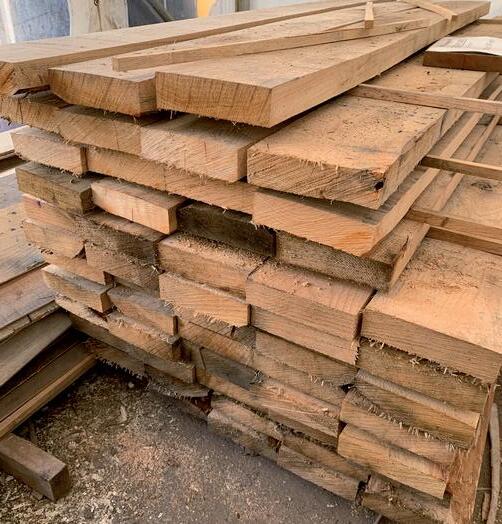
repurposed. It is especially relevant for structures constructed or altered between the 1950 and 2007. This guidance requests contractors to classify waste wood at its origin depending on the expected level of hazardous substances. This will require segregation of waste wood on site, otherwise it will all be considered as hazardous waste and subsequently requiring specialist hazardous waste disposal.
Embodied carbon
0.26 kgCO2e/kg for Softwood 0.31 kgCO2e/kg for Hardwood
Timber also sequesters carbon, so keeping timber in use and avoiding landfill or burning keeps this carbon out of the atmosphere.
Ecological impact
In 2018, the total amount of waste wood available in the UK was 4.5 million tonnes, for which approximately 40% was from construction and demolition activities (Wood Recyclers Association, 2019).
From this, approximately 83% is processed, 1% ends up in landfill and the rest 16% is unaccounted (Wood Recyclers Association, 2019; TRADA 2020). Some of the timber is donated or sent to recycling facilities. However, the overall amount of reclaimed and reused material is unknown as the practice of reuse is informal. The majority of the waste wood processed is used as fuel in biomass for energy recoveryincluding the waste wood exported as fuel. However, this remains highly controversial as unlike other renewable energy technologies, most of the current technologies used for the combustion of biomass generates carbon emissions (Office for National Statistics, 2019).
Recovery Checklist
Once a material is deemed reusable, here are some common considerations and tips before intrusive extractions happen. Please add to this list as per your project.
Before deconstruction
Visual condition (e.g. structural integrity, mould, termites wear/tear, does it have nails etc.).
Grading in-situ if possible.
Storage requirements (e.g humidity and temperature).
After deconstruction
Packing requirements (e.g stacking - sorted or unsorted).
Making good requirements (e.g. removing nails).
Testing for strength grading by UKAS accredited laboratories.
Transport panels off-site
Processing requirements - reconditioning.
Processing location.
Opportunities for Material Passporting.
Quality banding
Record initial estimations on the percentage of reusability according to agreed banding.
Use the banding table below to determine what process should be applied to maximise reuseability by grading the condition of the material from best (1) to worse (3).
• “As New”
• Applicable to Front of House
• Satisfies performance criteria to use as is i.e. warranties, structural integrity etc.
• Standard sizes (if applicable)
• Almost “As New” with minor surface wear and tear but meets aesthetic standards
• Applicable to Front of House
• Satisfies performance criteria
• Standard sizes (if applicable)
• Minor damage but meets aesthetic standards
• Refurbishable
• Partially satisfies performance
• Standard sizes (if applicable)
• Some damage but could meet aesthetic standards
• Refurbishable
• Can be used in low visibility areas or within buildups
• Partially satisfies performance
• Non-standard Sizes
• Significant damage or degradation
• Doesn’t satisfy performance criteria
• Refurbishment not practical
• Standard composition
• Can be recycled
• Significant damage or degradation
• Doesn’t satisfy performance criteria
• lNon-standard composition/ harder to break down/ possible contaminants
• Recycling or safe disposal Record
Deconstruction / recovery considerations
Approximations, advise and input from John F Hunt and BAM.
Cleaning, de-nailing and resizing then stored in a dry location.
For scrap value - can be used for feedstock products such as animal bedding, equine and landscaping surfacing. May be used as a fuel in domestic and non-IED Chapter IV biomass installation. Shredded for chipboard.
Additional labour and equipment required, at least 1 x additional person to remove.
Additional labour to segragate timber. Metals to be removed at recycling warehouse.
Cost of storage likely to offset cost saving from procurement of new product. Will require equipment and transport to storage facilities.
Source: Strategies for salvaging and repurposing timber elements from existing buildings - February 2022.
Carry out pre-demolition or reclaimation audits early to allow time for in-situ grade and quality assessment by timber specialists. Follow the Wood Assessment Guidance to identify any hazardous timber. Early collaboration with timber deconstruction specialists, manufacturers and designers can help in incorporating reuse/upcycling ideas.
impact Embodied Carbon impact
No much consideration of getting money back for recycling timber waste but instead can mean more labour and costs associated if wood were to be mixed into another materials i.e. Terrazzo
Reuse opportunities and process
Examples
As is
Assess visual quality of the timber in terms of acceptable damage. Explore ways to reuse the structure without extraction e.g. painting, exposing or refinishing.
A recently-completed pilot study by UK CLT made new CLT from reclaimed timber called CLST (Cross-laminated secondary timber). Although compressive strength, ageing and stiffness was less performative than CLT, the research to find better fabrication designs is still underway.
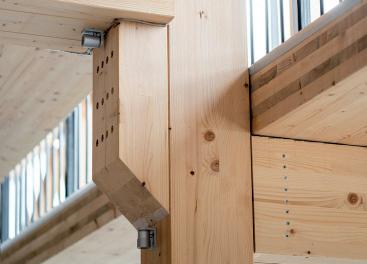

Re-manufacture
Cut into smaller sizes
Most timber beams can be cut into smaller standard sizes and resold. Although there is no way to strength grade used timber, be innovative and consider reusing some elements that might require lower performance requirements e.g. balustrades, garden seating, screening, folly, installations etc.
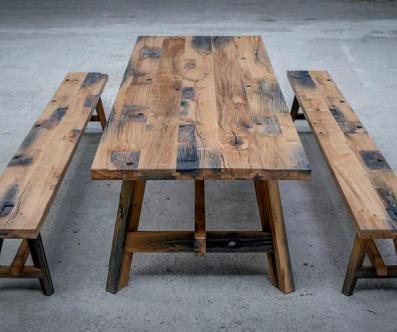
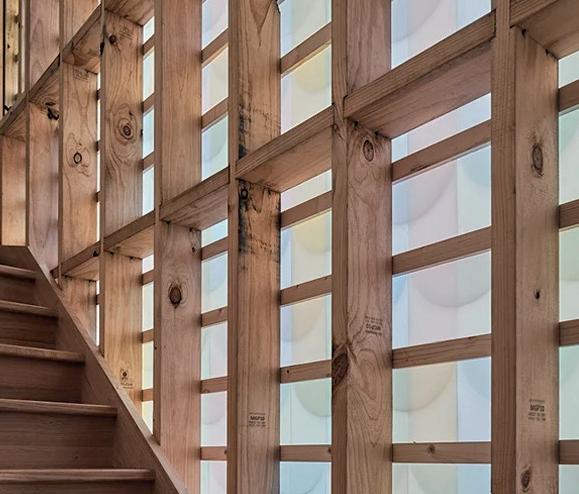
Down-cycle
Shredded
Timber is a very versitle material. It can be turned into terrazzo, chip board or mulch. Otherwise timber tends to be incinerated for energy recovery.
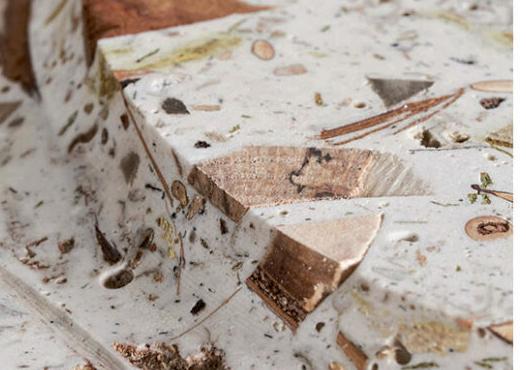
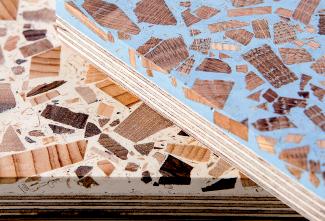
Reuse opportunities tracker
Example of cataloguing potential reuse outcomes. Please use as a template to guide design decisions and add new innovations. Add and remove rows as required to refl ect emerging opportunities.
Timber Beams
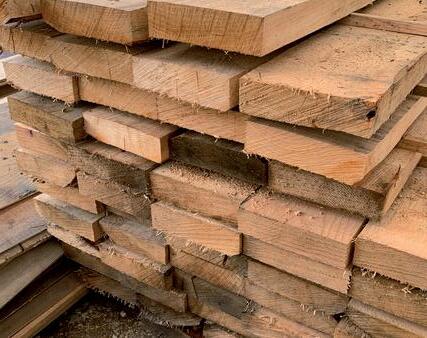
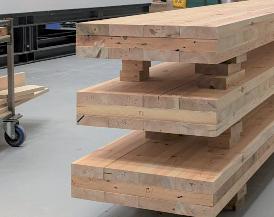
Reclaim and salvage The Reclaim company UK Timber Trade in Timber Carwarden Bogey Knights recycles existing timber ranging from joists, to train sleepers.
UK CLT making CLT out of reclaimed timber.
Furniture piecesUpcyclist
Bespoke carpentry Co.
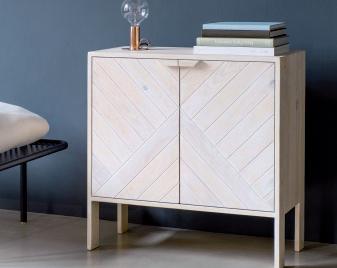
Wall and floor finishes

Chauceys restores and makes timber flooring from reclaimed materials.
Aesthetic quality and appearance test. TBC
Bespoke designs so will need close collaboration with carpenters. N/A
Aesthetic quality and appearance test. N/A
Check if the existing materials can be used to make a new terrazzo. N/A
All nails and other metal fixings removed. N/A
TImber sleepers are suitable for any garden use, water features, raised beds/ borders, decking, patios and play areas. xxN/A
A research team at University College London (UCL) (Rose, 2019) have been investigating the environmental implications and technical feasibility of Crosslaminated secondary timber (CLST).
Timber to be sanded down with new coatings applied. Cut to appropriate lengths and can be remade into furniture.
Chipping the timber into small pieces and sending it to manufacturer to be remade into tiles.
You may notice some empty fields. The industry is always evolving and we want to encourage more clarity in reuse strategies. If you find any suppliers with reuse capacity please get in touch!
Chapter input by:

4.1
4.2 Fittings and equipment

Chapter input by environmental design consultants Atelier Ten.
Key properties
Distribution and containment includes non-movable parts such as ductwork, pipes, cable trays. Although commonly, modularised, ready distribution of containment is labour intensive and often overlooked during demolition.
Ductwork is an essential component of heating, ventilation, and air conditioning (HVAC) systems. It distributes air throughout buildings and is typically made out of galvanized steel, aluminium, or plastics making IT. Durable and lightweight. Often modular, so it is easy to maintain and replace, but it has limited reusability. Parts of the components can be repurposed for other systems.
Reusing pipework (steel, iron, copper or plastic) can reduce greenhouse gas emissions compared to buying new steel. Pipe work for sprinklers, hot/cold water etc. could be reused subject to retesting.
Electrical containment such as cable trays, baskets and ladders are usually modular and can be reused as long as the fixings can be replaced and its condition is deemed acceptable. Cable trays are designed to support and organise electrical cables in a building of typically made from materials like galvanized steel, aluminium, or fiberglass. Designed to allow for ventilation, cable trays help prevent overheating of cables by allowing air circulation around them. Cable trays are easy to install and modify, offering flexibility in cable management.
Busbars are electrical distribution systems make generally of either copper and aluminium. They are modular and reasonably free of contaminants and could be removed and reused, subject to condition and testing.
Speak to a MEP consultant for other distribution and containment equipment that could be reused.
Things to look out for when considering reusing support equipment are: wear and tear, holes, warping, rusting and disassembly potential.
Re-certification process
The majority of containment equipment (cable trays etc.) shouldn’t need recertification it its in a good condition. Certain distribution equipment like pipework and ductwork
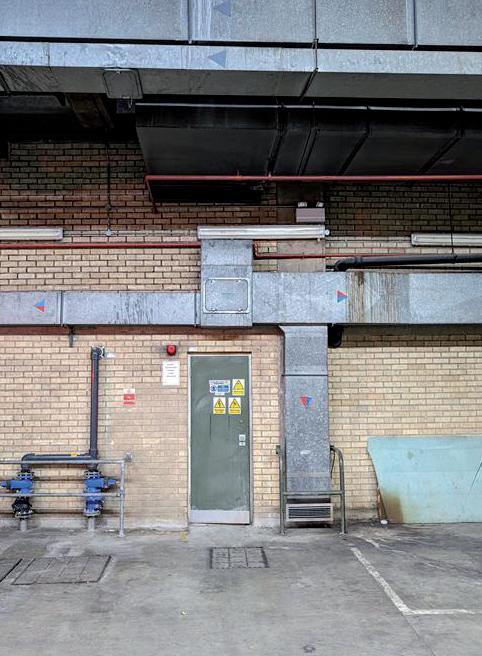
will need testing and recertification for its fire rating and leakage. Reconditioning process as below:
1. Clean each section of the trays and trunking to remove dust, dirt, and any adhesive residues. For items that may have been cut, they may need additional treatment for its exposed edges.
2. Inspect each piece for structural integrity, looking for bends, cracks, or corrosion
3. Repair any minor damage or set aside sections that cannot be reused
4. Bundle the sections together securely, using ties or straps to keep them organized during transport.
Most MEP containment and distribution is made of metals or sometimes plastic and as such have high embodied carbon. In a large building, distribution can account for a significant part, sometimes 60% of the MEP upfront embodied carbon.
Mining of metal used in the making of ductwork is energy intensive process which destructs habitat and soil. Some uses flexible plastic which contributes to fossil fuel depletion, air and water pollution. The manufacturing process generates waste materials, including metal off cuts, plastic scraps, and chemical byproducts. Improper disposal of these materials can lead to environmental contamination.
Recovery Checklist
Once a material is deemed reusable, here are some common considerations and tips before intrusive extractions happen. Please add to this list as per your project.
Before deconstruction
Visual condition - wear/tear etc.
Structural condition - e.g. warping.
Disassembly potential - examine connections and process e.g. How is it connected?
Modification potential - consider component materials and how to cut/separate.
Specialist input for safety.
After deconstruction
Packing requirements - does it need to be packaged with its fixings.
Transport panels off-site
Transportation requirements - sizes and weight.
Possibilities for storage - coordinate special requirements to avoid damage to equipment.
Opportunities for Material Passporting - what information to collect and how to track.
Quality banding
Record initial estimations on the percentage of reusability according to agreed banding.
1.(a)1.(b)2.(a)2.(b)3.(a)3.(b)
• “As New”
• Applicable to Front of House
• Satisfies performance criteria to use as is i.e. warranties, structural integrity etc.
• Standard sizes (if applicable)
• Almost “As New” with minor surface wear and tear but meets aesthetic standards
• Applicable to Front of House
• Satisfies performance criteria
• Standard sizes (if applicable)
• Minor damage but meets aesthetic standards
• Refurbishable
• Partially satisfies performance
• Standard sizes (if applicable)
• Some damage but could meet aesthetic standards
• Refurbishable
• Can be used in low visibility areas or within buildups
• Partially satisfies performance
• Non-standard Sizes
• Significant damage or degradation
• Doesn’t satisfy performance criteria
• Refurbishment not practical
• Standard composition
• Can be recycled
• Significant damage or degradation
• Doesn’t satisfy performance criteria
• lNon-standard composition/ harder to break down/ possible contaminants
• Recycling or safe disposal
Deconstruction / recovery considerations
Approximations, advise and input from John F Hunt and BAM.
1. Inspect the existing ductwork for any damage, wear or inefficiencies. Look for signs of leaks, rust and remove any insulation prior to deconstruction.
2. Ensure the existing ductwork is compatible with the new air conditioning system in terms of size, type and layout.
3. Carefully uncover or unfasten the sections of the ductwork, starting from the farthest point and working towards the main unit.
4. Record any known classification such as leakage rate etc.
Unlikely to incur additional labour required as it should take 2x operatives to remove for both recycling and reuse. The uplift will come from the time taken to remove the items. May need to include additional access equipment such as scissor lifts etc.
Uplift from hire or access equipment. Depends on the height of room and additional time to carefully unbolt and store materials. Ducting can be delicate so need to ensure it remains its integrity for reuse.
Will require additional time to carefully disconnect items. Limited
Identify standard peices and record the size and number along with any classifaction data as these peices will have the most potential for reuse.
1. Inspect the existing cable trays and trunking for damage, corrosion or wear. Note any sections that may need repair or replacement.
2. Carefully unfasten the cable trays and trunking from their supports, starting from the end furthers from the main supply.
3. Remove the trays and trunking in manageable sections. Apply seals or protection for any exposed sections/cuts.
4. Clean each section of the trays and trunking to remove dust, dirt and any adhesive residues.
Unlikely to incur additional labour required as it should take 2x operatives to remove for both recycling and reuse. The uplift will come from the time taken to remove the items. May need to include additional access equipment such as scissor lifts etc.
Uplift from hire or access equipment. Depends on the height of room and additional time to carefully unbolt and store materials.
Will require additional time to carefully disconnect items.
Limited but look for opportunities to reuse within the present scope as cables trays are normally modularised.
Reuse opportunities tracker
Example of cataloguing potential reuse outcomes. Please use as a template to guide design decisions and add new innovations. Add and remove rows as required to refl ect emerging opportunities.
Pipework - DIY cycle racks
Band 2
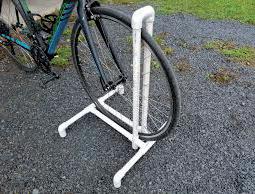
Sindstar buy and resell used PVC pipes. They also trade copper cables, generators, chillers and A/C
Embodied Carbon impact Major impact
Low impact Minor impact
Neutral
BandingProductSupplierTestingQuantity Required
Not necessarySelf-determined
Band 3
Furniture out of downcycled plastics

Mater is a danish furniture company that make classic pieces using a material recipe.
A bespoke solution can be tested to see how it combines with their recipe.
Self-determined
Sindstar buy used PVC pipes and can dispose of any pipes that cant be resold.
Ductwork and pipework if to be reused as is will need leakage testing.
Refer back to manufactures and MEP specialist to certify.
Mater have developed 5 unique formulas combining fibre with a binder. Materials such as coffee beans, plastic beer cans, electronic waste and fishing nets have been used to make furniture pieces.
Services haven’t lauched in the UK. Only available in Dubai. Only trade services available in the UK are among public domains such as Gumtree and Facebook Marketplace.
Offers a take back furniture made from patented Mater Materials at their end of life to be recycled again.
You may notice some empty fields. The industry is always evolving and we want to encourage more clarity in reuse strategies. If you find any suppliers with reuse capacity please get in touch!
Chapter input by environmental design consultants Atelier Ten.
Fittings refer to items related to sanitaryware such as toilets, sinks, urinals, vanities and shower trays etc.
Equipment for MEP includes AHUs (Air Handling Units), Boilers, Chillers, Generators, Condenser units, Cooling towers, pumps, LV panels, water tanks etc. Other equipment are related to access and maintence such as BMU units and lifts. A site visit with a MEP team can quickly identify any equipment that is still in good condition and has warranty. If considered for reuse, tests will need to be conducted to validate reusability.
In general, buildings undergoing major renovations will have MEP equipment at their end of life or equipment that doesn’t meet current standards. However, always check with suppliers and MEP consultant to identify the newest equipment.
Most water tanks can be reused, but the size and capacity may not be appriopriate for the new project. If so, there are many reclaimation sites that accept water tanks. There is a growing market for leasing MEP equipment with some lift and luminaire companies providing services that install, maintains and then removes for reuse and recycles at the products end of life.
Speak to a MEP consultant for other equipment that could be reused.
Things to look out for when considering reusing MEP equipment are: life span, wear and tear, water damage such as mould or leaking, holes, warping, rusting, energy efficiency, and disassembly potential.
Re-certification process
Reconditioning processes will differ for each equipment. Contact specialist for more information. The majority of MEP equipment will need recertification. But sanitary fittings can usually be reused.
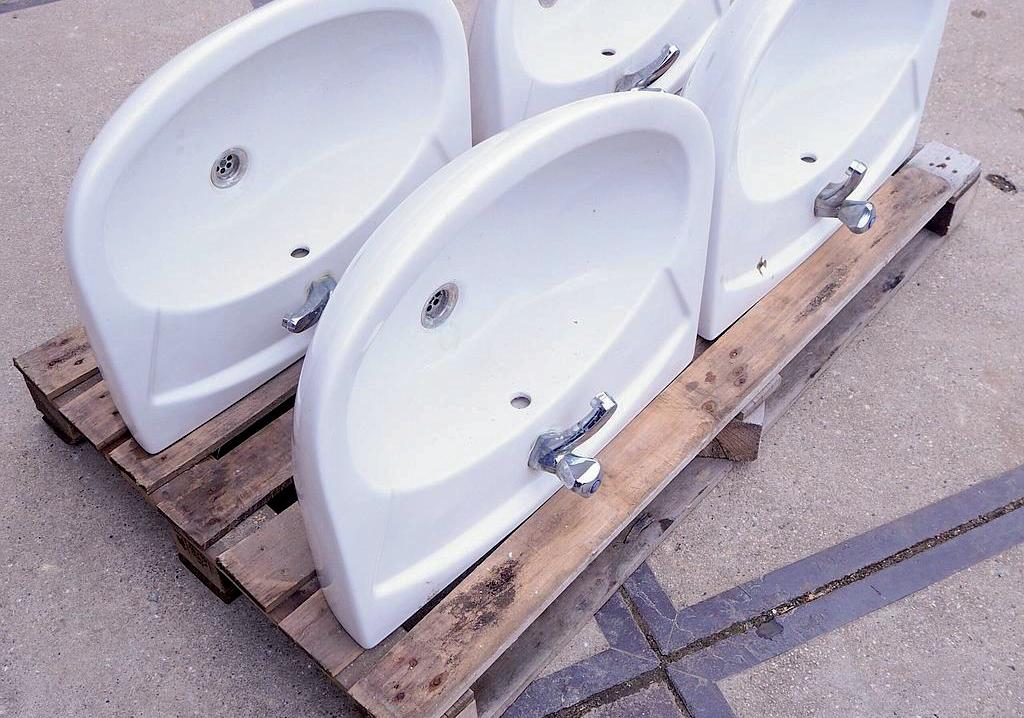
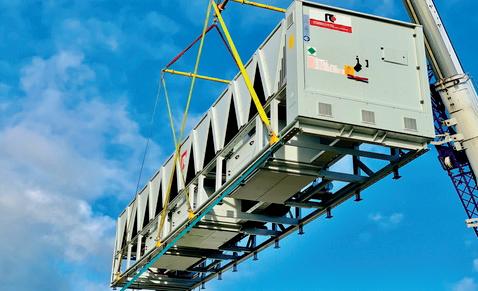
Embodied carbon of MEP equipment is still not widely available in the industry. Mostly made of metals and electronic components, MEP equipment will have a large upfront embodied carbon. In comparison to other elements in a building, MEP have a relatively short lifespan but a large impact on a buildings whole life cycle carbon, making the reuse and careful dismantling of MEP equipment important.
Care should be taken with rare metals contained in electronic components as well as refrigerant management.
Once a material is deemed reusable, here are some common considerations and tips before intrusive extractions happen. Please add to this list as per your project.
Before deconstruction
Establish the age - is it within the lifespan / warranties.
Visual condition -chipping, leaking, wear/tear etc.
Disassembly potential. - can it be easily removed without damage.
Modification potential - although limited consider repurposing potential.
After deconstruction
Packing requirements - protection, wrapped.
Transport panels off-site
Transportation requirements.
Processing requirements - retesting and re-warranting.
Processing location - onsite or offsite.
Possibilities for storage - coordinate special requirements to avoid damage to equipment.
Opportunities for Material Passporting - what information to collect and how to track.
Quality banding
Record initial estimations on the percentage of reusability according to agreed banding.
Use the banding table below to determine what process should be applied to maximise reuseability by grading the condition of the material from best (1) to worse (3).
• “As New”
• Applicable to Front of House
• Satisfies performance criteria to use as is i.e. warranties, structural integrity etc.
• Standard sizes (if applicable)
• Almost “As New” with minor surface wear and tear but meets aesthetic standards
• Applicable to Front of House
• Satisfies performance criteria
• Standard sizes (if applicable)
• Minor damage but meets aesthetic standards
• Refurbishable
• Partially satisfies performance
• Standard sizes (if applicable)
• Some damage but could meet aesthetic standards
• Refurbishable
• Can be used in low visibility areas or within buildups
• Partially satisfies performance
• Non-standard Sizes
• Significant damage or degradation
• Doesn’t satisfy performance criteria
• Refurbishment not practical
• Standard composition
• Can be recycled
• Significant damage or degradation
• Doesn’t satisfy performance criteria
• lNon-standard composition/ harder to break down/ possible contaminants
• Recycling or safe disposal
Deconstruction / recovery considerations
Advise and input from John F Hunt and BAM.
Embodied Carbon impact
Low impact Minor impact
Neutral
1. Inspect the condition and material make up of the partitions. Contact any washroom specialists.
2. Clean ceramic items and remove any adhesive residues. dirt etc. Inspect each piece material integrity, looking for leaks, cracks, or chips.
3. Repair any minor damage or set aside items that cannot be reused
4. Collate and count items and place them on pallets to keep them organized during transport.
5. Consider resell/ donation value if not useable on project.
1. Inspect equipment for any manufacturer tags to find out age and make of the product.
2. Inspect any obvious wear and tear that could affect the removal.
3. Contact specialist to safely remove.
No additional labour, but an increase in time to ensure the items are not damaged and stacked accordingly.
Depending on complexity of the strip out, could be cost neutral to remove and negligible cost to store
Will require more time to demount
Major impact
No additional labour, but potential to increase in time if the item is large and needs to be cut into smaller pieces to remove or if it needs specialised supervision e.g. fuel tanks
Depending on complexity of the strip out, could be cost neutral to remove and negligible cost to store. Uplift from hire of access equipment if equipment needs to be taken down from mulitple levels.
If still reusable but not suitable for the project, many MEP equipment and sanitary fittings can be resold or donated to the material market.
Reuse opportunities and process
Examples
Up-cycle
As is
Assess visual quality. Assess life span and effi ciency of equipment. Remove as many elements as a whole, careful of breakage and type connections. Consider ways to extend life span by replacing parts or intensive cleaning.
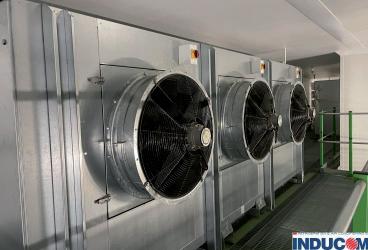
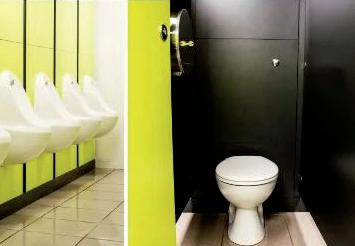
Re-manufacture
Mending and restoring
Remove as many elements as a whole, taking care of breakage and connections. Look to refurbish, mend or reservice to be reused again. If the product is reputable, the resell value of a refurbished or reserviced equipment can be significant.
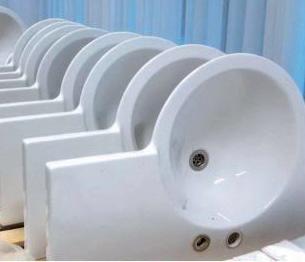
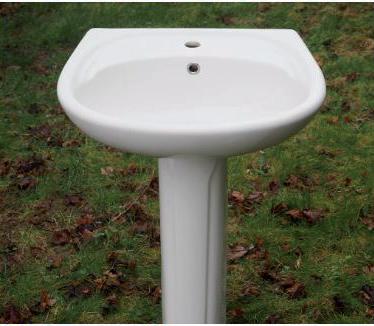
Down-cycle
Crushed ceramics
Creating ceramic products from recycled aggregates. Plastics can be melted down into cullet. Metals can also be recycled if properly separated.
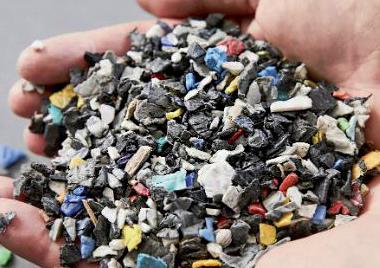

and or
Reuse opportunities tracker
Example of cataloguing potential reuse outcomes. Please use as a template to guide design decisions and add new innovations. Add and remove rows as required to refl ect emerging opportunities.
Industrial equipment
Generator
Water Tanks
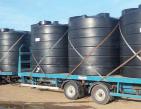
Sanitary Items
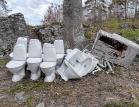
Induccomm buys and sells UK’s largest stock of refurbished refrigeration equipment including Chillers and Complete plants.
Embodied Carbon impact Major impact
Low impact Minor impact
Neutral
Not required may need careful dismantling to ensure resell-ability.
Woodstoch Power Company buy and resell used generators, HVAC.
Regal Tanks Buys all types of industrial storage tanks and silos in Aluminium, GRP (Fibreglass), Mild Steel, Plastic and Stainless Steel.
TBC assessment to see if it can be reused.
TBC
Rotor DC a cooperative that organises the reuse of construction materials.
Second hand Bathrooms is an online material market.
London reuse and recycling centre (RRC) to recycle items.
Materialnomaden is located in Austria. Thet evaluate and cataglogue used materials to be reused.
Minimum test required as repurposing tanks are mostly for decorative purposes.
TBC
Not required may need careful dismantling to ensure resell-ability.
TBC
Assessment - Quality assessment, product testing done by Inducomm. Mechanics and electrics to be reserviced and checked.
Equipment will require warranties and recertification.
Refer back to the manufacturer to rewarranty.
Assessment - Quality assessment, product testing done by Inducomm. Mechanics and electrics to be reserviced and checked.
Equipment will require warranties and recertification.
Refer back to the manufacturer to rewarranty.
To be reconditioned and cleaned. Large equipment will require transport and storage needs.
To be reconditioned and cleaned. Large equipment will require transport and storage needs. US only
Assessment - Quality assessment
Assessment - Quality assessment, general cleaning.
Transportation requirements should be discussed early to allow time to pass materials.
DC dismantles, process and trade salvaged building components. Located in Brussels.
Reuse opportunities tracker
Example of cataloguing potential reuse outcomes. Please use as a template to guide design decisions and add new innovations. Add and remove rows as required to refl ect emerging opportunities.
Embodied Carbon impact Major impact
Low impact Minor impact
Neutral
BandingProductSupplierTestingQuantity Required
Furniture out of downcycled plastics
Band 3
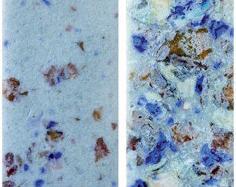
Granbyware recycled plate 100% recycled ceramic dinnerware made from crush glass, old tiles and factory sludge.
Magnolia Mountain make tumblers out of crushed up ceramics.
Ignorance Bliss creates tiles composed of 40% recycled waste content.
Required to test the compatibility of project specific ceramic is to these products.
Depends how many damaged sanitary items are left after the resell assessment.
You may notice some empty fields. The industry is always evolving and we want to encourage more clarity in reuse strategies. If you find any suppliers with reuse capacity please get in touch!
Chapter input by lighting specialist Erco.
Key properties
The reuse of light fittings is still in its early stages, but it presents a valuable opportunity to reduce environmental impact. Manufacturing new luminaires (the light) and fittings (the casing) has a significant footprint, making reuse a sustainable and responsible choice that should not be overlooked.
This section briefly explores current technologies and strategies related to the reuse, remanufacturing and recycling of the large amount of fittings found in an office environment. The lighting industry has always been subject to a ‘‘make and dispose of’’ type of linear economy, particularly with short-lifespan fluorescent and halogen luminaires. However, LED lighting (with a much longer shelf life) has played a huge role in changing how we think about (and use) lighting and is much more energy-efficient. Over the last decade, the transition to LED lighting, mostly in commercial buildings, has accounted for the highest share of electricity consumption.
Apart from refurbishing existing light fittings to add new life and functionality, parts harvesting is another loop in the circular economy for lighting. Many existing lights contain small amounts of mercury, which is harmful to the environment and needs to be disposed of properly. Only incandescent and halogen bulbs can be disposed of with regular waste.
Key sub-types
Firstly, identify what type of lights you are recovering. With the exception of LED light sources, these can no longer be sold in the UK and EU. While the light source itself is not officially banned, the government has implemented Minimum Energy Performance Standards (MEPS), forbidding the importation and sale of light sources with an efficiency lower than 120 lumens per watt.
There are 5 types of light fittings: Fluorescent tubes, halogen bulbs, compact fluorescent, incandescent light bulbs and LED light bulbs. The only type that is deemed reusable, due to its long and efficient lifespan is the LED light.
When it comes to office lighting, referring to PART L. Building Regulations (2021 Edition) when specifying light fittings will provide you with plenty of information on what type of luminaire will be most appropriate if you are looking to meet a certain accreditation. If we use the general lighting example (L1(B), L2 6.60) it details that a luminaire must have an average luminaire efficacy (LM/W) of 95 luminaire lumens. In a nutshell, this means
the amount of light you get for each wattage used once the light has left the luminaire, e.g. 100lm divided by 10w = 10lm/w. It is very important to note that it is not the amount of light from the LED Light Source. Not all luminaires are built the same, and many are not capable of meeting these requirements. This is why it is important to read through manufacturer specification documents. PART L dives into many other aspects of lighting, including the way in which it is controlled, so it is certainly worth a read.
Things to look out for when considering reusing light fittings: cracks, rust, lifespan, and overheating. Harmful chemicals can be released if fluorescent lights break. Contact a specialist for safe deconstruction.
Reconditioning processes will differ for each fitting. Contact a specialist for more information. If you are considering reselling fittings, information such as lifespan, warranties, energy usage, etc., will be required.
When working on the refurbishment of a workspace, it is important to look into the carbon-related global warming potential of the light fittings being specified. This can raise a question: is it worth remanufacturing existing luminaires within the space or is it more appropriate to purchase new fittings altogether?
In October 2021, CIBSE released TM65 documentation providing guidance on how manufacturers can report on the embodied carbon in some aspects of a product’s life cycle, from manufacturing to installation, maintenance and end of life. Specifying a luminaire with low-embodied carbon can assist the overall project in meeting certain accreditation. It is worth noting, however, that these scores are self-certified by manufacturers so please double-check your information.
When looking at the ecological Impact of a light fitting it is very important to have the entire picture- or rather, consider the entire life of a luminaire. Although TM65 and TM66 are great for surfacelevel evaluations of luminaires, manufacturers MUST consider investing in Environmental Product Declarations (EPDs). Whereas TM65/66 are self-evaluated, EPDs are externally measured. This means manufacturers are unable to alter numbers to make themselves appear more favourable. EPDs examine the details of material sourcing, manufacturing process, a luminaire’s life during and after installation, and it’s recycling process, including where its materials end up. This therefore provides you with the most detailed assessment of a luminaire’s ecological impact.
Recovery Checklist
Once a material is deemed reusable, here are some common considerations and tips before intrusive extractions happen. Please add to this list as per your project.
Before deconstruction
Visual condition.
Performance condition.
Disassembly potential - tied to EU requirements.
Modification potential.
After deconstruction
Packing requirements - dismantle the kit and clean each component.
Recycling or re-purposing - Waste Electrical and Electronic Equipment (WEEE) is a UK Regulation for the disposal of electrical and Electronic Equipment.
Transport panels off-site
Transportation requirements - wrapping for protection.
Processing requirements.
Processing location - onsite or offsite.
Possibilities for storage - coordinate special requirements to avoid damage.
Opportunities for Material Passporting - what information to collect and how to track.
Quality banding
Record initial estimations on the percentage of reusability according to agreed banding.
Use the banding table below to determine what process should be applied to maximise reuseability by grading the condition of the material from best (1) to worse (3).
• “As New”
• Applicable to Front of House
• Satisfies performance criteria to use as is i.e. warranties, structural integrity etc.
• Standard sizes (if applicable)
• Almost “As New” with minor surface wear and tear but meets aesthetic standards
• Applicable to Front of House
• Satisfies performance criteria
• Standard sizes (if applicable)
• Minor damage but meets aesthetic standards
• Refurbishable
• Partially satisfies performance
• Standard sizes (if applicable)
• Some damage but could meet aesthetic standards
• Refurbishable
• Can be used in low visibility areas or within buildups
• Partially satisfies performance
• Non-standard Sizes
• Significant damage or degradation
• Doesn’t satisfy performance criteria
• Refurbishment not practical
• Standard composition
• Can be recycled
• Significant damage or degradation
• Doesn’t satisfy performance criteria
• lNon-standard composition/ harder to break down/ possible contaminants
• Recycling or safe disposal
Deconstruction / recovery considerations
Approximations, advise and input from John F Hunt and BAM.
In its current state. Subject to warranties. Usually for a specific client e.g. moving office or for a special light fitting with sentimental value. Any lighting deemed for reuse would entail a person to demount and uninstall. But tracks and fittings should be easy to unbolt and reinstall.
Deconstruct and recycle
Taking it apart into components.
All new ERCO products are designed for a service life of at least 20 years.
Stripping and removing non-re cyclable elements.
Labour requirements include taking down, transport to manufacturer.
Should be included in the demo contract.
Most light fittings can be separated into components. Check with light manufacturer to see the light housing can be retained if the lamps can be replaced with LEDs.
Embodied carbon should also be considered during the rework stage. In some cases, it can be more carbonintensive to rework or refurbish a luminaire, particularly when factoring in transportation, new tooling, and component modifications.
Additional time for the uninstalling, packaging and reinstalling.
Embodied Carbon impact
Low impact Minor impact
Neutral
Major impact DATA SHEET: Investigate
Cost uplift would come from any additional labour requirements or if there is a need to de-case on site.
Additional costs associated to testing, remanufacturing and recertification.
Additional time taken to expose ends of encased beams, lift sections to ground floor in long lengths
Free serviceCosts for transportNot much demand
Reuse opportunities and process
Examples
As is
If the light fittings is n LED and passes all energy requirements it may be worth keeping them. Many new fittings come with elements that can be interchangeable.
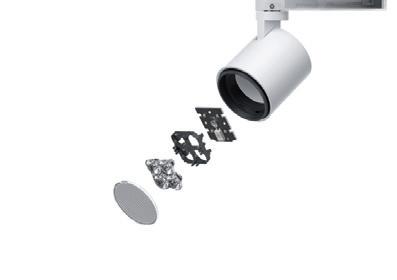
Re-manufacture
Upgrade or resell
If the fitting is still in good condition but no appropriate for the project, look into selling the fi ttings to be reused. End-Client, Qualified Electrician, Manufacturer only. This will greatly influence the viability.
Recycled
There are many light fittings that will be deemed unacceptable due to their energy usage. There are recycle companies that specialise in disposing lights that contain harmful materials.
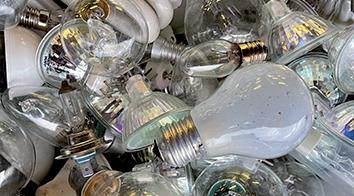
light bulbs deemed reusable to be uninstalled and reinstalled in a new location. Tracking equipment and fixings can be reused
Creation of
material
Reuse opportunities tracker
Example of cataloguing potential reuse outcomes. Please use as a template to guide design decisions and add new innovations. Add and remove rows as required to refl ect emerging opportunities.
Embodied Carbon impact Major impact
Low impact Minor impact
Neutral
Repurposing light fittings
Band 1

Reservicing older lights to LED

Band 2
Reselling lighting fittings

Supplier find the manufacturer of your lights and get an audit done by them.
Erco UK based company with a factory located in Germany.
Checking warranty to assess if it can be retained. If still within warranty and deemed efficient, usually because they are already LED, warranty should cover its performance.
Recolighting is an online inventory portal to upload details. RotorDC is a platform in the Netherlands to resell the fittings.
Product can be taken to the factory to do testing, Approximately 12 weeks to test viability and replace luminaires with LED. Not all fittings can fit new LED luminaires. Only one fitting required.
General cleaning and quality checks to be done. Assessment to decided whether it can be resold or will be downcycled.
Light fitting taken apart from its aluminium casing. Replacing old halogen with LED fitting,
None - warranty should cover its performance.
Assess fittings to sort which fittings can be reused, resold or recycled.
New warranty applied to upgraded fitting. UKCA approved
Lights will be tested to meet Part L (for office fittings) - >95 watts per luminaires
Additional processing and transport and from the factory.
Only applicable for LED luminaires
Recipients will: Take full responsibility for compliance and warranties, based in part on donor declaration. Pay for transport to their sites. Undertake to de-brand/ unambiguously label product to show that the recipient is regarded as the Producer.
Recipients will: Take full responsibility for compliance and warranties, based in part on donor declaration. Pay for transport to their sites. Undertake to de-brand/ unambiguously label product to show that the recipient is regarded as the Producer.
You may notice some empty fields. The industry is always evolving and we want to encourage more clarity in reuse strategies. If you find any suppliers with reuse capacity please get in touch!
Chapter input by:


Internal Arrangements
5.1 Raised
5.2 Carpet
5.3 Ceiling
5.4 Ironmongery


Raised access flooring (RAF) is designed to provide a strong and stable platform, capable of supporting heavy loads, including equipment and foot traffic. Typically constructed from materials like steel, aluminium, or high-density particleboard with a protective finish. Designed to provide flexibility, it allows easy access to the space beneath for cable management, HVAC systems, and other utilities. The panels are often modular, enabling quick reconfi guration or replacement. Also it can be reused / relocated to different spaces if needed.
There is a huge knowledge gap in the industry on the best way to recondition or preserve used RAF. Besides the assessing the panels of visual impairments such as delamination, water damage or chipping, it is hard to guarantee no impact to the strength and performance of the panel during demolition, strip out and cleaning. Transporting RAF tiles has its own challenges. Lack of adequate, climate controlled storage can cause rusting and warping that can weaken the strength and integrity of the panels.
To mitigate these challenges, clients with large project porfolios are begining to assess, store and reuse within their projects.
New ranges of RAF are now made of bio-based/ sustainable materials, up to 80% recycled materials where the panels can be dismantled to recycle different components.
Re-certification process
Due to its structural requirements to be able to perform as an elevated platform, RAF must withstand specifi c loading requirements for safety and wellbeing, especially in high traffic areas.
There are two types of standards to measure the quality of RAF panel. PSA standards for RAF is known for its independent testing and come with a 25-year warranty and can take up to 12kN/m2 of weight. BSEN 1285 requires more technical detail but there is no independent testing and it is down to the each manufacturer to carry out tests and selfcertify. This also means no guarantee is required.
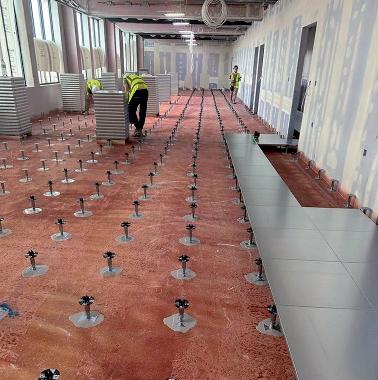
Currently no reused RAF panel is tested to the PSA standard prior to being reinstalled. Suppliers in the market refer to their reused raised access fl oor panel as having previously been tested to meet PSA at the point of production.
Prior to deconstruction
1. Floor panels get carefully lifted and inspected of any wear and tear.
2. Pedestals to be unbolted from stringers. Inspect any damage or broken pedestals.
3. Carefully remove stringers.
4. Tape respective fittings to each panel/batch.
Embodied carbon
The production of the raised access fl oor is energy intensive process due to amount of steel and aluminium is used. Transport and removal also requires substantial amount of carbon.
Ecological impact
Raised access flooring systems are typically made from materials like steel, aluminium, concrete, and wood. The extraction process of those materials can result in air and water pollution - and other pollution that can cause environmental degradation.
Recovery Checklist
Once a material is deemed reusable, here are some common considerations and tips before intrusive extractions happen. Please add to this list as per your project.
Before deconstruction
Visual condition - structural integrity, wear/tear etc.
Structural condition - e.g. weight performance.
Disassembly potential. - Examine connections and process.
Modification potential - consider splitting the components.
After deconstruction.
Packing requirements - tapping the fi xings to the panels.
Requirements to “make good” - ensure any test panels. that get removed doesn’t leave a hole in the fl oor.
After deconstruction
Packing requirements - tapping the fi xings to the panels.
Requirements to “make good” - ensure any test panels. that get removed doesn’t leave a hole in the fl oor.
Transport panels off-site
Transportation requirements - panel sizes and weight.
Processing requirements.
Processing location - onsite or offsite.
Possibilities for storage - coordinate special requirements to avoid damage to panels.
Opportunities for Material Passporting - what information to collect and how to track.
Quality banding
Record initial estimations on the percentage of reusability according to agreed banding.
Use the banding table below to determine what process should be applied to maximise reuseability by grading the condition of the material from best (1) to worse (3).
1.(a)1.(b)2.(a)2.(b)3.(a)3.(b)
• “As New”
• Applicable to Front of House
• Satisfies performance criteria to use as is i.e. warranties, structural integrity etc.
• Standard sizes (if applicable)
• Almost “As New” with minor surface wear and tear but meets aesthetic standards
• Applicable to Front of House
• Satisfies performance criteria
• Standard sizes (if applicable)
• Minor damage but meets aesthetic standards
• Refurbishable
• Partially satisfies performance
• Standard sizes (if applicable)
• Some damage but could meet aesthetic standards
• Refurbishable
• Can be used in low visibility areas or within buildups
• Partially satisfies performance
• Non-standard Sizes
• Significant damage or degradation
• Doesn’t satisfy performance criteria
• Refurbishment not practical
• Standard composition
• Can be recycled
• Significant damage or degradation
• Doesn’t satisfy performance criteria
• lNon-standard composition/ harder to break down/ possible contaminants
• Recycling or safe disposal
Deconstruction / recovery considerations
Approximations, advise and input from John F Hunt and BAM.
Embodied Carbon impact
Low impact Minor impact
Neutral
In its current state
Take some pictures of the panels as follows:
• Side edge of the panel
• Underside of the panel
• Pedestal supporting the panel
• Barcodes and markings on the panel
As there are many components to RAF, some of it can be replaced e.g. pedestals and tracks. The panels can also be rewrapped if the core still has structural integrity. If the wear and tear is limited to visual quality because of adhesives, floors can be power cleaned, polished or buffed. Floor and polishing services available. Cost of restoration.
The details of each step within the process require skill and expertise, so should only be carried out by a trained specialist. Floors need to be measured and reinstalled meticulously to ensure floors are level and stable. There may be mastic sealants or coatings which can be hard/messy to remove.
Reuse opportunities and process
Examples
Up-cycle
As is
Assess visual quality of the rasied access panel. Explore removing the finish to expose panel. It may need restoring. RMF-D-tac is a solution used by RMF to remove any glues left over from floor finishes.
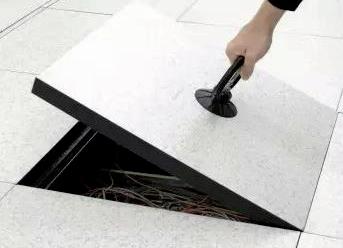
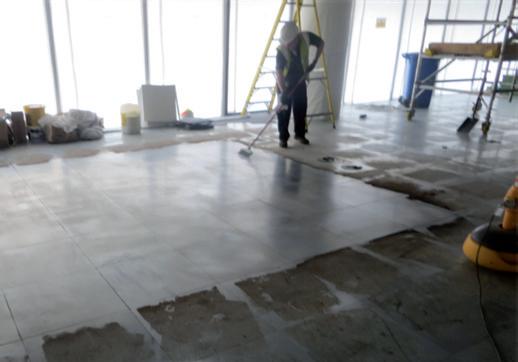
Re-manufacture
Reuse parts
Separate the system into components: Panels, gaskets, pedestals, stringers, grommets. Asses each component and replace any that don’t meet current standards. You may find you can save some components.
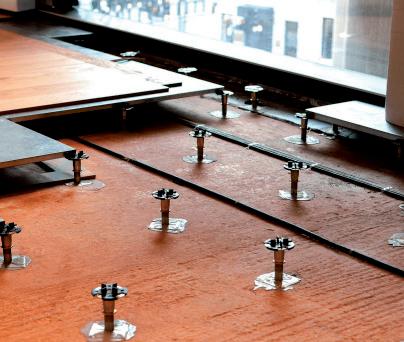
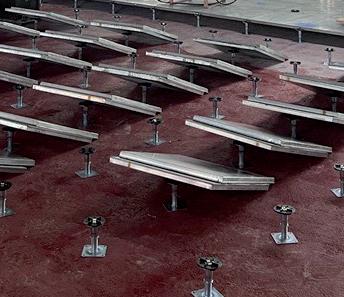
Remove finish to assess the quality of the RAF as is. Remove any damaged tiles.
Extract almost “As New” panels
Extract carpet, mend the worn out carpet and reuse.
Separate Materials
Reuse opportunities tracker
Example of cataloguing potential reuse outcomes. Please use as a template to guide design decisions and add new innovations. Add and remove rows as required to refl ect emerging opportunities.
Embodied Carbon impact
Low impact
Neutral
Band 1
Minor impact
Major impact
Band 2
Use as is RMF
Rebuild
Have a collection of used RAF.
Collecteco is a donation platform where carpet tiles can be donated to good causes across the UK.
Sea Cadets is a donation platform.
Environmate is a platform to resell carpet tiles based in Nottingham.
Fenix contractors restores existing access floors with adhesive removal, polishing and buffering services.
RAFI Enviro range come fully warranted. Raised Access Flooring Installations stock a large quantity of every different product of Recycled Flooring and Refurbished Access Flooring systems including obsolete systems.
Assessment - Quality assessment and placed in different quality grades
General cleaning and quality checks to be done. Assessment to decided whether it can be resold.
You may notice some empty fields. The industry is always evolving and we want to encourage more clarity in reuse strategies. If you find any suppliers with reuse capacity please get in touch!
Chapter input by Tarkett
Key properties
Carpet tiles provide an aesthetic appeal and acoustic control to a space. They are made in standard sizes, making them great candidate for reuse. Typically commercial carpet tiles are made from materials like nylon or polypropylene, they’re designed to be durable, stain resistant and low maintenance. Carpet tiles allows for easy replacement, so can be a sustainable choice for high-traffic area. Once cleaned, can be reused but due to low cost it’s hard to be sold separately and usually in bulk.
Re-using carpet tiles in commercial environments is now more difficult due to the new Building Safety Act 2023, where stringent product data is required, especially regarding Fire ratings. Majority is likely to be downcycled as carpet has low demand in the market. Although, Re-Use in the Social Housing sector can significantly improve living standards for low-income families, which adds social value.
Things to look out for when considering reusing carpet tiles look out for the following: wear and tear, water damage such as mould or leaking, holes toxic glues. Historically, most carpet tiles are bitumen and PVC backed which can lead to some major considerations.
The condition of carpet tiles can play a significant role on whether they can be re-used. That said, all considerations should be made. Nylon and polypropylene, the predominant fibres used in commercial carpet tiles, are extremely durable and will rarely ‘wear out’. However, depending on the maintenance of the product some pile fl attening may be apparent, especially in traffic lanes or beneath caster chairs.
Carpets must be laid with a good quality trackifier or adhesive spray. If during the first installation, the carpet tiles have been installed prior to the adhesive ‘tacking off’, this can result in a permanent bond. So, when it comes to removing the tiles, the fl eece backing can remain on the subfloor, permanently damaging the tiles beyond re-usability.
Over time, spillages and temperature changes in the office environment can shrink carpet tiles, leaving gaps between tiles causing damage to the edges. Solution Dyed Nylon is the best for reuse as the colour is soaked through every fi bre of yarn. Avoid reusing carpet tiles which aren’t solution dyed will fade inconsistently overtime.
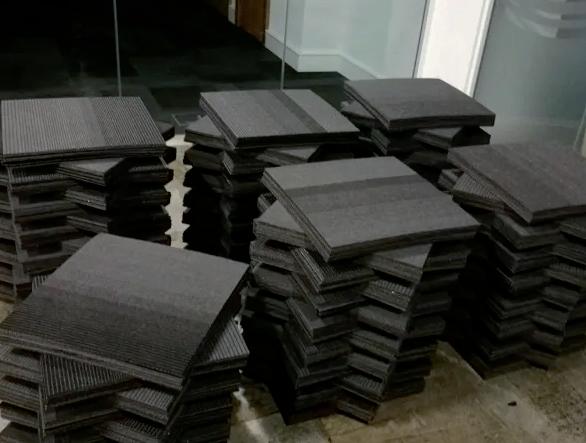
By assessing the “Yield” a carpet specialist can calculate the amount of reuseable carpet tiles. Approximately 5% of carpet tile insulation consists of cut tiles - either at the perimeter, above floor-boxes, or due to creative designs. These cut tiles will need to be discarded but the remaining tiles could be graded/banded depending on their condition and stacked/ collated accordingly.
Currently there is no re-certification process for carpets but a report can be made by a carpet specialist who can quickly identify what % of carpets can be kept.
Historically, the manufacturing process of carpets and carpet tiles is highly energy-intensive, involving the production of fibers, dyeing, backing production, and assembly. This process often relies on fossil fuels, leading to substantial carbon emissions.
The majority of major manufacturers have implemented renewable or green energy sources in their factories, which actually reduces the energy intensity / impact of the manufacturing process.
The highest impact comes from raw material extraction, as highlighted in the next section. Hence why most manufacturers are utilising higher levels of recycled content, again, to limit this impact.
Most carpets are made from synthetic fi bres which are derived from petroleum. The extraction and processing of petroleum are energy-intensive and contribute to habitat destruction, water pollution, and greenhouse gas emissions. Many carpets contain fl ame retardants, stain repellents, and other chemicals that can be toxic to both humans and wildlife. These chemicals can leach into the environment during manufacturing, use, or disposal. Check with a manufacture before shredding carpets. Cradle to Cradle certification reduces these harmful chemicals and additives being used in carpet and carpet tiles.
Once a material is deemed reusable, here are some common considerations and tips before intrusive extractions happen. Please add to this list as per your project.
Before deconstruction
Visual condition - mould, wear/tear etc.
Performative condition.
Disassembly potential - Examine glue.
Modification potential - consider the material composition.
After deconstruction
Packing requirements.
Transport panels off-site
Transportation requirements.
Processing requirements - if downcycling, stripping back to main components.
Processing location - onsite or offsite.
Possibilities for storage - coordinate special requirements to avoid damage.
Opportunities for Material Passporting - what information to collect and how to track.
Quality banding
Record initial estimations on the percentage of reusability according to agreed banding.
Use the banding table below to determine what process should be applied to maximise reuseability by grading the condition of the material from best (1) to worse (3).
• “As New”
• Applicable to Front of House
• Satisfies performance criteria to use as is i.e. warranties, structural integrity etc.
• Standard sizes (if applicable)
Record
• Almost “As New” with minor surface wear and tear but meets aesthetic standards
• Applicable to Front of House
• Satisfies performance criteria
• Standard sizes (if applicable)
• Minor damage but meets aesthetic standards
• Refurbishable
• Partially satisfies performance
• Standard sizes (if applicable)
• Some damage but could meet aesthetic standards
• Refurbishable
• Can be used in low visibility areas or within buildups
• Partially satisfies performance
• Non-standard Sizes
• Significant damage or degradation
• Doesn’t satisfy performance criteria
• Refurbishment not practical
• Standard composition
• Can be recycled
• Significant damage or degradation
• Doesn’t satisfy performance criteria
• lNon-standard composition/ harder to break down/ possible contaminants
• Recycling or safe disposal
Deconstruction / recovery considerations
Advise and input from John F Hunt and BAM.
In its current state, remove/replace any damaged carpet.
Deconstruct
Remove tiles by hand, ensure excess glue is removed from tiles to be stacked on a palette and labelled in batches.
Identify appropriate tiles for reuse (colour, condition and ease of removal)
Labour requirements should be the same as traditional recycling.
Cost uplift would come from any additional labour. Additional costs associated to testing.
Additional time taken to remove carpets and stack them neatly.
Embodied Carbon impact
No additional labour as should be included in demolition costs.
No additional costs as should be included in demolition costs.
Collection companies can be a good place to start as many smaller projects need quality carpet at a low cost. Smaller projects will usually mean less area to be covered by carpet tiles which can be a positive if onlt 50% of a floor plate is salvagable!
Reuse opportunities and process
Examples
Up-cycle
As is
Assess visual quality of the carpet. If it aligns with the design intent, explore removing the carpet carefully and reusing it in the new space.

Repurpose Reimagined
Once the backing is removed, carpet can be used in landscaping to protect the soil but check for contaiminates!
Down-cycle
Non-recyclable carpet tiles can be shredded for use in the cement-kiln industry, as SRF (Solid-Recovered Fuel), replacing Natural Gas. The residual ash becomes part of the finished cement product. Some carpet tiles can be closed-loop recycled by separating the yarn and backing. The yarn can be recycled back into new yarn. Bitumen backing is sent to the cement-kiln industry - whereas a Cradle to Cradle GOLD Certified polyolefin backing can be recycled back into new carpet tile backing.
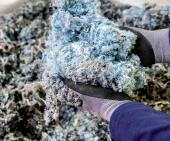
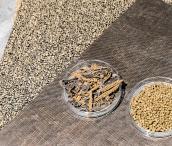
Separate Materials
Reuse opportunities tracker
Example of cataloguing potential reuse outcomes. Please use as a template to guide design decisions and add new innovations. Add and remove rows as required to refl ect emerging opportunities.
Carpet tiles
Embodied Carbon impact
Low impact Minor impact
Neutral
Major impact
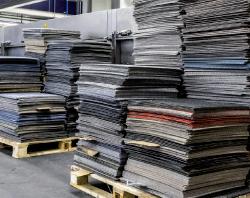
Recycled carpet
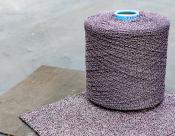
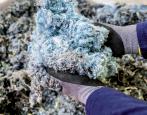

Envirocycle is a secondhand carpet tile platform.
Collecteco is a donation platform where carpet tiles can be donated to good causes across the UK.
Sea Cadets is a donation platform.
Environmate is a platform to resell carpet tiles based in Nottingham.
Ensure carpets are free of chemicals.
Carpet tile recycling collect, sort, recycle and make new carpet tiles.
Tarkett have the technology to separate their PA6 yarn and backing to make new tiles.
Egecarpets make a ReForm collection made from discarded fishing lines, used carpets and nylon waste.
Carpet for landscapingDonation and landscapingCheck for potential chemical contamination, mould and bacteria growth. Many carpets, especially synthetic ones, contain treatments for stain resistance, fire retardation, and other purposes. These chemicals leach into the soil over time, harming plants and beneficial soil organisms. This concern is significant if you want an organic garden.

Site visit - Depends on the company but usually a site visit from a carpet specialist will tell you the condition of the carpet and the % of reuse.
Site visit - Depends on the company but usually a site visit from a carpet specialist will tell you the condition of the carpet and the % of reuse. After the initial site visit, a report and a small sample (one tile) can be used to test the removability and material properties of the tile.
Project dependant
Assessment - Quality assessment and placed in different quality grades
For the used carpets, the carpet fibres are cut away from the backing. The used fishing nets are cleaned and cut into smaller pieces, and the textile waste products are also cut into small pieces.
Next, they enter the same refining process where they break down into their original chemical formula in the form of nylon chips. They are then included as raw materials in the manufacturing of new Nylon 6 nylon products – including carpet yarn.
You may notice some empty fields. The industry is always evolving and we want to encourage more clarity in reuse strategies.
If you find any suppliers with reuse capacity please get in touch!
General cleaning and quality checks to be done. Assessment to decided whether it can be resold or will be downcycled.
Ege CircleBack carpets from a unique combination of recyclable materials, allowing us to recycle 98-100% of the used carpet’s components.
Old carpets and area rugs are used in garden projects for:
• Underlayment for ponds and water features
• Weed barriers in flower beds and vegetable gardens
• Padding beneath pea gravel or mulch in pathways
• Composting to protect it from cold nights.
Description
Suspended Ceiling tiles are designed to provide aesthetic appeal and acoustic control. Typically the tiles are made from materials of mineral, wood, metal or resin. the suspended frames are usually made of aluminium.
Ceiling tiles are usually modular, allowing for easy installation, removal, and replacement.
Condition
FIrst thing to do when assessing a ceiling tiles is to find the product code or name of manufacture which can usually be found at the back of the tile. If a name can’t be found, contacting a ceiling specialist can help you identify the recovery potential by whether there is demand for the tile in the resale market.
If a product name is identified, contact the manufacturer as they may have take back schemes linked to the product.
Characteristics to look out for in ceiling tiles include staining or discolouration in tiles, damage or performance issues. Water damage, cracks or holes can affect the overall performance and quality of the tiles.
Inspect the suspended ceiling frame. The frame should be easily to unscrew but be cautious of warped or rusting frames.
Re-certification process
Follow the BS EN 13964 code that applies to suspended ceilings. This covered general defects such as lack of robust fixing to the soffit above, inappropriate product of the environment such as humidity or acoustic requirements.
1. Identify product and manufacturer.
2. For ceilings over 100m² confirm that load test to fi xings are requirements.
3. Confirm whether ceiling had any special features - high humidity, fire. acoustic requirements.
4. Clarify the soffit construction with grid layouts and fi xing schedules.
5. Confirm what considerations were included in the design of the support structure e.g. fire/sound insulation etc.
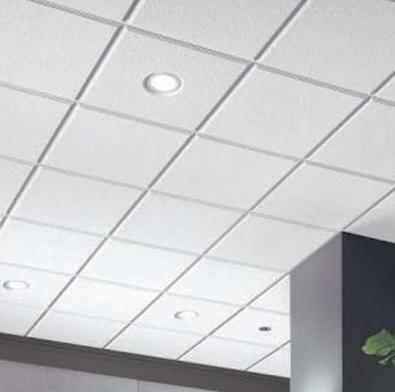
1. Identify any risks or change from the original design and advise site management team.
2. Frame to be unbolted with fi xing location inspected for quality (no damage) to ensure it can still support the load. Inspect any damage or broken fi xing, wires or brackets.
3. Ceiling tiles to be removed carefully, inspected and stacked.
4. If elements need replacement, check compatibility with what’s available on the market.
5. Pull tests should be carried out on ceilings with an area exceeding 100m² and a factor of safety of 2 is applicable.
6. Where the ceiling is to be reused in a high humidity area or externally, confirmation of suitability must be provided in the form of a 3rd party certification which would also cover fixing requirements.
7. Fire resistance and fire testing certifications would also need to be issued if it is required in the new application. If the manufactuer can be identified early on, their records whould tall you the products properties.
Embodied carbon
18 to 20 kgCO2e for 1 square metre of tile over a 60yr study period. (EPD ENP331) - Armstrong ceilings
Ecological impact
Level of impact might differ depending on the material of the ceiling tiles - mineral fi ber, gypsum, metal or biod-base - but all of them have significant ecological impact while extrating and mining raw materials.
Recovery Checklist
Once a material is deemed reusable, here are some common considerations and tips before intrusive extractions happen. Please add to this list as per your project.
Before deconstruction
Visual condition - water damage, wear/tear etc.
Structural condition - pull test.
Disassembly potential - how is the suspended frame fixed to the soffit?
Replacement potential - is the product still in market? What are the possibilities of replacing tiles?
After deconstruction
Packing requirements.
Requirements to “make good” - ensure any test panels. that get removed doesn’t leave a hole in the ceiling.
Transport panels off-site
Transportation requirements - panel sizes and weight.
Processing requirements.
Processing location - onsite or offsite.
Possibilities for storage - coordinate special requirements to avoid damage to panels.
Opportunities for Material Passporting - what information to collect and how to track.
Quality banding
Record initial estimations on the percentage of reusability according to agreed banding.
Use the banding table below to determine what process should be applied to maximise reuseability by grading the condition of the material from best (1) to worse (3).
• “As New”
• Applicable to Front of House
• Satisfies performance criteria to use as is i.e. warranties, structural integrity etc.
• Standard sizes (if applicable)
• Almost “As New” with minor surface wear and tear but meets aesthetic standards
• Applicable to Front of House
• Satisfies performance criteria
• Standard sizes (if applicable)
• Minor damage but meets aesthetic standards
• Refurbishable
• Partially satisfies performance
• Standard sizes (if applicable)
• Some damage but could meet aesthetic standards
• Refurbishable
• Can be used in low visibility areas or within buildups
• Partially satisfies performance
• Non-standard Sizes
• Significant damage or degradation
• Doesn’t satisfy performance criteria
• Refurbishment not practical
• Standard composition
• Can be recycled
• Significant damage or degradation
• Doesn’t satisfy performance criteria
• lNon-standard composition/ harder to break down/ possible contaminants
• Recycling or safe disposal
Deconstruction / recovery considerations
Advise and input from John F Hunt and BAM.
1. Identify tiles for reuse - this is best carried out with a site visit with a ceiling manufacture like Armstrong or similar. The specialist should help identify the % of tiles that meet the requirements.
2. Cover the fl oor with protective material to protect the tile if it falls.
3. Lift the tile out of the frame and store on pallets for removal
No additional labour, but an increase in time to ensure the panels are not damaged and stacked accordingly
Uplift from hire of access equipment (Depending on height of room) and additional time to carefully unbolt and store materials. Tiles can be delicate so need to ensure it remains its integrity for recoupling
Careful removal and stacked onto pallets
Current models don’t include rebate at the moment but likely to change
Reuse opportunities and process
Examples
Reuse
As is
Assess visual quality of the tiles. Do preliminary count of tiles. Consider carefully removing and repainting the tiles to refresh the space.
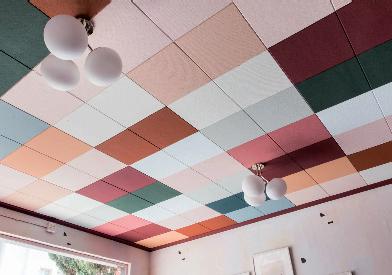
Re-manufacture
Reuse parts
Consider reusing the tracks to suspended ceilings to reduce aluminium.
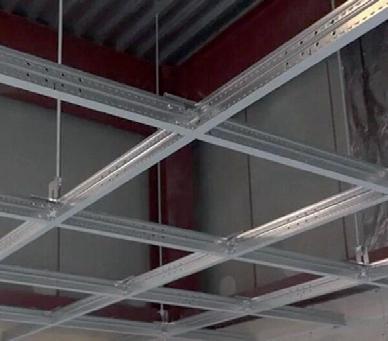
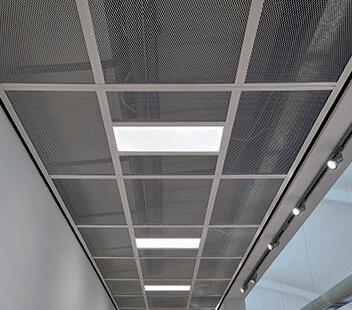
Downcycle
Repurposed
Separate the ceiling tiles and the suspension system into material skips. Send to recycling plant to recycle into cutlets or scrap metal.
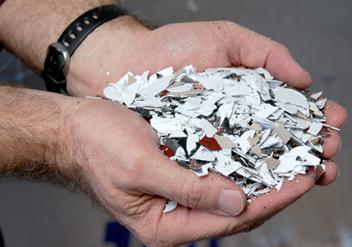
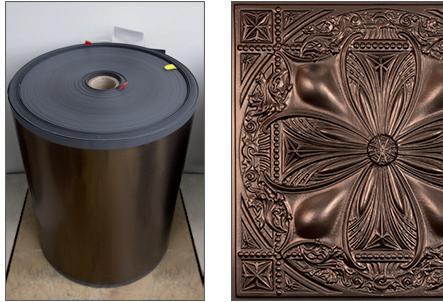
Extract almost “As New” panels
Consider reusing the tracks and replacing the ceiling tiles.
Reuse opportunities tracker
Example of cataloguing potential reuse outcomes. Please use as a template to guide design decisions and add new innovations. Add and remove rows as required to refl ect emerging opportunities.
Ceiling tiles for resale
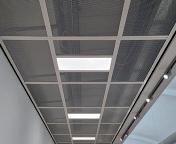
Material Reuse portal Collection of materials including ceiling tiles.
Ceiling tiles UK Selection of ceiling tiles usually for replacement
Surrey ceilings ceiling contractor who buys and installs used tiles
Material Reuse portal Collection of materials including ceiling tiles.
Ceiling tiles for recycling
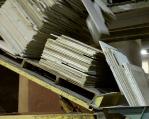
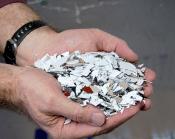
Armstrong recycling scheme for all mineral ceiling tiles.
Ceilume US Company that uses 100% post-consumer recycled tiles to make new tiles.
Site visit - Depends on the company but usually a site visit from a ceiling specialist will tell you the condition of the tiles and ceiling system before determining the % of reuse.
If the product name and code is found, the manufacturer may have a take back scheme in place.
Tiles need to be identified as a product of Armstrong ceilings.
Site visit - Depends on the company but usually a site visit from a carpet specialist will tell you the condition of the tiles and the % of reuse can be quickly determined.
Armstrong has a partnership with local distributors to help recycle into new ceiling tiles.
Assessment - Quality assessment and placed in different quality grades.
Existing transport networks are used and the service is provided for free if 2,000m² of acceptable tiles (≈5,500 tiles) are collected.
Assessment - Quality assessment and placed in different quality grades.
Existing transport networks are used and the service is provided for free if 2,000m² of acceptable tiles (≈5,500 tiles) are collected.
All Armstrong brands of pulpable mineral ceiling tiles (dated as January 2000 or after) are acceptable for end-of-life recycling
The scheme for the UK and Ireland, which has been in place since 2003, enables Armstrong to minimise its impact on the environment by not only diverting its old products from landfill but also producing mineral ceiling tiles with even higher post-consumer recycled content, currently up to 82%. The company’s production facility in Gateshead.
General cleaning and quality checks to be done. Assessment to decided whether it can be resold or will be downcycled.
You may notice some empty fields. The industry is always evolving and we want to encourage more clarity in reuse strategies. If you find any suppliers with reuse capacity please get in touch!
Ceilume, although uses 100% postmanufacturing and post-consumer recycled tiles is located in USA.
Chapter input by d line
For more enduring and hard-wearing products, most ironmongery and sanitary fittings that you will find will be made from non-corrosive AISI Grade 316L Stainless Steel. Stainless steel is chosen for its health and hygiene properties, as well as its recyclability and durability. These properties make the products incredibly resistant to aggressive environments and allow them to have extraordinary lifespans.
Under the industry test evidence for lever handles BSEN1906, seven-digit codes relate to many categories, one of which is used, that being digit 2. Lever Handles should be tested to a minimum cycle test of 250,000; some manufacturers have pushed the boundaries to the Millions. This allows the product to have a strong LCA alongside a manufacturing warranty. Companies like d line offer a minimum of 20 years of life from the delivery of their products.
Things to look for when considering reusing would be the corrosion and functionality of the wearing parts. The area that is most prone to wear an tear is the locking mechanism and the gears within. It is important to seaparte the fi ttings into its smaller parts to prolong its life.
D line has now offered to extend its 20-year warranty by introducing its ReHandle scheme. The programme is industry-first within its sector, allowing clients to return and have existing products serviced and returned to the building as good as new. This circular system will prolong the life of its products for up to 100 years.
Re-certification process
Ironmongery requires certifications, on national levels. As long as the products are used for the purpose they were bought for, the certifications will be upheld even after reuse.
1. Inspect the visual quality of the levers and move them to test the wear on the lock case within.
2. Unscrew the levers and remove the lock case within, take note of any rusting or breakage.
3. Store together to ensure lock case and levers stay together.
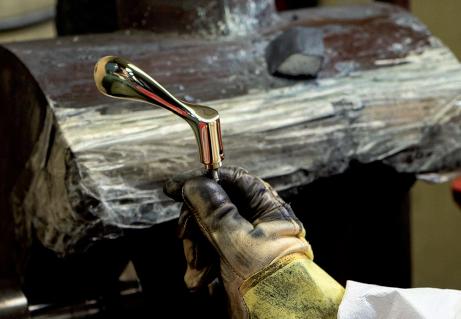
Almost 63% of operations’ carbon footprints stem from their choice of material. Stainless steel is a very resource-intensive but highly durable material, making it a great candidate for reuse. Every new product put into the world has severe CO2 impacts. By choosing to Re-handle d-line products instead of producing new ones, you will dramatically reduce the carbon footprint between 54% and 91%, depending on the product. This has been documented in 40% of d line’s current active range, which has fully declared EPDs ( Environmental Product Declarations) rather than only the mandatory A1-A3 production phase. EPDs are missing one vital information: the expected life span. D line prefers solid stainless steel AISI 316 because of its endurance and recyclability. Heavyweight increases the global warming potential, so they need to include expected life span and Re-handled possibilities. As an example, to ReHandle dline’s Lever handle, you have 4.21 kg CO2 (of 1kg of product) in the production phase, and then to ReHandle, you will use only 1.59kg CO2 (against 1kg of product)—a massive saving of 62% less emissions.
90 % of the global loss in biodiversity comes from mining and processing the world’s natural ressources. Mining and quarrying, as well as manufacturing metals that are part of the majority of ironmongery’s value chain, are both dependent on ecosystem services and are both in the critical zone to danger zone with regards to nature related risks. Prevention of downcycling is the best possible way to avoid further climate impact. d line therefore offers to service their products to renew the 20-year warranty.
Recovery Checklist
Once a material is deemed reusable, here are some common considerations and tips before intrusive extractions happen. Please add to this list as per your project.
Deconstruct
Listed by order of importance and specific to the material.
Before deconstruction
Visual condition - wear and tear, does the lock case match the levers etc.
Performance condition - check the lock case
Disassembly potential - examine connections and process
Modification potential - consider spiting the components
After deconstruction
Packing requirements - dismantle the kit and prepare for packaging
Transport panels off-site
Transportation requirements - wrapping for protection
Processing requirements
Processing location - onsite or offsite.
Possibilities for storage - coordinate special requirements to avoid damage
Opportunities for Material Passporting - what information to collect and how to track
Re-use opportunity and process
Recycling or Re-purposing
Record initial estimations on the percentage of re-usability.
Use the banding table below to determine what process should be applied to maximise reuseability by grading the condition of the material from best (1) to worse (3).
• “As New”
• Applicable to Front of House
• Satisfies performance criteria to use as is i.e. warranties, structural integrity etc.
• Standard sizes (if applicable)
• Almost “As New” with minor surface wear and tear but meets aesthetic standards
• Applicable to Front of House
• Satisfies performance criteria
• Standard sizes (if applicable)
• Minor damage but meets aesthetic standards
• Refurbishable
• Partially satisfies performance
• Standard sizes (if applicable)
• Some damage but could meet aesthetic standards
• Refurbishable
• Can be used in low visibility areas or within buildups
• Partially satisfies performance
• Non-standard Sizes
• Significant damage or degradation
• Doesn’t satisfy performance criteria
• Refurbishment not practical
• Standard composition
• Can be recycled
• Significant damage or degradation
• Doesn’t satisfy performance criteria
• lNon-standard composition/ harder to break down/ possible contaminants
• Recycling or safe disposal
Deconstruction / recovery considerations
Advise and input from John F Hunt and BAM.
20 year warranty
In its current state. Subject to professional inspection from ironmongery specialist.
Responsibility of the main contractor to take down, package and collect.
20 year x 5 (100 year warranty)
Taking it apart into components and reservicing the product entirely to remake uniformed units
New product - 20 year warranty
Metal separated from non-metal materials such as PVC, nylon etc. metal to be stripped and melted again for new products.
Normal practice to remove the ironmongery but additional labour required to sort into separate boxes for assessment
Labour requirements should be the same as traditional recycling.
BAU for contractorsMinor impact to have additional person to collect the products
upliftStill in its infancy but there has been an increase in demand
Reuse opportunities and process
Examples
Reuse
As is
Assess visual quality of the product. If it aligns with the design intent, explore removing the product carefully and inspect the lock case. The handle may still be reused.
Repurpose
Repurposed
Stainless steel handles could be used as other items. Thinking outside the box.

Downcycle
Shredded and recycled
Remelting stainless steel elements. Check if product can be brocken down into smaller parts and either remade into new handles or other products.

Reuse opportunities tracker
Example of cataloguing potential reuse outcomes. Please use as a template to guide design decisions and add new innovations. Add and remove rows as required to refl ect emerging opportunities.
Direct reuse
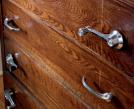
Demolition contractor carefully remove products and to store before reusing again.
Re-handle with d line D line is a heritage Danish design brand conceiving and hand crafting enduring architectural hardware, sanitary ware and solutions for barrier-free living.

Audit and reuse with Franchi Franchi was established in 1970 and provides architectural hardware solutions to residential, hospitality, workplace and commercial projects.

Strip and recycle
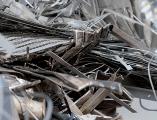
Demolition contractor carefully remove products and separate the ironmongery from the other metals.
Low quality is a waste of resources. Long before global warming became an issue of concern, d line promised that we would create things that are timeless in their design and enduring in their strength so that they wouldn’t need to be bought for a purpose more than once. This uncompromising approach to design and our complete supply chain control makes Re-handle the most revolutionary circular system in our operating industry. This promise from D line is only the start and will evolve.
Embodied Carbon impact Major impact
Site visit by ironmongery specialist to visually inspect the quality of the products.
Neutral Low impact Minor impact
One product can be enough to break apart to inspect the mechanism inside.
Site visit by ironmongery specialist to visually inspect the quality of the products.
An audit and collection of items to be assessed and tested for reuse.
Site visit by ironmongery specialist to visually inspect the quality of the products.
An audit and collection of items to be assessed and tested for reuse.
None - possible testing during the shredding to ensure no other metals or contaminates are in the batch.
None - most ironmongery can be remelted as long as non-metal elements can be removed.
General cleaning and quality checks to be done. Assessment to decided whether it can be resold or will be downcycled.
None quality assessment conducted by specialist can rewarranty second hand products for 20 years.
Collection from contractor, taken to factory to be taken apart and reserviced.
General cleaning and quality checks to be done. Assessment to decided whether it can be resold or will be downcycled. Products get collected and resold by Franchi.
The products come with a 20-year product guarantee, which can be renewed with a repair service, called Re-handle. d line offers to repair the same product up to 4 times, securing 100 years of use.
- Reduce the GWP between 5491% with each Re-handle.
- 100% recyclable AISI 316 stainless steel.
- Recycled and recyclable packaging.
- Factory is located in Lithuania.
- In-house production facilities (complete supply chain control).
- Local sourcing.
- All waste is carefully sorted and 100% recycled.
- 0.3% production failures.
- ISO 14001 certified.
Stripped, shredded and melted to be remoulded into new products.
None quality assessment conducted by specialist can rewarranty second hand products for 20 years.
None quality assessment conducted by specialist can rewarranty second hand products for 20 years.
You may notice some empty fields. The industry is always evolving and we want to encourage more clarity in reuse strategies. If you find any suppliers with reuse capacity please get in touch!

Key properties
Office spaces frequently replace furniture during fit outs, leading to their reduced lifespan and high environmental impact.
Mass-produced furniture is often made from composite materials, which, if not properly considered, can have a negative environmental impact as they likely end up in landfills.
Office furniture can be reused with minimal effort and creativity. With careful consideration, sustainable and aesthetically pleasing solutions can be achieved. The goal is to reuse or remanufacture where possible. Other sustainable options include reselling or donating furniture to charities and local organisations, which helps extend the lifespan and prevents waste.
Key sub-types
Office furniture includes all movable pieces that are not fixed in place, and it encompasses a variety of types. The main categories of office furniture include:
Breakout and lounge soft furniture
–Often upholstered and can become damaged
– Aesthetic requirements often key
Meeting room furniture
–Can be more unique
–Aesthetics important
Workstation desks and chairs
–Often in large quantities
–High levels of wear and tear
–Note variation in product instances
Storage
–Often modular
–Can be back or house or front of house
Pods/booths
–Often complex systems that can feature audio visual
Consider how to handle soft upholstered furniture versus hard surfaces, the material composition, and how materials are bonded together.
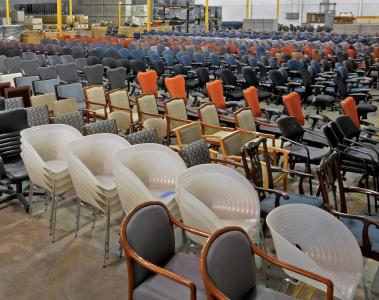
Set out a strong banding strategy. Consider the following:
– Suitability for modern workplace environments: Is the furniture still appropriate for today’s office needs?
– Physical condition: Check for signs of wear and tear, staining, and structural integrity.
This clarity helps determine which items are suitable for reuse, which may only need minor repairs or refurbishment, and which should be replaced entirely.
Re-certification processes may be necessary for various types of furniture, especially when reselling or donating. For soft furnishings, fire safety tags are required, while other items may need timber certification, information on lifespan, warranties, and other relevant details. It’s advisable to consult with a specialist to ensure all necessary certifications and requirements are met.
Contacting original manufacturers can help restore and improve existing furniture, with buy-back schemes offering a way to return items for refurbishment or recycling.
Furniture can have relatively high embodied carbon, especially considering their often short lifespans. Refer to product EPD’s or Overbury’s ‘Counting the upfront carbon in cat B fitouts’ report for more detail on the typical embodied carbon of different furniture items. Complex items featuring metals usually have the highest embodied carbon, e.g. phone booths and meeting pods.
Furniture often features multiple materials and components with complex global supply chains resulting in significant ecological impacts that are hard to trace. It is common for certifications such as FSC to be missing for certain components.
Recovery Checklist
Once a material is deemed reusable, here are some common considerations and tips before intrusive extractions happen. Please add to this list as per your project.
Before removal
Visual condition.
Performance condition (eg. suitability, structural integrity)
Disassembly potential.
Modification potential.
During removal
Dismantling requirements (space, time, and tools required)
Packing requirements (including any protection required)
Organising for reassembly (all parts kept, including instructions)
Site logistics coordination (eg. collection dates)
Transport off-site
Transportation requirements (including any protection required)
Processing requirements.
Processing location - onsite or offsite.
Possibilities for storage (coordinate special requirements to avoid damage)
Opportunities for Material Passporting (what information to collect and how to track)
Quality banding
Record initial estimations on the percentage of reusability according to agreed banding.
ReuseRe-purposeRecycle
1.(a)1.(b)2.(a)2.(b)3.(a)3.(b)
• “As New”
• Applicable to Front of House
• Satisfies performance criteria to use as is i.e. warranties, structural integrity etc.
• Standard sizes (if applicable)
• Almost “As New” with minor surface wear and tear but meets aesthetic standards
• Applicable to Front of House
• Satisfies performance criteria
• Standard sizes (if applicable)
• Minor damage but meets aesthetic standards
• Refurbishable
• Partially satisfies performance
• Standard sizes (if applicable)
• Some damage but could meet aesthetic standards
• Refurbishable
• Can be used in low visibility areas or within buildups
• Partially satisfies performance
• Non-standard Sizes
• Significant damage or degradation
• Doesn’t satisfy performance criteria
• Refurbishment not practical
• Standard composition
• Can be recycled
• Significant damage or degradation
• Doesn’t satisfy performance criteria
• lNon-standard composition/ harder to break down/ possible contaminants
• Recycling or safe disposal
Collect items ready for reuse “as is.” This involves relocating them directly to the new location or making minor adjustments beforehand, preferably on-site or through external services near the site.
Assess parts for replacement, such as broken parts, or parts that can be replaced to enhance the visual or physical performance. Making adjustments preferably on-site or through external services near the site.
Consider downcycling options on site or offsite use or recycling
Any reused furniture require transportation to a new location. Other items may require dismantling and reassembly.
Labour requirements include dismantling, transport to remanufacturer, transporting back to site and if needed, reassembly.
Office movers should be able to include costs within their office move quote.
Additional time for dismantling, packaging and reassembling.
Sometimes a costeffective option and sometimes it may increase costs.
Different recipients have varying requirements, with some needing small quantities and others larger ones.
Labour requirements involve modifying the product or breaking down into component materials for recycling.
Specialist input may be needed, if additional testing, re-manufacturing and recertification is required.
Depends on product and material. Prioritise highest impact materials,
Additional time needed to research, coordinate logistics, and follow through the process.
Additional time needed to research, coordinate logistics, and follow through the process.
Will usually increase costs, but it may offset itself with potential savings compared to disposal and buying new.
Depends on the item.
Furniture audits can offer valuable insights into the potential of furniture assets. They provide a detailed analysis of the furniture inventory, covering specifications, condition assessments, and future reuse opportunities. This process enables the evaluation of the furniture stock and supports making informed decisions that align with commercial objectives while also contributing to environmental, social, and governance (ESG) goals.
Sometimes a costeffective option and sometimes it may increase costs.
Depends on the material. Some recycling streams are business as usual.
Reuse opportunities and process
Examples
Reuse
As is
If the furniture item still meets both visual and physical performance requirements, explore opportunities for reuse, which may include minor aesthetic adjustments (e.g. reupholstering or cleaning the upholstery), as well as reselling or donating.
Re-manufacture Upgrade
If the furniture item requires modifi cations to meet visual and physical performance standards, explore options for re-manufacturing. This could involve interventions such as replacing parts (e.g. the arms or legs of a chair), adjusting the size, etc.


Down-cycle Repurpose
If the furniture item can no longer serve its original purpose, consider downcycling it—recycling it into products of lower quality or value than the original. For example, the tops of desks could be repurposed as shelving units or wall panels.


Office chairs deemed reusable to be reupholstered and transported to new location.
Extract almost “As New” chairs
Refinished legs
Office workstations deemed for remanufacture. Desk lengths are too long with mismatching legs and unwanted pedestals.
Remanufacture
work top to be repurposed
Existing worktop to be sectioned and repurposed into components for a custom shelving unit.
Creation of a new item
Reuse opportunities tracker
Example of cataloguing potential reuse outcomes. Please use as a template to guide design decisions and add new innovations. Add and remove rows as required to refl ect emerging opportunities.
Furniture Reuse Platform
There are many reuse market providers. Some work with building materials as well as furniture so consider your scope and programme when selecting a provider to streamline the service.
Globechain is a furniture reuse platform. Items are usually given away for free.
Collecteco is a platform focusing on donating products to charities, schools community groups and the NHS.
Romulus integrates the product audit and material passporting with listing for the resale or donation market. They can also provide storage
CircoTrade is an emerging platform that can assist with material audits to create a futures market for materials by listing items before they become available.
Furniture Reuse Market
There are many office furniture resalers that offer an integrated quote to audit and sell, repair, or clear furniture depending on the market demand. Companies include, Enviro Clear, My Office Clearnace, Kings Office Furniture, Clear Workspace, Want Don’t Want
Direct Donation Contact local charities and non-profit organisations directly.
Word of mouth - speak to industry contacts who may be interested.
Repair
Often the first point of contact should be the furniture manufacturer or supplier to see if they can repair or supply spare parts.
Embodied Carbon impact Major impact
Confirm audit, listing, storage, and coordination responsibilities.
Engage with the provider to understand how waste is managed and certified.
Engage with reuse market providers early to understand their costs and requirements. Some collect the products themselves whereas some facilitate collection by others. Consider who is going to coordinate viewing, collections, goods lift booking, or storage with site works and programme.
Engage with the provider to understand how waste is managed and certified.
You may notice some empty fields. The industry is always evolving and we want to encourage more clarity in reuse strategies. If you find any suppliers with reuse capacity please get in touch!
Engage early to understand which items have a reuse market. Consider how to balance speed an ease with certainty over maximising reuse potential, social, and economic value.

Below is a selection of a few useful places to find more information. This is not a full reference list, but a good starting point of key documents.
Material Reuse References
Institution of Structural Engineers, Circular Economy and Reuse: guidance for designers (very useful for structural materials)
Material References

Hattie Hartman and Joe Jack Williams, Materials: An Environmental Primer
Fitout
Overbury, Counting the Upfront Carbon in Cat B fitouts AHMM, Fit-out/ Rip-out
Reuse Case Studies and Inspiration
Duncan Baker-Brown, The Reuse Atlas Lendager Group
How to read EPDs

Institution of Structural Engineers, How to read an EPD: basics for the structural engineer

For more information, please contact Fletcher Priest: sustainability@fletcherpriest.com
Joanna Wilson
Sustainability Lead
MA(Hons) MPhil ARB
Lorraine Chan
Project Leader and Material Reuse Champion
BArch MArch AACA
Book Production Team
Joanna Wilson
Lorraine Chan
FPA Team
Ayshah Begum
Benjamin Koslowski
Caterina Izzo
Chris Radley
Gabriella Badeira
Jaxon Kelly
Myungin Lee
Rotem Lewinsohn
Sha fi a Motaleb
Stephanie Kukulka
Yue Jiang
Zi Kang Lim
Every effort has been made to trace the authors of copyright. We would be happy to rectify any errors or omissions in further editions. Unless otherwise stated, all images are copyright of Fletcher Priest Architects.
© 2025 Fletcher Priest Architects LLP
All rights reserved. No part of this publication may be reproduced or transmitted in any form or by any means, electronic or mechanical, including photocopy, recording or any other information storage or retrieval system, without prior permission of both the copyright owner and Fletcher Priest Architects.
Fletcher Priest Architects is a limited liability partnership.




































































1.0 Introduction
Fig. 1.1 Shearing layers of change - Stewart Brand 1994Fletcher Priest Architects
Fig. 1.2 Fletcher Priest Architects
Fig. 1.3 Heyne Tillett Steel
Fig. 1.4 Fletcher Priest Architects
Fig. 1.5 Fletcher Priest Architects
2.0 Skin
Fig. 2.1 Fletcher Priest Architects
Fig. 2.2 Hering Architectura Concrete
Fig. 2.3 Fletcher Priest Architects
Fig. 2.4 Danish Technological Institute
Fig. 2.5 Fletcher Priest Architects and Heyne Tillett Steel
Fig. 2.6 Coote Engineering
Fig. 2.7 Fletcher Priest Architects
Fig. 2.8 Solus ceramics
Fig. 2.9 Fletcher Priest Architects
Fig. 2.10 Fletcher Priest Architects
Fig. 2.11 Kilsaran Hexo Black Granite Set
Fig. 2.12 Lignacite
Fig. 2.13 Diamond Grab Hire
Fig. 2.14 Fletcher Priest Architects
Fig. 2.15 FMDC
Fig. 2.16 FMDC
Fig. 2.17 Fletcher Priest Architects
Fig. 2.18 Natural Stone
Fig. 2.19 Wang Shu
Fig. 2.20 Fletcher Priest Architects
Fig. 2.21 Fletcher Priest Architects
Fig. 2.22 Alex Meitlis
Fig. 2.23 Fletcher Priest Architects
Fig. 2.24 FMDC
Fig. 2.25 O’Sullivan Skoufoglou Architects
Fig. 2.26 Parkside Architectural Tiles
Fig. 2.27 Solus ceramics
Fig. 2.28 Tom Ross - Breathe Architecture
Fig. 2.29 Will Gamble Architects
Fig. 2.30 Quickrete
Fig. 2.31 Fletcher Priest Architects
Fig. 2.32 Herzog de Meuron
Fig. 2.33 Lendager
Fig. 2.34 Fletcher Priest Architects and Heyne Tillett Steel
Fig. 2.35 Gabion1 UK
Fig. 2.36 Ethical Stone
Fig. 2.37 Fletcher Priest Architects
Fig. 2.38 Belleview Gardens
Fig. 2.39 Reclaimed Brick Company
Fig. 2.40 Modular Clay Products
Fig. 2.41 Lendager
Fig. 2.42 Rennew
Fig. 2.43 Gabion1 UK
Fig. 2.44 Cegielnia Trojanowscy
Fig. 2.45 Weber Saint Gobain
Fig. 2.46 Sarah Buckley
Fig. 2.47 MKM Building Supplies
Fig. 2.48 Kite Glass UK and OWS Fire Rated
Fig. 2.49 Nick Olson and Lilah Horwitz
Fig. 2.50 R&T Studio
Fig. 2.51 Fletcher Priest Architects
Fig. 2.52 JDWA
Fig. 2.53 Fletcher Priest Architects
Fig. 2.54 Stone Contact
Fig. 2.55 Make Bespoke Studio
Fig. 2.56 Fletcher Priest Architects
Fig. 2.57 Lendager
Fig. 2.58 High Level Gazing
Fig. 2.59 Kova Partitions
Fig. 2.60 Saint Goban
Fig. 2.61 Chelsea Artisan
Fig. 2.62 Supertecture
Fig. 2.63 Steven Akoun
Fig. 2.64 GlasGo
Fig. 2.65 Stone Contact
Fig. 2.66 Fletcher Priest Architects
Fig. 2.67 Finish Facades UK
Fig. 2.68 Trestykker - photo credit Marius Waagaard
Fig. 2.69 Fletcher Priest Architects
Fig. 2.70 Sales Made
Fig. 2.71 Nacasa and Partners
Fig. 2.72 Fletcher Priest Architects
Fig. 2.73 Alutrade
Fig. 2.74 Hydro
Fig. 2.75 Fletcher Priest Architects
Fig. 2.76 Musgroves
Fig. 2.77 Wicona
Fig. 2.78 Alutrade
3.0 Structure
Fig. 3.1 Matrix Consulting Engineers
Fig. 3.2 Shanmugam Associates
Fig. 3.3 Moore Concrete
Fig. 3.4 Fletcher Priest Architects and Heyne Tillett Steel
Fig. 3.5 Cegielnia Trojanowsy
Fig. 3.6 stpmj
Fig. 3.7 Fletcher Priest Architects and Heyne Tillett Steel
Fig. 3.8 BCHO Architects
Fig. 3.9 BCHO Architects
Fig. 3.10 Fletcher Priest Architects
Fig. 3.11 _Jure
Fig. 3.12 Koomen Contracting
Fig. 3.13 Holcim
Fig. 3.14 Lignacite
Fig. 3.15 Fletcher Priest Architects
Fig. 3.16 Grimshaw
Fig. 3.17 Ocean Machinery
Fig. 3.18 Fletcher Priest Architects
Fig. 3.19 Ocean Machinery
Fig. 3.20 H. Ozbasaran
Fig. 3.21 Fletcher Priest Architects
Fig. 3.22 Trade Metal
Fig. 3.23 Market Research Intellect
Fig. 3.24 Fletcher Priest Architects
Fig. 3.25 Fletcher Priest Architects
Fig. 3.26 Fletcher Priest Architects
Fig. 3.27 Will Gable Architects
Fig. 3.28 Quickrete
Fig. 3.29 Fletcher Priest Architects
Fig. 3.30 Herzog de Meuron
Fig. 3.31 Lendager
Fig. 3.32 Fletcher Priest Architects and Heyne Tillett Steel
Fig. 3.33 Gabion1 UK
Fig. 3.34 Ehtical Stone
Fig. 3.35 Fletcher Priest Architects
Fig. 3.36 Belleview Gardens
Fig. 3.37 Reclaimed Brick Company
Fig. 3.38 Modular Clay Products
Fig. 3.39 Lendager
Fig. 3.40 Rennew
Fig. 3.41 Gabion1 UK
Fig. 3.42 Cegielnia Trojanowsy
Fig. 3.43 Weber Saint Gobain
Fig. 3.44 Sarah Buckley
Fig. 3.45 MKM Building Supplies
Fig. 3.46 Ace Reclaimation
Fig. 3.47 Tengbom, Felix Gerlach
Fig. 3.48 Tengbom, Felix Gerlach
Fig. 3.49 Fletcher Priest Architects
Fig. 3.50 Jan Hendzel
Fig. 3.51 Krisna Cheung, Peter Bennetts
Fig. 3.52 Fletcher Priest Architects
Fig. 3.53 Yuma Kano
Fig. 3.54 Yuma Kano
Fig. 3.55 Fletcher Priest Architects
Fig. 3.56 Ace Reclaimation
Fig. 3.57 UK CLT
Fig. 3.58 Upcyclist
Fig. 3.59 Chauceys
Fig. 3.60 Yuma Kano
Fig. 3.6.1 Wilcox Office Mart
Fig. 3.6.2 Fletcher Priest Architects
Fig. 3.6.3 Fletcher Priest Architects
Fig. 3.6.4 HSI Office Furniture
Fig. 3.6.5 Stealtho
Fig. 3.6.6 Fletcher Priest Architects
Fig. 3.6.7 Order Office Furniture
Fig. 3.6.8 Senator
Fig. 3.6.9 Fletcher Priest Architects
Fig. 3.6.1 Semba Corporation
Fig. 3.6.11 Westend61
Fig. 3.6.12 Fletcher Priest Architects
4.0 Services
Fig. 4.1 Metal Tech
Fig. 4.2 North London Waste
Fig. 4.3 Flether Priest Architects
Fig. 4.4 Randon Bits and Bytes
Fig. 4.5 Mater Design
Fig. 4.6 Authentic Reclaimation
Fig. 4.7 Aces Group
Fig. 4.8 Inducomm
Fig. 4.9 Commercial Washrooms
Fig. 4.10 Flether Priest Architects
Fig. 4.11 Rotor DC
Fig. 4.12 Rotor DC
Fig. 4.13 Flether Priest Architects
Fig. 4.14 SAGIPER North America
Fig. 4.15 Granbyware tiles
Fig. 4.16 Flether Priest Architects
Fig. 4.17 Inducomm
Fig. 4.18 Generator Source
Fig. 4.19 Regal tanks
Fig. 4.20 Pixabay
Fig. 4.21 Granbyware tiles
Fig. 4.22 Erco
Fig. 4.23 Erco
Fig. 4.24 Flether Priest Architects
Fig. 4.25 Rotor DC
Fig. 4.26 Erco
Fig. 4.27 Flether Priest Architects
Fig. 4.28 Recycle your electricals
Fig. 4.29 Greener Orkney
Fig. 4.30 Flether Priest Architects
Fig. 4.31 Emmanuella Wojcikiewicz, Matheus Pereira
Fig. 4.32 Erco
Fig. 4.33 Rotor DC
5.0 Space Plan
Fig. 5.1 IDP Flooring
Fig. 5.2 AEC Business
Fig. 5.3 MC Surfaces
Fig. 5.4 Fletcher Priest Architects
Fig. 5.5 Kingspan
Fig. 5.6 IDP Flooring
Fig. 5.7 Fletcher Priest Architects
Fig. 5.8 AEC Business
Fig. 5.9 RMF
Fig. 5.10 Envirocycle
Fig. 5.11 Carpet tile Wholesale
Fig. 5.12 Balsan
Fig. 5.13 Fletcher Priest Architects
Fig. 5.14 Matron
Fig. 5.15 Matron
Fig. 5.16 Fletcher Priest Architects
Fig. 5.17 Tarkett
Fig. 5.18 Tarkett
Fig. 5.19 Fletcher Priest Architects
Fig. 5.20 Tarkett
Fig. 5.21 Tarkett
Fig. 5.22 Tarkett
Fig. 5.23 Matron
Fig. 5.24 Dewitt Company
Fig. 5.25 Armstrong
Fig. 5.26 Behance, IDAS
Fig. 5.27 Echo and Earl
Fig. 5.28 Fletcher Priest Architects
Fig. 5.29 UK Suspended Ceilings
Fig. 5.30 SEC Group
Fig. 5.31 Fletcher Priest Architects
Fig. 5.32 Ceilume
Fig. 5.33 Ceilume
Fig. 5.34 Fletcher Priest Architects
Fig. 5.35 SEC Group
Fig. 5.36 Building Centre
Fig. 5.37 Ceilume
Fig. 5.38 d line
Fig. 5.39 Fletcher Priest Architects
Fig. 5.40 Fletcher Priest Architects
Fig. 5.41 d line
Fig. 5.42 d line
Fig. 5.43 Fletcher Priest Architects
Fig. 5.44 Franchi
Fig. 5.45 DIY Blog
Fig. 5.46 Fletcher Priest Architects
Fig. 5.47 Klean Kanteen
Fig. 5.48 d line
Fig. 5.49 Fletcher Priest Architects
Fig. 5.50 DIY Blog
Fig. 5.51 d line
Fig. 5.52 Franchi
Fig. 5.53 Alloys Stainless Steel Recycling
6.0 Stuff (furniture)
Fig. 6.1 Fletcher Priest Architects
Fig. 6.2 Fletcher Priest Architects
Fig. 6.3 Erco
Fig. 6.4 Erco
Fig. 6.6 RotorDC
Fig. 6.7 RotorDC
Fig. 6.8 Fletcher Priest Architects
Fig. 6.9 Recycle Your Electricals
Fig. 6.10 Recycle Your Electricals
Fig. 6.11 Fletcher Priest Architects
Fig. 6.12 Emanuelle Wojcikiewicz