Quality Cities (formerly Quality Cities ’90) (ISSN 0892-4171) (USPS Number: 201-780) serves as a medium of exchange of ideas and information on municipal affairs for the public officials of Florida. The views expressed and the data presented by contributors and advertisers are not to be construed as having the endorsement of the Florida League of Cities unless so specifically stated. No material from this publication may be reprinted without the express permission of the editor.
The mailing address for the publishers of Quality Cities is P.O. Box 1757, Tallahassee, FL 32302-1757. The telephone number is 850.222.9684, and the email address is bharrison@ flcities.com. Offices are located at 301 S. Bronough St., Suite 300, Tallahassee, FL 32301-1722. Quality Cities is published twice a year by the Florida League of Cities. Postage Paid at Tallahassee, FL, No. 669.
The yearly MAGAZINE SUBSCRIPTION rate for members is $10.00, other governmental agencies – $15.00 and nonmembers – $20.00 for two issues.
EDITORIAL STATEMENT:
Stories that spotlight Florida cities, celebrate their impact on our quality of life, and inspire city leaders to advocate for local voices making local choices.
(5) Cal Rolfson, Councilmember, Mount Dora (6) John Dowless, Mayor, Edgewood
(6) Joseph McMullen, Commissioner, Oakland
(6) Jordan S. Smith, Commissioner, Lake Mary
(7) Morris West, Mayor, Haines City (7) Brian Yates, Mayor, Winter Haven (8) Thomas Reid, Vice Mayor, South Pasadena
(8) David Will, Mayor, Redington Beach
(9) Campbell Rich, Mayor, Stuart (10) Nicholas Pachota, Mayor, Venice (11) John R. King, Councilmember, Fort Myers Beach
(12) Roger Michaud, Mayor, Lake Park (12) Michael Napoleone, Mayor, Wellington (12) J.P. O'Connor, Mayor, Westlake (12) Molly Young, Mayor, Tequesta (13) Felicia Brunson, Mayor, West Park (13) Traci L. Callari, Vice Mayor, Hollywood (13) Joyce Davis, Mayor, Dania Beach (13) Todd Drosky, Mayor, Deerfield Beach (13) Denise Horland, Council President, Plantation (13) Henry Mead, Vice Mayor, Weston
(13) Susan Starkey, Councilwoman, Davie (14) Karyn Cunningham, Mayor, Palmetto Bay
(14) Rodney Harris, Mayor, Miami Gardens (14) Omarr C. Nickerson, Mayor, El Portal (14) Fortuna Smukler, Commissioner, North Miami Beach
10 MOST POPULOUS CITIES
Rahman Johnson, Council Member, Jacksonville
Ralph Rosado, Commissioner, Miami
Luis Viera, Councilman, Tampa
Bakari F. Burns, Commissioner, Orlando Copley Gerdes, Council Member, St. Petersburg
Stephanie Morgan, Councilwoman, Port St. Lucie
Dianne Williams-Cox, Commissioner, Tallahassee
John Gunter, Mayor, Cape Coral
Dean Trantalis, Mayor, Fort Lauderdale
PAST PRESIDENTS
Scott Black, Mayor, Dade City
Joy Cooper, Mayor, Hallandale Beach
Patricia Bates, Mayor, Altamonte Springs
Leo E. Longworth, Commissioner, Bartow
Isaac Salver, Mayor, Bay Harbor Islands
Antonio “Tony” Ortiz, Commissioner, Orlando
Jolien Caraballo, Vice Mayor, Port St. Lucie
Michael C. Blake, Mayor, Cocoa
FCCMA LIAISON
Ann Toney-Deal, ICMA-CM, City Manager, Seminole
FLC EXECUTIVE STAFF
Jeannie Garner, Executive Director/CEO
Eric Hartwell, General Counsel/Chief Legal Officer
Maclain Benton, Chief Financial Officer
Casey Cook, Chief of Legislative Affairs
Chris Krepcho, Chief of Insurance and Financial Services
Jenna Tala, Chief of Strategy and External Affairs
Michaela Metcalfe, Board Relations Administrator
ACCESS TO EMPLOYMENT LAW ATTORNEYS AT NO COST
The Florida Municipal Insurance Trust ’s exclusive Employment Law Advisor program offers access to a Florida-based attorney with significant public-sector employment law experience. And, the best part is there is no cost to members of the FMIT with liability coverage for employment practices.
We can help with a wide range of employment-related matters, including:
‣ Hiring
‣ Discipline
‣ Promotion/Demotion
‣ Transfer
‣ Reassignment
‣ Layoff
‣ Termination
‣ ADA Compliance
‣ Complaints of Discrimination, Harassment, Unfair Treatment and Retaliation
Help is only a phone call away. FMIT members can speak with an attorney Monday through Friday, 9:00 a.m. to 5:00 p.m. ET, by calling 888.368. FMIT (3648).
30 Q+A with Rebecca O'Hara 5 questions with FLC's Deputy General Counsel
40 Building Confident Leaders How FLC Programming Supports Newly Elected Officials FEATURES CONTINUED
Meetings Calendar
JUNE 5-6, 2026
Institute for Elected Municipal Officials I (IEMO I)
Renaissance Boca Raton Hotel
Contact Christen Dangro
JUNE 7-10, 2026
Florida Association of City Clerks Summer Conference & Academy
Luminary Hotel & Co., Autograph Collection
Contact Rachel Embleton
JUNE 13-17, 2026
Florida Government Finance Officers Association Annual Conference
Loews Sapphire Resort at Universal Orlando
Contact Karen Pastula
JULY 9-11, 2026
Florida Municipal Attorneys Association Annual Seminar
Hyatt Regency Coconut Point, Bonita Springs
Contact Sheri Beal
JULY 20-23, 2026
Florida Local Government Information Systems Association Annual Conference
JW Marriott Turnberry Resort
Contact Becky Brennan
AUGUST 13-15, 2026
Florida League of Cities Annual Conference
The Diplomat Beach Resort – Hollywood
Contact Melanie Howe
SEPTEMBER 18-19, 2026
Institute for Elected Municipal Officials I (IEMO I)
Westin Tampa Waterside
Contact Christen Dangro
OCTOBER 4-8, 2026
Florida Association of City Clerks Fall Academy
Palmetto Marriott Resort & Spa
Contact Rachel Embleton
Steady advocacy in a pivotal moment.
President Holly D. Smith Councilwoman, City of Sanibel
The regular 60-day session ended without a state budget, but lawmakers returned and approved their spending plan before turning to a special session on property taxes. As fellow elected officials, we continued showing up for our cities through it all — engaging legislators, sharing local perspectives, and helping residents and business owners understand how their tax dollars support essential services.
Your engagement throughout the 2026 Legislative Session was exceptional. Thank you. Strong participation in League events, consistent communication with legislators, and real-world examples from our communities helped provide essential context during complex policy debates. In a session marked by disagreement and delay, that consistent presence made a difference, delivering clear, fact-based information on the issues that matter most to our cities, towns, and villages. (See p. 34 for the session wrap-up story.)
During Special Session F held June 1-2, the Legislature passed a proposed constitutional amendment that would significantly increase the homestead property tax exemption and restrict how cities and counties use ad valorem tax revenue. It will appear on the November 2026 ballot and require 60% voter approval. We still have important work ahead, as the Taxation and Budget Reform Commission (TBRC) will also convene in 2027.
With this amendment heading to voters and the TBRC on the horizon, engaging locally has never been more important. Ongoing conversations with residents, grounded in factual examples of the services property taxes fund, help bring clarity during a time of significant change. The League’s Property Tax Toolkit is one resource designed to support those conversations. (See p. 39.)
That local work is strengthened by staying connected to the League. Whether it’s joining a Quality Cities Live webinar, serving on a policy committee (see pages 19-29), or attending the Annual Conference in Hollywood (p. 7), these resources help you stay informed and move forward together.
By continuing to show up, tell our stories, and make clear what is at stake for the places we call home, we can weather whatever lies ahead, meeting this moment with steady advocacy and a shared commitment to the communities we are honored to serve.
I am deeply grateful to each of you. You are making a difference! Keep that momentum going!
Viva La League!
Holly D. Smith
Legislative Conference Draws Record Turnout
By Brooke Harrison Florida League of Cities
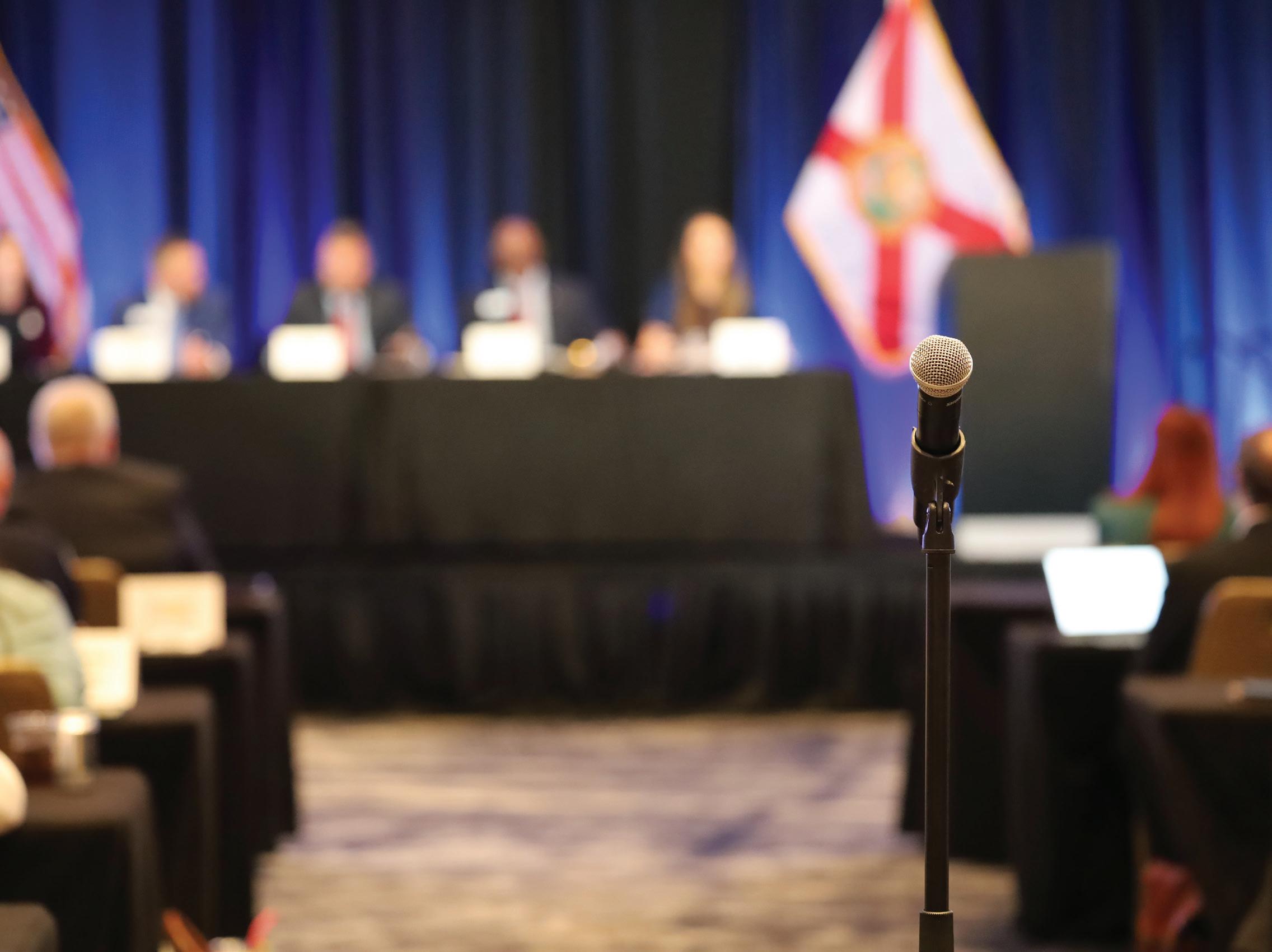
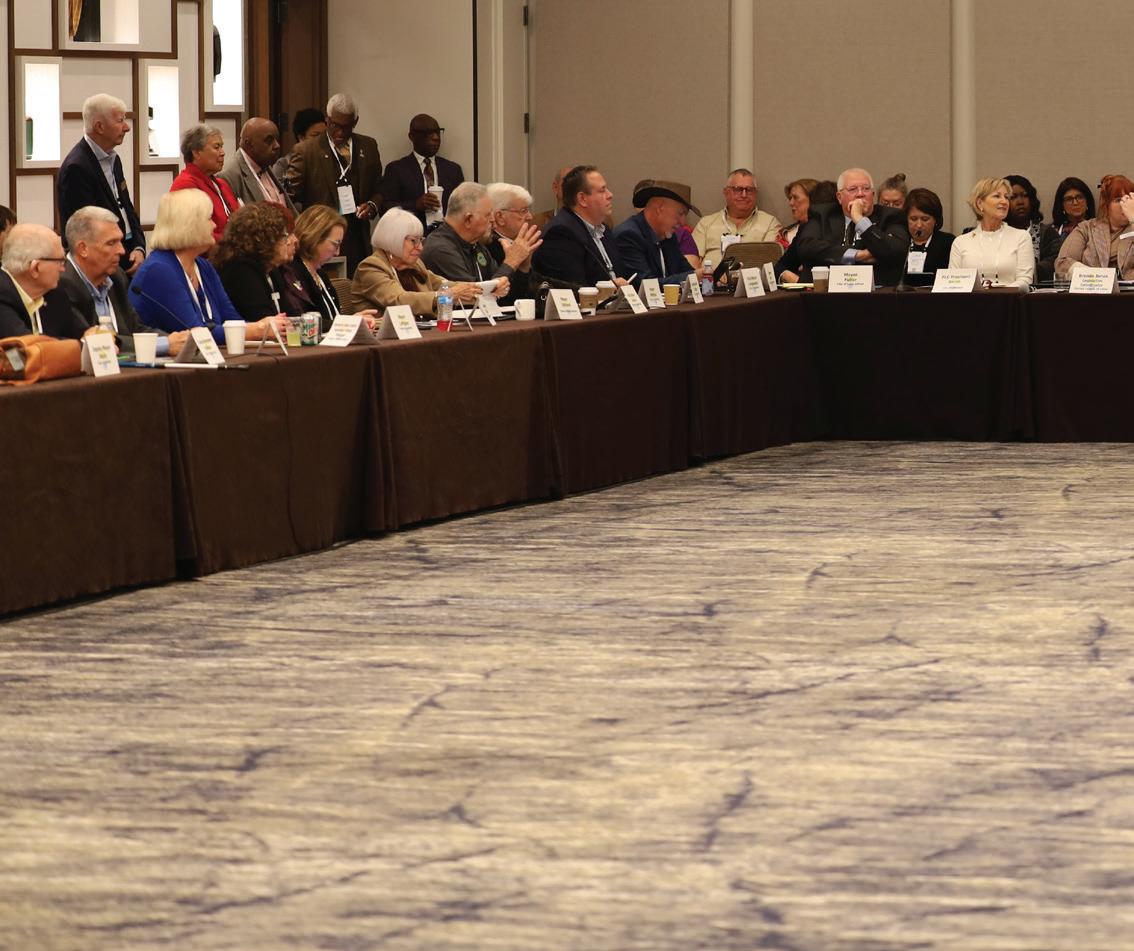
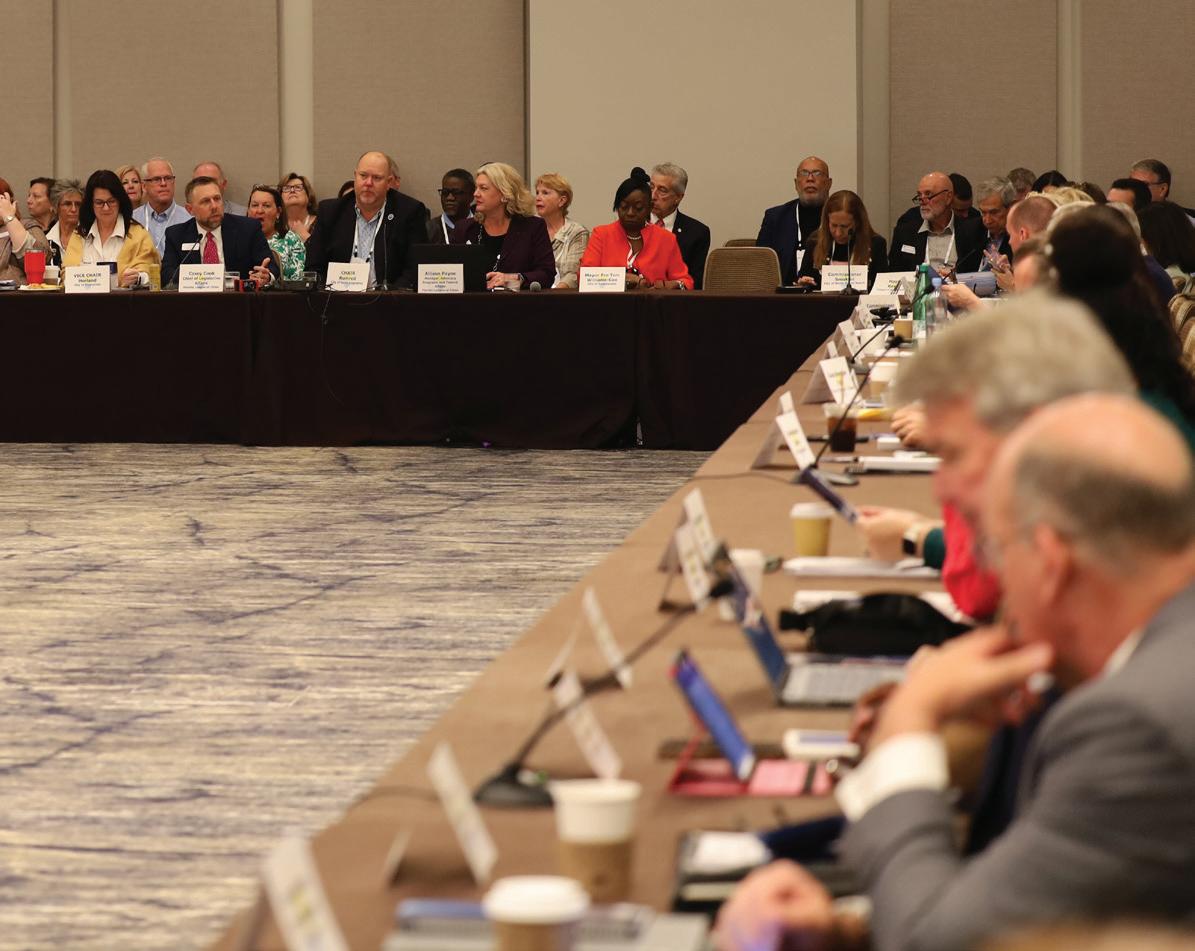
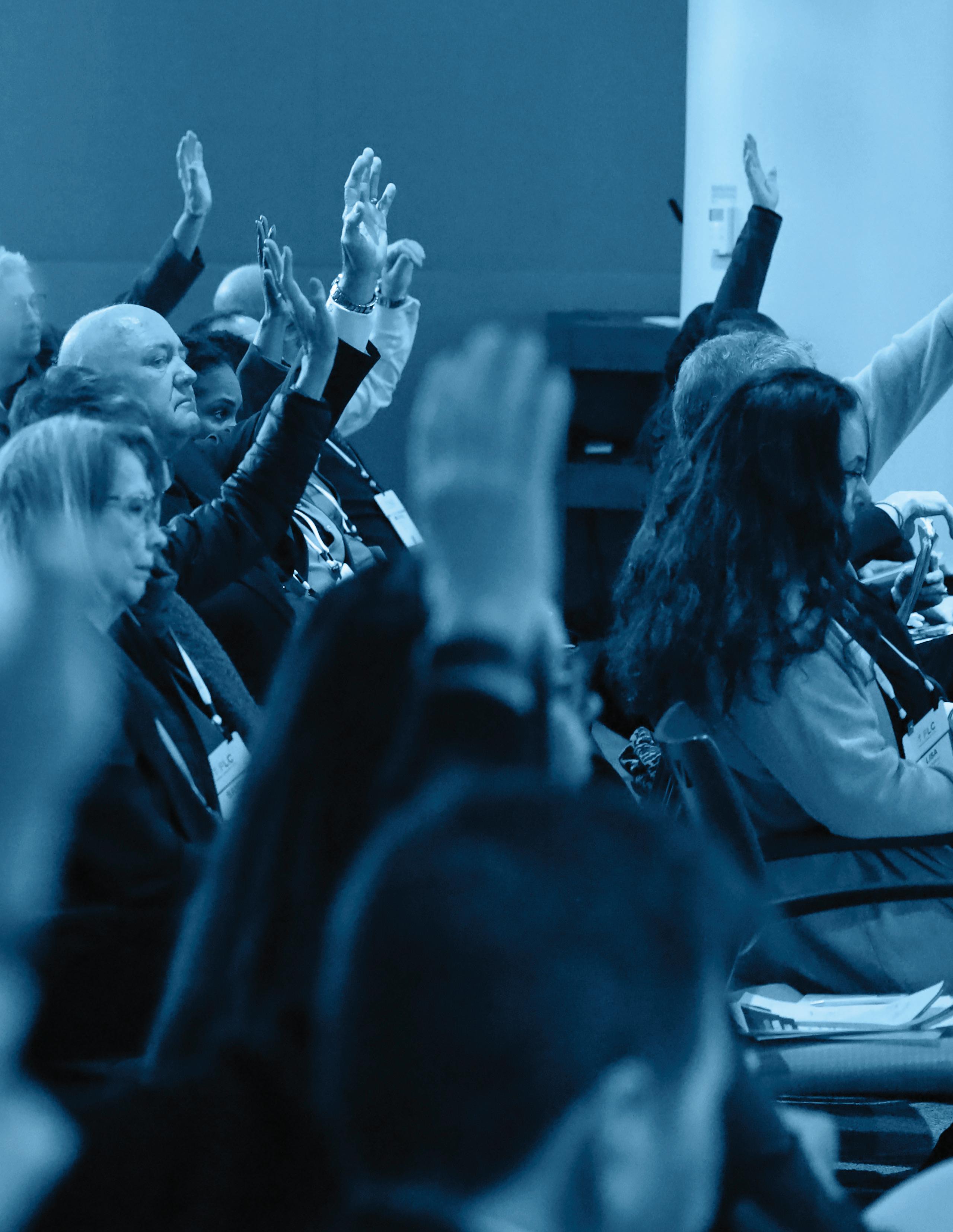
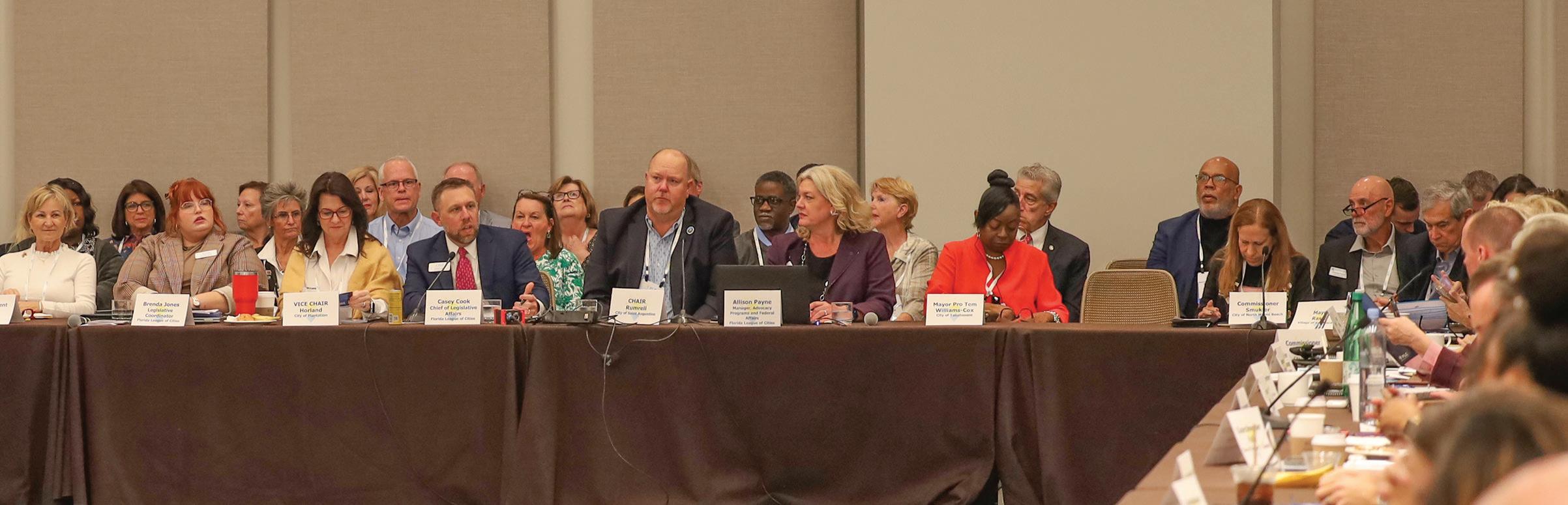
City officials from across Florida gathered December 4-5, 2025, in Orlando for the Florida League of Cities’ (FLC) annual Legislative Conference. With more than 300 officials registered and over 80 first-time attendees, the conference marked the largest turnout in 20 years and underscored the growing urgency around issues facing Florida’s cities ahead of the 2026 Legislative Session (see p. 34).
Designed to prepare municipal leaders for an early and highly consequential legislative session, the conference delivered timely insights on policy, advocacy, and communications while reinforcing the value of a unified municipal voice. FLC President Holly D. Smith, Councilwoman of the City of Sanibel, presided over the conference and rallied the membership to support the League’s annual Legislative Platform.
“We each bring a unique perspective shaped by our cities, our residents, and our shared experiences,” Smith said. “The conversations we share at this conference strengthen our bridges to one another and help guide how we show up, together, in the months ahead.”
A central focus of the conference was the legislative process and preparedness. One of the opening general sessions, “Behind the Curtain: A Lobbyist’s View of the Legislative Process,” provided attendees with a candid look at how policy moves
through Tallahassee and what city leaders should realistically expect in 2026 and beyond. The League’s legislative team offered practical guidance on advocacy strategies and highlighted trends likely to shape municipal issues in the coming year.
Keynote speaker Ryan Houck, a nationally recognized writer, director, and communications specialist, delivered a data-driven presentation addressing property taxes, one of the most closely watched issues facing municipalities. Houck’s fresh polling and research provided insight into public perceptions around property taxes and equipped city leaders with messaging for conversations at home and in Tallahassee.
Other sessions turned toward real-world implementation challenges. “Navigating Challenges Under Senate Bill 180” explored how legislation passed in the 2025 Legislative Session is affecting local planning and emergency response, featuring perspectives from local officials and legal experts working through the bill’s impacts. Another well-attended session, “Communicating Your Priorities and Your Budget,” addressed the growing need for clear, transparent communication around municipal budgets. (For a recap of this panel, see p. 16.)
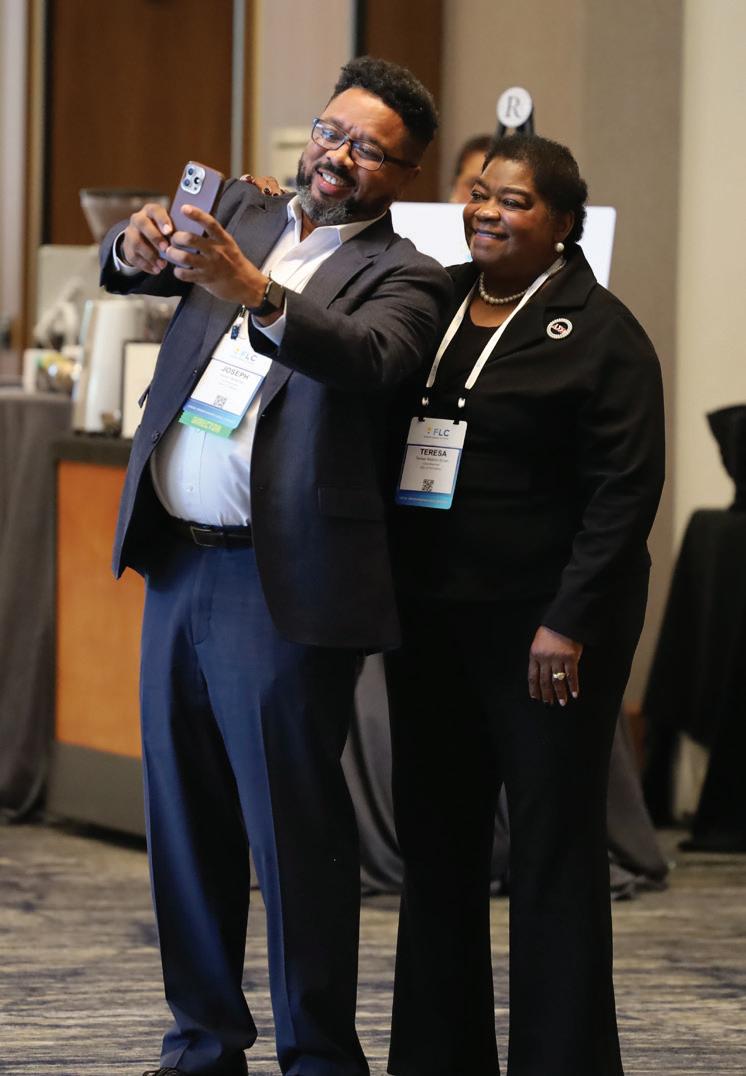
Networking and peer connection were also highlights of the conference experience. The popular speed networking session brought together elected officials and staff for fastpaced conversations designed to spark collaboration, share lessons learned, and build relationships across city lines – an increasingly important element of effective advocacy.
The League’s Legislative Policy Committees met to discuss important issues and priorities, and the conference closed with the adoption of the 2026 Legislative Platform. This document details the priorities and positions adopted by the FLC membership for the 2026 Legislative Session. (View the platform at flcities.com/legislative-resources.)
“Each of us plays a vital role in ensuring our lawmakers understand what’s at stake for Florida’s municipalities,” Smith said. “No matter where we’re from, our mission remains the same: keep our residents safe, provide essential services, and support a strong quality of life.”
With record-setting attendance and a forward-looking agenda, the FLC Legislative Conference reinforced the power of collaboration, preparation, and shared purpose – ensuring Florida’s city leaders are ready to advocate effectively for their communities when it matters most.
Brooke Harrison is the Communications Manager at the Florida League of Cities. QC
Florida City Leaders Bring a United Voice to Tallahassee
By Destiney Burt Florida League of Cities
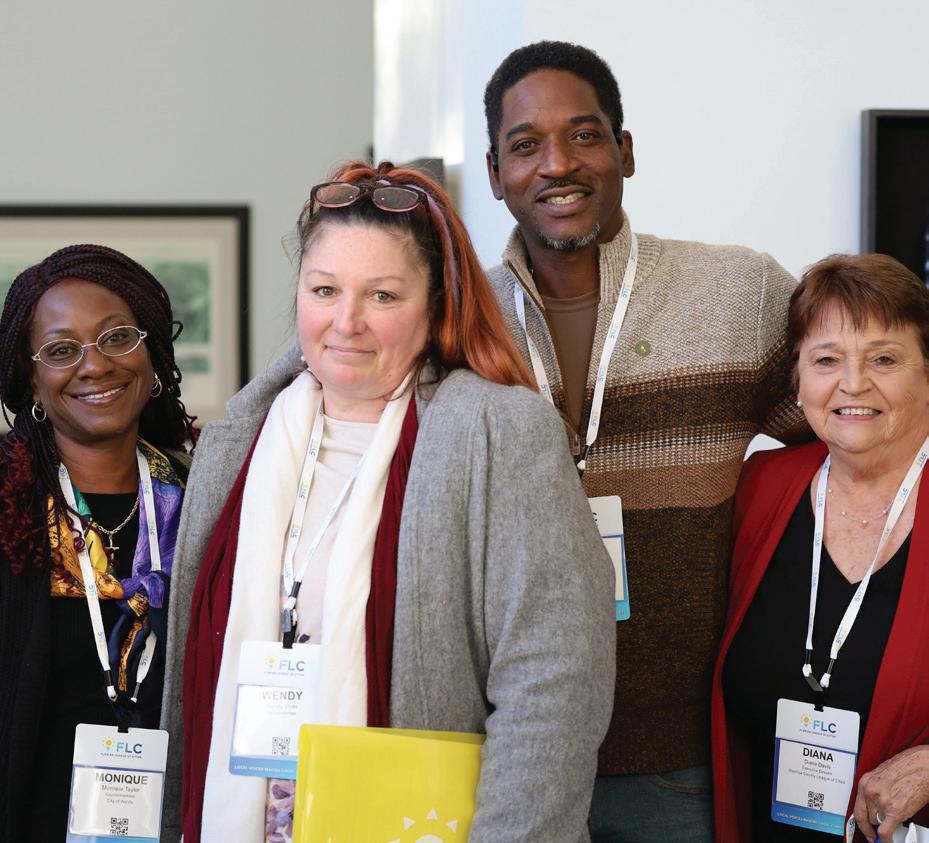
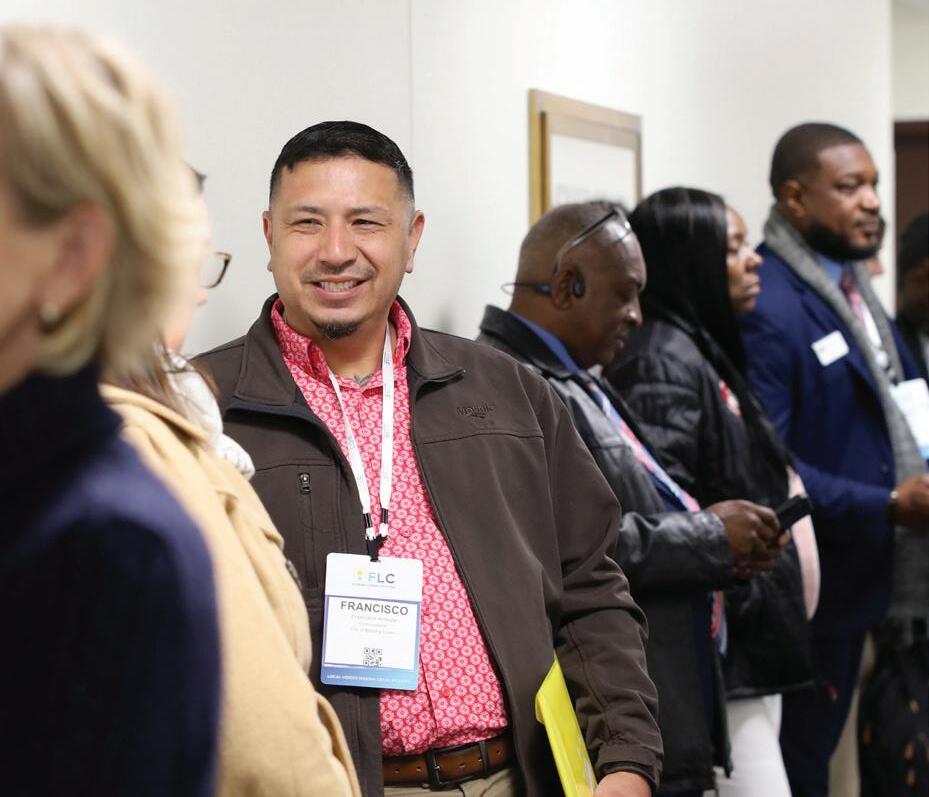
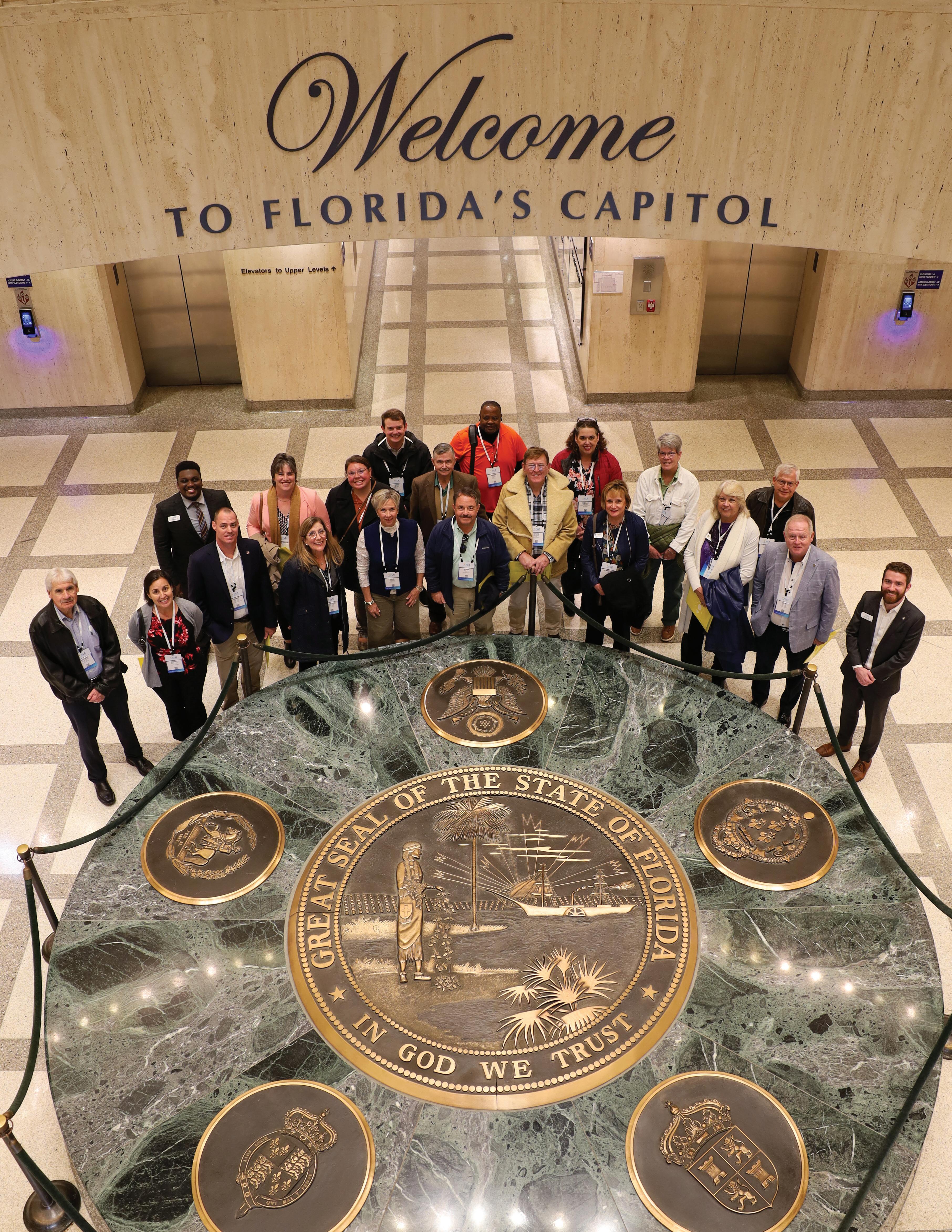
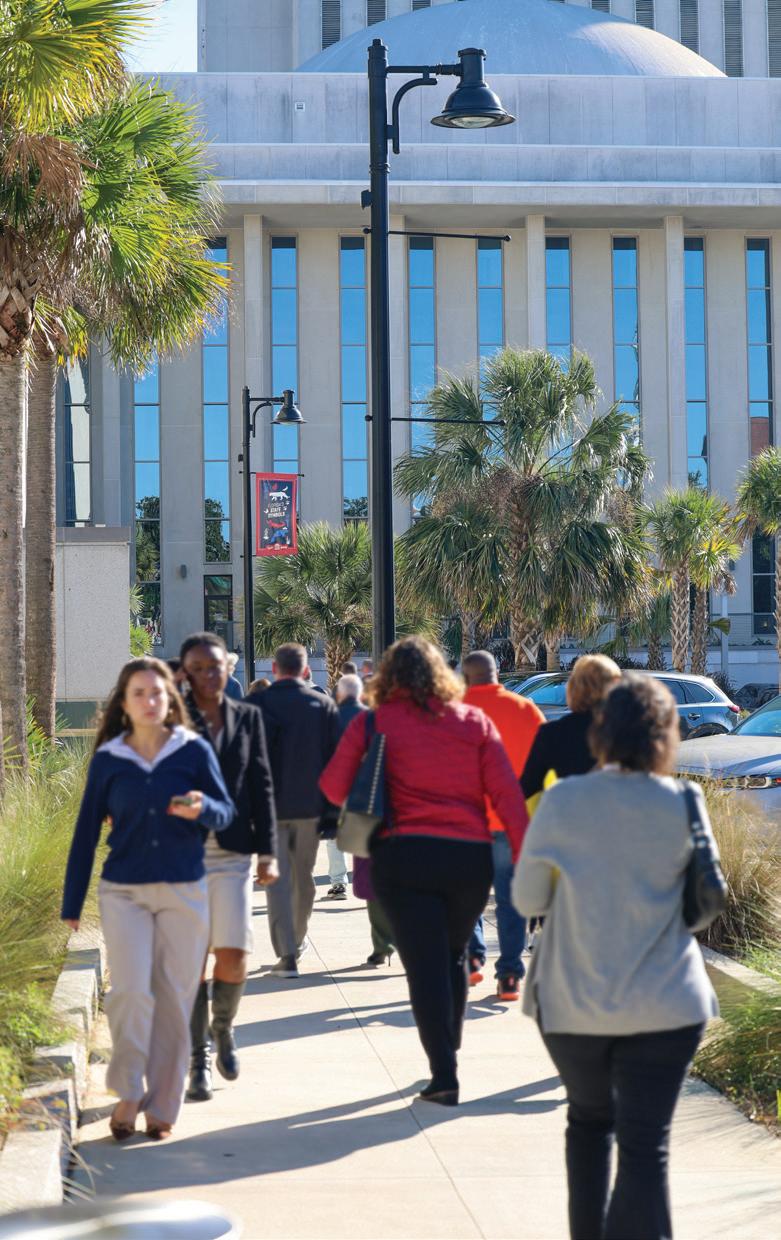
Municipal leaders from across Florida gathered at the Capitol in Tallahassee for the Florida League of Cities’ (FLC) annual Legislative Action Days, drawing the largest turnout in the event’s history. Nearly 400 municipal officials participated during the regular 2026 Legislative Session to meet with lawmakers, discuss policy priorities, and share how state decisions affect their local communities.
“When hundreds of local leaders show up in one place, it sends a clear message: Our Florida cities, towns, and villages are paying attention, we’re engaged, and we’re here to do the work,” said FLC President Holly D. Smith, Councilwoman for the City of Sanibel
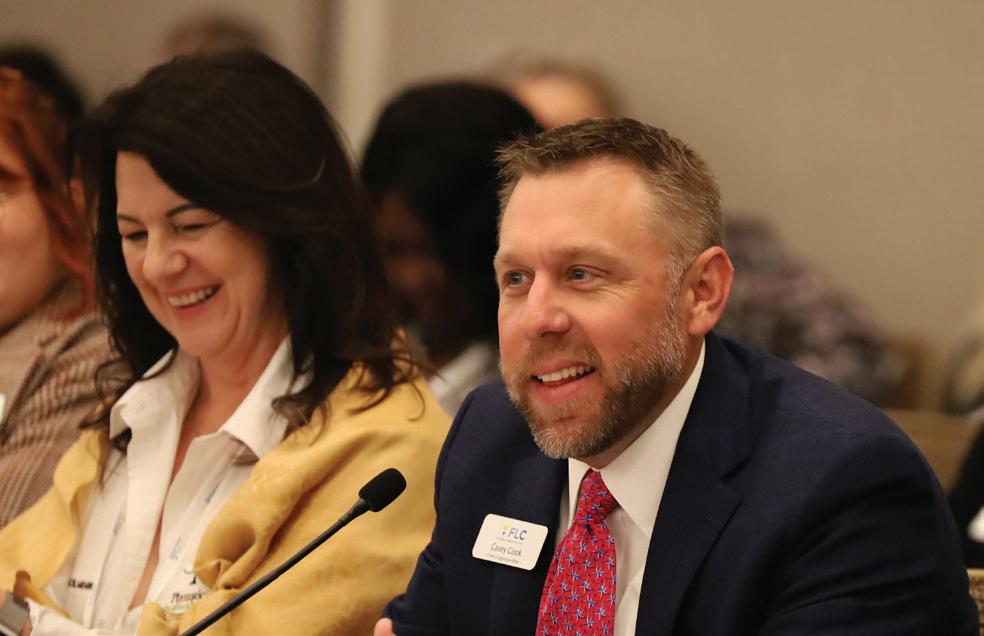
The event began with a legislative briefing, during which attendees heard updates on key issues moving through the Legislature. Members of the League’s advocacy team, led by Chief of Legislative Affairs Casey Cook, outlined major bills and policy discussions expected to shape the 2026 regular Legislative Session.
“It was helpful to have our advocacy team talk about what’s important before we hit the Hill,” Smith said.
Topics included proposals on property taxes, utility regulation, land development, and other policies that could have significant impacts on municipalities. (See p. 35 for a recap of the 2026 Legislative Session.)
“We have an incredible opportunity to educate legislators and speak about the hard work that you do in your cities, and how property taxes help fund the essential services you provide,” said Cook.
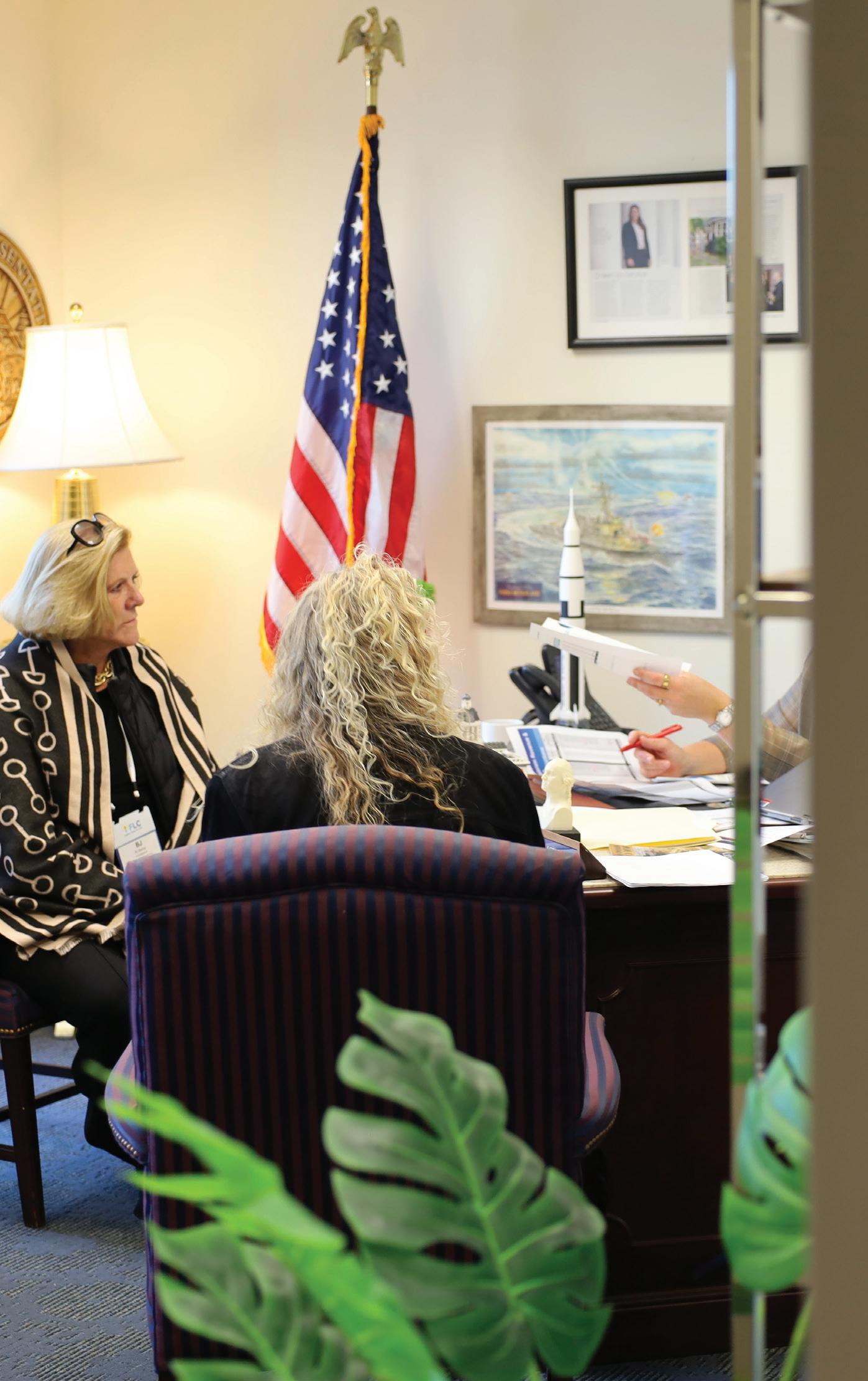
Following the briefing, municipal officials traveled to the Capitol in small groups organized by regional leagues to meet with senators, representatives, and legislative staff.
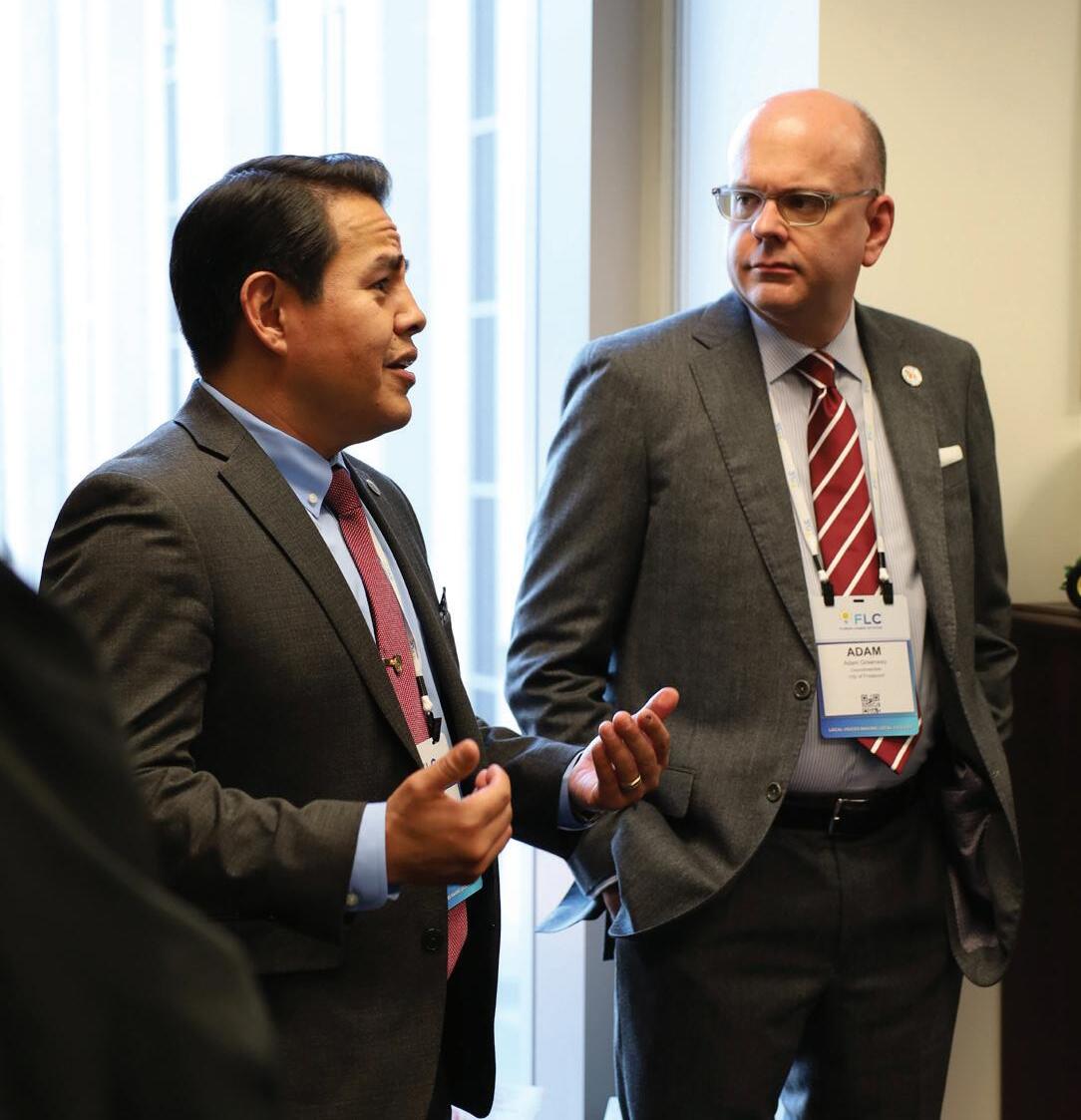
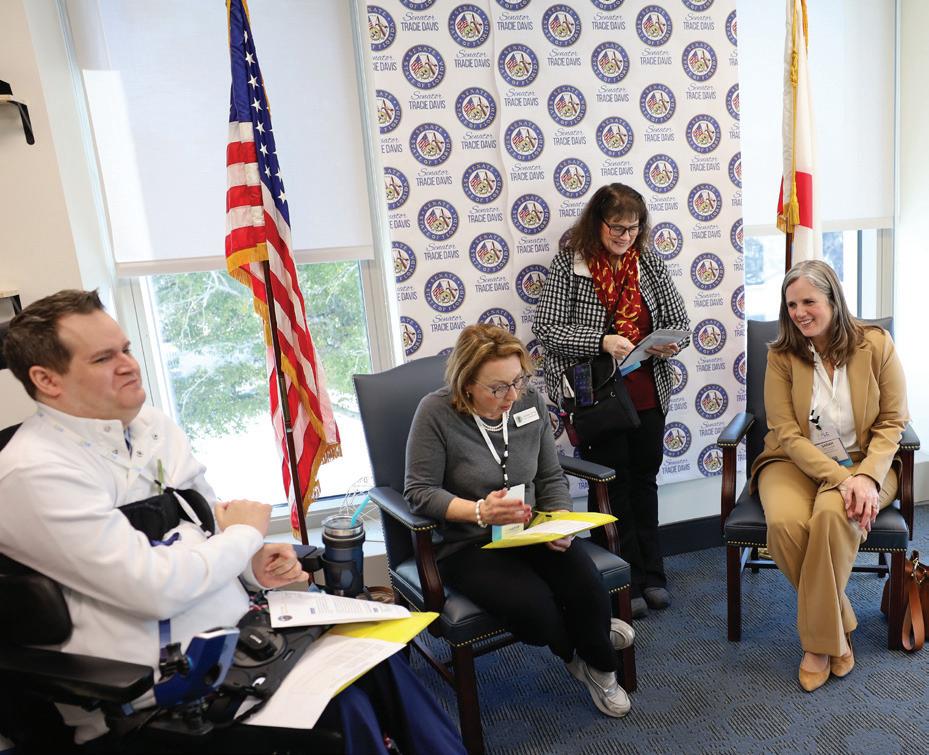
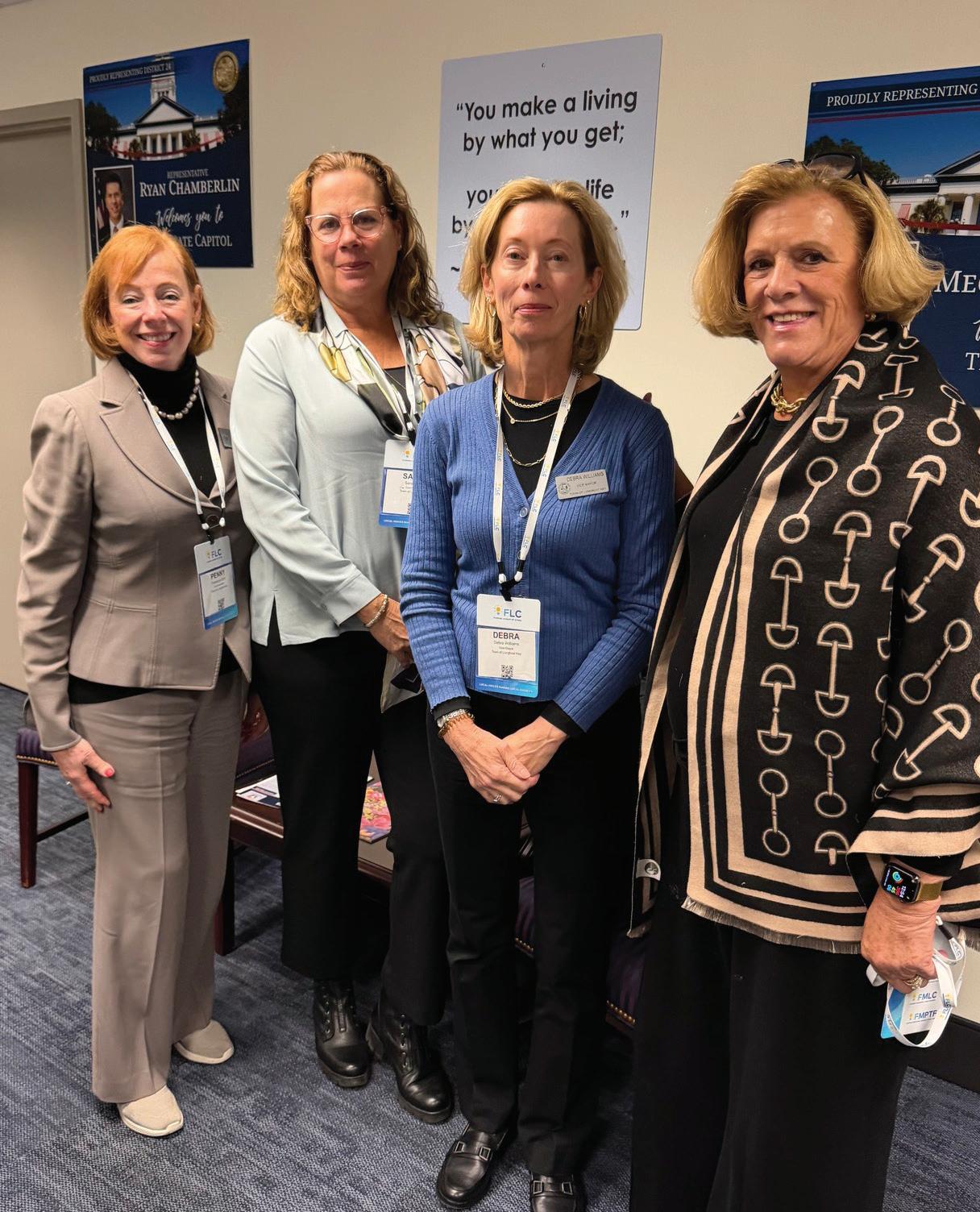
Council Member Adam W. Greenway, who has served on the Frostproof City Council for just over a year, attended Legislative Action Days for the first time. He said the event reinforced the importance of local leaders participating in the legislative process.
“Our residents’ quality of life is why we’re here,” Greenway said. “We have to be involved. We have to communicate to our legislators how their decisions and votes directly impact our communities.”
For smaller cities like Frostproof, Greenway said the League provides an essential platform to ensure their voices are heard alongside larger municipalities.
“The Florida League of Cities is an invaluable partner for what we do,” he said. “These legislative issues affect all cities. We’re a small city—3,500 residents—but bringing a united front helps communicate municipal priorities to legislators.”
Beyond advocacy, the event provided opportunities for collaboration and mentorship among municipal leaders. With more than 100 first-time attendees this year, experienced officials helped guide newcomers through the process of meeting with legislators and sharing their communities’ stories effectively.
“To me, getting together at this level is about collaboration,” Smith said. “It’s about mentorship. It’s about showing each other how we can be better leaders for our communities.”
Legislative Action Days reflects the League’s broader mission of building relationships between local leaders and state policymakers.
“The League is our bridge between elected leaders and residents, between our 411 municipalities and state leaders, between challenges and solutions, and between ideas and action,” Smith said.
For Greenway and many other attendees, the event underscores the importance of working together to advocate for the communities they serve.
“It’s great to have a partner and a resource like the Florida League of Cities,” he said. “We’re better off because of what the League is doing to help us serve our communities.”
Destiney Burt is the Communications Coordinator at the Florida League of Cities. QC
2026 Youth Council Legislative Action Days
By Eryn Alcorn Florida League of Cities
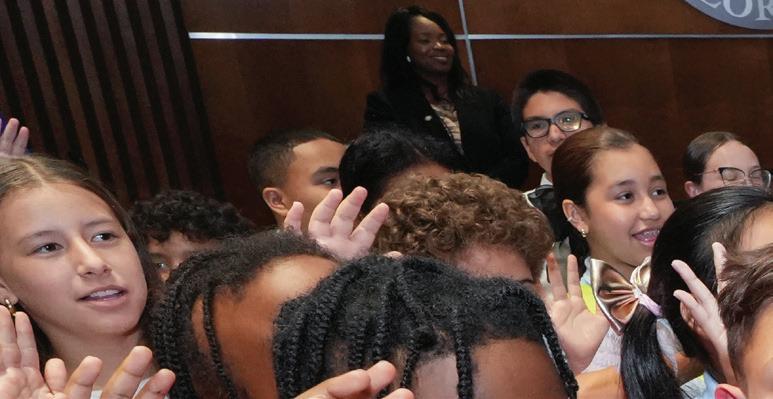
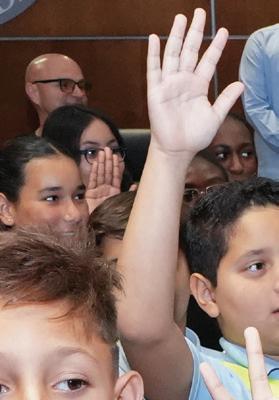
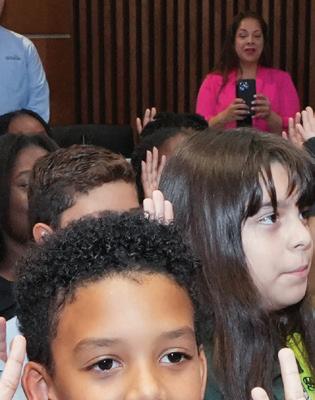
The Florida League of Cities hosted its annual Youth Council Legislative Action Days in Tallahassee, welcoming more than 100 youth council members – the highest attendance in the program’s history.
The event was held in conjunction with the League’s Legislative Action Days, which took place in January. Thirteen youth councils were in attendance from Cape Coral, Fort Pierce, Hollywood, Largo, Miami Beach, Niceville, North Miami, Ocoee, Port St. Lucie, Riviera Beach, Sanford, West Park, and Zephyrhills.
This year’s program asked attendees to develop messaging and talking points to support a community project that was relevant to their municipality. Attendees were challenged to present their proposals in creative ways, and they delivered from homemade videos to late-night TVstyle skits. By the end of the program, each youth council presented its issue, explained its impact, and outlined how it could be addressed within the confines of local government.
Participating youth councils also had the opportunity to visit the Capitol, putting their presentation preparation into practice through meaningful conversations with their state legislators.
Eryn Alcorn is the Member Services Administrator at the Florida League of Cities. QC
For more information on youth council programming, please visit flcities.com/youth-councils.
Communicating Budget Priorities
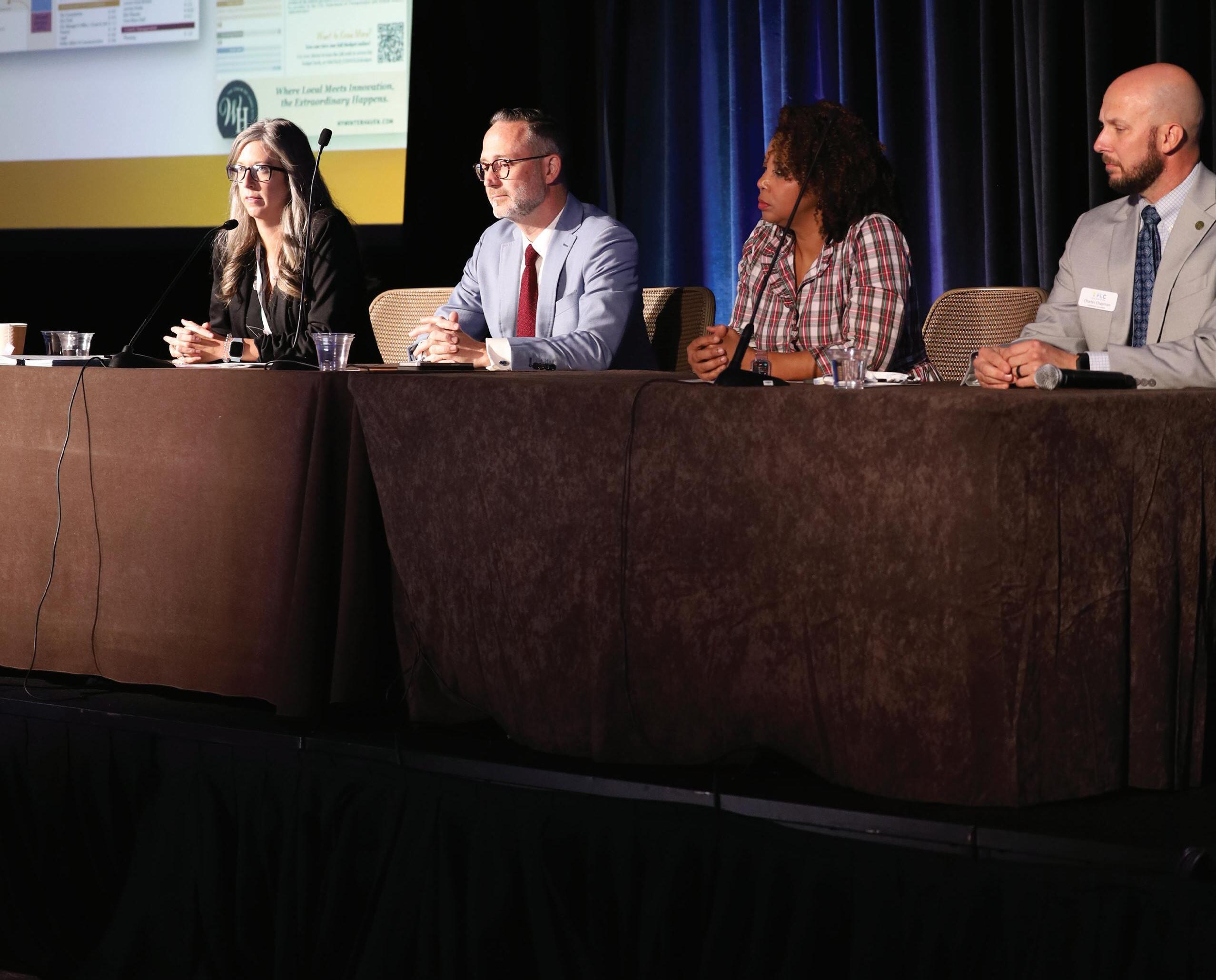
Legislative Conference Panelists
Share Practical Strategies
By Kara Irby Florida League of Cities
By the time a city budget reaches a public meeting agenda, months of planning are already behind it — work that shapes how dollars will support public safety, sustain essential services, and underwrite projects residents see and feel in their daily routines. That work is backed by a budget that brings together multiple funding streams, technical structures, and long-term considerations, creating an opportunity to better convey how it all fits together.
The challenge for elected officials and public information officers isn’t simply explaining what’s in the budget; it’s translating fiscal decisions into clear, relatable outcomes that build understanding and trust.
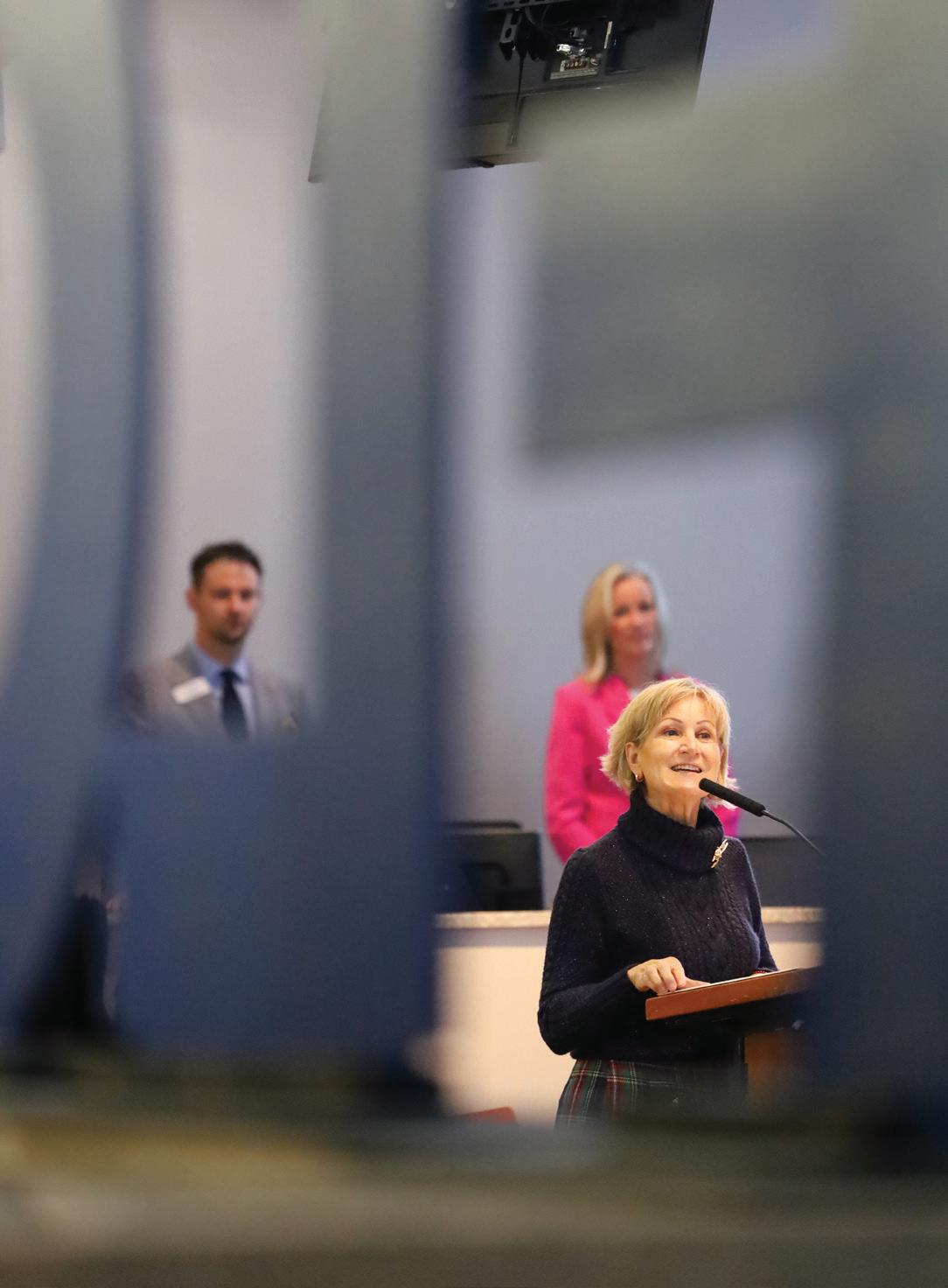
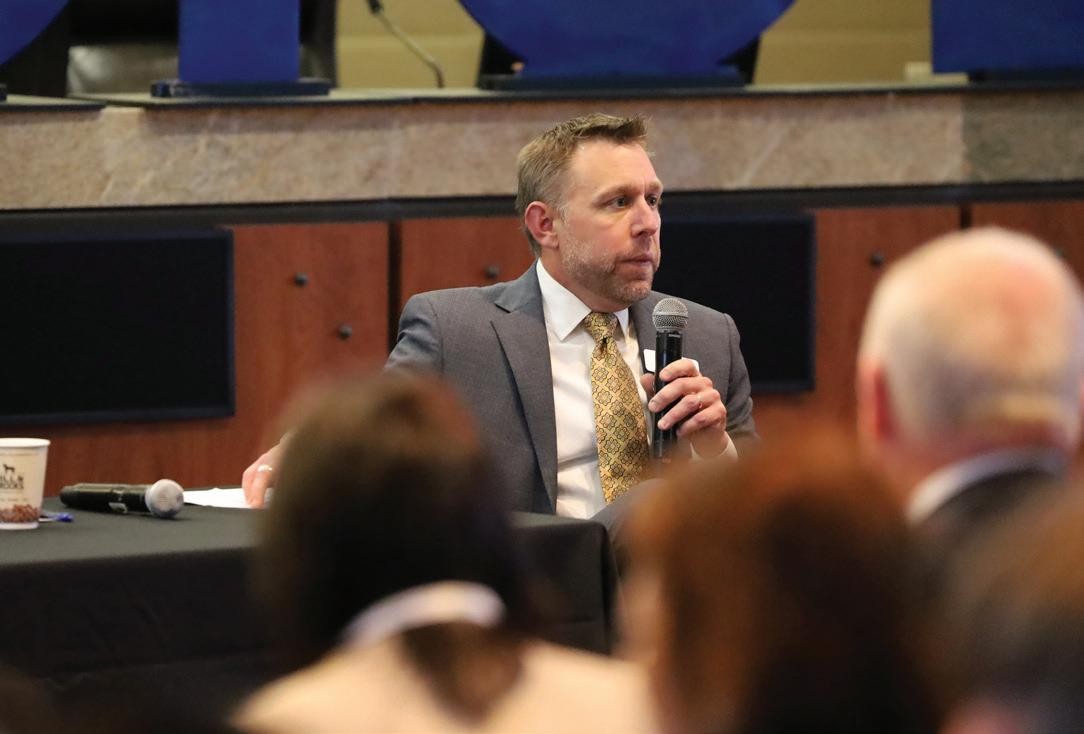
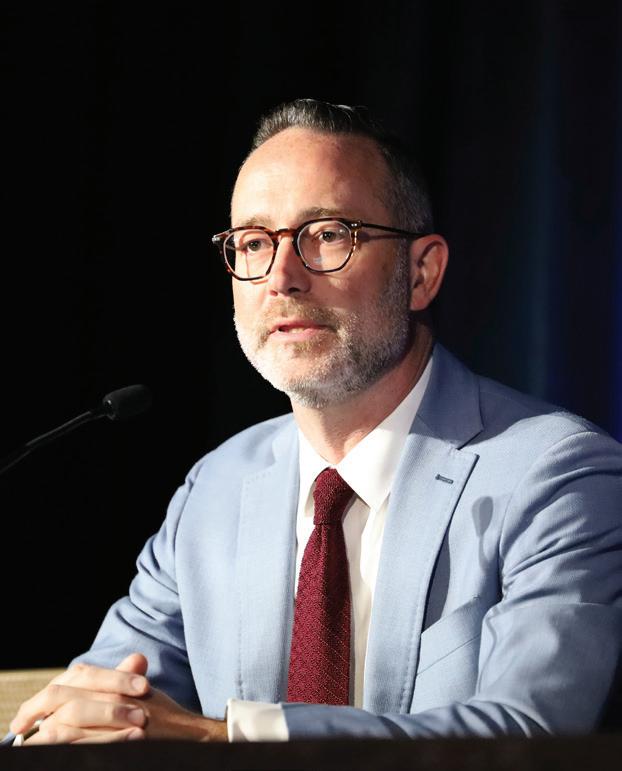
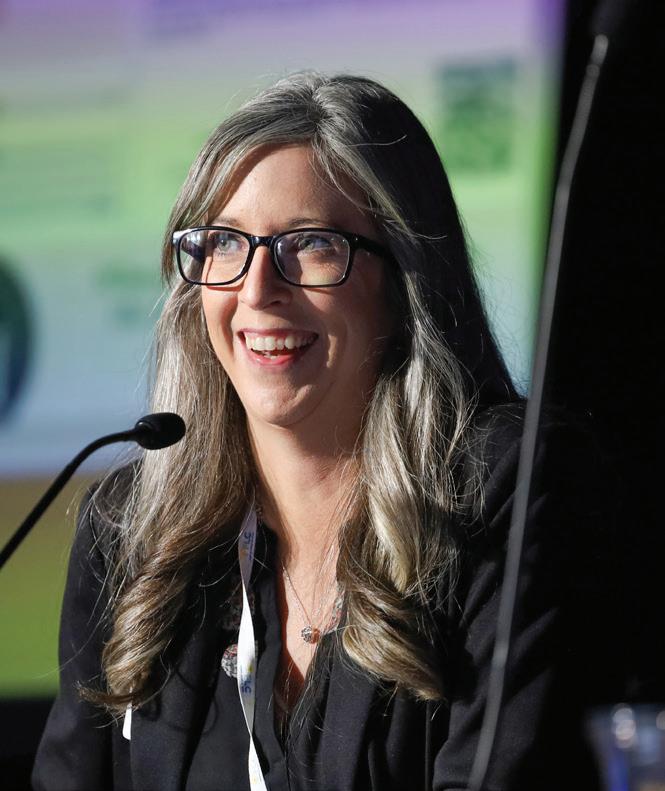
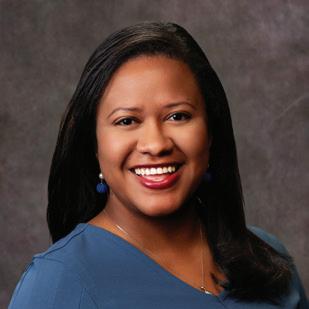
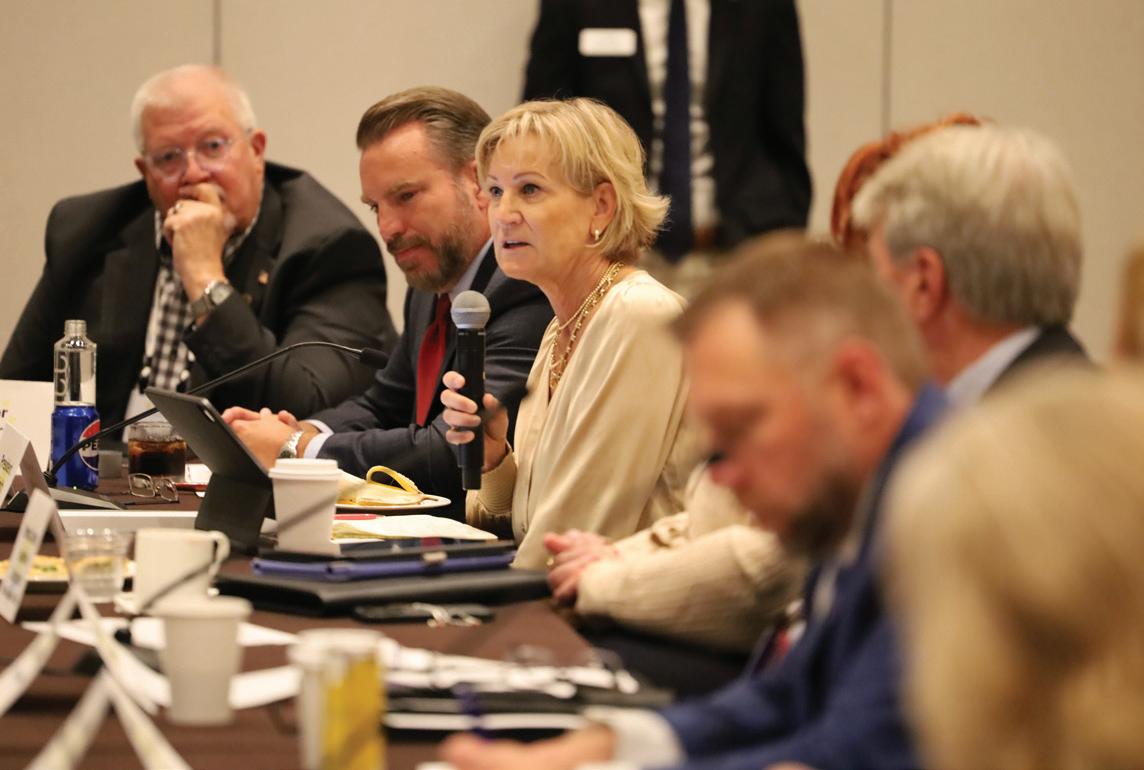
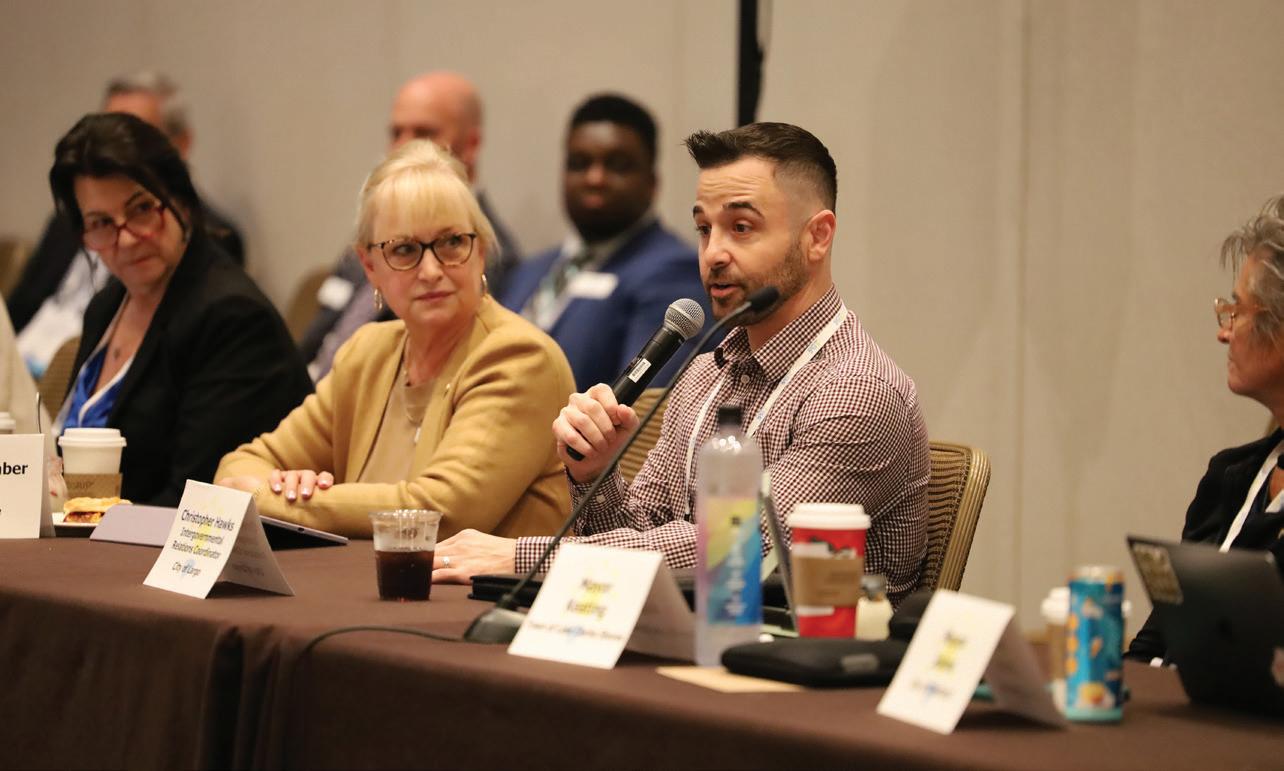
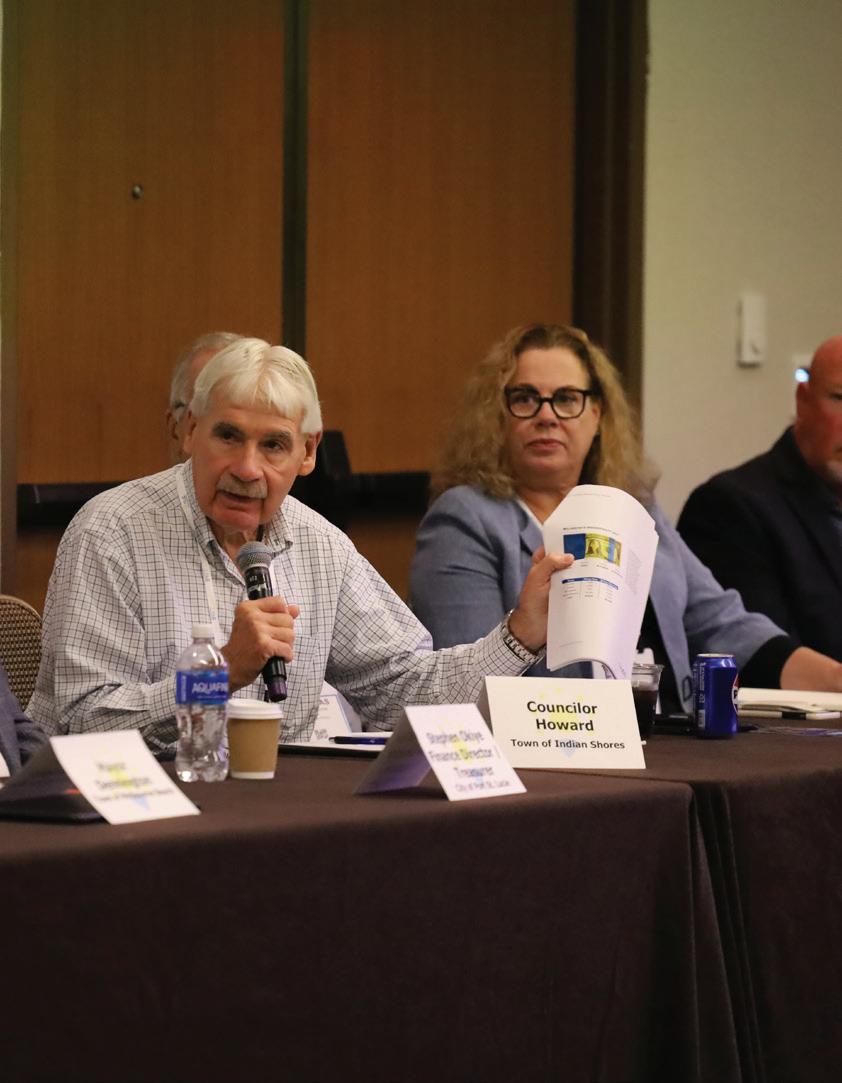
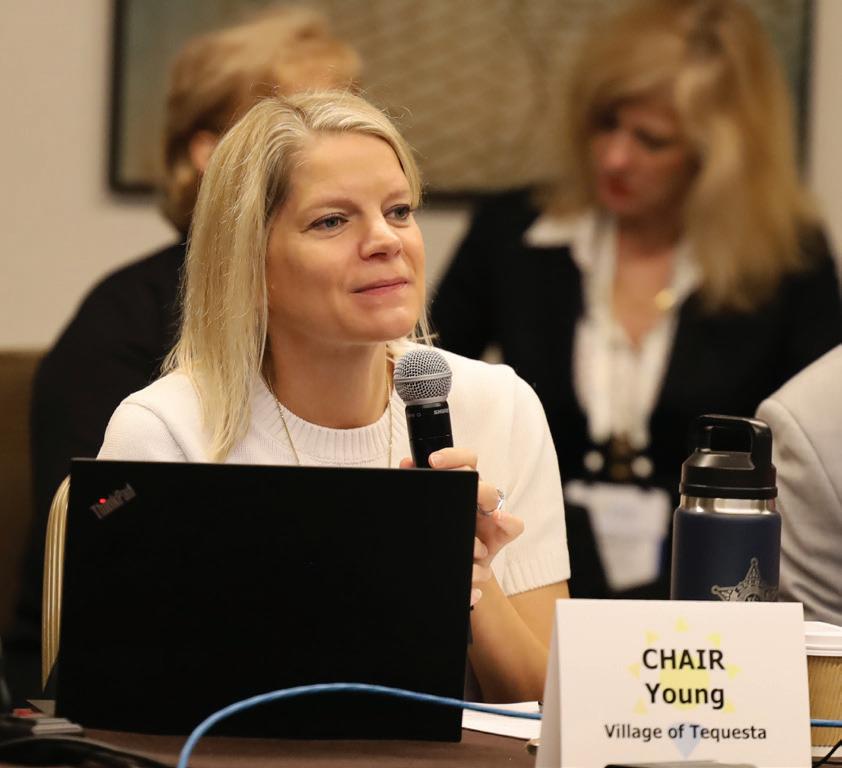
That challenge was the focus of “Communicating Your Priorities and Your Budget,” a session at the 2025 Legislative Conference featuring local government leaders from Palm Beach Gardens, Tallahassee, and Winter Haven. (For a recap of the event, see p. 8.) Across three distinct communities, panelists shared a common message: budgets become meaningful when residents can connect them to lived experience — and when governments communicate with clarity, humility, and consistency.
LEAD WITH WHAT IMPACTS EVERYDAY LIFE
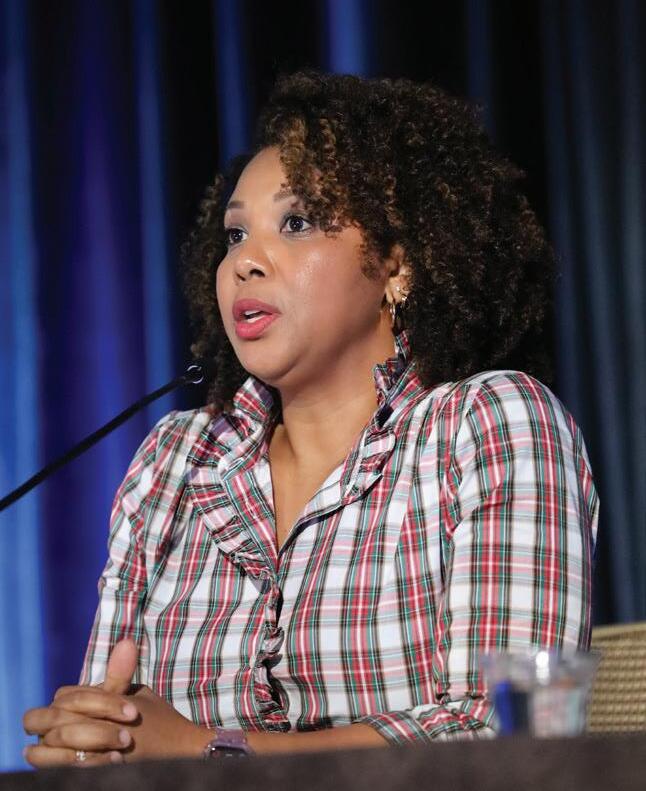
Candice Temple, Communications Director for the City of Palm Beach Gardens, emphasized that residents need language for the changes unfolding around them.
“Giving the public a name for what they’re seeing is important,” Temple said, referencing concerns about the city’s changing skyline and growing density.
Rather than dismissing negative feedback, Temple encouraged communicators to be “sensitive to the negative,” noting that engagement — even critical engagement — signals that residents are paying attention.
Palm Beach Gardens, she added, does not hide negative comments on its social media channels.
“People pay attention to what’s going to impact their everyday lives,” Temple said — a sentiment that captured the panel’s broader theme.
She shared a case study focused on traffic, an issue that has an immediate effect on residents’ commutes, school drop-offs, and emergency response times. Her team created a dedicated webpage built around the questions residents ask: Who’s responsible? What’s the solution? How much does it cost?
The takeaway for local leaders was both strategic and tactical: when an issue is high impact, make information easy to find, easy to understand, and hard to misinterpret.
“Don’t sugarcoat the issue,” Temple advised. Clear explanations, honest timelines, and frequent updates help residents prepare for disruptions such as detours and delays, and reinforce trust in the process.
SHOW THE NUMBERS, AND THE PEOPLE
Transparency, Temple stressed, is essential to helping residents understand where their tax dollars go.
“People do respond to numbers,” she said, but numbers alone aren’t enough. Strong storytelling, especially stories featuring city staff, helps humanize budget priorities. “People like to see other people.”
Palm Beach Gardens uses its city magazine, Signature City, to highlight how budget decisions are coming to life, providing context for projects that may have been years in the making. Temple cautioned that not all residents share the same historical knowledge, making explanation just as important as celebration.
She also highlighted the role of public-private partnerships in advancing major projects, noting that outside investment can amplify public dollars and broaden community buy-in.
For smaller cities without large communications teams, Temple suggested leveraging construction partners who may already have drone access for progress imagery.
Aerial photos, time-lapse videos, and before-and-after graphics do more than dress up a project — they reduce uncertainty, demonstrate momentum, and show residents what they’re getting for the investment.
CONNECT PRIORITIES TO STRATEGY
Thomas Whitley, Ph.D., Director of Operations and Innovation for the City of Tallahassee , emphasized the importance of connecting budget decisions directly to a city’s strategic plan, and making both highly visual.
He shared a striking example: Tallahassee’s $1.2 billion budget includes $77 million in property tax revenue, which covers only 93% of the police budget.
“Every penny goes to police, and it’s still not enough,” Whitley said.
The goal, he explained, isn’t to overwhelm residents with complexity, but to correct misconceptions with clear, wellframed facts.
“Our public supports public safety,” Whitley said. “The challenge is demonstrating how the budget supports that priority — and what it truly costs.”
Tallahassee’s website includes a dedicated page outlining police operating costs, complete with graphics and links to connect funding back to the city’s strategic plan.
One of the most scalable — and often overlooked — communication channels, Whitley added, is the city workforce itself. With 4,000 employees, Tallahassee relies on internal understanding to reinforce external messaging.
“Residents like to see the men and women on the front lines,” he said.
When employees share stories about maintaining parks, responding to emergencies, or upgrading utilities, they help make the budget tangible.
Whitley also highlighted the power of public-private partnerships, citing Cascades Park — a $34 million stormwater facility and community asset — and the $28 million Gaines Street revitalization, which helped generate more than $1 billion in private investment.
“Private investment follows public investment,” he said.
MAKE IT DIGESTIBLE
Accessibility was the focus in Winter Haven. Katrina Hill, the city’s Director of Public Affairs and Communication , described the challenge of turning a 400-page budget into something residents can use.
The solution was a concise, visual “Budget in Brief,” designed in Canva to distill key takeaways and dispel common myths. The digest doesn’t replace the full budget; it provides an on-ramp.
Winter Haven also invested in an online, searchable budget platform, using local government software OpenGov, which can be translated into more than 70 languages. Hill emphasized that usability and language access are fundamental to transparency.
“If residents can’t find it, read it, or understand it, publishing it isn’t the same as communicating it,” she said.
Hill added a candid reminder: “Citizens have short-term memories.” With budgets adopted annually but attention spans measured daily, communication must be steady and repetitive — not limited to budget season.
CUTTING THROUGH THE NOISE
As cities navigate the current landscape and crowded information environments, the panel returned to a simple question: how do you cut through the noise?
The answers weren’t about slogans or spin, but about consistent practice: name what people are seeing, connect decisions to daily life, show progress visually, tell the truth about costs, and repeat the message in accessible ways.
Done well, budget communication isn’t just a compliance exercise. It’s a public service that translates complexity into comprehension, acknowledges frustration without defensiveness, and builds civic trust that lasts far beyond a single budget cycle.
FLC LEGISLATIVE CONFERENCE
Kara Irby is a Senior Communications Specialist at the Florida League of Cities. QC
FLC Legislative Policy Committees
Each year, municipal officials from across the state volunteer to serve on the League’s legislative policy committees. Appointments are typically a one-year commitment and involve developing FLC’s Legislative Platform, which details priority issues most likely to affect daily municipal governance and local decision-making during the upcoming legislative session. Policy committee members also help League staff understand the real-world implications of proposed legislation and are asked to serve as advocates throughout the legislative process. For
Advocacy Committee
This committee builds support among FLC members and the Legislature for the legislative priorities adopted by the League, assesses the municipal impact of legislation, and provides strategic direction to the League’s lobbying initiatives.
Scan Here
to see the full list of committee members.
Chair
Dylan Rumrell Commissioner
City of St. Augustine Beach
Vice Chair
Denise Horland Councilmember
City of Plantation
Staff Contact
Allison Payne Manager, Advocacy Programs and Federal Affairs
to see the full list of
Development, Code Compliance, and Redevelopment Committee
This committee addresses development, redevelopment, housing, community planning, zoning, eminent domain, property rights, short-term rentals, code enforcement, building and fire code, building permitting, and concurrency management.
Scan Here
Chair
Joshua D. Fuller Councilmember
Town of Bay Harbor Islands
Vice Chair
Melissa Castro Commissioner
City of Coral Gables
Staff Contact
David Cruz Legislative Counsel
Federal Action Strike Team (FAST)
FAST advocates for Florida’s cities, towns, and villages at the federal level and strengthens the League’s federal relations through strategic communications and engagement with the Florida congressional delegation.
Scan Here
to see the full list of committee members.
Chair
B.J. Bishop
Commissioner
Town of Longboat Key
Vice Chair
Allan Kaulbach
Councilor
City of Atlantis
Staff Contact
Allison Payne
Manager, Advocacy Programs and Federal Affairs
Finance and Taxation Committee
This committee addresses general finance and tax issues, fees, assessments, infrastructure funding, local option revenues, pension issues, revenue sharing, franchise fees, Communications Services Tax (CST), and ad valorem.
Scan Here
Chair
Molly Young
Mayor
Village of Tequesta
Vice Chair
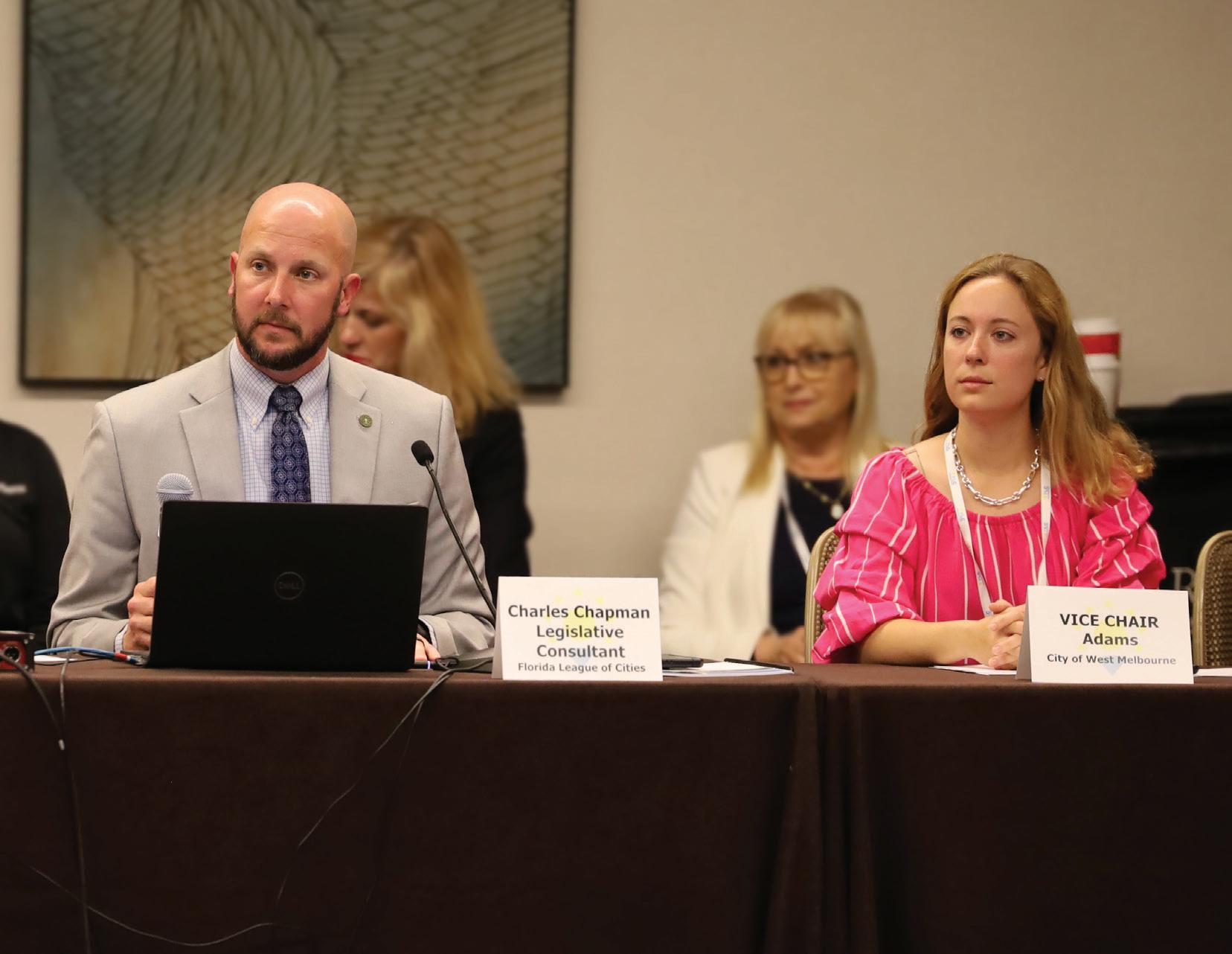
Diana Adams Councilmember
City of West Melbourne
Staff Contact
Charles Chapman Legislative Advocate to see the full list of committee members.
Intergovernmental Relations, Mobility, and Emergency Management Committee
This committee addresses transportation, municipal roads and airports, traffic safety, drones, vertiports, ports, telecommunications, broadband, use of public rights-of-way, parking, signage, emergency management, homelessness, charter counties, annexation, ethics for public officers and employees, elections, special districts, and general preemptions.
full list of committee members.
Chair
Chris Cloudman
Mayor
City of DeLand
Vice Chair
Shaun Ferguson
Councilman
City of Rockledge
Staff Contact
Rebecca O'Hara
Deputy General Counsel
More Funding. Less Guesswork.
The Florida League of Cities has partnered with Euna Solutions to give every member city access to grant tools, training, and savings.
Through the FLC Grants Assistance Program, our members have access to:
Over 10,000 Grants
Search the nation’s largest database of professionally curated and municipal-focused grants from federal, state, and foundation sources.
Training and Readiness Workshops
Stay grant-ready by participating in quarterly webinars and workshops with our Grant Coordinator, designed to help your city apply, manage, and report on grants more effectively.
Dedicated Grant Coordinator
Get personalized guidance to help your city identify the best opportunities and strengthen applications.
Discounted Post-Award Suite Services
If your city needs help managing awarded grants, you can access Euna Solutions’ post-award management suite including reporting, collaboration, and tracking tools at a vastly discounted rate.
Municipal Operations Committee
This committee addresses government operations, municipal service delivery, cybersecurity, technology, public safety, public meetings, public records, public property use and management, procurement, personnel, insurance, collective bargaining, workers’ compensation, liability, and sovereign immunity.
Scan Here
Chair
Mac Fuller
Mayor
City of Lake Alfred
Vice Chair
Shannon Hayes
Council Member
City of Crestview
Legislative Advocate to see the full list of committee members.
Staff Contact
Sam Wagoner
Utilities, Natural Resources, and Public Works Committee
This committee addresses coastal management, environmental permitting, hazardous and toxic wastes, recycling, solid waste collection and disposal, stormwater, wastewater treatment and reuse, water management, water quality and quantity, resiliency, brownfields, and municipal utilities.
Scan Here
to see the full list of committee members.
Chair
Lois Paritsky
Mayor
Town of Ponce Inlet
Vice Chair
Jen Ahearn-Koch
Commissioner
City of Sarasota
Staff Contact
Matt Singer
Legislative Advocate
with Rebecca O’Hara
5 q uestions with FLC’s Deputy General Counsel
WHAT DREW YOU TO THE FLORIDA LEAGUE OF CITIES, AND HOW HAS YOUR ROLE EVOLVED?
I began my career in land use and environmental litigation. At some point, I worked on a lengthy lawsuit involving the Everglades Forever Act and began thinking about how interesting it might be to play a role in how laws come into being. The League presented that opportunity and much more. Municipal law allows an attorney to practice multiple disciplines; it’s never boring. In a single day, I could work on a land-use issue, a public meeting issue, a contract, and an appellate brief. I’ve worn many hats at the League and worked in both the Legislative and Legal Departments. But one thing – the best part of the job – never changes, and that is helping people. It’s deeply satisfying to play a small role in helping government work better.
YOU WORK ON BOTH THE LEGAL AND LEGISLATIVE SIDES OF THE LEAGUE. HOW DOES THAT UNIQUE PERSPECTIVE INFLUENCE YOUR APPROACH TO ADVOCACY FOR CITIES?
I’m analytical, I like to learn, and I like to solve problems. These are good traits for an attorney, but they also serve me well in advocacy. When I read a bill, I envision how a judge might interpret and apply the words. These days, judges focus increasingly on textualism when construing legislation. The right word in the right place matters. I believe everyone in the legislative process has a duty to get the words right, even if there are disagreements on policy. A policy disagreement is an opportunity to solve a problem. The best policy outcomes occur when there’s reasoned discussion, equal participation, and informed judgment. Understanding different perspectives gives me new insights and ideas for solving problems, so I learn as much as I can about the merits of the other side’s position, other stakeholders' positions, and my own.
AS A NEW SPEAKER FOR THE INSTITUTE FOR MUNICIPAL ELECTED OFFICIALS (IEMO), WHAT’S THE MOST IMPORTANT MESSAGE YOU WANT NEWLY ELECTED LEADERS TO TAKE AWAY EARLY IN THEIR SERVICE?
Stay involved with the League. It’s an invaluable opportunity to meet and learn from your peers in other municipalities. The best thing? You’ll learn you’re not alone in all this.
WHAT’S SOMETHING CITY OFFICIALS MIGHT NOT REALIZE ABOUT HOW LEGAL ANALYSIS AND LEGISLATIVE ADVOCACY INTERSECT BEHIND THE SCENES DURING SESSION?
We fix a lot of bills behind the scenes. If we can resolve an issue without having to worry city officials about it, that’s a good thing. We want our members to focus on the biggest threats. I also think people would be surprised at the sheer volume of amendments and bills that I write or rewrite – some get used, but most don’t. I always want to have a solution ready when an opportunity arises. If that solution gets rejected, I have another idea ready to go.
AFTER YEARS OF WORKING DIRECTLY IN THE LEGISLATIVE PROCESS, WHAT DO YOU SEE AS THE MOST EFFECTIVE WAYS LOCAL OFFICIALS CAN ENGAGE WITH LAWMAKERS ON CITY ISSUES?
Number one: Get to know your legislators. You don’t have to be best friends, but they should recognize your name (in a good way!) when you call. Number two: Understand they won’t always vote your way, and that doesn’t make them bad people. That’s just the nature of the legislative process. Number three: Be trustworthy and helpful. Legislators are bombarded by information, and some of it isn’t true. Become a trusted source of information. Number four: Find common ground. Explore ways to work together for the benefit of your shared constituents. QC
Hometown
Tallahassee, FL
Education
B.S. Communications, Florida State University;
J.D., FSU College of Law
Years at FLC
21 Years
Executive Director
Florida Municipal Attorneys Association (FMAA)
Rebecca O'Hara
Florida’s premier educational experience for newly elected city officials, built for real - world municipal leadership.
IEMO I September 18-19, Tampa
IEMO II October 9-10, Orlando
Learn more and view future dates at flcities.com/iemo.
A Session of Uncertainty and Steady Local Advocacy
Cities Stayed Engaged as Major Issues Remained in Play
The 2026 regular Legislative Session concluded after its scheduled 60 days, but without the customary sine die close. Lawmakers adjourned without reaching agreement on the state budget, leaving unfinished business that required their return to Tallahassee for a special session to finalize the budget May 12-29. On May 27, with a budget nearly finalized, Governor Ron DeSantis announced a special session on property taxes beginning June 1, along with his proposed property tax plan. (See p. 37 for the special session recap.)
For cities, this session felt like a continuation of an unusually long legislative cycle. Last year, the 2025 Legislative Session extended well into June before a budget was finalized, followed almost immediately by special committee meetings on property taxes that stretched through the summer and fall. Those discussions carried directly into committee weeks and, because this was an even year, an early start to the 2026 session in January.
For the League and our membership, that means the work has not slowed, and neither has the need to continue telling the local government story, particularly as it relates to property taxes.
ENGAGEMENT THAT MADE A DIFFERENCE
This session, 1,896 bills were filed, with just 237 ultimately passing. Roughly one-third of the bills filed had some impact on cities, underscoring the breadth of issues local governments were tracking throughout the session.
City engagement throughout this process was exceptional. Both the Legislative Conference and Legislative Action Days saw record-breaking attendance (see pages 8 and 10 for recaps). That level of participation
By Casey Cook Florida League of Cities
mattered. Sharing personal, local stories about how legislation affects communities remains one of the most effective advocacy tools cities have. It gives lawmakers a clearer understanding of the real-world consequences of their decisions back home, especially on complex issues like property taxes.
This year, the League also evolved how it connects with members by transitioning its longstanding Monday Morning Call - Ins to a new video webinar format. The shift resulted in a 50% increase in participation, expanding access to timely updates and strengthening engagement.
Throughout the regular session, city officials responded to action alerts, participated in legislative briefings, traveled to Tallahassee, and met with legislators in their home districts. Those conversations provided critical context, helping lawmakers understand how proposed changes would affect infrastructure, public safety, housing decisions, and the delivery of everyday services residents rely on.
Much of the League’s advocacy work, as always, happened behind the scenes—monitoring amendments, working with bill sponsors, and navigating differences between the House and Senate as proposals evolved. In a session where disagreement often slowed progress, those relationships and that steady presence helped prevent several problematic proposals from becoming law.
LEGISLATIVE RECAP
From the start, the 2026 session reflected policy conversations that had been building for months during interim committee meetings. Proposals affecting property taxes, local revenues, municipal utilities, and local authority surfaced early and repeatedly, requiring cities to remain vigilant across multiple issue areas.
Property tax proposals, in particular, received sustained attention. While no single proposal ultimately reshaped the system during the regular session, the volume and persistence of these discussions made clear that the issue was far from settled. For cities, this reinforced the importance of continued education around how municipal services are funded and what is at stake when local revenue stability is threatened.
Preemption was another recurring theme. Bills affecting land use, housing policy, utilities, and local regulatory authority reflected ongoing tension between statewide approaches and local decision - making. In several cases, proposals were amended, narrowed, or failed to advance altogether. These outcomes were influenced in large part by consistent engagement from city officials and the League’s advocacy team.
PROPERTY TAX PROPOSALS
Numerous tax- related bills were filed this session, but none ultimately passed during the regular session:
▸ Elimination of Non-school Property Tax for Homesteads (CS/CS/HJR 203): Failed. This proposed constitutional amendment would have eliminated non-school property taxes on homestead properties. Although it passed the House, the Senate did not take up the measure.
▸ Property Insurance Relief Homestead Exemption Non-school Property Tax (CS/ CS/HJR 209): Failed. This proposal would have created a new $200,000 homestead exemption from non-school ad valorem taxes for properties covered by multi-peril insurance.
▸ Modification of Limitations on Property Assessment Increases (CS/CS/HJR 213): Failed. This proposed constitutional amendment would have changed how assessment valuation caps are adjusted for non-school property tax levies.
▸ Local Business Taxes (CS/HB 103 and SB 122): Failed. These bills would have repealed Chapter 205, Florida Statutes, eliminating local governments’ ability to levy local business taxes.
OTHER KEY ISSUES
Preemption bills surfaced early and often. Through consistent education, committee testimony, and the sharing of real-world impacts,
Holly D.
many of these proposals failed. Much of this work occurs behind the scenes, relying on long-standing relationships and strategic engagement throughout the legislative process.
As happens each year, despite strong advocacy efforts, some preemption bills still pass The League has provided resources to help cities navigate the new requirements once signed by the Governor at flcities.com/legislative-resources.
Here’s a look at where some major proposals landed:
▸ Utility Services (CS/CS/HB 1451): Passed. This bill applies new requirements to municipal utility services provided outside city limits.
▸ Provision of Municipal Utility Service to Owners Outside the Municipal Limits (CS/CS/CS/SB 1014 and CS/ CS/HB 1075): Failed. These bills would have required municipal utilities to provide extraterritorial service.
▸ Suits Against the Government/Sovereign Immunity (HB 145): Passed. The bill increases tort liability caps for claims accruing on or after October 1, 2026, to $350,000 per person and $500,000 per incident, while maintaining the requirement that payments above those caps must be approved by the Legislature through a claims bill unless covered by available insurance. Earlier versions of the bill proposed significantly higher caps.
▸ Local Government Spending (CS/CS/HB 1329): Passed. This bill expands statutory requirements governing local government budget transparency and revises state impact fee laws.
The bills highlighted here represent only a portion of the legislation considered this session. For a comprehensive recap of all bills impacting cities, view the 2026 Legislative Session Final Report at flcities.com/legislative-resources.
PROACTIVE WINS
While cities are often defending against preemption, there are also opportunities to support meaningful reforms. This session, two League-supported bills passed:
▸ Public Meetings (CS/CS/HB 655) by Representative Duggan allows local governments, after receiving a Bert Harris Act claim, to hold a private meeting with their attorneys during the 90-day pre-suit notice period.
▸ Local Government Cyber Security (CS/CS/HB 1085) by Representative Miller establishes the Local Government Cybersecurity Protection Program within the Florida Digital Service to assist counties and municipalities in mitigating and responding to cybersecurity threats.
SPECIAL SESSION, AND WHAT COMES NEXT
While property tax measures did not pass during the regular session, the issue was far from settled. During the special session on property taxes held June 1-2, the Legislature passed CS/HJR 1-F, a proposed constitutional amendment that would increase the homestead property tax exemption and restrict how cities and counties use ad valorem tax revenue. It cleared both chambers with the required three-fifths supermajority and will appear on the November 2026 ballot, requiring 60% voter approval.
If approved by the voters, the amendment would:
▸ Increase the homestead exemption from $50,000 to $150,000 beginning January 1, 2027, and to $250,000 beginning January 1, 2028, for all levies other than school district levies
▸ Direct the Legislature to establish a schedule for the future elimination of homestead property taxes
▸ Reduce the cap on annual assessment increases for many non-homestead properties from 10% to 5%
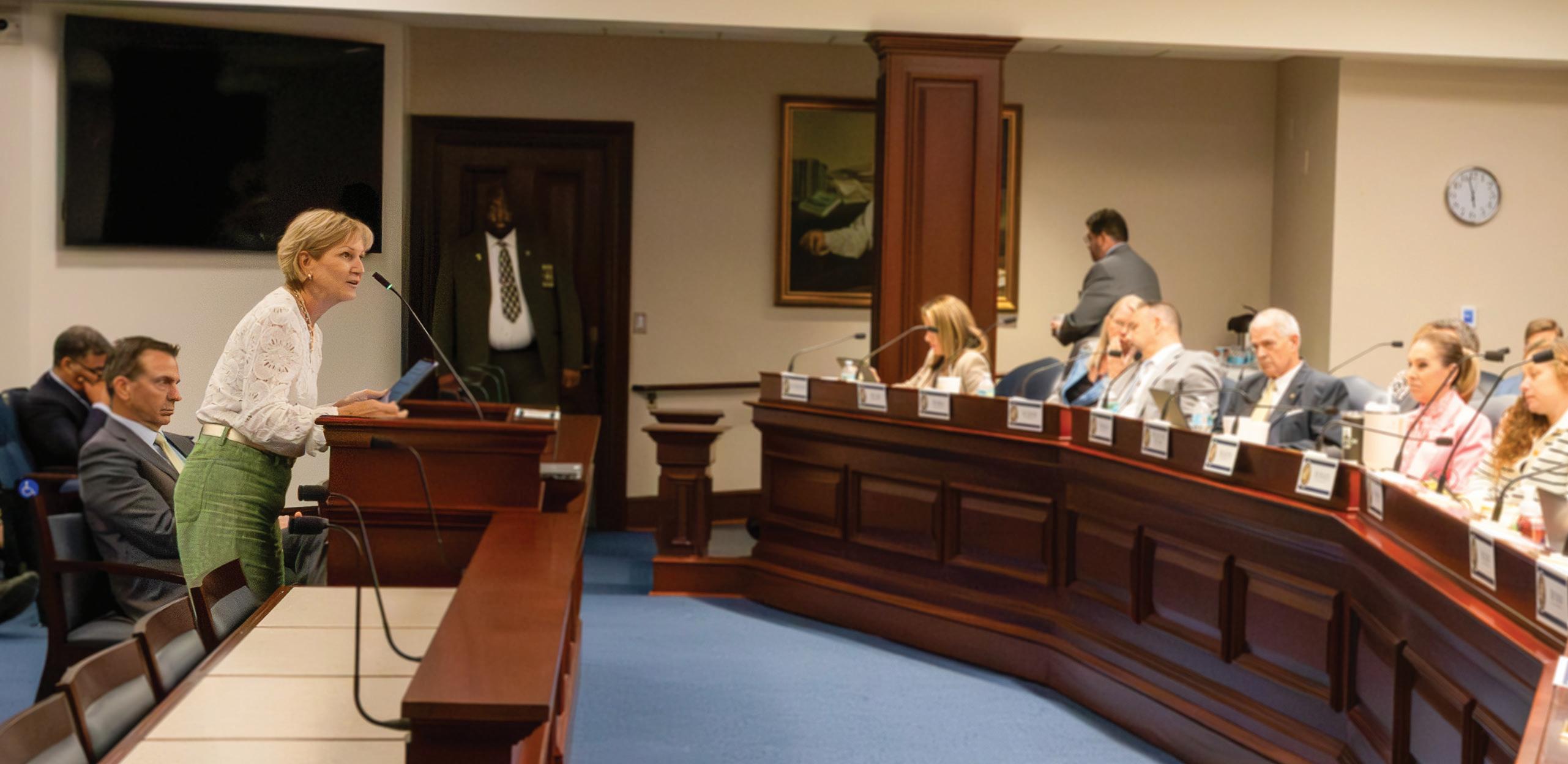
President
Smith, Councilwoman for the City of Sanibel, testifies before the House State Affairs Committee during the special session on property taxes.
▸ Require new Florida residents after January 1, 2027, to wait five years before qualifying for the enhanced homestead exemption
With this amendment heading to the ballot, it is more important than ever that cities help residents understand the role property taxes play in funding local government services. Florida law prohibits government entities from using public funds to advocate for or against ballot questions, but cities can share factual information about how property taxes support local services.
The League’s FAQs on communicating about property taxes are a good place to start. Members should consult their City Attorney for legal advice before making decisions regarding communications about the amendment. That resource and more can be found on the Property Tax Toolkit at flcities.com/floridaformulatoolkit
Our work is not done. The League will continue providing information and resources regarding the amendment and its potential impacts on municipalities. As this issue moves toward the 2026 ballot, cities will play an increasingly important role in providing residents with accurate and factual information about how local government services are funded in their communities.
Casey Cook is Chief of Legislative Affairs for the Florida League of Cities. QC
Celebrate the 2026 Home Rule Heroes
Recipients of the Home Rule Hero Award are local government officials, both elected and nonelected, who consistently responded to the Florida League of Cities’ (FLC’s) request to reach out to members of the Legislature and help give a local perspective on an issue. They worked tirelessly throughout the legislative session to promote local voices making local choices, protect the Home Rule powers of Florida’s municipalities, and advance the League’s legislative platform.
View the 2026 Home Rule Hero Award recipients at bit.ly/4dpqQgM
2026 Legislative Session Final Report
This story briefly summarizes legislation that impacted Florida cities during the 2026 Legislative Session. For more information on other bills, visit flcities.com/legislative-resources to view the Legislative Session Final Report.
UNDERSTANDING MUNICIPAL PROPERTY TAXES
Property taxes fund the essential services that make our cities safe and reliable. To help you communicate clearly with your community, the Florida League of Cities has developed a Property Tax Toolkit with resources designed for local outreach.
Data, messaging, visuals, and tools in one place.
Explore the educational resources to help explain how property taxes work and why they matter.
▸ Downloadable detailed city-level reports
▸ Ready-to-use materials with talking points and key messages
▸ Shareable videos for presentations, meetings, or on social media
Explore the educational toolkit.
Building Confident Leaders
How FLC Programming Supports Newly Elected Officials
By Kara Irby Florida League of Cities
For newly elected municipal officials, stepping into office often means learning on the fly — balancing community expectations, complex governance structures, and the realities of public service, all under the constraints of Florida’s Sunshine Laws. For two first term local leaders, engagement with the Florida League of Cities (FLC) has been instrumental in turning early uncertainty into confident, informed leadership.
City of Frostproof Council Member Adam W. Greenway, Ph.D., returned to the Sunshine State and his hometown in January 2023 after years in higher education and nonprofit leadership. Within months, he was serving on the city’s Planning and Zoning Commission. By November 2024, he was appointed to the City Council.
Almost immediately after joining the council, he began attending regional league meetings and enrolled in the League’s Institute for Elected Municipal Officials (IEMO), a comprehensive educational initiative designed to equip municipal elected officials with the knowledge, skills, and tools necessary to govern their municipalities effectively. The timing proved critical.
“I went to IEMO just as I was entering my first budget cycle,” he explained. “It gave me the tools to understand municipal finance, the council manager form of government, and how to be effective on the dais.”
IEMO I is specially designed for elected officials and those with less than one term in office. Workshops include an overview of Florida municipal governance; strategies and best practices for effective councils; an introduction to municipal finance; and legal aspects, like parliamentary procedures. Beyond the coursework, the relationships built through IEMO proved lasting.
“Those were the first colleagues I connected with at Legislative Conference and Annual Conference,” he said. “Now they’re people I can call, text, or meet up with across the state. That peer network is invaluable.”
A similar experience resonated with Commissioner Sarah Karon of the Town of Longboat Key, who stepped into local government in January 2024
Council Member Adam W. Greenway, Ph.D. City of Frostproof
Commissioner Sarah Karon Town of Longboat Key
Beyond the Training
Beyond participating in training and conferences, both Greenway and Karon are also engaged with the Florida League of Cities by serving on FLC Policy Committees (see p. 20). By helping shape priorities, sharing local perspectives, and contributing to statewide advocacy efforts, they demonstrate another meaningful way newly elected officials can engage with FLC and strengthen the collective voice of Florida’s cities.
If you are interested in serving on an FLC policy committee, contact Mary Edenfield at medenfield@flcities.com
CITY LEADERS
when her district’s commissioner resigned. Thrust into service as a first-time official, she describes herself as “a complete rookie.”
With Sunshine Laws limiting informal mentorship, formal training became essential.
Her first exposure to FLC came through IEMO I in the fall of 2024.
“The program gave me tremendous new depth and perspective on best practices,” Karon said. “The trainers were excellent, and the opportunity to collaborate with peers was enormously valuable.”
While IEMO helped build a foundation, Karon credits the FLC Annual Conference with expanding her leadership lens.
“It took me from a hyper-local focus to a broader understanding of state-level issues affecting my community,” she said. “The FLC team did an impressive job, educating us on issues, helping us become conversant on key issues, and giving us a sense of the deep layers of support that are available from the organization.”
For both leaders, Legislative Action Days provided a hands-on education in advocacy. (See p. 10 for a recap of the event.) Karon had lobbied before, but found the experience very different with FLC’s coordinated approach.
“This year, with so many urgent issues coming at us from the state Legislature, it was empowering to have FLC's data and talking points to bolster our town's own strong presentation,” she said. “Our group of four commissioners was 'coming in hot' anyway, but FLC strengthened our voices.”
Greenway echoed that sentiment, emphasizing the value of a collective municipal voice.
“There’s strength in numbers,” he said. “What happens in Tallahassee doesn't just stay in Tallahassee; it affects all of our cities, and so we need to be wise in that arena and know how we can best articulate our concerns.”
Ultimately, both leaders say FLC programming reinforced the purpose of municipal government itself.
“Our role isn’t partisan,” Greenway noted. “It’s about clean water, safe streets, public safety, and stewarding taxpayer resources responsibly.”
Karon agrees.
“Our role as elected public servants is to create and maintain strong, ethical governance and business for our wonderful communities,” she said. “Being trained by dedicated experts and interacting with like-minded peers is invaluable toward that end.”
Kara Irby is a Senior Communications Specialist at the Florida League of Cities. QC
INSTITUTE FOR NEWLY ELECTED OFFICIALS (IEMO)
IEMO I
September 18-19 | Tampa
IEMO II
October 9-10 | Orlando
You don’t want to miss this crash course in municipal government!
The Institute for Elected Municipal Officials (IEMO) offers a comprehensive overview of Florida municipal government presented by top professionals in the field.
Learn more at flcities.com/iemo
Local Voices, Real Stories
A New Video Series from Local Voices United
Throughout Florida’s history, its cities have played a vital role in shaping the communities where residents live, work, and raise their families. From maintaining safe streets and parks to making decisions about growth, infrastructure, and quality of life, local government is where many of the choices that affect residents directly are made. Yet for many people, the work of city government can feel distant or difficult to understand.
That’s why the Florida League of Cities (FLC) launched Local Voices United (LVU) , a grassroots initiative dedicated to helping Floridians better understand how local government works and why local decision-making matters.
At its core, LVU focuses on a simple idea: local voices should help shape local decisions. City leaders and residents know their communities best. Through storytelling, education, and advocacy tools, LVU highlights the essential role cities play in everyday life while encouraging residents
By Erika Branchcomb Florida League of Cities
to stay informed and engaged in issues that affect their communities.
Over the past year, the initiative has expanded its reach through new member engagement opportunities. One of the most exciting developments has been the launch of the LVU+ Ambassador Program, which invites three Florida League of Cities staff members to help share the story of local government in new and engaging ways.
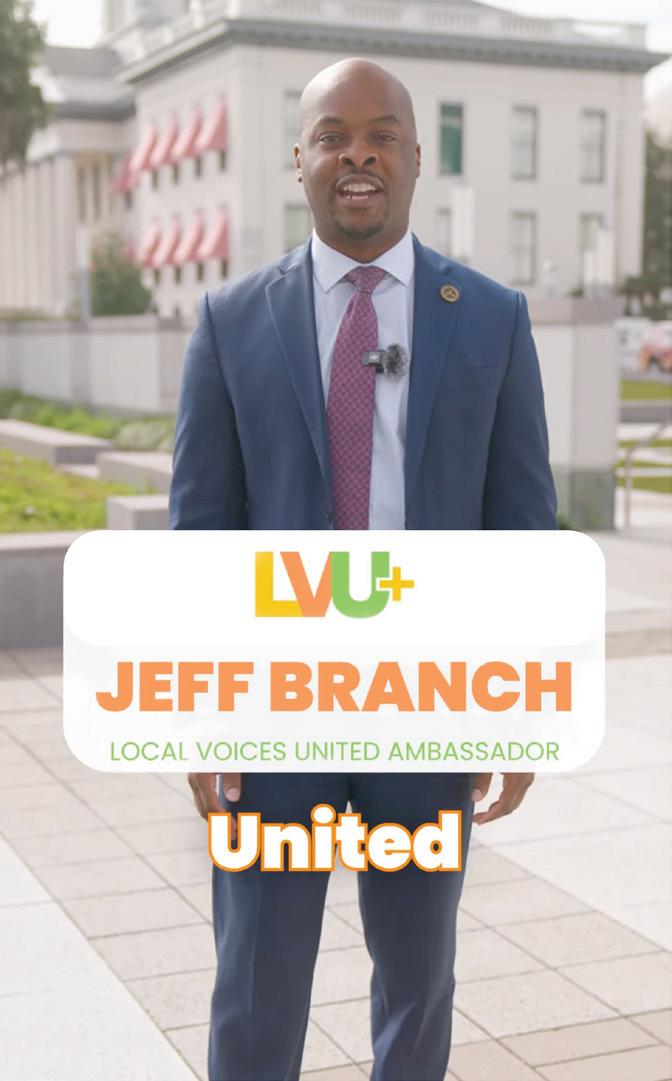
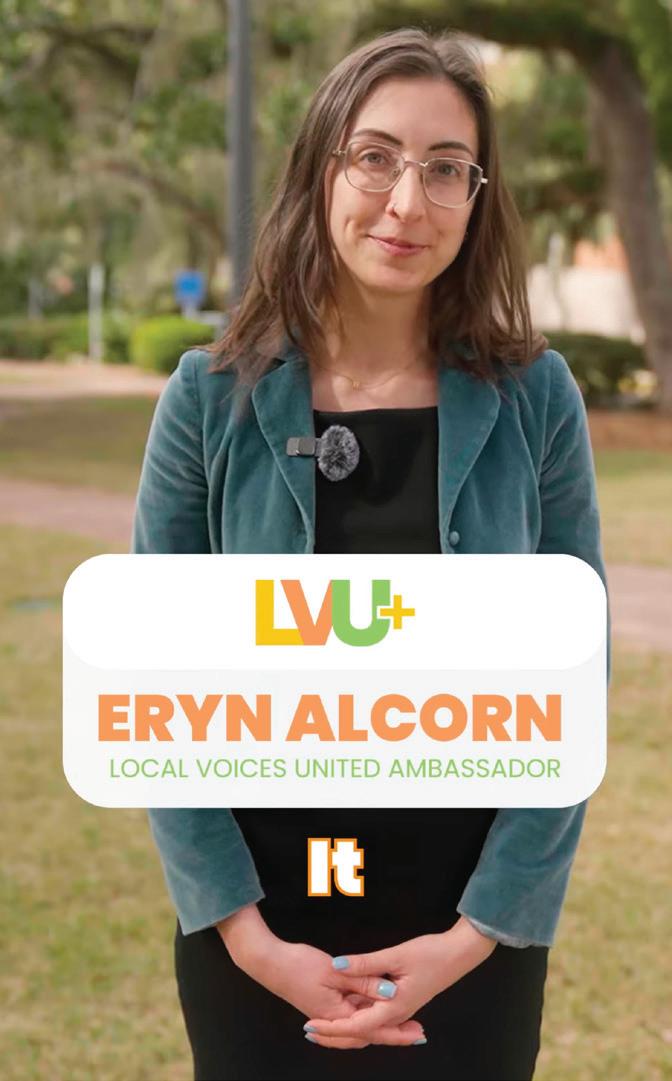
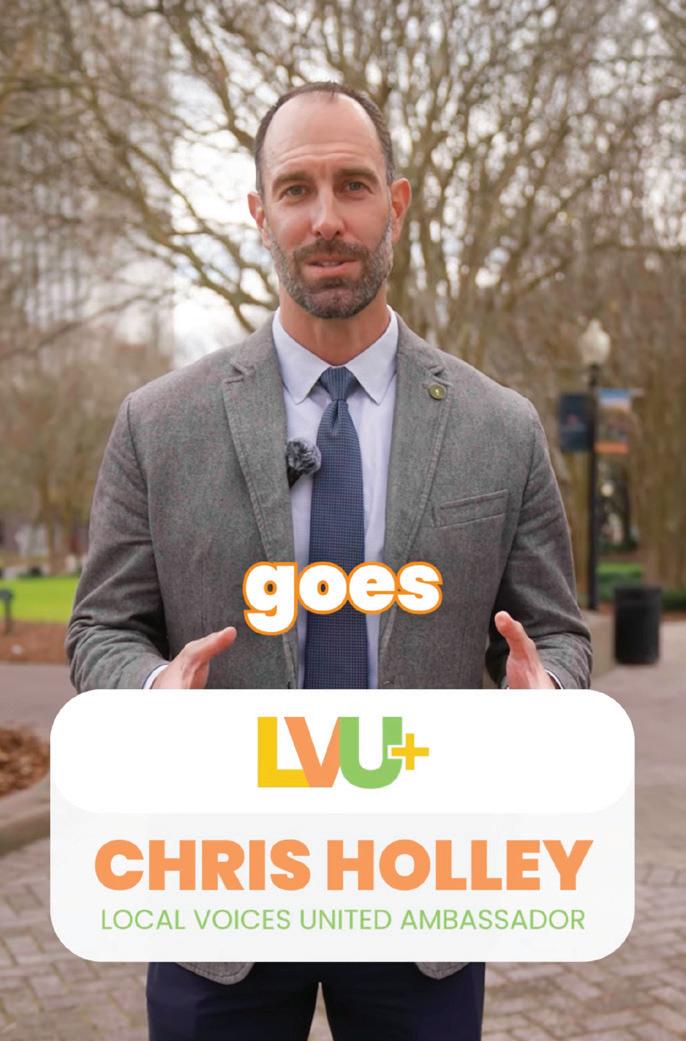
In 2025, FLC’s Eryn Alcorn, Member Services Administrator; Jeff Branch, Director of Field Advocacy and Emergency Management; and Chris Holley, Director of Member Services and Training stepped into these ambassador roles. Through their involvement, they have helped bring LVU’s message to life by connecting with audiences and highlighting the importance of civic engagement and local leadership.
Now, LVU is building on that momentum with the launch of a short-form video series featuring its LVU+ ambassadors.
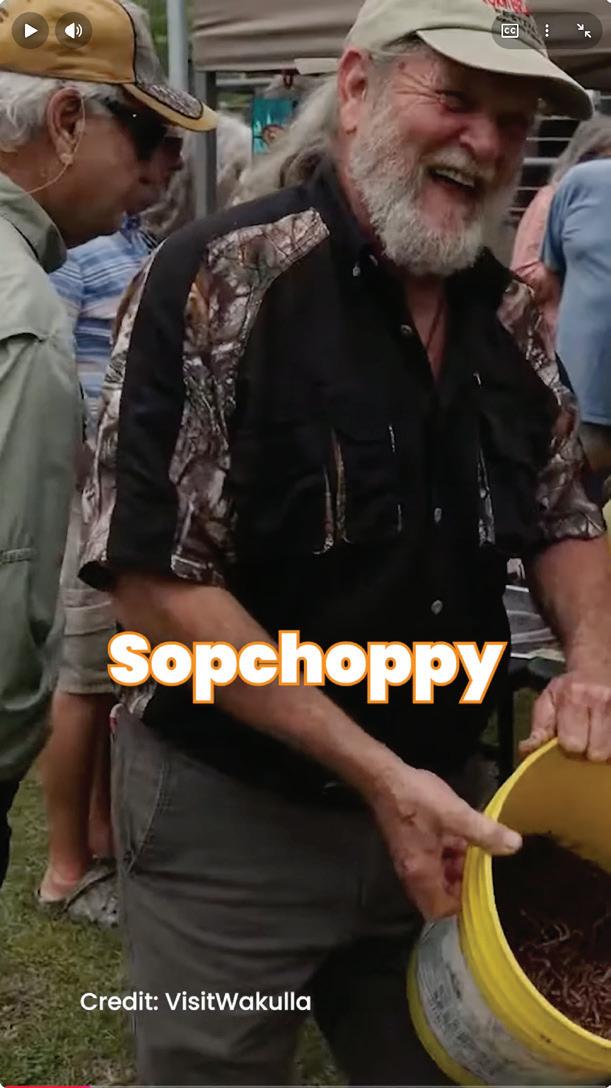
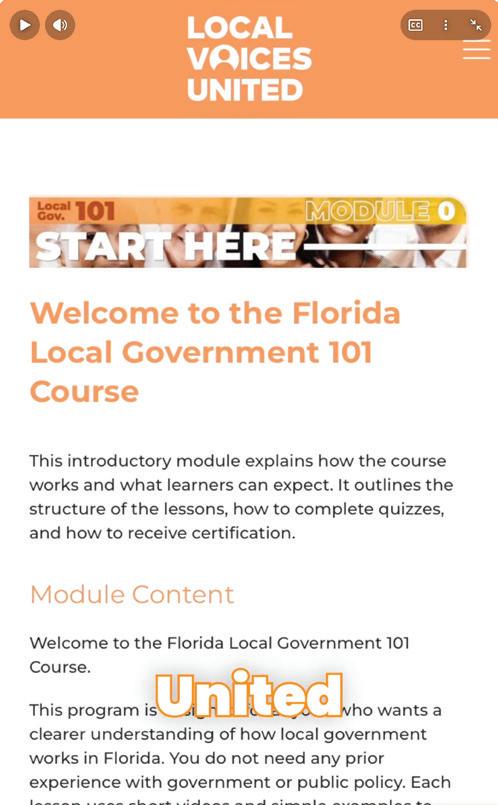
▴ Screenshots from the LVU videos.
Introducing LVU’s Florida Local Government 101 Course
Created with today’s digital audiences in mind, the videos are brief, engaging, and easy to share. Each short video highlights topics that explain and celebrate the work happening in Florida’s cities, from the legislative session and how state policies affect cities to youth councils and local festivals.
The goal is simple: show the real impact of cities through real stories and real people. By engaging with people on social media and other digital platforms and highlighting ambassadors who are passionate about civic engagement and community leadership, LVU is broadening its capacity and scope to share the story of local government.
New videos will continue to roll out across LVU’s social media channels in the months ahead, covering issues that matter to residents while reinforcing a simple idea: local government works best when people understand it and take part in it.
That same focus carries through LVU’s new Local Government 101 course, which offers nine short, self-paced video modules explaining how local government works in Florida. The course covers the basics of local services, decision-making, and ways residents can get involved, with no prior experience required.
Members are encouraged to follow LVU’s social media channels and share these resources within their communities as they are released. Together, these efforts help highlight the value of cities, the importance of civic participation, and the role local voices play in shaping Florida’s future.
Visit localvoicesunited.com to learn more and get involved.
Erika Branchcomb is a Senior Communications Specialist for the Florida League of Cities. QC
Local Voices United has launched a new, self-paced course that makes local government in Florida easy to understand. Through short, engaging videos and simple examples, the course explains how cities work, what services they provide, and how residents can stay informed and involved. No prior government or public policy experience is needed. Complete the modules at your own pace and earn a certificate when you’re finished.
Get started today at localvoicesunited.com/localgovernment-101.
How to Read a Poll How to Read a Poll How to Read a Poll
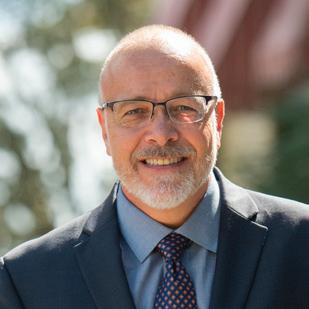
By Steven J. Vancore President, Clearview Research
As a city commissioner, mayor, or council member in Florida, you will routinely encounter polling data, whether it’s a survey about a proposed development, a ballot initiative, or your own re-election prospects. In a state as politically diverse and competitive as Florida, understanding how to evaluate a poll is not just useful; it is essential.
Not all polls are created equal, and a flawed poll can lead to bad decisions, misplaced confidence, or embarrassing public missteps. This guide will help you ask the right questions.
START WITH THE SAMPLE
The foundation of any credible poll is how the sample was drawn. Two questions matter most: Did the pollster choose the respondents, or did the respondents choose the pollster? And did everyone in the target population have a fair chance of being included?
Polls that allow people to “opt in” — think online polls or social media surveys — are unreliable because they attract selfselected respondents, not a representative cross-section of your community. Similarly, polls that offer incentives to participate (gift cards, coupons) encourage people to game the system by creating multiple identities. Both approaches introduce serious bias and should be viewed with heavy skepticism.
A credible poll should also “look like” the community it is measuring. For Florida municipal races, that means the
sample should be balanced by age, gender, party registration, geography, and ethnicity. In municipalities with large Hispanic populations — particularly in South Florida — a responsible pollster will further distinguish between Cuban and non-Cuban voters and, in many cases, use bilingual interviewers. A sample that doesn’t reflect your electorate will not accurately predict it.
UNDERSTAND THE KEY TERMS
When reviewing poll results, a few technical terms will come up repeatedly. Knowing what they actually mean will help you interpret what you’re being shown.
Validity refers to accuracy: how close the poll is to what a survey of the entire population would show. Reliability refers to consistency: whether the same methodology would produce similar results if repeated. A good poll should be both.
Margin of error is widely misunderstood. It is not related to the size of your city’s population — it is determined by the size of the sample. As a practical guide: a sample of 300 carries a margin of error of about ±5.7%; 500 respondents yield ±4.4%; and 1,000 respondents narrow it to ±3.1%. But here’s the critical caveat: if the underlying methodology is flawed, the margin of error is meaningless.
Weighting is a statistical technique used to adjust a sample that doesn’t perfectly reflect the population. Minor weighting is normal and acceptable. Heavy weighting to compensate for poor methodology is a red flag. Always ask to see the unweighted numbers if you have concerns.
QUESTIONS EVERY OFFICIAL SHOULD ASK
Before acting on any poll, or allowing it to influence your position, ask the following:
▸ For electoral polls: Were “likely voters” interviewed, or just registered adults? Polling adults overstates support among people who are unlikely to show up on Election Day.
▸ Also for electoral polls: Where did the phone list come from? It should be drawn from the official Florida voter file — not a commercial marketing list.
▸ How long did the poll take to conduct? A poll that took more than a week to complete may signal operational problems or a problematic methodology.
▸ Was the poll for a ballot referendum? If so, did the pollster use the actual ballot language? Even slight rewording of a referendum question can dramatically change results.
▸ Who paid for the poll, and why are they releasing it? Be especially cautious about polls released by candidates who appear to be losing — a favorable outlier poll is a common fundraising tactic.
▸ Is the pollster reputable? Sound polling is neither cheap nor simple. Be wary of anyone promising a shortcut. In this regard, think media outlets, educational institutions, or anyone trying to simply generate clicks or branding for a political program.
THE BOTTOM LINE
Polls can be powerful tools for understanding voters or simply your constituents — but only when they are conducted properly. As a Florida municipal official, you serve communities that are often diverse, politically competitive, and constantly changing.
A well-conducted poll, rigorously evaluated, can help you govern with greater confidence. A poorly conducted one, accepted uncritically, can lead you astray. When in doubt, ask questions. The integrity of the data you rely on is as important as the data itself.
Steven J. Vancore is President of Clearview Research, a Floridabased polling firm operating for nearly two decades out of Tallahassee. QC
A Primer for Florida Municipal Officials Clearview Research EVALUATING PUBLIC OPINION POLLS
QUICK REFERENCE: 7 Things to Remember About Any Poll
2. Demand likely voters — not just 'adults.' It is vital to ensure that, for electoral polls, only actual likely voters should be interviewed. This is especially true for low-turnout municipal elections.
3. Verify the sample matches your city. Confirm balance by age, gender, party, geography, and ethnicity — especially in Florida's diverse communities. Make sure the sample “looks like” the electorate!
4. Understand the margin of error. It only means something if the methodology is sound. Flawed polling = meaningless margin of error.
5. Ask who sponsored the poll. Developer, candidate, or advocacy group? The more they have at stake, the more scrutiny the results deserve.
6. Know your contact list source. It should come from Florida's official voter file — not a marketing or consumer database.
7. When in doubt, commission your own. For major decisions — budgets, referenda, capital projects — rely only on polling from a credible, reputable firm.
Questions about a specific poll? Contact Clearview Research.
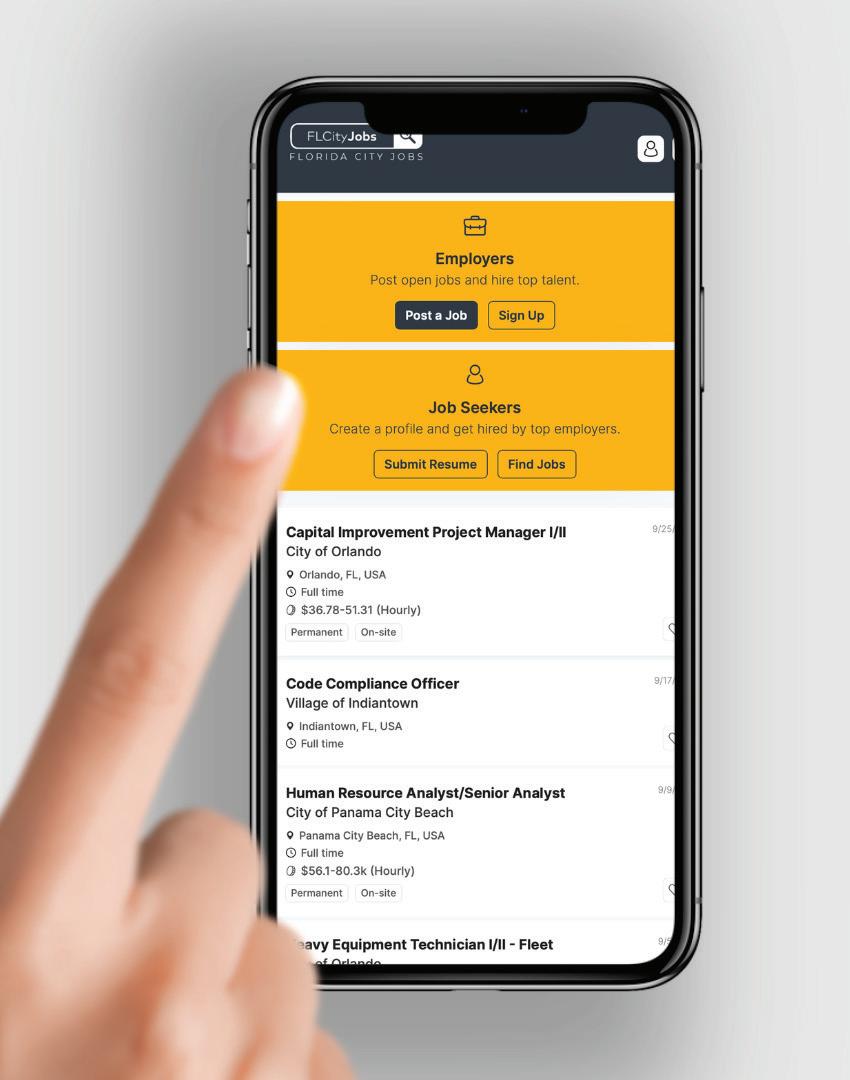
POST OPEN JOBS FOR YOUR CITY
Introducing FLC’s new online job portal: FLCityJobs .
Key Benefits for Your City:
• Post and manage job listings independently
• Import job details automatically
• Track applicant sources with data insights
Hiring the right talent is a priority, and FLCityJobs is here to help.
FLCityJobs is more than just a job portal; it’s a strategic tool designed to help your city compete in today’s challenging hiring landscape, offering powerful features to support your recruiting process.