2026 LEGISLATIVE SESSION

We are pleased to provide you with the Florida League of Cities’ 2026 Legislative Session Final Report. The report summarizes key legislation that the League tracked during this year’s regular session. It is important to note that the report includes only a partial list of the 1,896 bills that were filed during the session. Of these, 237 bills were passed by both chambers and presented to the Governor.
While the regular session has concluded, the League’s work is far from over. There is a strong possibility that the Legislature will convene a special session to address property tax reform. In the coming weeks and months, it will be critical for city officials to continue engaging with legislators and the public on how property taxes are generated, allocated, and used to support essential local services. Your voice and real-world experience remain vital as these discussions continue.
Looking ahead, many issues that did not advance this year are expected to return in 2027. Staying actively engaged in legislative advocacy throughout the year is more important than ever. We encourage you to maintain regular communication with members of your local legislative delegation. These ongoing conversations are vital to the League’s advocacy efforts and help build a strong foundation for success in the upcoming 2027 Legislative Session. Senate and House committees will begin meeting after the November general election, with the 60-day session set to convene on March 2, 2027.
If you have any questions or require additional information on these bills or any other legislation, please don’t hesitate to contact the League’s Legislative Affairs team at 850.222.9684.
Thank you for your continued support of the Florida League of Cities and our mission of local voices making local choices.
Respectfully,
Holly D. Smith, President Jeannie Garner Councilwoman, City of Sanibel Executive Director/CEO
PRESIDENT
Holly D. Smith, Councilwoman, Sanibel
FIRST VICE PRESIDENT
Mark Franks, Mayor, Shalimar
SECOND VICE PRESIDENT
Sarah Stoeckel, Councilmember, Titusville
DISTRICT DIRECTORS
(1) NanDrycka King Albert, Mayor Pro Tem, Midway
(1) J.B. Whitten, Mayor, Crestview
(2) Rufus Borom, Commissioner, Palatka (2) Thomas DeVille, Vice Mayor, Penney Farms
(3) Chris Cloudman, Mayor, DeLand
(3) Nancy Miller, Mayor, Daytona Beach Shores
(4) Diana Adams, Councilmember, West Melbourne
(4) Shaun Ferguson, Councilman, Rockledge
(5) Lewrissa Johns, Mayor, Chiefland
(5) Cal Rolfson, Councilmember, Mount Dora
(6) John Dowless, Mayor, Edgewood
(6) Joseph McMullen, Commissioner, Oakland
(6) Jordan S. Smith, Commissioner, Lake Mary
(7) Morris West, Mayor, Haines City
(7) Brian Yates, Mayor, Winter Haven
(8) Thomas Reid, Vice Mayor, South Pasadena
(8) David Will, Mayor, Redington Beach
(9) Campbell Rich, Mayor, Stuart
(10) Nicholas Pachota, Mayor, Venice
(11) John R. King, Councilmember, Fort Myers Beach
(12) Roger Michaud, Mayor, Lake Park
(12) Michael Napoleone, Mayor, Wellington
(12) J.P. O’Connor, Mayor, Westlake (12) Molly Young, Mayor, Tequesta
(13) Felicia Brunson, Mayor, West Park
(13) Traci L. Callari, Vice Mayor, Hollywood
(13) Joyce Davis, Mayor, Dania Beach
(13) Todd Drosky, Mayor, Deerfield Beach
(13) Denise Horland, Councilmember, Plantation
(13) Henry Mead, Vice Mayor, Weston
(13) Susan Starkey, Councilwoman, Davie
(14) Karyn Cunningham, Mayor, Palmetto Bay (14) Rodney Harris, Mayor, Miami Gardens
(14) Omarr C. Nickerson, Mayor, El Portal
(14) Fortuna Smukler, Commissioner, North Miami Beach
10 MOST POPULOUS CITIES
Rahman Johnson, Ph.D., Councilmember, Jacksonville
Ralph Rosado, Ph.D., AICP, Commissioner, Miami
Luis Viera, Councilman, Tampa
Bakari F. Burns, Commissioner, Orlando
Copley Gerdes, Council Chair, St. Petersburg
Vacant, Hialeah
Stephanie Morgan, Councilwoman, Port St. Lucie
Dianne Williams-Cox, Commissioner, Tallahassee
John Gunter, Mayor, Cape Coral
Dean Trantalis, Mayor, Fort Lauderdale
PAST PRESIDENTS
Scott Black, Mayor, Dade City
Joy Cooper, Mayor, Hallandale Beach
Pat Bates, Mayor, Altamonte Springs
Leo E. Longworth, Commissioner, Bartow
Isaac Salver, Mayor, Bay Harbor Islands
Tony Ortiz, Commissioner, Orlando
Jolien Caraballo, Vice Mayor, Port St. Lucie
Michael C. Blake, Mayor, Cocoa
FLORIDA CITY & COUNTY MANAGEMENT (FCCMA) Liaison
Ann Toney-Deal, City Manager, Seminole
FLC EXECUTIVE STAFF
Jeannie Garner, Executive Director/CEO
Eric Hartwell, General Counsel
Maclain Benton, Chief Financial Officer
Casey Cook, Chief of Legislative Affairs
Chris Krepcho, Chief of Insurance and Financial Affairs
Jenna Tala, Chief of Strategy and External Affairs
Michaela Metcalfe, Board Relations Administrator
The Florida League of Cities SUPPORTS local authority over equitable property tax decisions that fund essential services like public safety, infrastructure, parks, and programs that define a community. Reducing or eliminating this revenue without a reasonable replacement would destabilize city budgets, threaten city creditworthiness, and undermine local priorities. Cities are created by residents to protect their communities and residents’ quality-of-life, and local tax decisions are essential to fulfilling that responsibility.
The Florida League of Cities SUPPORTS preserving municipal authority over the use of utility revenues to ensure equitable cost recovery and financial sustainability, including the ability to reinvest in system maintenance and transfer funds to the general fund. Maintaining this flexibility enables municipalities to sustain essential services and manage budgets responsibly for their community.
The Florida League of Cities SUPPORTS legislation that addresses Florida’s urgent housing shortage while preserving the authority of local governments to manage growth consistent with each community’s capacity to ensure public safety, resilience, and financial stability. Cities must retain the ability to decide where housing is located to preserve their unique identity—without additional state preemptions or expanded administrative approval requirements that erode public participation and residents’ freedom to influence how their cities grow.
The Florida League of Cities SUPPORTS legislation to clarify Sections 18 and 28 of SB 180 (2025). The law goes far beyond assisting storm-damaged properties and prevents responsible community planning and flood control. Legislative clarification should: limit the law’s applicability to jurisdictions that experience measurable impacts from hurricanes; provide definitions for overbroad and vague terms; limit its scope to storm-damaged
properties; and clarify provisions relating to standing, pre-suit notice, and opportunity to cure.
The Florida League of Cities SUPPORTS maintaining reasonable limits or ‘caps’ on monetary damages recoverable in negligence claims against government entities. These protections are crucial to safeguard Florida’s taxpayers.
The Florida League of Cities OPPOSES legislation limiting the authority or operation of Community Redevelopment Agencies (CRAs), which are vital tools for revitalizing neighborhoods and driving local economic growth. CRAs fund critical projects such as infrastructure, public safety, affordable housing, roads, drainage, and public spaces that improve communities statewide. The League supports accountability and transparency, but opposes weakening or eliminating CRAs.
The Florida League of Cities SUPPORTS maintaining municipal authority to establish reasonable extraterritorial surcharges that reflect the actual cost of providing services outside city limits. These surcharges protect municipal residents from subsidizing outside customers, promote efficient regional service, and often originate as municipal initiatives to assist counties and unincorporated residents. Statutory notice and public hearing requirements provide transparency and accountability, ensuring municipal utilities remain fair, open, and responsive to their communities.
The Florida League of Cities OPPOSES legislation that restricts municipal voters’ authority to set municipal election dates.
The Florida League of Cities SUPPORTS legislation that provides a public records exemption for the personal information of municipal clerks; as well as investigative personnel and employees who perform municipal elections work.
Biosolids Management (Monitored)
CS/CS/HB 1285 (Boyles) prohibits the Department of Environmental Protection from issuing or renewing a permit for land application of Class B biosolids if there is a permitted wastewater treatment facility that accepts septage for higher levels of treatment, which is:
▸ Less than 30 miles from a proposed land application site
▸ Owned or operated by the federal government or agency, a state government body or agency, or a political subdivision of the state, and
▸ Not defunct, used for other purposes, or out of capacity. (Singer)
Effective date: July 1, 2027.
Biosolids Management (Monitored)
CS/CS/HB 1245 (Shoaf) revises laws relating to the land application of Class AA biosolids. The bill prohibits land application of bulk Class AA biosolids fertilizer and compost products from exceeding specified agronomic rates. It requires land application of Class AA fertilizer and compost products to be managed with beneficial reuse as the primary objective, rather than disposal. It prohibits land application of biosolids of any class if it constitutes disposal. The bill requires land application site operators to maintain application records for five years. It permits Class AA biosolids to be distributed or marketed for agricultural land application if certain requirements are met. In addition, it requires the University of Florida Institute of Food and Agricultural Sciences to publish recommended agronomic rates for Class AA biosolids on a biennial basis. It directs the Department of Environmental Protection to initiate rulemaking by November 1, 2026, to implement provisions of the bill. (Singer)
Effective date: November 1, 2026.
Coastal Resiliency (Monitored)
CS/CS/SB 302 (Garcia) requires the Department of Environmental Protection to establish statewide standards and a permitting framework for naturebased methods to improve coastal resiliency. The bill also amends current law relating to aquatic
preserves to expressly authorize living shorelines, nature-based solutions, and hybrid green-gray infrastructure within the preserves. It prohibits further dredging and filling of submerged lands in the Terra Ceia Aquatic Preserve with specified exceptions and modifies the dredging and filling exceptions for the Biscayne Bay Aquatic Preserve. The bill requires the Department and local governments to promote public awareness and education on the value of nature-based solutions for coastal resiliency.
The bill further requires the Department to develop design guidelines and standards for optimal combinations of nature-based methods for using green or hybrid green-gray infrastructure to address coastal resilience, including local mitigation strategies for erosion control, sea level rise, and storm surge. The bill requires the Department to develop rules, subject to legislative ratification, under the environmental resource permit program for improving coastal resiliency and specifies criteria to be included in such rules. Criteria include standards for developing a permitting process after storm events or disasters to replace failed coastal infrastructure with nature-based solutions and green infrastructure, and identification of ways local governments can participate in coastal resiliency. (Singer)
Effective date: July 1, 2026.
Department of Agriculture and Consumer Services (Opposed)
CS/CS/CS/SB 290 (Truenow) is an agency bill relating to the authority and duties of the Florida Department of Agriculture and Consumer Services. The bill contains several provisions impacting local governments.
The bill prohibits counties and municipalities from enacting or enforcing a restriction or prohibition on the use of gasoline-powered farm or landscape equipment (e.g., leaf blowers) or from imposing standards for such equipment that differ from standards applicable to any electrical or similar equipment in a retail, manufacturing, or distributor setting.
The bill prohibits administrative approval of any application for development on an “ecologically significant parcel” within a “low-density municipality” without an attestation from the developer which states that the development will not exceed 1 dwelling unit per 20 acres. The density requirement may be waived upon a resolution approved by a unanimous vote of the governing body. An “ecologically significant parcel” is defined as any undeveloped parcel designated by the local government comprehensive plan as rural, conservation, green space, or agricultural. A “lowdensity municipality” is defined as a municipality consisting of less than 2,500 acres in size with a population of 5,000 or fewer legal residents.
The bill directs the state Acquisition and Restoration Council to determine whether any lands surplused by a local government on or after January 1, 2024, are suitable for bona fide agricultural purposes.
The bill specifies that a permittee of a biosolids land application site ensure that only Class AA biosolids are applied to the soil. In addition, the bill requires local governments that do not transport biosolids for land application outside of their respective county to ensure that only Class AA biosolids are applied to the soil by July 1, 2031.
The bill prohibits commercial solicitation on properties that comply with “no solicitation” signage requirements and provides penalties for violation.
The bill prohibits local governments from requiring an owner of agricultural property to obtain a rural event permit or license to conduct agritourism activities, including special events such as weddings, receptions, and corporate gatherings.
The bill revises statutes governing the establishment and dissolution of public fair associations, including ex-officio membership on the governing body of a fair association by a county elected official and disposition of assets following dissolution of a fair association.
The bill prohibits the possession, use, and sale of a “signal jamming device,” defined as a device such as a phone jammer, GPS systems blocker, or similar device to intentionally interfere with radio communications (including police radar). (Singer)
Effective date: July 1, 2026.
CS/CS/CS/HB 1417 (LaMarca) is a bill relating to the duties and authority of the Department of Environmental Protection. Several provisions may be of interest to local governments. The bill requires solar facilities to develop and implement an erosion and sediment control program as part of obtaining a permit. In addition, operationalphase stormwater management systems servicing solar facilities located in the Northwest Florida Water Management District must meet additional requirements.
The bill amends section 255.065, Florida Statutes, relating to public-private partnerships by including coastal resiliency projects within the definition of a “qualifying project” under the statute. The bill includes provisions to encourage public-private partnerships for coastal resiliency projects. Such projects may include the following: projects to address flooding and sea level rise in coastal communities; public infrastructure repair and updates to seawalls and stormwater drainage; resiliency measures designed to withstand extreme weather, mitigate flooding, and prevent coastal erosion, including property acquisition. To encourage private sector investment in coastal resiliency projects, the bill authorizes the Department to enter long-term revenue-sharing agreements, provide expedited permitting, seek input from local governments and the public during project planning and execution, and engage vocational schools to train workers in resiliency construction. The bill requires the Department to publish information on its website about coastal resiliency projects funded through public-private partnerships.
The bill revises requirements for properties within certain Indian River Lagoon basin management action plans to connect to central sewer by July 1, 2030. The requirement applies to any residential
property of 10 acres or less. Onsite sewage treatment and disposal system permit agencies must notify affected property owners if the owner submits an application to repair, modify, or replace the system before July 1, 2030.
The bill eliminates the Environmental Regulation Commission. It revises the annual deadline for major sources of air pollution to pay operating license fees to the Department to June 30 of each year. It also strikes current law provisions that prohibit the Department from adopting more stringent standards than federal regulations. Finally, the bill ratifies the Department’s rules relating to “Definitions” in Rule 62-42.200 and “The Lower Santa Fe and Ichetucknee Rivers and Priority Springs” in Rule 62-42.300, Florida Administrative Code. (Singer)
Effective date: July 1, 2026.
Perfluoroalkyl and Polyfluoroalkyl Substances (Monitored)
CS/CS/HB 1019 (Conerly) imposes requirements on the use of firefighting foam containing intentionally added perfluoroalkyl and polyfluoroalkyl substances (PFAS) and imposes new sampling requirements related to domestic wastewater biosolids.
The bill defines “aqueous film-forming foam” (AFFF) and establishes a phased approach that restricts its use, sale, purchase, distribution, possession, and disposal over several years.
Beginning July 1, 2026, the bill prohibits nonemergency AFFF use for training or testing and requires entities in possession of AFFF to submit an inventory to the Department of Environmental Protection (DEP). Beginning July 1, 2027, the bill prohibits the sale, purchase, or distribution of AFFF and requires entities with remaining inventories to submit disposal plans to DEP. Beginning July 1, 2029, possession and use of AFFF are prohibited, except for the following: airports, military installations, emergency firefighting situations where alternative firefighting foam is not available, and specific AFFF retrofit projects. The bill directs DEP to adopt rules for containment, collection, and disposal of AFFF, to maintain a registry of AFFF alternatives, and to provide technical assistance and grants for transition to non-AFFF products. The bill authorizes the imposition of civil penalties for noncompliance.
The bill requires public wastewater facilities with an average daily flow of 25,000 or more gallons per day to conduct, on a quarterly basis, at least one biosolids and treated effluent sampling for PFAS and to submit the results to DEP. Until water quality standards for PFAS are established by the Environmental Protection Agency and adopted by DEP, the sampling and reporting to DEP is for informational purposes only and may not be the basis for any enforcement action or other cause of action. (Singer)
Effective date: July 1, 2026.
CS/HB 1217 (Snyder) creates section 377.816, Florida Statutes, relating to prohibiting the adoption or implementation of net zero policies by governmental entities. The bill prohibits a governmental entity from enacting or enforcing or requiring any person or legal entity to enact or enforce a requirement to support a net zero policy, including as a condition of any contract or agreement. The bill prohibits a governmental entity from using public funds in any manner that supports or advances a net zero policy, including through procurement or purchasing preferences, or payment of dues, contributions, or fees to any nongovernmental agency or private organization that adopts a net zero policy, requires support of a net zero policy as a condition of membership, or uses membership funds to advocate for a net zero policy.
In addition, the bill prohibits a governmental entity from imposing any charge, including a tax, fee, penalty, offset, or assessment, to advance a net zero policy. It requires each governmental entity to submit an annual affidavit to the Department of Revenue attesting to compliance with this section. It also prohibits a governmental entity from implementing any program or joining any organization that has a policy of establishing a limit or cap on greenhouse gas emissions that result from any product or activity, or requiring or incentivizing any entity or person to participate in an emissions trading program.
The prohibitions of this section do not apply to prohibit a governmental electric or gas utility from passing rules governing the utility, the Public Service Commission from exercising its powers and duties to regulate public utilities, or a governmental entity
from otherwise exercising its authority as provided by general law, including laws relating to state energy policy or air and water pollution control programs. The bill revises provisions of chapters 125 and 166 to ensure consistency with the new section 377.816. (Singer)
Effective date: July 1, 2026.
CS/CS/SB 848 (Truenow) addresses environmental resource permitting, regional stormwater treatment systems, and water quality enhancement areas. The bill creates definitions for “compensating stormwater treatment,” “enhancement credit,” and “pollutant reduction allocation” in section 373.403, Florida Statutes. It prohibits certain regional stormwater systems operated by non-local government entities, including those under contract with local governments, from providing stormwater treatment or achieving net improvements for specified seaport activities. The bill establishes new requirements for regional stormwater systems, including requirements for proof of financial responsibility and defined drainage areas. Environmental resource permit applicants within the drainage area may purchase and use pollution reduction allocations from the regional stormwater system to meet treatment performance criteria. The bill describes a regional stormwater system as a method of compensating stormwater treatment that creates pollution reduction allocations and is operated to collect, convey, store, treat, or harvest stormwater to prevent adverse impacts of discharges within the drainage area served by the system.
The bill also directs the Department of Environmental Protection to adopt rules for the establishment and operation of water quality enhancement areas. Water quality enhancement areas provide water quality enhancement credits to applicants seeking environmental resource permits and to local governments seeking to meet an assigned basin management action plan or reasonable assurance plan. The bill specifies that the use of an enhancement credit transfers the legal responsibility for complying with applicable water quality treatment requirements from the purchaser to the generator of such enhancement credit. Until such rules are adopted, the bill authorizes the issuance of provisional permits for water quality enhancement areas. (Singer)
Effective date: July 1, 2026.
Utility Services (Opposed)
CS/CS/HB 1451 (Busatta) applies to extraterritorial service by municipal gas, electric, water, and sewer utilities.
The bill eliminates current law authority in section 180.191, Florida Statutes, for utilities to impose an automatic 25% surcharge on extraterritorial water and sewer service. Instead, a water and sewer utility may, after holding a public hearing, set separate rates, fees, and charges for extraterritorial customers based on the same factors used to set rates, fees, and charges for customers within the municipality. Such separate rates, fees, and charges may not exceed the rates, fees, and charges for customers within the municipality by more than 25%. The bill provides that utilities that have pledged currently authorized surcharge revenues for debt service have until 2029 to phase out the surcharge, or until the debt is retired or renewed, whichever occurs first. The effective date of this change in surcharge authority is July 1, 2027.
The bill specifies that any agreement to provide extraterritorial electric, water, gas, or sewer utility service at retail must be written and that such an agreement may not become effective until the utility participates in a public meeting within the extraterritorial area to be served. The meeting must solicit public input on the following: the nature of the service being provided; the rates, fees, and charges to be imposed for the services, including any differential in charges between extraterritorial customers and other customers; the nature of the services to be provided; and the extent to which revenues generated from the service will be used to fund nonutility government functions. The bill requires this public meeting to be conducted annually.
The bill imposes an annual reporting requirement to the Florida Public Service Commission for utilities providing extraterritorial gas, electric, water, or wastewater service, beginning January 2027. For each type of utility service provided, the report must specify:
▸ The number and percentage of customers receiving extraterritorial service
▸ The volume and percentage of sales made to such customers and the gross revenues generated from such sales
▸ Whether the rates, fees, and charges imposed on extraterritorial customers are different from the rates, fees, and charges imposed on customers within the municipality and, if so, the amount and percentage of the differential
▸ The percentage of revenues generated from the provision of utility services that were used to fund or finance nonutility government functions or services of the municipality, and the percentage of the municipality’s nonutility budget that was funded by such revenues
Failure to submit the report may subject the utility to daily financial penalties imposed by the Public Service Commission. The Public Service Commission must compile the reported information into an annual report submitted to the Governor and Legislature beginning March 31, 2027. The Commission is given jurisdiction over utilities subject to the reporting requirement for the limited purpose of enforcing the reporting requirement. In addition, the bill provides that the subject of a regional utility authority created by the Legislature through charter amendment after January 2023 (Gainesville Regional Utility) is expressly preempted to the state. (O’Hara)
Effective date: July 1, 2027, except as otherwise provided.
Commencement of Civil Actions (Monitored)
CS/HB 1407 (Duggan) revises section 760.00, Florida Statutes, relating to the filing of complaints under the Florida Civil Rights Act. The bill specifies that a civil action commenced under the Act shall be commenced no later than one year after the date of determination of reasonable cause by the Florida Commission on Human Relations (“Commission”) or the issuance of a Notice of Right to Sue by the Equal Employment Opportunity Commission, whichever is earlier. If a determination of reasonable cause is not made or a Notice of Right to Sue is not issued within 180 days of the filing of a complaint, a civil action brought under the Act may commence no later than 18 months after the filing of the complaint. In addition, the bill eliminates the requirement that notices from the Commission be made by registered mail. (Cruz)
Effective date: July 1, 2026.
Firefighter Cancer Benefits (Monitored)
CS/CS/SB 984 (DiCeglie) revises subsection 112.1816(4), Florida Statutes, relating to line-of-duty death benefits for firefighters who die from cancer or the treatment of cancer. The bill provides that death benefits under this subsection must be made available by the former employer of the firefighter for one year after the firefighter terminates employment, so long as the firefighter otherwise met the criteria specified in this subsection and was not employed as a firefighter after that date. (Wagoner)
Effective date: July 1, 2026.
Military Affairs (Monitored)
CS/SB 474 (Wright) revises laws relating to military service leave for public employees. The bill amends section 115.01, Florida Statutes, to expand eligibility for certain military service leave protections to include county and state officials who are also members of the U.S. Coast Guard. It creates section 115.07(3) to authorize a county, municipality or political subdivision to adopt an ordinance or resolution providing that an employee who is a commissioned reserve officer or reserve enlisted personnel in the U.S. military or who is a member of the National Guard may receive more than 240 hours of paid leave on all days during which he or she is engaged in training. The bill also narrows instances for which service members who are also public officials or public employees are entitled to 30 days’ pay from their government employment for federal military service to apply only when the service member has federal military service of 90 consecutive days or more on a single order. (Chapman)
Effective date: July 1, 2026.
Public Employees Relations Commission (Monitored)
CS/CS/SB 1296 (Martin) substantially amends provisions of chapter 447, Florida Statutes, relating to public employee unions. The bill revises the Public Employees Relations Commission’s registration, certification, and recertification processes for unions. Among other things, the bill changes the employee approval threshold for the certification, recertification, and decertification of a non-public safety union to a 60% vote of the employees who vote in the election, if at least 25% of the total bargaining unit participates in the election. The bill amends section 447.509 to prohibit a public employer from providing any form of compensation
or paid leave for a public employee for the purpose of engaging in employee organization activities. It amends section 447.303, Florida Statutes, to require a public safety unit employee to request membership dues deduction directly of the employer rather than by the bargaining unit. The bill requires a public employer to allow equal access to its communal spaces or internal communications systems by any registered employee organization or any petitioning public employee. The bill amends section 447.4095 to provide that appropriations to local governments by the Legislature that are specifically directed to be disbursed as salaries to employees of local governments are considered a financial urgency and provide for an expedited bargaining and impasse resolution process for those salary dollars. (Does not apply to salary increases appropriated for public safety bargaining unit employees.) In addition, the bill creates expedited timeframes for a hearing and related procedures under a special magistrate. The bill aligns commission timeframes and procedures with those of the Administrative Procedures Act. (Chapman)
Effective date: July 1, 2026.
Candidate Qualification (Monitored)
CS/HB 91 (Tant) revises the form of candidate oath in section 99.021, Florida Statutes, for persons seeking to qualify for nomination as a candidate of any political party. At the time of subscribing to the oath, the bill specifies the person must have been a registered member of the political party for at least 365 days preceding the beginning of qualifying before the general election for which the person seeks to qualify. In addition, the person shall not have legally changed his or her name during the 365-day period, except for name changes associated with a dissolution of marriage, adoption of children, or based on a change conducted with a marriage certificate. For candidates seeking qualification with no party affiliation, the bill requires the person to state in writing that he or she has not been a registered member of any political party for the same 365-day period and has not legally changed his or her name during this period. The bill specifies mechanisms for the enforcement of these requirements. (O’Hara)
Effective date: Upon becoming law.
Elections (Monitored)
CS/CS/HB 991 (Persons-Mulicka) is a substantial revision of the state’s election laws relating primarily to voter registration, citizenship verification, and election administration. It requires proof and verification of United States citizenship and expands data-sharing and recordkeeping requirements of the Department of State, Department of Highway Safety and Motor Vehicles, and supervisors of elections.
▸ Amends section 97.021, Florida Statutes, to redefine the term “ballot” or “official ballot,” revise the term “voting system,” eliminate the terms “marksense ballots” and “electromechanical device,” and specify the types of documents that may be accepted as evidence of U.S. citizenship.
▸ Requires the uniform statewide voter registration application to contain an acknowledgment that it is a third-degree felony to provide false information on the application.
▸ Amends online voter registration system requirements relating to a voter’s or applicant’s citizenship status and eligibility to vote.
▸ Amends section 97.053 relating to acceptance of voter registration applications for purposes of participating in a particular election, including changes to address, name, and party affiliation, and duties of supervisors of elections to verify a voter’s citizenship status, notify applicants or voters, and update voter records.
▸ Amends section 97.057 relating to voter registration duties of the Department of Highway Safety and Motor Vehicles.
▸ Amends section 98.075 relating to registration records maintenance, including notice to supervisors of elections of potential voter ineligibility due to citizenship status and duties of supervisors of elections to notify voters of potential ineligibility and to remove ineligible voters from the system.
▸ Amends the form of candidate oath in section 99.021. A person seeking nomination as a candidate of any political party or as a candidate with no party affiliation must state in writing that he or she has been a registered member of the political party for at least 365 consecutive days preceding the beginning of qualifying before the general election and that he or she has not legally changed his or her name during this period. Each candidate for federal office shall state in writing whether he or she intends to trade stocks, if elected, in a manner other than through a trust or similar mechanism. The bill provides a mechanism for challenging compliance with these requirements in circuit court.
▸ Creates section 99.0211 to provide a mechanism for certain candidates or political parties to challenge a candidate’s compliance with all statutory and constitutional requirements for the office for which he or she is seeking nomination or election. If a court determines the candidate fails to comply with such requirements, the supervisor of elections must remove the candidate’s name from the ballot or notify voters that votes for that candidate will not be counted.
▸ Revises requirements for qualifying for federal, state, county, or district office to specify that a candidate must state in writing whether he or she is a citizen of another country in addition to being a citizen of the United States. If the candidate seeks federal office, the candidate must state in writing whether he or she previously held federal office and, if so, disclose whether he or she traded stocks while in such office in a manner other than through a trust or similar mechanism.
▸ Amends various provisions of the Florida Elections Code to delete the following items as acceptable forms of identification: credit or debit cards, student or educational institution identification, retirement center identification, neighborhood association identification, and public assistance identification.
▸ Requires candidates for judicial office or a school board to provide a written oath or affirmation, whether the candidate is a citizen of another country in addition to being a citizen of the United States.
▸ Amends section 106.023 to require all candidates for office, at the time of filing the statement of candidacy, to provide a written oath or affirmation that he or she meets all statutory and constitutional qualifications for the office sought.
▸ Prohibits a political party, a political committee, an electioneering communications organization, or a candidate from knowingly and willfully accepting or soliciting a contribution from a foreign national.
▸ By July 1, 2027, requires all Florida driver licenses and identification cards that are issued, renewed, or replaced to include the person’s legal citizenship status.
▸ Revises the definition of “racketeering activity” in section 895.02 to include commission of certain violations of the Florida Elections Code relating to issue petition activities. (O’Hara)
Effective date: July 1, 2027, except as otherwise provided.
CS/SB 572 (Harrell) revises the definition of “relative” in the Code of Ethics for Public Officers and Employees to include foster parents and foster children. In addition, the bill provides that restrictions on employment of relatives in section 112.3135, Florida Statutes, do not prohibit a board, council, commission, or collegial body from appointing, employing, promoting, or advancing a relative who is an elected public official serving on the same board, commission, council, or body to a leadership position of such board, commission, council, or body. (O’Hara)
Effective date: Upon becoming law.
CS/CS/SB 118 (Truenow) relates to special assessments levied on recreational vehicle parks regulated under chapter 513, Florida Statutes. The bill specifies that a non-ad-valorem special assessment may not be levied against the portion of a recreational vehicle parking space or campsite that exceeds the maximum square footage of a recreational vehicle-type unit pursuant to section 320.01(1)(b), regardless of the size of the recreational vehicle parking space or campsite. A county, municipality, or special district shall consider the recreational vehicle park’s occupancy rates to ensure that any special assessment is fairly and reasonably apportioned among the recreational vehicle parks receiving the special benefit. (Chapman)
Effective date: Upon becoming law.
CS/HB 925 (Trabulsy) revises statutes relating to the finances and operations of clerks of the circuit court, including changes to the distribution of certain civil traffic penalties, clerk budget procedures, and publication of legal notices.
In addition, the bill amends the distribution formula for civil penalties collected under section 318.21, Florida Statutes. Currently, 50.8% of the applicable penalty revenue is distributed to the municipality where the violation occurred, and 5.6% is deposited into the clerk’s fine and forfeiture fund. The bill revises this distribution such that 28.2% will be paid to the municipality and 28.2% will be deposited
into the fine and forfeiture fund. This significantly increases the share retained for clerk operations and reduces the amount distributed to municipalities.
The bill also revises the definition of a “publicly accessible website” for purposes of publishing required legal notices relating to real property. Under the bill, a clerk of the circuit court or county comptroller may publish such notices on the clerk’s own website, a private website designated by the clerk, the county’s official website, or a private website designated by the county. (Wagoner)
Effective date: July 1, 2026.
Electronic Payments Made to Units of Local Governments (Monitored)
CS/HB 967 (Buchanan) requires units of local government to accept payments online by credit card, charge card, debit card, or other means of electronic funds transfer. (Chapman)
Effective date: January 1, 2027.
CS/SB 110 (Arrington) provides that lessees owning the leasehold interest in a bona fide lease of 98 years or more in a homesteaded residential parcel or a condominium parcel have legal title to the property for homestead exemption purposes, even if the lease contains a provision that terminates the leasehold interest upon the death of the lessees. (Chapman)
Effective date: Upon becoming law.
Local Government Finances (Monitored)
CS/CS/HB 1329 (Benarroch) creates the “Local Government Financial Transparency and Accountability Act” and imposes new budget and budget reporting requirements on municipalities and counties. In addition, the bill revises statutory impact fee requirements.
It requires local governments to conduct a budget workshop at which the governing body performs a budget reduction exercise that identifies strategies to potentially reduce the ensuing fiscal year budget by 10% in comparison to the current year budget without compromising essential public services. The budget reduction exercise must be posted on the local government’s website in a
downloadable portable document format (PDF), or the government may instead post a link to a recording of the budget reduction exercise. The exercise must occur at least 14 days before final budget adoption.
Each tentative, adopted, and final budget must be posted on the local government’s website in a downloadable PDF format and include the following information:
▸ Budget overview and summary, including a narrative analysis with graphical illustrations
▸ An overall jurisdiction-wide summary of revenues and expenditures
▸ A summary of revenues and expenditures by fund
▸ A summary of expenses by department and division
▸ A summary of expenses by program or function
▸ A summary of expenses related to debt obligations
▸ A summary of expenses related to capital projects
▸ An organizational chart or staffing summary
▸ A summary and analysis of reserves and fund balances
Proposed budget amendments must be posted on the local government’s website five days before adoption of the amendment.
Each local government shall prepare a quarterly summary of compensation for all employees funded from appropriations by the local government, including job titles, names, and salaries. The summary must be posted on the government’s website in a downloadable PDF format.
On or before January 30 of each calendar year, each local government must publish a budget development calendar for the year listing:
▸ The expected timeframe for agencies to submit budget requests
▸ The expected timeframe for constitutional officers to submit their tentative budgets
▸ The expected timeframe in which the property appraiser is expected to submit his or her estimate of total valuations to the local government budget officer
▸ An expected timeframe for holding any budget workshops
▸ The expected timeframes in which statutorily required budget hearings may be held
▸ The expected timeframe by which the local government will hold a budget workshop and perform the budget reduction exercise
Publication of the calendar may not serve as the basis for any civil or equitable action challenging the adoption of the local government’s tentative or final budget.
The bill imposes new substantive and procedural constraints on how local governments, school districts, and special districts calculate, justify, and increase impact fees. The bill defines and mandates the use of a “plan-based methodology” for demonstrated-need studies, requiring the use of the most recent localized data and extending growth projections from five to 10 years. The bill narrows the ability of local governments to rely on “extraordinary circumstances” to increase impact fees beyond statutory phase-in limits. It eliminates the multifactor test authorized in current law and instead requires a demonstrated-need study that expressly identifies the extraordinary circumstances, the specific infrastructure necessitating the increase, and an implementation timeline for the improvements.
The bill retains some current law requirements for extraordinary-circumstance impact fee increases, including that local governments hold at least two publicly noticed workshops and approve any such increase by a unanimous vote of the governing body. The bill prohibits the use of data older than four years, disallows certain deductions when calculating increased impact fees, and caps extraordinarycircumstance impact fee increases beyond phasein limits to no more than 100% of the current fee, phased in over a four-year period.
The bill also imposes new coordination mandates on counties and municipalities that assess transportation impact fees. Local governments charging transportation impact fees must enter interlocal agreements using a plan-based methodology to coordinate mitigation and fee collection, with existing agreements required to expire by October 1, 2031. This sunset requirement forces the renegotiation of longstanding agreements to ensure consistency with current law and current growth and infrastructure needs. In addition, the bill expands litigation exposure for local governments by revising impact fee challenge provisions. Courts are prohibited from applying a deferential standard of review, prevailing challengers
may recover attorney fees and costs in specified circumstances, and local governments must refund any impact fee overpayments, with interest, within 90 days after a final judgment. (Wagoner)
Effective date: January 1, 2027.
Special District Funding (Monitored)
CS/HB 273 (Johnson) revises the definition of “rural community” for purposes of section 288.0656, Florida Statutes, relating to rural economic development initiatives. As revised, the definition includes an independent special district that provides water and wastewater services within a rural area of opportunity. In addition, the bill requires agency agreements that provide state or federal funding assistance to special districts located in a rural community or rural area of opportunity, or that provide water and wastewater service in such areas, to include a provision allowing the agency to provide for the payment of invoices for verified and eligible performance that has been completed in accordance with the terms and conditions of the agreement in the same manner that current law authorizes for counties in municipalities in these areas. (Singer)
Effective date: July 1, 2026.
Community Development Districts (Monitored)
CS/CS/SB 1180 (Arrington) exempts community development districts (CDDs) from provisions of law prohibiting local governments from regulating synthetic turf except as provided by rules of the Department of Environmental Protection. In addition, the bill amends section 190.003, Florida Statutes, relating to the types of developments that can qualify as “compact, urban, mixed-use districts.” As revised, these are districts consisting of at least 75 acres located within a municipality, and within a federally designated qualified opportunity zone or community redevelopment area, and which have development entitlements of at least 400,000 square feet of retail development and 500 residential units, or at least 250,000 square feet of commercial development and 500 affordable residential units. The bill also creates section 190.0071 to establish a process for the recall of CDD board members by qualified electors of the CDD. (Singer)
Effective date: July 1, 2026.
Department of Financial Services (Monitored)
CS/CS/CS/HB 1452 (Truenow) relates to the powers and duties of the Department of Financial Services. Provisions of interest to local governments include the following:
▸ Creates an exception to the restriction on employment of relatives in the Florida Code of Ethics for Public Officers and Employees to aid in the recruitment of firefighters. It specifies that a public official may appoint, employ, promote, or advance a relative as a firefighter if such appointment, employment, promotion, or advancement is part of a competitive process provided for in a collective bargaining agreement.
▸ Amends current law provisions relating to hurricane mitigation inspections for property owners pursuant to the “My Safe Florida Home” program, including property and owner qualifications, grant eligibility and conditions, and procedures for abandoned applications.
▸ Deletes section 215.89(3), Florida Statutes, relating to the reporting structure for charts of account.
▸ Revises the name of the Florida Accounting Information Resource Subsystem to the Financial Management Subsystem. It revises section 215.96, relating to the duties of the coordinating council for the Subsystem, to specify that the coordinating council shall review and coordinate annual workplans to ensure the system remains aligned across participating entities and to ensure each participating entity submits an annual workplan by October 1 of each year.
▸ Amends section 440.13 (workers’ compensation) relating to the contest by a health care provider of the disallowance or adjustment of payment by a carrier to increase the timeframe to petition the department from 45 days to 60 days and to increase the timeframe for a carrier to submit documentation to the department from 30 days to 45 days.
▸ Amends section 440.13(12) relating to duties of the three-member panel to establish the uniform schedule of maximum reimbursement allowances to include authority to submit recommendations to the legislature on methods to improve the workers’ compensation health care delivery system, beginning January 2031 and every five years thereafter.
▸ Amends section 553.80 of the Florida Building Code to specify that for purposes of the design, construction, erection, alteration, fire protection, fire suppression, modification, repair, and demolition of a single-family or two-family
dwelling, such dwelling does not have a change of occupancy as defined in the Florida Building Code solely due to its being used or converted into a dwelling used:
• By a charitable organization for the support of people living with a mental health disorder, provided the dwelling has no fewer than two and no more than four bedrooms, is occupied by a group or family of no more than six ambulatory adults living with a mental disorder, and has no more than two adults assigned to any bedroom; or
• For residential migrant housing as defined in section 381.008(8), which has a permit from the Department of Health
▸ Amends section 633.208 to specify that a single-family or two-family dwelling may not be reclassified for purposes of enforcing the Florida Fire Safety and Prevention Code solely due to such dwelling being used or converted into:
• A residence owned by a charitable organization for the support of people living with a mental health disorder, provided the dwelling has no fewer than two and no more than four bedrooms, is occupied by a group or family of no more than six ambulatory adults living with a mental disorder, and has no more than two adults assigned to any bedroom; or
• For residential migrant housing as defined in section 381.008(8), which has a permit from the Department of Health (Cruz)
Effective date: Upon becoming law.
Foreign Influence (Monitored)
CS/CS/CS/HB 905 (Persons-Mulicka) revises various laws, including laws affecting local governments, to limit foreign influence by foreign countries of concern and designated foreign terrorist organizations.
The bill revises the Code of Ethics for Public Officers and Employees to define the terms “designated foreign terrorist organization” (incorporating the definition in current law section 775.32, Florida Statutes) and “foreign country of concern” (incorporating the definition in current law, section 286.101[1]). It amends section 112.313(2) to provide enhanced penalties for public officers, public employees, local government attorneys, or candidates for election who solicit or accept anything of value from persons or entities representing a designated foreign terrorist
organization or foreign country of concern. Violators will be required to repay double the value of any pecuniary benefit received. It directs the Florida Commission on Ethics to adopt rules by November 1, 2026, relating to the minimum course content for mandatory ethics training for specified constitutional officers, elected municipal officers, commissioners of community redevelopment agencies, and elected local officers of independent special districts. Such rules must include information on known efforts by foreign countries of concern to target and influence subnational governments, how to recognize and report suspected foreign influence campaigns, and enhanced penalties for accepting or soliciting gifts from designated foreign terrorist organizations or foreign countries of concern.
The bill amends the Local Business Tax Act to authorize a county, municipality, or tax collector to revoke or refuse to issue the business tax receipt of an individual, business, or entity that is doing business with Cuba in violation of federal law. It also authorizes a county, municipality, or tax collector to request a sworn affidavit or declaration from an individual, business, or entity attesting whether the individual, business, or entity is doing business with Cuba in violation of federal law.
The bill revises section 288.816, relating to sister city and sister state programs of the Florida Department of State, by specifying that such activities may not include encouragement of any affiliation with foreign countries of concern or their subdivisions. It requires the Florida Department of State to publish information on its website, including a list of all sister city and sister state affiliations. It revises section 288.860 relating to international cultural agreements to specify that a state agency, political subdivision, or public school may not participate in any agreement with or accept any grant from a subdivision of a foreign country of concern. In addition, it terminates all agreements in violation of section 288.860, including any sister city agreements, as of July 1, 2026.
The bill revises the Solicitation of Contributions Act to prohibit charitable organizations and sponsors from soliciting or accepting anything of value from a foreign terrorist organization or other “foreign source of concern” as specified in current law. (Wagoner)
Effective date: July 1, 2026.
Local Administration of Vessel Restrictions (Supported)
CS/CS/HB 1103 (Andrade) relates to derelict vessels, long-term anchoring permit requirements, and boating-restricted areas. The bill authorizes a county or municipality to authorize by ordinance a code enforcement officer to identify, notice, and take corrective action relating to public nuisance vessels and vessels at risk of becoming derelict. Such ordinance may not take effect until it has been reviewed and approved by the Florida Fish and Wildlife Conservation Commission. Code officers may issue a noncriminal infraction for violations. The bill also authorizes municipalities and counties to authorize by ordinance a code enforcement officer to enforce long-term anchoring permit requirements; however, such ordinance may not take effect until it is reviewed and approved by the commission. Code officers may issue a noncriminal infraction for violations. In addition, the bill authorizes counties and municipalities to adopt an ordinance regulating vessel speed and operation within 300 feet of a confluence of water bodies presenting a blind corner. The boundaries of such areas must be clearly marked in accordance with Commission rules. (Wagoner)
Effective date: July 1, 2026.
Local Government Cyber Security (Supported)
CS/CS/HB 1085 (Miller) creates section 282.31855, Florida Statutes, the Local Government Cybersecurity Protection Program. This grant program will be administered by the Florida Digital Service (FDS) to assist counties and municipalities in mitigating and defending against cybersecurity threats, including ransomware incidents. Under the program, FDS must enter data-sharing agreements with participating local governments to facilitate the collection, analysis, and exchange of security-related information to support the detection, prevention, and response to cybersecurity incidents consistent with state cybersecurity standards.
The FDS shall administer the grant program based on objective eligibility and evaluation criteria to provide information technology commodities and cybersecurity services directly to eligible local governments for the purpose of developing and enhancing cybersecurity risk management programs. FDS is responsible for contracting for information technology commodities and services and awarding them to local governments eligible under grant program criteria. Grant award preference must
be given to fiscally constrained counties. Grants must be awarded annually by December 1. Any local government, regardless of whether it applies for or receives a grant, is authorized to purchase information technology commodities and cybersecurity services from contracts managed by FDS. Such local government is responsible for all costs associated with such purchases.
Beginning December 15, 2027, and annually thereafter, FDS must submit a report to the Governor’s Office of Policy and Budget and the chairs of the legislative appropriations committees summarizing the implementation and outcomes of the grant program. The program is scheduled to sunset on July 1, 2031, unless reenacted by the Legislature. (Wagoner)
Effective date: July 1, 2026.
CS/CS/SB 1134 (Yarborough) prohibits counties and municipalities from funding, promoting, or taking any official action relating to diversity, equity, and inclusion (DEI) and provides that existing ordinances, resolutions, rules, regulations, programs, or policies relating to DEI are void. The legislation defines DEI as efforts to influence the composition of employees with reference to race, color, sex, ethnicity, gender identity, or sexual orientation other than to ensure hiring conforms with federal and state antidiscrimination laws; provide preferential treatment or special benefits to a person or group; or implement training, programming, or activities based on race, color, sex, ethnicity, gender identity, or sexual orientation; except for materials informing individuals of nondiscrimination protections required under state or federal law. The bill also defines “acting in an official capacity” to include performing or purporting to perform a function, duty, or responsibility assigned by law, rule, or policy to a public officer or employee.
The bill prohibits counties and municipalities from expending funds, regardless of source, to establish, support, or staff a DEI office (defined in the bill) or to employ or contract with a DEI officer (defined in the bill). It also prohibits local governments from providing or authorizing public funds to be used by employees, contractors, volunteers, vendors, or agents to promote DEI initiatives. The bill further provides that a county commissioner, municipal
governing body member, or other local official acting in an official capacity who violates the prohibitions commits misfeasance or malfeasance in office. The bill authorizes a resident of a county or municipality to bring an action in circuit court against the county or municipality for alleged violations of these provisions. The court may award declaratory and injunctive relief, damages, and costs.
The bill has several exceptions. It does not prohibit any official action by a county or municipality required for compliance with state or federal law. In addition, it does not prohibit a county or municipality from any of the following:
▸ Recognizing federal holidays
▸ Recognizing state holidays and special observances designated by state law
▸ Recognizing patriotic and national observances recognized by federal law, or recognizing the events and individuals forming the basis for such observation
▸ Supporting a nonprofit entity that provides single-sex programs for the homeless or education, counseling, and rehabilitation of trauma-involved or at-risk youth.
▸ Recognizing the individuals and groups recognized by the monuments, memorials, and museums authorized by Chapters 265 or 267, Florida Statutes, or recognizing the events and individuals forming the basis for such monuments, memorials, and museums
▸ Owning, operating, funding, or conducting events at monuments and memorials listed in section 320301, 54 U.S. Code, and located in the state
▸ Issuing event permits in a content-neutral manner and providing public safety services
The bill further specifies that it does not prohibit the use of equal opportunity or equal employment opportunity materials designed to inform a person about prohibitions against discrimination based on protected status under state or federal law, and that it may not be construed to conflict with the following:
▸ State and federal law protecting the rights of males and females to use restrooms corresponding to their biological sex
▸ State and federal laws ensuring victims of domestic violence and their dependents have access to emergency shelters
▸ State and federal laws prohibiting discrimination based on biological sex in education, sports, and employment
▸ State and federal laws ensuring males and females have access to public health services corresponding to their biological sex
▸ State and federal laws ensuring access to public health care services corresponding to a person’s race or ethnicity
▸ Any other state or federal laws recognizing the inherent biological differences between males and females
The bill does not apply to the actions of a body composed of nonelected volunteers or to basic administrative support provided to such a body unless the administrative support is provided by a county or municipal employee whose sole function is the provision of such administrative support.
The bill also requires the potential recipient of a county or municipal contract or grant to certify that it does not and will not use local government funds to require employees, contractors, volunteers, vendors, or agents to participate in or be instructed using DEI materials. This requirement applies to contracts with DEI officers in existence on January 1, 2027. With respect to all other contracts, the bill applies to contracts executed or renewed after January 1, 2027. (Wagoner)
Effective date: January 1, 2027.
Suits Against the Government (Opposed)
HB 145 (McFarland) increases the statutory limits on liability for tort claims against the state and political subdivisions to $350,000 per claim and $500,000 per incident. This change applies to causes of action accruing on or after October 1, 2026. In addition, the bill shortens the pre-suit notice period by requiring claimants to present a claim to the appropriate agency within 18 months after accrual of the claim, rather than the current three-year period. It also revises the statute of limitations by requiring most negligence actions against governmental entities to be filed within two years, while maintaining existing limitations periods for medical malpractice, wrongful death, and contribution claims. The bill also reduces the time for an agency or the Department of Financial Services to make a final disposition of a claim before it is deemed denied, from six months to four months. (Cruz)
Systems of Law and Terrorist Organizations (Monitored)
CS/CS/HB 1471 (Cassel) contains various provisions that prohibit the application or enforcement of provisions of certain religious or foreign laws by courts or other adjudicatory bodies or individuals and address activities of designated domestic or foreign terrorist organizations or persons involved in such organizations. The bill creates a process by which the Chief of Domestic Security may, subject to approval by the Governor and Cabinet, designate a domestic or foreign terrorist organization if certain conditions are met. The designation of such organizations must be published in the Florida Administrative Register and posted on the website of the Florida Department of Law Enforcement.
The bill also prohibits governmental entities authorized to expend state-appropriated funds or levy ad valorem taxes from: accepting or expending funds or taxes to support domestic or foreign terrorist organizations; contracting with such organizations; or accepting funds from such organizations, except for funds resulting from fines, penalties, forfeitures, taxes, or payment for goods or services provided to the organization or a member of the organization. The bill imposes similar and additional requirements upon public and charter schools, and state universities and colleges, relating to such organizations. (Wagoner)
Effective date: July 1, 2026.
Effective date: October 1, 2026.
Affordable Housing (Live Local Act) (Opposed)
CS/CS/HB 1389 (Redondo) amends the Live Local Act (LLA) and the Florida Fair Housing Act. The bill requires municipalities and counties to authorize LLA projects on property owned by a county, municipality, or school board and makes certain properties containing a house of worship eligible for an LLA project.
The bill clarifies that farms and farm operations are not commercial or industrial uses for purposes of the LLA. It also exempts from the LLA the following: open space districts; open space recreation districts; open use estate districts; open use rural districts; and park and open space districts, and similar districts in existence before July 1, 2026, which
are intended to retain the open character of land; areas of critical state concern; and any portion of a property encumbered by a recorded conservation easement. These changes to sections 125.01055(7) (n) and 166.04151(7)(n), Florida Statutes, are remedial and clarifying in nature and apply retroactively to January 1, 2024.
The bill prohibits a local government from applying setback or step-back requirements to an LLA project that exceeds the minimum setbacks and step-backs applicable to the development. The bill specifies that a multifamily or mixed-use project under the LLA shall not exclude an assemblage of parcels under common ownership or control separated by no more than 15 feet of land and limited to public pedestrian access. (This provision expires July 1, 2030.)
The bill authorizes an applicant to choose which Laws of Florida chapter law of the LLA it wishes to use for purposes of application to a local government. The bill amends the Florida Fair Housing Act to include governmental entities and agencies within the definition of the term “person” under the Act. The bill specifies that it is unlawful for any person to discriminate in land use permitting and development decisions based on how a project is funded or whether it is intended to provide affordable housing. It waives sovereign immunity in suits for discriminatory housing practices under the Act.
The bill expands the LLA to include parcels greater than three acres owned by a religious institution with a public house of worship on it for at least 10 years, regardless of the underlying zoning applicable to the parcel. The house of worship must continue on the property after the development is constructed. In addition, the bill revises applicability of the LLA to developments proximate to airports by authorizing the governing body of the airport to consent to the project.
The bill revises the 80-120% area median income multifamily middle market property tax exemption authorized in section 196.1978(3). Current law allows a local taxing authority to opt out of granting the exemption authorized in section 196.1978(o) if data from the annual housing report of the Shimberg Center for Housing Studies shows the jurisdiction had sufficient affordable rental units in the prior year. The bill now requires the jurisdiction to have had sufficient affordable units in the prior three years to qualify for the opt-out. In addition, the bill
allows property owners to obtain the exemption earlier in the development process, even if a local government later chooses to opt out. If the developer was issued a building permit on or after July 1, 2026, for the development of the project within four years before the effective date of a local government opt-out ordinance, the developer may apply for and be granted the exemption, even if the local government later chooses to opt out. These changes first apply to the 2027 property tax roll.
Finally, the bill authorizes local governments to offer density bonus incentives to landowners who voluntarily donate property for housing affordable to military families receiving the basic allowance for housing and directs the Office of Program Policy Analysis and Government Accountability to evaluate the efficiency of using mezzanine finance to support construction of owner-occupied affordable housing. (O’Hara)
Effective date: July 1, 2026.
Affordable Housing/Live Local Act (Supported)
SB 962 (Bradley) revises the definitions of “commercial use,” “mixed use,” and “industrial use” within the Live Local Act to exclude farms or farm operations and any uses associated therewith, including the packaging and sale of products raised on the premises. (O’Hara)
Effective date: July 1, 2026.
Agricultural Enclaves (Opposed)
CS/CS/CS/SB 686 (McClain) revises the statutory framework governing the development of agricultural enclaves. The legislation modifies the statutory definition of “agricultural enclave,” including criteria relating to parcel ownership, acreage thresholds, surrounding development patterns, and population limitations used to determine whether a parcel qualifies for enclave status.
The revised eligibility provisions are temporary and expire on January 1, 2028, unless reenacted by the Legislature. Because agricultural enclaves are defined as unincorporated parcels of land, the legislation primarily affects county land use regulation rather than municipal authority.
The bill expands eligibility for certification of agricultural enclaves and establishes a formal
application process for property owners seeking enclave designation. A property owner or authorized agent may apply to the county for certification if adjacent parcels or developments permit the same or greater density or intensity as the development proposed for the subject property. The legislation also clarifies that an applicant may not rely on the perimeter of another parcel previously certified as an agricultural enclave to satisfy the statutory adjacency requirements.
The bill establishes review timelines for counties considering certification requests. Within 30 days after receiving an application, the county must issue a written report determining whether the parcel meets the statutory criteria for enclave status. Within 30 days after issuing the report, the county must hold a public hearing to approve or deny the certification request. If the county fails to act within 90 days after receiving the application, the parcel is deemed certified as an agricultural enclave by operation of law. Any denial must include written findings of fact and conclusions of law and is subject to judicial review.
Once certified, the property owner may submit development plans for single-family residential development consistent with the uses, density, or intensity permitted on adjacent parcels or developments. Such development must be treated as a conforming use regardless of the county’s comprehensive plan, future land use designation, or zoning classification. Counties may not impose regulations on agricultural enclave developments that are more burdensome than those applied to comparable developments, and enclaves adjacent to an urban service district must be treated as though they are located within that district.
The legislation also authorizes certain agricultural enclaves located adjacent to an interstate highway to be developed for commercial, industrial, or singlefamily residential uses when adjacent parcels or developments allow comparable density or intensity. The bill creates a rebuttable presumption that comprehensive plan amendments associated with these developments do not constitute urban sprawl and establishes a structured process for negotiation and state review if agreement on the amendments cannot be reached.
The bill preserves existing statutory protections for certain environmentally or strategically sensitive areas,
including areas of critical state concern, the Everglades Protection Area, the Wekiva Study Area, military installations and ranges, and lands encumbered by recorded conservation easements. The legislation also encourages, but does not require, local governments to incorporate site design measures that maintain habitat permeability where development may affect an established wildlife corridor. (Cruz)
Effective date: July 1, 2026.
CS/HB 755 (Mooney) exempts a person who enters a formal contract with the state or other entities for the construction of public buildings from executing the payment and performance bond required under section 255.05, Florida Statutes, if: the work is done on property located within an area of critical state concern that is subject to a long-term ground lease with Habitat for Humanity International, Inc., or any of its local affiliates; and the leasehold interest is subject to any claims by claimants who are lienors as defined in section 713.01, except the underlying real property owned by the state or any political subdivision or public authority is not subject to any lien rights. In addition, the bill extends the time during which at least $5 million of Florida Forever funding must be spent each fiscal year on land acquisition within the Florida Keys Area of Critical State Concern. The bill also prohibits the drilling, exploration, or production of oil, gas, or other petroleum products within 30 miles of a national estuarine research reserve located within a county that contains an area of critical state concern. (O’Hara)
Effective date: July 1, 2026.
CS/CS/HB 803 (Trabulsy, Overdorf) addresses exemptions from the Florida Building Code and local government building permits, expiration of local government building permits, uniform building permit applications, timeframe for approval of a building permit, local building department requirements applicable to private providers, zoning requirements for off-site-constructed residential dwellings, and building inspection services during a state of emergency.
The bill requires the Florida Building Commission to modify the Florida Building Code to exempt from building permit requirements the installation of
temporary residential hurricane and flood protection walls or barriers that meet specified conditions. The commission is further required to modify the Code to exempt retaining walls installed on certain residential properties from building permit requirements.
▸ Provides that a local government building permit for a single-family dwelling expires one year after issuance or the effective date of the next edition of the Florida Building Code, whichever is later.
▸ Provides that any residential manufactured building certified under Chapter 553, Florida Statutes, may not be denied a building permit for placement on a mobile home lot in a mobile home park; on a lot in a recreational vehicle park; or in a mobile home condominium, cooperative, or subdivision. In addition, each housing unit located on a mobile home lot and subject to section 553.382 shall be taxed as a mobile home under section 320.08(11).
▸ Prohibits inspection fees that are based on the total cost of a project or that exceed the actual inspection costs incurred.
▸ Exempts the owner of a single-family dwelling, or the owner’s contractor, from obtaining a building permit for any work on the property valued at less than $7,500, except for work on a property that is partially or entirely located in a flood hazard area or for gas, electrical, plumbing, mechanical, or structural work. A project may not be divided into more than one project for purposes of evading the requirements of this provision. The person performing the work must file a written request for the exemption to the local enforcement agency with documentation demonstrating the nature and value of the work to be performed. A local government has no legal duty to the owner or contractor for work performed pursuant to this section.
▸ Requires approval of a building permit application within five business days if the permit is for structural, accessory structure, alarm, electrical, gas, irrigation, landscaping, mechanical, plumbing, or roofing on an existing single-family residential dwelling, where the value of the work is less than $15,000.
▸ Prohibits a local government from requiring the owner of a single-family home or its contractor to obtain a building permit for the installation of temporary residential hurricane and flood protection walls or barriers under specified conditions, including a condition that the wall or barrier complies with applicable zoning, drainage,
easement, and setback requirements. The exemption does not apply to work on a property that is partially or entirely located in a flood hazard area as defined in the Florida Building Code. A local government has no legal duty to the owner or contractor for the work performed. The Florida Building Commission is authorized to adopt rules to implement these requirements. If a retaining wall spans more than one lot or parcel, a local government must issue a permit for the project as a whole and may not require a building permit for each lot or parcel on which a retaining wall is installed on the property of a single-family or two-family dwelling or townhome.
▸ Prohibits the imposition or enforcement of certain glazing requirements on a proposed commercial or mixed-use new construction or restoration project, except for individually listed contributing structures in a National Register of Historic Places district.
▸ Directs the Florida Building Commission to develop uniform building permit applications for mandatory use by local governments for residential and commercial construction projects. The commission must endeavor to make the permit capable of integration with local building permit software and account for locally adopted amendments to the Florida Building Code.
▸ Requires all local enforcement agencies to establish a registration system for private providers. The registration system must have a method to register and update information electronically. It prohibits the imposition of an administrative fee for the registration process. The provider must register with the local enforcement agency before contracting to provide services in the jurisdiction.
▸ Requires a copy of a contract between an owner and a private provider to be submitted to the local building official, but specifies the local government may not require the contract to be provided as part of the permit application or as a condition of issuing a permit.
▸ Specifies that a local government or building official may not prohibit or discourage the use of a private provider.
▸ Requires five days’ notice of any audit to be performed.
▸ Requires all permit applications to be submitted electronically.
▸ Requires the reduction in building permit fee to be based on the cost incurred by the jurisdiction, including labor, personnel, clerical, and supervisory costs associated with providing the service; prohibits any additional fees for inspections or plans review; and prohibits any punitive administrative fees for using a private provider.
▸ Prohibits a local government from requiring additional forms beyond those required at registration, except for the written notice required if a private provider is used to perform an inspection, and prohibits local alteration of the form adopted by the Florida Building Commission to notify the local building official that a private provider will be used.
▸ Prohibits a local building official from reviewing plans, construction drawings, or other related documents determined by a private provider to be compliant with the Florida Building Code, except to the extent necessary to determine compliance with local ordinances, floodplain management regulations, site review requirements, and any other administrative or life-safety review unrelated to building code compliance. It permits the building official to review other forms and documents for completeness only and requires the building official to provide written notice to a permit applicant of any incomplete forms or documents within 10 days (five days for a singletrade plans review for a single- or two-family dwelling) of receipt of a permit application and affidavit from a private provider. It provides for tolling of this period to address deficiencies, but the application is deemed approved if the local government fails to adhere to the applicable timeframes.
▸ Deletes provisions requiring a private provider to provide notice of inspections to the building official and authorizing a building official to visit the building site to verify the inspections have been performed.
▸ Prohibits fees relating to reinspections or administrative matters relating to reinspections.
▸ Provides that a local building official is not responsible for the regulatory administration or supervision of inspection services of a private provider, including verification of licensure and insurance.
▸ Specifies that a local building official may not fail an inspection performed by a private provider for not having the inspection records at the job site if the records are transmitted within four days.
▸ Provides that a certificate of compliance following completion of all inspections must be a form approved by the Commission and may be signed by any licensed individual employed by the private provider’s firm under whose authority the inspection was completed.
▸ Permits a local building official to perform inspections that a private provider has determined compliant only if the official has knowledge that the private provider did not perform the inspections. It requires the official to provide written notice to the provider before such inspection and permits the building official to review forms and documents for completeness only.
▸ A local government may not prohibit or limit the use of virtual inspections by private providers for any construction for which such providers have a license to inspect.
▸ If a private provider is used for a commercial construction project, a local enforcement agency must reduce the building permit fee by 25%, and if the provider is used for all plans review and inspections, the fee must be reduced by 50%. If the fee is not reduced as specified, the local government is prohibited from collecting any building permit fees for the project.
▸ Authorizes a county, municipality, school district, or independent special district to use a private provider or private provider firm to provide inspection services for a public works project, building, or improvement.
▸ Requires an off-site-constructed home (a home with components manufactured off-site but assembled on-site) to be permitted by right in any zoning district where single-family homes are allowed. The bill prohibits local governments from treating an off-site-constructed home differently or more restrictively than a singlefamily site-built dwelling. A local government may, however, apply generally applicable setback, aesthetic, and other standards that also apply to on-site single-family homes.
▸ Directs the Department of Management Services (DMS) to enter one or more state term contracts for the purpose of providing building code inspection services.
▸ Authorizes a person to act in the following positions under the direction of a local building
official for a period of one year from the date of the declaration of a state of emergency issued by the Governor for a natural emergency, a manmade emergency, or a technological emergency, if such person has entered into a state term contract with DMS, is qualified to work in any state that has a mutual aid agreement under Florida law, or has held a valid license for such work in any state for five years immediately before the date of the declaration: building code inspector, building inspector, coastal construction inspector, commercial electrical inspector, electrical inspector, mechanical inspector, plumbing inspector, residential electrical inspector, residential inspector, plans examiner, building plans examiner, plumbing plans examiner, mechanical plans examiner, or electrical plans examiner. (O’Hara)
Effective date: July 1, 2026.
Data Centers (Monitored)
CS/CS/SB 484 (Avila) specifies that local governments maintain the authority for comprehensive planning and land development regulations pertaining to “large load” customers, such as data centers, and that a large load customer may not be considered an electric substation for purposes of section 163.3208, Florida Statutes. It includes data centers within section 288.075(2)(a), which provides that information in an economic incentives agreement between a private entity and an economic development agency is confidential and exempt from the public records for 12 months after the date the economic development agency receives a request for confidentiality; however, this 12-month period may not be extended.
The bill creates section 366.043 relating to “large load tariffs for public electric utilities” to prevent the shifting of costs of serving large load customers to the general body of ratepayers. It requires that each large load customer bear its own full cost of electric service and that the risk of nonpayment of such costs may not be borne by the general body of ratepayers. It prevents the provision of electric service to a large load customer that is a foreign entity associated with a foreign country of concern. The bill defines “data center’ as a facility that primarily contains electrical equipment used to process, store, and transmit digital information. It defines “large-scale data center” as a single
location with a data center on site that has an anticipated monthly peak load of 50 megawatts or more. It prohibits the Department of Environmental Protection or water management district from issuing a water use permit to a large-scale data center if the proposed water use is harmful to the water resources of the area or is prohibited by applicable local government zoning regulations and the comprehensive plan. It specifies additional requirements for large-scale data centers to obtain a water use permit and requires the applicant to use reclaimed water in lieu of a proposed use of surface or groundwater under specified conditions. A public hearing is required before the department or water management district approves a water use permit for a large-scale data center. The bill directs the Office of Program Policy Analysis and Government Accountability (OPPAGA) to contract for a study related to the construction and operation of large-scale data centers, including local and state economic impacts, the use of land, water, and other natural resources, energy use and rate impacts, and public health and safety impacts. OPPAGA must submit the study to the Governor and Legislature by July 1, 2027. (Cruz)
Effective date: July 1, 2026, except as otherwise provided.
CS/CS/CS/SB 1614 (Leek) deletes provisions authorizing excess building permit funds to be used to pay for the construction of a building to house a local government’s building code enforcement agency. (O’Hara)
Effective date: July 1, 2026.
CS/CS/HB 425 (Aristide) requires counties and municipalities to administratively approve applications to change zoning and land use designations for historic African American cemeteries recorded in the Florida Master Site File if the cemetery sells excess vacant land to fund the cemetery for long-term maintenance and upkeep. The bill allows local governments to use reasonable discretion to determine the new zoning or land use designation, provided it is consistent and compatible with the surrounding area. (Cruz)
Effective date: July 1, 2026.
CS/CS/SB 1602 (Wright) establishes the Homes for Veterans Property Management Pilot Program, subject to legislative appropriation, within Broward, Escambia, Hillsborough, and Santa Rosa counties to provide eligible landlords with incentives to lease eligible dwelling units to veterans who are participating in the HUD-Veterans Affairs Supportive Housing program. It requires the Florida Housing Finance Corporation, in consultation with local public housing authorities and U.S. Department of Veterans Affairs case managers, to establish and oversee the pilot program. Under the program, an eligible landlord may apply to contracted program administrators to receive funding to hold a vacant dwelling for a veteran for up to 45 days and to cover property loss at the dwelling unit caused by a veteran that extends beyond the amount of the deposit money, up to a specified amount. (O’Hara)
Effective date: July 1, 2026.
CS/CS/SB 1434 (Calatayud) applies to MiamiDade, Broward, and Palm Beach counties and the municipalities within these counties. The bill requires such municipalities and counties to administratively approve certain residential development on qualifying parcels, which are defined as environmentally impacted land consisting of at least five acres adjacent to a parcel of land within the same jurisdiction that is zoned for residential uses as of right. The term “environmentally impacted land” is defined as a parcel of land upon which a contaminant or pollutant has been detected above applicable local, state, or federal residential cleanup target levels from Phase II environmental assessment activities, or a parcel any portion of which is located in a Brownfield area. The bill exempts the following properties from its requirements: designated agricultural land; land owned or operated by a local government for public park purposes; land outside an urban growth boundary; land within one-quarter mile of a military installation; and land that is owned, or was owned within the 15 years preceding the effective date of the bill, by a public utility.
The bill requires local governments to permit a qualifying parcel to be developed with residential uses. The density of such residential uses may not exceed the average density of all zoning districts within the same jurisdiction that are applicable to parcels adjacent to
the qualifying parcel and that allow residential uses as of right or 25 dwelling units per acre, whichever is lower. The intensity of the development must comply with standards applicable to any parcels adjacent to the qualifying parcel. The local government must administratively approve an application for subdivision of a qualifying parcel that complies with Chapter 177, Florida Statutes. If the qualifying parcel is adjacent to single-family or townhouse development on all sides, the developer must provide a 20-foot buffer.
If the qualifying parcel contains recreational facilities or areas reserved for recreational use and such facilities or uses are adjacent to single-family homes on all sides, the developer must: establish the facilities or uses have not been in operation for at least 12 consecutive months; pay double the applicable parks or recreational facilities impact fee that would otherwise apply; and provide written notice to adjacent property owners. The bill further specifies additional information that must be contained in the written notice, including information that adjacent property owners may purchase the portion containing the recreational facilities or areas and procedures for doing so.
The bill further provides that a local government may administratively require a proposed development to comply with local regulations relating to architectural review if such regulations are generally applicable to comparable residential development and do not limit the density or intensity of the development. The proposed development must comply with applicable concurrency requirements. The bill requires each local government to post policies and procedures applicable to the administrative approval requirements of the bill. A local government may not adopt or enforce local requirements that restrict, prohibit, or otherwise limit the development of a qualifying parcel in accordance with the bill’s requirements. (O’Hara)
Effective date: Upon becoming law.
Land Use and Development Regulations (Monitored) CS/CS/CS/HB 399 (Borrero) addresses fees associated with development orders, public school interlocal agreements, residential land use compatibility, zoning requirements for off-siteconstructed homes, provisions to benefit certain resort developments, and composting facilities.
The bill requires that any application fee associated with a development permit or development order be related to the direct and reasonable indirect costs associated with processing the application. Fees must be published on the local government’s fee schedule and may not be based on a percentage of construction costs, site costs, or project valuation.
The bill also imposes new requirements on local governments relating to the review of certain residential developments. It requires local government comprehensive plans and land development regulations to include factors for assessing the compatibility of allowable residential uses within a residential zoning district and future land use category. Land development regulations must incorporate objective design standards or other measures for mitigating or minimizing potential incompatibility. The bill requires local governments to identify each area of incompatibility before recommending denial of an application for rezoning, subdivision, or site plan approval on compatibility grounds. It prohibits local governments from denying an application on compatibility grounds if the applicant has proposed mitigation measures, unless the denial includes written findings stating that the proposed mitigation measures are inadequate and no feasible mitigation measures exist. It requires the denial of an application on compatibility grounds to specify with particularity the area or areas of incompatibility. References to “community character” or “neighborhood feel” are not independently sufficient to support a denial of an application on compatibility grounds. These new compatibility requirements do not apply to the following: compatibility review between uses in different land use categories, planned unit developments or master planned communities, and historic districts designated before January 2026.
The bill requires an off-site constructed home (a home with components manufactured offsite but assembled on-site) to be permitted by right in any zoning district where single-family homes are allowed. A local government may not treat an off-site-constructed home differently or more restrictively than a single-family site-built dwelling. A local government may, however, apply generally applicable setback, aesthetic, and other standards that also apply to on-site single-family
homes. In addition, the bill requires any residential manufactured building to be placed on any lot in a mobile home park; however, any such housing unit must continue to meet all requirements of the permit allocation system of the Florida Keys Area of Critical State Concern.
The bill requires a public school interlocal agreement between a municipality and a school district to address reasonable access to public easements and rights-of-way necessary for siting and improvements to public and charter school facilities.
The bill creates section 163.31903, Florida Statutes, relating to large destination resorts. The section sunsets July 1, 2031. A large destination resort is defined in the bill as a public lodging establishment that is comprised of at least five contiguous acres and that contains at least 500 guest rooms, and that has had an average occupancy rate of at least 70% in the past three years. It requires a local government to administratively approve any application submitted by a large destination resort for a minor special exception or variance (as defined in the bill) for the modification, maintenance, or refurbishment of an existing structure or site that is not a historic structure, provided the changes are consistent with the existing permitted or accessory uses in the land use category of the local government’s comprehensive plan or zoning district in which the structure or site is located.
The bill creates section 163.31804 relating to permits or other approvals for facilities that process compost. It specifies that a local government permit or other approval for a facility that processes compost may not be conditioned on a requirement to purchase additional property to expand the footprint of an existing privately-owned road, but the property owner may be required to supply turnouts for emergency vehicles. The local government may not require that additional property be purchased to provide such turnouts. In addition, the bill specifies that an existing permit for a facility that processes compost may not be revoked by a local government if such activity is regulated through and in compliance with state agency best management practices, interim measures, or regulations. (O’Hara)
Effective Date: Upon becoming law, except as otherwise provided.
Government Regulation of Chickees (Monitored)
HB 929 (Cobb) prohibits a municipality or county from enacting an ordinance, regulation, or policy that prevents or has the effect of preventing a person who is a member of the Miccosukee or Seminole Tribe of Indians of Florida from constructing a chickee, as defined in section 553.73(10), Florida Statutes, in a side yard if the chickee is at least 10 feet from the property line, or near another structure if the chickee is at least 10 feet from any other structure. A county or municipality may not enact an ordinance, regulation, or policy concerning chickees that is more restrictive than federal floodplain management regulations. The bill revises references to chickees in section 553.73(10), Florida Building Code, to specify that a chickee may have a wooden deck, it may incorporate nonwood fasteners, and it may incorporate electrical or plumbing features in accordance with a building permit for such features. The bill amends the Florida Fire Prevention Code to specify that a chickee is exempt from the Code if it is at least 20 feet from another structure subject to the Florida Building Code or the chickee otherwise implements fire-proofing measures approved by a certified fire protection system contractor. (O’Hara)
Effective date: July 1, 2026.
Local Housing Assistance Plans (Monitored)
SB 594 (Burton) expands the list of persons eligible to receive assistance under a local housing assistance plan to include persons who own mobile homes in mobile home parks and authorizes local housing assistance plans to allocate funds for rental assistance to such persons. The bill directs counties and SHIP-eligible municipalities to include in their local housing assistance plans the provision of funds for lot rental assistance to mobile homeowners in mobile home parks and revises the criteria for awards made to eligible sponsors or persons to include mobile home lot rental assistance and the construction, rehabilitation, or repair of mobile homes. The bill prohibits counties and SHIP-eligible municipalities from discriminating between types of housing when awarding funds from the local housing distribution pursuant to section 420.9075, Florida Statutes. (O’Hara)
Effective date: July 1, 2026.
Local Land Planning and Development (Opposed)
CS/CS/CS/HB 927 (Sapp) requires certain counties and municipalities to implement a development preapplication consulting services program and to utilize qualified private-sector contractors to supplement local government review of specified development permit applications. The new requirement applies to counties with populations of 75,000 or more, except for counties located within an area of critical state concern, and to municipalities with populations of 10,000 or more. Local governments that already operate substantially similar preapplication review programs as of July 1, 2026, are not required to modify those programs.
The bill requires covered local governments, by January 1, 2027, to make development preapplication consultation services available at an applicant’s request. These services may be performed, at the choice of the applicant, either by local government staff or by a qualified contractor or qualified contractor firm authorized under newly created section 163.3169, Florida Statutes. The preapplication review process is limited to administratively approved permits governed by objective, nondiscretionary standards and expressly designated by the local government for stafflevel approval. Eligible permits include site plan or development plan approvals, subdivision approvals, plats and replats, and other administratively issued permits such as tree, landscaping, sign, and minor development modification permits. The program does not apply to building permits or to applications requiring discretionary approval by an appointed board or governing body.
The preapplication consultation process requires review and precertification of application completeness and compliance with the comprehensive plan and applicable land development regulations before formal processing. When an applicant elects to use the program, the local government must confirm receipt of the proposed development application and issue a written notice identifying any deficiencies within five business days. If no deficiency notice is issued within that period, the application is deemed complete by operation of law. Upon submission of a complete application, the local government must approve, approve with conditions, or deny the application within 45 days. If final action is not taken within that 45-day timeframe and the local government fails to respond within 10 days after
written notice from the applicant, the application is deemed approved without condition, although compliance with other applicable laws is required. Applicants who do not elect to use the preapplication program remain subject to existing statutory review timelines, including 120-day or 180-day decision deadlines depending on whether a public hearing is required, along with statutory limits on requests for additional information and mandatory fee refunds when deadlines are missed.
The bill creates section 163.3169, Florida Statutes, that requires covered local governments to establish a registry of at least four qualified contractors or two qualified contractor firms to supplement local government staff resources. Qualified contractors are defined as licensed or certified professionals who demonstrate knowledge and experience with applicable development approvals and include engineers, surveyors or mappers, architects, landscape architects, and certain experienced or certified urban planners. Qualified contractor firms are business entities providing these services through appropriately licensed professionals. A qualified contractor may not have a conflict of interest as defined in section 112.312 or a conflict recognized under the contractor’s applicable licensing or certification standards. Qualified contractors may perform preapplication consulting services, assist in processing and expediting preliminary plat and related plan reviews, and support administrative approval of plats and replats under Chapter 177. Local governments are prohibited from placing their own employees on their registry but may enter interlocal agreements to share qualified personnel with other jurisdictions.
If a local government fails to establish or maintain the required registry, an applicant may retain a qualified contractor or firm of the applicant’s choosing, provided no conflict exists. In such cases, the local government may not condition, delay, or deny the applicant’s use of the contractor and must provide access to public records and information reasonably necessary to perform the authorized review, subject to confidentiality protections and proprietary software limitations. The qualified contractor review framework does not apply to properties listed in or contributing to the National Register of Historic Places, locally designated historic landmarks or districts, or properties subject to historic preservation review.
The bill also amends sections 177.071 and 177.073 relating to subdivision and plat review. Municipalities and counties may not impose procedural requirements or approval conditions for administrative plats or replats that exceed or conflict with those expressly authorized in state law. Local governments must accept certain forms of financial assurance that meet objective statutory standards and must allow applicants to use qualified contractors to assist in processing and expediting preliminary plat and related administrative reviews.
The bill also prohibits a local government from conditioning, delaying, or denying a building permit based on compliance with an environmental condition unless that condition is expressly required by adopted land development regulations, the local comprehensive plan, a recorded regulatory covenant or similar instrument, a decision of a zoning or other quasijudicial board, or applicable state or federal law. In addition, the bill expands the expedited building permit process under section 177.073 to include one or more phases in a multi-phased community or subdivision and establishes procedures for when a local government has failed to establish an expedited permitting process in accordance with this section. (O’Hara)
Effective date: July 1, 2026, except as specified.
CS/CS/CS/HB 589 (Nix) prohibits a county or municipality from requiring the owner or builder of a single-family residence to receive a construction permit for an onsite sewage treatment and disposal system from the Department of Environmental Protection as a condition of issuing the building or plumbing permit. The owner or builder must provide the municipality or county with proof that they submitted an application for the system to the Department when applying for a building or plumbing permit. If construction of the system commences before issuance of the permit for the system, the property owner or applicant must assume all legal, financial, and safety liabilities arising therefrom. In addition, the bill specifies that any new rule relating to onsite sewage treatment and disposal systems adopted by the Department does not apply to permit applications submitted within 90 days after the date such rule is adopted. (O’Hara)
Effective date: Upon becoming law, except as otherwise provided.
Administration of Small Business Loan Programs Held by an Economic Development Agency (Monitored)
SB 7016 (Commerce and Tourism Committee) renews and deletes the scheduled repeal of an exemption from public records requirements certain proprietary confidential business information in connection with an economic incentive agreement. (Wagoner)
Effective date: Upon becoming law.
Attorney Meetings to Discuss Private Property Rights Claims (Supported)
CS/CS/HB 655 (Duggan) provides an exemption from public meetings requirements for meetings or portions of meetings between agencies and their attorneys to discuss claims under the Bert J. Harris Private Property Rights Act during the 90-day notice period under the Act. The subject of the meeting must be confined to settlement negotiations or strategy sessions relating to a claim under the Act. The records generated during an exempt meeting are exempt from the public records requirements. The entire session must be recorded, transcribed, and made available to the public in the event that no litigation is filed and there is no settlement of a claim. (Singer)
Effective date: July 1, 2026.
Body Camera Recordings Recorded by a Code Inspector (Monitored)
SB 506 (Burgess) provides an exemption from public records requirements for body camera recordings recorded by a code inspector if the recording: is taken within the interior of a private residence; is taken within the interior of a facility that offers health care, mental health care, or social services; or is taken in a place that a reasonable person would expect to be private. Notwithstanding the public records exemption, a recording may be disclosed by a local government in furtherance of its official duties or to another governmental agency in furtherance of such duties. A local government must disclose a recording or portions of a recording to a person recorded by the body camera, to the personal representative of a person recorded by a body camera, to a person not depicted in the recording if the recording depicts a place in which the person lawfully resided, dwelled or lodged at the time of the recording, or pursuant to a court order. The bill provides additional grounds a court
must consider in determining whether to order disclosure of a body camera recording. Local governments must retain body camera recordings for 90 days. (Wagoner)
Effective date: July 1, 2026.
Cybersecurity, Information Technology, and Operational Technology Information (Monitored)
SB 7024 (Government Oversight and Accountability Committee) consolidates several agency-specific cybersecurity-related public records and public meeting exemptions into the general cybersecurity exemptions in section 119.0725, Florida Statutes. This section now defines “cybersecurity” to mean the protection afforded to information technology or operational technology in order to attain the applicable objectives of preserving confidentiality, integrity, and availability of such technologies, data, and information. The following cybersecurity-related exemptions apply to each state or local government agency and any private entity acting on behalf of such agencies:
▸ Information relating to processes or practices designed to protect data, information, or existing or proposed information technology or operational technology
▸ Portions of risk assessments, evaluations, audits, and other reports of any agency’s cybersecurity program
▸ Login credentials
▸ Internet protocol addresses, geolocation data, and other information describing how and where users access public-facing portals
▸ Agency-produced data processing software that is sensitive
▸ Insurance and self-insurance coverage limits, deductibles, and other coverages acquired for the protection of information technology, operational technology, or data of an agency.
Current law provides that an agency may disclose confidential and exempt information in furtherance of its official duties and responsibilities or to another agency or governmental entity in the furtherance of its statutory duties and responsibilities. The bill expands this language by replacing the term “statutory duties” with the term “the agency’s or governmental entity’s official duties.” These exemptions apply to information held by an agency before, on, or after the effective date of the bill and sunset October 1, 2031, unless renewed by the Legislature. (Wagoner)
Effective date: Upon becoming law.
Persons Provided Emergency Shelter (Monitored)
CS/SB 7000 (Military and Veterans Affairs Committee) renews an existing exemption from the public records requirements for the addresses and telephone numbers of persons provided public emergency shelter and held by the agency that provided the shelter. (Wagoner)
Effective date: Upon becoming law.
Public Records/Crime Victims (Monitored)
CS/HB 1113 (Tuck) expands a public records exemption for victims of crime. It exempts from public records requirements information that reveals the identity, including the name or personal identification number or any other information that could be used to locate, intimidate, harass, or abuse the victim of a crime. In addition, the bill exempts from public records requirements any information that reveals the identity and any other information that could be used to locate, intimidate, harass, or abuse a lawful representative, family member, or next of kin of a victim. This exemption does not apply to the accused or a lawful representative, family member, or next of kin of a victim upon a showing that the interest of such person would conflict with the interests of a victim. The bill also provides that information that contains the name of an officer who became a victim in the course and scope of the officer’s employment or official duties is confidential and exempt for the first 72 hours after the incident in which the officer became a victim. The information is exempt for an additional 60 days after the expiration of the 72-hour period, after which the exemption expires. (Wagoner)
Effective date: July 1, 2026.
Trade Secret Held by an Agency (Monitored)
SB 7026 (Government Oversight and Accountability Committee) renews and deletes the scheduled repeal of section 119.0715, relating to an exemption from public records requirements for trade secrets held by an agency. The bill also deletes duplicative public records exemptions located within other statutes. (Wagoner)
Effective date: Upon becoming law.
Code Inspector Body Cameras (Monitored)
CS/SB 504 (Burgess) creates section 162.41, Florida
Statutes, to require a local government that permits its code inspectors to wear body cameras to establish policies and procedures relating to the proper use, maintenance, and storage of body cameras and the data recorded by such cameras. The bill specifies the minimum requirements for such policies and procedures. The bill requires local governments that use such body cameras for code inspectors to provide training regarding camera policies and procedures, to retain certain data in accordance with public records laws, and to perform a periodic review of actual body camera practices to ensure conformity with the local government’s policies and procedures. The bill provides that Chapter 934, pertaining to the interception of communications, does not apply to body camera recordings made by code inspectors who elect to use cameras. SB 506 (Burgess), discussed infra, creates a public records exemption for code inspector body camera recordings. (Wagoner)
Effective date: July 1, 2026.
Criminal Offenses Against Law Enforcement Officers and Other Personnel (Supported)
CS/SB 156 (Leek) amends section 776.051, Florida Statutes, to create the “Officer Jordan Raynor Act.” The bill revises current law to expand law enforcement officers’ protection from citizens’ use or threatened use of force during an arrest or detention. It prohibits a person from using or threatening to use force to resist any arrest or detention, or to resist an officer engaged in the performance of his or her official duties as described in section 943.10(1), if the officer is acting in good faith and is known, or reasonably appears, to be a law enforcement officer. The term “acting in good faith” means to make sincere and reasonable efforts to comply with legal requirements, even if the arrest, detention, or other act is later found to be unlawful. The bill deletes current law provisions that specify a law enforcement officer is not justified in using force if an arrest or execution of a legal duty is unlawful and known by the officer to be unlawful. It amends section 782.065 to add manslaughter to the list of crimes for which a person must be sentenced to life imprisonment without eligibility for release, if such offense was committed against specified law enforcement officers who were engaged in the performance of their official duties. (Wagoner)
Effective date: Upon becoming law.
Law Enforcement Interactions with Individuals with Autism Spectrum Disorder (Monitored)
SB 418 (Jones) creates the “Blue Envelope and Blue Card Program” within the Department of Highway Safety and Motor Vehicles to improve communication between individuals with autism spectrum disorder and law enforcement officers during motor vehicle-related interactions. The blue envelope is intended to hold a copy of the individual’s driver’s license, vehicle registration, proof of insurance, and emergency contact information. In addition, the envelope and the blue card will identify the individual as having autism spectrum disorder and will contain communication guidelines for officers. Individuals may obtain the envelope and card from the Department or local tax collector beginning January 1, 2027. The bill creates joint training with the Criminal Justice Standards and Training Commission and specified advocacy organizations for the purpose of educating law enforcement officers on communication and deescalation strategies. The educational requirements will be incorporated into continuing education courses for law enforcement officers and, by January 1, 2028, will be incorporated into basic skills course requirements for initial certification of law enforcement officers. (Wagoner)
Effective date: July 1, 2026.
Public Nuisances (Supported)
SB 168 (Truenow) amends section 893.138, Florida Statutes, to revise the list of places that may be declared a public nuisance to include any place on more than two occasions within a 12-month period, as the site of a violation of section 849.01, relating to the keeping of a gambling house. The bill also revises provisions of this section relating to the assessment and collection of fines for public nuisances and deletes the $15,000 statutory limit on the total amount of fines that may be imposed on a public nuisance. It provides that if the nuisance activity is not abated within one year, the fines may increase to $500 per day. In determining the amount of the fine, the nuisance abatement board shall consider the gravity of the public nuisance and any actions taken by the property owner to correct the nuisance. If attorney fees are requested, the nuisance abatement board must also award fees for the time and labor of any legal assistants who contributed to the matter. If a lien remains unpaid three months after it is filed, the nuisance abatement board may
authorize the appropriate entity to foreclose on the lien. If the nuisance is unabated after two years, the nuisance abatement board must authorize and require the appropriate entity to foreclose on the lien. (Wagoner)
Effective date: July 1, 2026.
CS/HB 359 (Anderson) addresses requirements relating to the following: the return of a search warrant to the issuing court, a search warrant issued for an electronic device, remote appearances by law enforcement officers when applying for specified search warrants, and search warrants to recover a deceased body. In addition, the bill authorizes a law enforcement agency to use a drone to search an area where evidence that a crime was committed might reasonably be found if the agency first obtains a search warrant authorizing the search. (Wagoner)
Effective date: July 1, 2026.
CS/CS/CS/SB 212 (McClain) amends sections 775.215, 947.1405, and 948.30, Florida Statutes, to revise residency restrictions for sex offenders convicted on or after July 1, 2026, or who change their residence on or after July 1, 2026. Current law does not specifically prohibit registered sex offenders from accessing or residing near public swimming pools. The bill prohibits sex offenders from residing within 1,000 feet of a school, childcare facility, park, playground, or a public swimming pool (newly defined in the bill). The offender is not required to move if a public swimming pool is subsequently established within 1,000 feet of his or her residence. In addition, the bill prohibits a person who is on probation, community control, or conditional release for committing a specified sexual offense from living within 1,000 feet of a public swimming pool (as newly defined), working or volunteering at a public swimming pool, or visiting a public swimming pool unless prior approval is given by the supervising officer. This residency restriction does not apply if the swimming pool is subsequently established within 1,000 feet of the sex offender’s residence.
The bill also amends section 856.022, as follows:
▸ Increases the restricted distance for loitering and prowling by specified sex offenders from 300 feet to 500 feet of places where children congregate.
▸ Clarifies that an offender may not knowingly contact, communicate with, or approach with intent to contact or communicate with a person younger than 18 in any public park, playground, or public swimming pool. (Does not apply when the minor is the offender’s family or household member.)
▸ Clarifies that the written notification required by sex offenders who intend to be present at a childcare facility or school must include that the person has been convicted of a specified sex offense and intends to be present at the school or childcare facility; and
▸ Adds to and revises the exceptions to the prohibition on being present at childcare facilities or schools by specifying the exceptions for picking up or dropping off a child only apply if the person is a parent, grandparent, or legal guardian, or if the person is attending religious services.
The bill amends section 901.15 to authorize a law enforcement officer to arrest a person without a warrant if there is probable cause to believe the person knowingly violated section 856.022. It also amends section 943.04351 to require a state agency or political subdivision, prior to appointing or employing a person to work or volunteer at a public swimming pool, to conduct a search of a person’s name or other identifying information against the registration information for sexual predators and sexual offenders on a national or state website. This search is not required if the position requires a state or national criminal history background check. (Wagoner)
Effective date: July 1, 2026.
Automatic Dependent Surveillance –Broadcasts (Monitored)
CS/CS/SB 422 (Wright) prohibits airports from using an airplane’s automatic dependent surveillance-broadcast (ADS-B) information to ascertain an airplane’s location to generate or collect fees from aircraft owners or operators within Florida. The prohibition applies to fees assessed for landings, including touch-and-go landings, aircraft departures, or entry into a specified radius of an airport. This prohibition is extended to public and private airports. (Chapman)
Effective date: July 1, 2026.
Commercial Service Airports (Opposed)
CS/CS/HB 919 (Weinberger) preempts the naming of “major commercial service” airports to the state. A major commercial service airport is defined as an airport providing commercial service that is a medium or large hub airport under the Federal Aviation Administration’s classification criteria. It renames the Palm Beach International Airport as the “Donald J. Trump International Airport.” The bill codifies the names of the following airports: Orlando International Airport, Miami International Airport, Fort Lauderdale-Hollywood International Airport, Tampa International Airport, and the Southwest Florida International Airport. (Singer)
Effective date: July 1, 2026.
CS/SB 382 (Truenow) creates section 316.20655, Florida Statutes, to establish new statewide operating requirements for electric bicycles on shared-use pathways, sidewalks, and other pedestrian-designated areas. A person operating an electric bicycle must yield to pedestrians and give an audible signal when overtaking and passing a pedestrian. A person operating an electric bicycle in any area designated for pedestrian use must limit speed to 10 miles per hour when within 50 feet of a pedestrian. Violations are designated as noncriminal traffic infractions.
The bill creates the Micromobility Device Task Force within the Department of Highway Safety and Motor Vehicles to recommend improvements to state law and the regulatory framework governing micromobility devices. It defines the composition of the task force and the timeframes for its meetings. The task force must submit legislative recommendations by October 1, 2026. The task force expires upon submission of the recommendations. The bill also requires the Florida Highway Patrol (FHP) and police and sheriff’s offices to maintain detailed records of micromobility device crashes, beginning 30 days after the bill becomes law, and to submit a report of such crashes to the department by October 15, 2026, covering incidents through September 30, 2026. The bill directs the Department to submit a report to the Legislature by October 31, 2026, that summarizes the information provided to it by the FHP and local law enforcement agencies. (Singer)
Effective date: Upon becoming law, except as provided.
SB 488 (Massullo) addresses the powers and duties of the Department of Highway Safety and Motor Vehicles. Several provisions of interest to local governments and local law enforcement include the following:
▸ Revises current law requirements relating to information that must be provided to register a motor vehicle
▸ Revises provisions prohibiting alteration of motor vehicle registration and license plates and specifies that the use of a license plate or border is not a prohibited offense, provided it does not obscure the alphanumeric designation or license plate number, or the registration decal or validation sticker
▸ Revises provisions relating to license plates for persons with disabilities eligible for permanent disabled parking permits to include references to applications for such permits to the tax collector and to specify that plates must be issued immediately by the Department or tax collector upon application for the plate
▸ Revises an existing preemption in section 337.401, Florida Statutes, relating to the use of rights-ofway by telecommunications providers:
• A municipality or county is prohibited from requiring a provider to perform a survey of any facilities in the right-of-way except the provider’s own facilities or a right-of-way boundary when requesting a permit consistent with chapter 566 (Sunshine State One Call). If the owner of a facility fails to locate its facilities as required by Chapter 566, a provider may proceed with work but must use reasonable care and detection equipment to avoid damaging existing underground facilities.
• A municipality or county may not limit the number of permits a provider may obtain, including any limits based on project size or number of open permits, provided the provider’s permit is closed out within 45 days after the provider’s completion of the work.
• A municipality or county may require the submission or maintenance of a bond or other financial instrument, but may not require a cash deposit or other escrow, payment, or exaction as a condition of issuing a permit.
• It clarifies that section 337.401 does not apply to building permits “unrelated to the placement of communications facilities.”
• It specifies that a municipal or county permit application form must include all permissions
required by the local government to grant a permit to place communications facilities, including right-of-way occupancy, building permits, electrical permits, or historic review.
• It prohibits a county or municipality from requiring compliance with provisions regarding placement of communications facilities, including small wireless facilities or new poles used to support such facilities, in rights-ofway not owned and controlled by the local government and public utility easements that are within areas not owned and controlled by the local government unless a permit delegation agreement exists between the local government and the owner of the right-of-way or area that contains the easement.
• County or municipal insurance coverage, indemnification, and warranty requirements must apply to all providers of communications services, including any local government or nonprofit providers.
• A construction bond must be reasonably related to the cost to secure restoration of the right-of-way, and a county or municipality may not limit the number of permits allowed under the same bond.
• For any financial obligations imposed by the county or municipality, the local government may not limit the number of permits, provided the permit is closed out within 45 days after the provider completes the work. The local government may not impose additional requirements based on the scope or linear feet of the project.
• A county or municipality may not require a deposit or escrow of cash as a condition of issuing a permit or compel the applicant to agree to any additional terms or agreements not specifically authorized in section 337.401 or directly related to the work specified in the application.
• A county or municipality may not require landscaping, landscaping maintenance, or vegetation management other than that necessary for right-of-way restoration. (Singer)
Effective date: October 1, 2026.
Vertiports (Monitored)
CS/CS/CS/HB 1093 (Spencer; Alvarez, J.) includes vertiports and associated charging stations within the definition of “qualifying project” in section
255.065, Florida Statutes, relating to publicprivate partnerships. The bill revises provisions relating to commercial service airports to include vertiport pads, safety zones, charging systems, grid upgrades, and resilience energy systems within the meaning of “airport infrastructure” for purposes of comprehensive airport infrastructure programs. It also specifies that the Florida Department of Transportation may fund up to 100% of the project costs of a public vertiport when federal funds are not available and may fund up to 80% of the nonfederal share of such project costs if federal funds are available. (Singer)
Effective date: July 1, 2026.
Advanced Nuclear Reactors (Monitored)
SB 1696 (McClain) would have granted the Public Service Commission (PSC) the sole authority to regulate advanced nuclear reactors. The bill imposed additional duties on the Florida PSC, the Department of Environmental Protection, and the Department of Health relating to advanced nuclear reactors and nuclear materials. The bill required the PSC to consider certain factors before issuing certifications for the siting and operation of such facilities. (O’Hara)
Advanced Wastewater Treatment (Monitored)
HB 1167 (Cross) and SB 1468 (Berman) sought to require sewage disposal facilities with a permitted capacity greater than 1 million gallons per day to submit annual reports to the Department of Environmental Protection (DEP) beginning July 1, 2027. The required reporting included facility age and upgrades; permitted and actual treatment volumes; current treatment levels and pollutant concentrations (including nutrients, specified PFAS compounds, and other contaminants of emerging concern); estimated pollutant loadings; disposal methods and discharges; wastewater spills since 2010; facility elevation; and location within floodplains, flood zones, or coastal high-hazard areas.
The bills also would have required DEP, in consultation with water management districts and sewage disposal facilities, to compile this information, submit an annual statewide report to the Governor and Legislature beginning December 31, 2027, and post the report on its website. Municipal wastewater utilities operating qualifying facilities would have assumed new recurring data-collection and reporting obligations, including reporting on historical wastewater spills and flood-risk characteristics of existing infrastructure. (Singer)
HB 575 (Weinberger) and CS/SB 240 (Garcia) would have preempted the regulation of auxiliary containers to the state and repealed a current law that preempted the regulation of the use or sale of polystyrene products to the Department of Agriculture and Consumer Services.
The bills defined “auxiliary container” as a bag, cup, bottle, can, or other packaging that was made of cloth, paper, or plastic and was designated for transporting, consuming, or protecting merchandise, food, or beverages from or at a public food service establishment or retailer. The bills also defined “single-use” to mean designed to be used once and then discarded, and not designed for repeated use and sanitizing.
The bills provided that a local government may not enact any rule, regulation, or ordinance regarding the use, disposition, sale, prohibition, restriction, or tax of auxiliary containers that was inconsistent with state law. The preemption did not apply to rules, regulations, or ordinances that did any of the following:
▸ Restricted the use of glass auxiliary containers with the boundaries of any public property
▸ Restricted the use, sale, or distribution of single-use plastic auxiliary containers within the boundaries of any public property
▸ Restricted the use, sale, or distribution of auxiliary containers enacted before January 1, 2026
The bills would have required the Department of Environmental Protection (DEP) to develop a uniform ordinance for the use and disposal of singleuse, nonrecyclable auxiliary containers that may be adopted and enforced by local governments. DEP had to begin engaging with stakeholders by October 1, 2026, and finalize the uniform ordinance by October 1, 2027. The bills directed DEP to advance measures that:
▸ Limited the distribution and use of single-use, nonrecyclable auxiliary containers through bans, fees, or deposit systems
▸ Promoted the use of recyclable or compostable auxiliary containers and encouraged businesses to offer voluntary incentives for customers to bring reusable auxiliary containers
▸ Established waste reduction and collection programs for single-use auxiliary containers
▸ Created enforcement mechanisms, including penalties, for businesses that did not comply with auxiliary container regulations. (Singer)
Beach Management (Monitored)
CS/HB 1297 (Greco) and CS/SB 636 (Leek) would
have required the Department of Environmental Protection (DEP) to update criteria for designating “critically eroded beaches,” including consideration of repeated local, private, or grant-funded repair efforts. The bills mandated automatic designation for beaches meeting specified dune and seabed conditions when local governments had a dedicated financial plan to preserve required matching funds.
The bills authorized DEP’s secretary to require certain coastal local governments to develop “local strategic beach management plans” that analyzed compound flooding, property values, environmental conditions, and engineering recommendations. Municipalities subject to this requirement assumed new analytical, planning, and coordination responsibilities and may have needed to integrate these plans with local comprehensive plans and budgeting processes. The bills also would have expanded the scope of areas that may be designated as areas of critical state concern, which could have affected municipal permitting, development review, and long-term land-use planning in newly eligible coastal or low-elevation areas. (Singer)
HB 225 (Robinson, F.) would have eliminated existing section 180.191, Florida Statutes, which authorizes municipalities to levy surcharges on the provision of water and wastewater services to extraterritorial customers. The bill replaced current law with new language, titled the “Consumer Fairness in Utility Rates Act of 2025.” It specified that a municipality operating a water or sewer utility that has a facility located within a recipient municipality must impose the same base rates, fees, and charges on consumers within the recipient municipality as it does on consumers within its municipal boundaries. The term “facility” means a water treatment facility, a wastewater treatment facility, a pumping station, a well, or other physical component of a utility system. The bill further provided that a municipality operating a utility that has a facility located within a recipient municipality may not impose a surcharge on consumers within the boundaries of the recipient municipality unless the surcharge was: directly tied to documented costs of service, maintenance, or infrastructure investment, and clearly disclosed to the consumer in writing at the time of billing. In addition, the surcharges may not have been used as a general revenue source or profit margin. The bill required the municipality to hold a public hearing to allow input
from municipal and extraterritorial consumers before establishing or adjusting rates, fees, or surcharges. It required a municipal utility to file an annual report with the Florida Public Service Commission detailing the use of surcharge revenues, and it specified that the Commission must review consumer disputes over rates, fees, or surcharges. (O’Hara)
Land and Water Management (Opposed)
CS/HB 479 (Maggard) and SB 718 (McClain), as filed, would have preempted the regulation of water quality, water quantity, pollution control, pollutant discharge prevention and removal, and wetlands, including any delineation, to the state. The preemption did not apply to an interagency or interlocal agreement between the Department of Environmental Protection (DEP) and any agency, water management district, or local government that conducted programs relating to or affecting the water resources of the state. The preemption did not impact the authority of a county or municipality to regulate and operate its own water system, wastewater system, or stormwater system. The bills provided that if DEP determined that a county or municipality was in violation of this provision, DEP had to notify the Chief Financial Officer (CFO) of the violation, and the CFO had to withhold any state funds to which the county or municipality may have been entitled.
CS/HB 479 was amended to narrow the original bill’s broad preemption over water quality, water quantity, pollution control, pollutant discharge prevention and removal, and wetlands. Instead, it prohibited local governments from adopting or enforcing regulations that restricted upland activities outside of a wetland buffer zone established at a minimum of 15 feet and an average of 25 feet. By codifying a fixed buffer standard, the bill prevented local governments from adjusting buffer requirements to fit their wetland conditions. (Singer)
Landscape Irrigation (Monitored)
HB 611 (Cobb) and SB 508 (Truenow) would have established the Landscape Irrigation Standards and Watering Restrictions Act and removed a provision of law that required local governments to adopt and enforce an ordinance related to automatic landscape irrigation systems.
The bills provided that a person may not install, maintain, alter, repair, service, or inspect a landscape
irrigation system unless the person was a licensed irrigation contractor or property owner. The bills allowed local governments and water management districts to adopt more stringent requirements for a property owner who installed an irrigation system. The bills provided that to obtain a landscape irrigation permit, a licensed irrigation contractor had to submit an application to the applicable local government or water management district with certain information prior to the construction of the irrigation system. The bills also required that, before a local government or water management district could issue a landscape irrigation permit, the licensed irrigation contractor had to provide a Letter of Certification of Design for a Landscape Irrigation System, a Letter of Completion Certifying Compliance with Design for a Landscape Irrigation System, and proof of certification by the Florida Water Star Certification program.
The bills also provided for landscape irrigation system sprinkler spacing and permitted local governments to allow variances for areas where head-to-head spacing would oversaturate the soil or lead to inefficient water use.
Furthermore, the bills provided a landscape irrigation watering schedule. The bills allowed local governments to grant a variance from the specific landscape irrigation watering schedule under certain circumstances, including instances in which strict adherence to the watering schedule would lead to unreasonable or unfair results. However, a local government may not grant a variance to allow a single zone to be irrigated more than two days per week during daylight saving time or more than one day per week during Eastern Standard Time or Central Standard Time.
The bills also addressed the enforcement of the Act and provided that the Department of Environmental Protection (DEP), in coordination with local governments, had to authorize law enforcement personnel or other government staff as the enforcement officials. Any funds generated by penalties imposed due to violations of the Act had to be used by the local government for the administration and enforcement of the Act and to further water conservation activities. The bills specified that enforcement officials may not provide violators with more than one written warning before assessing a fine and authorized local governments
to take appropriate legal action, including injunctive action, to enforce the Act. The bills also specified that it was unlawful for any governmental entity to enforce any law, rule, or regulation in conflict with the provisions of the Act. (Singer)
Local Regulation of Drinking Straws and Stirrers (Monitored)
HB 865 (Blanco) and SB 958 (Bradley) would have created a new section of law establishing statewide standards governing when and how local governments may regulate drinking straws and stirrers. The bills sought to preempt local regulation in this area, but authorized counties and municipalities to regulate drinking straws and stirrers, provided such regulation permitted products meeting specified material and third-party certification criteria established in statute.
Under the bills, any local regulation in this area had to allow straws and stirrers that were renewable, certified as home or industrially compostable, and certified as marine biodegradable by recognized third-party standards organizations. The bills did not require a local government to adopt regulations on drinking straws or stirrers, but they provided that any existing local ordinance that did not conform to these standards had to be amended by January 1, 2027, to allow compliant products. The bills also exempted straws and stirrers used in prepackaged beverages and those used in hospitals, medical care facilities, and senior care facilities. (Singer)
SB 1420 (DiCeglie) would have applied to county and municipal utilities providing water, wastewater, stormwater, electric, or gas service. The bill prohibited a county or municipal utility from transferring any utility revenues to fund general government functions or special projects that are not related to ongoing utility service. It specified that any utility revenue surplus be returned to ratepayers. The bill permitted utilities to reinvest utility revenues back into the utility and required a utility, every five years, to develop a budget forecast and strategies for improvements and maintenance. It prohibited a county or municipality from charging a higher rate or from adding a surcharge for extraterritorial service that is greater than the cost of providing such services. Any violation of the bill’s requirements was grounds for the withholding of state funds to which the utility may be entitled. The bill eliminated the
first and second 25% surcharges for extraterritorial water and sewer service that is authorized under current law. A utility may have charged separate rates, fees, and charges to extraterritorial customers after holding a public meeting, but such rates, fees, and charges may not have been greater than 50% in excess of what is charged to customers within the municipality. (O’Hara)
HB 773 (Brackett) would have applied to municipal electric and gas utilities. Effective July 1, 2026, the bill limited the amount of utility earnings that may be transferred to the general fund of the municipality for utility purposes and prohibited any transfers to the general fund for non-utility purposes. If the utility service was provided to customers inside the municipality, the transfer amount was capped at 10% of the municipality’s general fund. If the municipal utility served extraterritorial customers, the amount transferred to the municipality’s general fund must have been based on the percentage of extraterritorial customers served but may not have exceeded 10% of the municipality’s general fund. The transfer amount must have decreased at the same percentage that extraterritorial customers increased. The transfer amount must have been approved in a local referendum by a vote of customers located within and outside the municipality. The transfer cap may have been exceeded in the event of a disaster or emergency declared by the Governor, or by the passage of a resolution by a four-fifths vote of the governing body. The amount transferred pursuant to such resolution that exceeded the 10% cap must have been repaid within three fiscal years. The bill prohibited the transfer of utility earnings to the general fund for non-utility purposes. A municipality that transferred utility funds in violation of this prohibition was ineligible for state funds for infrastructure under Chapter 216, Florida Statutes. The bill required a municipality that transferred a portion of its utility earnings to the general fund to disclose in its annual budget and financial report: the amount and percentage of the transfers, the percentage such amount represents of public utility earnings, and the purpose of and reason for the transfer. (O’Hara)
SB 1188 (Grall) would have prohibited a municipal water or sewer utility from imposing any surcharge on extraterritorial service provided to
customers located within another municipality. It did not prohibit surcharges for extraterritorial service provided to customers located within an unincorporated area. (O’Hara)
SB 940 (McClain) would have prohibited a municipal water or sewer utility from imposing any surcharge on any extraterritorial customers served by the utility. The bill authorized the utility to charge extraterritorial customers the same rates, fees, and charges that are imposed on customers within the municipality. In addition, after holding a public hearing, the municipal utility may have charged extraterritorial customers rates, fees, and charges that are just and equitable and based on the same factors used in fixing rates, fees, and charges for customers inside the municipality. The bill authorized municipal water and sewer utilities to continue imposing an extraterritorial surcharge only to the extent necessary to comply with the terms of bond covenants in effect as of July 1, 2024. The surcharges must have been phased out upon retirement, expiration, or refinancing of the debt obligation. Finally, the bill required municipal water and sewer utilities to submit a rate study to the Department of Environmental Protection by January 1, 2028, and every seven years thereafter. The bill specified the minimum requirements for the rate study and authorized municipal utilities serving less than 10,000 customers to petition for an extension of time to complete the required rate study. Such extension of time may have been granted upon a showing of undue financial or administrative burden by the municipal utility. (O’Hara)
Perfluoroalkyl and Polyfluoroalkyl Substances (Monitored)
HB 855 (Long) and SB 1058 (Berman) were comprehensive bills aiming to update state law governing per- and polyfluoroalkyl substances (PFAS), including environmental cleanup standards, liability protections, and restrictions on firefighting foam, with direct implications for municipal utilities, property ownership, and fire services.
The bills revised the process for establishing PFAS cleanup target levels by requiring the Department of Environmental Protection (DEP) to adopt interim screening values by rule until the U.S. Environmental Protection Agency established final federal
standards. The bills specified that DEP’s interim standards were not legally enforceable unless ratified by the Legislature, and they prohibited administrative or judicial enforcement actions based on unratified PFAS cleanup target levels. This language limited near-term regulatory and liability exposure for municipalities that owned or operated contaminated sites or water systems during the interim period.
The bills also established a framework for bona fide prospective purchaser protections for PFAS contamination, which might have reduced municipal liability when acquiring contaminated property if statutory conditions were met, and specified timelines and procedures for DEP review of related applications.
The bills also restricted the use of Class B firefighting foam containing intentionally added PFAS. Beginning January 1, 2027, fire service providers, including municipal fire departments, could not discharge such foam except during emergency responses or when necessary for system testing or maintenance. This provision required municipalities operating fire services to transition training practices and procurement away from PFAS-containing foam for non-emergency uses and to update operational policies to comply with the new statutory limitations. (Singer)
CS/CS/CS/SB 1014 (Mayfield) and CS/CS/HB 1075 (Sirois) would have mandated that a municipal utility provide extraterritorial service.
CS/CS/CS/SB 1014 prohibited a municipal water or sewer utility from refusing to extend service to property outside its municipal corporate limits on the sole basis that the customer does not consent to annexation. Upon an application for service to connect, a municipality would have been required to allow the service if: the property was not within the service territory of another utility, the utility had sufficient capacity (defined in the bill to include infrastructure, managerial, and financial considerations) to serve the property, or the property was within one mile of a utility’s main line. The bill applied to properties of any size, type, or use. The utility must have provided a written response to an application for service within 90 days. If the
utility had sufficient capacity to serve, the response must have included the anticipated fees, charges, and other requirements to connect under the utility’s existing fee structure. The bill allowed a utility to establish minimum requirements for an application for service, including an estimate of the anticipated load for the property and any anticipated development, as well as an application fee. The bill allowed a property owner to bring an action to enforce these requirements and authorized recovery of attorney fees and costs by a prevailing plaintiff.
CS/CS/HB 1075 mandated a municipal utility to allow an extraterritorial property owner of any size or type or another municipality to connect with or use the utility’s water, sewer, gas, or solid waste services if the utility had sufficient treatment, transmission, and distribution capacity and the requesting municipality or property owner paid all applicable rates, fees, and charges authorized by section 180.191, Florida Statutes. The utility may not have conditioned service on consent to annex, unless the property as of July 2026 was subject to an annexation agreement or development agreement, or it was located in an area subject to a joint planning agreement between the municipality and the county. The municipal utility must have provided a written capacity determination within 30 days of receiving an application for connection. A denial of a request for connection may have been appealed to the circuit court, and a prevailing plaintiff may have recovered attorney fees and costs. A utility was not required to pay attorney fees and costs if it proved by clear and convincing evidence that the denial was based on a good-faith engineering determination of insufficient capacity. If a private entity had been granted a franchise by a municipality to provide utility services, the entity may have allowed an extraterritorial municipality or property owner to connect, but it was not required.
CS/CS/HB 1075 would have also forced a municipality (including those without utilities) to approve any upgrade to a wastewater utility located on property within the municipality that was owned by another political subdivision, and the wastewater facility was either owned by that political subdivision or by a private utility. It prohibited a municipality from applying a comprehensive plan or regulation to the upgrade project that was more burdensome or restrictive than the comprehensive plan or regulations that applied at the time the infrastructure was originally installed.
In addition, CS/CS/HB 1075 would have forced a utility that provided extraterritorial water or wastewater service to enter an interlocal agreement with a county in which it provided such service if the county had designated an economic development zone and the zone was wholly or partially within the utility service area. The agreement must have addressed the provision of water and wastewater service to the entire economic development zone and must have: defined infrastructure service and maintenance responsibilities, established responsibilities for capacity expansion and cost allocation, provided timelines for delivering the service, and included provisions for dispute resolution to prevent unreasonable delay in providing the service. (O’Hara)
CS/HB 669 (Gossett-Seidman) and SB 1042 (Rodriguez) sought to amend public water permitting and beach water health advisory processes that affected counties, municipalities, and special districts. The bills prohibited a county, municipality, or special district from applying for a permit to establish or maintain a public mooring field outside its territorial boundaries and prohibited counties from applying for such permits within incorporated areas. SB 1042 included limited grandfathering for this provision for permits issued before December 31, 2025; however, CS/HB 669 did not.
SB 1042 further required the Department of Health (DOH) to adopt and enforce rules for bacteriological sampling of beach waters and public bathing places and set minimum rule requirements. Counties, municipalities, and special districts (or the state if it owned the waters) had to issue health advisories within 24 hours after sampling showed standards were not met, notify the Department of Environmental Protection and local television affiliates of advisories, and close affected waters or bathing places until water quality was restored. Local governments and special districts needed to notify DOH of unsafe water quality incidents within 24 hours and were responsible for posting and maintaining health advisory signage at affected beach access points and conspicuous areas around affected waters. (Singer)
HB 75 (Woodson) would have directed a municipality,
county, or other political subdivision to issue to each public works employee who is not on probation an identification card indicating that he or she is a first responder. The bill defined “public works employee” as a public employee whose primary duties involve construction; maintenance; repair; renovation; remodeling; or improvement of a building, highway, road, street, sewer, storm drain, water system, site development, irrigation system, reclamation project, gas or electrical distribution system, gas or electrical substation, or other facility, project, or portion thereof owned by the municipality, county, or political subdivision. (O’Hara)
CS/HB 673 (Duggan) and SB 938 (McClain) required water management districts to release certain conservation easements on privately owned property upon application by the fee simple owner if several specified criteria were met. The bills applied to parcels of 15 acres or less that were predominantly surrounded by impervious surfaces, lacked historical or cultural significance, and were adjacent to similarly sized undeveloped parcels. As a condition of release, the property owner had to obtain mitigation credits through the Uniform Mitigation Assessment Method to offset wetland impacts. If developed, the bills required the property owner to assume any stormwater requirements. The bills excluded conservation easements located within residential developments and proprietary easements held by water management districts.
Upon release of a qualifying easement, the property could be developed consistent with adjacent zoning, and ad valorem taxation had to be based on just value rather than conservation use. Municipalities may have experienced impacts related to land use planning and zoning, as parcels previously restricted by conservation easements became eligible for development.
CS/HB 673 clarified that a property owner would have assumed responsibility for all applicable requirements, including obtaining approval to modify any water management district permits, if the property was developed, rather than being limited solely to stormwater requirements. The bill also specified that the property owner had to comply with all local ordinances, rather than only those related to stormwater management. Additionally, the bill clarified the definition of a proprietary conservation easement. (Singer)
SB 1576 (Smith, C.) would have prohibited an electric utility or water utility from disconnecting service to residential customers for nonpayment of bills or fees during days of extreme heat or extreme cold, during a state of emergency. It required such utilities to waive reconnection fees and late fees under similar conditions and required that all notices of nonpayment of bills and fees provide an offer of bill payment assistance or provide information on other assistance or payment programs. (O’Hara)
HB 239 (Grow) and CS/SB 558 (Burgess) would have required all stormwater systems, when installing new storm pipe and storm structures, to adhere to the Florida Department of Transportation’s (FDOT’s) annual Standard Specifications for Road and Bridge Construction, specifically the sections on “Pipe Culverts” and “Pipe Liner.” The bills also mandated that final inspections had to be performed by a technician certified by the NASSCO Pipeline Assessment Certification Program (PACP) and employed by a third-party licensed engineering firm that did not have a controlling interest in the company that installed the system. The bills specified that these standards superseded all existing and local standards in municipalities and counties.
CS/SB 558 clarified that the stormwater system standards applied only to stormwater systems owned by counties and municipalities, rather than all stormwater systems statewide. It also specified that while the FDOT’s standards had to be followed, the Department was not required to review or approve installation plans, inspection videos, or inspection reports.
Additionally, CS/SB 558 further expanded who may conduct inspections to include a general contractor, provided the contractor did not have controlling interests in the company. (Singer)
CS/SB 1196 (Sharief) and CS/HB 1089 (Bartleman) prohibited a local government and the Department of Environmental Protection from issuing a construction permit for a new solid waste disposal facility that used an ash-producing incinerator or for a waste-to-energy facility, if the proposed location was within two miles (measured from
the stack) of an impoundment area authorized by Congress with at least 100 acres of effective interior storage for specified water storage/conservation and environmental functions. The prohibition did not apply to canals or to any existing construction, current operation, or modification in existence as of July 1, 2026. Both bills were amended to add a third exemption to the permit prohibition for parcels in counties with a population of less than 1.7 million.
CS/HB 1089 further amended the prohibition by reducing the setback distance for new solid waste disposal facilities that use ash-producing incinerators or waste-to-energy facilities from two miles to one mile from a federally authorized impoundment area. (Singer)
Waste Management (Opposed)
HB 629 (Esposito) and SB 766 (Martin) sought to expand the state preemption prohibiting local governments and local governmental agencies from enacting or enforcing ordinances or regulations governing the use, disposition, sale, prohibition, restriction, or taxation of auxiliary containers, as defined in statute. The bills defined an auxiliary container as any reusable or single-use bag or other packaging made from common materials (such as plastic, paper, cloth, metal, or glass) that was used to transport, contain, consume, or protect merchandise, food, or beverages provided by a public food service establishment, food establishment, or retailer. The bills narrowed the scope of this preemption by expressly authorizing local governments to restrict the use of glass auxiliary containers within the boundaries of public beaches. They also clarified that the preemption did not supersede local ordinances authorized under Florida Statutes 500.90, which included a grandfathered exception for local ordinances regulating polystyrene products enacted before January 1, 2016, and preserved local authority to restrict the use of polystyrene products by individuals on public property, temporary vendors on public property, and entities engaged in contractual relationships with the local government, except where otherwise preempted by law.
The bills also amended definitions in Section 403.703, Florida Statutes, to expressly define “auxiliary container” and deleted obsolete statutory language requiring the Department of Environmental Protection to review and update its 2010 report on
retail bags and auxiliary containers. SB 766 further authorized the Department of Environmental Protection’s (DEP’s) Division of Recreation and Parks to regulate auxiliary containers within state parks, while HB 629 provided this authority to DEP to adopt rules. (Singer)
Deferred Compensation Plans for Public Employees (Supported)
SB 1018 (Truenow) and SB 1403 (Salzman) would have authorized automatic enrollment in public employees’ deferred compensation plans. The bills required a default investment choice for contributions when no employee election is made. The bills would have allowed local governments to adopt automatic enrollment arrangements, while requiring legislative approval for the state plan. (Chapman)
Governmental Agencies and Personnel (Monitored)
HB 593 (Andrade) proposed multiple changes affecting state and local government ethics, political activity, travel reimbursement, settlements, and governance. The bill would have prohibited state agencies from giving settlement money to third parties and would have required notice to the Legislature and the Attorney General about any settlement agreements. The bill would have tightened restrictions on public officers and employees using official authority to solicit political contributions, limited travel and per diem reimbursements for certain high-level state officials, defined “office” for constitutional dual-officeholding purposes, expanded lobbying restrictions and enforcement related to water management districts, and removed the prohibition on state residency requirements for university board of trustees members. (Chapman)
HB 1125 (Giallombardo) would have required that any increase in salary, retirement benefits, or other compensation for members of governing bodies be approved by a local referendum to be held at a general election during a presidential election year. The bill would have required that any increase in salary, retirement benefits, or other compensation for county commissioners, municipal governing body members, or special district governing board members be approved by a local referendum, and the costs of those referendum elections would
be borne by the local government entity. This bill would have significantly limited municipal flexibility by delaying compensation decisions until general elections, potentially by multiple years. (Chapman)
SB 802 (Mayfield) imposed new residency and citizenship requirements for senior executive-branch officials, members of state commissions and boards, and higher education governing boards, with offices deemed vacant if the requirements were not met. The bill also would have tightened ethics laws by prohibiting public officers and employees from using official authority to solicit political contributions, restricting travel and per diem reimbursements for certain high-level officials, defining “office” for constitutional dual-office-holding purposes, and expanding lobbying prohibitions and enforcement related to water management districts. (Chapman)
SB 7010 (Government Oversight and Accountability Committee) was a proposal that would let state and local governments establish and contribute Roth Investment contributions into their deferred compensation plans. It would have added new language that allows employees to make these qualified Roth contributions and removes the old rule that limited what workers could contribute to the state plan. It also officially approved the Chief Financial Officer’s earlier decision to allow Roth contributions in the state’s plan. All of these changes would have also applied to past contributions, not just future ones. (Chapman)
CS/HB 1307 (Jacques), SB 1380 (Martin), and SB 1542 (Pizzo) would have addressed illegal immigration by restricting benefits, strengthening employment verification, and imposing government contracting requirements. HB 1307 limited access to down payment assistance, state licenses, and certifications, and required governmental procedures and testing to be conducted in English. SB 1542 expanded mandatory E Verify use to all employers, including public agencies, required cities to terminate contracts with vendors that knowingly employed unauthorized aliens, barred future contracts with those entities, and authorized local law enforcement to use E Verify to assess the immigration status of detained individuals. (Wagoner)
Workforce Notice Requirements (Monitored)
HB 1495 (Sapp) and SB 1698 (McClain) would have revised the powers and procedures of the Public Employees Relations Commission (PERC), which oversees public-sector labor relations and collective bargaining disputes. The bills made changes to how unfair labor practice complaints, representation petitions, and related proceedings were processed and adjudicated by PERC. For cities, the impact was indirect but relevant, as any changes to PERC procedures could affect how municipal labor disputes, bargaining unit issues, and union certification matters were handled. Cities may have needed to adjust their labor relations strategies and coordination with counsel to account for revised timelines, standards, or processes at PERC. (Chapman)
Employee Protections (Monitored)
CS/CS/SB 92 (Gaetz) and CS/HB 139 (Maney) would have prohibited public employers or independent contractors from taking retaliatory personnel action against an employee who reports to the Florida Commission on Ethics a violation of the state ethics code or violation of Article II, Section 8(f) of the Florida Constitution (prohibiting lobbying for compensation by current public officers and former public officers for six years following service in a public position). The bills specified that reports of such violations are protected activities and classified adverse (retaliatory) personnel actions taken against a reporting individual by a public officer, employee, or local government attorney as a breach of the public trust. In addition, the bills prohibited public employers and independent contractors from taking retaliatory personal action against any employee who discloses information to the Florida Commission on Ethics relating to an alleged breach of the public trust or alleged violation of Article II, Section 8(f). The bills defined and described the prohibited adverse personnel actions and specified the types of information disclosed by employees subject to the bills’ protections. The bills specified procedures, timeframes, and available remedies for employees subject to prohibited adverse personnel actions. The bills authorized the filing of a civil action in circuit court following exhaustion of any administrative remedies and specified that available remedies in such an action must include the following: reinstatement to position or its equivalent, or front pay; reinstatement of fringe benefits and
seniority rights; compensation for lost wages, benefits, or other lost remuneration; payment of costs and attorney fees to a prevailing employee or prevailing employer (for frivolous actions); injunctive relief; and temporary reinstatement. (Temporary reinstatement does not apply to an employee of a municipality.) The bills allowed employers to assert an affirmative defense that the personnel action would have been taken absent the employee’s exercise of his or her rights under the bills. (O’Hara)
Accrued Save-Our-Homes Property Tax Benefit for Non-school Property Tax (Opposed)
HJR 211 (Overdorf) was a proposed constitutional amendment seeking to remove the $500,000 cap on the transferable Save-Our-Homes benefit (portability) for county and municipal levies, which would have allowed for the full accrued benefit to apply upon establishing a new homestead. This bill also included a new prohibition for counties and municipalities from lowering their total budgeted law enforcement funding below the higher level from either the 2025-26 or 2026-27 fiscal year. (Chapman)
Ad Valorem Taxation (Opposed)
HB 215 (Albert) was a proposed bill seeking to revise Save-Our-Homes portability benefits for married persons establishing a joint homestead to apply up to a combined $500,000 limit on portable accrued benefits to reduce the newly assessed taxable value for non-school property tax levies (cities, counties, special districts). The bill also prohibited increasing the prior year’s millage rate of a taxing authority without a two-thirds majority vote. (Chapman)
Ad Valorem Tax Exemption for Disabled Veterans (Monitored)
HB 393 (Woodson) and CS/SB 450 (Polsky) would have revised the cap on the amount of a disabled veteran’s property tax exemption that may be transferred to a surviving spouse, which would have limited the transfer to no more than 120% of the original exemption amount. This language was included in the Senate tax package. See the summary for CS/SB 7046 for more information. (Chapman)
Ad Valorem Tax Exemption for Nonprofit Homes for the Aged (Monitored)
HB 1131 (Smith, D.) and SB 1430 (Wright) would have changed the rules about who could get a property
tax break for nonprofit homes for older adults. The bills would have allowed more Florida limited partnerships to qualify if they were connected to a nonprofit organization. To qualify, the partnership’s main owner had to be a nonprofit group or be fully owned by a nonprofit group, and that nonprofit had to be a charity approved by the IRS. The nonprofit did not have to be licensed as a care facility. These new rules would have started with property taxes calculated in 2027. (Chapman)
HB 789 (Chamberlin) was the implementing bill for HJR 787, which sought to remove the authority of counties and school districts to levy ad valorem property taxes. Exceptions to this elimination of the ad valorem tax levies were for millage rates dedicated to debt service until such time as the debt service was paid off. The bill repealed various sections related to school district funding, including required local effort calculations for the Florida Education Finance Program. (Chapman)
HB 799 (Tuck) and SB 932 (McClain) would have required the Legislature to appropriate funds to fiscally constrained counties to offset ad valorem tax revenue reduction resulting from future constitutional amendments reducing or eliminating property tax levies. The bills established an application process to seek revenue replacement, specified a calculation of 95% of the estimated reduction of taxable value multiplied by the lower of the 2026 or current-year millage rate, and reverted unused funds back to the state if a county failed to apply.
While these measures did not directly impact cities, the League supported them as an important acknowledgment that any reduction in ad valorem tax revenue should be paired with a revenue replacement mechanism, including potential future amendments applicable to municipalities. (Chapman)
HJR 207 (Abbott) was a proposed constitutional amendment that would have provided a homestead exemption equal to the amount of 25% of the property’s assessed value and applied after
the existing exemptions for non-school property tax levies (cities, counties, special districts). The 25% calculation was not adjusted for inflation. This bill also included a new prohibition for counties and municipalities from lowering their total budgeted law enforcement funding below the higher level from either the 2025-26 or 2026-27 fiscal year. (Chapman)
HJR 903 (Grow) was a proposed constitutional amendment seeking to lower the adjustment in annual assessment values for non-homestead properties from the current cap of 10% to a maximum annual increase of 3% in assessed value. (Chapman)
SB 286 (Bernard) revised the assessment of changes, additions, or improvements to homestead property for non-school property tax levies (cities, counties, and special districts). SB 286 would have:
▸ Removed a reference to section 193.624, Florida Statutes, in the existing homestead assessment statute
▸ Established a new formula for assessing changes, additions, or improvements valued under $100,000 by applying the ratio of the property’s assessed value to its just value
▸ Excluded from the new formula any changes, additions, or improvements that replaced most of the property or increased total square footage by more than 25%
▸ Deleted the prior language dealing with misfortune or calamity in determining homestead assessments (Chapman)
SB 280 (Bernard) was the implementing bill for SJR 278, limiting the assessed value increase for non-school property tax levies (cities, counties, and special districts) on homestead property acquired by a new owner under certain conditions. The bill would have also capped the assessed value at no more than 150% of the prior year’s assessment if the property’s previous assessed value was under $500,000 and the new owner qualified for a homestead exemption. The standard homestead assessment limitations for subsequent years after the initial transfer were retained. (Chapman)
Assessment of Homestead Property (Opposed)
HB 69 (Holcomb) was the implementing bill for HJR 67. If approved by the voters on the 2026 General Election ballot, HB 69 would have ensured that annual assessed taxable values on homestead properties did not exceed 1.5% or the Consumer Price Index, whichever was lower. (Chapman)
HJR 793 (Alvarez, J.) and SJR 1210 (Rodriguez) were joint resolutions proposing to amend the constitution to authorize the Legislature to exclude inherited homestead property transfers from being treated as changes in ownership for property tax assessments. (Chapman)
SB 284 (Bernard) was the implementing bill for SJR 282. The bill would have created an assessment limitation for real property owned and used by small businesses by capping annual changes in assessed value for non-school property tax levies (cities, counties, and special districts). The bill would have provided for a definition of small business by referencing section 288.703, Florida Statutes. Applying this definition, small businesses that owned real property saw their assessed value of real property limited to an annual increase of 3% or the Consumer Price Index change, whichever was lower. The bills also would have required the lowering of assessed value to market value if the calculated assessment exceeded market value. The properties were reevaluated/reassessed upon the change of ownership or if the property no longer met the definition of being used by a small business. (Chapman)
HJR 1411 (Hunschofsky) and SJR 1610 (Polsky) sought to change the Florida Constitution so that if a home’s market value went down from one year to the next, the assessed value used for property taxes could not go up. This applied to both homestead and non-homestead property. These bills still allowed increases in assessed value if the property had changes, like improvements or additions. These changes would have started on January 1, 2027, if voters approved the amendment.
HB 1413 (Hunschofsky) and SB 1608 (Polsky) were the implementing bills for HJR 1411 and SJR 1610, which proposed to amend the constitution to block increases in the assessed value of homestead property when its market (just) value fell below the prior year’s value. The bills would have also prevented increases in assessed value for non-homestead residential property, for all levies other than school districts, when the property’s market (just) value declined. Further, the bills restricted increases in assessed value for non-residential real property, for all levies other than school districts, when its market (just) value decreased. (Chapman)
HB 1511 (LaMarca) would have created a new statutory framework to establish a New Corporation Tax Refund. The bill authorized that a corporation was eligible to receive a refund of all taxes paid during its first taxable year, with the refund issued in the corporation’s third taxable year. The bill also reduced the fees for filing the articles of incorporation. (Chapman)
HJR 787 (Chamberlin) was a proposed constitutional amendment seeking to remove the authority of counties and school districts to levy ad valorem property taxes. This amendment would have continued to allow municipalities to levy ad valorem property taxes. (Chapman)
HB 957 (Long) sought to limit homestead tax deferrals to properties valued at $1 million or less and increase the minimum value of tax certificates for public sale. The bill also would have raised the minimum unpaid tax threshold from $250 to $500 for certificates sold at public auctions or through electronic bidding processes. (Chapman)
HB 1303 (Miller) and SB 1572 (DiCeglie) would have proposed the establishment of the Florida Agency for Fiscal Oversight within the Department of Financial Services to audit local governments, impose fines for financial noncompliance, enhance whistle blower protections, and expand contract transparency. The bills authorized audits of local governments proposing new or increased taxes, allowed penalties and withholding of state funds
for failure to provide fiscal information, required annual financial ethics training, prohibited restrictive contracting practices, mandated annual Local Government Efficiency Reports, and required counties to track and post contract information in a secure state system or approved alternative. (Wagoner)
Disclosure of Estimated Ad Valorem Taxes (Supported)
CS/HB 827 (Anderson) and CS/SB 856 (DiCeglie) proposed to require online property listings to include estimated ad valorem taxes should the property be sold at the listed rate, rather than displaying the current owner’s taxes to give prospective buyers an accurate picture of future tax liabilities. The disclosure had to also include disclaimers about variations in local tax rates, exemptions, and other tax benefits, and barred the online platform from displaying current or past ad valorem taxes except for historical context. The bills would have taken effect February 1, 2027. This language was included in the House tax package. See the summary for HB 7031 for more information. (Chapman)
HB 71 (Holcomb) would have created a Homestead Property Tax Relief Program that provided $1,000 payments to eligible homesteaders beginning in 2026 through 2030. The program would be administered by the state’s Chief Financial Officer in coordination with the Florida Department of Financial Services and County Property Appraisers. While the exact source of the funds for the program was not identified, it was logical that the funding for the program would be appropriated by the state from its general fund to the Department of Financial Services each year for the life of the program. The program was to be repealed on January 1, 2031. (Chapman)
HJR 201 (Steele) was a proposed constitutional amendment seeking to eliminate all nonschool (local government) property tax levies on qualifying homestead properties. This bill also included a new prohibition for counties and municipalities from lowering their total budgeted law enforcement funding below the higher level from either the 2025-26 or 2026-27 fiscal year. (Chapman)
Elimination of Non-school Property for Homesteads (Opposed)
CS/CS/HJR 203 (Miller) was a proposed constitutional amendment to substantially revise the taxation of homestead property by eliminating non-school ad valorem taxes levied by counties, municipalities, and special districts on homestead property, subject to voter approval. The joint resolution replaced earlier phased-in exemption proposals with an immediate exemption from all non-school ad valorem taxation on homestead property beginning January 1, 2027. School district ad valorem taxes were not affected.
The proposed amendment also established a constitutional funding maintenance requirement applicable to local governments by prohibiting counties and municipalities from reducing total budgeted funding for law enforcement, firefighters, or other first-responder services below the greater of the funding levels adopted for the 2025-2026 or 2026-2027 fiscal years. This limitation applied notwithstanding reductions in local government revenues resulting from the elimination of nonschool ad valorem taxes.
If approved by voters, the amendment would have significantly reduced or eliminated a primary municipal general revenue source while simultaneously restricting local government budget flexibility with respect to public safety expenditures. (Chapman)
HJR 205 (Porras) was a proposed constitutional amendment seeking to fully exempt homestead properties from non-school property taxes if the owners of the property were 65 years old or older. This bill also included a new prohibition for counties and municipalities from lowering their total budgeted law enforcement funding below the higher level from either the 2025-26 or 2026-27 fiscal year. (Chapman)
Homestead
Transfer (Monitored)
SB 1184 (Rodriguez) and HB 6027 (Fabricio) sought to clarify Florida’s homestead property tax rules. The bills removed confusing wording that suggested a homeowner could only transfer tax savings from their most recent home. Instead, the law clearly matched the Florida Constitution, which allowed homeowners to transfer their homestead tax
savings from a home they owned within the past three years. This change did not create a new benefit but ensured the written law matched what the Constitution already allowed and avoided confusion for homeowners and property appraisers. (Chapman)
SJR 270 (Bernard) was a proposed constitutional amendment to create a uniform exemption to fully exempt persons aged 65 or older and whose household income did not exceed $350,000 annually from non-school property tax levies (cities, counties, and special districts). The household income was indexed to adjust for the average cost-of-living increases annually. Persons who were partially or totally disabled veterans aged 65 or older who did not qualify for this new exemption continued to receive existing tax discounts under law.
SB 272 (Bernard) was the implementing bill for SJR 270. Key provisions of the implementing bill were that it reduced the permanent residency requirement from 25 years to five years for seniors seeking the exemption for non-school property tax levies (cities, counties, special districts). Raised the household income threshold from $20,000 per year to $350,000 adjusted annually for cost of living. Excluded school district levies from the full property tax exemption. Revised disabled veterans’ exemptions to exclude those who qualified under this new full homestead exemption. (Chapman)
SJR 274 (Bernard) was a constitutional amendment proposing to prevent the assessed value of homestead property for non-school property tax levies (cities, counties, and special districts) from increasing after 20 years and granted an additional homestead tax exemption for those residing in their homestead for 30 years or more. The bill stopped any increase in assessed homestead value after 20 continuous years of ownership and residency. It granted a new 50% homestead tax exemption, excluding school district levies, for owners residing on their property for 30 years or more. The bill allowed periods of ownership and residency on multiple homes to be aggregated in reaching the 20-year and 30-year thresholds. (Chapman)
SB 276 (Bernard) was the implementing bill for SJR 274 and sought to expand homestead property tax benefits for non-school property tax levies (cities, counties, and special districts) for Florida homeowners who had maintained ownership and residency for at least 20 or 30 years. The bill set a new assessment limitation for homestead properties owned and used continuously as a permanent residence for 20 years or more, and would freeze the assessed value determined in the 20th year of ownership and residency. The bill allowed owners to aggregate time from multiple homestead properties to meet the 20-year threshold for the new assessment limit. It created a new homestead exemption (section 196.078, Florida Statutes) for taxpayers who had held legal or beneficial title and used the property as a permanent residence for 30 years or more and would grant a 50% reduction in assessed value (excluding school taxes). The bill authorized the property appraiser to track and verify eligibility based on aggregated periods of ownership and residency, and it permitted the Department of Revenue to issue emergency rules for administration. (Chapman)
Homestead Tax Exemptions (Monitored)
HB 1545 (McFarland) proposed to exempt routine maintenance from triggering a property tax reassessment and to revise penalties and interest rates for unlawful homestead exemptions. Specifically, it was mentioned in the bill that maintenance or repair of homestead property, including roof or window replacement, did not constitute a “change, addition, or improvement” for purposes of property assessment. Further, the bill replaced the fixed 15% interest rate and 50% penalty with an interest rate tied to section 213.235, Florida Statutes, plus a penalty of up to 50% of unpaid taxes for improperly claimed homestead exemptions. (Chapman)
Large Scale County Destination Marketing Organizations (Supported)
HB 6007 (Eskamani) and SB 454 (Smith, C.) proposed to remove the statutory requirement that at least 40% of Tourism Development dollars be allocated to tourism promotion and advertising. (Chapman)
Limitation on the Assessed Value of New Homestead Property (Opposed)
SJR 278 (Bernard) was a proposed constitutional amendment that would have limited the assessed
value of new homestead property for non-school property tax levies (cities, counties, and special districts) that was under $500,000 before a change of ownership to no more than 150% of the previous year’s assessed value. (Chapman)
Limitation on the Assessed Value of Property Owned and Used for Commercial Purposes by Small Businesses (Opposed)
SJR 282 (Bernard) limited annual increases in the assessed value for non-school property tax levies (cities, counties, and special districts) of commercial real property owned by small businesses to 3% or the Consumer Price Index, whichever is lower. The bill would have added a new subsection to Article VII, Section 4, Florida Constitution that capped the annual increase on certain small business commercial property assessments. This subsection included defining a commercial property and its uses by a small business to qualify for the assessment cap. (Chapman)
Local Business Taxes (Opposed)
CS/HB 103 (Botana) and SB 122 (Truenow) proposed to repeal Chapter 205, Florida Statutes, and eliminate the ability for local governments to levy local business tax. One exception was included in the bills for local governments that collect a local business tax through the use of gross sales receipts.
CS/HB 103 included an additional limited exemption for counties that levy an additional business tax under section 205.033(6), Florida Statutes. The condition of this exemption specified that a county that had selected by ordinance to levy an additional business tax up to 50% of the original local business tax rate must place the proceeds of that tax in an interestbearing account, and it must distribute the funds to an economic development organization each fiscal year for the purpose of implementing the county’s overall comprehensive economic development strategy. Eligible counties could have continued to levy the tax if the rates were in effect January 1, 2026. The revenues would have had to continue to be deposited into a separate interest-bearing account and distributed annually for the designated economic development entity. (Chapman)
SB 650 (Bernard) proposed to repeal Chapter 205, Florida Statutes, and eliminate the ability for local governments to levy local business tax. One
exception was included in the bill for certain counties to continue collecting a local business tax through the use of a gross sales receipt. (Chapman)
SB 1176 (Rodriguez) and HB 1397 (Rizo) would have made new rules for people or businesses that needed a local business tax receipt and conducted business that was controlled by U.S. federal sanctions. These bills would have required those applicants to show they had a current license or permission from the U.S. Treasury’s Office of Foreign Assets Control (OFAC) before they could obtain or renew their tax receipt. If a business renewed online, it could have met this requirement by providing a digital certification instead of paper proof to the business tax receipt-issuing agency. (Chapman)
HB 149 (Chamberlin) sought to mandate county governments and school districts that levy property taxes to set their millage rates to generate the same revenue as in Fiscal Year 2023-24. The section would have been repealed on January 1, 2029. (Chapman)
CS/CS/HJR 213 (Griffitts) Proposed a constitutional amendment to change the assessment valuation caps for non-school property tax levies (cities, counties, and special districts) from being adjusted each year, with homestead properties capped at 3% or the Consumer Price Index (CPI), whichever is lower, and non-homestead properties capped at 10% or CPI, whichever is lower. This amendment changed the assessment valuation adjustments from each year to every three years, with homestead properties capped at 3% or CPI, whichever is lower, and non-homestead properties capped at 15% or CPI, whichever is lower. This amendment included a prohibition on reducing law enforcement, firefighter, and other first-responder budgets, as it was aiming to protect these services from potential budget cuts due to the loss of ad valorem revenues.
The amendment also prohibited assessment increases for non-school taxes when a property’s just value had decreased since the last assessment change. This prohibition did not apply when changes, additions, reductions, or improvements to the property occurred. (Chapman)
SJR 550 (Bernard) and HJR 1275 (LaMarca) were joint resolutions proposing to amend the constitution to prohibit counties, school districts, and municipalities from levying ad valorem taxes on tangible personal property.
SB 552 (Bernard) and HB 1277 (LaMarca), in connection with SJR 550 and HJR 1275, were the implementing bills for the proposed prohibition on counties, school districts, and municipalities from levying ad valorem taxes on tangible personal property. (Chapman)
CS/CS/HJR 209 (Busatta) was a proposed constitutional amendment to establish a new $200,000 homestead exemption from non-school ad valorem tax levies for homestead properties that were covered by multi-peril property insurance policies. This exemption would have been adjusted for inflation annually. This bill also included a new prohibition for counties and municipalities from lowering their law enforcement, firefighter, and other first-responder budgets below the higher level from either the 2025-26 or 2026-27 fiscal year. (Chapman)
HJR 67 (Holcomb) proposed an amendment to the state constitution that reduced the current annual cap on increases to the assessed taxable value of a homestead property from the current 3% or the Consumer Price Index (CPI), whichever is lower, to 1.5% or CPI, whichever is lower. Lowering the cap on annual increases to the assessed value of homestead property would have substantially limited future growth in municipal property tax revenues, even as market values rise. (Chapman)
CS/CS/CS/HB 1177 (Sirois) and SB 1512 (Burgess) expanded tax exemptions for defense and aerospace operations and revised contracting procedures for Space Florida. They would have broadened existing ad valorem tax exemptions to cover additional property used for qualifying defense and aerospace operations, which would have reduced the property tax liability for these properties. The bills also sought to exempt certain
government-owned property leased to private entities for defense or aerospace purposes from specified lease-related taxes. In addition, the bills created a new sales tax exemption for certain defense and aerospace machinery and equipment when leased under qualifying arrangements. Collectively, these changes could have resulted in reduced local tax revenues in jurisdictions with significant defense or aerospace activity.
CS/CS/CS HB 1177 differed from the Senate version in that it took a much narrower approach. The bill defined the term “strategic spaceport” in relation to deepwater commercial navigation and required the governing board of a seaport located within five miles of a strategic spaceport to coordinate with Space Florida regarding certain changes.
The bill also amended the statutory duties of Space Florida, including requiring the expansion of its independent board of directors to include a representative from the Jacksonville Aviation Authority. This provision was included in CS/CS/CS/SB 1220; see that bill for additional information. (Chapman)
SB 1320 (Martin) and HB 1439 (Sapp) sought to create a local government spending analysis requirement for certain county tax increase referendums. The bills defined “local government spending analysis” as a statement assessing county government spending. There was also a requirement to include this analysis on county taxincrease referendums. Lastly, the bills authorized the Department of Financial Services to establish rules for implementing the spending analysis. (Chapman)
HB 791 (Chamberlin) proposed to increase the general sales tax rate from 6% to 9%, with a dedicated one-third allocation of revenue to fund the Florida Education Finance Program. The bill would have created a new 5% surtax on property transactions and required the Department of Revenue to distribute those proceeds to the counties where the property was located. (Chapman)
SB 458 (Smith, C.) sought to lower the required percentage of tourism development taxes that must be used for promoting and advertising tourism from 40% to 20%. (Chapman)
Tourist Development Tax (Supported)
SB 456 (Smith, C.) proposed to add public safety improvements to the authorized uses of tourist development tax revenues. The bill would have extended the authorized use of revenue to the creation of workforce housing, including land acquisition, design, and engineering. (Chapman)
Tourist Development Tax Uses (Supported)
SB 976 (Smith, C.) sought to include commuter rail operations as an authorized use of tourism development tax revenues for qualifying commuter rail services. (Chapman)
HB 795 (Alvarez, J.) and SB 1212 (Rodriguez) were the implementing bills for HJR 793 and SJR 1210, should they have been approved by referendum. The bills exempted certain inherited homestead property transfers from being treated as changes in ownership if the inheritor established a homestead status within one year. The effect of the bills would have been that qualifying inherited property would not be reassessed as if it were sold to another party, and the existing assessed value would have continued as though no change of ownership occurred. (Chapman)
Administrative Efficiency in Public Schools (Monitored)
SB 320 (Simon) and HB 963 (Smith, D.) would have removed statutory requirements requiring district school boards to coordinate with local governments to ensure consistency between school district educational facilities plans and local government comprehensive plans. Instead, local government review of tentative school district facilities plans would have been made optional rather than mandatory, which would have reduced formal coordination requirements in the educational facilities planning process. (Cruz)
(Monitored)
HB 347 (Borrero) and SB 426 (Yarborough) would have prohibited governmental entities from displaying, or allowing the display of, flags not representing a recognized governmental entity or educational institution of Florida, another state, or the United States. The bills also prohibited local
governments from adopting ordinances authorizing flags that promoted political viewpoints or ideologies and imposed civil fines of $500 per day for violations. (Wagoner)
CS/SB 482 (Leek), HB 1395 (Rizo), and HB 659 (Hunschofsky) would have established new rules and guidance governing the use of artificial intelligence (AI) in Florida. CS/SB 482 and HB 1395 created the “Artificial Intelligence Bill of Rights” and restricted local governments from knowingly contracting for AI services with entities owned, controlled, or based in countries of foreign concern. All three bills required that Floridians be informed when interacting with AI, while CS/SB 482 addressed the misuse of AI generated images and HB 659 classified violations as deceptive or unfair practices. CS/SB 482 also limited the use of AI instructional tools in schools prior to sixth grade, required parental notice and opt out rights, provided parents access to the same tools used by students, and clarified that disclosures authorized under federal law were not prohibited. (Wagoner)
SB 1592 (Gruters) and HB 705 (Owen) would have clarified accrual and limitations periods for construction-related claims by establishing specific triggering events and an outer deadline for filing actions. The bills aimed to provide greater predictability for construction litigation and would have affected local government risk management and project oversight. (Cruz)
SB 1100 (Massullo) and HB 1393 (Rizo) would have expanded who may sponsor certain types of charter schools by authorizing Florida College System institutions and state universities to serve as sponsors for “job engine” charter schools and allowing municipalities to apply to convert existing public schools to charter status. The bills also would have required that specified tax revenues from the school district attendance zone be provided annually to the sponsor. (Cruz)
CS/HB 635 (Giallombardo) and CS/SB 692 (Leek) would have addressed cybersecurity requirements for local governments. CS/SB 692 required local
governments to adopt cybersecurity standards consistent with state standards and eliminated deadlines for developing independent local standards. Both bills required vendors and third parties to meet state minimum cybersecurity requirements, prohibited local governments from imposing higher standards than those required by state or federal law, and provided liability immunity for local governments and vendors that regularly updated their security protocols within one year of the most recent standards. (Wagoner)
Department of Commerce (Monitored)
CS/HB 741 (Owen) and SB 998 (Yarborough) would have restructured Florida’s administration of federal Community Development Block Grant funding, replacing the Small Cities CDBG Program with a broader program administered by the Department of Commerce and shifting program details to agency rulemaking. The bills also would have expanded enforcement authority related to employment eligibility and created a new exemption from certain reversionary land requirements. (Cruz)
HB 1189 (Sapp) and SB 1662 (McClain) would have comprehensively revised state laws related to diversity, equity, and inclusion and affirmative action. While not directed specifically at cities, the bills affected local contracting, workforce recruitment, minority business participation, and employment policies, and they would have limited the ability of municipalities to implement independent DEI initiatives or local priorities. (Wagoner)
HB 1251 (Shoaf) would have prohibited local governments from using public funds to retain or pay external contract lobbyists for representation before the Florida legislative or executive branch, while allowing in house staff to perform advocacy as part of their official duties. It also barred outside entities from accepting public funds for prohibited lobbying activities and authorized the Florida Commission on Ethics to investigate complaints, report findings, and adopt rules to enforce the restrictions. (Wagoner)
Gambling (Monitored)
CS/CS/CS/HB 189 (Trabulsy), HB 591 (Jacques), CS/ SB 204 (Bradley), SB 1164 (Yarborough), and CS/
CS/SB 1580 (Martin) were comprehensive measures dealing with gaming. Of concern to cities, CS/CS/CS/ HB 189, HB 591, SB 1164, and CS/CS/SB 1580 would have all preempted local governments from enacting or enforcing ordinances or local rules relating to gaming, gambling, lotteries, or any other activities as defined in section 546.10, Florida Statutes. CS/CS/SB 1580 provided that the local government preemption did not apply to local land use or zoning regulations that prohibited gaming, gambling, lotteries, or any activity described in section 546.10 or chapter 849, Florida Statutes. (Wagoner)
CS/CS/SB 480 (Harrell) would have restructured and centralized the state’s information technology governance by transferring the duties of the Florida Digital Service from the Department of Management Services into a new Division of Integrated Government Innovation and Technology (DIGIT) within the Executive Office of the Governor. It designated DIGIT as the primary agency responsible for statewide IT strategy, standards, oversight, cybersecurity, data management, and reporting, while also updating definitions, reporting requirements, and IT governance processes across state agencies. The bill removed provisions requiring local governments to adopt cybersecurity standards. However, it tightened incident reporting requirements for local governments by reducing the reporting timeline for cybersecurity incidents from 48 to 12 hours and for ransomware incidents from 12 to six hours. (Wagoner)
CS/CS/SB 380 (Trumbull) and CS/CS/HB 1009 (Griffitts) would have expanded the use of electronic legal notices by authorizing governmental entities, including cities, clerks of court, and tax collectors, to post required notices on their own websites rather than solely on county websites. The bills also required that any public bid advertisements posted online be publicly accessible at no cost. (Wagoner)
CS/CS/HB 105 (Brackett) and SB 588 (McClain) would have applied to municipalities, counties, and special districts. The bills established a uniform method for regulatory enforcement and created an investigative process and certain legal remedies for persons subject to local government enforcement action. “Enforcement action” was defined as any
decision, determination, demand, inspection, citation, order, denial, interpretation, or other regulatory action taken by a local government entity or employee. The bills prohibited a local government or local government employee from initiating or threatening to initiate any enforcement action that is determined to be “arbitrary or unreasonable” by a court. The bills authorized a person subject to an enforcement action to submit a request for a review of such action by the local government. The local government, within 30 days of receiving such request, would have been required to provide a written response. If the local government failed to issue a written response within the prescribed timeframe, the bills authorized the person subject to the enforcement action to file legal action against the local government to determine whether the enforcement action is arbitrary or unreasonable. The action must have been filed within 180 days after the enforcement action. The bills specified that an enforcement action is arbitrary or unreasonable if it: is not supported by applicable law, rule, or adopted policy; deviates from a prior determination or interpretation without written justification; unreasonably delays or obstructs lawful development, permitting, or other business activity; or imposes requirements or conditions not authorized by general law, ordinance, or regulation.
The bills authorized a court to award attorney fees and costs to a prevailing plaintiff, with award damages not to exceed $50,000 per occurrence, and issue injunctive relief. The bills authorized local governments to establish rules addressing the review of enforcement actions. In addition, the bills specified that a person or employee who, in good faith, discloses information relating to an arbitrary or unreasonable enforcement action is not subject to retaliation and is afforded protection under the Florida Whistleblower Act. The bills specified that remedies are the “sole authority” for challenges to arbitrary or unreasonable enforcement actions by a local government or local government employee and voided any conflicting local government ordinance, rule, or policy that prohibits or restricts a local government or local government employee from complying with it. CS/ HB 105 excluded from the bill the following actions: proprietary activities; actions by law enforcement; workers’ compensation; employment or personnel actions; procurement; franchises; the adoption or
amendment of budgets, including revenue sources necessary to fund the budget; emergency actions; the issuance or refinancing of debt; actions or decisions that apply equally to all similarly situated persons; and reasonable interpretations made by the government of existing rules, ordinances, resolutions, statutes, or regulations. In addition, CS/HB 105 included actions by building officials and fire marshals. (O’Hara)
CS/HB 483 (Cobb) and SB 528 (Truenow) would have created the Chief Manufacturing Officer within the Department of Commerce to support statewide manufacturing efforts and required state and local governments to assist as permitted by law and budget. The bills also established the Florida Manufacturers’ Workforce Development Grant Program to support small manufacturers through technology deployment, cybersecurity improvements, and workforce training, and required biennial reporting by the Department of Commerce beginning December 15, 2027. (Wagoner)
HB 323 (Steele) and SB 910 (Mayfield) would have established new rules governing parking on public property, including new definitions and requirements for cities to refund or credit unused paid parking time. The bills prohibited immediate towing or citation for a specified period after paid parking expired and barred cities from leasing public land to private entities that charged parking fees. (Wagoner)
SB 1126 (Garcia) would have prohibited governmental entities from entering into contracts to purchase computers, printers, or videoconferencing services from companies or their parent companies domiciled in the People’s Republic of China or in which China held an ownership interest. (Wagoner)
HB 605 (Steele) would have prohibited political subdivisions from using public funds to support notfor-profit entities, with a limited exception for rural hospitals. The prohibition would have applied broadly regardless of the purpose of the funding. (Cruz)
Protection of Historic Monuments and Memorials (Monitored)
HB 455 (Black) and SB 496 (McClain) would have prohibited local governments from removing, damaging, or altering historic Florida monuments or memorials, broadly defined to include long standing public statues, plaques, flags, markers, and military memorials in place for at least 25 years. The bills assigned the Department of State responsibility for statewide protection, imposed civil penalties and enforcement mechanisms for violations, allowed private enforcement actions, and permitted temporary removal only for limited purposes such as construction or military needs, provided the monument was restored afterward. (Wagoner)
(Monitored)
SB 1290 (Harrell) and HB 1165 (Rosenwald) would have created the Recovery Residence Accountability and Protection Act of 2025, which would require all recovery residences to obtain and maintain state certification through the Department of Children and Families. The bills revised administrator qualifications, imposed uniform statewide operational standards, and indirectly affected cities by intersecting with local zoning, occupancy, and code enforcement practices. (Wagoner)
HB 37 (Nix) and CS/CS/CS/SB 260 (Burgess) would have required counties to establish a daily administration fee for the storage of electric vehicles involved in accidents and authorized municipalities to impose a similar fee, subject to statutory limits. The bills specified when the fee applied, set conditions related to battery damage or saltwater submersion, allowed the fee to continue until the battery was deemed safe, required data reporting to the State Fire Marshal, and defined key terms, with an effective date of July 1, 2026. (Wagoner)
HB 581 (Busatta) and CS/SB 828 (Leek) would have extended sovereign immunity protections to contractors providing public transit services when acting within the scope of their contracts, while preserving liability for actions outside that scope or in bad faith. (Cruz)
SB 1248 (Davis) and HB 1479 (Driskell) would have required that when credible evidence showed an abandoned cemetery was located on, under, or adjacent to private property, the state be granted an easement for ingress and egress so that the cemetery could be maintained, researched, and noninvasively searched at reasonable times and in a reasonable manner after notice to the property owner. The bills would have expanded current rights of relatives and descendants to access and maintain historic burial sites by explicitly providing state access rights for preservation and research purposes. (Cruz)
SB 756 (Davis) and CS/HB 675 (Driskell) would have required the affordable units in a Live Local Act project to remain affordable for at least 50 years. (Current law requires only 30 years.) In addition, the bills required that any development incentives offered to an affordable housing development under section 166.04151(4), Florida Statutes, be used for the construction of affordable housing. The bills also revised the 75% property tax exemption for affordable rental units in qualifying multifamily projects in section 196.1978(3)(d). Current law allows this exemption for units that will be used to house persons whose annual household income is between 80-120% of the median annual adjusted gross income for households within the metropolitan statistical area. The bills reduced this range to between 80-100%. The bills also revised the “opt out” provisions in section 196.1978(3)(o) for this tax exemption. Current law allows a taxing authority to opt out of the exemption if the authority is within a jurisdiction where the number of available affordable units is greater than the number of renter households in the 0-120% area median income (AMI) category. The bills adjusted the 0-120% AMI range to 0-100%. The bills also exempted first-time homebuyers from payment of the documentary stamp tax on real estate transfers and from taxes imposed on promissory notes or nonnegotiable notes pursuant to section 201.08. (O’Hara)
SB 1520 (Calatayud) would have modified the “missing middle” property tax exemption authorized
in section 196.1978, Florida Statutes, for certain “newly constructed” multifamily rental projects that provide affordable or moderate-income housing. The bill revised the conditions under which a local government may opt out of the tax exemption. To qualify for the opt-out, the local government must have demonstrated, pursuant to the preceding three annual housing reports from the Shimberg Center, that sufficient rental units were available. In addition, the bill allowed the owner of a property that received a final site plan approval within one year before a local government enacts an ordinance to opt out of the tax exemption to receive the tax exemption, notwithstanding the enactment of such an ordinance. Some provisions in this bill were amended to CS/CS/HB 1389 (Redondo) and passed the Legislature. (O’Hara)
SB 1350 (McClain) would have modified the 75% and 100% property tax exemptions authorized in section 196.1978, Florida Statutes, for certain “newly constructed” multifamily rental projects that provide affordable or moderate-income housing. The bill revised the conditions under which a local government may opt out of the tax exemption. To qualify for the opt-out, the local government would have been required to demonstrate, pursuant to the preceding three annual housing reports from the Shimberg Center, that sufficient rental units were available. The bill further specified the conditions for the timing of any renewal of the opt-out by a local government. In addition, a property that submitted a certification notice request to the Florida Housing Finance Corporation (FHFC) prior to adoption of an opt-out ordinance by a local government would have been exempted from the opt-out ordinance if the FHFC later issued the certification. The bill revised the definition of “newly constructed” to specify that the construction must be completed two years, rather than five years, prior to the owner’s application for tax exemption. In addition, the bill defined the term “LURA” to mean a land use restriction agreement having a term of at least three years and is recorded in the public records. The LURA must have specified that the property is to be used to provide housing for persons meeting the income thresholds defined in state law for extremely low, low, and moderate income. The bill allowed properties subject to a LURA to be eligible for the 75% or 100% property
tax exemption. For LURA-restricted properties, the bill specified that an annual compliance report and statement from the FHFC are presumptive evidence that such portions of the property meet the income and rent limits required by law. Local governments were authorized to produce compliance reports for LURA-restricted properties. In addition, properties subject to a LURA were presumed eligible for a certification from FHFC for the term of the LURA. The bill specified conditions upon which a property appraiser must issue a verification letter for the exemption and provided that an owner who has issued a verification letter before a local government adopts an ordinance opting out of the exemption shall be exempt from the ordinance for so long as the property continues to meet conditions for the tax exemption. The amendments to section 196.1978 made by the bill would have first applied to the 2027 tax roll. Section 196.1978 would have expired July 1, 2028. (O’Hara)
SB 750 (DiCeglie) would have deleted current law authority for a local government to charge an administrative fee when an owner or contractor retains a private provider for plans review or building inspection services. (O’Hara)
Blue Ribbon Projects (Opposed)
CS/CS/CS/HB 299 (Melo) and CS/CS/CS/SB 354 (McClain) would have established a new statewide framework for approval of extremely large masterplanned developments known as “blue ribbon projects,” which would have significantly altered existing growth-management and local land-use approval processes. The bills would have required a minimum project size of 15,000 contiguous acres, with at least 60% designated as reserve area and up to 40% eligible for development.
The legislation would have placed primary approval authority with local governments but required adoption of approved projects as site-specific comprehensive plan amendments, superseding otherwise applicable comprehensive plan provisions and land development regulations. The bills would have authorized long-term vesting of development rights for at least 50 years, allowed use of private providers for plan review and inspections, and provided for de novo judicial review of denials.
Although local hearings would have been retained, the bills would have substantially limited local growth-management discretion by allowing qualifying projects to proceed independent of existing land-use designations and development standards. (Cruz)
CS/HB 1109 (Cross) and CS/CS/SB 1260 (DiCeglie) would have required the Department of Management Services (DMS) to enter and maintain state term contracts for the purpose of providing building inspection services. The bills further authorized a person to act in the following positions under the direction of a local building official for a period of one year from the date of the declaration of a state of emergency issued by the Governor for a natural emergency, a manmade emergency, or a technological emergency, if such person had entered into a state term contract with DMS, was qualified to work in any state that has a mutual aid agreement under Florida law, or had held a valid license for such work in any state for five years immediately before the date of the declaration: building code inspector, building inspector, coastal construction inspector, commercial electrical inspector, electrical inspector, mechanical inspector, plumbing inspector, residential electrical inspector, residential inspector, plans examiner, building plans examiner, plumbing plans examiner, mechanical plans examiner, or electrical plans examiner. Provisions in these bills were amended to CS/CS/HB 803 (Trabulsy, Overdorf) and passed the Legislature. (O’Hara)
Commercial Construction Projects (Monitored)
CS/CS/HB 405 (Griffitts) and CS/SB 526 (Grall) would have addressed public construction projects, commercial construction projects, and the use of private providers for commercial construction projects. For public construction projects, the bills provided that a provision in a public construction project that waives, extinguishes, or releases the rights of a contractor to recover costs or damages or to obtain an extension for delays in performance is void and unenforceable if the delay is caused in whole or in part by the local government or its agents. This provision applied to all public construction projects entered on or after July 1, 2026.
For commercial construction projects, the bills directed the Florida Building Commission to create a “uniform commercial building permit application”
by December 31, 2027. The bills specified minimum requirements for the contents of such an application. The uniform application would have been required to be accepted for use statewide, and it may not have been modified. The bills directed the Commission to adopt additional tradespecific forms for use with the uniform application. The bills specified that local governments may require additional documents or plans necessary to demonstrate compliance with the Florida Building Code or local zoning ordinances. CS/ SB 526 required the Commission to develop uniform standards for commercial building permit acceptance, rather than a uniform application.
CS/CS/HB 405 required local governments to include any applicable reductions in permit fees related to the use of private providers on their posted fee schedules and to specify the services covered by any administrative fee associated with private provider use on their websites. In addition, the bill required building permit fees to be limited to the actual and reasonable costs incurred and prohibited fees from being based on industry standards, market rates, or comparable retail pricing. The bill would have required such fees to be proportional to the work performed by the local government.
The bills provided that if a private provider is used for plans review or inspection for a commercial construction project, a local enforcing agency must reduce its permit fee by 25% of the portion of the fee attributable to plans review or inspection. If a private provider is used for all required plans review and inspections, the bill would have required the local enforcing agency to reduce its permit fee by 50%. If the local enforcing agency failed to reduce its fee as required, the local enforcing agency would have forfeited the ability to collect any fees for the project.
The bills also prohibited the imposition or enforcement of certain glazing requirements on a proposed commercial or mixed-use new construction or restoration project. In addition, the bills provided that a nonresidential structure constructed after July 2026 that is located in a flood zone must elevate its lowest floor above the required flood zone elevation, unless, as an alternative, all structural areas meet specified requirements. Provisions in these bills were amended to CS/CS/HB 803 (Trabulsy, Overdorf) and passed the Legislature. (O’Hara)
Center Transparency and Reporting (Monitored)
HB 1517 (Joseph) would have established additional disclosure and reporting requirements related to the development and operation of data centers. Applicants seeking approval for new data centers would have been required to provide detailed operational and resource usage information, and certain existing facilities would have been required to publicly disclose specified information. The Department of Environmental Protection would have been directed to publish disclosures and adopt implementing rules. (Cruz)
of Business and Professional Regulations (Monitored)
SB 1666 (Burgess) would have modified current laws relating to the boards and professions regulated by the Department of Business and Professional Regulations. Section 29 of the bill revised section 553.791, Florida Statutes, relating to the use of private providers for building permit plans review and inspections. It provided that a private provider and any duly authorized representative licensed as a building code administrator may perform any plan review or inspection requiring licensure under Chapter 468, Part IV, if the person served for at least three consecutive years as a building code administrator authorized by a municipal or county government and has had no disciplinary action imposed against his or her license. (O’Hara)
Education (Opposed)
CS/CS/CS/HB 1071 (Trabulsy) and CS/CS/SB 7036 (Rules and Appropriations Committee) would have preempted local governments from requiring school districts or charter schools to implement a specific campus safety option and left that decision solely to the school district or charter school.
The bills also would have preempted local zoning regulation of small private schools (150 or fewer students) and allowed them as permitted uses in commercial and mixed-use districts without rezoning or comprehensive plan amendments. The Senate version would have preserved limited authority for proportionate mitigation related to traffic and pedestrian safety, while the House version would have more broadly restricted local mitigation. (Cruz)
Educational Facilities (Monitored)
SB 424 (Rouson) and HB 6023 (Gantt) would have repealed requirements that school districts make
underused or surplus facilities available to schools of hope at no cost and eliminated mandatory co-location provisions. Correspondingly, local governments would no longer have been subject to statutory limitations tied to such facilities. (Cruz)
Florida Building Code Construction
Requirements (Monitored)
HB 911 (Mooney) and SB 1218 (Rodriguez) would have required the Florida Building Commission to require the entire building envelope of all new construction of the following buildings to meet the impact resistance requirements of the Florida Building Code and be constructed to withstand windspeeds of 160 miles per hour: R1 and R2 multistory residential occupancies, new residential construction within five miles of the mean high-water line of any tidal water, new residential construction in a highvelocity hurricane zone under the Florida Building Code, buildings used as emergency shelters, and the rebuilding of any of the above. (O’Hara)
HB 337 (Rayner) and SB 852 (Jones) would have authorized cities and counties to support the development of “small-footprint grocery stores” in designated food-insecure areas. Local governments would have been permitted, but not required, to adopt land development regulations or comprehensive plan provisions allowing these uses, notwithstanding existing restrictions, and could have required reporting to track access to healthy foods. (Cruz)
SB 968 (McClain) and CS/HB 1049 (Esposito) would have addressed building permit exemptions for backup power systems and other work on singlefamily homes. The bills prohibited local governments from adopting technical amendments to the Florida Building Code that require a permit or any local review or approval for a backup power system. The bills prohibited a local government from requiring a permit or approval for the installation or repair of a backup power system installed in a single- or two-family dwelling or townhouse by a licensed contractor or by a public utility. The bills also prohibited any regulation of the installation of such backup power systems beyond the Florida Building Code or the Florida Fire Safety and Prevention Code. Local government inspections of such backup power systems were permissible under the bill,
although a private provider may have been used for such inspections. The bills specified procedures and timeframes for inspections. In addition, the bills prohibited a local government from requiring a building permit for any work valued at less than $7,500 on the lot of a single-family dwelling. A local government may have required a building permit for gas, electrical, plumbing, or structural work (but not repair or replacement of exterior doors or windows) performed on a lot of a single-family dwelling, regardless of the value of the work. CS/HB 1049 was amended to state that any residential manufactured building that is certified under chapter 553 by the Department of Business and Professional Regulation may not have been denied a building permit for placement on a mobile home lot, a recreational vehicle park, or mobile home subdivision. (O’Hara)
CS/CS/SB 48 (Gaetz) and CS/HB 313 (Nix) would have required local governments to adopt an ordinance by December 1, 2026, to allow accessory dwelling units (ADUs) by right in any area zoned for single-family residential use. The local government may not have required an ADU applicant to undergo any type of discretionary review or public hearing as a condition of approval. The ordinance must have applied prospectively to ADUs approved after the date the ordinance was adopted. The ordinance may have regulated the permitting, construction, and use of an ADU. However, the ordinance may not have:
▸ Prohibited rental or lease of the ADU, except to prohibit rental of an ADU approved after the effective date of the ordinance for a term of less than one month
• Note: CS/HB 313 did NOT allow local governments to prohibit ADU rentals for terms less than 30 days.
▸ Required the parcel owner to reside in the primary dwelling unit
▸ Increased parking requirements on any parcel that can accommodate an additional motor vehicle on a driveway without impeding access to the primary dwelling unit
▸ Required replacement parking if a garage, carport, or covered parking structure is converted to an ADU
The ADU must have been assessed separately for ad valorem tax purposes if the primary residence is homesteaded property. CS/CS/SB 48 exempted Monroe County from its mandatory ADU provisions due to the county’s state-imposed limits on the
number of dwelling units. The bills authorized local governments to provide density bonus incentives to any landowner who voluntarily donates real property to the local government for the purpose of providing housing that is affordable for military families receiving the basic allowance for housing. The bills also directed the Office of Program Policy Analysis and Government Accountability to evaluate the efficiency of using mezzanine finance to stimulate the construction of owner-occupied affordable housing. (O’Hara)
CS/CS/HB 1007 (Griffitts) would have created a comprehensive statutory framework regulating the siting and operation of hyperscale data centers, including preempting certain local land use authority, establishing prohibited land-use categories, and requiring state-level siting approval. The bill also would have restricted incentives, imposed utility and water-use requirements, and required additional hearings and disclosures. (Cruz)
CS/SB 548 (McClain) and CS/CS/HB 1139 (Gentry) would have substantially revised Florida’s impact fee framework by imposing new constraints on how local governments calculate, justify, and increase impact fees, including requiring a “plan-based methodology,” limiting use of extraordinary circumstances, restricting data usage, and expanding litigation exposure. Although these bills failed, their substantive provisions were later amended into CS/ CS/HB 1329 (Benarroch), which passed. (Cruz)
HB 217 (Abbott) and CS/SB 218 (Gaetz) proposed a narrow change to last session’s SB 180 (Chapter 2025-190), which placed limits on local land use, planning, and permitting authority after a major disaster. The bills would have redefined the term “impacted local government” so that the restrictions in Section 28 of SB 180 apply prospectively only to counties that the Federal Emergency Management Agency designated for both Public Assistance and Individual Assistance following Hurricanes Helene, Debby, or Milton. This change would have excluded 13 counties and the municipalities within them from the retroactive and forward-looking restrictions in that section. The counties no longer covered would have been Monroe, Nassau, Gadsden, Liberty, Calhoun, Jackson, Bay, Washington, Holmes, Walton,
Okaloosa, Santa Rosa, and Escambia. The bills did not amend Section 18 of SB 180, which continues to apply prospectively statewide and allows these restrictions to be triggered by any future hurricane occurring within 100 miles of a county. (Singer)
Affected by Natural Disasters (Supported SB 840, Opposed HB 1465)
SB 840 (DiCeglie) and HB 1465 (Andrade) would have amended sections 18 and 28 from last session’s SB 180 (Chapter 2025-190), which placed limits on local land-use, planning, and permitting authority after a major disaster. The bills took different approaches to refining those limitations and resulted in distinct municipal impacts.
SB 840 would have narrowed the definition of “impacted local government” from counties within 100 miles of a hurricane’s track to those within 50 miles, and it would have limited applicability to counties included in a federal major disaster declaration and municipalities within those counties. The bill also clarified the scope of actions an impacted local government may not enforce for one year after landfall to be:
▸ Actions that delayed the repair or reconstruction of hurricane-damaged improvements
▸ Required repair or reconstruction of a hurricane-damaged property to comply with any comprehensive plan or land development regulation amendment that first became effective after landfall or
▸ More restrictive procedural changes that extended development review timelines
SB 840 clarified circumstances under which poststorm land use actions may still be enforced, including when an application was initiated by a private property owner for property they owned, when adoption was required to comply with state or federal law, when approved for an area of critical state concern, or when implementing floodplain management standards consistent with the National Flood Insurance Program. The bill further limited these prohibitions to properties damaged to an extent that required a repair or reconstruction permit, and it authorized local governments to require documentation demonstrating hurricane damage.
SB 840 removed the private right of action, injunctive relief, and one-sided attorney fee
provisions previously included in section 18. The bill also clarified that this section may not be construed to restrict a local government from adopting or enforcing changes to the Florida Building Code or local technical amendments.
For section 28 of SB 180, SB 840 revised the temporary land-use freeze applicable to counties and municipalities affected by Hurricanes Debby, Helene, and Milton. The bill shortened the prohibition period by moving the end date for the moratorium and “more restrictive or burdensome” land-use and procedural restrictions from October 1, 2027, to June 30, 2026, and it revised the section’s expiration date accordingly. All other elements of section 28, including retroactive application to August 1, 2024, the nullification of noncompliant local actions, and the existing noticeand-cure framework, remained in place.
HB 1465 did not narrow the geographic definition of “impacted local government” and retained the existing standard based on counties located within 100 miles of a hurricane’s track and the municipalities within those counties. Rather than narrowing applicability, the bill expanded and specified the scope of local actions subject to post-storm limitations by defining the terms “burdensome” and “restrictive.” These definitions expressly included actions that decreased allowable density, intensity, floor area ratio, or the amount of property available for development; actions that increased impact fees by more than 25% over a two-year period; actions that restricted or limited the use or future use of property in a manner that negatively affected economic value; and actions or inaction that created additional reviews, extended review timelines, or delayed final action on pending applications.
HB 1465 also expanded the circumstances under which local government actions may still be enforced during the post-storm period by authorizing enforcement of certain comprehensive plan or land development regulation amendments initiated by a county or municipality when necessary to comply with changes in state or federal law, when submitted to address compliance deficiencies under the Evaluation and Appraisal Review process, or when the application substantially increased allowable density or intensity throughout the jurisdiction, implemented a form-based code, and did not substantially restrict development outside an urban service area.
In addition, HB 1465 imposed new applicationprocessing requirements not included in SB 840. The bill required that applications for site plans, development permits, development orders, or comprehensive plan amendments that were pending as of March 31, 2026, be processed and considered under the regulations in effect at the time the application was filed, notwithstanding the adoption of more restrictive or burdensome local regulations while the application remained pending. This requirement applied during the poststorm restriction period and limited the effect of subsequently adopted local land-use or procedural changes on pending applications.
Unlike SB 840, HB 1465 retained and expanded the private enforcement framework in section 28 of SB 180. The bill authorized residents, business owners, or property owners to bring civil actions for declaratory and injunctive relief for violations of the section, provided for preliminary injunctive relief during litigation, and preserved one-sided attorney fee provisions, subject to a notice-and-cure process that allowed a local government to withdraw or repeal a challenged action within specified timeframes to avoid liability. (Singer)
CS/SB 948 (McClain) and CS/HB 1143 (Nix) would have prohibited the application of certain land development regulations to residential lots, required approval of townhomes and fourplexes on all residential lots, imposed shot clocks and administrative approval requirements for all types of development permits and development orders, required administrative approval of lot splits, required local governments to prove the validity of their land development regulations by demonstrating the regulation satisfies a compelling governmental interest, and authorized lawsuits against local governments with attorney fee awards to prevailing plaintiffs.
CS/HB 1143 was substantially amended to remove the cause of action component and limited administrative approval requirements to apply only to applications for lot splits and subdivisions of property. It was also narrowed to apply only to the following counties and the municipalities within them: Broward, Miami-Dade, Palm Beach, Pinellas, Orange, Seminole, Volusia, Hillsborough,
Duval, Lee, Sarasota, Pasco, Brevard, St. Lucie, and Manatee. SB 948 remained unchanged and is further summarized below.
The bills created a new section, 163.3254, Florida Statutes, which would have prohibited local government land development regulations that:
▸ Prohibit, limit, or otherwise restrict the development of residential dwelling units (defined as singlefamily, duplex, triplex, fourplex, or townhome)
▸ Require minimum lot sizes greater than 1,200 square feet for existing lots or lots created by lot split or subdivision
▸ Define “residential unit” to exclude townhomes, duplexes, triplexes, or fourplexes
▸ Require minimum setbacks greater than zero feet for side, 10 feet for rear, or 20 feet for front (requires zero feet for front if the lot fronts a shared space)
▸ Require lot dimensions exceeding 20 feet
▸ Require more than 30% of the lot to be reserved for open space or permeable surface
▸ Impose building height restrictions of less than three stories or 35 feet
▸ Require a maximum floor area ratio of less than three
▸ Require owner occupancy
▸ Impose a minimum dwelling size greater than what is required by the Florida Building Code
▸ Impose a maximum residential density that is more restrictive than what is allowed under the bill
▸ Prohibit lots from fronting a shared space instead of a public right-of-way and, for such lots, may not require parking minimums greater than one space per unit if the lot is 4,000 square feet or less and may not require any minimum parking requirements for lots located within 1/2 mile of a permanent public transit stop (defined as a stop for commuter rail or rapid transit)
Land development regulations governing lot splits (defined as dividing a parcel into eight or fewer lots) were limited to:
▸ Requiring submission of relevant documentation and payment of a fee for the cost of reviewing the documentation
▸ Requiring compliance with land development regulations that govern lots not created by a lot split
▸ Requiring that the parent parcel was not created by lot split or subdivision within the preceding 12 months
“Shot Clocks” and Administrative Approval for ALL Development Orders and Development Permits Except Building Permits
The bills created section 163.3254(6) to govern the review of applications for lot splits and residential development. The process would have been the following:
▸ Confirm receipt of an application by the next business day
▸ Seven business days to review the application and issue notice of completeness or notice of any deficiencies
▸ Sixty days for applicant to correct any deficiencies
▸ Seven days after resubmittal of information by applicant to issue notice of completeness or identify remaining deficiencies
▸ Twenty days to administratively approve application once it’s deemed complete
▸ A denial must include written findings
▸ Applicant (but not the local government) may request a 60-day extension
▸ If the local government fails to meet any required timeframe, the application is deemed approved
▸ Local government must refund the entire application fee for failure to meet the sevenday period to deem an application complete or identify further deficiencies
Land Development Regulations Applicable to Residential Lots Must Serve a Compelling Governmental Interest
The bills prohibited the adoption of land development regulations applicable to residential lots unless the regulation furthers a compelling governmental interest and is the least restrictive means of furthering that interest.
▸ Exemptions were provided for regulations that prevent or abate a nuisance; enforce a license, permit, or authorization; enforce a federal law requirement; or result from a final judicial decision
▸ Ambiguities would have been required to be construed in favor of the right to acquire and possess land.
▸ “Compelling governmental interest” was defined as an interest that has a substantial connection to protecting public safety, health, or reasonable enjoyments and expectations of property, such as requiring structural integrity, safe plumbing, safe electricity, or preventing nuisances.
The bills provided that an affected property owner or association may sue a local government to enforce the requirements of the newly created section 163.3254 (relating to regulations applicable to residential lots, lot splits, and procedures for development permits and orders).
▸ The proceeding was to be de novo and subject to preponderance of evidence standard
▸ Local government had the burden to demonstrate, by clear and convincing evidence, that the land development regulation at issue furthers a compelling governmental interest and that it is the least restrictive means of furthering that interest.
▸ Court may have ordered declaratory relief, mandamus relief, injunctive relief, or remand
▸ Prevailing plaintiff would have recovered attorney fees and costs, including appellate
▸ The bills waived sovereign immunity
Homeowner Association and similar deed-restricted communities were exempted from the bill’s requirements. (O’Hara)
HB 1141 (Mooney) would have required additional coordination and earlier information sharing between local governments and military installations regarding land-use and development actions that could affect military operations. (Cruz)
SB 652 (Bernard) and HB 853 (Long) would have revised the general obligations of mobile home park owners and mobile homeowners. The bills required mobile home park owners to require mobile home owners to do the following: maintain a current registration sticker on the home; maintain records regarding the owner of each home in the park and provide the records to municipal and county code enforcement upon request; and each home owner and other persons on the premises must maintain the home and its lot in accordance with all applicable building, housing, fire, and health codes. The bills deleted current law requirements that a mobile homeowner is responsible for all fines imposed by a local government for noncompliance with local codes and authorized local governments to adopt and enforce local codes or ordinances to ensure compliance of park owners and homeowners with sections 723.022 and 723.023, Florida Statutes. (O’Hara)
Preemption to the State (Opposed)
SB 1444 (Martin) and HB 1227 (Oliver) would have broadly expanded state preemption over local regulatory authority across multiple subject areas, including religious gatherings, permitting, private clubs, and home-based business regulations. The bills would have limited local authority and created new private rights of action in certain contexts. (Cruz)
Private School Zoning (Opposed)
CS/CS/HB 833 (Cassel) and SB 1264 (Calatayud) would have preempted local zoning regulations for small private schools, which allowed them as permitted uses in commercial and mixed-use districts and limited local mitigation authority. The substantive provisions of these bills were later incorporated into CS/CS/SB 182 (Jones), which passed. (Cruz)
Public Employee Housing Benefits (Supported)
HB 1065 (Grow) and SB 1432 (Calatayud) would have authorized a public employer to provide an employee a one-time payout of his or her sick or annual leave, or combination thereof, to assist with the purchase of a primary residence upon meeting specified conditions. The employee must have maintained a balance of at least 21 days of accrued sick leave following payout. (O’Hara)
Rent of Affordable Housing Units (Supported)
SB 664 (Bernard) would have prohibited a landlord who has received federal, state, or local funding or tax incentives because of a dwelling unit’s status as an affordable housing unit from increasing the base rent of a unit during the term of a rental agreement. (O’Hara)
SB 1238 (Harrell) and HB 1193 (Long) would have regulated community residential homes and recovery communities by classifying them as residential uses permitted in certain zoning districts when statutory criteria were met. The bills limited local land use authority by mandating reasonable accommodations, imposing state level siting and spacing standards, and restricting the timing and manner in which local governments could act on applications. (Wagoner)
SB 250 (Simon) and HB 723 (Abbott) were bills relating to rural counties. SB 250 would have modernized support for fiscally constrained counties (FCC) by updating definitions and increasing the
FCC threshold from $5 million to $10 million in property tax revenue generated per mil. The bill increased FCC funding to $50 million annually by shifting from the direct-to-home satellite service tax to the sales tax and establishing new spending requirements for public safety, infrastructure, and other public purposes. SB 250 created the Office of Rural Prosperity within the Department of Commerce to assist rural communities with economic development and grant access. It also introduced a Rural Resource Directory to help local governments navigate funding opportunities. To address population declines, counties that had lost residents over the past decade would have received $1 million block grants targeted toward growing their population.
Other key provisions included:
▸ Increasing infrastructure and business development funding, including $50 million for the Rural Infrastructure Fund and an expansion of the Rural Revolving Loan Program
▸ Expanding broadband access through improved coordination and funding for rural connectivity
▸ Investing in transportation, including $50 million annually for arterial rural roads and increased funding for small county road assistance
▸ Enhancing education funding by tripling consortia grants for small school districts and creating a new Rural Incentive for Professional Educators program offering up to $15,000 in loan repayment assistance
▸ Improving healthcare access through grants for rural hospitals, startup medical practices, and enhanced Medicaid reimbursements
HB 723 would have exempted certain industrial machinery and equipment used by food wholesalers in rural counties from state sales tax. The bill created a formula restricting the state from purchasing land in rural counties, with certain exemptions. HB 723 increased appropriations to the Small County Road Assistance Program to $50 million and designated funds for the Small County Outreach Program. The bill also created the Rural District Graduate Placement Incentive Pilot Program to award bonuses to rural school districts and charter schools that successfully prepared and placed graduates with indemand industry certifications. (Wagoner)
Transportation Concurrency (Monitored)
HB 97 (Grow) and SB 324 (McClain) would have
revised transportation concurrency requirements for small counties by allowing capital improvement elements to focus on maintaining existing levels of service rather than meeting adopted standards, which provided greater planning flexibility. (Cruz)
Transportation Infrastructure Land Development Regulations (Opposed)
HB 1183 (Cross) and CS/SB 1342 (Rouson) would have imposed substantial development mandates on rural cities as well as cities that have bus rapid transit, rail service, commuter rail, intercity rail service, or fixed guideway transportation systems. The rural portions of the bill applied to either the county seat or the highest population municipality within the following counties: Calhoun, Franklin, Gadsden, Gulf, Holmes, Jackson, Liberty, Wakulla, Washington, and Walton. The Senate bill was amended to delete the provisions relating to rural municipalities and to delete provisions that would have required local government land use regulations to serve a compelling governmental interest.
Rural Municipality Mandates
HB 1183 required the highest population municipality in a rural county to establish a “Livable Urban Village” (LUV) by December 1, 2026, which was defined as an area where residential development is allowed on any lots zoned for commercial, industrial, or mixed use. Within an LUV, a municipality may not have: restricted building height to less than four stories, imposed maximum floor area ratios of less than 3.0 for residential and less than 2.0 for commercial, imposed any side setback, imposed a front setback greater than 20 feet or rear setback greater than 10 feet, or imposed minimum parking requirements of more than one space per unit. Seventy percent of every lot within an LUV must have been built upon or covered with an impermeable surface.
The bills required counties and cities to establish Tier 1 and Tier 2 Transit Oriented Development Zones (TOD) by December 1, 2026. Tier 1 TOD would have consisted of all lots within a quarter mile of a transit or rail stop or station. Tier 2 TOD would have consisted of all lots between a quarter mile and half a mile of a transit or rail stop or station.
A local government may not have imposed: building
height restrictions of less than eight stories (or four stories for lots adjacent to certain single-family areas); maximum floor area ratios of less than six for residential or less than three for commercial; any minimum side, front, or rear setback; any minimum parking requirement; and any requirement that greater than 10% of a lot be reserved for open space or permeable surface. Height and floor area ratio minimums were doubled for counties greater than 800,000 and cities greater than 75,000 in population.
A local government may not have imposed: building height restrictions of less than four stories (or three stories if adjacent to certain single-family residences); a maximum floor area ratio of less than three for residential or less than three for commercial; any minimum side, front, or rear setback; no minimum parking requirement; and any requirement that more than 20% of a lot be reserved for open space or permeable surface. Height and floor area ratio minimums were doubled for counties greater than 800,000 and cities greater than 75,000 in population.
Additional Development Mandates Tier 1 and 2 TOD Zones
For all lots within these areas, the bills would have required a local government to zone the lots for mixed use and authorize commercial uses. A local government may not have imposed any restriction or prohibition on any type of single-family or multifamily use, a maximum density requirement, or a minimum dwelling unit size.
Authorizes Lawsuits Against Local Governments and Shifts Legal Burden to Local Governments
The bills allowed any aggrieved or adversely affected property owner or housing organization to sue a local government for damages to force compliance with the bills’ requirements. A prevailing plaintiff may have recovered attorney fees and costs. In any legal proceeding, the local government had the burden to prove, by clear and convincing evidence, that the local government’s regulation furthers a compelling governmental interest and that it is the least restrictive means of furthering that interest. (O’Hara)
Aliens (Monitored)
SB 1380 (Martin) would have imposed new restrictions related to individuals not lawfully
present in the United States, with key impacts on local housing and assistance programs. The bill prohibited state and local governments from providing down payment assistance or silent second mortgages to unauthorized aliens and required repayment of any improperly received assistance, with foreclosure proceedings mandated if repayment did not occur. (Wagoner)
Disclosure of Public Servants’ Personal Information (Supported)
SB 1064 (Bradley) and HB 1027 (Porras) would have allowed current and former public servants to notify data brokers to stop disclosing protected personal information and prohibited disclosure after notice was received. The bills also created a civil cause of action, including damages and attorney fees, for failure to comply. (Wagoner)
SB 44 (Rouson) would have required agencies, including municipalities and other governmental entities, to provide an electronic option for paying any fee associated with a request to inspect or copy public records. (Wagoner)
Public Records (Opposed)
CS/HB 437 (Andrade) and SB 770 (Rouson) would have updated public records access requirements related to fees, response timelines, and penalties for noncompliance. The bills expanded the definition of “actual cost of duplication” to include clerical, supervisory, and IT costs; required agencies to promptly acknowledge requests and respond within three business days; and prohibited fees when agencies failed to meet that deadline. They also restricted charges for short requests or redacted record inspections; required written explanations for extended delays or exemption claims; and established civil fines, misdemeanor penalties, and court ordered fee and attorney cost awards for violations. CS/HB 437 was amended to remove a provision that would have required certain public records and public meetings exemptions to sunset after 10 years. (Wagoner)
Public Records/County and City Administrators and Managers (Supported)
HB 263 (Rizo) and SB 830 (Leek) would have created a public records exemption for the
personal information of current county and city administrative officials, their spouses, and their children. (Wagoner)
Public Records/Data Center
Confidentiality (Monitored)
CS/SB 1118 (Avila) would have created a public records exemption for certain data center-related information and allowed confidentiality of preapplication development interest and proprietary business information for a limited period, subject to sunset review. The bill was contingent on passage of related data center legislation. (Cruz)
Public Records/Law Enforcement Officers Actively Engaged in Official Duty (Monitored)
CS/HB 627 (Berfield) and SB 744 (Yarborough) would have amended public records law by allowing law enforcement officers actively performing official duties to decline accepting public records requests. When declining a request, officers were required to verbally direct the requester to the appropriate records custodian or public records portal. SB 744 classified attempts to force an officer to accept a request as obstruction of law enforcement, while CS/HB 627 treated such conduct as resisting an officer without violence. (Wagoner)
Public Records/Municipal Clerks and Staff (Supported)
HB 247 (Campbell) and SB 248 (Rodriguez) would have created a public records exemption for the personal information of municipal clerks and staff, their spouses, and their children. (Wagoner)
Carrying Weapons and Firearms (Supported)
HB 321 (Hunschofsky) and SB 406 (Polsky) would have created section 790.0135, Florida Statutes, to prohibit any person, whether openly or concealed carrying, from bringing firearms or weapons into specified public locations, including meetings of local governing bodies, school districts, special districts, and the Legislature or its committees. The bills clarified that all firearms, regardless of type or method of carry, were prohibited in these settings to address legal uncertainty and ensure public safety, with violations subject to criminal penalties. (Wagoner)
Commercial Motor Vehicles Operated by Unauthorized Aliens (Monitored)
CS/SB 86 (Gaetz) and HB 1247 (Shoaf) would have
required law enforcement to take into custody any individual operating a commercial motor vehicle who was determined to be an unauthorized alien, transfer the individual to federal custody, and impound the vehicle. The bills imposed a $50,000 fine payable to the Department of Highway Safety and Motor Vehicles, required all costs to be paid before vehicle release, prohibited certain motor carriers from operating in the state, and authorized civil penalties against carriers that allowed unauthorized aliens to operate commercial motor vehicles. (Wagoner)
CS/HB 1283 (Fabricio) and SB 1544 (Pizzo) would have revised the process for handling complaints against law enforcement and correctional officers by requiring written, sworn complaints to be provided to the officer before interrogation or personnel action, with penalties for false complaints. The bills allowed anonymous complaints only when supported by corroborating evidence and required municipal agencies to adjust complaint handling and documentation procedures to comply with the new standards. (Wagoner)
HB 521 (Yeager) and CS/CS/SB 654 (DiCeglie) would have authorized counties and municipalities to issue civil fines for violations detected by automated traffic infraction detectors when supported by photographic or electronic evidence and repealed prior statutory provisions governing red light camera use and revenue distribution. The bills updated reporting requirements to the Florida Department of Highway Safety and Motor Vehicles, removed administrative hearing mandates for contested infractions, and clarified that traffic infractions could not be used as character evidence under Florida’s rules of evidence. (Wagoner)
First Responders (Supported)
HB 1129 (Alvarez, D.) and SB 1286 (Wright) would have expanded the state’s law enforcement recruitment bonus program to include firefighters and established a statewide Institute for Posttraumatic Stress Disorder to support first responders. The bills renamed the program, extended bonus eligibility to newly hired firefighters, clarified misconduct standards, authorized the Chief Financial Officer to oversee fire related
grant review panels, and created the Institute to coordinate research, training, outreach, and policy development focused on first responder behavioral health. (Wagoner)
Public
HB 1427 (Alvarez, D.) and SB 1586 (DiCeglie) would have required counties and public agencies to provide 911 dispatch services through a centralized call center operated by a county or regional entity selected by unanimous vote of the Emergency Communications Center. The bills set compliance deadlines and directed the state to withhold 25% of emergency funding for each year of noncompliance beginning January 1, 2029. (Wagoner)
Seaport Security (Monitored)
SB 184 (Garcia) would have required each seaport in the state to maintain an on site station recognized by the State Fire Marshal and established requirements for staffing, certifications, and response capabilities. The bill directed the Division of the State Fire Marshal and the Florida Ports Council to jointly develop rules setting minimum standards for staffing, training, and fines. (Wagoner)
Smoking in Public Places (Supported)
HB 389 (Andrade) and SB 986 (Gruters) would have defined “public place” as any location accessible to the public and expanded the definitions of “smoking” and “vaping” to include marijuana products. The bills prohibited smoking or vaping these products in public places and custom smoking rooms. (Wagoner)
Violation of State Immigration Law (Monitored)
HB 229 (Jacques) and SB 304 (Martin) would have required the Florida Department of Law Enforcement to impose a $10,000 fine on local governments and law enforcement agencies that failed to comply with state immigration enforcement requirements. The bills directed that collected fines compensate victims of crimes committed by unauthorized aliens, created a wrongful death cause of action when a sanctuary policy contributed to a death, and waived sovereign immunity for tort claims brought under the law. (Wagoner)
HB 451 (Holcomb) and CS/SB 774 (Pizzo) would have classified 911 operators as first responders, which would make them eligible for medical benefits for
mental injuries even when no physical injury occurred.
CS/SB 774 also included a legislative finding that the act served an important state interest. (Wagoner)
Boating-restricted
CS/HB 1173 (Sirois) revised the authority of municipalities and counties to establish boatingrestricted areas by ordinance. The bill specified the types of boating-restricted areas local governments may adopt, including idle speed/no wake zones, slow speed/minimum wake zones, numerical speed limits, and vessel-exclusion zones, and it enumerated the specific geographic and safety conditions under which each type of restriction may be established. The bill required that the boundaries of locally adopted boating-restricted areas be clearly marked with uniform waterway markers consistent with state requirements. (Singer)
HB 653 (Hodgers) and CS/SB 680 (Mayfield) created a sales tax exemption for electricity sold to electric vehicle (EV) charging station operators for the purpose of EV charging; however, the bills approached this exemption differently.
HB 653 amended state tax definitions to classify electricity sold to an EV charging operator as a sale for resale, which would make the operator’s purchase of electricity a non-taxable wholesale transaction. It also excluded EV charging operators from the definition of “distribution company” for purposes of the state gross receipts tax and applied these changes retroactively to January 1, 2019. These revisions were intended to ensure that only the final retail charging transaction was subject to state sales tax, which avoided tax being applied both when the operator purchased electricity and when the operator sold a charging session to the consumer.
For municipal electric utilities and municipally owned electric vehicle charging stations, the bill clarified that electricity sold to an EV charging station operator, including a city operating its own stations, was treated as a nontaxable sale for resale for purposes of state sales tax and that the operator’s sale of charging to the public was not “utility service” subject to the state gross receipts tax. The clarifications applied retroactively to January 1,
2019, and the bill did not amend statutes governing municipal public service taxes or franchise fees.
CS/SB 680 differed from the House version in that it did not amend definitions but, rather, established an explicit sales-and-use tax exemption under section 212.08, Florida Statutes. The bill still established a sales-and-use tax exemption for electricity sold to owners or operators of electric vehicle charging stations for the purpose of providing electric vehicle charging. The bill clarified eligibility criteria, including separate metering and affidavit requirements, and established penalties for misuse of the exemption.
CS/SB 680 also directed the Department of Revenue to adopt rules governing the affidavit and authorized the Department to adopt emergency rules as necessary. (Singer)
SB 804 (Truenow) sought to establish an additional annual registration fee for electric vehicles and directed the Department of Highway Safety and Motor Vehicles to collect the fee and deposit the revenue into the State Transportation Trust Fund. The bill defined “battery electric vehicle” as a motor vehicle powered solely by an electric motor drawing current from rechargeable batteries and not equipped with an internal combustion engine. The bill required the owner of a battery electric vehicle registered in this state to pay a $250 annual fee, collected at the time of initial registration and each renewal, in addition to existing license taxes and fees. All fees collected under this provision had to be used for the planning, construction, maintenance, and repair of public roads and transportation infrastructure. (Singer)
CS/CS/HB 519 (Yeager) permitted the operation of a golf cart for the purpose of crossing a street or highway within a crosswalk at a signalized intersection, provided the intersection was located entirely within the boundaries of a single local government. The bill would have authorized golf cart crossings only where a local government had designated the roadway for golf cart operation, approved golf cart use at the crosswalk, and posted appropriate signage. (Singer)
CS/HB 1323 (Tuck) and CS/SB 1310 (Rodriguez) directed the Florida Department of Transportation to conduct a statewide study on the effectiveness,
feasibility, costs, and implementation considerations of advanced detection and monitoring technologies at public railroad-highway grade crossings and to consult with affected local governments during the study. The bills did not impose installation, maintenance, or reporting requirements on municipalities. (Singer)
Transportation (Opposed)
CS/CS/HB 1233 (Griffitts) and CS/CS/CS/SB 1220 (Massullo) were broad transportation policy bills that addressed emerging mobility technologies, drone delivery services, port and airport planning, and the authority of the Department of Transportation (FDOT). While the bills overlapped substantially in their treatment of personal delivery devices, mobile carriers, and drone delivery services, each bill contained distinct provisions with differing municipal implications.
The bills revised statutory definitions and authorized personal delivery devices and mobile carriers to operate on sidewalks, crosswalks, bicycle lanes, bicycle paths, and certain roadway shoulders, while prohibiting operation on limited-access facilities and the Florida Shared-Use Nonmotorized Trail Network. Municipalities retained authority to regulate safe operation but may have needed to review local ordinances, pedestrian and bicycle safety policies, and enforcement practices for consistency with revised state standards. The bills also prohibited local governments from levying operating fees or regulating advertising on personal delivery devices.
The bills preempted local governments from denying permits, business tax receipts, or landuse approvals for drone delivery services on commercial property based on drone port location, while allowing enforcement of generally applicable zoning standards and clarifying that drone delivery facilities did not reduce minimum parking requirements.
The bills also expanded the FDOT’s duties by directing it to coordinate with local governments on applications for federal funds. Under this provision, local governments could submit proposed federal applications to FDOT for review so the Department could ensure projects aligned with the Department’s goals. The bills clarified that FDOT’s role was advisory in nature, requiring the Department to
provide assistance to local governments but not requiring FDOT approval before submission.
The bills required ports and commercial service airports to include strategies for obtaining and maintaining critical infrastructure resources, such as electricity, fuel, and water, within strategic plans and airport master plans, which may have required coordination with host municipalities on land-use consistency and infrastructure capacity. The bills also amended statutes governing the Florida Shared-Use Nonmotorized Trail Network and authorized Florida’s participation in a multistate rapid rail transit compact, though it did not impose direct obligations on municipalities.
The bills added a definition for an “advanced air mobility corridor connection point” and authorized the FDOT to purchase, lease, or acquire property and materials for advanced air mobility purposes.
The bills expanded an existing preemption relating to local government authority over communications facilities located in public rights-of-way. The bills limited the ability of local governments to impose certain permitting conditions, fees, or other requirements on communications service providers and prohibited local governments from requiring surveys or other conditions as a condition of issuing a permit. Local governments could still require the submission of a bond or other financial instrument; however, they were prohibited from requiring a cash deposit or other escrow, payment, or exaction. The bills further prohibited a local government from limiting the number of permits issued to a provider for a single bond if the permits were closed within 45 days after the completion of work.
The bills also would have prohibited local governments from applying standard provisions relating to rights-of-way owned and controlled by the local government regarding the placement of communications facilities. Local governments were similarly prohibited from applying standard provisions for public utility easements that were not within an area that was owned or controlled by the local government, unless a permitting delegation agreement existed between the local governments and the owner of the right-of-way or easement.
The bills effectively narrowed municipal and county authority even further over the placement,
maintenance, regulation, and permitting of communications facilities in the right-of-way. These provisions were also included in SB 488, which did ultimately pass the Legislature. See the summary for SB 488 for more information.
CS/CS/CS/SB 1220 included several provisions not in CS/CS/HB 1233, including language that allowed certain golf carts converted to low-speed vehicles to be titled and registered without a state inspection. The bill authorized the operation of a golf cart for the purpose of crossing a street or highway within a crosswalk at a signalized intersection, provided the intersection was located entirely within the boundaries of a single local government. The bill also authorized golf cart crossings only where a local government had designated the roadway for golf cart operation, approved golf cart use at the crosswalk, and posted appropriate signage.
CS/CS/CS/SB 1220 also defined the term “strategic spaceport” in relation to deepwater commercial navigation and required the governing board of a seaport located within five miles of a strategic spaceport to coordinate with Space Florida regarding certain changes. The bill amended the statutory duties of Space Florida, including requiring the expansion of its independent board of directors to include a representative from the Jacksonville Aviation Authority.
The bill prohibited state and local governments from using cameras mounted on vehicles with artificial intelligence or similar technologies to detect or issue code enforcement or permitting violations related to building codes, land use, zoning, or permitting. Evidence from such systems may not be used to issue citations or notices of violation. However, these technologies could still be used for infrastructure inspections, public safety purposes, or internal government assessments, provided they were not used for automated enforcement against property owners or occupants.
CS/CS/HB 1233 established state policy and disclosure requirements related to the consideration of specified nonpecuniary factors, including environmental justice and climate-related considerations, in taxpayerfunded transportation project development, which may have affected how municipalities documented or published transportation projects subject to federal requirements. The bill also made several
additional transportation-related changes that may have affected municipal law enforcement practices, including revisions to maximum and minimum speed limits and the removal of license plate validation sticker requirements. (Singer)
Transportation (Monitored)
CS/SB 1274 (DiCeglie) required the Florida Department of Transportation (FDOT) to increase the minimum perception-reaction time for steady yellow traffic signals in intersections equipped with a traffic infraction detector, which affected signal timing at locally owned or operated intersections. These provisions were also included in CS/CS/CS/ HB 543. See the summary of that bill for additional information.
The bill also imposed new reporting requirements and restricted the conversion of certain cargosupporting facilities at municipal seaports located in designated spaceport counties. The bill created the Next-generation Traffic Signal Modernization Grant Program, authorizing FDOT to cost-share with counties and municipalities to deploy advanced signal technologies, with ongoing maintenance responsibilities assigned to local governments for participating intersections.
The remaining provisions made technical updates to state transportation and enforcement laws, which may have required local governments to review their enforcement practices and ordinances for consistency. (Singer)
Transportation (Monitored)
CS/CS/CS/HB 543 (McFarland) and CS/CS/SB 1080 (DiCeglie) made broad revisions to transportation, motor vehicle, and traffic safety statutes with several direct municipal implications. However, the bills differed in several key provisions.
The bills would have required the Florida Department of Transportation to increase the minimum perception-reaction time for steady yellow traffic signals in intersections equipped with a traffic infraction detector, which affected signal timing at locally owned or operated intersections.
The bills revised micromobility definitions and authorized private entities to install automated license plate recognition systems under specified conditions.
The bills also required that if a school zone used a speed detection system to enforce restricted speed limits, the school zone had to utilize flashing beacons to provide notice when the reduced speed limit was in effect. The bills established a statutory framework authorizing counties and municipalities to enforce school zone speed limits through speed detection systems. The bills provided that a violation occurred when a driver exceeded the posted school zone speed limit by more than 10 miles per hour, set requirements on the placement and operation of such equipment, and required counties and municipalities to report the number of violations issued through the use of such systems annually.
Lastly, the bills required the Metropolitan Planning Organizations (MPOs) serving Charlotte, Collier, and Lee counties to submit a report evaluating the feasibility of consolidating into a single MPO.
CS/CS/CS/HB 543 further differed from the Senate bill in that it also established a new statewide exhaust noise standard and allowed certain golf
carts converted to low-speed vehicles to be titled and registered without a state inspection.
The bill authorized the operation of a golf cart for the purpose of crossing a street or highway within a crosswalk at a signalized intersection, provided the intersection was located entirely within the boundaries of a single local government. The bill also authorized golf cart crossings only where a local government had designated the roadway for golf cart operation, approved golf cart use at the crosswalk, and posted appropriate signage. Similar provisions were included in CS/CS/CS/SB 1220; please see the summary of that bill for additional information.
The remaining provisions made largely technical and administrative revisions to transportation, motor vehicle, and enforcement statutes that did not create new municipal mandates but may have required local governments to review ordinances, enforcement practices, and infrastructure policies for consistency with revised state law. (Singer)
Below are bills enacted during the 2026 Legislative Session that establish new reporting requirements for municipalities. For details, refer to the State Statute Municipal Reporting Requirements & Deadlines Guide from the Florida League of Cities found at flcities.com/state-reporting.
▸ CS/SB 382 – Micromobility Devices
▸ SB 594 – Local Housing Assistance Plans
▸
CS/CS/HB 1019 – Perfluoroalkyl and Polyfluoroalkyl Substances
▸ CS/HB 1217 – Prohibited Governmental Policies Regulating Greenhouse Gas Emissions
▸ CS/CS/HB 1451 – Utility Services





CASEY COOK
Chief of Legislative Affairs ccook@flcities.com
CHARLES CHAPMAN
Legislative Advocate cchapman@flcities.com
REBECCA O’HARA
Deputy General Counsel rohara@flcities.com
SAM WAGONER
Legislative Advocate swagoner@flcities.com
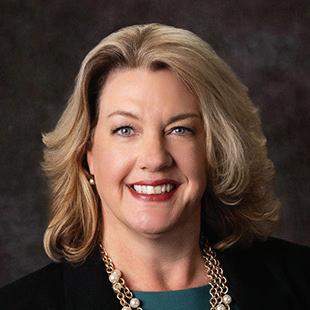
WADE BURKLEY
Research and Programs Administrator wburkley@flcities.com
BRENDA JONES
Legislative Coordinator bjones@flcities.com


JON MWAKYANJALA
Legislative Policy Analyst jmwakyanjala@flcities.com
ASHLEY WONG
Legislative Intern awong@flcities.com
JEFF BRANCH
Director of Field Advocacy & Emergency Management jbranch@flcities.com
DAVID CRUZ
Legislative Counsel dcruz@flcities.com
MATT SINGER
Legislative Advocate msinger@flcities.com
ALLISON PAYNE Manager, Advocacy Programs and Federal Affairs apayne@flcities.com
MARY EDENFIELD
Legislative Administrative Supervisor medenfield@flcities.com
LAUREN BUSH
Legislative Policy Analyst lbush@flcities.com
LOGAN RUBENSTEIN
Legislative Intern lrubenstein@flcities.com
ACT – A bill that has passed both houses of the Legislature.
ADJOURNMENT SINE DIE – Motion to adjourn sine die concludes a legislative session.
ADOPTION – Refers to favorable action by a chamber on an amendment, motion, resolution, or memorial.
AMENDMENT – Makes a change to a bill after the bill has been filed. This change can happen in committee or on the floor of the House or Senate.
BILL – Legislation, including joint resolutions, concurrent resolutions, memorials or other measures upon which a council or committee may be required to report.
BILL NUMBER – Bills are issued a number based on the order they are filed and received by bill drafting. House bills receive odd numbers, while Senate bills receive even numbers.
CHAIR – The presiding officer for a floor session or committee meeting.
CLAIMS BILL – Presents a claim for compensation for an individual or entity for injuries caused by negligence or error on the part of a public office, local government, or agency.
COMMITTEE – A panel of legislators appointed by the Senate President or Speaker of the House to perform specific duties such as considering legislation and conducting hearings and/or investigations.
COMMITTEES OF REFERENCE – Each bill is assigned to committees after it is filed. Often, the more committees a bill is assigned indicates its chances to pass or fail.
COMPANION BILL – Bills introduced in the House and Senate that are identical or substantially similar in wording.
“DIED IN COMMITTEE” – Refers to when a bill is not heard on the floor of the respective chamber in which it was introduced. A bill must pass all committees of reference or be pulled from the remaining committees to pass. A bill that dies in committee fails to pass each of its committee references during committee weeks and session.
ENGROSSED BILL – The version of a bill that incorporates adopted floor amendments, which were added subsequently to the bill passing its committees of reference. The revision is done in the house of origin and engrossed under the supervision of the Secretary of the Senate or the Clerk of the House.
ENROLLED BILL – Once a bill has passed, it is enrolled in the house of origin. After that piece of legislation is enrolled and signed by officers of both houses (President and Speaker), it is sent to the Governor for action and transmittal to the Secretary of State. An enrolled bill may be signed by the Governor and enacted into law or vetoed.
FLORIDA STATUTES – An edited compilation of general laws of the state.
GENERAL BILL – A bill of general or statewide interest or whose provisions apply to the entire state.
HOUSE RESOLUTION – A measure expressing the will of a legislative house on a matter confined to that house dealing with organizational issues or conveying the good wishes of that chamber. Often used to congratulate Floridians or recognize significant achievements.
INTERIM – Refers to the period between the adjournment sine die of a regular session and the convening of the next regular session.
JOINT RESOLUTION – Used to propose amendments to the Florida Constitution. It is also the form of legislation used for redistricting a state legislative seat.
LAW – An act becomes a law after it has been approved and signed by the Governor or, without the Governor’s signature, after their option to veto the act within seven days of presentation or after the Legislature overrides the Governor’s veto by a vote of two-thirds in each house.
LOCAL BILL – A bill that applies to an area or group that is less than the total population of the state.
MEMORIAL – A type of concurrent resolution addressed to an executive agency or another legislative body, usually Congress, which expresses the sentiment of the Florida Legislature on a matter outside its legislative jurisdiction.
MESSAGE – The houses of the Legislature send formal communications to each other regarding action taken on bills. This measure is usually reserved for the last couple of weeks of a legislative session. If a bill “dies in messages,” it has passed each chamber in form; however, one of the two chambers has made a change or amended the bill so that the two versions are no longer identical.
PROPOSED COMMITTEE BILL (PCB) – A draft legislative measure taken up by a committee to consider whether or not to introduce it in the name of the committee.
PROVISO – Language used in a general appropriations bill to qualify or restrict how a specific appropriation is to be expended.
REFERENDUM – A vote by the citizens upon a measure that has been presented to them for approval or rejection.
REPEAL – The deletion by law of an entire section, subsection or paragraph of language from the Florida Statutes.
SESSION – Regular Session: The annual session that begins on the first Tuesday after the first Monday in March of each odd-numbered year and on the first Tuesday after the first Monday in March, or another date that may be fixed by law, of each even-numbered year, for a period not to exceed 60 consecutive days. There is no limit on the subject matter that may be introduced in a regular session.
SPECIAL SESSION – Special sessions may be called by proclamation of the Governor, by joint proclamation of the House Speaker and the Senate President or by the members of the Legislature to consider specific legislation. It will not exceed 20 consecutive days unless extended by a three-fifths vote of each house. For members of the Legislature to call a special session, three-fifths of the members of both houses must vote in favor of calling a special session.
SPECIAL ORDER CALENDAR – A list of bills determined by the Rules Chair considered to be of high importance and priority scheduled for consideration in a specific order during a floor session on a particular day.
SPONSOR – The legislator or committee that files a bill for introduction.
TEMPORARILY POSTPONED – A motion can be made in the chamber or in committee to temporarily defer consideration of a measure.
VETO – An objection by the Governor to an act passed by the Legislature. Vetoes can be overridden by a vote of two-thirds of the membership of each chamber. The Governor may perform a line-item veto of specific measures in the general appropriations bill (the budget).