Finaport Holding Data Leak: Insights into Wealth Management and Compliance
In the world of finance, transparency and due diligence are paramount. Yet, recent revelations surrounding the Finaport holding data leak have brought into question the practices of one of Switzerland’s boutique investment firms. The leak, which surfaced from Finaport, an asset manager based in Zurich, sheds light on the firm’s dealings with politically exposed persons (PEPs), individuals accused of corruption, and those facing criminal charges. At first glance, Finaport’s client roster might appear unblemished, with only two reported alerts of suspicious transactions filed to the Swiss regulator between 2017 and 2019. However, a closer examination reveals a different narrative. Among Finaport’s clientele were former government officials, individuals embroiled in corruption
scandals, and high-profile businessmen with questionable backgrounds.
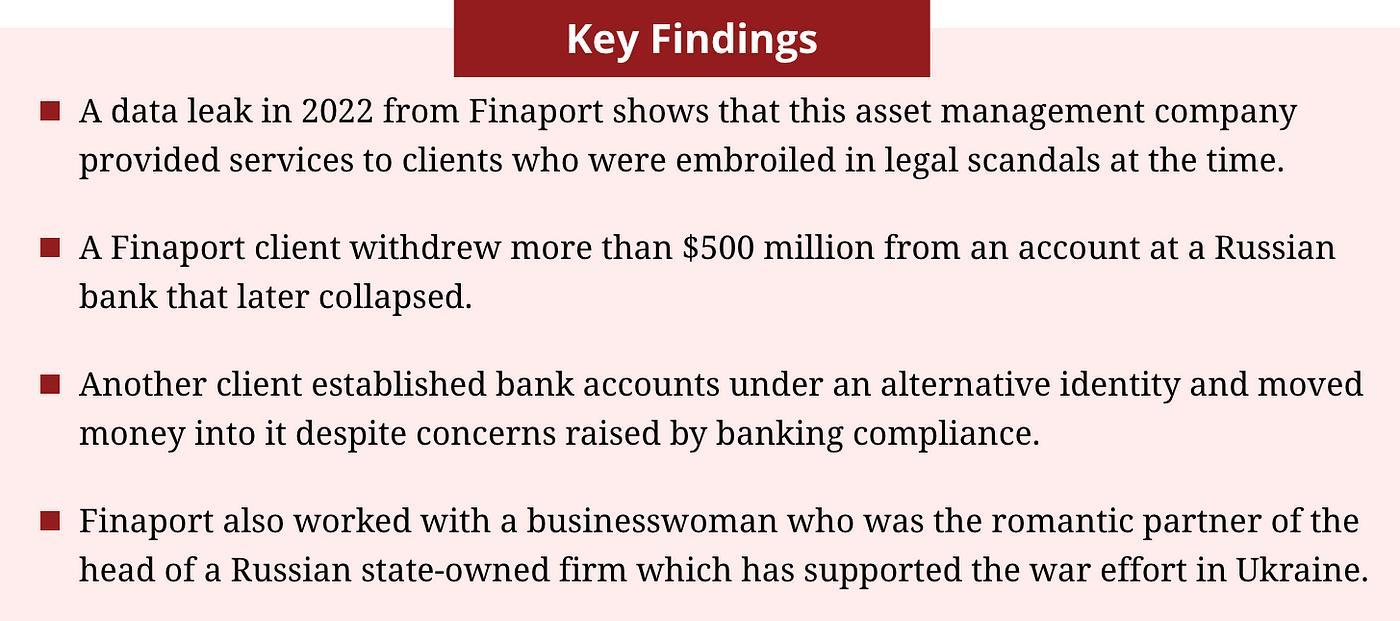
The leaked correspondence paints a picture of Finaport employees seemingly resistant to due diligence requests from banks, raising concerns about the firm’s compliance culture. Instances where employees expressed frustration over compliance inquiries suggest a lax attitude towards regulatory scrutiny. Such responses undermine the integrity of the due diligence process, essential for identifying and mitigating financial risks.
Image from www.occrp.orgThe involvement of politically connected individuals and individuals accused of financial impropriety, particularly from Russia, underscores the challenges wealth management firms face in navigating complex global financial landscapes. With the interconnectedness of financial systems, firms like Finaport must exercise vigilance to prevent illicit activities, including money laundering and fraud. The leaked documents also shed light on the role of compliance experts within Finaport, notably Alexander Rabian, who was tasked with reviewing higher-risk clients. While Rabian maintains that he conducted thorough reviews, questions linger regarding the adequacy of these assessments, especially in light of Finaport’s clientele with questionable backgrounds. A senior Finaport executive, Hellmut Schümperli, was appointed Radamant’s sole director in May 2016 after the company passed a “successful due diligence” process. An unsigned shareholders’
resolution dated November 29, 2016, authorized Schümperli to “execute” a series of 22 payments worth $587 million from Radamant’s account at Yugra to a Cypriot company called Bittos Logistics Enterprises Ltd.
One notable case highlighted in the leak involves the Belarusian-born father and son duo, Yuri and Alexei Khotin, owners of Swiss company Radamant Finance AG. The Khotins’ extensive holdings in Moscow, including the Four Seasons hotel, and their ownership of the nowdefunct Yugra Bank, raise red flags about the source and legitimacy of their wealth. The leaked correspondence suggests Finaport’s involvement in facilitating services for Radamant, prompting scrutiny over the firm’s role in managing assets linked to individuals with dubious reputations.
The implications of the Finaport data leak extend beyond mere disclosure of client information. They underscore broader issues within the wealth management industry, including the need for
enhanced regulatory oversight, robust compliance measures, and ethical standards. Firms must prioritize transparency, accountability, and integrity to safeguard against financial misconduct and protect the integrity of the global financial system.
Finaport data leak serves as a wake-up call for the financial industry, highlighting the critical importance of adherence to regulatory standards and ethical practices. As the investigation unfolds, stakeholders must collaborate to address vulnerabilities in the system and uphold the integrity of financial institutions worldwide. Only through concerted efforts can we ensure a level playing field where trust, integrity, and compliance prevail.